

Submitted:
28 September 2023
Posted:
29 September 2023
You are already at the latest version
Abstract
Cities have witnessed a booming interest in cycling in recent years. However, the implementation of cycling networks rarely followed a strategy to make them more accessible to specific social groups, such as women. To address this gap in knowledge, this paper provides a holistic perspective of women’s cycling mobility. Specifically, the study’s goal is to look into the social and environmental implications of cycling for women in Turin, Italy. Hence, this paper provides insights for ensuring a woman-friendly cycling system in a city and ensuring women’s participation as vital stakeholders in promoting a bike-friendly identity. We clarify women’s perceptions of cycling and outline the requirements for more inclusive bike infrastructures. Thus, we identify strategies to improve women’s access to bike lanes and investigate the environmental benefits of reduced air pollution by such a bike system. All this information is intended to define a more socially inclusive and environmental-friendly transport system in Turin for everyone, as depicted in Goal 11 of Sustainable Development Goals (SDGs).
Keywords:
sustainable cities
; sustainable mobility
; women-friendly cycling
; spatial justice
; mobility justice
1. Introduction
1.1. Cycling to promote social inclusiveness and environmental protection
Nowadays, various institutional entities acknowledge the importance of addressing urban problems by promoting sustainable mobility strategies that ensure social equity. For example, the European Union has, over recent years, recognized the key-role of sustainable mobility as a system to enhance social cohesion, human connections, and a space to promote environmental-friendlier behavior. Recent studies have proven that cycling as a means of transportation increases social cohesion with positive consequences for the environment, inclusiveness of communities, and the welfare and health of citizens [1,2]. However, the current implementation of cycling networks has rarely followed a strategy to increase accessibility for specific target groups, such as women. According to several studies, women are still underrepresented even though the overall rates of cycling have increased in recent years [3,4]. These insights raise two questions: whether social groups, and especially women, are currently incentivized to use bicycles in an urban context and how they can contribute to promoting a sustainable and inclusive city.
1.2. The role of the bike to ensure gender equity
Historically, cycling has contributed to empowering and granting freedom to many women [2,3]. During the Victorian era, cycling provided women with a means to move around the city, enabling them to escape the physical confines of their homes and domestic responsibilities [5]. Elizabeth Cady Stanton, a prominent activist who led the US women’s rights movement in the late 1800s, saw the bike as a means for promoting dress reform [2]. It’s worth noting that many members of the women’s suffrage movement were also passionate cyclists. Bicycles inspired them to break free from societal roles and promote self-respect and self-reliance. However, in the past, the bicycle primarily appealed to upper class white women, while excluding other minorities. In the present day, gender-related issues, particularly those concerning low-income, Black, Asian and Minority ethnic (BAME), disabled, and non-heterosexual women, remain inadequately addressed in various countries. Improving cycling infrastructure and accessibility is critical to ensuring equitable opportunities for all women, particularly those in disadvantaged groups [1].
Furthermore, according to several studies [1,6,7], women could play a pivotal role in advocating for cities accessible to everyone. On the other hand, factors discouraging women from cycling may exacerbate social inequalities within communities over time. Indeed, as stated by [3], women serve as ‘indicator species’ for safer and more livable cities for everyone. Additionally, other studies argue that countries with a higher proportion of cycling trips tend to exhibit better gender balance and score higher on the Gender Equality Index (GEI) [4,8].
To conclude, whereas the SDGs have established the principles for a sustainable city, numerous studies have shown potential pathways to achieve such a city. Cities thus should achieve a social and environmental transition through the promotion of gender equity from cycling.
1.3. Requirements for a woman-friendly bike system
The promotion of a woman-friendly bike system passes by identifying those factors that positively or negatively affect women’s willingness to cycle. A study by Matthies, Kuhn, & Klöckner dating back to 2002 tested the hypothesis that women are more willing to reduce car usage because of their stronger ecological norms and weaker car habits. It is therefore crucial to understand their requirements since women have the potential to significantly contribute to active travel and sustainability in cities. The mobility experiences differ between genders due to societal norms and gender-assigned behaviors. When women perceive cycling as a mode of transportation not tailored to their needs, the cycling system may be perceived as an investment primarily benefiting “others” [9]. While variations exist across countries, multiple studies consistently indicate that as bicycle trips decrease, the proportion of women cyclists also decreases [10,11].
To gain deeper insights into why women’s participation in cycling tends to be lower than that of men, gender-based differences in cycling behavior can be categorized into four main groups: 1) structural factors; 2) biological factors; 3) cultural norms; and 4) social barriers. It is essential to note that this paper does not aim to question the concepts of ‘gender’ and ‘women’, which we assume as consolidated for the purposes of this research. Nonetheless, given the complexity of the problem, the authors defer to Bonham, Bacchi and Wanner (2015) for a more theoretical framing, since both biological sex and gender are social productions [12,13], and differentiating individuals based on anatomical (hormonal, physiological) features is not a self-evident or necessary way of categorizing existence. This complexification will be taken into consideration for the prosecution of the research here presented.
1) Women exhibit different travel patterns compared to men. According to many studies women tend to make multi-stop trips, travel with children, and have ‘short-distance’ journeys [4,14]. They often use their bicycle for non-commute purposes compared to men [10]. These structural divergences can be attributed to the unequal gender division of household labour, which persists in many countries [11]. Besides, the absence of an environment that supports women to cycle can significantly impact their mobility behaviour [15]. For example [3] and [16] claim that being a woman in lanes without proper infrastructures may draw unwanted attention from men on sidewalks or from drivers. Indeed, the sexualization of the female body remains a safety concern in bike lanes [6], influencing women’s comfort and their decision to cycle [3].
2) Biological differences between men and women play a role in their cycling choices. For example, during pregnancy, many women increase their interest in cycling for environmental sensitivity and health reasons (e.g., weight management or stress reduction) [17]. However, [18] found that safety concerns during pregnancy can lead some women to abandon cycling. Besides, according to [10], the representation of women cyclists deteriorates with the increase of age.
3) According to [19], having children significantly impacts women’s choice to use bicycles. For example, [20] demonstrated that cycling with child(ren) in certain contexts performs as being a ‘good mother’ who cares on the health and the happiness of her child(ren). However, in several cities new-designed bike lanes lack being parenthood-friendly since they are not wide enough for cargo bikes.
4) Lastly, as demonstrated by [21], women may be disincentivized from riding a bike because they are expected to arrive at work more carefully dressed than men. In different countries, some workplaces have changing rooms specifically designed for dressing up after having to ride a bicycle. Nevertheless, this assumption implies that being presentable at work is still for many women a necessity rather than a choice. Additionally, [22] alleges that parents are less likely to allow girls to bike to and from school than boys of the same age.
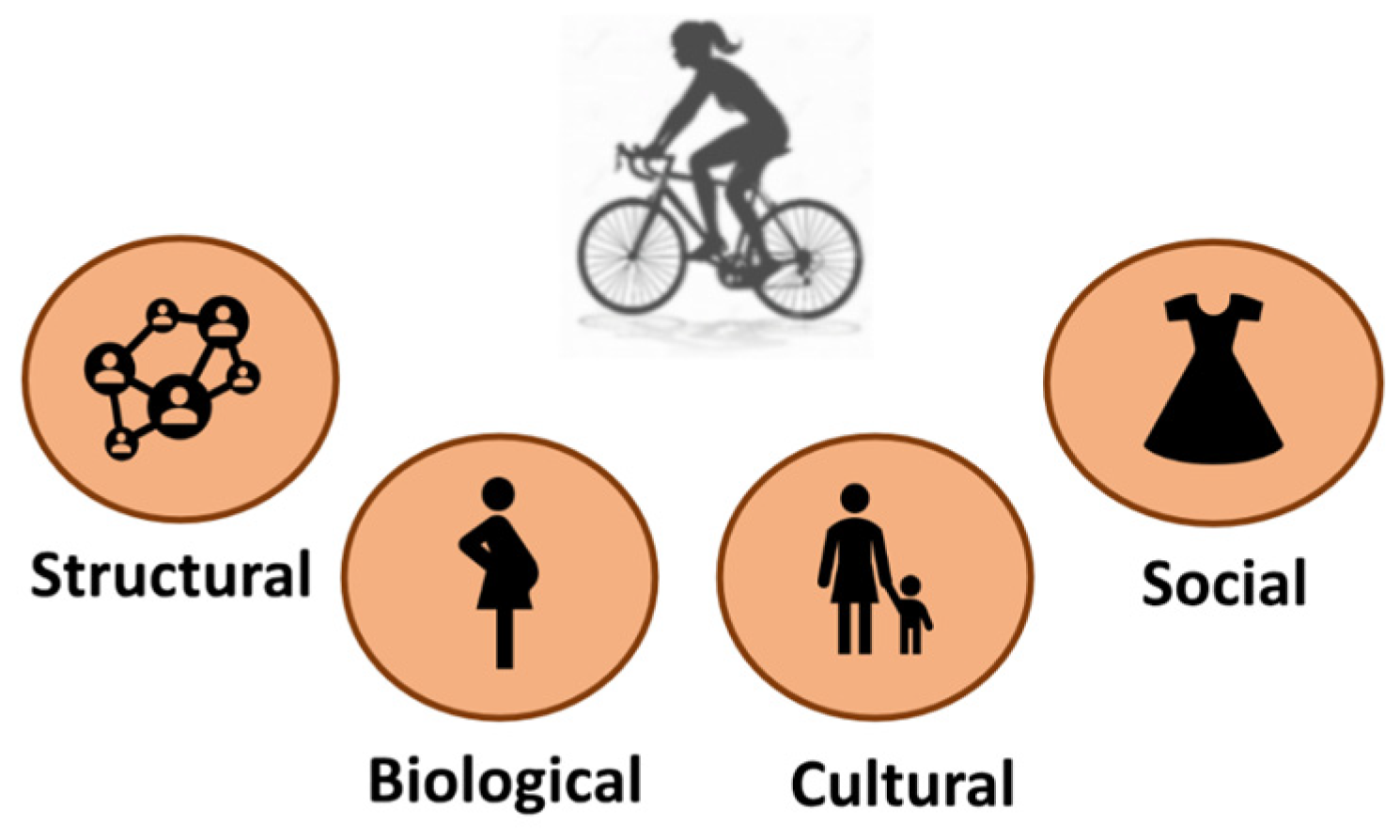
Figure 1.
Differences among gender when using the bike. These four spheres lead women to have specific needs and requirements to support them to cycle.
Figure 1.
Differences among gender when using the bike. These four spheres lead women to have specific needs and requirements to support them to cycle.
1.4. Multiple Benefits of a bike-friendly city
The Institute for Transportation and Development Policy estimates that in 2050 carbon dioxide emissions from urban transport are expected to decrease by 11% if people using bicycles will globally increase by one-fifth [23]. Indeed, bike-friendly cities likely benefit by reducing Carbon Dioxide (CO2), Nitrogen Dioxide (NO2), Methane (CH4) and Particulate matter (PM) emissions coming from private vehicles. As such, bike-oriented policies contribute to improving a city’s local air quality and to tackling global climate change.
Moreover, several studies [24] have demonstrated an improvement in both personal and collective wellbeing in bike-friendly cities. These studies demonstrated that cycling reduces stress levels and enhances the environmental quality of cities, making them more livable. The presence of trees and parks alongside the bike lanes, additionally reduces the on-site heat of paved bike lanes and produces more oxygen while subtracting carbon dioxide [24].
These benefits highlight the interplay between gender and cycling within the context of environmental goals required to make cities more livable, less polluted, and greener for all citizens.
1.5. Study area and objectives
This research was conducted in Turin, a mid-sized city located in the Piedmont Region (Italy). Turin has a population of over 848,000 inhabitants, 14.7% of whom are foreigners as of 2022. Women make up 51.5% of the total population [25].
Turin was chosen as the research location because of its status as a European city. In Western Europe, there is significant potential for increasing cycling mode share, making Turin an appropriate choice [10]. However, it is worth noting that while Turin provides valuable insights, cycling behaviours can significantly differ between cities in the Global South and North, making it important to consider these variations, particularly in the face of demographics of cycling.
Despite the car industry is in the process of being scaled down in Turin, it still plays a prominent role in the local economy and social identity. In 2017, the province of Turin had one of the highest motorization rates in Europe, with 664 cars per 1000 inhabitants [26]. This high level of car ownership, combined with traffic congestion and favorable topographic and climatic conditions, contributes to poor air quality in Turin. Legambiente’s annual report in 2020 identified Turin as one of Italy’s most polluted cities, exceeding acceptable limits for PM10 and Ozone on 147 days in 2019 alone. According to data from the Italian Environmental Protection Agency (ARPA) in 2019, the transport sector was responsible for over four-fifths (85%) of total PM10 and almost two-thirds (61%) of the total NOx emitted into the atmosphere. Vehicle trips alone accounted for nearly half of the total NOx emissions [27].
In the last 20 years the city has undergone a process of changes that has redefined its economy and socio-cultural identity, but also led to significant improvements in cycling infrastructure to combat air pollution. At the same time, in response to the increasing cyclist population, the Turin Municipality has implemented eco-friendly policies designed to reduce private vehicle usage and give priority to bicycles on numerous streets. For example, all the 80 kilometers of the secondary streets alongside the main streets of Turin, called ‘controviali’ (Figure 2), will prioritize bicycles over cars which should not exceed 20 kilometers per hour.
1.6. Knowledge gaps
An earlier European report carried out by [28] indicated that, on a national scale, women tend to favor public and active transportation options compared to men. Nevertheless, national averages usually do not reflect local circumstances. Italian cities, including Turin, present unique conditions such as elevated economic and social insecurities, and smog that can impact women’s bicycle usage.
Besides, no data addresses the specific factors and infrastructures influencing women’s willingness to cycle in Italy. For example, several studies in the United States and Spain have correlated gender and awareness of environmental issues, which act as incentives for cycling [17,21,29,30]. Comparable studies are lacking for Turin.
Lastly, the relationship between women’s mobility needs and the potential reduction in emissions from private vehicles in a woman-friendly city has never been explored in any country before.
1.7. Problem Statement
As presented in the previous chapters, cycling holds the potential to act as a catalyst for accelerating a more inclusive and environmentally sound mobility system in Turin. Since the understanding of needs and obstacles to make Turin accessible to women who want to cycle is poorly investigated, this study aims to focus on women issues related to cycling. As outlined in the Introduction, different factors and requirements contribute positively or negatively to stimulating women to use bicycles. These needs, in turn, wield a significant influence on the modes of transportation chosen by women in Turin, and thus the amount of pollutants emitted into the atmosphere.
1.8. Research objectives
To address these important gaps, this research explores two research questions (RQs):
RQ1: What factors and infrastructures encourage or disincentivize women from cycling (more)?
RQ2: What is the potential impact of a shift from cars to bicycles on CO2, CH4 and N2O emissions if the bicycle network were to feature more women-friendly infrastructures and services?
2. Materials and Methods
To achieve the two study’s objectives, surveys, field observations, and the elaboration of a vehicle emission factor were employed as visualized in Figure 3. RQ1 was addressed through the integration of off-site academic survey, including literature review and online questionnaire, with on-site data collection through by-hand questionnaires and field-observations. For RQ2, three distinct data sources were used: the questionnaire’s findings, data sourced from the Regional Environmental Protection Agency (IREA), and a vehicle emission factor from the UK database [31].
2.1. Questionnaire
2.1.1. Data collection
The questionnaire designed in this study was adapted from research conducted by [1] and [17], tailored to suit Turin’s socio-cultural context and unique challenges. Notable adaptations include the addition of questions pertaining to environmental motivations for cycling and a more nuanced differentiation between safety and security factors.
To refine the survey a pre-test involving fifteen participants was conducted. The final version of the questionnaire was launched through Google Forms on September 1st, 2020, and remained open for one month.
Data collection involved a comprehensive sample of 360 individuals, with 12 responding through in-person surveys. All the participants self-identified as women, residing in Turin for a minimum of three years. The selection aimed to ensure the sample’s representativeness with respect to Turin’s socio-demographic characteristics. This was achieved by reaching out to women who mirrored the city’s diversity in terms of nationality, educational level, age, and academic background.
Furthermore, while the questionnaire was initially open to individuals of various gender expressions and identities, no responses were received from individuals identifying as transgender or non-binary, despite the inclusion of multiple gender options in the questionnaire. Thus, we acknowledge the limitations associated with dichotomously comparisons between “man” and “woman” identities and their associated stereotypes.
2.1.2. Data analysis
The IBN SPSS Statistics27 software was employed to process the raw data collected from the questionnaire. From Google Forms, the 360 responses were transferred to an Excel spreadsheet, where questionnaire responses were coded numerically for analysis. For example, willingness to shift from vehicles to bicycles was elaborated on a five-point scale, ranging from 1 = Not at all (no shift) to 5 = Very much (complete shift of kilometers weekly travel by car). Values were translated into numerical data using a Likert Scale ranging from 1 to 5, where 1 corresponded to Strongly Disagree and 5 to Strongly Agree. The software computed the average mean of the five-point Likert Scale and made a cross-sectional analysis of various variables. Crosstabulation analyses were applied to investigate the extent to which participant’s characteristics influenced the results of the Likert Scale.
2.2. Field Observations
2.2.1. Data Collection
The initial phase of this study involved the identification of four spots within the city of Turin (Figure 4), selected from their proximity to various bike infrastructures. All four chosen spots were strategically located near two key facilities: schools and gyms. On-site observations were conducted using a predefined form to record the cyclists’ number passing by, categorized by gender. Two observation sessions were carried out for each location, one from 3.45 pm to 4.45 pm and another from 8.20 pm to 9.20 pm. Temperature data were recorded, as it could potentially influence cycling activity. The recorded temperatures ranged between 17-21 °C during the day and 13-18 °C during the night. Riders employed by delivery companies were not included in the survey. Additionally, observations noted the presence of children, either riding as passengers or independently, and pregnant women.
2.2.2. Data Analysis
During the analysis, the count of riders was excluded from the total number of cyclists for the reasons mentioned above. At the end of each one-hour observation, the number of women and men cyclists was converted into relative percentages. Subsequently, these results were transferred into an Excel spreadsheet to facilitate the creation of graphics, tables, and comparisons. All the graphics are presented in Chapter 3.
2.3. Vehicle-emission factor
2.3.1. Data Collection
To answer RQ2, three data sources were utilized: the results obtained from the questionnaire, data from IREA and an emission factor from the UK database [31]. We referred to the answers from the questionnaire to assess the potential reduction in emissions from vehicles. The UK database provided passenger vehicle-emission factors expressed in CO2 equivalent (CO2e) for CO2, CH4, N2O. Carbon dioxide equivalent is a standard unit to compare the three gasses in the database. It indicates the global warming potential (GWP) of CO2, CH4 and N2O. These gases were chosen due to their significant contributions to the air quality locally and their substantial impact on climate warming.
2.2.2. Data Analysis
All conversion factors in the UK database were expressed in units of “kilograms of carbon dioxide equivalent of Y per kilometer traveled by vehicle”, where Y represents the gas emitted from a vehicle (CO2, CH4, N2O). To convert these values into kilograms of CO2, CH4 and N2O emission factors, the ‘100-yr global warming potential’ (GWP) as defined by IPCC, AR4 was utilized. In this report, CO2 has a GWP of 1, CH4 of 28 and N2O of 265. Consequently, each conversion factor as provided in the database was divided by 1 for CO2, 28 for CH4, and 265 for N2O, resulting in a new table comprising all the vehicle-emission factors (α). Subsequently, the calculation of kilograms of CO2, CH4, N2O emissions from passenger vehicles was performed as indicated in the following equations:
represents the emissions of one person based on current kilometers traveled (kg);
are the emissions of one person based on potential kilometers traveled in case bike infrastructures are improved (kg);
is the current distance traveled weekly by car by one person (km);
is the potential distance traveled weekly by car by one person in case bike infrastructures are improved (km);
represents the vehicle-emission factor (kg km-1);
s is the size of the car (Small, Medium, Large);
p is the car power (Gasoline, Diesel, LPG, Methane, Hybrid, Electric);
Subsequently, emissions () were calculated based on a potential reduction in kilometers traveled (2). Respondents were asked to choose from six options that assessed their willingness to replace car travel with cycling. For example, if a respondent indicated a willingness to use the bike for ¼ of their current car-driven kilometers, was divided by ¼ to obtain the adjusted value. Afterwards, Er (3) was determined by calculating the difference between the total emissions resulting from the current kilometers traveled by car () and the total potential emissions () based on the adjusted . Equation (3) outlines how the total potential emission reduction of CO2, CH4, N2O was computed for each person:
Lastly, the difference between the sum of and the sum of for all the respondents gave the total (4). Equation (4) illustrates how much the environment could benefit in terms of emission reduction in case of women-friendly infrastructures.
3. Results
3.1. Sociodemographic characteristics of participants
The final dataset comprised 360 women, encompassing different socio-demographic aspects. This sample, closely mirrors the composition of Turin’s citizens, exhibited a fairly even distribution across age, ranging from a minimum of 22% for individuals aged 18-25 (which is consistent with the 18% representation in Turin’s composition) to a maximum of 28% for women in the 36-50 age bracket (compared to 26% in Turin’s composition). A small percentage of respondents had attained lower (1%) and upper secondary (19%) education levels. This can be attributed to two factors: first, the questionnaire excluded people under 18 who are still attending lower and upper secondary educations; and second, the current education system in Italy is compulsory until the second year of upper secondary education. In terms of nationality, Turin has a foreign population percentage of 14.7% [25]. In this study, 12% of participants were non-Italian nationals. Regarding employment status, more than half of the participants were employed, while 24% identified as students.
3.2. Results from the questionnaire
Around 41% of participants declared that they do not use a car, compared to 37% of women who do not ride a bicycle in Turin. The tendency to use the car is age-dependent, as shown in the bar charts of Figure 5, and it is aligned with previous studies [10]: more than five-sixths (84%) of over 50 drive a car, in contrast with around two-sixths (35%) of 18-25 aged women.
Among women who own cars, small-sized vehicles were used by around half of respondents (46%). Half of respondents declared that their vehicle was powered by petrol, followed by diesel (20%) and LPG (18%). Cars were primarily used for short-distance travels, with three in fours of respondents driving 1-15 kilometers weekly.
The bicycle, instead, turned out to be a mode of transportation more homogeneously distributed across different travel distances. Approximately 23% of cyclists claimed to ride 1-15 kilometers weekly, while 5% cycled more than 60 kilometers every week.
As visualized in Figure 6, the main factors that positively encourage women to cycle included the senses of comfort and empowerment, which had a high score of 4.5 on the 5-point scale. A moderate majority of women also cycle for physical exercise (score 3.8), convenience, and the ability to avoid parking problems. Environmental determinants, such as cycling to protect the environment and reduce air pollution, had a positive influence on women’s willingness to cycle (score 4.4). Also contributing to a more livable city obtained a large consensus among respondents. Saving money received one of the lowest scores compared to other factors (score 3.7).
Regarding aspects that negatively affect women’s decision to cycle (Figure 7), security-related factors obtained higher means (3.8 on the 5-point scale) compared to perceived safety (2.9 on the 5-point scale).
Safety risks, defined as the perceived feeling of being threatened by something or someone, did not deter women from cycling significantly. Feeling safe on bike lanes due to potential verbal or physical harassment scored a mean of 2.5 out of 5. This factor did not negatively determine women’s choice to use the bicycle for over half of them, which differs from findings in other studies where safety concerns were more commonly perceived as a deterrent [16,32].
On the other hand, security-related factors, referring to external threats that do not protect women, significantly affected their decision to cycle. Comparable results have been observed in the United States [29], China [33], and England [8]. In this study, it was found that bike lanes were not well-connected and evenly distributed throughout the city for almost two-thirds of women. More than three-fifths of respondents considered the car’s speed as a discouragement to cycling, and a similar percentage was affected by the poor structural lanes’ quality.
As shown in Table 1, security and safety perceptions are partly age-dependent. Women aged 18-25 express higher concern for safety, with the mean score decreasing for those over 50. In contrast, individuals over 50 tend to feel more secure on bike lanes compared to 18-25 age generations.
Furthermore, other modes of transportation, such as electric scooter, bus, metro or walk, are not significantly preferred over the bike among women.
Respondents were also invited to indicate up to five preferred bike infrastructures or services to see implemented in Turin. These selections were made based on their multiple associated benefits and insights from prior analogous studies [17,24]. They are grouped into four topics of relevance:
- Security, infrastructures designed to ensure a high level of security;
- Facilities, those that facilitate the bike system’s accessibility;
- Regreening, infrastructures that initiate a greenery process of public spaces;
- Sensibilization, tools aimed at raising awareness on gender and sustainability issues.
As illustrated in the bar charts of Figure 8, all the infrastructures and services related to security were the most preferred by women. This choice aligns with the findings from the Likert Scale, indicating that women are more inclined to cycle in a protected environment. The most preferred infrastructure was a physical separator between bike lanes and roads. Following closely was a bicycle app displaying the bike network and most secure roads, although its popularity varied with age, with a constant decrease as age increased.
Facilities designed to enhance the bike system’s accessibility were moderately appreciated. Differently from the other services that were equally chosen among nationalities, showers and changing rooms at work and school were chosen more by Italians (31%) compared to non-Italians (11%).
The car parking removal, chosen 91 times, reduces the space available for cars, while increasing public spaces for bike lanes, sidewalks and other common spaces. Bike corridors could also be locations for trees. This obtained 89 votes.
Lastly, posters aimed at raising awareness about gender and environmental issues alongside bike lanes were the least opted among all the bike infrastructure options, selected only 47 times.
The questionnaire also assessed the respondents’ willingness to change mobility behavior. The results in Figure 9 show that 92% of respondents declared their willingness to use (more) the bicycles if the bike system better aligns with their needs. Among them, almost all the younger generations’ respondents (99%) were highly motivated to increase their travels made by bike, whereas 75% of those over 50 agreed. These results indicate that elderly people were the most reluctant to change their travel habits.
This study also examines the destinations or purposes for which women would be more inclined to cycle if a woman-friendly bike system is in place (see Figure 10). Cycling activities can be grouped into two spheres: occupation and leisure.
Among the former, cycling to work was the most chosen destination towards which cycling (more). It was selected 204 times. Using the bike to go to school accounted for 77 votes, possibly influenced by the respondents’ age or by the fact that students already cycle in Turin.
Among leisure activities, recreational activities were the most chosen, followed by going outside with friends. Cycling for physical exercises and shopping were the least preferred purposes. Only 20 women would not be stimulated to cycle (more) in case of a woman-friendly bike system.
To summarize, a system that caters to women’s needs could incentivize pro-pleasure activities since leisure pursuits together got 368 votes out of 669. However, cycling for work is the main route that could see the highest increase in cycling participation.
3.3. Results from field-observations
During field-observation, it was observed that there were fewer cyclists, both men and women, on roads with sharing facilities with vehicles. Regarding the users’ gender (see Figure 11), during the day both the women’s percentage and number riding the bike were higher where bike lanes were physically separated from the road. In bike-car shared roads, instead, the woman’s percentage was always lower than 40%. During the night, women’s percentage decreased compared to the numbers reached during the day. Only in streets frequented by few cars and passing at slow speed, the number of women was moderately high.
To summarize, physical separation and a slow car’s speed and car’s number were those infrastructures and factors that most increased the ratio of women to men, respectively during the day and the night.
Furthermore, field-observations provided insights into the kids’ number traveling by bike with their parents and alone during the day (see Figure 12). No kids were observed during the night. The highest number of kids with or without their parents was observed in streets crossed by cars at a low-speed rate.
As for the parenthood’s gender, in total twelve women and eight men with kids on their bike seats were viewed. Whilst six kids were riding alone. The relative women’s percentage out of men with kids was always higher in separated lanes than in roads shared with cars. On the contrary, roads with no physical separations were more frequented by men with kids. Hence, results from field-observations showed that gender of cyclists bringing kids was influenced by the presence of a separator from roads.
3.4. Results from the vehicle-emission factor: air emission reduction in Turin
The study demonstrated that transitioning from vehicles to cycling in Turin has a notable impact on atmospheric emissions of CO2, CH4, N2O. This shift can potentially reduce emissions by approximately one-third (see Table 2). Nitrous oxide exhibited the highest reduction in percentage (33%), saving every week about 0.8*10-2 kilograms of pollutants released into the atmosphere. Carbon dioxide emission decreased by 500 kilograms per week, equivalent to a 31% reduction in current CO2 emissions. Methane displayed the lowest reduction in percentage (29%).
According to data from the Regional Environmental Protection Agency [27], Turin experiences weekly emissions of 15*106 kilograms of CO2, 8.7*102 kilograms of CH4 and 7.1*102 kilograms of N2O from the private vehicle sector. The contribution of 360 respondents in reducing total emissions was calculated by comparing the values in Table 2 with the IREA data (2022). Specifically, carbon dioxide emissions were reduced by 3.3*10-3% compared to the total CO2 emitted in Turin. Methane decreased by 2.1*10-3% and Nitrous dioxide by 1.1*10-3%. These percentages apply to the target population of 360 respondents. However, women over 19 living in Turin are 387,430 [25]. Considering that the total population over 19 years of age, including both men and women, in Turin is 731,182 and they contribute for 15*106 kilograms of CO2 emissions every week [27], the 387,430 women proportionally contribute to 7.9*106 kilograms of CO2 weekly, equivalent to a 31% reduction. Methane emissions amounted to 4.6*102 kilograms every week, and with a 29% reduction, women potentially contribute to cutting 1.3*102 kilograms of CH4 weekly. Lastly, N2O emissions are reduced by 1.3*102 kilograms every week out of the total N2O emitted by the woman population of Turin, equivalent to 3.8*102 kilograms.
In conclusion, Figure 13 shows: on the left columns the current emissions of pollutants in Turin; and on the right columns a potential situation in which women over 19 in Turin contribute to cutting the CO2, CH4, N2O emissions by respectively 31%, 29%, and 33%. These graphics maintained unchanged the contribution of men to the total amount of gas emitted into the atmosphere.
4. Discussion
4.1. Factors and infrastructures affecting women to cycle: comparisons with other studies
This study demonstrates that specific motivations and infrastructures play a more significant role in encouraging women to cycle than others. The following sections provide a summary of these findings in comparison to prior publications. Notably, the results closely align with [17], conducted in Spain. However, the Norwegian research [32] presents significant disparities, particularly concerning motivations to cycle, such as perceived-safety. Additionally, the study illustrates that certain factors, like comfortability, and infrastructures such as physical separators, are universally recognized as essential for women’s cycling, regardless of their country or sociodemographic conditions.
Conversely, the study reveals that other factors, such as environmental sensitivity, depend on the study’s area and the characteristics of the sample population. These factors are thus closely tied to the specific country and societal context. In the following sections, a deeper exploration of these similarities and differences will be discussed.
4.1.1. Environmental reasons to cycle: a country-related element
In Norway, the research indicates that women are less inclined to use bikes for environmental reasons and are more motivated by efficiency in transportation [32]. This contrasts with the results of the present study, which demonstrates that women in Turin are likely to cycle to embrace environmental-friendly behaviors. One plausible explanation for these discrepancies probably relies on the fact that poor-air quality problems are strongly visible in Turin and much less in Norway. Respondents in this study consider using bicycles not only as a way to be environmental-friendly but also to actively combat pollution and enhance the livability of their city. Therefore, their environmental-friendly behaviors are motivated by their interest in improving personal and collective well-being which is threatened by the poor air-quality. Results of this study thus underscore the intricate interplay between social and environmental factors in influencing the cycling preferences of women in Turin.
4.1.2. Aspects that influence security while cycling
The study reaffirms the significant influence of security considerations on women cycling alone and with children, in line with findings from the United States [29], China [33], and England [8]. However, it is crucial to interpret these results within the context of different countries, as numerous co-occurring factors can vary between regions and influence security perceptions while cycling. For example, in Northern countries, longer hours of darkness can affect perceived security while cycling. Sustrans (2018) demonstrated that in England the perception of a secure environment declines by half in the darkness compared to the day.
The study also highlighted the importance of physical separators for a secure cycling system, consistent with prior research [29,32]. In this research, it was demonstrated that such security-related infrastructure plays a crucial role in mitigating the risks associated with high car speeds. In contrast, Norway’s context indicates that car speeds do not significantly influence women’s security perception [32]. These differences likely arise from various country-related aspects. Factors contributing to an objective higher risk of injury from car accidents in Italy make road security a tangible concern. Italy reported 205 cyclists deaths in 2022 (ISTAT, 2022) while Norway recorded 18 deaths involving both cyclists and pedestrians deaths in the same year (Statistisk sentralbyra, 2022). These numbers show the actual risk faced by cyclists, but they reveal nothing about the perception of risk women have while they cycle.
4.1.3. Perceived safety as societal-related factor
Graystone et al. [3] in Canada and Camp [30] in the United States demonstrated that women cyclists are significantly affected by unsafe circumstances related to verbal abuse, harassments and with how drivers interact with cyclists. On the contrary, safety-related risks are not perceived as a source of danger among respondents in this study. Specifically, not feeling safe due to potential harassment while cycling got a low mean’s score compared to studies by [3], [30], [16] and [32]. Different perceptions of danger between countries probably justify the discrepancy in results. The city culture could contribute to amplify the safety-perception and to consider certain actions as harassment. The same source of danger, such as compliments on the street, can be experienced differently between people living in different cities. Moreover, personal and sociodemographic differences, such as age and nationality, likely influence the perception of safety when cycling.
4.1.4. Being a mother: potential factor affecting motivation to cycle
Various studies have acknowledged the influence of motherhood on individuals’ preferences for specific factors and infrastructures [20,29]. In this study, lifestyle factors, such as having children or being pregnant, likely influenced answers collected through the questionnaire. Women with children often look at mobility under both their and their kid(s) needs. For example, mothers most probably pay more attention to secure lanes instead of aesthetically beautiful roads. Initially, this study avoided explicitly correlating woman’s status as a potential mother for two primary reasons: first, assuming that every woman intends to become a mother could be misleading, as it is not applicable to all, and second, it could lead to misinterpretation on the women’s role responsible for caring for children. The questionnaire did not explicitly explore whether certain bike infrastructures were more preferred among mothers compared to single women. Recognizing this gap, during field observations, the study recorded the number of children with their mothers. It became evident that being a potential mother was a factor that influenced a woman’s preference for certain types of bike lanes.
4.1.5. Being a mother: potential factor affecting motivation to cycle
This study revealed that the majority of participants expressed a strong willingness to cycle more when the bike system reflects their needs, consistent with Pérez Brandón’s research [17]. However, it’s worth noting that previous studies primarily focused on assessing willingness to change travel behavior, rather than observing actual behavioral changes. While many women may express a readiness to change their travel habits, this does not necessarily translate into a significant increase in cycling. This study uniquely combines questionnaire responses with field-observations, providing a comprehensive view of women’s willingness to change mobility behavior and the actual impact of women’s friendly bike infrastructure on their cycling decisions. This triangulation offers valuable insights into both willingness and infrastructure influence on women’s participation.
4.2. Methodological Limitations
4.2.1. COVID-19 as limitation of the results
This study acknowledges certain methodological limitations, particularly related to external validity. One significant factor to consider is the impact of travel restrictions implemented to limit the spread of COVID-19. These restrictions likely affected the number of cyclists observed during the field observations. However, both men and women were affected by these travel restrictions. Therefore, it is assumed that the ratio of women to men cyclists remained relatively consistent during the analysis period.
4.2.2. Weaknesses and strengths to address cycling from a woman perspective
The study primarily focuses on the key-concepts of woman-friendly bike systems by designing a lane that reflects women’s requirements. It does not specifically delve into differences between woman-man cycling patterns, and the comparison with other genders. This approach is based on the assumption that the implementation of a woman-friendly bike lane ultimately benefits the accessibility of cycling for all citizens. By investigating the specific requirements among women, this study implicitly provided strategies to promote cycling also for men and other gender identities.
4.2.3. Limitations to address the potential emissions of a woman-friendly bike system
To our knowledge, no studies have compared the requirements for a woman-friendly bike system with the potential reduction in vehicle emissions. One challenge arises from the questionnaire’s simplicity, which may have influenced the RQ2 conclusions. Using broad categories for car sizes, might have led to simplifications that affected the accuracy of emissions calculations. However, this simplification was a deliberate choice to ensure the questionnaire’s accessibility and user-friendliness, ensuring that all respondents could complete it.
Additional limitations are evident in the calculations related to RQ2. Values obtained, when compared to Turin’s emissions, appear lower than the averages estimated by IREA. This discrepancy can be attributed to several factors 1) IREA’s data refers to both men and women living in Turin, with men potentially driving more kilometers and using more polluting cars, as demonstrated by several studies [28,34]; and 2) the questionnaire was launched during a period of travel restrictions, reducing car travels.
Moreover, the findings do not consider potential increased men cycling due to a woman-friendly bicycle system, suggesting a potentially greater emissions reduction impact. However, the study’s results are not conceptually affected by these assumptions, which focuses on women’s contribution to reducing emissions. Therefore, the overall emissions reduction in case of a bike system that encourages both genders is beyond this research’s scope.
5. Conclusions
This research explores how women’s requirements for cycling, combined with the impact of bicycle infrastructure and potential strategies to promote women-friendly mobility, helps to encourage women to cycle, reduce GHG pollutants, and contribute to making Turin a sustainable city as depicted in SDGs.
The results of research question 1 demonstrate that women choose to ride bicycles to feel comfortable and to contribute to a more livable and environmental-friendly city. Moreover, women view the bike as an efficient mode to move around the city, rather than a convenient means of transportation to save money.
Furthermore, our study demonstrates that women are deterred from an unsecure bike system rather than by the fear of being in unsafe situations. For example, women are more discouraged from cycling, either with or without their child(ren), due to high car speeds on the roads than to potential harassment.
Consequently, a woman-friendly bike system in Turin is equipped with bike infrastructures designed to increasing the sense of security while cycling. Physical separators, app indicating the most secure bike lanes, and other security-related infrastructures are highly preferred by women.
These factors and infrastructure likely encourage women to shift from car to bike. This shift most probably initiates the phenomenon of security in number as more citizens, from children to elderly people, are incentivized to use their bikes. As such, a woman-friendly city starts the transition towards a bike-friendly Turin for everyone.
Mobility strategies and infrastructures aimed at creating women-friendlier bike lanes and promoting women’s accessibility to the bike system, certainly reduce CO2, CH4 and N2O emissions from private vehicles in Turin by around one-third (research question 2). The high women’s willingness to switch from private vehicles to cycling underscores their pivotal role in promoting an environmental-friendly city. Thus, this study demonstrates that a woman-friendly bike city is inherently environmental-friendly.
To conclude, this study demonstrates that developing mobility strategies in line with women’s needs devotes Turin as a sustainable city for all citizens, embodying principles of inclusivity and environmental sustainability in its identity.
Author Contributions
Conceptualisation and methodology, A.R and G.M.; investigation, A.R writing—original draft preparation, A.R; writing—review and editing, G.M, S.P.; supervision, G.M, S.P.; All authors have read and agreed to the published version of the manuscript.
Funding
This research received no external funding.
Institutional Review Board Statement
Not applicable.
Informed Consent Statement
Informed consent was obtained from all subjects involved in the study.
Data Availability Statement
The data presented in this study are available on request from the corresponding author. The data are not publicly available due to privacy.
Acknowledgments
The authors are extremely grateful to Dr. Karen Fortuin from Wageningen University who supervised Andrea Rosso in his Thesis research.
Conflicts of Interest
The authors declare no conflict of interest.
References
- Parsha, A.; Martens, K. Social identity and cycling among women: The case of Tel-Aviv-Jaffa. Transp. Res. Part F: Traffic Psychol. Behav. 2022, 89, 1–15. [Google Scholar] [CrossRef]
- Garrard, J. , Handy, S., & Dill, J. (2012). ‘Women and cycling ‘ (Vol. 2012, pp. 211-234). Cambridge, MA: MIT Press.
- Aldred, R.; Woodcock, J.; Goodman, A. Does more cycling mean more diversity in cycling. Transp. Rev. 2016, 36, 28–44. Available online: https://www.tandfonline.com (accessed on 12 May 2022). [CrossRef]
- Escalante, S.O.; Valdivia, B.G. Planning from below: using feminist participatory methods to increase women's participation in urban planning. Gend. Dev. 2015, 23, 113–126. Available online: https://www.tandfonline.com (accessed on 12 April 2022). [CrossRef]
- Honey-Roses, J., Anguelovski, I., Bohigas, J., Chireh, V., Daher, C., Konijnendijk, C., ... & Oscilowicz, E. (2020). ‘The Impact of COVID-19 on Public Space: A Review of the Emerging Questions’. Available online: https://www.researchgate.net.
- Sustrans. Inclusive city cycling: reducing the gender gap. 3-19. (2018). Available online: https://www.sustrans.org.uk (accessed on 17 June 2022).
- Buehler, R. , & Pucher, J. (2021). International overview of cycling. In R. Buehler & J. Pucher (Eds.), Cycling for sustainable cities (pp. 11–34).
- Goel, R. , Goodman, A., Aldred, R., Nakamura, R., Tatah, L., Garcia, L. M. T.,... & Woodcock, J. Cycling behaviour in 17 countries across 6 continents: levels of cycling, who cycles, for what purpose, and how far? Transport reviews 2022, 42, 58–81. [Google Scholar]
- Gatens, M. (1983). A critique of the sex/gender distinction. In J Allen, & P Patton (Eds.), Beyond Marxism: Interventions after Marx (pp. 143-162). Leichardt: Intervention Publications.
- Butler, J. (1990). Gender trouble: Feminism and the subversion of identity. New York, NY: Routledge.
- Prati, G. Gender equality and women's participation in transport cycling. J. Transp. Geogr. 2018, 66, 369–375. [Google Scholar] [CrossRef]
- AitBihiOuali, L.; Klingen, J. Inclusive roads in NYC: Gender differences in responses to cycling infrastructure. Cities 2022, 127, 103719. [Google Scholar] [CrossRef]
- Lubitow, A. , Tompkins, K., & Feldman, M. ‘Sustainable Cycling For All? Race and Gender-Based Bicycling Inequalities in Portland, Oregon’. City & Community 2019, 18, 1181–1202. Available online: https://onlinelibrary.wiley.com (accessed on 12 May 2022).
- Pérez Brandón, N. (2019). ‘Gender differences in cycling participation in Spain. Comparison between Norway and Spain’. (Master’s thesis, NTNU).
- Cioffi, J. , Schmied, V., Dahlen, H., Mills, A., Thornton, C., Duff, M.,... & Kolt, G. S. Physical activity in pregnancy: women’s perceptions, practices, and influencing factors. The Journal of Midwifery & Women’s Health 2010, 55, 455–461. [Google Scholar]
- Grudgings, N. , Hagen-Zanker, A., Hughes, S., Gatersleben, B., Woodall, M., & Bryans, W. ‘Why don’t more women cycle? An analysis of female and male commuter cycling mode-share in England and Wales’. Journal of Transport & Health 2018, 10, 272–283. Available online: https://www.sciencedirect.com (accessed on 14 May 2022).
- Ravensbergen, L.; Buliung, R.; Laliberté, N. Toward feminist geographies of cycling. Geogr. Compass 2019, 13, e12461. [Google Scholar] [CrossRef]
- Judge, A. H.; (2011). ‘Designing More Inclusive Streets: the Bicycle, Gender, and Infrastructure’. Available online: https://digitalcommons.macalester.edu (accessed on 12 July 2022).
- McDonald, N.C. ‘Is there a gender gap in school travel? An examination of US children and adolescents’. J. Transp. Geogr. 2012, 20, 80–86. Available online: https://ideas.repec.org (accessed on 13 June 2022). [CrossRef]
- Mason, J. , Fulton, L., & McDonald, Z. (2015). A global high shift cycling scenario: The potential for dramatically increasing bicycle and e-bike use in cities around the world, with estimated energy, CO2, and cost impacts. University of California.
- Wang, Y., Chau, C.K., Ng, W.Y. and Leung, T.M. (2016). ‘A review on the effects of physical built environment attributes on enhancing walking and cycling activity levels within residential neighborhoods’. Cities 1–15. Available online: https://www.researchgate.net (accessed on 16 July 2022).
- Tuttitalia.it. (2022). ‘Popolazione Torino 2001-2019’. Available online: https://www.tuttitalia.it (accessed on 24 August 2023).
- Regione Piemonte. (2017). Mobilità veicolare in Piemonte. 5.1, 59-82. Torino.
- Civitas. (2020). Smart choices for cities. Gender equality and mobility: mind the gap!. Policy note. Trento.
- Dill, J., Goddard, T., Monsere, C., & McNeil, N. (2014). ‘Can protected bike lanes help close the gender gap in cycling? Lessons from five cities’. Urban Studies and Planning Faculty Publications and Presentations, 123. Available online: https://pdxscholar.library.pdx.edu (accessed on 12 May 2022).
- Camp, A. (2013). ‘Closing the bicycling gender gap: The relationship between gender and bicycling infrastructure in the nation’s largest cities’. University of Oregon. Department of Planning, Public Policy, & Management. Available online: https://core.ac.uk (accessed on accessed on 17 July 2022).
- Thomas, C. , Rolls, J., & Tennant, T. (2020). The GHG indicator: UNEP guidelines for calculating greenhouse gas emissions for businesses and non-commercial organisations (p. 61). Paris: UNEP.
- Lunke, E. B., Aarhaug, J., de Jong, T., & Fyhri, A. (2018). ‘Cycling in Oslo, Bergen, Stavanger and Trondheim: a Study of Cycling and Travel Behaviour’. (No. 1667/2018). Available online: https://trid.trb.org (accessed on 13 August 2023).
- Lusk, A. C., Wen, X., & Zhou, L. (2014). ‘Gender and used/preferred differences of bicycle routes, parking, intersection signals, and bicycle type: Professional middle class preferences in Hangzhou, China’. Journal of Transport & Health, 1(2), 124-133. Available online: https://www.researchgate.net (accessed on 27 August 2023).
- DECISIO. (2021). La mobilità pendolare. Vol II: Analisi della domanda di mobilità. Torino.
Figure 2.
Controviali in Turin with bike priority and “case avanzate” in front of each traffic light.
Figure 2.
Controviali in Turin with bike priority and “case avanzate” in front of each traffic light.
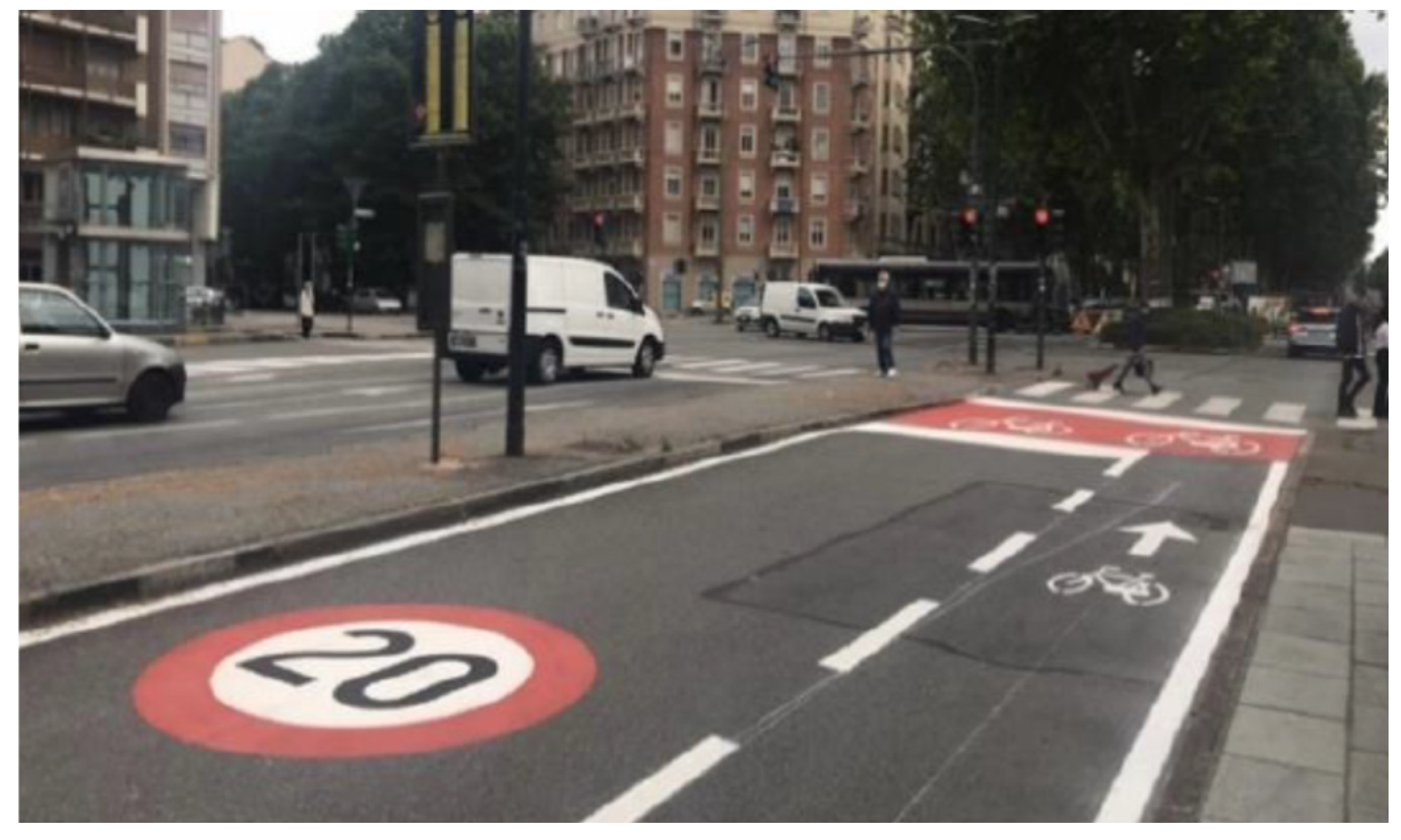
Figure 3.
Conceptual framework.
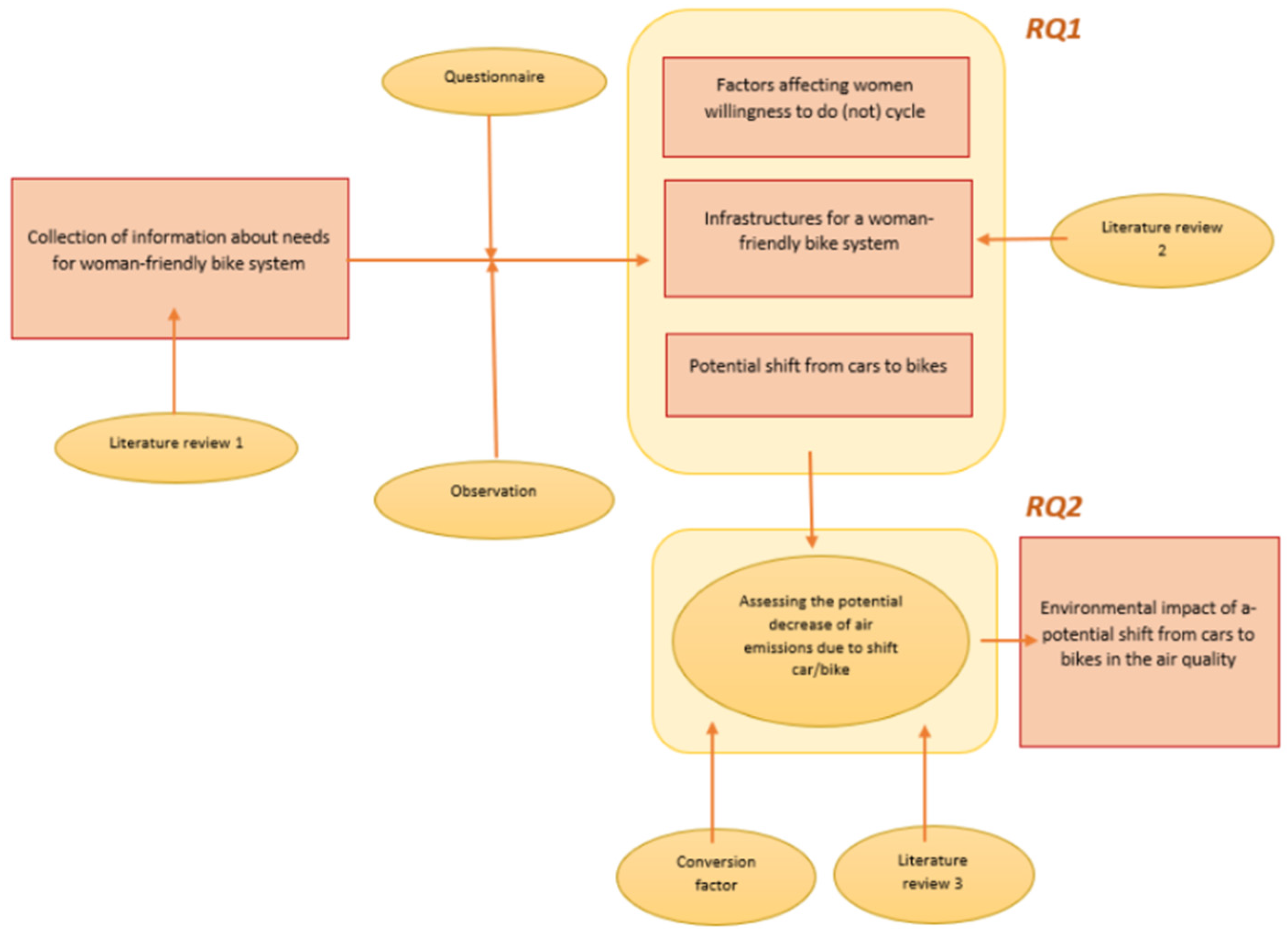
Figure 4.
Map of Turin with the four points of observation represented with red stars (Google Maps, 2022).
Figure 4.
Map of Turin with the four points of observation represented with red stars (Google Maps, 2022).
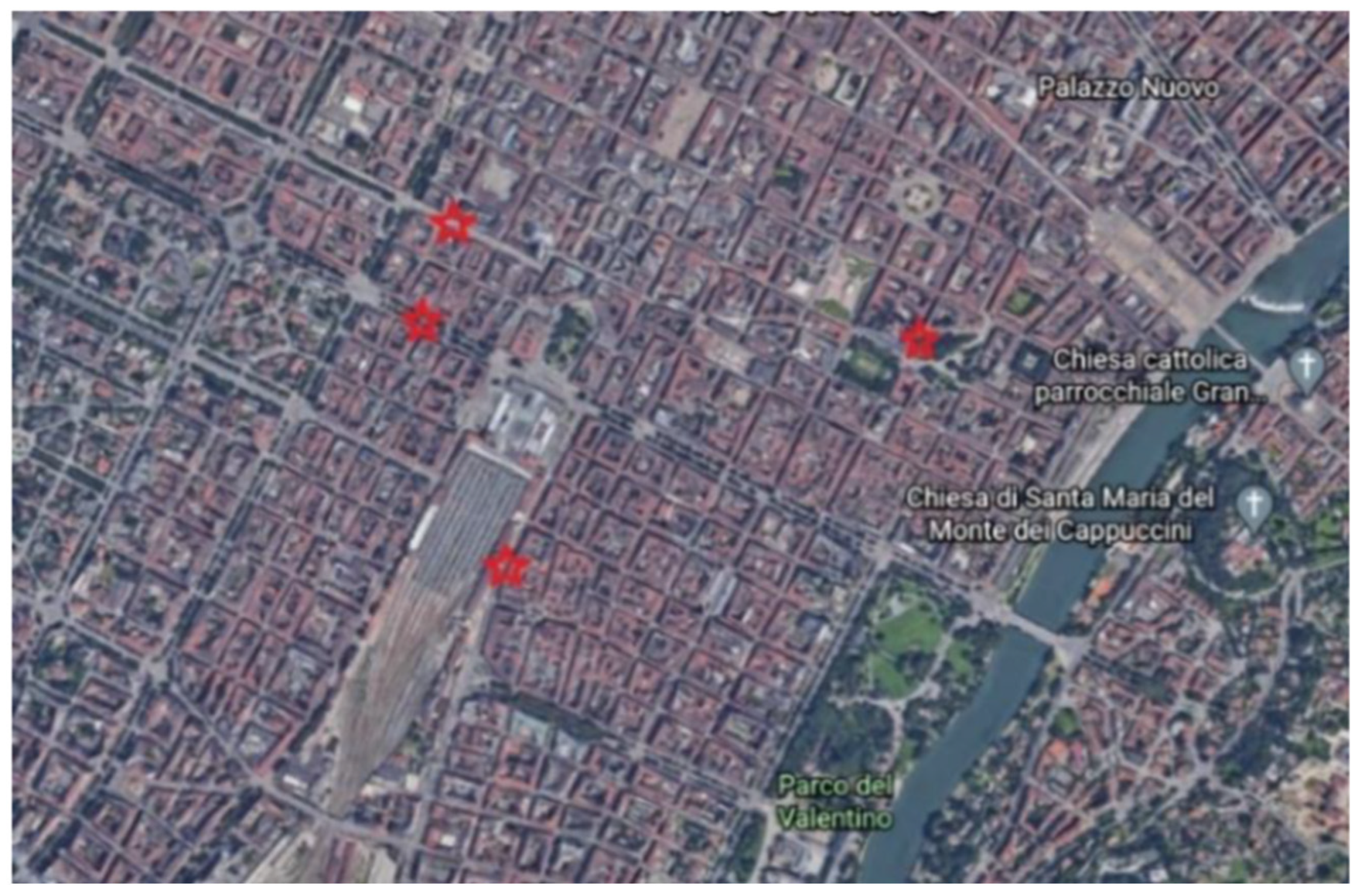
Figure 5.
Percentage of women declaring to use car in Turin based on age.
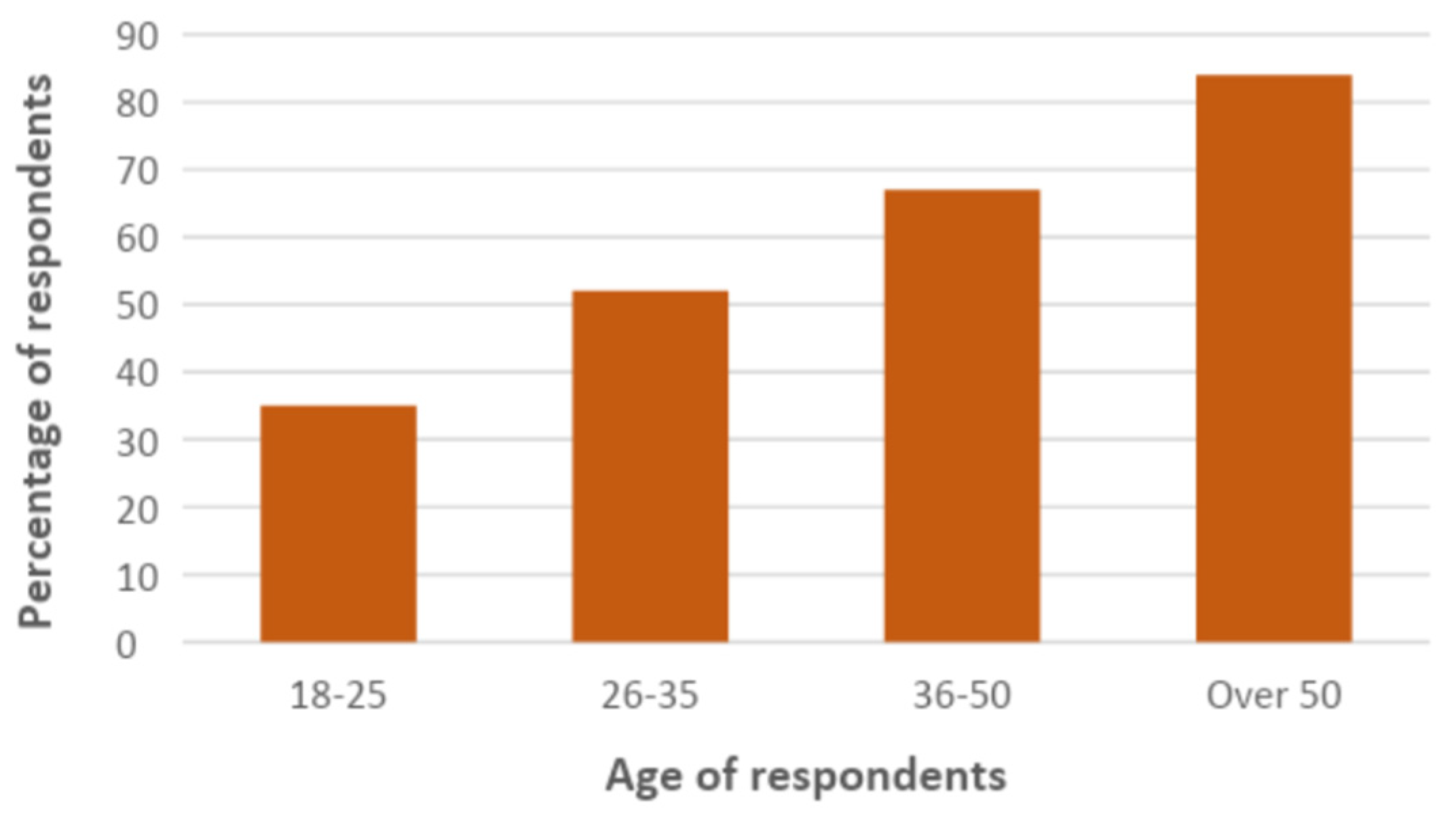
Figure 6.
All the factors included in the questionnaire that negatively influence women to cycle in Turin. Golden for security factors; red for safety reasons and orange for other means of transportation most preferred, and grey for other reasons.
Figure 6.
All the factors included in the questionnaire that negatively influence women to cycle in Turin. Golden for security factors; red for safety reasons and orange for other means of transportation most preferred, and grey for other reasons.
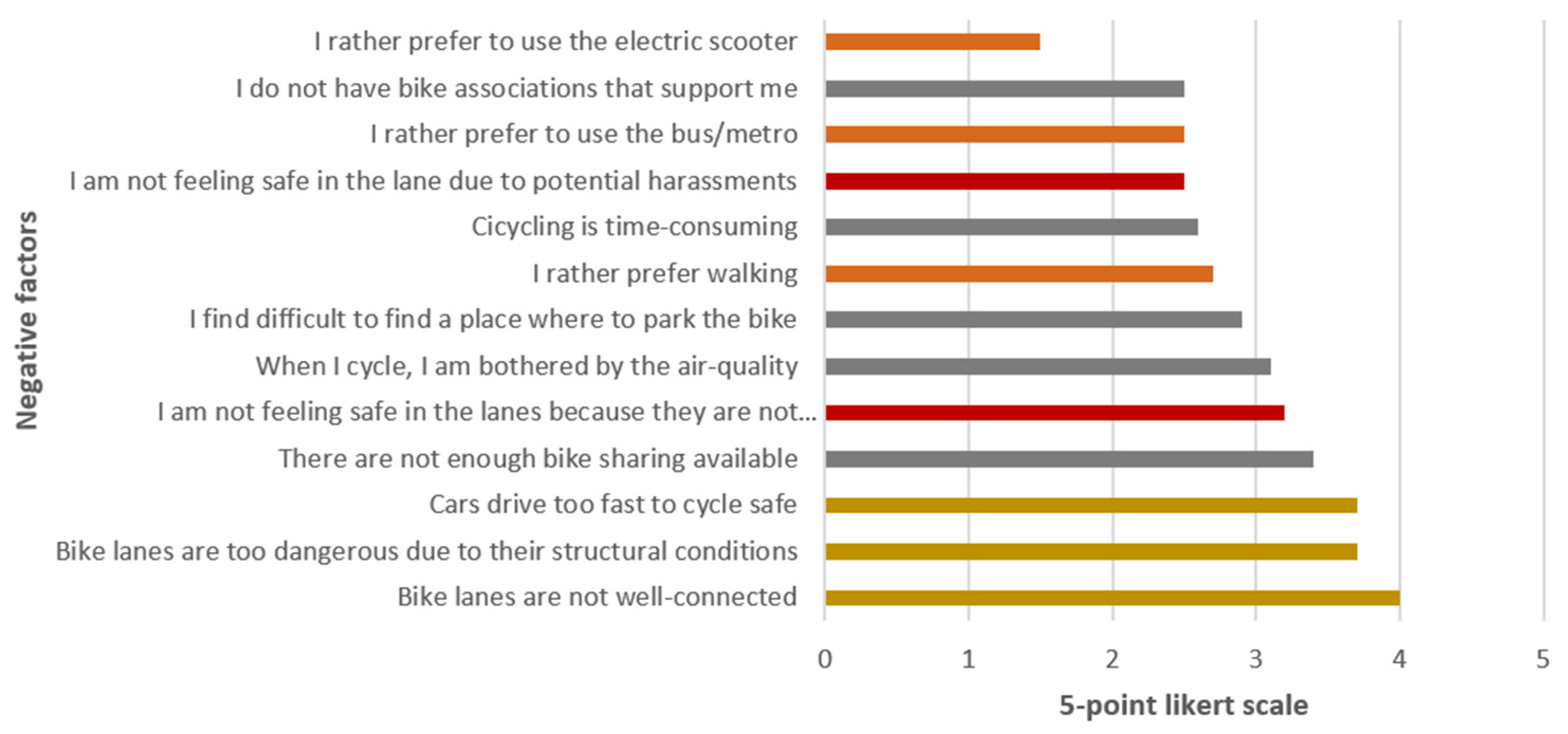
Figure 7.
All the factors included in the questionnaire that negatively influence women to cycle in Turin. Golden for security factors; red for safety reasons and orange for other means of transportation most preferred, and grey for other reasons.
Figure 7.
All the factors included in the questionnaire that negatively influence women to cycle in Turin. Golden for security factors; red for safety reasons and orange for other means of transportation most preferred, and grey for other reasons.
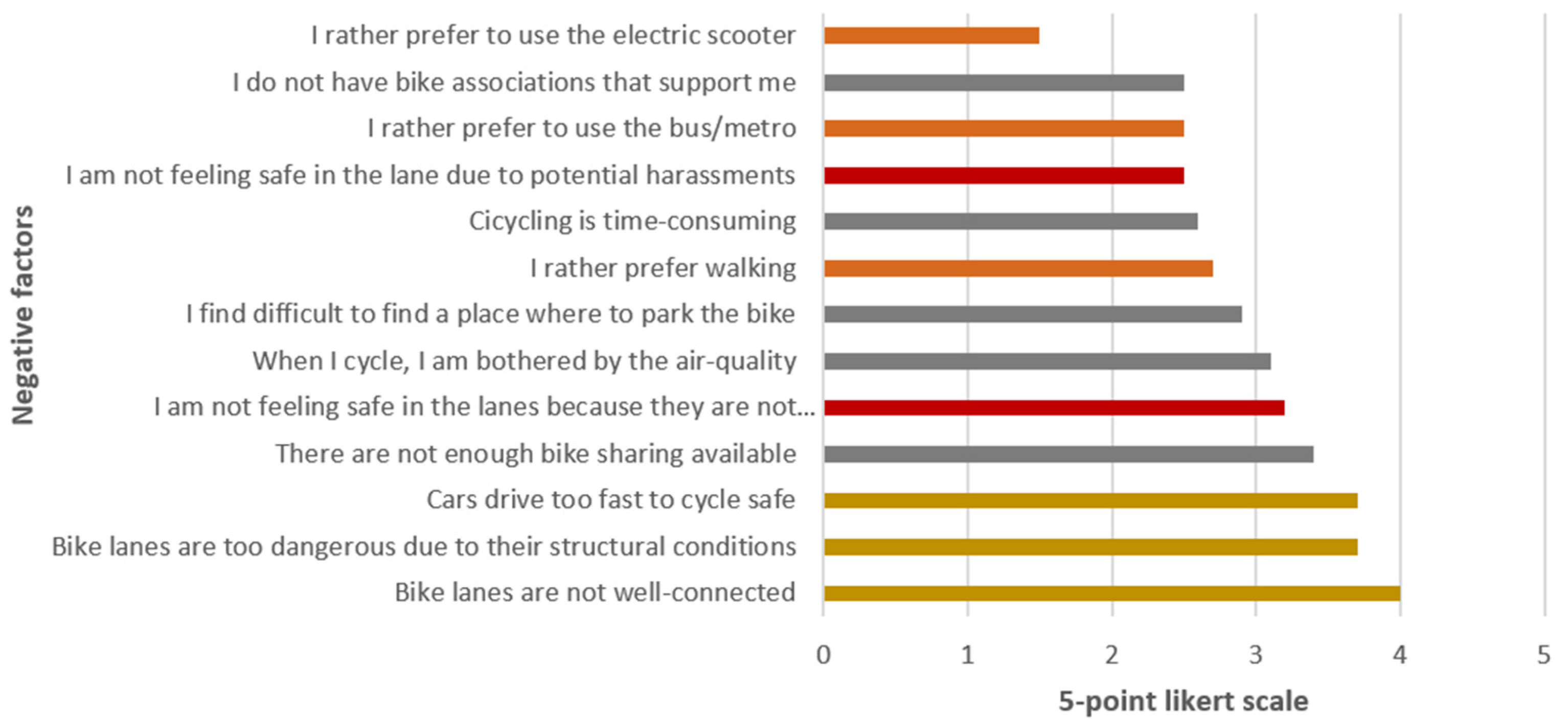
Figure 8.
Eleven bike infrastructures and services as proposed in the questionnaire.
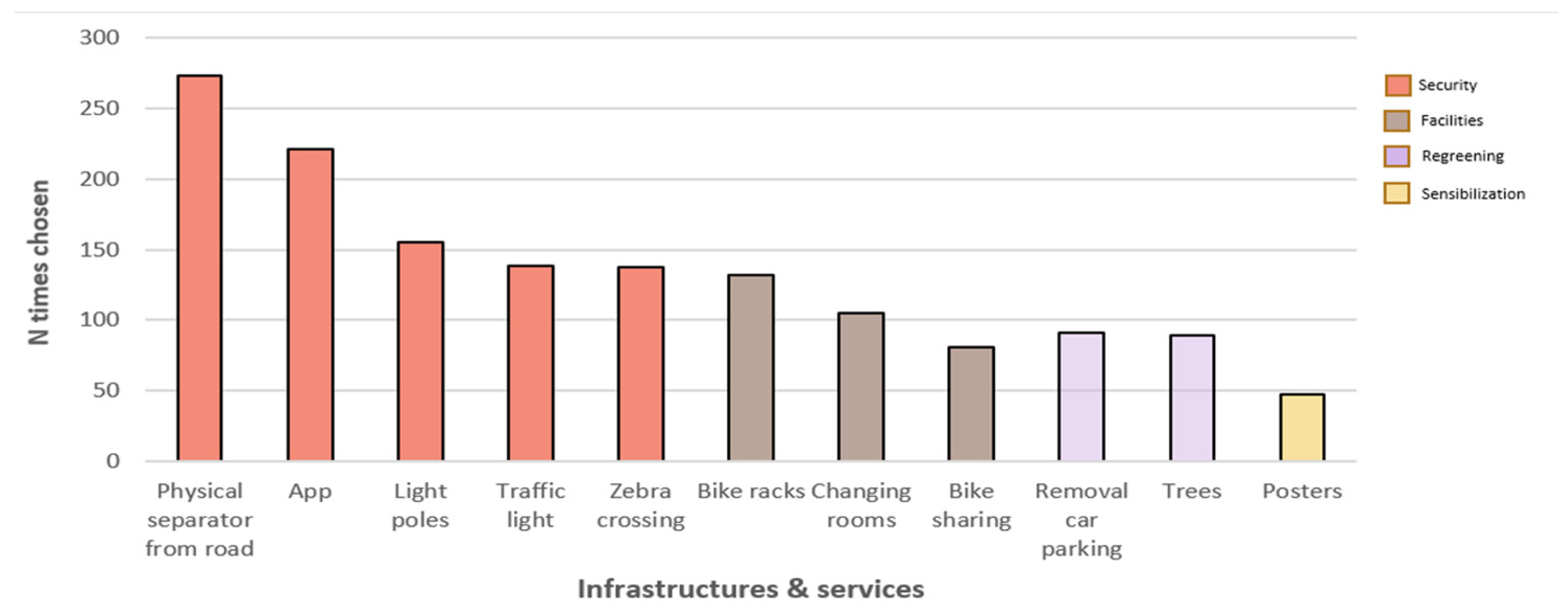
Figure 9.
Willingness to shift from vehicles to bicycles in case of a woman-friendly bike system.
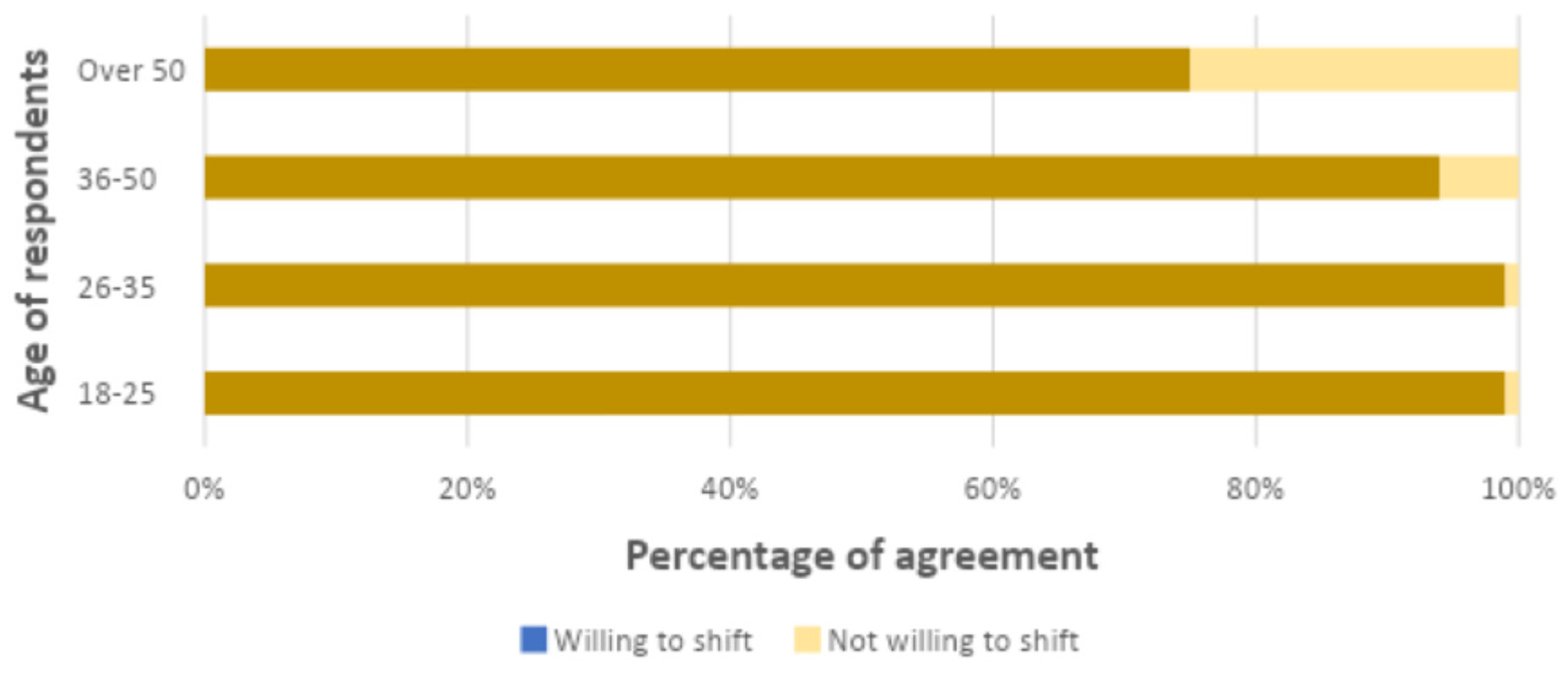
Figure 10.
Destinations towards which respondents are more stimulated to cycle.
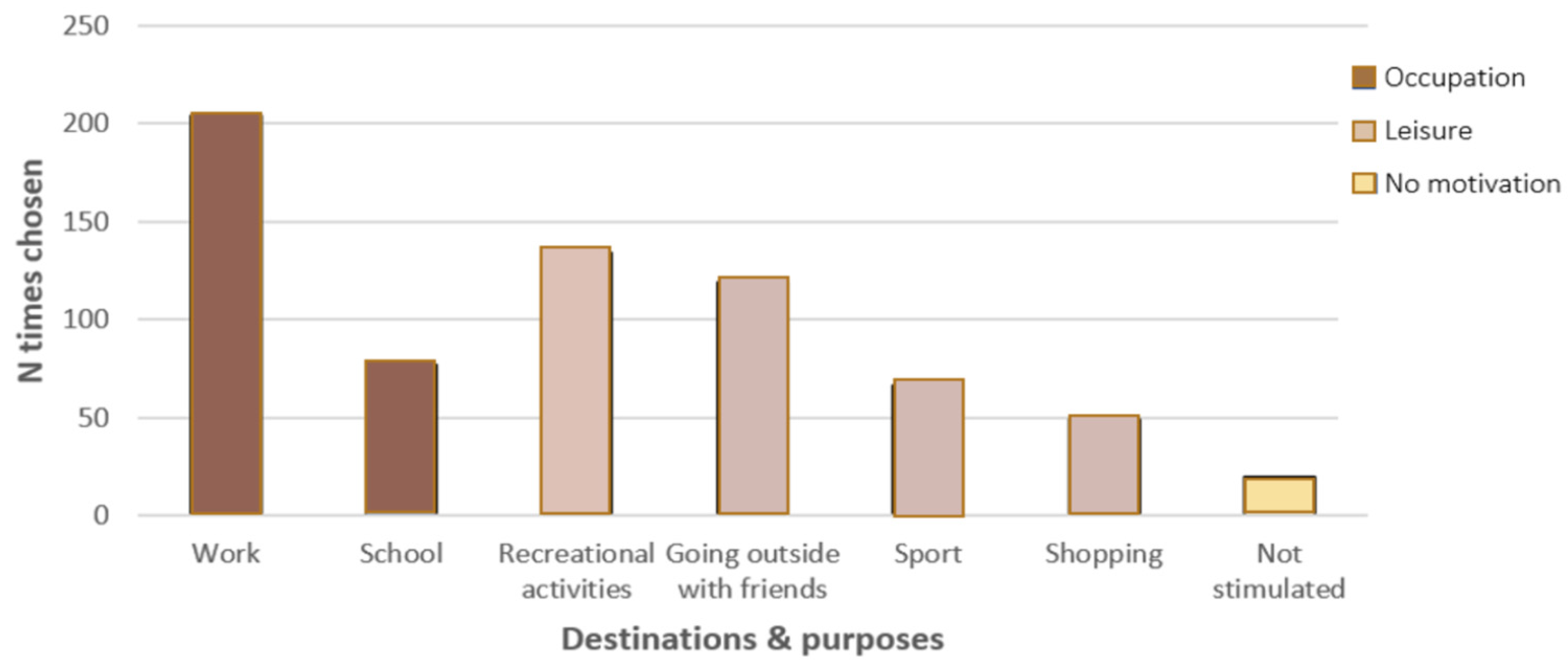
Figure 11.
Women’s and men’s number riding on four road in Turin. Observations were carried out during (A) day and at (B) night. The pictures show the four distinct bike lanes, each featuring varying bike infrastructures and facilities.
Figure 11.
Women’s and men’s number riding on four road in Turin. Observations were carried out during (A) day and at (B) night. The pictures show the four distinct bike lanes, each featuring varying bike infrastructures and facilities.
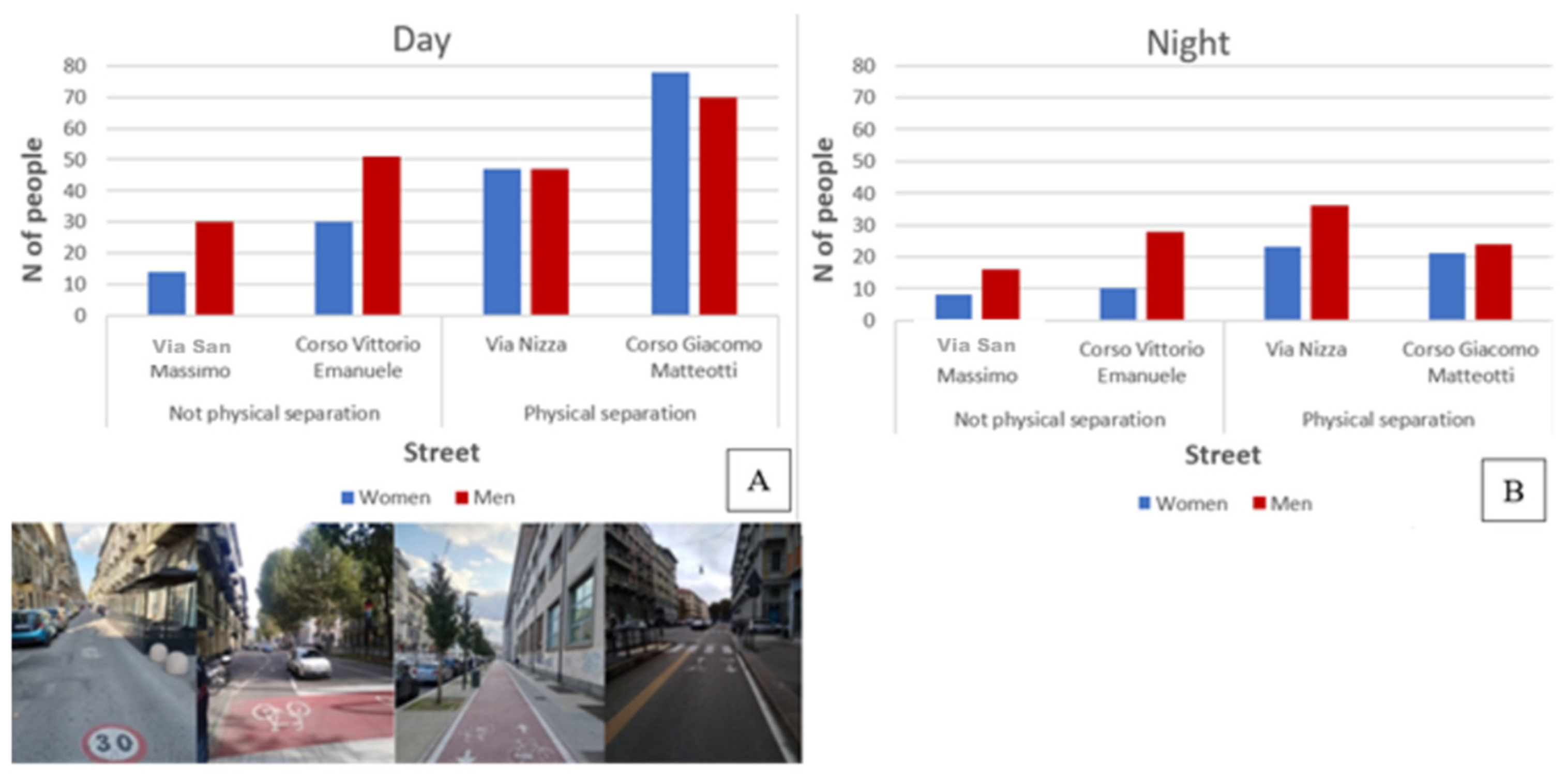
Figure 12.
Children’ number transported by women, men or independently during the day.
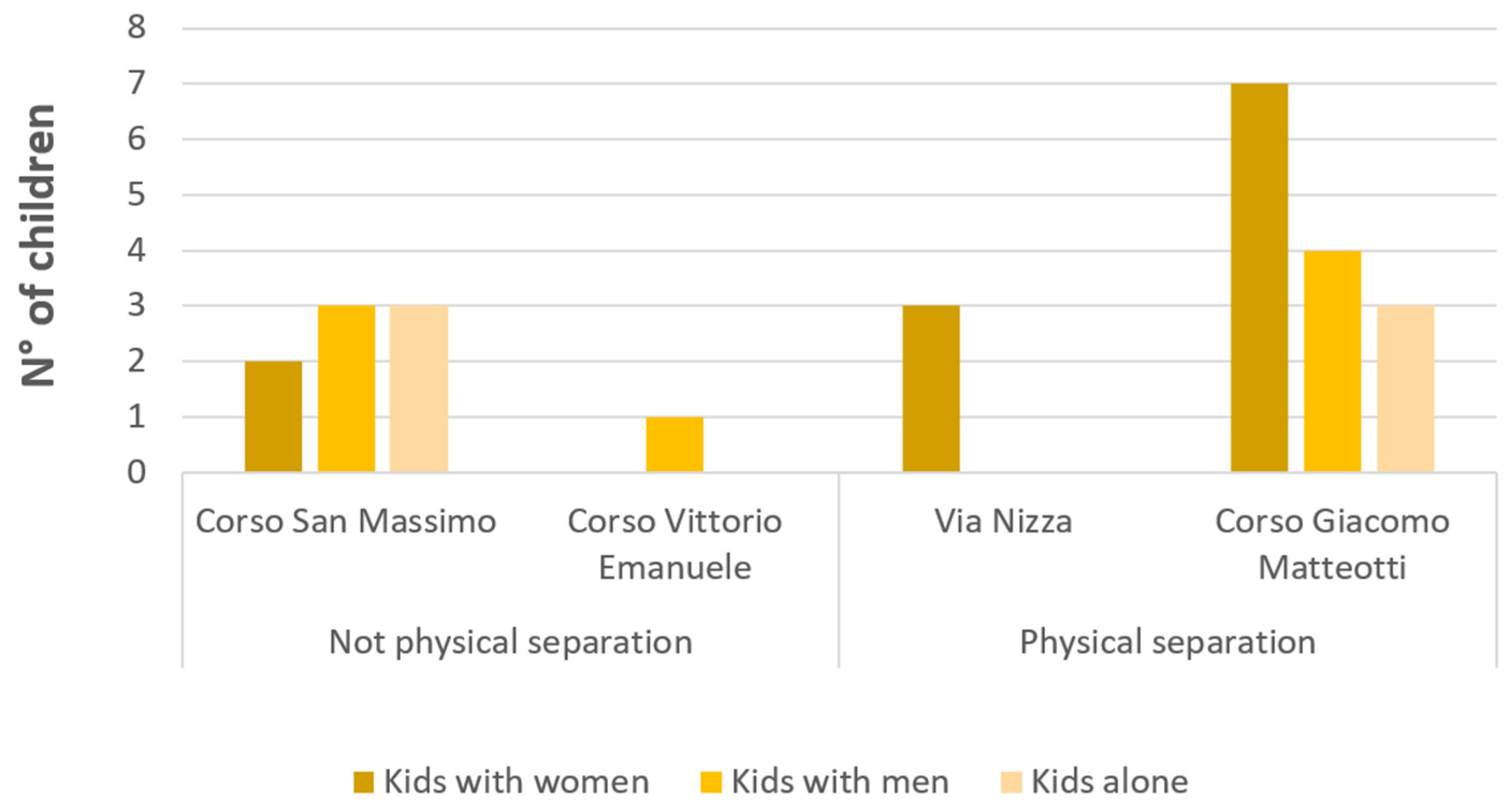
Figure 13.
Gas amount emitted by women and men. As for men (47% of the population of Turin) their potential emissions were not reduced but kept equal to those levels currently emitted. Men are responsible for 7.1*106 CO2, 4.1*102 CH4, and 3.3*102 N2O emitted.
Figure 13.
Gas amount emitted by women and men. As for men (47% of the population of Turin) their potential emissions were not reduced but kept equal to those levels currently emitted. Men are responsible for 7.1*106 CO2, 4.1*102 CH4, and 3.3*102 N2O emitted.
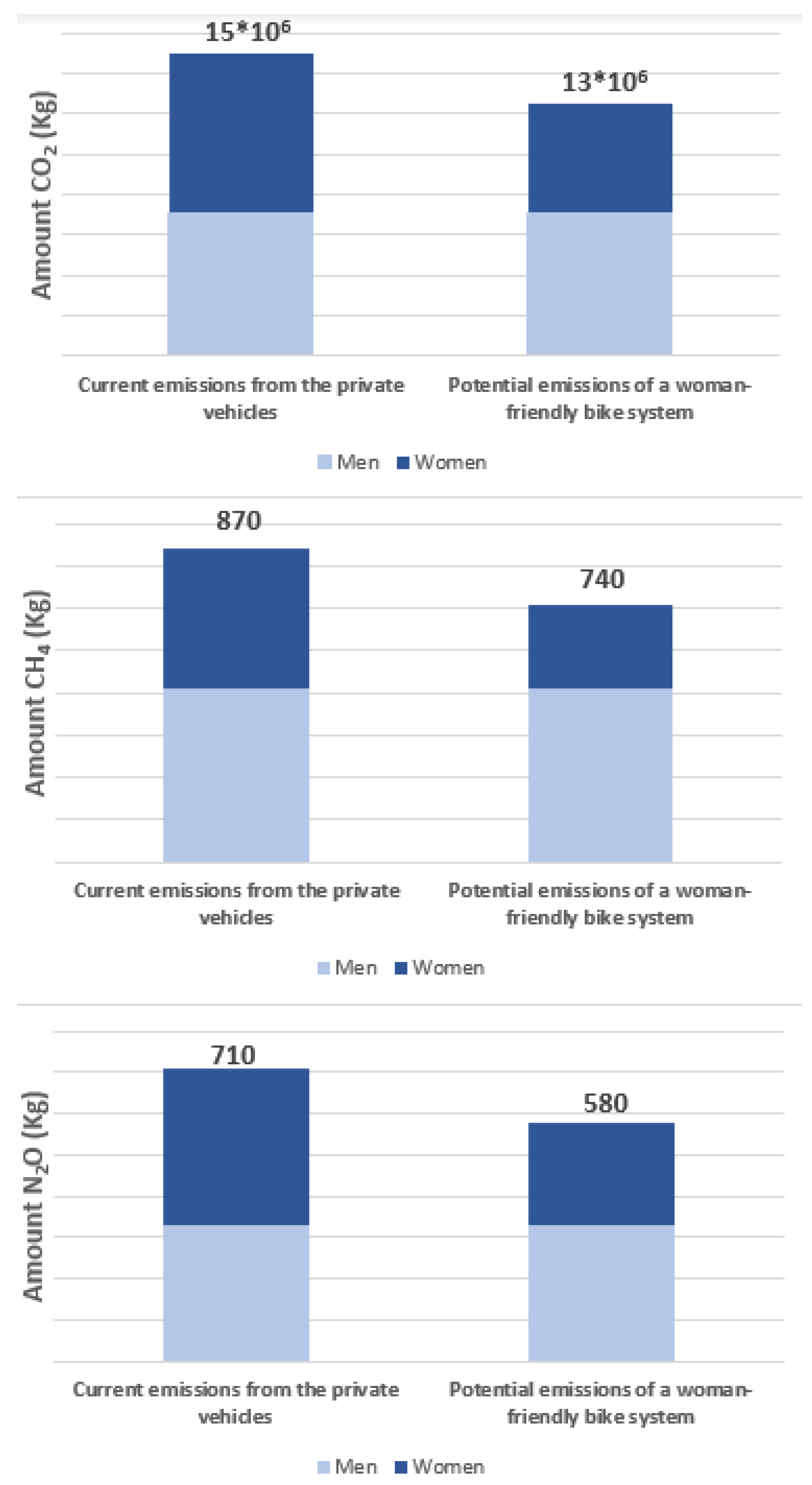

Table 1.
The correlation between the safety and security perceptions of cycling and respondents’ age.
Table 1.
The correlation between the safety and security perceptions of cycling and respondents’ age.
| Age | Safety | Security |
|---|---|---|
| 18-25 | 3.1 | 4.0 |
| 26-35 | 2.8 | 3.8 |
| 36-50 | 2.7 | 3.7 |
| Over 50 | 2.8 | 3.6 |
Table 2.
Current and potential CO2, CH4 and N2O emissions based on the current and potential kilometers traveled weekly by car by 360 respondents.
Table 2.
Current and potential CO2, CH4 and N2O emissions based on the current and potential kilometers traveled weekly by car by 360 respondents.
| Distance | CO2 (kg/week) | CH4 (kg/week) | N2O (kg/week) |
|---|---|---|---|
| Emissions based on current distance traveled (km) | 1.5*103 | 6.2*10−2 | 2.3*10−2 |
| Emissions based on potential distance traveled (km) | 1.0*103 | 4.4*10−2 | 1.5*10−2 |
| Difference of emissions (kg) | 5.0*102 | 1.8*10−2 | 0.8*10−2 |
| Difference of emissions (%) | 31% | 29% | 33% |
Disclaimer/Publisher’s Note: The statements, opinions and data contained in all publications are solely those of the individual author(s) and contributor(s) and not of MDPI and/or the editor(s). MDPI and/or the editor(s) disclaim responsibility for any injury to people or property resulting from any ideas, methods, instructions or products referred to in the content. |
© 2023 by the authors. Licensee MDPI, Basel, Switzerland. This article is an open access article distributed under the terms and conditions of the Creative Commons Attribution (CC BY) license (http://creativecommons.org/licenses/by/4.0/).
Copyright: This open access article is published under a Creative Commons CC BY 4.0 license, which permit the free download, distribution, and reuse, provided that the author and preprint are cited in any reuse.


