

Submitted:
24 September 2023
Posted:
26 September 2023
You are already at the latest version
Abstract
Heat transfer fluids are used in various industrial systems to maintain them in perfect operating conditions. Extensive research efforts have been dedicated to enhance the thermal properties of these heat transfer fluids to improve their efficiency. Developing nanofluids is a potential candidate for such enhancements. This study investigates the impact of incorporating TiO2 nanoparticles into two types of oils: transformer oil (NYTRO LIBRA) and virgin coconut oil (manufactured by Govi Aruna Pvt. Ltd.) at different temperatures and with varying volume fractions. The nanofluids were prepared using a two-step method by adding CTAB (Cetyltrimethylammonium bromide) surfactant. To minimize nanoparticle agglomeration, this study employed relatively low-volume fractions. Thermal properties by means of thermal conductivity, thermal diffusivity, and volumetric heat capacity were measured in accordance with ASTM (American Society for Testing and Materials) standard methods, using a multifunctional thermal conductivity meter (LAMBDA thermal conductivity meter). The measured thermal conductivity values were compared with theoretical models and previous research findings. It was confirmed that the modification of thermal properties was enhanced by doping TiO2 nanoparticles with different volume fraction.
Keywords:
transformer oil
; coconut oil
; tio2 nanoparticles
; nanofluids
; thermal properties
1. Introduction
'Nanofluid' has been a developing topic in the engineering and scientific community since the beginning of the 21st century for various engineering fields' applications, its initial introduction by Choi in 1995 [1,2]. The term nanofluid is used to describe a solid-liquid mixture containing nanoscale particles of average size less than 100 nm with any kind of a basefluid.
Numerous productive research efforts have been carried out to using nanoparticles, particularly in the context of thermal conductivity, across various fields. These nanoparticle-based fluids, termed nanofluids, have various applications in industrial areas. It can be identified the rapid increment of the research efforts related to nanofluids in the past two decades. This literature has investigated several factors that influence the thermal properties of nanofluids, such as nanoparticle concentration, particle size, particle shape, thermal resistivity of interfacial layer, and Brownian motion [3,4,5].
It has been reported that nanofluids apply in various industrial cooling applications, such as electrical power systems, electronic cooling applications, biomedical systems, and the automobile industry [6,7,8]. Apart from the experimental works, several studies have been carried out to model the thermal conductivity of nanofluids, considering both the macroscopic and microscopic properties. However, widening the empirical studies to apply nanofluids in real-time applications and build theoretical models is essential for advancing future heat transfer studies.
Nanofluids are generally developed by doping various nanoparticles such as metal nanoparticles (Au, Ag, Cu), metal oxides (TiO2, Al2O3, CuO, Fe2O3), carbon-based nanoparticles (Graphene, Fullerene, Carbon Nano Tubes) into several liquids such as water, mineral oils, vegetable oils, synthetic and natural esters. Surfactants are used to improve the nanoparticle suspension in liquids where necessary. Consequently, these efforts have enhanced base fluids' dielectric and thermal properties. Some of the related productive research works carried out to enhance the thermal properties of fluids are mentioned below.
Sohel et al. [9] discovered the thermal properties such as thermal conductivity, thermal diffusivity, and specific heat capacity of Al, Al2O3, and TiO2 nanoparticles suspended in ethyl glycol and engine oils and compared their results with several theoretical implementations concerning different volume fractions. Another research validated the advantage of using Al2O3 and Fe2O3 nanoparticles in engine oils for different mass fractions, considering the temperature as another variable. Their primary measurement was thermal conductivity; the measurement method was the transient hot-wire method [10]. Eric et al. [11] investigated the thermal performance of Al2O3 and Al2O3-Fe hybrid-based nanofluids by comparing theoretical models of dynamic viscosity and thermal conductivity. CeO2-water nanofluid also enhanced thermal conductivity and dynamic viscosity compared to pure water [12].
J. Sunil et al. dispersed CaO nanoparticles in rice bran oil; both rarely used nanoparticle and base oil types compared to other research studies. Both materials also have biodegradable quality. This effort also enhanced the thermal properties of base oils by a recognizable level [13]. Using exfoliated hexagonal boron nitride (h-BN) nanoparticles with vegetable oil is another successful effort to develop a biodegradable nanofluid [14]. Zbigniew et al. [15] used TiO2 and C60 nanoparticles with natural easter as an electro-insulative liquid in power transformers. Replacing petroleum-based products with bio-based solutions is becoming a promising research area in the effort to move towards green technology.
Thermophysical properties of carbon-based nanofluids such as graphene, amorphous graphene, graphene quantum dots, controlled reduced graphene oxide, carbon nanotubes, and fullerene are critically discussed in several research papers considering their unique characteristics compared to other metallics and metal oxide nanoparticles [16]. Almeida et al. [17] dispersed graphene nanoparticle transformer oils and investigated the thermophysical properties such as kinematic viscosity, surface tension, density, and specific resistance. It has been reported that amorphous graphene is also a good candidate to enhance the electrical and thermophysical properties of transformer oils due to their interaction between nanosheets and the clustering of nanostructures [18]. Zhang et al. [19] dispersed controlled reduced graphene oxide in water for different concentrations also represented the advantage of applying them in industrial cooling applications. Primarily, this research represented that controlled reduced graphene oxide can enhance the thermal conductivity of water more than other graphene nanoparticles. Amiri et al. [20] have shown that amine-treated graphene dots can produce enormously stable nanofluids with superior thermal conductivity and higher breakdown voltage, confirming their potential.
Researchers have developed several theoretical models to predict the thermal conductivity of nanofluids throughout the past few decades. Maxwell's model was the first thermal conductivity empirical model [21]. Most researchers have followed Maxwell's model and developed some advanced models such as the Hamilton crosser model and Bruggeman model. However, recent research articles show that developing a common thermal conductivity model for all nanofluids is challenging, considering the microscopic parameters such as nanolayer thermal conductivity, nanolayer thickness, particle size, particle shape, and particle interaction of different materials. As a result, researchers started to develop specific models for specific nanoparticles and base fluids.
In this research work, TiO2 (Titanium dioxide) has been selected as the nanoparticle, and the base fluids are transformer oil and coconut oil. Several research studies have verified that TiO2 can enhance the electro-insulation properties of transformer oils [22,23]. Even though some available research combined the TiO2 and transformer oils, there are very few research articles for TiO2-based coconut oils, to the best of our knowledge [24,25]. This study compares the thermal conductivity, thermal diffusivity, and volumetric heat capacity of TiO2-based nanofluids. In addition, the experimental values of thermal conductivity are compared with three theoretical models: Maxwell model [21], Maxwell-Gammet's model [21], Pak & Cho model [26], and along with several other experimental studies.
2. Materials and Methods
2.1. Materials
2.2. Preparation of Nanofluids
The two-step preparation method was used to utilize the base fluids with the nanoparticles. First, the nanomaterial was dispersed in the base fluid with different volume fractions from 0.002 vol. % to 0.012 vol. %.
Figure 1.
Two - Step Method of Nano-Fluid Preparation.
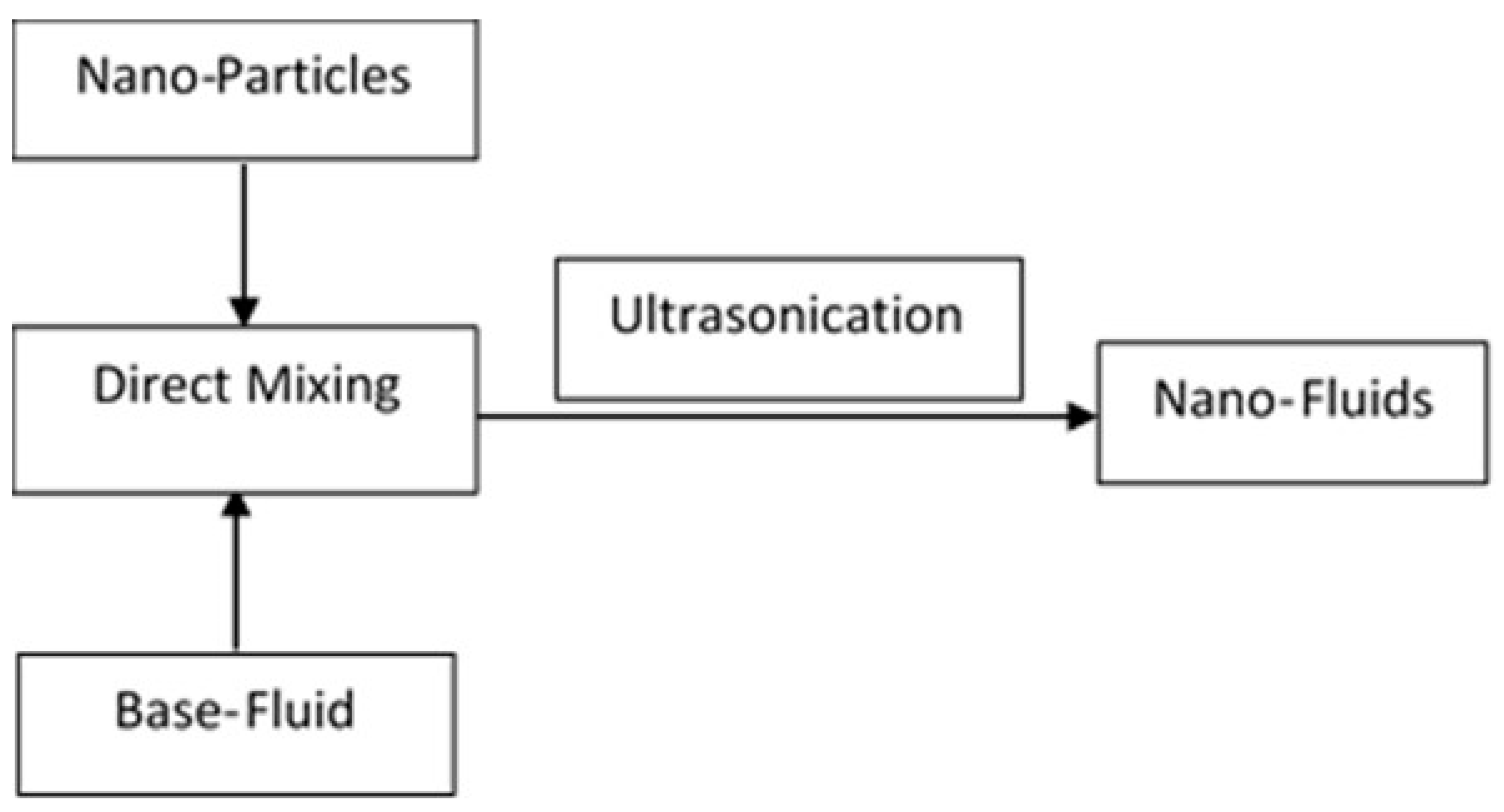
The volume percentage of the nanofluid was calculated from the eq. 01 using the data from Table 1 and Table 2. The weights were measured with an accuracy of 0.1 mg using BSA224S-CW precision balance. After measuring the weights, the base oil beaker was placed on the magnetic stirrer, and the temperature increased to 60 °C. Then, the nanopowder was added to the oil with CTAB (Cetyl trimethyl ammonium bromide) in a 1:0.5 ratio. Magnetic stirring was carried out for 1 hour at 60 ℃ temperature and 500 rpm. Then, the nanofluid samples were sonicated for 4 hours in the bath-type ultrasonicator at 60 °C temperature to eliminate particle agglomeration. The physical appearance of base oils, nanoparticles, surfactants, and nanofluids is shown in Figure 2. Each prepared sample was left undistributed and observed by visual inspection for five days.
2.3. Thermal Conductivity Measurement
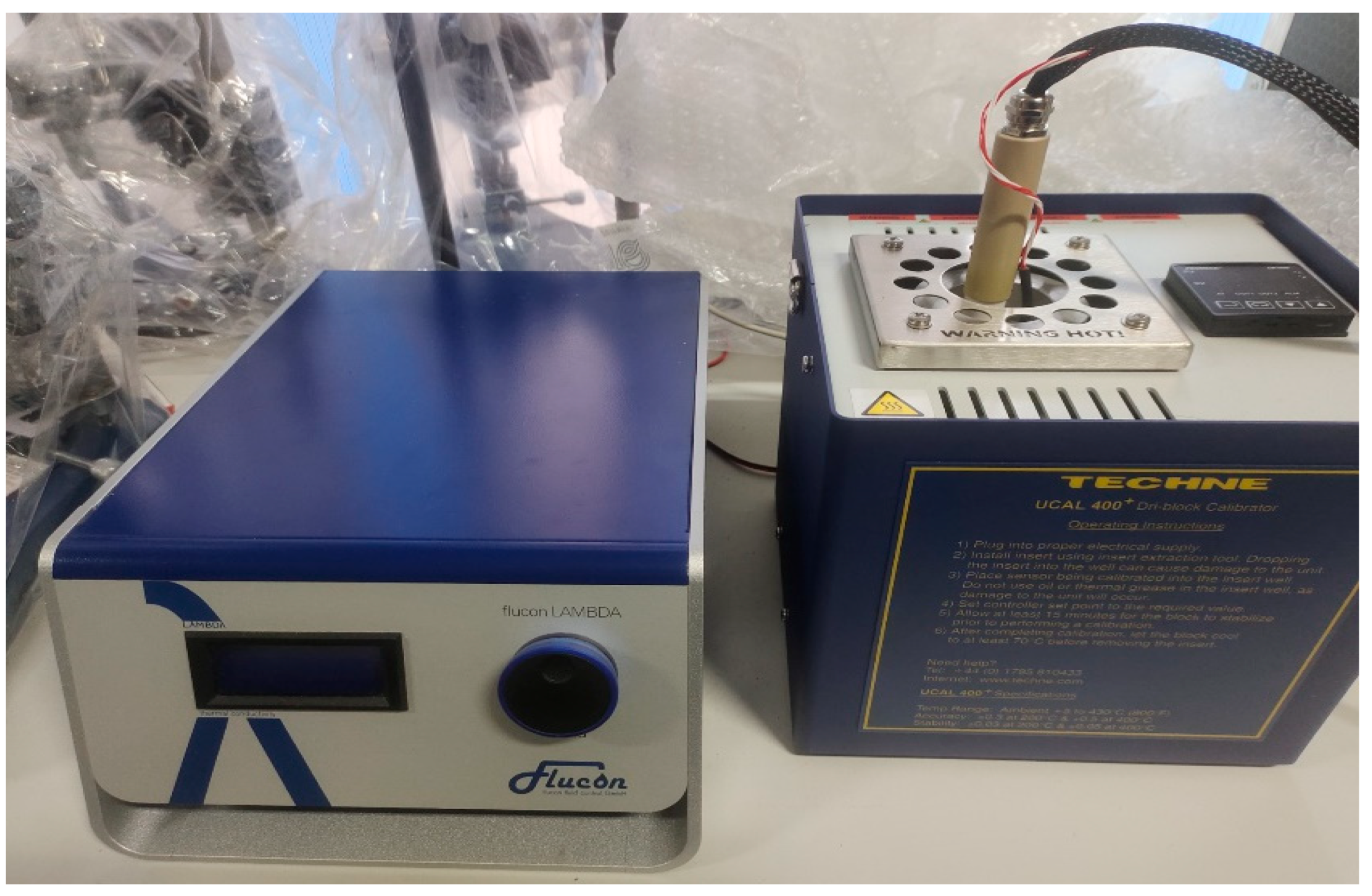
A Lambda Thermal Conductivity Meter was used to measure thermal conductivity, thermal diffusivity, and volumetric heat capacity according to ASTM D7896-19 standardization [31]. This instrument uses the in-stationary hot-wire resistance method to measure the liquids' thermal conductivity and diffusivity. The required liquid volume is 40 ml, and the selected temperature range is 40 to 120 °C. The selected range is significantly broader compared to previous studies. This instrument is capable of measuring values from 10 to 2000 mWm-1K-1. A PT-100 temperature sensor is included in the sample cup, which has a ± 0.1 °C accuracy. A dry-block calibrator from the same manufacturer was used to reduce the vibrations and maintain a constant temperature while measuring.
The functional core of the in-stationary hot-wire method is the long cylindrical heat source. The theory of hot-wire instruments produces a constant heat stream input q into the surrounding liquid. This will cause a time-dependent temperature field in the liquid, as represented. The temperature rise is changed with the changing electrical resistance of the hot wire. The following equation can be used to measure the thermal conductivity of the liquid.
Where λ - Thermal Conductivity (Wm-1K-1), q - Constant heat stream (Wm-1), and ϑ - Temperature at time t.
When a constant voltage is supplied to the circuit, the platinum wire's electric resistance rises with the wire's temperature. Measured data of temperature rise is linear against logarithmic time interval. The thermal conductivity is calculated from the slope of the rise in the wire's temperature against the logarithmic time interval by equation 1.
The temperature regulation of the instruments is made with a standard PI (Proportional and Integral) controller with pre-calibrated controller constant values.
Figure 3.
LAMBDA Multifunctional Thermal Conductivity Meter.
2.4. Thermal Diffusivity Measurement
Thermal diffusivity is a measurable thermal property according to the ASTM D7896-19 standard method and a critical factor in heat transfer fluids. Thermal diffusivity measures how quickly the temperature will change when it is cooled and heated. It is the thermal inertia of a material. Thermal diffusivity and kinematic viscosity both play similar roles in heat transferring.
Here, K is the thermal conductivity, is the density of the liquid, and Cp is the heat capacity at constant pressure.
2.5. Volumetric Heat Capacity Calculation
Volumetric heat capacity can be calculated using thermal conductivity and thermal diffusivity.
Here λ is the Thermal Conductivity, and aT is the Thermal Diffusivity.
3. Results and Discussions
3.1. Stability of Nanofluid with time
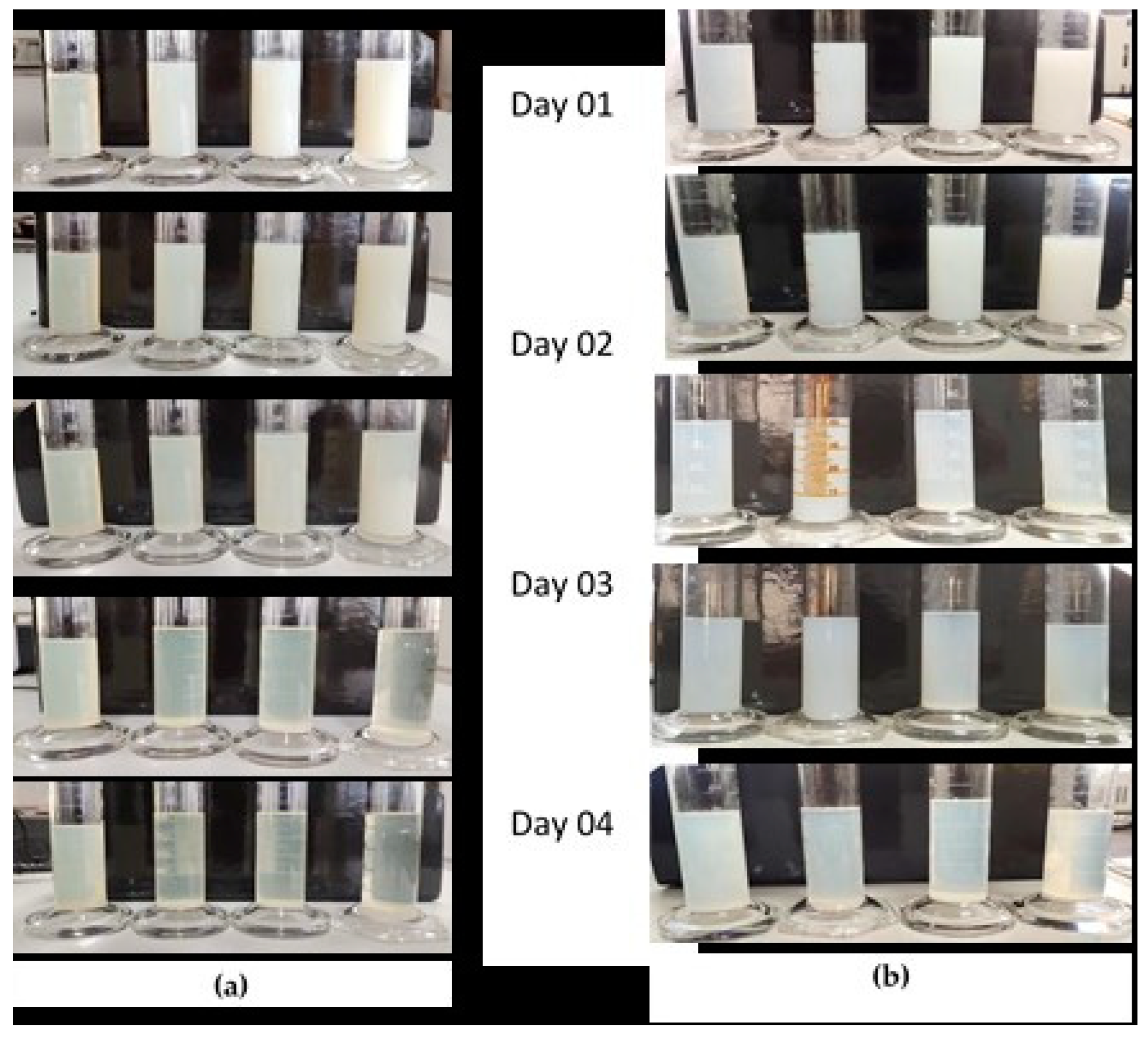
The stability of the transformer and coconut oil with TiO2 nanoparticles was analyzed over five days. Both oil samples with 0.002 vol.% concentration displayed the highest stability compared to other higher volume concentrations. On day 4, a thick layer of TiO2 in the 0.012 vol.% samples and in other samples on day 5 became observable Dispersion of metal-oxide nanoparticles in non-polar oils is challenging compared to carbon-based nanomaterials.
Figure 4.
Visual inspection of nanofluid samples with the time: (a) 0.002 vol. %, 0.004 vol. %, 0.008 vol.% 0.012 vol.% (Top to Bottom) TiO2/ Transformer Oil Nanofluid from day 01 to day 05; (b) 0.002 vol. %, 0.004 vol. %, 0.008 vol.% 0.012 vol.% (Top to Bottom) TiO2/ Coconut Oil Nanofluid from day 01 to day 05.
Figure 4.
Visual inspection of nanofluid samples with the time: (a) 0.002 vol. %, 0.004 vol. %, 0.008 vol.% 0.012 vol.% (Top to Bottom) TiO2/ Transformer Oil Nanofluid from day 01 to day 05; (b) 0.002 vol. %, 0.004 vol. %, 0.008 vol.% 0.012 vol.% (Top to Bottom) TiO2/ Coconut Oil Nanofluid from day 01 to day 05.
3.2. Effect of Temperature on Thermal Conductivity
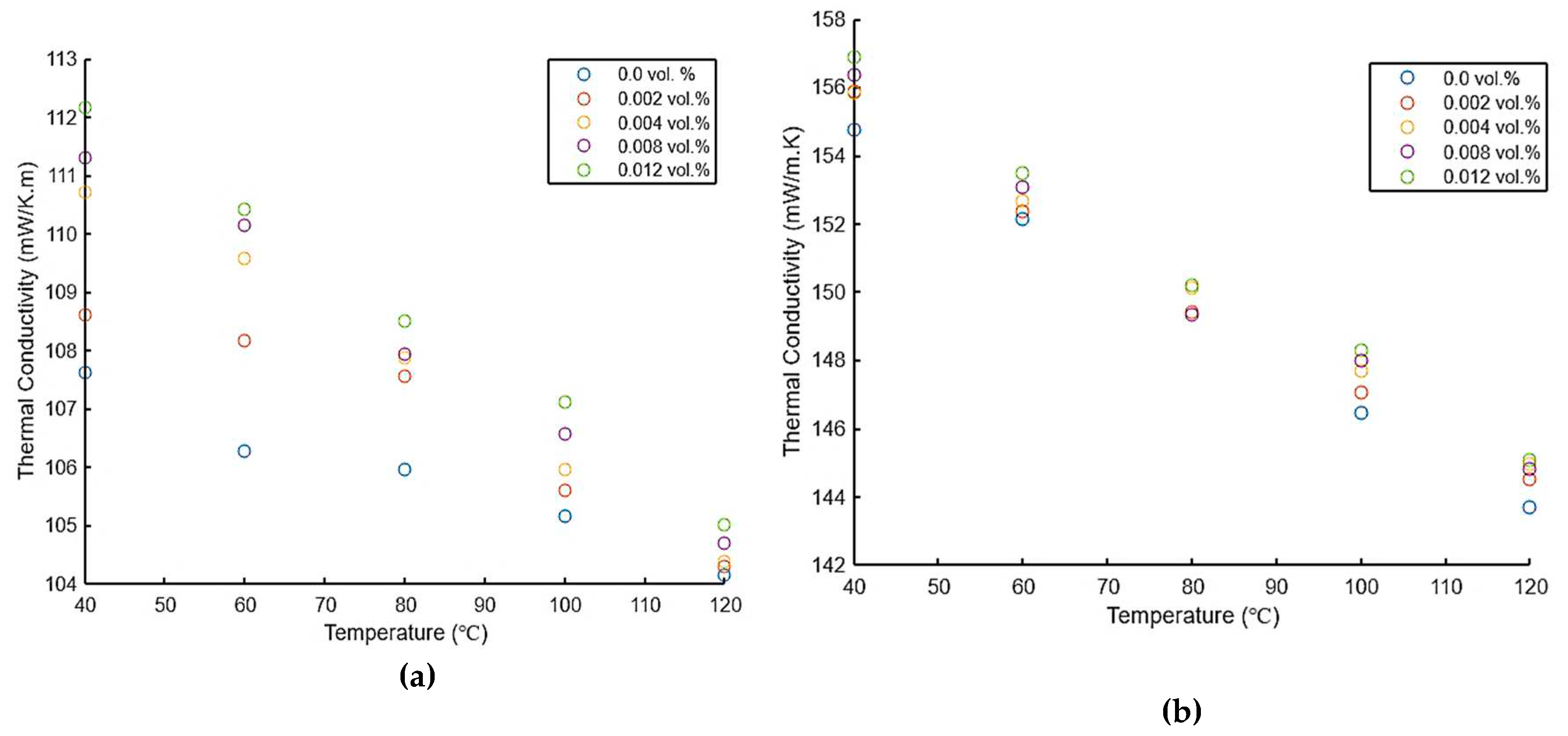
The thermal conductivity of base oils and nanofluids was evaluated over the temperature range from 40 to 120 °C. The findings indicate that coconut oil has significantly higher thermal conductivity than transformer oil, making it a potential alternative for future heat transfer applications. Both oils exhibit a decrease in thermal conductivity with increasing temperature, which is consistent with most oil types [32].
Even though there is some previous research related to TiO2-based transformer oils, research works are needed on TiO2-based coconut oils. It can be observed that the impact of nanoparticles on increasing the thermal conductivity has a more significant effect on transformer oils rather than coconut oils. Furthermore, TiO2 nanoparticles have a more substantial effect on enhancing water and ethylene glycol fluids' thermal conductivity [33,34]. This observation can be justified because water or ethylene glycol base fluids can allow nanoparticles to perform Brownian motion throughout the nanofluid, which is a critical factor in increasing the thermal conductivity of nanofluids.
Figure 5.
Thermal conductivity vs. temperature at different temperatures of (a) Nanofluid/ Transformer Oil, (b) Nanofluid/ Coconut Oil
Figure 5.
Thermal conductivity vs. temperature at different temperatures of (a) Nanofluid/ Transformer Oil, (b) Nanofluid/ Coconut Oil
3.3. Effect of Nanomaterial Volume Fraction on Thermal Conductivity
Variation of thermal conductivity of the nanofluid as a function of temperature at different volumetric fractions is shown in Figure 6. As the results indicate, thermal conductivity decreases with temperature increasing. However, the increment of thermal conductivity with the nanoparticle volume fraction can be discovered. Adding nanoparticles to the oil also alters the behavior of thermal conductivity of the base oil, which leads to the increasing trend of thermal conductivity at all concentrations under any temperature conditions.
3.4. Comparison of thermal conductivity enhancement with experimental values with theoretical model values at 40 °C
According to the experimental results, TiO2 nanoparticles considerably enhance the thermal conductivity of transformer oils more than coconut oils, which may be attributed to the higher viscosity of coconut oils.
Figure 7.
Thermal conductivity enhancement vs. volume fraction comparison with theoretical models of (a) Nanofluid/ Transformer Oil and (b) Nanofluid/ Coconut Oil.
Figure 7.
Thermal conductivity enhancement vs. volume fraction comparison with theoretical models of (a) Nanofluid/ Transformer Oil and (b) Nanofluid/ Coconut Oil.
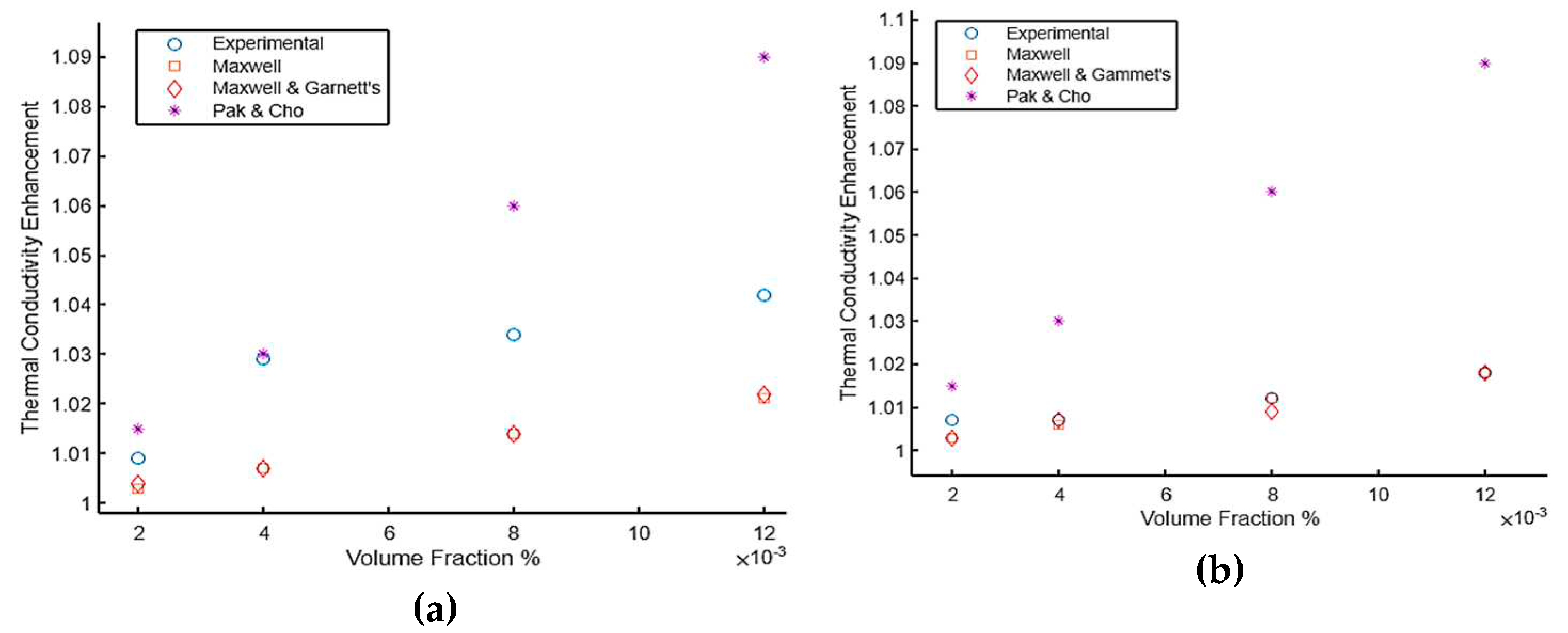

Table 3.
Comparison of measured values of thermal conductivity ratio with predicted value by different thermal conductivity ratio models of transformer oil-based nanofluids at 40 °C.
Table 3.
Comparison of measured values of thermal conductivity ratio with predicted value by different thermal conductivity ratio models of transformer oil-based nanofluids at 40 °C.
| Nanoparticle Volume Fraction | 0.002 | 0.004 | 0.008 | 0.012 |
|---|---|---|---|---|
| Experimental Values | 1.009 | 1.029 | 1.034 | 1.042 |
| Maxwell Model (% diff) | 1.003 (0.59 %) | 1.007 (2.14 %) | 1.014 (1.93 %) | 1.021 (2.01 %) |
|
Maxwell & Gammet's Model (% diff) |
1.004 (0.50 %) | 1.007 (2.14 %) | 1.014 (1.93 %) | 1.022 (2.01 %) |
| Pak & Cho Model (% diff) | 1.015 (0.59 %) | 1.030 (0.10 %) | 1.060 (2.51 %) | 1.090 (4.61 %) |
Table 4.
Comparison of measured values of thermal conductivity ratio with predicted values by different thermal conductivity ratio models of coconut oil-based nanofluids at 40 °C.
Table 4.
Comparison of measured values of thermal conductivity ratio with predicted values by different thermal conductivity ratio models of coconut oil-based nanofluids at 40 °C.
| Nanoparticle Volume Fraction | 0.002 | 0.004 | 0.008 | 0.012 |
|---|---|---|---|---|
| Experimental Values | 1.007 | 1.007 | 1.010 | 1.014 |
| Maxwell Model (% diff) | 1.003 (0.40 %) | 1.006 (0.10 %) | 1.012 (0.20 %) | 1.018 (0.39 %) |
| Maxwell & Gammet's Model(% diff) | 1.003 (0.40 %) | 1.007 (0.00 %) | 1.009 (0.01 %) | 1.018 (0.39 %) |
| Pak & Cho Model (% diff) | 1.015 (0.79 %) | 1.030 (2.28 %) | 1.060 (4.85 %) | 1.090 (7.50 %) |
When comparing the different thermal conductivity models, it can be observed that Maxwell & Gammet's model is more suitable for predicting TiO2-Oil-based nanofluids, especially in the case of coconut oil-based nanofluids.
3.5. Comparison of Thermal Conductivity Results with Previous Research of TiO2-Nanofluids
When Comparing previous research results with oil-based nanofluids, it can be observed that the contribution of TiO2 nanoparticles is much less compared to water or ethylene glycol-based nanofluids. This phenomenon might be caused by nanoparticles' difficulty performing Brownian motion in oils rather than fluids like water ethylene-glycol.
Table 5.
Thermal conductivity results of previous TiO2-based nanofluids.
| Nanoparticle Volume Fraction (%) | Base fluid | Nanomaterial | Concentration | Maximum Enhancement |
|---|---|---|---|---|
| [35] | Diathermal Oil | TiO2 - Anatase | 0.2 – 1.0 vol.% | 7.1 % |
| [15] | Synthetic Easter Oil | TiO2 | 0.82 g·L-1 | 3.2 % |
| [36] | Synthetic Easter Oil | TiO2 - Rutile | 0.005 – 0.05 vol. % | 8.3 % |
| [37] | SAE 15W40 engine oil | TiO2 | 0.1 – 1.0 wt. % | 4.54 % |
| [38] | Ethylene Glycol | TiO2 | 1.0 – 7.0 vol. % | 19.52 % |
| [39] | BioGlycol: Water (20:80) mixture | TiO2 | 0.5 – 2.0 vol. % | 12.6 % |
| [40] | Water: Ethylene Glycol (60:40) mixture | TiO2 | 0.5 – 1.5 vol. % | 15.35 % |
| Present Study | Transformer Oil | TiO2 - Anatase | 0.002 – 0.012 vol.% | 4.2 % |
| Coconut Oil | TiO2 - Anatase | 0.002 – 0.012 vol.% | 1.4 % |
3.6. Effect of Temperature and Volume Fraction on Thermal Diffusivity
According to Figure 8, it can be identified that the dispersed nanoparticles have no significant impact on both base oils. This may be partly due to the slight variation of the thermal conductivity since the specific heat capacity has a negligible variation since there is no phase change of the material. However, it can be identified that the thermal diffusivity of coconut oil is slightly higher than that of transformer oil, which again confirms that coconut oil can be identified as a potential candidate for industrial cooling applications. Also, the thermal diffusivity of both oil types decreases with temperature
3.6. Effect of Temperature and Volume Fraction on Thermal Diffusivity
The volumetric heat capacity of a nanofluid can be identified as follows,
Here, ϕ is the volume ratio of nanoparticles and the base fluid, ρ is the density, c is the specific heat capacity, and a substance's specific volumetric heat capacity is given by ρc.
Figure 9.
Volumetric heat capacity vs. temperature at different volume fractions of (a) Nanofluid/ Transformer Oil and (b) Nanofluid/ Coconut Oil.
Figure 9.
Volumetric heat capacity vs. temperature at different volume fractions of (a) Nanofluid/ Transformer Oil and (b) Nanofluid/ Coconut Oil.
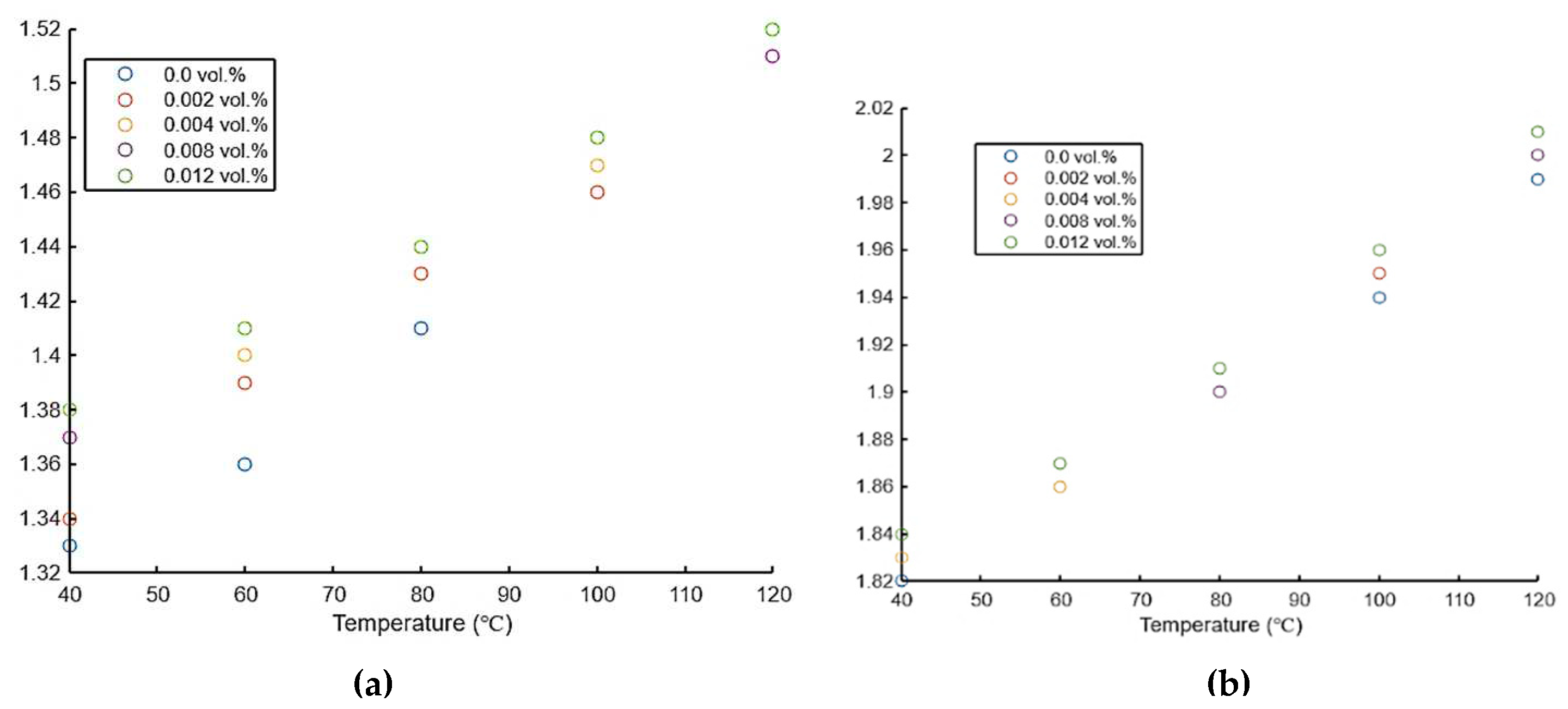
The volumetric heat capacity is the amount of heat required to change the temperature of a unit volume of the substance by one Kelvin, and ρ is the density or mass per unit volume. The volumetric heat capacity also describes the ability of a unit volume of a substance to store internal energy while undergoing a given temperature change but without a phase change of the material. Comparing two base fluids implies the advantage of using coconut Oil. However, the data of volumetric heat capacity are calculated according to Eq.04.
4. Conclusions
In this study, two nanofluids, TiO2/transformer oil, and TiO2/coconut oil, were prepared following the methods described to observe the behavior of thermal properties with the temperature. The following conclusions can be made based on the observations of each analysis conducted.
- Observation of thermal conductivity at different temperatures of TiO2/ Transformer Oil and TiO2/ Coconut Oil nanofluids for different volume fractions.
The thermal conductivity of the nanofluid decreased with the temperature and increased with the volume fraction of TiO2 Nanoparticles in both TiO2/ transformer oil and TiO2/ coconut Oil nanofluids. The highest thermal conductivity enhancements were 4.2% and 1.4% for transformer and coconut oil, respectively, at 0.012 vol.% at 40 °C. Better thermal conductivity was observed in TiO2/coconut nanofluid throughout the 40 - 120 °C temperature range. However, the contribution of TiO2 to increasing thermal conductivity is less in coconut oil than in transformer oil.
- b.
- Observation of thermal diffusivity at different temperatures of TiO2/ Transformer Oil and TiO2/ Coconut Oil nanofluids for different volume fractions
The thermal diffusivity of both nanofluids decreased with the temperature increase. However, there was no significant impact on thermal diffusivity by volume fractions of TiO2 Nanoparticles in both TiO2/ transformer Oil and TiO2/ coconut oil nanofluids throughout the temperature range of 40 - 120 °C.
- c.
- Observation of volumetric heat capacity at different temperatures of TiO2/ Transformer Oil and TiO2/ Coconut Oil nanofluids for different volume fractions.
The volumetric heat capacity of both the nanofluids was increased with the temperature increase. Comparatively higher volumetric heat capacity values were observed in TiO2/ coconut oil throughout the 40 - 120 °C temperature range.
- d.
- Comparison of practical results obtained with the theoretical models for thermal conductivity enhancement.
The theoretical values of TiO2/ transformer Oil and TiO2/ coconut oil nanofluid's thermal conductivity were close to the practical values with less than 5% difference for each measurement. TiO2/ coconut oil nanofluid's practical results were very similar to the theoretical results of Maxwell & Gammet's Model. Considering the percentage difference between experimental and theoretical model values of thermal conductivity, Maxwell & Gammet's Model generates much more accurate predictions than other theoretical models.
Regarding the base oil properties, coconut oil exhibits superior thermal properties compared to Transformer Oil. However, the addition of nanoparticles enhances the thermal properties of transformer oil rather than coconut oil.
The findings of this study provide a significant data set for future experiments on nanofluids, which can be highly applicable in designing heat transfer and electrical insulation systems for various industrial applications.
Author Contributions
The contribution of each author is mentioned here. Conceptualization, A.I., C.G., V.V., and K.K.; methodology, A.I., C.G., V.V., and K.K.; validation., C.G. & V.V.; formal analysis, V.V., and K.K.; investigation, A.I.; resources, K.K.; data curation, A.I., C.G., and V.V.; writing−original draft preparation, A.I., C.G., and V.V.; writing−review and editing, A.I., V.V., and K.K; visualization, A.I. and C.G.; supervision, K.K.; project administration, K.K.; funding acquisition, K.K. All authors have read and agreed to the published version of the manuscript.
Funding
This research was supported by the Science and Technology Human Resource Development Project, Ministry of Education, Sri Lanka, funded by the Asian Development Bank (Grant No CRG-R2-SB -1)
Acknowledgments
The authors gratefully acknowledge the support provided by the Research Grant: Competitive Research Grant Round 2, Science and Technology Human Resource Development Project (STHRDP) (Grant No CRG-R2-SB -1))
Conflicts of Interest
The authors declare no conflict of interest.
References
- Stephan, U.S.; Eastman J.A., Enhancing Thermal Conductivity of Fluids with Nanoparticles, 1995.
- Choi, S.U.S. Nanofluids: A New Field of Scientific Research and Innovative Applications. Heat Transfer Engineering 2008, 29, 429–431. [Google Scholar] [CrossRef]
- Yu, W.; Xie, H. A Review on Nanofluids: Preparation, Stability Mechanisms, and Applications. J Nanomater 2012, 2012. [Google Scholar] [CrossRef]
- Eggers, J.R.; Kabelac, S. Nanofluids Revisited. Appl Therm Eng 2016, 106, 1114–1126. [Google Scholar] [CrossRef]
- Rafiq, M.; Lv, Y.; Li, C. A Review on Properties, Opportunities, and Challenges of Transformer Oil-Based Nanofluids. J Nanomater 2016, 2016. [Google Scholar] [CrossRef]
- Shah, T.R.; Ali, H.M. Applications of Hybrid Nanofluids in Solar Energy, Practical Limitations and Challenges: A Critical Review. Solar Energy 2019, 183, 173–203. [Google Scholar] [CrossRef]
- Rafiq, M.; Shafique, M.; Azam, A.; Ateeq, M. Transformer Oil-Based Nanofluid: The Application of Nanomaterials on Thermal, Electrical and Physicochemical Properties of Liquid Insulation-A Review. Ain Shams Engineering Journal 2021, 12, 555–576. [Google Scholar] [CrossRef]
- Wong, K. V.; De Leon, O. Applications of Nanofluids: Current and Future. Advances in Mechanical Engineering 2010, 2010. [Google Scholar] [CrossRef]
- Murshed, S.M.S. Simultaneous Measurement of Thermal Conductivity, Thermal Diffusivity, and Specific Heat of Nanofluids. Heat Transfer Engineering 2012, 33, 722–731. [Google Scholar] [CrossRef]
- Tahmasebi Sulgani, M.; Karimipour, A. Improve the Thermal Conductivity of 10w40-Engine Oil at Various Temperature by Addition of Al 2 O 3 /Fe 2 O 3 Nanoparticles. J Mol Liq 2019, 283, 660–666. [Google Scholar] [CrossRef]
- Okonkwo, E.C.; Wole-Osho, I.; Kavaz, D.; Abid, M. Comparison of Experimental and Theoretical Methods of Obtaining the Thermal Properties of Alumina/Iron Mono and Hybrid Nanofluids. J Mol Liq 2019, 292. [Google Scholar] [CrossRef]
- Michael Joseph Stalin, P.; Arjunan, T. V.; Matheswaran, M.M.; Manoj Kumar, P.; Sadanandam, N. Investigations on Thermal Properties of CeO2/Water Nanofluids for Heat Transfer Applications. In Proceedings of the Materials Today: Proceedings; Elsevier Ltd, 2020; Vol. 47; pp. 6815–6820. [Google Scholar] [CrossRef]
- Sunil, J.; Vignesh, J.; Vettumperumal, R.; Maheswaran, R.; Raja, R.A.A. The Thermal Properties of CaO-Nanofluids. Vacuum 2019, 161, 383–388. [Google Scholar] [CrossRef]
- Yao, W.; Huang, Z.; Li, J.; Wu, L.; Xiang, C. Enhanced Electrical Insulation and Heat Transfer Performance of Vegetable Oil Based Nanofluids. J Nanomater 2018, 2018. [Google Scholar] [CrossRef]
- Nadolny, Z.; Dombek, G. Electro-Insulating Nanofluids Based on Synthetic Ester and TiO2 or C60 Nanoparticles in Power Transformer. Energies (Basel) 2018, 11. [Google Scholar] [CrossRef]
- Elsaid, K.; Abdelkareem, M.A.; Maghrabie, H.M.; Sayed, E.T.; Wilberforce, T.; Baroutaji, A.; Olabi, A.G. Thermophysical Properties of Graphene-Based Nanofluids. International Journal of Thermofluids 2021, 10. [Google Scholar] [CrossRef]
- Almeida, C.; Paul, S.; Asirvatham, L.G.; Manova, S.; Nimmagadda, R.; Bose, J.R.; Wongwises, S. Experimental Studies on Thermophysical and Electrical Properties of Graphene-Transformer Oil Nanofluid. Fluids 2020, 5. [Google Scholar] [CrossRef]
- Bhunia, M.M.; Panigrahi, K.; Das, S.; Chattopadhyay, K.K.; Chattopadhyay, P. Amorphous Graphene – Transformer Oil Nanofluids with Superior Thermal and Insulating Properties. Carbon N Y 2018, 139, 1010–1019. [Google Scholar] [CrossRef]
- Zhang, H.; Wang, S.; Lin, Y.; Feng, M.; Wu, Q. Stability, Thermal Conductivity, and Rheological Properties of Controlled Reduced Graphene Oxide Dispersed Nanofluids. Appl Therm Eng 2017, 119, 132–139. [Google Scholar] [CrossRef]
- Amiri, A.; Shanbedi, M.; Ahmadi, G.; Rozali, S. Transformer Oils-Based Graphene Quantum Dots Nanofluid as a New Generation of Highly Conductive and Stable Coolant. International Communications in Heat and Mass Transfer 2017, 83, 40–47. [Google Scholar] [CrossRef]
- J.C. Maxwell, A Treatise on Electricity and Magnetism I-II, Clarendon, Oxford, 1881.
- Zhou, Y.; Sui, S.Y.; Li, J.; Wang, Z.Y.; Cui, W.; Lv, Y.Z.; Li, C.R. Statistical Analysis of Moisture’s Effect on AC Breakdown Strength of TiO2 Nanofluids. J Mol Liq 2018, 249, 420–428. [Google Scholar] [CrossRef]
- Bhunia, M.M.; Panigrahi, K.; Naskar, C.B.; Bhattacharjee, S.; Chattopadhyay, K.K.; Chattopadhyay, P. 2D Square Nanosheets of Anatase TiO2: A Surfactant Free Nanofiller for Transformer Oil Nanofluids. J Mol Liq 2021, 325. [Google Scholar] [CrossRef]
- Neha Deepak, S.; Nathi Ram, C. Physio-Chemical Study of Traditional Lubricant SAE 20 W40 and Virgin Coconut Oil Using TiO2nano-Additives. In Proceedings of the Materials Today: Proceedings; Elsevier Ltd, 2020; Vol. 42; pp. 1024–1029. [Google Scholar] [CrossRef]
- Nor, S.F.M.; Azis, N.; Jasni, J.; Ab Kadir, M.Z.A.; Yunus, R.; Yaakub, Z. Investigation on the Electrical Properties of Palm Oil and Coconut Oil Based TiO2 Nanofluids. IEEE Transactions on Dielectrics and Electrical Insulation 2017, 24, 3432–3442. [Google Scholar] [CrossRef]
- B. C. Pak; Y. I. Choi Hydraulic and Heat Transfer Study of Dispersed Fluids with Submicron Metallic Oxide Particles. Experimental Heat Transfer 1998, 11, 151–170. [Google Scholar] [CrossRef]
- Nazari, M.; Rasoulifard, M.H.; Hosseini, H. Dielectric Breakdown Strength of Magnetic Nanofluid Based on Insulation Oil after Impulse Test. J Magn Magn Mater 2016, 399, 1–4. [Google Scholar] [CrossRef]
- NYNAS AB Nytro Libra (IEC 60296, Ed. 5) - Standard Grade.
- Marina, A.M.; Che Man, Y.B.; Nazimah, S.A.H.; Amin, I. Chemical Properties of Virgin Coconut Oil. JAOCS, Journal of the American Oil Chemists’ Society 2009, 86, 301–307. [Google Scholar] [CrossRef]
- Mansor, T.S.T.; Man, C.; Afiq, A.; Nurul, K. Physicochemical Properties of Virgin Coconut Oil Extracted from Different Processing Methods; 2012; Vol. 19. [CrossRef]
- Thermal Conductivity Meter LAMBDA Thermal Conductivity Measurement of Liquids, Gels and Powders Manual.
- Turgut, A.; Tavman, I.; Tavman, S. Measurement of Thermal Conductivity of Edible Oils Using Transient Hot Wire Method. Int J Food Prop 2009, 12, 741–747. [Google Scholar] [CrossRef]
- Krishnakumar, T.S.; Sheeba, A.; Mahesh, V.; Jose Prakash, M. Heat Transfer Studies on Ethylene Glycol/Water Nanofluid Containing TiO2 Nanoparticles. International Journal of Refrigeration 2019, 102, 55–61. [Google Scholar] [CrossRef]
- Ahmed, S.A.; Ozkaymak, M.; Sözen, A.; Menlik, T.; Fahed, A. Improving Car Radiator Performance by Using TiO2-Water Nanofluid. Engineering Science and Technology, an International Journal 2018, 21, 996–1005. [Google Scholar] [CrossRef]
- Wei, B.; Zou, C.; Li, X. Experimental Investigation on Stability and Thermal Conductivity of Diathermic Oil Based TiO2 Nanofluids. Int J Heat Mass Transf 2017, 104, 537–543. [Google Scholar] [CrossRef]
- Prasanth, R.T.A.R.; Mahato, S.N.; Roy N.K. Dielectric and Thermal Conductivity Studies on Synthetic Ester Oil Based TiO2 Nanofluids. 3rd International Conference on Condition Assesment Techniques in Electrical Systems, 2017, 289-292. [CrossRef]
- Sukkar, K.A.; Karamalluh, A.A.; Jaber, T.N. Rheological and Thermal Properties of Lubricating Oil Enhanced by the Effect of CuO and TiO2 Nano-Additives. Al-Khwarizmi Engineering Journal 2019, 15, 24–33. [Google Scholar] [CrossRef]
- Khedkar, R.S.; Shrivastava, N.; Sonawane, S.S.; Wasewar, K.L. Experimental Investigations and Theoretical Determination of Thermal Conductivity and Viscosity of TiO2-Ethylene Glycol Nanofluid. International Communications in Heat and Mass Transfer 2016, 73, 54–61. [Google Scholar] [CrossRef]
- Abdolbaqi, M.K.; Sidik, N.A.C.; Aziz, A.; Mamat, R.; Azmi, W.H.; Yazid, M.N.A.W.M.; Najafi, G. An Experimental Determination of Thermal Conductivity and Viscosity of BioGlycol/Water Based TiO2 Nanofluids. International Communications in Heat and Mass Transfer 2016, 77, 22–32. [Google Scholar] [CrossRef]
- Hamid, A.; Azmi, W.H.; Mamat, R.; Usri, N.A. Thermal Conductivity Enhancement of TiO 2 Nanofluid in Water and Ethylene Glycol (EG) Mixture; 2016; Vol. 54.
Figure 2.
(a) TiO2 Nanoparticles; (b) Transformer Oil & Coconut Oil
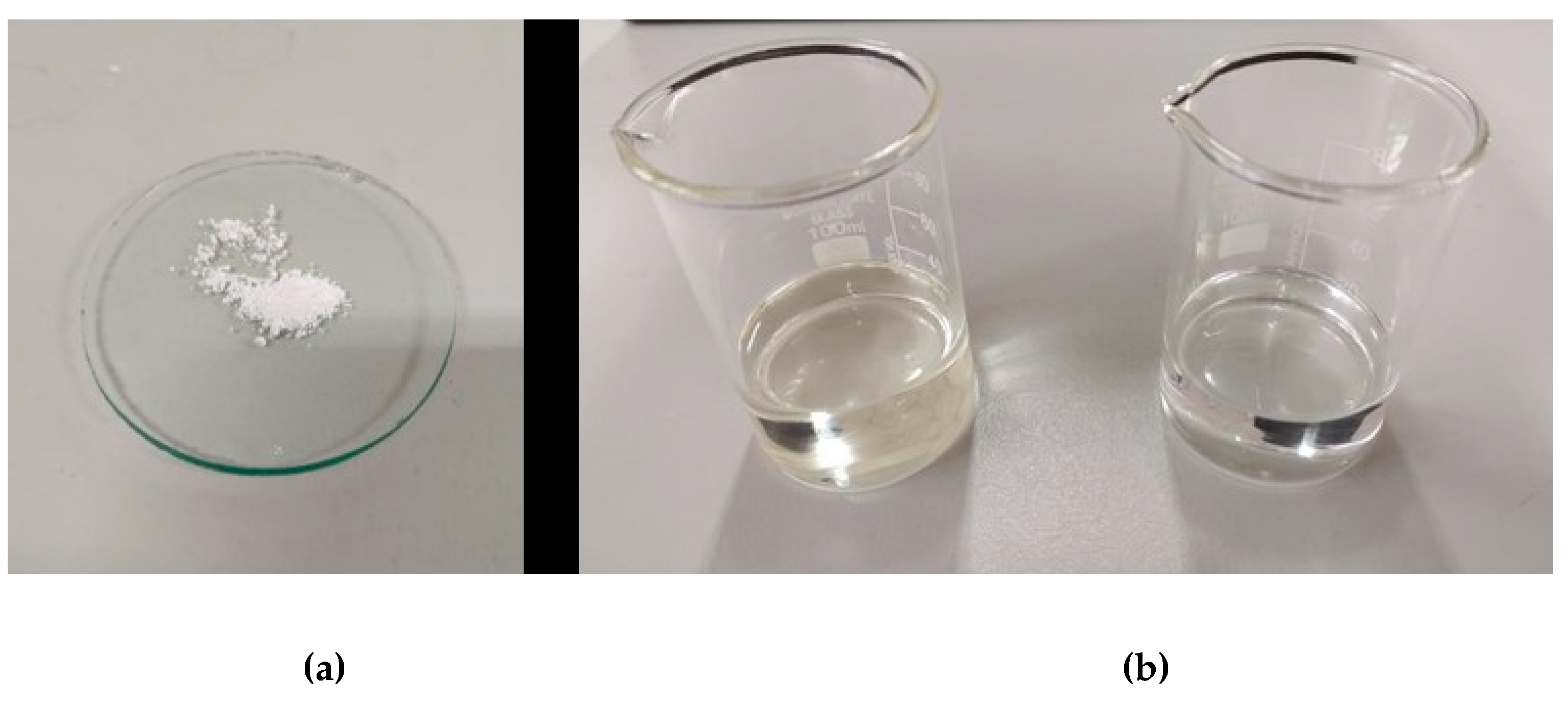
Figure 6.
Thermal conductivity vs. volume fraction at different temperatures of (a) Nanofluid/ Transformer Oil and (b) Nanofluid/ Coconut Oil.
Figure 6.
Thermal conductivity vs. volume fraction at different temperatures of (a) Nanofluid/ Transformer Oil and (b) Nanofluid/ Coconut Oil.
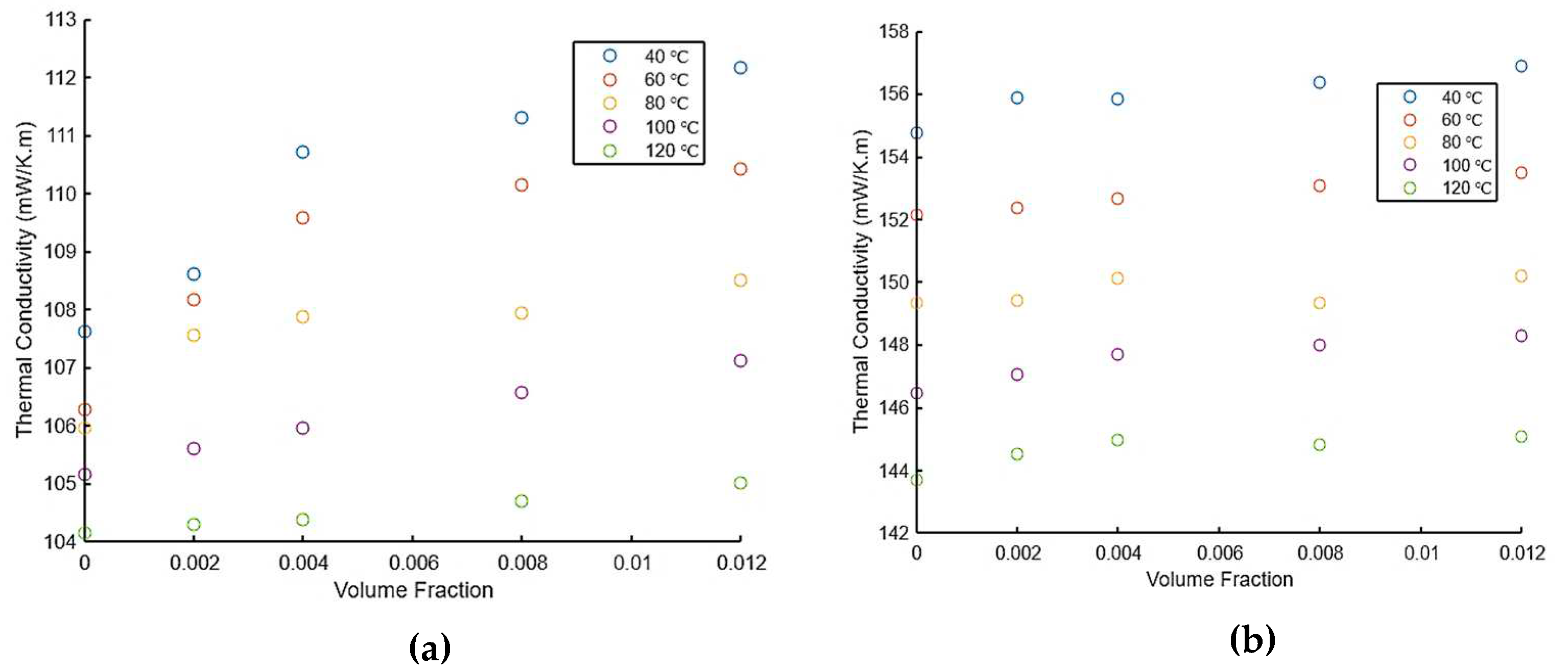
Figure 8.
Thermal diffusivity vs. temperature at different volume fractions of (a) Nanofluid/ Transformer Oil and (b) Nanofluid/ Coconut Oil.
Figure 8.
Thermal diffusivity vs. temperature at different volume fractions of (a) Nanofluid/ Transformer Oil and (b) Nanofluid/ Coconut Oil.
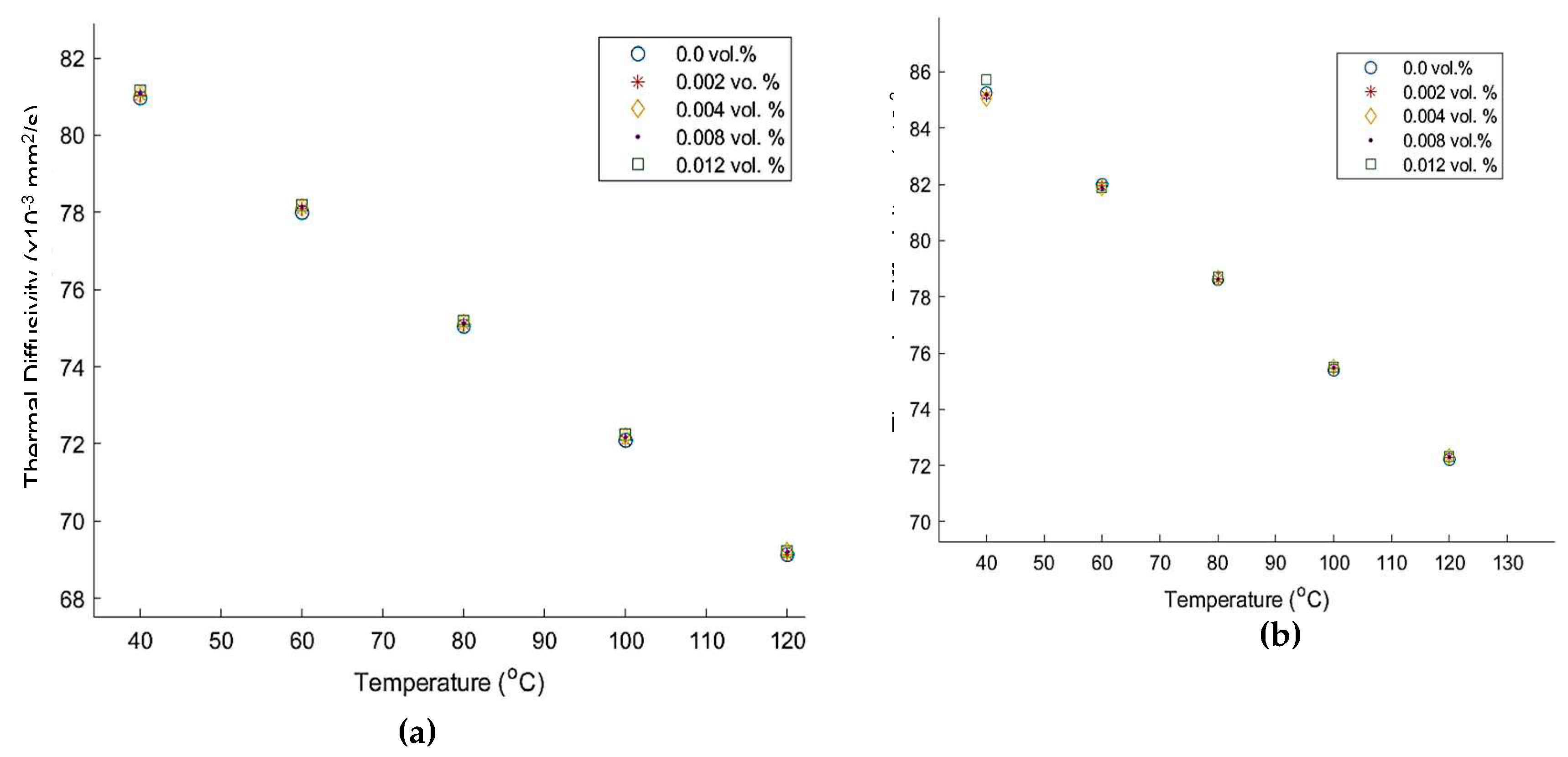
Table 1.
Properties and characteristics of nanoparticles.
| Nanoparticle Type | TiO2 anatase |
|---|---|
| Purity | 99.5 % |
| Color | White powder |
| Particle size | 3 – 5 nm |
| BET value | 150 – 200 m2/g |
| Density | 3.89 g/cm3 |
Table 2.
Properties and characteristics of base fluids.
| Base Oil Type | Transformer Oil | Coconut Oil |
|---|---|---|
| Color | Transparent | Transparent |
| Density | 843.74 kg/m3 | 880.40 kg/m3 |
| Thermal Conductivity at 30 °C | 108.12 mW/K | 156.21 mW/K |
Disclaimer/Publisher’s Note: The statements, opinions and data contained in all publications are solely those of the individual author(s) and contributor(s) and not of MDPI and/or the editor(s). MDPI and/or the editor(s) disclaim responsibility for any injury to people or property resulting from any ideas, methods, instructions or products referred to in the content. |
© 2023 by the authors. Licensee MDPI, Basel, Switzerland. This article is an open access article distributed under the terms and conditions of the Creative Commons Attribution (CC BY) license (http://creativecommons.org/licenses/by/4.0/).
Copyright: This open access article is published under a Creative Commons CC BY 4.0 license, which permit the free download, distribution, and reuse, provided that the author and preprint are cited in any reuse.