
Submitted:
23 September 2023
Posted:
25 September 2023
You are already at the latest version
Abstract
The phosphogypsum (PG) pile of solid waste is of immense proportions and poses a grave threat to the ecological environment, with its reserves steadily increasing year after year. The urgent need for large-scale consumption and high-quality utilization of PG in industrial production has become apparent. The present study provides a comprehensive analysis of the correlation be-tween the macroscopic mechanical properties and microstructure of PG, elucidating the crystal morphology characteristics in different phases and outlining the crystallization preparation pro-cess. By integrating the physical and chemical properties of diverse PG phases with the intricacies associated with its preparation process, it is imperative to explore avenues for its high-value utili-zation, investigate possibilities for industrial-scale production, and analyze and predict the appli-cation trends and developmental directions in comprehensive PG utilization. These endeavors hold immense significance in guiding the realization of resource utilization potential inherent in PG.
Keywords:
solid waste
; phosphogypsum phases
; crystal morphology
; mechanical properties
; comprehensive utilization
1. Introduction
The phosphate fertilizer industry plays a pivotal role in both the chemical sector and the national economy, with phosphoric acid serving as a vital raw material in its production[1]. However, the production of 1 ton of phosphoric acid results in the emission of 5 tons of phosphogypsum (PG)[2],. The PG contains soluble phosphorus, fluorine, organic matter, and other impurities[3], Low strength, acidic, pH around 3[4]. These defects restrict the utilization of PG to storage in warehouses, hindering its full potential. The global cumulative stockpile of PG has surpassed 6 billion tons[5] and continues to grow at a rate of 280 million tons per year[6]. However, the accumulation of a substantial amount of PG not only occupies a significant land area that could have been utilized for agricultural activities but also leads to the migration of impurities into water and soil through leachate, thereby continuously deteriorating the environmental quality in the surrounding areas. For instance, The PG generated in the Spanish city of Huelva over a span of 40 years was directly discharged into the estuary of the Huelva River, resulting in persistent water pollution that will endure for approximately three decades[7,8]. The effects of PG dumps on surface water systems in southern Brazil were investigated by Barros de Oliveira et al., revealing significantly elevated levels of Barium, Zirconium, and Thorium in water sediments compared to the local background level[9]. The North Florida region currently stores approximately 100 million tons of PG[10], which contains radium concentrations ranging from 3 to 26 pCi/g. Consequently, the United States Environmental Protection Agency strictly prohibits the utilization of PG exceeding a radium concentration threshold of 10 pCi/g [11]. The Poland's Vitowski chemical plant has accumulated more than 5 million tons of PG containing rare earth elements, which is classified as a key raw material in the European Union (EU) [12]. Russia has accumulated over 500 million tons of PG.[13]. Due to the environmental and human health risks associated with PG the dumping of this substance into the sea or its storage in controlled warehouses is prohibited by EU environmental legislation. [14]. Therefore, the realization of harmless treatment and resource utilization of PG is crucial in preventing environmental pollution, alleviating government pressure, and meeting material market demands. However, current utilization methods still face several challenges:
- Technical or cost difficulties exist in the current utilization process for PG, and the comprehensive utilization rate remains low at less than 25%[15].
- The large stock of PG piles necessitates a corresponding market for its extensive consumption.
- Downstream products derived from PG have low added value and suffer from serious homogenization.
To enable large-scale consumption of PG, it is imperative to enhance the value of its products and expand the market for them. And the material's mechanical properties are inherently linked to its crystal structure. The PG (CaSO4·2H2O)[16] can undergo phase transformations into six distinct crystal phases: dihydrate gypsum (CaSO4·2H2O), hemihydrate gypsum (α-CaSO4·0.5H2O and β-CaSO4·0.5H2O), and anhydrate gypsum (Ⅰ-CaSO4, II -CaSO4, Ⅲ-CaSO4)[17]. The scanning electron microscopy (SEM) diagram in Figure 1 illustrates the diverse phases of gypsum, revealing an irregular and sheet-like microscopic morphology of PG crystals with a significant presence of fine particles. Consequently, this characteristic contributes to diminished strength and negligible improvements in the mechanical properties of PG products[18,19]. The presence of hemihydrate gypsum and anhydrous gypsum crystal surface fine particles leads to a significant reduction, thereby enhancing the mechanical properties. Notably, β-hemihydrate gypsum and anhydrous gypsum crystals exhibit a plate or sheet-like structure similar to PG, facilitating their preparation[20,21]. The α-hemihydrate gypsum exhibits a hexagonal prism shape that is more regular, resulting in superior mechanical properties[22]. The mechanical properties and hydration characteristics of PG vary across different phase states, thereby offering a broader scope for the comprehensive utilization of this material. Figure 2 illustrates the process route for preparing PG into various phase states, aiming to explore the potential of high-value resource products derived from PG by analyzing its preparation process and physical and chemical properties in different phases. This study aims to enhance the reference and guidance for optimizing the utilization process.
2. Dihydrate Gypsum
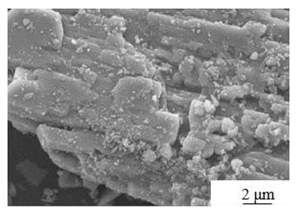
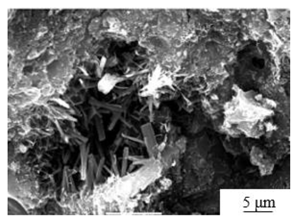
The PG can undergo various pretreatment processes, such as washing, ball milling, modification, and flotation, to effectively eliminate the majority of impurities without inducing any phase change. As a result, the primary constituent of PG with pretreatment remains gypsum dihydrate. Shun Chen[29] et al. enhanced the conventional washing process and successfully achieved efficient water-saving purification of PG by integrating mechanical activation method with chemical solubility method. By disrupting the chemical bonds within PG crystals through grinding and enhancing the chemical microenvironment, they accomplished grain refinement of PG, resulting in a successful increase in whiteness from -9.84 to 63.37. Moreover, the soluble phosphorus content decreased from 0.366 ppm to 0.043 ppm, as observed in SEM images depicting thin and rod-like morphology of treated PG. Xiangguo Li [30] prepared the cementing material of PG-lime-fly ash system, and used mechanical grinding to improve the particle size distribution. The 28 days compressive strength of the prepared specimen reached 27.76 MPa. The microstructure of the specimen is shown in Figure 5. It can be observed that the sample structure is very dense, and the hydrated products formed fill between the skeleton. Xingli Bei[31] et al. employed calcium carbide slag and circulating fluidized bed fly ash, along with other solid wastes, for comprehensive modification of PG required in the production of cement retarder. Experimental findings demonstrated that incorporating 6wt% calcium carbide slag and 4wt% CFB fly ash into PGyielded optimal results by significantly enhancing its strength after a 7-day aging period, rendering it suitable as a cement retarder. The modified PG exhibited the highest flexural strength (6.6 MPa) and compressive strength (34.4 MPa). SEM images revealed that the cement prepared using modified PG displayed enhanced hydration levels, characterized by abundant formation of C-S-H gels and an overall denser structure. Fang Ji[32] et al. employed the "reverse direct flotation" technique, which resulted in a PG concentrate with enhanced whiteness of 63.42 and a CaSO4·2H2O concentration of 96.70% after closed-circuit flotation. The SiO2 content decreased significantly from 11.11% to merely 0.07%, while achieving an impressive gypsum recovery rate of up to 85%. SEM images demonstrated the successful elimination of fine particles and quartz particles, leaving behind clean and smooth surfaces on the PG particles. To further elucidate the intricate relationship among process preparation, experimental conditions, and crystal morphology, Table 1 presents a comprehensive comparison of crystal morphologies across different process routes.
Due to its similar composition to natural gypsum and even higher calcium sulfate dihydrate content [33], PG can serve as a substitute for natural gypsum as a cement retarder or cementing material. In the microstructure of many cement applications utilizing PG, the hardened paste structure exhibits greater density and increased cement strength[34]. As reported in Japan, PG has been successfully utilized as a cement retarder in place of natural gypsum, accounting for 1/3 to 1/4 of total PG utilization [35]. However, due to immature technology, fluctuating product quality and lack of price advantage, widespread promotion of PG-based cement retarders is currently limited.
3. Hemihydrate Gypsum
As one type of hemihydrate gypsum, the α- hemihydrate gypsum is formed by dissolving and recrystallization of dihydrate gypsum in saturated water vapor medium or aqueous solution. The α-hemihydrate gypsum is slightly soluble in water, soluble in strong acid and alkali, and belongs to air-hard gelling material [36]. The β-hemihydrate gypsum, the other type of hemihydrate gypsum, is obtained through the high-temperature calcination of dihydrate gypsum, resulting in the loss of 1.5 crystal water molecules. Due to the direct removal of water during the calcination process, numerous voids are formed, leading to a collapse in the crystal structure of β- hemihydrate gypsum. This results in an irregular morphology with abundant surface pores and low strength, consequently reducing its economic utilization value [37]. The Figure 3 illustrates the cellular structures of two types of hemihydrate gypsum crystals.
3.1. α-Hemihydrate Gypsum
The preparation methods of α- hemihydrate gypsum can be divided into two categories according to the dehydration method: autoclave method and aqueous solution method, and aqueous solution method can be divided into pressurized aqueous solution method and atmospheric pressure salt solution method according to different pressures[39], as shown in Table 2.
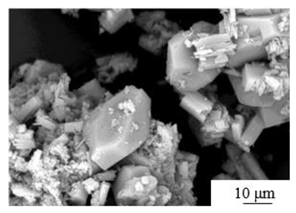
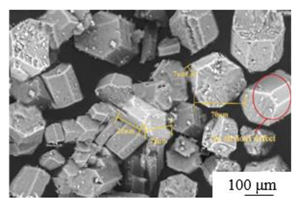
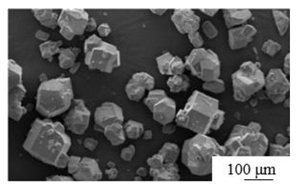
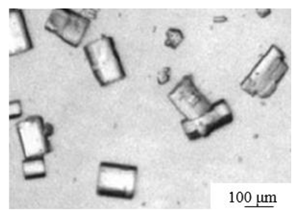
To further elucidate the intricate relationship among process preparation, experimental conditions, crystal morphology, and material strength, Table 3 presents a comprehensive comparison of crystal morphologies across different process routes. The [G was initially pretreated using the ball milling method by Hongbin Tan et al.[43] Subsequently, a mixture of gypsum and tap water in a mass ratio of 1:5 was introduced into an autoclave, followed by the addition of maleic acid to adjust the solution's pH value to 5. After stirring for 30 minutes and aging at 140℃ for 2 hours, the product flexural strength /compressive strengths of 8.2 MPa/25.4 MPa. The SEM image revealed a smooth crystal surface with a short columnar morphology. α-hemihydrate gypsum was prepared by flotation + autoclaving method under the guidance of Mingxia Du et al[44]. The optimal mechanical properties, with a compressive strength of 40.96 MPa and a flexural strength of 6.09 MPa, were achieved when the reaction temperature was set at 140℃ for 120 minutes, with aluminum sulfate and Maleic acid contents of 2.0wt% and 0.13wt%, respectively. The resulting product exhibited diamond-shaped crystal morphology with a plate structure, minimal presence of fine particles, a length-diameter ratio (L/D ratio) of 0.7, and small pore size. Wenda Lu[45] et al. employed the atmospheric pressure salt solution method to synthesize α-hemihydrate gypsum in a circulating CaCl2 solution. The highest flexural and compressive strength of the product, achieved through alcohol-washing and drying at 97±1℃ for 120 minutes, reached 4.7 MPa and 37.6 MPa respectively. In the SEM images of the product, the crystals exhibited a short prism-like shape with regular morphology and a length-to-diameter ratio close to unity. The pressurized aqueous solution method was employed by Jinshui Shen et al. [46] to synthesize short columnar crystals with a L/D ratio of 1.5 at a reaction temperature of 130℃, an EDTA content of 0.40%, and pH=7 for a duration of 4 hours.
The studies have demonstrated that the mechanical properties of crystals are enhanced when their shape exhibits a L/D ratio ranging from 2:1 to 4:1, leading to flexural/compressive strengths exceeding 6/35 MPa [47]. The α-hemihydrate gypsum exhibits high strength and excellent water resistance, rendering it suitable for the production of novel wall materials, self-leveling compounds, fireproof door core panels, and other decorative and construction materials [48]. However, due to the complex process and high production cost of PG preparation of α-hemihydrate gypsum, large-scale industrial application is difficult, and the laboratory and semi-works scale are still the main scale.
3.2. β-Hemihydrate Gypsum
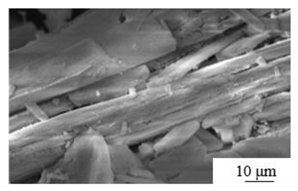
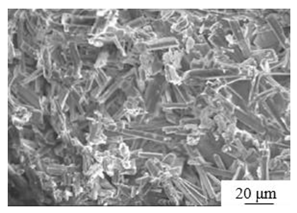
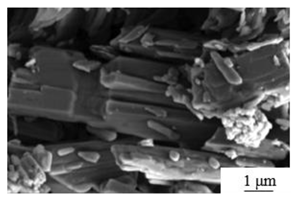
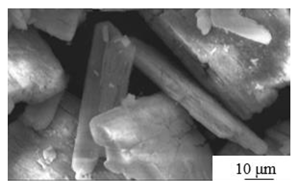
Currently, the primary method for preparing β-hemihydrate gypsum in China is through a calcination process. Table 4 provides a comparison of preparation conditions and crystal morphology across various processing routes. The calcination process was adopted by Rodrigo H. Geraldo et al.[49], and the experimental results demonstrated that a temperature of 150℃ and a residence time of 2 hours were optimal parameters for achieving significant β-hemihydrate gypsum content with low energy consumption, resulting in a compressive strength of 6 MPa. SEM characterization revealed elongated and prismatic crystals with uniform distribution and size, indicating excellent crystal interlacing. The β-hemihydrate gypsum was prepared by Guang Yang et al. [50] using a concentration of 0.5% polycarboxylic acid superplasticizer (PS-L). This resulted in the reduction of thick plate crystal type and improved the bonding between crystals, thereby enhancing the mechanical properties and achieving compressive/flexural strength values of 14.8/3.8 MPa. β-hemihydrate gypsum was prepared by Meng Liu et al. [51] through a washing + calcination process, where the gypsum was calcined for 1 hour at 130℃. SEM characterization revealed that the hydration products of the washed samples exhibited predominantly rod-shaped crystals with enhanced bonding strength, thereby improving the mechanical properties of the gypsum products, and the 2 hours compressive/flexural strength of the products was 5.7/3.0 MPa. Longjian Zhang et al.[52] discovered that, under the experimental conditions of calcination at 180℃ for 4 hours, PG underwent complete transformation into β-hemihydrate gypsum. At this stage, the product exhibited a compressive strength of 9.2 MPa after 28 days. Furthermore, SEM characterization revealed the presence of numerous interlocked columnar crystals in the microstructure, which significantly enhanced the mechanical properties of the material.
The β-hemihydrate gypsum exhibits a scale-like morphology with fine particles, rendering it easily manageable and controllable [50]. However, due to its relatively lower strength compared to α-hemihydrate gypsum, its performance slightly lags behind. Consequently, it finds frequent application in decorative materials such as gypsum boards and putties that demand lower strength requirements. Currently, the industrial-scale production of β-hemihydrate gypsum from PG has surpassed that of α-hemihydrate gypsum [53], representing a significant pathway for large-scale utilization of PG in China [54]. Nevertheless, the prevailing process still faces technical challenges including suboptimal heat transfer efficiency, excessive energy consumption, inconsistent product quality, and limited production capacity that necessitate further resolution [28].

Table 4.
Comparison of preparation process conditions and product morphology and properties of β-hemihydrate gypsum
Table 4.
Comparison of preparation process conditions and product morphology and properties of β-hemihydrate gypsum
| Process | Experiment Condition | Crystal Morphology | Flexural Strength | Compressive Strength |
|---|---|---|---|---|
| Pre-grinding + calcination[55] |
Temperature: 150℃ Calcination time: 2 hours |
 |
— | 6.0 |
| Calcination[50] | Temperature: 130℃ Autoclave time: 3 hours Polycarboxylate superplasticizer: 0.5 % |
 |
3.8 | 14.8 |
| Washing + calcination[51] | Temperature: 130℃ Calcination time: 1 hours |
 |
3.0 | 5.7 |
| Calcination[56] | Temperature: 180℃ Calcination time: 4 hours |
 |
— | 9.2 |
4. Anhydrite
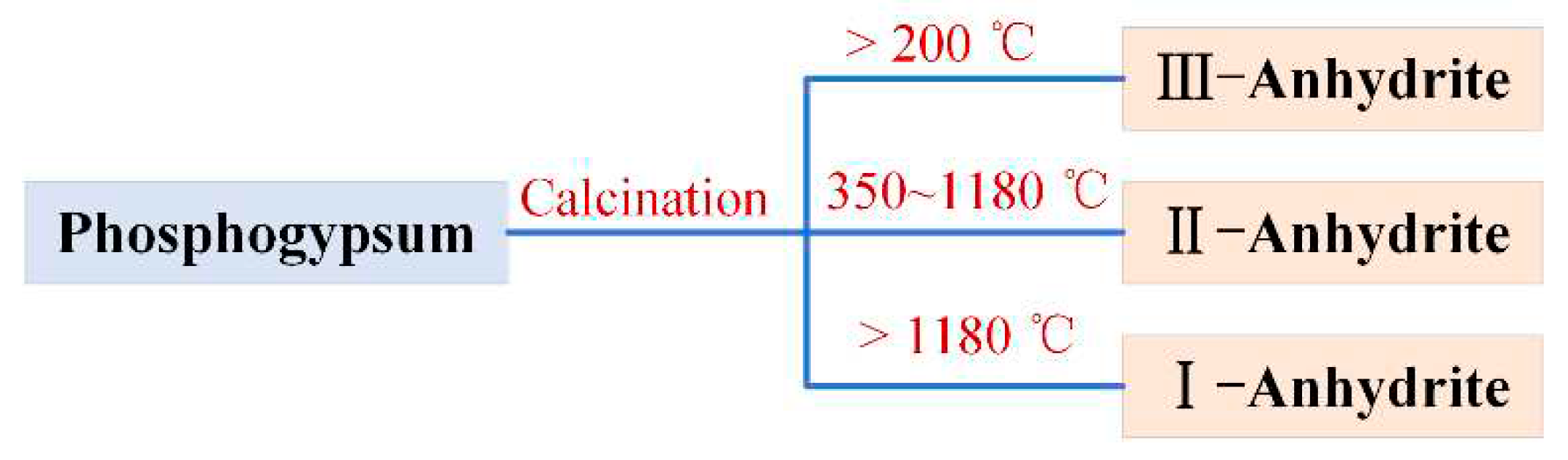
The distribution of Ca2+ and SO42- leads to the formation of three distinct phase states in anhydrous gypsum crystals: Type III anhydrous gypsum (III-CaSO4), type II anhydrous gypsum (II- CaSO4), and type I anhydrous gypsum (I- CaSO4) [57]. Figure 3 illustrates the conversion conditions for these three types of anhydrous gypsum. When the temperature of PG calcination exceeds 200℃, type III anhydrous gypsum is initially formed, which contains a small amount of crystal water and exhibits strong hydrophilicity, facilitating its conversion into semi-hydrous gypsum in humid environments. At calcination temperatures above 350℃, type III anhydrous gypsum transforms into type II anhydrous gypsum or natural anhydrite characterized by dense and stable crystalline phase with potential hydration properties; however, the hydration rate is relatively slow. Upon reaching a calcination temperature exceeding 1100℃, type I anhydrous gypsum is produced, which is soluble in water but has no hydration activity [58,59,60]. Among them, type II anhydrous gypsum possesses significant application value due to its inherent stability in nature and distinctive hydration characteristics. The subsequent sections will meticulously analyze and compare the preparation technology as well as morphology characteristics of type II anhydrous gypsum. Table 5 provides a comprehensive summary of the preparation conditions and crystal morphology comparison across different process routes.
Figure 3.
Calcination temperature conditions for preparation of anhydrite from PG
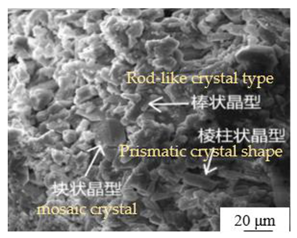
The type II anhydrous gypsum was prepared by Qiang Bi et al. [61] through the combination of potassium alum with home-made lignin-based surface activity (LA-1) at a calcination temperature of 800℃, holding time of 1.5 hours, and subsequent grinding until the specific surface area reached 463 m2/kg. Under these conditions, prismatic crystals were formed, interlacing with each other to create dense structures. Additionally, numerous slender rod-like crystal structures were present, effectively filling the pores and enhancing structural integrity. The resulting sample exhibited a measured compressive strength of 36.5 MPa and flexural strength exceeding 6.5 MPa. The composite agents developed by Yu Zhang et al. [62] consisted of β-hemihydrate gypsum (6%), modified steel slag (3%), K2SO4 (2%), and calcium aluminate cement (0.5%) to address the issues of low hydration activity, slow setting, and hardening in type II anhydrous PG. Through microstructural analysis, it was observed that pin and rod-like ettringite crystals were generated and closely bonded with amorphous cementing substances. This resulted in the formation of a network of crystalline structure composed of gypsum dihydrate, leading to improved mechanical properties of the material. The compressive strength of the prepared cementitious material was measured to be 15.4 MPa, while the flexural strength exceeded 5 MPa. Wenxiang Cao et al.[63] mixed PG with Ca( H2PO4 )·H2O and NaF solution evenly, and calcined at 800℃ for 1 hour after aging at room temperature for 1 day. The anhydrate gypsum prepared for 28 days had a compressive strength of more than 20MPa and a flexural strength of more than 6MPa. After observation of the product microstructure, it was found that the crystals were short columnar or emulsion, with good overlap and stacking. It has a dense microstructure. Shuhua Liu et al.[64] found through experiments that PG calcined at 600℃ and 800℃ was almost completely dehydrated into anhydrite, and II-U anhydrite and II-E anhydrite were obtained. Moreover, the anhydrite obtained at 600℃ for 1.5 hours had the highest compressive strength, up to 54.6MPa. It can be seen from the observation of sample microstructure that the crystal structure is compact. A small amount of limulus and ettringite, a large amount of calcite and a small amount of vaterite were observed on the surface of the fractures.
Compared with PG, type II anhydrous gypsum eliminates the adverse effects of harmful impurities. Furthermore, it exhibits significantly enhanced water resistance compared to α-hemihydrate gypsum. In addition, it possesses superior physical and chemical properties in comparison to β-hemihydrate gypsum [65], thereby meeting more stringent requirements for building materials such as road construction and mine filling [66]. However, the preparation of high-quality type II anhydrous gypsum from PG requires a slow burning process, and the conditions for complete removal of crystal water and impurities are stringent. Currently, there is no calcination production line in China capable of producing single-phase anhydrous type II gypsum. And β-hemihydrate gypsum and Ⅱ- anhydrite complex phase gypsum can only be produced by some enterprises [28].
5. Conclusions
Due to the distinct crystal morphology of PG in different phases, its physical and chemical properties vary, leading to diverse preparation processes. In order to achieve large-scale consumption and storage of PG, alleviate environmental pressure, optimize product quality along the utilization path, enhance product added value, and Improve the comprehensive utilization rate of PG, this study conducts the following analysis:
- the harmless treatment of PG for producing dihydrate gypsum can serve as a cement retarder. The process is straightforward and supported by well-developed technologies. However, due to its non-competitive price, the cement industry heavily relies on natural gypsum, resulting in saturated market demand. Therefore, national and local policies are needed to promote the application's development.
- The use of hemihydrate gypsum is predominantly observed in the construction industry. In comparison to β-hemihydrate gypsum, α-hemihydrate gypsum exhibits superior physical and mechanical properties. In comparison to anhydrous gypsum, α-hemihydrate gypsum consumes less energy and facilitates scaling, thereby promoting the high-quality development of PG building materials. Consequently, the production of α-hemihydrate gypsum from PG is expected to become the dominant trend in the comprehensive utilization of PG for building materials in the future.
- type II anhydrous gypsum exhibits high strength, excellent water resistance, chemical corrosion resistance, and toughness. Moreover, its production capacity is significantly higher than that of β-semi-water gypsum. It can be utilized not only in road construction and mine filling materials to achieve significant consumption of PG, but also in the preparation of gypsum whiskers for applications such as paper fillers, rubber compounds, paints, and other advanced processing of novel materials. However, the production of type II anhydrous gypsum is constrained by the high calcination temperature involved in the preparation process. Moreover, type II anhydrous gypsum exhibits limited hydration activity and slow setting and hardening characteristics, necessitating careful consideration of modification treatments during its application.
Conducting comprehensive theoretical research and practical exploration on the resource utilization of phosphogypsum, enhancing the quality of phosphogypsum products, and ensuring the technological feasibility for industrial production can foster a global recognition that regards phosphogypsum as a secondary resource. This will effectively facilitate the realization of a new paradigm in which phosphogypsum is comprehensively utilized across various domains.
Author Contributions
writing—original draft preparation, L.M.; writing—review and editing, H.Z.; resources, X.W.; investigation, L.C.; All authors have read and agreed to the published version of the manuscript.
Funding
This research was funded by the Key project of Education Department of Hubei Province, grant number D20201508
Conflicts of Interest
The authors declare no conflict of interest.
References
- Diwa R R, Tabora E U, Haneklaus N H, et al. Rare earths leaching from Philippine phosphogypsum using Taguchi method, regression, and artificial neural network analysis[J/OL]. Journal of Material Cycles and Waste Management, 2023[2023-09-12]. [CrossRef]
- Rashad A, M. Phosphogypsum as a construction material[J]. Journal of Cleaner Production, 2017, 166: 732-743. [CrossRef]
- Amrani M, Taha Y, Kchikach A, et al. Phosphogypsum recycling: New horizons for a more sustainable road material application[J]. Journal of Building Engineering, 2020, 30: 101267. [CrossRef]
- Qi J, Zhu H, Zhou P, et al. Application of phosphogypsum in soilization: a review[J/OL]. International Journal of Environmental Science and Technology, 2023[2023-08-06].
- Xiao J, Lu T, Zhuang Y, et al. A Novel Process to Recover Gypsum from Phosphogypsum[J]. Materials, 2022, 15(5): 1944. [CrossRef]
- Murali G, Azab M. Recent research in utilization of phosphogypsum as building materials: Review[J]. Journal of Materials Research and Technology, 2023, 25: 960-987. [CrossRef]
- Millán-Becerro R, Pérez-López R, Macías F, et al. Design and optimization of sustainable passive treatment systems for phosphogypsum leachates in an orphan disposal site[J]. Journal of Environmental Management, 2020, 275: 111251. [CrossRef]
- Bolívar J P, Martín J E, García-Tenorio R, et al. Behaviour and fluxes of natural radionuclides in the production process of a phosphoric acid plant[J]. Applied Radiation and Isotopes, 2009, 67(2): 345-356. [CrossRef]
- De Oliveira S M B, Da Silva P S C, Mazzilli B P, et al. Rare earth elements as tracers of sediment contamination by phosphogypsum in the Santos estuary, southern Brazil[J]. Applied Geochemistry, 2007, 22(4): 837-850. [CrossRef]
- Adeoye C, Gupta J, Demers N, et al. Variations of radon and airborne particulate matter near three large phosphogypsum stacks in Florida[J]. Environmental Monitoring and Assessment, 2021, 193(5): 284.
- El Zrelli R, Rabaoui L, Abda H, et al. Characterization of the role of phosphogypsum foam in the transport of metals and radionuclides in the Southern Mediterranean Sea[J]. Journal of Hazardous Materials, 2019, 363: 258-267. [CrossRef]
- Kulczycka J, Kowalski Z, Smol M, et al. Evaluation of the recovery of Rare Earth Elements (REE) from phosphogypsum waste – case study of the WIZÓW Chemical Plant (Poland)[J]. Journal of Cleaner Production, 2016, 113: 345-354. [CrossRef]
- Lokshin E P, Tareeva O A, Elizarova I R. On integrated processing of phosphogypsum[J]. Russian Journal of Applied Chemistry, 2013, 86(4): 463-468.
- Silva L F O, Oliveira M L S, Crissien T J, et al. A review on the environmental impact of phosphogypsum and potential health impacts through the release of nanoparticles[J]. Chemosphere, 2022, 286: 131513. [CrossRef]
- Chernysh Y, Yakhnenko O, Chubur V, et al. Phosphogypsum Recycling: A Review of Environmental Issues, Current Trends, and Prospects[J]. Applied Sciences, 2021, 11(4): 1575. [CrossRef]
- Tayibi H, Choura M, López F A, et al. Environmental impact and management of phosphogypsum[J]. Journal of Environmental Management, 2009, 90(8): 2377-2386. [CrossRef]
- Preturlan J G D, Vieille L, Quiligotti S, et al. Comprehensive Thermodynamic Study of the Calcium Sulfate–Water Vapor System. Part 1: Experimental Measurements and Phase Equilibria[J]. Industrial & Engineering Chemistry Research, 2019, 58(22): 9596-9606. [CrossRef]
- Zhou.W.; Qin.Y.; Zhao.S. et al. Preparation of α-hemihydrate gypsum by self steam curing of phosphogypsum [J]. Environmental Protection of Chemical Industry 2022, 42(6): 721-727.
- Singh M, Garg M, Verma C L, et al. An improved process for the purification of phosphogypsum[J]. Construction and Building Materials, 1996, 10(8): 597-600. [CrossRef]
- Voznesenskii A S, Ushakov E I. Temperature dependence of internal mechanical losses of gypsum stone with complex composition and structure[J]. Journal of Alloys and Compounds, 2022, 906: 164194. [CrossRef]
- López-Buendía A M, García-Baños B, Urquiola M M, et al. Evidence of a new phase in gypsum–anhydrite transformations under microwave heating by in situ dielectric analysis and Raman spectroscopy[J]. Physical Chemistry Chemical Physics, 2020, 22(47): 27713-27723.
- Zhi Z, Huang J, Guo Y, et al. Effect of chemical admixtures on setting time, fluidity and mechanical properties of phosphorus gypsum based self-leveling mortar[J]. KSCE Journal of Civil Engineering, 2017, 21(5): 1836-1843.
- Gu.Q.; Lin.X.; Zhao.S. et al. Effect of different pretreatment processes on properties of phosphogypsum. Inorganic Chemicals Industry 2022, 54(4): 17-23.
- Bumanis G, Zorica J, Bajare D, et al. Technological properties of phosphogypsum binder obtained from fertilizer production waste[J]. Energy Procedia, 2018, 147: 301-308. [CrossRef]
- Li X, Zhang Q. Dehydration behaviour and impurity change of phosphogypsum during calcination[J]. Construction and Building Materials, 2021, 311: 125328. [CrossRef]
- Guan Q, Sui Y, Zhang F, et al. Preparation of α-calcium sulfate hemihydrate from industrial by-product gypsum: A review[J]. Physicochemical Problems of Mineral Processing, 2020, 57(1): 168-181.
- Yang M, Qian J. Activation of anhydrate phosphogypsum by K2SO4 and hemihydrate gypsum[J]. Journal of Wuhan University of Technology-Mater. Sci. Ed., 2011, 26(6): 1103-1107.
- Li.H.; Zhang.H.; Zi.X. Analysis on calcination process of phosphogypsum. Inorganic Chemicals Industry: 1-14.
- Chen S, Chen J, He X, et al. Micromicelle-mechanical coupling method for high-efficiency phosphorus removal and whiteness improvement of phosphogypsum[J]. Construction and Building Materials, 2022, 354: 129220. [CrossRef]
- Li.X.; Chen.J.; Ma.B. et al. Influence of different granular distributions on physical properties of phosphogypsum-lime-fly ash system, Acta CIESC Journal 2012, 63(S1): 230-234.
- Li B, Li L, Chen X, et al. Modification of phosphogypsum using circulating fluidized bed fly ash and carbide slag for use as cement retarder[J]. Construction and Building Materials, 2022, 338: 127630. [CrossRef]
- Fang J, Ge Y, Chen Z, et al. Flotation purification of waste high-silica phosphogypsum[J]. Journal of Environmental Management, 2022, 320: 115824. [CrossRef]
- Wu.C.; Lv.W. Application of phosphogypsum in cement products. China Concrete and Cement Products 2019(1): 45-46.
- Shen.X.; Li.Z.; Hao.Y.; et al. Purification process of phosphogypsum for cement retarder production. Phosphate & Compound Fertilize 2014, 29(2): 44-46.
- Zhang.C. Review on the process of phosphogypgypsum to make cement retarder. Journal of Chemical Industry & Technology 2001(3): 18-20+1.
- Fisher R D, Mbogoro M M, Snowden M E, et al. Dissolution Kinetics of Polycrystalline Calcium Sulfate-Based Materials: Influence of Chemical Modification[J]. ACS Applied Materials & Interfaces, 2011, 3(9): 3528-3537. [CrossRef]
- Sun.X. Study on preparation of structure and morphology of calcium sulfate hemihydrate based on phosphogypsum calcium sulfate dihydrate.[D] Hefei University of Technology, 2020.
- Christensen A N, Jensen T R, Nonat A. A new calcium sulfate hemi-hydrate[J]. Dalton Transactions, 2010, 39(8): 2044.
- Chen.F.; Li.J.; Chen.M. Research on preparation of high-strength α-hemihydrate gypsum from phosphogypsum and its application. Phosphate & Compound Fertilize 2019, 34(7): 13-17.
- Chen.J.; Yi.Y.; Zhang.H.; et al. Effect of autoclave parameters and impurities on preparation of α-hemihydrate gypsum from phosphogypsum. Inorganic Chemicals Industry 2022, 54(3): 91-96.
- Wang.Q.; Tian.X.; Liu.D.; et al. Effects of Slurry Concentration and pH Value on the Preparation of α-Hemihydrate Gypsum from Phosphogypsum. Metal Mine, 2022(12): 115-121.
- Yang.R.; Chen.D.; Mi.Y.; et al. Preparation of α-Semi Hydrated Gypsum from Phosphogypsum in Atmospheric Pressure Chlorine-Free Complex Salt Solution. Non-Metallic Mines 2019, 42(4): 1-5.
- Tan H, Zheng A, Kang X, et al. Influence of different additives on the mechanical performance of a-hemihydrate gypsum from phosphogypsum[J]. Materiali in Tehnologije, 2020, 54(5): 697-703.
- Du M, Wang J, Dong F, et al. The study on the effect of flotation purification on the performance of α-hemihydrate gypsum prepared from phosphogypsum[J]. Scientific Reports, 2022, 12(1): 95.
- Lu W, Ma B, Su Y, et al. Preparation of α-hemihydrate gypsum from phosphogypsum in recycling CaCl2 solution[J]. Construction and Building Materials, 2019, 214: 399-412.
- Shen.J.; Lu.D; Xv.Z. et al. Effect of Ethylenediaminetetraacetic Acid on the Preparation of α-Hemihydrate Gypsum from Phosphogypsum with Hydrothermal Autoclave Method. Bulletin of The Chinese Ceramic Society 2015, 34(10): 2816-2821.
- Bai.Y.;Li.D.;et al.Medium Crystal Agent in High-Strength Gypsum with Flue Gas Desulphurization Gypsum[J].Bulletin of The Chinese Ceramic Society,2009,37(7): 1142-1146.
- Li.D.;Guo.R.;Lin.Z.; et al. Research Status of Preparation of α-Hemihydrate Gypsum from Phosphogypsum. Bulletin of The Chinese Ceramic Society 2022, 41(3): 860-869.
- Geraldo R H, Costa A R D, Kanai J, et al. Calcination parameters on phosphogypsum waste recycling[J]. Construction and Building Materials, 2020, 256: 119406. [CrossRef]
- Yang.G.; Bo.S.; Deng.L. et al. Effect of polycarboxylate superplasticizer on the properties of β-hemihydrate phosphogypsum. New Building Materials 2023, 50(1): 124-127+153.
- Liu.M.; Wang.Q.; Zhu.C. et al.Performance Change and Application of Calcined Phosphogypsum Before and After Washing and Grinding Pre-treatment. Materials Reports 2022, 36(S1): 267-271.
- Zhang L, Mo K H, Tan T H, et al. Influence of calcination and GGBS addition in preparing β-hemihydrate synthetic gypsum from phosphogypsum[J]. Case Studies in Construction Materials, 2023, 19: e02259.
- Wu.Z.; Zhang.Y.; Zhang.L. et al. Effect of phase composition and impurity content of β-gypsum on its properties. Inorganic Chemicals Industry 2021, 53(9): 67-71.
- Zhu.P.; Peng.C.; Zhang.Y. et al. Experimental study on preparation of high quality type II anhydrous gypsum from phosphogypsum. Industrial Minerals & Processing 2018, 47(7): 19-22.
- Peng.Z.; Meng.X.; Liu.C. Study on technological parameters of preparation of β-type hemihydrous gypsum powder by phosphogypsum. S P & BMH Related Engineering 2019(3): 13-18+5.
- Ma.J.; Xie.G.; Yv.Q. et al. Experimental Study of Phosphogysum to Produce β-hemihydrate Block. Journal of Wuhan University of Technology 2015, 37(7): 20-24.
- Deng.H. Study on Phase Change Behavior and Physical and Chemical Properties of Phosphogypsum During Heat Treatment[D]. Guizhou University. 2020.
- Finot E, Lesniewska E, Goudonnet J-P, et al. Correlation between surface forces and surface reactivity in the setting of plaster by atomic force microscopy[J]. Applied Surface Science, 2000, 161(3-4): 316-322. [CrossRef]
- Freyer D, Voigt W. Crystallization and Phase Stability of CaSO 4 and CaSO 4 - Based Salts[J]. Monatshefte f�r Chemie / Chemical Monthly, 2003, 134(5): 693-719.
- Farnsworth, M. The Hydration of Anhydrite.[J]. Industrial & Engineering Chemistry, 1925, 17(9): 967-970. [CrossRef]
- Bi.Q.;Mei.Y.;Xia.J. Basic research on preparation and activity combined excitation of anhydrite-II phosphogypsum(AII). Chemical Industry and Engineering Progress 2022.1-12.
- Zhang.Y.; Yang.J.; Liu.Y. et al. Regulating technology of setting and hardening process of anhydrite-II phosphogypsum. Chemical Industry and Engineering Progress 2022, 41(10): 5637-5644.
- Cao W, Yi W, Peng J, et al. Preparation of anhydrite from phosphogypsum: Influence of phosphorus and fluorine impurities on the performances[J]. Construction and Building Materials, 2022, 318: 126021. [CrossRef]
- Liu S, Ouyang J, Ren J. Mechanism of calcination modification of phosphogypsum and its effect on the hydration properties of phosphogypsum-based supersulfated cement[J]. Construction and Building Materials, 2020, 243: 118226. [CrossRef]
- Chen.J.; Zzhang.R. Report on Ecological Environment Technology Development of Industrial By-product Gypsum Resource Utilization. Guangzhou Chemical Industry 2020, 48(24): 1-3.
- Wang.L.; Tan.H.; Li.Y. et al. Preparation of II-Anhydrite Gypsum and Effect of Cement on Its Properties. Non-Metallic Mines 2020, 43(5): 52-54+63.
Figure 1.
The SEM images depict various phases of gypsum. [18,23].(a) PG: 50μm; (b) β-hemihydrate gypsum: 30μm; (c) anhydrite: 30μm; (d) α-hemihydrate gypsum: 50μm.
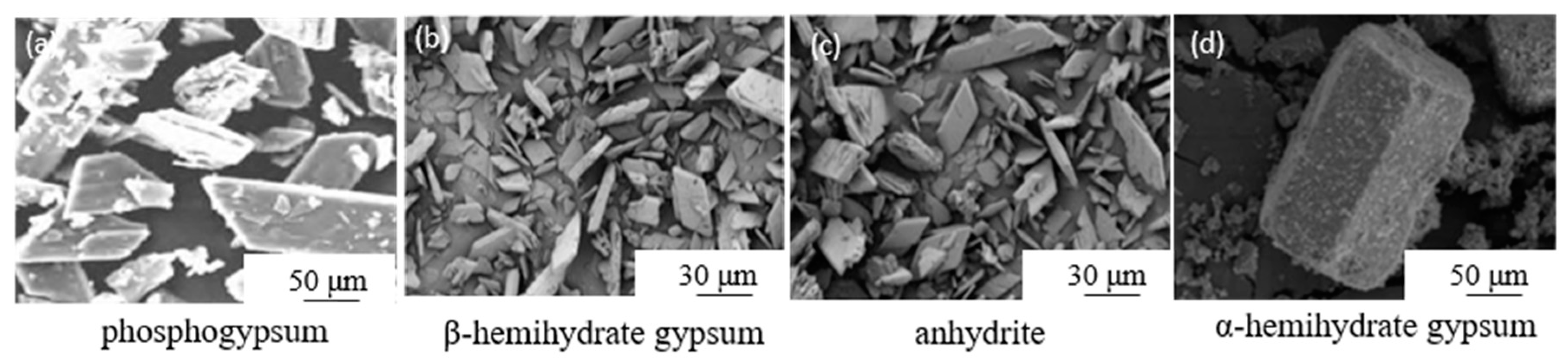
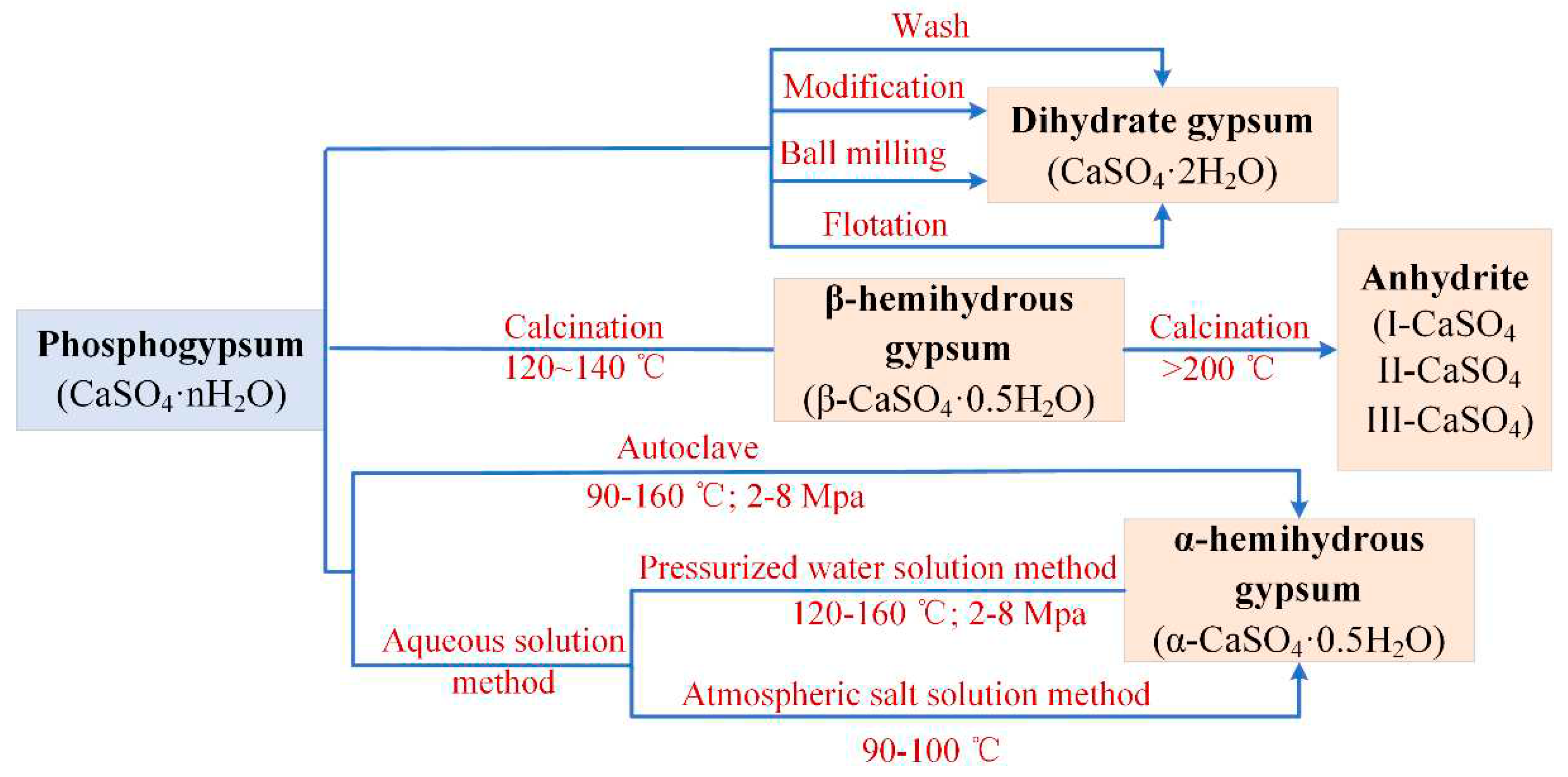
Figure 3.
Cell structure diagram of gypsum crystal [38]. (a) α-CaSO4·0.5H2O; (b) β-CaSO4·0.5H2O.
Figure 3.
Cell structure diagram of gypsum crystal [38]. (a) α-CaSO4·0.5H2O; (b) β-CaSO4·0.5H2O.
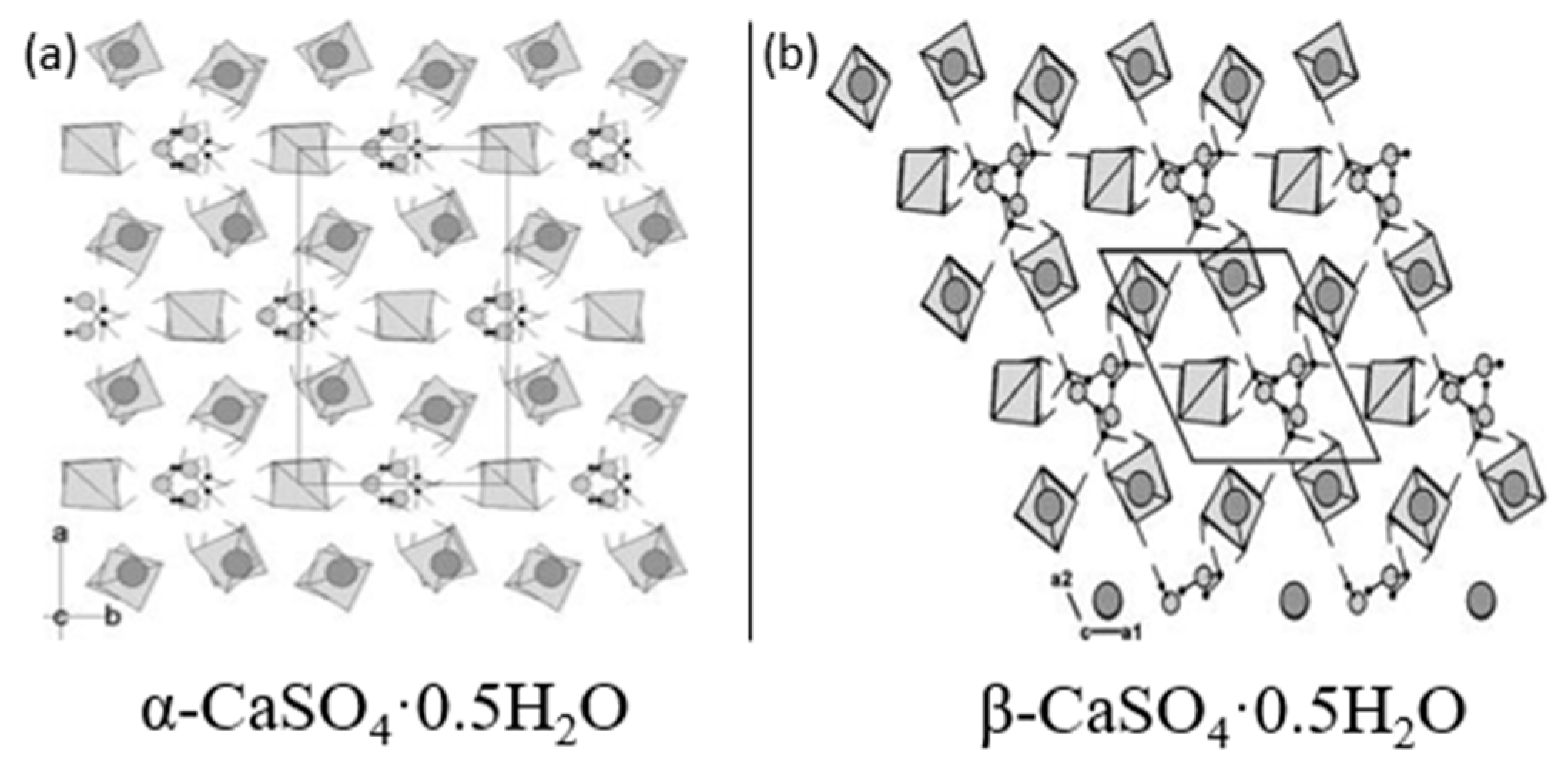
Table 1.
Comparison of preparation process conditions and product morphology of Dihydrate Gypsum.
| Process | Experiment Condition | Crystal Morphology |
|---|---|---|
| Modified water washing[29] | Mechanical activation + Water phase grinding Micellar agent:CH3COOH,Al2O3 |
 |
| Mechanical grinding[30] | PG: fly ash: lime mass ratio of 50:30:20 mixed Grinding time: 15min Sample preparation additives: 5% cement, 3% AC reinforcer and 0.5% polycarboxylic acid water reducer |
 |
| Modification[31] | Modifier: 6wt% calcium carbide slag and 4wt%CFB fly ash | 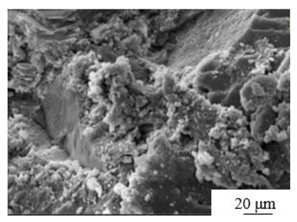 |
| Reverse direct flotation[32] | Collector: Kerosene Foaming agent: industrial grade pine oil |
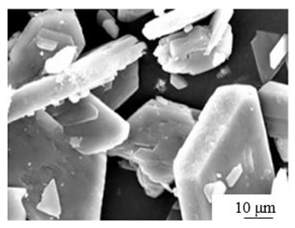 |
Table 2.
Preparation technology and advantages and disadvantages of α- hemihydrate gypsum
| Process | Principle | Advantage | Disadvantage | |
|---|---|---|---|---|
| Autoclave | Process of heating and pressurization in saturated water vapor removing of 1.5 molecules of water |
|
|
|
| Aqueous solution method |
Pressurized water solution method | Crystallization reaction of PG and water solution under pressure | High product quality |
|
| Atmospheric salt solution method | Crystallization reaction between PG and salt solution at atmospheric pressure |
|
|
|
Table 3.
Comparison of preparation process conditions and product morphology and properties of α-hemihydrate gypsum
Table 3.
Comparison of preparation process conditions and product morphology and properties of α-hemihydrate gypsum
| Process | Experiment Condition | Crystal Morphology | Flexural Strength | Compressive Strength | L/D ratio |
|---|---|---|---|---|---|
| Ball milling + Autoclave [43] | pH: 5 Temperature: 140℃ Autoclave time: 2 hours Crystal modifier: Maleic acid |
 |
8.2 | 25.4 | — |
| Flotation + Autoclave [44] | Temperature: 140℃ Autoclave time: 2 hours Crystal modifier: 0.13wt% Maleic acid 2.0wt% Aluminum sulfate |
 |
6.09 | 40.96 | 0.7: 1 |
| Atmospheric salt solution [45] | Temperature: 97±1℃ Time: 2 hours Crystal modifier: maleic acid |
 |
4.7 | 37.6 | 1.0: 1 |
| Pressurized aqueous solution [46] | Temperature: 130℃ pH: 7.0 Autoclave time: 4 hours Crystal modifier: EDTA |
 |
— | — | 1.5: 1 |
Table 5.
Comparison of preparation process conditions and product morphology and properties of Ⅱ- anhydrite
Table 5.
Comparison of preparation process conditions and product morphology and properties of Ⅱ- anhydrite
| Process | Experiment Condition | Crystal Morphology | Flexural Strength | Compressive Strength |
|---|---|---|---|---|
| Calcination + grinding[61] | Temperature: 800℃ Calcination time: 1.6 hours Potassium alum + LA-1 |
 |
>6.5 | 36.5 |
| Calcination[62] | Complexing agent (β-hemihydrate gypsum 6%、Modified steel slag 3%、K2SO4 2%、Calcium aluminate cement 0.5% ) | 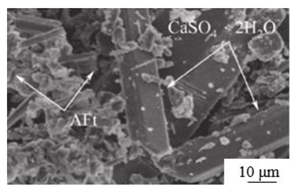 |
> 5 | 15.4 |
| Calcination [63] | Temperature: 800℃ Calcination time: 1 hours Addition: Ca (H2PO4) ·H2O and NaF |
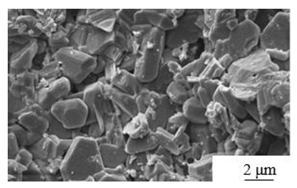 |
> 6 | > 20 |
| Calcination[64] | Temperature: 600℃ Calcination time: 1.5 hours |
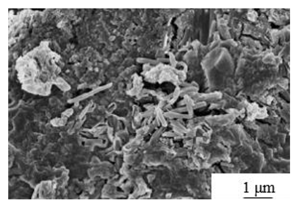 |
7-12 | 25-100 |
Disclaimer/Publisher’s Note: The statements, opinions and data contained in all publications are solely those of the individual author(s) and contributor(s) and not of MDPI and/or the editor(s). MDPI and/or the editor(s) disclaim responsibility for any injury to people or property resulting from any ideas, methods, instructions or products referred to in the content. |
© 2023 by the authors. Licensee MDPI, Basel, Switzerland. This article is an open access article distributed under the terms and conditions of the Creative Commons Attribution (CC BY) license (http://creativecommons.org/licenses/by/4.0/).
Copyright: This open access article is published under a Creative Commons CC BY 4.0 license, which permit the free download, distribution, and reuse, provided that the author and preprint are cited in any reuse.


