
Submitted:
15 September 2023
Posted:
19 September 2023
You are already at the latest version
Abstract
Strawberries (garden strawberries) belong to the most valuable berry crops and are an excellent dietary low-calorie product. This favorite berry is grown everywhere in Azerbaijan. The main objective of this study was a comparative study of 4 imported English strawberry cultivars Cupid, Fenella, Christine and Flamenco by productivity and its components, and on this basis, the selection of the most productive and adaptive. The study was conducted in a pilot production area (0.62 ha) of the Research Institute of Fruit and Tea Growing of the Ministry of Agriculture of the Azerbaijan Republic, which is located in the lowland part of the Guba district at an altitude of 400 m above sea level. Strawberry seedlings were planted on this site in the fall of 2020. The site was divided into paired rows repeated every 80 cm, and in each such pair the distance between the rows was 30 cm. The distance between the plants in each row was 15 cm. Mulching and drip irrigation were used as the main elements of the technology. When evaluating varieties by productivity in June 2022, when it reached its maximum level, the Fenella cultivar stood out. The productivity of this cultivar was 0.81 kg per bush or 40.2 tons per hectare. The same cultivar was distinguished by its large fruit (length 4.07 ± 0.42 cm, width 3.61 ± 0.55 cm, weight 20.96 ± 6.21 g), which indicates the prospect of its cultivation in the region.
Keywords:
Azerbaijan
; imported strawberry cultivars
; biometric assessments
; productivity components
; chemical composition
1. Introduction
Strawberry garden (Fragaria × ananassa Duch.) is one of the most popular berry crops in the world. Thanks to the continuous improvement of the assortment and the creation of better conditions for cultivation, the global annual volume of its production has now reached 9.2 million tons [1].
In 2020, 9 125 913 tons of strawberries were produced in the world. In this case, China (3,801,865 tons) and the USA (1,420,570 tons) are leading; followed by: Mexico (468,248 tons), Egypt (464958 tons), Turkey (415,150 tons), Spain (366,161 tons), Russia (197523 tons), Poland (196972 tons), South Korea (196,122 tons), Japan (159,000 tons), Germany (143,221 tons); in the global volume of its production, 57% is accounted for by China and the USA [2].
The profitability of strawberry production primarily depends on the selected variety and the technology used in its cultivation [3,4].
Farmers often have to deal with varieties and hybrids of strawberries that are new to this particular region, the biological potential of which has been little studied in their area of operation. Considering that the reaction of such varieties to specific conditions can be diverse, it is very relevant to conduct special studies to assess the yield and genetic stability of these varieties and hybrids under new growing conditions [5,6,7].
In Azerbaijan, strawberries are grown in many areas; Jalilabad district is in the first place for its production, where 607 hectares have been planted today. In this area, strawberries are grown in a greenhouse on an area of 240 hectares, in the open ground – 367 hectares. In 2022, 250 quintals of strawberries were harvested here from one hectare, and a total of 15,205 tons. Basically, these are strawberries of the repair cultivar “Murano” [8]. If we assume that other districts could have harvested the same amount together, then about 30,000 tons of strawberries were harvested in Azerbaijan that year.
Azerbaijani farmers are developing more and more new varieties of strawberries from the USA, Great Britain and Europe. In 2020, Azerbaijan exported 2,272 tons of strawberries to other countries [9].
Strawberry cultivation is an important economic activity in the Guba-Khachmaz region of Azerbaijan. Here they are trying to keep up with the farmers from Jalilabad, both technologically (planting scheme, soil mulching, drip irrigation, film coating) and when choosing cultivars. However, given the difference in soil and climatic conditions, the quality and quantity of cultivars offered to strawberry producers in this region sometimes leaves much to be desired.
In 2017, four cultivars of strawberries of English selection were imported to the Guba district - Cupid, Fenella, Christine and Flamenco. This study was conducted for the purpose of comparative study of these varieties by adaptability, productivity and its components.
2. Materials and Methods
2.1. Objects, place and conditions of the study
This study on the testing of strawberry varieties bred by English breeders and introduced into the Guba-Khachmaz region (Cupid, Fenella, Christine and Flamenco) is carried out within the framework of cooperation between the Research Institute of Fruit and Tea Growing of the Ministry of Agriculture of the Republic of Azerbaijan with the Malling Research Center.
The total area of the Guba-Khachmaz region is 8605 thousand km2. It accounts for 10.1% of the territory of the Republic of Azerbaijan.
This region includes several districts - Guba, Khachmaz, Gusar, Siyazan and Shabran.
Guba-Khachmaz region borders Dagestan from the north and northwest, the Caspian Sea from the east, Gabala from the west, Shamakhi district from the south, the mountains of the Greater Caucasus from the southwest; the relief of its southwestern part is mountainous, and the northwestern part is flat.
The region stretches from the coast of the Caspian Sea to the peaks of the Greater Caucasus and here different types of soils replace each other. In the foothill flat terrain, the soils are mostly brown. In the past, this area was covered with forests, which even covered the mountain slopes. In the lowest part of the region, closer to the sea, the soils are chestnut, gray-chestnut and partly gray-earth.
In Khachmaz district, 330 to 334 mm of precipitation falls annually, in Gusar district - 549-650 mm and 527-571 mm in Guba - 527-571 mm, and most of them fall in the spring-summer period. This amount of precipitation is sufficient to meet the needs of most plants growing in the region. At the same time, in the foothills and in the mountainous zone, half of all precipitation falls in winter and early spring. In the region, radiation for the year is 120-148 kcal/cm2; in some places, a temperature of 43 °C was recorded in summer.
The study of strawberry varieties was conducted in 2021-22 at the experimental production site of the Institute with a useful area of 0.62 hectares (Figure 1) in accordance with the methodology of the All-Russian Research Institute of Fruit Crop Breeding [10].
This site is located in the flat part of the Guba-Khachmaz region at an altitude of 400 m above sea level near the village of Zardabi (10 km east of the district center of Guba). The soil in the Experimental farm is gray-brown type. By its mechanical composition, it is carbonate, granular or highly granular.
Strawberry seedlings were planted here in the fall of 2020.
Drip irrigation and mulching were used as one of the main elements of the technology.
Mulching as an agrotechnical technique is increasingly being used, especially in the cultivation of vegetables and berries. This is the creation of a physical barrier between the soil surface and the atmosphere. In other words, it is an intervention in the transmission of energy and water vapor in order to reduce weed infestation, reduce water loss and improve the microclimate [11].
For this purpose, agrofibre - spunbond (1.6x10 m, 50g/m2) of the Baltic Agro brand (SEEMNEMAAILM, Tallinn, Estonia) was used. It does not let in light, maintains temperature and moisture in the soil. In addition, it serves longer than polyethylene and is better fixed on the bed. Strawberries can also be watered and fed through it. To avoid overheating of the earth, ventilation was practiced, for which the spunbond is periodically lifted along the edges of the beds.
The laying of mulch from this material was carried out at the stage of planting young strawberry rosettes in the fall of 2020.
Before that, weeds are removed, the soil is digged with NPK (20x20x20) at a rate of 600 kg / ha. After that, along the perimeter of the prepared area, every 80 cm, two furrows are made 10 cm deep at a distance of 30 cm from each other, which are covered with a spanbond (trying to cover 20-30 cm more space to the left and right of them). In the coating, cross -shaped or rounded holes with a diameter of 8-10 cm are made over each furrow every 15 cm. Holes are dug in the ground through holes and strawberry bushes are planted there, and the spunbond is fixed with hairpins.
2.2. Setting up the work
Phenological observations and biometric measurements were carried out in 2020-22 with the involvement of 30 bushes from each cultivar. Parameters such as the beginning, end and degree of flowering, productivity components (number of fruit stalks and berries, their size, weight), resistance to diseases and pests, ripening time of berries and their chemical composition were selected.
When studying the chemical composition of strawberries, generally accepted procedures were fully followed [12].
The data were analyzed using basic descriptive tools such as the mean and standard deviation of a set of repeated measurements.
The All tests are checked for compliance with the level of statistical significance equal to 0.05 or 5%.
Verification of compliance with the significance level of 5% was carried out using the SPSS (Statistical Package for the Social Sciences) software.
3. Results and Discussion
3.1. Biometric characteristics
During introduction, one of the important indicators is the passage of phenological phases by the plant and the dynamics of growth and development, since these indicators can be used to judge the degree of adaptation of varieties to the conditions of a particular area.
The timing and duration of flowering are not only one of the most variable, but also the most important phenological features of varieties of fruit and berry crops, including strawberries. Еhe earlier flowering begins, the earlier the onset of other phases of development occurs. However, given that the flowering time depends not only on the individual biological characteristics of the variety, but also on the climatic conditions of the current growing season (accumulation of a certain amount of temperatures necessary for flowering), the dates of the beginning and end of flowering of the same varieties may shift in one direction or another.
Table 1 shows the flowering dates of strawberries of the studied cultivars in 2020-21.
It shows that the flowering of strawberries of the studied varieties in 2021 began at an earlier date (08.V...25.V) than in 2022 (22.V...11.VI ). However, both in 2021 and in 2022, the first strawberries of the Christine cultivar bloomed (May 8 and May 22, respectively). In 2021, Fenella strawberries bloomed 12 days earlier, Kupid, Christine and Flamengo strawberries – 14 days earlier than in 2022. In 2021, strawberries, depending on their cultivar, bloomed for 14 to 18 days, in 2022 much longer - 33-34 days.
Table 2 shows that, depending on the strawberry cultivar, in 2021, its ripening occurred faster within 16-18 days, and in 2022, strawberries ripened much slower within 23-33 days.
This was due not only to the cooler spring of 2022, but also to an improvement in the general condition of the bushes and an increase in the number of fruit shoots by the beginning of this year.
Thus, it took some time for the plants to enter the time of full productivity (recall that strawberry seedlings of all four cultivars were planted at the pilot production site in the fall of 2020).
Table 3 shows that the date of the beginning of the autumn leaf color change in strawberries varied significantly not only depending on its cultivar, but also the year. In 2021, this date for the studied strawberry cultivars fell 28.IX (Fenella) -15.X (Flamenco), in 2022 -14.IX (Fenella) - 03.X (Flamenco). Moreover, both in 2020 and in 2021, Fenella strawberries were the first to change the color of the leaves, and Flamenco strawberries were the last. The difference in this indicator between Fenella and Flamenco cultivars in 2021 was 18 days, in 2022 – 19 days.
The change in leaf color of Cupid strawberries fell in 2021 at 06.X, in 2022 - 25.IX, the difference in this indicator between it and Flamengo strawberries is 9 days; between Christine strawberries and Flamenco strawberries is 9-12 days. This suggests that the leaves of Flamenco strawberries use light all this time, their photosynthetic activity does not decrease. This circumstance may contribute to the prosperity of this imported cultivar in this new area for him. However, it should be borne in mind that farmers are primarily interested in the components of the fertility of varieties and the commercial qualities of fruits (the number of peduncles on each bush, size, weight, taste, transportability).
Table 4 shows that strawberry varieties as of June 2022 had 6-10 flower stalks on each bush; there were at least 7 of them on each strawberry bush with Cupid and Christine. According to the number of fruits formed on each bush, Cupid is ahead (43 ± 4 pieces), followed by Fenella and Christine (38 ± 3 pieces).
Fenella fruits are the largest in size and weight (length 4.07 ± 0.42 cm, width 3.61± 0.55cm, weight 20.96 ± 6.21). This variety was significantly ahead of the other three varieties studied in terms of productivity (the yield of one bush of this cultivar was 0.81 kg, and from one hectare - 40.2 tons). The other three varieties studied are significantly inferior to the Fenella variety in these indicators.
3.2. Chemical composition
The chemical composition of the fruits of these four imported strawberry varieties is presented in Table 5.
It shows that Fenella strawberries have the highest concentration of soluble solids (10.0 ±0.17 ° Brix), the total amount of simple sugars (monosaccharides 6.21±0.09 g / 100 g + sucrose 1.26±0.02 g/ 100 g), which makes these berries juicier and sweeter compared to the berries of the other three studied varieties. From the same table it can be seen that the fruits of this variety in terms of the content of ascorbic acid and total polyphenols and titrated acidity and fruits of this variety differ little from the other three varieties studied by us.
The Cupid variety was ahead of other studied varieties in terms of the content of ascorbic acid (68.6± 0.75 mg/ 100 g of raw weight) and total polyphenols (115.0± 1.26 mg/ 100 g of raw weight), which makes it possible to use it in breeding work to breed new varieties of strawberries for bioactive gardening.
3.3. Other sings
Below is a description of other signs of these four imported strawberry varieties, together with pictures characterizing their general condition as of June 2022, as well as the shape and hardness of ripe berries.
| Cupid. The fruits are large, conical in shape, bright orange-red in color. The density of berries is relatively high (0.93g/cm3). The berries have a good tolerance to rain and winter cold at the local level. The flesh is fragrant and sweet to the taste. The leaf is dark green, large. This variety is quite resistant to verticillium wilt (Verticillium dahliae), Phytophthora (Phytophthora cactorum), black spotting (Colletotrichum acutatum) and powdery mildew (Podosphaera aphanis). | 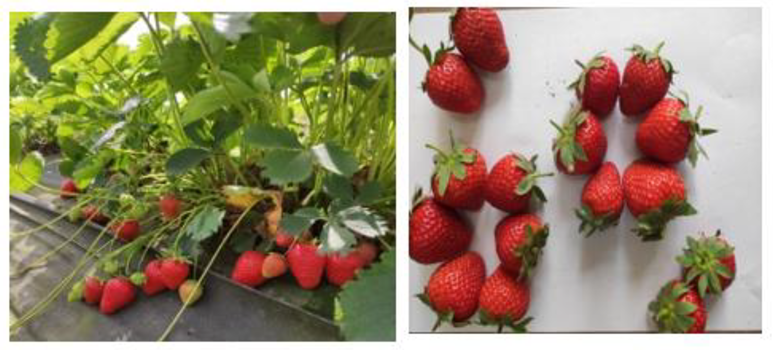 |
| Fenella. The bush is compact, powerful, erect. The leaves are erect, vertically directed, dark green. The color of the berry is orange-red, the shape of the berries is regular, conical. The taste is moderately sweet, with a hint of pineapple. The pulp is very dense (0.97 g / cm3), which indicates good storage capacity and transportability of berries of this cultivar. The variety is suitable for less intensive technologies, including for growing according to the “Pick–Your-Own” system. | 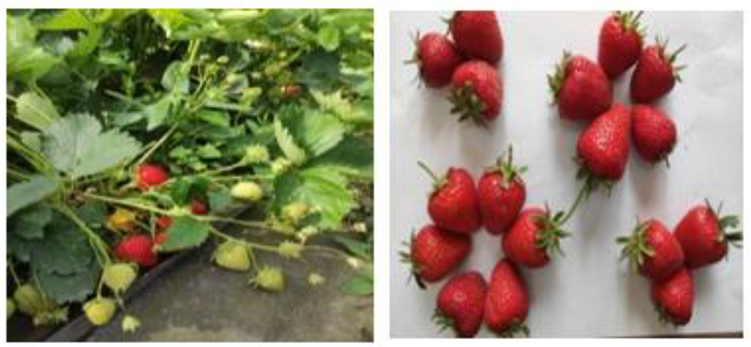 |
| Christine. The bush, with its external compactness, is quite powerful. Peduncles have a fair length and average density. They are adapted to hold a large number of fruits, but they can sink to the ground under the weight of berries. Therefore, it is necessary to think about the bedding material if there is a desire to see the berry perfectly clean. The leaf plates are large, while the berry is not hidden from sunlight. It is convenient to harvest from bushes. The berries are large, quite dense (0.79 g / cm3) and resistant to damage, have a glossy surface, so they do not get wet in the rain. Strawberry Christine has an excellent aroma, but it cannot be said that the aftertaste remains for a long time. Lovers of soft juicy berries are unlikely to appreciate this cultivar. | 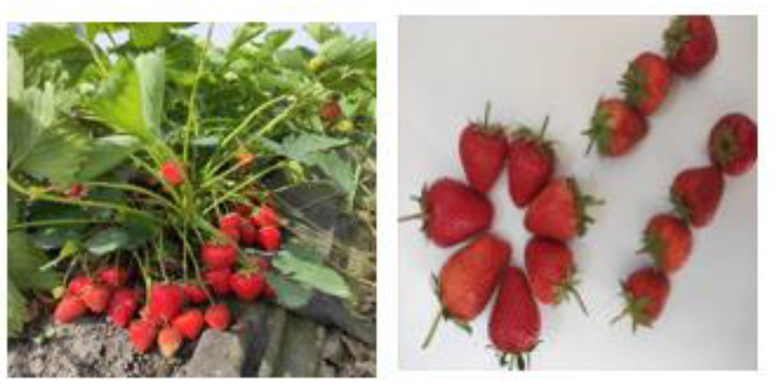 |
| Flamenco. It does not have a tall, but stocky, powerful bush with a lot of whiskers. The leaf is dark green, shiny, large. Berry of rich red color with gloss, regular conical shape. The flesh is very juicy, medium density (0.78 g / cm3), sweet, fragrant. The Flamenco variety is resistant to verticillium wilt (Verticillium dahliae) and is relatively sensitive to powdery mildew (Podosphaera aphanis). | 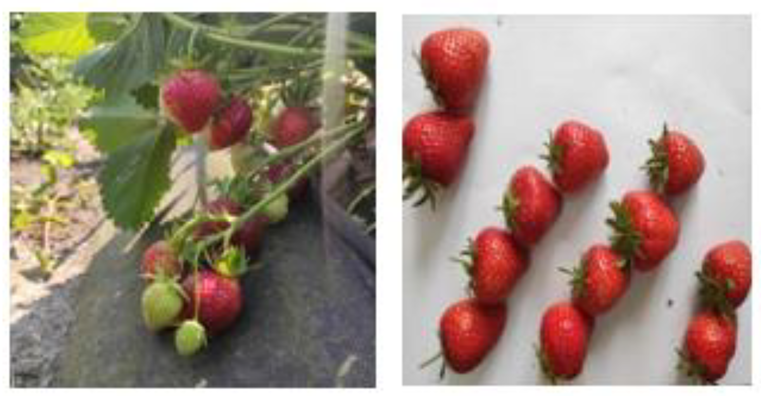 |
Klakotskaya et al. (13), conducting a comparative study of a large number of European and other strawberry cultivars in the soil and climatic conditions of Estonia, divided them into 3 groups according to their yield: high-yielding (424.1–624.1 g/plant), yielding (314.4–435.0 g/plant) and medium–yielding (210.8-289.9 g/plant).
With this gradation, all four strawberry cultivars studied in this work fall into the group of high-yielding and even super-yielding (Fenella and Cupid cultivars).
4. Conclusions
Thus, in terms of productivity (0.81 kg per bush or 40.2 tons per hectare) and large fruit (fruit length 4.07 ± 0.42 cm, width 3.61 ± 0.55cm, weight 20.96 ± 6.21), the Fenella cultivar was significantly ahead of the other three studied strawberry cultivars, which is why it can be included in the list of intensively grown varieties.
The strawberry of the Cupid cultivar turned out to have a maximum content of ascorbic acid and total polyphenols; therefore it can serve as a valuable starting material in the selection of new high-vitamin varieties.
References
- E. Barth, J. T. V. de Resende, A. F. P. Moreira, K. H. Mariguele, A. R. Zeist, M. B. Silva, G. C. G. Stulzer, J. G. M. Mafra, L. S. A. Gonçalves, S. R. Roberto, K. Youssef. Agron, 2020, 10, 598. [CrossRef]
- Contries by strawberry production- (Accessed: february01, 2020) - the material is taken from the website of the Atlas Big (USA): https://www.atlasbig.com/en-ca/countries-by-strawberry-production.
- Farmers invest in strawberry cultivation - (Accessed: February 27, 2023) - the material is taken from the website of the Azerbaijani State News Agency “AZERTAC”: https://azertag.az/ru/ xeber/Fermery_investiruyut_v_vyrashchivanie_klubniki reportazh_iz_Dzhalilabada-2509172.
- A. Moncada, G. Caracciolo, C. Prinzivalli and F. D'Anna, Study on new strawberry varieties evaluated in Sicily. Acta Hortic, 2009, 842 (113): 541-544. [CrossRef]
- D. S. Zanin, A. F. Fagherazzi, A. M. dos Santos, R. Martins, A. A. Kretzschmar, L. Rufato, Rev. Ceres Viçosa, 2019, 66 (3): 159–167. [CrossRef]
- G. Singh, D. S. Kachwaya, R. Kumar, G. Vikas, L. Singh, Electron. J. Plant Breed, 2018, 9 (1): 169–182. [CrossRef]
- A. Gabriel, J. T. V. Resende, A. R. Zeist, L. V. Resende, N. C. V. Resende, A. G. Galvão, R. A. Zeist, R. B. de Lima Filho, J. V. W. Corrêa, C. K. Camargo, Genet. Mol. Res., 2018, 17 (3), 18041. [CrossRef]
- A.F. Costa, N. R. Leal, J. A. Ventura, L. S. A. Gonçalves, A. T. A. Júnior, H. Costa, Acta Sci., Agron., 2015, 37 (4): 435–440. [CrossRef]
- Farmers invest in strawberry cultivation - (Accessed: February 27, 2023) - the material is taken from the website of the Azerbaijani State News Agency “AZERTAC”: https://azertag.az/ru/ xeber/Fermery_investiruyut_v_vyrashchivanie_klubniki reportazh_iz_Dzhalilabada-2509172.
- Fruit and berry production in Azerbaijan - (Accessed: January 01, 2021) - the material is taken from the website of the Azagroinvest Az (Azerbaijan): https://azagroinvest.az/ wpcontent/ uploads/sites/131/2021/12/azerbaycanda-meyve-istehsali-i473.pdf.
- Program and methodology of variety study of fruit, berry and nut crops / All - Russian Research Institute of Fruit Crop Breeding; [Under the general editorship of E. N. Sedov and T. P. Ogoltsova]. - Orel: 1999. - 606 p. ISBN 5-900705-15-3.
- L.M.F. Castañeda, L.E.C. Antunes, N.C. Ristow and S. Carpenedo. Acta Hortic, 2009, 842_8: 111-114. [CrossRef]
- AOAC. Official Methods of Analysis of AOAC International; Association of Official Analytical Chemists: Rockville, MD, USA (2019).
- N. Klakotskaya, P. Laurson, A.-V. Libek, A. Kikas. Horticulturae, 2023, 9, 104. [CrossRef]
Figure 1.
General view of the experimental site.
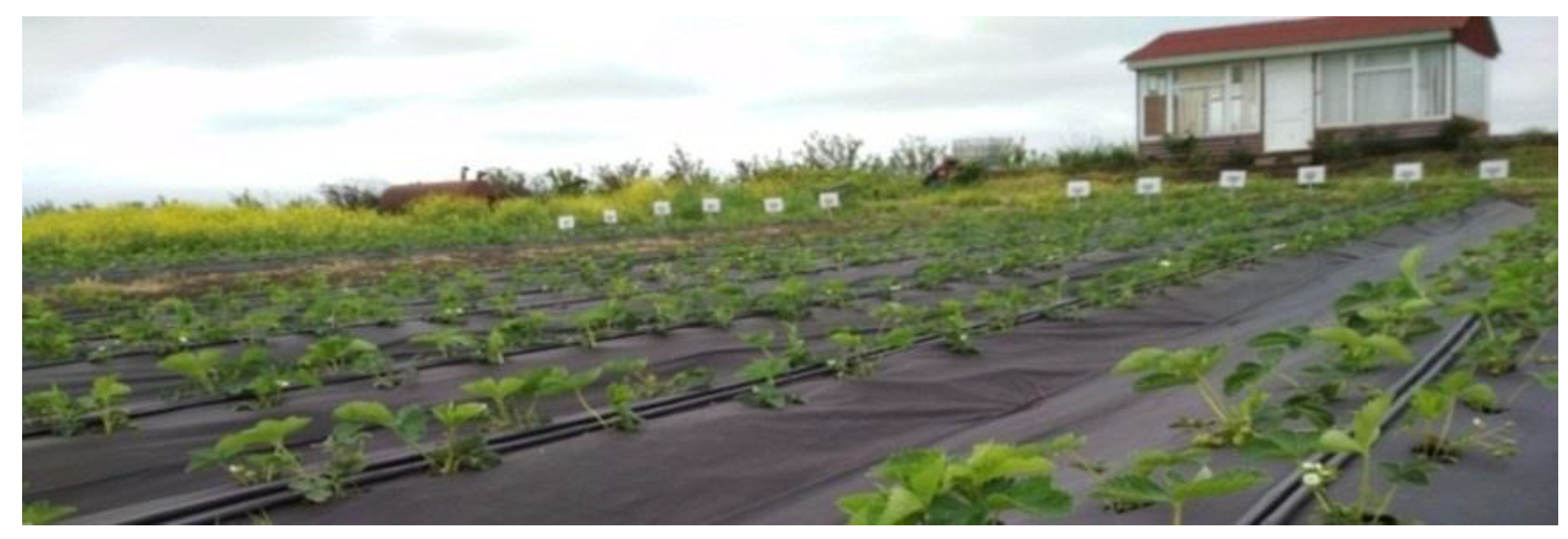

Table 1.
The flowering dates of strawberries of the studied cultivars in 2020-21.
| Cultivar | Flowering | |||||
|---|---|---|---|---|---|---|
| Start | End | Duration, days | ||||
| 2021 | 2022 | 2021 | 2022 | 2021 | 2022 | |
| Cupid | 25.V | 11.V | 11.VI | 14.VI | 16 | 34 |
| Fenella | 17.V | 07.V | 05.VI | 09.VI | 18 | 33 |
| Christine | 08.V | 04.V | 22.V | 06.VI | 14 | 33 |
| Flamenco | 14.V | 08.V | 28.V | 11.VI | 14 | 34 |
Table 2.
The dates of the beginning and end of strawberry ripening in 2021-22 in the conditions of a pilot production site located near the village of Zardabi.
Table 2.
The dates of the beginning and end of strawberry ripening in 2021-22 in the conditions of a pilot production site located near the village of Zardabi.
| Cultivar | Fruit ripening | |||||
|---|---|---|---|---|---|---|
| Start | End | Duration, days | ||||
| 2021 | 2022 | 2021 | 2022 | 2021 | 2022 | |
| Kupid | 06.VI | 31.V | 19.VI | 23.VI | 18 | 23 |
| Fenella | 28.V | 26.V | 14.VI | 20.VI | 17 | 25 |
| Christine | 16.V | 22.V | 03.VI | 24.VI | 17 | 32 |
| Flamengo | 23.V | 24.V | 10.VI | 26.VI | 16 | 33 |
Table 3.
Parameters of autumn strawberry leaf color changes.
| Cultivar | The beginning of the change in the color of the leaves | The color of the leaves before they fall | Iis evaluated on a 5-point scale according to the principle “the later the color of the leaves began to change, the better” | ||
|---|---|---|---|---|---|
| 2021 | 2022 | 2021 | 2022 | ||
| Сupid | 06.X | 25.IX | Purple-red | 4 | 3 |
| Fenella | 28.IX | 14.IX | Violet | 3 | 2 |
| Christine | 03.X | 22.IX | Red-purple | 4 | 3 |
| Flamenco | 15.X | 03.X | Purple-red | 5 | 4 |
Началo и.
Table 4.
Productivity components and strawberry yield (as of June 2022).
| Cultivar | Number of peduncles, pcs/ bush | Number of fruits, pcs/bush | Fruit dimensions: | Fruit weight, g |
Yield | ||
|---|---|---|---|---|---|---|---|
| Length, cm | Width, cm | kg/bush | tonn/ha | ||||
| Сupid | 7-10 | 43±4 | 3.61±0.66 | 3.59 ±0.54 | 16.76±3.15 | 0.72 | 35.8 |
| Fenella | 6-9 | 38 ±3 | 4.07± 0.42 | 3.61± 0.55 | 20.96 ± 6.21 | 0.81 | 40.2 |
| Christine | 7-9 | 38±3 | 3.87±0.33 | 3.26 ± 0.20 | 16.76±3.15 | 0.64 | 31.8 |
| Flamenco | 6-8 | 34±2 | 3.58± 0.15 | 3.35± 0.32 | 16.68±3.52 | 0.57 | 28.3 |
Table 5.
Change in the chemical composition of berries depending on their cultivar.
| Cultivar | Moistu- re , % | Solublе dry substances, ° Brix |
Mono-sakha -rides, % | Sakha– rose, % |
Titra -ted acid | Vitamin C, mg/100 g | Total po -lyphenols, mg/100 g |
|---|---|---|---|---|---|---|---|
| Сupid | 91.0± 1.0 |
7.4± 0.08 |
4.95± 0.05 |
0.77± 0.008 |
0.60± 0.007 |
68.6± 0.75 |
115.0± 1.26 |
| Fenella | 87.0 ± 1.5 |
10.0± 0.17 |
6.21± 0.09 |
1.26± 0.02 |
0.65± 0.01 |
51.4± 0.89 |
100.0 1.72 |
| Christine | 88.0± 1.3. |
9.8± 0.12 |
5.29± 0.08 |
1.57 ± 0.02 |
0.68± 0.01 |
53.5± 0.79 |
104.0± 1.54 |
| Flamen -co | 88.0± 1.1. |
9.8± 0.13 |
5.70± 0.07 |
1.90± 0.03 |
0.75 ± 0.01 |
61.6± 0.75 |
105.0 ± 1.29 |
| p-value | <0.05 | <0.05 | <0.05 | <0.05 | <0.05 | <0.05 | <0.05 |
ППo максиман.
Disclaimer/Publisher’s Note: The statements, opinions and data contained in all publications are solely those of the individual author(s) and contributor(s) and not of MDPI and/or the editor(s). MDPI and/or the editor(s) disclaim responsibility for any injury to people or property resulting from any ideas, methods, instructions or products referred to in the content. |
© 2023 by the authors. Licensee MDPI, Basel, Switzerland. This article is an open access article distributed under the terms and conditions of the Creative Commons Attribution (CC BY) license (http://creativecommons.org/licenses/by/4.0/).
Copyright: This open access article is published under a Creative Commons CC BY 4.0 license, which permit the free download, distribution, and reuse, provided that the author and preprint are cited in any reuse.


