
Submitted:
08 September 2023
Posted:
12 September 2023
You are already at the latest version
Abstract
Platinum group metals (PGMs) high-grade ore tonnage from Merensky reef keeps on depreciating forcing the metallurgical industry to explore beneficiating PGMs from upper group 2 (UG2) ore which has up to 60% content of chromite and from secondary sources. The PGMs are naturally associated with base metal sulphides and the efficacy of the PGMs extraction processes is dependent on the processing of PGMs-bearing base metal sulphides. These processes include concentrating PGMs-bearing base metal sulphides through flotation, oxidation, etc. prior the metal extraction processes. The evolving mineralogy of PGMs ores has necessitated the use of multiple reagents to enhance the efficiency of the concentration process. This has led to an increased amount of inor-ganic chemicals disposal to the environment and the processing of PGMs to be less economic. Bio-technology has been investigated as a potential low cost, ecologically safe substitute for many current minerals processing methods. The metabolites produced by microorganisms have been used for many years with great success in the leaching and flotation of metals from medium and low-grade sulphide minerals. The possible application of microorganism mainly Acidithiobacillus ferrooxidans (A. ferrooxidans) in the metallurgical processing of PGMs-bearing base metal sulphides is systematically reviewed in this paper. The main emphasis is on the use of A. ferrooxidans in bio-oxidation and bioleaching, as well as their potential to substitute inorganic reagents in the flo-tation of PGMs-bearing base metal sulphides from primary and secondary sources
Keywords:
Acidithiobacillus ferrooxidans
; bioleaching
; bioflotation
; bio-oxidation
; base metal sulphides
; platinum group metals
1. Introduction
Platinum Group Elements (PGEs ) or PGMs, consists of six precious metals; platinum (Pt), palladium (Pd), rhodium (Rd), ruthenium (Ru), osmium (Os), iridium (Ir) as well as gold (Au) and silver (Ag) [1]. Application of PGMs is mostly in investments, auto-catalyst, jewellery and medical implants amongst others [2]. Geologically, South Africa (SA) and Zimbabwe hosts 80% of global PGMs reserves. The Bushveld Complex (BIC) in SA has three distinct reefs which are economically exploited for PGMs extraction, these are Merensky Reef, Upper Group 2 (UG2), and Plat reef. Merensky and Platreef were initially exploited due to their shallow stratiform and simple mineralogy compared to UG2, [1]. UG2 reef is now a dominant PGM source due to the gradual depletion of the other reefs [2].
The PGMs content in the three reefs is contrasted in Figure 1, the Merensky (a), UG2 (b) and Plat reef (c), the mineralogical association of PGMs also vary from one reef to the other [1]. Geologically, PGMs mostly associate with sulphides as host body while silicates and chromite are typical gangue minerals. UG2 specifically has up to 60 % chromite content, this necessitates unique beneficiation methods since Merensky and Platreef hardly has chromite as major phases [2].
Pyrrotite (FexS), pentlandite (FeNi)9S8, chalcopyrite (CuFexS) and millerite (NiS) are sulphides which commonly associate with PGMs, as such, the beneficiation route of PGMs targets concentration of these sulphides since PGMs concentration in as mined ore is very minute (3 – 5 g/t). At concentration processes the target is to concentrate sulphides while suppressing silicates and chromite. A typical PGM processing route includes, comminution, flotation, smelting, converting, leaching, electrowinning and precious metals refining [2]. Flotation is a concentration step where surface chemistry of minerals is manipulated to separate hydrophobic from hydrophilic minerals. Sulphides, as PGM carriers should be collected as a concentrate while silicates and chromite should be suppressed to the Tail. The complex mineralogy of a UG2 ore has rendered challenges with chromite entrainment in the sulphide concentrate, this decreases the grades and also causes challenges with the subsequent smelting step where chromite should not exceed 3% in the feed to the smelters. The other challenges with the flotation process are high volume of gangue entering the process due to low concentrations of PGMs in the run of mine. This impedes efficient optimization of the process to improve recoveries, as such significant amount of valuable minerals are lost with the gangue due to high volumes. Current reagent suites also has drawback with high dosages, cost implication, toxicity and in ability to achieve high recoveries. The conventional methods of recovering PGMs have become less economical and less effective [3] . As such, bio-beneficiation of PGMs-containing ores is receiving interest since it has a potential of being economical, effective, and environmentally friendly.
Biometallurgy and biobeneficiation are described as the use of micro-organisms and their metabolites to extract and beneficiate valuable minerals. The incorporation of biotechnology into the mineral processing and metallurgical industry has increased over the years. Most of the research has been done to understand the science behind biomining [4,5,6,7], bioleaching [8,9,10], bioflotation [11,12,13,14], bioflocculation [14] and biomagnetic separation [15,16].
Among microorganisms that have been applied in biomining, the micro-organisms that oxidize sulphur and iron have received great attention. These include Acidithiobacillus ferrooxidans (A. ferrooxidans) previously known as Acidithiobacillus thiooxidans, Leptospirillum ferrooxidans, Leptospirillum, Ferroplasma acidiphilum, members of the genera Acidimicrobium, Ferromicrobium, Sulfobacillus, Sulfolobus, Acidianus, Metallosphaera, Sulphurisphaera, and mesophili [8,17,18,19,20,21,22,23]. Their various applications are presented in a recently published review paper by Chipise et al. [3]. In the current review, the capacity of A. ferrooxidans to beneficiate PGMs directly as metals is not reported, no relevant data was available in the open literature. However, A. ferrooxidans (mesophile and thermophile) was tested as a bio-modifier for UG2 ore in the current project that necessitated conducting this review. The resulting data is reported in an article by Zulu et al.,[24] where the UG2 ore was pre-conditioned the ore with mesophile and thermophile A. ferrooxidans. It was found that mesophile and thermophile selectively modified the compounds of the UG2 ore such that during the flotation of the conditioned ore, the chromite was suppressed for the ore exposed to mesophile, while the sulphide flotation was enhanced in the ore conditioned with thermophile. Since PGMs are primarily associated with sulphides, the current work investigates the potential of using A. ferrooxidans as a modifier, collector or a depressant in common sulphide processes as per in the existing literature review [3,40]. The sulphides of interest include FeXS, (Fe, Ni)9 S8, (CuFeS2), (NiS), (FeS2), due to their association with PGMs.
This systematic review aims to investigate and outline the efficacy of A. ferrooxidans and their potential application in the processing of PGMs with special focus on sulphides associated with PGMs. As aforementioned in the open literature, no direct application of A. ferrooxidans on direct PGMs was reported. The main objectives were to outline the potential application of A. ferrooxidans in biohydrometallurgy and bioflotation of PGMs-bearing sulphides.
2. Methodology
Given the revolutionary advances and expanding improvements in the field of biomining, and with the depletion of high-grade ores, the employment of A. ferrooxidans in precious metals processes has gotten a lot of attention over the years. The potential application of A. ferrooxidans reviewed in this paper is forecasted based on the PGMs minerals association. The research questions were as follows:
- 1)
- What drives the research interest on the application of A. ferrooxidans in metallurgical processes?
- 2)
- By which mechanism does the A. ferrooxidans interacts with PGMs-bearing sulphides?
- 3)
- What are the reported applications of A. ferrooxidans for PGMs-bearing sulphides concentration processes?
Research design, search strategy and article eligibility are summarized in turn. Reviewing the potential application of A. ferrooxidans for the purpose of beneficiating PGMs containing sulphide emanates from the challenges associated with low grade ore, toxicity of reagent suites and economical implications of high reagent dosages. Literature search and screening was done using the keywords mentioned ion Figure 2. The target study was biomining and to narrow down the search, A. ferrooxidans was the main micro-organism studied. Lastly, the target processes were biohydrometallurgy (biooxidation and bioleaching) and bioflotation, and the target metals or minerals were base metal sulphides that are carriers of PGMs. The search was configured so that at least one of the keywords in each rank appeared in the title, abstract, or keyword list. The number of articles identified were 94 through the relevant databases. Some articles reporting on other mechanisms were excluded to focus on A. ferrooxidans. The data was extracted and synthesized from the eligible articles to address the research questions.
3. Results and discussion
The synthesized data on the existing literature is discussed to address the research questions raised, statistical analysis of the results is also provided.
3.1. The Drivers for the Research Interest on the Application of A. ferrooxidans in the Metallurgical Processes
A gradual increase on research outputs investigating the application of A. ferrooxidans in biomining of PGMs-bearing base metal sulphides is graphically presented in Figure 3. The increase on the research output around the A. ferrooxidans application in PGMs-bearing base metal sulphides could be attributed to the following:
- a)
- b)
- The refractoriness of gold locked in sulphides [28], and
- c)
Research interest on the use of A. ferrooxidans in hydrometallurgy and flotation is in the upward trajectory. The capacity and contribution of micro-organisms and their metabolites towards mineral processing and metallurgical practices is well established. Some of the topics includes [3,4,17,32]:
- a)
- Interactions between metal-bearing minerals and micro-organisms,
- b)
- Bio-flotation of base metal sulphides,
- c)
- Removal of silicates and chromite during bio-flotation,
- d)
- Biotechnological recovery of heavy minerals from secondary sources by means of bioleaching, bio-oxidation of sulphides minerals and
- e)
- Optimization of bio-beneficiation processes.
Several mechanisms that explain the interaction between the micro-organism and metal-bearing minerals draw down to biomodification and bioremediation. Biomodification mechanism can be imputable to [3]
- a)
- The adhesion of microbial cells to the mineral surface,
- b)
- Oxidation reactions brought by the micro-organisms and their metabolites onto the minerals,
- c)
- The adhesion of bacterial proteins and exopolysaccharides to mineral surfaces and/or the chemical reaction between mineral surfaces and metabolite products.
Bioremediation uses microorganisms to degrade organic contaminants in the slurry, around metal surfaces and metal bearing mineral surfaces. The microorganisms break down the coating around the fines and/or gangue minerals on the mineral surfaces by using them as an energy source or co-metabolizing them with an energy source. In both biomodification and bioremediation, the adhesion of the micro-organism depends on the mineral’s chemical properties, toxicity of chemical composition as well as dissolution towards the micro-organism [3].
3.2. Application of Acidithiobacillus ferrooxidans in PGMs processing
The application of A. ferrooxidans in different PGMs processes is presented in Figure 4, this is based on the reviewed articles. The use of these bacteria in hydrometallurgy was categorized into bio-oxidation and bioleaching. Bio-oxidation was mainly used in gold processing and in some instances, it was done prior flotation (also referred to as biomodification). Bioleaching was applied to preconcentrate PGMs by leaching the metals from PGM-bearing base metal sulphides. A. ferrooxidans was further applied in flotation where selective flotation was desired. Bio-oxidation has the most application followed by bioleaching; bio-flotation has received the least attention. The application of A. ferrooxidans in biohydrometallurgy and bioflotation is further discussed in turn:

Table 1.
Methodological table showing the summarized data for A. ferrooxidans efficiency on sulphide processing.
Table 1.
Methodological table showing the summarized data for A. ferrooxidans efficiency on sulphide processing.
| References | Category | Approach and Objective | Main findings |
| [28,33,34,35,36,37,38,39] | Biooxidation of Refractory gold | Quantitative. The main objective was to improve gold recovery by oxidizing the gold-bearing sulfidic minerals, mainly pyrite and arsenopyrite using A. ferrooxidans thereby liberating gold from the sulphide matrix prior cyanidation. |
The gold recovery was strongly related to the extent of sulphide biooxidation, with the highest recoveries ranging from 85 to 98% depending on the operational parameters. |
| [40,41,42,43,44,45,46,47,48,49] | Bioleaching of Cu, Ni, Co from base metal sulphides | Quantitative. The aim was to investigate the efficacy of bioleaching of copper, Ni, Co using A. ferrooxidans (mesophile and moderately thermophile). |
Together with the results from chemical leaching, the data indicated that Cu was mainly leached by sulphuric acid (bio-generated and traditional acid leaching) while a high Co extraction required Fe (II)-oxidizing microbial activity (bioleaching). Adding sulphuric acid reduces the needed time to reach the possible maximal recovery of metals. As it is obvious, the maximum recovery of Cu and Ni in both bioleaching and hydrometallurgy processes is competitive and excellent |
| [50,51,52,53,54,55,56,57,58] | Bioflotation of base metal sulphides | Quantitative. Most research on bioflotation investigated the use of A. ferrooxidans as a pyrite depressant. This was applied in selective flotation of chalcopyrite and pyrite. It was also used in coal processing. The other objective was to ascertain the role of the phenomena in the biomodification of sulphides by Acidithiobacillus ferrooxidans culture (cells and growth media) and their impact in bioflotation. |
The main results showed that A. ferrooxidans can facilitate the depression of pyrite while promoting the flotation of other base metal sulphides. It was further concluded that elemental sulphur -concentration increased because of the oxidation generated by bacterial cells, the effect is intensified by the Fe (III) left in the culture and by galvanic contact. |
| [42,59,60,61,62,63] | Bioprocessing/pre- concentration of PGMs from secondary sources /waste | Quantitative. The aim was to investigate the use of A. ferrooxidans in metal extraction from spent catalytic converters. |
It was concluded that the bacteria may concentrate Cu, Cd, Zn and Pb in that way pre-concentrating PGMs prior conventional hydrometallurgy methods and reducing reagents consumption. |
3.2.1. Application of A. ferrooxidans in Biohydrometallurgy: Biooxidation and Bioleaching
Biohydrometallurgy makes use of the bacteria's natural-oxidating ability to dissolve metal sulphides, this process allows the extraction and recovery of precious and base metals from primary ores and concentrates [26,64]. A. ferrooxidans have been successfully applied in gold processing as a bio-oxidant which serves to liberate gold prior to leaching [28,65,66,67]. Ore pre-treatment is required prior to gold cyanidation leaching to get high gold recovery from refractory ores such as arsenopyrite and pyrite, these are gold carriers in most deposits. Conventionally, pre-treatment before cyanidation is achieved through roasting or pressure oxidation or chemical oxidation, are employed to improve the gold recovery during cyanidation, bacterial oxidation is an alternative method. The bio-oxidation process employs microorganisms such as A. ferrooxidans to oxidize sulphide minerals, liberating gold particles from the sulphide matrix and making them readily available for cyanidation [67].
Although the conventional pre-treatment methods can effectively extract gold from refractory ores, these have drawbacks, including high energy requirements, a need for a variety of chemicals in large quantities, and, most importantly, a high level of environmental pollution [68,69]. In contrast, bio-oxidation pre-treatment is a straightforward, low-cost, and environmentally friendly method that has been investigated to extract metals from a variety of minerals/ores and waste materials with significantly reduced environmental impacts [39,70,71]. Strict environmental regulations imposed on metallurgical industries has enhanced substantial interest in bioleaching technology as an option for extraction of metals, as opposed to conventional methods using toxic chemical [70,72].
The oxidation mechanisms can occur through direct or indirect mechanism [47]. Direct mechanism involves physical contact between the bacteria and the sulphide minerals, e.g. pyrite (FeS2), pyrrhotite (FeS), arsenopyrite (FeAsS) and chalcopyrite (CuFeS2), which then react with dissolved oxygen to convert sulphide-sulphur to sulfate or elemental sulphur according to reactions (1) through (4) [28,65]:
Indirect mechanism involves oxidation-reduction cycle of ferrous and ferric ions in mineral-solution interface during bio-oxidation process according to the following reaction [28,65]:
The ferric ion generated by reaction (5) further plays a role in subsequent oxidation of metal (II) sulphide (MS) into its divalent ions and elemental sulphur according to the following reaction [28]:
Bio-oxidation of refractory-gold serves as a pretreatment step where the gold-disseminated in sulphides is liberated and made readily available for direct cyanidation. From the research conducted by Ciftci and Akcil [28], it was stated that the recovery of gold is directly proportional to the rate of bio-oxidation. It was further stated that when A. ferrooxidans were used for oxidation, reagents consumption decrease, in this case, cyanide consumption was related to the extent at which the mineral surfaces were oxidized
3.2.2. The Application of A. ferrooxidans in Bio-Flotation
Beneficiation route for PGMs ores depends on the grade of the ore that is being treated [2]. The conventional methods were optimized for high grades ores which had predictable mineralogy, due to the depletion of high grades ores, it is imperative to investigate innovative processing methods for low grade ores and secondary sources. The aim is to optimize mineral beneficiation processes in an economical and environmentally friendly way such that the by product and tailings produced are not harmful to the environment [3,47,64,73,74]. Usage of micro-organisms is a viable alternative to current methods since the residues from micro-organisms are recyclable, economically viable, environmentally friendly.
A. ferrooxidans was first investigated in bio-flotation research as a less dangerous substitute for cyanide as a pyrite depressant in the desulphurization of coal [75,76,77]. The bacterium's attachment to the pyrite surface caused substantial chemical surface modifications that made the material hydrophilic. Following these preliminary investigations, additional base mineral sulphides were also looked at, including chalcopyrite (CuFeS2), galena (PbS), pyrrhotite (Fe(1-x)S) and sphalerite (ZnS) [77]. As aforementioned, PGMs are associated with base metal sulphides and their recovery during the concentration process (flotation) is directly linked to the recovery of these base metal sulphides. In this paper, the application of A. ferrooxidans in flotation is discussed in terms of base metal sulphides which are the carriers of PGMs. Bio-beneficiation of PGMs- bearing sulphides such as arsenic platinum (As-Pt), laurite (RuS2), braggite (Pt, Pd, Ni) S and a dimorph of braggite known as cooperite (Pt, Pd, Ni) S using A. ferrooxidans has not been reported in open literature.
- a)
- Fe- sulphides
Typically, PGM ores are beneficiated through flotation where collectors, depressants, frothers and pH modifier are part reagent suites. Commonly, Xanthates are used as collectors while silicates are used a depressant at alkaline pH of around 9. Activators are added to condition the sulphides prior to floating [2]. Micro-organisms can either be used as collectors, depressants or activators based on the compound of interest and the gangue to be depressed. A. ferrooxidans is mainly applied in flotation where selective separation of pyrite from other base metal sulphides like chalcopyrite is desired. The selective ability of A. ferrooxidans is based on the following:
The presence of aporusticyanin on the bacterial cells is ranked as one of the reasons A. ferrooxidans can be used for pyrite depression replacing the use of sodium cyanide which is well known as one of the depressants of sulphides. The efficiency of A. ferrooxidans is known to be at a pH of less than 2, because that is the favorable condition for its growth. However, for efficient separation, A. ferrooxidans depress pyrite under mildly alkaline conditions (which favors xanthate-copper sulphides interaction) because the production of extracellular polymeric substances (EPS) is not dependent on pH [3,56,78] meaning the bacteria does not lose its depressing ability even in alkaline conditions. The separation of copper sulphides and pyrite occurs at a pH ranging from 10-12 when lime is used, which brings about an advantage the bacteria has over conventional pyrite depressants. A. ferrooxidans has similar impact on pyrrhotite [3], because of A. ferrooxidans' preference for pyrrhotite, the mineral become hydrophilic, and this induced hydrophilic nature enhances depression of pyrrhotite, which would be favorable where selective flotation of PGMs-bearing sulphides is desired. The high density of the hydrophilic cells produced after microbial attachment mitigates the expected increase in floatability of pyrrhotite caused by the creation of S0 [3]. Furthermore, it was outlined that if the right conditioning process is followed, A. ferrooxidans can coexist with a collector like potassium isopropyl xanthate [3]. Researchers [23,79] showed that preconditioning the minerals with a collector followed by a brief conditioning period with cells of A. ferrooxidans can provide selective flotation of chalcopyrite from a pyrite/chalcopyrite combination. After preconditioning with the collector, the researchers demonstrated that bacterial cells preferred to adhere onto the pyrite surface, functioning as a depressant during flotation.
- b)
- Cu-Fe-sulphides
A. ferrooxidans has high affinity for iron sulphide minerals as iron (II) and oxidized sulphur is their main source of energy. In a case where sulphides are bearing copper, Acidithiobacillus family preferably adheres slowly onto Cu-sulphides because copper ions are considered toxic to this bacteria group [3,50]. The biomodification carried out by A. ferrooxidans culture combines the action of bacteria and ferric ions. In the case of Cu-sulphides, biomodification (partial oxidation) is an indirect mechanism wherein the A. ferrooxidans do not adhere to the minerals surfaces meaning biomodification is imposed by Fe (III) ions produced after iron (II) oxidation. This form of Cu-sulphides oxidation is by means of polysulphides which is a combination of microbially induced H+ and Fe (III) from the bacterium conditioning solution. Regardless of ever-existent controversies over the oxidation products of sulphide minerals, it is accepted that the formation of S0, in moderately oxidizing potentials, is the most obvious mechanism for explaining the increase in hydrophobicity of sulphides [50].
From the articles [3,23,79,80,81], it was discovered that A. ferrooxidans may be good secondary collectors of chalcopyrite, depending on the solution pH conditions (acidic or alkaline). In acidic conditions, it was noticed that pyrite and chalcopyrite were collected, however, in alkaline condition chalcopyrite is collected, while for pyrite A. ferrooxidans renders hydrophilic nature on the mineral, reducing its floatability [54,55].
selective separation of quartz from pyrite and chalcopyrite can be realized with the intervention of A. ferrooxidans. Chandrapraba et al.; Sandhiya et al. [23,82] compared the settling rates of quartz, pyrite, and chalcopyrite with those of cells that had been cultivated on medium containing ferrous iron or elemental sulphur. According to the researchers [79], cells that had been pre-cultured on solid substrates like elemental sulphur were less effective at suppressing pyrite and chalcopyrite than cells that had been grown on a medium with soluble ferrous iron. Preconditioned bacterial cells made the cell surface more hydrophobic, making them fewer effective depressants for the tested mineral sulphides when grown on a solid substrate like elemental sulphur[3].
- c)
- Other sulphides
With regards to pentlandite, its mechanism is extrapolated from interaction of A. ferrooxidans with pyrite. The preferential suppression of pyrite by A. ferrooxidans over non-ferrous galena due to the development of hydrophilic jarosite suggests that ferrous pentlandite can be suppressed by A. ferrooxidans since it is likely to generate jarosite [3]. Additionally, if the proper pH can be produced, any sulphide mineral has reportedly been observed to be flotation friendly. By direct microbial adherence to the mineral surface, A. ferrooxidans have shown to affect the surface chemistry and flotation behavior of the non-iron-sulphides minerals ZnS and PbS [82]. Before interacting with a collector, lead and zinc-sulphides could be selectively floated by conditioning with A. ferrooxidans in an acidic environment (pH 2). At low pH levels, the zinc sulfate that had formed on the ZnS was soluble, while the lead sulfate that had formed on the PbS remained insoluble. The interaction of the collector could be hindered by the development of insoluble lead sulphate, which decreases the PbS' capacity to float [77].
To obtain energy for growth, Acidithiobacillus species adhere to mineral sulphides; mineral oxides would not serve as a source of energy. However, there are several additional factors that contribute to bacterial adherence and biofilm development. It is believed that the development of biofilms helps bacteria survive in stressful situations and hold onto their position in an environment with favorable niche characteristics [83]. It has also been suggested that biofilms are the default mode of growth in nature, and that planktonic growth, which is frequently observed in lab settings, is the result of contrived growth circumstances. From these findings, it was concluded that A. ferrooxidans could be used where selective flotation is desired due to the different responses shown by different sulphides.
3.3. Statistical Analysis
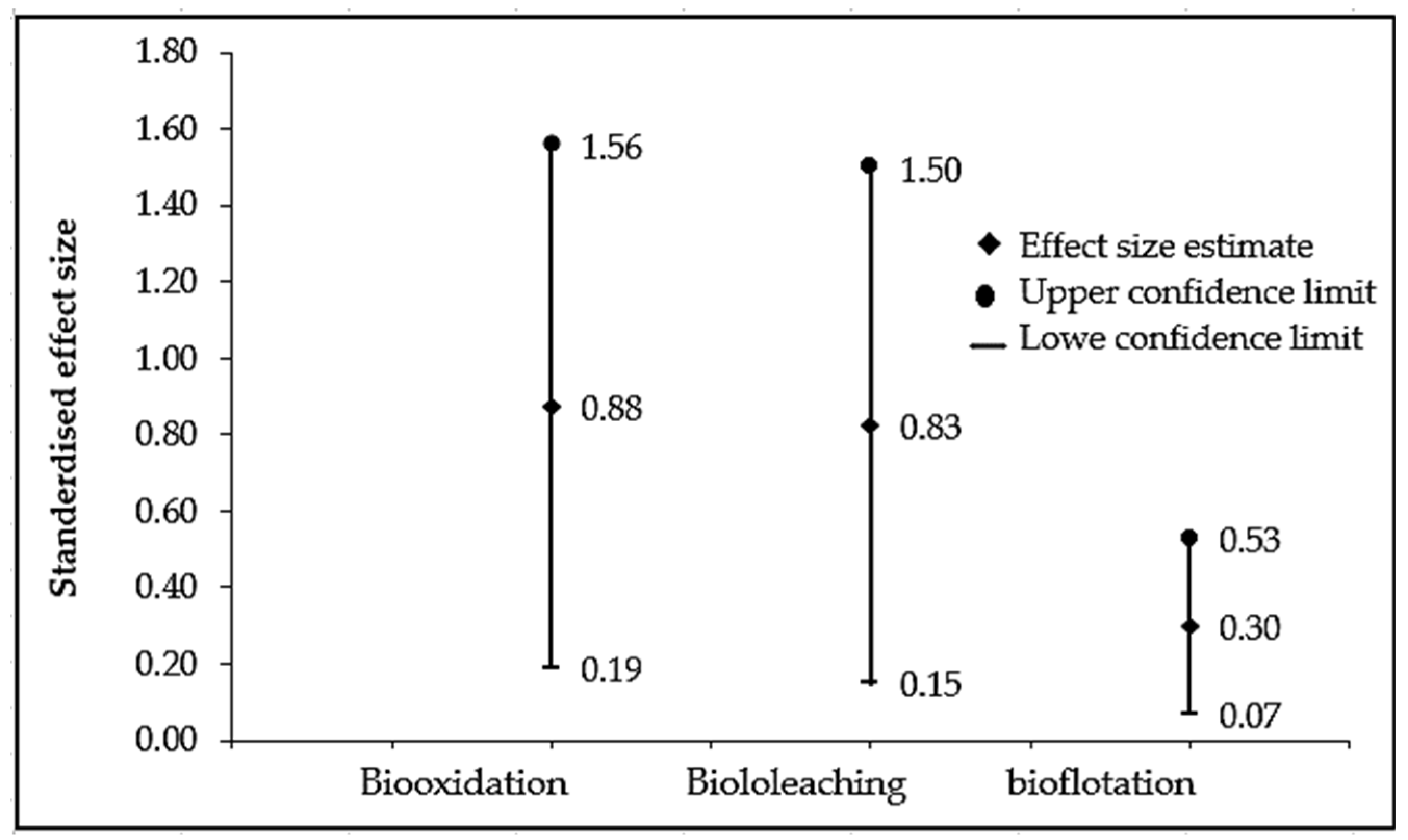
Cohen's d, often known as the standardized mean difference, is the method used for calculating effect size [84]. Cohen's d statistic explicitly measures the impact magnitude of the difference between two means. These Cohen's d statistic results are graphically represented in Figure 5. In the plot, the application of A. ferrooxidans in the metallurgical field is contrasted for 3 processes, namely, bio-flotation, bio-oxidation and bioleaching. The rule of thumb related to Cohen’s d results is mainly associated with the following size effect interpretations: small effect, d = 0.2, Medium Effect, d = 0.5, and large Effect, d = 0.8 [84]. The mean proportions observed in the processed articles suggest that there is a large statistical size effect between bio-oxidation versus bio-flotation, as well as bioleaching versus bio-flotation. It is further observed that a small effect (raise questions about managerial relevance) is observed when comparing the biooxidation and bioleaching processes where A. ferrooxidans is applied. The fluctuation in terms of effect size measured is because of the proportions of data available, wherein it is observed that the majority of the data has revealed applications of A. ferrooxidans is dominant in bio-oxidation processes, followed by bioleaching, and lastly flotation. As such, there is a great need for more empirical studies on the statistical effects that each application carries on its own before bringing together their combined effects. This extends on the level of parametrisation required under bio-flotation of PGMs studies, which is considered relatively low in comparison to bio-oxidation and bioleaching of PGMs-containing ores.
4. Conclusion
The increased recovery of heavy metals from low-grade ores and wastes using biomining is currently an actual and viable economic alternative, rather than a futuristic technology that hold the potential. Due to the clear technical and financial benefits that bioprocessing has over conventional physicochemical methods, it is being more and more accepted as an economically viable technology. Furthermore, the application of microorganism has proven to be environmentally friendly and this in fact eliminates the issue imposed by conventional reagents to the environment. This paper systematically reviewed the possible application of A. ferrooxidans in the beneficiation of PGMs-bearing base metal sulphides. This was done by outlining the potential applications of A. ferrooxidans in bio-oxidation, bioleaching and bioflotation and the main findings addressing the developed research questions were:
- A. ferrooxidans have been successfully applied in gold processing as a bio-oxidant which serves to liberate gold prior to leaching. It was concluded that the recovery of gold is directly proportional to the rate of bio-oxidation. It was further discovered that when A. ferrooxidans was used for oxidation, reagents consumption decrease, in this case, cyanide consumption was related to the extent at which the mineral surfaces were oxidized.
- It was concluded that A. ferrooxidans could be used where selective flotation is desired due to the different responses shown by different sulphides. These conclusions were drawn from the fact that the bacteria can depress Fe-sulphides, while promoting the flotation of Cu- sulphides.
- For secondary PGMs sources, it was concluded that the A. ferrooxidans may concentrate Cu, Cd, Zn and Pb through leaching in that way pre-concentrating PGMs prior conventional hydrometallurgy methods and reducing reagents consumption.
From these conclusions, it is recommended that there is a necessity for more research on the application of A. ferrooxidans in bioflotation and bioprocessing of PGMs-bearing base metal sulphides from secondary sources . Furthermore, there is a need for new research investigating potential direct mechanisms between microorganisms and precious metals.
Author Contributions
Conceptualization and Writing—original draft was done by Nokubonga Zulu, editing and re-writing was done by Bongephiwe Thethwayo, and Mapilane Madiba. All authors have read and agreed to the published version of the manuscript.
Funding
This research was funded by Siyanda Bakgatla Platinum Mine (SBPM).
Acknowledgments
I would like to acknowledge Siyanda Bakgatla Platinum Mine for funding my Masters in Extraction metallurgy. I gratefully appreciate the University of Johannesburg, Department of Metallurgy for granting me academic support.
Conflicts of Interest
The authors declare no conflict of interest.
References
- David Davis Platinum Analysis (Ore Grades &, S. African PGM Mines’ Geological Structure) Available online:. Available online: https://auctusmetals.com/platinum-analysis-ore-grades-s-african-pgm-mines-geological-structure-part-ii-by-dr-david-davis/ (accessed on 21 January 2023).
- Thethwayo, B.M. Extraction of Platinum Group Metals. In Noble and Precious Metals - Properties, Nanoscale Effects and Applications; InTech: 2018.
- Chipise, L.; Ndlovu, S.; Shemi, A. Towards the Biobeneficiation of PGMs: Reviewing the Opportunities. Minerals 2022, 12. [Google Scholar] [CrossRef]
- Kesari, K.K.; Siddiqui, M.H.; Kumar, A.; Arif, J.M. Biomining-A Useful Approach Toward Metal Extraction. Am.-Eurasian j agron 2009, 2, 84–88. [Google Scholar]
- Johnson, D.B. Biomining-Biotechnologies for Extracting and Recovering Metals from Ores and Waste Materials. Curr Opin Biotechnol 2014, 30, 24–31. [Google Scholar] [CrossRef] [PubMed]
- Jerez, C.A. Bioleaching and Biomining for the Industrial Recovery of Metals. In Comprehensive Biotechnology; Elsevier, 2019; pp. 758–771a. [Google Scholar]
- Martínez-Bellange, P.; von Bernath, D.; Navarro, C.A.; Jerez, C.A. Biomining of Metals: New Challenges for the next 15 Years. Microb Biotechnol 2022, 15, 186–188. [Google Scholar] [CrossRef] [PubMed]
- Mishra, S.; Panda, S.; Akcil, A.; Dembele, S. Biotechnological Avenues in Mineral Processing: Fundamentals, Applications and Advances in Bioleaching and Bio-Beneficiation. Miner Process Extr Metall 2022, 44, 22–51. [Google Scholar] [CrossRef]
- Brown, R.M.; Mirkouei, A.; Reed, D.; Thompson, V. Current Nature-Based Biological Practices for Rare Earth Elements Extraction and Recovery: Bioleaching and Biosorption. Renewable and Sustainable Energy Reviews 2023, 173. [Google Scholar] [CrossRef]
- Karim, S.; Ting, Y.P. Bioleaching of Platinum, Palladium, and Rhodium from Spent Automotive Catalyst Using Bacterial Cyanogenesis. Bioresour Technol Rep 2022, 18. [Google Scholar]
- Sanwani, E.; Chaerun, S.; Mirahati, R.; Wahyuningsih, T. Bioflotation: Bacteria-Mineral Interaction for Eco-Friendly and Sustainable Mineral Processing. Procedia Chem 2016, 19, 666–672. [Google Scholar] [CrossRef]
- Pecina-Treviño, E.T.; Ramos-Escobedo, G.T.; Gallegos-Acevedo, P.M.; López-Saucedo, F.J.; Orrantia-Borunda, E. Bioflotation of Sulfide Minerals with Acidithiobacillus Ferrooxidans in Relation to Copper Activation and Surface Oxidation. Can J Microbiol 2012, 58. [Google Scholar] [CrossRef]
- Hosseini, T.R.; Kolahdoozan, M.; Tabatabaei, Y.S.M.; Oliazadeh, M.; Noaparast, M.; Eslami, A.; Manafi, Z.; Alfantazi, A. Bioflotation of Sarcheshmeh Copper Ore Using Thiobacillus Ferrooxidans Bacteria. Miner Eng 2005, 18, 371–374. [Google Scholar] [CrossRef]
- Vilinska, A.; Rao, K.H. Leptosririllum Ferrooxidans-Sulfide Mineral Interactions with Reference to Bioflotation Nad Bioflocculation. Trans Nonferrous Met Soc 2008, 18. [Google Scholar] [CrossRef]
- Bahaj, A.S.; Ellwood, D.C.; Watson, J.H.P. Extraction of Heavy Metals Using Microorganisms and High Gradient Magnetic Separation. IEEE Trans Magn 1991, 27, 5371–5374. [Google Scholar] [CrossRef]
- Watson, J.H.P.; Ellwood, D.C. Biomagnetic Separation and Extraction Process for Heavy Metals From Solution. Miner Eng 1994, 7, 1017–1028. [Google Scholar] [CrossRef]
- Hoque, M.E.; Philip, O.J. Biotechnological Recovery of Heavy Metals from Secondary Sources-An Overview. Mater Sci Eng C 2011, 31, 57–66. [Google Scholar] [CrossRef]
- Clark, M.E.; Batty, J.D.; van Buuren, C.B.; Dew, D.W.; Eamon, M.A. Biotechnology in Minerals Processing: Technological Breakthroughs Creating Value. Hydrometallurgy 2006, 83, 3–9. [Google Scholar] [CrossRef]
- Jerez, C.A. Bioleaching and Biomining for the Industrial Recovery of Metals. In Comprehensive Biotechnology 2019, 758–771b. [Google Scholar]
- Roberto, F.F.; Schippers, A. Progress in Bioleaching: Part B, Applications of Microbial Processes by the Minerals Industries. Appl Microbiol Biotechnol 2022, 106, 5913–5928. [Google Scholar] [CrossRef] [PubMed]
- Vera, M.; Schippers, A.; Hedrich, S.; Sand, W. Progress in Bioleaching: Fundamentals and Mechanisms of Microbial Metal Sulfide Oxidation – Part A. Appl Microbiol Biotechnol 2022, 106, 6933–6952. [Google Scholar] [CrossRef] [PubMed]
- Li, R.C.B.; Sasaki, K.; Ohmura, N. Does Aporusticyanin Mediate the Adhesion of Thiobacillus Ferrooxidans to Pyrite. Hydrometallurgy 2001, 59, 357–372a. [Google Scholar]
- Chandraprabha, M.N.; Natarajan, K.A. Surface Chemical and Flotation Behaviour of Chalcopyrite and Pyrite in the Presence of Acidithiobacillus Thiooxidans. Hydrometallurgy 2006, 83, 146–152. [Google Scholar] [CrossRef]
- Zulu, N.G.; Thethwayo, B.M.; Madiba, M.S. Application of Acidithiobacillus Ferrooxidans in Biomodification of Base Metal Sulphides from Upper Group 2 Prior Flotation. In Proceedings of the Biomining’23, Falmouth, United Kingdom, 5-6 June 2023. [Google Scholar]
- Asgari, K.; Huang, Q.; Khoshdast, H.; Hassanzadeh, A. A Review on Bioflotation of Coal and Minerals: Classification, Mechanisms, Challenges, and Future Perspectives. Miner Process Extr Metall 2022, 43, 1–32. [Google Scholar] [CrossRef]
- Yin, S.; Wang, L.; Kabwe, E.; Chen, X.; Yan, R.; An, K.; Zhang, L.; Wu, A. Copper Bioleaching in China: Review and Prospect. Minerals 2018, 8. [Google Scholar] [CrossRef]
- Kinnunen, P.; Miettinen, H.; Bomberg, M. Review of Potential Microbial Effects on Flotation. Minerals 2020, 10. [Google Scholar] [CrossRef]
- Ciftci, H.; Akcil, A. Effect of Biooxidation Conditions on Cyanide Consumption and Gold Recovery from a Refractory Gold Concentrate. Hydrometallurgy 2010, 104, 142–149. [Google Scholar] [CrossRef]
- Yakoumis, I.; Panou, M.; Moschovi, A.M.; Panias, D. Recovery of Platinum Group Metals from Spent Automotive Catalysts: A Review. Clean Eng Technol 2021, 3. [Google Scholar] [CrossRef]
- Maass, D.; Yannick das Neves Vasconcellos Brandão, I.; Akihiro Munakata, A.; Antonio Lourenço, L. How Biomining Has Been Used to Recover Metals from Ores and Waste? A Review. Int j earth environ sci 2021, 6, 1–11. [Google Scholar]
- Adetunji, A.I.; Oberholster, P.J.; Erasmus, M. Bioleaching of Metals from E-Waste Using Microorganisms: A Review. Minerals 2023, 13, 828. [Google Scholar] [CrossRef]
- Seifelnassr, A.A.S.; Abouzeid, A.-Z.M. Exploitation of Bacterial Activities in Mineral Industry and Environmental Preservation: An Overview. J Min 2013, 1–13. [Google Scholar]
- Mubarok, M.Z.; Winarko, R.; Chaerun, S.K.; Rizki, I.N.; Ichlas, Z.T. Improving Gold Recovery from Refractory Gold Ores through Biooxidation Using Iron-Sulfur-Oxidizing/Sulfur-Oxidizing Mixotrophic Bacteria. Hydrometallurgy 2017, 168, 69–75. [Google Scholar] [CrossRef]
- de Carvalho, L.C.; da Silva, S.R.; Giardini, R.M.N.; de Souza, L.F.C.; Leão, V.A. Bio-Oxidation of Refractory Gold Ores Containing Stibnite and Gudmundite. Environ Technol Innov 2019, 15. [Google Scholar] [CrossRef]
- Chandraprabha, M.N.; Modak, J.M.; Natarajan, K.A.; Raichur, A.M. Strategies for Efficient Start-up of Continuous Biooxidation Process for Refractory Gold Ores. Miner Eng 2001, 15, 751–753. [Google Scholar] [CrossRef]
- Zhang, X.; Feng, Y. li; Li, H. ran Enhancement of Bio-Oxidation of Refractory Arsenopyritic Gold Ore by Adding Pyrolusite in Bioleaching System. Trans Nonferrous Met Soc 2016, 26, 2479–2484. [Google Scholar] [CrossRef]
- Wadsworth, M.E.; Zhu, X.; Thompson, J.S.; Pereira, C.J. Gold Dissolution and Activation in Cyanide Solution: Kinetics and Mechanism. Hydrometallurgy 2000, 57, 1–11a. [Google Scholar] [CrossRef]
- Corkhill, C.L.; Wincott, P.L.; Lloyd, J.R.; Vaughan, D.J. The Oxidative Dissolution of Arsenopyrite (FeAsS) and Enargite (Cu3AsS4) by Leptospirillum Ferrooxidans. Geochim Cosmochim Acta 2008, 72, 5616–5633. [Google Scholar] [CrossRef]
- Liu, X.; Li, Q.; Zhang, Y.; Jiang, T.; Yang, Y.; Xu, B.; He, Y. Electrochemical Behaviour of the Dissolution and Passivation of Arsenopyrite in 9K Culture Medium. Appl Surf Sci 2020, 508. [Google Scholar] [CrossRef]
- Zhang, R.; Schippers, A. Stirred-Tank Bioleaching of Copper and Cobalt from Mine Tailings in Chile. Miner Eng 2022, 180. [Google Scholar] [CrossRef]
- Rodrigues, M.L.M.; Lopes, K.C.S.; Leôncio, H.C.; Silva, L.A.M.; Leão, V.A. Bioleaching of Fluoride-Bearing Secondary Copper Sulphides: Column Experiments with Acidithiobacillus Ferrooxidans. J Chem Eng 2016, 284, 1279–1286. [Google Scholar] [CrossRef]
- Arshadi, M.; Yaghmaei, S. Advances in Bioleaching of Copper and Nickel from Electronic Waste Using Acidithiobacillus Ferrooxidans: Evaluating Daily PH Adjustment. Chemical Papers 2020, 74, 2211–2227. [Google Scholar] [CrossRef]
- Jung, H.; Inaba, Y.; Vardner, J.T.; West, A.C.; Banta, S. Overexpression of the Licanantase Protein in Acidithiobacillus Ferrooxidans Leads to Enhanced Bioleaching of Copper Minerals. ACS Sustain Chem Eng 2022, 10, 10888–10897. [Google Scholar] [CrossRef]
- Zhang, Y.; Li, Q.; Liu, X.; Yin, H.; Yang, Y.; Xu, B.; Jiang, T.; He, Y. The Catalytic Effect of Copper Ion in the Bioleaching of Arsenopyrite by Acidithiobacillus Ferrooxidans in 9K Culture Medium. J Clean Prod 2020, 256. [Google Scholar] [CrossRef]
- Behera, S.K.; Panda, S.K.; Mulaba-Bafubiandi, A.F. Valorization of Copper Smelter Slag through the Recovery of Metal Values by a Synergistic Bioprocess System of Bio-Flotation and Bio-Leaching. Environmental Quality Management 2022, 32, 233–241. [Google Scholar] [CrossRef]
- Velásquez-Yévenes, L.; Malverde, S.; Quezada, V. A Sustainable Bioleaching of a Low-Grade Chalcopyrite Ore. Minerals 2022, 12. [Google Scholar] [CrossRef]
- Sand, W.; Gehrke, T.; Jozsa, P.-G.; Schippers, A. Biochemistry of Bacterial Leaching-Direct vs. Indirect Bioleaching. Hydrometallurgy 2001, 59, 159–175. [Google Scholar] [CrossRef]
- Pogliani, C.; Donati, E. The Role of Exopolymers in the Bioleaching of a Non-Ferrous Metal Sulphide. J Ind Microbiol Biotechnol 1999, 22, 88–92. [Google Scholar] [CrossRef]
- Xin, Y.; Guo, X.; Chen, S.; Wang, J.; Wu, F.; Xin, B. Bioleaching of Valuable Metals Li, Co, Ni and Mn from Spent Electric Vehicle Li-Ion Batteries for the Purpose of Recovery. J Clean Prod 2016, 116, 249–258. [Google Scholar] [CrossRef]
- Pecina-Treviño, E.T.; Ramos-Escobedo, G.T.; Gallegos-Acevedo, P.M.; López-Saucedo, F.J.; Orrantia-Borunda, E. Bioflotation of Sulfide Minerals with Acidithiobacillus Ferrooxidans in Relation to Copper Activation and Surface Oxidation. Can J Microbiol 2012, 58. [Google Scholar] [CrossRef]
- Sanwani, E.; Chaerun, S.; Mirahati, R.; Wahyuningsih, T. Bioflotation: Bacteria-Mineral Interaction for Eco-Friendly and Sustainable Mineral Processing. Procedia Chem 2016, 19, 666–672. [Google Scholar] [CrossRef]
- Firkala, T.; Lederer, F.; Pollmann, K.; Rudolph, M. Investigation of a Bioflotation Interface with Infrared Spectroscopy. In Proceedings of the Solid State Phenomena; Trans Tech Publications Ltd; 2017; 262, pp. 537–540. [Google Scholar]
- Li, R.C.B.; Sasaki, K.; Ohmura, N. Does Aporusticyanin Mediate the Adhesion of Thiobacillus Ferrooxidans to Pyrite. Hydrometallurgy 2001, 59, 357–372b. [Google Scholar]
- San Martín, F.; Kracht, W.; Vargas, T. Biodepression of Pyrite Using Acidithiobacillus Ferrooxidans in Seawater. Miner Eng 2018, 117, 127–131. [Google Scholar] [CrossRef]
- Mehrabani, J. V.; Noaparast, M.; Mousavi, S.M.; Dehghan, R.; Rasooli, E.; Hajizadeh, H. Depression of Pyrite in the Flotation of High Pyrite Low-Grade Lead-Zinc Ore Using Acidithiobacillus Ferrooxidans. Miner Eng 2010, 23, 10–16. [Google Scholar] [CrossRef]
- San Martín, F.; Kracht, W.; Vargas, T.; Rudolph, M. Mechanisms of Pyrite Biodepression with Acidithiobacillus Ferrooxidans in Seawater Flotation. Miner Eng 2020, 145. [Google Scholar] [CrossRef]
- Attia, Y.A.; Elzeky, M.; Ismail, M. Enhanced Separation of Pyrite from Oxidized Coal by Froth Flotation Using Biosurface Modification. Int J Miner Process 1993, 37, 61–77. [Google Scholar] [CrossRef]
- Chandraprabha, M.N.; Natarajan, K.A. Surface Chemical and Flotation Behaviour of Chalcopyrite and Pyrite in the Presence of Acidithiobacillus Thiooxidans. Hydrometallurgy 2006, 83, 146–152. [Google Scholar] [CrossRef]
- Maluckov, BS. The Catalytic Role of Acidithiobacillus Ferrooxidans for Metals Extraction from Mining - Metallurgical Resource. Biodivers Int J 2017, 1. [Google Scholar] [CrossRef]
- García-Balboa, C.; Martínez-Alesón García, P.; López-Rodas, V.; Costas, E.; Baselga-Cervera, B. Microbial Biominers: Sequential Bioleaching and Biouptake of Metals from Electronic Scraps. Microbiologyopen 2022, 11. [Google Scholar] [CrossRef] [PubMed]
- Johnson, D.B. Biomining-Biotechnologies for Extracting and Recovering Metals from Ores and Waste Materials. Curr Opin Biotechnol 2014, 30, 24–31. [Google Scholar] [CrossRef]
- Karim, S.; Ting, Y.P. Bioleaching of Platinum, Palladium, and Rhodium from Spent Automotive Catalyst Using Bacterial Cyanogenesis. Bioresour Technol Rep 2022, 18. [Google Scholar]
- Ilyas, S.; Srivastava, R.R.; Kim, H. Electronic Supplementary Information Mobilization of Platinum and Palladium from Exhausted Catalytic Converters Using Bio-Cyanide and Ionic-Liquid as Mass Transport Carriers. R Soc Chem 2022, 1–10. [Google Scholar]
- Moosakazemi, F.; Ghassa, S.; Jafari, M.; Chelgani, S.C. Bioleaching for Recovery of Metals from Spent Batteries–A Review. Miner Process Extr Metall 2022, 44, 1–12. [Google Scholar] [CrossRef]
- Mubarok, M.Z.; Winarko, R.; Chaerun, S.K.; Rizki, I.N.; Ichlas, Z.T. Improving Gold Recovery from Refractory Gold Ores through Biooxidation Using Iron-Sulfur-Oxidizing/Sulfur-Oxidizing Mixotrophic Bacteria. Hydrometallurgy 2017, 168, 69–75. [Google Scholar] [CrossRef]
- Wadsworth, M.E.; Zhu, X.; Thompson, J.S.; Pereira, C.J. Gold Dissolution and Activation in Cyanide Solution: Kinetics and Mechanism. Hydrometallurgy 2000, 57, 1–11b. [Google Scholar] [CrossRef]
- de Carvalho, L.C.; da Silva, S.R.; Giardini, R.M.N.; de Souza, L.F.C.; Leão, V.A. Bio-Oxidation of Refractory Gold Ores Containing Stibnite and Gudmundite. Environ Technol Innov 2019, 15. [Google Scholar] [CrossRef]
- Miller, P.; Brown, A.R.G. Bacterial Oxidation of Refractory Gold Concentrates. In Gold Ore Processing; Elsevier, 2016; pp. 359–372. [Google Scholar]
- Thomas, K.G.; Cole, A.P. Roasting Developments - Especially Oxygenated Roasting. Dev miner process 2005, 15, 403–432. [Google Scholar]
- Zhang, Y.; Li, Q.; Liu, X.; Yin, H.; Yang, Y.; Xu, B.; Jiang, T.; He, Y. The Catalytic Effect of Copper Ion in the Bioleaching of Arsenopyrite by Acidithiobacillus Ferrooxidans in 9K Culture Medium. J Clean Prod 2020, 256. [Google Scholar] [CrossRef]
- Xin, Y.; Guo, X.; Chen, S.; Wang, J.; Wu, F.; Xin, B. Bioleaching of Valuable Metals Li, Co, Ni and Mn from Spent Electric Vehicle Li-Ion Batteries for the Purpose of Recovery. J Clean Prod 2016, 116, 249–258. [Google Scholar] [CrossRef]
- Rodrigues, M.L.M.; Lopes, K.C.S.; Leôncio, H.C.; Silva, L.A.M.; Leão, V.A. Bioleaching of Fluoride-Bearing Secondary Copper Sulphides: Column Experiments with Acidithiobacillus Ferrooxidans. J Chem Eng 2016, 284, 1279–1286. [Google Scholar] [CrossRef]
- Roberto, F.F.; Schippers, A. Progress in Bioleaching: Part B, Applications of Microbial Processes by the Minerals Industries. Appl Microbiol Biotechnol 2022, 106, 5913–5928. [Google Scholar] [CrossRef]
- Martins, F.L.; Leão, V.A. Chalcopyrite Bioleaching in Chloride Media: A Mini-Review. Hydrometallurgy 2023, 216. [Google Scholar] [CrossRef]
- Asgari, K.; Huang, Q.; Khoshdast, H.; Hassanzadeh, A. A Review on Bioflotation of Coal and Minerals: Classification, Mechanisms, Challenges, and Future Perspectives. Miner Process Extr Metall 2022, 43, 2–33. [Google Scholar] [CrossRef]
- Misra, O.M.; Bukka, K.; Chen, S. The Effect of Growth Medium of Thiobacillus Ferrooxidans on Pyrite Flotation. Miner Eng 1996, 9, 167–168. [Google Scholar] [CrossRef]
- Dwyer, R.; Bruckard, W.J.; Rea, S.; Holmes, R.J. Bioflotation and Bioflocculation Review: Microorganisms Relevant for Mineral Beneficiation. Miner Process Extr Metall 2012, 121, 65–71. [Google Scholar] [CrossRef]
- San Martín, F.; Kracht, W.; Vargas, T. Biodepression of Pyrite Using Acidithiobacillus Ferrooxidans in Seawater. Miner Eng 2018, 117, 127–131. [Google Scholar] [CrossRef]
- Chandraprabha, M.N.; Natarajan, K.A. Microbially Induced Mineral Beneficiation. Miner Process Extr Metall 2010, 31, 1–29. [Google Scholar] [CrossRef]
- Sanwani, E.; Chaerun, S.; Mirahati, R.; Wahyuningsih, T. Bioflotation: Bacteria-Mineral Interaction for Eco-Friendly and Sustainable Mineral Processing. Procedia Chem 2016, 19, 666–672. [Google Scholar] [CrossRef]
- Kinnunen, P.; Miettinen, H.; Bomberg, M. Review of Potential Microbial Effects on Flotation. Minerals 2020, 10. [Google Scholar] [CrossRef]
- Santhiya, D.; Subramanian, S.; Natarajan, K. Surface Chemical Studies on Galena and Sphalerite in the Presence of Thiobacillus Thiooxidans with Reference to Mineral Beneficiation. Miner Eng 2000, 13, 747–763. [Google Scholar] [CrossRef]
- Jefferson, K.K. What Drives Bacteria to Produce a Biofilm? FEMS Microbiol Lett 2004, 236, 163–173. [Google Scholar] [CrossRef]
- Lakens, D. Calculating and Reporting Effect Sizes to Facilitate Cumulative Science: A Practical Primer for t-Tests and ANOVAs. Front Psychol 2013, 4. [Google Scholar] [CrossRef]
Figure 1.
Approximated quantity of PGMs in the Southern Africa reefs; (a) Merensky, (b) UG2 and (c) Plat reef [1.]
Figure 1.
Approximated quantity of PGMs in the Southern Africa reefs; (a) Merensky, (b) UG2 and (c) Plat reef [1.]
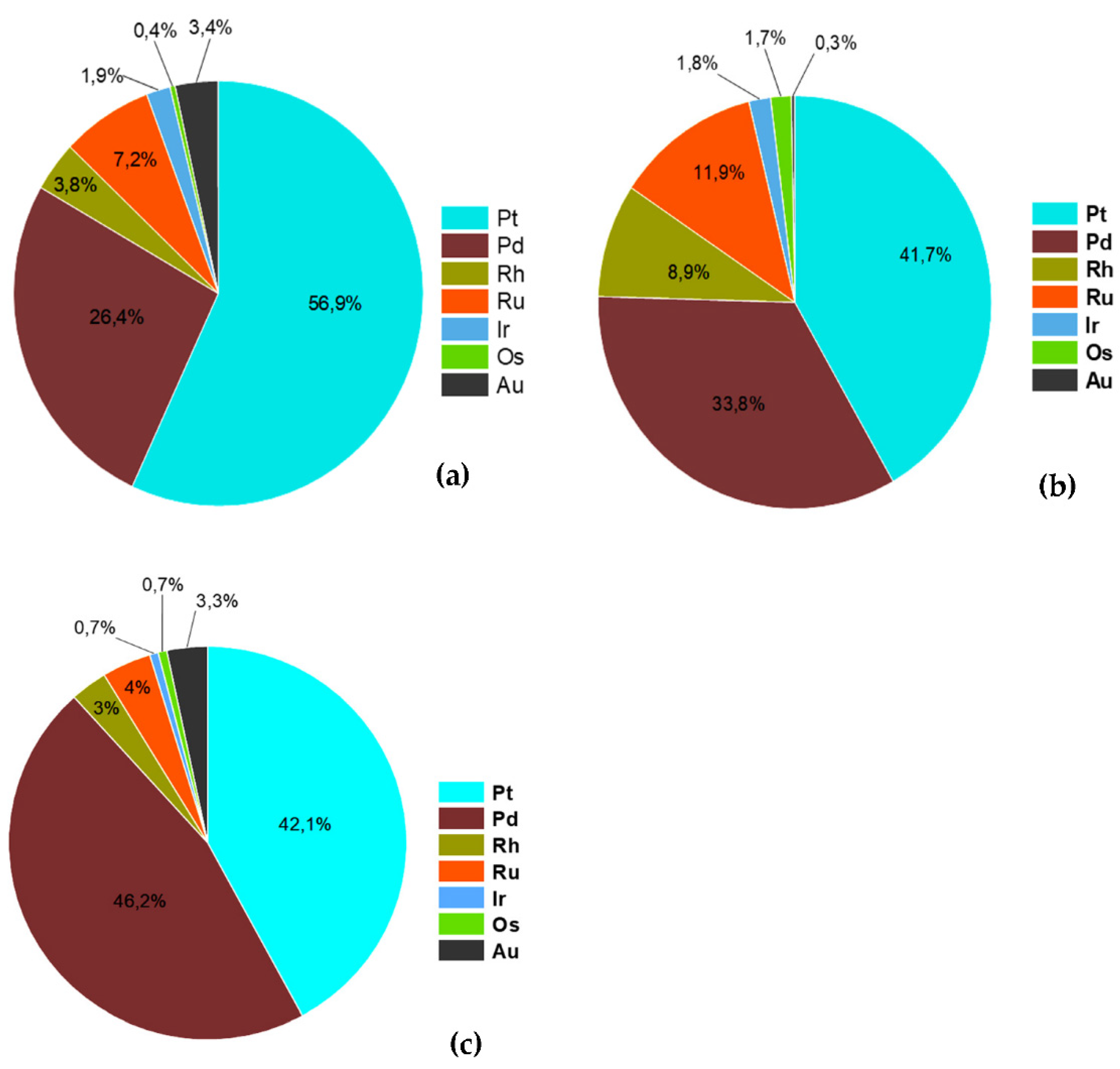
Figure 2.
Search strategy using keywords ranks as per their search criteria.
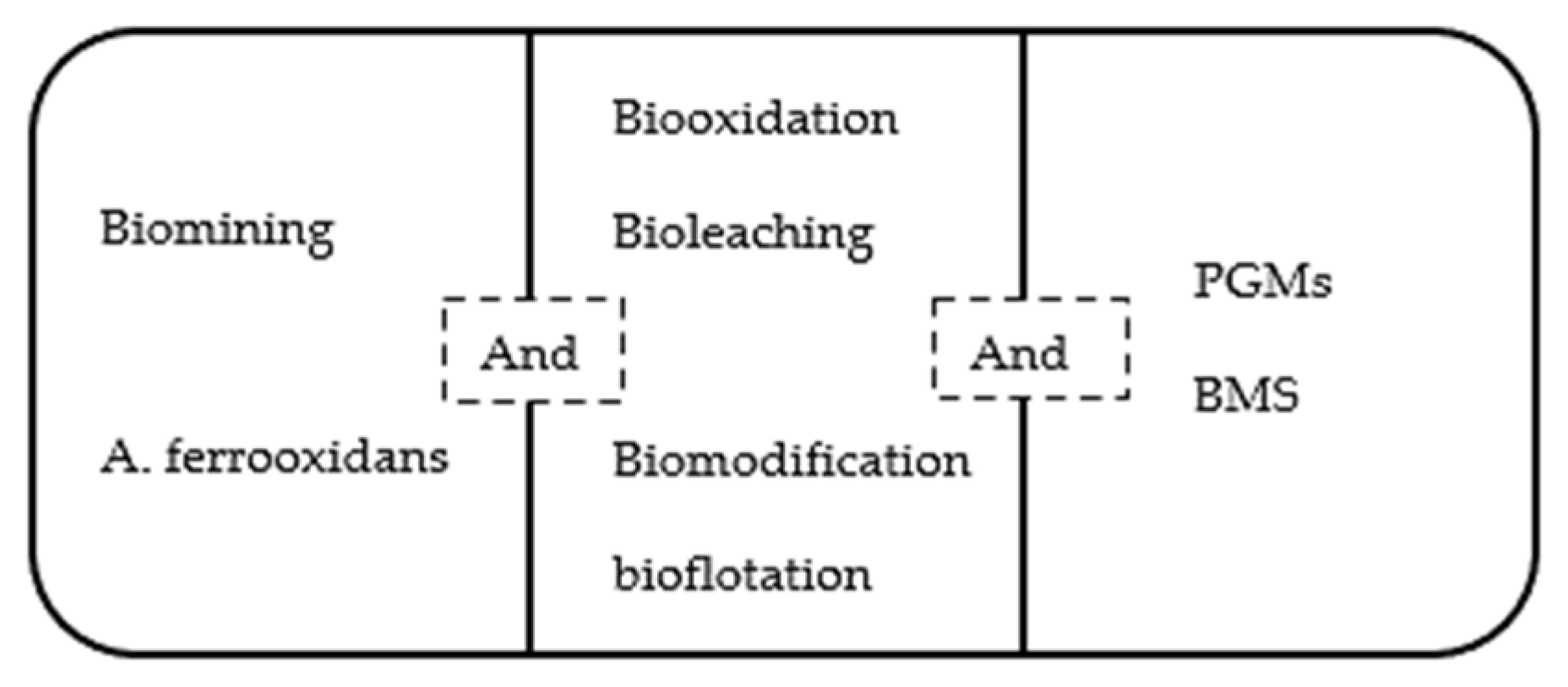
Figure 3.
Gradual increase on research publications on application of A. ferrooxidans in sulphide processing.
Figure 3.
Gradual increase on research publications on application of A. ferrooxidans in sulphide processing.
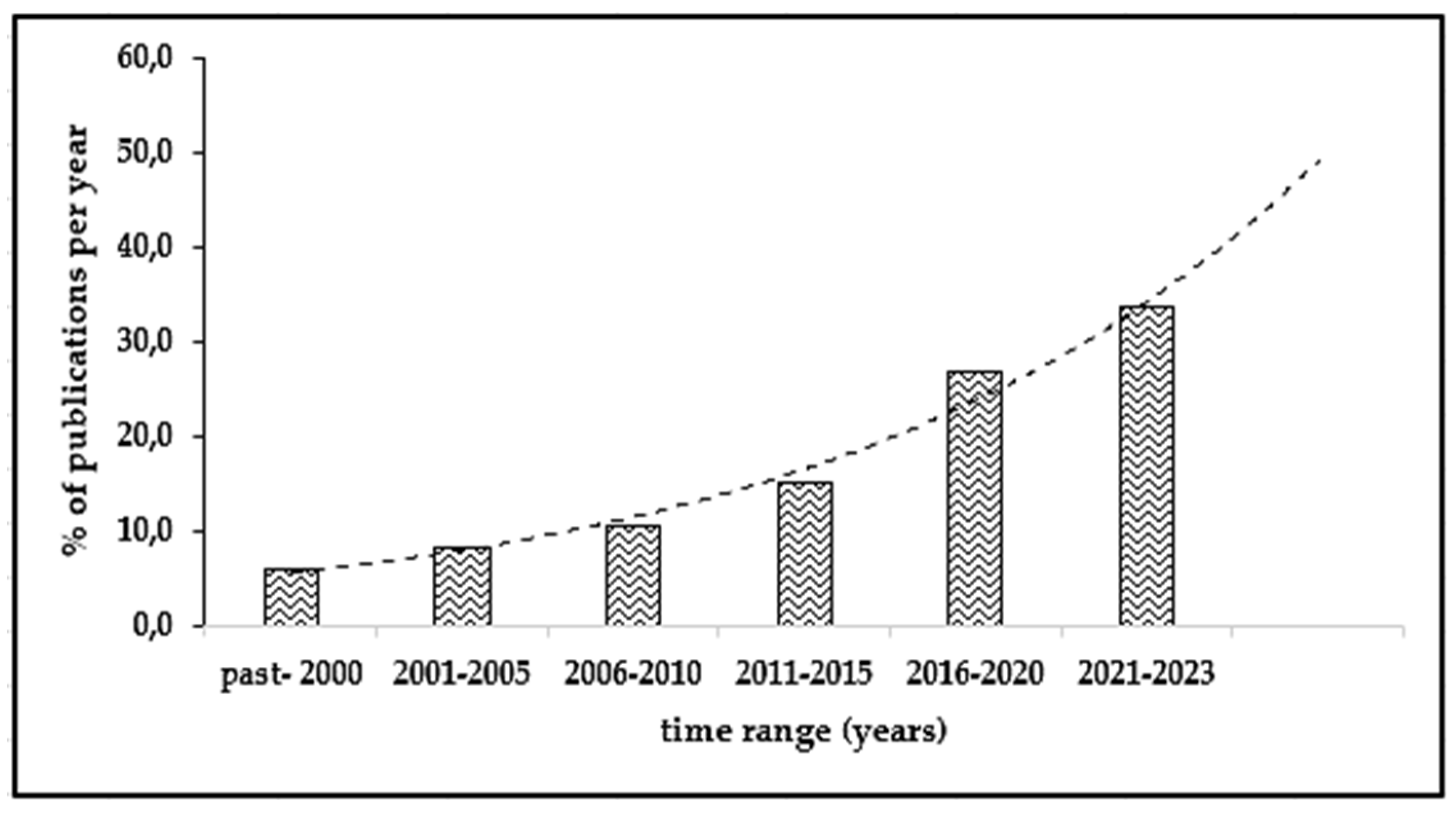
Figure 4.
Application of A. ferrooxidans in metallurgical processing as per the articles reviewed.
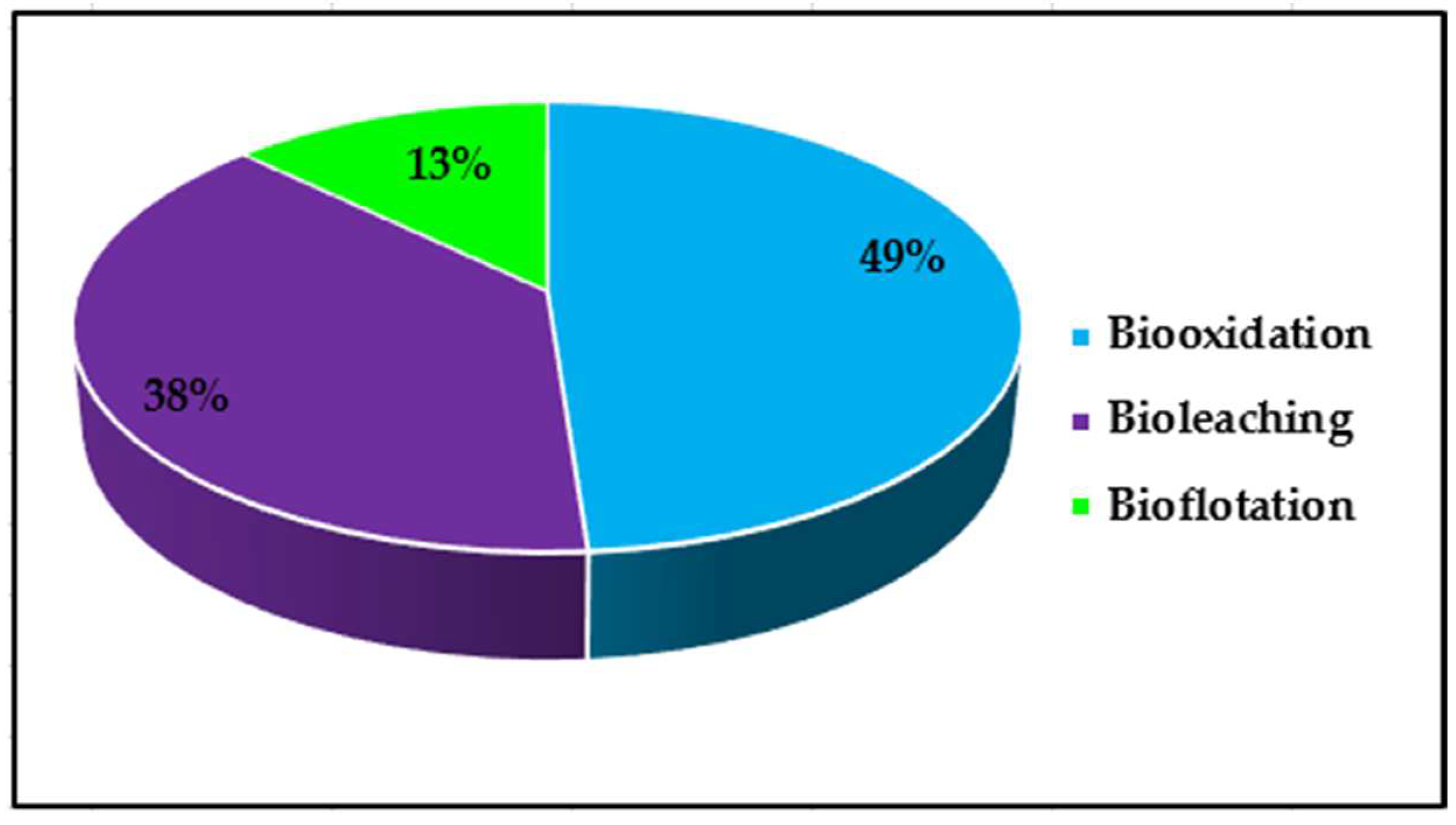
Figure 5.
Cohen’s d statistical results showing the standardized effect size of bio-oxidation, bioleaching and bioflotation.
Figure 5.
Cohen’s d statistical results showing the standardized effect size of bio-oxidation, bioleaching and bioflotation.
Disclaimer/Publisher’s Note: The statements, opinions and data contained in all publications are solely those of the individual author(s) and contributor(s) and not of MDPI and/or the editor(s). MDPI and/or the editor(s) disclaim responsibility for any injury to people or property resulting from any ideas, methods, instructions or products referred to in the content. |
© 2023 by the authors. Licensee MDPI, Basel, Switzerland. This article is an open access article distributed under the terms and conditions of the Creative Commons Attribution (CC BY) license (http://creativecommons.org/licenses/by/4.0/).
Copyright: This open access article is published under a Creative Commons CC BY 4.0 license, which permit the free download, distribution, and reuse, provided that the author and preprint are cited in any reuse.


