

Submitted:
03 September 2023
Posted:
05 September 2023
You are already at the latest version
Abstract
This investigation delves into an examination of the growth dynamics observed in Central Taiwan Science Park (CTSP) and Silicon Glen in Scotland, with a specific focus on their energy, environmental, and economic management. The aim is to predict and evaluate the latest advancements and applications of technology. In terms of energy, CTSP focuses on Taiwan's supply security and green transformation challenges, while Silicon Glen emphasizes Scotland's wind energy generation technologies. Both regions are committed to the development of renewable energy and smart grids. Regarding environmental aspects, CTSP and Silicon Glen prioritize environmental protection and sustainable development by implementing measures for environmental monitoring. In terms of economic management, CTSP, and Silicon Glen serve as key technology industry hubs This investigation delves into an examination of the growth dynamics observed in Central Tai-wan Science Park (CTSP) and Silicon Glen in Scotland, with a specific focus on their energy, environmental, and economic management. The aim is to predict and evaluate the latest advancements and applications of technology. In terms of energy, CTSP focuses on Taiwan's supply security and green transformation challenges, while Silicon Glen emphasizes Scotland's wind energy generation technologies. Both regions are committed to the development of renewable energy and smart grids. Regarding environmental aspects, CTSP and Silicon Glen prioritize environmental protection and sustainable development by implementing measures for environmental monitoring. In terms of economic management, CTSP, and Silicon Glen serve as key technology industry hubs in Taiwan and Scotland, respectively, attracting numerous high-tech and startup enterprises. Various means facilitate the growth of industries and foster innovations in different industrial spheres. Important factors contributing to this growth include policy support, availability of research materials, and provision of infrastructure. This research paper compares the successful case studies of two industrial parks, along with their environmental and economic management strategies. It explores the management principles that ensure the sustainable development and economic growth of industrial parks, aiming to assist decision-makers and relevant stakeholders in evaluating the sustainable development planning of industrial parks.
Keywords:
Sustainable development
; Energy management
; Environmental protection
; Economic management
1. Introduction
This research paper aims to conduct a comparative assessment of the environmental, energy, and economic management aspects of the Central Taiwan Science Park (CTSP) and Silicon Glen in Scotland. Both industrial parks were established and developed under distinct geographical, political, and economic conditions. They have emerged as notable examples of successful high-tech clusters, employing various policies and management tools to ensure their prosperity.
Silicon Glen, one of the earliest industrial parks globally, has earned a well-established reputation in the electronics field, boasting highly developed infrastructure over the past 70 years. Effective management policies have also contributed to the park's prosperity [1]. CTSP, which is approximately 20 years younger [2], drew lessons from the development of Silicon Glen. CTSP encompasses various industries, including optoelectronics, integrated circuits, precision machinery, and computer peripherals [3]. The historical trajectory of CTSP bears resemblance to that of Silicon Glen. In the 1950s, Silicon Glen hosted only a few foreign companies, such as IBM, which established factories in the region [4]. However, in the 1990s, the number of companies experienced rapid growth. Initially, these companies relied heavily on low-cost labor for assembly and production, resulting in relatively low value-added products that were mostly exported to neighboring European countries [5]. This situation mirrors Taiwan's scenario in the early 1950s when foreign companies like RCA and Philips established assembly plants in Taiwan [6].
CTSP, situated in the central region of Taiwan, was established in the 1970s and has emerged as one of the most significant technology industry clusters for Taiwanese companies [7]. It leverages its advantageous geographical location and well-developed infrastructure to attract numerous domestic and international high-tech enterprises, which establish research and development centers and production bases in the park. CTSP focuses on information and communication technology, semiconductors, optoelectronics, bio-medicine, and green energy as its primary development directions, fostering the growth of numerous innovative companies and nurturing technological talents. The park places strong emphasis on sustainable development, advocating energy conservation, emission reduction, and environmental protection to enhance both economic and environmental sustainability.
Silicon Glen serves as the hub for the electronics and semiconductor industries in Scotland. It rose to prominence in the 1990s to the early 2000s due to its significant presence in these sectors. However, the region encountered an economic downturn in the early 2000s, primarily attributed to the collapse of the global high-tech economy. Nonetheless, the Scottish government and relevant stakeholders endeavored to revive Silicon Glen and attain sustainable development through a series of policies and measures [8].
In summary, both CTSP in Taiwan and Silicon Glen in Scotland serve as significant high-tech clusters. They have achieved notable success within their respective contexts but have also faced challenges and issues during their development. Therefore, conducting a comprehensive assessment of their sustainable development and providing targeted policy insights holds great significance. The purpose of this research is to examine the recent development characteristics of CTSP and Silicon Glen in Scotland, with a specific focus on energy, environmental, and economic management. By comparing the performance of CTSP and Silicon Glen, this study aims to provide valuable insights for decision-makers and stakeholders in the areas of sustainable development and economic growth. Based on the research objective, the following research questions are formulated:
- ●
- What are the key areas of focus in energy management for CTSP and Silicon Glen?
- ●
- What are the priorities in environmental management for CTSP and Silicon Glen?
- ●
- What roles do CTSP and Silicon Glen play in economic management?
In response to the challenges of ensuring supply security and promoting green transformation, this research seeks to obtain valuable insights from the performance comparison of CTSP and Silicon Glen in terms of energy, environmental, and economic management. These insights can guide decision-makers and stakeholders in achieving sustainable development and economic growth. Specifically, the research questions of this study are centered around the energy, environmental, and economic aspects.
2. Materials and Methods
2.1. Data collection
This study adopts a comparative research approach, focusing on CTSP in Taiwan and Silicon Glen in Scotland, to conduct a comprehensive evaluation. The research paper comprises several sections, including a thorough examination of the key factors contributing to the financial success of CTSP and a comparative analysis of the similarities and differences between Silicon Glen and CTSP. Three data collection and analysis strategies are utilized in this study: literature review, comparative analysis, and data analysis.
- ●
- Literature review: A variety of academic reports, research papers, policies, and case studies were reviewed in the process to reconstruct the parks' historical background, implemented strategies, and unique features of each industrial hub.
- ●
- Comparative analysis: Data collection and processing on energy consumption, implementation of green technologies, economic metrics, and the state of the environment around the parks' areas were conducted to make a comparative analysis of Silicon Glen and CTSP.
- ●
- Data analysis: An objective assessment of the energy, environmental, and economic management of both industrial parks was enabled by a quantitative method to produce a comprehensive analysis and statistical evaluation.
The purpose of this study is to provide policymakers and decision-makers with relevant and contemporary information on modern industrial clusters, which can assist the authorities in gaining a deeper understanding of these two management styles and highlight their unique features.
To sum up, this research paper is unique as it is the first attempt to conduct a comparative study of Scottish and Taiwanese industrial hubs, and it examines two styles of management and problem-solving present in these parks. By combining various methods, a profound understanding of the similarities and differences in sustainable development between the two regions is achieved, thus offering valuable policy implications and references.
2.2. Research Theory Review
When conducting a comprehensive assessment and policy implications study of the CTSP and Scotland's Silicon Glen, several research theories or concepts can be utilized as outlined in Table 1:
By employing these research theories or concepts, policymakers and researchers can undertake a comprehensive evaluation of CTSP and Silicon Glen, analyzing their strengths, weaknesses, opportunities, and challenges. Comparative analysis has been selected as the methodology for this study. The findings obtained from this analysis can offer valuable insights for policymaking and contribute to the formulation of strategies aimed at promoting sustainable development, fostering innovation, and driving economic growth within these technology clusters.
2.3. Comparative analysis
Here's Table 2, presenting the qualitative and quantitative descriptions of sustainable development in CTSP and Scotland's Silicon Glen:
These comparisons highlight the similarities and differences between Taiwan's Central Science Park (CTSP) and Scotland's Silicon Glen in terms of geographic location, industrial structure, government support, education and research, and the entrepreneurship environment (Table 3). The success of these regions can be attributed to government support, excellent talent and research environments, and long-term investments in technological innovation.
3. Examining governmental policies and initiatives that have facilitated their advancement
Through an examination of governmental policies and initiatives that have facilitated the growth of Silicon Glen and Taiwan's electronics industry, several notable observations can be made:
(1) State- led science park: Both Scotland and Taiwan have established state-led science parks with the aim of attracting and nurturing high-tech industries. In Scotland, the collaboration of entities such as the Scottish Chamber of Commerce and Industry, the Scottish Government, and three official organizations enables nationwide marketing efforts. In Taiwan, the Science Park Agency, operating under the National Science and Technology, is responsible for overseeing the science parks. These park management agencies exhibit a strong drive and administrative effectiveness, playing a vital role in attracting investments and offering business support.
(2) High-quality manpower: Both regions were successful in attracting international manufacturers due to their high-quality workforce. Scotland boasts numerous universities and higher education institutions, with over 700 personnel engaged in the electronics field. A significant portion of these individuals are researchers specializing in areas such as artificial intelligence, optoelectronics, and very large-scale integrated systems (VLIS) research. Universities such as Dundee, Edinburgh, Glasgow, Heriot-Watt, and St. Andrews conduct semiconductor-based research. Collaboration between colleges, universities, manufacturers, and governments promotes local semiconductor development. Institutions like the Microelectronics Imaging and Analysis Center, Wolfson Microelectronics, and National Microelectronics have been established to further these efforts.
(3) Industrial upgrading and transformation: Scotland has implemented initiatives to promote industrial upgrading and transformation. The "Global Connection Strategies" launched in 2001 focus on areas such as digital connectivity, entering global product markets, attracting investment, and making Scotland an attractive place to work and live. By integrating talent, information, and technology, these strategies attract additional funding and contribute to the region's development. Taiwan's Central Taiwan Science Park (CTSP) has also attracted a highly literate workforce, contributing to its growth pole. The educational level of CTSP employees demonstrates the quality of the workforce, with various industries, including photoelectric, precision machinery, computer peripherals, communications, biotechnology, integrated circuits, and digital content, employing skilled personnel.
(4) Focus on next-generation semiconductor design: Unlike Taiwan, which has developed a significant number of local information and electronics industries, Silicon Glen has primarily relied on foreign investment. Consequently, it has been actively planning its next development goal to enhance Scotland's position in the global information industry. The "Alba Semiconductor Design Center Complex" project aims to promote Scotland as an international player in next-generation semiconductor design, particularly focusing on System-On-Chip development.
These government policies and initiatives played a crucial role in supporting the development and growth of Silicon Glen in Scotland and Taiwan's electronics industry. They encompassed measures to attract investment, foster research and development, enhance the quality of the workforce, and promote industrial upgrading and transformation.
4. Assessment of Energy Management: Comparing the Performance of the Two Regions in Energy Security and Green Transition
Energy consumption in Taiwan and the United Kingdom falls within the range of 2500-5000 TWN (Terawatt-hours), indicating the significant amount of primary energy required for various end-uses such as electricity generation and transportation. Primary energy refers to the initial energy input before it undergoes transformation into different forms for specific applications. This includes energy sources such as fossil fuels, nuclear power, and renewable energy[50]. The data provided is sourced from Our World in Data, which relies on information from BP and the Shift Data Portal (see Figure 1). These figures highlight the substantial energy demands in both countries and emphasize the importance of efficient energy management and the development of sustainable energy sources to meet present and future needs.
There are some differences in the performance of energy security and green transition between Central Taiwan and Central Scotland:
4.1. Energy Security:
1. Central Taiwan:
Central Taiwan heavily relies on imported petroleum fuels and natural gas for its energy supply. To ensure energy security and mitigate supply risks, the Taiwanese government is committed to diversifying energy sources, establishing energy reserves, and implementing relevant policies and regulations [51]. Furthermore, Taiwan is actively promoting the development of renewable energy to reduce its dependence on imported fuels [52,53,54,55,56,57,58,59,60,61].
However, Taiwan faces several challenges regarding its current energy and electricity mix. One major concern is the country's excessive dependence on a limited number of oil and coal suppliers, making its energy supply chain vulnerable and fragile. The energy security of Taiwan faces long-term threats due to potential conflicts in the Middle East involving major oil-producing nations such as Iran or Saudi Arabia. Additionally, Taiwan's economy heavily relies on the power-intensive electronics industry, presenting another challenge. The electronics sector, responsible for a significant portion of electricity consumption, relies on coal (45%) and Liquefied Natural Gas (LNG) (36%) for power generation, thereby contributing significantly to carbon dioxide emissions in Taiwan. Notably, the Semiconductor Manufacturing Company (TSMC) of Taiwan alone consumes approximately 4.8% of the nation's total power [62], surpassing even the capital city, Taipei. Consequently, the projected increase in electricity demand not only has detrimental environmental consequences but also poses challenges for companies themselves, as customers such as Apple require their suppliers to transition to renewable energy sources. In response to these challenges, Taiwan is actively pursuing substantial changes to its electricity mix, as depicted in Figure 2. As an interim measure, Taiwan has chosen to employ LNG due to its lower carbon emission factor compared to coal or oil.
Central Taiwan has made significant advancements in its transition towards a greener future. The government of Taiwan has devised a comprehensive strategy for the development of renewable energy [61], outlining targets for renewable energy generation and encouraging the establishment of solar and wind power projects. Moreover, Taiwan has implemented a range of initiatives aimed at enhancing energy efficiency and curbing energy consumption, fostering the adoption of sustainable energy sources, and diminishing reliance on fossil fuels.
2. Central Scotland:
Central Scotland has made remarkable strides in its transition to a greener energy landscape. The region benefits from a diverse array of energy sources, including oil, natural gas, nuclear energy, and renewable energy, owing to its abundant natural resources such as wind, hydropower, and biomass [64]. The Scottish government has proactively implemented policies and measures to foster the growth and integration of renewable energy, with a focus on ensuring long-term sustainability and energy security. Consequently, the majority of electricity generated in the region, amounting to 87.8% in 2021 (see Figure 3), is sourced from low-carbon alternatives, while fossil fuels contribute a mere 10.9%. This signifies a substantial departure from the generation composition observed in 2010, where an equal share of generation originated from low-carbon and fossil fuel sources.
The growth of renewable energy has played a pivotal role in propelling the surge in low-carbon generation, with its proportion soaring from 19.0% in 2010 to 57.0% in 2021. National and international incentives, such as the Renewables Obligation and the EU Renewable Energy Directive[65,66,67], have played a significant role in facilitating this transition.
These developments highlight the positive impact of government initiatives and supportive policies in promoting a sustainable and diversified energy landscape in Central Scotland. The significant increase in renewable capacity not only signifies Scotland's commitment to cleaner energy sources but also underscores the region's efforts to enhance energy security and reduce carbon emissions.
Source: Scottish Energy Statistics Hub https://scotland.shinyapps.io/Energy/?Section=RenLowCarbon&Subsection=RenElec&Chart=ElecGen, Accessed on June 26, 2023
Central Scotland has made remarkable strides in transitioning towards a greener energy system. The region possesses abundant wind energy resources and has emerged as a key player in the European wind energy industry through the development of wind power projects. Additionally, the Scottish government actively encourages the development of other renewable energy sources, including tidal energy, solar energy, and biomass.
In summary, both Central Taiwan and Central Scotland have implemented various measures to address energy security and promote green transitions. While Central Taiwan heavily relies on imported energy, it seeks to enhance energy supply security through diversification of energy sources and the development of renewable energy. On the other hand, Central Scotland boasts a more diversified energy supply and actively promotes the growth of renewable energy. Both regions have achieved varying degrees of success in their green transition efforts, but Central Scotland exhibits greater potential in the field of renewable energy, particularly in the domain of wind energy.
4.2. Assessment of Environmental Protection: Evaluating Measures in Waste Management, Water Resource Management, and Environmental Monitoring
Regarding the measures taken by Central Taiwan and Central Scotland in environmental protection, we can assess their actions in waste management, water resource management, and environmental monitoring:
4.2.1. Waste Management:
Central Taiwan: Central Taiwan has taken proactive measures in waste management. The Taiwanese government has implemented policies for waste classification and recycling, encouraging residents to sort and recycle their waste. Additionally, modern waste treatment facilities, including incinerators and landfills, have been established in Central Taiwan to effectively process waste and reduce environmental impacts [68].
Central Scotland: Central Scotland has adopted proactive waste management strategies to foster resource circularity and waste reduction, in line with the Scottish government's objective of achieving a zero-waste society and promoting a circular economy [69,70,71,72]. The area has implemented state-of-the-art waste treatment facilities, such as incinerators and biomass utilization plants, to facilitate both waste minimization and energy recovery. The overarching goal is to minimize reliance on virgin resources and maximize the reuse, recycling, and recovery of resources, rather than treating them as disposable waste [73].
In order to accomplish these objectives, Central Scotland has established ambitious targets for waste reduction and recycling by 2025. These targets include a 15% reduction in total waste generation in Scotland compared to 2011 levels, a 33% reduction in food waste compared to 2013 levels, a 70% recycling rate for the remaining waste, and a maximum landfill disposal rate of 5% for the remaining waste [74]. Furthermore, Central Scotland aims to align with the EU objective of ensuring that all plastic packaging is economically recyclable or reusable by 2030.
To effectively manage and reduce waste, several actions have been undertaken in Central Scotland. These include promoting resource efficiency by discouraging the use of single-use materials, implementing measures to reduce and recycle food waste, introducing a deposit return scheme for drinks containers, supporting efforts to tackle litter and fly tipping through collaboration with delivery partners, seeking advice from the Expert Panel on Environmental Charging, providing funding to Zero Waste Scotland for waste-reducing initiatives, and supporting the Scottish Environment Protection Agency (SEPA) in regulating waste treatment and disposal.
To sum up, Central Scotland has demonstrated a proactive management style and achieved excellent results in waste management, particularly in recycling and waste reduction. Through the implementation of innovative waste treatment facilities and the pursuit of ambitious targets, the region aims to create a zero-waste society, maximize resource recovery, and contribute to the transition towards a circular economy.
4.2.2. Water Resource Management:
Central Taiwan: Central Taiwan faces water scarcity issues, making water resource management crucial. The Taiwanese government has implemented a series of measures, including improving water resource utilization efficiency, enhancing water resource allocation, and constructing reservoirs. Additionally, the Central Taiwan Science Park (CTSP) has implemented measures such as improving water resource utilization efficiency, enhancing water resource allocation, and constructing detention ponds.
Central Scotland: The geographical profile of this region differs significantly from Taiwan, particularly in terms of climate and water resources. Central Scotland, despite its abundant water resources, faces unique challenges due to its terrain. Over the years, the region has developed an effective pattern of water utilization and conservation. Water conservation initiatives, including water quality monitoring and governance, play a significant role in the region's water resource management. Some notable management strategies in Scotland involve involving stakeholders in decision-making processes, establishing uniform principles for manufacturers and consumers, striving for continuous improvement in water supply services, and implementing the Hydro Nation strategy to optimize the economic benefits derived from water resources [75].
Efforts to reduce flood risk in Central Scotland involve collaborative work with partners to manage flood risk, enhance flood resilience, and raise awareness among communities. These actions contribute to the overall objective of protecting and improving Scotland's water environment, which is considered a crucial natural asset supporting public health, well-being, wildlife, and sustainable economic growth.
Legislation plays a crucial role in shaping the management of water resources in Central Scotland. Acts such as the Sewerage (Scotland) Act 1968, the Water (Scotland) Act 1980, the Water Services etc. (Scotland) Act 2005, and the Water Resources (Scotland) Act 2013 delineate the powers and responsibilities pertaining to the regulation and development of the water industry. Furthermore, specific regulations such as the Private Water Supplies (Scotland) Regulations 2006, the Water Environment (Controlled Activities) (Scotland) Regulations 2011, and the Reservoirs (Scotland) Act 2011 provide guidance and stipulations to ensure the provision of safe drinking water, safeguard and enhance the water environment, and mitigate the risks of flooding [76].
In brief, Central Scotland places significant emphasis on the management and protection of its water resources. The region implements various measures, including water resource management plans, monitoring systems, and legislative frameworks, to ensure the sustainable utilization of water, preserve water quality, and mitigate flood risks. These endeavors align with the Scottish government's vision of fostering a resilient and well-governed water sector, which contributes to the overall well-being and prosperity of Central Scotland.
4.2.3. Environmental Monitoring:
Central Taiwan: Central Taiwan has an Environmental Protection Agency responsible for monitoring and managing the environment. The agency conducts regular surveillance of environmental indicators, such as air quality, water quality, soil pollution, and noise, and undertakes appropriate actions to enhance environmental quality. Central Taiwan also encourages public engagement in environmental monitoring and reporting instances of environmental violations [77].
Central Scotland: Central Scotland has established an Environmental Protection Agency along with several environmental monitoring institutions to effectively monitor and manage the environmental quality within the region. These entities engage in regular monitoring of crucial environmental indicators such as air quality, water quality, soil pollution, and noise levels. Their primary goal is to safeguard the environment and proactively enhance air quality.
The Environmental Protection Agency in Central Scotland holds the responsibility of regulating, controlling, and monitoring activities that might impact air quality in Scotland. This authority is derived from the Pollution Prevention and Control (Scotland) Regulations of 2012. According to these regulations, the agency oversees and monitors specific industrial activities in Scotland that could potentially generate airborne pollution. Additionally, under the Environment (Scotland) Act of 1995, the agency collaborates with local authorities to monitor, manage, and improve air quality across the region.
In addition to its regulatory and policy roles, the agency offers guidance and consultation to the government, industry stakeholders, and the general public regarding pollution control and various environmental concerns. It actively endeavors to synchronize its efforts with the goals and targets established by Scottish, UK, and EU authorities to combat global climate change and address the cross-border transportation of pollutants. Moreover, the agency administers the Airborne Hazards Emergency Response Service (AHERS) on behalf of the Scottish Government. This service plays a crucial role in responding to emergencies and hazards related to airborne pollutants.
Overall, the Environmental Protection Agency in Central Scotland serves as a dedicated entity for monitoring, regulating, and managing environmental quality [78]. It actively encourages public participation in environmental protection initiatives and provides information and channels for the public to engage in environmental monitoring and decision-making processes.
4.3. Assessment of Economic Growth:
The assessment of the characteristics and success factors of the two regions, CTSP and Silicon Glen in Scotland, as technology industry hubs reveals distinctive traits that contribute to economic growth. Here is a comprehensive evaluation of the two regions:
1. Technological innovation and industry diversity: Both CTSP and Silicon Glen prioritize technological innovation, attracting numerous high-tech companies and innovative startups. These regions exhibit diverse industrial structures, encompassing sectors such as semiconductors, software development, biotechnology, and more. This diversity fosters stable and sustainable economic growth.
2. Industry-academia collaboration and knowledge transfer: Both regions place great value on collaboration between industry and academia, establishing close partnerships to facilitate the transfer of knowledge and technology. This collaboration accelerates the commercialization and market application of technological advancements, driving rapid industry development and economic growth. It enables the vibrant growth of the technology industry and contributes to overall economic progress.
3. International collaboration and market expansion: Both CTSP and Silicon Glen prioritize international collaboration and market expansion, actively engaging with international companies and markets to promote the internationalization of local technology enterprises. This emphasis on international collaboration stimulates the export of technology products and services, thereby driving economic growth.
In conclusion, CTSP and Silicon Glen, as technology industry hubs, demonstrate characteristics and success factors such as technological innovation, industry-academia collaboration, a strong talent pool, government support and favorable policy environments, and international collaboration. These attributes provide valuable insights and inspiration for other regions aiming to develop their technology industries and promote economic growth.
5. Policy Insights
5.1. Policy Insights for Sustainable Energy Development
Both CTSP and Silicon Glen in Scotland are renowned technology industry hubs, and they can draw policy insights from each other regarding sustainable energy development. The following are policy measures from both regions that can provide insights for sustainable energy development:
- ●
- Government support and incentives: Both the CTSP and Silicon Glen receive active support from local governments, which offer various measures to incentivize investments and research and development in the field of sustainable energy. These policy measures can serve as references for other regions in formulating corresponding sustainable energy policies.
5.2. Policy Insights for Environmental Protection and Resource Management
When it comes to environmental protection and resource management, the following policy insights can be derived from the experiences of the CTSP and Silicon Glen:
- ●
- Development of environmental laws and regulatory mechanisms: Governments should develop corresponding environmental laws and regulatory mechanisms, requiring businesses to implement environmental protection measures and reduce adverse impacts on the environment.
- ●
- Resource conservation and recycling: Both the CTSP and Silicon Glen emphasize resource conservation and recycling. Governments can encourage businesses to implement energy-saving and emission reduction measures, promote resource recovery and reuse. Additionally, governments can support the research and development of environmentally friendly technologies and products to facilitate efficient resource utilization.
- ●
- Promotion of green transportation and sustainable mobility: Both the CTSP and Silicon Glen are dedicated to reducing the environmental impact of transportation. Governments can encourage businesses to adopt green transportation policies, promote public transportation and ride-sharing models, and provide supporting infrastructure such as bicycle lanes and electric vehicle charging facilities to reduce car usage and carbon emissions.
- ●
- Emphasis on ecological conservation and green space development: Both the CTSP and Silicon Glen value ecological conservation and green space development. Governments can require businesses to protect and restore ecosystems during construction processes and encourage the establishment of green spaces and landscape facilities within industrial parks. Additionally, governments can formulate corresponding ecological protection policies to safeguard natural resources and biodiversity.
- ●
- Environmental education and public participation: Both the CTSP and Silicon Glen conduct environmental education and public participation activities to raise public awareness and understanding of environmental protection. Governments can collaborate with businesses, schools, and communities to organize environmental education initiatives and encourage public participation in environmental conservation actions.
In conclusion, policy insights for environmental protection and resource management can be drawn from the experiences of the CTSP and Silicon Glen. These insights include the development of environmental regulations and governance, resource conservation and recycling, promotion of green transportation and sustainable mobility, emphasis on ecological conservation and green space development, as well as environmental education and public participation. Other regions can consider these policy measures when formulating their own environmental protection and resource management policies.
5.3. Policy Insights for Promoting Technological Industry Development
The CTSP and Silicon Glen in Scotland are both successful clusters in the technological industry. Here are policy insights on how they promote technological industry development:
- ●
- Establishing a supportive environment for innovation: Both the CTSP and Silicon Glen are committed to establishing an environment that supports innovation. This includes providing excellent infrastructure, research centers, and scientific institutions, as well as fostering an open atmosphere for innovation. Governments can offer corresponding financial support and tax incentives to attract businesses and talent to engage in research and innovation in the technology field.
- ●
- Facilitating international scientific and technological cooperation: Governments can play a vital role in facilitating international scientific and technological cooperation. This can be achieved by initiating technology exchanges, fostering market collaborations, and promoting the internationalization of local technology enterprises. Additionally, governments can provide support measures such as international market research and business promotion to assist businesses in entering international markets.
- ●
- Talent cultivation and attraction: Both the CTSP and Silicon Glen place a strong emphasis on talent cultivation and attraction. Governments can collaborate with educational institutions to cultivate technological talents and provide relevant education and training programs. Simultaneously, governments can offer measures such as visa facilitation and favorable treatment to attract outstanding talents from both domestic and international sources to develop the technological industry locally.
In summary, policy insights for promoting technological industry development from the CTSP and Silicon Glen include establishing a supportive environment for innovation, promoting industry-academia collaboration, providing investment and entrepreneurship support, engaging in international cooperation and market expansion, and cultivating and attracting talent. These policy measures can serve as references for other regions in formulating corresponding policies to foster technological industry development.
6. Conclusion:
The focal points of energy management in CTSP and Silicon Glen revolve around supply security, green transformation, and sustainable development. Both regions prioritize the diversification of their energy sources, reducing reliance on fossil fuels, and promoting renewable energy technologies. They also emphasize energy conservation and efficiency measures to ensure a reliable and uninterrupted energy supply for the industries located within these technology hubs.
In terms of environmental management, both CTSP and Silicon Glen implement rigorous environmental monitoring measures to comply with regulations and standards. They regularly monitor air quality, water quality, and noise levels to proactively prevent pollution and mitigate environmental impacts. The regions are committed to promoting sustainable resource management, waste reduction, recycling initiatives, and water conservation practices. Their primary objective is to safeguard the environment, reduce carbon emissions, and contribute to the overall sustainability of their respective areas.
Regarding economic management, both CTSP and Silicon Glen play vital roles as technology industry hubs, attracting high-tech enterprises and startups through the provision of supportive infrastructure, research resources, and policy support. These regions offer state-of-the-art facilities such as research and development centers, technology parks, and incubators tailored to the specific needs of technology-driven industries. Moreover, they foster collaborations with universities, research institutions, and industry stakeholders to drive innovation, facilitate knowledge transfer, and promote the commercialization of technology.
The substantial success of CTSP and Silicon Glen can be attributed to significant government intervention and support. Both regions' governments have implemented favorable policies, incentives, and investments to nurture the growth of these technology hubs. They provide tax incentives, grants, subsidies, and funding programs to attract and retain high-tech companies. Additionally, governments support infrastructure development, enhance connectivity, and establish collaborative frameworks with universities and research institutions to stimulate industry growth, innovation, and technology transfer.
A comparative analysis of CTSP and Silicon Glen's performance offers valuable insights into energy, environmental, and economic management for decision-makers and stakeholders. These insights emphasize the importance of diversifying energy sources, promoting renewable energy and energy efficiency, implementing robust environmental monitoring measures, fostering collaborations and partnerships, providing policy support and financial incentives, and investing in talent development and education. These lessons can guide other regions in achieving sustainable development, economic growth, and the transformation of their energy sectors.
Author Contributions
Writing—original draft, Fu-Hsuan Chen. ; Writing—review & editing, Fu-Hsuan Chen and Hao-Ren Liu. All authors have read and agreed to the published version of the manuscript.
Funding
This research received no external funding.
Institutional Review Board Statement
Not applicable.
Informed Consent Statement
Informed consent was obtained from all subjects involved in the study.
Data Available Statement
Not applicable.
Conflicts of Interest
The authors declare no conflict of interest.
References
- Adams, S.B. Stanford and Silicon Valley: Lessons on Becoming a High-Tech Region. California management review 2005, 48, 29–51. [Google Scholar] [CrossRef]
- Yan, M.-R.; Chien, K.-M.; Hong, L.-Y.; Yang, T.-N. Evaluating the Collaborative Ecosystem for an Innovation-Driven Economy: A Systems Analysis and Case Study of Science Parks. Sustainability 2018, 10, 887. [Google Scholar] [CrossRef]
- Chen, F.-H. Assessing Sustainable Development Initiatives in Central Taiwan Science Park: A Study of Residents’ Opinions and the Impact on the Urban Ecosystem. Buildings 2023, 13, 1202. [Google Scholar] [CrossRef]
- Dimitratos, P.; Liouka, I.; Ross, D.; Young, S. The Multinational Enterprise and Subsidiary Evolution: Scotland since 1945. Business History 2009, 51, 401–425. [Google Scholar] [CrossRef]
- Glasmeier, A. Factors Governing the Development of High Tech Industry Agglomerations: A Tale of Three Cities. Regional studies 1988, 22, 287–301. [Google Scholar] [CrossRef]
- Todd, D. Routledge Revivals: The World Electronics Industry (1990); Routledge, 2018. [Google Scholar]
- Chen, F.-H.; Liu, H.-R. Evaluation of Sustainable Development in Six Transformation Fields of the Central Taiwan Science Park. Sustainability 2021, 13, 4336. [Google Scholar] [CrossRef]
- Castells, M. Technopoles of the World: The Making of 21st Century Industrial Complexes; Routledge, 2014. [Google Scholar]
- Döring, T.; Schnellenbach, J. What Do We Know about Geographical Knowledge Spillovers and Regional Growth?: A Survey of the Literature. Regional Studies 2006, 40, 375–395. [Google Scholar] [CrossRef]
- Iammarino, S.; McCann, P. The Structure and Evolution of Industrial Clusters: Transactions, Technology and Knowledge Spillovers. Research policy 2006, 35, 1018–1036. [Google Scholar] [CrossRef]
- Alecke, B.; Alsleben, C.; Scharr, F.; Untiedt, G. Are There Really High-Tech Clusters? The Geographic Concentration of German Manufacturing Industries and Its Determinants. The Annals of Regional Science 2006, 40, 19–42. [Google Scholar] [CrossRef]
- Feldman, M.P. The New Economics of Innovation, Spillovers and Agglomeration: Areview of Empirical Studies. Economics of innovation and new technology 1999, 8, 5–25. [Google Scholar] [CrossRef]
- Henderson, J.V. Understanding Knowledge Spillovers. Regional Science and Urban Economics 2007, 37, 497–508. [Google Scholar] [CrossRef]
- Bekele, G.W.; Jackson, R. Theoretical Perspectives on Industry Clusters. 2006.
- Rosenthal, S.S.; Strange, W.C. Evidence on the Nature and Sources of Agglomeration Economies. In Handbook of regional and urban economics; Elsevier, 2004; Vol. 4, pp. 2119–2171. [Google Scholar]
- Capello, R. Entrepreneurship and Spatial Externalities: Theory and Measurement. The Annals of Regional Science 2002, 36, 387–402. [Google Scholar] [CrossRef]
- Boshuizen, J.; Geurts, P.; Van der Veen, A. Regional Social Networks as Conduits for Knowledge Spillovers: Explaining Performance of High-Tech Firms. Tijdschrift voor economische en sociale geografie 2009, 100, 183–197. [Google Scholar] [CrossRef]
- Yan, D. Measurement and Comparison of the Innovation Spatial Spillover Effect: A Study Based on the Yangtze River Delta and the Pearl River Delta, China. Systems 2023, 11, 90. [Google Scholar] [CrossRef]
- Asheim, B.T.; Smith, H.L.; Oughton, C. Regional Innovation Systems: Theory, Empirics and Policy. Regional studies 2011, 45, 875–891. [Google Scholar] [CrossRef]
- Papaioannou, T.; Wield, D.; Chataway, J. Knowledge Ecologies and Ecosystems? An Empirically Grounded Reflection on Recent Developments in Innovation Systems Theory. Environment and Planning C: Government and Policy 2009, 27, 319–339. [Google Scholar] [CrossRef]
- Radosevic, S.; Yoruk, E. Entrepreneurial Propensity of Innovation Systems: Theory, Methodology and Evidence. Research Policy 2013, 42, 1015–1038. [Google Scholar] [CrossRef]
- Daimer, S.; Hufnagl, M.; Warnke, P. Challenge-Oriented Policy-Making and Innovation Systems Theory. Fraunhofer ISI (Hg.): Innovation system revisited. Experiences from 2012, 40, 217–234. [Google Scholar]
- Fischer, M.M.; Diez, J.R.; Snickars, F. Metropolitan Innovation Systems: Theory and Evidence from Three Metropolitan Regions in Europe; Springer Science & Business Media, 2001. [Google Scholar]
- Brown, T.E.; Ulijn, J.M. Innovation, Entrepreneurship and Culture: The Interaction between Technology, Progress and Economic Growth; Edward Elgar Publishing, 2004. [Google Scholar]
- Clevenger, R.A. Working Draft: Study Overview. 2021.
- Leydesdorff, L. The Knowledge-Based Economy and the Triple Helix Model. arXiv 2012, arXiv:1201.4553. [Google Scholar]
- Cai, Y.; Etzkowitz, H. Theorizing the Triple Helix Model: Past, Present, and Future. Triple Helix 2020, 7, 189–226. [Google Scholar] [CrossRef]
- Saad, M.; Zawdie, G. Theory and Practice of Triple Helix Model in Developing Countries: Issues and Challenges. 2011.
- Cai, Y.; Amaral, M. The Triple Helix Model and the Future of Innovation: A Reflection on the Triple Helix Research Agenda. Triple Helix 2021, 8, 217–229. [Google Scholar] [CrossRef]
- Liu, Y.; Huang, Q. University Capability as a Micro-Foundation for the Triple Helix Model: The Case of China. Technovation 2018, 76, 40–50. [Google Scholar] [CrossRef]
- Scalia, M.; Barile, S.; Saviano, M.; Farioli, F. Governance for Sustainability: A Triple-Helix Model. Sustainability Science 2018, 13, 1235–1244. [Google Scholar] [CrossRef]
- Correia, E.; Garrido-Azevedo, S.; Carvalho, H. Supply Chain Sustainability: A Model to Assess the Maturity Level. Systems 2023, 11, 98. [Google Scholar] [CrossRef]
- Bossel, H. Indicators for Sustainable Development: Theory, Method, Applications. 1999.
- Shi, L.; Han, L.; Yang, F.; Gao, L. The Evolution of Sustainable Development Theory: Types, Goals, and Research Prospects. Sustainability 2019, 11, 7158. [Google Scholar] [CrossRef]
- Baker, S.; Kousis, M.; Young, S.; Richardson, D. The Politics of Sustainable Development: Theory, Policy and Practice within the European Union; Psychology Press, 1997. [Google Scholar]
- Dasgupta, P. Measuring Sustainable Development: Theory and Application. 2020.
- Van den Bergh, J.C. Ecological Economics and Sustainable Development. Theory, Methods and Applications; Edward Elgar Publishing Ltd, 1996. [Google Scholar]
- Simon, D. Sustainable Development: Theoretical Construct or Attainable Goal? Environmental Conservation 1989, 16, 41–48. [Google Scholar] [CrossRef]
- Sneddon, C.; Howarth, R.B.; Norgaard, R.B. Sustainable Development in a Post-Brundtland World. Ecological economics 2006, 57, 253–268. [Google Scholar] [CrossRef]
- Jabareen, Y. A New Conceptual Framework for Sustainable Development. Environment, development and sustainability 2008, 10, 179–192. [Google Scholar] [CrossRef]
- Pisano, U. Resilience and Sustainable Development: Theory of Resilience, Systems Thinking. European sustainable development network (ESDN) 2012, 26, 50. [Google Scholar]
- Baker, S.; Kousis, M.; Richardson, D.; Young, S. The Theory and Practice of Sustainable Development in EU Perspective. Baker, S., Kousis, M., Richardson, D., Young, S., Eds.; In The Politics of Sustainable Development: Theory, Policy and Practice within the European Union; Routledge: London, 1997. [Google Scholar]
- Mebratu, D. Sustainability and Sustainable Development: Historical and Conceptual Review. Environmental impact assessment review 1998, 18, 493–520. [Google Scholar] [CrossRef]
- Fischer, F.; Miller, G.J. Handbook of Public Policy Analysis: Theory, Politics, and Methods; Routledge, 2017. [Google Scholar]
- Al Shammre, A.S.; Benhamed, A.; Ben-Salha, O.; Jaidi, Z. Do Environmental Taxes Affect Carbon Dioxide Emissions in OECD Countries? Evidence from the Dynamic Panel Threshold Model. Systems 2023, 11, 307. [Google Scholar] [CrossRef]
- Lyulyov, O.; Pimonenko, T.; Kwilinski, A.; Dzwigol, H.; Dzwigol-Barosz, M.; Pavlyk, V.; Barosz, P. The Impact of the Government Policy on the Energy Efficient Gap: The Evidence from Ukraine. Energies 2021, 14, 373. [Google Scholar] [CrossRef]
- Goldstein, H.A.; Luger, M.I. Science/Technology Parks and Regional Development Theory. Economic Development Quarterly 1990, 4, 64–78. [Google Scholar] [CrossRef]
- Parr, J.B. Growth Poles, Regional Development, and Central Place Theory. In Proceedings of the Papers of the Regional Science Association; Springer, 1973; Vol. 31; pp. 173–212. [Google Scholar]
- Ahmed, S.; Davidson, P.; Durkacz, K.; Macdonald, C.; Richard, M.; Walker, A. The Provision of Mathematics and Statistics Support in Scottish Higher Education Institutions (2017): A Comparative Study by the Scottish Mathematics Support Network. MSOR Connections 2018, 16, 5–19. [Google Scholar] [CrossRef]
- Żak-Skwierczyńska, M. Energy Transition of the Coal Region and Challenges for Local and Regional Authorities: The Case of the Bełchatów Basin Area in Poland. Energies 2022, 15, 9621. [Google Scholar] [CrossRef]
- Yao, L.; Shi, X.; Andrews-Speed, P. Conceptualization of Energy Security in Resource-Poor Economies: The Role of the Nature of Economy. Energy Policy 2018, 114, 394–402. [Google Scholar] [CrossRef]
- Liou, H.M. Policies and Legislation Driving Taiwan’s Development of Renewable Energy. Renewable and Sustainable Energy Reviews 2010, 14, 1763–1781. [Google Scholar] [CrossRef]
- Chang, C.-T.; Lee, H.-C. Taiwan’s Renewable Energy Strategy and Energy-Intensive Industrial Policy. Renewable and Sustainable Energy Reviews 2016, 64, 456–465. [Google Scholar] [CrossRef]
- Lee, H.-C.; Chang, C.-T. Comparative Analysis of MCDM Methods for Ranking Renewable Energy Sources in Taiwan. Renewable and sustainable energy reviews 2018, 92, 883–896. [Google Scholar] [CrossRef]
- Chen, H.H.; Lee, A.H. Comprehensive Overview of Renewable Energy Development in Taiwan. Renewable and Sustainable Energy Reviews 2014, 37, 215–228. [Google Scholar] [CrossRef]
- Yue, C.-D.; Liu, C.-M.; Liou, E.M. A Transition toward a Sustainable Energy Future: Feasibility Assessment and Development Strategies of Wind Power in Taiwan. Energy Policy 2001, 29, 951–963. [Google Scholar] [CrossRef]
- Chuang, M.C.; Ma, H.W. Energy Security and Improvements in the Function of Diversity Indices—Taiwan Energy Supply Structure Case Study. Renewable and Sustainable Energy Reviews 2013, 24, 9–20. [Google Scholar] [CrossRef]
- Lu, S.-M. INTERNATIONAL JOURNAL OF ENGINEERING SCIENCES & RESEARCH TECHNOLOGY A REVIEW OF RENEWABLE ENERGIES IN TAIWAN. Natural gas 2010, 1, 490. [Google Scholar]
- Dulal, H.B.; Shah, K.U.; Sapkota, C.; Uma, G.; Kandel, B.R. Renewable Energy Diffusion in Asia: Can It Happen without Government Support? Energy Policy 2013, 59, 301–311. [Google Scholar] [CrossRef]
- Chen, T.-Y.; Oliver, S.Y.; Hsu, G.J.; Hsu, F.-M.; Sung, W.-N. Renewable Energy Technology Portfolio Planning with Scenario Analysis: A Case Study for Taiwan. Energy Policy 2009, 37, 2900–2906. [Google Scholar] [CrossRef]
- Tsai, W.-T. Sustainability Policies and Regulations for Renewable Energy Development in Taiwan. In Renewable Energy Production and Distribution Volume 2; Elsevier, 2023; pp. 493–527. [Google Scholar]
- Taiwan’s Greatest Vulnerability Is Its Energy Supply. Available online: https://thediplomat.com/2022/09/taiwans-greatest-vulnerability-is-its-energy-supply/ (accessed on 26 June 2023).
- Bureau of Energy, Ministry of Economic Affairs. Available online: https://dmz26.moea.gov.tw/GA/common/Common.aspx?code=M&no=9 (accessed on 29 June 2023).
- Grubb, M.; Butler, L.; Twomey, P. Diversity and Security in UK Electricity Generation: The Influence of Low-Carbon Objectives. Energy Policy 2006, 34, 4050–4062. [Google Scholar] [CrossRef]
- Wood, G.; Dow, S. What Lessons Have Been Learned in Reforming the Renewables Obligation? An Analysis of Internal and External Failures in UK Renewable Energy Policy. Energy policy 2011, 39, 2228–2244. [Google Scholar] [CrossRef]
- Sorrell, S. Interactions between the EU Emissions Trading Scheme and the UK Renewables Obligation and Energy Efficiency Commitment. Energy & Environment 2003, 14, 677–703. [Google Scholar]
- Wood, J.; Emmett, K. Renewable Electricity in the United Kingdom and Recent Electricity Market Reform: Policy Lessons for Transition Markets 2011.
- Management of General Waste -Solid Waste-Resources Circulation-EPA Topics|Environmental Protection Administration, EY. Available online: https://www.epa.gov.tw/eng/1503E5CFEF44E352 (accessed on 26 June 2023).
- Sehnem, S.; Jabbour, C.J.C.; Pereira, S.C.F.; de Sousa Jabbour, A.B.L. Improving Sustainable Supply Chains Performance through Operational Excellence: Circular Economy Approach. Resources, Conservation and Recycling 2019, 149, 236–248. [Google Scholar] [CrossRef]
- Velenturf, A.P.; Purnell, P.; Tregent, M.; Ferguson, J.; Holmes, A. Co-Producing a Vision and Approach for the Transition towards a Circular Economy: Perspectives from Government Partners. Sustainability 2018, 10, 1401. [Google Scholar] [CrossRef]
- Fletcher, C.A.; Dunk, R.M. In the Search for Effective Waste Policy: Alignment of UK Waste Strategy with the Circular Economy. Detritus 2018, 4, 48–62. [Google Scholar] [CrossRef]
- Prendeville, S.; Cherim, E.; Bocken, N. Circular Cities: Mapping Six Cities in Transition. Environmental innovation and societal transitions 2018, 26, 171–194. [Google Scholar] [CrossRef]
- Managing Waste. Available online: http://www.gov.scot/policies/managing-waste/ (accessed on 27 June 2023).
- Managing Waste. Available online: http://www.gov.scot/policies/managing-waste/ (accessed on 26 June 2023).
- Antunes, P.; Kallis, G.; Videira, N.; Santos, R. Participation and Evaluation for Sustainable River Basin Governance. Ecological Economics 2009, 68, 931–939. [Google Scholar] [CrossRef]
- Water. Available online: http://www.gov.scot/policies/water/ (accessed on 26 June 2023).
- Administration, E.P. Environmental Protection Administration - Air Quality Protection Web. Available online: https://air.epa.gov.tw/airepaEn/EnvTopics/AirQuality_9.aspx (accessed on 26 June 2023).
- Air Quality | Scottish Environment Protection Agency (SEPA). Available online: https://www.sepa.org.uk/regulations/air/air-quality/ (accessed on 26 June 2023).
Figure 1.
Energy consumption worldwide.
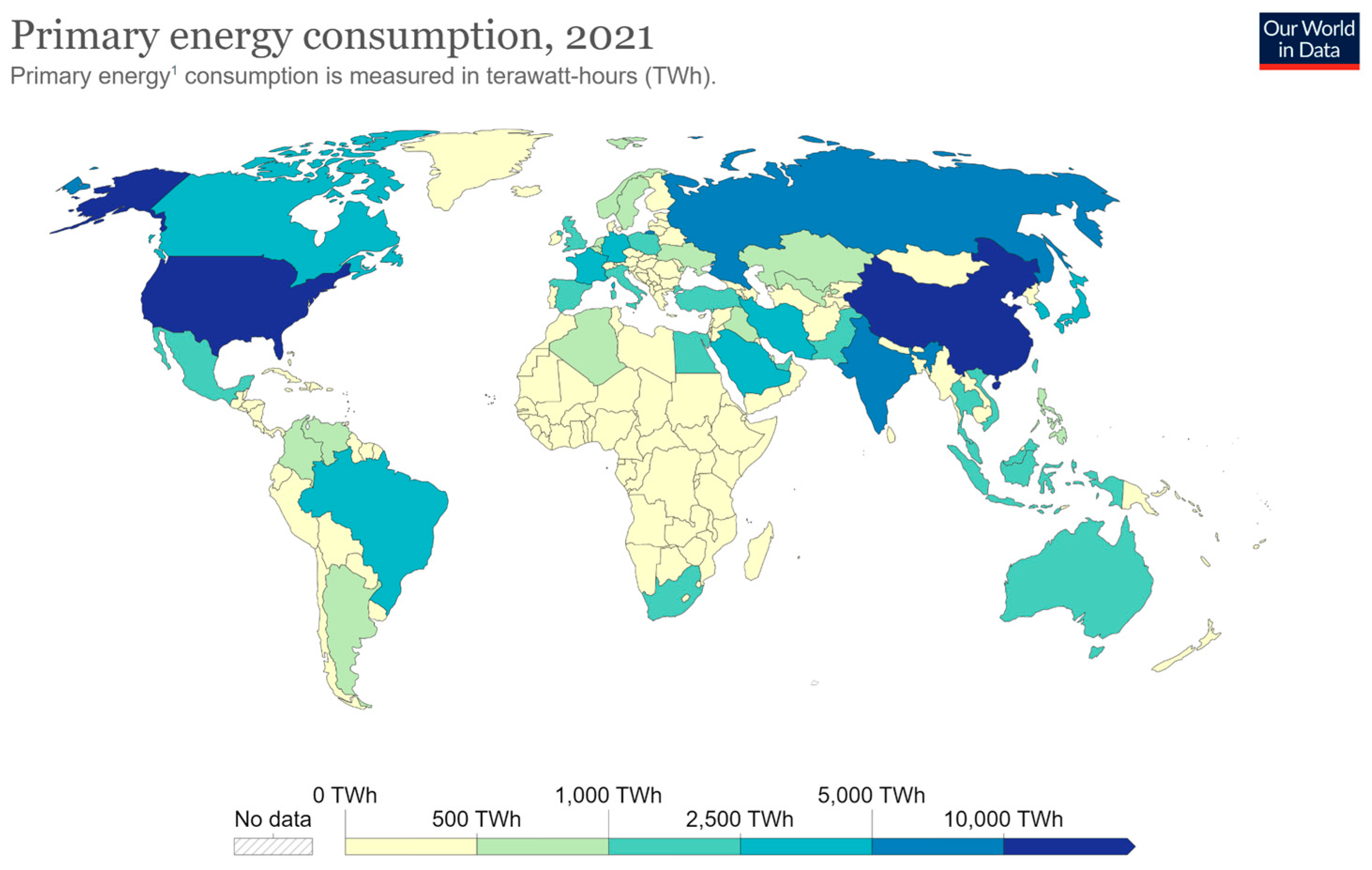
Figure 2.
Power Generation Structure in Taiwan—by Fuel[63].
Figure 2.
Power Generation Structure in Taiwan—by Fuel[63].
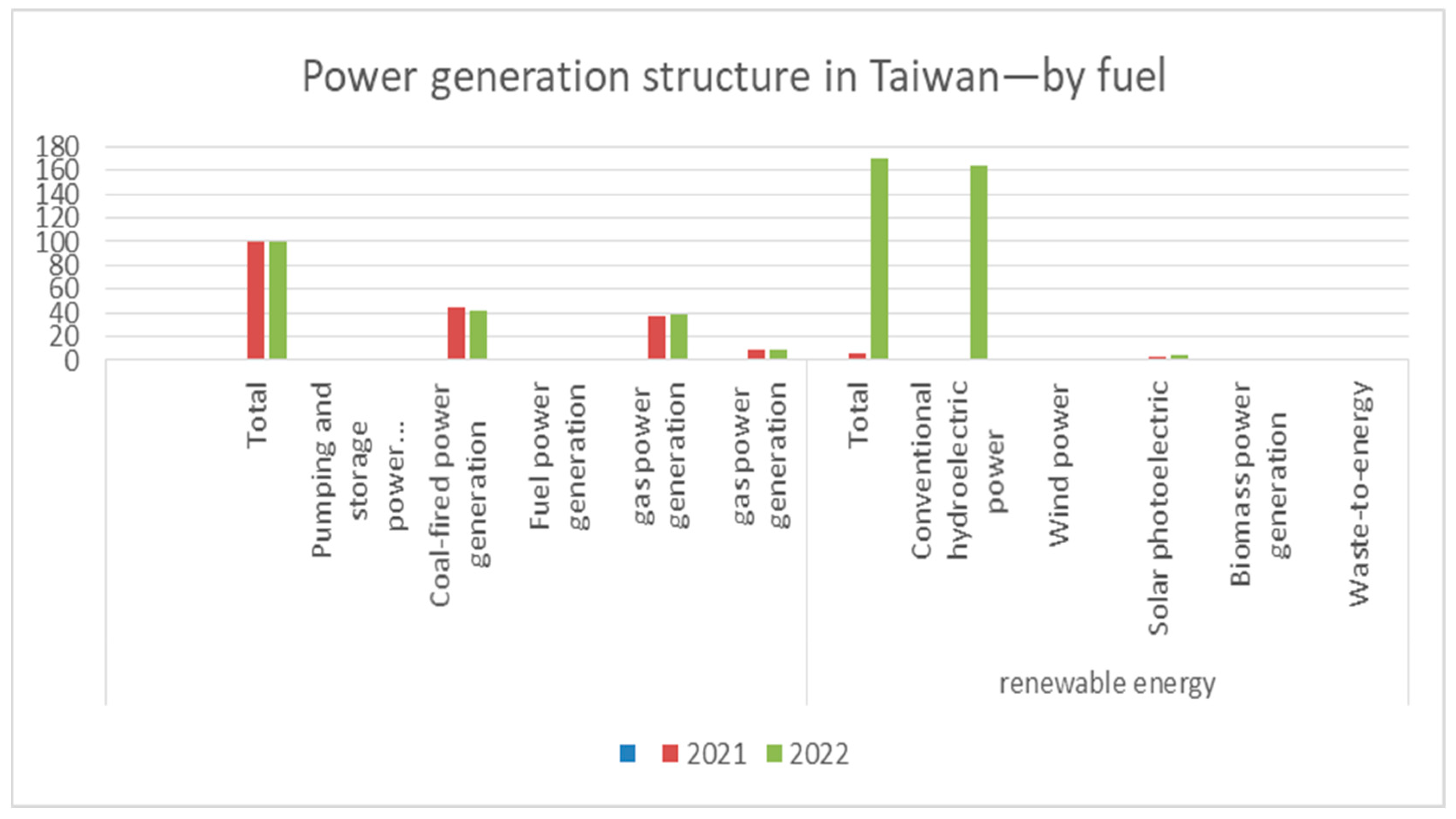
Figure 3.
Proportion of electricity generation by Fuel in Scotland in 2021.
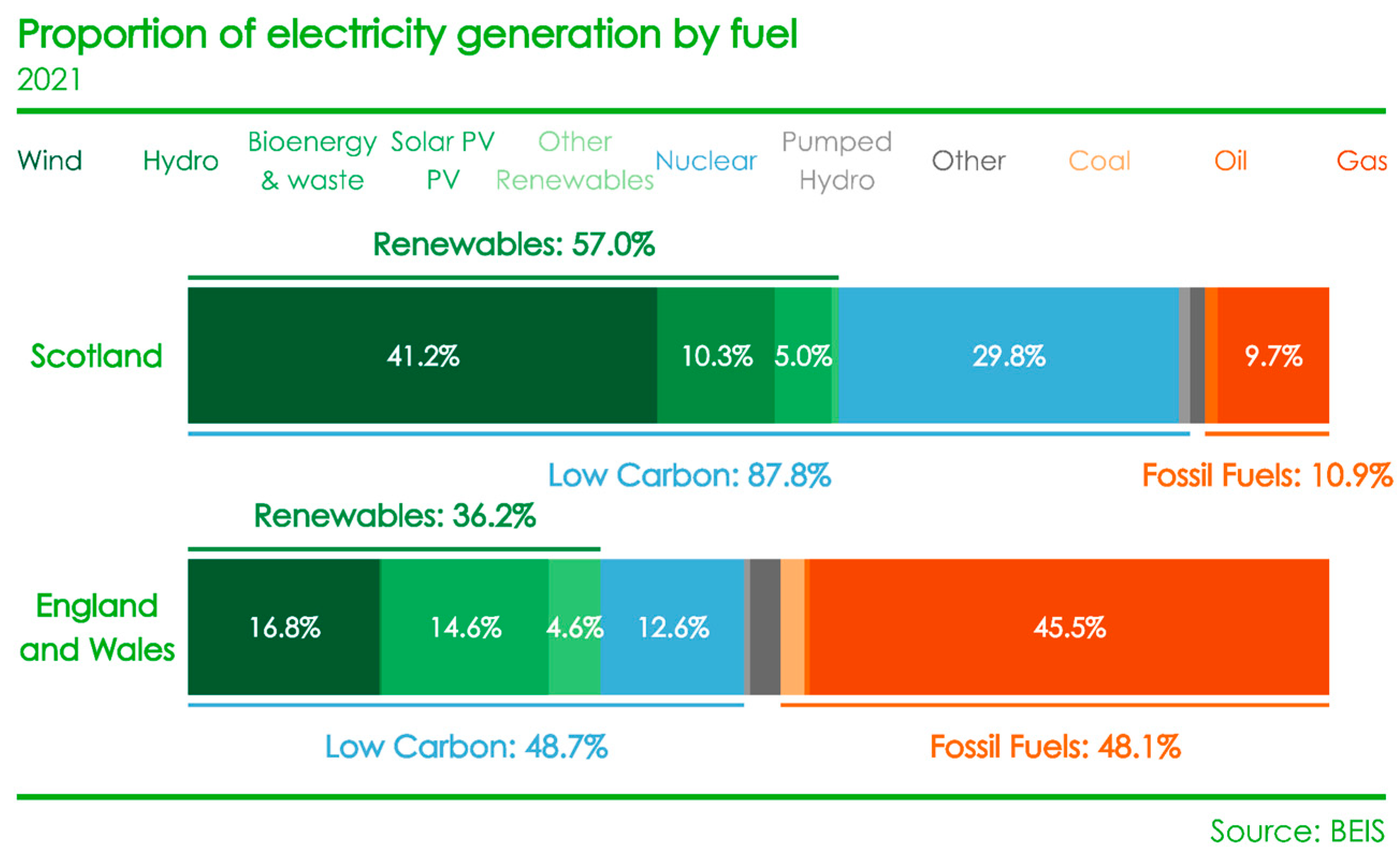

Table 1.
Research Theories or Concepts for Assessing CTSP and Silicon Glen.
| Research Theory | Content Summary |
|---|---|
| Clustering Theory | Examines the spatial concentration of high-tech industries and the benefits of agglomeration in terms of knowledge spillovers, networking opportunities, and economies of scale[9,10,11,12,13,14,15,16,17,18]. |
| Innovation Systems Approach[19,20,21,22,23] | Focuses on the interactions and relationships among firms, universities, research institutions, and government agencies in the innovation ecosystem [24]. Analyzes how these systems facilitate knowledge exchange, technology transfer, and innovation-driven growth [25]. |
| Triple Helix Model[26,27,28,29,30,31] | Explores the collaboration between academia, industry, and government in fostering innovation and regional development [32]. Assesses the coordination and collaborative dynamics among these sectors in CTSP and Silicon Glen. |
| Sustainable Development Framework[33,34,35,36,37,38,39,40,41,42] | Provides a lens to assess the environmental, social, and economic aspects of the clusters [35]. Evaluates efforts and outcomes in terms of environmental management, resource efficiency, social inclusiveness, and economic prosperity [43]. |
| Policy Mix and Governance[44] | Analyzes the design and implementation of policy measures to support technology clusters [45]. Evaluates the effectiveness and coherence of policy interventions, including government policies, incentives, regulations, and institutions [46]. |
| Comparative Analysis | Compares and contrasts the development paths, policy approaches, and outcomes of CTSP and Silicon Glen. Identifies best practices, lessons learned, and transferable policy implications between the two regions. |
| Regional Development Theory [47,48] | Analyze the regional development models and success factors of CTSP and Silicon Glen. Provide relevant regional development strategies [18] and policy recommendations. |
Table 2.
Qualitative and quantitative descriptions of sustainable development in CTSP and Scotland's Silicon Glen.
Table 2.
Qualitative and quantitative descriptions of sustainable development in CTSP and Scotland's Silicon Glen.
| Aspects | CTSP | Scotland's Silicon Glen |
|---|---|---|
| Qualitative Description | - Commitment to providing an innovative research and development environment and nurturing technology talents. | - Dedication to promoting technological innovation and economic development. |
| - Active promotion of green and sustainable development. | - Focus on sustainable development, including clean energy, environmental technology, and talent development. | |
| - Emphasis on energy conservation, green buildings, circular economy, and community engagement. | ||
| - Collaboration with the local community for environmental activities and the promotion of green lifestyles. | ||
| Quantitative Description | - Analysis of energy consumption, carbon emissions, and effectiveness of energy-saving and carbon reduction measures. | - Assessment of clean energy capacity, such as renewable energy generation. |
| - Evaluation of green building certifications and energy efficiency of buildings. | - Assessment of the scale and market share of the environmental technology industry. | |
| - Analysis of circular economy indicators, including resource recovery rate and waste reduction. | - Observation of talent development outcomes, such as graduate employment rates and skill levels of technology professionals. | |
| - Evaluation of community engagement through surveys or questionnaires. |
Table 3.
Comparisons between CTSP and Scotland's Silicon Glen.
| Comparison Topics | CTSP | Scotland's Silicon Glen |
|---|---|---|
| Geographic Location | Located in the central region of Taiwan, including the Taichung Science Park, Huwei Science Park, Houli Science Park, Earlin Science Park, and Chung Hsing Science Park[3]. | Situated in the Scottish Highlands, serving as a hub for technological innovation. |
| Industrial Structure | Emphasizes high-tech industries such as semiconductors, optoelectronics, and biotechnology, attracting renowned international companies. | Focuses on technological innovation and the digital economy, including software development, AI, and data science. |
| Government Support | Receives strong support from the Taiwanese government, with policies, measures, and funding to promote the development and innovation of the technology industry. | Also receives support from the Scottish government, which provides innovation research funds, tax incentives, and other measures to encourage the growth and innovation of tech enterprises. |
| Education and Research | Surrounded by prestigious universities and research institutions, providing an excellent talent pool and research resources. | Boasts several higher education institutions, such as the University of Edinburgh and the University of Glasgow, offering abundant research and educational resources[49]. |
| Entrepreneurship Environment | Offers a well-developed entrepreneurial ecosystem, including accelerators, investment funds, and incubators, supporting and nurturing startups. | Similarly has a thriving entrepreneurship environment, attracting numerous startups and venture capital investments. |
Disclaimer/Publisher’s Note: The statements, opinions and data contained in all publications are solely those of the individual author(s) and contributor(s) and not of MDPI and/or the editor(s). MDPI and/or the editor(s) disclaim responsibility for any injury to people or property resulting from any ideas, methods, instructions or products referred to in the content. |
© 2023 by the authors. Licensee MDPI, Basel, Switzerland. This article is an open access article distributed under the terms and conditions of the Creative Commons Attribution (CC BY) license (https://creativecommons.org/licenses/by/4.0/).
Copyright: This open access article is published under a Creative Commons CC BY 4.0 license, which permit the free download, distribution, and reuse, provided that the author and preprint are cited in any reuse.


