

Submitted:
01 September 2023
Posted:
05 September 2023
You are already at the latest version
Abstract
The preservation of biodiversity has become a major concern in contemporary society. It is essential to understand teachers' representations of biodiversity to effectively guide educational efforts because of the significant role of education in raising awareness and promoting sustainable behavior. Through a survey of a sample of 118 teachers, we adopted a mixed-method approach combining both a closed questionnaire and interviews. We used these methods to explore teachers' representations of the concept of biodiversity as an integral part of the school curriculum, as well as to gather their views on certain features of its teaching. The results state that the majority of teachers perceive biodiversity as a whole and in its most complex relationships. During their professional experience, they have developed a biocentric and anthropocentric conception of biodiversity. This study provides valuable information to guide future pedagogical practices and educational policies in sustainable education.
Keywords:
Biodiversity
; Representations
; school program
; primary school
; secondary school
; Education for sustainable development.
1. Introduction
The notion of biodiversity has taken a prominent place in the scientific and political language since the significant events of the last century especially the United Nations Conference on Environment and Development (in Rio de Janeiro, 1992), testifying to the growing importance given to the preservation of the diversity of living beings and their ecosystems [1].
Biodiversity refers to the richness and variety of the living world, as well as its ability to adapt to environmental changes and ensure the survival of species. Therefore, it is considered an invaluable natural heritage to be protected for future generations [2]. In addition, biodiversity has an important cultural, social, and economic dimension that must be taken into account in education for sustainable development [3,4]. For example, indigenous peoples' traditional knowledge and local practices can contribute to biodiversity conservation. Similarly, academic knowledge of biodiversity derived from formal education helps to become aware of the impact of human actions on the environment and to develop respectful and responsible behavior [5].
Research in the field of science didactics has highlighted the important results. Somes studies have shown that teachers play an important role in shaping students' attitudes and beliefs about biodiversity and the environment. Effective teaching practices for biodiversity education include using a variety of teaching methods and resources, such as field trips, hands-on activities, and multimedia materials, to engage students and help them develop a deeper understanding of the importance of biodiversity and the need for its conservation [6]. Some studies discussed about providing a framework for understanding the challenges and opportunities of teaching the concept of biodiversity in science classes [7], others discuss how they approach teaching this important subject and highlight any potential areas in need of additional support and training [8,9].
We conducted this study in the interest of exploring teachers' representations related to biodiversity which can help to develop effective pedagogical strategies that promote a thorough understanding of this concept among students. Our survey holds great importance due to its ability to provide objective insights into the diverse conceptual representations of biodiversity as perceived by teachers which play a crucial role as key actors in the education system and which influence the teaching-learning process [9].
However, we referred to conceptions attributed to biodiversity in Wilson's work such as his influential book "The Diversity of Life" (1992) [10], and in the Convention on Biological Diversity signed on 1992 in Rio de Janeiro [11] to study teachers’ representations participating in our survey.
Moreover, if in the world of didactics, representation can constitute a pedagogical obstacle that hinders learning among students, inadequate conceptual representations on the part of teachers for the environment will undoubtedly be transferred as such to learners [8].
To achieve the objective of our research, a survey was conducted among a diverse sample of 118 teachers covering several grade levels of primary and secondary life sciences education, in the "provincial directorate" of education of Guelmim city in Morocco.
We adopted a mixed methodological approach, questionnaire, and individual interviews as data collection tools. These data were analyzed using a quantitative approach for questionnaire data and a qualitative approach for interview data. These methods allowed us to obtain a representative view of teachers' representations of biodiversity in the study context.
In the following sections of this article, we present and discuss the results of the survey, focusing on teachers' representations of the concept of biodiversity, their views on its importance in the curriculum, and on appropriate teaching practices for teaching this concept.
Aim of this study was to answer the following research questions:
- What are teachers' representations of the concept of biodiversity?
- Are teachers' representations influenced by the thematic content and educational values present in school curricula relating to biodiversity?
- To what extent is biodiversity education perceived as a means of student development and personal well-being by the surveyed teachers?
- What pedagogical practices do science teachers adopt when introducing the concept of biodiversity to their students?
- What influence do socio-professional factors have on their representations?
2. Theoretical Context
The origin of 'Biodiversity' is Lovejoy and Norse & McManus papers published in 1980. Lovejoy's contribution from the World Wildlife Fund discussed global environmental issues, including the impact of forest exploitation on climate and biological diversity [12], while Norse and McManus defined biodiversity in terms of genetic and ecological diversity as part of their chapter for the White House Council on Environmental Quality's report [13]. The term "biological diversity", shortened to "biodiversity" by Walter G. Rosen in 1985, has seen its use spread in scientific and political language, notably at the Rio Conference of 1992.
Since then, biodiversity has become a major issue for society. This conference, ratified by 196 countries or parties, brought major political commitments for the preservation of biodiversity. It thus helped to highlight the complex concept of biological diversity, defined in the Convention on Biological Diversity adopted at the Rio Summit as the variety and variability of all living organisms [11] that englobes the genetic diversity of species, ecosystems, and the ecological processes they influence or of which they are the actors. This definition is very often used today. The Rio Conference, therefore, played a major role in disseminating the concept of biodiversity.
The word "biodiversity" perfectly illustrates the evolution of our society, testifying to the emergence of a major ecological issue [14]. Thus, this term, which has established itself in scientific and political discourse, testifies to the growing importance given to the preservation of the diversity of life.
The book "Biodiversity II: Understanding and Protecting Our Biological Resources", published in 1997 by Marjorie L. Reaka-Kudla, Don E. Wilson, and Edward O. Wilson, emphasizes the need for training and education in the field of biodiversity conservation, highlighting the importance of developing the next generation of scientists and conservationists [12].
In educational discourse, the teaching of biodiversity is a crucial educational issue that allows learners to develop a deep understanding of the interdependencies between living beings and their environment [15]. Indeed, biodiversity is an essential component of life on Earth that helps maintain the ecological balance of our planet.
Through biodiversity education, learners become aware of the impact of their actions on the environment and learn to respect nature and the living beings that live there [15]. In addition, biodiversity education can also encourage learners to engage in concrete actions to preserve biodiversity and combat climate change, to contribute to sustainable development for future generations [16,17].
Science teachers have an important role to play in promoting ecological cognition in students, helping them understand natural systems, the interactions between living things, and the factors that influence biodiversity [18,19].
Also, environmental pedagogy is a field of study that examines teaching methods and strategies that encourage a deeper understanding and appreciation of the natural environment. Teachers can use innovative pedagogical approaches to help students better understand biodiversity and develop an appreciation of nature [20]. They promote experiential learning and understanding of natural systems [21]. Using the problem-based learning approach can improve students' ecological cognition by enabling them to understand the complex interactions between living things and their environment [22,23]. Similarly, the use of tools such as ecological models can help students understand ecological processes and ecosystem dynamics [16,24].
Social representation is a key concept in the study of perceptions and attitudes [25]. In addition, it notes in some studies that teachers' representations can be important in shaping learners' representations [26,27]. Therefore, it is possible to infer that teachers' social representations can influence the perceptions and attitudes of their students. For this reason, researchers can focus on learning problems from teachers' representations. Indeed, taking into account teachers' social representations is an essential element in science didactics, particularly in the teaching of biodiversity [28]. Many studies have highlighted the importance of understanding teachers' pre-existing conceptions of biodiversity, as they can have a significant influence on how they teach this concept [18,29]. Research has revealed a diversity of representations among educators regarding biodiversity, ranging from anthropocentric conceptions that emphasize economic utility and benefits to humanity, to ecological conceptions that emphasize the complex interrelationships between species and ecosystems [17,30].
In the field of science didactics, several researchers have explored teachers' representations of biodiversity. For example, a study conducted by Bilgin (2016) found that teachers often had limited conceptions of biodiversity, reducing them to the simple notion of species diversity without taking into account genetic and ecosystem aspects [31]. In addition, some studies have shown that teachers may have impediment representations on specific topics related to biodiversity, such as species extinction or the causes of biodiversity decline [22,31].
Teachers' representations of biodiversity can be influenced by various factors such as their initial training, personal experiences, sociocultural environment, and available teaching resources [32] Therefore, it is crucial to take these factors into account when designing teacher education and professional development programs, to foster a shift in teacher representations towards more accurate and comprehensive conceptions of biodiversity [32].
3. Materials and Methods
3.1 Research Context
This study is part of a project that focuses on the teaching of biodiversity and its contribution to the installation of education for sustainable development. Authorization to distribute the questionnaire, at the level of schools in the "provincial directorate of Guelmim", is provided by the Regional Academy of Education and Training of the Guelmim Oued Noun region. The "Provincial Directorate of Guelmim" has 1107 teachers for the 2021/2022 school year (896 teachers in the primary cycle and 107 in the secondary cycle) during which the survey was carried out.
3.2 Sample
The survey concerned two samples of teachers of different categories: the primary cycle and the secondary cycle of teaching in the "provincial directorate " of Guelmim city in Morocco. Both groups were randomly selected. We targeted teachers who teach science at the primary level and those who teach life and earth sciences discipline at the secondary level because the concept of "Biodiversity", the subject of our survey, is strongly linked to the curricula of these disciplines. We sent 200 surveys, and we received 118 responses. The percentage of representativeness of these 118 teachers in relation to the total number of teachers in the Guelmim province is equal to 25.48%. The sample include 48 teachers from primary school and 70 teachers from secondary school (30 of them from middle school and 40 from high school). These participants represent a diversity of school backgrounds and professional experiences.
3.3 Sample Characteristics
Analysis of the results relating to respondents' personal information in both samples revealed the following points:
These data (Table 1) show that both samples of the survey are part of a heterogeneous target population of teaching staff that is socio-professionally and culturally characterized by:
- Fairly long experience in the field of teaching and education, taking into account the seniority factor in professional experience: significant teaching experience more than 10 years (87% in primary school and 66% in secondary school);
- Adequate diploma teacher training that qualifies them to work in the field of teaching and education: 82% for the primary cycle sample and 94% for the secondary cycle sample;
- The majority of teachers (32%) in the primary cycle hold a bachelor's degree, and the vast majority of secondary teachers (45%) hold a master's degree;
- Heterogeneity in the specialty of university degrees, obtained by primary school teachers (77% other specialty than life and/or earth sciences) and diversity in scientific specialties (82% relating to life and earth sciences) of diplomas obtained by secondary school teachers;
- Male gender dominance in both samples: 79% for the primary cycle sample and 63% for the secondary cycle sample;
- The majority of the sample of primary school teachers who responded to the questionnaire are from rural areas (55%) and the majority of secondary school teachers are from urban areas (70%).
3.4 Research Tools
To collect the data, we used two main research tools:
- A questionnaire: We designed a questionnaire with 7 questions on socio-cultural characteristics, one question about the possibility of visiting teachers in the classroom for interviews while ensuring the anonymity of their data, and 5 closed-ended questions related to the biodiversity concept and its teaching. Teachers were asked to provide a means of contact, such as a phone number or email address, to facilitate the scheduling of subsequent interviews. Responses were recorded using predefined categories ("yes" or "no"; "agree" or "undecided" or "disagree"). The questionnaire data were entered and organized in a data collection table using Excel 2019 software;
- Individual interviews: We conducted individual interviews with 11 teachers who agreed to participate in the study. The interviews were guided by open-ended questions allowing teachers to express themselves freely and deepen their reflections. The questions aimed to deepen the responses provided in the questionnaire and to obtain more detailed information on their representations of biodiversity and their views on its teaching.
3.5. Data Collection and Analysis
The data collection took place in several stages. First, the questionnaires were distributed to teachers. Then they deposited them with the administration of their establishments. We collected them afterward. Thereafter, individual interviews were scheduled with the teachers who agreed to participate. These interviews were recorded and transcribed (some teachers were reluctant to record).
For the analysis of quantitative data, we used Excel2019 software. Questionnaire responses were processed and organized in a data collection table, allowing for quantitative analysis of percentages and trends.
For the analysis of qualitative data from interviews, we adopted a thematic approach. The transcripts were thoroughly reviewed to identify emerging themes and motifs related to teacher representations and biodiversity education.
This mixed methodological approach was chosen for its complementarity, allowing us to obtain both quantitative and qualitative data. Quantitative data allowed us to identify trends and percentages, while qualitative data provided an in-depth and nuanced perspective on teachers' representations. This combination allowed us to have a more complete understanding of the concept of biodiversity in the context of teaching and to explore teachers' opinions and reflections on this issue.
4. Results
4.1. Conceptual Representations of the Surveyed Teachers Relating to the Concept of "Biodiversity"
This analysis of the opinion of the surveyed teachers focuses on the degree of concordance or discrepancy with the three above-mentioned different proposals in the definition of the concept of biodiversity. It shows the number of relative responses that chose "agree", "indifferent" and "disagree" for the statements related to each definition of biodiversity. More than 60% of primary school teachers and 70% of secondary school teachers agree with the two proposed definitions V1 and V2 of the three proposed. On the other hand, the proposed definition V3 is rejected by the vast majority of respondents. Moreover, by grouping the numbers of responses relating to the "indifferent" and "disagree" modalities, more than 70% of them do not agree with this perception in the primary cycle and more than 85% in the secondary cycle.
Figure 1.
Distribution of the opinions of the surveyed teachers regarding different proposals for the definition of biodiversity. V1: Biodiversity refers to all species and living beings on earth or in a specific ecosystem; V2: Biodiversity includes both the different species and forms of life (animal, plant, entomological, and other) and their variability (i.e., their evolution dynamics in their ecosystems); V3: It refers to the variety of constituent elements of life.
Figure 1.
Distribution of the opinions of the surveyed teachers regarding different proposals for the definition of biodiversity. V1: Biodiversity refers to all species and living beings on earth or in a specific ecosystem; V2: Biodiversity includes both the different species and forms of life (animal, plant, entomological, and other) and their variability (i.e., their evolution dynamics in their ecosystems); V3: It refers to the variety of constituent elements of life.
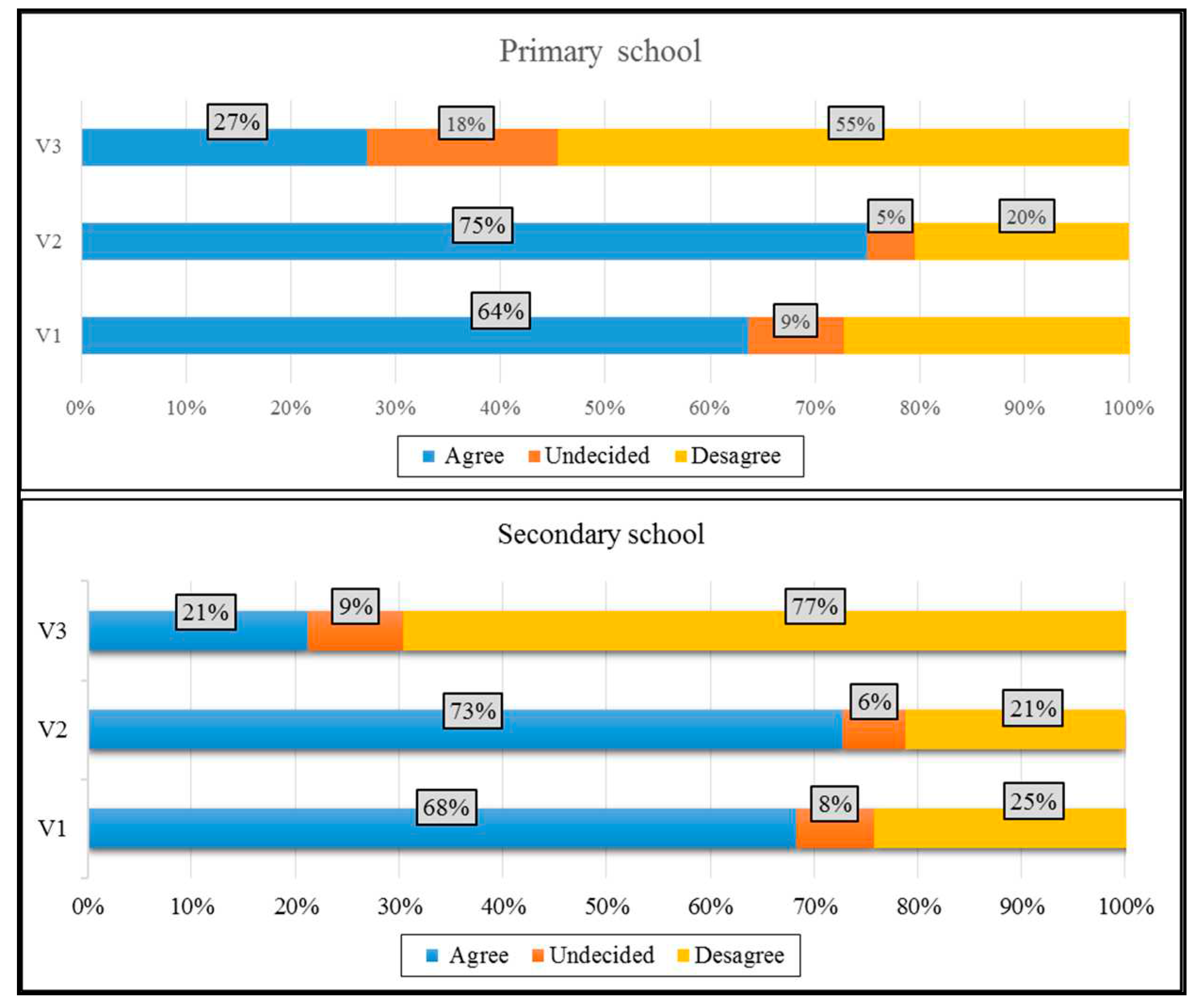
However, teachers' opinions on the different proposals for the conception of biodiversity concerning the three response modalities "V1, V2, and V3" at the scale of "agree" to "disagree", shows that the V2 and V1 conceptions of biodiversity are the closest to the respondents' representations.
The latter finding is also highlighted, by establishing parameters based on a rating of 1 (Disagree) to 3 (Agree). Indeed, the two conceptions that are closest to the conceptual representation of the vast majority of the two categories of respondents, according to this scale, have an average value above 2.5 in the sample of secondary school teachers, and one of the conceptions in the sample of primary school teachers (Table 2).
4.2 Conception of Biodiversity in Primary and Secondary School Curricula
An analysis of the incorporation of the concept of biodiversity in the curricula of the disciplines of "scientific activity" of the primary cycle and that of "life and earth sciences" of the secondary cycle in Morocco, was carried out [31]. The analysis of the presence of the concept of "biodiversity" in primary and secondary school curricula, based on five dimensions of the concept of biodiversity, gave these results:
- In the primary cycle, the most present dimensions in the curricula are “classification” and “ecology”, both at 35%. This suggests that these aspects of biodiversity are addressed meaningfully in primary school curricula. The dimension of “human activities and behaviors” is also present at a significant level of 29%. The "genetic" and "evolution" dimensions are considered more advanced for elementary school children. "Genetic" is addressed later in the second year of secondary middle school.
- In secondary education, there is a more balanced distribution of biodiversity dimensions. The genetic dimension is present at a percentage of 26%, indicating a greater inclusion of this concept in secondary school curricula. The dimensions of ecology and human activities and behaviors are present at percentages of 12% and 26% respectively. The dimension of evolution is also present at a percentage of 18%.
4.3 Characteristics of the Concept of "Biodiversity" according to the Opinion of the Surveyed Teachers
4.3.1 The Concept of "Biodiversity" in School Curricula according to Surveyed Teachers
Regarding respondents' conception of the role of school curricula in teaching students the concept of biodiversity, the results in Figure 2 show the dominance of the three proposed responses "B", "C" and "D".
While respondents seem to be in favor of the contribution of science curricula in the adoption of "good actions" in practice ("B") and an awareness of the sustainability of species ("D"), there are reservations about its contribution to the development of specific knowledge ("A").
In the results presented, we can attribute the concepts "knowledge", "how to do", "how to be" and "how to act" to the different proposals "A", "B", "C" and "D" as described below:
- "Knowledge" corresponds to a proposal "A". This is theoretical understanding and expertise in various areas related to biodiversity;
- "Skills" (how to do) can be associated with a proposal "B". This includes the practical skills and interpersonal collaboration needed to take concrete action for biodiversity protection;
- The "strategic competencies" (how to be) correspond to a proposal "C". This refers to the ability to integrate many parameters into decision-making and the management of interactions between man and nature;
- "Personal qualities" (how to act) can be linked to a proposal "D". This encompasses attitudes, values, and behaviors that promote awareness of the sustainability of the species and its evolution.
While the majority of teachers are disagree on the contribution of school curricula in the development of specific knowledge (Figure 2), they recognize their importance in contributing to the development of practical skills (how to do), strategic skills (how to be), and personal qualities (how to act) for the protection of biodiversity and the establishment of a balanced relationship between man and nature (Figure 3).
It should be noted that these results (Figure 3) are based on teachers' responses to the questionnaire. During the interview, we had the opportunity to shed more light on these collected results. The results of the interview also highlight the necessity of increasing the devoted time slot to the knowledge of the different dimensions of the concept “of biodiversity” in science curricula.
4.3.3. Importance of Teaching the Concept of Biodiversity according to Surveyed Teachers
To obtain a more complete and representative view of teachers' representations of biodiversity in education, we asked them during the interview about their means of acquiring information on biodiversity and their opinions on the importance of this concept compared to other concepts in science curricula such as the concept environment, ecosystem, nature and ecology.
The opinions of the surveyed teachers on the importance of the concept of biodiversity compared to other concepts in the school curriculum can be observed:
- Teachers agree: The majority of teachers (65%) agree on the importance of the concept of biodiversity compared to other concepts in the school curriculum. This suggests that they recognize the value of teaching biodiversity and consider it worthy of special attention in the context of education;
- Teachers disagree: A small percentage of teachers (11%) disagree on the importance of biodiversity compared to other concepts. Their specific reasons for disagreement are may be due to different pedagogical perspectives or different educational priorities;
- Indifferent teachers: Another interesting aspect is that 35% of teachers say they are indifferent to the importance of biodiversity compared to other concepts. This could reflect a lack of knowledge or particular interest in the topic of biodiversity, or perhaps a perception that other concepts might be more important or prioritized.
4.3.4. Main Means of Acquiring Information about the Concept of "Biodiversity" among the Surveyed Teachers
We asked teacher s about the ways from which they acquire information on the concept of biodiversity and we got a variety of ways in which teachers obtain information on biodiversity with a combination of formal educational approaches, professional exchanges, and personal research initiatives.
The surveyed teachers were asked to provide clarification on their choices regarding the means of acquiring information on the concept of biodiversity:
- Acquisition of information on biodiversity through educational programs (39% of surveyed teachers): These teachers report relying on specific educational resources related to biodiversity, such as textbooks, university curricula, or their professional training;
- Acquiring information on biodiversity in a professional setting (20% of surveyed teachers): This could include, according to them, exchanges with other teachers and training provided in the framework of associations of teachers of the disciplines of life and earth sciences;
- Acquiring information on biodiversity through personal research (41% of surveyed teachers): They report turning to independent sources such as books, scientific articles, websites, or visits to sites and museums during their travels to enrich their knowledge on the subject.
4.4. Framework of Reference Values for Educational Practices in Biodiversity Education
Each of the three proposed answers to the question on educational practices of biodiversity education (Figure 4), represents a specific reference value:
- Proposal A': emphasizes the social value of this teaching. By understanding biodiversity and its importance, students can become aware of their role as responsible citizens committed to the preservation of biodiversity;
- Proposal B': reflects the ethical value of biodiversity education. By understanding the issues and consequences of biodiversity loss, students are encouraged to adopt environmentally responsible behaviors and make ethical decisions to preserve biodiversity;
- Proposal C': represents the cognitive value of biodiversity education. By encouraging students to debate, discuss and challenge different perspectives and issues related to biodiversity, this approach promotes the development of their cognitive skills and critical thinking.
Based on the survey results (Figure 4):
- The majority of teachers (55%) do not consider teaching biodiversity to have a direct impact on the student's development and personal well-being (proposal A');
- Although the majority of teachers (51%) do not support this proposal B', a significant percentage (33%) recognize the importance of acquiring knowledge about biodiversity conservation to induce behavioral change in students;
- Although proposal C’ has the highest percentage of agreement, almost half of the teachers (44%) do not support the idea that biodiversity education can provide training focused on critical thinking and debate.
4.5. Teaching-Learning Approaches Preferred by the Surveyed Teachers to Teach the Concept of "Biodiversity"
From a particular question in the survey in which respondents are asked to make their choices of learning approaches or practices they use to teach the concept of biodiversity, allowed us to identify the following results:
The results obtained (Figure 5) are then clarified with the teachers during the interview. We present the results as follows:
- Proposal A": The results indicate that 42% of teachers consider the deductive approach to teaching the concept of biodiversity, through classroom activities, as a choice approach. On the other hand, a significant proportion of teachers express their disagreement and encourage the inclusion of other approaches to work on biodiversity in the classroom;
- Proposal B": 49% of teachers agree with the idea of carrying out personal biodiversity research projects outside the classroom, 22% are indifferent and 29% disagree. Thus, the majority of teachers (49%) support this approach, which suggests an interest in literature review;
- Proposal C": The overwhelming majority (60%) of teachers do not support the inclusion of school projects as an approach to students' learning about biodiversity. They state that school projects are not interested in the theme of environmental education and sustainable development of the student but rather in the field of students' tutoring for the subjects of mathematics and foreign languages;
- Proposal D": 29% of teachers agree with students' participation in extracurricular activities related to biodiversity within school clubs, 22% are indifferent and 49% disagree. The majority of teachers (49%) express their disagreement with this inductive method which requires their commitment to mentoring practical experiences and field investigations. This requires great responsibility, means, and materials that the teachers should take charge of.
Then, a considerable number of respondents (Figure 6) chose to take into account the deductive approach in the classroom and the realization of students' projects outside the classroom in teaching-learning situations related to the concept of biodiversity.
4.6. Impact of Socio-Professional and Cultural Factors on the Epistemological Status Associated with Biodiversity
It is important to note that socio-professional and cultural factors may play a role in shaping teachers' representations associated with biodiversity:
4.6.1. Seniority
The cross-referencing of the variable of "professional experience/seniority" of the surveyed teachers with the different proposals for defining biodiversity led to the results represented in Figure 7:
Analyzing globally the graphs relating to the proposals for defining biodiversity (V1, V2, V3) according to the seniority of primary and secondary school teachers, here are the general observations that can be made:
- Teachers' seniority can influence their perception and understanding of biodiversity;
- More experienced teachers seem to have more nuanced opinions and may be more inclined to question or be undecided on certain proposals;
- Proposals V1 and V2 of the definition of biodiversity, for secondary school teachers, seem to be more widely accepted, regardless of seniority. However, the V3 proposal is causing more differences of opinion, with a tendency to be less accepted, especially among teachers with less experience.
4.6.2. Diploma Obtained
The results of the crossing of the different modalities (V1, V2, V3) according to the obtained diploma are as follows:
Figure 8.
Barometer of the different modalities of respondents' responses to the conception attributed to biodiversity to their diploma obtained.
Figure 8.
Barometer of the different modalities of respondents' responses to the conception attributed to biodiversity to their diploma obtained.
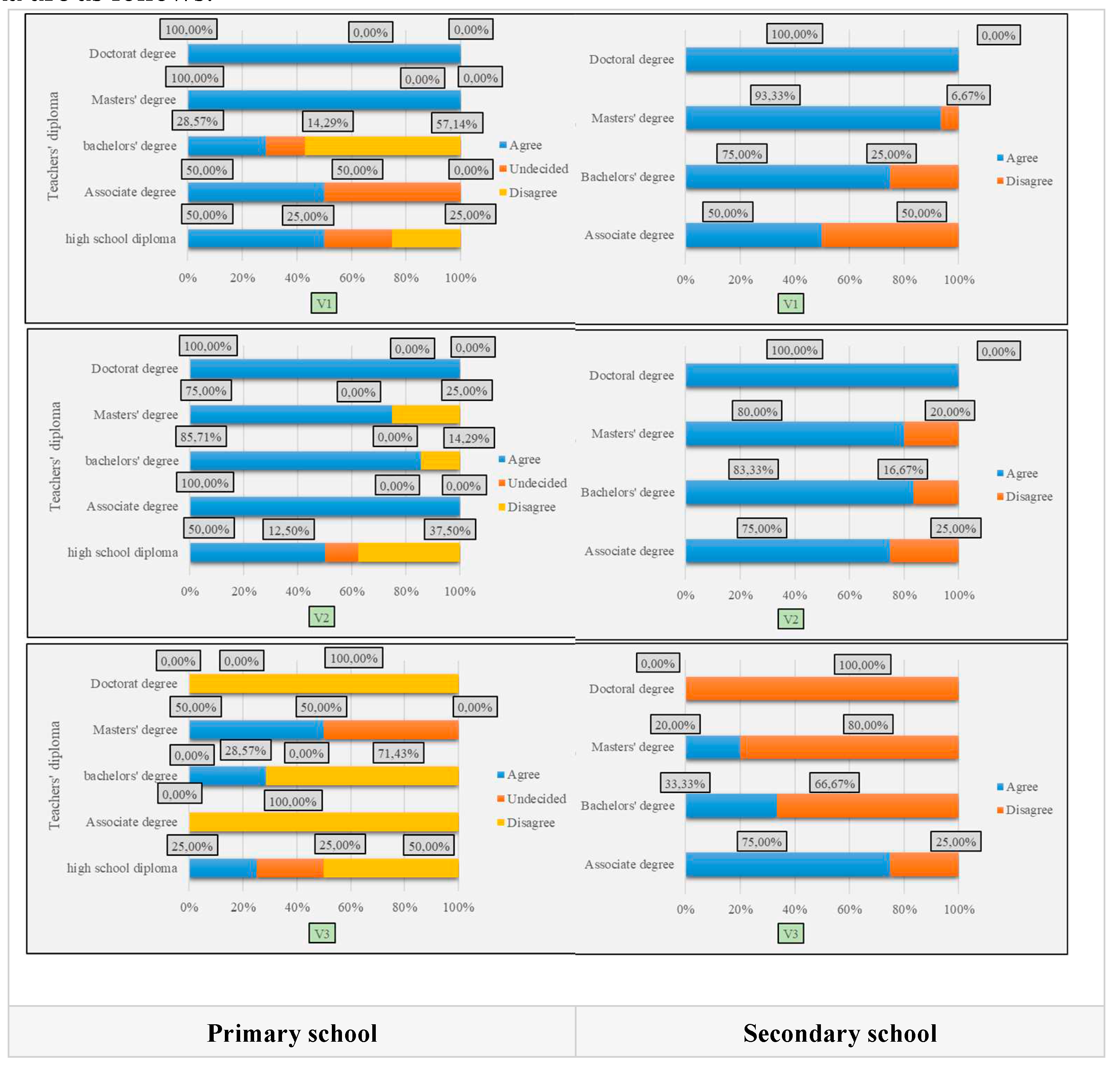
According to the overall results analysis of the influence of the "obtained diploma" factor on the choices of primary and secondary school teachers relating to the proposed definition of biodiversity V1, V2, and V3:
- Proposal V1: Teachers with a high school diploma show mixed opinions, with an equitable split between agreement, indecision, and disagreement. Teachers with an associate degree mostly agree with the proposal, while those with a bachelor's degree show a majority of disagreements. On the other hand, teachers with a master's degree or doctorate are unanimous in their agreement with the proposal.
- Proposal V2: Teachers with a high school diploma show a majority of disagreements with the proposal. On the other hand, teachers with an associate degree are all in agreement. Teachers with a bachelor's degree show a majority of agreement, while those with a master's degree also show a majority of agreement. Teachers with a Ph.D. agree with the proposal.
- Proposal V3: Teachers with a high school diploma show a majority of disagreements with the proposal. Elementary school teachers with an associate degree mostly disagree and those in high school mostly agree, while those with a bachelor's degree show a majority of disagreements. Teachers with a master's degree show some agreement, while those with a doctorate mostly disagree with the proposal.
These differences suggest that there may be variations in the representations of primary and secondary school teachers regarding the epistemological status associated with biodiversity, depending on their level of education.
4.6.3. Specialty of the Diploma
The overall analysis of the study results of teachers’ choice between the three proposals for biodiversity definition (V1, V2, V3) according to the specialty of their obtained diploma allows us to identify that:
Figure 9.
Barometer of the different methods of respondents' responses to the conception attributed to biodiversity with the specialty of their diploma obtained.
Figure 9.
Barometer of the different methods of respondents' responses to the conception attributed to biodiversity with the specialty of their diploma obtained.

The results indicate diverse scientific specialties (related to life and earth sciences: biology, geology, ecology) in university degrees earned by secondary school teachers and heterogeneity in the fields of study of elementary school teachers (other than life and earth sciences). The specialty of the diploma may have some influence on primary school teachers' representations of biodiversity, particularly about proposals V1 and V3. On the other hand, for secondary school teachers, the specialty of the diploma seems to have less impact on attitudes towards biodiversity, except proposal V3 where secondary school teachers, regardless of their specialty, mostly express their disagreement. This highlights the importance of strong and tailored professional training to develop positive representations and increased awareness of biodiversity among teachers.
4.6.4. Professional Training
The results of the analysis suggest an influence of professional training on teachers' representations of biodiversity among primary and secondary school teachers.
Figure 10.
Barometer of the different methods of respondents' responses to the conception attributed to biodiversity to their vocational training.
Figure 10.
Barometer of the different methods of respondents' responses to the conception attributed to biodiversity to their vocational training.
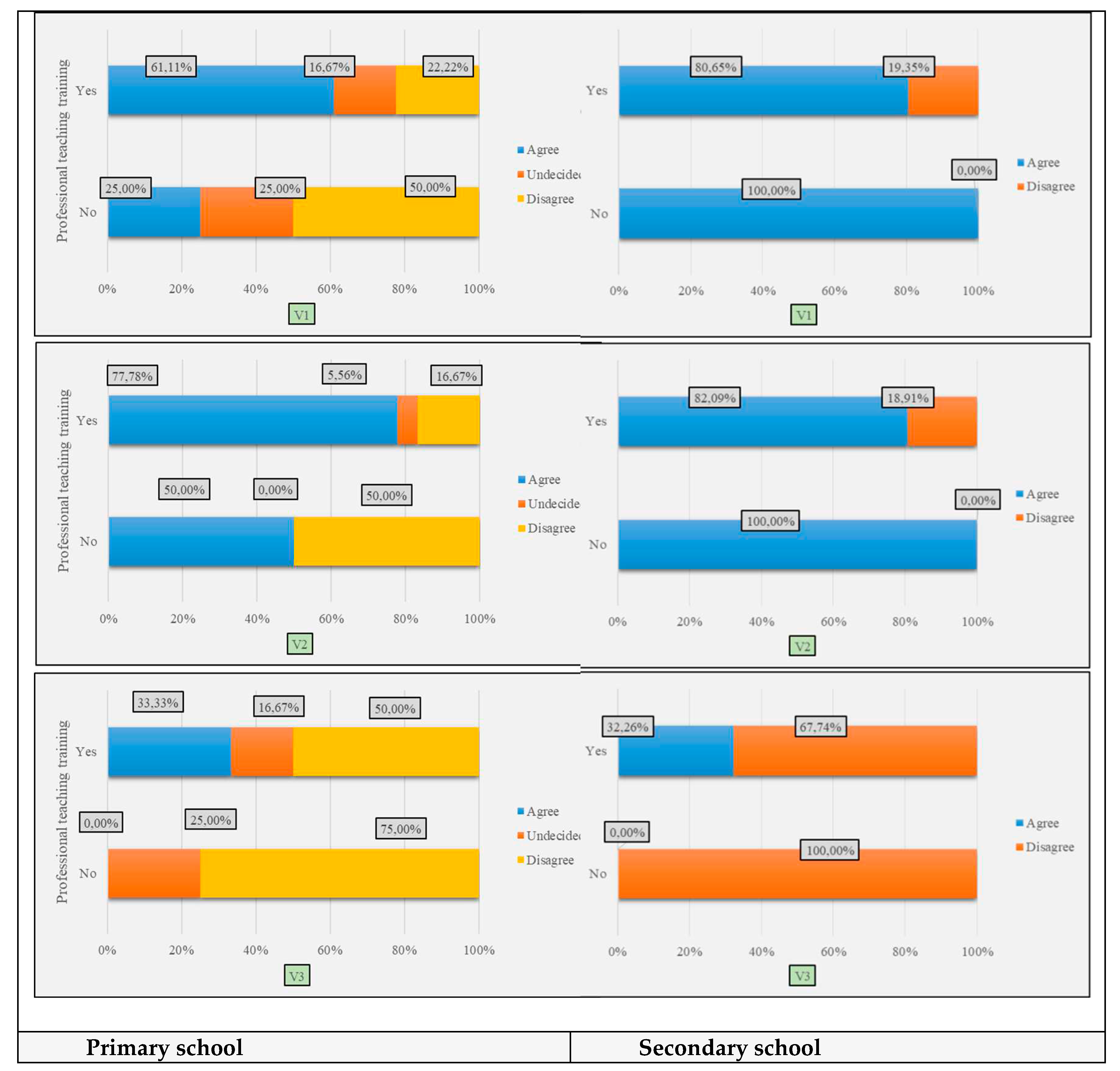
These results highlight that teachers with training in education professions in education seem to be more in agreement with proposals V1 and V2. In addition, secondary school teachers who have undergone vocational training in specific scientific fields (such as biology, ecology, and geology) seem to have a positive impact on their representations related to biodiversity: they all agree 100% with the V2 proposal.
5. Discussion
5.1. Teachers' Representations of Biodiversity
A concordance is expressed to the two types of conceptual representations V1 and V2 of biodiversity among the three proposed (Figure 1), by the vast majority of primary and secondary surveyed teachers (more than 70% of respondents). The results (Figure 1) show that the majority of surveyed teachers conceive biodiversity in its broadest conception. They integrate several levels of organization of biodiversity namely specific, ecosystem, and genetic diversity without forgetting the functional diversity and the evolutionary and inter- and intra-relational aspects of species. Moreover, it should be noted that despite the high proportion of respondents who considered biodiversity to be a complex concept including several levels of organization, this perception does not seem to be shared by all the surveyed teachers. Indeed, the percentages of primary school teachers who disagree concerning the two modalities V1 and V2 are less important (14%) and those who disagree are also significant (47%). Also, 46% of secondary school teachers disagree with these two response methods.
These results reflect the development of a biocentric and anthropocentric conception, among these teachers, during their professional experience [34].
We find, with very high rates, the five dimensions of biodiversity mentioned above: the dimension of "classification" that defines biodiversity as a diversity of species of fauna and flora. As well as that of microorganisms and man, followed by the diversity of ecosystems and living environments of this specific diversity that interact with each other forming a functional diversity. Then, the genetic dimension and evolutionary dynamics. Finally, the interaction between humans and biodiversity highlights the importance of conservation and the installation of positive behaviors [33].
In light of the results of the textual analysis of the Moroccan curricula content of the subject of “scientific activities" in primary school, and the subject of “life and earth sciences” in secondary school [33], we can explain the origin of biocentric and anthropocentric conceptual representations of biodiversity among secondary school teachers by the large and varied presence of thematic units of biodiversity in the school curricula of the studied subjects. These themes essentially deal with the five dimensions of biodiversity that constitute the main conceptual representations of the surveyed teachers, including specific, ecosystem and genetic diversity with the evolutionary and functional dimensions.
Besides, the conception of biodiversity as "ecosystem diversity" is in the majority among both categories of teachers because most respondents expressed their agreement with statement V1 and their disagreement with statement V3 which considers biodiversity nothing more than "specific diversity" (Figure 1). The conceptual representation of "biodiversity" with these three levels of organization (specific, ecosystem, and genetic) [35] is enriched by the presence in the school curricula of the subjects taught by the respondents. The thematic contents of biodiversity largely deal with themes related to species topics, classification, genes, and human behavior toward the environment in subject programs. The analysis of American school curricula [35] show that biodiversity is addressed in primary school curricula, with a strong emphasis on classification and ecology. In addition, the qualitative analysis of the learning objectives in the new reform of the primary curriculum reveals that there is an orientation towards the "how to act" and the installation of positive behaviors in students after the acquisition of knowledge deemed sufficient to take action by the student in his living environment. In secondary school curricula, there is a significant inclusion of genetics, ecology, evolution, and aspects related to human activities and behavior.
Our study of teachers' representations of the main dimensions attributed to biodiversity shows a broad agreement among respondents with the global nature of biodiversity and its complexity. This perfect concordance shows that biodiversity is perceived as a whole and in its most complex definition by most teachers.
Moreover, an incomplete understanding of biodiversity has been acknowledged by previous studies. According to a study conducted in the Azores in Portugal [36], teachers' representations of biodiversity share some common points with the definition of the concept of biodiversity, although most focus only on the species dimension. A study of Dikmenli (2010), about the conceptual framework of biodiversity in 130 biology training teachers, shows that that even if they had a more varied and technical vocabulary related to biodiversity, they still had an incomplete understanding of the concept. This suggests that their knowledge of biodiversity was limited and did not fully encompass the multidimensionality of the concept. Also, according to a Brazilian study, teachers considered the evolutionary perspective is important in teaching biodiversity [37]. But the justifications for its importance varied between them. However, the study found that the concepts with the least emphasis by teachers are those related to macroevolution and phylogenetics. The authors suggest that this may be due to the fragmentation of contents in biology education in Brazil.
However, studies of teachers' representations of biodiversity reveal a marked resonance with the importance that these representations take into account the complexity of the concept of biodiversity, encompassing dimensions such as species diversity, ecosystems, genetics, evolution and interaction with humans.
5.2. Teachers' Perceptions of the Importance of Biodiversity Education
The analysis of the results (Figure 2) highlights the diversity of teachers' perspectives on the importance of biodiversity education to promote better understanding and adequate action to conserve it. This underlines the importance of an in-depth discussion on how to effectively integrate biodiversity into science education, to promote better understanding.
Factors influencing these perspectives include teachers' values, their understanding of biodiversity, their professional knowledge, and the educational and institutional contexts in which they operate.
Some teachers (Figure 3) attach particular importance to teaching biodiversity as a valuable resource for humanity and the need to preserve it for future generations. These teachers are aligned with biodiversity conservation values and sustainable development, drawing inspiration from environmental citizenship approaches [38]. They see biodiversity as an integral part of training students as responsible citizens committed to environmental protection.
Other teachers (Figure 3) attach particular importance to the acquisition of practical knowledge related to the preservation of biodiversity. They recognize that students need to understand the problems and consequences of biodiversity loss to adopt environmentally friendly behaviors and make ethical decisions [39]. These teachers are motivated by the idea that teaching biodiversity can contribute to a change in students' behavior, encouraging them to adopt sustainable and environmentally friendly practices.
Still, other studies [9] place significant importance on training critical thinking in students through debate and discussion of biodiversity. They recognize that the study of biodiversity can provide opportunities to explore complex issues and engage students in reasoned debates. This is seen as a key aspect of educating students to become informed and engaged citizens capable of making decisions that will impact the future of our civilization [7].
In our study, the teachers value the development of cognitive skills and critical thinking in students, preparing them to analyze environmental issues thoughtfully and to question dominant perspectives [5]. On the other hand, some teachers express indifference to the importance of biodiversity. This may be due to a lack of in-depth knowledge on the subject or insufficient access to adequate pedagogical resources to teach it effectively [9,38]. This highlights the need to strengthen teacher training on biodiversity and provide quality educational resources to support them in their teaching.
It should also be noted that teachers' views on the importance of teaching biodiversity can be influenced by contextual factors such as educational priorities, school policies, and available resources [40]. Pressures related to other curriculum concepts, time constraints, and institutional expectations may also play a role in how teachers perceive the relative importance of biodiversity compared to other concepts.
5.3. Teachers' Choices and Perceptions of Teaching Approaches Related to the Concept of "Biodiversity"
Except for the inductive approach and the participatory approach, which did not have many supporters among the respondents (Figure 5), the other methods and approaches questioned by the questionnaire, to make students learn or teach the concept of "biodiversity", were mainly chosen by respondents from both categories of teachers, both primary and secondary. The approach that gives priority to the teaching of knowledge and the analysis of documents in class is the most shared opinion (Figure 5).
However, it should be noted that this construction of the concept of "biodiversity", which can be done through direct observations, landscapes, and natural phenomena as part of an individual or collective project, is the most shared by researchers [20,21]. Also, according to the analysis of 317 international scientific articles published since 2000 [9], there are several teaching methods that are commonly used to promote biodiversity education in biology. These methods include hands-on instruction, experiential learning, teacher presentation, group work, and interactive learning. It is worth noting that these methods are often combined to promote learning about biodiversity, and both teacher-centered and learner-centered teaching methods are used to teach biodiversity. In addition to these commonly used methods, teachers also employ typical teaching methods for biology, such as problem-oriented, experimental, long-term projects, and outdoor/field and inquiry-based learning [9]. These methods are often used to help students develop a deeper understanding of biodiversity and its importance in the natural world. Overall, the analysis suggests that a variety of teaching methods can be effective in promoting biodiversity education in biology [9]. By using a combination of these methods, teachers can help students develop a more comprehensive understanding of biodiversity and its role in the natural world [9].
In our study, not all teachers support the role of biodiversity education in setting values (Figure 4). In addition, during the interview, a minority of respondents expressed their use of a particular method or approach. It reflects the low pedagogical importance that they attribute to the diversification of educational strategies to teach the different dimensions of biodiversity, taking into account its complex nature.
According to studies by Lhoste and Voisin (2013), Teachers can adapt their pedagogical approach by choosing an appropriate pedagogical modality to address biodiversity in science classroom [7]. Teachers can choose an activist approach, where the emphasis is on student action, or a reflective approach, where the emphasis is on education for discernment based on heterogeneous knowledge and learning to debate [7]. It is also important to define relevant objects of study to address biodiversity in science classroom and to aim for the acquisition of knowledge, the modification of behaviors through action or the training of the citizen through discussion [7].
Being aware of the pedagogical importance of different learning methods in the construction of knowledge relating to biodiversity must be inculcated by the professional training of teachers in both cycles [20,41]. Moreover, the socio-professional characteristics highlighted by this survey of the target population show that the vast majority of surveyed teachers have undergone pedagogical training during their training cycle which allows them a professional qualification [42].
Yet it has been noted that despite this professional training and the presence of a call for the adoption, in the new pedagogical reform of our education system, of an educational trend based on active pedagogical methods instead of those of traditional pedagogy [42], transmissive learning still dominates our teaching-learning process. This is reflected in the priority given by the surveyed teachers to transmissive methods to the detriment of participatory methods in the construction of the biodiversity concept and associated notions.
The use of this type of transmissive learning, according to some secondary school interviewees teachers, is justified by the insufficient time reserved for teaching units because of the workload of the programs in this cycle and the loss of school schedules. It is also justified by the overcrowding of classes (it sometimes happens that classes reach 50 students) and by the insufficiency in the infrastructure (lack of specialized rooms) and in the pedagogical means (means and materials of school outings and excursions, video projectors, computers, science laboratory equipment ...).
5.4. Influence of Teachers' Professional Characteristics on the Development of Their Representations of the Concept of “Biodiversity”
The study of factors such as seniority, diploma, diploma specialty, and professional training can provide a better understanding of the influence of these variables on teachers' representations of biodiversity:
- Seniority: Seniority can play an important role in teachers' representations. According to social learning theory [43] individuals acquire knowledge, attitudes, and behaviors through observation and imitation of others. Thus, older teachers may have been exposed to educational practices that place more emphasis on biodiversity and are therefore more likely to have positive representations of it [29]. This could explain why more experienced teachers show higher percentages of agreement with the survey proposals (Figure 7);
- Diploma: Teachers' diplomas can influence their representations of biodiversity. Teachers with a degree in education may have taken specific courses or training programs in environmental education, which may reinforce their knowledge and positive attitudes toward biodiversity [44]. On the other hand, teachers with a degree in other specialties may be less exposed to biodiversity concepts and may therefore have less developed representations. This would explain the differences observed between teachers in education and those in other specialties in the survey (Figure 8);
- The specialty of the diploma: The specialty of the degree can also play a role in teachers' representations. Teachers with a specialty related to biology, ecology, or geology may have a deeper understanding of biodiversity concepts (Figure 9), which may be reflected in more positive representations [29]. On the other hand, teachers who have a different specialty may have limited knowledge of biodiversity, which may explain the lower percentages agreeing with the survey proposals (Figure 9).
- Professional training: The professional training of teachers is a key factor in developing their knowledge and representations of biodiversity. In-service training programs focusing on environmental and biodiversity education can help teachers acquire new knowledge and skills, change their attitudes and adopt more biodiversity-friendly pedagogical practices [1]. Thus, teachers who have benefited from biodiversity-specific professional training (Figure 10), have more positive representations than those who have not had this opportunity.
6. Conclusions
In conclusion, this study explored teachers' representations of the concept of biodiversity. The results highlight the diversity of perceptions among teachers towards this key concept. The majority of teachers interviewed showed that they perceive biodiversity as a whole and in its most complex relationships. Also, they recognize the importance of biodiversity in the same way as other concepts in school curricula.
The use of a closed questionnaire allowed us to collect quantitative data. The interviews, on the other hand, allowed us to obtain rich and detailed qualitative data, thus deepening our understanding of teachers' representations of the concept of biodiversity and their perspectives on the importance of its teaching.
The analysis of the results revealed significant variations in teachers' responses to different educational proposals related to biodiversity. While some teachers supported the idea of considering biodiversity education as a means of students' personal development and well-being, others expressed more mixed or even unfavorable views.
These results highlight the complexity of biodiversity education and highlight the need for adapted and flexible pedagogical approaches. Teachers play a central role in transmitting knowledge and values related to biodiversity, and their adherence to different educational proposals can have a significant impact on the effectiveness of teaching.
The results contribute to the existing body of knowledge on biodiversity education by providing empirical evidence on teachers' representations and attitudes. This knowledge is essential to guide in-service teacher training programs and decision-making initiatives to improve biodiversity education. By understanding teachers' representations and perspectives, stakeholders can collaborate to develop educational strategies that promote students' ecological literacy, promote sustainable behaviors, and empower them to become responsible stewards of biodiversity.
These results highlight possible contradictions or inconsistencies observed in teachers' responses, thus providing valuable information for future research and educational practice.
Author Contributions
Conceptualization and methodology, A.I.B., and A.A.; formal analysis, A.I.B., A.A., N. B., and S. S..; investigation, A.I.B., A.A., and M. Z.; writing—original draft preparation, A.I.B. writing, review and editing, A.A., and S. S..; supervision, A.A. and S.S.; project administration, A.A. and M.Z. All authors have read and agreed to the published version of the manuscript.
Funding
This research received no external funding.
Institutional Review Board Statement
Not applicable.
Informed Consent Statement
Not applicable.
Data Availability Statement
All related data are within the manuscript.
Conflicts of Interest
The authors declare no conflict of interest.
References
- McDonald, R. I. The effectiveness of conservation interventions to overcome the urban–environmental paradox. Annals of the New York Academy of Sciences 2015, 1355, 1–14. [Google Scholar] [CrossRef] [PubMed]
- Cesco, S.; Zara, V.; De Toni, A. F.; Lugli, P.; Evans, A.; Orzes, G.; et al. The future challenges of scientific and technical higher education. 2021, 8(2), 85–117. [CrossRef]
- Lange, J. M. Education to sustainable development: factors to think teachers’ training. Carrefours de l’éducation. [CrossRef]
- Barthes, A.; Zwang, A.; Alpe, Y. Sous la bannière développement durable, quels rapports aux savoirs scientifiques ? [Under the banner of sustainable development, what is the relationship to scientific knowledge?]. OpenEdition Journals 2014, 11. [Google Scholar] [CrossRef]
- Kollmuss, A.; Agyeman, J. Mind the Gap: Why do people act environmentally and what are the barriers to pro-environmental behaviour? Environmental Education Research 2002, 8, 239–260. [Google Scholar] [CrossRef]
- Cormier-Salem, M.-C. Représentations Sociales de La Biodiversité et Implications Pour La Gestion et La Conservation [Social Representations of Biodiversity and Implications for Management and Conservation]. Sci. la Conserv. 2014, 2, 95–106. [Google Scholar]
- Lhoste, Y.; Voisin, C. Repères Pour l’enseignement de La Biodiversité En Classe de Sciences [Benchmarks for Teaching Biodiversity in Science Classrooms ]. Rdst 2013, No. 7, 107–134. [Google Scholar] [CrossRef]
- Shulman, L. Knowledge and Teaching:Foundations of the New Reform. Harvard Educational Review 1987, 57, 1–23. [Google Scholar] [CrossRef]
- Yli-Panula, E.; Jeronen, E.; Lemmetty, P.; Pauna, A. Teaching Methods in Biology Promoting Biodiversity Education. Sustainability 2018, 10. [Google Scholar] [CrossRef]
- Wilson, E. O. The Diversity of Life. J. Leis. Res. 1997, 29. [Google Scholar]
- Nations, U. United Nations Convention on Biological Diversity. Australian Zoologist 1992, 28, (1–4). [Google Scholar] [CrossRef]
- Reaka-kudla, M. L.; Wilson, D. E.; Edward, O.; Henry, A. J. Biodiversity II: Understanding and Protecting Our Biological Resources; 1997. [CrossRef]
- Norse, E. A. , & McManus, R. E. Ecology and Living Resources: Biological Diversity.
- Barbault, R. Biodiversity: stakes and opportunities. Nature & Resources 1995, 31, 18–26. [Google Scholar]
- Audrin, C. How is biodiversity understood in compulsory education textsbooks? A lexicographic analysis of teaching programs in the French-speaking part of Switzerland. Environmental Education Research 2022, 1–16. [Google Scholar] [CrossRef]
- Kilinc, A.; Yeşiltaş, N. K.; Kartal, T.; Demiral, Ü.; Eroǧlu, B. School Students’ Conceptions about Biodiversity Loss: Definitions, Reasons, Results and Solutions. Research in Science Education, 2277. [Google Scholar] [CrossRef]
- Mace, G. M.; Norris, K.; Fitter, A. H. Biodiversity and ecosystem services: a multilayered relationship. Trends in Ecology & Evolution 2012, 27, 19–26. [Google Scholar] [CrossRef]
- Voisin, C. L’éducation à l’environnement : l’idée de neutralité entre simplisme, positivisme et relativisme [Environmental education: the idea of neutrality between simplism, positivism and relativism]. Éducation et socialisation, 48. [CrossRef]
- Barthes, A.; Tebbaa, O. Savoirs et conflits de savoirs en éducation à l’environnement et au développement durable : Le cas des dispositifs éco-orientés UNESCO [Knowledge and knowledge conflicts in environmental education and sustainable development: The case of UNESCO-oriented e. OpenEdition Journals. [CrossRef]
- Jeronen, E.; Palmberg, I.; Yli-Panula, E. Teaching Methods in Biology Education and Sustainability Education Including Outdoor Education for Promoting Sustainability—A Literature Review. Education Sciences 2016, 7. [Google Scholar] [CrossRef]
- Ramanathan, S.; Ketpichainarong, W.; Luan, H.; Chodkowski, N.; O, P. M.; Specht, C. D.; et al. Active Learning Strategies for Biodiversity Science. Frontiers in Education 2022, 244. [Google Scholar] [CrossRef]
- Can, I.; Inel Ekici, D. Science learning through problems in gifted and talented education: reflection and conceptual learning. Educational Studies 2021. [Google Scholar] [CrossRef]
- Ramade, F. Qu’entend-t-on par Biodiversité et quels sont les problématiques et les problèmes inhérents à sa conservation ? [ What is meant by biodiversity and what are the problems and problems inherent in its conservation?]. Bulletin de la Société entomologique de France 1994, 99, 7–18. [Google Scholar] [CrossRef]
- Smith, K.; Maynard, N.; Berry, A.; Stephenson, T.; Spiteri, T.; Corrigan, D.; et al. Principles of Problem-Based Learning (PBL) in STEM Education: Using Expert Wisdom and Research to Frame Educational Practice. Education Sciences 2022, 12. [Google Scholar] [CrossRef]
- Fleury, B.; Fabre, M. La pédagogie sociale : inculcation ou problématisation ?L’exemple du développement durable dans l’enseignement agricole français [Social pedagogy: inculcation or problematization? The example of sustainable development in French agricultural education]. OpenEdition Journals. [CrossRef]
- Sofianidis, A.; Kallery, M. An Insight into Teachers’ Classroom Practices: The Case of Secondary Education Science Teachers. Educ. Sci. 2021, 11(10), 583. [Google Scholar] [CrossRef]
- Altet, M. To combine research works on teaching practices and on training teachers: A double scientific and transformative function of Educational Sciences. In Sciences de l’Education pour l’Ere Nouvelle; 2019; Vol. 52, pp 29–60. [CrossRef]
- Astolfi, J. P.; Darot, É.; Ginsburger-Vogel, Y.; Toussaint, J. Chapitre 15. Représentation (ou conception) [Chapter 15. Representation (or Conception)]; 2008; pp 147–157. [CrossRef]
- Tekin, N.; Aslan, O. Analysis of Pre-Service Science Teachers’ Biodiversity Images according to Sustainable Environmental Awareness. Present Environment and Sustainable Development 2022, 63–78. [Google Scholar] [CrossRef]
- Aubertin, C.; Boisvert, V.; Vivien, F. D. La construction sociale de la question de la biodiversité [Social construction of the problem of biodiversity]. Natures Sciences Societes 1998, 6, 7–19. [Google Scholar] [CrossRef]
- Bilgin, H.; Aykac, N. Pre-Service Teachers’ Teaching-Learning Conceptions and Their Attitudes towards Teaching Profession. Educational Process: International Journal 2016, 5, 139–151. [Google Scholar] [CrossRef]
- Jensen, B. B.; Schnack, K. The Action Competence Approach in Environmental Education. Environmental Education Research 2006, 3, 163–178. [Google Scholar] [CrossRef]
- Idbabou, A.; Sidi, O. J.; Ben, M.; El, B.; Sidi, B.; Sidi, M. L. Education for Sustainable Development and Teaching Biodiversity in the Classroom of the Sciences of The Moroccan School System: A case study based on the Ministry’s grades and school curricula from primary to secondary school and qualifying. British Journal of Education 2020, 8, 13–21. [Google Scholar] [CrossRef]
- Barroca-Paccard, M.; Orange Ravachol, D.; Gouyon, P.-H. Education au développement durable et diversité du vivant: La notion de biodiversité dans les programmes de sciences de la vie et de la terre. 2013.
- Wilson, E. . Biodiversity; Harvard Un.; National, Institution, A. of S., Eds.; 1988.
- Pican o, A.; Arroz, A. M.; Amorim, I. R.; Matos, S.; Gabriel, R. Teachers’ Perspectives and Practices on Biodiversity Web Portals as an Opportunity to Reconnect Education with Nature. Environ. Conserv. 2021, 48, 25–32. [Google Scholar] [CrossRef]
- Araujo, L. A. L.; Santana, C. M. B.; Franzolin, F. Brazilian Teachers’ Views and Experiences Regarding Teaching Biodiversity in an Evolutionary and Phylogenetic Approach. Evol. Educ. Outreach 2023, 16, 1–20. [Google Scholar] [CrossRef]
- Merritt, E.; Hale, A.; Archambault, L. Changes in Pre-Service Teachers’ Values, Sense of Agency, Motivation and Consumption Practices: A Case Study of an Education for Sustainability Course. Sustainability 2018. [Google Scholar] [CrossRef]
- Palmberg, I.; Hofman-Bergholm, M.; Jeronen, E.; Yli-Panula, E. Systems Thinking for Understanding Sustainability? Nordic Student Teachers’ Views on the Relationship between Species Identification, Biodiversity and Sustainable Development. Education Sciences 2017, 7. [Google Scholar] [CrossRef]
- Corral-Verdugo, V.; Bonnes, M.; Tapia-Fonllem, C.; Fraijo-Sing, B.; Frías-Armenta, M.; Carrus, G. Correlates of pro-sustainability orientation: The affinity towards diversity. Journal of Environmental Psychology 2009, 29, 34–43. [Google Scholar] [CrossRef]
- Altet, M. To Combine Research Works on Teaching Practices and on Training Teachers: A Double Scientific and Transformative Function of Educational Sciences. Les Sci. l’education - Pour l’Ere Nouv. 2020, 52, 29–60. [Google Scholar] [CrossRef]
- MEN. La Charte Nationale d’Education et de Formation [National Charter for Education and Training: Constant Foundations]; 1999. https://www.men.gov.ma/en/Pages/CNEF_Fond-constants.aspx. 2023.
- Rosenstock, I. M.; Strecher, V. J.; Becker, M. H. Social Learning Theory and the Health Belief Model. Sage journals 1988, 15, 175–183. [Google Scholar] [CrossRef]
- Tilbury, D. Environmental Education for Sustainability: defining the new focus of environmental education in the 1990s. Environmental Education Research 2006, 1, 195–212. [Google Scholar] [CrossRef]
Figure 2.
Main contributions of teaching the concept of "biodiversity" according to the opinion of the surveyed teachers in the school curricula. A: The development of knowledge available to the student so that they can protect biodiversity; B: The installation of "good actions" that will protect biodiversity; C: The installation of the search for a more balanced relationship between man and nature; D: The establishment of concern for the sustainability of the species and its evolution.
Figure 2.
Main contributions of teaching the concept of "biodiversity" according to the opinion of the surveyed teachers in the school curricula. A: The development of knowledge available to the student so that they can protect biodiversity; B: The installation of "good actions" that will protect biodiversity; C: The installation of the search for a more balanced relationship between man and nature; D: The establishment of concern for the sustainability of the species and its evolution.
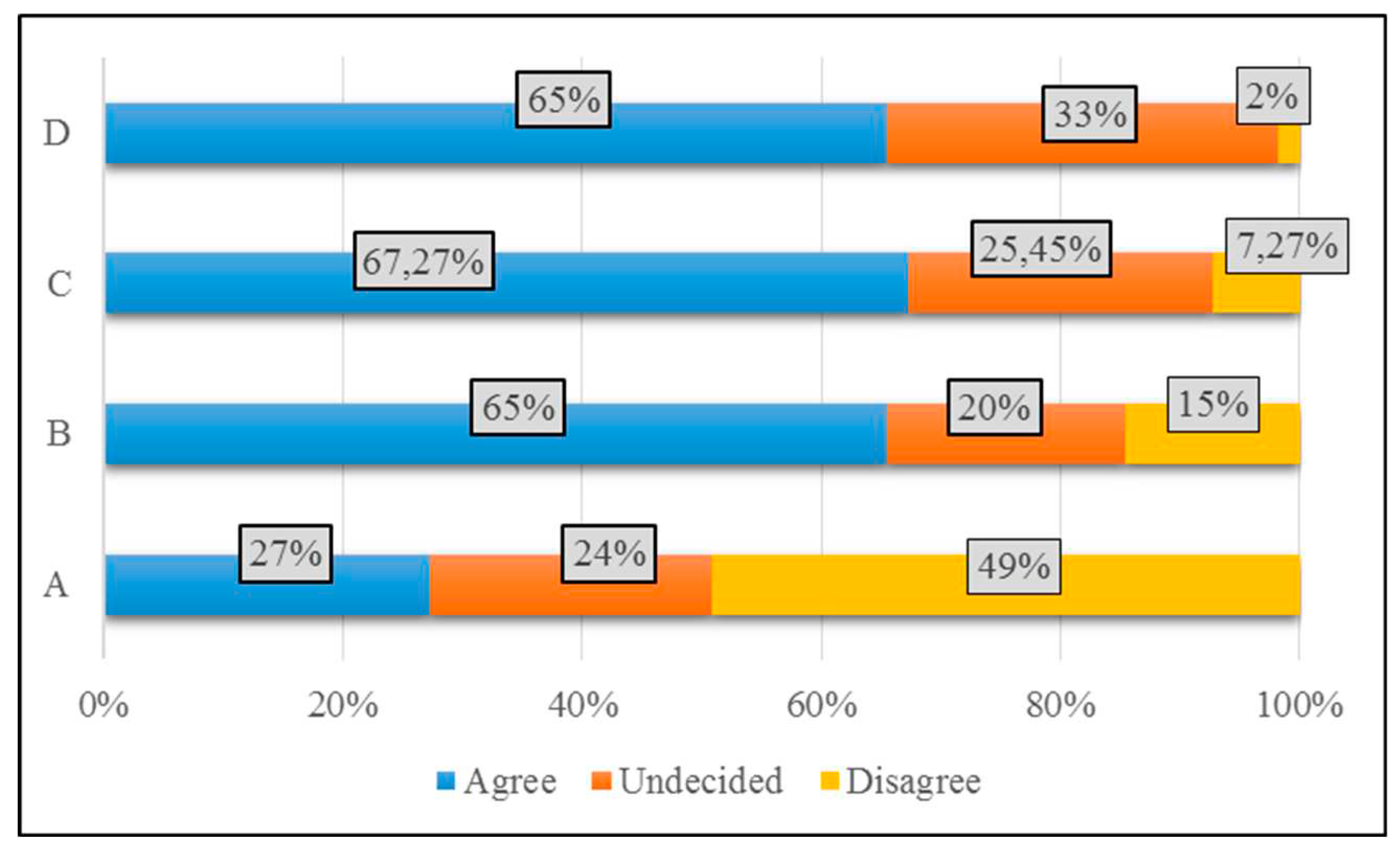
Figure 3.
Distribution of teachers' opinions on the contributions of teaching the concept of "biodiversity" in the school curricula.
Figure 3.
Distribution of teachers' opinions on the contributions of teaching the concept of "biodiversity" in the school curricula.
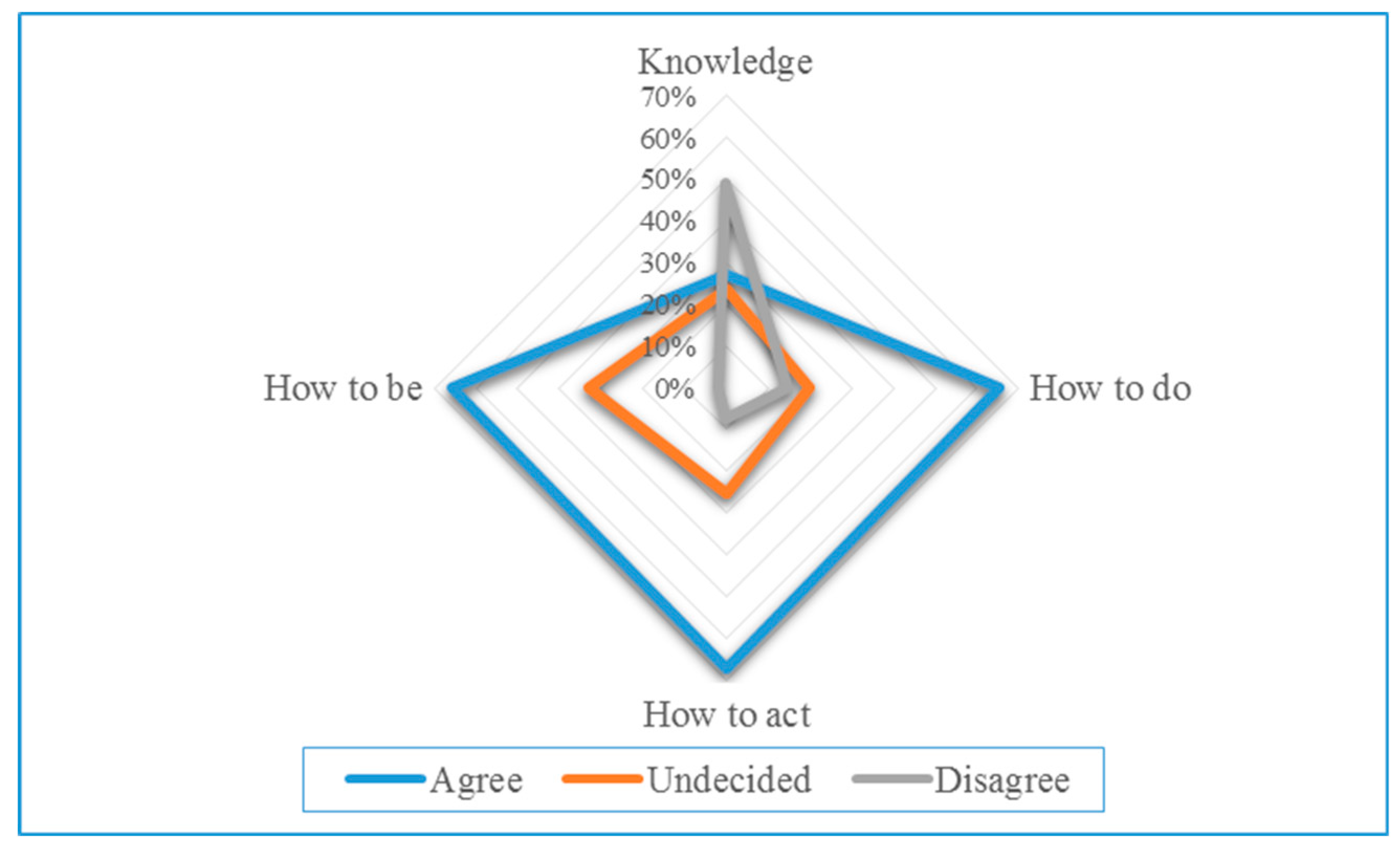
Figure 4.
The main framework of reference values that frame the educational practices of biodiversity teaching according to the opinions of the surveyed teachers. A’: The consideration of biodiversity education as a way for the development and personal well-being of the student; B’: The acquisition of knowledge related to the preservation of biodiversity for the change of student’s behavior; C’: Critical thinking training to make students reflect on the concept of biodiversity through debate and discussion.
Figure 4.
The main framework of reference values that frame the educational practices of biodiversity teaching according to the opinions of the surveyed teachers. A’: The consideration of biodiversity education as a way for the development and personal well-being of the student; B’: The acquisition of knowledge related to the preservation of biodiversity for the change of student’s behavior; C’: Critical thinking training to make students reflect on the concept of biodiversity through debate and discussion.
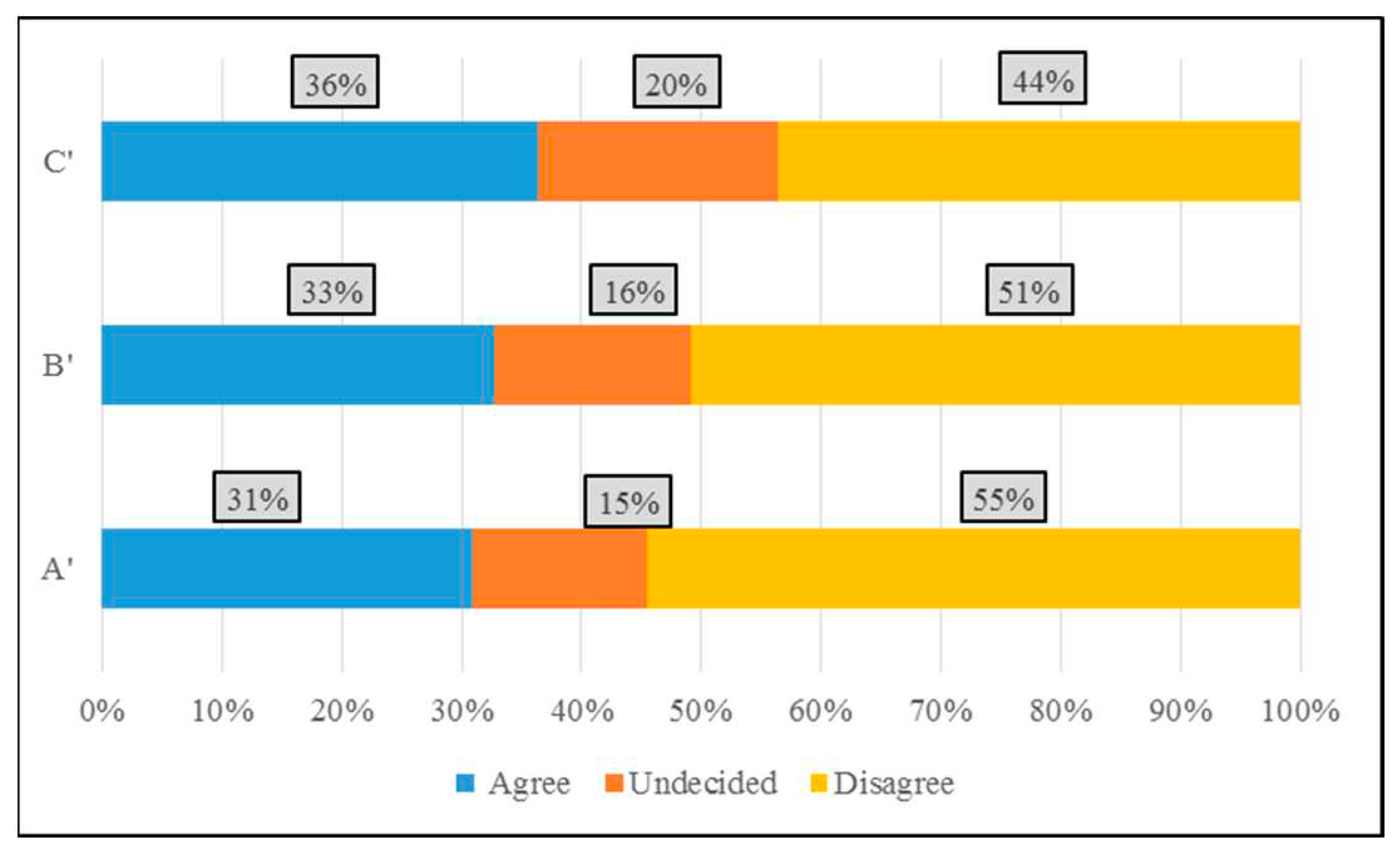
Figure 5.
Main educational activities that frame the educational practices of teaching biodiversity of the surveyed teachers. A": Classroom activities; B": Research projects outside the classroom space; C": Participation of students in extracurricular activities related to the school project; D": Student participation in extracurricular activities in school clubs.
Figure 5.
Main educational activities that frame the educational practices of teaching biodiversity of the surveyed teachers. A": Classroom activities; B": Research projects outside the classroom space; C": Participation of students in extracurricular activities related to the school project; D": Student participation in extracurricular activities in school clubs.
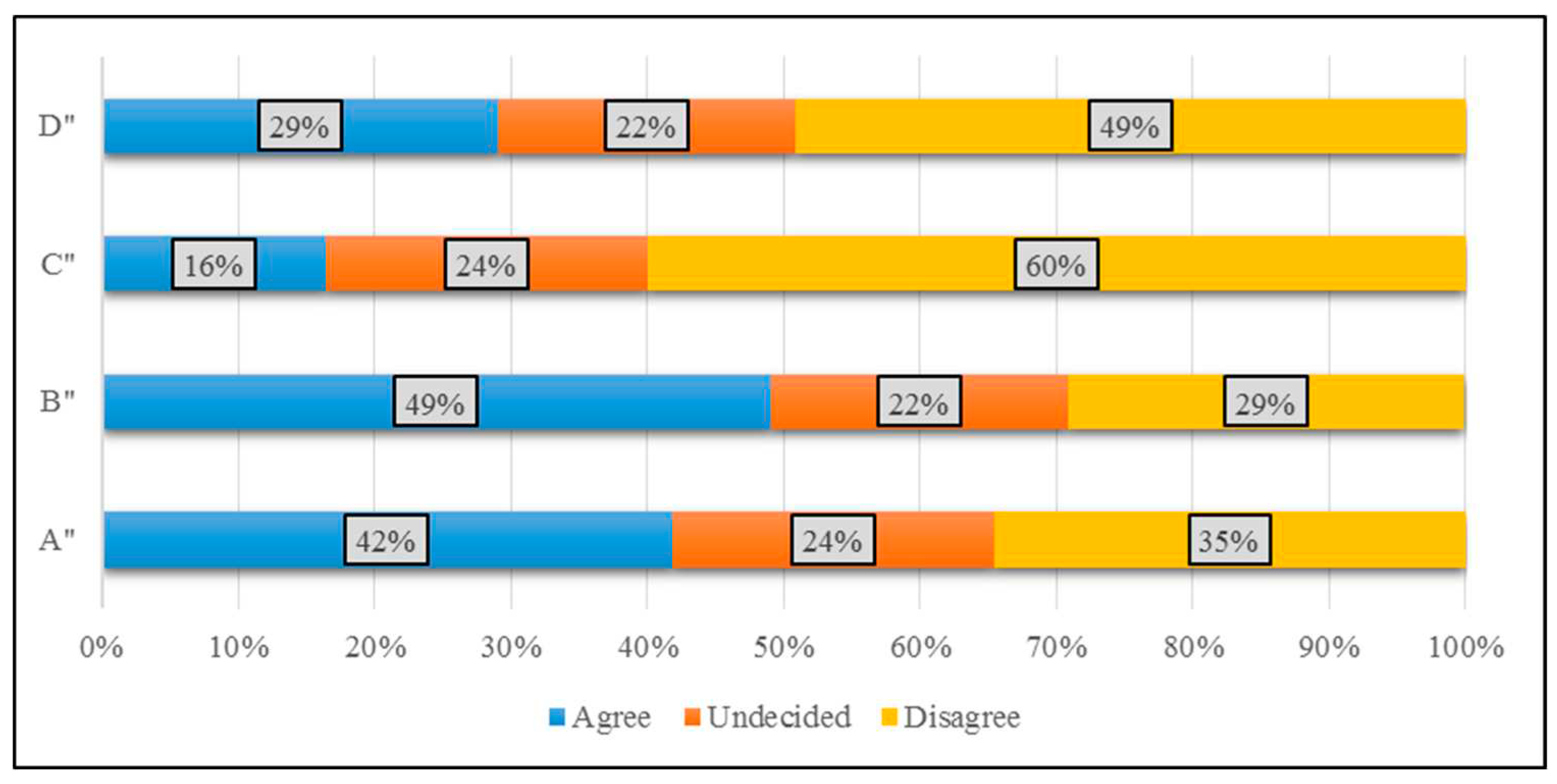
Figure 6.
Radar analysis of the modalities of responses of surveyed teachers about the methods recommended to teach the concept of biodiversity.
Figure 6.
Radar analysis of the modalities of responses of surveyed teachers about the methods recommended to teach the concept of biodiversity.
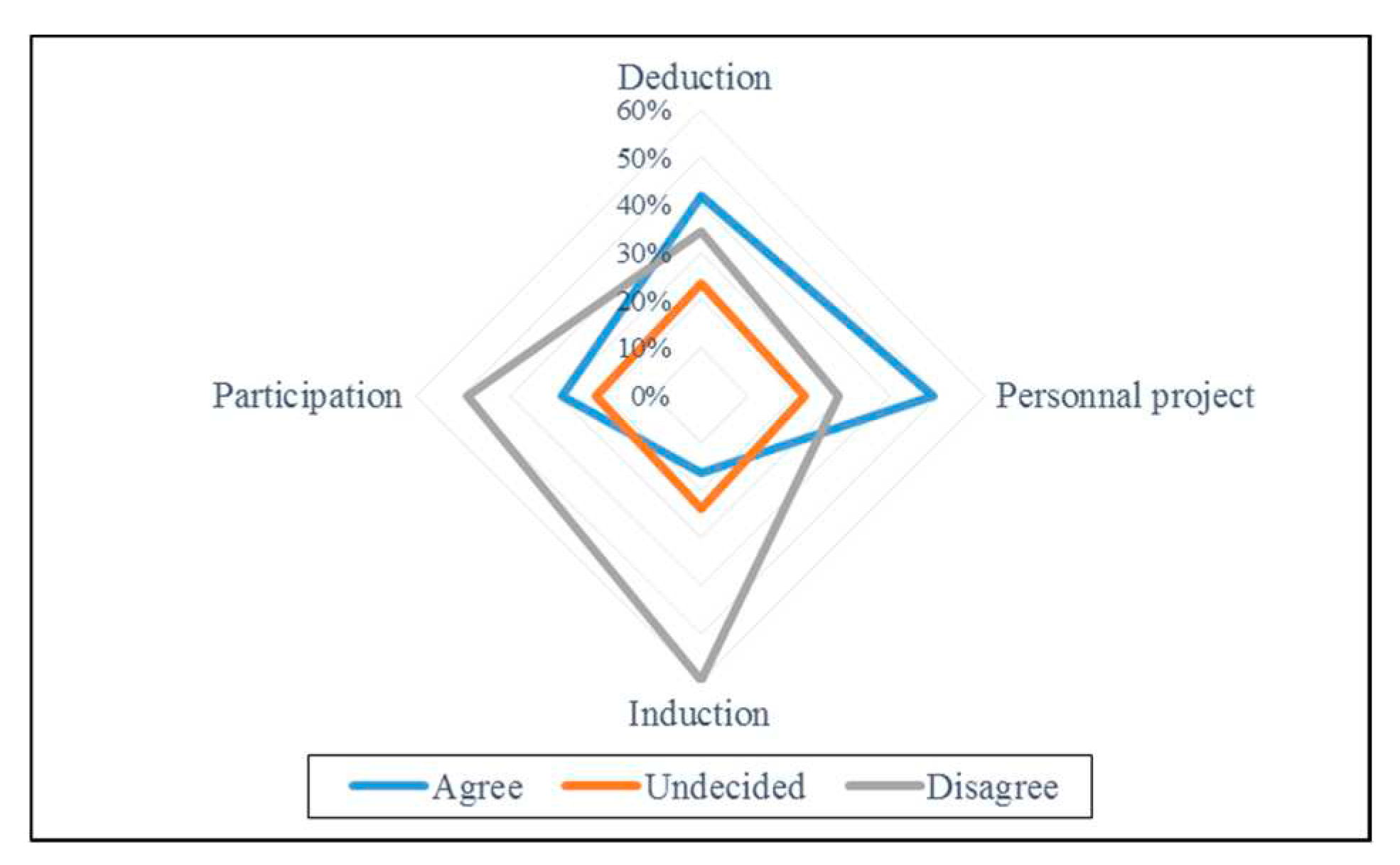
Figure 7.
Barometer of the different methods of respondents' responses to the conception attributed to biodiversity with their professional experience.
Figure 7.
Barometer of the different methods of respondents' responses to the conception attributed to biodiversity with their professional experience.
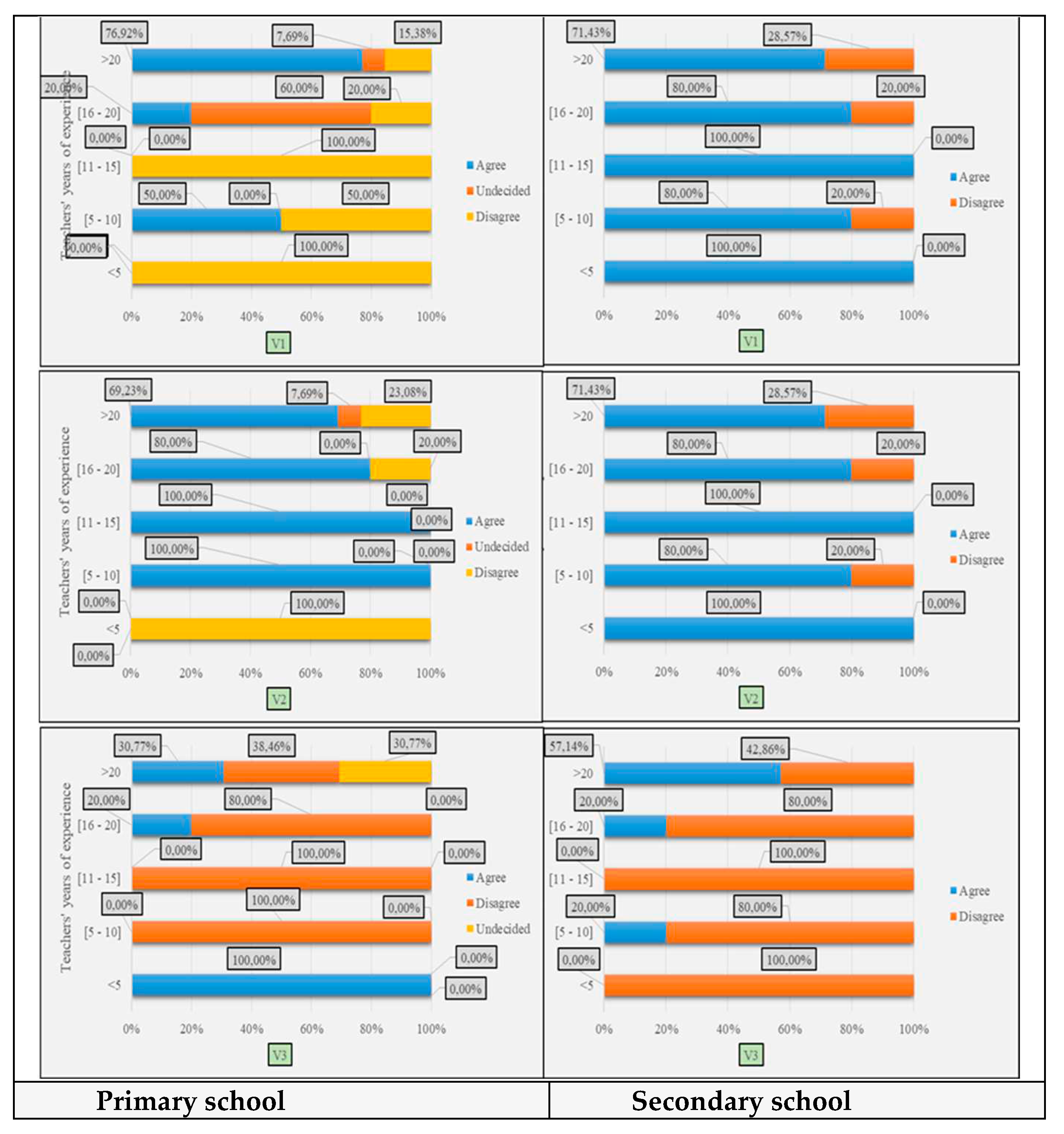

Table 1.
Main socio-professional characteristics of the survey population.
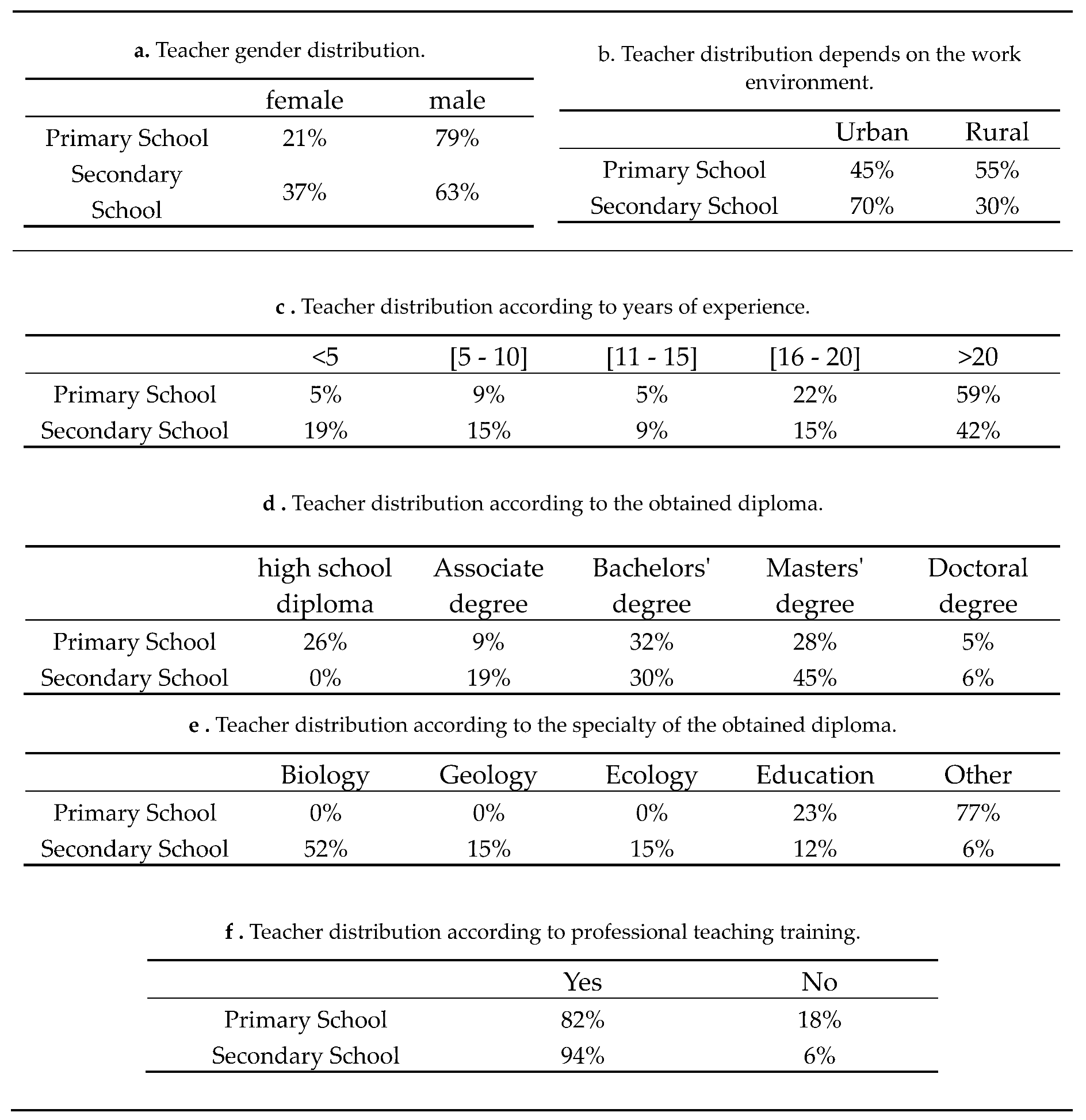 |
Table 2.
Average values of the respondents' response methods to different proposals for the definition of biodiversity.
Table 2.
Average values of the respondents' response methods to different proposals for the definition of biodiversity.
| Categories of respondents | Average Value (Primary school) | Average value (Secondary school) |
|---|---|---|
| V1 | 2.36 | 2.60 |
| V2 | 2.54 | 2.55 |
| V3 | 1.72 | 1.51 |
Disclaimer/Publisher’s Note: The statements, opinions and data contained in all publications are solely those of the individual author(s) and contributor(s) and not of MDPI and/or the editor(s). MDPI and/or the editor(s) disclaim responsibility for any injury to people or property resulting from any ideas, methods, instructions or products referred to in the content. |
© 2023 by the authors. Licensee MDPI, Basel, Switzerland. This article is an open access article distributed under the terms and conditions of the Creative Commons Attribution (CC BY) license (http://creativecommons.org/licenses/by/4.0/).
Copyright: This open access article is published under a Creative Commons CC BY 4.0 license, which permit the free download, distribution, and reuse, provided that the author and preprint are cited in any reuse.


