

Submitted:
28 August 2023
Posted:
31 August 2023
You are already at the latest version
Abstract
The paper discusses the experience of implementing an efficient economic management system at the University of Vigo in Spain. This system, which focuses on managing secondments, aims to minimize bureaucracy and standardize economic procedures for various staff groups. By adopting a qualitative methodology and utilizing content analysis, the study compares the University of Vigo's fully digital administrative procedure with other universities in the CRUE network. The results show significant time and cost savings due to this implementation. The improved traceability and information for users support the administrative change, and the positive environmental impacts highlight the commitment to a more sustainable approach. The paper's originality lies in demonstrating how this approach enhances efficiency, reduces costs, and improves sustainability within a Spanish public administration setting.
Keywords:
Administrative bureaucracy
; per diems
; financial management
; environmental sustainability
; public universities
; e-government
; travel expenses
1. Introduction
The convergence of digital administration and sustainability represents a pivotal juncture in modern governance. Through the integration of digital technologies and sustainable practices, governments and organizations can streamline operations, enhance transparency, and reduce their environmental footprint.
Digital administration involves the adoption of technology-driven solutions to manage various administrative tasks and processes. This includes digital document management, online service delivery, automation of routine procedures, and the use of data analytics for informed decision-making. By digitizing administrative workflows, inefficiencies can be minimized, leading to time and resource savings.
Sustainability, on the other hand, centers on responsible resource management to meet the needs of the present without compromising the needs of future generations. The incorporation of sustainable practices within digital administration involves strategies like energy-efficient data centers, paperless initiatives, remote work policies to reduce commuting, and the use of renewable energy sources.
The synergy between digital administration and sustainability is evident in several ways:
i) Paper Reduction: Digitalization eliminates or minimizes the need for paper-based documentation, ii) reducing deforestation and paper waste, iii) Energy Efficiency: Embracing digital processes can reduce the energy consumption associated with traditional administrative practices, iv) Remote Work: Digital tools enable remote work options, leading to decreased commuting, lower carbon emissions, and improved work-life balance, v) Data-Driven Insights: Digital platforms provide the means to collect and analyze data, facilitating informed decisions for sustainable policies and practices, vi) Transparency: Digital systems enhance transparency and accountability, contributing to better governance and sustainable development, vii) E-Government Services: Online service delivery reduces the need for physical infrastructure and travel, aligning with sustainable principles, viii) Waste Reduction: Minimized paper usage and optimized processes result in reduced waste generation, ix) Renewable Energy Integration: Digital infrastructure can be powered by renewable energy sources, aligning with sustainability goals and x) Innovation: The fusion of digital tools and sustainable practices encourages innovation in both realms, driving technological advancements and environmentally friendly solutions.
In this sense, the COVID-19 crisis has made a significant negative impact on global economic activity in 2020, and Europe is no exception. The European Union (EU) has launched the Next Generation EU program to mitigate the effects of the pandemic, boost economic growth and, ultimately, kick-start economic recovery in member states.
Over the next three years (2021-2023) Spain will receive transfers from the Next Generation EU program for a maximum amount of 71,604 million euros through two major investment instruments: the Recovery and Resilience Mechanism (RRM), which will gather up to 59,168 million euros, and the React-EU, which will represent an additional maximum amount of 12,436 million euros.
EC Member States are preparing national plans for the period 2021-2023, which must be consistent with country-specific recommendations and contribute to the green and digital transitions.
Specifically, the Spanish government has published the Recovery, Transformation and Resilience Plan, which represents “the European manna” that will put a country devastated by the crisis back on the road to recovery. Indeed, references to the need to “increase the efficiency of public spending and modernize the administration”, or to the promotion of “the quality and efficiency of public administrations and public services” are consistent throughout this document.
The exceptional situation generated by the Covid-19 pandemic has highlighted the urgency and opportunity to develop a digital administration that may respond to the needs of citizens in a more agile and effective manner. The challenge, therefore, lies in the capacity to develop quality digital public services for citizens, and businesses that are more inclusive, efficient, personalized, and proactive. Spanish public administrations have a heavy bureaucratic burden due to the intense control to which they are subject. The legislation applicable to each procedure is enormous given the procedural tradition of public bodies and the great risk of corruption in the management of public funds. It is important to highlight the work of (Klippel, 2019), which addresses several methodological issues focusing on why genuine methodological diversity is important and how it can be achieved, and (Rosenbloom and Gould, 2021) who present an overview of non-quantitative research in the field of law and public administration in the United States.
Such a challenge immediately encounters a hurdle that economists and institutional analysts in our country highlight day after day: the inadequacy of the Spanish public administration and its management system—especially its structures, processes and people—to face such a challenge. (Hidalgo, 2020) highlights the opportunity the funds represent for our economy. Yet he also alludes to an obvious management challenge, stating that the current architecture of the bureaucratic-administrative system clearly provides no capacity to efficiently manage such projects.
The following legislative initiatives have been launched in Spain:
Royal Decree for the modernization of the Public Administration and for the implementation of the Recovery Plan:
All applications will be centralized in a one-stop shop. This will not be used to tender European funds; each Ministry, Community or City Council will continue to be “entities” tenderers.
A mixed figure is created between State and companies: PERTES, whose financing details will be published in June 2021.
On 21 July 2020, the European Council agreed on a far-reaching package of measures that bring together the future reinforced Multiannual Financial Framework (MFF) for 2021-2027 and the launch of a European Recovery Instrument (“Next Generation EU”) worth EUR 750 billion in constant 2018 prices.
This European Recovery Instrument, which will involve approximately 140 billion euros in transfers and loans for Spain over the period 2021-26, is based on three pillars:
The adoption of instruments to support Member States’ efforts to recover, repair damage, and emerge stronger from the crisis.
The adoption of measures to boost private investment and support companies in difficulty.
The strengthening of key EU programs to learn the lessons of the crisis, make the single market stronger and more resilient, and accelerate the double green and digital transition.
The Spanish government has planned the Digital Spain 2025 agenda in an aim to boost connectivity and cybersecurity as well as the digital skills of society as a whole and disruptive innovation in the field of artificial intelligence while also digitizing the Administration and the productive fabric of Spain. Public administrations are undergoing a continuous process of modernization to adapt to current ongoing social and political changes.
The management and implementation of the projects linked to the Recovery, Transformation and Resilience Plan will increase the workload of Spanish public administrations, which will have to face this challenge with limited resources. This requires a strategic reflection on organization, processes, personnel management and digitalization.
In this regard, the Spanish government has approved Royal Decree-Law 36/2020 of 30 December, which approves urgent measures for the modernization of the Public Administration and the implementation of the Recovery, Transformation and Resilience Plan, articles 3 and 4 of which state:
Article 3. Management principles.
For a better management of the services and the execution of the actions entrusted to them and, in particular, for the effective implementation and achievement of objectives linked to the projects assigned within the framework of the Recovery, Transformation and Resilience Plan, the Public Administrations shall respect the principles of good management:
Agility, speed, simplicity and clarity in procedures, processes and execution of tasks.
e) Effective public expenditure control, management responsibility and accountability.
Article 4. Management guidelines.
For the effective management of the projects linked to the Recovery, Transformation and Resilience Plan, the responsible bodies will adopt the following guidelines within the framework of their competencies:
f) Analyze the management objectives for which they are responsible and the resources available for their fulfilment.
g) Innovate in the search for solutions for sustainable management.
h) Promote digital transformation.
Once modernization in public management has been confirmed as a clear objective of European and national policies, it will be of vital importance within the Higher Education sector, as pointed out by (Mehaffy, 2012). On the other hand, (Figaredo, 2016) pointed out that while universities take years to introduce new technologies and management procedures, they have yet to respond adequately to the structural change demanded by the digital model characterized by high connectivity and hybridization of the physical and the technological.
The university is no stranger to this digital transformation, but it is necessary to point out and perhaps insist—given the resistance to change—that the adoption of a digital strategy is much more than the incorporation and regular use of the Internet and digital media. (Lorens and Fernández, 2018) point out as a fundamental characteristic of this the capacity to change or create new strategic processes based on technological advances. Nowadays, new ICTs are a fundamental tool in the daily performance of university activity. No doubt the use of ICT has represented a change in the performance of academic life, in the processes and development of tasks, training, learning and teaching as well as the way to research and transfer results to society. Overall, these changes have come to be called digital innovation. Yet important as this step may be, it is still insufficient. (Cuervo, 2013) concludes that innovation cannot be understood solely on the basis of the use of information and communication technologies; it involves the integration of different disciplinary knowledge to manage knowledge based on the information to which one has access. (Ramírez-Montoya, 2020) indicates that the solidarity commitment of various sectors must support the challenges for the digital transformation and educational innovation of institutions. On the other hand, (Owen et al., 2006) points out that interaction between participants has been enriched thanks to the introduction of social software expanding the possibilities of communication, interaction and information between participants, and facilitating collaborative work generated within a virtual space. (Del Moral and Villalustre, 2008) focus on the fact that the real digital transformation, which can be implemented on the basis of prior digitization (the most basic technological needs already covered), requires focusing on the potential of technology to transform existing university processes or even create new, more efficient processes: to digitize is to use information technologies to offer more efficient solutions to existing needs. (Ramirez, 2011) argues that incorporating electronic media in administrative procedures highlights how these tools streamline administrative procedures by enhancing the principles underpinning them. (Vera Carretero, 2019) summarizes that the digitization of processes with the planning of any activity is executed more rapidly and is more accurate in all the hypotheses set out, thereby increasing the operability of the Unit.
In this respect, following the pandemic crisis with the digitization of the public administration as a whole, this crisis has also served to make all Spanish public universities realize that they lacked a digitization system in line with the new times. The rapid adaptation of these institutions has put the spotlight on the immediate need to improve these systems. (Arístegui, J.L., 2019) confirms this need in terms of public procurement.
In this sense, in the Spanish Higher Education System, the research staff of public universities manage a large amount of funds dedicated to R&D, namely 15,572 million euros in 2019, which represents an increase of 4.2% over the previous year and 1.25% of the Gross Domestic Product (GDP). These funds come from different calls for research grants financed by regional, national and European bodies.
One of the aspects that cause a high bureaucratic burden in the management of files is the requirement established in Law 38/2003, of 17 November, General Law on Subsidies, which specifies the form and documentation required by the funding body to justify the use of funds.
Furthermore, the Spanish government, through Royal Decree 641/2021 issued on July 27th, has taken steps to facilitate the modernization and digitalization of Spanish public universities as part of the broader Recovery, Transformation, and Resilience Plan. An impressive sum of €76,850,000 has been earmarked to support these universities in their efforts to streamline processes through digitalization projects.
In a noteworthy development, after more than two decades without adjustments, the significance of this initiative becomes even more apparent. This is due to the recent approval of Order HFP/792/2023 on July 12th, which revises the allowances and allocations for travel expenses within the framework of the Personal Income Tax. This revision underscores the research’s relevance, as it reflects the growing interest in the field, exemplified by the increased funding for travel-related costs.
All these regulations applicable to public administrations, together with the guaranteeing profile of the procedures defined to comply with these regulations, result in an excess of bureaucracy, where the guaranteeing procedure takes precedence over the final objective, thus leaving economic concepts such as efficiency and proportionality to one side in management decisions.
(Cosenz, 2014) demonstrates that the purely guarantee-based model is only one of several models; the objective should be the provision of public services and the procedure should serve to achieve this in the best possible way.
(Thompson, 1965) asserts that conditions within the bureaucracy are determined by a drive for productivity and control, but they are inappropriate for creativity. Suggestions are made to modify the bureaucratic structure in order to increase innovation. These include greater professionalization, a looser and more uncluttered structure, decentralization, freer communications, organization of projects wherever possible, rotation of assignments, greater reliance on group processes, attempts at continuous restructuring, modification of the incentive system, and changes in many management practices.
Regarding sustainability, one kilogram of office paper results in the emission of 3.3 kilograms of CO2 into the atmosphere (Source: Docusign, September 23, 2021). This implies that each package of 500 sheets, weighing 2.5 kilograms, would contribute to an emission of 8.25 kilograms of CO2 into the atmosphere. This scientific article also aims to analyze the advantages of digitizing administrative procedures in terms of sustainability and its direct impact on CO2 emissions into the atmosphere. All public administrations, including universities, consume a significant amount of office paper due to their administrative processes and the bureaucracy inherent in the Spanish public system.
This justification is the focus of this research because it burdens research personnel with administrative and bureaucratic to such an extent that it often leads to inefficiency in knowledge management.
Based on these conclusions, we propose an analysis and demonstrate with our results that it is possible to minimize administrative bureaucracy. This will lead to a series of direct benefits, such as economic savings, time savings, lower personnel costs, and in turn an increase in productivity and the efficient achievement of the final objective: increased research and knowledge. In terms of sustainability, the conclusions of this analysis indicate that remarkable results are achieved, with emissions reductions of 95%.
We deal with the practical case of the Compensation for service commissions, commonly known as “per diems”. This field has been chosen because it applies equally to all Spanish public administrations. In public universities this presents particularities that make management all the more complicated. The disparity of trips derived from the lack of definition of the concept of research itself makes the procedure even more complex and clearly distorts the final objective—which is to increase knowledge through research—by increasing the obstacles in managing allowances for service commissions through excessive bureaucracy.
This article examines the situation regarding regulations and administrative procedures in Spanish universities. In our opinion, the emphasis on digitization for the elimination of administrative bureaucracy is very relevant. From what we seen in the current diverse bibliography, many authors relate the benefits of digitalization, but no practical analysis seems to clearly detail a real example of procedure simplification common to all universities, as well as the cost and time savings that can be achieved through clear decisions concerning the digitalization and standardization of procedures. Furthermore, the experience under analysis can be extrapolated to any Spanish public administration, which highlights the great qualitative and quantitative leap forward represented by this research that could be put into practice in all national public administrations.
Methodology
A descriptive qualitative study was performed using the technique of content analysis along the lines of (Noguero, 2011), (López, 2011) and (Aigneren, 2009).
The results were compared with the 100% digital administrative procedure implemented at the University of Vigo with the rest of the CRUE universities.
The volume of office paper consumed at the University of Vigo during this digitalization process has also been compared to quantitatively assess the environmental impact and sustainability improvement. For this purpose, the University of Vigo’s social responsibility report has been utilized, which includes a specific analysis of office paper consumption. This consumption directly impacts the CO2 emissions of public institutions and has a direct relevance to the case at hand.
Definitions
Royal Decree 462/2002 of 24 May 2002 on compensation for reasons of service applies to all public administrations, including public universities.
The terms used are:
Form: standard templates for the processing of service-related expenses, in Word, Excel, … formats.
Own regulations: internal regulatory development of each university based on RD 462/2002.
Subsistence allowance management software: software that monitors and calculates the allowance for service.
Paper consumption: office paper in DIN A4 format, 80gsm.
Content analysis technique applied to the University of Vigo
In order to carry out this study, we have compared the forms and methodologies used by all Spanish Public Universities and the change of procedure carried out at the University of Vigo towards the digitalization of the application process, processing and payment of allowances for secondment and per diems. To this end, we have looked the websites of all the Spanish Universities of the CRUE (Conference of Rectors of Spanish Universities) (https://www.crue.org/universidades/) to check for the presence of automation vs. a continued use of paper/Excel forms by management procedures to process service allowance expenses (per diems).
A survey was used to gather data on decisions and ways of dealing with secondments to other universities by inquiring whether:
they had developed their own regulations for the application of the processing of severance pay.
they had any kind of IT tool or software for the processing of expenses associated with service-related allowances.
they had a single form for the whole university or left it up to the staff to freely submit their expenses?
Processing of secondment allowances
Spanish public universities offer different alternatives for the financial management and processing of allowances for secondments:
Drawing up secondment allowances on paper: this is the option chosen by most Universities because it is the easiest way to share this administrative task between administration and services staff and teaching and research staff. This option presents the following bureaucratic problems:
It requires manual control over commissioners and their link to projects.
High turnover of documentation given that everything is paper-based.
Problems in archiving and consulting documentation in the event of subsequent audits.
The distances to be covered by own vehicle mileage require manual case by case consultation.
The amounts of meals per country must be consulted for each route in the Annex to RD 462/2002.
The receipts justifying the expenses to be compensated are erased or lose quality with the passage of time.
Delay in paying commissioners their settlements.
Developing a computer application to facilitate the processing and management of secondment allowances, helps to minimize bureaucracy, automate checks on seconded staff, automate the amounts to be applied in settlements and serves as an electronic archive of all supporting documentation for secondment settlements.
Figure 1 reflects the analysis of the websites of the 71 universities associated with CRUE reveals that most of the universities use paper format, and a very high percentage of them have no information on their websites concerning this procedure. The absence of documentation on their websites implies that the process has not been digitized.
Figure 2 shows the results of the survey distributed by the University of Vigo through the CRUE to Spanish public universities. As may be seen, 88.89% of the surveyed public universities have developed their own regulations for the processing of secondments.
However, 54.17% of public universities have no software for the creation, management and processing of allowances for secondments; 30.70% of which have a single form while the rest have multiple formats for processing allowances within their own organization. This implies that over half of the Spanish public universities process all their travel expenses manually using paper forms. This option results in the following consequences:
Delay in the processing of expenditure.
Different procedures within the same university.
Staff typing data for subsequent accounting processing without adding value to the process.
Obligation to manual file documentation.
It allows for no data exploitation for future consultation; it slows down and bureaucratizes the justification of expenditure to research funding bodies.
Discretion in the processing of expenses depending on the person analyzing the justification for the expenses.
High management costs: personnel costs, office material costs, opportunity/time costs, …
In contrast to the evidence presented by almost the entire university system in our country, the option chosen by the University of Vigo was to develop a tool to facilitate the creation, processing and accounting of compensation for secondments that meets the following objectives:
Standardize the formats of service commission settlements as each user previously used a different Word format in each area.
Automatic calculation of the kilometers to be applied between the origin and destination of each secondment. It was decided to use an automatic web query tool from Google Maps.
Automatic calculation of the amounts to be applied in each country.
Control of the seconded person at the time of secondment.
Digital archiving of receipts and expenses in support of the payment of allowances for secondment.
Digital file of supporting documentation justifying the reason for the secondment.
Automatic generation of the Excel report required by the Ministry of Innovation, Science and Universities to justify subsidies.
Automatic posting of the settlement for secondments in the computerized economic management application.
Thanks to this development, the total time involved in the creation, authorization, processing, accounting and payment of secondment allowances, as well as the electronic archiving of supporting documentation, has been greatly reduced. As expressed by (Humberto Muñoz, 2019), a bureaucracy supporting the management of an institution requires—again in the terms of (Weber, 2008)—precision to calculate, for instance, the time it takes a procedure to provoke confidence in the public enforcing it. Bureaucracy is all about making the means (its work) consistent with institutional objectives. In other words, it must be effective and efficient as well as agile in the handling of procedures important to the operation of an institution, which provides certainty, credibility and even legitimacy. Bureaucracy should sustain intended achievements.
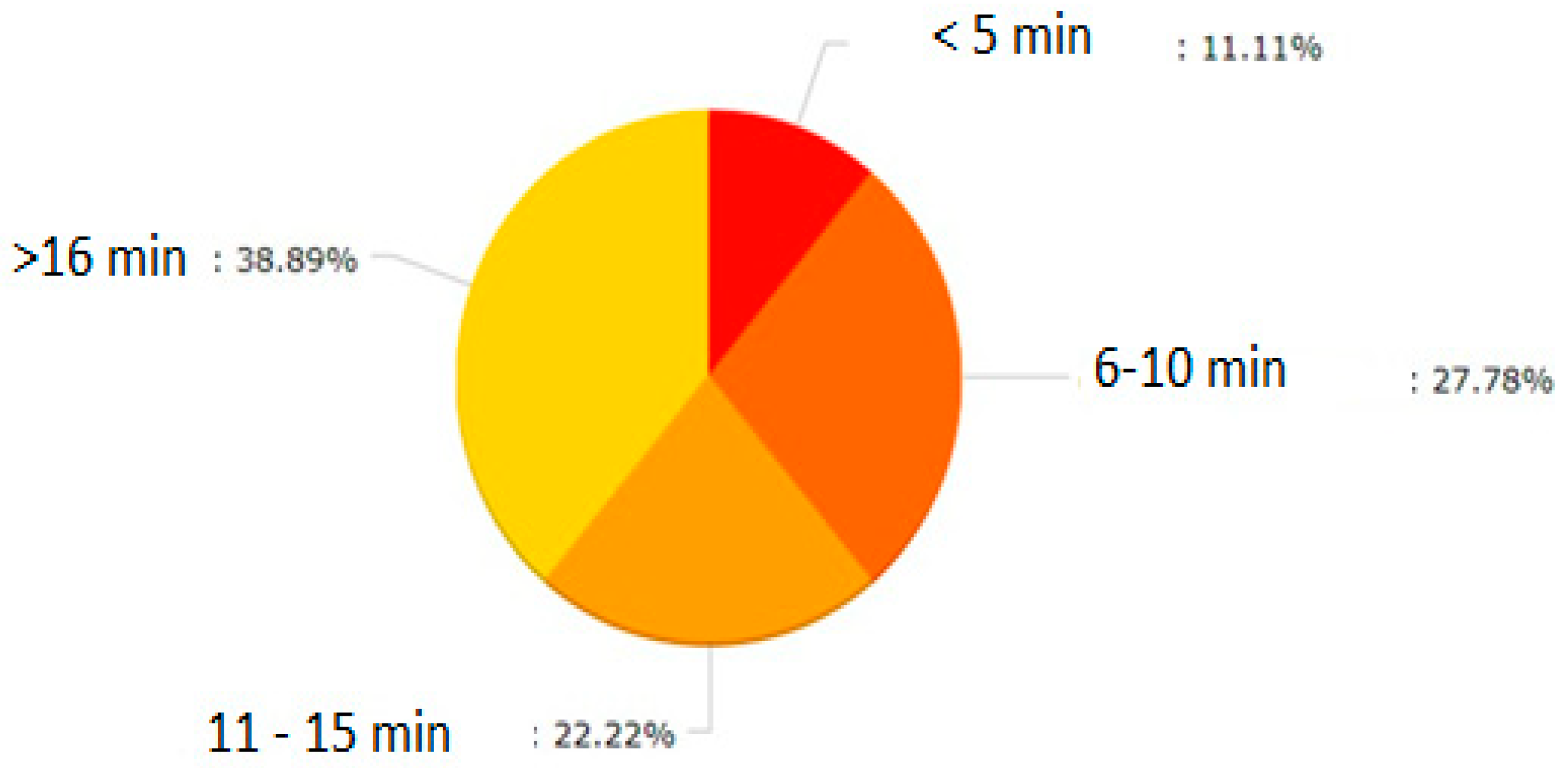
However, as may be seen in Figure 3, the survey of Spanish public universities shows that 66% continue to file expense vouchers for secondments on paper and 38.89% take more than 16 minutes or even up to an hour to prepare and process a secondment or per diem allowance. In the case of the University of Vigo it takes less than 5 minutes to process and pay a secondment allowance thanks to the developed system,
As for the generation of the Excel reports required by the Ministry for the justification of travel expenses in research grants, 77.78% of them must be filled in by hand by in- house staff. This increases the number of hours applied to the financial justification of research grants and increases the number of errors. By contrast, at the University of Vigo this process is automatic and can be downloaded by any user of the system in real time given that its automatic system creates the financial justification.
Results
This research work shows that the digitization of basic procedures reduces the level of internal bureaucracy in public organizations, eliminates obstacles, simplifies the procedure for all those involved, eliminates duplication of data, archives and minimizes management time to the fullest extent. As Ganga Contreras, Francisco points out, when bureaucracy becomes an end in itself and, concomitantly, those who exercise it do not have the competencies to assume their strategic role (with high standards of efficiency, effectiveness, speed and quality), the essence of the whole institution (the core) is affected, and the standards of excellence that should prevail in all our universities.is significantly damaged.
This new digital procedure for the processing of allowances for secondments or per diems can be extrapolated to any Spanish public administration. This means that any administration can greatly reduce the time for processing a per diem allowance, and make it considerably easier for the user to request with a small, clearly defined and tested development.
Description of operation:
When a user of the University of Vigo (administration and services staff or research teaching staff) needs to request expense processing for the compensation of service commissions (per diems), they will enter the service commissions program through their virtual secretary’s office.
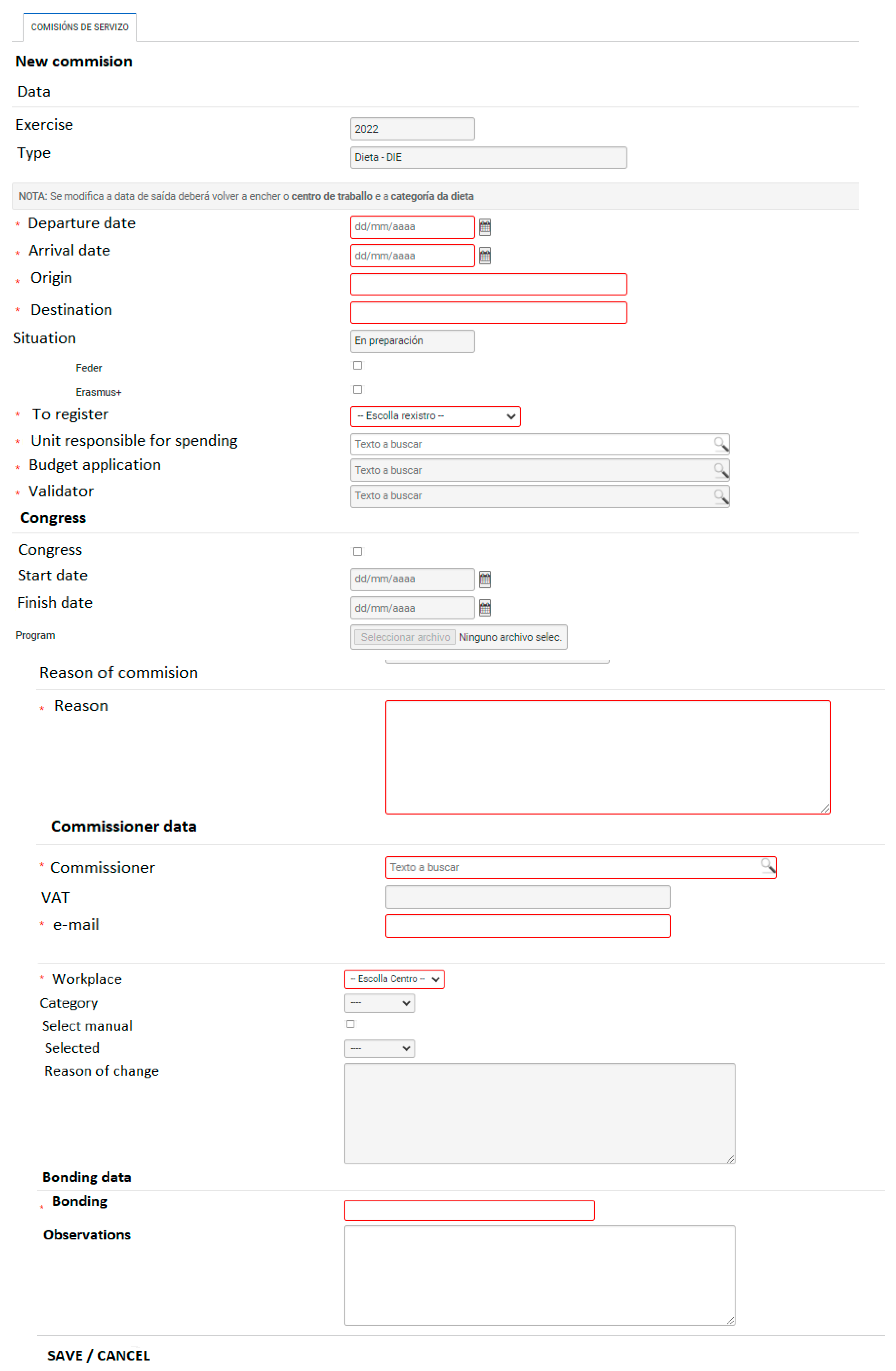
1st phase: Once inside the program, in the first Data tab, the applicant must fill in the following fields, as shown in the Ilustration 1:
Departure date
Arrival date
Origin: selecting a town of origin (the program autocompletes by searching for the town on Google Maps via a web service).
Destination: selecting a destination town (the program autocompletes by searching for the town on Google Maps via a web service).
Budgetary data: it will indicate the budgetary application that will support the expenses, whether they involve a research project, a faculty, a department, etc. The program proposes different options by means of a drop-down menu depending on the user.
Conference: if attending a conference, one is asked to provide the dates of the conference and attach the conference program (documentation required for research project grants).
Reason for the commission: the motivation for the trip must be justified.
Commissioner: data of the person traveling and the person bearing the expenses: The program through the ID card, or surname and name, imports the data on the corresponding labor category or appointment as a civil servant to subsequently apply the maximum daily amounts applicable according to the approved regulations.
Relationship with the commission: they must describe the basis on which they are making the trip, whether as the director of a center or faculty, researcher on a project, contracted researcher…
Ilustration 1.
Once this basic data has been provided, the user will have another tab called Detail to input/enter the expenses associated with Transport, Meals and Others.
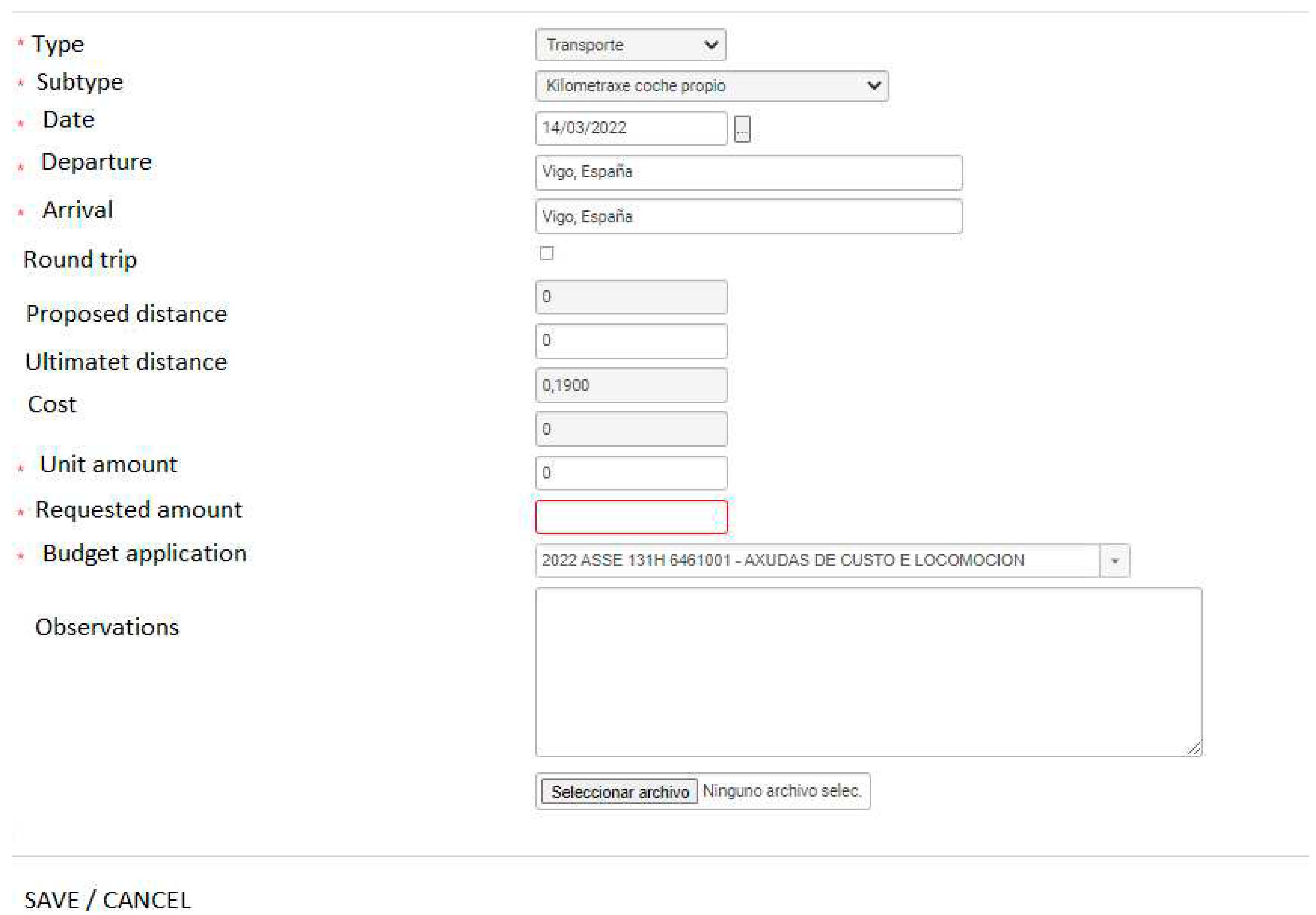
Transport: the user enters origin and destination (they usually coincide with the data tab, but intermediate stages may have been made). The program, through the web service with Google Maps, automatically calculates the kilometers and applies the established rate per kilometer depending on whether the travel has been made by car or motorbike, in accordance with the amounts approved in RD462/2002.
Ilustration 2.
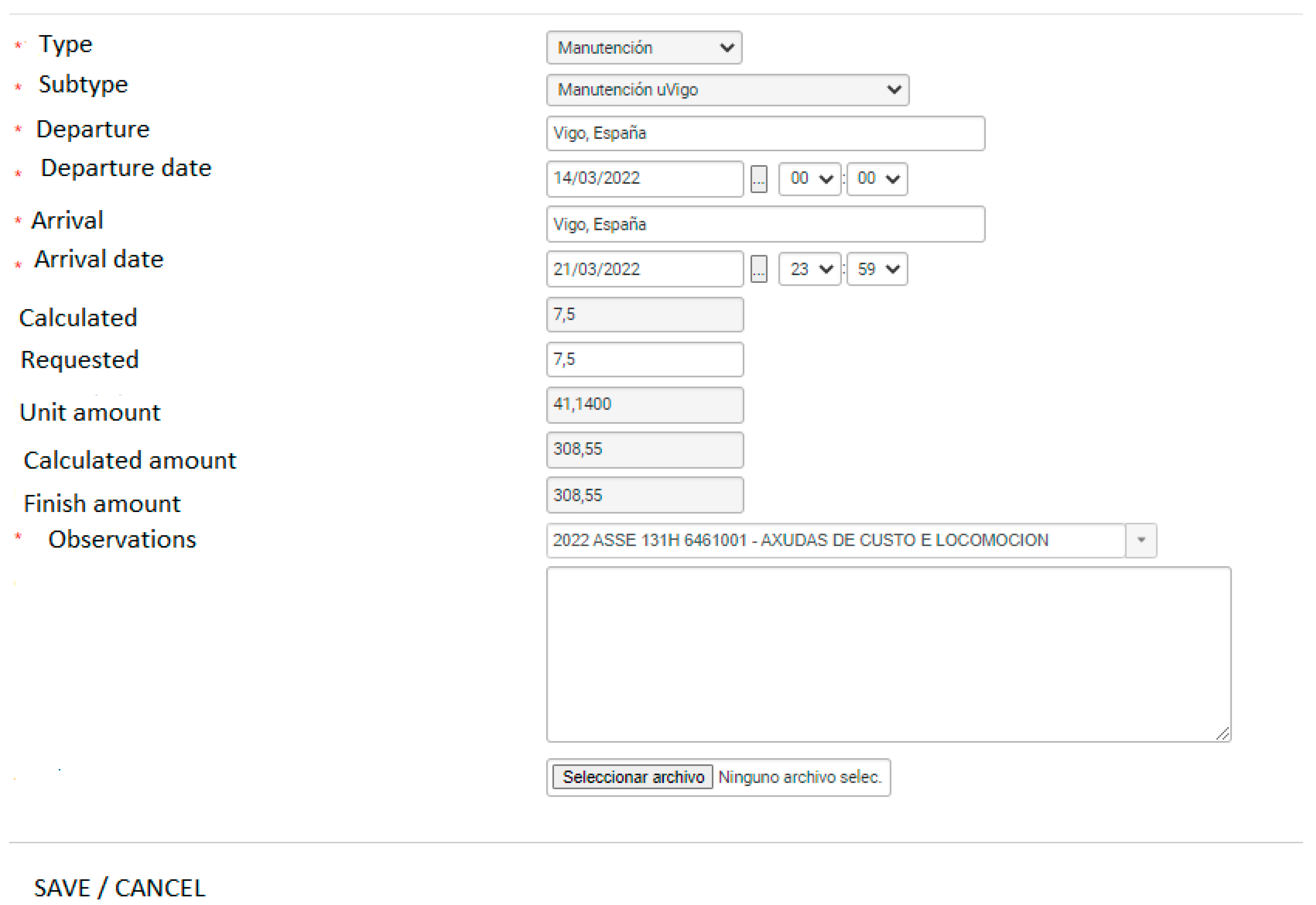
Meals: in this detail, the times of departure and arrival must be indicated in addition to the departure and destination cities. Based on this information and the preloaded criteria, the program calculates the number of per diems that correspond to the commissioner and applies the per diem amount of the country of destination approved in RD462/2002. Users who do not agree with the number of allowances calculated can modify it by justifying this modification (upwards or downwards) and this line of detail will be marked in red for its review by the person in economic affairs responsible for the final processing of the expense.
Ilustration 3.
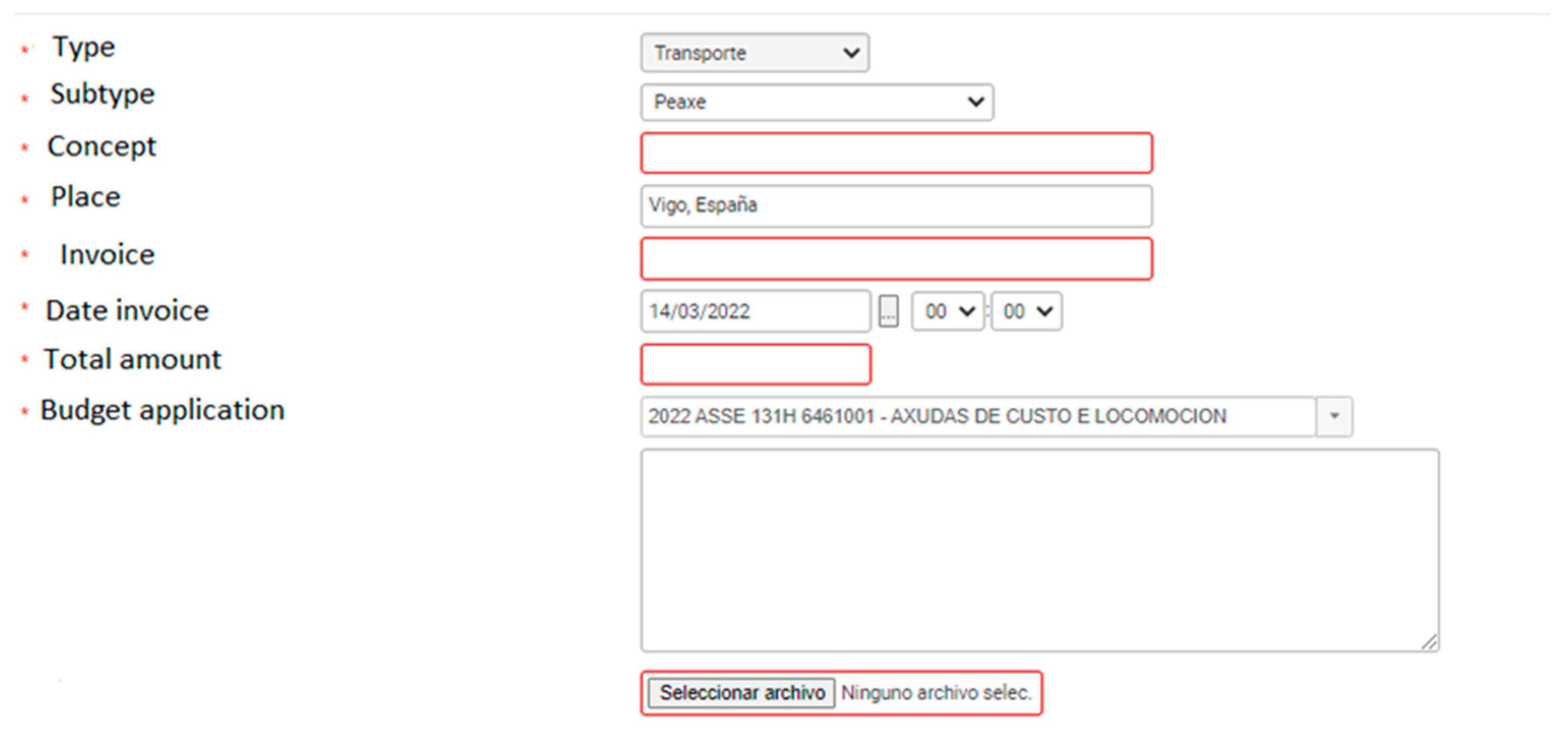
Others: in this detail, the user may request any expense other than those listed above, but the software will require the user to attach a receipts to justify said expense.
Ilustration 4.
The user will also have a tab to attach other types of documentation, such as certificates of attendance at congresses/conferences, requests for secondment, …
Once the service compensation has been created through the software itself, it will go through the following phases:
2nd phase: Authorization of the expenditure by the person in charge: Dean, vice-rector, administrator, …
3rd phase: Review and processing by economic affairs.
4th phase: User approval: the user will receive an email stating that the per diem has been processed and showing the definitive calculations so that the user can validate these expenses or, if applicable, indicate their discrepancies.
5th phase: Reconciliation and accounting document: in this phase, the person in charge of economic affairs in each area will automatically produce an accounting document by clicking only one button; the program will produce the ADO document (Ilustration 5) with the data indicated on the first phase forms.
Ilustration 5.
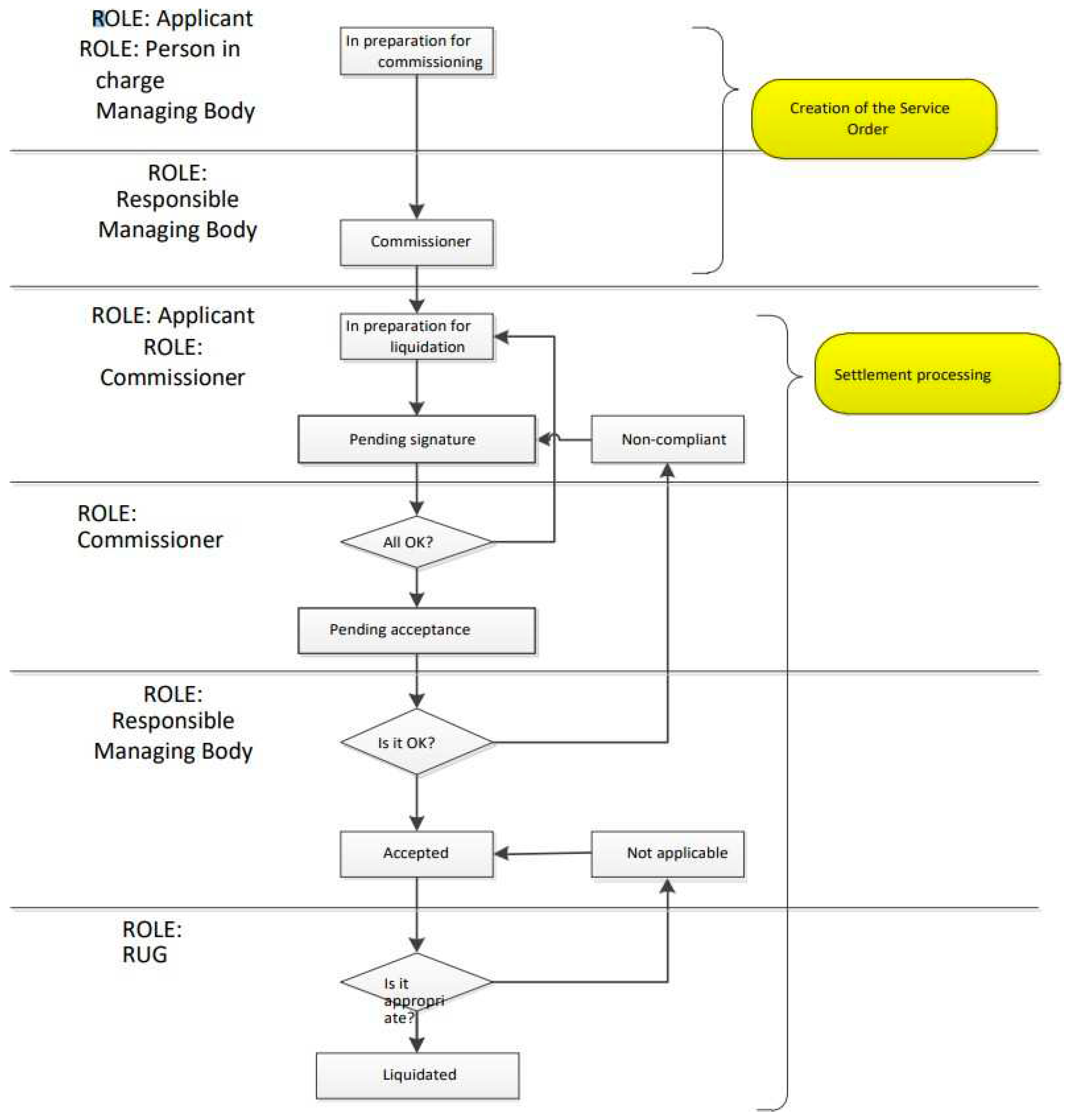
All the documentation is digitally attached to the secondment indemnity application itself, thus providing no need to print or file any kind of documentation. The digital format guarantees the integrity of the documentation, and the chance to consult without depending on manual files, thereby making them valid and verifiable for subsequent audits.
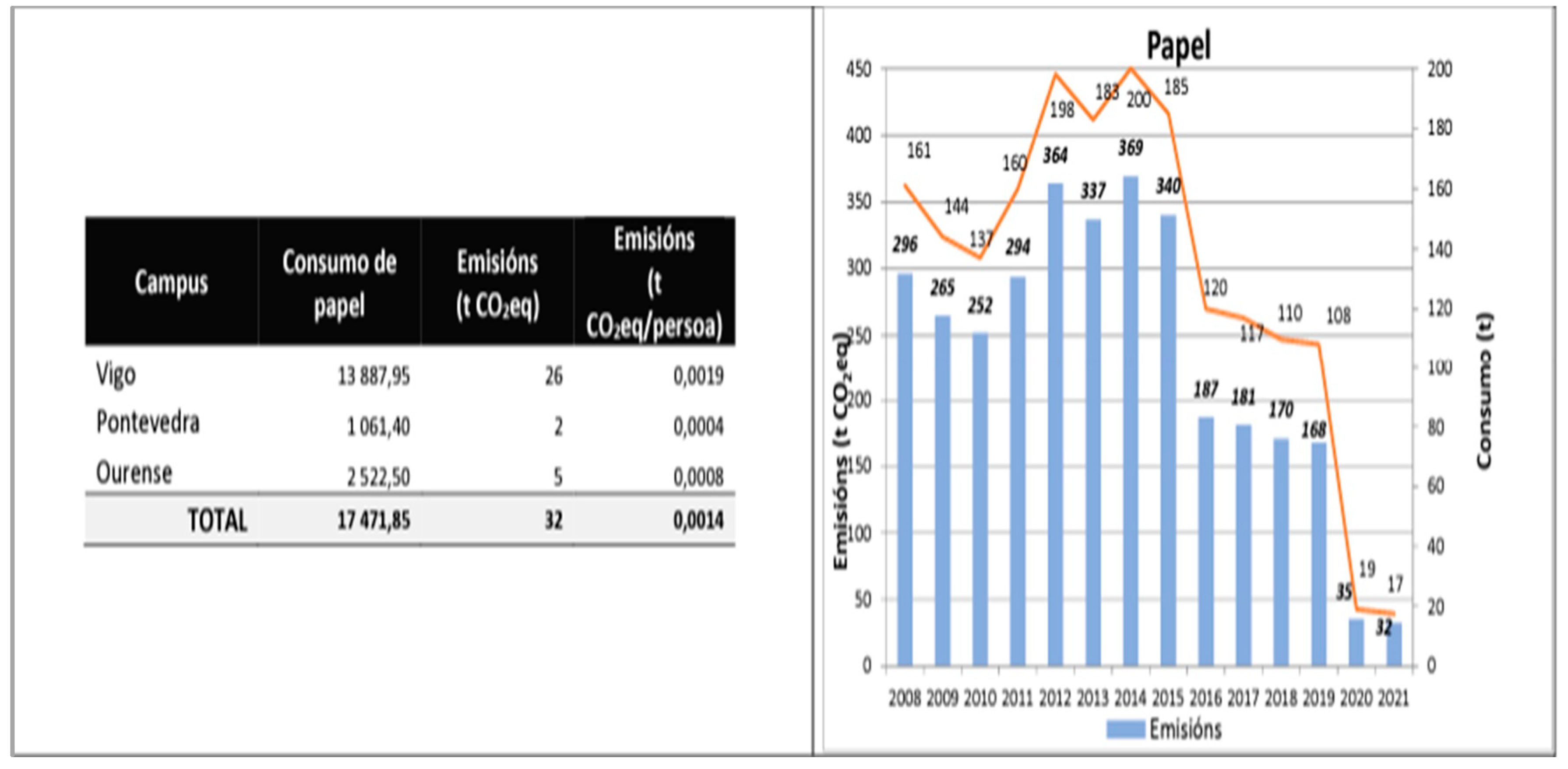
In terms of sustainability, according to data from the Office of Environmental Affairs (OMA) at the University of Vigo, this digitalization process has greatly benefited the university’s CO2 emissions. As depicted in the graph published on their website, prior to the initiation of administrative digitalization in the year 2015, approximately 340 tons of CO2 were being emitted into the atmosphere due to office paper consumption. This figure has gradually decreased thanks to the digitalization of administrative bureaucracy, as demonstrated in the case of travel allowances and service indemnities. By the year 2021, emissions were reduced to only 17 tons of CO2. This marks a remarkable 95% reduction in CO2 emissions from paper consumption, clearly highlighting that the administrative digitalization process not only benefits end-users, reduces time and personnel costs, and minimizes paper expenditure, but also significantly contributes to paper consumption reduction and thus CO2 emissions into the atmosphere. This, in turn, ensures the institution’s sustainability both environmentally and economically.
A procedure as described in this analysis could be directly applied to all Spanish public universities since the circumstances are identical. This would entail, in addition to the advantages of economic efficiency, time savings, traceability, and other mentioned benefits, a direct decrease in CO2 emissions from the Spanish university system. This could be achieved with a very low investment that would already offset environmental sustainability. The issue of bureaucracy within the Spanish university system also involves resistance to change, thus this new procedure outlined in this analysis should be mandated by higher authorities to achieve the goals within a short timeframe.
Figure 4.
Discussion
This article focuses on analyzing the specific case of per diem processing in public administrations and how digitizing the procedure achieves a drastic reduction in bureaucracy, that standardizes forms, minimizes processing times and eliminates paper filing.
Seeking to take advantage of change as an opportunity for improvement, the University of Vigo has adopted courageous measures that demand much more ambitious objectives from the organization itself than those minimally required by law. As indicated by Sole, F.; Llinas-Audet, X, difficulty in managing an increasingly complex organization is one of the reasons why strategic planning is necessary.
In this case, the aim is to prove that the new tool for the calculation and management of secondment allowances increases efficiency and effectiveness in administrative management.
The advantages of digitizing this procedure are that:
Forms are simplified because they are in web environments; they are auto-completable with drop-downs that facilitate completion by any user.
It allows the user to know, at all times, the process in which the management is being carried out.
The dependence on the official who processes the expenditure disappears, as a homogeneous system is implemented for the whole organization.
Processes are clear, assessed and controlled.
It permits traceability of the entire process, allowing bottlenecks to be detected and resolved.
It allows for the consultation of all supporting documentation and the procedure by any user at any time.
The documentation is not archived on paper and remains unalterable forever.
A multitude of automatic controls on the execution of expenditure allows users to prioritize management rather than mechanical work.
It permits the digital signature of documentation.
It allows teleworking.
The cost is low cost because it is based on free software.
It permits the full digital traceability of all procedures.
Reduces office paper consumption
Greatly reduces the environmental impact of the institution’s financial management
ñ) Reduces direct CO2 emissions into the atmosphere
Therefore, the result clearly indicates that its presence in public universities, and in this case that of any public administration, helps to greatly reduce the administrative bureaucracy of the economic procedures associated with the processing of per diems.
This way of reducing bureaucracy should be collaborative among the different public administrations in order to improve the efficiency of the public system. (Valcarcel, 2019) already indicated such cross-cutting advantages of working together in similar areas such as public procurement given that joint or collaborative public procurement may bring relevant advantages and contribute to maximizing the efficiency of public purchasing power to achieve better and more powerful innovation.
Conclusions
This study underscores the transformative impact of digitizing basic procedures within public organizations, particularly in the context of per diem processing. The findings reveal that such digitization leads to a significant reduction in internal bureaucracy, streamlining processes, eliminating redundancies, and ultimately enhancing the overall efficiency and effectiveness of administrative management.
The operational description of the procedure outlines a user-friendly and comprehensive process, from initial data input to final documentation. The steps involved in creating, authorizing, reviewing, and approving service compensation through the software ensure a transparent, traceable, and accountable workflow. The integration of documentation within the digital platform eliminates the need for physical copies, bolstering data integrity and facilitating audit trails.
Furthermore, the study highlights the significant environmental benefits stemming from administrative digitalization. The University of Vigo’s case demonstrates a remarkable reduction in CO2 emissions, primarily attributed to the decreased consumption of paper through the digitization process. This sustainability achievement resonates both environmentally and economically, underlining the positive contributions of such digitization initiatives to institutions’ long-term viability.
The study’s broader implications extend to the entire Spanish public university system, with potential for positive impact on bureaucracy reduction and environmental sustainability. The advantages of digitization, as elucidated in the discussion, encompass streamlined processes, enhanced visibility, improved traceability, and lowered administrative burdens. Moreover, the low-cost nature of the digital platform, coupled with its potential for digital signatures and teleworking, positions it as a pragmatic solution for modern administrative challenges.
In conclusion, this research underscores the transformative potential of digitization in addressing administrative challenges within public organizations. The presented procedure not only enhances operational efficiency and user experience but also contributes to the broader goals of sustainability and collaboration within the public sector. As such, this study advocates for the widespread adoption of such digitization initiatives across public administrations to achieve a more streamlined, accountable, and environmentally conscious system.
Acknowledgments
The authors would like to thank Patricia Varcalcel for their valuable comments and suggestions, which have helped to considerably improve this paper. Martín-Moreno would like to acknowledge the financial support of the Spanish Government and Feder through grant PID2021-124015NB-I00.
Conflicts of Interest
The authors declare that they have no known competing financial interests or personal relationships that could have appeared to influence the work reported in this paper.
References
- Aigneren, M. Análisis de contenido. Una introducción. La Sociología En Sus Escenarios 2009, 3. Available online: https://revistas.udea.edu.co/index.php/ceo/article/view/1550.
- Amengual Antich, J. La implantación de un ERP para la gestión, contabilidad y control de la Administración pública. Gestión Y Análisis De Políticas Públicas 2021, 139–511. [Google Scholar] [CrossRef]
- Cosenz, F. A Dynamic Viewpoint to Design Performance Management Systems in Academic Institutions: Theory and Practice. International Journal of Public Administration 2014, 37, 955–969. [Google Scholar] [CrossRef]
- Cuervo, D.P.L.; Giraldo, D.I.P.; Ballesteros, E.P. Diseño de una innovación pedagógica para la formación en investigación apoyada en ambientes digitales. Revista Virtual Universidad Católica del Norte 2013, 40, 4–30. [Google Scholar]
- Rosenbloom, D.H.; Gould, J.B. Nonquantitative Research in Law and Public Administration: Approaches in the United States. Public Performance & Management Review 2021, 44, 1031–1051. [Google Scholar] [CrossRef]
- Del Moral, M.E.; Villalustre, L. Las wikis vertebradoras del trabajo colaborativo universitario a través de WebQuest. Revista Latinoamericana de Tecnología Educativa 2008, 7, 73–83. [Google Scholar]
- Domínguez Figaredo, D. La digitalización como factor de cambio en la educación superior (Digitization as Exchange Factor in Higher Education). Cuadernos Hispanoamericanos 2014, 769–770. [Google Scholar]
- Espín López, J. El análisis de contenido: una técnica para explorar y sistematizar información. En-clave pedagógica 2011, 4. [Google Scholar]
- Contreras, F.G. El Flipper burocrático en las universidades. Interciencia 2017, 42, 58–62. [Google Scholar]
- Yang, K. Methodologies Toward a New Era of Public Administration: Diversity and Advancement. Public Performance & Management Review 2021, 44, 961–974. [Google Scholar]
- Klippel, A.; Zhao, J.; Oprean, D.; Wallgrün, J.O.; Chang, J.S. Research Framework for Immersive Virtual Field Trips. In Proceedings of the 2019 IEEE Conference on Virtual Reality and 3D User Interfaces (VR) (2019); pp. 1612–1617.
- Muñoz, H. La burocracia universitaria. Revista de la educación superior 2019, 48, 73–96. [Google Scholar] [CrossRef]
- López Noguero, F. El análisis de contenido como método de investigación. En-clave pedagógica 2002, 4. [Google Scholar]
- Rosenbloom, D.H.; Gould, J.B. Nonquantitative Research in Law and Public Administration: Approaches in the United States. Public Performance & Management Review 2021, 44, 1031–1051. [Google Scholar]
- Ramirez, L. Digitalizacion Como Ecologizacion Agilizacion de los Procedimientos Administrativos, La. Revista Digital de Derecho Administrativo 2011, 6, 47–64. [Google Scholar]
- Ramírez-Montoya, M.S. Transformación digital e innovación educativa en Latinoamérica en el marco del COVID-19. Campus Virtuales 2020, 9, 123–129. Available online: www.revistacampusvirtuales.es.
- Sole, F.; Llinas-Audet, X. De la burocracia profesional a la tecnópolis: los desafíos estratégicos de la gestión universitaria. Revista de educación 2011, 355, 17–29. [Google Scholar]
- Thompson, V.A. Bureaucracy and Innovation. Administrative Science Quarterly 1965, 10, 1–20. [Google Scholar] [CrossRef]
- Valcárcel Fernández, P. The relevance of promoting collaborative and Joint Cross Border Procurement for buying innovative solutions by. In Joint public procurement and innovation: lessons accross borders; Racca, G., Christopher Yukins, Eds.; Bruylant: Brussels, Belgium, 2019; pp. 133–169. [Google Scholar]
- Vera Carretero, Gérman, Lacramioara Dranca, Ph.D. (dir.); Jaume Rosselló Rosselló (dir.) 2019.
Figure 1.
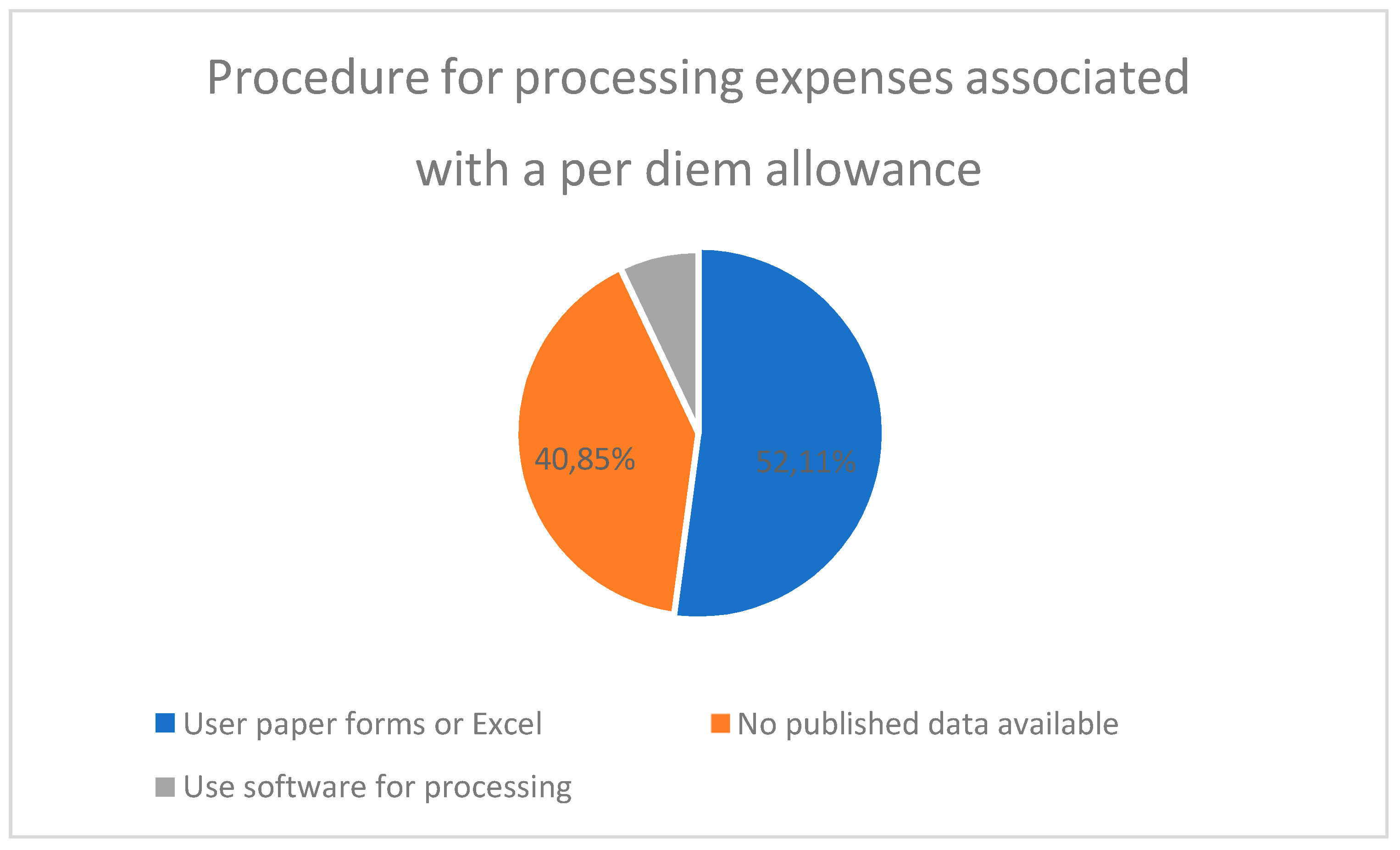
Figure 2.
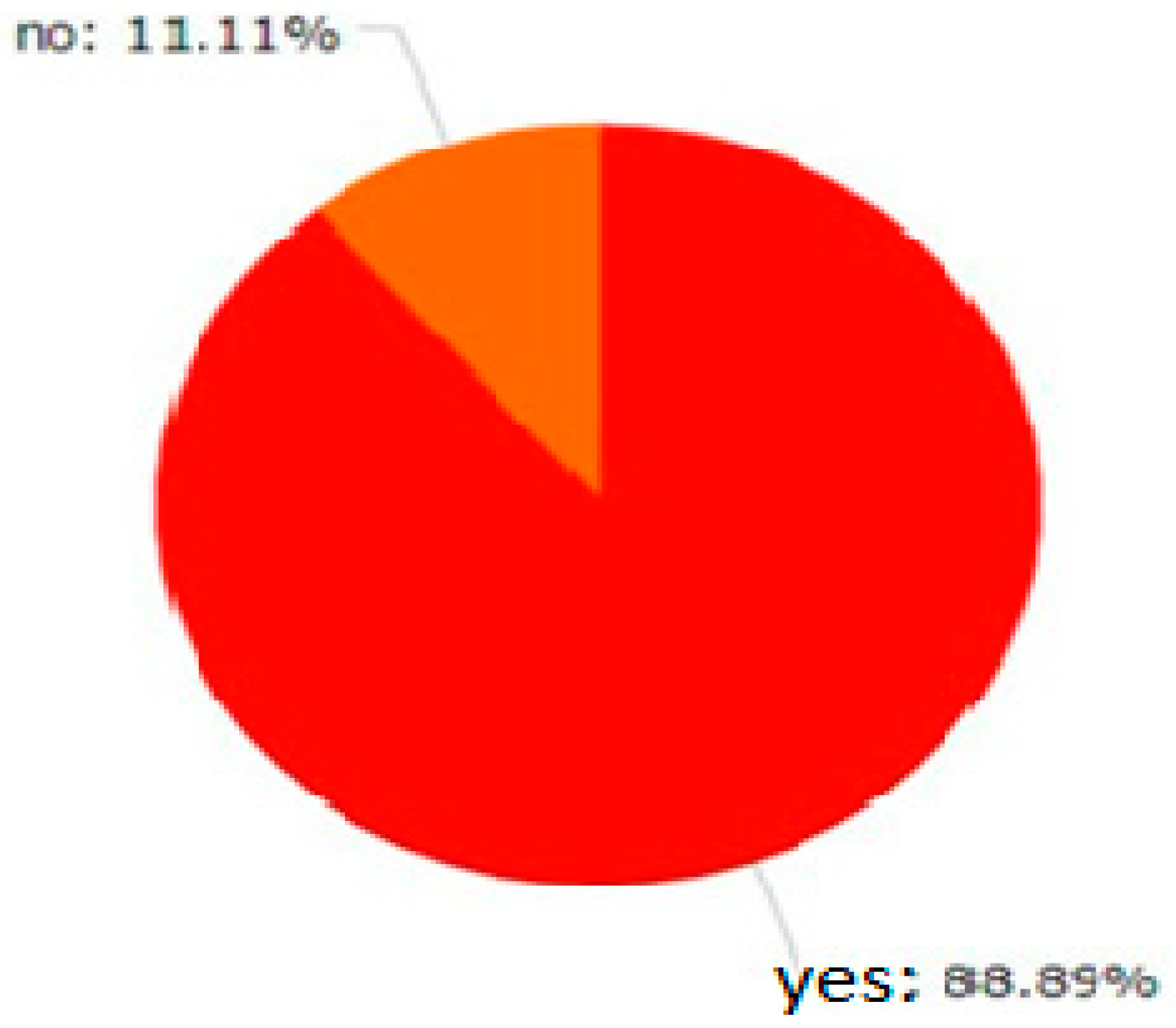
Figure 3.
Disclaimer/Publisher’s Note: The statements, opinions and data contained in all publications are solely those of the individual author(s) and contributor(s) and not of MDPI and/or the editor(s). MDPI and/or the editor(s) disclaim responsibility for any injury to people or property resulting from any ideas, methods, instructions or products referred to in the content. |
© 2023 by the authors. Licensee MDPI, Basel, Switzerland. This article is an open access article distributed under the terms and conditions of the Creative Commons Attribution (CC BY) license (http://creativecommons.org/licenses/by/4.0/).
Copyright: This open access article is published under a Creative Commons CC BY 4.0 license, which permit the free download, distribution, and reuse, provided that the author and preprint are cited in any reuse.


