

Submitted:
26 August 2023
Posted:
29 August 2023
You are already at the latest version
Abstract
The rapid urbanization growth of Dubai has resulted in connectivity issues, considered tre-mendous development pressure. That leads the local authorities to set a vision for Dubai as a 15-20 minute city by 2040. The 15-minute city, where all services can be reached with minimum travel time using sustainable mobility means (walking, cycling, or electric bik-ing). This paper aims to assess the current walkability situation within 15 minutes in the most significant parts of Dubai. This study considered 13 communities; Bur-Dubai and Business Bay were selected to represent the ungated communities, and eleven major gated communities were considered to indicate the gated ones. Those neighborhoods are selected based on the developments' socio-economic status and population density. The assessment considered 14 essential services, categorized into five categories: educational, health, social, entertainment, and religious. The research methodology conducted desktop research, site visits, interviewing random residents to collect data, and then using ArcGIS to assess walk-ability. The results show (64.5%) of the ungated neighborhoods population which access essential services within 15 minutes, while most of the gated communities residents must use cars to access many services. Furthermore, services distribution patterns and walkability infrastructures outside these developments should be developed to obtain higher walkability indicators.
Keywords:
urban design
; sustainability
; sustainable development
; Gated Community
; walkability
1. Introduction
Sustainability broadly indicates programs, initiatives, and actions to preserve a particular resource. However, it refers to three distinct areas: social, economic, and environmental –the three pillars of sustainability [1]. Scholarly discourses emphasize the importance of promoting accessibility in cities by sustainable means to mitigate environmental and social problems [2,3,4,5]. Therefore, walkability is a core urban design element because of being advantageous on three fronts: health, livability, and sustainability [6]. From environmental aspects, and according to the IPCC report, 2022 [7], the concept of walkable cities will play a pivotal role in shaping eco and resilient cities by decreasing CO2 emissions and declining the climate change chart because the main reason for those changes is automobility. Implementing the idea of the 15-minute city, urban sprawl, increasing population density, and Considering key planning principles to achieve ‘complexity’ will create the main challenges [8]. In other words, finding sustainable transportation solutions that preserve the convenience of residents while reducing emissions [9]. The crucial side effects of transportation are becoming a severe headache to Gulf cities such as Dubai, Abu Dhabi, and Doha, which have experienced excessive development pressure over the last 20 years [10]. By adopting the 15-minute city concept in urban planning and infrastructure development, two of the United Nation’s sustainable development goals (SDGs) would be met; goal “3,”: good health and well-being, and goal “11,”: sustainable cities and communities. For those reasons, the 15-minute concept has become the most adopted concept in sustainable transportation and generally the most popular concept linked to sustainable cities.
Some authors have pointed out that the 15-minute city has been introduced previously. On the contrary, it is quite rooted in history, as it re-interprets several ideas from earlier planning practices, such as Howard's Garden City [11], the neighborhood unit by Clarence Perry [12,13], which inspired the urban planning of many post-war British and American cities, the Central place theory by Walter Christaller [14], the urban vitality approaches of Jane Jacobs [15], the geography of time by Torsten Hägerstrand, the human-scale urban design by Christopher Alexander and Jan Gehl [16], the pedestrian pocket proposed by Peter Calthorpe [17], around stations in the Transit-oriented development approach [18], the principles of New Urbanism founded by Andrés Martin Duany and Elizabeth Plater-Zyberk [19], and Smart Growth [20]. Similar versions of ‘urban cells’ or 30- and 20-minute neighborhoods have emerged globally in the past decade. The 15-minute city is one of the variations of a more general concept, which refers to a (part of a) city whose residents can access essential activities within a given travel time [21]. This research focuses only on walkability (cyclability and electric bikes are not considered). Most literature considers walking within a time frame of ¾ mile [22,23]. Of course, the accessible time differs between the various sustainable modes of transport, as a sustainable traveling mood to access essential services (Health, Education, Religious, Social, and Entertainment). In this context, It is vital to highlight that the social services are included in the transit stops because a 15-minute walk shed provides access to regional transit—at least one station ( bus or metro station) [6], to allow the residents to access the services at the city level (universities, Offices zone, … etc.).
2. The 15-minute city and Dubai
This research aims to determine whether Dubai neighborhoods are walkable within 15 minutes, one of the main precepts of sustainable urban design. The literature on Dubai does not address this urban planning and design aspect. Few authors highlighted a general overview of Dubai’s walkability infrastructure without assessing and measuring the current walkability situation for Dubai [24,25,26,27]. The fastest development in Dubai makes it varied from the long development time process cities (American and European cities) [28]. The false-color map in Figure 1 shows Dubai's massive, dramatic, and quickest development in 1992, 2002, and 2022, respectively. In the earlier image, an empty desert fills the lower right part of the map as the cityscape hugs the coast. The final image shows the area almost served with transportation infrastructure, water development, and irrigated fields as vegetation spreads.
The 15-minute city concept aims to develop self-sufficient communities with the essential functions of health, education, entertainment, and social and religious needs. The only way to achieve this vision is by mixed-use zones and decentralizing urban operations and services [15]. However, the plan for Dubai 2040 aims to apply Dubai’s 15 - 20 Minutes policy to all of Dubai’s Neighbourhoods by developing sustainable means of transportation infrastructure and replanned locations of serval essential services.
Dubai master plan 2040 involves creating integrated service neighborhoods with all the required facilities and increasing the population density around metro and bus transit stations. The master plan document defines the 20-minute city as “a city where residents can travel to their destinations on foot or by bicycle in 20 minutes”. The plan’s vision is to promote 80% accessibility of their daily requirements within a maximum of 15 to 20 minutes. The plan expects to enhance the capacity of the service in urban areas and add new regulations and codes to get developing permits [29]. His Highness Sheikh Mohammed Bin Rashid Al Maktoum, the Ruler of Dubai, has approved phase II of the master plan, which will be adopted in all of Dubai areas. It mainly focuses on the Residential Neighbourhood sector, and the development agendas are based on the 15-20 minutes concept. Plan’s agenda:
- Maximizing the efficiency of resource utilization
- Promoting attractive, healthy, and inclusive communities
- Doubling the amount of green and leisure areas and public parks will provide a healthy environment for residents and visitors.
The plan aims further by sustainable and flexible mobility to foster economic activity and attract foreign investments to the Dubai sectors. In addition, this safeguards the Emirate's cultural and urban heritage by strengthening citizens’ sentiments toward older neighborhoods and upcoming communities, developing comprehensive legislation, and planning a governance model to support sustainable development and growth. The actual and future challenge for Dubai neighborhoods is to be 15 minutes. Besides the rapid development, neighborhoods have the fastest increase in Dubai’s population [30,31]. Figure 2 illustrates the annual growth rate of 1.58 to 1.48% in the last four years.
3. Aims and Methodology
3.1. Aims
The paper aims to present a methodology that allows examining the concept of the 15-minute city, showing which parts of Dubai city and which percentage of its population can access a location of a given service within certain time thresholds and using a specific mode of transportation (walking mode). Therefore, this methodology can be useful in the diagnostic phase to assess how much a certain city can be considered a 15-minute city (or a 10-minute city, a 5-minute city, etc., depending on the time threshold adopted) concerning the actual spatial distribution of the locations of a given service. The method will be further assessed in the planning phase through the recommendations section, which identifies how to increase the number of their locations or spatially re-distribute these locations to raise the percentage of inhabitants who can access them in a given time threshold.
The methodology's diagnostic application will be tested in some of Dubai’s ungated and gated communities.
3.2. Case Study
Dubai is the capital and the second largest Emirate, with an area of 4,114 square kilometers in the UAE (United Arab Emirates). As of May 2023, the population of Dubai stands at 3,578,354. The city’s population density is approximately 762.6 individuals per square meter [30]. For several reasons, Dubai can be considered an interesting case study for testing the 15-minute city concept; first, the city is highly car-dependent. UAE Market was valued at USD 20.03 billion in 2021 and is expected to reach USD 32.07 billion by 2027, registering a CAGR of around 11% during the forecast period (2022 - 2027) [32] air-conditioning; Dubai is not welcoming for pedestrians, so that vehicle traffic can be hefty. However, in the early 21st century, new bridges, roads, and a fully automated, driverless metro rail system have eased the frustrations of moving within some parts of the city. Secondly, The variety of urban fabric and planning concepts differed from one area to another. Dubai consists of two fundamentally different kinds of neighborhoods.
- (a)
- Un gated Communities: urban and social housing units planned for low, medium, and high-density populations. Those areas could be considered integrating the residential, commercial, recreational, and other community sectors. Those neighborhoods could be categorized into two types; the first one existed and mostly developed between 1970 – 2000 (Bur Dubai is one of those neighborhoods), which is shown in Figure 3 [33]. The second one is that the development’s infrastructure was completed between 2003-2008 (Business Bay, Downtown Dubai, and Dubai Marina). Still, they boomed between 2015 and 2018, and until now, most of their parts are under development, and construction in those areas is happening gradually. The research considers both categories by choosing Bur Dubai and Business Bay. Business Bay is a central business district developing in Dubai, United Arab Emirates. The project features numerous skyscrapers in an area where Dubai Creek has been dredged and extended and is located immediately south of Downtown Dubai. Business Bay has upwards of 240 buildings comprising commercial and residential developments. The entire development covers an area of 46,900,000 sq ft (4,360,000 m2), and the gross leasable area is 78,500,000 sq ft (7,290,000 m2). The projected development population is more than 191,000, and the estimated population of employers and others is 110,000, making the total population more than 300,000 [34]. In addition to Business Bay, Bur Dubai is a historic district in Dubai located on the western side of Dubai Creek. The name translates to Mainland Dubai, a reference to the traditional separation of the Bur Dubai area from Deira by the Dubai Creek.
- (b)
- Gated Communities: Figure 4 shows their geographical location. Those communities have almost similar socioeconomic residents status. It may consist of private villas with luxurious services (such as Damac Hills) with a low-density population [35], or it could be a combination of private villas and medium-density social housing (Al Shorouq and Al Ghroob cases). Those developments were constructed in a time frame between 4 to 7 years. The services in this type of community do not include the basic needs (Social, health, educational, and religious services, it only contains entertainment services such as sports facilities, Leisure Parks, Spa, Cafes .. etc. The research considers eleven gated communities (Emirates Hills, DAMAC Hills, Arabian Ranches, Dubai Hills, The Springs, Akoya Oxygen, Al Barari, Meydan, Mudon, Jumeirah Golf, and The Meadows) and assesses their walkability indicators.
3.3. Methodology
Since the two types of Dubai’s developments are entirely different in their urban structure and service infrastructure, the measuring methods for their potential to be 15-minute walkable communities should be different, too. It varies from using GIS techniques (Where the Neighbourhoods are mixed-used and the network analysis could be applied), which is applicable in the ungated Neighbourhoods, to measuring the walkability indicators by using a walkability assessment framework (where the network analysis could not be applied) which applies for gated communities.
3.3.1. Ungated community (Neighbourhoods) analysis
This study will analyze relationships between integration and physical connectivity through walkability indices in two significant developments in Dubai (Figure 5 depicts Dubai’s boundary), the Business Bay area and Bur Dubai, shown in Figure 6, using the current neighborhood’s datum. As suitable, maps will be employed to document the status of those urban developments. All of the maps were created by ArcGIS, using confidential data from the Dubai Municipality website [36] and Google Maps. Regarding the path of legibility of any walkable journey, from where many elements could be observed, it is strongly related to the spatiality of the physical infrastructure. Besides ArcGIS, other digital tools like Google Maps will measure and define the X, Y attributes and show distances and areas. The Reasons behind choosing Bur Dubai and Business Bay and making their exciting Neighborhoods case studies for testing the 15-minute city walkability approach in Dubai: First, the high Population density. Second, the sprawl of the residential areas without any planning considerations (in the Bur Dubai case) for the city compactness to encourage active mobility methods instead of automobility (Figure 7 shows the residential buildings in both Bur Dubai and Business Bay), and third the central location of Business Bay and Bur Dubai.
3.3.1.1. The proposed methodology is articulated in 3 steps
3.3.1.1.1.
Defining Bur Dubai and Business Bay boundaries, whose zones are the origins of citizens’ trips to access a service. Broad areas in Bur Dubai are hosting no residents. Those areas identified do not affect the analysis results (Figure 7).
3.3.1.1.2.
Identifying the locations of services for which accessibility is to be calculated, 14 types of services have been considered. They belong to Five main categories:
- Education: nurseries and kindergartens, elementary and secondary schools.
- Health services: Health centers and hospitals, and pharmacies.
- Social services: Groceries and daily needs shops, bus transit stops, post office, and police station.
- Entertainment services: Parks, cinemas, sports facilities (swimming pools, gym,
- football court, basketball court,…etc.)
- Religious Services: Mosques and churches.
The selection of these services was based on a thorough review of the services generally taken into analysis in the literature about the 15-minute city (in particular [6,15,37,38,39,40,41,42,43]). In this list of potential services for the 15-minute city, 14 services considered in this article were selected according to two main criteria. First, they were supposed to be available at the neighborhood level; therefore, services such as universities and malls were excluded, as they are provided at the scale of the city rather than the neighborhood. Secondly, georeferenced data about their spatial locations were available, or they existed within the Neighbourhoods; therefore, services such as libraries and social consultation centers were excluded. Regarding commercial services, only supermarkets (widely used at the neighborhood level in Dubai) and some types of commercial, such as open markets, are not considered to support essential needs. Initially, single food shops, restaurants, and cafés were taken into account, but the analysis showed that their spatial distribution is so widespread that 90% of Dubai inhabitants can access them by a 5 minutes walk; due to this high accessibility by proximity, they were not considered worthy of further attention in this work. As shown in Table 1, the number of locations of the 14 services considered varies significantly from (00) in the case of Business Bay’s Police station to (161) in the case of Bur Dubai’s bus stops.
As shown in Table 1, the locations of the five service categories vary significantly. Each location was georeferenced as a point at the service entrance address (Figure 8). Only The residential Buildings were georeferenced as polygons to maintain their actual extension (Figure 9). The Buildings are also digitized to measure the walkability distance from their spatial dimension as a starting point for the resident journey.
3.3.1.1.3.
Determining the 5-, 10- and 15-minute walking time from Residential areas to the services using the network analysis:
First, identifying the relevant walking radius calculated among the road network that serves all the Bur Dubai and Business Bay blocks and zones (both residential and non-residential) having a walking distance of 5, 10, and 15 minutes (i.e., 400m, 800m, and 1,200m, due to the considered average walking speed of 4,8 km/h) to be factored into the analysis. Determine relevant walking distances and assign relative weights to the factors (14 destination types of services are considered). 2. Create a network dataset in ArcGIS by taking the spatial reference for the services from Google Maps and double-checking whether the service works through contacting the service and sometimes through site visits. 3. Then, insert the information in the ArcGIS to obtain point datasets for all destination types. For polygon datasets, convert features to points by either centroid, vertices, or manually. My community garden point Generate network distance buffers around points for each factor network based on street centerlines. 4. Utilized the Network Analyst in ArcGIS to calculate service accessibility through the roads (the highways are excluded). The entrance point is considered only for the neighborhood parks and the hospitals because the large polygon area may interpret the analysis results accurately. Although Dubai’s master plan aims to achieve 20 minutes city concept, many case studies proved that the 20 minutes city has failed to consider mobility diversity and is not reachable for elderlies and kids [20]; the research used cut-off times of 5,10 and 15 minutes only (Figure 9, Figure 10 and Figure 11).
3.3.2. Results
This section aims to conclude the findings of the Un gated communities network analysis by focusing mainly on the population percentages, those served within the 5,10, and 15-minute time frame. First, the study shows that social services have the highest percentage of destination trips (67.8%). In comparison, religious services have the lowest percentage (6%) (Figure 12). Second, according to estimated population density by [44], (64.5%) of the population in Bur Dubai and Business Bay can access the majority of the services within 15 minutes of walking time (256,892 out of 323,112). At the same time, (35.5%) of inhabitants need to walk for more than 15 minutes to access most of the services (Figure 13).
Second, the service area and the spatial reference of each facility, the percentage of the residents who can access one or more locations, is calculated (Table 2). As can be seen, this percentage varies significantly from service to service. For example, 75% of residents can walk to a neighborhood health center in 5 minutes, and 22% of them can access more than one health center in 5 minutes of walking, but only 8% of same area residents could access secondary school within the same walking time and 2.5% of them could access more than one secondary school simultaneously.
To sum up, the average percentage of residents who can access the services within a 5-minute to services is 26.32%; it decreased to 15.44% for the 10-minute threshold and 22.74% for the 15-minute one. In other words, while raising the time threshold from 5 to 10 declines the “served” population by 10.88%, then 10 to 15 minutes increases this percentage again to allow an additional 7.3% of inhabitants to access services. As regards the three categories of services taken into account, health services are the most accessible: two-thirds of the inhabitants can access at least one health center, and one-quarter of the population can access one pharmacy in 5 minutes, nearly 17.5% and 15.9% can access health centers and pharmacies in 10 minutes respectively, and few amounts between 2.8- 4% have 15 minutes access (Figure 14). Among education facilities, nurseries have the best accessibility at 40.1%, 22.2%, and 35% for 5, 10, and 15 minutes respectively. In contrast with secondary schools, only 8% have 5 minutes of access, and 15 minutes give access to more than 11.2% of inhabitants. In religious and entertainment services, the higher accessibility percentage is within 15 minutes. Among the religious category, mosques have the best capability, 8.9%. And the sports facilities, totaling 87.8%, is the highest entertainment services accessibility. Regarding social services, the accessibility for both police station and post office are extremely l; only 3% and 4.3% can access them within 5 minutes. In contrast with bus stops and groceries, 79.9% and 65.7% have access within 5 minutes to those services correspondingly. In this context, the most highlightable percentages are; 100% of the residents could access the bus stops within 0 to 15 walking minutes, and the lowest accessibility is 20.1% for churches within the same time frame.
3.3.3. Relationship between the number of locations and served population
One of the most critical questions is: Is there any relationship between the availability of the services and the percentage of the population served by this service? Figure 15 shows a negative trend in 10-minute and 15-minute graphs since the portion of the population tends to decrease with the number of services. And a positive trend for the 5-minute chart where the percentage of the population served tends to increase slightly with the number of facilities. Many services were planned to be shared with various neighborhoods (cinemas, secondary schools, parks, and churches), so they were located out of the highest-density population area. At the same time, other services (groceries and bus stops) were planned to be more in the high-density areas. In comparison, the post offices and the police stations are only located in the highest-density zone. High discontinuities can be pointed out. First, 198 and 157 locations for bus stops and groceries ensure 15-minute accessibility to a given service for almost everyone. In contrast, 28, 34, and 26 locations for health centers, pharmacies, and nurseries have virtually the same percentage of accessibility. Secondly, the majority of the services distributed within population density average between 8,000 and 21,000 (Figure 15); the figure shows the average population density for every service location and the inhabitant percentage with access to services.
3.4. The Gated Community Analysis
Across Dubai, upper-middle-class gated communities are creating new forms of exclusion and residential segregation, exacerbating existing social cleavages. Walled and fortified communities are by no means new in urban planning history. The evolution of gated communities began in Cities through the Middle Ages and often featured walls for protection from intergroup hostility. Then, the concept was adopted in the United States to protect estates and contain retirees’ leisure [45]. In the United Arab Emirates, the first appearance of those gated communities was in the 2000s [46], with 84% of the residents choosing to live there (unrelated to work or external hosting reasons). Their choices depended on many factors: cultural background, social class, life goals, and income groups [47]. These urban developments in Dubai now target a much broader and higher demand in the market under the name of (Sustainable communities). The gates used in those communities to secure the residents with guards and with specially offered services with exclusive access for the residents of those neighborhoods only contradict the sustainable ethics and values, threaten public access to open space, and create yet another barrier to social interaction, the building of social networks, as well as increased tolerance of diverse cultural/racial/social groups [48].
The importance of considering the gated communities in this research comes from depicting more than 15% of the residential areas in Dubai. This research considers eleven significant gated communities in Dubai Emirates Hills, DAMAC Hills, Arabian Ranches, Dubai Hills, The Springs, Akoya Oxygen, Al Barari, Meydan, Mudon, Jumeirah Golf, and The Meadows (Figure 16). According to [49], the Arabian Ranches is the biggest one in area, population density, and service range in the United Arab Emirates.
Although those communities are offered solid walkability infrastructure for their residents (safety, walkways, green spaces, lighting features,… etc.), the offered services are mainly recreational and prestigious, as shown in Table 3. Arabian Ranches and the Springs are the only two gated communities considering healthcare and education facilities as a part of their land use planning. While Damac Hills, Dubai Hills, Akoya Oxygen, and the Meadows are considered only the education facilities as a part of the neighborhood planning. It is clear that the consideration of basic needs is shallow; 18% considered health facilities, 54% regarded education facilities, and any clear consideration for social (even 45% have considered the groceries and daily needs shops, are not considered the walking distance and the services coverage area; Arabian Ranches is excluded) and religious facilities (100% have mosques, but none consist of churches). In contrast with the entertainment facilities, 100% of the gated communities are considered it. The unbalanced availability of the services resulted in the use of combined research methodologies to get more accurate measures of the 15-minute walkability, utilizing ArcGIS, random resident interviewing, and site visits. The checklist methodology used the identified critical principles (Population density [50,51], mixed land use [52], local facilities and services [44], accessibility [53], safety [54], and integration [50,55]. According to Google Maps’ information on the service number, site visits, and interviewing random community residents, the appropriate Indicators of those principles are assessed in Table 4.
In addition to the services in Table 3, It is essential to highlight the bus stops in the Gated Communities in Figure 17. It is evident that some bus stops are shared services between more than one community ( the case of the springs with the meadows in Figure 18) and Meydan with Nad Al Shiba), which is only reachable for some residents in the 15-minute walking time frame (Figure 18, Figure 19 and Figure 20). In Arabian Ranches' case, the highest percentage of residents ( 90%) can access the bus stop service within 15 minutes (Figure 19). Jumeirah Golf, Mudon, Akoya Oxygen, Dubai Hills, and Emarites Hills are outside the bus service area (Figure 17).
3.4.1. Results
According to the ArcGIS network analysis, sites visited, and interviews with random residents, the considerable gated communities in this research are not walkable within a 15-minute time frame. However, all of them provided strong sidewalks with very high safety standards, integration, and other walkability principles. The basic needs services are not provided within the walkable distance. In some cases, they are not available. Based on the combined method analysis results, Arabian ranches have the highest resident percentage (80%) who can access most of the services available. In contrast with the Akoya Oxygen, Jumairah Gulf (100%) of their residents cannot access any services within the community boundary (entertainment services are excluded).
4. Limitation and future research
It should be noted that the 15-minute city assessment should be considered cyclability, besides the walkability. Future research should consider the cyclability part to create a full assessment of Dubai’s sustainable mobility. Moreover, although the gated community in this study considers the quality and safety of the walking network, the ungated communities do not consider that which may affect the experienced travel time. Also, the pedestrian bridges could be considered in the future ungated communities analysis because they can impact the connectivity and integration between the different areas. Furthermore, different types of residents could be considered, such as the elderly and children (disaggregated users). Finally, including capacity and the diversity of services will provide more weight in the results because these data were not available to take part in the analysis. Possible future research could be considered all those limitations. Another possible scene for future research would be to highlight other areas in Dubai to complete the picture pieces for sustainable mobility and full measuring dimensions for 15 minutes of existing situations and initiatives. Furthermore, widening the results by calculating the walking accessibility scores since walkability is the main type of sustainable transportation because, in some cases, people who cannot bike or use a similar mode of transport can walk.
5. Conclusion
This study provides a methodological framework to assess the walkability in the core Dubai area to the essential needs facilities. The future challenges and concerns for the 15-minute city could easily be identified by the existing planning threats for the developments based on the walkability ideas, such as the Berry’s Neighbourhood unit. The walkability concept was conceived for planning new districts and designing new neighborhoods, and moreover, it could be applied to existing ones. In this context, the spatial pattern of the facilities (the ideal one when it is more scattered and less homogeneous between the neighborhoods) could play a pivotal role in solving many accessibility issues at the district and city scale, not only at the neighborhood level.
The analysis of Dubai accomplished in this study is focused on identifying the level of walking accessibility to 14 types of local services in gated and ungated communities. Since Dubai is home to different kinds of urban structures that characterize its developments, study areas were selected to represent the neighborhoods in Dubai. As just 13 case studies have been considered, any claim of systematicity must be included to exhaust the Dubai community and draw a general image of the walkability level.
First, the research finds that in a diverse city such as Dubai, it is essential to have different parameters to determine the essential services, which definitely vary from one area to another. This is the obvious result, of course, of the massive difference in the population density in Dubai. The concerned urban authorities should focus on the service capacity to match the urban scale hierarchy to achieve the walkability target by 2040.
Second, in the high-density areas, the walkability time varies dramatically from one part of the community to another in the same neighborhood or even for the same service at the same time frame. It is imperative to get equal accessibility to essential services to avoid the overpopulation density in some parts of the development.
Third, the majority of the population in the ungated neighborhoods can access essential services within 15 minutes of walking time, while the majority of the residents in the ungated communities must use their cars to access many essential and basic services. Although few of the Arabian ranches residents can not access some facilities within 15 minutes, most of them can do so, which is the best-case scenario of walkability among Dubai’s considered gated communities in the research.
Fourth, even the un-gated neighborhoods, where more than half of its inhabitants could walk within 15 minutes to access essential services, can only walk within the development boundary. To enhance the walkability in Dubai, the walking infrastructure should be considered to connect and integrate the development to share more facilities and increase the possibility of accessing some mega-scale services, such as malls and universities, by using sustainable transport moods.
Fifth, Bur Dubai, and Business Bay are one of the few developments linked together with pedestrian ways, which allow their inhabitants to share many facilities together. For this reason, with special consideration for the walking links between them, the analysis considered them connected, not totally separated.
Finally, in the last decades, the idea of 15 15-minute cities has received much international attention (especially after COP21). Moreover, it takes the main attention of the researchers and the local authorities among all the sustainability and resiliency initiatives. As a result, land use and transportation planning professionals take their current essential weight in planning cities and in solving some spatial, social, economic, and personal issues by affecting the affordability of services and opportunities [57]. The 15 Minutes considers the neglected societal group who can not afford to use cars because of their physical and financial abilities (kids and elderly) [58].
Author Contributions
All the authors of this manuscript have contributed significantly to the work reported here. Conceptualization, T.A. and M.A.; Methodology, M.A. and R.G.; Software, R.G.; Validation, T.A.; Formal Analysis, M.A.; Investigation, R.G.; Resources, T.A.; Data Curation, T.A.; Writing – Original Draft Preparation, M.A.; Writing – Review & Editing, T.A.; Visualization, M.A. and R.G.; Supervision, T.A.; Project Administration, T.A. and A.A.; Funding Acquisition, T.A.
Data Availability Statement
Not applicable.
Acknowledgments
The authors would like to acknowledge the partial support provided by the American University of Sharjah through grant number FRG21-M-E77.
Conflicts of Interest
The authors declare no conflict of interest.
References
- Khodarami, L.; Pourmanafi, S.; Mokhtari, Z.; Soffianian, A.; Lotfi, A. Urban sustainability assessment at the neighborhood scale: Integrating spatial modelings and multi-criteria decision-making approaches. Sustainable Cities and Society 2023, 97, 104725. [Google Scholar] [CrossRef]
- Banister, D. The sustainable mobility paradigm. Transport Policy 2008, 15, 73–80. [Google Scholar] [CrossRef]
- Bertolini, L.; Le Clercq, F.; Kapoen, L. Sustainable accessibility: a conceptual framework to integrate transport and land use plan-making. Two test applications in the Netherlands and a reflection on the way forward. Transport Policy 2005, 12, 207–220. [Google Scholar] [CrossRef]
- Handy, S. Is accessibility an idea whose time has finally come? Transportation Research Part D Transport and Environment 2020, 83, 102319. [Google Scholar] [CrossRef]
- Willberg, E.; Fink, C.; Toivonen, T. The 15-minute city for all? – Measuring individual and temporal variations in walking accessibility. Journal of Transport Geography 2023, 106, 103521. [Google Scholar] [CrossRef]
- Duany, A.; Steuteville, R.; Defining the 15-minute city. PUBLIC SQUARE CNU. Available online: https://www.cnu.org/publicsquare/2021/02/08/defining-15-minute-city (accessed on 13 May 2023).
- Pörtner, H.; Roberts, D.; Poloczanska, E.; Mintenbeck, K.; Tignor, M.; Alegría, A.; Craig, M.; Langsdorf, S.; Löschke, S.; Möller, V.; Okem, A. IPCC Summary for Policymakers In: Climate Change 2022: Impacts, Adaptation and Vulnerability. Cambridge University Press, Cambridge, UK and New York, NY, USA 2022, 3–33.
- Allam, Z.; Bibri, S.; Chabaud, D.; Moreno, C. The ‘15-Minute City’ concept can shape a net-zero urban future. Humanities and Social Sciences Communications 2022, 9, 126. [Google Scholar] [CrossRef]
- Baobeid, A.; Koç, M.; Al-Ghamdi, A. Walkability and Its Relationships with Health, Sustainability, and Livability: Elements of Physical Environment and Evaluation Frameworks. Front. Built Environ. 2021, 7, 3–12. [Google Scholar] [CrossRef]
- Rizzo, A. Rapid urban development and national master planning in Arab Gulf countries, Qatar as a case study. Cities 2014, 39, 50–57. [Google Scholar] [CrossRef]
- Moradi, Z.; Hajian, M.; Abadi, H.; Sharifi, A.; Khavarian-Garmsir, A. From Garden City to 15-Minute City: A Historical Perspective and Critical Assessment. Land 2023, 12, 512. [Google Scholar]
- Borruso, G.; Milesi, A.; Ladu, M.; Balletto, G. A Methodological Approach on Disused Public Properties in the 15-Minute City Perspective. Sustainability 2021, 13, 593. [Google Scholar]
- Kissfazekas, K. Circle of paradigms? Or ‘15-minute’ neighborhoods from the 1950s. Cities 2022, 123, 103587. [Google Scholar] [CrossRef]
- Pozoukidou, G.; Chatziyiannaki, Z. 15-minute city: decomposing the new urban planning Eutopia. Sustainability 2021, 13, 928. [Google Scholar] [CrossRef]
- Ferrer-Ortiz, C.; Marquet, O.; Mojica, L.; Vich, G. Barcelona under the 15-minute city lens: Mapping the accessibility and proximity potential based on pedestrian travel times. Smart Cities 2022, 5, 146–161. [Google Scholar] [CrossRef]
- Moreno, C.; Allam, Z.; Chabaud, D.; Gall, C.; Pratlong, F. Introducing the “15-minute city”: sustainability, resilience, and place identity in future post-pandemic cities. Smart Cities 2021, 4, 93–111. [Google Scholar] [CrossRef]
- Houten, R. Handbook of Traffic Psychology, 1st ed.; Elsevier: San Diego and Waltham, USA 2011. [Google Scholar]
- Abdelfattah, L.; Deponte, D.; Fossa, G. The 15-minute city: Interpreting the model to bring out urban resiliencies. Transportation Research Procedia 2022, 60, 330–337. [Google Scholar] [CrossRef]
- Fulton, W. The New Urbanism: Hope Or Hype For American Communities? Lincoln Institute of Land Policy: Cambridge, Massachusetts, USA, 1996. [Google Scholar]
- Calafiore, *!!! REPLACE !!!*; Dunning, R.; Nurse, A.; Singleton, A. The 20-minute city: An equity analysis of Liverpool City region. Transportation Research Part D: Transport and Environment 2022, 102, 103111. [Google Scholar] [CrossRef]
- Staricco, L. 15-, 10- or 5-minute city? A focus on accessibility to services in Turin, Italy. Journal of Urban Mobility 2022, 2, 100030. [Google Scholar] [CrossRef]
- CITIES AND URBANIZATION: The surprising stickiness of the “15-minute city”. WORLD ECONOMIC FORUM. Available online: https://www.weforum.org/agenda/2022/03/15-minute-city-stickiness/ (accessed on 29 April 2023).
- Goldberg, D.A. Implementing 15-Minute Cities: Where to Start? National Association of Realtors. Available online: https://www.nar.realtor/on-common-ground/implementing-15-minute-cities-where-to-start (accessed on 30 April 2023).
- Al Suwaidi, A. Urbanisation: The evolution of 15-minute microcities. Available online: https://www.constructionweekonline.com/business/insights/urbanisation-the-evolution-of-15-minute-microcities (accessed on 30 April 2023).
- Corder, J. What is Dubai’s 20-Minute City, and where can you reach it? HOTELIER. Available online: https://www.hoteliermiddleeast.com/tourism/dubai-20-minute-city-explained (accessed on 29 April 2023).
- Gul,Y.; Jokhio, G.; Sultan, Z.; Smith, J. Steps Towards Sustainability: Assessment of Walkability of Streets in Downtown Dubai, United Arab Emirates. SSRN Electronic Journal/ Heliyon 2021. 29.
- ElEsawi, R. E. The assessment of walkability as a social aspect of sustainability: the case of dubai neighborhoods, UAE , Master of Science in Architectural Engineering, United Arab Emirates University, UAE, November 2019.
- Bagaeen, S. Brand Dubai: The Instant City; or the Instantly Recognizable City. International Planning Studies 2007, 12, 173–194. [Google Scholar] [CrossRef]
- Dubai 2040 Urban Master Plan. Available online: https://u.ae/en/about-the-uae/strategies-initiatives-and-awards/strategies-plans-and-visions/transport-and-infrastructure/dubai-2040-urban-master-plan (accessed on 13 May 2023).
- United Arab Emirates Population Statistics 2023. GMI Blogger. Available online: https://www.globalmediainsight.com/blog/uae-population-statistics/ (accessed on 04 May 2023).
- World Population Prospects 2022.United Nations. Available online: https://population.un.org/wpp/ (accessed on 1 June 2023).
- Growth Trends & Forcasts 2023, UAE Used Car Market Size & Share Analysis - Growth Trends & Forecasts (2023 - 2028). Motor Intellegance. Available online: https://www.mordorintelligence.com/Industry-Reports/United-Arab-Emirates-Used-Car-Market (accessed on 14 April 2023).
- Kashwani, G.; Ezzeddine, I. Public Squares in UAE Sustainable Urbanism: Social Interaction & Vibrant Environment. Sceintific and Acadamic Publishing 2019, 9, 23–32. [Google Scholar]
- Dacha Real Estate, Living in Business Bay. Available online: https://www.dacha.ae/living-in-dubai/business-bay/ (accessed on 03 June 2023).
- Dubai’s Sustainable City and The False Promise of Universality: Shanti Escalante-de Mattei Article. Available online: https://wp.nyu.edu/Compass/2019/03/28/Shanti-escalante-dubai-sustainable-city/ (accessed on 08 July 2023).
- Metropolisation and Spatial Segregation in Gulf Cities: The Case of Dubai. The London School of Economics and Political Science. Available online: https://blogs.lse.ac.uk/mec/2022/01/11/metropolisation-and-spatial-segregation-in-gulf-cities-the-case-of-dubai/ (accessed on 15 June 2023).
- Badii, C.; Bellini, P.; Cenni, D.; Chiordi, S.; Mitolo, N.; Nesi, P.; Paolucci, M. Lecture Notes in Computer Science book, 12956 ed., Springer, Cham: NewYork, USA,2021.
- Birkenfeld, C.; Victoriano-Habit, R.; Alousi-Jones, M.; Soliz, A.; El-Geneidy, A. Who lives a local lifestyle? Towards a better understanding of the 15-minute-city and 30-minute-city concepts from a behavioral perspective in Montréal, Canada. Journal of Urban Mobility 2023, 3, 100048. [Google Scholar] [CrossRef]
- Zhou, D. Examination of The 15-minute Life Cycle Program Of A Chinese Mega City: Case Study Of Guangzhou. WIT Transactions on Ecology and the Environment 2019, 238, 10. [Google Scholar]
- Moreno, C.; Allam, Z.; Chabaud, D.; Gall, C.; Pratlong, F. Introducing the “15-minute city”: sustainability, resilience, and place identity in Future post-pandemic Cities. Smart Cities 2021, 4, 93–111. [Google Scholar] [CrossRef]
- Abbiasov, T.; Heine, C.; Glaeser, E.; Ratti, C.; Sabouri, S.; Salazar, A.; Paolo, M.; Santi The 15-minute City Quantified Using Mobility Data, NBER WORKING PAPER SERIES 2022, 30752, 25.
- Weng, M.; Ding, N.; Li, J.; He Xiao, X.; He, Z.; Su, S. The 15-minute walkable neighborhoods: Measurement, social inequalities and implications for building healthy communities in urban China. Journal of Transport & Health 2019, 13, 259–273. [Google Scholar]
- Gaglione, F.; Gargiulo, C.; Zucaro, F.; Cottrill, C. Urban accessibility in a 15-minute city: a measure in the city of Naples, Italy. Transportation Research Procedia 2022, 60, 378–385. [Google Scholar] [CrossRef]
- Division Of Dubai’s Sectors and Communities. World City Population. Available online: https://www.citypopulation.de/en/uae/dubai/admin/ (accessed on 21 June 2023).
- Grant, J. Challenging the public realm: gated communities in history, Working paper, School of Planning Dalhousie University, Canada, 2008.
- Grant, J.; Mittelsteadt, L. Types of Gated Communities. Environment, and Planning B Planning and Design Journal 2004, 31, 913–930. [Google Scholar] [CrossRef]
- Alhato, A. Typology of gated communities in the GCC region and central Europe, Master of Science in Construction and real estate management, Metropolia University of applied sceinces, Berlin, 2021.
- Low, S. The Edge and the Center: Gated Communities and the Discourse of Urban Fear, Ph.D. in Environmental Psychology and Anthropology, The Graduate Center of the City University of New York, New York, 2001.
- Popular Gated Communities in Dubai. Bayut. Available online: https://www.bayut.com/mybayut/best-gated-communities-dubai/ (accessed on 21 May 2023).
- Barton, H.; Grant, M.; Guise, R. Shaping Neighbourhoods, 1st ed.; Routledge: London, UK, 2002. [Google Scholar]
- Chan, K.; Ko, H.; Macfarlane, D.; Cerin, E. Measuring perceived neighborhood walkability in Hong Kong. Cities 2007, 24, 209–217. [Google Scholar]
- Lee, S.; Koschinsky, J.; Talen, E. Planning Tools for Walkable Neighborhoods: Zoning, Land Use, And Urban Form. Journal of Architectural and Planning Research 2018, 35, 69–88. [Google Scholar]
- Barton, H.; Thompson, S.; Burgess, S.; Grant, M. The Routledge Handbook of Planning for Health and Well-Being: Shaping a Healthy and Sustainable Future, 1st ed.; Routledge: New York, USA, 2017. [Google Scholar]
- Ewing, R.; Hajrasouliha, A.; Greene, W. Streetscape Features Related to Pedestrian Activity. Sage Journals 2015, 36, 5–15. [Google Scholar] [CrossRef]
- Cerin, E.; Saelens, B.; Sallis, J.; Frank, L. Neighborhood Environment Walkability Scale: Validity and Development of a Short Form. Medicine and Science in Sports and Exercise 2006, 38, 1682–1691. [Google Scholar] [CrossRef]
- Dubai Municipality Planning Department: Facilities Standards for Low-Density Developments. Available online: https://www.dm.gov.ae/documents/community-facilities-standards-list/ (accessed on 29 June 2023).
- Silva, C.; Pinto, N.; Bertolin, L. Designing Accessibility Instruments: Lessons on Their Usability for integrated land use and Transportation, 1st ed.; Routledge: New York, USA, 2019. [Google Scholar]
- Guzman, L.; Arellano, J.; Oviedo, D.; Alberto, C.; Aristizábal, M. COVID-19, activity and mobility patterns in Bogotá. Travel Behaviour and Society 2021, 24, 245–256. [Google Scholar] [CrossRef]
Figure 1.
Dubai's development in 1992,2002 and 2022.
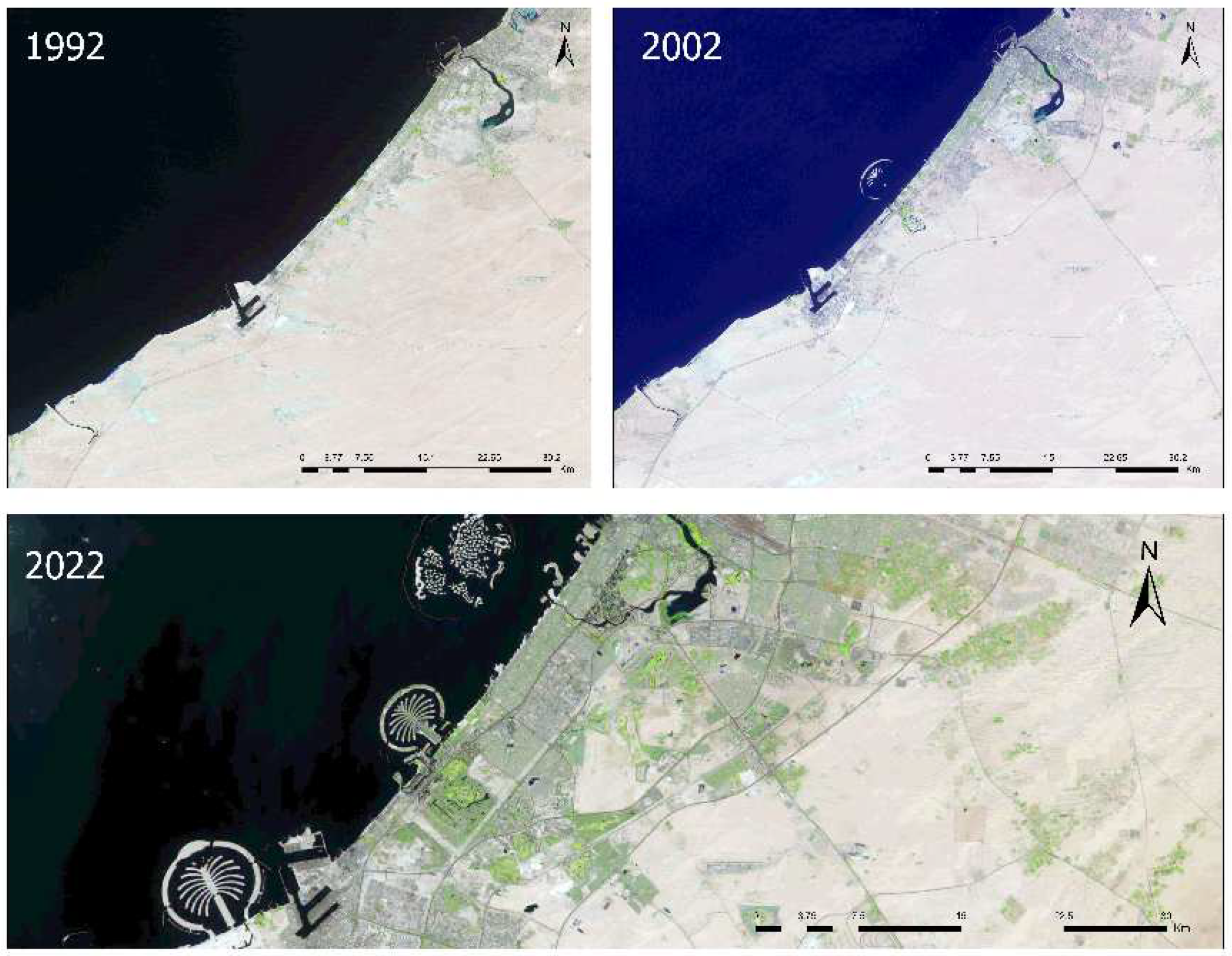
Figure 2.
The increase in Dubai’s population in the last decade (from 1992 to 2022).
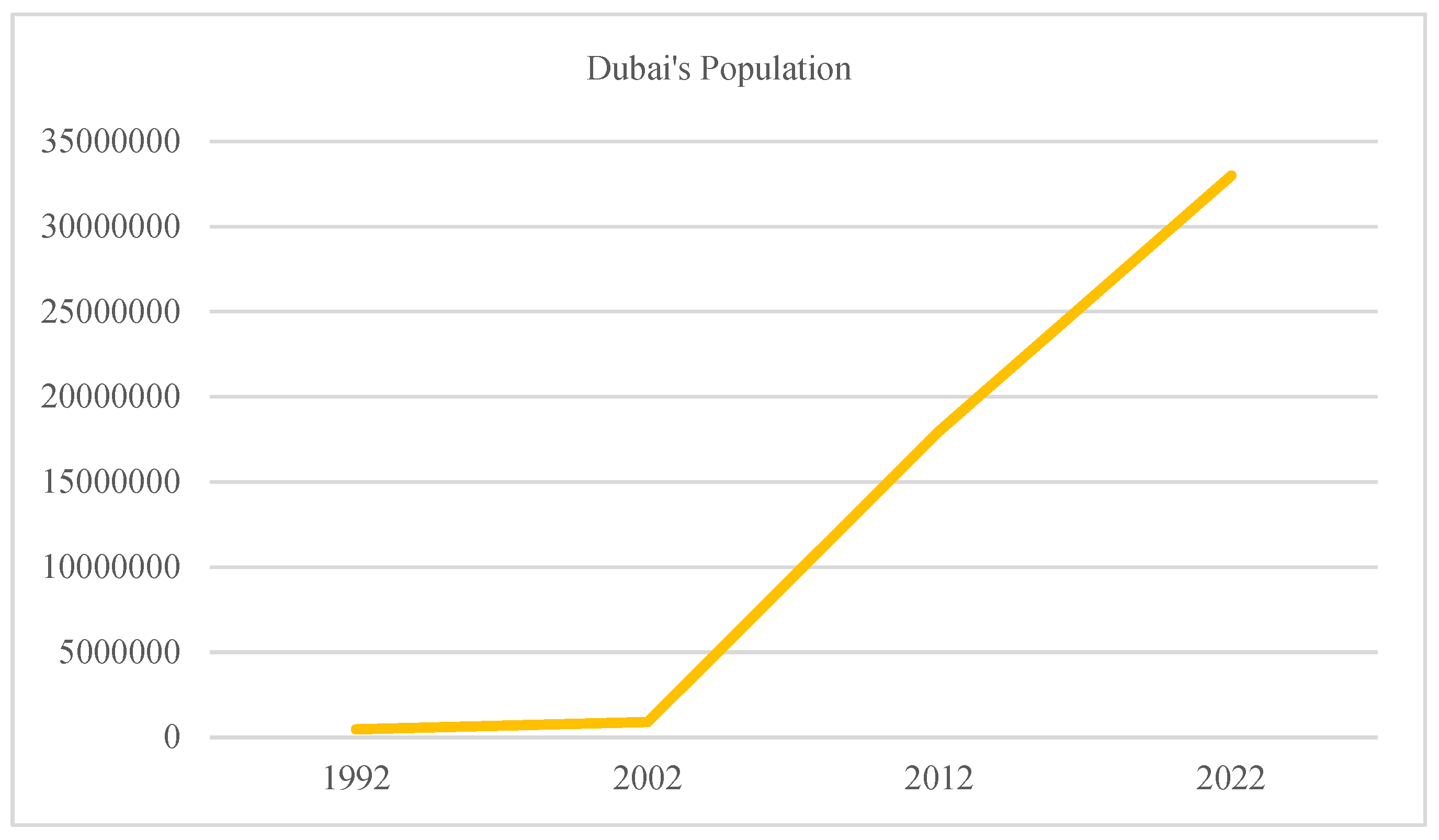
Figure 3.
The map shows that most of Bur Dubai is in the area developed between 1970 to 2000.
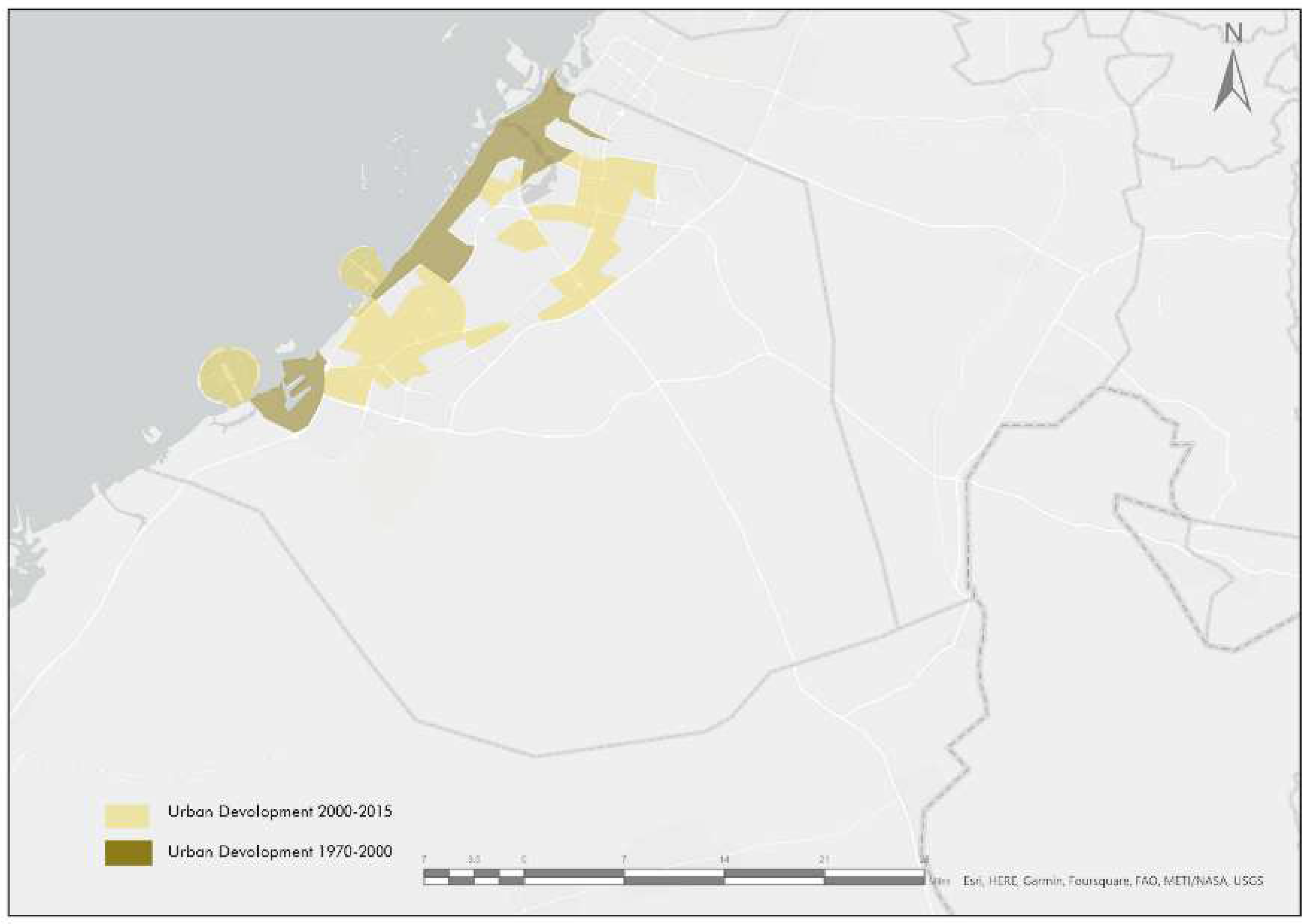
Figure 4.
The map shows Dubai gated communities in 2023.
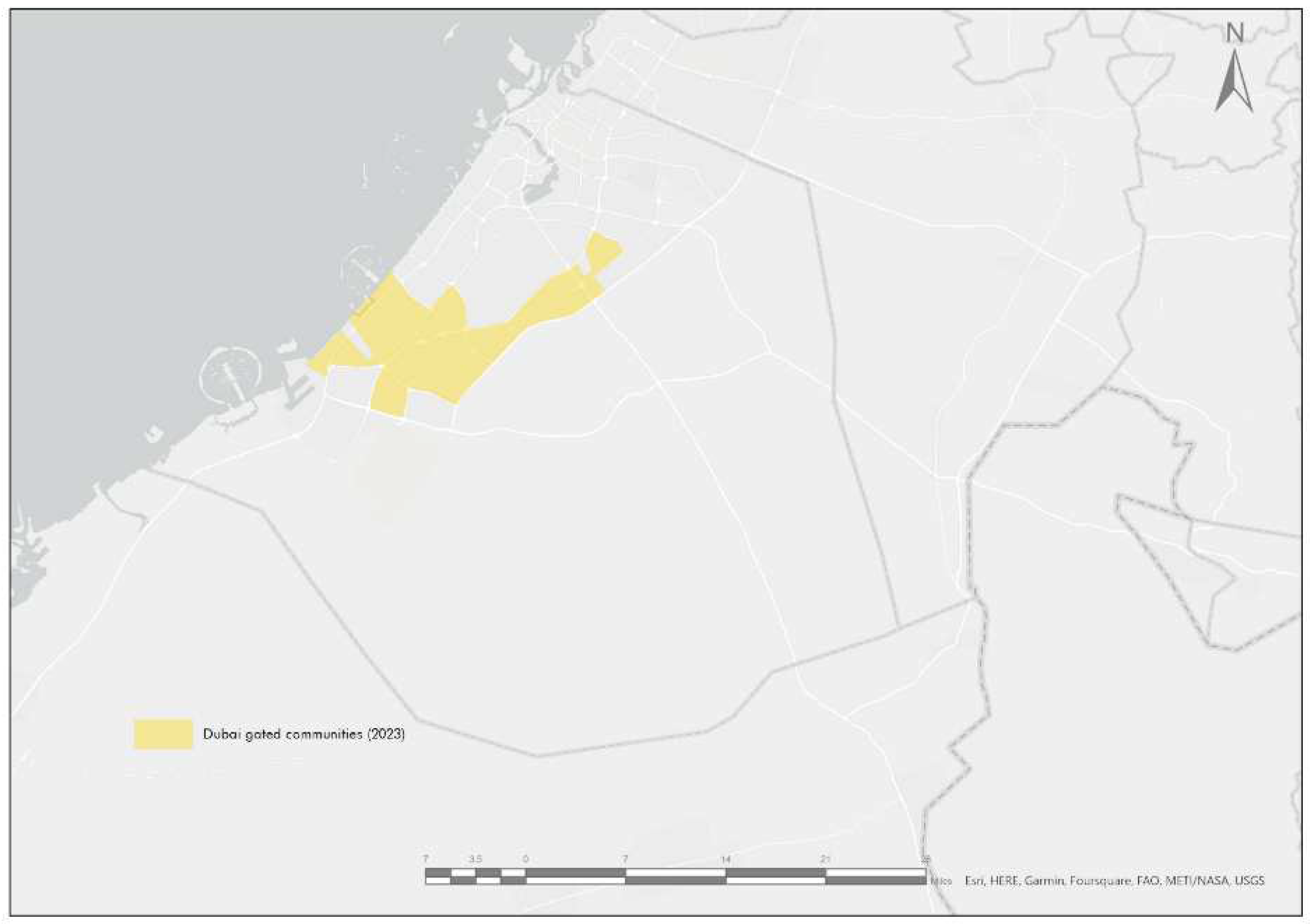
Figure 5.
Dubai Boundary.
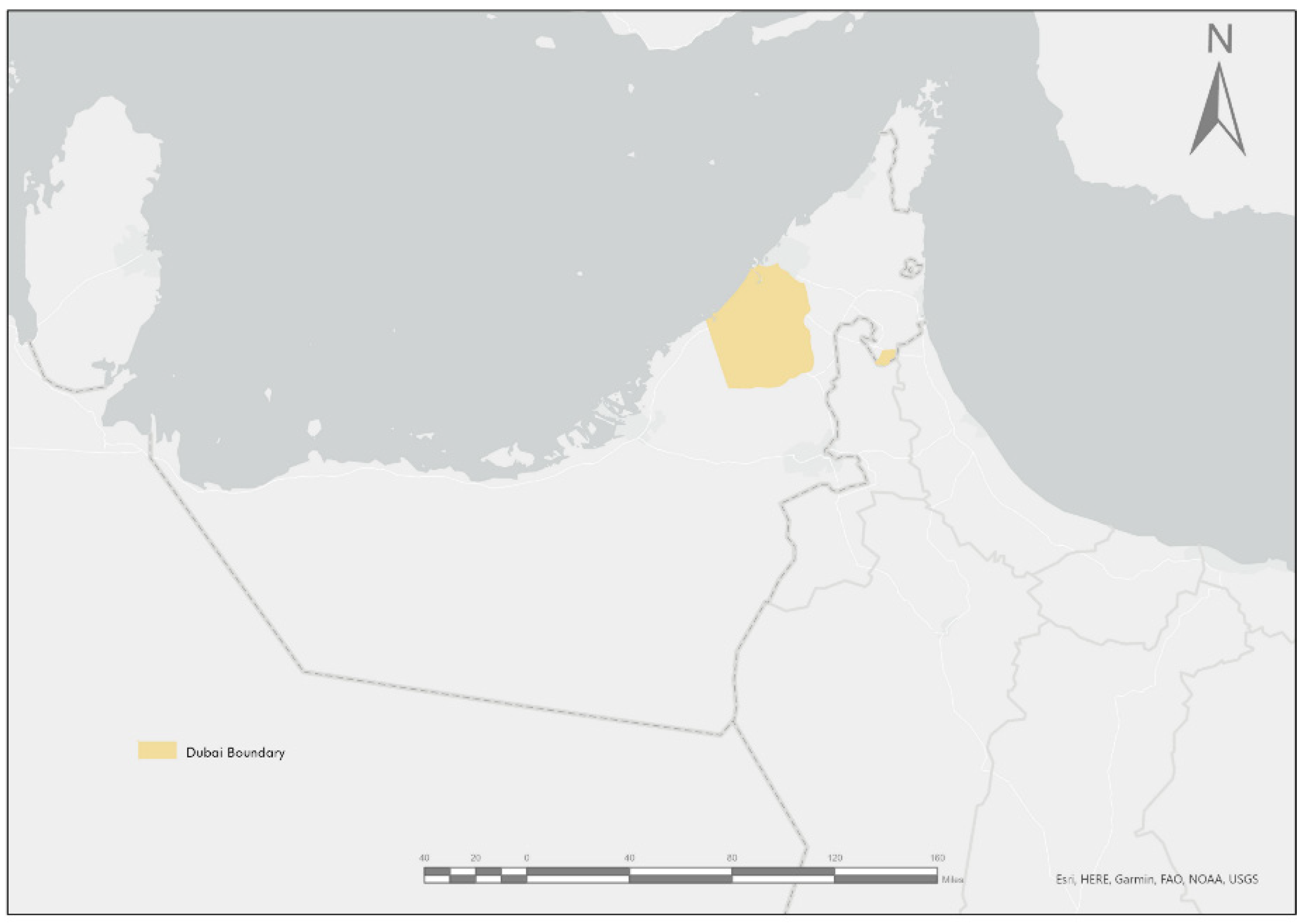
Figure 6.
Business Bay and Bur Dubai boundaries.
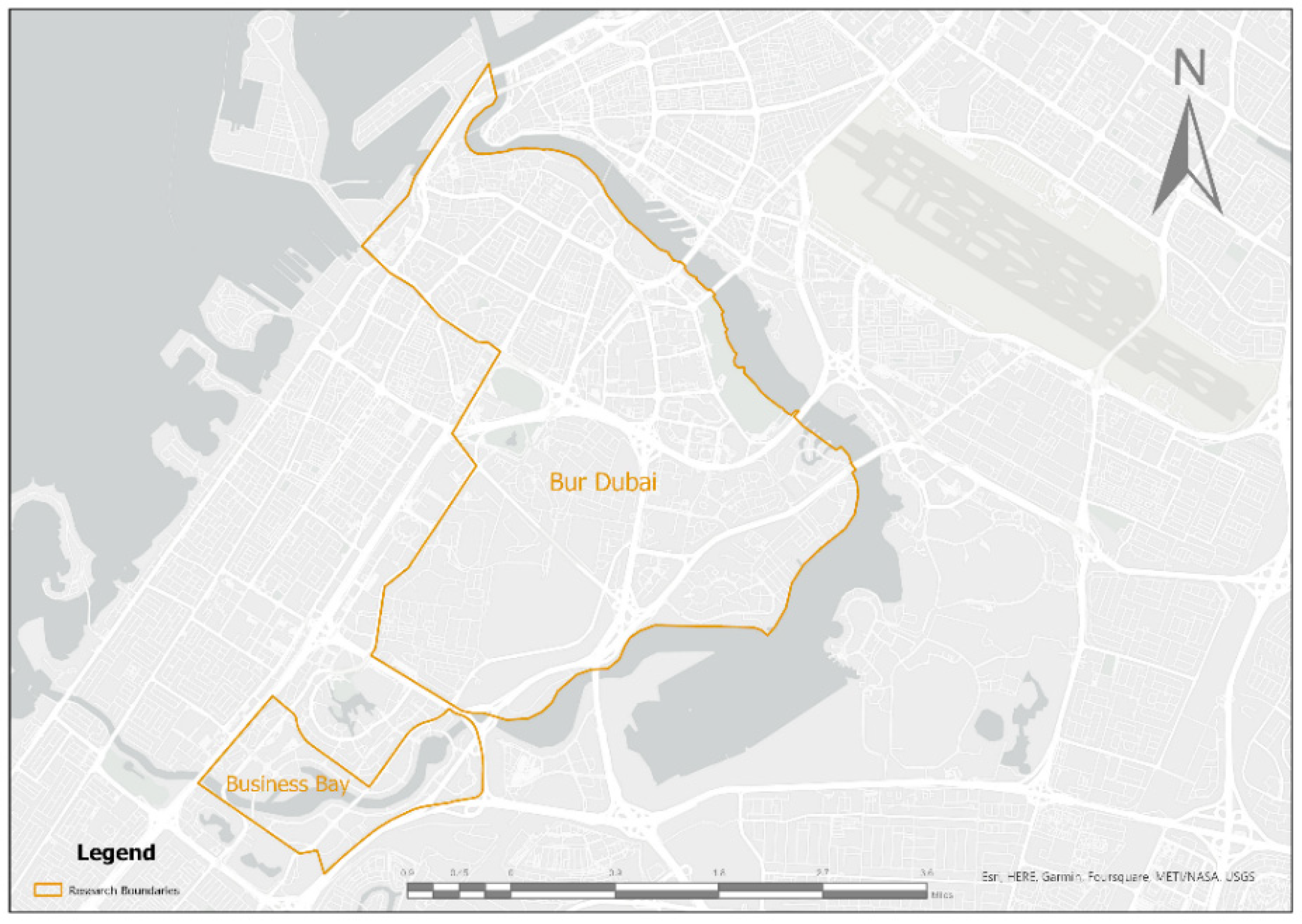
Figure 7.
Shows the residential buildings (apartments, villas, hotels, or staff facility residency) in Bur Dubai and Business Bay.
Figure 7.
Shows the residential buildings (apartments, villas, hotels, or staff facility residency) in Bur Dubai and Business Bay.
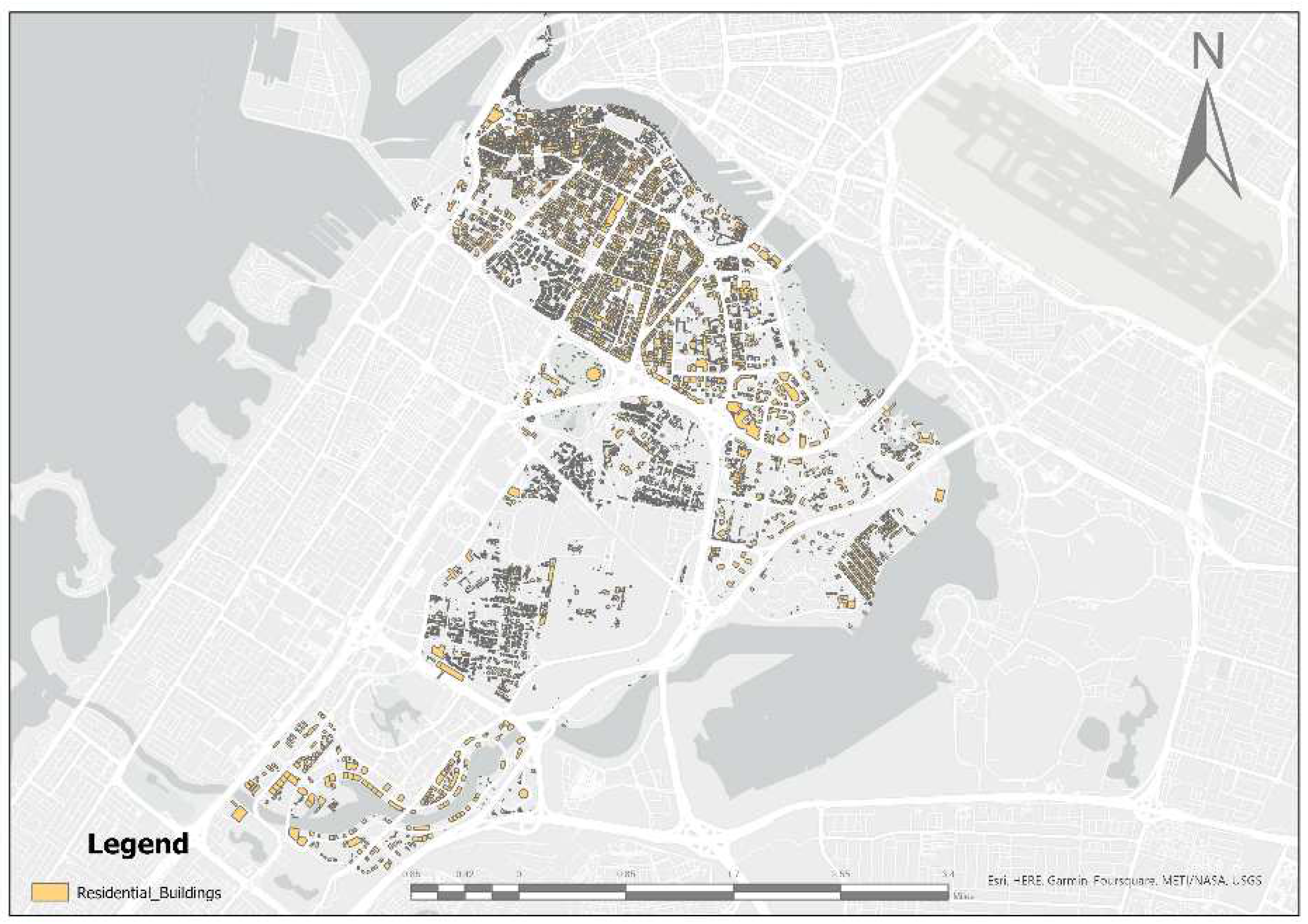
Figure 8.
shows the services' spatial distribution through Bur Dubai and Business Bay.
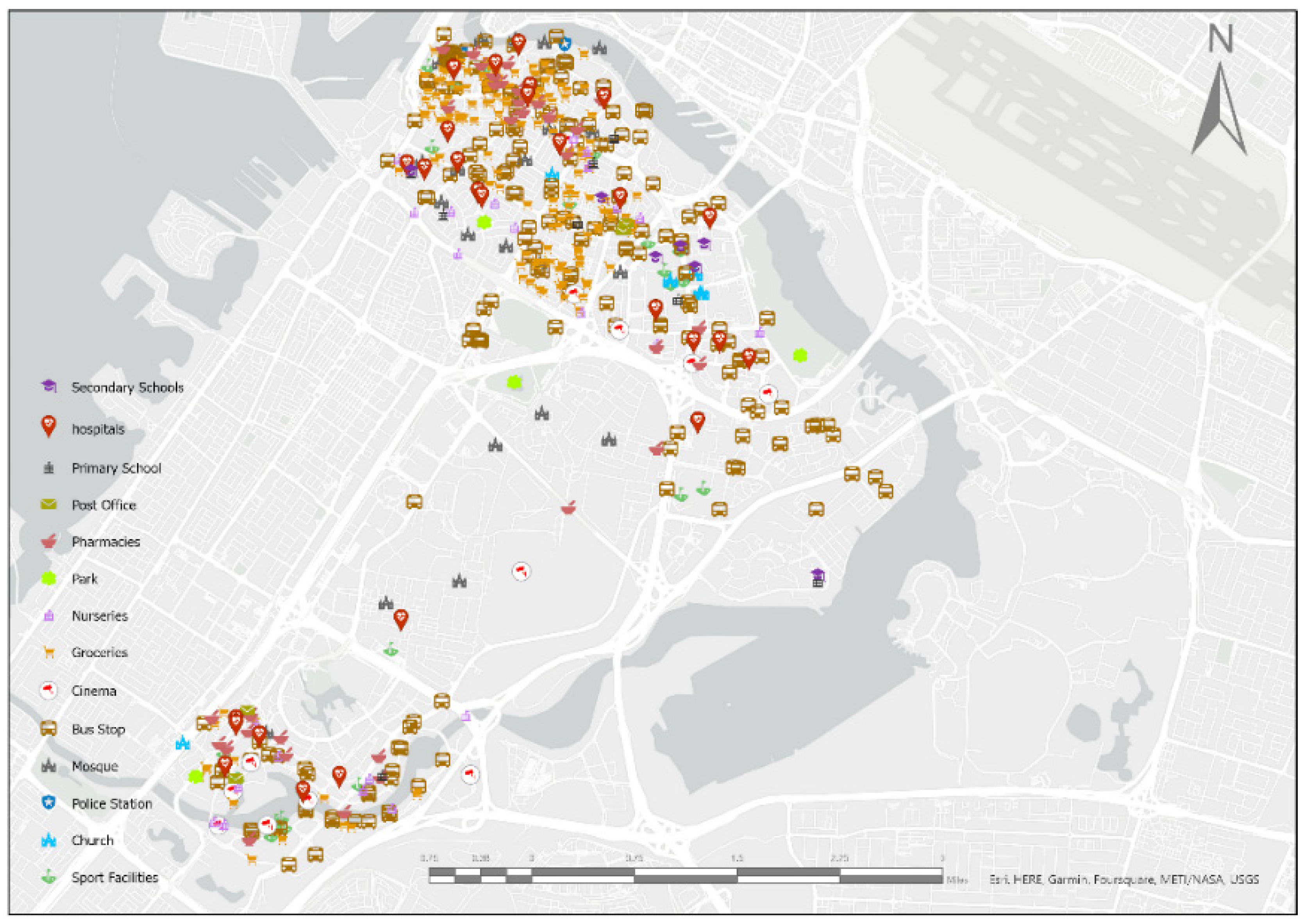
Figure 9.
5 Minutes Network.
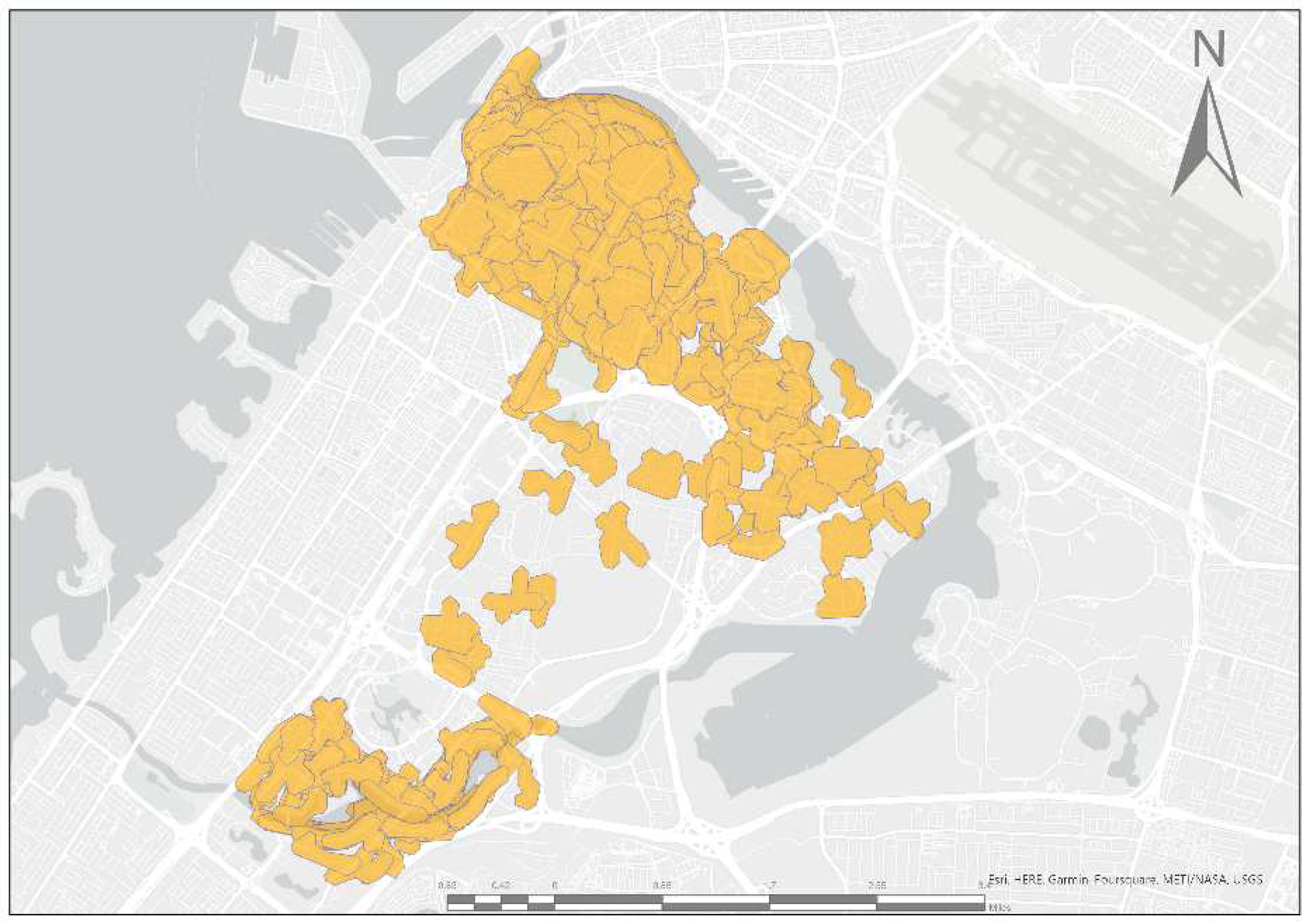
Figure 10.
10 Minutes Network.
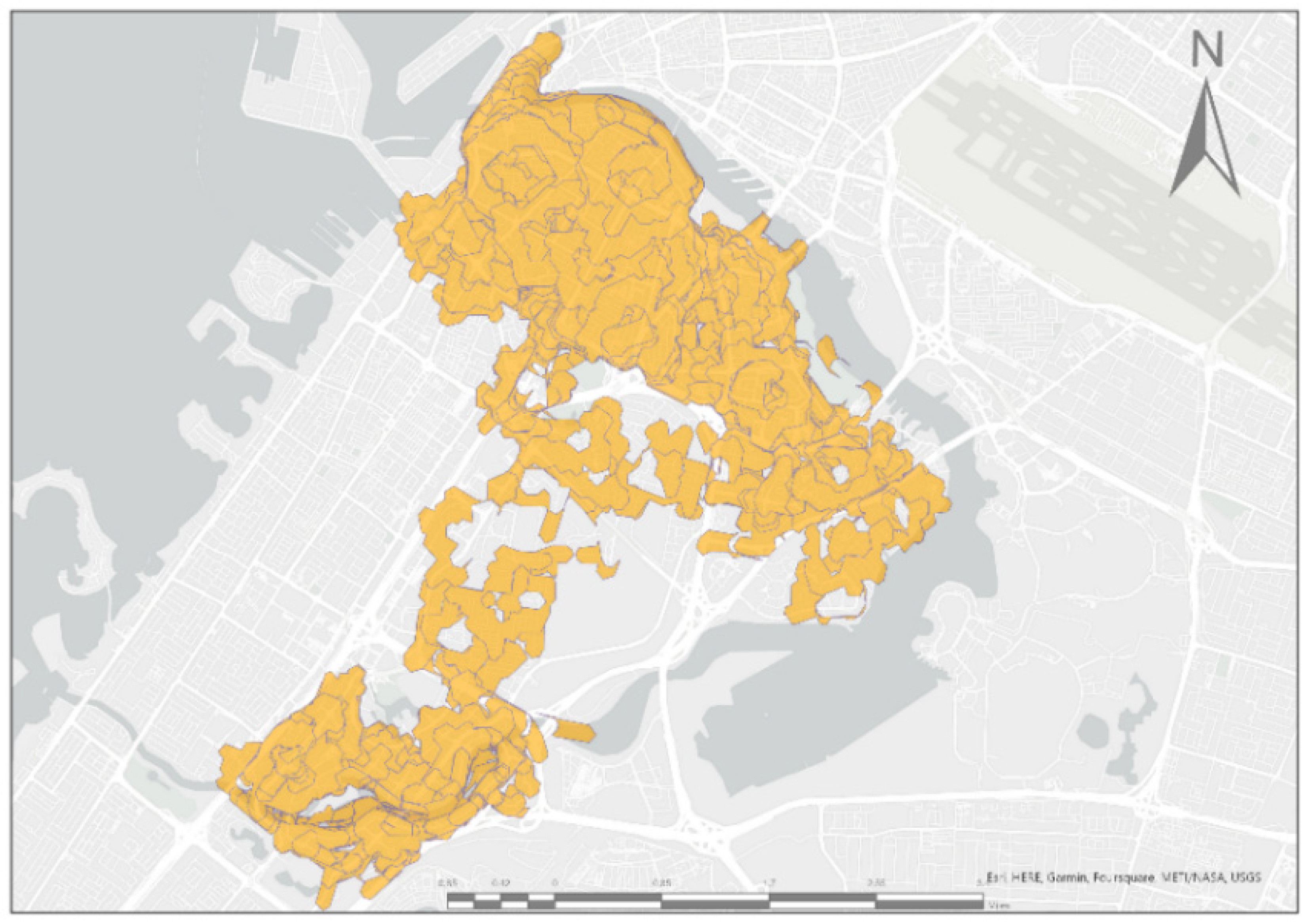
Figure 11.
15 Minutes Network.
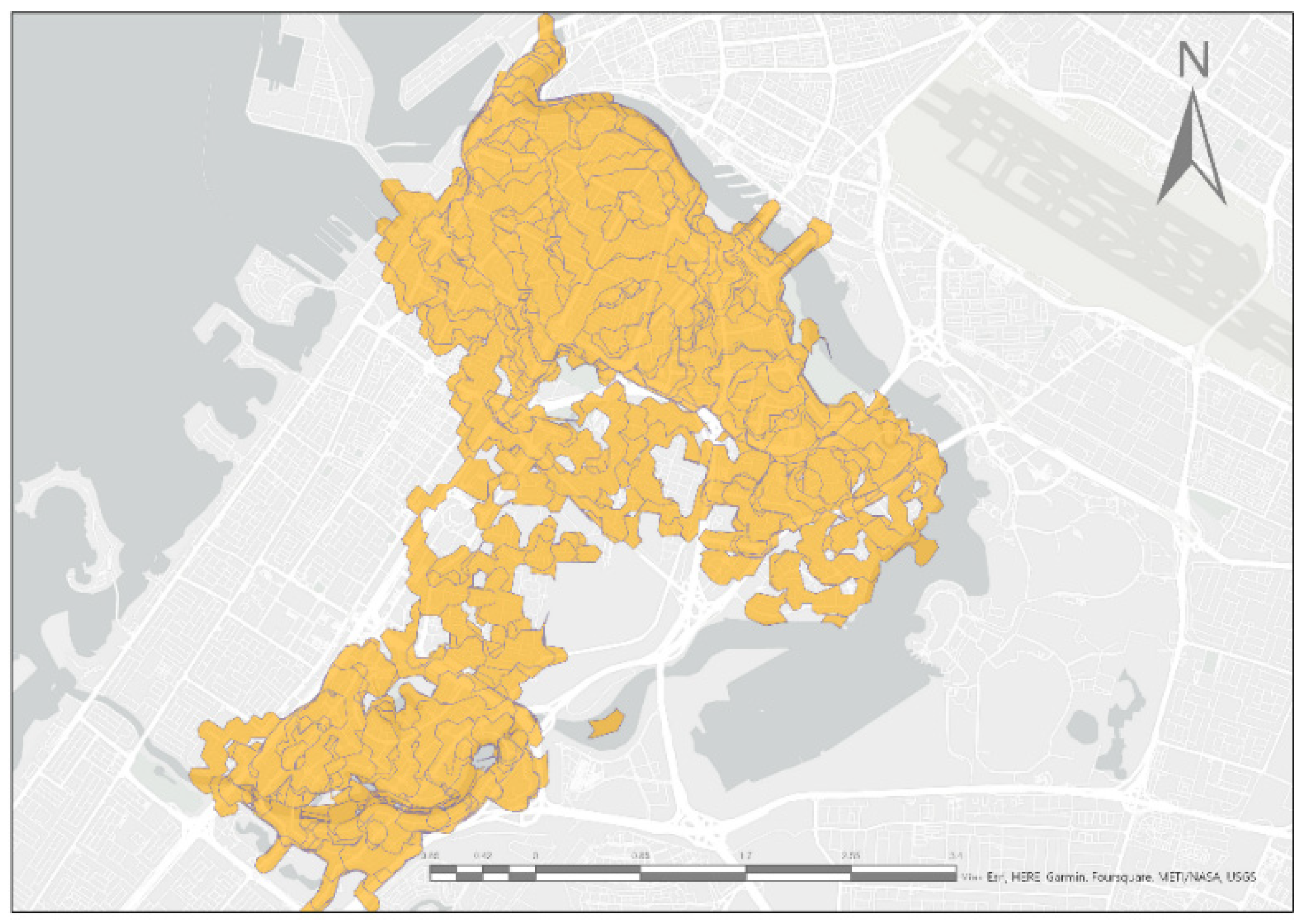
Figure 12.
Percentage of trips (all modes) per destination type.
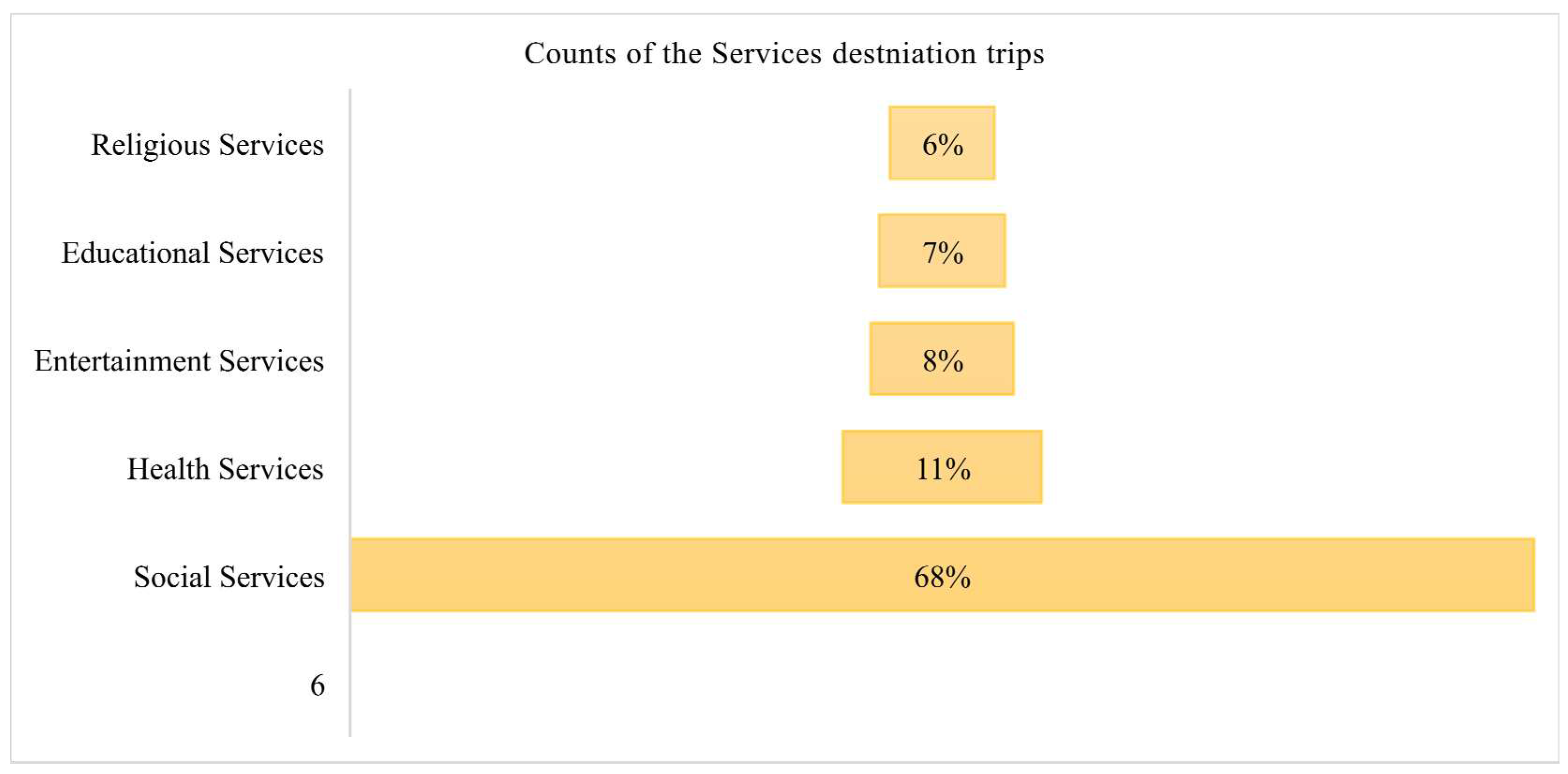
Figure 13.
Percentage of the population and their accessibility to essential services within a specific time frame.
Figure 13.
Percentage of the population and their accessibility to essential services within a specific time frame.
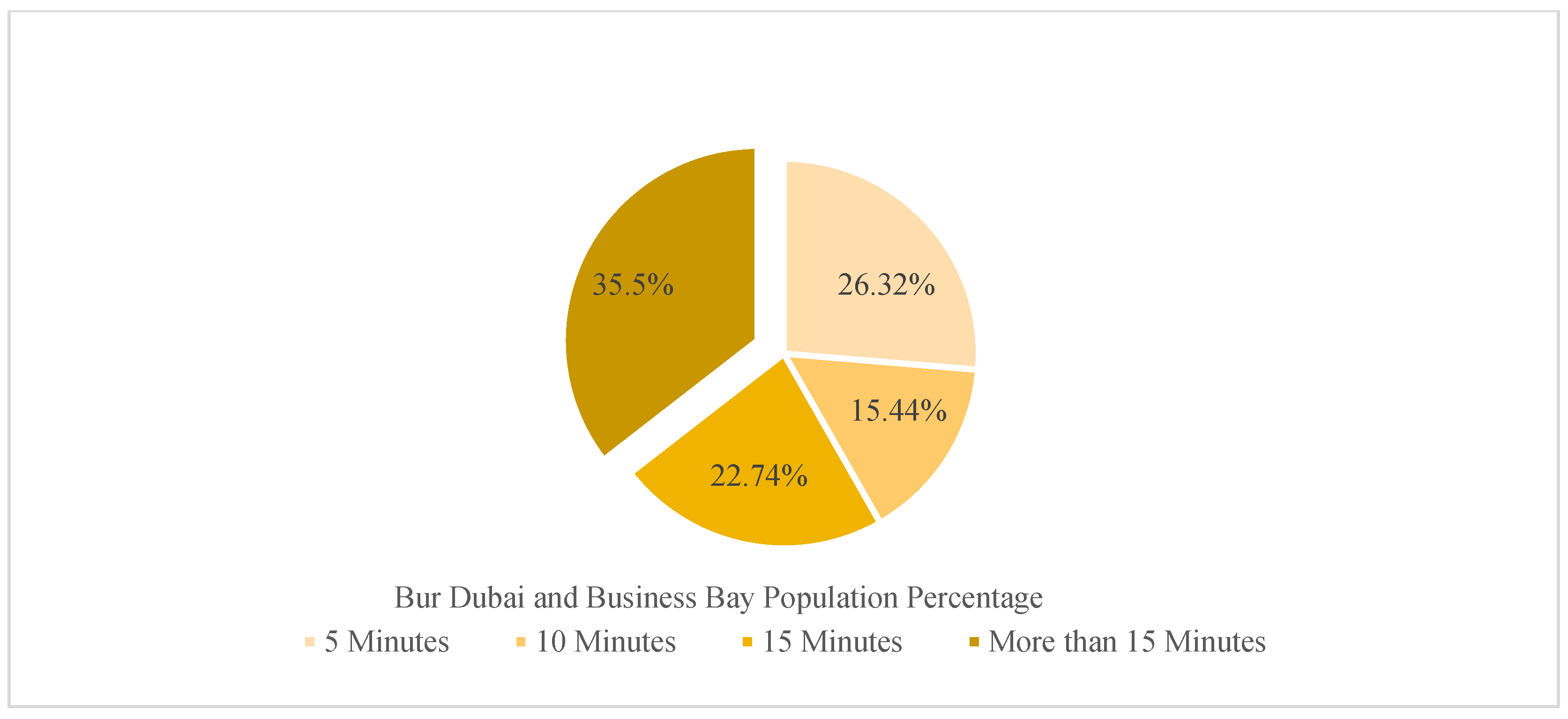
Figure 14.
Percentage of the population and their accessibility to the same service within different walking time.
Figure 14.
Percentage of the population and their accessibility to the same service within different walking time.
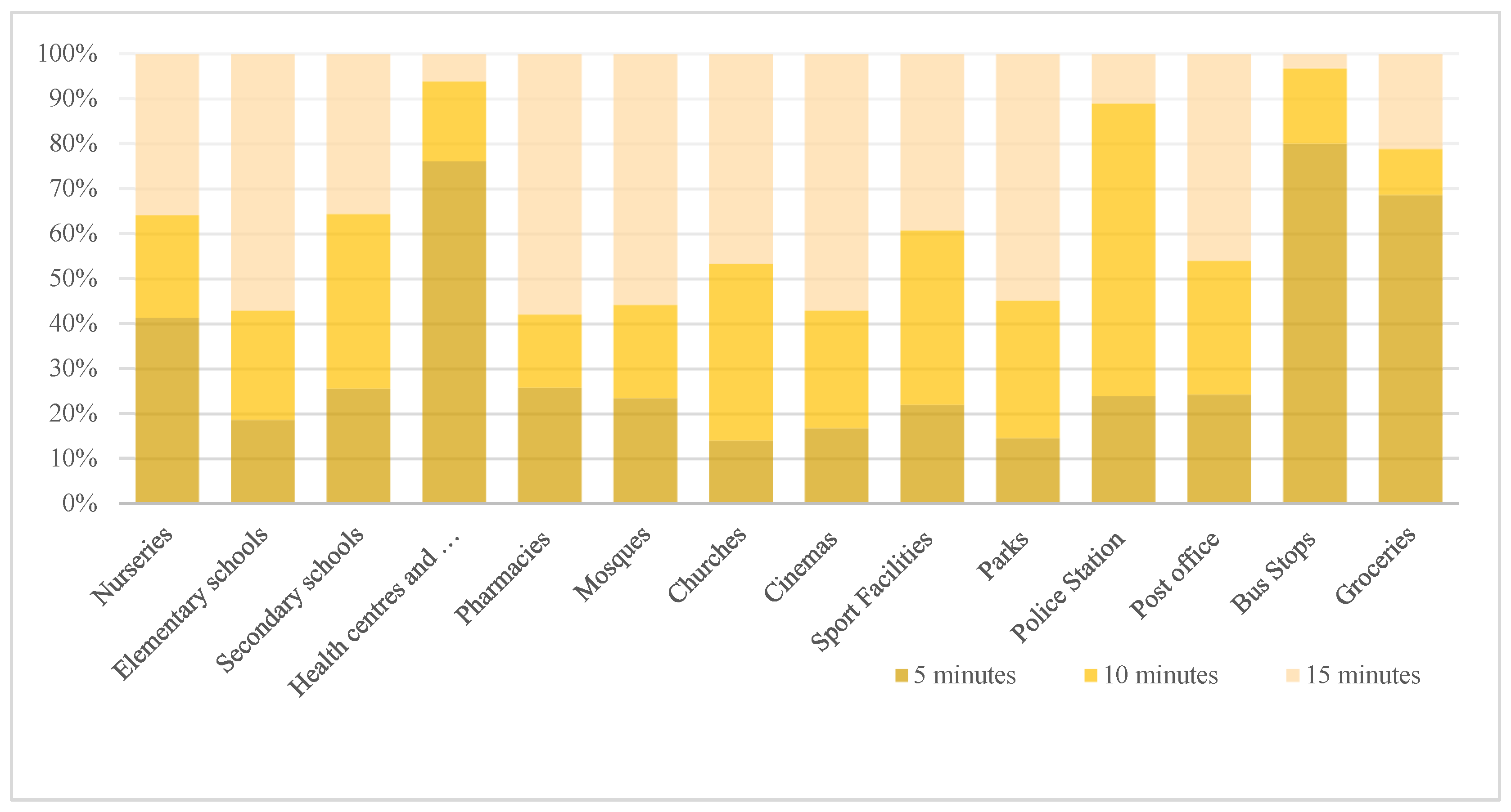
Figure 15.
The relationship between population and accessibility.
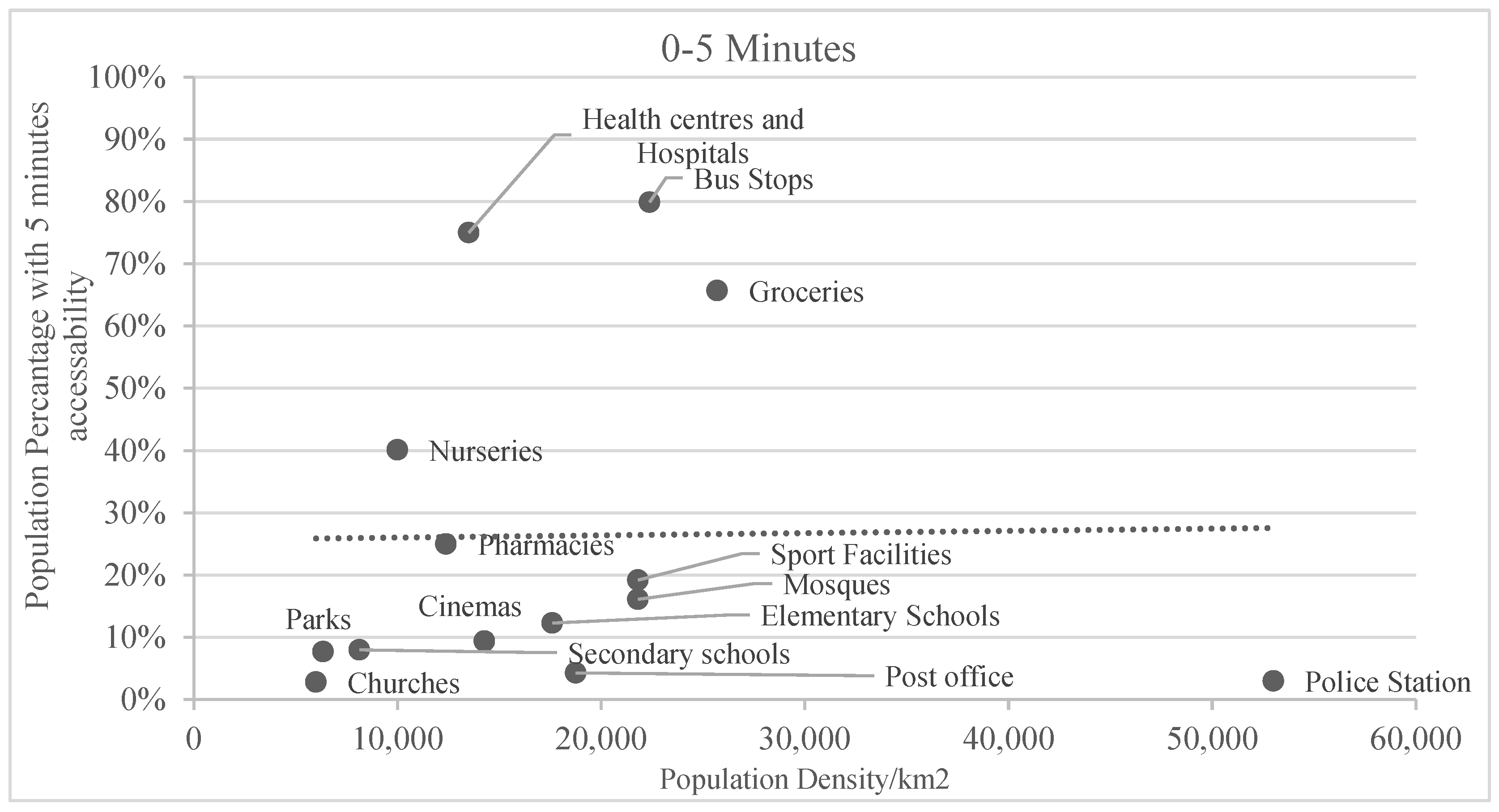
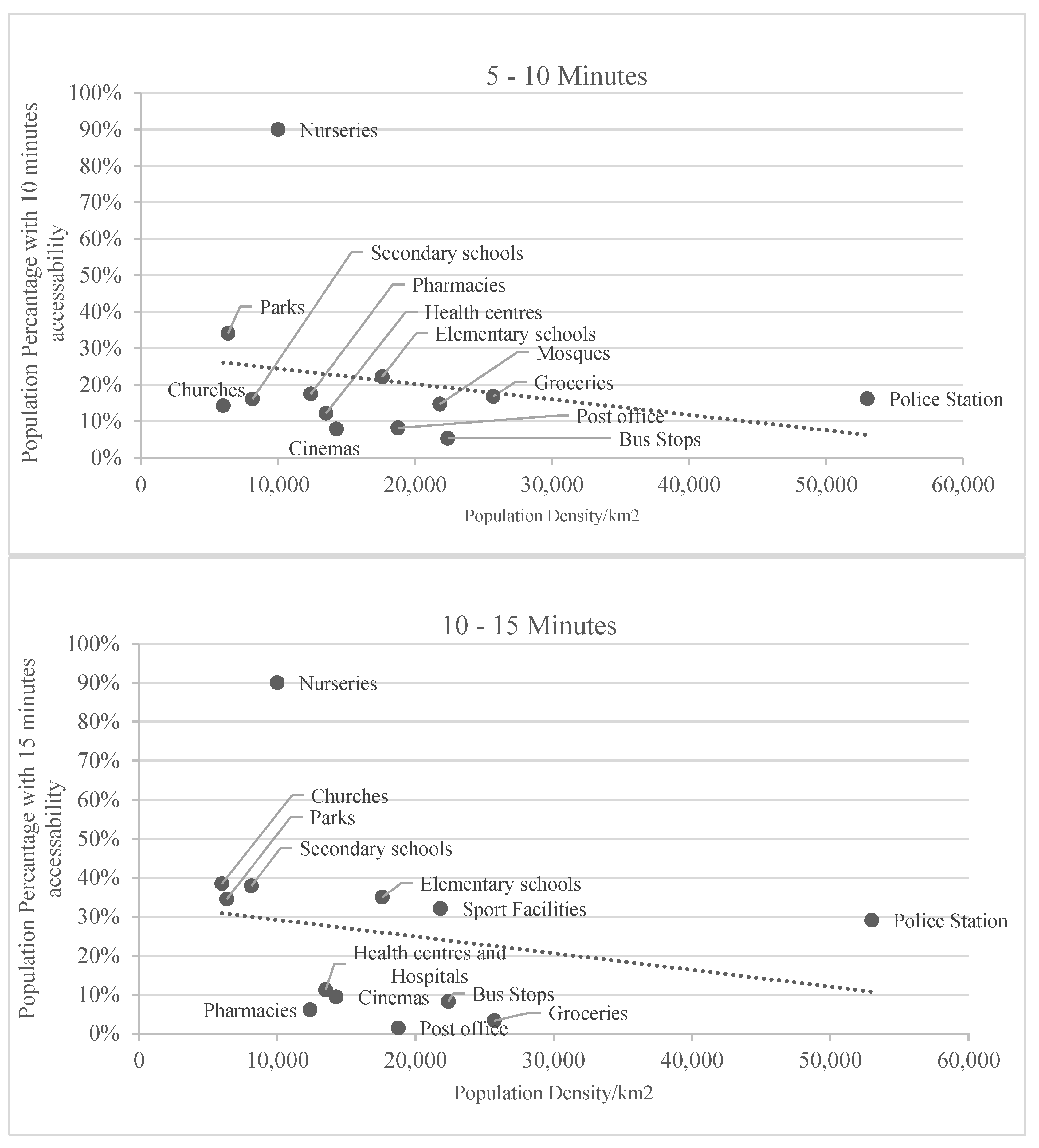
Figure 16.
Research Area ( Dubai’s gated communities, which are considered in the research).
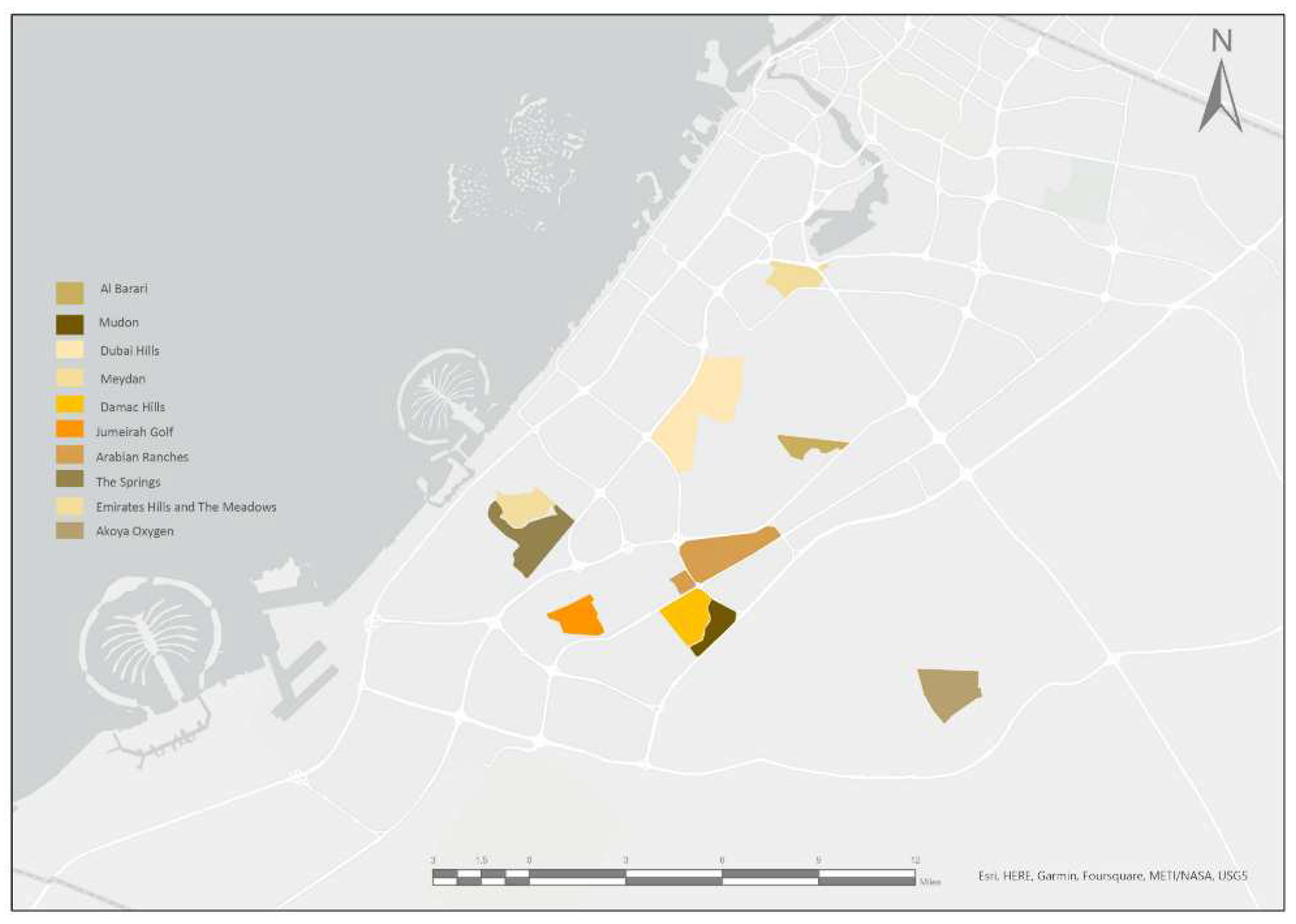
Figure 17.
The provided services in various gated communities.
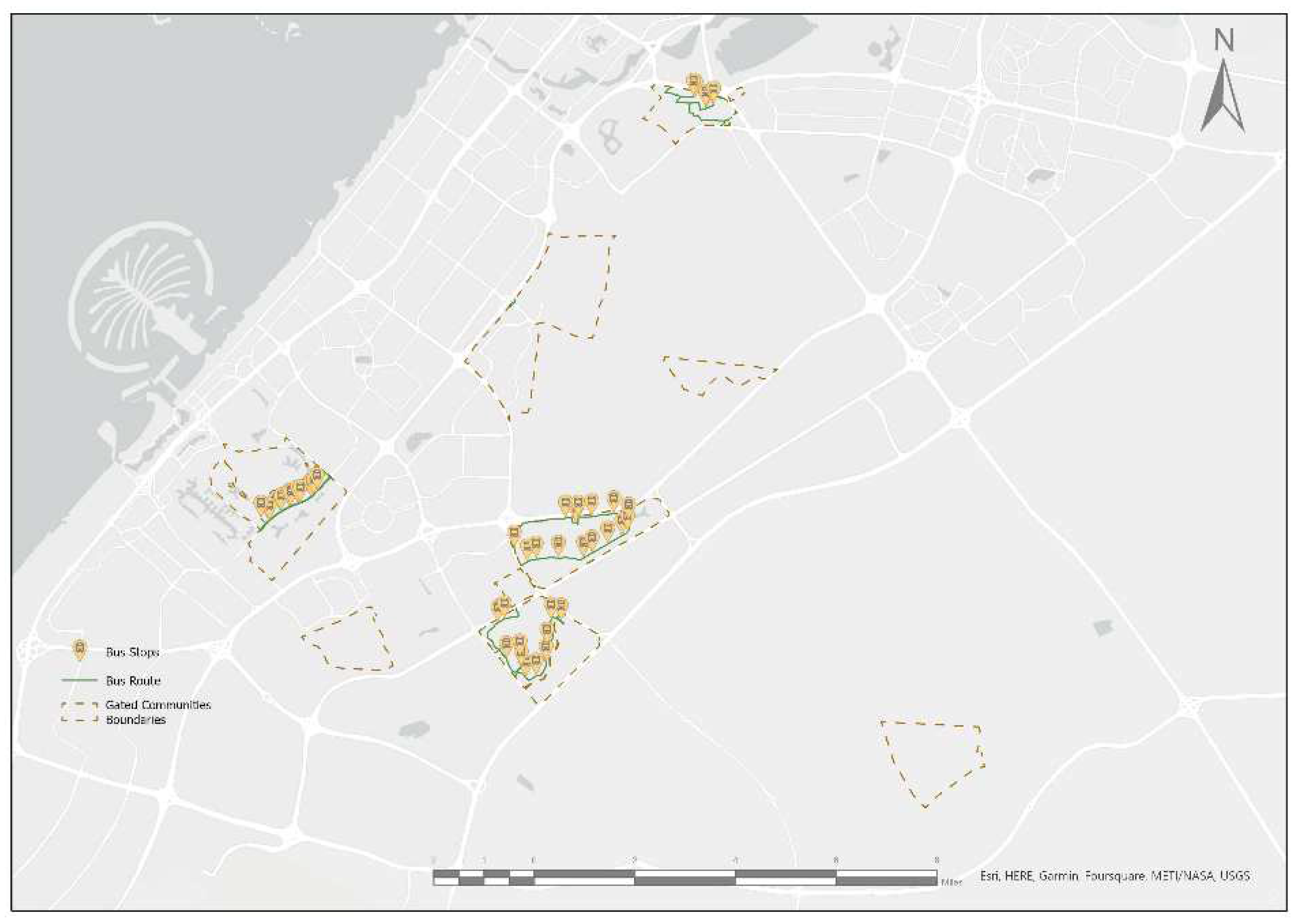
Figure 18.
The Bus stops walkability within 5, 10, and 15 minutes for the Springs and The Meadows.
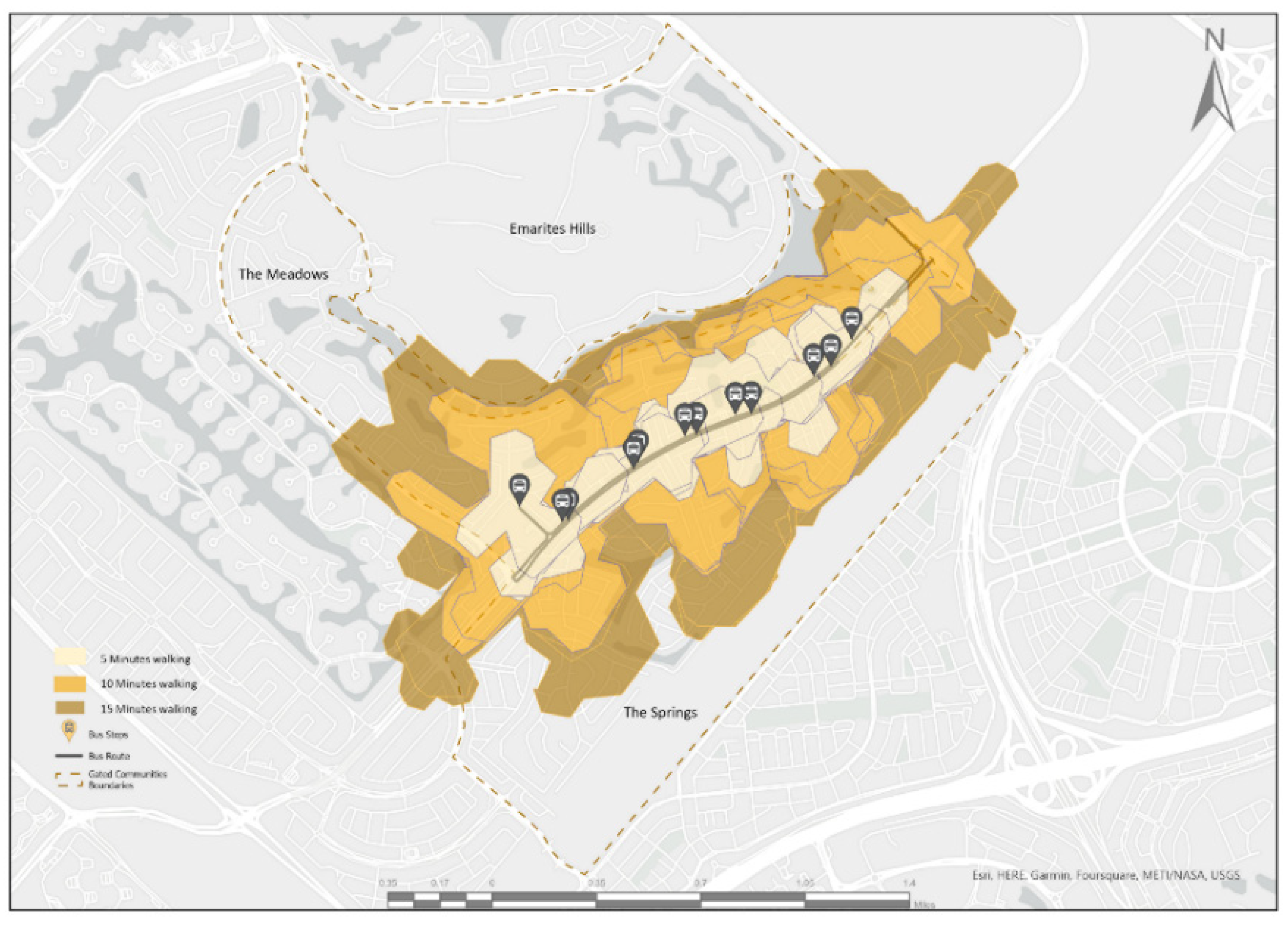
Figure 19.
The Bus stops walkability within 5, 10, and 15 minutes for Al Barari, Arabian Ranches, and Damac Hills.
Figure 19.
The Bus stops walkability within 5, 10, and 15 minutes for Al Barari, Arabian Ranches, and Damac Hills.
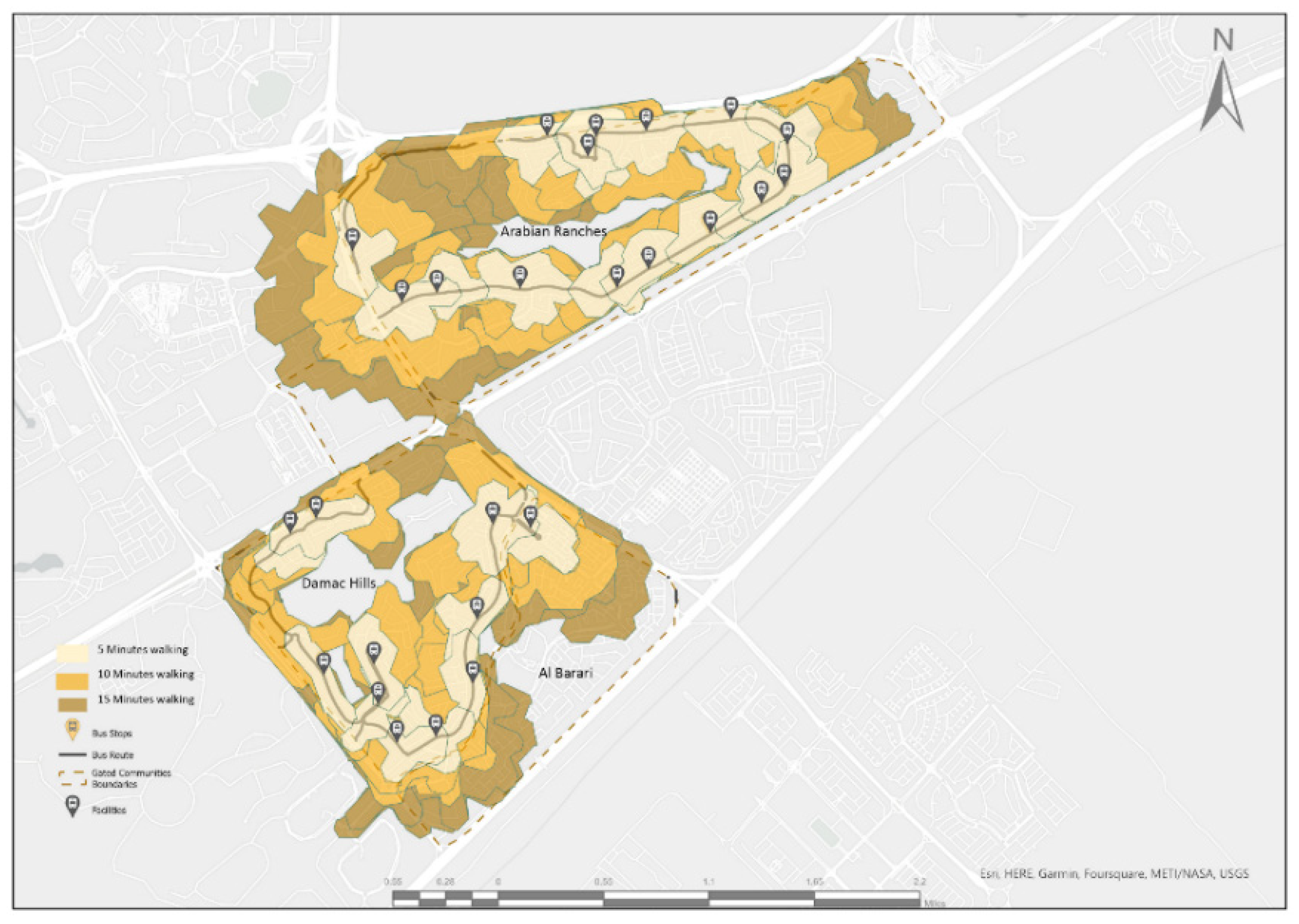
Figure 20.
The Bus stops walkability within 5, 10, and 15 minutes for Meydan.
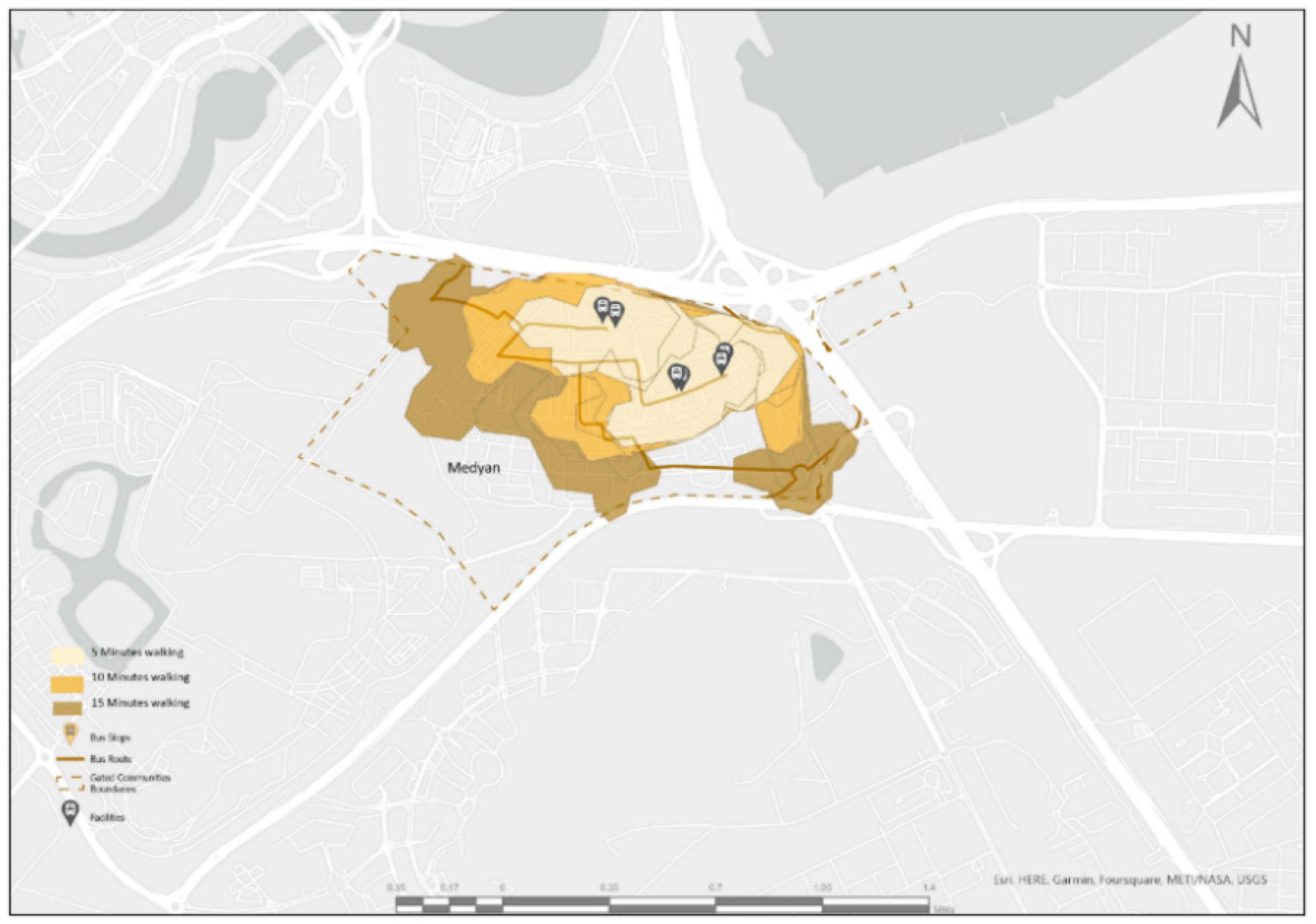

Table 1.
Number of locations for each of the five service categories considered.
| Service Category | Service Name | Bur Dubai | Business Bay |
|---|---|---|---|
| Education Services | Nurseries Elementary Schools Secondary Schools |
17 08 07 |
09 01 01 |
| Religious Services | Mosques Churchs |
24 06 |
01 01 |
| Health Services | Hospitals and Health Centres Pharmacies |
22 23 |
06 11 |
| Social Services | Police Station Post office Bus Stops Groceries |
02 02 161 143 |
00 02 37 14 |
| Entertainment services | Cinemas Sport Facilities Parks |
08 19 04 |
06 10 02 |
Table 2.
The Percentages of the population who have access to each service within three time frames ( 0-5 minutes), (5-10 minutes), and ( 10-15 minutes).
Table 2.
The Percentages of the population who have access to each service within three time frames ( 0-5 minutes), (5-10 minutes), and ( 10-15 minutes).
| 0 - 5m | 5 - 10m | 10-15m | Total Value for each service (0 -15m) |
||||
|---|---|---|---|---|---|---|---|
| Accessible Location | ≥1 | >1 | ≥1 | >1 | ≥1 | >1 | |
| Education Services | |||||||
| Nurseries | 40.1% | 10% | 22.2% | 2% | 35% | 1.2% | 97.3% |
| Elementary schools | 12.3% | 7.2% | 16.1% | 3.2% | 37.9% | 1.3% | 66.3% |
| Secondary schools | 8% | 2.5% | 12.2% | 0.75% | 11.2% | 1.1% | 31.4% |
| Health services | |||||||
| Health centers and Hospitals | 75% | 22% | 17.5% | 4.6% | 6.1% | 2.8% | 98.6% |
| Pharmacies | 25% | 29.6% | 15.9% | 8.9% | 56.5% | 4% | 97.4% |
| Religious Services | |||||||
| Mosques | 16.1% | 9.5% | 14.3% | 2.1% | 38.5% | 5.4% | 68.9% |
| Churches | 2.8% | 0.25% | 7.9% | 0 | 9.4% | 0 | 20.1% |
| Entertainment Services | |||||||
| Cinemas | 9.4% | 12.2% | 14.7% | 3.4% | 32.1% | 15.1% | 56.2% |
| Sport Facilities | 19.2% | 21.5% | 34.1% | 17.6% | 34.5% | 5% | 87.8% |
| Parks | 7.7% | 0 | 16.2% | 0 | 29.1% | .25% | 53% |
| Social Services | |||||||
| Police Station | 3% | 0 | 8.2% | 5.1% | 1.4% | 0 | 12.6% |
| Post office | 4.3% | 6.5% | 5.3% | 7.5% | 8.2% | 2.8% | 17.8% |
| Bus Stops | 79.9% | 83.2% | 16.8% | 52.4% | 3.3% | 44.1% | 100% |
| Groceries | 65.7% | 91.2% | 9.8% | 45.9% | 20.32% | 33.2% | 95.82% |
| Mean Value | 26.32% | 15.44% | 22.74% | 64.50% | |||
Table 3.
The provided services in various gated communities.
| Gated Comunity | School | Nurse ry | Hospit al | Health center | Kids play area | Spa | Golf Course | pools | Other Sports | Cafes | Retails | Post Office | Mosq ues | shopping center |
|---|---|---|---|---|---|---|---|---|---|---|---|---|---|---|
| Arabian Ranches | ✓ | ✓ | ✓ | ✓ | ✓ | ✓ | ||||||||
| Emirates Hills | ✓ | ✓ | ✓ | ✓ | ✓ | ✓ | ✓ | ✓ | ✓ | ✓ | ✓ | ✓ | ||
| Arabian Ranches | ✓ | ✓ | ✓ | ✓ | ✓ | ✓ | ✓ | ✓ | ✓ | ✓ | ✓ | ✓ | ✓ | ✓ |
| Dubai Hills | ✓ | ✓ | ✓ | ✓ | ✓ | ✓ | ✓ | ✓ | ✓ | ✓ | ✓ | ✓ | ||
| The Springs | ✓ | ✓ | ✓ | ✓ | ✓ | ✓ | ✓ | ✓ | ✓ | ✓ | ✓ | ✓ | ✓ | ✓ |
| Akoya Oxygen | ✓ | ✓ | ✓ | ✓ | ✓ | ✓ | ✓ | ✓ | ✓ | |||||
| Al Barari | ✓ | ✓ | ✓ | ✓ | ||||||||||
| Meydan | ✓ | ✓ | ✓ | ✓ | ||||||||||
| Mudon | ✓ | ✓ | ✓ | ✓ | ✓ | ✓ | ✓ | ✓ | ✓ | ✓ | ||||
| Jumeirah Golf | ✓ | ✓ | ✓ | ✓ | ✓ | |||||||||
| The Meadows | ✓ | ✓ | ✓ | ✓ | ✓ | ✓ | ✓ | ✓ | ✓ | ✓ | ✓ |
Table 4.
The Walkability Principles and Their Indicators.
| Principles | Standard Indicators of Walkability | Indicators in Dubai gated communities |
|---|---|---|
| Population Density | Medium population density of 4000-5000 population per Km2 | Gated Communities vary in population density from 2,119 ( the Meadows) to 538 ( Mudon) population per Km2 ( Low density ) [45]. |
| Mix Land Use | (a) Provision of integrated residential, recreational, and civic uses that are basic to everyday life and Diversity of local job opportunities and appropriate workspace (b) Connection to public transportation (c) Provision of housing variety. |
(a) The integration between the residential and recreational facilities is solid and clear. But all the gated communities need more office buildings and workspaces. (b) 45% of the gated communities are within the bus service network (Figure 17). (c) According to [50], the top real estate websites in Dubai are Damac Hills, and Dubai Hills are the only two developments that have a wide range of housing typologies (apartments and Villas). |
| Local Facilities and services | According to(Dubai Municipality Planning Standards [57]: (a) Local mosque has a minimum area of 1800 m2 with a service area of 500 m. (b) Retail facilities have a minimum area of 400 with a service area of 400 m. (c) Post shelter has a minimum area of 35 m2, with a service area of 400 m. (d) The local plaza has a minimum area of 1500 m2, a total minimum area, and a Neighborhood park of 4000 m2. |
(a) The service area of the local mosques ranges from 600 m2 in Arabian ranches to 1000 m2 in Al Barari. (Not matching walkability principles) (b) Applicable only in Arabian Ranches. The Meadows, the springs, Damac Hills, and Dubai Hills are considered only one mega shop ( in some cases mall) to serve the whole community. (c) The service area of the post shelters (when they are available) is different from the walkability standards. (d) Matching the walkability principles in all considerable gated communities. |
| Accessibility | (a) Provision of amenities and public transportation nodes within a walkable distance and accessibility to public transportation. (b) Provision of street furniture, such as soft scape, shading devices, etc. (c) Accessible buildings and spaces for kids, special needs, women, and elderly people. |
(a) Only some of the transportation nodes( when available) are within 15 minutes of walking distance (Figure 18, Figure 19 and Figure 20). (b) All of the neighborhood plazas are provided with benches, and a few of them with shading devices. (c) The retail facilities provide special parking for elderly and people with disabilities. |
| Safety | (a) Provision of pedestrian sidewalks, crosswalks, and barriers (b) The minimum sidewalk width, streetlights, availability of traffic calming, and speed limit (c) Providing an eye on the street concept through having an active street façade and rooms with street view. |
(a) The majority of interior roads within the Gated communities’ boundaries consist of walking lanes and pedestrian paths to cross them. (b) All the standards of the sidewalks are provided on the interior roads. (c) The visibility and having a street view are available through providing windows and balconies in some cases to the upper floor level in the cases of the villas and apartments. In some cases (Emirates hills and The springs) provide views to the artificial water lakes. |
| Integration and Highrachy | (a) Connection housing clusters (houses are interconnected with other clusters, neighborhood center, surrounding area, and the city) (b) Street capacity intersection density |
(a) Cluster and Neighborhood levels are well-defined and connected with the different levels of road hierarchy. (b) Streets capacity is strong among the residents without facing daily traffic issues. |
Disclaimer/Publisher’s Note: The statements, opinions and data contained in all publications are solely those of the individual author(s) and contributor(s) and not of MDPI and/or the editor(s). MDPI and/or the editor(s) disclaim responsibility for any injury to people or property resulting from any ideas, methods, instructions or products referred to in the content. |
© 2023 by the authors. Licensee MDPI, Basel, Switzerland. This article is an open access article distributed under the terms and conditions of the Creative Commons Attribution (CC BY) license (http://creativecommons.org/licenses/by/4.0/).
Copyright: This open access article is published under a Creative Commons CC BY 4.0 license, which permit the free download, distribution, and reuse, provided that the author and preprint are cited in any reuse.


