
Submitted:
28 August 2023
Posted:
29 August 2023
You are already at the latest version
Abstract
Induction heating (IH) technology is widely recognized and utilized in residential applications due to its high efficiency and safe operating characteristics. Resonant inverter circuits are widely used in IH systems because of their high efficiency and ability to perform soft-switching. Among the various resonant inverters used in IH systems, the single-switch quasi-resonant (SSQR) inverter topology is typically preferred for low-cost and low-output-power applications. Despite its cost advantage, the SSQR topology has a relatively narrow soft-switching range, which can be unstable depending on the electrical parameters of the load and the resonant converter circuit. Accurately determining the capacitance value of the resonant capacitor and the inductance value of the induction coil, which are the key circuit elements of the SSQR induction cooker, is crucial for designing a reliable, efficient, and durable cooking system. In other words, there exists a critical relationship between the resonant converter circuit parameters, load characteristics, and safe operating conditions. Additionally, when considering closed-loop control methods used for power control and safety, selecting appropriate resonant circuit elements becomes vital in ensuring both reliable and efficient operation. This paper focuses on a novel and simplified design method for the SSQR inverter utilized in household appliances. The proposed method and its advantages in terms of the safe operating area of the switch are theoretically investigated and verified through simulations and prototype circuits.
Keywords:
Home appliances
; induction cooking systems
; induction cooker design
; resonant converter circuit parameters
; single switch quasi resonant inverter
1. Introduction
Induction heating systems have gained significant popularity in industrial, domestic, and medical applications over the past few decades due to their notable features including user safety, efficient and rapid heating, and easy maintenance [1,2,3,4]. The advancements in power electronics as well as electronics have contributed to the progress of induction technology [5,6,7,8]. In domestic induction cooking appliances, one or more induction coils are positioned beneath a vitro ceramic glass surface to heat up pans placed on top of it [9,10,11]. The induction coil is supplied with an alternating current, generating a magnetic field at the same frequency as the coil current in order to heat the pan. This heating process occurs through the induction surface by inducing eddy currents in the pan [2,12]. The main components of induction heating systems consist of a rectifier unit for AC-DC conversion and resonant inverter units [13,14]. Figure 1 illustrates a general power-transfer loop for domestic appliances.
Power converters, which are a crucial component of Induction heating systems, employ either single-stage or double-stage structures [15]. Double-stage systems involve both AC to DC and DC to AC conversions within IH systems [13,14]. In contrast, single-stage AC to AC systems lack a rectifier stage. These systems can be categorized into two groups: those that directly convert the input AC voltage and those that boost it.
Furthermore, Induction heating systems are composed of either single or multiple loads/coils. In the past years, single coil systems have been extensively utilized in both industrial and domestic induction applications. Recent advancements in multiple output induction heaters suggest enhancing performance through adjustable cooking surfaces [16,17,18]. The selection of different coil models depends on factors such as design requirements, cost, output power, and hob geometry. Various approaches are employed to configure cooking surfaces based on the pan size and coil design [16,19]. While pans made of ferromagnetic material are commonly used as loads, recent studies have also explored heating pans made of all metal materials [20,21,22,23,24].
Different resonant inverter topologies have been proposed based on the trade-off between cost and performance, which needs to be evaluated for each specific application. The most common inverter topologies in induction heating (IH) systems are half-bridge series resonant (HBSR) [25,26,27,28] and single-switch quasi-resonant (SSQR) [29,30,31] inverters. The SSQR inverter topology provides a reliable solution for low-power and low-cost IH applications. However, the main drawback of the quasi-resonant inverter circuit is its inability to control the power transferred to the load in a frequency-controlled manner, as in HBSR inverter circuits. This limitation stems from the fact that the working modes of the SSQR inverter switch between and circuits [11,32]. Consequently, closed-loop control algorithms are employed to determine the turn-on and turn-off times of the semiconductor switch.
In IH systems utilizing SSQR inverters, a significant correlation exists among the resonant converter circuit, load parameters, current and voltage limits of the semiconductor switch, turn-on and turn-off times of the semiconductor switch, and closed-loop power control methodologies. Furthermore, when assessed in conjunction with the closed-loop control techniques employed for power regulation and safety purposes, the selection of resonant circuit elements assumes critical importance in guaranteeing a reliable and efficient operation.
Coil equivalent inductance and resistance values, which form the electrical model of the system comprising the coil and the pan, are challenging to determine during the modeling of resonant circuit elements. Additionally, these values are subject to variations based on factors such as the operating frequency of the resonant circuit, ambient temperature, and air gap between the pan and the coil. As a result, there exists a wide range of academic research focusing on pan and load recognition [11,29,33,34,35,36]. However, the design of the coil itself necessitates a comprehensive academic investigation. Numerous studies have been conducted on coil design, particularly in the context of magnetic fields [37,38,39].
The wide range of electrical loads associated with pans used in domestic induction hob applications with SSQR inverters allows for customization of the electrical circuit parameters based on user preferences. Furthermore, the heat generated in the pan affects the values of circuit variables such as resistance and inductance, and potential variations due to the electrical network necessitate certain assumptions to be made in the design of the heating system with SSQR inverter.
In [40,41], a Class E inverter design utilizing one inductor and one capacitor is presented. During the initial stages of the design, semiconductor losses are disregarded, and it is assumed that the pan resistance remains constant. Additionally, the coil design precedes the circuit design, and the equivalent inductance () and equivalent resistance () values are determined based on the operating frequency (). Similarly, in [42], prior to the implementation of the related design, the input voltage (), work coil parameters (), water mass (), and required boiling time () must be defined. In [43], the design process requires the specification of inverter output power (P), DC input voltage (), resonant frequency (), as well as various other load and coil parameters. In [44], the inductance value is calculated based on the number of turns N, wire diameter W, and space S between consecutive turns. In [45], the finite-element method is employed, utilizing the coil's geometry. It is noted that the inductance value varies due to the physical interaction between the coil and the ferromagnetic pan; however, there is no provided data regarding the specific inductance value for the pan.
As a result, the studies briefly mentioned above require that critical information such as coil geometry, coil design and coil inductance value must be defined before starting the circuit design, by making some assumptions. However, while designing the SSQR inverter system, it is very important to determine the coil inductance value, as in other converter designs. In other words, the purpose of the design is to determine the coil inductance value to be used in the SSQR inverter. Defining a certain value for coil inductance before starting the design will complicate the circuit design process and prolong the process of obtaining output values such as current, voltage and power at desired values.
Also, in practical circuit design applications, using the inductance value as an input parameter may not be as practical as described in the references provided. From this point of view, the proposed method provides a feasible design approach for initial conditions where the critical circuit parameters of the resonant circuit, namely coil inductance , equivalent circuit resistance and resonant circuit capacitor value are not known, by utilizing the energy desired to be transferred to the coil inductor.
Input parameters such as the mains input voltage , the output power P to be transferred to the pot and the switching times of the semiconductor are determined before the design phase. Then all circuit parameters including , and can be determined using the proposed calculation method. In this way, it is aimed to create a reference method especially for practitioners who are new to SSQR design.
The rest of the manuscript is structured as follows: In Section II, the circuit description of the SSQR inverter converter is explained. In Section III, the detailed proposed design method of SSQR inverter is summarized. Section IV shows the calculation, simulation, and experimental results, respectively. The conclusion of this study is outlined in Section V.
2. Circuit Description
The circuit diagram and schematic of the single-switch quasi-resonant inverter, along with its primary operational waveforms, are presented in Figure 2 and Figure 3, respectively. The circuit schematic comprises a semiconductor switch denoted as , a freewheeling diode labeled , an equivalent resistance represented by , an equivalent inductance designated as , and a resonance capacitor denoted as . Upon the activation of the T switch, the circuit behaves analogously to a series circuit. During this phase, the coil accumulates energy through the resistance over a duration labeled as . Throughout the turn-on time, the coil accumulates energy provided by the primary voltage source .
When the switch is closed, the circuit starts to work as a series circuit. In this configuration, resonance is established between the coil and the capacitor, facilitating energy exchange. The resonance capacitor, , charges to the peak voltage, , and eventually discharges to zero. A short time after the capacitor has completely discharged, the switch is promptly reactivated, in accordance with references [1,46,47].
2.1. Circuit Operating Modes – Waveform Equations
The operational modes of the single-switch resonant inverter, depicted in Figure 4, are examined across four primary operational stages. The conduction period of the semiconductor, denoted as , is mathematically modeled as a series circuit incorporating components and . Simultaneously, the time interval , characterized by resonance interactions between and , is subjected to analysis as a series RLC circuit. Lastly, the conduction duration of the freewheeling diode, , is depicted through a series circuit model. Owing to the behavior of the single-switch resonant inverter as a series circuit during states 2 and 3 among the four operational states, and as a series circuit during states 1 and 4, the associated circuit is evaluated in the time domain as opposed to the frequency domain.
Throughout the analysis, particular attention is directed towards steady-state analysis, with a focus on the initial operational stage. Potential phenomena like resonance capacitor discharge current and analogous transient states are deliberately disregarded for the sake of analytical simplicity.
Stage I This interval commences with the initiation of the semiconductor under zero voltage conditions (ZVT) and persists until the switch deactivates. Regarding the operation of the circuit, the subsequent equations can be formulated as illustrated in equations (1)-(3).
Stage II-III This interval initiates with the deactivation of the semiconductor, and the resonance phenomenon between and is scrutinized through analysis as a series circuit. Furthermore, the subsequent equations can be established to characterize the current , as depicted in equations (4)-(7).
Furthermore, the mentioned equations, along with the circuit equations (8)-(11), can be employed to compute the switch collector-emitter voltage as illustrated in Figure 3.
Stage IVThis interval initiates with the activation of the diode, which is connected in anti-parallel to the power switch. As depicted in Figure 3, the dissipation of current or energy through the source is managed by a power diode. Regarding the operation of the circuit, the ensuing equations can be formulated as demonstrated in equations (12)-(15). The duration of diode current conduction, , and the peak diode current are denoted as .
2.2. Safe Operating Area for Quasi Resonant Inverter
From the provided first- and second-order circuit equations, it is evident that the precise determination of values hold paramount importance for ensuring the secure operational conditions of quasi-resonant induction heating applications. The chief threats to safe functionality within power electronic circuits encompass both elevated voltage and current surpassing the maximum operational thresholds of the employed semiconductors. Although all constituents of electronic circuits can be influenced by overcurrent and overvoltage stress, semiconductor switches stand out as the most vulnerable elements in inverter applications. Even if excess heat generated by excessive current can be mitigated through enforced cooling methodologies, semiconductors subjected to voltages surpassing their breakdown thresholds can promptly render them non-operational. By employing the PSpice simulation program, variations in the collector-emitter voltage () of the semiconductor switch are assessed across diverse resonant circuit parameter configurations, as visually depicted in Figure 5.
Similarly, discharge currents of the capacitor, frequently observed within quasi-resonant inverter circuits, pose a threat to the reliable operational conditions of both semiconductors and power electronics circuits. These instantaneous currents, also referred to as light load currents, can exceed the nominal maximum current of the semiconductor (or coil current ) by three to four times, resulting in issues such as overheating, stress, and similar challenges. Just like the voltage example, the semiconductor switch current is derived using the PSpice simulation program, contingent upon resonant circuit parameters, as depicted in Figure 6.
Nonetheless, closed-loop power control techniques and the assessment of input parameters play a pivotal role in ensuring dependable operational conditions. When scrutinizing the quasi-resonant inverter, it becomes evident that its operating modes oscillate between and circuits. Consequently, the implementation of closed-loop control methodologies to ascertain the turn-on and turn-off timings of semiconductor switches emerges as indispensable. Depending on the material characteristics, AC supply conditions, and parameters of inverter circuit elements, miscalculations in semiconductor switch turn-on or turn-off times exceeding can swiftly escalate switching losses. This outcome can render the switch inoperative due to either overheating or overvoltage occurrences.
In the next section, a new simplified design method for SSQR inverter used in household appliances is examined.
3. Proposed Design Method For Quasi Resonant Inverter
Before starting the inverter design, the circuit variables that we use as input variables and known before the design should be defined correctly and the related design should be guided by using known circuit variables. In this study, the dc source voltage that obtained as a result of rectified of ac mains voltage, the average input power drawn from the main source, the semiconductor switch turns on time and turn off time variables are used as the initial conditions. The method to be followed in the design can be summarized as follows:
- The dc source voltage , the average input power , the switch turns on time and the switch turn off time variables are defined.
- The maximum value of the coil current is calculated with the help of the relevant circuit equations.
- By detecting the 1st harmonic component of the voltage applied to the resonant circuit, the load resistance is calculated.
- After calculating the load resistance , the equivalent inductance value is calculated with the help of the circuit equations.
- It is determined the of the series circuit with the help of calculated variables.
- The resonant capacitor value is calculated with the help of resonant frequency and inductance value .
- The design is verified by calculating the coil current and capacitor voltage boundary conditions.
3.1. Defining of the Time Intervals and , the Source Voltage and the Input Power :
In order not to operate at the audible frequency value, the operating frequency values of household induction hobs are not preferred below the threshold frequency value [48,49,50]. On the other hand, to increase the switching frequency will increase the switching losses of the used semiconductors [4,48,51].
For these reasons mentioned above, SSQR inverters used in induction cookers are operated in the range of . It should also be noted that SSQR inverter circuits cannot be operated directly with frequency control as with half-bridge inverters. time is determined by controlling the resonance oscillation of the energy transferred to the load during the time. The predefined values for starting in this design study are and . The source voltage is obtained by rectifying the mains voltage, as shown in Figure 7.
The purpose of the capacitor used at the output of the rectifier is to provide the instantaneous currents demanded by the inverter circuit and act as a filter. Therefore, the voltage obtained follows the form of the main. In order to make the calculations easy and understandable, first of all, voltage will be accepted as a voltage source, and then the calculation values will be updated for the case where voltage follows the mains voltage form. The case where the source voltage is the voltage source is shown in Figure 7, and the case where follows the mains voltage form is shown in Figure 8. Finally, the predefined average source power for this design study is defined as .
3.2. Calculation of the Maximum Coil Current :
In the case of quasi resonant inverter circuit operating in operating mode, the coil current equals the semiconductor switch current (). When the operating states of the quasi-resonant inverter circuit are examined, finding the maximum value of the switch current means finding the approximate maximum value of the coil current .
When the source voltage is considered constant as the voltage source, the power-time graph becomes the multiplier of the current-time graph. The switch current and input power graphs as a function of time are shown in Figure 9 and Figure 10 respectively. The variation of circuit switch current with time depends on the values of and and is defined by equation (18) in case .
From equation (18) it is clear that the graphs of and cannot be linear and will behave variably depending on the circuit values. However, since the resistance values created by the pots used in induction heated cookers in the primary circuits are in the range of , accepting these graphs as linear will be very useful for finding the current. For the case where the average power transferred to the circuit is defined as and the instantaneous maximum power is defined as , the following equation is obtained with the help of Figure 10.
As a result of equation (19), value can be easily calculated (20).
On the other hand, for the case where the source voltage follows the mains voltage form, let's define the switch current and power variables as shown below:
→
→
→
→
Equation (21) is written for the case where the average power drawn from the source during the interval is accepted as , and the average power drawn from the source only at the time of π/2 is accepted as .
And then the equation (21) is simplified, equation (22) is obtained.
When the equations (19) and (20) are rearranged,
As can be easily seen from the equations (23) and (24), the switch current and the instantaneous maximum power value to be obtained for the case where the source voltage follows the mains voltage will increase by compared to the case where the source voltage is . This is because the same value is desired to be drawn from the source, regardless of the source voltage form.
3.3. Calculation of Value by Determining the 1st Harmonic Component of The DC Voltage:
Assuming that the resonant circuit current is sinusoidal, the 1st harmonic component of the voltage applied to the resonant circuit is obtained. In this way, the value of resistance is reached by using the maximum value of the resonant circuit current. According to the Fourier theorem, any practical periodic function with an angular frequency of can be expressed as an infinite sum of sine or cosine functions that are integer multiples of [52]. Thus, can be expressed as:
The value is the mean value of the function and is indicated by the below equation.
The variation of voltage applied to the quasi-resonant circuit as a function of time is shown in Figure 11. The value of is found with the help of equation (26) so that the value is the period of the function.
And then, and values of the related voltage waveform will be found respectively.
In (30) is the amplitude value of the 1st harmonic component of the function. And so, the next steps are to find the amplitude, in other words, the peak value of the 1st harmonic component of the voltage applied to the quasi-resonant circuit, and to reach the value by proportioning this value to the maximum value of the coil current .
3.4. Calculation of the Equivalent Inductance Value :
In order to calculate the inductance value, 3 different methods are used, and the results are compared with each other and verified. The first of these is to use the current equation of the series RL circuit, the second is to use the voltage at the inductor ends, and the third is to calculate the inductance value by using the energy accumulated in the inductor.
3.4.1. calculation using series circuit switch current value:
As mentioned earlier, the series circuit switch current as a function of time , depends on the and values and is defined by equation (32) for .
Since the source voltage , equivalent resistance , maximum value of coil current and time information are now known, value can be found by using equation (33).
3.4.2. calculation using inductor voltage value:
Equation (34) is obtained by using Kirchhoff’s voltage law in series circuit.
And also, the voltage at the inductor ends is presented by the below equation (35).
We will also make the linearity assumption that we used when finding the current in the series circuit. The inductance value for this range where the semiconductor switch and coil currents are equal to each other indicated by the below equation.
Although the voltage is constant, the voltage is expressed as (37) for the case where the current is considered linear.
When this expression is substituted in (36), the equation (38) is reached.
3.4.3. calculation using inductor energy value:
The energy accumulated in the inductor is expressed by the equation (39) in terms of inductance and inductor current.
When the area under the graph shown in Figure 10 is integrated, the total energy transferred to the series circuit is found. Assuming the graph as linear (40) is found.
To find the total energy transferred to the inductor, the energy dissipated in the resistor is subtracted from the total energy transferred to the series circuit.
Equation (42) is obtained as a result of equations (40) and (41).
After the energy accumulated in the inductor is reached, equation (43) is used to arrive at the equivalent inductance.
And finally, it is getting the equation (44) by the help of equations (39) and (43).
3.5. Determination The Series RLC Circuit Parameters:
Since the time, which is the turnoff time of the semiconductor switch, is defined and known before the design, and the and values are calculated, the damping coefficient , resonant frequency and damped resonant frequent values of the series circuit can be calculated easily. First, the damped resonant frequency is calculated by using the relationship between the time and the resonant frequency of the series circuit.
And then, the damping coefficient of the series circuit is found by the equation (49).
Finally, the resonant frequency is calculated with the help of the equation (51).
3.6. Calculation of the Resonant Circuit Capacitor Value Inductance Value :
After calculating the resonant frequency and the equivalent inductance values, the resonant circuit capacitance value is found by using equation (52).
3.7. Calculation of Current and Voltage Boundary Conditions of Semiconductor Switch:
Defining boundary conditions for the single switch inverter design is very important. In working stage II and stage III (series circuit mode) the coil current and switch voltage values reach their maximum values. Knowledge about these two parameters is very important and valuable for the designer not only for reliable working conditions but also to control system parameters such as power. As it can be seen from Figure 3 that when the coil current reach its maximum value, the derivation of the current is zero (). As result of this the maximum coil current can be derived by the help of (54)-(56).
Single switch induction cooker’s maximum power level is limited by power switch maximum breakdown voltage level. When the switch voltage reach its maximum value, the current is zero (). As result of this the maximum switch voltage can be derived by the help of (57)-(59).
3.8. The Flowchart of the Proposed Design Method
The flowchart shown in Figure 12 is developed to understand the determining of the and more clearly. It determines the boundary conditions of the semiconductor switch with the help of the same flow chart. If the boundary conditions are not within the defined safe limit values of the semiconductor, the design is started from the beginning.
4. Verification of Proposed Analysis Method
In order to prove the accuracy of the proposed design method, first of all, critical circuit parameter values are calculated using predefined input parameters depending on the design requirements. By using the circuit parameters obtained as a result of the calculation, simulation studies are carried out and the boundary conditions required to ensure reliable operation of the inverter circuit are measured.
4.1. Calculation Results
As a result of the proposed method and calculation tools, a standard design example has been carried out and the calculated results are listed in Table 1. Firstly, the initial values are defined and then the critical circuit elements’ values are calculated. As previously mentioned, the average source power for this design study is defined as the . And also, the switch turn-on and turn-off times are defined as the and . The source voltage is obtained by rectifying the mains voltage.
The critical circuit elements values are calculated as , , and . In addition to circuit parameters and , the current and voltage boundary conditions of the semiconductor switch are calculated to check design reliability. As can be seen from Table 1, depending on the input values defined for this study, the maximum value of the switch voltage is calculated as , and the maximum value of the switch current is calculated as .
4.2. Simulation Results
A simulation prototype circuit has been developed using the predefined and calculated circuit parameters from Table 1, and it is shown in Figure 13. The OrCAD PSpice software program has been used for the simulation, with a particular emphasis on ensuring that the maximum coil current () and maximum switch voltage () values align with the values calculated in the previous section.
When the critical circuit element values obtained from measurement results were directly used in the designed circuit for simulation, some deviations were observed in the and values. The measured switch voltage was found to be instead of the expected , resulting in an error of approximately . Similarly, the maximum coil current, which should have been , was measured as , indicating an error of approximately .
Although the deviation values might be acceptable for many designers, the root cause of the discrepancy has been investigated to continue the simulation studies. It was hypothesized that the deviation arose from the proposed design method, which assumed a linear current-time graph by neglecting the resistance value in the RL operating mode of the SSQR inverter. Based on this assumption, a sweep analysis method has been employed in the relevant simulation program, scanning resistance values between and with a precision of . The resistance value that yielded the same current and voltage values as the calculated ones has been determined. Figure 14 illustrates the graph of the obtained current and voltage values from the scanning process. It has been observed that when a resistance value of was used instead of the calculated resistance value of , the calculated values matched exactly with the simulation results. All the results obtained from the scanning process are presented numerically in Table 2.
To compare the results from the simulation circuit with the application circuit under the same conditions, the coil current () and switch voltage () graphs are separately presented over a 20ms time interval in Figure 15 and Figure 16. The primary advantage of this representation is to provide a comprehensive and detailed understanding of how these variables change over time for those examining the study. By placing the simulation and application circuit results side by side, researchers can directly compare them and assess the accuracy or deviation between the simulated and actual circuit performance. This comparative analysis allows for a better understanding of the similarities and differences, enabling researchers to gain insights into potential factors that may affect the circuit's behavior. Furthermore, by examining the variation of coil current and switch voltage over time, researchers can gain valuable insights into the dynamic behavior of the circuit. This information can be used to optimize the circuit's performance, identify potential issues such as transient spikes or oscillations, and make informed design decisions to ensure the circuit operates within desired parameters.
4.3. Experimental Results
Once the theoretical calculations and simulation studies developed for the calculation of critical circuit parameters are completed, the outputs of the proposed calculation method are tested using a practical application circuit. Before examining the results of the application circuit, it is beneficial to review the technical specifications of the induction coil and the heated pans used in the application circuit. This will facilitate the interpretation of deviations between the practical application results and the theoretical calculations and simulation circuit results.
As described in detail in the introduction of the study, a wide range of pan types are used in household induction cooktops. The electrical effects of these pans on the electronic circuitry are particularly critical due to their ability to change the equivalent resistance and equivalent inductance values. However, it is not feasible to test all possible pan models in practical applications. Therefore, in the experimental implementation of the proposed method, three different pan models with different electrical and magnetic characteristics, as shown in Figure 17, have been used. These pan models include cast iron, stainless steel, and specially designed alloy pans for induction heating.
On the other hand, Table 3 provides the physical and electrical characteristics of the induction coil used in the practical application circuit, as well as the measured equivalent inductance and resistance values when using three different types of pans. In practical application, although an exact match of the calculated resistance and inductance values obtained through the proposed calculation method is not achieved, the feasibility of the proposed method has been demonstrated.
The coil current, the switch voltage and the output power values obtained when using three different pan models are presented in Table 4. In addition, in Table 5, the output results obtained using the calculation, simulation and application circuit for similar conditions are compared. Upon closer examination of Table 5, it is evident that the values obtained through the calculation method closely match the nearest capacitor value used.
However, the different electrical characteristics of the pans used in practical applications make it challenging to directly compare the calculation and application circuits. In practical implementation, a coil current of and a switch voltage of have been measured for a resistance of , while in theoretical calculations and simulation circuit, these values were and , respectively. The deviation is approximately for current and for voltage. The main reason for this discrepancy is the change in the resistance and inductance values measured at the initial conditions when the pan is heated. As a result of these studies, considering the variety of pans used in practical applications, the proposed calculation method is proven to be reliable for initiating the design process.
To compare the results from the simulation circuit with the application circuit under the same conditions, the coil current () and switch voltage () graphs are separately presented over a 20ms time interval in Figure 18 and Figure 19. When comparing these graphs with the results obtained from the simulation circuit in Figure 15 and Figure 16, it is evident that very similar results can be achieved. Also, the detailed waveforms of the coil current and switch voltage are shown in Figure 20. Finally, the experimental setup is shown in Figure 21.
5. Conclusions
This paper is focused on a new design method for SSQR inverter used in household appliances. Before starting the inverter design, the circuit variables that we use as input variables and known before the design should be defined correctly and the related design should be guided by using known circuit variables. In this study, the dc source voltage that obtained as a result of rectified of ac mains voltage, the average input power drawn from the main source, the semiconductor switch turns on time and turn off time variables are used as the initial conditions. In order to prove the accuracy of the proposed design method, first of all, critical circuit parameter values are calculated using predefined input parameters depending on the design requirements. By using the circuit parameters obtained as a result of the calculation, simulation studies are carried out and the boundary conditions required to ensure reliable operation of the inverter circuit are measured.
After the completion of the theoretical background and simulation studies developed for use in critical circuit parameter calculation studies, the outputs of the relevant design method are run with the help of a practical application circuit. The results obtained from the experimental circuit are also compatible with the simulation results. The reliability of the proposed design and calculation method is proven by comparing the data obtained as a result of the simulation and experimental with the data obtained as a result of the calculation.
Author Contributions
Conceptualization, M.O.; methodology, M.O.; validation, M.O.; investigation, M.O.; writing—original draft preparation, M.O.; writing—review and editing, M.O. All authors have read and agreed to the published version of the manuscript.
Funding
This research received no external funding.
Data Availability Statement
No new data were created.
Acknowledgments
This work was supported by the Scientific and Technological Research Council of Turkey and co-financed by the Mamur Technology Systems Research and Development Center under Project 3210188.
Conflicts of Interest
The authors declare no conflict of interest.
References
- W. P. W. KOMATSU, “A simple and reliable class E inverter for induction heating applications,” Int. J. Electron., vol. 84, no. 2, pp. 157–165, Feb. 1998. [CrossRef]
- H. OMORI and M. NAKAOKA, “New single-ended resonant inverter circuit and system for induction-heating cooking apparatus,” Int. J. Electron., vol. 67, no. 2, pp. 277–296, Aug. 1989. [CrossRef]
- T. Tanaka, “A new induction cooking range for heating any kind of metal vessels,” IEEE Trans. Consum. Electron., vol. 35, no. 3, pp. 635–641, 1989. [CrossRef]
- Lucía, P. Maussion, E. Dede, and J. M. Burdío, “Induction heating technology and its applications: Past Developments, current Technology, and future challenges,” IEEE Trans. Ind. Electron., vol. 61, no. 05, pp. 2509–2520, 2014. [CrossRef]
- Lucia, D. Navarro, P. Guillen, H. Sarnago, and S. Lucia, “Deep Learning-Based Magnetic Coupling Detection for Advanced Induction Heating Appliances,” IEEE Access, vol. 7. pp. 181668–181677, 2019. [CrossRef]
- U. Has and D. Wassilew, “Temperature control for food in pots on cooking hobs,” IEEE Trans. Ind. Electron., vol. 46, no. 5, pp. 1030–1034, 1999. [CrossRef]
- C. Ekkaravarodome, P. Charoenwiangnuea, and K. Jirasereeamornkul, “The simple temperature control for induction cooker based on class-E resonant inverter,” in 2013 10th International Conference on Electrical Engineering/Electronics, Computer, Telecommunications and Information Technology, May 2013, pp. 1–6. [CrossRef]
- M. K. Kazimierczuk and S. Wang, “Frequency-domain analysis of series resonant converter for continuous conduction mode,” IEEE Trans. Power Electron., vol. 7, no. 2, pp. 270–279, Apr. 1992. [CrossRef]
- Lucia, H. Sarnago, and J. M. Burdio, “Soft-stop optimal trajectory control for improved operation of the series resonant multi-inverter,” IECON Proc. (Industrial Electron. Conf., pp. 3283–3288, 2014. [CrossRef]
- D. Paesa, C. Franco, S. Llorente, G. Lopez-Nicolas, and C. Sagues, “Adaptive Simmering Control for Domestic Induction Cookers,” IEEE Trans. Ind. Appl., vol. 47, no. 5, pp. 2257–2267, Sep. 2011. [CrossRef]
- M. Ozturk, F. Zungor, B. Emre, and B. Oz, “Quasi Resonant Inverter Load Recognition Method,” IEEE Access, vol. 10, no. August, pp. 89376–89386, 2022. [CrossRef]
- V. Crisafulli and C. V. Pastore, “New control method to increase power regulation in a AC/AC quasi resonant converter for high efficiency induction cooker,” in Proceedings - 2012 3rd IEEE International Symposium on Power Electronics for Distributed Generation Systems, PEDG 2012, 2012, pp. 628–635. [CrossRef]
- H. Sarnago, O. Lucia, A. Mediano, and J. M. Burdio, “A Class-E Direct AC–AC Converter With Multicycle Modulation for Induction Heating Systems,” IEEE Trans. Ind. Electron., vol. 61, no. 5, pp. 2521–2530, May 2014. [CrossRef]
- H. Sarnago, O. Lucia, A. Mediano, and J. M. Burdio, “Direct AC–AC Resonant Boost Converter for Efficient Domestic Induction Heating Applications,” IEEE Trans. Power Electron., vol. 29, no. 3, pp. 1128–1139, Mar. 2014. [CrossRef]
- P. Vishnuram and G. Ramachandiran, “Capacitor-less induction heating system with self-resonant bifilar coil,” International Journal of Circuit Theory and Applications, vol. 48, no. 9. pp. 1411–1425, 2020. [CrossRef]
- H. P. Park, M. Kim, J. H. Jung, and H. S. Kim, “Load adaptive modulation method for all-metal induction heating application,” Conf. Proc. - IEEE Appl. Power Electron. Conf. Expo. - APEC, vol. 2018-March, pp. 3486–3490, 2018. [CrossRef]
- H. Sarnago, O. Lucia, and J. M. Burdio, “Multiple-output ZCS resonant inverter for multi-coil induction heating appliances,” Conf. Proc. - IEEE Appl. Power Electron. Conf. Expo. - APEC, pp. 2234–2238, 2017. [CrossRef]
- Lucia, C. Carretero, D. Palacios, D. Valeau, and J. M. Burdío, “Configurable snubber network for efficiency optimisation of resonant converters applied to multi-load induction heating,” Electron. Lett., vol. 47, no. 17, pp. 989–991, 2011. [CrossRef]
- M. S. Huang, C. C. Liao, Z. F. Li, Z. R. Shih, and H. W. Hsueh, “Quantitative Design and Implementation of an Induction Cooker for a Copper Pan,” IEEE Access, vol. 9. pp. 5105–5118, 2021. [CrossRef]
- S. H. Jeong, J. Il Jin, H. P. Park, and J. H. Jung, “Enhanced load adaptive modulation of induction heating series resonant inverters to heat various-material vessels,” J. Power Electron., vol. 22, no. 6, pp. 1020–1032, 2022. [CrossRef]
- W. Han, K. T. Chau, W. Liu, X. Tian, and H. Wang, “A Dual-Resonant Topology-Reconfigurable Inverter for All-Metal Induction Heating,” IEEE J. Emerg. Sel. Top. Power Electron., vol. 10, no. 4, pp. 3818–3829, 2022. [CrossRef]
- S. R. Ramalingam, C. S. Boopthi, S. Ramasamy, M. Ahsan, and J. Haider, “Induction heating for variably sized ferrous and non-ferrous materials through load modulation,” Energies, vol. 14, no. 24, 2021. [CrossRef]
- J. Jin, M. Kim, J. Han, K. Kang, and J. H. Jung, “Input voltage selection method of half-bridge series resonant inverters for all-metal induction heating applications using high turn-numbered coils,” J. Power Electron., vol. 20, no. 6, pp. 1629–1637, 2020. [CrossRef]
- E. Jang, S. M. Park, D. Joo, H. M. Ahn, and B. K. Lee, “Analysis and Comparison of Topological Configurations for All-Metal Induction Cookers,” J. Electr. Eng. Technol., vol. 14, no. 6, pp. 2399–2408, 2019. [CrossRef]
- H. Sarnago, Ó. Lucía, A. Mediano, and J. M. Burdío, “Analytical Model of the Half-Bridge Series Resonant Inverter for Improved Power Conversion Efficiency and Performance,” IEEE Trans. Power Electron., vol. 30, no. 8, pp. 4128–4143, 2015. [CrossRef]
- H. I. Hsieh, C. C. Kuo, and W. Te Chang, “Study of half-bridge series-resonant induction cooker powered by line rectified DC with less filtering,” IET Power Electron., 2023. [CrossRef]
- H. Sarnago, P. Guillén, J. M. Burdío, and O. Lucia, “Multiple-Output ZVS Resonant Inverter Architecture for Flexible Induction Heating Appliances,” IEEE Access, vol. 7, pp. 157046–157056, 2019. [CrossRef]
- H. W. Koertzen, J. D. van Wyk, and J. A. Ferreira, “Design of the half-bridge, series resonant converter for induction cooking,” PESC Rec. - IEEE Annu. Power Electron. Spec. Conf., vol. 2, pp. 729–735, 1995. [CrossRef]
- N. Altintas, M. Ozturk, and U. Oktay, “Performance evaluation of pan position methods in domestic induction cooktops,” Electr. Eng., 2023. [CrossRef]
- Hirota, H. Omori, K. A. Chandra, and M. Nakaoka, “Practical evaluations of single-ended load-resonant inverter using application-specific IGBT and driver IC for induction-heating appliance,” in Proceedings of 1995 International Conference on Power Electronics and Drive Systems. PEDS 95, pp. 531–537. [CrossRef]
- Sheikhian, N. Kaminski, S. Voß, W. Scholz, and E. Herweg, “Optimisation of Quasi-resonant Induction Cookers,” 2013 15th Eur. Conf. Power Electron. Appl. EPE 2013, 2013. [CrossRef]
- M. Ozturk and N. Altintas, “Multi-output AC–AC converter for domestic induction heating,” Electr. Eng., vol. 105, no. 1, pp. 297–316, Feb. 2023. [CrossRef]
- J. Villa, D. Navarro, A. Dominguez, J. I. Artigas, and L. A. Barragan, “Vessel Recognition in Induction Heating Appliances - A Deep-Learning Approach,” IEEE Access, vol. 9. pp. 16053–16061, 2021. [CrossRef]
- E. Spateri, F. Ruiz, and G. Gruosso, “Modelling and Simulation of Quasi-Resonant Inverter for Induction Heating under Variable Load,” Electron., vol. 12, no. 3, 2023. [CrossRef]
- Zheng-Feng Li, Jhih-Cheng Hu, Ming-Shi Huang, Yi-Liang Lin, Chun-Wei Lin, and Yu-Min Meng, “Load Estimation for Induction Heating Cookers Based on Series RLC Natural Resonant Current.” doi: 10.3390/en15041294.
- H. Sarnago, O. Lucía, and J. M. Burdio, “A Versatile Resonant Tank Identification Methodology for Induction Heating Systems,” IEEE Trans. Power Electron., vol. 33, no. 3, pp. 1897–1901, Mar. 2018. [CrossRef]
- J. Acero, J. M. Burdío, L. A. Barragán, and R. Alonso, “A model of the equivalent impedance of the coupled winding-load system for a domestic induction heating application,” IEEE Int. Symp. Ind. Electron., no. 1, pp. 491–496, 2007. [CrossRef]
- J. Acero, O. Lucia, C. Carretero, I. Lope, and C. Diez, “Efficiency improvement of domestic induction appliances using variable inductor-load distance,” in 2012 Twenty-Seventh Annual IEEE Applied Power Electronics Conference and Exposition (APEC), Feb. 2012, pp. 2153–2158. [CrossRef]
- H. Okuno, H. Yonemori, and M. Kobayashi, “Relation of gap length and resonant frequency about a double-coil drive type IH cooker,” in 2008 15th IEEE International Conference on Electronics, Circuits and Systems, Aug. 2008, pp. 65–68. [CrossRef]
- P. Charoenwiangnuea, C. Ekkaravarodome, I. Boonyaroonate, P. Thounthong, and K. Jirasereeamornkul, “Design of domestic induction cooker based on optimal operation class-E inverter with parallel load network under large-signal excitation,” J. Power Electron., vol. 17, no. 4, pp. 892–904, 2017. [CrossRef]
- P. Charoenwiangnuea, S. Wangnipparnto, and S. Tunyasrirut, “Design of A Class-E Direct AC-AC Converter with Only One Capacitor and One Inductor for Domestic Induction Cooker,” in 2021 18th International Conference on Electrical Engineering/Electronics, Computer, Telecommunications and Information Technology (ECTI-CON), May 2021, pp. 679–682. [CrossRef]
- S. Yilmaz, B. S. Sazak, and S. Cetin, “Design and implementation of web-based training tool for a single switch induction cooking system using PHP,” Elektron. ir Elektrotechnika, no. 3, pp. 89–92, 2010, [Online]. Available: https://www.semanticscholar.org/paper/Design-and-Implementation-of-Web-Based-Training-for-Yilmaz-Sazak/d44d3831c3d6722cf80422afd7a4eabaf1f091f9.
- B. S. Sazak, “Design of a 500W Resonant Induction Heater,” Pamukkale Univ. J. Eng. …, pp. 1–12, 2011, [Online]. Available: https://www.researchgate.net/publication/267858491_DESIGN_OF_A_500W_RESONANT_INDUCTION_HEATER.
- H. Zeroug, T. M. Leulmi, M. M. Lograda, and N. Tadrist, “Design and development of IGBT resonant inverters for domestic induction heating applications,” in 6th IET International Conference on Power Electronics, Machines and Drives (PEMD 2012), 2012, pp. F22–F22. [CrossRef]
- L. Meng, K. Wai, E. Cheng, S. Member, and K. W. Chan, “Systematic Approach to High-Power and Energy-Efficient Industrial Induction Cooker System : Circuit Design , Control Strategy , and Prototype Evaluation,” vol. 26, no. 12, pp. 3754–3765, 2011.
- H. Terai et al., “Comparative Performance Evaluations of IGBTs and MCT in Single-Ended Quasi-Resonant Zero Voltage Soft Switching Inverter,” no. 1, pp. 2178–2182.
- H. Omori, H. Yamashita, M. Nakaoka, and T. Maruhashi, “A novel type induction-heating single-ended resonant inverter using new bipolar Darlington-Transistor,” in 1985 IEEE Power Electronics Specialists Conference, Jun. 1985, pp. 590–599. [CrossRef]
- Millán, D. Puyal, J. M. Burdío, O. Lucía, and C. M. De Luna, “IGBT Selection Method for the Design of Resonant Inverters for Domestic Induction Heating Keywords Method to measure the power losses,” vol. 1.
- J. Acero et al., “The domestic induction heating appliance: An overview of recent research,” in 2008 Twenty-Third Annual IEEE Applied Power Electronics Conference and Exposition, Feb. 2008, pp. 651–657. [CrossRef]
- T. Nishida, S. Moisseev, E. Hiraki, and M. Nakaoka, “Duty Cycle Controlled Soft Combutation High Frequency Inverter for Consumer Induction Cooker and Steaimer,” pp. 1846–1851, 1846.
- V. Crisafulli and M. Antretter, “Design considerations to increase power density in induction cooking applications using the new Field stop II technology IGBTs,” PCIM Eur. 2015; Int. Exhib. Conf. Power Electron. Intell. Motion, Renew. Energy Energy Manag. Proc., no. May, pp. 19–21, 2015.
- M. N. O. S. Charles K. Alexander, Fundamentals of Electric Circuits, 7th Editio. McGraw-Hill Education,.
Figure 1.
General power transfer loop.
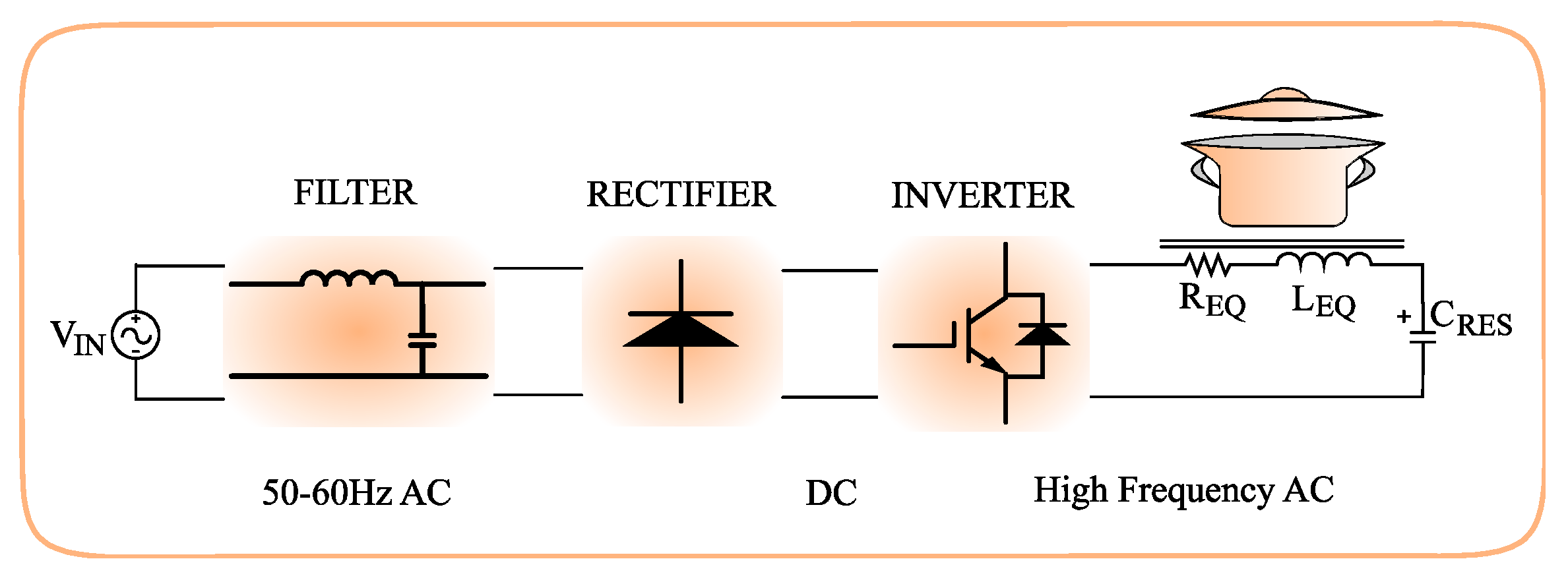
Figure 2.
Single switch inverter (a) circuit diagram (b) circuit schematic.
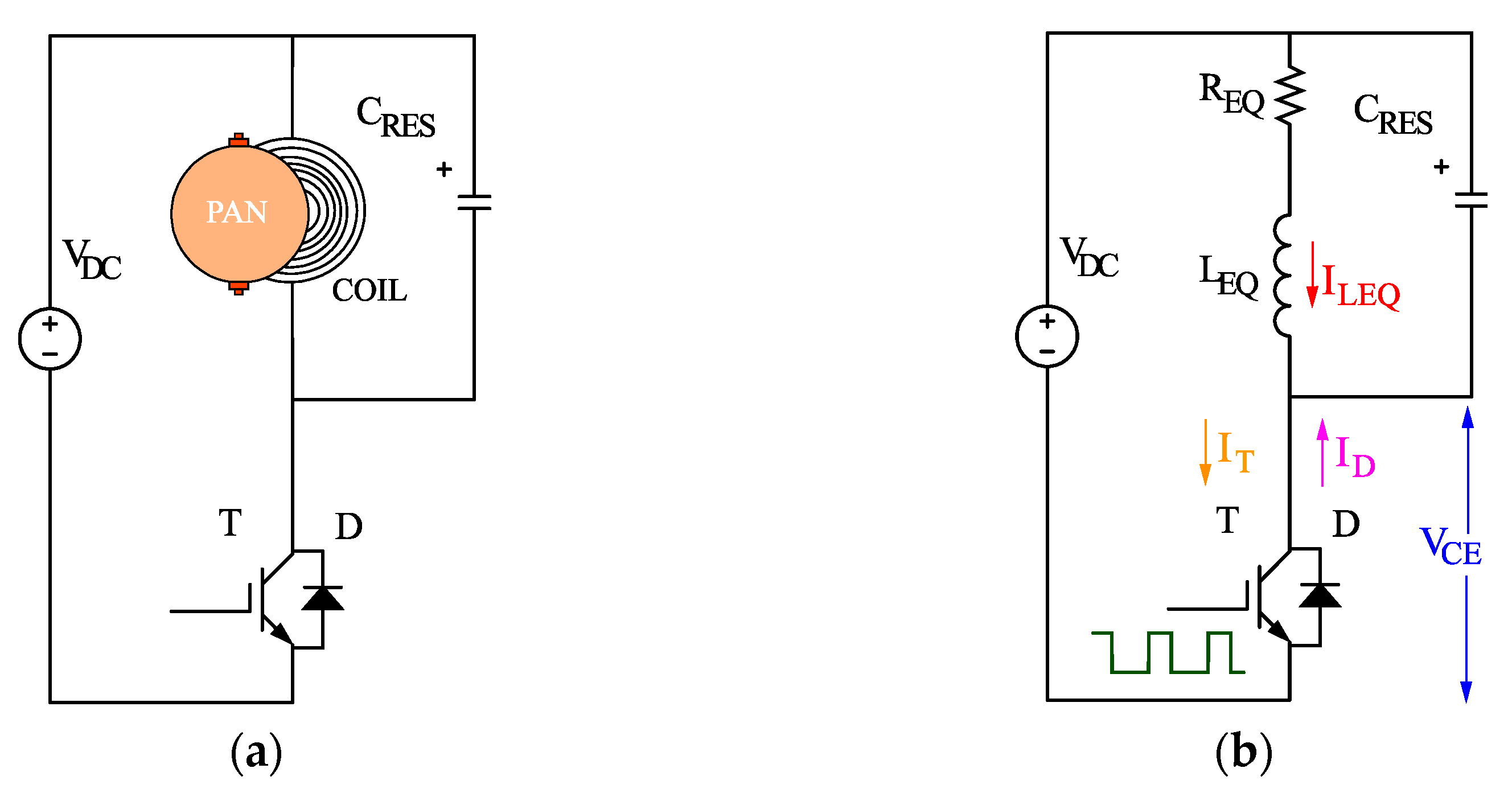
Figure 3.
General power transfer loop.
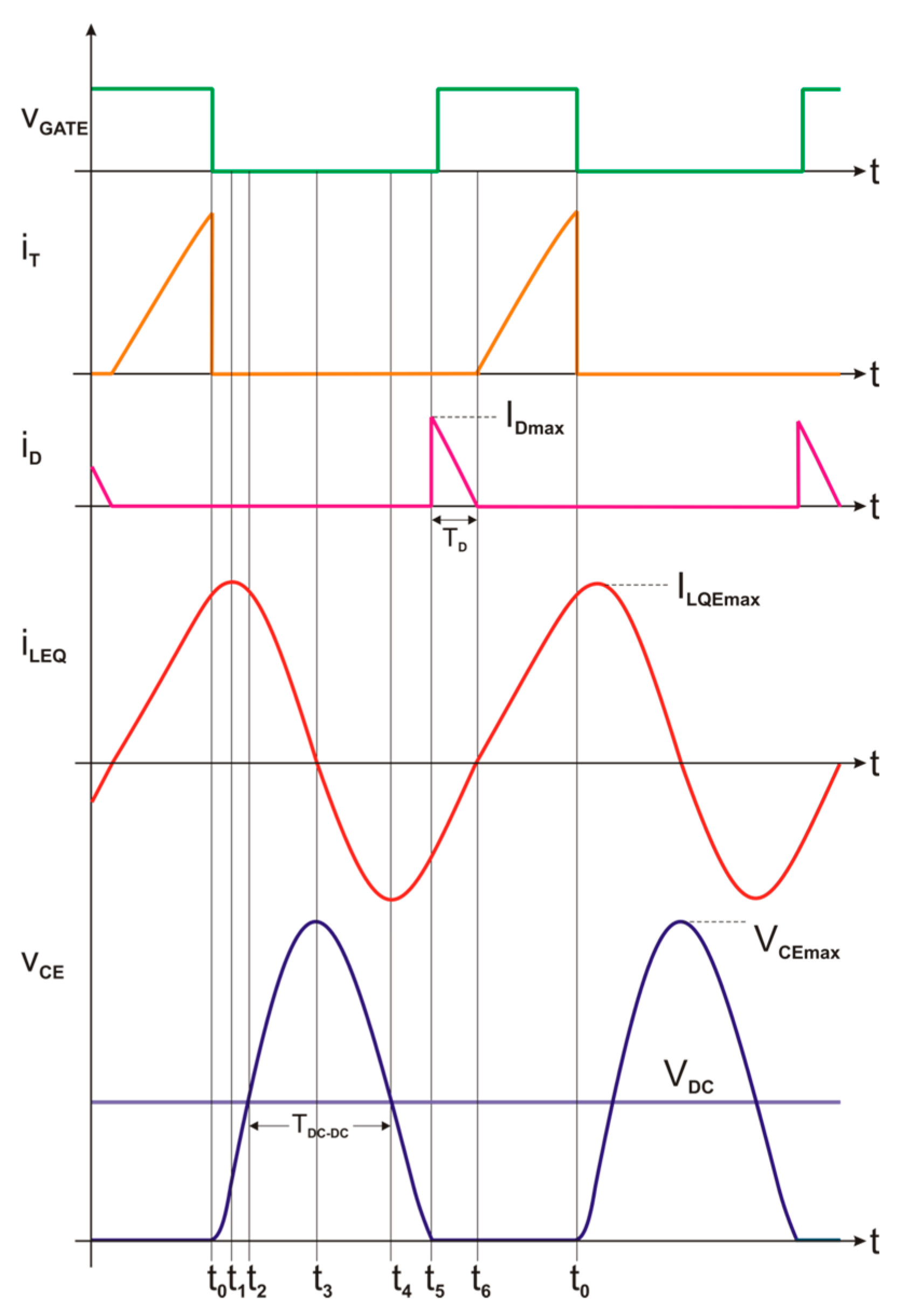
Figure 4.
Circuit operating modes of single switch inverter.
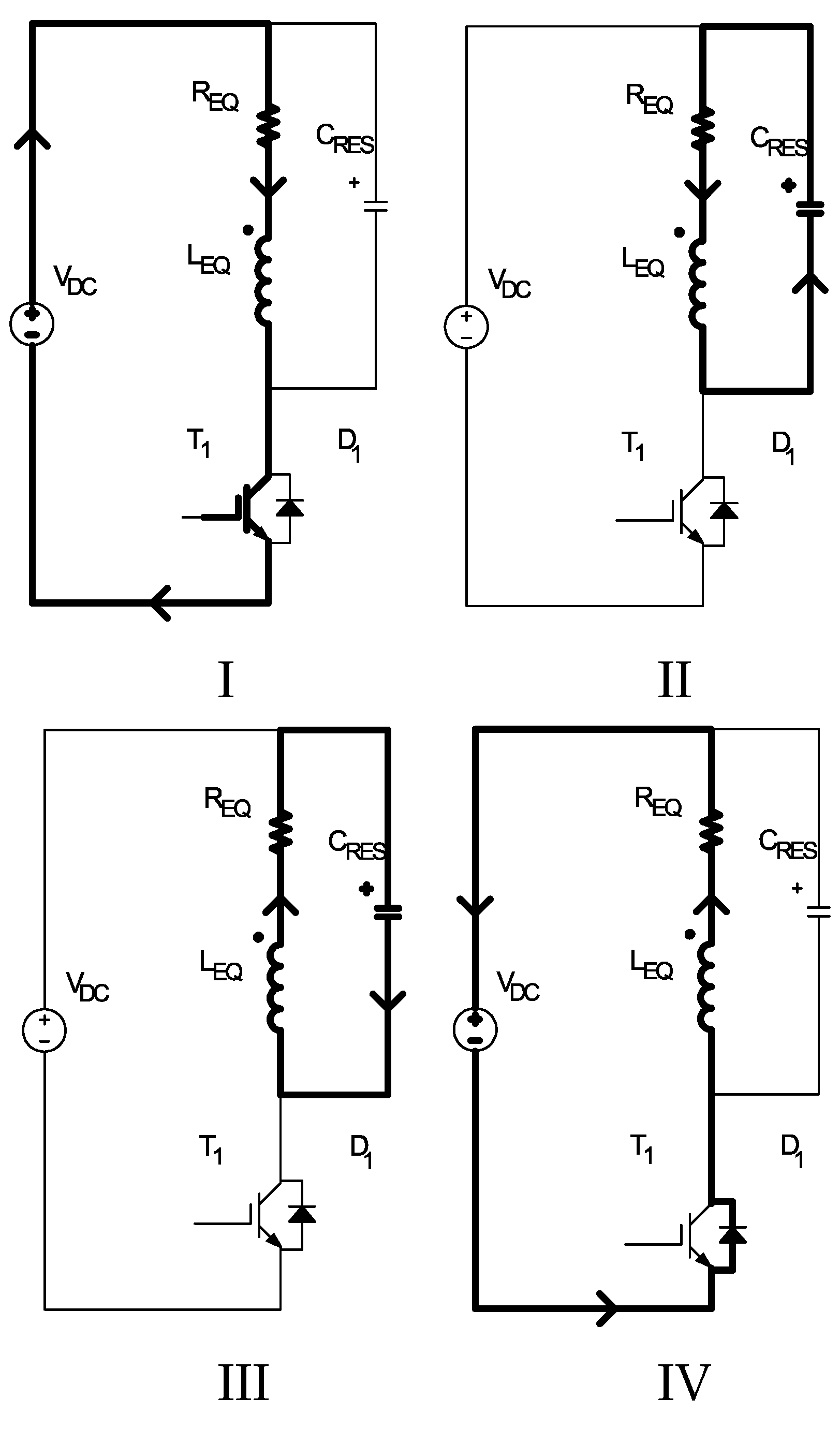
Figure 5.
voltage value variances in PSpice. (a) , and depending on values. (b) , and depending on values. (c) , depending on values.
Figure 5.
voltage value variances in PSpice. (a) , and depending on values. (b) , and depending on values. (c) , depending on values.
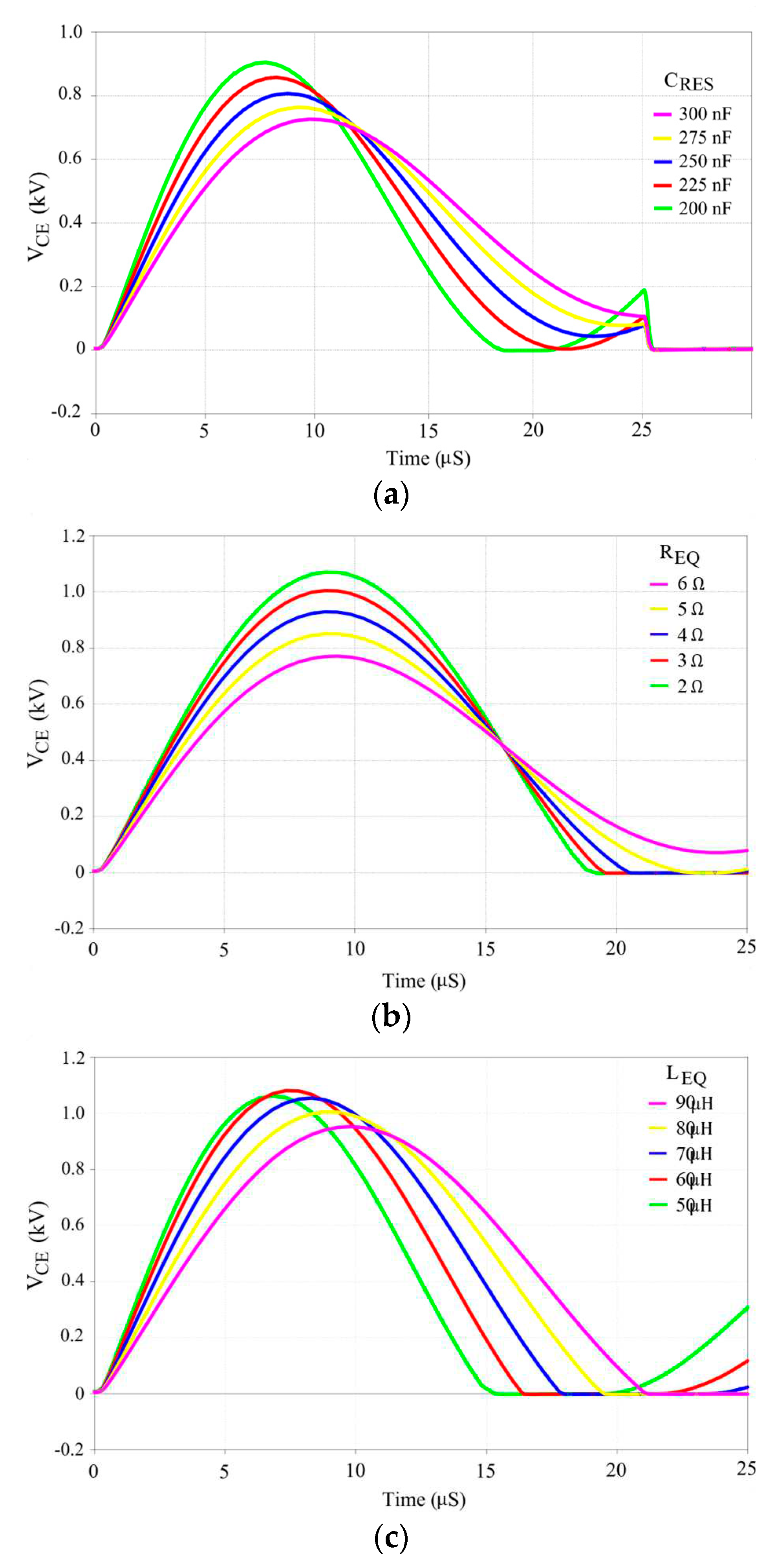
Figure 6.
current value variances in PSpice. (a) , and depending on values. (b) , and depending on values. (c) , depending on values.
Figure 6.
current value variances in PSpice. (a) , and depending on values. (b) , and depending on values. (c) , depending on values.
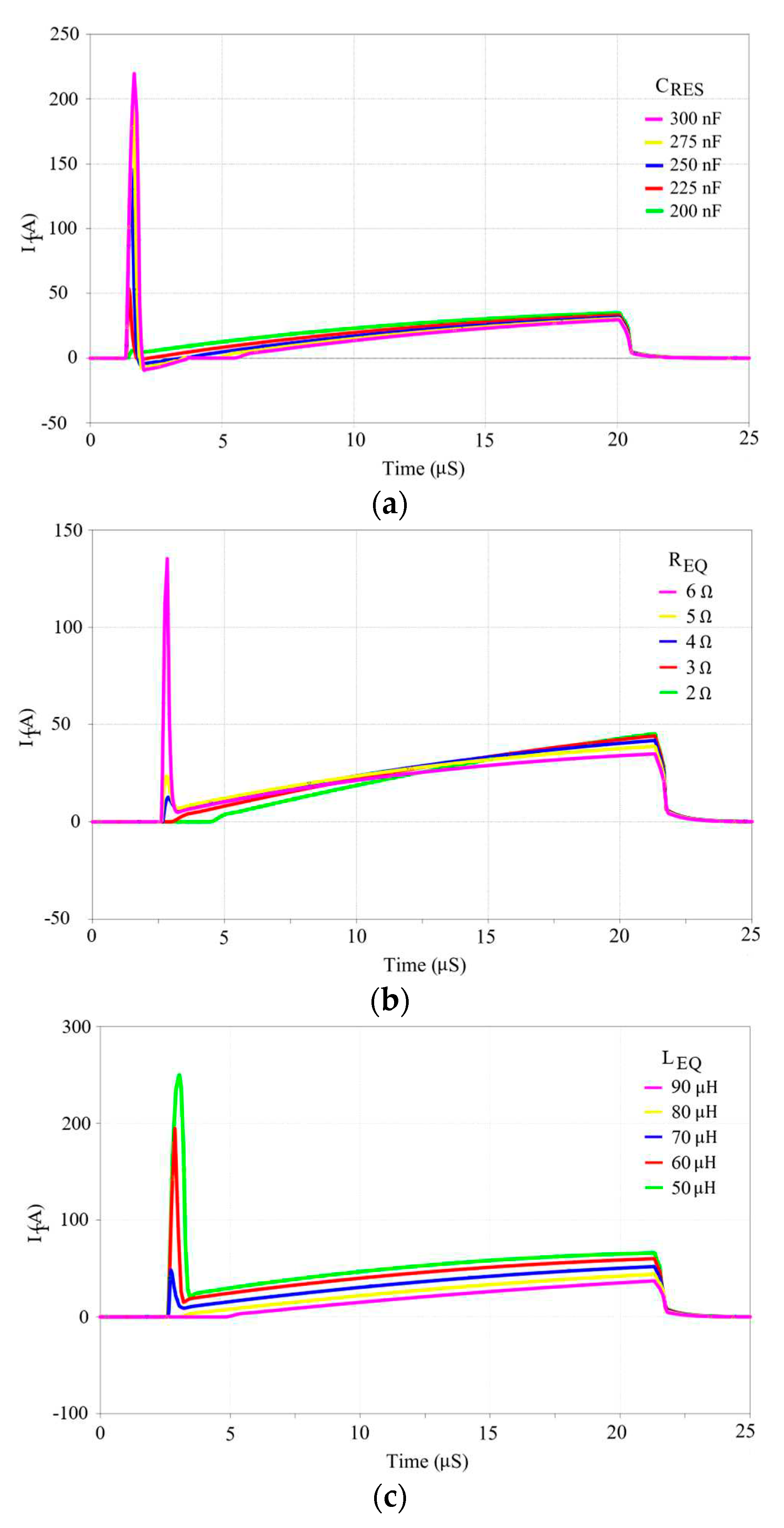
Figure 7.
and switch current as a function of time for the case where the source voltage is the voltage source.
Figure 7.
and switch current as a function of time for the case where the source voltage is the voltage source.
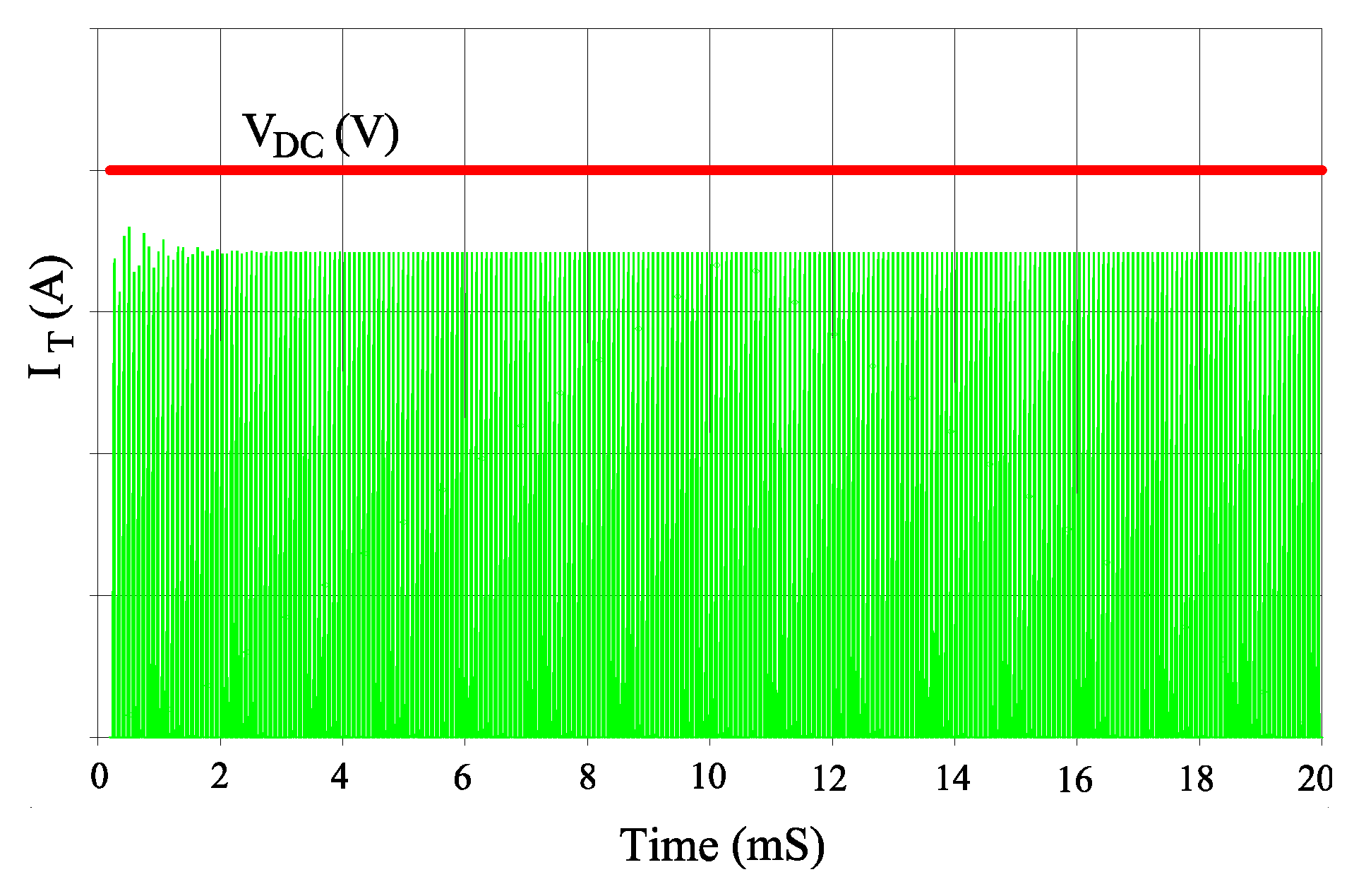
Figure 8.
and switch current as a function of time for the case where the source voltage follows the mains voltage form.
Figure 8.
and switch current as a function of time for the case where the source voltage follows the mains voltage form.
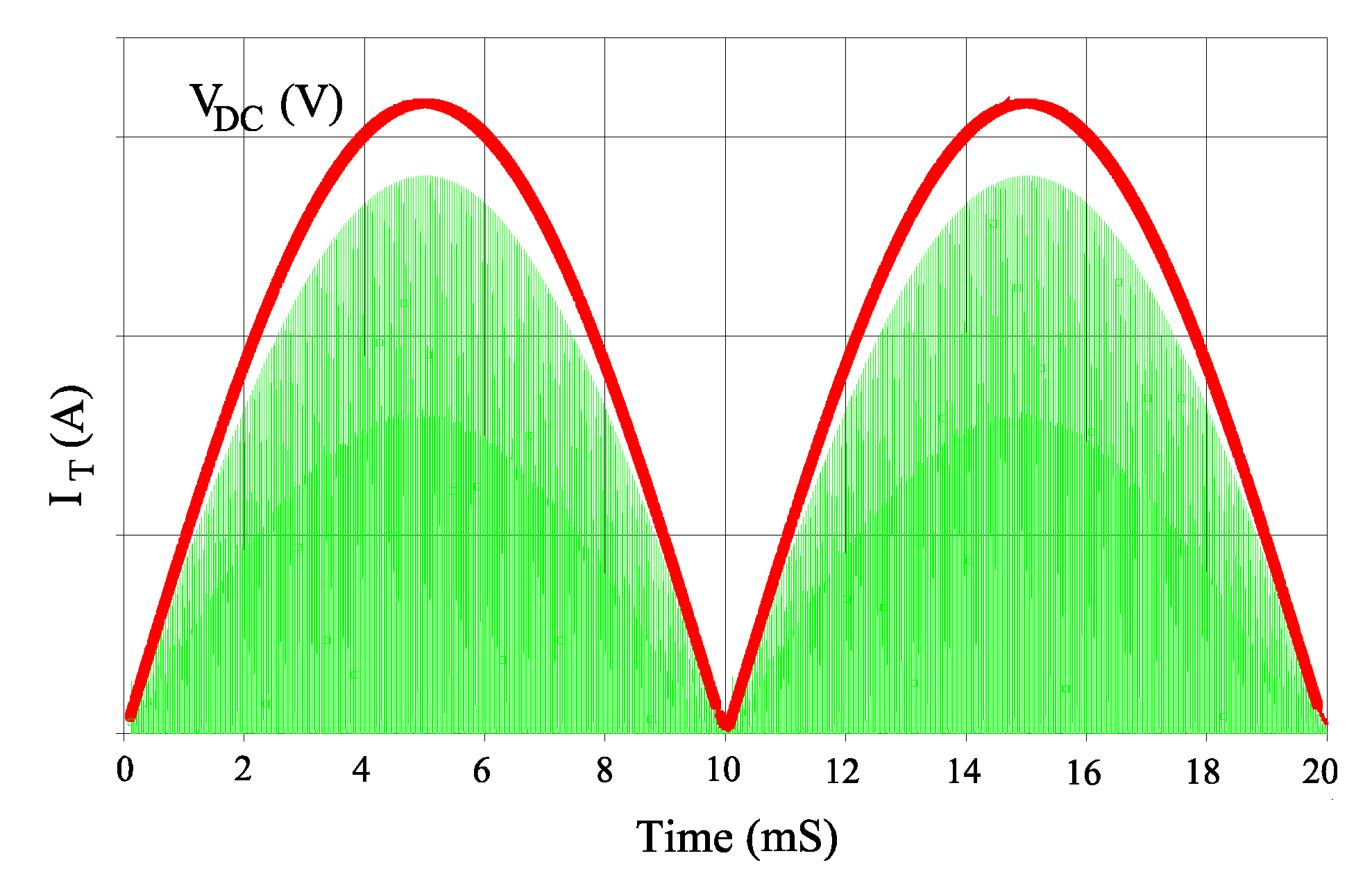
Figure 9.
Switch current as a function of time .
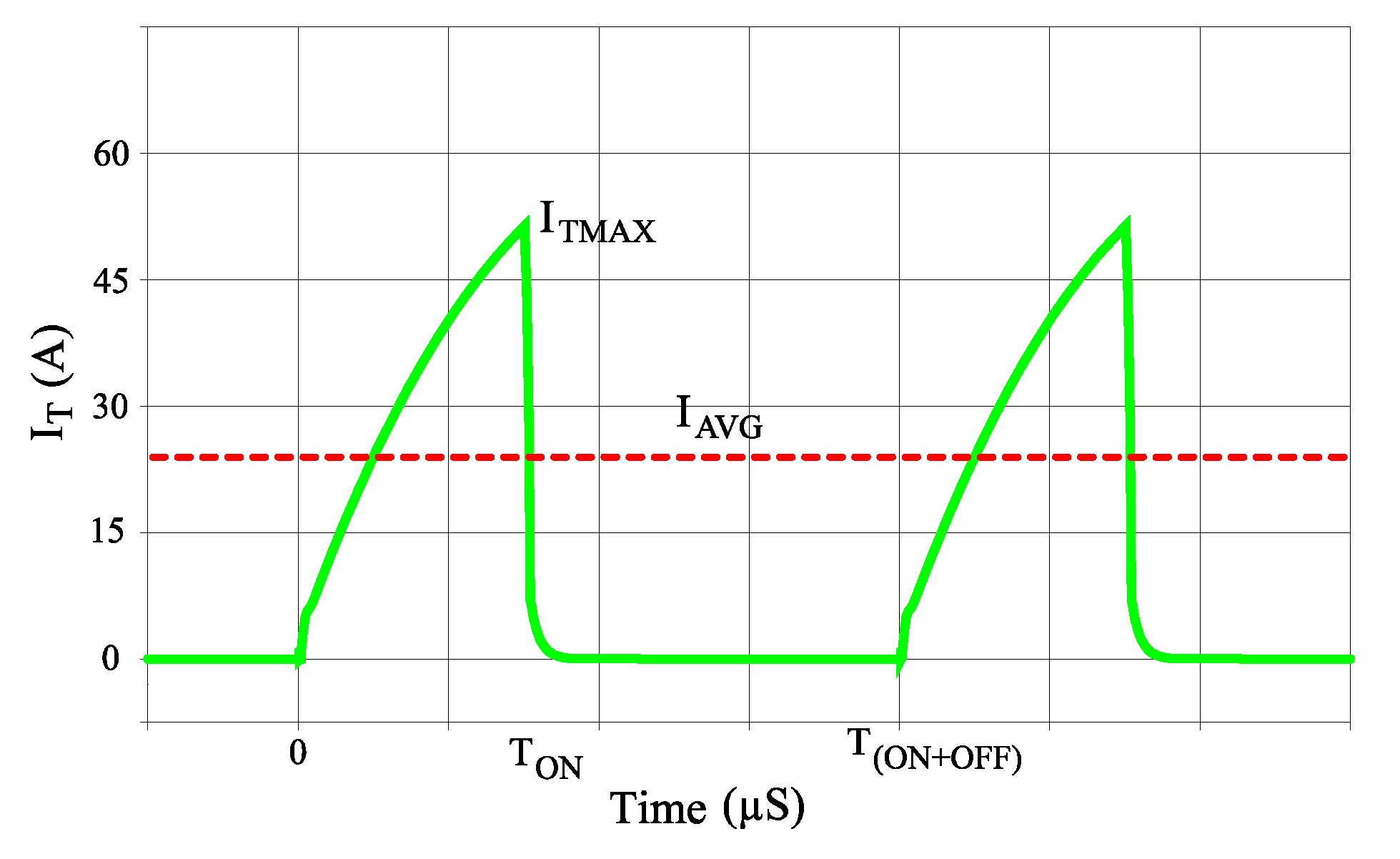
Figure 10.
Input power as a function of time .
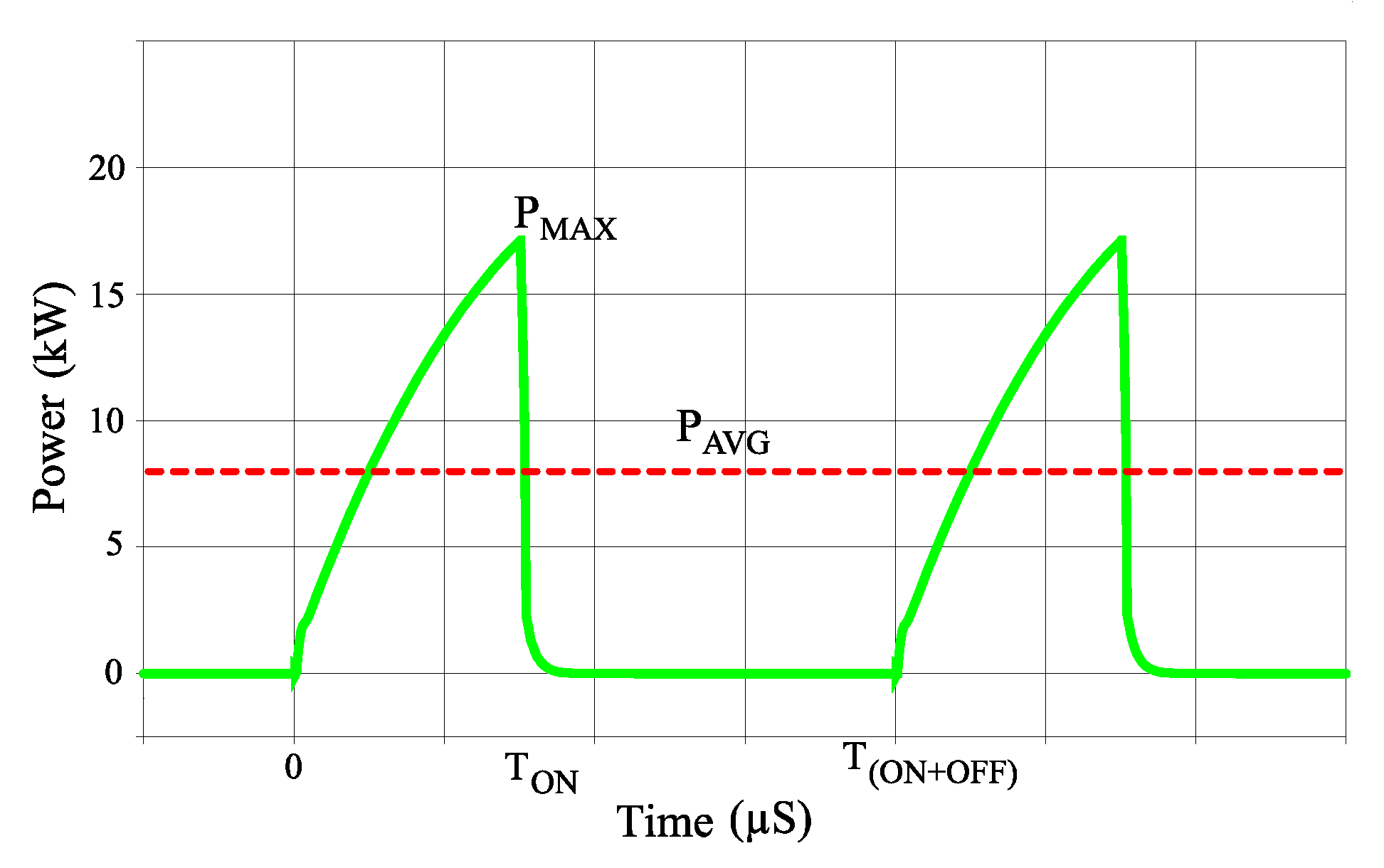
Figure 11.
Input voltage as a function of time .
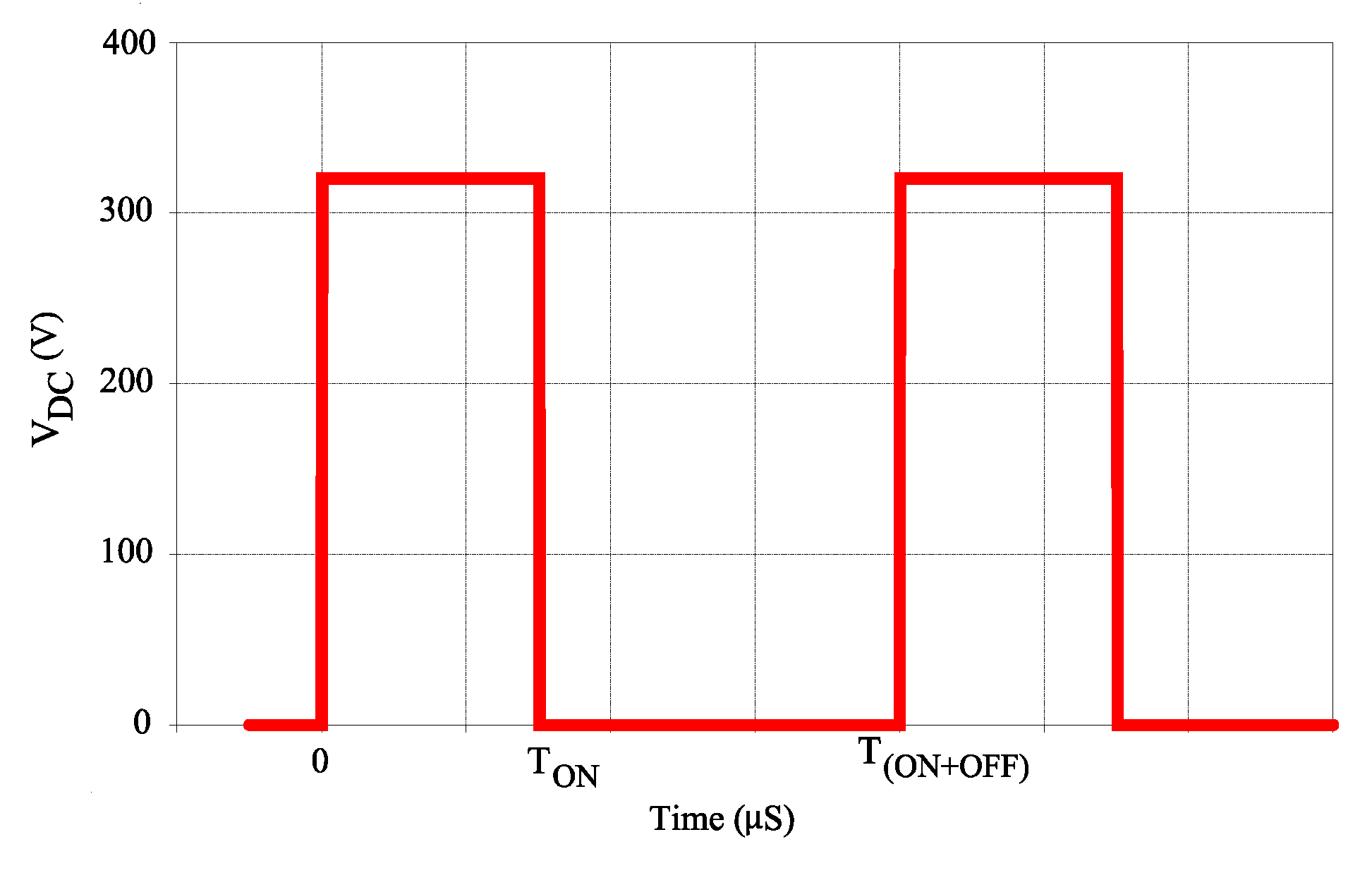
Figure 12.
Flowchart of proposed method to determine , , and .
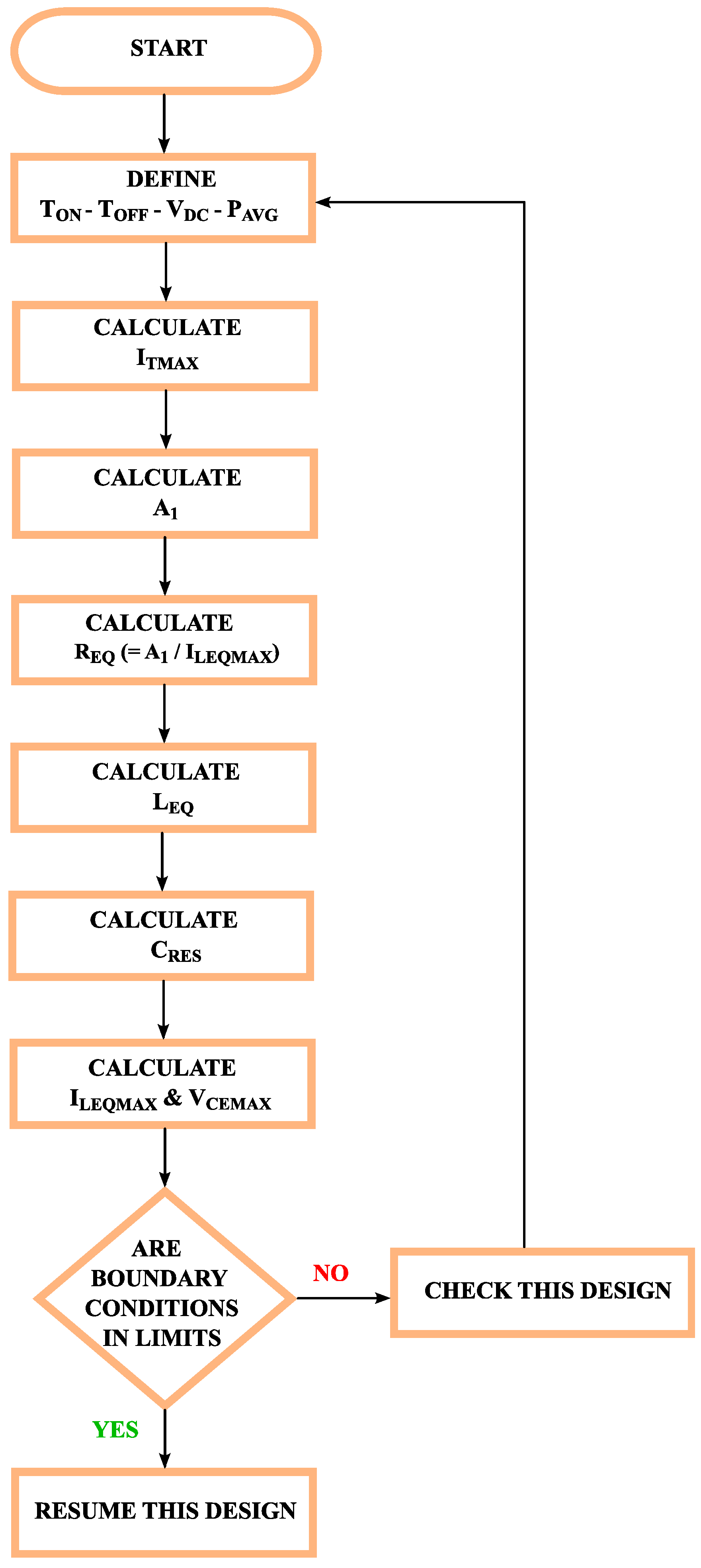
Figure 13.
Prototype simulation circuit for proposed converter.
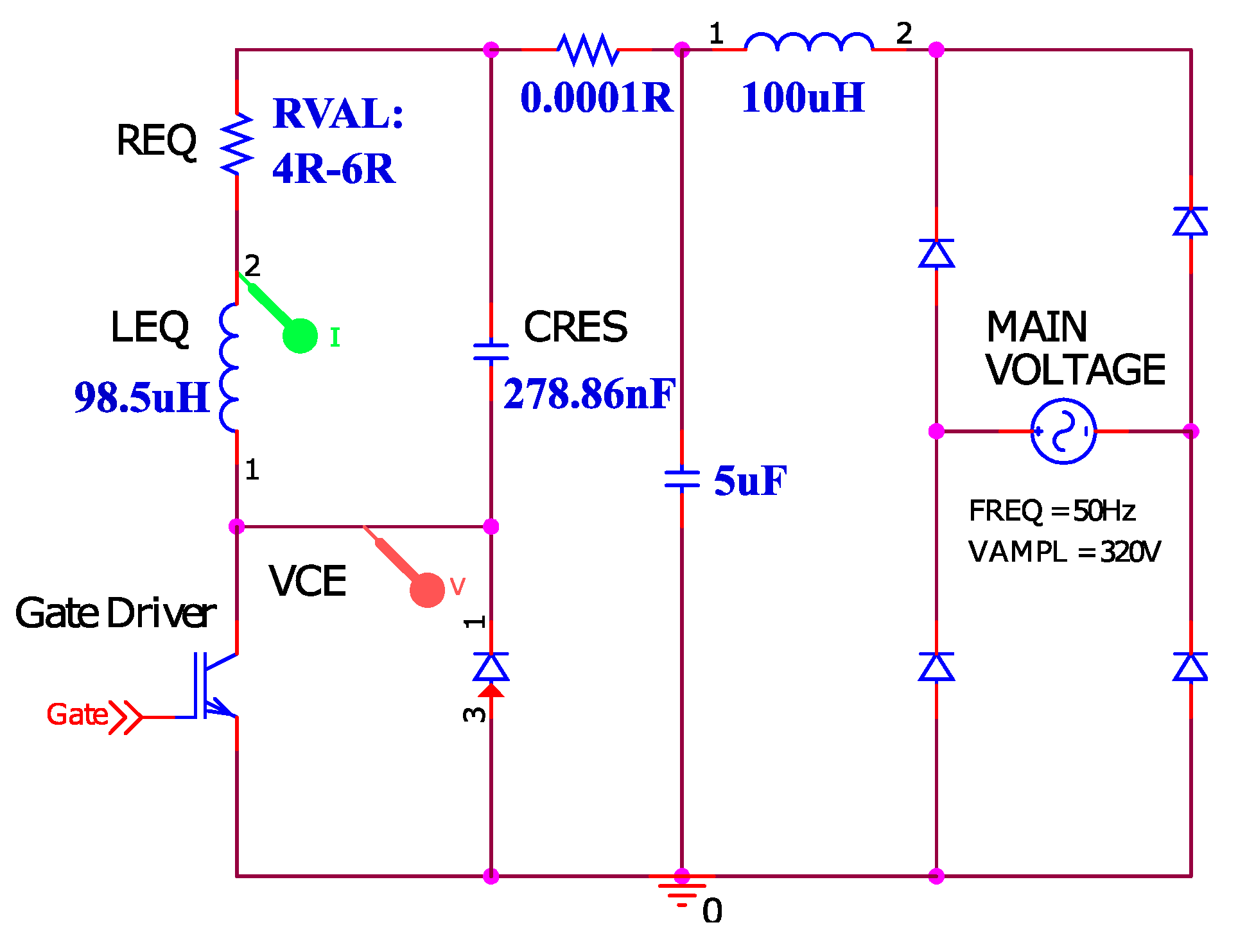
Figure 14.
Coil current and switch voltage for sweeped values as a function of time
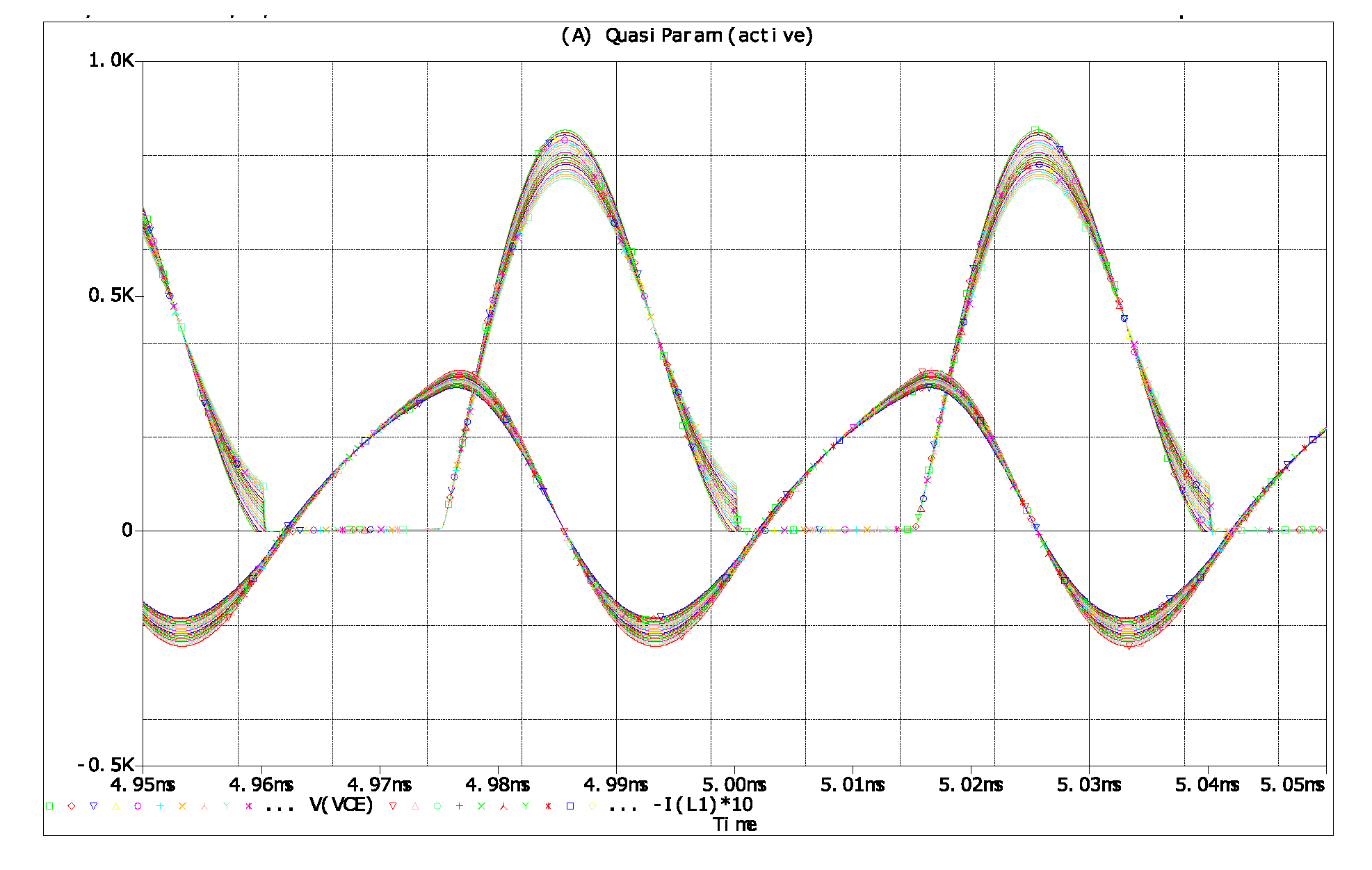
Figure 15.
Coil current as a function of time obtained using the simulation circuit.
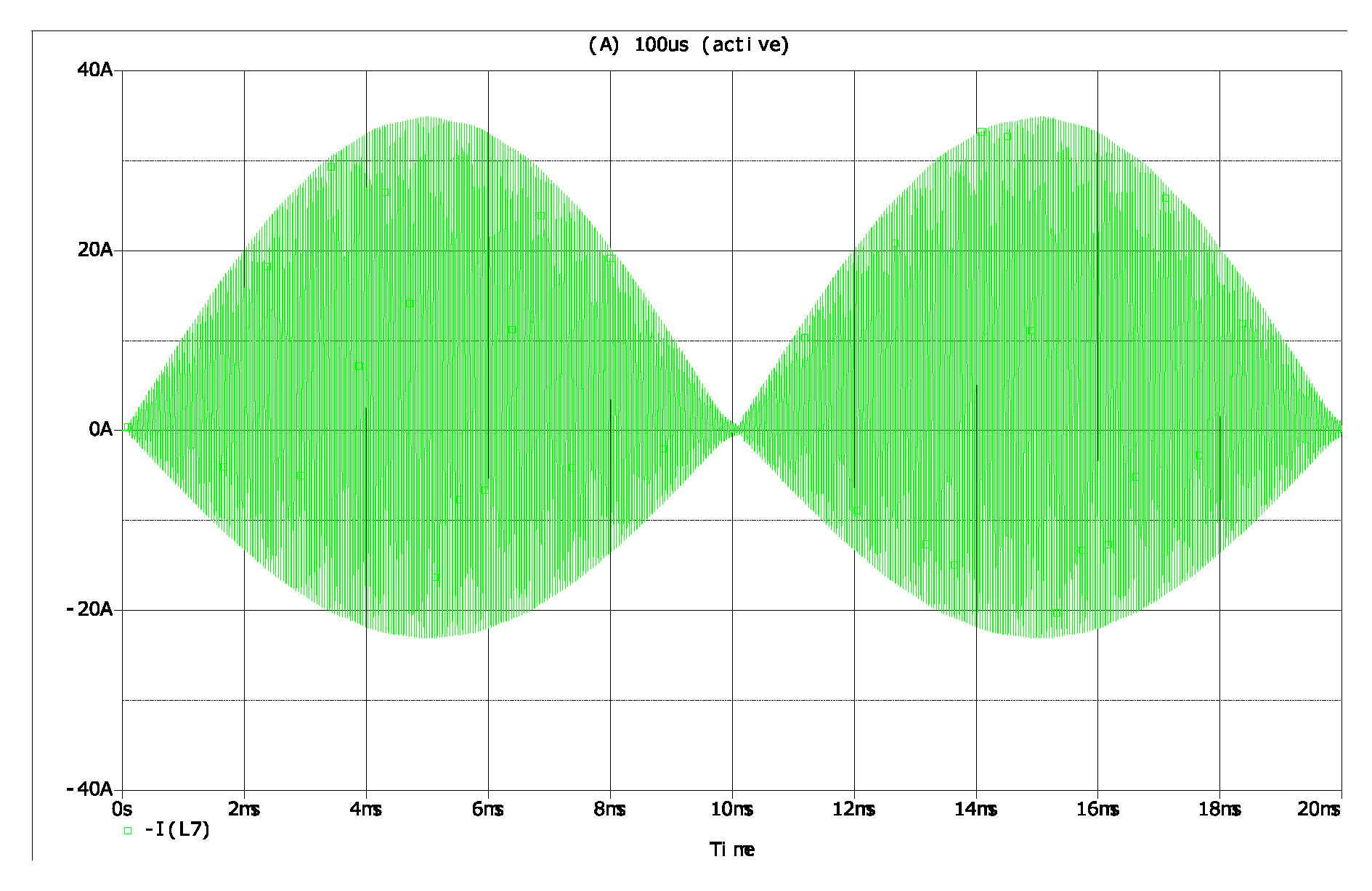
Figure 16.
Switch voltage as a function of time obtained using the simulation circuit.
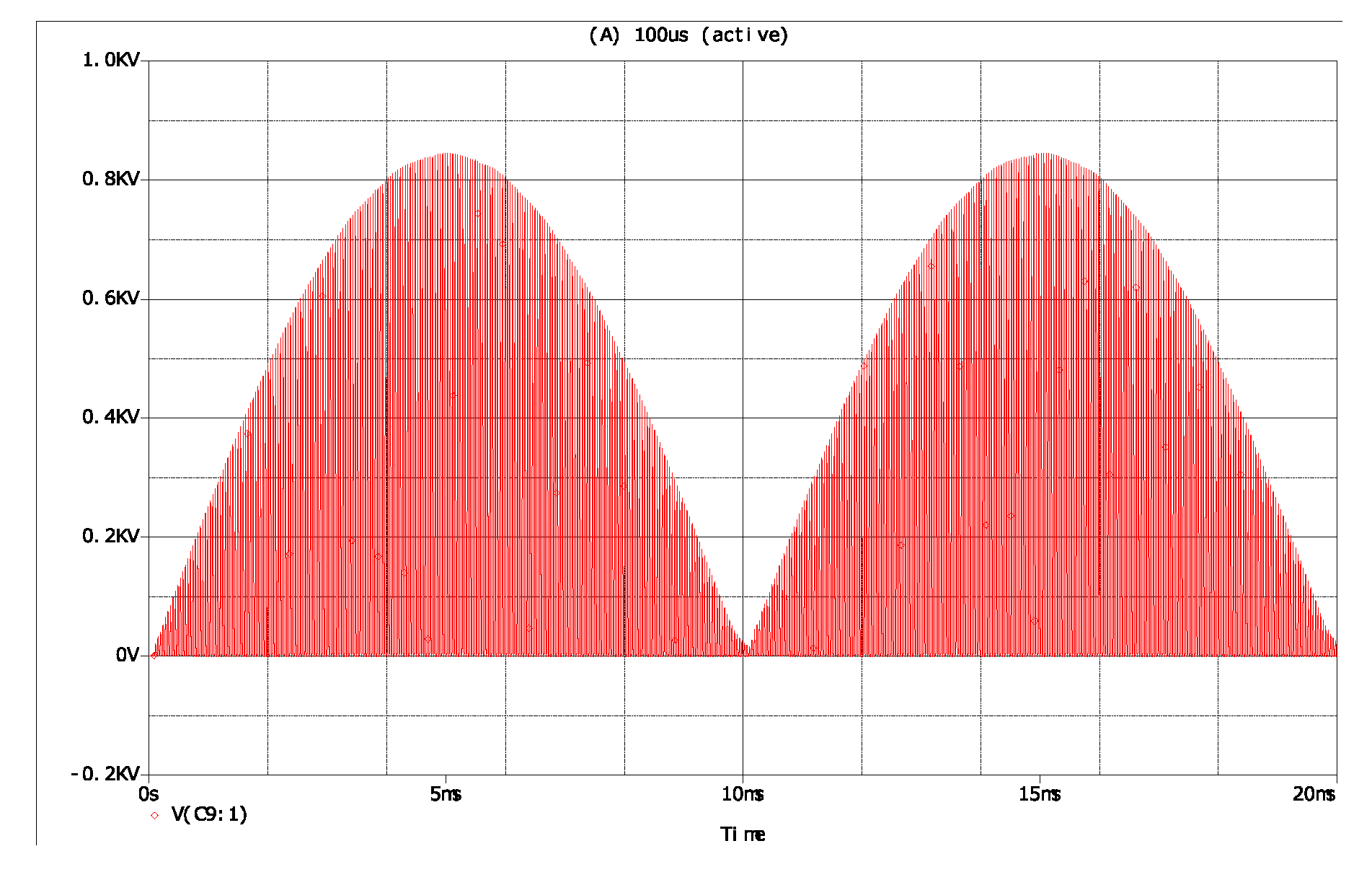
Figure 17.
General pan models are used with induction cookers.
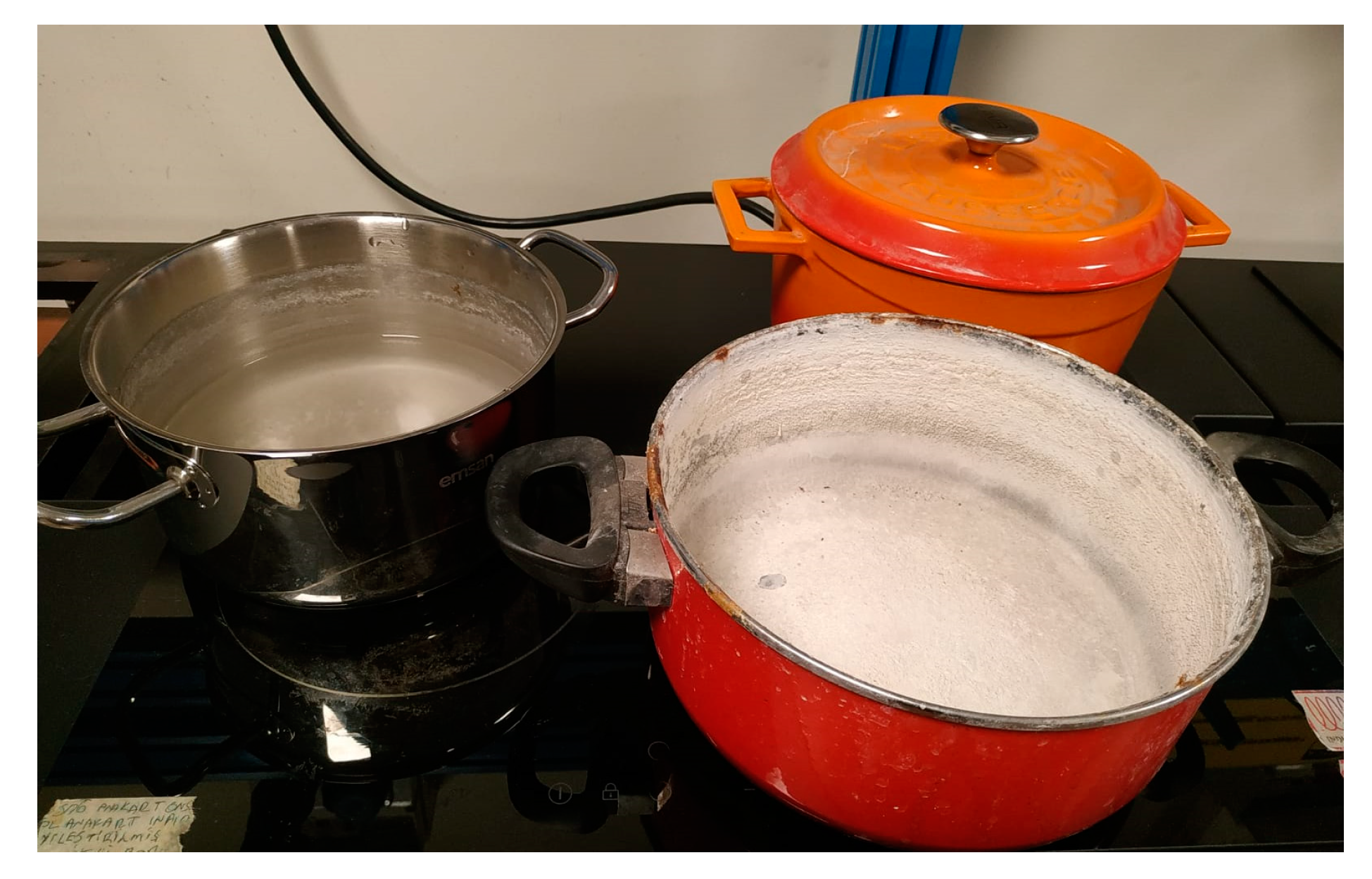
Figure 18.
Coil current as a function of time obtained using the prototype circuit.
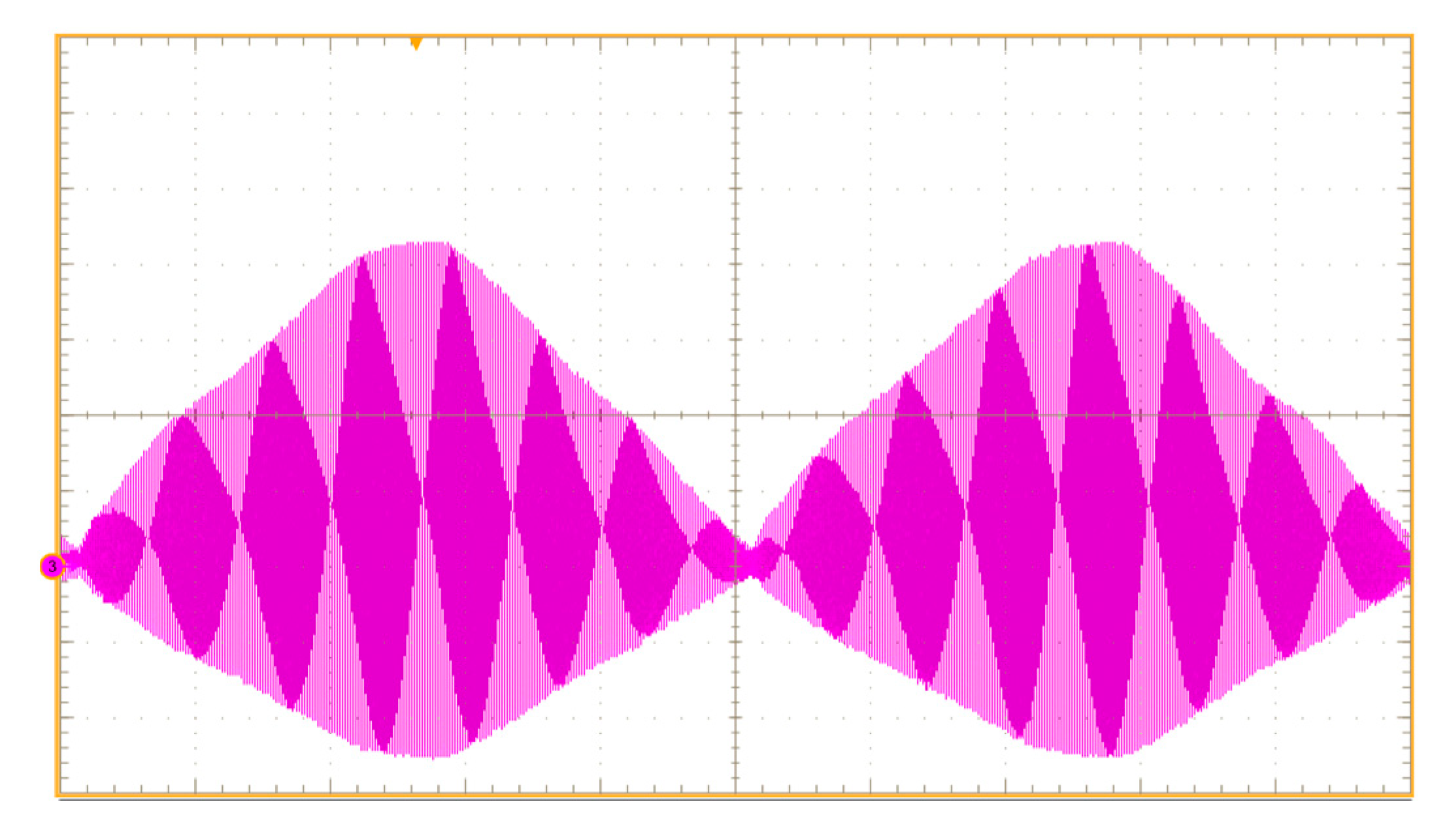
Figure 19.
IGBT collector emitter voltage as a function of time obtained using the prototype circuit.
Figure 19.
IGBT collector emitter voltage as a function of time obtained using the prototype circuit.
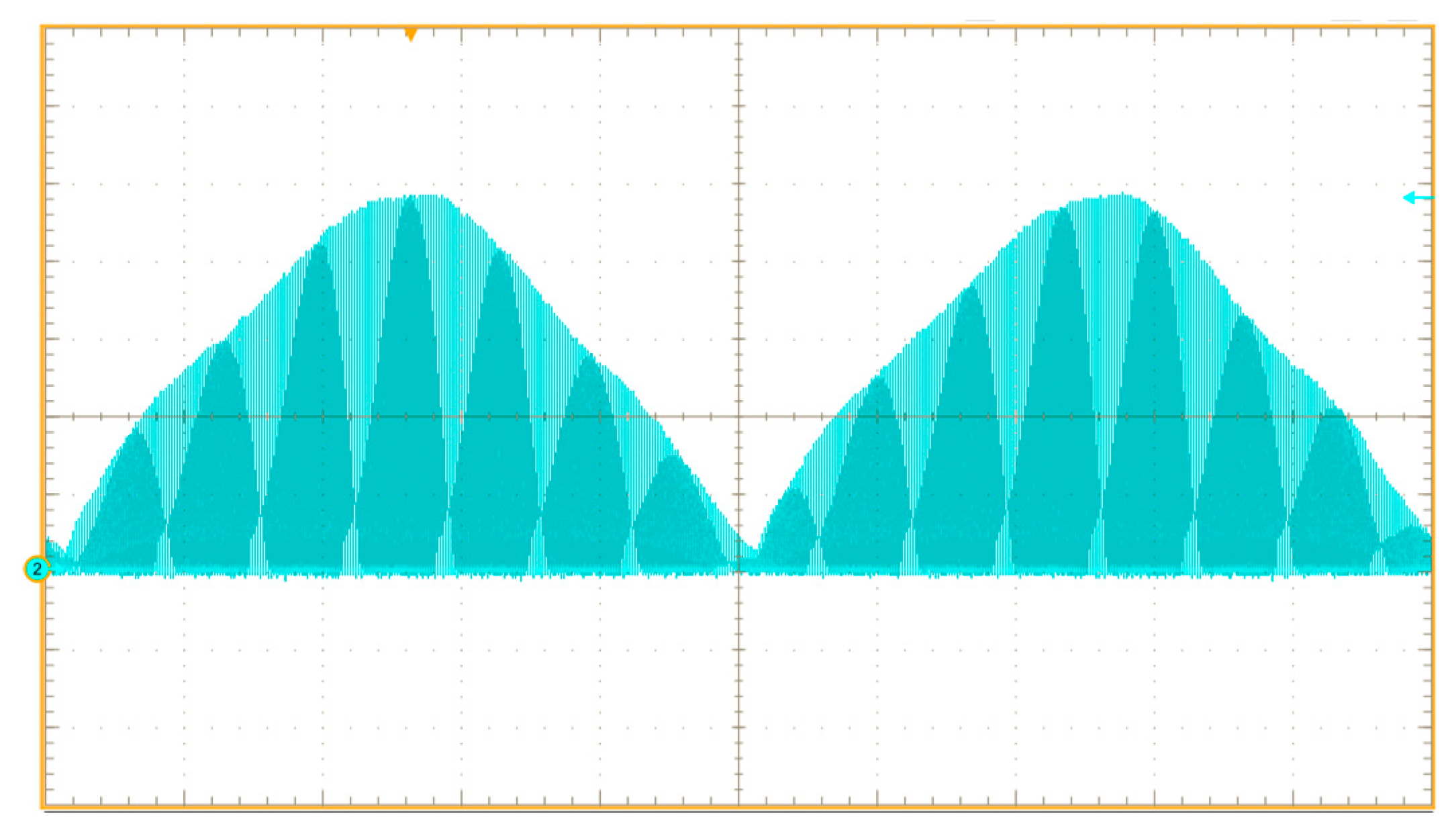
Figure 20.
Detailed waveforms obtained using the prototype circuit. Blue signal: IGBT collector emitter voltage (200V/div), Purple signal: coil current (10A/div), Yellow signal: IGBT gate control signal (5V/div).
Figure 20.
Detailed waveforms obtained using the prototype circuit. Blue signal: IGBT collector emitter voltage (200V/div), Purple signal: coil current (10A/div), Yellow signal: IGBT gate control signal (5V/div).
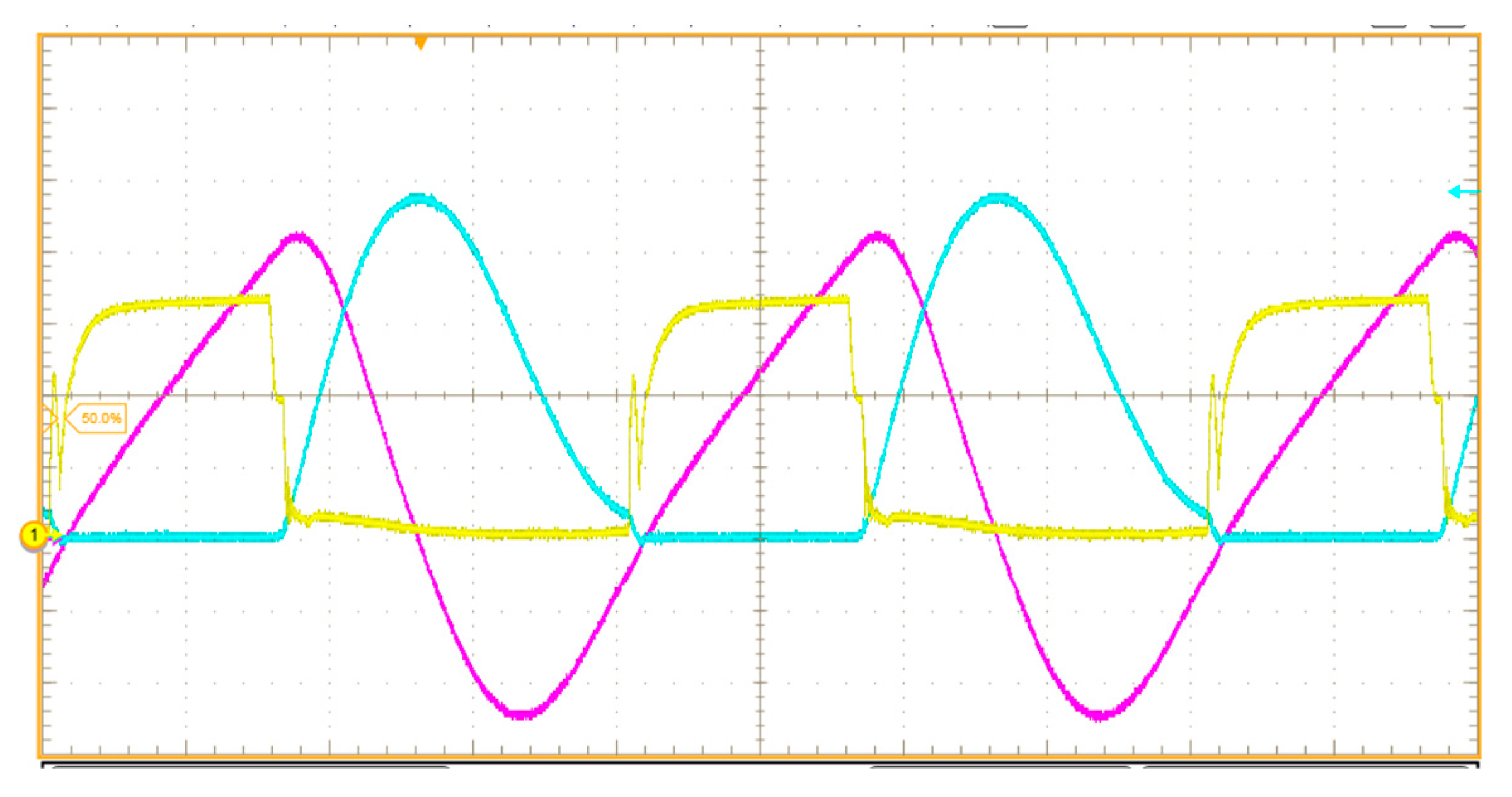
Figure 21.
Experimental setup.
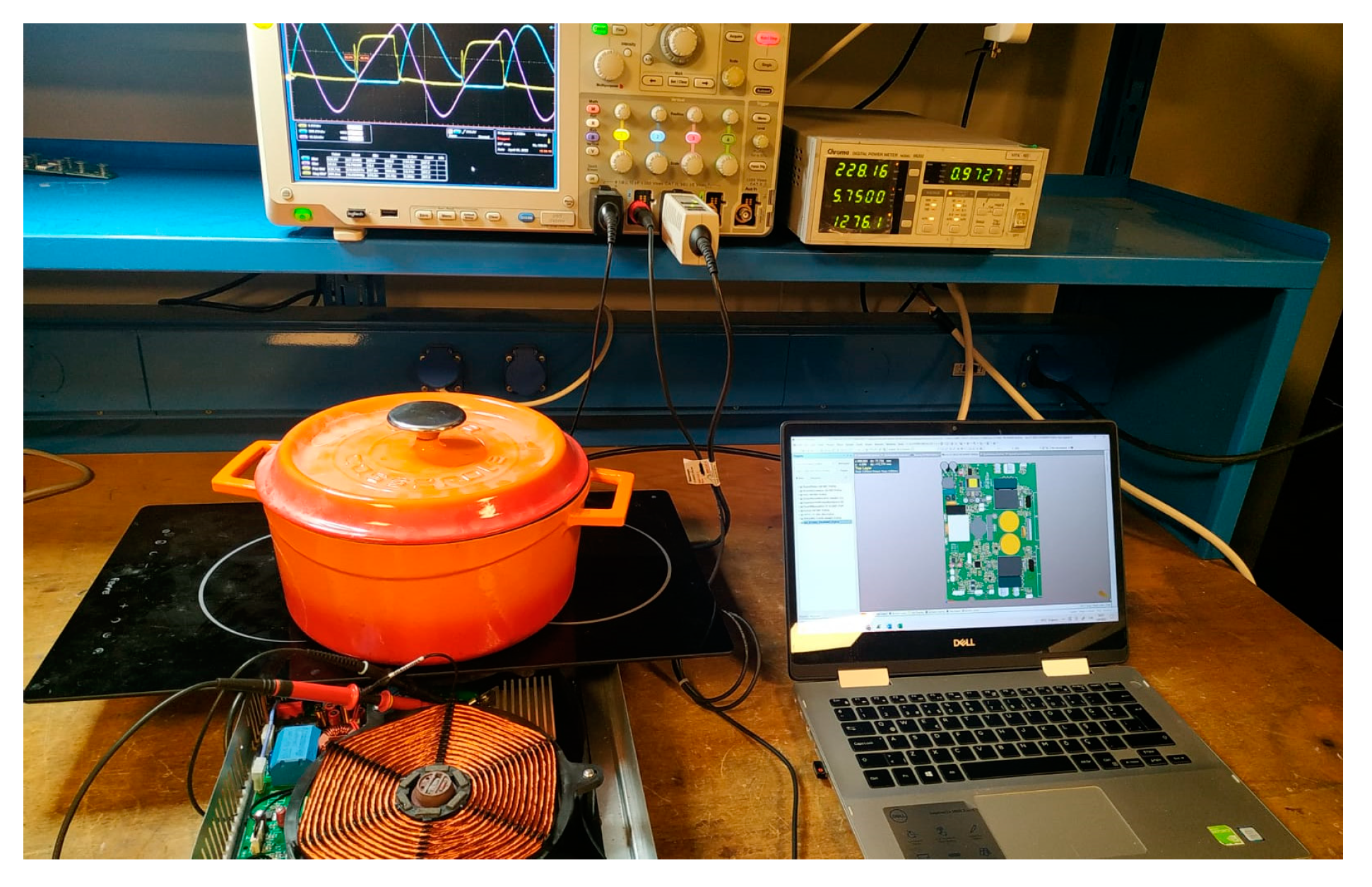

Table 1.
Calculating circuit parameters.
| Pre-Defined Circuit Parameters | |
| Calculated Circuit Parameters | |
| Calculated Boundary Conditions | |
Table 2.
Simulation circuit results.
| Input Circuit Parameters | Output Boundary Parameters | Output Power | |||
Table 3.
Technical specifications of the reference induction coil.
| Parameter | Symbol | Value | Unit |
| Number of turns | 28 | ||
| External diameter of the coil | 180 | mm | |
| Inner diameter of the coil | 30 | mm | |
| Distance between coil winding and ferrite bars | 4 | mm | |
| Distance between coil winding and pan | 4 | mm | |
| Strand amount of a litz wire | 66 | ||
| Wire diameter of single strand | 0,27 | ||
| Ferrite permeability | 800 | ||
| Equivalent inductance with no load | 110 | µH | |
| Equivalent resistance with no load | 0,12 | ||
| Equivalent inductance with cast iron pan | 89,76 | µH | |
| Equivalent resistance with cast iron pan | 4,21 | ||
| Equivalent inductance with stainless steel pan | 81,81 | µH | |
| Equivalent resistance with stainless steel pan | 3,36 | ||
| Equivalent inductance with silit silargan pan | 69,07 | µH | |
| Equivalent resistance with silit silargan pan | 2,48 |
Table 4.
Experimental circuit results.
| Input Circuit Parameters | Output BoundaryParameters | Output Power | |||
Table 5.
Comparison of the calculation, simulation, and experimental circuit results.
| Input Circuit Parameters | Output BoundaryParameters | Output Power | |||
Disclaimer/Publisher’s Note: The statements, opinions and data contained in all publications are solely those of the individual author(s) and contributor(s) and not of MDPI and/or the editor(s). MDPI and/or the editor(s) disclaim responsibility for any injury to people or property resulting from any ideas, methods, instructions or products referred to in the content. |
© 2023 by the authors. Licensee MDPI, Basel, Switzerland. This article is an open access article distributed under the terms and conditions of the Creative Commons Attribution (CC BY) license (http://creativecommons.org/licenses/by/4.0/).
Copyright: This open access article is published under a Creative Commons CC BY 4.0 license, which permit the free download, distribution, and reuse, provided that the author and preprint are cited in any reuse.


