

Submitted:
07 August 2023
Posted:
08 August 2023
You are already at the latest version
Abstract
Plants have the ability to decrease the pollution level from the environment by absorbing inorganic/organic pollutants through their roots. After that, these pollutants are translocated or accumulated in less toxic forms in various parts of plants. This ability of plants is known as phytoremediation. It is an eco-friendly, and cost-effective approach for controlling environmental pollution. It can provide a sustainable way to improve the economics of developing countries. However, the biomass formed during this process can re-contaminate the environment through secondary pollutants. The contamination due to heavy metals (HMs) has become an environmental challenge globally. Metals such as cadmium (Cd), chromium (Cr), mercury (Hg), arsenic (As), nickel (Ni), lead (Pb), etc. can enter the water and soil largely through anthropogenic activities as well as other natural processes. After that, these metals pose a severe threat to living organisms. Due to their non-biodegradable nature, these metals can remain as such for a long time. These metals can initiate oxidative pressure in plants as a result affects agricultural production and yield. To mitigate this problem, phytoremediation has come forward as a safe, affordable, and ecologically sustainable solution than conventional physicochemical decontamination methods. Initially, several edible crops had been identified for the remediation. But at the present time, scientists are focusing on non-edible crops like aromatic/medicinal plants. There is no risk of food contamination by using these plants. This chapter describes the classification & uses of Tulsi and the phytoremediation mechanism of plants in detail.
Keywords:
Phytoremediation
; Aromatic Plants
; Ocimum Sanctum (Tulsi)
; Heavy Metals (HMs)
1. Introduction
Pollution is a major problem created due to rapid urbanization and industrialization (Suman et. al., 2018; Bhardwaj and Bharati, 2022; Bhardwaj, 2023). It may be due to organic and inorganic pollutants. Organic pollutants are usually xenobiotic to plants. Among various inorganic/organic pollutants, HMs contamination is posing a major threat to the environment and the health of humans/animals (Bolan et. al., 2014). Metals such as cobalt (Co), molybdenum (Mo), copper (Cu), manganese (Mn), iron (Fe), and zinc (Zn) are critical for the growth of plants and are known as essential micronutrients. While other metals such as chromium (Cr), mercury (Hg), nickel (Ni), lead (Pb), selenium (Se), uranium (U), cadmium (Cd), arsenic (As), and vanadium (V) are commonly found as contaminants and are known as non-essential nutrients for plants.
Metals are natural elements and are found in the earth’s crust (Bhardwaj et. al., 2023). They cannot be degraded or destroyed but can accumulate in the food and in the living organism. They are very harmful and persist as such for a long time (Alam et. al., 2023). They have a high molecular weight, and the density is more than 5 g/cm3. They can destroy cell membrane integrity, cause oxidative stress, inhibit photosynthesis, decrease plant chlorophyll, and interfere with nutrient uptake (Feng et. al., 2013).
Due to anthropogenic activities, HMs like Cr, Cd, Pb, Hg, As, Ni, etc. are continuously released into the environment and contaminate the water and soil (Mahar et. al., 2016). Several experts have reported the different sources of HMs like sludge from sewage (Farahat and Linderholm, 2015), use of fertilizers (Hamzah et. al., 2016), from gas and oil industries (Pichtel, 2016), metal smelting and mining (Chen et. al., 2016), electroplating and fossil fuel burning (Muradoglu et. al., 2015), usage of pesticides (Iqbal et. al., 2016). Essential and non-essential HMs are presented in Table 1 with their sources and associated health effects.
Numerous techniques are available for the elimination of these poisonous metals from soil and water, such as chemical precipitation, membrane separation, reverse osmosis, electrodialysis, soil incineration, soil washing, solidification, excavation and landfill, and electric field (Wuana and Okieimen, 2011; Sreelakshmi, 2017; DalCorso et. al., 2019). But limited reports are present on these techniques because these techniques are not very effective, are expensive, and require high energy. Therefore, there is a requirement to develop efficient, cost-effective, and environmentally friendly remediation techniques.
Phytoremediation is a technique that is plant-based and uses plants to remove the pollutants such as pesticides, metals, crude oil, explosives, and solvents. Alkorta et. al., (2004) discussed different types of phytoremediation techniques such as phytoextraction, phytofiltration, phytostabilization, phytovolatilization, phytodegradation, rhizodegradation, and phytodesalination. Phytoremediation is a low-cost, effective, sustainable, and naturally friendly technique. This technique has been used successfully at the site of metal mining and PCB dumping sites. Researchers used different plants such as alpine pennycress, mustard plants, pigweed, and hump for the removal of pollutants (Takahashi, 2009; Pantola et. al., 2014). Lone et. al., (2008) stated that due to the differences in physiology, all plants are not able to accumulate HMs or organic pollutants. Now, this technique is popular in public as green clean, and it is used as an alternative of chemicals.
Meagher (2000) described the biophysical and biochemical processes of the plants and stated that adsorption, transport and translocation, hyperaccumulation or transformation, and mineralization, can remediate the HMs. Lots of data are existing on the remediation of HMs with edible crops. But the practice of edible crops for remediation purposes is not practicable because the HMs enter into crops and then can transfer into humans/animals after consumption of food. HMs affect the protein, fat, and carbohydrate constituents of edible plants (Khan et. al., 2015). Reactive oxygen species (ROS) were reported in living organisms due to HMs pressure (Rehman et. al., 2018).
Now scientists are worried about the health of humans/animals. They recommend the aromatic/medicinal plant as a novel selection for the remediation of HMs (Figure 1). The HMs do not enter the food chain through these plants because these plants are non-edible due to their essence. Humans/animals do not consume these plants directly like edible plants. In fact, the availability of these plants is high, and they are ecologically feasible. Lubbe and Verpoorte (2011) stated that these plants are grown to produce personal care products (PCPs), cosmetics, essential oils, and Ayurvedic medicine.
Essential oil is a high-value product that is widely used as an aromatic agent in several industries, and it is free from the danger of metal accumulation. Pandey et. al., (2019) stated that there is no change in oil constituents by growing these plants in the contaminated sites. These aromatic/medicinal plants absorb metals through the roots and accumulate them in the different parts of the plants (Zheljazkov and Warman, 2004). These plants have high value with short input.
Ocimum sanctum L. is commonly known as Tulsi and belongs to the Lamiaceae family. It has two varieties i.e. Black (Krishna Tulsi) and green (Rama Tulsi). Tulsi is a Sanskrit word that means ‘matchless one’. It is called by names like Rama Tulsi, Krishna Tulsi in Sanskrit, and Holy Basil in English. It is also known as an avatar of Lakshmi and may be planted in front of houses or temples. It is a perennial, erect, many-branched plant. The height of this plant varies from 30 to 60 cm. It is mostly found in the Indian subcontinent. As per the study of Flood (2008), the worship of the Tulsi includes the lighting of the lamps in Kartik months. The followers of Lord Vishnu known as Vaishnavas bear the Tulsi. Pawar and Patil (2008) stated that the vivah of Tulsi is a festival, and performed in Prabodhini Ekadashi, and Kartik Purnima.
Several contents such as ursolic acid, oleanolic acid, eugenol, rosmarinic acid, β-caryophyllene, carvacrol, terpinene-4-ol, α-pinene, β-pinene, α-camphor, methyl chavicol, limatrol, and linalool are present as chemical composition in the Tulsi (Pattanayak et. al., 2010; Sundaram et. al., 2012). Eugenol (1-hydroxy-2-methoxy-4-allylbenzene) is present as the main part (~ 70 %) in the oil of Tulsi (Padalia and Verma, 2011) (Figure 2). In this chapter, we are discussing the uses & classification of Tulsi and the phytoremediation mechanisms of plants.
Classification: Kingdom- Plantae; Division- Magnoliophyta; Class- Magnoliopsida; Order- Lamiales; Family- Lamiaceae; Genus- Ocimum; Species- O. Tenuiflorum
2. Uses of Ocimum Sanctum (Tulsi)
It is a noteworthy source of medicine and is used for religious purposes also. It is commonly used in Ayurveda, Siddha, and Unani systems of medicine for the treatment of cough, diarrhea, headaches, asthma, dysentery, fever, eye diseases, arthritis, heart disease, gastric ailments, indigestion, inflammatory diseases, etc. (Braun and Cohen, 2015). The medicinal use of Tulsi is very old. China used the first natural herbal preparations as medicines. It has been used for its healing properties or therapeutic potential from thousands of years. It has anticancer, antifertility, antifungal, antidiabetic, hepatoprotective, antimicrobial, antiemetic, cardioprotective, analgesic, antispasmodic, antimalarial, adaptogenic, diaphoretic, antipyretic, antistress properties, anti-inflammatory properties, etc. It helps in preventing diabetes and signs of aging through its antioxidant activity. It involves retaining skin moisture levels, reducing skin roughness and scaliness, preventing wrinkles, and making the skin smooth. Traditionally, Tulsi is taken in many forms, as herbal tea, dried powder, or fresh leaf. Dried leaves of Tulsi are used to repel insects after mixing with grains (Biswas and Biswas, 2005).
3. Health Effects of HMs
Sarwar et. al., (2010) studied the toxic properties of metals on living organisms and stated that these metals can enter the body of humans through contaminated food. After entering the body, these metals accumulate through biomagnification and can affect diverse body systems like the immune system, nervous system, and renal system. Vascular damage, cancer, and birth & gastrointestinal defects are examples of the complications of HMs toxicity (Costa, 2019; Gazwi et. al., 2020). HMs are teratogenic and endocrine disruptors (Mahar et. al., 2016). Pandey and Madhuri (2014) stated that these metals can interfere with metabolism. Exposure to high doses may cause abdominal colic pain, kidney failure, and bloody diarrhea (Tsai et. al., 2017) while low-dose exposure can cause anxiety, fatigue, and harmful effect on the brain of children (Mazumdar et. al., 2011). As, Cd, and Cr can disrupt DNA synthesis and repair (Koedrith et. al., 2013).
4. Mechanism of Phytoremediation
Phytoremediation is the least destructive remediation method and helps to sustain the natural condition of the environment (Figure 3). Numerous studies have been done on this technique with the different plant species and are shown in Table 2.
Milic et. al., (2012) stated that phytoextraction is the best phytoremediation technique for the removal of HMs from contaminated sites. The efficiency of this technique depends on the properties of soil, plant species, and the bioavailability of the HMs. Accumulated HMs should be translocated from the roots to shoots. The concentration of HMs in shoots and the biomass of shoots are the main key factors for the phytoextraction potential (Li et. al., 2010). Ali et. al., (2012) reported that those plants are more suitable for phytoextraction and have multiple harvesting cuts in a single period of growth. While Malik et. al., (2010) reported that those plants are more suitable than trees and shrubs which have higher adaptability to stress, higher biomass production, and a high rate of growth.
Uptake and Translocation Mechanism of HMs: In this procedure root uptake, mobilization, xylem loading, accumulation, root-to-shoot transport, and cellular compartmentation are involved. This process is mediated by complexing agents and metal ion transporters. H+-coupled carrier proteins or transporters are present in the membrane of the root cell and play a significant role in the uptake of metal ions. Mostly, metals are not easily available due to existing in the soil as insoluble forms. Dalvi and Bhalerao (2013) stated that plants can increase the bioavailability of HMs by releasing root exudates. Jacob et. al., (2018) described the accumulation, modulation, and absorption of HMs from the soils to plants.
HMs are absorbed by the root from polluted soil and move across the root cells. There are two pathways for the uptake of these metals into the roots (i) Apoplastic pathway (AP) and (ii) Symplastic pathway (SP). AP is known as passive transport while SP is known as active transport. Peer et. al., (2005) stated that SP is dependent on energy. They described that HMs can form complexes with chelators after entering into the root. These complexes, including sulfate, phosphate, and carbonate are precipitated and then restrained in the intracellular spaces or extracellular spaces (Ali et. al., 2013). These complexes act as metal ligands to facilitate the chelation of metallic ions. Citrate is the chief chelator for metals like Ni and Fe. After that, these metals are transferred to the harvestable portions of the plants (Meagher, 2000).
Thakur et. al., (2016) stated that metal ions are transferred from the vacuoles of the root to the xylem and then transferred from the xylem to shoot via xylem vessels. Tong et. al., (2004) studied the transportation and distribution mechanism of HMs in the plants and stated that these metals are transported and then distributed in the leaves through symplast or apoplast. DalCorso et. al., (2019) stated that metals are transported from roots to shoots through the transport mechanism. Sreelakshmi (2017) studied the potential of Ocimum Sanctum of Fe and Pb removal from the wastewater and stated that the % of metal removal increased with the increase of Tulsi leaves dosage.
Calculation:
5. Limitation of Phytoremediation
This is the best technique for the removal of HMs but has some limitations.
- (i)
- This technique requires more time.
- (ii)
- The efficiency of this technique is less due to the slow growth rate of plants and less production of biomass.
- (iii)
- The mobilization of some metals is less due to tightly bound metal ions.
- (iv)
- There is a risk of contamination of the food chain due to the lack of proper care.
6. Conclusions and Recommendations
HMs like Cr, Pb, Fe, Cd, Ni, Cu, etc. are released from several industries like the iron industry, cement industry, metallurgical industry, etc. These metals are removed by several techniques like chemical precipitation, electrochemical treatments, physico-chemical methods, coagulation and flocculation, membrane filtration, ion exchange, electrodialysis, etc. The use of aromatic plants/medicinal plants is the more eco-friendly and cost-effective technique for the removal of HMs from contaminated sites. These plants have an excessive potential for phytoremediation to eliminate HMs. These plants act as metallophytes, hyperaccumulators, phytostabiliser, and bio-monitors. These plants extract HMs from the soil and convert them into less poisonous forms and give economic benefits. The percentage of essential oil increases when the aromatic/medicinal plants grow in polluted sites.
The non-edible characteristic and essential oil make the aromatic/medicinal plants suitable crops for the remediation of HMs. The high production and export of oil can be supportive of the progress of any nation. Remediation through plants is the sustainable approach than other methods. Because it does not harm the biological and physical properties of the soil.
Tulsi validates the many physiological benefits and is used in tea. It is used also for spiritual purposes. The farming of Tulsi is not only for the benefit of individuals while it has social and environmental impacts. There are several recommendations which are as follows:
- (i)
- Long-term monitoring is required for the assessment of risks which are involved with the phytoremediation.
- (ii)
- More research is required to relate to the phytoremediation potential of medicinal/aromatic plants, which may lead to the development of “Green scented technology” in the future.
- (iii)
- This technique should be commercialized on a huge scale. So that it will ensure food security in a sustainable way for making the earth a more beautiful place to live.
Acknowledgements
The authors thank Amity University for providing the platform to do this study. The authors also thank Mr. Naresh Kumar for the help in the preparation of figures.
References
- Adigun, M.; Are, K. Comparatives Effectiveness of Two Vetiveria Grasses Species Chrysopogon zizanioides and Chrysopogon nigritana for the Remediation of Soils Contaminated with Heavy Metals. Am. J. Exp. Agric. 2015, 8, 361–366. [Google Scholar] [CrossRef]
- Affholder, Marie-Cécile, et al. "Transfer of metals and metalloids from soil to shoots in wild rosemary (Rosmarinus officinalis L.) growing on a former lead smelter site: Human exposure risk." Science of the total environment 454 (2013): 219-229.
- Akoumianaki-Ioannidou, Anastasia, et al. "The effects of Cd and Zn interactions on the concentration of Cd and Zn in sweet bush basil (Ocimum basilicum L.) and peppermint (Mentha piperita L.)." Fresenius Environ Bull 24.1 (2015): 77-83.
- Alaboudi, K.A.; Ahmed, B.; Brodie, G. Phytoremediation of Pb and Cd contaminated soils by using sunflower ( Helianthus annuus ) plant. Ann. Agric. Sci. 2018, 63, 123–127. [Google Scholar] [CrossRef]
- Alam, Sadre, et al. “Estimation of Heavy Metals and Fluoride Ion in Vegetables Grown Nearby the Stretch of River Yamuna, Delhi (NCR), India”. Indian Journal of Environmental Protection 43 (2023): 64-73.
- Alamo-Nole, L.; Su, Y.-F. Translocation of cadmium in Ocimum basilicum at low concentration of CdSSe nanoparticles. Appl. Mater. Today 2017, 9, 314–318. [Google Scholar] [CrossRef]
- Ali, H.; Khan, E.; Sajad, M.A. Phytoremediation of heavy metals—Concepts and applications. Chemosphere 2013, 91, 869–881. [Google Scholar] [CrossRef]
- Ali, Hazrat, Muhammad Naseer, and Muhammad Anwar Sajad. "Phytoremediation of heavy metals by Trifolium alexandrinum." International Journal of Environmental Sciences 2.3 (2012): 1459-1469.
- Alkorta, Irina, et al. "Recent findings on the phytoremediation of soils contaminated with environmentally toxic heavy metals and metalloids such as zinc, cadmium, lead, and arsenic." Reviews in Environmental Science and Biotechnology 3.1 (2004): 71-90.
- Andrade Júnior, Waldemar Viana, et al. "Effect of cadmium on young plants of Virola surinamensis." AoB Plants 11.3 (2019): plz022.
- Angelova, Violina R., et al. "Potential of lavender (Lavandula vera L.) for phytoremediation of soils contaminated with heavy metals." Int J Biol Biomol Agric Food Biotechnol Eng 9 (2015): 465-472.
- Anwar, S.; Nawaz, M.F.; Gul, S.; Rizwan, M.; Ali, S.; Kareem, A. Uptake and distribution of minerals and heavy metals in commonly grown leafy vegetable species irrigated with sewage water. Environ. Monit. Assess. 2016, 188, 1–9. [Google Scholar] [CrossRef]
- Babarinde, Adesola, et al. "Comparative study on the biosorption of Pb (II), Cd (II) and Zn (II) using Lemon grass (Cymbopogon citratus): kinetics, isotherms and thermodynamics." Chem. Int 2.8 (2016): 89-102.
- Bhardwaj, L.K. , and V. Preprints ( 2023), 2023071691. [CrossRef]
- Bhardwaj, L.K.; Sharma, S.; Jindal, T. Estimation of Physico-Chemical and Heavy Metals in the Lakes of Grovnes & Broknes Peninsula, Larsemann Hill, East Antarctica. Chem. Afr. 2023, 1–18. [Google Scholar] [CrossRef]
- Bhardwaj, L.K. , and P. Bharati. “Noise Monitoring and Assessment at Larsemann Hills, East Antarctica”. Indian Journal of Environmental Protection 42, no. 9 (2022): 1027-1033.
- Biswas, N. P. , and A. K. Biswas. "Evaluation of some leaf dusts as grain protectant against rice weevil Sitophilus oryzae (Linn.)." Environment and Ecology 23, no. 3 (2005): 485.
- Boechat, C.L.; Carlos, F.S.; Gianello, C.; Camargo, F.A.d.O. Heavy Metals and Nutrients Uptake by Medicinal Plants Cultivated on Multi-metal Contaminated Soil Samples from an Abandoned Gold Ore Processing Site. Water, Air, Soil Pollut. 2016, 227, 392. [Google Scholar] [CrossRef]
- Bolan, N.; Kunhikrishnan, A.; Thangarajan, R.; Kumpiene, J.; Park, J.; Makino, T.; Kirkham, M.B.; Scheckel, K. Remediation of heavy metal(loid)s contaminated soils – To mobilize or to immobilize? J. Hazard. Mater. 2014, 266, 141–166. [Google Scholar] [CrossRef]
- Braun, Lesley, and Marc Cohen. Herbs and natural supplements, volume 2: An evidence-based guide. Vol. Elsevier Health Sciences, 2015.
- Chand, Sukhmal, et al. "Application of heavy metal rich tannery sludge on sustainable growth, yield and metal accumulation by clarysage (Salvia sclarea L.)." International journal of phytoremediation 17.12 (2015): 1171-1176.
- Chen, B.; Stein, A.F.; Castell, N.; Gonzalez-Castanedo, Y.; de la Campa, A.S.; de la Rosa, J. Modeling and evaluation of urban pollution events of atmospheric heavy metals from a large Cu-smelter. Sci. Total. Environ. 2016, 539, 17–25. [Google Scholar] [CrossRef]
- Chen, K. F., T. Y. Yeh, and C. F. Lin. "Phytoextraction of Cu, Zn, and Pb enhanced by chelators with vetiver (Vetiveria zizanioides): hydroponic and pot experiments." International Scholarly Research Notices 2012 (2012).
- Costa, Max. "Review of arsenic toxicity, speciation and polyadenylation of canonical histones." Toxicology and applied pharmacology 375 (2019): 1-4.
- DalCorso, G.; Fasani, E.; Manara, A.; Visioli, G.; Furini, A. Heavy Metal Pollutions: State of the Art and Innovation in Phytoremediation. Int. J. Mol. Sci. 2019, 20, 3412. [Google Scholar] [CrossRef] [PubMed]
- Dalvi, Amita A., and Satish A. Bhalerao. "Response of plants towards heavy metal toxicity: an overview of avoidance, tolerance and uptake mechanism." Ann Plant Sci 2, no. 9 (2013): 362-368.
- Farahat, E.; Linderholm, H.W. The effect of long-term wastewater irrigation on accumulation and transfer of heavy metals in Cupressus sempervirens leaves and adjacent soils. Sci. Total. Environ. 2015, 512-513, 1–7. [Google Scholar] [CrossRef] [PubMed]
- Farzadfar, S.; Zarinkamar, F.; Modarres-Sanavy, S.A.M.; Hojati, M. Exogenously applied calcium alleviates cadmium toxicity in Matricaria chamomilla L. plants. Environ. Sci. Pollut. Res. 2012, 20, 1413–1422. [Google Scholar] [CrossRef] [PubMed]
- Feng, R.; Wei, C.; Tu, S. The roles of selenium in protecting plants against abiotic stresses. Environ. Exp. Bot. 2013, 87, 58–68. [Google Scholar] [CrossRef]
- Flood, Gavin, ed. The blackwell companion to hinduism. John Wiley & Sons, 2008.
- Gautam, Meenu, Divya Pandey, and Madhoolika Agrawal. "Phytoremediation of metals using lemongrass (Cymbopogon citratus (DC) Stapf.) grown under different levels of red mud in soil amended with biowastes." International journal of phytoremediation 19.6 (2017): 555-562.
- Gazwi, H.S.; Yassien, E.E.; Hassan, H.M. Mitigation of lead neurotoxicity by the ethanolic extract of Laurus leaf in rats. Ecotoxicol. Environ. Saf. 2020, 192, 110297. [Google Scholar] [CrossRef]
- Gunwal, Isha, Lata Singh, and Payal Mago. "Comparison of phytoremediation of cadmium and nickel from contaminated soil by Vetiveria zizanioides L." International Journal of Scientific and Research Publications 4.10 (2014): 1-7.
- Hamzah, Amir, Ricky Indri Hapsari, and Erwin Ismu Wisnubroto. "Phytoremediation of cadmium-contaminated agricultural land using indigenous plants." International Journal of Environmental & Agriculture Research 2, no. 1 (2016): 8-14.
- Iqbal, M.; Iqbal, N.; Bhatti, I.A.; Ahmad, N.; Zahid, M. Response surface methodology application in optimization of cadmium adsorption by shoe waste: A good option of waste mitigation by waste. Ecol. Eng. 2016, 88, 265–275. [Google Scholar] [CrossRef]
- Jacob, J.M.; Karthik, C.; Saratale, R.G.; Kumar, S.S.; Prabakar, D.; Kadirvelu, K.; Pugazhendhi, A. Biological approaches to tackle heavy metal pollution: A survey of literature. J. Environ. Manag. 2018, 217, 56–70. [Google Scholar] [CrossRef]
- Khan, Anwarzeb, Sardar Khan, Muhammad Amjad Khan, Zahir Qamar, and Muhammad Waqas. "The uptake and bioaccumulation of heavy metals by food plants, their effects on plants nutrients, and associated health risk: a review." Environmental science and pollution research 22, no. 18 (2015): 13772-13799.
- Koedrith, P.; Kim, H.; Weon, J.-I.; Seo, Y.R. Toxicogenomic approaches for understanding molecular mechanisms of heavy metal mutagenicity and carcinogenicity. Int. J. Hyg. Environ. Heal. 2013, 216, 587–598. [Google Scholar] [CrossRef]
- Lee, L. Y. , et al. "Utilisation of Cymbopogon citratus (lemon grass) as biosorbent for the sequestration of nickel ions from aqueous solution: Equilibrium, kinetic, thermodynamics and mechanism studies." Journal of the Taiwan Institute of Chemical Engineers 45.4 (2014): 1764-1772.
- Li, J.T.; Liao, B.; Lan, C.Y.; Ye, Z.H.; Baker, A.J.M.; Shu, W.S. Cadmium Tolerance and Accumulation in Cultivars of a High-Biomass Tropical Tree (Averrhoa carambola) and Its Potential for Phytoextraction. J. Environ. Qual. 2010, 39, 1262–1268. [Google Scholar] [CrossRef]
- Lone, M.I.; He, Z.-L.; Stoffella, P.J.; Yang, X.-E. Phytoremediation of heavy metal polluted soils and water: Progresses and perspectives. J. Zhejiang Univ. B 2008, 9, 210–220. [Google Scholar] [CrossRef]
- Lubbe, A.; Verpoorte, R. Cultivation of medicinal and aromatic plants for specialty industrial materials. Ind. Crop. Prod. 2011, 34, 785–801. [Google Scholar] [CrossRef]
- Mahar, A.; Wang, P.; Ali, A.; Awasthi, M.K.; Lahori, A.H.; Wang, Q.; Li, R.; Zhang, Z. Challenges and opportunities in the phytoremediation of heavy metals contaminated soils: A review. Ecotoxicol. Environ. Saf. 2016, 126, 111–121. [Google Scholar] [CrossRef]
- Malik, Riffat Naseem, Syed Zahoor Husain, and Ishfaq Nazir. "Heavy metal contamination and accumulation in soil and wild plant species from industrial area of Islamabad, Pakistan." Pak J Bot 42.1 (2010): 291-301.
- Malinowska, E.; Jankowski, K. Copper and zinc concentrations of medicinal herbs and soil surrounding ponds on agricultural land. Landsc. Ecol. Eng. 2016, 13, 183–188. [Google Scholar] [CrossRef]
- Mangkoedihardjo, Sarwoko, and Yuli Triastuti. "Vetiver in phytoremediation of mercury polluted soil with the addition of compost." Journal of Applied Sciences Research 7.4 (2011): 465-469.
- Mazumdar, M.; Bellinger, D.C.; Gregas, M.; Abanilla, K.; Bacic, J.; Needleman, H.L. Low-level environmental lead exposure in childhood and adult intellectual function: a follow-up study. Environ. Heal. 2011, 10, 24–24. [Google Scholar] [CrossRef]
- Meagher, R.B. Phytoremediation of toxic elemental and organic pollutants. Curr. Opin. Plant Biol. 2000, 3, 153–162. [Google Scholar] [CrossRef]
- Milić, D.; Luković, J.; Ninkov, J.; Zeremski-Škorić, T.; Zorić, L.; Vasin, J.; Milić, S. Heavy metal content in halophytic plants from inland and maritime saline areas. Open Life Sci. 2012, 7, 307–317. [Google Scholar] [CrossRef]
- Muradoglu, F.; Gundogdu, M.; Ercisli, S.; Encu, T.; Balta, F.; Jaafar, H.Z.; Zia-Ul-Haq, M. Cadmium toxicity affects chlorophyll a and b content, antioxidant enzyme activities and mineral nutrient accumulation in strawberry. Biol. Res. 2015, 48, 1–7. [Google Scholar] [CrossRef] [PubMed]
- Nazarian, Hassan, Delara Amouzgar, and Hossein Sedghianzadeh. "Effects of different concentrations of cadmium on growth and morphological changes in basil (Ocimum basilicum L.)." Pak. J. Bot 48.3 (2016): 945-952.
- Ng, Chuck Chuan, et al. "Tolerance threshold and phyto-assessment of cadmium and lead in Vetiver grass, Vetiveria zizanioides (Linn.) Nash." Chiang Mai J. Sci 44.4 (2017): 1367-1378.
- Padalia, Rajendra C., and Ram S. Verma. "Comparative volatile oil composition of four Ocimum species from northern India." Natural Product Research 25, no. 6 (2011): 569-575.
- Pandey, Govind, and S. Madhuri. "Heavy metals causing toxicity in animals and fishes." Research Journal of Animal, Veterinary and Fishery Sciences 2, no. 2 (2014): 17-23.
- Pandey, Janhvi, et al. "Palmarosa [Cymbopogon martinii (Roxb.) Wats.] as a putative crop for phytoremediation, in tannery sludge polluted soil." Ecotoxicology and environmental safety 122 (2015): 296-302.
- Pandey, J.; Verma, R.K.; Singh, S. Suitability of aromatic plants for phytoremediation of heavy metal contaminated areas: a review. Int. J. Phytoremediation 2019, 21, 405–418. [Google Scholar] [CrossRef] [PubMed]
- Pantola, R.C.; Alam, A. Potential of Brassicaceae Burnett (Mustard family; Angiosperms) in Phytoremediation of Heavy Metals. Int. J. Sci. Res. Environ. Sci. 2014, 2, 120–138. [Google Scholar] [CrossRef]
- Pattanayak, Priyabrata, Pritishova Behera, Debajyoti Das, and Sangram K. Panda. "Ocimum sanctum Linn. A reservoir plant for therapeutic applications: An overview." Pharmacognosy reviews 4, no. 7 (2010): 95.
- Pawar, Shubhangi, and Dinkarrao Amrutrao Patil. Ethnobotany of Jalgaon District, Maharashtra. Daya Books, 2008.
- Peer, Wendy Ann, Ivan R. Baxter, Elizabeth L. Richards, John L. Freeman, and Angus S. Murphy. "Phytoremediation and hyperaccumulator plants." In Molecular biology of metal homeostasis and detoxification, pp. 299-340. Springer, Berlin, Heidelberg, 2005.
- Pichtel, J. Oil and Gas Production Wastewater: Soil Contamination and Pollution Prevention. Appl. Environ. Soil Sci. 2016, 2016, 1–24. [Google Scholar] [CrossRef]
- Ramazanpour, Hossein. “Study Effect of Soil and Amendments on Phytoremediation of Cadmium (Cd) and Lead (Pb) from Contaminated Soil by Rosemary (Rosmarinus Officinalis L.)”. Diss. University of Zabol, 2015.
- Rehman, K.; Fatima, F.; Waheed, I.; Akash, M.S.H. Prevalence of exposure of heavy metals and their impact on health consequences. J. Cell. Biochem. 2018, 119, 157–184. [Google Scholar] [CrossRef] [PubMed]
- Sarwar, N.; Saifullah; Malhi, S. S.; Zia, M.H.; Naeem, A.; Bibi, S.; Farid, G. Role of mineral nutrition in minimizing cadmium accumulation by plants. J. Sci. Food Agric. 2010, 90, 925–937. [Google Scholar] [CrossRef] [PubMed]
- Shahid, M.; Arshad, M.; Kaemmerer, M.; Pinelli, E.; Probst, A.; Baque, D.; Pradere, P.; Dumat, C. Long-Term Field Metal Extraction byPelargonium:Phytoextraction Efficiency in Relation to Plant Maturity. Int. J. Phytoremediation 2012, 14, 493–505. [Google Scholar] [CrossRef]
- Sinha, S.; Mishra, R.K.; Sinam, G.; Mallick, S.; Gupta, A.K. Comparative Evaluation of Metal Phytoremediation Potential of Trees, Grasses, and Flowering Plants from Tannery-Wastewater-Contaminated Soil in Relation with Physicochemical Properties. Soil Sediment Contam. Int. J. 2013, 22, 958–983. [Google Scholar] [CrossRef]
- Sreelakshmi, C. "Heavy Metal Removal from Wastewater Using Ocimum Sanctum." Int. J. Latest Technol. Eng. Manage. Appl. Sci (2017): 85-90.
- Stancheva, I. , et al. "Physiological response of foliar fertilized Matricaria recutita L. grown on industrially polluted soil." Journal of Plant Nutrition 37.12 (2014): 1952-1964.
- Suman, J.; Uhlik, O.; Viktorova, J.; Macek, T. Phytoextraction of Heavy Metals: A Promising Tool for Clean-Up of Polluted Environment? Front. Plant Sci. 2018, 9, 1476. [Google Scholar] [CrossRef] [PubMed]
- Sundaram, R. Shanmuga, M. Ramanathan, R. Rajesh, B. Satheesh, and Dhandayutham Saravanan. "LC-MS quantification of rosmarinic acid and ursolic acid in the Ocimum sanctum Linn. leaf extract (Holy basil, Tulsi)." Journal of Liquid Chromatography & Related Technologies 35, no. 5 (2012): 634-650.
- Takahashi, Maria. "A biophysically based framework for examining phytoremediation strategies: optimization of uptake, transport and storage of cadmium in alpine pennycress (Thlaspi caerulescnes)." PhD diss., 2009.
- Tangahu, B.V.; Abdullah, S.R.S.; Basri, H.; Idris, M.; Anuar, N.; Mukhlisin, M. Lead (Pb) removal from contaminated water using constructed wetland planted with Scirpus grossus: Optimization using response surface methodology (RSM) and assessment of rhizobacterial addition. Chemosphere 2022, 291, 132952. [Google Scholar] [CrossRef]
- Tapia, Y.; Cala, V.; Eymar, E.; Frutos, I.; Gárate, A.; Masaguer, A. Phytoextraction of Cadmium by Four Mediterranean Shrub Species. Int. J. Phytoremediation 2011, 13, 567–579. [Google Scholar] [CrossRef]
- Thakur, Sveta, Lakhveer Singh, Zularisam Ab Wahid, Muhammad Faisal Siddiqui, Samson Mekbib Atnaw, and Mohd Fadhil Md Din. "Plant-driven removal of heavy metals from soil: uptake, translocation, tolerance mechanism, challenges, and future perspectives." Environmental monitoring and assessment 188, no. 4 (2016): 1-11.
- Tong, Y.-P.; Kneer, R.; Zhu, Y.-G. Vacuolar compartmentalization: a second-generation approach to engineering plants for phytoremediation. Trends Plant Sci. 2004, 9, 7–9. [Google Scholar] [CrossRef]
- Tsai, M.-T.; Huang, S.-Y.; Cheng, S.-Y. Lead Poisoning Can Be Easily Misdiagnosed as Acute Porphyria and Nonspecific Abdominal Pain. Case Rep. Emerg. Med. 2017, 2017, 1–4. [Google Scholar] [CrossRef]
- Vo, Van Minh, and Van Khanh Nguyen. "Potential of using vetiver grass to remediate soil contaminated with heavy metals." VNU Journal of Science: Earth and Environmental Sciences 27.3 (2011).
- Wang, K.; Li, Y.; Liang, C. Closed-loop evaluation on potential of three oil crops in remediation of Cd-contaminated soil. J. Environ. Manag. 2022, 316, 115123. [Google Scholar] [CrossRef]
- Wuana, Raymond A., and Felix E. Okieimen. "Heavy metals in contaminated soils: a review of sources, chemistry, risks and best available strategies for remediation." International Scholarly Research Notices 2011 (2011).
- Zheljazkov, Valtcho D., and Phil R. Warman. "Phytoavailability and fractionation of copper, manganese, and zinc in soil following application of two composts to four crops." Environmental pollution 131, no. 2 (2004): 187-195.
Figure 1.
Different Aromatic Plants/Grasses for the Phytoremediation of HMs.
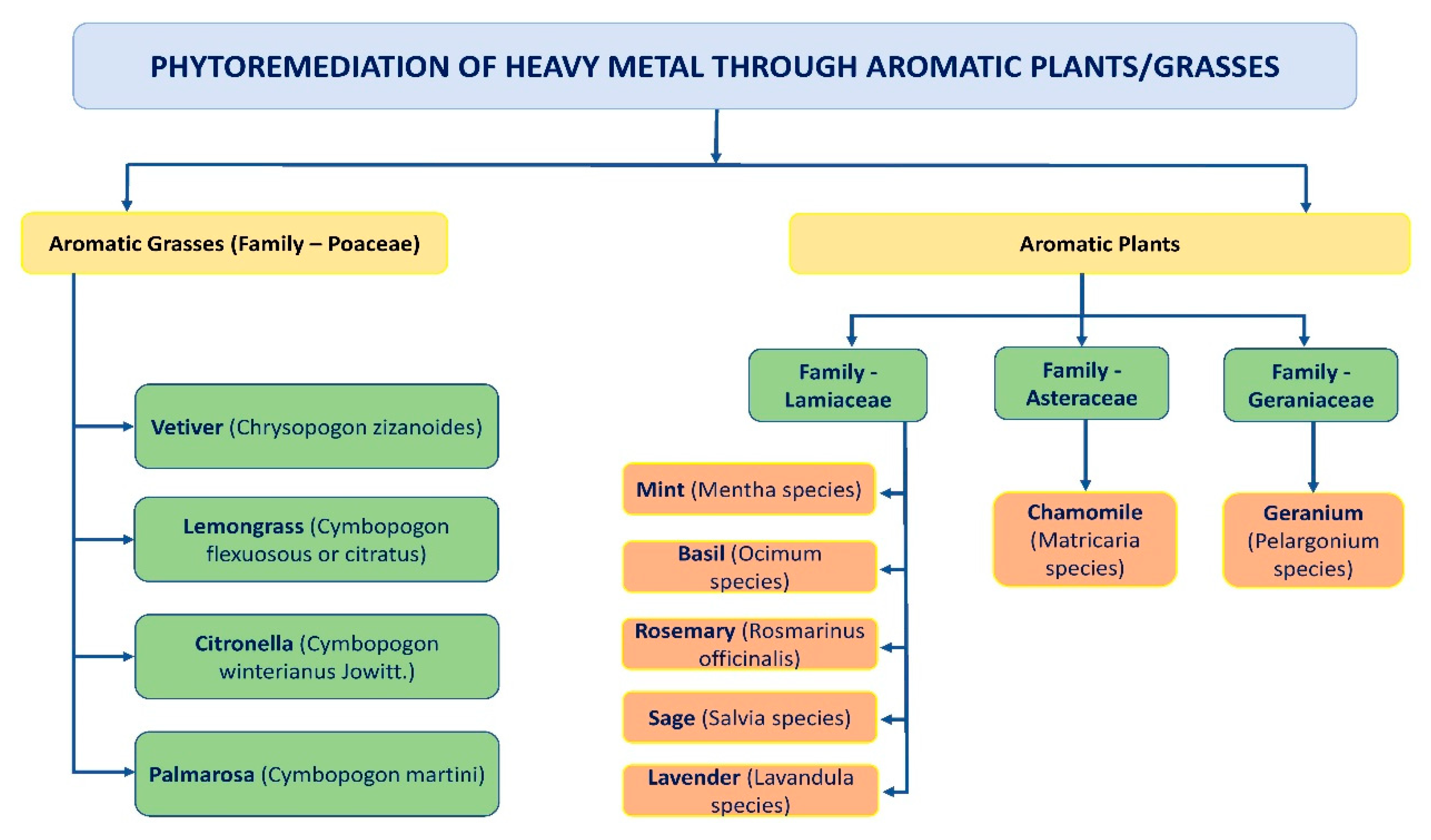
Figure 2.
Molecular Structure of Eugenol.
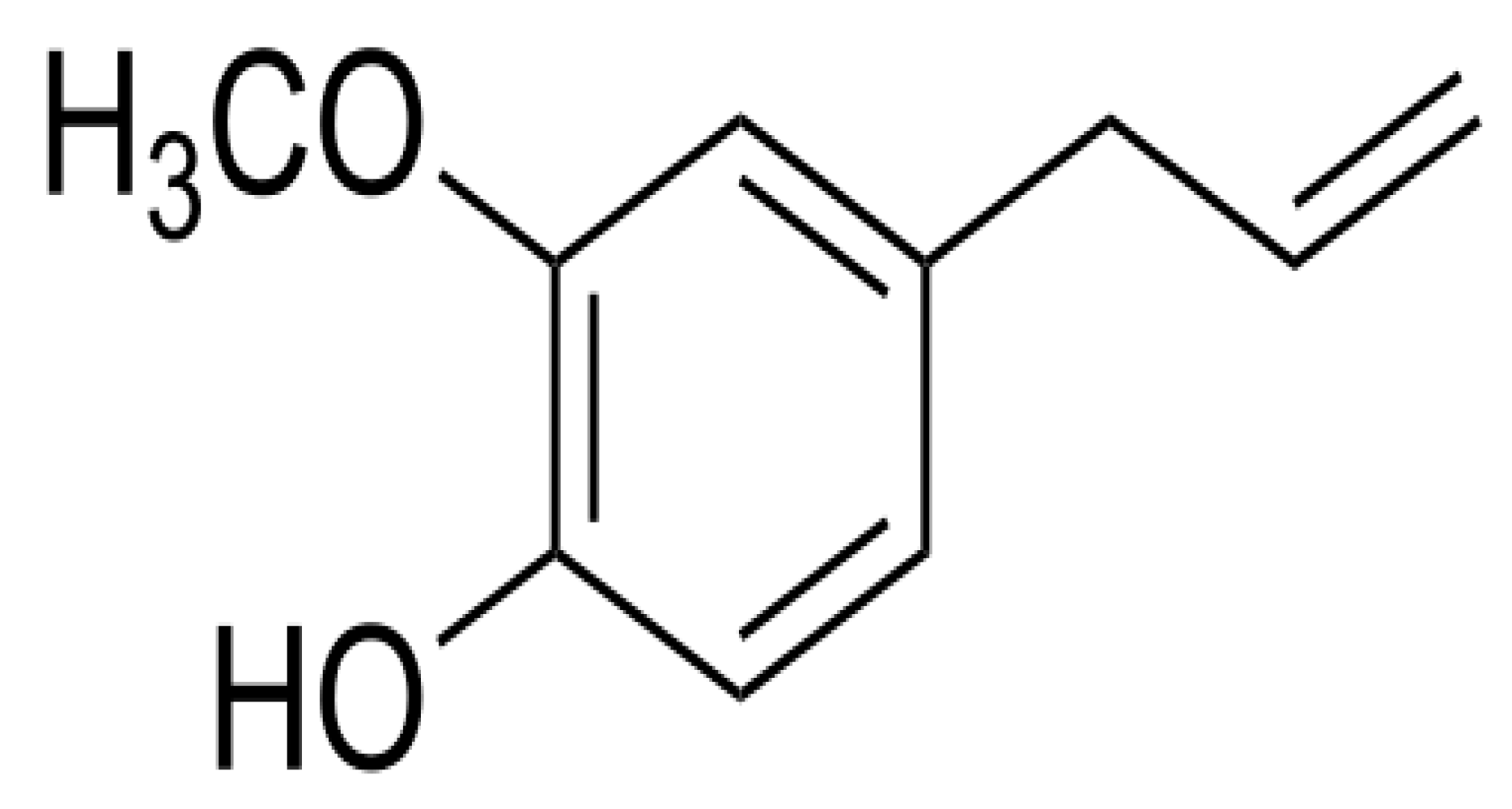
Figure 3.
A Diagram Showing to Introduce the Novel Approach for Sustainable Phytoremediation.
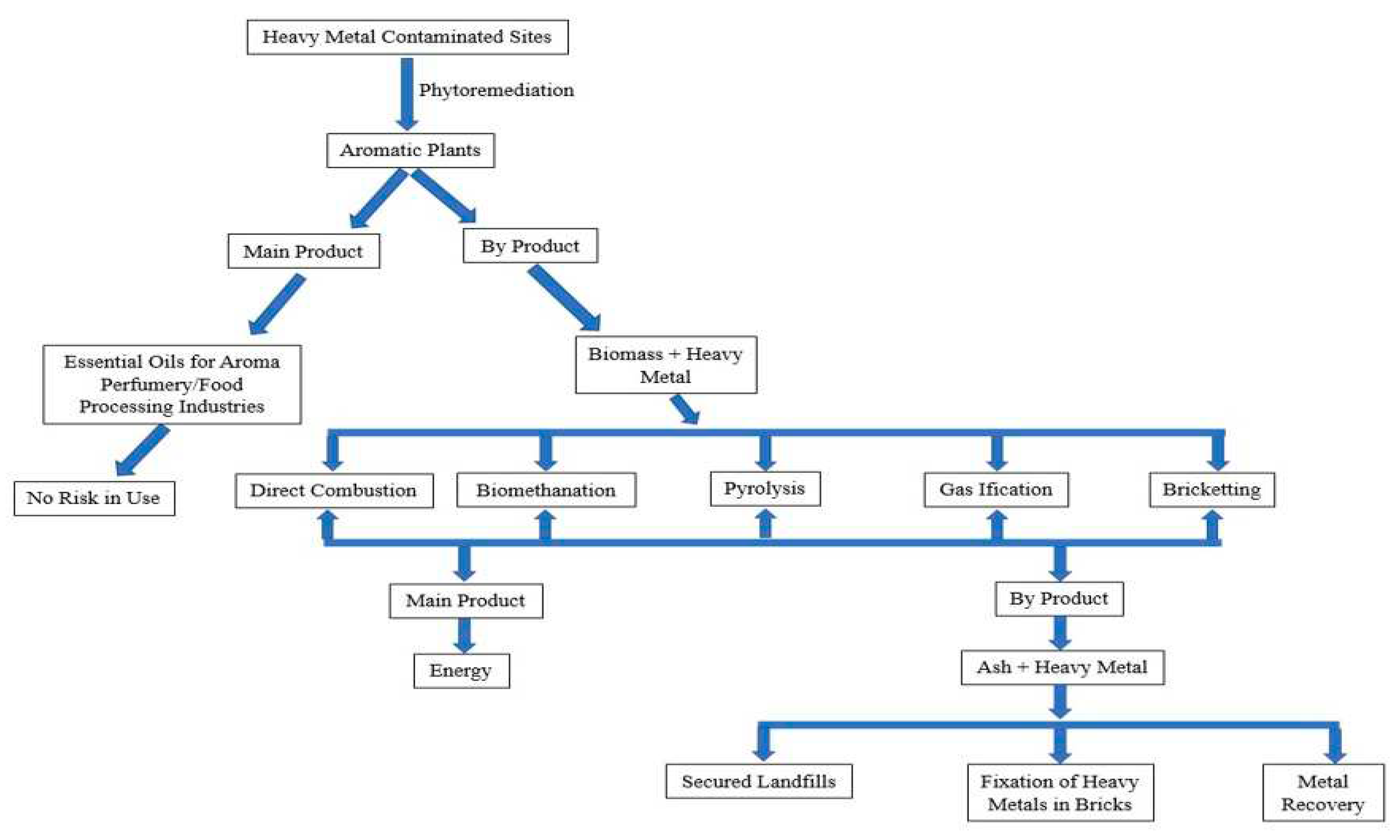

Table 1.
Essential and Non-Essential HMs with their Sources and Health Effects.
| S. No. | Classification of the HMs | Name of the HMs | Sources | Health Effects |
|---|---|---|---|---|
| 1 | Essential (harmless) | Copper (Cu) | Fungicides, paints, pigments, electroplating, & copper polishing | Metabolic activity abnormalities, abdominal disorders |
| 2 | Zinc (Zn) | Dyes, fertilizers, plumbing, oil refining | Gastrointestinal disorders, kidney & liver abnormal functioning | |
| 3 | Iron (Fe) | High intake of iron supplements & oral consumption | Diarrhea, vomiting, abdominal pain, dehydration | |
| 4 | Cobalt (Co) | Hip alloy replacement case | Cardiovascular, hepatic, endocrine, hematological | |
| 5 | Non-Essential (toxic) | Arsenic (As) | Paints, pesticides, thermal power plants, fuel burning, smelting operations | Prostate cancer, liver cancer, leukemia, cardiac problems, urinary bladder cancer |
| 6 | Cadmium (Cd) | Fertilizers, batteries, e-waste, electroplating, plastic | Osteo-related problems, prostate cancer, lung cancer, breast cancer, renal cancer, gastric cancer | |
| 7 | Chromium (Cr) | Leather tanning, dyes, industrial coolants, textile | Bronchitis cancer, Renal disorders | |
| 8 | Lead (Pb) | Batteries, metal products, petrol additives, ceramics, coal combustion | Alzheimer’s disease, nervous system disorder, lung cancer, carcinoma | |
| 9 | Mercury (Hg) | Instruments, fluorescent lamps, hospital waste, electrical appliances, volcanic eruption, paper industry | Blindness, deafness, gastric problems, renal disorders, Minamata disease, sclerosis, skin cancer, brain cancer, colorectal cancer | |
| 10 | Nickel (Ni) | Alloy, battery industry, mine tailing, thermal power plants | Nasal cavity cancer, lung cancer | |
| 11 | Manganese (Mn) | Fertilizers, steel production, municipal wastewater discharges | Cardiovascular system disorder, central nervous systems disorder, respiratory systems disorder |
Table 2.
Phytoremediation of Different HMs with Different Plant Species.
| S. No. | HMs | Name of the Plant | References |
|---|---|---|---|
| 1 | Hg | Chrysopogon Zizanioides | Mangkoedihardio and Triastuti, 2011 |
| 2 | Cu, Pb, Sn, Zn | Vetiveria Zizanioides | Vo and Nguyen, 2011 |
| 3 | Cd | Rosmarinus Officinalis | Tapia et. al., 2011 |
| 4 | Cu, Zn, Pb | Vetiveria Zizanioides | Chen et. al., 2012 |
| 5 | Multi metals | Pelargonium Roseum | Shahid et. al., 2012 |
| 6 | Cr | Vetiveria Zizanioides | Sinha et. al., 2013 |
| 7 | Pb, As, Sb, Zn, Cu | Rosmarinus Officinalis | Affholder et. al., 2013 |
| 8 | Pb | Matricaria Chamomilla | Farzadfar et. al., 2013 |
| 9 | Cd, Pb, Zn | Ocimum Basilicum | Stancheva et. al., 2014 |
| 10 | Multi metals | Salvi Officinalis | Stancheva et. al., 2014 |
| 11 | Cd, Ni, As, Pb | Vetiveria Zizanioides | Gunwal et. al., 2014 |
| 12 | Ni | Cymbopogon Citratus | Lee et. al., 2014 |
| 13 | Pb, Cd, Zn | Chrysopogon Zizanioides | Adigun and Are, 2015 |
| 14 | Multi metals | Cymbopogon Martini | Pandey et. al., 2015 |
| 15 | Multi metals | Pelargonium Graveolens | Chand et. al., 2015 |
| 16 | Cd, Zn | Ocimum Basilicum | Akoumianaki-Ioannidou et. al., 2015 |
| 17 | Cd, Pb | Rosmarinus Officinalis | Ramazanpour, 2015 |
| 18 | Multi metals | Salvia Sclarea | Chand et. al., 2015 |
| 19 | Pb, Zn, Cd | Lavandula Vera | Angelova et. al., 2015 |
| 20 | Cd | Ocimum Basilicum | Nazarian et. al., 2016 |
| 21 | Pb, Cd, Zn | Cymbopogon Citratus | Babarinde et. al., 2016 |
| 22 | Multi metals | Mentha Arvensis | Anwar et. al., 2016 |
| 23 | Multi metals | Rosmarinus Officinalis | Boechat et. al., 2016 |
| 24 | Cd, Pb | Vetiveria Zizanioides | Ng et. al., 2017 |
| 25 | Multi metals | Chrysopogon Zizanioides | Gautam et. al., 2017 |
| 26 | Cu, Zn | Mentha Arvensis | Malinowska and Jankowski, 2017 |
| 27 | Cd | Ocimum Basilicum | Alamo-Nole et. al., 2017 |
| 28 | Pb, Cd | Helianthus Annuus | Alaboudi et. al., 2018 |
| 29 | Cd | Virola Surinamensis | Andrade Junior et. al., 2019 |
| 30 | Cd | Glycine Max, Helianthus Annuus | Wang et. al., 2022 |
| 31 | Pb | Scirpus Grossus | Tangahu et. al., 2022 |
Disclaimer/Publisher’s Note: The statements, opinions and data contained in all publications are solely those of the individual author(s) and contributor(s) and not of MDPI and/or the editor(s). MDPI and/or the editor(s) disclaim responsibility for any injury to people or property resulting from any ideas, methods, instructions or products referred to in the content. |
© 2023 by the authors. Licensee MDPI, Basel, Switzerland. This article is an open access article distributed under the terms and conditions of the Creative Commons Attribution (CC BY) license (http://creativecommons.org/licenses/by/4.0/).
Copyright: This open access article is published under a Creative Commons CC BY 4.0 license, which permit the free download, distribution, and reuse, provided that the author and preprint are cited in any reuse.


