

Submitted:
01 August 2023
Posted:
03 August 2023
You are already at the latest version
Abstract
In Ghana, rice remains a critical crop, representing 15% of the country's GDP. However, production has been hindered by limited water access, degraded soil, pests and diseases, and ineffective pesticide use. These issues have impeded industry growth while adversely affecting the environment and impairing socioeconomic development. To combat these challenges, it is necessary to implement sustainable production strategies that emphasize environmental protection, resource management, and socioeconomic progress. This study evaluates sustainable rice production in Ghana, taking into account its consequences on the environment, socioeconomic growth, and food security. It pinpoints gaps and offers advice for stakeholders, policymakers, and scholars to transition to sustainability. The study illuminates the increasing significance of rice in Ghana and its role in food security, illustrating increased output due to widened land rather than higher yields. It underscores the necessity of fulfilling surging demand while implementing environmentally friendly practices. The paper scrutinizes the difficulties encountered by the rice sector, such as restricted water supplies and soil degradation, along with the adverse impacts of pests, diseases and inefficient pesticide utilization. Sustainable methods are imperative for Ghana's agribusiness, environmental protection, and socioeconomic progress. By embracing green techniques, prioritizing resource management, and investing in research, Ghana can surmount production issues. This review provides invaluable insight and suggestions for policymakers, academicians, and stakeholders alike to ensure sustainable rice production for current and future generations.
Keywords:
rice production
; sustainable production
; ghana rice
; resource management
; environmentally-friendly practice
1. Introduction
Rice is one of the most vital staple crops globally, providing sustenance to more than half of the world's population. In the Ghanaian economy, rice occupies a significant position as a strategic crop, acting as both a crucial food source and a crucial cash crop [1]. It is impossible to overstate the significance of rice to the Ghanaian economy, which accounts for about 15% of GDP [2]. In response to accelerating population expansion, rapid urbanization, and changes in consumer preferences, rice farming has assumed significant importance. It substantially contributes to improving household food security in Ghana and Africa, as it is the second most popular cereal staple after maize [3]. As shown in Table 1 paddy rice production increased from 302,000 to 987,000 MT from 2008 to 2020 respectively according to the Ministry of Food and Agriculture (MoFA) [4]. With Africa producing 14.60 million tons of rice during the past 50 years, the emphasis now needs to be on establishing sustainable production methods that put environmental preservation, resource management, and socioeconomic development first. Although more land has been cultivated for agriculture, there is still a need to address the growing demand for rice in a way that promotes sustainable farming methods over the long term. We can meet the rising demand for rice while protecting our natural resources and promoting socioeconomic development for the continent by using ecologically friendly and resource-efficient methods. [5]. The Ministry of Food and Agriculture has facilitated the revision of the National Rice Development Strategy (NRDS), intending to achieve self-sufficiency by 2024 [4].
Ghana's rice production, as well as other African countries, faces several challenges. These challenges include limited access to water resources, soil degradation, pests and diseases, and suboptimal use of agrochemicals. These factors contribute to difficulties in achieving optimal rice yields and hinder the growth of the rice industry in Ghana and other African nations. Unsustainable farming practices such as tilling the soil, monocropping, deforestation and excessive use of chemical fertilizers not only contribute to environmental degradation but also hinder long-term productivity and socio-economic progress. These difficulties impede farm productivity and profitability [6]. Therefore, a shift towards sustainable rice production practices is essential for Ghana's agricultural sector, particularly in the rice industry. Additionally, doing so is vital to preserve the planet's already finite natural resources and ensure that there will be enough for current and future generations' needs. Furthermore, compared to outmoded conventional/unsustainable practices, embracing contemporary, sustainable scientific practices enable farmers to obtain increased yields in the face of climate change. The challenges and production trends in Ghana's rice business are insightfully illustrated in Figure 1 in a visual format. The main elements affecting the nation's rice output as well as the changes in paddy rice production through time can be better understood through this graphical summary.
This review examines the current state of sustainable rice production practices in Ghana, assessing their impact on environmental sustainability, socio-economic development, and food security. It also identifies the research gaps and outlines strategic directions for enhancing sustainable rice production in the country. Through this comprehensive analysis, we aim to provide valuable insights and recommendations for policymakers, researchers, and stakeholders to support the transition toward sustainable rice production systems in Ghana.
2. Sustainable Rice Production Practices in Ghana
2.1. Water Management
Irrigation production continues to be one method of boosting agricultural production in order to fulfill the growing worldwide need for food. Given how water-intensive rice growing is, water management represents a key component of sustainable rice production [7]. Effective water management techniques are essential to maximize water use and ensure the sustainability of rice production in Ghana, where access to water resources might be constrained [8]. To improve water and soil management and create effective irrigation systems, several water and soil conservation techniques for rice farming were created and put into operation [8]. In Ghana, rice is primarily produced in three (3) ecosystems. These are (i) rice fields that receive irrigation, (ii) lowland/hydromorphic rice fields, and (iii) highland rice fields. Seventy-five percent of the world's rice is produced by the irrigated lowland rice system, which covers around 93 million acres. Around 56% of the world's irrigated land is devoted to crops, with rice accounting for 40–46% [9].
2.1.1. The Alternate Wetting and Drying
The alternate wetting and drying (AWD) technique remains one method that has shown promise in lowering water consumption while maintaining or increasing yields [10]. The AWD technique uses a cyclical procedure, as shown in Figure 2, where the rice fields endure alternating wet and dry seasons. In order to ensure that the field is sufficiently immersed during the wet phase, water is slowly supplied to the rice paddies, either through controlled irrigation or direct flooding. The water is then gradually removed or allowed to evaporate, which results in a regulated drying process. The length of each wet and dry cycle might differ depending on the temperature, soil type, and stage of crop development, all of which are taken into account when optimizing the AWD method [11]. Farmers can avoid flooding their fields by utilizing a water control system to keep the soil moisture at a level that matches the crop's needs for water.
In Ghana's Volta region, a study shows that AWD reduced water use by 20–30% compared to continuous flooding, with no appreciable difference in yield. [12]. Water use and the potential for global warming (GWP) have both been greatly reduced due to the implementation of AWD systems [13]. However, there are varying reports on how managing irrigation to prevent flooding in rice fields affects rice yield. Some studies indicate an increase in yield under the AWD system compared to the Continuously Flooded (CF) system, while others show a decrease. These conflicting findings highlight the need to optimize irrigation management based on factors such as soil properties, drainage frequency, flooding duration, and crop adaptability [13]. Table 2 demonstrates that AWD and Saturated Soil Culture (SSC) can produce yields comparable to or greater than CF while using less water, whereas Aerobic Rice (AR) can conserve more water but produce less yield. This indicates that AWD and (SSC) are more productive and water-efficient than CF, while (AR) is more productive but less water-efficient than CF. By combining water-saving production and irrigation systems, we can enhance water productivity, improve water efficiency, and achieve better economic returns while reducing the environmental impact (Global Warming Potential).
2.1.2. Precision Irrigation
Other water-saving solutions are being investigated for rice production in Ghana, in addition to AWD. Precision irrigation systems, such as drip irrigation and sprinkler irrigation, are one such technique. These technologies make it possible to precisely manage the amount of water applied, reduce water loss due to evaporation, and guarantee that water is delivered to the crop root zone [15]. Rice cultivation can benefit from drip or sprinkler irrigation systems to enhance the efficiency of water and fertilizer usage. The drip system has the potential to conserve water and other nutrients by allowing water to drip continually to the main roots of the plants and other plant parts that are located on the surface of the soil or buried under the surface of the soil. Putting water into the root zone and reducing water vapor are two basic goals of drip irrigation [16]. Drip irrigation, according to Parthasarathi, et al. [2018], boosted water productivity, favored root oxidizing power, canopy photosynthesis, and dry matter partitioning, improved aerobic rice yield by 29%, increased water saving efficiency by 50%, and increased water productivity. This is crucial because traditional flooding methods used in rice production consume more water compared to any other crop in agriculture [18]. Additionally, the use of water collection methods can increase the amount of available water for rice production during the dry season. This involves collecting and storing rainwater runoff from roofs and fields as well as creating small ponds or reservoirs to store water for irrigation. To conserve water and provide adequate watering, the drip irrigation system is very beneficial and essential. As the world's population grows every day, water shortages will become more and more of a concern in the future. Flooding wastes a lot of water, contributes to greenhouse gas emissions, releases methane, and pollutes aquifers [16]. An in-depth visual representation of a rice farm with sprinkler and drip irrigation systems integrated is provided in Figure 3. This cutting-edge farming setup seamlessly integrates contemporary water-saving measures to boost water efficiency and improve overall rice yield. The picture demonstrates how these precise irrigation systems can be strategically used to improve water distribution and satisfy the unique water needs of rice crops.
The sprinkler irrigation sprays water on the plant from above. They are more accessible and less expensive but they also produce more runoff and evaporation since they cover a broader area.
Some methods contribute more to water conservation than others, according to Arouna, et al. [2023], who reviewed various methods used to estimate irrigation water requirements in irrigated rice production. The authors also looked at how water conservation technologies affected rice yields and water use efficiency and discovered that, in comparison to surface flooding, drip irrigation systems increased irrigation water productivity to 1.03 kg/m3, reduced irrigation water use by 42%, and increased irrigation efficiency. These water management techniques could increase water productivity in rice production systems while also helping to conserve water. The term "water productivity" describes how much grain is produced for every unit of water used. Higher water productivity can be attained by putting water-efficient strategies into practice, ensuring the limited water resources are used effectively to boost rice yields [19]. The impact of AWD production system on rice grain quality in various nations is summarized in Table 3 based on previous research investigations. AWD can have different effects on rice grain quality in different geographic areas, emphasizing the necessity for region-specific measures for water management in rice agriculture.
2.2. Nutrient Management
Since nutrient management directly affects crop development, output, and environmental sustainability, it is a critical component of sustainable rice cultivation in Ghana [27]. The goal of good nutrient management techniques is to give rice plants a balanced and sufficient nourishment while reducing nutrient losses and environmental pollution [28]. After the green revolution, farmers started relying heavily on chemical fertilizers to increase rice production. Unfortunately, this excessive use of fertilizers has led to the deterioration of soil quality and has had negative effects on the ecosystem and biodiversity. Chemical fertilizers used extensively to intensify agriculture caused a major deterioration in the physicochemical characteristics of the soil [29]. Due to the application of long-term fertilizer in a range of crops, changes in Soil Organic Carbon (SOC), pH, nitrogen (N) content, moisture, and therefore the variance in nutrient availability to microbes have been noted [30,31]. The primary input for high-yielding rice farming worldwide is chemical fertilizer.
2.2.1. Essential Nutrients for Successful Rice Cultivation
The three nutrients that are most frequently used for rice cultivation are nitrogen (N), phosphorus (P), and potassium (K). About 15-20 kg of mineral N, 11 kg P2O5, 30 kg K2O, 3 kg S, 7 kg Ca, 3 kg Mg, 675 g Mn, 150 g Fe, 40 g Zn, 18 g Cu, 15 g B, 2 g Mo, and 52 kg Si are needed to produce one ton of raw rice [32]. The vital nutrient phosphorus plays a significant role in rice formation. It provides and transports energy during plant metabolism. Soil factors such as pH, phosphorus adsorption capacity, temperature, rice type, and management techniques influence phosphorus effectiveness in rice farming. Phosphorus remains less mobile in the soil system compared to nitrogen (N) and potassium (K), resulting in a substantial buildup of applied phosphorus in agricultural soils [33]. In acidic soils, complexes with iron (Fe), aluminum (Al), and in high pH soils, calcium (Ca) causes 75% to 90% of the phosphorus fertilizer to precipitate after application [34]. For various African countries, appropriate rice fertilizer dosages are shown in Table 4 for lowland, rainfed upland, and irrigated lowland rice ecologies. These dosage parameters are crucial for farmers to follow in order to guarantee that their rice crops receive an adequate quantity of nutrients while avoiding overfertilization that could cause environmental contamination.
2.2.2. Optimized Fertilization Techniques
Nine commonly used optimized fertilization techniques are straw inclusion, delaying N application, formula fertilization, lowering fertilization, deep fertilization, slow/controlled released fertilizers, combined application of organic and inorganic fertilizers, adding biochar and green manure. Sustainable rice production greatly benefits from balanced fertilization techniques, it entails applying fertilizers at the proper times, in the proper volumes, and in the proper ratios [43]. A crucial technique for identifying nutrient imbalances or inadequacies and directing fertilizer recommendations is soil testing.
Straw Inclusion
When rice straw is incorporated, the amount of potassium (K), nitrogen (N), and phosphorus (P) that rice needs to grow can be reduced. Rice straw comprises around 80, 40, and 30% of the K, N, and P that rice needs to grow. Due to its poor decomposition, the timing of this operation, together with water management, becomes crucial [44]. It has been demonstrated that the in-situ integration of rice straw into the soil boosts soil organic carbon (C), aids in the recycling of nutrients, and increases crop yields in the future [45]. Schmidt, et al. [2015] noted that rice straw provides a substrate to promote biodiversity through the flourishing of invertebrates that decompose the straw, which in turn enhances nutrient cycling in paddy soils. In a study carried out in Vietnam by Thanh, et al. [2016], the addition of rice straw was demonstrated to enhance soil organic C, soil pH, and nutrient content in comparison to the starting conditions. Consistently incorporating crop residues into rice soils after every crop has the potential to enhance the nitrogen-supplying capability over time. A significant and easily accessible biomass in Ghana is crop straw. A visual example of the straw inclusion technique's practical application in freshly built rice beds is shown in Figure 4, which highlights the simple yet very successful method for improving nutrient management in rice production. In this illustration, farmers carefully place rice straw into the soil of newly constructed rice beds, as it has considerable potential for sustainable rice cultivation. However, due to the existing use of traditional methods of exploitation, crop straw is underutilized in Ghana [48].
Delaying N application
Reducing N fertilizer application on the grounds of maintaining crop output has become a common necessity for sustainable agriculture due to the rise in consumer knowledge of the safety of agricultural products and environmental protection [49]. Adjusting the timing and rate of nitrogen (N) delivery is one possible agricultural approach for improving nitrogen usage efficiency (NUE) in rice farming [50]. Farmers can lower the total quantity of N needed during the basal stage by delaying N application. Instead, higher amounts of fertilizer can be administered when the rice plants are in the tillering and booting stages since they are more responsive to nitrogen uptake at those times. This strategy promises to increase rice output while at the same time lowering N losses in addition to improving NUE. Moreover, growers may be able to reduce labor input, expediting the cultivation process, by improving N application procedures [51].
Formula Fertilization
Utilizing formula fertilization, which involves calculating the optimal rate and ratio of nitrogen (N), phosphorous (P), and potassium (K) fertilizers based on extensive soil testing, is essential for maximizing fertilizer application in rice farming [52]. Farmers can customize their fertilizer routine by doing thorough soil analysis to gain useful insights into the nutrient content and pH levels of the soil [53]. This method has the potential to increase rice yield while simultaneously improving NUE. Also, it is possible to decrease fertilizer applications by precisely estimating the soil's nutrient needs, which lowers costs and the environmental impact of excessive fertilizer use. The necessity of effective nutrient management in rice has increased since it not only ensures high levels of rice production but also minimizes the amount of applied nutrients that leak into the environment [54].
Lowering Fertilization
Reducing nitrogen (N) fertilizer application rates by 10–30% based on existing fertilizer application rates and the unique needs of the crop is a viable technique to reduce the environmental impact of excessive fertilizer usage in agriculture [55]. This strategy allows farmers to meet the nutrient needs of the crops while greatly reducing their total dependency on chemical fertilizers [56]. To maintain grain yield, improve nitrogen usage efficiency, and lessen environmental impact, nitrogen fertilizer use must be reduced [57]. This decrease in fertilizer use not only promotes more environmentally friendly farming practices but also minimizes nitrogen losses [58]. Farmers can strike a balance between preserving crop yield and minimizing the potential negative effects associated with excessive fertilizer use by implementing appropriate and accurate nutrient management strategies [59].
Deep Fertilization
Applying chemical fertilizer below the soil's surface, often at a depth of between 6 and 10 cm, is known as "deep fertilization." This method has several potential advantages for growing rice. Deep fertilizer placement offers the ability to overcome conservation tillage's productivity restriction and widespread adoption [60]. The method of side-deep fertilization is crucial to the sustainable growth of rice crops [61]. By bringing the fertilizer (nitrogen) closer to the root zone, where it can be more easily absorbed by the plants, it increase NUE [62]. This focused application increases the use of nitrogen while decreasing losses and improving nutrient uptake efficiency [63]. Deep fertilization as shown in Figure 5 involves the precise and meticulous application of fertilizer below the soil surface to maximize the availability of nutrient to rice plant. Farmers employ specialized equipment to carefully distribute the chemical fertilizer at the desired depth, which is normally between 6 and 10 cm below the soil surface.
Additionally, deep fertilization may increase rice yield by ensuring a consistent and ample supply of nutrients throughout the growing season. [64]. Reports by Hong, et al. [2023], stated that under standard rice and soybean cultivation circumstances, deep fertilization will be an efficient fertilizer application technique utilized to boost rice and soybean yields. This approach also encourages the development of deep roots, allowing plants to obtain water and nutrients from deeper soil layers. Deep fertilization of rice boosted tillers and panicle rates, increased yield, reduced labor costs, avoided delayed senescence, and managed diseases and insects as well as raised fertilizer consumption by 25% [66]. Deep fertilization can encourage lively plant growth and development by raising the amount of nitrogen that is available in the root zone. [67]. Farmers can improve nutrient management, improve crop performance, and promote sustainable rice production by embracing deep fertilization techniques.
Slow/Controlled Released Fertilizers
Specialized fertilizers known as slow/controlled-release fertilizers are made by encapsulating mineral fertilizers inside of a synthetic polymer matrix or by covering them with a polymer film [68]. In agriculture, this novel strategy has many positive effects on crops and grain yield [69]. Slow-release controlled fertilizers boost crop yields by gradually preserving the soil's health [70]. Firstly, by allowing for a controlled release of nitrogen, these fertilizers give plants a steady supply of nutrients over an extended time [71]. This regulated release method optimizes nutrient uptake, lowers the chance of nutrient runoff or leaching, and hence lessens the total demand for chemical fertilizer applications [72]. The use of slow/controlled-release fertilizers also streamline field operations because they do not need to be applied frequently, saving farmers' work and time. Furthermore, by fertilizing less frequently, these fertilizers can help bring down the price of agriculture and also reduce environmental impact [59].
Combined Application of Organic and Inorganic Fertilizers
It is necessary to partially replace chemical fertilizers with organic resources, such as manure, when applying organic and inorganic fertilizers together [56]. Agriculture benefits significantly from this integrated approach in many ways. In the beginning, the addition of organic materials improves soil fertility by supplying a variety of nutrients and organic matter [73,74]. These organic inputs increase the soil's structure, ability to hold nutrients, and microbial activity, all of which are beneficial for the health of the entire soil [73]. According to studies by Nyalemegbe, et al. [2010], both cow dung and urea gave a paddy yield of 4.7t ha-1. Moreover, studies by Jinwei and Lianren [2011] found that the combined application of large amounts of organic manure and inorganic fertilizers (A1B5) treatment enhanced field moisture capacity and organic matter the fastest; organic matter increased by 3.33 g kg1 and field moisture capacity increased by 11.25% from the start of the trial. The growing production range under the same fertilization was greater for the combined application of organic and inorganic fertilizers than it was for the individual chemical fertilizers, which ranged from 0.8% to 9.4%. The findings demonstrated the highest productivity contribution to the fertility of black soil was made by combining the application of organic and inorganic fertilizers. The soil fertility was improved, and it was the optimum fertilization arrangement for raising productivity levels. In intensive agricultural systems, soil acidity is a problem that can be solved by applying both organic and inorganic fertilizers at the same time. The pH balance of the soil can be adjusted by adding organic materials, creating a more hospitable environment for plant development [76].
Biochar Incorporation
Biochar is a solid byproduct created when biological organic materials are pyrolyzed in an anaerobic or hypoxic atmosphere [77]. It is added to agricultural fields. The cultivation of rice can profit greatly from this method. In the beginning, adding biochar improves soil fertility by supplying it with organic carbon and crucial nutrients. Biochar's porous nature encourages microbial activity and nutrient retention, which improves the health and fertility of the soil [78]. Additionally, research has demonstrated that adding biochar can boost rice yield by improving nutrient availability and encouraging root development [79]. Abukari [2019], asserts that an increase in the rate of biochar application at 4 Water Absorbing Polymers (WAP) led to an increase in soil moisture content. Also, field experiments revealed that adding biochar to upland rice paddies improved the soil's water permeability and water retention capacity. [80]. MacCarthy, et al. [2020] who experimented on biochar in Ghana found out that the topsoil's ability to store soil organic carbon was increased by the application of biochar. The effects of applying biochar and nitrogen fertilizer together on yield parameters were considerable. By considerably increasing root volume and nutrient (N, P, and K) uptake, biochar was introduced. This led to an increase in grain and straw yield. In 14 out of 16 cases (cropping cycles N rates), grain yields on plots altered with biochar were higher than those on plots amended alone with fertilizer. Between 12 and 29% more grain was produced across all N rates.
In addition, biochar enhances the soil's physical and chemical characteristics, including its potential to retain more water, which helps keep the soil moist during times of water stress [82]. Also, Atkinson, et al. [2010] stated that significant increases in plant productivity have been attained depending on the amount of biochar added to the soil, however, these claims come primarily from research in the tropics. Furthermore, biochar has the ability to reduce soil acidification by promoting a more balanced soil pH and creating a conducive environment for plant growth [84]. Farmers can improve soil quality, boost crop output, and support sustainable rice production. Farmers can improve soil quality, boost crop output, and support sustainable rice production. In order to improve soil fertility and promote sustainable rice production, biochar is strategically incorporated into the rice-growing process as seen in Figure 6, which gives a thorough visual representation of the process.
Green Manuring
Green manuring is a technique in which green plant matter, also known as green manure, is integrated into the soil via plowing [85] as shown in Figure 7. The cultivation of rice can benefit from this method in several ways. Firstly, green manuring increases soil fertility by enhancing it with organic matter, which provides plants with nutrients. This was supported by research done by Latt, et al. [2009], that examined the effects of applying S. rostrata green manure on rice yield and growth. Treatments with urea (40 and 80 kg N ha -1) and no application were contrasted with green manure (2 and 4 plants pot -1) treatments. In comparison to urea and no application treatments, green manure treatments considerably enhanced the dry matter weight and grain weight of rice. The plant's intake of N increased with each application of green manure. It may be concluded that adding green manure legumes can significantly increase the quantity of biologically fixed nitrogen (N) in rice soils. As the green manure breaks down, vital nutrients are released into the soil, increasing its fertility overall [87]. Incorporating green manure has been shown to boost rice output in studies [88]. Additionally, this technique lessens the need for chemical fertilizers because green manure's organic matter acts as a natural supply of nutrients, encouraging the use of more sustainable farming techniques [89]. Also, Zhou, et al. [2020], discovered that adding green manure enhanced rice yield by 4.1%. By boosting aggregation, moisture retention, and nutrient-holding ability, green manuring also helps to improve the structure and characteristics of the soil. Additionally, it aids in modifying soil pH levels because some green manure crops can lessen soil acidity [90]. Overall, green manuring is a successful strategy for improving soil fertility, crop yield, lowering chemical inputs, and enhancing overall soil health in rice farming. The transformational effects of using green manure encompasses enhance rice yield, enhanced dry matter, enhance microbial activity Improve soil health and increase biomass (Figure 7) in rice production are effectively illustrated. Green plant matter can be successfully incorporated into the soil to reap its many advantages.
After the demand for increased yields, environmental protection has become a key factor in promoting the adoption of optimal fertilization procedures. Most techniques often resulted in yield increases of more than 5% and TN loss reductions of more than 15% [51].
By tailoring fertilizer applications to the specific nutrient requirements of the soil and crop, farmers can increase the efficiency of nutrient usage while reducing the risk of nutrient runoff into water bodies [91]. In addition to chemical fertilizers, composting and the use of organic fertilizers are growing in popularity as sustainable rice production techniques. Examples of organic fertilizers that enhance soil fertility, soil structure, and promote nutrient cycling include compost, green manure, and farmyard manure [92]. These organic additions enhance soil health, water-holding capacity, and microbial activity in addition to supplying critical nutrients [93]
Another strategy that is becoming more popular in the development of sustainably grown rice is site-specific nutrient management (SSNM). In SSNM, the nutritional requirements of rice plants are determined at various growth stages, and the appropriate targeted nutrient treatments are made [94]. Rodriguez [2020], claims that this technique reduces nutrient losses, improves fertilizer usage efficiency, and minimizes environmental consequences.
Additionally, using soil additions like lime and gypsum can help balance out nutrient deficiencies and restore soil pH. According to Fageria and Knupp [2014], these treatments optimize nutrient uptake efficiency while increasing the availability of nutrients to rice plants. Farmers can also utilize precision nutrient management methods like fertigation (the application of fertilizers through irrigation systems) and foliar nutrient sprays to increase nutrient uptake and decrease losses. [97].
3. Integrated Pest Management
Integrating pest and disease management, which aims to lessen reliance on chemical pesticides while effectively eradicating pests and diseases, is essential for maintaining sustainable rice production [98,99]. Excessive pesticide use causes the destruction of beneficial insects and the outbreak of the pest [100,101]. Many regions of the world have identified herbicide resistance as a significant barrier to rice production. Hundreds of weed species are resistant to the main classes of herbicides, and many species are resistant to multiple herbicide classes [102]. Utilizing a combination of cultural, biological, and chemical control measures as part of integrated pest management (IPM) strategies results in a strategy that is both ecologically and economically sustainable.
3.1. Crop Rotation
IPM in the production of rice is built on cultural customs. Crop rotation is one of these strategies, which entails alternating the growing of rice with other crops in order to disrupt the life cycles of pests and decrease their numbers [103]. Reducing the amount of fertilizer used, cultivating many kinds or lines on a single plot, switching nursery locations, and taking phytosanitary precautions can all help avoid the spread of virulent virus strains to another rice-producing zone [104]. Furthermore, effective soil preparation methods like field leveling and the removal of weed hosts make it difficult for diseases and pests to spread and thrive [105].
3.2. Biological Control Techniques
Chemical pesticides can be replaced with sustainable biological control techniques. Biological control reduces pest populations by utilizing natural enemies of pests such as parasitoids, and predators [106]. For example, the introduction of predatory insects in rice fields, such as spiders and beetles, can successfully reduce pest populations [107]. The biological method of pest control broadly speaking also includes the use of pheromones for pest population monitoring and to prevent pests from breeding, sterilizing insects before releasing them, and using bio-pesticides, which are made from living creatures or the byproduct of living organisms [108]. The growth, feeding, and productivity of rice leaf folder larvae are impacted by some biological pesticides used in rice, such as Neem seed kernel extract (Azadirachta indica A. Juss), Vitex negundo L. leaf extract, and Bacillus thuringiensis [109]. These studies demonstrate the usage of natural plant products containing bacterial toxins inhibits growth, has an antifeedant impact, and maybe even has poisonous effects on dangerous insects.
IPM includes the prudent application of chemical pesticides when other control strategies are ineffective. To prioritize the selective use of target-specific pesticides, one must consider their effectiveness, influence on the environment, and potential risk to non-target organisms [110]. Therefore, farmers must be able to benefit from the ecosystem's diversity and production, and pesticide use must be based on ecological principles. Farmers must be aware of how to maximize the ecosystem's long-term productivity in the rice fields. The application of pesticides can be maximized, reducing pesticide residues and environmental concerns, by adhering to optimum time and dose, led by pest monitoring and forecasting systems [111]. By allowing for early detection and intervention, routine scouting and monitoring of rice fields are essential to effective pest and disease control. Farmers can avoid infestation growth and potential crop losses by responding quickly to pest and disease outbreaks [112]
4. Improved Rice Seed
Moreover, the cultivation of rice strains resistant to disease makes a substantial contribution to long-term pest and disease control [113]. In order to reduce the usage of chemical pesticides, breeding projects in Ghana have concentrated on creating rice types that display resistance to serious diseases including blast and sheath blight. Consequently, the adoption of resistant varieties represents a safer and more environmentally friendly alternative to heavy pesticide use in rice production. To develop insect-resistant rice crop varieties, various techniques have been employed. These include mutagenesis, which involves inducing mutations in the plant's genetic material, as well as the introduction of foreign genes through approaches like single-gene insertion or gene pyramiding. Additionally, transplastomic methods, genetically engineered or modified Bt toxins, oligonucleotide-directed mutagenesis, engineered nucleases, engineered plant membrane transporters, and antisense technologies have been utilized [114]. A higher grain production, improved crop growth, and a decrease in weed, insect, and disease damage were all benefits of using improved rice seeds [115].
5. Soil Health
To encourage sustainable rice production in Ghana, soil conservation techniques are crucial. It is essential to implement practices that not only increase output but also protect the long-term health and fertility of the soil due to the country's expanding population and the pressing need for food security. Ghana can achieve sustainable rice production and maintain the welfare of both the environment and its people by putting into place efficient soil conservation methods. Sánchez [2010], stated that with the right management of the soil environment, fertilizer use, and appropriate crop varieties, crop yields in Africa might be tripled. Conservation tillage is one of the main techniques used in sustainable rice cultivation. With this strategy, plowing and tilling—which can cause soil erosion and degradation—are reduced or completely avoided. Instead, no-till or minimal-tillage farming methods are used to preserve organic matter and reduce soil compaction. Conservation tillage enhances water infiltration and nutrient retention by maintaining soil structure, thereby improving the soil's general health [117]. According to Bandyopadhyay, et al. [2016] zero-tillage transplanting and zero-tillage direct seeding in rice are conservation tillage techniques anticipated to enhance crop water use efficiency and soil hydrology.
5.1. Soil Conversation
Rice farmers in Ghana also use crop rotation as a crucial method of soil conservation. Farmers can disrupt the cycles of pests and diseases, encourage the cycling of nutrients, and lessen soil degradation by diversifying the crops they cultivate in a single location. Rice cultivation is alternated with the growing of legumes or vegetables, which improves soil fertility and promotes environmentally friendly farming methods. It has been demonstrated by HE, et al. [2016] that crop rotation can improve soil quality, such as nutrition status and physical structure, by removing soil-borne diseases, pests, and weed reservoirs that cannot be effectively controlled by pesticides. A rice-maize rotation system might boost rice output by 10.5% and maize yield by 11.3% compared to continuous rice cropping, according to Hameed, et al. [2023], who studies the impact of cropping systems on yield and socioeconomic benefits of rice cultivation in Ghana. A rice-maize rotation method might boost net revenue by 16.7% over continuous rice cultivation, according to the study. Moreover, the studies done by He, et al. [2021], realized that in comparison to successive cropping of rice (RR), the yield, profit, and profit margin of PR (potato rice rotation), FR (fallow followed by rice), and WR (watermelon rice rotation) were all higher (Table 5). The PR cropping system produced the highest yield, profit, and profit margin when compared to the other three cropping systems. FR came in second, and RR fared the worst. The rice yield from PR was marginally greater than that from FW but significantly higher (p 0.05) than that from RR and WR (Table 5). Furthermore, PR generated much more revenue than any other farming system.
5.2. Integration of Agroforestry and Terracing
Additionally, gaining ground in Ghana is the integration of agroforestry systems with rice farming. The development of a sustainable rice-based agroforestry technique can increase the productivity of inland valleys. Planting trees next to rice fields is known as agroforestry, and it has several advantages for preserving soil [122]. With the help of this technology, crops and trees can coexist in one field, which has the potential to improve soil fertility, boost biodiversity, and raise crop yields, among other advantages [122]. The organic matter content of the soil is increased by trees' leaf litter, which also reduces evaporation and soil warmth. This improves the water-retention ability, fertility, and soil structure [123]. In addition to helping to preserve the soil, agroforestry practices also promote biodiversity and improve the sustainability of the agricultural landscape [124].. In regions with few resources and where conventional agricultural methods have caused soil degradation and low yield, this strategy can be especially effective
Terracing is used in sloppy regions to prevent soil erosion and retain rainwater. Terraces, which are built like steps, minimize runoff and allow water to seep into the ground, keeping critical topsoil from being carried away. In Ghana's hilly regions, terracing is a practical way to maintain the quality of the soil, stop erosion, and guarantee the sustainability of rice production. Numerous approaches exist for terracing to improve erosion control effectiveness. First, terracing reduces the velocity and overall amount of runoff, weakening erosive effects Second, to stop soil erosion, terraced fields frequently have features like upslope contour hedgerows, vegetative filter strips, and grass barriers [125]. In a study by Sukristiyonubowo [2007], for sustainable rice cultivation in terraced paddy field systems, the application rates of urea and KCl combined with 33% of the rice straw produced in the prior growing season are strongly advised. Terracing in rice production facilitates soil carbon and nitrogen stocks [127]. Figure 8 shows a terrace in section. Cut-and-fill regions are used to create terraces. Filling up gaps enables the arable land to be increased, allowing for the large-scale cultivation of rice in steep terrain. In order to prevent runoff and field water, the ridges or embankments are crucial.
5.3. Use of Cover Crops
Another important technique for conserving the soil used in the sustainable production of rice is the use of cover crops [128]. Farmers use cover crops like legumes or grasses during fallow times or in between rice harvests. These cover crops enhance soil structure, boost organic matter content, provide natural weed suppression, and protect the soil from erosion and nutrient leaching [128]. Cover crops promote environmentally friendly farming methods and improve the health and fertility of the soil by minimizing the need for herbicides. Ghana can encourage sustainable rice cultivation that reaps several benefits by putting these soil conservation techniques into practice. These techniques not only improve crop output, soil fertility, and water management, but they also lessen the total environmental effects of agriculture [129]. Food security for Ghana's population is ensured by sustainable rice production, which also protects the environment for future generations.
6. Conservation of beneficial insects and pollinators
Compared to other crops, rice fields are transitory wetlands that exhibit rapid physical, chemical, and biological changes as well as a higher diversity of organisms, particularly arthropods [130,131]. Arthropods, which are found in these ecosystems in an intermediate position in the food chain and include herbivores, saprophytes, parasites, and predators of other animals. These organisms are essential for maintaining ecological harmony, improving crop pollination, and acting as a natural pest control [131]. To preserve biodiversity, boost crop yields, and decrease the use of chemical pesticides, it is crucial to protect beneficial insects and pollinators [132]. However, few studies have shown how the diversity and quantity of natural enemies, such as parasitoids and predators, aid in biological arthropod pest management during various stages of rice crop development [133,134]. Within a specific range, agricultural productivity and biodiversity in agroecosystems are positively correlated, meaning that as biodiversity rises, so does production [135,136]. The opposite is also true; as biodiversity declines, so does agricultural output. The fact that it can successfully reduce the quantity of insect pests is one of the key justifications [137]. Statistics show that by reducing the biodiversity of agroecosystems, the number of plant eaters has increased by 18% while the number of plant eaters has decreased by 53% [130]. Information on several insect species that damage rice crops and the parasitoids that attack them is summarize in Table 6. Natural enemies such as these parasitoids aid in reducing the number of pests in rice crops. They are members of several insect groups, demonstrating the variety of beneficial creatures that are essential to preserving ecological harmony and controlling pests in rice habitat. The food chain for herbivores and their natural enemies is built around arable weeds. Furthermore, a variety of helpful insect species, particularly crop pollinators, are supported by arable weeds [138].
7. Conclusion and Future Prospect
The significance of sustainable rice production practices in Ghana and their consequences for the environment, socioeconomic development, and food security are highlighted in this review paper's conclusion. It lists the main difficulties the rice industry faces, including the inability to acquire enough water, soil degradation, pests, diseases, and inadequate pesticide application. These difficulties have prevented the industry's expansion and negatively impacted Ghana's socioeconomic and environmental developments. The analysis highlights the growing significance of rice in Ghana, where it contributes significantly to the GDP and is essential to guaranteeing food security. It is important to understand, nevertheless, that boosting rice production just by enlarging the amount of farmed area is not a long-term answer. Instead, implementing resource management strategies and ecologically friendly behaviors is crucial. The National Rice Development Strategy, which seeks to achieve self-sufficiency in the production of rice by 2024, is one example of the Ghanaian government's dedication, which is underlined by the study. This dedication offers a strong framework for the adoption of sustainable production methods. The review study underlines the need to adopt green practices, prioritize resource management, and engage in research and development to address the issues the rice sector faces. These steps will not only increase output and productivity but also lessen the harmful effects that rice production has on the environment. Additionally, the review paper offers recommendations and insights for Ghana's transition to sustainable rice production practices, making it a useful resource for stakeholders, academics, and policymakers. To guarantee that sustainable solutions are successfully implemented, it asks for collaboration and coordination among all stakeholders.
Prospects for sustainable rice production in Ghana are bright, but they depend on coordinated action from a variety of stakeholders. Ghana can make substantial advancements in the following areas by adapting the following suggestions: (i) Protection of the environment thus using sustainable methods for rice production helps lessen the damaging effects of agriculture on the environment, such as soil erosion, water pollution, and greenhouse gas emissions. Ghana can encourage biodiversity, preserve natural resources, and lessen its ecological footprint by using techniques like conservation agriculture, integrated pest management, and efficient water use; (ii) Knowledge sharing and capacity building thus to spread knowledge about sustainable rice production methods, effective knowledge-sharing platforms, and capacity-building efforts are required. Farmers can be equipped with the skills and knowledge they need to embrace sustainable practices and increase their production and revenue through training programs, workshops, and farmer field schools; (iii) Support from policymakers thus setting up the right conditions for sustainable rice production is crucial. Creating and implementing helpful laws, rules, and incentives can motivate farmers to adopt sustainable practices, entice investment from the business sector, and guarantee the long-term viability of the rice industry; (iv) Research and development thus for Ghana's sustainable rice-producing methods to advance, research and development funding are essential. Innovations that solve the problems faced by the rice industry and maximize production efficiency might result from ongoing research on crop development, pest, and disease management, and agronomic practices unique to the local environment; (v) Socioeconomic development - the sustainable cultivation of rice has the potential to aid Ghana's socioeconomic growth. It can boost rural livelihoods, provide employment opportunities, and balance out income. Additionally, Ghana can boost its agricultural sector and increase food security by lowering its dependency on rice imports.
In conclusion, sustainable rice cultivation in Ghana is crucial for socio-economic development, food security, and environmental preservation. Ghana can overcome the difficulties facing its rice industry and pave the way for a more sustainable and prosperous future in rice production by putting a priority on sustainable practices, investing in research and innovation, and encouraging collaboration among stakeholders.
Author Contributions
The primary review concepts, the review's structure, and the bulk of the manuscript's write-up were developed by ADO. JKT contributed to the writing of the article on integrated pest management and brought up the topic of how cropping systems affect the output of rice and the socioeconomic benefits. XX also made significant changes to the manuscript's structure. Additionally, MIA improved the English and recommended some other themes. All authors read and approved the final manuscript.
Funding
This study received no external funding
Institutional Review Board Statement
Not Applicable
Informed Consent Statement
Not Applicable
Data Availability Statement
No new data were created or analyzed in this study
Acknowledgments
I want to acknowledge Dr. Osmond Datsomor of Yangzhou University and Dr. Mark Owusu Adjei, for your time and efforts and suggestions placed in this review article.
Conflicts of Interest
The authors declare no conflict of interest.
References
- Amfo, B.; Abdul-Rahaman, A.; Issaka, Y.B. Rice planting technologies and farm performance under different production systems in Ghana. Int. J. Prod. Perform. Manag. 2021, 72, 895–916. [Google Scholar] [CrossRef]
- ISSER. The State of the Ghanaian Economy; p. 2010.
- Antwi, K.D.; Aborisade, O. Profitability of Rice Production among Small-Scale Rice Producers in Ghana. American Journal of Agricultural Science 2017, 4, 13–17. [Google Scholar]
- Agriculture, Ministry of Food and. Rice Production: A Priority to Ghana. Available online: https://mofa.gov.gh/site/media-centre/agricultural-articles/393-rice-production-a-priority-to-ghana.
- Gupta, R.; Seth, A. A review of resource conserving technologies for sustainable management of the rice–wheat cropping systems of the Indo-Gangetic plains (IGP). Crop. Prot. 2007, 26, 436–447. [Google Scholar] [CrossRef]
- Chidiebere-Mark, N.; Ohajianya, D.; Obasi, P.; Onyeagocha, S. Profitability of rice production in different production systems in Ebonyi State, Nigeria. Open Agric. 2019, 4, 237–246. [Google Scholar] [CrossRef]
- Renault, D.; Facon, T. Beyond Drops for Crops: A System Approach for Assessing the Values of Water in Rice-Based Systems. 2004.
- Arouna, A.; Dzomeku, I.K.; Shaibu, A.-G.; Nurudeen, A.R. Water Management for Sustainable Irrigation in Rice (Oryza Sativa L.) Production: A Review. Agronomy 2023, 13, 1522. [Google Scholar] [CrossRef]
- Rao, A.N.; Wani, S.P.; Ramesha, M.S.; Ladha, J.K. Rice Production Systems. In Rice Production Worldwide; Chauhan, B.S., Jabran, K., Mahajan, G., Eds.; Springer International Publishing: Cham, 2017; pp. 185–205. [Google Scholar]
- Siopongco, J.; Wassmann, R.; Sander, B. Alternate wetting and drying in Philippine rice production: feasibility study for a Clean Development Mechanism. 2013.
- Ishfaq, M.; Farooq, M.; Zulfiqar, U.; Hussain, S.; Akbar, N.; Nawaz, A.; Anjum, S.A. Alternate wetting and drying: A water-saving and ecofriendly rice production system. Agric. Water Manag. 2020, 241, 106363. [Google Scholar] [CrossRef]
- Dossou, Y.; Ronald, E.; Saito, K. Impact of Management Practices on Weed Infestation, Water Productivity, Rice Yield and Grain Quality in Irrigated Systems in Côte D'ivoire. Field Crops Research 2021, 270, 108209. [Google Scholar] [CrossRef]
- Mazza, G.; Agnelli, A.E.; Orasen, G.; Gennaro, M.; Valè, G.; Lagomarsino, A. Reduction of Global Warming Potential from Rice under Alternate Wetting and Drying Practice in a Sandy Soil of Northern Italy. Italian Journal of Agrometeorology-Rivista Italiana di Agrometeorologia 2016, 21, 35–44. [Google Scholar]
- Dossou, Y.; Ronald, E.; Devkota, K.P.; Akpoti, K.; Danvi, A.; Duku, C.; Zwart, S.J. Thirty Years of Water Management Research for Rice in Sub-Saharan Africa: Achievement and Perspectives. Field Crops Research 2022, 283, 108548. [Google Scholar] [CrossRef]
- Patle, G.T.; Kumar, M.; Khanna, M. Climate-smart water technologies for sustainable agriculture: a review. J. Water Clim. Chang. 2019, 11, 1455–1466. [Google Scholar] [CrossRef]
- Jarwar, A.H.; Wang, X.; Wang, L.Z.L.; Zhaoyang, Q.; Mangi, N.; Pengjia, B.; Jinjin, W.; Ma, Q.; Shuli, F. Performance and Evaluation of Drip Irrigation System, and Its Future Advantages. Journal of Biology Agriculture and Healthcare 2019, 9. [Google Scholar]
- Parthasarathi, T.; Vanitha, K.; Mohandass, S.; Vered, E. Evaluation of Drip Irrigation System for Water Productivity and Yield of Rice. Agron. J. 2018, 110, 2378–2389. [Google Scholar] [CrossRef]
- Samoy-Pascual, K.; Yadav, S.; Evangelista, G.; Burac, M.A.; Rafael, M.; Cabangon, R.; Tokida, T.; Mizoguchi, M.; Regalado, M.J. Determinants in the Adoption of Alternate Wetting and Drying Technique for Rice Production in a Gravity Surface Irrigation System in the Philippines. Water 2021, 14, 5. [Google Scholar] [CrossRef]
- Pourgholam-Amiji, M.; Liaghat, A.; Khoshravesh, M.; Azamathulla, H.M. Improving rice water productivity using alternative irrigation (case study: north of Iran). Water Supply 2020, 21, 1216–1227. [Google Scholar] [CrossRef]
- Ye, Y.; Liang, X.; Chen, Y.; Liu, J.; Gu, J.; Guo, R.; Li, L. Alternate Wetting and Drying Irrigation and Controlled-Release Nitrogen Fertilizer in Late-Season Rice. Effects on Dry Matter Accumulation, Yield, Water and Nitrogen Use. Field Crops Research 2013, 144, 212–224. [Google Scholar] [CrossRef]
- Yang, J.; Liu, K.; Wang, Z.; Du, Y.; Zhang, J. Water-Saving and High-Yielding Irrigation for Lowland Rice by Controlling Limiting Values of Soil Water Potential. J. Integr. Plant Biol. 2007, 49, 1445–1454. [Google Scholar] [CrossRef]
- Chapagain, T.; Yamaji, E. The effects of irrigation method, age of seedling and spacing on crop performance, productivity and water-wise rice production in Japan. Paddy Water Environ. 2009, 8, 81–90. [Google Scholar] [CrossRef]
- Itoh, M.; Sudo, S.; Mori, S.; Saito, H.; Yoshida, T.; Shiratori, Y.; Suga, S.; Yoshikawa, N.; Suzue, Y.; Mizukami, H.; et al. Mitigation of methane emissions from paddy fields by prolonging midseason drainage. Agric. Ecosyst. Environ. 2011, 141, 359–372. [Google Scholar] [CrossRef]
- Darzi-Naftchali, A.; Ritzema, H.; Karandish, F.; Mokhtassi-Bidgoli, A.; Ghasemi-Nasr, M. Alternate wetting and drying for different subsurface drainage systems to improve paddy yield and water productivity in Iran. Agric. Water Manag. 2017, 193, 221–231. [Google Scholar] [CrossRef]
- Norton, G.J.; Shafaei, M.; Travis, A.J.; Deacon, C.M.; Danku, J.; Pond, D.; Cochrane, N.; Lockhart, K.; Salt, D.; Zhang, H. Impact of Alternate Wetting and Drying on Rice Physiology, Grain Production, and Grain Quality. Field Crops Research 2017, 205, 1–13. [Google Scholar] [CrossRef]
- Sandhu, N.; Subedi, S.R.; Yadaw, R.B.; Chaudhary, B.; Prasai, H.; Iftekharuddaula, K.; Thanak, T.; Thun, V.; Battan, K.R.; Ram, M.; et al. Root Traits Enhancing Rice Grain Yield under Alternate Wetting and Drying Condition. Front. Plant Sci. 2017, 8, 1879. [Google Scholar] [CrossRef] [PubMed]
- Tsujimoto, Y.; Rakotoson, T.; Tanaka, A.; Saito, K. Challenges and opportunities for improving N use efficiency for rice production in sub-Saharan Africa. Plant Prod. Sci. 2019, 22, 413–427. [Google Scholar] [CrossRef]
- Mangaraj, S.; Paikaray, R.K.; Maitra, S.; Pradhan, S.R.; Garnayak, L.M.; Satapathy, M.; Swain, B.; Jena, S.; Nayak, B.; Shankar, T.; Alorabi, M.; Gaber, A.; Hossain, A. Integrated Nutrient Management Improves the Growth and Yield of Rice and Greengram in a Rice&Mdash;Greengram Cropping System under the Coastal Plain Agro-Climatic Condition. Plants 2022, 11, 142. [Google Scholar] [PubMed]
- Singh, H.; Verma, A.; Ansari, M.W.; Shukla, A. Physiological response of rice (Oryza sativaL.) genotypes to elevated nitrogen applied under field conditions. Plant Signal. Behav. 2014, 9, e29015. [Google Scholar] [CrossRef] [PubMed]
- Böhme, L.; Langer, U.; Böhme, F. Microbial biomass, enzyme activities and microbial community structure in two European long-term field experiments. Agric. Ecosyst. Environ. 2005, 109, 141–152. [Google Scholar] [CrossRef]
- Wu, F.; Gai, Y.; Jiao, Z.; Liu, Y.; Ma, X.; An, L.; Wang, W.; Feng, H. The Community Structure of Microbial in Arable Soil under Different Long-Term Fertilization Regimes in the Loess Plateau of China. African Journal of Microbiology Research 2012, 6, 6152–6164. [Google Scholar] [CrossRef]
- Moro, B.; Nuhu, I.; Toshiyuki, W. Determining optimum rates of mineral fertilizers for economic rice grain yields under the “Sawah” system in Ghana. West Afr. J. Appl. Ecol. 2009, 12. [Google Scholar] [CrossRef]
- Rakotoson, T.; Tsujimoto, Y.; Nishigaki, T. Phosphorus management strategies to increase lowland rice yields in sub-Saharan Africa: A review. Field Crop. Res. 2021, 275, 108370. [Google Scholar] [CrossRef]
- Etesami, H. Enhanced Phosphorus Fertilizer Use Efficiency with Microorganisms. Nutrient dynamics 2019, 215–245. [Google Scholar] [CrossRef]
- Buri, M.M.; Issaka, R.N.; Wakatsuki, T.; Kawano, N. Improving the Productivity of Lowland Soils for Rice Cultivation in Ghana: The Role of The ‘sawah’ system. Journal of Soil Science and Environmental Management 2012, 3, 56–62. [Google Scholar]
- Nyalemegbe, K.K.; Asuming-Brempong, S.; Danso, S.K. Evaluation of Sesbania Sesban L.(Merr) and Mimosa Invisa L. (Fabaceae) as Sources of Nitrogen in Irrigated Rice on the Vertisols of the Accra Plains of Ghana. J. Ecol. Nat. Environ 2012, 4, 88–93. [Google Scholar] [CrossRef]
- Ekeleme, F.; Kamara, A.; Omoigui, L.O.; Tegbaru, A.; Mshelia, J.; Onyibe, J. Guide to Rice Production in Borno State, Nigeria. 2008.
- Oikeh, S.O.; Nwilene, F.E.; Agunbiade, T.A.; Oladimeji, O.; Ajayi, O.; Mande, S.; Tsunematsu, H.; Samejima, H. Growing Upland Rice: A Production Handbook; Africa Rice Center (WARDA), 2008. [Google Scholar]
- Kouakou, Kouadio Paul-Martial, Eric-Olivier Tiénebo, and Yao Casimir Brou. Rescaling of the Optimal Sowing Period for Rainfed Rice in the Ivorian Pre-Forest Zone. Sciences de la vie, de la terre et agronomie 2022, 10.
- Gala-Bi, TJ, M Camara, KA Yao, and ZJ Keli. Profitability of Mineral Fertilizers on Rainfed Upland Rice Cultivation: Case of Gagnoa Zone in the Middle West of Cote D’ivoire. J Appl Biosci 2011, 46, 3153–3162. [Google Scholar]
- Meertens, B. La Riziculture Irriguée Dans La Vallée De Zio, Région Maritime, Togo: Contraintes Et Possibilité; International Fertilizer Developement Center (IFDC): Lomé, 2001. [Google Scholar]
- Aboa, K, A Didjeira, and K Kpemoua. Produire Du Riz, Bien Le Transformer Pour Mieux Le Vendre; Institut Togolais de Recherche Agronomique-Collection brochures et fiches techniques, 2008; Volume 17. [Google Scholar]
- Naher, Umme Aminun, M. N. Ahmed, M. Imran U. Sarkar, Jatish C. Biswas, and Qurban Ali Panhwar. Chapter 8 - Fertilizer Management Strategies for Sustainable Rice Production. In Organic Farming; Sarath Chandran, M.R.U., Thomas, S., Eds.; Woodhead Publishing, 2019; pp. 251–267. [Google Scholar]
- Chivenge, P.; Rubianes, F.; Van Chin, D.; Van Thach, T.; Khang, V.T.; Romasanta, R.R.; Van Hung, N.; Van Trinh, M. Rice Straw Incorporation Influences Nutrient Cycling and Soil Organic Matter. Sustainable rice straw management 2019, 131–144. [Google Scholar] [CrossRef]
- Kumar, A.; Nayak, A.K.; Sharma, S.; Senapati, A.; Mitra, D.; Mohanty, B.; Prabhukarthikeyan, S.R.; Sabarinathan, K.G.; Mani, I.; Garhwal, R.S.; et al. Rice straw recycling: A sustainable approach for ensuring environmental quality and economic security. Pedosphere 2023, 33, 34–48. [Google Scholar] [CrossRef]
- Schmidt, A.; Auge, H.; Brandl, R.; Heong, K.L.; Hotes, S.; Settele, J.; Villareal, S.; Schädler, M. Small-scale variability in the contribution of invertebrates to litter decomposition in tropical rice fields. Basic Appl. Ecol. 2015, 16, 674–680. [Google Scholar] [CrossRef]
- Thanh, ND, HTT Hoa, HC Hung, PTP Nhi, and DD Thuc. Effect of Fertilizer on Rice Yield Improvement in Coastal Sandy Soil of Thua Thien Hue Province. Hue Univ J Sci Agric Rural Dev 2016, 119. [Google Scholar]
- Seglah, P.A.; Wang, Y.; Wang, H.; Bi, Y. Estimation and Efficient Utilization of Straw Resources in Ghana. Sustainability 2019, 11, 4172. [Google Scholar] [CrossRef]
- Liu, J.; Ma, K.; Ciais, P.; Polasky, S. Reducing human nitrogen use for food production. Sci. Rep. 2016, 6, 30104. [Google Scholar] [CrossRef]
- Lijun, Liu, Sang Dazhi, Liu Cuilian, Wang Zhiqin, Yang Jianchang, and Zhu Qingsen. Effects of Real-Time and Site-Specific Nitrogen Managements on Rice Yield and Nitrogen Use Efficiency. Zhongguo Nong ye ke xue = Zhongguo Nongye Kexue 2003, 36, 1456–1461. [Google Scholar]
- Zhuang, Y.; Ruan, S.; Zhang, L.; Chen, J.; Li, S.; Wen, W.; Liu, H. Effects and potential of optimized fertilization practices for rice production in China. Agron. Sustain. Dev. 2022, 42, 1–16. [Google Scholar] [CrossRef]
- Abu, O. Fertilizer Usage and Technical Efficiency of Rice Farms under Tropical Conditions: A Data Envelopment Analysis (DEA). J. Agric. Sci. 2011, 2, 83–87. [Google Scholar] [CrossRef]
- Vidyashree, B.; Arthanari, P.M. Customized Fertilizers- An Artefact in Indian Agriculture: A Review. Agric. Rev. 2021. [Google Scholar] [CrossRef]
- Singh, V.K. Fertilizer Management in Rice; Rice Production Worldwide, 2017; pp. 217–253. [Google Scholar]
- De Laporte, Aaron, Kamaljit Banger, Alfons Weersink, Claudia Wagner-Riddle, Brian Grant, and Ward Smith. Economic and Environmental Consequences of Nitrogen Application Rates, Timing and Methods on Corn in Ontario. Agricultural Systems 2021, 188, 103018. [Google Scholar] [CrossRef]
- Wang, Yan, Yuchun Zhu, Shuoxin Zhang, and Yongqiang Wang. What Could Promote Farmers to Replace Chemical Fertilizers with Organic Fertilizers? Journal of cleaner production 2018, 199, 882–890. [Google Scholar] [CrossRef]
- Qiao, J.; Yang, L.; Yan, T.; Xue, F.; Zhao, D. Nitrogen fertilizer reduction in rice production for two consecutive years in the Taihu Lake area. Agric. Ecosyst. Environ. 2012, 146, 103–112. [Google Scholar] [CrossRef]
- Liu, X.; Xu, S.; Zhang, J.; Ding, Y.; Li, G.; Wang, S.; Liu, Z.; Tang, S.; Ding, C.; Chen, L. Effect of continuous reduction of nitrogen application to a rice-wheat rotation system in the middle-lower Yangtze River region (2013–2015). Field Crop. Res. 2016, 196, 348–356. [Google Scholar] [CrossRef]
- Sapkota, Tek B, Mangi L Jat, Dharamvir S Rana, Arun Khatri-Chhetri, Hanuman S Jat, Deepak Bijarniya, Jhabar M Sutaliya, Manish Kumar, Love K Singh, and Raj K Jat. Crop Nutrient Management Using Nutrient Expert Improves Yield, Increases Farmers’ Income and Reduces Greenhouse Gas Emissions. Sci. Rep. 2021, 11, 1564. [Google Scholar] [CrossRef]
- DU, B.; Luo, H.W.; He, L.X.; Zheng, A.X.; Chen, Y.L.; Zhang, T.T.; Wang, Z.M.; Hu, L.; Tang, X.R. Deep fertilizer placement improves rice growth and yield in zero tillage. Appl. Ecol. Environ. Res. 2018, 16, 8045–8054. [Google Scholar] [CrossRef]
- Wang, J.; Wang, Z.; Weng, W.; Liu, Y.; Fu, Z.; Wang, J. Development status and trends in side-deep fertilization of rice. Renew. Agric. Food Syst. 2022, 37, 550–575. [Google Scholar] [CrossRef]
- 62. Govindasamy, Prabhu, Senthilkumar K Muthusamy, Muthukumar Bagavathiannan, Jake Mowrer, Prasanth Tej Kumar Jagannadham, Aniruddha Maity, Hanamant M Halli, Sujayananad GK, Rajagopal Vadivel, and Das TK. Nitrogen use efficiency—a key to enhance crop productivity under a changing climate. Front. Plant Sci. 2023, 14. [Google Scholar] [CrossRef]
- Mejias, J.H.; Salazar, F.; Pérez Amaro, L.; Hube, S.; Rodriguez, M.; Alfaro, M. Nanofertilizers: A Cutting-Edge Approach to Increase Nitrogen Use Efficiency in Grasslands. Frontiers in Environmental Science 2021, 9, 52. [Google Scholar] [CrossRef]
- Wu, Q.-X.; Du, B.; Jiang, S.-C.; Zhang, H.-W.; Zhu, J.-Q. Side Deep Fertilizing of Machine-Transplanted Rice to Guarantee Rice Yield in Conservation Tillage. Agriculture 2022, 12, 528. [Google Scholar] [CrossRef]
- Hong, S.-C.; Kim, M.-W.; Kim, J.-H. Effect of Fertilizer Deep Placement on Rice and Soybean Yield Using Newly Developed Device for Deep Fertilization. Korean J. Environ. Agric. 2023, 42, 44–51. [Google Scholar] [CrossRef]
- Zhang, P.-L. Experiment of Deep Fertilizing Technique in Rice. 2007.
- Kiba, T.; Krapp, A. Plant Nitrogen Acquisition Under Low Availability: Regulation of Uptake and Root Architecture. Plant Cell Physiol. 2016, 57, 707–714. [Google Scholar] [CrossRef]
- Qiao, D.; Liu, H.; Yu, L.; Bao, X.; Simon, G.P.; Petinakis, E.; Chen, L. Preparation and characterization of slow-release fertilizer encapsulated by starch-based superabsorbent polymer. Carbohydr. Polym. 2016, 147, 146–154. [Google Scholar] [CrossRef] [PubMed]
- YU, Lizhi, Dongpo LI, Shouneng YU, Jihua ZOU, Tao MA, and Zhijie WU. Research Advances in Slow/Controlled Release Fertilizers. Chinese Journal of Ecology 2006, 25, 1559. [Google Scholar]
- Dhanushkodi, V.; Priyadharshini, T.B.; Baskar, M.; Meena, S.; Senthil, K.; Maheshwari, T.U. Slow and Controlled Release Nitrogen Fertilizers: Options for Improving Rice Productivity: A Review. Int. J. Plant Soil Sci. 2022, 970–981. [Google Scholar] [CrossRef]
- Lu, P.; Zhang, M.; Li, Q.; Xu, Y. Structure and Properties of Controlled Release Fertilizers Coated with Thermosetting Resin. Polym. Technol. Eng. 2013, 52, 381–386. [Google Scholar] [CrossRef]
- Shaviv, A.; Mikkelsen, R.L. Controlled-release fertilizers to increase efficiency of nutrient use and minimize environmental degradation - A review. Nutr. Cycl. Agroecosystems 1993, 35, 1–12. [Google Scholar] [CrossRef]
- Urra, J.; Alkorta, I.; Garbisu, C. Potential Benefits and Risks for Soil Health Derived From the Use of Organic Amendments in Agriculture. Agronomy 2019, 9, 542. [Google Scholar] [CrossRef]
- Jinwei, Zhao, and Zhou Lianren. Combined Application of Organic and Inorganic Fertilizers on Black Soil Fertility and Maize Yield. Journal of Northeast Agricultural University (English Edition) 2011, 18, 24–29. [Google Scholar] [CrossRef]
- Nyalemegbe, K.; Oteng, J.; Asuming-Brempong, S. Integrated Organic-Inorganic Fertilizer Management for Rice Production on the Vertisols of the Accra Plains of Ghana. West Afr. J. Appl. Ecol. 2010, 16. [Google Scholar] [CrossRef]
- Bisht, N.; Chauhan, P.S. Excessive and Disproportionate Use of Chemicals Cause Soil Contamination and Nutritional Stress. Soil Contam.-Threat. Sustain. Solut. 2020. [Google Scholar] [CrossRef]
- Li, S.; Chan, C.Y.; Sharbatmaleki, M.; Trejo, H.; Delagah, S. Engineered Biochar Production and Its Potential Benefits in a Closed-Loop Water-Reuse Agriculture System. Water 2020, 12, 2847. [Google Scholar] [CrossRef]
- Alkharabsheh, Hiba M, Mahmoud F Seleiman, Martin Leonardo Battaglia, Ashwag Shami, Rewaa S Jalal, Bushra Ahmed Alhammad, Khalid F Almutairi, and Adel M Al-Saif. Biochar and Its Broad Impacts in Soil Quality and Fertility, Nutrient Leaching and Crop Productivity: A Review. Agronomy 2021, 11, 993. [Google Scholar] [CrossRef]
- Liu, B.; Li, H.; Li, H.; Zhang, A.; Rengel, Z. Long-term biochar application promotes rice productivity by regulating root dynamic development and reducing nitrogen leaching. GCB Bioenergy 2020, 13, 257–268. [Google Scholar] [CrossRef]
- Abukari, A. Influence of Rice Husk Biochar on Water Holding Capacity of Soil in The Savannah Ecological Zone of Ghana. Turk. J. Agric. - Food Sci. Technol. 2019, 7, 888–891. [Google Scholar] [CrossRef]
- MacCarthy, D.S.; Darko, E.; Nartey, E.K.; Adiku, S.G.K.; Tettey, A. Integrating Biochar and Inorganic Fertilizer Improves Productivity and Profitability of Irrigated Rice in Ghana, West Africa. Agronomy 2020, 10, 904. [Google Scholar] [CrossRef]
- Zhang, Y.; Wang, J.; Feng, Y. The effects of biochar addition on soil physicochemical properties: A review. CATENA 2021, 202, 105284. [Google Scholar] [CrossRef]
- Atkinson, C.J.; Fitzgerald, J.D.; Hipps, N.A. Potential mechanisms for achieving agricultural benefits from biochar application to temperate soils: A review. Plant Soil 2010, 337, 1–18. [Google Scholar] [CrossRef]
- Shetty, R.; Prakash, N.B. Effect of different biochars on acid soil and growth parameters of rice plants under aluminium toxicity. Sci. Rep. 2020, 10, 1–10. [Google Scholar] [CrossRef] [PubMed]
- Das, K.; Biswakarma, N.; Zhiipao, R.; Kumar, A.; Ghasal, P.C.; Pooniya, V. Significance and Management of Green Manures. Soil Health 2020, 197–217. [Google Scholar] [CrossRef]
- Latt, Y.K.; Myint, A.K.; Yamakawa, T.; Ogata, K. The Effects of Green Manure (Sesbania rostrata) on the Growth and Yield of Rice. J. Fac. Agric. Kyushu Univ. 2009, 54, 313–319. [Google Scholar] [CrossRef] [PubMed]
- Naz, A.; Rebi, A.; Naz, R.; Akbar, M.U.; Aslam, A.; Kalsom, A.; Niaz, A.; Ahmad, M.I.; Nawaz, S.; Kausar, R.; et al. Impact of Green Manuring on Health of Low Fertility Calcareous Soils. Land 2023, 12, 546. [Google Scholar] [CrossRef]
- Zhou, G.; Gao, S.; Lu, Y.; Liao, Y.; Nie, J.; Cao, W. Co-incorporation of green manure and rice straw improves rice production, soil chemical, biochemical and microbiological properties in a typical paddy field in southern China. Soil Tillage Res. 2020, 197. [Google Scholar] [CrossRef]
- Li, T.; Ullah, S.; Liang, H.; Ali, I.; Zhao, Q.; Iqbal, A.; Wei, S.; Shah, T.; Luo, Y.; Jiang, L. The Enhancement of Soil Fertility, Dry Matter Transport and Accumulation, Nitrogen Uptake and Yield in Rice via Green Manuring. Phyton 2021, 90, 223–243. [Google Scholar] [CrossRef]
- Rayne, N.; Aula, L. Livestock Manure and the Impacts on Soil Health: A Review. Soil Syst. 2020, 4, 64. [Google Scholar] [CrossRef]
- Perelman, Adi, Patricia Imas, and Surinder Kumar Bansal. Role of Potassium for Improving Nutrient Use Efficiency in Agriculture. In Input Use Efficiency for Food and Environmental Security; Bhatt, R., Meena, R.S., Hossain, A., Eds.; Springer Nature Singapore: Singapore, 2021; pp. 397–420. [Google Scholar]
- Greentumble. Sustainable Methods to Grow Rice. Greentumble. Retrieved 6 June 2023. Available online: https://greentumble.com/sustainable-methods-to-grow-rice (accessed on 6 June 2023).
- Bell, Neil Neil Charles, DM Sullivan, Linda J Brewer, and J Hart. Improving Garden Soils with Organic Matter. 2003.
- Rodriguez, D.G.P. An Assessment of the Site-Specific Nutrient Management (SSNM) Strategy for Irrigated Rice in Asia. Agriculture 2020, 10, 559. [Google Scholar] [CrossRef]
- Rodriguez, D.G.P. An Assessment of the Site-Specific Nutrient Management (SSNM) Strategy for Irrigated Rice in Asia. Agriculture 2020, 10, 559. [Google Scholar] [CrossRef]
- Fageria, N.K.; Knupp, A.M. Influence of Lime and Gypsum on Growth and Yield of Upland Rice and Changes in Soil Chemical Properties. J. Plant Nutr. 2014, 37, 1157–1170. [Google Scholar] [CrossRef]
- Niu, J.; Liu, C.; Huang, M.; Liu, K.; Yan, D. Effects of Foliar Fertilization: a Review of Current Status and Future Perspectives. J. Soil Sci. Plant Nutr. 2020, 21, 104–118. [Google Scholar] [CrossRef]
- Pretty, J.; Bharucha, Z.P. Integrated Pest Management for Sustainable Intensification of Agriculture in Asia and Africa. Insects 2015, 6, 152–182. [Google Scholar] [CrossRef] [PubMed]
- Deguine, Jean-Philippe, Jean-Noël Aubertot, Rica Joy Flor, Françoise Lescourret, Kris AG Wyckhuys, and Alain Ratnadass. Integrated Pest Management: Good Intentions, Hard Realities. A Review. Agronomy for Sustainable Development 2021, 41, 38. [Google Scholar] [CrossRef]
- Hong-Xing, X.; Ya-Jun, Y.; Yan-Hui, L.; Xu-Song, Z.; Jun-Ce, T.; Feng-Xiang, L.; Qiang, F.; Zhong-Xian, L. Sustainable Management of Rice Insect Pests by Non-Chemical-Insecticide Technologies in China. Rice Sci. 2017, 24, 61–72. [Google Scholar] [CrossRef]
- Damalas, Christos A, and Ilias G Eleftherohorinos. Pesticide Exposure, Safety Issues, and Risk Assessment Indicators. International journal of environmental research and public health 2011, 8, 1402–1419. [Google Scholar] [CrossRef] [PubMed]
- Heap, I. Global perspective of herbicide-resistant weeds. Pest Manag. Sci. 2014, 70, 1306–1315. [Google Scholar] [CrossRef] [PubMed]
- Fahad, S.; Saud, S.; Akhter, A.; Bajwa, A.A.; Hassan, S.; Battaglia, M.; Adnan, M.; Wahid, F.; Datta, R.; Babur, E.; et al. Bio-based integrated pest management in rice: An agro-ecosystems friendly approach for agricultural sustainability. J. Saudi Soc. Agric. Sci. 2021, 20, 94–102. [Google Scholar] [CrossRef]
- Traore, V.; Asante, M.; Gracen, V.; Offei, S.; Traore, O. Screening of Rice Accessions For Resistance to Rice Yellow Mottle Virus. Am. J. Exp. Agric. 2015, 9, 1–12. [Google Scholar] [CrossRef]
- Aamir, M.; Rai, K.K.; Zehra, A.; Dubey, M.K.; Kumar, S.; Shukla, V.; Upadhyay, R.S. Microbial bioformulation-based plant biostimulants: a plausible approach toward next generation of sustainable agriculture. Microbial Endophytes 2020, 195–225. [Google Scholar] [CrossRef]
- Shavanov, MV, II Shigapov, and A Niaz. Biological Methods for Pests and Diseases Control in Agricultural Plants. AIP Conference Proceedings 2022. [Google Scholar]
- Ndakidemi, B.J.; Mbega, E.R.; Ndakidemi, P.A.; Stevenson, P.C.; Belmain, S.R.; Arnold, S.E.J.; Woolley, V.C. Natural Pest Regulation and Its Compatibility with Other Crop Protection Practices in Smallholder Bean Farming Systems. Biology 2021, 10, 805. [Google Scholar] [CrossRef] [PubMed]
- Baker, B.P.; Green, T.A.; Loker, A.J. Biological control and integrated pest management in organic and conventional systems. Biol. Control. 2019, 140, 104095. [Google Scholar] [CrossRef]
- Nathan, S.S.; Chung, P.G.; Murugan, K. Effect of biopesticides applied separately or together on nutritional indices of the rice leaffolderCnaphalocrocis medinalis. Phytoparasitica 2005, 33, 187–195. [Google Scholar] [CrossRef]
- Nawaz, Ahmad, Muhammad Sufyan, Muhammad Dildar Gogi, and Muhammad Wajid Javed. Sustainable Management of Insect-Pests. Innovations in sustainable agriculture 2019, 287–335.
- Zhao, J.; Song, R.; Li, H.; Zheng, Q.; Li, S.; Liu, L.; Li, X.; Bai, L.; Liu, K. New Formulation to Accelerate the Degradation of Pesticide Residues: Composite Nanoparticles of Imidacloprid and 24-Epibrassinolide. ACS Omega 2022, 7, 29027–29037. [Google Scholar] [CrossRef] [PubMed]
- Sela, G. Scouting and Monitoring for Pests and Diseases. Cropaia. Available online: https://cropaia.com/blog/scouting-for-pests-and-diseases/ (accessed on 6 June 2023).
- Tudi, Muyesaier, Huada Daniel Ruan, Li Wang, Jia Lyu, Ross Sadler, Des Connell, Cordia Chu, and Dung Tri Phung. Agriculture Development, Pesticide Application and Its Impact on the Environment. International journal of environmental research and public health 2021, 18, 1112. [Google Scholar] [CrossRef] [PubMed]
- Dhakal, A.; Poudel, S. Integrated pest management (ipm) and its application in rice – a review. Rev. Food Agric. 2020, 1, 54–58. [Google Scholar] [CrossRef]
- Haque, AHMM, FA Elazegui, MA Taher Mia, MM Kamal, and M Manjurul Haque. Increase in Rice Yield through the Use of Quality Seeds in Bangladesh. African Journal of Agricultural Research 2012, 7, 3819–3827. [Google Scholar]
- Sánchez, P.A. Tripling crop yields in tropical Africa. Nat. Geosci. 2010, 3, 299–300. [Google Scholar] [CrossRef]
- Kumar, R.; Mishra, J.S.; Rao, K.K.; Mondal, S.; Hazra, K.K.; Choudhary, J.S.; Hans, H.; Bhatt, B.P. Crop rotation and tillage management options for sustainable intensification of rice-fallow agro-ecosystem in eastern India. Sci. Rep. 2020, 10, 1–15. [Google Scholar] [CrossRef]
- Bandyopadhyay, P.; Singh, K.; Mondal, K.; Nath, R.; Ghosh, P.; Kumar, N.; Basu, P.; Singh, S. Effects of stubble length of rice in mitigating soil moisture stress and on yield of lentil (Lens culinaris Medik) in rice-lentil relay crop. Agric. Water Manag. 2016, 173, 91–102. [Google Scholar] [CrossRef]
- He, D.-C.; Zhan, J.-S.; Xie, L.-H. Problems, challenges and future of plant disease management: from an ecological point of view. J. Integr. Agric. 2016, 15, 705–715. [Google Scholar] [CrossRef]
- Hameed, A.; Chen, Y.-P.; Shen, F.-T.; Lin, S.-Y.; Huang, H.-I.; Lin, Y.-W.; Young, C.-C. Evaluation of a subtropical maize-rice rotation system maintained under long-term fertilizer inputs for sustainable intensification of agriculture. Appl. Soil Ecol. 2023, 184. [Google Scholar] [CrossRef]
- He, D.-C.; Ma, Y.-L.; Li, Z.-Z.; Zhong, C.-S.; Cheng, Z.-B.; Zhan, J. Crop Rotation Enhances Agricultural Sustainability: From an Empirical Evaluation of Eco-Economic Benefits in Rice Production. Agriculture 2021, 11, 91. [Google Scholar] [CrossRef]
- Romanillos, R. Rice-Based Agroforestry Technology: A Strategy in Optimizing Agricultural Productivity and Income in Marginalized Inland Valleys in Quezon Province, Philippines. In Proceedings of the International Conference in Agroforestry Education; 2010. [Google Scholar]
- Asase, A.; Tetteh, D.A. The role of complex agroforestry systems in the conservation of forest tree diversity and structure in southeastern Ghana. Agrofor. Syst. 2010, 79, 355–368. [Google Scholar] [CrossRef]
- Sauer, T.J.; Dold, C.; Ashworth, A.J.; Nieman, C.C.; Hernandez-Ramirez, G.; Philipp, D.; Gennadiev, A.N.; Chendev, Y.G. Agroforestry Practices for Soil Conservation and Resilient Agriculture. Agroforestry and Ecosystem Services 2021, 19–48. [Google Scholar] [CrossRef]
- Deng, C.; Zhang, G.; Liu, Y.; Nie, X.; Li, Z.; Liu, J.; Zhu, D. Advantages and disadvantages of terracing: A comprehensive review. Int. Soil Water Conserv. Res. 2021, 9, 344–359. [Google Scholar] [CrossRef]
- Sukristiyonubowo, S. Nutrient Balances in Terraced Paddy Fields under Traditional Irrigation in Indonesia. Ghent University, 2007.
- Liu, M, M Dannenmann, S Lin, G Saiz, G Yan, Z Yao, D Pelster, H Tao, S Sippel, and Y Tao. Ground Cover Rice Production System Facilitates Soil Carbon and Nitrogen Stocks at Regional Scale. Biogeosciences Discussions 2015, 12. [Google Scholar]
- Reis, Andre Froes de Borja, Rodrigo Estevam Munhoz de Almeida, ALOÍSIO FREITAS CHAGAS, and Adriano Stephan Nascente. Effect of Cover Crops on Soil Attributes, Plant Nutrition, and Irrigated Tropical Rice Yield1. Revista Caatinga 2017, 30, 837–846. [Google Scholar] [CrossRef]
- Nascente, A.S.; Stone, L.F. Cover Crops as Affecting Soil Chemical and Physical Properties and Development of Upland Rice and Soybean Cultivated in Rotation. Rice Sci. 2018, 25, 340–349. [Google Scholar] [CrossRef]
- Luo, Y.; Fu, H.; Traore, S. Biodiversity Conservation in Rice Paddies in China: Toward Ecological Sustainability. Sustainability 2014, 6, 6107–6124. [Google Scholar] [CrossRef]
- Bambaradeniya, Channa NB, and Felix P Amerasinghe. Biodiversity Associated with the Rice Field Agroecosystem in Asian Countries: A Brief Review. 2004.
- Ballal, Chandish R, Kolla Sreedevi, S Salini, Ankita Gupta, U Amala, and Richa Varshney. Biodiversity of Agriculturally Important Insects: Status, Issues, and Challenges. In Biodiversity in India: Status, Issues and Challenges; Springer: Berlin/Heidelberg, Germany, 2022; pp. 243–83. [Google Scholar]
- Dominik, Christophe, Ralf Seppelt, Finbarr G Horgan, Josef Settele, and Tomáš Václavík. Landscape Composition, Configuration, and Trophic Interactions Shape Arthropod Communities in Rice Agroecosystems. Journal of applied ecology 2018, 55, 2461–2472. [Google Scholar] [CrossRef]
- Romeis, J.; Naranjo, S.E.; Meissle, M.; Shelton, A.M. Genetically engineered crops help support conservation biological control. Biol. Control. 2018, 130, 136–154. [Google Scholar] [CrossRef]
- Di Falco, Salvatore, and Jean-Paul Chavas. Diversity, Productivity and Resilience in Agro-Ecosystems: An Example from Cereal Production in Southern Italy. In Agrobiodiversity Conservation and Economic Development; Routledge: London, UK, 2008; pp. 194–206. [Google Scholar]
- Omer, A.; Pascual, U.; Russell, N.P. Biodiversity Conservation and Productivity in Intensive Agricultural Systems. J. Agric. Econ. 2007, 58, 308–329. [Google Scholar] [CrossRef]
- Risch, S.J. Intercropping as cultural pest control: Prospects and limitations. Environ. Manag. 1983, 7, 9–14. [Google Scholar] [CrossRef]
- The American Association for Research into Nervous and Mental Diseases; Hawes, C.; Haughton, A.J.; Osborne, J.L.; Roy, D.B.; Clark, S.J.; Perry, J.N.; Rothery, P.; Bohan, D.A.; Brooks, D.R.; et al. Responses of plants and invertebrate trophic groups to contrasting herbicide regimes in the Farm Scale Evaluations of genetically modified herbicide–tolerant crops. Philos. Trans. R. Soc. B: Biol. Sci. 2003, 358, 1899–1913. [CrossRef]
- Tahir, H.M.; Butt, A. Predatory potential of three hunting spiders inhabiting the rice ecosystems. J. Pest Sci. 2009, 82, 217–225. [Google Scholar] [CrossRef]
- Liu, Y.-Y.; Li, G.-Y.; Yang, L.; Chi, H.; Chen, X.-S. Demography and Mass Rearing of the Medicinal Blister Beetle Epicauta impressicornis (Pic) (Coleoptera: Meloidae) at Different Temperatures. J. Econ. Èntomol. 2018, 111, 2364–2374. [Google Scholar] [CrossRef]
- Samik, Chowdhury, PP Sontakke, T Boopathi, Bhattacharjee Jayashree, and Bhattacharjee Debashre. Taxonomic Studies on Predatory Coccinellid Beetles and Their Species Composition in Rice Ecosystem of Indo-Bangladesh Border. The Bioscan 2015, 10, 229–242. [Google Scholar]
- Ghahari, Hassan, Wojciech B Jedryczkowski, Memis Kesdek, Hadi Ostovan, and Mehrdad Tabari. Ground Beetles (Coleoptera: Carabidae) from Rice Fields and Surrounding Grasslands of Northern Iran. Journal of Biological Control 2009, 23, 105–109. [Google Scholar]
- Yamazaki, K.; Sugiura, S.; Kawamura, K. Ground beetles (Coleoptera: Carabidae) and other insect predators overwintering in arable and fallow fields in central Japan. Appl. Entomol. Zool. 2003, 38, 449–459. [Google Scholar] [CrossRef]
- Litsinger, JA, At Barrion, and Dandi Soekarna. Upland Rice Insect Pests. And Control. Paper presented at the Progress in Upland Rice Research: Proceedings of the 1985 Jakarta Conference.-Int. Rice Res. Inst. 1986.
- Han, Yu, Jiarong Meng, Jie Chen, Wanlun Cai, Yu Wang, Jing Zhao, Yueping He, Yanni Feng, and Hongxia Hua. Bt Rice Expressing Cry2aa Does Not Harm Cyrtorhinus Lividipennis, a Main Predator of the Nontarget Herbivore Nilapavarta Lugens. PloS one 2014, 9, e112315. [Google Scholar]
- Gurr, G.; Liu, J.; Read, D.; Catindig, J.; Cheng, J.; Lan, L.; Heong, K. Parasitoids of Asian rice planthopper (Hemiptera: Delphacidae) pests and prospects for enhancing biological control by ecological engineering. Ann. Appl. Biol. 2010, 158, 149–176. [Google Scholar] [CrossRef]
- Schoenly, Kenneth G, Michael B Cohen, Alberto T Barrion, Wenjun Zhang, Bradley Gaolach, and Vicente D Viajante. Effects of Bacillus Thuringiensis on Non-Target Herbivore and Natural Enemy Assemblages in Tropical Irrigated Rice. Environmental Biosafety Research 2003, 2, 181–206. [Google Scholar] [CrossRef] [PubMed]
- Elango, K, and S Sridharan. Predatory Potential of Green Lacewing, Chrysoperla Zastrowi Sillemi (Esben-Petersen)(Neuroptera Chrysopidae) on Pomegranate Aphid Aphis Punicae Passerini (Homoptera, Aphididae). J. Biol. Control 2017, 31, 246–248. [Google Scholar]
Figure 1.
Overview of Rice Challenges and Production Trends in Ghana.
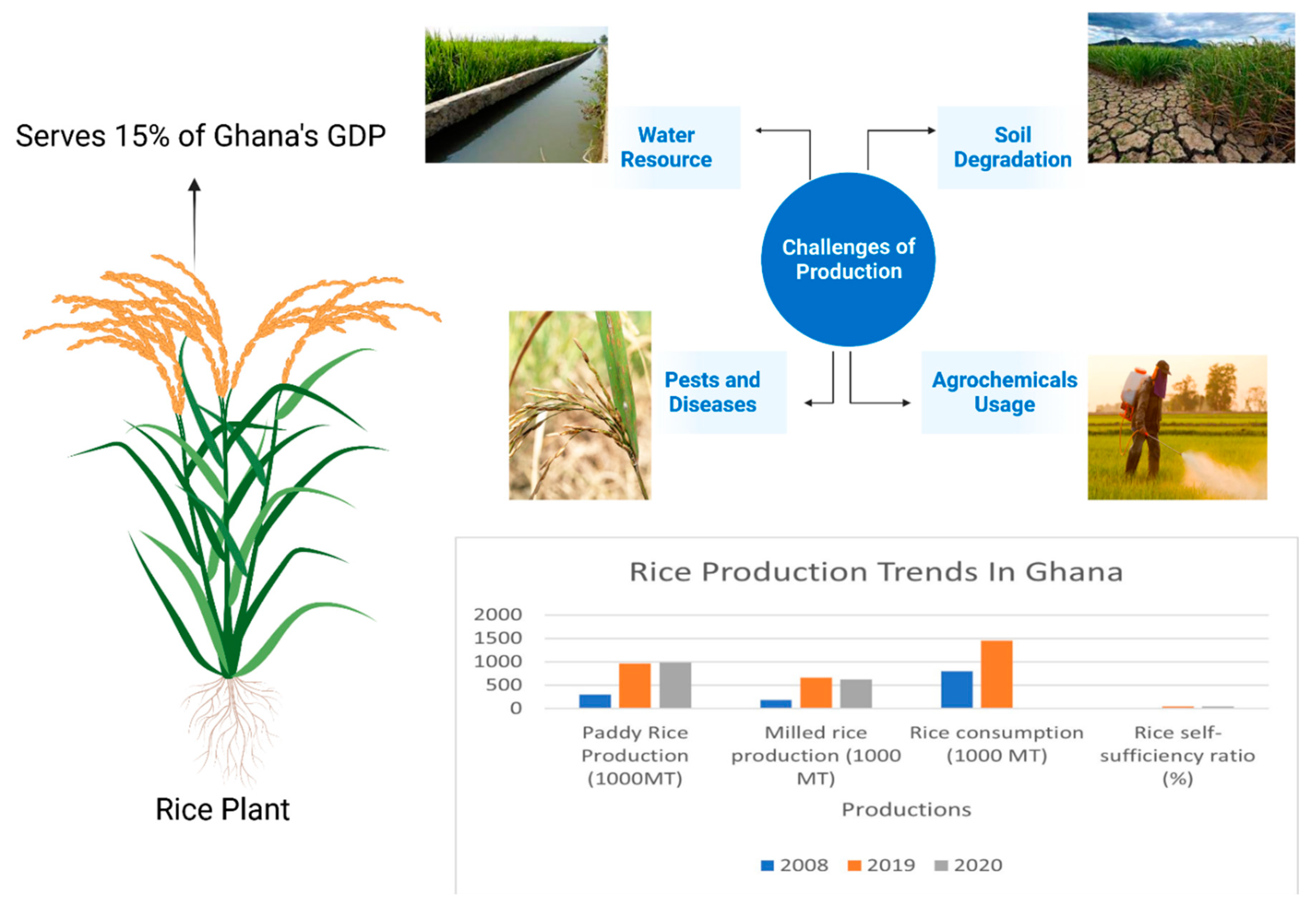
Figure 2.
Illustration of the alternate wetting and drying (AWD) technique on a rice field.
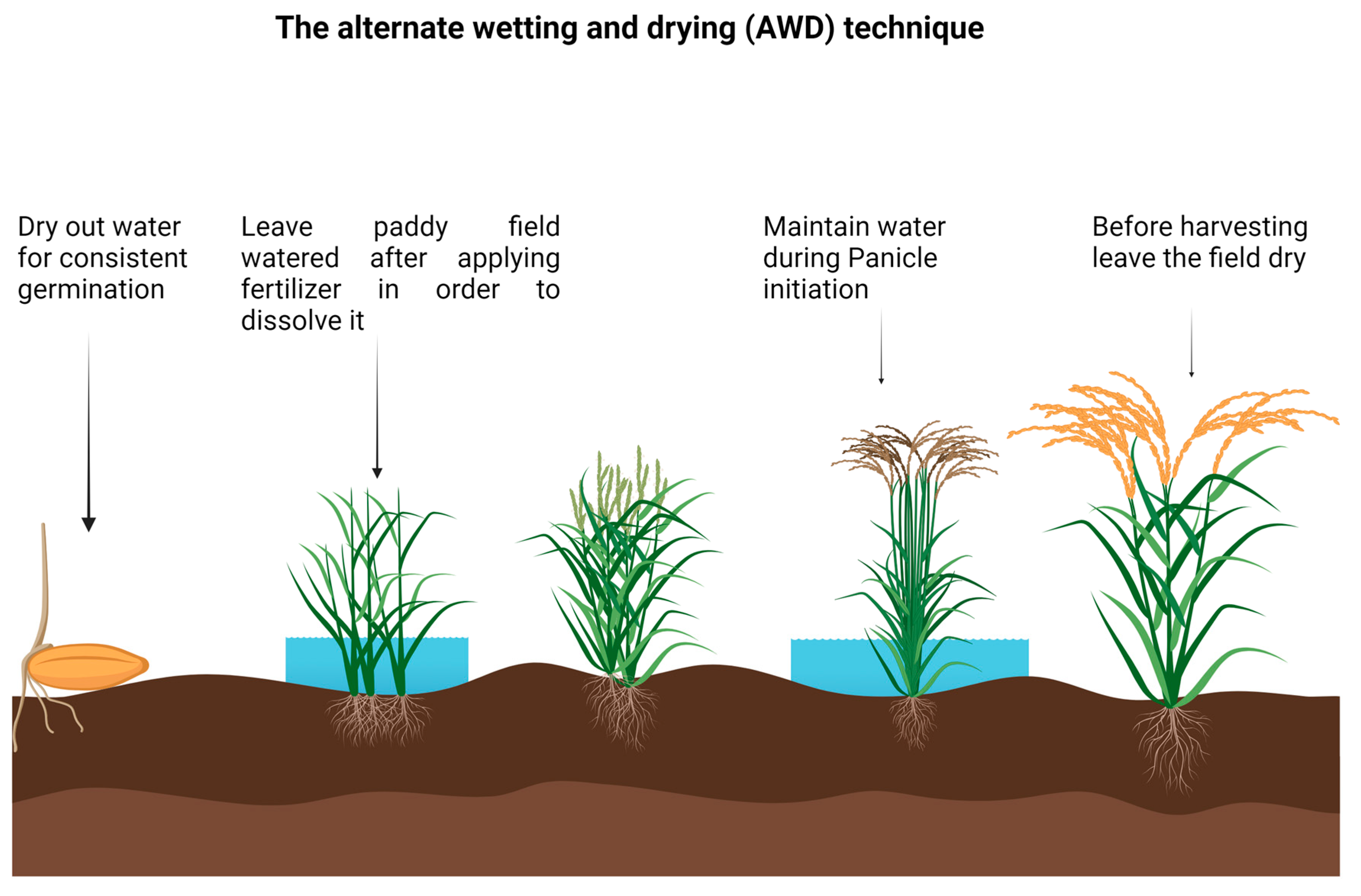
Figure 3.
Overview of Rice farm with Drip and Sprinkler Irrigation.
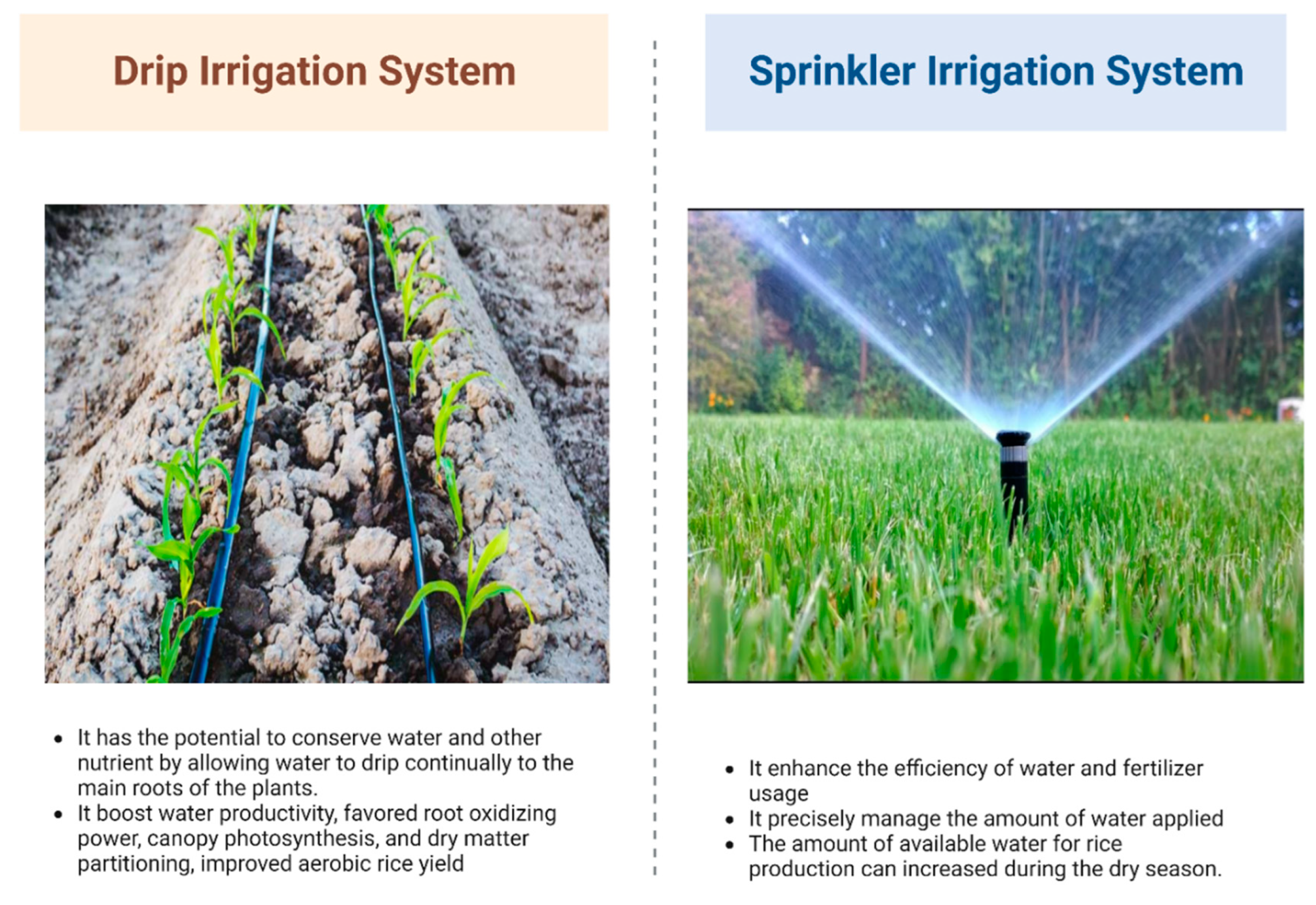
Figure 4.
Straws incorporated into newly constructed rice bed.
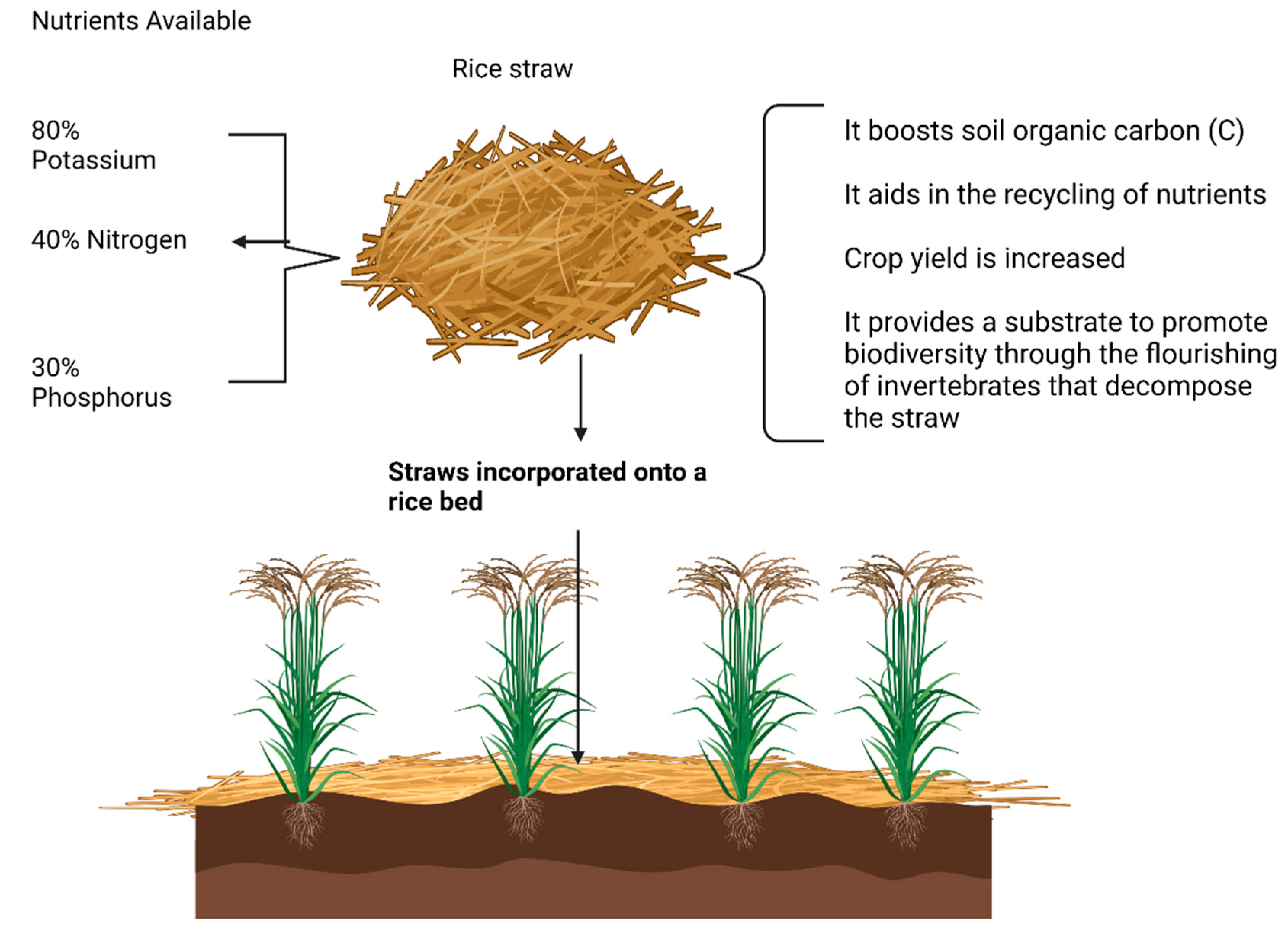
Figure 5.
Deep Fertilization in Rice Farm.
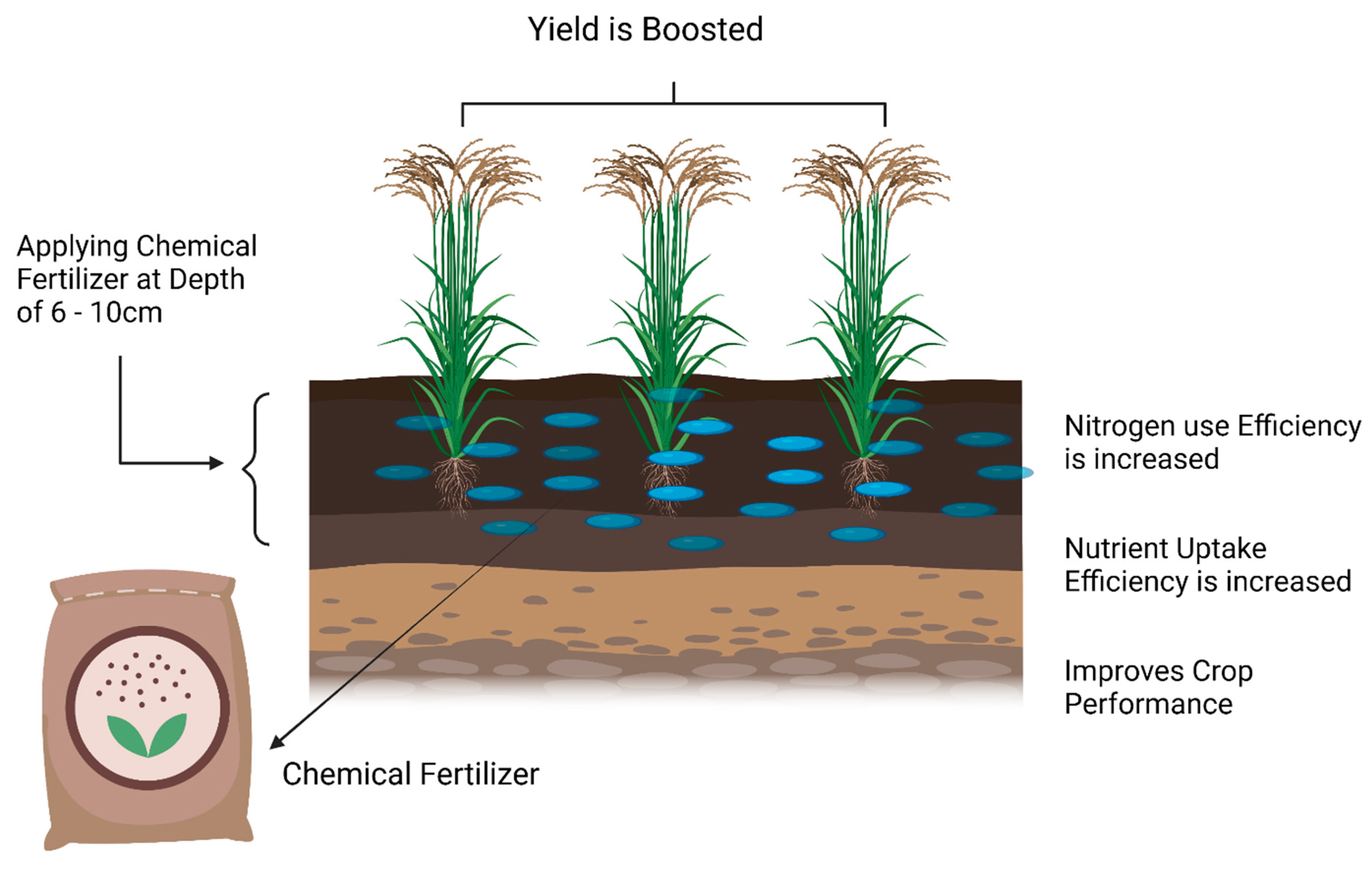
Figure 6.
Illustration of Adding Biochar to the Soil.
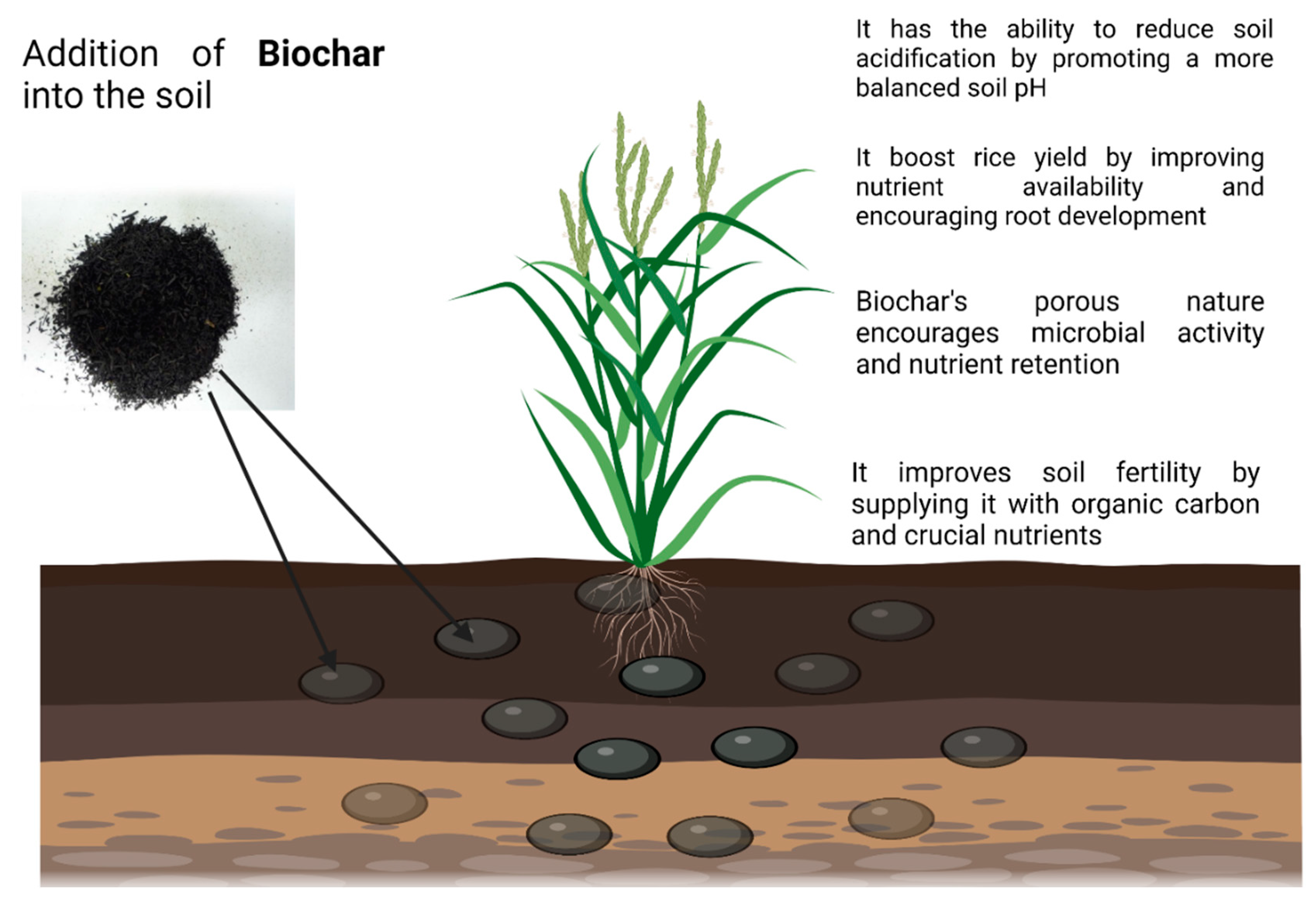
Figure 7.
Picture of Green Manuring to Rice field.
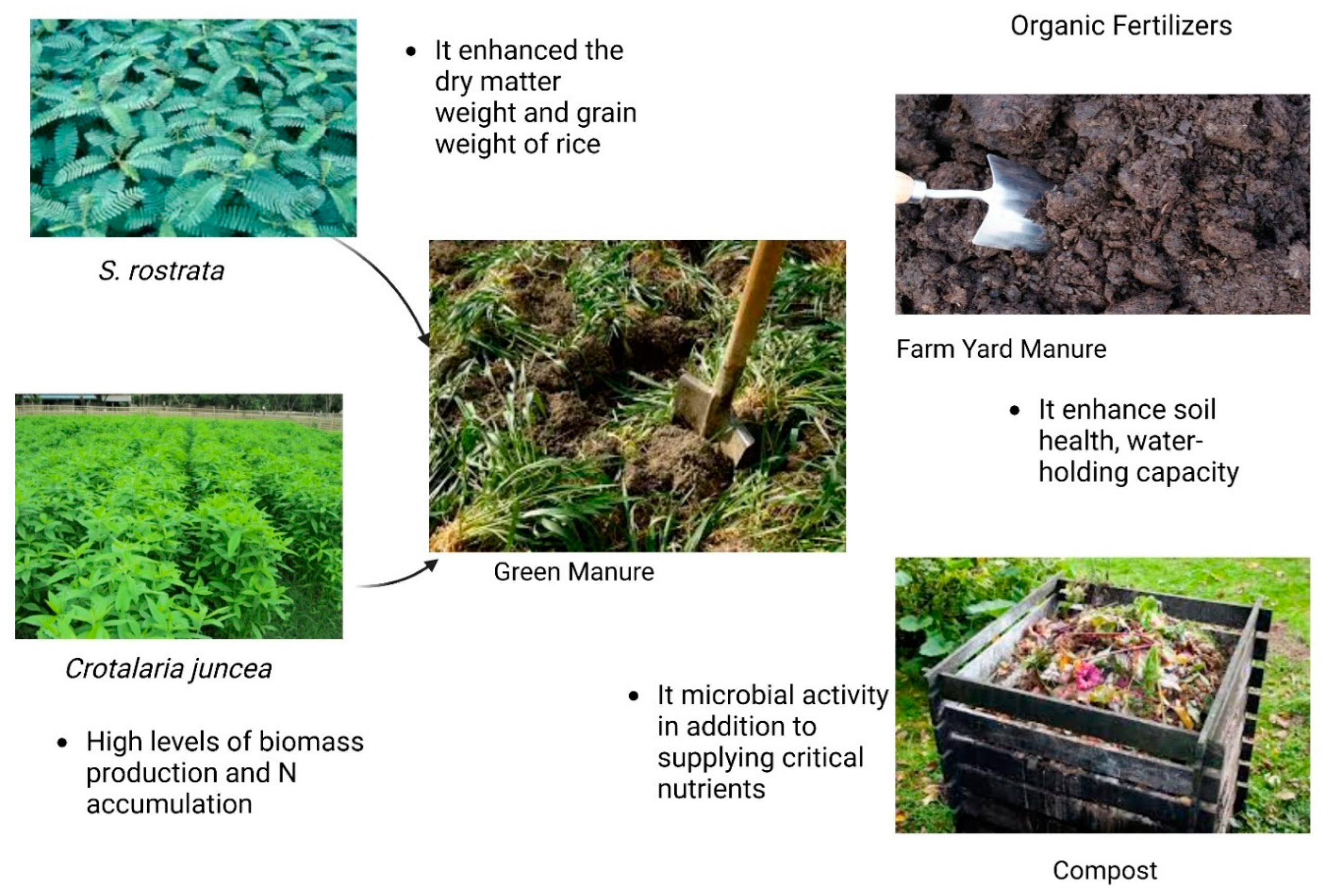
Figure 8.
Sectional drawing of a terrace.
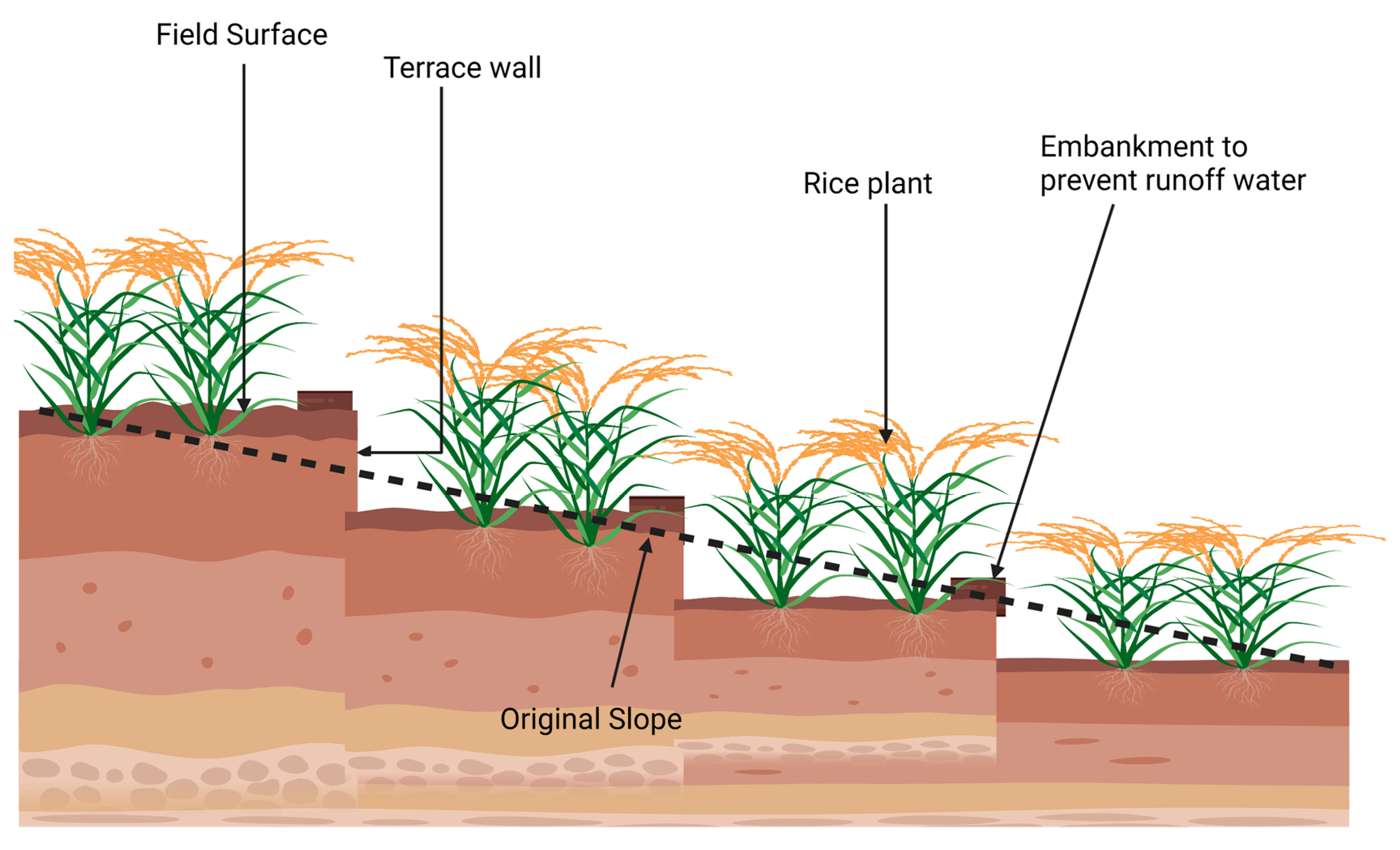

Table 1.
Rice Production Trends in Ghana.
| Year | Paddy Rice Production (1000MT) | Milled rice production (1000 MT) | Rice consumption (1000 MT) | Rice self-sufficiency ratio (%) |
|---|---|---|---|---|
| 2008 | 302 | 181 | 800 | 23 |
| 2019 | 963 | 665 | 1450 | 46 |
| 2020 | 987 | 622 | - | 43 |
Source: [4].
Table 2.
Different irrigation systems and their water use efficiency and yield.
| Irrigation system | Water-saving irrigation method | Water-conserving agronomic practice | Water use efficiency (WUE) | Yield (t/ha) |
|---|---|---|---|---|
| Irrigated lowland | Alternate wetting and drying (AWD) | Transplanting young seedlings at wider spacing | 1.4 kg/m3 | 5.7 |
| Irrigated lowland | Saturated soil culture (SSC) | Transplanting young seedlings at wider spacing | 1.3 kg/m3 | 5.6 |
| Irrigated lowland | Continuous flooding (CF) | Transplanting older seedlings at closer spacing | 0.9 kg/m3 | 5.2 |
| Irrigated lowland | Aerobic rice (AR) | Direct seeding of aerobic rice varieties | 1.8 kg/m3 | 3.2 |
Source: [14].
Table 3.
Alternate wetting and drying (AWD) production system's impact on rice grain quality in various countries.
Table 3.
Alternate wetting and drying (AWD) production system's impact on rice grain quality in various countries.
| Countries | Effect of AWD on Rice Grain | Reference |
|---|---|---|
| China | Severe AWD decreased grain quality while moderate AWD increased it. Increased grain pulpiness, decreased chalkiness, and improved head rice recovery, with no changes to amylose, protein, or gel consistency. |
[20] [21] |
| Japan | Better grains and Increased grain ripening ratio and protein concentrations were the result of prolonged moderate AWD. | [22,23] |
| Iran | Increase in grain protein content and milling recovery under mild-AWD system | [24] |
| Bangladesh | Decrease in the concentration of grain sulphur, calcium, iron, and arsenic and increase in the concentration of grain Mn, Cu, and Cd | [25] |
| Philippines, India, Nepal, Bangladesh and Cambodia | Intermediate amylose contents, decrease in chalkiness, and increase in head rice recovery | [26] |
Table 4.
Some African nations' recommended rice fertilizer dosages.
| Country | Rice ecology | Dosage | Reference |
|---|---|---|---|
| Ghana | Lowland | 90N–26P–50K | [35] |
| Rainfed Upland | 90N–20P–30K | [36] | |
| Nigeria | Lowland | 60N–13P–25K | [37] |
| Rainfed Upland | 50N–30P–30K | [38] | |
| Cote d’Ivoire | Irrigated Lowland | 71N–20P–38K | [39] |
| Rainfed upland | 70N–21P–30K | [40] | |
| Togo | Lowland | 122N–13P–25K | [41] |
| Rainfed Upland | 45N–10P–19K | [42] |
Table 5.
Effect of cropping systems on yield and socioeconomic benefits of rice production.
| Cropping System | Yield t/ha | Harvest Index % | Profit US Dollar/ha | Profit Margin % |
|---|---|---|---|---|
| RR | 5.2 b | 42.2 a | 162 c | 8.5 c |
| FR | 6.1 ab | 45.1 a | 465 b | 24.4 b |
| PR | 7.1 a | 42.8 a | 826 a | 43.4 a |
| WR | 5.9 b | 45.8 a | 385 b | 20.2 b |
Note: The different letters following the values in a column indicate a significant difference (p < 0.05). The same letter means it is not significantly different. RR = successive cropping of rice; FR = fallow followed by rice; PR = potato rice rotation; WR = watermelon rice rotation. [121].
Table 6.
Various rice insect pests and their parasitoids.
| Insect order | Insects | Parasitoids | Reference |
|---|---|---|---|
| Araneae | Leaf- and planthoppers | Hunting spiders (Lycosa) | [139] |
| Coleoptera | Blister beetles | Coccinellidae (predatory beetles) | [140] |
| Coleoptera | Leaf beetles | Coccinellidae (predatory beetles) | [141] |
| Coleoptera | Stem borers | Tiger beetles (Cicindellidae), Ground beetles (Carabidae), Hydrophilidae (Hydrophilus acuminatus larvae) | [142,143], |
| Diptera | Stalk-eyed flies | Tomosvaryella spp., tachinid flies | [144] |
| Hemiptera | Green leafhoppers | Mirid bug (Cyrtorhinus lividipennis) | [145] |
| Hymenoptera | Brown planthopper eggs | Mymarids, trichogrammatids, eulophids | [146] |
| Hymenoptera | Stem borer larvae and pupae | Braconids, elasmids | [147] |
| Neuroptera | Green lacewing | Aphid lions (larval form) | [148] |
Disclaimer/Publisher’s Note: The statements, opinions and data contained in all publications are solely those of the individual author(s) and contributor(s) and not of MDPI and/or the editor(s). MDPI and/or the editor(s) disclaim responsibility for any injury to people or property resulting from any ideas, methods, instructions or products referred to in the content. |
© 2023 by the authors. Licensee MDPI, Basel, Switzerland. This article is an open access article distributed under the terms and conditions of the Creative Commons Attribution (CC BY) license (http://creativecommons.org/licenses/by/4.0/).
Copyright: This open access article is published under a Creative Commons CC BY 4.0 license, which permit the free download, distribution, and reuse, provided that the author and preprint are cited in any reuse.


