

Submitted:
24 July 2023
Posted:
26 July 2023
You are already at the latest version
Abstract
Medicinal and aromatic plants are gaining more importance because of their potential application in food, pharmaceutical and fragrance industry. Medicinal and aromatic plants have been used in cosmetics, perfumery, pharmaceuticals and food flavoring since ancient times, because of the presence of essential oils and different components. Seeds are of immense economic and biological importance, and they contain high oil, protein and starch reserves. The seeds of medicinal and aromatic plants are stores of important and active secondary metabolites that have been economically and commercially beneficial and helpful for medicine and pharmacy. The seeds of fennel are highly nutritious, and the seeds contain different minerals such as calcium, magnesium, and potassium. The seeds are helpful in weight loss and cancer prevention. They can also improve digestive health, regulate blood pressure, improve skin appearance, and promotes lactation. The main chemical components of lavender are linalool, linalyl acetate, 1,8-cineole, β-ocimene, camphor and terpinen-4-ol. The lavender essential oil has anxiolytic, anti-inflammatory, antimicrobial, antioxidant and antinociceptive activities.The main components of thyme are p-cymene, γ-terpinene and thymol. Thyme can help to improve eyesight, and it has high anti-bacterial and anti-inflammatory activities. The main compounds of Echinacea species are chlorogenic acid, caftaric acid, cynarin, echinacoside and cichoric acid. The keyword searches for Fennel, Lavender, Thyme, Echinacea, Seed biology, Traditional medicinal science and seed anatomy were performed by using Web of Science, Scopus, PubMed and Google scholar. The aim of this article review is to survey the pharmacological and health benefits of seeds of important medicinal plants.
Keywords:
echinaceae
; fennel
; lavender
; pharmaceutical benefits
; seed germination
; thyme
1. Introduction
Aromatic and medicinal plants have functional characteristics for pharmaceutical industries and food industries, spices, flavoring agents and dietary supplements purposes [1,2,3]. They have a set of biologically active constituents, and these natural resources encompass a range of secondary metabolites like alkaloids, phenolic compounds, terpenoids, and saponins, and show multiple biological impacts such as anti-seizure, anti-inflammatory, anti-tumor effects, etc. [4,5,6,7,8,9,10,11,12,13]. Fennel is an erect, highly aromatic perennial herb, and it reaches to a height of 2m [14,15], the flowers are produced in terminal compounds umbels, 5-15 cm wide, and each umbel section with 20-50 tiny yellow flowers on short pedicels [16]. The fruit is a dry seed 4-9 cm long and grooved, it is an open-pollination medicinal crop that needs to be pollinated by insects like bees to have utmost fruit and oil and fruit yield [17]. Fennel has been reported for its extensive activities as an antioxidant, antibacterial, anti-inflammatory, antifungal, antitumor, antithrombotic, antimutagenic, cytotoxic, bronchodilatory, estrogenic, infant colic relieving, emmenagogue, oculohypotensive, hypotensive, gastroprotective, hepatoprotective, and memory-enhancing bio-agent [18,19,20,21,22,23,24,25,26,27]. Fennel is mostly grown in semi-arid and arid regions, including Iran, and it might be an appropriate medicinal crop for drought-prone environments [28,29,30]. It is reported that the amount of compounds present in the fennel oil may change significantly because of the geographical origin and phenological state of the fennel, harvesting season, methods of extraction methodologies employed, genetic, environmental, and agricultural techniques [31,32,33,34,35].
The main components from volatile oil of fennel are 50-60% anethole and 15-20% fenchone [36,37,38,39]. Fennel remedies are traditionally utilized for their secretolytic, diuretic, and galactagogue characteristics [40], furthermore, they are usually administered to nursing babies for symptomatic treatment of dyspepsia and mild spasmodic gastrointestinal ailments [41,42,43,44]. Volatile oil recovery from plant materials is usually carried out by solvent extraction, steam distillation or hydro-distillation and enzyme assisted extraction [45,46,47]. Fennel quality is connected with essential oil content, seed yield, and active constituents concentration [48,49,50]. Health advantages of fennel seeds are anti-bacterial, anti-fungal, anti-hyperlipidemic, gastroprotective, cardioprotective, anti-anxiety, anti-diabetic and anti-cancer activities [51,52]. Ke et al. [53] found that the ethanol extract of fennel seeds notably inhibited colony formation and cell migration in lung cancer cells, reduced the viability of and triggered apoptosis in the lung cancer cell lines NCI-H661 and NCI-H446, and also showed anti-lung cancer properties through the Bcl-2 protein and may have possible as a therapeutic drug for lung cancer.
The genus Lavandula (also known as lavender) is found naturally in the Mediterranean region [54,55,56]. The plant belongs to the Lamaiceae family and different species of this genus, such as Lavandula angustifolia Miller, are largely applied in the perfumery, pharmaceutical, and food industries [57,58]. Lavender essential oil is a complicated mixture of about 20 chemical ingredient, including linalool, lavandulol, linalyl acetate, β-ocimene, lavandulyl acetate, and α-terpineol [59]. The main ingredients of lavender are known as as volatile oils (Linalole), perillyl alcohol, Limonen, Terpene, Linalile acetate, coumarin, caffeic acid, tannin, and camphor [60,61]. Its enrichment can be identified by using methods such as solvent extraction, distillation, membrane separation and supercritical carbon dioxide extraction [62]. Lavender includes effective chemical sedative components such as borneol, linalyl acetate, nerol, cinnabar, and linalool [63]. Lavender essential oil shows sedative, anti-inflammatory, anti-bacterial activity (against Streptococcus pyogenes, Pseudomonas aeruginosa, Enterobacter aerogenes, Escherichia coli, etc.) [64,65]. Lavender has shown promising potency for anxiety in different settings [66,67]. Lavender can reduce anxiety and pain, and ameliorate sleep quality and vital symptoms in patients with cancer. Thyme (Thymus vulgaris L.) of the Lamiaceae family is a perennial herb [68,69,70]. This aromatic herb has been traditionally used for culinary goals but its application in the medical field because of its anti-inflammatory, antioxidant, and antimicrobial properties [71,72,73,74]. These impacts are attributed to the chemical composition of the essential oil, which mainly consists of thymol, p-cymene, γ-terpinene, linalook, and carvacrol [75,76], other volatile components play a relevant function in thyme organoleptic characteristics, including geraniol, sabinene hydrate, α-terpineol, and eucalyptol [77,78,79,80,81]. It is well-known that volatile plant component is highly dependent upon the geographical location, influencing the components of their essential oil and bioactivities [82,83,84,85]. In this respect, plant primary and secondary components are highly affected by growing conditions including water, temperature, and other relevant parameters related to the region of production [86,87,88]. The plant extracts of Echinacea species possess antifungal, antioxidative, antiviral, antibacterial properties, and they are usually used to treat common cold, urinary, and respiratory diseases [89,90,91,92]. Extracts obtained from Echinacea species (Asteraceae) are traditionally applied in the formulation of dietary supplements and herbal medicines used as immunostimulants in the treatment of viral and inflammatory diseases [93,94,95,96]. The genus Echinacea, a favoured herbal medicine is a promising anti-inflammatory agent [97]. Echinacea contains a high level of constitutive diversity within each of its various groups of defense compounds, especially family polyacetylenes, alkamides, and ketoalkene/ynes, some of which have been used as insecticides [98,99,100,101]. A systematic review was conducted by searching electronic databases, including 600 articles. Relevant articles were selected on the basis of the nutritional, agronomical, chemical, and functional properties of fennel, lavender, thyme, and seeds of different Echinacea species such as Echinacea angustifolia DC., Echinacea purpurea L., and Echinacea pallida. The databases used were the Web of Science, and Scopus, among others. The keywords which have been used in this study were fennel, lavender, thyme, Echinacea, Echinacea angustifolia, seed production, seed biology, anatomy and germination, seed extract and pharmaceutical benefits. This work aims to provide an overview of medicinal impacts and pharmacological benefits of the seeds of important medicinal plants from recently published articles and studies.
2. Fennel (Foeniculum vulgare Mill.)
Fennel (Foeniculum vulgare) is a perennial aromatic and medicinal plant, one of the tall herbaceous plants in the family of Apiaceae (Umbelliferae) [102,103,104,105,106,107,108]. It is native to Mediterranean and southern Europe region, but has been extensively naturalized in all over the world [109,110]. This hardy perennial plant has yellow flowers and feathery leaves and yellow flowers [111], it reaches to a height up to 2.5 m with hollow stems, leaves grow up to 40 cm long with filiform segments and they are finely dissected (thread-like) of about 0.5 mm wide. The fruits are schizocarop and they include two carpels which separate at maturity into two mericarps, which has a single seed, and flowers are produced in terminal compound umbels, and the size of seed length is between 4 and 10 mm. Seeds of Apiaceae have underdeveloped rudimentary or linear embryos, and the embryo must elongate inside seeds to an important size before radicle germination [112,113]. Fennel seeds could be a promising bio-resource with meaningful interest as a rich source of both vegetable oil and essential oil and vegetable oil [114]. Essential oil composition is related to external and internal parameters influencing the plant such as ecological conditions and genetic structures [115]. Seeds of fennel have been used as a spasmolytic, anti-colic, expectorant, laxative, and digestive enzyme stimulant [116]. Hashemirad et al. [117] found that at maturity stage, freshly matured seeds of fennel have a differentiated but underdeveloped (small) linear embryo with morphophysiological dormancy. Incubation temperature and cold stratification breaks dormancy in fresh fennel seeds, and the embryo starts to grow, and seed germination increased after cold stratification even at the higher incubation temperatures such as 30 oC [117]. Fennel seeds have the most notable assortment of cancer prevention agents, fiber, proteins, nutrients, minerals, and fundamental oil compounds, protecting the body from oxidative pressure and lifting the safe framework [118]. The fennel seeds consist of: protein, carbohydrates, fiber, lipids, carbohydrates, fiber, minerals (potassium, iron, potassium, sodium, phosphorus), and vitamins such as vitamin E, vitamin C, vitamin B6, riboflavin, thiamine, and niacin [119]. In one experiment, it has been reported that the yield percentage of seed essential oils of fennel was 0.98, and according to GC-MS analysis, the main components of fennel seeds were estragole and anethole, and the components were categorized in the group of phenylpropanoid compounds, monoterpene, oxygenated monoterpene, sesquiterpene and ester [120]. (E)-anethole (52.-84.3%), limonene (0.5-9.4%), estragole (2.8-6.5%) and fenchone (4-24%) have been reported as the major components of the plant essential oil in natural populations [121]. Fennel seeds are a rich source of natural antioxidants, phenolic components, vitamin E and C, and oleoresins, and chief phenolic acids are vanillic, gallic, ferulic, caffeic, tannic, chlorogeic and cinnamic acid [122,123]. Fennel seeds contain proteins, fat and carbohydrate, the lignocellulosic materials, namely hemicellulose and cellulose are the principle carbohydrates in fennel seeds; hemicellulose and cellulose are natural polymers, consist of of different monomer building blocks [124,125,126,127,128,129]. Karakus et al. [130] also reported that fennel seeds were considered as an important polyphenol oxidase source. Because of higher yield and shorter duration, microwave-assisted hydrodistillation (MAHD) is an appropriate substitute alternative to extracting essential oil from fennel seeds [120]. It has been reported that fennel oilseeds by-products showed a significant antioxidant potential with high flavonoids and phenols contents and showed good antimicrobial characteristics depending on the extract type [131]. Alazadeh et al. [132] reported that the seeds of fennel may be a good alternative for complementary treatment in patients with knee osteoarthritis. Fennel seed powder can be utilized for increasing protein delta homolog 1 (DLK1) gene showing in some tissues, which has a significant function in production of adipocytes, wound healing, muscle development, lung, liver and pancreas cells development and also in the development of meat quality, growth and digestion performance [133,134,135]. Fennel seeds, added to starter feed diets, improved the growth performance and feed intake in daily calves and fattening lambs [136]. Feeding fennel seed powder before weaning had the potency to improve the BW gain and skeletal growth in dairy calves, and this was probably because of increased feed intake, reduced susceptibility to pneumonia and diarrhea, and fewer days with increased rectal temperature, pneumonia or diarrhea [137,138]. A potential carcinogen agent is estragole, is one of the basic constituents of fennel, with many medicinal activities [139,140], which is responsible for over 75% of the total essential oil content, while other components were (-)-α-pinene, (-)-fenchone, (R)-(+)-limonene, and trans-anethole [141,142,143,144]. Damjanovic et al. [145] reported that in the supercritical CO2 (SC-CO2), extracts as well in the hydrodistilled oil, the main components were fenchone, methylchavicol, and trans-anethole. The major fatty acid composition of fennel seed were petroselenic (67.0-71.3%) and oleic (12.0-16.4%) acids [146]. The essential oil of fennel seeds showed antibacterial activity against Escherichia coli, Staphylococcus albus, Salmonella typhimurium, Bacillus subtilis, and Shigella dysenteriae [147]. Pavela et al. [148] reported that essential oil of fennel seed indicated important insecticidal effects against Spodoptera littoralis larvae Culex quinquefasciatus larvae, and Musca domestica adults. Khammassi et al. [149] indicated that the various methanol extracts showing strong antioxidant activities with notable among locations, and cirsiliol was the major phenolic in all samples. Oktay et al. [150] indicated that the total phenolic components in the ethanol and water extracts of fennel seeds were recognized as gallic acid equivalents, and the fennel seed is also a potential source of natural antioxidant. Lee et al. [151] concluded that acaricidal activity of fennel seed oil could be because of naphthalene and carvone of which is likely to be more important because it is principal abundant than naphthalene. Ghasemian et al. [152] also discovered that fennel essential oil can be identified as a promising agent with anticancer and antimicrobial therapies. The seeds aqueous extract showed the beneficial impacts (particularly at dose of 150 mg/kg b.w.) on renal role in polycystic ovary syndrome (PCOS) rats [153]. Farid et al. [154] showed the antioxidant, anti-inflammatory, and antimutagenic impacts of fennel seeds against oxidative stress caused by γ-irradiation. The most important points about fennel is shown in Table 1. The most important health benefits of fennel seeds are shown in Figure 1.
3. Lavender (Lavandula angustifolia Mill.)
Lavender is a perennial medicinal flowering plant belonging to Lamiaceae family native to the Mediterranean region [155,156,157,158,159,160]. It has been proved that lavender showed diverse neurological impacts, such as anti-inflammatory, memory-enhancing, analgesic, neuroprotective, antidepressant, and anxiolytic [161,162,163,164]. Lavender seeds from inside the flowers and can be separated from the flower heads by shaking them gently after drying. Lavender growth stages are plantation, seed germination, sprouting, seedlings appearance, budding, production of flowers, harvesting, fruit production. Different recovery techniques including steam distillation, hydrodistillation, solvent extraction, supercritical CO2 extraction (SCE), and novel methodologies like ultrasound-, microwave-, ultrasound-microwave-assisted, and pressurized fluid extraction have been used for the lavender essential oil recovery [165,166,167]. In order to germinate, lavender seeds needs a period of cool temperatures called cold stratification, and lavender seeds need light to germinate. Lavenders produce small, nutlike fruits containing the seeds, although plants in cultivation do not usually produce seeds, and propagation is accomplished with cuttings or dividing and planting roots. The composition and content of the lavender essential oil is related to growing location, genotype, stage of development, climatic conditions, drying method and conditions, storage conditions, and distillation conditions like pressure, duration, rate, and temperature [168,169,170]. Lavender oils include over 100 chemicals, with linalool and linalyl acetate being the two most important [171,172]. Hydroxycinnamic acids such as chlorogenic acid, rosmarinic acid, and caffeic acid, as well as flavonoids like quercetin and rutin are a few of the components primarily responsible for the antibacterial activity of lavender [173,174,175]. The major components characterized from the hydrodistillation of micropropagated plantelts were lavandulyl acetate, linalool and linalyl acetate; the major compounds identified through microdistillation of this sample were lavandulyl acetate, linalool, and linalyl acetate; and the main components of field crop plant from hydro- and microdistillation were T-cadinol, and 3-carene and borneol, respectively [176]. Lavender aromatherapy decreased anxiety in preoperative cataract surgery patients [177]. Lavender is a slow growing perennial that may bloom in its first year but takes three or more years to fully mature; moreover, their growth rate will largely rely on the variety. The main reason that lavenders will not grow is commonly because of a lack of sun, as lavenders need sandy, well draining, alkaline soils which are nutrient poor and full sun in order to grow properly. Moreover, as most lavender varieties are clones, vegetative propagation (cuttings, layering, and division of roots) is highly recommended to retain desirable traits. Plants grown from seeds are variable in growth habit, essential oil composition, and color. Different types of lavenders are spike lavender (L. latifolia), wooly lavander (L. lanata), L. heterophylla, french lavender or fringed lavender (L. dentata), Spanish lavender (L. stoechas), fern-leaf lavender (L. multifida), and L. canariensis. The traditional uses of lavender vary from application as a perfume to an antimicrobial agents.
Bensmira et al. [178] observed that the incorporation of thyme and lavender in sunflower seed oil lead to improve its thermal stability, and increased extend its frying life. Aromatherapy message with lavender oil helped to decrease neuropathic pain few weeks after the intervention and increased the quality of life in diabetic patients [179]. Its essential oil has strong antibacterial activities against Pseudomonas aeruginosa, Escherichia coli, Klebsiella pneumoniae, Proteus mirabilis, Acinetobacter baumannii, Enterococcus faecalis, Staphylococcus aureus, and Bacillus subtilis [180]. A special lavender oil which is silexan has been proved to possess anxiolytic impacts in patients with anxiety disorders as well as significant influences on comorbid depressive signs at oral doses of 80 mg per day [181]. Pathogens associated with lavender are root rot (Armillaria mellea), dodder vine (Cuscuta epithymum), root rot (Fusarium), wilt (Fusarium solani), knot nematode (Meloidogyne incognita), stem blight (Phoma lavendulae), root rot (Phytophthora nicotianae), wilt (Phytophthora spp.), root rot (Pythium), lead spot (Septoria lavandulae), and wilt (Verticillium). The most important health benefits of lavender are shown in Figure 2.
4. Thyme (Thymus vulgaris L.)
Thyme (Thymus vulgaris L.) belongs to the mint family (Lamiaceae) and includes more than 250 species and subspecies [182,183,184,185,186,187]. It is an aromatic perennial evergreen herb, which has different biologically active components such as secondary metabolites, chemical compounds and essential oils [188,189]. The plant is indigenous to the Mediterranean and neighboring countries, Northern Africa, and parts of Asia. In Africa, the plant has been cultivated in Morocco, Egypt, Algeria, Libya, Tunisia, South African and Cameroon. The characterization of thyme oil indicated that tymol, p-cymene, carvacrol, linalool, β-caryphyllene and terpinen-4-ol are present in thyme essential oil. Lipophilic substances and essential oils are abundant in this plant [190,191]. Thyme contains various important properties, such as antiseptic, antimicrobial, antioxidant, anthelmintic, and bactericidal, activities, and it was also considered to be a natural alternative to synthetic antioxidants [192,193,194,195]. It is also rich in calcium, iron, vitamin K and manganese [196,197]. It has been well documented that the antibacterial characteristics of thyme essential oil have been related to their specific bioactive component such as carvacrol and thymol [192,198]. Yassin et al. [199] reported that the thyme extracts could be used as potential antibacterial and anticarcinogenic agents against bacterial pathogens causing nosocomial and food poisoning infections. Thyme seeds are quite small and the seedlings take quite a while to develop into acceptable sized plant. Thyme seeds are best sown in spring at a temperature of around 13oC, and they germinate within a couple of weeks. Aside from the essential oil, the tannins, mainly represented by rosmarinic acid, contributed to the commercial use of the herb. Free phenolic acids are mainly represented by caffeic acid, gentisic acid, p-cumaric acid, syringic acid, ferulic acid, and p-hydroxybenzoic acid. In common thyme, there are around 25 various flavonoids such as (1) flavones (apigenin, luteolin, 6-hydroxyluteolin), (2) methyl flavones (cirsilineol, 8-methoxycirsilineol, cirsimaritin, 5-desmethyl-nobiletin, 5-desmethylsinensetin, gardenin B, genkwanin, 7-methoxyluteolin, salvigenin, sideritoflavone, thymonin, thymusin, xanthomicrol, (3) flavanonols (taxifolin, 2,3-dihydrokaempferol), (4) flavanones (eriodictyol, naringenin), (5) methyl flavans (2,3-dihydroxanthomicrol, sakuranetin), (6) flavonols (kaempferol, quercetin), and (7) flavone glycosides. Some of the most important health benefits of thyme are presented in Table 2.
5. Echinacea (Echinacea angustifolia DC.; Echinacea purpurea L.; Echinacea pallida)
Echinacea, often known as purple coneflower, is a herbaceous perennial native to North America that is extensively utilized for perennial gardening, wild flower establishment, and as a cut flower [223,224,225]. Plants of the genus Echinacea belong to the daisy (Compositae) family [226,227,228,229]. It is also a principle medicinal herb that recently gained international popularity due to its immunostimulatory, antibacterial and antiviral benefits to humans [230,231]. Echinaceae seeds are not tricky to harvest, and all parts of the plant are considered safe to ingest. The seeds are viable for 5-7 years, and insects are responsible for pollinating the flowers to form the seeds. Echinaceae is easy to grow from seed, but needs a cold, moist period which is known as stratification in order to better germinate. Sow seeds thickly in the fall, covering lightly to discourage birds from eating them. Strong seed dormancy has been a barrier for Echinacea field production [232]. Seed oils from three mostly cultivated Echinacea Angustifolia, Echinacea Pallida and Echinacea Purpurea are highly polyunsaturated and abundant in oleic, linoleic, and palmitic acids, together comprising 95% of the total fatty acids [233]. The glands on the outer surface of Echinacea seeds are having high components of alkyl amides [234]. Echinacea angustifolia DC., usually referred to as the narrow-leafed purple coneflower, is native to North America and cultivated in various regions of the world. Echinacea angustifolia contain caffeic acid derivatives, such as echinacoside, chlorogenic acid, cynarin, cichoric acid, as well as polysaccharides, alkamides, glycoproteins, and essential oil [235,236,237,238,239]. Echinacoside, a phenol glycoside, is the marker component for Echinacea angustifolia and it is used for the evaluation of quality of the roots even if it is not considered the main active factor of the medicinal plants [240,241]. Some parameters such prechilling, light, gibberellic acid, and ethylene influencing germination of seeds of Echinacea angustifolia DC. Echinacea purpurea (L.) Moench, a famous immunostimulant in the West, is one of the basic popular plants [242,243,244,245]. It has the C3 photosynthetic pathway [246]. It was widely used to treat gastrointestinal diseases and skin inflammation [247]. The major terpene hydrocarbons found in Echinacea purpurea extract were germacrene D, β-caryophyllene, myrcene, α-pinene, and 1-Pentadecene, respectively [248,249]. Phylloxanthobilins are important components of Echinacea purpurea extracts. The immunological, antifungal, antibacterial, and antiviral of Echinacea purpurea phytochemical constituents are well recognized [250,251,252,253,254,255]. Purple coneflower seeds (Echinacea purpurea (L.) Moench) following osmotic priming in polyethylene glycol (PEG) or matric priming in expanded vermiculite had higher rate, synchrony and germination percentage at 20 oC the non-primed seeds [256]. Emergence percentage of purple coneflower seeds was greater from primed seeds than from non-primed seeds in the cool regime but emergence synchrony was unchanged [257]. The poor germination of Echinacea purpurea is probably because of seed dormancy, and chilling stratification improves its germination responses [258]. Echinacea purpurea is effectual for treating upper respiratory tract infections in children [259]. Echinacea purpurea polysaccharide showed a strong hepatoprotective impact against acetaminophen (APAP)-induced drug-induced liver injury (DILI) and was connected with reduction of authophagy-dependent oxidant response, apoptosis and inflammation [260]. The whole plants of Echinacea pallida have different bioactive compounds, including caffeic acid derivatives, flavonoids, phenolics, and polysaccharides [257,258,259,260]. The dienynone was isolated from the n-hexane extract of Echinacea pallida roots and showed a selective cytotoxic activity toward cancer cells [259,260]. Echinacea pallida root extracts are identified as a representative antiproliferative activity, because of the presence of acetylenic components [261,262,263]. Chuanren et al. [264] reported that seeds of Echinaceae angustifolia are known for their deep dormancy, and both gibberellic acid (GA3) and 6-benzylaminopurine (BA) treatments shortened the mean time germination (MTG) to about 4 days, and 100dB and 1000 Hz sound wave (sine-wave) was beneficial to the germination of seeds. The most important health benefits of Echinacea are shown in Figure 3.
6. Conclusions
The fennel seeds contain lipids, protein, fiber, carbohydrates, fiber, minerals such as sodium, potassium, calcium, phosphorus and iron and vitamins such as vitamin E, vitamin C, vitamin B6, riboflavin, thiamine, and niacin. The seeds are widely used in various culinary traditions around the world. It is also used as a spice to add flavor to bread, liquors, fish, cheese, ice cream, and salad. The major components of fennel seed essential oil have been reported to be trans-anethole, fenchone, a-phellandrene and estragol (methyl chavicol), and the relative concentration of these ingredients changes considerably according to the phonological state and origin of the fennel. Some pharmacological and therapeutic properties of fennel have been attributed to the essential oils and extracts of different parts, especially seeds are anti-inflammatory, hepatoprotective, antitumor, anti-hirsutism, estrogenic, antioxidant, anti-stress, antidiabetic, oulohypotensive, anti-aging, anticarcinogenic, apoptotic, antithrombotic, antiulcerogenic, acaricide, antibacterial, antifungal, and antispasmodic activities. The most important chemical components of lavender seeds are linalool, linalyl acetate, ocimene, terpinen-4-ol, p-Cymene, cadinenes, farnesene, lavandylyl acetate, neryl acetate, phellandrene, geranyl acetate, bornyl acetate, spathulenol, o-Cymene, dihydrocarveol, copaene, carvone, thujene, and sabinene. It has been proved that lavender oil has antiseptic, antifungal, antibacterial, anti-inflammatory, and antidepressant activities. Lavender impacts have also been observed in psychological distress patients and those who suffer from neurological problems. Chemical components of thyme are carvacrol, p-Cymene, thymol, α-Pinene, thujene, terpinene, camphene, borneol, 3-Carene, spathulenol, cadinenes, eucalyptol, sabinene, bornyl acetate, 3-octanol, γ-terpinene, α-Cadinol, carvacrol methyl ether, (-)-germacrene D, cadinol, bicyclogermacrene, thymol acetate, elemene, tricyclene, α-terpinene, piperitone, ledene, geranic acid, 3-Hexanol, (+/-)-α-terpinyl acetate, viridiflorol, pinocarveol, menthyl acetate, (+)-α-cadinene, guaiene, (-)-germacrene A, p-cymen-8-ol and menthofuran. The multi-pharmacological activities of thyme ,s seeds are anti-inflammatory, antioxidant, antibacterial, antifungal, antineoplastic and antiseptic activities. Echinacea which is a genus including different species, belongs to the daisy family. The main chemical components of different species of Echinacea species are cynarine, echinacoside, caftaric acid, beta-sitosterol, chicoric acid and phenolic acid. The main health benefits of Echinacea angustifolia are anti-inflammatory and antioxidant activity. Pharmacological activities of Echinacea purpurea are immunomodulatory effects, anti-inflammatory activities, psychoactive and cytotoxic properties. Biological properties of Echinacea purpurea are antimicrobial activity, cytotoxic activities of fractions and extracts. n-hexane and dichloromethane extracts display the highest cytotoxic activity. More researches and funds are needed in future for the development of new medicinal seed cultivars, and also it may need to promote effective application of grants to develop and progress a strategy for cultivar researches, as well as increases the accessibility of genetic diversity to grow more productive medicinal plants in different regions. Both researchers and farmers may need to consider seed science in the new way to assure future agricultural production keeps up with the pace of change in climates and weather. Some parameters such as resistance to pests and disease, effective use of nutrients, productivity, adaptation to local growing conditions, adaptation to organic farming and profitability should be also considered. All these mentioned seeds of aromatic and medicinal plants which are also rich in many nutrients can boast a wide array of pharmaceutical and health benefits.
Author Contributions
W.S.: writing––original draft preparations; M.H.S.: writing––original draft preparation, and editing. All authors have read and agreed to the published version of the manuscript.
Funding
This research was funded by the Natural Science Foundation of Beijing, China (Grant No. M21026). This research was also supported by the National Key R&D Program of China (Research grant 2019YFA0904700).
Institutional Review Board Statement
Not applicable.
Informed Consent Statement
Not applicable.
Data Availability Statement
Not applicable.
Conflicts of Interest
The authors declare no conflict of interest.
References
- Shahrajabian, M.H.; Sun, W. Assessment of wine quality, traceability and detection of grapes wine, detection of harmful substances in alcohol and liquor composition analysis. Lett. Drug Des. Discov. 2023, 20. [CrossRef]
- Shahrajabian, M.H.; Sun, W. Survey on medicinal plants and herbs in traditional Iranian medicine with anti-oxidant, anti-viral, anti-microbial, and anti-inflammation properties. Lett. Drug Des. Discov. 2023, 19. [CrossRef]
- Shahrajabian, M.H.; Sun, W. Importance of thymoquinone, sulforaphane, phloretin, and epigallocatechin and their health benefits. Lett. Drug Des. Discov. 2023, 19. [CrossRef]
- Shahrajabian, M.H. Medicinal herbs with anti-inflammatory activities for natural and organic healing. Curr. Org. Chem. 2021, 25(23), 1-17. [CrossRef]
- Marovska, G.; Vasileva, I.; Petkova, N.; Ognyanov, M.; Gandova, V.; Stoyanova, A.; Merdzhanov, P.; Simitchiev, A.; Slavov, A. Lavender (Lavandula angustifolia Mill.) industrial by-products as a source of polysaccharides. Ind. Crops Prod. 2022, 188(Part B), 115678. [CrossRef]
- Sun, W.; Shahrajabian, M.H.; Cheng, Q.; The insight and survey on medicinal properties and nutritive components of shallot. J. Med. Plant Res. 2019, 13(18), 452-457. [CrossRef]
- Sun, W.; Shahrajabian, M.H.; Cheng, Q. Anise (Pimpinella anisum L.), a dominant spice and traditional medicinal herb for both food and medicinal purposes. Cogent Biol. 2019, 5(1673688), 1-25. [CrossRef]
- Sun, W.; Shahrajabian, M.H.; Cheng, Q. Barberry (Berberis vulgaris), a medicinal fruit and food with traditional and modern pharmaceuticals uses. Isr J Plant Sci. 2021, 68(1-2), 1-11. [CrossRef]
- Sun, W.; Shahrajabian, M.H.; Cheng, Q. Health benefits of wolfberry (Gou Qi Zi) on the basis of ancient Chinese herbalism and Western modern medicine. Avicenna J. Phytomedicine. 2021, 11(2), 109-119. [CrossRef]
- Sun, W.; Shahrajabian, M.H.; Cheng, Q. Fenugreek cultivation with emphasis on historical aspects and its uses in traditional medicine and modern pharmaceutical science. Mini Rev. Med. Chem. 2021, 21(6), 724-730. [CrossRef]
- Shahrajabian, M.H.; Sun, W. Various techniques for molecular and rapid detection of infectious and epidemic diseases. Lett. Org. Chem. 2023, 20, 1-23. [CrossRef]
- Shahrajabian, M.H.; Sun, W. The importance of salicylic acid, humic acid and fulvic acid on crop production. Lett Drug Des Discov. 2023, 2023(20), 1-16. [CrossRef]
- Baby, K.C.; Ranganathan, T.V. Effect of enzyme pre-treatment on extraction yield and quality of fennel (Foeniculum vulgare) volatile oil. Biocatal Agric Biotechnol. 2016, 8, 248-256. [CrossRef]
- Ehsanipour, A.; Razmjoo, J.; Zeinali, H. Effect of nitrogen rates on yield and quality of fennel (Foeniculum vulgare Mill.) accessions. Ind Crops Prod. 2012, 35(1), 121-125. [CrossRef]
- Melfi, M.T.; Kanawati, B.; Schmitt-Kopplin, P.; Macchia, L.; Centonze, D.; Nardiello, D. Investigation of fennel protein extracts by shot-gun Fourier transform ion cyclotron resonance mass spectrometry. Food Res Int. 2021, 139, 109919. [CrossRef]
- Shojaiefar, S.; Sabzalian, M.R.; Mirlohi, A.; Tajdivand, A. Evidence for self-compatibility and variation for inbreeding depression within breeding populations of fennel (Foeniculum vulgare Mill.). J Appl Res Med Aromat Plants. 2021, 22, 100299. [CrossRef]
- Bayrami, A.; Shirdel, A.; Pouran, S.R.; Mahmoudi, F.; Habibi-Yangjeh, A.; Singh, R.; Raman, A.A.A. Co-regulative effects of chitosan-fennel seed extract system on the hormonal and biochemical factors involved in the polycystic ovarian syndrome. Mater Sci Eng C. 2020, 117, 111351. [CrossRef]
- Yaldiz, G.; Camlica, M. Variation in the fruit phytochemical and mineral composition, and phenolic content and antioxidant activity of the fruit extracts of different fennel (Foeniculum vulgare L.) genotypes. Ind Crops Prod. 2019, 142, 111852. [CrossRef]
- Shahrajabian, M.H.; Sun, W.; Cheng, Q. Molecular breeding and the impacts of some important genes families on agronomic traits, a review. Genet Resour Crop Evol. 2021, 68(3), 1709-1730. [CrossRef]
- Shahrajabian, M.H.; Chaski, C.; Polyzos, N.; Petropoulos, S.A. Biostimulants application: A low input cropping management tool for sustainable farming of vegetables. Biomolecules. 2021, 11(5), 698. [CrossRef]
- Shahrajabian, M.H.; Chaski, C.; Polyzos, N.; Tzortzakis, N.; Petropoulos, S.A. Sustainable agriculture systems in vegetable production using chitin and chitosan as plant biostimulants. Biomolecules. 2021, 11(6), 819. [CrossRef]
- Sirotkin, A.V.; Macejkova, M.; Tarko, A.; Fabova, Z.; Alwasel, S.; Kotwica, J.; Harrath, A.H. Ginkgo, fennel, and flaxseed can affect hormone release by porcine ovarian cells and modulate the effect of toluene. Reprod Biol. 2023, 23(1), 100736. [CrossRef]
- Sanli, A.; Ok, F.Z. Determination of optimal harvesting time for essential oil and estragole yield in bitter fennel (Foeniculum vulgare Mill.) growing in culture conditions. S Afr J Bot. 2023, 155, 98-102. [CrossRef]
- Akbari, A.; Izadi-Darbandi, A.; Bahmani, K.; Farhadpour, M.; Ebrahimi, M.; Ramshini, H.; Esmaeili, Z. Assessment of phenolic profile, and antioxidant activity in developed breeding populations of fennel (Foeniculum vulgare Mill.). Biocatal Agric Biotechnol. 2023, 48, 102639. [CrossRef]
- Hosseini, E.S.; Majidi, M.M.; Ehtemam, M.H.; Hughes, N. Characterization of fennel germplasm for physiological persistence and drought recovery: Association with biochemical properties. Plant Physiol Biochem. 2023, 194, 499-512. [CrossRef]
- Khammassi, M.; Ayed, R.B.; Loupasaki, S.; Amri, I.; Hanana, M.; Hamrouni, L.; Jamoussi, B.; Khaldi, A. Chemical diversity of wild fennel essential oils (Foeniculum vulgare Mill.): A source of antimicrobial and antioxidant activities. S Afr J Bot. 2023, 153, 136-146. [CrossRef]
- Mohammadi, M.; Pouryousef, M.; Farhang, N. Study on germination and seedling growth of various ecotypes of fennel (Foeniculum vulgare Mill.) under salinity stress. J Appl Res Med Aromat Plants. 2023, 34, 100481. [CrossRef]
- Marmitt, D.; Shahrajabian, M.H. Plant species used in Brazil and Asia regions with toxic properties. Phytother Res. 2021, 2021(2), 1-24. [CrossRef]
- Marmitt, D.; Shahrajabian, M.H.; Goettert, M.I.; Rempel, C. Clinical trials with plants in diabetes mellitus therapy: a systematic review. Expert Rev Clin Pharmacol. 2021, 14(4), 1-14. [CrossRef]
- Zali, A.G.; Ehsanzadeh, P. Exogenous proline improves osmoregulation, physiological functions, essential oil, and seed yield of fennel. Ind Crops Prod. 2018, 111, 133-140. [CrossRef]
- Bidgeloo, M.; Kowsari, E.; Ehsani, A.; Ramakrishna, S.; Chinnappan, A. Activated carbon derived from fennel flower waste as high-efficient sustainable materials for improving cycle stability and capacitance performance of electroactive nanocomposite of conductive polymer. J Energy Storage. 2022, 55, 105793. [CrossRef]
- Feizi, H.; Kamali, M.; Jafari, L.; Moghaddam, P.R. Phytotoxicity and stimulatory impacts of nanosized and bulk titanium dioxide on fennel (Foeniculum vulgare Mill.). Chemosphere. 2013, 91(4), 506-511. [CrossRef]
- Moura, L.S.; Carvalho, R.N.; Stefanini, M.B.; Ming, L.C.; Meireles, M.A.A. Supercritical fluid extraction from fennel (Foeniculum vulgare): global yield, composition and kinetic data. J Supercrit Fluids. 2005, 35(3), 212-219. [CrossRef]
- Torres, M.; Frutos, G. Logistic function analysis of germination behaviour of aged fennel seeds. Environ Exp Bot. 1990, 30(3), 383-390. [CrossRef]
- Vella, A.; Cammilleri, G.; Pulvirenti, A.; Galluzzo, F.; Randisi, B.; Giangrosso, G.; Macaluso, A.; Gennaro, S.; Ciaccio, G.; Cicero, N.; Ferrantelli, V. High hydroxycinnamic acids contents in fennel honey produced in Southern Italy. Nat Prod Res. 2020, 35(21), 4104-4109. [CrossRef]
- Hatami, T.; Johner, J.C.F.; Meireles, M.A.A. Investigating the effects of grinding time and grinding load on content of terpenes in extract from fennel obtained by supercritical fluid extraction. Ind Crops Prod. 2017, 109, 85-91. [CrossRef]
- Lee, H.W.; Ang, L.; Kim, E.; Lee, M.S. Fennel (Foeniculum vulgare Miller) for the management of menopausal women ,s health: A systematic review and meta-analysis. Complement Ther Clin Pract. 2021, 43, 101360. [CrossRef]
- Rezaei-Chiyaneh, E.; Amirnia, E.; Machiani, M.A.; Javanmard, A.; Maggi, F.; Morshedloo, M.R. Intercropping fennel (Foeniculum vulgare L.) with common bean (Phaseolus vulgaris L.) as affected by PGPR inoculation: A strategy for improving yield, essential oil and fatty acid composition. Sci Hortic. 2020, 261, 108951. [CrossRef]
- Schurr, L.; Masotti, V.; Geslin, B.; Gachet, S.; Mahe, P.; Jeannerod, L.; Affre, L. To what extent is fennel crop dependent on insect pollination? Agric Ecosyst Environ. 2022, 338, 108047. [CrossRef]
- Levorato, S.; Dominici, L.; Fatigoni, C.; Zadra, C.; Pagiotti, R.; Moretti, M.; Villarini, M. In vitro toxicity evaluation of esteragole-containing preparations derived from Foeniculum vulgare Mill. (fennel) on HepG2 cells. Food Chem. Toxicol. 2018, 111, 616-622. [CrossRef]
- Mishra, B.K.; Meena, K.K.; Dubey, P.N.; Aishwath, O.P.; Kant, K.; Sorty, A.M.; Bitla, U. Influence on yield and quality of fennel (Foeniculum vulgare Mill.) grown under semi-arid saline soil, due to application of native phosphate solubilizing rhizobacterial isolates. Ecol. Eng. 2016, 97, 327-333. [CrossRef]
- Singh, B.; Kale, R.K. Chemomodulatory action of Foeniculum vulgare (Fennel) on skin and forestomach papillomagenesis, enzymes associated with xenobiotic metabolism and antioxidant status in murine model system. Food. Chem. Toxicol. 2008, 46(12), 3842-3850. [CrossRef]
- Tarko, A.; Fabova, Z.; Kotwica, J.; Valocky, I.; Alrezaki, A.; Alwasel, S.; Harrath, A.H.; Sirotkin, A.V. The inhibitory influence of toluene on mare ovarian granulosa cells can be prevented by fennel. Gen. Comp. Endocrinol. 2020, 295, 113491. [CrossRef]
- Hafez, D.A.; Abdelmonsif, D.A.; Aly, R.G.; Samy, W.M.; Elkhodairy, K.A.; Aasy, N.K.A. Role of fennel oil/quercetin dual nano-phytopharmaceuticals in hampering liver fibrosis: Comprehensive optimization and in vivo assessment. J Drug Deliv Sci Technol. 2022, 69, 103177. [CrossRef]
- Abdel-Wahhab, K.G.; Fawzi, H.; Mannaa, F.A. Paraoxonase-1 (PON1) inhibition by tienilic acid produces hepatic injury: Antioxidant protection by fennel extract and whey protein concentrate. Pathophysiology. 2016, 23(1), 19-25. [CrossRef]
- Hatami, T.; Johner, J.C.F.; Kurdian, A.R.; Meireles, M.A.A. A step-by-step finite element method for solving the external mass transfer control model of the supercritical fluid extraction process: A case study of extraction from fennel. J Supercrit Fluids. 2020, 160, 104797. [CrossRef]
- Marand, S.A.; Almasi, H.; Amjadi, S.; Alamdari, N.G.; Salmasi, S. Ixiolirion tataricum mucilage/chitosan based antioxdant films activated by free and nanoliposomal fennel essential oil. Int. J. Biol. Macromol. 2023, 230, 123119. [CrossRef]
- Bahmani, K.; Darbandi, A.I.; Ramshini, H.; Moradi, N.; Akbari, A. Agro-morphological and phtyochemical diversity of various Iranian fennel landraces. Ind. Crops Prod. 2015, 77, 282-294. [CrossRef]
- Rajabi, A.; Ehsanzadeh, P.; Razmjoo, J. Partial relief of drought-stressed fennel (Foeniculum vulgare Mill.) in response to foliar-applied zinc. Pedosphere 2019, 29(6), 752-763. [CrossRef]
- Rodriguez-Solana, R.; Salgado, J.M.; Dominguez, J.M.; Cortes-Dieguez, S. Characterization of fennel extracts and quantification of estragole: Optimization and comparison of accelerated solvent extraction and Soxhlet techniques. Ind Crops Prod. 2014, 52, 528-536. [CrossRef]
- Barakat, H.; Alkabeer, I.A.; Aljutaily, T.; Almujaydil, M.S.; Algheshairy, R.M.; Alhomaid, R.M.; Almutairi, A.S.; Mohamed, A. Phenolics and volatile compounds of fennel (Foeniculum vulgare) seeds and their sprouts prevent oxidative DNA damage and ameliorates CCl4-induced hepatotoxicity and oxidative stress in rats. Antioxidants. 2022, 11, 2318. [CrossRef]
- Noreen, S.; Tufail, T.; Ain, H.B.U.; Awuchi, G. Pharmacological, nutraceutical, functional and therapeutic properties of fennel (Foeniculum vulgare). Int J Food Prop. 2023, 26(1), 915-927. [CrossRef]
- Ke, W.; Zhao, X.; Lu, Z. Foeniculum vulgare seed extract induces apoptosis in lung cancer cells partly through the down-regulation of Bcl-2. Biomed Pharmacother. 2021, 135, 111213. [CrossRef]
- Calisir, F.; Urgalioglu, A.; Bilal, B.; Tok, A.; Bolcal, H.A.; Oksuz, H. The effect of lavender aromatherapy on the level of intraoperative anxiety in caesarean case under spinal anesthesia: A randomized controlled trial. Explore 2023, 19(3), 356-361. [CrossRef]
- Dogan, C.; Dogan, N.; Gungor, M.; Eticha, A.K.; Akgul, Y. Novel active food packaging based on centrifugally spun nanofibers containing lavender essential oil: Rapid fabrication, characterization. And application to preserve of minced lamb meat. Food Packag. Shelf Life. 2022, 34, 100942. [CrossRef]
- Karatopuk, S.; Yarici, F. Determining the effect of inhalation and lavender essential oil massage therapy on the severity of perceived labor pain in primiparous women: A randomized controlled trial. Explore 2023, 19(1), 107-114. [CrossRef]
- Khatri, P.K.; Paolini, M.; Larcher, R.; Ziller, L.; Magdas, D.A.; Marincas, O.; Roncone, A.; Bontempo, L. Validation of gas chromatographic methods for lavender essential oil authentication based on volatile organic compounds and stable isotope ratios. Microchem. J. 2023, 186, 108343. [CrossRef]
- Motaghi, N.; Tajadini, H.; Shafiei, K.; Sharififar, F.; Ansari, M.; Sharifi, H.; Sarhadynejad, Z.; Tavakoli-Far, F.; Kamali, H.; Amiri-Ardekani, E. Lavender improves fatigue symptoms in multiple sclerosis patients: A double-blind, randomized controlled trial. Mult Scler Relat Disord. 2022, 65, 104000. [CrossRef]
- Xu, Y.; Ma, L.; Liu, F.; Yao, L.; Wang, W.; Yang, S.; Han, T. Lavender essential oil fractions alleviate sleep disorders induced by the combination of anxiety and caffeine in mice. J Ethnopharmacol. 2023, 302(Part A), 115868. [CrossRef]
- Semeniuc, C.A.; Mandrioli, M.; Socaci, B.S.; Socaciu, M.-I.; Fogarasi, M.; Podar, A.S.; Michiu, D.; Jimborean, A.M.; Muresan, V.; Ionescu, S.R.; Toschi, T.G. Changes in lipid composition and oxidative status during ripening of Gouda-type cheese as influenced by addition of lavender flower powder. Int Dairy J. 2022, 133, 105427. [CrossRef]
- Ghavami, T.; Kazeminia, M.; Rajati, F. The effect of lavender on stress in individuals: A systematic review and meta-analysis. Complement Ther Med. 2022, 68, 102832. [CrossRef]
- Xu, S.; Zuo, C.; Sun, X.; Ding, X.; Zhong, Z.; Xing, W.; Jin, W. Enriching volatile aromatic compounds of lavender hydrolats by PDMS/ceramic composite membranes. Sep Purif Technol. 2022, 294, 121198. [CrossRef]
- Shirzad, M.; Nasiri, E.; Hesamirostami, M.H.; Akbari, H. the effect of lavender of anxiety and hemodynamic status before septorhinoplasy and rhinoplasty. J PeriAnesth Nurs. 2023, 38(1), 45-50. [CrossRef]
- Girbu, V.; Organ, A.; Grinco, M.; Cotelea, T.; Ungur, N.; Barba, A.; Kulcitki, V. Identification, quantitative determination and isolation of pomolic acid from lavender (Lavandula angustifolia Mill.) wastes. Sustain Chem Pharm. 2023, 33, 101140. [CrossRef]
- Zanotti, A.; Baldino, L.; Scognamiglio, M.; Reverchon E. Post-processing of a lavender flowers solvent extract using supercritical CO2 fractionation. J Taiwan Inst Chem Eng. 2023, 147, 104901. [CrossRef]
- Shamabadi, A.; Hazanzadeh, A.; Ahmadzade, A.; Ghadimi, H.; Gholami, M.; Akhondzadeh, S. The anxiolytic effects of Lavandula angustifolia (lavender): An overview of systematic reviews. J Herbal Med. 2023, 40, 100672. [CrossRef]
- Lorimer, H. An aid to loveliness: lavender, femininity and the affective economy of English beauty. J Hist Geogr. 2023, 79, 13-25. [CrossRef]
- Shaaban, M.M.; Kholif, A.E.; El Tawab, A.M.; Radwan, M.A.; Hadhoud, F.I.; Khattab, M.S.A.; Saleh, H.M.; Anele, U.Y. Thyme and celery as potential alternatives to ionophores use in livestock production: their effects on feed utilization, growth performance and meat quality of Barki lambs. Small Rumin Res. 2021, 200, 106400. [CrossRef]
- Shokoohi, F.; Ebadi, M.-T.; Ghomi, H.; Ayyari, M. Changes in qualitative characteristics of garden thyme (Thymus vulgaris L.) as affected by cold plasma. J Appl Res Med Aromat Plants. 2022, 31, 100411. [CrossRef]
- Kirkin, C.; Gunes, G. Quality of thyme (Thymus vulgaris L.) and black pepper (Piper nigrum L.) during storage as affected by the combination of gamma-irradiation and modified atmosphere packaging. S Afr J Bot. 2022, 150, 978-985. [CrossRef]
- Divband, K.; Shokri, H.; Khosravi, A.R. Down-regulatory effect of Thymus vulgaris L. on growth and Tri4 gene expression in Fusarium oxysporum strains. Microb Pathog. 2017, 104, 1-5. [CrossRef]
- Pavela, R.; Zabka, M.; Vrchotova, N.; Triska, J. Effect of foliar nutrition on the essential oil yield of Thyme (Thymus vulgaris L.). Ind Crops Prod. 2018, 112, 762-765. [CrossRef]
- Lagou, M.K.; Karagiannis, G.S. Obesity-induced thymic involution and cancer risk. Semin Cancer Biol. 2023, 93, 3-19. [CrossRef]
- Segawa, R.; Kyoda, T.; Yagisawa, M.; Muramatsu, T.; Hiratsuka, M.; Hirasawa, N. Hypoxia-inducible factor prolyl hydroxylase inhibitors suppressed thymic stromal lymphopoietin production and allergic responses in a mouse air-pouch-type ovalbumin sensitization model. Int Immunopharmacol. 2023, 118, 110127. [CrossRef]
- Rivera-Perez, A.; Romero-Gonzalez, R.; Frenich, A.G. Fingerprinting based on gas chromatography-Orbitrap high-resolution mass spectrometry and chemometrics to reveal geographical origin, processing, and volatile markers for thyme authentication. Food Chem. 2022, 393, 133377. [CrossRef]
- Petrusic, M.; Stojic-Vukanic, Z.; Pilipovic, I.; Kosec, D.; Prijic, I.; Leposavic, G. Thymic changes as a contributing factor in the increased susceptibility of olf Albino Oxford rats to EAE development. Exp Gerontol. 2023, 171, 112009. [CrossRef]
- Ao, Y.-Q.; Jiang, J.-H.; Gao, J.; Wang, H.-K.; Ding, J.-Y. Recent thymic emigrants as the bridge between thymoma and autoimmune diseases. Biochim Biophys Acta BBA-Rev Cancer. 2022, 1877(3), 188730. [CrossRef]
- Barros, F.A.P.; Radunz, M.; Scariot, M.A.; Camargo, T.M.; Nunes, C.F.P.; de Souza, R.R.; Gilson, I.K.; Hackbart, H.C.S.; Radunz, L.L.; Oliveira, J.V.; Tramontin, M.A.; Radunz, A.L.; Magro, J.D. Efficacy of encapsulated and non-encapsulated thyme essential oil (Thymus vulgaris L.) in the control of Sitophilus zeamais and its effects on the quality of corn grains throughout storage. Crop Prot. 2022, 153, 105885. [CrossRef]
- Arora, H.; Sharma, A.; Sharma, S. Thyme essential oil fostering the efficacy of aqueous extract of licorice against fungal phytopathogens of Capsicum annuum L. J Biosci Bioeng. 2023, 135(6), 466-473. [CrossRef]
- Posgay, M.; Greff, B.; Kapcsandi, V.; Lakatos, E. Effect of Thymus vulgaris L. essential oil and thymol on the microbiological properties of meat and meat products: A review. Heliyon. 2022, 8(10), e10812. [CrossRef]
- Silva, A.S.; Tewari, D.; Sureda, A.; Suntar, I.; Belwal, T.; Battino, M.; Nabavi, S.M.; Nabavi, S.F. The evidence of health benefits and food applications of Thymus vulgaris L. Trends Food Sci Technol. 2021, 117, 218-227. [CrossRef]
- Lashgari, S.M.; Bahlakeh, G.; Ramezanzadeh, B. Detailed theoretical DFT comuptation/molecular simulation and electrochemical explorations of Thymus vulgaris leave extract for effective mild-steel corrosion retardation in HCL solution. J Mol Liq. 2021, 335, 1155897. [CrossRef]
- Adhar, M.; HadjKacem, B.; Perino-Issartier, S.; Amor, I.B.; Feki, A.; Gargouri, J.; Gargouri, A.; Tounsi, S.; Chemat, F.; Allouche, N. Thymol-enriched extract from Thymus vulgaris L. leaves: Green extraction processes and antiaggregant effects on human platelets. Bioorg Chem. 2022, 125, 105858. [CrossRef]
- Moazeni, M.; Davari, A.; Shabanzadeh, S.; Akhtari, J.; Saeedi, M.; Mortyeza-Semnani, K.; Abastabar, M.; Nabili, M.; Moghadam, F.H.; Roohi, B.; Kelidari, H.; Nokhodchi, A. In vitro antifungal activity of Thymus vulgaris essential oil nanoemulsion. J. Herb Med. 2021, 28, 100452. [CrossRef]
- Prieto, M.C.; Camacho, N.M.; Inocenti, F.D.; Mignolli, F.; Lucini, E.; Palma, S.; Bima, P.; Grosso, N.R.; Asensio, C.M. Microencapsulation of Thymus vulgaris and Tagetes minuta essential oils: Volatile release behavior, antibacterial activity and effect on potato yield. J. Saudi Soc. Agric. Sci. 2023, 22(3), 195-204. [CrossRef]
- Lei, Y.-Y.; Chen, X.-R.; Jiang, S.; Guo, M.; Yu, C.-L.; iao, J.-H.; Cai, B.; Ai, H.-S.; Wang, Y.; Hu, K.-X. Mechanisms of thymic repair of in vitro induced precursor T cells as a haploidentical hematopoietic stem cell transplantation regimen. Transplant Cell. Ther. 2023, 29(6), 382.e1-382.e11. [CrossRef]
- Silva, C.S.; Cerqueira, M.T.; Reis, R.L.; Martins, A.; Neves, N.M. Laminin-2 immobilized on a 3D fibrous structure impacts cortical thymic epithelial cells behaviour and their interaction with thymocytes. Int J Biol Macromol. 2022, 222(Part B), 3168-3177. [CrossRef]
- Perez, N.; Altube, M.J.; Barbosa, L.R.S.; Romero, E.L.; Perez, A.P. Thymus vulgaris essential oil+tobramycin within nanostructured archaeolipid carriers: A new approach against Pseudomonas aeruginosa biofilms. Phytomedicine. 2022, 102, 154179. [CrossRef]
- Bauer, R.; Khan, I.A.; Wray, V.; Wagner, H. Two acetylenic compounds from Echinacea pallida roots. Phytochemistry. 1987, 26(4), 1199-1200. [CrossRef]
- Chicca, A.; Adinolfi, B.; Martinotti, E.; Fogli, S.; Breschi, M.C.; Pellati, F.; Benvenuti, S.; Nieri, P. Cytotoxic effects of Echinacea root hexanic extracts on human cancer cell lines. J. Ethnopharmacol. 2007, 110(1), 148-153. [CrossRef]
- Fu, R.; Zhang, P.; Deng, Z.; Jin, G.; Guo, Y.; Zhang, Y. Diversity of antioxidant ingredients among Echinacea species. Ind. Crops Prod. 2021, 170, 113699. [CrossRef]
- Sabra, A.; Daayf, F.; Renault, S. Differential physiological and biochemical responses of three Echinacea species to salinity stress. Sci. Hortic. 2012, 135, 23-31. [CrossRef]
- Bruni, R.; Brighenti, V.; Caesar, L.K.; Bertelli, D.; Cech, N.B.; Pellati, F. Analytical methods for the study of bioactive compounds from medicinally used Echinacea species. J. Pharm. Biomed. Anal. 2018, 160, 443-477. [CrossRef]
- Pellati, F.; Calo, S.; Benvenuti, S.; Adinolfi, B.; Nieri, P.; Melegari, M. Isolation and structure elucidation of cytotoxic polyacetylenes and polyenes from Echinacea pallida. Phytochemistry. 2006, 67(13), 1359-1364. [CrossRef]
- Pellati, F.; Calo, S.; Benvenuti, S. High-performance liquid chromatography analysis of polyacetylenes and polyenes in Echinacea pallida by using a monolithic reversed-phase silica column. J Chromatogr A. 2007, 1149(1), 56-65. [CrossRef]
- Thude, S.; Classen, B. High molecular weight constituents from roots of Echinacea pallida: An arabinogalactan-protein and an arabinan. Phytochemistry 2005, 66(9), 1026-1032. [CrossRef]
- Zhai, Z.; Haney, D.M.; Wu, L.; Solco, A.K.; Murphy, P.A.; Wurtele, E.S.; Kohut, M.L.; Cunnick, J.E. Alcohol extract of Echinacea pallida reverses stress-delayed wound healing in mice. Phytomedicine 2009, 16(6-7), 669-678. [CrossRef]
- Binns, S.E.; Inparajah, I.; Baum, B.R.; Arnason, J.T. Methyl jasmonate increases reported alkamides and ketoalkene/ynes in Echinacea pallida (Asteraceae). Phytochemistry 2001, 57(3), 417-420. [CrossRef]
- Dufault, R.J.; Rushing, J.; Hassell, R.; Shepard, B.M.; McCutcheon, G.; Ward, B. Influence of fertilizer on growth and marker compound of field-grown Echinacea species and feverfew. Sci. Hortic. 2003, 98(1), 61-69. [CrossRef]
- Orhan, I.; Senol, F.S.; Gulpinar, A.R.; Kartal, M.; Sekeroglu, N.; Deveci, M.; Kan, Y.; Sener, B. Acetylcholinesterase inhibitory and antioxidant properties of Cyclotrichium niveum, Thymus praecox subsp. caucasicus var. caucasicus, Echinacea purpurea and E. pallida. Food Chem. Toxicol. 2009, 47(6), 1304-1310. [CrossRef]
- Lopresti, A.L.; Smith, S.J. An investigation into the anxiety-relieving and mood-enhancing effects of Echinacea angustifolia (EP107TM): A randomised, double-blind, placebo-controlled study. J. Affect. Disord. 2021, 293, 229-237. [CrossRef]
- Barkat, M.; Bouguerra, A. Study of the antifungal activity of essential oil extracted from seeds of Foeniculum vulgare Mill, for its use as food conservative. New Biotechnol. 2012, 29, S133. [CrossRef]
- Chen, J.; Ding, J.; Li, D.; Wang, Y.; Wu, Y.; Yang, X.; Chinnathambi, A.; Salmen, S.H.; Alharbi, S.A. Facile preparation of Au nanoparticles mediated by Foeniculum Vulgare aqueous extract and investigation of the anti-human breast carcinoma effects. Arab J Chem. 2022, 15(1), 103479. [CrossRef]
- Shahrajabian, M.H.; Sun, W.; Cheng, Q. Clinical aspects and health benefits of ginger (Zingiber officinale) in both traditional Chinese medicine and modern industry. Acta Agric. Scand. B. Soil Plant Sci. 2019, 69(6), 546-556. [CrossRef]
- Shahrajabian, M.H.; Sun, W.; Cheng, Q. A review of astragalus species as foodstuffs, dietary supplements, a traditional Chinese medicine and a part of modern pharmaceutical science. Appl. Ecol. Environ. Res. 2019, 17(6), 13371-13382.
- Shahrajabian, M.H.; Sun, W.; Cheng, Q. Traditional herbal medicine for the prevention and treatment of cold and flu in the autumn of 2020, overlapped with Covid-19. Nat. Prod. Commun. 2020, 15(8), 1-10. [CrossRef]
- Shahrajabian, M.H.; Sun, W.; Soleymani, A.; Cheng, Q. Traditional herbal medicines to overcome stress, anxiety and improve mental health in outbreaks of human coronaviruses. Phytother. Res. 2020, 2020(1), 1-11. [CrossRef]
- Shahrajabian, M.H.; Sun, W.; Cheng, Q. Exploring Artemisia annua L., artemisinin and its derivatives, from traditional Chinese wonder medicine science. Not Bot Horti Agrobot Cluj-Napoca. 2020, 48(4), 1719-1741. [CrossRef]
- He, G.; Sun, H.; Liao, R.; Wei, Y.; Zhang, T.; Chen, Y.; Lin, S. Effects of herbal extracts (Foeniculum vulgare and Artemisia annua) on growth, liver antioxidant capacity, intestinal morphology and microorganism of juvenile largemouth bass, Micropterus salmoides. Aquac Rep. 2022, 23, 101081. [CrossRef]
- Khazaei, M.; Dastan, D.; Ebadi, A. Binding of Foeniculum vulgare essential oil and its major compounds to double-stranded DNA: In silico and in vitro studies. Food Biosci. 2021, 41, 100972. [CrossRef]
- Akhtar, I.; Javad, S.; Ansari, M.; Ghaffar, N.; Tariq, A. Process optimization for microwave assisted extraction of Foeniculum vulgare Mill using response surface methodology. J King Saud Univ Sci. 2020, 32(2), 1451-1458. [CrossRef]
- Benddine, H.; Zaid, R.; Babaali, D.; Daoudi-Hacini, S. Biological activity of essential oils of Myrtus communis (Myrtaceae, Family) and Foeniculum vulgare (Apiaceae, Family) on open fields conditions against corn aphids Rhopalosiphum maidis (Fitch, 1856) in western Algeria. J. Saud. Soc. Agric. Sci. 2023, 22(2), 78-88. [CrossRef]
- Torres, M.; Frutos, G. Analysis of germination curves of aged fennel seeds by mathematical models. Environ. Exp. Bot. 1989, 29(3), 409-415. [CrossRef]
- Boudraa, H.; Kadri, N.; Mouni, L.; Madani, K. Microwave-assisted hydrodistillation of essential oil from fennel seeds: Optimization using Plackett-Burman design and response surface methodology. J. Appl. Res. Med. Aromat Plants. 2021, 23, 100307. [CrossRef]
- Telci, I.; Demirtas, I.; Sahin, A. Variation in plant properties and essential oil composition of sweet fennel (Foeniculum vulgare Mill.) fruits during stages of maturity. Ind. Crops Prod. 2009, 30(1), 126-130. [CrossRef]
- Fatima, A.; Chand, N.; Naz, S.; Saeed, M.; Khan, N.U.; Khan, R.U. Coping heat stress by crushed fennel (Foeniculum vulgare) seeds in broilers: Growth, redox balance and humoral immune response. Livestock Sci. 2022, 265, 105082. [CrossRef]
- Hashemirad, S.; Soltani, E.; Darbandi, A.I.; Alahdadi, I. Cold stratification requirement to break morphophysiology dormancy of fennel (Foeniculum vulgare Mill.) seeds varies with seed length. J Appl Res Med Aromat Plants. 2023, 35, 100465. [CrossRef]
- Mokhtari, L.; Ghoreishi, S.M. Supercritical carbon dioxide extraction of trans-anethole from Foeniculum vulgare (fennel) seeds: Optimization of operating conditions through response surface methodology and genetic algorithm. J CO2 Util. 2019, 30, 1-10. [CrossRef]
- Abdellaoui, M.; Bouhlali, E.D.T.; Kasrati, A.; El Rhaffari, L. The effect of domestication on seed yield, essential oil yield and antioxidant activities of fennel seed (Foeniculum vulgare Mill.) grown in Moroccan oasis. J. Assoc. Arab Univ. Basic Appl. Sci. 2017, 24(1), 107-114. [CrossRef]
- Noyraksa, S.; Wichianwat, K.; Punpuk, S.; Aiemyeesun, S.; Maitip, J.; Suttiarporn, P. Optimization of microwave-assisted hydrodistillation of essential oils from fennel seeds. Materialstoday: Proceedings. 2023, 77(4), 1079-1085. [CrossRef]
- Shojaiefar, S.; Sabzalian, M.R.; Mirlohi, A.; Mirjalili, M.H. Seed yield stability with modified essential oil content and composition in self-compatible progenies of bitter fennel (Foeniculum vulgare Mill.). Ind. Crops Prod. 2022, 182, 114821. [CrossRef]
- Hayat, K.; Abbas, S.; Hussain, S.; Shahzad, S.A.; Tahir, M.U. Effect of microwave and conventional oven heating on phenolic constituents, fatty acids minerals and antioxidant potential of fennel seed. Ind. Crops Prod. 2019, 140, 111610. [CrossRef]
- Rezaei, S.; Ebadi, M.-T.; Ghobadian, B.; Ghomi, H. Optimization of DBD-Plasma assisted hydro-distillation for essential oil extraction of fennel (Foeniculum vulgare Mill.) seed and spearmint (Mentha spicata L.) leaf. J Appl Res Med Aromat Plants. 2021, 24, 100300. [CrossRef]
- Barros, L.; Carvalho, A.M.; Ferreira, I.C.F.R. The nutritional composition of fennel (Foeniculum vulgare): shoots, leaves, stems and inflorescences. LWT-Food Sci Technol 2010, 43, 814-818.
- Mabungela, N.; Shooto, N.D.; Mtunzi, F.; Naidoo, E.B.; Mlambo, M.; Mokubung, K.E.; Mpelane, S. Multi-application of fennel (Foeniculum vulgaris) seed composites for the adsorption and photo-degradation of methylene blue in water. S Afr J Chem Eng. 2023, 44, 283-296. [CrossRef]
- Soleymani, A.; Shahrajabian, M.H.; Karimi, M. Growth behaviour of elite barley lines as influenced by planting date and plant densities. Res. on Crops. 2012, 13(2), 463-466.
- Soleymani, A.; Shahrajabian, M.H. Effects of planting dates and different levels of nitrogen on seed yield and yield components of nuts sunflower. Res. on Crops. 2012, 13(2): 521-524.
- Soleymani, A.; Shahrajabian, M.H. Response of different cultivars of fennel (Foeniculum vulgare) to irrigation and planting dates in Isfahan, Iran. Res. on Crops. 2012, 13(2), 656-660.
- Soleymani, A.; Shahrajabian, M.H.; Naranjani, L. Effect of planting dates and different levels of nitrogen on seed yield and yield components of nuts sunflower (Helianthus annuus L.). Afr J Agric Res. 2013, 8(46), 5802-5805.
- Karakus, Y.Y.; Yildirim, B.; Acemi, A. Characterization polyphenol oxidase from fennel (Foeniculum vulgare Mill.) seeds as a promising source. Int J Biol Macromol. 2021, 170, 261-271. [CrossRef]
- Ahmad, B.S.; Talou, T.; Saad, Z.; Hijazi, A.; Cerny, M.; Kanaan, H.; Chokr, A.; Merah, O. Fennel oil and by-products seed characterization and their potential applications. Ind Crops Prod. 2018, 111, 92-98. [CrossRef]
- Alazadeh, M.; Azadbakht, M.; Niksolat, F.; Asgarirad, H.; Mossazadeh, M.; Ahmadi, A.; Yousefi, S.S. Effect of sweet fennel seed extract capsule on knee pain in women with knee osteoarthritis. Complement Ther Clin Pract. 2020, 40, 101219. [CrossRef]
- Machiani, M.A.; Rezaei-Chiyaneh, E.; Javanmard, A.; Maggi, F.; Morshedloo, M.R. Evaluation of common bean (Phaseolus vulgaris L.) seed yield and quali-quantitative production of the essential oils from fennel (Foeniculum vulgare Mill.) and dragonhead (Dracocephalum moldavica L.) in intercropping system under humic acid application. J Clean Prod. 2019, 235, 112-122. [CrossRef]
- Masoudzadeh, S.H.; Mohammadabadi, M.; Kherzi, A.; Stavetska, R.V.; Oleshko, V.P.; Babenko, O.I.; Yemets, Z.; Kalashnik, O.M. Effects of diets with different levels of fennel (Foeniculum vulgare) seed power on DLK1 gene expression in brain, adipose tissue, femur muscle and rumen of Kermani lambs. Small Rumin Res. 2020, 193, 106276. [CrossRef]
- Ramalho, F.D.S.; Malaquias, J.B.; Brito, B.D.D.S.; Fernandes, F.S.; Zanuncio, J.C. Assessment of the attack of Hyadaphis foeniculi (Passerini) (Hemiptera: Aphididae) on biomass, seed and oil in fennel intercropped with cotton with colored fibers. Ind Crops Prod. 2015, 77, 511-515. [CrossRef]
- Kargar, S.; Nowroozinia, F.; Kanani, M. Feeding fennel (Foeniculum vulgare) seed as potential appeptie stimulant to newborn Holstein dairy calves: Effects on meal pattern, ingestive behavior, oro-sensorial preference, and feed sorting. Anim. Feed Sci. Technol. 2021, 278, 115009. [CrossRef]
- Hajalizadeh, Z.; Dayani, O.; Khezri, A.; Tahmasbi, R.; Mohammadabadi, M.R. The effect of adding fennel (Foeniculum vulgare) seed powder to the diet of fattening lambs on performance, carcass characteristics and liver enzymes. Small Rumin. Res. 2019, 175, 72-77. [CrossRef]
- Nowroozinia, F.; Kargar, S.; Akhlaghi, A.; Fard, F.R.; Bahadori-Moghaddam, M.; Kanani, M.; Zamiri, M.J. Feeding fennel (Foeniculum vulgare) seed as a potential appetite stimulant for Holstein dairy calves: Effects on growth performance and health. J. Dairy Sci. 2021, 105, 654-664.
- Gonzalez-Rivera, J.; Duce, C.; Falconieri, D.; Ferrari, C.; Ghezzi, L.; Piras, A.; Tine, M.R. Coaxial microwave assisted hydrodistillation of essential oils from five different herbs (lavender, rosemary, sage, fennel seeds and clove buds): Chemical composition and thermal analysis. Innov. Food Sci. Emerg. Technol. 2016, 33, 308-318. [CrossRef]
- Rodriguez-Solana, R.; Salgado, J.M.; Dominguez, J.M.; Cortes-Dieguez, S. Estragole quantity optimization from fennel seeds by supercritical fluid extraction (carbon dioxide-methanol) using a Box-Behnken design. Characterization of fennel extracts. Ind Crops Prod. 2014, 60, 186-192. [CrossRef]
- Burkhardt, A.; Sintim, H.Y.; Gawde, A.; Cantrell, C.L.; Astatkie, T.; Zheljazkov, V.D.; Schlegel, V. Method for attaining fennel (Foeniculum vulgare Mill.) seed oil fractions with different composition and antioxidant capacity. J Appl Res Med Aromat Plants. 2015, 2(3), 87-91. [CrossRef]
- Shojaiefar, S.; Mirlohi, A.; Sabzalian, M.R.; Yaghini, H. Seed yield and essential oil content of fennel influenced by genetic variation and genotype x year interaction. Ind Crops Prod. 2015, 71, 97-105. [CrossRef]
- Hazar, H.; Sevinc, H.; Sap, S. Performance and emission properties of preheated and blensed fennel vegetable oil in a coated diesel engine. Fuel 2019, 254, 115677. [CrossRef]
- Desoky, E.-S.M.; El-Maghrabu, L.M.M.; Awad, A.E.; Abdo, A.I.; Rady, M.M.; Semida, W.M. Fennel and ammi seed extracts modulate antioxidant defence system and alleviate salinity stress in cowpea (Vigna unguiculata). Sci. Hortic. 2020, 272, 109576. [CrossRef]
- Damjanovic, B.; Lepojevic, Z.; Zivkovic, V.; Tolic, A. Extraction of fennel (Foeniculum vulgare Mill.) seeds with supercritical CO2: Comparison with hydrodistillation. Food Chem. 2005, 92(1), 143-149. [CrossRef]
- Moser, B.R.; Zheljazkov, V.D.; Bakota, E.L.; Evangelista, R.L.; Gawde, A.; Cantrell, C.L.; Winkler-Moser, J.K.; Hristov, A.N.; Astatkie, T.; Jeliazkova, E. Method for obtaining three products with different properties from fennel (Foeniculum vulgare) seed. Ind Crops Prod. 2014, 60, 335-342. [CrossRef]
- Diao, W.-R.; Hu, Q.-P.; Zhang, H.; Xu, J.-G. Chemical composition, antibacterial activity and mechanism of action of essential oil from seeds of fennel (Foeniculum vulgare Mill.). Food Control. 2014, 35(1), 109-116. [CrossRef]
- Pavela, R.; Zabka, M.; Bednar, J.; Triska, J.; Vrchotova, N. New knowledge for yield, composition and insecticidal activity of essential oils obtained from the aerial parts or seeds of fennel (Foeniculum vulgare Mill.). Ind. Crops Prod. 2016, 83, 275-282. [CrossRef]
- Khammassi, M.; Mighri, H.; Mansour, M.B.; Amri, I.; Jamoussi, B.; Khaldi, A. Metabolite profiling and potential antioxidant activity of sixteen fennel (Foeniculum vulgare Mill.) populations growing wild in Tunisia. S. Afr. J. Bot. 2022, 148, 407-414. [CrossRef]
- Oktay, M.; Gulcin, I.; Kufrevioglu, O.I. Determination on in vitro antioxidant activity of fennel (Foeniculum vulgare) seed extracts. LWT-Food Sci. Technol. 2003, 36(2), 263-271. [CrossRef]
- Lee, C.-H.; Sung, B.-K.; Lee, H.-S. Acaricidal activity of fennel seed oils and their main components against Tyrophagus putrescentiae, a stored-food mite. J. Stored Prod. Res. 2006, 42(1), 8-14. [CrossRef]
- Ghasemian, A.; Al-Marzoi, A.-H.; Mostafavi, S.K.S.; Alghanimi, Y.K.; Teimouri, M. Chemical composition and antimicrobial and cytotoxic activities of Foeniculum vulgare Mill essential oils. J Gastrointest Cancer. 2020, 51(1), 260-266. [CrossRef]
- Sadrefozalayi, S.; Farokhi, F. Effect of the aqueous extract of Foeniculum vulgare (fennel) on the kidney in experimental PCOS female rats. Avicenna J Phytomed. 2014, 4(2), 110-117.
- Farid, A.; Kamel, D.; Montaser, S.A.; Ahmed, M.M.; El-Amir, M.; El-Amir, Z. Assessment of antioxidant, immune enhancement, and antimutagenic efficacy of fennel seed extracts in irradiated human blood cultures. J Radiat Res Appl Sci. 2020, 13(1), 260-266. [CrossRef]
- Alasalvar, H.; Yildirim, Z. Ultrasound-assisted extraction of antioxidant phenolic compounds from Lavandula angustifolia flowers using natural deep eutectic solvents: An experimental design approach. Sustain. Chem. Pharm. 2021, 22, 100492. [CrossRef]
- Ozsevinc, A.; Alkan, C. Ethylene glycol based polyurethane shell microcapsules for textile applications releasing medicinal lavender and responding to mechanical stimuli. Colloids Surf. A. Physicochem. Eng. Asp. 2022, 652, 129888. [CrossRef]
- Villalpando, M.; Gomez-Hurtado, M.A.; Rosas, G.; Saavedra-Molina, A. Ag nanoparticles synthesized using Lavandula angustifolia and their cytotoxic evaluation in yeast. Mater. Today Commun. 2022, 31, 103633. [CrossRef]
- Shahrajabian, M.H.; Sun, W.; Cheng, Q. Product of natural evolution (SARS, MERS, and SARS-CoV-2); deadly diseases, from SARS to SARS-CoV-2. Hum. Vaccines Immunother. 2020, 17(1), 62-83. [CrossRef]
- Shahrajabian, M.H.; Sun, W.; Shen, H.; Cheng, Q. Chinese herbal medicine for SARS and SARS-CoV-2 treatment and prevention, encouraging using herbal medicine for COVID-19 outbreak. Acta Agric. Scand. B Soil Plant Sci. 2020, 70(5), 437-443. [CrossRef]
- Shahrajabian, M.H.; Sun, W.; Khoshkharam, M.; Cheng, Q. Caraway, Chinese chives and cassia as functional foods with considering nutrients and health benefits. Carpathian J. Food Sci. Technol. 2021, 13(1), 101-119. [CrossRef]
- Danila, A.; Muresan, E.I.; Ibanescu, S.-A.; Popescu, A.; Danu, M.; Zaharia, C.; Turkoglu, G.C.; Erkan, G.; Staras, A.-I. Preparation, characterization, and application of polysaccharide--based emulsions incorporated with lavender essential oil for skin-friendly cellulosic support. Int. J. Biol. Macromol. 2021, 191, 405-413. [CrossRef]
- Firoozeei, T.S.; Barekatain, M.; Karimi, M.; Zargaran, A.; Akhondzadeh, S.; Rezaeizadeh, H. Lavender and dodder combined herbal syrup versus citalopram in major depressive disorder with anxious distress: A double-blind randomized trial. J. Integr. Med. 2020, 18(5), 409-415. [CrossRef]
- Giuliani, C.; Bottoni, M.; Ascrizzi, R.; Milani, F.; Spada, A.; Papini, A.; Flamini, G.; Fico, G. Insight into micromorphology and phytohemistry of Lavandula angustifolia Mill. from Italy. S. Afr. J. Bot. 2023, 153, 83-92. [CrossRef]
- Ozsevinc, A.; Alkan, C. Polyurethane sheel medicinal lavender release microcapsules for textile materials: An environmentally friendly preparation. Ind. Crops. Prod. 2023, 192, 116131. [CrossRef]
- Ganguly, R.; Kumar, S.; Basu, M.; Kunwar, A.; Dutta, D.; Aswal, V.K. Micellar solubilization of lavender oil in aqueous P85/P123 systems: Investigating the associated micellar structural transitions, therapeutic properties and existence of double cloud points. J Mol Liq. 2021, 338, 116643. [CrossRef]
- Sofi, H.S.; Akram, T.; Tamboli, A.H.; Majeed, A.; Shabir, N.; Sheikh, F.A. Novel lavender oil and silver nanoparticles simultaneously loaded onto polyurethane nanofibers for wound-healing applications. Int J Pharm. 2019, 569, 118590. [CrossRef]
- Perovic, A.; Stankovic, M.Z.; Veljkovic, V.B.; Kostic, M.D.; Stamenkovic, O.S. A further study of the kinetics and optimization of the essential oil hydrodistillation from lavender flowers. Chin J Chem Eng. 2021, 29, 126-130. [CrossRef]
- Fascella, G.; Mammano, M.M.; D,Angiolillo, F.; Pannico, A.; Rouphael, Y. Coniferous wood biochar as substrate component of two containerized lavender species: Effects on morpho-physiological traits and nutrients partitioning. Sci Hortic. 2020, 267, 109356. [CrossRef]
- Khatami, S.A.; Kasraie, P.; Oveysi, M.; Moghadam, H.R.T.; Ghooshchi, F. Mitigating the adverse effects of salinity stress on lavernder using biodynamic preparations and bio-fertilizers. Ind Crops Prod. 2022, 183, 114985. [CrossRef]
- Pecanha, D.A.; Freitas, M.S.M.; Vieira, M.E.; Cunha, J.M.; Jesus, A.C.D. Phosphorus fertilization affects growth, essential oil yield and quality of true lavender in Brazil. Ind Crops Prod. 2021, 170, 113803. [CrossRef]
- Hassiotis, C.N.; Tarantilis, P.A.; Daferera, D.; Polissiou, M.G. Etherio, a new variety of Lavandula angustifolia with improved essential oil production and composition from natural selected genotypes growing in Greece. Ind Crops Prod. 2010, 32(2), 77-82. [CrossRef]
- Vasileva, I.; Denkova, R.; Chochkov, R.; Teneva, D.; Denkova, Z.; Dessev, T.; Denev, P.; Slavov, A. Effect of lavender (Lavandula angustifolia) and melissa (Melissa Officinalis) waste on quality and shelf life of bread. Food Chem. 2018, 253, 13-21. [CrossRef]
- Shi, J.-L.; Tang, S.-Y.; Liu, C.-B.; Ye, L.; Yang, P.-S.; Zhang, F.-M.; He, P.; Liu, Z.-H.; Miao, M.-M.; Guo, Y.-D.; Shen, Q.-P. Three new benzolactones from Lavandula angustifolia and their bioactivities. J Asian Nat Prod Res. 2017, 19(8), 766-773. [CrossRef]
- Rashed, M.M.A.; Mahdi, A.A.; Ghaleb, A.D.S.; Zhang, F.R.; Huan, D.Y.; Qin, W.; Hai, Z.W. Synergistic effects of amorphous OSA-modified starch, unsaturated lipid-carrier, and sonocavitation treatment in fabricating of Lavandula angustifolia essential oil nanoparticles. Int J Biol Macromol. 2020, 151, 702-712. [CrossRef]
- Miastkowska, M.; Sikora, E.; Kulawik-Pioro, A.; Kantyka, T.; Bielecka, E.; Kalucka, U.; Kaminska, M.; Szulc, J.; Piasecka-Zelga, J.; Zelga, P.; Staniszewska-Slezak, E. Bioactive Lavandula angustifolia essential oil-loaded nanoemulsion dressing for burn wound healing. In vitro and in vivo studies. Biomater Adv. 2023, 148, 213362. [CrossRef]
- Kirimer, N.; Mokhtarzadeh, S.; Demirci, B.; Goger, F.; Khawar, K.M.; Demirci, F. Phytochemical profiling of volatile components of Lavandula angustifolia Miller propagated under in vitro conditions. Ind Crops Prod. 2017, 96, 120-125. [CrossRef]
- Stanley, P.F.; Wan, L.F.; Karim, R.A. A randomized prospective placebo-controlled study of the effects of lavender aromatherapy on preoperative anxiety in cataract surgery patients. J PeriAnesth Nurs. 2020, 35(4), 403-406. [CrossRef]
- Bensmira, M.; Jiang, B.; Nsabimana, C.; Jian, T. Effect of lavender and thyme incorporation in sunflower seed oil on its resistance to frying temperatures. Food Res Int. 2007, 40(3), 341-346. [CrossRef]
- Rivaz, M.; Rahpeima, M.; Khademian, Z.; Dabbaghmanesh, M.H. The effects of aromatherapy massage with lavender essential oil on neuropathic pain and quality of life in diabetic patients: A randomized clinical trial. Complement Ther Clin Pract. 2021, 44, 101430. [CrossRef]
- Gismondi, A.; Marco, G.D.; Redi, E.L.; Ferrucci, L.; Cantonetti, M.; Canini, A. The antimicrobial activity of Lavandula angustifolia Mill. Essential oil against Staphylococcus species in a hospital environment. J Herb Med. 2021, 26, 100426. [CrossRef]
- Muller, W.E.; Sillani, G.; Schuwald, A.; Friedland, K. Pharmacological basis of the anxiolytic and antidepressant properties of Silexan®, an essential oil from the flowers of lavender. Neurochem Int. 2021, 143, 104899. [CrossRef]
- Shahrajabian, M.H.; Sun, W.; Cheng, Q. Plant of the Millennium, caper (Capparis spinosa L.), chemical composition and medicinal uses. Bull Nat Res Cent. 2021, 45(131), 1-9. [CrossRef]
- Shahrajabian, M.H.; Sun, W.; Cheng, Q. The importance of flavonoids and phytochemicals of medicinal plants with antiviral activities. Mini Rev Org Chem. 2022, 19(3), 293-318. [CrossRef]
- Shahrajabian, M.H.; Sun, W. The important nutritional benefits and wonderful health benefits of Cashew (Anacardium occidentale L.). Nat Prod J. 2023, 13(4), 2-10. [CrossRef]
- Shahrajabian, M.H.; Sun, W. Survey on multi-omics, and multi-omics data analysis, integration and application. Curr. Pharm. Anal. 2023, 19(4), 267-281. [CrossRef]
- Shahrajabian, M.H.; Petropoulos, S.A.; Sun, W. Survey of the influences of microbial biostimulants on horticultural crops: Case studies and successful paradigms. Horticulturae. 2023, 9(193), 1-24. [CrossRef]
- Shahrajabian, M.H.; Marmitt, D.; Cheng, Q.; Sun, W. Natural antioxidants of the underutilized and neglected plant species of Asia and South America. Lett. Drug. Des. Discov. 2023, 19. [CrossRef]
- Ivanova, L.; Vassileva, P.; Detcheva, A. Studies on copper (II) biosorption using a material based on the plant Thymus vulgaris L. Mater. Today Proceed. 2022, 61(4), 1237-1242. [CrossRef]
- Moori, S.; Ahmadi-Lahijani, M.J. Hormopriming instigates defense mechanisms in Thyme (Thymus vulgaris L.) seeds under cadmium stress. J. Appl. Res. Med. Aromat. Plants. 2020, 19, 100268. [CrossRef]
- Ghoshal, G.; Shivani. Thyme essential oil nano-emulsion/Tamarind starch/protein concentrate novel edible films for tomato packaging. Food Control 2022, 138, 108990. [CrossRef]
- Silva, A.M.; Felix, L.M.; Teixerira, I.; Martins-Gomes, C.; Schafer, J.; Souto, E.B.; Santos, D.J.; Bunzel, M.; Nunes, F.M. Orange thyme: Phytochemical profiling, in vitro bioactivities of extracts and potential health benefits. Food Chem. 2021, 12, 100171. [CrossRef]
- Soleimani, M.; Arzani, A.; Arzani, V.; Roberts, T.H. Phenolic compounds and antimicrobial properties of mint and thyme. J. Herb Med. 2022, 36, 100604. [CrossRef]
- Zhang, X.; He, J.; Zhao, K.; Liu, S.; Xuan, L.; Chen, S.; Xue, R.; Lin, R.; Xu, J.; Zhang, Y.; Xiang, A.P.; Jin, H.; Liu, Q. Mesenchymal stromal cells ameliorate chronic graft-versus-host disease by boosting thymic regeneration in a CCR9-dependent manner in mice. Blood Adv. 2023. [CrossRef]
- Zhou, L.; Hao, M.; Min, T.; Bian, X.; Du, H.; Sun, X.; Zhu, Z.; Wen, Y. Kaolin incorporated with thyme essential oil for humidity-controlled antimicrobial food packaging. Food Pack. Shelf Life. 2023, 38, 101106. [CrossRef]
- Ghai, R.; Saraswat, S. Anti-hyperlipidaemic effect of thyme infused green coffee on human subjects. Hum. Nutr. Metab. 2023, 33, 200199. [CrossRef]
- Erkaya-Kotan, T.; Gurbuz, Z.; Dagdemir, E.; Sengul, M. Utilization of edible coating based on quince seed mucilage loaded with thyme essential oil: Shelf life, quality, and ACE-inhibitory activity efficiency in Kasar cheese. Food Biosci. 2023, 54, 102895. [CrossRef]
- Ben-Jabeur, M.; Ghabri, E.; Myriam, M.; Hamada, W. Thyme essential oil as a defense inducer of tomato against gray mold and Fusarium wilt. Plant Physiol. Biochem. 2015, 94, 35-40. [CrossRef]
- Hassan, F.A.S.; Ali, E.F.; Mostafa, N.Y.; Mazrou, R. Shelf-life extension of sweet basil leaves by edible coating with thyme volatile oil encapsulated chitosan nanoparticles. Int. J. Biol. Macromol. 2021, 177, 517-525. [CrossRef]
- Morsy, N.F.S. Production of thymol rich extracts from ajwain (Carum copticum L.) and thyme (Thymus vulgaris L.) using supercritical CO2. Ind. Crops Prod. 2020, 145, 112072. [CrossRef]
- Sojic, B.; Tomovic, V.; Kocic-Tanackov, S.; Kovacevic, D.B.; Putnik, P.; Mrkonjic, Z.; Durovic, S.; Jokanovic, M.; Ivic, M.; Skaljac, S. Pavlic, B. Supercritical extracts of wild thyme (Thymus serpyllum L.) by-product as natural antioxidants in ground pork patties. LWT 2020, 130, 109661. [CrossRef]
- Pinto, L.; Cefola, M.; Bonifacio, M.A.; Cometa, S.; Bocchino, C.; Pace, B.; De Giglio, E.; Palumbo, M.; Sada, A.; Logrieco, A.F.; Baruzzi, F. Effect of red thyme oil (Thymus vulgaris L.) vapours on fungal decay, quality parameters and shelf-life of oranges during cold storage. Food Chem. 2021, 336, 127590. [CrossRef]
- Mrkonjic, Z.; Rakic, D.; Olgun, E.O.; Canli, O.; Kaplan, M.; Teslic, N.; Zekovic, Z.; Pavlic, B. Optimization of antioxidants recovery from wild thyme (Thymus serpyllum L.) by ultrasound-assisted extraction: Multi-response approach. J. Appl. Res. Med. Aromat. Plants. 2021, 24, 100333. [CrossRef]
- Cho, Y.; Kim, H.; Beuchat, L.R.; Ryu, J.-H. Synergistic activities of gaseous oregano and thyme thymol essential oils against Listeria monocytogenes on surfaces of a laboratory medium and radish sprouts. Food Microbiol. 2020, 86, 103357. [CrossRef]
- Shirvani, A.; Goli, S.A.H.; Shahedi, M.; Soleimanian-Zad, S. Changes in nutritional value and application of thyme (Thymus vulgaris) essential oil on microbial and organoleptic markers of Persian clover (Trifolium resupinatum) sprouts. LWT-Food Sci. Technol. 2016, 67, 14-21. [CrossRef]
- El-Newary, S.A.; Shaffie, N.M.; Omer, E.A. The protection of Thymus vulgaris leaves alcoholic extract against hepatotoxicity of alcohol in rats. Asian Pac. J. Trop. Med. 2017, 10(4), 361-371. [CrossRef]
- Pereira, E.; Barros, L.; Antonio, A.L.; Verde, S.C.; Santos-Buelga, C.; Ferreira, I.C.F.R. Infusion from Thymus vulgaris L. treated at different gamma radiation doses; Effects on antioxidant activity and phenolic. LWT 2016, 74, 34-39. [CrossRef]
- Rabiei, B.; Bahador, S.; Kordrostami, M. The expression of monoterpene synthase genes and their respective and products are affected by gibberellic acid in Thymus vulgaris. J. Plant Physiol. 2018, 230, 101-108. [CrossRef]
- Nadi, A.; Shirvai, A.A.; Mohammadi, Z.; Aslani, A.; Zeinalian, M. Thymus vulgaris, a natural pharmacy against COVID-19: A molecular review. J. Herb. Med. 2023, 38, 100635. [CrossRef]
- Tardugno, R.; Serio, A.; Purgatorio, C.; Savini, V.; Paparella, A.; Benevenuti, S. Thymus vulgaris L. essential oils from Emilia Romagna Apennines (Italy): phytochemical composition and antimicrobial activity on food-borne pathogens. Nat. Prod. Res. 2022, 36(3), 837-842. [CrossRef]
- Labiad, M.H.; Belmaghraoui, W.; Ghanimi, A.; El-Guezzane, C.; Chahboun, N.; Harhar, H.; Egea-Gilabert, C.; Zarrouk, A.; Tabyaoui, M. Biological properties and chemical profiling of essential oils of Thymus (vulgaris, algeriensis and broussonettii) grown in Morocco. Chem. Data. Collect. 2022, 37, 100797. [CrossRef]
- Orhan-Yanikan, E.; Gulseren, G.; Ayhan, K. Antimicrobial characteristics of Thymus vulgaris and Rose damascena oils against some milk-borne bacteria. Microchem. J. 2022, 183, 108069. [CrossRef]
- Patil, S.M.; Ramu, R.; Shirahatti, P.S.; Shivamallu, C.; Amachawadi, R.G. A systematic review on ethnopharmacology, phytochemistry and pharmacological aspects of Thymus vulgaris Linn. Heliyon 2021, 7(5), e07054. [CrossRef]
- Ben-Jabeur, M.; Vicente, R.; Lopez-Cristoffanini, C.; Alesami, N.; Djebali, N.; Gracia-Romero, A.; Serret, M.D.; Lopez-Carbonell, M.; Araus, J.L.; Hamada, W. A novel aspect of essential oils: coating seeds with thyme essential oil induces drought resistance in wheat. Plants 2019, 8(371), 1-17. [CrossRef]
- Konstantinovic, B.; Popov, M.; Samardzic, N.; Acimovic, M.; Sucur Elez, J.; Stojanovic, T.; Crnkovic, M.; Rajkovic, M. The effect of Thymus vulgaris L. hydrolate solutions on the seed germination, seedling length, and oxidative stress of some cultivated and weed species. Plants 2022, 11(1782), 1-15. [CrossRef]
- Jouki, M.; Yazdi, F.T.; Mortazavi, S.A.; Koocheki, A.; Khazaei, N. Effect of quince seed mucilage edible films incorporated with oregano or thyme essential oil on shelf life extension of refrigerated rainbow trout fillets. Int. J. Food Microbiol. 2014, 174, 88-97. [CrossRef]
- Lorenzo-Leal, A.; Palou, E.; Lopez-Malo, A. Evaluation of the efficiency allspice, thyme and rosemary essential oils on two foodborne pathogens in in vitro and on alfalfa seeds, and their effect on sensory characteristics of the sprouts. Int. J. Food Microbiol. 2019, 295, 19-24. [CrossRef]
- Majinasab, M.; Niakousari, M.; Shaghaghian, S.; Dehghani, H. Antimicrobial and antioxidant coating based on basil seed gum incorporated with Shirazi thyme and summer savory essential oils emulsions for shelf-life extension of refrigerated chicken fillets. Food Hydrocoll. 2020, 108, 106011. [CrossRef]
- Sotelo, J.P.; Oddino, C.; Giordano, D.F.; Carezzano, M.E.; Oliva, M.D.I.M. Effect of Thymus vulgaris essential oil on soybeans seeds infected with Pseudomonas syringae. Physiol. Mol. Plant Pathol. 2021, 116, 101735. [CrossRef]
- Debonne, E.; Leyn, I.D.; Verwaeren, J.; Moens, S.; Devlieghere, F.; Eeckhout, M.; Van Bockstaele, F. The influence of natural oils of blackcurant, black cumin seed, thyme and wheat germ on dough and bread technological and microbiological quality. LWT. 2018, 93, 212-219. [CrossRef]
- Khalifa, F.K.; Alkhalaf, M.I. Effects of black seed and thyme leaves dietary supplements against malathion insecticide-induced toxicity in experimental rat model. J. King Saud. Univ. Sci. 2020, 32(1), 914-919. [CrossRef]
- Zakrzewski, A.; Purkiewicz, A.; Jakuc, P.; Wisniewski, P.; Sawicki, T.; Chajecka-Wierzchowska, W.; Tanska, M. Effectiveness of various solvent-produced thyme (Thymus vulgaris) extracts in inhibiting the growth of Listeria monocytogenes in forzen vegetables. NFS J. 2022, 29, 26-34. [CrossRef]
- Yassin, M.T.; Mostafa, A.A.-F.; Al-Askar, A.A.; Sayed, S.R.M. In vitro antimicrovial activity of Thymus vulgaris extracts against some nosocomial and food poisoning bacterial strains. Process Biochem. 2022, 115, 152-159. [CrossRef]
- Aucoin, M.; Cooley, K.; Saunders, P.R.; Care, J.; Anheyer, D.; Medina, D.N.; Cardozo, V.; Remy, D.; Hannan, N.; Garber, A. The effect of Echinacea spp. On the prevention or treatment of COVID-19 and other respiratory tract infections in humans: A rapid review. Adv. Integr. Med. 2020, 7(4), 203-217. [CrossRef]
- Eldin, S.M.S.; Shawky, E.; Sallam, S.M.; El-Nikhely, N.; El-Sohafy, S.M. Metabolomics approach provides new insights into the immunomodulatory discriminatory biomarkers of the herbs and roots of Echinacea species. Ind. Crops Prod. 2021, 168, 113611. [CrossRef]
- Jedrzejczyk, I. Genome size and SCoT markers as tools for identification and genetic diversity assessment in Echinacea genus. Ind. Crops Prod. 2020, 144, 112055. [CrossRef]
- Erenturk, K.; Erenturk, S.; Tabil, L.G. A comparative study for the estimation of dynamic drying behavior of Echinacea angustifolia: regression analysis and neural network. Comput. Electron Agric. 2004, 45(1-3), 71-90. [CrossRef]
- Cui, H.; Shahrajabian, M.H.; Kuang, Y.; Zhang, H.; Sun, W. Heterologous expression and function of cholesterol oxidase: A review. Protein Pept. Lett. 2023, 30. [CrossRef]
- Sun, W.; Shahrajabian, M.H.; Lin, M. Research progress of fermented functional foods and protein factory-microbial fermentation technology. Fermentation 2022, 8(12), 688. [CrossRef]
- Sun, W.; Shahrajabian, M.H. Therapeutic potential of phenolic compounds in medicinal plants-natural health products for human health. Molecules 2023, 28(1845), 1-47. [CrossRef]
- Molaveisi, M.; Taheri, R.A.; Dehnad, D. Innovative application of the Echinacea purpurea (L.) extract-phospholipid phytosomes embedded within Alyssum homolocarpum seed gum film for enhancing the shelf life of chicken meat. Food Biosci. 2022, 50(Part A), 102020. [CrossRef]
- Sagvand, M.; Esfahani, M.N.; Hadi, F. Pre-sowing enrichment of Echinacea angustifolia seeds with macronutrients improved germination performance and early seedling growth via stimulating the metabolism of reserves. Ind. Crops Prod. 2022, 188(Part A), 115416. [CrossRef]
- Qu, L.; Widrlechner, M.P. Reduction of seed dormancy in Echinacea pallida (Nutt.) Nutt. by in-dark seed selection and breeding. Ind. Crops Prod. 2012, 36(1), 88-93. [CrossRef]
- Oomah, B.D.; Dumon, D.; Cardador-Martinez, A.; Godfrey, D.V. Characteristics of Echinacea seed oil. Food Chem. 2006, 96(2), 304-312. [CrossRef]
- Tyub, S.; Ahmad Dar, S.; Lone, I.M.; Hussain Mir, A.; Kamili, A.N. A robust in vitro protocol for shoot multiplication of Echinacea angustifolia. Curr. Plant Biol. 2021, 28, 100221. [CrossRef]
- Cichello, S.A.; Yao, Q.; He, X.Q. Proliferative activity of a blend of Echinacea angustifolia and Echinacea purpurea root extracts in human vein epithelial, HeLa, and QBC-939 cell lines, but not in Beas-2b cell lines. J. Tradit. Complement. Med. 2016, 6(2), 193-197. [CrossRef]
- Aiello, N.; Carlini, A.; Scartezzini, F.; Fusani, P.; Berto, C.; Dall,Acqua, S. Harvest in different years of growth influences chemical composition of Echinacea angustifolia roots. Ind. Crops Prod. 2015, 76, 1164-1168. [CrossRef]
- Lucchesini, M.; Bertoli, A.; Mensuali-Sodi, A.; Pistelli, L. Establishment of in vitro tissue cultures from Echinacea angustifolia D.C. adult plants for the production of phytochemical compounds. Sci. Hortic. 2009, 122(3), 484-490. [CrossRef]
- Montanari, M.; Degl,Innocenti, E.; Maggini, R.; Pacifici, S.; Pardossi, A.; Guidi, L. Effect of nitrate fertilization and saline stress on the contents of active constituents of Echinacea angustifolia DC. Food. Chem. 2008, 107(4), 1461-1466. [CrossRef]
- Morazzoni, P.; Cristoni, A.; Di Pierro, F.; Avanzini, C.; Ravarino, D.; Stornello, S.; Zucca, M.; Musso, T. In vitro and in vivo immune stimulating effects of a new standardized Echinacea angustifolia root extract (PolinaceaTM). Fitoterapia 2005, 76(5), 401-411. [CrossRef]
- Maggini, R.; Tozzini, L.; Pacifici, S.; Raffaelli, A.; Pardossi, A. Growth and accumulation of caffeic acid derivatives in Echinacea angustifolia DC. var. angustifolia grown in hydroponic culture. Ind. Crops Prod. 2012, 35(1), 269-273. [CrossRef]
- Stefano, D.A.; Nicola, A.; Fabrizio, S.; Valentina, A.; Gabbriella, I. Analysis of highly secondary-metabolite producing roots and flowers of two Echinacea angustifolia DC. var. angustifolia accessions. Ind. Crops Prod. 2010, 31(3), 466-468. [CrossRef]
- Darvizheh, H.; Zahedi, M.; Abbaszadeh, B.; Razmjoo, J. Changes in some antioxidant enxymes and physiological indices of purple coneflower (Echinacea purpurea L.) in response to water deficit and foliar application of salicylic acid and spermine under field condition. Sci. Hortic. 2019, 247, 390-399. [CrossRef]
- Xu, W.; Cheng, Y.; Guo, Y.; Yao, W.; Qian, H. Effect of geographical location and environmental factors on metabolite content and immune activity of Echinacea purpurea in China based on metabolomics. Ind. Crops Prod. 2022, 189, 115782. [CrossRef]
- Ren, W.; Ban, J.; Xia, Y.; Zhou, F.; Yuan, C.; Jia, H.; Huang, H.; Jiang, M.; Liang, M.; Li, Z.; Yuan, Y.; Yin, Y.; Wu, H. Echinacea purpurea-derived homogeneous polysaccharide exerts anti-tumor efficacy via facilitating M1 macrophage polarization. Innovation 2023, 4(2), 100391. [CrossRef]
- Ahmadi, F.; Samadi, A.; Sepehr, E.; Rahimi, A.; Shabala, S. Potassium homeostasis and signaling as a determinant of Echinacea species tolerance to salinity stress. Environ. Exp. Bot. 2023, 206, 105148. [CrossRef]
- Gu, D.; Wang, H.; Yan, M.; Li, Y.; Yang, S.; Shi, D.; Guo, S.; Wu, L.; Liu, C. Echinacea purpurea (L.) Moench extract suppresses inflammaton by inhibition of C3a/C3aR signaling pathway in TNBS-induced ulcerative colitis rats. J. Ethnopharmacol. 2023, 307, 116221. [CrossRef]
- Mengoni, A.; Maida, I.; Chiellini, C.; Emiliani, G.; Mocali, S.; Fabiani, A.; Fondi, M.; Firenzuoli, F.; Fani, R. Antibiotic resistance differentiates Echinacea purpurea endophytic bacterial communities with respect to plant organs. Res. Microbiol. 2014, 165(8), 686-694. [CrossRef]
- Ahmadi, F.; Samadi, A.; Sepehr, E.; Rahimi, A.; Shabala, S. Morphological, phytochemical, and essential oil changes induced by different nitrogen supply forms and salinity stress in Echinacea purpurea L. Biocatal. Agric. Biotechnol. 2022, 43, 102396. [CrossRef]
- Al-Hakkani, M.F.; Gouda, G.A.; Hassan, S.H.A.; Nagiub, A.M. Echinacea purpurea mediated hematite nanoparticles (α-HNPs) biofabrication, characterization, physicochemical properties, and its in vitro biocompatibility evaluation. Surf. Interfaces. 2021, 24, 101113. [CrossRef]
- Waidyanatha, S.; Pierfelice, J.; Cristy, T.; Mutlu, E.; Burback, B.; Rider, C.V.; Ryan, K. A strategy for test article selection and phytochemical characterization of Echinacea purpurea extract for safety testing. Food Chem. Toxicol. 2020, 137, 111125. [CrossRef]
- Ahmadi, F.; Samadi, A.; Sepehr, E.; Rahimi, A.; Shabala, S. Perlite particle size and NO3-/NH4+ ratio affect growth and chemical composition of purple coneflower (Echinacea purpurea L.) in hydroponics. Ind. Crops Prod. 2021, 162, 113285. [CrossRef]
- Fan, M.-Z.; Wu, X.-H.; Li, X.-F.; Piao, X.-C.; Jiang, J.; Lian, M.-I. Co-cultured adventitious roots of Echinacea pallida and Echinacea purpurea inhibit lipopolysaccharide-induced inflammation via MAPK pathway in mouse peritoneal macrophages. Chin. Herb. Med. 2021, 13(2), 228-234. [CrossRef]
- Temerdashev, Z.; Vinitskaya, E.; Meshcheryakova, E.; Shpigun, O. Chromatographic analysis of water and water-alcohol extracts of Echinacea purpurea L. obtained by various methods. Microchem. J. 2022, 197, 107507. [CrossRef]
- Pill, W.G.; Crossan, C.K.; Frett, J.J.; Smith, W.G. Matric and osmotic priming of Echinacea purpurea (L.) Moench seeds. Sci. Hortic. 1994, 59(1), 37-44. [CrossRef]
- Chiu, K.Y.; Chuang, S.J.; Sung, J.M. Both anti-oxidation and lipid-carbohydrate conversion enhancements are involved in priming-improved emergence of Echinacea purpurea seeds that differ in size. Sci. Hortic. 2006, 108(2), 220-226. [CrossRef]
- Mainous, A.G. Echinacea purpurea is ineffective for upper respiratory tract infections in children. Evid. Based Healthcare. 2004, 8(3), 165-167. [CrossRef]
- Yu, T.; He, Y.; Chen, H.; Lu, X.; Ni, H.; Ma, Y.; Chen, Y.; Li, C.; Cao, R.; Ma, L.; Li, Z.; Lei, Y.; Luo, X.; Zheng, C. Polysaccharide from Echinacea purpurea plant ameliorates oxidative stress-induced liver injury by promoting Parkin-dependent autophagy. Phytomedicine 2022, 104, 154311. [CrossRef]
- Kraus, G.A.; Liu, F. The preparation of ketone constituents from Echinacea pallida. Tetrahedron 2011, 67(43), 8235-8237. [CrossRef]
- Wu, C.H.; Tang, J.; Jin, Z.X.; Wang, M.; Liu, Z.Q.; Huang, T.; Lian, M.L. Optimizing co-culture conditions of adventitious roots of Echinacea pallida and Echinacea purpurea in air-lift bioreactor systems. Biochem. Eng. J. 2018, 132, 206-216. [CrossRef]
- Morandi, S.; Pellati, F.; Benvenuti, S.; Prati, F. Total synthesis of a dienynone from Echinacea pallida. Tetrahedron 2008, 64(27), 6324-6328. [CrossRef]
- Tacchini, M.; Spagnoletti, A.; Brighenti, V.; Prencipe, F.P.; Benvenuti, S.; Sacchetti, G.; Pellati, F. A new method based on supercritical fluid extraction for polyacetylenes and polyenes from Echinacea pallida (Nutt.) Nutt. roots. J. Pharma. Biomed. Ananl. 2017, 146, 1-6. [CrossRef]
- Shahrajabian, M.H.; Sun, W. Five important seeds in traditional medicine, and pharmacological benefits. Seeds 2023, 2, 290-308. [CrossRef]
- Sun, W.; Shahrajabian, M.H.; Petropoulos, S.A.; Shahrajabian, N. Developing sustainable agriculture systems in medicinal and aromatic plant production by using chitosan and chitin-based biostimulants. Plant 2023, 12(3), 2469. [CrossRef]
- Chuanren, D.; Bochu, W.; Wanqian, L.; Jing, C.; Jie, L.; Huan, Z. Effect of chemical and physical factors to improve the germination rate of Echinaceae angustifolia seeds. Colloids Surf. B. Biointerfaces. 2004, 37(3-4), 101-105. [CrossRef]
Figure 1.
The most important health benefits of fennel seeds.
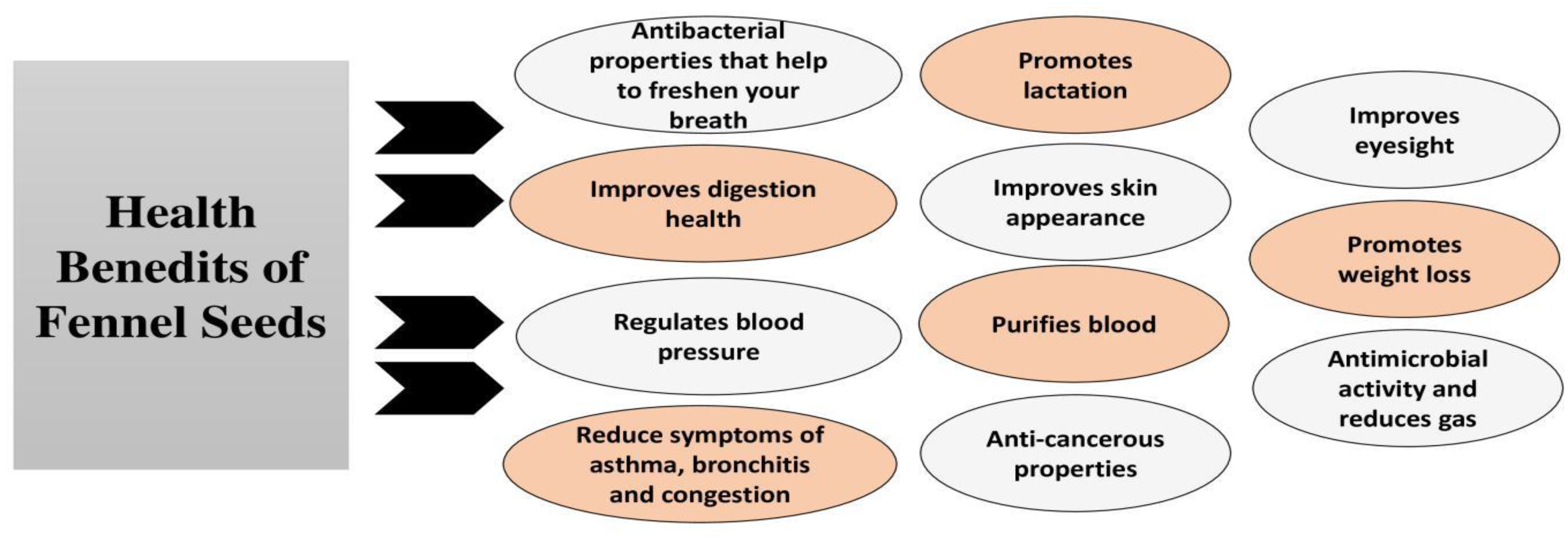
Figure 2.
The most important health benefits of lavender.
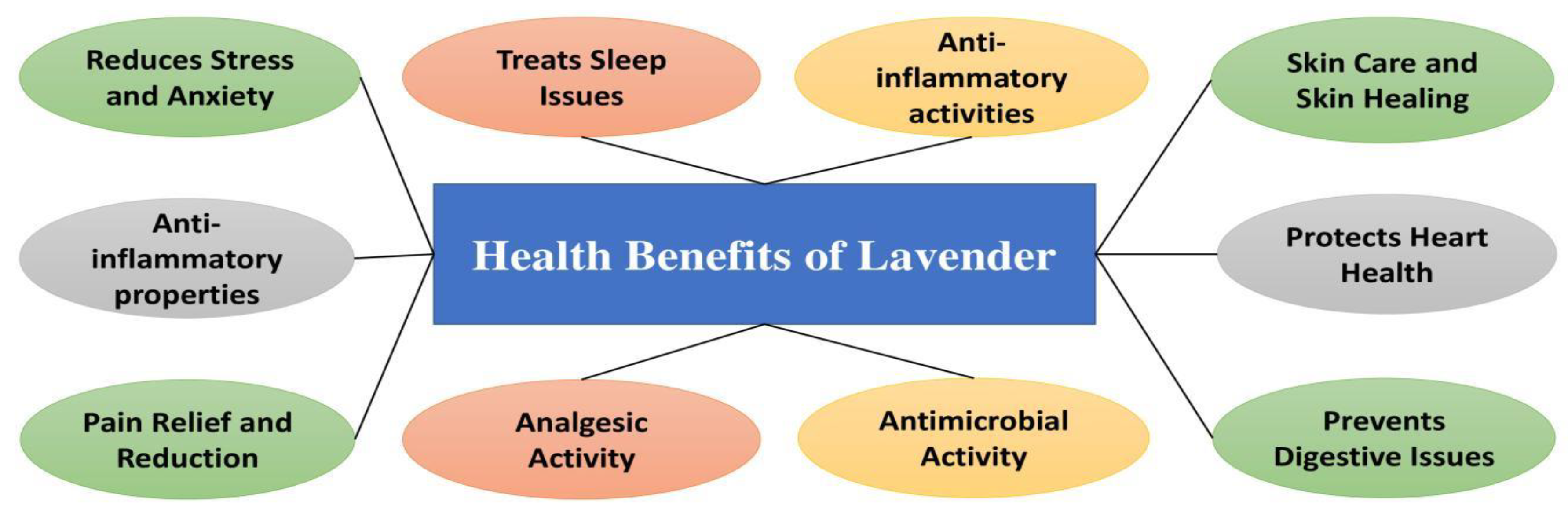
Figure 3.
The most important health benefits of Echinacea.
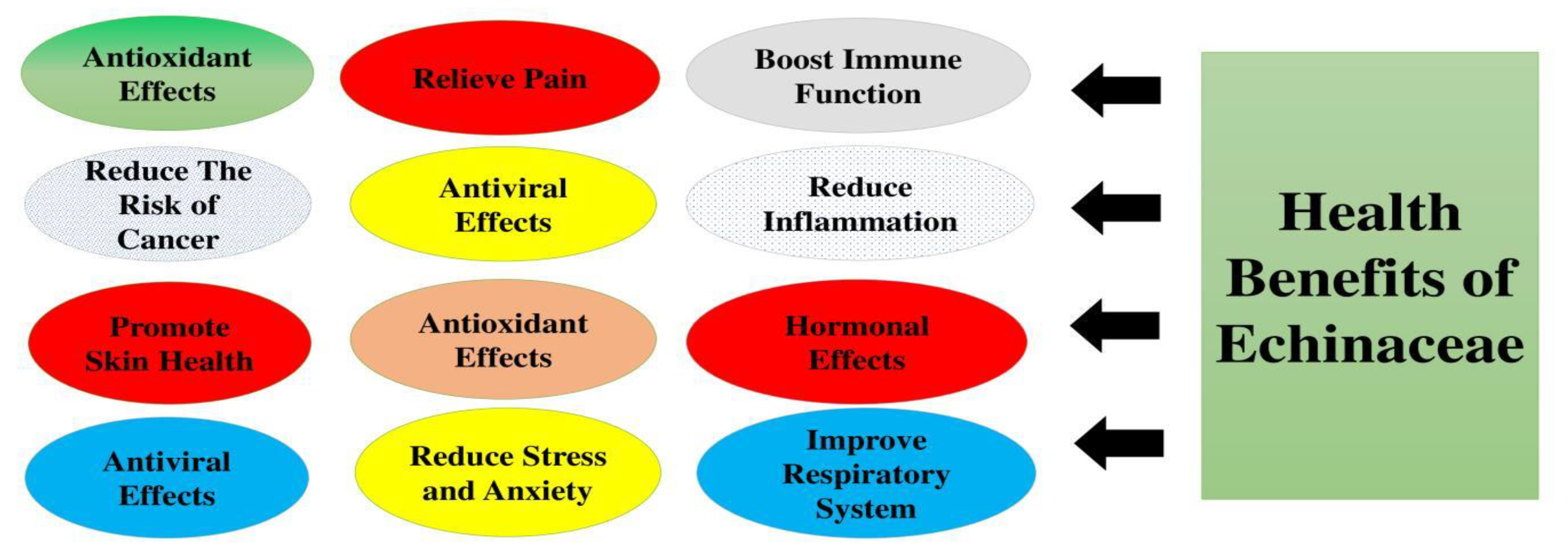

Table 1.
The most notable points and information of fennel ,s seeds.
| Keypoints | References |
|---|---|
| Fennel is cultivated all over the world for its important essential oil and its utilization in different traditional medicine systems. | [14,15,16,17] |
| Fennel is a perennial or biennial herb up to two meters high and golden yellow flowers and feathery leaves. | [15,16,17,18] |
| Chemical components based on the total essential oil distilled from fennel seeds are (E)-Anethole (trans-anethole), Limonene, Fenchone, α-Pinen, (Z)-β-Ocimene, Estragole (methyl chavicol), Carvone, Myrcene, dimethyl acetal, 1,8-Cineole, p-Anisaldehyde, Sabinene, Camphor, Camphene, γ-Terpinene, (Z)-Anethole (cis-anethole), α-Phellandrene, p-Cymene, exo-Fenchyl acetate, Germacrene D, Carvacrol, β-Pinene, allo-Ocimene, and Terpinen-4-ol. | [36,37,38,39,40,141,142,143,144] |
| Fennel seed is a rich source of volatile oil, with fenchone and trans-anethoe as its main ingredients. | [36,37,38,39,40] |
| Other components of the essential oil are camphene, limonene, and alpha-pinene. | [36,37,38,39,40] |
| Fennel seed with its spicy odor and burning sweet taste has a particular usage in perfumes, condiments, and liqueurs industrial as flavoring agent. | [45,46,47] |
| The special health benefits of fennel are because of its antioxidant content. | [45,46,47] |
| Aging-related diseases like heart cancer and heart diseases can be prevented by fennel seed oils. | [36,37,38,39,40,41,42] |
| The main essential oil components of fennel are trans anethole, fenchone, methyl chavicole (estragole), and limonene. | [36,37,38,39,40,146] |
| Fennel essential oil or its natural constituents such as anethole shows various activities like antibacterial, antifungal, and insecticidal activity. | [20,21,22,23,24,25,26,27,122,123] |
| Fennel has antioxidant property, anti-inflammatory effect, prophylactic activity, anti-allergic, and antispasmodic and hepatoprotective activity. | [19,20,21,22,23,24,25,26,27,153,154] |
| In livestock industries, the notable improvement in chicks body weight and feed effectiveness are obtained by addition of fennel seed to their feed. | [45,46,47,48,49,50] |
| The phenolic molecules in fennel have been proved to possess potent antioxidant activity in a number of trials. | [48,49,50] |
Table 2.
The most notable points and information of thyme.
| Keypoints | References |
|---|---|
| Thyme is the main component of essential oil extracted from Thymus vulgaris belonging to the family of Lamiaceae. | [182,183,184,185,186,187] |
| Traditionally, it is used as carminative, anti-septic, stimulant, anti-spasmodic, anaesthetic, and also contains analgesic agent, and anti-oxidant properties. | [188,189] |
| The phenolic constituent of volatile oils is hydrophobic in nature, binds the bacterial proteins, breakdown and permeates the cell membrane, effectual anti-fungal component to extend the shelf life of packaged foods. | [190] |
| Thyme extracts present neuroprotective, anti-aging and antioxidant activity. | [191] |
| Thyme extract present high anti-inflammatory properties with no cytotoxicity. | [191] |
| Essential oils of thyme is used for a wide variety of applications, such as to impart fragrance and flavoring to cosmetics and spice mixtures, and as components of pesticides and repellents. | [192] |
| Phenolic components, comprising polyphenols and phenols, are the most abundant secondary metabolites in the essential oil and extract of thyme. | [192,193,194] |
| Thyme showed significant decline in weight, fasting blood, waist circumference, total cholesterol, triglycerides and low density lipoproteins. | [195] |
| Edible coating based on quince seed mucilage loaded with thyme essential oil showed good potential as a coating material for the protection of cheese shelf and quality as well as for enhancing Angiotensin-converting enzyme (ACE)-inhibitory activity. | [196] |
| Thyme essential oil has important function in controlling gray mold and Fusarium wilt and inducing systemic acquired resistance in tomato seedlings and tomato grown. | [197] |
| Thyme volatile oil loaded with chitosan nanoparticles as an edible coating has a great potential in shelf life extension of some medicinal plant ,s leaves. | [198] |
| The essential oil can be used in a variety of pharmaceutical, agro-food, and non-food applications. | [199,200,201,202,203,204,205,206,207,208,209,210,211,212,213,214] |
| The main health benefits of seeds are anti-inflammatory, antioxidant, antineoplastic, antiviral, antifungal, antibacterial and antiseptic activities. | [215,216,217,218,219,220,221,222] |
Disclaimer/Publisher’s Note: The statements, opinions and data contained in all publications are solely those of the individual author(s) and contributor(s) and not of MDPI and/or the editor(s). MDPI and/or the editor(s) disclaim responsibility for any injury to people or property resulting from any ideas, methods, instructions or products referred to in the content. |
© 2023 by the authors. Licensee MDPI, Basel, Switzerland. This article is an open access article distributed under the terms and conditions of the Creative Commons Attribution (CC BY) license (http://creativecommons.org/licenses/by/4.0/).
Copyright: This open access article is published under a Creative Commons CC BY 4.0 license, which permit the free download, distribution, and reuse, provided that the author and preprint are cited in any reuse.


