

Submitted:
21 July 2023
Posted:
26 July 2023
You are already at the latest version
Abstract
Fusarium dry rot is one of the major postharvest potato diseases of during storage after harvest, which not only results in quality degradation but also brings up huge economic losses. The dis-ease can be elicited by some species of Fusarium, the pathogenic fungi of Fusarium causing potato dry rot are considerably diverse in various countries and regions. Fusarium spp. infection is as-sociated with dry rot produce mycotoxins, which has phytotoxicity and mycotoxicoses on hu-mans and animals. Chemical synthetic fungicide is considered as the main control measure to Fusarium dry rot of potato, nevertheless, it is unfortunate that the persistent application inevitably results in the emergency of resistant strain and environmental contamination. A comprehensive disease control strategy includes potato cultivar selection, appropriate cultural practices (crop rotation, cultivate pattern, fertilization, and irrigation), harvesting process and postharvest treatment (harvesting, classification, packaging, wound healing), storage condition (environ-mental disinfection, temperature, humidity and gas composition) along with the application of fungicide pre-harvest or postharvest. Recently, emerging studies indicated that eco-friendly strategies include physical control, chemical methods (such as the application of generally rec-ognized as safe (GRAS) compounds or chemical (elicitors) and biological control have been in-troduced to combat Fusarium dry rot of potato.
Keywords:
Fusarium spp.
; Fusarium dry rot of potato
; pathogenicity
; mycotoxin
; control
1. Introduction
Potato (Solanum tuberosum L.) ranks fourth as the most important food crop all over the world, only behind rice (Oryza sativa L.), wheat (Triticum aestivum L.), and maize (Zeamays L.). It is also a major non-cereal food crop, which plays an irreplaceable role in the global food supply. Potato tuber is rich in plenty of macronutrients (such as carbohydrates and dietary fiber) and micronutrients (such as vitamins and minerals), furthermore, it is also an important source of antioxidants in people’s diet [1]. It is reported that, in 2020, the total world production of potatoes was 359 million tons (http://www.fao.org/faostat/en/?#data/QC) and China ranked the first with the production of 17.98 million tons [2-3]. More than 85 % of potato needs to be kept for 3-6 months acting as vegetable and industrial material, the losses due to the disease during storage is very huge [4]. Some fungi, bacteria, and viruses all can result in postharvest disease. Among them, infection of potato tuber resulted from Fusarium spp. can particularly cause severe dry rot during storage, which not only lead to quality deterioration but also reduce the marketable yield. Tuber losses range from 6.25% to 25% due to dry rot during storage annually, and up to 60% when potato tubers are injured [5], the financial loss is about $ 100–250 million annually in the United States due to the dry rot of potato (https//www.ars.usda.gov). In Gansu province of China, it is estimated the tuber losses due to dry rot was around 88% of the total postharvest losses [6]. Importantly, some Fusarium species associated with dry rot produce mycotoxins, which pose an adverse effect on humans and animals due to their mycotoxicoses.
If we grasp the pathogenesis of Fusarium associated with potato tuber, the appropriate and effective management measures are carried out, the losses will be effectively reduced. At present, some chemical synthetic fungicides (such as carbendazim, mancozeb, thiabendazole (TBZ)) are employed to prevent and control dry rot of potato. Nevertheless, chemical synthetic fungicides are not a long-term solution due to ecological environment and drug resistance. Currently, some eco-friendly control measures such as the use of some organic acid and salts [7], inorganic salts [8-9], chitosan [10], plant essential oil [11-12] and biological antagonist [13-14] for management postharvest disease of potato tuber are being explored and developed. The present review focus on dry rot occurrence (including the causal pathogens of dry rot, the symptom of the dry rot, and pathogenesis), mycotoxins production (non-trichothecenes and trichothecenes), and the management strategies.
2. Dry rot of Potato Tuber
2.1. The causal agent causing dry rot
Fusarium is a notorious and huge fungal genus within the Ascomycota phylum containing hundreds of species, which are primarily isolated from soil and plant survival [1]. It is well known that Fusarium spp. has the ability to cause potato dry rot, which is a devastating postharvest fungal decay, severely impacting potato tubers quality all over the world [1]. Fusarium dry rot causes a remarkable reduction in potato yield, as well as leads to enormous economic losses. Currently, there are 17 species, and 5 variants of Fusarium recognized globally as causal agents to cause potato dry rot [15]. Because of the differences in potato cultivars and climatic conditions, diverse Fusarium species were isolated and identified from Fusarium dry rot of potato in various countries and regions. Among them, F. sambucinum was considered as the most predominant pathogenic pathogen to lead to Fusarium dry rot of potato in North America and some regions of Europe [16,17,18], however, some reports suggested that F. solani var. coeruleum was regarded as the most prevalent pathogen causing potato dry rot at low temperature storage in the United Kingdom, occasionally, the pathogen of F. coeruleum also caused severe potato harvest disease in the United Kingdom [19,20,21]. F. graminearum was the most frequent Fusarium species to cause potato dry rot In North Dakota [22]. F. oxysporum and F. solani were reported as the main pathogen to cause Fusarium dry rot in potato In South Africa, [23,24]. F. sulphureum and F. solani were found to have a higher incidence and aggressiveness in Iran [25]. In Egypt, the F. sambucinum was regarded as the most predominant pathogen, except for F. oxysporum, F. incarnatum and F. verticillioide [26].
There are different climatic conditions in China, different species of Fusarium were isolated and characterized in different regions. Potato planting regions are divided into four regions of Northeast, North China, Northwest, and South planting regions in China. In Northwest of potato planting regions, F. avenaceum, F. oxysporum, F. sporotrichiodes, F. solani, F. trichothecioides, F. solani var. coeruleum, F. sambucinum, F. semitectum, F. solani, F. sambucinum, F. culmorum, F. gibbosum, F. macroceras, F. solani var. coeruleum, F. acuminatum, F. equiseti and F. redolens were identified in Heilongjiang Province and Inner Mongolia Autonomous Region [27]; In North of China, F. sambucinum and F. avenaceum, F. solani var. coeruleum, F. oxysporum, F. acuminatum were isolated in Shanxi Province [27]. In Northwest of China, F. sambucinum, F. avenaceum, F. oxysporum, F. equiseti are identified in Ningxia Hui Autonomous Region; F. sambucinum, F. solani, F. sulphureum, F. avenaceum, F. graminearum are identified in Gansu Province [7,8,10,12]; F. tricinctum, F. avenaceum, F. oxysporum, F. solani, F. acuminatum, F. equiseti are mainly identified in Qinghai Province [6]. In Zhejiang Province of South of China, F. solani, F. solani var. coeruleum, F. moniliforme var. intermedium, F. moniliforme var. zhejiangense, F. redolens were mainly identified [6].
Fusarium species to cause potato dry rot is not only influenced by countries and regions, the potato variety, chemical synthetic fungicide application, as well as seed tuber source also play the significant roles. For instance, Xue’s research group [28] compared the pathogenicity of F. sulphureum for different potato cultivars, and found that the variety of Longshu No. 3 is susceptible, while the variety of Longshu No. 6 is resistant for F. sulphureum.
2.2. Pathogen infection and the symptom of potato dry rot
In general, Fusarium spp. can infect potato tuber through surface wounds or natural openings on tubers during pre-harvest or post-harvest, and the infection way is shown in Figure 1. Pathogenicity is a crucial factor when understanding the pathogen of Fusarium infection potato tuber. And the extracellular enzymes and reactive oxygen species (ROS) play the more important roles for the pathogenicity of Fusarium. Pathogen can secrete extracellular enzymes to destroy the cell wall and middle lamellar of the host plant, which makes the pathogen can spread to the surrounding cell and successfully infect the host plant. Numerous researches indicated that cell wall degrading enzymes (CWDEs) are important pathogenic factors for Fusarium when infecting and spreading [29-30]. Yang et al. [29] suggested that the activities of CWDEs (such as polygalacturonase (PG), carboxymethyl cellulose (Cx), polymethyl-galacturonase (PMG), and so on) were found to increase during F. sulphureum infection potato tubers. Cutinase enzymes were also involved in the pathogenicity when F. solani infected potato tuber. Moreover, ROS also plays vital role for the pathogenicity of pathogen. As we know, ROS production is early events during host-pathogen interactions, excessive ROS can attack cellular biomolecules, such as lipid, protein, and DNA, then cause lipid peroxidation cell membrane damage of hosts, finally leading to infection. For instance, Bao et al. [31] compared with the difference in pathogenicity between F. sambucinum and F. sulphureum during pathogens infection potato tubers and found that F. sulphureum showed the higher pathogenicity in inoculated tubers association with a higher ROS level, which caused a higher malondialdehyde (MDA) content, and a lower level for cell membrane integrity, ultimately lead to a bigger lesion diameter in inoculated tuber. The contrary result was observed in the tubers inoculated with F. sambucinum due to a lower ROS accumulation. Xue et al. [28] also observed that, compared to F. sambucinum and F. solani, F. sulphureum manifested the strongest infection ability and pathogenicity in inoculated with tubers (cv. Longshu No.3) in Gansu province. In addition, the pathogenicity of Fusarium was also related to host nonspecific phytotoxin trichothecenes, for instance, fusaric acid produced by Fusarium destroyed the cell membrane structure of the host plant, then decreased respiration rate, which is beneficial for Fusarium infection potato tuber.

Table 1.
The reported Fusarium spp. to lead to dry rot of potato in diverse countries and regions.
| Fusarium species | region | reference |
|---|---|---|
| F. sambucinum | North Amercian and some regions of Europe | [16,17,18] |
|
F. coeruleum F. graminearum F. solani and F. oxysporum F. sulphureum and F. solani F. sambucinum F. oxysporum F. verticillioides F. incarnatum F. avenaceum, F. oxysporum, F.sporotrichiodes F. solani, F. trichothecioides, F. solani var. coeruleum F. sambucinum F. semitectum, F. solani F. sambucinum F. culmorum, F. gibbosum, F. macroceras, F. solani var. coeruleum, F. acuminatum, F. equiseti and F. redolens F. sambucinem F. avenaceum F. solani var. coeruleum, F. oxysporum, F. acuminatum F. sambucinem F. avenaceum F. graminearum F. solani F. sulphureum |
United Kingdom and Great Britain North Dakota South Africa Michigan Iran Egypt Heilongjiang Province and Inner Mongolia Autonomous Region North of China Shanxi Province Northwest of China, Gansu Province, Ningxia Hui Autonomous Region |
[19,20,21] [22] [23,24] [25] [26] [27] [27] [7,8,10,11,12,27] |
|
F. tricinctum, F. avenaceum, F. oxysporum, F. solani, F. acuminatum, F. equiseti F. solani, F. moniliform, F. redolens |
Northwest of China, Qinghai Province South of China Zhejiang Province |
[6] [6] |
The typical symptom of the skin of the infected potato tuber by Fusarium spp. mainly manifests wrinkled brown, and sunken tissue with a dry and leathery appearance. The initial symptoms is observed as shallow, small brown spots at tuber wound sites after approximately 30 days of storage. Subsequently, the infected tissue begins to enlarge in every direction, and the periderm of tuber gradually subsidences and collapses. Ultimatelly, concentric rings is observed on the enlarging lesions, and the dead tissue begins to desiccate [1, 32]. The cottony white, or purple, or yellow, or pink, or brick spore and mycelia of Fusarium spp. are observed in the cavity under the rotted lesion [33]. As the disease progresses, the whole tubers with the symptom of severe decay always manifests a shriveled and dehydrated appearance. In severe cases, the affected potatoes may completely decay, resulting in a mushy texture and foul odor. Therefore, it is important to identify and manage potato dry rot to prevent further spread and minimize economic losses.
2.3. Mycotoxin accumulation associated with Fusarium dry rot
Potato dry rot resulting from Fusarium is associated with mycotoxins accumulation. Mycotoxins are a type of secondary metabolites produced by toxigenic fungi under suitable temperature and humidity conditions, which can lead to a potential health threat to human and animal [34, 35]. The mycotoxin metabolized by Fusarium is classified into two types of non-trichothecene and trichothecenes. The main non-trichothecene metabolized by Fusarium spp. are shown in Table 2. BEA and ENN are cyclic hexadepsipeptides with antimicrobial, insecticidal, phytotoxic, and cytotoxic properties, which were detected in the potato tuber infected with F. oxysporum [36]. ZEA and FUS were detected in the tubers infected with F. sambucinum, F. solani, F. oxysporum, with estrogenic syndromes in swine and other experimental animals [37-40]. FUM is linked to leukoencephalomalacia in brain lesions of horses and rabbits with hepatotoxic and carcinogenic influences, also associated with esophageal carcinoma in human with phytotoxic effect, which was detected potato contaminated with F. equiseti, F. sambucinum, and F. oxysporum [41]. El-Hassan and Kim [42-44] observed SAM in potato dry rot infected by F. sambucinum, F. semitectum, F. solani and F. oxysporum that resulted in hemorrhage for stomach and intestines, bodyweight loss, apastia, and death for rats. Sonja et al. [45] found the FA production in F. oxysporum infected potato tuber, Venter group [46] and El-Hassan group [41] indicated that FA content was positively correlated to the incidence of dry rot. Pre- and postharvest strategies was carried to control FA accumulation in dry rot of potato tuber [1].
The trichothecenes are categorized as another main type of mycotoxins found in Fusarium dry rot of potato that is a type of structurally related sesquiterpenes compound. Up to the present, there are more than 190 known trichothecenes are found.
The trichothecenes are classified into four different types: A, B, C, and D based on the chemical structural difference, the chemical structures are listed in Figure 2. Types A and B of trichothecenes are found in cereal crops and their contaminated products. Additionally, trichothecenes were found in potato dry rot [35], Fusarium dry rot in muskmelon [47], and core rot in apple [48]. As we know, Trichothecenes can pose a serious health threat to human and animal due to phytotoxicity and mycotoxicoses [28]. For instance, in some severe cases, trichothecene has the potential carcinogenic, teratogenic, and mutagenic effect [49]. Trichothecenes were reported in Fusarium dry rot of potato tuber (Table 3). Type A and B of trichothecenes are often mainly found in the lesion tissue of the rotted potato tuber. Xue et al. [4] found trichothecene of 3-ADON, T-2, FUS, and DAS not only in the lesion part but in the adjacent asymptomatic part of potato dry rot contaminated by F. sulphureum, F. solani, and F. sambucinum; it was interested that the concentration of trichothecens were negatively correlated the distance from the infected point. Similarly, Ellner et al. [50] suggested that both DAS and 4,15-DAS were detected in rotten tissue, as well as in adjacent asymptomatic tissue in tubers contaminated by F. sambucinum, and the similar changing trend to Xue’s report was observed. Delgado et al. [57] suggested that DON, NIV, FX, 3-ADON, 15-ADON were detected in potato inoculated with F. graminearum, almost a similar trend to Xue’s and Ellner’s reports were found.
2.4. Dry rot of control
Given the severity of potato dry rot, how to control the disease of dry rot has become an urgent question. Currently, the chemical synthetic fungicides such as thiabendazole, benzimidazole, 2-aminobutane, imazalil, flusilazole, difenoconazole is the main strategy to control the disease. However, as we all know, a series of problems such as the resistance to fungicide, environmental contamination, and pesticide residues have come up, which ask scientists to develop integrated disease management to combat the problems. An integrated disease control strategy includes potato cultivar selection, appropriate cultural practices, harvesting process and postharvest treatment, storage condition along with the application of fungicide pre-harvest or postharvest.
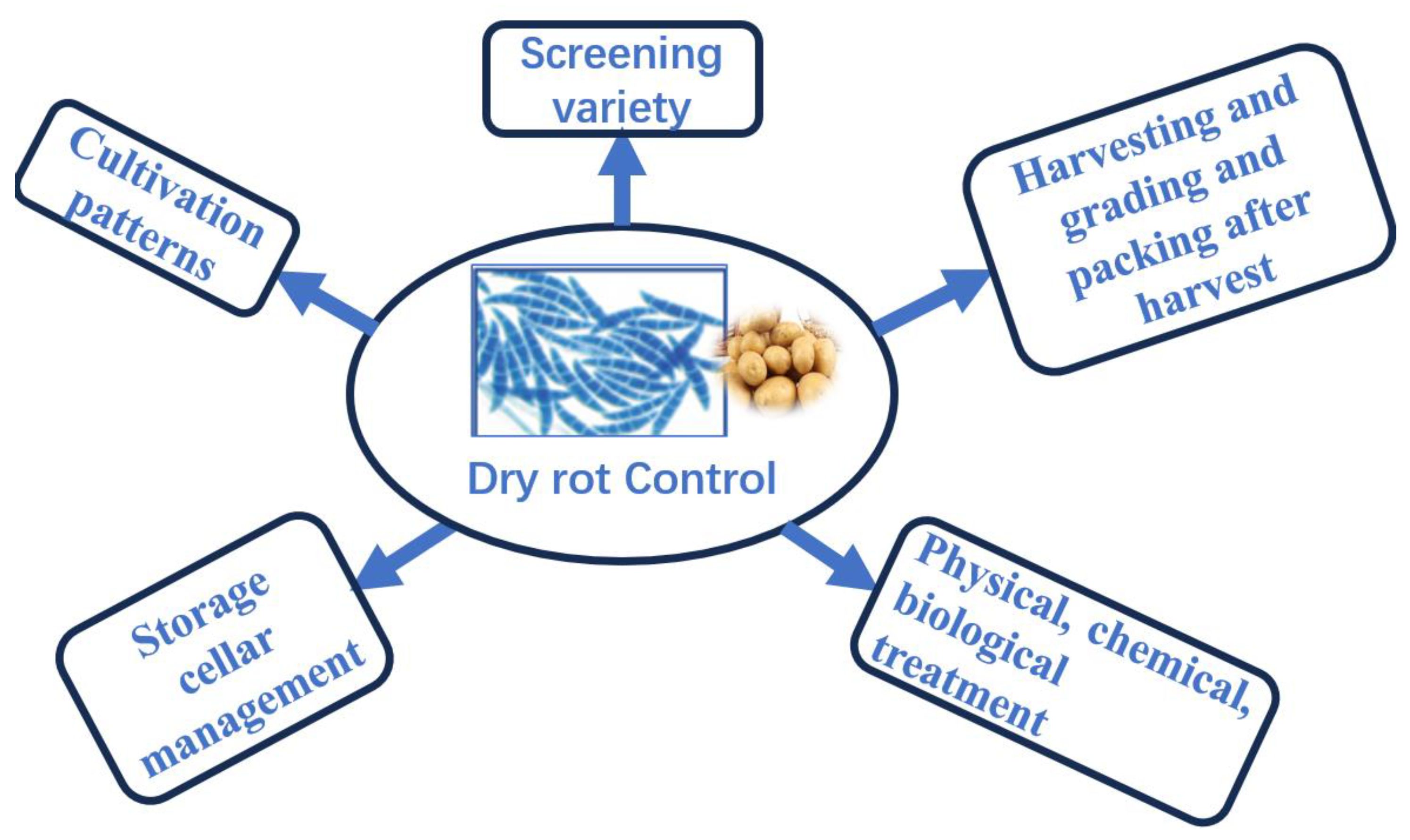
Figure 3.
The strategy of controlling potato dry rot.
2.4.1. Varieties Screening
Resistant varieties screening plays a crucial role in controlling postharvest disease. More than 5000 potato varieties were reported to be planted all over the world [61-62]. Most of the varieties are sensitive to Fusarium. Du‘s research group investigated 21 potato varieties and 46 breeding lines against F. sambucinum, and found that 67 kinds of potato clones were sensitive to Fusarium in China [27] Xue’ group [28] investigated the varieties of Longshu No.6 and Longshu No.3 against F. sulphureum and found that the variety of Longshu No.3 showed more susceptibility to F. sulphureum and had more serious disease and higher levels of FUS, DAS, 3ADON and T-2 toxin in potato tubers contaminated by F. sulphureum comparing with the variety of Longshu No. 6. In Tunisia, Trabelsi et al [63] indicated that the varieties of Mondial, Spunta, and Liseta were less sensitive to F. sambucinum, F. oxysporum, and F. graminearum. In Iran, Esfahani et al. [64] screened 43 potato varieties to F. solani, F. sulphureum, and F. oxysporum were found only the variety of Saturna was resistant against the three fungi. In Canada, Yilma et al. indicated that the variety of Owyhee Russet showed a significant higher resistance than Russet Burbank to dry rot. In fact, the resistance to every Fusarium spp. is mainly independent and genetically distinct to some extent. The resistance to a species of Fusarium is transmitted to progeny but appears to be associated with recessive alleles [66-67]. Even though numerous potato cultivars and clones were tested for sensitivity, none of variety is resistant to all the Fusarium complex. At the same time, varieties may be sensitive to one species of Fusarium, nevertheless, the resistance is to another species of Fusarium. Similarly, a certain strain of Fusarium maybe pathogenic to one cultivar, but non-pathogenicity is shown to another cultivar. Because the susceptibility-resistance outcome varies depending on the strains, the varieties, and the prevailing culture and environmental conditions in different regions of the world. Some researches pointed the role of storage temperature for cultivar’s susceptibility against Fusarium species. Mejdoub-Trabelsi et al. [68] found cultivars at temperature 30 °C were less susceptible, while the cultivars at temperature 15 °C were highly susceptible. Therefore, it is indispensable to study the populations of Fusarium in field and the pathogenicity to optimize the varieties to grow in each field. At present, breeding resistant cultivars against dry rot are very efficient because of laborious phenotyping [69]. Genome-editing technique by using Clustered Regularly Interspaced Short Palindromic Repeats (CRISPR)/Cas9 system to target genome modifications has become a potential and powerful tool to genetic engineering in potato [70]. CRISPR/Cas9 system can provide an alternative strategy to conventional genetic engineering [71], and is expected to produce disease-resistant cultivars by designing and constructing gene-specific single guide RNA (sgRNA) vectors.
2.4.2. Cultivation patterns
Good cultivation patterns play a crucial role that influence the incidence and severity of storage disease after harvest. Generally, cultivation patterns include crop rotation, cultural methods, fertilization, and irrigation. Crop rotation is usually advised cultural practice in controlling soil-borne disease, however, crop rotation is not very suitable in the management of potato dry rot [72-73]. Because the fungus has a broad host range and can survive in the soil for 5-6 years, which make it very difficult to control infection by crop rotation. Potato crop rotation with barley, red clover did not achieve a significant effect for disease incidence and severity in 2-3 years [74].
Cultural method plays a key role in the management of potato dry rot. Dry rot is not only a soil disease but also a tuber-borne disease. Therefore, the seed tuber is usually considered the main source of inoculum [75]. Planting healthy seed tuber in the field is necessary, if planting the infected seed tuber, which will result in soil infestation around the progeny tuber [76]. The contaminated soil adhering on the tubers’ surface will eventually contaminate tubers through wounds or natural orifices during storage after harvest. Reasonable sowing time is also an important factor for potatoes, which make the whole growth period of potato is a relatively suitable temperature and humidity, avoid the high temperature when potato tuber developing and expanding. Finally, reasonable fertilization and irrigation should be considered during the different growth periods.
2.4.3. Harvesting and grading and packing after harvest
Harvesting and processing treatment after harvest have a significant influence on controlling disease and reducing incidence. Because of the fungus of Fusarium spp. attacking potato tuber only through the wounds, considerable efforts should be focused on avoiding tuber bruising and injuring when harvesting [15]. In addition, the temperature of 10-18 °C for tuber pulp is best option for harvesting tuber [77]. The maturity level plays an important role when harvesting, the tubers with low maturity have a higher content of sucrose and a poorer skin set, however, the higher level of sucrose that provides nutrition for fungus growth, and the poorer skin is prone to bruise and generate wounds, these properties lead to the low maturity are more vulnerable to the fungus [18]. In general, it is appropriate for potato tubers to harvest after 7-14 days of killing potato vine, which will have sufficient time to wound healing and decrease the chances of fungus attack [15]. It takes 1-2 weeks for the tuber to heal the wound when the environmental humidity is between 95 and 99%, and the tuber pulp temperature is ranged from 13 to 16 oC, which is a favor to rapidly heal the wound after harvest. Taking some steps to accelerate wound healing not only save wound healing time but also decrease labor cost. Our research group previous results suggested that sodium silicate or brassinosteroid treatment accelerated the wound healing process of tuber by activating of phenylpropanoid metabolism [78-79]. Subsequently, Jiang adopted transcriptomics analysis how benzo-(1, 2, 3)-thiadiazole-7-carbothioic acid s-methyl ester (BTH) to induce genes involved in suberin accumulation to accelerate potato wound healing process [80]. Moreover, a careful examination of tuber, grading, and packing should be paid attention to. As mentioned above, the disease of dry rot can easily contaminate through the wounds, when one tuber is decay, the rotten tuber will contaminate the tubers around it, which will ultimately result in a disastrous disease during storage. Therefore, the tubers with wounds (including pests and disease appearance) must be carried out a thorough examination and rejected before storage, actually, the examination process is attributed to proper grading before storage [81]. Finally, packing not only can reduce the disease incidence, but also increase the beauty and value of potatoes.
2.4.4. Storage cellar management
Storage cellar management is a crucial factor to manage dry rot of potato, which includes storage cellar disinfection, temperature, humidity, and gas components. During storage, proper disinfection treatment for storage facilities is mandatory, the common chemical disinfectants include sulfur, potassium permanganate-formaldehyde, peracetic acid, chlorine dioxide, 2-4% formalin solution. Most of these chemical disinfectants are employed for fumigation processing. Storage temperature is the determining factor for the storage quality of potato tuber. The storage temperature should decrease to an appropriate level after wound healing at 15-20 oC. In general, the storage temperature is 2-3 oC for seed potatoes and 4-5 oC for commercial potatoes. During storage, the appropriate humidity is 80-93%, higher humidity will lead to tuber rot and sprout earlier. In addition, proper cool air circulation is also essentially, because the stored potato tubers produce excessive carbon dioxide (CO2) and heat, which will facilitate the development of adhering Fusarium spores [82].
2.4.5. Physical, chemical, and biological treatment
2.4.5.1. Physical treatment
As we know, a minimal environmental impact and no residues in the treated product, the development of a physical application to management postharvest plant diseases has been widely carried out. Among all kinds of physical treatments, the extensive application of ultraviolet-C light (UV-C, 190–280 nm) showed a significant effect, whose mechanism is that, on the one hand, UV-C treatment can directly suppress pathogen growth; on the other hand, UV-C application can induce defense response in host tissues and increase the resistance against disease [83]. The application of UV-C has been shown to control dry rot by inducing the generation of antifungal substances in potato that contributes to disease control [84]. Ranganna et al. [85] also suggested UV-C irradiation completely prevents the development of dry rot caused by F. solani in potatoes storage at 8 oC for 3 months. Yu et al. [86] indicated that 35 kJ·m-2 UV-C treatment significantly inhibited dry rot of potato by increasing the activities of CAT, POD, and PAL. Another report by Jakubowski and Krolczyk [87], who suggested that UV-C radiation effectively controlled the disease of dry rot in stored potato tubers.
2.4.5.2. Chemical treatment
The most effective strategy to control potato dry rot is the combination of pre-and post-harvest treatment. Firstly, it is necessary to disinfect the seed tuber before planting, chemical treatments to the harvested tubers also play an important role before storage. Thiabendazole is currently considered as the most widely used chemical fungicide to manage Fusarium dry rot of potato [88]. Thiophanate-methyl (benzimidazole group) was reported that is extensively applied to manage seed tuber piece disease in Canada. Nevertheless, the employment of thiabendazole has resulted in the occurrence of the drug-resistant strains against the pathogen of F. sambucinum, it is fortunate that the rest of the Fusarium species viz. F. solani, F. culmorum, F. equiseti, F. acuminatum and F. avenaceum are still sensitive to the fungicide of thiabendazole [72, 89]. Some alternative fungicides with high-efficiency and low-toxicity (such as fludioxonil) also have incomparable effects to manage dry rot. For instance, fludioxonil was used to effectively control tuber seed disease and sprout rot [90]. The application of azoxystrobin and fludioxonil effectively managed dry rot, the disease incidence decreased to 50% comparing with the control after 21 days of storage [15]. However, with the extensive application of synthesis chemical fungicide, the inevitable problems of drug-resistance, environmental pollution, as well as food safety are becoming more and more prominent. Therefore, it is urgent to develop more safer and efficient fungicides to control Fusarium dry rot of potato.
Accordingly, the generally recognized as safe (GRAS) substances, such as inorganic acid, organic acid, inorganic salts, organic salts, essential oils and phytohormones, all display excellent effects in sustainably controlling the dry rot of potato. Raigond et al. [91] indicated that chitosan application significantly managed dry rot in potato, and he also found that chitosan coating significantly reduced the Fusarium incidence by inhibiting Fusarium growth. Xue et al. [7] suggested chitosan, sodium silicate and β-aminobutyric acid treatments markedly inhibited the expansion of lesion diameter in tuber infected with F. sulphureum, interestedly, trichothecenes concentration was also decreased, the involved action mechanism was attributed to the up-regulation of enzyme activities involved in defense reaction, and down-regulated genes related with trichothecenes biosynthesis pathway. Afterwards, Xue research group found an interesting result that T-2 toxin, as a kind of trichothecenes A, suppressed the expansion of dry rot of potato at a low concentration [92]. Later, Han found the treatments of sodium silicate and brassinosteroid promoted wound healing of potato and accelerating suberin deposit, ultimately enhanced the resistance against dry rot of potato [78-79]. Jiang adopted BTH to treat potato and also observed the similar control effect on potato dry rot by accelerating wound healing [80]. Ma et al. [93] found the gene of StCDPK23 played an important role on wound healing of potato and suberin deposition, and constructed StCDPK23-overexpressing plants to conformed StCDPK23 participated in the tuber wound healing and contributed the resistance against dry rot of potato.
In addition, essential oils and extracts from plants displayed an excellent effect in suppressing the development of Fusarium dry rot by soaking or fumigation treatment [94]. Essential oil from Zanthoxylum bungeanum was found to be efficient in inhibiting the expansion of dry rot disease resulted from F. sulphureum [11]. The cinnamaldehyde, a major component of cinnamon essential oil, displayed a better control effect on potato dry rot resulted from F. sambucinum, the underlying mechanism revealed that cinnamaldehyde suppressed spore germination by impacting the biosynthetic pathway of ergosterol, improving ROS accumulation, ultimately resulting in a breakdown of cell membrane integrity [12]. Similarly, the essential oils from peppermint and fennel also remarkedly suppressed the F. oxysporum growing and reduced the Fusarium dry rot developing when treated with a protective emulsifiable concentrate [95]. It is interesting that some essential oils directly influenced mycotoxin metabolism by impacting the biosynthetic pathway of mycotoxins, for instance, the essential oils from palmarose and clove reduced DON and ZEA accumulation by down-regulating the expression of genes involved in mycotoxin the biosynthetic pathway of DON and ZEA [96]. Essential oils from plant, as a sustainable alternative to chemical synthetic fungicides, needs to be studied in-depth in the future [1, 97]. The extract from plant also displays excellent effect on plant disease [98]. The extract from black spruce revealed antifungal and suppressive potential to prevent the development of potato dry rot [99]. The extract from cinnamon also significantly inhibited F. sambucinum spore growth in vitro and reduced dry rot development in vivo [100]. Chlorogenic acid, as a kind of polyphenols with antioxidative activity, is mainly from the methanol extract, and also displayed a better inhibitory activity on the development of Fusarium dry rot of potato. The possible action mechanism is attributed to chlorogenic acid application modified morphological structure of F. sambucinum, the phenomenon of curling, twisting and collapse was observed after exposure of chlorogenic acid [1].
Additionally, chlorine dioxide and ozone, as the two strong oxidants, also perform an important and crucial role in controlling the Fusarium dry rot. Chlorine dioxide (ClO2) acts as a water-soluble strong oxidant, whose oxidation ability is 2.5 times higher than that of chlorine. ClO2 can be applied in both gaseous and aqueous solution form to control the postharvest disease on fruits and vegetables. For instance, Li et al [101] suggested that 0.75 ug/mL ClO2 solution application significantly reduced the incidence of Fusarium dry rot of potato and suppressed the expansion of the lesion diameter by damaging the morphology and ultrastructure of F. sulphureun hyphae. Ozone, as another high efficiency and non-toxic, strong oxidant, also display an important role to control potato dry rot, on the one hand, ozone inhibited the growth of F. sulphureum spore, destroyed the structure of F. sulphureum [102], on the other hand, ozone treatment activated ROS metabolism of the potato tuber, and induced the resistance against dry rot [103].
2.4.5.3. Biological treatment
Biocontrol is regarded as a greener and safer strategy for the food safety and human health, comparing with the traditional chemical synthetic fungicides. Presently, scientists have been focusing on the research on antagonistic microorganisms to manage plant diseases. Antagonistic microorganism is currently regarded as the most potential alternative option to manage postharvest diseases. For instance, antagonistic microorganisms effectively controlled Fusarium dry rot during the potato wounds healing process when the tubers are at their most vulnerable. Schisler’s group firstly reported the strains of Pseudomonas Migula spp., Enterobacter Hormaeche & Edwards spp., and Pantoea Gavini. spp. remarkedly decreased the incidence of potato dry rot resulted from F. sambucinum [104]. Later, the group found the mixtures of various antagonist strains had more efficient to control potato dry rot than that of single strain [105]. Gözdenur and Elif [106] screened 12 bacterial and fungal isolates and found that Pantoea agglomerans manifested the most efficacy to suppress the growth of F. oxysporum and control the occurrence of potato dry rot.
Trichoderma harzianum and Bacillus subtilis, as the two most important biological control agents, were registered to manage potato disease. The two agents were the most studied mycoparasitic species for their antagonistic function against a broad spectrum of pathogenic fungus, as well as recognized as a most promising strategy to inhibit different kinds of pathogenic fungi growth and control both preharvest and postharvest plant diseases occurrence. Daami-Remadi et al. [107] suggested T. harzianum and T. viride manifested a greater antagonistic activity against Fusarium dry rot in potato in Tunisia. El-Kot [108] compared four strains of fungal, bacterial and bioagents actinomycetes, and suggested that T. harzianum displayed the most efficient to inhibit the radial development of F. sambucinum and controlling the occurrence of dry rot under green house. Paul et al. [109] also observed T. harzianum strains CMML20-26 and CMML20-27 significantly decreased the postharvest disease in sweet potato. B. subtilis also plays a vital role to reduce potato disease. Wharton and Kirk [110] used the bioagent of B. subtilis in combination with excellent management practices to significantly reduce seed piece decay by 94.3% in 2007. Hussain et al [111] compared the biosurfactant extract, culture filtrate and bacterial cell suspension from B. subtilis HussainT-AMU and found bacterial cell suspension (49%) and biosurfactant extract (70%) had the most control effects on the net house and field, respectively.
In recent years, Trichothecium roseum was also reported to act as an elicitor to induce resistance against dry rot in potato tuber infected by F. sulphureum. During the defense responses induced by elicitor, the genes involved in resistant-reaction were up-regulated, accordingly, the enzymes activities and antifungal compounds contents were also significantly decreased after T. roseum application [112]. The possible mode of action for bioagent include mycoparasitism, competition for nutrients, and the production of extracellular enzymes and/or secondary metabolites [113]. For instance, Xue et al. research group [92] indicated that T-2 toxin (secondary metabolites from F. sulphureum) at the concentration of 1µg/mL could be act as an elicitor to induce resistance against dry rot by activating ROS metabolism and phenylpropane metabolism in potato.
3. Conclusions
Fusarium dry rot of is regarded as a major disastrous potato decay that damage tubers quality and cause economic losses and mycotoxin contamination. There are 17 species, and 5 variants of Fusarium causing potato dry rot all over the world, and the genetic diversity changes relying on the geographical location. The frequency of occurrence and aggressiveness of Fusarium dry rot also differ relying on the prevalent variety and ambient condition in a location-specific manner. Because the susceptibility or resistance of a particular cultivar is related to Fusarium species and storage temperature, a breeding project is in urgent need to design adapting to different cultivars against Fusarium species.
To efficiently control Fusarium dry rot of potato, an integrated disease controlling strategy is recommended that includes excellent harvesting conditions to avoiding tuber injury, suitable storage conditions (optimum temperature, humidity, CO2 concentration), as well as planting the seed tubers free visible disease, and registered chemical synthetic fungicides and/or postharvest GRAS treatment. Fusarium dry rot controlling strategies eventually integrate the application of alternative like GRAS and microbial antagonists. The efficient strategy to manage Fusarium dry rot mainly depend on further research such as the combination of gene editing and molecular breeding and development efforts between scientists and industry to implement a integrated management measure towards the high-efficient controlling of Fusarium dry rot of potato.
Author Contributions
Writing original draft: X.H. Writing—review and editing: X.H. L.Q, and Y.Z. Project administration, supervision: X.H. project management: L.Q. All authors have read and agreed to the published version of the manuscript.
Funding
This work was supported by the youth supervisor supporting fund (GAU-QDFC-2021–09), and National Natural Science Foundation of China (grant no. (32060566).
Institutional Review Board Statement
Not applicable.
Informed Consent Statement
Not applicable.
Data Availability Statement
Not applicable.
Conflicts of Interest
The authors declare no conflict of interest.
References
- Liu, J.; Sun, Z.Q.; Zou, Y.P.; Li, W.H.; He, F.Y.; Huang, X.Y.; Lin, C.L.; Cai, Q.N.; Wisniewski, M.; Wu, X.H. Pre- and postharvest measures used to control decay and mycotoxigenic fungi in potato (Solanum tuberosum L.) during storage. Critical Reviews in Food Science and Nutrition 2022, 62, 415–428. [Google Scholar] [CrossRef] [PubMed]
- Li, L.; Zhu, T.; Song, Y.; Feng, L.; Kear, P.J.; Riseh, R.S.; Sitohy, M.; Datla, R.; Ren, M. Salicylic acid fights against Fusarium wilt by inhibiting target of rapamycin signaling pathway in Fusarium oxysporum. Journal of Advanced Research 2022a, 39, 1–13. [Google Scholar] [CrossRef]
- Li, Y.; Xia, X.; Zhao, Q.; Dong, P. The biocontrol of potato dry rot by microorganisms and bioactive substances: A review. Physiological and Molecular Plant Pathology 2022b, 122, 101919. [Google Scholar] [CrossRef]
- Xue, H.L.; Bi, Y.; Wei, J.M.; Tang, Y.M.; Zhao, Y.; Wang, Y. A new method for the simultaneous analysis of types A and B trichothecenes by ultrahigh-performance liquid chromatography coupled with tandem mass spectrometry in potato tubers inoculated with Fusarium sulphureum. Journal of Agricultural and Food Chemistry. 2013, 61, 9333–9338. [Google Scholar] [CrossRef] [PubMed]
- Fan, Y.; Zhang, W.; Kang, Y.; Shi, M.; Yang, X.; Yu, H.; Zhang, R.; Liu, Y.; Qin, S. 2021. Physiological and dynamic transcriptome analysis of two potato varieties reveal response of lignin and MAPK signal to dry rot caused by Fusarium sulphureum. Scientia Horticulturae. 2021, 289, 110470. [Google Scholar] [CrossRef]
- Wang, W.Z.; Min, F.X.; Yang, S.; Wei, Q.; Guo, M.; Gao, Y.F.; Hu, L.S.; Sheng, W.M. Research progress on potato dry rot disease in China and its control measures. China Vegetables 2020, 4, 22–29. [Google Scholar]
- Xue, H.L.; Bi, Y.; Zong, Y.Y.; Alejandro, C.U.; Wang, H.J.; Pu, L.M.; Wang, Y.; Li, Y.C. Effects of elicitors on trichothecene accumulation and Tri genes expression in potato tubers inoculated with Fusarium sulphureum. European Journal of Plant Pathology, 2017, 148, 673–685. [Google Scholar]
- Li, Y.C.; Bi, Y.; Ge, Y.H.; Sun, X.J. Wang, Y. Antifungal activity of sodium silicate on Fusarium sulphureum and its effect on dry rot of potato tubers. Journal of Food Science 2009a, 74, 213–218. [Google Scholar] [CrossRef]
- Yaganza, E. S.; Tweddell, R.J.; Arul, J. Postharvest application of organic and inorganic salts to control potato (Solanum tuberosum L.) storage soft rot: plant tissue-salt physicochemical interactions. Journal of Agricultural and Food Chemistry, 2014, 62, 9223–9231. [Google Scholar] [CrossRef]
- Li, Y.C.; Sun, X.J.; Bi, Y.; Ge, Y.H.; Wang, Y. Antifungal activity of chitosan on Fusarium sulphureum in relation to dry rot of potato tuber. Agricultural Sciences in China 2009b, 8, 597–604. [Google Scholar] [CrossRef]
- Li, X.D.; Xue, H.L. Antifungal activity of the essential oil of Zanthoxylum bungeanum and its major constituent on Fusarium sulphureum and dry rot of potato tubers. Phytoparasitica, 2014, 42, 509–517. [Google Scholar]
- Wei, J.; Bi, Y.; Xue, H. Antifungal activity of cinnamaldehyde against Fusarium sambucinum involves inhibition of ergosterol biosynthesis. Journal of Applied Microbiology, 2020, 129, 256–65. [Google Scholar] [CrossRef]
- Al-Mughrabi, K. I.; Vikram, A.; Peters, R.D.; Howard, R.J.; L. Grant, T.; Barasubiye, K.; Lynch, R.; Poirier, K. A.; Drake, I. K. Efficacy of Pseudomonas syringae in the management of critical reviews in food science and nutrition potato tuber diseases in storage. Biological Control 2013, 64, 315–322. [Google Scholar] [CrossRef]
- Aydin, M. H. Evaluation of some Trichoderma species in biological control of potato dry rot caused by Fusarium sambucinum fuckel isolates. Applied Ecology and Environmental Research, 2019, 17, 533–546. [Google Scholar] [CrossRef]
- Tiwari, R.K.; Kumar, R.; Sharma, S.; Sagar, V.; Aggarwal, R.; Naga, K.C.; Lal, M. K.; Chourasia, K.N.; Kumar, D.; Kumar, M. Potato dry rot disease: current status, pathogenomics and management. Biotechnology 2020, 10, 1–18. [Google Scholar] [CrossRef] [PubMed]
- Ray, H.; Hammerschmidt, R. Responses of potato tuber to infection by Fusarium sambucinum. Physiological and Molecular Plant Pathology. 1998, 53, 82–91. [Google Scholar] [CrossRef]
- Wharton, P.S.; Tumbalam, P.; Kirk, W.W. First report of potato tuber sprout rot caused by Fusarium sambucinum in Michigan. Plant disease, 2006, 90, 1460. [Google Scholar] [CrossRef]
- Heltoft, P.; Molteberg, E.L.; Nastad, R.; Hermansen, A. Effect of maturity level and potato cultivar on development of Fusarium dry rot in Norway. Potato Research, 2015, 58, 205–219. [Google Scholar] [CrossRef]
- Oosterhaven, K.; Chambel Leitao, A.; Gorris, L.G.M.; Smid, E.J. Comparative study on the action of S-(+)-carvone, in situ, on the potato storage fungi Fusarium solani var. coeruleum and F. sulphureum. Journal of Applied Bacteriology, 1996, 80, 535–539. [Google Scholar] [CrossRef]
- Heltoft, P.; Brurberg, M.B.; Skogen, M.; Le, V.H.; Razzaghian, J.; Hermansen, A. Fusarium spp. causing dry rot on potatoes in Norway and development of a real-time PCR method for detection of Fusarium coeruleum. Potato Research, 2016, 59, 67–80. [Google Scholar] [CrossRef]
- Carnegie, S.F.; Cameron, A.M. Occurrence of Polyscytalum pustulans, Phoma foveata and Fusarium solani var. coeruleum in field soils in Scotland. Plant Pathology, 1990, 39, 517–523. [Google Scholar] [CrossRef]
- Ali, S.; Rivera, V.V.; Secor, G.A. First Report of Fusarium graminearum causing dry rot of potato in North Dakota. Plant Disease, 2005, 89, 105. [Google Scholar] [CrossRef]
- Villarino, M.; Cal, A. D.; Melgarejo, P.; Larena, I. Development of a multiplex PCR for the identification of Fusarium solani and F. oxysporum in a single step. Journal of Plant Diseases and Protection, 2021, 128, 1275–1290. [Google Scholar] [CrossRef]
- Theron, D.J.; Holz, G. Effect of temperature on dry rot development of potato tubers inoculated with different Fusarium spp. Potato Research, 1990, 33, 109–117. [Google Scholar] [CrossRef]
- Esfahani, M. N. Present status of Fusarium dry rot of potato tubers in Isfahan. Indian Phytopathology, 2012, 59, 2. [Google Scholar]
- Gherbawy, Y.A.; Hussein, M.A.; El-dawy, E.G.A. Identification of Fusarium spp. associated with potato tubers in upper Egypt by morphological and molecular characters. Asian Journal Biochemistry Genetics Molecular Biology, 2019, 2, 1–14. [Google Scholar] [CrossRef]
- Du, M.; Ren, X.; Sun, Q.; Wang, Y.; Zhang, R. Characterization of Fusarium spp. causing potato dry rot in China and susceptibility evaluation of Chinese potato germplasm to the pathogen. Potato Research, 2012, 55, 175–184. [Google Scholar] [CrossRef]
- Xue, H. L.; Bi, Y.; Tang, Y.M.; Zhao, Y.; Wang, Y. Effect of cultivars, Fusarium strains and storage temperature on trichothecenes production in inoculated potato tubers. Food Chemistry, 2014, 151, 236–242. [Google Scholar] [CrossRef] [PubMed]
- Yang, Z.M.; Bi, Y.; Li, Y.C.; Kou, Z.H.; Bao, G.H.; Liu, C.K.; Wang, Y.; Wang, D. Changes of cell wall degrading enzymes in potato tuber tissue slices infected by Fusarium sulphureum. Scientia Agricultura Sinica 2012, 45, 127–134. [Google Scholar]
- Chai, Y.; Xu, Y.Q.; Fu, Y.; Li, X.Y.; He, F.M.; Han, Y.Q.; Feng, Z.; Li, F.L. Characteristics of cell wall degradation enzyme produced by main pathogenic Fusarium spp. in potato dry rot. Crops 2018, 4, 154–160. [Google Scholar]
- Bao, G.H.; Bi, Y.; Li, Y.C.; Kou, Z.H.; Hu, L.G.; Ge, Y.H.; Wang, Y.; Wang, D. Overproduction of reactive oxygen species involved in the pathogenicity of Fusarium in potato tubers. Physiological and Molecular Plant Pathology 2014, 86, 35–42. [Google Scholar] [CrossRef]
- Zhang, X.F.; Wu, C.Y.; Hua, H.H.; Cai, Q.N.; Wu, X.H. Characterization of the first Alternavirus identified in Fusarium avenaceum, the causal agent of potato dry rot. Viruses, 2023, 15, 145. [Google Scholar] [CrossRef]
- Vatankhah, M.; Saberi Riseh, R.; Moradzadeh Eskandari, M.; Sedaghati, E.; Alaie, H.; Afzali, H. Biological control of Fusarium dry rot of potato using some probiotic bacteria. Journal of Agricultural and Science Technology 2019, 21, 1301–1312. [Google Scholar]
- Schultz, B.; Ellner, F. M.; Gossmann, M.; Buettner, C. Investigation into virulence and mycotoxin formation of the dry rot causing pathogen Fusarium sambucinum on potatoes. Mycotoxin Research, 2008, 23, 78–84. [Google Scholar] [CrossRef]
- Li, L.; Xue, H.L.; Bi, Y.; Zhang, R.; Carelle, J.K.; Liu, Q.L.; Nan, M.N.; Pu, L.P.; Dov, P. Ozone treatment inhibits dry rot development and diacetoxyscirpenol accumulation in inoculated potato tuber by influencing growth of Fusarium sulphureum and ergosterol biosynthesis. Postharvest Biology and Technology, 2022, 185, 111796. [Google Scholar] [CrossRef]
- Song, H.H.; Lee, H.S.; Jeong, J.H.; Park, H.S.; Lee, C. Diversity in beauvericin and enniatins H, I, and MK1688 by Fusarium oxysporum isolated from potato. International Journal of Food Microbiology 2006, 122, 296–301. [Google Scholar] [CrossRef] [PubMed]
- Stefańczyk, E.; Sobkowiak, S.; Brylińska, M.; Śliwka, J. Diversity of Fusarium spp. associated with dry rot of potato tubers in Poland, European Journal of Plant Pathology, 2016, 145, 871–884. [Google Scholar]
- Golinski, P.; Vesonder, R.F.; Latus-Zietkiewicz, D.; Perkowski, J. Formation of fusarenone X, nivalenol, zearalenone, alpha-trans-zearalenol, beta-trans-zearalenol, and fusarin C by Fusarium crookwellense. Applied and Environmental Microbiology, 1998, 54, 2147–2148. [Google Scholar] [CrossRef]
- Latus-Zietkiewicz, D.; Perkowski, J.; Tanaka, T.; Yamamoto, S.; Kawamura, O.; Sugiura, Y.; Ueno, Y. Formation of trichothecenes and zearalenone by Fusarium isolated from potato tubers. Microbiology Aliments Nutrition 1990, 8. [Google Scholar]
- Sydenham, E.W.; Marasas, W.F.O.; Thiel, P.G.; Shephard, G.S.; Nieuwenhuis, J.J. Production of mycotoxins by selected Fusarium graminearum and F. crookwellense isolates. Food Additives and Contaminant 1991, 8, 31–41. [Google Scholar] [CrossRef]
- El-Hassan, K.I.; El-Saman, M.G.; Mosa, A.A.; Mostafa, M.H. Variation among Fusarium spp. the causal of potato tuber dry rot in their pathogenicity and mycotoxins production. Egyptian Journal of Phytopathology, 2007, 35, 53–68. [Google Scholar]
- Kim, J.C.; Lee, Y.W. Sambutoxin, a new mycotoxin produced by toxic Fusarium isolates obtained from rotted potato tuber. Applied and Environmental Microbiology, 1994, 60, 4380–4386. [Google Scholar] [CrossRef] [PubMed]
- Kim, J.C.; Lee, Y.W.; Tamura, H.; Yoshizawa, T. Sambutoxin: a new mycotoxin isolated from Fusarium sambucinum. Tetrahedron Letter 1995a, 36, 1047–1050. [Google Scholar] [CrossRef]
- Kim, J.C.; Lee, Y.W.; Yu, S.H. Sambutoxin-producing isolates of Fusarium species and occurrence of sambutoxin in rotten potato tubers. Applied and Environmental Microbiology 1995b, 61, 3750–3751. [Google Scholar] [CrossRef]
- Venter, S.L.; Steyn, P.J.; Hester, S. F. Production of fusaric acid by Fusarium oxysporum. Potato Research, 1996, 39, 79–83. [Google Scholar] [CrossRef]
- Venter, S.L.; Steyn, P.J. Correlation between fusaric acid production and virulence of isolates of Fusarium oxysporum that causes potato dry rot in South Africa. Potato Research, 1998, 41, 289–294. [Google Scholar] [CrossRef]
- Zhang, R.; Xue, H.L.; Li, L.; Bi, Y.; Zong, Y.Y.; Jimdjio, K.C. Study on the adsorption effect of diatomite on neosolaniol (NEO) in muskmelon fruits inoculated with Fusarium sulphureum. International Journal of Food Engineering 2021. [Google Scholar] [CrossRef]
- Tang, Y.M.; Xue, H.L.; Bi, Y.; Li, Y.C.; Wang, Y.; Zhao, Y.; Shen, K.P. A method of analysis for T-2 toxin and neosolaniol by UPLC-MS/MS in apple fruit inoculated with Trichothecium roseum. Food Additives & Contaminants- Part A Chemistry, Analysis, Control, Exposure and Risk Assessment 2015, 32, 480–487. [Google Scholar]
- Pierron, A.; Neves, M.; Puel, S.; Lippi, Y.; Soler, L.; Miller, J.D.; Oswald, I.P. Intestinal toxicity of the new type A trichothecenes, NX and 3ANX. Chemosphere 2022, 288, 132415. [Google Scholar] [CrossRef]
- Ellner, F.M. Mycotoxins in potato tubers infected by Fusarium sambucinum. Mycotoxin Research, 2002, 18, 57–61. [Google Scholar] [CrossRef]
- Desjardins, A.E.; Plattner, R.D. Trichothecene toxin production by strains of Gibberella pulicaris (Fusarium sambucinum) in liquid culture and in potato tubers. Journal of Agricultural and Food Chemistry 1989, 37, 388–392. [Google Scholar] [CrossRef]
- Jelen, H.H.; Mirocha, C.J.; Wasowicz, E.; Kaminski, E. Production of volatile sesquiterpenes by Fusarium sambucinum strains with different abilities to synthesize trichothecenes. Applied and Environmental Microbiology 1995, 61, 3815–3820. [Google Scholar] [CrossRef]
- El-Banna, A.A.; Scott, P.M.; Lau, P.Y.; Sakuma, T.; Platt, H.W.; Campbell, V. Formation of trichothecenes by Fusarium solani var. coeruleum and Fusarium sambucinum in potatoes. Applied and Environmental Microbiology, 1984, 47, 1169–1171. [Google Scholar] [CrossRef] [PubMed]
- Lenc, L.; Lukanowski, A.; Sadowski, Cz. The use of PCR amplification in determining the toxigenic potential of Fusarium sambucinum and F. solani isolated from potato tubers with symptoms of dry rot. Phytopathologia Polonica, 2008, 2008, 48. [Google Scholar]
- Vesonder, R.F.; Golinski, P.; Plattner, R.; Zietkiewicz, D.L. ; Mycotoxin formation by different geographic isolates of Fusarium crookwellense. Mycopathologia 1991, 113, 11–14. [Google Scholar] [CrossRef] [PubMed]
- Nielsen, K.F.; Thrane, U. Fast methods for screening of trichothecenes in fungal cultures using gas chromatography–tandem mass spectrometry. Journal of Chromatography A, 2001, 929, 75–87. [Google Scholar] [CrossRef] [PubMed]
- Delgado, J.A.; Schwarz, P.B.; Gillespie, J.; Rivera-Varas, V.V.; Secor, G.A. Trichothecene mycotoxins associated with potato dry rot caused by Fusarium graminearum. Phytopathology, 2010, 100, 290–296. [Google Scholar] [CrossRef]
- Burlakoti, R.R.; Estrada, R.; Rivera, V.V.; Boddeda, A.; Secor, G.A.; Adhikari, T.B. Real-time PCR quantification and mycotoxin production of Fusarium graminearum in wheat inoculated with isolates collected from potato, sugar beet, and wheat. Phytopathology, 2007, 97, 835–841. [Google Scholar] [CrossRef]
- Burlakoti, R.R.; Ali, S.; Secor, G.A.; Neate, S.M.; McMullen, M.P.; Adhikari, T.B. Genetic relationships among populations of Gibberella zeae from barley, wheat, potato, and sugar beet in the Upper Midwest of the United States. Phytopathology, 2008, 98, 969–976. [Google Scholar] [CrossRef]
- Latus-Zi˛etkiewicz, D.; Perkowski, J.; Chełkowski, J. Fusarium species as pathogens of potato tubers during storage and their ability to produce mycotoxins. Mycotoxin Research. 1987, 3, 99–104. [Google Scholar] [CrossRef]
- Shams, M.; Mitterbauer, R.; Corradini, R.; Wiesenberger, G.; Dall’Asta, C.; Schuhmacher, R.; Krska, R.; Adam, G.; Berthiller, F. Isolation and characterization of a new less-toxic derivative of the Fusarium mycotoxin diacetoxyscirpenol after thermal treatment. Journal of Agricultural and Food Chemistry, 2011, 59, 9709–9714. [Google Scholar] [CrossRef] [PubMed]
- Zaheer, K.; Akhtar, M.H. Potato production, usage, and Nutrition-A Review. Critical Reviews in Food Science and Nutrition. 2016, 56, 711–721. [Google Scholar]
- Trabelsi, B.M.; Abdallah, R.A.B.; Ammar, N.; Kthiri, Z.; Hamada, W. Bio-suppression of Fusarium wilt disease in potato using nonpathogenic potatoassociated fungi. Journal of Plant Pathology & Microbioogy 2016, 7, 347–354. [Google Scholar]
- Esfahani, M.N. Susceptibility assessment of potato cultivars to Fusarium dry rot species. Potato Research, 2005, 48, 215–226. [Google Scholar] [CrossRef]
- Yilma, S.; Vales, M.I.; Charlton, B.A.; Hane, D.C.; James, S.R.; Shock, C.C.; Mosley, A.R.; Culp, D.; Feibert, E.; Leroux, L.; Karaagac, E.; Knowles, N.R.; Pavek, M.J.; Stark, J.C.; Novy, R.G.; Whitworth, J.L.; Pavek, J.J.; Corsini, D.L.; Brandt, T.L.; Olsen, N.; Brown, C.R. Owyhee Russet: A variety with high yields of U.S. No. 1 tubers, excellent processing quality, and moderate resistance to Fusarium dry rot (Fusarium solani var. coeruleum). American Journal of Potato Research, 2012, 89, 175–183. [Google Scholar] [CrossRef]
- Valluru, R.; Christ, B.J.; Haynes, K.G.; Vinyard, B.T. Inheritance and stability of resistance to Fusarium tuber rot in tetraploid potatoes. American Journal of Potato Research, 2006, 83, 335–341. [Google Scholar] [CrossRef]
- Burkhart, C.R.; Christ, B.J.; Haynes, K.G. Non-additive genetic variance governs resistance to Fusarium dry rot in a diploid hybrid potato population. American Journal of Potato Research, 2007, 84, 199–204. [Google Scholar] [CrossRef]
- Mejdoub-Trabelsi, B.; Jabnoun-Khiareddine, H.; Daami-Remadi, M. Effect of Fusarium species and temperature of storage on the susceptibility ranking of potato cultivars to tuber dry rot biocontrol of soilborne fungal diseases of vegetable crops. Pest Technology, 2012, 6, 41–46. [Google Scholar]
- Chen, D.; Nahar, K.; Bizimungu, B. A simple and efficient inoculation method for Fusarium dry rot evaluations in potatoes. American Journal of Potato Research 2020, 3. [Google Scholar] [CrossRef]
- Nadakuduti, S.S.; Starker, C.G.; Voytas, D.F.; Buell, C.R.; Douches, D.S. Genome editing in potato with CRISPR/Cas9. Methods in Molecular Biology (Clifton, N.J.) 2019, 1917, 183–201. [Google Scholar]
- Veillet, F.; Perrot, L.; Chauvin, L.; Kermarrec, M.P.; Guyon-Debast, A.; Chauvin, J.E.; Nogue, F.; Mazier, M. Transgene-free genome editing in tomato and potato plants using agrobacterium-mediated delivery of a CRISPR/Cas9 cytidine base editor. International Journal of Molecular Sciences, 2019, 20, 402. [Google Scholar] [CrossRef] [PubMed]
- Bojanowski, A.; T. J. Avis, S. Pelletier, R. J. Tweddell. Management of potato dry rot. Postharvest Biology and Technology, 2013, 84, 99–109. [Google Scholar] [CrossRef]
- Tiwari, R.K.; Kumar, R.; Sharma, S. Continuous and emerging challenges of silver scurf disease in potato. International Journal of Pest Management, 2021, 68, 89–101. [Google Scholar] [CrossRef]
- Qin, J.H.; Bian, C.S.; Duan, S.G.; Wang, W.X.; Li, G.C.; Jin, L.P. Effects of different rotation cropping systems on potato yield, rhizosphere microbial community and soil biochemical properties. Frontiers in Plant Science, 2022, 13, 999730. [Google Scholar] [CrossRef] [PubMed]
- Kwambai, T. K.; Griffin, D.; Nyongesa, M.; Byrne, S.; Gorman, M.; Struik, P.C. Dormancy and physiological age of seed tubers from a diverse set of potato cultivars grown at different altitudes and in different seasons in Kenya. Potato Research, 2023, 23, 1–25. [Google Scholar] [CrossRef]
- Zhou, H.L.; Lei, Y.; Wang, P.; Liu, M.Y.; Hu, X.X. Development of SYBR Green real-time PCR and nested RT-PCR for the detection of Potato Mop-top Virus (PMTV) and viral surveys in Progeny tubers derived from PMTV infected Potato tubers. Molecular and Cellular Probes 2019, 47, 101438. [Google Scholar] [CrossRef]
- Knowles, N.R.; Plissey, E.S. Maintaining tuber health during harvest, storage, and post-storage handling. In: Johnson DA (ed) Potato health management. St. Paul Minnesota, APS Press. 2008, 79–99. [Google Scholar]
- Han, Y.; Yang, R.R.; Wang, Q.H.; Wang, B.; Prusky, D. Sodium silicate promotes wound healing by inducing the deposition of suberin polyphenolic and lignin in potato tubers. Frontiers in Plant Science 2022, 13, 942022. [Google Scholar] [CrossRef]
- Han, Y.; Yang, RR.; Zhang, X.J.; Wang, Q.H.; Wang, B.; Zheng, X.Y.; Li, Y.C.; Prusky, D.; Bi, Y. Brassinosteroid accelerates wound healing of potato tubers by activation of reactive oxygen metabolism and phenylpropanoid metabolism. Foods 2022, 11, 906. [Google Scholar] [CrossRef]
- Jiang, H.; Li, X.; Ma, L.; Ren, YY.; Bi, Y.; Prusky, D. Transcriptome sequencing and differential expression analysis of natural and BTH-treated wound healing in potato tubers (Solanum tuberosum L.). BMC Genomics, 2022, 23, 1–20. [Google Scholar] [CrossRef]
- Su, Q.H.; Kondo, N.; Li, M.Z.; Sun, H.; Al Riza, D.F.; Habaragamuwa, H. Potato quality grading based on machine vision and 3D shape analysis. Computers and Electronics in Agriculture, 2018, 152, 261–268. [Google Scholar] [CrossRef]
- Pinhero, R.G.; Coffin, R.; Yada, R.Y. Post-harvest storage of potatoes. In Advances in potato chemistry and technology; Elsevier, 2009; pp. 339–370. [Google Scholar]
- Romanazzi, G.; Smilanick, J.L.; Feliziani, E.; Droby, S. Integrated management of postharvest gray mold on fruit crops. Postharvest Biology and Technology, 2016, 113, 69–76. [Google Scholar] [CrossRef]
- Jakubowski, T. Use of UV-C radiation for reducing storage losses of potato tubers. Bangladesh Journal of Botany 2018, 47, 533–537. [Google Scholar] [CrossRef]
- Ranganna, B.; Kushalappa, A.C.; Raghavan, G.S.V. Ultraviolet irradiance to control dry rot and soft rot of potato in storage. Canadian Journal of Plant Pathology 1997, 19, 30–35. [Google Scholar] [CrossRef]
- Yu, B.; Nan, Y.Y.; Kong, N.N.; Dang, R.M.; Bai, Z.L.; Liu, J. Effect of short-wave Ultraviolet irradiation on dry rot and relevant enzymes activities of post-harvest potato tubers. Journal of Nuclear Agricultural Sciences 2017, 31, 1730–1736. [Google Scholar]
- Jakubowski, T.; Krolczyk, J.B. Method for the reduction of natural losses of potato tubers during their long-term storage. Sustainability, 2020, 12, 1048. [Google Scholar] [CrossRef]
- Chudinova, E.M.; Kokaeva, Y.L.; Elansky, S.N.; Kutuzova, I.A.; Pertsev, A.S.; Pobendinskaya, M.A. The occurrence of thiabendazole-resistant isolates of Helminthosporium solani on potato seed tubers in Russia. Journal of Plant Diseases and Protection, 2020, 127, 421–423. [Google Scholar] [CrossRef]
- Gachango, E.; Hanson, L.E.; Rojas, A. Fusarium spp. causing dry rot of seed potato tubers in Michigan and their sensitivity to fungicides. Plant Disease, 2012, 96, 1767–1774. [Google Scholar] [CrossRef]
- Malyuga1, A.A.; Chulikova, N.S.; Ilyin, M.M.; Khalikov, S.S. Fludioxonil-based preparations for protecting potatoes from diseases and their effectiveness. Russian Agricultural Sciences 2022, 48, S74–S83. [Google Scholar] [CrossRef]
- Raigond, P.; Sagar, V.; Mishra, T. Chitosan: a safe alternative to synthetic fungicides to manage dry rot in stored potatoes. Potato Research 2019, 62, 393–409. [Google Scholar] [CrossRef]
- Xue, H.; Bi, Y.; Prusky, D. The mechanism of induced resistance against Fusarium dry rot in potato tubers by the T-2 toxin. Postharvest Biology and Technology, 2019, 153, 69–78. [Google Scholar] [CrossRef]
- Ma, L.; Jiang, H.; Ren, Y.Y.; Yang, J.W.; Han, Y.; Si, H.J.; Prusky, D.; Bi, Y.; Wang, Y. Overexpression of StCDPK23 promotes wound healing of potato tubers by regulating StRbohs. Plant Physiology and Biochemistry 2022, 185, 279–289. [Google Scholar] [CrossRef] [PubMed]
- Hay, W.T.; Fanta, G.F.; Rich, J.O. Antifungal activity of a fatty ammonium chloride amylose inclusion complex against Fusarium sambucinum; control of dry rot on multiple potato varieties. American Journal of Potato Research, 2019, 96, 79–85. [Google Scholar] [CrossRef]
- Mahmoud, G.A.; El-Tobgy, K.M.K.; Abo-El-Seoud, M.A. Utilisation of biocides for controlling pest attacks on potato tubers. Arch Phytopathology Plant Protection, 2010, 43, 251–258. [Google Scholar] [CrossRef]
- Velluti, A.; Sanchis, V.; Ramos, A. J.; Turon, C.; Marin, S. Impact of essential oils on growth rate, zearalenone and deoxynivalenol production by Fusarium graminearum under different temperature and water activity conditions in maize grain. Journal of Applied Microbiology. 2004, 96, 716–724. [Google Scholar] [CrossRef]
- Bhavaniramya, S.; Vishnupriya, S.; Al-Aboody, M.S.; Vijayakumar, R.; Baskaran. D. Role of essential oils in food safety: Antimicrobial and antioxidant applications. Grain & Oil Science and Technology, 2019, 2, 49–55. [Google Scholar]
- Othmane, M.; Djazouli, Z.; Zebib, B. Aqueous extract of algerian nettle (Urtica dioïca L.) as possible alternative pathway to control some plant diseases. Iranian Journal of Science and Technology: Science, Transaction A, 2021, 45, 463–468. [Google Scholar]
- Boivin, M.; Nathalie, B.; Simon, B.; Isabel, D. Black spruce extracts reveal antimicrobial and sprout suppressive potentials to prevent potato (Solanum tuberosum L.) losses during storage. Journal of Agriculture and Food Science 2021, 5, 100187. [Google Scholar] [CrossRef]
- Mvuemba, H.; Green, S.; Tsopmo, A.; Avis, T. Antimicrobial efficacy of cinnamon, ginger, horseradish and nutmeg extracts against spoilage pathogens. Phytoprotection, 2009, 90, 65–70. [Google Scholar] [CrossRef]
- Li, M.; Tian, S.L.; Shen, J.; Wang, X.Z.; Cheng, J.X.; Li, S.Q.; Ge, X.; Tian, J.C. Effects of chlorine dioxide on morphology and ultrastructure of Fusarium sulphureum and its virulence to potato tubers. International Journal of Agricultural and Biological Engineering 2017, 10, 242–250. [Google Scholar]
- Liu, Q.L.; Zhang, R.; Xue, H.L.; Bi, Y.; Li, L.; Zhang, Q.Q.; Carelle, J.K.; Nan, M.N. Prusky, D. Ozone controls potato dry rot development and diacetoxyscirpenol accumulation by targeting the cell membrane and affecting the growth of Fusarium sulphureus. Physiological and Molecular Plant Pathology, 2022, 118, 101785. [Google Scholar] [CrossRef]
- Liu, Z.G.; Yang, X.; Xue, H.L.; Bi, Y.; Zhang, Q.Q.; Liu, Q.L.; Chen, J.Y.; Nan, M.N.; Prusky, D. Reactive oxygen species metabolism and diacetoxyscirpenol biosynthesis modulation in potato tuber inoculated with ozone-treated Fusarium sulphureum. Journal of Food Processing and Preservation 2023. [Google Scholar] [CrossRef]
- Schisler, D.A.; Slininger, P.J. ; Selection and performance of bacterial strains for biologically controlling Fusarium dry rot of potatoes incited by Gibberella pulicaris. Plant Disease, 1994, 78, 251–255. [Google Scholar] [CrossRef]
- Schisler, D.A.; Slininger, P.J.; Bothast, R.J. ; Effects of antagonist cell concentration and two-strain mixtures on biological control of Fusarium dry rot of potatoes. Phytopathology, 1997, 87, 177–183. [Google Scholar] [CrossRef] [PubMed]
- Çakar, G.; Tozlu, E. The biological control of Fusarium oxysporum, the causal agent of potato rot. Gesunde Pflanzen 2022, 74, 305–315. [Google Scholar] [CrossRef]
- Daami-Remadi, M.; Hibar, K.; Jabnoun-Khiareddine, H.; Ayed, F.; El Mahjoub, M. 2006. Effect of two Trichoderma species on severity of potato tuber dry rot caused by Tunisian Fusarium complex. International Journal of Agricultural Research, 2006, 1, 432–441. [Google Scholar]
- El-Kot, G.A.N. Biological control of black scurf and dry rot of potato. Egypt Journal of Phytopathology, 2008, 36, 45–56. [Google Scholar]
- Paul, N.C.; Park, S.; Liu, H.F.; Lee, J.G.; Han, G.H.; Kim, H.; Sang, H. Fungi associated with postharvest diseases of sweet potato storage roots and in vitro antagonistic assay of Trichoderma harzianum against the diseases. Journal of Fungi 2021, 7, 927. [Google Scholar] [CrossRef]
- Wharton, P.S.; Kirk, W.W. Evaluation of biological seed treatments in combination with management practices for the control of Fusarium dry rot of potato. Biocontrol Control 2014, 73, 23–30. [Google Scholar] [CrossRef]
- Hussain, T.; Khan, A.A.; Mohamed, H.I. Metabolites composition of Bacillus subtilis Hussaint-Amu determined by LC-MS and their effect on Fusarium dry rot of potato seed tuber. Phyton-International Journal of Experimental Botany, 2023, 92, 783–799. [Google Scholar] [CrossRef]
- Yu, X.Y.; Bi, Y.; Yan, L.; Liu, X.; Wang, Y.; Shen, K.P.; Li, Y.C. Activation of phenylpropanoid pathway and PR of potato tuber against Fusarium sulphureum by fungal elicitor from Trichothecium roseum. World Journal of Microbiology and Biotechnology, 2016, 32, 142. [Google Scholar] [CrossRef]
- Recep, K.; Fikrettin, S.; Erkol, D.; Cafer, E. Biological control of the potato dry rot caused by Fusarium species using PGPR strains. Biological Control, 2009, 50, 194–198. [Google Scholar] [CrossRef]
Figure 1.
Fusarium species infect potato tuber through surface wound or natural openings of tuber.
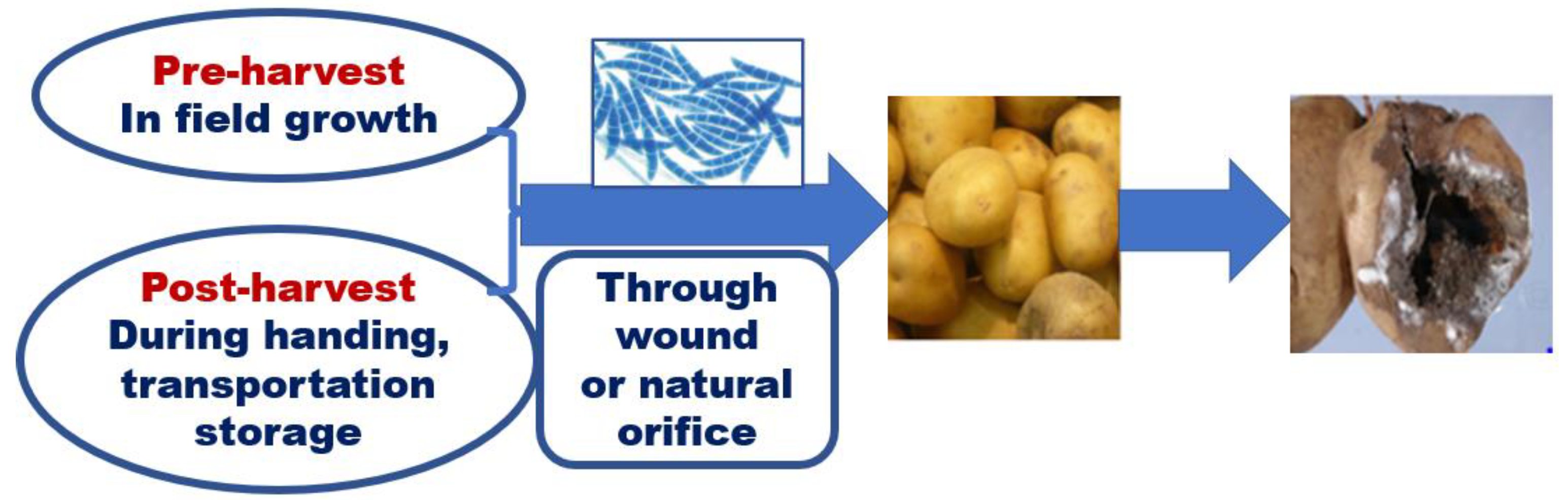
Figure 2.
basic chemical structure of trichothecenes.
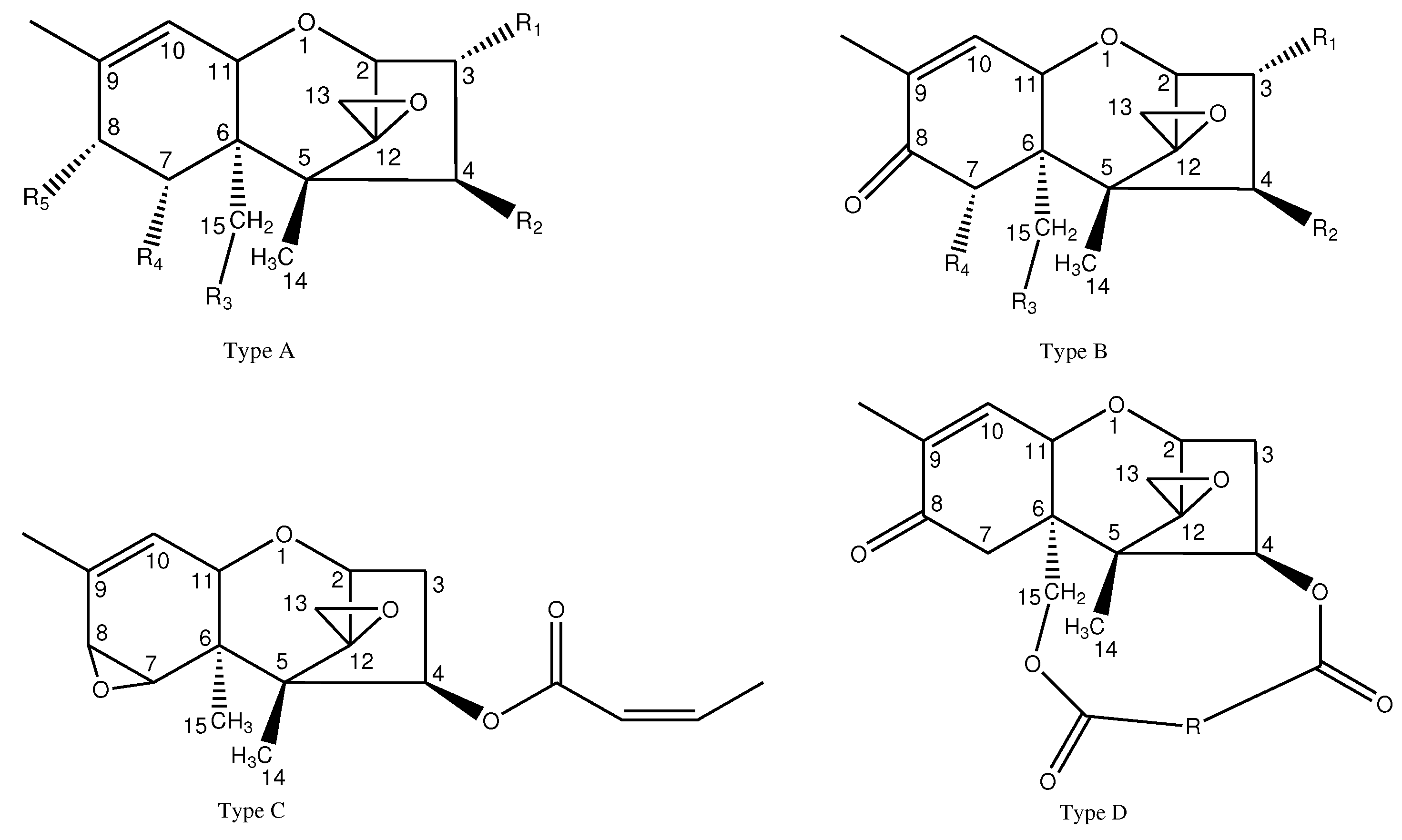
Table 2.
Non-trichothecenes generated by Fusarium spp. in potato dry rot.
| Fusarium species | non-trichothecenes | reference |
|---|---|---|
|
F. oxysporum F. sambucinum F. solani F. oxysporum F. crookwellense F. equiseti |
BEA, ENN ZEA, FUS FUM |
[36] [37,38,39,40] [41] |
| F. oxysporum | ||
|
F. sambucinum F. semitectum F. oxysporum F. solan F. sambucinum F. oxysporum |
SAM FA |
[41,42,43,44] [1,41,45,46] |
Note: BEA: beauvericin, ENNs: enniatins, FA: fusaric acid, FUM: fumonisin, FUS: fusarin C, SAM: sambutoxin.
Table 3.
Trichothecenes generated by Fusarium spp. in potato dry rot.
| Fusarium species | trichothecenes | reference | |
|---|---|---|---|
| F. sambucinum | trichothecene | [37,38,39] | |
|
F. solani F. oxysporum F. sulphureum, F. solani F. sambucinum F. sambucinum |
3-ADON, T-2, FUS, DAS 4,15-DAS, DAS DAS, MAS, NEO, T-2, HT-2 4,15-DAS, 15-MAS, 4-MASc DON, NIV, HT-2 |
[4] [50] [51] [52] [53] |
|
|
F. sambucinum F. solani F. crookwellense F. graminearum F. culmorum F. equiseti F. oxysporum |
T-2 MAS, DAS NIV, FX NIV, DAS FX DON, NIV, FX, 3-ADON, 15-ADON DON, NIV, FX NIV, T-2, 3,15-ADON, 15-SCRP NIV, FX, DON, 3-ADON, 15-ADON DON, 3-ADON, 15-ADON NIV, FX, DON, 3-ADON NIV, FX, 4,15-MAS, DAS, SCR DON, 3-ADON NIV, FX, DON, 3-ADON NIV, FX, 4,15-MAS, DAS, SCR T-2 T-2 |
[41] [54] [38] [55] [56] [57] [40] [59] [56] [59] [56] [60] [56] [56] [41] [41] |
|
Note: DAS: diacetoxyscirpenol, 4,15-DAS: 4,15-diacetoxyscirpenol, DON: deoxynivalenol, 3-ADON: 3-acetyldeoxynivalenol, 15-ADON: 15-acetyldeoxynivalenol, HT-2: HT-2 toxin, MAS: monoacetoxyscirpenol, 4-MAS: 4-acetyl-monoacetoxyscirpenol, NIV: nivalenol, FX: fusarenone X, NEO: neosolaniol, SCR: scirpentriol, 15-MAS: 15-acetyl-monoacetoxyscirpenol, T-2: T-2 toxin,15-SCRP: 15-acetylscripenol.
Disclaimer/Publisher’s Note: The statements, opinions and data contained in all publications are solely those of the individual author(s) and contributor(s) and not of MDPI and/or the editor(s). MDPI and/or the editor(s) disclaim responsibility for any injury to people or property resulting from any ideas, methods, instructions or products referred to in the content. |
© 2023 by the authors. Licensee MDPI, Basel, Switzerland. This article is an open access article distributed under the terms and conditions of the Creative Commons Attribution (CC BY) license (http://creativecommons.org/licenses/by/4.0/).
Copyright: This open access article is published under a Creative Commons CC BY 4.0 license, which permit the free download, distribution, and reuse, provided that the author and preprint are cited in any reuse.


