

Submitted:
24 July 2023
Posted:
25 July 2023
You are already at the latest version
Abstract
The pre-emergent herbicide indaziflam is efficient in the management of weeds in eucalyptus crops, but this plant may develop less in soil contaminated with it. The objective was to evaluate the levels of chlorophylls a and b, the apparent electron transport rate (ETR), growth and dry matter of leaves, stems and roots of Clone I144, in clayey soil, contaminated with the herbicide indaziflam and the leaching potential of this herbicide. The design was completely randomized in a 3 x 5 factorial scheme, with four replications. Chlorophyll a and b contents, apparent electron transport rate (ETR), height growth and dry matter of leaves, stems and roots of Clone I144 were evaluated. The leaching of indaziflam in the clayey soil profile (69% clay) was evaluated in a bioassay with Sorghum bicolor, a plant with high sensitivity to this herbicide. The visual intoxication and height of this plant were evaluated at 28 days after sowing (DAS). Chlorophyll a and b contents and ETR, height and stem dry matter of Clone I144 were lower in soil contaminated with indaziflam residues. The dose of indaziflam, necessary to cause 50% (C50) of intoxication and the lowest height of sorghum plants, was 4.65 and 1.71 g ha-1 and 0.40 and 0.27 g ha-1 in clayey soil and sand, respectively. The sorption ratio (SR) of this herbicide was 10.65 in clayey soil. The herbicide indaziflam leached up to 30 cm depth at doses of 37.5 and 75 g ha-1 and its residue in the soil reduced the levels of chlorophylls a and b, the apparent electron transport rate (ETR) and the growth of Clone I144.
Keywords:
bicolor sorghum
; herbicide
; leaching
; soil profile
1. Introduction
The global demand for wood and wood products has been steadily increasing and has been increasingly met by high-yield forest plantations [1], which expanded by an average of 4.4 million hectares annually, from 168 million hectares in 1990 to approximately 278 million hectares in 2015 [2]. Meeting these needs requires a quantum leap in the production and trade of forest products around the world. It assumes that the global forest plantation area will increase by a further 25–67 million hectares to 303–345 million hectares by 2030, and predicts that the demand for roundwood supplied by forest plantations will expand by about 65% by 2070 [3].
Eucalipto sp. é o gênero florestal mais plantado com 25 milhões de hectares [4,5], contendo mais de 110 espécies introduzidas em mais de 90 países [6]. Brazil is the world leader in eucalyptus planted area, followed by China and India [7,8]. It has 9.93 million hectares of planted forests, of which 75.8% are eucalyptus plantations [9], in addition, Brazil is a leader in productivity, with an average mass accumulation of 40 m3ha-1 year-1 [10], growing in recent years in tropical agricultural frontiers. Currently, the distribution and evolution of the area with eucalyptus plantations in Brazil is located in the Southeast, in Minas Gerais (30%) and São Paulo (13%), Midwest, in Mato Grosso do Sul (14%), Northeast, in Bahia (8%) and South, in Rio Grande do Sul (8%) and Paraná (6%) [9]. Primary products such as paper, pulp and wood, as well as secondary products such as flooring and furniture from Brazilian eucalyptus plantations are exported to many countries, strengthening the importance of Brazilian plantations for the international market [11].
Pure eucalyptus species, ranked in terms of importance [9] are mainly used in Brazilian plantations: Eucalyptus grandis (W. Hill ex Maiden), Corymbia citriodora (Hook.) KD Hill & LAS Johnson (formerly known as E. citriodora– basionym), E. urophylla (ST Blake), E. saligna (Sm.), E. globulus (Labill.), E. camaldulensis (Dehnh.), and hybrids E. urophylla × E. grandis, E. urophylla × E. camaldulensis, E. grandis × E. camaldulensis and E. urophylla × E. globulus [12,13]. These species or hybrids are selected due to their characteristics, such as fast growth, wood quality, high productivity, economic profitability and strong adaptability to different soils and climatic conditions and ease of management [5,6]. A history of decades of investment and classic techniques in improving silvicultural practices and forest genetic improvement in Brazil.
Although the genetic improvement of this crop is at an advanced stage, other determining factors for the high productivity of eucalyptus plantations are the control of diseases, pests and weeds [14,15]. Competition with weeds is a limiting factor for the development of most forest species [16]. In general, weeds are considered the pests of economic importance and the greatest phytosanitary risk in eucalyptus cultivation. Weeds seriously affect plant growth through interspecific competition for water, light and nutrients [17], which causes serious damage to crop establishment, development and productivity. Although eucalyptus has potentially rapid growth rates, its tolerance to weed interference during establishment is low. Yield reduction due to weeds is greatest up to two years after eucalypt planting, when weed management in these crops is highly dependent on herbicides [18].
Chemical control with the use of herbicide is commonly used to control weeds. This method of weed control in eucalyptus plantations is a fast and economical practice [19], with less use of labor and greater efficiency. The development of a selective, broad-spectrum of action herbicide and applied in the pre-emergence of weeds, would improve the management of weed in this crop and would favor eucalyptus silviculture [20]. However, the number of herbicides used is reduced with few records for this crop [21], with most registered herbicides not selective for eucalyptus [20].
One of the areas with the greatest need for research advancement is related to the use of chemical products for weed control in forest plantations, since application failures and herbicide drift can be harmful to the tree component and cause toxicity to the plants, thus, the use of chemical control should be cautious. This situation is worrisome because of the low selectivity of herbicides to eucalyptus plantations, which can cause losses early in the development of the trees, reducing their productivity [22]. The drift of glyphosate herbicide, non-selective to eucalyptus, can cause phytotoxicity, deformed apices, well-developed necrosis at the leaf edges and marked leaf senescence [23], nicosulfuron reduced stem diameter increment and fluazifop-p-butyl + fomesafen limited shoot dry matter accumulation [24].
The herbicide indaziflam N-[(1R,2S)-2,3-dihydro-2,6-dimethyl-1H-inden-1-yl]-6-[(1RS)-1-fluoroethyl]-1,3,5-triazine-2,4-diamine, an inhibitor of cellulose biosynthesis, is used in pre-emergence to manage weeds in coffee, citrus, sugarcane, pine and eucalyptus crops in Brazil [21]. This herbicide is safe for grape [25] and olive [26] crops with low solubility (0.0028 kg m-3 at 20 °C), prolonged residual activity in the soil and half-life life (t1/2) greater than 150 days [27]. These features reduce the environmental impact of indaziflam leaching into soil and groundwater contamination [28]. However, soil mobility in eucalyptus plantations and the tolerance of this plant to this herbicide are poorly known, increasing the need to evaluate its residual effect, especially in planting rows [29]. Thus, we hypothesized that residues of the indaziflam herbicide in the soil would reduce eucalyptus development.
The objective was to evaluate the levels of chlorophyll a and b, ETR and the growth of Clone I144 in soil contaminated with indaziflam residues and the leaching potential of this herbicide.
2. Materials and Methods
The experiment was carried out in a greenhouse (minimum temperature of 25 °C and maximum temperature of 32 °C) at the Universidade Federal dos Vales do Jequitinhonha e Mucuri (UFVJM) in Diamantina, Minas Gerais, Brazil.
2.1. Experimental Design
The design was completely randomized in a 3 x 5 factorial scheme, with four replications. The first factor was the control (soil without herbicide) and soil with residue of 500 g L-1 of N-[(1R,2S)-2,3-dihydro-2,6-dimethyl-1H-inden-1-yl]-6-[(1RS)-1-fluoroethyl]-1,3,5-triazine-2,4-diamine (indaziflam), in two doses of 500 g L (37.5 and 75 g ha-1) of Esplanade® herbicide applied with 25% and 50% of the recommendation for this commercial product (150 g ha-1). The second factor was the depths in the soil profile: 0-10, 10-20, 20-30, 30-40 and 40-50 cm.
The eucalyptus clone used in the experiment was Eucalyptus urograndis (I144-Eucalyptus urophylla S.T.Blake x Eucalyptus grandis W.Hill ex Maiden). The eucalyptus clone was purchased in a nursery and was 45 days old. The clone was selected according to its economically significant characteristics, fast growth, high productivity and high quality wood. Each plot had a 150 mm PVC (polyvinyl chloride) tube, cut horizontally to form rings. The PVC columns were composed of five rings of 10 cm in height each.
Plants were transplanted into PVC columns containing Latosol as substrate (Table 1), previously fertilized as recommended for the crop.
2.2. Application of Indaziflam
Indaziflam was applied with an electric sprayer (Yamaho FT5®, 5 L capacity) in a solution with a spray volume of 120 L ha-1. Irrigation was carried out by spraying.
2.3. Chlorophylls a and b and electron transport rate
The chlorophylls a and b of the plants were evaluated 14 days after planting, with a chlorophyll meter (ClorofiLOG CFL 1030 model) between 9:00 and 10:00 a.m. in fully expanded leaves and the chlorophyll fluorescence with a portable fluorometer (MINI model) -PAM II, Walz, Effeltrich, Germany) at 21 days after planting, in expanded and photosynthetically active leaves, using specific leaf support tweezers (model 2030-B). This evaluation was performed at night with at least 30 minutes of adaptation of the leaves to the dark.
2.4. Height and weight of dry matter of leaves, stems and roots
The height of eucalyptus plants was measured 120 days after planting with a measuring tape graduated in centimeters. Leaves, stems and roots of this plant were conditioned in paper bags and dried in an oven with forced air circulation (65 °C) for 48 hours. Dry weight was determined on a precision scale.
2.5. Sorghum bicolor as a bioindicator plant
Sorghum bicolor (L) Moench hybrid BRS 655 (sorghum) was used as a bioindicator plant [29]. Indaziflam was applied at doses of 0, 0.25; 0.5; 1; 2; 3; 5; 10; 20; 40 and 60 g ha-1 established in the sorghum sensitivity test to this herbicide [29], in samples of dystrophic red latosol and dose-response curves created and evaluated from sorghum cultivation in it. Ten sorghum seeds were sown, one day after herbicide application, in transparent plastic pots with a volume of 250 cm³, an area of 50 cm², a height of 6 cm and a diameter of 10 cm. The thinning was performed after emergence, leaving six seedlings per pot. Pots under the same cultivation conditions were filled with soil samples from the eucalyptus experiment in order to estimate the residue by comparison with the dose-response curve. The pots were kept in a greenhouse under conditions of minimum temperature of 15 °C, maximum of 35 °C and 75% humidity.
The intoxication of sorghum plants was visually assessed at 28 days after sowing (DAS) according to a scale of scores from 0 to 100%, with 0% being no symptoms and 100% plant death [30]. The height of sorghum plants was measured with a ruler graduated in centimeters. The adsorbed residue of indaziflam to the soil was evaluated, simultaneously, in washed sand. The sand (0.6 mm to 2.0 mm) was washed in running water to remove impurities, immersed in an acid solution (10% sulfuric acid) for 24 hours, and again in running water until the residue was removed acid residue. The pH was corrected to neutral (7) with the addition of sodium hydroxide solution (NaOH). The sand was dried in the sun on plastic canvas for 24 hours. The doses of the herbicide indaziflam, estimated for the sand, were 0; 0.05; 0.1; 0.15; 0.25; 0.5; 1; 2; 3; 5; and 10 g ha-1 [29]. The volume of sand and the number of sorghum seeds were the same from the beginning to the end of the trial. The plants were irrigated with a nutrient solution (Table 2).
2.6. Statistical analysis
Data were submitted to normality (Shapiro-Wilk) and homogeneity (oneillmathews) tests and analysis of variance (ANOVA) using the F test with the ExpDes.pt statistical package of the R Core Team software version 3.4.3 with the R Studio Software and, when significant, the means compared by the Tukey test with 95% probability [31]. The significance of the coefficients (p<0.05) and the coefficient of determination were considered for the regression models.
The dose necessary to reduce the analyzed variable by 50% (C50), in addition to intoxication and plant height, was calculated for soil and sand, establishing a non-linear, log-logistic regression model with the equation of Seefeldt et al. [32]: Y= C + D/1+ (X/C50)-b, where C= lower limit of the curve; D= difference between the upper and lower limits of the curve; b= slope of the curve; C50= curve inflection point corresponding to 50% response.
The concentration of indaziflam herbicide residues, by soil depth, was estimated by the percentage of visual intoxication of sorghum plants cultivated with soil depths of 0-10, 10-20, 20-30, 30-40 and 40-50 cm and of the C50 of the analyzed variable.
The sorption ratio (RS) herbicide indaziflam was calculated from the data obtained from soil C50 in relation to sand: RS= C50soil - C50sand/C50sand.
3. Results
Chemical control is an alternative to weed control in forest plantations. Some herbicides used to control these plants have a residual effect in the soil. Intoxication caused by inadequate application or leaching of herbicides are among the main problems reported when using chemical control [33]. The herbicide indaziflam reduced the levels of chlorophyll a and b, the rate of electron transport, height and dry matter of the stem of eucalyptus plants. Indaziflam leached up to 30 cm deep into clayey soil (69% clay) (Figure 1).
3.1. Eucalyptus plants
The chlorophyll a content of the Clone I144 was lower with 50% of the commercial dose of indaziflam (Figure 2A) and the chlorophyll b content was lower with 25% and 50% of the commercial dose of indaziflam than in the control, at 14 days after planting (Figure 2B). The electron transport rate (ETR) of Clone I144, exposed to herbicide residues, was lower with 25% and 50% of the commercial dose at 21 days after planting (Figure 2C).
The height of Clone I144 was lower in soil contaminated with 25% and 50% of the commercial dose of indaziflam, with a linear reduction of 12.46% under the effect of 50% of the commercial dose compared to the control (Figure 3).
Stem dry matter of Clone I144 was lower with 25% and 50% of the commercial dose of indaziflam than in the control (Figure 4).
3.2. Sorghum plants
The height of sorghum plants was lower in soil contaminated with doses of indaziflam collected up to 30 cm deep. The symptoms of intoxication were maximum with soil removed at 15 cm and less than 10% with those at depths of 30-40 and 40-50 cm (Figure 5A). The variation in height of sorghum plants was greater between doses of the herbicide than between soils collected at different depths, with a lower height in soil collected up to 30 cm after being contaminated with the highest dose of the herbicide (Figure 5B). Initial symptoms observed in sorghum plants with increasing herbicide dose were leaf tissue reddening, leaf blade chlorosis and lower growth.
The dose of indaziflam, necessary to cause 50% (C50) of intoxication and reduction in the height of sorghum plants, was 4.65 and 1.71 g ha-1 in soil and 0.40 and 0.27 g ha-1 in sand, respectively (Figure 6A,B).
3.3. Residues of indaziflam in the soil
The residues of indaziflam in the soil, collected at 0-10, 10-20, 20-30, 30-40 and 40-50 cm depth, with 25% and 50% of the commercial dose of this herbicide, were 7.79 and 8.72 g ha-1, 5.12 and 7.44 g ha-1, 2.33 and 2.79 g ha-1, 0 and 0 g ha-1, 0 and 0 g ha-1, respectively (Figure 7).
The sorption ratio (SR) of the herbicide from the data obtained from soil C50 in relation to sand was 10.65 in clayey soil.
4. Discussion
The lower levels of chlorophylls a and b with 50% and with 25 and 50% of the commercial dose of indaziflam can be explained by the action of this compound, inhibiting the formation of organs, such as leaves, which can cause chlorosis and leaf necrosis [34], and thereby affecting the chlorophyll parenchyma cells. Malformation of chlorophyll cells can reduce the concentration of chlorophylls a and b, directly affecting the photosynthetic efficiency of a plant [35,36]. Chlorophyll levels are variables related to the inhibition of photosystems I and II by the action of herbicides [37].
The lower ETR of eucalyptus in soil contaminated with indaziflam after planting is due to the effect of this herbicide on plant chloroplasts, reducing the emission of fluorescence signals by plant leaves [38]. The ETR is a variable closely correlated with chlorophyll contents [39]. The herbicide will act on the PSII by inhibiting electron transport and paralyzing CO2 fixation and the production of ATP and NADPH2, which are essential elements for plant growth.
The lower height of Clone I144 in soil contaminated with 25% and 50% of the commercial dose of indaziflam may be related to alterations in the photosynthetic process [40], including reduction of chlorophyll levels and electron transfer. This herbicide inhibits meristematic growth and cellulose biosynthesis, probably at some point in the crosslinking step of cellulose microfibrils, reducing cell formation and, consequently, plant growth [41].
The lower stem dry matter at doses of 25% and 50% of the herbicide can be attributed to the reduced transport of photoassimilates by indaziflam [42]. This herbicide inhibits cell division in the meristem and may also prevent the translocation of divalent cations such as Mg and Mn to them and, therefore, reduce photosynthetic activity and biomass production [43].
The intoxication and lower height of sorghum plants with the highest doses of the herbicide at a depth of up to 30 cm is due to the residual concentration of the herbicide in the soil profile, which is made possible with the percentage of clay of the same, close to 70% [29]. The percentage of clay in the soil, the low mobility and the longer residual period of the herbicide increased the amount of this herbicide absorbed by the plant roots, in the surface layers of the soil, which caused intoxication and hypocotyl reduction [44] and, consequently, lower plant height [45]. The symptoms observed in sorghum plants are characteristic symptoms for sensitive species when exposed to the herbicide that inhibits cellulose biosynthesis [29].
The dose of indaziflam required to cause 50% (C50) of intoxication and reduce the growth of sorghum plants in sand was similar to that reported for this plant, 0.39 g ha-1 [29]. Sand is an inert substrate, free of organic matter, surface fillers and clay, making all the applied herbicide available in the soil solution [46]. This explains the higher intoxication and lower height of sorghum plants in sand than in soil.
The highest concentration of indaziflam residue in the soil up to 30 cm depth confirms its high sorption coefficient [47] due to the high content of organic matter and clay [48,49].
The sorption ratio (RS) of 10.65 indicates a high amount of adsorbed indaziflam residue, which can be attributed to the high content of clay (69 dag kg-1), organic matter (1.88 dag kg-1) and to the pH (5.00) of the soil used in the work, similar to that reported with Red-Yellow Latosol and pH (5.1) [29]. Herbicides applied pre-emergence and weak acid derivatives such as indaziflam are more adsorbed in the low pH soil solution [50,51].
5. Conclusions
The herbicide indaziflam, at doses of 50% and 25 and 50%, respectively, reduced the levels of chlorophyll a and b at 14 days and the electron transport rate at 21 days, with these two doses, after planting the of commercial eucalyptus clone I144. The height and stem dry matter of eucalyptus plants were lower with the two doses of indaziflam and only with 50% of this herbicide. Indaziflam leached up to 30 cm depth at doses of 37.5 and 75 g ha-1.
Author Contributions
Josiane Costa Maciel: Conceptualization, Formal analysis, Investigation, Writing - Original Draft, Writing - Review & Editing. Tayna Sousa Duque: Formal analysis, Investigation, Writing - Original Draft, Writing- Review & Editing. Aline Cristina Carvalho: Formal analysis, Investigation, Writing - Original Draft. Brenda Thaís Barbalho Alencar: Formal analysis, Investigation, Writing - Original Draft. Evander Alves Ferreira: Conceptualization, Methodology, Resources, Writing - Review & Editing. José Cola Zanuncio: Resources, Writing - Original Draft, Writing - Review & Editing, Supervision. Bárbara Monteiro de Castro e Castro: Resources, Writing - Original Draft, Writing - Review & Editing, Supervision. Francisca Daniele da Silva: Writing - Review & Editing. Daniel Valadão Silva: Writing - Review & Editing, Resources. José Barbosa dos Santos: Conceptualization, Methodology, Resources, Writing - Original Draft, Writing - Review & Editing.
Funding
No funding was received to assist with the preparation of this manuscript.
Data Availability Statement
Data is contained within the article.
Acknowledgments
To the “Conselho Nacional de Desenvolvimento Científico e Tecnológico (CNPq)”, “Coordenação de Aperfeiçoamento de Pessoal de Nível Superior (CAPES) - Código Financeiro 001” and “Fundação de Amparo à Pesquisa do Estado de Minas Gerais (FAPEMIG)”, Syngenta Crop Protection and “Programa Cooperativo sobre Proteção Florestal (PROTEF) do Instituto de Pesquisas e Estudos Florestais (IPEF)” for financial support.
Conflicts of Interest
The authors declare that they have no conflict of interest.
References
- Lock, P.; Legg, P.; Whittle, L.; Black, S. Global Outlook for Wood Markets to 2030: Projections of future production, consumption and trade balance, ABARES report to client prepared for the Forest and Wood Products Australia. Canberra, November. CC BY, 4, 2021.
- Payn, T.; Carnus, J.M.; Freer-Smith, P.; Kimberley, M.; Kollert, W.; Liu, S.; Wingfield, M.J. Changes in planted forests and future global implications. Forest Ecology and Management, 2015, 352, 57–67. [CrossRef]
- Nepal, P.; Korhonen, J.; Prestemon, J.P.; Cubbage, F.W. Projecting global planted forest area developments and the associated impacts on global forest product markets. Journal of environmental management, 2019, 240, 421–430. [CrossRef]
- Ferreto, D.O.C.; Reichert, J.M.; Cavalcante, R.B.L.; Srinivasan, R. Water budget fluxes in catchments under grassland and Eucalyptus plantations of different ages. Canadian Journal of Forest Research, 2021, 51, 513–523. [CrossRef]
- Martins, F.B.; Benassi, R.B.; Torres, R.R.; de Brito Neto, F.A. Impacts of 1.5 C and 2 C global warming on Eucalyptus plantations in South America. Science of The Total Environment, 2022, 825, 153820. [CrossRef]
- Elli, E.F.; Sentelhas, P.C.; Huth, N.; Carneiro, R.L.; Alvares, C.A. Gauging the effects of climate variability on Eucalyptus plantations productivity across Brazil: a process-based modelling approach. Ecological Indicators, 2020, 114, 106325. [CrossRef]
- Wen, Y.; Zhou, X.; Yu, S.; Zhu, H. The predicament and countermeasures of development of global Eucalyptus plantations. Guangxi Sci, 2018, 25, 107–116. [CrossRef]
- Zhang, C.; Xiao, X.; Zhao, L.; Qin, Y.; Doughty, R.; Wang, X.; Yang, X. Mapping Eucalyptus plantation in Guangxi, China by using knowledge-based algorithms and PALSAR-2, Sentinel-2, and Landsat images in 2020. International Journal of Applied Earth Observation and Geoinformation, 2023, 120, 103348. [CrossRef]
- Ibá. Indústria Brasileira de Árvores. 2022 [accessed 2023. July 05]. https://www.iba.org/publicacoes.
- Avisar, D.; Azulay, S.; Bombonato, L.; Carvalho, D.; Dallapicolla, H.; de Souza, C.; Silva, W. Safety Assessment of the CP4 EPSPS and NPTII Proteins in Eucalyptus. GM Crops & Food, 2023, 14, 1–14. [CrossRef]
- Florêncio, G.W.L.; Martins, F.B.; Fagundes, F.F.A. Climate change on Eucalyptus plantations and adaptive measures for sustainable forestry development across Brazil. Industrial Crops and Products, 2022, 188, 115538. [CrossRef]
- Hakamada, R.E.; Hubbard, R.M.; Stape, J.L.; de Paula Lima, W.; Moreira, G.G.; de Barros Ferraz, S.F. Stocking effects on seasonal tree transpiration and ecosystem water balance in a fast-growing Eucalyptus plantation in Brazil. Forest Ecology and Management, 2020, 466, 118149. [CrossRef]
- Manzato, B.L.; Manzato, C.L.; Dos Santos, P.L.; Passos, J.D.S.; Da Silva Junior, T.A.F. Diversity of macroscopic basidiomycetes in reforestation areas of Eucalyptus spp. Scientia Forestalis, 2020, 48, e3305. [CrossRef]
- Hakamada, R.; da Silva, R.M.L.; Moreira, G.G.; Teixeira, J.D.S.; Takahashi, S.; Masson, M.V.; Martins, S.D.S. Growth and canopy traits affected by myrtle rust (Austropuccinia psidii Winter) in Eucalyptus grandis x Eucalyptus urophylla. Forest Pathology, 2022, 52, e12736. [CrossRef]
- Hutapea, F.J.; Weston, C.J.; Mendham, D.; Volkova, L. Sustainable management of Eucalyptus pellita plantations: A review. Forest Ecology and Management, 2023, 537, 120941. [CrossRef]
- Braga, A.F.; Barroso, A.A.M.; Amaral, C.L.; Nepomuceno, M.P.; Alves, P.L.C.A. Population interference of glyphosate resistant and susceptible ryegrass on eucalyptus initial development. Planta Daninha, 2018, 36, e018170148. [CrossRef]
- Deng, Y.; Yang, G.; Xie, Z.; Yu, J.; Jiang, D.; Huang, Z. Effects of different weeding methods on the biomass of vegetation and soil evaporation in eucalyptus plantations. Sustainability, 2020, 12, 3669. [CrossRef]
- Smethurst, P.J.; Valadares, R.V.; Huth, N.I.; Almeida, A.C.; Elli, E.F.; Neves, J.C. Generalized model for plantation production of Eucalyptus grandis and hybrids for genotype-site-management applications. Forest Ecology and Management, 2020, 469, 118164. [CrossRef]
- De Carvalho, L.B.; Duke, S.O.; Alves, P.D.C. Physiological responses of Eucalyptus × urograndis to glyphosate are dependent on the genotype. Scientia Forestalis, 2018, 46, 177–187. [CrossRef]
- Minogue, P.J.; Osiecka, A.; Lauer, D.K. Selective herbicides for establishment of Eucalyptus benthamii plantations. New Forests, 2018, 49, 529–550. [CrossRef]
- Agrofit - Sistema de Agrotóxicos fitossanitários. 2023. Available online: http://agrofit.agricultura.gov.br/agrofit_cons/principal_agrofit_cons. [accessed 2023. February 13].
- Agostinetto, D.; Tarouco, C.P.; Markus, C.; Oliveira, E.D.; Da Silva, J.M.B.V.; Tironi, S.P. Selectivity of eucalyptus genotypes to herbicides rates. Semina: Ciências Agrárias, 2010, 31, 585-598.
- De Abreu, K.M.; de Castro Santos, D.; Pennacchi, J.P.; Calil, F.N.; Moura, T.M.; Alves, E.M.; de Souza, S.O. Differential tolerance of four tree species to glyphosate and mesotrione used in agrosilvopastoral systems. New Forests, 2022, 53, 831-850. [CrossRef]
- Tiburcio, R.A.S.; Ferreira, F.A.; Paes, F.A.S. V.; Melo, C.A.D.; Medeiros, W.N. Growth of eucalyptus clones seedlings submitted to simulated drift of different herbicides. Revista Árvore, 2012, 36, 65-73. [CrossRef]
- Basinger, N.T.; Jennings, K.M.; Monks, D.W.; Mitchem, W.E. Effect of rate and timing of indaziflam on ‘Sunbelt’ and muscadine grape. Weed Technology, 2019, 33, 380–385. [CrossRef]
- Grey, T.L.; Rucker, K.; Webster, T.M.; Luo, X. High-density plantings of olive trees are tolerant to repeated applications of indaziflam. Weed Science, 2016, 64, 766–771. [CrossRef]
- Brosnan, J.T.; Breeden, G.K.; McCullough, P.E.; Henry, G.M. Pre and post control of annual bluegrass (Poa annua) with indaziflam. Weed Technology, 2012, 26, 48–53. [CrossRef]
- Alonso, D.G.; Oliveira, R.S.D.; Koskinen, W.C.; Hall, K.; Constantin, J.; Mislankar, S. Sorption and desorption of indaziflam degradates in several agricultural soils. Scientia Agrícola, 2016, 73, 169–176. [CrossRef]
- Gonçalves, V.A.; Ferreira, L.R.; Teixeira, M.F.F.; De Freitas, F.C.L.; D'Antonino, L. Sorption of indaziflam in brazilian soils with different pH values. Revista Caatinga, 2021, 34, 494–504. [CrossRef]
- SBCPD - Sociedade Brasileira da Ciência das Plantas Daninhas. Procedimentos para instalação, avaliação e análise de experimentos com herbicidas. Londrina-PR, 1995.
- Ferreira, E.B.; Cavalcanti, P.P.; Nogueira, D.A. ExpDes.pt: Experimental Designs (Portuguese). R package version 3.4.3. 2013.
- Seefeldt, S.S.; Jensen, J.E.; Fuerst, E.P. Log-Logistic analysis of herbicide dose-response relationships. Weed Technology, 1995, 9, 218–227.
- Rabelo, J.S.; Dos Santos, E.A.; de Melo, E.I.; Vaz, M.G.M.V.; de Oliveira Mendes, G. Tolerance of microorganisms to residual herbicides found in eucalyptus plantations. Chemosphere, 2023, 329, 138630. [CrossRef]
- Smith, S.C.; Jennings, K.M.; Monks, D.W.; Jordan, D.L.; Reberg-Horton, S.C.; Schwarz, M.R. Sweetpotato tolerance and Palmer Amaranth control with indaziflam. Weed Technology, 2022, 1–17. [CrossRef]
- Chen, S.; Wang, Z.; Guo, X.; Rasool, G.; Zhang, J.; Xie, Y.; Shao, G. Effects of vertically heterogeneous soil salinity on tomato photosynthesis and related physiological parameters. Scientia Horticulturae, 2019, 249, 120–130. [CrossRef]
- Eng, W.H.; Ho, W.S. Polyploidization using colchicine in horticultural plants: a review. Scientia horticulturae, 2019, 246, 604–617. [CrossRef]
- Silva, F.B.; Costa, A.C.; Müller, C.; Almeida, G.M.; Nascimento, K.J.T.; Batista, P.F.; Domingos, M. Searching for biomarkers of early detection of 2,4-D effects in a native tree species from the Brazilian Cerrado biome. Journal of Environmental Science and Health, Part B, 2022, 57, 71–80. [CrossRef]
- Jones, P.A.; Brosnan, J.T.; Kopsell, D.A.; Armel, G.R.; Breeden, G.K. Preemergence herbicides affect hybrid bermudagrass nutrient content. Journal of Plant Nutrition, 2015, 38, 177–188. [CrossRef]
- Najafpour, M.M.; Zaharieva, I.; Zand, Z.; Hosseini, S.M.; Kouzmanova, M.; Hołyńska, M.; Allakhverdiev, S.I. Water-oxidizing complex in Photosystem II: Its structure and relation to manganese-oxide based catalysts. Coordination Chemistry Reviews, 2020, 409, 213183. [CrossRef]
- 4Meyer, D.F. Indaziflam-A new herbicide for pre-emergent control of grasses and broadleaf weeds for turf and ornamentals. 2019. Available online: http://wssa.net/meeting/ meeting abstracts. [accessed 2022. June 20].
- Gomes, C.A.; Pucci, L.F.; Alves, D.P.; Leandro, V.A.; Pereira, G.A.M.; Reis, M.R.D. Indaziflam application in newly transplanted arabica coffee seedlings. Coffee Science, 2019, 14, 373–381.
- Evans, J.R.; Vogelmann, T.C. Photosynthesis within isobilateral Eucalyptus pauciflora leaves. New Phytologist, 2006, 171, 771–782. [CrossRef]
- Da Costa, Y.K.S.; De Freitas, F.C.L.; Da Silveira, H.M.; Nascimento, R.S.M.; Sediyama, C.S.; Alcantara-de la Cruz, R. Herbicide selectivity on Macauba seedlings and weed control efficiency. Industrial Crops and Products, 2020, 154, 112725. [CrossRef]
- Hu, Z.; Vanderhaeghen, R.; Cools, T.; Wang, Y.; De Clercq, I.; Leroux, O.; De Veylder, L. Mitochondrial defects confer tolerance against cellulose deficiency. The Plant Cell, 2016, 28, 2276–2290. [CrossRef]
- U.S. EPA. Pesticide fact sheet for indaziflam. 2010. Available online: http://www.epa.gov/opprd001/ factsheets/indaziflam.pdf. [accessed 2023. July 22].
- Jhala, A.J.; Singh, M. Leaching of indaziflam compared with residual herbicides commonly used in Florida citrus. Weed Technology, 2012b, 26, 602–607. [CrossRef]
- González-Delgado, A.M.; Shukla, M.K.; Ashigh, J.; Perkins, R. Effect of application rate and irrigation on the movement and dissipation of indaziflam. Journal of Environmental Sciences, 2017, 51, 111–119. [CrossRef]
- Jhala, A.J.; Ramirez, A.H.M.; Singh, M. Leaching of indaziflam applied at two rates under different rainfall situations in Florida candler soil. Bulletin of Environmental Contamination and Toxicology, 2012a, 88, 326–332. [CrossRef]
- Schneider, J.G.; Haguewood, J.B.; Song, E.; Pan, X.; Rutledge, J.M.; Monke, B.J.; Xiong, X. Indaziflam effect on bermudagrass (Cynodon dactylon L. Pers.) shoot growth and root initiation as influenced by soil texture and organic matter. Crop Science, 2015, 55, 429–436. [CrossRef]
- Alonso, D.G.; Oliveira Jr, R.S.; Hall, K.E.; Koskinen, W.C.; Constantin, J.; Mislankar, S. Changes in sorption of indaziflam and three transformation products in soil with aging. Geoderma, 2015, 239, 250–256. [CrossRef]
- Mendes, K.F.; Furtado, I.F.; Sousa, R.N.D.; Lima, A.D.C.; Mielke, K.C.; Brochado, M.G.D.S. Cow bonechar decreases indaziflam pre-emergence herbicidal activity in tropical soil. Journal of Environmental Science and Health, Part B, 2021, 56, 532–539. [CrossRef]
Figure 1.
Summary of the effect of indaziflam herbicide residues on the growth of Clone I144 (Eucalyptus urophylla × Eucalyptus grandis) at different soil depths.
Figure 1.
Summary of the effect of indaziflam herbicide residues on the growth of Clone I144 (Eucalyptus urophylla × Eucalyptus grandis) at different soil depths.
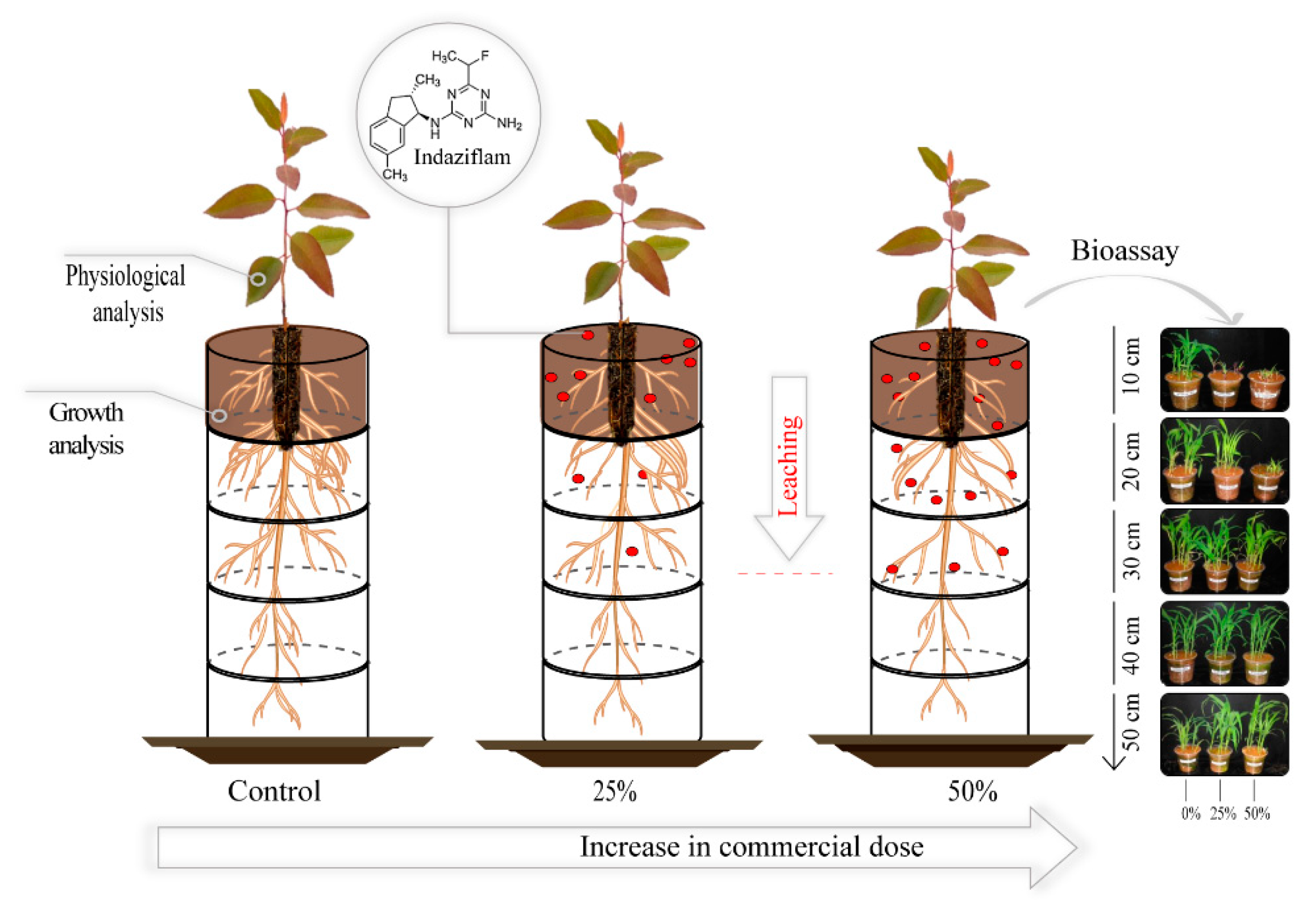
Figure 2.
Chlorophyll a (a) and b (b) levels (µg cm-2) and electron transport rate (ETR) (c) of commercial eucalyptus clone I144 at 14 and 21 days after planting in soil contaminated with 25% and 50% of the commercial dose (150 g ha-1) of indaziflam, respectively. Columns followed by the same lowercase letter, by parameter, do not differ by Tukey's test at 95% probability. Error bars indicate the standard deviation.
Figure 2.
Chlorophyll a (a) and b (b) levels (µg cm-2) and electron transport rate (ETR) (c) of commercial eucalyptus clone I144 at 14 and 21 days after planting in soil contaminated with 25% and 50% of the commercial dose (150 g ha-1) of indaziflam, respectively. Columns followed by the same lowercase letter, by parameter, do not differ by Tukey's test at 95% probability. Error bars indicate the standard deviation.
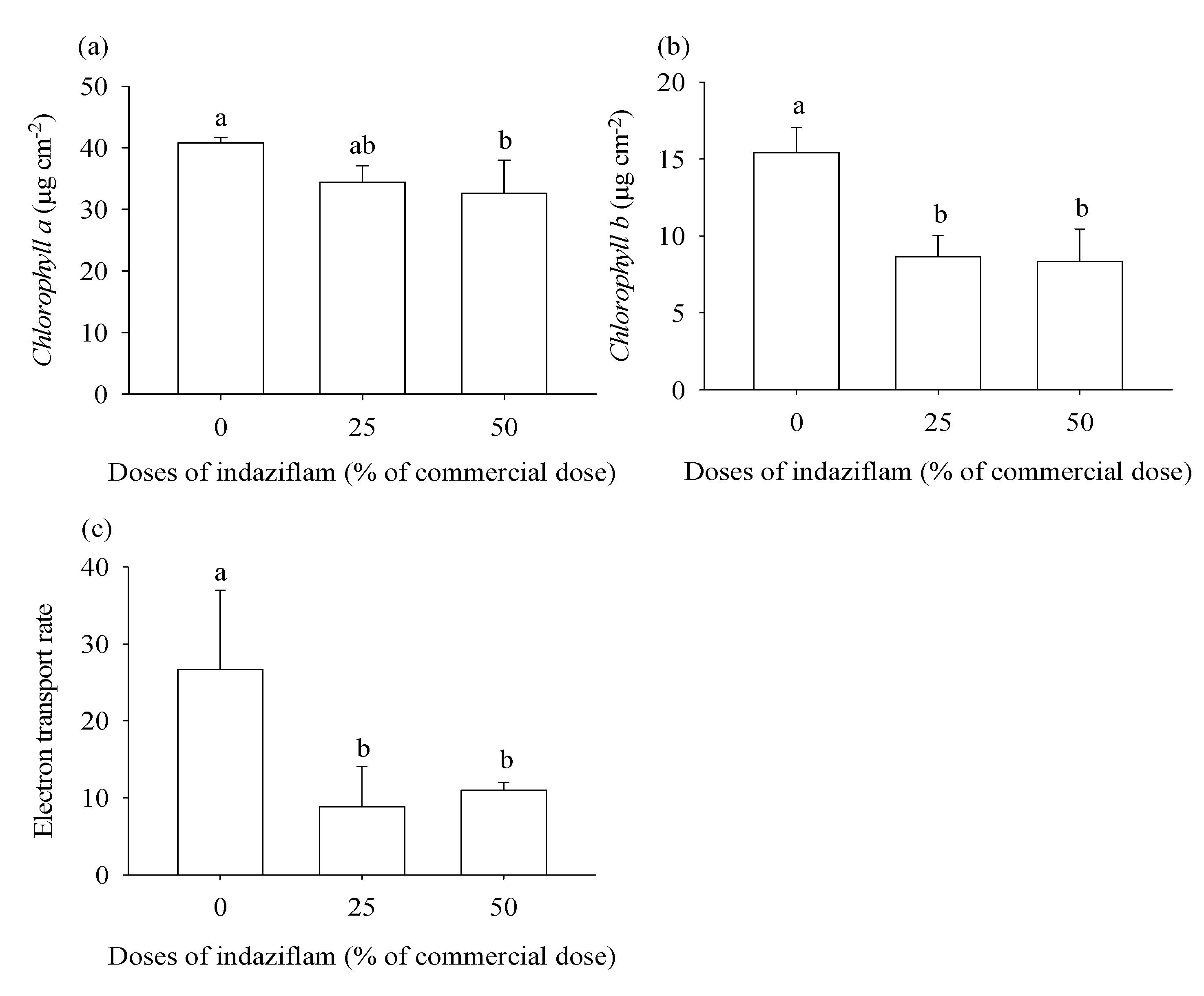
Figure 3.
Height (cm) of commercial eucalyptus clone I144, 120 days after planting in soil contaminated with 25% and 50% of the commercial dose (150 g ha-1) of indaziflam (*; p<0.05).
Figure 3.
Height (cm) of commercial eucalyptus clone I144, 120 days after planting in soil contaminated with 25% and 50% of the commercial dose (150 g ha-1) of indaziflam (*; p<0.05).
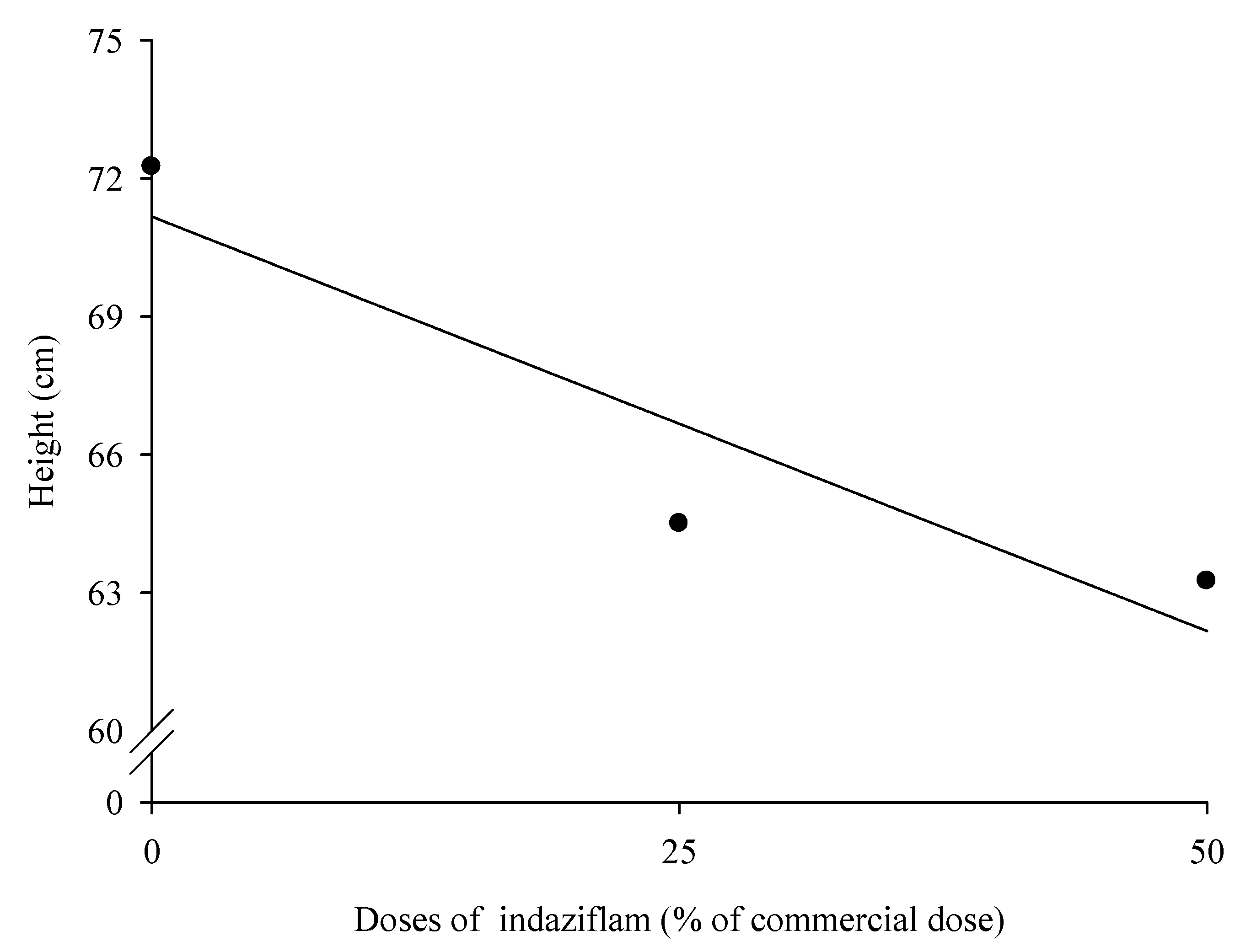
Figure 4.
Dry matter of leaves (DML), stem (SDM) and roots (RDM) (g) of commercial eucalyptus clone I144, at 120 days after planting in soil contaminated with 25% and 50% of the commercial dose (150 g ha-1) of indaziflam. Columns followed by the same letter, per variable, do not differ by Tukey's test at 95% probability.
Figure 4.
Dry matter of leaves (DML), stem (SDM) and roots (RDM) (g) of commercial eucalyptus clone I144, at 120 days after planting in soil contaminated with 25% and 50% of the commercial dose (150 g ha-1) of indaziflam. Columns followed by the same letter, per variable, do not differ by Tukey's test at 95% probability.
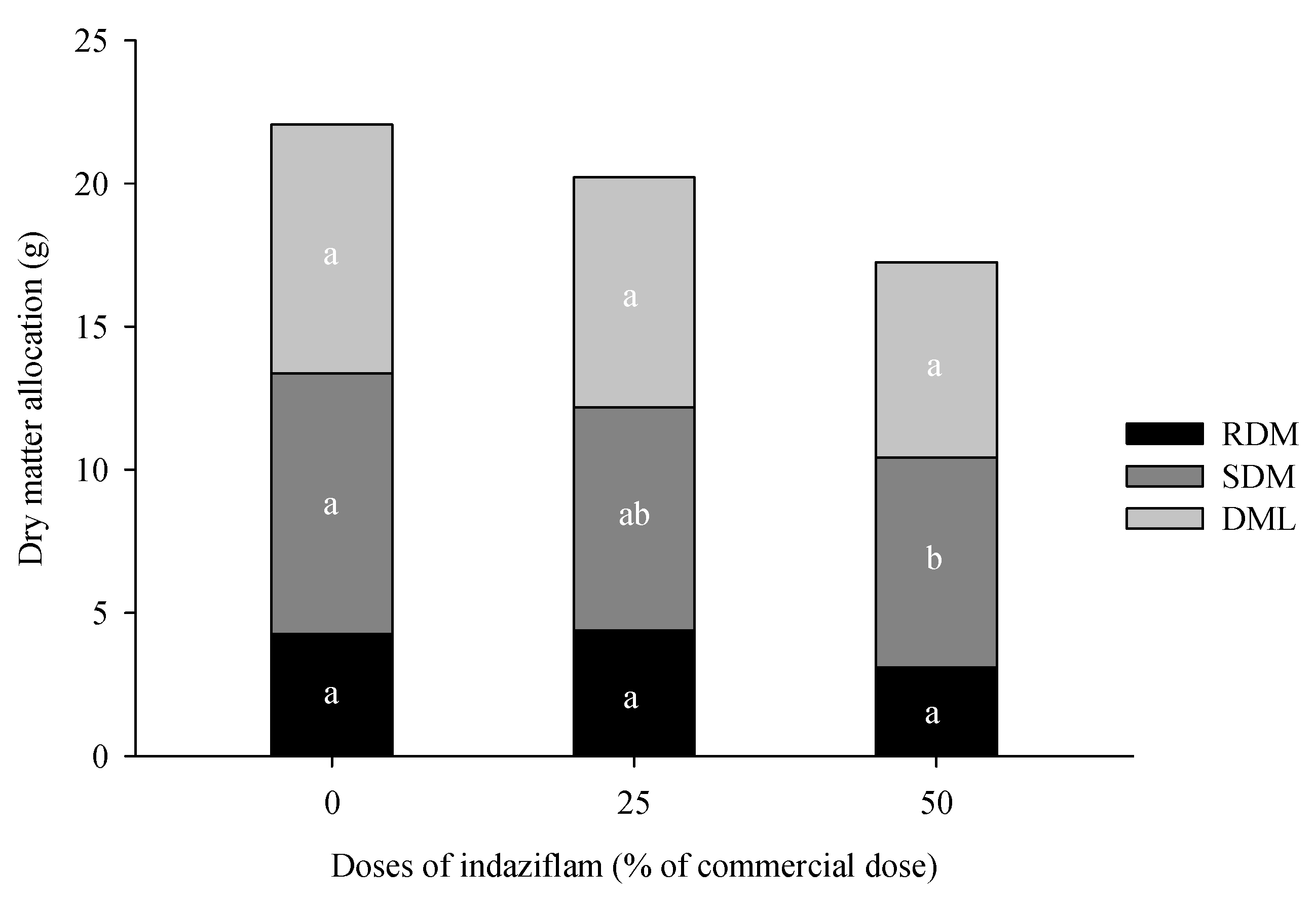
Figure 5.
Intoxication (A) and height (B) of sorghum plants at 28 DAS as a function of indaziflam doses and soil depth cultivated with eucalyptus for 120 days.
Figure 5.
Intoxication (A) and height (B) of sorghum plants at 28 DAS as a function of indaziflam doses and soil depth cultivated with eucalyptus for 120 days.
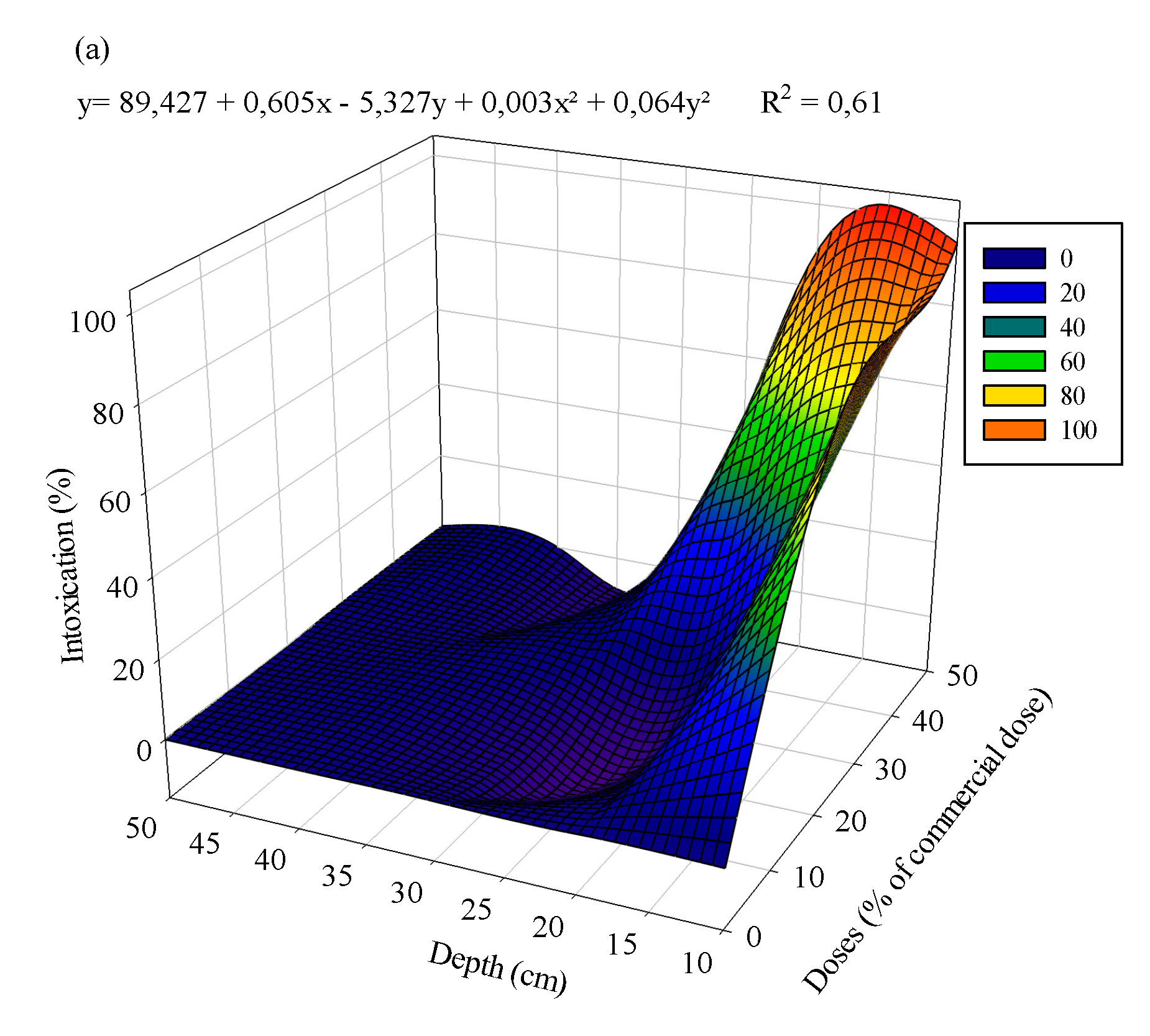
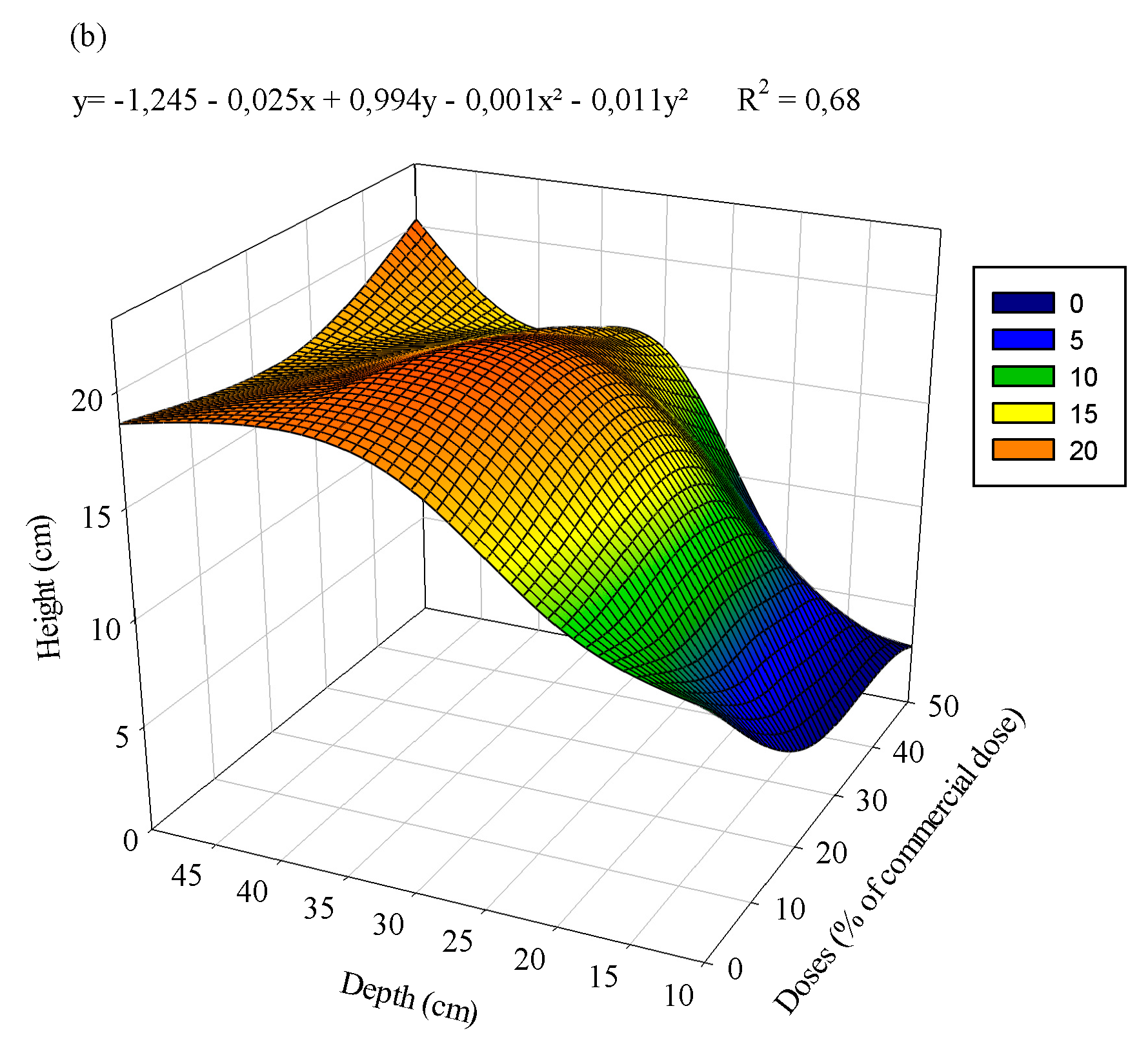
Figure 6.
Visual intoxication and height of sorghum plants at 28 DAS grown in soil (a) and sand (b) with indaziflam doses of 0, 0.25; 0.5; 1; 2; 3; 5; 10; 20; 40 and 60 g ha-1 and 0; 0.05; 0.1; 0.15; 0.25; 0.5; 1; 2; 3; 5; and 10 g ha-1.
Figure 6.
Visual intoxication and height of sorghum plants at 28 DAS grown in soil (a) and sand (b) with indaziflam doses of 0, 0.25; 0.5; 1; 2; 3; 5; 10; 20; 40 and 60 g ha-1 and 0; 0.05; 0.1; 0.15; 0.25; 0.5; 1; 2; 3; 5; and 10 g ha-1.

Figure 7.
Residues of indaziflam in soil samples cultivated with of commercial eucalyptus clone I144 after 120 days of application of 25% and 50% of the recommended commercial dose (150 g ha-1).
Figure 7.
Residues of indaziflam in soil samples cultivated with of commercial eucalyptus clone I144 after 120 days of application of 25% and 50% of the recommended commercial dose (150 g ha-1).
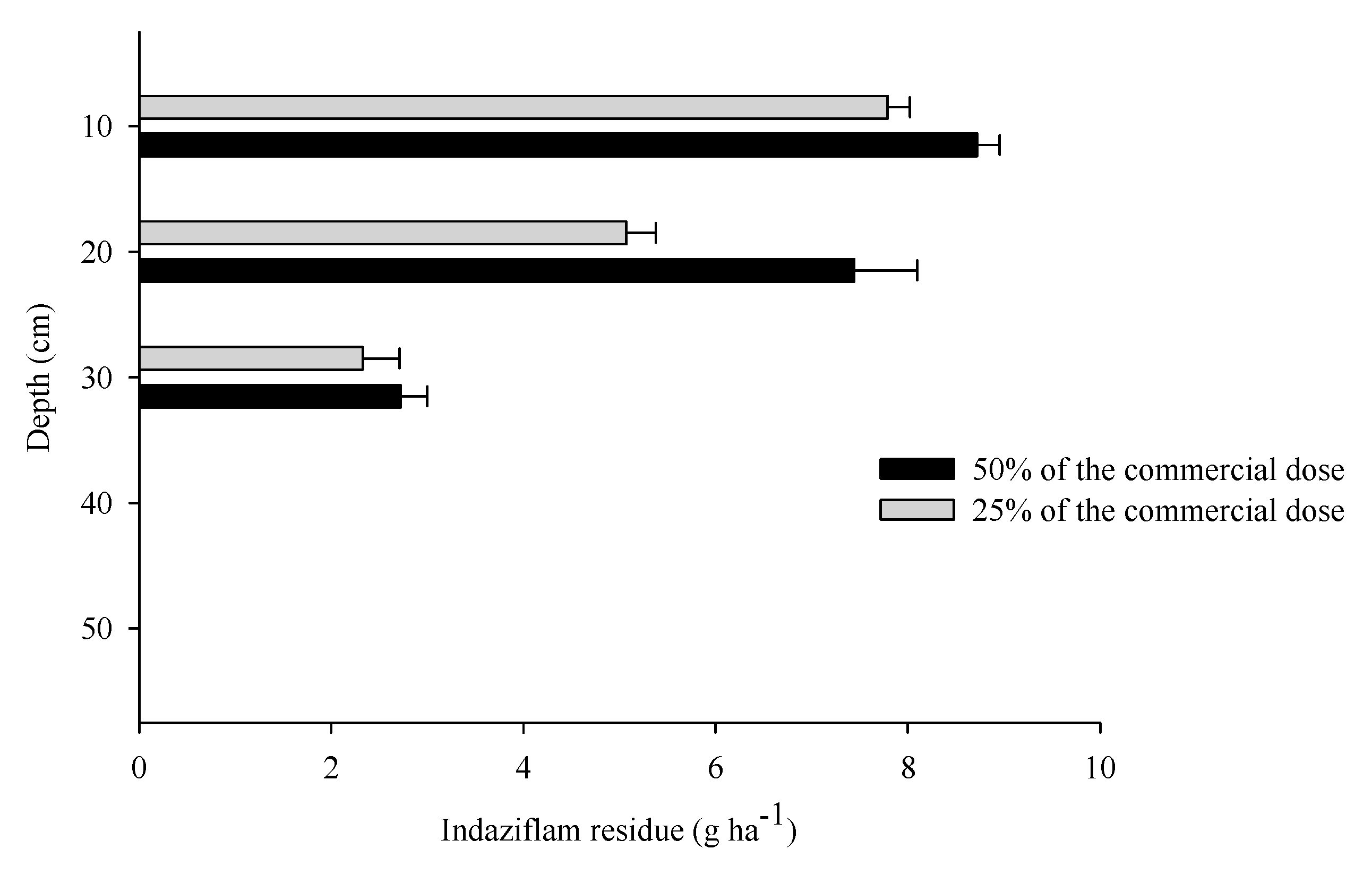

Table 1.
Physicochemical characteristics of the soil samples used in the experiment.
| Physical analysis | |||||||||||||
|---|---|---|---|---|---|---|---|---|---|---|---|---|---|
| Sand | Clay | Silt | Texture Class | ||||||||||
| (dag kg-1) | |||||||||||||
| 6 | 69 | 25 | Very clayey | ||||||||||
| Chemical analysis | |||||||||||||
| pH | P | K | Ca | Mg2+ | Al3+ | H+Al | SB | t | T | V | m | OM | |
| (H2O) | (mg dm-3) | (Cmolcdm-3) | (%) | (dag kg-1) | |||||||||
| 5.00 | 0.54 | 31 | 0.18 | 0.13 | 0.80 | 4.62 | 0.39 | 1.19 | 5.01 | 7.8 | 67.2 | 1.88 | |
P-K-Extractor Mehlich 1; Ca-Mg-Al-Extractor: KCl-1 mol/L; H + Al-Calcium Acetate Extractor 0.5 mol/L-pH 7.0; SB = Sum of bases; t = Effective Cation Exchange Capacity; T = Cation Exchange Capacity at pH 7.0; V = Base Saturation Index; m = Aluminum Saturation Index; OM = Organic Matter (C.Org × 1724-Walkley–Black).
Table 2.
Macro and micronutrients in the nutrient solution for irrigation of Sorghum bicolor in sand (CLARK 1975).
Table 2.
Macro and micronutrients in the nutrient solution for irrigation of Sorghum bicolor in sand (CLARK 1975).
| Element | Source | Molecular Formula | Amount (mg L-1) |
|---|---|---|---|
| N | Urea | CH4N2O | 9,89 |
| P | Phosphoric acid | H3PO4 | 0,15 |
| K | Potassium chloride | KCl | 5,36 |
| Ca | Anhydrous Calcium Chloride | CaCl2 | 11,56 |
| Mg | Magnesium chloride | MgCl2(6H2O) | 4,82 |
| S | Sodium sulfate | Na2SO4 | 2,84 |
| B | Boric acid | H3BO3 | 0,05 |
| Cu | Copper Chloride | CuCl | 0,003 |
| Fe | Iron Chloride | FeCl3 | 0,25 |
| Mn | Manganese Chloride | MnCl2(4H2O) | 0,056 |
| Zn | Zinc Chloride | ZnCl2 | 0,011 |
| Mo | Sodium Molybdate | Na2MoO4 | 0,0052 |
| EDTA (5,44 g) + 0,824 g de NaOH | |||
Disclaimer/Publisher’s Note: The statements, opinions and data contained in all publications are solely those of the individual author(s) and contributor(s) and not of MDPI and/or the editor(s). MDPI and/or the editor(s) disclaim responsibility for any injury to people or property resulting from any ideas, methods, instructions or products referred to in the content. |
© 2023 by the authors. Licensee MDPI, Basel, Switzerland. This article is an open access article distributed under the terms and conditions of the Creative Commons Attribution (CC BY) license (http://creativecommons.org/licenses/by/4.0/).
Copyright: This open access article is published under a Creative Commons CC BY 4.0 license, which permit the free download, distribution, and reuse, provided that the author and preprint are cited in any reuse.


