
Submitted:
12 July 2023
Posted:
13 July 2023
You are already at the latest version
Abstract
Education for Sustainable Development (ESD) is crucial in higher education, providing students with the knowledge, skills, and values necessary for a sustainable future. ESD seeks a holistic understanding of sustainability and promotes critical thinking and innovative approaches. Specifically, ESD is very important to address in engineering careers, as engineers will need to establish sustainable solutions in the future. For this reason, the integration of sustainability into university curricula has been studied for some time. In this way, this research analyses the perceptions (attitudes towards teachers; knowledge about sustainable development; environmental, economic and social attitudes; sustainable behaviours) that engineering students in the Dominican Republic have towards sustainable development. 626 questionnaires completed by engineering students were obtained. Subsequently, the data was analysed in SPSS and PLS-SEM. The results showed that attitudes towards teachers have an impact on engineering students' knowledge of sustainable development. In turn, the results also showed that knowledge about sustainable development influences both attitudes (economic, social and environmental) and sustainable behaviours of engineering students. Contrary to other research, this study suggested that economic attitudes are not identified as an antecedent of sustainable behaviours among engineering students. From these results, implications and future lines of research are generated.
Keywords:
Sustainable knowledge
; attitudes
; sustainable behaviour
; attitudes towards teachers
; university
1. Introduction
Education for Sustainable Development (ESD) provides students with the necessary knowledge and skills to act sustainably [1]. Currently, social inequalities, economic problems or environmental degradation have contributed to the integration of ESD in higher education [2]. In this context, ESD seeks to strengthen knowledge of sustainability from a global perspective, covering the main dimensions of sustainable development: economy, society and environment [3]. In addition, ESD encourages students to think critically and solve global problems or challenges [4]. Therefore, including ESD in university curricula is vital for future professionals to make decisions based on sustainability [5]. However, the integration of ESD in higher education requires reviewing both existing practices and literature in relation to ESD [6].
In particular, ESD is of utmost importance for engineering students. With the increasing emphasis on sustainability, engineers are expected to contribute to sustainable designs, solutions and project implementation [7]. Therefore, university education plays a crucial role in shaping engineering students' attitudes and beliefs towards sustainability, preparing them for their future career [7]. It is essential that engineering graduates not only possess knowledge about sustainable development, but also conviction towards it [7]. In this regard, the integration of sustainability knowledge and skills into engineering curricula has been a topic of discussion for several decades [8], but there is still a need for strategic and systemic integration [9]. Thus, it is vital to integrate both the principles of sustainability [10,11] and the Sustainable Development Goals (SDGs) [12] throughout the engineering curriculum.
The role of the engineer is vital to meet the challenges of sustainable development [13,14] and, for this reason, it is essential to include sustainability and the SDGs in engineering curricula [11,12]. The relevance of university education in sustainability and SDGs in developing countries is greater, because the engineer must understand the interconnectedness of the country's social, economic and environmental problems, as well as adopting measures to achieve sustainable development and the achievement of the SDGs [15,16]. Therefore, understanding engineering students' perceptions on various topics, such as their attitudes towards teachers, their knowledge of sustainable development, their environmental, economic and social attitudes, as well as their sustainable behaviours, is of utmost importance to strengthen curricula [17]. An engineering graduate is confronted with pressing issues such as climate change, resource depletion and social inequality and, for this reason, they need to have a deep understanding of the principles of sustainable development and be able to make informed decisions that contribute to positive change [18,19].
In this context, the aim of this research is to analyse the perceptions of engineering students in the Dominican Republic towards sustainable development. To this end, the relationship between different variables (attitudes towards teachers; knowledge about sustainable development; environmental, economic and social attitudes; sustainable behaviour) will be analysed, stressing the need to analyse these aspects in specific countries so as not to generalise results [20]. Thus, the importance of analysing the perceptions of engineering students in developing countries is closely linked to the need to train engineers capable of making sustainable decisions in countries with limited resources. It also highlights that the model proposed is more complex than those analysed to date in the scientific literature, starting from the analysis of students' attitudes towards their teachers, which is key to motivating students to develop sustainable knowledge and behaviour.
2. Theoretical Framework
2.1. Education for Sustainable Development in Higher Education
ESD is of great importance in higher education, as it plays a crucial role in transforming societies and promoting sustainability [21]. Following [21], higher education institutions have contributed to the promotion of sustainability, integrating it into the governance, education, research and operations practices of the institution. Likewise, sustainability has been included in the study plans, which is relevant, first, to foster students' understanding of sustainable development [22] and second, to achieve the SDGs of the UN [23]. In this sense, ESD has a positive impact on students [24] and is considered key to understanding and achieving the SDGs [23]. Therefore, the participation to ESD interventions may generate immediate and long-term positive effects on the student pro-environmental attitudes and behaviours [24].
According to [7], engineering curricula that integrate sustainable development content are key to fostering sustainable attitudes in the engineering profession [7]. In this regard, engineering students must learn to think long-term and consider the social environment in which they develop solutions [25]. They must understand the complexities of sustainable development issues and be equipped with the knowledge and skills to address them [25]. In this way, engineering students recognise the importance of sustainability and have a strong sense of personal responsibility for critical sustainability issues [26]. However, there is a need to enhance the level of embedding sustainability in engineering careers [27]. For this reason, engineering education should focus on developing systems thinking and transdisciplinarity among students to effectively address sustainability challenges [28]. In this context, problem-based learning (PBL) has been identified as a valuable approach to teach transdisciplinary concepts related to sustainability [28].
2.2. Attitude Towards Teachers and Knowledge About Sustainable Development
The literature suggests that students generally have positive attitudes towards sustainable development [29,30,31]. However, the role of teacher is crucial to foster university students' engagement [32], including for sustainable development [33,34]. [35] found that students' attitudes about their university teachers influenced their academic performance. In this context, teacher effectiveness has always been subject to academic discussion, as student learning and performance is highly dependent on teacher effectiveness [36,37]. For its part, [38] examined students' knowledge, attitude and environmental practices, finding a relationship between effective delivery by teachers and positive attitudes towards the environment on the part of students. Likewise, [39] affirmed that the role of the teacher is key to achieving effective knowledge about sustainable development on the part of students. However, the training of teachers in sustainability is also considered key [40,41]. Based on the above, the following hypothesis is put forward:
H1:
Attitude towards teachers influences knowledge about sustainable development.
2.3. Knowledge of Sustainable Development and its Relationship with Students’ Environmental, Economic, and Social Attitudes
The literature has shown that education and knowledge about sustainability issues can promote positive attitudes towards the environment and pro-environmental behaviours [42,43,44,45,46]. In this context, it has been suggested that learning about sustainability in the classroom can promote pro-environmental behaviours [44] and generate positive changes in students' attitudes [3,7]. Specifically, ESD can improve students' understanding of the economic dimension of sustainability [47,48,49]. For its part, students' knowledge about sustainable development can influence students' social attitudes [7], promoting social awareness and understanding of social problems [30,45]. Therefore, ESD influences the economic, social and environmental attitudes of students [44,45,49]. Based on the above, the following hypotheses are put forward:
H2:
Knowledge about sustainable development influences environmental attitudes.
H3:
Knowledge about sustainable development influences economic attitudes.
H4:
Knowledge about sustainable development influences social attitudes.
2.4. Environmental, Economic, and Social Attitudes and Their Influence on Social Behaviour
Positive attitudes towards sustainable development are associated with pro-environmental behaviours [50]. Thus, people with more positive environmental attitudes are more likely to engage in sustainable consumption practices [51,52]. Likewise, economic attitudes also influence sustainable decision-making [17,53,54], specifically in sustainable consumption behaviours [54]. Similarly, social attitudes can influence sustainable behaviours [55,56]. Thus, people with positive social attitudes are more likely to adopt sustainable behaviours [56]. Additionally, social identities and cultural values can influence people's sustainable attitudes and behaviours [54,57]. Also, it has been discussed how knowledge acquisition influences not only attitudes towards sustainability, but also sustainable behaviours [58,59,60], including in university students [61]. Therefore, and based on the above, the following hypotheses are put forward:
H5:
Environmental attitudes influence sustainable behaviours.
H6:
Economic attitudes influence sustainable behaviours.
H7:
Social attitudes influence sustainable behaviours.
H8:
Knowledge about sustainable development influences sustainable behaviours.
Figure 1 shows the research model.
3. Materials and Methods
3.1. Context of the Study
Sustainability in the Dominican Republic is a highly relevant topic and has been addressed in various fields, including tourism [62], agriculture [63], pollution [64], business management [65], clean energy [66], among others. For this reason, engineers must be trained to offer solutions to the different problems that are being analysed in the country. Engineering university studies in the Dominican Republic do not offer a very high number of courses, especially if we focus on more specialised engineering studies. For example, Computer Systems Engineering or Industrial Engineering is part of the offer of most Dominican universities, but Civil Engineering or Mechanical Engineering is scarcer. In this regard, the Universidad Tecnológica de Santiago (UTESA) has been the institution selected to carry out this study, for the following reasons: (1) it is the largest private university in the Dominican Republic (and second largest overall) in number of graduates (+138,000), active students (+40,000) and administrative and academic employees (+2,000); (2) it is a university with a face-to-face offer, but is located in seven provinces of the country (Santo Domingo, Santiago de los Caballeros, Moca, Mao, Dajabón, Puerto Plata and Gaspar Hernández) (Figure 2); (3) it has a broad engineering offering, with programmes in Agricultural Engineering, Civil Engineering, Mechanical Engineering, Industrial Engineering, Electrical Engineering, Electronic Engineering, and Computer Systems Engineering; (4) and finally, because all curricula offer the compulsory subject "Education for the Environment", where students study sustainable development and the SDGs.
3.2. Measurements
The five-point Likert-type scales (1=strongly disagree, 3=neither disagree nor agree; 5=strongly agree) were designed based on a review of the relevant literature [3,67,68]. A five-step procedure was followed to adapt the original scales to Spanish. First, two native Spanish-speaking translators (Dominicans) carried out the direct translation from English into Spanish. The two translations were then compared and a preliminary draft was produced. The preliminary draft was translated from Spanish into English by a native English-speaking translator. All translations made during the process were checked and the final version of the survey was designed in Spanish. To ensure the comprehension of the questionnaire and the appropriateness of its structure, a pilot test was carried out with 30 students taking the subject "Environmental Education", and no problems were detected. Simple and concise language was used, avoiding syntactic complexity to mitigate possible biases [69]. In addition, respondents' anonymity was guaranteed, it was explained that there were no right or wrong answers, and the questionnaire was kept as short as possible to encourage accurate responses [69].
3.3. Data Collection and Sample Profile
The data collection was carried out by means of a structured self-administered questionnaire in Spanish language, which was physically distributed to engineering students in their final year. The total number of students enrolled in engineering courses at UTESA was 8,421. From September 2022 to February 2023 inclusive, trained interviewers distributed and, where necessary, assisted respondents in completing the questionnaire. A sample of 626 questionnaires was obtained, which establishes a sampling error of ±3.5%. The sample consisted of male students (74.6%), aged 19-21 (45.9%), working (65.5%) and earning less than US$600 per month (79.2%). The degree programmes represented in the sample were Computer Systems Engineering (36.7%), Industrial Engineering (30.6%), Electrical Engineering (9.7%), Civil Engineering (8.9%), Mechanical Engineering (7.1%), Electronic Engineering (4.3%) and Agricultural Engineering (2.7%).
3.4. Verification Strategy and Preliminary Data Analysis
The data were tabulated in Microsoft Excel. During this process, quality controls were carried out to ensure the validity of the hypotheses before testing the hypotheses. First, outliers and incorrect responses (e.g. answering the same item with several options) were identified, resulting in the elimination of 5 questionnaires, leaving a total of 626 valid questionnaires as mentioned above. Subsequently, the preliminary analysis of the items (Table 1) was carried out using SPSS software (v.28.0), where the means, standard deviation and Kolgomorov-Smirnov normality test, necessary to determine the normality or non-normality of the indicators that make up the different constructs of the model, were obtained.
The results obtained in the Table 1 show the non-normality of the indicators of each of the variables that make up the subsequent model. This implies that non-parametric tests such as confidence intervals have to be used when testing structural relationships between variables (hypothesis testing).
In order to evaluate the hypotheses through structural equation modelling, we used PLS-SEM, a composite-based approach, which focuses on predicting hypothesised relationships that maximise the variance explained in the dependent variables (Hair et al., 2020). First, the reliability and validity of the constructs are analysed, and then the structural model is run to test the hypotheses [70]. For this, the SmartPLS software (v.3.3.7) was used.
Due to the explanatory nature of the research [71], the focus will be on the predictive power of the model, as well as the effect size and statistical inference of structural relationships or hypothesis testing. This will be addressed in the results of the structural model.
4. Results
4.1. Reliability and Validity Analysis of the Measurement Model
The reliability and validity analysis of the items is detailed in Table 2. The reliability of the items belonging to the Mode A composites was examined through factor loadings, where values greater than 0.707 were considered to indicate that the shared relationship between the concept and its indicators is more significant than the error variability [72]. Although a heuristic rule is set at 0.707, authors such as [73] point out that the lower limit should not be so strict in the initial stages of the scale and that it could be lower, as long as this factor loading is not lower than 0.4, and should be eliminated if the factor loading is below this threshold [74]. As can be seen in Table 2, several indicators relating to the construct Knowledge about sustainable development and Sustainable behaviours had to be removed.
Furthermore, Mode B compounds have been tested for weights and significance [75]. Non-significant weights were retained in the model as long as their associated factor loadings were greater than 0.5 [74]. This situation occurs in some cases as can be seen in Table 2. Finally, the existence of possible multicollinearity between the different indicators of the Mode B composites has also been tested. This possible multicollinearity is tested by means of the Variance Inflation Factor (VIF) test, with high multicollinearity being considered to exist when the VID values exceed the threshold of 3.3 [76]. No multi-linearity issues were observed.
The internal consistency of the constructs was assessed through composite reliability [77], as this measure is less susceptible to common method bias [78]. Both the Dijkstra-Henseler coefficient (r_A) and the Dillon-Goldstein coefficient (r_C) have optimal values of 0.80 and above for composite reliability [74]. Furthermore, to analyse convergent validity, the Average Variance Extracted (AVE) was calculated for each construct, and all values exceed the threshold of 0.50 [79]. Finally, the existence of discriminant validity was tested through the Heterotrait-Monotrait ratio, with discriminant validity being considered proven for Heterotrait-Monotrait ratio values below 0.85 [80]. Table 3 shows the results of the reliability and validity tests at the internal consistency level. The results show an excellent internal consistency or construct reliability.
4.2. Analysis of the Structural Model
Due to the explanatory nature of the study and as mentioned above, the focus is on the predictive power and effect size of the variables that make up the model, as well as the hypothesis testing between the different variables that make up the model.
Thus, and as indicated in Table 4, the predictive power of the model measured through the coefficient of determination or R2is indicated. In this regard, it should be noted the moderate predictive power [77] of the endogenous variables environmental attitudes (R2=0.468), knowledge about sustainable development (R2=0.389) and economic attitudes (R2=0.367). Furthermore, in terms of explained variance, and turning to the endogenous variable with more observable variables, the role of Knowledge about sustainable development should be highlighted as responsible for 15.87% of the variance of the endogenous variable Sustainable behaviours.
This is related to the effect size, as variables with a higher percentage of variance explained represent those with larger effects. Thus, the effect generated by "Knowledge about sustainable development" on economic, environmental and social attitudes is considered to be a large and significant effect [81]. The effect also generated by "Knowledge about sustainable development" on sustainable behaviours is small and significant, while the effect of the different attitudes (environmental, economic and social) on sustainable behaviours is not significant. Therefore, "Knowledge about sustainable development" is the main variable that affects sustainable behaviours.
In terms of hypothesis contrast, a Bootstrap of 10,000 sub-samples [82] was used to obtain both the t-statistic and the associated confidence intervals (non-parametric test). Table 5 shows the results obtained.
As a result of the above Table 5, 7 of the 8 hypotheses have been supported, confirming the influence of Knowledge about sustainable development on environmental attitudes (H2), economic attitudes (H3), social attitudes (H4) and also towards sustainable behaviours (H8). The hypotheses that established an influence of environmental attitude (H5), social attitude (H7) about sustainable behaviours and attitudes towards teachers about Knowledge about sustainable development (H1) were also supported. Finally, it has not been possible to confirm the influence of economic attitudes on sustainable behaviours (H6), this being the only hypothesis that was not supported in the present study.
The Figure 3 shows the final structural model.
5. Discussion
The results of the study indicate that attitudes towards teachers among engineering students contribute significantly to their knowledge towards sustainable development. This finding supports the H1 hypothesis of this research and the results of other work [3]. Attitudes towards teachers represent 38.93% of the explained variance in relation to knowledge towards sustainable development. These results suggest that engineering students' positive attitudes towards teachers can foster a more responsive, motivational and engaged learning environment [83], leading to a deeper understanding of sustainable development [84]. Therefore, students with a positive perception of their university professors will have a greater probability of actively participating in class discussions, contributing to a greater understanding of the topic addressed [85]. Also, the accessible and close perception of students towards their teachers encourages them to seek guidance and feedback [86], which also contributes to improving learning of the topics covered [87]. Specifically, positive attitudes towards teachers specialized in sustainability encourage students to become interested in sustainable development and explore sustainable and innovative solutions [29].
This study also indicates that knowledge towards sustainable development among engineering students influences their attitudes (environmental, economic and social) and sustainable behaviours. In this way, the hypotheses H2, H3, H4 and H8 of this research are supported. These results suggest that higher levels of knowledge about sustainable development promote more sustainable attitudes and behaviours. The variances explained for knowledge towards sustainable development are moderate to high, being 21.90% for environmental attitudes, 28.19% for social attitudes and 36.72% for economic attitudes. Consistent with previous studies [88,89,90], these results indicate that if engineering students have knowledge about sustainable development, they are likely to develop more favourable attitudes towards the environment, the economy and society [61]. Specifically, students with higher levels of knowledge about sustainability could be more aware of environmental challenges and the need for conservation and sustainable management of natural resources [91]. Similarly, knowledge of sustainability influences economic attitudes among engineering students. For this reason it is important for the student to balance economic growth with social and environmental considerations [17]. Similarly, engineering students with a deeper understanding of the social aspects of sustainability are more likely to value social equity, inclusion and community participation [92].
This study also highlights some interesting findings regarding the relationships between social and environmental attitudes and sustainable behaviours, supporting previous studies [54,57]. While the H5 (environmental attitudes influence sustainable behaviour) and H7 (social attitudes influence sustainable behaviour) hypotheses are supported, the variances explained by these relationships are relatively low, with social attitudes explaining only 3.56% of the variance of sustainable behaviours, and environmental attitudes 4.14% of sustainable behaviours. This suggests that other factors beyond attitudes towards social and environmental aspects may play a more important role in influencing sustainable behaviours among engineering students. Furthermore, according to other studies [58,59,60,61], it has been shown that sustainable development knowledge influences students' sustainable behaviours [59,60,61] (H8). In this respect, knowledge of sustainable development explains 15.87% of the variance of sustainable behaviour. Hypothesis H6 was not supported in this research and, therefore, no relationship was found between economic attitudes and sustainable behaviours. Therefore, economic attitudes are not an antecedent of sustainable behaviours among engineering students. These results add to the conclusions of previous studies [47,48,49], which suggests the development of more research in this context.
6. Conclusions
The present research aimed to understand the perceptions of engineering students about the relationships between attitudes towards teachers, knowledge about sustainable development, attitudes (economic, social and environmental) and sustainable behaviours. The research was developed in the context of higher education in the Dominican Republic and, specifically, in engineering students, since these professionals will have the responsibility of making sustainable decisions in the future, and they must contribute to the sustainability of local communities, region or country. Thus, this research shows that attitudes towards teachers have a positive impact on engineering students' knowledge of sustainable development. Also, it has been concluded that the knowledge about sustainability acquired by engineering students is related to attitudes (environmental, economic and social) and sustainable behaviours.
This research presents theoretical and practical implications. From a theoretical approach, this research highlights the importance of attitudes towards teachers as a key factor in the acquisition of knowledge about sustainable development. Also, it highlights the importance of knowledge about sustainable development as a key antecedent of attitudes (economic, social and environmental) and sustainable behaviours of students. These results improve the understanding of the factors that influence the formation of sustainable attitudes and behaviours among engineering students. From a practical approach, this study promotes implications for those responsible for educational policies at universities (Rectors, Vice-Rectors, Deans and Professors), since it highlights the importance of designing, establishing and developing pedagogical strategies that, on the one hand, promote positive attitudes towards teachers and, on the other hand, promote knowledge and sustainable behaviours. Also, this research reveals the importance of further integrating ESD into engineering curricula.
Like any research study, the present study has limitations. The main one is its cross-sectional nature and, therefore, in future lines of research it is recommended to develop longitudinal studies that can confirm the hypotheses and results of this work. The study is conducted within the university context of the Dominican Republic, but solely from the viewpoint of a university, which can also be a limitation when it comes to generalising results. Future research could explore other factors that may influence the sustainable attitudes and behaviours of engineering students. Furthermore, it would be interesting to investigate how specific educational interventions may influence sustainable attitudes and behaviours of engineering students.
Author Contributions
Conceptualization, NCF; methodology, CDV; software, DCV; validation, CDV and MVM; formal analysis, CDV; investigation, NCF, MVM and JTH; resources, JTH; data curation, NCF; writing—original draft preparation, NCF; writing—review and editing, NCF and JTH; visualization, MVM; supervision, NCF; project administration, NCF; funding acquisition: Not applicable. All authors have read and agreed to the published version of the manuscript.
Funding
This research received no external funding
Institutional Review Board Statement
The study was conducted in accordance with the Declaration of Helsinki.
Conflicts of Interest
The authors declare no conflict of interest.
References
- Mulyadi, D.; Ali, M.; Ropo, E.; and Dewi, L. Correlational study: Teacher perceptions and the implementation of education for sustainable development competency for junior high school teachers. J. Educ. Technol. 2023, 7, 299–307. [Google Scholar] [CrossRef]
- Reddy, C. Environmental education, social justice and teacher education: Enabling meaningful environmental learning in local contexts. S. Afr. J. High. Educ. 2021, 35, 161–177. [Google Scholar] [CrossRef]
- Nousheen, A.; Zai, S.A.Y.; Waseem, M.; and Khan, S.A. Education for sustainable development (ESD): Effects of sustainability education on pre-service teachers’ attitude towards sustainable development (SD). J. Clean. Prod. 2020, 250, 119537. [Google Scholar] [CrossRef]
- Baena-Morales, S.; Merma-Molina, G.; and Ferriz-Valero, A. Integrating education for sustainable development in physical education: Fostering critical and systemic thinking. Int. J. Sustain. High. Educ. 2023. [Google Scholar] [CrossRef]
- Collazo Expósito, L.M.; and Granados Sánchez, J. Implementation of SDGs in university teaching: A course for professional development of teachers in education for sustainability for a transformative action. Sustainability. 2020, 12, 8267. [Google Scholar] [CrossRef]
- Mulà, I.; Tilbury, D.; Ryan, A.; Mader, M.; Dlouhá, J.; Mader, C.; et al. Catalysing change in higher education for sustainable development. Int. J. Sustain. High. Educ. 2017, 18, 798–820. [Google Scholar] [CrossRef]
- Tang, K.H.D. Correlation between sustainability education and engineering students’ attitudes towards sustainability. Int. J. Sustain. High. Educ. 2018, 19, 459–472. [Google Scholar] [CrossRef]
- Gutierrez-Bucheli, L.; Kidman, G.; and Reid, A. Sustainability in engineering education: A review of learning outcomes. J. Clean. Prod. 2022, 330, 129734. [Google Scholar] [CrossRef]
- Byrne, E.P.; Desha, C.J.; Fitzpatrick, J.J.; and “Charlie” Hargroves, K. Exploring sustainability themes in engineering accreditation and curricula. Int. J. Sustain. High. Educ. 2013, 14, 384–403. [Google Scholar] [CrossRef]
- Biswas, W.K. The importance of industrial ecology in engineering education for sustainable development. Int. J. Sustain. High. Educ. 2012, 13, 119–132. [Google Scholar] [CrossRef]
- Zanitt, J.F.; Rampasso, I.S.; Quelhas, O.L.G.; Serafim, M.P.; Filho, W.L.; and Anholon, R. Analysis of sustainability insertion in materials selection courses of engineering undergraduate programmes. Int. J. Sustain. High. Educ. 2022, 23, 1192–1207. [Google Scholar] [CrossRef]
- Sánchez-Carracedo, F.; Segalas, J.; Bueno, G.; Busquets, P.; Climent, J.; Galofré, V.G.; et al. Tools for embedding and assessing sustainable development goals in engineering education. Sustainability. 2021, 13, 12154. [Google Scholar] [CrossRef]
- Kjellgren, B.; and Richter, T. Education for a sustainable future: Strategies for holistic global competence development at engineering institutions. Sustainability. 2021, 13, 11184. [Google Scholar] [CrossRef]
- Rampasso, I.S.; Quelhas, O.L.G.; Anholon, R.; Silva, L.E.; Ávila, T.P.; Matsutani, L.; et al. Preparing future professionals to act towards sustainable development: An analysis of undergraduate students’ motivations towards voluntary activities. Int. J. Sustain. Dev. World Ecol. 2021, 28, 157–165. [Google Scholar] [CrossRef]
- Albareda-Tiana, S.; Vidal-Raméntol, S.; Pujol-Valls, M.; and Fernández-Morilla, M. Holistic approaches to develop sustainability and research competencies in pre-service teacher training. Sustainability, 2018, 10, 3698. [Google Scholar] [CrossRef]
- Kumar, R.; Singh, R.K.; and Dwivedi, Y.K. Application of industry 4.0 technologies in SMEs for ethical and sustainable operations: Analysis of challenges. J. Clean. Prod, 2020, 275, 124063. [Google Scholar] [CrossRef]
- Aleixo, A.M.; Leal, S.; and Azeiteiro, U.M. Higher education students' perceptions of sustainable development in Portugal. J. Clean. Prod, 2021, 327, 129429. [Google Scholar] [CrossRef]
- Molthan-Hill, P.; Worsfold, N.; Nagy, G.J.; Filho, W.L.; and Mifsud, M. Climate change education for universities: A conceptual framework from an international study. J. Clean. Prod., 2019, 226, 1092–1101. [Google Scholar] [CrossRef]
- Hadgraft, R.G.; and Kolmos, A. Emerging learning environments in engineering education. Australas. J. Eng. Educ., 2020, 25, 3–16. [Google Scholar] [CrossRef]
- Sigahi, T.F.A.C.; Rampasso, I.S.; Anholon, R.; and Sznelwar, L.I. Classical paradigms versus complexity thinking in engineering education: An essential discussion in the education for sustainable development. Int. J. Sustain. High. Educ., 2023, 24, 179–192. [Google Scholar] [CrossRef]
- Hamón, L.A.S.; Martinho, A.P.; Ramos, M.R.; and Aldaz, C.E.B. Do Spanish students become more sustainable after the implementation of sustainable practices by universities? Sustainability, 2020, 12, 7502. [Google Scholar] [CrossRef]
- Pegalajar-Palomino, M.d.C.; Burgos-García, A.; and Martinez-Valdivia, E. What does education for sustainable development offer in initial teacher training? A systematic review. J. Teach. Educ. Sustain., 2021, 23, 99–114. [Google Scholar] [CrossRef]
- Li, X.-Z.; Chen, C.-C.; and Kang, X. Research on the cultivation of sustainable development ability of higher vocational students by creative thinking teaching method. Front. Psychol., 2022, 13, 979913. [Google Scholar] [CrossRef]
- Collado, S.; Moreno, J.D.; and Martín-Albo, J. Innovation for environmental sustainability: Longitudinal effects of an education for sustainable development intervention on university students’ pro-environmentalism. Int. J. Sustain. High. Educ., 2022, 23, 1277–1293. [Google Scholar] [CrossRef]
- Mulder, K.F.; Segalàs, J.; and Ferrer-Balas, D. How to educate engineers for/in sustainable development. Int. J. Sustain. High. Educ., 2012, 13, 211–218. [Google Scholar] [CrossRef]
- Wilson, D. Exploring the intersection between engineering and sustainability education. Sustainability, 2019, 11, 3134. [Google Scholar] [CrossRef]
- Aginako, Z.; and Guraya, T. Students’ perception about sustainability in the engineering School of Bilbao (University of the Basque Country): Insertion level and importance. Sustainability, 2021, 13, 8673. [Google Scholar] [CrossRef]
- Rampasso, I.S.; Anholon, R.; Silva, D.; Ordoñez, R.E.C.; Santa-Eulalia, L.A.; Quelhas, O.L.G.; et al. Analysis of the perception of engineering students regarding sustainability. J. Clean. Prod., 2019, 233, 461–467. [Google Scholar] [CrossRef]
- Kagawa, F. Dissonance in students' perceptions of sustainable development and sustainability. Int. J. Sustain. High. Educ., 2007, 8, 317–338. [Google Scholar] [CrossRef]
- Debrah, J.K.; Vidal, D.G.; and Dinis, M.A.P. Raising awareness on solid waste management through formal education for sustainability: A developing countries evidence review. Recycling, 2021, 6, 6. [Google Scholar] [CrossRef]
- Lendínez-Turón, A.; Domínguez-Valerio, C.M.; Orgaz-Agüera, F.; and Moral-Cuadra, S. Public administration education towards sustainable development goals: Psychometric analysis of a scale. Int. J. Sustain. High. Educ., 2023, 24, 1177–1196. [Google Scholar] [CrossRef]
- Moriña, A. The keys to learning for university students with disabilities: Motivation, emotion and faculty-student relationships. PLoS ONE, 2019, 14, 0215249. [Google Scholar] [CrossRef]
- Cotterell, D.; Hales, R.; Arcodia, C.; and Ferreira, J.-A. Overcommitted to tourism and under committed to sustainability: The urgency of teaching “strong sustainability” in tourism courses. J. Sustain. Tour., 2019, 27, 882–902. [Google Scholar] [CrossRef]
- García-Rico, L.; Martínez-Muñoz, L.F.; Santos-Pastor, M.L.; and Chiva- Bartoll, O. Service-learning in physical education teacher education: A pedagogical model towards sustainable development goals. Int. J. Sustain. High. Educ., 2021, 22, 747–765. [Google Scholar] [CrossRef]
- Bekle, B. Knowledge and attitudes about Attention-Deficit Hyperactivity Disorder (ADHD): A comparison between practicing teachers and undergraduate education students. J. Atten. Disord., 2004, 7, 151–161. [Google Scholar] [CrossRef] [PubMed]
- Darling-Hammond, L. Teacher education around the world: What can we learn from international practice? Eur. J. Teach. Educ., 2017, 40, 291–309. [Google Scholar] [CrossRef]
- Kearney, W.S.; and Garfield, T. Student readiness to learn and teacher effectiveness: Two key factors in middle grades mathematics achievement. RMLE Online, 2019, 42, 1–12. [Google Scholar] [CrossRef]
- Esa, N. Environmental knowledge, attitude and practices of student teachers. Int. Res. Geogr. Environ. Educ. 2010, 19, 39–50. [Google Scholar] [CrossRef]
- Bokova, I.; Ch, F. Why Education is the Key to Sustainable Development; World Economic Forum: Cologny, Switzerland, 2015. [Google Scholar]
- Huckle, J.; and Wals, A.E.J. The UN decade of education for sustainable development: Business as usual in the end. Environ. Educ. Res., 2015, 21, 491–505. [Google Scholar] [CrossRef]
- Vladimirova, K.; and Le Blanc, D. Exploring links between education and sustainable development goals through the lens of UN flagship reports. Sustain. Dev. 2016, 24, 254–271. [Google Scholar] [CrossRef]
- Ahmad, J.; Noor, S.M.; and Ismail, N. Investigating students’ environmental knowledge, attitude, practice and communication. Asian Soc. Sci., 2015, 11, 284. [Google Scholar] [CrossRef]
- Christian, C.; Ojha, S.; and Herbert, B. Minority high school students in non-math-science-oriented and math-science-oriented majors: Do they view the environment differently? Soc. Sci., 2018, 7, 130. [Google Scholar] [CrossRef]
- Janmaimool, P.; and Khajohnmanee, S. Roles of environmental system knowledge in promoting university students’ environmental attitudes and pro-environmental behaviors. Sustainability 2019, 11, 4270. [Google Scholar] [CrossRef]
- Yusliza, M.Y.; Amirudin, A.; Rahadi, R.A.; Athirah, N.A.N.S.; Ramayah, T.; Muhammad, Z.; et al. An investigation of pro-environmental behaviour and sustainable development in Malaysia. Sustainability 2020, 12, 7083. [Google Scholar] [CrossRef]
- Mohammadi, Y.; Monavvarifard, F.; Salehi, L.; Movahedi, R.; Karimi, S.; and Liobikienė, G. Explaining the sustainability of universities through the contribution of students’ pro-environmental behavior and the management system. Sustainability 2023, 15, 1562. [Google Scholar] [CrossRef]
- Cotton, D.; Miller, W.; Winter, J.; Bailey, I.; and Sterling, S. Knowledge, agency and collective action as barriers to energy-saving behaviour. Local Environ. 2016, 21, 883–897. [Google Scholar] [CrossRef]
- Leiva-Brondo, M.; Lajara-Camilleri, N.; Vidal-Meló, A.; Atarés, A.; and Lull, C. Spanish university students’ awareness and perception of sustainable development goals and sustainability literacy. Sustainability 2022, 14, 4552. [Google Scholar] [CrossRef]
- Olsson, D.; Gericke, N.; and Boeve-de Pauw, J. The effectiveness of education for sustainable development revisited – a longitudinal study on secondary students’ action competence for sustainability. Environ. Educ. Res., 2022, 28, 405–429. [Google Scholar] [CrossRef]
- Avelar, A.B.A.; and Farina, M.C. The relationship between the incorporation of sustainability in higher education and the student’s behavior: Self-reported sustainable behavior scale. Int. J. Sustain. High. Educ. 2022, 23, 1749–1767. [Google Scholar] [CrossRef]
- Vermeir, I.; and Verbeke, W. Sustainable food consumption: Exploring the consumer “attitude–behavioral intention” gap. J. Agric. Environ. Ethics 2006, 19, 169–194. [Google Scholar] [CrossRef]
- Fu, L.; Sun, Z.; Zha, L.; Liu, F.; He, L.; Sun, X.; et al. Environmental awareness and pro-environmental behavior within China’s road freight transportation industry: Moderating role of perceived policy effectiveness. J. Clean. Prod., 2020, 252, 119796. [Google Scholar] [CrossRef]
- Dhir, A.; Sadiq, M.; Talwar, S.; Sakashita, M.; and Kaur, P. Why do retail consumers buy green apparel? A knowledge-attitude-behaviour-context perspective. J. Retail. Consum. Serv., 2021, 59, 102398. [Google Scholar] [CrossRef]
- Chakraborty, S.; and Sadachar, A. Why Should I Buy Sustainable Apparel? Impact of User-Centric Advertisements on Consumers’ Affective Responses and Sustainable Apparel Purchase Intentions. Sustainability 2022, 14, 11560. [Google Scholar] [CrossRef]
- Pu, R.; Tanamee, D.; and Jiang, S. Digitalization and higher education for sustainable development in the context of the Covid-19 pandemic: A content analysis approach. Probl. Perspect. Manag. 2022, 20, 27–40. [Google Scholar] [CrossRef]
- Wang, L.; Shao, Y.X.; Heng, J.Y.; Cheng, Y.; Xu, Y.; Wang, Z.X.; and Wong, P.P.W. A deeper understanding of attitude and norm applicable to green hotel selection. J. Qual. Assur. Hosp. Tour. 2023, 1–33. [Google Scholar] [CrossRef]
- Schulte, M.; Bamberg, S.; Rees, J.; and Rollin, P. Social identity as a key concept for connecting transformative societal change with individual environmental activism. J. Environ. Psychol. 2020, 72, 101525. [Google Scholar] [CrossRef]
- Pan, S.-L.; Chou, J.; Morrison, A.; Huang, W.-S.; and Lin, M.-C. Will the future be greener? The environmental behavioral intentions of university tourism students. Sustainability 2018, 10, 634. [Google Scholar] [CrossRef]
- Pellegrini, C.; Rizzi, F.; Frey, M. The role of sustainable human resource practices in influencing employee behavior for corporate sustainability. Bus. Strategy Environ. 2018, 27, 1221–1232. [Google Scholar] [CrossRef]
- White, K.; Habib, R.; Hardisty, D.J. How to SHIFT consumer behaviors to be more sustainable: A literature review and guiding framework. J. Mark. 2019, 83, 22–49. [Google Scholar] [CrossRef]
- Alsaati, T.; El-Nakla, S.; El-Nakla, D. Level of sustainability awareness among university students in the eastern province of Saudi Arabia. Sustainability 20020, 12, 3159. [Google Scholar] [CrossRef]
- Moral-Cuadra, S.; Orgaz-Agüera, F.; Cañero-Morales, P.M. Attitude towards border tourism and its relationship with visitor satisfaction and loyalty. GeoJ. Tour. Geosites, 2019, 25, 609–622. [Google Scholar] [CrossRef]
- Gómez-Luciano, C.A.; De Koning, W.; Vriesekoop, F.; Urbano, B. A model of agricultural sustainable added value chain: The case of the Dominican Republic value chain. Rev. Fac. Cienc. Agrar. UNCUYO 2019, 51, 111–124. [Google Scholar]
- Orgaz-Agüera, F.; Jáquez, J.C.C.; Núñez, V.A.R.; and Santana, R.L.G. Evaluación de la calidad de aire en las playas turísticas del norte de República Dominicana. Cuad. Geogr. 2022, 61, 5–20. [Google Scholar] [CrossRef]
- Ureña-Espaillat, H.J.; Briones-Peñalver, A.J.; Bernal-Conesa, J.A.; and Córdoba-Pachón, J.R. Knowledge and innovation management in agribusiness: A study in the Dominican Republic. Bus. Strategy Environ. 2022, 32, 2008–2021. [Google Scholar] [CrossRef]
- Guerrero-Liquet, G.; Sánchez-Lozano, J.; García-Cascales, M.; Lamata, M.; Verdegay, J. Decision-making for risk management in sustainable renewable energy facilities: A case study in the Dominican Republic. Sustainability 2016, 8, 455. [Google Scholar] [CrossRef]
- Biasutti, M.; Frate, S. A validity and reliability study of the attitudes toward sustainable development scale. Environ. Educ. Res. 2017, 23, 214–230. [Google Scholar] [CrossRef]
- Borges, F. Knowledge, attitudes and behaviours concerning sustainable development: A study among prospective elementary teachers. High. Educ. Stud., 2019, 9, 22–32. [Google Scholar] [CrossRef]
- Podsakoff, P.M.; MacKenzie, S.B.; Podsakoff, N.P. Sources of method bias in social science research and recommendations on how to control it. Annu. Rev. Psychol. 2012, 63, 539–569. [Google Scholar] [CrossRef]
- Hair, J.F.; Howard, M.C.; Nitzl, C. Assessing measurement model quality in PLS-SEM using confirmatory composite analysis. J. Bus. Res. 2020, 109, 101–110. [Google Scholar] [CrossRef]
- Henseler, J. Partial least squares path modeling: Quo vadis? Qual. Quant. 2018, 52, 1–8. [Google Scholar] [CrossRef]
- Ali, F.; Rasoolimanesh, S.M.; Sarstedt, M.; Ringle, C.M.; Ryu, K. An assessment of the use of partial least squares structural equation modeling (PLS-SEM) in hospitality research. Int. J. Contemp. Hosp. Manag. 2018, 30, 514–538. [Google Scholar] [CrossRef]
- Barclay, D.; Higgins, C.; Thompson, R. The Partial Least Squares (PLS) Approach to causal modeling: Personal computer adoption and use as an illustration. Technol. Stud. 1995, 2, 285–309. [Google Scholar]
- Hair, J.F.; Hult, G.T.M.; Ringle, C.; Sarstedt, M. A primer on Partial Least Squares Structural Equation Modeling (PLS-SEM), 2nd ed.; Sage: Thousand Okas, CA, USA, 2017. [Google Scholar]
- Diamantopoulos, A.; Siguaw, J.A. Formative versus reflective indicators in organizational measure development: A comparison and empirical illustration. Br. J. Manag. 2006, 17, 263–282. [Google Scholar] [CrossRef]
- Roberts, N.; Thatcher, J. Conceptualizing and testing formative constructs: Tutorial and annotated example. ACM SIGMIS Database DATABASE Adv. Inf. Syst. 2009, 40, 9–39. [Google Scholar] [CrossRef]
- Chin, W.W. The partial least squares approach to structural equation modeling. In Modern Methods for Business Research; Lawrence Erlbaum: Mahwah, NJ, USA, 1998; pp. 295–336. [Google Scholar]
- Gorrell, G.; Ford, N.; Madden, A.; Holdridge, P.; Eaglestone, B. Countering method bias in questionnaire-based user studies. J. Doc. 2011, 67, 507–524. [Google Scholar] [CrossRef]
- Fornell, C.; Larcker, D.F. Evaluating structural equation models with unobservable variables and measurement error. J. Mark. Res. 1981, 18, 39–50. [Google Scholar] [CrossRef]
- Kline, R.B. Principles and Practice of Structural Equation Modeling; Guilford Press: New York, NY, USA, 2011. [Google Scholar]
- Cohen, J. Statistical Power Analysis for the Behavioral Sciences, 2nd ed.; Erlbaum: Hillsdale, NJ, USA, 1988. [Google Scholar]
- Streukens, S.; Leroi-Werelds, S. Bootstrapping and PLS-SEM: A step-by-step guide to get more out of your bootstrap results. Eur. Manag. J. 2016, 34, 618–632. [Google Scholar] [CrossRef]
- López-Fernández, D.; Ezquerro, J.M.; Rodríguez, J.; Porter, J.; Lapuerta, V. Motivational impact of active learning methods in aerospace engineering students. Acta Astronaut. 2019, 165, 344–354. [Google Scholar] [CrossRef]
- Vandaele, M.; Stålhammar, S. Hope dies, action begins? The role of hope for proactive sustainability engagement among university students. Int. J. Sustain. High. Educ. 2022, 23, 272–289. [Google Scholar] [CrossRef]
- Yuan, R.; Liao, W.; Wang, Z.; Kong, J.; Zhang, Y. How do English-as-a-foreign-language (EFL) teachers perceive and engage with critical thinking: A systematic review from 2010 to 2020. Think. Ski. Creat. 2022, 43, 101002. [Google Scholar] [CrossRef]
- Amerstorfer, C.M.; von Münster-Kistner, C.F. Student perceptions of academic engagement and student-teacher relationships in problem-based learning. Front. Psychol. 2021, 12, 4978. [Google Scholar] [CrossRef]
- Alsaleh, N.J. Teaching critical thinking skills: Literature review. Turk. Online J. Educ. Technol. 2020, 19, 21–39. [Google Scholar]
- Arnon, S.; Orion, N.; Carmi, N. Environmental literacy components and their promotion by institutions of higher education: An Israeli case study. Environ. Educ. Res. 2015, 21, 1029–1055. [Google Scholar] [CrossRef]
- Al-Naqbi, A.K.; Alshannag, Q. The status of education for sustainable development and sustainability knowledge, attitudes, and behaviors of UAE University students. Int. J. Sustain. High. Educ. 2018, 19, 566–588. [Google Scholar] [CrossRef]
- Lytovchenko, I.; Yamshynska, N.; Kutsenok, N.; Filatova, V. Teaching sustainability online to university students with the use of interactive presentation tools: A case study. Adv. Educ. 2021, 8, 11–18. [Google Scholar] [CrossRef]
- Rogayan Jr, D.V.; Nebrida, E.E.D. Environmental awareness and practices of science students: Input for ecological management plan. Int. Electron. J. Environ. Educ. 2019, 9, 106–119. [Google Scholar]
- Bouzguenda, I.; Alalouch, C.; Fava, N. Towards smart sustainable cities: A review of the role digital citizen participation could play in advancing social sustainability. Sustain. Cities Soc. 2019, 50, 101627. [Google Scholar] [CrossRef]
Figure 1.
Proposed structural model.
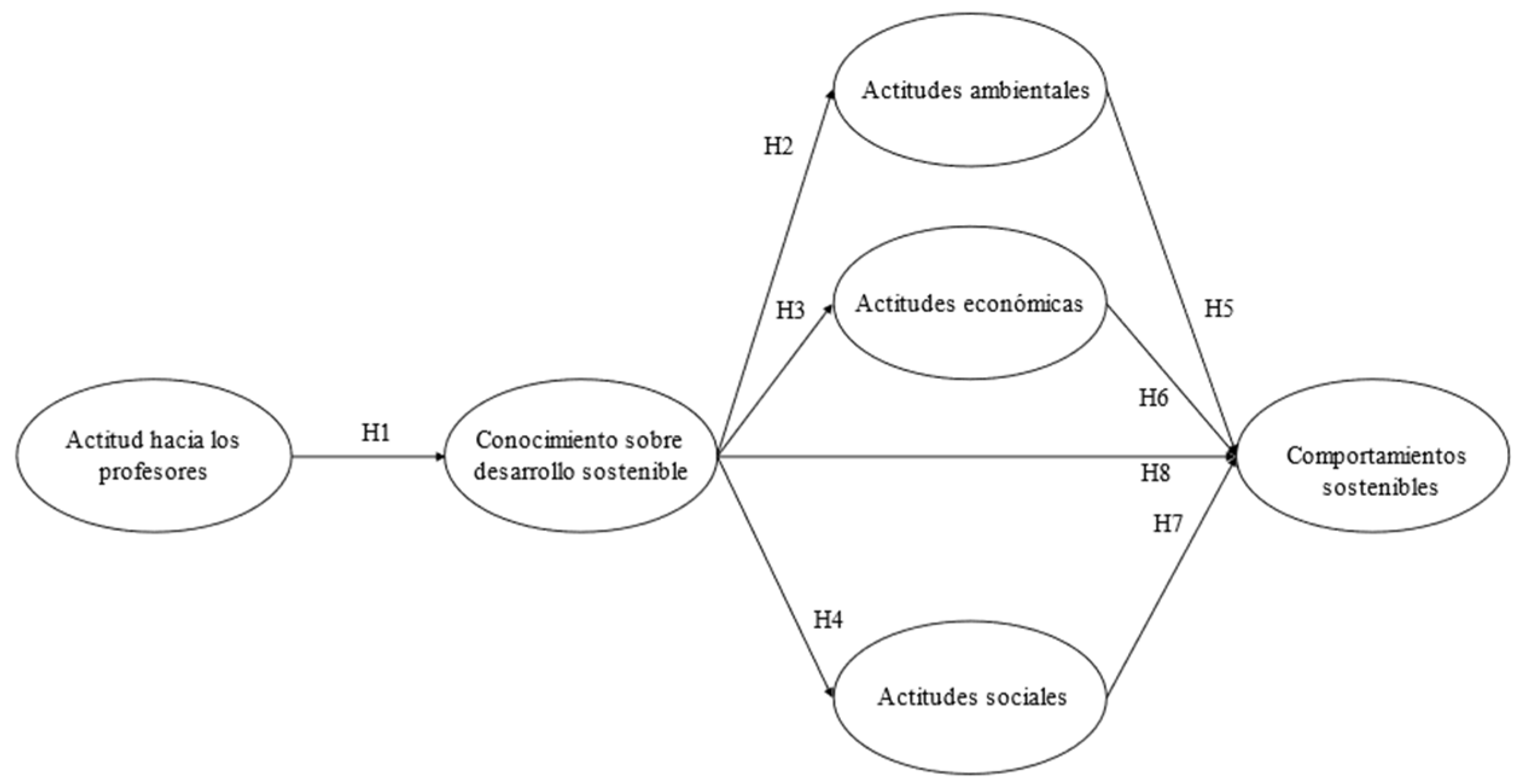
Figure 2.
Areas where UTESA University is located.
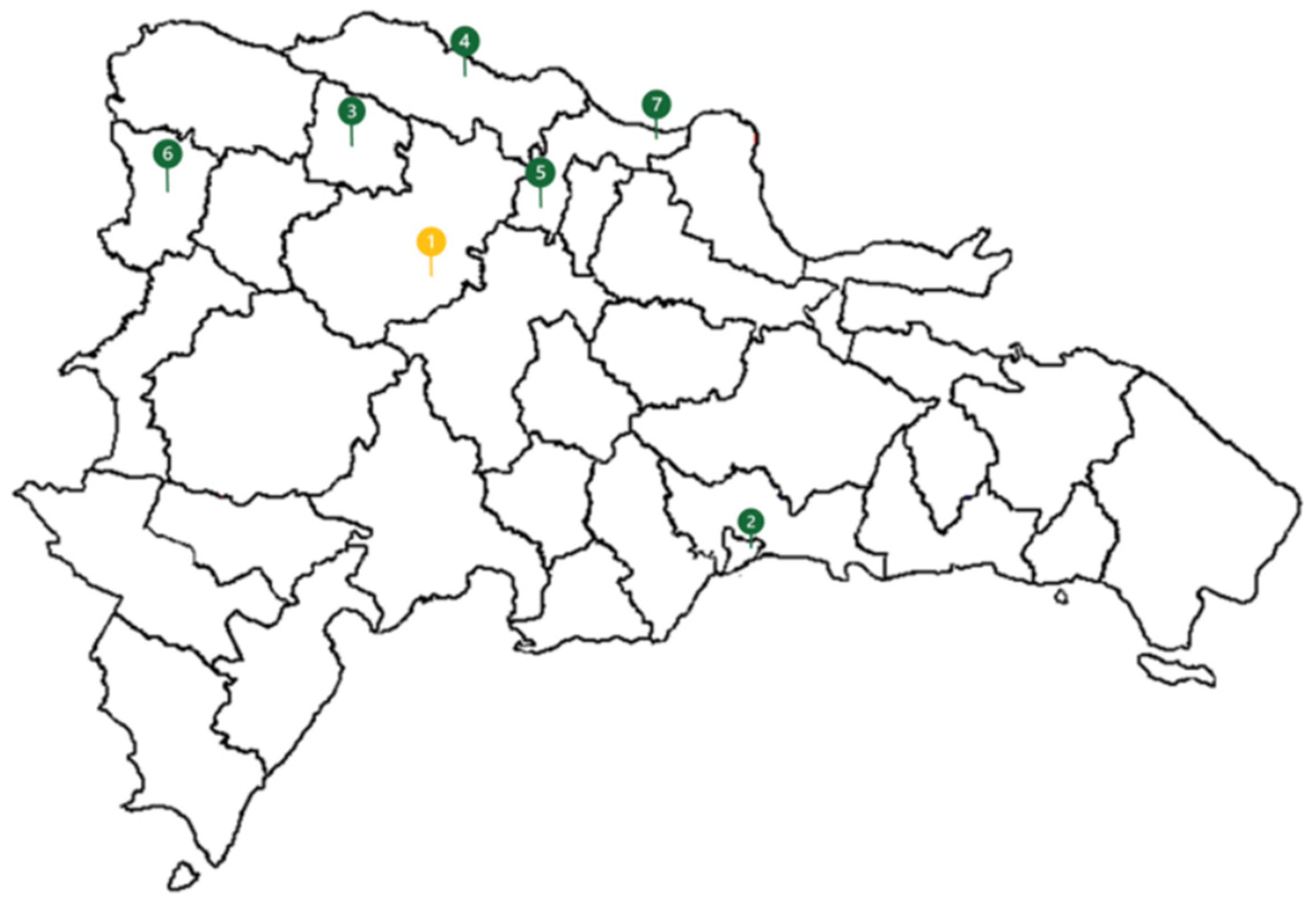
Figure 3.
Final structural model.
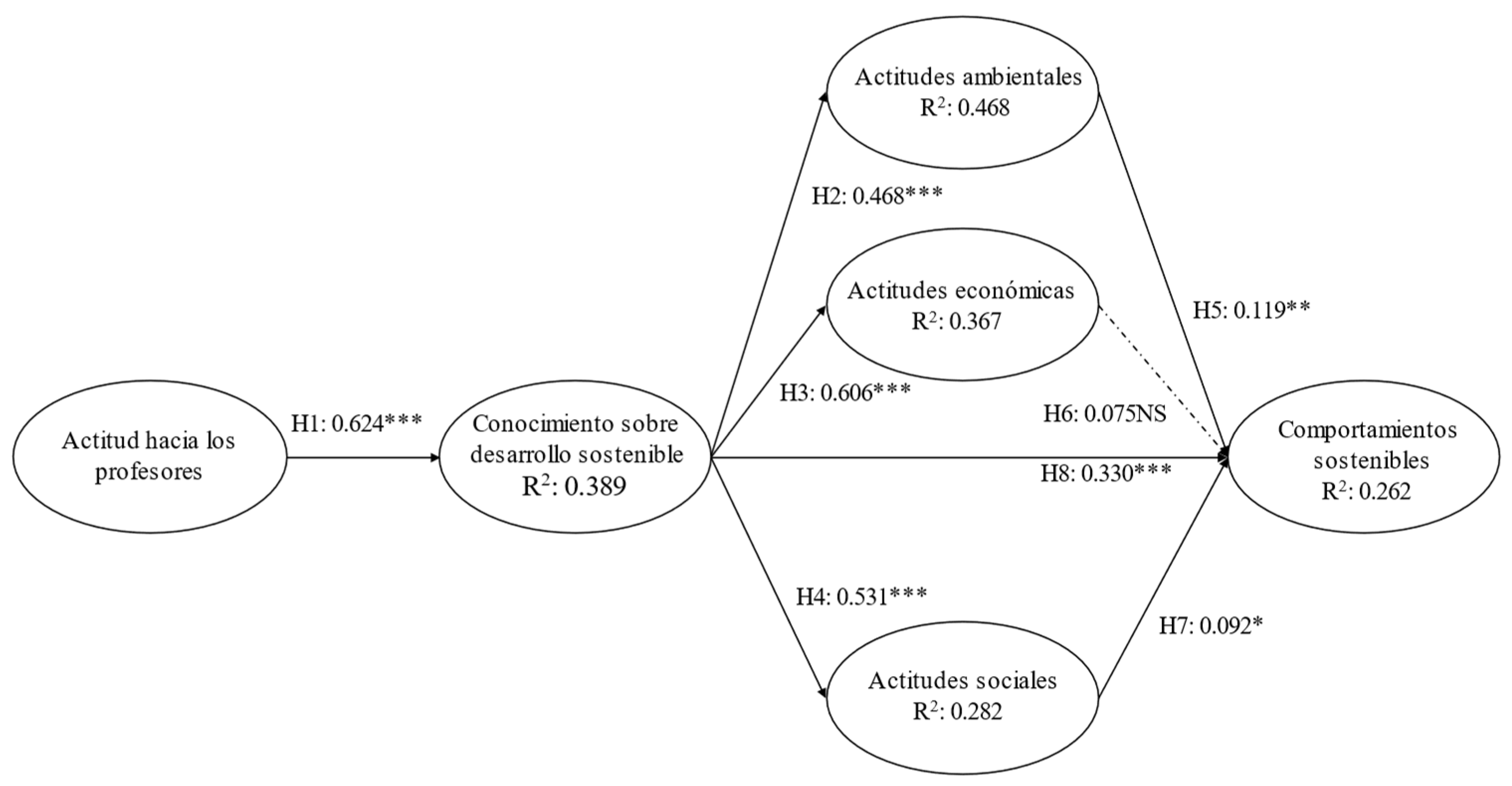

Table 1.
Variables used in the model.
| Mean | SD | Norm. | |
|---|---|---|---|
| Knowledge about sustainable development - KSD | |||
| KSD1 - Helping people out of poverty is an essential condition for making the Dominican Republic more sustainable | 4.20 | 0.938 | 0.000C |
| KSD2 - Sustainable development emphasises respect for human rights. | 4.09 | 0.886 | 0.000C |
| KSD3 - Ensuring a long and healthy life for all contributes to sustainable development. | 4.16 | 0.899 | 0.000C |
| KSD4 - Building adequate infrastructure contributes to sustainable development. | 4.17 | 0.891 | 0.000C |
| KSD5 - Sustainable development requires quality education for all. | 4.42 | 0.832 | 0.000C |
| KSD6 - Sustainable development emphasises gender equality. | 3.77 | 1.108 | 0.000C |
| KSD7 - Sustainable development involves a reflection on the meaning of quality of life. | 4.13 | 0.858 | 0.000C |
| KSD8 - Food security is one of the goals of sustainable development | 4.23 | 0.865 | 0.000C |
| KSD9 - Estimating the monetary value of the service provided by our ecosystems (such as: neutralising air pollutants) is important for sustainable development. | 4.27 | 0.903 | 0.000C |
| KSD10 - Sustainable development emphasises international cooperation. | 4.11 | 0.890 | 0.000C |
| KSD11 - Poverty alleviation is an important issue in education for sustainable development. | 4.21 | 0.888 | 0.000C |
| Sustainable behaviours – SB | |||
| SB1 - I walk or cycle to places instead of going by car. | 3.36 | 1.383 | 0.000C |
| SB2 - I have taken a course in which sustainable development was discussed | 2.99 | 1.468 | 0.000C |
| SB3 - I talk to others about how to help people living in poverty. | 3.59 | 1.231 | 0.000C |
| SB4 - I've been thinking about what it means to live sustainably | 3.91 | 1.044 | 0.000C |
| SB5 - Household tasks in my home are shared equally among family members, regardless of gender | 4.04 | 1.114 | 0.000C |
| SB6 - I often look for signs of ecosystem deterioration | 3.40 | 1.204 | 0.000C |
| SB7 - I volunteer to work with local charities | 3.33 | 1.346 | 0.000C |
| SB8 - I have participated in activities related to environmental sustainability. | 3.55 | 1.351 | 0.000C |
| SB9 - I try to avoid buying products from companies with a poor record on corporate social responsibility. | 3.37 | 1.243 | 0.000C |
| SB10 - I usually look at problems from different angles | 4.23 | 0.919 | 0.000C |
| SB11 - I have searched for information on the environment or sustainability of the university on the respective website. | 3.49 | 1.326 | 0.000C |
| SB12 - I have searched for information on the new UN Sustainable Development Goals. | 3.11 | 1.396 | 0.000C |
| Environmental Attitudes – EnA | |||
| EnA1 - When people interfere with the environment, they often produce disastrous consequences | 4.19 | 1.057 | 0.000C |
| EnA2 - The quality of life of people is directly related to the protection of the environment | 4.26 | 0.967 | 0.000C |
| EnA3 - Biodiversity must be protected at the expense of industrial agricultural production | 4.00 | 0.965 | 0.000C |
| EnA4 - Infrastructure development is less important than environmental protection | 3.25 | 1.353 | 0.000C |
| EnA5 - Environmental protection is more important than industrial growth | 3.99 | 1.116 | 0.000C |
| Economic Attitudes – EcoA | |||
| EcoA1 - Government economic policies should increase sustainable production even if it means spending more money | 3.90 | 1.108 | 0.000C |
| EcoA2 - People should sacrifice more to reduce economic differences between populations | 3.59 | 1.167 | 0.000C |
| EcoA3 - Government economic policies should increase fair trade | 4.22 | 0.849 | 0.000C |
| EcoA4 - Government economic policies must act if a country is wasting its natural resources | 4.50 | 0.806 | 0.000C |
| EcoA5 - Reducing poverty and hunger in the world is more important than increasing the economic well-being of industrialised countries | 4.01 | 1.107 | 0.000C |
| Social Attitudes – SocA | |||
| SocA1 - Each individual must do everything to maintain peace in the country. | 4.17 | 0.987 | 0.000C |
| SocA2 - Society should further promote equal opportunities for men and women. | 4.51 | 0.782 | 0.000C |
| SocA3 - Contact between cultures is stimulating and enriching. | 4.31 | 0.902 | 0.000C |
| SocA4 - Society should provide free basic health services. | 4.54 | 0.837 | 0.000C |
| SocA5 - Society should take responsibility for the well-being of individuals and families. | 3.94 | 1.091 | 0.000C |
| Attitudes towards teachers - ATT | |||
| ATT1 - University teachers should use student-centred teaching methods | 4.38 | 0.814 | 0.000C |
| ATT2 - University teachers should promote future-oriented thinking in addition to historical knowledge | 4.49 | 0.794 | 0.000C |
| ATT3 - University teachers should promote interdisciplinarity between subjects | 4.06 | 0.940 | 0.000C |
| ATT4 - University teachers should promote the connection between local and global problems | 3.96 | 1.031 | 0.000C |
| ATT5 - University teachers should promote critical thinking in the classroom | 4.23 | 1.007 | 0.000C |
Notes: C: Lilliefors Signification Correction
Table 2.
Reliability and validity at individual level.
| Loads | Weights(Sig.) | VIF | |
|---|---|---|---|
| Knowledge about sustainable development – Mode A | n/a | n/a | |
| KSD5 | 0.666 | ||
| KSD7 | 0.734 | ||
| KSD8 | 0.733 | ||
| KSD10 | 0.711 | ||
| KSD11 | 0.693 | ||
| Sustainable behaviours – Mode A | n/a | n/a | |
| SD3 | 0.610 | ||
| SD4 | 0.765 | ||
| SD10 | 0.813 | ||
| Environmental attitudes – Mode B | |||
| EnA1 | 0.620 | 0.409(0.000) | 1.076 |
| EnA2 | 0.704 | 0.461(0.000) | 1.125 |
| EnA3 | 0.666 | 0.429(0.000) | 1.114 |
| EnA4 | 0.512 | 0.047(0.089) | 1.137 |
| EnA5 | 0.508 | 0.243(0.000) | 1.207 |
| Economic attitudes – Mode B | |||
| EcoA1 | 0.524 | 0.245(0.000) | 1.112 |
| EcoA2 | 0.478 | 0.198(0.000) | 1.125 |
| EcoA3 | 0.758 | 0.461(0.000) | 1.237 |
| EcoA4 | 0.619 | 0.336(0.000) | 1.151 |
| EcoA5 | 0.601 | 0.365(0.000) | 1.107 |
| Social attitudes – Mode B | |||
| SocA1 | 0.610 | 0.314(0.000) | 1.155 |
| SocA2 | 0.608 | 0.291(0.000) | 1.191 |
| SocA3 | 0.665 | 0.373(0.000) | 1.171 |
| SocA4 | 0.640 | 0.319(0.000) | 1.194 |
| SocA5 | 0.562 | 0.318(0.000) | 1.119 |
| Attitudes towards teachers – Mode B | |||
| ATT1 | 0.700 | 0.338(0.000) | 1.260 |
| ATT2 | 0.837 | 0.526(0.000) | 1.329 |
| ATT3 | 0.623 | 0.237(0.000) | 1.298 |
| ATT4 | 0.534 | 0.112(0.000) | 1.332 |
| ATT5 | 0.601 | 0.191(0.000) | 1.348 |
Table 3.
Internal consistency of the model.
| Rho_A | Rho_C | AVE | HT-MT Ratio | |||
|---|---|---|---|---|---|---|
| EnA | 1.000 | n/a | n/a | KSD | SB | |
| EcoA | 1.000 | n/a | n/a | KSD | ||
| SocA | 1.000 | n/a | n/a | SB | 0.684 | |
| ATT | 1.000 | n/a | n/a | |||
| KSD | 0.751 | 0.834 | 0.501 | |||
| SB | 0.764 | 0.776 | 0.540 | |||
Notes: EnA: Environmental Attitudes; EcoA: Economic Attitudes; SocA: Social Attitudes; ATT: Attitudes towards teachers; KSD: Knowledge about sustainable development; SB: Sustainable Behaviours; n/a: Not applicable.
Table 4.
Predictive Power and Effect Size.
| b | R2 | Corr. | Explained Variance | f2(Sig.) | |
|---|---|---|---|---|---|
| Knowledge about sustainable development | 0.389 | ||||
| H1: Attitudes towards teachers | 0.624 | 0.624 | 38.93% | 0.637(0.000) | |
| Environmental attitudes | 0.468 | ||||
| H2: Knowledge about sustainable development | 0.468 | 0.468 | 21.90% | 0.281(0.000) | |
| Economic Attitudes | 0.367 | ||||
| H3: Knowledge about sustainable development | 0.606 | 0.606 | 36.72% | 0.579(0.000) | |
| Social attitudes | 0.282 | ||||
| H4: Knowledge about sustainable development | 0.531 | 0.531 | 28.19% | 0.394(0.000) | |
| Sustainable behaviours | 0.262 | ||||
| H5: Environmental attitudes | 0.119 | 0.348 | 4.14% | 0.013(0.229) | |
| H6: Economic Attitudes | 0.075 | 0.387 | 2.90% | 0.004(0.515) | |
| H7: Social attitudes | 0.092 | 0.357 | 3.56% | 0.007(0.394) | |
| H8: Knowledge about sustainable development | 0.330 | 0.481 | 15.87% | 0.082(0.003) |
Table 5.
Hypothesis testing.
| b | t(Sig.) | IC Bootstrap 95% | ||
|---|---|---|---|---|
| 2.5% | 97.5% | |||
| H1: ATT → KSD | 0.624*** | 16.153(0.000) | 0.546 | 0.699 |
| H2: KSD → EnA | 0.468*** | 9.823(0.000) | 0.374 | 0.561 |
| H3: KSD → EcoA | 0.606*** | 15.987(0.000) | 0.530 | 0.679 |
| H4: KSD → SocA | 0.531*** | 11.007(0.000) | 0.433 | 0.623 |
| H5: EnA → SB | 0.119** | 2.693(0.007) | 0.038 | 0.214 |
| H6: EcoA → SB | 0.075NS | 1.484(0.138) | -0.021 | 0.175 |
| H7: SocA → SB | 0.092* | 1.979(0.049) | 0.006 | 0.190 |
| H8: KSD → SB | 0.330*** | 6.461(0.000) | 0.222 | 0.425 |
Notes: EnA: Environmental Attitudes; EcoA: Economic Attitudes; SocA: Social Attitudes; ATT: Attitudes towards teachers; KSD: Knowledge about sustainable development; SB: Sustainable Behaviours; NS: Not significant
Disclaimer/Publisher’s Note: The statements, opinions and data contained in all publications are solely those of the individual author(s) and contributor(s) and not of MDPI and/or the editor(s). MDPI and/or the editor(s) disclaim responsibility for any injury to people or property resulting from any ideas, methods, instructions or products referred to in the content. |
© 2023 by the authors. Licensee MDPI, Basel, Switzerland. This article is an open access article distributed under the terms and conditions of the Creative Commons Attribution (CC BY) license (http://creativecommons.org/licenses/by/4.0/).
Copyright: This open access article is published under a Creative Commons CC BY 4.0 license, which permit the free download, distribution, and reuse, provided that the author and preprint are cited in any reuse.


