

Submitted:
26 June 2023
Posted:
27 June 2023
You are already at the latest version
Abstract
The development of anti-pain technologies in the complex treatment of pain syndromes is one of the most urgent tasks of modern medicine. We have undertaken a placebo-controlled experimental study of the therapeutic potential of low-intensity laser radiation when applied to acupuncture points, which are directly related to the autonomic nervous system. The adaptation effect of puncture photobiomodulation on the induction of stress-mediated autonomic reactions, oxidative metabolism and microcirculation in animals during the acute phase of pain stress was revealed. The data obtained are of interest for use in the complex rehabilitation of patients with pain syndrome.
Keywords:
photobiomodulation
; acupuncture points
; oxidative metabolism
; microcirculation
; vegetative adaptive reactions
1. Introduction
The International Organization for the Study of Pain (ISAP) defines pain as "an unpleasant sensory and emotional experience associated with actual or potential tissue damage, or resembling it [1]. At the same time, the pain syndrome accompanies 90% of traumas and diseases to some extent [2], provoking the development of systemic reactions of the body, including metabolic, vascular and autonomic disorders [3].
Pain control is one of the centuries-old priorities of medicine, for which all kinds of means are used. Due to the toxicity and other potential undesirable effects of pharmacological agents, the search for non-medicinal methods of pain control has now become more relevant. Thus, photobiomodulation (PBM) with low-intensity laser radiation is used in clinical practice to reduce pain levels [4,5,6]. In comparison with traditional physiotherapy the puncture effect allows to reduce the energy load and at the same time to influence correction of all interested systems of an organism. This is due to the advantageous histomorphological and biophysical features of acupuncture points (AP) [7]. Given their direct connection with the autonomic nervous system (ANS), a more pronounced induction of the body's adaptive reactions to the effects of laser acupuncture (LA) is possible, which is especially important under conditions of pain stress [8,9]. In relation to classical acupuncture, LA has the same efficacy, but benefits from noninvasiveness, painlessness, sterility, a small list of contraindications and potential complications [10,11]. However, the lack of a clear understanding of the patterns and mechanism of development of adaptive reactions depending on the place of exposure to LA, the evidence base on the possible development of undesirable effects restrains its wide implementation in rehabilitation medicine of patients with acute pain syndrome. This prompts the continuation of experimental studies in order to identify the optimal formulation of exposure, as well as further study the mechanisms of action of LA on various body systems involved in the adaptive response to pain stress.
2. Materials and Methods
To achieve this goal, the study was conducted on 30 male Wistar rats weighing 250-300 g under conditions of the acute phase of experimental pain stress. The work was performed in accordance with ethical norms and rules of laboratory practice (GLP), the Geneva Convention for the protection of animals "International guidelines for biomedical research involving animals" (Geneva, 1990), and the approval of the Local Ethical Committee of the Volga Medical Research University (protocol №6 from April 29, 2022). The animals were kept under standard vivarium conditions with natural light, balanced nutrition, and an unobstructed drinking regime. A placebo-controlled study of the dynamics of metabolic, vascular, and autonomic adaptation indices in animals under conditions of acute painful stress using AP irradiation with a certified Elmedlife M device (Eltorg LLC, Russia) was performed. Course influence (10 daily sessions) was carried out by electromagnetic radiation in the near infrared (IR) range in contact to the points of «general» and «local» action with an exposure of 10 minutes per session. Exposure parameters: wavelength - 810±30 nm, average radiation power 0.35±0.07 MW.
The animals were divided into three groups (10 animals in each group). Two groups of animals served as the control: intact rats (control 1) and the «placebo» group (control 2), where rats with experimental pain stress received simulated irradiation. Rats of the main group were irradiated immediately after pain stress modeling operation with a point (GV.14) on the occipital tubercle in the projection of the autonomic regulation center, responsible for the development of the adaptive reactions of the organism. In addition, the point BL.37 localized in the middle of the posterior surface of the thigh above the sciatic nerve bifurcation was treated. During the procedure, the rats were fixed in the special pens. Experimental pain stress was modeled under intramuscular anesthesia (Zoletil+Xyla) by double ligation of the sciatic nerve at its bifurcation. Animals were removed from the experiment at the end of the irradiation course by decapitation under anesthesia (Zoletil+Xyla).
Blood stabilized with sodium citrate (1:9) was used to assess metabolic adaptation. The intensity of lipid peroxidation (LPO) was assessed by the concentration of malonic dialdehyde (MDA), diene conjugates (DC), triene conjugates (TC), and Schiff bases (SB) [12], the specific activity of antioxidant enzymes - catalase [13], superoxide dismutase (SOD) [14], glutathione reductase (GR) [15], glucose-6-phosphate dehydrogenase (Gl-6-fDH) [15]. Lactate dehydrogenase (LDH) activity in erythrocytes was determined spectrophotometrically in forward (LDHdirect) and reverse (LDHreverse) reactions [15]. Protein concentration was calculated according to the modified Lowry method [16]. The content of malonic dialdehyde in blood plasma (MDA plasma) and erythrocytes (MDA erythrocytes) was determined by reaction with thiobarbituric acid using reagent sets "TBK-AGAT" (Agat-Med LLC, Russia) on the spectrophotometer PE-5400 (Russia).
The method of laser Doppler flowmetry (LDF) was used to assess the dynamics of skin microcirculation. Laser analyzer "LAKK-M" (version 2) (SPE "Lazma", Russia) was used. During the study the analyzer's probe was set perpendicularly to the studied area. The recording duration was 3 minutes [17]. The integral index of microcirculation, characterizing the degree of tissue volume perfusion per unit time, was assessed. The role of active (endothelial oscillations - 0.01-0.08 Hz, neurogenic oscillations - 0.08-0.2 Hz, myogenic oscillations - 0.2-0.7 Hz) and passive (respiratory - 0.7-2 Hz, cardiac - 2-5 Hz) factors of microcirculation regulation was determined with further calculation of bypass index [17,18].
Heart rhythm variability (HRV) was studied using Neurosoft (Russia) hardware-software complex (HSC). The indices of statistical and variation heart rhythm monitoring (heart rate, stress index, variation coefficient, etc.) were studied [19].
Statistical data processing was performed using Statistica 6.0 software (Stat Soft, Inc.). The Shapiro-Wilk criterion was used to test the hypothesis that the data were consistent with a normal distribution. The data are presented as M±σ. Mean values of two independent groups were compared using nonparametric Mann-Whitney test. The critical value of the significance level was assumed to be 0.05.
3. Results
The study of indicators of oxidative metabolism revealed the development of oxidative stress in animals against the background of pain injury (control 2), characterized by an increase in the concentration of LPO products against the background of a decrease in antioxidant enzymatic activity. The content of primary products of LPO – diene conjugates – in control animals 2 increased by 13% (p<0,001), the concentration of secondary products of LPO – triene conjugates (in plasma) and MDA (in erythrocytes) – increased by 17% (p<0,001) and 44% (p<0.001), respectively, the level of the final products of LPO – SB – increased by 17% (p=0,002) compared with the indicators of intact rats (Figure 1, Figure 2 and Figure 3). The growth of highly toxic primary, secondary and final LPO products leads to destabilization of membranes and degradation of cells, which is due to the ability of DC, TC and SB to damage proteins, lipoproteins and nucleic acids.
The specific activity of antioxidant enzymes SOD (Figure 4) and catalase (Figure 5) decreased in erythrocytes by 8% (p=0,024) and 10% (p<0,001), respectively, compared with the indicators of intact rats. In control group 2 animals, the activity of GR (Figure 6) and Gl-6-fDH (Figure 7) decreased by 11% (p=0,031) and 16% (p=0,007), respectively, in erythrocytes.
A study of biochemical parameters of energy metabolism in control animals 2 revealed a decrease in the specific activity of LDHdirect (Figure 7) and an increase in LDHreverse by 54% (p<0,001) (Figure 8) compared with intact animals, which led to lactic acidosis and, as a consequence, the development of hypoxia.
Thus, acute pain stress was accompanied by inhibition of the antioxidant protection of the blood, leading to an increase in free radical processes with the accumulation of lipid peroxidation products in both plasma and erythrocytes.
After irradiation with pain stress, compared with control 2, a statistically significant increase in the specific activity of SOD was revealed by 18% (p<0,001), GR – by 26% (p<0,001), Gl-6-fDH – by 11% (p<0,001).
There was a decrease in the concentration of the studied LPO products in plasma and erythrocytes after irradiation with pain stress compared with control 2: DC – by 5% (p=0,026), MDAplasma – by 8% (p<0,001), MDAerythrocytes – by 7% (p<0,001), TC – by 8% (p<0,001), SB – by 9% (p<0,001)).
Near-infrared irradiation during pain stress had a normalizing effect on the energy metabolism of erythrocytes, causing an increase in the specific activity of LDH in the direct reaction by 14% (p<0,001), a decrease in LDH activity in the reverse reaction by 15% (p<0,001), which indicated a decrease in lactate levels and, as a consequence, signs of hypoxia.
The study of the dynamics of microcirculation index showed that with sciatic nerve damage and concomitant pain syndrome, in group control 2, tissue perfusion decreased by 52% (p=0,003) compared to intact animals (control 1) (Table 1), which is natural for the pathogenesis of pain injury.
In the experimental animal group, tissue perfusion decreased by 57% (p<0,001) relative to the control 1 group. The role of shunt blood flow (bypass index) increased only in the experimental group (by 15% (p=0,016) from control 1), while in the control 2 group it remained at the level of control 1.
The variation ranges of active regulatory factors (endothelial, neurogenic, and myogenic components) decreased in the control 2 group by 23% (p=0,009), 17% (p=0,033), and 12% (p=0,027), in contrast to the increase in the experimental group (10% (p=0,018), 33% (p=0,004), and 15% (p=0,031)) relative to control 1 animals, respectively (Table 1).
For passive regulation factors (respiratory and cardiac components), a different response was detected, namely, in the control 2 group the respiratory component increased by 77% (p<0,001) and the cardiac component decreased by 6%, whereas in the experimental group the respiratory component decreased by 6% and the cardiac component by 21 (p=0,016) % relative to the control 1 group, respectively (Table 1).
The growth of endothelial oscillations may be related to the increased release of endogenous nitric oxide.
Myogenic oscillations reflect the influence of central trophotropic mechanisms, including parasympathetic centers; their appearance in the spectrum of blood flow oscillations indicates a decrease in the ergotropic central component of regulation and a shift of central regulation in trophotropic direction.
Increased amplitude of respiratory wave indicates decreased microcirculatory pressure and/or worsened venous outflow. Deterioration of blood outflow from the microcirculatory channel leads to an increase in the number of erythrocytes, which is accompanied by an increase in the amplitude of the respiratory wave.
Decrease of pulse wave amplitude with increased or normal values of mean perfusion indicates decreased arterial blood inflow into the microcirculatory bed.
An additional study of heart rate variability showed that with sciatic nerve damage and accompanying pain syndrome, heart rate, reflecting the total effect of heart rate regulation, decreased by 15% relative to control 1 group (p<0,05), and heart rate in the experimental group decreased by 37% from control 1 values (p<0,05), indicating increased tone of the parasympathetic department of the autonomic nervous system (Table 2).
The autonomic balance index, which reflects the correlation between the activity of the sympathetic and parasympathetic sections of the autonomic nervous system, was shown to decrease in the control 2 group by 69%, and in the experimental group by 42% correspondingly from the control 1 level (p<0,05). The index of adequacy of the regulatory processes reflecting the correspondence between the activity of the sympathetic department of the autonomic nervous system and the leading level of the sinus node functioning increased by 46% in the control 2 group, and decreased by 16% in the experimental group relative to intact values (p<0,05). The parameter of tension of regulatory systems which characterizes the state of the central regulatory circuit and is characterized by high sensitivity to sympathetic nervous system tone increase increased in control 2 group by 62%, while in the experimental group it increased only by 32% relative to control 1 group (p<0,05). The combination of these changes indicates the predominance of the parasympathetic department of the autonomic nervous system in heart rhythm regulation in animals of the experimental group.
4. Discussion
The paper demonstrates the pathogenetic feasibility of using laser acupuncture in the near-infrared range for the correction of systemic disorders caused by pain stress from the first hours of its development. We registered metabolic disorders in the form of increased concentration of LPO products both in plasma and erythrocytes against the background of decreased antioxidant enzymatic activity. This leads to lactic acidosis and development of hypoxia, which is characteristic of oxidative stress.
Against this background the impact of LA on AP stimulated the development of adaptive reactions of the body, which were expressed in reliable positive dynamics of the energy metabolism of red blood cells, causing an increase in the specific activity of LDH in direct reaction, decrease in LDH activity in reverse reaction, which indicated a decrease in lactate levels and signs of hypoxia. We obtained similar data in previous studies [20]. This coincides with the data of other authors who experimentally demonstrated a positive effect of acupuncture on the activity of SOD and glutathione peroxidase in the hippocampus and reduction of oxidative stress [21,22].
It has been suggested that the effect of acupuncture is to reduce nitric oxide (NO) release and modulate the activity of NO-synthase enzyme, which affects the production and elimination of free radicals, and also leads to an increase in endothelial oscillations in microvessels [23]. This effect was also registered in our study. Thus, a pronounced decrease in tissue perfusion (by 52%) was observed in animals of the experimental group against the background of painful stress. After a course of irradiation, the state of microhemodynamics in the region concerned improved significantly due to a 15% increase in the shunting index. Thus, puncture photobiomodulation promotes normalization of perfusion indices in conditions of prolonged ischemia caused by pain stress, due to stimulation of active and passive mechanisms of blood flow modulation.
It should be noted that the positive shifts of metabolic and vascular disorders in the animals of the main group (experience) occurred against the background of the restoration of autonomic regulation indices, which immediately after the application of painful stress shifted towards the predominance of sympathetic influences, and at the end of LA course - towards the parasympathetic. This may be due to the effect on the "common" point, which is located in the cutaneous projection of the center of vegetative regulation of the animals. Additional irradiation of the "local" point, apparently, had more positive effect on the state of microcirculation.
However, we cannot ignore the role of IR radiation itself, which we used as a therapeutic stimulus. This range is part of the so-called "relic" electromagnetic radiation, which contains frequencies of low-energy vibrational-rotational levels of various molecules (proteins, RNA, DNA), as well as frequencies of intermolecular interactions [24].
The advantage of this study is the registration of reliable data on the corrective homeostatic possibilities of the combination of acupuncture points of general and local action. Exposure to infrared laser radiation on AP was a stimulus for triggering a cascade of autonomic anti-stressor reactions of the body [25]. Thus, we can consider that acupuncture points play the role of information points of peripheral autonomic regulation, correcting systemic disorders under stress.
5. Conclusions
The results of the experimental study show that PBM has a positive effect on systemic disorders developing in the acute phase of pain stress. The effect of low-intensity laser radiation in these energy parameters on acupuncture points associated with the autonomic nervous system stimulates the development of anti-stress autonomic, vascular and metabolic adaptation reactions in the absence of side effects on the body. In the future, the data obtained by us can be successfully used in the rehabilitation of patients with pathology accompanied by pain.
Author Contributions
Conceptualization, Alla Polyakova and Anna Soloveva; methodology, Anna Soloveva, Petr Peretyagin; validation, Kseniya Belyaeva; resources, Anna Belova; writing—original draft preparation, Alla Polyakova, Anna Soloveva, Petr Peretyagin. All authors have read and agreed to the published version of the manuscript.
Funding
This research was carried out within the framework of the scientific research Reg. No. 121030100012-9 «Experimental and clinical justification of the use of innovative technologies of medical rehabilitation using physical factors.
Conflicts of Interest
The authors declare no conflict of interest. The funders had no role in the design of the study; in the collection, analyses, or interpretation of data; in the writing of the manuscript; or in the decision to publish the results.
References
- Srinivasa N. Rajaa, Daniel B. Carrb, Milton Cohenc, Nanna B. Finnerupd,e, Herta Florf, Stephen Gibsong, Francis J. Keefeh, Jeffrey S. Mogili, Matthias Ringkampj, Kathleen A. Slukak, Xue-Jun Songl, Bonnie Stevensm, Mark D. Sullivann, Perri R. Tutelmano, Takahiro Ushidap, Kyle Vaderq. The revised International Association for the Study of Pain definition of pain: Concepts, challenges and compromises. PAIN, Month 2020;·Volume 00,·Number 00: 1-7. [CrossRef]
- Merskley H., Bogduk N. Classification of Chronic Pain: Descriptions of Chronic Pain Syndromes and Definitions of Pain Terms. 2nd ed. Seattle: IASP Press, 1994.
- Kelley E.E., Paes A.M., Yadav H., Quijano C., Cassina A., Trostchansky A. Interplay between Oxidative Stress and Metabolism in Signalling and Disease 2016. Oxide. Med. Cell. Longer. 2017:7013972. [CrossRef]
- Pescatore AM. Case Report: Herpes Zoster and Nd:YAG Photobiostimulation. J LA&HA, J Laser Health Acad 2016, 2016, 30-34.
- Kastyro I.V., Romanko YU.S., Muradov G.M., Popadyuk V.I., Kalmykov I.K., Kostyaeva M.G., Gushchina YU.SH., Dragunova S.G. Fotobiomodulyaciya ostrogo bolevogo sindroma posle septoplastiki, Biomedical Photonics, Vol. 10, № 2. p. 34–41. (in Russ.). [CrossRef]
- Moskvin S.V. Aktual'nye voprosy lazernoj terapii. Sbornik statej; M.–Tver'; Triada, 2019, 176 p. (in Russ.).
- Tony Y. Chon, Molly J. Mallory, Juan Yang, Sara E. Bublitz, Alexander Do, Peter T. Dorsher. Laser Acupuncture: A Concise Review. Medical acupuncture 2019; 31. [CrossRef]
- Moskvin S.V., Agasarov L.G. Lazernaya akupunktura: Osnovnye principy, metodicheskie podhody i parametry metodik, Vestnik novyh medicinskih tekhnologij. Elektronnoe izdanie, 2019, № 1, P 3-6. (in Russ.). Available online: http://www.medtsu.tula.ru/VNMT/Bulletin/E2019-1/3-6.pdf.
- Gur'janova E.A., Ljubovcev V.B., Ljubovceva L.A., Ljubovceva E.V. Vlijanie lazernoj terapii na dinamiku gistamina kozhi v oblasti tochek akupunktury. Vestnik vosstanovitel'noj mediciny 2008; 6: 42-44.(in Russ.).
- Lyubovtseva, E.V. Dynamics of neurotransmitters in the bone marrow of rats after acupuncture to the hypothalamus point / E.V.: Lyubovtseva, L.A. Lyubovtseva, V.B. Lyubovtsev // Journal of Theoretical and Practical Medicine. — Moscow. 2010. — Volume 8. — pp. 48-50 12.
- Tapbergenov S.O., Tapbergenov T.S., Sovetov B.S., Funkcional'nye i metabolicheskie jeffekty simpato-adrenalovoj sistemy i stress. M.: Akademija estestvoznanija, Russia, 2019, 138 p.(in Russ.).
- Hyshiktuev B.S., Hyshiktueva N.A., Ivanov V.N. Metody opredeleniya produktov perekisnogo okisleniya lipidov v kondensate vydyhaemogo vozduha i ih klinicheskoe znachenie; Klinicheskaya laboratornaya diagnostika. 1996. № 3. p. 13-15. (In Russ).
- Sibgatullina G.V., Haertdinova L.R. Metody opredelenija redoks-statusa kul'tiviruemyh kletok rastenij: Uchebno-metodicheskoe posobie. Kazan': Kazanskij (Privolzhskij) Federal'nyj universitet. 2011: 61 (In Russ).
- Sirota T.V. Standartizacija i reguljacija skorosti superoksidgenerirujushhej reakcii avtookislenija adrenalina, ispol'zuemoj dlja opredelenija pro/antioksidantnyh svojstv razlichnyh materialov. Biomedicinskaja himija. 2016, 62, 650-655.(In Russ). (In Russ)
- Kochetov G.A., Severina S.E. Prakticheskoe rukovodstvo po enzimologii; 2-nd ed., Moskow, Vyssh. shkola, 1980, 272 p. (In Russ).
- Waterborg J.H., Matthews H.R The Lowry method for protein quantitation. Methods Mol Biol., 1994, vol. 32, no. 1, P. 1-4.
- Krupatkin A.I., Sidorov V.V., Funkcional'naya diagnostika sostoyaniya mikrocirkulyatorno - tkanevyh sistem: Kolebaniya, informaciya, nelinejnost' (Rukovodstvo dlya vrachej). M.: Knizhnyj dom "LIBROKOM", 2013.-496s.(in Russ).
- Bajrovic, Fajko & Cencur, M & Hozic, M & Ribaric, S. & Stefanovska, Aneta. The contribution of lumbar sympathetic neurones activity to rat's skin blood flow oscillations. Pflügers Archiv : European journal of physiology, 2000, 439, R158-60. [CrossRef]
- Mihajlov V. M. Variabelnost serdechnogo ritma. Opyt prakticheskogo primeneniya metoda; Ivanovo, 2000, 200 s. (In Russ).
- Polyakova A.G., Soloveva A.G., Peretyagin P.V. Comparative evaluation of the effect of low-intensity electromagnetic noise signals in the microwave range on the induction of metabolic and vascular adaptation reactionsin experimental thermal burns. Opera Medica et Physiologica 2021, 4, 54-62.
- Razumov A.N., Mel'nikova E.A. The pathogenetic rationale for the application of reflexotherapy in the rehabilitation of the patients presenting with cognitive disorders. Voprosy kurortologii, fizioterapii, i lechebnoi fizicheskoi kultury. 2014, 91, 44-56. (In Russ.).
- Radzievskij S.A., Orekhova E.M., Agasarov L.G., Konchugova T.V., Solodovnikova T.S. Eksperimental'noe obosnovanie primeneniya transaurikulyarnoj elektropunktury i nizkochastotnoj transkranial'noj elektrostimulyacii dlya formirovaniya stressprotektornogo i sosudoreguliruyushchego effektov. Vestnik novyh medicinskih tekhnologij 2016, 23, 110-113 (In Russ). (In Russ)
- Kiryanova V.V., Molodovskaya N.V., Potapchuk A.A., Zharova E.N. Terahertz modulated infrared radiation in the complex treatment of patients in the acute period of ischemic stroke. Voprosy kurortologii, fizioterapii, i lechebnoi fizicheskoi kultury. 2021, 98, 5-10. (In Russ.). [CrossRef]
- Betsky O.V., Kozmin A.S., Faykin V.V., Yaryomenko Yu.G. Analysis of biophysical mechanisms of low-intensity electromagnetic waves in the extremely high frequency and terahertz frequency ranges; Biomedical radioelectronics, 2014, №5, C. 29-37.(In Russ).
- Vogralik V.G., Vogralik M. V. Acupuncture. Bases of Traditional Oriental Reflex Diagnostics and Puncture Adaptation-Energetic Therapy: Qi Gong; Moscow state medical academy of the Russian Federation, 2001, 336 p.
Figure 1.
Concentration of malonic dialdehyde (micromol/l) in erythrocytes under pain stress. * − the differences are statistically significant compared to control 1 (intact rats) (p<0,05); ** − the differences are statistically significant compared to control 2 (p<0,05).
Figure 1.
Concentration of malonic dialdehyde (micromol/l) in erythrocytes under pain stress. * − the differences are statistically significant compared to control 1 (intact rats) (p<0,05); ** − the differences are statistically significant compared to control 2 (p<0,05).
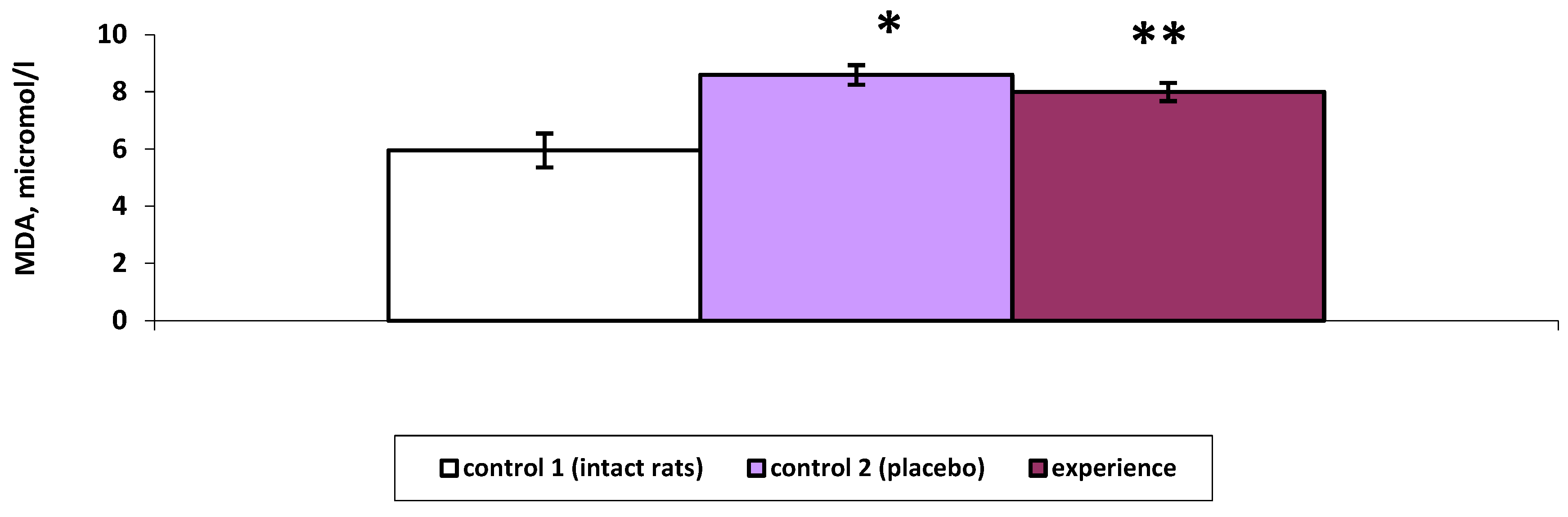
Figure 2.
Concentration of diene conjugates (RVU) and malonic dialdehyde (micromol/l) in blood plasma under pain stress. * − the differences are statistically significant compared to control 1 (intact rats) (p<0,05); ** − the differences are statistically significant compared to control 2 (p<0,05).
Figure 2.
Concentration of diene conjugates (RVU) and malonic dialdehyde (micromol/l) in blood plasma under pain stress. * − the differences are statistically significant compared to control 1 (intact rats) (p<0,05); ** − the differences are statistically significant compared to control 2 (p<0,05).
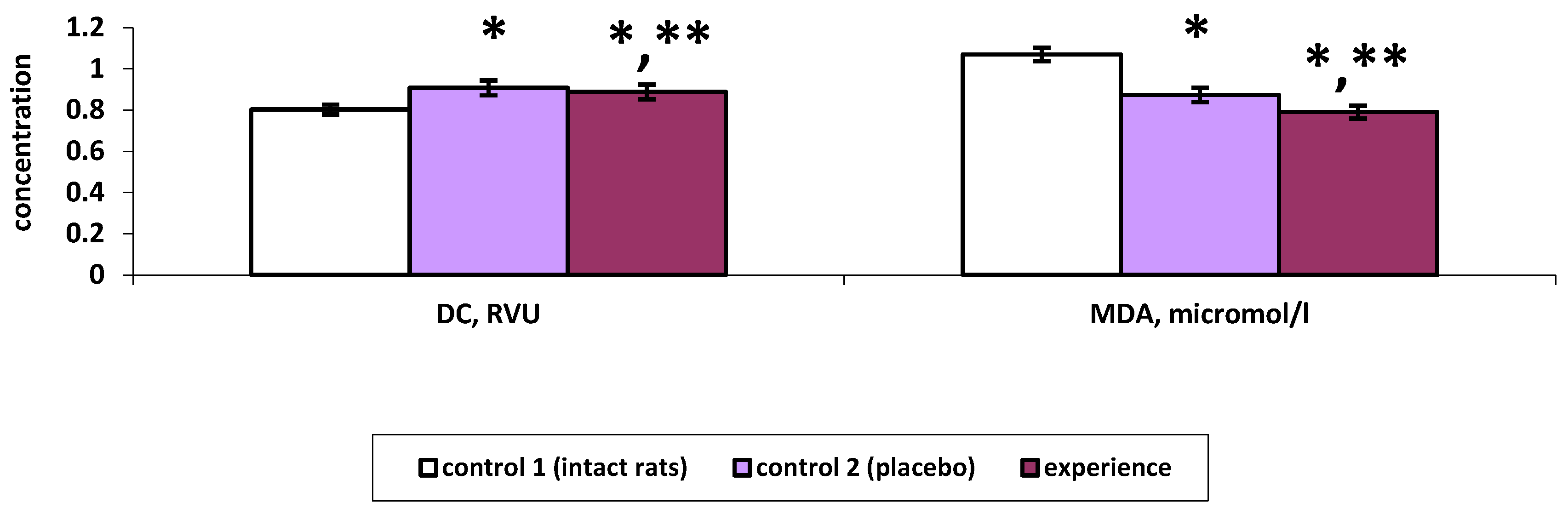
Figure 3.
Concentration (RVU) of triene conjugates and Schiff bases in blood plasma under pain stress. * − the differences are statistically significant compared to control 1 (intact rats) (p<0,05); ** − the differences are statistically significant compared to control 2 (p<0,05).
Figure 3.
Concentration (RVU) of triene conjugates and Schiff bases in blood plasma under pain stress. * − the differences are statistically significant compared to control 1 (intact rats) (p<0,05); ** − the differences are statistically significant compared to control 2 (p<0,05).
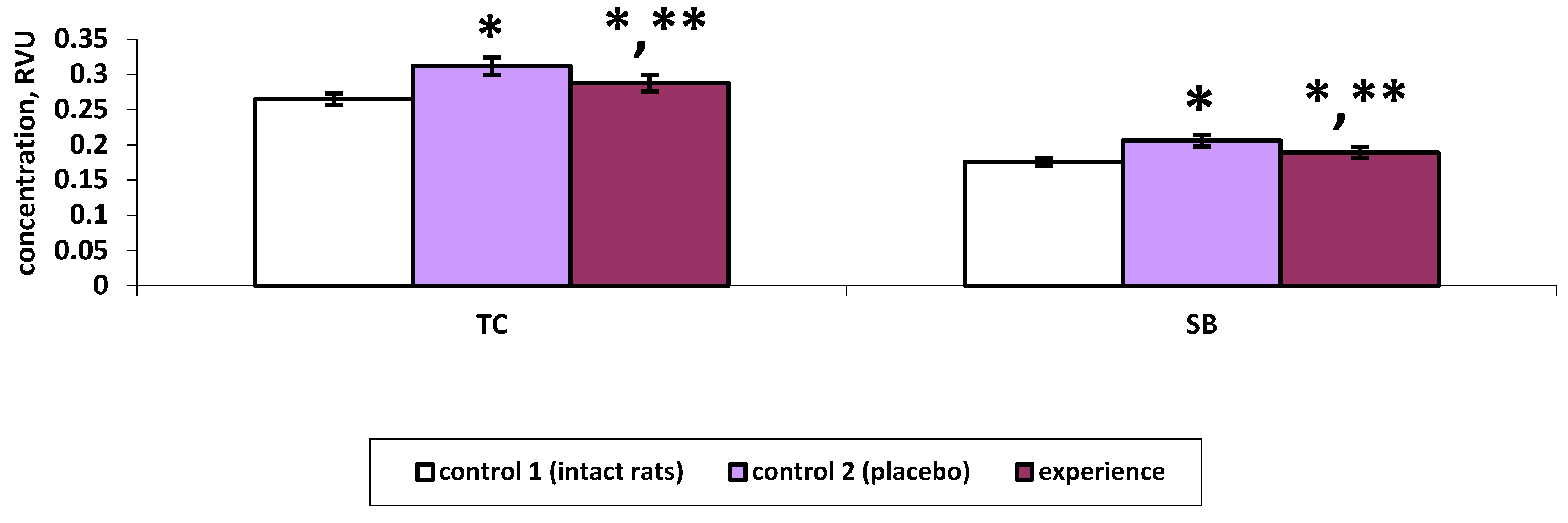
Figure 4.
Specific activity of superoxide dismutase (RVU/mg of protein) in erythrocytes under pain stress. * − the differences are statistically significant compared to control 1 (intact rats) (p<0,05); ** − the differences are statistically significant compared to control 2 (p<0,05).
Figure 4.
Specific activity of superoxide dismutase (RVU/mg of protein) in erythrocytes under pain stress. * − the differences are statistically significant compared to control 1 (intact rats) (p<0,05); ** − the differences are statistically significant compared to control 2 (p<0,05).
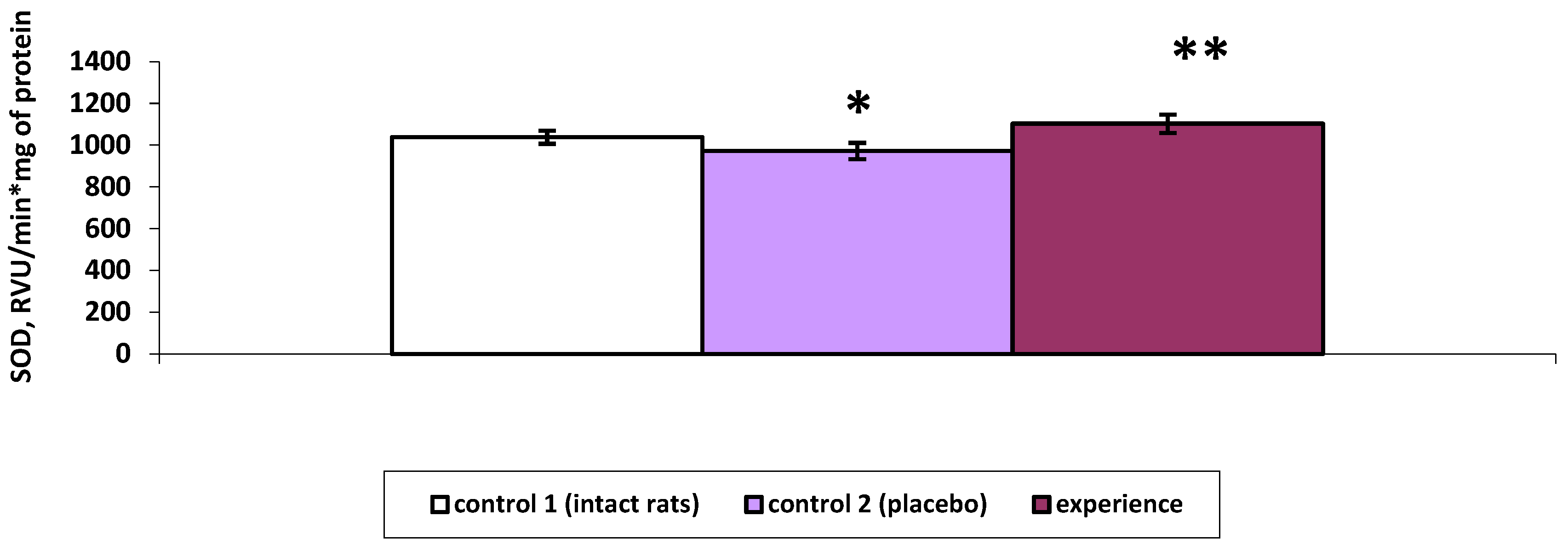
Figure 5.
Specific activity of catalase (RVU/mg of protein) in erythrocytes under pain stress. * − the differences are statistically significant compared to control 1 (intact rats) (p<0,05).
Figure 5.
Specific activity of catalase (RVU/mg of protein) in erythrocytes under pain stress. * − the differences are statistically significant compared to control 1 (intact rats) (p<0,05).
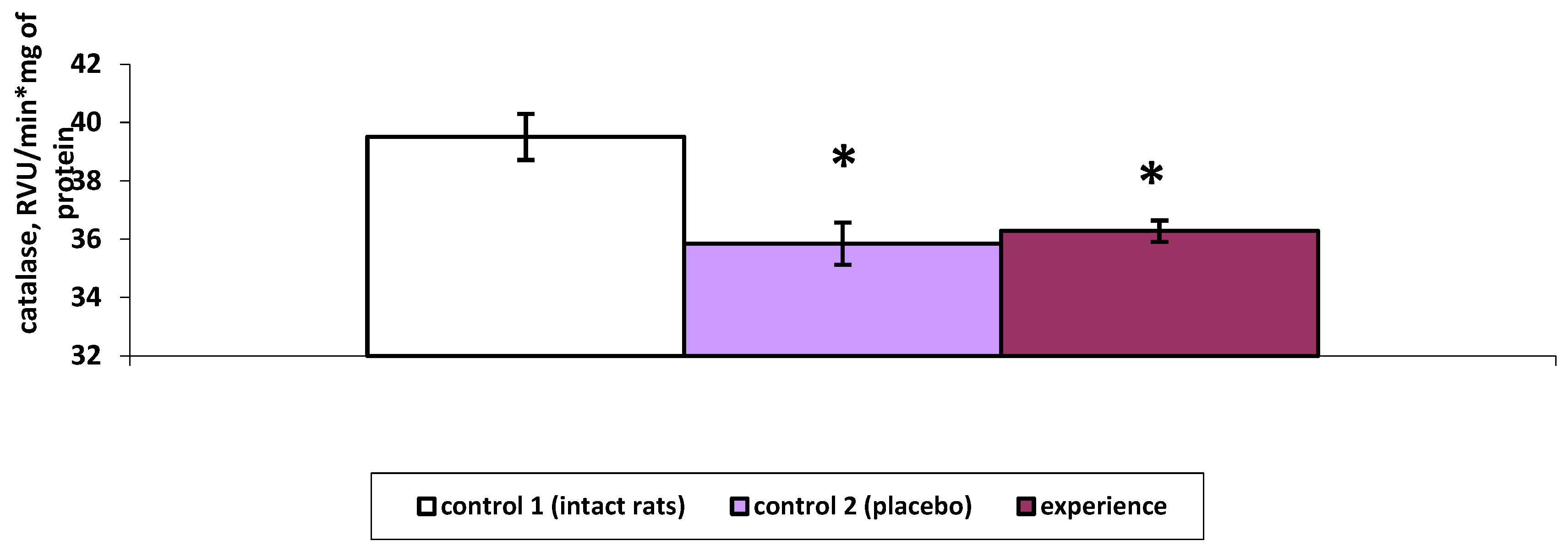
Figure 6.
Specific activity of glutathione reductase in erythrocytes under pain stress. * − the differences are statistically significant compared to control 1 (intact rats) (p<0,05); ** − the differences are statistically significant compared to control 2 (p<0,05).
Figure 6.
Specific activity of glutathione reductase in erythrocytes under pain stress. * − the differences are statistically significant compared to control 1 (intact rats) (p<0,05); ** − the differences are statistically significant compared to control 2 (p<0,05).
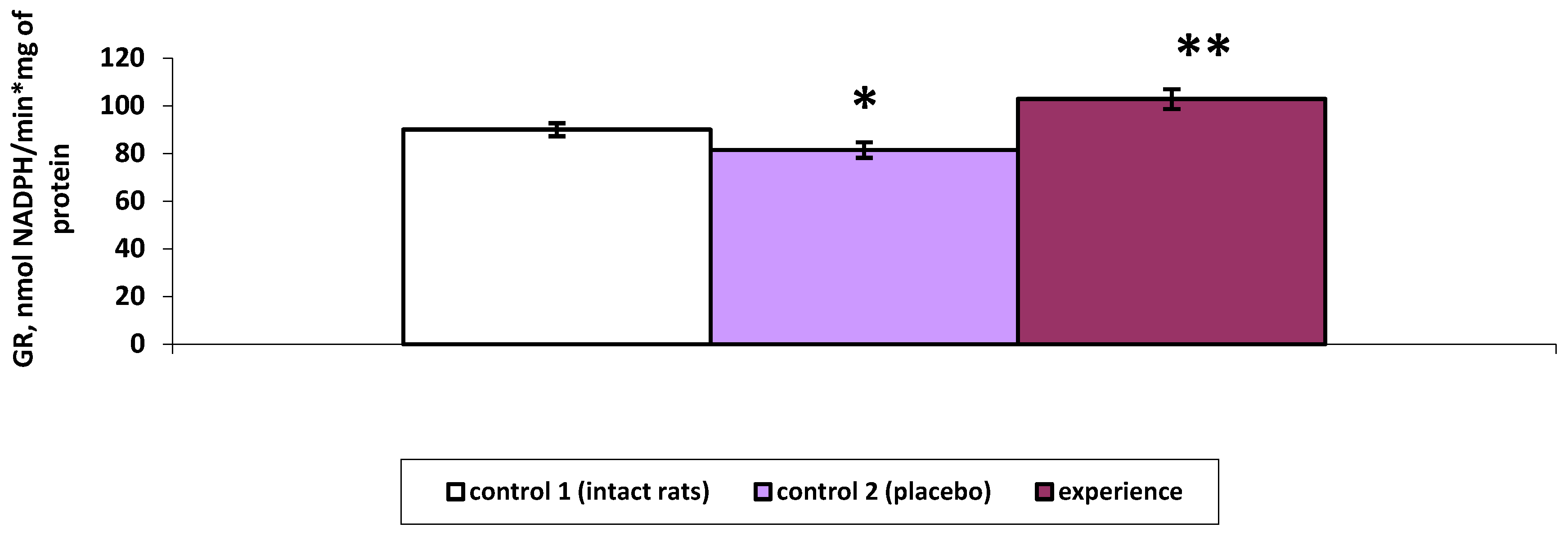
Figure 7.
Specific activity of oxidoreductases in erythrocytes under pain stress * − the differences are statistically significant compared to control 1 (intact rats) (p<0,05); ** − the differences are statistically significant compared to control 2 (p<0,05).
Figure 7.
Specific activity of oxidoreductases in erythrocytes under pain stress * − the differences are statistically significant compared to control 1 (intact rats) (p<0,05); ** − the differences are statistically significant compared to control 2 (p<0,05).
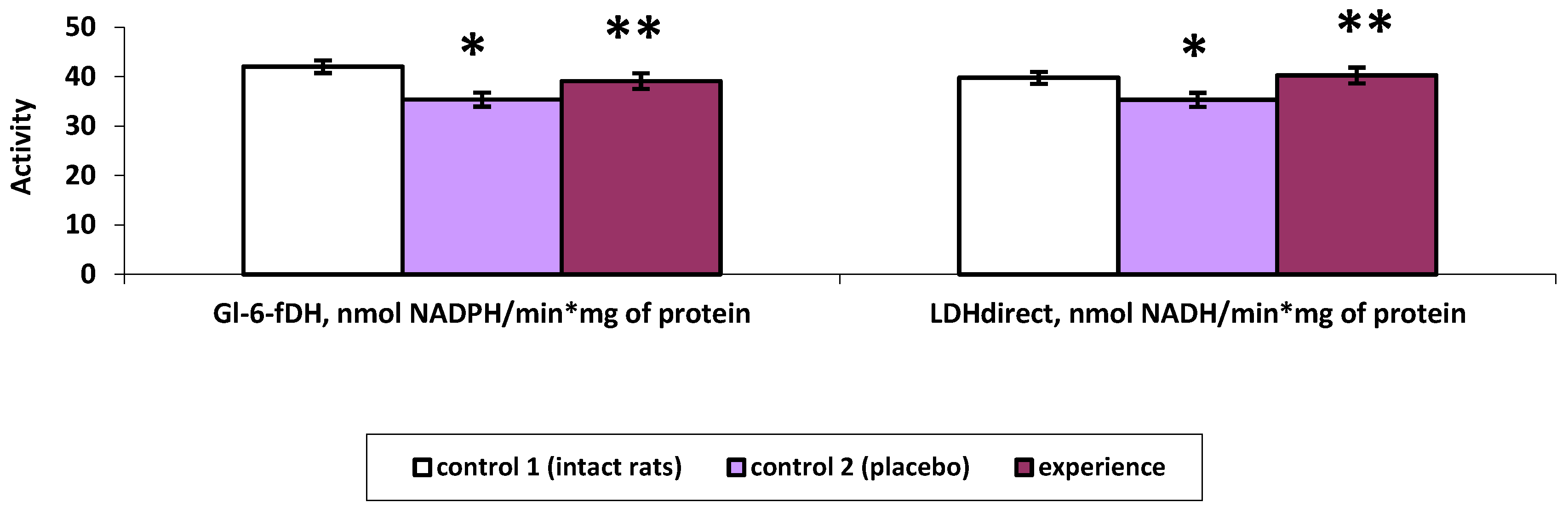
Figure 8.
Specific activity of lactate dehydrogenase in the reverse reaction in erythrocytes under pain stress. * − the differences are statistically significant compared to control 1 (intact rats) (p<0,05); ** − the differences are statistically significant compared to control 2 (p<0,05).
Figure 8.
Specific activity of lactate dehydrogenase in the reverse reaction in erythrocytes under pain stress. * − the differences are statistically significant compared to control 1 (intact rats) (p<0,05); ** − the differences are statistically significant compared to control 2 (p<0,05).
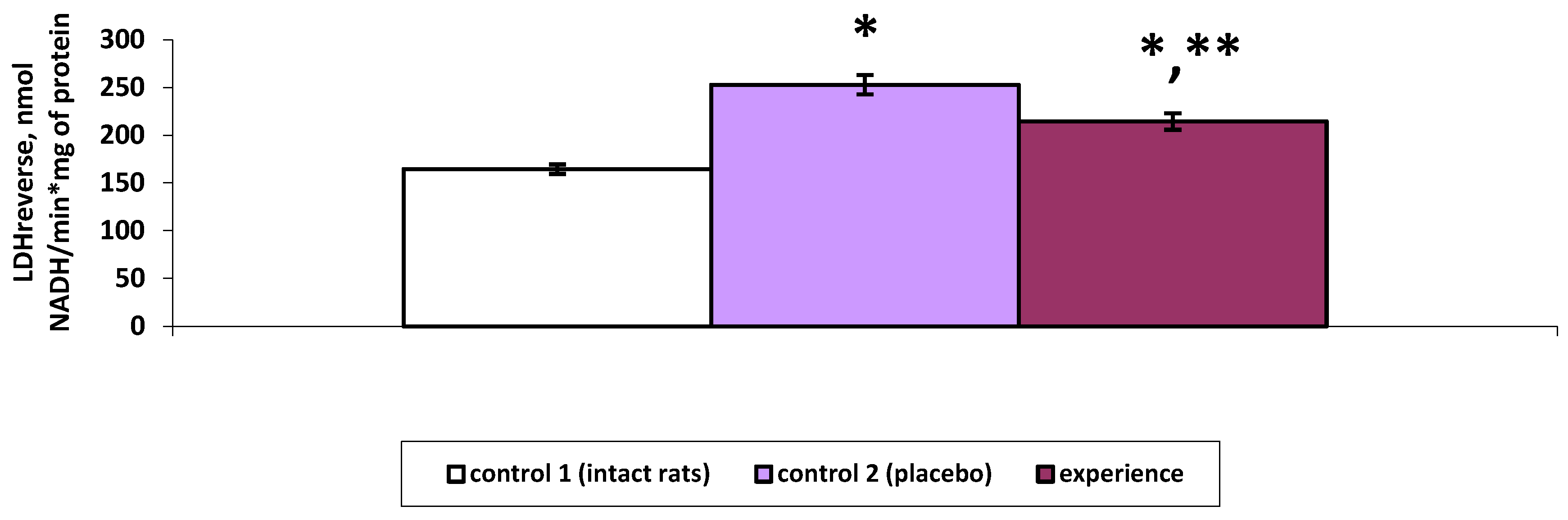

Table 1.
Dynamics of microcirculation indicators in conditions of pain stress.
| Microcirculation parameters | Control 1 (intact rats) |
Control 2 (placebo) |
Experience, n=10 |
|---|---|---|---|
| Microcirculation index, perfusion units | 9,51±0,73 | 4,50±0,35* | 4,18±0,32* |
| Endothelial component, RVU | 11,12±0,85 | 8,49±0,65* | 12,20±0,94** |
| Neurogenic component, RVU | 8,70±0,67 | 7,02±0,54* | 11,31±0,87*/** |
| Myogenic component, RVU | 8,42±0,65 | 5,50±0,42* | 9,90±0,75*/** |
| Respiratory component, RVU | 7,19±0,55 | 13,01±0,99* | 6,83±0,52** |
| Cardiac component, RVU | 3,81±0,29 | 3,58±0,28 | 3,01±0,23* |
| Bypass index, perfusion units | 1,03±0,08 | 1,03±0,07 | 1,22±0,09*/** |
* − differences are statistically significant compared to control 1 (p<0,05); ** − differences are statistically significant compared to control 2 (p<0,05).
Table 2.
Dynamics of heart rate variability indicators in conditions of pain stress.
| Indicator of variational heart rate monitoring |
Control 1 (intact rats) |
Control 2 (placebo) |
Experience |
|---|---|---|---|
| Heart rate, beats/min | 297,60±22,89 | 252,41±19,42* | 187,01±14,38*/** |
| Index of vegetative equilibrium, RVU |
922,87±70,99 | 286,60±22,04* | 540,03±41,54*/** |
| Index of adequacy of regulatory processes, RVU |
196,62±15,13 | 286,39±22,03* | 165,12±12,70** |
| Stress index of regulatory systems, RVU |
319,01±24,54 | 517,72±39,82* | 422,69±32,51*/** |
* − differences are statistically significant compared to control 1 (p<0,05); ** − differences are statistically significant compared to control 2 (p<0,05).
Disclaimer/Publisher’s Note: The statements, opinions and data contained in all publications are solely those of the individual author(s) and contributor(s) and not of MDPI and/or the editor(s). MDPI and/or the editor(s) disclaim responsibility for any injury to people or property resulting from any ideas, methods, instructions or products referred to in the content. |
© 2023 by the authors. Licensee MDPI, Basel, Switzerland. This article is an open access article distributed under the terms and conditions of the Creative Commons Attribution (CC BY) license (http://creativecommons.org/licenses/by/4.0/).
Copyright: This open access article is published under a Creative Commons CC BY 4.0 license, which permit the free download, distribution, and reuse, provided that the author and preprint are cited in any reuse.


