

Submitted:
16 June 2023
Posted:
16 June 2023
You are already at the latest version
Abstract
The illegal wildlife trade is a significant threat to global biodiversity, often targeting already threatened species. In combating the trade, it is critical to know the provenance of the traded animal or part, to facilitate targeted conservation actions, such as education and enforcement. Here we present and compare two methods, portable X-ray fluorescence (pXRF) and stable isotope analysis (SIA), to determine both the geographic and source provenance (captive or wild) of traded animals and their parts. Using three critically endangered, frequently illegally traded Philippine species, the Palawan forest turtle (Siebenrockiella leytensis), the Philippine cockatoo (Cacatua haematuropygia), and the Philippine pangolin (Manis culionensisis) we demonstrate that using these methods we can more accurately assign provenance using pXRF data (x ̅ = 83%), than SIA data (x ̅ = 47%). Our results indicate that these methods provide a valuable forensic tool that can be used in combating the illegal wildlife trade.
Keywords:
stable isotopes
; illegal wildlife trade
; provenance
; pXRF
; elemental signatures
1. Introduction
The illegal wildlife trade is a significant threat to global biodiversity and a key driver of extinction risk, particularly as many targeted species are already endangered [1,2,3]. The interception of smuggled animals and animal parts is a common occurrence in the enforcement of wildlife trade legislation in many countries [4,5]. The ability to determine where the animal (or part) has come from, its’ provenance, is essential for conservationists and enforcement agencies to address the source of the trade allowing for targeted enforcement actions [6], repatriation of seized animals [7], and for education and conservation actions [8,9].
The threat to biodiversity from illegal wildlife trade was formally recognised in 1973 with the signing of the Convention on International Trade in Endangered Species of Wild Fauna and Flora (CITES), an intergovernmental agreement providing the framework for trade in flora and fauna that does not threaten survival of these species. Despite this, the illegal wildlife trade has continued to grow, facilitated by the globalisation of the world’s economy, flexible border arrangements and improved transportation [10]. Significant declines in elephant Loxondonta africana and L. cyclotis numbers [11,12], pangolins (Order: Pholidota) [13] and the extinction of the western black rhino Diceros bicornis longipes [14] are all attributed to demand in the illegal wildlife market. Ongoing demand for illegally traded flora and fauna is driven by traditional medicines, exotic pets, and animal parts e.g. skins, furs [3,15].
In an attempt to alleviate the pressure on wild populations the captive breeding of some species is permitted as defined in Article 1, paragraph (b) of the CITES Convention, [16,17]. Under these circumstances animals can be legally traded, however ensuring that animals are not illegally taken from the wild and fraudulently traded as legal, i.e., laundered, is a problem that persists in many regions of the world [18,19,20]. Southeast Asia is recognised as a hotspot for illegally traded wildlife with its high levels of biodiversity, endemic species and access to unregulated trade routes [10,21]. Our study region, Southern Palawan, Philippines, is a key source of animals in the trade of reptiles, birds and pangolins [22,23]. Many of these animals are critically endangered with very small populations remaining in the wild [24]. Captive breeding of some of these animals for release aims to bolster wild populations [25,26].
This study focussed on three critically endangered endemic Philippine species commonly traded in the illegal wildlife markets. The Palawan forest turtle Siebenrockiella leytensis, a freshwater turtle endemic to the Province of Palawan [27,28] is the 6th most confiscated species in the Philippines [29]. Demand for this species as pets and food have resulted in significant numbers being collected from the wild [28,30,31]. Seizure records from 2004-2018 indicated 23 seizures collected 4,723 turtles, with an estimated 1,200 also sold illegally in China in 2015 [23]. This species is listed in Cites Appendix II [32], indicating it may become threatened with extinction if trade is not controlled. The Philippine cockatoo Cacatua haematuropygia are highly prized as pets due to their mimicry skills [33]. This species has experienced severe population declines since the 1980s due to habitat loss, persecution, introduced infectious disease and poaching for the pet trade [34,35]. It is listed under CITES Appendix I (CITES, 2021), indicating it is threatened with extinction and international trade is largely prohibited. The Philippine pangolin Manis culionensisis is restricted to the Palawan region, and is one of only eight species of its kind [13]. It is highly sought after for meat and scales used in traditional medicines [36]. This species is CITES Appendix I [32] listed, however trade is still occurring on a massive scale [36,37].
Using these three endangered species at risk from illegal trade, we aimed to test the efficacy of using a portable XRF device (pXRF) compared with stable isotopes (13C and 15N) as a method for determining provenance, both geographic and source (captive-wild). Portable instruments have the benefit of being more cost-efficient and enable the field collection of data, but they have yet to be applied in the determination of provenance to fight the illegal wildlife trade.
Provenance determination using element concentration data have been used in a range of fields, including food traceability and safety [38,39], archelogy [40] and conservation [41]. Methods for element measurement can be destructive, expensive and require laboratories to conduct techniques such as inductively coupled plasma mass spectrometry (ICP-MS). Applications of instruments such as portable X-ray fluorescence (pXRF) devices are providing opportunities to determine animal provenance using rapid, non-destructive, cost-efficient techniques by measuring elemental abundances or concentrations within a sample. X-ray florescence technology includes laboratory based instruments, e.g., ITRAX [42], or portable instruments [43,44]. Portable instruments have the benefit of being more cost-efficient and can be used in a range of locations enabling field collection of data.
Elemental signatures, the unique combination of different element concentrations/abundances, are incorporated into tissue through diet, and are a representation of diet during the growth of the tissue. Keratinous tissues, e.g., feathers, scales, and scutes, provide a chemically inert record of diet over time [45] allowing for the study of provenance [45,46,47]. This is critical in determining the source of animals traded in the illegal wildlife markets [6,9].
Similarly, stable isotope ratios are determined by diet and can also provide information on provenance, allowing for the identification of geographic source location [48,49] and status as captive or wild animals [50,51]. Previous studies have used isotopes to distinguish between captive and wild bred fauna at high accuracies, including mink, frogs and fish [52,53,54]. Commonly selected stable isotopes for the study of diet and provenance are 13C and 15N, due to their effectiveness in differentiating populations across a geographical range [55,56] and their direct relation to diet, indicating differences in terrestrial and aquatic diets, and trophic level and niche [57,58,59].
This study aims to demonstrate that pXRF is a valid tool that can be used in determining wildlife provenance, both geographic and source (captive/wild), with the hope that its portable nature will facilitate its use in combating the illegal wildlife trade with uptake by enforcement agencies for use in customs, wildlife markets, and pet stores. It also provides information for targeted enforcement actions [6], repatriation of seized animals [7], and for education and conservation actions [8,9].
We hypothesise that pXRF data derived models will perform better than SIA alone due to the quantity of data can be collected by pXRF. The performance of geographic models compared to source (captive-wild) models will be influenced by the diet, environment and life history traits of both the captive and wild species of interest.
2. Materials and Methods
2.1. Study site and sample collection
Samples from the Palawan forest turtle, the Philippine cockatoo and the Philippine pangolin were collected by Katala Foundation Incorporated (KFI), Western Philippines University (WPU), and Taronga Conservation Society across Palawan Island, Philippines (Figure 1, Table 1) in 2019. Samples were collected from a total of 45 Palawan forest (24 captive, 21 wild) turtles (Table 1). Captive animals were caught by hand from individual enclosures at the Katala Institute for Ecology and Biodiversity Conservation (KFI) at Narra, Palawan. Wild samples were collected opportunistically during survey field work undertaken by KFI in January 2019. Baited opera traps were set along creeks, semi-submerged and secured to a nearby tree with rope. Traps were re-checked during the evening and early morning. Scute samples from both captive and wild turtles were collected using a disposable biopsy punch. The edge of the scute was sampled using an upward scraping motion with uniform pressure producing a long sample approximately 3 mm x 20 mm piece of keratin. A single sample was taken from a marginal scute and stored refrigerated in sealed, labelled cryovials.
Pangolin samples were a mix of scales (n = 6) and nails (n = 12), and all samples came from wild specimens. Scale samples were collected from live animals caught for population surveys. A small ‘v’ shaped notch was cut with a bone cutter and kept individually in sample vials in a refrigerator. Samples were collected from the lateral, posterior scales, unless there was a damaged scale elsewhere on the animal that could be sampled. One sample per animal was collected. Nail samples were clipped from dead specimens that had been confiscated by the Palawan Council for Sustainable Development Staff (PCSDS) (Philippine government) and kept by PCSDS in cold storage at their facilities in Irawan, Puerto Princesa City. Scales had been removed from these specimens and were not available for sampling.
Moulted feather samples were collected from within single and multiple bird aviaries at KFI (20 captive samples) and from wild individuals at roost and nest sites of the Philippine cockatoo (45 wild samples) (Table 1). Feathers were also collected opportunistically during routine health and population checks of wild birds. Where possible feathers were collected from known individuals both captive and wild i.e., single bird aviaries to avoid re-sampling of the same individuals and banded wild birds. For multi-bird aviaries potential resampling was limited by only sampling a total of feathers for the total number of birds per aviary, e.g., 3 birds, 3 feathers. While this does not rule out potential resampling of the same individual, we attempted to limit the possibility and the impact it may have on data analyses. Single feathers from each wild roost/nest site were sampled to limit resampling of wild birds.
All samples were classified as being either captive or wild (i.e., animal had been bred or living in captivity for a period of time before sampling, or animal was collected from the wild), and labelled with their geographic provenance (ie. wild animals collected from distinct regions, and captive animals assigned to their captive facility). Pangolin samples were classified into groups based on geographic location and body part. Although the pangolin sample size was small we decided to include them in analyses. Their elusive nature makes the sourcing of larger sample sizes difficult, they are very difficult to breed in captivity [60] and they are at high risk of extinction making any samples valuable.
This study was conducted under the following permits. CITES permit WT2019-000849, University of New South Wales Animal Care and Ethics Committee number 18/127B, Gratuitous permit 2018–05 from the Palawan Council for Sustainable Development Staff (PCSDS).
2.2. X-ray fluorescence
All samples were scanned for their elemental composition using an Olympus Vanta M-series portable XRF (pXRF, 50kV, 80uA) scanner using GeoChem(2) mode, with a 60 second scan time per beam (2 beams, 10kV and 40kV). Forty-two elements were measured and all were included in the models (see Results). All samples were scanned within the Olympus Vanta Work Station. Samples were placed over the beam window ensuring the sample completely covered the scan area. This is a non-destructive analysis technique, and the same samples were then used for stable isotope analysis.
2.2. 13C and 15N stable isotope analysis
Feather samples were cleaned in a 2:1 methanol:chloroform wash to remove any surface oils [61], then washed in mild detergent and rinsed three times in reverse osmosis (RO) water before being left to air dry. Scutes, nails and scales were cleaned of surface dirt and ground (using a ball grinder or mortar and pestle) to provide a homogenous sample. Samples were weighed into tin caps and stable carbon (13C) and nitrogen (15N) isotopes were analysed at the Bioanalytical Mass Spectrometry Facility (BMSF) at the Mark Wainwright Analytical Centre (MWAC) University of New South Wales. A Delta V Advantage Isotope Ratio Mass Spectrometer and Flash 2000 Organic Elemental Analyzer fitted with a Conflo 4 was used.
3. Statistical analyses
XRF beamspectra were analysed using the R package xrftools [62]. To build predictive models we used the tree-based learning algorithm in the R package XGBoost [63]. We built models with two goals: predicting provenance (captive vs wild) and predicting geographic location. These models were built for each species separately in addition to separate models for the elemental pXRF and δ13C and δ15N isotope ratio data. XGBoost is an implementation of a gradient boosting decision tree algorithm, which uses sequentially added models to correct errors made by existing models until no further improvements can be made [64]. We used default values of 6 for the maximum depth, 0.3 learning rate, maximum of 10000 training rounds and the ‘multi:softprob’ objective. We used an 80% data split to create the training and test data sets, where the test set data was used to approximate ‘real-world’ model performance. Further, the training data was split again to generate a watchlist dataset (80%) that the XGBoost algorithm assess during training to avoid overfitting. The models produce probabilities for each class (wild vs captive, geographical location) which we then converted to a prediction by taking the highest assigned probability as the prediction. To determine model accuracy, we compared the actual classification against the predicted class for the test set data. As model performance could vary based on the random split between training, watchlist, and test data, we ran the train-test process 50 times and aggregated model performance into mean and standard deviation of accuracy. Variable importance was assessed by looking at the variables relative influence on the model outputs. As all pangolin samples were wild, we classified pangolin to 2 groups (Site F/claw or Site G/nail), we ran both geographic and captive-wild classification models on the turtle and cockatoo samples. We removed cockatoo samples that were labelled as wild but were housed within KFI for the testing of geographic origin.
To explore the isotopic differences between wild and captive turtles and cockatoos we used simple linear models (excluding pangolins as we had no captive samples), separately testing for a significant difference in 𝛿13C and 𝛿15N based on their captive or wild origin. Again using separate linear models, we also tested for differences in 𝛿13C and 𝛿15N amongst sample geographic provenance for all three species, using the package emmeans to identify sites leading differences [65]. As pangolin samples were claw from one location and scale from another, we cannot be sure as to whether we are exploring geographic provenance or body part differences.
4. Results
4.1. X-ray fluorescence
XGBoost predictive models were successful at differentiating between captive and wild specimens and at predicting geographic provenance using pXRF data (see Figure. 2). Models predicted turtle samples as coming from a wild or captive specimen at 88±12% accuracy, largely led by differences in Br, Pb and Ni (Figure 2) based on scute elemental composition. Geographic provenance (n = 3 locations) was predicted at 94±5% accuracy, led by differences in Br, Zr and Y.
Philippine cockatoo feather classification models predicted geographic provenance (n = 3) at a 62±9% accuracy rate. Key differences were found in the elements In, Mn and Sr. Classification models also accurately assigned feathers into captive or wild classes with a mean accuracy of 78±2%. Classification was largely led by differences in In, Sr and Mn, with captive animals having higher concentrations (Figure 3).
Classification models using elemental composition of pangolin samples were able to accurately predict to group (93±14%), however due to the samples available we were unable to determine whether these differences are location or body part driven. Classification was largely led by differences in Ca, Zr, and V (Figure 4).
4.2. 13C and 15N stable isotopes
There were no significant differences in turtle scute δ15N (F(1,42)= ,p = 0.373, R2 = 0.02) or δ13C (F(1,43) = 0.04, p = 0.847, R2 = 0.0008) between wild and captive samples. There were no significant differences in turtle scute δ15N between sites (F(2,42)= 0.53 ,p = 0.59, R2 = 0.02), however δ13C differed significantly between sites (F(2,42) = 3.95, p = 0.03, R2 = 0.16) led by differences between sites B and C (Figure 5a).
There were significant differences between captive and wild cockatoo feathers in both δ15N (F(1,28) = 10.336, p = 0.003, R2 = 0.26) and δ13C (F(1,28) = 12.97, p = <0.001, R2 = 0.27) (Figure 5b). Within wild cockatoos there were also significant differences in δ15N (F(2,22)=4.49, p=0.02, R2 = 0.29) when tested for geographic location. There were no significant differences in δ13C (F(2,22)=0.21, p = 0.81, R2 = 0.02) (Figure 5b).
There were significant differences in Philippine pangolin δ15N groups (F(1,14) = 26.7, p =0.0001, R2 = 0.65). δ13C also differed significantly between groups (F(1,14) = 9.10, p = 0.009, R2 = 0.35) (Fiureg 5c).
4.3. Predictive stable isotope models
When using XGBoost predictive models and stable isotope results, we achieved 66±16%, accuracy predicting the captive or wild source of the Palawan forest turtle led by δ15N, and 73±14% when predicting geographic origin, led by δ13C. Models predicted the captive or wild status of the Philippine cockatoo at 28±1% accuracy, led by differences in δ13C and 27±2% accuracy in predicting geographic provenance, led by differences in δ15N. Predictive models using Philippine pangolin stable isotopes performed poorly with predicted geographic provenance at 41±25% accuracy, led by δ15N.
Wild cockatoos from site E had a mean δ15N of 9.8‰ compared to site D 5.9‰ and captive animals 5.22‰ at KFI. Captive cockatoos had a less depleted mean δ13C –19.03‰ than wild δ13C -22.7‰ at site E and -21.93‰ at site D indicating different sources of carbon.
5. Discussion
This study has demonstrated that it is possible to use data derived from a field portable X-ray fluorescence device to accurately determine both geographic provenance and source (captive/wild) provenance of three Philippine species. Models using beam spectra data derived from pXRF were more accurate than those using stable isotope data (13C and 15N) for both geographic and source provenance models (Table 2). This suggests that pXRF technology shows promise as a low-cost, rapid and portable solution for tackling wildlife laundering.
The differences in prediction accuracy observed between the pXRF and SIA techniques are driven by the quantity of data collected by each technique. The ability of the pXRF to measure 42 elements in a single scan provides more sources of unique information compared to two stable isotopes, allowing models to utilise a richer dataset when training. It also provides a field-portable device which does not require the use of large laboratory equipment, as required for stable isotope analysis. It has the potential to be used on live animals provided X-ray safety protocols are followed [66,67], reducing the need to invasively collect samples from animals e.g., turtle carapaces may be scanned in-situ without the need to remove scute samples. It can also be used by enforcement agencies in a range of locations including customs, wildlife markets, and pet stores.
Both pXRF and SIA techniques measure values in tissues driven by diet [57,58] reflecting the habitat in which they grew the tissue. The species in this study represent a varied group of taxa; birds, mammals and reptiles, and a range of feeding ecologies, from specialist pangolins [68], omnivorous turtles [28] and frugivorous cockatoos [69]. The study results have demonstrated that our technique is robust to varied feeding ecologies and taxa.
Palawan forest turtle model results (Table 3) were more accurate for geographic provenance models when compared to captive-wild models. This was consistent for both pXRF and SIA derived data. This may reflect the relatively restricted home range individual turtles inhabit [70] ensuring that diet is representative of the local area only. However, both captive and wild Palawan forest turtles had similar ranges for δ15N and δ 13C values with large overlap (Fig. 5) indicating similar sources of nitrogen and carbon in their diet. This highlights the benefits of using pXRF derived data providing a greater range of elements enabling the detection of differences that otherwise might not be detected using SIA alone.
In contrast to the Palawan forest turtle, Philippine cockatoo geographic source models performed less accurately than captive-wild (Table 3). These birds have the ability to be wider ranging than turtles, with the potential to be feeding across a larger geographic range and incorporating diet from a variety of locations and sources. Captive-wild models were more accurate likely due to larger differences in diets between captive and wild animals, than between different wild locations. KFI cockatoo food sources included chicken feed, string beans, capsicum and corn (S. Schoppe pers. comm.)
Philippine pangolin models were limited to ‘Group’, representing both location and body part (claw or scale). While pXRF predictive models to group performed well (93±14%; Table 3) it is not possible to say whether this is due to locational differences or body part differences. SIA data on its own did not result in accurate models (41±25%; Table 3). Despite this limitation the inclusion of these data is important as they represent the first collection of elemental data and add to the limited stable isotope data available for pangolins worldwide [71].
Other limitations of this this study included relatively small sample sizes, due to the limited population sizes of the endangered species we studied, larger samples sizes would likely result in improved model accuracy and lower standard deviations. Another limitation included the potential resampling of individuals when using moulted feathers, particularly from multi-bird aviaries. As discussed in the methods we attempted to limit this, however future studies should be aware of this restriction when using moulted feathers.
While this study achieved relatively accurate models for a range of taxa, the ability to do so for other taxa and species may be influenced by aspects that are dietary driven e.g., life history traits, dietart breadth, dietary shifts and home range sizes. Similarly, variations in captive diets, and how closely they mimic wild diets will influence the ability to determine source provenance.
The further development of pXRF as a forensic tool, in addition to other tools such as SIA [72], genetics [4] and other molecular approaches [73], has significant potential and could achieve global application through the development of species reference libraries that can be collaboratively contributed to on an ongoing basis providing data from a range of species and geographic locations.
The ability to predict geographic provenance at high accuracies allows for the identification animals and body parts e.g., scales, horns, feathers, that are sourced from different geographic regions, e.g., Asian or African species [74]. This is of particular importance when only body parts, are traded and would otherwise require genetic testing which can be expensive and time-consuming [75]. Knowledge regarding geographic and source provenance also enables anti-poaching and conservation efforts in specific geographic regions [9]. Predicting the captive or wild status of traded animals allows for differentiation between those individuals that were raised in captivity and those that were poached from the wild facilitating the prosecution of illegal traders.
When combatting such a lucrative global problem as the illegal wildlife trade it is important to have a range of forensic techniques to accurately identify wildlife as either captive or wild sourced [51,76]. Furthermore, the ability to identify the location from which wild sourced animals have been collected allows for the focusing of education [77,78], conservation [9] and enforcement actions [79]. Our study has demonstrated methods that can achieve both these outcomes and provides valuable additions on the knowledge of three highly traded Philippine species, contributing to the fight against the illegal wildlife trade.
Author Contributions
KB: PM and SS conceived the research idea and design. RF and KZ undertook the data analysis. PM, SS, LW, PW undertook field work and sample collection. All authors contributed to manuscript writing and preparation.
Institutional Review Board Statement
This study was done under the following permits. CITES permit WT2019-000849, University of New South Wales Animal Care and Ethics Committee number 18/127B, Gratuitous permit 2018–05 from the Palawan Council for Sustainable Development Staff (PCSDS).
Acknowledgments
The authors would like to thank the Palawan Council for Sustainable Development for the issuance of the permit, the access to specimens and their continuous support. Thank you also to KFI staff who collected samples for this study.
References
- Zimmerman, M.E., The Black Market for Wildlife: Combating Transnational Organized Crime in the Illegal Wildlife Trade. Journal of Transnational Law, 2003. 36: p. 1657-1689.
- Symes, W.S., et al., The gravity of wildlife trade. Biological Conservation, 2018. 218: p. 268-276. [CrossRef]
- Scheffers, B.R., et al., Global wildlife trade across the tree of life. Science, 2019. 366: p. 71-76.
- Rehman, A., et al., Use of DNA Barcoding to Control the Illegal Wildlife Trade: A CITES Case Report from Pakistan. Journal of Bioresource Management, 2015. 2(2). [CrossRef]
- Omifolaji, J.K., et al., Dissecting the illegal pangolin trade in China: An insight from seizures data reports. Nature Conservation, 2022. 46: p. 17-38. [CrossRef]
- Patel, N.G., et al., Quantitative methods of identifying the key nodes in the illegal wildlife trade network. Proceedings National Academy of Science USA, 2015. 112(26): p. 7948-53. [CrossRef]
- Gaur, A., et al., The origin of Indian Star tortoises (Geochelone elegans) based on nuclear and mitochondrial DNA analysis: A story of rescue and repatriation. Conservation Genetics, 2005. 7(2): p. 231-240. [CrossRef]
- Kahler, J.S. and M.L. Gore, Beyond the cooking pot and pocket book: Factors influencing noncompliance with wildlife poaching rules. International Journal of Comparative and Applied Criminal Justice, 2012. 36(2): p. 103-120. [CrossRef]
- Farine, D.R., Mapping illegal wildlife trade networks provides new opportunities for conservation actions. Anim Conserv, 2020. 23(2): p. 145-146.
- van Uhm, D., Illegal wildilfe trade to the EU and harms to the World, in Environmental Crime in Transnational Context: Global Issues in Green Enforcement and Criminology, T. Spapens, R. White, and W. Huismen, Editors. 2016, Routledge: Abingdon, Oxon.
- Poulsen, J.R., et al., Poaching empties critical Central African wilderness of forest elephants. Current Biology, 2017. 27: p. R123-R138. [CrossRef]
- Maisels, F., et al., Devastating decline of forest elephants in central Africa. PLoS One, 2013. 8(3): p. e59469. [CrossRef]
- Challender, D.W.S., et al., International trade and trafficking in pangolins, 1900–2019, in Biodiversity of the World: Conservation from Genes to Landscapes, Pangolins. 2020, Academic Press. p. 259-276.
- Emslie, R., Diceros bicornis ssp. longipes, in The IUCN Red List of Threatened Species 2020: e.T39319A45814470. 2020.
- ‘t Sas-Rolfes, M., et al., Illegal wildlife trade: Scale, processes, and governance. Annual Review of Environment and Resources, 2019. 44: p. 201-228.
- Thomson, J., Captive breeding of selected taxa in cambodia and viet nam: A reference manual for farm operators and cites authorities. 2008, TRAFFIC Southeast Asia, Greater Mekong Programme.
- Tensen, L., Under what circumstances can wildlife farming benefit species conservation? Global Ecology and Conservation, 2016. 6: p. 286-298.
- Lyons, J.A. and D.J.D. Natusch, Wildlife laundering through breeding farms: Illegal harvest, population declines and a means of regulating the trade of green pythons (Morelia viridis) from Indonesia. Biological Conservation, 2011. 144(12): p. 3073-3081. [CrossRef]
- Nijman, V. and C.R. Shepherd, Trade in non-native, CITES-listed, wildlife in Asia, as exemplifi ed by the trade in freshwater turtles and tortoises (Chelonidae) in Thailand. Contributions to Zoology, 2007. 76(3): p. 207-211.
- Moyle, B., Wildlife markets in the presence of laundering: a comment. Biodiversity and Conservation, 2017. 26(12): p. 2979-2985. [CrossRef]
- Nijman, V., An overview of international wildlife trade from Southeast Asia. Biodiversity and Conservation, 2009. 19(4): p. 1101-1114. [CrossRef]
- Cruz, R.M., et al., Wildlife Trade in Southern Palawan, Philippines. Banwa, 2007. 4(1): p. 12-26.
- Sy, E.Y., et al., Endangered by trade: seizure analysis of the critically endangered Philippine Forest Turtle Siebenrockiella leytensis from 2004–2018. Philippine Journal of Systematic Biology 2020.
- Schoppe, S., et al., Conservation Needs of the Critically Endangered Philippine Forest Turtle, Siebenrockiella leytensis, in Palawan, Philippines. Chelonian Conservation and Biology, 2010. 9(2): p. 145-153. [CrossRef]
- Chavez, L. Philippine forest turtles stand a 'good chance' after first wild release. Mongabay 2021 28 June 2021 28 June 2021]; Available from. https://news.mongabay.com/2021/06/philippine-forest-turtles-stand-a-good-chance-after-first-wild-release/.
- Griffiths, R.A. and L. Pavajeau, Captive breeding, reintroduction, and the conservation of amphibians. Conserv Biol, 2008. 22(4): p. 852-61.
- Asian Turtle Trade Working Group. Siebenrockiella leytensis. 2000 [cited 2020 12 October]; [CrossRef]
- Diesmos, A., et al., Siebenrockiella leytensis (Taylor 1920) – Palawan Forest Turtle, Philippine Forest Turtle, in Conservation Biology of Freshwater Turtles and Tortoises. 2012.
- Sy, E.Y., The Palawan forest turtle. TRAFFIC Bulletin, 2013. 25(1): p. 9.
- Schoppe, S. and C.R. Shepherd, The Palawan Forest Turtle: Under threat from international trade. TRAFFIC Bulletin, 2013. 25(1): p. 9-11.
- Schoppe, S., C.R. Shepherd, and C. Beastall, The Palawan Forest Turtle: The story of a rare turtle found, then feared lost, only to be rediscovered – now faces extinction. The Tortoise, 2013. 1(2): p. 108-117.
- CITES, Appendices I, II and III, CITES, Editor. 2021.
- Boussekey, M., An integrated approach to conservation of the Philippine or Red-vented cockatoo: Cacatua haematuropygia. International Zoo Yearbook, 2000. 37(1): p. 137-146. [CrossRef]
- Birdlife International. Cacatua haematuropygia. 2017 [cited 2020 13 October]; [CrossRef]
- Dickinson, E.C., et al., The birds of the Philippines: an annotated check-list. Vol. 12. 1991: British Ornithologists' Union Tring, UK.
- Schoppe, S., et al., Chapter 7 - Philippine pangolin Manis culionensis (de Elera, 1915), in Pangolins: Science, Society and Conservation, D.W.S. Challender, J.C. Nash, and C. Waterman, Editors. 2020, Elsevier Inc.
- Heinrich, S., et al., Where did all the pangolins go? International CITES trade in pangolin species. Global Ecology and Conservation, 2016. 8: p. 241-253. [CrossRef]
- Aceto, M., The use of ICP-MS in food traceability, in Advances in food traceability techniques and technologies. 2016, Elsevier. p. 137-164.
- Salvo, A., et al., Toxic and essential metals determination in commercial seafood: Paracentrotus lividus by ICP-MS. Natural product research, 2016. 30(6): p. 657-664. [CrossRef]
- Bonizzoni, L., et al., Comparison between XRF, TXRF, and PXRF analyses for provenance classification of archaeological bricks. X-Ray Spectrometry, 2013. 42(4): p. 262-267. [CrossRef]
- Natusch, D.J., et al., Serpent's source: Determining the source and geographic origin of traded python skins using isotopic and elemental markers. Biological Conservation, 2017. 209: p. 406-414.
- Croudace, I.W., Rindby, A., Rothwell, R.G., ITRAX: description and evaluation of a new multi-function X-ray core scanner, in New Techniques in Sediment Core Analysis, R.G. Rothwell, Editor. 2006, Geological Society, London: London. p. 51-63. [CrossRef]
- McGladdery, C., et al., Elemental assessment of vegetation via portable X-ray fluorescence (PXRF) spectrometry. J Environ Manage, 2018. 210: p. 210-225. [CrossRef]
- Weindorf, D.C., N. Bakr, and Y. Zhu, Advances in portable X-ray fluorescence (PXRF) for environmental, pedological, and agronomic applications, in Advances in agronomy. 2014, Elsevier. p. 1-45. [CrossRef]
- Hobson, K.A. and L.I. Wassenaar, Tracking animal migration with stable isotopes. Terrestrial Ecology Series, ed. K.A. Hobson and L.I. Wassenaar. 2008, USA: Elsevier Academic Press. [CrossRef]
- Brandis, K.J., et al., Using feathers to map continental-scale movements of waterbirds and wetland importance. Conservation Letters, 2021. e12798(e12798). [CrossRef]
- Hobson, K.A., Using stable isotopes to trace long-distance dispersal in birds and other taxa. Diversity and Distributions, 2005. 11: p. 157-164. [CrossRef]
- Hobson, K.A., Tracing origins and migration of wildlife using stable isotopes: a review. Oecologia, 1999. 120: p. 314-326. [CrossRef]
- Sung, Y.H., et al., Assessing the diet of the endangered Beale’s eyed turtle (Sacalia bealei) using faecal content and stable isotope analyses: Implications for conservation. Aquatic Conservation: Marine and Freshwater Ecosystems, 2021. 31(10): p. 2804-2813. [CrossRef]
- Andersson, A.A., et al., Stable isotope analysis as a tool to detect illegal trade in critically endangered cockatoos. Animal Conservation, 2021. 10.1111/acv.12705(10.1111/acv.12705). [CrossRef]
- Brandis, K.J., et al., Novel detection of provenance in the illegal wildlife trade using elemental data. Scientific Reports, 2018. 8:15380. [CrossRef]
- Dempson, J. and M. Power, Use of stable isotopes to distinguish farmed from wild Atlantic salmon, Salmo salar. Ecology of Freshwater Fish, 2004. 13(3): p. 176-184. [CrossRef]
- Hammershøj, M., et al., Danish free-ranging mink populations consist mainly of farm animals: Evidence from microsatellite and stable isotope analyses. Journal for Nature Conservation, 2005. 13(4): p. 267-274. [CrossRef]
- Dittrich, C., U. Struck, and M.O. Rödel, Stable isotope analyses—A method to distinguish intensively farmed from wild frogs. Ecology and Evolution, 2017. 7(8): p. 2525-2534. [CrossRef]
- Ziegler, S., B. Streit, and D.E. Jacob, Assigning elephant ivory with stable isotopes, in Isotopic Landscapes in Bioarchaeology. 2016, Springer. p. 213-220. [CrossRef]
- Andersson, A., et al., Stable isotope analysis as a tool to detect illegal trade in critically endangered cockatoos. Animal Conservation, 2021. 24(6): p. 1021-1031. [CrossRef]
- DeNiro, M.J. and S. Epstein, Influence of diet on the distribution of carbon isotopes in animals. Geochimica et cosmochimica acta, 1978. 42(5): p. 495-506. [CrossRef]
- DeNiro, M.J. and S. Epstein, Influence of diet on the distribution of nitrogen isotopes in animals. Geochimica et cosmochimica acta, 1981. 45(3): p. 341-351. [CrossRef]
- Mumby, J.A., et al., Diet and trophic niche space and overlap of Lake Ontario salmonid species using stable isotopes and stomach contents. Journal of Great Lakes Research, 2018. 44(6): p. 1383-1392. [CrossRef]
- Hua, L., et al., Captive breeding of pangolins: current status, problems and future prospects. ZooKeys, 2015(507): p. 99.
- Paritte, J.M. and J.F. Kelly, Effect of cleaning regime on stable-isotope ratios of feathers in Japanese Quail (Coturnix japonica). The Auk, 2009. 126: p. 165-174. [CrossRef]
- Dunnington, D., xrftools: XRF Tools for R. R package version 0.0.1.9000, 2021.
- Chen, T., et al., Xgboost: extreme gradient boosting. R package version 1.3.2.1, 2021. 1(4): p. 1-4.
- Chen, T. and C. Guestrin. Xgboost: A scalable tree boosting system. in Proceedings of the 22nd acm sigkdd international conference on knowledge discovery and data mining. 2016.
- Lenth, R., emmeans: Estimated Marginal Means, aka Least-Squares Means. 2020.
- Gherase, M.R., J.E. Mader, and F. D.E.B., The radiation dose from a proposed measurement of arsenic and selenium in human skin. Physics in Medicine and Biology, 2010. 55: p. 5499-5514. [CrossRef]
- Specht, A.J., et al., Feasibility of a portable X-ray fluorescence device for bone lead measurements of condor bones. Sci Total Environ, 2018. 615: p. 398-403. [CrossRef]
- Irshad, N., et al., Distribution, abundance and diet of the Indian pangolin (Manis crassicaudata). Animal Biology, 2015. 65(1): p. 57-71. [CrossRef]
- Sopsop, L.B., Floral survey in the coastal forest of Rasa wildlife sanctuary, Narra, Palawan, Philippines. Journal of Environmental Science and Management, 2011. 14(1): p. 71-76.
- Diesmos, A.C., et al., Rediscovery of the Philippine forest turtle, Heosemys leytensis (Chelonia; Bataguridae), from Palawan Island, Philippines. Asiatic Herpetological Research, 2004. 10: p. 22-27.
- Pietersen, D.W., et al., Diet and prey selectivity of the specialist myrmecophage, Temminck's ground pangolin. Journal of Zoology, 2016. 298(3): p. 198-208. [CrossRef]
- Chesson, L.A., et al., Applying the principles of isotope analysis in plant and animal ecology to forensic science in the Americas. Oecologia, 2018. 187(4): p. 1077-1094. [CrossRef]
- Alacs, E.A., et al., DNA detective: a review of molecular approaches to wildlife forensics. Forensic Science, Medicine, and Pathology, 2010. 6: p. 180-194. [CrossRef]
- Zhang, H., et al., Molecular tracing of confiscated pangolin scales for conservation and illegal trade monitoring in Southeast Asia. Global Ecology and Conservation, 2015. 4: p. 414-422. [CrossRef]
- Mwale, M., et al., Forensic application of DNA barcoding for identification of illegally traded African pangolin scales. Genome, 2017. 60(3): p. 272-284. [CrossRef]
- van Uhm, D., Wildlife and laundering: Interaction between the under and upper world, in Green Crimes and Dirty Money, T. Spapens, et al., Editors. 2018, Routledge: London.
- Van Song, N., Wildlife Trading in Vietnam; Situation, Causes and Solutions. The Journal of Environment and Development, 2008. 17(2): p. 145-165.
- Thomas-Walters, L., et al., Taking a more nuanced look at behavior change for demand reduction in the illegal wildlife trade. Conservation Science and Practice, 2020. 2(9). [CrossRef]
- Kurland, J. and S.F. Pires, Assessing U.S. Wildlife Trafficking Patterns: How Criminology and Conservation Science Can Guide Strategies to Reduce the Illegal Wildlife Trade. Deviant Behavior, 2017. 38(4): p. 375-391. [CrossRef]
Figure 1.
Palawan forest turtle, Philippine cockatoo and Philippine pangolin were sampled in the Province of Palawan (yellow) in the Philippines (green), situated in south-east Asia (inset). Due to the ongoing illegal trade of these three species fine scale sampling locations are not provided.
Figure 1.
Palawan forest turtle, Philippine cockatoo and Philippine pangolin were sampled in the Province of Palawan (yellow) in the Philippines (green), situated in south-east Asia (inset). Due to the ongoing illegal trade of these three species fine scale sampling locations are not provided.
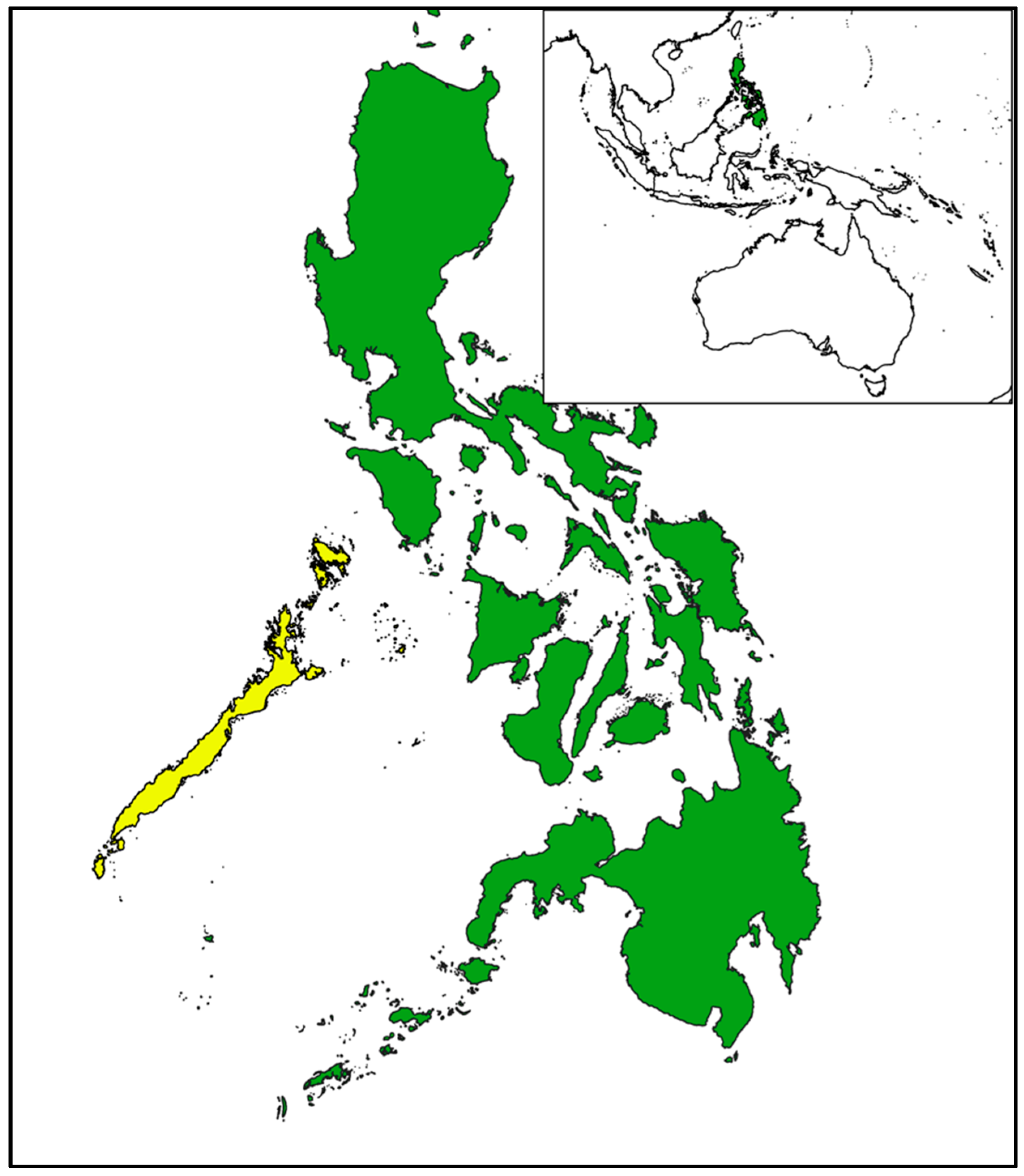
Figure 2.
Differences in beam spectra counts per second per element in Palawan forest turtle scute samples collected across the island of Palawan at three locations; KFI (orange, A), and two wild sampling locations (green, B, C).
Figure 2.
Differences in beam spectra counts per second per element in Palawan forest turtle scute samples collected across the island of Palawan at three locations; KFI (orange, A), and two wild sampling locations (green, B, C).
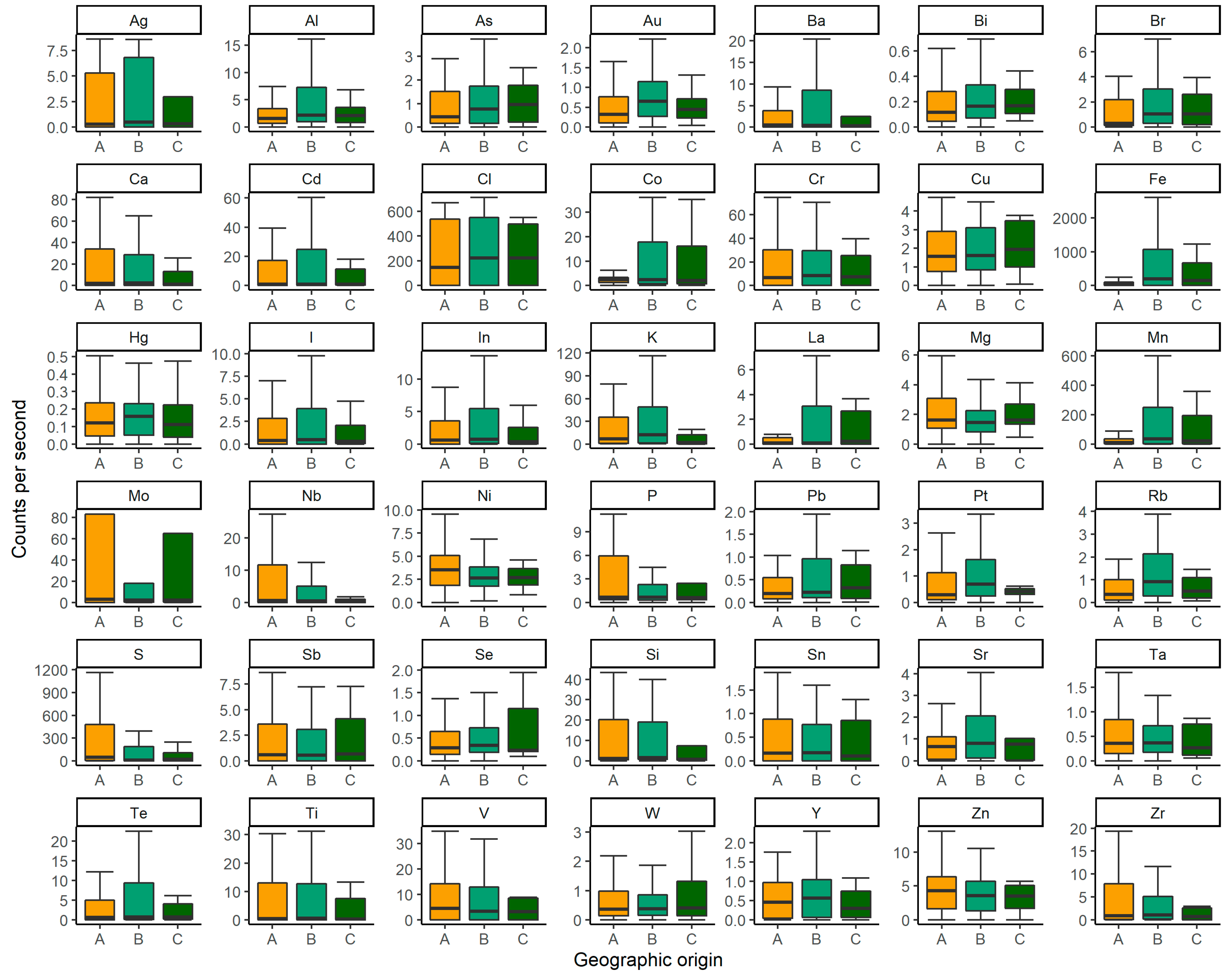
Figure 3.
Differences in beam spectra counts per second per element in Philippine cockatoo feather samples collected across the island of Palawan at three locations; KFI (orange, KFI), and two wild sampling locations (green, D,E).
Figure 3.
Differences in beam spectra counts per second per element in Philippine cockatoo feather samples collected across the island of Palawan at three locations; KFI (orange, KFI), and two wild sampling locations (green, D,E).
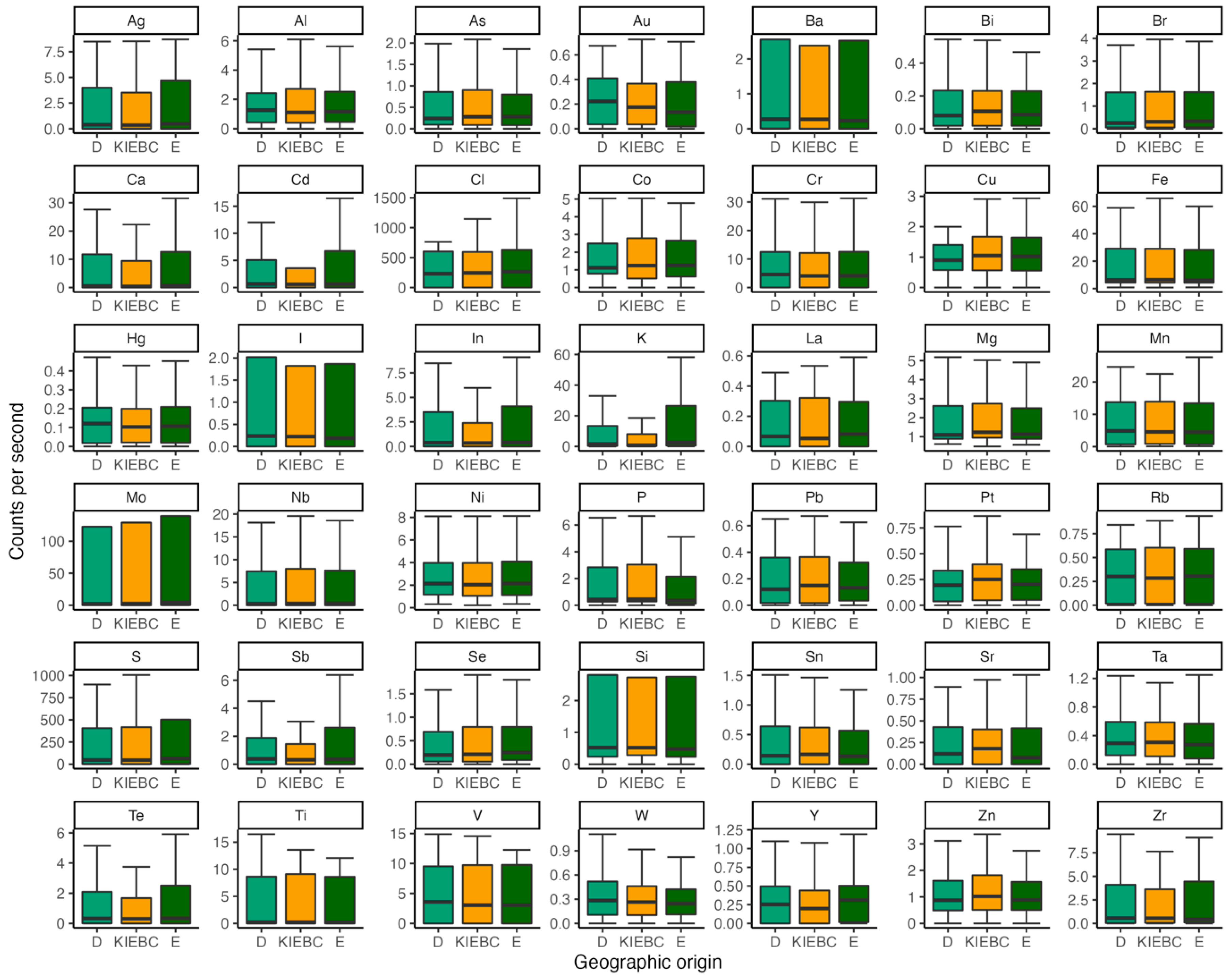
Figure 4.
Differences in beam spectra counts per second per element in wild Philippine pangolin scute and nail samples collected across two locations on the island of Palawan (F, G).
Figure 4.
Differences in beam spectra counts per second per element in wild Philippine pangolin scute and nail samples collected across two locations on the island of Palawan (F, G).
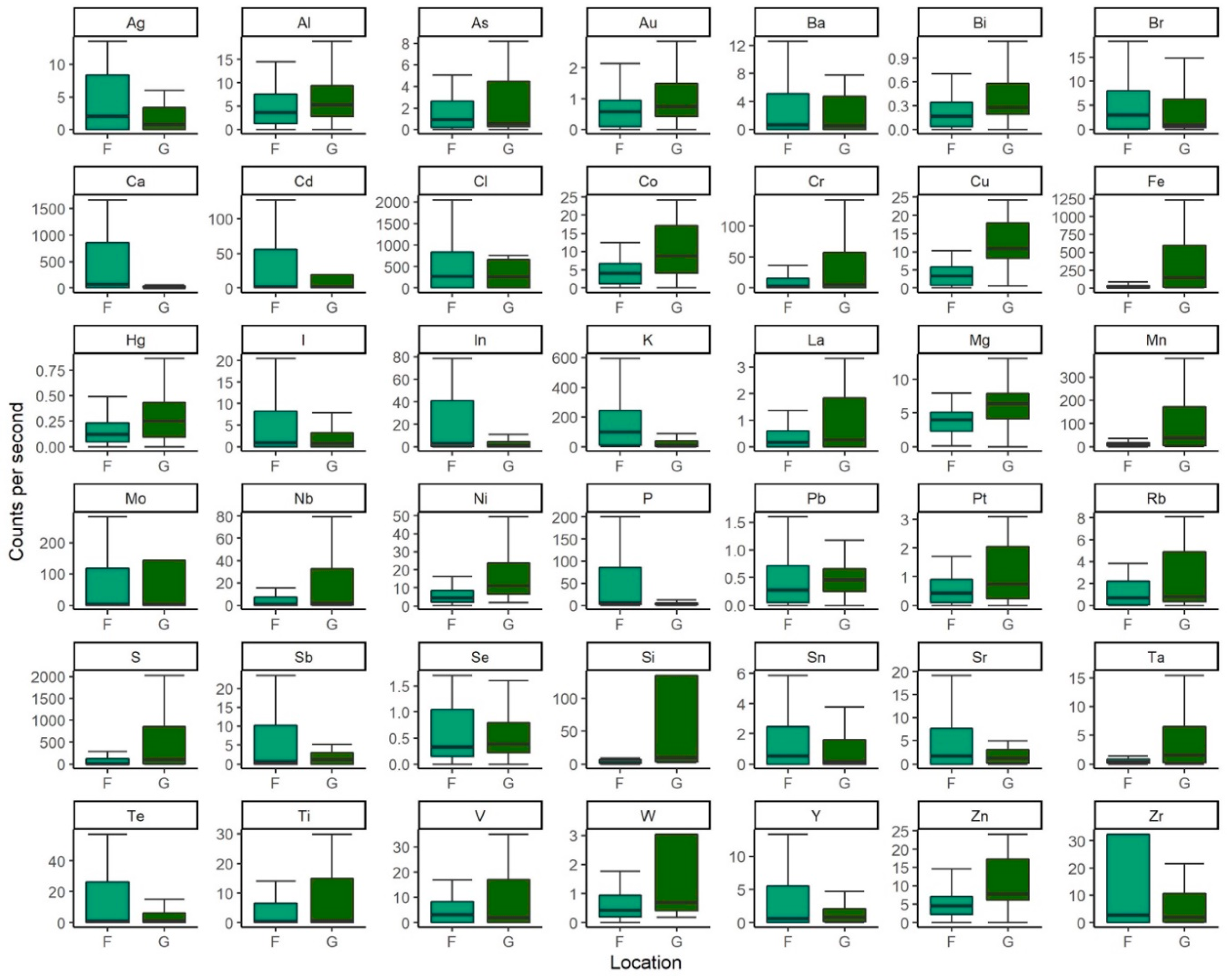
Figure 5.
Stable isotope δ13C and δ15N values for Philippine cockatoo, Philippine pangolin and Philippine forest turtle with site and wild/captive/group status identified.
Figure 5.
Stable isotope δ13C and δ15N values for Philippine cockatoo, Philippine pangolin and Philippine forest turtle with site and wild/captive/group status identified.
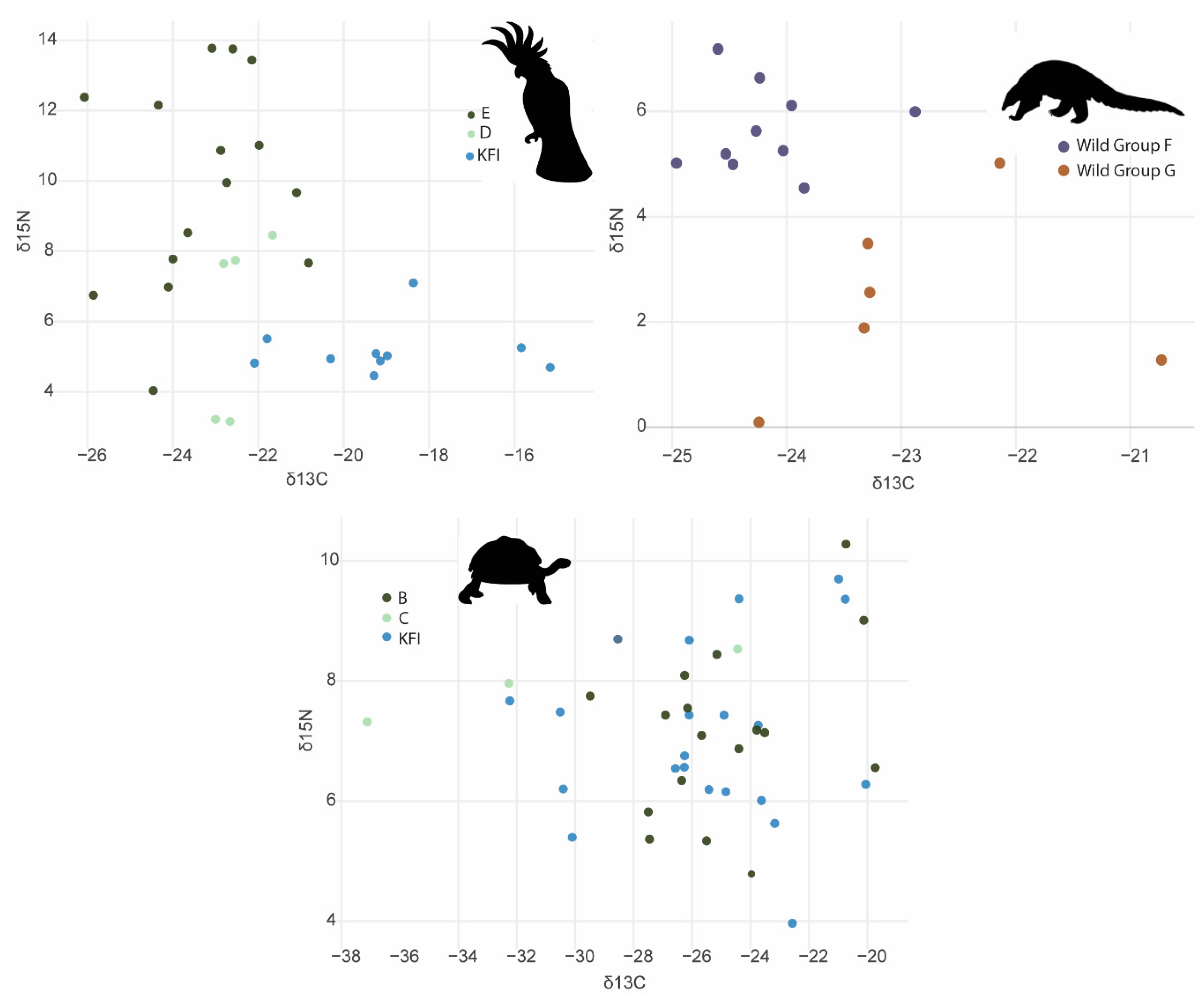

Table 1.
Sample details of the Palawan forest turtle, Philippine cockatoo and Philippine pangolin collected across Palawan Island, including captive animals cared for by the Katala Foundation Incorporated. True locations are not provided in the interest of protecting these highly traded species.
Table 1.
Sample details of the Palawan forest turtle, Philippine cockatoo and Philippine pangolin collected across Palawan Island, including captive animals cared for by the Katala Foundation Incorporated. True locations are not provided in the interest of protecting these highly traded species.
| Common Name | Species Name | Sample | Provenance | Site | n |
|---|---|---|---|---|---|
| Palawan forest turtle | Siebenrockiella leytensis | Scute | Captive | KFI | 24 |
| Wild | B | 18 | |||
| C | 3 | ||||
| Philippine cockatoo | Cacatua haematuropygia | Feather | Captive | KFI | 20 |
| Wild | D | 24 | |||
| E | 21 | ||||
| Philippine pangolin | Manis culionensis | Claw | Wild | F | 10 |
| Scale | Wild | G | 6 | ||
Table 2.
Predictive model results differed in accuracy amongst the three study species; Palawan forest turtle, Philippine cockatoo and Philippine pangolin, based on the data sets used (portable X-ray fluorescence (pXRF) or stable isotope analysis (SIA)) and based on the response variable (captive or wild status, geographic origin).
Table 2.
Predictive model results differed in accuracy amongst the three study species; Palawan forest turtle, Philippine cockatoo and Philippine pangolin, based on the data sets used (portable X-ray fluorescence (pXRF) or stable isotope analysis (SIA)) and based on the response variable (captive or wild status, geographic origin).
| Species | Response variable | pXRF model % accuracy ±SD |
SIA model % accuracy ±SD |
|---|---|---|---|
| Palawan forest turtle | Captive or wild | 88±12% | 66±16% |
| Geographic origin | 94±5% | 73±14% | |
| Philippine cockatoo | Captive or wild | 78±2% | 28±1% |
| Geographic origin | 62±9% | 27±2% | |
| Philippine pangolin | Group | 93±14% | 41±25% |
Disclaimer/Publisher’s Note: The statements, opinions and data contained in all publications are solely those of the individual author(s) and contributor(s) and not of MDPI and/or the editor(s). MDPI and/or the editor(s) disclaim responsibility for any injury to people or property resulting from any ideas, methods, instructions or products referred to in the content. |
© 2023 by the authors. Licensee MDPI, Basel, Switzerland. This article is an open access article distributed under the terms and conditions of the Creative Commons Attribution (CC BY) license (http://creativecommons.org/licenses/by/4.0/).
Copyright: This open access article is published under a Creative Commons CC BY 4.0 license, which permit the free download, distribution, and reuse, provided that the author and preprint are cited in any reuse.


