

Submitted:
12 June 2023
Posted:
13 June 2023
You are already at the latest version
Abstract
There is a growing interest in a potential use of essential oils (EOs) as a possible alternative for chemical pesticides. The formulation between different EOs could maximize the single biological efficacy by synergic mechanism. The aim of the current study was to evaluate the biological activity of three prepared blended oil formulations (BOFs) derived from Origanum vulgare L. (oregano) and Salvia officinalis L. (sage) compared to each parent EO. The chemical composition of each single studied EO has been revealed using GC-MS analysis. The three BOFs have been prepared as following: i) 25% oregano EO + 25% sage EO (BOF-I); ii) 25% oregano EO + 5% sage EO (BOF-II); iii) 5% oregano EO + 25% sage EO (BOF-III). The antibacterial activity of the new BOFs has been evaluated against Bacillus megaterium, B. cereus and Xanthomonas campestris, whereas, the antifungal activity has been carried out against Botrytis cinerea, Penicillium italicum and Fusarium oxysporum. The possible phytotoxic effect of the new BOFs has been evaluated on Lepidium sativum (garden cress), Solanum lycopersicum (tomato) and Lactuca sativa (lettuce) following the seed germination and radicle elongation assay. GC-MS analysis revealed that the oregano EO composed mainly from thymol, p-cymene and carvacrol with 76.0, 5.7 and 3.2 %, respectively. Whereas, salvia EO, the GC-MS analysis showed that the relevant predominant constituents were trans-thujone and camphor with 37,9 and 13,9 %, respectively. Results demonstrated that the tested BOFs possess antimicrobial effect higher than each parent EO. In particular, BOF-II showed the highest effect against all tested bacteria. Regarding the antifungal activity, BOF-II showed the highest significant antifungal effect against all tested fungi. Results showed also that both BOF-I and BOF-III explicated a moderate effect against B. cereus and all tested fungi compared to single EOs. In addition, the three BOFs showed notable phytotoxic effect against all three tested plants, particularly BOF-I. Whereas, the single sage EO at 25% showed the lowest significant phototoxic effect indicating its possible using as natural herbicides.
Keywords:
antibacterial activity
; microbial resistance
; green substances
; natural products
; aromatic plants
; GC-MS analysis
1. Introduction
Synthetic pesticides and herbicides demonstrating, generally, a high contamination-risk for the environment, soil, water and human health [1,2,3]. Therefore, there is a huge interest for discovering natural substances-based plant or microbe origin with pesticidal and/or herbicidal effect [3,4]. It is well-know that the utilization of synthetic pesticides has increased microorganism resistance. The use of natural substances based medicinal plants or microbial origins can be useful for decreasing the environmental hazards, avoiding the microbial resistance to synthetic pesticides [5,6,7,8]. Hence the search for alternative natural substances or new-efficient formulations phytopathogens is necessary [9].
Among the most important natural substances with promising biological effect are essential oils (EOs) which are concentrated hydrophobic liquid containing volatile compounds extracted from plants [10,11,12]. Plant EOs are complex mixtures of mostly terpenoids compounds as plant secondary metabolites [13,14,15,16], which can be used as possible alternative to conventional microbicide and/or herbicides [13,17,18,19].
Origanum vulgare L. (family Lamiaceae) is aromatic plant, commonly known as oregano, world widespread and particularly in Mediterranean region for its biological, nutritional, cosmetic and pharmaceutical activities [4,20]. Oregano EO has been recently considered as natural herbicide against several harmful weeds as promising substitute for synthetic herbicides [4]. Regarding, Salvia officinalis L. (Lamiaceae), commonly called sage, native to Mediterranean region and naturalized in many world places, has a long history of medicinal and culinary uses [21,22]. Sage is considered one of the most important sources of plant EOs [21,23].
The composition of EOs from the same plant species can vary considerably, depending on growth conditions, variety, environmental factors, etc [15,24,25]. The widespread use of EOs has decreased due to a number of issues, including higher costs. Therefore, many researchers are eager to discover novel formulations of two or more EOs that could have a synergistic biological effect while also being more affordable. However, the new formulations should be accurately evaluated to avoid any possible negative health impact or phytotoxic effect [26].
This main objective of the current study was to prepare, characterize and assess the efficacy of three novel blended essential-oil formulations (BOFs) between Oregano vulgare and Salvia officinalis that might have a synergistic biological effect to enable a reduction in effective dose at a lower cost. In particular, the this research was carried out to: i) chemically characterize the main single constituents of both tested EOs using GC-MS; ii) evaluate the antimicrobial activity of the three novel BOFs against some phytopathogens; iii) determine the minimum inhibitory concentration (MIC) of the most bioactive tested formulation; iv) evaluate the possible phytotoxic effect of new BOFs on the seed germination and radical elongation of Lepidium sativum, Solanum lycopersicum and Lactuca sativa.
2. Results
2.1. GC-MS analysis
The analysis of chemical composition of O. vulgare EO allowed the identification of 42 components which represent 96.4% of the total oil (Table 1). In particular, the predominant constituents are: thymol (76.0%), p-cymene (5.7%), carvacrol (3.2%), linalool (2.6%) and γ-terpinene (2.5%). Based on the dominance of thymol, the tested oregano EO is identified as thymol chemotype in agreement with Mancini et al. [17]. On the other hand, the chemical analysis of S. officinalis EO allowed to identify 64 compounds accounting 98,7% of the total oil as listed in Table 2. Monoterpenes are the most abundant compounds found in sage EO. In particular, the most abundant single components are: trans-thujone (37.9%), camphor (13.9%) and borneol (7.6%) in agreement with Elshafie et al. [21].
2.2. Antimicrobial activity
2.2.1. Bactericidal activity
The three studied BOFs exhibited promising antibacterial effect against all three tested bacteria (Figure 1). In particular, BOF-II showed the highest significant effect against B. cereus and X. campestris, and moderate against B. megaterium. In addition, tetracycline showed significantly higher activity against B. megaterium than BOF-II, however it showed lower activity against B. cereus and X. campestris.
2.2.2. Fungicidal activity
The three studied BOFs exhibited promising antifungal effect against the tested fungi. In particular, the BOF-II formulation showed a complete inhibition of mycelium growth of the three tested pathogenic fungi (Figure 2). In addition, the BOF-III showed higher antifungal effect than BOF-I against P. italicum and B. cinerea, however the both formulations (BOF-III and BOF-I) showed moderate effect against F. oxysporum. On the other hand, BOF-I showed moderate activity against B. cinerea insignificantly to the crude oregano EO at 250 µg/mL.
2.3. Phytotoxic activity
The studied BOFs exhibited high phytotoxic effect against all tested plants (Table 3). In particular, the BOF-I formulation showed the highest significant effect on the seed germination of L. sativum and moderate on S. lycopersicum. In addition, the three tested BOFs showed the highest significant phytotoxic effect against the seeds of L. sativa. Furthermore, crude sage EO (250 µg/mL) showed the lowest significant phytotoxic effect on both L. sativum and S. lycopersicum compared to all other treatments.
2.4. MBC analysis
This assay was carried out to determine the minimum bactericidal concentration (MBC) which is defined as the lowest concentration of the tested formulation that can inhibit the growth of bacteria significantly different to the growth of the negative control. The results of the MBC of the BOF-II on the bacteria growth are illustrated in Figure 3A,C,E. The MBC values of the tested BOF-II against B. cereus, Clavibacter michiganensis and X. campestris were 4000, 2000 and 1000 µg/mL, respectively (Table 4).
Whereas the IC50 were calculated using the tendency-line formula of the chart in Microsoft Excel (Figure 3B,D,F), where the BOF-II showed 4462,5, 6219,9, and 7715,6 µg/mL, corresponding to the inhibition of 50% visible growth of bacterial colonies of B. cereus, C. michiganensis and X. campestris, respectively (Table 4).
3. Discussion
Several research reported that different species of oregano such as O. heracleoticum, O. majorana, O. vulgare, O. acutidens and O. onites have been known for their biological activity due to their main single constituents such as thymol, carvacrol, citral, linalool, γ- or cis-terpinene and trans-sabinene hydrate [20,22,27,28]. In particular, O. vulgare EO showed promising antibacterial, antifungal and antiviral activities against several phytopathogens as reported by different research [3,4,17]. Oregano EO was able to inhibit significantly some fungal and bacterial phyto- and human pathogens such as B. cinerea, Penicillium expansum, Phytophthora citrophthora, Rhizopus stolonifer, Aspergillus niger, F. oxysporum, Sclerotinia sclerotiorum, Staphylococus aureus, C. michiganensis and Xanthomonas vesicatoria [3,4,5,28].
The antimicrobial activity of S. officinalis EO has been also reported by several research, particularly against some phytopathogenic bacteria in a dose dependent manner such as C. michiganensis, X. campestris and Pseudomonas savastanoi [21,29]. In addition, sage EO showed antifungal activity against P. citrophthora and R. stolonifer as reported by Camele et al. [30].
On the other hand, it has been recognized that various EO components act as multi-target molecules exerting several modes of actions in the target organisms [31]. In particular, single EO-molecules are able to penetrate microbial cell wall and directly interact with the plant plasma membrane, which is one of the potential cellular targets of EOs [12,18,32]. Monoterpenes, one of the main constituents of EOs, can alter the lipid organization, domain formation and phenylpropanoid which could interact with membrane receptors [33]. However, some research found that EOs had little effect on fungal development due to the physiological resistance mechanisms in fungi that neutralize the fungicides and use the liberated molecules as a secondary nutrition may be responsible for this phenomenon. As an alternative, fungi might accelerate their reproductive processes in toxic nutrient medium, which may increase the production of conidia [34].
Certain issues with EOs-based microbicides, like volatility, solubility, and oxidation, considerably affect their application and activity, therefore the new formulations can solve these issues. In this situation, EOs release under controlled conditions through blended formulations and may hold significant potential as available natural biopesticides [35]. The synergistic interactions of various crude EOs or their single constituents have been investigated for numerous researches. However, the synergistic effects of more than two EOs or their constituents have previously received low research attention [36]. Because the antimicrobial actions of various EOs depend primarily on one or more primary constituents, combining various EOs or their constituents can increase their efficacy by expanding their number of sites of action. In consequences, this combination may enhance the EOs effectiveness against different microbial pathogens even at lower doses, as opposed to the usage of a single EO or compound. It's relevant to note that phenolic monoterpenes like thymol and carvacrol, as well as phenylpropanoid compounds like eugenol and chavicol, have been shown to increase bioactivities such as antimicrobial and other biopharmaceutical properties [37].
The obtained results of phytotoxic effect demonstrated that the studied BOFs have clear effect against all tested plants especially BOF-I formulation against the seeds of L. sativum. In addition, the three tested BOFs showed the highest significant phytotoxic effect against the seeds of L. sativa. Furthermore, crude sage EO (250 µg/mL) showed the lowest significant phytotoxic effect on both L. sativum and S. lycopersicum compared to all other treatments.
The obtained results from the current research underlined the potential antimicrobial and phytotoxic effects of the new BOFs which indicate their possibility to control both serious phytopathogens and harmful weeds. Further research remains necessary to explain the possibility of using these new formulations as green alternatives-based plant EOs for replacing the traditional synthetic ones for pathogen and weed control in crop fields. Furthermore, in order to better understand the synergistic interactions between various EOs and to pinpoint the precise contributions of certain single constituents, more investigations are required. A systemic examination of the synergy among various elements should also be conducted in order to examine the mode of action of both single and multiple EOs.
4. Materials and Methods
4.1. Plant materials, extraction EOs and formulation
The EOs used for BOFs have been extracted from oregano (O. vulgare) and sage (S. officinalis) which were cultivated in the greenhouse of the School of Agricultural, Forestry, Food and Environmental Sciences, University of Basilicata, Potenza (Italy). The aerial parts, used for EOs extraction, were collected in Spring 2021, dried in oven at 65°C for 48 hrs. A 100 g of dried materials were ground in waring blender (city and model) and subjected to hydrodistillation for 3 hrs using a Clevenger-type apparatus (city and model) according to the standard procedure described in the European Pharmacopoeia [38]. The extracted EOs were solubilized in n-hexane, filtered using anhydrous sodium sulphate (Na2SO4) and stored under liquid nitrogen (N2) at 4°C in darkness. The studied BOFs were prepared in DMSO (0.7 %) + Tween 20 (0.2%) at following concentrations:
I. [BOF-I] oregano EO (250 µg/mL) + sage EO (250 µg/mL);
II. [BOF-II] oregano EO (250 µg/mL) + sage EO (50 µg/mL);
III. [BOF-III] oregano EO (50 µg/mL) + sage EO (250 µg/mL).
In addition, the two EOs have been tested, individually, at 250 µg/mL for biological assays compared to the prepared formulations.
4.2. GC-MS analysis
The chemical composition of the studied two EOs was carried out using Gas Chromatograph Shimadzu brand (GC 2010 Plus) coupled to a QP 2010 Ultra Mass Spectrometer (GC-MS). The separation of EO components was achieved by capillary column chromatography on 0.25 μm thick flash silica RTX-5MS (30 mm x 0.25 mm), using Helium as eluting gas with a flow rate set of 1.2 ml.min−1. Samples (1 μl) were injected in split mode (leakage ratio: 1/50). The device was connected to a computer system managing a mass spectrum library NIST 98 and driven by software to monitor chromatographic analyses. Identification of each single constituent of both EOs was made through the comparison of their retention indices with those of standard compounds presented in database NIST 02 and Wiley 275 libraries (Wiley Registry of Mass Spectral Data) [39].
4.3. Antimicrobial activity
Bacterial strains. The tested bacterial strains were Xanthomonas campestris (Pammel) Dowson, Bacillus megaterium de Bary and B. cereus Frankland & Frankland. All tested bacteria were cultured on King B (KB) media [40] and incubated at 37°C for 24 hrs.
Fungal strains. The tested fungal isolates were Botrytis cinerea Pers., Penicillium italicum Wehmer and Fusarium oxysporum Schlecht. All tested fungal isolates were cultured on Potato Dextrose Agar (PDA) media and incubated at 24°C for 96 hrs [41].
4.3.1. Bactericidal assay
The disc diffusion method has been carried out for evaluating the antibacterial activity of the parent EOs (250 µg/mL) and BOFs [42,43]. Briefly, the bacterial suspension of each strain was prepared in sterile distilled water (SDW) and incorporated in soft agar 0.7% (9:1, v/v) adjusted by spectrophotometer (Amersham, Ultraspec 1100 pro/500 pro, UK) at 108 colony form unit (CFU)/mL corresponding to 0.2 nm optical density (OD). Four mL of each bacterial suspension was poured singularly into Petri dish (Ø 90 mm) containing 10 ml of KB media. Blank Discs (Ø 6 mm) (OXOID, Milan, Italy) were pre-treated with each parent EO (250 µg/mL) or different BOFs and placed over inoculated plates and incubated at 37°C for 24 hrs. Bactericidal activity has been evaluated by measuring the diameter of eventual inhibition zones (mm). The bacterial growth inhibition (BGI %) was calculated using the equation (1) compared to tetracycline at 1600 µg/mL as positive controls (C+ve). The experiment was carried out in triplicates and the standard deviations (SDs) was calculated.
where: BGI is the bacterial growth inhibition percentage; Gc is the average diameter of bacterial grown in the control plate (mm); Gt is the average diameter of inhibition zone in inoculated plates (mm).
4.3.2. Fungicidal assay
The antifungal activity of the parent EOs and the prepared BOFs has been evaluated against the above mentioned phytopathogenic fungi following the incorporation method [18,44,45]. Briefly, 14 mL of PDA supplemented with each single EO at 250 µg/mL or BOFs were poured into Petri dishes (Ø 90 mm). Single agar disks (Ø 0.5 cm) of fresh fungal cultures was inoculated in pre-treated PDA Petri dishes. Untreated PDA plates were inoculated only with tested fungi as negative control (C-ve). All plates were incubated at 24°C for 6 days in darkness and the diameter of mycelium was measured (mm) [18,19,31]. The fungal growth inhibition (FGI %) was calculated following equation (2) compared to cycloheximide at 100 µg/mL as positive control (C+ve). The experiment was carried out in triplicates and SDs was calculated.
where: FGI is the fungal growth inhibition percentage; Gc = average diameter of fungal mycelium in control plates; Gt = average diameter of fungal mycelium in treated plates.
4.4. Miminum bactericidal concentration (MBC)
The minimum bactericidal concentration (MBC) of the most bioactive BOF was carried out against all tested phytopathogens using 96-well microplate (Nunc MaxiSorp®, Vedbaek, Denmark) following micro-dilution method [21]. The potato dextrose broth (PDB) and liquid King B (KB) media were used for the preparation of fungal and bacterial suspensions, respectively. BOF-II, the most bioactive EO-formulation, was dissolved in PDB at 10000, 8000, 4000, 2000, 1000 and 500 µg/mL concentrations according to the obtained results from the preliminary in vitro antimicrobial assays. One hundred microlitres/well from each prepared concentration were added into the microplate pre-supplemented with 50 µL/well of microbial suspension. All plates were incubated at 37°C per 24 hrs. The absorbance was measured using microplate reader instrument (DAS s.r.l., Rome, Italy) at λ = 540 nm. Tetracycline (1,6 mg/mL) was used as the positive control (Cont.+ve), whereas wells only filled with broth nutrient media of minimal mineral were considered as negative control (Cont+MM). The MBC values against each tested strain was determined by monitoring the lowest tested concentration caused a significant bacterial growth reduction in comparison with the positive control. Whereas the IC50 were calculated using the tendency-line formula provided by Microsoft excel software.
4.5. Phytotoxic assay
A bioassay based on seed germination (SG) and radical elongation (RE) was carried out to evaluate the possible phytotoxic effect of studied crude EOs and new prepared BOFs were tested on the seeds of L. sativum, S. lycopersicum and L. sativa [46,47]. Seeds were sterilized in 3% hydrogen peroxide (H2O2) for 1 min, rinsed twice with deionized SDW and then, placed either in in each single BOF at 250 µg/mL for 2 hrs or SDW as negative control (C-ve) under shaking condition (200 rpm/min). Fifteen seeds were transferred into Petri dishes (Ø 90 mm) containing two sterile filter papers (Whatman No.1), pre-moistened with 2 mL of deionized SDW, and sealed with Parafilm. All petri dishes were incubated in a growth chamber at 28°C with relative humidity (RH) 80% in darkness for 72 hrs. The number of germinated seeds was counted and the radical elongation was measured in cm. The experiment was carried out in triplicate and the germination index (G.I.) was calculated following Equation (3):
Where: G.I. is germination index; SGt is average number of germinated treated-seeds; REt is average radical elongation of treated-seeds; SGc is average number of germinated seeds of negative control; REc is average radical elongation of negative control.
4.6. Statistical analysis
The obtained results of the biological assays have been statistically analyzed applying one-way ANOVA using Package for the Social Sciences (SPSS) version 13.0 (Prentice Hall: Chicago, IL, USA, 2004). Tukey B Post Hoc multiple comparison test was applied for evaluating the significance level with probability of P< 0.05.
5. Conclusions
As conclusion, the obtained results of antimicrobial activity assays are promising because it underlined the feasibility of employing the new BOFs at lower concentrations as possible microbicide natural substances either in agriculture filed or agro-pharmaceutical industry. On the other hand, the achieved results highlighted the need for further investigation for potential use of the novel developed EO-formulations as natural herbicides, particularly in organic farming. The synergistic effects of different EOs such as creative BOFs or encapsulation may increase their efficacy and selectivity against serious phytopathogens even at lower doses. Additionally, from an economic perspective, the use of these alternative biocontrol methods can significantly reduce their cost.
Author Contributions
Conceptualization, Hazem Elshafie and Ippolito Camele; Data curation, Ippolito Camele; Formal analysis, Hazem Elshafie; Funding acquisition, Ippolito Camele; Investigation, Ippolito Camele; Methodology, Hazem Elshafie; Visualization, Hazem Elshafie; Writing – original draft, Hazem Elshafie; Writing – review & editing, Ippolito Camele.
Funding
This study was carried out within the Agritech National Research Center and received funding from the European Union Next-GenerationEU (PIANO NAZIONALE DI RIPRESA E RESILIENZA (PNRR)—MISSIONE 4 COMPONENTE 2, INVESTIMENTO 1.4—D.D. 1032 17/06/2022, CN00000022). This manuscript reflects only the authors’ views and opinions; neither the European Union nor the European Commission can be considered responsible for them.
Institutional Review Board Statement
Not applicable.
Informed Consent Statement
Not applicable.
Data Availability Statement
Not applicable.
Conflicts of Interest
The authors declare no conflict of interest.
References
- Duke, S.O. Why have no new herbicide modes of action appeared in recent years? Pest Manag. Sci. 2012, 68, 505–512. [Google Scholar] [CrossRef] [PubMed]
- Nicolopoulou-Stamati, P.; Maipas, S.; Kotampasi, C.; Stamatis, P.; Hens, L. Chemical Pesticides and Human Health: The Urgent Need for a New Concept in Agriculture. Front. Public Health 2016, 4, 148. [Google Scholar] [CrossRef]
- Gruľová, D.; Caputo, L.; Elshafie, H.S.; Baranová, B.; De Martino, L.; Sedlák, V.; Camele, I.; De Feo, V. Thymol Chemotype Origanum vulgare L. Essential Oil as a Potential Selective Bio-Based Herbicide on Monocot Plant Species. Molecules 2020, 25, 595. [Google Scholar] [CrossRef]
- Della Pepa, T.; Elshafie, H.S.; Capasso, R.; De Feo, V.; Camele, I.; Nazzaro, F.; Scognamiglio, M.R.; Caputo, L. Antimicrobial and phytotoxic activity of Origanum heracleoticum and O. majorana essential oils growing in Cilento (Southern Italy). Molecules 2019, 24, 2576. [Google Scholar]
- Anyanwu, M.U.; Okoye, R.C. Antimicrobial activity of Nigerian medicinal plants. J. Intercult. Ethnopharmacol. 2017, 6, 240–259. [Google Scholar] [CrossRef]
- Cazella Luciane, N.; Glamoclija, J.; Soković, M.; Gonçalves, J.E.; Linde, G.A.; Colauto, N.B.; Gazim, Z.C. Antimicrobial Activity of Essential Oil of Baccharis dracunculifolia DC (Asteraceae) Aerial Parts at Flowering Period. Frontiers Plant Sci. 2019, 10. [Google Scholar]
- Camele, I.; Elshafie, H.S.; Caputo, L.; Sakr, S.H.; De Feo, V. Bacillus mojavensis: Biofilm formation and biochemical investigation of its bioactive metabolites. J. Biol. Res. 2019, 92, 39–45. [Google Scholar] [CrossRef]
- Rossolini, G.M.; Arena, F.; Pecile, P.; Pollini, S. Update on the antibiotic resistance crisis. Curr. Opin. Pharmacol. 2014, 18, 56–60. [Google Scholar] [CrossRef]
- Elshafie, H.S.; Racioppi, R.; Bufo, S.A.; Camele, I. In vitro study of biological activity of four strains of Burkholderia gladioli pv. agaricicola and identification of their bioactive metabolites using GC–MS. Saudia J. Biol Sci. 2017, 24, 295–301. [Google Scholar] [CrossRef]
- Filho, J.G.; Silva, G.; de Aguiar, A.C.; Cipriano, L.; de Azeredo, H.M.C.; Junior, S.B.; Ferreira, M.D. Chemical composition and antifungal activity of essential oils and their combinations against Botrytis cinerea in strawberries. J. Food Meas. Charact. 2021, 15, 1815–1825. [Google Scholar] [CrossRef]
- Camele, I.; Elshafie, H.S.; De Feo, V.; Caputo, L. Anti-quorum Sensing and Antimicrobial Effect of Mediterranean Plant Essential Oils Against Phytopathogenic Bacteria. Front. Microbiol. 2019, 10, 2619. [Google Scholar] [CrossRef] [PubMed]
- Elshafie, H.S.; Camele, I. An overview of The Biological Effects of Some Mediterranean Essential Oils on Human Health (Review article). Biomed Res. Int. 2017, 2017, Article ID 9268468, pp. 14. [Google Scholar] [CrossRef]
- Elshafie, H.S.; Caputo, L.; De Martino, L.; Gruľová, D.; Zheljazkov, V.D.; De Feo, V.; Camele, I. Biological investigations of essential oils extracted from three Juniperus species and evaluation of their antimicrobial, antioxidant and cytotoxic activities. J. Appl. Microbiol. 2020, 129, 1261–271. [Google Scholar] [CrossRef] [PubMed]
- Tomazoni, E.Z.; Pauletti, G.F.; da Silvaibeiro, R.T.; Moura, S.; Schwambach, J. In vitro and in vivo activity of essential oils extracted from Eucalyptus staigeriana, Eucalyptus globulus and Cinnamomum camphora against Alternaria solani Sorauer causing early blight in tomato. Sci. Hortic. 2017, 223, 72–77. [Google Scholar] [CrossRef]
- Elshafie, H.S.; Ghanney; N. ; Mang, S.M.; Ferchichi, A.; Camele, I. 'An in vitro attempt for controlling severe phyto and human pathogens using essential oils from Mediterranean plants of genus Schinus. J. Med. Food 2016, 19, 266–273. [Google Scholar] [CrossRef]
- Elshafie, H.S.; Camele, I.; Mohamed, A.A. A Comprehensive Review on the Biological, Agricultural and Pharmaceutical Properties of Secondary Metabolites Based-Plant Origin. Int. J. Mol. Sci. 2023, 24, 3266. [Google Scholar] [CrossRef]
- Mancini, E.; Camele, I.; Elshafie, H.S.; De Martino, L.; Pellegrino, C.; Grulova, D.; Vincenzo De Feo. Chemical Composition and Biological Activity of the Essential Oil of Origanum vulgare ssp. hirtum from Different Areas in the Southern Apennines (Italy). Chem. Biodiver. 2014, 11, 639–651. [Google Scholar] [CrossRef]
- Camele, I.; Grul’ová, D.; Elshafie, H.S. Chemical Composition and Antimicrobial Properties of Mentha _ piperita cv. ‘Kristinka’ Essential Oil. Plants 2021, 10, 1567. [Google Scholar] [CrossRef]
- Ardakani, M.S.; Mosadeggh, M.; Shafaati, A. Volatile constituents from the aerial parts of Verbena officinalis L (Vervain). Iran. J. Pharm. Res. 2003, 2, 39–42. [Google Scholar]
- Elshafie, S.S.; Elshafie, H.S.; El Bayomi, R.M.; Camele, I.; Morshdy, A.E.M. Evaluation of the Antimicrobial Activity of Four Plant Essential Oils against Some Food and Phytopathogens Isolated from Processed Meat Products in Egypt. Foods 2022, 11, 1159. [Google Scholar] [CrossRef]
- Elshafie, H.S.; Sakr, S.; Mang, S.M.; De Feo, V.; Camele, I. Antimicrobial activity and chemical composition of three essential oils extracted from Mediterranean aromatic plants. J. Med. Food. 2016, 19, 1096–1103. [Google Scholar] [CrossRef] [PubMed]
- Tundis, R.; Leporini, M.; Bonesi, M.; Rovito, S.; Passalacqua, N.G. Salvia officinalis L. from Italy: A Comparative Chemical and Biological Study of Its Essential Oil in the Mediterranean Context. Molecules 2020, 10, 25–5826. [Google Scholar] [CrossRef] [PubMed]
- A´cimovi´c, M.; Pezo, L.; Cabarkapa, I.; Trudi´c, A.; Stankovi´c ˇ Jeremi´c, J.; Varga, A.; Lonˇcar, B.; Šovljanski, O.; Teševi´c, V. Variation of Salvia officinalis L. Essential Oil and Hydrolate Composition and Their Antimicrobial Activity. Processes 2022, 10, 1608. [Google Scholar] [CrossRef]
- Glisic, S.; Ivanovic, J.; Ristic, M.; Skala, D. Extraction of sage (Salvia officinalis L.) by supercritical CO2: Kinetic data, chemical composition and selectivity of diterpenes. J. Supercrit. Fluids 2010, 52, 62–70. [Google Scholar] [CrossRef]
- Fatma, Ebru, K. ; Ayse, A.; Caglar, K. Extraction and HPLC Analysis of Sage (Salvia officinalis) Plant. Nat. Prod. Chem. Res. 2017, 5, 298. [Google Scholar]
- Keifer, M.C.; Firestone, J. Neurotoxicity of pesticides. J. Agromed. 2007, 12, 17–25. [Google Scholar] [CrossRef]
- Mirmostafaee, S.; Azizi, M.; Fujii, Y. Study of Allelopathic Interaction of Essential Oils from Medicinal and Aromatic Plants on Seed Germination and Seedling Growth of Lettuce. Agronomy 2020, 10, 163. [Google Scholar] [CrossRef]
- Kim, J.Y.; Lee, S.Y. Application of food-grade natural antimicrobials for the control of crop disease caused by phytopathogens. Food Sci. Biotechnol. 2022, 31, 275–284. [Google Scholar] [CrossRef]
- Bakkali., F.; Averbeck., S.; Averbeck., D.; Idaomar, M. Biological effects of essential oils—a review. Food Chem. Toxicol. 2008, 46, 446–475. [Google Scholar] [CrossRef]
- Camele, I.; De Feo, V.; Altieri, L.; Mancini, E.; De Martino, L.; Rana, G.L. An attempt of postharvest orange fruit rot control using essential oils from Mediterranean plants. J. Med. Food 2010, 13, 1515–1523. [Google Scholar] [CrossRef]
- Buriani, A; Fortinguerra, S; Sorrenti, V; Caudullo, G; Carrara, M. Essential Oil Phytocomplex Activity, a Review with a Focus on Multivariate Analysis for a Network Pharmacology-Informed Phytogenomic Approach. Molecules 2020, 16, 25–1833. [Google Scholar]
- Bouyahya, A.; Abrini, J.; Dakka, N.; Bakri, Y. Essential oils of Origanum compactum increase membrane permeability, disturb cell membrane integrity, and suppress quorum-sensing phenotype in bacteria. J. Pharmaceut. Anal. 2019, 9, 301–311. [Google Scholar] [CrossRef] [PubMed]
- Dhifi W; Bellili S. ; Jazi S.; Bahloul N.; Mnif W. Essential Oils' Chemical Characterization and Investigation of Some Biological Activities: A Critical Review. Medicines 2016, 22, 3–25. [Google Scholar]
- Lak, F.; Zandi-Sohani, N.; Ghodoum Parizipour, M.H.; Ebadollahi, A. Synergic effects of some plant-derived essential oils and Iranian isolates of entomopathogenic fungus Metarhizium anisopliae Sorokin to control Acanthoscelides obtectus (Say) (Coleoptera: Chrysomelidae). Front. Plant Sci. 2022, 13, 1075761. [Google Scholar] [CrossRef] [PubMed]
- Martin, Á.; Varona, S.; Navarrete, A.; Cocero, M.J. Encapsulation and co-precipitation processes with supercritical fluids: applications with essential oils. Open Chem. Eng. J. 2010, 4, 31–41. [Google Scholar] [CrossRef]
- Basavegowda, N.; Baek, K.H. Synergistic Antioxidant and Antibacterial Advantages of Essential Oils for Food Packaging Applications. Biomolecules 2021, 2, 1267. [Google Scholar] [CrossRef]
- García-García, R.; López-Malo, A.; Palou, E. Bactericidal action of binary and ternary mixtures of carvacrol, thymol, and eugenol against Listeria innocua. J. Food Sci. 2011, 76, 95–100. [Google Scholar] [CrossRef] [PubMed]
- Council of Europe. European Pharmacopoeia, 5th ed. Council of Europe: Strasbourg Cedex, France, I, 2004, 217.
- Wiley Registry of Mass Spectral Data, with NIST Spectral Data CD Rom, 7th ed. John Wiley & Sons: New York, NY, USA, 1998.
- King, E.O.; Ward, M.K.; Raney, D.E. Two simple media for demonstration of pyocyanin and fluorescin. J. Lab. Clin. Med. 1954, 44, 301–307. [Google Scholar]
- Elshafie, H.S.; Camele, I.; Racioppi, R.; Scrano, L.; Iacobellis, N.S.; Bufo, S.A. In vitro antifungal activity of Burkholderia gladioli pv. agaricicola against some Phytopathogenic fungi. Int. J. Mol. Sci. 2012, 13, 16291–16302. [Google Scholar]
- Elshafie, H.S.; Viggiani, L.; Mostafa, M.S.; El-Hashash, M.A.; Bufo, S.A.; Camele, I. Biological activity and chemical identification of ornithine lipid produced by Burkholderia gladioli pv. agaricicola ICMP 11096 using LC-MS and NMR analyses. J. Biol. Res. 2017, 90, 96–103. [Google Scholar] [CrossRef]
- Elshafie, H.S.; Sakr, S.H.; Sadeek, S.A.; Camele, I. Biological investigations and spectroscopic studies of new Moxifloxacin/Glycine-Metal complexes. Chem. Biodivers. 2019, 16, e1800633. [Google Scholar] [CrossRef]
- Sofo, A.; Elshafie, H.S.; Scopa, A.; Mang, S.M.; Camele, I. Impact of airborne zinc pollution on the antimicrobial activity of olive oil and the microbial metabolic profiles of Zn-contaminated soils in an Italian olive orchard. J. Trace Elem. Med. Biol. 2018, 49, 276–284. [Google Scholar] [CrossRef] [PubMed]
- Zygadlo, J.A.; Guzman, C.A.; Grosso, N.R. Antifungal properties of the leaf oils of Tagetes minuta L. and Tagetes filifolia Lag. J. Essent. Oil Res. 1994, 6, 617–621. [Google Scholar] [CrossRef]
- Ceglie, F.; Elshafie, H.S.; Verrastro, V.; Tittarelli, F. Evaluation of Olive Pomace and Green Waste Composts as Peat Substitutes for Organic Tomato Seedling Production. Compost Sci. Util. 2011, 19, 293–300. [Google Scholar] [CrossRef]
- Fallik, E.; Klein, J.; Grinberg, S.; Lomaniee, E.; Lurie, S.; Lalazar, A. Effect of postharvest heat treatment of tomatoes on fruit ripening and decay caused by Botrytis cinerea. Plant Dis. 1993, 77, 985–988. [Google Scholar] [CrossRef]
Figure 1.
Antibacterial activity of crude EOs and of BOFs. Where, org250: oregano EO at 250 µg/mL; salv250: sage EO at 250 µg/mL; BOF-I: formulation between oregano EO at 250 and sage EO at 250 µg/mL; BOF-II: formulation between oregano EO at 250 and sage EO at 50 µg/mL; BOF-III: formulation between oregano EO at 50 and sage EO at 250 µg/mL. Tetracycline was used as positive control at 1,6 mg/mL. Bars with different letters for each tested bacteria indicate mean values significantly different at p<0.05 according to one-way ANOVA combined with Tukey B post hoc multiple comparison test. Data are expressed as mean of three replicates ± SDs.
Figure 1.
Antibacterial activity of crude EOs and of BOFs. Where, org250: oregano EO at 250 µg/mL; salv250: sage EO at 250 µg/mL; BOF-I: formulation between oregano EO at 250 and sage EO at 250 µg/mL; BOF-II: formulation between oregano EO at 250 and sage EO at 50 µg/mL; BOF-III: formulation between oregano EO at 50 and sage EO at 250 µg/mL. Tetracycline was used as positive control at 1,6 mg/mL. Bars with different letters for each tested bacteria indicate mean values significantly different at p<0.05 according to one-way ANOVA combined with Tukey B post hoc multiple comparison test. Data are expressed as mean of three replicates ± SDs.
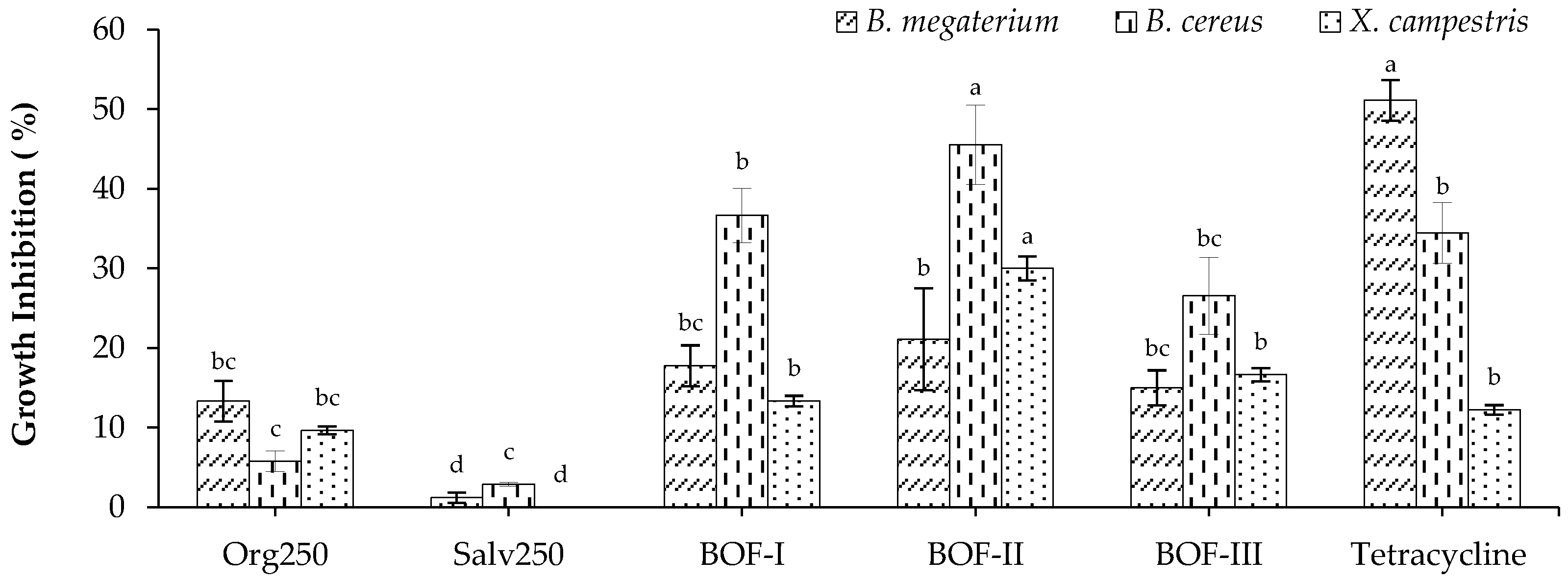
Figure 2.
Antifungal activity of crude EOs and BOFs. Where: PDA is plates containing untreated PDA (C-ve); org25: oregano EO at 250 µg/mL; salv25: sage EO at 250 µg/mL; BOF-I: formulation between oregano EO at 250 and sage EO at 250 µg/mL; BOF-II: formulation between oregano EO at 250 and sage EO at 50 µg/mL; BOF-III: formulation between oregano EO at 50 and sage EO at 250 µg/mL. Bars with different letters for each tested fungi indicate mean values significantly different at P<0.05 according to one-way ANOVA combined with Tukey B post hoc multiple comparison test. Data are expressed as mean of three replicates ± SDs.
Figure 2.
Antifungal activity of crude EOs and BOFs. Where: PDA is plates containing untreated PDA (C-ve); org25: oregano EO at 250 µg/mL; salv25: sage EO at 250 µg/mL; BOF-I: formulation between oregano EO at 250 and sage EO at 250 µg/mL; BOF-II: formulation between oregano EO at 250 and sage EO at 50 µg/mL; BOF-III: formulation between oregano EO at 50 and sage EO at 250 µg/mL. Bars with different letters for each tested fungi indicate mean values significantly different at P<0.05 according to one-way ANOVA combined with Tukey B post hoc multiple comparison test. Data are expressed as mean of three replicates ± SDs.
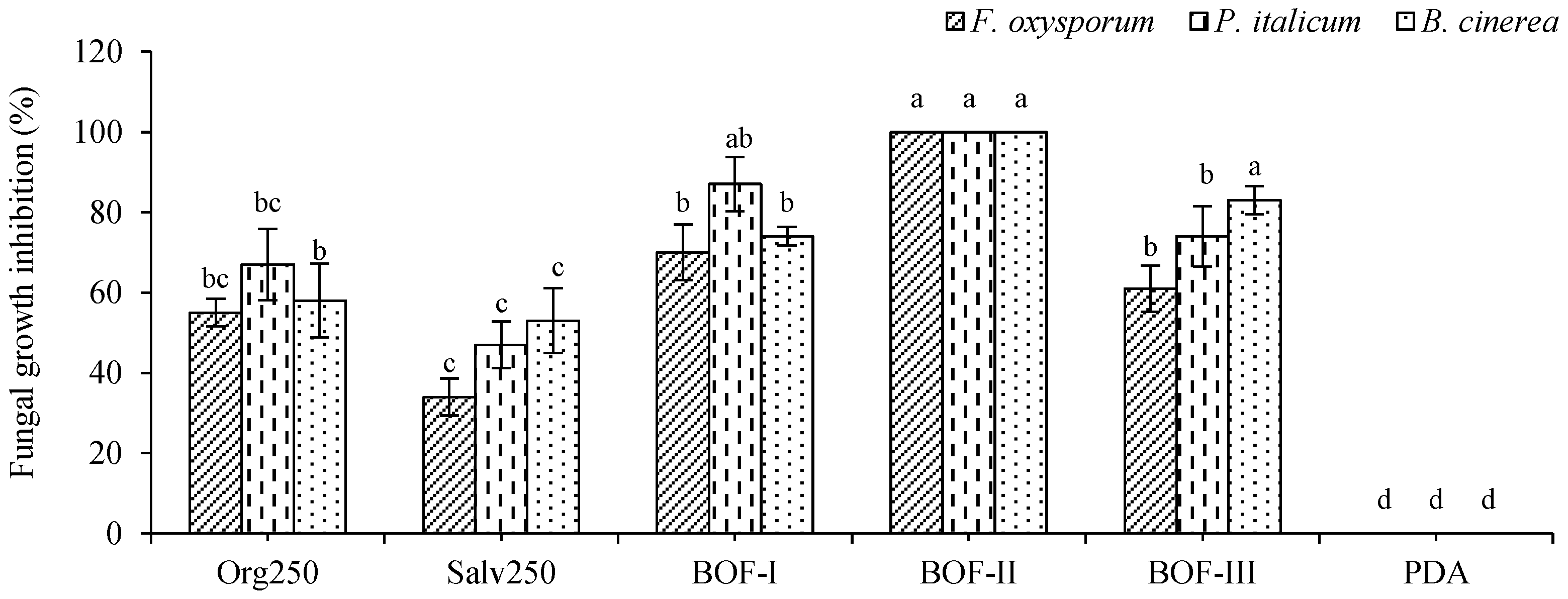
Figure 3.
MBC (left) and IC50 (right) of BOF-II formulations against (A,B) B. cereus, (C,D) C. michiganensis, (E,F) X. campestris. Where C1, C2, C3, C4, C5 and C6 are the tested concentrations of BOF-II at 10000, 8000, 4000, 2000, 1000 and 500 µg/mL, respectively. Cont+MM: negative control (only broth nutrient media of minimal mineral). Cont+ve: positive control ( tetracycline 1600 µg/mL).
Figure 3.
MBC (left) and IC50 (right) of BOF-II formulations against (A,B) B. cereus, (C,D) C. michiganensis, (E,F) X. campestris. Where C1, C2, C3, C4, C5 and C6 are the tested concentrations of BOF-II at 10000, 8000, 4000, 2000, 1000 and 500 µg/mL, respectively. Cont+MM: negative control (only broth nutrient media of minimal mineral). Cont+ve: positive control ( tetracycline 1600 µg/mL).
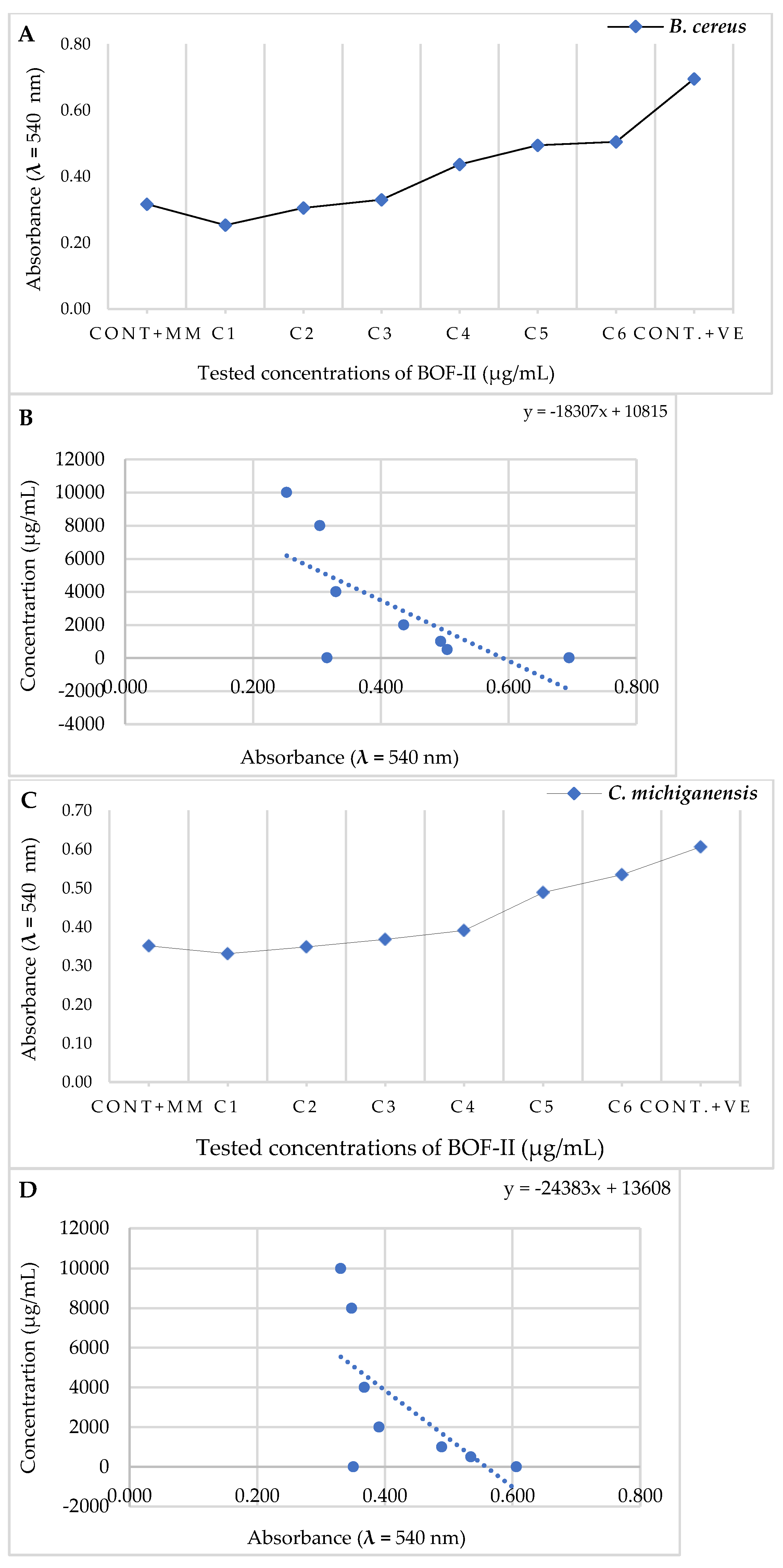
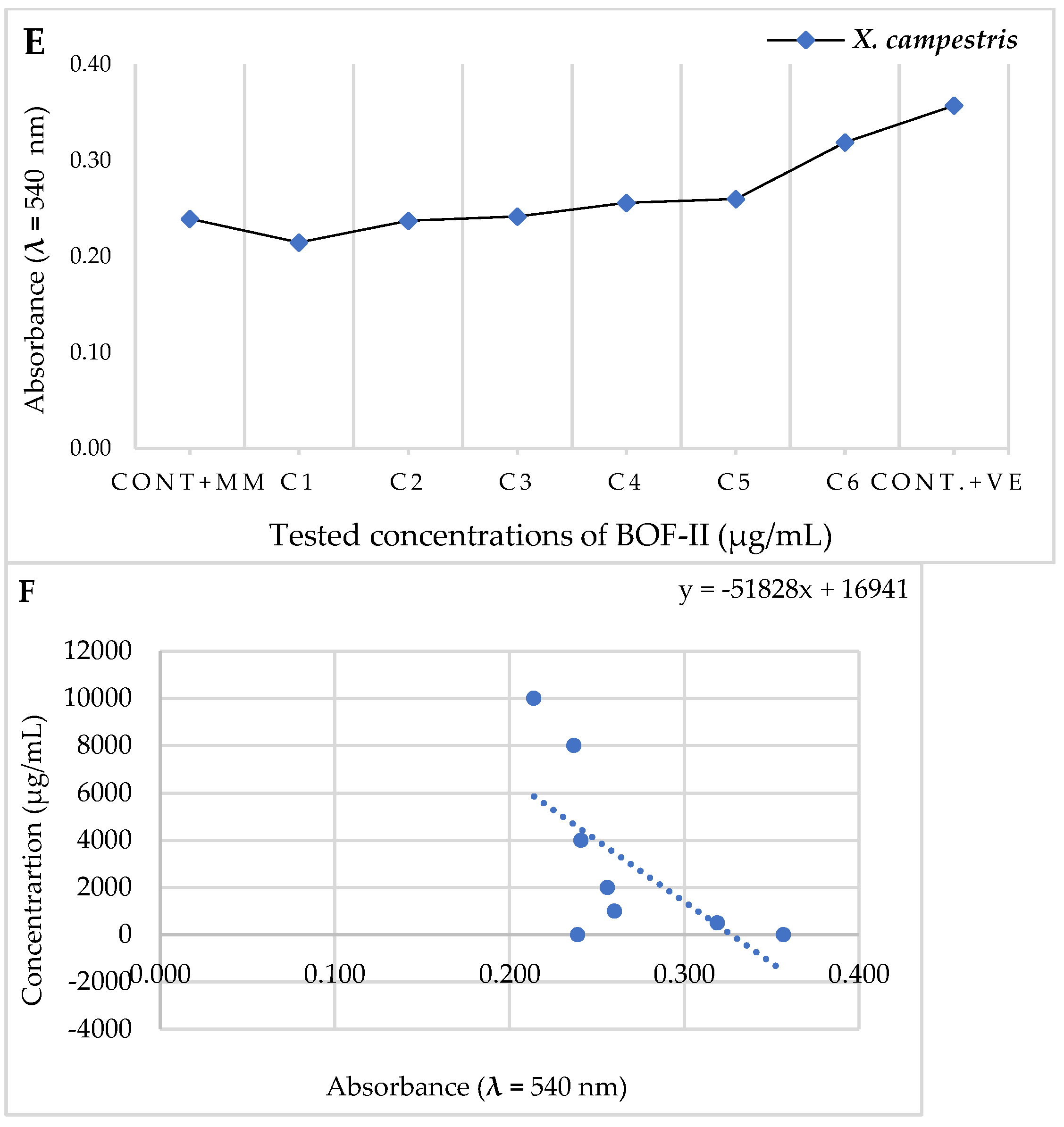

Table 1.
GC-MS of the total identified components in O. vulgare EO.
| Name of Compound | KI exp | KI Lit | % | Identif. | |
|---|---|---|---|---|---|
| α-pinene | 938 | 936 | 0.2 | KI, MS, S | M |
| camphene | 951 | 950 | 0.2 | KI, MS | M |
| sabinene | 976 | 973 | 0.1 | KI, MS | M |
| β-pinene | 980 | 978 | 0.3 | KI, MS, S | M |
| α-terpinene | 1016 | 1013 | 0.7 | KI, MS, S | M |
| p-cymene | 1020 | 1015 | 5.7 | KI, MS, S | M |
| 1,8-cineole | 1033 | 1024 | 0.6 | KI, MS, S | MO |
| (Z)-β-ocimene | 1035 | 1029 | T | KI, MS, S | M |
| γ-terpinene | 1060 | 1051 | 2.5 | KI, MS, S | M |
| terpinolene | 1088 | 1082 | T | KI, MS, S | M |
| linalool | 1098 | 1086 | 2.6 | KI, MS, S | MO |
| camphor | 1121 | 1123 | 0.7 | KI, MS, S | MO |
| L-trans-pinocarveol | 1130 | 1125 | T | KI, MS | MO |
| borneol | 1152 | 1150 | 0.8 | KI, MS, S | MO |
| terpinen-4-ol | 1160 | 1164 | 0.7 | KI, MS | MO |
| α-terpineol | 1178 | 1176 | 0.4 | KI, MS | MO |
| carvone | 1217 | 1214 | T | KI, MS, S | MO |
| carvotanacetone | 1230 | 1220 | T | KI, MS | MO |
| thymol | 1270 | 1267 | 76.0 | KI, MS, S | MO |
| carvacrol | 1282 | 1278 | 3.2 | KI, MS, S | MO |
| eugenol | 1333 | 1331 | 0.1 | KI, MS | MO |
| α-cubebene | 1354 | 1355 | 0.3 | KI, MS | S |
| α-gurjunene | 1411 | 1413 | T | KI, MS | S |
| α-himachalene | 1449 | 1450 | 0.1 | KI, MS | S |
| humulene | 1454 | 1455 | T | KI, MS | S |
| allo-aromadendrene | 1461 | 1462 | T | KI, MS | S |
| β-guaiene | 1490 | 1488 | T | KI, MS | S |
| valencene | 1494 | 1494 | 0.1 | KI, MS | S |
| α-muurolene | 1495 | 1496 | T | KI, MS | S |
| γ-cadinene | 1512 | 1507 | 0.1 | KI, MS | S |
| calamenene | 1513 | 1517 | T | KI, MS | S |
| β-cadinene | 1520 | 1526 | 0.4 | KI, MS | S |
| α-calacorene | 1534 | 1527 | 0.1 | KI, MS | S |
| elemol | 1539 | 1541 | T | KI, MS | SO |
| caryophyllene oxide | 1580 | 1578 | 0.4 | KI, MS | SO |
| globulol | 1583 | 1589 | T | KI, MS | SO |
| cedrol | 1598 | 1603 | T | KI, MS | SO |
| γ-eudesmol | 1620 | 1618 | T | KI, MS | SO |
| allo-aromadendrene epoxide | 1621 | 1623 | 0.1 | KI, MS | SO |
| tau.cadinol | 1634 | 1633 | T | KI, MS | SO |
| tau.muurolol | 1635 | 1633 | T | KI, MS | SO |
| cubenol | 1636 | 1630 | T | KI, MS | SO |
| Total Identified (%) | 96.4 | ||||
Table 2.
GC-MS of the total identified components in S. officinalis EO.
| Compound | Kia | Kib | Percentagec | Identificationd |
|---|---|---|---|---|
| α-Thujene | 930 | 1,035 | 0.4 ± 0.0 | 1, 2 |
| α-Pinene | 936 | 1,032 | 4.4 ± 0.3 | 1, 2, 3 |
| (-)-Camphene | 953 | 1,076 | 4.1 ± 0.0 | 1, 2, 3 |
| Sabinene | 972 | 1,132 | 0.4 ± 0.3 | 1, 2 |
| Hepten-3-one | 975 | - | 1, 2 | |
| β-Pinene | 977 | 1,118 | 2.5 ± 0.0 | 1, 2, 3 |
| Verbenene | 981 | T | 1, 2 | |
| Myrcene | 993 | 1,174 | 0.5 ± 0.3 | 1, 2, 3 |
| α-Phellandrene | 995 | 1,176 | T | 1, 2, 3 |
| Δ3-Carene | 997 | 1,153 | - | 1, 2, 3 |
| α-Terpinene | 1,011 | 1,188 | T | 1, 2 |
| O-Cymene | 1,020 | 1,187 | 2.5 ± 0.3 | 1, 2, 3 |
| ρ-Cymene | 1,023 | 1,280 | 1.2 ± 0.3 | 1, 2, 3 |
| β-Phellandrene | 1,028 | 1,218 | 1.0 | 1, 2, 3 |
| Limonene | 1,031 | 1,203 | 1.4 ± 0.0 | 1, 2, 3 |
| 1,8-Cineole | 1,033 | 1,213 | 4.2 ± 0.0 | 1, 2 |
| (Z)-β-Ocimene | 1,038 | 1,246 | T | 1, 2, 3 |
| (E)-β-Ocimene | 1,049 | 1,280 | T | 1, 2 |
| γ-Terpinene | 1,057 | 1,255 | 0.1 ± 0.1 | 1, 2, 3 |
| Cis-Sabinene hydrate | 1,063 | 1,556 | 0.1 ± 0.0 | 1, 2, 3 |
| Terpinolene | 1,086 | 1,265 | T | 1, 2 |
| Linalol | 1,096 | 1,553 | 1.1 ± 0.3 | 1, 2, 3 |
| trans-Thujone | 1,116 | 1,449 | 37.9 ± 0.0 | 1, 2, 3 |
| trans-Pinocarveol | 1,139 | 1,654 | 0.2 ± 0.3 | 1, 2 |
| (-)-Citronellal | 1,143 | 1,491 | 0.2 ± 0.3 | 1, 2, 3 |
| iso-Borneol | 1,143 | 1,633 | - | 1, 2, 3 |
| Camphor | 1,144 | 1,532 | 13.9 ± 0.0 | 1, 2, 3 |
| iso-Pinocamphone | 1,153 | 1,566 | 0.1 ± 0.0 | 1, 2 |
| trans-Pinocamphone | 1,159 | 0.3 ± 0.3 | 1, 2, 3 | |
| Pinocarvone | 1,166 | 1,587 | T | 1, 2, 3 |
| Borneol | 1,167 | 1,719 | 7.6 ± 0.3 | 1, 2, 3 |
| Terpinen-4-ol | 1,177 | 1,611 | 0.5 ± 0.0 | 1, 2, 3 |
| Dihydrocarveol | 1,177 | 0.2 ± 0.0 | 1, 2, 3 | |
| ρ-Cymen-8-ol | 1,186 | 1,864 | 0.1 ± 0.1 | 1, 2 |
| α-Terpineol | 1,188 | 1,706 | 0.3 ± 0.2 | 1, 2, 3 |
| Myrtenal | 1,193 | 1,648 | 0.2 ± 0.0 | 1, 2, 3 |
| Estragole | 1,196 | 1,670 | T | 1, 2, 3 |
| Myrtenol | 1,196 | 1,804 | 0.2 ± 0.0 | 1, 2, 3 |
| Isobornyl formate | 1,227 | - | 1, 2, 3 | |
| Linalyl acetate | 1,248 | 1,565 | 1.5 ± 0.2 | 1, 2, 3 |
| Geraniol | 1,256 | 1,857 | 0.3 ± 0.2 | 1, 2 |
| cis-Anethole | 1,262 | - | 1, 2, 3 | |
| (E)-Citral | 1,271 | 1,727 | - | 1, 2, 3 |
| Isobornyl acetate | 1,277 | 0.7 ± 0.3 | 1, 2, 3 | |
| Bornyl acetate | 1,284 | 1,591 | 0.9 ± 0.3 | 1, 2, 3 |
| Thymol | 1,291 | 1,298 | T | 1, 2, 3 |
| Carvacrol | 1,297 | 2,239 | 0.3 ± 0.2 | 1, 2, 3 |
| Myrtenyl acetate | 1,313 | T | 1, 2 | |
| Terpinyl acetate | 1,334 | - | 1, 2, 3 | |
| Methyl eugenol | 1,369 | 2,023 | - | 1, 2 |
| α-Copaene | 1,377 | 1,497 | T | 1, 2, 3 |
| Isoledene | 1,383 | T | 1, 2, 3 | |
| β-Elemene | 1,387 | 1,600 | - | 1, 2, 3 |
| Longifolene | 1,412 | 1,576 | T | 1, 2, 3 |
| β-Caryophyllene | 1,418 | 1,612 | 1.3 ± 0.3 | 1, 2, 3 |
| β-Cedrene | 1,424 | 1,638 | 1.0 ± 0.2 | 1, 2, 3 |
| Aromadendrene | 1,437 | 1,628 | 0.1 ± 0.3 | 1, 2, 3 |
| α-Humulene | 1,456 | 1,689 | 5.9 ± 0.3 | 1, 2, 3 |
| allo-Aromadendrene | 1,463 | 1,661 | 0.1 ± 0.2 | 1, 2 |
| γ-Gurjunene | 1,474 | 1,687 | 0.1 ± 0.2 | 1, 2 |
| Bicyclogermacrene | 1,491 | 1,756 | - | 1, 2, 3 |
| cis-Muurola-4(14),5-diene | 1,510 | 1,675 | T | 1, 2, 3 |
| α-7-epi-Selinene | 1,519 | 1,740 | 0.1 ± 0.3 | 1, 2 |
| Caryophyllene oxide | 1,581 | 2,008 | 0.8 ± 0.3 | 1, 2, 3 |
| Total identified (%) | 98.7 | |||
a Kovats retention index determined relative to the tR of a series of n-alkanes (C10-C35) on HP-5 MS column. b Kovats retention index determined relative to the tR of a series of n-alkanes (C10-C35) on HP Innowax. c T, trace, less than 0.05%. A dash indicates absent. d 1, Kovats retention index; 2, mass spectrum; 3, co-injection with authentic compound.
Table 3.
Phytotoxic effect of crude EOs and BOFs.
| EOs formulations | Seed germinationa (%) |
Radical elongationb (cm) | Growth indexc (%) |
|
|---|---|---|---|---|
| L. sativum | Org250 | 4,3±0,8b | 0,8±0,6ab | 1,4±0,0b |
| Salv250 | 80,0±1,8d | 7,4±0,5bc | 43,1±6,1d | |
| BOF-I | 0,0±0,0a | 0,0±0,0a | 0,0±0,0a | |
| BOF-II | 6,7±0,5b | 1,8±0,5b | 1,0±0,1b | |
| BOF-III | 53,3±0,5c | 5,4±0,7bc | 17,9±2,6c | |
| Cont. H2O | 100,0±0,0d | 14,7±1,3d | 97,5±3,9e | |
| S. lycopersicum | Org250 | 3,0±0,4a | 4,6±0,3b | 8,9±0,0bc |
| Salv250 | 73,3±1,0c | 9,9±0,4b | 56, 2±7,7d | |
| BOF-I | 6,7±0,5a | 0,0±0,0a | 0,0±0,0a | |
| BOF-II | 13,3±0,5b | 0,7±0,2a | 1,1±0,6b | |
| BOF-III | 60,0±1,4c | 6,3±1,4b | 22,2±8,2c | |
| Cont. H2O | 100,0±0,0d | 11,6±0,5bc | 100,0±0,0e | |
| L. sativa | Org250 | 2,0±0,4b | 0,8±0,5ab | 0,9±0,2ab |
| Salv250 | 12,4±1,0bc | 5,2±0,4c | 33,4±7,7c | |
| BOF-I | 0,0±0,0a | 0,0±0,0a | 0,0±0,0a | |
| BOF-II | 0,0±0,0a | 0,0±0,0a | 0,0±0,0a | |
| BOF-III | 0,0±0,0a | 0,0±0,0a | 0,0±0,0a | |
| Cont. H2O | 100,0±0,0d | 10.5±0,3d | 100,0±0,0d | |
Where: org25: oregano EO at 250 µg/mL; salv25: sage EO at 250 µg/mL; BOF-I: formulation between oregano EO at 250 and sage EO at 250 µg/mL; BOF-II: formulation between oregano EO at 250 and sage EO at 50 µg/mL; BOF-III: formulation between oregano EO at 50 and sage EO at 250 µg/mL; Cont. H2O is C-ve. Values followed by the different letters in each vertical column for each tested plant are significantly different according to Tukey B test at P<0.05. Data are recorded as mean values of three replicates (±SDs).
Table 4.
MBC values of BOF-II formulation against the three tested bacteria.
| Tested bacteria | Abs. (540 nm) | MIC (µg/mL) | 50% Colony Inhibition | ||
|---|---|---|---|---|---|
| Cont. MM | BOF-II | Abs. (540 nm) | IC50 (µg/mL) | ||
| B. cereus | 0,316 | 0,330 | 4000 | 0,347 | 4462,5 |
| C. michiganensis | 0,351 | 0,368 | 2000 | 0,41 | 6219,9 |
| X. campestris | 0,239 | 0,260 | 1000 | 0,231 | 7715,6 |
Disclaimer/Publisher’s Note: The statements, opinions and data contained in all publications are solely those of the individual author(s) and contributor(s) and not of MDPI and/or the editor(s). MDPI and/or the editor(s) disclaim responsibility for any injury to people or property resulting from any ideas, methods, instructions or products referred to in the content. |
© 2023 by the authors. Licensee MDPI, Basel, Switzerland. This article is an open access article distributed under the terms and conditions of the Creative Commons Attribution (CC BY) license (http://creativecommons.org/licenses/by/4.0/).
Copyright: This open access article is published under a Creative Commons CC BY 4.0 license, which permit the free download, distribution, and reuse, provided that the author and preprint are cited in any reuse.


