

Submitted:
01 June 2023
Posted:
02 June 2023
You are already at the latest version
Abstract
Considering the various problems caused by infiltration in civil construction, this study aimed to identify the most appropriate waterproofing methods for different types of surfaces. A study was conducted on the mechanisms of water infiltration on surfaces and the waterproofing methods available on the market, focusing on asphalt blankets, in addition to a literature review highlighting state-of-the-art on this topic. A case study was also conducted in residence in Nova Lima, Brazil, analyzing different waterproofing techniques, including their characteristics and stages. Among the conclusions, it is highlighted that the implementation of adequate project, installation, inspection, and maintenance techniques can significantly reduce the waterproofing failure rate and repair costs and that the excellent choice of materials, along with the skill of the labor force in the application, is fundamental to guarantee the adequate performance of these materials in buildings.
Keywords:
durability
; waterproofing
; infiltration
; asphalt blankets
; pathologies
1. Introduction
Building infiltration is a common problem when water penetrates the walls, floors, or ceilings. This problem can be caused by several factors, such as lack of maintenance, poor waterproofing, and exposure to rain or wind, among others, and has been a point of extreme concern in all buildings since it is the leading cause of several pathologies in buildings [1]. Among the various damages to the building structure, one can mention the weakening of the walls, the appearance of mold and mildew, rotting materials, corrosion of metals, and the proliferation of insects and other animals [2]. In addition, the moisture generated by infiltration contributes to an unhealthy environment due to the proliferation of fungi and bacteria, which can cause allergies, respiratory irritation, and other health problems for residents [3].
Investing in good waterproofing during the construction or renovation of the building is crucial to avoid infiltration in buildings. In this sense, construction companies seek the isolation of moisture and take necessary measures at each stage of construction, considering which material is the most suitable for the place to be waterproofed and aiming to avoid as much as possible action of water. The safest and most cost-effective way to ensure the water-tightness of a building is to carry out waterproofing planning from the project conception [4]. This is feasible because, if infiltration has already occurred, it is necessary to solve the problem as soon as possible, which may involve identifying the source of infiltration, repairing the affected areas, and eliminating the conditions that favor infiltration. In more severe cases, hiring professionals who specialize in waterproofing and building restoration may be necessary to solve the problem correctly and safely. All this makes the project more costly [5].
In this context, waterproofing is a fundamental technique to protect structures against the action of water and moisture. One of the primary forms of waterproofing is the application of blankets, which consists of placing a layer of resistant and waterproof material on the surfaces that will be protected. The blankets can be used in various construction areas, such as slabs, pools, bathrooms, kitchens, reservoirs, and basements [6]. Thus, it is essential to know the proper techniques for applying blankets and the different types of materials available on the market to ensure effective and lasting waterproofing.
With this perspective, the general objective of this paper is to present the surface waterproofing methods available in the construction market and their main applications, focusing on asphalt blankets. Specifically, it aims to: (i) explain the parameters involved in the mechanism of water infiltration on surfaces; (ii) identify the techniques used for surface waterproofing, focusing on asphalt membrane; (iii) describe the current state of knowledge on the use of surface waterproofing membranes; (iv) present the waterproofing techniques used in a real case that involved the application of membranes.
Research Significance
Concerns about waterproofing surfaces arose a long time ago. However, it was only in the 20th century that it gained greater importance in civil construction. With the advancement of technology and the development of new materials, applying more efficient and durable techniques in different structures became possible. Today, waterproofing is considered an essential step in the construction or renovation of buildings because it prevents problems caused by moisture and ensures the durability and safety of buildings [4].
Infiltration is a problem that can compromise the life of a structure, causing pathologies in buildings and affecting the aesthetics of buildings. When uncontrolled, it can cause severe damage, such as metal corrosion, the proliferation of fungi and bacteria, and rotting materials, among others. These problems can decrease the structure's life and affect its stability, putting the safety of users at risk [7].
Therefore, proper waterproofing is a crucial element in planning construction projects, as it prevents the occurrence of infiltrations and pathologies in buildings. It is essential that waterproofing be planned from the project conception, considering the characteristics of the region and the terrain, the purpose of the structure, and the materials used. Using quality techniques and materials in waterproofing increases the structure's durability maintains aesthetics, and avoids constant repairs [8].
With this perspective, studying the forms of waterproofing for each type of surface becomes relevant because each surface presents different characteristics that can influence the choice of the most appropriate technique. This study should involve, but not be limited to, factors such as durability, resistance, ease of application, costs, and the necessary maintenance.
2. Theoretical Background
2.1. Surface Infiltration
Surface infiltration is a process by which water penetrates porous surfaces, such as walls, roofs, slabs, floors, and sidewalks, or by flaws in the structure, such as cracks, fissures, or leaks. It can occur in various ways, depending on the surface type and environmental conditions, and cause damage and problems such as humidity, mold, and structural deterioration, among others [9].
The main mechanisms by which surface infiltration can occur include percolation, capillarity, leaks, drainage system failures, and condensation, described below.
2.1.1. Water Percolation
Water percolation on surfaces occurs when water penetrates a structure through cracks, fissures, or other defects. It is a continuous process that can cause damage to the structure over time [10].
The process begins when water from rain or another source comes into contact with the structure's surface. If the surface is in good condition and impermeable, the water will run off it until it reaches the drainage system. However, if the surface has cracks or fissures, the water will penetrate the structure.
Cracks and fissures in the structure can be caused by several factors, such as natural wear and tear, aging of the structure, and water damage, among others. When water penetrates the structure, it follows the easiest path through the cracks and fissures, infiltrating the porous structure [11].
As water penetrates the structure, it can cause significant damage. For example, water penetrating a concrete wall can corrode the steel bars and weaken the structure. If water penetrates a brick wall, it can damage the plaster and weaken the structure [12].
It is crucial to perform regular inspections and maintenance, repairing cracks, fissures, and other defects immediately to prevent water from percolating onto building surfaces. It is also essential to ensure the drainage system works correctly and uses waterproof and water-resistant materials whenever possible.
2.1.2. Capillarity
Capillarity of water on surfaces occurs when water is absorbed by porous materials such as bricks, concrete, stones, and mortar. These materials have microscopic pores, also known as capillaries, which allow water to rise through the surface through the action of surface tension [4].
Surface tension is the physical property that causes water molecules to attract each other, creating a force that holds water together on a surface. When water comes into contact with a porous material, it spreads across surfaces. It penetrates capillaries, attracted by the surface tension force, which propels it and causes it to rise through the pores. As the process occurs, water can cause damage to the structure, such as staining, discoloration, deterioration, and corrosion of materials [9].
Water capillarity on surfaces can be minimized through waterproofing and surface treatment techniques. Waterproof coatings, such as paints, varnishes, and sealants, can help prevent water penetration into porous materials. In addition, the use of water-resistant materials, such as stone and tile, can also minimize capillarity. However, this natural process can be difficult to prevent entirely. Therefore, regular maintenance and monitoring of the structure are essential to ensure its integrity and prevent water damage [13].
2.1.3. Condensation
Water condensation on surfaces occurs when water vapor in the air comes into contact with a cold surface and condenses into liquid form. This process can occur on various surfaces in buildings, such as walls, windows, and roofs [12].
Naturally, the amount of condensed water will depend on the surface temperature and the relative humidity of the air. Thus, condensation may be more common in environments with high humidity, such as bathrooms, kitchens, and laundry rooms [4].
Water infiltration caused by condensation can occur when condensed water penetrates surfaces and seeps into the structure. This can cause damage such as staining, discoloration, detachment of coatings, and in more severe cases, damage to the structure [14].
To prevent condensation and the infiltration caused by it, it is important to maintain an adequate temperature on the surfaces and a balance in the relative humidity of the air, which can be done through thermal insulation and adequate ventilation, among other solutions. It is also essential to ensure that surfaces are adequately waterproofed to prevent water infiltration and that the use and maintenance of waterproofing materials, such as paints, varnishes, sealants, and membranes, is practical [6].
2.1.4. Leaks
Water leaks on surfaces occur when there is a rupture or failure in hydraulic systems or structures, allowing the passage of water to unwanted areas. This can occur in different parts of buildings, such as slabs, roofs, walls, floors, and windows [8].
Among the leading causes of leaks are the aging of hydraulic systems, problems in connections and welds, failures in construction materials, and changes in water pressure. The infiltration caused by leaks can cause damage such as humidity, stains, mold, discoloration, corrosion of structures, damage to coatings, and even structural problems [2].
To prevent infiltration caused by leaks, it is essential to perform regular maintenance on hydraulic systems and building structures, ensuring that they are in good working order. In addition, it is essential to ensure that areas vulnerable to leaks, such as slabs and roofs, are adequately waterproofed. Suitable materials, such as asphalt blankets and liquid waterproofing, can help prevent the problem [15].
2.1.5. Drainage System Failures
Drainage system failures can cause infiltration on surfaces, such as slabs and walls, when water accumulates on the structure's surface that needs to be adequately drained or drained. This accumulation can occur due to several factors, such as heavy rains, clogged gutters and drains, and problems in rainfall drainage systems [16].
Water accumulating on the structure's surface can infiltrate through pores, cracks, and fissures in the surface, which can be aggravated by water and weather. Water infiltration in slabs can generate several problems, such as the formation of moisture, stains, bubbles, and detachment of coatings, in addition to contributing to the corrosion process of structures and aggravating structural problems [17].
To prevent infiltration caused by failures in the drainage system, it is vital to ensure that the system is appropriately sized and sized for local rainfall conditions, in addition to performing regular maintenance to ensure that gutters and drains are unobstructed [6]. In addition, one should ensure that the structure's surface, such as the slab, is adequately waterproofed, using appropriate materials and regular maintenance to ensure its effectiveness.
2.2. Surface Waterproofing Techniques
Surface waterproofing techniques prevent water from entering structures and prevent problems caused by infiltration, such as corrosion, humidity, and detachment of coatings. Several waterproofing techniques can be chosen according to the characteristics of the structure, exposure conditions, and level of demand regarding effectiveness and durability [18].
In the construction market, waterproofing techniques are classified into flexible and rigid. Rigid waterproofing does not resist the movement of the structure and, therefore, should be used in stable locations that do not suffer much temperature variation. The primary example of this technique is polymeric mortar, commonly used in base beams, floors, walls, and basements. Scheidegger [19] states that flexible waterproofing, with asphalt and polymers in its composition, better supports the contraction and dilation of the substrate. Asphalt blankets applied to slabs, roofs, pools, and water tanks are mainly used in the rigid system.
Among the most common surface, waterproofing techniques are the application of asphalt blankets, polymers, polymeric mortars, and special paints, as described below.
2.2.1. Waterproofing with Asphalt Membrane
Waterproofing surfaces using asphalt membrane is one of the most widely used in construction due to its high efficiency and durability. The process involves applying asphalt blankets over the surface to be waterproofed, forming a continuous and water-resistant layer [4,6]. Figure 1 shows the main steps of this technique [20].
The first stage consists of the adequate preparation of the surface to ensure the adherence of the asphalt membrane. This includes cleaning the surface, removing loose or poorly adhered parts, leveling, and smoothing imperfections.
The second occurs before the application of the mat, protecting the areas that will not be waterproofed with adhesive tape or other materials to prevent the asphalt membrane from sticking to these surfaces.
The third involves applying primer, a layer of diluted asphalt product, which is applied over the surface to be waterproof. The primer improves the adhesion of the asphalt membrane and ensures its fixation.
The fourth consists of applying the mat over the primer, using adhesives and heat for fixation. The asphalt membrane comprises layers of polymer-modified asphalt and polyethylene or aluminum coatings, ensuring high mechanical resistance and durability.
The fifth and last stage, in turn, comprises applying a protective layer, such as mortar or ceramic coating, on some types of asphalt membrane to protect it against the action of ultraviolet rays, mechanical aggression, and other external agents.
In Brazil, there are technical standards that regulate the use of blankets for waterproofing surfaces, among which NBR 9574: Waterproofing execution [21], NBR 9575: Waterproofing - Selection and design [22], NBR 9952: Asphalt blanket for waterproofing [23], and NBR 9685 - Asphalt blankets with reinforcement for waterproofing - Specification [24] stand out.
There are different types of asphalt blankets on the market, and the choice is based on the characteristics of each one. The main types used are aluminized blankets, slate blankets, and polyethylene blankets, which vary in additives, finish, and thickness. These variations establish the best technique to be used according to the place to be waterproofed.
The aluminized blanket comprises modified asphalt and polymers, is structured with polyester, and is covered with an aluminized layer. One of the advantages of using this type of blanket is its ability to reflect the sun's rays and reduce indoor temperatures. The disadvantage of its use is its low mechanical resistance, so it should be used in places with no traffic. The aluminized asphalt blanket is used mainly on slabs without traffic, roofs, ruffles, and gutters.
The slate blanket is composed of modified asphalt and polymers and is structured with polyester, ensuring excellent stability and flexibility. Its surface is coated with granules of mineral aggregate (slate) available in green, gray, and red, providing an esthetic finish on roofs. This type of asphalt blanket should be used in places with no traffic, as it has low resistance to mechanical stress. Some examples of its application are in slabs with no traffic, marquees, and eaves.
The polyethylene blanket comprises modified asphalt and polymers and has a polyethylene finish, providing greater flexibility, adherence, and durability. Unlike other types of asphalt membranes, the polyethylene membrane cannot be exposed to the sun for more than 72 hours and must be covered with mechanical protection, such as ceramic tiles. The waterproofing with a polyethylene blanket can be done on slabs, pools, and reservoirs, all with mechanical protection.
2.2.2. Waterproofing with Polymers
The method of waterproofing surfaces using polymers is a process that involves applying a polymer layer over the surface to be protected in order to prevent the penetration of water or other liquids that could cause damage. The most common waterproof polymers are polyurethane, acrylic, epoxy, and silicone [25].
The process is similar to using an asphalt blanket and begins with surface preparation. The surface must be clean, dry, and free of dust, oil, or other contaminants that can impede the adhesion of the polymer. Next, a primer is applied to help the polymer adhere to the surface. After the primer is dry, a coat of the chosen polymer is applied, usually using a roller or a sprayer. Depending on the thickness and desired properties, the final layer can be wrapped in several thin layers [26].
Polymer curing, in turn, can vary depending on the type chosen but generally occurs through solvent evaporation or a chemical reaction process [27]. It is worth noting that the manufacturer's instructions regarding curing time and the waiting time between layers must be respected. Once the polymer layer is fully cured, it forms a liquid-resistant barrier. This technique is commonly used in bathrooms, kitchens, slabs, roofs, and foundations to protect against infiltrations and leaks.
Not least, it should be noted that the waterproofing of surfaces using polymers must be carried out by qualified professionals, following the applicable safety standards and regulations. In addition, it is essential to choose a high-quality polymer that is compatible with the surface to be waterproofed to ensure the protection's effectiveness and avoid future problems.
2.2.3. Waterproofing with Polymeric Mortar
The technique of waterproofing surfaces using polymeric mortar is a process that consists of applying a mixture of cement, aggregates, and polymers on the surface to be protected to create a layer resistant to water and other liquids. Polymeric mortars are composed of an acrylic polymer, which gives the mixture waterproofing properties [10].
As with the techniques presented previously, the process begins with preparing the surface, which must be dry and clean. Then, a primer is applied to help the mortar adhere to the surface. When the primer dries, the polymeric mortar is applied using a straightener or a spatula. The thickness of the layer depends on the area to be waterproofed and the desired properties [28].
The curing of polymeric mortar can vary according to the type chosen but generally occurs through water evaporation or a chemical reaction process. Following the manufacturer's instructions regarding mixing, curing time, and the waiting time between coats is essential. Once the mortar layer is cured, it will waterproof the surface [29].
The use of polymeric mortars in the waterproofing of surfaces, like that of polymers, requires skilled labor and care with safety during application. In addition, the material chosen must be compatible with the surface to be staked.
2.2.4. Waterproofing with Special Paints
Waterproofing surfaces with special paints involve applying a layer of paint or special coating over the surface to be staked. There are several special paints for waterproofing options, including epoxy, polyurethane, acrylic, and liquid rubber [10].
Waterproofing begins by preparing the surface to be clean, dry, and free of dust, oil, or other contaminants that can impede the adhesion of the special paint or coating. Next, a primer is applied, and when it is dry, the paint is applied to the surface, usually using a brush, roller, or sprayer. As with polymers, several thin layers can be applied to make up the final coat, depending on the expected properties [30].
The curing of the paint can vary depending on the type chosen but also occurs by chemical reactions and/or solvent evaporation. After the special coating cures, a liquid-resistant barrier is formed, waterproofing the surface [31].
Once again, it is emphasized that trained professionals should perform this type of service, using high-quality materials compatible with the surface to be waterproofed.
3. Materials and Methods
3.1. Selecting the State-Of-The-Art Bibliography
This step aims to select the bibliographic portfolio to present state-of-the-art on applying surface waterproofing blankets. In other words, it aims to provide a general and critical overview of the most relevant research and studies published so far to situate the work concerning the advances already made in the study area, identify gaps and propose directions for future research.
The ProKnow-C (Knowledge Development Process - Constructivist) method [32] (ENSSLIN et al. 2010), commonly used in systematic literature reviews [33,34,35,36], was used to select the bibliographic reference. Table 1 details all the steps of ProKnow-C.
Table 2 presents the articles that made up the selected bibliographic portfolio and their primary information: authors, title, journal/congress, and year of publication.
3.2. Case Study
A case study was conducted to analyze the application of surface waterproofing techniques and provide insights that can be useful for future research.
The study object was a high-standard residential building located in Nova Lima - MG, Brazil, built on a 526.23 m2 lot and with a constructed area of 245.77 m2, distributed in 4 (four) suites, 2 (two) living rooms, 2 (two) bathrooms, 1 (one) kitchen, 1 (one) leisure area with a swimming pool and 1 (one) fireplace, 1 (one) laundry room and 2 (two) garages. For confidentiality reasons, this work did not disclose the residence's address and the company name responsible for the construction.
The materials used and the execution of the waterproofing of the following environments or structures were evaluated: (i) floors and external areas; (ii) slab and water tank; (iii) bathrooms; and (iv) swimming pool, fireplace, and deck. The technical standards NBR 9574 [21], NBR 9575 [22], NBR 9952 [23], and NBR 9685 [24] were taken as references.
4. Results and Discussions
4.1. The State-Of-The-Art
The studies presented below in chronological order refer to those shown in Table 2 and address different aspects related to waterproofing, including sealing methods, slab waterproofing procedures, concrete admixtures, and environmental and economic impacts of different waterproofing options.
Alev et al. [37] investigated different sealing methods to evaluate their effect on air leakage in construction joints. The research considered the air leakage rate of several commonly used foundation and slab-on-ground joints, such as limestone, external, and separation walls made of lightweight blocks. Different sealing materials were applied to these constructions, and it was found that the air leakage rate decreased between 1.3 and 86 times, depending on the method used. In addition, the researchers found that the quality of the constructions, such as the materials, method, and labor used, also significantly affected the air leakage rate.
Figueredo et al. [38] analyzed the waterproofing procedure of a roof slab in development intending to achieve 100% water tightness. The study emphasized the importance of care in the preparation of the substrate, the knowledge of professionals, and the end user's attention regarding the use of the environment, maintenance, and periodic inspections necessary to maintain efficient waterproofing.
The research by Pinto and Aguiar [39], in turn, aimed to clarify the importance of waterproofing and the relevance of well-executed projects. The researchers concluded that the correct execution of waterproofing, with adequate materials and qualified professionals, can avoid future inconveniences and high maintenance costs. Furthermore, it is important to point out that the cost of this measure is reasonable if executed during construction.
Sriravindrarajah and Tran [40] point out that the successful waterproofing of a building depends on considering several factors, such as product selection, membrane detailing, drainage design, substrate preparation, design, installation, quality assurance, and maintenance. The authors conducted a study in Australia intending to discuss the standards and codes, membrane systems and performance, waterproofing practices, design and installation techniques, inspection and testing, and quality assurance adopted by the waterproofing industry. They stated that implementing proper design and installation techniques and performing maintenance procedures can significantly reduce the waterproofing failure rate and repair costs. Therefore, it is essential to consider all these factors to ensure the effectiveness of a building's waterproofing system.
In addition to waterproofing methods applied to surfaces, it is also possible to improve the water tightness of construction from an admixed concrete. In this sense, the study by Coppola et al. [41] aimed to evaluate the performance of a carboxylic acid-based mixture added to concrete. The results obtained experimentally showed that adding the additive did not negatively affect the mechanical properties of concrete. It was observed that by adding 1% of the additive per mass of cement, there was a halving in water penetration under pressure compared to concrete without the waterproofing additive at 28 days. In addition, the mixture proved capable of sealing cracks resulting from plastic shrinkage, showing that the additive is a promising solution to ensure the water tightness of a construction.
The study by Gonçalves et al. [42] compared different waterproofing options for various slabs, considering environmental and economic impacts. The authors analyzed the risk of global warming, consumption of non-renewable primary energy resources, and life cycle costs. After the analysis, it was concluded that bituminous membranes were the best option for all slabs, while synthetic EPDM (ethylene-propylene-diene) membranes showed the highest values.
Ribeiro et al. [43], from another perspective, pointed out the lack of waterproofing as a significant flaw in daily construction, neglected by the lack of prioritization for the prevention of construction problems in the country. They pointed out that this practice can cause structural problems, resulting in much higher repair costs than prevention. In their case study, they used acrylic and flexible polymer-based products to waterproof the roof of a residential building, concluding that the roof infiltration was resolved and the products used ensured the desired service life of the building.
Meanwhile, Ksit and Plich [44] presented liquid plastic films as a waterproofing solution composed of a mixture of polymers or polymers and bitumen. These authors' studies demonstrated that using these plastic films could provide a smooth and uniform surface, resulting in an excellent aesthetic result and even a "cool roof," capable of reducing the greenhouse effect in large cities.
Scheidegger [19] conducted a literature review on the two main waterproofing products: asphalt blankets and polymeric mortar. It was concluded that polymeric mortar is easier to apply, but it is not recommended for structures subjected to thermal or settlement movements, which can compromise its water tightness. Asphalt blankets, on the other hand, are more resistant to thermal movements or settlements, but their application may be more complicated, generating possible complications later on.
In the work of Pinto et al. [45], the infiltration process and its consequences were analyzed, concluding that the lack of adequate waterproofing is generally caused by the lack of specialization of professionals and the lack of standards for project preparation. The prioritization of cost over waterproofing can result in maintenance costs of up to 15% of the total value of the work. In contrast, if proper waterproofing is not performed during construction, the repair cost can reach up to 50% of the value of the work.
Considering green roofs, Pettersson et al. [46] warn about the need for more data on their ability to retain and reduce stormwater under different climatic conditions. However, their study examined green roof water infiltration at the pore scale and evaluated the relationship between porous microstructure in thin substrate layers and water infiltration. Studies evaluating different microstructures and different heights of standing water on the porous medium surface were conducted, which demonstrated the relationship between microstructure and flow homogeneity by analyzing saturation, liquid-gas interfacial area, pore size distribution, porosity, and infiltration depth. Thus, the authors concluded that the knowledge of these relationships allows for optimizing the performance of the green roof concerning rainfall duration time from the material used in the substrate treatment.
Van Linden and Van Den Bossche [47] conducted an experimental study in Belgium to evaluate the performance of different joint sealing materials for the water tightness of constructed buildings. The materials evaluated were tapes, silicone, base materials, coatings, foam sealing tapes, and polyurethane foams, which were subjected to different parameters. The study's results indicated that the choice of waterproofing materials should be made carefully, as all tested materials performed well in waterproofing. However, it was observed that the labor skill used in applying the materials had a significantly more significant impact on the materials' performance than the life cycle. Therefore, it was concluded that skilled labor is critical to ensure the proper performance of joint sealing materials in buildings.
Neves et al. [48] developed a guide to detect and solve the main pathological manifestations in Brazilian residences related to moisture. The guide was created from a literature review of the leading causes of pathology and included the types, manifestations, origins, risks, and a repair guide. The material also contains information about the leading suppliers of products for these repairs and a study of the processes to be carried out. Although the valuable life of a repaired construction does not compare with one well-developed, made compatible, and executed, the authors indicated, among other aspects, that the Brazilian market has quality brands that offer good services and provide assistance to their consumers.
Silva et al. [49] conducted a case study evaluating pathological manifestations due to infiltrations in a Salvador, Bahia, Brazil building. Diagnostic techniques were used to identify the primary damage and determine the appropriate repair methodologies. It was concluded that the investigation methods were essential to identify the risk in each pathology found in the building and find the necessary repair method to prevent degradation.
Reis et al. [50], in turn, investigated the leading causes of pathology and moisture damage to enable better health and mobility conditions for the elderly at the Carlos Romeiro Asylum, located in Conselheiro Lafaiete, Minas Gerais, Brazil. On-site inspections were conducted to identify and analyze the damage and define the appropriate repairs in each case. The authors concluded that in addition to repairs, repairs to leaking pipes, improving the water-tightness of the reservoirs, and cleaning and unblocking surface drainage devices would be necessary. Installation of roofing and/or application of waterproofing blankets was raised as ways to treat the damage.
According to Heinlein et al. [51], waterproofing membranes have grown in recent years, evidenced by the increase in the number of manufacturers, patents, and on the market. However, it is essential to note that these membranes are only efficient if installed by qualified professionals due to possible adhesion problems that can arise in the application and preparation of the surface to be waterproofed.
The study by Maj and Ubysz [52] finally analyzed the use of polyurea coating to protect concrete surfaces, intending to reinforce waterproofing in water and other liquid tanks. To ensure water-tightness, it is essential to pay attention to the phenomena of diffusion and osmosis and to take prudent measures in preparing the substrate, using primers, adequate coating thickness, and avoiding micropores and holes. In addition, the authors state that it is essential to schedule periodic coating inspections.
The analysis of the articles mentioned above reveals several relevant types of research on the application of surface waterproofing blankets, covering a broad theme. These studies address water infiltration in constructions, the importance of waterproofing forecasting, analysis of existing techniques, and the feasibility of new approaches. The diversity of studies on the subject highlights the importance of waterproofing in civil construction, with the growing need to improve construction quality and increase structures' life span.
4.2. Case Study
A case study was conducted in residence located in Nova Lima, Minas Gerais, Brazil. The construction in question comprises structural masonry, two floors (Figure 12 and Figure 13), and a waterproofed slab roof. The project included solar and photovoltaic heating, air conditioning infrastructure, a sound system, an electric car charging point, a swimming pool, and a fireplace.
Next, the waterproofing methods used in this residence are presented, divided into different areas: floors and external areas; Slab and water tank; bathrooms; swimming pool, fireplace, and deck. An analysis of the chosen waterproofing method and its application techniques was performed based on the NBR 9574 standard [21].
4.2.1. Floors and External Areas
The floors were waterproofed from the beginning of the project in different stages and methods, according to the infiltration risks and use of the area.
When the first Slab was made, supported on the ground at the beginning of the project, it was necessary to waterproof the contact between the concrete and the soil to avoid the capillarity phenomenon. The first waterproofing was done using a 150-micron tarp (Figure 14), thicker than the ordinary tarp, usually with 50 to 100 microns, and, therefore, has a better performance and useful life. After applying the tarp, EPS (expanded polystyrene) sheets were also placed over it (Figure 15) to increase the distance between the ground and the concrete and take advantage of the characteristics of EPS, which is highly resistant to mold and moisture. The tarp method was also used under the concrete ramp for vehicle access to the upper garage (Figure 16) to avoid capillarity between soil and concrete.
4.2.2. Slab and Water Tank
Using waterproof slabs for the conventional roof has become more common in high-end residences. The conventional roof demands more time to build and requires frequent maintenance. On the other hand, the waterproofed Slab requires an advanced waterproofing system because it is directly exposed to rain and humidity, and concrete is not a waterproof material.
The method chosen to waterproof the Slab in this study was aluminized asphalt blanket. Despite the high cost of the material and labor, the material was chosen due to its high waterproofing capacity. In addition, as the Slab is a non-traffic area, no additional coating (mechanical protection) is required, which avoids extra costs. The same material was used to waterproof the water tank, an area with a high risk of infiltration due to possible leaks.
A specialized team should apply asphalt blanket on the Slab due to the complexity of the service, handling, and adherence of the blanket. The professional must be careful when joining blanket rolls, dealing with corners, and, especially, when making the necessary holes in the Slab, such as drains for drainage and air conditioning pipes.
The application method consists of preparing the Slab by applying a layer of mortar to make the surface smooth and free of imperfections to receive the blanket. This mortar layer is also essential to ensure the water drainage, foreseen at the moment of the Slab's concreting, directing it to the drains and avoiding the accumulation that could damage the Slab. Next, general cleaning is done on the surface to be waterproofed, using a broom and a powerful vacuum cleaner.
After this process, a primer composed of polycondensed asphalt cement diluted in solvents is applied (Figure 17a and Figure 17b), which increases the adhesion between the asphalt-based waterproofing system and the surface. With the primer applied, modified asphalt sheets are heated to dissolve and apply them, thus beginning the process of adherence of the asphalt mats to the surface (Figure 17c and Figure 17d). The professional distributes the roll of the mat on the Slab and uses a blowtorch to ensure the adherence of the mat and the modified asphalt to the surface (Figure 17e).
After the blanket application is completed on the entire Slab (Figure 17f), it is necessary to wait for drying time and perform the water tightness test. This test aims to verify the effectiveness of the blanket applied and correct any details, if necessary. The water tightness test consists in filling the Slab with water and checking whether any leakage will occur. If any leakage is found, it will be evident by moisture stains under the Slab, and the responsible team must correct this failure and perform the test again, ensuring no more leaks.
4.2.3. Bathrooms
As this is an environment with much contact with humidity, it is also necessary to worry about infiltration in this area. In the building under study, the method used for waterproofing the bathrooms was the application of polymeric mortar. This material was chosen mainly due to its easy application, not requiring specialized labor, and low cost. The product used, the waterproofing material "tec plus top" by Quartzolit, is intended for use in humid areas such as bathrooms, kitchens, service areas, walls, baseboards, and planters.
Applying the waterproofing material followed the manufacturer's recommendations and the NBR 9574 standard [21]. First, the liquid component was mixed with the powder component using a metal rod attached to a drill. Then, using a brush, the first layer of the mixture was applied on the floors and walls (up to a height of approximately 1.80 m) of the bathrooms (Figure 18) and then reapplied after drying in the opposite direction to the application of the first coat. This way, the bathrooms were released for the finishing stage, covering floors and walls with ceramic tiles and protecting them from humidity.
4.2.4. Pool, Fireplace, and Deck
The pool, fireplace, and deck waterproofing were done using a polyethylene asphalt blanket. This type of blanket is chosen for these areas due to its greater flexibility, resistance, and durability. Unlike other surfaces, the pool, the fireplace, and the deck are subject to a much higher volume and time of exposure to humidity, besides being places with foot traffic, which require mechanical protection on the asphalt membrane.
The waterproofing process of the deck, pool, and fireplace surfaces started with verifying the drainage system and testing the water flow toward the area's drains. After this verification, these areas were cleaned using brooms and vacuum cleaners. Then the primer was applied to the pool, fireplace, and deck surfaces (Figure 19a), preparing them to receive the asphalt. Then, a layer of modified asphalt was applied and melted with a blowtorch to adhere the mat to the surface (Figure 19b).
Then, applying the polyethylene asphalt blanket on the surfaces was started, using a blowtorch to melt the modified asphalt and ensure the adherence of the blanket (Figure 20a). After finishing the application of the blanket on the pool surfaces (Figure 20b), deck, and fireplace, the water-tightness test was performed, as was done on the Slab, to verify the waterproofing guarantee. Next, the pool, fireplace, and deck were filled with water up to the limit of the edges (Figure 21).
As proven to be watertight after the test, the next step would be plastering the pool and fireplace and the counter flooring of the deck to apply the lining later. For this type of blanket used, before receiving the lining, the chicken wire was applied to the entire surface of the pool and fireplace (Figure 22a) using mortar to facilitate the adherence of the plaster to the blanket and prevent future detachment of the ceramic linings. After the preparation with the chicken wire and the mortar on the polyurethane asphalt blanket, the pool and the fireplace were plastered, and the counter-flooring was done on the deck. Then these surfaces were covered with porcelain tiles or ceramic pieces (Figure 22b).
5. Conclusions
This paper aims to present the surface waterproofing methods available on the construction market and their main applications, focusing on asphalt blankets. The study analyzed how infiltration occurs and its pathologies, thus showing the importance of surface waterproofing for construction. Specifically, the following conclusions were reached:
- (i)
- The main mechanisms of water infiltration into surfaces in construction are percolation, capillarity, condensation, leaks, and drainage system failures. These mechanisms can cause damage to structures, such as humidity, stains, mold, deterioration, and corrosion, compromising the integrity and durability of buildings.
- (ii)
- Surface waterproofing techniques are widely used in civil construction to avoid problems caused by water infiltration, such as corrosion, humidity, and detachment of coatings. Among the available techniques are the application of asphalt blankets, polymers, polymeric mortars, and special paints. Waterproofing with asphalt blankets is one of the most used due to its high efficiency and durability.
- (iii)
- State-of-the-art has shown, among several aspects, that (a) different sealing methods can significantly reduce the rate of air leakage in construction joints, depending on the sealing material used; (b) the correct execution of waterproofing, with appropriate materials and qualified professionals, can avoid future inconveniences and high maintenance costs; (c) the implementation of proper design, installation, inspection, and maintenance techniques can significantly reduce waterproofing failure rates and repair costs; (d) concrete admixtures can be used to improve the water tightness of construction without compromising the mechanical properties of the material; (e) the proper choice of waterproofing materials, along with the skill of labor in the application, is critical to ensure the proper performance of these materials in buildings.
- (iv)
- The case study described the methods and materials used to waterproof different areas of the residence. Specifically, it was shown that (a) for waterproofing the floors and external areas, a 150-micron canvas, thicker than the common canvas, was used, along with EPS sheets to avoid the capillarity phenomenon; (b) the slab and the water tank were waterproofed with the use of aluminized asphalt blanket due to its high waterproofing capacity; (c) in the bathrooms, a polymeric mortar was used as the waterproofing method due to its ease of application and low cost, with the subsequent laying of ceramic tiles; (d) the waterproofing of the pool, fireplace, and deck was done with the use of polyethylene asphalt blanket, due to its flexibility, resistance, and durability, and later these surfaces were coated with porcelain tiles or ceramic tiles. Thus, the importance of choosing the appropriate method for each environment was highlighted, aiming to prevent damage caused by water infiltration.
5.1. Future Research Directions
This work presented the primary forms of waterproofing available on the market, focusing on asphalt blankets. However, it was limited to a case study in a single residence.
The following topics are suggested for future research:
- (i)
- Investigate the importance of labor skills and training in adequately applying sealing materials and their relationship to the overall performance of building waterproofing.
- (ii)
- Conduct experimental studies to evaluate the performance of different admixtures that can be added to concrete to improve its waterproofing, considering mechanical properties, resistance to water penetration, and crack sealing ability.
- (iii)
- Investigate the environmental, economic, and performance impacts of different waterproofing options available on the market, considering factors such as global warming, consumption of energy resources, life cycle cost, and durability.
Author Contributions
Conceptualization, L.C.d.F.G.; methodology, L.C.d.F.G., H.C.G. and E.D.R..; formal analysis, E.D.R.; investigation, L.C.d.F.G.; resources, E.D.R..; data curation, H.C.G. and E.D.R.; writing—original draft preparation, L.C.d.F.G. and E.D.R.; writing—review and editing, H.C.G..; visualization, E.D.R.; supervision, E.D.R.; project administration, E.D.R..; funding acquisition, E.D.R. All authors have read and agreed to the published version of the manuscript.
Funding
This research received no external funding.
Institutional Review Board Statement
Not applicable.
Informed Consent Statement
Not applicable.
Data Availability Statement
All the data in the analyses of this study have been listed in the paper.
Acknowledgments
We would like to acknowledge the Centro Federal de Educação Tecnológica de Minas Gerais (CEFET-MG) for funding this research.
Conflicts of Interest
The authors declare no conflict of interest.
References
- Belous, D. A. C.; Souza, L. C. Estudo de caso de manifestação patológica do tipo fissuras e trincas com a impermeabilização como forma de tratamento na laje de uma escola, na região de Joinville/SC. Bachelor’s Thesis, Sociedade Educacional de Santa Catarina, Joinville, 2022.
- Yazigi, W. A. Técnica de edificar. Revisada e atualizada. 10.ed. São Paulo: Pini, SIDUSCON-SP, 2009, p. 517.
- Lopes. Como o bolor e a umidade em sua casa afetam seu corpo e podem prejudicar sua saúde. Redação Lopes, 2018. Available in: https://www.lopes.com.br/blog/na-minha-vida/estilo-de-vida/como-o-bolor-e-a-umidade-em-sua-casa-afetam-seu-corpo-e-podem-prejudicar-sua-saude. Accessed in: May 6, 2023.
- Pereira, F. S. Impermeabilização de lajes de cobertura com manta asfáltica. Revista Científica Semana Acadêmica, 2018, n. 000148.
- Apolinário, M. S. Danos causados por falhas na impermeabilização da infraestrutura de edificações térreas residenciais privativas unifamiliares com área até oitenta metros quadrados. Revista Especialize On Line, São Paulo, 2013, n. 4, p. 1-14.
- Costa, E. U.; Pinto, J. R.; Miranda, M. L. Procedimento visando a diminuição de manifestações patológicas no sistema de impermeabilização em lajes de cobertura expostas com mantas asfálticas. Bachelor’s Thesis, IDD Institute, São Paulo, 2012.
- Machado, K. M.; Alencar, E. A. B. Levantamento de patologías causadas por umidade nas edificações da cidade de Manaus – AM. Bachelor’s Thesis, Centro Universitário do Norte, Manaus, 2019.
- Rigui, G. V. Estudos dos sistemas de impermeabilização: patologias, prevenções e correções – Análise de casos. Master’s Thesis, Federal University of Santa Maria, Santa Maria, 2009.
- Queruz, F. Contribuição para identificação dos principais agentes e mecanismos de degradação em edificações em Vila Belga. Master’s Thesis, Federal University of Santa Maria, Santa Maria, 2007.
- Campos, L. S.; Soares, T. A. Processo de escolha de um sistema de impermeabilização para a laje de um estacionamento. Bachelor’s Thesis, Technological Institute of Caratinga, Caratinga, 2015.
- Thomaz, E. Trincas em Edifícios: Causas, Prevenção e Recuperação. In: Trincas em edifícios: causas, prevenção e recuperação. 2. ed. São Paulo: Oficina de Textos, 2020. p. 1-34.
- Grachev, A. Waterproofing methods comparison in Russia and Finland. Bachelor’s Thesis, Hämeenlinna University Centre, Keinusaari, 2021.
- Santana, B. V.; Aleixo, I. V. Avaliação da absorção por capilaridade de argamassas para revestimento com diferentes aditivos impermeabilizantes. Relatório final de pesquisa de Iniciação Científica, Faculdade de Tecnologia e Ciências Sociais Aplicadas, Brasília, 2017.
- Peixoto, V. F.; Torres, M. I.; Guimarães, A. S. Humidade Ascensional. 1. ed. Porto: FEUP, 2008.
- Siqueira, V. Impermeabilização em obras de construção civil. Bachelor’s Thesis, University of Southern Santa Catarina, Palhoça, 2018.
- Martins, F. S. Estudo das manifestações patológicas pós-ocupação relacionadas à impermeabilização da cobertura do Centro Pedagógico Paulo Freire – Cidade Universitária Dom Delgado – UFMA. Bachelor’s Thesis, Federal University of Maranhão, São Luís, 2018.
- Salomão, M. F. Estudo da umidade ascendente em painéis de alvenaria de blocos cerâmicos. Master’s Thesis, Federal University of Uberlândia, Uberlândia, 2012.
- Silva, F. L.; Oliveira, M. P. S. L. Manifestações patológicas causadas pela ausência ou falha de impermeabilização. Revista Científica Multidisciplinar Núcleo do Conhecimento, 2018, Year 03, Ed. 11, Vol. 01, pp. 76-95.
- Scheidegger, G. M. Impermeabilização de edificações: mantas asfálticas e argamassas poliméricas. Revista Científica Multidisciplinar Núcleo do Conhecimento, 2019, v. 4, p. 126-151.
- Aecweb. Como impermeabilizar com mantas asfálticas? Assista ao passo a passo. 2019. Available in: https://www.aecweb.com.br/revista/materias/como-impermeabilizar-com-mantas-asfalticas-assista-ao-passo-a-passo/18482. Accessed in: April 27, 2023.
- Associação Brasileira De Normas Técnicas. NBR 9574: Execução de impermeabilização. ABNT, Rio de Janeiro, 2010a.
- Associação Brasileira De Normas Técnicas. NBR 9575: Impermeabilização – Seleção e projeto. ABNT, Rio de Janeiro, 2010b.
- Associação Brasileira De Normas Técnicas. NBR 9952: Manta asfáltica para impermeabilização. ABNT, Rio de Janeiro, 2014.
- Associação Brasileira De Normas Técnicas. NBR 9685 – Mantas asfálticas com armadura para impermeabilização – Especificação. ABNT, Rio de Janeiro, 2011.
- Aecweb. Conheça os principais tipos de selantes para impermeabilização. 2020. Available in: https://www.aecweb.com.br/revista/materias/conheca-os-principais-tipos-de-selantes-para-impermeabilizacao/20264. Accessed in: 28 April, 2023.
- Fibersals. Tudo sobre impermeabilização com poliuretano. 2021. Available in: https://fibersals.com.br/blog/impermeabilizacao-com-poliuretano/. Accessed in: 26 April, 2023.
- Lee, H. L. The handbook of dielectric analysis and cure monitoring. Boston, MA, Lambient Technology LLC, v. 156, 2014.
- Fibersals. Tudo sobre impermeabilização com argamassa polimérica. 2020a. Available in: https://fibersals.com.br/blog/impermeabilizacao-com-argamassa-polimerica/. Accessed in: 26 April, 2023.
- Moreira, A. A. A.; Vermelho, L. C.; Zani, M. C. Estudo da Argamassa Polimérica de Assentamento de Blocos e Tijolos Segundo Aspectos Técnicos, Econômicos, Mercadológicos e de Clima Organizacional. Espacios, 2017, v. 38, n. 53, p. 14-29.
- Fibersals. Impermeabilização com resina epóxi. 2020b. Available in: https://fibersals.com.br/blog/impermeabilizacao-com-resina-epoxi/. Accessed in: 26 April, 2023.
- Superfície, E. Tinta Epóxi, o que é e qual sua aplicação? 2020. Available in: https://engenhariadesuperficie.com.br/piso-epoxi/tinta-epoxi-o-que-e-e-qual-sua-aplicacao/. Accessed in: 28 April, 2023.
- Ensslin, L.; Ensslin, S. R.; Lacerda, R. D. O.; Tasca, J. E. ProKnow-C, knowledge development process-constructivist. Processo técnico com patente de registro pendente junto ao INPI, 2010. Brasil, v. 10, n. 4, p. 2015.
- Resende, H. F.; Reis, E. D.; Fernandes, F. M.; Rodrigues, L. A.; Ângelo, F. A. Uso de resíduos de construção e demolição como agregado reciclado no concreto: Uma breve revisão de literatura. Revista Principia-Divulgação Científica e Tecnológica do IFPB, 2022, Early View.
- Reis, E. D.; Resende, H. F.; Ludvig, P.; De Azevedo, R. C.; Poggiali, F. S. J.; Bezerra. Bonding of Steel Bars in Concrete with the Addition of Carbon Nanotubes: A Systematic Review of the Literature. Buildings, 2022, v. 12, n. 10, p. 1626. [CrossRef]
- Gomes, H. C.; Reis, E. D.; Azevedo, R. C. D.; Rodrigues, C. D. S.; Poggiali, F. S. J. Carbonation of Aggregates from Construction and Demolition Waste Applied to Concrete: A Review. Buildings, 2023, v. 13, n. 4, p. 1097. [CrossRef]
- Reis, E. D.; Borges, L. A.; Camargos, J. S. F.; Gatuingt, F.; Poggiali, F. S. J.; Bezerra, A. C. S. A systematic review on the engineering properties of concrete with carbon nanotubes. Journal of the Brazilian Society of Mechanical Sciences and Engineering, 2023, v. 45, n. 4, p. 205. [CrossRef]
- Alev, Ü.; Antsov, P.; Kalamees, T. Air leakage of concrete floor and foundation junctions. Energy Procedia, 2015, v. 78, p. 2046-2051. [CrossRef]
- Figueredo, V. S.; Rinaldi, V. S.; Abi-Ackel, E. Impermeabilização com manta asfáltica de uma laje plana de cobertura. Construindo, 2017, v. 9, n. 3, p. 62-72.
- Pinto, J. B.; Aguiar, L. E. A. Sistema de impermeabilização com manta asfáltica e manta líquida em lajes de coberturas. Projectus, 2017, v. 1, n. 3, p. 141-151.
- Sriravindrarajah, R.; Tran, E. Waterproofing practices in Australia for building construction. In: 4th International Conference on Rehabilitation and Maintenance in Civil Engineering. EDP Sciences, 2018.
- Coppola, L.; Coffetti, D.; Crotti, E. Innovative carboxylic acid waterproofing admixture for self-sealing watertight concretes. Construction and Building Materials, 2018, v. 171, p. 817-824. [CrossRef]
- Gonçalves, M.; Silvestre, J. D.; de Brito, J.; Gomes, R. Environmental and economic comparison of the life cycle of waterproofing solutions for flat roofs. Journal of Building Engineering, 2019, v. 24, p. 100710. [CrossRef]
- Ribeiro, A. C. R. G.; Azevedo, F. G.; Ferreira, F. G. D.; De Azevedo Filho, R. D. Impermeabilização a base de polímero acrílico: estudo de caso no tratamento de infiltração da laje de cobertura. Revista Eletrônica da Estácio Recife, 2019, v. 5, n. 2.
- Ksit, B; Plich, B. Liquid plastic films as a solution in terms of tightness problems and roofs aesthetics improvement–review. Budownictwo i Architektura, 2019, v. 18, n. 4.
- Pinto, D. E. B.; Firmino, B. C. C.; Dos Santos, M. C.; Carvalho, W. B. D. R. C.; De Oliveira, L. C. S.; Farias, R. E. Infiltration: The disease of the structure. ITEGAM-JETIA, 2020, v. 6, n. 24, p. 53-57. [CrossRef]
- Pettersson, K.; Maggiolo, D.; Sasic, S.; Johansson, P.; Sasic-Kalagasidis, A. On the impact of porous media microstructure on rainfall infiltration of thin homogeneous green roof growth substrates. Journal of Hydrology, 2020, v. 582, p. 124286. [CrossRef]
- Van Linden, S.; Van Den Bossche, N. Airtightness of sealed building joints: Comparison of performance before and after artificial ageing. Building and Environment, 2020, v. 180, p. 107010. [CrossRef]
- Neves, J.; Garcia, D.; Santana, V.; Lopes, C.; Mendes, J. Desenvolvimento de um guia de reparos para diferentes tipos de patologia relativos à umidade nas edificações. In: XVI Congreso Latinoamericano de Patología de la Construcción, 2021.
- Silva, F. G. S.; Coelho, V. A. Pathological manifestations due to infiltration in garage floors–Case study in Salvador-BA. In: XVI International Conference on Pathology and Constructions Rehabilitation, 2021.
- Reis, E. D.; Leite, T. A.; Magalhães, J. C.; Barbosa, L. D. A.; Leandro, W. S.; Da Costa, A. C.; ...; Fideliz, F. V. Pathologies caused by infiltration in a long-stay institution for the elderly: A case study. RECIMA21 - Revista Científica Multidisciplinar, 2021, v. 2, n. 7, p. e27532-e27532.
- Heinlein, U; Thienel, K; Freimann, T. Pre-applied bonded waterproofing membranes: A review of the history and state-of-the-art in Europe and North America. Construction and Building Materials, 2021, v. 296, p. 123751. [CrossRef]
- Maj, M.; Ubysz, A. The reasons for the loss of polyurea coatings adhesion to the concrete substrate in chemically aggressive water tanks. Engineering Failure Analysis, 2022, v. 142, p. 106774. [CrossRef]
Figure 1.
Main stages of waterproofing with asphalt blankets.

Figure 12.
First-floor plan of the residence under study.
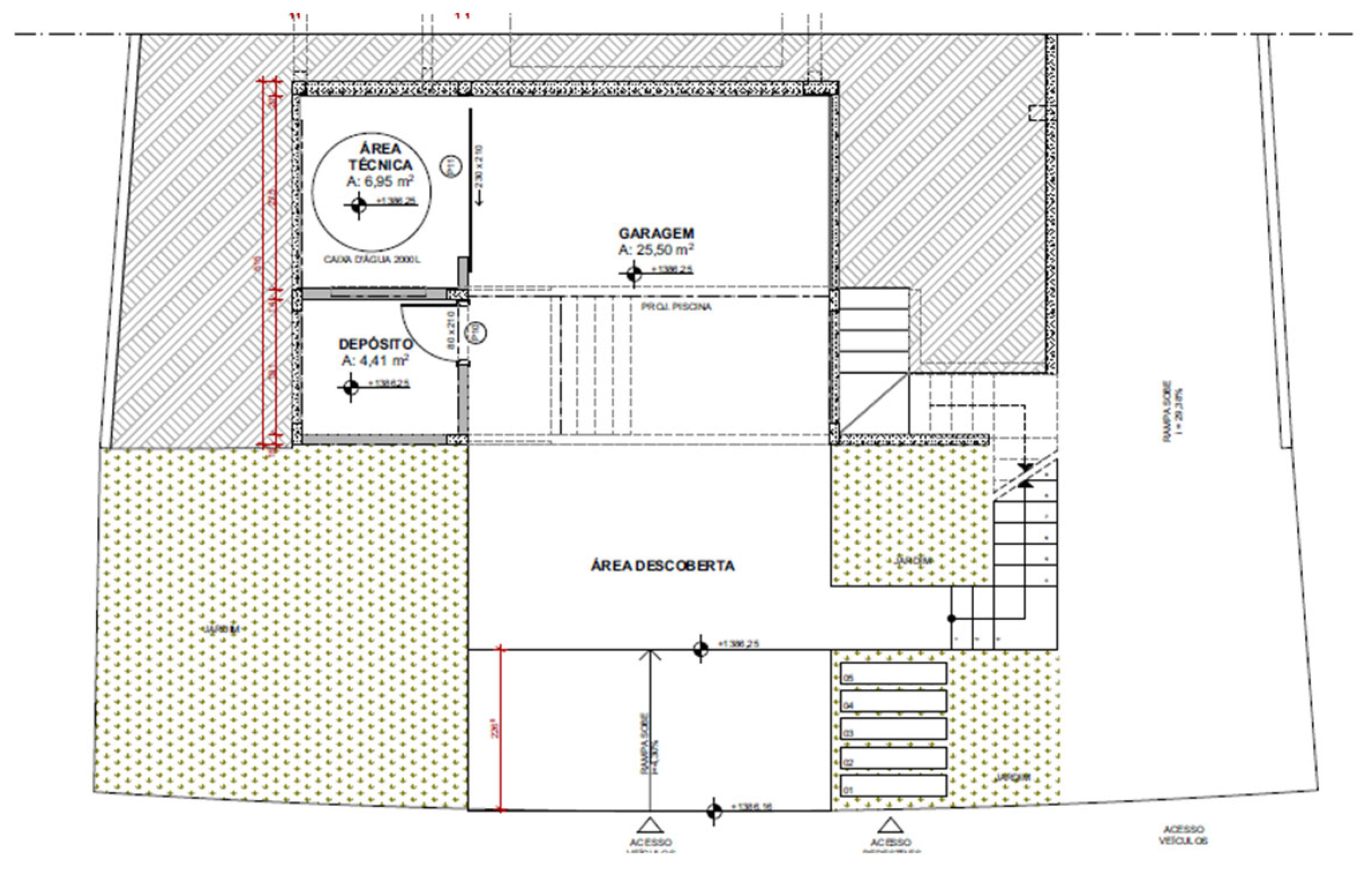
Figure 13.
Plan of the 2nd floor of the residence under study.
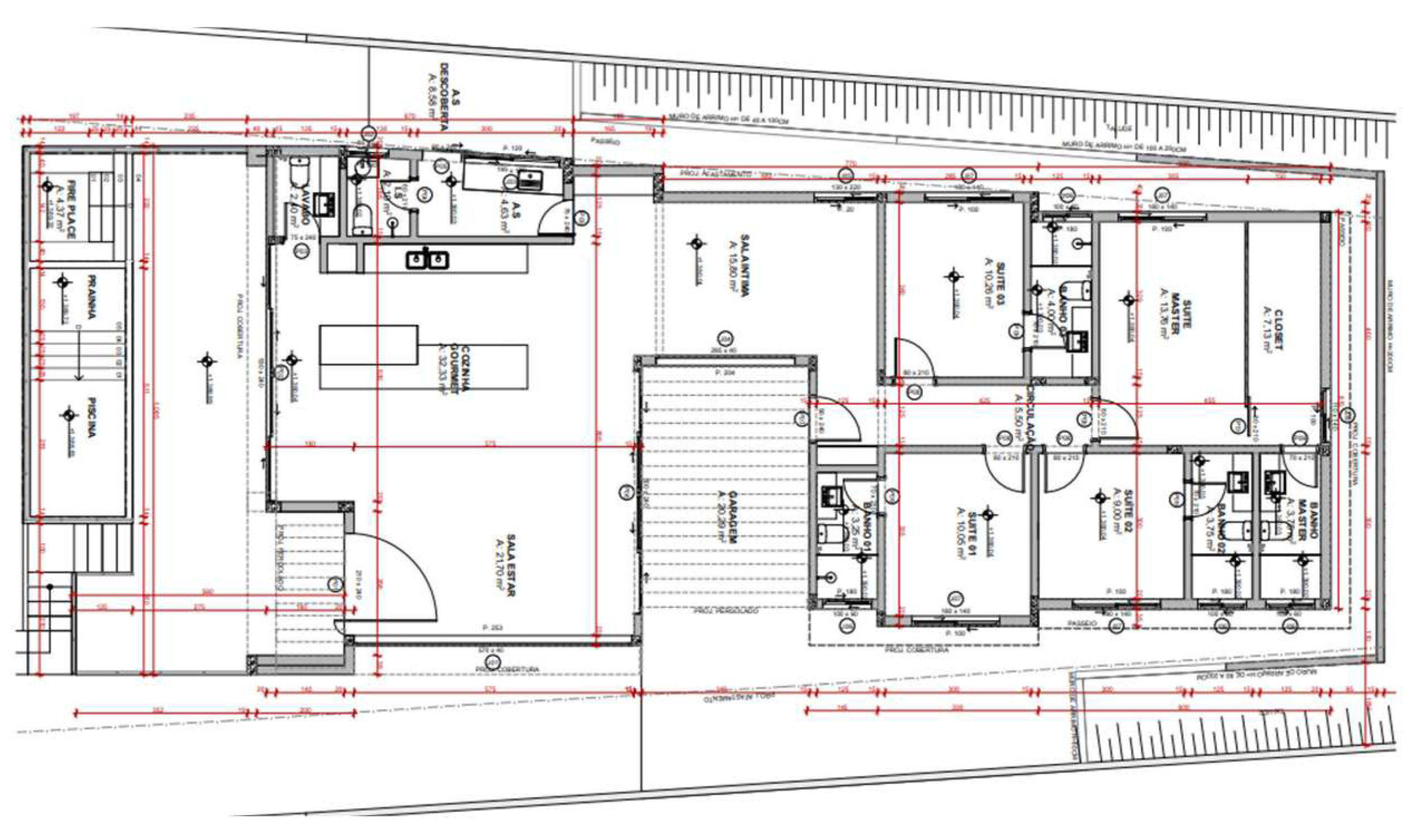
Figure 14.
Application of tarp on the floor before the concreting.
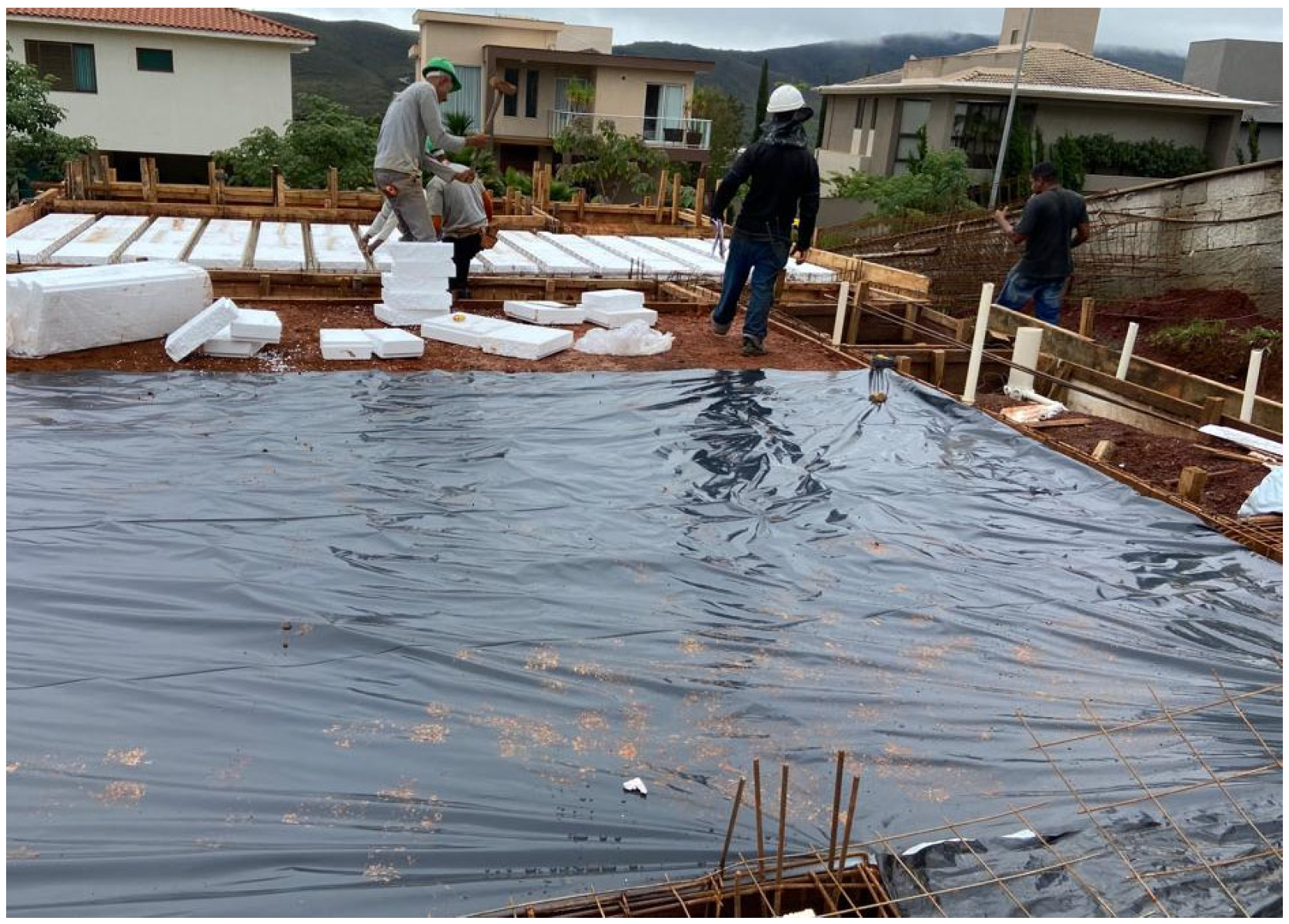
Figure 15.
Positioning of EPS plates.
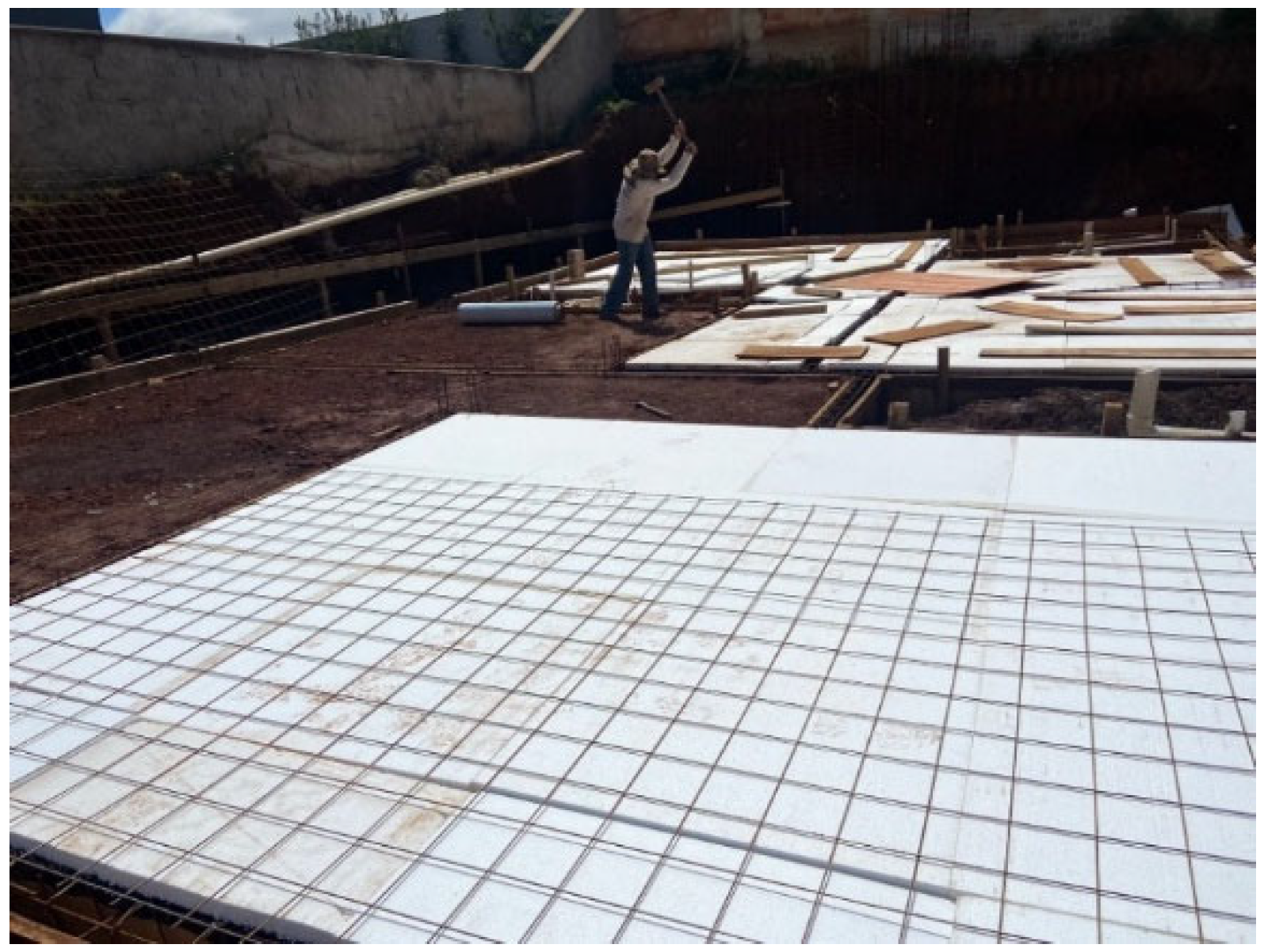
Figure 16.
Application of tarp on the ramp floor before concreting.
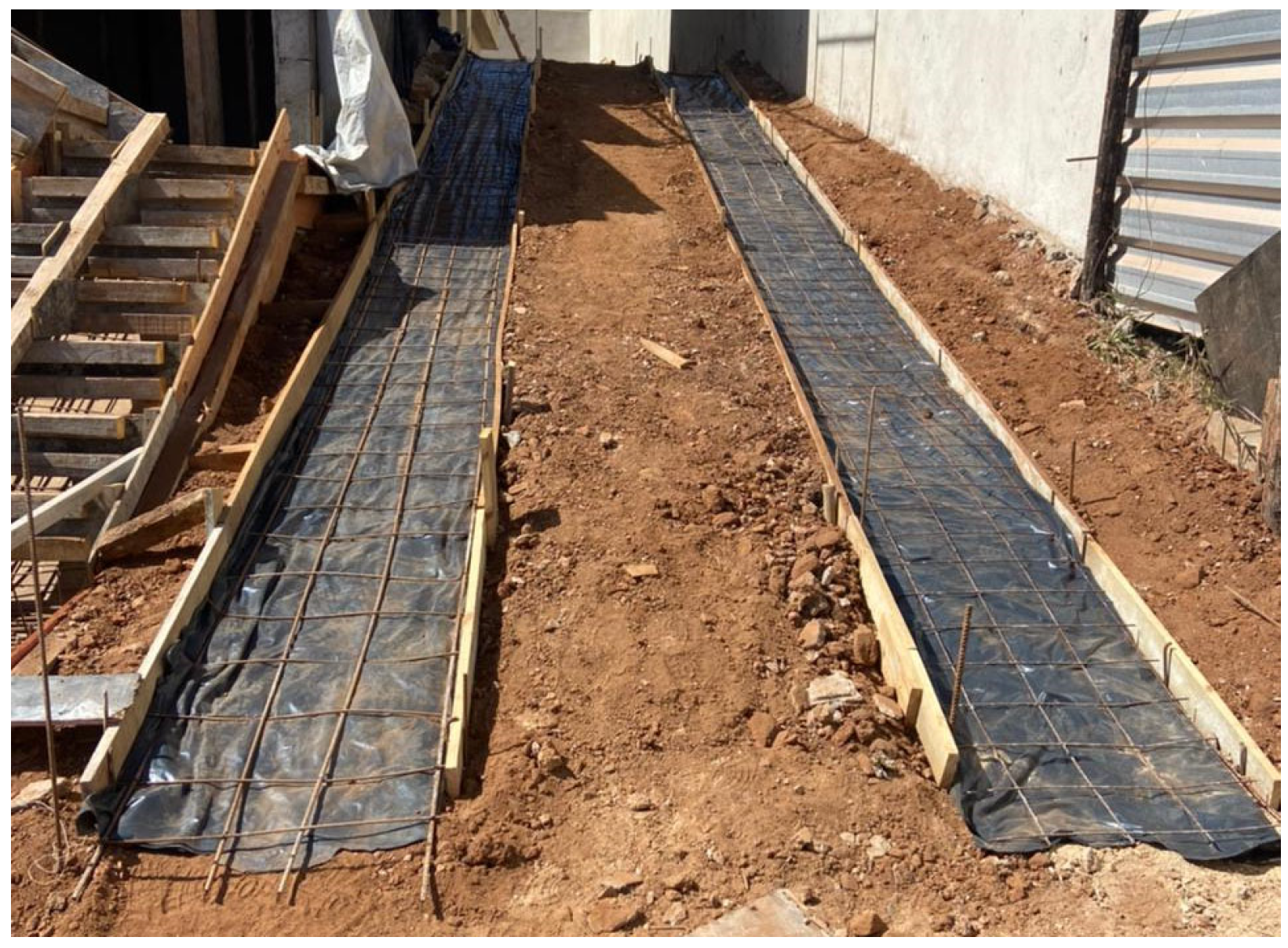
Figure 17.
(a) Primer application on the Slab; (b) Primer application in water tank room; (c) Use of a blowtorch to melt the modified asphalt; (d) Application of modified asphalt to receive the blanket; (e) Positioning of the blanket roll on the slab; (f) Aluminized asphalt blanket applied on the slab.
Figure 17.
(a) Primer application on the Slab; (b) Primer application in water tank room; (c) Use of a blowtorch to melt the modified asphalt; (d) Application of modified asphalt to receive the blanket; (e) Positioning of the blanket roll on the slab; (f) Aluminized asphalt blanket applied on the slab.
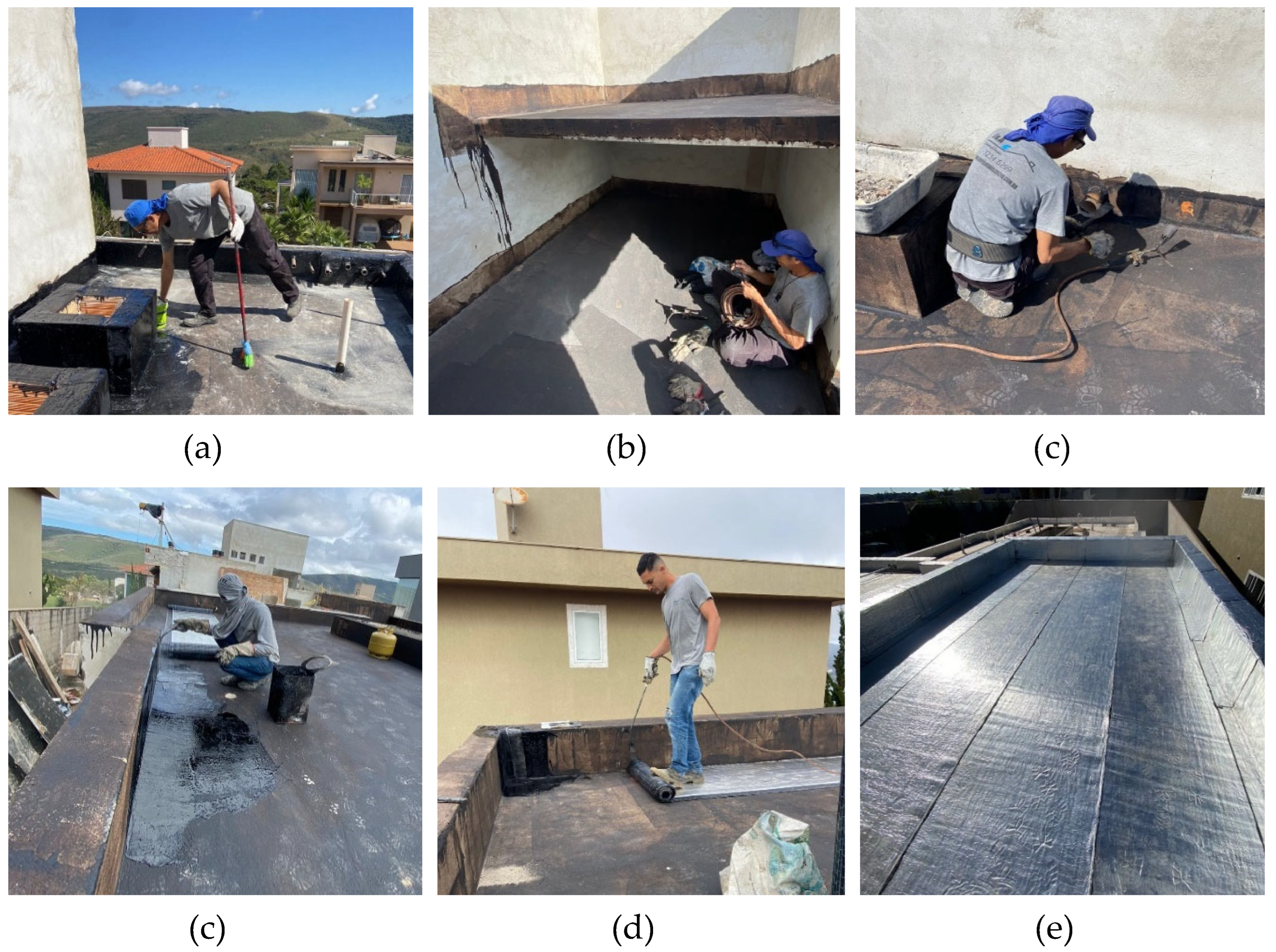
Figure 18.
Bathroom after applying waterproofing.
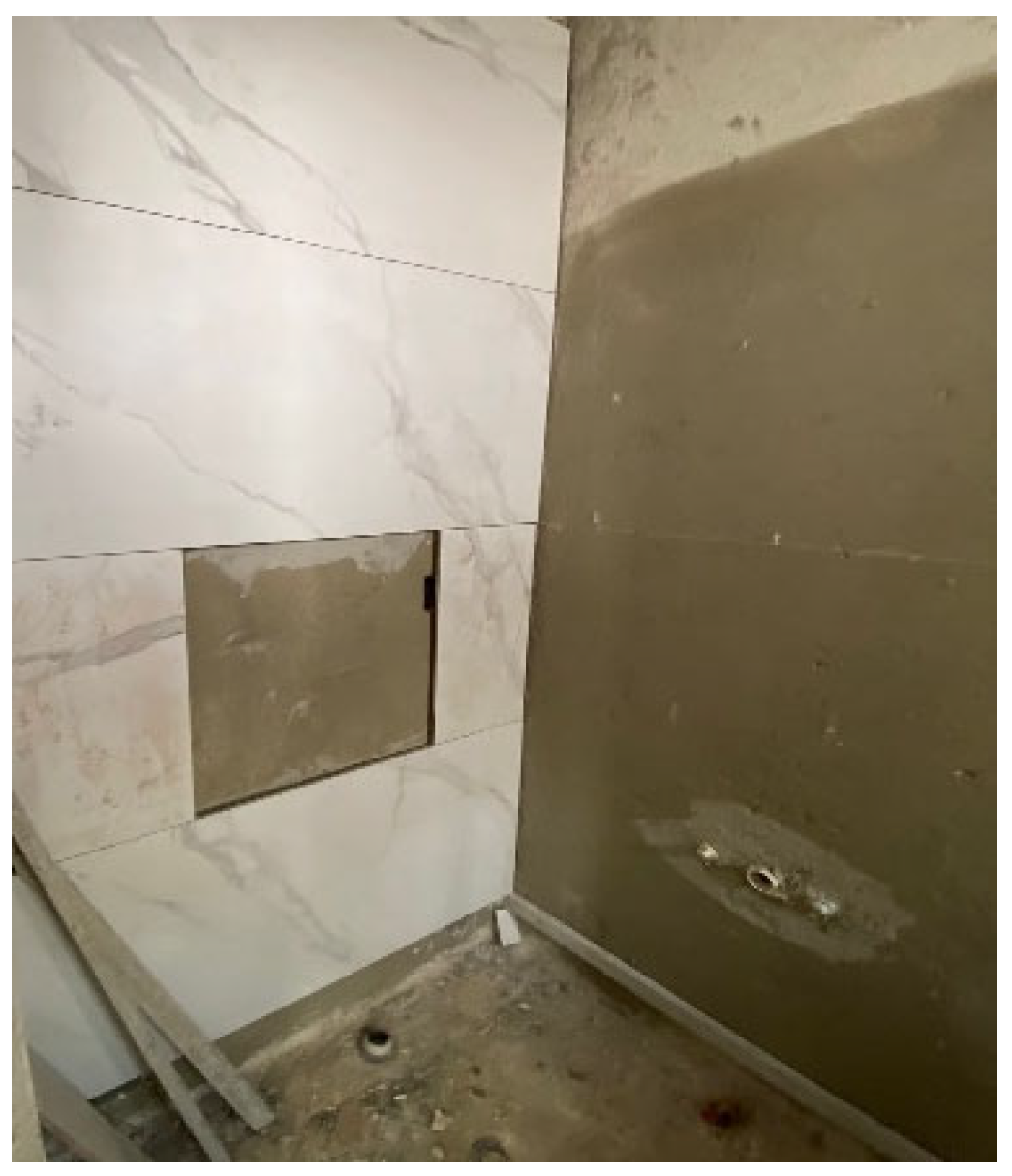
Figure 19.
(a) Pool with primer applied; (b) Use of modified asphalt on the pool surface.
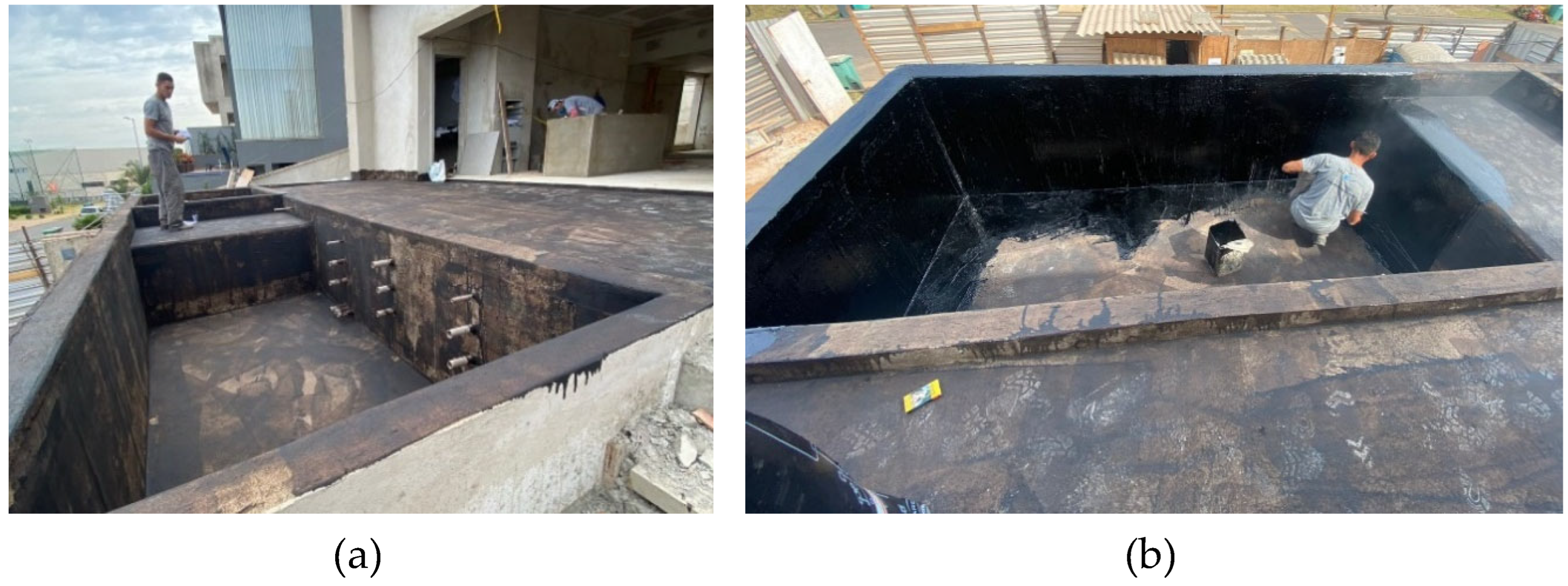
Figure 20.
(a) Application of blanket in the swimming pool; (b) Swimming pool with polyethylene asphalt blanket applied.
Figure 20.
(a) Application of blanket in the swimming pool; (b) Swimming pool with polyethylene asphalt blanket applied.
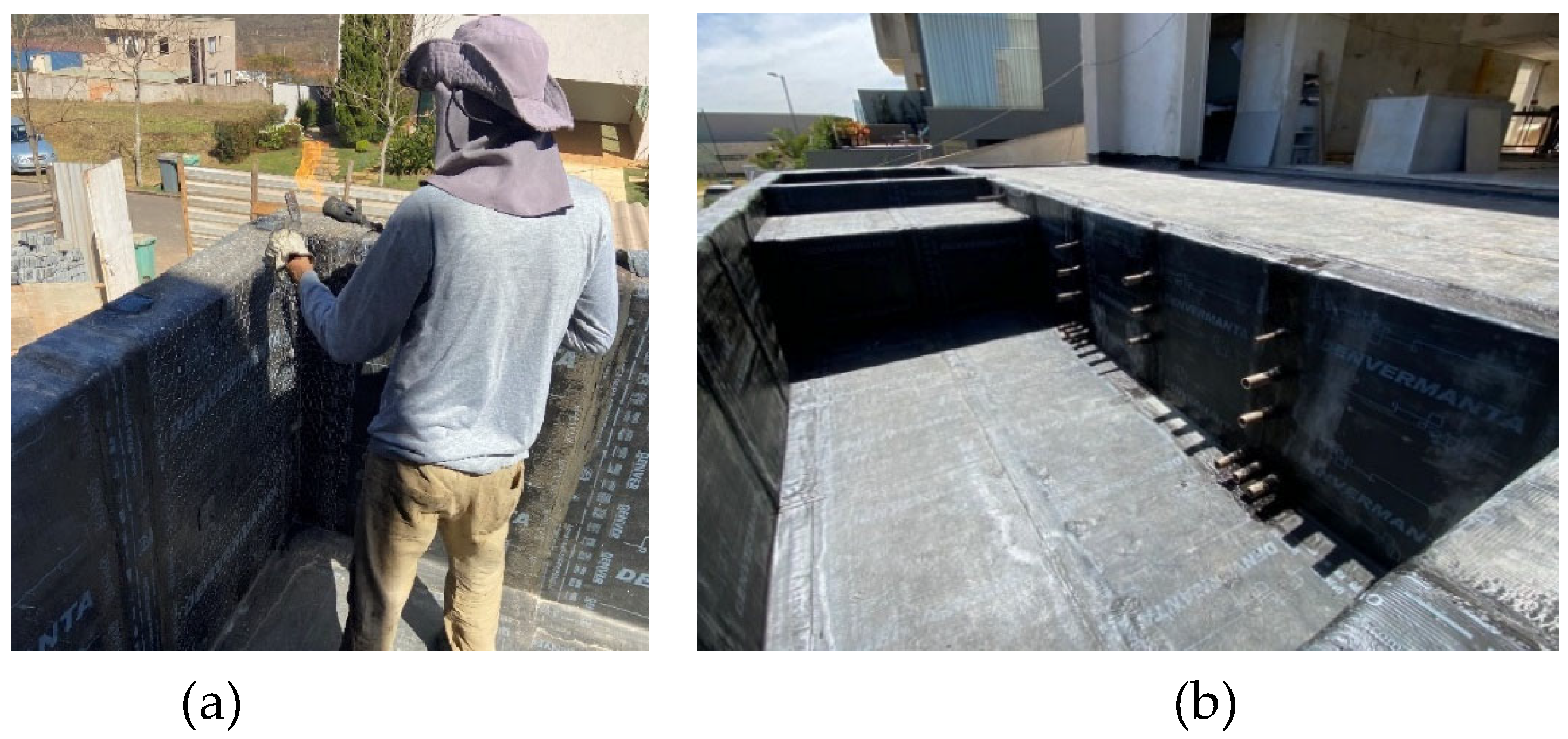
Figure 21.
(a) Pool, fireplace, and deck in the water-tightness test; (b) Pool in the water-tightness test.
Figure 21.
(a) Pool, fireplace, and deck in the water-tightness test; (b) Pool in the water-tightness test.
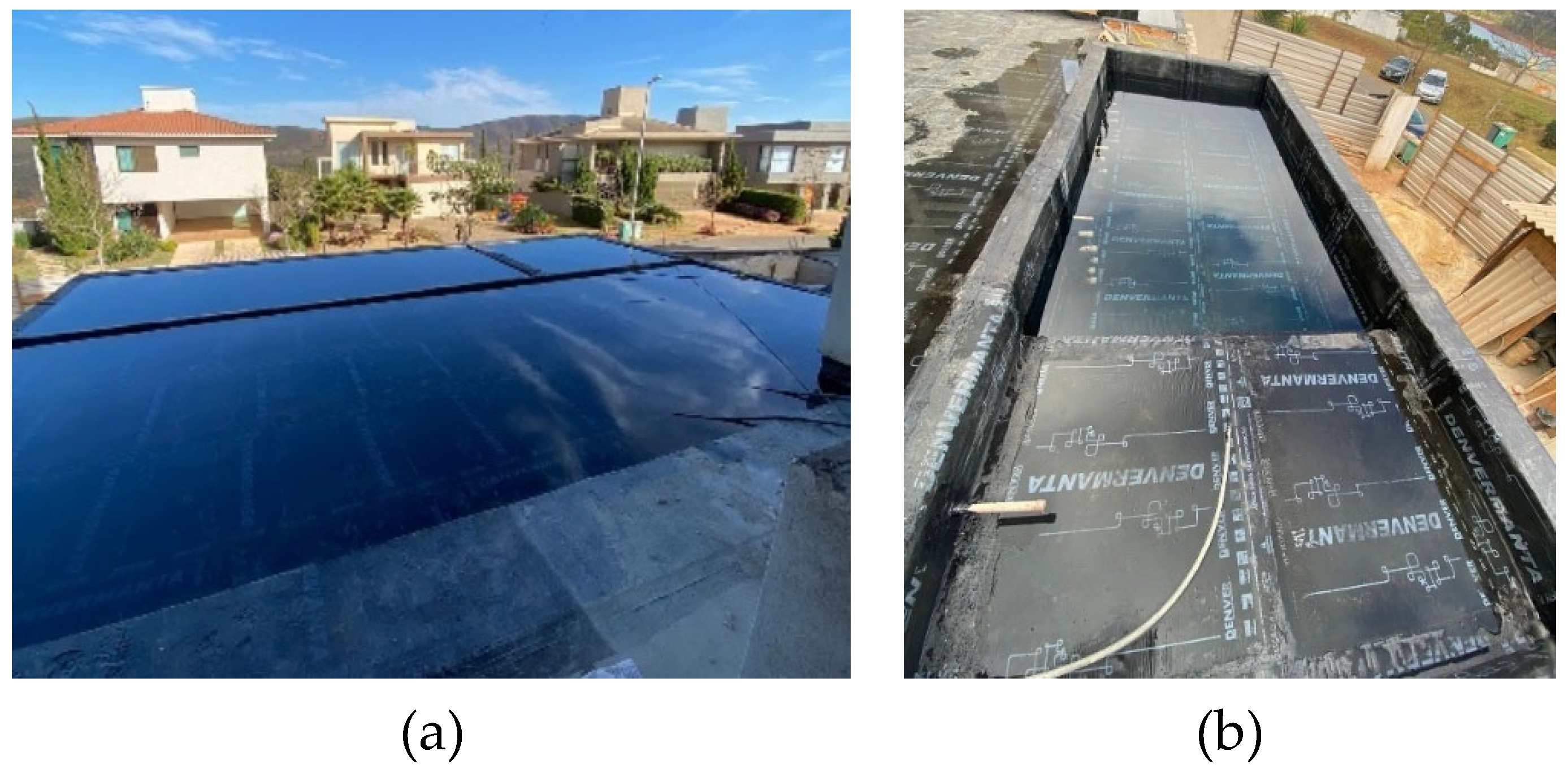
Figure 22.
(a) Application of chicken wire over pool blanket; (b) Pool, fireplace, and deck.
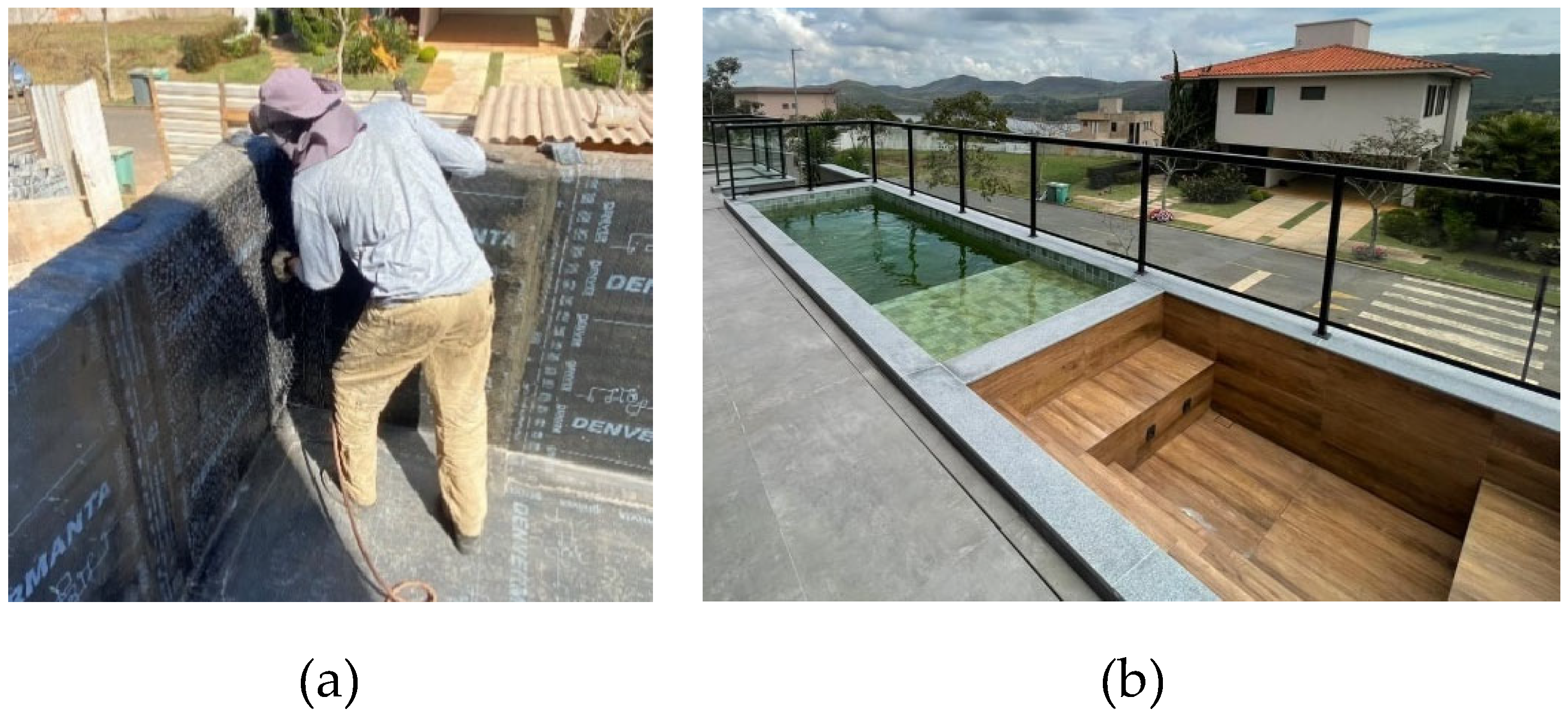

Table 1.
Stages of bibliographic selection by the ProKnow-C.
| Stage | Description | Details | Articles |
|---|---|---|---|
| 1 | Preliminary research | · Definition of databases: Science Direct, Scopus, and Google Acadêmico. · Time frame: 2015 to 2022. · Keywords: (1) Waterproofing, sealing, or impermeabilization; (2) Blanket, coating, or covering; (3) Slab or floor; (4) Roof; (5) Infiltration or seepage; (6) Pathology or condition. · Keyword combinations: (a) 1+2+3; (b) 1+2+4; (c)1+2+5; (d) 1+4+5; (e) 3+5+6; (f) 4+5+6; (g) 2+3+5. · Database filters: title, abstract and keywords. |
447 |
| 2 | Extraction of articles from the databases | · Type of work: full papers published in journals or conferences | 250 |
| 4 | Elimination of duplicates | · Exclusion of articles published in more than one database | 232 |
| 5 | Alignment by title | · Articles with a title aligned with the research topic | 45 |
| 6 | Alignment by abstract | · Articles with the abstract fully aligned with the research topic | 26 |
| 7 | Full-text retrieval | · Manuscripts made available in full by the databases | 26 |
| 8 | Full alignment | · Articles fully aligned with the research theme | 17 |
Table 2.
Details of the selected bibliographic portfolio.
| Reference | Title | Journal/Conference | Year |
|---|---|---|---|
| Alev et al. [37] | Air leakage of concrete floor and foundation junctions | Energy Procedia | 2015 |
| Figueiredo et al. [38] | Impermeabilização com manta asfáltica de uma laje plana de cobertura | Construindo | 2017 |
| Pinto and Aguiar [39] | Sistema de impermeabilização com manta asfáltica e manta líquida em lajes de coberturas | Projectus | 2017 |
| Sriravindrarajah and Tran [40] | Waterproofing practices in Australia for building construction | 4th International Conference on Rehabilitation and Maintenance in Civil Engineering | 2018 |
| Coppola et al. [41] | Innovative carboxylic acid waterproofing admixture for self-sealing watertight concretes | Construction and Building Materials | 2018 |
| Gonçalves et al. [42] | Environmental and economic comparison of the life cycle of waterproofing solutions for flat roofs | Journal of Building Engineering | 2019 |
| Ribeiro et al. [43] | Impermeabilização a base de polímero acrílico: estudo de caso no tratamento de infiltração da laje de cobertura | Revista Eletrônica da Estácio Recife | 2019 |
| Ksit and Plich [44] | Liquid plastic films as a solution in terms of tightness problems and roofs aesthetics improvement–review | Budownictwo i Architektura | 2019 |
| Scheidegger [19] | Impermeabilização de edificações: mantas asfálticas e argamassas poliméricas | Revista Científica Multidisciplinar Núcleo do Conhecimento | 2019 |
| Pinto et al. [45] | Infiltration: The disease of the structure | ITEGAM-JETIA | 2020 |
| Pettersson et al. [46] | On the impact of porous media microstructure on rainfall infiltration of thin homogeneous green roof growth substrates | Journal of Hydrology | 2020 |
| Van Linden and Van Den Bossche [47] | Airtightness of sealed building joints: Comparison of performance before and after artificial ageing | Building and Environment | 2020 |
| Neves et al. [48] | Desenvolvimento de um guia de reparos para diferentes tipos de patologia relativos à umidade nas edificações | XVI Congreso Latinoamericano de Patología de la Construcción | 2021 |
| Silva and Coelho [49] | Pathological manifestations due to infiltration in garage floors–Case study in Salvador-BA | XVI International Conference on Pathology and Constructions Rehabilitation | 2021 |
| Reis et al. [50] | Pathologies caused by infiltration in a long-stay institution for the elderly: A case study | RECIMA21-Revista Científica Multidisciplinar | 2021 |
| Heinlein et al. [51] | Pre-applied bonded waterproofing membranes: A review of the history and state-of-the-art in Europe and North America | Construction and Building Materials | 2021 |
| Maj and Ubysz [52] | The reasons for the loss of polyurea coatings adhesion to the concrete substrate in chemically aggressive water tanks | Engineering Failure Analysis | 2022 |
Disclaimer/Publisher’s Note: The statements, opinions and data contained in all publications are solely those of the individual author(s) and contributor(s) and not of MDPI and/or the editor(s). MDPI and/or the editor(s) disclaim responsibility for any injury to people or property resulting from any ideas, methods, instructions or products referred to in the content. |
© 2023 by the authors. Licensee MDPI, Basel, Switzerland. This article is an open access article distributed under the terms and conditions of the Creative Commons Attribution (CC BY) license (http://creativecommons.org/licenses/by/4.0/).
Copyright: This open access article is published under a Creative Commons CC BY 4.0 license, which permit the free download, distribution, and reuse, provided that the author and preprint are cited in any reuse.


