

Submitted:
31 May 2023
Posted:
31 May 2023
You are already at the latest version
Abstract
Knowledge about pharmacological benefits of different seeds is an important factor for cultivation and application of medicinal herbs and plants. The seeds of medicinal plants are stores of valuable and active secondary metabolites that have been commercially and economically beneficial and helpful for medicine and pharmacy. The major parameter of reproduction and preservation of plants are also seeds which have a functional role in the distribution and establishment of plant in different regions. Five important seeds which have tremendous medicinal and pharmacological benefits are anise, basil, borage, cilantro and chamomile. Anise seed is used as a spice, either whole or ground, and its essential oil and extract are also obtained from the seeds. Basil seeds have a long history of usage in Chinese and Ayurvedic medicine, which are the good source of minerals, high in fiber including pectin, rich is flavonoids and other polyphenols. Borage seed oil is used for skin disorders such as seborrheic dermatitis, atopic dermatitis, and neurodermatitis. Cilantro is an annual herb that is part of the Apiaceae family. The seeds are rich in iron, zinc, copper and essential minerals which can decrease bad cholesterol and improves good cholesterol in the body. Chamomile can be considered for treatment of insomnia, hemorrhoids, anxiety, diarrhea and may help with wound healing and skin irritation. The keyword searches for Anise, Seed, Basil, Borage, Cilantro, Chamomile, Seed biology, Traditional medicinal science and seed anatomy were performed by using Scopus, Web of Science, PubMed and Google scholar. The aim of this article review is to survey the pharmacological and health benefits of seeds of five important medicinal plants.
Keywords:
anise
; basil
; borage
; cilantro
; chamomile
; seed biology
; seed production
; seed germination
; seed dormancy
; seed priming
; seedling establishment
; anatomy and germination
1. Introduction
Aromatic and medicinal plants are gaining more importance because of their potential application in food, pharmaceutical and fragrance industry [1,2,3,4,5]. Medicinal and aromatic plants have been used in cosmetics, perfumery, pharmaceuticals and food flavoring since ancient times, because of the presence of essential oils and different components [6,7]. Anise or aniseed is an aromatic medicinal plants of the Apiaceae family [8], and its ethanol extract and essential oil are responsible for its efficacy [9]. It mainly contains trans-anethole, anethole, followed by estragole, sterols, scopoletin, coumarins, limonene, and pinens [10,11,12]. Its seeds are cultivated commercially and used for flavoring [13], and its aromatic seeds have been used in medicine as a mild expectorant [14,15].
Basil is cultivated for its essential oil, because it is used as odorizer and flavorant in perfumery and the food industry, as well as pharmaceutical industries [16,17,18]. In traditional medicine, it has been used in fold medicine to treat coughs, headaches, diarrhea, warts, constipation and kidney dysfunction, as well as to promote digestion and to stimulate appetite [19,20], because of presence of secondary metabolites like tannins, anthocyanins, phenols, flavonoids and steroids [21,22]. Its oil, linaloo, and estragole indicated nematocidal activities and acaricidal activities [23]. It has marvelous biological characteristics such as anti-angiogenic, anti-inflammatory, anti-tumor, anti-allergic, anti-depressant and anti-microbial [24,25,26,27,28,29].
Borage is an annual herb which is cultivated for culinary uses and medicinal applcation, even though, it is commercially planted for borage seed oil [30,31]. Borage seed oil is the plant rich in the gamma-linolenic acid which is utilized as food or dietary supplement [32,33]. Other than seed oil it contains a lot of fatty acids like linoleic acid, oleic acid, stearic acid, palmitic acid, erucic acid and eicosenoic acid [34,35]. It is consumed for the treatment of different diseases such as eczema, multiple sclerosis, heart diseases, diabetes and arthritis [36,37,38].
One of the most important and popular herbs in the Apiaceae family is Coriander [39,40], which is well-known for its antioxidant activity due to its natural phenolic-rich components [41,42]. The plants are utilized as pain reliever and sedative and the principle ingredient of coriander essential oil in linalool [43]. The coriander plants have different pharmacological effects like anti-cancerous, hypoglycemic, stomachic, carminative, spasmolytic, anti-mutagenic, antimicrobial, antioxidant and antifungal activity making it an important medicinal plant in pharmaceutical industries [44,45,46,47,48,49].
Chamomile is widely cultivated for its flowers and essential oils, and it has been considered as one of the oldest and most extensively used in traditional herbal medicine in different parts of the world [50,51,52]. It has been used to treat different kinds of complaints such as rheumatic pain, muscle spams, influenza, convulsions, anxiety, hemorrhoids, mucosal ulceration, skin inflشmmation, and gastrointestinal disorders [53,54,55,56,57,58]. A systematic review was conducted by searching electronic databases, including 550 articles. Relevant articles were selected on the basis of the nutritional, chemical, agronomical, and functional properties of anise, basil, borage, cilantro and chamomile seeds. The databases used were the Web of Science (https://clarivate.com/webofsciencegroup/solutions/web-of-science/), EBSCO (www.ebsco.com), and Scopus (www.scopus.com), among others. The keywords which have been used in this study were anise, basil, borage, cilantro, chamomile, seed production, seed biology, anatomy and germination, seed extract and pharmaceutical benefits. This work aims to provide an overview of medicinal effects and pharmacological benefits of the seeds of five important medicinal plants from recently published articles and studies.
2. Anise (Pimpinella anisum L.)
Pimpinella anisum L. belongs to the Apiaceae (Umbelliferae) family is an annual herb and a grassy plant with small green to yellow seeds and white flowers, which grows in Iran, Turkey, Egypt, India and many other warm parts of the world [59,60]. The major constituents of anise are anethole, eugenol, estragole, pseudoisoeugenol, anisaldehyde, methylchavicol, terpene hydrocarbons, coumarins, estrols, scopoletin, umberlliferon, polyacetylenes and polyenes [61,62,63,64,65]. Anise methanolic extract are molecular formula are Anethole (C10H12O), Eicosane (C20H42), Varidiflorene (C15H24), Docosane (C22H46), Pentadecane (C15H32), Nonadecane (C19H40), Butanoic acid (C15H20O3), Octacosane (C28H58), Heneicosane (C21H44), Hexadecane (C20H42) and Cyclohexane (C26H50) [66]. It has various therapeutic impacts on several conditions such as gynaecologic, digestive, neurologic, and respiratory disorders and against stored-product insects [67,68,69]. It is predominately grown for its fruits, commercially called “seeds” that are presently used for flavouring [70,71]. It has been reported that hot water extracts of the seeds have been consumed in folk medicine for their laxative and diuretic effect, expectorant and anti-spasmodic action, and their capability to ease intestinal colic and flatulence [72]. The methods of hydrodistillation (HD), solvent extraction, steam distillation, press, Ohmic-assisted hydrodistillation (OH), ohmic heating, ultrasound, microwave extraction and supercritical fluid can be considered as advanced and usual extraction methods [73]. Balbino et al. [74] showed that pressurized liquid extraction can be a useful tool for modulating the content and composition of bioactive molecules in lipid extracts from Apiaceae seeds. The water extracts of anise seeds showed greater antioxidant capacity than that of ethanol [13]. Lee [75] reported that anisaldehyde, estragole, anethole, and myrcene derived from anise seeds are appropriate as a lead compound to development new factors for selective control of the stored food mite (Tyrophagus putrescentiae). Yazdi et al. [76] found that dietary inclusion of 10 g anise/kg can be used as alternatives to in-feed antibiotics for broiler diets. Foliar applications of aniseed essential oil at concentrations of 0.2% and 0.4% (0.1 and 0.2 mL, respectively) to lettuce plants infested with homogeneous populations of Nasonovia ribisnigri decreased the number of insects in comparison with the control in the greenhouse and laboratory trials [77]. In traditional medicine, its seeds recommended for its central tranquilizing action, but on the basis of experiment, it failed to support and have significant roles in anxiety-related central action [78]. Iannarelli et al. [63] reported that aniseed essential oil indicated a significant anti-inflammatory impacts on both HTEpC and HBEpC cells together with mucus hypersecretion. The main points about anise seeds are presented in Table 1. The most important health benefits of anise seeds are shown in Figure 1.
3. Basil (Ocimum basilicum L.)
Basil seed is rich in fiber, nutrients and health benefits [79,80,81,82,83]. The seeds are high in dietary fiber and, thus, have significant potential as a functional ingredients, the mucilage obtained from basil seeds has been extensively studies, and has notable emulsifying, thickening, foaming, viscosity, stabilizing, and gelling properties [84,85,86,87,88]. Basil seeds are not normally utilized as a food, despite the literature indicating that its consumption stands for both its nutritious value and for its significant health advantages, such as antimicrobial, antidiabetic, antioxidant, and anticancer characteristics [89,90]. Basil has also been extensively applied in traditional medicine in the treatment of headaches, constipation, coughs, warts, diarrhea, kidney problems and worms [91]. Carbohydrate (hemicellulose, cellulose, and ligning) (60.8%), lipid (13.8%) and crude protein (13.7%) are the principle constituents of basil seed and the residue is mainly ash and moisture. Its black seeds are oval, the length, width and thickness are 3.22 ± 0.33 mm, 1.84 ± 0.24 mm and 1.37 ± 0.15 mm, respectively, and the main composition of the basil seed includes carbohydrate, protein and lipid [92,93,94]. The physical characteristics of basil seeds in Iran are 1.82 mm width, 3.11 mm length, 1.34 mm thickness [95], 1.84 mm width, 3.22 mm length, 1.37 mm thickness [96], the seeds from Serbia have 1.30-1.54 mm width, 2.31-2.64 mm length, and 0.99-1.14 mm thickness, and the seeds from India have 1.06 mm width and 1.97 mm length [84]. The basil plant seeds are small (2-3 mm), egg-shaped, elongated and black-colored and are generally applied in most desserts, and the seed also contain several traditional medicinal importance as it is useful in the treatment of various medical ailments such as ulcer, diarrhea, piles, dyspepsia, etc [97]. It can be categorized into different types such as the large leaf robust type, tall slender type, compact types, dwarf types which are small and short leafed, purple types, purpurascens, and citriodorum types.
Iranian basil seed is oval in shape and black in color with mean dimensions of 3.11 ± 0.29 mm (length), 1.34 ± 0.19 mm (height) and 1.82 ± 0.26 mm (width) [98]. The mineral components of basil seeds are Fe (2.27 mg/100 g), Mn (1.01 mg/100g), Zn (1.58 mg/100 g), Mg (31.55 mg/100 g), Na, K and Ca [99]. Basil seed gum is the mucopolysaccharide obtained from basil seed and it shows a fibrillar structure connected with many globules and suggests different practical use as emulsifier, stabilizer, fat replacer, and thickener [100,101,102]. Basil seed gum is a plant-derived hydrocolloid which its high molecular weight (Mw) (2320 kDa) imparts high pseudoplastic and viscous behaviour [100]. It is identified as an anionic heteropolysaccharide including glucomannan, which is composed of two main fractions with different molecular weights and monosaccharides units: PERBSG fraction (6000 kDa) and SUPER-BSG (1045 kDa) [103,104]. Basil seed gum demonstrated high flexible chain which makes it liable to change structure by adding sugar solutions, and it indicated random coil to rod conformation and no molecular entanglement at the various conditions [105,106]. Basil seed mucilage demonstrates significant chemical and physical properties like high water absorbing capacity, stabilizing and emulsifying properties [107,108,109]. The Ocimum basilicum mucilage (OBM) contains carbohydrates like D-Galactose, D-Glucose, D-Mannose, glucomannan, L-Rhamnose, pectins, hemicellulose materials, and little amount of non-polysaccharides like fat, minerals and protein [110,111,112].
The amino acid components of basil seeds are aspartic acid, glutamic acid, serine, glycine, arginine, alanine, histidine, threonine, tyrosine, proline, valine, leucine, cysteic acid, isoleucine, lysine, phenylalanine, methionine sulfone and tryptophan [113]. Basil seeds have a specific content of gum (generally ranging from 10% to 20% on the basis of the treating methods) with surprising functional characteristics which is comparable with some other commercial gums like xanthan [114]. Calcined basil seed indicated the adsorption capability of herbicides [115]. Rectal administration of combination of basil seeds plus gum arabic after induction of colitis, showed anti-inflammatory and antioxidant impacts, and accelerates the healing of the colon in experimental colitis increased by acetic acid [116]. Peptides from its seeds revealing anti-oxidant, α-amylase and α-glucosidase inhibitory activity using in-vitro models [117]. The hydrocolloids from seeds can be utilized in food formulations because of their availability, affordable price, and functionality [118,119]. Generally, the basil seeds have appropriate antioxidant potential, which is higher than other seeds, such as red seeds or sesame, and could be utilized to develop new natural antioxidants or be included as ingredients to prevent oxidative deterioration in foods [120,121]. Basil seeds are traditionally applied as a natural treatment for indigestion, ulcers, sore throats, diarrhea, and kidney disorders [121,122], and they have been used as a diuretic, aphrodisiac, antipyretic, and anti-dysenteric [121]. Key points about basil seeds are presented in Table 2. Fascinating health benefits of basil seeds are shown in Figure 2.
4. Borage (Borago officinalis L.)
Borage is on of the most important medicinal and nutritional plant because of the occurrence of high levels of γ-linolenic acid (GLA) in its seed oil [123,124,125,126]. It is a notable garden herb of the plant family Boraginaceae, and it is freshly consumed in salads [127,128]. In addition, this oil consists of more than 60% of polyunsaturated fatty acids (PUFA), and the high PUFA amount of borage oil makes it susceptible to oxidation [126]. Its seed oil is a highly emollient oil that hydrates, protects and nourishes the skin. The plant is a culinary and traditional medicinal herb native to the Mediterranean area, which is self-incompatible, and therefore pollinating insects are needed to transfer pollen between different plants with at least two honey bee hives per hectare [129]. Due to its potential market for gamma linolenic acid (GLA), it has been the subject of increasing agricultural interest and different fatty acid obtained from the seeds [130]. In addition to GLA, borage seeds contain stearic, erucic, linoleic, palmitic, oleic,α-linolenic, and erucic acids [131,132,133,134]. GLA is an omega-6 essential fatty acid which has been considered as having many positive therapeutic impacts such as treatment of diabetes, arthritis, heart disease, atopic eczema, cyclic mastalgia, and multiple sclerosis [135,136]. Oil from plant seeds includes mostly of triglycerides consisting of C16-C20 fatty acids, triglycerides are sufficiently soluble in SC-CO2, but much more so in n-alkane, like propane [137]. Borage seed oil is mostly obtained by organic solvent extraction (mainly hexane), extrusion procedure such as cold pressing and hot expelling or a mixture of extrusion processes and solvent extraction [138]. Borage extracts showed remarkable antioxidant properties and these impacts were related to their phenolic components [139]. HPLC analysis allowed to recognize nine phenolic acids during seed maturation with the performance of rosmarinic, sinapic and syringic acids [140]. Key points about borage seeds are presented in Table 3. The most impressive health benefits of borage are presented in Figure 3.
5. Cilantro (Coriander) (Coriandrum sativum L.)
Cilantro is an annual herb which belongs to family Apiaceae, the cilantro plant yields two primary products that are applied for flavoring purposes, mature seeds as the spice coriander and immature fresh green herb [141,142,143]. All parts of the plant are edible with dried seeds and fresh leaves most usually used as culinary ingredients [144,145]. It is probably one of the first species used by humanity [146,147,148]. Principle constituents in cilantro are aldehydes (82.6%) followed by alcohols (16.6%). Cilantro is also an appropriate source of essential fatty acids [149,150]. α-linolenic acid and Linoleic acid are found in high concentration, are essential fatty acids and are precursors of omega-6 fatty acids and omega-3 fatty acids, respectively [151]. The major monoterpenes of coriander are linalool followed by camphor, geraniol, and limonene [152]. The essential oils found in cilantro leaves and seeds have become increasingly popular as as functional foods and substitute sources of natural preservative factors. Its essential oil has been utilized in the food industry for its flavor and aroma, or to mask displeasing odors of certain foods, because of its distinctive pungent, aldehydic and fatty aroma [153]. The major aromatic compounds are aliphatic aldehydes (mainly C10-C16 aldehydes) with a fetid-like aroma in the fresh herb oil [154]. The oil composition of seeds can be influenced by several parameters like genetic structure, plant and soil macro and micro nutrient contents, climatic conditions, and agronomical practices [155,156,157].
The seeds of coriander are ovate globular, the length of the seed is 3-5 mm and color and there are many longitudinal ridges on the surface, when dried, is generally brown, but may be green, straw-colored or off white; usually, the seed if sell sun dried and made accessible for both whole and ground, and coriander seeds have a sweet, mild, slight pungent, like citrus flavor with a hint of sage [158]. There are three main extraction processes used to obtain vegetal oil (VO) and essential oil (EO) from coriander seeds, which are organic solvent extraction (Soxhlet), steam distillation, and supercritical fluid extraction [159]. The most cited compounds are (E)-2-decenal, decanal, (E)-2-dodecenal, (E)-2-tridecenal, dodecanal and tetradecenal [160,161]. Lasram et al. [162] reported that seed essential oils of coriander proved to be a potential natural source of aflatoxin and antifungal inhibition agent against Aspergillus flavus. Seeds also have antimicrobial potential against various pathogen bacteria and yeasts, and both lipophilic and hydrophilic extracts of coriander have indicated significant antioxidant activities in in vivo and in vitro studies [163]. Mixing of fractions of eucalytpus, coriander, dill and cilantro resulted in synergistic, additive or antagonistic impacts against individual test microorganisms [164]. Chemical characterization of cilantro essential oil can be considered as a potential antifungal, methylglyoxal suppressor and antiaflatoxigenic [165]. The seeds are major accountable for the medical application of coriander and have bee utilized as a drug for indigestion, rheumatism, against worms and pain in the joints [166].
The coriander seeds have a satisfying flavour owing to the specific composition of the essential oil [166]. The high content of hydroxycinnamic acids was observed in ethanolic extracts achieved from exhausted coriander seeds with lowest mean particle size, consequently, coriander seeds, which have been identified for its rich essential oil content, could be applied for sequential production of polyphenolic-rich extracts with high antioxidant activity [167,168]. Coriander seeds antioxidant activity is primarily related to high levels of phospholipids, carotenoids and tocopherols. Coriander seed essential oil had a significant inhibitory impacts on Candida albicans [169]. Coriander seeds and leaves are nearly good sources of essential oil [170], and the content of essential oils is usually influenced by coriander cultivar, weather conditions, geographical location of the growth area and stage of maturity [171]. Coriander seeds essential oil had a very notable impacts on Candida albicans; Gram-positive bacteria were more sensitive to the essential oil of coriander seeds than Gram-negative bacteria [172]. Coriander seeds aqueous extract treatment increased exploratory activity in the animal models of anxiety, and restored monoamines and GABA levels to the respective baseline levels and it declined excitotoxic levels of glutamate in the hippocampus region [173]. Key points about cilantro seeds are presented in Table 4. The surprising health benefits of cilantro has presented in Figure 4.
6. Chamomile (Matricaria chamomilla L.)
Chamomile belonging to the Asteraceae family and also called as German chamomile, is a medicinal plant of high economic importance in the world [174,175,176]. It is applied in perfumery, pharmaceutical, cosmetics, aromatherapy, food and flavor industries [177,178,179,180]. It is an aromatic annual herbaceous plant with capitulum inflorescence, and it is native to Western Asia and Eastern Europe [181]. Its seeds are one of the few seeds that need light to germinate, so establishing them by seed in a delicate process. Chamomile is classified mostly into five chemotypes, according to its content, of α-bisabolol, bisabolol oxide A and B, chamazulene, and bisabolone oxide in its essential oil [182]. The essential oil of chamomile has showed significant antioxidant, antibiotic, sedative, antifungal, anti-inflammatory and anti-allergic activities [183,184,185,186]. Chamomile could show potent antioxidant activity because of its content of flavanols, isoflavones, flavonoids, anthocyanin, flavones, isocatechins, tannins acid, and coumarin [187,188,189,190]. Chamomile is mainly used as infusion for anxiolytic and sedative purposes [191,192]. Utilizing chamomile in combination with Silver nanoparticles (AgNPs) may be an effective technique for efficacious treatment of lung cancer [193]. It has been reported that extracts of three essential oils of marjoram, chamomile, and Eucalyptus contain acaricidal activity against Tetranychus urticae [194]. Angelic, methacrylic acid esters, isobutyric and pinene were the main hydro-distilled essential oil volatiles [195,196,197]. It has been reported that chamomile seed based salvia substitute was effectual in relieving xerostomia signs [198]. Cicco et al. [199] showed that chamomile essential oils exerted their antioxidant and anti-inflammatory activity by regulating macrophages and CD4+ T cells-mediate immune response. Madadi et al. [200] concluded that 150 mg/L of chamomile shoot extract could be effective as a bioherbicide to sustainably control flixweed in wheat production. Chamomile extract is recommended in further decreasing the clinical traits and ameliorating the quality of life of Chronic Rhinosinusitis (CRS) patients [201]. Temperature, relative humidity, seed moisture content, and nature of the seeds impact the seed longevity during storage, and increment in temperature as well as moisture can lead to fungal growth which decreases seed viability [202,203,204,205,206,207]. Key points about chamomile seeds are presented in Table 5. Top health benefits of chamomile are shown in Figure 5.
7. Conclusion
Medicinal plant and herb seeds are seeds which have been standing in a special connection to humankind since the beginning of history. In these days, there is worldwide identification to the importance of medicinal and aromatic plants due to their uses in feed, food, pesticide and cosmetics industries as well as their preventive and curative characteristics, which is indicated by a growing demand for medicinal and aromatic products in the markets. Anise seeds are rich in nutrients, particularly its seeds are rich in iron, anise seed may help treat depression and reduce symptoms of it. Its seeds may help to prevent stomach ulcers and decrease unfavorable symptoms. Anethole which is an active component in anise seed, inhibits bacterial growth and other compounds possess potent antimicrobial properties. Anise seeds can help relieve menopause signs, balance blood sugar levels and decrease inflammation. The basil seeds are black colored and with oval shape, which has been used in traditional medicine such as antipyretic, antispasmodic, treatment of ulcer, stomachic, diarrhea and rich in plant compounds including flavonoids. In traditional medicine, borage used in herbal medicinal science, while commercially it is harvested as an oil seed. The seeds can decrease arthritis, relief from respiratory issues, having tremendous benefits to improve skin condition and cardiovascular health, important for treatment of allergies and diseases, recommended to relieve fever with anti-cancer activities. Chamomile plants are a member of the Asteraceae family, and two important common types of it are German chamomile and Roman chamomile. Terpenoid group like derivatives of acetylene and chamazulene are the main sources of antioxidants. It may help with depression and stress, improves digestion, appropriate to decrease pain and reduce inflammation. It has also strong anti-inflammatory and pain-reducing capabilities, anti-cancer activities, relieves congestion and promotes skin health. All these mentioned seeds of medicinal and aromatic plants which are also rich in many nutrients can boast a wide array of health benefits.
Author Contributions
W.S.: writing-original draft preparations; M.H.S.: writing-original draft preparation, and editing. All authors have read and agreed to the published version of the manuscript.
Funding
This research was funded by the Natural Science Foundation of Beijing, China (Grant No.M21026). This research was also supported by the National Key R&D Program of China (Research grant 2019YFA0904700).
Institutional Review Board Statement
Not applicable.
Informed Consent Statement
Not applicable.
Data Availability Statement
Not applicable.
Conflicts of Interest
The authors declare no conflict of interest.
References
- Sun, W.; Shahrajabian, M.H.; Cheng, Q. Fenugreek cultivation with emphasis on historical aspects and its uses in traditional medicine and modern pharmaceutical science. Mini Rev Med Chem. 2021, 21, 724–730. [Google Scholar] [CrossRef] [PubMed]
- Sun, W.; Shahrajabian, M.H.; Cheng, Q. Natural dietary and medicinal plants with anti-obesity therapeutics activities for treatment and prevention of obesity during lock down and in post-COVID-19 era. Appl Sci. 2021, 11, 7889. [Google Scholar] [CrossRef]
- Sun, W.; Shahrajabian, M.H.; Cheng, Q. Health benefits of wolfberry (Gou Qi Zi) on the basis of ancient Chinese herbalism and Western modern medicine. Avicenna J Phytomed. 2021, 11, 109–119. [Google Scholar] [CrossRef]
- Sun, W.; Shahrajabian, M.H.; Cheng, Q. Barberry (Berberis vulgaris), a medicinal fruit and food with traditional and modern pharmaceutical uses. Isr J Plant Sci. 2021, 68, 1–11. [Google Scholar] [CrossRef]
- Sun, W.; Shahrajabian, M.H. Therapeutic potential of phenolic compounds in medicinal plants-natural health products for human health. Molecules. 2023, 28, 1–47. [Google Scholar] [CrossRef] [PubMed]
- Shahrajabian, M.H.; Sun, W.; Cheng, Q. Different methods for molecular and rapid detection of human novel coronavirus. Curr Pharm Des. 2021, 27, 1–10. [Google Scholar] [CrossRef]
- Shahrajabian, M.H.; Sun, W.; Cheng, Q. Molecular breeding and the impacts of some important genes families on agronomic traits, a review. Genet Resour Crop Evol. 2021, 68, 1709–1730. [Google Scholar] [CrossRef]
- Das, S.; Singh, V.K.; Chaudhari, A.K.; Deepika; Dwivedy, A.K.; Dubey, N.K. Co-encapsulation of Pimpinella anisum and Coriandrum sativum essential oils based synergistic formulation through binary mixture: Physico-chemical characterization, appraisal of antifungal mechanism of action, and application as natural food preservative. Pest Biochem Physiol. 2022, 184, 105066. [Google Scholar] [CrossRef]
- Mahboubi, M.; Mahboubi, M. Pimpinella anisum and female disorders: A review. Phytomedicine Plus. 2021, 1, 100063. [Google Scholar] [CrossRef]
- Al-Bayati, F.A. Synergistic antibacterial activity between Thymus vulgaris and Pimpinella anisum essential oils and methanol extracts. J Ethnopharmacol. 2008, 116, 403–406. [Google Scholar] [CrossRef]
- Triapelli, C.R.; Andrade, C.R.D.; Cassano, A.O.; De Souza, F.A.; Ambrosio, S.R.; Costa, F.B.D.; Oliveira, A.M.D. Antispasmodic and relaxant effects of the hidroalcoholic extract of Pimpinella anisum (Apiaceae) on rat anococcygeus smooth muscle. J Ethnopharmacol. 2007, 110, 23–29. [Google Scholar] [CrossRef] [PubMed]
- Simbar, M.; Shadipour, M.; Salamzadeh, J.; Ramezani-Tehrani, F.; Nasiri, N. The combination of Pimpinella anisum, Apium graveolens and Crocus sativus (PAC) is more effective than mefenamic acid on postpartum after-pain. J Herb Med. 2015, 5, 20–25. [Google Scholar] [CrossRef]
- Gulcin, I.; Oktay, M.; Kirecci, E.; Kufrevioglu, O.I. Screening of antioxidant and antimicrobial activities of anise (Pimpinella anisum L.) seed extracts. Food Chem. 2003, 83, 371–382. [Google Scholar] [CrossRef]
- Benelli, G.; Pavela, R.; Petrelli, R.; Cappellacci, L.; Canale, A.; Senthil-Nathan, S.; Maggi, F. Not just popular spices! Essential oils from Cuminum cyminum and Pimpinella anisum are toxic to insect pests and vectors without affecting non-target invertebrates. Ind Crop Prod. 2018, 124, 236–243. [Google Scholar] [CrossRef]
- Hosseinzadeh, H.; Tafaghodi, M.; Abedzadeh, S.; Taghiabadi, E. Effect of aqueous and ethanolic extracts of Pimpinella anisum L. seeds on milk production in rats. J Acupunct Meridian Stud. 2014, 7, 211–216. [Google Scholar] [CrossRef]
- Kholiya, S.; Punetha, A.; Uhan, A.C.; Venkatesha, K.T.; Kumar, D.; Upadhyay, R.K.; Padalia, R.C. Essential oil yield and composition of Ocimum basilicum L. at different phenological stages, plant density and post-harvest drying methods. S Afr J Bot. 2022, 151, 919–925. [Google Scholar] [CrossRef]
- Singh, V.; Kaur, K.; Kaur, S.; Shri, R.; Singh, T.G.; Singh, M. Trimethoxyflavones from Ocimum basilicum L. leaves improves long term memory in mice by modulating multiple pathways. J Ethnopharmacol. 2022, 295, 115438. [Google Scholar] [CrossRef]
- Travadi, T.; Sharma, S.; Pandit, R.; Nakrani, M.; Joshi, C.; Joshi, M. A duplex PCR assay for authentication of Ocimum basilicum L. and Ocimum tenuiflorum L. in Tulsi churna. Food Control. 2022, 137, 108790. [Google Scholar] [CrossRef]
- Bajomo, E.M.; Aing, M.S.; Ford, L.S.; Niemeyer, E.D. Chemotyping of commercially available basil (Ocimum basilicum L.) varieties: Cultivar and morphotype influence phenolic acid composition and antioxidant properties. NFS J. 2022, 26, 1–9. [Google Scholar] [CrossRef]
- Turkay, I.; Ozturk, L. The form, dose, and method of application of vermicompost differentiate the phenylpropene biosynthesis in the peltate glandular trichomes of methylchavicol chemotype of Ocimum basilicum L. Ind Crops Prod. 2023, 198, 116688. [Google Scholar] [CrossRef]
- Qamar, F.; Sana, A.; Naveed, S.; Faizi, S. Phytochemical characterization, antioxidant activity and antihypertensive evaluation of Ocimum basilicum L. in L-NAME induced hypertensive rats and its correlation analysis. Heliyon. 2023, 9, e14644. [Google Scholar] [CrossRef]
- Junaid, A.A.; Kamarudin, M.S.; Junaid, Q.O.; Edaroyati, W.P.; Isyaka, M.S.; Dauda, A.B.; Umar, D.M.; Igoli, J.O.; Amin, S.M.N. Nutrient uptake and recovery potentials of Ocimum basilicum and Corchorus olitorius in a polyculture aquaponic system. Sci Afr. 2023, 20, e01645. [Google Scholar] [CrossRef]
- Alimi, D.; Hajri, A.; Jallouli, S.; Sebai, H. Acaricidal and anthelmintic efficacy of Ocimum basilicum essential oil and its major constituents estragole and linalool, with insights on acetylcholinesterase inhibition. Vet Parasitol. 2022, 309, 109743. [Google Scholar] [CrossRef] [PubMed]
- Ventura, A.S.; Jeronimo, G.T.; Filho, R.A.C.C.; Souza, A.I.D.; Stringhetta, G.R.; Cruz, M.G.D.; Torres, G.D.S.; Goncalves, L.U.; Povh, J.A. Ocimum basilicum essential oils as an anesthetic for tambaqui Colossoma macropomum: Hematological, biochemical, non-specific immune parameters and energy metabolism. Aquaculture. 2021, 533, 736124. [Google Scholar] [CrossRef]
- Beltran-Noboa, A.; Proano-Ojeda, J.; Guevara, M.; Gallo, B.; Berrueta, L.A.; Giampieri, F.; Perez-Castillo, Y.; Battino, M.; Alvarez-Suarez, J.M.; Tejera, E. Metabolomic profile and computational analysis for the identification of the potential anti-inflammatory mechanisms of action of the traditional medicinal plants Ocimum basilicum and Ocimum tenuiflorum. Food Chem Toxicol. 2022, 164, 113039. [Google Scholar] [CrossRef]
- Nguyen, T.K.; Nguyen, T.N.L.; Nguyen, K.; Nguyen, H.V.T.; Tran, L.T.T.; Ngo, T.X.T.; Pham, P.T.V.; Tran, M.H. Machine learning-based screening of MCF-7 human breast cancer cells and molecular docking analysis of essential oils from Ocimum basilicum against breast cancer. J Mol Struct. 2022, 1268, 133627. [Google Scholar] [CrossRef]
- Sabouri, Z.; Oskuee, R.K.; Sabouri, S.; Moghaddas, S.S.T.H.; Samarghandian, S.; Abdulabbas, H.S.; Darroudi, M. Phytoextract-mediated synthesis of Ag-doped ZnO-MgO-CaO nanocomposite using Ocimum Basilicum L. seeds extract as a highly efficient photocatalyst and evaluation of their biological effects. Ceram Int. 2023, 49, 20989–20997. [Google Scholar] [CrossRef]
- Srivastava, S.; Lal, R.K.; Yadav, K.; Pant, Y.; Bawitlung, L.; Kumar, P.; Mishra, A.; Gupta, P.; Pal, A.; Rout, P.K.; et al. Chemical composition of phenylpropanoid rich chemotypes of Ocimum basilicum L. and their antimicrobial activities. Ind Crops Prod. 2022, 183, 114978. [Google Scholar] [CrossRef]
- Akhavan, N.; Parikh, K.; Salazar, G.; Arjmandi, B. The antioxidative effects of Borago officinalis in lipopolysaccharide and hydrogen peroxide-activated RAW 264.7 macrophages. Curr Dev Nutr. 2020, 4, nzaa045-001. [Google Scholar] [CrossRef]
- Miceli, A.; Aleo, A.; Corona, O.; Sardina, M.T.; Mammina, C.; Settanni, L. Antibacterial activity of Borago officinalis and Brassica juncea aqueous extracts evaluated in vitro and in situ using different food model systems. Food Control. 2014, 40, 157–164. [Google Scholar] [CrossRef]
- Avila, C.; Breakspear, I.; Hawrelak, J.; Salmond, S.; Evans, S. A systematic review and quality assessment of case reports of adverse events for borage (Borago officinalis), coltsfoot (Tussilago farfara) and comfrey (Symphytum officinale). Fitoterapia. 2020, 142, 104519. [Google Scholar] [CrossRef] [PubMed]
- Gilani, A.H.; Bashir, S.; Khan, A.-U. Pharmacological basis for the use of Borago officinalis in gastrointestinal, respiratory and cardiovascular disorders. J Ethnopharmacol. 2007, 114, 393–399. [Google Scholar] [CrossRef] [PubMed]
- Samy, M.N.; Hamed, A.N.El.-S.; Sugimoto, S.; Otsuka, H.; Kamel, M.S.; Matsunami, K. Officinlioside, a new lignan glucoside from Borago officinalis L. Nat Prod Res. 2016, 30, 967–972. [Google Scholar] [CrossRef] [PubMed]
- Seo, S.A.; Park, B.; Hwang, E.; Park, S.-Y.; Yi, T.-H. Borago officinalis L. attenuates UVB-induced skin photodamage via regulation of AP-1 and Nrf2/ARE pathway in normal human dermal fibroblasts and promotion of collagen synthesis in hairless mice. Exp Gerontol. 2018, 107, 178–186. [Google Scholar] [CrossRef]
- Mohajer, S.; Taha, R.M.; Ramli, R.B.; Mohajer, M. Phytochemical constituents and radical scavenging properties of Borago officinalis and Malva sylvestris. Ind Crop Prod. 2016, 94, 673–681. [Google Scholar] [CrossRef]
- Ramandi, N.F.; Ghassempour, A.; Najafi, N.M.; Ghasemi, E. Optimization of ultrasonic assisted extraction of fatty acids from Borago officinalis L. flower by central composite design. Arab J Chem. 2017, 10, S23–S27. [Google Scholar] [CrossRef]
- Zribi, I.; Bleton, J.; Moussa, F.; Abderrabba, M. GC-MS analysis of the volatile profile and the essential oil compositions of Tunisian Borago Officinalis L.: Regional locality and organ dependency. Ind Crops Prod. 2019, 129, 290–298. [Google Scholar] [CrossRef]
- Zemmouri, H.; Ammar, S.; Boumendjel, A.; Messarah, M.; El Fekri, A.; Bouaziz, M. Chemical composition and antioxidant activity of Borago officinalis L. leaf extract growing in Algeria. Arab J Chem. 2019, 12, 1954–1963. [Google Scholar] [CrossRef]
- Atrooz, O.; Al-Nadaf, A.; Uysal, H.; Kutlu, H.M.; Sezer, C.V. Biosynthesis of silver nanoparticles using Corianderum sativum L. extract and evaluation of their antibacterial, anti-inflammatory and antinociceptive activities. S Afr J Bot. 2023, 157, 219–227. [Google Scholar] [CrossRef]
- Munni, Y.A.; Dash, R.; Mitra, S.; Dash, N.; Shima, M.; Moon, I.S. Mechanistic study of Coriandrum sativum on neuritogenesis and synaptogenesis based on computationally guided in vitro analyses. J Ethnopharmacol. 2023, 306, 116165. [Google Scholar] [CrossRef]
- Jeyaram, S.; Geethakrishnan, T. Spectral and third-order nonlinear optical characteristics of natural pigment extracted from Coriandrum sativum. Opt Mater. 2020, 107, 110148. [Google Scholar] [CrossRef]
- Yu, Y.; Cheng, Y.; Wang, C.; Huang, S.; Lei, Y.; Huang, M.; Zhang, X. Inhibitory effect of coriander (Coriandrum sativum L.) extract marinades on the formation of polycyclic aromatic hydrocarbons in roasted duck wings. Food Sci Hum Wellness. 2023, 12, 1128–1135. [Google Scholar] [CrossRef]
- Yigit, N.O.; Kocaayan, H. Efficiency of thyme (Origanum onites) and coriander (Coriandrum sativum) essential oils on anesthesia and histopathology of rainbow trout (Oncorhynchus mykiss). Aquaculture. 2023, 562, 738813. [Google Scholar] [CrossRef]
- Tulsani, N.J.; Hamid, R.; Jacob, F.; Umretiya, N.G.; Nandha, A.K.; Tomar, R.S.; Golakiya, B.A. Transcriptome landscaping for gene mining and SSR marker development in Coriander (Coriandrum sativum L.). Genomics. 2020, 112, 1545–1553. [Google Scholar] [CrossRef] [PubMed]
- Souza, C.C.D.; Souza, L.Z.M.D.; Yilmaz, M.; Oliveira, M.A.D.; Bezerra, A.C.D.S.; Silva, E.F.D.; Dumont, M.R.; Machado, A.R.T. Activated carbon of Coriandrum sativum for adsorption of methylene blue: Equilibrium and kinetic modeling. Clean Mater. 2022, 3, 100052. [Google Scholar] [CrossRef]
- Wei, S.; Lyu, J.; Wei, L.; Xie, B.; Wei, J.; Zhang, G.; Li, J.; Gao, C.; Xiao, X.; Yu, J. Chemometric approaches for the optimization of headspace-solid phase microextraction to analyze volatile compounds in coriander (Coriandrum sativum L.). LWT. 2022, 167, 113842. [Google Scholar] [CrossRef]
- Shahrajabian, M.H. Medicinal herbs with anti-inflammatory activities for natural and organic healing. Curr Org Chem. 2021, 25, 1–17. [Google Scholar] [CrossRef]
- Shahrajabian, M.H.; Sun, W. Asparagus (Asparagus officinalis L.) and pennyroyal (Mentha pulegium L.), impressive advantages with wondrous health-beneficial phytochemicals. Not Sci Biol. 2022, 14, 11212. [Google Scholar] [CrossRef]
- Shahrajabian, M.H.; Sun, W.; Cheng, Q. The importance of flavonoids and phytochemicals of medicinal plants with antiviral activities. Mini Rev Org Chem. 2022, 19, 293–318. [Google Scholar] [CrossRef]
- Duan, X.; Li, J.; Cui, J.; Li, H.; Hasan, B.; Xin, X. Chemical component and in vitro protective effects of Matricaria chamomilla (L.) against lipopolysaccharide insult. J Ethnopharmacol. 2022, 296, 115471. [Google Scholar] [CrossRef]
- Karam, T.K.; Ortega, S.; Nakamura, T.U.; Auzely-Velty, R.; Nakamura, C.V. Development of chitosan nanocapsules containing essential oil of Matricaria chamomilla L. for the treatment of cutaneous leishmaniasis. Int J Biol Macromol. 2020, 162, 199–208. [Google Scholar] [CrossRef] [PubMed]
- Heidarianpour, A.; Mohammadi, F.; Keshvari, M.; Mirazi, N. Ameliorative effects of endurance training and Matricaria chamomilla flowers hydroethanolic extract on cognitive deficit in type 2 diabetes rats. Biomed Pharmacother. 2021, 135, 111230. [Google Scholar] [CrossRef]
- Braga, A.S.; Simas, L.L.D.M.; Pires, J.G.; Souza, B.M.; Melo, F.P.D.S.R.; Saldanha, L.L.; Dokkedal, A.L.; Magalhaes, A.C. Antibiofilm and anti-caries effects of an experimental mouth rinse containing Matricaria chamomilla L. extract under microcosm biofilm on enamel. J Dent. 2020, 99, 103415. [Google Scholar] [CrossRef] [PubMed]
- Shebbo, S.; Joumaa, M.E.; Kawach, R.; Borjac, J. Hepatoprotective effect of Matricaria chamomilla aqueous extract against 1,2-Dimethylhydrazine-induced carcinogenic hepatic damage in mice. Heliyon. 2020, 6, e04082. [Google Scholar] [CrossRef]
- Ahmad, S.; Azhar, A.; Tikmani, P.; Rafique, H.; Khan, A.; Mesiya, H.; Saeed, H. A randomized clinical trial to test efficacy of chamomile and saffron for neuroprotective and anti-inflammatory responses in depressive patients. Heliyon. 2022, 8, e10774. [Google Scholar] [CrossRef] [PubMed]
- Tai, Y.; Ling, C.; Wang, C.; Wang, H.; Su, L.; Yang, L.; Jiang, W.; Yu, X.; Zheng, L.; Feng, Z.; et al. Analysis of terpenoid biosynthesis pathways in German chamomile (Matricara recutita) and Roman chamomle (Chamaemelum nobile) based on co-expression networks. Genomics. 2020, 112, 1055–1064. [Google Scholar] [CrossRef] [PubMed]
- Habibabad, H.Z.; Afrasiabifar, A.; Mansourian, A.; Mansourian, M.; Hosseini, N. Effect of chamomile aromatherapy with and without oxygen on pain of women in post cesarean section with spinal anesthesia: A randomized clinical trial. Heliyon. 2023, 9, e15323. [Google Scholar] [CrossRef] [PubMed]
- Habibzadeh, S.; Zohalinezhad, M.E. Antiviral activity of Matricaria chamomilla in the treatment of COVID-19: Molecular docking study. Eur J Integr Med. 2021, 48, 101975. [Google Scholar] [CrossRef]
- Altiparmaki, G.; Vasileiadou, M.A.; Vakalis, S. The effect of excess water on the hydrothermal carbonization of anise waste from ouzo production on Lesvos island. Sustain Chem Pharm. 2022, 29, 100831. [Google Scholar] [CrossRef]
- Ashry, A.M.; Habiba, M.M.; El-Zayat, A.M.; Hassan, A.M.; Moonmanee, T.; Doan, H.V.; Shadrack, R.S.; Dawood, M.A.O. Dietary anise (Pimpinella anisum L.) enhances growth performance and serum immunity of European sea bass (Dicentrarchus labrax). Aquac Rep. 2022, 23, 101083. [Google Scholar] [CrossRef]
- Kouznetsov, V.V.; Bohorquez, A.R.R.; Stashenko, E.E. Three-component imino Diels-Alder reaction with essential oil and seeds of anise: Generation of new tetrahydroquinolines. Tetrahedron Lett. 2007, 48, 8855–8860. [Google Scholar] [CrossRef]
- Shori, A.B. Proteolytic activity, antioxidant, and α-Amylase inhibitory activity of yogurt enriched with coriander and cumin seeds. LWT. 2020, 133, 109912. [Google Scholar] [CrossRef]
- Iannarelli, R.; Marinelli, O.; Morelli, M.B.; Santoni, G.; Amantini, C.; Nabissi, M.; Maggi, F. Aniseed (Pimpinella anisum L.) essential oil reduces pro-inflammatory cytokines and stimulates mucus secretion in primary airway bronchial and tracheal epithelial cell lines. Ind Crop Prod. 2018, 114, 81–86. [Google Scholar] [CrossRef]
- Samojlik, I.; Mijatovic, V.; Petkovic, S.; Skrbic, B.; Bozin, B. The influence of essential oil of aniseed (Pimpinella anisum L.) on drug effects on the central nervous system. Fitoterapia, 2012, 83, 1466–1473. [Google Scholar] [CrossRef] [PubMed]
- Nikoletta, N.; Despoina, Z.; Maria, A.D.; Efimia, P.M.; Urania, M.-S.; Nikolaos, M. Anise, parsley and rocket as nematicidal soil amendments and their impact on non-target soil organisms. Appl Soil Ecol. 2019, 143, 17–25. [Google Scholar] [CrossRef]
- Sun, W.; Shahrajabian, M.H.; Cheng, Q. Anise (Pimpinella anisum L.), a dominant spice and traditional medicinal herb for both food and medicinal purposes. Cogent Biol, 2019, 5, 1673688. [Google Scholar] [CrossRef]
- Ghazy, O.A.; Fouad, M.T.; Saleh, H.H.; Kholif, A.E.; Morsy, T.A. Ultrasound-assisted preparation of anise extract nanoemulsion and its bioactivity against different pathogenic bacteria. Food Chem. 2021, 341, 128259. [Google Scholar] [CrossRef] [PubMed]
- Goksen, G.; Ekiz, H.I. Use of aniseed cold-pressed by-product as a food ingredient in muffin formulation. LWT, 2021, 148, 111722. [Google Scholar] [CrossRef]
- Willocx, M.; Beeten, I.V.D.; Asselman, P.; Delgat, L.; Baert, W.; Janssens, S.B.; Leliaert, F.; Picron, J.-F.; Vahee, C. Sorting out the plants responsible for a contamination with pyrrolizidine alkaloids in spice seeds by means of LC-MS/MS and DNA barcoding: Proof of principle with cumin and anise spice seeds. Food Chem Mol Sci. 2022, 4, 100070. [Google Scholar] [CrossRef]
- Luna, C.; Chavez, V.H.G.; Barriga-Castro, E.D.; Nunez, N.O.; Mendoza-Resendez, R. Biosynthesis of silver fine particles and particles decorated with nanoparticles using the extract of Illicium verum (star anise) seeds. Spectrochim Acta A Mol Biomol Spectrosc. 2015, 141, 43–50. [Google Scholar] [CrossRef]
- Rietjens, I.M.C.M.; Cohen, S.M.; Eisenbrand, G.; Fukushima, S.; Gooderham, N.J.; Guengerich, F.P.; Hecht, S.S.; Rosol, T.J.; Davidsen, J.M.; Harman, C.L.; et al. FEMA GRAS assessment of natural flavor complexes: Allspice, anise, fennel-derived and related flavoring ingredients. Food Chem Toxicol. 2023, 174, 113643. [Google Scholar] [CrossRef] [PubMed]
- Kreydiyyeh, S.I.; Usta, J.; Knio, K.; Markossian, S.; Dagher, S. Aniseed oil increases glucose absorption and reduces urine output in the rat. Life Sci. 2003, 74, 663–673. [Google Scholar] [CrossRef] [PubMed]
- Jafari, R.; Zandi, M.; Ganjloo, A. Effect of ultrasound and microwave pretreatments on extraction of anise (Pimpinella anisum L.) seed essential oil by ohmic-assisted hydrodistillation. J Appl Res Med Aromat Plants. 2022, 31, 100418. [Google Scholar] [CrossRef]
- Balbino, S.; Repajic, M.; Obranovic, M.; Medved, A.M.; Tonkovic, P.; Dragovic-Uzelac, V. Characterization of lipid fraction of Apiaceae family seed spices: Impact of species and extraction method. J Appl Res Med Aromat Plants. 2021, 25, 100326. [Google Scholar] [CrossRef]
- Lee, H.-S. Food protective effect of acaricidal components isolated from anise seeds against the stored food mite, Tyrophagus putrescentiae (Schrank). J Food Protect. 2005, 68, 1208–1210. [Google Scholar] [CrossRef]
- Yazdi, F.F.; Ghalamkari, G.; Toghiani, M.; Modaresi, M.; Landy, N. Anise seed (Pimpinella anisum L.) as an alternative to antibiotic growth promoters on performance, carcass traits and immune responses in broiler chicks. Asian Pac J Trop Dis. 2014, 4, 447–451. [Google Scholar] [CrossRef]
- Canto-Tejero, M.; Pascual-Villalobos, M.J.; Guirao, P. Aniseed essential oil botanical insecticides for the management of the currant-lettuce aphid. Ind Crop Prod. 2022, 181, 114804. [Google Scholar] [CrossRef]
- Gamberini, M.T.; Rodrigues, D.S.; Rodrigues, D.; Pontes, V.B. Effects of the aqueous extract of Pimpinella anisum L. seeds on exploratory activity and emotional behavior in rats using the open field and elevated plus maze tests. J Ethnopharmacol. 2015, 168, 45–49. [Google Scholar] [CrossRef]
- Lodhi, B.A.; Hussain, M.A.; Ashraf, M.U.; Haseeb, M.T.; Muhammad, G.; Farid-ul-Haq, M.; Naeem-ul-Hassan, M. Basil (Ocimum basilicum L.) seeds engender a smart material for intelligent drug delivery: On-Off switching and real-time swelling, in vivo transit detection, and mechanistic studies. Ind Crops Prod. 2020, 155, 112780. [Google Scholar] [CrossRef]
- Kolvari, E.; Koukabi, N.; Ozmaei, Z.; Khoshkho, H.; Seidi, F. Synthesis of 2-amino-4H-pyran and 2-benzylidene malononitrile derivatives using a basil seed as a cheap, natural and biodegradable catalyst. Curr Res Green Sustain Chem. 2022, 5, 100327. [Google Scholar] [CrossRef]
- Mahdavi, H.; Marandi, A.; Karami, M.; Heidari, A.A. Efficient dye rejection using a mixed matrix polyphenylsulfone/polysulfone membrane containing basil seed mucilage hydrogel. J Environ Chem Engin. 2022, 10, 108767. [Google Scholar] [CrossRef]
- Nazir, S.; Wani, I.A. Fractionation and characterization of mucilage from Basil (Ocimum basilicum L.) seed. J Appl Res Med Aromat Plants. 2022, 31, 100429. [Google Scholar] [CrossRef]
- Nosouhian, E.; Hojjatoleslamy, M.; Goli, M.; Jafari, M.; Kiani, H. The effect of periodate oxidation of basil seed gum and its addition on protein binding. Int J Biol Macromol. 2023, 240, 124298. [Google Scholar] [CrossRef] [PubMed]
- Mathews, S.; Singhal, R.S.; Kulkarni, P.R. Ocimum basilicum: A new non-conventional source of fiber. Food Chem. 1993, 47, 399–401. [Google Scholar] [CrossRef]
- Osano, J.P.; Hosseini-Parvar, S.H.; Matia-Merino, L.; Golding, M. Emulsifying properties of a novel polysaccharide extracted from basil seed (Ocimum bacilicum L.): Effect of polysaccharide and protein content. Food Hydrocoll. 2014, 37, 40–48. [Google Scholar] [CrossRef]
- Kurd, F.; Fathi, M.; Shekarchizadeh, H. Nanoencapsulation of hesperetin using basil seed mucilage nanofibers: Characterization and release modeling. Food Biosci. 2019, 32, 100475. [Google Scholar] [CrossRef]
- Gahruie, H.H.; Eskandari, M.H.; Meeren, P.V.D.; Hosseini, S.M.H. Study on hydrophobic modification of basil seed gum-based (BSG) films by octenyl succinate anhydride (OSA). Carbohydr Polym. 2019, 219, 155–161. [Google Scholar] [CrossRef] [PubMed]
- Kim, S.Y.; Hyeonbin, O.; Lee, P.; Kim, Y.-S. The quality characteristics, antioxidant activity, and sensory evaluation of reduced-fast yogurt and nonfat yogurt supplemented with basil seed gum as a fat substitute. J Dairy Sci. 2020, 103, 1324–1336. [Google Scholar] [CrossRef]
- Imam, H.; Lian, S.; Kasimu, R.; Rakhmanberdyeva, R.K.; Aisa, H.A. Extraction of an antidiabetic polysaccharide from seeds of Ocimum basilicum and determination of the monosaccharide composition by precolumn high-efficiency capillary electrophoresisa. Chem Nat Compd. 2012, 48, 653–654. [Google Scholar] [CrossRef]
- Gajendiran, A.; Abraham, J.; Thangaraman, V.; Thangamani, S.; Ravi, D. Antimicroial, antioxidant and anticancer screening of Ocimum basilicum seeds. Bull Pharm Res. 2016, 6, 114–119. [Google Scholar]
- Simon, J.E.; Morales, M.R.; Phippen, W.B.; Vieira, R.F.; Hao, Z. Basil: A source of aroma compounds and a popular culinary and ornamental herb. In Perspectives on New Crops and New Uses; Janick, J., Ed.; ASHS Press: Alexandria, VA, USA, 1999; pp. 499–505. [Google Scholar]
- Amini, G.; Salehi, F.; Rasouli, M. Color changes and drying kinetics modeling of basil seed mucilage during infrared drying process. Inform Process Agric. 2022, 9, 397–405. [Google Scholar] [CrossRef]
- Salehi, F.; Kashaninejad, M. Statis rheological study of Ocimum basilicum seed gum. Int J Food Eng, 2015, 11, 97–103. [Google Scholar] [CrossRef]
- Zhong, H.; Gao, X.; Zhang, X.; Chen, A.; Qiu, Z.; Kong, X.; Huang, W. Minimizing the filtration loss of water-based drilling fluid with sustaiable basil seed powder. Petroleum, 2022, 8, 39–52. [Google Scholar] [CrossRef]
- Hosseini-Parvar, S.; Matia-Merino, L.; Goh, K.K.; Razavi, S.; Mortazavi, S.A. Steady shear flow behavior of gum extracted from Ocimum basilicum L. seed: Effect of concentration and temperature. J Food Eng. 2010, 101, 236–243. [Google Scholar] [CrossRef]
- Razavi, S.M.; Bostan, A.; Rezaie, M. Image processing and physico-mechanical properties of basil seed (Ocimum basilicum). J Food Process Eng. 2010, 33, 51–64. [Google Scholar] [CrossRef]
- Bhadange, Y.A.; Saharan, V.K. Optimization and kinetic studies of D-galacturonic acid extraction from basil seed using different extraction techniques. Sustain Chem Pharm. 2023, 33, 101080. [Google Scholar] [CrossRef]
- Naji-Tabasi, S.; Razavi, S.M.A. New studies on basil (Ocimum bacilicum L.) seed gum: Part II-Emulsifying and foaming characterization. Carbohydr Polym. 2016, 149, 140–150. [Google Scholar] [CrossRef]
- Munir, M.; Qayyum, A.; Raza, S.; Siddiqui, N.R.; Mumtaz, A.; Safdar, N.; Shible, S.; Afzal, S.; Bashir, S. Nutritional assessment of basil seeds and its utilization in development of value added beverage. Pak J Agric Res. 2017, 30, 266–271. [Google Scholar] [CrossRef]
- Naji-Tabasi, S.; Razavi, S.M.A. New studies on basil (Ocimum bacilicum L.) seed gum: Part III- Steady and dynamic shear rheology. Food Hydrocoll. 2017, 67, 243–250. [Google Scholar] [CrossRef]
- Farahmandfar, R.; Asnaashari, M.; Salahi, M.R.; khosravi Rad, T. Effects of basil seed gum, cress seed gum and quince seed gum on the physical, textural and rheological properties of whipped cream. Int J Biol Macromol. 2017, 98, 820–828. [Google Scholar] [CrossRef]
- Yang, Q.; Wang, Y.-R.; Du, Y.-N.; Chen, H.-Q. Heat-induced arachin and basil seed gum composite gels improved by NaCl and microbial transglutaminase: Gelling properties and structure. Food Hydrocoll. 2023, 135, 108200. [Google Scholar] [CrossRef]
- Hosseini-Parvar, S.; Matia-Merino, L.; Golding, M. Effect of basil seed gum (BSG) on textural rheological and microstructural properties of model processed cheese. Food Hydrocoll. 2015, 43, 557–567. [Google Scholar] [CrossRef]
- Movahedi, H.; Farahani, M.V.; Jamshidi, S. Application of hydrated basil seeds (HBS) as the herbal fiber on hole cleaning and filtration control. J Petrol Sci Engin. 2017, 152, 212–228. [Google Scholar] [CrossRef]
- Mirabolhassani, S.E.; Rafe, A.; Razavi, S.M.A. The influence of temperature, sucrose and lactose on dilute solution properties of basil (Ocimum basilicum) seed gum. Int J Biol Macromol. 2016, 93, 623–629. [Google Scholar] [CrossRef]
- Razi, S.M.; Motamedzadegan, A.; Matia-Merino, L.; Shahidi, S.-A.; Rashidinejad, A. The effect of pH and high-pressure processing (HPP) on the rheological properties of egg whie albumin and basil seed gum mixtures. Food Hydrocoll. 2019, 94, 399–410. [Google Scholar] [CrossRef]
- Maqsood, H.; Uroos, M.; Muazzam, R.; Naz, S.; Muhammad, N. Extraction of basil seed mucilage using ionic liquid and preparation of AuNps/mucilage nanocomposite for catalytic degradation of dye. Int J Biol Macromol. 2020, 164, 1847–1857. [Google Scholar] [CrossRef] [PubMed]
- Nazir, S.; Wani, I.A. Functional characterization of basil (Ocimum basilicum L.) seed mucilage. Bioact Carbohydr Diet Fibre. 2021, 25, 100261. [Google Scholar] [CrossRef]
- Naji-Tabasi, S.; Razavi, S.M.A.; Mohebbi, M.; Malaekeh-Nikouei, B. New studies on basil (Ocimum bacilicum L.) seed gum: Part I- Fractionation, physicochemical and surface activity characterization. Food Hydrocoll. 2016, 52, 350–358. [Google Scholar] [CrossRef]
- Khazaei, N.; Esmaiili, M.; Emam-Djomeh, Z. Effect of active edible coatings made by basil seed gum and thymol on oil uptake and oxidation in shrimp during deep-fat frying. Carbohydr Polym. 2016, 137, 249–254. [Google Scholar] [CrossRef]
- Rayegan, A.; Allafchian, A.; Sarsari, I.A.; Kameli, P. Synthesis and characterization of basil seed mucilage coated Fe3O4 magnetic nanoparticles as a drug carrier for the controlled delivery of cephalexin. Int J Biol Macromol. 2018, 113, 317–328. [Google Scholar] [CrossRef]
- Lodhi, B.A.; Abbas, A.; Hussain, M.A.; Hussan, S.Z.; Sher, M.; Hussain, I. Design, characterization and appraisal of chemically modified polysaccharide based mucilage from Ocimum basilicum (basil) seeds for the removal of Cd(II) from spiked high-hardness ground water. J Mol Liq. 2019, 274, 15–24. [Google Scholar] [CrossRef]
- Ziemichod, A.; Wojcik, M.; Rozylo, R. Ocimum tenuiflorum seeds and Salvia hispanica seeds: Mineral and amino acid composition, physical properties, and use in gluten-free bread. CyTA J Food. 2019, 17, 804–813. [Google Scholar] [CrossRef]
- Gao, X.; Zhong, H.-Y.; Zhang, X.-B.; Chen, A.-L.; Qiu, Z.-S.; Huang, W.-A. Application of sustainable basil seed as an eco-friendly multifunctional additive for water-based drilling fluids. Pet Sci. 2021, 18, 1163–1181. [Google Scholar] [CrossRef]
- Uematsu, Y.; Ogata, F.; Nagai, N.; Saenjum, C.; Nakamura, T.; Kawasaki, N. In vitro removal of paraquat and diquat from aqueous media using raw and calcined basil seed. Heliyon. 2021, 7, e07644. [Google Scholar] [CrossRef] [PubMed]
- Bejeshk, M.A.; Aminizadeh, A.H.; Rajizadeh, M.A.; Khaksari, M.; Lashkarizadeh, M.; Shahrokhi, N.; Zahedi, M.J.; Azimi, M. The effect of combining basil seeds and gum Arabic on the healing process of experimental acetic acid-induced ulcerative colitis in rats. J Tradit Complement Med. 2022, 12, 599–607. [Google Scholar] [CrossRef] [PubMed]
- Chaudhary, S.; Semwal, A.; Kumar, H.; Verma, H.C.; Kumar, A. In-vivo study for anti-hyperglycemic potential of aqueous extract of Basil seeds (Ocimum basilicum Linn) and its influence on biochemical parameters, serum electrolytes and haematological indices. Biomed Pharmacother. 2016, 84, 2008–2013. [Google Scholar] [CrossRef] [PubMed]
- Mirhosseini, H.; Amid, B.T. A review study on chemical composition and molecular structure of newly plant gum exudates and seed gums. Food Res Int. 2012, 46, 387–398. [Google Scholar] [CrossRef]
- Salehi, F.; Kashaninejad, M.; Tadayyon, A.; Arabameri, F. Modeling of extraction process of crude polysaccharides from Basil seeds (Ocimum basilicum L.) as affected by process variables. J Food Sci Technol. 2014, 52, 5220–5227. [Google Scholar] [CrossRef]
- Javanmardi, J.; Stushnoff, C.; Locke, E.; Vivanco, J.M. Antioxidant activity and total phenolic content of Iranian Ocimum accessions. Food Chem. 2003, 83, 547–550. [Google Scholar] [CrossRef]
- Mabood, F.; Gilani, S.A.; Hussain, J.; Alshidani, S.; Alghawi, S.; Albroumi, M.; Alameri, S.; Jabeen, F.; Hussain, Z.; Al-Harrasi, A.; et al. New design of experiment combined with UV-Vis spectroscopy for extraction and estimation of polyphenols from Basil seeds, Red seeds, Sesame seeds and Ajwan seeds. Spectrochim Acta Part A Mol Biomol Spectrosc. 2017, 178, 14–18. [Google Scholar] [CrossRef]
- Vieira, R.F.; Simon, J.E. Chemical characterization of basil (Ocimum spp.) found in the markets and used in traditional medicine in Brazil. Econ Bot. 2000, 54, 207–216. [Google Scholar] [CrossRef]
- Galle, A.M.; Joseph, M.; Demandre, C.; Guerche, P.; Dubacq, J.P.; Qursel, A.; Mazliak, P.; Pelletier, G.; Kader, J.C. Biosynthesis of γ-linolenic acid in developing seeds of boragae (Borago officinalis L.). Biochim Biophys Acta Gen Subj. 1993, 1158, 52–58. [Google Scholar] [CrossRef] [PubMed]
- Gomez, A.M.; Ossa, E.M.D.I. Quality of borage seed oil extracted by liquid and supercritical carbon dioxide. Chem Engin J. 2002, 88, 103–109. [Google Scholar] [CrossRef]
- Feghhenabi, F.; Hadi, H.; Khodaverdiloo, H.; Genuchten, M.T.V. Borage (Borago officinalis L.) response to salinity at early growth stages as influenced by seed pre-treatment. Agric Water Manag. 2021, 253, 106925. [Google Scholar] [CrossRef]
- Soto, C.; Concha, J.; Zuniga, M.E. Antioxidant content of oil and defatted meal obtained from borage seeds by an enzymatic-aided cold pressing process. Process Biochem. 2008, 43, 696–699. [Google Scholar] [CrossRef]
- Rehman, A.; Tong, Q.; Jafari, S.M.; Korma, S.A.; Khan, I.M.; Mohsin, A.; Manzoor, M.F.; Ashraf, W.; Mushtaq, B.S.; Zainab, S.; et al. Spray dried nanoemulsions loaded with curcumin, resveratrol, and borage seed oil: The role of two different modified starches as encapsulating materials. Int J Biol Macromol. 2021, 186, 820–828. [Google Scholar] [CrossRef]
- Sattler, M.; Muller, V.; Bunzel, D.; Kulling, S.E.; Soukup, S.T. Pyrrolizidine alkaloids in borage (Borago officinalis): Comprehensive profiling and development of a validated LC-MS/MS method for quantification. Talanta. 2023, 258, 124425. [Google Scholar] [CrossRef]
- Galle, A.-M.; Oursel, A.; Joseph, M.; Kader, J.-C. Solubilization of membrane bound Δ12-and Δ6-fatty acid desaturases from borage seeds. Phytochemistry. 1997, 45, 1587–1590. [Google Scholar] [CrossRef]
- Hafid, R.E.; Blade, S.F.; Hoyano, Y. Seeding date and nitrogen fertilization effects on the performance of borage (Borago officinalis L.). Ind Crop Prod. 2002, 16, 193–199. [Google Scholar] [CrossRef]
- Gilbertson, P.K.; Berti, M.T.; Johnson, B.L. Borage cardinal germination temperatures and seed development. Ind Crop Prod. 2014, 59, 202–209. [Google Scholar] [CrossRef]
- Morteza, E.; Akbari, G.-A.; Moaveni, P.; Alahdadi, I.; Bihamta, M.-R.; Hasanloo, T.; Joorabloo, A. Compositions of the seed oil of the Borago officinalis from Iran. Nat Prod Res. 2015, 29, 663–666. [Google Scholar] [CrossRef] [PubMed]
- Kawish, S.M.; Hasan, N.; Beg, S.; Qadir, A.; Jain, G.K.; Aqil, M.; Ahmad, F.J. Docetaxel-loaded borage seed oil nanoemulsion with improved antitumor activity for solid tumor treatment: Formulation development, in vitro, in silico and in vivo evaluation. J Drug Deliv Sci Technol. 2022, 75, 103693. [Google Scholar] [CrossRef]
- Rehman, A.; Jafari, S.M.; Tong, Q.; Karim, A.; Mahdi, A.A.; Iqbal, M.W.; Aadil, R.M.; Ali, A.; Manzoor, M.F. Role of peppermint oil in improving the oxidative stability and antioxidant capacity of borage oil-loaded nanoemulsions fabricated by modified starch. Int J Biol Macromol. 2020, 153, 697–707. [Google Scholar] [CrossRef] [PubMed]
- Wettasinghe, M.; Shahidi, F. Antioxidant and free radical-scavenging properties of ethanolic extracts of defatted borage (Borago officinalis L.) seeds. Food Chem. 1999, 67, 399–414. [Google Scholar] [CrossRef]
- Lopez-Martinez, J.C.; Campra-Madrid, P.; Guil-Guuerrero, J.L. γ-Linolenic acid enrichment from Borago officinalis and Echium fastuosum seed oils and fatty acids by low temperature. J Biosci Bioeng. 2004, 97, 294–298. [Google Scholar] [CrossRef] [PubMed]
- Dauksas, E.; Venskutonis, P.R.; Sivik, B. Supercritical fluid extraction of borage (Borago officinalis L.) seeds with pure CO2 and its mixture with caprylic acid methyl ester. J Supercrit Fluid. 2002, 22, 211–219. [Google Scholar] [CrossRef]
- Lu, T.; Gaspar, F.; Marriott, R.; Mellor, S.; Watkinson, C.; Al-Duri, B.; Seville, J.; Santos, R. Extraction of borage seed oil by compressed CO2: Effect of extraction parameters and modelling. J Supercrit Fluid. 2007, 41, 68–73. [Google Scholar] [CrossRef]
- Wettasinghe, M.; Shahidi, F.; Amarowicz, R.; Abou-Zaid, M.M. Phenolic acids in defatted seeds of borage (Borago officinalis L.). Food Chem. 2001, 75, 49–56. [Google Scholar] [CrossRef]
- Mhamdi, B.; Wannes, W.A.; Sriti, J.; Jellali, I.; Ksouri, R.; Marzouk, B. Effect of harvesting time on phenolic compounds and antiradical scavening activity of Borago officinalis seed extracts. Ind Crop Prod. 2010, 31, e1–e4. [Google Scholar] [CrossRef]
- Abdel-Salam, A.M.; Al Hemaid, W.A.; Afifi, A.A.; Othman, A.I.; Farrag, A.R.H.; Zeitoun, M.M. Consolidating probiotic with dandelion, coriander and date palm seeds extracts against mercury neurotoxicity and for maintaining normal testosterone levels in male rats. Toxicol Rep. 2018, 5, 1069–1077. [Google Scholar] [CrossRef]
- Grosso, C.; Ferraro, V.; Figueiredo, A.C.; Barroso, J.G.; Coelho, J.A.; Palavra, A.M. Supercritical carbon dioxide extraction of volatile oil from Italian coriander seeds. Food Chem. 2008, 111, 197–203. [Google Scholar] [CrossRef]
- Illes, V.; Daood, H.G.; Perneczki, S.; Szokonya, L.; Then, M. Extraction of coriander seed oil by CO2 and propane at super- and subcritical conditions. J Supercrit Fluid. 2000, 17, 177–186. [Google Scholar] [CrossRef]
- Moser, B.P.; Vaughn, S.F. Corianer seed oil methyl esters as biodiesel fuel: Unique fatty acid composition and excellent oxidative stability. Biomass Bioenergy. 2010, 34, 550–558. [Google Scholar] [CrossRef]
- Zheljazkov, V.D.; Pickett, K.M.; Caldwell, C.D.; Pincock, J.A.; Roberts, J.C.; Mapplebeck, L. Cultivar and sowing date effects on seed yield and oil composition of coriander in Atlantic Canada. Ind Crops Prod. 2008, 28, 88–94. [Google Scholar] [CrossRef]
- Sekhon, J.K.; Maness, N.O.; Jones, C.L. Effect of compressed propane extraction on storage stability of dried cilantro (Coriandrum sativum L.). J Food Eng. 2016, 178, 159–169. [Google Scholar] [CrossRef]
- Siddappa, S.; Basrur, V.; Rai, V.R.; Marathe, G.K. Biochemical and functional characterization of an atypical plant L-arginase from Cilantro (Coriandrum sativum L.). Int J Biol Macromol. 2018, 118, 844–856. [Google Scholar] [CrossRef] [PubMed]
- Khan, A.Z.; Ding, X.; Khan, S.; Ayaz, T.; Fidel, R.; Khan, M.A. Biochar efficacy for reduing heavy metals uptake by Cilantro (Coriandrum sativum) and spinach (Spinaccia oleracea) to minimize human health risk. Chmosphere. 2020, 244, 125543. [Google Scholar] [CrossRef] [PubMed]
- Bardsley, C.A.; Boyer, R.R.; Rideout, S.L.; Strawn, L.K. Survival of Listeria monocytogenes on the surface of basil, cilantro, dill, and parsley plants. Food Control 2019, 95, 90–94. [Google Scholar] [CrossRef]
- Pullagurala, V.L.R.; Adisa, I.O.; Rawat, S.; Kalagara, S.; Hernandez-Viezcas, J.A.; Peralta-Videa, J.R.; Gardea-Torresdey, J.L. ZnO nanoparticles increase photosynthetic pigments and decrease lipid peroxidation in soil grown cilantro (Coriandrum sativum). Plant Physiol Biochem. 2018, 132, 120–127. [Google Scholar] [CrossRef]
- Sekhon, J.K.; Maness, N.O.; Jones, C.L. Effect of preprocessing and compressed propane extraction on quality of cilantro (Coriandrum sativum L.). Food Chem. 2015, 175, 322–328. [Google Scholar] [CrossRef]
- Song, E.-J.; Ko, M.-J. Extraction of monoterpenes from coriander (Coriandrum sativum L.) seeds using subcritical water extraction (SWE) technique. J Supercrit Fluids. 2022, 188, 105668. [Google Scholar] [CrossRef]
- Wong, P.Y.Y.; Kitts, D.D. Studies on the dal antioxidant and antibacterial properties of parsely (Petroselinum crispum) and cilantro (Coriandrum sativum) extracts. Food Chem. 2006, 97, 505–515. [Google Scholar] [CrossRef]
- Ramadan, M.F.; Wahdan, K.M.M. Blending of corn oil with black cumin (Nigella sativa) and coriander (Coriandrum sativum) seed oils: Impact on functionality, stability and radical scavenging activity. Food Chem. 2012, 132, 873–879. [Google Scholar] [CrossRef]
- Beyzi, E.; Karaman, K.; Gunes, A.; Beyzi, S.B. Change in some biochemical and bioactive properties and essential oil composition of coriander seed (Coriandrum sativum L.) varieties from Turkey. Ind Crop Prod. 2017, 109, 74–78. [Google Scholar] [CrossRef]
- Marmitt, D.; Shahrajabian, M.H. Plant species used in Brazil and Asia regions with toxic properties. Phytother Res. 2021, 2021, 1–24. [Google Scholar] [CrossRef] [PubMed]
- Zekovic, Z.; Pavlic, B.; Cvetanovic, A.; Durovic, S. Supercritical fluid extraction of coriander seeds: Process optimization, chemical profile and antioxidant activity of lipid extracts. Ind Crops Prod. 2016, 94, 353–362. [Google Scholar] [CrossRef]
- Coskuner, Y.; Karababa, E. Physical properties of coriander seeds (Coriandrum sativum L.). J Food Engin. 2007, 80, 408–416. [Google Scholar] [CrossRef]
- Mhemdi, H.; Rodier, E.; Kechaou, N.; Fages, J. A supercritical tuneable process for the selective extraction of fats and essential oil from coriander seeds. J Food Engin. 2011, 105, 609–616. [Google Scholar] [CrossRef]
- Carrubba, A.; Lombardo, A. Plant structure as a determinant of coriander (Coriandrum sativum L.) seed and straw yield. Eur J Agron. 2020, 113, 125969. [Google Scholar] [CrossRef]
- Donega, M.A.; Mello, S.C.; Moraes, R.M.; Cantrell, C.L. Nutrient uptake, biomass yield and quantitative analysis of aliphatic aldehydes in cilantro plants. Ind Crop Prod. 2013, 44, 127–131. [Google Scholar] [CrossRef]
- Lasram, S.; Zemni, H.; Hamdi, Z.; Chenenaoui, S.; Houissa, H.; Tounsi, M.S.; Ghorbel, A. Antifungal and antiaflatoxinogenic activities of Carum carvi L., Coriandrum sativum L. seed essential oils and their major terpene component against Aspergillus flavus. Ind Crop Prod. 2019, 134, 11–18. [Google Scholar] [CrossRef]
- Zekovic, Z.; Busic, A.; Komes, D.; Vadic, J.; Adamovic, D.; Pavlic, B. Coriander seeds processing: Sequential extraction of non-polar and polar fractions using supercritical carbon dioxide extraction and ultrasound-assisted extraction. Food Bioprod Process. 2015, 95, 218–227. [Google Scholar] [CrossRef]
- Delaquis, P.J.; Stanich, K.; Girard, B.; Mazza, G. Antimicrobial activity of individual and mixed fractions of dill, cilantro, coriander and eucalyptus essential oils. Int J Food Microbiol. 2002, 74, 101–109. [Google Scholar] [CrossRef] [PubMed]
- Das, S.; Singh, V.K.; Dwivedy, A.K.; Chaudhari, A.K.; Upadhyay, N.; Singh, P.; Sharma, S.; Dubey, N.K. Encapsulation in chitosan-based nanomatrix as an efficienct green technology to boost the antimicrobial, antioxidant and in situ efficacy of Coriandrum sativum essential oil. Int J Biol Macromol. 2019, 133, 294–305. [Google Scholar] [CrossRef]
- Eikani, M.H.; Golmohammad, F.; Rowshanzamir, S. Subcritical water extraction of essential oils from coriander seeds (Coriandrum sativum L.). J Food Engin. 2007, 80, 735–740. [Google Scholar] [CrossRef]
- Zekovic, Z.; Vidovic, S.; Vladic, J.; Radosavljevic, R.; Cvejin, A.; Elgndi, M.A.; Pavlic, B. Optimization of subcritical water extraction of antioxidants from Coriandrum sativum seeds by response surface methodology. J Supercrit Fluid. 2014, 95, 560–566. [Google Scholar] [CrossRef]
- Shokri, A.; Hatami, T.; Khamforoush, M. Near critical carbon dioxide extraction of anise (Pimpinella anisum L.) seed: Mathematical and artificial neural network modeling. J Supercrit Fluid. 2011, 58, 49–57. [Google Scholar] [CrossRef]
- Ghazanfari, N.; Yazdi, F.T.; Mortazavi, S.A.; Mohammadi, M. Using pulsed electric field pre-treatment to optimize coriander seeds essential oil extraction and evaluate antimicrobial properties, antioxidant activity, and essential oil compositions. LWT 2023, 182, 114852. [Google Scholar] [CrossRef]
- Mandal, Sh.; Mandal, M. Coriander (Coriandrum sativum L.) essential oil: Chemistry and biological activity. Asian Pac J Tropical Biomed. 2015, 5, 421–428. [Google Scholar] [CrossRef]
- Laribi, B.; Kouki, K.; M/Hamdi, M.; Bettaieb, T. Coriander (Coriandrum sativum L.) and its bioactive constituents. Fitoterapia. 2015, 103, 9–26. [Google Scholar] [CrossRef]
- Ghazanfari, N.; Mortazavi, S.A.; Yazdi, F.T.; Mohammadi, M. Microwave-assisted hydrodistillation extraction of essential oil from coriander seeds evaluation of their composition, antioxidant and antimicrobial activity. Heliyon. 2020, 6, e04893. [Google Scholar] [CrossRef]
- Sahoo, S.; Brijesh, S. Anxiolytic activity of Coriandrum sativum seeds aqueous extract on chronic restraint stressed mice and effect on brain neurotransmitters. J Funct Food. 2020, 68, 103884. [Google Scholar] [CrossRef]
- Mavandi, P.; Zarifi, E. Karyomorphological study and its correlation with the quantity and quality of essential oil in Iranian chamomile accessions (Matricaria chamomilla L.). Biocatal Agric Biotechnol. 2022, 41, 102320. [Google Scholar] [CrossRef]
- Sun, W.; Shahrajabian, M.H.; Cheng, Q. The insight and survey on medicinal properties and nutritive components of shallot. J Med Plant Res. 2019, 13, 452–457. [Google Scholar] [CrossRef]
- Sun, W.; Shahrajabian, M.H.; Lin, M. Research progress of fermented functional foods and protein factory-microbial fermentation technology. Fermentation. 2022, 8, 688. [Google Scholar] [CrossRef]
- Rosol, T.J.; Cohen, S.M.; Eisenbrand, G.; Fukushima, S.; Gooderham, N.J.; Guengerich, F.P.; Hecht, S.S.; Rietjens, I.M.C.M.; Davidsen, J.M.; Harman, C.L.; et al. FEMA GRAS assessment of natural flavor complexes: Lemongrass oil, chamomile oils, citronella oil and related flavoring ingredients. Food Chem Toxicol. 2023, 175, 113697. [Google Scholar] [CrossRef]
- Shahrajabian, M.H.; Sun, W.; Soleymani, A.; Cheng, Q. Traditional herbal medicines to overcome stress, anxiety and improve mental health in outbreaks of human coronaviruses. Phytother Res. 2020, 2020, 1–11. [Google Scholar] [CrossRef]
- Shahrajabian, M.H.; Sun, W.; Cheng, Q. Chemical components and pharmacological benefits of Basil (Ocimum basilicum): A review. Int J Food Prop. 2020, 23, 1961–1970. [Google Scholar] [CrossRef]
- Shahrajabian, M.H.; Sun, W.; Cheng, Q. Traditional herbal medicine for the prevention and treatment of cold and flu in the autumn of 2020, overlapped with Covid-19. Nat Prod Commun. 2020, 15, 1–10. [Google Scholar] [CrossRef]
- Srivastava, J.K.; Pandey, M.; Gupta, S. Chamomile, a novel and selective COX-2 inhibitor with anti-inflammatory activity. Life Sci. 2009, 85, 663–669. [Google Scholar] [CrossRef]
- Katsoulis, G.I.; Kimbaris, A.C.; Anastasaki, E.; Damalas, C.A.; Kyriazopoulos, A.P. Chamomile and anise cultivation in olive agroforestry systems. Forests. 2022, 13, 128. [Google Scholar] [CrossRef]
- Almeida, D.J.S.; Alberton, O.; Otenio, J.K.; Carrenho, R. Growth of chamomile (Matricaria chamomilla L.) and production of essential oil stimulated by arbuscular mycorrhizal symbiosis. Rhizosphere. 2020, 15, 100208. [Google Scholar] [CrossRef]
- Roby, M.H.H.; Sarhan, M.A.; Selim, K.A.-H.; Khalel, K.I. Antioxidant and antimicrobial activities of essential oil and extracts of fennel (Foeniculum vulgare L.) and chamomile (Matricaria chamomilla L.). Ind Crop Prod. 2013, 44, 437–445. [Google Scholar] [CrossRef]
- Rafii, F.; Ameri, F.; Haghani, H.; Ghobadi, A. The effect of aromatherapy massage with lavender and chamomile oil on anxiety and sleep quality of patients with burns. Burns. 2020, 46, 164–171. [Google Scholar] [CrossRef]
- Ubessi, C.; Tedesco, S.B.; Silva, C.D.B.D.; Baldoni, M.; Krysczun, D.K.; Heinzmann, B.M.; Rosa, I.A.; Mori, N.C. Antiproliferative potential and phenolic compounds of infusions and essential oil of chamomile cultivated with homeopathy. J Ethnopharmacol. 2019, 239, 111907. [Google Scholar] [CrossRef]
- Hostetler, G.L.; Riedl, K.M.; Schwartz, S.J. Effects of food formulation and thermal processing on flavones in celery and chamomile. Food Chem. 2013, 141, 1406–1411. [Google Scholar] [CrossRef]
- Salehi, A.; Tasdighi, H.; Gholamhoseini, M. Evaluation of proline, chlorophyll, soluble sugar content and uptake of nutrients in the German chamomile (Matricaria chamomilla L.) under drought stress and organic fertilizer treatments. Asia Pac J Trop Biomed. 2016, 6, 886–891. [Google Scholar] [CrossRef]
- Mezaka, I.; Kronberga, A.; Nakurte, I.; Taskova, I.; Jakovels, D.; Primavera, A. Genetic, chemical and morphological variability of chamomile (Chamomilla recutita L.) populations of Latvia. Ind Crop Prod. 2020, 154, 112614. [Google Scholar] [CrossRef]
- Nasr, A.M.; Ela, S.E.-D.S.A.; Ismail, I.E.; Aldhahrani, A.; Soliman, M.M.; Alotaibi, S.S.; Bassiony, S.S.; El-Hack, M.E.A. A comparative study among dietary supplementations of antibiotic, grape seed and chamomile oils on growth performance and carcass properties of growing rabbits. Saudi J Biol Sci. 2022, 29, 2483–2488. [Google Scholar] [CrossRef]
- Cvetanovic, A.; Zekovic, Z.; Zengin, G.; Maskovic, P.; Petronijevic, M.; Radojkovic, M. Multidirectional approaches on autofermented chamomile ligulate flowers: Antioxidant, antimicrobial, cytotoxic and enzyme inhibitory effects. S Afr J Bot. 2019, 120, 112–118. [Google Scholar] [CrossRef]
- Petrulova-Poracka, V.; Repcak, M.; Vilkova, M.; Imrich, J. Coumarins of Matricaria chamomilla L.: Aglycones and glycosides. Food Chem. 2013, 141, 54–59. [Google Scholar] [CrossRef]
- Dadashpour, M.; Firouzi-Amandi, A.; Pourhassan-Moghaddam, M.; Maleki, M.J.; Soozangar, N.; Jeddi, F.; Nouri, M.; Zarghami, N.; Pilehvar-Soltanahmadi, Y. Biomimetic synthesis of silver nanoparticles using Matricaria chamomilla extract and their potential anticancer activity against human lung cancer cells. Mater Sci Eng C. 2018, 92, 902–912. [Google Scholar] [CrossRef]
- Afify, A.E.-M.M.R.; Ali, F.S.; Turky, A.F. Control of Tetranychus urticae Koch by extracts of three essential oils of chamomile, marjoram and Eucalyptus. Asian Pac J Trop Biomed. 2012, 2, 24–30. [Google Scholar] [CrossRef]
- Baranauskiene, R.; Venskutonis, P.R.; Ragazinskiene, O. Valorisation of Roman chamomile (Chamaemelum nobile L.) herb by comprehensive evaluation of hydrodistilled aroma and residual non-volatile fractions. Food Res Int. 2022, 160, 111715. [Google Scholar] [CrossRef] [PubMed]
- Ling, C.; Zheng, L.; Yu, X.; Wang, H.; Wang, C.; Wu, H.; Zhang, J.; Yao, P.; Tai, Y.; Yuan, Y. Cloning and functional analysis of three aphid alarm pheromone genes from German chamomile (Matricaria chamomilla L.). Plant Sci. 2020, 294, 110463. [Google Scholar] [CrossRef] [PubMed]
- Rathore, S.; Kumar, R. Agronomic interventions affect the growth, yield, and essential oil composition of German chamomile (Matricaria chamomilla L.) in the western Himalaya. Ind Crop Prod. 2021, 171, 113873. [Google Scholar] [CrossRef]
- Bozo, I.C.M.; Urzua, B.R.; Rojas, G.A.; Lefimil, C.A.; Manriquez, J.M.; Ortega, A.V.; Aitken, J.P.; Salinas, J.O. Evaluation of the efficacy of a chamomile (Matricaria chamomilla) and flax seed (Linum usitatissimum) based salvia substitute formulated for the relief of Xerostomia: A preliminary report. Oral Surg Oral Med Oral Pathol Oral Radiol. 2015, 119, e169. [Google Scholar] [CrossRef]
- Cicco, P.D.; Ercolano, G.; Sirignano, C.; Rubino, V.; Rigano, D.; Ianaro, A.; Formisano, C. Chamomile essential oil exert anti-inflammatory effects involving human and murine macrophages: Evidence to support a therapeutic action. J Ethnopharmacol. 2023, 311, 116391. [Google Scholar] [CrossRef]
- Madadi, E.; Fallah, S.; Sadeghbpour, A.; Barani-Beiranvand, H.B. Exploring the use of chamomile (Matricaria chamomilla L.) bioactive compounds to control flixweed (Descurainia sophia L.) in bread wheat (Triticum aestivum L.): Implication for reducing chemical herbicide pollution. Saudi J Biol Sci. 2022, 29, 103421. [Google Scholar] [CrossRef]
- Nemati, S.; Yousefbeyk, F.; Ebrahimi, S.M.; FaghihHabibi, A.F.; Shakiba, M.; Ramezani, H. Effects of chamomile extract nasal drop on chronic rhinosinusitis treatment: A randomized double blind study. Am J Otolaryngol. 2021, 42, 102743. [Google Scholar] [CrossRef]
- Banjaw, D.T.; Wolde, T.G. Effect of seed storage duration and seedling raising method on chamomile seedling establishment. Int J Adv Biol Biomed Res. 2017, 5, 16–18. [Google Scholar] [CrossRef]
- Shahrajabian, M.H.; Sun, W. Importance of thymoquinone, sulforaphane, phloretin, and epigallocatechin and their health benefits. Lett Drug Des Discov. 2023, 19. [Google Scholar] [CrossRef]
- Shahrajabian, M.H.; Sun, W. Survey on medicinal plants and herbs in traditional Iranian medicine with anti-oxidant, anti-viral, anti-microbial, and anti-inflammation properties. Lett Drug Des Discov. 2023, 19. [Google Scholar] [CrossRef]
- Shahrajabian, M.H.; Sun, W. Assessment of wine quality, traceability and detection of grapes wine, detection of harmful substances in alcohol and liquor composition analysis. Lett Drug Des Discov. 2023, 20. [Google Scholar] [CrossRef]
- Shahrajabian, M.H.; Petropoulos, S.A.; Sun, W. Survey of the influences of microbial biostimulants on horticultural crops: Case studies and successful paradigms. Horticulturae. 2023, 9, 1–24. [Google Scholar] [CrossRef]
- Shakya, P.; Thakur, R.; Sharan, H.; Yadav, N.; Kumar, M.; Chauhan, R.; Kumar, D.; Kumar, A.; Singh, S.; Singh, S. GGE biplot and regression based multi-environment investigations for higher yield and essential oil content in German chamomile (Matricaria chamomilla L.). Ind Crop Prod. 2023, 193, 116145. [Google Scholar] [CrossRef]
Figure 1.
The most important health benefits of anise seeds.
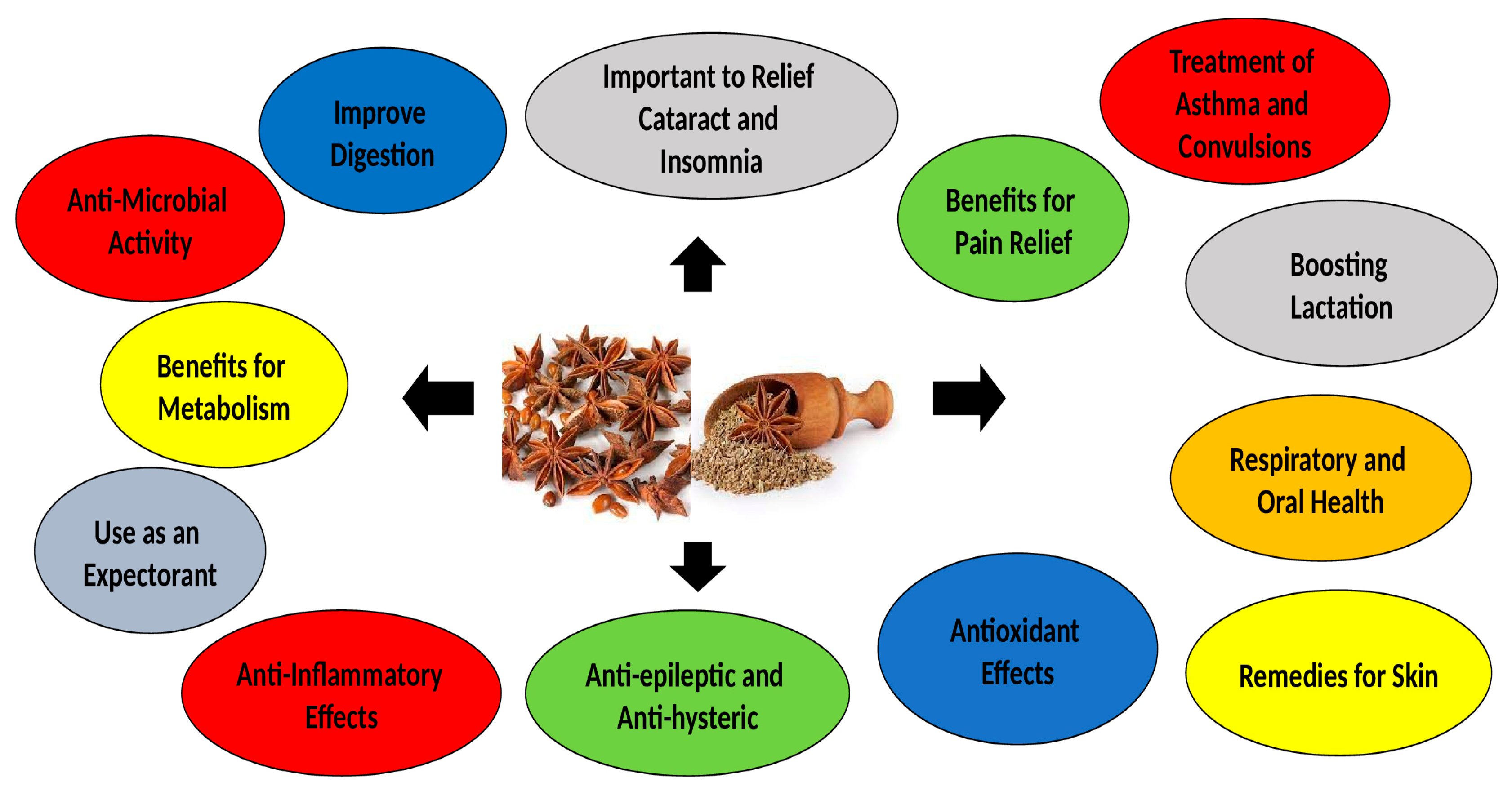
Figure 2.
The most important health benefits of basil seeds.
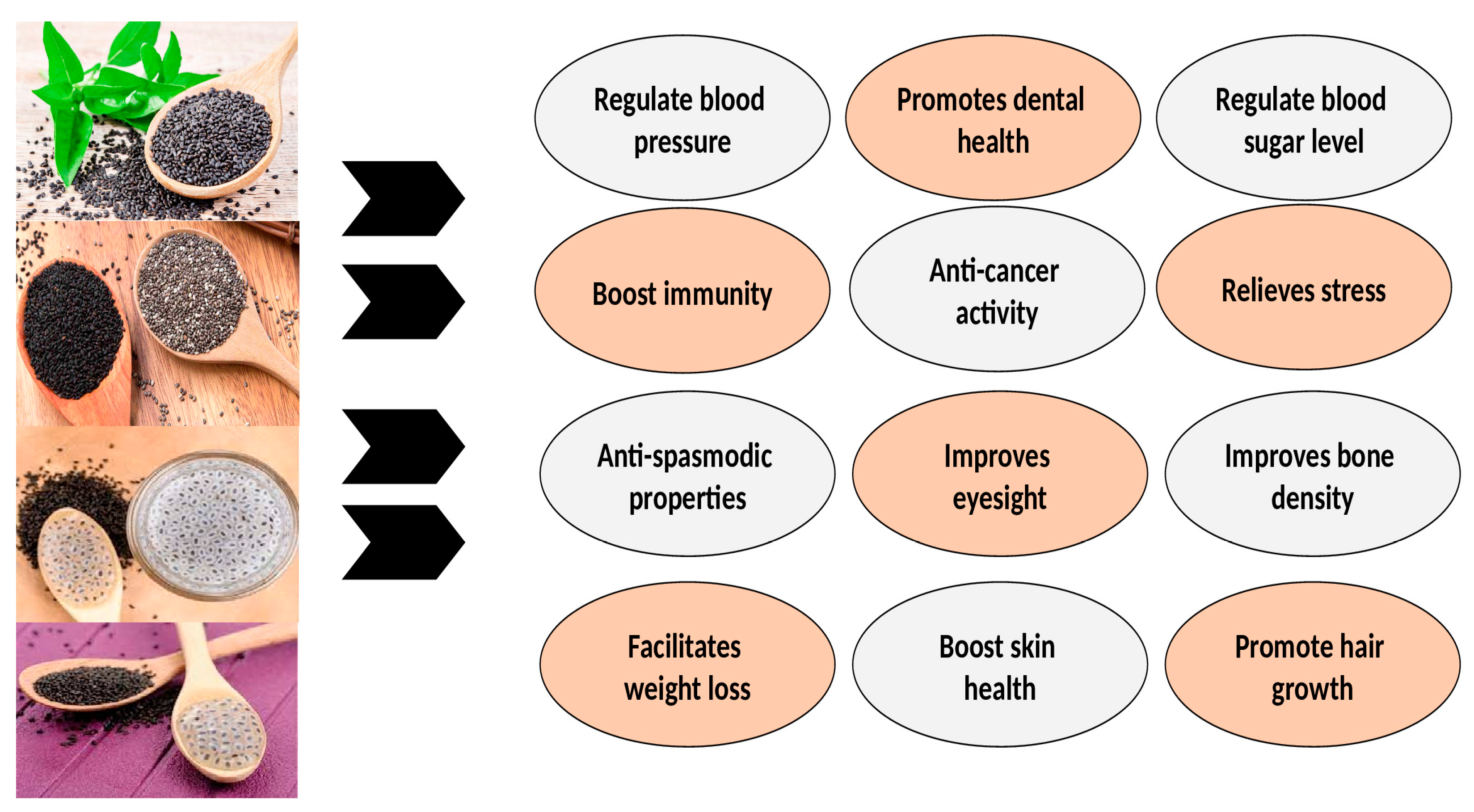
Figure 3.
The most important health benefits of borage seeds.
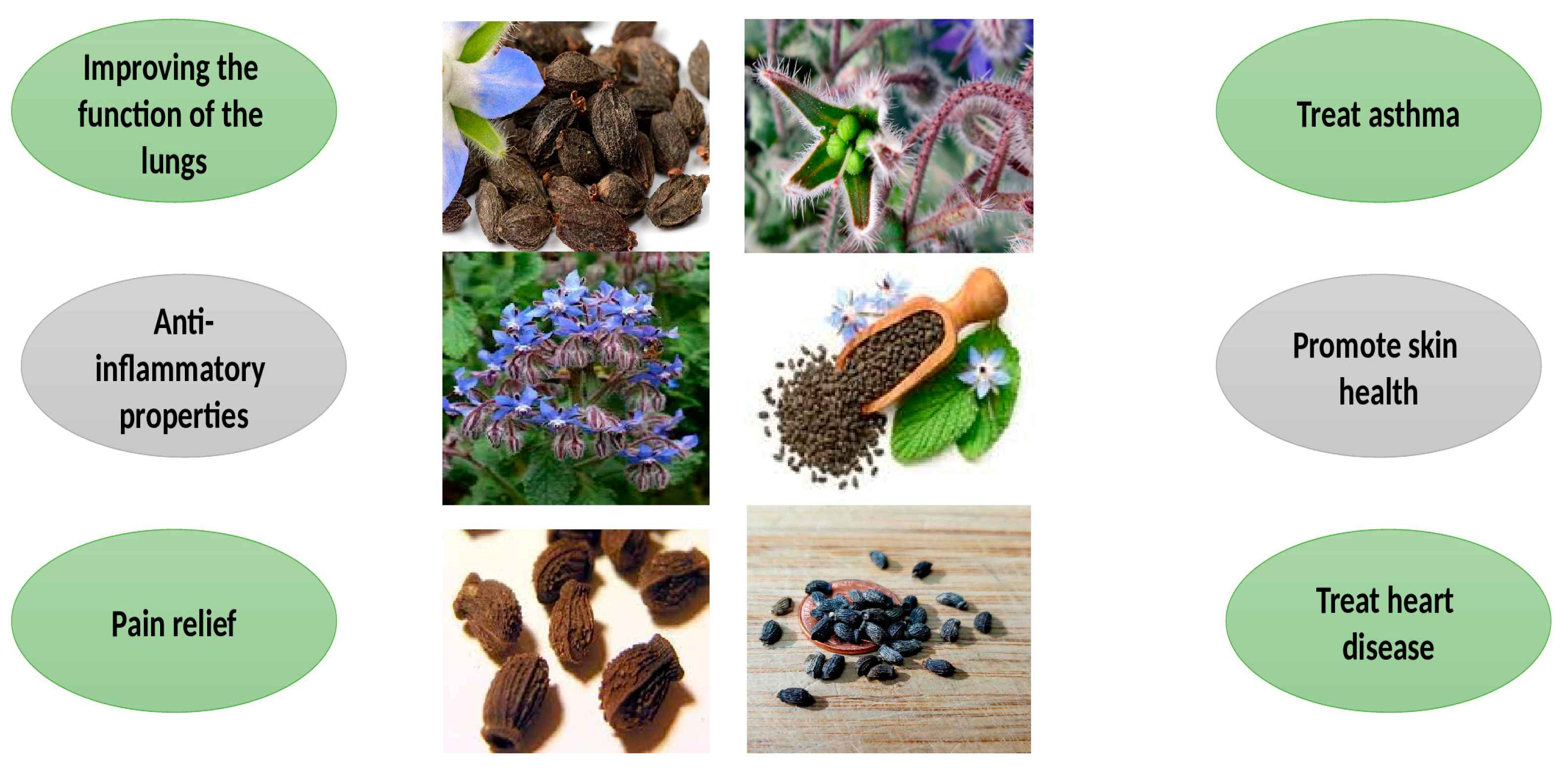
Figure 4.
The most important health benefits of cilantro seeds.
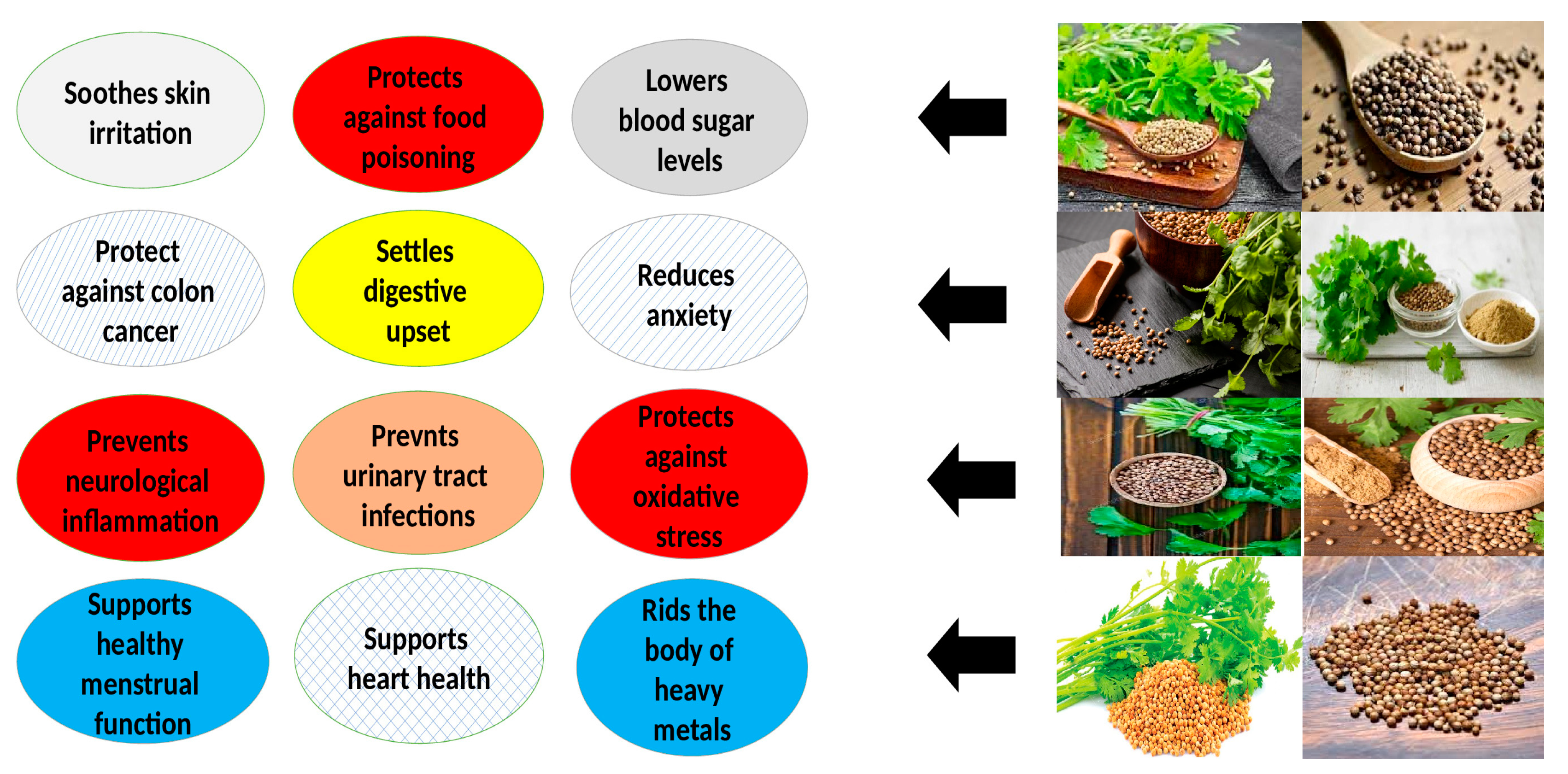
Figure 5.
The most important health benefits of chamomile seeds.
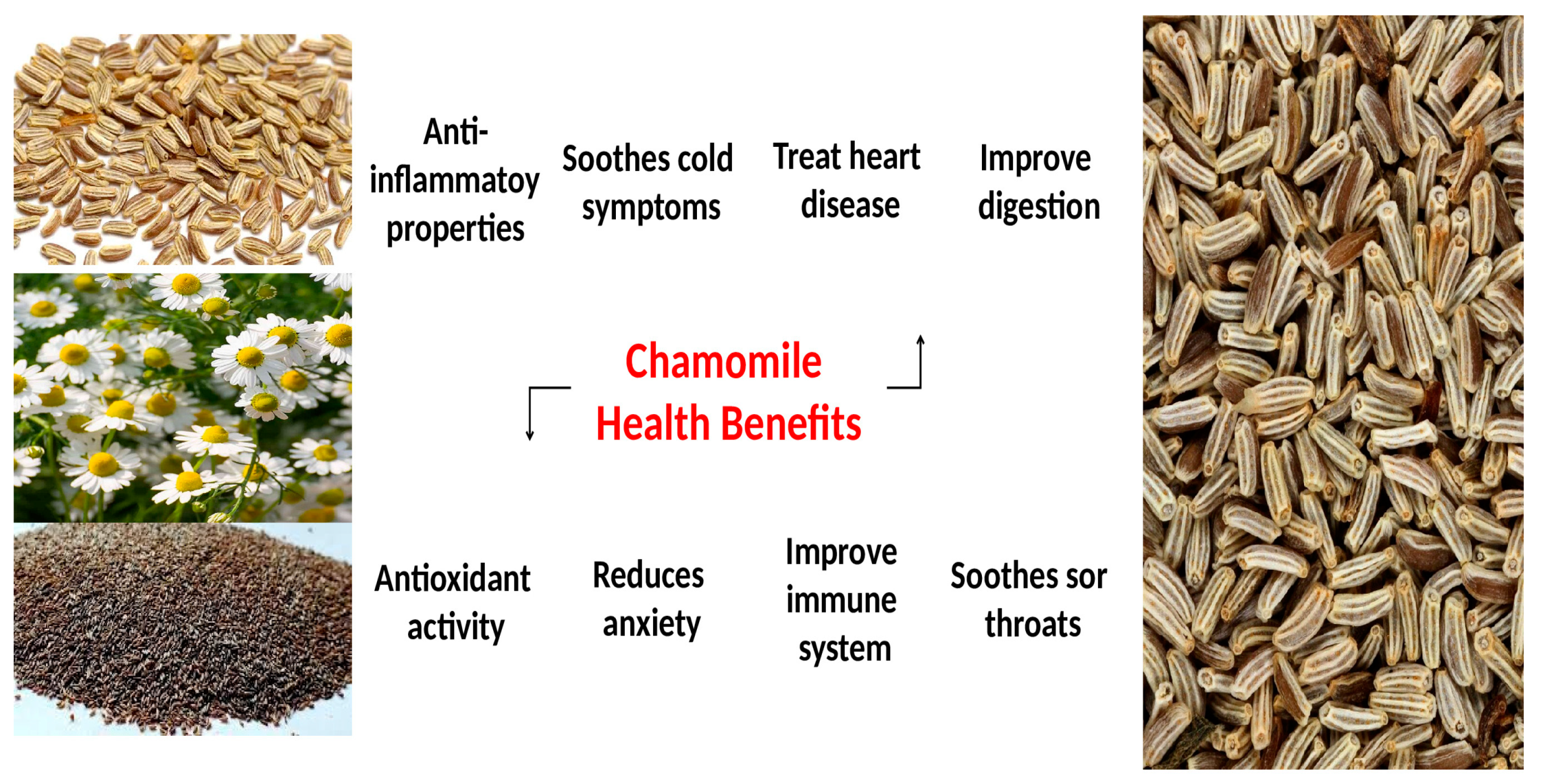

Table 1.
Key points about anise seeds.
| *Anise seed consists of fixed oil, volatile oil, mucilage, proteins and starch. |
| *Essential oil of Anise seeds consists of eugenol trans-anethole, coumarins, anisaldehyde, estragole, scopoletin, umbelliferon, polyacetylenes, estrolterpene, and methyl chavicol anisaldehyde. |
| *Aniseeds contain 1.5-5% essential oil and utilized as flavouring, carminative, digestive, and relief of gastrointestinal spasms. |
| *Aniseeds have different characteristics like as antimicrobial, antiviral, antifungal, antioxidant, and insecticidal effects. |
| *Aniseeds can cause muscle relaxant, gastric protection, and influence digestive system. |
| *In diabetic patients, it has hypolipidemic and hypoglycemic impacts and decreases lipid peroxidation. |
| *Aniseed also has significant impacts on dysmenorrhea and menopausal hot flashes in women. |
| *The most notable compounds of aniseeds essential oil were trans-anethole, γ-hymachalen, estragole, p-anisaldehyde, and methyl chavicol. |
Table 2.
Key points about basil seeds.
| *It is commonly called sweet basil or basil, which belongs to the Lamiaceae family. |
| *Its name comes from the Greek word Basileus meaning Royal or king, and it is usually known as king of the herbs because of its different applications in cosmetic, medicine, food and pharmaceutical industries. |
| *Its seeds are utilized to enrich fruit-based beverages for functional and visual goals. |
| *Basil seeds are high in dietary fiber which has made it unique as a functional ingredient. |
| *Basil seeds has not only high nutritious value, but also they have used due to their high and notable health benefits such as anticancer, antioxidant, antidiabetic and antimicrobial activities. |
| *The important of physical and morphological characterization of seeds are because of the relationship between size and the shape of seeds, and the design of tools for agricultural activities such as production, storage and its potency for food application. |
| *The area in which they are planted and their origin are important factors which influence of seeds changes. |
| *The correlation with moisture may influence size of seeds. |
| *The seeds can vary bioactive components and nutritional composition on the basis of environmental conditions, agronomic management, altitude, geographical location, origin of the seeds, soil properties and the degree of water absorption. |
| *The basil seeds are important source of carbohydrate which vary between 43.9 and 63.8 g/100 g of seed. |
| *The seeds contain non-starchy polysaccharides in the form of lignin, hemicellulose and cellulose. |
| *The basil seeds contain mucilage and the content is about 17-20%. |
| *The basil seed gum is also applied for different purposes like a disintegrant, good source of fiber, a suspending agent, a pharmaceutical excipient, an anti-diabetic agent and a notable biodegradable edible film. |
| *The main non-essential amino acids of basil seeds are aspartic and glutamic acid. |
| *All essential amino acids except tryptophan and S-containing types can be found in basil seeds. |
| *The amino acid composition of basil seeds are aspartic acid, serine, glutamic acid, glycine, histidine, arginine, threonine, tyrosine, valine, lysine, alanine, proline, isoleucine, leucine, phenylalanine, cysteic acid, methionine sulfone and tryptophan. |
| *Basil seeds have a fat content vary between 9.7% and 33.0%. |
| *The most important fatty acid composition of basil seeds are palmitic acid, stearic acid, oleic acid, linoleic acid, and linolenic acid. |
| *The main macronutrients minerals that are needed in higher amounts include phosphorus, calcium, sulfur, potassium, magnesium, sodium and chloride. |
| *The major micronutrients are iron, zinc, cooper, manganese, silicon, iodine, fluoride and chromium. |
| *Basil seeds contain high antioxidant potential, and the total phenolic content and antioxidant capacity of basil seeds are determined by DPPH (2,2-diphenyl-1-picryl-hydrazyl-hydrate) and Folin-Ciocalteu methods. |
| *The antimocrivial activity of basil seed oil again both Gram-negative and Gram-positive bacteria is reported. |
| *In traditional medicine, basil seeds applied as natural remedy for the treatment of ulcers, indigestion, kidney disorders, sore throats and diarrhea. |
| *The basil extracts also demonstrated antioxidant, anti-inflammatory, antidiarrheal, antiulcer and chemo-preventive impacts. |
Table 3.
Key points about borage seeds.
| *Borage is an oilseed with a high gamma-linolenic acid content. |
| *The major producers of borage seeds are the USA, Canada, England and Chile. |
| *Borage seed is one of the most notable sensitive agronomic seeds as significant deterioration happens after only one year of storage. |
| *The main reasons of membrane disruption are both increased free fatty acid levels and free radical productivity by lipid per oxidation. |
| *The seeds also contain palmitic, linoleic, stearic, α-linolenic, oleic, erucic, and erucic acids |
| *Gamma-linolenic acid showed the potential to relieve the symptoms and signs of various chronic inflammatory diseases such as atopic dermatitis and rheumatoid arthritis. |
| *Gamma-linolenic acid can also be appropriate in respiratory, gastrointestinal and cardiovascular disorders. |
| *Borage seeds also have different volatile compounds with antimicrobial activities. |
| *Methods and units of measurement of antioxidant activity of borage seeds are Folin-Ciocalteu (mg polyphenols.g-1 seeds d.w.), FRAP (μmol Fe II.g-1 seeds d.w.), DPPH (DPPH rem, %), and AE (dm3.[μmol s-1]). |
| *The average oil content of the borage seed is 30-40% by weight. |
| *Borage seed oil is used to treat various skin disorders such seborrheic dermatitis, atopic dermatitis, and neurodermatitis. |
Table 4.
Key points about cilantro seeds.
| *Cilantro is the seed of an annual small plant, which is commonly refers to the spice and belongs to the Apiaceae family (Umbelliferae). |
| *Cilantro also known as coriander, Mexican parsley and Chinese parsley. |
| *The largest producer of cilantro is India. |
| *The seeds of cilantro are nearly ovate globular and there are several longitudinal ridges on the surface. |
| *The length of the seed is 3-5 mm, color. |
| *Cilantro seeds have a sweet, mild, slight pungent like citrus flavor with a hint of sage. |
| *Fatty oil and essential oil are two major components of coriander seeds. |
| *Cilantro can be grown from transplanted or seed. |
| *The fatty oil content changes between 9.9% and 27.7%, and the essential oil content of dried cilantro seeds changes between 0.03% and 2.6%. |
| *Linalool is the most important essential oil in seeds of coriander. |
| * Linalool, which a terpene alcohol identified in cilantro has important function in many therapeutic benefits and possesses anxiolytic, analgesic, anticonvulsant and neuroprotective effects. |
| *Its essential oil is an important component of detergents, emulsifiers, creams, surfactants, perfumes and lotions. |
| *Moisture content is one of principle factor which influences the physical properties of seeds. |
| *The seeds showed the presence of different compounds such as glucosides, monoterpenoid, monoterpenoid glycosides and aromatic constituent glycosides like norcarotenoid glucoside. |
| *Different methods such as solvent extraction such as water, methanol and n-hexane, hydrodistillation, sonication and microwave-assisted extraction use to extract the chemical components of cilantro. |
| *The extracts and essential oil of coriander seeds contains sedative-hypnotic activity. |
| *In traditional medicine, its seeds were consumed to relieve pain, inflammation and rheumatoid arthritis. |
| *In traditional Iranian medicine, cilantro seeds has been used for relief of insomnia. |
| *The seeds have been consumed to relieve different gastrointestinal disorders like diarrhea, flatulence, nausea and indigestion. |
| *In Morocco, Saudi Arabia and Jordan, they are used to lower blood glucose levels. |
| *The most important health benefits of cilantro are hypolipidemic activity, anti-atherogenic and antioxidant properties, antihypertensive potential, and antiarrhythmic activity. |
Table 5.
Key points about chamomile seeds.
| *Two main and popular kinds of chamomile are German chamomile and Roman chamomile which belongs to Asteraceae (Compositae) family. |
| *Chamomile contains terpenes, volatile oils, organic acids, coumarins, flavonoids, sterols and polysaccharides. |
| *Chamomile is mainly cultivated by seeds, but keeping seed viability for long time is very important factor as well as seed germination. |
| *Chamomile has anti-inflammatory, antioxidant, anticancer, neuroprotective, anti-diarrheal, antibacterial and anti-allergic activities. |
| *Chamomile is widely utilized herb in traditional medicine of China, Rome, Greece, Germany and West of Asia. |
| *In traditional medicine, it is used to treat ulcers, wounds, gout, eczema, bruises, skin irritations, canker sores, burns, sciatica, neuralgia, hemorrhoids, rheumatic pain, mastitis and hemorrhoids. |
| *It has been used to treat croup, colic and fevers in children, and also applied as an emmenagogue and an uterine tonic in women. |
Disclaimer/Publisher’s Note: The statements, opinions and data contained in all publications are solely those of the individual author(s) and contributor(s) and not of MDPI and/or the editor(s). MDPI and/or the editor(s) disclaim responsibility for any injury to people or property resulting from any ideas, methods, instructions or products referred to in the content. |
© 2023 by the authors. Licensee MDPI, Basel, Switzerland. This article is an open access article distributed under the terms and conditions of the Creative Commons Attribution (CC BY) license (http://creativecommons.org/licenses/by/4.0/).
Copyright: This open access article is published under a Creative Commons CC BY 4.0 license, which permit the free download, distribution, and reuse, provided that the author and preprint are cited in any reuse.