

Submitted:
25 May 2023
Posted:
29 May 2023
You are already at the latest version
Abstract
Proactivity is a particularly important attribute of knowledge-intensive organizations, where the work required to increase the potential of knowledge-intensive employees is crucial. A priority challenge for these firms is also to understand the increasing importance of the functioning of cognitive mechanisms leading to increased knowledge workers' well-being following the implementation of the psychological contract. The aim of this article is to identify the relationship between inclusive leadership, the fulfillment of the psychological contract, two dimensions of well-being: workplace and life well-being and knowledge workers' proactivity. Based on survey data collected through the CAWI method from 1.000 knowledge workers employed in Polish companies in the business services sector, the research hypotheses were tested using a stepwise equation modelling (SEM) technique, leading to a model containing all the main constructs. The results obtained indicate that inclusive leadership positively impacts the fulfillment of the psychological contract. Furthermore, the fulfillment of the psychological contract positively affects proactive working behavior with and the wellbeing of knowledge workers. Along with proactive work behavior, two dimensions of well-being, were examined as outcome variables. The analysis also shows that knowledge-intensive organizations, intending to build the proactivity of their employees and nurture a high level of well-being in their lives and in the workplace, should take care to fulfil the expectations and obligations of the psychological contract. However, one way to achieve this is for managers to use an inclusive management style, which supports an atmosphere of a safe working environment in a diverse setting and leads to employees feeling comfortable sharing their opinions and ideas. The study of inclusive leadership in the context of knowledge-intensive organizations provides human resource professionals and employee man-agers with important insights into how inclusive leadership can effectively contribute to the psychological contract, which will consequently lead to proactive work behavior and also improve employees' workplace and life well-being.
Keywords:
Inclusive Leadership
; Psychological Contract Fulfillment
; Employee Well-Being
; Workplace Well-Being
; Life Well-Being
; Proactive Work Behavior
; Business Services Sector professionals
1. Introduction
In the era of Industry 4.0, markets and the organizations operating within them have become more agile and flexible [1]. Today's technology-driven companies are giving knowledge workers a key role, moving them to a new - higher level [2]. One of the contemporary issues in the field of human resource management (HRM) is to understand the increasing importance of the functioning of cognitive mechanisms leading to knowledge workers' well-being and their adoption of proactive work behavior (PWB) [3]. Currently, researchers and practitioners in the field of business management and organization agree that in an environment of high technology and innovative digital advancements, knowledge organizations should adopt transparent communication, new leave policies, emotional and professional coaching, online learning to facilitate employees to stay up to date and learn new unique skills, and mental health support to enhance overall employee well-being (EWB) [4]. Furthermore, previous research shows that proactivity is considered a key way in which knowledge workers nurture and manage their resources for future challenges [5]. It is also argued that managers with an inclusive management style, valuing employees' input and inviting them to collaborate, create a psychologically safe environment in which employees feel comfortable proactively sharing their opinions and ideas [6]. Creating an inclusive work environment is a very important challenge in shaping perceptions of the psychological contract (PC) [7], i.e. perceived promises and obligations in the organizational space. In this context, inclusive leadership (IL) and the sense of fulfilling the psychological contract (PCF) become drivers of employees' PWB and employees' workplace and life well-being.
While human capital is widely recognized as a valuable resource that helps companies develop the long-term success of their organizations [8], little is known about how IL and the PCF are related to the adoption of PWB by employees working in the Business Services Sector (BSS) and their maintenance of workplace and life well-being. To date, research focusing on the impact of IL on the PCF is rare. Moreover, previous research in the area of PCF mainly considers it as a mediator, e.g. in studies on job satisfaction, employee commitment, innovative work behavior [9,10,11,12]. However, there is a lack of research in the literature on the direct effect of IL on the PCF. In addition, there is as yet no clarity in the literature on the direct relationship of PCF with PWB and workplace well-being (WWB) and life well-being (LWB). Therefore, the study highlights the key pathways through which IL results in the PCF, which in turn supports the undertaking of PWB and WWB and LWB. This study developed a conceptual model depicting the above-mentioned relationships (Figure 1).
The study contributes to the existing knowledge base in five ways. Firstly, the study tests the direct mechanism of the relationship between IL, PCF, two dimensions of well-being: WWB and LWB and knowledge worker proactivity. Secondly, IL is shown to directly positively impact the PCF. Third, empirical evidence suggests that PCF initiates on PWB with and well-being of knowledge workers. Fourth, this study extends the understanding of the PC concept by pointing to a new 'inclusive' framework for knowledge workers' interactions to initiate their proactivity and well-being. Fifth, the direct mechanism outlined was tested in the context of the BSS sector thus enriching the theories of PC and IL.
2. Theoretical Framework and Research Hypotheses
2.1. Inclusive Leadership and the Fulfillment of the Psychological Contract
Present-day managers play a key role in leading employee-facing activities that create a climate of inclusion in the workplace and contribute to the effective implementation of interpersonal relationships. Inclusive leadership is defined as a management style that focuses on the accessibility, openness and approachability of managers, as well as on prioritizing the well-being of employees, listening to their individual needs and expectations and supporting their participation in shared decision-making [13,14]. In defining the concept in question, Nembhard and Edmondson [6] emphasize that it specifically refers to the creation of a safe environment in a diverse setting where all team members can be themselves. Thus, it can be assumed that inclusive leadership is more humanistic than other leadership styles because it is a person-centered approach as opposed to an organization-centered approach [15].
According to research in this field, IL prioritizes the uniqueness of employees and places greater emphasis on cultivating, collaborating and developing reciprocal relationships [16,17, 18]. Referring to this, Ferdman and Deane [19] argue that IL practices not only shape the experiences of individuals, but also the shape and quality of the relationships employees establish with their employers. Furthermore, specific leadership styles, including IL styles, can influence employees' PCs [18,20]. This is supported by research indicating that through leadership, managers contribute to improving the psychological conditions experienced by employees in the workplace [21,20,22]. Considering IL, which focuses on fostering employee uniqueness, providing employees with autonomy, enhancing a sense of belonging to the team, building relationships and trust within the team, valuing employee contributions, etc., this manuscript assumes that this type of leadership is positively related to the PCF. With this in mind, the following hypothesis is posited:
Hypothesis 1 (H1):
Inclusive leadership positively impacts on the fulfilment of the psychological contract
2.2. The Psychological contract Fulfillment and Proactive Work Behavior
The roots of the PC can be traced back to Social Exchange Theory (SET) [23], in which the common relationship between employees and managers functions through meaning and reciprocity. From the multitude of definitions found in the literature [24,25,26], it can be clearly inferred that the PC is the result of implicit and unspoken norms that characterize the interaction between employee and employer. The idiosyncratic established outlines a series of promises, expectations and obligations made by both parties to the relationship. Following the theoretical considerations of Rousseau [26], the PC defines, on the one hand, how the employee builds a long-term perspective of job security and opportunities for individual development and, on the other hand, how the employer seeks to ensure the employee's commitment to the interests of the organization. In their organizational activities, both employees and employers strive to match their expectations with what they receive from the other party. The degree of alignment between the fulfillment of mutual expectations translates into both the employee's performance at work and the employee's perception of how much the employer values the individual as an employee [22]. Consequently, what employers pay attention to has a significant impact on how employees direct their efforts, how well they perform their tasks and what goals they achieve [20], while undertaking certain attitudes and behaviours such as organizational commitment, work engagement, trust or organizational citizenship behaviours [27]. As Gadomska-Lila and Rogozińska-Pawełczyk [28] emphasize, employees' attitudes and work behaviours are strongly influenced by the PC. When employees feel listened to and valued, they willingly undertake pro-organizational activities on their own initiative. PWB therefore emerge as a result of employees' sense of motivation, satisfaction and commitment.
When employees believe that the employer understands them properly and meets their socio-emotional needs, then employees become more engaged and are more likely to go 'above and beyond' the demands and expectations of their job [29]. Accordingly, managers view employee proactivity as self-initiated, productive efforts by an employee to influence organizational change at the functional level to improve the way work is done [30]. Such behaviours, among others, may include undertaking improved work procedures [5], soliciting feedback [31] and proactively adapting to new environments [32].
Several studies in the field indicate a positive relationship between the PC and employees' work behavior [33,34,21,22]. As noted in the literature, the fulfilment of assumptions derived from the PC can lead to the development of desired outcomes and work results [35]. Based on the above research indicating that supporting employees, giving them respect and trust, and listening to their individual needs can enhance their behavioral responses, leading to PWB, the following hypothesis is proposed:
Hypothesis 2 (H2):
Fulfillment of the psychological contract positively impacts proactive work behavior
2.3. Psychological Contract Fulfillment and Employee Well-being
The most general term for well-being refers to how individuals evaluate their lives, including their mental state, social life, health, work environment and material issues [36]. The concept of well-being refers not only to the absence of illness or disease, but also to subjective, psychological, social and physical health, all of which can have a profound impact on employability, productivity, satisfaction and security in the workplace [37]. Well-being is a positive state related to the experience of emotions and cognitive appraisal of our lives [38]. The importance of well-being is beneficial for individuals, organizations and society as a whole [39]. As suggested by Carolan et. al, [40], employees experiencing high well-being are characterized by enthusiasm for life, and are actively and productively engaged with others and in social institutions. As well-being is a multidimensional and multifaceted construct, there is a lack of consensus among researchers regarding employee well-being and workplace well-being. Therefore, the concept of well-being will be analyzed in this manuscript in two areas: work and life. Workplace well-being is defined as all aspects of working life, from the quality and safety of the work environment, to how employees feel at work, how they cope with the relationships they have and the challenges they face [41]. In an age of knowledge-intensive organizations, providing support, autonomy and engagement to employees will not only improve their productivity, but also enhance their well-being [42]. According to Zheng et al. [43], life well-being includes personal care, reflecting the employee's personal emotions, and family care, reflecting the problems of family life. When employees feel the promises made by the organization are fulfilled, this creates positive energy that translates into their overall life well-being [44].
Research on well-being is on an upward trajectory, and many scholars have made significant contributions to the understanding of the concept. For example, researchers [36,38,45,46,47] have investigated the financial, social, spiritual or socio-psychological well-being of consumers, the emotional and psychological well-being of employees, mental well-being and physical well-being. Previous research on well-being [48,3,49] indicates that it is related to experiencing emotions in work situations, experiencing job satisfaction, evaluating the meaning of work, job engagement, job crafting, or feeling meaningful at work. However, as also noted by several researchers [50,51,52], there is still no description of the process that leads to increased levels of employee well-being following the PCF. On the basis of the above theoretical quandaries, the following hypothesis was developed together with two specific hypotheses:
Hypothesis 3 (H3):
Fulfillment of the psychological contract positively impacts on employee well-being
Hypothesis 3a (H3a):
Fulfillment of the psychological contract positively impacts workplace well-being
Hypothesis 3b (Hb):
Fulfillment of the psychological contract positively affects life well-being
3. Research Methodology
3.1. Procedure and Participants of the Study
The population is composed of organizations representing knowledge-intensive industries, with an emphasis on service subsectors that use scientific and technological knowledge, i.e. research and development (R&D), engineering, IT and ICT services. This group includes entities providing modern business services - these include business service centers (BPO, SSC/GBS, IT and R&D), of which 1513 were operating in Poland in Q1 2022 (2/3 of which were owned by foreign investors) [53].
The analysis was based on the results of an in-house study - a nationwide questionnaire survey conducted using the CATI technique (n = 1000). The group of employees who participated in the survey represented knowledge workers performing professional tasks requiring specialized knowledge and related to the creation of products and services for customers. The sample was equally composed of managers (n = 500) and employees in non-managerial positions (n = 500) and was randomly selected in both strata (it was possible to survey both manager and employee in each organization, but nevertheless not mandatory) [54]. The estimation error is 4.38% in both cases, which allows the results to be generalized to the Polish BSS general population.
As the study used a structured survey questionnaire, it therefore became necessary to check whether the data were free of common method bias. To this end, Harman's one-factor test was performed, grouping all items into a single factor for the test of common method bias [55]. The results of the calculations were satisfactory, as the total variance of the factor calculations was no more than 35.2%, or less than 50% [56]. Thus, a low probability of common method bias was found.
PS IMAGO 27 - IBM SPSS Statistics 27.0 statistical software [57] was used to conduct the quantitative CATI survey, while WarpPLS 7.0 was used to perform structural equation modelling to verify and evaluate the hypothesized measurement model [58]. Selected characteristics of the sample are presented in Table 1.
3.2. Research Instruments
The research procedure initiated with the construction of measurement instruments to collect data on the main constructs derived from the research hypotheses derived in the theoretical part of this manuscript. The measurement instrument used for the study consisted of a battery of tests aggregated to a single survey questionnaire in the form of a computer-assisted telephone interview technique (CATI). The study variables were measured using a set of items derived from adaptations of existing research tools by: Ashikali [59]; Rousseau and Tijoriwala [60]; Guest and Conway [61], Parker and Collins [62] and Zheng and colleagues [43]. As all measurement tools were available in the English-language literature, they required a process of cultural adaptation prior to the study as recommended by Behling and Law [63]. Cultural adaptation began with translating the English versions of the tests into Polish. Three independent judges competent in English philology, work and management psychology and statistical methods were then asked to complete the questionnaires in the original version. After three weeks, the same group of competent judges was asked to complete the questionnaires in the translated version. In the next step, a test-retest was carried out and r-Pearson correlation coefficients were calculated between all items found in the measurement tools, for both the English and Polish versions. All items achieved a statistically significant correlation value of up to 0.001, and the entire aggregated survey questionnaire reached an acceptable level of Cronbach’s alpha coefficient α = 0.82.
Inclusive Leadership (IL) was measured using the Inclusive Leadership Scale [59]. Because previous studies have found discrepancies between managers' and employees' assessments of leadership, the use of aggregated employee ratings is suggested [64]. Therefore, one aggregated measure measuring IL was used to assess leadership behavior by knowledge workers, which had 13 items. Sample items included statements such as: “My leaders encourage me to discuss diverse viewpoints and problem-solving perspectives with my colleagues”. Respondents answered each item using a 5-point Likert scale ranging from 1 – “strongly disagree” to 5 – “strongly agree”. The Cronbach's alpha coefficient reached a high level of reliability at α = 0.87.
Psychological contract fulfillment (PCF) was measured by determining the extent to which expectations and obligations under the psychological contract were fulfilled by the employee and the employer. All 17 items to measure the degree of PCF were adapted from the work of Rousseau and Tijoriwala [60] and Guest and Conway [61]. The extent to which an employee fulfilled the psychological contract was measured using two groups of items: “How would you rate your supervisor's fulfilment of promises and commitments?” (8 items) and “To what extent do you fulfil the promises and commitments you have made to your supervisor?” (9 items). Respondents completing this part of the survey questionnaire were asked to indicate to what extent they felt that their employer and themselves had fulfilled the terms of the psychological contract. Responses were given on a 7-point Likert scale ranging from 1 – “not at all fulfilled” to 7 – “completely fulfilled”. The assessment of the PCF has a high reliability, with an alpha-Cronbach's coefficient of α = 0.81.
Proactive work behavior (PWB) - a set of 24 items derived from adaptations of existing survey tools was used to measure the research variables, which were selected based on a literature review taking into account the 3-factor model of proactive work behaviours by Parker and Collins [62]. The measurement tool was used to diagnose the respondents' adoption of proactive behaviours, generally understood as using their initiative and being self-advocates, given the decentralized nature of the work environment and the pressure to innovate. PWB was measured as the sum of the scores obtained for all items. A higher score indicates more frequent use of proactive behavior at work by knowledge workers. Items in the questionnaire included statements such as “at work I take the initiative first on various issues”, “to improve my work I come up with new ideas and changes in procedures”, “I come up with and implement ideas that seem to benefit the company and customers”. A 7-point Likert scale was used as a method of response where 1 meant – “never” , and 7 – “always”. The reliability of the tool was α = 0.79.
Employee well-being (ELW) - an adaptation of the Employee Well-being Questionnaire by Zheng and colleagues [43] was used to assess employee well-being. Employee well-being (EWB) was measured using 2 subscales: workplace well-being and life well-being. The first subscale includes six items, including: “I find real pleasure in my work” and “I can always find ways to enrich my work”, which refer to employees' work. This subscale is referred to as WWB. A high score indicates a high degree of satisfaction with the workplace. The second subscale was also measured with six items, and an example item was “My life is very enjoyable” or “I am close to my dreams in most aspects of my life", which are relevant to employees' lives”. This subscale is referred to as the LWB. Participants used a 7-point Likert scale (1 = “strongly disagree”, 7= “strongly agree”) to respond to each item. The EWB scale showed a high level of internal consistency (α = 0.90).
4. Results
4.1. Statistical Analysis
The statistical analysis of the data started with the calculation of descriptive statistics. For this purpose, Pearson correlation calculations (with a test of its significance) were performed for all variables measured in the study. The distribution of the five variables used in the study is characterized by a low degree of variability (SD). The arithmetic mean and median indicate that the level of the study variables is quite high and the skewness of the distribution is of high strength. The correlations between the variables were found to be positive and statistically significant, as shown in Table 2. For the pairs of variables studied, the strength of the relationship is significantly high (*** p < 0.001), providing a further basis for continuing the exploratory analyses.
4.2. Reliability and Validity Analysis
This was followed by an assessment of the metric properties of the tool used for the study, which confirms its good properties. Both the assessment of inclusive leadership, fulfillment of the psychological contract, proactive work behavior and total employee well-being (variable EWB) and the two subscales of the subscales (WWB, LWB) have high reliability. The Cronbach's alpha coefficient exceeds 0.7 in each case [65]. In order to check the suitability of the data for further factor analysis and to assess the fit of the model, two tests were performed: the Kaiser-Meyer-Olkin (KMO) and Bartlett's sphericity test [66], the results of which are shown in Table 3. The KMO value obtained is 0.788, which ranges from 0.8 to 1, confirming the good properties of the data. Also, the Bartlett's test of sphericity applied at a significance level of p < 0.001 indicated a reasonable application of factor analysis.
4.3. Measurement Model
The next stage of the analysis involved conducting a confirmatory factor analysis (CFA) using maximum likelihood estimation to test the discriminant validity of the items of each construct (inclusive leadership, fulfilling the psychological contract, proactive work behavior, Workplace well-being, Life well-being ) at the individual level (n = 1000).
The model tested included measurement of all five variables analyzed. The diagnostic statistics of the measurement and structural model showed a fit of the data to the measurement model (external) at an acceptable level within the application of the standardized mean squared residual (SRMR=0.06). In contrast, an analysis of the overall predictive power of the structural (internal) model showed that the model had a good model fit, as illustrated by the following statistics: chi-square test (χ2 = 1845.7; df = 953; χ2/df = 1.937), root mean square error of approximation (RMSEA=0.059). The absolute goodness-of-fit index is also at a good level: GFI=0.864; AGFI=0.901. All recommended fit indices were significant and within acceptable limits [67], as shown in Table 4.
In the next stage of the analytical procedure, convergent and discriminant validity was examined. Composite reliability (CR) and average variance extracted (AVE) coefficients were calculated to check the reliability of the measurements. Analysis of the coefficients showed that all measurements had a high level of measurement accuracy and were above CR/AVE/α > 0.5 and 0.70, respectively [68]. The analyses conducted proved that the positive square root of AVE for each latent variable was found to be higher than the highest correlation with any other latent variable. Therefore, discriminant validity is established at the construct level. The details are presented in Table 5.
4.4. Structural Model
In order to test the research hypotheses derived from the literature and to empirically validate the hypothesized research model, we carried out structural equation modelling (SEM) in a stepwise fashion, leading to a model containing all the main constructs under study. This method is often chosen because SEM can measure the direct effect of latent and observed variables [69]. The results indicate that all factor loadings have values above 0.5, and for many items (empirical indicators) they are close to 0.8 (Figure 2), confirming their high degree of association with the latent variable. In addition, for each variable the coefficients are statistically significant at the p<0.05** level. The factor structure therefore confirms the measurement model. The values obtained for the recommended fit indices showed a good fit between the data and the model and were respectively: χ2=1921.3, df=1137, χ2 df=1.689, CFI=0.906, GFI=0.872, AGFI=0.913, RMSEA=0.061, SRMR=0.074.
The results of the analysis, presented in Figure 2, showed that the model confirms significant direct relationships between the study variables.
The results obtained support hypothesis H1, proving unequivocally that inclusive leadership (β=0.65, p<0.05) has a significant positive effect on the fulfillment of the psychological contract. Moreover, the fulfillment of the psychological contract significantly positively impacted proactive work behavior (β=0.58, p<0.05), as well as workplace well-being (β=0.67, p<0.05) and life well-being (β=0.51, p<0.05). Thus, hypotheses H2 and H3a and H3b were fulfilled. The results indicate that fulfilling the psychological contract has the greatest impact on workplace well-being and a relatively smaller impact on life well-being.
5. Discussion and Implications
The aim of the study was to obtain empirical evidence to explain the relationship between inclusive leadership, psychological contract fulfilment and two dimensions of well-being: workplace and life well-being and knowledge worker proactivity. Data were collected from knowledge workers employed in BSS organizations. Structural equation modelling produced interesting findings proving confirmation of the research hypotheses.
The results of the study suggest that IL significantly contributes to PCF, which supports hypothesis H1. This can be explained by the occurrence of a strong sense of bonding between employees and the organization, trust in superiors and healthy competition among knowledge associates. Additionally, the occurrence of a sense of PCF as a result of an IL style may be influenced by the various socio-emotional elements involved in PCF [22,20]. Research by Mansoor et al. [70] indicates that IL, focused on fostering employee uniqueness, acquiescing to flexible knowledge, sharing in decision-making processes, reinforcing the employee's belonging to the team, building relationships and trust, and valuing the contribution the employee makes to the company, encourages employees to interact in different relational configurations to implement new actions and solutions without fear of consequences. Therefore, such inclusive behaviours used by managers should be elicited to strengthen the employee-supervisor relationship as well as the employee-organization relationship [71].
The results also support hypothesis H2, which states that PCF is positively related to PWB. This relationship is consistent with other empirical studies [72,9,70]. The results indicate an open relationship, characterized by mutual trust between employee and employer, enhancing individuals' psychological ties to their workplace, triggering employees' work-related proactivity. In addition, the fulfilment of PC leads to inducing employee commitment and dedication to organizational issues focused on work improvement and innovation.
It was further found that employee well-being, i.e. indicators of workplace well-being and life well-being, were consequences of the PCF. Thus, the results also support the main hypothesis H3 and specific hypotheses H3a and H3b. Existing literature shows that PCF leads to work-related outcomes (work-related outcomes) [73,74] including positive employee well-being [7]. According to Meyer and Bartels [75], the information that organizations send to employees, related to the expectations and obligations placed on them, often acts as a critical factor influencing their level of workplace well-being and life well-being. Employees experiencing a sense of reciprocity face continuing and extending the benefits of their work role, thereby generating positive emotions [76], contributing to the development of workplace well-being. The results obtained also contribute, to the understanding of the exchanges taking place within the employment relationship, in which there is a clear employee-organization link, but also, although with less impact, to the understanding of new findings on the relationship between PCF and life well-being. More recently, in support of the research presented here, Knapp et al. [77] described psychological contracts as inherently universal and suitable for analyzing exchange relationships that transcend specific employment circumstances and organizational boundaries, thus recognizing individuals' cognitive and affective evaluations of their lives and life satisfaction.
The findings enrich the literature by indicating that positive associations between employees and their managers can enhance the realization of their reciprocal relationship, which in turn stimulates proactive work behavior and enhances the work and life well-being of knowledge workers.
5.1. Theoretical Implications
The theoretical contribution of this study is primarily manifested in four aspects. Firstly, the study tests a direct mechanism linking IL, PCF, PWB, WWB and LWB. It proves that inclusive leadership positively impacts the fulfilment of the psychological contract. In addition, fulfilling the psychological contract positively affects proactive working behavior with and two dimensions of knowledge worker well-being.
Secondly, this study integrates individual variables (psychological contract fulfillment) and organizational variables (inclusive leadership) and knowledge workers' attitudes (proactive work behavior and employee well-being) which enriches the existing literature on the mechanism of interaction and extends the researchers' theoretical view.
Thirdly, this study extends the understanding of the concept of PCF, pointing to a new 'inclusive' framework for interactions of individuals, teams, but also interactions from the organizational level contributing to stimulating proactive work behavior and employee well-being. Finally, the model was tested in the specific context of the functioning of Polish organizations in the knowledge-intensive industry thus enriching the IL theory.
5.2. Practical Implications
The empirical evidence from this study also has practical implications. First of all, the results of the study can guide the 'inclusive' actions of BSS companies, where knowledge-intensive employee empowerment work is crucial.
Secondly, when managers who value employees' contributions and invite them to collaborate, create a psychologically safe environment in which employees feel comfortable sharing their opinions and ideas, this contributes to filling its psychological contract. Therefore, organizations, managers and supervisors need to understand the importance of meeting expectations as part of fulfilling the psychological contract.
Furthermore, the research carried out points out that, when comparing PCF with WWB and LWB, the PCF impacted more to WWB. In view of this, human resource professionals and managers managing knowledge workers should ensure that direct supervisors are trained to support their employees to feel comfortable proactively creating and sharing their ideas and innovative solutions. It is also the supervisor's responsibility to create an environment where their employees treat each other with respect in an atmosphere of a safe working environment in a diverse setting.
Fourthly, the study of IL in the context of knowledge-intensive organizations unequivocally shows that when an employee feels safe at work, is encouraged to exchange, discuss and utilize the diverse qualities of the workforce, and is supported to participate fully in order to meet needs for individuation and belonging, this automatically leads to improved life and work well-being and an increase in proactive work behavior.
5.3. Limitations and Further Research
The current study also has several limitations that need to be taken into account in further explorations. Firstly, the study was conducted only in Polish knowledge-intensive organizations from the BSS. Therefore, it would be worth extending the scope of the study to find out how the relationships of the analyzed variables are perceived by employees of organizations from other sectors of the economy, e.g. research, social care, justice, state administration, tourism or health care.
Secondly, data was collected in knowledge-intensive companies operating only in Polish cultural conditions. Therefore, it would be advisable to conduct further research giving the possibility to generalize the results to other countries.
Thirdly, two dimensions of employee well-being were included in the study. In future research, more dimensions of well-being can be identified and tested, such as emotional well-being, subjective well-being, social well-being or psychological well-being. Similarly, the 3 factors of proactive work behavior, i.e. proactive person-environment fit behavior, proactive work behavior and proactive strategic behavior, as recommended by Parker and Collins [62], can be tested separately in relation to the implementation of the psychological contract.
Fourthly, the study did not consider moderating and mediating mechanisms through which any causal pathways could be established. In addition, further research using, for example, longitudinal studies is recommended, which could reveal a more precise picture of the relationships found and would allow the directions of causality to be explored.
6. Conclusions
In summary, this study focuses on identifying the relationship between inclusive leadership, psychological contract fulfilment and two dimensions of well-being: workplace and life well-being and proactive work behavior. Based on the literature review, a hypothetical model was constructed that predicted direct effects on the variables studied. The direct effect was intended to illuminate the positive relationship between IL and PCF and the direct effect of the PCF assumptions on PWB. The assumed direct mechanism was also intended to illustrate the relationship between PCF and IL and PWB.
Author Contributions
General concept, A.R.-P.; theory, A.R.-P.; methodology, A.R.-P.; validation and formal analysis, A.R.-P.; investigation and data curation, A.R.-P.; preparation of the draft version, A.R.-P.; preparation of the final version, A.R.-P. Author has read and agreed to the published version of the manuscript.
Funding
The contribution of the author was supported by the Polish National Science Centre under Grant 2018/31/B/HS4/01284.
Institutional Review Board Statement
Not applicable.
Informed Consent Statement
Not applicable.
Data Availability Statement
The data presented in this study are available on request from the A.R.-P.
Conflicts of Interest
The authors declare no conflict of interest.
References
- Brinkmann, S. ; Character, personality, and identity: On historical aspects of human subjectivity. Nord. Psychol. 2010, 62, 65. [Google Scholar] [CrossRef]
- O'Donovan, R.; McAuliffe, E. Exploring psychological safety in healthcare teams to inform the development of interventions: combining observational, survey and interview data. BMC Health Serv. Res. 2020, 20, 810. [Google Scholar] [CrossRef] [PubMed]
- Ruokolainen, M.; Mauno, S.; Diehl, M.R.; Tolvanen, A.; Mäkikangas, A.; Kinnunen, U. Patterns of psychological contract and their relationships to employee well-being and in-role performance at work: Longitudinal evidence from university employees. Int. J. Hum. Resour. Manag. 2018, 29, 2827–2850. [Google Scholar] [CrossRef]
- Ghosh, S. Why the Emotional WellBeing of Your Employees Should Be a Top Priority during COVID-19. Tata Consultancy Services, India, 2020. [Google Scholar]
- Strauss, K.; Parker, S.K. Intervening to enhance proactivity in organizations: Improving the present or changing the future. J. Manage. 2018, 44, 1250–1278. [Google Scholar] [CrossRef]
- Nembhard, I.M.; Edmondson, A.C. Making it safe: The effects of leader inclusiveness and professional status on psychological safety and improvement efforts in health care teams. J. Organ. Behav. 2006, 27, 941–966. [Google Scholar] [CrossRef]
- Ahmad, I.; Zafar, M.A. Impact of psychological contract fulfillment on organizational citizenship behavior. Int. J. Contemp. Hosp. Manag., Emerald Publishing Limited, 2018; 30, 1001–1015. [Google Scholar]
- Korkmaz, A.V.; van Engen, M.L.; Knappert, L.; Schalk, R. About and beyond leading uniqueness and belongingness: A systematic review of inclusive leadership research. Hum. Resour. Manag. Rev. 2022, 32. [Google Scholar] [CrossRef]
- Bhatnagar, J.; Biswas, S. . The mediator analysis of psychological contract: relationship with employee engagement and organisational commitment. Int. J. Indian Cult. Bus. Manag., Inderscience Enterprises Ltd. 2012, 5, 644–666. [Google Scholar] [CrossRef]
- Rogozińska-Pawełczyk, A. Work satisfaction and the relationship between the psychological contract and an employee’s intention to quit. The results of a survey of public administration employees in Poland. J. East Eur. Manag. 2020, 25, 301–324. [Google Scholar] [CrossRef]
- Nayak, S.; Jena, D.; Patnaik, S. Mediation framework connecting knowledge contract, psychological contract, employee retention, and employee satisfaction: An empirical study. Int. J. Eng. Bus. Manag. 2021, 13. [Google Scholar] [CrossRef]
- Aslan, H.; Mert, I.S.; Sen, C. The effect of inclusive leadership on the work engagement: an empirical study from Turkey, J. Asian Finance Econ. Bus. 2021, 8, 169–178. [Google Scholar]
- Carmeli, A.; Reiter-Palmon, R.; Ziv, E. Inclusive leadership and employee involvement in creative tasks in the workplace: The mediating role of psychological safety. Creat. Res. J. 2010, 22, 250–260. [Google Scholar] [CrossRef]
- Randel, A.E.; Galvin, B.M.; Shore, L.M.; Ehrhart, K.H.; Chung, B.G.; Dean, M.A.; Kedharnath, U. Inclusive leadership: Realizing positive outcomes through belongingness and being valued for uniqueness. Hum. Resour. Manag Rev. 2018, 28, 190–203. [Google Scholar] [CrossRef]
- You, J.; Kim, S.; Kim, K.; Cho, A.; Chang, W. Conceptualizing meaningful work and its implications for HRD. Eur. J. Train. Dev. 2020, 45, 36–52. [Google Scholar] [CrossRef]
- Ashikali, T.; Groeneveld, S.; Kuipers, B. The Role of Inclusive Leadership in Supporting an Inclusive Climate in Diverse Public Sector Teams. Rev. Public Pers. Adm. 2021, 41, 497–519. [Google Scholar] [CrossRef]
- Minehart, R.D.; Foldy, E.G.; Long, J.A. , Weller, J.M. Challenging gender stereotypes and advancing inclusive leadership in the operating theatre. Br. J. Anaesth. 2020, 124, e148–e154. [Google Scholar] [CrossRef] [PubMed]
- Meeuwissen, S.N.E.; Gijselaers, W.H.; van Oorschot, T.D.; Wolfhagen, I.H.A.P.; Oude Egbrink, M.G.A. Enhancing team learning through leader inclusiveness: A one-year ethnographic case study of an interdisciplinary teacher team. Teaching and Learning in Medicine, 2021. [CrossRef]
- Ferdman, B.M.; Deane, B.R. Diversity at work: The practice of inclusion. John Wiley & Sons, 2013. [CrossRef]
- Agarwal, U.A.; Dixit, V.; Nikolova, N.; Jain, K.; Sankaran, S. A psychological contract perspective of vertical and distributed leadership in project-based organizations, Int. J. Proj. Manag. 2021, 39, 249–258. [Google Scholar] [CrossRef]
- Agarwal, U.A.; Avey, J.B. Abusive supervisors and employees who cyberloaf: Examining the roles of psychological capital and contract breach. Internet Res. 2020, 30, 789–809. [Google Scholar] [CrossRef]
- Oorschot, J.; Moscardo, G.; Blackman, A. Leadership style and psychological contract. Aust. J. Career Dev. 2021, 30, 43–54. [Google Scholar] [CrossRef]
- Blau, P.M. Exchange and power in social life. Transaction Publishers, 1964.
- Levinsonv, H.; Price, C.R.; Munden, K.J.; Mandl, H.J.; Solley, C.M. Men, Management, and Mental Health. Harvard University Press, Cambridge, 1962.
- Schein, E.H. Organisational Psychology, Prentice Hall, Englewood Cliffs–New York,1965.
- Rousseau, D.M. Psychological and implied contracts in organisations. Empl. Responsib. Rights J. 1989, 2, 121–140. [Google Scholar] [CrossRef]
- Dulac, T.; Coyle-Shapiro, J.A.; Henderson, D.J.; Wayne, S.J. Not all responses to breach are the same: The interconnection of social exchange and psychological contract processes in organizations. Acad. Manage. J. 2008, 51, 1079–1098. [Google Scholar] [CrossRef]
- Gadomska-Lila, K.; Rogozińska-Pawełczyk, A. The Role of Pro-Innovative HR Practices and Psychological Contract in Shaping Employee Commitment and Satisfaction: A Case from the Energy Industry. Energies. 2021, 15, 255. [Google Scholar] [CrossRef]
- Grant, A.M.; Parker, S.K. 7 redesigning work design theories: the rise of relational and proactive perspectives. Acad. Manag. Ann. 2009, 3, 317–375. [Google Scholar] [CrossRef]
- Bammens, Y.P. Employees’ innovative behavior in social context: A closer examination of the role of organizational care. J Prod Innov. Manage. 2016, 33, 244–259. [Google Scholar] [CrossRef]
- Seibert, S.E.; Kraimer, M.L.; Crant, J.M. What do proactive people do? A longitudinal model linking proactive personality and career success. Pers. Psychol. 2001, 54, 845–875. [Google Scholar] [CrossRef]
- Kammeyer-Mueller, J.D.; Livingston, B.A.; Liao, H. Perceived similarity, proactive adjustment, and organizational socialization. J. Vocat. Behav. 2011, 78, 225–236. [Google Scholar] [CrossRef]
- Erkutlu, H.; Chafra, J. Effects of trust and psychological contract violation on authentic leadership and organizational deviance. Manag. Res. Rev. 2013, 36, 828–848. [Google Scholar] [CrossRef]
- Philipp, B.L.U.; Lopez, P.D.J. The moderating role of ethical leadership: Investigating relationships among employee psychological contracts, commitment, and citizenship behavior. J. Leadersh. Organ. Stud. 2013, 20, 304–315. [Google Scholar] [CrossRef]
- Rogozińska-Pawełczyk, A.; Gadomska-Lila, K. The Mediating Role of Organisational Identification between Psychological Contract and Work Results: An Individual Level Investigation. Int. J. Environ. Res. Public Health. 2022, 19, 5404. [Google Scholar] [CrossRef]
- Ryff, C.D. Psychological well-being revisited: advances in science and practice. Psychother. Psychosom. 2014, 83, 10–28. [Google Scholar] [CrossRef]
- Ruggeri, K.; Garcia-Garzon, E.; Maguire, Á.; Matz, S.; Huppert, F.A. Well-being is more than happiness and life satisfaction: a multidimensional analysis of 21 countries. Psychother. Psychosom. 2020, 18, 192. [Google Scholar] [CrossRef]
- Nielsen, K. ; Noblet, A J. Organisational interventions for health and well-being: A handbook for evidence-based practice. Routledge, 2018.
- Jeffrey, K.; Mahony, S.; Michaelson, J.; Abdallah, S. Wellbeing at Work: A Review of the Literature. New Economics Foundation, London, 2014.
- Carolan, S.; Harris, P.R.; Cavanagh, K. Improving employee well-being and effectiveness: Systematic review and meta-analysis of web-based psychological interventions delivered in the workplace. J. Med. Internet Res. 2017, 19, e271. [Google Scholar] [CrossRef]
- Kazemi, A. Conceptualizing and measuring occupational social well-being: a validation study. Int. J. Organ, Emerald Publishing Limited, 2017; 25, 45–61. [Google Scholar]
- Meske, C. and Junglas, I. Investigating the elicitation of employees’ support towards digital workplace transformation, Behaviour and Information Technology. Taylor & Francis, 2020.
- Zheng, X.; Zhu, W.; Zhao, H.; Zhang, C. Employee well-being in organizations: theoretical model, scale development, and cross-cultural validation, J. Organ. Behav. 2015, 36, 621–644. [Google Scholar] [CrossRef]
- Green, P.I.Jr.; Finkel, E.J.; Fitzsimons, G.M.; Gino, F. The energizing nature of work engagement: toward a new need-based theory of work motivation. Res. Organ. Behav. 2017, 37, 1–18. [Google Scholar] [CrossRef]
- Pagán-Castaño, E.; Maseda-Moreno, A.; Santos-Rojo, C. Wellbeing in work environments. J. Bus. Res. 2020, 115, 469–474. [Google Scholar] [CrossRef]
- Deeg, M.; May, D.R. The Benefits to the Human Spirit of Acting Ethically at Work: The Effects of Professional Moral Courage on Work Meaningfulness and Life Well-Being. J. Bus. Ethics. 2021, 181, 397–411. [Google Scholar] [CrossRef]
- Zhang, A.; Boltz, A.; Wang, C.W.; Lee, M.K. Algorithmic management reimagined for workers and by workers: centering worker well-being in gig work, CHI Conference on Human Factors in Computing Systems. 2022.
- Cooke, P.J.; Melchert, T.P.; Connor, K. Measuring well-being: A review of instruments. Couns. Psychol. 2016, 44, 730–757. [Google Scholar] [CrossRef]
- Johnson, S.; Robertson, I.; Cooper, C.L. Well-being: Productivity and happiness at work. Palgrave Macmillan, 2018.
- Van der Vaart, L.; Linde, B.; De Beer, L.; Cockeran, M. Employee well-being, intention to leave and perceived employability: A psychological contract approach. S. Afr. J. Econ. Manag, 2015; 18, 32–44. [Google Scholar]
- Seligman, M. PERMA and the building blocks of well-being. J. Posit. Psychol. 2018, 13, 333–335. [Google Scholar] [CrossRef]
- Ahmad, M.I.; Firman, K.; Smith, H.N.; Smith, A. Psychological contract fulfilment and wellbeing. Adv. Soc. Sci. Res. J. 2018, 5, 90–101. [Google Scholar]
- ABSL Sektor nowoczesnych usług biznesowych w Polsce 2022. 2023. https://absl.pl/storage/app/uploads/public/5ee/887/8d5/5ee8878d59858995982318.pdf.
- Groves, R.M.; Fowler, F.J.; Couper, M.P.; Lepkowski, J.M.; Singer, E.; Tourangeau, R. Survey Methodology; Wiley: New York, USA, 2011. [Google Scholar]
- Podsakoff, P.M.; MacKenzie, S.B.; Lee, J.-Y.; Podsakoff, N.P. Common method biases in behavioral research: A critical review of the literature and recommended remedies. J. Appl. Psychol. 2003, 88, 879–903. [Google Scholar] [CrossRef]
- Spector, P.E. Method variance as an artifact in self-reported affect and perceptions at work: Myth or significant problem. J. Appl. Psychol. 1987, 72, 438–443. [Google Scholar] [CrossRef]
- Vinzi, V.; Chin, W.; Henseler, J. Handbook of Partial Least Squares, Concepts, Methods and Applications. Springer-Verlag. 2010. [CrossRef]
- Stratton, S.J. Population Research: Convenience Sampling Strategies. Prehosp. Disaster. Med. 2021, 36, 373–374. [Google Scholar] [CrossRef] [PubMed]
- Ashikali, T. Leading Towards Inclusiveness: Developing a Measurement Instrument for Inclusive Leadership. Academy of Management Proceedings, 2019; 16444. [Google Scholar]
- Rousseau, D.M.; Tijoriwala, S.A. Assessing psychological contracts: Issues, alternatives, and types of measures. J. Organ. Behav. 1998, 19, 679–695. [Google Scholar] [CrossRef]
- Guest, D.; Conway, N. Communicating the psychological contract: An employer’s perspective. Hum. Resour. Manag. J. 2002, 12, 22–38. [Google Scholar] [CrossRef]
- Parker, S.K.; Collins, C.G. Taking stock: integrating and differentiating multiple proactive behaviors, J. Manage. 2010, 36, 633–662. [Google Scholar] [CrossRef]
- Behling, O.; Law, K.S. Translating questionnaires and other research instruments. Problems and solutions. Series: Quantitative Applications in the Social Sciences, Sage Publications. 2000.
- Jacobsen, C.B.; Andersen, L.B. Is leadership in the eye of the beholder? A study of intended and perceived leadership practices and organizational performance. Public Adm. Rev. 2015, 75, 829–841. [Google Scholar] [CrossRef]
- Cronbach, L.J. Coefficient alpha and the internal structure of tests. Psychometrika. 1951, 16, 297–334. [Google Scholar] [CrossRef]
- Nunnally, JC. Psychometric Theory. McGraw-Hill: NY, 1978.
- Hair, J.F.; Sarstedt, M.; Ringle, C.M.; Mena, J.A. An assessment of the use of partial least squares structural equation modeling in marketing research. J. Acad. Mark. Sci. 2012, 40, 414–433. [Google Scholar] [CrossRef]
- Eid, M.; Diener, E. Intraindividual Variability in Affect: Reliability, Validity, and Personality Correlates. J. Pers. Soc. Psychol. 1999, 76, 662–676. [Google Scholar] [CrossRef]
- Barrett, P. Structural equation modeling: Adjudging model fit. Pers. Individ. Differ. 2007, 42, 815–824. [Google Scholar] [CrossRef]
- Mansoor, A.; Farrukh, M. , Wu, Y.; Abdul Wahab, S. Does inclusive leadership incite innovative work behavior? Hum. Syst. Manag. 2020, 1–10. [Google Scholar] [CrossRef]
- Eisenberger, R.; Stinglhamber, F.; Vandenberghe, C.; Sucharski, I.L.; Rhoades, L. Perceived supervisor support: contributions to perceived organizational support and employee retention. J. Appl. Soc. Psychol. 2002, 87, 565. [Google Scholar] [CrossRef] [PubMed]
- Xanthopoulou, B.; Demerouti, A.B.; Schaufeli, E.; Wilmar, B. Work engagement and financial returns: a diary study on the role of job and personal resources. J. Occup. Organ. Psychol. 2009, 82, 183–200. [Google Scholar] [CrossRef]
- Paillie, P.; Raineri, N. Linking perceived corporate environmental policies and employees eco-initiatives: the influence of perceived organizational support and psychological contract breach. J. Bus. Res. 2015, 68, 2404–2411. [Google Scholar] [CrossRef]
- Soares, M.E.; Mosquera, P. “Fostering work engagement: the role of the psychological contract. J. Bus. Res. 2019, 101, 469–476. [Google Scholar] [CrossRef]
- Meyer, A.M.; Bartels, L.K. The impact of onboarding levels on perceived utility, organizational commitment, organizational support, and job satisfaction. J. Organ. Psychol. 2017, 17, 10–27. [Google Scholar]
- Siegrist, J.; Li, J. Associations of extrinsic and intrinsic components of work stress with health: A systematic review of evidence on the effort-reward imbalance model. Int. J. Environ. Res. Public Health. 2016, 13, 432–444. [Google Scholar] [CrossRef]
- Knapp, J.R.; Diehl, M.R.; Dougan, W. Towards a social-cognitive theory of multiple psychological contracts. Eur. J. Work. Organ. Psy. 2020, 29, 200–214. [Google Scholar] [CrossRef]
Figure 1.
Proposed hypothetical model.
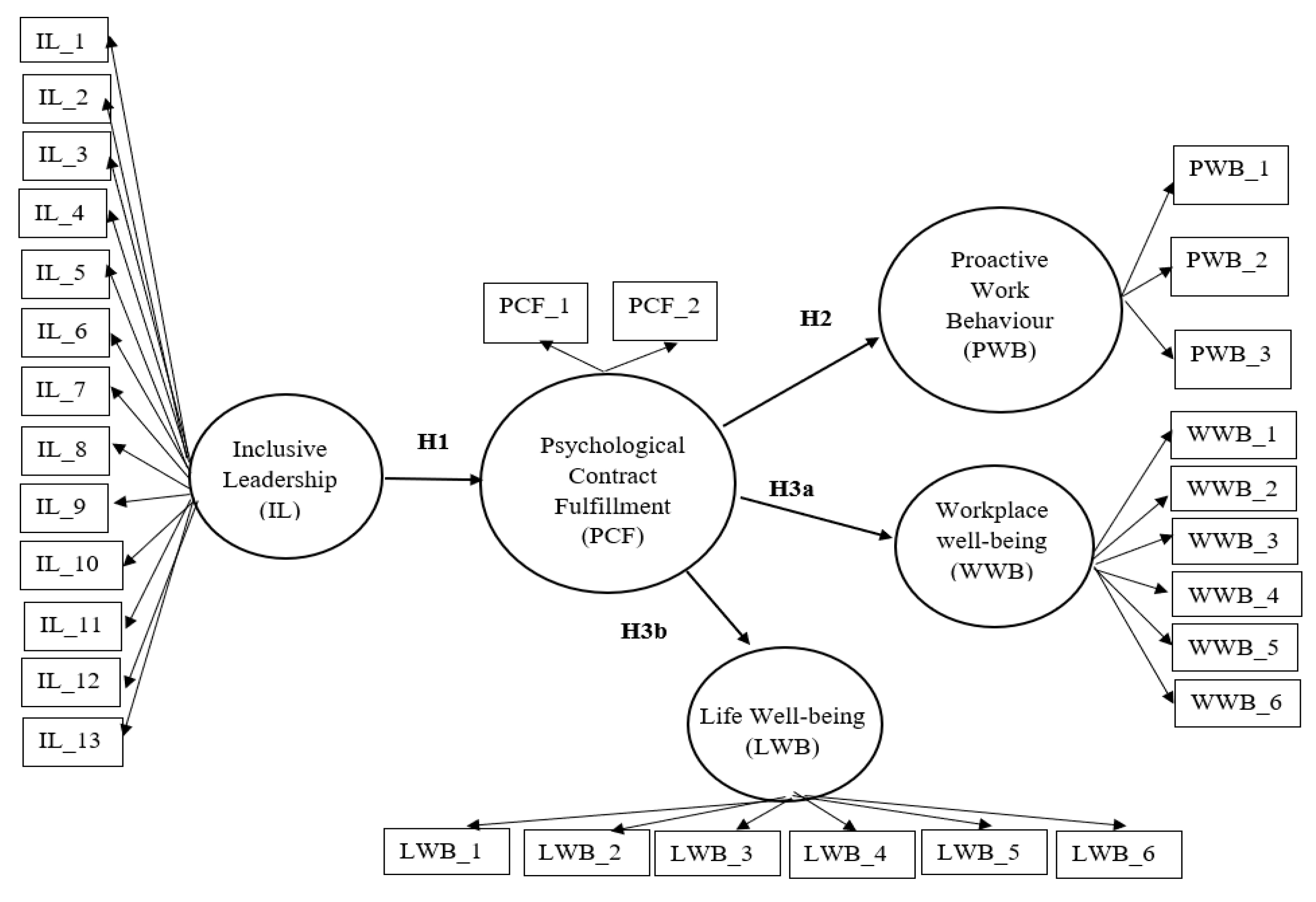
Figure 2.
Structural model.
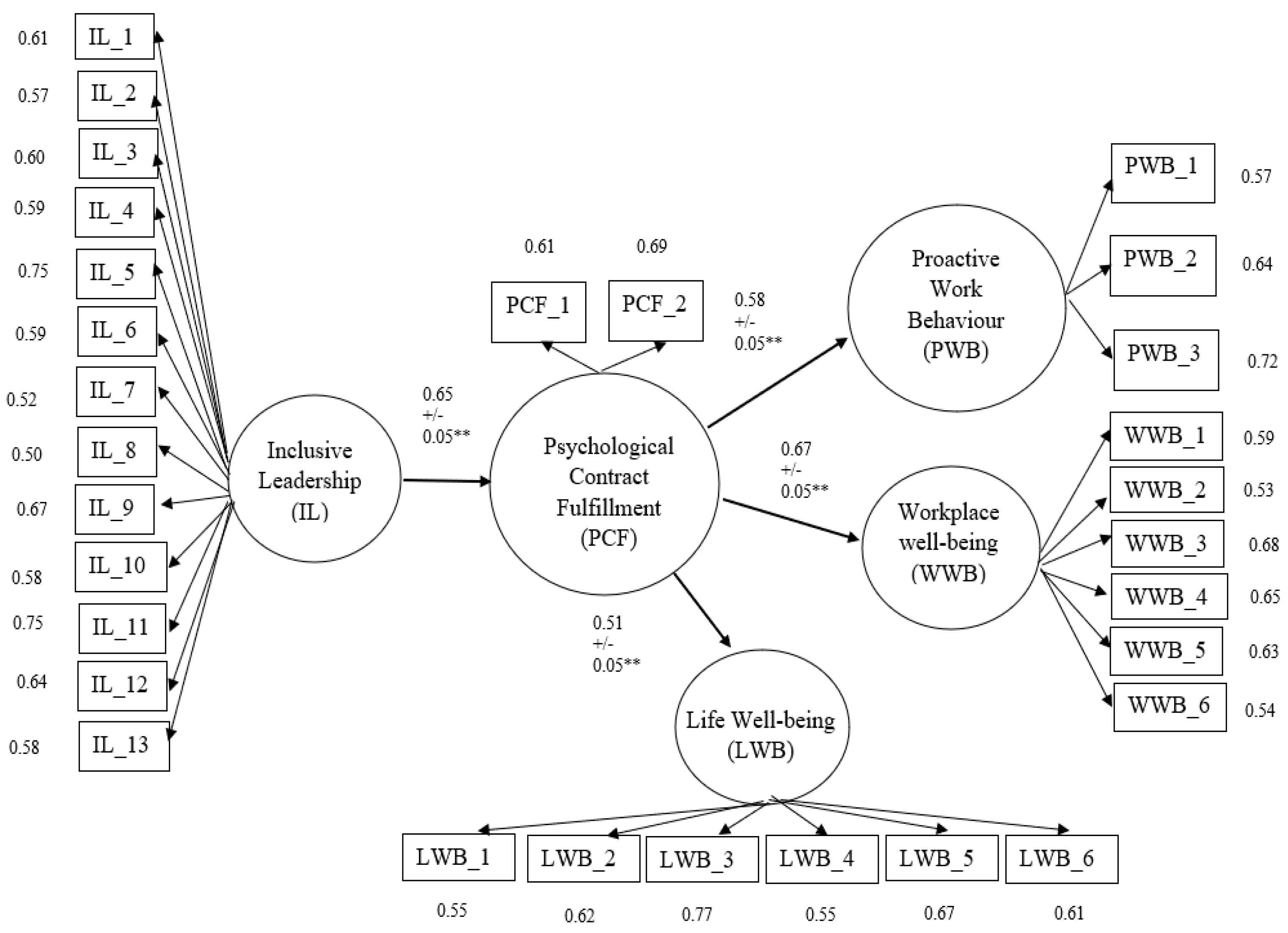

Table 1.
Characteristics of the survey sample (n = 1000).
| Criteria | Values | Total | |
|---|---|---|---|
| n | % | ||
| 1000 | 100.0 | ||
| Gender | Male | 433 | 43.3 |
| Female | 567 | 56.7 | |
| Age | Under 30 years | 53 | 5.3 |
| 30-39 years | 341 | 34.1 | |
| 40-49 years | 323 | 32.3 | |
| 50-54 years | 185 | 18.5 | |
| 55 and over | 97 | 9.7 | |
| Education level | Bachelor | 75 | 7.5 |
| Master | 824 | 82.4 | |
| PhD. | 75 | 7.5 | |
| Prof. | 26 | 2.6 | |
| Total length of service | Up to 5 years | 56 | 5.6 |
| 6 - 10 years | 132 | 13.2 | |
| Over 10 years | 811 | 81.1 | |
| Length of service with current company | Up to one year | 81 | 8.1 |
| One to five years | 350 | 35.0 | |
| 6 - 10 years | 290 | 29.0 | |
| Over 10 years | 279 | 27.9 | |
| Size of the organisation's workforce | 10-49 | 279 | 27.9 |
| 50-249 | 298 | 29.8 | |
| 250 or more | 423 | 42.3 | |
| Form of ownership of the organisation | Public | 110 | 11.0 |
| Prywate | 890 | 89.0 | |
| Type of work position | Manager | 500 | 50.0 |
| Non-manager | 500 | 50.0 | |
Table 2.
Descriptive statistics.
| Dimentions | M | Me | SD | S | K | p | IL | PCF | PWB | WWB | LWB |
|---|---|---|---|---|---|---|---|---|---|---|---|
| IL | 4.18 | 3 | 1.05 | -0.10 | -0.48 | <0,001*** | 1.00 | ||||
| PCF | 5.72 | 5 | 1.18 | -0.33 | -0.42 | <0,009*** | 0.243*** | 1.00 | |||
| PWB | 5.25 | 3 | 0.89 | -0.09 | -0.45 | <0,001*** | 0.176*** | 0.140*** | 1.00 | ||
| WWB | 6.12 | 5 | 1.23 | -.024 | -0.39 | <0,001*** | 0.114*** | 0.136*** | 0.122*** | 1.00 | |
| LWB | 6.22 | 5 | 1.27 | -0.15 | -0.28 | <0,001*** | 0.201*** | 0.108*** | 0.119*** | 0.206*** | 1.00 |
Note: ***<.001. n = 1000, M- mean; Me – median; SD – standard deviation; S - coefficient of skewness; K - kurtosis; p - Mann-Whitney test probability; Correlation tested by Pearson's linear correlation coefficient (r) *** p < 0.001. (IL- Inclusive Leadership; PCF - Psychological Contract Fulfillment; PWB - Proactive Work Behavior; WWB - Workplace well-being; LWB - Life Well-being).
Table 3.
KMO, Bartlett's sphericity test and reliability rating.
| Specification | IL | PCF | PWB | WWB | LWB | EWB |
|---|---|---|---|---|---|---|
| KMO | 0.851 | 0.776 | 0.724 | 0.816 | 0.732 | 0.830 |
| Bartlett's sphericity test | χ2 (13) = 1062.5 p < 0.001** |
χ2 (17) = 2561.2 p < 0.001** |
χ2 (24) = 2614.0 p < 0.001** |
χ2 (6) = 2264.1 p < 0.001** |
χ2 (6) = 1056.1 p < 0.001** |
χ2 (12) = 2041.5 p < 0.001** |
| Cronbach's Alpha | 0.874 | 0.814 | 0.791 | 0.803 | 0.859 | 0.896 |
Note: IL- Inclusive Leadership; PCF - Psychological Contract Fulfillment; PWB - Proactive Work Behavior; WWB - Workplace well-being; LWB - Life Well-being.
Table 4.
Measures of model fit.
| Factor | Value factor |
|---|---|
| χ2 =1845.7, df =953 p < 0,0001 | |
| χ2 df = 1.937 | |
| RMSEA | 0.059 |
| 90% CI | 0.058-0.061 |
| CFI | 0.909 |
| GFI | 0.864 |
| AGFI | 0.919 |
| SRMR | 0.06 |
Note: χ2 - chi-square statistic, df - number of degrees of freedom, RMSEA - root mean square error of approximation, 90%CI - 90% confidence interval for RMSEA, GFI - goodness-of-fit index, AGFI - adjusted goodness-of-fit index, CFI - relative fit index, SRMR - standardized root mean square residual, *** p < 0.0001.
Table 5.
Convergent and discriminant validity.
| CR | α | AVE | IL | PCF | PWB | WWB | LWB | EWB | |
|---|---|---|---|---|---|---|---|---|---|
| IL | 0.79 | 0.87 | 0.52 | - | |||||
| PCF | 0.86 | 0.81 | 0.49 | 0.19*** | - | ||||
| PWB | 0.90 | 0.79 | 0.41 | 0.14*** | 0.61*** | - | |||
| WWB | 0.89 | 0.80 | 0.49 | 0.24*** | 0.49*** | 0.21*** | - | ||
| LWB | 0.88 | 0.86 | 0.51 | 0.22*** | 0.71*** | 0.28*** | 0.76*** | - | |
| EWB | 0.91 | 0,90 | 0.49 | 0.31*** | 0.56*** | 0.49*** | 0.51*** | 0.49*** | - |
Note: (α) = Cronbach's Alpha; CR = Composite Reliability; AVE = Average Variance Extracted. IL- Inclusive Leadership; PCF - Psychological Contract Fulfillment; PWB - Proactive Work Behavior; WWB - Workplace well-being; LWB - Life Well-being, EWB - Employee Well-being total.
Disclaimer/Publisher’s Note: The statements, opinions and data contained in all publications are solely those of the individual author(s) and contributor(s) and not of MDPI and/or the editor(s). MDPI and/or the editor(s) disclaim responsibility for any injury to people or property resulting from any ideas, methods, instructions or products referred to in the content. |
© 2023 by the authors. Licensee MDPI, Basel, Switzerland. This article is an open access article distributed under the terms and conditions of the Creative Commons Attribution (CC BY) license (http://creativecommons.org/licenses/by/4.0/).
Copyright: This open access article is published under a Creative Commons CC BY 4.0 license, which permit the free download, distribution, and reuse, provided that the author and preprint are cited in any reuse.


