

Submitted:
23 May 2023
Posted:
25 May 2023
You are already at the latest version
Abstract
Background: Public engagement is needed to make sure urban forestry management efforts align with the values of the public being served. Noting this, we determined current and desired urban forest access of Florida (United States) residents using the criteria from the 3-30-300 rule (i.e., 3 trees visible from home, 30% canopy in neighborhood, and a green space within 300 meters of home). Methods: A survey of 1,716 Florida residents was conducted to assess canopy coverage and green space access. Respondents were then asked if this level of urban forest access was sufficient for their needs. We also asked their perceptions of the benefits and drawbacks of urban trees and whether they had any negative interactions with trees in the past. Results: We found that 37.3% of Florida residents met all three criteria of the 3-30-300 rule. Despite this, half the respondents would prefer more trees in their neighborhoods. When asked to name the top benefits provided by trees, the most common responses were shade, beauty, and attracting wildlife. The most common drawbacks to urban trees included risk to property, leaves/debris, and fears regarding storms and hurricanes. Conclusions: Florida residents largely value their urban forest and would like to see it maintained or enhanced. Improving access to greenspaces for recreation is the most pressing concern for urban forest managers in Florida looking to meet the requirements of the 3-30-300 rule. Results from this study can inform and test urban forest management at national and global scales.
Keywords:
ecosystem disservices
; ecosystem services
; environmental equity
; landcover
; urban forest governance
Introduction
A large and growing body of research has quantified the ecosystem services associated with urban trees as they relate to (among other things) storm water mitigation (Berland et al., 2017), urban heat reduction (Ko, 2018; McDonald et al. 2020), carbon capture (Nowak and Crane, 2002), and human health (Jennings and Gaither, 2015; Wolf et al., 2020). Proximity to vegetation is an important driver for human health, with benefits including reduction of stress (Jiang et al., 2015; Turner-Skoff and Cavender, 2019), improved school performance (Kou et al., 2018; Turner-Skoff and Cavender, 2019), and more normal childbirth weights correlated with proximity to vegetation (Donovan et al., 2011). Recognizing the importance of these benefits and the inequalities that exists across social-demographics (Gerrish and Watkins, 2018; Watkins and Gerrish, 2018), the 3-30-300 Rule has been proposed as a means of ensuring that individuals have sufficient tree cover and green space access at scales that are relevant, desirable and/or benefit their well-being.
The 3-30-300 Rule draws on the large body of research documenting the benefits trees have on human health and well-being (Konijnendijk, 2022). Each of the numbers in the 3-30-300 Rule is associated with specific performance criteria tied to individual access to urban trees and green spaces, and the need to bring trees and green space close to people to enhance their health, climate adaptation and other benefits. The "3" in 3-30-300 Rule captures urban forest access at a very local scale by asking the question, "Can you see three or more mature trees from your home (or workplace or school)?" (Konijnendijk, 2022). Its inclusion is rooted in past research which has demonstrated (among other things) the benefits a green outside view provides to hospital patients (Jimenez et al., 2021), school children (Norwood et al., 2019), workers (Lottrup et al., 2015), and, more recently, people isolating as part of the COVID-19 pandemic (Zhang et al., 2022).
The next criterion in the 3-30-300 Rule, the “30”, relates to neighborhood canopy cover. Individuals should have at least 30% canopy coverage in their neighborhood CITE. Often canopy goals are established city-wide as part of an urban forest management plan (Kenney et al., 2011; Hauer and Peterson, 2016). However, scale is also important when considering environmental equity (Locke et al., 2016). Past studies at scales smaller than an entire city (e.g., neighborhood or census block) have shown urban canopy can vary given local demographics-particularly race (Grove et al., 2018; Watkins and Gerrish, 2018; Nesbitt et al., 2019; Locke et al., 2021) and income level (Gerrish and Watkins, 2018; Nesbitt et al., 2019). As such, the 3-30-300 Rule specifically calls on urban forest managers to strive for 30% canopy cover in every neighborhood they manage, thus aiming for greater environmental equity.
The 30% percent canopy threshold is based on several studies which found that tree cover was required for benefits to be appreciably realized (Konijnendijk, 2022). For example, researchers in Europe found that 30% canopy coverage was associated with one-third less mortality during heatwaves (Barboza et al., 2021). Additionally, Astell-Burt and Feng found that 30% canopy cover was associated with more restful sleep (2019a) and reduced stress (2019b). The authors also found that at least 30% canopy coverage served as a preventative for heart disease (Astell-Burt and Feng, 2020). While canopy coverage beyond 30% was associated with greater benefit in these studies, Konijnendijk (2022) adopted his threshold (30%) to account for urban greening challenges cities might face such as rapid development and changing climates.The last criterion of the 3-30-300 rule is for individuals to be within 300 m of the nearest public park or green space (Konijnendijk, 2022). This distance represents an approximate five-minute walk at a leisurely pace. People located 300m from a green space visited these areas more frequently and were less likely to be obese than respondents located beyond a km, or more, from a green space (Toftager et al., 2011). Beyond body weight, increased activity in green spaces can also help reduce the effects from health ailments such as heart disease and diabetes (Astell-Burt, 2013; De la Fuente et al., 2021). Although having easy access to especially larger green spaces (1 ha or more) is recommended by institutions such as the World Health Organization, smaller green spaces such as pocket parks or community gardens may be a necessary compromise in densely developed urban areas (Konijnendijk, 2022).
While there is no shortage of research documenting the benefits of trees, including those directly associated with human health, management decisions regarding urban forests must reflect the public values if they are to be successful (Sklar and Ames, 1985; Carmichael and McDonough, 2019; Northrop et al., 2022). Given this, there is a large body of research that clarifies public perceptions as they relate to urban trees and forests (Ordóñez Barona et al., 2022). Several review papers have collated the research about people’s perceptions of urban trees and forests. Ordóñez Barona et al. (2022) identified 178 studies that investigated people’s perceptions about urban trees. The majority of these works were focused on respondents from a single community, often framed within the context of trees in gardens/yards, in urban woodlands, along streets, or in parks. Most works (47.2%) focused on trees and their functions in landscapes, but research also focused on public perception regarding the inherent value of trees themselves (40.4%) or the benefits or drawbacks of certain tree traits (12.4%) (Ordóñez Barona et al., 2022). One of the key findings by Ordóñez Barona et al. (2022) is that the majority of studies did not allow for open ended responses, rather they asked questions which provided limited options for respondents to choose from when sharing their views. Moreover, respondents were typically only asked to offer their perceptions on tree benefits (Ordóñez Barona et al., 2022).
While much research has been conducted to assess the positive perceptions individuals hold regarding trees and urban forests, few studies have investigated how the public views the drawbacks of trees (Ordóñez Barona et al., 2022). Failing to consider both the full range of views on trees including perceived ecosystem disservices can erode public trust and support for urban forest efforts. The few studies that have examined negative perceptions of trees highlight ways for managers to address or account for these concerns (Landry et al. 2023; Su et al., 2022).
In working towards urban forest management goals, policy makers, managers, and practitioners must consider these competing values and determine which strategies are generally acceptable to their constituents. If management efforts do not align with the needs and wants of the public, their long-term success is questionable (Lockwood et al., 2010). Understanding how constituents value trees and the reasons for these attitudes is a critical guiding step when creating strategic plans, urban forestry programs, and educational efforts.
To address this research gap, this work represents a statewide assessment of values related to urban forest access and governance in Florida (United States). We ascertained how proximity to tree cover and green space access affected people's perceptions using the 3-30-300 Rule as our main performance metric, as this rule makes an evidence-based connection between different types of access to trees and green space. In addition, we asked respondents if the tree cover and green space access they currently experienced was sufficient for their needs or whether it should be increased or decreased. We also asked respondents to indicate their response to a range of questions regarding tree protection ordinances, public funding of trees, and the use of incentives to promote tree planting and retention. Lastly, we asked our respondents to note their thoughts on trees regarding the services and disservices they provide and any negative experiences they had with trees in the past. This work is intended to assist urban forest managers and non-profits in their efforts, especially with regard to strategic planning, regulation/ordinance revision, and public engagement/education. Results can further inform research and practical applications beyond the study location.
Methods
Study Rationale, Study Area, and Participant Selection
The study assessed if and how residents within the state of Florida, United States value their urban forest. An online survey employed a contracted panel service (Centiment, Denver, Colorado, United States). Our survey sample was selected to be representative of the state population regarding gender, race, and age according to the United State Census Bureau estimates for 2022. Only urban residents were included, excluding potential candidates located in rural areas as defined by the United States Department of Agriculture (USDA) Rural-Urban Continuum Coding (RUCC) system (USDA ERS, 2020). Specifically, we sampled from counties with RUCC codes of 1 (i.e., counties in metro areas of 1 million population or more), 2 (i.e., counties in metro areas of 250,000 to 1 million population) or 3 (i.e., counties in metro areas of fewer than 250,000 population).
A minimum 1600 respondent sample was selected for a projected margin of error of +/-3% at a 95 percent level of confidence. In order to minimize incomplete responses and respondent fatigue, we limited our survey to 23 questions so that it could be completed in less than five minutes. Twelve of these questions that focus on urban forest access and perception are featured in this article (Appendix A). Included in our full question set was an attention check question which asked the following, "We would like to ensure you are reading each question and responding thoughtfully. Please select green as your answer." This was followed by the options "red", "orange", "green", "blue", and "purple". Selecting anything other than "green" resulted in the respondent being disqualified from the study.
Study Questions
Our questionnaire was designed to assess what level of green space residents currently have, what level of canopy is desired, benefits and drawbacks with trees, negative experiences, and desired tree protection (Appendix A). In particular, the following topical areas were ascertained:
- What access to urban tree canopy and green space do they currently have?
- What access to urban tree canopy and green space do they want?
- What level of tree canopy do they currently have along with how many trees can they see from a viewing point at their home (Figure 1)?
- How much time does it take to access green space?
- What benefits and also drawbacks are associated with trees?
- What types (if any) of negative experiences have you had with trees?
Our last question was pertinent only to homeowners (Appendix A). Respondents who selected "rent" when asked "Do you rent or own your home?" bypassed our last question (Appendix A).
In addition to the three themes above, we asked our respondents two open-ended questions. The first was "What are the top three benefits you associate with trees in your community or neighborhood?" The second was "What are the three biggest drawbacks associated with the trees in your community or neighborhood?"
Finally, to determine if past negative experiences with trees influenced their responses, we asked if they had had issues with trees damaging property, causing injury, requiring costly maintenance, preventing development, or causing issues with obtaining a new homeowners' insurance policy.
As our respondents had registered to participate as panelists through the panel service as described above, we had access to demographic (e.g., age, race, Hispanic status, gender) and location (i.e., postal code) information and did not need to ask these questions directly in our survey.
The study was approved by the University of Florida Internal Review Board (IRB) to collect data from human subjects. A soft launch (distributed to ~50 respondents) was conducted on October 5th, 2022, to assess the performance of our questions prior to the full launch. We did not observe any issues and were able to release the survey as drafted. All responses were collected by October 17th, 2022.
Data Analysis The majority of questions were summarized by descriptive statistics (e.g., mean, median, mode, range, and various measures of dispersion). Comparisons between or among the different demographic groups were assessed using a chi-square based test of equal proportions in R (R core team, 2022). All comparisons were made at a 0.05 level of statistical significance. Experiment wise error rate was controlled using the p.adjust() function in R (R core team, 2022), specifying a false discovery rate (fdr) correction (Benjamini and Yekutieli, 2001). For our open-ended questions on tree benefits and drawbacks (Appendix A), we cleaned up the responses of filler words (e.g., “a,” “the,” etc.) prior to creating word cloud visualizations. In addition, we coded the responses using the list of benefits and annoyances noted in Shroeder and Ruffolo (1996).
Results
Respondent Demographics
In total, we had 1716 respondents participate in our survey. Of these, 45.0% (n = 773) identified as male and 55.0% (n = 943) reported as female. The ages of our respondents ranged from 18 to 91 years, with a mean age of 47.6 and a median age of 47. With regard to race and ethnicity, 70.6% (n = 1212) of our respondents identified as White, 16.2% (n = 278) identified as Black or African American, 2.0% (n = 35) identified as Asian, 0.5% (n = 8) identified as American Indian or Native Alaskan, 0.3% (n = 5) identified as Native Hawaiian or Pacific Islander, and 9.1% (n=157) identified as other. The remaining 1.2% (n = 21) of respondents chose “prefer not to say” when asked about their race. Additionally, 22.2% (n = 381) of our respondents identified as Hispanic. Finally, we asked respondents about their status as either homeowners or renters. The majority of respondents owned their home (57.4%, n = 985). Our sample demographics were well aligned with the overall demographics of the State of Florida (Appendix B).
What proportion of Floridians lives in areas that meet or exceed the 3-30-300 Rule?
A little more than a third (37.3%; n = 640) of our respondents indicated that their neighborhoods met or exceeded all three of the thresholds outlined in the 3-30-300 rule. Of the criteria considered, a distance exceeding 300 m to the nearest park or green space was the most limiting factor. Slightly more than half (57.7%; n = 990) of our respondents noted that they could reach a nearby park or green space within five minutes while walking, which is a typical time to walk 300 m. Of the remaining respondents, 37.5% (n = 644) noted it would take them longer than five minutes to access a park or green space while walking and the remaining 4.8% (n = 82) were unsure of the time required.
In contrast, 73.1% (n = 1252) of our respondents mentioned that their neighborhood had canopy coverage of 30% or more (Table 1). A quarter of our respondents (25.0%, n = 429) noted their neighborhood had 10% canopy coverage. Only 35 respondents (2.0%) stated their neighborhood didn’t have any trees (Table 1). Similarly, 71.9% (n = 1233) of our respondents were able to view three or more trees from their home. Of those who did not reach this threshold, 18.6% (n=320) were able to see two trees from their homes, 6.7% (n = 115) were able to see one tree from their homes, and 2.8% (n = 48) had no trees visible from their homes.
In looking at who failed to meet the 30% canopy threshold in their neighborhoods, we were unable to detect any difference related to race (P-value = 0.120; Table 1). Similarly, when looking at who had less than 30% canopy in their neighborhoods, we were unable to see any significant differences between Hispanic and non-Hispanic respondents (P-value = 0.328) or home owning and renting respondents (P-value = 0.452; Table 1).
In assessing which factors predicted park or green space usage, we found proximity to a respondent’s home was the most significant factor (P-value < 0.001). Respondents who were within a five-minute walk of a park or green space were 4.3 times more likely to select one of the more intensive options to our question, “How frequently do you visit/recreate in this park, green space, or natural area?” This is reflected in Table 2. Daily and weekly green space users are most likely to answer “yes” to the question, “Are you able to walk from your home to the nearest park, green space, or natural area in less than five minutes?” More sporadic users (i.e. those who selected “several times a year”, “once a year”, or “never”) were generally those who had to walk further than our stated five-minute-threshold (Table 2).
Beyond proximity, we looked at the impacts of age, gender, race, and Hispanic ethnicity on park or green space usage. Neither race (P-value = 0.679) nor Hispanic ethnicity (P-value = 0.365) was a significant predictor. Age was a significant predictor of park use (P-value < 0.001), with older respondents less likely to select the more frequent use categories. Additionally, male respondents noted that they used parks and green spaces more frequently than female respondents (P-value = 0.020).
Are Floridians satisfied with their urban forest canopy distribution?
Slightly more than half (51.5%; n = 883) of our respondents indicated that they would prefer more trees in their neighborhoods. Of the remaining respondents, most preferred the current number of trees in their neighborhoods (42.2%; n = 724). Only 6.4% (n = 109) of respondents indicated they would like fewer trees in their neighborhood.
Existing canopy cover did not influence who selected that they would prefer fewer trees in their neighborhood (P-value = 0.002; Table 3). In contrast, those who selected that they would prefer the current amount of trees in their neighborhood were more likely to note that they lived in 50%, 70%, or 90% canopy coverage (P-value < 0.001, Table 3). Those respondents who selected that they would prefer more trees in their neighborhood were more likely to note that they lived in 0%, 10%, or 30% canopy coverage (P-value < 0.001, Table 3).
When looking at how race and ethnicity influenced these preferences, we observed that a smaller proportion of Black/African American respondents (40.6%; 113) desired more trees compared to White respondents (53.4%; n = 647). This difference was statistically significant (P-value < 0.001). More than half (54.3%; n = 19) of the Asian respondents indicated that they would prefer more trees. Similarly, half (50.0%; n = 4) of the American Indian/Native Alaskan respondents and 60.0% (n=3) of the Native Hawaiian/Pacific Islander respondents indicated they desired more trees in their neighborhoods. None of these proportions were significantly different from the proportion of white respondents that preferred more trees (min P-value = 0.999). Of the 381 Hispanic respondents, 208 (54.6%) noted they would prefer more trees in their neighborhood. This was not statistically different from the 50.6% (n = 675) of non-Hispanics who stated they would prefer more trees.
A similar trend was noted among the respondents who indicated they would prefer fewer trees in their neighborhood. While 5.8% (n = 71) of White respondents noted they would prefer fewer trees, this nearly doubled to 10.4% (n = 29) among Back/African American respondents (P-value = 0.009). One American Indian/Native Alaskan respondent (12.5%) and one Native Hawaiian/Pacific Islander respondent (20.0%) indicated they would prefer fewer trees, though neither proportion was significantly different than what was observed with the White respondents given low sample size (smallest P-value = 0.967). None of the 35 Asian respondents indicated they wanted fewer trees in their neighborhood, preventing statistical comparison with the test of equal proportions. Among the Hispanic respondents, 6.0% (n = 23) noted they would prefer fewer trees in their neighborhood. This was not statistically different from what was observed among the non-Hispanic participants (6.4%, n = 86, P-value = 0.867).
What benefits and disservices do Floridians associate with urban trees?
In looking at the coded benefits, we found that "gives shade" was by far the most common benefit listed. This was followed by "pleasing to the eye," "brings nature closer," and "filters pollutants from the air." The remaining 11 coded benefits were less commonly listed by our respondents and all (Figure 2).
In matching our respondents’ stated drawbacks to Shroeder and Ruffulo's (1996) original list of annoyances, we found that seasonal leaf drop was our most common complaint (Figure 3). This was followed by "Falling limbs," "Attracts annoying insects," and "Fruit, nuts, or pods fall from the tree.” The remaining 13 annoyances from Shroeder and Ruffulo (1996) were not commonly listed by our respondents (Figure 3). In general, respondents were more forthcoming with benefits than they were with drawbacks (Figure 2 and Figure 3).
What Experiences Might Shape Floridian’s Preferences for Trees?
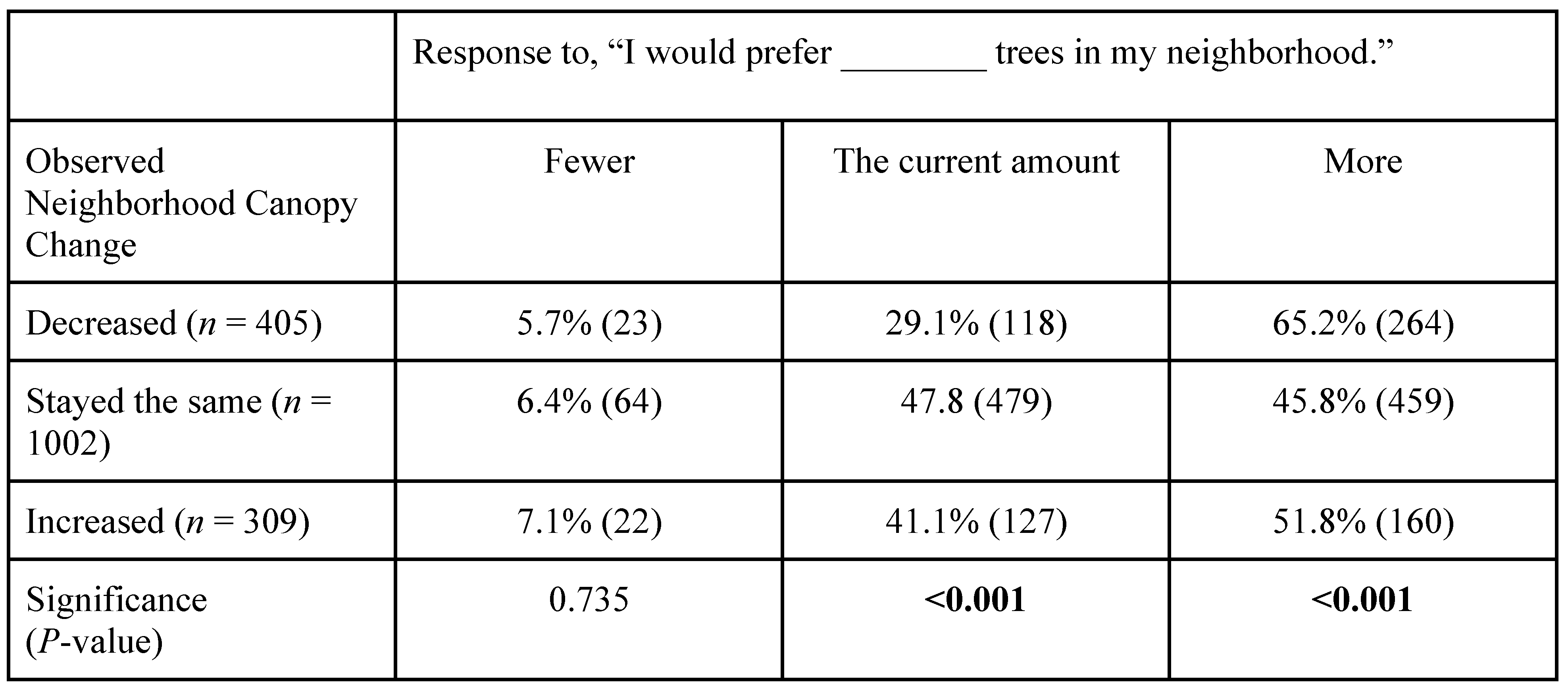
Observed changes in canopy cover did not influence who selected that they would prefer fewer trees in their neighborhood (P-value = 0.735; Table 4). In contrast, those respondents who selected that they would prefer the current amount of trees in their neighborhood were less likely to have observed a decrease in tree cover in their neighborhood (P-value < 0.001, Table 4). Those respondents who selected that they would prefer more trees in their neighborhood were more likely to have observed a decrease in tree cover in their neighborhood (P-value < 0.001, Table 4).
In assessing ecosystem disservices, 54.9% (n = 943) of our participants selected the response “I have never had a negative experience with a tree.” The most common negative experience expressed by respondents was a tree “Causing property damage after losing a branch or tipping over.” This was reported by more than one in five respondents (23.3%; n =399; Figure 4). Other relatively common negative experiences included a tree “growing into and damaging your property” (18.6%; n = 319) and “requiring costly maintenance or removal” (19.0%, n = 326). The two least common of our predefined negative experiences were “causing issues when obtaining a new home insurance policy” (5.1%, n = 87) and “preventing you from developing your property given local protections” (3.7%, n = 64).
In addition to the negative experiences noted above, we included an “other” option. Of the 26 (1.5%) respondents that replied “other”, seven described issues where tree parts grew into and damaged their property or neighboring infrastructure – specifically in an in-ground pool (n = 1), a nearby electrical transformer (n = 1), and septic or sewer systems (n = 5). Others noted damage to vehicles (n = 2) from limb drop and slipping issues given flower drop. Most of these examples could have been included in two of our predefined categories (i.e., “growing into or damaging your property” or "causing property damage after losing a branch or tipping over”) but were left as is for analysis. Four respondents noted losing trees after hurricanes or lightning strikes. One respondent was nearly hit when a tree fell near them in a park. Others noted negative experiences included trees attracting nuisance wildlife (n = 2), trees exacerbating allergies (n = 1), trees blocking sunlight (n = 1), and invasive trees taking over their property (n = 1).
Across the board, respondents who noted they would like fewer trees in their neighborhood or community were more likely to have had a negative experience with a tree in their past as compared to the total survey sample (minimum P-value = 0.015; Figure 4). Respondents who indicated they would like fewer trees in their neighborhood or community were approximately twice as likely to have experiences with a local tree protection regulation preventing them from developing their property (2.5:1; P-value = 0.011) or have issues with getting a new homeowners’ insurance policy (2.2:1; P-value = 0.015) (Figure 4). This same subset of our sample were approximately 1.5 times more likely of have experienced a branch falling on their property (1.7:1; P-value < 0.001), a tree growing into their property (1.7:1; P-value = 0.002), or a costly maintenance or removal bill (1.6:1; P-value = 0.003) in the past (Figure 4).
Discussion:
Our results offer early insights into what proportion of urban inhabitants live in a home and neighborhood which meets the criteria outlined by the 3-30-300 rule (Konijnendijk, 2022). Our survey results indicate that more than a third (37.3%) of Floridians met, or exceeded, all three of the thresholds outlined in the 3-30-300 rule, with 71.9% able to view three trees from their home, 73.1% living in a neighborhood with 30% (or greater) canopy coverage, and 57.7% living within 300 m of a park or green space. By comparison, one of the first published studies to assess how a city fares with regard to the 3-30-300 rule was conducted in Barcelona, Spain (Nieuwenhuijsen et al., 2022). In this work, the authors found that 4.7% percent of respondents met all three criteria. In looking at the individual metrics, 62.1% of respondents were located near a major green space, 43.0% of respondents were able to view three trees from their home, and 8.7% lived in neighborhoods with 30% or more canopy coverage (Nieuwenhuijsen et al., 2022).
Looking beyond research in academic journals, a master’s thesis from the University of Toronto looked at entry-level home real estate listings in Toronto and Mississauga (Canada) to determine if their associated asking price was influenced by the criteria assessed in the 3-30-300 rule (Ling et al., 2021). They found that 12% of the listings met all three criteria and that these tended to be the more expensive properties. Of these, 62% of properties had a view of three trees, 29% had 30% canopy coverage, and 32% were located within 300 m of a green space (Ling et al., 2021).
Additionally, a geospatial analysis of nine Swedish cities estimated that the percent of buildings with views of three trees ranged from (approximately) 31% (Kristianstad) to 61% (Lund; Skåne Region, 2023). In this same assessment, the research team found that, on average, 3% of the homes found within these nine cities had 30% canopy coverage. In three of the cities assessed, Malmo, Lund, and Trelleborg, none of the homes met the 30% canopy coverage criterion (Skåne Region, 2023). The best performing city, Ystad, by this criterion had 13% of homes located in 30% canopy coverage (Skåne Region, 2023). Finally, the research found that 87% of homes were within 300 m of a 0.5-hectare green space. This ranged from 77% in Malmo to 95% in Lund (Skåne Region, 2023).
Unlike Florida (where green space/park access was the most limiting factor), canopy coverage was the key limiting factor determining what percentage of Skåne Region households met the three criteria of the 3-30-300 rule. As United States park designs historically range from two hectares (playgrounds) to 20 hectares (community parks) (American Planning Association, 1965), it may be that our respondents did not consider these smaller green spaces when responding to the question, “Are you able to walk from your home to the nearest park, green space, or natural area in less than 5 minutes?” The within a 5 minute walking distance trip to places like a park is a normative standard, with up to 10 minutes also presented as a maximum threshold (Atash, 1994). However, only 35% of respondents to a United States study took walking trips of up to 5 minutes (Yang and Diez-Roux, 2012).
In addition to assessing current access to urban greening, our survey indicates that the majority of Floridians (51.5%) would prefer to have more trees in their neighborhood. This question was pulled from a similar survey administered by Landry et al. (2023) to Tampa, Florida residents. In the Tampa survey, 83% of respondents noted they would like more trees within the city and 72.4% of respondents noted they would like more trees in their neighborhood. As with our findings, only a small fraction (5.9%) of the Tampa respondents desired fewer trees in their neighborhood (Landry et al., 2023).
While the proportion of Florida residents looking for fewer trees in their neighborhood was low (6.4%), this group included a disproportionate number of Black/African American respondents (10.4%). In looking at other facts that might relate to someone's desire to have fewer trees, things like high existing canopy coverage or recent changes in canopy coverage were not statistically significant (Table 3 and Table 4). Respondents who desired fewer trees were more likely to have had a negative past experience with a tree (e.g. causing property damage or requiring costly maintenance) compared to the overall population (Figure 4). Negative past experiences were also a key factor in residents’ lack of support of urban greening efforts in the city of Detroit, United States (Carmichael and McDonough, 2018). However, in our study, Black/African American respondents were less likely to report experiences with trees growing into and damaging their property (13.3%), causing injury after losing a branch or tipping over (22.3%), or requiring costly maintenance or removal (9.4%) compared to our overall average (Figure 4). In contrast, Black/African American respondents were more likely to report trees preventing them from developing their property given local protections (5.4%) and causing issues when obtaining a new home insurance policy (8.9%).
As noted, relatively few studies have looked at both the benefits and drawbacks of urban trees. When asked in an open-ended question to name three drawbacks associated with urban trees, our respondents focused primarily on safety (e.g., damage, falling, storm(s) such as hurricanes) and debris (e.g., leaves, branches, limbs, acorns, etc.).
In a 2004 study by Lohr et al., residents from across the United States were asked if they agreed with eight statements regarding problems associated with trees. None of the prompts used in this study directly captured the two concerns raised by our respondents. Moreover, none of the statements provided by the Lohr et al. (2004) were supported by their respondents (ranging from 1.30 to 1.64 on a four-point scale where 1 = strongly disagree and 4 strongly agree). This may highlight a limitation of surveys where specific scenarios are given when trying to assess values (e.g., Trees should not be planted along streets because they drip sap or sticky residue on parked cars; Lohr et al., 2004). Respondents may agree with statements they have never experienced in real life as they may sound like plausible nuisances. Moreover, the more universal and pressing issues to a given population of interest may be missed by the research team. That said, open-ended questions do require more labor-intensive qualitative analysis techniques like inductive coding in order to draw conclusions.
A more recent assessment of positive and negative beliefs surrounding urban trees was conducted by Su et al. (2022). In this study, the authors surveyed residents of the Toronto, Canada metro area and found that the highest rated positive beliefs were “produces oxygen,” “cleans the air,” and “provides shade” (4.53, 4.52, and 4.46, respectively — as rated on a 5-point scale). Interestingly, despite listing shade as a top positive belief, the most supported negative belief was “block the sun” (3.35). Similar to our findings, Su et al. (2022) found that dropped branches were a concern among their respondents (the second most supported in their list). Damage to property and infrastructure was more of a mid-level concern (rated 2.52 on a 5-point scale). This was rated lower than “cause allergies” (2.90) - a disservice that was barely mentioned by our respondents.
Tree safety is a top concern among our respondents (Figure 3). Tree safety concerns are noteworthy because hurricanes and tropical storms shape Florida’s urban forests and are a significant part of living in the state (Salisbury et al., 2022). These storms can topple even strong and healthy trees if severe enough (Saffir Simpson Scale). Other researchers have found similar safety concerns among their urban respondents. In a 2015 study, Shackleton et al. (2015) found over 72% of residents in two South African towns expressed concern that trees may influence crime rates by making it difficult to detect criminal behavior. This was by far the most important concern in both communities they assessed (Shackleton et al., 2015).
Urban trees can have various benefits and drawbacks. Our respondents highlighted various benefits, key of which are “gives shade” or “pleasing to the eye”. This result is aligned with research in the suburbs of Chicago (United States) which also found that the aesthetics of trees was the most significant benefit identified by respondents, along with providing shade (Shroeder and Ruffalo, 1996). That said, the difference between our less reported benefits and our most common benefits was much more pronounced than was noted in the data by Shroeder and Ruffolo (1996). This may reflect the differences in the method used to assess their values (open-ended questions vs questions with close-ended options), though it is difficult to gauge if this is truly the case from the older paper's methods. In looking at our coded drawbacks (Figure 3) we see that "Fallen leaves in autumn" was our most common complaint. This mirrors the results from Shroeder and Ruffolo (1996). That said, our respondents were more likely to point to "falling limbs" as a key drawback. The respondents from Shroeder and Ruffolo appeared more concerned with "Roots too close to the surface", "sap drips from the tree", and sidewalk damaged by roots" than our respondents (Figure 3).
Conclusions
As one of the first public assessments of urban forest access through the lens of the 3-30-300 Rule, this paper provides baseline information for both Florida urban forest managers, and others looking to see if these performance criteria are feasible for their communities. Our respondents, who come from a range of subtropical and tropical urban communities, had greater access to urban greening than those surveyed from other cities and countries. Of the three criteria, access to urban green spaces within 300 m was the most limiting. Overall, respondents valued their urban trees and would like to maintain or enhance the tree cover in their neighborhood despite complaints about debris and fears regarding storm-related failures. When making the case for trees to the general public, Florida urban forest managers will likely make the strongest connections when highlighting potential gains in shade, benefits to wildlife, and impacts to the overall beauty of their communities. Urban forest managers can use our results when developing management plans or replicate our survey efforts in their own communities in an effort to justify expenditures on maintenance and planting projects.
Acknowledgments
This research was funded through the Wells Fargo Term Extension Professorship, a University of Florida Institute of Food and Agricultural Sciences (IFAS) Extension Professional Enhancement Award.
Appendix A Select Survey Tool Questions
Having trees in my community or neighborhood is__________.
- Not important
- Somewhat important
- Moderately important
- Very important
- Extremely important
Which of the following images best represents the tree cover/shade in your neighborhood?
- 10% image
- 30% image
- 50% image
- 70% image
- 90% image
- My neighborhood doesn’t have trees
Compared to most other neighborhoods in my city, my neighborhood has_________trees.
- fewer
- the same amount of
- more
I would prefer _________ trees in my neighborhood.
- fewer
- the current amount of
- more
Since moving to my neighborhood, the tree cover/shade has_____
- decreased
- stayed the same
- increased
When I look out of the windows of my home, I see _______ trees.
- 0
- 1-2
- 3 or more
Are you able to walk from your home to the nearest park, green space, or natural area in less than 5 minutes?
- Yes
- No
- Unsure
How frequently do you visit/recreate in this park, green space, or natural area?
- Daily
- Weekly
- Once a month
- Several times a year
- Once a year
- Never
What are the top three benefits you associate with trees in your community or neighborhood?
What are the three biggest drawbacks associated with the trees in your community or neighborhood?
Do you rent or own your home?
- Rent
- Own
Have you ever had a negative experience with a tree? (Check any that apply)
- Growing into and damaging your property
- Causing injury after losing a branch or tipping over
- Requiring costly maintenance or removal
- Preventing you from developing your property given local protections
- Causing issues when obtaining a new home insurance policy
- Other _______
Appendix B Comparison of Sample Demographics to State of Florida Demographics (United States Census Bureau, 2022).
| Demographic | Survey Respondents | 2022 United States Census Estimates |
| White alone | 70.6% | 76.9% |
| Black or African American Alone | 16.2% | 17.0% |
| American Indian and Alaska Native alone | 0.3% | 0.5% |
| Asian alone | 2.0% | 3.0% |
| Native Hawaiian and other Pacific Islander | 0.3% | 0.1% |
| Two or More Races/Other | 9.1% | 2.4% |
| Hispanic or Latino | 22.2% | 26.8% |
| Female | 55.0% | 50.8% |
| Over 65 | 22.2% | 21.1% |
| Homeowner | 57.4% | 66.5% |
References
- American Planning Association 1965. Standards for Outdoor Recreational Areas. Chicago (IL, USA): American Society of Planning Officials. PAS Report 194. https://www.planning.org/pas/reports/report194.htm.
- Astell-Burt T, Feng X, Kolt GS. 2014. Is neighborhood green space associated with a lower risk of type 2 diabetes? Evidence from 267,072 Australians. Diabetes Care. 37(1):197-201. [CrossRef]
- Astell-Burt T, Feng X. 2019a. Does sleep grow on trees? A longitudinal study to investigate potential prevention of insufficient sleep with different types of urban green space. SSM Population Health. 10:100497. [CrossRef]
- Astell-Burt T, Feng X. 2019b. Association of urban green space with mental health and general health among adults in Australia. JAMA Netw. Open. 2(7):e198209. [CrossRef]
- Atash F. 1994. Redesigning suburbia for walking and transit: emerging concepts. J. Urban Plan. Development 120(1):48–57.
- Barboza EP, Cirach M, Khomenko S, Iungman T, Mueller N, Barrera-Gómez J, Rojas-Rueda D, Kondo M, Nieuwenhuijsen M. 2021. Green space and mortality in European cities: A health impact assessment study. Lancet Planet Health. 5(10):e718-30. [CrossRef]
- Benjamini Y, Yekutieli D. 2001. The control of the false discovery rate in multiple testing under dependency. Ann. Stat. 29(4):1165-1188. [CrossRef]
- Berland, A, Shiflett SA, Shuster WD, Garmestani AS, Goddard HC, Herrmann DL, Hopton ME. 2017. The role of trees in urban stormwater management. Landscape Urban Plan. 162:167-177. [CrossRef]
- Carmichael CE, McDonough MH. 2018. The trouble with trees? Social and political dynamics of street tree-planting efforts in Detroit, Michigan, USA. Urban For. Urban Green. 31, 221-229. [CrossRef]
- De la Fuente F, Saldías MA, Cubillos C, Mery G, Carvajal D, Bowen M, Bertoglia MP. 2021. Green space exposure association with type 2 diabetes mellitus, physical activity, and obesity: A systematic review. Int. J. Environ. Res. Public Health. 18(1):97. [CrossRef]
- Donovan GH, Michael YL, Butry DT, Sullivan AD, Chase JM. 2011. Urban trees and the risk of poor birth outcomes. Health & Place. 17(1):390-393. [CrossRef]
- Gerrish E, Watkins SL. 2018. The relationship between urban forests and income: A meta-analysis. Landscape Urban Plan. 170:293-308. [CrossRef]
- Grove M., Ogden L, Pickett S, Boone C, Buckley G, Locke DH, Lord C, Hall B. 2018. The legacy effect: Understanding how segregation and environmental injustice unfold over time in Baltimore. Ann. Assoc. Am. Geogr. 108(2):524-537. [CrossRef]
- Hauer RJ, Peterson WD. 2016. Municipal Tree Care and Management in the United States: A 2014 Urban & Community Forestry Census of Tree Activities. Special Publication 16-1, College of Natural Resources, University of Wisconsin – Stevens Point. 71 pp.
- Jennings V, Johnson Gaither C. 2015. Approaching environmental health disparities and green spaces: An ecosystem services perspective. Int. J. Environ. Res. Public Health. 12:1952-1968. [CrossRef]
- Jiang B, Larsen L, Deal B, Sullivan, WC. 2015. A dose-response curve describing the relationship between tree cover density and landscape preference Landscape Urban Plan. 139:16-25. [CrossRef]
- Jimenez MP, DeVille NV, Elliott EG, Schiff JE, Wilt GE, Hart JE, James P. 2021. Associations between nature exposure and health: A review of the evidence. Int. J. Environ. Res. Public Health. 18(9):4790. [CrossRef]
- Kenney WA, van Wassenaer PJE, Satel AL. 2011. Criteria and indicators for strategic urban forest planning and management. Arboric. Urban For. 37(3):108-117. [CrossRef]
- Ko Y. 2018. Trees and vegetation for residential energy conservation: a critical review for evidence-based urban greening in North America. Urban For. Urban Green. 34, 318-335. [CrossRef]
- Konijnendijk CC. 2022. Evidence-based guidelines for greener, healthier, more resilient neighbourhoods: Introducing the 3-30-300 rule. J. For. Res. [CrossRef]
- Kuo M, Browning MH, Sachdeva S, Lee K, Westphal L. 2018. Might school performance grow on trees? Examining the link between “greenness” and academic achievement in urban, high-poverty schools. Front. Psych. 9:1669.
- Locke DH, Hall B, Grove JM, Pickett STA, Ogden LA, Aoki C, Boone CG, O’Neil-Dunne JPM. 2021. Residential housing segregation and urban tree canopy in 37 US Cities. npj Urban Sustain. 1:15. [CrossRef]
- Locke DH, Landry SM, Grove JM, Chowdhury RR. 2016. What’s scale got to do with it? Models for urban tree canopy. J. Urban Ecol. 2:juw006. [CrossRef]
- Lohr VI, Pearson-Mims CH, Tarnai J, Dillman DA. 2004. How urban residents rate and rank the benefits and problems associated with trees in cities J. Arboric. 30(1):28-35. [CrossRef]
- Landry S, Koeser A, Zarger R, Rib K, Salisbury A, Northrop R, Andreu M, Bednar A, Freeman Z. 2023. City of Tampa Tree Canopy and Urban Forest Analysis 2021. Tampa, FL: City of Tampa, Florida.
- Ling K. 2021. A Look at Access to Green Space in Toronto Using the 3-30-300 Rule for Greener Cities. [thesis]. Toronto (ON, Canada): University of Toronto. 25 p.
- Lockwood M, Davidson J, Curtis A, Stratford E, Griffith R. 2010. Governance principles for natural resource management. Soc. Nat. Res. 23:986-1001. [CrossRef]
- Lottrup L, Stigsdotter UK, Meilby H, Claudi AG. 2015. The workplace window view: A determinant of office workers’ work ability and job satisfaction. Landscape Res. 40(1):57-75. [CrossRef]
- McDonald RI, Kroeger T, Zhang P, Hamel P. 2020. The value of US urban tree cover for reducing heat-related health impacts and electricity consumption. Ecosystems. 23:137-150. [CrossRef]
- Nesbitt L, Meitner MJ, Girling C, Sheppard SRJ, Lu Y. 2019. Who has access to urban vegetation? A spatial analysis of distributional green equity in 10 US cities. Landscape Urban Plan. 181, 51–79. [CrossRef]
- Nieuwenhuijsen MJ, Dadvand P, Márquez S, Bartoll X, Barboza EP, Cirach M, Borrell C, Zijlema WL. 2022. The evaluation of the 3-30-300 green space rule and mental health. Environ. Res. 215, 114387. [CrossRef]
- Northrop RJ, Andreu MG, Zipperer WC. 2022. Urban Forest Management: A Primer to Strategic Planning for Municipal Governments. University of Florida, Institute of Food and Agricultural Sciences, Gainesville, Florida, United States 147 pp.
- Norwood MF, Lakhani A, Fullagar S, Maujean A, Downes M, Byrne J, Stewart A, Barber B, Kendall E. 2019. A narrative and systematic review of the behavioural, cognitive and emotional effects of passive nature exposure on young people: Evidence for prescribing change. Landscape Urban Plan. 189:71-79. [CrossRef]
- Nowak DJ, Crane DE. 2002. Carbon storage and sequestration by urban trees in the USA. Environ. Pollut. 116(3):381-389. [CrossRef]
- Ordóñez Barona C, Wolf K, Kowalski JM, Kendal D, Byrne JA, Conway TM. 2022. Diversity in public perceptions of urban forests and urban trees: A critical review. Landscape Urban Plan. 226:104466. [CrossRef]
- Salisbury AB, Koeser AK, Hauer RJ, Hilbert DR, Abd-Elrahman AH, Andreu MG, Britt K, Landry SM, Lusk MG, Miesbauer JW, Thorn H. 2022. The legacy of hurricanes, historic land cover, and municipal ordinances on urban tree canopy in Florida (United States). Front. For. Global Change 5:1. [CrossRef]
- Shackleton S, Chinyimba A, Hebinck P, Shackleton C, Kaoma H. 2015. Multiple benefits and values of trees in urban landscapes in two towns in northern South Africa. Landscape Urban Plan. 136:76-86. [CrossRef]
- Schroeder HW, Ruffolo SR. 1996. Household evaluations of street trees in a Chicago Suburb. J. Arboric. 22(1):35-43. [CrossRef]
- Skåne Region, 2023. 3-30-300 i Skåne:Analysmodell för grönare och hälsosammare städer. Region Skåne (Sweden).
- Sklar F, Ames RG. 1985. Staying alive: Street tree survival in the inner-city. J. Urban Affairs. 7(1):55-56. [CrossRef]
- Su K, Ordóñez C, Regier K, Conway TM. 2022. Values and beliefs about urban forests from diverse urban contexts and populations in the Greater Toronto area. Urban For. Urban Green. 72:127589. [CrossRef]
- Toftager M, Ekholm O, Schipperijn J, Stigsdotter U, Bentsen P, Grønbæk M, Randrup TB, Kamper-Jørgensen F. 2011. Distance to green space and physical activity: A Danish national representative survey. J. Phys. Act. Health. 8(6):741-749. [CrossRef]
- Turner-Skoff JB, Cavender N. 2019. The benefits of trees for livable and sustainable communities. Plants, People, Planet. 1(4):323-35.
- USDA ERS. 2020. Rural-Urban Continuum Codes. United States Department of Agriculture Economic Research Service. [Accessed 2023 April 7] https://www.ers.usda.gov/data-products/rural-urban-continuum-codes.aspx.
- US Census Bureau 2022. QuickFacts: Florida. [Accessed 2023 April 11] https://www.census.gov/quickfacts/FL.
- Watkins, S. L., and Gerrish, E. 2018. The relationship between urban forests and race: a meta-analysis. J. Environ. Manage. 209:152-168. [CrossRef]
- Wolf KL, Lam ST, McKeen JK, Richardson GRA, van den Bosch M, Bardekjian AC. 2020. Urban trees and human health: A Scoping Review. Int. J. Environ. Res. Public Health. 17(12):4371. [CrossRef]
- Yang Y, Diez-Roux AV. 2012. Walking distance by trip purpose and population subgroups. Am. J. Preventative Medicine. 43(1):11-9. [CrossRef]
- Zhang C, Wang C, Chen C, Tao L, Jin J, Wang Z, Jia B. 2022. Effects of tree canopy on psychological distress: A repeated cross-sectional study before and during the COVID-19 epidemic. Environ. Res. 203:111795. [CrossRef]
Figure 1.
Street level rendering of a residential neighborhood with 30% canopy coverage. Respondents were shown similar images for 10%, 50%, 70% and 90% canopy coverage and asked to select the scene that best represented their neighborhood.
Figure 1.
Street level rendering of a residential neighborhood with 30% canopy coverage. Respondents were shown similar images for 10%, 50%, 70% and 90% canopy coverage and asked to select the scene that best represented their neighborhood.
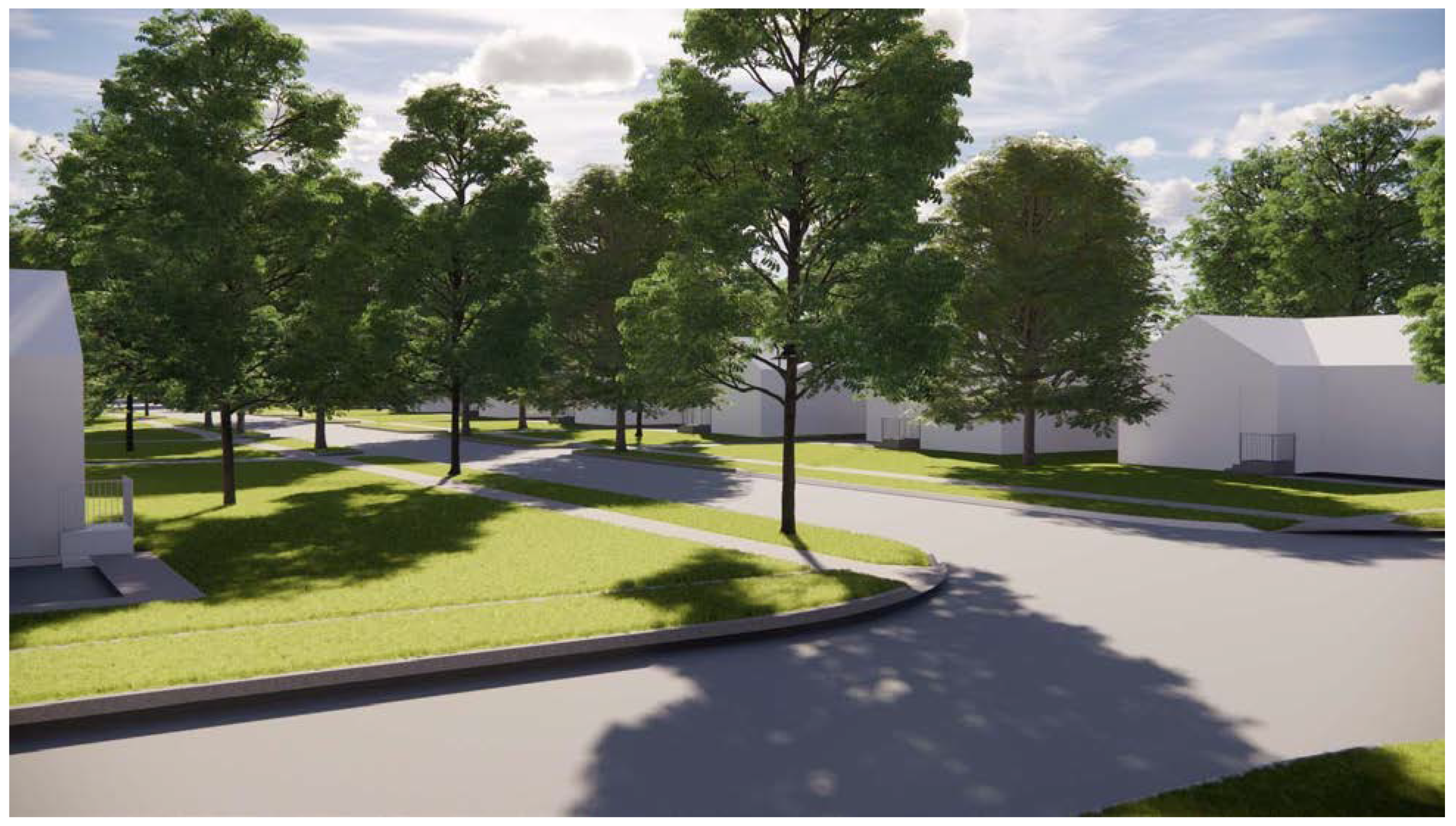
Figure 2.
Coded responses from our open-ended survey question, "What are the top three benefits associated with the trees in your community or neighborhood?” (n = 1716). Responses were coded using the list of benefits offered to survey respondents in Schroeder and Ruffolo (1996).
Figure 2.
Coded responses from our open-ended survey question, "What are the top three benefits associated with the trees in your community or neighborhood?” (n = 1716). Responses were coded using the list of benefits offered to survey respondents in Schroeder and Ruffolo (1996).
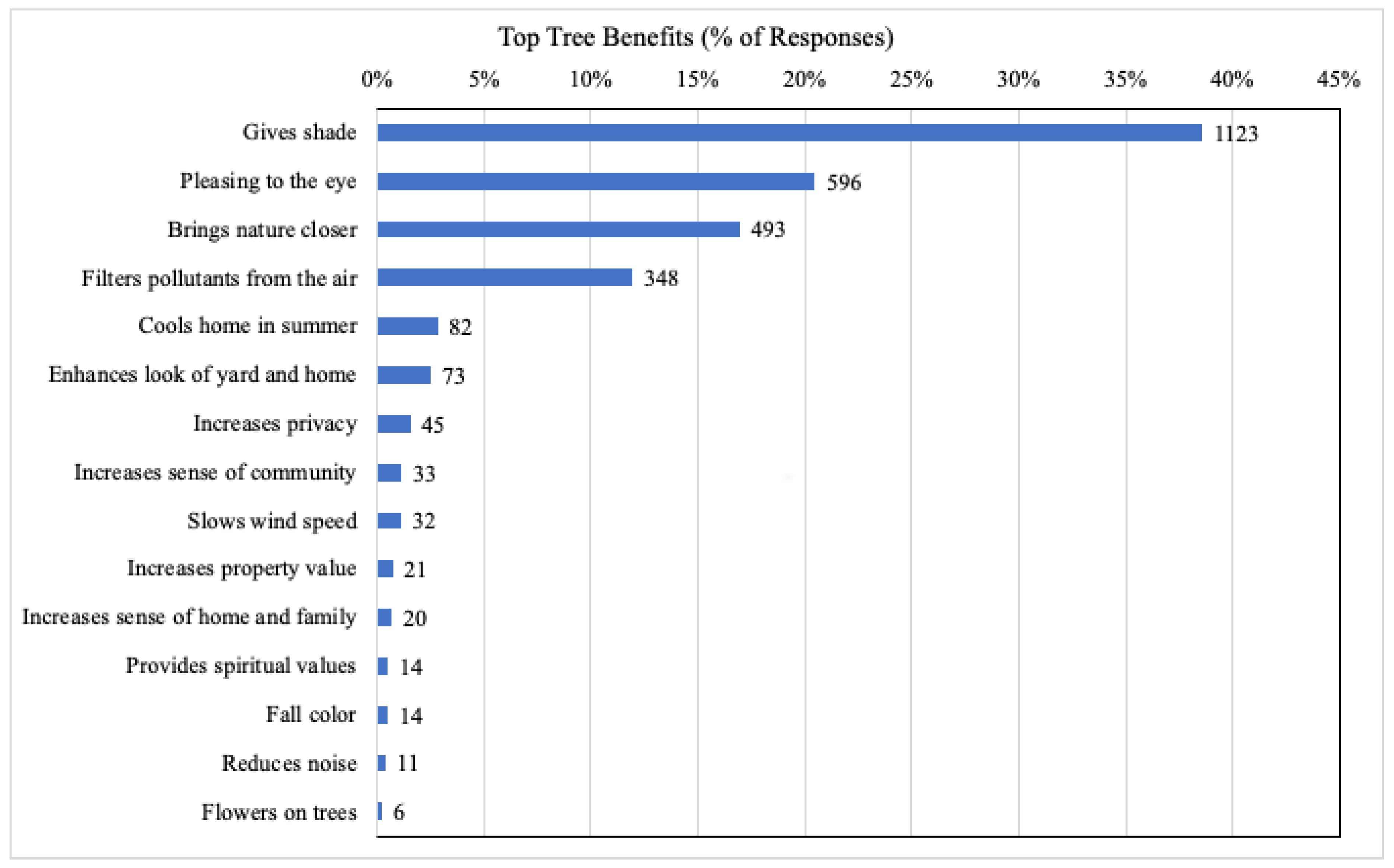
Figure 3.
Coded responses from our open-ended survey question, "What are the three biggest drawbacks associated with the trees in your community or neighborhood?” (n = 1716). Responses were coded using the list of drawbacks offered to survey respondents in Schroeder and Ruffolo (1996).
Figure 3.
Coded responses from our open-ended survey question, "What are the three biggest drawbacks associated with the trees in your community or neighborhood?” (n = 1716). Responses were coded using the list of drawbacks offered to survey respondents in Schroeder and Ruffolo (1996).
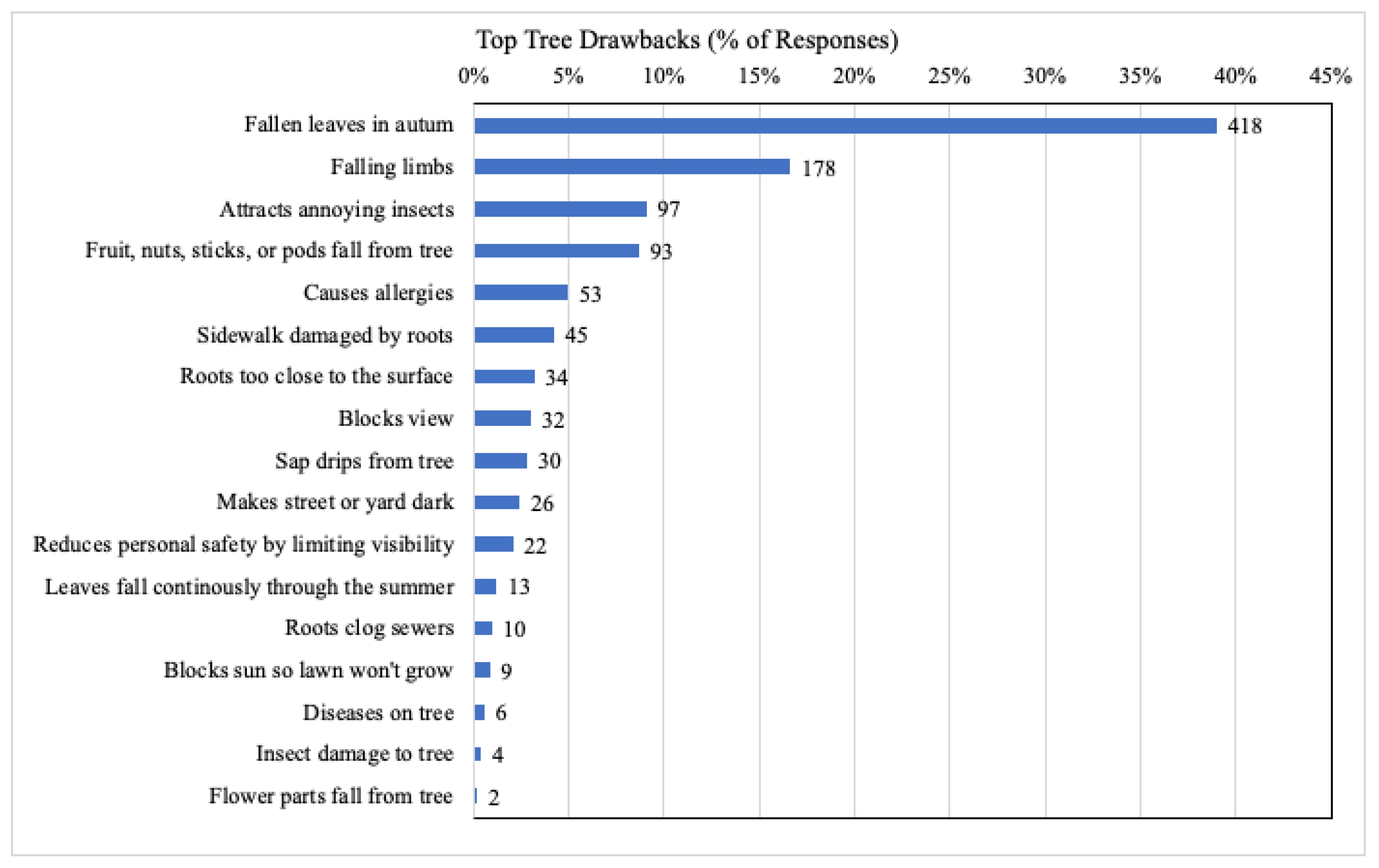
Figure 4.
Responses (n = 1715) to the question, “Have you ever had a negative experience with a tree?”.
Figure 4.
Responses (n = 1715) to the question, “Have you ever had a negative experience with a tree?”.
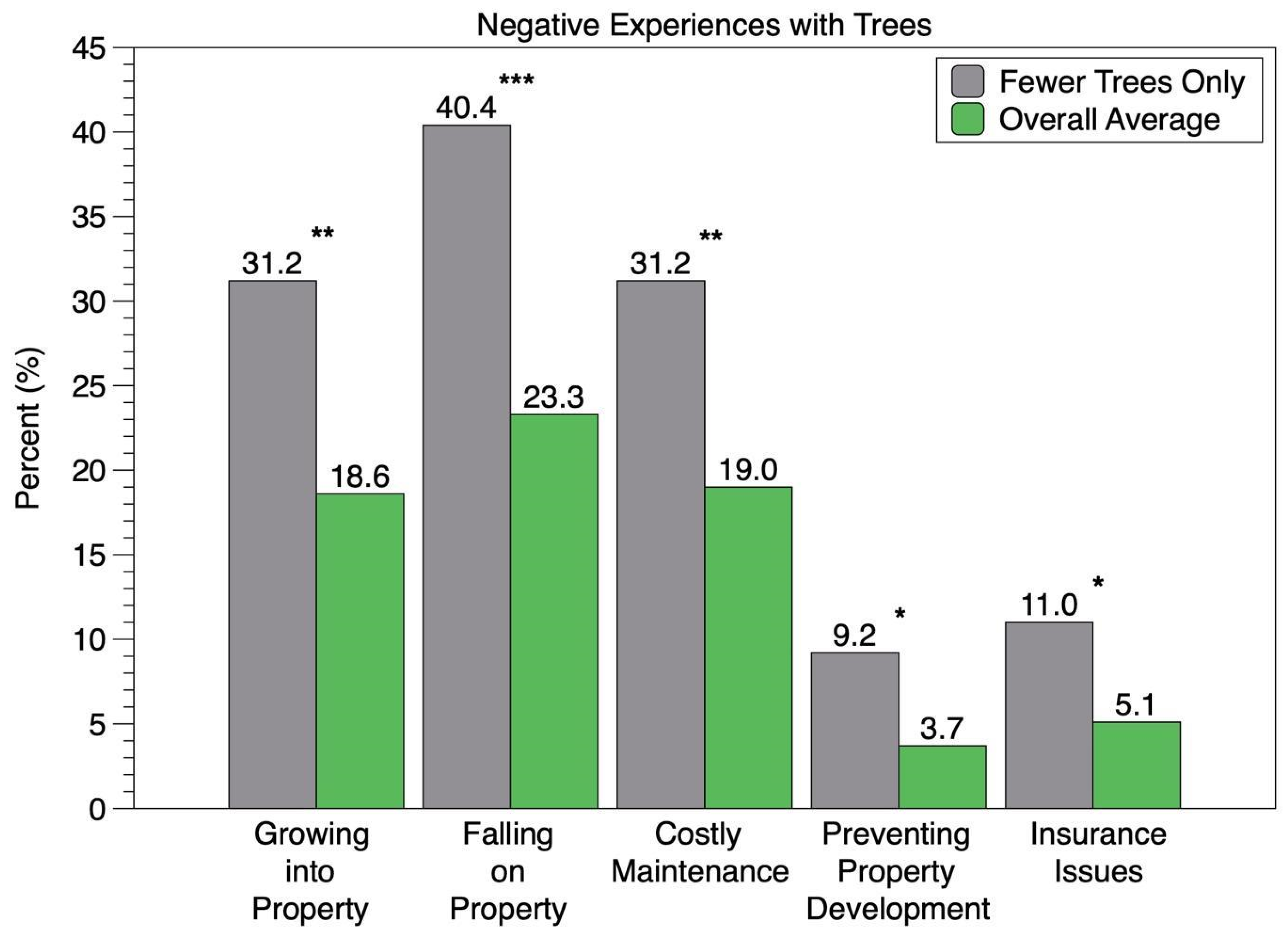

Table 1.
Reported neighborhood canopy coverage by respondent race and homeowner status.
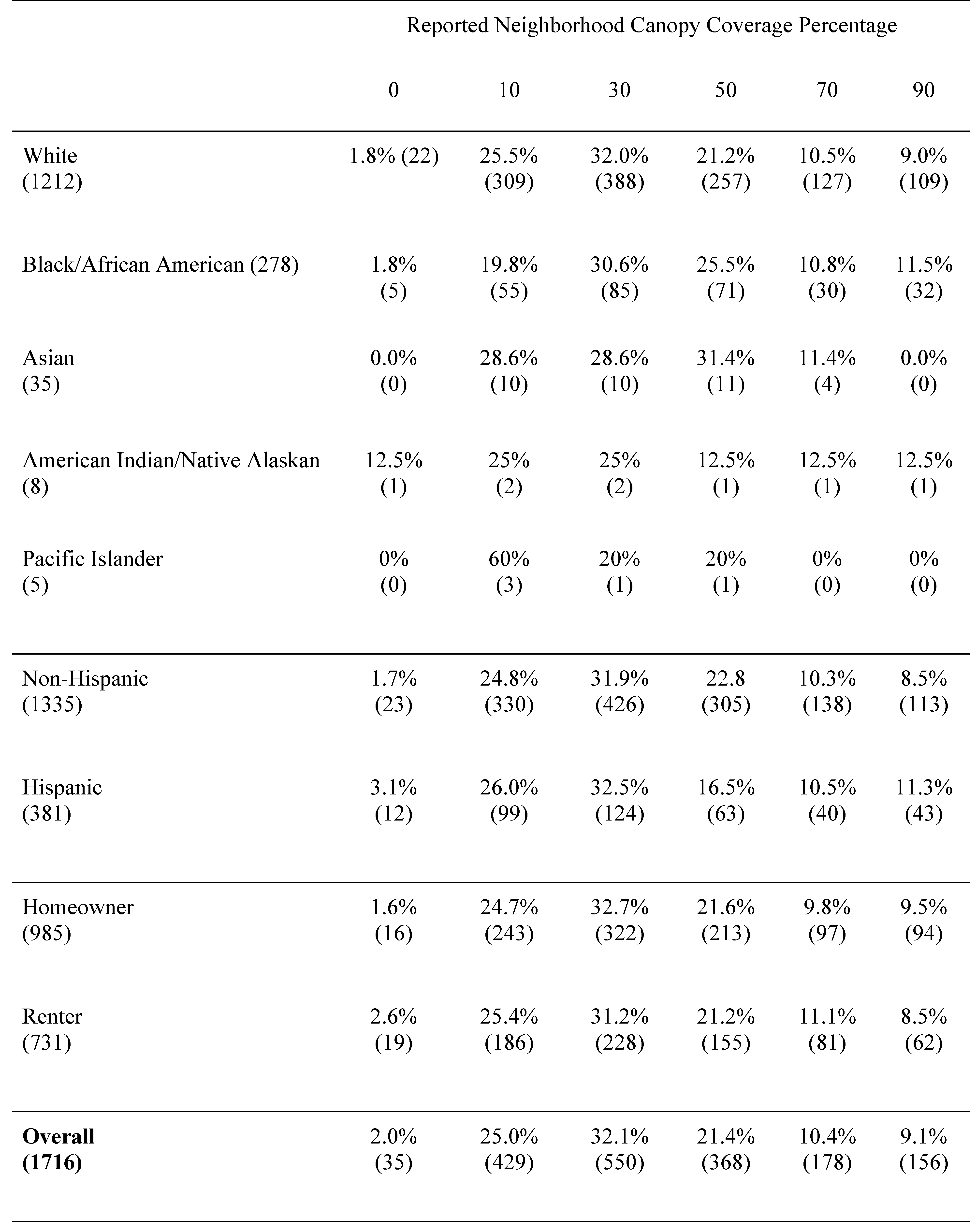
Table 2.
The percentage of daily, weekly, and more sporadic park/green space users in comparison to their ability to reach a green space within five minutes. Results are separated by whether or not the respondent was within a five-minute walk (average time to walk approximately 300 m) of their nearest park/green space (n=1633).
Table 2.
The percentage of daily, weekly, and more sporadic park/green space users in comparison to their ability to reach a green space within five minutes. Results are separated by whether or not the respondent was within a five-minute walk (average time to walk approximately 300 m) of their nearest park/green space (n=1633).
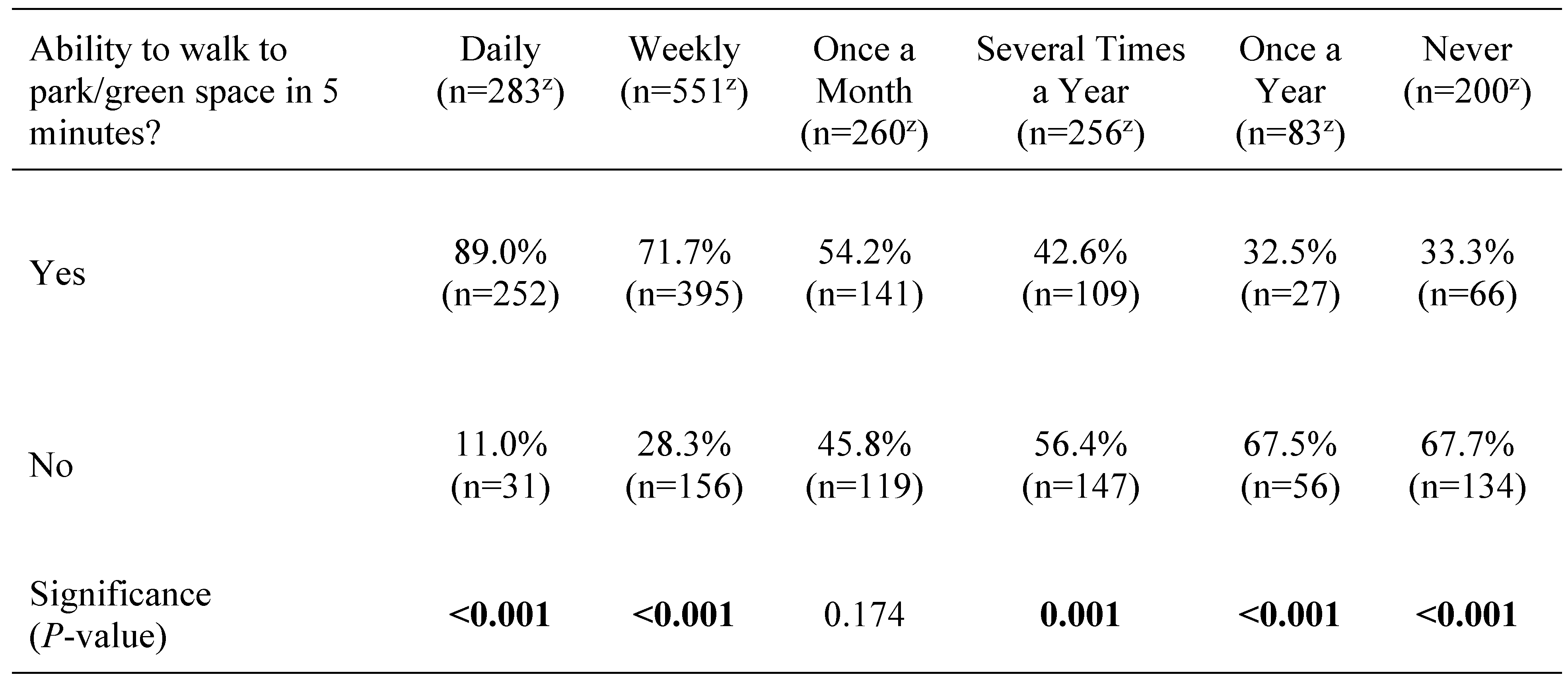
zData from respondents who noted “unsure” regarding their travel time are omitted from this table.
Table 3.
Comparison of current neighborhood canopy coverage to current tree preferences. A test of equal proportions was used to assess if responses to the question, “I would prefer ______ trees in my neighborhood” differed given current canopy coverage (n = 1716).
Table 3.
Comparison of current neighborhood canopy coverage to current tree preferences. A test of equal proportions was used to assess if responses to the question, “I would prefer ______ trees in my neighborhood” differed given current canopy coverage (n = 1716).
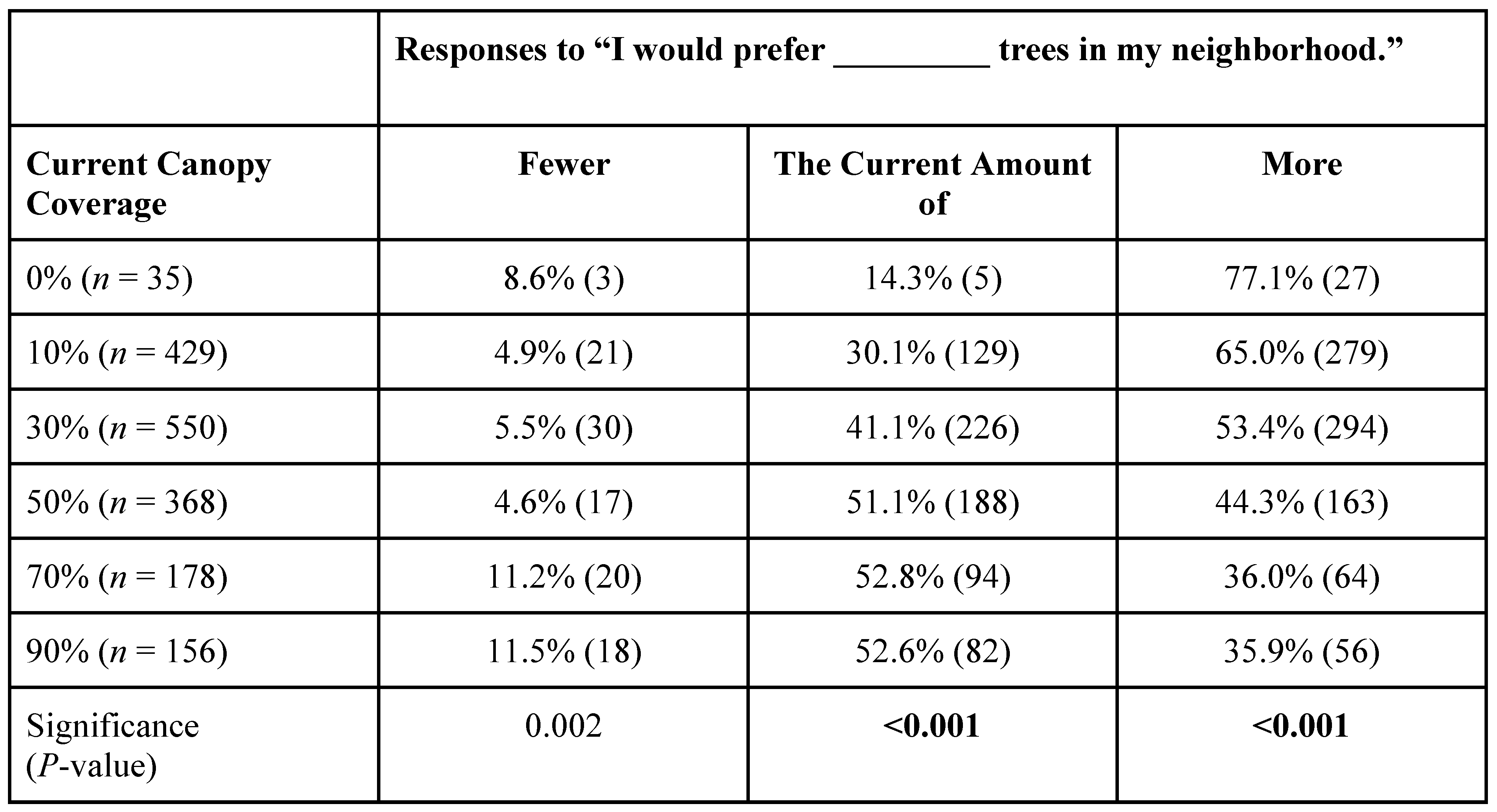
Table 4.
Comparison of past canopy change in respondents’ neighborhoods to their current tree preferences. A test of equal proportions was used to assess if responses to the question, “I would prefer ______ trees in my neighborhood” differed given observed changes in neighborhood canopy (n = 1716).
Table 4.
Comparison of past canopy change in respondents’ neighborhoods to their current tree preferences. A test of equal proportions was used to assess if responses to the question, “I would prefer ______ trees in my neighborhood” differed given observed changes in neighborhood canopy (n = 1716).
Disclaimer/Publisher’s Note: The statements, opinions and data contained in all publications are solely those of the individual author(s) and contributor(s) and not of MDPI and/or the editor(s). MDPI and/or the editor(s) disclaim responsibility for any injury to people or property resulting from any ideas, methods, instructions or products referred to in the content. |
© 2023 by the authors. Licensee MDPI, Basel, Switzerland. This article is an open access article distributed under the terms and conditions of the Creative Commons Attribution (CC BY) license (http://creativecommons.org/licenses/by/4.0/).
Copyright: This open access article is published under a Creative Commons CC BY 4.0 license, which permit the free download, distribution, and reuse, provided that the author and preprint are cited in any reuse.


