

Submitted:
23 May 2023
Posted:
25 May 2023
You are already at the latest version
Abstract
The paper is based on the research project P2Endure funded within the H2020-EE-2016-2017 call. The main aim of the research is to propose innovative solutions for deep renovation that are applicable and replicable for the widest range of building typologies, from public to residential and historic buildings. In this paper, the methodology adopted to perform the energy analyses and to verify the achievement of the expected targets in terms of savings is defined, based on a range of real case studies. The main aim is to promote a guideline for designers showing specific instruments to perform towards the attainment of the 60% threshold of the energy savings giving advice on how to further improve the energy performance of the buildings, basing on the overview of the energy analyses run for similar cases.
Keywords:
Modular processes
; energy efficiency
; deep renovation
1. Introduction
Purpose of this document is to provide a methodology for the assessment of designated energy savings and the sets of plug and play solutions that can provide energy efficiency objectives on existing building stock in Europe. It is based on the European Project P2ENDURE: amongst the many targets of the research, one of the most relevant is the reduction of the energy needs of each case study of at least 60% as a result of the application of plug and play technologies available on the market. To this end, the first step is the definition of a precise methodology for the evaluation of the energy consumptions and their 60% reduction, stating that energy analyses are performed in full compliance with European Directive and its national regulations [16].
A considerable effort was spent to define a common framework to provide a clear overview of energy analyses methodology and to assist in the investigation of the effectiveness of specific retrofit strategies, even when applied in other contexts. methodology strategies.
Tools and/or instruments for the energy analyses and the testing of the retrofit interventions has been left in charge of the case studies with the following three recommendations:
- compliance to the EU 2010/31/EU;
- achievement of 60% energy savings in terms of primary energy;
- evaluation of benefits for each intervention and action, assessed in terms of energy balance.
This part of the research has not been supported by literature regarding evidence of a standardized methodology for the BIM-BEM implementation. Among the available solutions, two main approached have been selected: the freeware approach and the not-freeware approach [1].
In Section 2 the methodology for the calculation of energy consumption is described. Section 3 and 4 reports comparison, for each case study, of the energy demands of its main end-uses based on energy bills (electricity heating, cooling) in its pre-renovation scenario, energy simulations and validation results of renovation tecnologies and solutions selected. The retrofit interventions are presented by considering the technical specifications and the operations that should be adopted to finalize the installation. Results are fundamental to demonstrate the impact of the action adopted in terms of both primary energies associated to the building end uses and embodied energy characterizing materials and installation. Section 5, finally, presents a guideline of suggestions on how to accomplish the 60% net primary energy reduction compared to pre-renovation scenario. Those suggestions are provided based on the results of energy calculations presented in previous paragraphs.
2. Materials and Methods
This paragraph focuses on the methodology to adopt to validate the achievement of the 60% reduction in terms of primary energy consumptions comparing with pre-renovation situation, according to the requirement of European Directive 2010/31/EU. The target is reached for each case study thanks to the adoption of specific plug and play systems and solutions, preferably to be chosen within the range of solution offered by the research Consortium, in accordance with the site-specific needs of the buildings [3].
2.1. Background
The total primary energy demand is the sum of the primary energy associated with many possible end-uses: heating, electricity, hot water, cooling and ventilation [14]. The numerical indicator of primary energy use is kWh/m2 per year, is the overall primary energy demand, in kWh/year, associated to the fulfilment of the various end uses of interest, divided by the net floor area of the relative demo case (m2) The value, assumed as the reference in the calculation of the saving, is, indeed, the one associated to the specific primary energy demand in the pre-renovation scenario. When direct recordings were not available, an indirect procedure has been adopted to compute the pre-renovation primary energy [5,6]:
- Electricity needs: primary energy associated to energy needs is calculated using standard national coefficients (i.e. based on the average proficiency related to the transformation of primary energy into electricity, based on the plants operating in the country);
- Thermal needs for heating: by considering the energy vectors involved in the transformation processes (i.e. hot water, air, etc.) and from information from energy bills and/or specific analysis considering a quasi-steady state heat exchange between building envelope during winter;
- Hot water demand: estimated based on the typology of the building, its usage and the efficiency of the plants installed;
- Thermal needs for cooling: extrapolated for electric consumptions, from which the needs referred to cooling consumptions have been isolated.
Primary energy needs are calculated by setting specific energy balances for each end use: hot water, thermal, electricity, etc. The main balance equations are summarized in the table below, considering that the coefficient used might be slightly different for each country [3,4]:

Table 1.
Assumed values and equations for energy calculation.
| Thermal requirements (heating and hot water) |
Thermal requirements (cooling) |
Electricity requirements |
|---|---|---|
| Qpa=Qta/Ƞca | COMPRESSION CHILLER Qpcool= Qtcool/ Ƞel-n * COP |
GRID CONNECTION QPea = QEa/ Ƞel-n |
| cc | CHP QPeβ = QEβ nE |
For the buildings supplied by district heating, some clarifications are needed:
- if district heating is fed by CHP plants, it is necessary to assess an appropriate procedure for the allocation of both primary energy and emission from electric and thermal energy production in the general evaluation;
- if district heating is fed by different typology of plants, a feasible solution for the computation may be considered as a unique plant supplied by different fuels, and to evaluate its thermal and electrical energy production as a sum of input and output of each power plant. Energy information of these type of system might be difficult to find.
2.2. Energy performance baseline
Performance validation and optimization primary scope are the following:
- to evaluate and control product and process innovation based on live demonstration buildings;
- to present recommendations to obtain the 60% reduction of primary energy needs;
- to optimize and standardize technical solution for 60% reduction of energy consumptions;
- to provide a validation of each energy assessment:
- to reduce of about 15% costs of construction of about 50% time of construction and to provide high level of IEQ (Indoor Environmental Quality);
- to provide inhabitant of advanced tools to monitor the performance of the building after deep renovation.
Relevant energy analysis is accomplished because of a complete collection of real data, providing a coherent overview of the state-of-the-art of the building and its usage. As a matter of fact, energy needs of building are highly determined by their usage settings and profiles, by the typology of installed plants and properties of materials. Collection of these information is difficult for historic buildings for whom the existing documentation is mostly on paper. The lack of this information leads to an increasing amount of uncertaintly in setting the initial paramenters for the energy simulation.
Accuracy and reliability of energy calculation are therefore closely associated to available information and acknowledgement of building and its energy behavior [8]:
1st level: a prelaminar overview of the energy demands is available from the energy bills, it is recommended to consider at least two years of data, to avoid seasonal variation and or demand anomalies. The primary energy associated to the electricity demand is calculated by applying the National Primary Energy Factors; primary energy associated to thermal and hot water needs are calculated considering the efficiency of the plants. The first information to process within the energy assessment of each project are data from energy bills and related energy consumptions. If documents are not available, an estimation procedure might be elaborated using information from similar building typology and geographical location from scientific literature and reports. The preliminary knowledge includes the collection of plans or layout of the building and an initial description of the current activity.
2nd level: a deeper knowledge of the building is provided by an energy audit as defined in Directive 2012/27/EU. The energy audit is the outcome of a deep analysis of the building, its activity and historical energy consumptions; it is provided by a specialist considering the local norms and it can include a site inspection (if needed).
3rd level: the creation of a detailed energy model of the building permits a complete awareness of the building and its energy behavior though the running of energy simulation and analyses.
Table 2.
Different level of data collecting for energy calculation.
| BUILDING | ENERGY NEEDS | ACTIVITY USE | |
|---|---|---|---|
| LEVEL 1- DATA COLLECTION | Plans | Bills | Internal zoning |
| LEVEL 2-AUDIT AND CONSUMPTION PROFILE | Stratigraphy of components | Installed systems, set points | Usage time pattern |
| LEVEL 3- BUILDING BEHAVIOUR | Digital model and energy simulation | ||
A remarkable influence on primary energy consumption is represented by the type of activity and occupation of the building; therefore a knowledge of information such as usage time pattern, set-point comfort temperatures of the plants are essential and lead to process reliable results, both in pre and post intervention scenario.
The availability of an energy model of the building significantly facilitates the energy saving calculation for the selected solutions, providing a standardized set of results for further investigations. [3].
2.3. Calculation of primary energy consumption
Primary Energy Consumption is calculated according to one of the following methodologies [12].
Traditional calculation tools (Revit simplified model, Sketch up, Energy Plus) work on a standard procedure, they calculate the energy demand of a planned building. The market provides several tools, compliant with European Norm, for the evaluation of energy primary energy consumption of buildings This approach provides several advantages and bottlenecks [11].
- Efficiency: The entire process does not require excessive time to provide result; it is also possible to immediately correct possible inaccuracy.
- Accuracy: Using internal libraries for weather information and location, the latest software provide very accurate results with the essential data required as input. The heat gains provided by transparent elements are taken into consideration by the software.
- Results could be less precise due to the lack of energetic simulation in dynamic regime.
- Standardisation of the building to existing class and typology.
Simulation softwares (Revit non- simplified model, IFC builders, Cypetherm (loads, HVAC, EPlus) energy assessment is defined through a BIM to BEM full export of information and results. The model provides a great potential in testing different scenarios in a moderately limited time, providing reliability and replicability of the analyses. Main simulation software can be divided in 2 categories:
- Freeware approach: license is not required, contents are freely accessible;
- Not freeware approach: a license is needed to use the software; a free trial version might be available [13].
The first group of software (Revit simplified model, Sketch up, Energy Plus) generally do not allow the interoperability, this means that some phases of the process may generate loss of information or a variation of the geometric model. An optimize procedure has been perfected, to import .idf files in Sketh up).
With the second group approach (Revit non- simplified model, IFC builders, Cypetherm (loads, HVAC, EPlus) generally a combination of software is considered. The CYPE software recognizes BIM modelled in Revit, the use of a cloud-based service improves and simplifies the data exchange and the work between different subjects. (Collaborative design) [10]. In Figure 1 an overview of the most relevant software for the simulation is represented [7].
2.4. Renovation process methodology
Renovation processes are selected by the stakeholders according to demonstration case typology, geographical location, and peculiar characteristics of the buildings. It is a common understanding that similar retrofit solutions and technologies are likely applied to similar demonstration case. This is very important to define a handbook of recommendations on the processes and technologies to adopt to achieve the 60% reduction of primary energy, ensuring the replicability of the research.
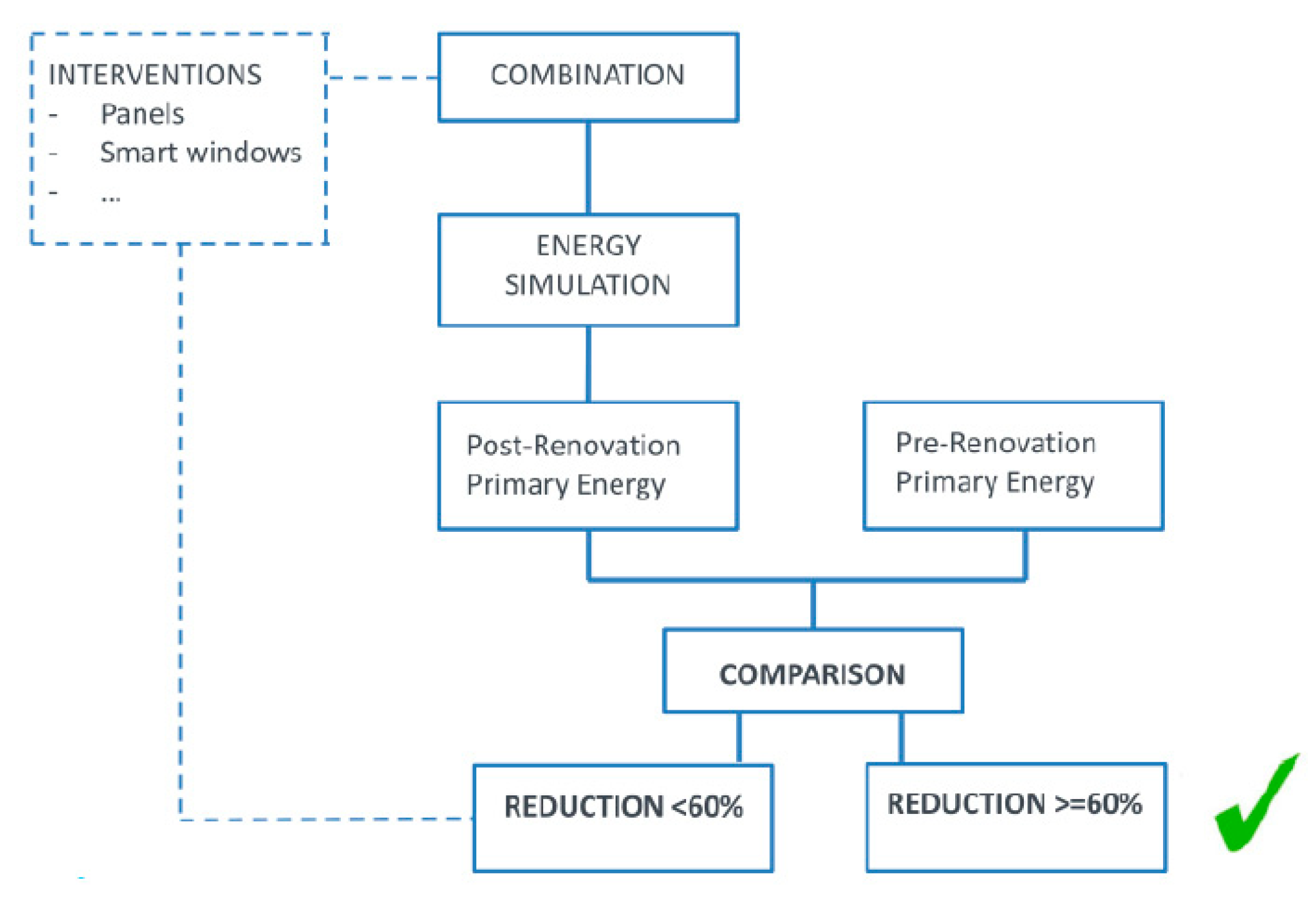
To delineate the technologies to adopt for the achievement of the 60% threshold, each demonstration case shas selected a basket of technical solutions within the available technologies; each of the mis then investigate separately to determine the effectiveness of its independently application. Analyses are then elaborated for each specific combination; the combination of solutions that lead to the 60% reduction in terms of primary energy can be considered it as final and go to the construction phase.
On the contrary, if the 60% reduction is not reached, it is necessary to add new actions in order to increase the energy savings. This iterative process will end only when the threshold as reached [9].
Figure 2.
Renovation process methodology flowchart.
3. Results. Effectiveness of the retrofit interventions
The Project involves various typology of buildings from different geo-clusters; this multiplicity permits to analyze the efficiency of the proposed methodology in different environmental backgrounds (Table 3).
Starting point of an accurate energy analysis is the collection of exhaustive real data of installed systems, setting and usage profile and materials’ properties, information that greatly influences the energy performance of the building and its energy demand. The lack of these data increases the uncertainty in the energy simulation.
3.1. Pre-renovation scenario
Within the research, the following preliminary information have been initially gathered for each demonstration case, in order to define a detailed state- of –the art scenario. The pre – renovation energy performance of buildings is summarized in Table 4.
General information on building and building property:
- Geometrical data: plans, components stratigraphy;
- Existing documents that have been considered as reference for the baseline;
- Energy audit;
- Energy use of the buildings in the past years;
- Existing energy models.
- Energy and indoor environmental data:
- Transmittance of components;
- Usage time pattern and indoor operating temperature:
- Details of existing systems: HVAC, lighting, power, others.
The main difficulty encountered in this first step of the project has been related to the export of the digital information from BIM to BEM with a limited losses of data and, consequently, its further validation. In fact, it often happened that the quantity of morphological and geometrical data contained in the BIM model, when imported in BEM, leads to the impossibility of controlling the accuracy of the simulation results.
The reason is that the physical laws that are used by the energy software adopt some simulation of the energy exchange processes that loose in their accuracy when the geometry of the building and inner components are extremely complicated. To give an example: assumed that the heat is transferred perpendicularly through a plane linear wall according to the law of conduction and convection (i.e. U value), it is clear that in case the elements of the building envelope are very complex (e.g. a cloud of points resulting from the survey) this assumption loses in validity and there is a serious risks of failing the simulations unless the BIM model is simplified and standardized when possible, avoiding the drawback.
Moreover, these problems may vary from software to software. In general today there are still unsolved problem in the connection from BIM and BEM and the definition of the adopted procedure may differ depending on available information and geometrical complexity of the considered building [7].
Despite the difficulties encountered, each demonstration case succeeded in the creation of a validated digital model.
3.2 Deep renovation technologies.
The technologies that have been adopted for the energy simulations have been selected by products already on the market and new products coming from Research and Development with high potential market breakthrough (Table 5).
3.3. Energy simulation and validation results
BIM-BEM process has been adopted by a large number of stakeholders that have reached the highest level of knowledge of the building. This is an advantage for the progress and replicability of the research project, demonstrating the reliability of the energy assessments and the efficiency of the iterative process for the definition of the final set of technologies to apply to each specific demonstration case [3].
These results are finally summarized in Table 6, that contains synthetic description and synthetic data on the evaluation the potential savings of any given intervention in different geographical areas. Below a description of the demonstration case and a final overview of the results achieved in terms of energy saving.
4. Discussion
Retrofit interventions are reported based on their technical characteristics and the actions that should be adopt for the installation; the last are foundamental to demonstate that the application of plug and play solutions have a low impact on both the primary energy associated to the satisfaction of the building end uses and the embodied energy characterizing materials and installation. The incremental saving that can be expected from the installation of each specific technologies is provided as well, in order to adequately describe the strategy, adopt for the retrofit procedure, at least from the energetic point of view. Remarkable potential of selected technologies is confirmed by the obtained results, supporting definition of a first set of indications. A large number of stakeholders have also succeeded in validating and using the BIM-BEM suite to perform the energy simulations, this in highly advantageous for the progress of the research since the very significant reliability that characterized these energy assessments, and the prospect of having available a very powerful and quickly instrument to assist the stakeholders in evaluating the benefits coming from the various options of P2ENDURE basket of solutions, and finally selecting the best combination of them. In Table 7 the data pre and post renovation are summarized.
5. Conclusions
The final goal of the research is to provide a handbook of technologies and actions to be taken for the investigation of a renovation process, before its start. Main target of the document are designers, engineers, architects, and stakeholders. Below a list of some important issues included.
BIM-BEM approach is preferable to traditional calculation tools, and it is recommended both for the reliability of energy calculation and energy balance simulation and for the variety of simulations that can be elaborated in a reasonable amount of time.
Once the digital model of pre-renovation scenario is validated, it represents the best approach to define the more appropriate set of actions to be applied to each renovation project. Two renovation approaches might be simultaneously adopted:
a) passive retrofit intended as the increase of envelope efficiency through an optimization of its elements;
b) active retrofit intended as the installation of plants that fulfill the energy requirements of the building, by the revamping or substitution of existing technologies with more efficient systems. Example of passive retrofit are the substitution of windows or the application of insulation on opaque elements. In the first case energy needs is reduced from both the reduction of transmission heat losses through transparent elements and the significantly leakage decrease through windows frame.
Based on these elements, a parametric evaluation of the benefits is difficult to provide. Nonetheless there is a general understanding that the use of smart and efficient windows is a priority in those buildings that present large sections of transparent vertical closing. Improvement of opaque sections of the building envelope, instead, lead to a peculiar parametrization that correlates benefits and actions: considering the retrofit intervention interests the entire building and the envelope as a whole, the ratio that explicit the reduction precentage of thermal transimmance od opaque element, in both pre and post intervention, corresponds with the percentage of energy saving. For example, when the average wall transmittance is reduced of 40%, it is highly reasonable that the savings will assest around 40%, considering primary energy associated to heating consumptions. This statement is rational if considered the direct proportionality (linear) that connects, steady state conditions, heat transferred and the U value of building envelope (with the assumptions that there is no temperature variation in time interval).
P2ENDURE demonstration cases confirm this correlation.
Active retrofit is obtained acting on the efficiency – and its improvement - of energy transformation process from sources to end uses, and is autonomous from action taken for passive renovation. As a rule of thumb, it might be expected a proportional ratio between savings and efficiency of power plants.
Regarding thermal end usage, a correspondence is defined between the implementation of boiler efficiency and primary energy savings: i.e. if the implementation of the boiler lead to an increase of its efficiency from 70% to 95% (+25%), it is expected a correspondent benefit of 25% related to primary energy savings. In this case benefits are relative: the percentage is certainly fixed but the value is defined by the factor that the revaping is the only action taken for the revamping or not. In fact, the combination of passive and active interventions leads to an abatement of thermal energy needs both from the implementation of insulation of building envelope and from the increased efficiency of its energy plants.
Finally, primary energy needs related to electric end uses are not constrained to passive retrofit and are achieved through the application of electric PnP devices (i.e. led lamps); Their reductions is exactly proportional to efficiency of applied systems. Innovative points of the research are, first, the definition of a common framework in order to give a clear overview of the energy analyses methodology to help in the acknowledgment when applied in different contexts. Furthermore, the definition of a basket of options in the plug and play technologies available on the market. Finally, the comparison of results between different scenario provides indications to energy efficiency retrofit actions.
6. Patents
Funding
The paper is based on the research project P2Endure funded within the H2020-EE-2016-2017 call (website: https://www.p2endure-project.eu/en) This research was funded by EUROPEAN COMMISSION, under Grant Agreement no 723391.
Acknowledgments
A special thanks to all the research Partners and in particular to Becquerel Electric s.p.A.
Conflicts of Interest
The authors declare no conflict of interest. The funders had no role in the design of the study; in the collection, analyses, or interpretation of data; in the writing of the manuscript; or in the decision to publish the results.
Nomenclature
| BIM | Building Information Model |
| BEM | Building Energy Model |
| CHP | Combined heat power generation |
| COPCC | COP of the compression chiller |
| HVAC | Heating Ventilation Air Conditioning |
| IEQ | Indoor Environment Quality |
| MEP | Mechanical Electrical Plumbing |
| PnP | Plug and Play |
| Qp | Primary energy requirements for buildings |
| Qt | Thermal energy requirements for buildings |
| Qpcool | Primary energy requirements for cooling |
| Qtcool | Thermal energy requirements for cooling |
| Qpea | Primary energy requirements for electricity requirements (Grid connected) |
| Qhea | Building electricity requirements (grid connected) |
| QPEβ | Primary energy requirements for electricity requirements (CHP) |
| QEβ | Building electricity requirements (CHP) |
| αg | Exergy allocation coefficient of CHP systems (same procedure of district heating |
| Ƞca | Thermal efficiency of the gas-fired boilers providing heating to household |
| Ƞel-n | Average national efficiency associated to the production of electric energy (country specific) |
References
- IBallarini, V. Corrado, Application of energy rating methods to the existingbuilding stock: analysis of some residential buildings in Turin, Energy Build. 41(2009) 790–800.
- Belpoliti V., Bizzarri G. , A parametric method to assess the energy performance of the social housing stock and simulate suitable retrofit scenarios: An Italian case study, Energy and Buildings 96 (2015) 261–271. [CrossRef]
- Bizzarri G. , On energy requirements and potential energy savings in Italian hospital buildings, Fourth International Conference on Urban Regeneration and Sustainability -The sustainable city 2006, Tallin, Estonia, 17-19 July 2006, Conference Proceedings “The sustainable city 2006”, WITT PRESS, Southampton, Boston.
- Elbeltagi E., Wefki H., Abdrabou S., Dawood M., Ramzy A.: "Visualized strategy for predicting buildings energy consumption during early design stage using parametric analysis" J. Build. Eng., 13 (2017), pp. 127-136.
- Eui-Jong Kim,Gilles Plessis,Jean-Luc Hubert,Jean-Jacques Roux, Urban energy simulation: Simplification and reduction of building envelope models, Energy and Buildings, Volume 84, December 2014, Pages 193-202.
- Fabbri K., Planning a Regional Energy System in Association with the creationof Energy Performance Certificates (EPCs). Statistical analysis and energy effi-ciency measures: an Italian case study, Buildings 3 (2013) 545–569.
- Farzaneh A., Carriere J., Forgues D., Monfet D. "Framework for using building information modeling to create a building energy model" Journal of Architectural Engeneering , 24 (2) (2018), pp. 1-13.
- Fracastoro G.V., Serraino M., A methodology for assessing the energy perfor-mance of large scale building stocks and possible applications, Energy Build. 43(2011) 844–852.[6] M. Kavgic, A. Mavrogianni.
- Hens H, Verbeeck G, Verdonck B. Impact of energy efficiency measures on the CO2 emissions in the residential sector, a large scale analysis. Energy and Buildings 2001;33:275–81. [CrossRef]
- Hong T., Kim J., Jeong J., Lee M., Ji C. "Automatic calibration model of a building energy simulation using optimization algorithm" Energy Procedia, 105 (2017), pp. 3698-3704.
- Jafari A., Valentin V., An optimization framework for building energy retrofits decision-making, Building Environment, 115 (2017), pp. 118-129. [CrossRef]
- Kavgic M., Mavrogianni A., Mumovic D., Summerfield A.,. Stevanovic Z, Djurovic-Petrovic M., A review of bottom-up building stock models for energy consumption in the residential sector, Building and Environment 45 (2010) 1683–1697.
- Lara R.A., Naboni E., Pernigotto G., Cappelletti F., Zhang Y., Barzon F., et al. "Optimization tools for building energy model calibration" Energy Procedia, 111 (2017), pp. 1060-1069.
- DIRECTIVE 2010/31/EU OF THE EUROPEAN PARLIAMENT AND OF THE COUNCIL of 19 May 2010 on the energy performance of buildings.
- Standard UNI TS 11300. Part 1: Energy Performance of Buildings – Part 1: Cal-culation of Energy Use for Space Heating and Cooling; UNI TS 11300. Part 2:Energy Performance of Buildings – Part 2: Calculation of Energy Primary andEnergy Performance for Heating Plant and Domestic Hot Water Production.Available http://11300.cti2000.it/ (accessed 09.02.15).
- Italian Decree 26 06 2015 on energy performance of buildings, “Minimum requirements for energy efficiency!
Figure 1.
Overview of the main simulation software.
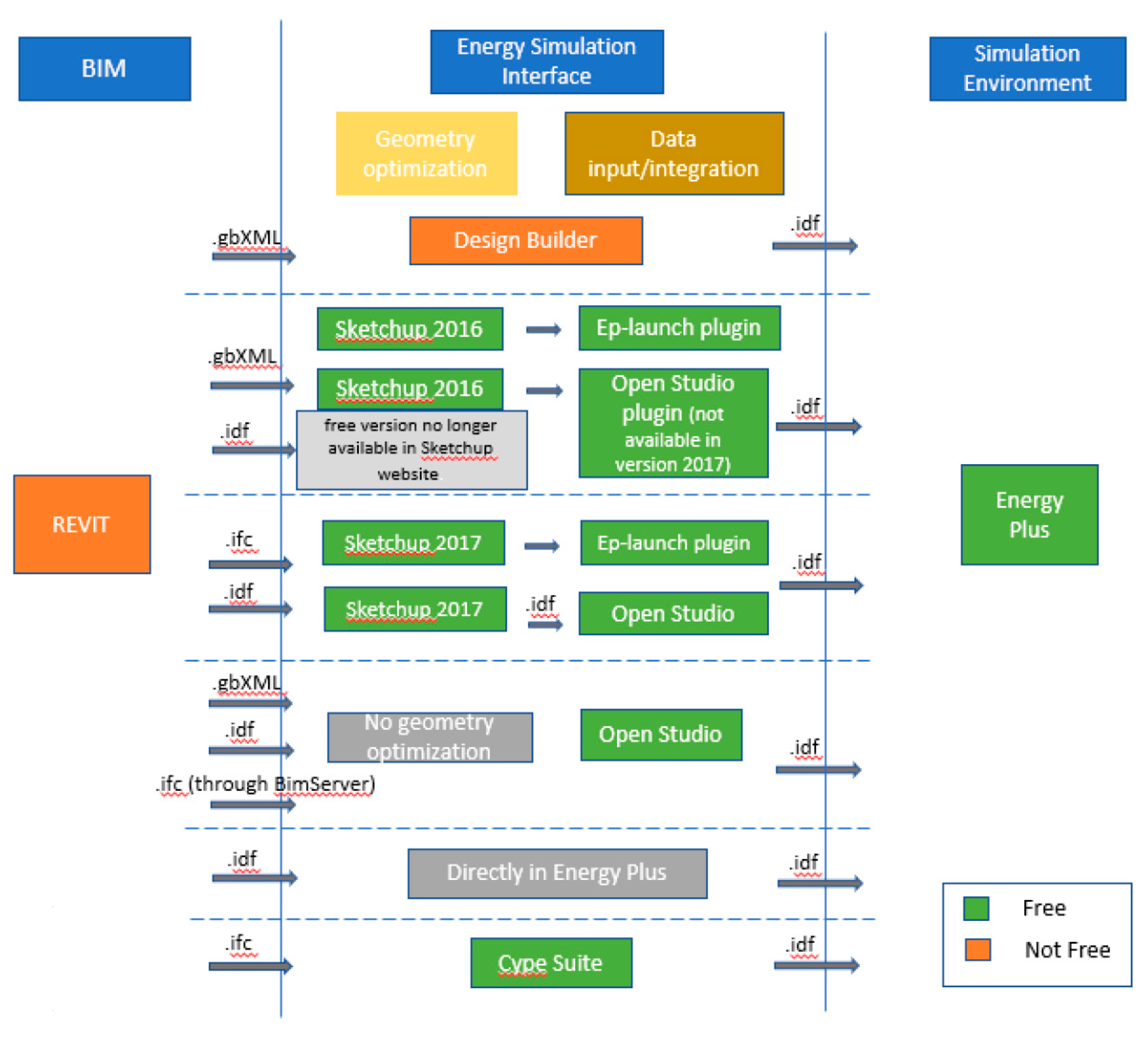
Table 3.
Different Geo-clusters involved in the research project.
| GEO-CLUSTER | ||||
|---|---|---|---|---|
| Nordic EU | Mediterranean EU | Central EU | West EU | |
| n. Case Studies | 1 | 4 | 2 | 5 |
| Countries | Denmark | Italy | Poland | Germany, The Netherland |
| Buildings typology | residential | n.2 Residential, n.1 office, n.1 educational | Educational | n.1 Office, n.4 educational |
Table 4.
Overview of Pre-Renovation scenario.
| PRE-RENOVATION | |||||||||||||||
|---|---|---|---|---|---|---|---|---|---|---|---|---|---|---|---|
| Country and location | Energy Assessment - Primary energy consumption | Geometric data and modelling | Energy and Indoor environmental data | energy consumption | |||||||||||
| reference of baseline | BIM-to-BEM | transmittance | indoor usage | systems | kWh/m2y | ||||||||||
| bills | energy audit | energy model | Completed | Validated | envelope | interior | indoor operating temperature | time pattern | HVAC | lighting | power | other | |||
| DE | Menden | N | Y | N | Y | Y | Y | N | Y | Y | Y | Y | Y | N | 255 |
| DK | Korsløkken | N | Y | N | N | N | N | N | N | N | N | N | N | N | 231 |
| IT | Ancona | Y | Y | Y | Y | Y | Y | Y | N | N | Y | Y | Y | N | 85.8 |
| IT | Firenze | N | Y | N | Y | Y | Y | N | Y | N | N | N | N | N | 366.3 |
| IT | Genoa | Y | N | Y | Y | Y | Y | Y | Y | Y | Y | Y | Y | N | 161 |
| IT | Reggio E. | N | Y | Y | Y | Y | Y | N | Y | Y | N | Y | Y | N | 117 |
| NL | Enschede | Y | Y | N | Y | Y | Y | Y | Y | Y | Y | Y | Y | N | 300 |
| NL | Lekkerkerk | Y | Y | Y | Y | Y | Y | Y | N | N | N | N | N | N | 211 |
| NL | Tilburg | Y | Y | N | Y | Y | Y | Y | Y | Y | Y | Y | Y | N | 428 |
| NL | Utrecht | Y | Y | Y | Y | Y | Y | Y | Y | N | N | Y | Y | N | 128 |
| PL | Gdynia | Y | Y | Y | Y | Y | Y | Y | Y | Y | Y | Y | Y | N | 120.5 |
| PL | Warsaw | Y | Y | Y | Y | Y | Y | Y | Y | Y | N | Y | Y | N | 137.3 |
Table 5.
Overview of the technical solutions on the market.
| Proposed Solutions | Technical innovations | |
|---|---|---|
| Innovative P2ENDURE architectural components | Multifunctional panel for façades | Lightweight Textile Reinforced Concrete in the external and internal layer with insulation core made of expandable polystyrene. |
| Smart windows | Windows that can be rotated by 180° that keep out heat in summer and retain warmth in winter. | |
| Rooftop retrofit modules | Rooftop retrofit solutions and process models | |
| PnP smart connectors | Smart connectors for mechanical, hydraulic, electrical, air and ICT joints | |
| Innovative P2ENDURE technical systems | PnP HVAC systems | A complete PnP MEP/HVAC engine for deep renovation. This solution includes air- heat pump, storage capacity for domestic hot water (DHW), mechanical ventilation system, expansion barrel, and control systems. |
| IEQ control systems | Real-time monitoring of indoor thermal comfort based on a microcontroller and a set of sensors and embedded algorithms. | |
| Connection to energy grid and RES production | Building as active component of the district energy grid; Energy needs fulfilled by a renewable energy plant. | |
Table 6.
Results of energy simulation in the 12 selected Case studies.
| Geocluster: West EU Building typology: Office Location: Germany, Menden |
 |
Scenarios | Applied technologies | Savings |
| 1 | Façade system | 14% | ||
| 2 | Roof insulation | 28% | ||
| 3 | triple glazing | 8% | ||
| 4 | basement ceiling insulation | 11% | ||
| Final | Façade system, Roof insulation, triple glazing, basement ceiling insulation | 61% | ||
| Geocluster: Nordic EU Building typology: Residential Location: Denmark, Korslokke |
 |
Scenarios | Applied technologies | Savings |
| 1 | Façade system and roof insulation | 67% | ||
| 2 | Heat recovery ventilation | 70% | ||
| Final | Façade system, roof insulation, heat recovery ventilation | 39% | ||
| Geocluster: Mediterranean EU Building typology: Residential Location: Italy, Ancona |
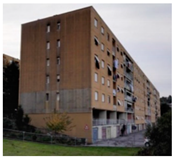 |
Scenarios | Applied technologies | Savings |
| 1 | Smart windows | 30.2% | ||
| 2 | Roof and wall insulation | 22.8% | ||
| 3 | condensing boiler/dwelling | 32.4% | ||
| Final | Smart windows, roof and wall insulation, condensing boiler/dwelling | 68.1% | ||
| Geocluster: Mediterranean EU Building typology: Residential Location: Italy, Florence |
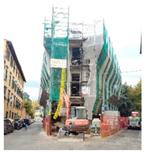 |
Scenarios | Applied technologies | Savings |
| 1 | Roof insulation | 3.2% | ||
| 2 | Wall insulation | 22.9% | ||
| 3 | Smart windows | 14.5% | ||
| Final | Roof and wall insulation, smart windows, condensing boiler | 60.2% | ||
| Geocluster: Mediterranean EU Building typology: Educational Location: Italy, Genoa |
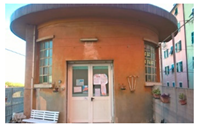 |
Scenarios | Applied technologies | Savings |
| 1 | Smart windows | 21.7% | ||
| 2 | Wall insulation | 26.7% | ||
| 3 | Condensing boiler | 9.5% | ||
| 4 | LED illumination | 12.9% | ||
| Final | Smart windows, wall insulation, condensing boiler, LED illumination | 60.2% | ||
| Geocluster: Mediterranean EU Building typology: Residential Location: Italy, Reggio Emilia |
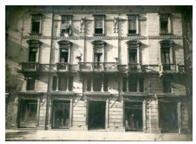 |
Scenarios | Applied technologies | Savings |
| 1 | Smart windows | 28% | ||
| 2 | Floor heating | 25% | ||
| 3 | Heat pump | 63% | ||
| Final | Smart windows, floor heating, heat pump | 91% | ||
| Geocluster: West EU Building typology: Residential Location: The Netherland, Enschede |
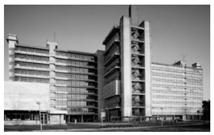 |
Scenarios | Applied technologies | Savings |
| 1 | Insulation, district heating (phase 1) | 50% | ||
| Final | Insulation, district heating (phase 2) | 62% | ||
| Geocluster: West EU Building typology: Residential Location: The Netherland, Lekkerkerk |
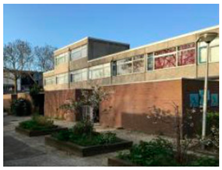 |
Scenarios | Applied technologies | Savings |
| 1 | Façade system, roof insulation | 52% | ||
| Final | Façade system, roof insulation | 46% | ||
| Geocluster: West EU Building typology: Residential Location: The Netherland, Tilburg |
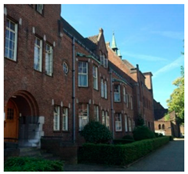 |
Scenarios | Applied technologies | Savings |
| 1 | Triple glazing | 9% | ||
| 2 | Insulation | 26% | ||
| 3 | Heat-pump and ventilation | 44% | ||
| 4 | Sanitary units with shower heat | 4% | ||
| 5 | Solar panels | 7% | ||
| Final | Triple glazing, insulation, heath-pump and ventilation, sanitary units with shower heat, solar panels | 71% | ||
| Geocluster: West EU Building typology: Residential Location: The Netherland, Utrecht |
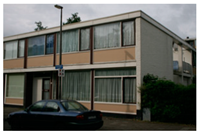 |
Scenarios | Applied technologies | Savings |
| 1 | Façade system and roof insulation | 42% | ||
| 2 | HVAC heat-pump and heat recovery ventilation | 76% | ||
| Final | Façade system, roof insulation, HVAC heat-pump and heat recovery ventilation | 66% | ||
| Geocluster: Central EU Building typology: Educational Location: Poland, Gdynia |
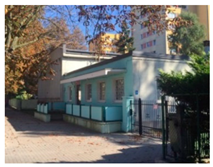 |
Scenarios | Applied technologies | Savings |
| 1 | Façade system | 50% | ||
| 2 | Smart windows | 11% | ||
| 3 | Basement insulation | 23% | ||
| Final | Façade system, smart windows, basement insulation | 67% | ||
| Geocluster: Central EU Building typology: Educational Location: Poland, Warsaw |
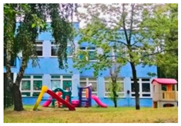 |
Scenarios | Applied technologies | Savings |
| 1 | Façade system | 40% | ||
| Final | Façade system, rooftop extension | 40% |
Table 7.
Comparison between pre and post renovation consumptions (energy savings final scenario).
| PRE RENOVATION | INTERVENTIONS | POST RENOVATION | ||||||||
|---|---|---|---|---|---|---|---|---|---|---|
| Country and location | energy needs | 1st SCEN. | 2nd SCEN. | 3rd SCEN. | 4th SCEN. | 5th SCEN. | FINAL SCENARIO | savings | ||
| kWh/m2y | savings %] | savings %] | savings %] | savings %] | savings [%] | P2ENDURE TECHNOLOGIES | OTHER TECHNOLOGIES | [%] | ||
| DE | Menden | 255 | 14 | 28 | 8 | 11 | - | Fermacell system | Roof insulation, triple glazing, thermal insulation of basement ceiling | 61 |
| DK | Korsløkke | 231 | 67 | 70 | - | - | - | Facade and roof insulation, heat recovery ventilation | 39 | |
| IT | Ancona | 85.8 | 30.2 | 22.8 | 32.4 | - | - | Smart Windows | Roof and exterior insulation system, condensing boiler serving an apartment block | 68.1 |
| IT | Firenze | 366.3 | 3.2 | 22.9 | 14.5 | - | - | PnP Windows | Roof and walls insulation and condensing boiler | 60.2 |
| IT | Genoa | 161 | 21.7 | 26.7 | 9.5 | 12.9 | - | Smart Windows | Internal insulation, condensing boiler, LED lamps | 60.2 |
| IT | Reggio E. | 117 | 28 | 25 | 63 | - | - | PnP Windows | Heat pump and floor heating | 91 |
| NL | Enschede | 300 | 50 | - | - | - | - | Insulation and district heating | 62 | |
| NL | Lekkerkerk | 211 | 52 | - | - | - | - | Cocoonz façade | Roof insulation | 46 |
| NL | Tilburg | 428 | 9 | 26 | 44 | 4 | 7 | Sanitary units, windows, insulation, semi-collective heatpump, solar panels | 71 | |
| NL | Utrecht | 128 | 42 | Beam façade and HVAC-engine | Roof and floor insulation | 76 | ||||
| PL | Gydnia | 120.5 | 50 | 11 | 23 | Multifunctional panels and Smart windows | Basement external walls insulation | 67 | ||
| PL | Warsaw | 137.3 | 40 | - | - | - | - | Multifunctional panels | Rooftop extension | 40 |
Disclaimer/Publisher’s Note: The statements, opinions and data contained in all publications are solely those of the individual author(s) and contributor(s) and not of MDPI and/or the editor(s). MDPI and/or the editor(s) disclaim responsibility for any injury to people or property resulting from any ideas, methods, instructions or products referred to in the content. |
© 2023 by the authors. Licensee MDPI, Basel, Switzerland. This article is an open access article distributed under the terms and conditions of the Creative Commons Attribution (CC BY) license (http://creativecommons.org/licenses/by/4.0/).
Copyright: This open access article is published under a Creative Commons CC BY 4.0 license, which permit the free download, distribution, and reuse, provided that the author and preprint are cited in any reuse.


