

Submitted:
12 May 2023
Posted:
15 May 2023
You are already at the latest version
Abstract
Minimally processed fruits undergo changes that need to be controlled. The objective was to evaluate minimally processed papayas, using edible coatings based on chitosan and gelatin through different techniques. The following treatments were applied: control (distilled water), 1% chitosan, 4% gelatin, 1% chitosan + 4% gelatin (blend) and 1% chitosan under 4% gelatin (layer by layer). The infrared spectroscopy (FTIR) of the coatings was analyzed, and fresh mass, firmness, pulp color (L*, a*, b* and Hue angle), pH, titratable acidity, soluble solids, ascorbic acid, phenolic compounds, lycopene, β-carotene, total sugars and catalase from fruits. Gelatin and the layer-by-layer treatment had a positive effect on the conservation of minimally processed papaya. These coatings were able to reduce the loss of fresh mass, maintaining the firmness and orange color of the mesocarp. The treatments showed low SS content during the storage period, few variations in acidity, influencing maturation. Gelatin had a low polyphenol content, the layer-by-layer treatment did not show changes in vitamin C levels. These treatments did not show changes in lycopene and β-carotene levels over the days, showing a small increase in total sugars. Thus, the use of gelatin polymers and undercoat treatment (LBL) is a viable alternative to preserve minimally processed papayas for at least 8 days.
Keywords:
MISTURA
; Camada sob camada
; Coberturas comestíveis
; Minimamente processado
; Pós-colheita
1. Introduction
Papaya (Carica papaya L.) is a fruit belonging to the Caricaceae family, originating in tropical regions, is highly appreciated and is distributed all over the world (1). Brazil stands out as the second largest papaya producer in the world (2), being a very important fruit for national production. The largest national producers are the states of Espírito Santo, Bahia and Ceará (3).
The nutritional composition of papaya guarantees its consumption, as the fruit is rich in vitamin A, C and antioxidants (4), also presenting low levels of sodium, fat and calories (5), in addition to the sensory part that is very pleasing to consumers.
In Brazil, papaya is commonly consumed fresh, in the form of candy, vitamin, juice, and minimally processed, where it is well accepted by consumers (6).In recent years, there has been an increase in demand for minimally processed vegetables, due to the practicality of consuming these foods. The sale of minimally processed vegetables began in Brazil in the 1990s, being a current sector in the country, where it has been growing and establishing itself in the national market (7), mainly due to the ease of preparation, less space for storage, smaller portions for consumption and reduced waste (8).
Minimally processed vegetables are products that have gone through stages of selection, classification, pre-washing, peeling, cutting, slicing, sanitizing, rinsing, centrifuging and packaging, in order to maintain the characteristics of the fresh product (9), and add value to these products. However, these steps cause mechanical stresses, which tend to accelerate water loss, increased respiration rate, enzymatic browning and changes in flavor and aroma (10). Minimally processed papaya is well accepted by consumers, but it has an average of 2 working days (6), requiring the use of technologies that make it possible to maintain the quality of these vegetables.
In this sense, edible coatings appear as alternatives for minimal fruit processing. Edible coatings use biodegradable materials that can be obtained from polysaccharides, proteins and lipids (11), and can be defined as a thin material that is applied directly to the surface of vegetables (12).
Gelatin and chitosan are among the materials used as biodegradable and/or edible coatings. Gelatin is obtained by partial hydrolysis of collagen and chitosan by deacetylation of chitin (13).
Among the materials that can be used as edible and/or biodegradable coatings are gelatin and chitosan. Gelatin is a protein that has good film-forming properties, being a good external barrier, preventing changes with the medium very well (14). Chitosan has great potential in the production of coatings for food, and can act as a controlled release vehicle for drugs and additives, being used in different ways, such as microspheres, flakes, nanoparticles, fibers and films (15), being non-toxic, biodegradable, low cost and with antimicrobial activity (16).
The application of coatings using techniques that make it possible to adjust the properties of coatings according to the needs of the process are being increasingly studied (17). In this sense, the layer-by-layer technique and the use of BLENDS are showing excellent results as they can use several biopolymers. The technique uses materials with opposite charges, and involves a layer-on-layer deposition, facilitating the process of adhesion of the coating to the fruit (18), which can be applied through immersion, spray, electrodeposition, magnetic assembly, electrocoupling, filtration, microfluids and fluidized beds, centrifugation and immobilization (19).
BLEND uses a mixture of two or more polymers (20), which obtains materials that, in general, are not found in a single material (21). These materials are prepared to increase tensile strength, impact strength and solubility reduction (22), producing coatings with better adhesion characteristics to the fruit surface.
In this sense, the present work aimed to evaluate the effect of gelatin and chitosan-based coatings on the conservation of minimally processed papaya by different techniques.
2. Material and Methods
2.1. Plant material
The papayas were obtained from a rural property located in the municipality of Mossoró-RN, located in the mesoregion of the west of Potiguar, at 5° 11' 17'' south latitude and longitude 37° 20' 39'' west.
Papayas of the 'Papaya' variety, harvested at the point of commercial maturation, were used. The fruits were transported in plastic boxes for use in horticultural products to the Postharvest Physiology Laboratory of the Center for Human, Social and Agrarian Sciences (CCHSA) of the Federal University of Paraíba (UFPB), Bananeiras campus.
Papayas were initially selected by size, color and absence of mechanical damage and were washed with running water to remove possible dirt. Minimal processing was carried out at a temperature of approximately 10 °C. The utensils used were (trays, cutting blades, stainless steel table and benches). The papayas were cut longitudinally and the seeds removed with the aid of a spoon, and were immersed in an active chlorine solution at 200 ppm for 10 min, and then allowed to dry naturally, as shown in the steps of minimum papaya processing.
A chitosan solution (Polymar, Reference: 9012-76-4) with a degree of deacetylation of 82.89% was prepared at a concentration of 1.0% (w/v), in distilled water and in an acetic acid solution 1, 0% (w/v), with the aid of a heating plate (Tecnal, model TE 0181) at a temperature of 45 ºC for 2 h until complete dissolution, as described byYoshida (23), with a final pH of the solution of 3.92.
Colorless and flavorless gelatin solution (Dr. Oetker™) was prepared by dissolving in distilled water at a concentration of 4% (w/v). The solution was homogenized in a hot plate (Tecnal, model TE 0181) at a temperature of 60 ºC for 30 min. The final pH of the solution was 5.57. After dissolution, both solutions were added with glycerol at a concentration of 1% (w/v).
The papayas were immersed in five types of coatings (Figure 1): (1) control (distilled water), (2) chitosan (1%, p/v) (3) gelatin (4%, p/v) (4) BLEND (chitosan 1%, w/v + gelatin 4%, w/v) and (5) layer-under-layer (chitosan 1%, w/v under gelatin 4%, w/v) for about 30 seconds and left to dry naturally. Then, the minimally processed papayas were packaged in polystyrene trays and wrapped with polyvinyl chloride (PVC, 12 μm), and stored at a temperature of 5.0±1 ºC and RH of 80±5% for 10 days.
2.2. Experimental design
The experimental design used was completely randomized (DIC), in a 5 x 6 factorial scheme (treatments: control; 1.0% chitosan; 4% gelatin; 1.0% chitosan + 4% gelatin and 1.0% chitosan under gelatin 4%) and six storage periods (0, 2, 4, 6, 8 and 10 days). The experimental unit consisted of one fruit and each treatment had 4 repetitions, totaling 104 papayas. The results were submitted to analysis of variance (ANOVA) using the AgroEstat software, version 1.1 (24). When significant differences were found, a regression analysis was performed. Means were compared by Tukey's test (P≤ 0.05).
2.3. Analysis
2.3.1. FTIR
Fourier transform infrared spectroscopy (FTIR) of the coatings was recorded between 400 and 4,000 cm−1 with 8 average scans and 8 cm-1resolution (Cary 600 series FTIT Spectrometer).
The coatings on the surface of the fruits were evaluated by image recording with the aid of an epifluorescence microscope (Axion Imager A2) using the ZEN software.
2.3.2. Fresh mass loss
Fresh mass loss: mass loss was obtained by the difference between the initial mass and the final mass at each storage time, with the aid of an electronic scale of 50-6000 g ± 2 g (UX8200S, Marte, Brazil) according to Equation (1). The results were expressed in percentage of mass loss.
2.3.3. Firmness
The firmness of the epicarp was measured using a digital penetrometer (PTR-300, São Paulo, Brazil), with a 5 mm tip (5–200 N ± 1 N) evaluated in the equatorial region of the papayas. the results expressed in Newton.
2.3.4. Colorimetric analysis
The color of the meoscarp of the fruits was measured using a portable colorimeter (Delta Vista color d.0, São Leopoldo, RS, Brazil) with standard illuminant D65, observation angle of 0° and calibrated with color standard (white), using the CIELab System. The brightness (L*: 0 = black, 100 = white), a* coordinate: ranging from +a red to –a green), b* coordinate: ranging from +b yellow to -b blue, and Hue angle (hº).
2.3.5. Soluble solids (SS)
The sample was homogenized and filtered through a cotton layer, with the soluble solids determined with the aid of a digital manual refractometer (MA871, Milwaukee, Wisconsin, USA). The results were expressed as a percentage (25).
2.3.6. Titratable acidity (TA)
Determined by maceration of 5 g of papaya pulp in a mortar in 50 mL of distilled water and titrated with 0.1 N NaOH until light pink in color. The results were expressed as percentage of citric acid (26).
2.3.7. Hydrogenionic potential
Determined in a digital potentiometer (PA200, Marconi® - Piracicaba, São Paulo, Brazil), according to the techniques (26).
2.3.8. Ascorbic acid (AA)
Determined by UV-visible spectrophotometry (Bel photonics - UV W51), according Person (27). Approximately 5.0 g of the sample was weighed in a beaker. Added 10 ml of 0.4% oxalic acid and stirred for 5 minutes. The sample was transferred to a 10 ml volumetric flask and made up to volume with oxalic acid. The solution was filtered. The spectrophotometer was zeroed with distilled water, at a wavelength of 520 nm. In a test tube, 1 mL of 0.4% oxalic acid was transferred, 9 mL of DFI dye solution were added and the L1 reading was performed. Then, some crystals of ascorbic acid were added to the test tube to decolor the solution, and the L1A reading was taken. 1 mL of the filtrate was transferred to two test tubes. In one of them, 9 ml of distilled water was added. The apparatus was again zeroed with this solution. In the other tube, 9 ml of DFI was added and the L2 reading was performed. A few crystals of ascorbic acid were added to this test tube and the L2A reading was taken.
2.3.9. Lycopene and β-carotene
β-carotene and lycopene were determined using the method of (28). 300 mg of the pulp were used, shaking vigorously with 10 mL of an acetone-hexane mix (4:6), and then filtered. Concentrations were determined by observing measurements at absorbances of 453, 505, 645 and 663 nm. Results were expressed in mg of lycopene/g, and mg of β-carotene/g.
2.3.10. Total phenolic compounds (CF)
Were determined according to the Folin-Ciocalteau method described Waterhouse (29). For the extraction of phenolic compounds, 1 g of the sample was weighed and ground in a mortar. Then, the samples were transferred to 50 mL flasks, where they were left to rest for 30 minutes. Subsequently, they were filtered on filter paper, and 600 µL aliquots were transferred to test tubes and 1525 µL of water were added, 125 µL of Folin-Ciacalteau solution, which were stirred and left to rest for 5 minutes. After resting, 250 µL of 20% sodium carbonate were added, followed by further stirring, where they were placed in a water bath at 30° for 30 minutes. The samples were read in a UV-visible spectrophotometer (Bel photonics - UV W51) at a wavelength of 765 nm. Results were expressed in mg of gallic acid 100 g-1 MF.
2.3.11. Total sugars
Were determined according to the Antrona method, described by Yemm (30). 0.5 g of the samples were weighed, ground in a mortar and diluted in 50 mL of distilled water. Afterwards, they were left to rest and a filtration was carried out. The reagents were placed in the test tubes, following the same order as the standard curve. Then, the sample, water and 0.2% anthrone were added. The tubes were placed in a water bath at 100 °C for 3 minutes, followed by a bath in ice water and subsequent readings. The standard curve was prepared with glucose and readings performed in a spectrophotometer at an absorbance of 620 nm.
2.3.12. Total proteins
Total proteins were performed using the method byBoaretto (31), using 100 mM potassium phosphate buffer (pH 7.5), 1 mM EDTA, 3 mMDithiothreitol (DTT). To perform the extraction, 1 gram of plant material was used and 3 mL of extraction buffer were added, later placed to centrifuge in a rotation of 10,000 rpm for 30 min. After centrifugation, the supernatant was collected for the determination of total proteins by the method of (32), moreover part of the supernatant was kept in a freezer at -80 for the quantification of catalase.
2.3.13. Enzyme catalase
Catalase activity was determined in a spectrophotometer by monitoring the degradation of H2O2 at 240 nm during the 1-minute period (33). The reaction consisted of plant extract, 100 mM potassium phosphate buffer (pH 7.5) and H2O2. Results were expressed in µmol min-1 mg protein.
2.3.14. Minerals Fe, Cu, K, Na, Mg, and Mn
Were determined by microwave plasma emission spectrometry. A MARS 6 closed system microwave digester (CEM, Mattheus, USA) was used. After this process, the papaya samples were lyophilized and 0.1 g of sample and 5 mL of HNO-3 were used. Before placing the tubes in the microwave digester, the samples underwent a 15-minute pre-digestion with the tubes open. In the digestion process, only one stage was used: (1) 900 - 1050 MHz of power, 800 psi pressure, 20 minutes of ramp and 210 °C of temperature, One Touch method and 15 minutes hold.
3. Results
3.1. FTIR of gelatin and chitosan coatings and electron micrographs
The FTIR spectra of gelatin, chitosan, gelatin + chitosan (BLEND) and gelatin under chitosan (layer under layer) films were evaluated, whose data are shown in Figure 2. Typical bands appeared in the spectra of chitosan and gelatin films.
3.2. Loss of fresh mass and firmness
It was observed that, regardless of the treatment, there was a loss of fresh mass over the days, and that there was a significant difference (P < 0.01) in the storage time of the fruits (Figure 3A).
Gelatin-coated fruits showed the lowest mass loss during the storage period, followed by fruits coated with layer-by-layer and BLEND treatments (Figure 3A). The greatest weight loss was observed in the control-treated and chitosan-coated fruits (Figure 3A).
Fruit firmness was reduced as a function of increasing storage time, regardless of the type of coating (Figure 3B), with a significant difference (P<0.01) in time and in the interaction between types of coatings and storage time.
The fruits covered with gelatin showed the highest firmness during the storage period, with 17.44 N, followed by the fruits covered with the treatments layer under layer and BLEND, with firmness of 16.26 and 15.84 N, respectively (Figure 3B).
The lowest firmness was found in the control-treated and chitosan-coated fruits, with 13.35 and 13.83 N, respectively (Figure 3B).
3.3. Pulp Color
As for luminosity (L*) there was a significant difference (P<0.01) as a function of time and interaction between coating and storage time. The luminosity is a parameter that can vary from zero (black) to 100 (white) and the minimally processed papayas, in the present study, presented luminosity between 27.15 and 32.85 (Figure 4A). The covered fruits showed the highest luminosity values throughout the storage period.
Fruits coated with gelatin showed the highest values of L* over the days, with an increase until the fourth day, followed by a reduction until the last day of evaluation, with an average of 31.06 (Figure 4A). The fruits coated with BLEND showed an increase in L* values until the sixth day, followed by a reduction until the last day, with an average of 30.19 (Figure 4A).
The fruits covered with the layer-by-layer treatment and chitosan showed a constant increase in the values of (L*) until the last day of conservation, with averages of 29.52 and 29.34, respectively (Figure 4A).
The lowest values of L* were from the control-treatment fruits, with a reduction in these values until the sixth day, with an average of 28.59 (Figure 4A).
As for Chroma a*, which represents the degree of variation from red to green, it was observed that there was a reduction in these values for all treatments from the second day and that there was a significant difference (P<0.01) in storage time.
The a* color coordinate of papayas ranged from 10.92 to 16.75 (Figure 4B), showing that these fruits had a reddish color (positive a* values).
Gelatin-coated fruits had the lowest a* values from the second day of evaluation, averaging 12.42 (Figure 4B), followed by layer-by-layer, chitosan and BLEND treatments, with averages of 12.47, 12 .85 and 13.07, respectively (Figure 4B).
The fruits of the control treatment showed an increase and the highest values of a* until the sixth day, with a subsequent reduction until the last day, with an average of 13.40 (Figure 4B).
For the color coordinate b* (Figure 4C), variations and reductions in values were observed over the days for all treatments and that there was a significant difference (P<0.01) as a function of time and interaction between coating and time of storage.
The lowest b* values were for fruits coated with gelatin, with an average of 21.61 (Figure 4C), followed by fruits covered with layer under layer, BLEND and chitosan, withaverages of 22.30, 22.57 and 23, 20, respectively. The highest values and variations of b* were from the control treatment (Figure 4C).
As for the values of Hue angle (h°) there was a significant difference (P <0.01) in the storage time of the fruits. Hue angle values ranged from 58.05 to 62.44 (Figure 4D). According to the CIELAB system, if the angle is between 0° and 90°, the larger it is, the more yellow the fruit, and the smaller it is, the redder the fruit.
The gelatin-coated fruits and layer under layer showed the highest Hue values throughout the storage period, with small reductions until the eighth day, followed by an increase on the last day, with averages 61.40 and 61.12, respectively (Figure 4D). Fruits coated with BLEND had a reduction in Hue values until the sixth day, then increased until the last day evaluation, with a mean of 60.88 (Figure 4D). And the chitosan-coated fruits showed reductions in Hue values until the eighth day, with a small increase on the last day, with an average of 60.33 (Figure 4D).
The lowest values of Hue during the storage period were from the fruits of the control treatment, with more accentuated reductions over the days, with an average of 59.61 (Figure 4D).
3.4. Physicochemical characteristics
Regarding pH, it was observed that there was a significant difference (P<0.01) in time and in the interaction between coatings and storage time. The pH of papayas ranged from 5.50 to 6.49 (Figure 5A).
The fruits of the gelatin and BLEND treatments showed the highest pH values until the sixth day of evaluation, with a subsequent reduction until the last day, with averages of 6.18 and 6.14, respectively (Figure 5A).
The fruits of the treatments layer by layer and chitosan showed constant pH values over the days, with averages of 5.98 and 6.02, respectively (Figure 5A).The greatest variations in pH values during the storage period were from the control-treatment fruits, with increase and decrease over the days; the pH of these fruits averaged 6.11 (Figure 5A).
In relation to the soluble solids (SS) contents, small variations were observed over the days (Figure 5B) and that there was a significant difference (P<0.01) in the storage time.
Fruits coated with BLEND, gelatin and layer under layer treatments showed the lowest SS contents, with small increases until the last day of evaluation, with averages of 10.1, 10.4 and 10.5%, respectively (Figure 5B).
The highest SS contents were from the fruits of the control treatment and covered with chitosan, with variations, showing an increase and a reduction until the last day. The means of SS in these fruits were 10.7 and 10.6%, respectively (Figure 5B).
The titratable acidity (TA) contents are shown in Figure 6C, where there was a significant difference between the treatments, time and in the interaction between the coatings and storage period (P<0.01). The coated fruits presented the lowest levels of AT until the 8th day of evaluation, with a constant increase in these values, with an average of 0.07% citric acid (Figure 5C).
The fruits of the control treatment showed an increase and the highest TA values occurred until the 8th day of evaluation, with an average of 0.08% (Figure 5C).
3.5. Contents of bioactive compounds and Pigment contents
For ascorbic acid (AA) there was a significant difference (P<0.01) between treatments and evaluation times. Ascorbic acid levels in papayas ranged from 10.70 to 17.80 mg 100 g-¹ (Figure 6A).
The gelatin-coated fruits showed an increase in AA levels and the highest values until the 6th day of evaluation, with an average of 14.65 mg 100 g-¹ (Figure 6A). The fruitscoated with layer by layer showed an increase until the second day, with a small reduction on the fourth day, followed by an increase until the last day of storage, with an average of 13.05 mg 100 g-¹, (Figure 6A).
The fruits coated with the BLEND treatment increased their AA levels until the second day, with a subsequent reduction until the last day, with an average of 12.41 mg 100 g-¹ (Figure 6A).
It was observed for the phenolic compounds (CF) that there was a significant difference (P<0.01) in the time and in the interaction between coating and storage period. The CF content ranged in the minimally processed papayas from 85.35 to 105.09 mg AG 100 g-1 MF (Figure 6B).
Fruits coated with gelatin had the lowest levels of CF until the 8th day, with an average of 87.27 mg AG 100 g-1 (Figure 6B). The fruits covered with the layer-by-layer treatment showed the highest CF levels until the 4th day, where it later showed a reduction until the last day, with an average of 94.99 mg AG 100 g-1 (Figure 6B). The fruits from treatments with chitosan and BLEND had a linear increase in CF levels over the days, with averages of 99.97 and 98.38 mg AG 100 g-1, respectively (Figure 6B). The fruits of the control treatment showed a linear increase in CF, with higher values in the last days of evaluation, with an average of 101.01 mg AG 100 g-1 MF (Figure 6B).
For the lycopene contents, it was observed that there was a significant difference (P<0.01) in the time and in the interaction between coatings and storage time. Lycopene levels in papayas ranged from 0.02 to 0.08 mg.100 g-1 (Figure 6C).
The fruits of the layer-by-layer treatment showed the lowest lycopene contents with small reductions throughout the storage period, with an average of 0.03 mg.100 g-1 (Figure 6C).
The fruits of the gelatin and chitosan treatments showed small increases in lycopene levels along the days, with a reduction on the last day of evaluation, with an average of 0.05 mg.100 g-1 (Figure 6C).
The highest levels of lycopene were found in the fruits of the control treatment and covered with BLEND until the 6th day, followed by a reduction in these values until the last day, with an average of 0.05 mg.100 g-1(Figure 6C).
Regarding the β-carotene levels, it was observed that there was a significant difference (P<0.01) in the time and in the interaction between coating and storage time. The levels of β-carotene in minimally processed papaya ranged from 0.03 to 0.08 mg.100 g-1 (Figure 6D).
The fruits of the layer-by-layer treatment showed the lowest levels of β-carotene throughout the conservation period, with an average of 0.04 mg.100 g-1 (Figure 6D).
The fruits coated with gelatin showed a reduction in β-carotene levels until the 6th day, followed by an increase until the 8th day, and a small reduction on the last day, with an average of 0.04 mg.100 g-1 (Figure 6D).
The fruits of the control treatment showed variations in β-carotene levels over the days, where it showed the highest levels of this pigment until the 8th day, with an average of 0.07 mg.100 g-1 (Figure 6D).
3.6. Total sugar contents and catalase enzyme
For total sugars, it was observed that there was a significant difference (P<0.01) in time and in the interaction between coating and storage time. Total sugar levels in minimally processed papayas ranged from 1.22 to 3.58 g 100 g-¹ (Figure 7).
Fruits coated with BLEND and layer by layer showed a tendency to increase in total sugar contents throughout the storage period, with averages of 2.73 and 2.52 g 100 g-¹, respectively (Figure 7A).
The fruits coated with chitosan and gelatin showed an increase and the highest levels of sugars until the 6th day, with a subsequent reduction, with averages of 2.47 and 2.61 g 100 g-¹, respectively, followed by the fruits of the control treatment. with an average of 2.40 g 100 g-¹ (Figure 7A).
For the catalase enzyme, it was found that there was a significant effect (P<0.01) on time and on the interaction between treatment and storage time (Figure 7B). A reduction in the activity of this enzyme was observed until the 6th day for all treatments, with a subsequent increase until the last day.
The fruits of the BLEND and layer-by-layer treatments had an increase in catalase activity from the 6th day, where they showed the highest activity on the last day.
The fruits coated with chitosan and gelatin had the lowest activity of this enzyme during the storage period. The fruits of the control treatment showed the highest activity of this enzyme until the 6th day of evaluation.
3.7. Contents of macro and microminerals
The analysis of minerals (Table 1) showed that there was a significant variation (P <0.01) in the copper, iron, manganese, sodium, potassium and magnesium contents of papayas, in time and in the interaction between coatings and storage time.
4. Discussion
4.1. FTIR of gelatin and chitosan coatings
Typical broad bands in chitosan films appeared in the spectra from 3000 to 3600 cm−1and were attributed to the amide A band (elongation), other bands were also identified at 2879 cm−1 (C–H elongation of alkyl groups), 1470 cm−1 CH2 (angular strain).
Typical broad bands in gelatin films appeared in the spectra of 1632 cm−1 (attributed to the C═O elongation), 1239 cm−1 (attributed to the C–N and N–H elongation in the amide).
According to Abugoch(34) and Lima (35), chitosan films demonstrated characteristic bands at 1637 and 1570 cm−1 (attributed to an amide bond), 3400–3500 cm−1 (attributed to O–H and N–H stretching) and 900 and 1150 cm−1 (assigned to pyranose rings and amino groups).
Characteristic gelatin bands appeared at 1632 cm−1 (attributed to C═O elongation), 1549 cm−1 (attributed to N–H elongation in amide bonds), and 1239 cm−1 (attributed to C–N and N–H elongation in amide) Gennadios(36);Pranoto et al. (37).
According toPoverenovet al. (38), gelatin and chitosan bicomponent in BLEND and layer under layer exhibit the characteristic bands in superposition once the components were combined in equimolar amounts.
4.2. Loss of fresh mass and firmness
According to Chitarra and Chitarra(39), the films that the coatings form on the surface of the fruits reduce water loss and dehydration, thus preventing weight loss and wilting. This shows that fruits coated with gelatin, layer by layer and BLEND were efficient in maintaining the mass loss of minimally processed papayas.
The fruits coated with chitosan lost more mass when compared to the other coatings, this may have occurred because the chitosan film did not form the protective layer well, or the coating caused stress and acted in the opposite way.
The fruits without coatings were the ones that lost more fresh mass over the days, which can be justified because they have no protection, thus causing greater transpiration in these fruits. According toKumar (40), the greatest mass losses in fruits occur due to the migration of water present in the fruit to the environment, being attributed to transpiration of the stomata and direct evaporation through the epidermal cells.
When studying edible gelatin and chitosan coatings using the layer-by-layer technique and by BLEND in minimally processed melons, observed that the fruits coated with the BLEND, gelatin and chitosan treatments had lower mass losses over the days when compared to the BLEND, gelatin and chitosan treatments. control, being similar to the referent research (38).
The maintenance of firmness in vegetables essentially depends on factors such as tissue turgor and cell wall degradation (41), which is directly related to the loss of vegetable mass. The greater firmness of fruits coated with gelatin, layer upon layer and BLEND over the days are associated with the film that these coatings formed on the surface of minimally processed papayas, acting in the reduction of the metabolic rate of the fruits, resulting in low internal concentration of available O2, which inhibited the degradative processes of the cell wall and the solubilization of pectinsBrackmann et al.(42); Castañeda et al. (43).
The fruits coated with chitosan and the control fruits (without coating) showed the lowest firmness over the days, which may be related to water loss and loss of cell wall integrity, which occurs due to several mechanisms, such as, the solubilization of protopectins that occurs during the natural ripening process and also by the action of hydrolytic enzymes (39).
When studying edible coatings of gelatin and chitosan using the layer-by-layer technique and by BLEND in minimally processed melons, observed that the coated fruits showed the highest firmness until the last day of storage, with emphasis on the layer-by-layer technique, being similar to this research, as the treatment presented the second best firmness in papaya (38).
4.3. Pulp Color
The fruits covered with gelatin and the BLEND treatment showed greater luminosity over the days, characterizing lighter fruits, which can be attributed to the solutions applied to the surface of the minimally processed papayas, preventing the ripening of the fruits over the days (Figure 4A).
The luminosity of the fruits coated with layer under layer and chitosan treatments had a constant increase in L* values over the days, showing maintenance of this characteristic during the conservation period.
The lowest values of L* and reduction were found in uncoated fruits, showing darker fruits, which is related to the degree of maturation of this pulp, or its degradation.
When studying multilayer antimicrobial edible coatings based on polysaccharide in the conservation of minimally processed papaya, observed that the uncoated fruits (control) had lower luminosity when compared to the coated fruits (44).
The coated fruits were lighter when compared to the control, these fruits had lower a* values, which is related to the film that the coatings formed on the surface of the papayas, preventing the fruits from becoming dark over the days, characteristic of mature fruits (Figure 4B).
The control fruits showed darker pulp over the days, which may be related to the oxidation of carotenoids, or indicates oxidative darkening of the pulp (Figure 4B).
Also observed in minimally processed papaya fruits with multilayer antimicrobial edible coating based on polysaccharide, that a* values decreased for all treatments over the days (44).
The b* coordinate indicates the color variation from yellow to blue. The coated fruits showed values of this coordinate and few variations over the days, which is justified by the maintenance of the orange-yellow color of the pulps of the minimally processed papayas.
Uncoated fruits showed an increase in b* values and variations over the days, which may be related to the darkening of the pulp and the presentation of carotenoids.
The coated fruits showed higher h* values over the days, which indicates that these pulps were more yellow, which may be because the coatings prevented these pulps from becoming darker (Figure 4D).
The uncoated fruits, on the other hand, showed lower values and sharp reductions over the days in h*, showing that these fruits had darker pulps over the days, as shown in Figure 1.
4.4. Physicochemical characteristics
The reduction in the pH of fruits coated with gelatin and BLEND from the sixth day onwards (Figure 5A), may be associated with the production of organic acids, which occurs due to biochemical reactions (45).
The fruits of the layers under layer and chitosan treatments did not show variations in pH values over the days, which may have happened because these coatings acted as a barrier, preventing the increase in the respiratory rate. Low pH values allow controlling microbial growth, being preferable in fresh fruits low pH values (46).
The greatest variations in pH values during the storage period were for the control fruits, which according to (47), may be linked to the initial degradation and subsequent synthesis of organic acids. Studying edible coatings on papaya, observed a reduction in pH for all treatments over the course of days (6).
The lowest SS values of the fruits coated with the BLEND, gelatin and layer-by-layer treatments (Figure 5B), indicate that the coatings created a modified atmosphere, which acted as a barrier, delaying the metabolic reactions, consequently less variations and lower values of SS, when compared with the fruits of the control treatment and covered with chitosan.
The variations and higher SS values of the control treatments and fruits coated with chitosan indicate an increase in the degree of maturation, the chitosan coating may have enhanced the maturation process in these fruits.
A similar behavior was found by Brasil et al. (44), who, when studying multilayer antimicrobial edible polysaccharide-based coatings, in the conservation of minimally processed papaya, observed that the fruits of the control treatment had the highest levels of SS until the 9th day of evaluation.
The coated fruits had the lowest AT values (Figure 5C), which could be attributed to the barrier that the coatings formed on the surface of the pulp, thus preventing ripening.
The control fruits increased and the highest AT values, which according toTrigo et al. (48), the increase in acidity is related to the processes of ripening and senescence, since the release of organic acids occurs.
Similar behavior with the referent research was found by Brasil et al. (44), when studying multilayer antimicrobial edible coating based on polysaccharide in the conservation of minimally processed papaya, where the effects of respiration and ripening were minimized in the coated fruits, when compared to the control.
4.5. Contents of bioactive compounds
Vitamin C contents varied according to the different coatings, showing increases and decreases throughout the storage period. The reduction in the AA content of these fruits may be related to the damage caused by minimal processing, which according to Franco et al. (49) can stimulate degradation reactions that consume ascorbic acid. The layer-by-layer treatment showed the lowest AA loss when compared to the gelatin and blend treatments.
The lowest AA contents were found in the fruits of the control treatment and the one coated with chitosan, with a linear reduction for the control fruits and a reduction for the fruits coated with chitosan, from the 4th day onwards, with averages of 10.46 and 10. 08 mg 100 g-¹, respectively (Figure 6A). The losses of AA over the days that these fruits had, may indicate oxidation of these pulps, because, according to Chitarra and Chitarra(39), the ascorbic acid content tends to decrease during the maturation process, due to the direct action of the enzyme ascorbic acid oxidase (ascorbate oxidase) or by the action of oxidative enzymes such as peroxidase.
A similar behavior was found by Martiñonet al. (50), who, when studying minimally processed melon, coated with chitosan multilayers (β-cyclodextrin + trans-cinnamaldehyde), observed reductions in the ascorbic acid content over the days.
The lowest levels of CF in minimally processed papayas were from the gelatin treatment, which may indicate that this coating was able to delay the maturation/senescence process, since the increase in these compounds is related to ripening and stress.
The increase in FC in papayas coated with chitosan and the BLEND treatment may have occurred due to the cutting of minimal processing, leading to the induction of FC biosynthesis in order to form a defense against stress, or due to the lack of O2 that these coatings provided. As much as the fruits coated with chitosan and BLEND linearly increased their CF levels, these coatings managed to maintain these levels until the last one.
The fruits of the control treatment showed a linear increase in FC, with higher values in the last days of evaluation, with an average of 101.01 mg AG 100 g-1 FM (Figure 6B).
Control fruits linearly increased their CF values over the days, which according to Huber et al.(51), the levels of CF depend on processes that act with more intensity, either biosynthesis or degradation, with physiological responses to stress influenced by the advance of senescence.
Lycopene is a pigment that is related to the degree of maturation of the fruit, the layer-by-layer treatment obtained the lowest levels of this pigment over the days, and may be associated with the coating applied to these pulps, which may have minimized the effect of maturation.
The fruits treated with gelatin and chitosan showed small increases in lycopene levels over the days, with a reduction on the last day of evaluation, with an average of 0.05 mg.100 g-1 (Figure 6C).
The lycopene contents of the fruits coated with gelatin and chitosan remained constant during the storage period, showing that this pigment was maintained in the fruits.
The control and BLEND treatments had an increase in lycopene contents, followed by a reduction from the sixth day onwards, this reduction may be associated with degradation that occurs during the respiratory processes, being intensified in the ripening and senescence of the vegetables. The reduction of lycopene content in papaya is related to its oxidation (52).
Reported an increase in lycopene content during cold storage for papaya coated with 1% chitosan and hydrothermally treated in 1% calcium chloride (53).
The fruits from the layer-by-layer treatment showed the lowest levels of β-carotene throughout the storage period, with an average of 0.04 mg.100 g-1 (Figure 10B),
The layer-by-layer coating applied to minimally processed papaya pulps showed the lowest levels of β-carotene over the days, which may be related to the low oxygen permeability that this coating caused.
The fruits covered with gelatin, BLEND, chitosan and the control showed β-carotene variations over the days. These variations may be related to the oxidation of this pigment over the days, being related to the increase in maturation in these fruits. Reported an increase in the β-carotene content of papaya coated with 1% chitosan, and the control with the highest levels of this pigment (52).
4.6. Total sugar contents and catalase enzyme
A gradual increase in total sugars was observed in fruits coated with BLEND and layer after layer, with no peaks or variations over the days.
Total sugars showed variations for chitosan, gelatin and control treatments, the increase may be related to the conversion of starch into sugar and the reduction may be associated with consumption as a source of energy for metabolic processes.
The increase in catalaseactivitydemonstratesprotection in fruits againstattacks and stress, acting in cellularprotection, justifying the increase in fruits coatedwith BLEND and layer after layer.
The fruits coatedwithchitosan and gelatinhad the lowestactivity of thisenzymeduring the storage period. The fruits of the control treatmentshowed the highestactivity of thisenzymeuntil the 6th day of evaluation.
Catalase is the antioxidant enzyme that degrades H2O2 to H2O and O2, without the need for an electron donor (54). According to Boonkornet al. (55), this enzyme acts as a defense mechanism against stress factors.
4.7. Contents of macro and microminerals
Variations in mineral contents depend on several factors such as region, soil type, fertilization, cultivar, harvest time, etc. These variations in treatments may be related to the variations normally found in the fruits.
Minerals play an important role in plant metabolism, as for example, microminerals act in the catalysis and activation of enzymes, transport of carbohydrates; potassium acts on cell turgidity, salt and water balance; magnesium participates in photosynthesis, activation of enzymes involved in respiration (Malavolta, (56); Epstein and bloom, (57).
5. Conclusion
Coatings based on gelatin and chitosan under gelatin (layer under layer) had a positive effect on the conservation of minimally processed papaya, managing to delay the maturation of these fruits, thus increasing their shelf life for at least 8 days. These coatings managed to reduce the loss of fresh mass, maintaining the firmness and orange color of the fruit pulp. These treatments presented low SS contents during the storage period, smaller variations in acidity, influencing ripening. Gelatin had low polyphenol content, the layer-by-layer treatment did not show variations in vitamin C levels. These treatments did not have -variations in lycopene and β-carotene levels over the days, they showed a tendency to increase in total sugars, however without variations and the layer-by-layer treatment showed an increase in catalase activity. Thus, the use of gelatin and chitosanpolymersundergelatin layer by layer is a viable alternative in the conservation of minimally processed papayas.
Credit authorship contribution statement
Kátia Gomes da Silva: Conceptualization, methodology, Writing – original draft, data curation. Emmanuel Moreira Pereira: Methodology, conceptualization, supervision. Laesio Pereira Martins: Conceptualization, supervision. Franciscleudo Bezerra Costa: Writing - Revision and editing. Mônica Tejo Cavalcante: Writing - Proofreading and editing. Fernando Azevedo de Lucena: Methodology and Execution of Looks. Rita de Cásia Alves: Execution of mirrors, data curation. Max Suel Alves Santos: Execution of tests and methodology. Samarone Xavier da Silva: Execution of analyzes and methodology.
Data Availability Statement
Not applicable.
Acknowledgments
This study was financed in part by the Brazilian Federal Agency for the Support and Evaluation of Graduate Education (CAPES) – Finance Code 001, The Federal University of Paraíba, Bananeiras, PB, Brazil and the National Institute of the Semiarid Region (INSA), Campina Grande, PB, Brazil.
Conflict of Interest
The authors declare that they have no known competing financial interests or personal relationships that could have appeared to influence the work reported in this paper.
Appendix A

Table A1.
Qualitative characterization of minimally processed papaya coated with chitosan, gelatin, BLEND (chitosan + gelatin) and layer by layer (chitosan under gelatin), stored for 10 days at 5 ºC.
Table A1.
Qualitative characterization of minimally processed papaya coated with chitosan, gelatin, BLEND (chitosan + gelatin) and layer by layer (chitosan under gelatin), stored for 10 days at 5 ºC.
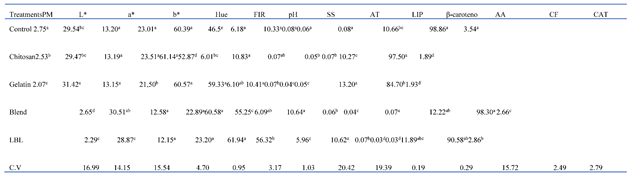 |
*Means followed by the same lowercase letter on the line do not differ from each other by the Tukey test (P<0.05). PM = Cumulative loss of fresh mass (%); L*= Brightness; a* (-a* green); b* (+yellow b*), Hue = Hue Angle; FIR = Firmness (N); SS= Soluble solids (%); pH; AT= Titratable acidity (% citric acid); LIP= Lycopene (mg 100g-1); β-carotene (mg 100g-1); AA= Ascorbic acid (mg 100g-1 of fresh mass); CF = total phenolic compounds (mg GAE 100g-1 fresh mass); Total sugars (g 100 g-¹); Catalase (μmol H2O2 decomposed min-1 g-1 fresh mass).
Table A2.
Summary of analysis of variance for mass loss, firmness, L*, a*, b*, Hue, pH, soluble solids, titratable acidity, ascorbic acid, phenolic compounds, lycopene, β-carotene, total sugars and papaya catalase minimally processed coated with chitosan, gelatin, BLEND (chitosan + gelatin) and layer by layer (chitosan under gelatin), stored for 10 days at 5 ºC.
Table A2.
Summary of analysis of variance for mass loss, firmness, L*, a*, b*, Hue, pH, soluble solids, titratable acidity, ascorbic acid, phenolic compounds, lycopene, β-carotene, total sugars and papaya catalase minimally processed coated with chitosan, gelatin, BLEND (chitosan + gelatin) and layer by layer (chitosan under gelatin), stored for 10 days at 5 ºC.
| FV | GL | PM | Fir | L* | a* | b* | Hue | pH | SS | AT | LIP | β-car | AA | CF | Cat |
|---|---|---|---|---|---|---|---|---|---|---|---|---|---|---|---|
| Coating(R) | 4 | 0.2035ns | 0.00ns | 0.0ns | 2.42ns | 0.0ns | 0.0ns | 0.0ns | 1.05ns | 3.83** | 955.0** | 0.0ns | 7.19** | 0.0ns | 0.0ns |
| Time (T) | 5 | 37.46* | 3903.7** | 13.93** | 7.35** | 11.23** | 2.74* | 103.91** | 6.54** | 34.32** | 2053.9** | 2523.5** | 26.64** | 18.06** | 33835** |
| R x T | 20 | 0.2012ns | 5.5061** | 4.17** | 1.02ns | 2.90** | 0.73ns | 7.43** | 1.66ns | 3,19** | 807.66** | 853.45** | 1.12ns | 4.93** | 3396.2** |
| Residue | 57 | - | - | - | - | - | - | - | - | - | - | - | - | - | - |
| CV (%) | - | 16.99 | 1.75 | 14.15 | 15.54 | 4.70 | 0.95 | 1.03 | 20.42 | 19.39 | 0.19 | 0.29 | 15.72 | 2.49 | 2.79 |
nsnot significant; **, *significant at 1 and 5% probability by F-test, respectively.
Table A3.
Summary of analysis of variance for macro and microminerals of minimally processed papaya coated with chitosan, gelatin, BLEND (chitosan + gelatin) and layer by layer (chitosan under gelatin), stored for 10 days at 5 ºC.
Table A3.
Summary of analysis of variance for macro and microminerals of minimally processed papaya coated with chitosan, gelatin, BLEND (chitosan + gelatin) and layer by layer (chitosan under gelatin), stored for 10 days at 5 ºC.
| FV | GL | Na | Mg | K | Mn | Fe | Cu |
|---|---|---|---|---|---|---|---|
| Coating (R) | 4 | 0.0ns | 0. 00ns | 0.0ns | 0.0ns | 0.0ns | 0.0ns |
| Time (T) | 5 | 36801** | 524061** | 1899483.071** | 3937.2** | 21314** | 388.72** |
| R x T | 20 | 703.28** | 7906.3** | 5347.5** | 754.06** | 520.32** | 67.602** |
| Residue | 57 | - | - | - | - | - | - |
| CV (%) | - | 0.28 | 0.17 | 0.11 | 49.19 | 0.50 | 2.64 |
nsnot significant; **, *significant at 1 and 5% probability by F-test, respectively.
References
- Aktaruzzaman, M. D. , Afroz, T., Kim, B. S. Post-harvest anthracnose of papaya caused by Colletotrichumtruncatum in Korea, European Journal of Plant Pathology 2018, 150, 259–265. [Google Scholar] [CrossRef]
- FAO (2018). Production of Papayas: top 10 producers. Available online: http://www.fao.org/faostat/en/#data/QC/visualize (accessed on 15 March 2023).
- IBGE (2020). BrazilianInstitute of Geography and Statistics. Municipal AgriculturalProduction. Available online: http://sidra.ibge.gov.br/tabela/5457#resultado (accessed on 25 March 2023).
- Barros, T. F. S. , Rios, E.S. C., Maia, L. D. M., Dantas, R. L., Silva, S. M. Fruit quality of papaya cultivarssold in supermarkets in Campina Grande-PB. Revista Agropecuária Técnica 2018, 39, 129–142. [Google Scholar] [CrossRef]
- Hewajulige, I. G. N. Dhekney, S. A. (2016). Papayas, 209-212.
- Cortez-vega, W. R. , Piotrowicz, I.B. B., Prentice, C., Borges, C. D. Conservation of minimally processed papaya usingediblecoatingsbasedonxanthangum. AgriculturalSciences 2014, 34, 1753–1764. [Google Scholar]
- Moretti, C. L. (2017). Minimal processing manual for fruits and vegetables. Available online: https://www.sisbin.ufop.br/novoportal/wpcontent/uploads/2015/03/Manual-de Processamento-Minimode-Frutas-e-Hortalicas.pdf (accessed on 17 January 2023).
- Kluge, R. A. , Geerdink, G.M., Tezotto-uliana, J. V., Guassi, S. A. D., Zorzeto, T. Q.; Sasaki, F. F. C., Mello, S. C. Quality of minimally processed yellow bell pepper treated with antioxidants. Semina: Agricultural Sciences 2014, 35, 801–812. [Google Scholar]
- Oliveira, E. N. A. , Santos, D. C. Technology and Processing of Fruits and Vegetables. Minimally processed fruits and vegetables 2015, 193-225. Christmas.
- Almino, H. A. , Santos, S.C. L. Effect of application of ediblecoatingsonminimally processed fruits and vegetables. BrazilianJournal of Environmental Management 2020, 14, 100–104. [Google Scholar]
- Atarés, L. , Chiralt, A. Essential oils as additives in biodegradable films andcoatings for active food packaging. Trends in Food Science and Technology 2016, 48, 51–62. [Google Scholar] [CrossRef]
- Fakhouri, F. M. , Martelli, S. M., Caon, T., Velasco, J. I., Mei, L. H. I. Edible films and coatings based on starch/gelatin: Film properties and effect of coatings on quality of refrigerated Red Crimson grapes. Postharvest Biology and Technology 2015, 109, 56-64. [CrossRef]
- Pereira, E.M. , Borges, C.D.,Formiga, A.S., Junior, J.S.P.,Mattiuz,B. Monteiro, S.S. Conservation of red guava ’Pedro Sato’ using chitosan and gelatin-based coatings produced by the layer-by-layer technique. Process Biochemistry 2022, 121, 35–44. [Google Scholar] [CrossRef]
- Wang, Q. I, Cao, Jun., Y. U, Huan., Zhang, Jiahui., Yuan, Y., Shen, X., Li, C. The effects of EGCG on the mechanical, bioactivities, cross-linking and release properties of gelatin film. Food Chemistry 2019, 271, 204-210.
- Galindo, M. V. Paglione, I. S., Coelho, A. R., Leimann, F. V., Shirai, M. A. (2020). Production of chitosan nanoparticles and application as a coating in blends of cassava starch and poly(lactic acid). Research, Society and Development, 9, 3-15.
- Freire, L. F. A. , Formiga, W. J. F., Lagden, M. G., Luna, A. S., Alves, F. L., Corrêa, M. A., Santos, M. A. G. Evaluation of TextileEffluentAdsorptionby Chitosan Composites. Revista Processos Químicos 2018, 12, 9–17. [Google Scholar] [CrossRef]
- Arnon-Rips, H. , Poverenov, E. Improving food products' quality and storability by using Layer - by Layer edible coatings. Trends in food science & technology 2018, 75, 81-92. [CrossRef]
- Hammond, P. T. Building biomedical materials layer-by-layer. MaterialsToday 2012, 15, 196–206. [Google Scholar] [CrossRef]
- Richardson, J. J. , Bjoernmalm, M., Caruso, F. (2015). Technology-driven layer-by-layer assembly of nanofilms, Science,6233.
- De Paoli, M. A. Degradation and Stabilization of polymers. 2nd revised online version. Ed. Chemkeys 2008, 1, 2–10. [Google Scholar]
- Araújo, E. M. , Hage J. R, E., Carvalho, A. J. F. (2003). Compatibility of Polyamide 6/ABS Blends using MMAGMA and MMA-MA Reactive Acrylic Copolymers. Part 1: rheologicalbehavior and mechanicalproperties of blends.
- Khan, I. , Chohan, M. M., Mazumder, M. A. J. (2018). PolymerBlends. In: JafarYoshida, C. M. P., Oliveira, E. N., Jr., Franco, T. T. Chitosan tailor-made films: the effects of additives on barrier and mechanical properties. Packing Technology and Science 2009, 22, 161-170.
- Barbosa, J. C. , Maldonado Júnior, W. (2015). AgroEstat: System for statistical analysis of agronomic tests. Jaboticabal: GráficaMultipress LTDA. Available online: https://www.agroestat.com.br.
- Zenebon, O. , Pascuet, N.S., Tiglea, P., (2008). Physical-chemical methods for food analysis, fourth ed.Instituto Adolfo Lutz (IAL), São Paulo.
- Instituto Adolfo Lutz. (2008). Physical-chemical methods for food analysis. São Paulo – SP, Instituto Adolfo Lutz, 1020.
- Pearson, D. (1976). Laboratory techniques for food analysis. Zaragoza, Spain.
- Nagasaki, M e I.Yamashita. Simple method for simultaneous determination of chlorophyll and carotenoids in tomato fruit. NipponShokuhinKogyoGakkaishi 1992, 39, 925–928.
- Waterhouse, A. Folinciocalteau micro method for total phenol in wine. American Journal of Enology and Viticulture 2006, 3 – 5.
- Yemm, E. W. , Willis, A.J. The estimation of carbohydrates in plant extracts by anthrone. BiochemicalJournal 1954, 57, 508–515. [Google Scholar] [CrossRef]
- Boaretto, L. F. , Carvalho, G., Borgo, L., Creste, S., Landell, M. G. A., Mazzafera, P., Azevedo, R. A. Water stress reveals differential antioxidant responses of tolerant and non-tolerant sugarcane genotypes. Plant Physiology and Biochemistry 2014, 74, 165–175. [Google Scholar] [CrossRef]
- Bradford M., M. Rapid and sensitive method for the quantitation of microgram quantities of protein utilizing the principle of protein-dye binding. Anal. Biochem. 1976, 71, 248–254. [Google Scholar] [CrossRef]
- Cia, M.C. , Guimarães A. C. R., Medici L. O., Chabregas S. M., Azevedo R. A. Antioxidant response to water deficit by drought-tolerant and -sensitive sugarcane varieties. Ann. Ap. Biol. 2012, 161, 313–324. [Google Scholar] [CrossRef]
- Abugoch, L. E. , Tapia, C., Villaman, M. C., Yazdani-Pedram, M., Diaz-Dosque, M. Characterization of quinoa proteinchitosan blend edible films. Food Hydrocolloids 2011, 25, 879–886.
- Lima, C. G. A. , De Oliveira, R. S., Figueiro, S. D., Wehmann, C. F., Goes,J. C., & Sombra, A. S. B. DC conductivity and dielectricpermittivity of collagen-chitosan films. Materials Chemistry and Physics 2006, 99, 284–288. [CrossRef]
- Gennadios, A. (2002). Soft gelatin capsules. In A. Gennadios (Ed.), Protein-based films and coatings, 1, 1-41.
- Pranoto, Y. , Lee, C. M., Park, H. J. Characterizations of fish gelatin films added with gellan and κ-carrageenan. LWT- Food Science and Technology 2007, 40, 766–774.
- Poverenov, E. , Rutenberg, R. Danino, S., Horev, B., Rodov, V. (2014). Gelatin-chitosan composite films and edible coatings to enhance the quality of food products: Layer-by-layer vs. Blended formulations. Food and Bioprocess Technology 2014, 7, 3319–3327. [Google Scholar] [CrossRef]
- Chitarra, M. I. F. Chitarra, A. B. (2005). Postharvest of fruits and vegetables: physiology and handling. 2.ed. Mines: UFLA.
- Kumar, P. , Sethi, S., Sharma, R. R., Srivastav, M., Varghese, E. Effect of chitosan coating on postharvest life and quality of plum during storage at low temperature. ScientiaHorticulturae 2017 v. 226, n. 13, p. 104–109.
- Fagundes, C. , Palou, L., Monteiro, A. R., Pérez-gago, M. B. Hydroxypropyl methylcellulose-beeswax edible coatings formulated with antifungal food additives to reduce alternaria black spot and maintain postharvest quality of coldstored cherry tomatoes. ScientiaHorticulturae 2015, 193, 249-257.
- Brackmann, A. , Anese, R.O., Both V., Thewes, F. R., Fronza, D. Controlled atmosphere for the storage of guava cultivar “Paluma”. Ceres Magazine 2012, 59, 151–156. [Google Scholar]
- Castañeda, L. M. F. 2013. Evaluation of chitosan and cassava starch, applied post-harvest in the coating of apples. Thesis (Doctorate in Fitotecnia) - Federal University of Rio Grande do Sul, Porto Alegre.
- Brasil, I. M. , Gomes, C., Puerta-Gomez, A., Castell-Perez, M. E., Moreira, R. G. Polysaccharide-based multilayered antimicrobial edible coating enhances quality of fresh-cut papaya. LWT - Food Science and Technology 2012, 47, 39-45.
- Lima, A. S. , Ramos, A.L. D., Marcellini, P. S., Batista, R. A., Faraoni, A. S. Addition of Anti-Browning and Antimicrobial Agents and Use of Different Plastic Films in Minimally Processed Papaya. Revista Brasileira de Fruticultura 2005, 27, 149–152. [Google Scholar] [CrossRef]
- Argoñosa, A. C. S. , Rapos, O, M. F. J., Teixeira, P., Morais, A. M. (2008) Effect of cuttype on quality of minimally processed papaya. Journal of the Science of Food and Agriculture 2008, 88, 2050–2060. [Google Scholar] [CrossRef]
- Pimentel, J. D. R. , Souza, D.S., Oliveira, T. V., Oliveira, M. C., Bastos, V. S., Castro, A. A. Study of conservation of papaya in Hawaii using edible skins at different temperatures. Scientia Plena 2011, 7, 1–6. [Google Scholar] [CrossRef]
- Trigo, J. M. , Albertini, S., Spoto, M. H. F., Sarmento, S. B. S., Lai Reyes, A. E., Sarriés, G. A. Effect of ediblecoatingson the conservation of minimally processed papayas. BrazilianJournal of Food Technology 2012, 15, 125–133. [Google Scholar] [CrossRef]
- Franco, G. FoodChemicalCompositionTable. 9 ed. São Paulo: Atheneu, 1999. p. 53-58.
- Martiñon, M. E. , Moreira, R. G., Castell-Perez, M. E., Gomes, C. Development of a multilayered antimicrobial edible coating for shelf life extension of fresh-cut cantaloupe (Cucumismelo L.) stored at 4 °C. LWT - Food Science and Technology 2014, 55, 341–350.
- Huber, L. S. , Rodriguez-Amaya, D. B. (2008).Flavonols and flavones: Braziliansources and factorsthatinfluencefoodcomposition. Food and NutritionAraraquara, 19.
- Besinela Junior, E. , Monarim, M.M. S., Camargo, M., Mahl, C. R. A., Simões, M. R.,Silva, C. F. Effect of differentbiopolymersonminimally processed papaya (Carica papaya L.) coating. Revista Varia Scientia Agrárias 2010, 01, 131–142. [Google Scholar]
- Ayón-Reyna, L. E., Tamayo-Limón, R., Cárdenas-Torres, F., López-López, M. E.,López-Angulo,G.,López-Moreno,H. S.,López-Cervántes,J.,López-Valenzuela,J. A.&Vega-Garcia, M. O. EffectivenessofHydrothermal-CalciumChlorideTreatmentandChitosanon QualityRetentionandMicrobialGrowthduringStorageofFresh-CutPapaya.JournalofFood Science 2015, 80, 594–601. [CrossRef]
- Germano, T. A. (2016). Effects of edible coating based on galactomannan and carnauba wax on the quality and antioxidant metabolism of guavas. Thesis (Master's degree). Federal University of Ceará, Fortaleza, CE, Brazil.
- Boonkorn, P. Impact of hot water soaking on antioxidant enzyme activities and some qualities of storage tomato fruits. International Food Research Journal 2016, 23, 934–938. [Google Scholar]
- Malavolta, E. Plant mineral nutrition manual Piracicaba: Ceres, 2006. 638p.
- Epstein, E. , Bloom, A. J. Mineral nutrition of plants: principles and perspectives. London: Ed. Plant, 2006. 401p.
Figure 1.
Effects of chitosan and gelatin coatings on freshly processed papayas in control treatments and coated with chitosan, gelatin, BLEND and layer by layer stored for 10 days at 5 °C.
Figure 1.
Effects of chitosan and gelatin coatings on freshly processed papayas in control treatments and coated with chitosan, gelatin, BLEND and layer by layer stored for 10 days at 5 °C.
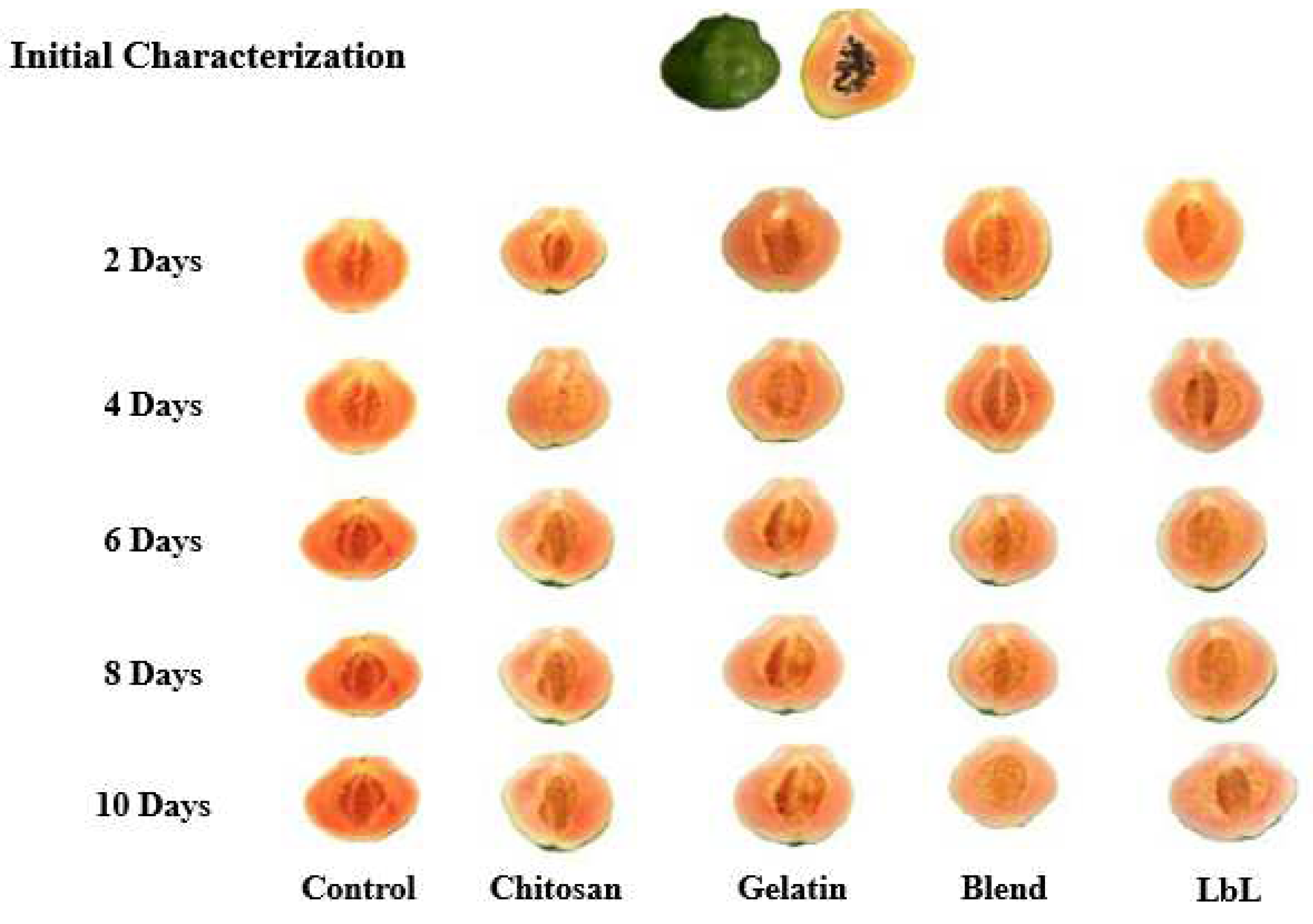
Figure 2.
Fourier Transform Infrared Spectroscopy (FTIR).
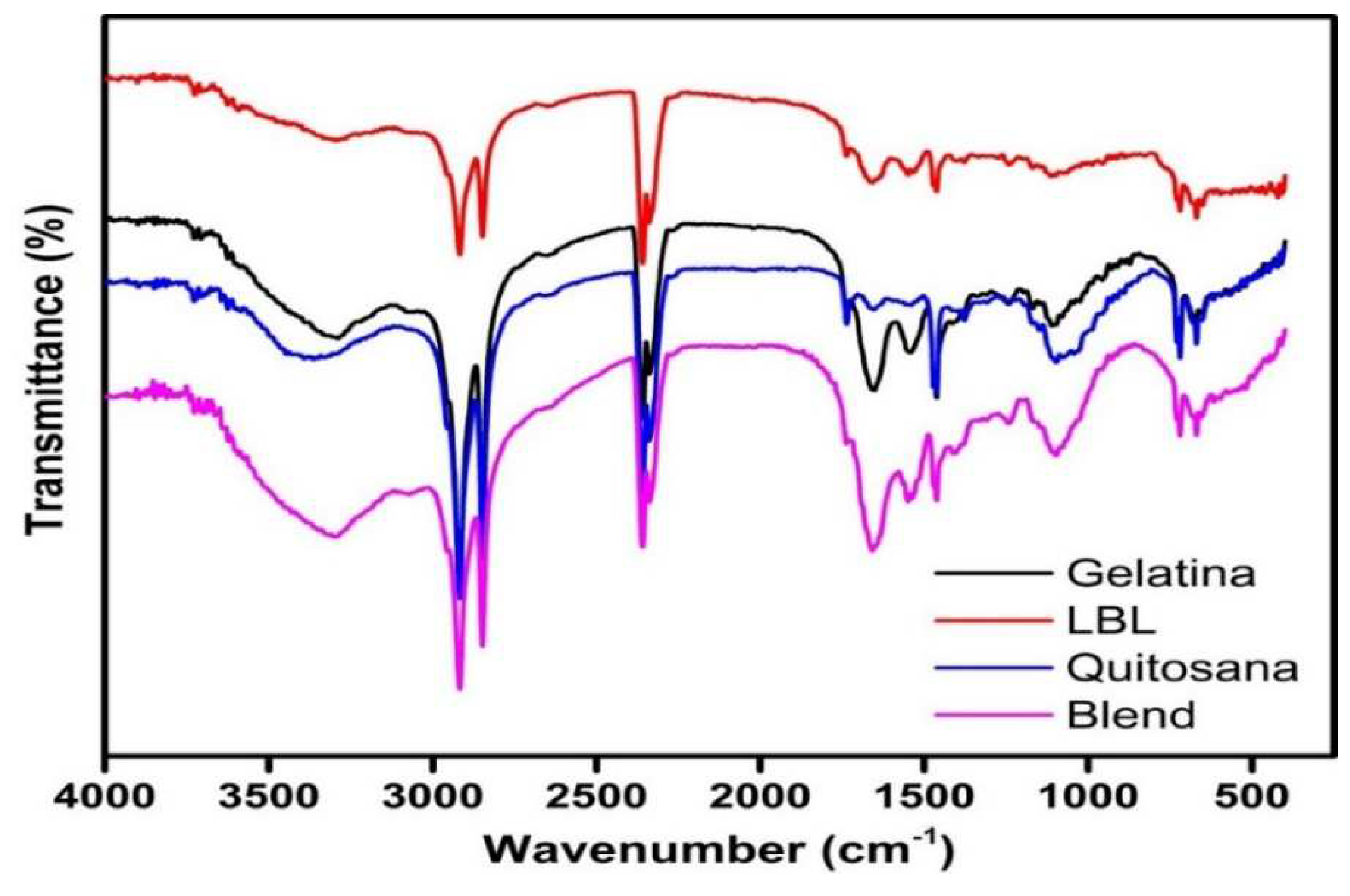
Figure 3.
Effects of chitosan and gelatin-based coatings on the loss of fresh mass and firmness of freshly processed papaya papayas from the control (■) and chitosan-coated (▲), gelatin (ж), BLEND (♦) and under-layer treatments layer (●) stored for 10 days at 5 °C.
Figure 3.
Effects of chitosan and gelatin-based coatings on the loss of fresh mass and firmness of freshly processed papaya papayas from the control (■) and chitosan-coated (▲), gelatin (ж), BLEND (♦) and under-layer treatments layer (●) stored for 10 days at 5 °C.
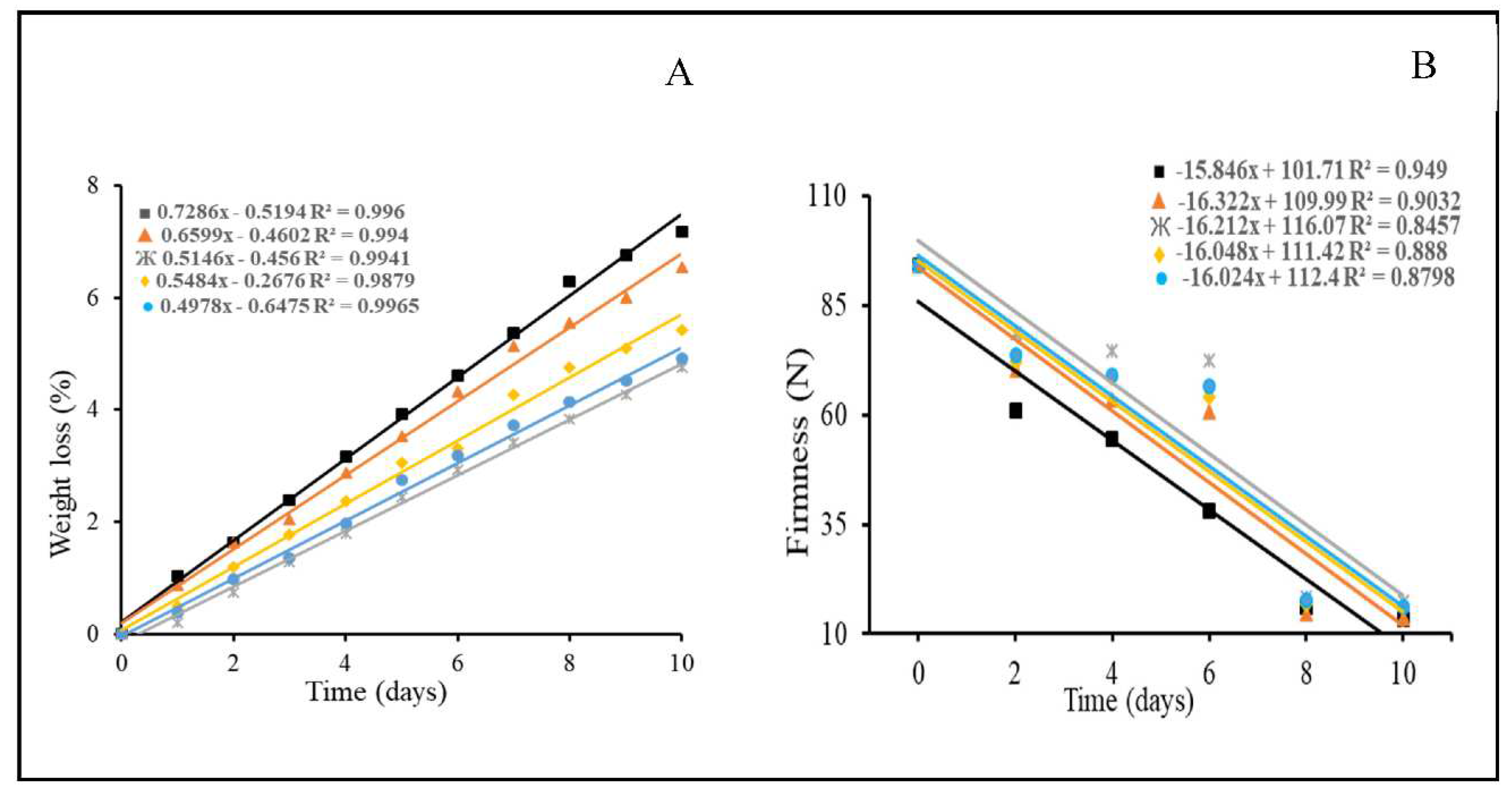
Figure 4.
Effects of chitosan and gelatin-based coatings on Luminosity, a*, b* and Hue of minimally processed papaya in the control (■) and chitosan (▲), gelatin (ж), BLEND (♦) treatments and layer upon layer (●) stored for 10 days at 5 °C.
Figure 4.
Effects of chitosan and gelatin-based coatings on Luminosity, a*, b* and Hue of minimally processed papaya in the control (■) and chitosan (▲), gelatin (ж), BLEND (♦) treatments and layer upon layer (●) stored for 10 days at 5 °C.
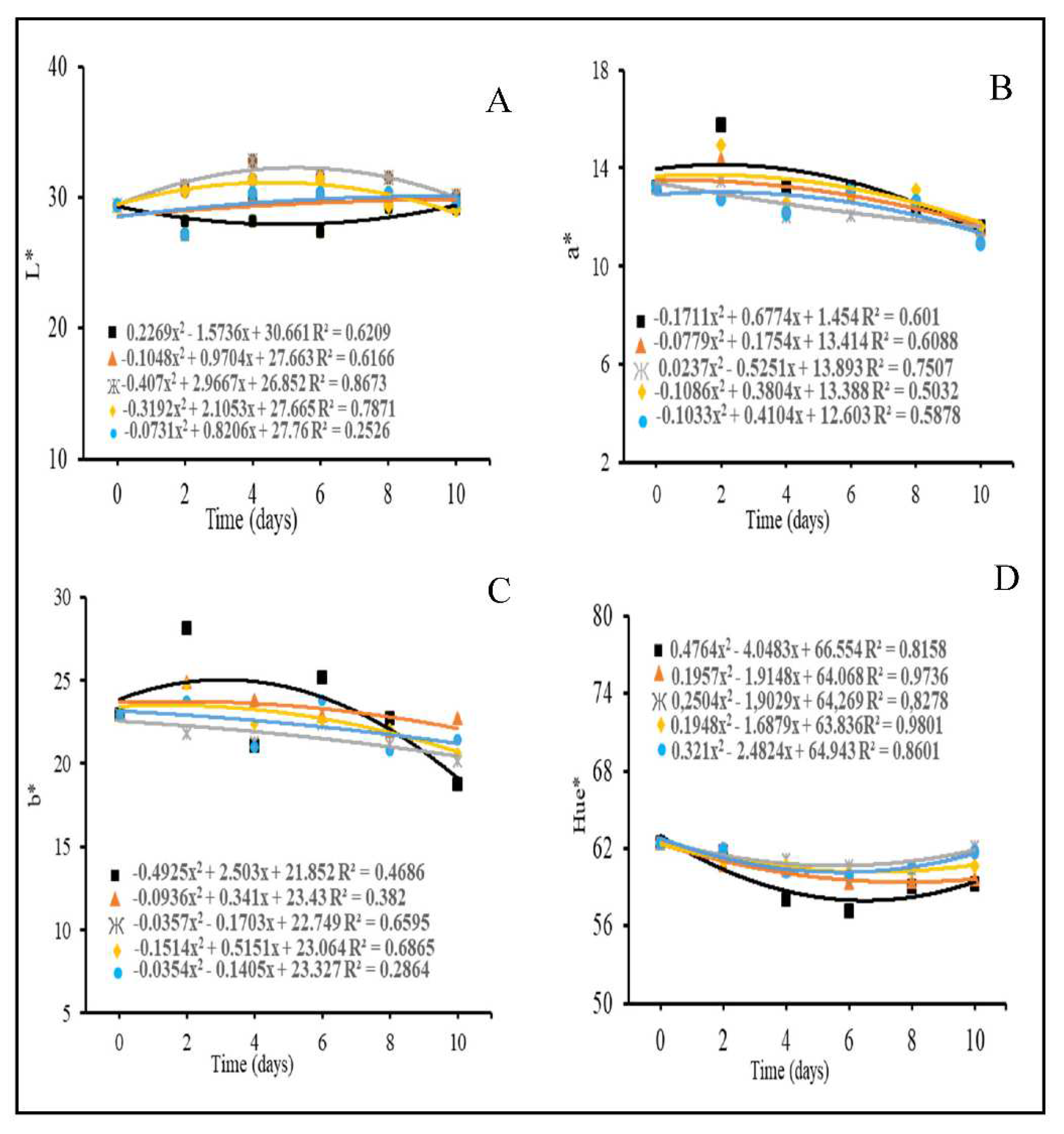
Figure 5.
Effects of chitosan and gelatin coatings on pH, soluble solids and titratable acidity of minimally processed papaya papayas in control (■) and coated with chitosan (▲), gelatin (ж), BLEND (♦) and layer treatments under layer (●) stored for 10 days at 5 °C.
Figure 5.
Effects of chitosan and gelatin coatings on pH, soluble solids and titratable acidity of minimally processed papaya papayas in control (■) and coated with chitosan (▲), gelatin (ж), BLEND (♦) and layer treatments under layer (●) stored for 10 days at 5 °C.
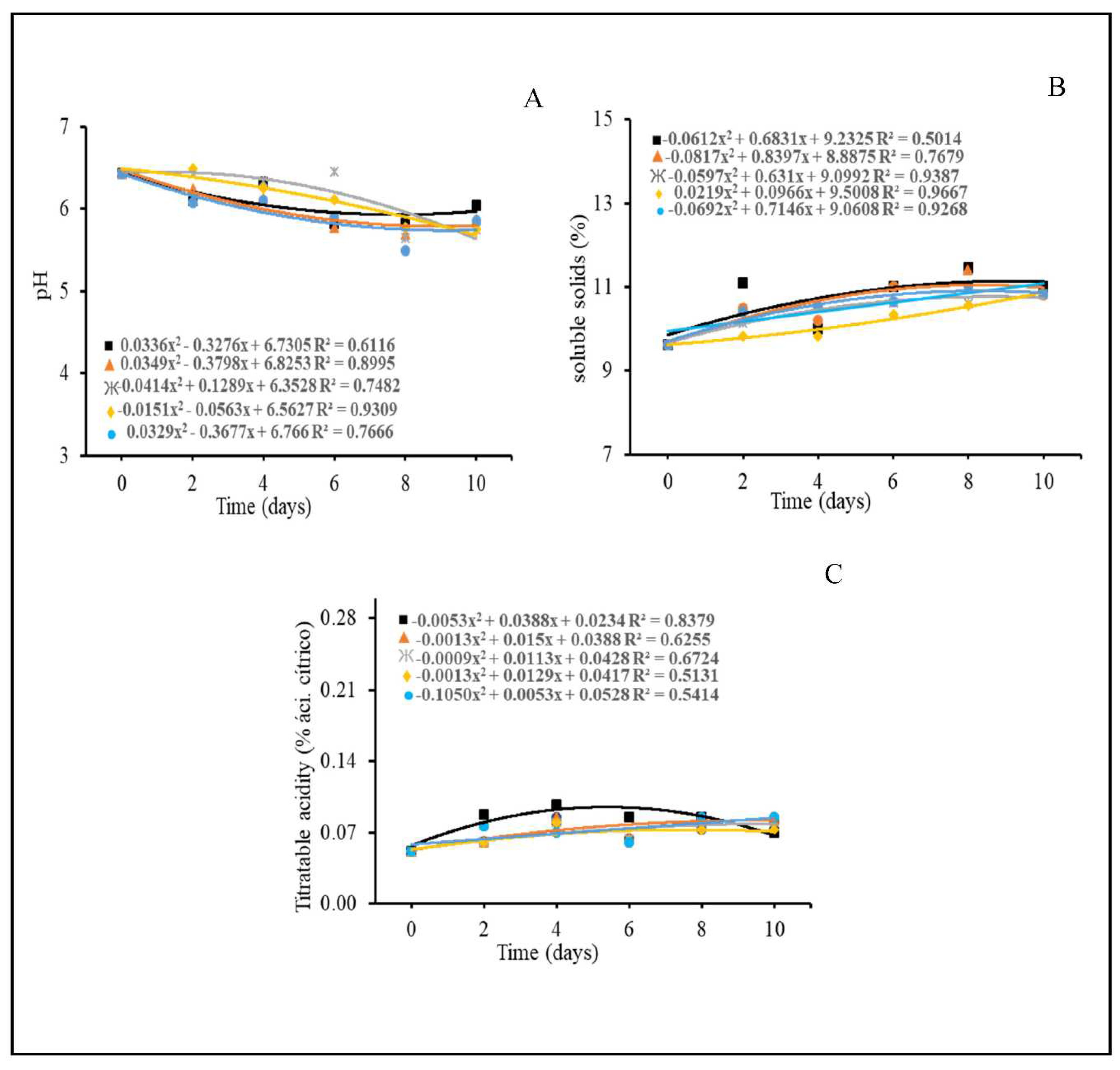
Figure 6.
Effects of chitosan and gelatin-based coatings on ascorbic acid, phenolic compounds, lycopene and β-carotene contents of minimally processed papayas in the control treatments (■) and coated with chitosan (▲), gelatin (ж), BLEND (♦) and layer upon layer (●) stored for 10 days at 5 °C.
Figure 6.
Effects of chitosan and gelatin-based coatings on ascorbic acid, phenolic compounds, lycopene and β-carotene contents of minimally processed papayas in the control treatments (■) and coated with chitosan (▲), gelatin (ж), BLEND (♦) and layer upon layer (●) stored for 10 days at 5 °C.
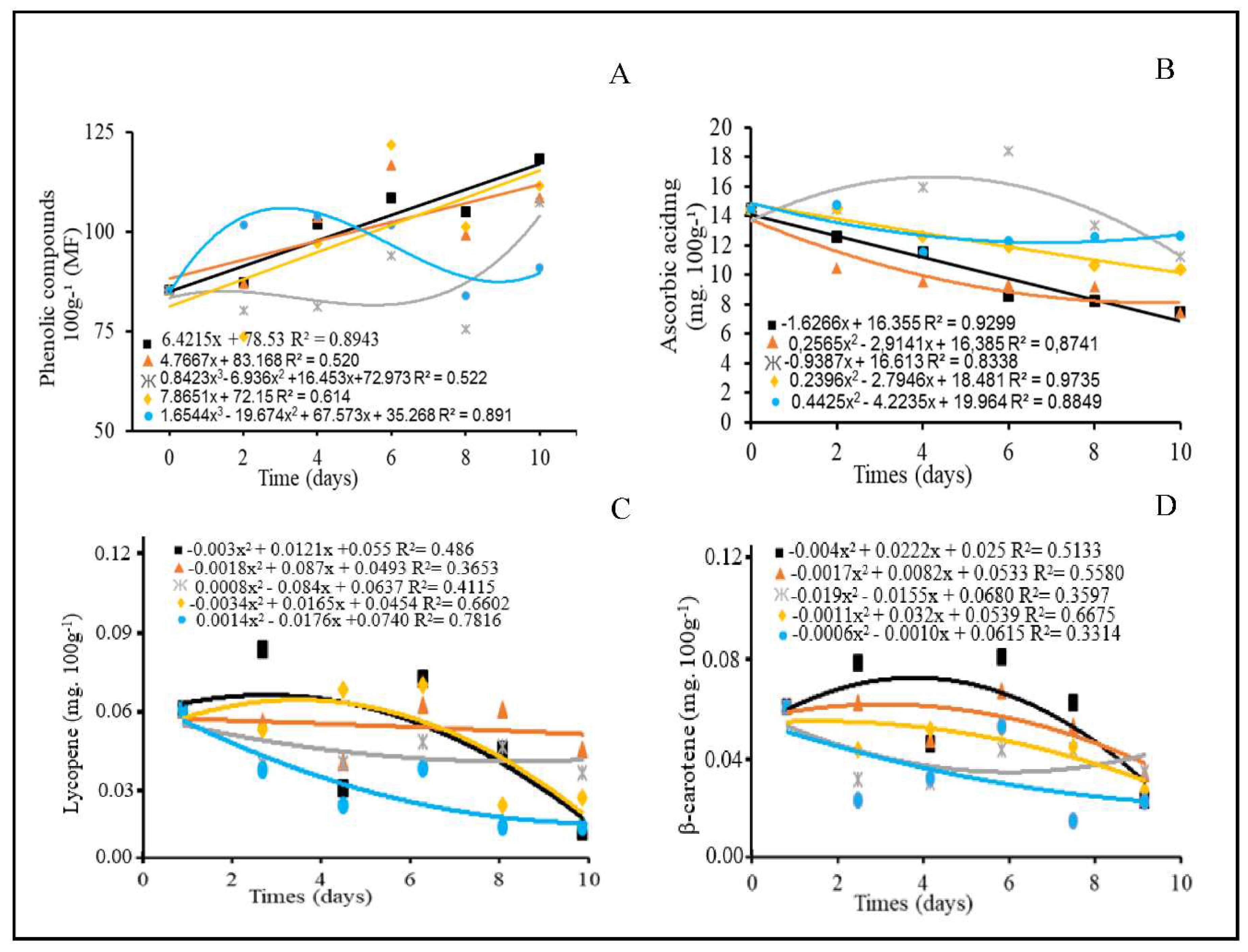
Figure 7.
Effects of chitosan and gelatin-based coatings on total sugar and catalase activity (µmol H2O2 fresh mass-1) contents of minimally processed papayas in control (■) and chitosan-coated (▲), gelatin (ж), BLEND (♦) and layer-by-layer treatments (●) stored for 10 days at 5 °C.
Figure 7.
Effects of chitosan and gelatin-based coatings on total sugar and catalase activity (µmol H2O2 fresh mass-1) contents of minimally processed papayas in control (■) and chitosan-coated (▲), gelatin (ж), BLEND (♦) and layer-by-layer treatments (●) stored for 10 days at 5 °C.

| Treatments | |||||
| Minerals (mg.kg-1) | Control | Chitosan | Gelatin | BLEND | LBL |
| Na | 558.34b | 522.57b | 559.17a | 394.11d | 505.88d |
| Mg | 843.23c | 949.14c | 982.22a | 633.98d | 956.15b |
| K | 5721.0d | 4958.7e | 7579.6a | 6509.1b | 6197.8c |
| Mn | 0.93c | 0.86d | 1.02b | 1.06a | 1.02b |
| Fe | 24.13b | 21.92d | 25.57a | 19.33e | 21.99c |
| Cu | 5.602b | 5.39c | 5.80a | 5.72ab | 5.23d |
Disclaimer/Publisher’s Note: The statements, opinions and data contained in all publications are solely those of the individual author(s) and contributor(s) and not of MDPI and/or the editor(s). MDPI and/or the editor(s) disclaim responsibility for any injury to people or property resulting from any ideas, methods, instructions or products referred to in the content. |
© 2023 by the authors. Licensee MDPI, Basel, Switzerland. This article is an open access article distributed under the terms and conditions of the Creative Commons Attribution (CC BY) license (http://creativecommons.org/licenses/by/4.0/).
Copyright: This open access article is published under a Creative Commons CC BY 4.0 license, which permit the free download, distribution, and reuse, provided that the author and preprint are cited in any reuse.


