

Submitted:
08 May 2023
Posted:
08 May 2023
You are already at the latest version
Abstract
To improve the wear resistance of polyimide (PI), surface modification was developed. In this study, the tribological properties of graphene (GN), graphene oxide (GO), and KH550-grafted graphene oxide (K5-GO) modified PI were evaluated by molecular dynamics (MD) at the atomic level. The findings indicated that the addition of nanomaterials can significantly enhance the friction performance of PI. The friction coefficient of PI composites decreased from 0.253 to 0.232, 0.136, and 0.079 after coating GN, GO and K5-GO, respectively. Among them, the K5-GO/PI exhibited the best surface wear resistance. Importantly, the mechanism behind the modification of PI was thoroughly revealed by observing the wear state, analyzing the changes of interfacial interactions, interfacial temperature, and relative concentration.
Keywords:
polyimide
; Molecular dynamics simulation
; tribology
; graphene oxide
1. Introduction
Polyimide and its composites have advantages such as high mechanical strength, good stability, and excellent electrical insulation [1], so they are widely used in industrial production and daily life [2,3,4,5,6]. In the aerospace field, polyimides with good radiation resistance are ideal materials for ultrasonic motors [7]. However, the wear resistance of pure PI is relatively weak, which limits its wider application in the aerospace field. Therefore, many scholars are committed to improving the wear resistance, radiation resistance, and high-temperature resistance of polyimides to expand their range of use and service life.
Many researchers have found that the wear resistance of polymer composites can be improved by filling modification agents, surface modification of polyimide molecular structure, surface coatings, and other methods [8,9,10,11,12,13,14]. Breki et al. improved the friction performance of polyimide-based self-lubricating nanocomposites by using gas-phase synthesized tungsten diselenide (WSe2) nanoparticles as reinforcements. The results showed that the tribological properties of the nanoparticle-reinforced composite were significantly improved, and both the friction coefficient and adhesion coefficient decreased [15]. Cai et al. studied the effect of nanoscale silicon dioxide (SiO2) on the frictional performance of polyimide-based composites, and found that nanoscale SiO2 can significantly improve the wear and abrasion resistance of PI-based composites [16]. Currently, adding various fibers to the matrix is one of the most effective methods, such as carbon fibers, glass fibers, and aramid fibers, etc. Zhang et al. have studied the effect of short carbon fiber filling on polyimide and found that the addition of short carbon fibers significantly improves the tribological properties of the composite material [17]. Panin et al. also found that chopped carbon fiber (CCF) can enhance the mechanical properties and tribological properties of PI composites [18]. Wu et al. also studied the effect of carbon fiber length on enhancing polyimide-based materials, and found that polyimide with 100 μm carbon fiber exhibited lower friction coefficient and wear rate than other materials. Additionally, as the carbon fiber length increased, the interfacial bonding strength between the carbon fiber and matrix deteriorated [19]. Li et al. also used homogenous copper oxide (CuO) nanowires to solve the problem of weak interfacial bonding between carbon fiber and polyimide. The results showed that CuO nanowires can effectively improve the interfacial compatibility with polyimide, and enhance the mechanical and tribological properties of the composite material [20]. Cai et al. have studied the effect of carbon nanotubes (CNTs) on the frictional properties of polyimide (PI). The results showed that CNT/PI composites had lower friction coefficient and wear rate compared to pure PI [21]. Chen et al. have also systematically studied the effects of several carbon systems, including graphite, carbon fiber, and carbon nanotubes, on the tribological properties of polyimide composites under seawater lubrication conditions. The results showed that the addition of any filler could improve the wear resistance of polyimide under seawater lubrication [22]. Graphene and graphene oxide are two-dimensional materials that have received considerable attention in recent years, and their addition in appropriate amounts can improve the mechanical properties of materials. Sekiguchi et al. investigated the effect of adding polytetrafluoroethylene (PTFE), graphite (Gra), and molybdenum sulfide (MoS2) on pure polyimide (PI). The results showed that the PI composites containing PTFE and Gra had lower friction coefficients and wear rates than pure PI [23]. Song et al. also investigated the effect of coupling agent treatment on glass fiber (GF) to improve the wear resistance of polyimide. The wear mechanism was analyzed using SEM. The study showed that the mechanical and wear properties of the composite filled with surface-treated GF were improved, and the treatment effect of KH550 was the best [24].
This study will explore the mechanism of graphene, graphene oxide, and KH550-grafted graphene oxide in improving the wear resistance of polyimide. The friction and wear properties of polyimide are compared by MD simulation to analyze their performance from a microscopic perspective.
2. Model establishment and simulation process
The modeling and simulation in this paper were conducted using the molecular dynamics software Material Studio 2019. Firstly, the original structure of the polyimide was determined, as shown in Figure 1a. Then, graphene, graphene oxide, and KH550-grafted graphene oxide with a size of 42.3 Å × 42.3 Å were respectively constructed, as shown in Figure 1b–d. The thickness of GO was 6 Å, and the thickness of K5-GO was 13 Å.
A cubic lattice with dimensions of 50×50×50 Å3 was firstly constructed, and then PI molecules with a degree of polymerization of 2 was filled with a density of 1.3 g/cm3 using Monte Carlo rules, as shown in Figure 2. Figure 2a was pure PI model, while Figure 2b–d were PI composites modified by GN, GO, and K5-GO, respectively. To facilitate identification, GN, GO, and K5-GO were colored green.
In order to make the structure more reasonable, the original model was conducted geometry optimization. The detailed parameters during the optimization process are shown in Table 1. During annealing, 15 cycles were performed to allow the structure to fully relax and find the optimal structure. After annealing, the structure with the lowest total energy was selected from the 15 structures for dynamic equilibrium to completely eliminate residual stress. All optimization processes were conducted using the Condensed-Phase Optimized Potentials for Atomistic Simulation Studies (COMPASSII) force field based on Ewald and atom-based methods for analyzing intermolecular interactions.
To investigate the rules and action mechanisms of GN, GO, and K5-GO on the frictional properties of PI composites, 50.6×50.6×7.2 Å3 Cu atomic layers were built on both the top and bottom for frictional pairs and substrate, as shown in Figure 3. During the friction process, a normal pressure of 10 MPa and a relative sliding speed of 0.1 Å/ps were applied to the upper Cu layer, and the simulation time was 600 ps. The temperature and time step of the friction process were set to 300 K and 1 fs, respectively. Frictional analysis of PI and its composites was conducted through the output trajectory files.
3. Results and discussion
3.1. Mechanical properties of PI composites
The tribological properties of PI composites depended on their mechanical performance. Therefore, the Young’s modulus and shear modulus of the PI composite were calculated by performing 12 tensile tests, with a strain rate of 0.01 along the X-axis and constant volume along the other axes. The results were shown in Figure 4. The Young’s modulus of pure PI was 3.54 GPa, and the addition of GN and GO increased the Young’s modulus of the composite material by 18% and 72%, respectively. The addition of K5-GO increased the Young’s modulus of the composite material to 6.87 GPa, which was a 94% increase compared to pure PI. The trend of the shear modulus was similar to that of the Young’s modulus, with the K5-GO/PI composite having the highest shear modulus of 1.8 GPa, which was 1.16 times that of pure PI. The shear modulus of GN/PI and GO/PI also increased by 3% and 8%, respectively, compared to pure PI. Previous studies have suggested [25] that the interaction between the modifier and PI can contribute to the improvement of mechanical properties of the PI composite. Therefore, the interaction energy between the modifier and PI was extracted, as shown in Figure 5. The larger the interaction energy, the stronger adsorption effective between the modifier and the PI matrix, thus improving the mechanical properties of the composite. Among them, the interaction energy between K5-GO and PI was the largest with around 1050 kcal/mol, because the silane coupling agent grafted on the surface of GO can form a mechanical interlocking effect with PI molecular.
3.2. Tribological properties of PI composites
Firstly, the friction coefficient of pure PI and PI composites was calculated as a function of friction process time, as shown in Figure 6. It can be clearly seen that the friction coefficient begins to stabilize after approximately 180 ps. The average friction coefficient of pure PI in the stable stage is 0.253, while that of the GN/PI composite is 0.232, a decrease of 8% compared to pure PI. The friction coefficients of GO/PI and K5-GO/PI composites are 0.136 and 0.079, respectively, which have a decrease of 46% and 68% compared to pure PI. This result indicated that graphene and graphene oxide had better lubrication which can reduce the interaction between polyimide molecules and Cu, resulting in a decrease in the friction coefficient. In addition, the silicon coupling agent-grafted modified graphene oxide with strong adsorption effect for PI molecular reduced the frictional force with Cu, which was consistent with mechanical performance improvement, shear modulus variations. It is also consistent with previous experimental results [26,27,28].
In addition, the dynamic evolution of the PI composites during friction process was also observed, as shown in the Figure 7. Under the same frictional conditions, pure PI had the largest shear deformation, while the addition of GN, GO, and K5-GO resulted in relatively smaller deformations. The K5-GO/PI composite shows the smallest deformation. Because GN and GO with high mechanical strength and excellent wear resistance can withstand larger external loads and shear stress, and thus protect the PI matrix. Moreover, K5-GO have strong mechanical interlocking force with PI, which have the best wear resistance. K5-GO/PI with the weakest effect with Cu have the smallest shear deformation as shown in Figure 7d. This further verified the improvement effect of K5-GO on the mechanical and tribological properties of PI matrix.
In order to deeply explore the wear mechanisms, the interaction energy between the friction pair and the PI composites were calculated. The smaller the interaction energy between the Cu layer and the PI composite, the smaller the adsorption force between them, making it easy shear with lower friction force. Figure 8 shows the interaction energy between the Cu layer and PI composites. It can be clearly seen that interaction energy between PI matrix and Cu layer decreased from 2850 to 2800 kcal/mol after filling GN and GO. It continuously reduced to about 2770 kcal/mol after inserting K5-GO. Among them, the interaction energy between K5-GO/PI and the Cu layer is the smallest. The occurrence of this phenomenon is due to the van der Waals adsorption between GN and PI, which weakens their interaction with Cu. In contrast, GO exhibits stronger adsorption ability due to its internal hydrogen bonding structure. Moreover, the addition of K5-GO, which possesses a mechanical interlocking structure, enhances the adsorption effect. Therefore, the interaction between the modified PI and Cu is weakened, which is consistent with the results of the friction experiments mentioned earlier.
Then, to further reveal the mechanism of the effect of the modifier addition on friction and wear, the variation of temperature and relative atomic concentration during the friction process was analyzed. Firstly, the temperature distribution of the polymer material in the thickness direction was extracted, as shown in Figure 9. From the temperature distribution of Pure PI, it can be seen that the highest temperature of 350 K is obtained near the contact of the friction pair. The addition of the modifying agents GN, GO, and K5-GO reduced the temperature of the composite material by 15%, 14%, and 13%, respectively. According to the theory proposed by Hu [29], friction is actually a process of energy conversion. As can be seen from the variation of friction coefficient in Figure 7, the higher the friction coefficient, the higher the temperature. So, the pure PI shows the highest interface temperature 350 K, while K5-GO/PI have the lowest temperature with 299 K.
Finally, the relative concentration along the Z direction of the PI composites was extracted, as shown in Figure 10. It can be seen from the relative concentration curve that the relative concentration of Pure PI is higher at both sides than the middle place because of boundary effect, reaching 3.65 and 3.67, respectively. So, the interaction effect between PI and the friction pair was analyzed in Figure 8, which had a strong effect on the progress of friction. After adding GN, GO, K5-GO, the relative concentration of the PI composite shows a peak value around 40 Å due to carbon atoms accumulation on the top of PI composites, which is much larger than the middle place.
4. Conclusion
In this study, the reinforcement effect of graphene, graphene oxide, and KH550-grafted graphene oxide on the polyimide composites was investigated using molecular dynamics simulations. The main results were as follows:
- Adding graphene based nanomaterials can improve the mechanical properties of PI composites, in which K5-GO exhibits the best effect, increasing the Young’s modulus to 6.87 GPa and the shear modulus to 1.8 GPa, which are 94% and 16% higher than pure PI. Besides, the enhancement mechanism was revealed by analyzing the interaction energy between the modifiers and PI molecular. The higher the interaction energy, the stronger the adsorption effect, and resulting in the the better the mechanical performance.
- Compared with pure PI, the surface modified PI composites have smaller friction coefficients, among which K5-GO can reduce the friction coefficient to one-third of the original value. The K5-GO/PI also shows the smallest shear deformation. By analyzing the interfacial interaction energy between PI and the Cu layer, it was found that the interfacial interaction between PI and the friction pair would decrease after the addition of modifiers, further confirming the enhanced effect of modifiers on the PI matrix. These results are helpful for a deeper understanding of the structure and properties of polymer-based composites, and provide important references for the design and manufacture of high-performance polymer composites.
Acknowledgments
This research was funded by the NSFC (U2037603, 52075247), Natural Science Foundation of Jiangsu Province (BK20210300), the Fundamental Research Funds for the Central Universities (NS2022016), a project funded by the Priority Academic Program Development of Jiangsu Higher Education Institutions (PAPD).
References
- Li, B.; Lv, W.; Zhao, N.; Li, J.; Peng, D.; Yu, Y.; Mu, Q.; Zhang, F.; Wang, F.; Wang, Z. Research development of polyimide based solid lubricant. New Chemical Materials 2017, 45, 8–10. [Google Scholar]
- Kitoh, M.; Honda, Y. Preparation and tribological properties of sputtered polyimide film. Thin Solid Films 1995, 271, 92–95. [Google Scholar] [CrossRef]
- Feger, C.; Franke, H. Polyimides fundamentals and applications; CRC Press, 2018; pp. 759–814. [Google Scholar]
- Lau, K.S. Handbook of thermoset plastics; Elsevier, 2014; pp. 297–424. [Google Scholar]
- Ree, M. High performance polyimides for applications in microelectronics and flat panel displays. Macromolecular Research 2006, 14, 1–33. [Google Scholar] [CrossRef]
- Wu, Z.Y.; He, J.J.; Yang, H.X.; Yang, S.Y. Progress in Aromatic Polyimide Films for Electronic Applications: Preparation, Structure and Properties. Polymers 2022, 14. [Google Scholar] [CrossRef] [PubMed]
- Yuanhao, Y.; Gai, Z.; Jingfu, S.; Qingjun, D. Mechanical and Tribological Properties of Polyimide Composites for Reducing Weight of Ultrasonic Motors. Key Eng. Mater. (Switzerland) 2019, 799, 65–70. [Google Scholar]
- Bahadur, S. The development of transfer layers and their role in polymer tribology. Wear 2000, 245, 92–99. [Google Scholar] [CrossRef]
- Bahadur, S.; Fu, Q.; Gong, D. THE EFFECT OF REINFORCEMENT AND THE SYNERGISM BETWEEN CUS AND CARBON-FIBER ON THE WEAR OF NYLON. Wear 1994, 178, 123–130. [Google Scholar] [CrossRef]
- Bijwe, J.; Indumathi, J.; Rajesh, J.J.; Fahim, M. Friction and wear behavior of polyetherimide composites in various wear modes. Wear 2001, 249, 715–726. [Google Scholar] [CrossRef]
- Friedrich, K.; Lu, Z.; Hager, A.M. Recent advances in polymer composites’ tribology. Wear 1995, 190, 139–144. [Google Scholar] [CrossRef]
- Xian, G.J.; Zhang, Z. Sliding wear of polyetherimide matrix composites I. Influence of short carbon fibre reinforcement. Wear 2005, 258, 776–782. [Google Scholar] [CrossRef]
- Yan, Y.F.; Meng, Z.J.; Xin, X.C.; Liu, H.; Yan, F.Y. Tribological Behavior and Thermal Stability of Thermoplastic Polyimide/Poly (Ether Ether Ketone) Blends at Elevated Temperature. Journal of Macromolecular Science Part B-Physics 2020, 60, 175–189. [Google Scholar] [CrossRef]
- Chan, J.X.; Wong, J.F.; Petru, M.; Hassan, A.; Nirmal, U.; Othman, N.; Ilyas, R.A. Effect of Nanofillers on Tribological Properties of Polymer Nanocomposites: A Review on Recent Development. Polymers 2021, 13. [Google Scholar] [CrossRef] [PubMed]
- Breki, A.D.; Vasilyeva, E.S.; Tolochko, O.V.; Didenko, A.L.; Nosonovsky, M. Frictional Properties of a Nanocomposite Material With a Linear Polyimide Matrix and Tungsten Diselinide Nanoparticle Reinforcement. Journal of Tribology-Transactions of the Asme 2019, 41. [Google Scholar] [CrossRef]
- Cai, H.; Yan, F.; Xue, Q. Tribological behavior and SEM investigation of the polyimide/SiO_2 nanocomposites. Journal of Chinese Electronic Microscopy Society 2003, 22, 420–425. [Google Scholar]
- Zhang, X.R.; Pei, X.Q.; Wang, Q.H. Friction and wear studies of polyimide composites filled with short carbon fibers and graphite and micro SiO2. Materials & Design 2009, 30, 4414–4420. [Google Scholar]
- Panin, S.V.; Luo, J.K.; Buslovich, D.G.; Alexenko, V.O.; Kornienko, L.A.; Bochkareva, S.A.; Byakov, A.V. Experimental-FEM Study on Effect of Tribological Load Conditions on Wear Resistance of Three-Component High-Strength Solid-Lubricant PI-Based Composites. Polymers 2021, 13. [Google Scholar] [CrossRef] [PubMed]
- Wu, J.; Kou, Z.M.; Cui, G.J. The tribological properties of carbon fiber reinforced polyimide matrix composites under distilled water condition. Industrial Lubrication and Tribology 2016, 68, 212–219. [Google Scholar] [CrossRef]
- Li, X.Q.; Jia, X.H.; Xiao, Q.F.; Li, Y.; Wang, S.Z.; Yang, J.; Song, H.J.; Zhang, Z.Z. CuO nanowires uniformly grown on carbon cloth to improve mechanical and tribological properties of polyimide composites. Materials Chemistry and Physics 2022, 281. [Google Scholar] [CrossRef]
- Cai, H.; Yan, F.Y.; Xue, Q.J. Investigation of tribological properties of polyimide/carbon nanotube nanocomposites. Materials Science and Engineering a-Structural Materials Properties Microstructure and Processing 2004, 364, 94–100. [Google Scholar] [CrossRef]
- Chen, B.B.; Wang, J.Z.; Liu, N.; Yan, F.Y. Synergism of several carbon series additions on the microstructures and tribological behaviors of polyimide-based composites under sea water lubrication. Materials & Design 2014, 63, 325–332. [Google Scholar]
- Sekiguchi, I.; Takumi, K.; Naitoh, K.; Saitoh, T.; Watanabe, Y. On the effects of fillers upon the tribological properties of thermosetting polyimide. Res. Rep. Kogakuin Univ. (Japan) 1996, 1–7. [Google Scholar]
- Yan-jiang, S.; Li-jian, H.; Peng, Z.H.U.; Xiao-dong, W.; Pei, H. Friction and Wear of Coupling Agent Treated Glass Fiber Modified Polyimide Composites. Journal of Materials Engineering 2009, 58–62. [Google Scholar]
- Li, Y.L.; Wang, S.J.; Wang, Q.; Xing, M. Enhancement of fracture properties of polymer composites reinforced by carbon nanotubes: A molecular dynamics study. Carbon 2018, 129, 504–509. [Google Scholar] [CrossRef]
- Min, C.Y.; Shen, C.; Zeng, M.; Nie, P.; Song, H.J.; Li, S.J. Influence of graphene oxide as filler on tribological behaviors of polyimide/graphene oxide nanocomposites under seawater lubrication. Monatshefte Fur Chemie 2017, 148, 1301–1309. [Google Scholar] [CrossRef]
- Wang, X.L.; Huang, W.J. 3rd International Conference on Chemical Engineering and Advanced Materials (CEAM 2013); Guangzhou,PEOPLES R CHINA, 2013; Volume 785-786, pp. 138–144. [Google Scholar]
- Yin, Y.; Lei, H.; Song, J.; Zhao, G.; Ding, Q. Molecular Dynamics Simulation on the Tribological Properties of Polytetrafluoroethylene Reinforced with Modified Graphene. Tribology 2022, 42, 598–608. [Google Scholar]
- Hu, Y.Z.; Ma, T.B.; Wang, H. Energy dissipation in atomic-scale friction. Friction 2013, 1, 24–40. [Google Scholar] [CrossRef]
Figure 1.
the molecular formula of (a) PI, (b) GN, (c) GO, (d) K5-GO.
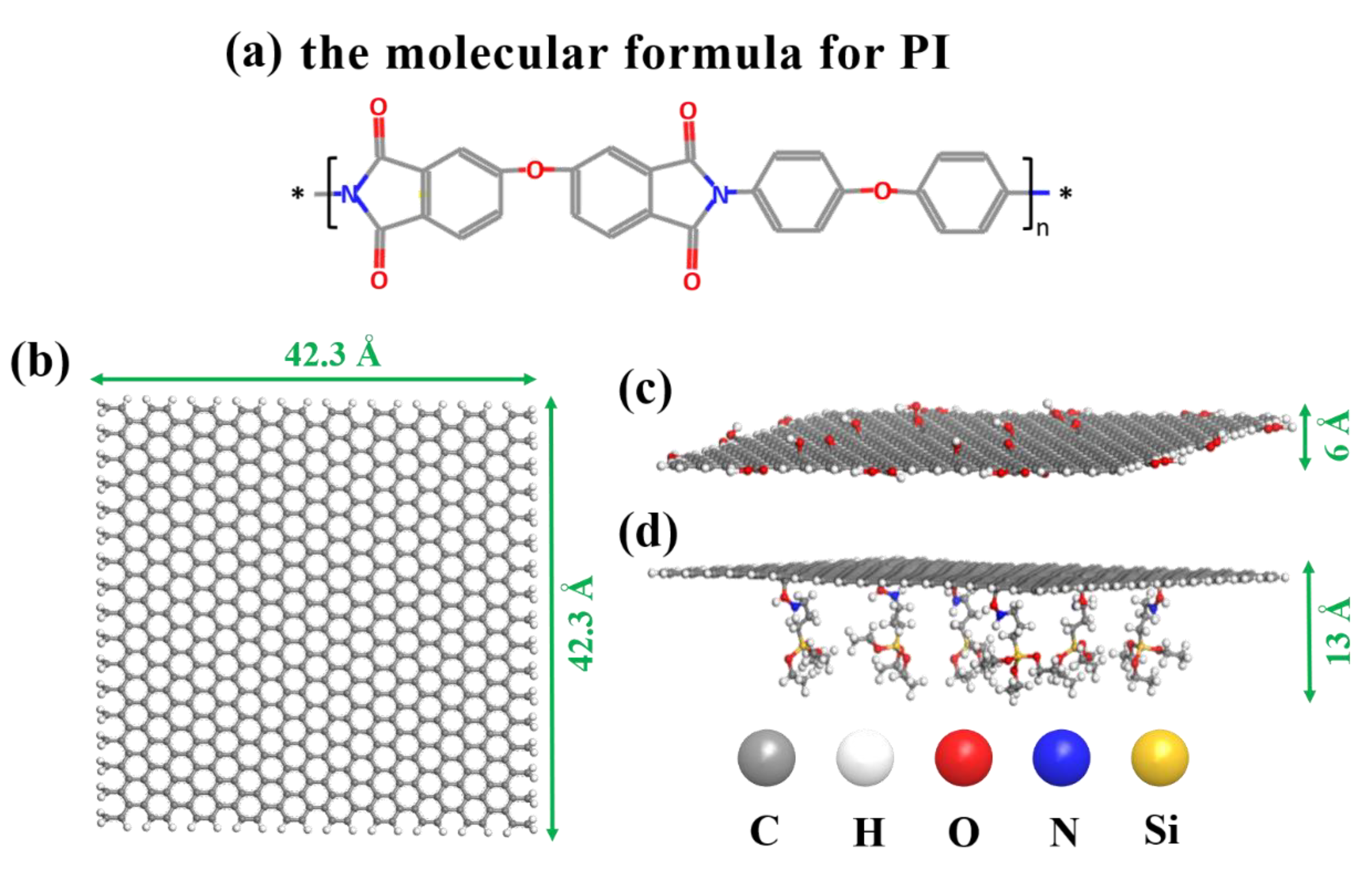
Figure 2.
The periodical cell of (a) PI, (b) GN/PI, (c) GO/PI, (d) K5-GO/PI.
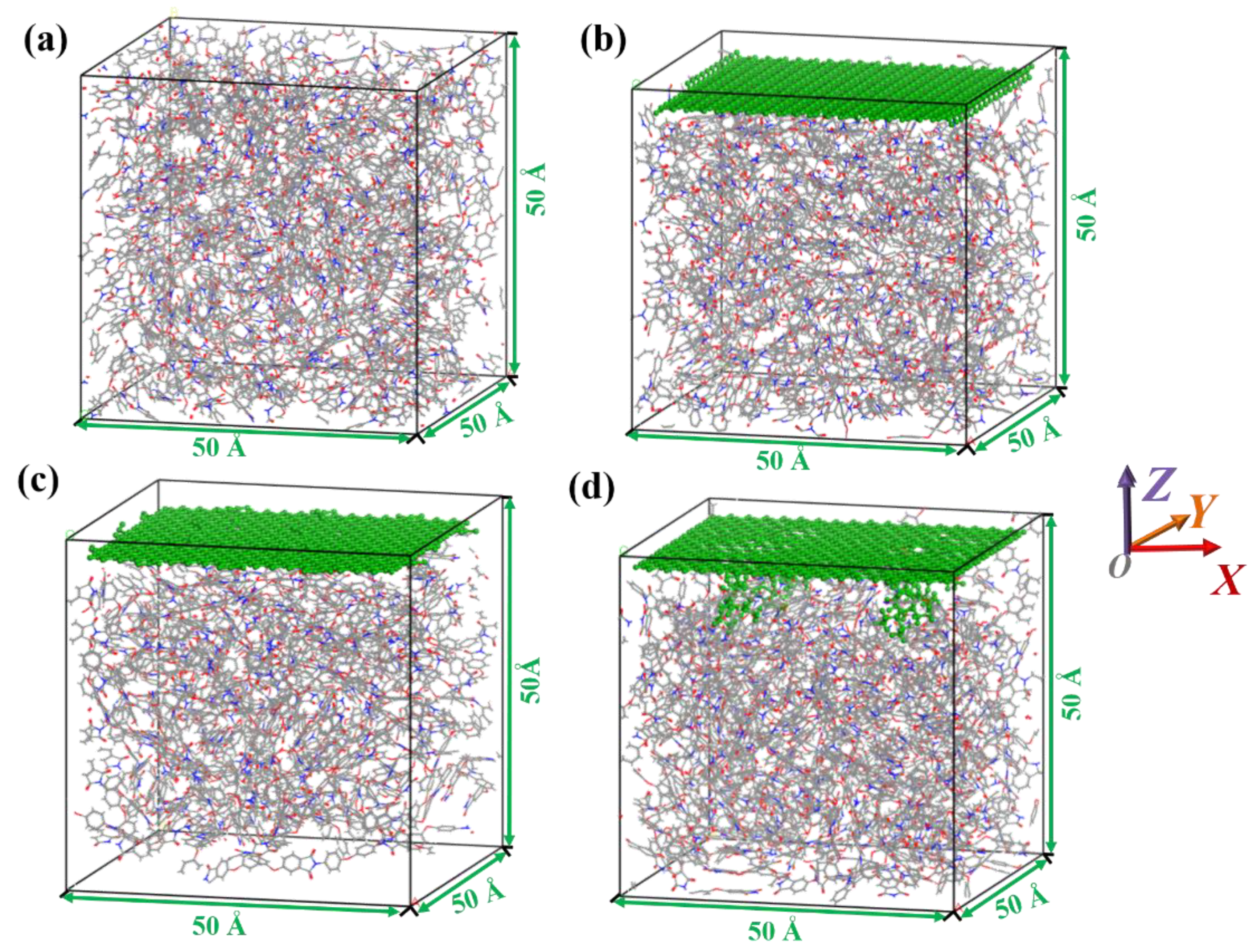
Figure 3.
The friction models of (a) PI, (b) GN/PI, (c) GO/PI, (d) K5-GO/PI composites sliding against Cu.
Figure 3.
The friction models of (a) PI, (b) GN/PI, (c) GO/PI, (d) K5-GO/PI composites sliding against Cu.
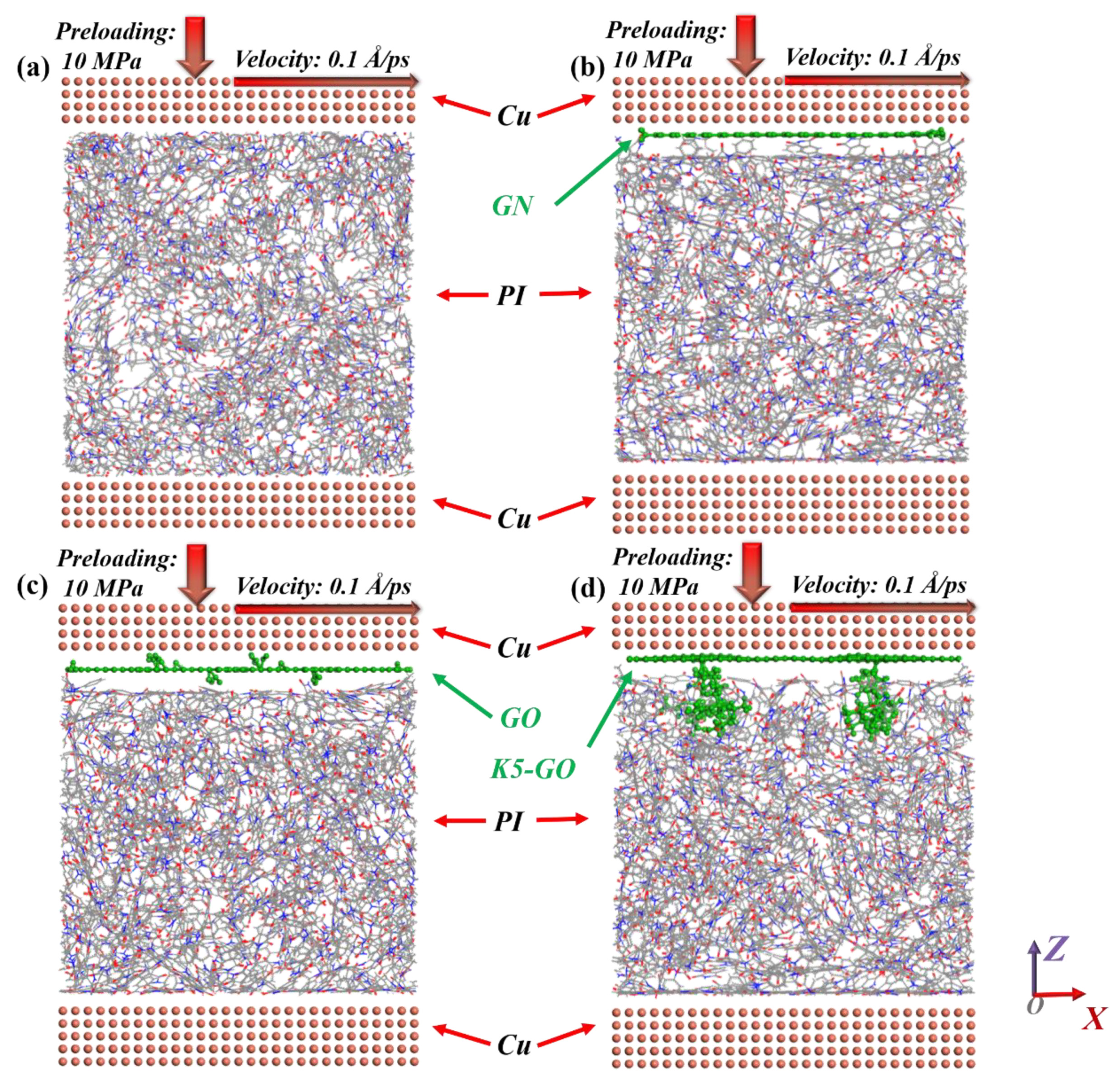
Figure 4.
The Young’s modulus and shear modulus of the PI composites.
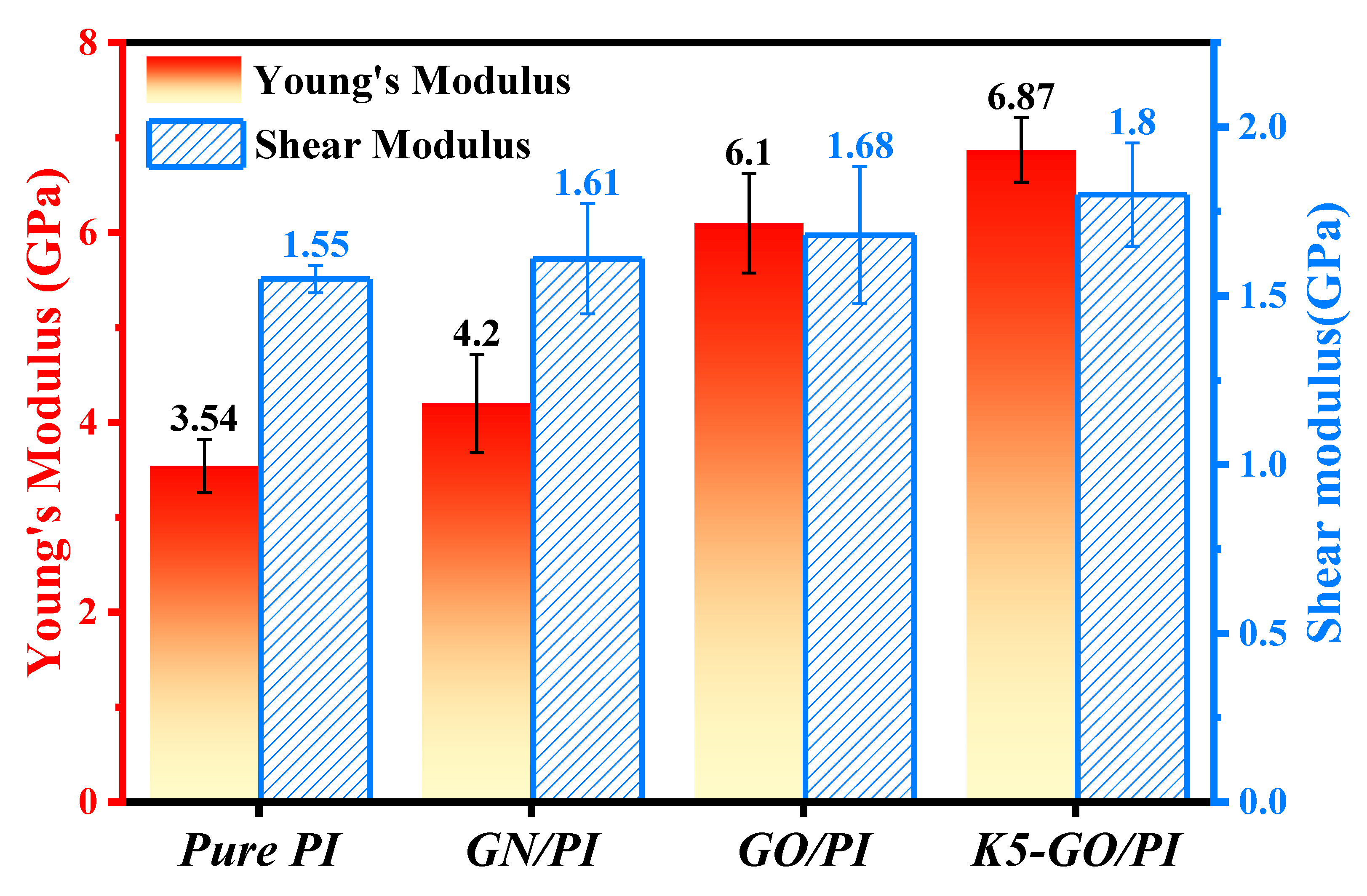
Figure 5.
The interaction energy between the modifier and PI.

Figure 6.
Friction coefficient variations of PI composites with time.
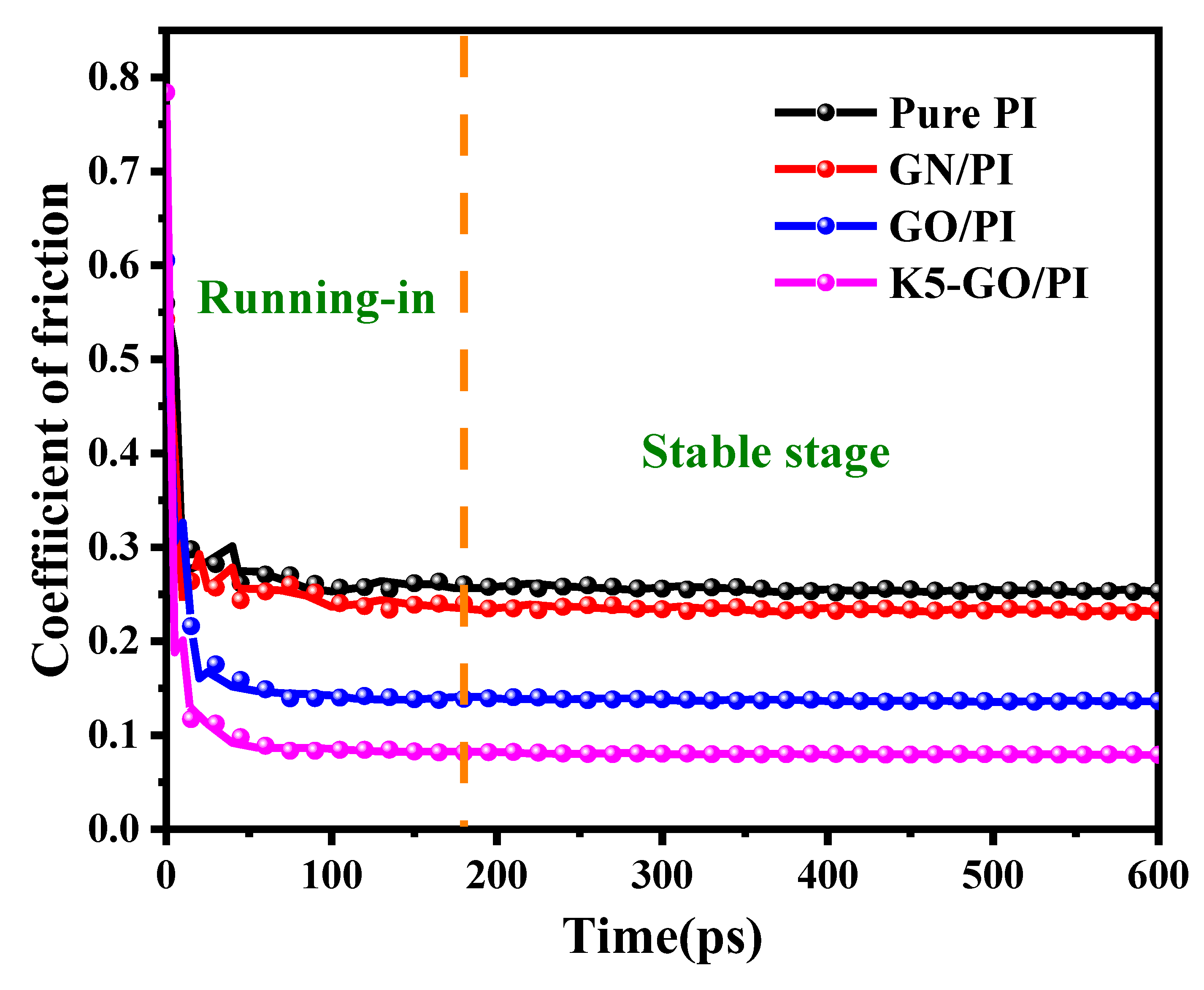
Figure 7.
Shear deformation of (a) Pure PI, (b) GN/PI, (c) GO/PI, (d) K5-GO/PI.
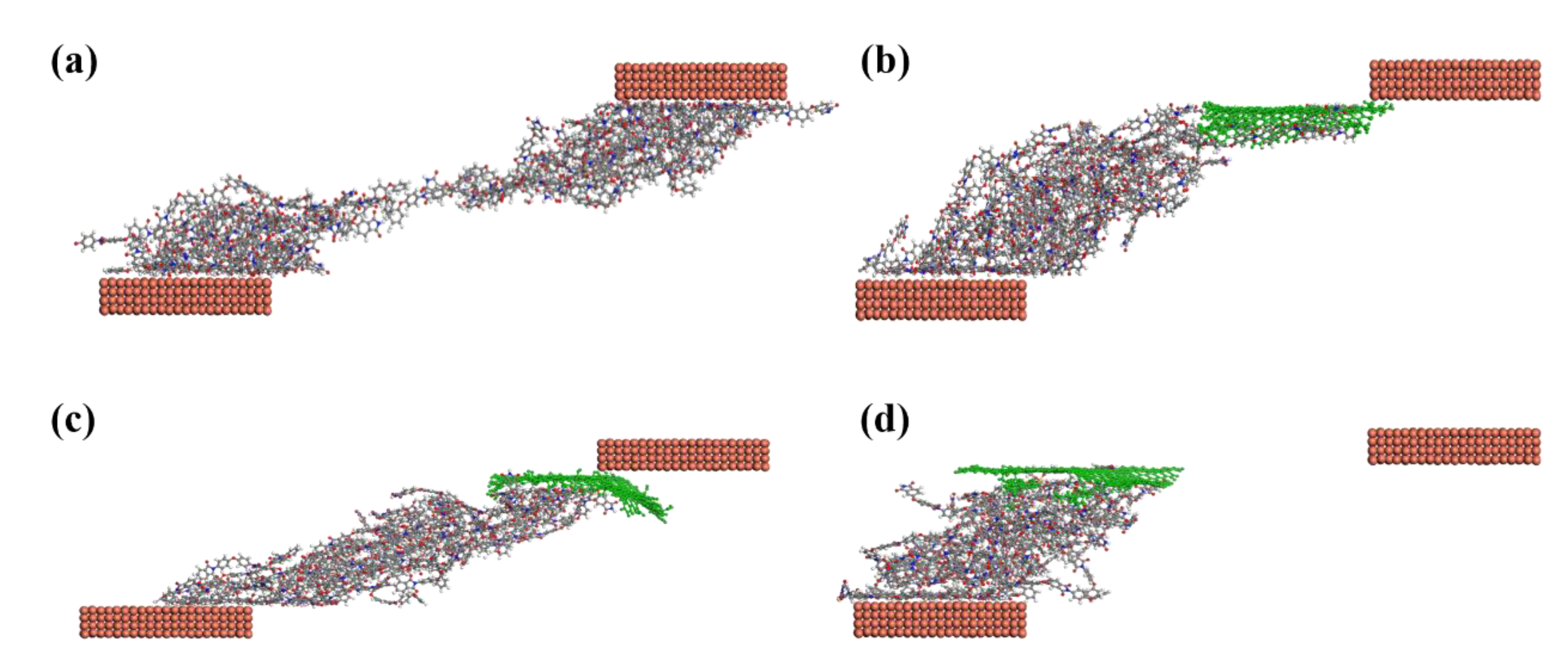
Figure 8.
The interaction energy between PI composite and the Cu layer.
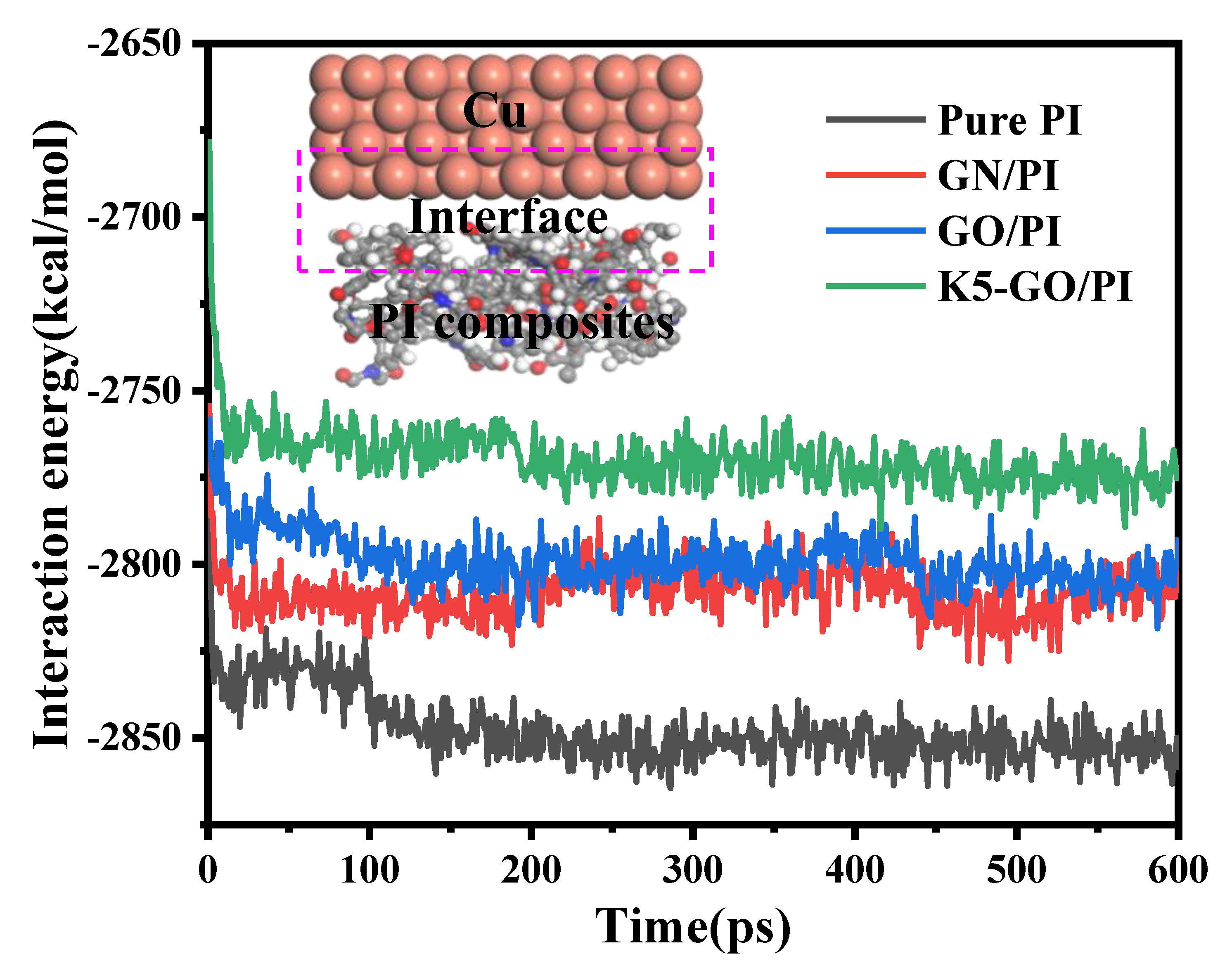
Figure 9.
Temperature profiles of PI composites in the thickness direction.
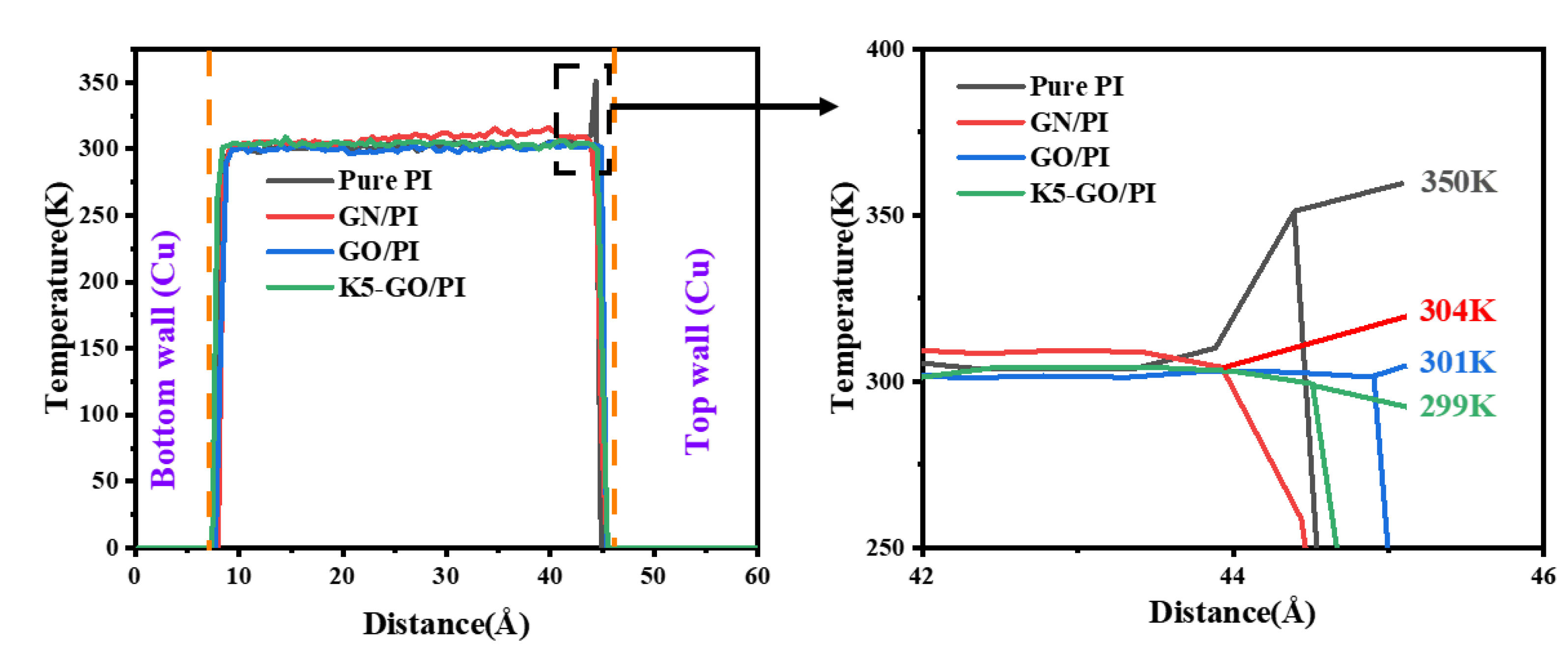
Figure 10.
Relative concentration of PI composites in the thickness direction.
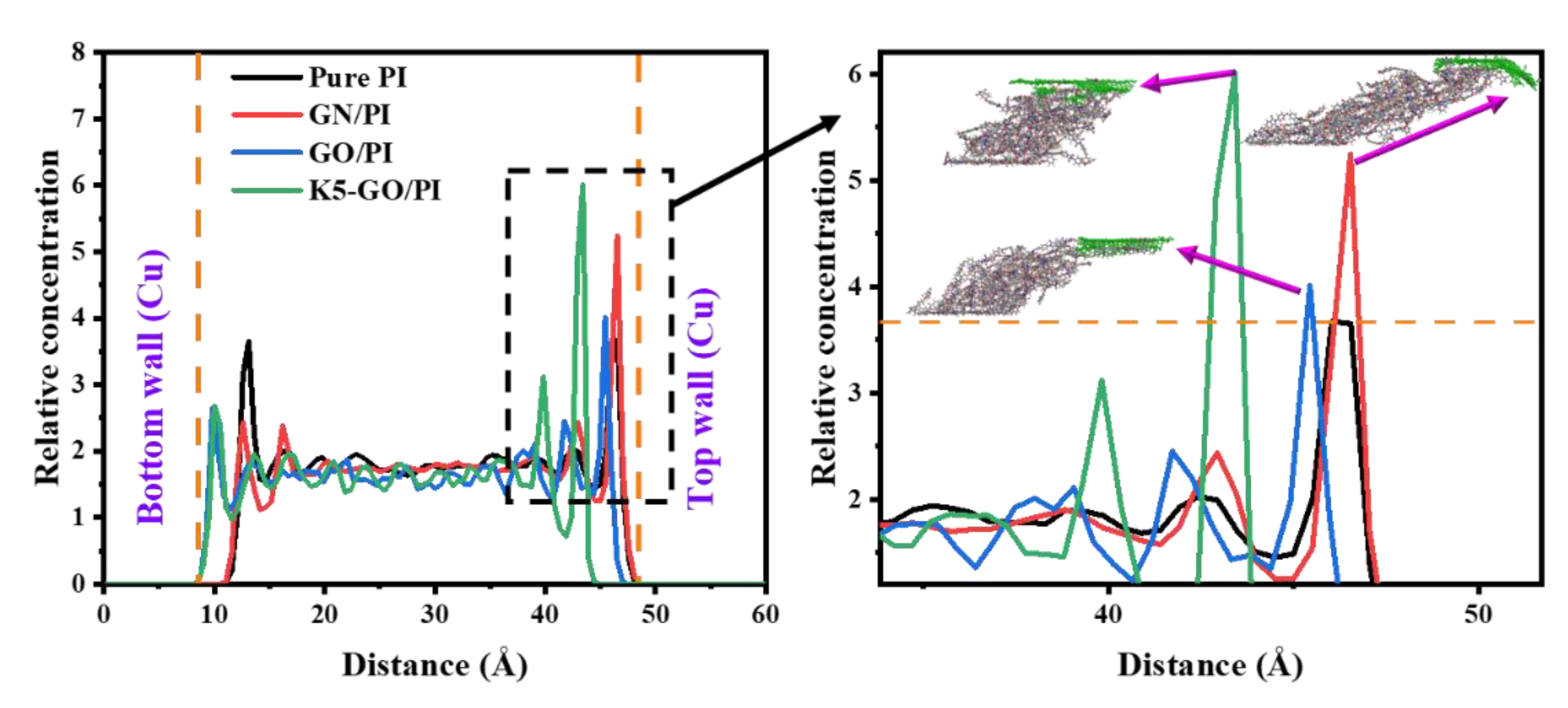

Table 1.
Optimization process.
| Optimization process | Algorithm | Convergence criterion | Temperature | Time |
|---|---|---|---|---|
| Geometry optimization | Smart | 1×10⁻⁴ kcal/mol 0.005 kcal/mol/Å |
/ | |
| Anneal | Nose thermostat | / | 300-600 K | |
| NVT | Nose thermostat | / | 300 K | 300 ps |
| NPT | Berendsen barostat | / | 300 K | 600 ps |
Disclaimer/Publisher’s Note: The statements, opinions and data contained in all publications are solely those of the individual author(s) and contributor(s) and not of MDPI and/or the editor(s). MDPI and/or the editor(s) disclaim responsibility for any injury to people or property resulting from any ideas, methods, instructions or products referred to in the content. |
© 2023 by the authors. Licensee MDPI, Basel, Switzerland. This article is an open access article distributed under the terms and conditions of the Creative Commons Attribution (CC BY) license (http://creativecommons.org/licenses/by/4.0/).
Copyright: This open access article is published under a Creative Commons CC BY 4.0 license, which permit the free download, distribution, and reuse, provided that the author and preprint are cited in any reuse.


