

Submitted:
03 May 2023
Posted:
04 May 2023
You are already at the latest version
Abstract
Man-made chemicals have played an important role in the development of our modern society. They have revolutionized such areas as healthcare and farming and they are essential in the manufacture of a wide range of consumer products. In studying the behavior of radionuclides and metals in the bottom sediment-water system, special attention is paid to identifying the forms of existence of pollutants in terms of substantiating their migration ability and, as a result, the po-tential for their subsequent spread, i.e. secondary pollution. On the example of bottom sediments of the Yenisei River, such radionuclides as K-40, Cs-137 are shown to be present mostly in the undecomposed residue. Eu-252 and Am-241 are associated with the organic component of bottom sediments, consisting of plant and animal remains, as well as soil washed away from the floodplain part of the river bed. The radionuclide Co-60, depending on the mineralogical composition of bottom sediments, can either be almost evenly distributed between the undecomposed residue and organic matter, or dominate in the undecomposed residue. Thus, it is shown that man-made ra-dionuclides can have a high tendency to migrate, both in the thickness of bottom sediments and between such phases as bottom sediments and water.
Keywords:
radiation and chemical pollution
; speciation
; Yenisei River
1. Introduction
Man-made chemicals have played an important role in the development of our modern society. They have revolutionized areas such as healthcare and farming and they are essential in the manufacture of a wide range of consumer products [1].
Unfortunately, some man-made chemicals can have effects that were not intended. These unintended impacts can harm the environment and our health and wellbeing. For example, the WHO estimate that 42 % of strokes could be prevented by reducing or removing human exposure to chemicals. For this reason, many chemicals (such as some pesticides) have been banned and others are in the process of being banned. Despite these bans, some chemicals stay in the environment for decades and continue to have a harmful effect. These are known as persistent chemicals [1,2,3,4].
The World Health Organization estimate that global production of chemicals will almost quadruple by 2050 when compared to 2010 production levels. It is highly important that any new chemicals which are proposed to be used and released in the environment are properly assessed at a very early stage. This is important to ensure that we do not make the same mistakes in allowing chemicals to be used which result in long-term environmental and health impacts [1].
Since the end of the last century a large number of investigations have been concerned with identifying the contribution of trace quantities of metals into the level of the contamination distribution in the earth crust and global ocean [5,6,7,8,9].
Terrestrial and water abiotic as well as biotic components among which different processes and exchanges occur can be divided into three non-living systems: air, water, solid components, and living systems: flora, fauna, including human beings [10,11,12]. All the elements of the periodic table can be included in these components in different concentrations. These concentrations depend on the chemical properties of elements and take part in creating a component matrix.
In river waters, the most stable and radioactive trace elements are distributed between the dissolved and suspended phases. These distributions depend on various parameters, including the chemical properties of the element, nature and concentration of suspended sediment particles, and physicochemical characteristics of the river water, such as pH and ionic strength. Most often, it is estimated by the apparent distribution coefficient (Kd, in l / kg), expressing the distribution of the element between two phases [10]. The greater the propensity of the radionuclide to be fixed onto particles, the higher the Kd value. Conversely, the more element remains in the solution, the lower it is.
In other words, the distribution of elements between two components is determined by their physico-chemical affinity to the matrix and transfer parameters controlled by the equilibrium in the systems under consideration. Exchange reactions inside or between the components are sometimes generated by pseudo-equilibrium, which may never be realized. The same principle is also applicable to multi-element compounds such as nutrients, as well as organic and inorganic contaminants. The element distribution among the components is also based on their physico-chemical properties. Earlier, several directions of the metal transfer were proposed based on the detailed study of the state of suspended particles, their propagation and motion [13]. However, so far there is not enough information on the special biogeochemistry of trace elements, their possible interaction with other particles (dissolved, colloidal and mineral ones) in a freshwater ecosystem [14,15,16,17]. In this respect, the distribution among the components is always unpredictable. This is always primarily connected with chemical and physical driving forces of the distribution reaction. This is also true for both biological and non-biological systems with a special focus on water ecosystems. Bottom sediments of water reservoirs are similar to soils in their composition, though due to continuous leaching of light particles in the bottom sediments there is a high percentage of heavy mineral particles (sand). In the last few years water, soils and air have been contaminated by isotopes of different man-induced elements.
The variety of migration flows of substances and forms of their transfer can be characterized by two main vectors – biogenic and abiotic ones. Here, the portion of a flow in the total migration flow depends on the heterogeneity and polydispersity of the bottom sediments. Therefore, in order to describe migration it is necessary, on the one hand, to study the migration processes of a substance (leakage, diffusion, dispersion etc.) and, on the other hand, to investigate the accumulation processes (particle sedimentation, mineral formation, sorption etc.) [18].
The aim of this review is to describe the processes of migration of radionuclides and metals in bottom sediments and possible ways of their interaction with the components of a freshwater ecosystem, using the Yenisei River as an example.
2. Bottom sediments
Bottom sediments and soils are characterized by porosity, specific water yield and water permeability which depend on the particles composing soft rock, namely, their form, their package character, granulometric content and initial cementation. Highly angular particles are usually disorderly located at sharp angles relative to each other, resulting in increasing porosity, water permeability, and specific yield of the rock at a given diameter of the particles. In the case of poor roundness of the particles, their close packing is observed, making the rock maximum packed. Well-rounded particles do not provide such rock conditions; thus, the rock porosity, permeability and specific yield of water are close to these characteristics of the rock formed by highly angular particles. Besides the angularity, the particle shape influences greatly their packing. Plate-like particles have a tendency to form orthogonal cracks, especially in the case of fine-grained material when weak adhesion forces are opposed to the light weight of the particles themselves, resulting in their motion and more close packing formation (Figure 1). Theoretically, ideal spherical particles can be packed up to the porosity from 25.95 to 47.64%, and the plate-like particles up to the porosity from zero to ~100% [19,20,21].
Almost all loose sediments contain a known quantity of consolidating material even if they seem completely unconsolidated. Clay and colloidal material which are present in all sediments except for the most washed ones have an envelope on the surface of coarser particles and the system of opened apertures in finer fractions. Clayish envelopes are mostly present in the soil layer located below the horizon (Figure 2), and its permeability can be reduced to a insignificant level of the initial value of the parent rock permeability [21,22].
Since clay expands when humidified, the permeability of the sediments consolidated by the clay material strongly depends on the rock moisture. Earth silicon, calcite, limonite and other consolidating materials which are usually to be found in sedimentary formations only slightly influence the permeability and water yield of soft sediments [108].
Presented in Figure 3 are the structures of the soil particles (of different origin), covered with an organic substance in different quantities [21,23].
Kaolinite is a typical representative of mineral clays and consists of 1-1 layers, with one layer being earth silicon with tetrahedral structure and the other being gibbsite with octahedral structure. Kaolinite has an inhomogeneous surface with its constant charge being due to isomorphic substitution. The charge between the two layers in the crystal structures results from hydroxyl groups, such as AlOH and SiOH located at the edges, subjected to protonation/deprotonation [24,25,26,27].
2.1. Mass transfer processes in bottom sediments and soils
The study of the processes of abiogenic (water) substance migration with gravitational moisture flows is based on the evidence on the soil cover structure as well as on a number of methodological principles: those of complementarity, consistency, responsiveness and directional selectivity of the processes, structural arrangement of the substances in space-time and filtration heterogeneity. The collection of phenomena encompassing the transformation pool of substances in ecosystems is intimately associated with the cycle of organic carbon which along with oxygen, hydrogen and nitrogen atoms can form various (and intermediate) types of organic compounds, which is the basis of life on the Earth. This cycle is intimately connected with other unique macroprocesses — photosynthesis, nitrogen fixation and humus formation. The former process is a stable and powerful source of newly formed bioorganic substances, free molecular oxygen and encoded information in synthesized organic and metal-organic compounds. The latter contributes to the formation of biological information storage and energy in soils. Climate conditions are responsible for the formation of dynamic, non-equilibrium and self-organized systems of different origin functioning in soils. In their creation and development a special part is played by various components of water-soluble organic substances (WOS) with acidic and complex-forming functions, which are considered to be a connecting (and typical) link between photosynthesis and humus formation [28].
The notions «humification» and «humus formation» are used in accordance with the investigations by Orlov D.С., Kaurichev I.С., Fokin А. D. etc. [28,29]. Humification is a mesoprocess including various reactions transforming organic substances of plant residues into new forms and states of chemical elements, which occurs both in soils and other landscape components (river bottom sediments, lake mud etc.). Humus formation is a macroprocess of formation, transformation and migration both of specific humus compounds (including WOS), and their derivatives with typomorphic (or other) metal ions. In space-time the humus formation is present in the form of organoprofile, as well as in the migration cycles of the soil formation and technogenesis products. [28,29].
The system of humus substances has been characterized both from chemical and ecological viewpoints: WOS components migrating in geological formations play various roles being, say, peculiar biogenic mechanism of the adaptation of living organism groups to extreme environment. Another possible mechanism of forming groups of low molecular organic substances (fulvic acid analogs) in soils and bottom sediments is so-called auto-catalytic reactions where the substances analogous to the reaction products should be present in the initial reagents for certain substances (for example, fulvic acids) to be synthesized. WOS are water-soluble organic substances with acidic, complex-forming allelopathic and other functions [28,29,30]. They act as a pattern of new structures which are to be self-organized and sampled in certain thermodynamical landscape conditions. There arises a possibility of uniting the functions of substances with their structural self-organization which can be observed in the non-equilibrium conditions of the development of bottom sediments and soils, given such gradients as heat, moisture, compound concentrations and electrical potentials which can resonate with the electromagnetic fields of the Earth and solar fluxes. Such interactions can enhance some (redox, biochemical, energy) and weaken other (transformational, allelopathic) functions of WOS. Therefore, their investigation is an urgent environmental objective. So far the peculiarities of the origin of WOS being the source of humus compounds have not been studied completely and differentiated. In geological formations WOS can result from waste products of prokaryotic (cyanobacteria) and eukaryotic weeds which induce «blooming» of water sources during the whole vegetation period [30,31,32].
A variety of migration flows of substances and their transfer forms can be characterized by two main vectors – biogenic and abiotic. The latter one is differentiated by its direction into the following particular flows: vertical descending, vertical ascending, intra-horizontal (diffusional), sidelong (lateral), surfacial (erosional) and intrasoil (in cascade transalluvial and transaccumulative geochemical landscapes).
The principle of the structural organization of substances allows one to determine more exactly the hierarchy and functions of various chemical compounds (biogenic, biofriendly, and techno-friendly ones) in certain ecosystems. The evaluation of the substance migration scale, migration barriers and migrating compound forms (simple and complex ions, molecules, associates, colloids, fine-dispersed suspensions, active functional groups) provides a more complete diagnostic both of soil formation products and transformation fluxes of man-made elements (radionuclides, as well as heavy and toxic metals) which play an active role in trophic chains [33,34,35].
The principle of filtration heterogeneity of the liquid phase substance composition of bottom sediments and soils predetermines a critical examination of the lysimeter results. Firstly, various composition of the migration forms of substances is connected with continuous sorption/desorption reactions, diffusion and chromatographic distinction of complex natural compounds (i.e., by renewing solid phase compounds) resulting from the group fractionation of the ecosystem living organisms as well as from the mobilization of water-soluble substances (WOS) of acidic nature into the solution and their migration in the bottom sediment and soil profile. Secondly, not all the components of the liquid phase were formed under present-day conditions. Thirdly, the response delay is manifested both in performing reactions and interactions in horizons and in substance migration [31,36].
Along with the above-mentioned phenomena, ascending flows appearing occasionally due to the gradient of the pore solution suction force play an important role in abiogenic (intraprofile) migration of the substances. During the seasonal ascending migration of the pore solutions to a dehydrated (heated or excessively cooled) surface soil layer, seldom does the liquid solution in the capillaries reach the day surface, transforming into vapor and ice at a certain depth. Various substances contained in the solution – organic, metal-organic complexes, simple and complex ions, colloids – precipitate on the soil particles. Here, the pore water is radically cleaned from the dissolved substances, suspensions and colloids. This process frequently repeated can result in forming new morphologically-expressed formations and accumulative microzones which are not appropriate to the main genetic horizons.
The term «abiogenic migration» is used to estimate the flow of substances which is not connected with their redistribution in soil and bottom sediments in the form of differently oriented motion of gravitational moisture. Here, consideration is mostly given to ion-molecular forms of water-soluble substances [28,29].
The driving forces of the migration are determined by two groups of factors: external and internal ones [37,38,39]. The former are characterized by landscape-climatic and orolithogenic conditions. Of significance are the specific character of the water catchment area and the intensity of the area water exchange [40]. The internal factors are appropriate to a certain type of soil and its location in the geochemical landscape and they are closely associated with biota functioning (type and successions of vegetation, its age, arrangement in biogeocenoses).
The main peculiarity of the abiotic WOS flows is that they provide a spatial interrelation of their formation zones with the zones of further migration and transformation (both of WOS and soil minerals). Another characteristic of this process is reaggregation inside the soil layer and structural transformation of the WOS components with a tendency to form fulvic compounds which are not saturated with metal ions. The mechanism of the native formation of the fulvic acid (FA) group can be based on sorption-catalytical reactions with minerals and colloids as well as complex-formation. [42,43,44].
2.2. Processes of metal and radionuclide accumulation by bottom sediments
It is believed that bottom sediments are natural archives of geochemical and geophysical processes resulting both from the natural processes of sedimentation and from the interaction with man-made radionuclides [45,46,47]. On the other hand, bottom sediments are an open thermodynamical system, with the energy and substances flowing through it. This does not allow reaching equilibrium states, which is compounded with the peculiar kinetics of the sedimentation processes combining very fast and extremely slow reactions (dissolving and sorption). The rate of these reactions can vary depending on the environmental conditions. However, the main chemical reactions may occur during some time period with the same level of probability. The radionuclides are known to be associated with the bottom sediments. Here, the radioisotopes can be located: 1) in pore solutions of the bottom sediments in the form of ions, organic and inorganic complexes, 2) on the bottom sediment particles in the cation-exchangeable form which are both tightly coupled due to the adsorption and co-sedimented with the oxides of other elements (for example, with Fe, Mn oxides), as well as included in the biomass of dead plants and microorganisms or in the structures of primary and secondary minerals of the bottom sediments [48,49]. Despite the variety of the existence forms, all the substances which are present in the bottom sediments take some part in the migration processes, including dissolving-deposition, adsorption-desorption, chemical gradient diffusion and diffusion into the mineral particle micropores. Therefore, the migration problem of the physicochemical forms of a substance in the bottom sediments is important for understanding how mineral geochemical peculiarities of the bottom sediments influence the reservoir geochemical cycles [50,51].
Besides particles of different minerals and inorganic salts (carbonates, silicates, nitrates, chlorides etc.), the bottom sediments and soils include the organic component: humic and fulvic acids, individual organic substances (aminoacides, polysaccharides etc.). The organic substances, in their turn, form metals which are complex by their composition – organic and organo-mineral complexes [49,51]. The part of the organic substance dissolved in alkali, deposited by acids (рН=1), is referred to as humic acid (its content in soil is up to 70 %) [49]. The part which can be dissolved both in acids and alkalis is a fulvic acid, while the one which can be dissolved neither in acids nor in alkalis is a humin. The humus substances are amorphous polyelectrolytes with a wide range of molecular mass – up to 1000 for the fulvic acids and 1000 – 50000 for the humic ones [28,29,49] (according to some evidence up to 1000000). It is shown [28,29,49,53] that these fractions include both aromatic and aliphatic components, their main building blocks being complex phenol and benzene carboxylic structures. These acids are closely interrelated and can be transformed into each other. They are good complexing substances as they have many functional groups and, consequently, they have many vacancies for metal ions, including radioisotopes, to be attached. Therefore, radionuclides can be found in soils in the form of soluble and insoluble complexes with humic and fulvic acids.
It is believed that soil particles are formed in the following way: a positively charged surface of the mineral particle is surrounded by negatively charged particles of hydrous ferric, aluminum and other oxides, where negatively charged silicic acid and organic colloids are then adsorbed [29].
Radionuclide migrations in fractured (rock) systems are controlled by a combination of processes, both macro- and microscopic ones. The comprehensive studies carried out during the last decades have shown that while flowing, the liquids are concentrated in the cluster of discrete faults of the geologic rocks or in the water area formed by the porosity, thus, influencing the migration and radionuclide retention. This phenomenon is widely described by the term «double porosity» or «matrix diffusion». Here, there occurs an exchange of mobile forms (solutions and colloids) between the fractions of the pore space and mineral structures due to the driving force of the concentration gradient, with the diffusion being caused by the Brownian motion [54,55,56].
The mechanisms of the radionuclide retention in the mineral component of soils can be different [21,24,58]. These are: а) reversible physical adsorption, b) chemosorption (reversible and irreversible), c) introduction of minerals into the crystal lattice and (or) exchange for cations located on the surface of mineral particles (Figure 4.).
Metals and radionclides can be adsorbed, forming 3-D solid phases in soils. These can be pure solids (for example, CdCO3, Pb(OH)2, ZnS2) or mixed solids (for example, (FexCr1-x)(OH)3, Ba(CrO4,SO4)). Mixed sediments are formed in the case of co-sedimentation of different elements. Here, several types of co-sedimentation can be observed: inclusion, adsorption, and formation of solid solutions, which are known to have a different type of coupling between microelements and mineral particles [25].
The presence of the species formation complex in the soil pore water can significantly influence the metal transfer through the soil matrix as compared to free metals. The complex formation can result in forms with a negative or positive charge or electron-neutral ones (for example, CdCl3+, CdCl-, CdCl2o). The metal complexes formed can be weaker or stronger coupled to the surface of soil particles as compared to the free ions of metals [60].
Some metals in the environment have more than one oxidation degree: arsenic - As(V) and As(III), selenium - Se(VI) and Se(IV), chrome - Cr(VI) and Cr(III), mercury - Hg(II) and Hg(I). Oxidation state of these metals determines their mobility ratio, bioavailability and toxicity. For example, Cr(VI), being quite mobile in soil is poorly sorbed by soil particles in addition to Cr(VI) being highly toxic. At the same time, Cr(III), which is rather immobile, is strongly sorbed on the soil particles and quickly forms insoluble sediments [61,62].
2.3. Reactions proceeding on the particles of bottom sediments
Adsorption is defined to be the accumulation of ions at the interface between the solid and liquid phases. Adsorption differs from sedimentation in metals being coupled to the surface of the existing soil particles rather than forming a new 3-D solid phase. The main soil matrix as well as the bottom sediment matrix include organic substances, clay minerals, iron and manganese oxides and hydroxides, carbonates and amorphous alumosilicates.
The organic matter of bottom sediments and soils includes 1) living organisms, 2) soluble biochemical substances (aminoacids, proteins, carbohydrates, organic acids, polysaccharides, lignin etc.), and 3) insoluble humic substances. The biochemical and humic substances provide the reaction centers (acidic functional groups such as, for example, carbonate and phenol compounds, ethanol, enol-ОН and amino-groups) for the metal sorption. The nature of organic matter in soil and its role in the metal retention in soil and bottom sediments are discussed in [51,63]. The migration ability of metals is increased in the biochemical form of the water-soluble metal complexes.
The main "associates" between the inorganic part and organic matter of the soil are mostly defined as [51]: (1) insoluble macromolecular complexes; (2) macromolecular complexes formed by the interconnected divalent and trivalent cations such as Ca2+, Fe3+, Al3+, (3) organic clays of the mineral complexes bound by polyvalent cations (clay-metal-humus), hydrogen bonds, as well as by other means, and (4) organic substances intercalated in the expansion interlayers of the clay minerals.
Humus substances, as mentioned above, consist of insoluble polymers of aliphatic and aromatic substances resulting from the influence on microorganisms. The humic substances contain a rather complicated mixture of the functional groups. Metal binding with organic substances includes the continuum of the reaction centers starting with weak attractive forces up to the formation of strong chemical bonds. The organic substances of the bottom sediments and soils can be the main source of the cation exchange capacity, with its value in surface layers being considerably higher than in lower layers due to a decrease in the organic matter content [51].
There are numerous investigations of adsorption properties of clay minerals, such as montmorillonite and kaolinite, as well as iron and manganese oxides. Jenne [64] makes a conclusion that oxides of iron and manganese are the main components of the surface of the bottom sediment particles controlling the metal mobility in soil and water. On the other hand, carbonate minerals can immobilize metals by the adsorption of nucleating centers on the surface of mineral particles [65,66,67,68,69].
Considerable amounts of non-toxic metals, iron and manganese can frequently be found under the conditions of limited oxidation state. In their oxidation states [Fe (III), Mn (IV)] react with the sediment hydroxides which are physiological electron acceptors for anaerobic microbial food chains. [136]. The final products, the reduced Fe- and Mn- [Fe (II) and Mn (II)], result in relatively soluble forms which can migrate in aerobic conditions. Under these conditions the reduction of the sediment can also be initiated by microorganisms [70,71,72,73]. The behavior of many toxic metals is closely connected with the mediated iron and manganese cycle since toxic metals can be immobilized (by co-sedimentation and sorption reactions with large amounts of iron and manganese oxides) or solubilized by chemical reactions using Fe (II) and Mn (II)] [74,75]. Thus, the most challanging inorganic compounds (e.g., Pb, Cr, U, Ni, Hg, Cd, Sr) are immobilized due to sorption and sedimentation.
There is a great variety of physical and chemical forces regulating interactions between geo-sorbents (soils and bottom sediments) and contaminations. These interactions are different from colloidal and electrochemical phenomena, such as acid-base and sorption reactions [25]. Physical, chemical, mineralogical and microbiological characteristics of soil can be studied in three ways in the case of more thorough direct microscopic soil observations, i.e. micro-morphology.
Taking into account a wide range of properties of potential geo-adsorbents (e.g. the types of organic substances and their abundance) and potential contaminants (e.g. organic, inorganic, soluble, insoluble, ionic and hydrophobic ones), a conclusion can be made by indirect observations of the behavior of the contaminating substances using the structure of the geo-absorbents.
The model of the surface complex-formation is often used to describe the adsorption behavior of metals and radionuclides. [21,24]. Several types of surface complexes can be formed between the metal and surface functional groups, which is determined by the degree of binding between the metal ions and the surface of the mineral particles. (Figure 5).
Metals in the diffuse and ionic associates or in the external complex sphere are not directly bound with the hydrated water. These ions are accumulated on the boundaries of the charged surfaces as a result of the interaction of electrostatic forces. Such reactions are fast and reversible and depend on the electron configuration of the surface groups and adsorption ion. The two metal-surface interactions are also referred to as exchange reactions since there occurs the introduction of other cations into the system, with the concentration being sufficient for the substitution or exchange of the initial cations in the system [24].
Metals connected with the exchange forms can be rather capable for migration, depending on the environment conditions. The possible substitution in metals can result in the existence of potentially mobile forms of metals in the soil and bottom sediments [76,77].
The time of the (de)sorption processes vary in the wide range from milliseconds (surface complex formation) up to several weeks or months (for some processes occurring in natural systems) [78]. In the first investigations of the interactions of metal ions dissolved in natural water systems [79,80,81,82] the constants of rates for some sorption processes taking several seconds are calculated [83]. However, these results are more relevant to dissolved homogeneous solutions and may not fully correspond to the processes occurring in bottom sediments. The calculation of the constants of the sorption rates for each investigation is an exponential function on the particle concentration. [84,85,86].
3. Mechanisms of including man-made radionuclides into the structures of the Yenisei River bottom sediments. Migration capability and mass transfer in the water flow of the Yenisei River
In the period from 1958 to 1992 the operation of the Mining and Chemical Combine (MCC) located in the town Zheleznogorsk 40 km downstream the city of Krasnoyarsk led to the radionuclide contamination of the water and bottom and floodplain sediments of the Yenisei River mainly with 137Cs, 60Co, 152Eu, 154Eu over long distances downstream from the discharge of radioactive elements [87]. After the shut-down of two direct-flow reactors in 1992 the amount of radionuclide discharged to the Yenisei River decreased by ten times and the radioecological situation improved. The systematic radioecological studies of the Yenisei River which included the analysis of the radionuclide contamination of water, bottom sediments, and river floodplain date back to 1972 [88,89].
Figure 6 presents a schematic map of the area under investigation and sampling site for the collection of bottom sediments.
3.1. Geochemical properties of the bottom sediments of the river Yenisei
Among the oxides found, only those of Fe and Mn can have different oxidation rates. The oxides of Si, Ti, Al, Fe partially exist in the free state unlike other oxides. The losses upon annealing mainly correspond to the loss of the sample weight due to the decomposition of organic substances with the release of non-metallic oxides, sulphites with the release of SO2 and carbonates with the release of СО2.
According to the weight content, the oxides are grouped in the following decreasing series:
SiO2>>Al2O3>Fe2O3>CaO, MgO, Na2O, K2O>TiO>MnO, P2O5.
This series is valid for all soil types, independent of their origin and depth. Only the ratio between the oxides considered is changed.
Considerable amounts of SiO2, and, consequently, those of silicon are convincingly described. Silicon compounds in soils originate mainly from mineral rocks, although they are transformed in the course of the soil formation. The general significance and role of silicon compounds in soils of different origin are determined by the following main statements [49]:
- Silicon compounds in the majority of bottom sediments and soils create their material basis, playing, thereby, a constitutional role.
- The quantitative distribution of silicon along the soil profile is one of the most important indicators of the occurring processes, and, according to the ratio SiO2:R2O3 or SiO2:Al2O3 the types of weathering profiles are distinguished.
- Many important properties of bottom sediments and flood-plane soils are directly connected with silicon compounds. The cohesion and viscosity of soils, their swelling capacity, capacity for the cation exchange etc. depend on the content and composition of aluminum silicates, i.e clay minerals.
Individual fragments included into the composition of the bottom sediments were qualitatively characterized by the sinchrotron radiation X-ray fluorescence analysis. The results are presented in Figure 7.
The mineral particles are found to be densely covered by organic substances and clay minerals. In this case, there is a considerable amount of various diatoms, which is characteristic of the bottom sediment samples and, especially, of the surface layers.
The material analysis of the individual mineral particle fragments of the bottom sediments under study was made. The results are presented in Figure 8.
The material composition of the coarsely ground fraction fragments for the bottom sediment samples and flood-plane soils under study was analyzed, i.e., after the elimination of clay minerals and organic substances.
Considerable differences in the elemental composition of the genetic fragments being compared can be caused mainly by the difference in the origin of the considered particle. The obtained results show that, in spite of the careful sample preparation for the analysis, it is impossible to achieve the sample homogeneity as a whole. The particles under study are of different origin, leading to significant differences in the granularity, chemical structure and porosity of the particles (of their surface) etc. This does not contradict to the earlier data on geochemical composition and physico-chemical properties of the bottom sediments and flood plane soils. [49,92,94].
The change in the macroelement content with the depth is not considerable. This can imply that the main matrix of the bottom sediment layers under study has similar geochemical properties and, essentially, does not depend on the sediment depth. This factor considerably influences the general distribution of radionuclides and metals entering from water.
However, the change in the microelement content can contribute into the distribution of radionuclides into migrating, potentially migrating and undissolved forms in the bottom sediments and flood plane soils.
Unlike the distribution of macroelements, the distribution of microelements between the layers of the bottom sediment under consideration has considerable differences. This especially concerns Zn, Pb, Th, As, Zr, whose content is changed up to the maximum value and drops; and Pb, Cr, Sr, whose content is changed down to the minimum value and increases in the bottom sediment sample of the Yenisei River. In the sample taken near the impact zone of the Mining and Chemical Combine, the content of Sr, Zn, Zr smoothly increases, depending on the depth, while the content of Cr decreases.
Such a non-uniform distribution of microelements between the layers of the bottom sediment sampled in a certain area is likely to be connected with the following:
- 1)
- Inhomogenuity of the rock, resulting in:
- 2)
- Absolute accumulation or release of elements due to the transfer of their compounds in the geologic profile and (or)
- 3)
- Relative accumulation (release) of elements due to the release (accumulation) of other chemical substances in the given layer.
The investigation of the binding forms of man-made radionuclides 60Co, 137Cs, 152Eu, 241Am in the bottom sediment sample using the system of sequential chemical fractionation [21,91,95,96] was carried out with the bottom sediment samples taken in the area of the Yenisei River (Figure 6). The fractionation scheme and distribution of the radionuclides between the fractions are presented in Table 1.
As is seen from the results presented, the ratio of the extracted forms of the radionuclides under study in the considered samples of the bottom sediments varies.
In the sample from Atamanovo (At): 48 % 241Am, 60 % 152Eu, 30 % 60Co and 7 % 137Cs, and in the sample from B.Balchug (Е): 82-85 % 241Am and 152Eu, 32 % 60Co and 16 % 137Cs of the total content were found to be present in the migrating and potentially migrating forms (fractions I-IV, Table. 1). A large part of the extracted radionuclides is connected with the organic fraction of the bottom sediment samples (fraction IV, Table 1): 60Co 12 and 18 %, 137Cs 3 and 9 %, 152Eu 40 and 68 %, 241Am 34 and 46 %, for the samples from Atamanovo and B.Balhug, correspondingly.
Some contribution into the migration ability of the radionuclides is made by «sesquioxide and hydroxides » (fraction III) and «carbonates» (fraction II), where the radionuclide content is the following: 60Co - about 12 %, 137Cs - 1.5-2.8 %, 152Eu – 17-14 %, 241Am – 14-29 % of the total amount of the absorbed radionuclides.
As a result, the migration ability of the considered bottom sediment samples was observed to decrease.
Since a large part of the radionuclides is extracted during the destruction of the organic fraction of the bottom sediment samples (Figure 8), considerable attention is to be given to the study of the components included into the composition of this fraction, these components being a humate-fulvic complex (HFC).
Figure 9.
The correlation dependences between the organic substance content in the bottom sediment samples (Сorg, %) and the radionuclides transferred into the solution during the destruction of fraction IV - «organic substance»: а) 152Eu and b) 241Am [21,90,91,96].
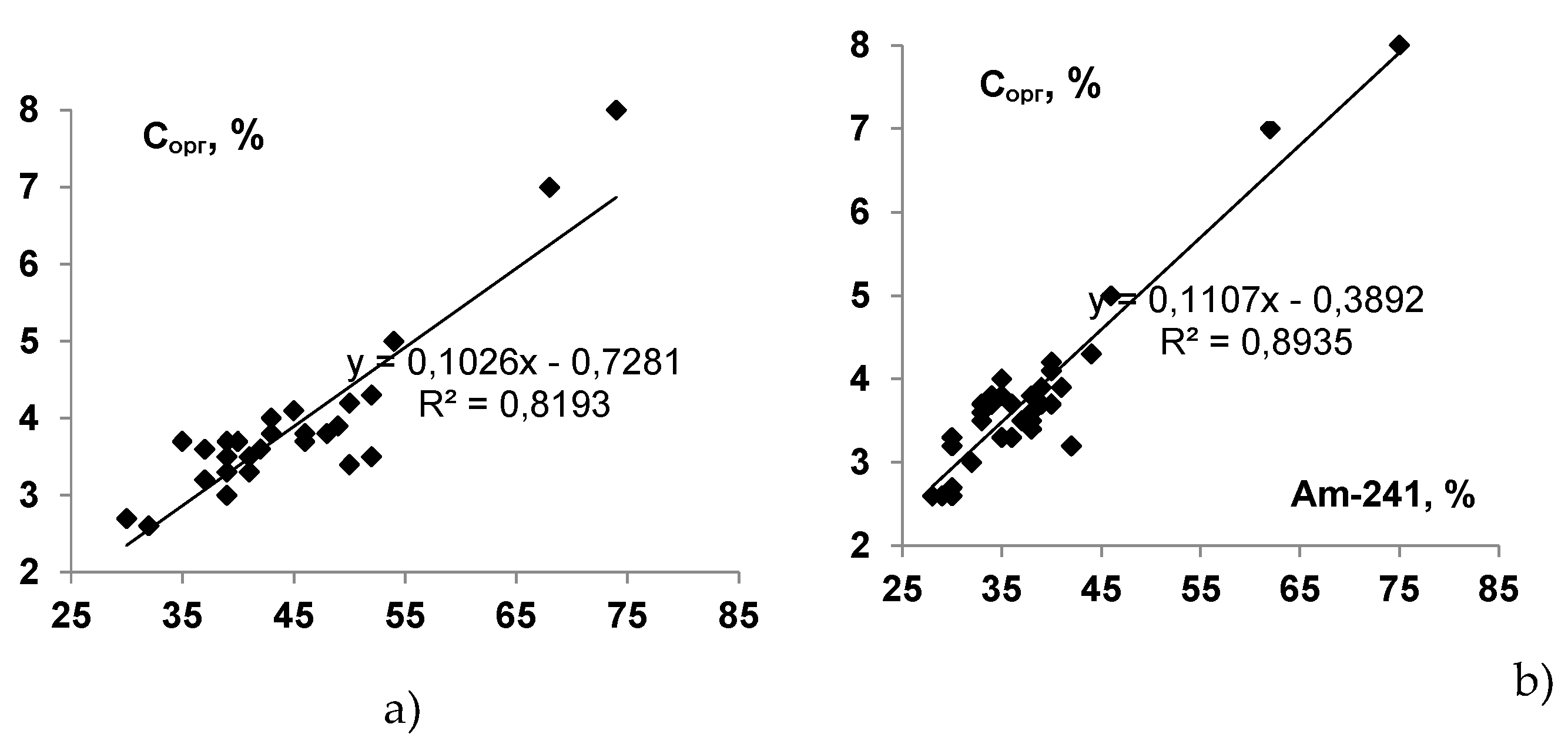
The main contribution to the radionuclide accumulation is made by the organic fraction of the bottom sediment. The interaction with this fraction results in the formation of humates and fulvates 152Eu, 241Am and 60Co, with the contribution of organo-mineral and metallo-organic radionuclide compounds being insignificant. The dependence of the radionuclide amount in the organic fraction of the bottom sediment on the content of low-molecular and free fulvic acids was shown. A considerable part of 152Eu (about 92 %) and 60Сo (24 %) present in the sample from B. Balchug are found to exist together with non-silicate iron compounds while in the sample from Atamanovo these are only 33 % and 6 %, correspondingly.
The series of the migration ability decrease in the bottom sediments sampled near the settlement Atamanovo -241Am ≈ 152Eu >60Co>137Cs and bottom sediments sampled near the settlement Bolshoy Balchug 241Am≈ 152Eu>60Co>137Cs were constructed. The presence of microparticles containing radionuclides, in particular, 241Am and 137Cs, can considerably influence the scheme of radionuclide distribution over the migration forms.
For 137Cs, the content in the migrating and potentially migrating forms in all the layers and samples of the bottom sediment does not vary considerably, i.e. within the error limits.
The undecomposed residue, from the viewpoint of the geochemical properties is a coarsely ground part of the bottom sediments consisting of insoluble crystalline structures. Moreover, included into the undecomposed residue are clay minerals deformed due to the chemical fractionation and a small part of insoluble organic substances. Hence, the radionuclides associated with the residue are bound either according to the mechanism of isomorphic inclusion into the crystal lattices of silicate structures (for example, the content of 137Cs correlates with the content of sand and clay minerals) [98], or result from the formation of compounds in the interlayer space of the clay minerals (for example, the interaction of 152Eu and 241Am with clay minerals).
4. Conclusion
Thus, the main mechanisms involved in the interaction of the man-made radionuclides with the bottom sediments of the Yenisei River are: 1) ion exchange with the ions located on the surface of mineral particles, 2) formation of complexes with the organic substances covering the surface of mineral particles, 3) incorporation into the crystal structures of the bottom sediment mineral particles and interlayer space of the clay minerals, 4) association with polymer films of sesquialateral oxides and hydroxides of Fe and Mn.
Data Availability Statement
Not applicable.
Conflicts of Interest
The author declares no conflict of interest.
References
- https://www.epa.ie/our-services/monitoring--assessment/waste/chemicals/ (accessed on 15.03.2023).
- https://www.epa.ie/our-services/monitoring--assessment/radiation/# (accessed on 15.03.2023).
- Hupfer, M.; Kleeberg, A. State and pollution of freshwater ecosystems - Warning signals of a changing environment. Global Change: Enough water for all? In: Lozán, J. L., H. Grassl, P. Hupfer, L.Menzel & C.-D. Schönwiese. Wissenschaftliche Auswertungen, Hamburg. 2007, 384 S.
- Ali, H.; Khan, E. Environmental chemistry in the twenty-first century. Environmental Chemistry Letters. 2017, 15(2), 329–346. Contaminated Sediment Management Strategy Forum; Environmental Protection Agency, Office of Water: Washington, DC, USA, 1992, 215 p.
- Quemerais, B.; Lum, K. R.; Lemieux, C. Concentrations and transport of trace metals in the St. Lawrence River. Aquat. Sci. 1996, 58, 52–68. [CrossRef]
- Schafer, J.; Blanc, G.; Audry, S. et al. Mercury in the Lot-Garonne River system (France): Sources, fluxes and anthropogenic component. Appl. Geochem. 2006, 21, 515–527. [CrossRef]
- Moatar, F.; Person, G.; Meybeck, M. et al. The influence of contrasting suspended particulate matter transport regimes on the bias and precision of flux estimates. Sci. Total Environ. 2006, 370, 515–531.
- Azadi, N. Ali; Mansouri, B.; Spada, L.; Sinkakarimi, M. H.; Hamesadeghi, Y.; Mansouri, A. Contamination of lead (Pb) in the coastal sediments of north and south of Iran: a review study. Chemistry and Ecology. 2018, 34(9), 884–900. [CrossRef]
- Marais, B. N.; Brischke, Ch.; Militz, H. Wood durability in terrestrial and aquatic environments – A review of biotic and abiotic influence factors. Wood material science and Engineering. 2020, 17(1), 2-24. [CrossRef]
- Franklin J. Mapping species distributions: spatial inference and prediction. (Cambridge University Press, 2009).
- Wisz M. S. Julien Pottier, W Daniel Kissling, Loïc Pellissier, et al. The role of biotic interactions in shaping distributions and realised assemblages of species: implications for species distribution modelling. Biological Reviews 88, 15–30 (2013). [CrossRef]
- Fôrstner, U.; Wittman, G.T.W. Metal Pollution in the Aquatic Environment (2nd edn). Springer Verlag, Berlin, 1983.
- Abril, J.M.; Fraga, E. Some physical and Chemical features of the variability of Kd distribution coefficient for radionuclides. J. Environ.Radioact. 1996, 30(3), 253-270. [CrossRef]
- C. Duvert, N. Gratiot, J. N´emery, A. Burgos, and O. Navratil Sub-daily variability of suspended sediment fluxes in small mountainous catchments – implications for community-based river monitoring. Hydrol. Earth Syst. Sci. Discuss. 2010, 7, 8233–8263.
- Budko, D.F.; Demina, L.L.; Travkina, A.V.; Starodymova, D.P.; Alekseeva, T.N. The Features of Distribution of Chemical Elements, including Heavy Metals and Cs-137, in Surface Sediments of the Barents, Kara, Laptev and East Siberian Seas. Minerals. 2022, 12, 328. [CrossRef]
- Turekian, K.K.; Wedepohl, K.H. Distribution of the elements in some major units of the earth’s crust. Geol. Soc. Am. Bull. 1961, 72, 175–182. [CrossRef]
- Davidson, C.; Ure, A. Chemical Speciation in the Environment. Wiley-Blackwell; 2 edition, 2001. 480 p.
- Logvinenko, N.V. Petrography of sedimentary rocks. M.: Higher. school 3rd ed., 1984. 416 p. (in Russian).
- Alloway, B. J. Sources of heavy metals and metalloids in soils. In: Heavy Metals in Soils: Trace Metals and Metalloids in Soils and their Bioavailability, Springer, Dordrecht, Netherlands, 2013, p. 11–50.
- Bondareva, L. Regularities of distribution of radionuclides in the ecosystem of the Yenisei River. Thesis of the Doctorate Degree, Moscow State University, Moscow, 2013, 368 p. (accessed on 15.03.2023). (in Russian).
- Shvanov, V. N.; Frolov, V. T.; Sergeeva, E. I. et al. Systematics and classification of sedimentary rocks and their taxes. St. Petersburg: Nedra, 1998, 352 p. (in Russian).
- Gitelson, I.I.; Abrosov, N.S.; Gladyshev, M.I. The main hydrological and hydrobiological characteristics of the Yenisei River. In book: Transport of carbon and minerals in major world rivers, lakes and estuaries. Part 5. Degens, E.T.; Kempe, S.; Naidu, A.S.; Mitt. Geol.-Palãont. Inst. Univ. Hamburg Heft. 1988, 66, 43-46.
- Sposito, G. The Chemistry of Soils. Oxford: Oxford Univ. Press, 1989.
- Van Olphen, H. Clay Mineralogy, An Introduction to Clay Colloid Chemistry. John Wiley & Sons, 1977.
- Yashin, I.M.; Shishov, L.L.; Raskatov, V.A. Methodology and experience in studying the migration of substances. Moscow, MSHA. 2001. 173 p.
- Machate, O., Schmeller, Dirk S.; Schulze, T.; Brack, W. Review: mountain lakes as freshwater resources at risk from chemical pollution. Environmental Sciences Europe, 2023, 35 (3), 1-15. [CrossRef]
- Orlov, D.S. Humic substances in the biosphere. Moscow, Nauka, 1993, 238 p. (in Russian).
- Orlov, D.S. Soil chemistry. Moscow, MGU. 1992, 487 p. (in Russian).
- Abrams, I.M., Organic Fouling of ion Exchange Resins, in: Pawlowski, L. (Ed.), Physicochemical Methods for Water and Wastewater Treatment, Studies in Environmental Science. Elsevier, 1982. pp. 213–224. [CrossRef]
- Baken, S.; Degryse, F.; Verheyen, L.; Merckx, R.; Smolders, E. Metal Complexation Properties of Freshwater Dissolved Organic Matter Are Explained by Its Aromaticity and by Anthropogenic Ligands. Environ. Sci. Technol. 2011, 45, 2584–2590. 1009. [CrossRef]
- Buffle, J.; Altmann, R.S.; Filella, M.; Tessier, A. Complexation by natural heterogeneous compounds: site occupation distribution functions, a normalized description of metal complexation. Geochim. Cosmochim. Acta 1990, 54, 1535–1553. [CrossRef]
- Perelman, A.I. Geochemistry of the landscape. Moscow, MGU, 1975, 342 p. (in Russian).
- Richter, D. D. Humanity’s transformation of earth’s soil: pedology’s new frontier. Soil Sci. 2007, 172, 957−967.
- USDA. Keys to Soil Taxonomy by Soil Survey Staff, 12th ed.; United States Department of Agriculture, Natural Resources Conservation Service: Washington, DC, 2014; https://www.nrcs. usda.gov/wps/PA_NRCSConsumption/download?cid= stelprdb1252094&ext=pdf (accessed on 07.04.2023).
- United States Geological Survey, 2011. Mineral commodity summaries. Reston, VA: http://minerals.usgs.gov/minerals/pubs/mcs/2011/mcs2011.pdf. (accessed on 07.04.2023).
- Yaron, B.; Dror, I.; Berkowitz, B. Soil-Subsurface Change. Berlin, Heidelberg. Springer Berlin Heidelberg. 2012. (also available at http://link.springer.com/10.1007/978- 3-642-24387-5) (accessed on 07.04.2023).
- Wuana, R.A.; Okieimen, F.E. Heavy Metals in Contaminated Soils: A Review of Sources, Chemistry, Risks and Best Available Strategies for Remediation. ISRN Ecology, 2011: 1–20. [CrossRef]
- Barange, M.; Field, J.G.; Harris, R.P.; Eileen E.; Hofmann, E.E.; Perry R.I.; Werner, F. Marine ecosystems and global change. Oxford: Oxford University Press; 2010. p. 464.
- Harper, M.P.; Davison, W.; Zhang, H. Kinetics of metal exchange between solids and solutions in sediments and soils. Geochim. Cosmochim. Acta. 1998, 62, 2757-2770. [CrossRef]
- Huang, H.; Geng, K.; Wang, C.; Wu, X.; Wei, C. Impact of Fulvic Acid and Acidithiobacillus ferrooxidan Inoculum Amount on the Formation of Secondary Iron Minerals. Int. J. Environ. Res. Public Health 2023, 20, 4736. [CrossRef]
- Abhijit, D.; Kumar, S. P.; Yogesh, C. S. Metallic contamination of global river sediments and latest developments for their remediation. J. Environ. Manag. 2021, 298, 113827. [CrossRef]
- Bashir, I.; Lone, F. A.; Bhat, R. A.; Mir, S. A.; Dar, Z. A.; Dar, S. A. Concerns and Threats of Contamination on Aquatic Ecosystems. Bioremediation and Biotechnology. 2020, 27, 1–26. [CrossRef]
- Aranganathan, L.; Rajasree, S. R. R.; Govindaraju, K.; Kumar, S. S.; Gayathri, S.; Remya, R. R.; et al. Spectral and microscopic analysis of fulvic acids isolated from marine fish waste and sugarcane bagasse co-compost. Biocatal. Agric. Biotechnol. 2020, 29, 101762. [CrossRef]
- Garcia-Orellana, J.; Pates, J.M.; Masque, P. et al. Distribution of artificial radionuclides in deep sediments of the Mediterranean Sea. Sc. Total Environ. 2009, 407, 887-898. [CrossRef]
- Harper, M.P.; Davison, W.; Zhang, H. Kinetics of metal exchange between solids and solutions in sediments and soils. Geochim. Cosmochim. Acta. 1998, 62, 2757-2770. [CrossRef]
- Bragea, M.; Perju, D.; Brusturean, A. et al. Influence of distribution coefficients on the transfer of radionuclides from water to geological formation. Buletinul Stiitific al Universitatii “Politehnica” din Timisoara. Seria Chimie Si Ingineria Mediului. Chem. Bull. “Politehnica” Univ. (Timisoara). 2008, 53, 1-2.
- Bryan, G.W., Langston, W.J. Bioavailability, accumulation and effects of heavy metals in sediments with special reference to United Kingdom estuaries: a review. Environ Pollut. 1992, 76(2), 89–131. [CrossRef]
- Orlov, D.S.; Sadovnikova, L.K.; Sukhanova, N.I. Soil chemistry. Moscow, Higher School, 2005, 558 p. (in Russian).
- Mattigod, S.V.; Sposito, G.; Page, A.L. Factors affecting of trace metals in soils. In book: Chemistry in the soil environment. Am. Soc. Agron. Madison Wis. 1981, p. 203-221.
- Stevenson, F.J. Humus Chemistry: genesis, composition, reactions. 2nd ed. – New York: Wiley. 1994, 496 p.
- Uspenskaya, E.V.; Syroeshkin, A.V.; Pleteneva, T.V.; Kazimova, I.V.; Grebennikova, T.V.; Fedyakina, I.T.; Lebedeva, V.V.; Latyshev, O.E.; Eliseeva, O.V.; Larichev, V.F.; et al. Nanodispersions of Polyelectrolytes Based on Humic Substances: Isolation, Physico-Chemical Characterization and Evaluation of Biological Activity. Pharmaceutics 2021, 13, 1954. [CrossRef]
- YAO, Wen-bin; HUANG, Lei; YANG, Zhi-hui; ZHAO, Fei-ping. Effects of organic acids on heavy metal release or immobilization in contaminated soil. Trans. Nonferrous Met. Soc. China. 2022, 32, 1277−1289. [CrossRef]
- Aromaa, H.; Voutilainen, M.; Ikonen, J.; Yli-Kaila, M.; Poteri, A.; Siitari-Kauppi, M. Through diffusion experiments to study the diffusion and sorption of HTO, 36Cl, 133Ba and 134Cs in crystalline rock. J. Contam. Hydrol. 2019, 222,101-111. [CrossRef]
- Boomer, D.W.; Powell, M.J. Determination of uranium in environmental samples using inductively coupled plasma mass spectrometry. Analytical Chemistry. 1987, 59, 2810–2813. [CrossRef]
- Bostick, W.D. et al. Use of apatite and bone char for the removal of soluble radionuclides in authentic and simulated DOE groundwater. Advances in Environmental Research. 2000, 3 (4), 488–498.
- Wauters, J.; Sweeck, L.; Valcke, E.; Elsen A.; Cremers A. Availability of radiocaesium in soils: a new methodology. SPRI-CEC Meeting The dynamic behaviour of radionuclides in forests, May 18-22 1992, Stockholm, Sweden, 1992.
- Mattigod S.V., Sposito G., Page A.L. Factors affecting of trace metals in soils. In Chemistry in the soil environment // Am. Soc. Agron. Madison Wis. – 1981. – P. 203-221.
- Suazo-Hernández, J.; Arancibia-Miranda, N.; Mlih, R.; Cáceres-Jensen, L.; Bolan, N.; Mora, M.d.l.L. Impact on Some Soil Physical and Chemical Properties Caused by Metal and Metallic Oxide Engineered Nanoparticles: A Review. Nanomaterials 2023, 13, 572. [CrossRef]
- Bermond, A.; Yousfi, I.; Ghestem, J.P. Kinetic approach to the chemical speciation of trace metals in soils. Analyst, 1998, 123, 785-789. [CrossRef]
- Cances, B.; Ponthieu, M.; Castres-Rouelle, M.; Aubry, E.; Benedetti, M.F. 2003. Metal ions speciation in a soil and its solution: experimental data and model results. Geoderma, 2003, 113, 341-355. [CrossRef]
- Rolland, B. Transfert des radionucléides artificiels par voie fluviale : conséquences sur les stocks sédimentaires rhodaniens et les exports vers la Méditerranée. Thèse, Université Paul Cézanne d'Aix-Marseille, 2006, 243p.
- Meyers, S. K., Deng S., Basta N. T., et al. Long-Term Explosive Contamination in Soil: Effects on Soil Microbial Community and Bioremediation. Soil and Sediment Contamination. An International Journal. 2007, 16, 61-77. [CrossRef]
- Jenne, E.A. Controls on Mn, Fe, Co, Ni, Cu and Zn Concentrations in Soils and Water: The Significant Role of Hydrous Mn and Fe Oxides. Advances Chemistry Series. 1968, 73, 337-388.
- Santillan-Medrano, J.; Jurinak, J.J. The chemistry of lead and cadmium in soil: Solid phase formation. Soil Sci. Soc. Amer. Proc. 1975, 39, 851-856. [CrossRef]
- McLean, Joan E.; Bledsoe, Bert E. Behavior of Metals in Soils. United States Environmental Protection Agency, Office of Research and Development, EPA/540/S-92/018, October 1992.
- McBride, M. B.; Blasiak, J. J. Zinc and copper solubility as a function of pH in an acidic soil. Soil Sci.Soc. Am. J. 1979, 43, 866-870. [CrossRef]
- McBride, M. B. Chemisorption of Cd2+ on calcite surfaces. Soil Sci. Soc. Am. J. 1980, 44, 26-28. [CrossRef]
- Jurinak, J. J.; Bauer, N. Thermodynamics of zinc adsorption on calcite, colomite, and magnesite-type minerals. Soil Sci. Soc. Am. Proc. 1956, 20, 466-471. [CrossRef]
- Nelson, Y.M.; Lion, L. W. Formation of biogenic manganese oxides and their influence on the scavenging of toxic trace metals”. In book: Geochemical and Hydrological Reactivity of Heavy Metals in Soils. Ed by: H.M. Selim and W.L. Kingerly, Eds., CRC Press. 2003.
- Nelson, Y.M., Lion, L. W., Shuler, M.L. et al. Lead adsorption to mixtures of biogenic Mn oxides and Fe oxides. Environmental Science and Technology. 2002, 36, 421-425.
- Nelson, Y.M.; Lion, L.W.; Ghiorse, W.C. Production of biogenic Mn oxides by Leptothrix discophora SS-1 in a chemically defined growth medium and evaluation of their Pb adsorption characteristics. Appl. Environ. Microbiol. 1999, 65, 175-180. [CrossRef]
- Nelson, Y. M. Modeling toxic metal adsorption in aquatic environments. Presented to the Chinese Academy of Sciences, Institute of Geochemistry, Guangzhou, China, Sept. 20, 1999 and at Jilin University Dept. of Environmental Science, Changchun, China, Sept. 15, 1999.
- Silviera, D. J.; Sommers, L. E. Extractability of copper, zinc, cadmium, and lead in soils incubated with sewage sludge. J. Environ. Qual. 1977, 6, 47-52. [CrossRef]
- Latterell, J. J.; Dowdy, R. H.; Larson W. E. Correlation of extractable metals and metal uptake of snap beans grown on soil amended with sewage sludge. J. Environ. Qual. 1978, 7, 435-440. [CrossRef]
- Raewyn, M. Town and Montserrat Filella. Size fractionation of trace metal species in freshwaters: implications for understanding their behaviour and fate. Reviews in Environmental Science and Biotechnology. 2002, 1 (4), 277-297.
- Comber, S.D.W.; Gunn, A.M. Heavy metals entering sewage treatment works from domestic sources. J.CIWEM. 1996, 10, 137-142. [CrossRef]
- Millward, G.E.; Liu, Y.P. Modelling metal desorption kinetics in estuaries. Science of The Total Environment. 2003, 314-316, 613-623. [CrossRef]
- Hatje, V.; Payne, T.E.; Hill, D.M. Kinetics of trace element uptake and release by particles in estuarine waters: effects of pH, salinity, and particle loading. Environment International, 2003, 29, 619–629. [CrossRef]
- Francois, L.L.; Kester, Dana R. Voltammetric determination of the complexation parameters of zinc in marine and estuarine waters. Marine Chemistry. 1991, 33, 71-90.
- Titley, J.G.; Glegg, G.A.; Glasson, D.R. et al. Surface areas and porosities of particulate matter in turbid estuaries. Continental Shelf Research. 1987, 7, 1363-1366. [CrossRef]
- Jannasch, H.W.; Honeyman, B.D.; Balistrieri, L.S. et al. Kinetics of trace element uptake by marine particles. Geochim Cosmochim Acta. 1988, 52, 567–77. [CrossRef]
- Honeyman, B.D.; Santschi, P.H. Metals in aquatic systems. Environ Sci Technol. 1988, 22, 862–871. [CrossRef]
- Honeyman, B.D.; Santschi, P.H. A Brownian-pumping model for oceanic trace metal scavenging: evidence from Th isotopes. J Mar Res. 1989, 47, 951–992. [CrossRef]
- McNaught, A.D.; Wilkinson, A. Compendium of Chemical Terminology – IUPAC Recommendations 2nd Edn. Oxford: Blackwell Science Ltd, 1997.
- OECD Nuclear Energy Agency. – 1999. Speciation Techniques and Facilities for Radioactive Materials at Synchrotron Light Sources, Paris: OECD Nuclear Energy Agency. Workshop Proceedings from the 1st Euroconference and NEA Workshop on Speciation Techniques and Facilities for Radioactive Materials at Synchrotron Light Sources, Grenoble, 1998.
- Vakulovski, S.M.; Kryshev, I.I.; Nikitin, A.I.; Savitski, Yu.V.; Malyshev, S.V.; Tertyshnik, E.G. Radioactive contamination of the Enisey-river. J. Environ.Radioactivity, 1995, 29(3), 225–236.
- Vakulovsky, S.M.; Tertyshnik, E.G.; Kabanov A. I. Radionuclide transport in the Enisei River. Atomic Energy, 2008, 105 (5), 367–375.
- Sukhorukov, F.V., Degermendzhy, A.G., Belolipetsky, V.M., et al. Distribution and Migration of Radionuclides in the Yenisei Plain. Publ. House of SB RAS “Geo”, Novosibirsk, 2004, 286 p.
- Bondareva, L.; Rakitskii, V.; Tananaev, I. The behavior of natural and artificial radionuclides in a River System: The Yenisei River, Russia as a case study. In book: Water quality. Ed. by Hlanganani Tutu, 2017, ISBN: 978-953-2882-3, 361-375.
- Bondareva, L. The relationship of mineral and geochemical composition to artificial radionuclide partitioning in Yenisei River sediments downstream from Krasnoyarsk. Environmental Monitoring and Assessment. 2012, 184 (6), 3831–3847. [CrossRef]
- Drever, J. I. The geochemisty of natural waters. Prentice Hall. Englewood Cliffs, New Jersey, 1997, 437 p.
- Garrels, R. M.; Christ, C. L. Solutions, Minerals, and Equilibria: Harper and Row. New York, 1995, 450 p.
- Sparks, D. L. Environmental Soil Chemistry. Academic Press. San Diego,USA, 2003, 267 p.
- Baeyens, W.; Monteny, F.; Leermakers, M. et al. Evalution of sequential extractions on dry and wet sediments. Anal Bioanal Chem. 2003, 376, 890–901. [CrossRef]
- Bondareva, L.; Fedorova, N. The effect of humic substances on metal migration at the border of sediment and water flow. Environmental Research, 2020, 109985. [CrossRef]
- Pavlotskaya, F.I. Migration of radioactive products of global fallout in soils. Moscow, Atomizdat, 1974, 216 p. (in Russian).
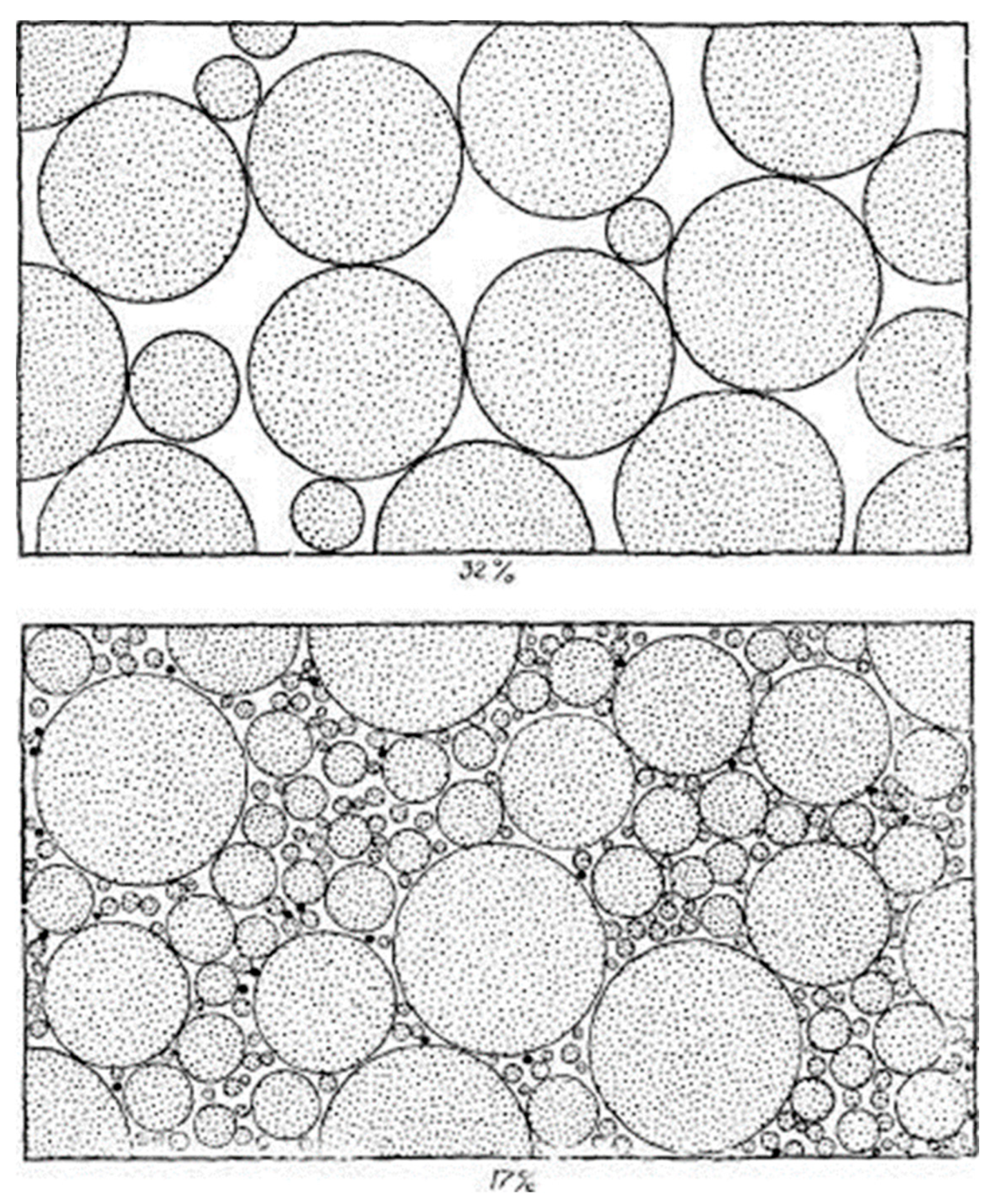
Figure 2.
Thin rock sections: the clay particles (denoted by the dots) envelope the sand particles [21,22].
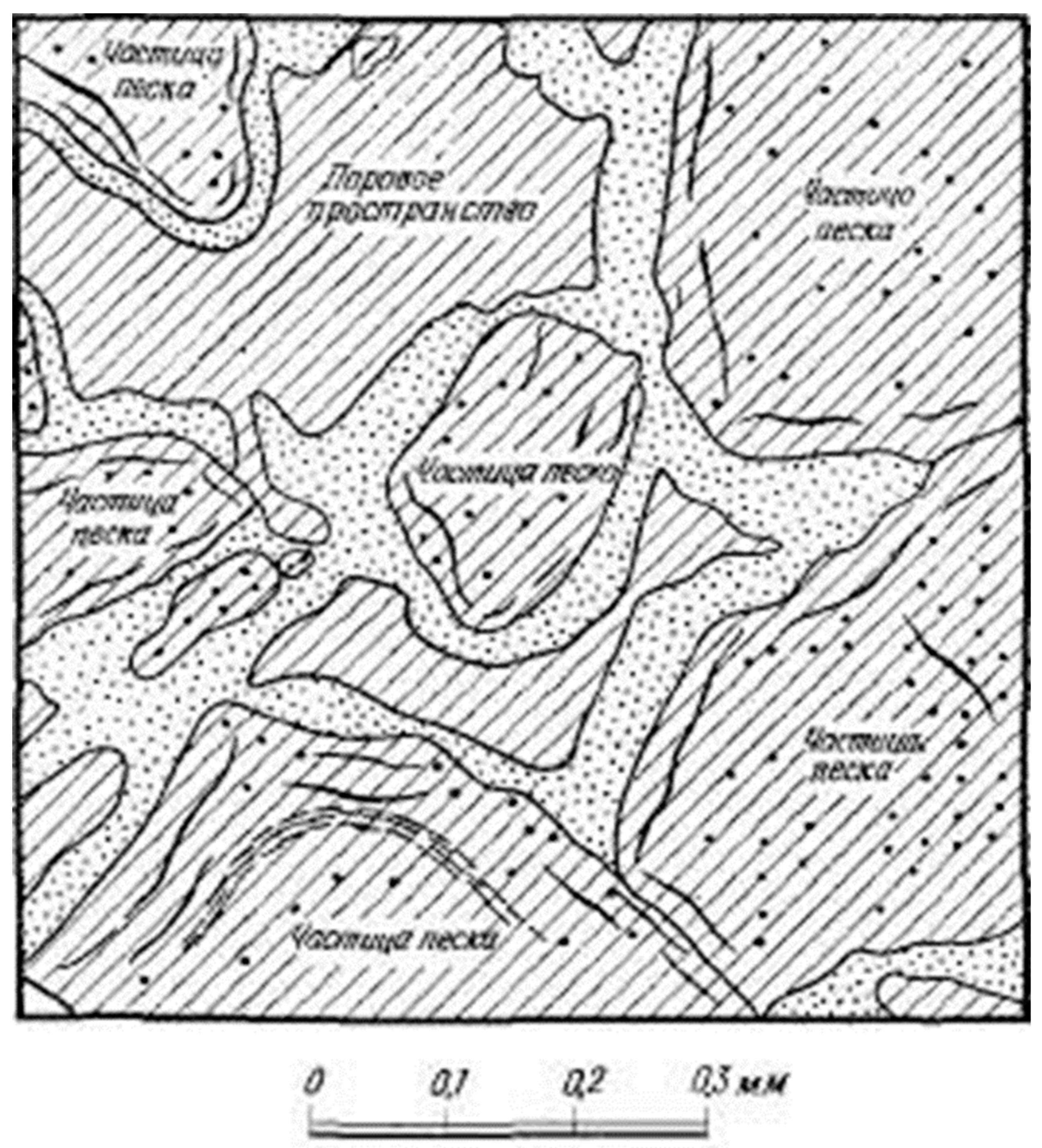
Figure 3.
Soil particles: а) loam, b) montmorillonite, covered with an organic substance.
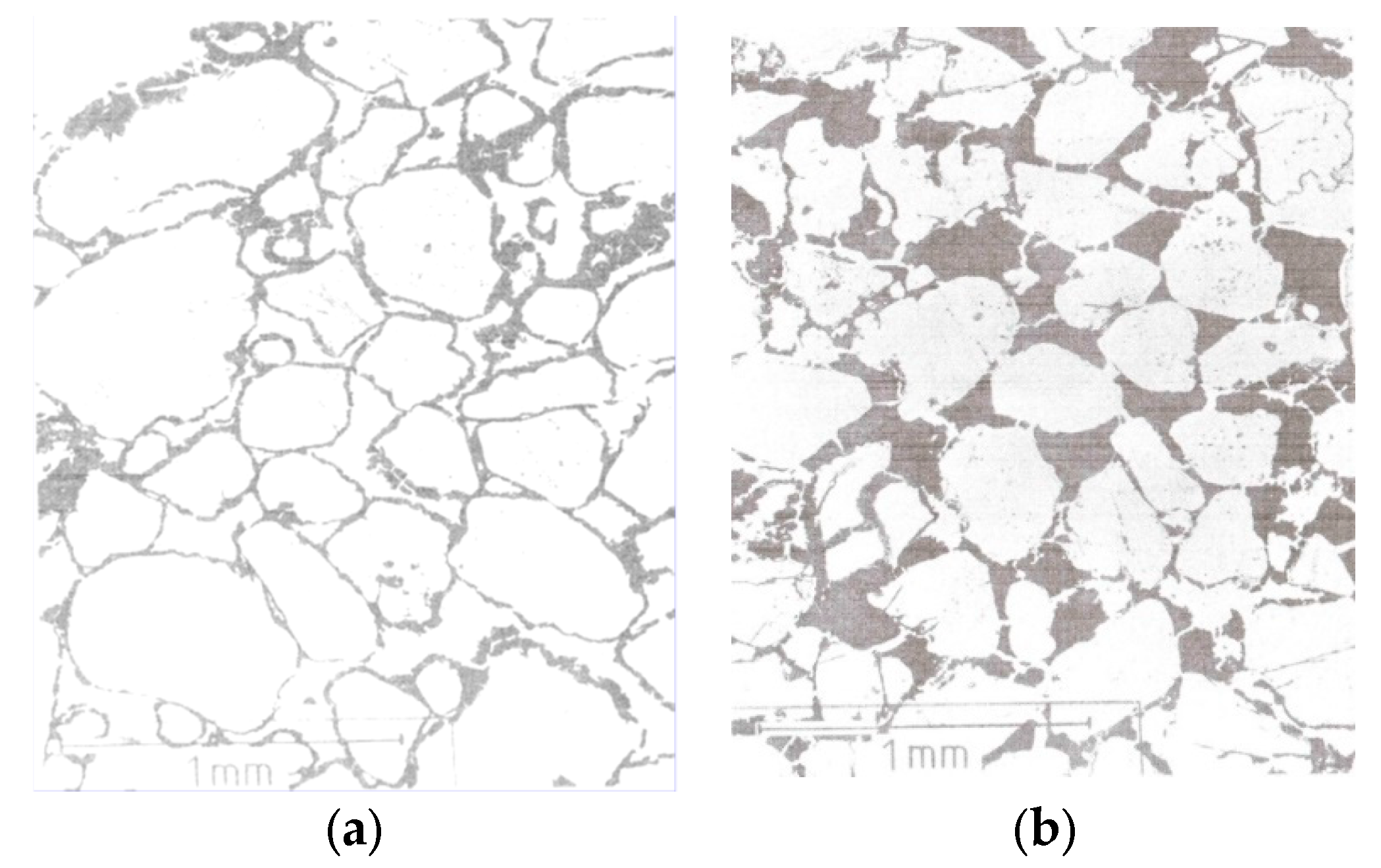
Figure 4.
The main redistribution of metals present in trace concentrations in soil solutions [21,58].
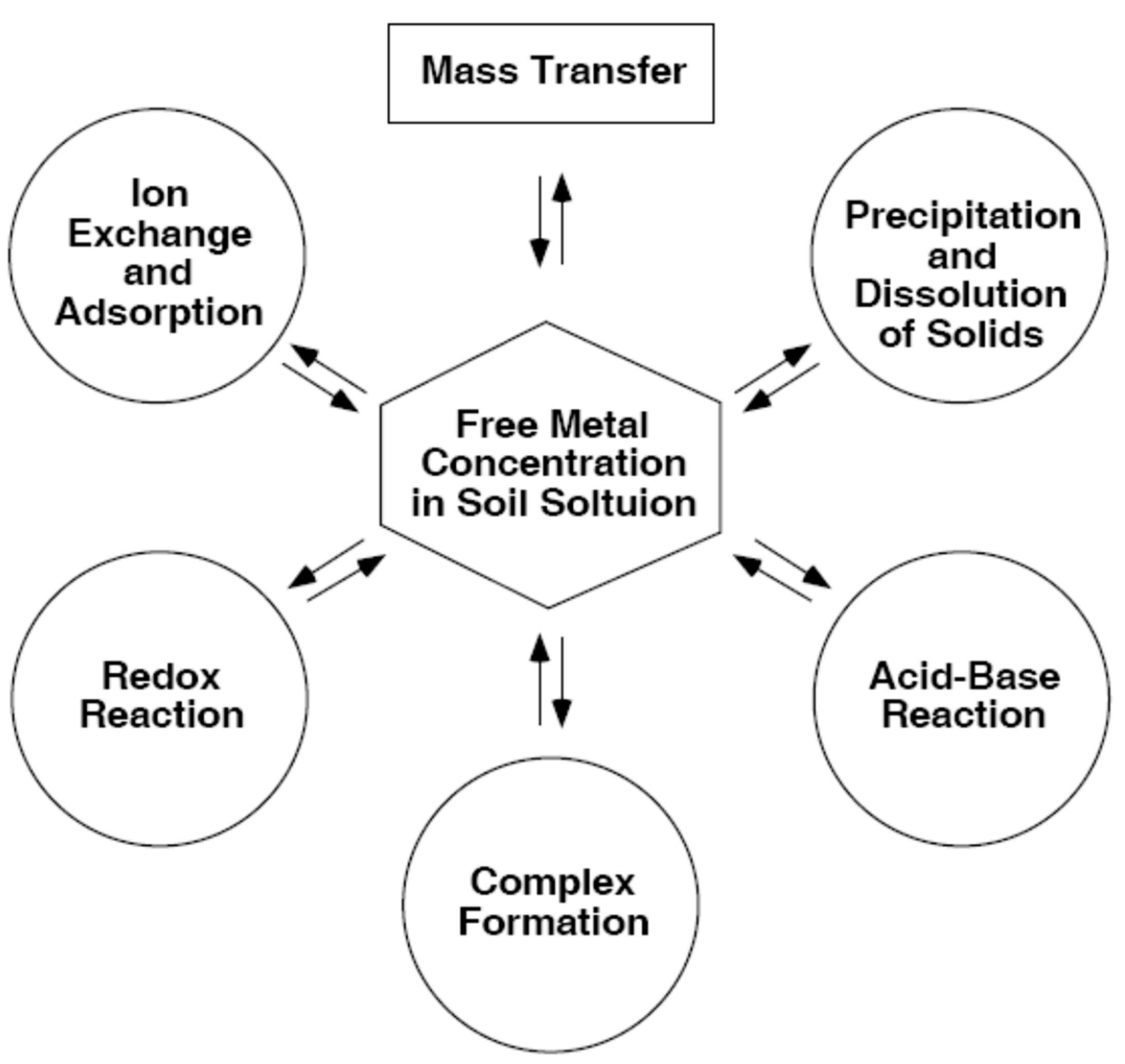
Figure 5.
Three mechanisms of the cation adsorption on the siloxane surface (e.g.,montmorillonite) [21,24].
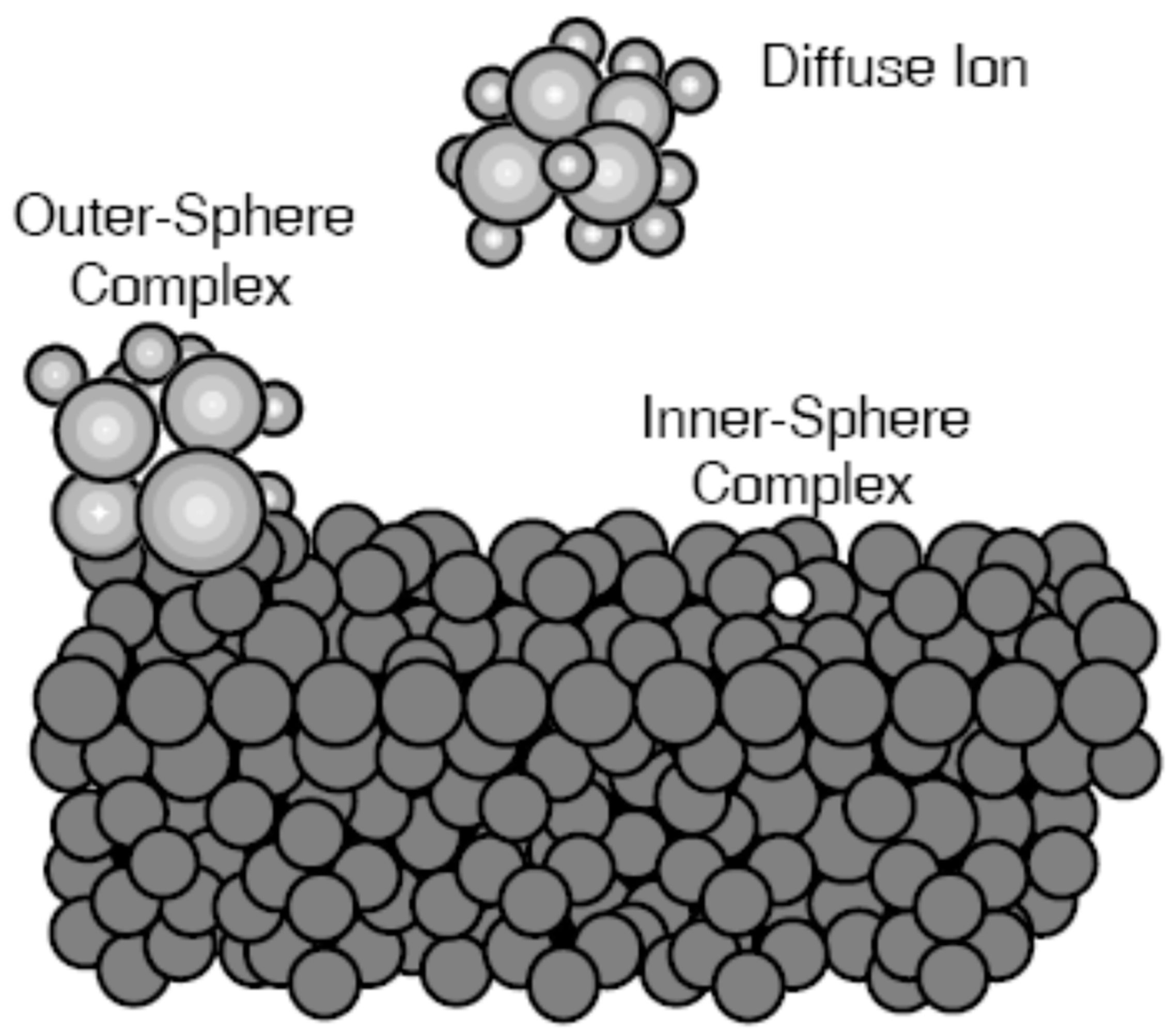
Figure 6.
Scheme-map of bottom sediment sampling points: 1, 2, 3 - streams flowing from the territory of the sanitary protection zone of the mining and chemical plant [21,90,91].
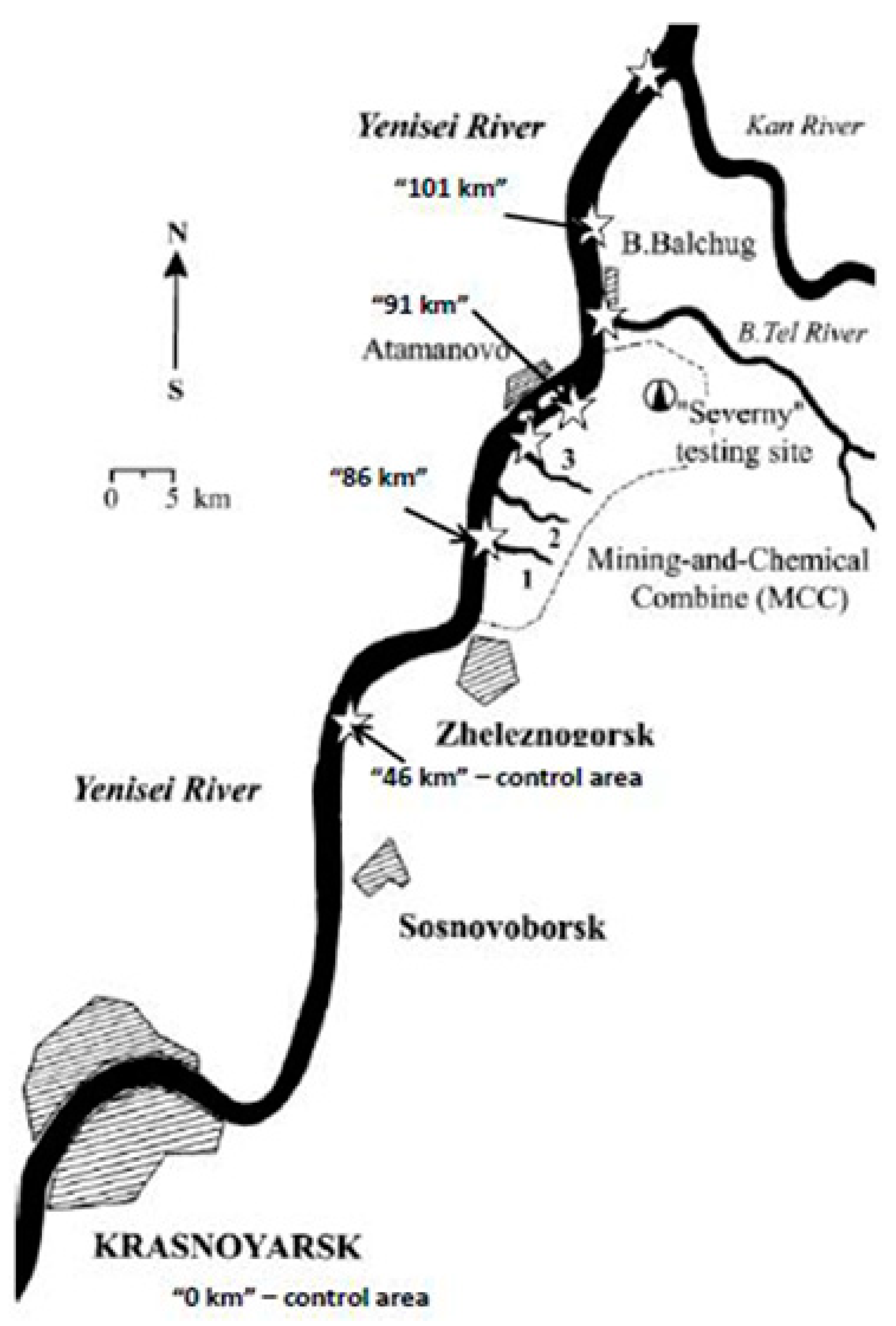
Figure 7.
The layout of a bottom sediment sample [21].
Figure 7.
The layout of a bottom sediment sample [21].
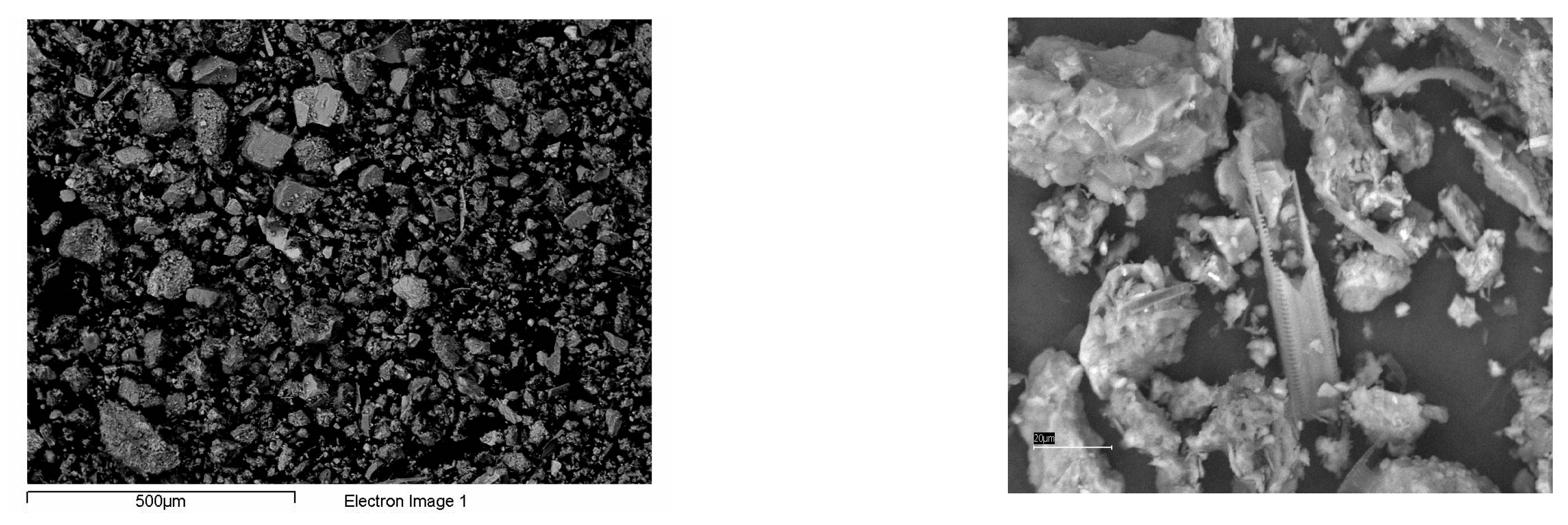
Figure 8.
The material composition of the fragments of a bottom sediment sample (0-10 cm) [21].
Figure 8.
The material composition of the fragments of a bottom sediment sample (0-10 cm) [21].
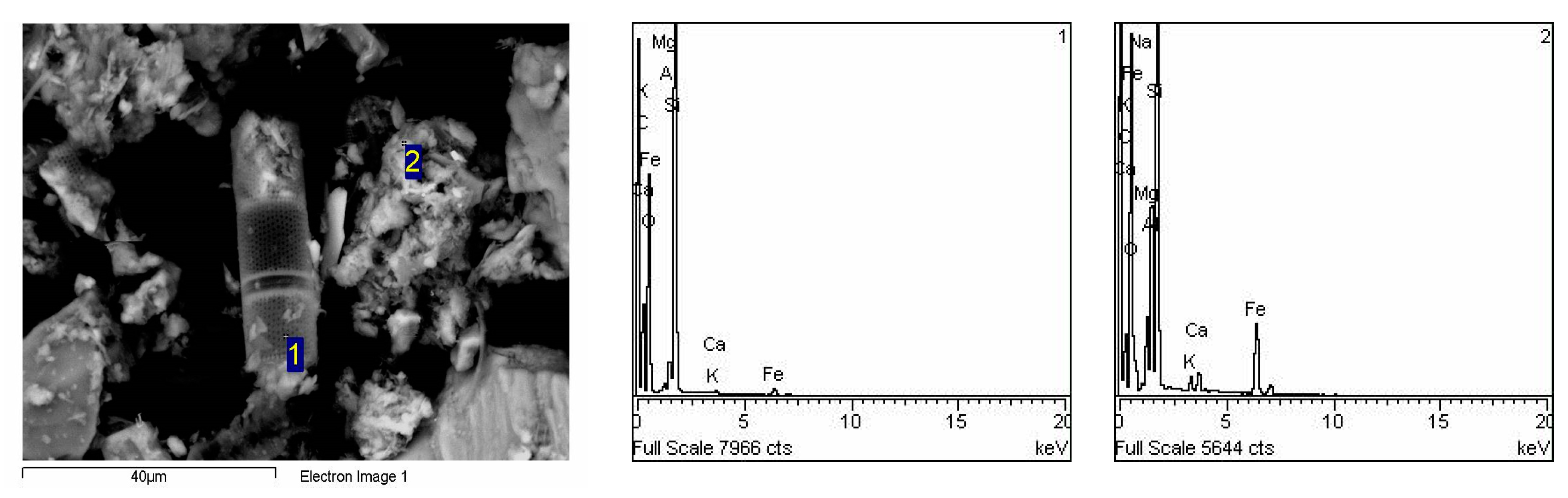

Table 1.
The scheme of fractionation and distribution of the radionuclides between the bottom sediment fractions [21,90,91].
|
Fraction |
Radionuclides, Bq·kg-1 (% from the total content) | |||||||
|---|---|---|---|---|---|---|---|---|
| 60Сo | 137Cs | 152Eu | 241Am | |||||
| At | Е | At | Е | At | Е | At | Е | |
| I, exchangeable | 7 ± 1,4 (1,3 ± 0,3) |
3,7 ± 0,7 (2,2 ± 0,4) |
26 ± 3 (1,1 ± 0,1) |
18 ± 1,7 (3,8 ± 0,4) |
16 ± 3 (1,4 ± 0,3) |
< MDA | < MDA | < MDA |
| II, carbonates | 11 ± 3 (3,0 ± 0,8) |
9,7 ± 0,9 (5,8 ± 0,5) |
15 ± 3 (0,6 ± 0,1) |
9,3 ± 1 (1,9 ± 0,2) |
24 ± 3 (2,1 ± 0,6) |
22 ± 1 (7,0 ± 0,3) |
4 ± 1 (7 ± 2) |
15 ± 2 (27 ± 4) |
| III, sesquioxides and hydroxides | 47 ± 4 (8,9 ± 0,8) |
9,7 ± 1,3 (5,8 ± 0,8) |
15 ± 5 (0,6 ± 0,2) |
4,4 ± 1,4 (0,9 ± 0,3) |
171 ± 11 (14,8 ± 0,9) |
20 ± 2 (6,4 ± 0,6) |
4 ± 1 (7 ± 2) |
6,6 ± 0,4 (12 ± 1) |
| IV, organic matter | 61 ± 4 (11,6 ± 0,8) |
30 ± 1 (18 ± 1) |
80 ± 4 (3,3 ± 0,2) |
41 ± 4 (8,6 ± 0,8) |
465 ± 11 (40 ± 1) |
214 ± 6 (68 ± 2) |
19 ± 4 (34 ± 7) |
25 ± 3 (46 ± 6) |
| V, amorphous silicates | 30 ± 3 (5,7 ± 0,6) |
< MDA | 23 ± 4 (0,9 ± 0,2) |
3 ± 1 (0,7 ± 0,2) |
< MDA | < MDA | < MDA | < MDA |
| VI, undecomposed residue | 371 ± 14 (70 ± 3) |
115 ± 2 (68 ± 1) |
2284 ± 122 (93,5 ± 5) |
410 ± 29 (84 ± 6) |
481 ± 13 (41,7 ± 1) |
58 ± 3 (18,6 ± 0,9) |
29 ± 4 (52 ± 7) |
8,1 ± 1,1 (15 ± 2) |
| Initial content |
527 ± 42 (100) |
168 ± 19 (100) |
2443 ± 147 (100) |
486 ± 44 (100) |
1157 ± 46 (100) |
314 ± 13 (100) |
56 ± 7 (100) |
55 ± 8 (100) |
Disclaimer/Publisher’s Note: The statements, opinions and data contained in all publications are solely those of the individual author(s) and contributor(s) and not of MDPI and/or the editor(s). MDPI and/or the editor(s) disclaim responsibility for any injury to people or property resulting from any ideas, methods, instructions or products referred to in the content. |
© 2023 by the authors. Licensee MDPI, Basel, Switzerland. This article is an open access article distributed under the terms and conditions of the Creative Commons Attribution (CC BY) license (http://creativecommons.org/licenses/by/4.0/).
Copyright: This open access article is published under a Creative Commons CC BY 4.0 license, which permit the free download, distribution, and reuse, provided that the author and preprint are cited in any reuse.


