

Submitted:
02 May 2023
Posted:
03 May 2023
You are already at the latest version
Abstract
Antimicrobial edible coatings could eliminate pathogen contamination risk on the surface of meat and poultry products during storage. In this study, the edible coating (EC) based on wheat gluten, Pistacia vera L. tree resin (PVR), and essential oil (EO) of PVR were applied on chicken breast fillets (CBF) by dipping method to prevent the growth of Salmonella Typhimurium and Listeria monocytogenes. The samples were packed in foam trays wrapped with low-density polyethylene stretch film and stored at 8°C for 12 days to observe antimicrobial effects and sensory properties. The total bacteria count (TBC), L. monocytogenes, and S. Typhimurium were reported during the storage. All samples coated with EC containing 0.5, 1, 1.5, and 2% v/v EO (ECEO) decreased microbial growth significantly compared to control samples. The growth of TBC, L. monocytogenes, and S. Typhimurium was suppressed by 4.6, 3.2, and 1.6 logs, respectively, at the end of 12 days on the samples coated by ECEO (2%) compared to uncoated controls (p<0.05). Coating with ECEO (2%) also preserved appearance, smell, and general acceptance parameters better than uncoated raw chicken (p<0.05) on the 5th day of storage. In grilled chicken samples, ECEO (2%) did not significantly change the sensory properties of appearance, smell, and texture but had increased taste and general acceptance scores (p>0.05). So, ECEO (2%) can be a feasible and reliable alternative to preserve chicken breast fillets without affecting their sensory properties adversely during the shelf life.
Keywords:
Edible coating
; Salmonella
; Listeria
; Pistacia vera
; essential oil
; chicken breast
; resin
1. Introduction
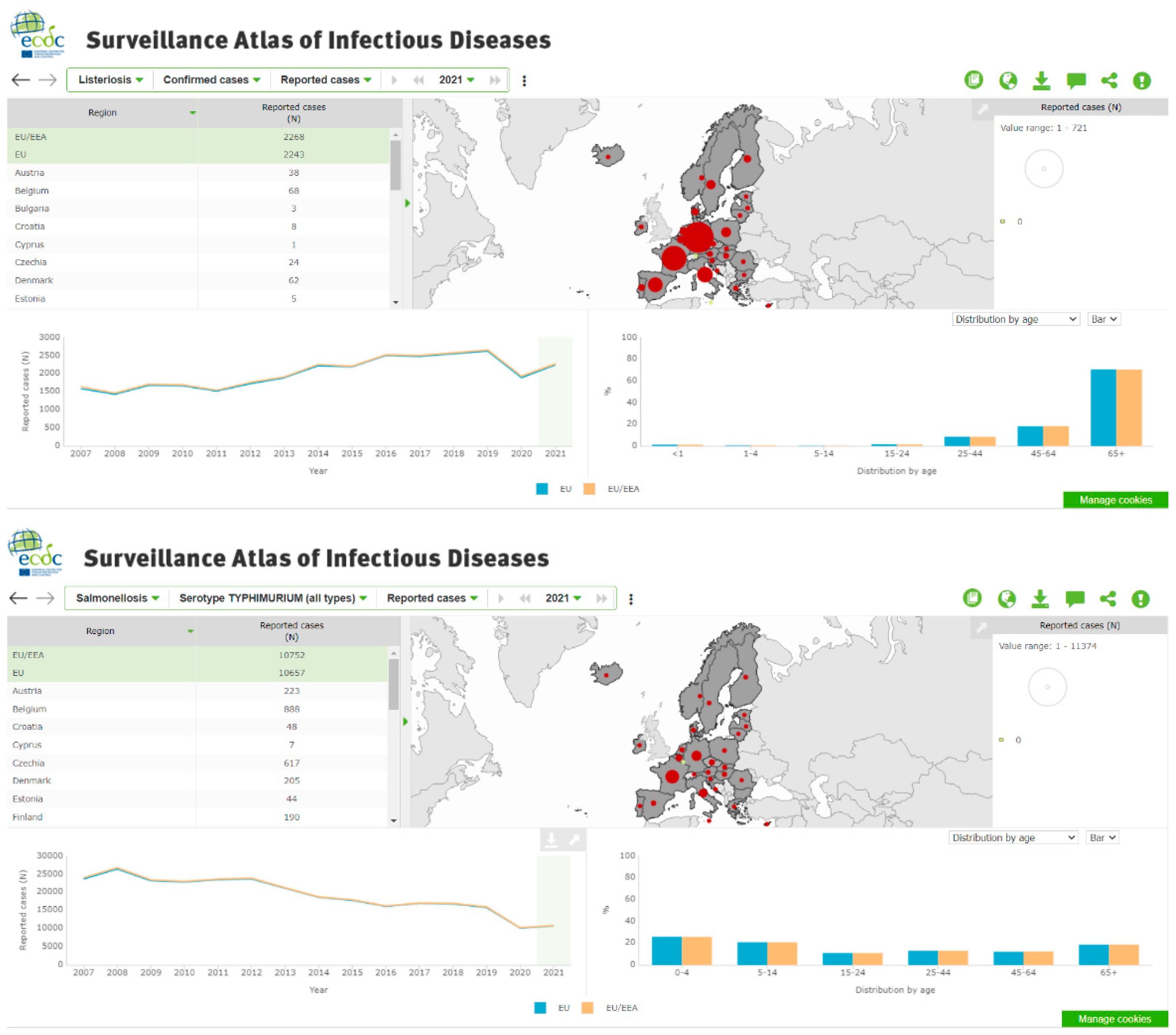
Food materials, especially perishable foods, must be protected by manufacturers and suppliers to meet consumer demands in food safety and security aspects. The main problem in the food industry is keeping foods safe and secure until consumption. While commercializing meat and poultry products, classic conventional methods such as refrigeration are insufficient to prevent deterioration during processing and storage. Three main mechanisms of meat and poultry deterioration are; microbial spoilage, lipid oxidation, and enzymatic reactions [1]. Chicken breast fillets are the most popular and consumed poultry product, which are very susceptible to spoilage due to their native microflora. Favorable intrinsic factors (high moisture, high pH, post-slaughter chemical reactions and enzymatic activity, poor handling, and processing conditions (conditioned cut, temperature, and cross contamination) may accelerate these deteriorations. Because of these factors, chicken breast fillets have a concise shelf life ranging between 5-8 days at refrigeration temperatures of 4-8°C [1,2,3,4]. Besides these spoilage-caused deteriorations, chicken breast fillets serve as a suitable medium for food pathogens. Because the commercial poultry industry is focused on spoilage factors to preserve and prolong shelf life, pathogenic bacteria presence is sometimes less considered. Pathogenic and spoilage bacteria yearly cause severe economic and health losses in the poultry industry and consumers. Among these microorganisms, 70% of the total outbreaks in the USA are estimated to be due to Salmonella Typhimurium and Listeria monocytogenes [5]. Also, for the European area, according to the European Centre for Disease Prevention and Control (ECDC) report (Figure 1), the total reported cases of Salmonellosis and Listeriosis recorded in 2021 were 10657 and 2243, respectively. While the affected group was elderly (65+ years old) for Listeriosis, it was under 50 for Salmonellosis [6].
Figure 1.
ECDC reports for Salmonellosis and Listeriosis cases in all EU between 2007 and 2021. https://atlas.ecdc.europa.eu/public/index.aspx.
Figure 1.
ECDC reports for Salmonellosis and Listeriosis cases in all EU between 2007 and 2021. https://atlas.ecdc.europa.eu/public/index.aspx.
To ensure the stability of the safety parameters of foods, traditional food preservation techniques with suitable packaging have been used extensively in the food industry [7,8]. Classical packaging methods of food materials involve plastic (petroleum-based) materials due to their low price and flexible production characteristics [9]. However, plastic materials have several disadvantages due to the environmental and human health risks they deploy [10]. Traditional passive packaging techniques involving plastic materials keep food materials safe against extrinsic factors such as physical damage, humidity, light, oxygen, etc. Nevertheless, they lack protection against water activity, enzymatic activity, chemical reactions, and microbial growth in the food materials. The opposite term and mechanism developed for this phenomenon is “active packaging,” which includes functional properties to control alterations and safety in the food materials during storage. Active packaging can control the transfer of active components, such as the migration of antimicrobial substances inside the packaging materials and food surfaces [11]. Edible films and coatings with functional properties are also used for active packaging purposes on the surface of food products [11,12].
1.1. Edible films and coatings
Edible films and coatings, defined as thin layers of material, provide a barrier to moisture, oxygen, and mass transfer on food products. Indeed, edible packaging can be used to encapsulate aroma compounds, antioxidants, antimicrobial agents, pigments, ions that stop browning reactions, or nutritional substances such as vitamins [13]. Edible films and coatings have recently received considerable attention because of their advantages over synthetic packaging [14]. Over 90 patents and scientific papers concerning the manufacture of edible packaging have been published since 1990.
Edible films and coatings typically contain three major compounds; proteins, polysaccharides, and lipids. Plasticizers can be added to film-forming solutions to enhance the physical properties of the film material [15]. Composite films contain various compounds (proteins, polysaccharides, and lipids) together and other functional ingredients (antimicrobials, antioxidants, enzymes, aroma compounds, etc.) to enhance the properties of films [11,13,14,16,17,18].
Edible coatings may feature several functional properties besides their primary usage purpose. For example, they can carry antimicrobial agents that inhibit or kill pathogenic and spoilage microorganisms during storage. Many studies researched antimicrobial agents used in edible coatings such as; benzoates, propionates, sorbates, parabens, acidifying agents (e.g., acetic and lactic acids), curing agents (e.g., sodium chloride and sodium nitrite), bacteriocins, chitosan and natural preservatives (e.g., essential oils, lysozyme, liquid smoke) [19].
Incorporating essential oils as natural and effective antimicrobial agents in edible coatings has gained high interest in the research area. The studies showed the antimicrobial effects of several plant-based essential oils, such as; oregano, thyme, cumin, rosemary, garlic, clove, ginger, cinnamon, Zataria multiflora, etc., in edible films or coatings against spoilage and pathogenic bacteria [9,10,20,21,22,23]. The present study covers the antimicrobial and sensory effects of wheat gluten-based edible coatings containing essential oil (EO), which is not studied before in an edible coating composition.
1.2. Pistacia vera L resin and essential oil
The genus “Pistacia” stands out among the Anacardiaceae family for its large number of species and varieties of plants. These species are prevalent throughout the Mediterranean and Middle East regions. Many studies investigated the traditional medicinal features of the Pistacia vera L. tree resin (PVR) and its essential oils [24,25,26,27]. But there is no research including the preparation of edible coating using PVR and its essential oil (EO) and antimicrobial activities against Listeria monocytogenes and Salmonella Typhimurium in the chicken breast fillets. PVR is obtained from Pistachio nut trees and is mainly a tree exudate secreted from the branch and body whenever a part of the tree is damaged. It can be defined as gum or resinous exudate. PVR and its EO have several positive health effects and antimicrobial properties, making them a potentially valuable additive for developing new antimicrobial edible films and coatings.
1.3. Scope and Purpose of the Study
Edible coatings containing natural antimicrobial substances to prevent microbial growth within the food material and keep consumers safe by inhibiting pathogens is the central hypothesis of this research. In this study, wheat gluten-PVR-based edible coatings (EC) were prepared with various concentrations of EO (0.5, 1, 1.5, and 2 % v/v) to observe antimicrobial and sensory effects on chicken breast fillets. Total bacteria count (TBC), L. monocytogenes, and S. Typhimurium counts were performed during 12 days of storage at 8°C. For sensory analysis, a 5-point hedonic scale was used to observe the effect of ECEO (2%) on the organoleptic properties of raw and grilled chicken breast fillets on the 5th day of storage.
2. Materials and Methods
2.1. Obtaining Pistacia vera L. tree resin and essential oil extraction
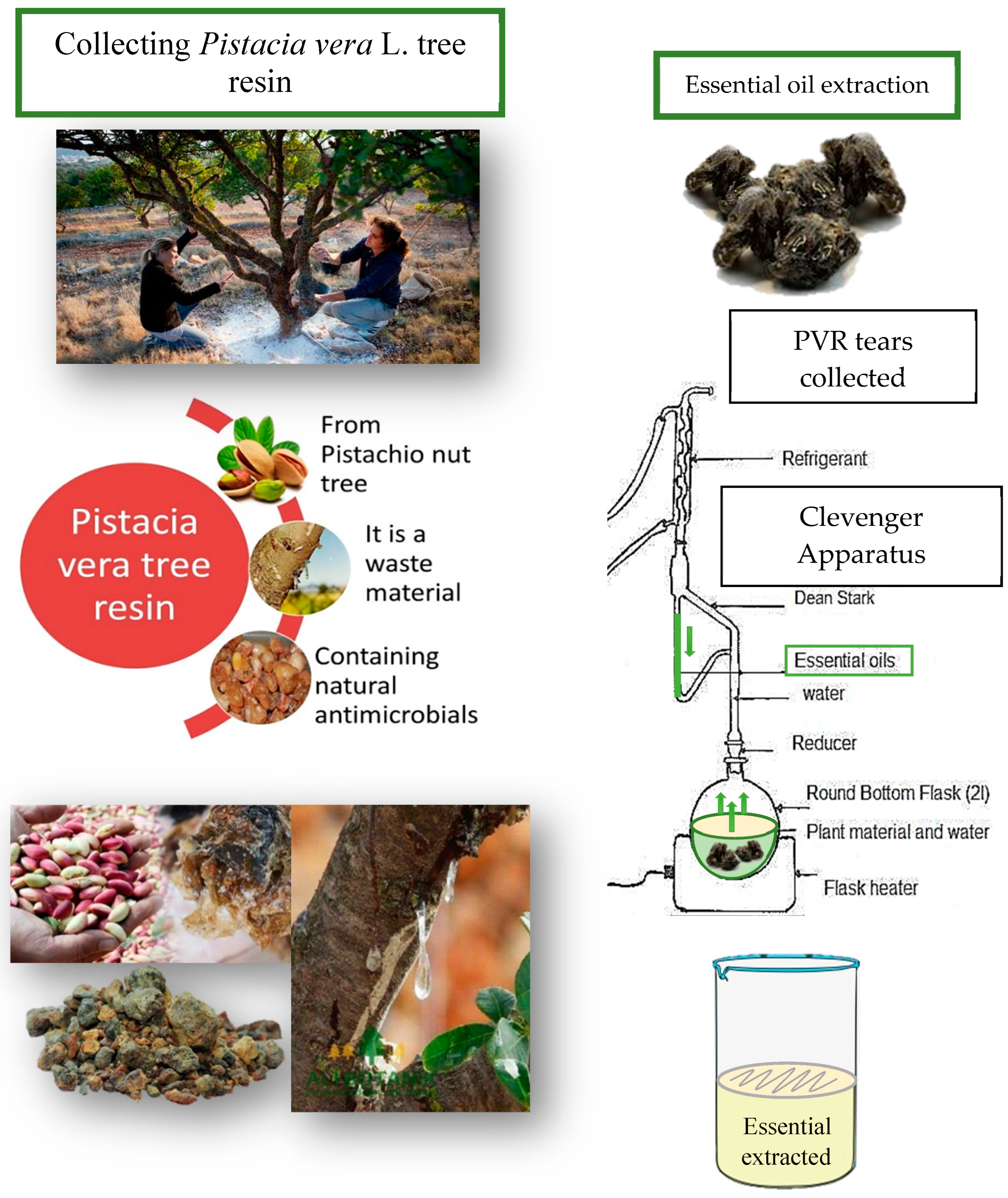
PVR is obtained directly from Pistacia vera L. trees in the villages around Gaziantep province. It was collected during the fall and spring months of the year and stored in dark and cool cabinets (~20°C) for further use. EO of PVR was obtained by the use of the Clevenger hydro-distillation (steam distillation) method [28] using the Clevenger apparatus (Inter Lab, Adana, Turkey). Ground PVR (~150g) was placed in an empty flask (2 L), and 1.5 L double distilled water was boiled to get steam for distillation. After that, the sample is hydro-distilled for five hours (Figure 2) and kept in small (20 ml) sterile dark bottles at 4°C until further use.
Figure 2.
Pistacia vera L. resin (PVR) collected from Pistachio nut trees and essential oil extraction from PVR by using Clevenger Apparatus.
Figure 2.
Pistacia vera L. resin (PVR) collected from Pistachio nut trees and essential oil extraction from PVR by using Clevenger Apparatus.
2.2. Preparation of bacterial strains and contamination of chicken breast fillets
Salmonella enterica subsp. enterica ser. Typhimurium ATCC 14028 and Listeria monocytogenes ATCC 35152 were obtained from the American Type Culture Collection (Rockville, MD). The stock cultures of bacteria were maintained on brain heart infusion agar (BHIA, Merck, Darmstadt, Germany) slants at 4°C. Bacterial cultures for experiments were subcultured twice by inoculating in 5 ml of tryptic soy broth (TSB, Merck, Darmstadt, Germany). The inoculated broths were incubated at 35°C for 24 h. After incubation, 200 μl of bacterial culture was inoculated in fresh TSB and incubated at 35°C for 24 h. Then, the cultures in the growth phase of approximately 1x10⁴ colony-forming unit (cfu)/ml were used to inoculate the chicken samples.
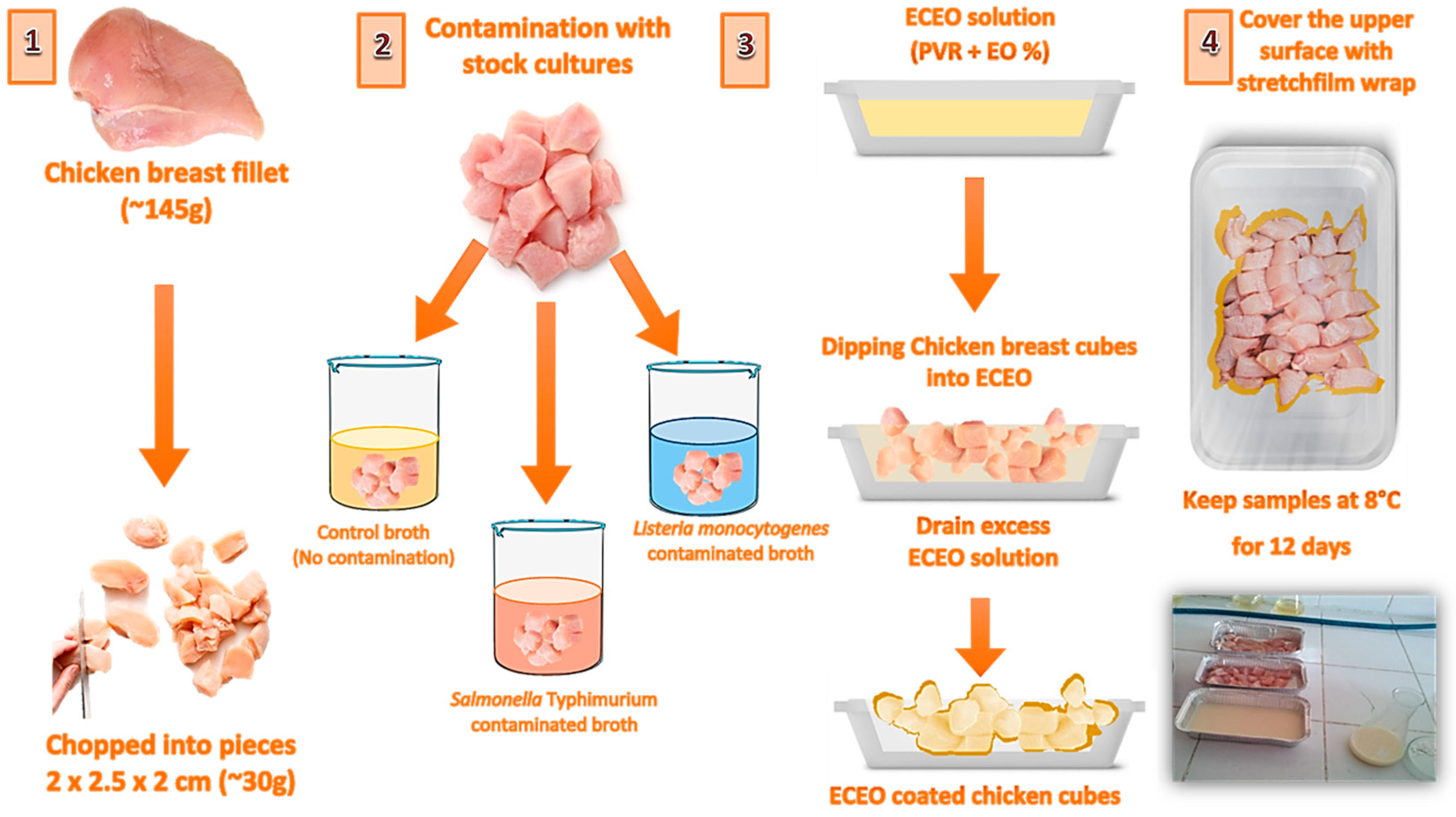
Chicken breast fillets were bought from local poultry markets with nearly 145 g each. For further tests, the control groups of the food samples without contamination and coating were separated and stored at 8°C. A dip-inoculation method was used to contaminate the chicken breast fillets with each pathogen separately. For this purpose, stock inoculum solution with the targeted inoculation level of about 104 cfu/mL was prepared by transferring 24 h TSB cultures of S. Typhimurium or L. monocytogenes into 500 mL Ringer solution (1% v/v). Then, chicken breast fillets were chopped into chicken cubes (30 g, 2x2.5x2 cm) and immersed in the stock solutions. The mixture was shaken for 1 min by hand to distribute the inoculum homogenously on the chicken breast samples. Then they were kept in a biological safety cabinet (NuAire model Nu-425-200, Plymouth, MN, USA) at 22 ± 2°C for one h. Then the inoculated chicken breast samples were kept on rough filter paper under aseptic conditions to drain the excess solution [29].
2.3. Preparation of edible coatings and application on chicken breast fillets
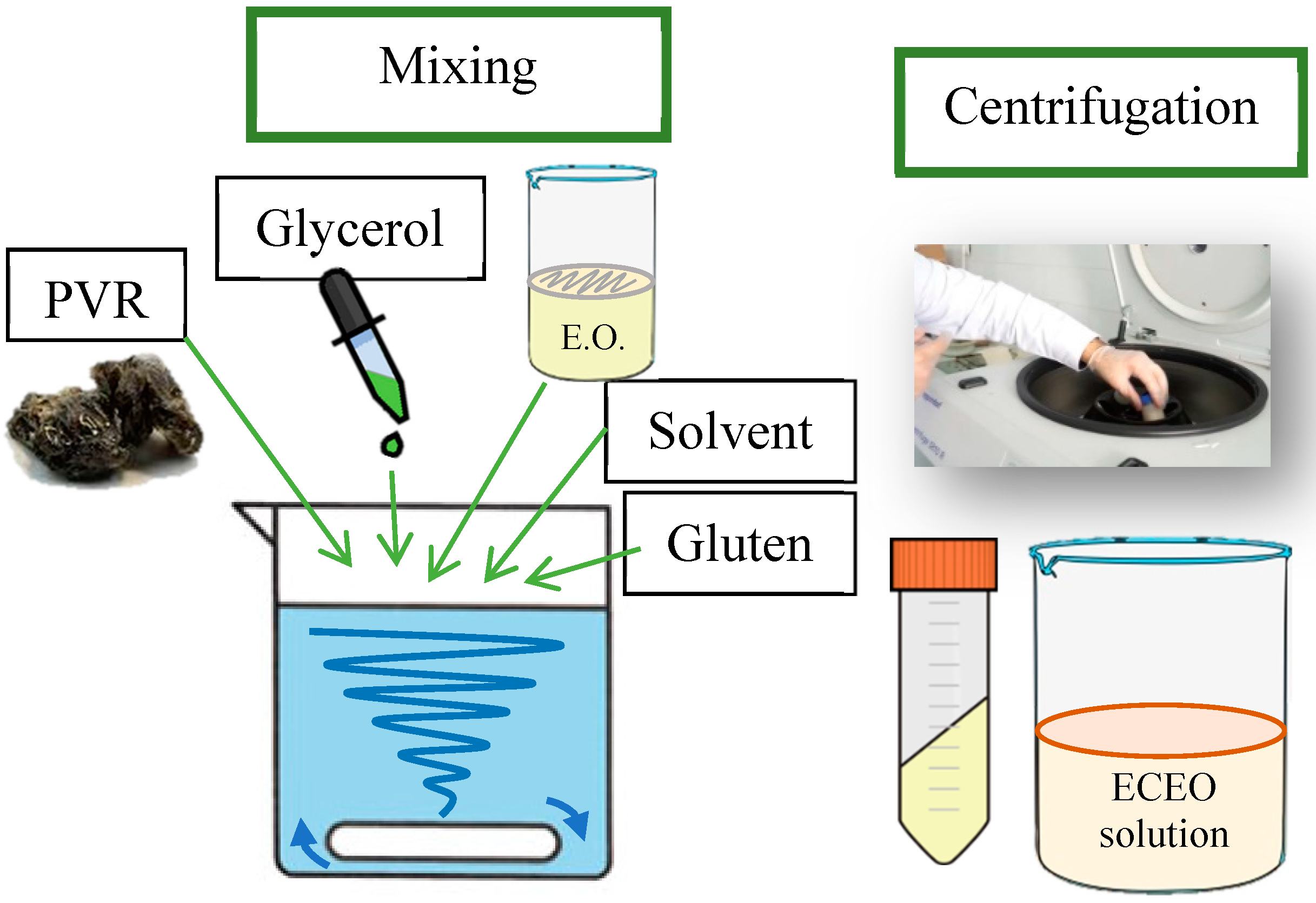
The edible coating (ECEO) solution based on wheat gluten - PVR with its EO was prepared using the film-forming dispersion method. First, collected PVR was ground using a mortar. For 100 ml of the coating solution, the PVR (1.5 % w/v) and vital wheat gluten (Tereos Vital Gluten, Belgium EU) (4.5 % w/v) were dissolved in absolute ethanol (45 % v/v) and mixed by using a magnetic stirrer (Heidolph, MR-Hei standard, Germany). As a plasticizer, glycerol (ACS grade CAS 56-81-5, 1L, Millipore Merck, Germany) (1.5 % v/v) was added to the solution containing PVR and gluten. The pH was adjusted to 11.0 by adding ammonium hydroxide (1 M) dropwise to the solution while mixing with a magnetic stirrer. Then the mixture was heated to 75°C and mixed for 30 min in the magnetic stirrer. EO was added into the EC solution at several concentrations (0.5, 1, 1.5, and 2 % v/v), and the coating solution was completed to 100 ml by adding distilled water. The mixture was centrifuged at 6000 rpm for 6 min at 18°C (Eppendorf 5810R, Hamburg, Germany) (Figure 3).
Figure 3.
Preparation of ECEO solution by mixing and centrifugation.
After centrifugation, the supernatant part (~250 ml of clear film dispersion) was poured into Polytetrafluoroethylene (Teflon) plates and stored for 24 h at 8°C for degassing. The chicken breast fillet (CBF) cubes were immersed into the coating solution by dipping method (20 ml solution/kg of chicken breast fillets) and kept for 1 min (Figure 4).
Figure 4.
Contamination and Application of ECEO coating solution on chicken breast fillet cubes.
After that, coated chicken breast cubes were placed on the greaseproof paper in a vacuum oven at 25°C for 5 min. The excess coating solution was drained, and excess ethanol was evaporated. ECEO solution composition and treatments for the samples are shown in Table 1. The ECEO-coated samples and controls (~30g each) were packed into foam trays wrapped with low-density polyethylene stretch film and stored at 8°C in a refrigerator without a modified atmosphere for 12 days. During storage, the samples were taken for microbial analysis on the 1st, 3rd, 5th, 7th, 10th, and 12th days of the storage.

Table 1.
Edible coating (ECEO) application on the chicken breast fillet (CBF), contamination of pathogens, and analysis.
Table 1.
Edible coating (ECEO) application on the chicken breast fillet (CBF), contamination of pathogens, and analysis.
| Type of CBF | Edible coating application |
Contamination of pathogens | Microbial count |
|---|---|---|---|
| C1 | Uncoated CBF | No contamination | TBC |
| C2 | Coating CBF with EC | ||
| C2(0.5)*, C2(1), C2(1.5), C2(2) | Coating CBF with ECEO | ||
| UCLM | Uncoated CBF | L. monocytogenes contamination | L. monocytogenes count |
| CLM | Coating CBF with EC | ||
| CLM(0.5), CLM(1) CLM(1.5), CLM(2) | Coating CBF with ECEO | ||
| UCST | Uncoated CST | S. Typhimurium contamination | S. Typhimurium count |
| CST | Coating CBF with EC | ||
| CST0.5), CST(1), CST(1.5), CST(2) | Coating CBF with ECEO | ||
| *Numbers on the subscripts indicate essential oil (EO) concentration in the EC, EC: edible coating, ECEO: edible coating containing EO. | |||
2.4. Microbiological analysis
The numbers of total bacteria count (TBC), L. monocytogenes, and S. Typhimurium in the CBF were analyzed on the 1st, 3rd, 5th, 7th, 10th, and 12th days of storage. For each sampling day, the 25 g chicken sample was homogenized in 225 ml 0.1% buffered peptone water by a stomacher (Seward, 400 Circulator, UK) for 1 min. Homogenized samples were then serially diluted using 0.1% buffered peptone water. They were spread plated on plate count agar (for TBC, Merck Millipore 105463, US), bismuth sulfite agar Wilson-Blair (for S. Typhimurium count, Merck Millipore 100191, US), and Oxford base agar with the Listeria Selective Supplement (for L. monocytogenes count, Merck Millipore 107004 with 107006, US). All plates were incubated at 37°C for 48 hours [30,31,32]. The numbers of presumptive colonies at each sampling day were recorded as log colony forming units/g sample (log cfu/g).
2.5. Sensory Analysis
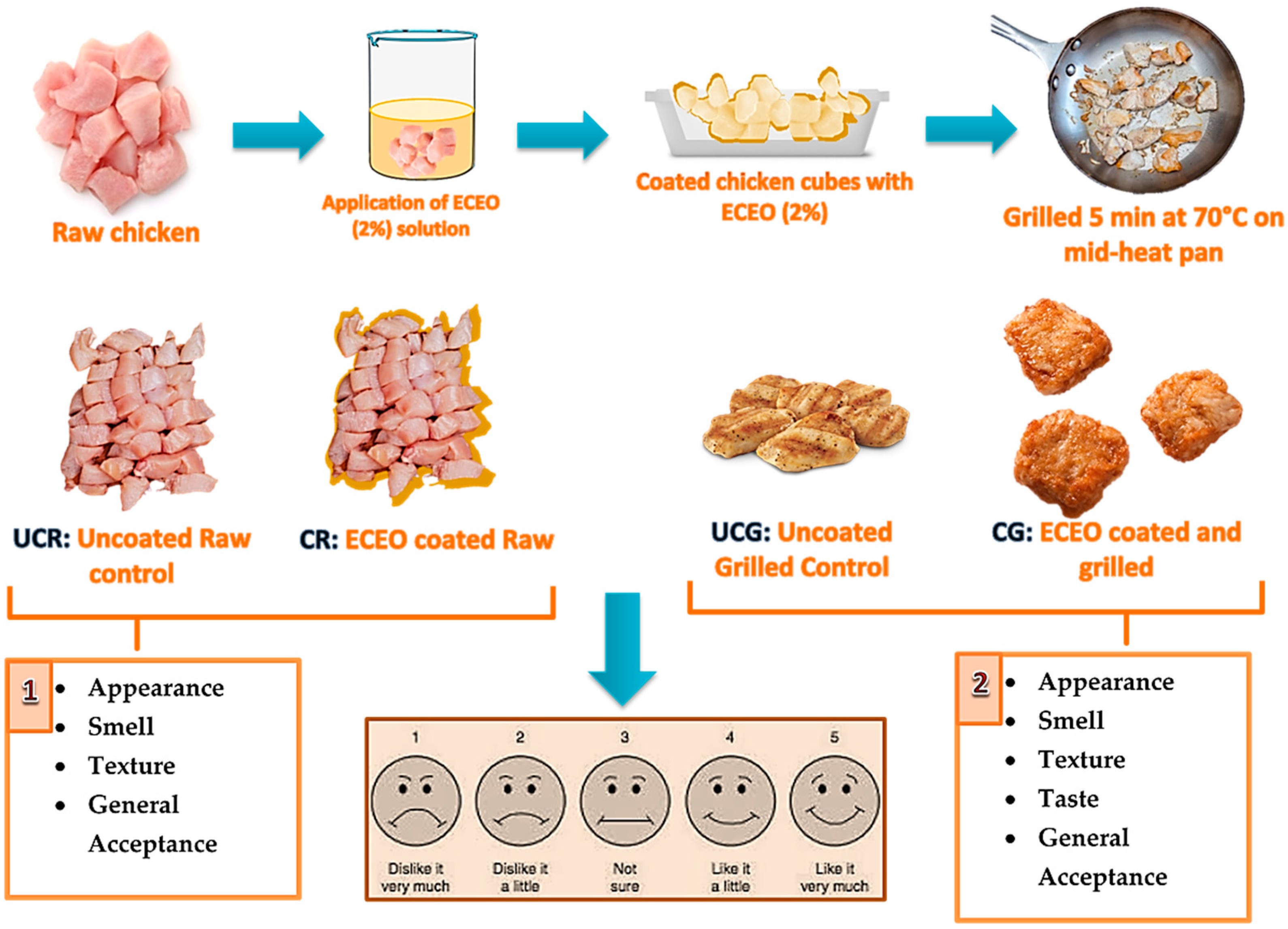
For the sensory evaluation of CBF chopped as cubes and coated with ECEO (2%), the primary purpose was to investigate whether ECEO coating is effective on organoleptic properties. So, for the sensory analysis, uncontaminated samples were used, and the whole experimental design was divided into two sections as; raw and grilled chicken breast fillet cubes with and without coating procedure. Testing samples and treatments applied are given in Table 2.
Table 2.
Sensory analysis of raw and grilled chicken breast fillet (CBF) cubes with and without ECEO (2%) coating.
Table 2.
Sensory analysis of raw and grilled chicken breast fillet (CBF) cubes with and without ECEO (2%) coating.
| Name of the sample | Treatment | Sensory analysis |
|---|---|---|
| UCR | Uncoated raw CBF |
Appearance, Smell, Texture, General acceptance, and Taste (for only grilled samples) |
| CR | Coating raw CBF with ECEO (containing 2% EO) | |
| UCG | Uncoated CBF grilled for 5 min | |
| CG | Coating CBF with ECEO (2%) + grilled for 5 min |
A panel of graduate students and professors (n=30) from the Food Engineering Department of Gaziantep University, Turkey, was invited to evaluate the sensory properties of chicken breast cubes. All panelists were first trained about the sensory properties that would be tested. They were asked to assess the chicken breast cubes according to their appearance, smell, texture, and general acceptance of raw (UCR and CR) and grilled (UCG and CG) chicken breast samples. A hedonic scale scored from 1 to 5, with “1” standing for “disliked very much” and “5” standing for “liked very much.” The “taste” evaluation was performed only on grilled samples, while all other parameters were examined on raw and grilled samples according to ASTM 1992. Results were recorded anonymously, and three replicates were given to the panelists to obtain averages for each parameter scoring. Spider-web graphs were used to distinguish the parameters and scores.
Half of the raw chicken breast cubes were coated with ECEO (2%) coating for sensory analysis, and the other half was kept uncoated. All of the samples were kept at 8°C for five days. Because before five days, no significant changes in sensory properties had been detected at preliminary works. To evaluate the “Taste” property, on the first day of storage, half of the samples were grilled on a kitchen pan at around 70°C, measured central temperatures for 5 min, and served to panelists for scoring (Figure 5). Sensory properties other than “Taste” were evaluated on the fifth day of storage.
Figure 5.
Preparation of raw and grilled CBF cubes coated with ECEO (2%) for sensory analysis.
2.6. Statistical Analysis
All treatments were made with three replications. The results were reported as average standard deviation. All data were analyzed using SPSS 22.0 for Windows (IBM SPSS, Chicago, IL, USA) and compared using analysis of variance (ANOVA), and the main effects were considered significant at the p < 0.05 level. Also, a paired samples t-test was applied for the sensory analysis scores between coated and uncoated samples for the same parameters scored.
3. Results and Discussion
3.1. Antimicrobial effects of PVR edible coating on chicken breast fillets
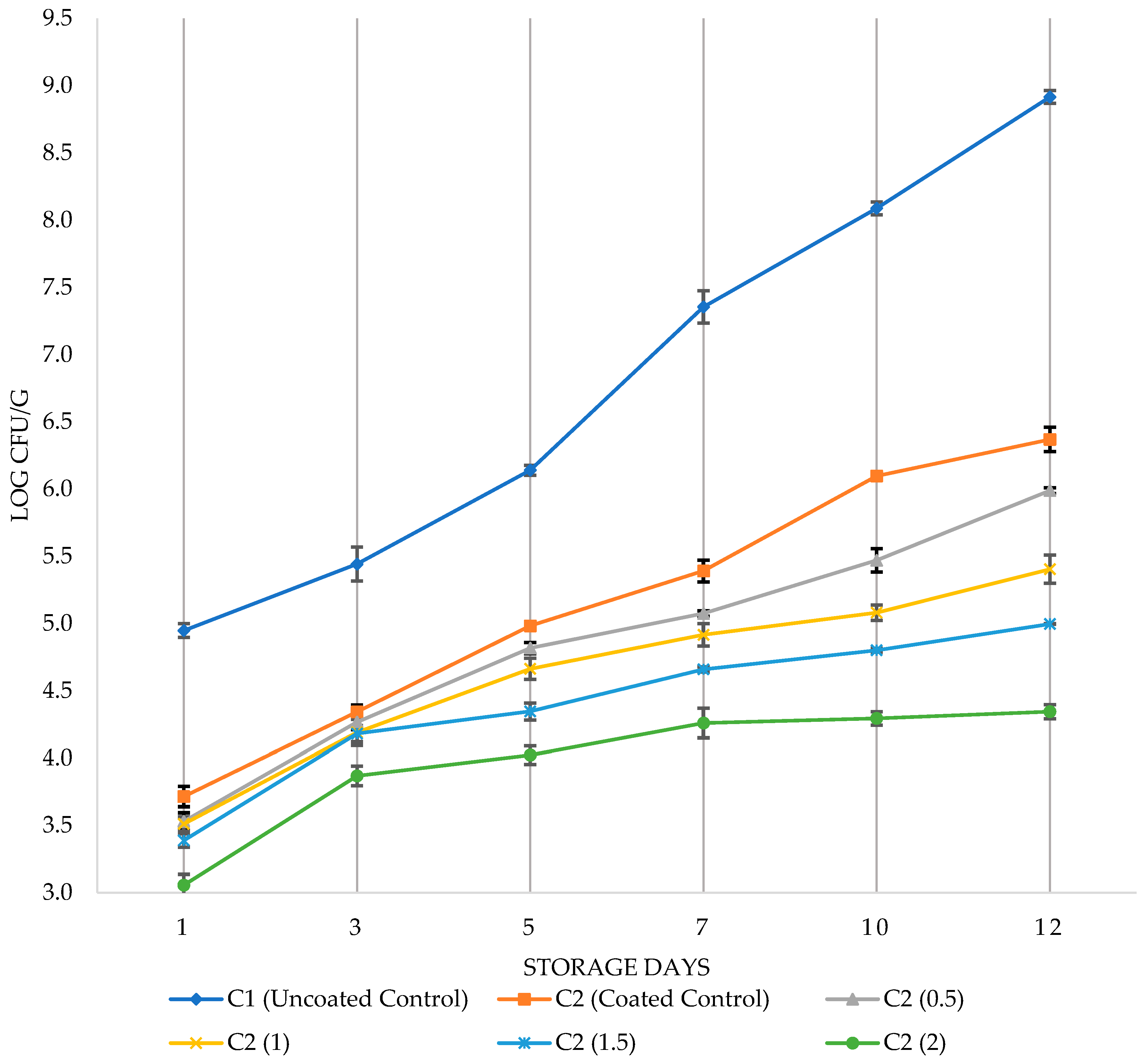
Figure 6 shows the results of TBC counts in the coatings (C1, C2 and C2EO) containing EO from 0.5 to 2.0%. The TBC of CBF without coating (C1) was about 4.9 log cfu/g on 1st day and increased to 8.9 cfu/g after 12 days of storage, similar to the previous studies [2,33,34,35,36,37,38,39,40]. The application of ECEO on the chicken with various EO concentrations (C2) significantly (p< 0.05) suppressed the growth of TBC during storage periods. During 12 days of storage, the TBC was increased in C1 by 4 logs and in C2 by 2.7 logs cfu/g. Increasing the amount of EO in the ECEO solution increased the antimicrobial effect on the TBC. However, only treatment of ECEO (2%) in the coating significantly (p<0.05) inhibited TBC at the end of 12 days storage. The coating affected the TBC growth by limiting the oxygen and water vapor transfer.
Figure 6.
Growth of TBC on the control C1 and C2 with different EO concentrations during storage of 12 days at 8°C.
Figure 6.
Growth of TBC on the control C1 and C2 with different EO concentrations during storage of 12 days at 8°C.
In our present study, ECEO coatings showed a bacteriostatic effect on the TBC. Generally, edible coatings made from wheat gluten greatly limit the water vapor transfer through the coating to the food surface [41]. The hydrophobic coating compositions like wheat gluten-based coatings showed antimicrobial effects against common spoilage microorganisms found in poultry products. Similar to gluten, chitosan and carboxymethyl cellulose also make hydrophobic interactions. Studies showed that they had succeeded against lipid oxidation and other enzymatic spoilage but failed against microbial spoilage when used alone in the EC composition. Various EOs were used to increase the antimicrobial effectiveness of these coatings and prolonged the shelf life of poultry by inhibiting the growth of common spoilage microorganisms; psychrotrophic bacteria, lactic acid bacteria, Pseudomonas, Campylobacter and Enterobacteriaceae [20,38,42]. Most studies related to the antimicrobial effects of EOs emphasize that EOs may change cell wall permeability and intracellular alterations leading to cell death [38,43,44,45,46]. Alma et al. [27] observed the chemical composition and antimicrobial activity of EO of PVR against 13 bacteria and 3 yeast species. At MIC tests, EO obtained from PVR inhibited 9 of 13 bacteria and all yeasts. Also, Ghalem and Mohamed [24] investigated the antimicrobial activity of EO of PVR against E. coli, Proteus and S. aureus. EO inhibited the growth of all bacteria.
Besides the EO of PVR and wheat gluten, other edible coatings containing different EOs had antimicrobial effects on chicken breast fillets. Garavito et al. used guar gum, nisin, and oregano oil as edible coating ingredients for application on chicken breast fillets. Similar to our present study with EO of PVR, nisin and oregano oil containing samples showed a bacteriostatic effect on TBC during 16-day storage at 4°C [3]. Bazargani-Gilani et al. [34] investigated the antimicrobial effect of pomegranate juice and chitosan coating, which is hydrophobic like wheat gluten used in our study, enriched with Zataria multiflora essential oil (ZEO) on chicken meat stored at 4°C. Samples containing ZEO and chitosan significantly lowered the numbers of TVC on each sampling day during 20 days of storage. Fernández-Pan et al. [2] researched the antimicrobial efficacy of whey protein isolate (WPI) coating with oregano and clove EO on chicken breast fillets stored at 4°C. The WPI coating containing 20 g/kg oregano EO was the most effective, having 2 log reductions against aerobic mesophilic bacteria and 1 log reduction against psychrotrophic bacteria and Enterobacteriaceae. Generally, the results of TBC agreed with studies including EO blended edible coatings conducted with chicken breast fillets [21,38,40,42]. Meat and meat products should contain no more than 7 log CFU/g of TBC; according to the Food and Agricultural Organization (FAO), the acceptable limit for TBC in poultry is below <6 log cfu/g [2,42,44].
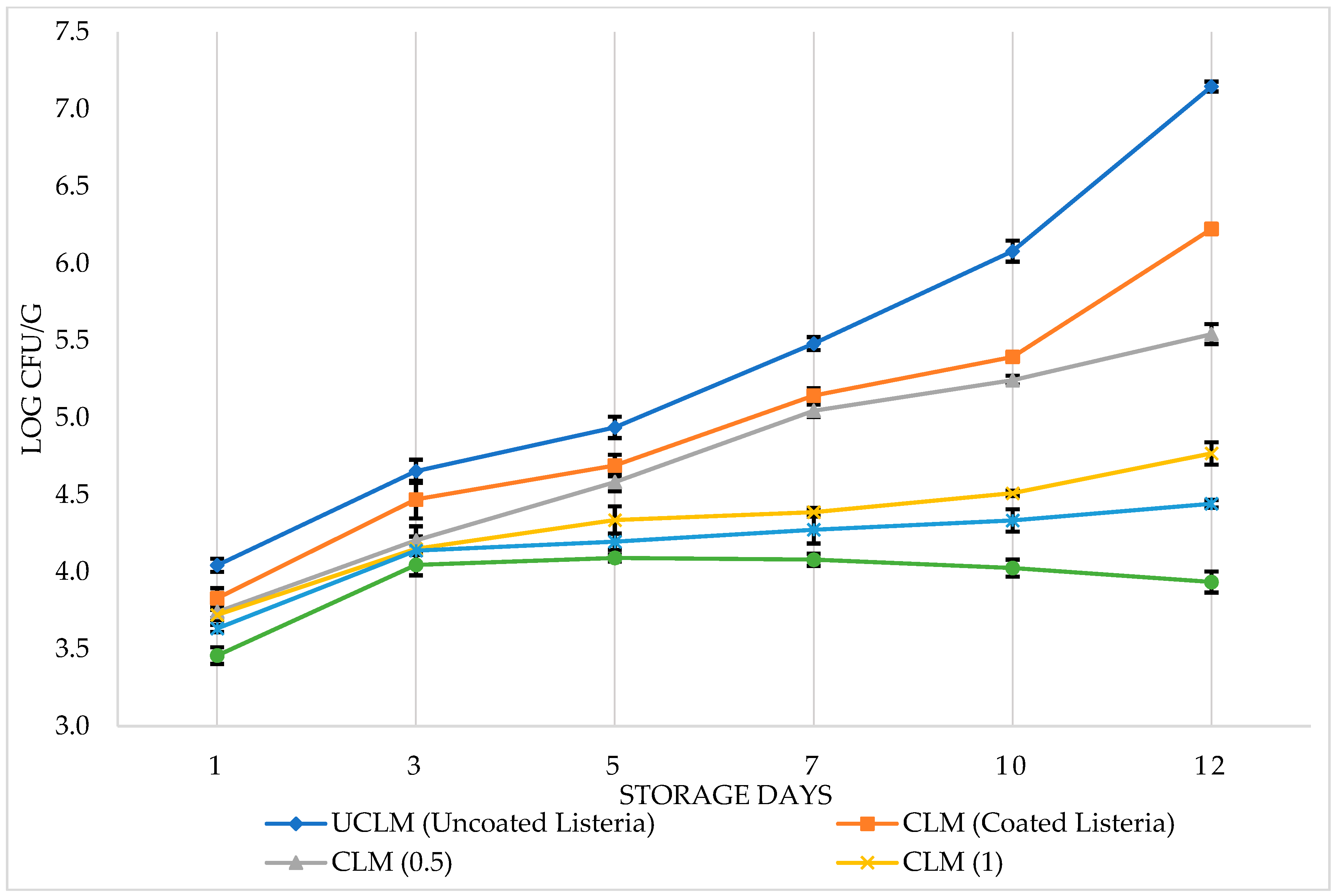
L. monocytogenes counts were performed in coated and uncoated CBF contaminated by L. monocytogenes (Figure 7). The EO-added coating had a higher antimicrobial effect against L. monocytogenes than the uncoated L. monocytogenes (UCLM) (p<0.05). The antimicrobial activity increased with increasing EO concentration, while L. monocytogenes in coated L. monocytogenes (CLM) reached 6.2 log cfu/g, L. monocytogenes increased to only 3.9 log cfu/g in CLM(2) at the end of 12 days of storage (p<0.05). The number of L. monocytogenes in UCLM samples increased by 3.1 logs; however, that in CLM samples increased by 2.4 during the storage. Antimicrobial activity of coating increased significantly with EO addition with even CLM(0.5) coating lowered the L. monocytogenes count (p<0.05). The highest antimicrobial effect was seen in CLM(2), inhibiting the growth of L. monocytogenes. The antimicrobial activities of CLM(1), CLM(1.5), and CLM(2) against L. monocytogenes were not significantly (p>0.05) different from each other during whole storage. Previous study showed that the minimum inhibitory concentration (MIC) of EO of PVR against L. monocytogenes was 0.25% [47]. So all of the coated samples having EO concentrations above the MIC of 0.25% should be effective against L. monocytogenes growth. By looking at similar growth trends of TBC (Figure 6) and L. monocytogenes (Figure 7) count, one can say that L. monocytogenes adapted well to highly competitive flora during storage. But including EO in the coating composition was significantly limiting the growth. Similar research results showed that L. monocytogenes was susceptible to EO-added coatings.
Figure 7.
Growth of L. monocytogenes on the UCLM and CLM with different EO concentrations during storage of 12 days at 8°C.
Figure 7.
Growth of L. monocytogenes on the UCLM and CLM with different EO concentrations during storage of 12 days at 8°C.
Abbasi et al. [10] observed the antibacterial effects of fortified nanoemulsion of the starch-based edible coating, including ZEO, on chicken meat. The results showed that uncoated control samples had reached 11.42 log cfu/g from 4 logs initial L. monocytogenes number, where the most effective coating nanoemulsion of ZEO with cinnamaldehyde reached only 6 log cfu/g at the end of 20 days. Shekarforoush et al. [38] found that L. monocytogenes numbers did not change significantly (p>0.05) in ready-to-barbecue chicken meat coated with chitosan and oregano essential oil and stored at 8°C with 4.7 log cfu/g. Unlike our storage period, their results covered only the first 3 days of storage.
Adding essential oil or another antimicrobial agent increases the effectiveness of the preservation potential of edible coating against pathogenic bacteria. Raeisi et al. [45] studied the combined effects of rosemary, cinnamon essential oils, and nisin together and found a greater inhibitory effect on L. monocytogenes during the storage of chicken meat. Ala et al. [42] reported that bioactive carboxymethyl cellulose coating containing Ziziphora clinopodioides (ZEO; 0.25 and 0.5%) and Mentha spicata (MEO; 0.5%) essential oils applied on chicken breast fillets caused L. monocytogenes numbers to increase from 5 log cfu/g to 7.55 and 7.83 logs for negative and positive controls, respectively. In the research of Souza et al. [48], bio nanocomposite edible films containing ginger EO had antimicrobial effects against L. monocytogenes and other pathogens in chicken breast samples. Janes et al. [49] studied the effect of zein propylene glycol film containing nisin and calcium propionate as antimicrobial agents on chicken meat against L. monocytogenes during 8°C and 4°C storage. They have obtained L. monocytogenes growth was suppressed by 5.4 logs on day 8 compared to uncoated control samples stored at 8°C. In our present study, we had a 4 log difference on day 12 just using CLM(2) coating.
The UCST (uncoated L. monocytogenes) samples from an initial microbial load of 4.3 log cfu/g reached 6.1 log cfu/g at 10 days of storage (Figure 8). The coating containing EO 1.5% and higher showed significant inhibition against the growth of S. Typhimurium (p<0.05), suppressing their growth by approximately one log. The effects of CST (coated L. monocytogenes), CST(0.5), and CST(1) on the growth of S. Typhimurium were not significantly different (p>0.05). A previous study also showed that the MIC of EO obtained from PVR against S. Typhimurium was 1.5% (v/v) [47]. CST samples up to 1% EO concentration showed similar results (p>0.05). These samples had results around 5 log cfu/g at day 12, where CST(1.5) and CST(2) were more effective than the other coated samples having 4.8 log cfu/g and 4.1 log cfu/g, respectively. As expected, the most effective coating was CST(2), with significantly lower S. Typhimurium numbers during storage (p<0.05).
Figure 8.
Growth of S. Typhimurium on the UCST and CST with different EO concentrations during storage of 12 days at 8°C.
Figure 8.
Growth of S. Typhimurium on the UCST and CST with different EO concentrations during storage of 12 days at 8°C.
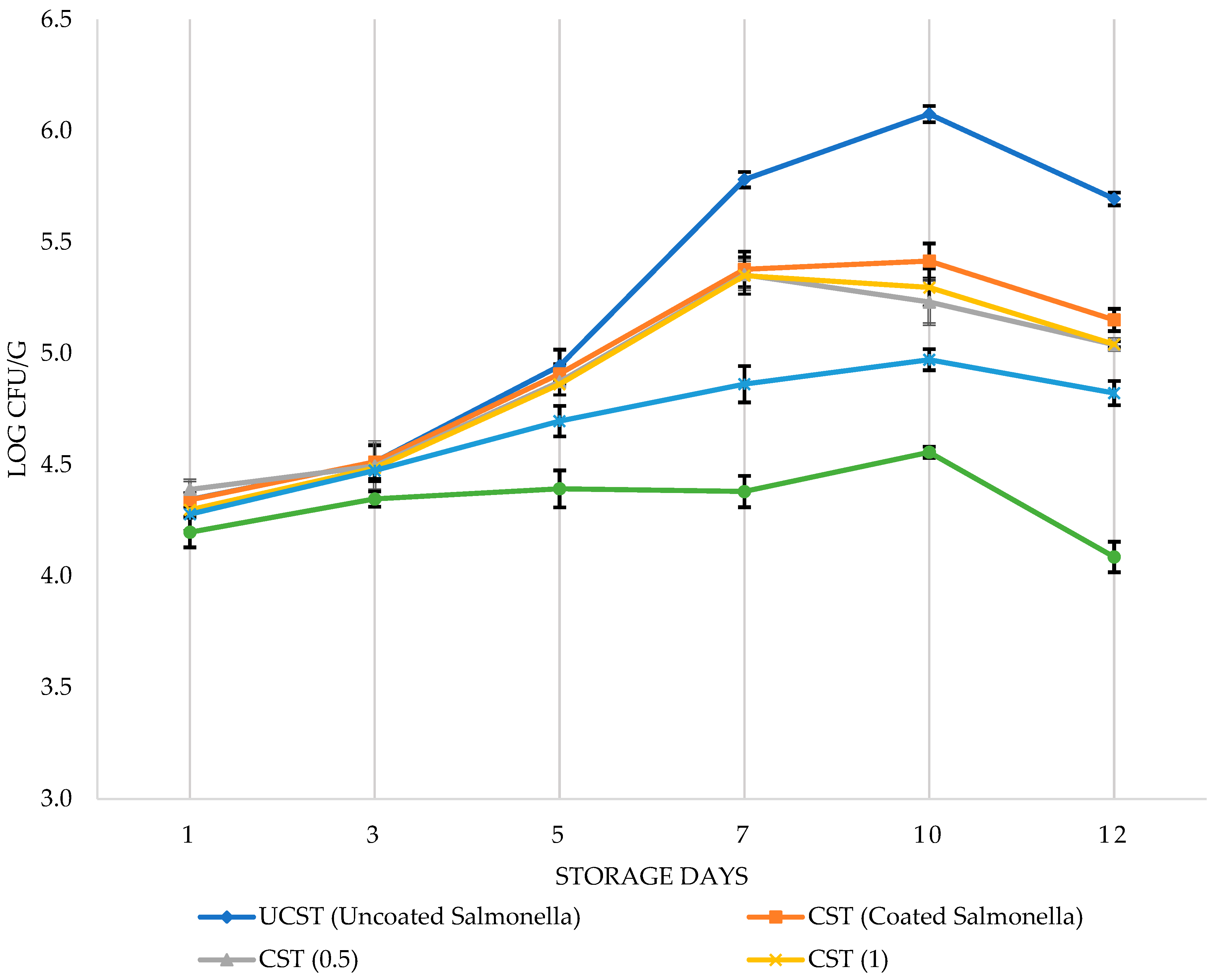
Ala et al. [42] have reported that TBC of uncoated samples increased to 9 log cfu/g on the 10th day of storage, and the most effective coating with EOs increased to 4.2 log cfu/g from the initial number 3.55 log cfu/g. Carboxymethyl cellulose coatings with several essential oils decreased S. Typhimurium by 3 logs at the end of 13 days of storage at 4°C. This direct decrease trend differing from our present study in S. Typhimurium numbers can be explained by lower storage temperature than our storage conditions. S. Typhimurium is a well-known bacterium with uncompetitive growth characteristics at lower refrigeration temperatures like 4°C [42]. In our study, the S. Typhimurium count fluctuated during storage at 8°C. Bacterial growth increased dramatically in the first 5 days, slowed down in the following days, and decreased after the 10th day of storage. The main reason for decreasing in S. Typhimurium count in all samples after the 10th day of storage may be because S. Typhimurium, as a mesophilic bacteria, could not compete with the mainly psychrophilic bacterial flora in the samples at refrigeration temperatures [50].
Pinto et al. [4] observed the microbial and quality properties of chicken breast fillets treated with sodium alginate edible coatings containing oregano and curcumin EOs. According to S. Typhimurium count results, all samples containing EOs had approximately 2 logs decrease during 7-day storage at refrigerated temperatures. Unlike our results, they observed a continuous decrease in S. Typhimurium counts at all samples during whole storage. All samples with coating had significantly lower numbers than control samples. But essential oils used and their combined blends did not have any significant difference within each other.
Goswami et al. [51] used pea starch coating with thyme EO to research antimicrobial effects against pathogens and spoilage bacteria found in chicken breast meat. They have found that total aerobic counts increased from 4.7 to 7.1 log cfu/g during 12-day storage at 4°C in Salmonella inoculated control samples. EO-added samples had similar results from 4.0 to 7.2 log cfu/g. On the other hand, S. Typhimurium count results showed a decrease in control samples from 5.2 to 4.2 log cfu/g, whereas EO-added samples had a significantly higher decrease from 4.3 to 2.2 log cfu/g. Their results were similar to our TBC numbers but different from S. Typhimurium count results. Since their storage is at 4°C, this is expected due to the S. Typhimurium growth characteristic at lower temperatures mentioned before.
3.2. Sensory analysis of chicken breast fillets with PVR edible coating
Results of sensory analysis for raw CBF cubes according to quality parameters of; appearance, smell, texture, and general acceptance were shown in Figure 9a. The appearance, smell, and general acceptance of CR were scored significantly better than UCR samples (p<0.05). In other words, C2(2) coating kept sensory properties of raw CBF cubes at a higher acceptance significantly (p<0.05) than UCR except for texture.
Figure 9.
Sensory analysis scores; (a) Uncoated and coated raw chicken breast cubes, (b) uncoated and coated grilled chicken breast cubes with taste parameter at the end of 5 days storage at 8°C.
Figure 9.
Sensory analysis scores; (a) Uncoated and coated raw chicken breast cubes, (b) uncoated and coated grilled chicken breast cubes with taste parameter at the end of 5 days storage at 8°C.
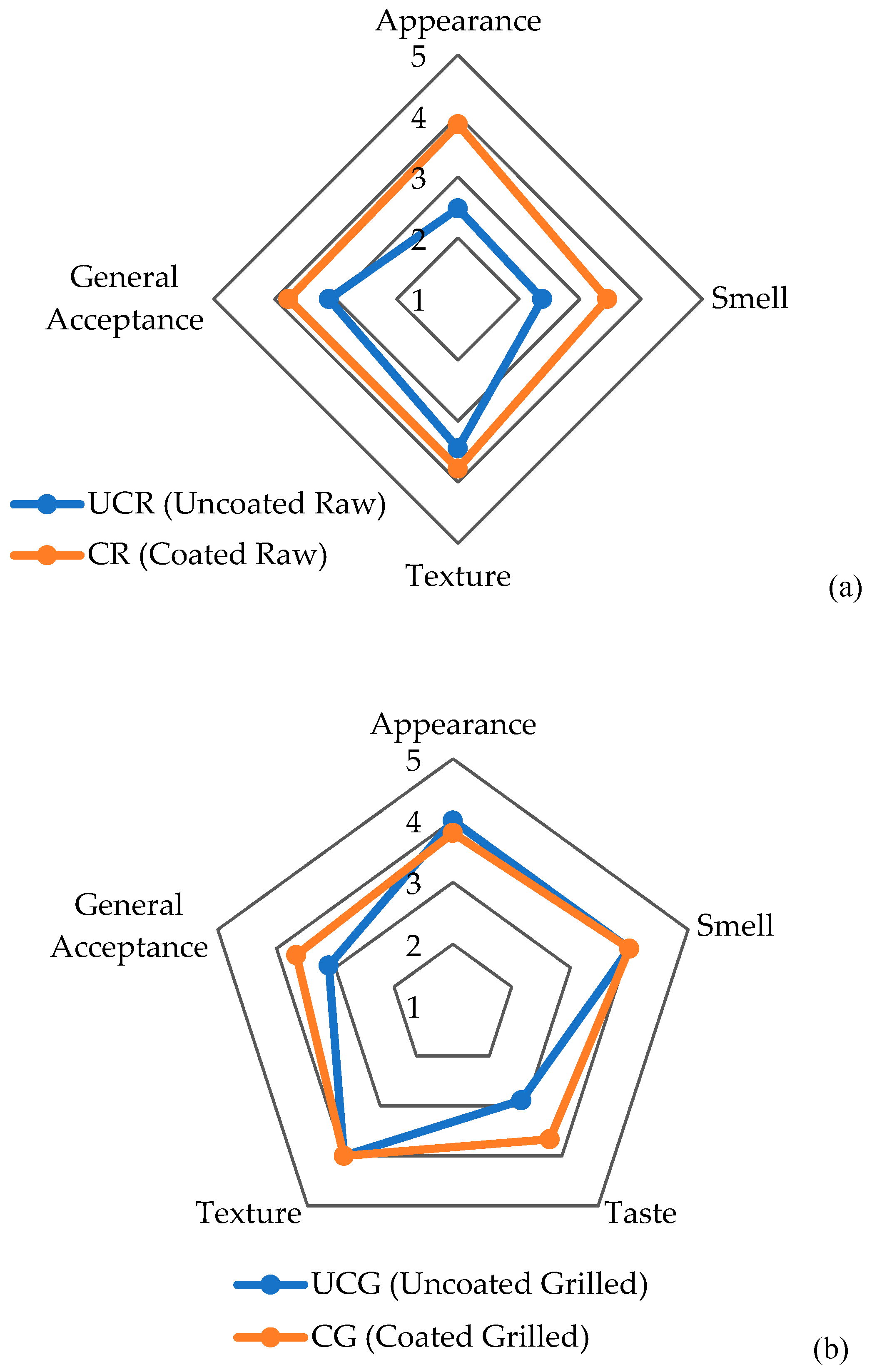
Also, the results of grilled CBF cubes tested for quality parameters of; appearance, smell, texture, taste, and general acceptance were given in Figure 9b. Again both of the samples, UCG and CG, had similar and higher scores meaning C2(2) coating did not alter the appearance, smell, and texture of grilled chicken breasts applied (p>0.05). But the taste and general acceptance of CG samples were significantly higher than UCG samples (p<0.05). Among all parameters, the smell is crucial for a suitable edible coating application on food material. Coated raw samples had a significantly lower smell score than uncoated samples in raw chicken breast fillet samples, but it was not significantly different in grilled samples (p>0.05). In addition, the “Taste” of CG samples scored significantly higher than UCG samples (p<0.05), meaning that C2(2) coating containing EO of PVR can be used for this food material keeping organoleptic properties at reasonable levels.
Research studies include sensory analysis for edible coating when EOs added concerning changes in organoleptic properties of food materials [52]. Since this present study is the first research regarding the sensory evaluation of EOs obtained from Pistacia vera L. resin, comparisons of the sensory evaluation were conducted with the antimicrobial edible coatings containing other EOs.
Panahi et al. [53] obtained odor results similar to our study, with lower scores of uncoated controls than samples coated using sodium alginate incorporated with Ferulago angulate. Boiss essential oil and nisin during 12 days of storage.
Bazargani-Gilani et al. [34] investigated the pomegranate juice-added chitosan coating enriched with ZEO on chicken breast meats during 20 days of storage. Pomegranate juice-treated samples showed significantly higher scores than all control groups. Before 5 days of storage odor of samples treated with ZEO was higher than the control, but after 5 days, off-odor due to microbial spoilage occurred. The results obtained before five days of storage showed that ZEO-treated coatings improved the odor of chicken breast samples, which suits our findings for the smell.
In a study with very similar results with odor properties, Garavito et al. [3] developed an edible coating of guar gum and isolated soy protein enriched with oregano EO. According to sensory evaluation during 10 days of storage, all sensory parameters of coated samples were kept at acceptable levels at the first 6 days of storage. The odor of uncoated samples decreased significantly lower than coated samples on day 6, like our results on the 5th day (p<0.05).
Nouri Ala et al. [42] formed carboxymethyl cellulose coatings that are hydrophobic similar to wheat gluten used in this study, with several plant-based EOs (ZEO and MEO) and recorded the lowest sensory scores for the uncoated chicken fillets. And also, the coating did not adversely affect the sensory characteristics of the chicken meat samples.
In another study, the taste of the chicken samples was unaffected by using chitosan film combined with oregano essential oil, which also increased the shelf-life of chicken fillets by 14 days while maintaining acceptable sensory attributes [35].
Yousefi et al. [54] had decreased sensory properties during storage of 16 days at 4°C for the lactoperoxidase system-alginate-coated chicken breasts. On day 0, all samples had high sensory scores of 8/10, but on day 16, only coated samples had acceptable scores. According to panelists, the results and situation of the products were unacceptable for uncoated samples at the end of the storage.
For edible coatings applied to food materials, the sensory properties are crucial in influencing consumer choice and decision. While preserving the food materials from harmful effects, the coating should keep the sensory properties “acceptable” to consumers. The present and previous studies showed that edible coatings and their bioactive components are used, so they had no adverse effect on the sensory properties of food materials coated with edible coatings.
4. Conclusions
In conclusion, this research showed that Pistacia vera L. tree resin and its EO could be used to produce wheat gluten-PVR resin-based antimicrobial ECEO coatings on poultry to keep them safe from pathogenic bacteria and protect sensory properties without any adverse alterations during shelf life. ECEO coating used in this research showed remarkable antibacterial properties at a 2% level addition against S. Typhimurium and L. monocytogenes, which can possibly be found in chicken meat products. Also, this coating and its components had no adverse effect on the sensory properties of chicken breast fillets during cold storage and cooking. As the first study of Pistacia vera L resin essential oil in an antimicrobial edible coating composition and sensory evaluation on chicken breast fillets, the ECEO coating may hold high research and commercial potential. So it can be a feasible and reliable alternative for preserving chicken breast fillets without losing sensory parameters.
5. Patents
Edible coating and its components used in this research are a part of the patented product licensed by the Turkish Patent Office (TPE), and the corresponding authors of this article reserve all intellectual property and commercial production rights. A copy of the Patent license is given in the “Supplementary Materials” section.
“Edible antimicrobial film produced from pistachio resin. This invention relates to a film with edible antimicrobial properties produced using pistachio resin (PVR) and the production method of this edible film. 24/04/2018, Patent Registration, National, Application No: TR2015/00217” by: National Patent given by Turkish patent office.
Supplementary Materials
A copy of the National Patent No: TR2015/00217 for the product used in this research is given here.
Author Contributions
All authors contributed in a way during the development of this research article, from the draft to the final manuscript. “Conceptualization, Barazi A.Ö., and Erkmen O.; methodology, Barazi, Erkmen, and Mehmetoğlu; software, Barazi; validation, Barazi, Erkmen, and Mehmetoğlu; formal analysis, Barazi; investigation, Barazi; resources, Barazi and Erkmen; data curation, Barazi, Erkmen, and Mehmetoğlu; writing—original draft preparation, Barazi; writing—review and editing, Barazi, Erkmen, and Mehmetoğlu; visualization, Barazi; supervision, Erkmen, and Mehmetoğlu; project administration, Erkmen; funding acquisition, Erkmen. All authors have read and agreed to the published version of the manuscript.”
Funding
“This research was funded by Gaziantep University Scientific Research Projects Coordination Unit. Project Number: MF 14.28, 2016”
Data Availability Statement
Not applicable
Acknowledgments
Authors would like to thank Gaziantep University Food Engineering Department for using the laboratory infrastructures and facilities provided to make experiments accurate and safe; thank Gaziantep University Scientific Research Projects Coordination Unit for funding research consumables and devices used; thank “TARGET” technology transfer office of Gaziantep University for the supports during patent applications.
Conflicts of Interest
“The authors declare no conflict of interest.” “The funders had no role in the design of the study; in the collection, analyses, or interpretation of data; in the writing of the manuscript; or in the decision to publish the results.”
Additional notes
The preliminary works of this study have been granted by the FEBS Bursary Award and presented as a poster presentation at the 42nd FEBS Congress in Jerusalem / Israel 2017. “P.Mis-020. Antimicrobial effect of edible coating produced from Pistacia vera resin to prevent growth of Listeria monocytogenes and Salmonella Typhimurium.” A. O. Barazi, O. Erkmen Gaziantep University, Gaziantep, Turkey.
References
- Sánchez-Ortega, I.; García-Almendárez, B.E.; Santos-López, E.M.; Amaro-Reyes, A.; Barboza-Corona, J.E.; Regalado, C. Antimicrobial Edible Films and Coatings for Meat and Meat Products Preservation. Sci. World J. 2014, 2014, 248935. [Google Scholar] [CrossRef] [PubMed]
- Fernández-Pan, I.; Carrión-Granda, X.; Maté, J.I. Antimicrobial efficiency of edible coatings on the preservation of chicken breast fillets. Food Control 2014, 36, 69–75. [Google Scholar] [CrossRef]
- Garavito, J.; Moncayo-Martínez, D.; Castellanos, D.A. Evaluation of antimicrobial coatings on preservation and shelf life of fresh chicken breast fillets under cold storage. Foods 2020, 9. [Google Scholar] [CrossRef] [PubMed]
- Pinto, M.L.A.; Frizzo, A.; Benito, C.E.; da Silva Júnior, R.C.; Alvares, L.K.; Pinto, A.N.; Tellini, C.; de Oliveira Monteschio, J.; Fernandes, J.I.M. Effect of an antimicrobial photoinactivation approach based on a blend of curcumin and Origanum essential oils on the quality attributes of chilled chicken breast. LWT 2023, 176, 114484. [Google Scholar] [CrossRef]
- Tack, D.M.; Marder, E.P.; Griffin, P.M.; Cieslak, P.R.; Dunn, J.; Hurd, S.; Scallan, E.; Lathrop, S.; Muse, A.; Ryan, P.; et al. Preliminary incidence and trends of infections with pathogens transmitted commonly through food — Foodborne Diseases Active Surveillance Network, 10 U.S. sites, 2015–2018. Am. J. Transplant. 2019, 19, 1859–1863. [Google Scholar] [CrossRef]
- ECDC ECDC Surveillance Atlas of infectious disease Available online: https://atlas.ecdc.europa.eu/public/index.aspx.
- Silva, F.; Domingues, F.C.; Nerín, C. Trends in microbial control techniques for poultry products. https://doi.org/10.1080/10408398.2016.1206845 2017, 58, 591–609. [CrossRef]
- Fernández-Pan, I.; Mendoza, M.; Maté, J.I. Whey protein isolate edible films with essential oils incorporated to improve the microbial quality of poultry. J. Sci. Food Agric. 2013, 93, 2986–2994. [Google Scholar] [CrossRef] [PubMed]
- Pérez-Santaescolástica, C.; Munekata, P.E.S.; Feng, X.; Liu, Y.; Bastianello Campagnol, P.C.; Lorenzo, J.M. Active edible coatings and films with Mediterranean herbs to improve food shelf-life. Crit. Rev. Food Sci. Nutr. 2022, 62, 2391–2403. [Google Scholar] [CrossRef] [PubMed]
- Abbasi, Z.; Aminzare, M.; Hassanzad Azar, H.; Rostamizadeh, K. Effect of corn starch coating incorporated with nanoemulsion of Zataria multiflora essential oil fortified with cinnamaldehyde on microbial quality of fresh chicken meat and fate of inoculated Listeria monocytogenes. J. Food Sci. Technol. 2021, 58, 2677–2687. [Google Scholar] [CrossRef]
- Janjarasskul, T.; Krochta, J.M. Edible Packaging Materials. Annu. Rev. Food Sci. Technol. 2010, 1, 415–448. [Google Scholar] [CrossRef]
- Bharti, S.K.; Pathak, V.; Alam, T.; Arya, A.; Singh, V.K.; Verma, A.K.; Rajkumar, V. Materialization of novel composite bio-based active edible film functionalized with essential oils on antimicrobial and antioxidative aspect of chicken nuggets during extended storage. J. Food Sci. 2020, 85, 2857–2865. [Google Scholar] [CrossRef]
- Debeaufort, F.; Quezada-Gallo, J.-A.; Voilley, A. Edible Films and Coatings: Tomorrow’s Packagings: A Review. Crit. Rev. Food Sci. Nutr. 1998, 38, 299–313. [Google Scholar] [CrossRef] [PubMed]
- Bourtoom, T. Review Article Edible films and coatings : characteristics and properties. Int. Food Res. J. 2008, 15, 237–248. [Google Scholar]
- Cagri, A.; Ustunol, Z.; Ryser, E.T. Inhibition of three pathogens on bologna and summer sausage using antimicrobial edible films. J. Food Sci. 2002, 67, 2317–2324. [Google Scholar] [CrossRef]
- Falguera, V.; Quintero, J.P.; Jiménez, A.; Muñoz, J.A.; Ibarz, A. Edible films and coatings: Structures, active functions and trends in their use. Trends Food Sci. Technol. 2011, 22, 292–303. [Google Scholar] [CrossRef]
- Guilbert, S.; Gontard, N.; Gorris, L.G.M. Prolongation of the Shelf-life of Perishable Food Products using Biodegradable Films and Coatings. LWT - Food Sci. Technol. 1996, 29, 10–17. [Google Scholar] [CrossRef]
- Han, J.H. Edible Films and Coatings; Elsevier Ltd, 2014; ISBN 9780123946010.
- Cagri, A.; Ustunol, Z.; Ryser, E.T. Antimicrobial Edible Films and Coatings. J. Food Prot. 2004, 67, 833–848. [Google Scholar] [CrossRef] [PubMed]
- Khaledian, Y.; Pajohi-Alamoti, M.; Bazargani-Gilani, B. Development of cellulose nanofibers coating incorporated with ginger essential oil and citric acid to extend the shelf life of ready-to-cook barbecue chicken. J. Food Process. Preserv. 2019, 43, 1–13. [Google Scholar] [CrossRef]
- Khezrian, A.; Shahbazi, Y. Application of nanocompostie chitosan and carboxymethyl cellulose films containing natural preservative compounds in minced camel’s meat. Int. J. Biol. Macromol. 2018, 106, 1146–1158. [Google Scholar] [CrossRef]
- Sallak, N.; Motallebi Moghanjoughi, A.; Ataee, M.; Anvar, S.A.A.; Golestan, L. Evaluation of the effect of corn starch film composed of Ag-TiO₂ nanocomposites and Satureja khuzestanica essential oil on the shelf-life of chicken fillet. Food Heal. 2022, 5, 20–29. [Google Scholar] [CrossRef]
- Zhang, L.; Liu, A.; Wang, W.; Ye, R.; Liu, Y.; Xiao, J.; Wang, K. Characterisation of microemulsion nanofilms based on Tilapia fish skin gelatine and ZnO nanoparticles incorporated with ginger essential oil: meat packaging application. Int. J. Food Sci. Technol. 2017, 52, 1670–1679. [Google Scholar] [CrossRef]
- Ghalem, B.R.; Mohamed, B. Antimicrobial activity evaluation of the oleoresin oil of Pistacia vera L. African J. Plant Sci. 2010, 4, 300–303. [Google Scholar]
- Digrak, M.; Alma, M.H.; Ilçim, A.; Sen, S. Antibacterial and Antifungal Effects of Various Commercial Plant Extracts. Pharm. Biol. 1999, 37, 216–220. [Google Scholar] [CrossRef]
- Digrak, M.; Alma, M.H.; Ilçim, A. Antibacterial and Antifungal Activities of Turkish Medicinal Plants. Pharm. Biol. 2001, 39, 346–350. [Google Scholar] [CrossRef]
- Alma, M.H.; Nitz, S.; Kollmannsberger, H.; Digrak, M.; Efe, F.T.; Yilmaz, N. Chemical composition and antimicrobial activity of the essential oils from the gum of Turkish Pistachio (Pistacia vera L.). J. Agric. Food Chem. 2004, 52, 3911–3914. [Google Scholar] [CrossRef] [PubMed]
- Erkmen, O. Bacterial inactivation mechanism of SC-CD and TEO combinations in watermelon and melon juices. Food Sci. Technol. 2021, 42, e62520. [Google Scholar] [CrossRef]
- Tornuk, F.; Ozturk, I.; Sagdic, O.; Yilmaz, A.; Erkmen, O. Application of Predictive Inactivation Models to Evaluate Survival of Staphylococcus aureus in Fresh-Cut Apples Treated with Different Plant Hydrosols. http://dx.doi.org/10.1080/10942912.2011.650340 2013, 17, 587–598. [CrossRef]
- Erkmen, O. Practice 10. Counting of mesophilic and thermophilic spore formers. In Microbiological Analysis of Foods and Food Processing Environments; Elsevier: London, 2021; pp. 77–90. ISBN 978-0-323-91651-6. [Google Scholar]
- Erkmen, O. Practice 15. Isolation and counting of Salmonella. In Microbiological Analysis of Foods and Food Processing Environments; Elsevier: London, 2021; pp. 151–168. ISBN 978-0-323-91651-6. [Google Scholar]
- Erkmen, O. Practice 16. Isolation and counting of Listeria monocytogenes. In Microbiological Analysis of Foods and Food Processing Environments; Elsevier: London, 2021; pp. 169–180. ISBN 978-0-323-91651-6. [Google Scholar]
- Economou, T.; Pournis, N.; Ntzimani, A.; Savvaidis, I.N. Nisin–EDTA treatments and modified atmosphere packaging to increase fresh chicken meat shelf-life. Food Chem. 2009, 114, 1470–1476. [Google Scholar] [CrossRef]
- Bazargani-Gilani, B.; Aliakbarlu, J.; Tajik, H. Effect of pomegranate juice dipping and chitosan coating enriched with Zataria multiflora Boiss essential oil on the shelf-life of chicken meat during refrigerated storage. Innov. Food Sci. Emerg. Technol. 2015, 29, 280–287. [Google Scholar] [CrossRef]
- Petrou, S.; Tsiraki, M.; Giatrakou, V.; Savvaidis, I.N. Chitosan dipping or oregano oil treatments, singly or combined on modified atmosphere packaged chicken breast meat. Int. J. Food Microbiol. 2012, 156, 264–271. [Google Scholar] [CrossRef]
- Bolumar, T.; Andersen, M.L.; Orlien, V. Antioxidant active packaging for chicken meat processed by high pressure treatment. Food Chem. 2011, 129, 1406–1412. [Google Scholar] [CrossRef]
- Soni, A.; Kandeepan, G.; Mendiratta, S.K.; Shukla, V.; Kumar, A. Development and characterization of essential oils incorporated carrageenan based edible film for packaging of chicken patties. Nutr. Food Sci. 2016, 46, 82–95. [Google Scholar] [CrossRef]
- Shekarforoush, S.S.; Basiri, S.; Ebrahimnejad, H.; Hosseinzadeh, S. Effect of chitosan on spoilage bacteria, Escherichia coli and Listeria monocytogenes in cured chicken meat. Int. J. Biol. Macromol. 2015, 76, 303–309. [Google Scholar] [CrossRef]
- Patsias, A.; Badeka, A. V.; Savvaidis, I.N.; Kontominas, M.G. Combined effect of freeze chilling and MAP on quality parameters of raw chicken fillets. Food Microbiol. 2008, 25, 575–581. [Google Scholar] [CrossRef] [PubMed]
- Senter, S.D.; Arnold, J.W.; Chew, V. APC values and volatile compounds formed in commercially processed, raw chicken parts during storage at 4 and 13°C and under simulated temperature abuse conditions. J. Sci. Food Agric. 2000, 80, 1559–1564. [Google Scholar] [CrossRef]
- Baldwin, E.A.; Hagenmaier, R.D.; Bai, J.; Edition, S. Edible Coatings and Films to Improve Food Quality SECOND EDITION; Second.; CRC Press, 2012; ISBN 9781138198937.
- Ala, M.A.; Shahbazi, Y. The effects of novel bioactive carboxymethyl cellulose coatings on food-borne pathogenic bacteria and shelf life extension of fresh and sauced chicken breast fillets. Lwt 2019, 111, 602–611. [Google Scholar] [CrossRef]
- Khezerlou, A.; Zolfaghari, H.; Banihashemi, S.A.; Forghani, S.; Ehsani, A. Plant gums as the functional compounds for edible films and coatings in the food industry: A review. Polym. Adv. Technol. 2021, 32, 2306–2326. [Google Scholar] [CrossRef]
- Matiacevich, S.; Acevedo, N.; López, D. Characterization of Edible Active Coating Based on Alginate-Thyme Oil-Propionic Acid for the Preservation of Fresh Chicken Breast Fillets. J. Food Process. Preserv. 2015, 39, 2792–2801. [Google Scholar] [CrossRef]
- Raeisi, M.; Tabaraei, A.; Hashemi, M.; Behnampour, N. Effect of sodium alginate coating incorporated with nisin, Cinnamomum zeylanicum, and rosemary essential oils on microbial quality of chicken meat and fate of Listeria monocytogenes during refrigeration. Int. J. Food Microbiol. 2016, 238, 139–145. [Google Scholar] [CrossRef] [PubMed]
- Noori, S.; Zeynali, F.; Almasi, H. Antimicrobial and antioxidant efficiency of nanoemulsion-based edible coating containing ginger (Zingiber officinale) essential oil and its effect on safety and quality attributes of chicken breast fillets. Food Control 2018, 84, 312–320. [Google Scholar] [CrossRef]
- Aykut, B.; Osman, E. Antimicrobial activity of a novel biodegradable edible film produced from Pistacia vera resin and Origanum vulgare essential oil. Res. J. Biotechnol. 2017, 12, 15–21. [Google Scholar]
- Souza, V.G.L.; Pires, J.R.A.; Vieira, É.T.; Coelhoso, I.M.; Duarte, M.P.; Fernando, A.L. Shelf Life Assessment of Fresh Poultry Meat Packaged in Novel Bionanocomposite of Chitosan/Montmorillonite Incorporated with Ginger Essential Oil. Coatings 2018, Vol. 8, Page 177 2018, 8, 177. [Google Scholar] [CrossRef]
- Janes, M.E.; Kooshesh, S.; Johnson, M.G. Control of Listeria monocytogenes on the surface of refrigerated, ready-to-eat chicken coated with edible zein film coatings containing nisin and/or calcium propionate. J. Food Sci. 2002, 67, 2754–2757. [Google Scholar] [CrossRef]
- İncili, G.K.; Akgöl, M.; Aydemir, M.E.; Alan, S.; Mutlu, M.; İlhak, O.İ.; Öksüztepe, G. Fate of Listeria monocytogenes and Salmonella Typhimurium in homemade marinade and on marinated chicken drumsticks, wings, and breast meat. Lwt 2020, 134. [Google Scholar] [CrossRef]
- Goswami, N.; Han, J.H.; Holley, R.A. Effectiveness of antimicrobial starch coating containing thyme oil against Salmonella, Listeria, Campylobacter, and Pseudomonas on chicken breast meat. Food Sci. Biotechnol. 2009, 18, 425–431. [Google Scholar]
- Burt, S. Essential oils: their antibacterial properties and potential applications in foods—a review. Int. J. Food Microbiol. 2004, 94, 223–253. [Google Scholar] [CrossRef]
- Panahi, Z.; Mohsenzadeh, M. Sodium alginate edible coating containing Ferulago angulata (Schlecht.) Boiss essential oil, nisin, and NaCl: Its impact on microbial, chemical, and sensorial properties of refrigerated chicken breast. Int. J. Food Microbiol. 2022, 380, 109883. [Google Scholar] [CrossRef] [PubMed]
- Yousefi, M.; Farshidi, M.; Ehsani, A. Effects of lactoperoxidase system-alginate coating on chemical, microbial, and sensory properties of chicken breast fillets during cold storage. J. Food Saf. 2018, 38. [Google Scholar] [CrossRef]
Disclaimer/Publisher’s Note: The statements, opinions and data contained in all publications are solely those of the individual author(s) and contributor(s) and not of MDPI and/or the editor(s). MDPI and/or the editor(s) disclaim responsibility for any injury to people or property resulting from any ideas, methods, instructions or products referred to in the content. |
© 2023 by the authors. Licensee MDPI, Basel, Switzerland. This article is an open access article distributed under the terms and conditions of the Creative Commons Attribution (CC BY) license (http://creativecommons.org/licenses/by/4.0/).
Copyright: This open access article is published under a Creative Commons CC BY 4.0 license, which permit the free download, distribution, and reuse, provided that the author and preprint are cited in any reuse.


