

Submitted:
02 May 2023
Posted:
03 May 2023
You are already at the latest version
Abstract
Active learning has demonstrated its effectiveness regarding the improvement of the capacities of abstraction, comprehension, and development of cognitive, expression and relationship skills of the students. In this study, the redesign and implementation of an electromagnetism course for engineering students is presented, under the methodology of Backward Design (BD), recognized for its attributes for the development of active learning and its possibility of specifying the fun-damentals and principles of engineering education in the development of syllabus in higher ed-ucation. The purposes of this study were: 1) To implement the Backward Design (BD) methodology to develop argumentative, purposeful and interpretive skills in an electromagnetism course; 2) Design and apply rubrics to evaluate tests and laboratory reports, determine the level that best suits the knowledge, skills and competencies of students. 3) Assess the perception of students regarding the use of the methodology, their contributions to the development and understanding of the concepts of the course. The results of this educational research experience shown that the BD teaching approach was pedagogical and significantly superior to conventional models towards improving knowledge and skills of electromagnetism based on Hake's statistic (h) reached 0.73 that allow us to conclude that there was a learning gain in the students.
Keywords:
Backward Design
; Virtual Learning
; Ecosystem
; Design
; Thinking
1. Introduction
In the last decades, technologies have evolved vertiginously to facilitate human life, including tools that facilitate the implementation of new pedagogical strategies towards the improvement of educational systems. Accessibility to the use of laptops and mobile devices from any place and time, including access to network computers, provides remote communication options that have promoted changes in the curriculum of the programs of the Faculty of Engineering of the Universidad del Magdalena, allowing leaps in learning and teaching models emphasizing the evolution of appropriate professional skills for students. In that direction, both this and many universities and educational organizations at the international level are choosing and promoting active learning strategies their versatility to prepare students in competitive scenarios, where they manage to qualify in order to address the main problems of society once they enter to the world of work or entrepreneurship [1,2,3,4].
According to [1,2,3,4], MIT, North Carolina State University, and Aalborg University are among the pioneering higher education institutions that have introduced active learning in engineering courses. After several experiments, they reported that this approach promoted the development of skills such as teamwork, analysis and problem solving, and improved student performance and retention. According to a study by [5], the main benefits of active learning are:
- -
- -
- -
- Greater use of experts and terminologies. Students discuss, listen, learn from their peers, and even contribute to interesting discussions that can be presented when appropriate [9].
- -
- -
Hence, the following table summarizes some of the activities that relate the benefits of active learning with the competencies that engineering students should develop [4,15].

Table 1.
Benefits of active learning.
| All the activities | Description | Benefits |
|
Think about sharing the couple |
Students are given a problem and asked to analyze it individually (Think). They then compare their results with those of their closest neighbor (Couple). Finally, the pairs present their conclusions to the whole class (Share) | It allows the teacher to determine students' understanding of a topic and clear up misconceptions. Classes are more interactive and dynamic, increasing participation. In addition, this promotes student reflection on concepts and problems. |
| Group assignments | Students perform specific tasks collaboratively. | Promotes team and interpersonal skills |
|
Roleplay |
Students adopt a character to do a performance related to a certain situation. Participants then switch characters so that they all have a chance to take on all the roles. | Understanding of concepts and theories is enhanced. |
According to [16,17], the learning strategies developed in backward design include the principles of active learning, regular practice of skills in these activities with direct feedback from the teacher, and demonstration of knowledge and skills in real-world tasks such as discussions, exhibitions, experiments, and performances [16,17,18,19]. Hence, the purpose of this research focused on redesigning and developing the electromagnetism course offered by the Faculty of Engineering of the University of Magdalena, using the Backward Desing (BD) learning approach [16,17,20,21], towards the development of engineering competencies to foster the implementation of their knowledge and skills, through the solution of real engineering problems using the concepts studied in the subject.
2. Related research
2.1. The backward design method.
The bibliographic review evidences the robustness of the subject and the extensive list of authors who investigate the various elements that directly and indirectly influence the teaching of cognitive skills, including in the area of science. However, few have focused on the subject of reverse design as a research area in the Latin American context and in the Colombian territory. Hence, one of the fundamental purposes of this educational research is to identify to what level of learning it is possible to develop skills in engineering students at the Universidad del Magdalena by implementing the inverse design and how they perceive the usefulness of this model of instruction in comparison with traditional education [22].
Backward Design, also called backward planning or backward mapping, is defined as a method for designing curricula and educational activities based on the formulation of learning objectives to define the methodologies or pedagogies and forms of evaluation necessary for the construction of knowledge. in a certain area of knowledge [16,23,24].
According to these authors, the main justification for implementing Backward Design is that, by starting with the formulation of learning outcomes for a course, instead of starting with the first lesson planned chronologically, it allows the teacher to design a sequence of lessons, problems, projects, presentations, assignments, and evaluations that collaborate with the achievement of the learning purposes, which makes it easier for students to learn what you really want them to learn. The method in question poses three stages [25,26,27]:
Stage 1 consists of identifying the desired results: it includes the definition of objectives and the review of content standards around the environment (national, local, or other) and the expectations of the respective curriculum. Part of the reflection of questions such as what should students know, understand and be able to do? And how durable do you want the knowledge to be developed to be? Likewise, it is suggested at this stage to identify the results that will be expected from the students at the end of the activity (fundamental concepts or skills). Stage 2 – consists of determining the acceptable evidence: it consists of specifying the product(s) that will support the results expected from the students. It is at this stage that teachers will be able to check the student's level of understanding, considering the completion of tasks and various evaluation methods (observations, tests, projects, among others). When developing stage 3 – the learning experiences and the pedagogies to be used are designed: it refers to the moment of planning the learning activities that will allow the achievement of the objectives set out in stage 1. Some of the key questions raised by the authors for this stage are: what enabling knowledge (facts, concepts, principles) and skills (processes, procedures, strategies) will students require to achieve the desired results?; What activities will provide students with the necessary knowledge and skills? What and how should be taught in light of meeting the specified goals? And what materials, mediations, and resources are the most appropriate to achieve these objectives?
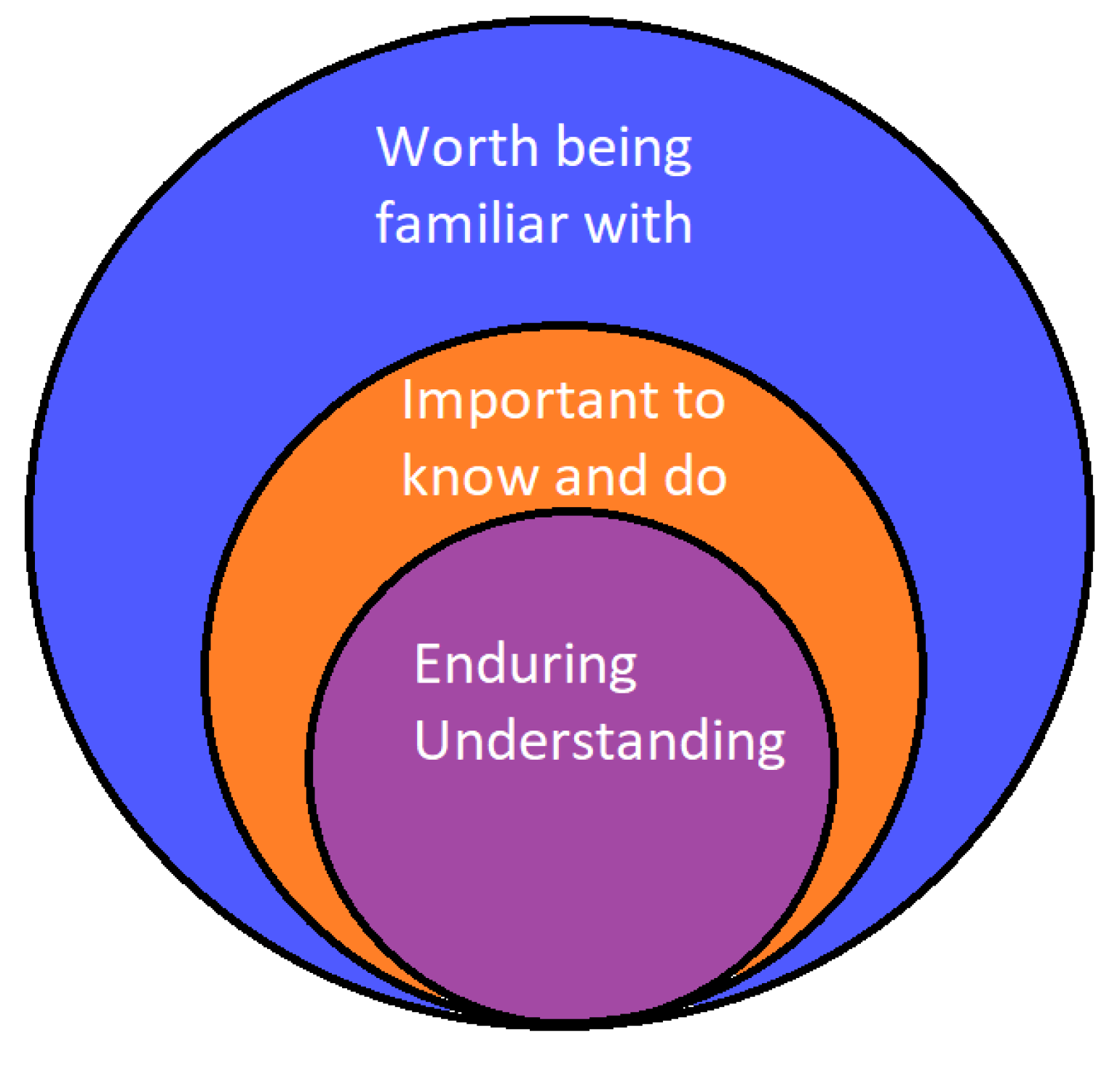
Based on the stages described, [17] define a three-ring model to establish curricular priorities. This model indicates that in the innermost ring are the knowledge and skills that the student must acquire for the development of their skills and that must remain with them for the exercise of their professional activity. In the second layer, the knowledge and skills that are important to have as references are indicated, and in the outermost layer, the issues that are considered familiar to their area of study.
Figure 1.
Establishment of curricular guidelines [17].
Figure 1.
Establishment of curricular guidelines [17].
2.2. Definition of scientific competence
To understand and put into practice dialogues in science and technology, three specific skills must be kept in mind in these fields, which are: explaining natural phenomena (argumentative competence); interpreting data and evidence scientifically (interpretative competence) and; evaluating and designing scientific research (proactive competence) [28]. The first refers to the electronic, technical, and technological elements and how these influence, in the social sphere, it is obvious that all these elements have their foundations in science, which requires that the individual have an illustration or knowledge of science and what Questions can be asked to develop your practice and glimpse your goals. The second refers to those issues or questions that can be resolved using scientific research, that is, create your model of how to do science and try to resolve the questions initially raised, and finally, the third competency refers to interpreting and being able to evaluate the data and what scientific support they have [29,30,31].
Of course, all these competencies require an epistemic scaffolding, i.e. an epistemological knowledge that makes it possible to understand the foundations on which scientific research practices are developed, the questions that are generated, the concepts that revolve around them such as theories, hypotheses and data, among others [32,33].
The Ministry of National Education of Colombia (MEN) and the tests of the Program for International Student Assessment (PISA) [28], focus on evaluating this type of competences, with other names, but finally address the same contextualization, that is, that students are able to demonstrate the three competencies mentioned above in different contexts such as work, social and personal, which coincides with the principles of reverse design.
3. Theoretical background
3.1. Backward Design application in an electromagnetism course
The electromagnetism course is an undergraduate general physics course for students of the Faculty of Engineering. The original design of the course is planned for lectures and face-to-face laboratories, virtual laboratories developed by the authors of this article, and some taken from the web.
The results for each of the Backward Design stages are listed below:
In stage 1 - Identify the desired results: To identify the desired learning results of the electromagnetism course, the following aspects were analyzed according with suggestions of [34]:
- Explain the causes that give rise to the laws that describe electrostatic and magnetostatic phenomena both in a vacuum and in matter.
- Formulate hypotheses about the known effects of electric and magnetic fields on electric charges for the construction and elaboration of simple and complex electric circuits.
- Apply the basic concepts of electromagnetism to propose alternative solutions to engineering problems.
- Reflect on the results of a laboratory practice, carrying out an analysis of the implicit physical phenomena and presents them with the standard criteria followed by the IEEE (Institute of Electrical and Electronics Engineers).
For stage 2 - Determine the acceptable evidence: in order to materialize this stage, the following learning evidence associated with the learning outcomes specified in the previous stage was defined:
- The generation of laboratory reports that show skills in the interpretation of graphs, argues in response to questions about electromagnetic phenomena and proposes alternative solutions to problems
- The solution of tests and resolution of problems elaborated by competences according to the guidelines of the MEN (Ministry of Education-Colombia).
- Conceptualization tests about the proposed problems at the end of the forums.
- Elaboration of scientific reports using IEEE standards.
- Exam by competences based on the socialization of the rubric.
- Videos with the development of homemade electromagnetism experiences.
To exemplify some of the evidences made by the students are presented:
- IEEE article-type laboratory reports.
- Essays according to the topics addressed in the forums.
- Short videos of homemade electromagnetism experiments.
- Written exams by thematic axis.
- Conceptualization test results.
In stage 3 – The learning experiences and the pedagogy to be used are designed: In this stage, the methodologies and some of the most important contents required to achieve the learning results are described.
Table 2.
Learning outcomes, methodology, content and resources for the implementation of BWD.
| Learning outcomes | Methodologies and/or pedagogies proposed for its development | Main contents to develop | Resources |
| Explain the causes that give rise to the laws that describe electrostatic and magnetostatic phenomena both in a vacuum and in matter. | - Group seminars on the subject under study. Short Experiment related to the subject under study. - Individual and group educational workshops on the subject under study. - Laboratory guides developed cooperatively. - Troubleshooting guides for electricity and magnetism. |
1. Gauss's Law and its Applications. 2.Properties of Materials: Conductors, Insulators and Semiconductors, Convection and Conduction Current. 3. Current Densities of Convection and Conduction. 4. Ohm's Law. polarization in Dielectrics. 5. Electrostatic Boundary Conditions: Dielectric-Dielectric, Conductor-Dielectric and Conductor-Free Space. 6. Fundamental equations of Magnetostatics in free space. 7. Magnetic Dipole. Magnetic moment. Magnetization of Materials, Magnetostatic Boundary Conditions, Inductance, and Inductors. 8. Magnetic Energy. Energy in terms of B and H. Magnetic Circuits, Classification of Magnetic Materials. |
Virtual laboratories developed at the Universidad del Magdalena and the University of Colorado (USA) |
| Formulate hypotheses about the known effects of electric and magnetic fields on electric charges for the construction and elaboration of simple and complex electric circuits. | - Group seminars on the subject under study. Short Experiment related to the subject under study. - Construction of conceptual and mental maps on the concepts under study. - Laboratory guides developed cooperatively. - Construction of conceptual and mental maps on the concepts under study. - Troubleshooting guides for electricity and magnetism. |
Real and home laboratories. |
|
| Applies the basic concepts of electromagnetism and proposes alternative solutions to engineering problems. | - Short Experiment related to the subject under study. - Individual and group educational workshops on the subject under study. - Laboratory teaching guides developed cooperatively. - Troubleshooting guides for electricity and magnetism. |
Conferences and Forums |
Some samples of the learning experiences developed with the students of the course are presented below.
3.2. Most outstanding learning experiences developed in the course
One of the main learning experiences in the electromagnetism course was the implementation of virtual laboratories (see Figure 2), this hand in hand with deep learning and previous knowledge, which allowed us to examine factors that favor learning with the use of this tool. As well as the cognitive demand, and levels to achieve the proposed competencies and learning outcomes. These competencies were articulated with a series of terms or verbs that regulate cognitive demand such as "recognize", "interpret", "analyze", etc. Likewise, these verbs did not indicate the degree of difficulty of the activities, but rather served as an indicator of the student's competence.
Subsequently, after the declaration of a health emergency unleashed by Covid-19 in the middle of our school semester, it was necessary to work through the use of totally remote virtual laboratories, without the presence of the teacher, as shown in Figure 2, this modified learning aspects initially raised, mainly with the design and implementation of the own virtual laboratory and available on the web for the development of skills in engineering students. Figure 3 shows some of the virtual laboratories used, including the virtual laboratories developed at our University and the University of Colorado-United States of America (https://phet.colorado.edu/).
The research showed that the implementation of virtual simulations for the teaching of physics developed scientific skills such as interpretive, argumentative, and purposeful, improved the learning of physics; becoming a great motivation for understanding natural phenomena related to electricity and magnetism. We highlight the hard work behind the structure of the virtual laboratory guides that accompanied the pedagogical intervention conceived with the following structure: Name of the laboratory, standard, competencies to develop, problem question, curricular area, achievement to develop, performance indicators, foundation, simulation, observation of the phenomenon, calculations, results, and analysis.
Another relevant learning experience during the development of the course was the home experiments called by our group (short experiments) Figure 4, which influenced their mental processes by activating their commitment to this activity, helped by metacognitive strategies that enable them to give adequate development of the problem-solving, interpretative and argumentative competence.
It is necessary to highlight that for the preparation of each learning evidence, the guidelines of the test of the Program for International Student Assessment (PISA) were taken into account, that is, it took into account the contexts for the preparation of the questions, the competencies that were wanted to be developed in the students, the learning transfers that they had to develop, the levels of the questions, the work guides with animations and simulations, especially with their pedagogical structure. Reason for which, it was necessary a) to adapt the questions of the tests to be applied, to adapt questions where the student could carry out the transfer of their learning seen in class, the elaboration of rubrics which were known by the students, quizzes, exams programmed always emphasizing the development of skills, the preparation of guides adapted to own virtual laboratories and available on the web (see Figure 5).
Additionally, three types of questions were used, those that developed the argumentative competence, the questions of an interpretive nature and those of a propositional nature, the questionnaire is of the know pro type, multiple choice with a single answer, characteristic of the test applied by the MEN . For the tests at the end of the period, a structure designed for the problem-solving competence was used and at the end of said tests, a series of questions with characteristics of the competences to be developed in each work unit, for the qualification of the tests, was devised a rubric based on the text by [35].
3. Results
In this article, we present the results after implementing the Backward Design method and its pedagogical potential in the teaching of the subject of electricity and magnetism offered by the Faculty of Engineering to its students. Figure 6 shows the first phase of the use of the methodology applying an entrance test to 94 students, in which levels of learning and development of argumentative, interpretive, and propositional skills were evaluated. The analysis and tabulation of the results obtained were framed in the evaluation criteria stipulated by the Ministry of National Education (in Spanish Ministerio de Educación Nacional-MEN). According to the results obtained in the tests applied, at the beginning and at the end of the course, an improvement in the performance of the students is observed with respect to each of the evaluated competences, where the low level of competences is observed at the beginning of the course (See Figure 5a), while the final test reflects a significant increase in the development of skills with approval of more than 78% (See Figure 5b).
Our parameter to observe is the Hake factor [39], whose formula is a statistical indicator of how much the Physics class students have learned within the context of a particular didactic methodology. The formula to evaluate it comes according to the following mathematical expression:
The population to which the test was applied were engineering students, the test consisted of 15 questions, questions endorsed by the MEN, which are used in the state test at the national level. This gives more reliability in the application of the test. The results obtained from the test were organized in Table 1. As an input test and output in Table 2, this is to count the correct answers. It was analyzed for the entire group taking into account the percentage of correct answers at the beginning and at the end of the course. In which the Hake factor can be easily calculated from the data obtained.
Table 9.
Tabulation of pre-test results.
| PRE TEST | |||||||||||||||||||
| QUESTIONS | 1 | 2 | 3 | 4 | 5 | 6 | 7 | 8 | 9 | 10 | 11 | 12 | 13 | 14 | 15 | TOTAL | % | ||
| CORRECT | 31 | 19 | 21 | 18 | 7 | 10 | 19 | 12 | 32 | 25 | 21 | 13 | 21 | 7 | 10 | 266 | 30% | ||
| WRONG | 28 | 40 | 38 | 41 | 52 | 49 | 40 | 47 | 27 | 34 | 38 | 46 | 38 | 52 | 49 | 619 | 70% | ||
Table 10.
Tabulation of post-test results.
| POST TESTS | ||||||||||||||||||
| QUESTIONS | 1 | 2 | 3 | 4 | 5 | 6 | 7 | 8 | 9 | 10 | 11 | 12 | 13 | 14 | 15 | TOTAL | % | |
| CORRECT | 56 | 51 | 49 | 45 | 31 | 51 | 47 | 46 | 48 | 50 | 43 | 48 | 46 | 40 | 52 | 703 | 79% | |
| WRONG | 3 | 8 | 10 | 14 | 28 | 8 | 12 | 13 | 11 | 9 | 16 | 11 | 13 | 19 | 7 | 182 | 21% | |
Source: self made.
There is the following general criterion to appreciate these quantitative results. The criterion that can be taken is the following:
A low Hake gain is considered to be between , a medium Hake gain is between , and a high learning gain is between . Doing our calculations, we got:
As we can see from the applied methodology, the learning gain indicated by the Hake factor for learning electromagnetic physics in higher education was medium; One year I take the development of the investigation, in the Faculty of Engineering of the University of Magdalena.
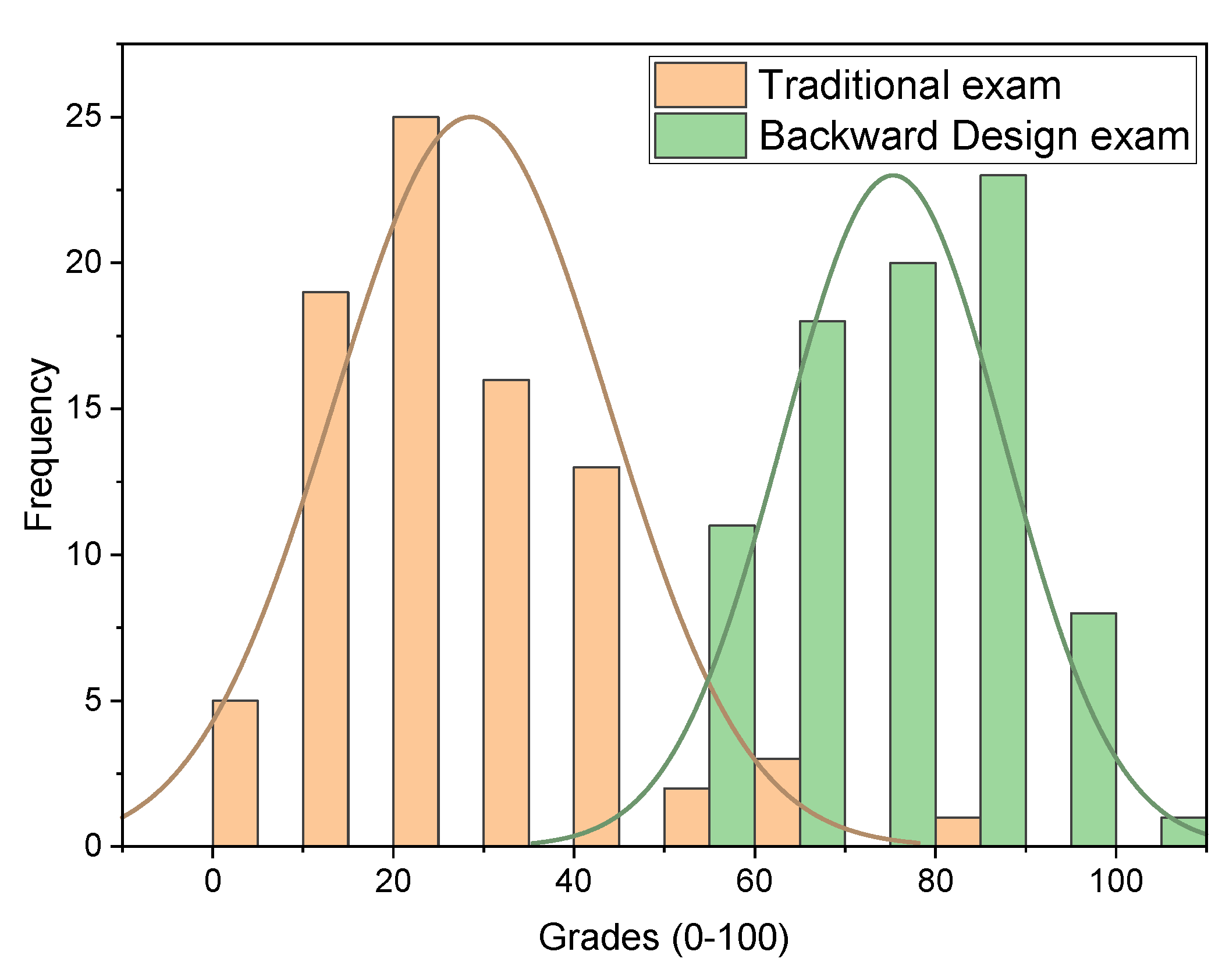
The results showed that the level of learning achieved by students through the implementation of virtual laboratories developed on the Unity platform at our Universidad del Magdalena (Colombia), as well as the virtual experiences of the University of Colorado (United States of America), have contributed in their academic growth towards the resolution of analytical problems (purposive), understanding of graphs of the results obtained in each virtual laboratory (interpretative) and active participation in discussion forums on electromagnetic phenomena (argumentative). We believe that the students managed to synthesize their analytical and computational skills, obtaining a better preparation to solve the real problem, towards their training as engineers (see Figure 6).
Our course is based on an explicit need to achieve a deep knowledge of electromagnetism that promotes the scope of general and specific skills directed through the Backward Design method, the use of rubrics, and virtual laboratories. This methodology additionally allows instructors in order to, more clearly, identify the difficulties of each student, considering the backward design, but also reveals potentialities in a particular way given that the evaluation of the course, through exams and laboratory reports designed in accordance with carefully designed rubrics and discussion forums on real problems where electromagnetism is applied. In addition, creating a set of survey-like micro-tests on specific details to take into account prior to each class is useful to get an idea of the academic profile of the students and develop motivation before the course begins.
4. Conclusions
This course was redesigned using BD as a response to the low levels of approval of the students of the electromagnetism course, carried out in a traditional way and whose foundation was based only on the contents, without delving into the development of skills or the determination of learning outcomes previously established for the subject. Backward design is a methodology with a pedagogical basis in constructivism, and as an indisputable pillar of engineering careers because it generates tools that allow you to build your own procedures to solve real problems, as well as a complementary strategy of the CDIO Initiative (conceive, design, implement, and operate real-world systems and products) whose curricular planning and assessment is results-based. The CDIO approach uses active learning tools, such as group projects and problem-based learning, to better equip engineering students with technical knowledge, as well as communication and professional skills. In addition, the CDIO Initiative provides resources for instructors at member universities to improve their teaching skills [37].
The contribution made by the virtual laboratories, short experiments, discussion forums, experimental videos, the new competency-based exam proposal, allowed the class to become more pleasant so that more students noticed that their learning and understanding of electromagnetic phenomena in the activities carried out in the written tests presented improved significantly. The results obtained indicate a high favorability, both in the opinion of the students about their learning experience of electromagnetic phenomena, showing a positive attitude and an improvement in the development of skills evidenced in the final assessments. It is considered necessary to highlight the significant progress in the apprehension about the actions and conceptualizations around the subject under study. It was also evident that the students presented difficulties in developing and working on each of the competencies through the virtual tool with the pedagogical didactic guides due to the demands of a greater critical and creative value when approaching the problems. It is important to keep in mind that this way of working motivated the students to be more committed when it came to contributing positively to the classes. Finally, it is verified that the virtual simulations mediated with the didactic-pedagogical guides make a perfect combination because they facilitate the teaching and development of cognitive abilities, also favoring other types of competences.
Funding
The research is funded by Universidad del Magdalena-Colombia.
Informed Consent Statement
Informed consent was obtained from all subjects involved in the study.
Data Availability Statement
Not applicable.
Conflicts of Interest
The authors declare no conflict of interest.
References
- Hernández-de-Menéndez, M.; Guevara, A.V.; Martínez, J.C.T.; Alcántara, D.H.; Morales-Menendez, R. Active Learning in Engineering Education. A Review of Fundamentals, Best Practices and Experiences. Int. J. Interact. Des. Manuf. 2019, 13, 909–922. [CrossRef]
- Ford, N. Recent Approaches to the Study and Teaching of ‘Effective Learning’ in Higher Education. Rev. Educ. Res. 1981, 51, 345–377. [CrossRef]
- Freeman, S.; Eddy, S.L.; McDonough, M.; Smith, M.K.; Okoroafor, N.; Jordt, H.; Wenderoth, M.P. Active Learning Increases Student Performance in Science, Engineering, and Mathematics. Proc. Natl. Acad. Sci. U. S. A. 2014, 111, 8410–8415. [CrossRef]
- Asok, D.; Abirami, A.M.; Angeline, N.; Lavanya, R. Active Learning Environment for Achieving Higher-Order Thinking Skills in Engineering Education. In Proceedings of the 2016 IEEE 4th International Conference on MOOCs, Innovation and Technology in Education (MITE); 2016; pp. 47–53.
- Sierra, H. El Aprendizaje Activo Como Mejora de Las Actitudes de Los Estudiantes Hacia El Aprendizaje. Univ. Publica Navar. MÁSTER EN Form. Profr. ESO Bachill. CICLOS Form. 2013, 02–03.
- Ting, F.S.T.; Shroff, R.H.; Lam, W.H.; García, R.C.C.; Chan, C.L.; Tsang, W.K.; Ezeamuzie, N.O. A Meta-Analysis of Studies on the Effects of Active Learning on Asian Student´s Performance in Science, Technology, Engineering and Mathematics (STEM) Subjects. Asia-Pac. Educ. Res. 2022. [CrossRef]
- Salemi, M.K. An Illustrated Case for Active Learning. South. Econ. J. 2002, 68, 721. [CrossRef]
- Capone, R. Blended Learning and Student-Centered Active Learning Environment: A Case Study with STEM Undergraduate Students. Can. J. Sci. Math. Technol. Educ. 2022, 22, 210–236. [CrossRef]
- Johnson, D.W.; Johnson, R.T.; Smith, K.A. Cooperative Learning Returns To College What Evidence Is There That It Works? Change Mag. High. Learn. 1998, 30, 26–35. [CrossRef]
- Sanchez-Lopez, E.; Kasongo, J.; Gonzalez-Sanchez, A.F.; Mostrady, A. Implementation of Formative Assessment in Engineering Education. Acta Pedagog. Asiana 2023, 2, 43–53. [CrossRef]
- Smith, K.A. From Small Groups to Learning Communities: Energizing Large Classes. Proc. - Front. Educ. Conf. 2000, 1. [CrossRef]
- Arruda, H.; Silva, É.R. Assessment and Evaluation in Active Learning Implementations: Introducing the Engineering Education Active Learning Maturity Model. Educ. Sci. 2021, 11, 690. [CrossRef]
- Trzaskowski, S.A. Active Learning and Its Impact on Higher-Order Thinking Skills in Preschool Science Education. Learn. Teach Lang. Arts Math. Sci. Soc. Stud. Res. Pract. 2019, 8.
- Saud, M.S.; Kamin, Y.; Latib, A.A.; Amin, N.F. A Conceptual Model of Scenario Based Learning for Developing Higher Order Thinking Skills in Engineering Education. Adv. Sci. Lett. 2017, 23, 194–196. [CrossRef]
- Aguas-Núñez, R.; Vergara-Vásquez, E.L.; Barraza-Heras, C.; Mercado-Garcia, A. APLICACIÓN DE LA METODOLOGÍA BACKWARD DESIGN PARA EL DISEÑO CURRICULAR DE LA ESPECIALIZACIÓN EN GESTIÓN Y LEGISLACIÓN AMBIENTAL. In Proceedings of the Encuentro Internacional de Educación en Ingeniería ACOFI 2021; Asociación Colombiana de Facultades de Ingeniería - ACOFI, September 2021.
- Wiggins, G.; McTighe, J. Undertanding by Design (Curriculum Development); 2005; ISBN 978-64686-0-0.
- Wiggings, G.; McTighe, J. What Is Backward Design? In Understanding by Design; Merrill Prentice Hall, 2001; pp. 7–19.
- Dolan, E.; Collins, J. We Must Teach More Effectively: Here Are Four Ways to Get Started. Mol. Biol. Cell 2015, 26, 2151–2155. [CrossRef]
- Fink, L. Creating Significant Learning Experiences : An Integrated Approach to Designing College Courses / L.D. Fink. 2005.
- Handelsman, J.; Ebert-May, D.; Beichner, R.; Bruns, P.; Chang, A.; DeHaan, R.; Gentile, J.; Lauffer, S.; Stewart, J.; Tilghman, S.M.; et al. Scientific Teaching. Science 2004, 304, 521–522. [CrossRef]
- Sharkey, S.; Weimer, M. Learner-Centered Teaching: Five Key Changes to Practice. Teach. Sociol. 2003, 31, 251. [CrossRef]
- Hosseini, H.; Chalak, A.; Biria, R. Impact of Backward Design on Improving Iranian Advanced Learner´s Writing Ability: Teacher´s Practices and Beliefs. Int. J. Instr. 2019, 12. [CrossRef]
- Wiese, J.; Buehler, R.; Griffin, D. Backward Planning: Effects of Planning Direction on Predictions of Task Completion Time. Judgm. Decis. Mak. 2016, 11, 147–167. [CrossRef]
- Michael, N.A.; Libarkin, J.C. Understanding by Design: Mentored Implementation of Backward Design Methodology at the University Level. 2016, 42, 44–52.
- Richards, J. Curriculum Approaches in Language Teaching: Forward, Central, and Backward Design. RELC J. 2013, 44, 5–33. [CrossRef]
- Kantorski, B.; Sanford-Dolly, C.; Commisso, D.; Pollock, J. Backward Design as a Mobile Application Development Strategy. Educ. Technol. Res. Dev. 2019, 67. [CrossRef]
- Paesani, K. Redesigning an Introductory Language Curriculum: A Backward Design Approach. L2 J. 2017, 9. [CrossRef]
- Económicos, O. para la C. y el D. Marco de Evaluación y de Análisis de PISA Para El Desarrollo - LECTURA, MATEMÁTICAS Y CIENCIAS; Organización para la Cooperación y el Desarrollo Económicos, 2017;
- González, J.D.; Escobar, J.H.; Sánchez, H.; Hoz, J.D. la; Beltrán, J.R.; Arciniegas, S.M.; Martínez, L.S. Implementation and Evaluation of an Effective Computational Method That Promotes the Conceptualization of Newton’s Laws of Motion. J. Phys. Conf. Ser. 2019, 1247, 12042. [CrossRef]
- González, J.D.; Escobar, J.H.; Sánchez, H.; De la Hoz, J.; Beltrán, J.R.; Arciniegas, S.M.; Martínez, L.S. Impact of the Use of Virtual Laboratories of Electromagnetism in the Development of Competences in Engineering Students. J. Phys. Conf. Ser. 2019, 1247, 012018. [CrossRef]
- González, J.D.; Escobar, J.H.; Beltrán, J.R.; García-Gómez, L.; La Hoz, J.D. Virtual Laboratories of Electromagnetism for Education in Engineering: A Perception. J. Phys. Conf. Ser. 2019, 1391, 012157. [CrossRef]
- Berland, L.K.; Schwarz, C.V.; Krist, C.; Kenyon, L.; Lo, A.S.; Reiser, B.J. Epistemologies in Practice: Making Scientific Practices Meaningful for Students. J. Res. Sci. Teach. 2015, 53, 1082–1112. [CrossRef]
- Hofer, B.; Pintrich, P. The Development of Epistemological Theories: Beliefs About Knowledge and Knowing and Their Relation to Learning. Rev. Educ. Res. 1997, 67. [CrossRef]
- Kennedy, D.; Hyland, Á.; Ryan, N. Writing and Using Learning Outcomes: A Practical Guide. 2007.
- Villa, A.; Poblete, M. Aprendizaje Basado En Competencias. Una Propuesta Para La Evaluación de Las Competencias Genéricas. Estud. Sobre Educ. 1970, 197. [CrossRef]
- Hake, R.R. Interactive-Engagement versus Traditional Methods: A Six-Thousand-Student Survey of Mechanics Test Data for Introductory Physics Courses. Am. J. Phys. 1998, 66, 64–74. [CrossRef]
- Queen’s University The-CDIO-Initiative.
Figure 2.
Implementation of virtual laboratories where the high degree of attention to the evolution of the virtual experiment added to the high number of concerns raised is highlighted.
Figure 2.
Implementation of virtual laboratories where the high degree of attention to the evolution of the virtual experiment added to the high number of concerns raised is highlighted.
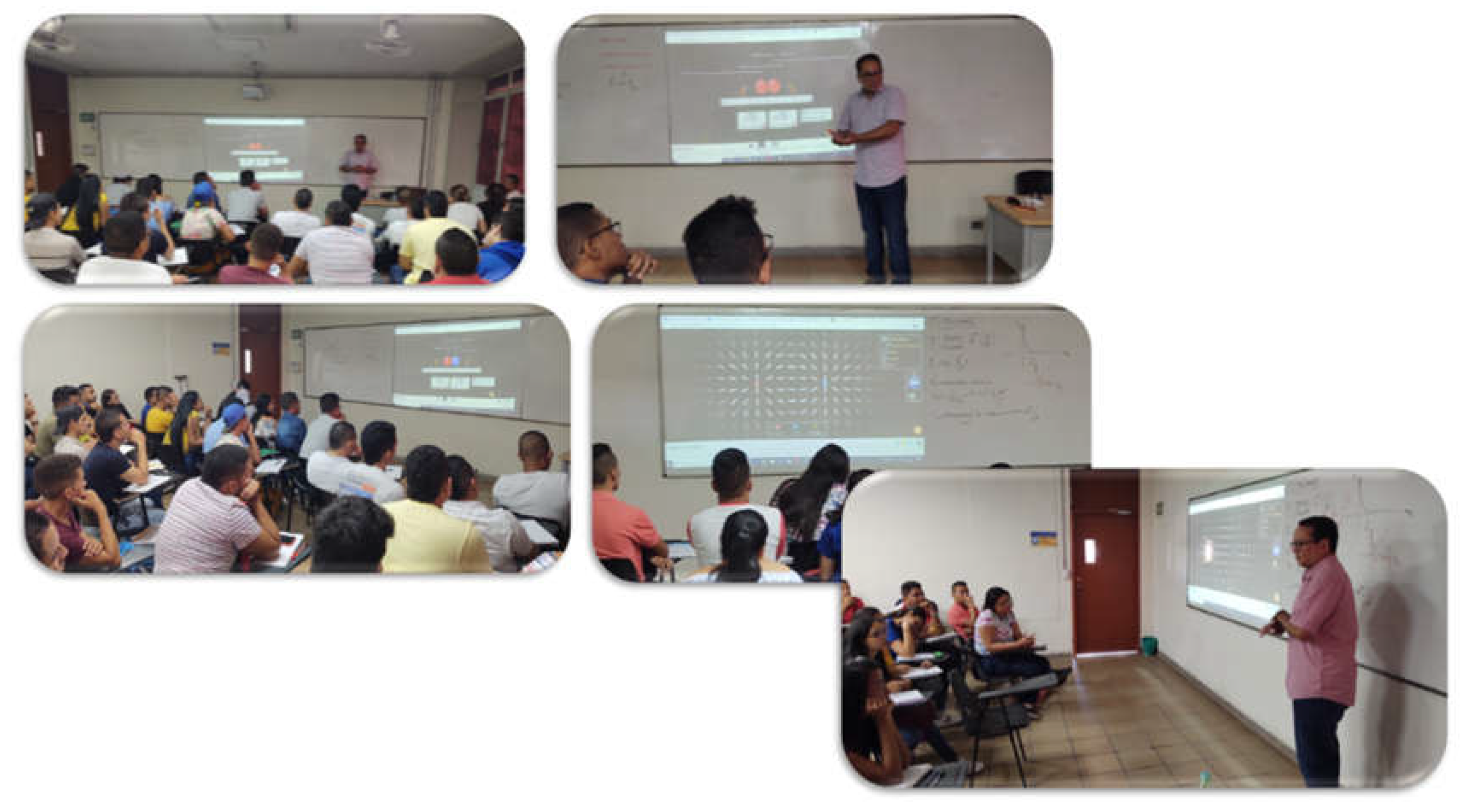
Figure 3.
Own virtual laboratories and those available on the web developed during the subject of electromagnetism.
Figure 3.
Own virtual laboratories and those available on the web developed during the subject of electromagnetism.

Figure 4.
Images of the explanation of the research professor, towards the introduction of the short's experiments, in this case the students had to make the balloon stick to the ceiling of the physics laboratory of the Universidad del Magdalena, then they were asked to record their observations and describe the learning experience.
Figure 4.
Images of the explanation of the research professor, towards the introduction of the short's experiments, in this case the students had to make the balloon stick to the ceiling of the physics laboratory of the Universidad del Magdalena, then they were asked to record their observations and describe the learning experience.
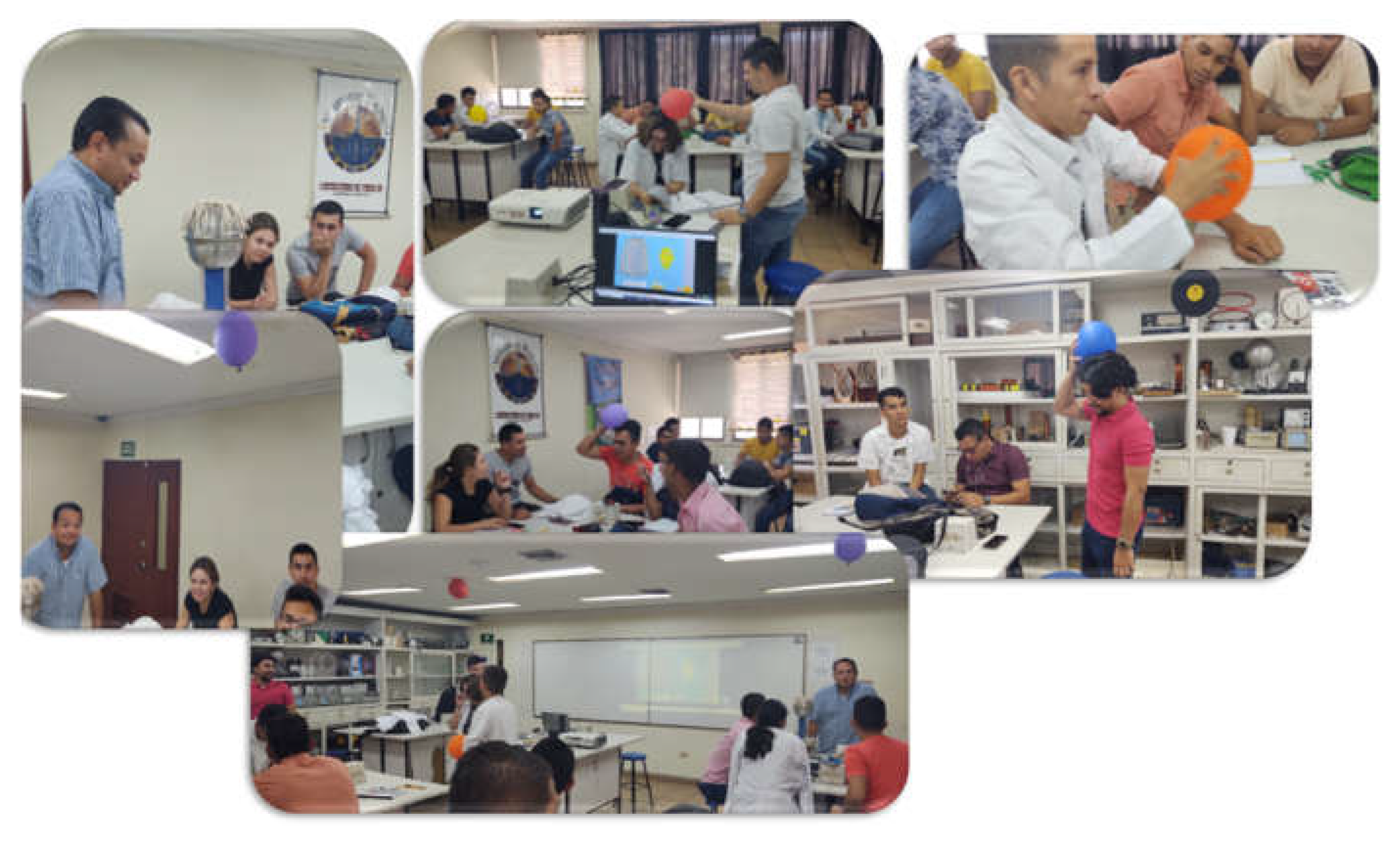
Figure 5.
The written test was evaluated with a rubric based on the book by the authors’ Villa and Poblete [35], where the permanent accompaniment of the research professor is observed. This exam design breaks the paradigm of the traditional exams imposed by the Physics area of the Universidad del Magdalena.
Figure 5.
The written test was evaluated with a rubric based on the book by the authors’ Villa and Poblete [35], where the permanent accompaniment of the research professor is observed. This exam design breaks the paradigm of the traditional exams imposed by the Physics area of the Universidad del Magdalena.
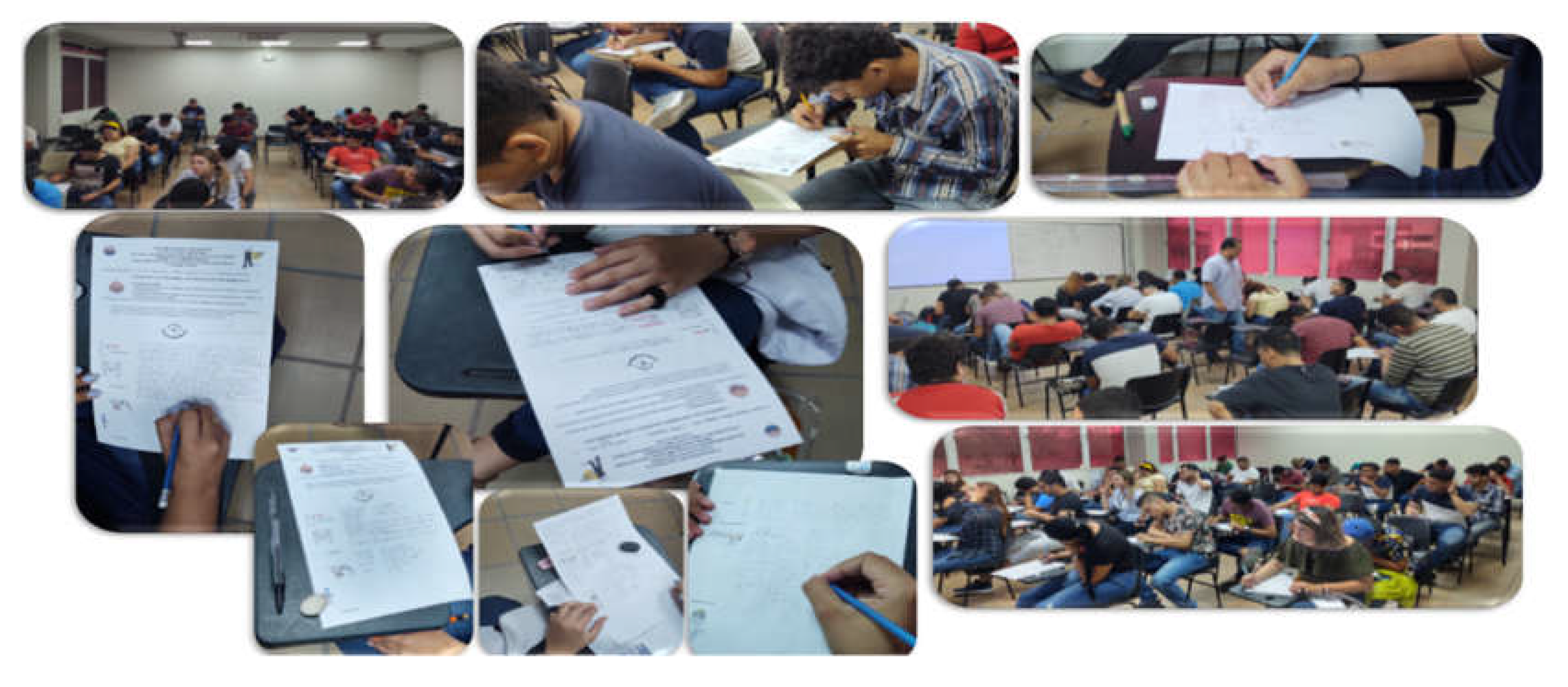
Figure 5.
Results of the statistics that compare the scores of the engineering students before and after the test, with questions that contained the style of the Colombian State tests (Saber-Pro).
Figure 5.
Results of the statistics that compare the scores of the engineering students before and after the test, with questions that contained the style of the Colombian State tests (Saber-Pro).
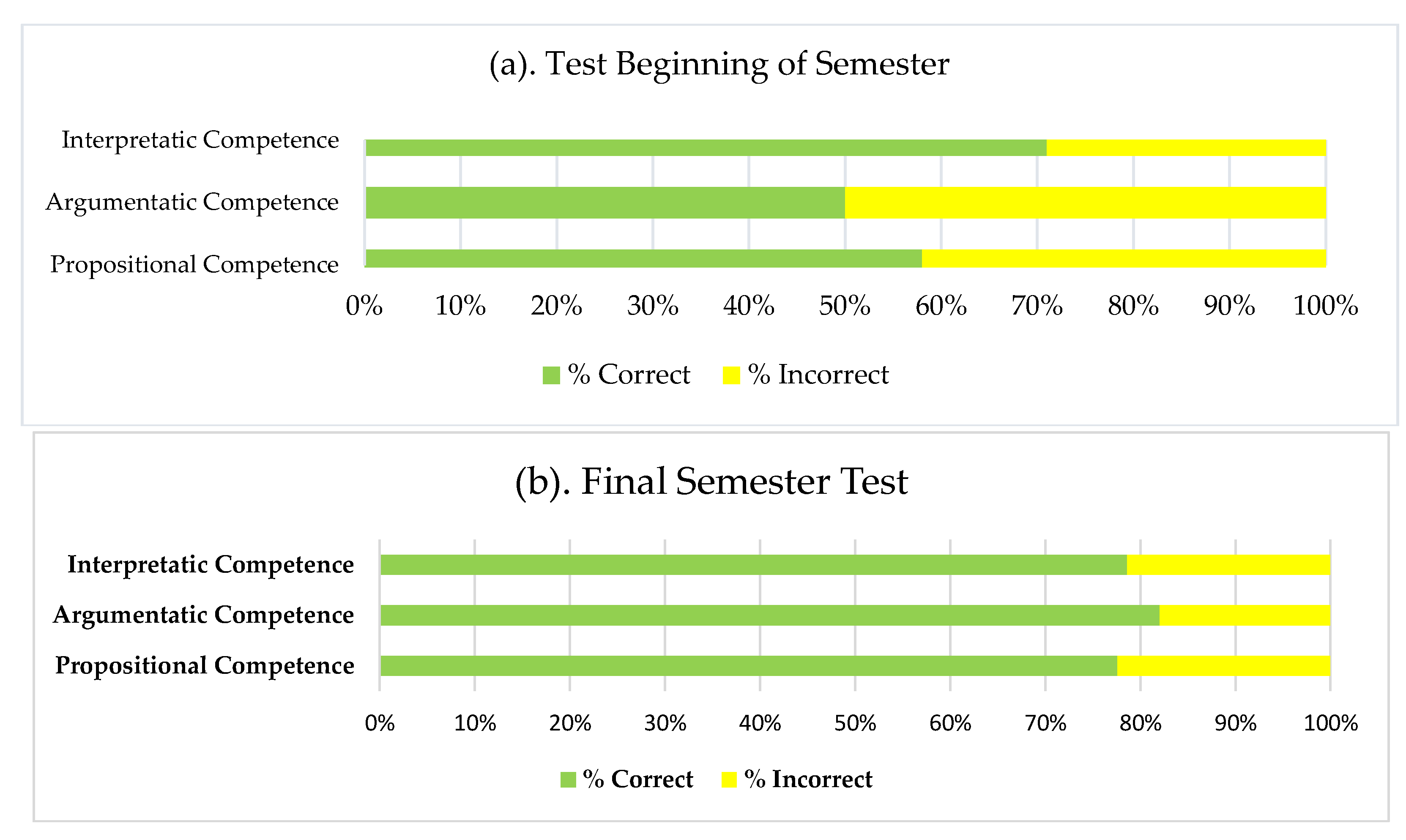
Figure 6.
Normal distribution graph of the grades (0-100) obtained by engineering students after solving the traditional electromagnetism exam and the exam designed by our work group using the Backward Design methodology and mediated by rubrics that make it clear the requirements of the test towards the development of interpretive, argumentative, and propositional skills.
Figure 6.
Normal distribution graph of the grades (0-100) obtained by engineering students after solving the traditional electromagnetism exam and the exam designed by our work group using the Backward Design methodology and mediated by rubrics that make it clear the requirements of the test towards the development of interpretive, argumentative, and propositional skills.
Disclaimer/Publisher’s Note: The statements, opinions and data contained in all publications are solely those of the individual author(s) and contributor(s) and not of MDPI and/or the editor(s). MDPI and/or the editor(s) disclaim responsibility for any injury to people or property resulting from any ideas, methods, instructions or products referred to in the content. |
© 2023 by the authors. Licensee MDPI, Basel, Switzerland. This article is an open access article distributed under the terms and conditions of the Creative Commons Attribution (CC BY) license (http://creativecommons.org/licenses/by/4.0/).
Copyright: This open access article is published under a Creative Commons CC BY 4.0 license, which permit the free download, distribution, and reuse, provided that the author and preprint are cited in any reuse.


