

Submitted:
29 April 2023
Posted:
30 April 2023
You are already at the latest version
Abstract
Cervical cancer is a significant global health concern, with human papillomavirus (HPV) infection being a crucial risk factor. Photodynamic therapy (PDT) is an attractive, minimally invasive treatment for HPV-related cervical lesions, which uses photosensitizers and light to selectively de-stroy abnormal cells. We aim to provide an overview of the various sorts of dyes that are utilized in PDT for decreasing the incidence and mortality of cervical cancer. Besides, the article discusses ongoing clinical trials for PDT in low-grade squamous intraepithelial neoplasia (LSIL) and high-grade squamous intraepithelial lesions (HSIL), as well as preclinical approaches for PDT in cervical cancer using various dyes. Moreover, it highlights potential dyes for PDT, examine them in in-silico condition, their pros and cons and also the solutions for enhancing their anticancer com-patibility. We also display that PDT is a promising therapeutic strategy for the diagnosis and treatment of HPV-associated cervical lesions. Moreover, it shows that using different classes of dyes improves the anticancer effects of PDT. Finally, among all dyes which are used in PDT, Fullerene demonstrated high tendency to over expressed receptors in cervical cancer cells and seems to be a proper candidate for be used in PDT more than before, but further research is necessary to assess its long-term efficacy and safety.
Keywords:
Cervical cancer
; Human papillomavirus (HPV)
; Photodynamic therapy (PDT)
; Squamous in-traepithelial neoplasia
; Bibliometric analysis
; Molecular Docking
; Fullerene
1. Introduction
Cervical cancer is a leading cause of cancer-related deaths in women worldwide [1]. Human papillomavirus (HPV) is a major risk factor for the development of cervical cancer [2]. Cervical lesions that precede cancer development are often difficult to diagnose and treat using conventional methods. CIN1, CIN2, CIN3, HSIL, and LSIL are all precancerous lesions that can develop in the cells lining the cervix (Table 1). LSIL is the mildest of these lesions, while CIN2 is intermediate and CIN3 is the most severe. HSIL includes both CIN2 and CIN3, and is considered a high-risk precursor to cervical cancer. Without treatment, HSIL has a higher risk of progressing to cancer than LSIL or CIN1.
To address this challenge, researchers have developed an innovative technology that uses photodynamic therapy (PDT) to increase the efficiency of diagnosis and treatment of background and precancerous lesions of the cervix associated with HPV [3]. PDT is a minimally invasive therapeutic approach that involves the use of photosensitizers and light to selectively destroy abnormal cells [3]. The new technology uses a combination of a fluorescent dye and a special imaging system that enables real-time visualization of cervical lesions [4,5]. During the procedure, the photosensitizer is applied to the cervix, and the area is illuminated with light of a specific wavelength [6]. The photosensitizer then produces reactive oxygen species that selectively destroy abnormal cells [7]. This targeted approach reduces the risk of damage to healthy cells and improves the effectiveness of treatment [8]. In addition, the imaging system used in this technology allows for accurate and efficient diagnosis of cervical lesions associated with HPV [9]. By detecting lesions in their early stages, this technology can lead to more effective treatment and improved patient outcomes [4,10].

Table 1.
Different types of cervical cancer based on histology indices [11].
Table 1.
Different types of cervical cancer based on histology indices [11].
| Abnormality | Description | Histology | Risk of Progression |
|---|---|---|---|
| LSIL | Low-grade squamous intraepithelial lesion | CIN1 | Low |
| CIN1 | Cervical intraepithelial neoplasia 1 | Mild dysplasia | Low |
| CIN2 | Cervical intraepithelial neoplasia 2 | Moderate dysplasia | Moderate |
| CIN3 | Cervical intraepithelial neoplasia 3 | Severe dysplasia/carcinoma in situ | High |
| HSIL | High-grade squamous intraepithelial lesion | CIN2-CIN3 | High |
| ASC-US | Atypical squamous cells of undetermined significance | - | - |
| ASC-H | Atypical squamous cells, cannot exclude HSIL | - | - |
The development of this innovative technology represents a significant step forward in the diagnosis and treatment of HPV-associated cervical lesions. By improving the accuracy and effectiveness of diagnosis and treatment, this technology has the potential to reduce the incidence and mortality of cervical cancer worldwide.
One aspect of the development of PDT is choosing the best dye for this procedure. In other words, there are various dyes that have been used in this method during recent years but recognizing and evaluating them is important to develop brand-new photosensitizers with higher anticancer ability and more convenience of use [12].
In this article, we aim to provide an overview of the potential benefits of PDT in reducing the incidence and mortality of cervical cancer. We will summarize the safety and effectiveness of PDT for patients with high-risk low-grade squamous intraepithelial neoplasia (LSIL) of the cervix, cervical ectropion, high-risk HPV infection, postmenopausal women with persistent HPV infection and/or low-grade cervical neoplasia (CIN1).
For this purpose, we investigate the use of PDT for the treatment of cervical cancer based on bibliometric analysis. Number of studies explored the applications of PDT in this field, with photo chemotherapy, nanoparticles, and photosensitizing agents were evaluated. Additionally, we tried to find the highest binding affinity of those molecules to overexpressed receptors in cervical cancer cells, suggesting it could be a promising agent for use in PDT.
2. Results and Discussion
2.1. PubMed online data base analysis for PDT of cervical cancer
An analysis of the PubMed online database revealed 134 surveys were found from 2006 to 2023 that have examined the applications of PDT in the field of treating cervical cancer cells (Figure 1). The number of studies about the applications of PDT in the field of treating cervical cancer cells has decreased since 2019.
2.2. Photo chemotherapy, nanoparticles and photosensitizing agents were the most frequent MeSH keywords that have been used in the field of the usages of PDT in the field of treating cervical cancer cells
VOSviewer software analysis categorized all 134 studies into 36 items, 4 clusters, 542 links and total link strength of 3211. Moreover, according to analysis of VOSviewer software on all 134 surveys that have investigated the usages of PDT in the field of treating cervical cancer cells, it turned out that photo chemotherapy was the most frequent type of MeSH keyword till today (Figure 2 and Table 2). After photo chemotherapy, nanoparticles and photosensitizing agents were in the second and third place (Table 2).
2.3. Fullerene has the most binding affinity to overexpressed receptors in cervical cancer cells
Table 3 shows that Fullerene exhibited the highest binding affinity to receptors that are overexpressed in cervical cancer cells. Additionally, Figure 3 displays all participant molecules and interactions involved in the binding process of Fullerene with mentioned receptors. The 2D structures of Fullerene with the highest affinity to the mentioned receptors is shown in Figure 4.
2.4. PDT as a novel approach for cervical cancer therapy
Although previous studies have mentioned the benefits of PDT in treatment of cervical cancer [25], our analysis demonstrated that the number of studies about the application of PDT in treatment of cervical cancer has decreased since 2019. This result is in contrast to the findings of prior researches.
2.5. Photo chemotherapy, nanoparticles and photosensitizing agents were the most frequent MeSH keywords that have been used in the field of the usages of PDT in the field of treating cervical cancer cells
This study showed that photo chemotherapy were the most frequent MeSH keywords that have been used in the field of the usages of PDT in the field of treating cervical cancer cells (Table 2, Figure 2). After that, nanoparticles and photosensitizing agents are in second and third place, respectively. In better words, in order to increase the efficacy of anticancer treatment in cervical cancer, scientists have tried to combine PDT with chemotherapy [26]. Our finding is confirmed by this result.
On the other side, researcher have tried to improve the delivery of photosensitizing agents in order to increase the efficacy of PDT. One of the strategies for this purpose is using nanoparticles [27]. In better words, during recent years, studies are going forward to examine the application of nanoparticles in order to increase the delivery and efficacy of photosensitizers in PDT [27]. This fact validates our findings obtained from our analysis.
2.6. Fullerene with the best affinity to overexpressed receptors in cervical cancer
Previous studies have remarketed that scientists have been trying to increase the delivery of photosensitizers to cancer cells to improve the efficacy of PDT [27]. This studies have also remarked that receptors that are overexpressed on the surface of cancer cells can be a potential binding site for photosensitizers (Figure 5) [27]. Thus, it can be said that the photosensitizers with the most tendency to attach to overexpressed receptors on the surface of cancer cells can make the delivery of itself to cancer cell easier [27]. Thus, the photosensitizers that have the most tendency to mentioned receptor, can be considered as a proper candidate in order to be used in PDT. Our in-silico analysis demonstrated that Fullerene has the most affinity to overexpressed receptors I cervical cancer cells (Table 3). Therefore, it can be a photosensitizer with high potential for being used in PDT in order to treat cervical cancer but more in-vitro and in-vivo studies are needed to confirm this result.
2.7. Approved dyes for clinical approaches of PDT of cervical cancer
There are different types of dyes which are used in PDT clinical studies of cervical cancers:
- 5-aminolevulinic acid (ALA): ALA is a photosensitizer that is used in PDT for cervical cancer [28]. A several clinical trials evaluated the safety and efficacy of ALA-PDT in patients with cervical intraepithelial neoplasia (CIN) (). Further clinical studies are needed to evaluate the long-term efficacy of ALA-PDT in the treatment of cervical cancer.
- Aluminum phthalocyanine chloride: Aluminum phthalocyanine chloride is a second-generation photosensitizer that is used in PDT for various cancers, including cervical cancer [29]. Further clinical studies are needed to evaluate the long-term efficacy of aluminum phthalocyanine chloride-mediated PDT in the treatment of cervical cancer.
- Photofrin: Photofrin is a photosensitizer that has been approved for use in PDT for various cancers, including cervical cancer [28]. Further clinical studies are needed to evaluate the long-term efficacy of photofrin-mediated PDT in the treatment of cervical cancer.
- Hexaminolevulinate: Hexaminolevulinate is a photosensitizer that is used in PDT for various cancers, including cervical cancer [28]. Further clinical studies are needed to evaluate the long-term efficacy of hexaminolevulinate-mediated PDT in the treatment of cervical cancer.
- Chlorin e6: Chlorin e6 is another photosensitizer that are used in PDT for cervical cancer [31]. It has a high absorption rate in the near-infrared region, which can penetrate deeper into tissue than other photosensitizers. It has also been shown to have high selectivity for cancer cells over healthy cells, making it a promising candidate for use in PDT [32].
- Porphyrin derivatives: Porphyrin derivatives, such as protoporphyrin IX and hematoporphyrin derivatives, are natural photosensitizers that are used in PDT for cervical cancer [33]. These compounds are naturally occurring molecules in the body and have been shown to accumulate in cancer cells at higher rates than in healthy cells. When exposed to light at a specific wavelength, these photosensitizers generate reactive oxygen species that can destroy cancer cells [34].
2.8. Clinical trials for PDT for LSIL
There have been several clinical trials, pilot, retrospective and prospective studies investigating the use of PDT for the treatment of LSIL using different photosensitizing dyes (Table 4). Clinical trials investigating the use of PDT for the treatment of LSIL have shown promising results using different photosensitizing dyes, including ALA, Aluminum phthalocyanine chloride, photofrin, hexaminolevulinate, talaporfin sodium and chlorin e6. Further studies are needed to confirm the efficacy and safety of these treatments and to determine the optimal treatment parameters.
2.9. Clinical trials for PDT for HSIL
HSIL are more advanced precancerous lesions that have a higher risk of progressing to cervical cancer. Several dyes have been tested for photodynamic therapy (PDT) for HSIL in clinical trials (Table 5), including ALA, chlorin e6, porphyrin, and hexaminolevulinate. Although these dyes have shown promising results in terms of complete response rates, they have also been associated with higher recurrence rates compared to surgical treatments such as CKC. Further research is needed to optimize the effectiveness and safety of PDT for HSIL.
According to the information registered in the clinicaltrials.gov, among the 591 studies registered on photodynamic therapy of various types of cancer until the end of March 2023, only seven studies were related to cervical cancer, the information of which is shown in Table 6. Based on the information contained in the clinicaltrials.gov (Table 6) as well as the published clinical articles in Table 5 and Table 6 and their analysis, Figure 6 and Figure 7 were obtained. Figure 6 shows the frequency of applications of dyes in PDT of cervical cancer in which 5-aminolevulinic acid is ranked the first. In addition, the China is ranked the first in terms of clinical studies on PDT of cervical cancer (Figure 7).
2.10. Preclinical approaches of PDT of cervical cancer
There are other kind of dyes are available for PDT of cervical cancer have shown promise in preclinical studies, further research is needed to determine their safety and efficacy in human trials (Table 7).
- Hypericin: Hypericin is a compound found in St. John's wort. It has been found to have photosensitizing properties and has been used in PDT for cervical cancer [71]. When hypericin is activated by light, it produces reactive oxygen species that can damage cancer cells. Hypericin has been shown to be effective in killing cancer cells in vitro and in animal studies [72], but more research is needed to determine its effectiveness in humans.
- Methylene blue: Methylene blue is a blue dye that has been used in medicine for many years. It has been found to be effective in PDT for cervical cancer [75]. There are evidences showed that methylene blue-mediated PDT was effective in inducing cell death in cervical cancer cells [71,76].When methylene blue is activated by light, it produces reactive oxygen species that can damage cancer cells. Methylene blue has been shown to be effective in killing cancer cells in vitro and in animal studies, but more research is needed to determine its effectiveness in humans.
- Rose Bengal: Rose Bengal is a red dye that has been used in medicine for many years. It has also been found to have photosensitizing properties and has been used in PDT for cervical cancer [72]. When Rose Bengal is activated by light, it produces reactive oxygen species that can damage cancer cells. Rose Bengal has been shown to be effective in killing cancer cells in vitro and in animal studies [72], but more research is needed to determine its effectiveness in humans.
- Zinc phthalocyanine: This is a photosensitizer that can be used in PDT for cervical cancer [32]. It has a high absorption rate in the red-light region, which makes it effective for use in PDT. When exposed to light at a specific wavelength, the photosensitizer generates reactive oxygen species that can destroy cancer cells [32].
2.11. Potential dyes for PDT of cervical cancer
There are several dyes that have been investigated for their potential use in PDT for various cancer in preclinical studies, but have not yet been used in cervical cancer settings.
- Bacteriochlorins: Bacteriochlorins are a class of photosensitizers that have been investigated for their potential use in PDT for various cancers [80]. There is no study to show that bacteriochlorin-based PDT can be effective for treating cervical cancer.
- Xanthene dyes: Xanthene dyes such as eosin and erythrosine are a class of fluorescent dyes that have been used in various applications, including as photosensitizers in PDT for various cancers [82].
2.12. Scoring of application of dyes for PDT of cervical cancer
The scores in Table 8 are calculated based on a weighted scoring system, where each parameter is given a score between 1 and 5, depending on its relative importance. For the clinical application section, the following parameters are considered.
- FDA approval status: if a dye has been approved by the FDA for clinical use, it is given a score of 5. If it is in clinical trials, it is given a score of 4. If it has only been tested in preclinical studies, it is given a score of 3. If there is no data available, it is given a score of 1.
- Efficacy: this refers to the effectiveness of the dye in treating cervical cancer. If there is strong evidence supporting its efficacy, it is given a score of 5. If there is some evidence, it is given a score of 3. If there is little or no evidence, it is given a score of 1.
- Safety: this refers to the safety profile of the dye, including its potential for side effects. If there is strong evidence supporting its safety, it is given a score of 5. If there is some evidence, it is given a score of 3. If there is little or no evidence, it is given a score of 1.
- For the preclinical and potential dyes section, the following parameters are considered:
- Preclinical efficacy: this refers to the effectiveness of the dye in preclinical studies. If there is strong evidence supporting its efficacy, it is given a score of 5. If there is some evidence, it is given a score of 3. If there is little or no evidence, it is given a score of 1.
- Preclinical safety: this refers to the safety profile of the dye in preclinical studies. If there is strong evidence supporting its safety, it is given a score of 5. If there is some evidence, it is given a score of 3. If there is little or no evidence, it is given a score of 1.
- Potential for clinical translation: this refers to the potential for the dye to be translated into clinical use. If there is strong evidence supporting its potential for clinical use, it is given a score of 5. If there is some evidence, it is given a score of 3. If there is little or no evidence, it is given a score of 1.
The final score for each dye is calculated by summing the scores for each parameter and dividing by the total possible score (out of 25 for clinical application, and out of 15 for preclinical and potential dyes). The higher the final score, the better the dye is considered to be for use in PDT for cervical cancer.
2.13. Challenges and solutions related to using dyes for PDT of cervical cancer
One of the major challenges in using these dyes for cancer treatment is their limited solubility in water, which can reduce their effectiveness and increase their toxicity. However, nanotechnology can help overcome this challenge by improving the solubility and stability of the dyes, as well as enhancing their selective delivery to cancer cells [83].
Nanoparticle-based delivery systems have been developed for a variety of photosensitizers, including porphyrins, chlorophylls, and phycobilins. These nanoparticles can be designed to target specific cancer cells, enhance the photosensitizer's solubility and stability, and improve its biodistribution and pharmacokinetics. Additionally, some nanoparticles themselves can exhibit intrinsic anticancer activity and can enhance the therapeutic effect of PDT.
Overall, the combination of photosensitizers and nanotechnology has great potential for developing effective and targeted PDT for cervical cancer and other types of cancer.
There are some challenges related to the use of dyes for PDT of cervical cancer, besides their solubility. Here are some of them:
- Tumor targeting: It can be a challenge to specifically target the dye to the tumor cells, while minimizing the uptake by healthy tissues, which could lead to toxicity.
- Depth of penetration: The depth of penetration of the light used to activate the dye can be limited, which means that tumors located deeper in the body may be difficult to treat.
- Photobleaching: Dyes can undergo photobleaching, which means that they lose their ability to generate reactive oxygen species upon exposure to light. This can limit their efficacy in PDT.
- Stability: Some dyes can be unstable in biological environments, which can affect their efficacy and safety.
- Regulatory approval: The regulatory approval of dyes for clinical use can be a lengthy and expensive process, which can limit their availability for PDT of cervical cancer.
- Solubility: One challenge related to the use of dyes for PDT of cervical cancer is their solubility in biological fluids, which can affect their effectiveness and potential toxicity.
- Some potential solutions to the challenges related to the use of dyes for PDT of cervical cancer are listed below:
- Solubility: One solution could be to use lipid-based or polymeric nanocarriers to encapsulate the dye and improve its solubility and stability.
- Tissue penetration: To improve tissue penetration, different delivery methods such as intra-tumoral injection or topical application may be explored.
- Specificity: Specificity can be improved by utilizing targeting strategies such as ligand conjugation to the dye or by using activatable dyes that are only activated in cancer cells.
- Photobleaching: Photobleaching can be reduced by optimizing the dye concentration and light dose, as well as by using photostable dyes.
- Toxicity: Toxicity can be minimized by using lower doses of the dye and light, as well as by optimizing the drug delivery method to minimize off-target effects.
- Regulatory approval: It is important to follow established regulatory guidelines for drug development and clinical trials to ensure safety and efficacy before seeking regulatory approval for clinical use.
- Tumor targeting: Tumor targeting can be achieved through the use of targeted delivery systems, such as nanoparticles, stem cell derived exosomes or liposomes [84,85,86,87], which can be conjugated with specific ligands or antibodies that recognize and bind to tumor cells. This can increase the accumulation of the photosensitizer in the tumor, while minimizing its uptake in healthy tissues, thereby improving the selectivity of PDT and reducing off-target effects. Another approach is to use light sources with a specific wavelength that can selectively activate the photosensitizer in the tumor, while minimizing activation in surrounding healthy tissues.
3. Materials and Methods
3.1. Data collection and extraction for bibliometric analysis
In March 2023, we assessed PubMed online database in order to identify the most frequent keywords that have been used in the field of the usages of photo dynamic therapy in the field of treating cervical cancer cells with the following strategy: ((Cervical Cancer*[Title/Abstract]) OR (Cervical Cancer*[MeSH Terms]) OR (Cervical neoplas*[MeSH Terms]) OR (Cervical neoplas*[Title/Abstract]) OR (Cervical tumor*[Title/Abstract]) OR (Cervical tumor*[MeSH Terms])) AND ((photodynamic therapy[MeSH Terms]) OR (photodynamic therapy[Title/Abstract]) OR (photodynamic[Title/Abstract]) OR (photodynamic[MeSH Terms])) AND ((Nanomaterial[MeSH Terms]) OR (Nanomaterial[Title/Abstract]))
In the next step, we analyzed the publications that resulted from our search by VOSviewer software (v.1.6.8, 2018). Mentioned software has the capability of analyzing the semantic contents of the titles of publications, keywords, abstracts and relating them to the citation count data and visualize the findings by producing a bubble map. We selected the most frequent MeSH keywords that have at least 10 occurrences in mentioned studies in order to perform our analysis by this software. Besides, we excluded some MeSH keywords from our analysis including: “humans, animals, male, female, mice and xenograft model antitumor assay”. Finally, this software gave us the most frequent MeSH keywords that have been used in the field of the usages of photo dynamic therapy in the field of treating cervical cancer cells.
3.2. Molecular interactions and docking studies of receptors that are overexpressed in cervical cancer cells and various dyes that are used in PDT
The nine receptors which have been overexpressed on the surface of cervical cancer cells were extracted from prior studies [13,14,15,16,17,18,19,20,21] (Table 9).
We then utilized Auto dock vina [22] to examine the binding affinity of all mentioned receptors to various dyes that are used in PDT (Table 9). We obtained the 3D structures of the 19 dyes and nine receptors (Folate receptor α (FRα), Transferrin receptor 1 (TR1), Epidermal growth factor receptor (EGFR), CD44, Vascular endothelial growth factor receptor 2 (VEGFR 2), Vascular cell adhesion molecule-1 (VCAM-1), Aminopeptidase-N (CD13) and Biotin receptor (BR)) from the PUBCHEM [23] and Protein Data Bank (PDB) databases. The PDB codes for these receptors were 4km6, 2nsu, 7sye, 1poz, 2met, 1vsc, 4fyq and 5n7x, respectively. Prominin 1 (CD133) was downloaded from UniProt with UniRef ID of UniRef90_O43490 [16].
In the next step, remodeling of receptors with SWISS-MODEL Server [15] was performed. We then merged nonpolar hydrogens and ione pairs and assigned Gasteiger partial charges to each ligand atom. Grid boxes were generated using the Computed Atlas of Surface Topography of proteins (CASTp 3.0). Finally, we conducted docking and achieved nine conformations for each receptor and dye. All docking conformations were ranked according to the binding affinity, and the conformation with the lowest negative energy and RMSD ≤ 2 Å was selected as the best one.
3.3. Visualization of inter-molecular interaction
The visualization of the 3D structure of the best conformations was performed using PyMOL software (The PyMOL Molecular Graphics System, Version 1.2r3pre, Schrödinger, LLC.). In addition, the detailed data about intermolecular interactions between the ligand and receptor were visualized in 2D using Discovery Studio Visualizer [24].
We will also discuss the limitations and future directions of PDT for the treatment of cervical lesions. After evaluating the current clinical applications of PDT, we discussed preclinical studies that have used different dyes, potential dyes for future studies on the application of PDT for cervical cancer. After that, we evaluate compounds with the potential of being dye in PDT in in-silico situation. Finally, we discussed the current challenges and potential solutions for the application of PDT for cervical cancer.
3.4. Data collection and extraction for systematic analysis of dyes for PDT of cervical cancer
Furthermore, a comprehensive literature search was conducted to identify relevant articles on the use of PDT for the treatment of HPV-associated cervical lesions. The search was performed using several electronic databases, including PubMed, Embase, Scopus, and Web of Science. The search was limited to articles published in English language and from the year 1999 to the present.
The following keywords were used for the search: "photodynamic therapy", "cervical cancer", "cervical lesions", "human papillomavirus", "HPV", "precancerous lesions", "dye", "photosensitizer", and "cervix". The search was conducted by combining these keywords using Boolean operators (AND, OR). The titles and abstracts of the retrieved articles were screened to identify potentially relevant studies. The full text of these articles was then reviewed to determine their eligibility for inclusion in the analysis. In addition to the electronic database search, the reference lists of relevant articles were manually searched to identify additional studies that met the inclusion criteria.
The selection of articles for inclusion in this evaluation was based on the following criteria: (a) studies that evaluated the safety and efficacy of PDT in the treatment of HPV-associated cervical lesions, (b) studies that included patients with high-risk LSIL of the cervix, cervical ectropion, high-risk HPV infection, postmenopausal women with persistent HPV infection and/or CIN, and (c) studies that were published in peer-reviewed journals. Two reviewers independently screened the articles and resolved any discrepancies by discussion.
4. Conclusions
In conclusion, these findings suggest that research in the field of PDT for cervical cancer has been ongoing for several years, but it may have slowed down in recent years. Photo chemotherapy, nanoparticles, and photosensitizing agents appear to be the most commonly used approaches in these studies. Moreover, Fullerene is a promising candidate among the dyes used in PDT due to its high binding affinity to overexpressed receptors in cervical cancer cells. However, more research is necessary to confirm the potential of Fullerene and to develop effective PDT treatments for cervical cancer.
PDT using a combination of a fluorescent dye and special imaging system represents a significant advancement in the diagnosis and treatment of cervical lesions associated with HPV. This minimally invasive approach offers a targeted therapy for abnormal cells while reducing the risk of damage to healthy tissue. Additionally, research has demonstrated that ALA-PDT is an effective and safe alternative for treating CIN and HSIL associated with HPV. By detecting and treating these lesions early, PDT and ALA-PDT have the potential to reduce the incidence and mortality of cervical cancer worldwide. Continued research and development in this area may lead to further advancements in the diagnosis and treatment of HPV-associated cervical lesions, ultimately improving patient outcomes and reducing the global burden of cervical cancer.
Author Contributions
Conceptualization, Nadiar Maratovich Mussin, Rustam Kuanyshbekovich Albayev and Amin Tamadon; Investigation, Afshin Zare, Nadiar Maratovich Mussin, Asset Askerovich Kaliyev, Yerbolat Maratovich Iztleuov, Sandugash Bakhytbekovna Smailova and Nazanin Jafari; Methodology, Nasrulla Abdullaevich Shanazarov, Rustam Kuanyshbekovich Albayev, Yerbolat Maratovich Iztleuov, Sandugash Bakhytbekovna Smailova, Farhad Rahmanifar, Nazanin Jafari and Hanieh Baneshi, Project administration, Amin Tamadon; Software, Afshin Zare and Nazanin Jafari; Supervision, Amin Tamadon; Writing – original draft, Nasrulla Abdullaevich Shanazarov, Afshin Zare and Farhad Rahmanifar; Writing – review & editing, Nadiar Maratovich Mussin, Rustam Kuanyshbekovich Albayev, Asset Askerovich Kaliyev and Amin Tamadon.
Funding
This research is funded by the Science Committee of the Ministry of Science and Higher Education of the Republic of Kazakhstan (Grant №BR18574160).
Institutional Review Board Statement
Not applicable.
Informed Consent Statement
Not applicable.
Data Availability Statement
Data are contained within the article. Datasets related to this project can be obtained from corresponding author based on a reasonable request.
Acknowledgments
Not applicable.
Conflicts of Interest
The authors Afshin Zare, Nazanin Jafari, Hanieh Baneshi and Amin Tamadon were employed by PerciaVista R&D Co. The remaining authors declare that the research was conducted in the absence of any commercial or financial relationships that could be construed as a potential conflict of interest.
References
- Salcedo, M.P.; Phoolcharoen, N.; Schmeler, K.M. Intraepithelial neoplasia of the lower genital tract (cervix, vagina, vulva): etiology, screening, diagnosis, management. In Comprehensive Gynecology; Elsevier: 2021; p. 637.
- Okunade, K.S. Human papillomavirus and cervical cancer. Journal of Obstetrics and Gynaecology 2020, 40, 602–608. [Google Scholar] [CrossRef] [PubMed]
- Gilyadova, A.; Ishchenko, A.; Shiryaev, A.; Alekseeva, P.; Efendiev, K.; Karpova, R.; Loshchenov, M.; Loschenov, V.; Reshetov, I. Phototheranostics of Cervical Neoplasms with Chlorin e6 Photosensitizer. Cancers (Basel) 2022, 14. [Google Scholar] [CrossRef]
- Matsui, T.; Tamoto, R.; Iwasa, A.; Mimura, M.; Taniguchi, S.; Hasegawa, T.; Sudo, T.; Mizuno, H.; Kikuta, J.; Onoyama, I. Nonlinear Optics with Near-Infrared Excitation Enable Real-Time Quantitative Diagnosis of Human Cervical CancersNovel Cancer Diagnosis with Nonlinear Optical Imaging. Cancer Research 2020, 80, 3745–3754. [Google Scholar] [CrossRef] [PubMed]
- Feng, Y.; Tamadon, A.; Hsueh, A.J.W. Imaging the ovary. Reproductive BioMedicine Online 2018, 36, 584–593. [Google Scholar] [CrossRef] [PubMed]
- Yurttaş, A.G.; Sevim, A.M.; Çınar, K.; Atmaca, G.Y.; Erdoğmuş, A.; Gül, A. The effects of zinc (II) phthalocyanine photosensitizers on biological activities of epitheloid cervix carcinoma cells and precise determination of absorbed fluence at a specific wavelength. Dyes and Pigments 2022, 198, 110012. [Google Scholar] [CrossRef]
- Zhang, S.; Li, Z.; Xu, Z.; Tang, Y.; Duan, C.; Dai, H.; Dai, X.; Wei, X.; Liu, Y.; Xu, C. Reactive Oxygen Species-Based Nanotherapeutics for Head and Neck Squamous Cell Carcinoma. Materials & Design, 2022; 223, 111194. [Google Scholar] [CrossRef]
- Cang, W.; Gu, L.; Hong, Z.; Wu, A.; Di, W.; Qiu, L. Effectiveness of photodynamic therapy with 5-aminolevulinic acid on HPV clearance in women without cervical lesions. Photodiagnosis and photodynamic therapy 2021, 34, 102293. [Google Scholar] [CrossRef] [PubMed]
- Yu, C.; Li, L.; Wang, S.; Xu, Y.; Wang, L.; Huang, Y.; Hieawy, A.; Liu, H.; Ma, J. Advances in nanomaterials for the diagnosis and treatment of head and neck cancers: a review. Bioactive Materials 2022. [Google Scholar] [CrossRef] [PubMed]
- Wu, A.; Li, Q.; Ling, J.; Gu, L.; Hong, Z.; Di, W.; Qiu, L. Effectiveness of photodynamic therapy in women of reproductive age with cervical high-grade squamous intraepithelial lesions (HSIL/CIN2). Photodiagnosis and photodynamic therapy 2021, 36, 102517. [Google Scholar] [CrossRef] [PubMed]
- Alrajjal, A.; Pansare, V.; Choudhury, M.S.R.; Khan, M.Y.A.; Shidham, V.B. Squamous intraepithelial lesions (SIL: LSIL, HSIL, ASCUS, ASC-H, LSIL-H) of uterine cervix and bethesda system. Cytojournal 2021, 18. [Google Scholar] [CrossRef]
- Lan, M.; Zhao, S.; Liu, W.; Lee, C.S.; Zhang, W.; Wang, P. Photosensitizers for photodynamic therapy. Advanced healthcare materials 2019, 8, 1900132. [Google Scholar] [CrossRef]
- Liu, C.; Ding, L.; Bai, L.; Chen, X.; Kang, H.; Hou, L.; Wang, J. Folate receptor alpha is associated with cervical carcinogenesis and regulates cervical cancer cells growth by activating ERK1/2/c-Fos/c-Jun. Biochemical and biophysical research communications 2017, 491, 1083–1091. [Google Scholar] [CrossRef]
- Huang, N.; Wei, Y.; Cheng, Y.; Wang, X.; Wang, Q.; Chen, D.; Li, W. Iron metabolism protein transferrin receptor 1 involves in cervical cancer progression by affecting gene expression and alternative splicing in HeLa cells. Genes & genomics 2022, 44, 637–650. [Google Scholar] [CrossRef]
- Souza, J.L.; Martins-Cardoso, K.; Guimarães, I.S.; De Melo, A.C.; Lopes, A.H.; Monteiro, R.Q.; Almeida, V.H. Interplay between EGFR and the platelet-activating factor/PAF receptor signaling axis mediates aggressive behavior of cervical cancer. Frontiers in Oncology 2020, 10, 557280. [Google Scholar] [CrossRef]
- Yoon, J.; Kim, H.; Jeong, Y.-I.; Yang, H.S. CD44 receptor-mediated/reactive oxygen species-sensitive delivery of nanophotosensitizers against cervical cancer cells. International Journal of Molecular Sciences 2022, 23, 3594. [Google Scholar] [CrossRef] [PubMed]
- Javed, S.; Sood, S.; Rai, B.; Bhattacharyya, S.; Bagga, R.; Srinivasan, R. ALDH1 & CD133 in invasive cervical carcinoma & their association with the outcome of chemoradiation therapy. The Indian journal of medical research 2021, 154, 367. [Google Scholar]
- Liu, L.; Cai, L.; Du, X.; Zhao, J.; Zhao, Y.; Zou, C.; Yu, S.; Zhang, C.; Ye, P.; Su, X. Anti-tumour effect of in situ vaccines combined with VEGFR inhibitors in the treatment of metastatic cervical cancer. International Immunopharmacology 2021, 101, 108302. [Google Scholar] [CrossRef] [PubMed]
- VanHeyst, K.A.; Choi, S.H.; Kingsley, D.T.; Huang, A.Y. Ectopic Tumor VCAM-1 Expression in Cancer Metastasis and Therapy Resistance. Cells 2022, 11, 3922. [Google Scholar] [CrossRef] [PubMed]
- Yang, Y.; Zhang, J.; Zou, H.; Shen, Y.; Deng, S.; Wu, Y. Synthesis and evaluation of 68Ga-labeled dimeric cNGR peptide for PET imaging of CD13 expression with ovarian cancer xenograft. Journal of Cancer 2021, 12, 244. [Google Scholar] [CrossRef] [PubMed]
- Liu, W.; Ma, X.; Jin, Y.; Zhang, J.; Li, Y.; Tang, Y.; Song, Y.; Wang, S. Chlorin e6-biotin conjugates for tumor-targeting photodynamic therapy. Molecules 2021, 26, 7342. [Google Scholar] [CrossRef] [PubMed]
- Trott, O.; Olson, A.J. AutoDock Vina: improving the speed and accuracy of docking with a new scoring function, efficient optimization, and multithreading. Journal of computational chemistry 2010, 31, 455–461. [Google Scholar] [CrossRef]
- Kim, S.; Chen, J.; Cheng, T.; Gindulyte, A.; He, J.; He, S.; Li, Q.; Shoemaker, B.A.; Thiessen, P.A.; Yu, B. PubChem 2023 update. Nucleic Acids Research 2023, 51, D1373–D1380. [Google Scholar] [CrossRef] [PubMed]
- BIOVIA, D.S. Software product name. Software version], San Diego: Dassault Systèmes,[Year]. Please note that all current BIOVIA software products start with the company name, and should be referenced as such. All products can be found at https://3ds. com/products-services/biovia/products 2019.
- Unanyan, A.; Pivazyan, L.; Davydova, J.; Murvatova, K.; Khrapkova, A.; Movsisyan, R.; Ishchenko, A.; Ishchenko, A. Efficacy of photodynamic therapy in women with HSIL, LSIL and early stage squamous cervical cancer: a systematic review and meta-analysis. Photodiagnosis and photodynamic therapy 2021, 36, 102530. [Google Scholar] [CrossRef] [PubMed]
- Guo, W.; Sun, C.; Jiang, G.; Xin, Y. Recent developments of nanoparticles in the treatment of photodynamic therapy for cervical cancer. Anti-Cancer Agents in Medicinal Chemistry (Formerly Current Medicinal Chemistry-Anti-Cancer Agents) 2019, 19, 1809–1819. [Google Scholar] [CrossRef]
- Gierlich, P.; Mata, A.I.; Donohoe, C.; Brito, R.M.; Senge, M.O.; Gomes-da-Silva, L.C. Ligand-targeted delivery of photosensitizers for cancer treatment. Molecules 2020, 25, 5317. [Google Scholar] [CrossRef]
- Zhang, Y.; Su, Y.; Tang, Y.; Qin, L.; Shen, Y.; Wang, B.; Zhou, M.; Zhou, Y.; Cao, L.; Zhang, T. Comparative study of topical 5-aminolevulinic acid photodynamic therapy (5-ALA-PDT) and surgery for the treatment of high-grade vaginal intraepithelial neoplasia. Photodiagnosis and Photodynamic Therapy 2022, 39, 102958. [Google Scholar] [CrossRef] [PubMed]
- Vendette, A.C.F.; Piva, H.L.; Muehlmann, L.A.; de Souza, D.A.; Tedesco, A.C.; Azevedo, R.B. Clinical treatment of intra-epithelia cervical neoplasia with photodynamic therapy. International Journal of Hyperthermia 2020, 37, 50–58. [Google Scholar] [CrossRef] [PubMed]
- Murakami, H.; Matsuya, M.; Adachi, M.; Itoh, T.; Shibata, T.; Nakayama, T.; Okazaki, S.; Itoh, H.; Kanayama, N. Photodynamic Therapy Using Talaporfin Sodium for Cervical Intraepithelial Neoplasia. The Journal of Japan Society for Laser Surgery and Medicine 2020, 40, 381–385. [Google Scholar] [CrossRef]
- Yao, H.; Yan, J.; Zhou, Z.; Shen, S.; Wu, Y.; Liu, P.; Zhang, H.; Wang, X. A chlorin e6 derivative-mediated photodynamic therapy for patients with cervical and vaginal low-grade squamous intraepithelial lesions: a retrospective analysis. Translational Biophotonics 2022, e202200006. [Google Scholar] [CrossRef]
- Hodgkinson, N.; Kruger, C.A.; Mokwena, M.; Abrahamse, H. Cervical cancer cells (HeLa) response to photodynamic therapy using a zinc phthalocyanine photosensitizer. Journal of Photochemistry and Photobiology B: Biology 2017, 177, 32–38. [Google Scholar] [CrossRef]
- Ichimura, H.; Yamaguchi, S.; Kojima, A.; Tanaka, T.; Niiya, K.; Takemori, M.; Hasegawa, K.; Nishimura, R. Eradication and reinfection of human papillomavirus after photodynamic therapy for cervical intraepithelial neoplasia. International journal of clinical oncology 2003, 8, 322–325. [Google Scholar] [CrossRef]
- Gallegos, E.R.; Rodrı́guez, I.D.; Guzmán, L.A.M.n.; Zapata, A.J.P. In vitro study of biosynthesis of protoporphyrin IX induced by δ-aminolevulinic acid in normal and cancerous cells of the human cervix. Archives of Medical Research 1999, 30, 163–170. [Google Scholar] [CrossRef]
- Rosenthal, D.I.; Nurenberg, P.; Becerra, C.R.; Frenkel, E.P.; Carbone, D.P.; Lum, B.L.; Miller, R.; Engel, J.; Young, S.; Miles, D. A phase I single-dose trial of gadolinium texaphyrin (Gd-Tex), a tumor selective radiation sensitizer detectable by magnetic resonance imaging. Clinical cancer research 1999, 5, 739–745. [Google Scholar] [PubMed]
- Cheng, M.H.; Overchuk, M.; Rajora, M.A.; Lou, J.W.; Chen, Y.; Pomper, M.G.; Chen, J.; Zheng, G. Targeted Theranostic 111In/Lu-Nanotexaphyrin for SPECT Imaging and Photodynamic Therapy. Molecular pharmaceutics 2021, 19, 1803–1813. [Google Scholar] [CrossRef] [PubMed]
- Chen, Y.; Xu, Y.; Zhang, Z.; Xiong, Z.; Wu, D. 5-aminolevulinic acid-mediated photodynamic therapy effectively ameliorates HPV-infected cervical intraepithelial neoplasia. Am J Transl Res 2022, 14, 2443–2451. [Google Scholar] [PubMed]
- Yuehui, S.; Zhang, Y.; Tong, Y.; Zhang, L.; Li, P.; Zhang, H.; Zhang, X.; Tang, Y.; Qin, L.; Shen, Y. Effect and rational application of topical photodynamic therapy (PDT) with 5-aminolevulinic acid (5-ALA) for treatment of cervical intraepithelial neoplasia with vaginal intraepithelial neoplasia. Photodiagnosis and photodynamic therapy 2022, 37, 102634. [Google Scholar] [CrossRef]
- Liu, Z.; Zheng, H.; Chen, X.; Qi, N. Comparison of the efficacy of ALA and high-frequency electric ion operating on cervical intraepithelial neoplasia grade I. Int J Clin Exp Med 2016, 9, 16782–16786. [Google Scholar]
- Ma, L.; Gao, X.; Geng, L.; You, K.; Wu, Z.; Li, Y.; Han, Q.; Wang, Y.; Guo, H. Efficacy and safety of photodynamic therapy mediated by 5-aminolevulinic acid for the treatment of cervical intraepithelial neoplasia 2: A single-center, prospective, cohort study. Photodiagnosis Photodyn Ther 2021, 36, 102472. [Google Scholar] [CrossRef]
- Mizuno, M.; Mitsui, H.; Kajiyama, H.; Teshigawara, T.; Inoue, K.; Takahashi, K.; Ishii, T.; Ishizuka, M.; Nakajima, M.; Kikkawa, F. Efficacy of 5-aminolevulinic acid and LED photodynamic therapy in cervical intraepithelial neoplasia: A clinical trial. Photodiagnosis and Photodynamic Therapy 2020, 32, 102004. [Google Scholar] [CrossRef]
- Niu, J.; Cheng, M.; Hong, Z.; Ling, J.; Di, W.; Gu, L.; Qiu, L. The effect of 5-Aminolaevulinic Acid Photodynamic Therapy versus CO(2) laser in the Treatment of Cervical Low-grade Squamous Intraepithelial Lesions with High-Risk HPV Infection: A non-randomized, controlled pilot study. Photodiagnosis Photodyn Ther 2021, 36, 102548. [Google Scholar] [CrossRef]
- Wang, X.; You, L.; Zhang, W.; Ma, Y.; Tang, Y.; Xu, W. Evaluation of 5-aminolevulinic acid-mediated photodynamic therapy on cervical low-grade squamous intraepithelial lesions with high-risk HPV infection. Photodiagnosis Photodyn Ther 2022, 38, 102807. [Google Scholar] [CrossRef]
- Liu, Y.; Li, Y.; Xu, J.; Wu, H.; Wang, Y.; Zeng, J.; Li, H.; Chi, H.; Qiu, H.; Gu, Y. Topical 5-Aminolevulinic Acid-Mediated Photodynamic Therapy versus Loop Electrosurgical Excision Procedure in the Treatment of Cervical Intraepithelial Neoplasia: A retrospective study, 2012–2019. Authorea Preprints 2022. [Google Scholar]
- Inada, N.M.; Buzzá, H.H.; Leite, M.F.M.; Kurachi, C.; Trujillo, J.R.; de Castro, C.A.; Carbinatto, F.M.; Lombardi, W.; Bagnato, V.S. Long term effectiveness of photodynamic therapy for CIN treatment. Pharmaceuticals 2019, 12, 107. [Google Scholar] [CrossRef] [PubMed]
- Fu, Y.; Bao, Y.; Hui, Y.; Gao, X.; Yang, M.; Chang, J. Topical photodynamic therapy with 5-aminolevulinic acid for cervical high-risk HPV infection. Photodiagnosis and photodynamic therapy 2016, 13, 29–33. [Google Scholar] [CrossRef]
- Barnett, A.A.; Haller, J.C.; Cairnduff, F.; Lane, G.; Brown, S.B.; Roberts, D.J. A randomised, double-blind, placebo-controlled trial of photodynamic therapy using 5-aminolaevulinic acid for the treatment of cervical intraepithelial neoplasia. International journal of cancer 2003, 103, 829–832. [Google Scholar] [CrossRef] [PubMed]
- Ran, R.; Wang, M.; Li, X.; Liu, Q. A prospective study of photodynamic therapy for cervical squamous intraepithelial lesion. Photodiagnosis and photodynamic therapy 2021, 34, 102185. [Google Scholar] [CrossRef]
- Cai, H.; Che, Y.; Sun, X.; Yu, X.; Yu, F.; Hou, F.; Wang, Y.; Ma, T. Clinical outcome of photodynamic therapy for the treatment of cervical intraepithelial neoplasia grade 2. Photodiagnosis and Photodynamic Therapy 2022, 39, 102906. [Google Scholar] [CrossRef]
- Su, Y.; Zhang, Y.; Tong, Y.; Zhang, L.; Li, P.; Zhang, H.; Zhang, X.; Tang, Y.; Qin, L.; Shen, Y.; et al. Effect and rational application of topical photodynamic therapy (PDT) with 5-aminolevulinic acid (5-ALA) for treatment of cervical intraepithelial neoplasia with vaginal intraepithelial neoplasia. Photodiagnosis and Photodynamic Therapy 2022, 37, 102634. [Google Scholar] [CrossRef] [PubMed]
- Maldonado Alvarado, E.; Osorio Peralta, M.O.; Moreno Vázquez, A.; Martínez Guzmán, L.A.; Melo Petrone, M.E.; Enriquez Mar, Z.I.; Jovel Galdamez, D.E.; Carrión Solana, B.; Balderas Martínez, G.; Parra, E. Effectiveness of photodynamic therapy in elimination of HPV-16 and HPV-18 associated with CIN I in Mexican women. Photochemistry and photobiology 2017, 93, 1269–1275. [Google Scholar] [CrossRef]
- Afanasiev, M.S.; Dushkin, A.D.; Grishacheva, T.G.; Afanasiev, S.S.; Academician, A.V.K. Photodynamic therapy for early-stage cervical cancer treatment. Photodiagnosis and Photodynamic Therapy 2022, 37, 102620. [Google Scholar] [CrossRef]
- Hillemanns, P.; Garcia, F.; Petry, K.U.; Dvorak, V.; Sadovsky, O.; Iversen, O.E.; Einstein, M.H. A randomized study of hexaminolevulinate photodynamic therapy in patients with cervical intraepithelial neoplasia 1/2. Am J Obstet Gynecol 2015, 212, 465.e461–467. [Google Scholar] [CrossRef]
- Yamaguchi, S.; Tsuda, H.; Takemori, M.; Nakata, S.; Nishimura, S.; Kawamura, N.; Hanioka, K.; Inoue, T.; Nishimura, R. Photodynamic therapy for cervical intraepithelial neoplasia. Oncology 2005, 69, 110–116. [Google Scholar] [CrossRef]
- Zhang, T.; Zhang, Y.; Tang, Y.; Qin, L.; Shen, Y.; Wang, B.; Zhang, L.; Cao, L.; Zhou, Y.; Su, Y.; et al. The effect of high-risk HPV E6/E7 mRNA on the efficacy of topical photodynamic therapy with 5-aminolevulinic acid for cervical high-grade squamous intraepithelial lesions. Photodiagnosis Photodyn Ther 2022, 39, 102974. [Google Scholar] [CrossRef]
- Keefe, K.A.; Tadir, Y.; Tromberg, B.; Berns, M.; Osann, K.; Hashad, R.; Monk, B.J. Photodynamic therapy of high-grade cervical intraepithelial neoplasia with 5-aminolevulinic acid. Lasers in Surgery and Medicine: The Official Journal of the American Society for Laser Medicine and Surgery 2002, 31, 289–293. [Google Scholar] [CrossRef] [PubMed]
- Hillemanns, P.; Korell, M.; Schmitt-Sody, M.; Baumgartner, R.; Beyer, W.; Kimmig, R.; Untch, M.; Hepp, H. Photodynamic therapy in women with cervical intraepithelial neoplasia using topically applied 5-aminolevulinic acid. International journal of cancer 1999, 81, 34–38. [Google Scholar] [CrossRef]
- Wang, J.; Xu, J.; Chen, J.; He, Q.; Xiang, L.; Huang, X.; Ding, G.; Xu, S. Successful photodynamic therapy with topical 5-aminolevulinic acid for five cases of cervical intraepithelial neoplasia. Archives of gynecology and obstetrics 2010, 282, 307–312. [Google Scholar] [CrossRef] [PubMed]
- Wang, L.; Liu, X.; Zhang, J.; Huang, Y.; Liu, Y.; Jia, L.; Zhang, Y.; Jia, L. Evaluation of the efficacy and safety of 5-aminolevulinic acid-mediated photodynamic therapy in women with high-risk HPV persistent infection after cervical conization. Photodiagnosis Photodyn Ther 2022, 40, 103144. [Google Scholar] [CrossRef] [PubMed]
- Wang, B.; Su, Y.; Zhang, C.; Zhou, M.; Yuan, S.; Zhang, M.; Zhang, L.; Zhou, Y.; Cao, L.; Zhang, M.; et al. The effect of local photodynamic therapy with 5-aminolevulinic acid in treating different grades of cervical intraepithelial neoplasia. Photodiagnosis Photodyn Ther 2022, 40, 103196. [Google Scholar] [CrossRef] [PubMed]
- Qu, Z.; Wang, Z.; Qiu, S.; Cui, G.; Li, C. Efficacy of photodynamic therapy with 5-aminolevulinic acid for the treatment of cervical high-grade squamous intraepithelial lesions with high-risk HPV infection: A retrospective study. Photodiagnosis Photodyn Ther 2022, 40, 103068. [Google Scholar] [CrossRef]
- Tang, Y.; Su, Y.; Xu, Y.; Zhang, Y.; Shen, Y.; Qin, L.; Zhang, L.; Cao, L.; Zhou, Y.; Zhang, T.; et al. Therapeutic effects of topical photodynamic therapy with 5-aminolevulinic acid on cervical high-grade squamous intraepithelial lesions. Photodiagnosis Photodyn Ther 2022, 39, 102884. [Google Scholar] [CrossRef] [PubMed]
- Park, Y.-K.; Park, C.-H. Clinical efficacy of photodynamic therapy. Obstetrics & gynecology science 2016, 59, 479–488. [Google Scholar] [CrossRef]
- Istomin, Y.P.; Lapzevich, T.P.; Chalau, V.N.; Shliakhtsin, S.V.; Trukhachova, T.V. Photodynamic therapy of cervical intraepithelial neoplasia grades II and III with Photolon®. Photodiagnosis and Photodynamic Therapy 2010, 7, 144–151. [Google Scholar] [CrossRef] [PubMed]
- Choi, M.C.; Jung, S.G.; Park, H.; Lee, S.Y.; Lee, C.; Hwang, Y.Y.; Kim, S.J. Photodynamic therapy for management of cervical intraepithelial neoplasia II and III in young patients and obstetric outcomes. Lasers in Surgery and Medicine 2013, 45, 564–572. [Google Scholar] [CrossRef] [PubMed]
- Kim, M.; Choi, M.C.; Lee, C.; Na, Y.J.; Kim, S.J. Long-term outcomes of photodynamic therapy for a positive resection margin after conization for cervical intraepithelial neoplasia grade 3. Photodiagnosis and Photodynamic Therapy 2022, 37, 102639. [Google Scholar] [CrossRef]
- Trushina, O.I.; Novikova, E.G.; Sokolov, V.V.; Filonenko, E.V.; Chissov, V.I.; Vorozhtsov, G.N. Photodynamic therapy of virus-associated precancer and early stages cancer of cervix uteri. Photodiagnosis and Photodynamic Therapy 2008, 5, 256–259. [Google Scholar] [CrossRef] [PubMed]
- Soergel, P.; Wang, X.; Stepp, H.; Hertel, H.; Hillemanns, P. Photodynamic therapy of cervical intraepithelial neoplasia with hexaminolevulinate. Lasers in Surgery and Medicine: The Official Journal of the American Society for Laser Medicine and Surgery 2008, 40, 611–615. [Google Scholar] [CrossRef]
- De Matos, R.P.A.; Calmon, M.F.; Amantino, C.F.; Villa, L.L.; Primo, F.L.; Tedesco, A.C.; Rahal, P. Effect of curcumin-nanoemulsion associated with photodynamic therapy in cervical carcinoma cell lines. BioMed research international 2018, 2018. [Google Scholar] [CrossRef] [PubMed]
- He, G.; Mu, T.; Yuan, Y.; Yang, W.; Zhang, Y.; Chen, Q.; Bian, M.; Pan, Y.; Xiang, Q.; Chen, Z. Effects of notch signaling pathway in cervical cancer by curcumin mediated photodynamic therapy and its possible mechanisms in vitro and in vivo. Journal of Cancer 2019, 10, 4114. [Google Scholar] [CrossRef]
- Lu, Y.; Jiao, R.; Chen, X.; Zhong, J.; Ji, J.; Shen, P. Methylene blue-mediated photodynamic therapy induces mitochondria-dependent apoptosis in HeLa Cell. Journal of cellular biochemistry 2008, 105, 1451–1460. [Google Scholar] [CrossRef]
- Chan, B.C.L.; Dharmaratne, P.; Wang, B.; Lau, K.M.; Lee, C.C.; Cheung, D.W.S.; Chan, J.Y.W.; Yue, G.G.L.; Lau, C.B.S.; Wong, C.K. Hypericin and pheophorbide a mediated photodynamic therapy fighting MRSA wound infections: a translational study from in vitro to in vivo. Pharmaceutics 2021, 13, 1399. [Google Scholar] [CrossRef]
- Fan, H.; Chen, S.; Du, Z.; Yan, T.; Alimu, G.; Zhu, L.; Ma, R.; Alifu, N.; Zhang, X. New indocyanine green therapeutic fluorescence nanoprobes assisted high-efficient photothermal therapy for cervical cancer. Dyes and Pigments 2022, 200, 110174. [Google Scholar] [CrossRef]
- Ghorbani, F.; Attaran-Kakhki, N.; Sazgarnia, A. The synergistic effect of photodynamic therapy and photothermal therapy in the presence of gold-gold sulfide nanoshells conjugated Indocyanine green on HeLa cells. Photodiagnosis and photodynamic therapy 2017, 17, 48–55. [Google Scholar] [CrossRef] [PubMed]
- Lim, D.-J. Methylene Blue-Based Nano and Microparticles: Fabrication and Applications in Photodynamic Therapy. Polymers 2021, 13, 3955. [Google Scholar] [CrossRef] [PubMed]
- Yu, J.; Hsu, C.-H.; Huang, C.-C.; Chang, P.-Y. Development of therapeutic Au–methylene blue nanoparticles for targeted photodynamic therapy of cervical cancer cells. ACS applied materials & interfaces 2015, 7, 432–441. [Google Scholar] [CrossRef]
- Chaturvedi, P.K.; Kim, Y.-W.; Kim, S.S.; Ahn, W.S. Phototoxic effects of pyropheophorbide-a from chlorophyll-a on cervical cancer cells. Journal of Porphyrins and Phthalocyanines 2014, 18, 182–187. [Google Scholar] [CrossRef]
- Alam, M.B.; Minocha, T.; Yadav, S.K.; Parmar, A.S. Therapeutic Potential of Chlorophyll Functionalized Carbon Quantum Dots against Cervical Cancer. ChemistrySelect 2022, 7, e202204562. [Google Scholar] [CrossRef]
- Kiriyanthan, R.M.; Sharmili, S.A.; Balaji, R.; Jayashree, S.; Mahboob, S.; Al-Ghanim, K.A.; Al-Misned, F.; Ahmed, Z.; Govindarajan, M.; Vaseeharan, B. Photocatalytic, antiproliferative and antimicrobial properties of copper nanoparticles synthesized using Manilkara zapota leaf extract: A photodynamic approach. Photodiagnosis and Photodynamic Therapy 2020, 32, 102058. [Google Scholar] [CrossRef]
- Huang, Y.Y.; Balasubramanian, T.; Yang, E.; Luo, D.; Diers, J.R.; Bocian, D.F.; Lindsey, J.S.; Holten, D.; Hamblin, M.R. Stable synthetic bacteriochlorins for photodynamic therapy: role of dicyano peripheral groups, central metal substitution (2H, Zn, Pd), and Cremophor EL delivery. ChemMedChem 2012, 7, 2155–2167. [Google Scholar] [CrossRef]
- Huang, Y.-Y.; Sharma, S.K.; Yin, R.; Agrawal, T.; Chiang, L.Y.; Hamblin, M.R. Functionalized fullerenes in photodynamic therapy. Journal of biomedical nanotechnology 2014, 10, 1918–1936. [Google Scholar] [CrossRef]
- Otake, E.; Sakuma, S.; Torii, K.; Maeda, A.; Ohi, H.; Yano, S.; Morita, A. Effect and mechanism of a new photodynamic therapy with glycoconjugated fullerene. Photochemistry and photobiology 2010, 86, 1356–1363. [Google Scholar] [CrossRef]
- Baghban, N.; Khoradmehr, A.; Nabipour, I.; Tamadon, A.; Ullah, M. The potential of marine-based gold nanomaterials in cancer therapy: A mini-review. Gold Bulletin 2022, 1–11. [Google Scholar] [CrossRef]
- Baghban, N.; Khoradmehr, A.; Afshar, A.; Jafari, N.; Zendehboudi, T.; Rasekh, P.; Abolfathi, L.G.; Barmak, A.; Mohebbi, G.; Akmaral, B. MRI Tracking of Marine Proliferating Cells In Vivo Using Anti-Oct4 Antibody-Conjugated Iron Nanoparticles for Precision in Regenerative Medicine. Biosensors 2023, 13, 268. [Google Scholar] [CrossRef] [PubMed]
- Afshar, A.; Zare, M.; Farrar, Z.; Hashemi, A.; Baghban, N.; Khoradmehr, A.; Habibi, H.; Nabipour, I.; Shirazi, R.; Behzadi, M.A. Exosomes of mesenchymal stem cells as nano-cargos for anti-SARS-CoV-2 asRNAs. Modern Medical Laboratory Journal 2021, 4, 11–18. [Google Scholar] [CrossRef]
- Salehpour, A.; Balmagambetova, S.; Mussin, N.; Kaliyev, A.; Rahmanifar, F. Mesenchymal stromal/stem cell-derived exosomes and genitourinary cancers: A mini review. Frontiers in cell and developmental biology 2023, 10, 1115786. [Google Scholar] [CrossRef] [PubMed]
- Nowzari, F.; Wang, H.; Khoradmehr, A.; Baghban, M.; Baghban, N.; Arandian, A.; Muhaddesi, M.; Nabipour, I.; Zibaii, M.I.; Najarasl, M.; et al. Three-Dimensional Imaging in Stem Cell-Based Researches. Frontiers in Veterinary Science 2021, 8. [Google Scholar] [CrossRef] [PubMed]
Figure 1.
The number of studies about the usages of photodynamic therapy in the field of treating cervical cancer cells.
Figure 1.
The number of studies about the usages of photodynamic therapy in the field of treating cervical cancer cells.
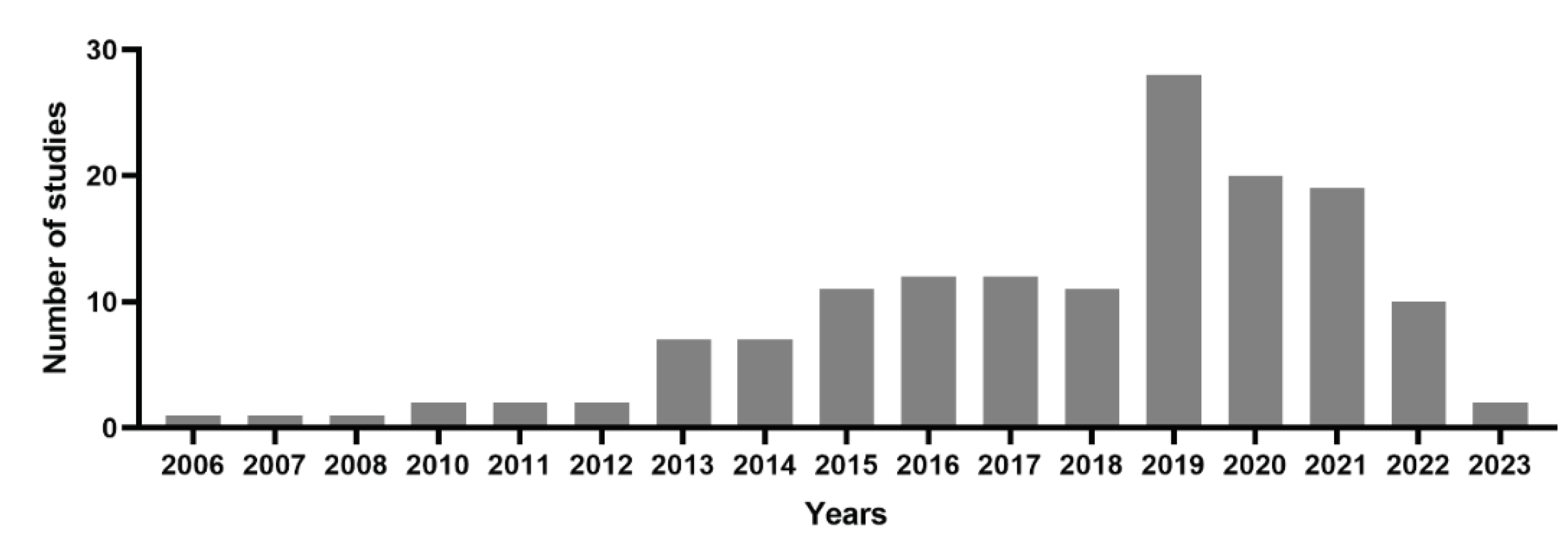
Figure 2.
The most frequent MeSH keywords that have been used in the field of the usages of photo dynamic therapy in the field of treating cervical cancer cells. The size of square of each key-word represents the frequency of it.
Figure 2.
The most frequent MeSH keywords that have been used in the field of the usages of photo dynamic therapy in the field of treating cervical cancer cells. The size of square of each key-word represents the frequency of it.
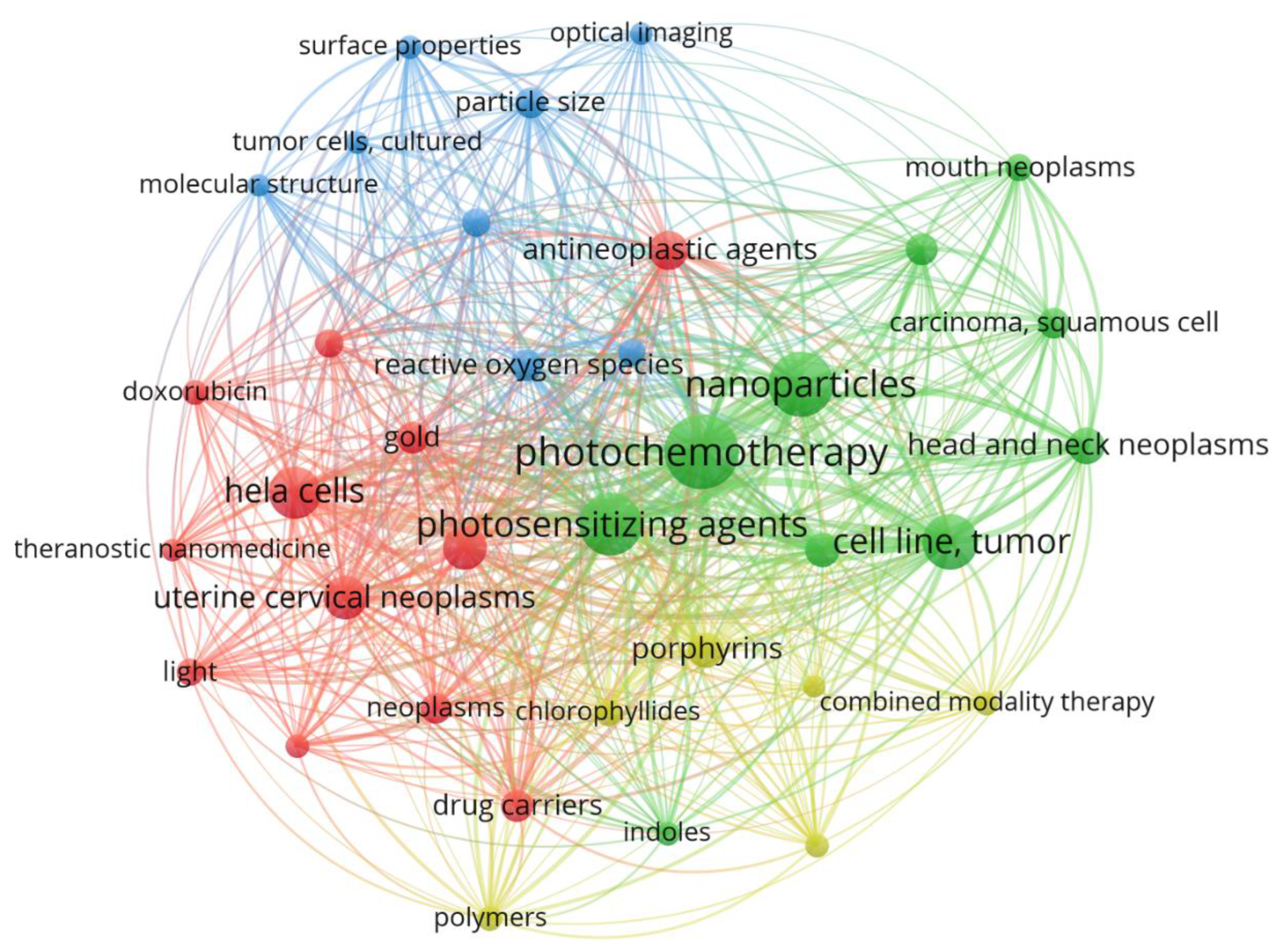
Figure 3.
The molecules and interactions that are involved in the binding site of best binding conformation Fullerene and the overexpressed receptors in cervical cancer. The interactions between Fullerene and following receptors: Folate receptor α (FRα) (A), Transferrin receptor 1 (TR1) (B), Epidermal growth factor receptor (EGFR) (C), Aminopeptidase-N (CD13) (D), CD44 (E), Prominin 1 (CD133) (F), Vascular cell adhesion molecule 1 (VCAM-1) (G), Vascular endothelial growth factor receptor (VEGFR) (H), and Biotin receptor (BR) (I) are demonstrated in details.
Figure 3.
The molecules and interactions that are involved in the binding site of best binding conformation Fullerene and the overexpressed receptors in cervical cancer. The interactions between Fullerene and following receptors: Folate receptor α (FRα) (A), Transferrin receptor 1 (TR1) (B), Epidermal growth factor receptor (EGFR) (C), Aminopeptidase-N (CD13) (D), CD44 (E), Prominin 1 (CD133) (F), Vascular cell adhesion molecule 1 (VCAM-1) (G), Vascular endothelial growth factor receptor (VEGFR) (H), and Biotin receptor (BR) (I) are demonstrated in details.
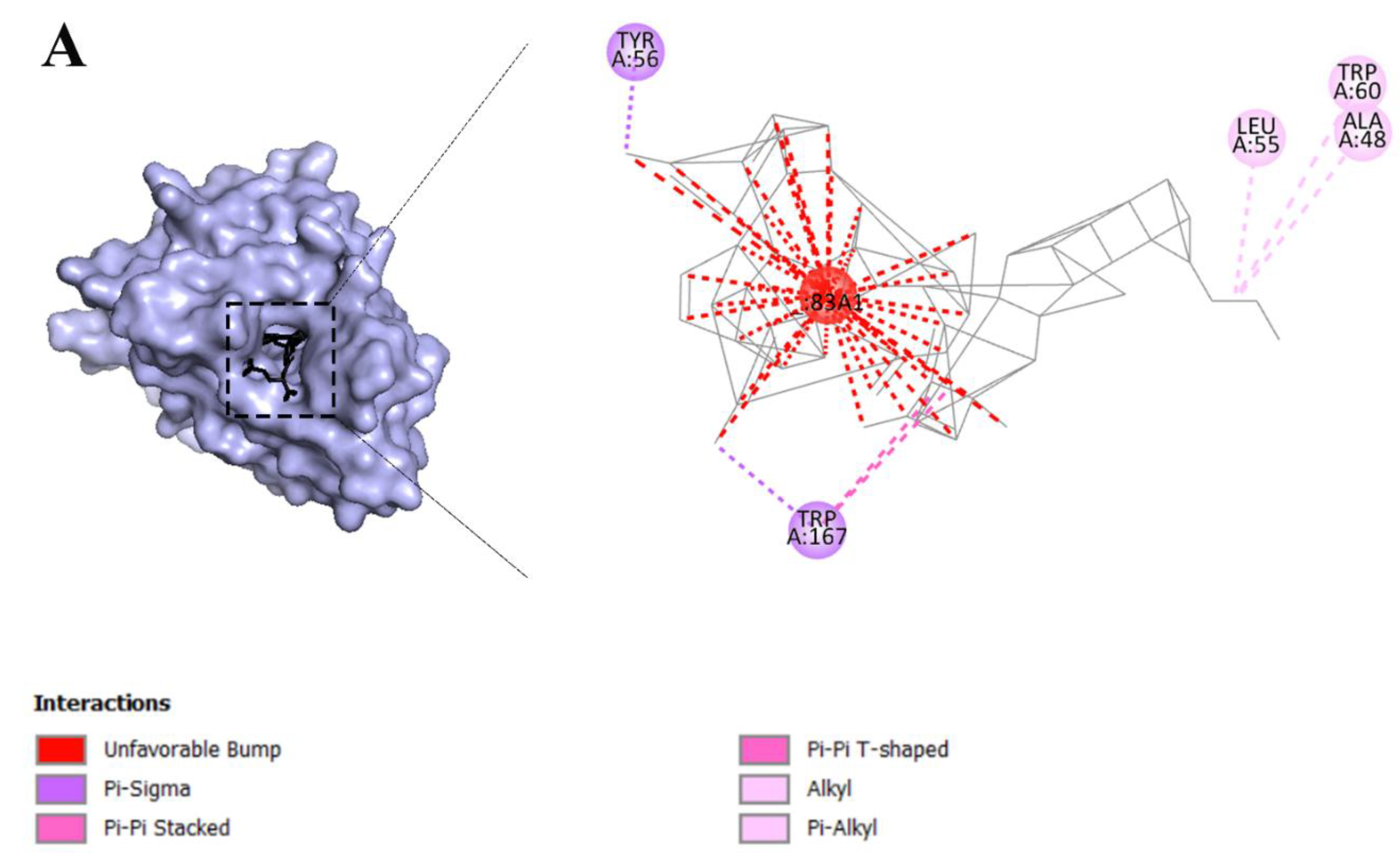
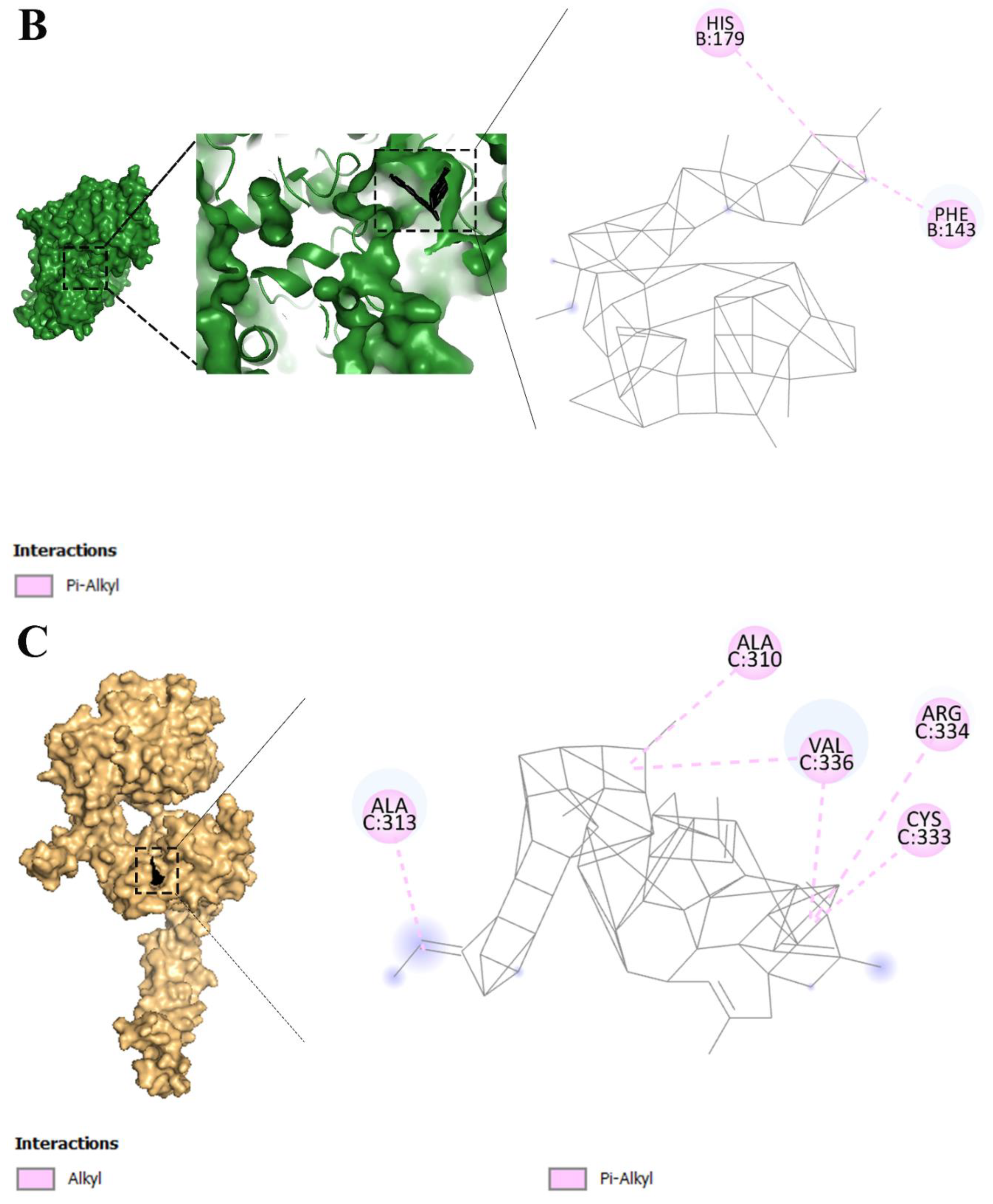
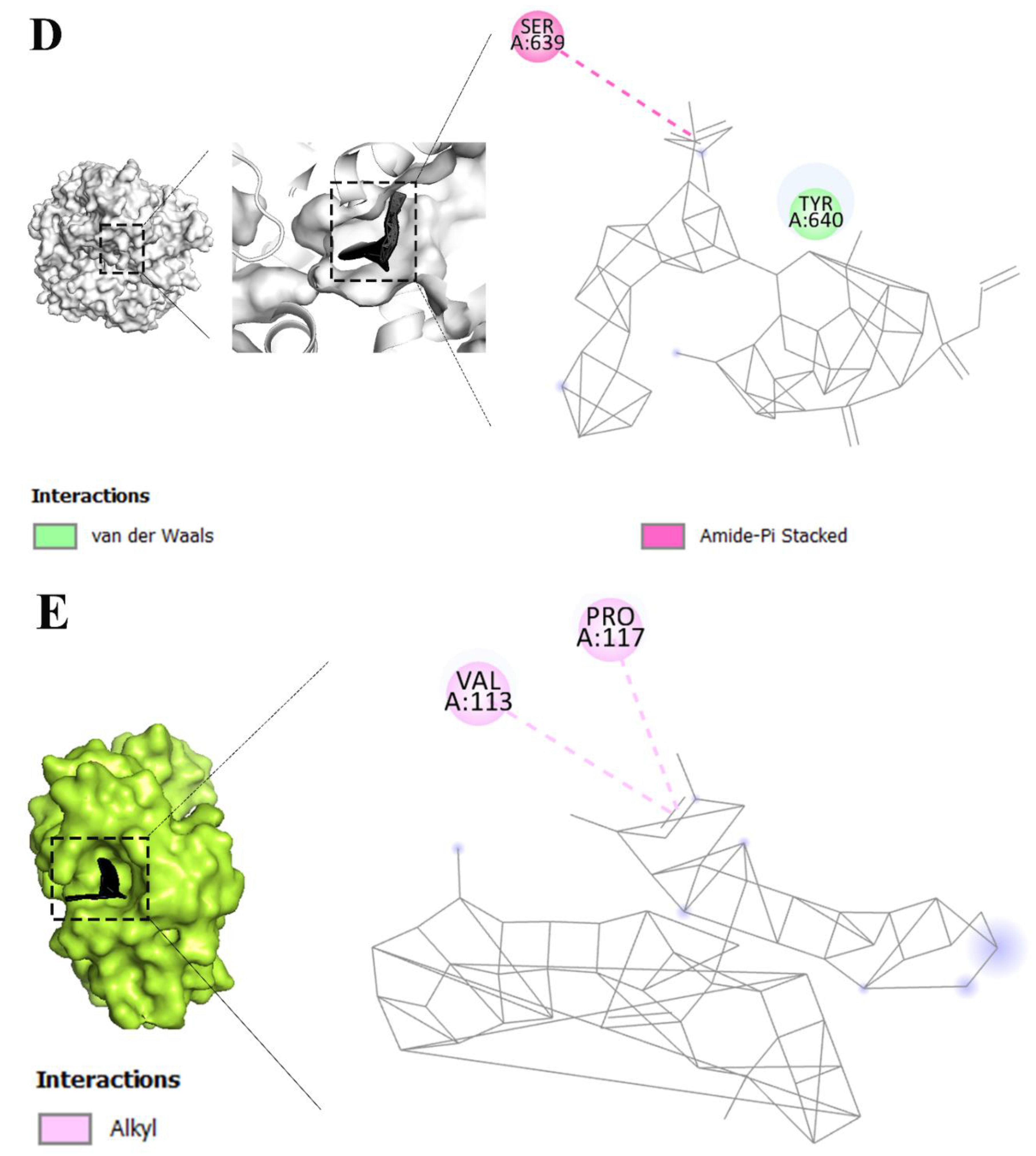

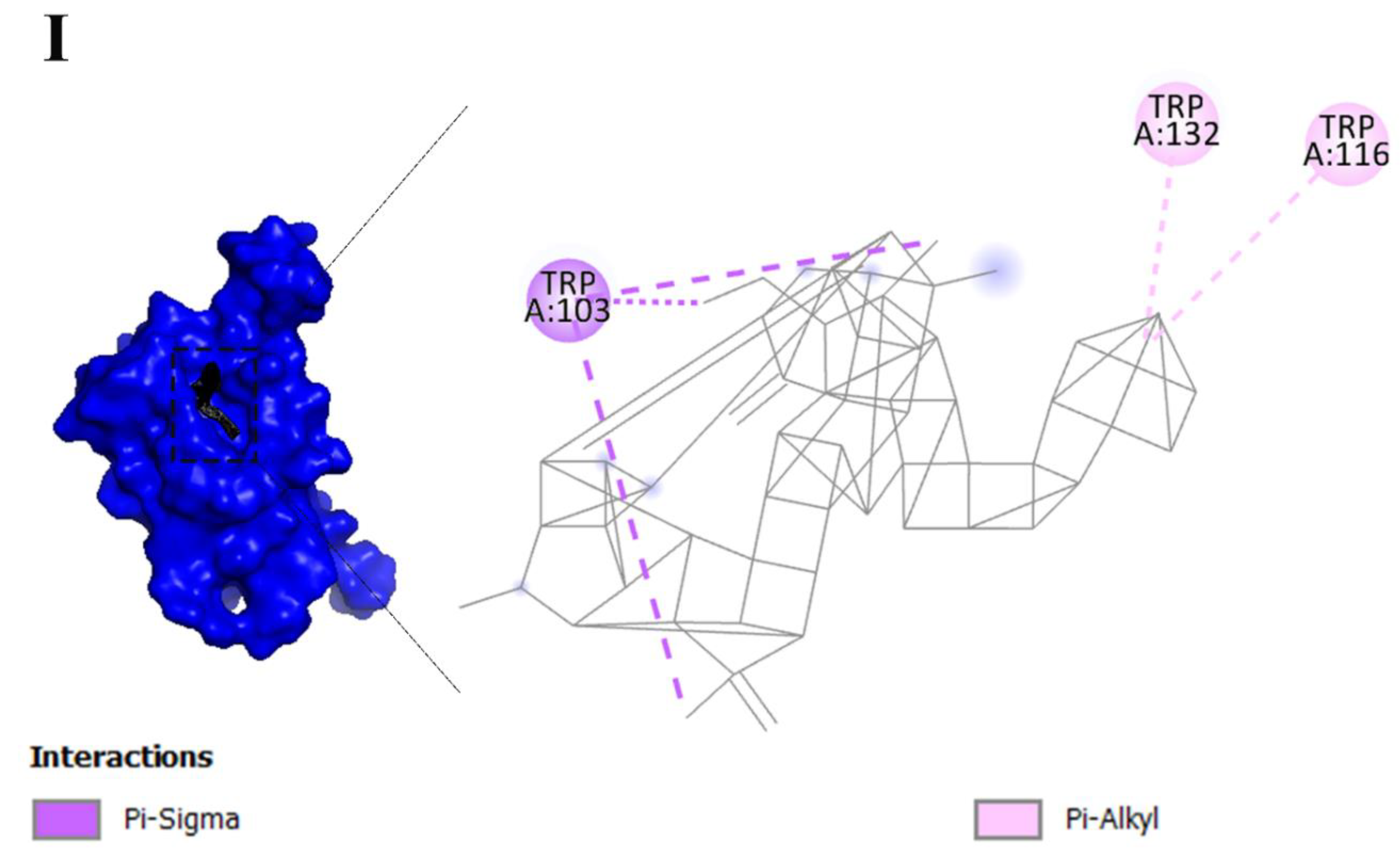
Figure 4.
The 2D structure of Fullerene.
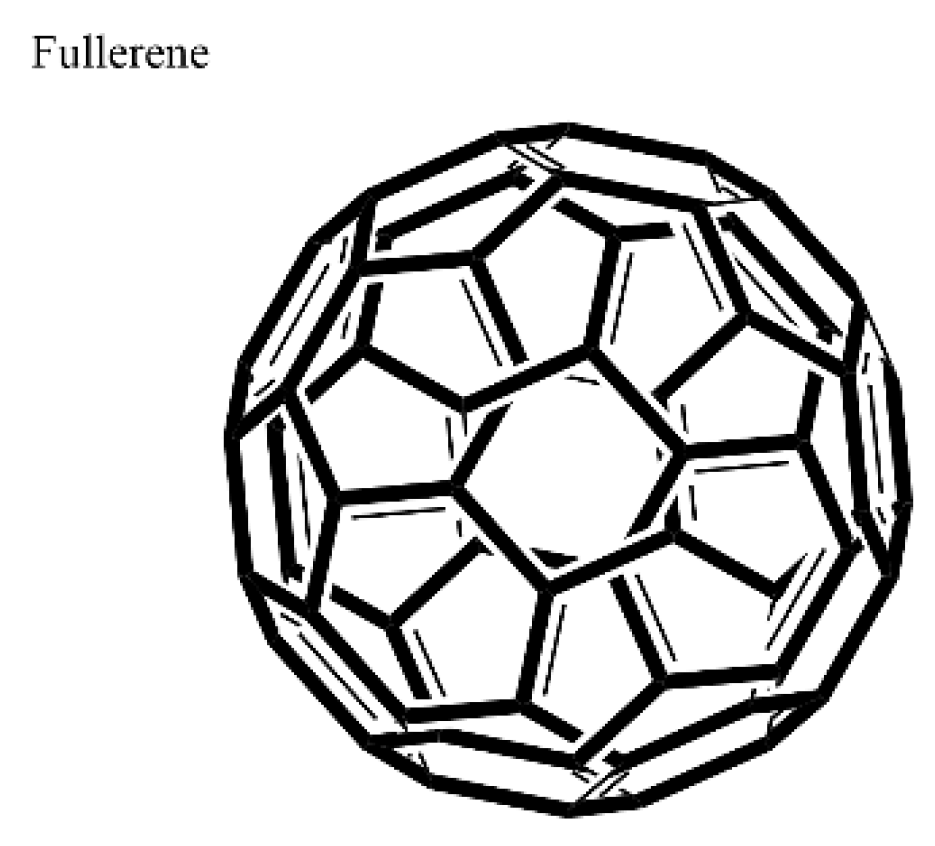
Figure 5.
The role of overexpressed receptor in the process of death originated from photodynamic therapy in cervical cancer cells.
Figure 5.
The role of overexpressed receptor in the process of death originated from photodynamic therapy in cervical cancer cells.
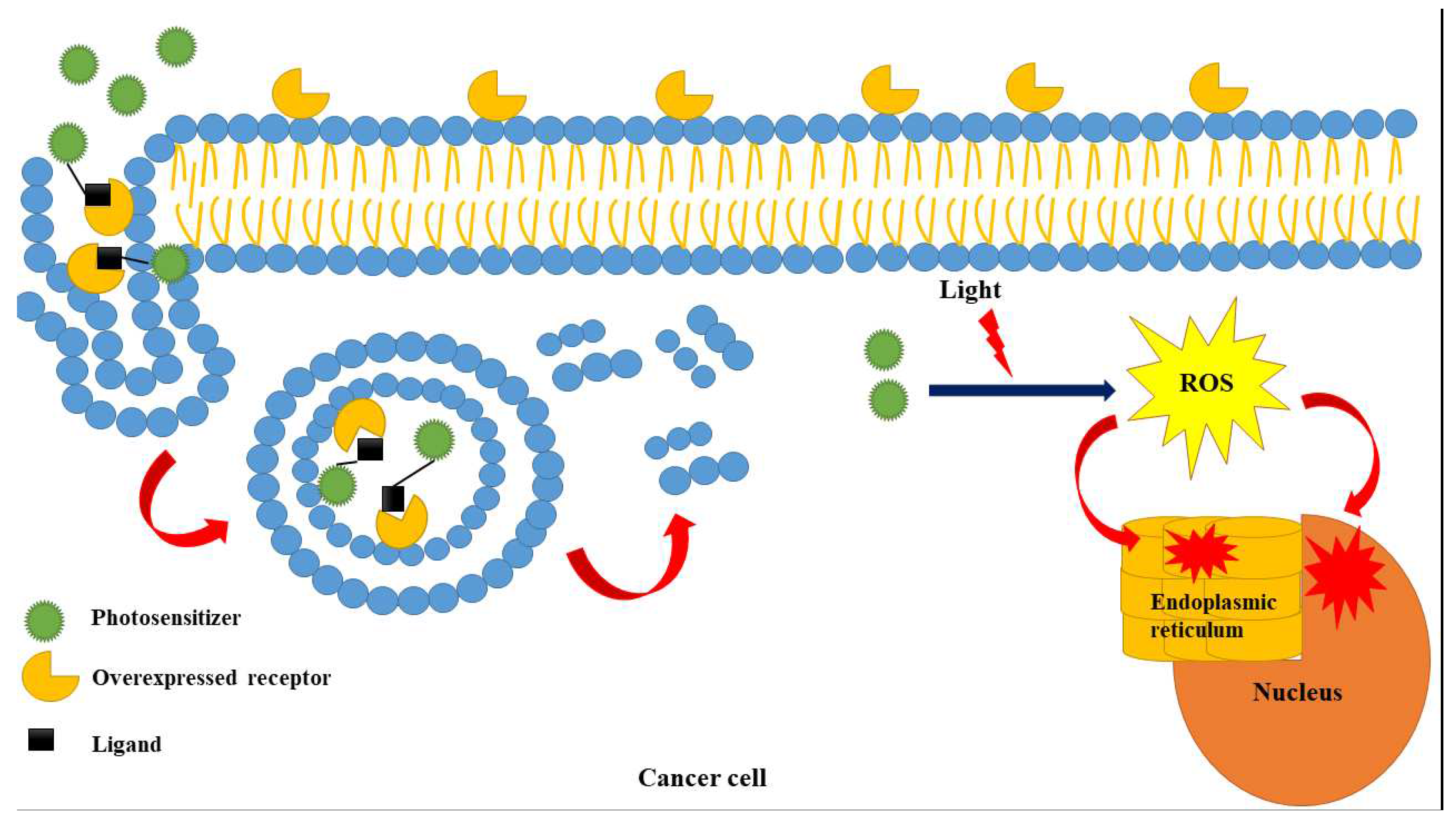
Figure 6.
Frequency of application of dyes for photodynamic therapy of cervical cancer during 1999-2023 in clinical trials.
Figure 6.
Frequency of application of dyes for photodynamic therapy of cervical cancer during 1999-2023 in clinical trials.
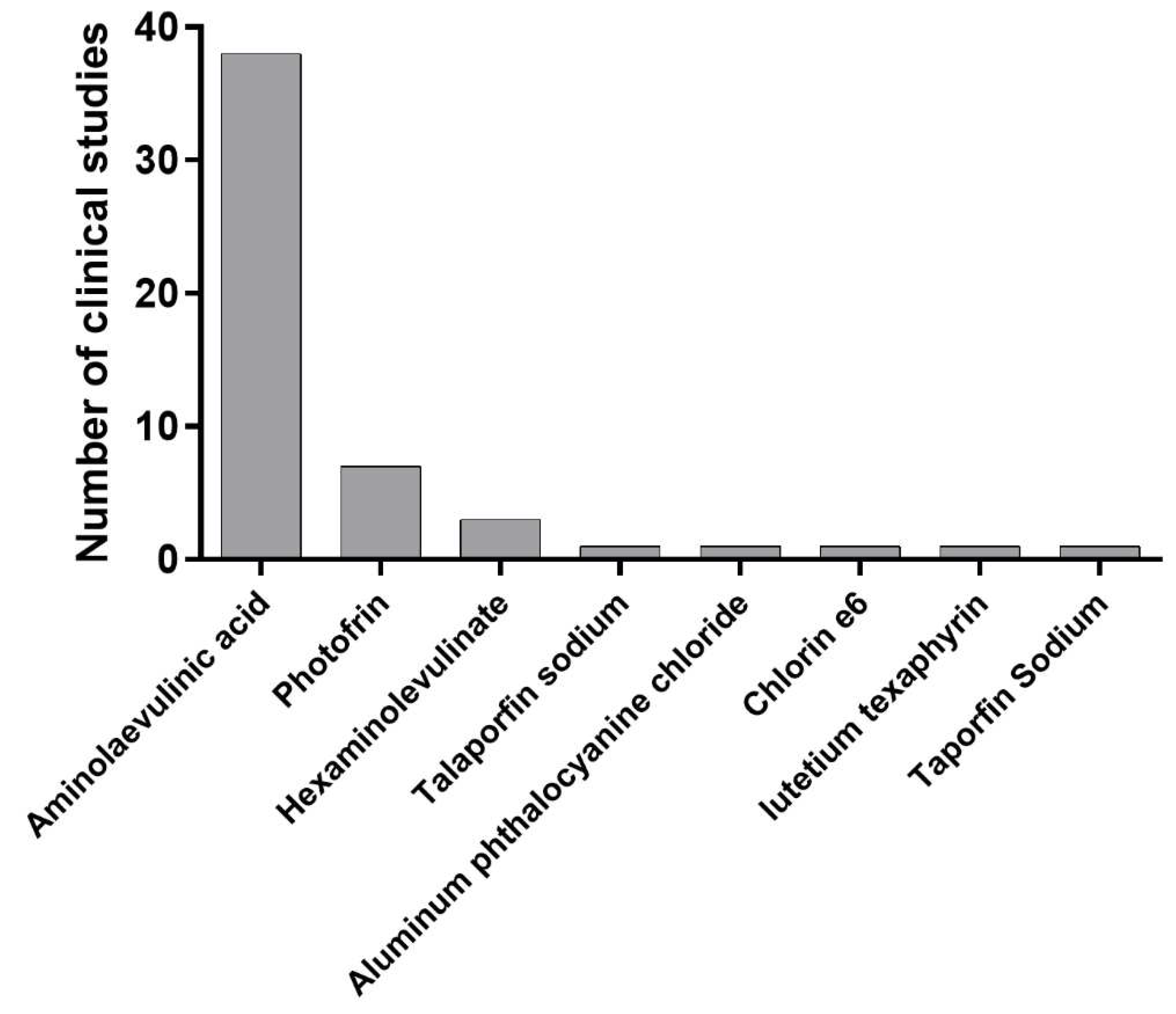
Figure 7.
Frequency of country contributions in clinical trials on photodynamic therapy of cervical cancer during 1999-2023.
Figure 7.
Frequency of country contributions in clinical trials on photodynamic therapy of cervical cancer during 1999-2023.
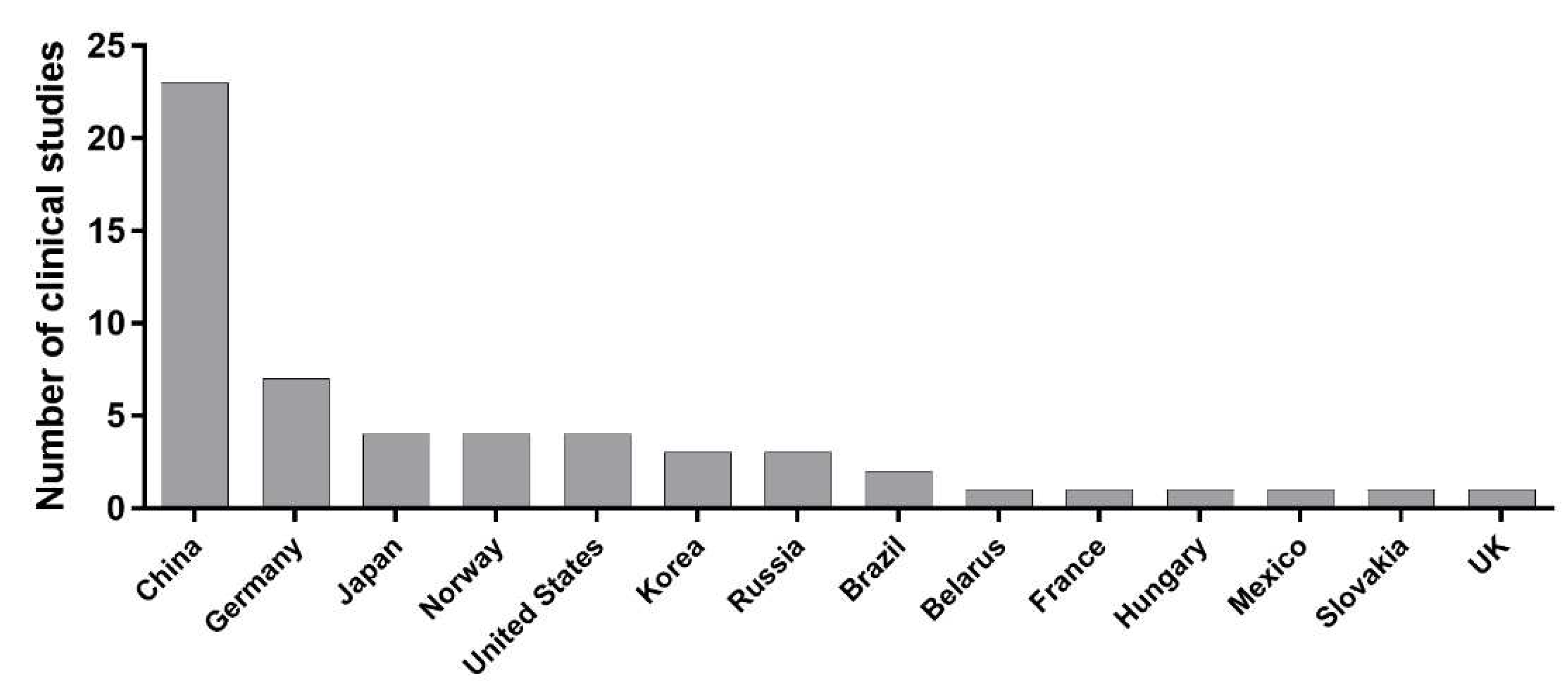
Table 2.
Three most frequent keywords in the studies that have investigated the usages of photodynamic therapy in the field of treating cervical cancer cells.
Table 2.
Three most frequent keywords in the studies that have investigated the usages of photodynamic therapy in the field of treating cervical cancer cells.
| Keywords | Cluster | Link | Total link strength | Occurrence |
|---|---|---|---|---|
| Photo chemotherapy | 2 | 35 | 692 | 110 |
| Nanoparticles | 2 | 35 | 525 | 84 |
| Photosensitizing agents | 2 | 35 | 523 | 78 |
Table 3.
The affinity of dyes that have been used in photodynamic therapy to the of receptors that are overexpressed in cervical cancer cells (Kcal/mole).
Table 3.
The affinity of dyes that have been used in photodynamic therapy to the of receptors that are overexpressed in cervical cancer cells (Kcal/mole).
| Receptor | |||||||||
|---|---|---|---|---|---|---|---|---|---|
| Dye | FRα* | TR1 | EGFR | CD13 | CD44 | CD133 | VCAM-1 | VEGFR | BR |
| 5-aminolevulinic acid | -5.3 | -5.0 | -4.4 | -5.3 | -4.5 | -3.2 | -4.2 | -3.2 | -5.1 |
| Protoporphyrin IX | -10.1 | -9.9 | -11.0 | -11.5 | -8.6 | -5.5 | -8.4 | -6.6 | -10.1 |
| Hematoporphyrin | -8.4 | -9.9 | -10.7 | -11.0 | -8.5 | -5.6 | -8.7 | -6.4 | -9.5 |
| Zinc phthalocyanine | -14.8 | -13.9 | -15.9 | -15.7 | -12.3 | -8.4 | -11.5 | -9.7 | -15.0 |
| Chlorin e6 | -11.5 | -10.9 | -9.9 | -12.7 | -9.5 | -6.6 | -9.3 | -7.4 | -11.8 |
| Talaporfin Sodium | -13.1 | -13.3 | -13.5 | -17.0 | -12.3 | -8.2 | -12.4 | -8.6 | -13.3 |
| Indocyanine Green (ICG) | -15.8 | -10.7 | -10.7 | -12.7 | -8.9 | -7.5 | -8.1 | -6.6 | -11.2 |
| Rose Bengal | -11.9 | -12.6 | -9.9 | -13.4 | -11.4 | -7.4 | -10.2 | -7.9 | -9.6 |
| Photofrin | -9.8 | -9.6 | -10.8 | -11.2 | -8.5 | -5.6 | -8.5 | -6.6 | -9.7 |
| Hypericin | -13.3 | -13.8 | -16.0 | -15.3 | -14.1 | -7.8 | -12.2 | -10.0 | -12.4 |
| Methylene Blue | -10.5 | -8.1 | -8.1 | -8.2 | -6.8 | -5.0 | -6.6 | -4.9 | -8.6 |
| Curcumin | -10.9 | -8.8 | -7.8 | -8.2 | -7.3 | -5.6 | -6.7 | -5.5 | -8.9 |
| Texaphyrin | -10.9 | -11.6 | -11.8 | -11.8 | -10.7 | -7.1 | -8.6 | -7.2 | -10.7 |
| Bacteriochlorin | -12.6 | -10.3 | -11.0 | -10.8 | -10.3 | -6.5 | -8.3 | -7.2 | -9.4 |
| Fullerene | -39.1 | -30.1 | -22.7 | -28.4 | -26.8 | -19.9 | -22.3 | -23.0 | -29.3 |
| Eosin | -13.0 | -13.1 | -14.0 | -13.6 | -12.1 | -7.4 | -10.2 | -8.6 | -11.5 |
| Erythrosine | -10.7 | -11.2 | -10.7 | -11.9 | -10.2 | -6.9 | -8.6 | -7.5 | -9.8 |
| Methyl Violet | -11.7 | -8.4 | -7.6 | -8.4 | -7.0 | -5.5 | -6.5 | -5.7 | -8.0 |
| Aluminum phthalocyanine chloride | -15.3 | -15.6 | -15.0 | -16.2 | -12.9 | -9.0 | -11.5 | -10.2 | -15.1 |
*Folate receptor α (FRα), Transferrin receptor 1 (TR1), Epidermal growth factor receptor (EGFR), Prominin 1 (CD133), vascular endothelial growth factor receptor (VEGFR), vascular cell adhesion molecule 1 (VCAM-1), Aminopeptidase-N (CD13) and Biotin receptor (BR).
Table 4.
Treatment of low-grade squamous intraepithelial lesion with photodynamic therapy.
| Dye | Patients | CR (%) | Type | Country | References |
|---|---|---|---|---|---|
| 5-aminolevulinic acid | 115 | 79.0 | Phase 3 | China Hungary Germany Slovakia |
[37] |
| 48 | 88.6 | Retrospective | China | [38] | |
| 110 | 81.8 | Prospective | China | [39] | |
| 97 | 92.0 | Prospective | China | [40] | |
| 51 | 79.4 | Prospective | Japan | [41] | |
| 176 | 84.7 | Pilot | China | [42] | |
| 46 | 65.2 | Retrospective | China | [43] | |
| 30 | 73.3 | Retrospective | China | [44] | |
| 66 | 75.0 | Retrospective | Brazil USA |
[45] | |
| 39 | 76.9 | Prospective | China | [46] | |
| 12 | 33.0 | Prospective | UK | [47] | |
| 22 | 63.6 | Prospective | China | [48] | |
| 79 | 90.7 | Prospective | China | [49] | |
| 44 | 88.6 | Retrospective | China | [50] | |
| 30 | 80.0 | Prospective | Mexico |
[51] | |
| 55 | 90.0 | Retrospective | China | [43] | |
| Aluminum phthalocyanine chloride | 11 | 91.7 | Prospective | Brazil | [29] |
| Chlorin e6 | 18 | 88.9 | Prospective | China | [31] |
| 18 | 100 | Prospective | Russia | [3] | |
| Chlorin e6 + Photofrin | 28 | 82.0 | Retrospective | Russia | [52] |
| Hexaminolevulinate | 262 | 95.0 | Phase 2 | Germany Norway |
[53] |
| Photofrin | 105 | 90.0 | Prospective | Japan | [54] |
| Talaporfin sodium | 9 | 88.9 | Prospective | Japan | [30] |
Table 5.
Treatment of high-grade squamous intraepithelial lesion with photodynamic therapy.
| Dye | Patients | CR (%) | Date | Type | Country | References |
|---|---|---|---|---|---|---|
| 5-aminolevulinic acid | 148 | 86.5 | 2022 | Retrospective | China | [55] |
| 32 | 31.0 | 2002 | Phase 1&2 | United States | [56] | |
| 7 | 42.0 | 1999 | Prospective | Germany | [57] | |
| 8 | 50.0 | 2021 | Prospective | China | [48] | |
| 5 | 80.0 | 2010 | Prospective | China | [58] | |
| 68 | 88.2 | 2022 | Retrospective | China | [59] | |
| 183 | 71.0 | 2022 | Prospective | China | [60] | |
| 96 | 89.5 | 2022 | Retrospective | China | [61] | |
| 99 | 88.9 | 2022 | Retrospective | China | [62] | |
| Porphyrin | 20 | 91.0 | 2016 | Retrospective | Korea | [63] |
| 88 | 53.4 | 2010 | Prospective | Belarus | [64] | |
| 46 | 87.0 | 2013 | Retrospective | Korea | [65] | |
| 34 | 97.1 | 2022 | Retrospective | Korea | [66] | |
| 49 | 90.4 | 2008 | Prospective | Russia | [67] | |
| 28 | 90.0 | 2003 | Prospective | Japan | [33] | |
| Chlorin e6 | 18 | 72.2 | 2022 | Prospective | China | [31] |
| 24 | 70.0 | 2022 | Prospective | Russia | [3] | |
| Hexaminolevulinate | 24 | 63.0 | 2008 | Prospective | Germany | [68] |
Table 6.
Clinical trials on of treatment of cervical cancer with photodynamic therapy during 1999-2023 (U. S. National Library of Medicine).
Table 6.
Clinical trials on of treatment of cervical cancer with photodynamic therapy during 1999-2023 (U. S. National Library of Medicine).
| Dye | NCT number | Type of cancer | Status | Country | Start Date | Phase |
|---|---|---|---|---|---|---|
| Lutetium texaphyrin | NCT00005808 | CIN 2 &3 | Terminated | United States | 2000 | 1 |
| Taporfin Sodium | NCT00028405 | CIN | Completed | United States | 2001 | 1 |
| Aminolaevulinic acid | NCT00369018 | CIN | Completed | Germany Norway |
2006 | 1&2 |
| NCT00708942 | CIN | Terminated | France Germany Norway |
2009 | 2 | |
| NCT01256424 | CIN | Completed | Germany Norway |
2011 | 2 | |
| NCT02304770 | Persistent High-Risk HPV Infection CIN |
Completed | China | 2015 | 2 | |
| NCT02631863 | CIN LSIL Papillomavirus Infections |
Completed | China | 2016 | 2 | |
| NCT04484415 | CIN 2 &3 | Completed | China | 2022 | 3 |
Table 7.
Comparison of different dyes for photodynamic therapy (PDT) in cervical cancer with approve preclinical effects.
Table 7.
Comparison of different dyes for photodynamic therapy (PDT) in cervical cancer with approve preclinical effects.
| Dye | Pros | Cons |
|---|---|---|
| Curcumin | Natural compound with low toxicity Anti-inflammatory and antioxidant properties Has been shown to induce cell death in cancer cells Potential for tumor-selective accumulation |
Limited water solubility Low bioavailability Requires activation by light |
| Hypericin | High tumor selectivity Good tissue penetration |
Requires activation by light Potential skin photosensitivity |
| Methylene blue | FDA-approved Low toxicity |
Low tumor selectivity Requires high concentrations |
| Indocyanine green | FDA-approved for clinical use High water solubility Can be activated by near-infrared light Allowing for deeper tissue penetration |
Limited tumor selectivity Rapid clearance from the body May require high doses for therapeutic effect Potential for skin photosensitivity and allergic reactions. |
| Rose Bengal | Good tumor selectivity Low toxicity |
Requires activation by light Potential skin photosensitivity |
| Zinc phthalocyanine | High absorbance in the red spectrum Good tumor selectivity |
Low water solubility Potential toxicity |
Table 8.
Scoring system for evaluation of various dyes used in clinical, preclinical, and potential applications of photodynamic therapy (PDT) for cervical cancer.
Table 8.
Scoring system for evaluation of various dyes used in clinical, preclinical, and potential applications of photodynamic therapy (PDT) for cervical cancer.
| Dye | Clinical Studies* | Preclinical Studies | Potential Use | Overall Score |
|---|---|---|---|---|
| 5-aminolevulinic acid | 5 | 5 | 5 | 15 |
| Porphyrin derivatives | 5 | 5 | 5 | 15 |
| Zinc phthalocyanine | 5 | 5 | 3 | 13 |
| Chlorin e6 | 4 | 5 | 4 | 13 |
| Talaporfin Sodium | 4 | 4 | 4 | 12 |
| Indocyanine Green (ICG) | 3 | 5 | 4 | 12 |
| Rose Bengal | 4 | 4 | 3 | 11 |
| Photofrin | 5 | 4 | 2 | 11 |
| Hypericin | 2 | 5 | 4 | 11 |
| Methylene Blue | 3 | 4 | 3 | 10 |
| Curcumin | 2 | 4 | 4 | 10 |
| Texaphyrins | 3 | 3 | 3 | 9 |
| Chlorophyll Derivatives | 2 | 3 | 3 | 8 |
| Bacteriochlorins | 2 | 3 | 3 | 8 |
| Fullerenes | 1 | 3 | 2 | 6 |
| Xanthene Dyes (Eosin, Erythrosine) | 1 | 2 | 2 | 5 |
| Methyl Violet | 1 | 2 | 2 | 5 |
* The scoring system is based on a scale of 1 to 5 for each category (clinical studies, preclinical studies, potential use) with 5 being the highest score. The overall score is the sum of the scores in each category.
Table 9.
The list of receptors that are overexpressed in cervical cancer cells.
| Receptor | Reference |
|---|---|
| Folate receptor α | [13] |
| Transferrin receptor 1 | [14] |
| Epidermal growth factor receptor | [15] |
| CD44 | [16] |
| Prominin 1 (CD133) | [17] |
| Vascular endothelial growth factor receptor 2 | [18] |
| Vascular cell adhesion molecule-1 | [19] |
| Aminopeptidase-N (CD13) | [20] |
| Biotin receptor | [21] |
Disclaimer/Publisher’s Note: The statements, opinions and data contained in all publications are solely those of the individual author(s) and contributor(s) and not of MDPI and/or the editor(s). MDPI and/or the editor(s) disclaim responsibility for any injury to people or property resulting from any ideas, methods, instructions or products referred to in the content. |
© 2023 by the authors. Licensee MDPI, Basel, Switzerland. This article is an open access article distributed under the terms and conditions of the Creative Commons Attribution (CC BY) license (http://creativecommons.org/licenses/by/4.0/).
Copyright: This open access article is published under a Creative Commons CC BY 4.0 license, which permit the free download, distribution, and reuse, provided that the author and preprint are cited in any reuse.


