

Submitted:
26 April 2023
Posted:
28 April 2023
You are already at the latest version
Abstract
Rice bran arabinoxylan compound (RBAC) is a polysaccharide modified by Lentinus edodes mycelial enzyme widely used as a nutraceutical. To explore translational research on RBAC, a scoping review was conducted to synthesise research evidence from English, Japanese, Korean, and Chinese sources while combining bibliometrics and network analyses for data visualisation. Ninety-eight articles on RBAC and the biological activities related to human health or disease were included. Research progressed with linear growth (median=3/year) from 1998 to 2022, predominantly on Biobran MGN-3 (86.73%) and contributed by 289 authors from 100 institutions across 18 countries. Clinical studies constitute 61.1% of recent articles (2018 to 2022). A shifting focus from immuno-cellular activities to human translations over the years was shown via keyword visualisation. Beneficial effects of RBAC include immunomodulation, synergistic anticancer properties, hepatoprotection, antiinflammation, and antioxidation. Cancer patients reported reduced side effects from chemoradiotherapy and improved quality of life in human studies, indicating RBAC’s impact on the psycho-neuro-immune axis. RBAC has been studied in 17 conditions, including cancer, liver diseases, HIV, allergy, chronic fatigue, gastroenteritis, cold/flu, diabetes, and in healthy participants. Further translational research on the impact on patient and community health is required for the evidence-informed use of RBAC in health and disease.
Keywords:
Biobran
; Functional food
; Hemicellulose
; MGN-3
; Natural products
; Translational Science.
Introduction
Rice bran is a by-product of rice milling and a rich source of dietary fibre, comprising 8.5% arabinoxylans [1]. Rice bran arabinoxylan compound (RBAC) is the generic name for any arabinoxylan-rich derivative of rice bran enzymatically modified with Lentinus edodes mycelium. RBAC products are commercially manufactured and marketed as nutraceuticals for enhancing immune functions [2]. Biobran MGN-3, first developed by Daiwa Pharmaceutical Co., Ltd. (Tokyo, Japan; hereafter referred to as Daiwa), is the most well-known RBAC worldwide [3]. Rice bran exo-biopolymer (RBEP), developed by Erom Co., Ltd. (Chuncheon, South Korea; hereafter referred to as Erom) and used as the main ingredient in immune-related functional food and nutraceutical products, is another derivative cited in literature [4-6].
Research on RBAC as an immune-modulating substance was first pioneered by Ghoneum [7,8]. Over the years, there has been a growing interest in translating the in vivo and in vitro biological activities demonstrated by RBAC to treatment effects in humans for clinical applications. Translational research refers to the steps from ‘the bench to the bedside’ that incorporate promising scientific findings into evidence-based practice and impact the community [9]. The most notable clinical application of RBAC is the potential in cancer immunotherapy [10]. Previous reviews have assessed the available evidence on Biobran MGN-3 as a complementary therapy for conventional cancer treatment [11] and explored the health-promoting properties of RBAC for the potential clinical application in chronic conditions [2].
Despite these efforts, the synthesis of available scientific research on RBAC remains insufficient. Previous reviews were based almost exclusively on English-language publications. Studies conducted in Japan and South Korea on RBAC may not be available in English. Also, with the growing interest in natural products for health and wellness in China in recent decades [12], parallel discoveries and research on RBAC may be reported in Chinese literature. Therefore, this review aims to conduct inclusive systematic searches that map the available studies on RBAC, from basic research to human studies in English, Japanese, Korean, and Chinese literature. A scoping study is the most appropriate research synthesis method for the potentially broad and diverse scientific literature.
The initial scoping question on RBAC was: ‘What is known about the beneficial effects of RBAC on health and disease conditions from basic research to human studies?’ The question was intentionally broad at the onset of the study and has been subsequently revised post hoc to ‘What is known about the translational research on RBAC and its potential beneficial effects on health and disease conditions?’ The revision enabled the reviewers to incorporate a bibliometric analysis of all the available literature based on the authors, institutions, publications, and research impact to understand the translational progress of RBAC over time.
Methods
Protocol and registration
This scoping review followed the JBI methodology for scoping reviews [13]. A preliminary search on Pubmed (MEDLINE), the Cochrane Database of Systematic Reviews and JBI Evidence Synthesis found no similar systematic or scoping reviews. Before commencing the search, a study protocol was registered on OSF Registries (DOI:10.17605/OSF.IO/5PQ8W) for public access [14].
Eligibility criteria
RBAC is a product class of any rice bran arabinoxylan/polysaccharide extract produced through bioconversion with L. edodes mycelial enzyme. Studies on arabinoxylans or polysaccharides extracted from other cereal grains, unmodified rice bran, and other rice bran derivatives produced without using L. edodes mycelial enzyme were excluded. Studies that did not specify or provide references to how the extraction was performed or the brand/product name or provider of the RBAC used were also excluded.
This scoping review considered only scholarly articles reporting results from primary research on the effects of RBAC on biological activities related to human health or disease conditions. Opinion papers and non-academic sources (e.g., magazines, news articles, and trade journals) were excluded. Any secondary research based on existing data, such as a systematic or narrative review, was excluded unless it contained a secondary data analysis that reported previously unknown findings. Conference presentations and posters were not considered, however, conference abstracts with the results not published in full-text articles were included. Clinical trial registrations and study protocols were included for publication rate assessment only. The World Health Organization [15] recommends all interventional trials be registered on a public registry to prevent publication bias and selective reporting. However, mandatory registration is only a requirement since 2007. Furthermore, only clinical trials beyond Phase 1 involving regulated pharmaceutical products and devices must be registered on ClinicalTrial.gov in the USA [16]. Hence, not all interventional studies included in this review were subjected to registration, especially those with single-arm design with no control. The publication rate assessment will be based on only human controlled trials after 2007.
When considering human studies, there were no exclusion criteria for participants, such as age, sex, geographical location, health status, or disease conditions. However, RBAC was to be used as a nutraceutical for human consumption. Thus, only oral administration was allowed in all human clinical studies. Other routes of administration, such as intraperitoneal injection, were permitted in animal studies for the understanding of its underlying mechanisms. This review also included all study designs covering interventional (experimental and quasi-experimental) and observational (case series, individual case reports and descriptive cross-sectional) studies.
This review also considered preclinical studies, including in vivo experiments using cell cultures on RBAC and animal studies with models that mimic aspects of physiological processes or human diseases. Non-human studies investigating using RBAC for manufacturing, agriculture, or other purposes unrelated to human health and conditions were excluded.
Information sources
This review aimed to source both published and unpublished studies. A total of 13 academic databases were used in the systematic searches, consisting of six international databases in English, two Chinese databases, three Korean databases, and two Japanese databases. The complete list of these databases is summarised in Table 1. To uncover unpublished studies/grey literature, the reviewers searched the official website of Biobran MGN-3 [17], collected papers on Biobran MGN-3 compiled by BioBran Research Foundation [18], and the Institute for Progressive Research of RBAC Immunomodulator Compounds website [19]. The references of all included articles and review papers on RBAC were screened for additional studies.
Search strategy
An initial limited search of MEDLINE (via PubMed) and CINAHL was undertaken to identify articles on the topic. The words in the titles and abstracts of relevant articles, and the index terms used to describe the papers were used to develop a complete search strategy without restricting the language and publication date. The search strategy, including all identified keywords and index terms, was then adapted for each database or information source. The search strategy for MEDLINE (via PubMed) is available as an example as Supplementary S1.1.
Source of evidence selection
Following the search, all identified records were collated and uploaded into EndNote 20 (Clarivate Analytics, PA, USA) with duplicates removed. Titles and abstracts were screened by one reviewer (SLO) for assessment against the inclusion criteria and verified by another reviewer (SCP) after a pilot test. Potentially relevant sources were retrieved, and their full-text files were imported into EndNote 20 for management, assessment and review of information. The full text of each selected record was assessed in detail against the inclusion criteria by one reviewer (SLO) and verified by at least one other team member (SCP or PSM). Reasons for excluding any full-text articles were recorded and reported in the scoping review. Any disagreements during the selection process were resolved through discussion to reach a consensus.
Data extraction
Data were extracted from included articles by a reviewer (SLO) and verified by another (SCP) using a data extraction form developed by the reviewers (See Supplementary S1.2). Non-English language articles were first translated to English using Google Translate (Google, Mountain View, CA, USA) and then revised and edited by one of the reviewers familiar with the source language. The translated versions were then used for data extraction. Many Japanese articles were professionally translated into English for public access on the Biobran.org website. The translated copies of these articles were used in this review where available.
Extracted data included specific details about the article, year of publication, authors, country of origin, study design, participants, concept, context, methodology, outcome measures and key findings relevant to the review question. Citation count is a measure of research impact. The reviewers also searched Google Scholar (Google, Mountain View, CA, USA) to extract the citation count for each included article. Medical Subject Headings (MeSH) terms were used for standardised keywords analysis. MeSH is a controlled and hierarchically organised vocabulary for biomedical and health-related information. It is maintained by the United States National Library of Medicine for indexing, cataloguing and searching, especially in PubMed and MEDLINE. The reviewers compiled MeSH terms for each included source of evidence from two sources: (1) PubMed and (2) MeSH on Demand based on the article’s abstract. Since a published paper has multiple authors whose contributions may not be equal, not all should take full credit. A co-author weighted coefficient is also calculated based on the scheme proposed by Zhang [20] for each author for every co-authored article. This weighted coefficient is a quantitative means to attribute co-authors’ credit based on their rank in the author list (See Supplementary S1.3 for the co-author weighted coefficient formula).
This review adopts the T0 to T4 classification system defined by the Institute for Clinical and Translational Research [21] to assess each study's translational research stage. Briefly, T0 denotes basic and preclinical biomedical research; T1 indicates early human studies such as proof of concept or Phase 1 clinical trial; T2 studies involve translation to patients (well-designed Phase 2 and 3 clinical trials); T3 involves translation to practice, which covers dissemination and implementation research; and T4 is for translation to communities. The reviewers assigned a T stage to each included study after data extraction. Any disagreements that arose between the reviewers were resolved through discussion.
Data analysis and presentation
The search results and the study inclusion process were presented following the Preferred Reporting Items for Systematic Reviews and Meta-analyses extension for scoping review (PRISMA-ScR) [22]. See Supplementary S2 for the PRISMA-ScR checklist for this report. Extracted data were further tabulated into data tables (See Supplementary S3) using Microsoft Excel 365 (Microsoft Corp, WA, USA). Descriptive and bibliometric analyses were conducted using Microsoft Excel 365 and R Studio (Posit Software, UK), running with R version 4.2.2 [23]. Network analysis was performed using the visNetwork package in R [24] to visualise the complex relationships among the data items.
The reviewers adopted a quantitative approach to analyse the extracted data's bibliometrics, including authors, institutions, publications, references, MeSH terms, and research impacts based on Google Scholar citations to explore the translational status of the field. The potential beneficial actions and positive outcomes of RBAC ingestion on health and the possible applications for any disease conditions were also illustrated in table and graphical format.
Results
Sources of evidence
Searches were conducted between September and October 2022. The selection process is depicted in Figure 1. In total, 98 primary research articles were included as sources of evidence, and 13 trial registration records were identified for publication rate assessment. The list of all included articles (n=98) with their essential characteristics and citation details are provided as supporting information (Supplementary Table S4.1 and Supplementary S5).
Table 2 shows a descriptive summary based on publishing year, country, language, and type. Articles were published between 1998 to 2022 (25 years), with 18.37% (n=18) considered the more recent publications (2018 – 2022) and 44.9% (n=44) published within the last ten years. Although the number of articles published per year ranges from 1 to 12, the publishing rate was linear over time, as illustrated in Figure 2. On average, 3.92±2.8 (mean ± standard deviation) articles were published annually with a median of three per year.
The USA produced the most research output (n=29, 29.59%), followed closely by Japan (n=22, 22.45%), South Korea (n=15, 15.31%), Egypt (n=11, 11.22%), and Hungary (n=7, 7.14%). Readers can find a more detailed country-level summary in Supplementary Table S4.2. Language-wise, 82.65% of the articles (n=81) were published in English, 11.22% (n=11) in Japanese, and 6.12% (n=6) in Korean. This review found no Chinese-language articles fulfilling the eligibility criteria for inclusion. Out of the 98 included articles, 85 (86.73%) are full papers published in peer-reviewed journals. The remaining consists of conference abstracts presenting novel findings not already published elsewhere (n=8, 8.16%), book chapters (n=2, 2.04%), and one each of short communication, study protocol, and thesis.
Table 3 summarises the articles based on the study design and translational stage. There are 56 articles (57.14%) reporting preclinical investigation results based on animal models (n=25, 25.51%), in vitro cell experiments (n=19, 19.39%), chemical analysis (n=1, 1.02%), or mixed-method design (n=9, 9.18%). The remaining 42 articles (42.86%) were human clinical studies consisting of 29 interventional studies (29.59%) and 13 observational studies (13.27%). Most observational studies are case reports (n=8, 8.16%) or case series (n=4, 4.08%), except a descriptive cross-sectional study. Randomised controlled trials (RCT) are the most common interventional human clinical studies, with 21 counts (21.43%), followed by single-arm before and after studies (n=7, 7.14%). There is also a non-randomised controlled interventional trial.
Figure 3 shows the number of articles published over time delineated by study design. There is a clear trend of increasing research attention on human interventional studies in recent years, with 61.11% (n=11) of articles published between 2018 and 2022 being clinical interventional studies. In comparison, the percentages are 30.77% (n=8), 16.67% (n=3), 14.29% (n=3), and 26.67% (n=4) in the earlier periods of 2013-2017, 2008-2012, 2003-2007, and 1998-2002, respectively. Based on the T0 to T4 classification system describing where research sits on the translational science spectrum, the preclinical studies (n=56, 57.14%) were T0 studies. All observational and single-arm interventional (before & after) studies were T1 research. Not all controlled human interventional studies were considered T2 research due to their small sample size (≤ 50). This review identified only four well-designed RCTs as T2 research (n=4, 4.08%), with the remaining interventional studies belonging to T1 research (n=38, 38.78%).
Table 4 provides a summary of the sources of RBAC and funding. Although different types of RBAC products are investigated in the included articles, they are linked to three commercial companies, namely Daiwa, Erom, and STR Biotech Co., Ltd. (Chuncheon, South Korea; hereafter referred to as STR Biotech). Biobran MNG-3 from Daiwa was the subject of interventions and investigations in 86.73% of the included studies (n=85). Eight articles (8.16%) reported studies on Erom’s products, including RBEP, Erom’s fermented rice bran, fermented SuperC3GHi bran, and oral nutritional supplement. The remaining five articles (5.1%) were studies based on bioprocessed polysaccharides, fermented black rice bran, or bioprocessed rice bran extract developed by STR Biotech.
Slightly over half of the included articles did not disclose their funding sources (n=50, 51.02%). Figure 4 shows the proportion of papers that acknowledged their funding sources over time. We observed an increasing disclosure trend, with 72.22% of articles published between 2018 and 2022 making the disclosure, compared to 61.54%, 38.89%, 47.62%, and 13.33% of 2013-2017, 2008-2012, 2003-2007, 1998-2002, respectively. RBAC research received the most financial support from commercial sources, with Daiwa being the highest funder of RBAC research through financially supporting 26 studies (26.53%) and providing products to another eight studies (8.16%). Erom supported five studies (5.10%), and a reseller of Daiwa partially funded two other studies (2.04%). Public funding from government grants or universities is the second most common source, with 17 articles (17.35%) acknowledged as partially or entirely supported by public funds. Private individuals or nonprofit organisations supported six (6.12%) studies financially. For full details on the disclosure statement of all the included articles, please refer to Supplementary Table S4.3.
Among the 21 articles of controlled trials, three were published before registration was mandated in 2007. Of the remaining 19, 11 were registered, and 8 were not. Thus, the registration rate is only 57.89%. The search found 13 trial registration records (See Supplementary Table S4.4). Among them, seven are listed on ClinicalTrials.gov (USA), two on the University Hospital Medical Information Network Center Clinical Trial Registry (Japan), two on the South Korean Clinical Research Information Service Registry, one on United Kingdom’s (UK) Current Controlled Trials, and one on the Australian New Zealand Clinical Trials Registry. Nine trials have been published, with their results found as sources of evidence. Of the four trials with no results published yet, two remain ongoing, one has ended with the publication of results pending, and another has been discontinued due to disruption during the COVID-19 pandemic. Hence, the publication rate of the registered trials is 90%.Bibliometric analysis.
Authors
A total of 289 unique names were extracted from the author lists of the included articles. Table 5 shows the top 8 authors ranked by the sum of their co-author weighted coefficient (TWC). A more detailed summary of the top 10 authors can be found in Supplementary Table S4.5. The most prolific author in the field is Ghoneum, Mamdooh (TWC=30.0) of Charles Drew University of Medicine and Science, who is either the first author or a corresponding author of 30 included articles accounted for 30.61% of all primary research in the field. Ghoneum specialises in preclinical studies, particularly in vitro cell-based experiments (53.3% of his published works) and animal models to a lesser extent (30%). Ghoneum was one of the developers of the MGN-3 polysaccharides in 1992 [17]. He first published on RBAC in 1998 and has remained active since. In contrast, another co-developer, Maeda, Hiroaki (TWC=5.36), was only active between 2000 to 2004.
Other top contributors in order of TWC were Badr El-Din, Nariman K (TWC=7.64) from the Egyptian University of Mansoura, who specialises in animal experiments of Biobran MGN-3; Gollapudi, Sastry from the University of California at Irvine who collaborated with Ghoneum on in vitro experiments of Biobran MGN-3; Hajtó, Tibor (TWC=6.0), a Hungarian clinician and academically affiliated with University of Pécs, contributed a series of observational studies based on his clinical experience in the use of Biobran MGN-3; Egashira, Yukari (TWC=4.5) from Chiba University, Japan was the main driver studying the effects of Biobran MGN-3 on GaIN-induced hepatitis mice models; Lewis, John E (TWC=4.0) from the University of Miami Miller School of Medicine conducted RCTs with Biobran MGN-3 in several human conditions. Hong, Seong Gil (TWC=3.75) is the only listed researcher whose works were not focused on Biobran MGN-3. Hong is affiliated with the Erom Research Office and has co-authored articles on Erom’s RBAC products since 2005.
The collaborative networks of some of these prominent authors are shown in Figure 5. A complete network diagram is available in Supplementary Figure S4.1 and the original interactive network diagram is available online as a reference [25]. The top three most prolific authors (Ghoneum, Badr El-Din, and Gollapudi) formed an international collaboration network between the USA and Egypt for research on Biobran MGN-3. Ghoneum also connected to a group of clinicians in Vietnam via a clinical study. Other collaborative research networks are predominantly at the national level, such as Maeda and Egashira being at the centres of a Japanese network, Hong was linked to an extensive number of Korean authors, Lewis collaborated with a vast network of American clinicians, and Hajtó formed a network with his Hungarian co-authors.
Institutions
The 289 authors were affiliated with 100 institutions from 18 countries. Among these institutions, 51 were academic institutions or universities, 17 were healthcare organisations, including hospitals or long-term care centres, 14 were private clinics, 10 were research laboratories, and 8 were commercial entities. Hence, academics, clinicians, and researchers conducted most RBAC research in the public domain. Table 6 listed the top 8 institutions by article count showing the number of affiliated authors and their publishing period. Predictably, the institutions of the top 8 prominent authors were all on this list.
Figure 6 shows the collaborations between some key institutions in network diagrams. The node and font sizes of the names reflect their centrality in the collaborative network. Inevitably, Charles Drew University of Medicine and Science, where Ghoneum is affiliated, is the most prominent institution forming a tight network with the University of Mansoura (Badr El-Din) in Egypt and a small number of other institutions. This network visualisation reveals that even though the primary research was mainly conducted by academic, healthcare, and research institutions, the product companies (Daiwa, Erom and STR Biotech) also have centrality in the research network, albeit to a lesser extent. That is, likely through funding, product sponsorship, or technical assistance. The two South Korean companies, Erom and STR Biotech, notably collaborated in some of their RBAC research.
Publications
Seventy unique scientific publications had published articles related to RBAC research, the majority being academic journals (n=65, 92.86%). The remaining five comprise two edited books, one conference proceeding, one university dissertation repository, and one professional journal. Only 17 of these publications have published at least two primary research articles on RBAC, as shown in Table 7
Among them, Clinical Pharmacology and Therapy (Yakuri to Rinsho) has the highest article count (Iyaku Shuppan, n=6, 6.12%), followed by International Journal of Immunopathology and Pharmacology (Sage, n=5, 5.1%), Anticancer Research (International Institute of Anticancer Research, n=4, 4.08%), Evidence-based Complementary and Alternative Medicine (Hindawi, n=3, 3.06%), and Journal of the Korean Society of Food Science and Nutrition (Korean Society of Food Science and Nutrition, n=3, 3.06%). Cancer Research, Oncology, Nutrition & Dietetics, Medicine, and Complementary & Alternative Medicine are the most common subject categories of these publications.
Citations
Of the 98 included articles, 89 (90.81%) have at least one citation in Google Scholar. The mean citation rate is 27.89 ±34.57, with a median of 14.5 (interquartile range= 37.5). Among the included articles, there is also extensive referencing to prior works.
Table 8 shows the top sources of evidence with the most citations in Google Scholar and those heavily cited by others in the field. The two most cited papers are the seminal works by Ghoneum, which established Biobran MGN-3 as a novel immunomodulator with therapeutic applications for cancer [7] and human immunodeficiency virus (HIV) [8]. Ghoneum was also the first author of another six papers on the list and a co-author of another two. Only three of the 13 most cited articles in the list are unrelated to Ghoneum. Furthermore, only one of these articles by Kim H. Y., et al. [6] investigated RBAC other than Biobran MGN-3.
Figure 7 shows the citation networks of the included articles, with research progressing by building on prior findings. While the earlier works of Ghoneum prominently influenced the subsequent studies, there are a couple of more recent results by other authors that stand out, including Cholujova [26], who studied the effects of Biobran MGN-3 on activating dendritic cells in multiple myeloma patients and Pérez-Martínez [27], who investigated natural killer cell (NKC)-mediated cytotoxicity against neuroblastoma in vitro and in vivo. A separate network of four nodes independent of the main citation tree is also highlighted in Figure 7. These are research works on STR Biotech products not related to Biobran MGN-3.
Keywords – MeSH
Table 9 shows the most common MeSH terms used to characterise the research on RBAC classified under context, method, intervention and outcome. Most research was related to humans (male, female, adults, middle-aged, or aged) or animal models, with neoplasms being the most likely condition for investigation. Method-wise, common keywords include mice, rats (or specifically Wister rats), and organs extracted for analysis in animal experiments, such as liver and spleen. Lipopolysaccharides, or bacteria toxins, are routinely used to induce immunological reactions in preclinical studies of animals or cell lines and measurements done with the enzyme-linked immunosorbent assay.
Many MeSH terms are used to categorise RBAC as a plant-based nutritional intervention, including polysaccharides (polysaccharide MGN3), arabinoxylan, xylans, and hemicellulose. Oryza and shiitake mushrooms are keywords related to RBAC’s production process. RBAC is partially water-soluble, with the hydrolysis of RBAC typically used in experiments as a dietary supplement in the included studies. Intraperitoneal injection of RBAC solution was a common practice in animal experiments. Some therapeutic terms that classify RBAC are antineoplastic agents, antioxidants, and immunologic adjuvants or immunologic factors, where actions may possess dose-response relationships.
The outcomes of interest for RBAC research mainly centred on its ability to affect the immune cells, especially NKC, macrophages, and lymphocytes (or T-lymphocytes, in particular). Various cytokines as the signalling proteins of the immune system are also studied, such as interferons (e.g., interferon-gamma), tumour necrosis factor-alpha, and interleukin-6. Up-regulation of immune actions on cell proliferation, apoptosis, phagocytosis, and specific gene expressions are outcome measures in many animal and cell-based experiments. Biomarkers such as liver transaminases are investigated in studies as signs of inflammation or oxidative stress. Body weight and quality of life (QoL) measurements are also tracked in many RBAC studies.
Figure 8 offers visualisations of the evolution of research focus in RBAC based on the changing frequency and importance of MeSH terms of outcomes. Early RBAC research published between 1998 to 2002 mainly focused on its effects as an immunologic factor on NKC and T-lymphocytes, with some other exploratory research on the effects on lipids and blood glucose. The studies on NKC activation were central in RBAC research from 2003 to 2007. Priming of macrophage phagocytosis and enhancing tumour cell apoptosis were other immunomodulating outcomes featured during this period. We observed a shift in focus with more significant interest in cytokines, including RBAC’s effects on tumour necrosis factor-alpha, between 2008 and 2012. More studies during this period were conducted to understand the underlying mechanisms of RBAC beyond NKC. From 2013 onward to 2017, more human observational and interventional studies were conducted with keywords reflecting the systemic immunologic effects of RBAC, such as lymphocytes, cytokines, biomarkers, body weights, and longevity. This trend continued from 2018 to 2022, with more broad-based terms such as inflammation, oxidative stress, biomarkers, gene expression, and up-regulation showing centrality in MeSH networks.
Research evidence
Health or disease conditions
RBAC has been studied for its potential in 17 health or disease conditions, as shown in Table 10. Cancer is the most studied condition, investigated by 45 (45.92%) of the included articles. Among the studies on cancer, 44.44% (n=20) are preclinical experiments, 26.67% (n=12) are observational, and 28.89% (n=13) are clinical interventional studies. The most common cancer sites investigated are breast (n=8), liver (n=5), and blood (n=4), although some studies reported results from patients with various cancer sites (n=9). RBAC has also been studied in colorectal, lung, ovarian, stomach, skin, cervical, head & neck, bile duct, pancreatic, umbilical, uterus and prostate cancers. For more details on the distributions of the study design for each cancer site, please see Supplementary Table S4.6.
Another 31 articles reported the study outcomes of RBAC in healthy samples. Up to 90.32% of these studies are preclinical experiments (n=28) on cell lines or animals with no specific diseases or conditions, whereas the remaining three (9.68%) are clinical trials conducted among healthy adults. Liver diseases, including hepatitis, are the third most studied condition, the focus of 9 articles representing 9.18% of all available research, with 77.78% of these studies (n=7) investigating RBAC’s effect in animal models of acute liver injuries. There are also two (22.22%) RBAC clinical interventional studies on liver diseases, one with non-alcoholic fatty liver disease and another with hepatitis C infection.
The potential use of RBAC for geriatric disease prevention among the older population was the subject of another two preclinical studies and four clinical trials (n=6 total, 6.12% of all research), making it fourth on the list. Other health or disease conditions that have been studied in humans with RBAC as an intervention include HIV (n=3), chronic fatigue syndrome (CFS, n=3), gastroenteritis (n=1), cold/flu (n=2), chemical exposure (n=1) and irritable bowel syndrome (IBS, n=1). The effect of RBAC against rheumatism was reported in one case series. The use of RBAC for allergy, diabetes mellitus, endotoxemia, Alzheimer’s disease, bacterial infection, and oxidative stress are conditions studied in preclinical research but have yet to be translated to humans.
Beneficial actions
Immunomodulation is the most investigated beneficial action of RBAC, as shown in Table 11. The immune modifying effect of RBAC was the subject in 36.73% (n=36) of all research covering preclinical (n=21), observational (n=1) and human interventional (n=14) studies.
RBAC was also reported to have anticancer actions through activating immune cells against malignant tumours and worked synergistically with other anticancer agents such as chemotherapy drugs and natural substances such as curcumin, baker’s yeast and lectin mistletoe extract. The anticancer and synergistic anticancer actions of RBAC were supported by evidence from 29 studies (29.59% of research). Among them were 16 preclinical studies, 11 observational studies, and two interventional studies. RBAC was also shown to have hepatoprotective action based on results from ten preclinical studies, one observational study and two clinical trials. The immunologic effects of RBAC also appeared to have positive psychoneurological impacts on the patients as investigated in eight human studies (8.16% of all research): two observational and six interventional.
Other well-documented benefits of RBAC supported by human studies include radioprotection, antifatigue, antiflu, and gastroprotection. Not all human studies reported positive results. RBAC was found to have no significant effects in a clinical trial for HIV patients and another for CFS. There is also preclinical evidence supporting RBAC to have antiinflammation, antioxidant, chemoprevention, antiallergy, antibacterial, and antihyperlipidemic effects.
Positive outcome measures
Table 12 shows the frequently reported positive outcome measures, which closely resemble the common outcome MeSH terms used to characterise the research. Positive outcome measures of RBAC’s impact on the immune system most often involve modulating cytokines (n=25, 25.51%), upregulating NKC (n=19, 19.39%), activating phagocytosis of macrophages (n=13, 13.27%), and affecting lymphocytes (n=9, 9/18%), primarily through inducing proliferation of T & B lymphocytes (n=11, 11.22%).
Positive outcomes of RBAC reported from cancer-related studies also include reducing cancer proliferation (n=21, 21.43%) by regulating gene expression (n=11, 11.22%) and apoptosis (n=11, 11.22%), increasing the chance of survival (n=19, 19.39%), enhancing treatment response (n=19, 19.39%), improving QoL (n=15, 15.31%), normalising tumour markers (n=8, 8.16%) and lessening oncological treatment side effects (n=6, 6.12%). RBAC also appears to favourably affect several biomarkers, including liver function (n=18, 18.37%), inflammatory (n=13, 13.27%), and oxidative stress (n=6, 6.12%). Notably, RBAC was reported to be safe and not associated with any major adverse events (n=19, 19.39%).
Visualisation of evidence
The research evidence on the potential beneficial effects of RBAC against cancer with their associated positive outcome measures can be visualised in Figure 9. The illustration shows that RBAC’s immunomodulation action and the related neuro-psychological effect are the most beneficial to cancer patients, with supporting evidence mainly from human interventional studies.
Similarly, the research evidence on the potential health-promoting effects of RBAC for disease prevention in healthy and aged populations with their associated positive outcome measures can be visualised in a network diagram, as shown in Figure 10. Again, the primary action of interest is RBAC’s immunomodulation effects supported by mostly preclinical data. Additional visualisation of the effects and outcomes for hepatitis/liver diseases is available as Supplementary Figure S4.2.
Discussion
RBAC research progressed steadily with linear growth over a quarter of the century, dominated by works on Biobran MGN-3 through Ghonuem and his collaborative network of international researchers. Ghonuem continues to be active in RBAC research, with his latest paper published in early 2023 during the preparation of this manuscript (hence not included in this review), demonstrating the antiviral activities of Biobran MGN-3, in vitro and in silico, against the Severe Acute Respiratory Syndrome Coronavirus 2 (SARS-CoV-2) for potential application in COVID-19 prevention and treatment [28]. Nonetheless, the field also received contributions from academics, clinicians, and researchers from 18 countries covering North America, Europe, Asia, and Australia.
Our analysis reveals that Daiwa, the commercial company producing Biobran MGN-3, also played a central role in advancing research in this field, besides being the top funding provider. Although RBAC products were also developed by two other companies (Erom and STR Biotech), human translational research has been conducted almost solely with Biobran MGN-3. Furthermore, the research on RBAC impacted other related fields of study (e.g., Cancer Research, Oncology, Nutrition & Dietetics, Medicine, and Complementary & Alternative Medicine, etc.) based on the high citation counts of some of these articles and their appearances in some of the high-impact scholarly journals. Only one study on Biobran MGN-3 that was published in English came from China. While we suspected some parallel research in Chinese language literature at the onset of the study, the results proved otherwise.
The main beneficial effects of RBAC on health and diseases are immunomodulation, synergistic anticancer and hepatoprotection. RBAC was shown to be an immunomodulator by activating NKC and macrophages. RBAC also exerted influences over other immune cells, such as T and B lymphocytes, dendritic cells and neutrophils, by affecting the production of cytokines to regulate their activities. RBAC is not cytotoxic but possesses a synergistic anticancer effect that works well with other anticancer agents to increase cancer cell apoptosis, reduce cancer proliferation, improve treatment response, and enhance chances of survival. RBAC could also benefit patients through the psycho-neuro-immune axis, with cancer patients reporting reduced side effects from chemoradiotherapy and improving QoL. RBAC also appeared to possess hepatoprotective effects through observed outcomes such as normalising liver transaminases, cytokine regulation, and suppressing the inflammatory signalling pathways. Other notable beneficial actions of RBAC include antiinflammation, antioxidant, radioprotection, chemoprevention, antiallergy, antibacterial, antifatigue, antiflu, gastroprotection, and antihyperlipidemia. RBAC has also been studied for potential applications in 15 other conditions apart from healthy subjects and cancer patients. These conditions include liver diseases, HIV, CFS, IBS, common cold/flu, Alzheimer’s, and diabetes.
Regarding translational status, only four well-designed RCTs were classified as T2 research involving translation to patients. The progress has been slow for 25 years of research. However, it is not unexpected as RBAC, or Biobran MGN-3 in particular, is not intended to be a pharmaceutical product but as a nutraceutical or dietary supplement. While pharmaceutical products are regulated to justify their therapeutic efficacies supported by evidence from well-designed Phase III clinical trials before approval, dietary supplements are not subjected to such requirements as long as no therapeutic claims are made. Hence, research on a dietary supplement’s therapeutic effect and efficacy is a largely post-market initiative, if any, rather than a prerequisite to market [29]. Nevertheless, this review found evidence of growing translational efforts (in the number of human interventional studies) to demonstrate the efficacy of Biobran MGN-3 as an immunomodulator for various groups of patients.
This review found a low registration rate of interventional RBAC trials, with only slightly more than half (57.89%) of the published controlled clinical trials pre-registered on public registries. Again, the low registration rate can be due to RBAC being a nutraceutical or functional food and thus not treated as a therapeutic product, especially for studies among healthy participants or pilots with small sample sizes. Among the registered trials, though, the publication rate was high at 90%, with only one disrupted due to COVID-19. Furthermore, two reported negative results in the literature showing interest in negative research or findings of RBAC. However, with the low registration rate of interventional RBAC trials, the risk of publication bias or selective reporting cannot be ruled out, which could threaten the validity of available evidence.
The strength of this scoping review is the use of quantitative bibliometric analysis to characterise the translational progress of a field based on the data extracted from systematic searches and reviews of the literature. Using network analysis to visualise the research field also facilitated the identification of complex patterns and relationships not previously understood. For instance, the institution network diagram (Figure 6) clearly shows commercial companies that produced RBAC products also played a crucial role in enabling the research. All three product companies took centrality in their respective network of collaborative institutions. The visualisation and comparison of RBAC research over different periods (Figure 8) was also a novelty. Through mapping the MeSH terms, this review is the first to identify the core research focus of each period and the growing understanding of RBAC’s immune-modulating capabilities over time from a narrow NKC focus to multi-prone systematic effects. Overall, the shifting focus shows an increasing maturity of the field over 25 years, from benchtop discoveries based on cellular activities to a broad range of translational research in human applications. In addition, the condition-benefit-outcome mapping networks (Figure 9 and Figure 10) showing how RBAC could potentially benefit cancer patients and healthy populations answer the research question of this review visually and succinctly.
This review is not without limitations. With the sizable number of included sources of evidence, it is impossible to present each article's salient point individually. The attempt to aggregate the biological effects and interventional outcomes into high-level keywords such as immunomodulation, hepatoprotection, antiinflammation, QoL, liver function markers etc., overlooks the minor dissimilarities across study contexts, methodology, and findings. As the devil is in the details, this scoping review presents a broad summary of the translational research of RBAC and the potential beneficial effects on health and disease conditions. Moreover, this review lacks critical appraisal of the sources of evidence. Future research should critically examine the methodology and results of each included article to clarify the mechanistic aspects of RBAC and how it exerts biological effects in various health and disease conditions.
Additionally, the translational research paradigm tracks research in a continuum from basic discovery research (T0) to changes in community health (T4). However, the linearity of progress from T0 to T4 almost exclusively applies only to therapeutic drugs or devices. Many nutraceuticals, like RBAC, which are already widely available off-the-shelves, often lack supporting research, and their impact on community health is unknown. Hence, there is a need to conduct community-based research (T4), such as prevalence estimates of use with or without any translational science based on practice (T3), to inform public health decision marking [29]. Hence, assessing the impact of RBAC on community health from the perspective of current or past users may be a topic for future research.
Conclusion
RBAC was defined as any rice bran arabinoxylan/polysaccharide extract produced through bioconversion with L. edodes mycelial enzyme. This scoping review found 98 primary research articles that investigated RBAC’s effects on health and disease conditions published over 25 years from 1998 to 2022. These sources of evidence range from basic preclinical research to interventional clinical trials in humans, predominantly based on Biobran MGN-3. Research evidence supports RBAC as an immune-modulating nutraceutical for health and disease prevention. RBAC also possesses synergistic anticancer actions that may potentially improve treatment outcomes and the psychoneurological well-being of cancer patients. RBAC has also been studied for potential applications in other conditions, including liver diseases, HIV, common cold/flu, CFS, IBS, etc. However, only four clinical trials are considered T2 research studying the effects of translation on patients. Hence, more translation research on patients and community health is needed to strengthen the evidence base of RBAC for a better understanding of its potential uses and impacts as a nutraceutical.
Supporting Information
- S1.
- Supporting Materials for Methods
- S2.
- PRISMA-ScR Checklist.
- S3.
- Data Tables.
- S4.
- Additional Tables and Figures
- S5.
- Additional References
Author Contributions
SLO: Conceptualisation, Methodology, Software, Formal analysis, Investigation, Data Curation, Writing - Original Draft, Visualisation. PSM: Conceptualisation, Methodology, Validation, Writing - Review & Editing. SCP: Conceptualisation, Methodology, Validation, Resources, Writing - Review & Editing, Supervision, Project administration, Funding acquisition.
Funding
The authors have no competing interest to declare. This scoping review received no specific grant from any funding agency in the public, commercial, or not-for-profit sectors. The funding sources for the included sources of evidence have been described in the main text. For more details, the readers can refer to Supplementary Table S4.3 for a list of all funding statements made by the included sources of evidence. SLO is a recipient of the Australian Government Research Training Program scholarship for his PhD study. This review is to contribute toward the PhD degree for SLO. The authors thank Ryo Ninomiya from Daiwa and Seong Gil Hong from Erom, who contributed to searching and sourcing selected Japanese and Korean articles, respectively.
Acknowledgements
The authors thank Ryo Ninomiya from Daiwa and Seong Gil Hong from Erom, who contributed to searching and sourcing selected Japanese and Korean articles, respectively.
References
- Kulathunga J, Ozsisli B, Simsek S. Introduction to rice bran arabinoxylan compound. In: Pak SC, Ooi SL, Micalos PS, Ghoneum MH, editors. Modified rice bran arabinoxylan: therapeutic applications in cancer and other diseases. Singapore: Springer Nature; 2023. p. 3-11.
- Ooi, S.L.; Pak, S.C.; Micalos, P.S.; Schupfer, E.; Lockley, C.; Park, M.H.; Hwang, S.-J. The Health-Promoting Properties and Clinical Applications of Rice Bran Arabinoxylan Modified with Shiitake Mushroom Enzyme—A Narrative Review. Molecules 2021, 26, 2539. [Google Scholar] [CrossRef]
- BioBran Research Foundation. The summary of Biobran/MGM-3. BioBran/MGN-3 (Rice Bran Arabinoxylan Coumpound): Basic and clinical application to integrative medicine. 2nd ed. Tokyo, Japan: BioBran Research Foundation; 2013. p. 3-8.
- Hong, S. Development of immunostimulation materials from rice bran. Food Ind. Nutr. 2005, 10, 42–47. [Google Scholar]
- Kim HY, Han JT, Hong SG, Yang SB, Hwang SJ, Shin KS, et al. Enhancement of immunological activity in exo-biopolymer from submerged culture of Lentinus edodes with rice bran. Nat. Prod. Sci. 2005, 11, 183–187. [Google Scholar]
- Kim, H.-Y.; Kim, J.-H.; Yang, S.-B.; Hong, S.-G.; Lee, S.-A.; Hwang, S.-J.; Shin, K.-S.; Suh, H.-J.; Park, M.-H.; Banik, S.P.; et al. A Polysaccharide Extracted from Rice Bran Fermented withLentinus edodesEnhances Natural Killer Cell Activity and Exhibits Anticancer Effects. J. Med. Food 2007, 10, 25–31. [Google Scholar] [CrossRef] [PubMed]
- Ghoneum, M. Enhancement of human natural killer cell activity by modified arabinoxylane from rice bran (MGN-3). Int. J. Immunother. 1998, 14, 89–99. [Google Scholar] [CrossRef]
- Ghoneum, M. Anti-HIV Activityin Vitroof MGN-3, an Activated Arabinoxylane from Rice Bran. Biochem. Biophys. Res. Commun. 1998, 243, 25–29. [Google Scholar] [CrossRef]
- Fort, D.G.; Herr, T.M.; Shaw, P.L.; Gutzman, K.E.; Starren, J.B. Mapping the evolving definitions of translational research. J. Clin. Transl. Sci. 2017, 1, 60–66. [Google Scholar] [CrossRef]
- Ghoneum, M. From bench to bedside : The growing use of arabinoxylan rice bran (MGN-3/Biobran) in cancer immunotherapy. Austin Immunol. 2016, 1, 1006. [Google Scholar]
- Ooi, S.L.; McMullen, D.; Golombick, T.; Nut, D.; Pak, S.C. Evidence-Based Review of BioBran/MGN-3 Arabinoxylan Compound as a Complementary Therapy for Conventional Cancer Treatment. Integr. Cancer Ther. 2017, 17, 165–178. [Google Scholar] [CrossRef]
- Hong Kong Trade Development Council. China’s Health Food Market Hong Kong SAR, China: Hong Kong Trade Development Council; 2022 [cited 2023 27/3/2023]. Available from: https://research.hktdc.com/en/article/MzA4NzQ3NzUw.
- Peters M, Godfrey C, McInerney P, Munn Z, Trico A, Khalil H. Chapter 11: Scoping Reviews. In: Aromataris E, Munn Z, editors. JBI Manual for Evidence Synthesis: JBI; 2020.
- Ooi SL, Micalos PS, Pak SC. Rice Bran Arabinoxylan Compound as a Nutraceutical in Health and Disease – A Scoping Review: OSF Registries; 2022. [CrossRef]
- World Health Organization. Trial registration: World Health Organization; n.d. [16/2/2023]. Available from: https://www.who.int/clinical-trials-registry-platform/network/trial-registration.
- The evolution of trial registration. Nat. Rev. Drug Discov. 2009, 8, 755–755. [CrossRef] [PubMed]
- Biobran MGN-3 - An Overview: Clear Publications (Biobran.org); n.d. [24/4/2023]. Available from: https://www.biobran.org/overview.
- BioBran Research Foundation. BioBran/MGN-3 (Rice Bran Arabinoxylan Coumpound): Basic and clinical application to integrative medicine. 2nd ed. Tokyo, Japan: BioBran Research Foundation; 2013.
- Institute for Progressive Research of RBAC Immunomodulator Compounds: iPraxic; [24/4/2023]. Available from: https://www.ipraxic.org/.
- Zhang, C. A proposal for calculating weighted citations based on author rank. 2009, 10, 416–417. [CrossRef]
- Institute for Clinical and Translational Research. What are the T0 to T4 research classifications? : Institute for Clinical and Translational Research; n.d. Available from: https://ictr.wisc.edu/what-are-the-t0-to-t4-research-classifications/.
- Tricco, A. C.; Lillie, E.; Zarin, W.; O’Brien, K. K.; Colquhoun, H.; Levac, D.; Moher, D.; Peters, M. D. J.; Horsley, T.; Weeks, L.; et al. PRISMA Extension for Scoping Reviews (PRISMA-ScR): Checklist and Explanation. Ann Intern Med 2018, 169, 467–473. [Google Scholar] [CrossRef] [PubMed]
- R Core Team. R: A Language and Environment for Statistical Computing; R Foundation for Statistical Computing: Vienna, Austria, 2022. [Google Scholar]
- Almende BV, Contributors. Network Visualization using 'vis.js' Library. R package version 2.1.2 2022. Available from: https://cran.r-project.org/web/packages/visNetwork/index.html.
- Ooi SL, Micalos PS, Pak SC. Network Analysis of RBAC Research 2023 [24/4/2023]. Supplementary materials to "Modified Rice Bran Arabinoxylans by Lentinus Edodes Mycelial Enzyme as a Nutraceutical in Health and Disease: “ A Scoping Review with Bibliometric Analysis"]. Available from: https://resource.rbac-qol.info/.
- Cholujova, D.; Jakubikova, J.; Czako, B.; Martisova, M.; Hunakova, L.; Duraj, J.; Mistrik, M.; Sedlak, J. MGN-3 arabinoxylan rice bran modulates innate immunity in multiple myeloma patients. Cancer Immunol. Immunother. 2012, 62, 437–445. [Google Scholar] [CrossRef]
- Pérez-Martínez, A.; Valentín, J.; Fernández, L.; Hernández-Jiménez, E.; López-Collazo, E.; Zerbes, P.; Schwörer, E.; Nuñéz, F.; Martín, I.G.; Sallis, H.; et al. Arabinoxylan rice bran (MGN-3/Biobran) enhances natural killer cell–mediated cytotoxicity against neuroblastoma in vitro and in vivo. Cytotherapy 2014, 17, 601–612. [Google Scholar] [CrossRef]
- Ghoneum, M.; Abdulmalek, S.; Fadel, H.H. Biobran/MGN-3, an Arabinoxylan Rice Bran, Protects against Severe Acute Respiratory Syndrome Coronavirus 2 (SARS-CoV-2): An In Vitro and In Silico Study. Nutrients 2023, 15, 453. [Google Scholar] [CrossRef]
- Dwyer, J.T.; Coates, P.M.; Smith, M.J. Dietary Supplements: Regulatory Challenges and Research Resources. Nutrients 2018, 10, 41. [Google Scholar] [CrossRef]
Figure 1.
A flow diagram summarises the selection of evidence sources based on the PRISMA 2020 template.
Figure 1.
A flow diagram summarises the selection of evidence sources based on the PRISMA 2020 template.
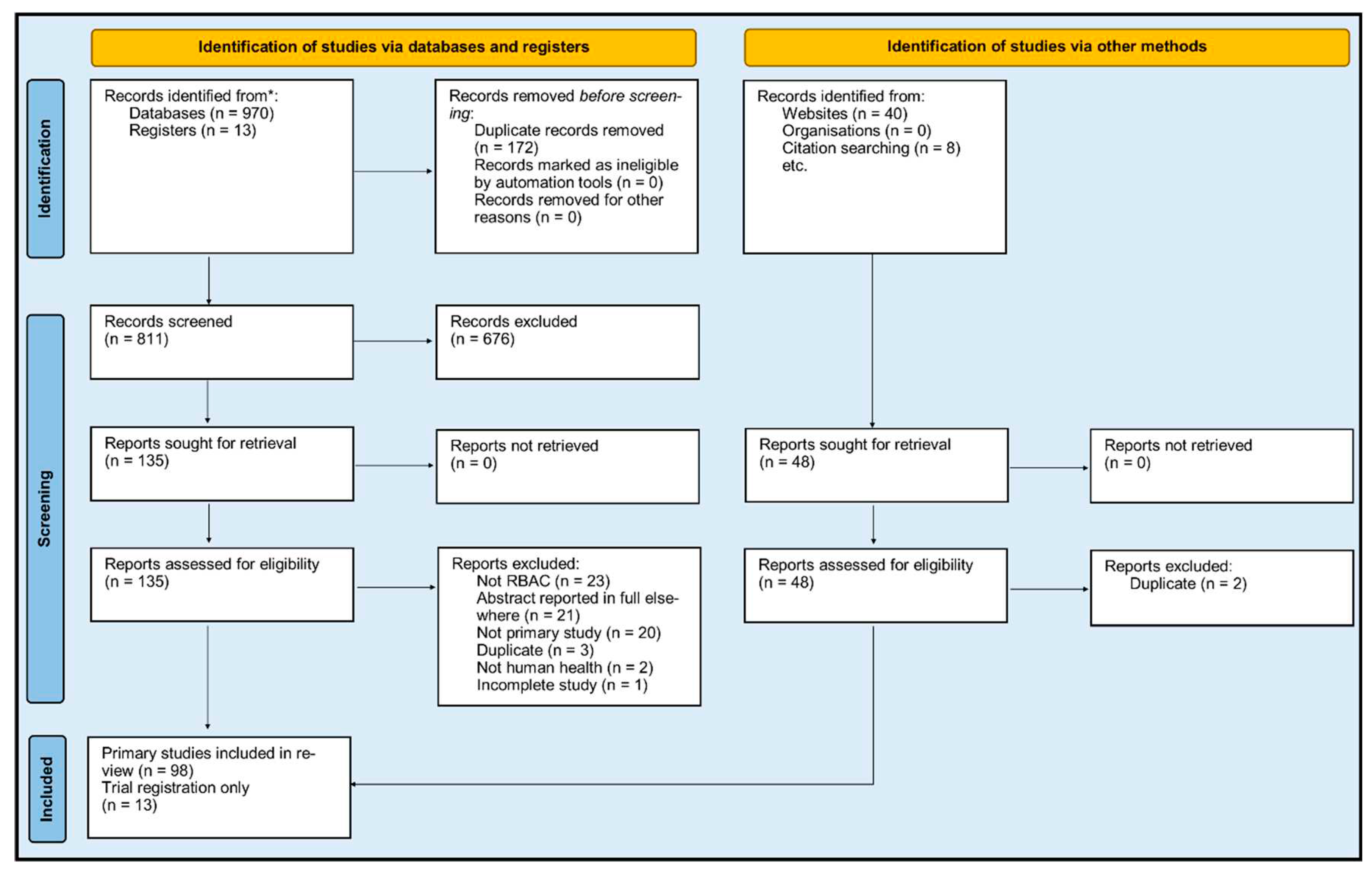
Figure 2.
A scatter plot of the cumulative number of articles published over the years and a bar chart of the annual article count.
Figure 2.
A scatter plot of the cumulative number of articles published over the years and a bar chart of the annual article count.
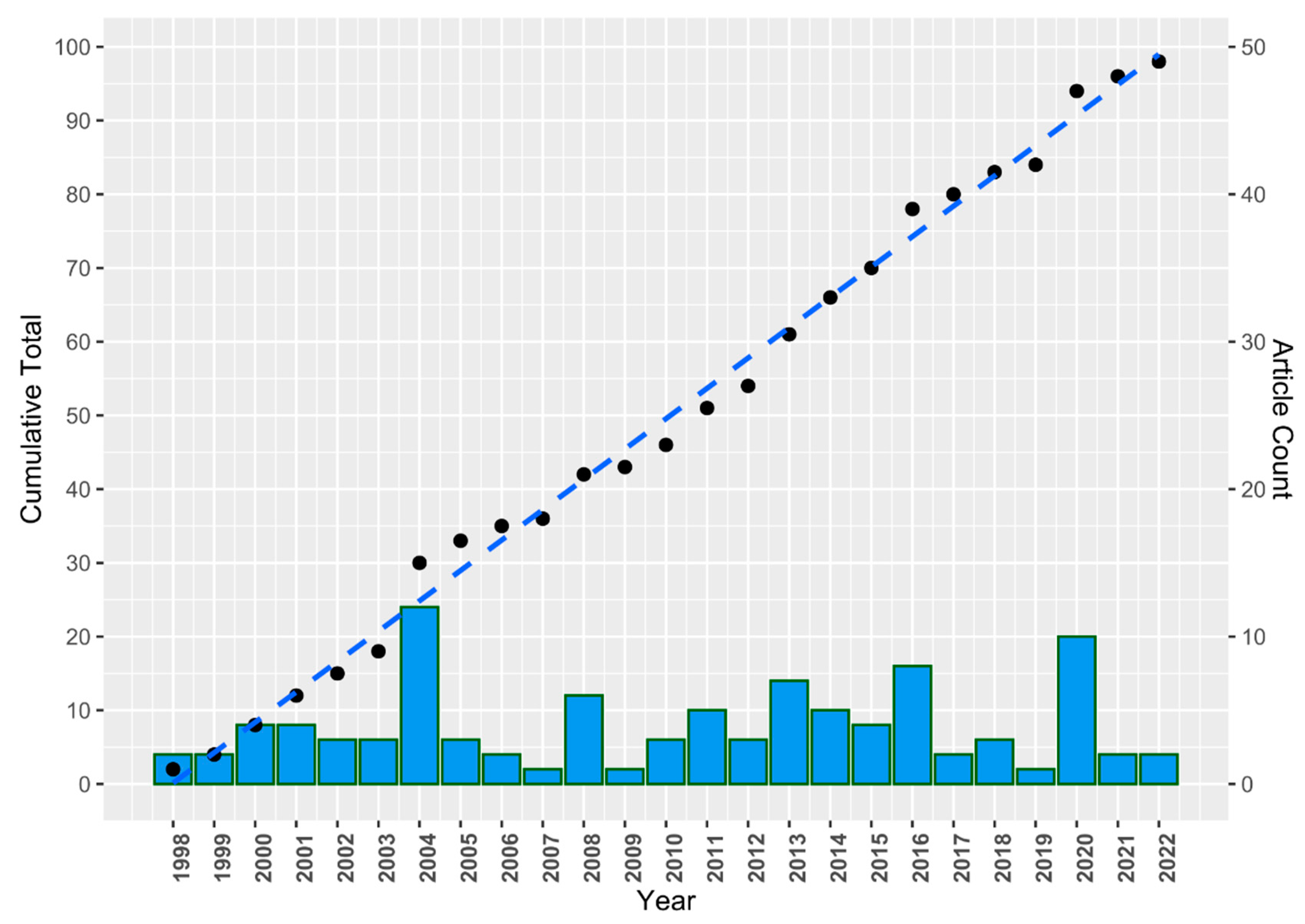
Figure 3.
The number of articles published over time by study design: (A) the absolute count and (B) the relative percentage.
Figure 3.
The number of articles published over time by study design: (A) the absolute count and (B) the relative percentage.
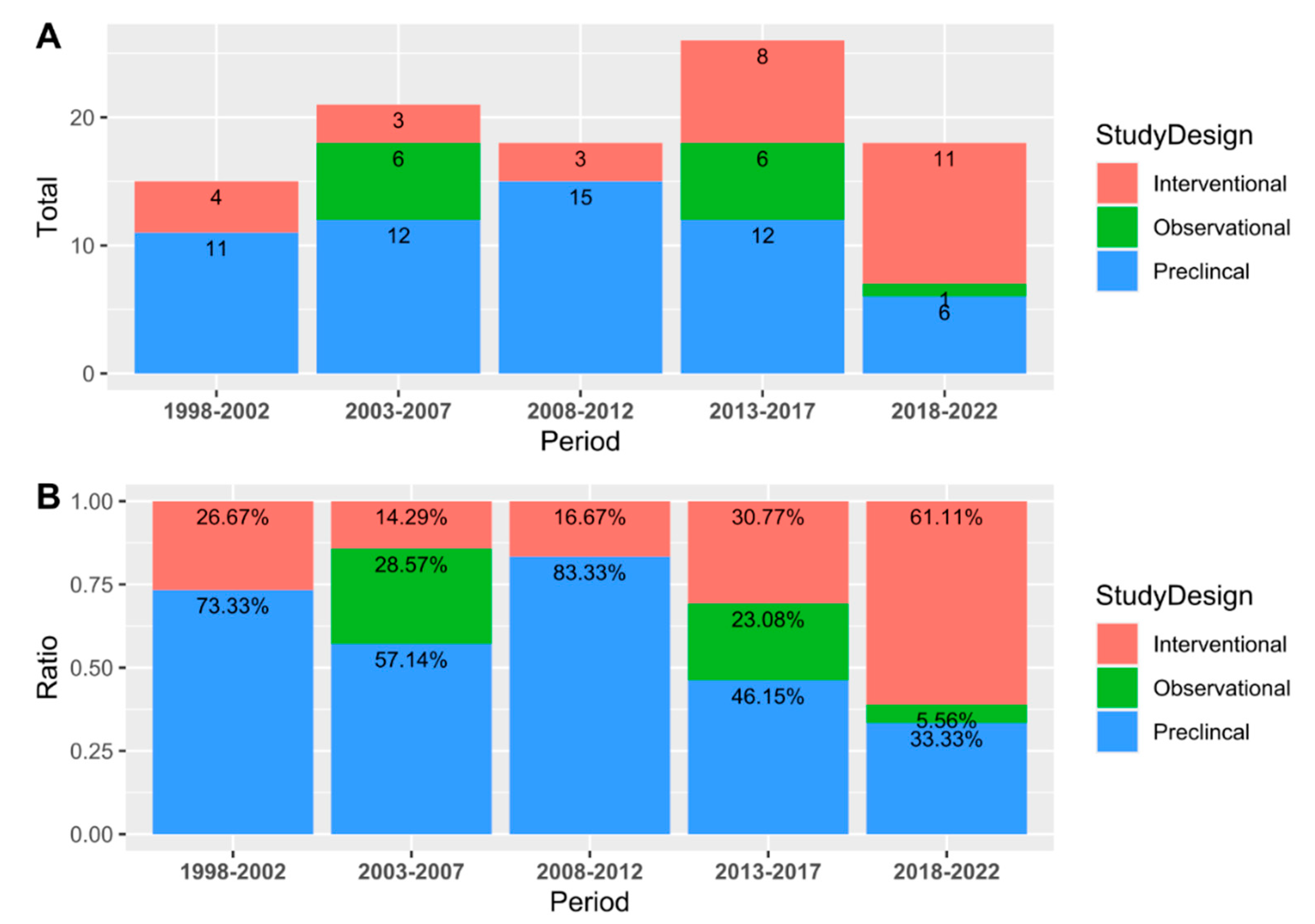
Figure 4.
The proportion of articles published over the years with funding disclosure.
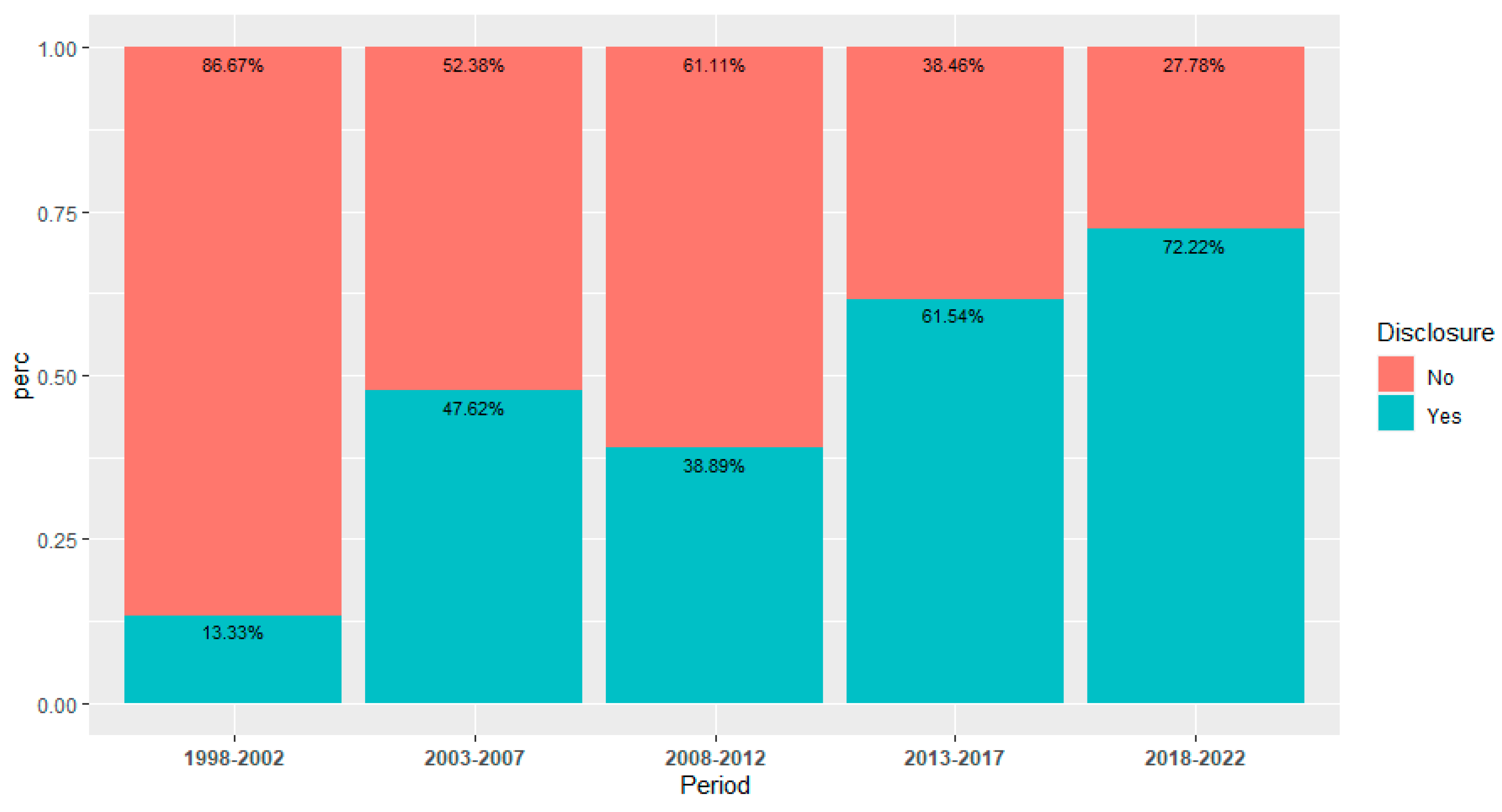
Figure 5.
Collaborative networks of selected key authors. Each node represents an author. The links between authors represent co-authorships. The size of the nodes and font size of the author's name reflect the co-author weighted coefficients. Author nodes and links are coloured based on their country (Blue= USA; Magenta=Japan; Green=S. Korea; Yellow=Egypt; Purple=Hungary). The original interactive network diagram is available at https://resource.rbac-qol.info.
Figure 5.
Collaborative networks of selected key authors. Each node represents an author. The links between authors represent co-authorships. The size of the nodes and font size of the author's name reflect the co-author weighted coefficients. Author nodes and links are coloured based on their country (Blue= USA; Magenta=Japan; Green=S. Korea; Yellow=Egypt; Purple=Hungary). The original interactive network diagram is available at https://resource.rbac-qol.info.
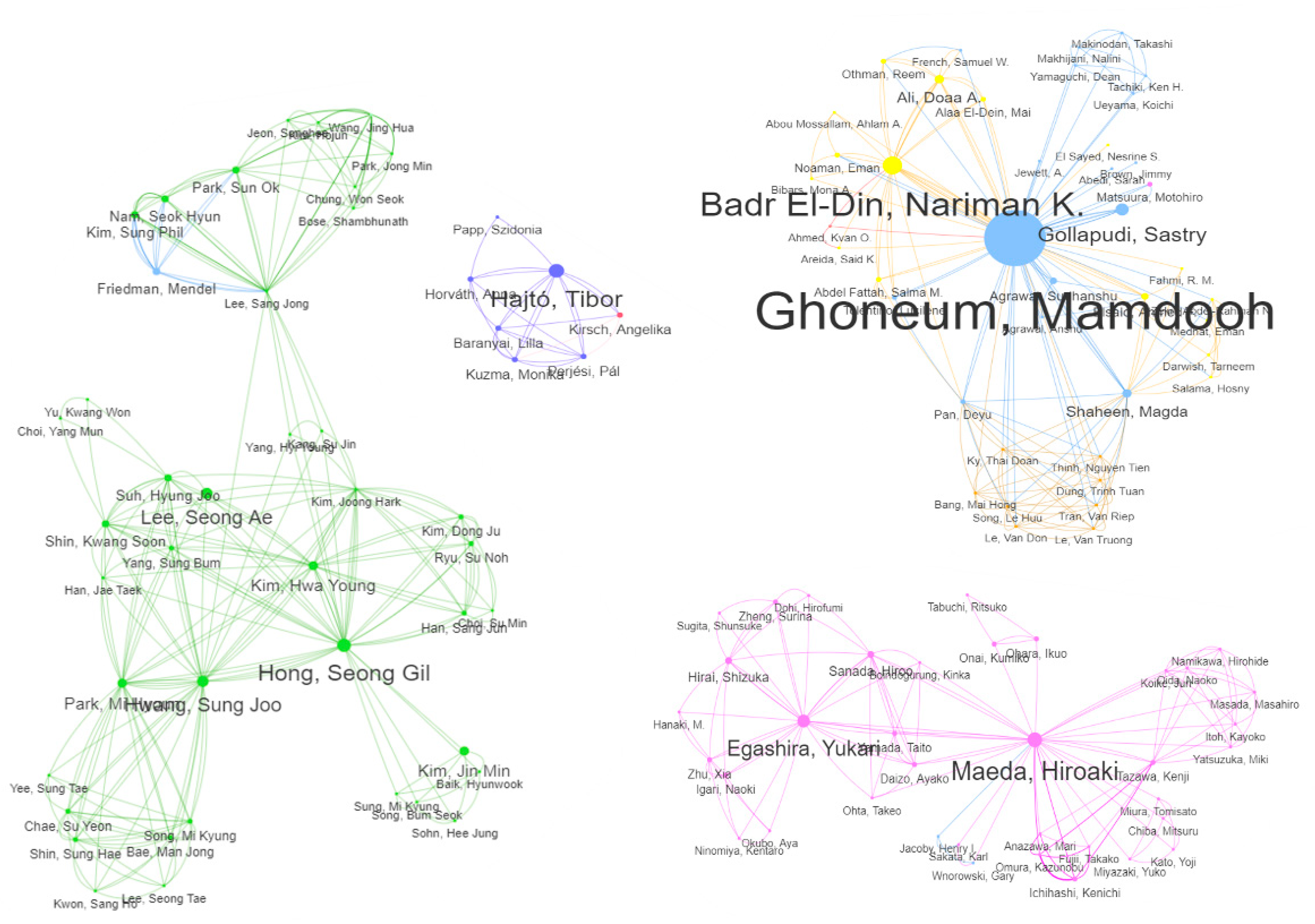
Figure 6.
Collaborative networks of key institutions in the field of RBAC research. Each node represents an institution. The links between institutions represent co-occurrences. The node and font sizes reflect the centrality measures based on the number of connections. Institution nodes and links are coloured based on their country (Blue= USA; Purple=Japan; Yellow=S. Korea; Red=Egypt; Green=Italy; Magenta=China). The original interactive network diagram is available at https://resource.rbac-qol.info.
Figure 6.
Collaborative networks of key institutions in the field of RBAC research. Each node represents an institution. The links between institutions represent co-occurrences. The node and font sizes reflect the centrality measures based on the number of connections. Institution nodes and links are coloured based on their country (Blue= USA; Purple=Japan; Yellow=S. Korea; Red=Egypt; Green=Italy; Magenta=China). The original interactive network diagram is available at https://resource.rbac-qol.info.
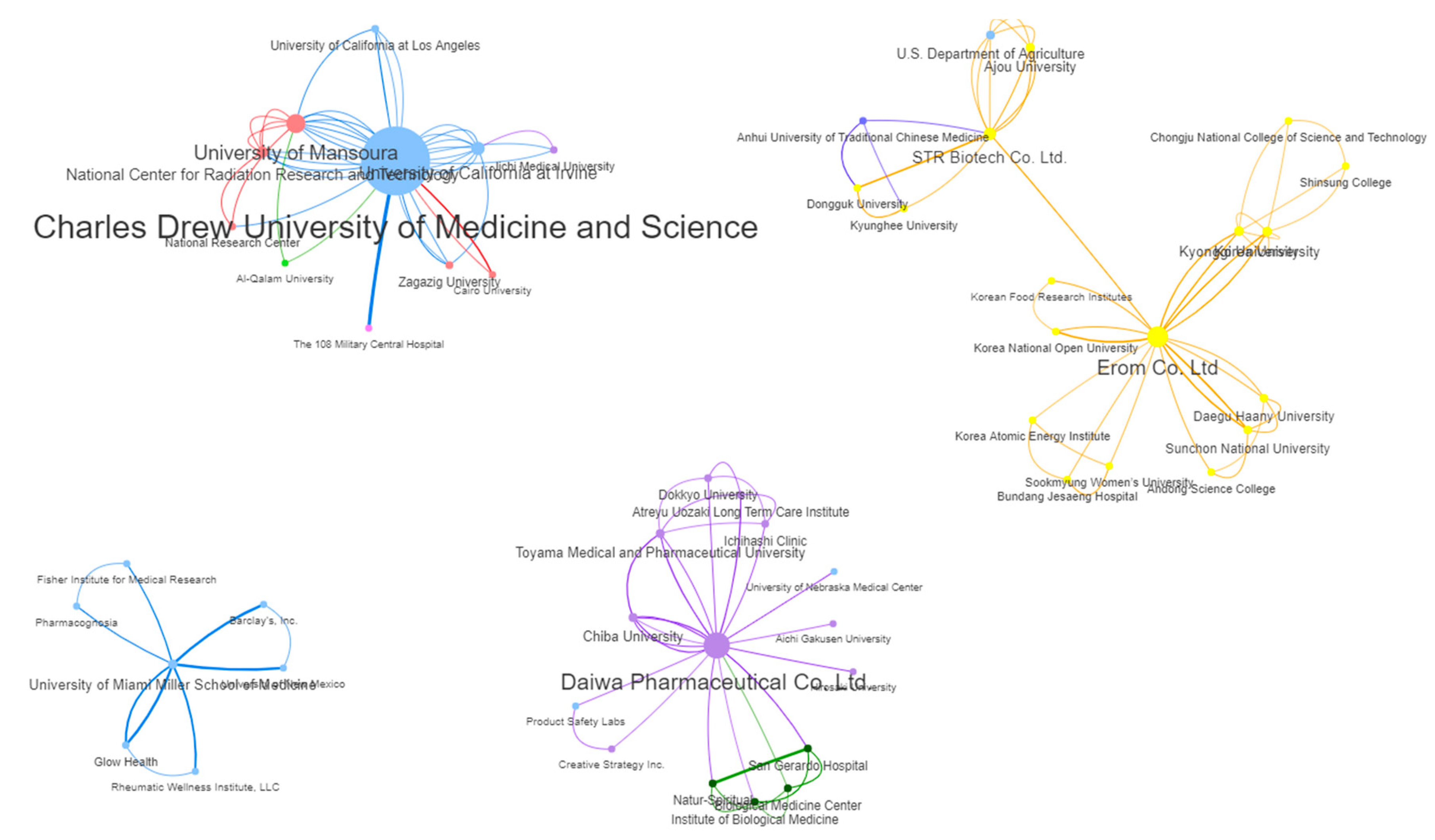
Figure 7.
Citation networks of articles in the field of RBAC research. Each node represents an article arranged by publishing year from left (earlier) to right (later). The links between nodes are references. The node and font sizes reflect the citation count. The nodes are hierarchically laid based on their years of publication from left to right. The colours denote study types (Yellow= Preclinical, Red= Observational, and Blue = Interventional). The original interactive network diagram is available at https://resource.rbac-qol.info.
Figure 7.
Citation networks of articles in the field of RBAC research. Each node represents an article arranged by publishing year from left (earlier) to right (later). The links between nodes are references. The node and font sizes reflect the citation count. The nodes are hierarchically laid based on their years of publication from left to right. The colours denote study types (Yellow= Preclinical, Red= Observational, and Blue = Interventional). The original interactive network diagram is available at https://resource.rbac-qol.info.
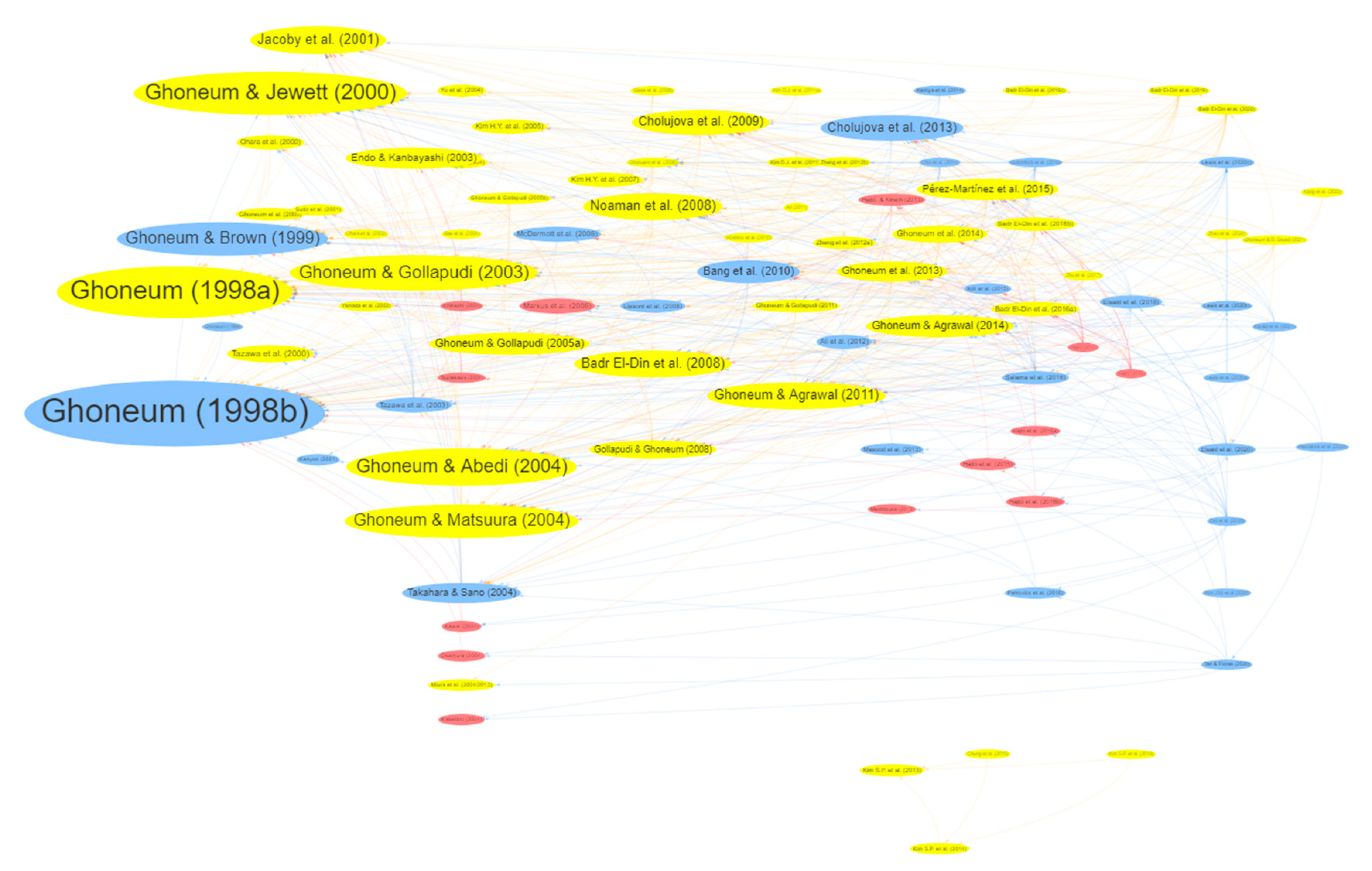
Figure 8.
Networks of outcome keywords (MeSH terms) at different periods reflect the evolution of RBAC research with its shifting focus over time. The original interactive network diagram is available at https://resource.rbac-qol.info.
Figure 8.
Networks of outcome keywords (MeSH terms) at different periods reflect the evolution of RBAC research with its shifting focus over time. The original interactive network diagram is available at https://resource.rbac-qol.info.
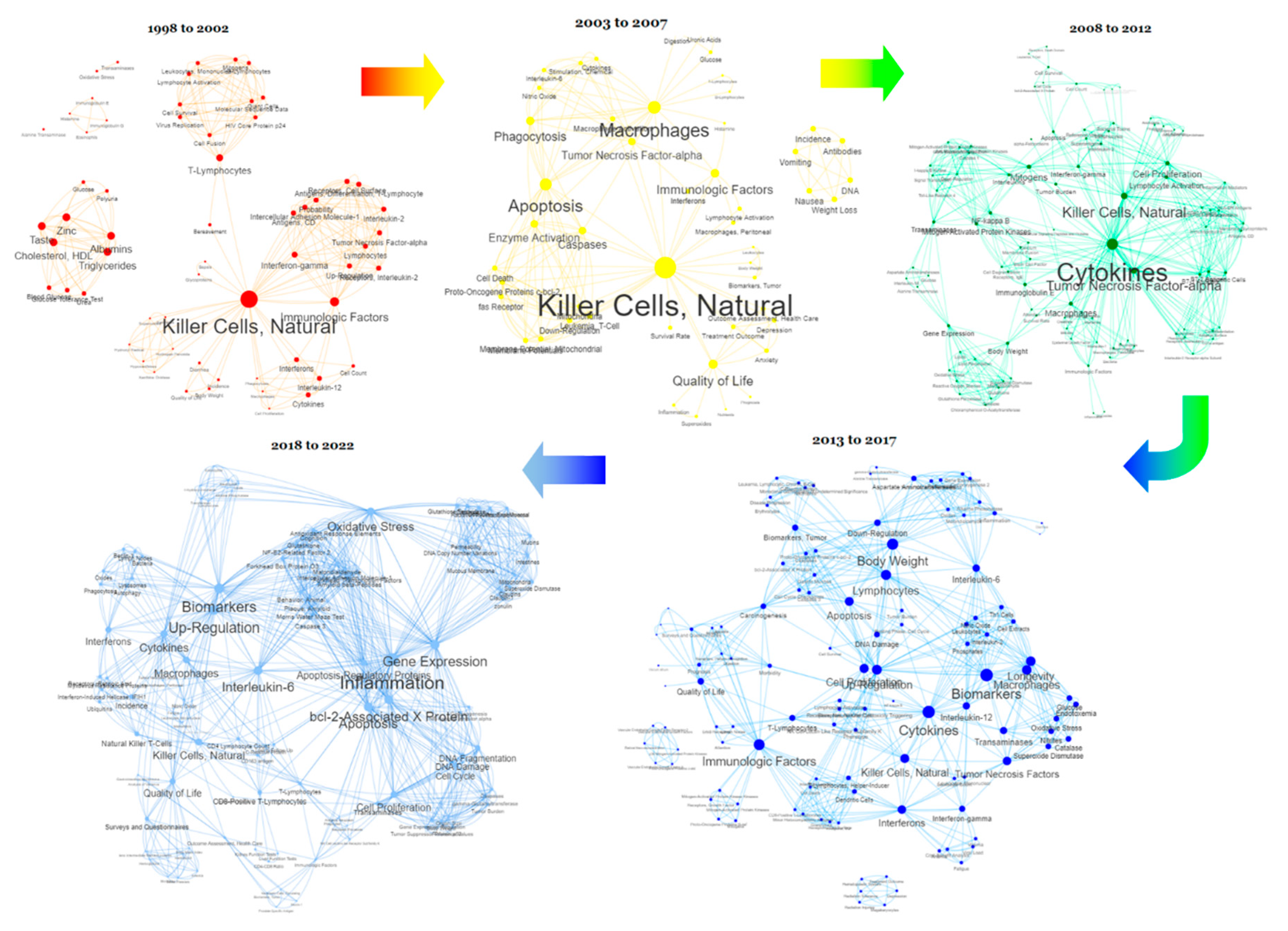
Figure 9.
Network visualisation of the beneficial actions (yellow nodes) of RBAC against cancer (red node) and its associated positive outcomes (blue). The links between nodes represent the availability of sources of evidence, with the colours indicating the study types (red = interventional, green = observational, and blue = preclinical). The link thickness and node size reflect the number of sources. The original interactive network diagram is available at https://resource.rbac-qol.info.
Figure 9.
Network visualisation of the beneficial actions (yellow nodes) of RBAC against cancer (red node) and its associated positive outcomes (blue). The links between nodes represent the availability of sources of evidence, with the colours indicating the study types (red = interventional, green = observational, and blue = preclinical). The link thickness and node size reflect the number of sources. The original interactive network diagram is available at https://resource.rbac-qol.info.
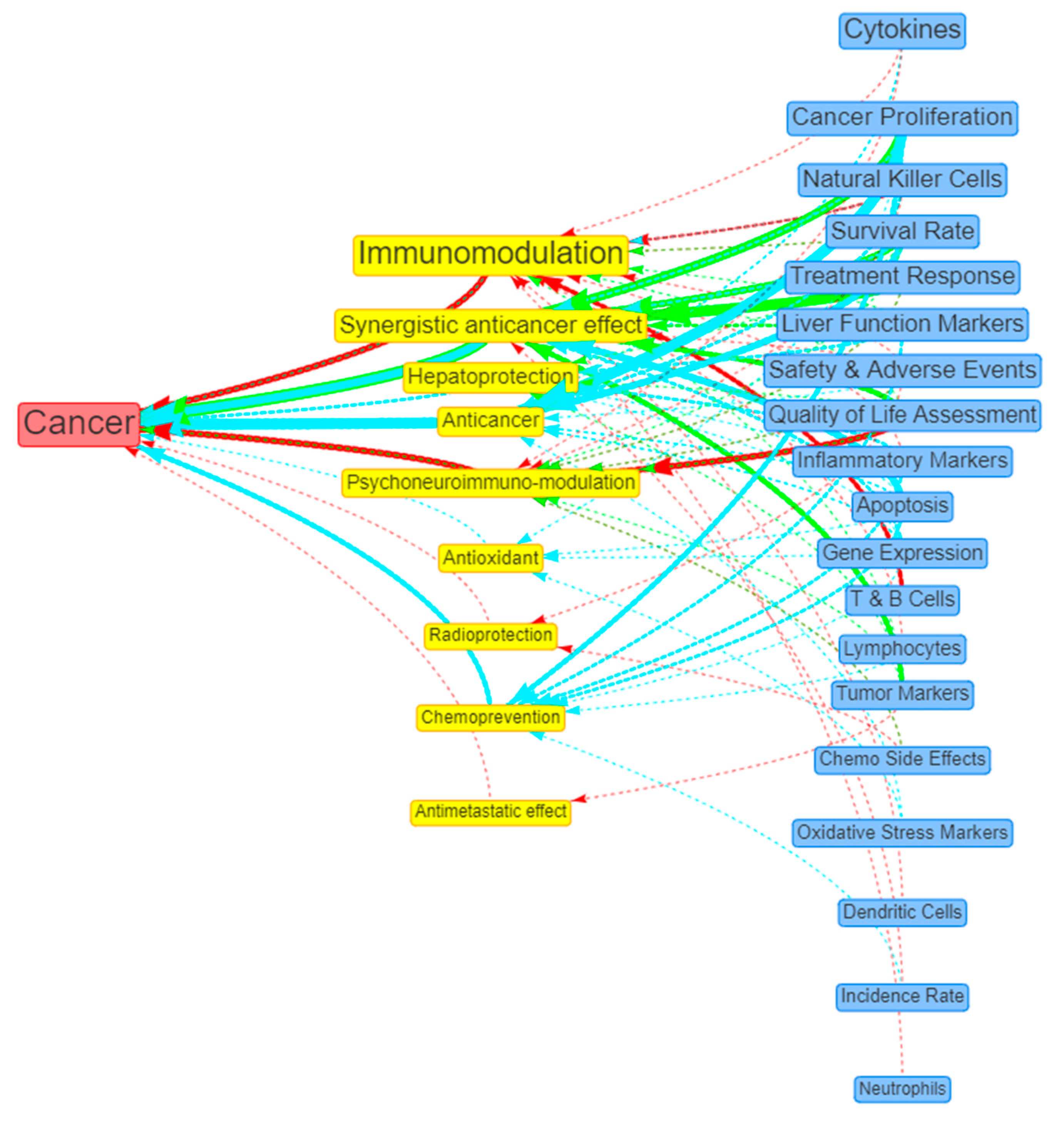
Figure 10.
Network visualisation of the beneficial actions (yellow nodes) of RBAC in healthy or geriatric subjects (red node) and its associated positive outcomes (blue). The links between nodes represent the availability of sources of evidence, with the colours indicating the study types (red = interventional, green = observational, and blue = preclinical). The link thickness and node sizes reflect the number of sources. The original interactive network diagram is available at https://resource.rbac-qol.info.
Figure 10.
Network visualisation of the beneficial actions (yellow nodes) of RBAC in healthy or geriatric subjects (red node) and its associated positive outcomes (blue). The links between nodes represent the availability of sources of evidence, with the colours indicating the study types (red = interventional, green = observational, and blue = preclinical). The link thickness and node sizes reflect the number of sources. The original interactive network diagram is available at https://resource.rbac-qol.info.
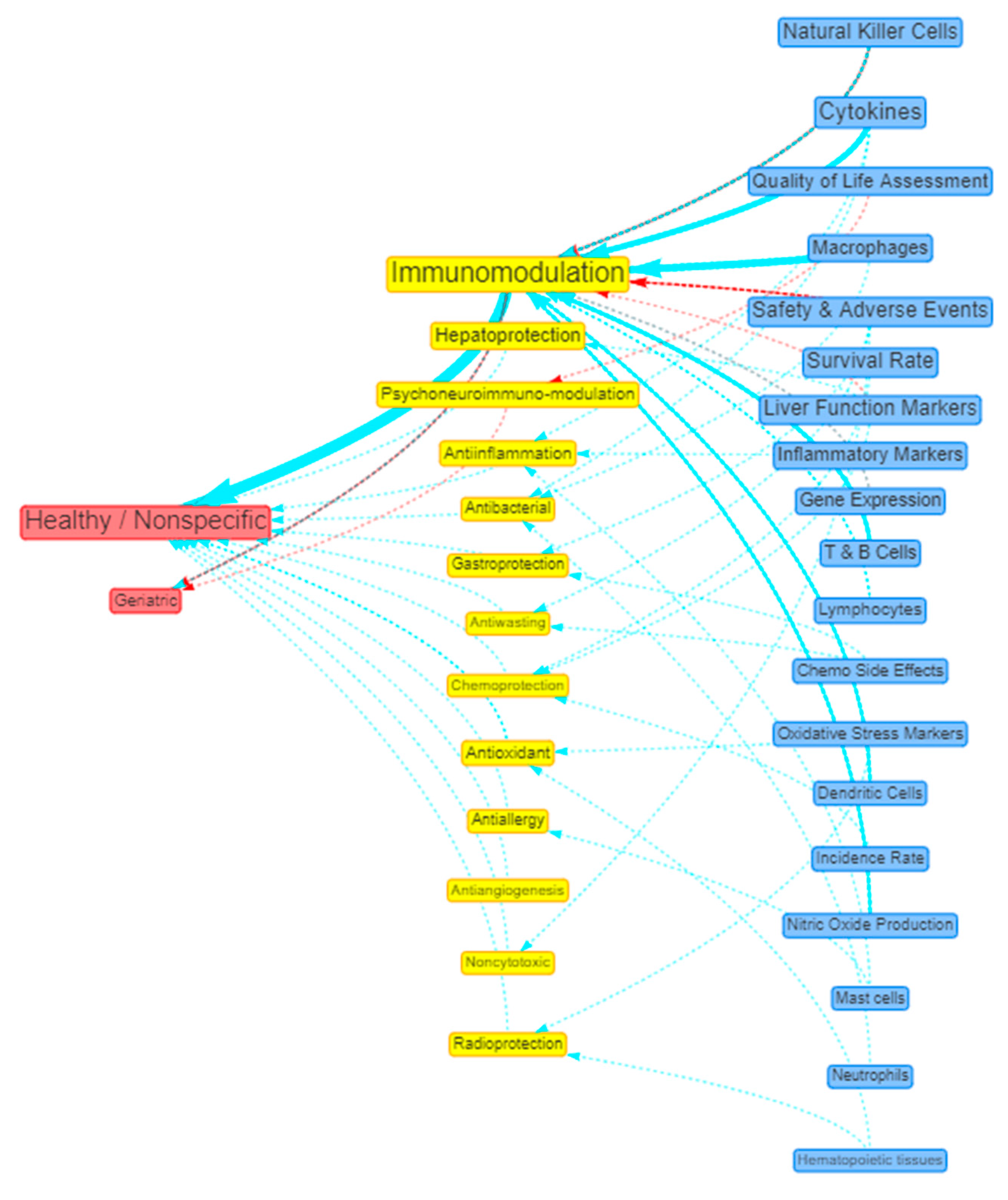

Table 1.
Information sources for published studies.
| Database Type | Count | List |
|---|---|---|
| English databases | 6 | MEDLINE (via PubMed), ProQuest, Cochrane Register of Controlled Trials (CENTRAL), Emcare (via Ovid), Cumulative Index to Nursing & Allied Health Literature (CINAHL plus, via EBSCO), and Web of Science (exclude MEDLINE & KCI). |
| Chinese databases | 2 | Chinese National Knowledge Infrastructure Database (CNKI) and Wanfang. |
| Korean databases | 3 | Korean Journal Database (KCI, via Web of Science), Research Information Service System (RISS), and ScienceON. |
| Japanese databases | 2 | CiNii and J-Stage. |
Table 2.
Descriptive summary of the included articles: Year, country, language, and type.
| Summary Characteristics | N (% total) | |||
|---|---|---|---|---|
| All included articles | 98 (100%) | |||
| Publication Years | ||||
| 2018-2022 | 18 (18.37%) | |||
| 2013-2017 | 26 (26.53%) | |||
| 2008-2012 | 18 (18.37%) | |||
| 2003-2007 | 21 (21.43%) | |||
| 1998-2002 | 15 (15.31%) | |||
| Country | ||||
| United States of America (USA) | 29 (29.59%) | |||
| Japan | 22 (22.45%) | |||
| South Korea | 15 (15.31%) | |||
| Egypt | 11 (11.22%) | |||
| Hungary | 7 (7.14%) | |||
| Others | 15 (14.29%) | |||
| Language | ||||
| English | 81 (82.65%) | |||
| Japanese | 11 (11.22%) | |||
| Korean | 6 (6.12%) | |||
| Publication Type | ||||
| Full paper | 85 (86.73%) | |||
| Abstract | 8 (8.16%) | |||
| Book Chapter | 2 (2.04%) | |||
| Short communication | 1 (1.02%) | |||
| Study protocol | 1 (1.02%) | |||
| Thesis | 1 (1.02%) | |||
Table 3.
Descriptive summary of the included articles: Study design and translational stage.
| Summary Characteristics | N (% total) | |||||
|---|---|---|---|---|---|---|
| All included articles | 98 (100%) | |||||
| Study Design | ||||||
| Preclinical | 56 (57.14%) | |||||
| Animal | 25 (25.51%) | |||||
| Animal + Cell | 6 (6.12%) | |||||
| Animal + Cell + Chemical | 3 (3.06%) | |||||
| Cell | 19 (19.39%) | |||||
| Cell + Chemical | 2 (2.04%) | |||||
| Chemical | 1 (1.02%) | |||||
| Clinical | 42 (42.86%) | |||||
| Interventional | ||||||
| Randomised controlled trial | 21 (21.43%) | |||||
| Non-randomised controlled trial | 1 (1.02%) | |||||
| Before and after study | 7 (7.14%) | |||||
| Observational | ||||||
| Descriptive cross-sectional study | 1 (1.02%) | |||||
| Case series | 4 (4.08%) | |||||
| Case report | 8 (8.16%) | |||||
| Translational Stage | ||||||
| T0 – Basic biomedical research | 56 (57.14%) | |||||
| T1 – Translation to humans | 38 (38.78%) | |||||
| T2 – Translation to patients | 4 (4.08%) | |||||
Table 4.
Descriptive summary of the included articles: Sources of product and fund.
| Summary Characteristics | N (% total) | ||||
|---|---|---|---|---|---|
| All included articles | 98 (100%) | ||||
| Commercial Source of RBAC | |||||
| Daiwa Pharmaceutical Co. Ltd. | 85 (86.73%) | ||||
| Erom Co. Ltd. | 8 (8.16%) | ||||
| STR Biotech Co. Ltd. | 5 (5.10%) | ||||
| Funding Sources | |||||
| Not Disclosed | 50 (51.02%) | ||||
| Disclosed * | 48 (48.98%) | ||||
| Commercial – Daiwa | 26 (26.53%) | ||||
| Public | 17 (17.35%) | ||||
| Commercial – Daiwa (Product Only) | 8 (8.16%) | ||||
| Private / Nonprofit | 6 (6.12%) | ||||
| Commercial – Erom | 5 (5.10%) | ||||
| Commercial – Others | 2 (2.04%) | ||||
Note: * The sum of the funding source count is greater than the number of articles that disclosed funding sources since a study can have more than one source of funds.
Table 5.
The publishing period and study design classification of the top 8 authors.
| Publishing | TWC | Article | Clinical | Preclinical | |||||
|---|---|---|---|---|---|---|---|---|---|
| # | Author | Period | Count (% Total) | Intervention | Observation | Animal | In Vitro | Chemical | |
| 1 | Ghoneum, Mamdooh | 1998 - 2021 | 30.00 | 30 (30.61%) | 26.7% | - | 30.0% | 53.3% | - |
| 2 | Badr El-Din, Nariman K. | 2008 - 2020 | 7.64 | 9 (9.18%) | - | - | 88.9% | 11.1% | - |
| 3 | Gollapudi, Sastry | 2003 - 2011 | 6.00 | 6 (6.12%) | - | - | - | 100% | - |
| 3 | Hajtó, Tibor | 2013 - 2018 | 6.00 | 6 (6.12%) | - | 100% | - | - | - |
| 5 | Maeda, Hiroaki | 2000 - 2004 | 5.36 | 7 (7.14%) | 14.3% | - | 57.1% | 14.3% | 28.6% |
| 6 | Egashira, Yukari | 2001 - 2017 | 4.50 | 6 (6.12%) | - | - | 83.3% | 16.7% | - |
| 7 | Lewis, John E. | 2012 - 2020 | 4.00 | 4 (4.08%) | 100% | - | - | - | - |
| 8 | Hong, Seong Gil | 2005 - 2022 | 3.75 | 6 (6.12%) | 16.7% | - | 66.7% | 50.0% | - |
Note: The sum of the article study design percentage can be > 100% since some articles reported studies with multiple types of design. TWC = Sum of weighted coefficient.
Table 6.
The top 8 institutions in the field of RBAC.
| Publishing | No. | TWC | Article | ||||
|---|---|---|---|---|---|---|---|
| # | Institution | Country | Type | Period | Authors | Authors | Count (% Total) |
| 1 | Charles Drew University of Medicine and Science | USA | Academic | 1998 - 2021 | 6 | 35.03 | 30 (30.61%) |
| 2 | Daiwa Pharmaceutical Co. Ltd. | Japan | Commercial | 2000 – 2017 | 10 | 10.64 | 11 (11.22%) |
| 3 | University of California at Irvine | USA | Academic | 2003 - 2021 | 3 | 9.00 | 9 (9.18%) |
| 3 | University of Mansoura | Egypt | Academic | 2008 – 2020 | 5 | 13.12 | 9 (9.18%) |
| 5 | Erom Co. Ltd. | South Korea | Commercial | 2004 – 2022 | 13 | 15.49 | 8 (8.16%) |
| 6 | Chiba University | Japan | Academic | 2000 - 2017 | 12 | 14.49 | 7 (7.14%) |
| 7 | University of Pécs | Hungary | Academic | 2013 – 2018 | 12 | 14.36 | 7 (7.14%) |
| 8 | University of Miami Miller School of Medicine | USA | Academic | 2013 - 2022 | 21 | 10.59 | 4 (4.08%) |
Note: The sum of the article study design percentage can be > 100% since some articles reported studies with multiple types of design.
Table 7.
The top publications ranked by article count.
| # | Publications | IF | Cite Score | Publisher | Quartile: Category | Art Count (% Total) | Publishing Period |
|---|---|---|---|---|---|---|---|
| 1 | Clinical Pharmacology and Therapy (Yakuri to Rinsho) | NA | NA | Iyaku Shuppan | NA | 6 (6.12%) | 2004 - 2004 |
| 2 | International Journal of Immunopathology and Pharmacology | 3.219 | 4.1 | Sage Publications | Q1: Medicine (all) | 5 (5.10%) | 2004 - 2016 |
| 3 | Anticancer Research | 2.48 | 3.8 | International Institute of Anticancer Research | Q3: Cancer Research; Q3: Oncology | 4 (4.08%) | 2005 - 2014 |
| 4 | Evidence-based Complementary and Alternative Medicine | 2.629 | 3.0 | Hindawi Publishing | Q1: CAM | 3 (3.06%) | 2014 - 2020 |
| 4 | Journal of the Korean Society of Food Science and Nutrition | 0.548 | 0.9 | The Korean Society of Food Science and Nutrition | Q3: Food Science; Q4: Nutrition & Dietetic | 3 (3.06%) | 2004 - 2022 |
| 5 | Biomedicine & Pharmacotherapy | 6.529 | 9.3 | Elsevier | Q1: Pharmacology | 2 (2.04%) | 2020 - 2020 |
| 5 | Cancer Detection and Prevention (Continued as Cancer Epidemiology from 2009) | 2.984 | 3.9 | Elsevier | Q3: Cancer Research; Q3: Epidemiology; Q3 – Oncology | 2 (2.04%) | 2000 - 2008 |
| 5 | Cancer Letters | 8.679 | 14 | Elsevier | Q1: Cancer Research: Q1: Oncology | 2 (2.04%) | 2003 - 2008 |
| 5 | Clinical Case Reports and Reviews | NA | NA | Open Access Text | NA | 2 (2.04%) | 2015 - 2016 |
| 5 | Integrative Cancer Therapies | 3.279 | 4.0 | Sage Publications | Q1: CAM; Q2: Oncology | 2 (2.04%) | 2016 – 2016 |
| 5 | International Congress on Anti-Aging & Biomedical Technologies | NA | NA | American Academy of Anti-Aging Medicine | NA | 2 (2.04%) | 1999 - 2000 |
| 5 | Journal of Agricultural and Food Chemistry | 5.279 | 7.3 | ACS Publications | Q1: Agricultural & Biological Sciences (all): Q1: Chemistry (all) | 2 (2.04%) | 2013 - 2014 |
| 5 | Journal of Dietary Supplements | 2.272 | 3.9 | Informa Healthcare | Q2: Food Science: Q2: Nutrition & Dietetic; Q2: Pharmacology | 2 (2.04%) | 2008 - 2020 |
| 5 | Journal of Japanese Association for Dietary Fiber Research | NA | NA | Japanese Association for Dietary Fiber Research | NA | 2 (2.04%) | 2001 - 2002 |
| 5 | Journal of Radiation Research | 2.724 | 3.5 | Oxford Academic | Q2:HTM; Q2: RadiationQ2: Radiology, Nuclear Medicine and Imaging | 2 (2.04%) | 2013 - 2019 |
| 5 | Neoplasma | 2.757 | 3.3 | AEPress | Q1: Medicine (all); Q3: Oncology | 2 (2.04%) | 2009 - 2011 |
| 5 | Nutrition and Cancer | 2.9 | 4.1 | Routledge | Q3: Cancer Research; Q2: Medicine (misc); Q2: Nutrition & Dietetic; Q2: Oncology | 2 (2.04%) | 2008 - 2016 |
Abbreviations: CAM, complementary and alternative medicine; HTM, Health, Toxicology and Mutagenesis; IF, the current impact factor (2-Year) – reported by academic-accelerator.com as of 13/2/2023; NA, not available.
Table 8.
Top 10 articles ranked according to google citation count and citations by other included articles.
Table 8.
Top 10 articles ranked according to google citation count and citations by other included articles.
| Ranking By: | Article | Publication | Study Design | Year | Citations: | ||
|---|---|---|---|---|---|---|---|
| Others | Others | ||||||
| 1 | 1 | Ghoneum (1998b) | International Journal of Immunotherapy | Before & after | 1998 | 180 | 59 |
| 2 | 2 | Ghoneum (1998a) | Biochemical and Biophysical Research Communications | Cell | 1998 | 146 | 44 |
| 3 | 3 | Ghoneum & Jewett (2000) | Cancer Detection and Prevention | Cell | 2000 | 132 | 35 |
| 4 | 6 | Ghoneum & Matsuura (2004) | International Journal of Immunopathology and Pharmacology | Cell | 2004 | 124 | 25 |
| 5 | 4 | Ghoneum & Abedi (2004) | Journal of Pharmacy and Pharmacology | Animal + Cell | 2004 | 100 | 29 |
| 6 | 9 | Noaman et al. (2008) | Cancer Letters | Animal | 2008 | 98 | 18 |
| 7 | 5 | Ghoneum & Gollapudi (2003) | Cancer Letters | Cell | 2003 | 93 | 27 |
| 8 | - | Kim H.Y. et al. (2007) | Journal of Medicinal Food | Animal | 2007 | 85 | 5 |
| 9 | - | Pérez-Martínez et al. (2015) | Cytotherapy | Animal + Cell | 2015 | 73 | 12 |
| 10 | 9 | Badr El-Din et al. (2008) | Nutrition and Cancer | Animal | 2008 | 69 | 18 |
| - | 6 | Ghoneum & Brown (1999) | Anti-aging Medical Therapeutics | Before & after | 1999 | 61 | 25 |
| - | 9 | Ghoneum & Agrawal (2011) | International Journal of Immunopathology and Pharmacology | Cell | 2011 | 60 | 18 |
| - | 8 | Jacoby et al. (2001) | Journal of Nutraceuticals, Functional & Medical Foods | Animal | 2001 | 41 | 19 |
Table 9.
Common MeSH terms (occurrence > 5) of the included articles are classified under different categories. The occurrence count of each keyword is shown in brackets.
Table 9.
Common MeSH terms (occurrence > 5) of the included articles are classified under different categories. The occurrence count of each keyword is shown in brackets.
| Context | Method | Intervention | Outcome |
|---|---|---|---|
| Humans (59) Animals (43) Male (32) Female (27) Aged (14) Middle Aged (11) Adult (9) Neoplasms (9) |
Mice (29) Liver (15) Rats (14) Lipopolysaccharides (10) Spleen (9) Enzyme-Linked Immunosorbent Assay (9) Cell Line (8) Cell Line, Tumor (8) Rats, Wistar (6) |
Polysaccharide MGN3 (62) Arabinoxylan (59) Xylans (39) Oryza (25) Shiitake Mushrooms (19) Immunologic Factors (15) Dietary Supplements (12) Hemicellulose (11) Polysaccharides (11) Water (11) Antineoplastic Agents (10) Injections, Intraperitoneal (9) Antioxidants (7) Adjuvants, Immunologic (6) Dose-Response Relationship, Drug (6) Hydrolysis (6) |
Killer Cells, Natural (30) Cytokines (21) Macrophages (16) Quality of Life (15) Apoptosis (12) Cell Proliferation (10) Body Weight (9) Inflammation (9) Interferons (9) Tumour Necrosis Factor-alpha (9) Biomarkers (8) Interleukin-6 (7) T-Lymphocytes (7) Transaminases (7) Up-Regulation (7) Gene Expression (6) Interferon-gamma (6) Lymphocytes (6) Oxidative Stress (6) Phagocytosis (6) |
Table 10.
Health/disease conditions investigated by the included studies ordered by article count and classified by study design.
Table 10.
Health/disease conditions investigated by the included studies ordered by article count and classified by study design.
| # | Condition | Count (%) | Preclinical (%) | Observational (%) | Interventional (%) |
|---|---|---|---|---|---|
| 1 | Cancer | 45 (45.92%) | 20 (44.44%) | 12 (26.67%) | 13 (28.89%) |
| 2 | Healthy / Nonspecific | 31 (31.63%) | 28 (90.32%) | - | 3 (9.68%) |
| 3 | Hepatitis / Liver Disease | 9 (9.18%) | 7 (77.78%) | - | 2 (22.22%) |
| 4 | Geriatric | 6 (6.12%) | 2 (33.33%) | - | 4 (66.67%) |
| 5 | HIV / AIDS | 4 (4.08%) | 1 (25%) | - | 3 (75%) |
| 6 | Allergy | 4 (4.08%) | 4 (100%) | - | - |
| 7 | CFS | 3 (3.06%) | - | - | 3 (100%) |
| 8 | Gastroenteritis | 3 (3.06%) | 2 (66.67%) | - | 1 (33.33%) |
| 9 | Cold / Flu | 2 (2.04%) | - | - | 2 (100%) |
| 10 | Diabetes mellitus | 2 (2.04%) | 2 (100%) | - | - |
| 11 | Endotoxemia | 2 (2.04%) | 2 (100%) | - | - |
| 12 | Chemical exposure | 1 (1.02%) | - | - | 1 (100%) |
| 13 | IBS | 1 (1.02%) | - | - | 1 (100%) |
| 14 | Rheumatism | 1 (1.02%) | - | 1 (100%) | - |
| 15 | Alzheimer's disease | 1 (1.02%) | 1 (100%) | - | - |
| 16 | Bacterial infection | 1 (1.02%) | 1 (100%) | - | - |
| 17 | Oxidative stress | 1 (1.02%) | 1 (100%) | - | - |
Abbreviation: AIDS, acquired immunodeficiency syndrome; CFS, chronic fatigue syndrome; HIV, human immunodeficiency virus; IBS, irritable bowel syndrome. Note: The sum of all article counts is > 100%, as some articles reported results related to more than one condition.
Table 11.
Reported beneficial actions of RBAC ordered by article count and classified by study design.
Table 11.
Reported beneficial actions of RBAC ordered by article count and classified by study design.
| # | Beneficial Actions | Count (%) | Preclinical (%) | Observational (%) | Interventional (%) |
|---|---|---|---|---|---|
| 1 | Immunomodulation | 36 (36.73%) | 21 (58.33%) | 1 (2.78%) | 14 (38.89%) |
| 2 | Synergistic anticancer effect | 19 (19.39%) | 7 (36.84%) | 10 (52.63%) | 2 (10.53%) |
| 3 | Hepatoprotection | 13 (13.27%) | 10 (76.92%) | 1 (7.69%) | 2 (15.38%) |
| 4 | Anticancer | 10 (10.20%) | 9 (90%) | 1 (10%) | - |
| 5 | Psychoneuroimmuno-modulation | 8 (8.16%) | - | 2 (25%) | 6 (75%) |
| 6 | Antiinflammation | 8 (8.16%) | 7 (87.50%) | 1 (12.5%) | - |
| 7 | Antioxidant | 7 (7.14%) | 7 (100%) | - | - |
| 8 | Radioprotection | 3 (3.06%) | 2 (66.67%) | - | 1 (33.33%) |
| 9 | Chemoprevention | 3 (3.06%) | 3 (100%) | - | - |
| 10 | Antiallergy | 3 (3.06%) | 3 (100%) | - | - |
| 11 | Antibacterial | 3 (3.06%) | 3 (100%) | - | - |
| 12 | Antifatigue | 2 (2.04%) | - | - | 2 (100%) |
| 13 | Antiflu | 2 (2.04%) | - | - | 2 (100%) |
| 14 | No significant effect | 2 (2.04%) | - | - | 2 (100%) |
| 15 | Gastroprotection | 2 (2.04%) | 1 (50%) | - | 1 (50%) |
| 16 | Antihyperlipidemic effect | 2 (2.04%) | 2 (100%) | - | - |
|
Other benefits that have one count each: Antiangiogenesis; Antiasthma; Antihyperglycemic effect; Antimetastatic effect; Antiretroviral; Antiviral; Antirheumatic effect; Antiwasting; Chemoprotection; Endothelial improvement; Memory enhancer; Noncytotoxic, Taste influencer. |
|||||
Abbreviation: QoL, quality of life.
Table 12.
Reported positive outcome measures of RBAC ordered by article count and classified by study design.
Table 12.
Reported positive outcome measures of RBAC ordered by article count and classified by study design.
| # | Positive Outcomes | Count (%) | Preclinical (%) | Observational (%) | Interventional (%) |
|---|---|---|---|---|---|
| 1 | Cytokines | 25 (25.51%) | 19 (76%) | - | 6 (24%) |
| 2 | Cancer Proliferation | 21 (21.43%) | 14 (66.67%) | 7 (33.33%) | - |
| 3 | Safety & Adverse Events | 19 (19.39%) | 4 (21.05%) | 1 (5.26%) | 14 (73.68%) |
| 4 | Natural Killer Cells | 19 (19.39%) | 9 (47.37%) | - | 10 (52.63%) |
| 5 | Treatment Response | 19 (19.39%) | 1 (5.26%) | 9 (47.37%) | 9 (47.37%) |
| 6 | Survival Rate | 19 (19.39%) | 9 (47.37%) | 8 (42.11%) | 2 (10.53%) |
| 7 | Liver Function Markers | 18 (18.37%) | 12 (66.67%) | 2 (11.11%) | 4 (22.22%) |
| 8 | QoL Assessment | 15 (15.31%) | - | 8 (53.33%) | 7 (46.67%) |
| 9 | Inflammatory Markers | 13 (13.27%) | 10 (76.92%) | 1 (7.69%) | 2 (15.38%) |
| 10 | Macrophages | 13 (13.27%) | 13 (100%) | - | - |
| 11 | T & B Cells Proliferation | 11 (11.22%) | 8 (72.73%) | - | 3 (27.27%) |
| 12 | Gene Expression | 11 (11.22%) | 10 (90.91%) | - | 1 (9.09%) |
| 13 | Apoptosis | 11 (11.22%) | 11 (100%) | - | - |
| 14 | Lymphocytes | 9 ((9.18%) | 5 (55.56%) | - | 4 (44.44%) |
| 15 | Tumour Markers | 8 (8.16%) | - | 6 (75%) | 2 (25%) |
| 16 | Chemo Side Effects | 6 (6.12%) | 2 (33.33%) | 1 (16.67%) | 3 (50%) |
| 17 | Oxidative Stress Markers | 6 (6.12%) | 6 (100%) | - | - |
|
Other positive outcome measures: Incidence Rate (5), Dendritic Cells (5), Nitric Oxide Production (5), Mast Cells (3), Neutrophils (2), Histamine (2), Immunoglobulins (2), Eosinophils (1), Hematopoietic Tissues (1). |
|||||
Abbreviation: QoL, quality of life.
Disclaimer/Publisher’s Note: The statements, opinions and data contained in all publications are solely those of the individual author(s) and contributor(s) and not of MDPI and/or the editor(s). MDPI and/or the editor(s) disclaim responsibility for any injury to people or property resulting from any ideas, methods, instructions or products referred to in the content. |
© 2023 by the authors. Licensee MDPI, Basel, Switzerland. This article is an open access article distributed under the terms and conditions of the Creative Commons Attribution (CC BY) license (http://creativecommons.org/licenses/by/4.0/).
Copyright: This open access article is published under a Creative Commons CC BY 4.0 license, which permit the free download, distribution, and reuse, provided that the author and preprint are cited in any reuse.