

Submitted:
28 April 2023
Posted:
29 April 2023
You are already at the latest version
Abstract
Appropriate governance structures are extremely important for the fishery dependent communities to develop integrated territorial development strategies and adaptive capacity to change, including the climate one. This paper assesses to what extent fisheries co-management schemes (e.g Fisheries LAGs, being regional/local governance instruments in fishing communities) are strengthening sustainability. The latter includes improving energy efficiency, promoting renewable energy sources (RES), coping with climate crisis, minimizing environmental impacts, and promoting sustainable blue economy. For detecting policy aspects of aligning climate neutrality and sustainable blue economy, the research lens focuses on the Greek Fisheries Local Action Groups (FLAGs) given that these are mostly located in coastal/marine and insular territories with significant blue growth potential. To map and assess their capacity and efficiency in pursuing Green Deal objectives, a co-development process with FLAG managers was put in place. The results and findings of this process reveal the scarcity of sustainability and blue economy related strategies. Key conclusion is that transition to a post-carbon blue economy on a local level, requires the understanding of the evolutionary dynamics of fisheries co-management schemes. The latter, being multi-sectoral structures, may boost dialogue and cooperation to harmonize local development strategies and EU policies. Maritime Spatial Planning (MSP) as an evolutionary governance process itself, can be a driver for making FLAGs evolve, and strengthen commonization and blue justice and equity for fishers.
Keywords:
Maritime Spatial Planning (MSP)
; Green Deal
; blue economy
; fishing communities
; fisheries co-management
; climate change
; local development
; evolutionary governance
; commonisation
; blue equity
; blue justice
; Greece
1. Introduction
Fish and their habitats have been always considered in terms of their vulnerability to marine ecosystem and climate changes. Vulnerability patterns of fishing tradition to climate change are defined by the capacity of fishers to adapt to change, the ongoing changes to ecosystems and the yield of the fishing activity. Besides, literature [1,2,3] reports that rise of temperatures affects the abundance, mortality rates and migratory patterns of fish stocks and defines the kind of species that can be grown in aquaculture farms of certain regions [4]. Consequent socio-economic impacts for local communities dependent on fisheries and aquaculture –meaning the whole market ecosystem- continue to expand. Whilst most work on climate change in fisheries has focused on marine biology, it is of paramount importance to highlight the policy aspects of adapting the fisheries sector to marine ecosystem and climate change [3,4], with a focus to coastal artisanal fisheries.
Hence, adaptation strategies should be developed considering the economic impacts of climate change. These strategies should be flexible enough to adapt to the uncertainties of climate crisis. For the fishing and aquaculture sectors to be sustainable, both global and local governance of fisheries should be strengthened [4]. On the local level, this should include building the knowledge base of stakeholders on how climate change will affect fisheries [4] and suitably inform local strategies [4]. Of course, the adaptive capacity to climate change is differentiated across and within fishing communities. It is defined partly by relevant resources, networking, available technology levels and mainly appropriate governance structures. Building adaptive capacity can reduce vulnerability to a wide variety of impacts, many of them being unpredictable.
Therefore, key role for state and local governments is to enable adaptive capacity and resilience within vulnerable communities. There is a wide range of potential adaptation options for fisheries, but also considerable constraints on their implementation by the actors involved, despite the potential benefits [5,6]. Government is often led to trade-offs between increasing efficiency, targeting the most vulnerable and building resilience of the whole system.
The aim of the present paper is to deal with the policy aspects of adapting the fisheries to the new realm of climate neutrality, as addressed by the European Green Deal (hereinafter EGD). The Green Deal is the new European growth strategy, aiming to metamorphose the EU into a competitive economy, decoupling economic growth from resource use. The EGD provides a set of actions to encourage the efficient use of resources by moving to a clean, circular economy, restore biodiversity and reduce pollution. It outlines investments needed and financing tools available and clarifies how to achieve a just and inclusive transition. Therefore, the aim of this paper is two-fold:
a. first to assess to what extent fisheries co-management schemes–being regional/local governance schemes in fishing communities on a pan-European scale-, are strengthening sustainability, i.e coping with climate crisis, improving energy efficiency, promoting renewable energies, minimizing environmental impacts and promoting sustainable blue economy. This is done through a mixed qualitative and quantitative research.
b. second to discuss the challenges and potential opportunities created by maritime spatial planning (hereinafter MSP) for an enhanced fishery co-management and vice-versa [7]. The question is whether the latter defined as “the collaborative and participatory process of regulatory decision-making among representatives of resource user-groups, government agencies and research institutions” [8] could also be, through its robust network, the critical mass of a “Blue Forum” consisted of stakeholders, scientists, and off-shore operators like the one planned by the European Commission to promote sustainable blue economy in the EU [9]. The Commission, intending to expand the necessary dialogue between the different sea users is currently setting up a Blue Forum for sea users in 2022 and offers permanent assistance for MSP, also through the MSP Assistance Mechanism [10].
As a case-study for detecting policy aspects of aligning climate neutrality and sustainable blue economy, the research lens focuses on the Greek Fisheries Local Action Groups (hereinafter FLAGs) given that these are mostly located in coastal/marine and insular territories with significant blue growth potential. Land and sea in the Greek context, are strongly interdependent entities. Therefore, their efficiency in pursuing the Green Deal goals was mapped, through a co-development process with FLAG managers, asked to assess their Community Led Local Development Strategies (hereinafter CLLD strategies) 2014-2020 and provide prospects for the next period (2021-2027). The assessment concerns also the reforms that may be required for the established co-management/governance schemes to make them enablers of sustainable blue economy and MSP. Special focus is given on small-scale fisheries (hereinafter SSF) communities and on their role in the implementation of the Green Deal Strategy (hereinafter GDS), since the latter is addressing regional and local territorial development strategies [11].
2. Setting the Scene: The Evolution of Fisheries Co-Management Endeavors
2.1. The Place of Greek Fishery and Aquaculture Sectors in EU-27
Greece with a coastline of 15.021 km (covering more than 6 000 islands and islets) has a longstanding tradition in the fishery and maritime sectors. Despite its limited contribution to the gross domestic product (less than 3.1 %), the Greek fisheries industry represents a primary sector of substantial socio-economic and socio-cultural weight, particularly in coastal/island, traditionally fisheries-dependent areas. Both the fishery and aquaculture industries carry on essential activities in economic, social, and ecological terms. Fish production is noteworthy, i.e 0,2 million tons of fish in 2018 (including mollusks and shellfish), 80% of which comes from aquaculture and 20% from fisheries [12]. Precisely, in 2021, Greece ranked first among the 27 EU MS, as for its fishing fleet representing 19,5% of the EU total, the combined gross tonnage denoting 5,2% of the EU-27 and the total engine power representing 7,8% of the EU-27 total [13].
However, the size of the fishing fleet saw a dramatic decrease, compared to its size a decade ago (2011:16.866 vessels noting a decrease of 13,5%), while at the same period total tonnage and total engine power, also declined (noting a decrease of 20,1% and 20,4%, correspondingly) [14]. Key reasons interpreting this shrinkage is the ageing of the fishers’ population, the absence of attractive motive for successors to stay in business [15,16] in parallel with conflicts between SSF and aquaculture activities [17], high inactivity faced mainly by the SSF together with the reduction of catches value due to overfishing in combination with competition with amateur and retired fishers [18]. In addition, Greece ranks third among the 27 EU member states (hereinafter MS), in terms of fisheries employment (2019), consisted of 16.109 jobs [2], with a very low annual wage per Full Time Equivalent and total employed (EUR 10.322 and EUR 7.774, respectively in 2019) [15].
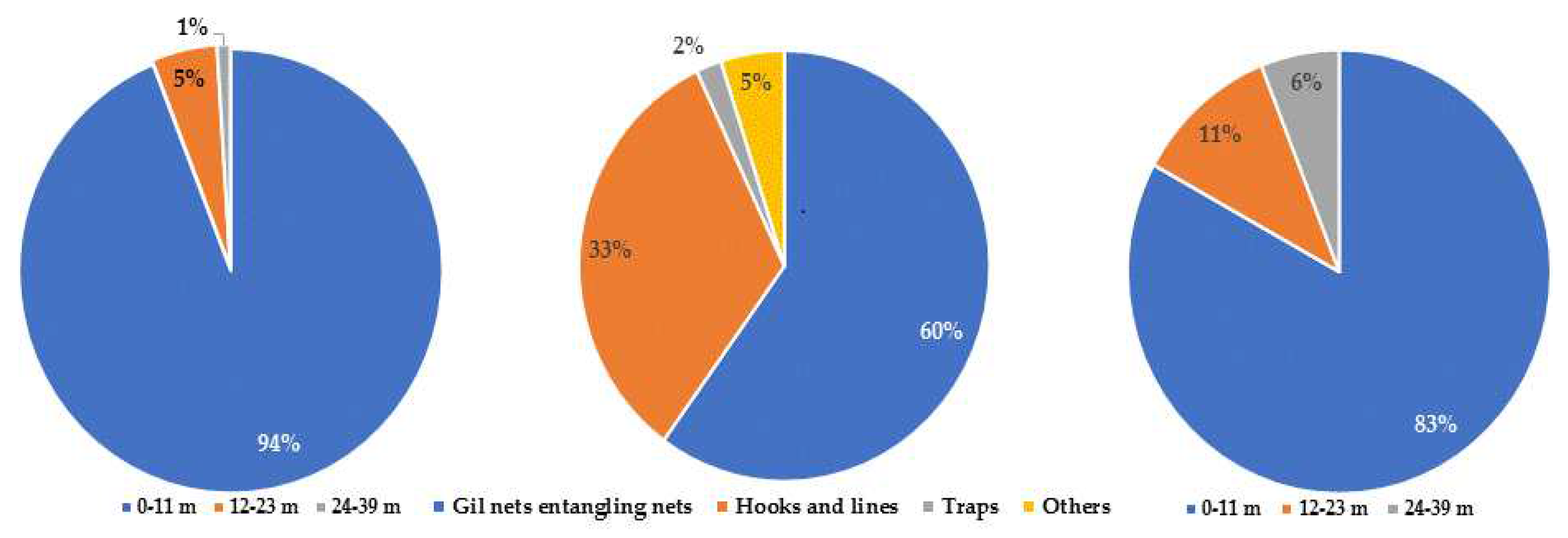
Speaking about aquaculture, Greece is amongst the five EU MS that produce almost three quarters of the total aquaculture production, both in quantity (9,42% of EU-27) and in value (10,19% of EU-27). In terms of employment in aquaculture, Greece ranks third among the 27 MS with a total of 3.524 jobs (2018) [19]. Regarding the fleet structure in 2020, it is pointed out that 96,5% of the total regards small-scale vessels (13.763 vessels), while the rest 3,5% (484 vessels) refer to large-scale fleet. In the same year, 38.6% of the Greek annual fish production was made by SSF whilst its value referred to the 57,6% of the total value of fishing production [19]. SSF provide 19,396 full-time jobs, ranking Greece as the third country in the EU in terms of employment in the industry [20]. Most of these jobs are in remote and insular territories (see Figure 2), where there are often no alternate livelihood prospects and income streams. Greek SSF, representing 96,5% of total fishing fleet, also denote the largest share of the total SSF in the EU [21]. However, they manage to access only 16.6% of the total purchasers, thereby obtaining only a small fraction of the profits [22].
For communities highly dependent on fisheries, SSF activity is often the main livelihood opportunity, representing a crucial sector for coastal and insular areas [23]. Specifically, coastal communities settled in remote areas, such as small Aegean islands, are entirely depending on SSF activities that are often family-run businesses or self-employed workers, where, in most of the cases, the ship-owner is also the chief in the vessel [24]. Energy costs represent one of the main incurring costs for the Greek SSF. In 2019, the fleet spent 1,8 million days at the sea (DaS), utilizing 84 million liters of fuel. 93% of the total DaS referred to small-scale fleet, which spent 31 million liters of fuel. It is worth noting that the average amount of energy consumption was 7.354 liters per vessel [15]
Figure 1.
The Greek fishing fleet by length, type of gear and jobs, 2019 (% of total number of vessels), source: [25].
Figure 1.
The Greek fishing fleet by length, type of gear and jobs, 2019 (% of total number of vessels), source: [25].
Fisheries and especially SSF are among the maritime activities hardest-hit by the COVID-19 pandemic, due to the unexpected decrease of seafood demand. Findings for Greece, from a study conducted for the European Commission [26] show that during the lookdowns, the recession of touristic flows heavily affected seafood demand and several socio-economic impacts were produced for the Greek fleet, due to the cessation of fishing activity. Nevertheless, the sector proved to be resilient enough to this crisis.
2.2. Fisheries Co-Management and Governance as Subjects of Change and Evolution
2.2.1. Fisheries Governance Considered under the Lens of Evolutionary and Interactive Governance
Several governance-related theoretical approaches are focusing, in one way or another, to change and evolution. Evolutionary governance theory [27,28,29,30,31,32] gives special consideration to the impact generated by governance systems or management settings in general, or by specific actions such as policies and strategies. Some approaches focus on the procedures by which these interventions are designed, or the methods used for the revision of existing institutions. Besides, interactive governance theory [33], applied on fisheries governance, describes how social “governing systems” (institutional bodies, markets, regulations..) interact with natural and social “systems-to-be-governed” (local communities, fishers, consumers..), and how their interplay defines how governance is released to serve its functions [34]. The social interactions and relations influence the justice and equity practices happening within and outside the established institutions [35].
Chuenpagdee [36] claims that more equity and justice for small-scale fisheries, requires a thorough understanding of all kinds of injustices and inequities that may be affecting fishers, either individually or collectively. These injustices may be either horizontal or vertical and may be sought within the fisheries value chain but also in relation to governmental institutions and other stakeholder groups. This acknowledgment has already sparked an important debate both between scientists and practitioners on whether FLAGs are ensuring an inclusive and equitable sustainable development of fishing communities [37,38].
However, such an understanding should take also into account that assumptions concerning the stability of different components of the governance system are not verified. For instance, there are approaches to policy implementation supposing that while policies may endure, their outcomes may evolve over time [27]. Although theories about institutional change are initially supposing, for methodological purposes, that actors are stable, such presumed stability does not always reveal the complexity, diversity, and dynamics usually experienced by the governance systems [27,28].
The reality is that communities are evolving, new challenges and issues are arising, policies are given different content, both collective groups and individual players are being transformed. In a certain governance scheme, the interests, emphasis, understandings, and identities of actors may all be subject to evolution. The same goes for the alliances with other actors and their position in the constellation of actors. This is more apparent today that complex and uncertain environments are booming, and where informal rules and processes can be more influential than formal ones [39,40].
Hence, an evolutionary and interactivity-related understanding of governance brings attention to the fact that there is a continuous interplay and that these elements are constantly changing [29]. This evolution is either prompt or takes a long time to be manifested. Actors and networks are part of living systems, and these are constantly evolving and adapting. Therefore, development actions must take place within “evolving systems” and procedures of constant transformation and evolution. This has several effects, including the necessity to realize how interdependencies affect the choices of actors and how the opportunities and abilities of the latter may result from within a set of interactions or interdependencies [39].
Bugeja-Said et al. [37] argue that FLAGs are important institutions that may support the future of fishery-dependent communities and fishing livelihoods. However, they observe certain shortages like the fact that this pan-European network is not at all uniform, neither structurally nor operationally and that several (in)justice issues are generated. These include lag in involvement of fishers in decision-making, non-inclusion of fisheries demands in local development strategies etc.
2.2.2. A Bit of FLAGs History in Greece
The fishery co-management schemes do not escape the transformation processes described in the above section. Specifically, fisheries LAGs settled within the European concept of Community-Led Local Development (CLLD), were initially conceived as local partnerships between local communities and sectors like tourism, leisure, or heritage to foster the social, economic, and environmental thrive of fishery dependent communities. These corporations are financially supported to carry out local development programs that are fostering entrepreneurship [41] and conservation initiatives e.g the protection of the marine environment, the preservation and enrichment of tangible and intangible cultural assets of fisheries areas etc. These multi-stakeholder partnerships were given mission to combine local knowledge, experiences and capacities following a bottom-up approach. They are meant to bring together actors from various social levels, including SSF [39].
In 2007, it was the European Fisheries Fund (EFF) that endorsed the revitalization of similar to the 1994 PESCA initiatives [42], namely the enterprise of Fisheries Local Action Groups (FLAGs), classified as co-management schemes [35]. The intention was to encourage sustainable development and improve quality of life in coastal areas with a remarkable (though weakening) fishing activity. In this context, Greece established, from 2007 to 2013, a total of eleven (11) FLAGs mainly in coastal areas and on small and remote islands. Their development strategies focused on broadening the economic activities outside the fishing sector, mobilizing private investment by fishers or non-fishers in favor of eco-tourism, accommodation facilities, services to the benefit of small fisheries communities etc. Public investment was also directed to infrastructure related to tourism and quality of life, services in fisheries areas and to the regeneration of villages [43].
These fisheries areas presented sufficient coherence in geographical, economic, and social terms. Therefore, FLAGs brought together fisheries actors and other local private and public stakeholders, targeting the development of partnerships involving the wider community and finally a local development strategy. These local development strategies are endogenous, inextricably linked to the characteristics and needs of the fishing areas. In a place-based, bottom-up development approach, they are supposed to create a “sense of place” based on common cultural features, preserving the distinct identity and a sort of marine citizenship [44] for local population. In other words, they are enhancing territorial cohesion [45,46]. Their outputs can be certainly considered as part of the “territorial capital” [46,47] of the area, including social capital [48,49]. The latter is a kind of widespread trust within the local community, motivating local actors to provide funding, time, and effort, making cooperation easier, promoting knowledge diffusion, and enhancing innovation [38].
In this context, fishers and harvesting industries were considered key actors of local development in these communities. In fact, through fisheries LAGs, the local development policies and strategies were enriched with regional policy approaches and topics, such as technical or social innovation, networking, quality and protection of the environment, environmental management of resources, such as energy and waste, energy efficiency, etc.
The next period (2014-2020) has set out to add value to the fisheries sector at local level and boost employment and territorial cohesion [46] in fisheries and aquaculture dependent areas through CLLD programs. The credited budget increased (from 42 Meuro to 70 Meuro) and the number of FLAGs as well (from 11 to 33 units). At that time, thirty-one FLAG strategies have been implemented by multi-funded groups managing LEADER as well as fisheries CLLD. Key objectives of the latter were economic prosperity and social inclusion, job creation and diversification of activities within and outside fisheries, including other marine sectors and promotion of sustainable development of related products. Are included activities to enhance and capitalize on the environmental assets of fisheries areas, increase the value added of fisheries products and innovations along the fisheries and aquaculture supply chain; support for diversification e.g. tourism and short sea shipping; lifelong learning, promotion of social well-being and cultural heritage in these areas.
The number of Fisheries LAGs operating in the Mediterranean (with emphasis on Greece and Italy), shows that this initiative stimulated a lot of interest [50], despite the limited local development benefits including the non-capacity to reverse the decline of the fishing sector. Suffering conditions in the Mediterranean coastal and island communities, driven by low economic performance of the fishing industry, were proven hard to reverse. However, the spill-over effect of innovation, best practice and expertise generated or untapped territorial potentials in areas confronting with comparable constraints [51].
Nowadays, within a well-structured multi-level governance framework, there is still a great potential for FLAGs to open to new activities, such as sustainable blue economy. By incorporating several stakeholders into their corporate scheme, they can involve and mobilize the entire local community in the region to implement the Green Deal strategy in the European periphery. Sustainable blue economy targets will most probably give fishers a key role in the corporate structure of each FLAG and make their representation stronger, inclusive, and substantial.
Figure 2.
Distribution of 33 Greek FLAGs, 2014-2020.
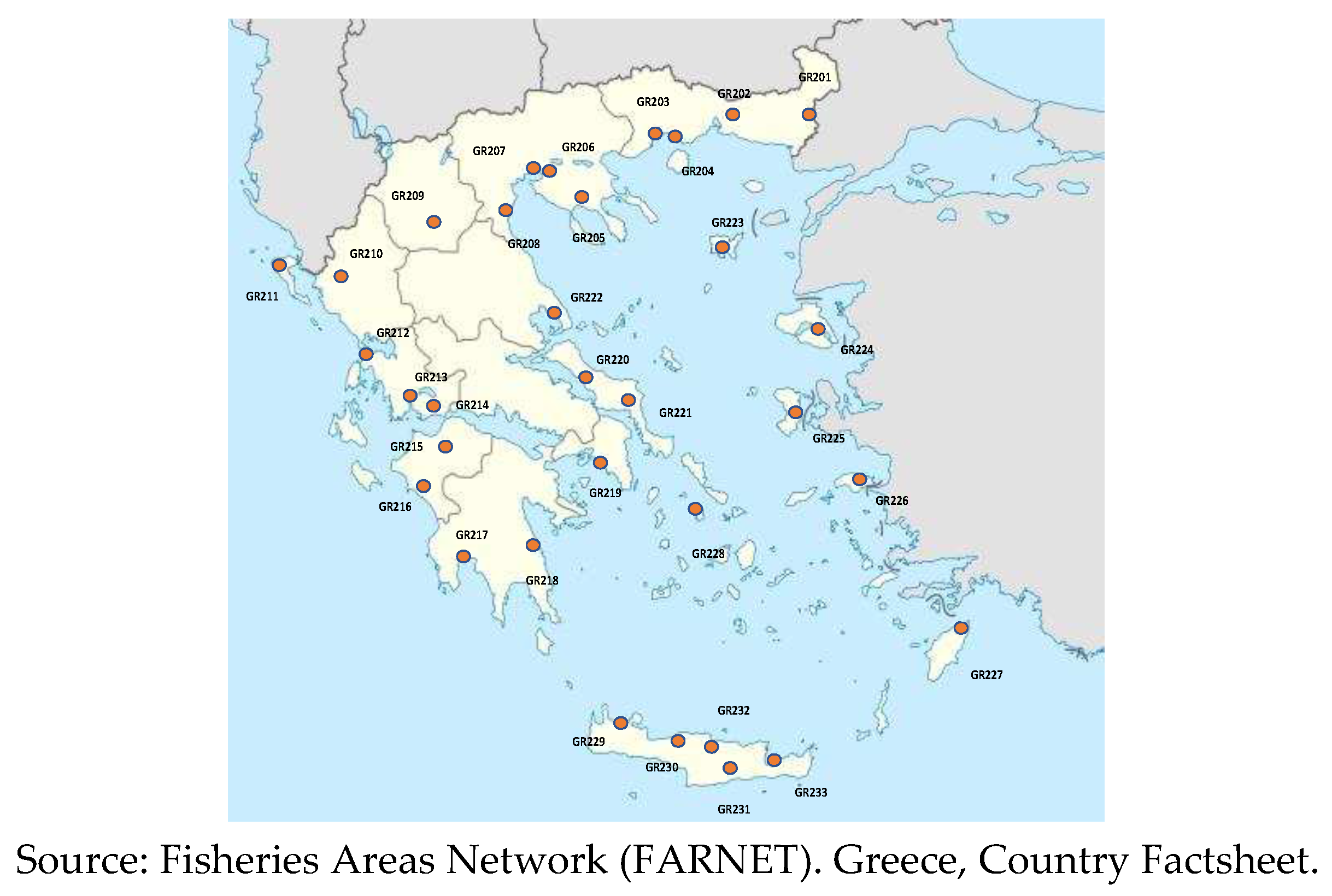
Figure 3.
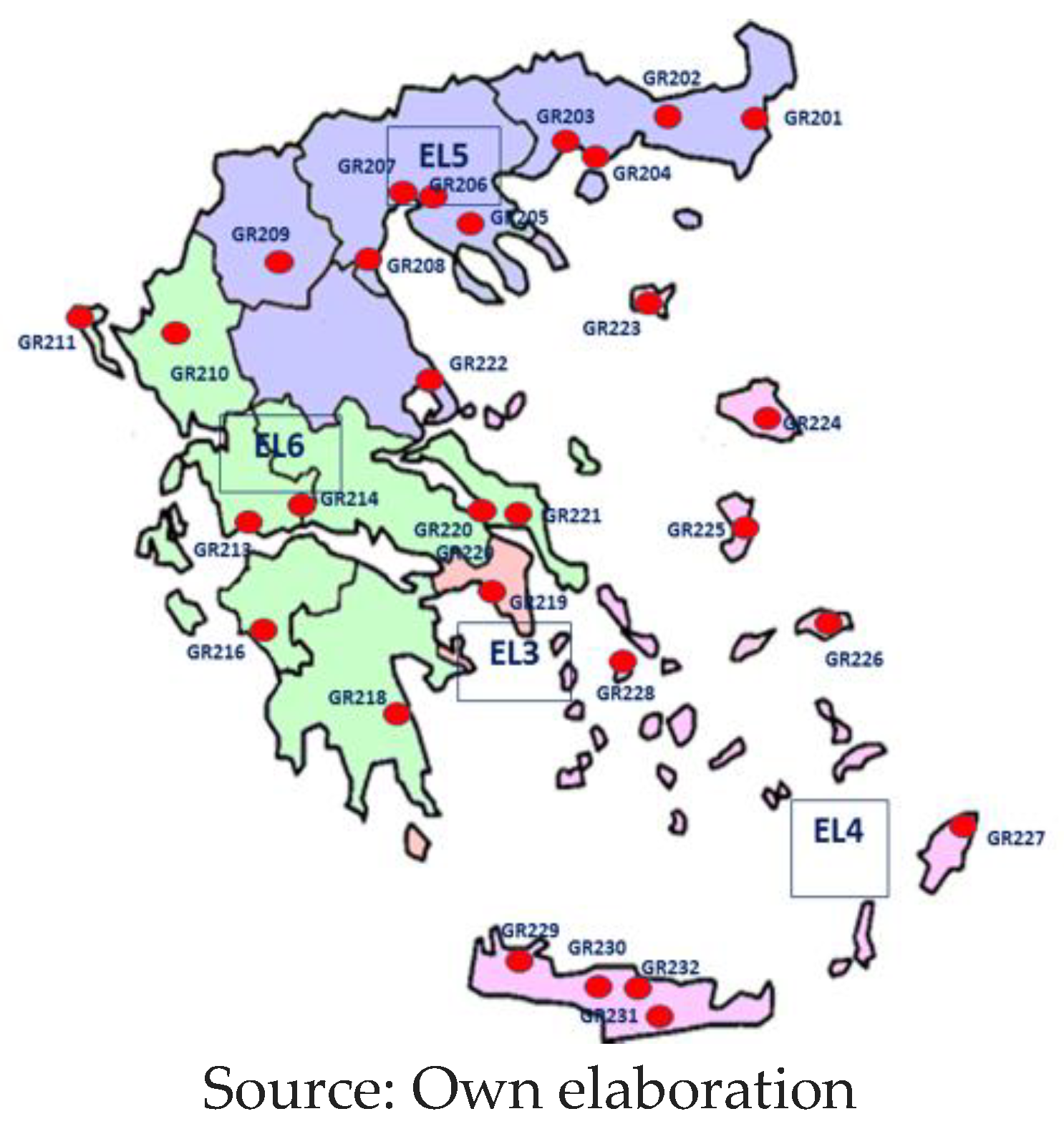
Distribution of participating FLAGs.
It is noteworthy that May 2021, saw a renewed approach to sustainable blue economy in the EU, to achieve the objectives of the European Green Deal (EGD). Aim of the EU Sustainable Blue Economy Strategy [52] is to embed it into the transition envisioned by the Green Deal and the EU Recovery Plan. The strategy appeals for a shift from “blue growth” [53], to «sustainable blue economy” [54] which deems the maritime industry, the environment, and the economy as inherently linked. It aspires to replace “unchecked expansion” with “clean, climate-proof and sustainable activities that tread lightly on the marine environment”. Therefore, blue sectors (such as fisheries, aquaculture, coastal tourism, maritime transport, port activities and ship building) are called to reduce their impact to the environment and contribute to healthy seas and the sustainable use of blue resources. More specifically, the new agenda for a sustainable blue economy aims to achieve the objectives of climate neutrality, zero pollution, promotion of offshore renewable energies (incl. floating wind, thermal, wave and tidal energy), decarbonization of maritime transport and greening of ports that may operate as energy hubs, pollution reduction and switch to a circular economy, together with nature and biodiversity conservation increasing fish stocks and the preservation of landscapes. Table 1 below, is illustrating the alignment agenda of sustainable blue economy with EGD. The Agenda underlines “maritime spatial management”, based on consultation with all the maritime stakeholders with the aim to stimulate cooperative exchanges in favor of the sustainable use of marine space (see Table 1 below).
2.3. MSP as a Key Process for Fisheries Co-Management, Also Considering Climate Change Effects
When literature on MSP refers to fisheries, it spotlights the nature of knowledge that is being incorporated into the MSP process. Said and Trouillet [55] consider the ‘deep knowledge’ of fishers themselves on issues like social and cultural aspects of their undertakings, more credible than the quantitative, bioeconomic data on fisheries. They argue that MSP usually relies on the latter, leading to mapping outcomes and planning choices that do not essentially exemplify the interests of the fishing industry. Hence, they argue for a more participatory approach to mapping and planning, incorporating currently ignored kinds of information, which also suggests a less formal production of knowledge. This perception is compatible with the one presented by Jentoft et al. [56]. The authors believe that resource users hold knowledge, upon their perceptions, that may successfully add to fisheries science and produce informed, effective, and equitable solutions to the fishery management challenge. Besides, in 2014, Jentoft and Knol [57] argued that fishers and their communities in the crowded North Sea are considering MSP as holding both threats and opportunities, depending on the institutions involved and on the role they are allowed to play in the planning process.
A more optimistic perspective is addressed by Kyvelou & Ierapetritis [18], exploring options of fisheries survival, prosperity, and sustainability in the Mediterranean. Using a co-development process with maritime stakeholders, they are analysing the co-existence of fisheries, tourism, and nature conservation as soft “multi-use” in the marine space. They argue that sustainable livelihood from SSF depends on the harmonious co-existence of fisheries with other maritime activities, which can support sustainable local development and be a pattern of a “win-win” MSP, with multiple (economic, environmental, social, cultural and governance related) benefits for the coastal and island communities. Fisheries may co-exist with nature conservation (MPAs) [18,20] but also with climate-smart green energy applications (e.g offshore wind farms) [58], which are both spatially bordered and operationally mature. These solutions need to be key components of a climate resilient ocean planning. In this sense, MSP may successfully assist the ‘think globally, act locally’ idea, which is an essential part of climate adaptation actions.
Besides, sharing of marine space and marine resources entails both market and public choice instruments [59]. MSP ignoring market outcomes and needs would be barely acceptable due to opposition of several stakeholders. This seems to be the case in Greece with strong sectoral interests, expressed through national level spatial plans that hamper the implementation of an integrated MSP. However, MSP emerges as a key mechanism for delivering significant non-market societal values [59] and promoting commonisation [60], such as environmental quality, ecological integrity of marine ecosystems, protection of marine species that are of conservation value to society (e.g., seals, seabirds, and mammals) but also social equity and justice, safety, and security etc. Ecosystem approach is based on “systems thinking” and gives a systemic perspective for the future of ecosystems rather than focusing on marine species. When linked with planning of marine uses, ecosystem approach previews ex-ante evaluation and monitoring of the state of ecosystems. This indicates the need to forecast and manage cumulative impacts and ensure ecosystems health [44].
Hence, MSP while being an economic process it should both encourage and control market forces simultaneously, to avoid decommonisation [60] of the ocean. Key challenge is to achieve a balance between market and non-market considerations and products, between commonization and decommonization trends. The final assembly is dynamic, varies according to the values of each society and community, and evolves with time, level of prosperity, quality of institutions and MSP governance.
Hence, MSP should be understood as an evolutionary process, genuinely embedded in and regularly revealing fundamental socio-cultural values, in search of an acceptable proportion between “maritime efficiency”, “maritime quality” and “maritime identity” [61], the latter including socio-cultural values like marine citizenship, ocean and insular literacy [44] and other societal values that together constitute social well-being [44].
Since fisheries LAGs involve resource users, scientists, and regional/local authorities, they are ideal bottom-up constructs to support a coherent and quality MSP like the one described above. Another advantage of these schemes is their longstanding experience and impact on a local level and their everyday contact with local governments.
One should not forget that local governments are representing a large array of activities from province, municipal cluster, city, small town and village governments, industry, and civil society [62]. Besides, local governments are concerned by at least 5 SDG 14 targets: addressing coastal and marine pollution (14.1), adaptation to climate change impacts on the coastal zone (14.2), advancing area-based management and protection tools (14.2 and 14.5), creating sustainable blue economy (14.7) and access of SSF to marine resources and markets (14.b). Moreover, the discussion is open now, even by the EC in the context of the European Maritime Fisheries and Aquaculture Fund (hereinafter EMFAF), on the perspective to involve local/regional authorities (NUTS 2) in MSP processes and implementation [62]. This is besides the focus of the ongoing REGINA-MSP EMFAF project (2022-2024) [63].
3. Materials and Methods
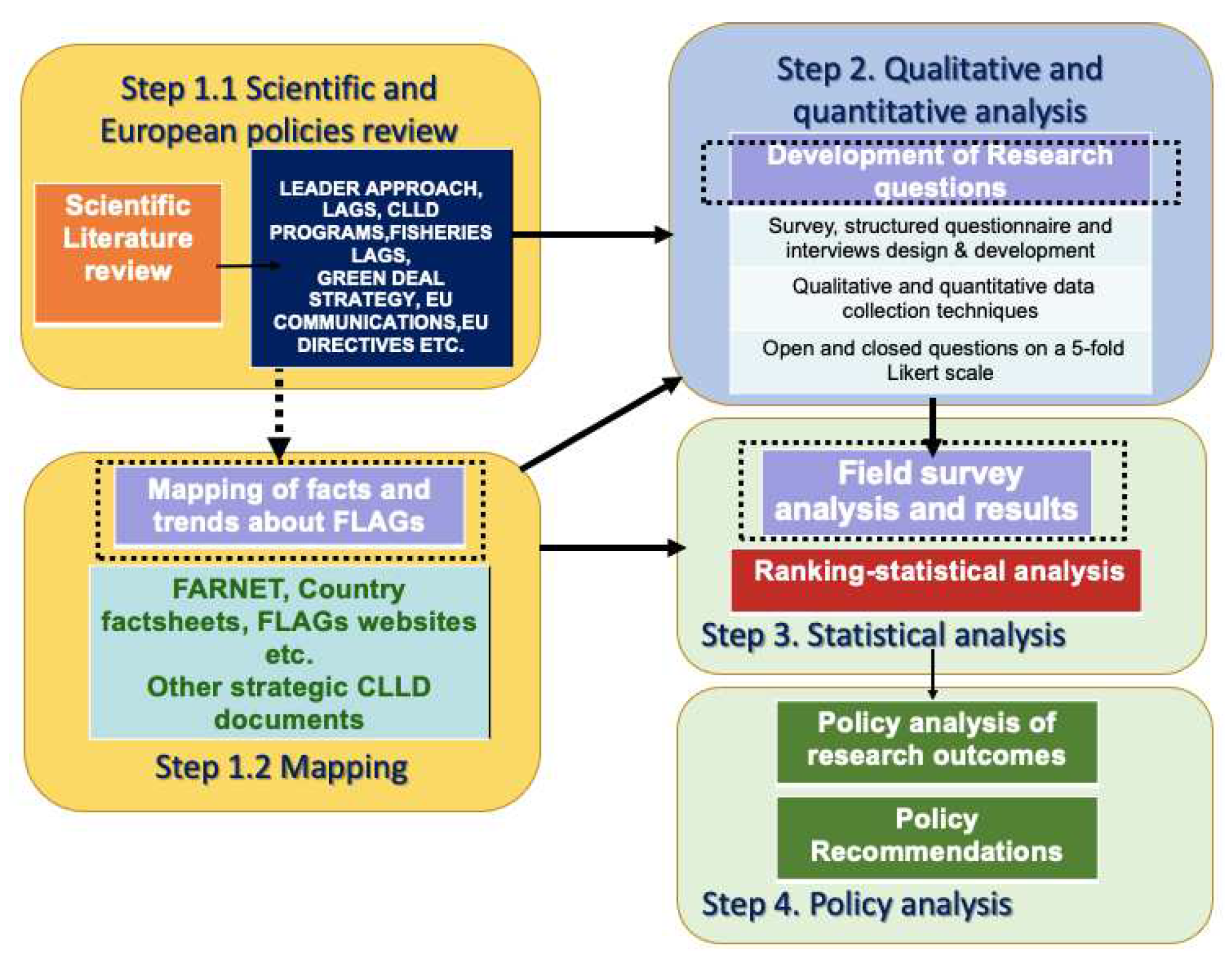
The research methodology was structured around desk research and a co-development process with FLAGs managers in island and coastal local fishing communities. The compatibility of their strategies to the Green Deal Strategy is the initial research target. However, since the CLLD programs started with great delay in 2019, the need to investigate their alignment with the current European sustainable blue economy issued also in 2019, was a sine-qua-non idea. The 2021-2027 strategies were assessed considering also regional and territorial diversity (insular and coastal allocation) and the resulting specific needs, as seen by the FLAGs themselves. Hence, the research methodology was structured around the following five steps:
Step 1.1 A literature review based on both scientific articles and EU technical and policy reports, about the LEADER approach, and in particular, the role of LAGs and CLLD programs for the development of fishery dependent areas. The search was extended to the Green Deal Strategy to identify its thematic priorities integrated into related Community policies (such as the EU Communication of May 2021 on blue economy). Recent articles about the extent to which climate change and environmental risks are being integrated into CLLD Programs were also examined.
Step 1.2 A mapping of facts and trends concerning FLAGs identified in strategic documents, including material posted on the Fisheries Areas network (FARNET) website, or included in the current strategy of the CLLD Programs that are implemented in Greek fishery dependent areas. Data and information from the Country Factsheet and the webpages of the FLAGs, were valorized.
Step. 2 This step included identification of the research questions and the design of a mixed research method, combining quantitative and qualitative data collection techniques (survey, interviews etc.), to obtain insights from the FLAGs. Structured questionnaires and interviews were used to assess their local development strategies with reference to both the GDS and the sustainable blue economy priorities. The structured questionnaire had open and closed questions, based on the five-fold Likert scale (1- strongly disagree, 2-disagree, 3- neither disagree nor agree, 4- agree and 5- strongly agree). The co-development process took place during autumn and winter 2021 and the great majority of the Greek FLAGs (87.9%) responded positively to the invitation.
Step. 3 Statistical Analysis of outcomes and research results. Regional scale (NUTS1) and territorial diversity (insular, coastal, insular and coastal..) were taken into account in the analysis.
Step 4. Policy analysis following the previous evaluation process. The critical factors and the green and blue thematic priorities were assessed, and policy recommendations were formulated.
Figure 4.
The research methodology.
In the framework of the Step 2, two major blocks of questions appeared in the research survey :
Block 1. The participants were asked to assess the contribution of CLLD strategy for the fishery dependent areas, in terms of
- energy efficiency in the aquaculture industry and the range of energy sources in the sector;
- emissions and energy efficiency of fishing vessels;
- use of renewable energy sources (hereinafter RES);
- impacts from the “invasion” of alien species; v. awareness, education, and training of individual and collective actors about using RES and reducing marine pollution;
- waste management of aquaculture and fish processing plants;
- ways of tackling overfishing; and
- the fishery-driven and other marine litter (fishing nets, plastics, etc.)
Block 2. The participants were requested to prioritize the sustainable blue economy thematic directions in terms of their pragmatic value for the fishery dependent areas, during the current programming period (2021-2027), such as :
- climate neutrality, zero pollution; circular economy and waste prevention;
- biodiversity and investment in nature-based solutions;
- coastal resilience;
- responsible food systems;
- ocean literacy;
- research and innovation vii. blue skills and jobs;
- citizen participation; ix. maritime spatial planning;
- regional co-operation on a sea-basin level, and coastal support;
- safety at sea; and
- international promotion of sustainable blue economy.

Table 2.
Regional distribution of participating FLAGs in the field research, NUTS1.
| NUTS1_Greece | Number of participating FLAGs | Fisheries employment | |
| EL3 | Attica | 1 | 380 |
| EL4 | Aegean Islands and Crete | 10 | 4.117 |
| EL5 | Northern Greece | 9 | 2.435 |
| EL6 | Central Greece | 9 | 3.565 |
| Total | 29 | 10.497 | |
Source: Factsheet Greece, Fisheries Areas Network (FARNET), 2017.
4. Results
4.1. Thematic Focuses of CLLD Strategies 2014-2020
Examining the thematic focus of the CLLD strategies implemented during the period 2014-2020 (extended to 2023), it was found that of high relevance is fish processing (endorsed by 60.6% of the FLAGs). Follows the “support to business” (endorsed by 54.5% of the respondents), the need for infrastructure (54.5%), the promotion of fishing tourism (48.5%) and the promotion of cultural heritage (45.5%).
On the other side, environmental strategies, harmonized with Green Deal are attracting very little interest. Only 5 among the 33 FLAGs have opted for “Energy” and “Marine Litter” as key topic of their strategy. Fewer were the FLAGs that designed and implemented an Integrated Coastal Zone management (hereinafter ICZM) strategy (3/33), and much fewer dealt with “Climate Change” (2/33) and “Water quality” (1/33) (Figure 5).
However, huger interest in environmental issues was demonstrated by three FLAGs in Northern and Western Greece, that is the Evros FLAG (with “Water quality” and “Energy” as key choices), the Western Thessaloniki FLAG (with “Marine Litter” and ICZM as key thematic priorities) and the South Ipeiros and Amvrakikos FLAG (opting for “ ICZM” and “Climate Change”).
As for the “Energy” priority, this has been adopted and applied in the strategies of fishery dependent areas with significant wind potential included in the designated as “Wind Priority Areas” in the “Special Spatial Planning Framework for Renewable Energy Sources”, currently under revision (Rodopi and Evros FLAG in Thrace, Central and South Evia FLAGs).
As for “marine litter”, it was chosen as a strategic priority, in island and coastal fishery areas that are either quite burdened environmentally or highly touristic areas such as the Cyclades islands FLAG, the Rethymno/Crete island FLAG, the Lesvos island FLAG, the East and West Thessaloniki FLAGs. On the other hand, FLAGs located in coastal areas that are close to or include important MPAs have chosen ICZM as strategic theme (Western Thessaloniki and South Ipeiros-Amvrakikos FLAGs). Finally, “Climate change” is observed in coastal and island fishery dependent areas, such as the North and South Crete and the South Ipeiros-Amvrakikos FLAGs.
Similar is the portrait illustrating the distribution of budget according to the different objectives supporting sustainable blue economy, in the applied CLLD Strategies 2014-2020 (extended to 2023). In the majority of local programs, greater financial budget is attributed to the following objectives : “Adding value, creating jobs, and promoting innovation along the fishery chain” (more than quarter of total budget is allocated to 42,2% of programs); “Supporting diversification” (quarter of total budget is dedicated to the 30,3% of the programs) and “Enhancing and capitalizing on the environmental assets”(18,2% allocate more than a quarter and 36,6% less than 10% of their total budget) (Figure 6).
The results of the field survey revealed that 72% of the participants stated that their strategy adds to the awareness, education, and training for individual and collective actors, targeting the reduction of marine litter. Furthermore, 62% of the respondents replied that their strategies favor the reduction of marine litter (nets, plastics, etc.), whilst 59% of the participants stated that their strategy favors increase of RES.
However, notable findings are that 41,4% of the respondents disagree (to strongly disagree), on the positive impact of the strategy to increase energy efficiency in aquaculture, whilst 24,1% disagree (to strongly disagree), about its positive influence to promoting awareness, education and training targeting the promotion of RES. Lastly, 20,7% disagree (to strongly disagree), on the assumption that the strategy had little to no contribution to the rational waste management in aquaculture and fish processing (Figure 6).
Τhe energy costs and the rational waste management in fish farming units are of greater interest. The investigation revealed a remarkable emphasis on the “increase of energy efficiency of aquaculture units” in areas of the Region of Central Greece (EL6) (33.3% consented to strongly consented on this need). In the same Region, a high percentage of respondents (44.4%) agreed on the diversification of energy sources feeding the aquaculture farms. Effective waste management in aquaculture and fish processing plants is expected to be achieved through FLAGs planning, according to 66.7% of the respondents.
The special weight given to aquaculture comes from the fact that almost 65% of the aquaculture units specialized in mariculture, are located in coastal areas of the Region of Central Greece (EL6) but also to the fact that aquaculture industry is better organized also on a national level [64], favored also by legislation about zoning dedicated almost exclusively to the sector.
According to the estimates of the FLAGs managers, the highest contribution to the reduction of gas emissions and the improvement of the energy efficiency of fishing vessels due to the implementation of the strategies is recorded in the fishing dependent areas of the Regions of Attica (EL3), Aegean islands and Crete island (EL4) and the region of Central Greece (EL6) (55.6%, 55.6% and 44.4% percentages of consent, respectively).
Moreover, the programs implemented in the fishing areas of Central Greece, Northern Greece, Aegean islands and Crete island, with significant SSF activity, present a meaningful contribution to “tackling overfishing and enriching fish stocks” (the percentages of agreement ranges from 44.4% to 60%) (Figure 7).
On the contrary, hurdles caused by the “invasion of alien species” were strongly addressed in the insular space, precisely in the Region of the Aegean islands and Crete island (EL4) (88.9% of the responses). This is logical, since Crete presents the highest number of observed invasive alien fish species in the country [65]. On the other side, enhancing the use of RES, was endorsed by the Regions of Central (EL6) and Northern Greece (EL5) (strong consent by 77.8% and 50.0% of the respondents respectively).
In addition, Figure 6 shows that awareness, education, and training to increase social acceptance of renewable energies were endorsed by the Regions of Northern and Central Greece (EL5 and EL6) with 50% and 44.4% of the respondents agreeing to strongly agreeing respectively. In these two regions (EL5 and EL6), are included the so-called “Wind Priority Areas” as defined by the “Special Spatial Planning Framework for Renewable Energy Sources” currently under revision and update, following the REPOWER EU strategy [66] and relevant Greek legislation, since there are regions with significant wind potential [67].
A huge interest was raised regarding awareness, education and training of individual and collective actors about how to reduce marine litter, in all the fishery dependent areas of the country since 90% and 88% of the respondents, coming from Northern Greece (EL5), Aegean islands and Crete island (EL4) respectively, stated that they strongly agree with this strategy. In the same regions, the reduction of fishery and other marine litter (fishing nets, plastics, etc.) is highly supported by the CLLD programs, with 77.8% and 44% of the participants providing their agreement, respectively (Figure 8).
Besides, when grouping the research results based on the type of the intervention area (into insular, inland, coastal, and “insular & coastal” fishing dependent areas), findings are summarized as follows:
- ▪
- in insular areas and in areas including both island and coastal fishery areas, a significant impact to the reduction of gas emissions as well as to the increase of the energy efficiency of the fishing vessels is expected (Table 3).
- ▪
- in the coastal and inland fishing dependent areas as well as in the mixed island and coastal space, impact on increasing the use of RES is expected to be particularly important (Table 3).
- ▪
- the impact of CLLD Programs to the awareness, education and training in favor of the use of RES is particularly important in the inland fishing dependent areas and in the coastal and insular space as well (Table 3).
- ▪
- as already noticed, the “invasion” of alien species in the Greek seas, is addressed to a greater extent, in the exclusively island fishing dependent areas (Table 3).
- ▪
- the impact of the CLLD programs to the awareness, education and training of both citizens and local agencies/enterprises to reduce marine litter seems to be vital in all four types of intervention areas (inland-only, island-only, coastal only and areas combining island and coastal areas), see also Table 3.
- ▪
- the influence of CLLD programs is vital to the rational waste management of aquaculture and fish processing plants in coastal areas and mixed coastal and insular space (Table 3).
- ▪
- Tackling overfishing and enriching fish stocks seems to be more important in inland and in coastal fishery dependent areas (Table 3).
- ▪
- Finally, reducing fishery-driven and other marine litter is expected to benefit all types of the fishing dependent areas (insular, coastal, inland, insular & coastal) (Table 3).
Ultimately, participating FLAGs were asked to prioritize as more realistic for their fishing communities, the EU thematic directions for Sustainable Blue Economy, in view of the new period 2021-2027. Their answers (Figure 9, below) highlight that the Greek fishery dependent areas have limited capacity to adopt and implement these directions. More specifically, only “Investment in blue sectors” and “waste elimination and circular economy” are prioritized most, in terms of their feasibility (chosen by 56% and 52% of the respondents, respectively). Apart from the “regional cooperation” that ranks third, the other priorities attracted very little to zero interest. It is remarkable that GDS related directions such as “Biodiversity and investment in nature”, “Achieving the goals of climate neutrality and zero pollution”, “Marine/Maritime spatial planning”, “Coastal resilience”, and “Responsible food systems” were picked as more realistic by only less than 30% of the respondents.
Besides, through the open-ended questions and the interviews with several stakeholders, fruitful insights were provided on topics such as the role of FLAGs, the importance of coastal fishing, the obstacles they are facing as well as the prospects for reorienting their local strategies in the context of the blue economy. Relevant statements were collected and are presented below:
“FLAGs are a cornerstone for achieving development goals in the marine environment and relevant jobs”;
“Coastal fishing is still considered to be very crucial for the local fishing communities”;
“The current legislative framework hinders the implementation of many important CLLD related measures, often rendering the strategic directions of the fisheries LAGs’ dormant and failing to address the needs of their respective areas”.
In addition, the respondents highlighted the lack of knowledge and information, pointing that:
“Fishers know little about conservation of marine ecosystems, overfishing, circular economy and fishing tourism”
“Fisheries need to de sufficiently informed about and adapted to the ecosystem-based management and take initiatives to reduce overfishing and make fishing effort productive, in the long term”.
As an example, they mentioned the initiative taken by the fishers of the island of Gyaros that consented, through a participatory procedure, to reduce the fishing effort for more than five years in the marine protected area (MPA) of the island, with the aim to enrich fish stocks in the medium and long term.
Moreover, recommendations were given such as:
“FLAGs should step up their efforts in reaching out fishers, raising their awareness through relevant educational programs and seminars” and also
“In order for training to have the greatest participation and the best result it should not be a classical training program. It should be done at the right time and place. For example, it should take place after the sale of the day’s catch, next to the boats or in the coffee shops where fishers meet and have the opportunity to discuss and address questions”.
The support of FLAGs to “raising awareness of the local fishing communities” in relevant issues, was acknowledged as most decisive.
Justice issues were highlighted such as limited representation of fishers within FLAGs as well as limited political representation of fishers, in general. It was said that :
“The role and responsibilities of fishery LAGs should be expanded to enable the implementation of a holistic development strategy on local level, improving the position and the role of coastal fishers, both within the LAGs and the fishing local communities”, and
“The exclusion of local fishers is due to the fact that they are often elderly, low-educated people, working rather alone and not easily trusting new comers”
In contrast, full acknowledgement was provided to environmental NGOs or research centers implementing on-site participatory initiatives. Alongside with the CLLD programs, the above institutions are viewed as “successfully undertaking participatory initiatives to conserve and protect coastal and underwater ecosystems, jointly with local fishers and local people and stakeholders”. Precisely, special reference was made to the Hellenic Centre for Marine Research and the WWF.
Another issue that emerged through the open-ended questions and the interviews concerned funding and budget allocation to the CLLD Programs and the 33 FLAGs. Specifically, doubts were addressed about whether the particularities and challenges of each fishing area were taken into account (e.g. between island and inland fishing communities).
Limited financial resources of CLLD Programs were pointed out, arguing that “financial resources must be mobilized so that tangible results are achieved» and also that “funding is required for information and training on the use of new fishing tools such as depth gauges, new technology equipment, etc.”. Finally, the respondents pointed out the outdated fishing gears of coastal fishers, strongly suggesting that “the renewal of the fishing gears of coastal fishers should be financed during the new programming period”.
5. Discussion
In this research, the authors reveal that co-management schemes are not only about powers of different nature, interactions among them and regulating measures. They are being deeply shaped by the interplay of “governing systems” and “systems-to be governed”, and the evolving global governance. In this context, they can create, seize and promote opportunities. FLAGs are social constructs through which knowledge is co-created, social, and cultural values may be formulated and reshaped, and sense of community enhanced. Co-management schemes are not stable, they are an evolving and reflexive process.
Therefore, they strongly believe that an evolutionary understanding of fisheries governance, as described in part 2.2, and within the multi-level and multi-actor governance framework for FLAGs, can support a new role and future for these schemes. This mission may encompass avoidance of purely sectoral approaches, mainly through the promotion of integrated sustainable blue economy outcomes, in areas and communities dependent on fisheries. In parallel, by incorporating different stakeholders into their corporate scheme, they can involve and mobilize the entire local community in the region, to implement the Green Deal in the European periphery. Fishers have a key role in the corporate structure of each FLAG, therefore their representation should be stronger, inclusive, substantial and equitable.
However, the research findings highlighted several shortages in the evolution of the FLAGs, within the current European institutional environment. For instance, mitigation of climate and environmental impacts and development of RES do not appear outstandingly in the FLAG strategies and their budget allocation. Environmental strategies, harmonized with the basic guidelines of the Green Deal have attracted very little interest. Moreover, the share of FLAGs that designed and implemented a strategy driven by “Integrated coastal management” (ICM), “climate change” and “water quality” was limited. FLAGs managers prioritized very few of the EU thematic directions for the Sustainable Blue Economy, estimating them as less realistic for their fishery dependent areas, in the current period (2021-27).
The field survey revealed that only “Investment”, “Circular economy” and “Waste prevention” were the most prioritized actions, considered as more realistic for the current period. Apparently, these strategies may be understood and supported by both national government and the private sector. All the other potential actions, to a higher degree Europeanized and internationalized, attracted very little to zero interest (such as “Maritime spatial planning”, “Biodiversity and investment in nature” linked with EU Biodiversity Strategy, “Achieving the goals of climate neutrality and zero pollution” and “Responsible and Sustainable food systems” linked to the Farm-to-Fork (F2F) Strategy, the two latter being parts of the European Green Deal). “Coastal resilience” is also neglected, most probably because of its complexity.
This negative result reflects inter-alia, the attitude of fishers and often of fishing communities towards European policy, perceived as rather ‘hostile’ for SSF, since it has produced policies to diminish the fishing effort and incentives are provided to push fishers to abandon their activity and destroy their vessels [20].
Seeking wider implications of implementing the CLLD 2014-2020 Programs, the total findings of this field research revealed that the FLAGs strategies have a remarkable contribution to the reduction of marine pollution and marine litter provoked by fisheries, focusing most on soft actions that raise awareness rather than supporting “hard” investment. In addition, CLLD programs seem to support SSF rather than aquaculture. Of course, regional and territorial differentiations were observed, depending also on the productive specialization of each region. For example, the region of Central Greece (EL6), where several aquaculture farms are allocated, shows greater interest for a sustainable blue economy in aquaculture, through the CLLD programs. In contrast, the Region of Aegean islands and Crete island (EL4) with the largest number of jobs in the fisheries industry, seem to contribute most to sustainable blue economy investments affecting SSF (stressing the problems caused by the invasion of alien species, the reduction of fishery-driven marine litter, the energy efficiency of fishing vessels and the cutback of marine pollution).This particular finding demonstrates that different regions and territories face different environmental challenges and pressures. Hence, a tailor-made approach should be adopted when allocating financial resources to FLAGs by the European Maritime, Fisheries and Aquaculture Fund (EMFAF) and other funds.
State policy makers, local/regional stakeholders in Greek fishery dependent areas and of course fisheries, have a low level of awareness about the climate crisis and on the means to address this in their strategies. Transition to a post-carbon society unquestionably requires further targeted assistance [60], capacity building within FLAGs, as well as awareness and inclusive participatory procedures addressing to the local communities.
It becomes crucial that low level of education and information together with ageing of fishers, hampers the renewal of fishing gear that could foster circular economy and reduce the pollution from plastics and microplastics. Fishers are lacking information and knowledge on the conservation of marine ecosystems and the strategies to reverse biodiversity loss and increase fish stocks. They are not fully aware about how Marine Protected Areas (MPAs) can contribute to climate mitigation and resilience, minimizing environmental impacts on marine habitats, and generating significant financial and social benefits, in the long term. The research observed total absence of climate-oriented knowledge base which acts as a structural barrier to the adoption of new marketing standards for sea food, and new innovative business ideas and economic opportunities i.e based on the use of algae and seagrass, on cell-based seafood or on sustainable aquaculture.
A prerequisite for the development of a sustainable blue economy seems to be the enhancement of professional associations and the promotion and monitoring of fishers’ involvement in the decision-making processes within FLAGs. The actual limited involvement of fishers in the LAGs may constrain the launch of a local blue forum for users of the sea and make the dialogue and the cooperative exchange between stakeholders less inclusive, if not conflicting. Limited representation of resource users to the FLAGs will limit the possibilities of the implementation of the Maritime Spatial Planning Directive (MSPD) that seeks to introduce an ecosystem-based and sustainable approach to local development in marine areas. The involvement of local fishers in the planning, implementation and monitoring of the CLLD programs will highlight the weight of the protection and preservation of underwater ecosystems in the life and profession of fishers and will probably boost succession in the industry.
Another barrier is the outdated current legislative and institutional framework that often hinders the implementation of measures, regarding the marine environment and maritime jobs. For example, the absence of a regulatory institutional framework for the development and operation of offshore renewable energies (RES) demonstrates the limited national and regional interest as well as the absence of strategic directions at the national and regional level. In addition, decarbonization of maritime transport or the greening of ports are not part of the key strategic directions of the bottom-up LEADER approach in FLAGs. Moreover, energy investments in aquaculture, due to higher budget, are often financed by the sectoral Fisheries programs 2014-2020 and not by the CLLD Programs.
During the planning of the CLLD Programs, and the allocation of financial resources to the FLAGs during the programming period 2021-2027, special criteria linked to regional, territorial, or other specificities of the marine and coastal environment have to be considered. Awareness activities, training programs and seminars aimed at local fishers addressing the mentioned serious lack of knowledge and information on the importance of the marine environment (issues such as, the protection of underwater ecosystems, overfishing, circular economy and fishing tourism) must be held at a day, time and place that facilitates the fishers’ activity schedule. Partnerships of FLAGs with environmental NGOs through learning activities and other joint initiatives, would further deepen fishers’ knowledge and information while enabling them to provide their useful “deep knowledge” of the sea to other societal groups.
In addition, special funding must be targeted to the renewal of the fishing gears of coastal fishers, to informing and training new generations of fishers on the use of the new fishing tools (depth gauges, new technology equipment, etc.).
6. Conclusions and Policy Recommendations
This article mapped and assessed, in selected Mediterranean coastal and marine interfaces, the strategies practiced by the fisheries co-management schemes (fisheries LAGs). It displayed how these governance systems were adaptive either under the ongoing impact of environmental degradation, climate change, overfishing etc. or in the perspective of the new risen sustainable blue economy and Green Deal strategic priorities.
The results of this assessment may question the effectiveness of the former governance system in the area, revealing its institutional thickness and urge to the evolution of governing relations probably towards informal, action-learning structures such as the famous “communities of practice”[39,40].
The research was carried out in a sample of co-management schemes, major part of which are based on insular and coastal fishery dependent communities. Whilst fisheries LAGs were initially framed in a place-based approach, consistent with regional policy, pursuing integrated endogenous development strategies, they often either slip into serving tourism-driven (incl. restoration) sectoral interests alone or adopt an extreme territorial approach that ends up in redirecting fishing funds to other industries with greater economic robustness and ability to profit from funding, such as tourism. FLAGs being poorly aware about ecosystem-based management, they often look also ineffective in competently addressing global policies (e.g climate change adaptation, circular economy, “Farm to Fork” strategy and other global/European policies) into local strategies.
Hence, transition to a post-carbon blue economy on a local level, requires a deep understanding of the evolutionary character both of fishery dependent local communities, due also to their conjunction with ecosystems, and of fisheries co-management and governance schemes.
Here comes the role of Maritime Spatial Planning (MSP). MSP, as an evolutionary governance process itself, may be, in the framework of the sustainable blue economy, a real driver for making these multi-stakeholder management schemes evolve. Key path for them should be to strengthen commonization of the ocean space and blue justice and equity for fishers. MSP, especially in the Eastern Mediterranean, should follow a more democratic and inclusive political approach than the actual one, reflecting the numerous voices both in the MSP data acquisition and in the planning and consultation process, in general. Besides, justice must be a vital quality of both the process and results of MSP, where SSF have an important involvement. On the other hand, since Fisheries LAGs are coherent, multi-sectoral schemes dedicated to design and manage integrated territorial development strategies for their regions, they may boost the cooperation which is essential for effective MSP processes, promoting harmonization between local development strategies and EU policies.
As local units that bring together stakeholders from different industries, the fisheries LAGs are ideally positioned to assist and boost the transition to a sustainable Blue Economy. They may provide support in inciting innovation through participatory territorial projects and networking actions, thus increasing the consistency of local strategies and policies. A new future for fisheries LAGs especially in marine and insular contexts with significant blue growth potential, should be sought. In this case, CLLD may play a pivotal role in developing sustainable blue economy in these regions, combining restoration of marine ecosystems and resources with inclusive maintenance of local income streams.
In Greece, the future of FLAGs should also go in parallel, especially in the insular space, with the conceptual construct and practice of maritime spatial planning to be decided and approved by the country. Greek insular space needs an adaptive organization in “marine functional zones”, consisted of clusters of islands with a socio-economic complementarity and a socio-cultural continuity [69]. FLAGs may ideally assist this through the management of “integrated maritime investments” analogous to the “territorial integrated investments” (ITI), for the implementation of which, LAGs and FLAGs were given a significant role in the previous programming period [11].
Maritime strategies on a local level can benefit from fortified links with the EU Green Deal towards more resilient insular territories. Thanks to its solid content and funding, the EU Green Deal can assist more targeted strategic orientation based on the valorisation of marine resources. The Strategy can also group and mobilize appropriate stakeholders and combine investments from different funding sources. At the same time, local development strategies oriented to sustainable blue economy can efficiently contribute to delivering the EU Green Deal.
Finally, all the above are consistent with the EU cohesion policy 2021–2027 within which integrated territorial development for non-urban areas is gaining momentum, in comparison to the previous period [11]. This new policy framework is fundamental for enabling the use of the opportunities it offers to support cross-sectoral integrated territorial and local strategies. CLLD programs remain a major territorial tool for this integration and FLAGs may be drivers of change, provided they turn to better address the EGD related policies and deliver relevant integrated strategies.
Author Contributions
Conceptualization, S.S.K. and D.I.; methodology, S.S.K and D.I ; software, D.I.; validation, S.S.K.; formal analysis, S.S.K. and D.I; investigation, S.S.K., D.I. and M.C; resources, S.S.K. and D.I.; data curation, D.I.; writing—original draft preparation, S.S.K., D.I. and M.C.; writing—review and editing, S.S.K. and M.C.; visualization, D.I.; supervision, S.S.K.; project administration, D.I. All authors have read and agreed to the published version of the manuscript.
Funding
This research received no external funding.
Informed Consent Statement
Informed consent was obtained from all subjects involved in the study.
Data Availability Statement
Not applicable.
Acknowledgments
The authors would like to thank the fishery LAG representatives for their collaboration and valuable insights. They are also grateful to the anonymous reviewers of the manuscript, for their precious remarks.
Conflicts of Interest
The authors declare no conflict of interest.
References
- Barange, M.; Bahri, T.; Beveridge, M.C.M.; Cochrane, K.L.; Funge-Smith, S.; & Poulain, F. (Eds.) Impacts of climate change on fisheries and aquaculture: synthesis of current knowledge, adaptation and mitigation options. FAO Fisheries and Aquaculture Technical Paper No. 627, Rome, FAO. 2018; pp.628.
- Maulu, S.; Hasimuna, O.J.; Haambiya, L.H.; Monde, C.; Musuka, C.G.; Makorwa, T.H.; Munganga, B.P.; Phiri, K.J.; and Nsekanabo, J.D. Climate Change Effects on Aquaculture Production: Sustainability Implications, Mitigation, and Adaptations. Front. Sustain. Food Syst. 2021, 5, 609097. [Google Scholar] [CrossRef]
- Daw, T.; Adger, W.N.; Brown, K.; Badjeck, M.-C. Climate change and capture fisheries: potential impacts, adaptation and mitigation. In K. Cochrane, C. De Young, D. Soto and T. Bahri (eds). Climate change implications for fisheries and aquaculture: overview of current scientific knowledge. FAO Fisheries and Aquaculture Technical Paper. No. 530. Rome, FAO, 2009; pp.107-150.
- O.E.C.D. The Economics of adapting fisheries to climate change, OECD Publishing, Paris, 2010; Available online. [CrossRef]
- Peck, M.A.; Catalán, I.A.; Damalas, D.; Elliott, M.; Ferreira, J.G.; Hamon, K.G.; Kamermans, P.; Kay, S.; Kreiß, C.M.; Pinnegar, J.K.; Sailley, S.F.; Taylor, N.G.H. ; Climate Change and European Fisheries and Aquaculture: ‘CERES’ Project Synthesis Report. Hamburg. 2020. [CrossRef]
- F.A.O. Assessing climate change vulnerability in fisheries and aquaculture: Available methodologies and their relevance for the sector, by Cecile Brugère and Cassandra De Young, FAO Fisheries and Aquaculture Technical Paper No. 597, Rome, Italy, 2015.
- European Commission. Community-led local development and the blue economy, Publications Office of the European Union, Directorate-General for Maritime Affairs and Fisheries, 2023. Available online: https://data.europa.eu/doi/10.2771/392 (accessed on 15 April 2023).
- F.A.O. The State of Mediterranean and Black Sea Fisheries; General Fisheries Commission for the Mediterranean: Rome, Italy, 2016; Available online: http://www.fao.org/3/a-i5496e.pdf; (accessed on 15 January 2022).
- European Commission. Report from the Commission to the European Parliament and the Council, outlining the progress made in implementing Directive 2014/89/EU establishing a framework for maritime spatial planning, Brussels, 3.5.2022 COM (2022), final, 2022; 185.
- European MSP Platform, Available online: www.msp-platform.eu (assessed on 14.03.2023).
- Pertoldi, M.; Fioretti, C.; Guzzo, F.; Testori, G.; De Bruijn, M.; Ferry, M.; Kah, S.; Servillo, L.A.; and Windisch, S. ; Handbook of Territorial and Local Development Strategies, Pertoldi, M., Fioretti, C., Guzzo, F. and Testori, G. (eds), Publications Office of the European Union, Luxembourg, 2022. [CrossRef]
- O.E.C.D. Fisheries and Aquaculture in Greece, January, 2021; Available online::https://www.oecd.org/agriculture/topics/fisheries-and aquaculture/documents/report_cn_fish_grc.pdf, (assessed on 14.03.2023).
- European Union. Facts and Figures on the Common Fisheries Policy, Basic statistical data-2022, 2022; Luxemburg, February.
- European Commission. Fleet in a Glimpse, Situation as in July 2011, Available online: https://webgate.ec.europa.eu/fleet-europa/stat_glimpse_en (accessed οn 22.09.2022).
- Scientific, Technical and Economic Committee for Fisheries (STECF). The 2021 Annual Economic Report on the EU Fishing Fleet (STECF 21-08), EUR 28359 EN, Publications Office of the European Union, Luxembourg, 2021; ISBN 978-92-76-40959-5. [CrossRef]
- Liontakis, A.; Vassilopoulou, V. Exploring fishing tourism sustainability in North-Eastern Mediterranean waters, through a stochastic modelling analysis: An opportunity for the few or a viable option for coastal communities ? Ocean & Coastal Management, 2022, 221, 106118, ISSN 0964-5691, Available online. [CrossRef]
- Vassilopoulou V.; Kikeri M.; Politikos D.; Kavadas S. Action Plan on the testing area of Greece, PORTODIMARE Project, INTERREG ADRION, 2021, Available online: https://portodimare.adrioninterreg.eu/wp-content/uploads/2020/12/DT2.8.3_Action-Plan-on-the-testing-area-of-Greece_new.pdf, (assessed on 14.03.2023).
- Kyvelou, S.S.I.; Ierapetritis, D.G. Fisheries Sustainability through Soft Multi-Use Maritime Spatial Planning and Local Development Co-Management: Potentials and Challenges in Greece. Sustainability, 2020, 12, 2026. Available online. [CrossRef]
- Hellenic Statistical Authority. Marine fishing survey with motorized vessels, Year 2020, Athens, 2021.
- Kyvelou, S.S.I.; Ierapetritis, D.G. Fostering Spatial Efficiency in the Marine Space, in a Socially Sustainable Way: Lessons Learnt From a Soft Multi-Use Assessment in the Mediterranean. Front. Mar. Sci. 2021; 8, 613721. [Google Scholar] [CrossRef]
- Macfadyen, G., P.; Cappell, R. Characteristics of Small-Scale Coastal Fisheries in Europe, EPRS: European Parliamentary Research Service, 2011; Available online: https://policycommons.net/artifacts/1338828/characteristics-of-small-scale-coastal-fisheries-in-europe/1947856/ on 19 Nov 2022. CID: 20.500.12592/gr3ght. (accessed on 19.11.2022).
- Harris, M. Greenpeace Launches “A Box of Sea” to Promote Low-Impact Fishing. 2016. Available online: http://greece.greekreporter.com/2016/06/25/greenpeace-launches-a-box-of-sea-to-promote-low-impact-fishing/ (accessed on 15 October 2022).
- Tzanatos, E.; Dimitriou, E.; Katselis, G.; Georgiadis, M.; and Koutsikopoulos, C. Composition, temporal dynamics and regional characteristics of small-scale fisheries in Greece, Fish. Res. 2005, 73, pp. 147–158. [Google Scholar] [CrossRef]
- Lazou-Dean, A. Low Impact Fishers: The Future of Our Seas. 2014; Available online at: http://www.medsos.gr/medsos/images/stories/PDF/LAZOU.pdf(accessed on January 19, 2021).
- E.U.M.O.F.A. European market observatory for Fisheries and Aquaculture Products, Country Profile, Greece, 2022; 21.03.2022.
- European Parliament, Directorate-General for Internal Policies of the Union, Chever, T., Sannino, V., Ballesteros, M., et al., Impacts of the COVID-19 pandemic on EU fisheries and aquaculture, European Parliament, 2021, https://data.europa.eu/doi/10.2861/292305.
- Beunen, R.; Van Assche, K.; Gruezmacher, M. Evolutionary Perspectives on Environmental Governance: Strategy and the C Construction of Governance, Community, and Environment. Sustainability, 2022, 14, 9912 https:// doiorg/103390/su14169912. [Google Scholar] [CrossRef]
- Partelow, S.A.; Schlüter, D.; Armitage, M.; Bavinck, K.; Carlisle, R.; Gruby, A.K.; Hornidge, M.; Le Tissier, J. ; Pittman; A. M.; Song, L. P.; Sousa, N.; Văidianu, and K. Van Assche. 2020;. Environmental governance theories: a review and application to coastal systems. Ecology and Society, 25(4): 19. Available online. [CrossRef]
- Pierson, P. Politics in Time: History, Institutions, and Social Analysis; Princeton University Press: Princeton, NJ, USA, 2004. [Google Scholar]
- Van Assche, K.; Beunen, R.; Duineveld, M. , Evolutionary Governance Theory: An Introduction; Springer: Heidelberg, Germany, 2014. [Google Scholar]
- Van Assche, K.; Hornidge, A.K.; Schlüter, A.; Vaidianu, N. Governance and the coastal condition: Towards new modes of observation, adaptation and integration. 2020, 112, Mar. Policy. [CrossRef]
- Van Assche, K.; Beunen, R.; Duineveld, M. Evolutional Governance Theory: An Introduction; Springer: Heidelberg, Germany, 2014; Available online: http://www.springer.com/gp/book/9783319009834 (accessed on 15 October 2022).
- Kooiman, J.; Bavinck, M.; Jentoft, S.; Pullin, R. (eds), Fish for life interactive governance for fisheries, MARE publication series no. 3. Amsterdam University, Amsterdam, accessible on: https://library.oapen.org/viewer/web/viewer.html?file=/bitstream/handle/20.500.12657/35130/340216.pdf?sequence=1&isAllowed=y, 20005; (accessed on 19 November 2022).
- Jentoft, S. Limits of governability: institutional implications for fisheries and coastal governance. Mar Policy, 2004; 31 (4), 360–370. [Google Scholar] [CrossRef]
- Linke, S.; Bruckmeier, K. Co-management in fisheries—Experiences and changing approaches in Europe. Ocean Coast. Manag. 2015, 104, 170–181. [Google Scholar] [CrossRef]
- Chuenpagdee, R. Blue justice for small-scale fisheries: What, why and how. In: Kerezi, V., Kinga Pietruszka, D., & Chuenpagdee, R. (Eds.) Blue Justice For Small-Scale Fisheries: A Global Scan. TBTI Global Publication Series, St. John’s, NL, 2020; Canada.
- Bugeja-Said A.; Svels,K.; Thuesen, A., A.; Linke, S.; Salmi, P.; Lorenzo, I.,G.; de los Ángeles Piñeiro Antelo, A.; Villasante,S.; Orduña, P. P.; Pascual-Fernández, Pita, C.; Castelo, D.; Kyvelou, S. S.; Ierapetritis, D.,I. Flagging Justice Matters in EU Fisheries Local Action Groups (FLAGs). In: Jentoft S., Chuenpagdee R., Bugeja Said A., Isaacs M. (eds) Blue Justice. MARE Publication Series, 2021; vol 26. Springer, Cham. [CrossRef]
- Salmi, P. , Linke, S., Siegrist, N. et al. A new hope for small-scale fisheries through local action groups? Comparing Finnish and Swedish experiences. Maritime Studies, 2022; 21, 309–32. [Google Scholar] [CrossRef]
- Root, H.; Jones, H.; Wild, L. Managing Complexity and Uncertainty in Development Policy and Practice. (PDF) Managing Complexity and Uncertainty in Development Policy and Practice. 2015; odi.org, Available online: https://www.researchgate.net/publication/280884255_Managing_Complexity_and_Uncertainty_in_Development_Policy_and_Practice [accessed on 21 November 2022].
- Wenger, Etienne Charles; Will Snyder. “Communities of Practice: The Organizational Frontier.” Harvard Business Review 78, 2000; p.p 139-145. Accessible on : https://www.semanticscholar.org/paper/Communities-of-Practice%3A-The-Organizational-Wenger-Snyder/3a3f02dac5fc83e8a75eeff80b2f12697b6dfe3d. 1269.
- Ierapetritis, D.G.; Lagos, D. Building rural entrepreneurship in Greece: Lessons from lifelong learning programmes. Entrep. Soc. Cap. Gov. Dir. Sustain. Dev. Compet. Reg. 2012; 281–301. [Google Scholar]
- PESCA. New Community Initiative for Fisheries and Fishery-Dependent Zones. Available online: https://ec.europa.eu/commission/presscorner/detail/en/IP_94_128 (accessed on 30 November 2022).
- The European Fisheries Areas network, FARNET, June 2017. Available online: http://flashnote.farnet.eu/201706/ (accessed on 6 February 2023).
- McKinley, E.; Acott, T.; and Stojanovic, T. Socio-cultural Dimensions of Marine Spatial Planning, in J. Zaucha, K. Gee (eds.), Maritime Spatial Planning, Past, Present, Future, 2019; Palgrave Macmillan, Springer Nature, doi.org/10.1007/978-3-319-98696-8_7.
- Artelaris, P.; Mavrommatis, G. Territorial cohesion, the COVID-19 crisis and the urban paradox: Future challenges in urbanization and economic agglomeration Region, Volume 9, Number 1, 2022, pp. 135–146. ISSN 2409-5370. [CrossRef]
- Kyvelou, S. (Ed.) From Spatial Planning to Territorial Management: The Notions of Strategic Spatial Planning and Territorial Cohesion in Europe; KRITIKI: Athens, Greece, 2010; p. 344. (In Greek) [Google Scholar]
- Camagni, R. Progress on an ex-ante assessment tool for territorial impact of EU policies: The TEQUILA model and beyond. In Proceedings of the ESPON Seminar, Evora, Portugal, 12–13 November 2007. [Google Scholar]
- Ierapetritis, D. Social Capital, Regional Development, and Innovation in Greece: An Interregional Analysis. Int. J. Innov. Reg. Dev. 2019, September, 26, pp. 22-58.
- Fratsea, L.-M.; Papadopoulos, A.G. Fisheries Co-Management in the “Age of the Commons”: Social Capital, Conflict, and Social Challenges in the Aegean Sea. Sustainability 2022, 14, 14578. [Google Scholar] [CrossRef]
- Ceccacci, A.; Mulazzani, L.; Malorgio, G. Local partnerships for the development of coastal regions: a review of Fisheries Local Action Groups with focus on the Mediterranean. New Medit, 2022, 21 (03). (2022, September 16). [CrossRef]
- Papadopoulos, A. G.; Fratsea, L.-M.; Karanikolas, P.; Zografakis, S. Reassembling the rural: socio-economic dynamics, inequalities and resilience in crisis-stricken rural Greece, Sociol. Rural. 2019, 59(3), 474–493. [Google Scholar] [CrossRef]
- European Commission. Communication from the Commission to the European Parliament, the Council, the European Economic and Social Committee and the Committee of the Regions on a New Approach for a Sustainable Blue Economy in the EU, Transforming the EU’s Blue Economy for a Sustainable Future, 2021; 17 May 2021.
- Kyvelou, S.S.I.; Ierapetritis, D.G. How to make blue growth operational? A local and regional stakeholders perspective in Greece. WMU J Marit Affairs 2019, 18, pp. 249–280. [Google Scholar] [CrossRef]
- Holly, J. Niner, Noel C. Barut, Tom Baum, Daniela Diz, Daniela Laínez del Pozo, Stuart Laing, Alana Malinde S.N. Lancaster, Kirsty A. McQuaid, Tania Mendo, Elisa Morgera, Payal N. Maharaj, Ifesinachi Okafor-Yarwood, Kelly Ortega-Cisneros, Tapiwa V. Warikandwa, Sian Rees, Issues of context, capacity and scale: Essential conditions and missing links for a sustainable blue economy, Environmental Science & Policy,Volume 130, 2022,p.p 25-35. [CrossRef]
- Said, A.; Trouillet, B. Bringing ‘Deep Knowledge’ of Fisheries into Marine Spatial Planning. Maritime Studies 2020, 19, pp. 347–357. [Google Scholar] [CrossRef]
- Jentoft, S.; Mc Cay, B.J.; Wilson, D.C. Social theory and fisheries co-management. Mar. Policy 1998, 22, pp. 423–436. [Google Scholar] [CrossRef]
- Jentoft, S.; Knol, M. Marine Spatial Planning: Risk or opportunity for fisheries in the North Sea? Marit. Stud. 2014; 12–13. [Google Scholar]
- Schupp, M.F.; Kafas, A.; Buck, B.H.; Krause, G.; Onyango,V.; Stelzenmüller, V.; Davies, I.; Scott, B.E. Fishing within offshore wind farms in the North Sea: Stakeholder perspectives for multi-use from Scotland and Germany: Journal of Environmental Management, Volume 279, 2021, 111762; ISSN 0301-4797. [CrossRef]
- Zaucha, J. Can Classical Location Theory Apply to the Sea Space? In Maritime Spatial Planning; Zaucha, J., Gee, K., Eds.; Palgrave Macmillan: Basingstoke, UK, 2019. [Google Scholar]
- Nayak, P.K.; Berkes, F. Evolutionary Perspectives on the Commons: A Model of Commonisation and Decommonisation. Sustainability 2022, 14, 4300. [Google Scholar] [CrossRef]
- Kyvelou, S.S.; Ierapetritis, D. Discussing and Analyzing “Maritime Cohesion” in MSP, to Achieve Sustainability in the Marine Realm. Sustainability 2019, 11, 3444. [Google Scholar] [CrossRef]
- Henocque, Y. SDG14 as a local integrated management tool, Conference on Socio-cultural values in MSP, Panteion University, European MSP Platform, Region of Crete, Aghios Nicolaos, Crete, 26 October 2022.
- REGINA-MSP project 2022-2024, Available online: https://www.regina-msp.eu (assessed on 14.03.2023).
- Federation of Greek Mariculture (2020), GM Annual Report 2020 (in Greek).
- Galil, B.; Marchini, A.; Occhipinti-Ambrogi, A.; Ojaveer, H. The enlargement of the Suez Canal—Erythraean introductions and management challenges. Management of Biological Invasions, 2017, 8(2), pp. 141-152.
- Communication from the Commission to the European parliament, the European Council, the Council, the European Economic and Social Committee and the Committee of the Regions REPowerEU Plan, COM/2022/230 final : EUR-Lex - COM:2022:230:FIN - EN-EUR-Lex (europa.eu), accessed on 13.04. 2023.
- Government Policy Coordination Committee in the Field of Spatial Planning and Sustainable Development. Approval of a special spatial planning framework and sustainable development for renewable energy and the strategic environmental study of its physical effects, 2008, Greek Government Official 2464/B/03.12.2008.
- Furmankiewicz, M.; Hewitt, R.J.; Kapusta, A.; Solecka, I. Climate Change Challenges and Community-Led Development Strategies: Do They Fit Together in Fisheries Regions? Energies 2021, 14, 6614. [Google Scholar] [CrossRef]
- HER-SEA Project “Developing an observation network for MCH/UCH in Greece”, Panteion University of Social and Political Sciences, funded by the Hellenic Foundation for Research and Innovation (ELIDEK), 2022-2024.
Figure 5.
Thematic priorities of FLAGs strategies in Greece 2014-2020.
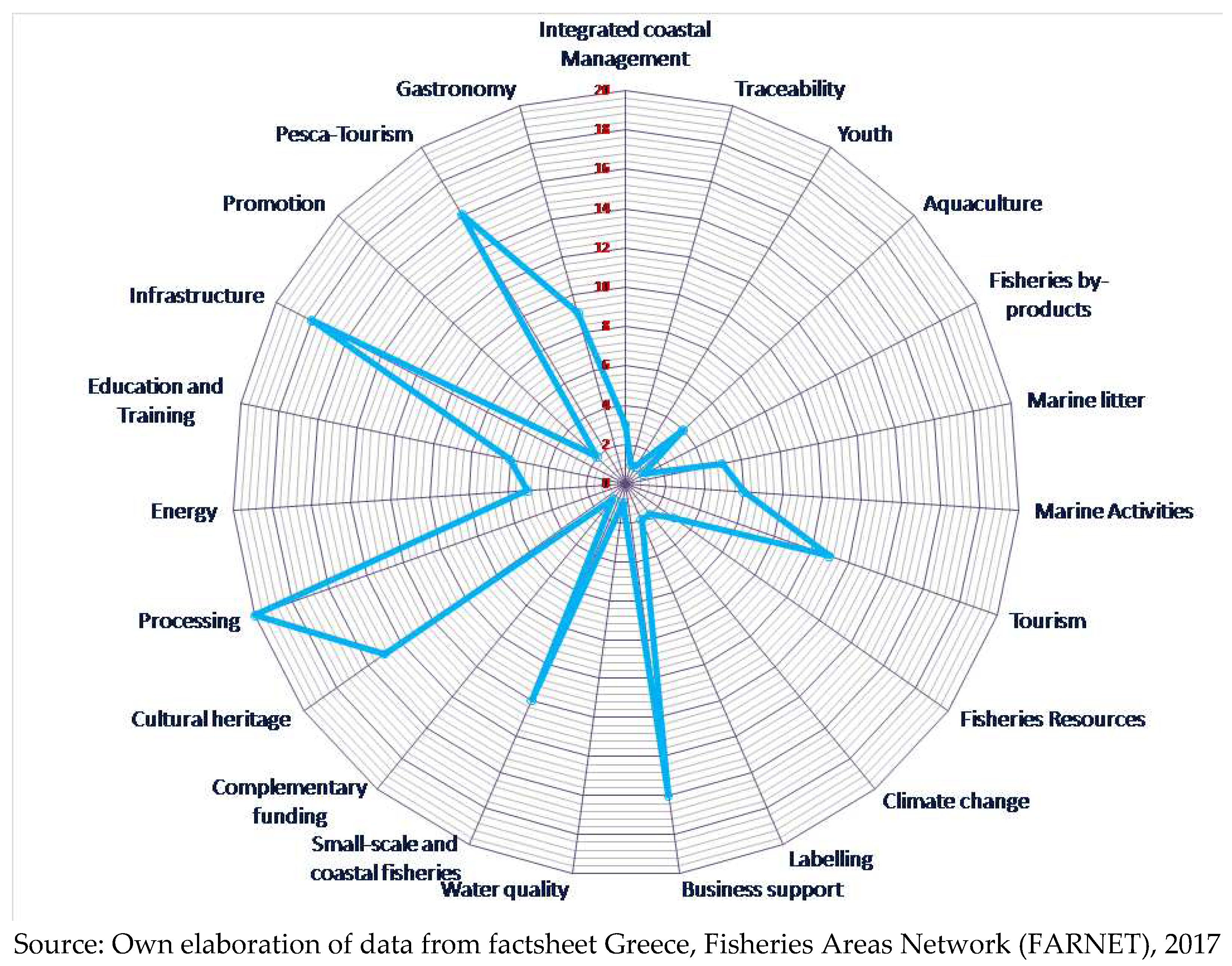
Figure 6.
Budget allocation to Greek FLAGs, 2014-2020.

Figure 7.
Impacts of the CLLD Strategies 2014-2020 on the fisheries dependent communities- Cumulative percentage of respondents “agreeing” to “strongly agreeing”.
Figure 7.
Impacts of the CLLD Strategies 2014-2020 on the fisheries dependent communities- Cumulative percentage of respondents “agreeing” to “strongly agreeing”.
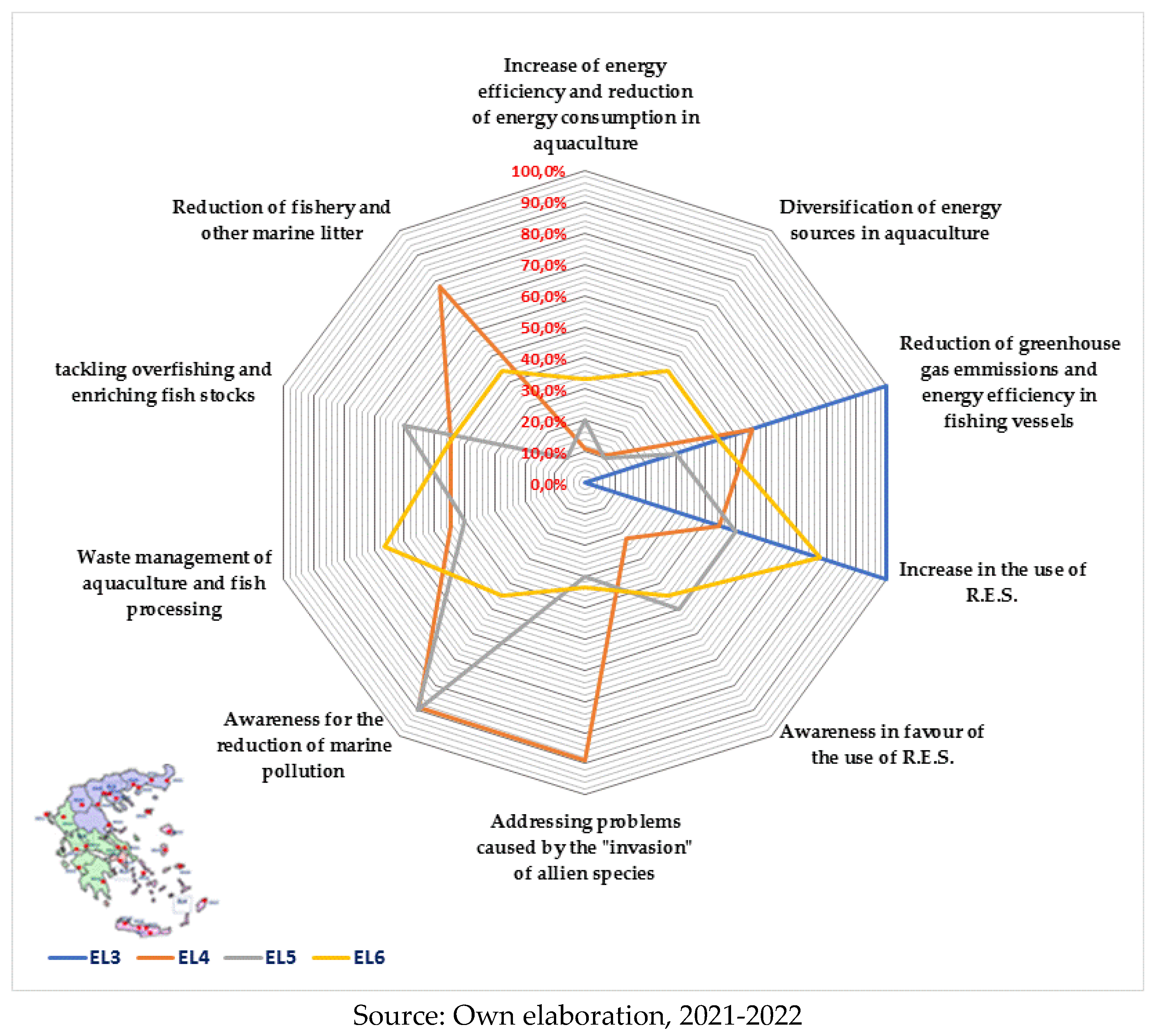
Figure 8.
Influence of Green Deal on CLLD strategies in the fisheries dependent communities, on a regional level (NUTS1).
Figure 8.
Influence of Green Deal on CLLD strategies in the fisheries dependent communities, on a regional level (NUTS1).
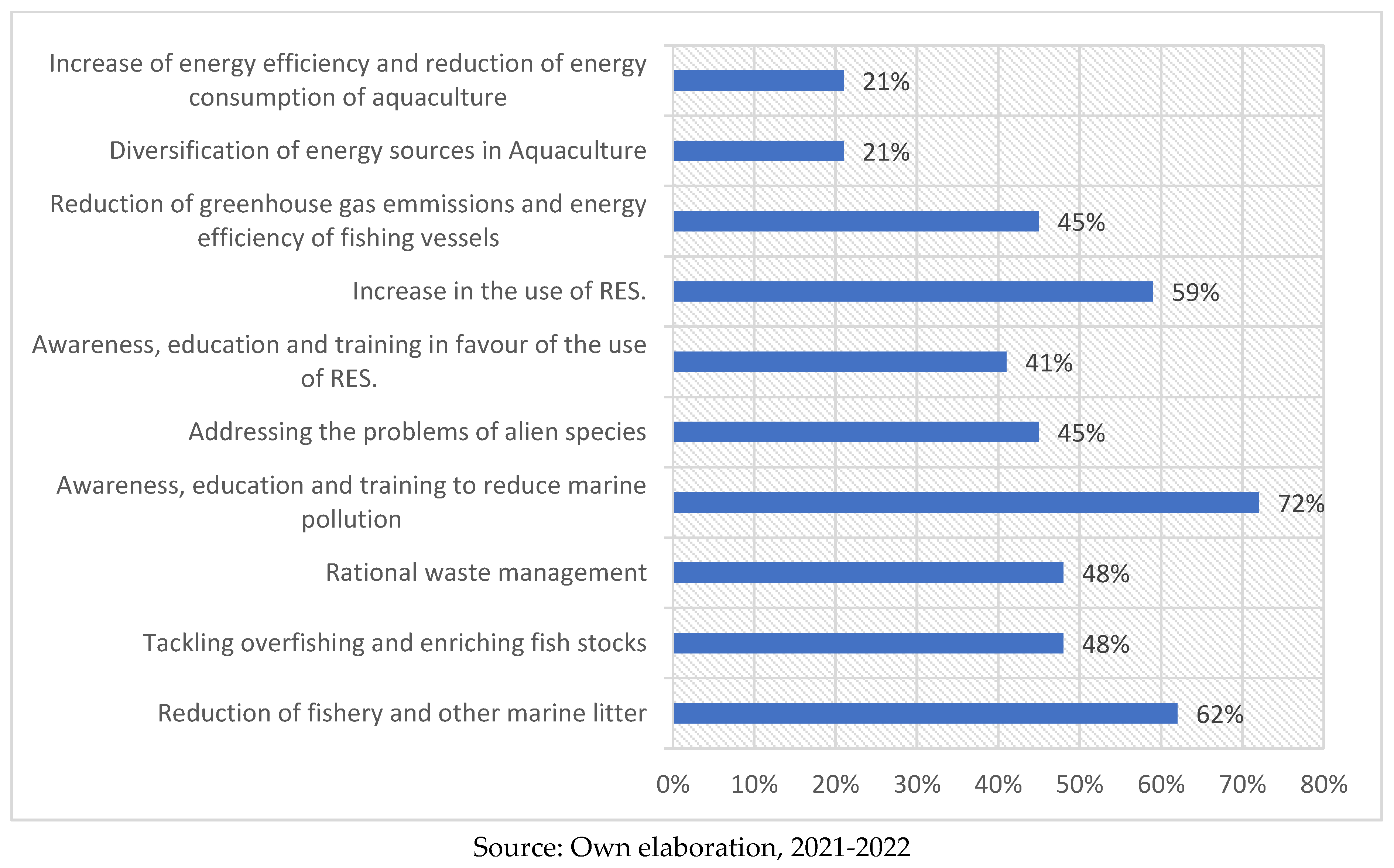
Figure 9.
Preparedness of fishery dependent areas, to adopt the thematic directions for the Sustainable Blue Economy in the new programming period 2021-2027, in Greece.
Figure 9.
Preparedness of fishery dependent areas, to adopt the thematic directions for the Sustainable Blue Economy in the new programming period 2021-2027, in Greece.
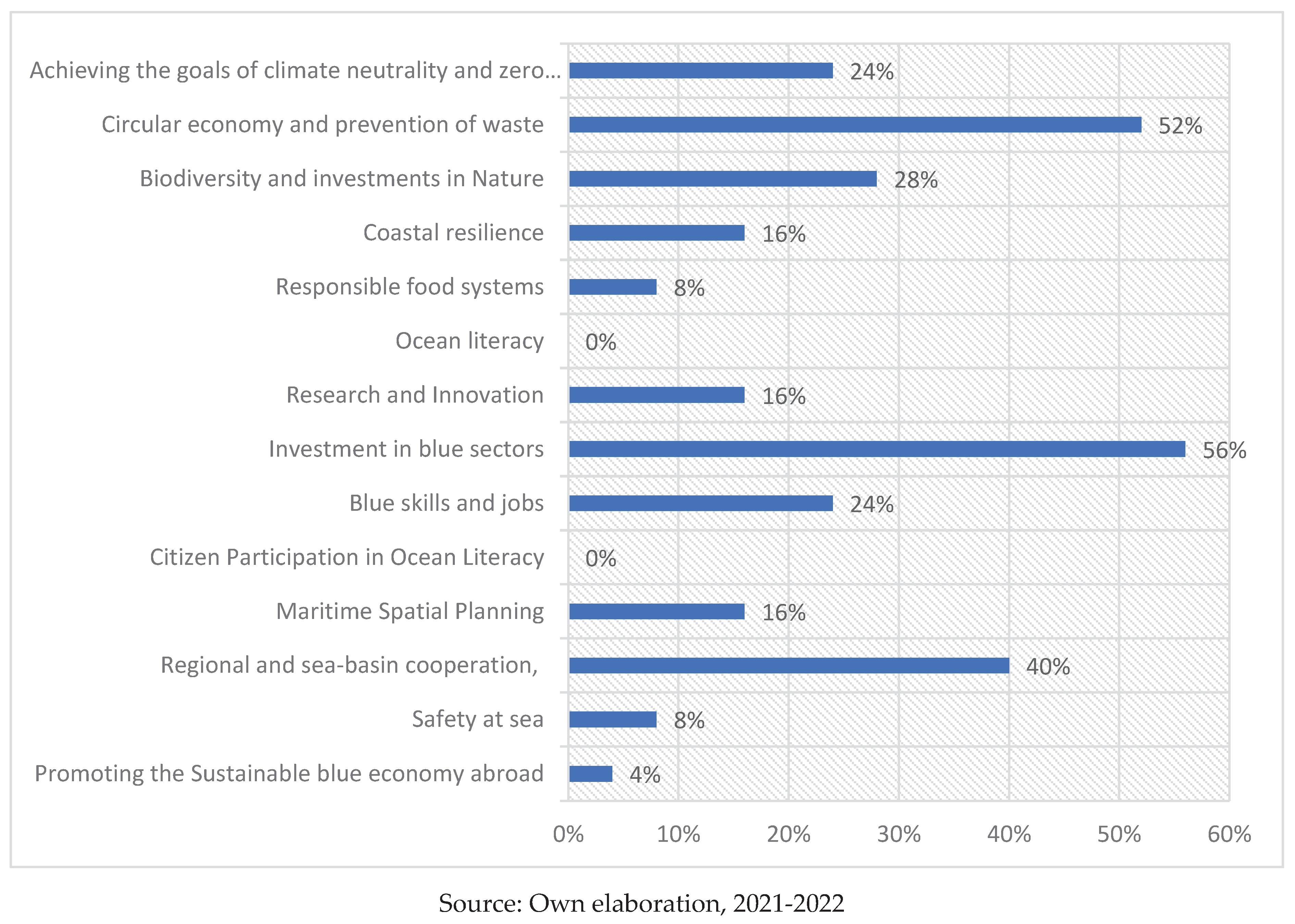
Table 1.
Alignment agenda of sustainable blue economy with the EGD.
| Objectives of EGD | Agenda for Blue Economy (May 2021) |
|---|---|
| Climate neutrality and zero pollution. | Development of offshore renewable energy, decarbonization of maritime transport and greening ports. |
| Switch to a circular economy and reduction of pollution | Establishment of renewed standards for fishing gear design, ship recycling, decommissioning of offshore platforms, actions to reduce plastics and microplastics pollution. |
| Preservation biodiversity and investment in nature | Protection of the 30% of the EU’s area to reverse biodiversity loss, increase fish stocks, contribute to climate mitigation and resilience, minimize environmental impacts on marine habitats and generate significant financial and social benefits. |
| Support of climate adaptation and coastal resilience | Development of green infrastructure in coastal areas that will protect coastlines from the risk of erosion and flooding, preserve biodiversity and landscapes and benefit tourism and coastal economy. |
| Sustainability of food production | New marketing standards for sea food, use of algae and seagrass, strong fisheries control, R&D in cell-based seafood and sustainable aquaculture. |
| Management improvement of space at sea | Establishment of a Blue Forum for users of the sea coordinating a dialogue between stakeholders and stimulating a cooperative exchange for the sustainable use of marine environment and the implementation of the EU Directive on Maritime Spatial Planning (MSPD). |
Source: European Commission, 2021 [52].
Table 3.
Actions prioritized to be supported by CLLD programs, per type of area.
| Type of Area | Actions Where Contribution Is Expected | Percentages Appeared in the Survey (Stating That They Agree to Strongly Agree) |
|---|---|---|
Excl. Insular
|
-reduction of gas emissions/ increase of energy efficiency of fishing vessels -reduction of fishery and other marine litter -awareness/education/training of people, local agencies and enterprises to reduce marine litter. -invasion of alien species in the Greek seas -increase of the energy efficiency of the fishing vessels |
54.5% 100.0% 72.7% 72.7% 50.0% |
Excl. Coastal
|
-increase in the use of renewable energy sources -reduce fishery and other marine litter -tackle overfishing and increase fish stocks -rational waste management of aquaculture and fish processing plants -awareness/education/training of people, local agencies, and entrepreneurs to reduce marine pollution. |
100.0% 63.6% 63.6% 63.6% 72.7% |
Inland
|
-increase the use of RES -tackle overfishing and enrich fish stocks -awareness/education/training in favor of the use of RES -reduce fishery and other marine litter -awareness/education/training of people, local agencies and enterprises to reduce marine pollution |
63.0% 100.0% 100.0% 63.6% 100.0% |
Insular & coastal
|
-reduce gas emissions/increase energy efficiency of fishing vessels -increase the use of RES -awareness-education-training in favor of the use of RES. -rational waste management of aquaculture and fish processing plants -reduce fishery and other marine litter -awareness/education/training of people, local agencies, and enterprises to reduce marine litter -increase energy efficiency of the fishing vessels |
54.5% 66.0% 66.6% 50.0% 50.0% 66.67% 50.0% |
Source : Research survey results and own elaboration.
Disclaimer/Publisher’s Note: The statements, opinions and data contained in all publications are solely those of the individual author(s) and contributor(s) and not of MDPI and/or the editor(s). MDPI and/or the editor(s) disclaim responsibility for any injury to people or property resulting from any ideas, methods, instructions or products referred to in the content. |
© 2023 by the authors. Licensee MDPI, Basel, Switzerland. This article is an open access article distributed under the terms and conditions of the Creative Commons Attribution (CC BY) license (http://creativecommons.org/licenses/by/4.0/).
Copyright: This open access article is published under a Creative Commons CC BY 4.0 license, which permit the free download, distribution, and reuse, provided that the author and preprint are cited in any reuse.


