

Submitted:
15 February 2023
Posted:
16 February 2023
You are already at the latest version
Abstract
In Africa, vector-borne diseases (VBDs) are still a major public health issue especially in cities that gather an increasing human population. Market gardening practices, for example, can favor the transmission of urban malaria, while insufficient water supply and waste management favor the circulation of arboviroses related to Aedes mosquitoes. Urban planning is a major challenge to mitigate vector risks. As a planning strategy, greening is a concept that is increasingly considered as a major element impacting the well-being of inhabitants, but also for the restoration of biodiversity in cities. Nevertheless, the impact of urban green spaces on vector risk remains poorly investigated, as they may serve as refuge for vectors. This is why the diversity of mosquitoes in terms of species and larval habitat, through larval prospections in environmental water collections and human landing catches, is studied here at an intra-urban interface area between a forest and an urban ecosystem in order to assess the vector risk generated by preserving a forest patch in the heart of Libreville, capital of Gabon, central Africa. Out of 104 water containers explored, 94 (90.4%) were artificial, mainly comprising gutters, used tires, and plastic bottles, while 10 (9.6%) were natural, comprising a puddle, streams, and tree holes. The majority of the water collections recovered (73.1%) were found outside of the forested area, natural and artificial ones considered together. A total of 770 mosquitoes belonging to 14 species were collected from water collections. The mosquito community was largely dominated by anthropophilic species like Aedes albopictus (33.5%), Culex quinquefasciatus (30.4%), and Lutzia tigripes (16.5%). The Shannon index of diversity showed that mosquitoes were almost twice less diversified inside the forest (0.7) than outside (1.3). However, both communities were quite similar in terms of common species and relative abundance (Morisita-Horn index = 0.7). Regarding Human landing catches, Aedes albopictus (86.1%) was the most aggressive species, putting people at risk of Aedes-borne viruses. This study uncovered the importance of considering urban forested ecosystems as potential drivers of disease emergence and spread in urban areas, as they might locally boost urban mosquito densities due to poor environmental practices, mainly maintained by humans through poor environmental practices. In Gabon, this study should contribute to guide targeted vector control strategies, especially regarding the implementation of policies for a better environmental management and vector surveillance in urbanized areas.
Keywords:
Vector-borne diseases
; urbanization
; urban forest
; Aedes
; Anopheles
; Culex
; Gabon
; central Africa
1. Introduction
Vector-borne diseases (VBDs) account for a significant proportion of human diseases worldwide [1]. On a global scale, Africa is one of the most affected continents, where malaria, arboviral diseases such as yellow fever (YF), chikungunya (CHK), dengue (DEN) or Zika (ZIK), and neglected tropical diseases such as lymphatic filariasis are the cause of several major health crises [1,2,3,4,5]. Among the affected regions, urban localities are concentrating an important part of the VBDs’ burden [6]. In central Africa, urban areas are commonly associated with significant prevalence of malaria [7,8,9,10,11] and arboviral diseases [12,13,14,15].
In central Africa, as in other sub-Saharan African countries, urbanization is poorly controlled. Insufficient water supply and poor waste management have led to a proliferation of mosquito breeding habitats that put populations at risk for VBDs [16,17]. This makes the issue of urban planning and environmental management of African cities an important challenge to be addressed in order to mitigate the risks associated with VBDs.
Greening cities (i.e., promoting and developing green spaces such as parks, agriculture areas, or ecological corridors within cities) is a concept that has been promoted in discourses because of their potential benefits to the environmental quality as well as human well-being [18]. In addition, urban green spaces are also recognized as sustainable solutions to mitigate climate warming, especially at microclimatic scale by regulating the ambient temperature in cities through the freshening of the air provided by the shade of trees [18]. Alongside its beneficial impact over the quality of life in cities, the development of urban green spaces is also valued for its positive impact on carbon sequestration and biodiversity conservation [19]. However, in spite of these benefits, the potential downside of urban green spaces regarding public health issues, including the vector risk related to VBDs, is not yet well understood. In temperate zones some investigations have shown that urban woodland vegetation cover appears to facilitate dispersal and create movement corridors for Aedes mosquito females in search of egg-laying sites, whereas grasslands with few tall grasses seems to limit them [20]. In tropical America, the presence of high vegetation is likely to define a microclimate locally impacting the relative humidity of the air, leading to a positive association with the presence of Aedes mosquitoes [21]. Similarly, urban forests have shown substantial changes in mosquito communities, including the two most important arbovirus vectors, Ae. albopictus and Ae. aegypti. These species, especially Ae. albopictus, may use the forest as a refuge and act as “bridge vectors” of arboviruses between forest and anthropogenic settings [22]. However, in Africa, there is a need to elucidate how urban green spaces shape mosquito communities and impact the risk related to VBDs since their potential as refuges or incubator ecosystems for mosquito vectors has received little attention.
In Gabon, 85% of the national population lives in urban areas [23], and these are the places of origin of most of the people affected by VBDs [12,24,25,26]. With a dense forest covering more than 80% of the national territory, placing the country at the upper end of per capita forest area rates in Africa [27], the question of the impact of urban green spaces on the modulation of the epidemiological patterns of VBDs is of high priority to address. In the present study, we explored the diversity and the larval microhabitat typology of mosquitoes at an intra-urban interface between a frequently visited forested reserve and built-up surroundings in order to evaluate the VBDs’ entomological risk related to that ecosystem within the city of Libreville, capital of Gabon, central Africa.
2. Materials and Methods
2.1. Study area
This study was carried out from July 14th to August 20th 2020, during the long dry season (which last from June to September), in the Sibang arboretum (0°24’58″N and 9°29’23″E) and its inhabited surroundings (Figure 1). The study was conducted during the dry season as we suspected that this wooded area may serve as a refuge for mosquitoes during that period of low rainfall, and there was a need to investigate the mosquito communities as well as the vector risk associated to that ecosystem. The Sibang arboretum is a forest park covering 160,000m2 and located in an urbanized area of the eastern part of Libreville crossed by the Adoung river. Cordier (2000) reported a diversity of 137 plant species and at least forty species of birds, and a poorly quantified diversity of vertebrate animals including reptiles and small mammals such as squirrels. Despite its protected status, the Sibang arboretum is subject to an important anthropogenic pressure, which is strongly marked by the presence of diverse traces of human frequentation and the accumulation of rubbish deposited in certain locations up to several tens of meters inside the arboretum (Figure 2).
2.2. Larval sampling
Larval prospections were conducted during 13 non-consecutive days outside and inside the forest block. Outside the forest, larval prospections were conducted over a radius of 800m around the forest block. Mosquito breeding sites were prospected as exhaustively as possible depending on field accessibility and permission from residents to visit their properties. Over the collection period, the sampling effort for larval prospections lasted of 15 hours and 63 hours inside and outside the forest respectively.
Water containers were explored in sites visited to collect immature stages of mosquitoes (Fig 1C). Larvae and pupae were collected using a dipper or a pipette when required and transferred into vials labeled according to the container type, the site location, and the date. At the entomological laboratory of the Research Institute for Tropical Ecology (IRET), in Libreville, larvae and pupae were placed into labeled trays covered with a mosquito net and maintained at room temperature until the emergence of adults. Upon emergence, adult mosquitoes were successively stored at -20°C for 30 minutes to be euthanized, then morphologically identified to species (or genus) using a binocular microscope (Leica Microsystems ©). Identification was aided by “custom” taxonomic keys based on updates of the Edwards’ identification keys for Ethiopian mosquitoes [29], and the Huang’s key for the subgenus Stegomyia of Aedes mosquitoes from the Afrotropical region [30]. Species were named according to the online list of valid species (http://mosquito-taxonomic-inventory.info).
2.3. Human landing collection
Adult female mosquitoes looking for blood meal were collected using diurnal human landing collection technique (HLC). The study benefited from ethical approval (permit No. 016/2019/PR/SG/CNE) from the National Ethic Committee. Three volunteers, posted at three fixed capture sites, collected adult females during two consecutive sampling sessions. The first sampling session was conducted inside the forest, and the second one was conducted outside the forest. During each session, the capture sites were distanced by at least 50m from each other (Figure 1C). Each sampling session consisted in 3 consecutive days of diurnal captures, from 10:00 am to 2:00 pm (4h per day), representing a sampling effort of 12h. Mosquitoes were captured with a mouth aspirator upon landing on the volunteer’s bare legs and then transferred into a plastic jar covered with a net to prevent mosquito escape. Once the captures were completed, the mosquitoes were transported to the IRET’s entomological laboratory for identification. After the euthanasia process, mosquitoes were then morphologically identified and counted as described above.
2.4. Data analysis
All statistical analyses were done using the R software v3.6.1 (https://www.r-project.org/) and spatial analyses were performed using Quantum GIS version 3.10.7 (https://www.qgis.org/). Species richness was determined as the number of mosquito species recovered. The species diversity according to the number of species and their respective abundance was assessed using the Shannon-Weaver index (H) [31] using the “diversity” function of the vegan package. To investigate the similarity in terms of species composition and density between mosquito communities from inside and outside the forest, the Morisita-Horn similarity index (C) [32] was calculated using the “vegdist” function of the vegan package. Because “vegdist” is an analysis of dissimilarity (C’), C = 1 − C’ was used for this study. C ranges from 0 (0% of similarity between both compartments) to 1 (100% of identity between both compartments).
Environmental variables were collected to characterize the larval habitats exploited by mosquitoes of the Sibang arboretum and its surroundings. These variables included the physical description of the substrate, the type (artificial vs natural), and the spatial location of the larval habitat (inside the forest vs outside the forest). We used a Multiple Correspondence Analysis (MCA) to assess the similarity level of larval habitats according to their species composition and environmental characteristics. It allowed to assess the mosquito species’ degree of specificity related to the type and the location of larval habitats. The MCA was also used to discriminate the most relevant biotic and environmental variables associated with this larval habitat segregation.
We performed a k-means analysis based on Ward’s method using the fpc package [33] coupled with the Calinski Harabasz index (CH index) [34] to determine the minimal parsimonious number of ecological clusters of species. Based on a Principal Component Analysis (PCA) using the FactoMineR package [35], we performed an Ascendant Hierarchical Clustering (AHC) to determine and visualize species’ clusters likely to occur together within the same micro-ecological niche.
In order to assess the aggressiveness of bloodmeal-seeking female mosquitoes according to the sampling location (inside vs outside the forest), we used the Wilcoxon’s test based on count data from HLC. An analysis of variance (ANOVA) was performed to determine the differences in the number of captured specimens per person between species within each sampling location.
3. Results
3.1. Typology and positivity of larval habitats inside and outside the forest
A total of 104 water collections were explored in the Sibang district (Figure 1). Out of them, 29 (27.9%) were recovered inside the forest area (5 natural and 24 artificial), and 75 (72.1%) outside the forest area (3 natural and 72 artificial) (Table 1). However, regarding the sampling effort, the number of water collections recovered per hours was 1.9 inside the forest, whereas it was 1.1 outside the forest. Regarding the type of water collection, 10 of them (9.6%) were natural, whereas 94 (90.4%) were artificial (Figure 3A). The natural water collections inspected were tree holes (50%), streams (40%) and a puddle (10%). Artificial water collections included plastic containers (34%), puddles (19.1%) (formed from piped water leakage), gutters (18.1%), worn tires (14.9%), and other kind of detritus each accounting for less than 15%, including a worn freezer, a tin can, a glass jar, a wash basin or various metallic containers (Table 1). Regarding the positivity of water collections (presence of at least one mosquito larva or pupa in water collections), we found that the quasi-totality (inside the forest) or the totality of them (outside the forest) were positive, accounting for 96.4% (n = 27) and 100% (n = 76) respectively, natural and artificial types considered together (Figure 3B). We found that inside the forest, natural and artificial containers were positive at 100% (n = 8) and 95% (n = 19) respectively. However, outside the forest, all the natural (100%, n = 2) and artificial (100%, n = 74) containers were found positive.
3.2. Mosquito species composition and diversity
After larval rearing at the insectary, a total of 770 adult mosquitoes emerged and were morphologically identified. These mosquitoes belonged to 14 species grouped into 6 genera, including Aedes (2 species), Culex (8 species and 1 undetermined), Anopheles (1 species), Eretmapodites (1 species), Lutzia (1 species), and Toxorhynchites (1 species) (Table 2). Overall, the species assemblage was largely dominated by Ae. albopictus (33.5%), Cx. quinquefasciatus (30.4%), and Lu. tigripes (16.5%), whereas Cx. cinerellus, Cx. decens, Cx. duttoni, Cx. trifilatus, Cx. umbripes, Cx. univittatus, Er. inornatus, and Tx. evansae were relatively less abundant, each one representing less than 1% of the total assemblage (Table 2). Inside of the forest, there was a predominance of Ae. albopictus (77%), Cx.quinquefasciatus (13.8%), and Lu. tigripes (6.9%) in artificial habitats, whereas in natural ones, only Cx. taufliebi (50%) and Lu. tigripes (22.7%) were the most predominant species (Table 2). Concerning larval habitats explored outside the forest, Cx. quinquefasciatus (35.1%), Ae albopictus (29.7%), and Lu. tigripes (17.1%) were the most predominant species in artificial containers. However, in natural ones, Cx. taufliebi (67.8%) and Lu. tigripes (28.6%) were the most predominant species recovered. However, we noticed that Ae. albopictus and An. gambiae s. l. were absent from all natural habitats (Table 2). According to the Shannon-Weaver index, mosquitoes appeared almost twice less diverse inside the forest (H = 0.7) than outside the forest (H = 1.3). However, both compartments showed an overall community similarity level valued at C = 0.7 (i.e. 70% of similarity, which is associated with the amount of shared species between both compartments and their relative abundance within the respective communities).
3.3. Larval habitat typology, similarity and species culsturing
According to the type of larval habitats, we observed that Ae. albopictus was mainly found in artificial breeding containers. Additionally, this species was associated with higher relative abundances in both compartments compared to the other ones (Table 2). Similarly, Cx. quinquefasciatus was mostly recovered in artificial breeding containers (13.8% and 35.1% inside and outside the forest respectively). However, Lu. tigripes was most relatively abundant in natural (22.7% and 28.6% inside and outside the forest respectively) (Table 2). Regarding Ae. aegypti and An. gambiae s. l., we observed that the first species was exclusively recovered in artificial breeding containers and outside the forest at 100%. The second one was almost exclusively found in artificial breeding sites located outside the forest (6.5%) (Table 2).
Regarding the level of similarity of larval habitats, the MCA revealed that the best-correlated variables associated with the larval habitat distribution were their type (i.e. whether the habitat was natural or artificial) and spatial location (i.e. whether the habitat was located inside or outside the forest), as well as the presence of the species Ae. albopictus, An. gambiae s. l., Ae. aegypti, Lu. tigripes, Cx. quinquefasciatus, Cx. trifilatus, Cx. duttoni, and Er. inornatus (Figure S1). These variables allowed to explain 38.4% of the total variance associated with the species composition of larval habitats. Thus, the analysis showed a clear segregation of larval habitats according to their spatial location, and according to their type (Figure 4A & 4B). In terms of larval habitat specificity for mosquito species, our results revealed that in the Sibang area, mosquito larval habitats are likely to be exploited by species that could be characterized as specialist (i.e. those with a high level of habitat specificity: Ae. aegypti, An. gambiae s. l., Cx. trifilatus, Cx. duttoni and Er. inornatus), opportunistic (i.e. species that are not highly specialized, having a preferential biotope, but which are able to adapt under a certain range of environmental conditions different from that of specialist species: Ae. albopictus and Lu. tigripes) or ubiquitous (i.e. species highly adapted to occupy and proliferate in varied ecological niches, possibly with a wide geographical distribution: Cx. quinquefasciatus) (Figure 4C-4J). Indeed, our observations revealed that among the most relatively abundant species, the breeding sites that were mostly exploited by species were discarded plastic containers or worn tires for Ae. albopictus (opportunistic species), and metallic or concrete containers (i.e. wash basin, see Table 1) for Cx. quinquefasciatus (ubiquitous species) (Figure 5). However, Lu. tigripes, appeared also opportunistic by exploiting in more equivalent proportions discarded tires, puddles, plastic, metallic or concrete containers (Figure 5). Furthermore, regarding species known as the main vectors of public health concern, the breeding sites that were almost exclusively exploited by Ae. aegypti and An. gambiae s. l. were plastic containers and puddles (both natural and artificial) respectively (Figure 5).
Concrete containers include wash basin and gutters.
In order to assess the degree of ecological niche similarity among mosquito species at the larval microhabitat scale, the k-means method based on the PCA (72.8% of the total explained inertia of count data over the first two principal components, see Figure S2) and the CH index revealed that the minimal parsimonious number of ecological clusters of species is four (Figure 6A). These clusters included two that were mono-specific (cluster 2: Ae. albopictus; cluster 3: Cx. quinquefasciatus) and two that were multi-specific ones (cluster 1: Ae. aegypti, Tx. evansae, Cx. umbripes, Cx. decens, Cx. trifilatus, Cx. cinerellus, Cx. univittatus, Cx. duttoni, Culex sp., Er. inornatus; cluster 4: Cx. taufliebi and Lu. tigripes) (Figure 6B). Indeed, our analysis showed that the species that belonged to the same cluster were more likely to share the same type of larval ecological niche in the Sibang area.
3.4. Biting patterns of mosquito species
A total of 874 female mosquitoes distributed into three species were captured and identified. Among them, 755 (86.4%) were captured inside the forest and 119 (13.6%) outside the forest during the time slot surveyed (10:00 am to 2:00 pm). Regarding the species composition of mosquitoes collected according to the sampling, Ae. albopictus, with 753 specimens captured (86.1%) was to a large extent the main aggressive species for human, with a peak of aggressiveness of 35.2 bites/person/hour (bph) reached between 11:00 am and 12:00 pm inside the forest (Figure 7A). Aedes aegypti and Er. inornatus for which 108 (12.4%) and 13 (1.5%) specimens were captured respectively appeared less aggressive with less than 5 bph regardless of the spatial location. Globally, the ANOVA test showed that Ae. albopictus was significantly more aggressive than Ae. aegypti and Er. inornatus (F = 11.8; df = 2; p < 0.001). When comparing the aggressiveness inside and outside the forest, Ae. albopictus was significantly more aggressive inside the forest than outside (W = 140, p < 0.001) (Figure 7B), whereas no significant difference was found between both locations for Ae. aegypti (W = 84.5, p = 0.5) (Figure 7B). Analyzing data for each species separately based on the spatial location revealed that. Er. inornatus was only captured inside the forest (Figure 7B).
4. Discussion
4.1. Mosquito communities in the urban forested area of Sibang
This entomological survey aimed to describe the species diversity and the larval microhabitat typology of mosquito communities in an urban forested reserve and in its direct surroundings to evaluate how such a green area could impact the VBDs’ entomological risk within the city of Libreville, Gabon. A hundred and four potential breeding sites were surveyed, of which the large majority were found positive with mosquito larvae both inside and outside the forest area. The types of larval habitats recovered, especially for Aedes, Culex and Lutzia mosquitoes which were the most predominant genera, were consistent with what has been reported (i.e. tires, plastic containers, gutters, or tree holes) for these mosquito genera in previous investigations done elsewhere, including in Gabon for Aedes, Culex and Lutzia mosquitoes [36,37,38], central Africa [39,40,41], in Asia [42,43], and in south America for Aedes and Culex mosquitoes [44,45,46].
Regarding the species composition within larval habitats, we found that overall, among all the species recovered, Ae. albopictus, Cx. quinquefasciatus and Lu. tigripes were the most predominant species. Indeed, as shown earlier, the predominance of Ae. albopictus can be explained by the predominance and the availability of artificial water containers which are known as suitable habitats for this species, as previously demonstrated elsewhere [40]. Previous studies demonstrated the natural predatory ability of Lu. tigripes over other mosquito species, including mosquitoes of Aedes genus [47,48,49,50]. Thus, the abundance and distribution of Lu. tigripes could follow the dynamics of the other predominant species that it uses as prey. Regarding our results, the relatively high abundance of Cx. quinquefasciatus confirms its ubiquity in exploiting various types of larval habitats, especially artificial habitats mostly found in highly populated areas such as urban settings [39].
Although one specimen of An. gambiae s. l., the major malaria vector in the world, was recovered in a natural puddle inside the forest, this species was almost only found in artificial larval habitats located outside of the forest which were exclusively open puddles, solely maintained by domestic wastewater runoff, which are among the typical larval habitats known to be created by human activity for this species [51,52,53,54]. However, we found three specimens of this species in a discarded tire outside the forest. As this species is known so far to exploit a well-defined range of natural or artificial breeding sites, including but not limited to temporary or permanent ground puddles or pools, water-filled ruts, roadside gutters, or unused dugouts [51], this result confirm the use of unusual microhabitats, including those exploited by Aedes mosquitoes larval habitats, as described for An. stephensi, an emerging malaria vector in Africa [55].
Although we did not explore particular sites such as epiphytic plants or tree holes at high elevations, or underground animal burrows for potential breeding sites because of access difficulties, our observations indicate that the mosquito diversity within the forested compartment is 2-fold lower than the diversity of mosquitoes outside the forest. In the forested compartment, we did not find any species presumed to be exclusively sylvatic. However, we found some species which have already been observed in a natural sylvatic condition elsewhere in Africa. Indeed, Diallo et al. (2019) reported An. gambiae s.l., Cx. decens and Cx. quinquefasciatus in forest canopy in Senegal (in a forested area of the Kédougou region), although these three species were described as rare in that forested habitat. Similarly, Pereira dos Santos et al. (2018) reported Ae. albopictus in relatively high abundance up to several hundred meters inside an urban forest in Brazil. The absence of exclusively sylvatic species could be due to a lack of suitable conditions for sylvatic species, most of the time characterized by the existence of productive natural breeding sites (e.g. leaf axils, tree holes, rock holes, fruit shells, etc.), or the absence of animal host species on which sylvatic mosquito species depends for their blood meals. However, performing this study in the rainy season could have increased the number of species to detect, including potential forest specialist species. Overall, in spite of their difference in mosquito diversity, both investigated compartments (i.e. inside and outside the forest) showed quite an important similarity during the dry season. This result is mostly due to the high relative abundance of the bulk of species they have in common (i.e. Ae. albopictus and Cx. quinquefasciatus), thus rendering their communities to be similar.
Our analyzes showed a clear segregation of larval habitats based on their type and their spatial location, that could be explained by the inherent ecological preference of all the species recovered. We could then deduct for the Sibang district a range of species that we could describe as specific, with a limited ecological niche such as Ae. aegypti, which was exclusively found in plastic artificial containers outside of the forest, clustering with other species including mainly Culex spp. It is also the case for An. gambiae s. l., which was almost exclusively found in ground puddles. In the same way, we could also identify opportunistic species, characterized by a higher ecological plasticity during larval development such as Ae. albopictus and Lu. tigripes, which were found exploiting artificial or natural microhabitats inside and outside of the forest (e.g. discarded tires, plastic, metallic or concrete recipients, puddles, or tree holes). Aedes albopictus and Lu. tigripes were not clustering together maybe because both species do not have the same microhabitat preference in this particular environmental setting. Finally, we could identify ubiquitous species, characterized by a large ecological niche, especially in man-made microhabitats. This is the case of Cx. quinquefasciatus that we recovered mostly across metallic and concrete containers, but also tires and plastic containers, even to a lesser extent.
4.2. The mosquito proliferation drivers in the urban forested area of Sibang
On the field, we observed that the infestation level of artificial water collections was very high, even in the arboretum (the interior of the forest), which is obviously used as a waste dump (see Figure 7 C&D). Moreover, this abundance of human-sourced breeding sites tends to indicate a convergence of breeding site types (mostly associated with waste dumping), available hosts, and consequently mosquito communities, both inside and on the forest’s periphery. Indeed, there is a high level of anthropogenic pressure from neighboring households on the arboretum ecosystem, which is characterized by an excessive accumulation of domestic waste inside the forest, and prone to favor the proliferation of major disease vector species, especially those exploiting artificial breeding containers such as Ae. albopictus, or Ae. aegypti or Cx. quinquefasciatus.
4.3. Mosquito aggressiveness in the urban forested area of Sibang
Within the time frame of the human landing captures (10:00 am – 2:00 pm), Ae. albopictus was by far the most predominant species collected, with a peak of aggressiveness observed between 11:00 am and 12:00 pm, which was associated with a biting rate of 35.2 bph inside the forest. In previous studies, Kamgang et al. (2012) in Cameroon and Delatte et al. (2010) in La Reunion reported peaks of aggressiveness for Ae. albopictus later during daytime between 4:00 pm and 5:30 pm, suggesting that it is quite possible that the aggressiveness of this species in the Sibang area might be much higher than what we have observed.
Among the species recovered, Ae. albopictus rises as a worldwide invasive arboviral vector of major public health concern [60], which has already been responsible for past chikungunya outbreaks in Gabon [12,61,62]. To the best of our knowledge, data comparing the biting rate associated with Ae. albopictus from inside and outside of a forested compartment, both in anthropized and wild environments, are currently not well documented. However, in the present study, the level of aggressiveness associated with Ae. albopictus was more than 2-fold higher than what has been observed in Libreville previously in suburban neighborhoods (15.7 bph) [37], some of which were wooded areas with chikungunya transmission records, but never under forest cover. Furthermore, past investigations conducted in 2009 in the Central African Republic (CAR) which included forested peri-domestic areas among the sampling sites, reported relatively low biting rates reaching a peak of 1.7 bph [63]. This result might be because the period Diallo and colleagues conducted their study corresponded to the early stage of the invasion of Ae. albopictus in the CAR, probably associated with low densities of the former. Another reason could be that this forest had not been an area of waste dumping, which seems to be, based on our results, a driver of Ae. albopictus proliferation and aggressiveness. To go further, supplementary surveys will be needed to have estimations of the level of biting rate associated with Ae. albopictus over a longer period of time during the day in the region. In terms of public health concerns, our results show that in reason of a large population of Ae. albopictus sourced from the Sibang urban forest, the exposure of the human populations from this side of Libreville to diseases transmitted by Ae. albopictus is to be regarded as a matter of priority for disease outbreak surveillance programmes, especially for those living in the surroundings of the arboretum.
Ae. aegypti was the second most aggressive species, far behind Ae. albopictus, especially inside the forest. The low biting rate and the non-significant difference in the captured females of Ae. aegypti between the inside and the outside of the forest could be the result of the scarcity of this species in the Sibang district, regardless of the special location (inside vs outside of the forest). In addition, the fact that larval stages of this species were found in relatively low proportion compared to Ae. albopictus, suggest that this species could be prone to a population decline resulting from the successful invasion of Ae. albopictus, as suggested in central Africa [37,41,64], and elsewhere in the world [65,66].
Among both Aedes (Stegomyia) species, Ae. albopictus is well known for its opportunistic blood-feeding behavior and high vector competence for a number of viruses with pathogenic effects in humans (Pereira-dos-Santos et al., 2020). Studies conducted in the early 2000s in the Sibang arboretum reported a high biodiversity of vertebrate animals, including several species of small mammals, reptiles and birds [28]. Thus, the high density of Ae. albopictus would be likely to not only increase the risk of inter-human transfer of Ae. albopictus-borne pathogens, but also represent a risk for potential zoonotic pathogens that could be hosted by the vertebrate animals in this forested patch, including birds and rodents, and be transmissible by this vector. Indeed, both animal groups are recognized hosts (or potential hosts) for zoonotic arboviruses, including but not limited to West Nile virus for birds [67].
4.4. Mosquito aggressiveness in the urban forested area of Sibang
This study in the urban forested area of Sibang, which highlighted the important level of aggressiveness of the arbovirus vector Ae. albopictus, stressed out the potential risk of arbovirus transmission associated with this urbanized and forested district of Libreville. Such a risk could be exacerbated by a potential boost effect of the forested compartment of the Sibang district, which might constitute a human-maintained incubator ecosystem and resting place for vectors, and which might facilitate and sustain disease spread during epidemic periods.
Our results also highlighted as well the issue of the vegetation of urban cities, which might modulate the burden of vector-borne diseases by being a factor that intensifies (due to a high density of mosquitoes) or dilutes (due to the presence of alternative hosts for mosquitoes to feed on) the transmission of these diseases in such areas. As it has been shown by Araujo et al. (2015) in a Brazilian city that incidence of dengue was higher in heat islands than in forested neighborhoods considered as more fresh. Here we could suggest that urban forests could be considered as “islands of coolness” that might mitigate the spread of arboviruses, for example by slowing down the replication rate of viruses in mosquito vectors that live under the forest cover. Thus, the benefit of developing green spaces (e.g. in temperate poorly forested countries) or managing them (e.g. in tropical and highly forested countries) could be effective in terms of service to biodiversity, climate warming mitigation and the well-being of urban citizens. Therefore, urban forest island such as the Sibang forest should rather be well planned and/or managed to mitigate the risks associated with these urban forested ecosystems regarding environmental-driven diseases in general, and vector-borne diseases in particular.
5. Conclusions
In conclusion, this study conducted in the urban forested area of Sibang, allowed the recording of a bit more than 12% of the number of the currently known mosquitoes species reported in Gabon [37,69,70,71,72]. The investigations revealed a variety of larval habitats exploited by the mosquito species recovered from the study area. These habitats were artificial in majority and mainly created by humans. The study uncovered the importance of considering urban forested ecosystems as potential drivers of disease emergence and spread in urban areas, which should be included in vector control strategies. In Gabon, this study should contribute to guide vector control strategies, particularly through the implementation of policies to ensure a good environment management and the surveillance of vectors in urbanized areas.
Supplementary Materials
The following supporting information can be downloaded at: Preprints.org.
Author Contributions
Conceptualization, Judicaël Obame-Nkoghe and Boris Kevin Makanga; Data curation, Judicaël Obame-Nkoghe; Formal analysis, Judicaël Obame-Nkoghe, Boris Kevin Makanga and Prune Komba; Funding acquisition, Judicaël Obame-Nkoghe and Christophe Paupy; Investigation, Judicaël Obame-Nkoghe, Boris Kevin Makanga, Sylvie Brizard Zongo, Aubin Armel Koumba, Rodolphe Akone-Ella, Lynda Nkoghe-Nkoghe, Marc-Flaubert Ngangue-Salamba and Patrick Yangari; Methodology, Judicaël Obame-Nkoghe and Boris Kevin Makanga; Project administration, Judicaël Obame-Nkoghe; Resources, Sophie Aboughe-Angone; Supervision, Christophe Paupy; Visualization, Judicaël Obame-Nkoghe and Boris Kevin Makanga; Writing – original draft, Judicaël Obame-Nkoghe, Boris Kevin Makanga; Writing – review & editing, Neil-Michel Longo-Pendy, Franck Mounioko, Sylvie Brizard Zongo, Florence Fournet, Pierre Kengne and Christophe Paupy.
Funding
This research was funded by the Centre Interdisciplainre de Recherhces Médicales de Franceville (CIRMF), and was co-funded by the French National Research Agency (ANR PRC TIGERBRIDGE under grant number 16-CE35-0010-01), the Africa Research Excellency Fund (AREF-312-OBAM-F-C0894) and the European Union, through the African Research Initiative for Scientific Excellence - Pilot Programme (Grant n° ARISE-PP-FA-72). ARISE is implemented by the African Academy of Sciences with support from the European Commission and the African Union Commission. The contents of this document are the sole responsibility of the authors and can under no circumstances be regarded as a reflecting position of the European Union, the African Academy of Sciences, and the African Union Commission.
Institutional Review Board Statement
The study was conducted in accordance with the Declaration of Helsinki, and approved by the National Ethic Committee (permit No. 016/2019/PR/SG/CNE).
Informed Consent Statement
Informed consent was obtained from all subjects involved in the study.
Data Availability Statement
The data presented in this study are available on request from the corresponding author.
Acknowledgments
We acknowledge the staff of the Institute of Pharmacopoeia and Traditional Medicine (IPHAMETRA) for their assistance and facilitation access to the Sibang arboretum; the Ecole National des Eaux et Forêts (ENEF) for providing human resources; The Institute for Research in Tropical Ecology (IRET) and the Interdisciplinary Center for Medical Research of Franceville (CIRMF) for logistical support. We thank Mrs. Yelly-Trichina Matsougou-Nziengui, Mr. Halex-Jordan Ibrahim and Mr. Maxime Angoue-Ondo for their facilitation in investigation. Our gratitude to Dr Patricks Voua Otomo and Mr Assamouah Abotsi for the English revision of the manuscript.
Conflicts of Interest
The authors declare no conflict of interest.
References
- Brady, O.J.; Hay, S.I. The global expansion of dengue: how Aedes aegypti mosquitoes enabled the first pandemic arbovirus. Annu Rev Entomol. 2020, 65, 191–208. [Google Scholar] [CrossRef]
- Hoerauf, A.; Pfarr, K.; Mand, S.; et al. Filariasis in Africa—treatment challenges and prospects. Clin Microbiol Infect. 2011, 17, 977–985. [Google Scholar] [CrossRef]
- Rebollo, M.P.; Bockarie, M.J. Can lymphatic filariasis be eliminated by 2020? Trends Parasitol. 2017, 33, 83–92. [Google Scholar] [CrossRef] [PubMed]
- Weaver, S.C.; Charlier, C.; Vasilakis, N.; et al. Zika, chikungunya, and other emerging vector-borne viral diseases. Annu Rev Med. 2018, 69, 395–408. [Google Scholar] [CrossRef] [PubMed]
- WHO World malaria report. 2021. p. 2–5.
- Eder, M.; Cortes, F.; Teixeira de Siqueira Filha, N.; et al. Scoping review on vector-borne diseases in urban areas: transmission dynamics, vectorial capacity and co-infection. Infect Dis Poverty. 2018, 7, 1–24. [Google Scholar] [CrossRef]
- Koukouikila-Koussounda, F.; Ntoumi, F. Malaria epidemiological research in the Republic of Congo. Malar J. 2016, 15, 1–11. [Google Scholar] [CrossRef]
- Mbohou, C.N.; Foko, L.P.K.; Nyabeyeu, H.N.; et al. Malaria screening at the workplace in Cameroon. PLoS One. 2019, 14, e0225219. [Google Scholar] [CrossRef]
- Messina, J.P.; Taylor, S.M.; Meshnick, S.R.; et al. Population, behavioural and environmental drivers of malaria prevalence in the Democratic Republic of Congo. Malar J. 2011, 10, 1–11. [Google Scholar] [CrossRef] [PubMed]
- Olivier, B.M.B.; Eliezer, M.P.; Ngatimo, E.V.; et al. Influence of climate variability on the dynamics of malaria transmission among children in Bangui, health challenges in central African Republic. Open J Pediatr. 2022, 12, 461–475. [Google Scholar] [CrossRef]
- Tewara, M.A.; Mbah-Fongkimeh, P.N.; Dayimu, A.; et al. Small-area spatial statistical analysis of malaria clusters and hotspots in Cameroon; 2000–2015. BMC Infect Dis. 2018, 18, 1–15. [Google Scholar] [CrossRef]
- Leroy, E.M.; Nkoghe, D.; Ollomo, B.; et al. Concurrent chikungunya and dengue virus infections during simultaneous outbreaks, Gabon, 2007. Emerg Infect Dis. 2009, 15, 591. [Google Scholar] [CrossRef]
- Nana-Ndjangwo, S.M.; Djiappi-Tchamen, B.; Mony, R.; et al. Assessment of Dengue and Chikungunya Infections among Febrile Patients Visiting Four Healthcare Centres in Yaoundé and Dizangué, Cameroon. Viruses. 2022, 14, 2127. [Google Scholar] [CrossRef]
- Ushijima, Y.; Abe, H.; Mbadinga, M.J.; et al. Re-emergence of dengue, chikungunya, and Zika viruses in 2021 after a 10-year gap in Gabon. IJID Reg. 2022, 5, 68–71. [Google Scholar] [CrossRef]
- Vairo, F.; Aimè Coussoud-Mavoungou, M.P.; Ntoumi, F.; et al. Chikungunya outbreak in the Republic of the Congo, 2019—epidemiological, virological and entomological findings of a South-North Multidisciplinary Taskforce Investigation. Viruses. 2020, 12, 1020. [Google Scholar] [CrossRef]
- Gubler, D.J.; Clark, G.G. Community involvement in the control of Aedes aegypti. Acta Trop. 1996, 61, 169–179. [Google Scholar] [CrossRef]
- Lindsay, S.W.; Wilson, A.; Golding, N.; et al. Improving the built environment in urban areas to control Aedes aegypti-borne diseases. Bull World Health Organ. 2017, 95, 607. [Google Scholar] [CrossRef]
- Mathey, J.; Rößler, S.; Lehmann, I. Urban green spaces: potentials and constraints for urban adaptation to climate change. Resilient Cities. Springer; 2011. p. 479–485.
- Aronson, M.F.; Lepczyk, C.A.; Evans, K.L.; et al. Biodiversity in the city: key challenges for urban green space management. Front Ecol Environ. 2017, 15, 189–196. [Google Scholar] [CrossRef]
- Bergero, P.E.; Ruggerio, C.A.; Lombardo Berchesi, R.J.; et al. Dispersal of Aedes aegypti: field study in temperate areas using a novel method. 2013. [Google Scholar]
- Hayden, M.H.; Uejio, C.K.; Walker, K.; et al. Microclimate and human factors in the divergent ecology of Aedes aegypti along the Arizona, US/Sonora, MX border. EcoHealth. 2010, 7, 64–77. [Google Scholar] [CrossRef]
- Hendy, A.; Hernandez-Acosta, E.; Chaves, B.A.; et al. Into the woods: Changes in mosquito community composition and presence of key vectors at increasing distances from the urban edge in urban forest parks in Manaus, Brazil. Acta Trop. 2020, 206, 105441. [Google Scholar] [CrossRef]
- Chevalier, J.F.; Nguema Maganga, V.; Assoumou, S. Les forêt du Gabon en 2008 [Internet]. MEFEPPN; 2008. p. 61–73. Report No.: 3. Available online: https://www.google.com/url?sa=t&rct=j&q=&esrc=s&source=web&cd=&cad=rja&uact=8&ved=2ahUKEwjphuTlv7j8AhVEgP0HHdyKDFwQFnoECAkQAw&url=https%3A%2F%2Fwww.observatoire-comifac.net%2Ffile%2FeyJtb2RlbCI6IkFwcFxcTW9kZWxzXFxDYXRhbG9ndWVcXE1vZHVsZXNcXEZpbGUiLCJmaWVsZCI6ImRvY3VtZW50X2ZpbGUiLCJpZCI6NjU4fQ&usg=AOvVaw1fNKVWC7RI-UT7ZhkRMauD.
- Grard, G.; Caron, M.; Mombo, I.M.; et al. Zika virus in Gabon (Central Africa)–2007: a new threat from Aedes albopictus? PLoS Negl Trop Dis. 2014, 8. [Google Scholar] [CrossRef]
- M’bondoukwé, N.P.; Kendjo, E.; Mawili-Mboumba, D.P.; et al. Prevalence of and risk factors for malaria, filariasis, and intestinal parasites as single infections or co-infections in different settlements of Gabon, Central Africa. Infect Dis Poverty. 2018, 7, 1–17. [Google Scholar] [CrossRef]
- Ushijima, Y.; Abe, H.; Nguema Ondo, G.; et al. Surveillance of the major pathogenic arboviruses of public health concern in Gabon, Central Africa: increased risk of West Nile virus and dengue virus infections. BMC Infect Dis. 2021, 21, 1–11. [Google Scholar]
- Mayaux, P.; Bartholomé, E.; Fritz, S.; et al. A new land-cover map of Africa for the year 2000. J Biogeogr. 2004, 31, 861–877. [Google Scholar] [CrossRef]
- Cordier, S. Sibang, l’histoire d’un arboretum en Afrique. Nîmes Lett L’OCIM. 2000, 19–27.
- Edwards, F.W. Mosquitoes of the Ethiopian Region. III.-Culicine adults and pupae. Mosquitoes Ethiop Reg III-Culicine Adults Pupae. 1941. [Google Scholar]
- Huang, Y.-M. The subgenus Stegomyia of Aedes in the Afrotropical Region with keys to the species (Diptera: Culicidae). Zootaxa. 2004, 700, 1–120. [Google Scholar] [CrossRef]
- Shannon, C.E.; Weaver, W. The mathematical theory of information. Urbana Univ Ill Press. 1949, 97, 128–164. [Google Scholar]
- Magurran, A.E. Measuring biological diversity. Curr Biol. 2021, 31, R1174–R1177. [Google Scholar] [CrossRef]
- Hennig, C. fpc: flexible procedures for clustering (Version 2.2-9). 2020. [Google Scholar]
- Caliński, T.; Harabasz, J. A dendrite method for cluster analysis. Commun Stat-Theory Methods. 1974, 3, 1–27. [Google Scholar] [CrossRef]
- Lê, S.; Josse, J.; Husson, F. FactoMineR: an R package for multivariate analysis. J Stat Softw. 2008, 25, 1–18. [Google Scholar] [CrossRef]
- Koumba, A.A.; Koumba, C.R.Z.; Nguema, R.M.; et al. Distribution spatiale et saisonnière des gîtes larvaires des moustiques dans les espaces agricoles de la zone de Mouila, Gabon. Int J Biol Chem Sci. 2018, 12, 1754–1769. [Google Scholar] [CrossRef]
- Paupy, C.; Ollomo, B.; Kamgang, B.; et al. Comparative role of Aedes albopictus and Aedes aegypti in the emergence of Dengue and Chikungunya in central Africa. Vector-Borne Zoonotic Dis. 2010, 10, 259–266. [Google Scholar] [CrossRef]
- Sevidzem, S.L.; Pamba, R.; Koumba, A.A.; et al. Typology of breeding sites and species diversity of culicids (Diptera: Culicidae) in Akanda and its environs (North West, Gabon). Eur J Biol Biotechnol. 2020, 1. [Google Scholar] [CrossRef]
- Djoufounna, J.; Mayi, M.P.A.; Bamou, R.; et al. Larval habitats characterization and population dynamics of Culex mosquitoes in two localities of the Menoua Division, Dschang and Santchou, West Cameroon. J Basic Appl Zool. 2022, 83, 1–11. [Google Scholar] [CrossRef]
- Kamgang, B.; Happi, J.Y.; Boisier, P.; et al. Geographic and ecological distribution of the dengue and chikungunya virus vectors Aedes aegypti and Aedes albopictus in three major Cameroonian towns. Med Vet Entomol. 2010, 24, 132–141. [Google Scholar] [CrossRef] [PubMed]
- Ngoagouni, C.; Kamgang, B.; Nakouné, E.; et al. Invasion of Aedes albopictus (Diptera: Culicidae) into central Africa: what consequences for emerging diseases? Parasit Vectors. 2015, 8, 1–7. [Google Scholar] [CrossRef] [PubMed]
- Chen, C.; Nazni, W.; Lee, H.; et al. Mixed breeding of Aedes aegypti (L.) and Aedes albopictus Skuse in four dengue endemic areas in Kuala Lumpur and Selangor, Malaysia. Trop Biomed. 2006, 23, 224–227. [Google Scholar]
- SNRS; Norma-Rashid, Y.; et al. Sofian–Azirun, M. Mosquitoes larval breeding habitat in urban and suburban areas, Peninsular Malaysia. Int J Bioeng Life Sci. 2011, 5, 599–603. [Google Scholar]
- Ferreira-de-Lima, V.H.; Câmara, D.C.P.; Honorio, N.A.; et al. The Asian tiger mosquito in Brazil: Observations on biology and ecological interactions since its first detection in 1986. Acta Trop. 2020, 205, 105386. [Google Scholar] [CrossRef] [PubMed]
- Pereira E da, S.; Ferreira, R.L.; Hamada, N.; et al. Trichomycete fungi (Zygomycota) associated with mosquito larvae (Diptera: Culicidae) in natural and artificial habitats in Manaus, AM Brazil. Neotrop Entomol. 2005, 34, 325–329. [Google Scholar] [CrossRef]
- Wermelinger, E.D.; de Carvalho, R.W. Methods and procedures used in Aedes aegypti control in the successful campaign for yellow fever prophylaxis in Rio de Janeiro, Brazil, in 1928 and 1929. Epidemiol E Serviços Saúde. 2016, 25, 837–844. [Google Scholar] [CrossRef]
- Appawu, M.; Quartey, S. Effect of temperature on the development and predatory behaviour of Culex (Lutzia) tigripes (Grandpre and Charmoy). Int J Trop Insect Sci. 2000, 20, 129–134. [Google Scholar] [CrossRef]
- Appawu, M.A.; Dadzie, S.K.; Quartey, S.Q. Studies on the feeding behaviour of larvae of the predaceous mosquito Culex (Lutzia) tigripes Grandpre and Chamoy (Diptera: Culicidae). Int J Trop Insect Sci. 2000, 20, 245–250. [Google Scholar] [CrossRef]
- Jackson, N. Observations on the Feeding Habits of a Predaoeous Mosquito Larva, Culex (Lutzia) tigripes Grandpré and Charmoy (Diptera). 1953. p. 153–159.
- Moirangthem, B.D.; Singh, S.N.; Singh, D.C. Lutzia tigripes (Diptera: Culicidae, Metalutzia) for the mosquito larval control: A new prospect of mosquito control. Intl J Mosq Res. 2018, 5, 1–4. [Google Scholar]
- Longo-Pendy, N.M.; Tene-Fossog, B.; Tawedi, R.E.; et al. Ecological plasticity to ions concentration determines genetic response and dominance of Anopheles coluzzii larvae in urban coastal habitats of Central Africa. Sci Rep. 2021, 11, 1–13. [Google Scholar]
- Mutuku, F.M.; Alaii, J.A.; Bayoh, M.N.; et al. Distribution, description, and local knowledge of larval habitats of Anopheles gambiae sl in a village in western Kenya. 2006. [Google Scholar]
- Simard, F.; Nchoutpouen, E.; Toto, J.C.; et al. Geographic distribution and breeding site preference of Aedes albopictus and Aedes aegypti (Diptera: Culicidae) in Cameroon, Central Africa. J Med Entomol. 2005, 42, 726–731. [Google Scholar] [CrossRef] [PubMed]
- Tene Fossog, B.; Ayala, D.; Acevedo, P.; et al. Habitat segregation and ecological character displacement in cryptic African malaria mosquitoes. Evol Appl. 2015, 8, 326–345. [Google Scholar] [CrossRef]
- Mnzava, A.; Monroe, A.C.; Okumu, F. Anopheles stephensi in Africa requires a more integrated response. Malar J. 2022, 21, 1–6. [Google Scholar] [CrossRef] [PubMed]
- Diallo, D.; Diagne, C.T.; Buenemann, M.; et al. Biodiversity pattern of mosquitoes in southeastern Senegal, epidemiological implication in arbovirus and malaria transmission. J Med Entomol. 2019, 56, 453–463. [Google Scholar] [CrossRef]
- Pereira dos Santos, T.; Roiz, D.; Santos de Abreu, F.V.; et al. Potential of Aedes albopictus as a bridge vector for enzootic pathogens at the urban-forest interface in Brazil. Emerg Microbes Infect. 2018, 7, 1–8. [Google Scholar] [CrossRef] [PubMed]
- Kamgang, B.; Nchoutpouen, E.; Simard, F.; et al. Notes on the blood-feeding behavior of Aedes albopictus (Diptera: Culicidae) in Cameroon. Parasit Vectors. 2012, 5, 1–4. [Google Scholar] [CrossRef]
- Delatte, H.; Desvars, A.; Bouétard, A.; et al. Blood-feeding behavior of Aedes albopictus, a vector of Chikungunya on La Réunion. Vector-Borne Zoonotic Dis. 2010, 10, 249–258. [Google Scholar] [CrossRef]
- Fontenille, D.; Powell, J.R. From anonymous to public enemy: how does a mosquito become a feared arbovirus vector? Pathogens. 2020, 9, 265. [Google Scholar] [CrossRef] [PubMed]
- Pagès, F.; Peyrefitte, C.N.; Mve, M.T.; et al. Aedes albopictus mosquito: the main vector of the 2007 Chikungunya outbreak in Gabon. PLoS One. 2009, 4, e4691. [Google Scholar] [CrossRef]
- Paupy, C.; Kassa Kassa, F.; Caron, M.; et al. A chikungunya outbreak associated with the vector Aedes albopictus in remote villages of Gabon. Vector-Borne Zoonotic Dis. 2012, 12, 167–169. [Google Scholar] [CrossRef] [PubMed]
- Diallo, M.; Laganier, R.; Nangouma, A. First record of Ae. albopictus (Skuse 1894), in Central African Republic. Trop Med Int Health 2010, 15, 1185–1189. [Google Scholar] [CrossRef] [PubMed]
- Kamgang, B.; Ngoagouni, C.; Manirakiza, A. Temporal patterns of abundance of Aedes aegypti and Aedes albopictus (Diptera: Culicidae) and mitochondrial DNA analysis of Ae. albopictus in the Central African Republic. PLoS Negl Trop Dis. 2013, 7, e2590. [Google Scholar] [CrossRef] [PubMed]
- Bagny Beilhe, L.; Arnoux, S.; Delatte, H.; et al. Spread of invasive Aedes albopictus and decline of resident Aedes aegypti in urban areas of Mayotte 2007–2010. Biol Invasions. 2012, 14, 1623–1633. [Google Scholar] [CrossRef]
- O’meara, G.F.; Evans Jr, L.F.; Gettman, A.D. Spread of Aedes albopictus and decline of Ae. aegypti (Diptera: Culicidae) in Florida. J Med Entomol. 1995, 32, 554–562. [Google Scholar] [CrossRef] [PubMed]
- McLean, R.G.; Ubico, S.R. Arboviruses in birds. Infect Dis Wild Birds. 2007, 17, 62. [Google Scholar]
- Araujo, R.V.; Albertini, M.R.; Costa-da-Silva, A.L.; et al. São Paulo urban heat islands have a higher incidence of dengue than other urban areas. Braz J Infect Dis. 2015, 19, 146–155. [Google Scholar] [CrossRef]
- Coffinet, T.; Mourou, J.; Pradines, B.; et al. First record of Aedes albopictus in Gabon. J Am Mosq Control Assoc. 2007, 23, 471–472. [Google Scholar] [CrossRef]
- Longo-Pendy, N.M.; Boundenga, L.; Kutomy, P.O.O.; et al. Systematic Review on Diversity and Distribution of Anopheles Species in Gabon: A Fresh Look at the Potential Malaria Vectors and Perspectives. Pathogens. 2022, 11, 668. [Google Scholar] [CrossRef] [PubMed]
- Mourou, J.-R.; Coffinet, T.; Jarjaval, F.; et al. Malaria transmission in Libreville: results of a one year survey. Malar J. 2012, 11, 1–14. [Google Scholar] [CrossRef] [PubMed]
- Service, M. Contribution to the knowledge of the mosquitoes (Diptera, Culicidae) of Gabon. Cah ORSTOM Sér Entomol Méd Parasitol. 1976, 3, 259–263. [Google Scholar]
Figure 1.
Study area and sampling sites. A: Location of Gabon within Africa; B: Location of the Sibang arboretum within Libreville; C: Sampling sites, with black spots representing prospected larval breeding sites and red spots representing sites where human landing collections were implemented.
Figure 1.
Study area and sampling sites. A: Location of Gabon within Africa; B: Location of the Sibang arboretum within Libreville; C: Sampling sites, with black spots representing prospected larval breeding sites and red spots representing sites where human landing collections were implemented.
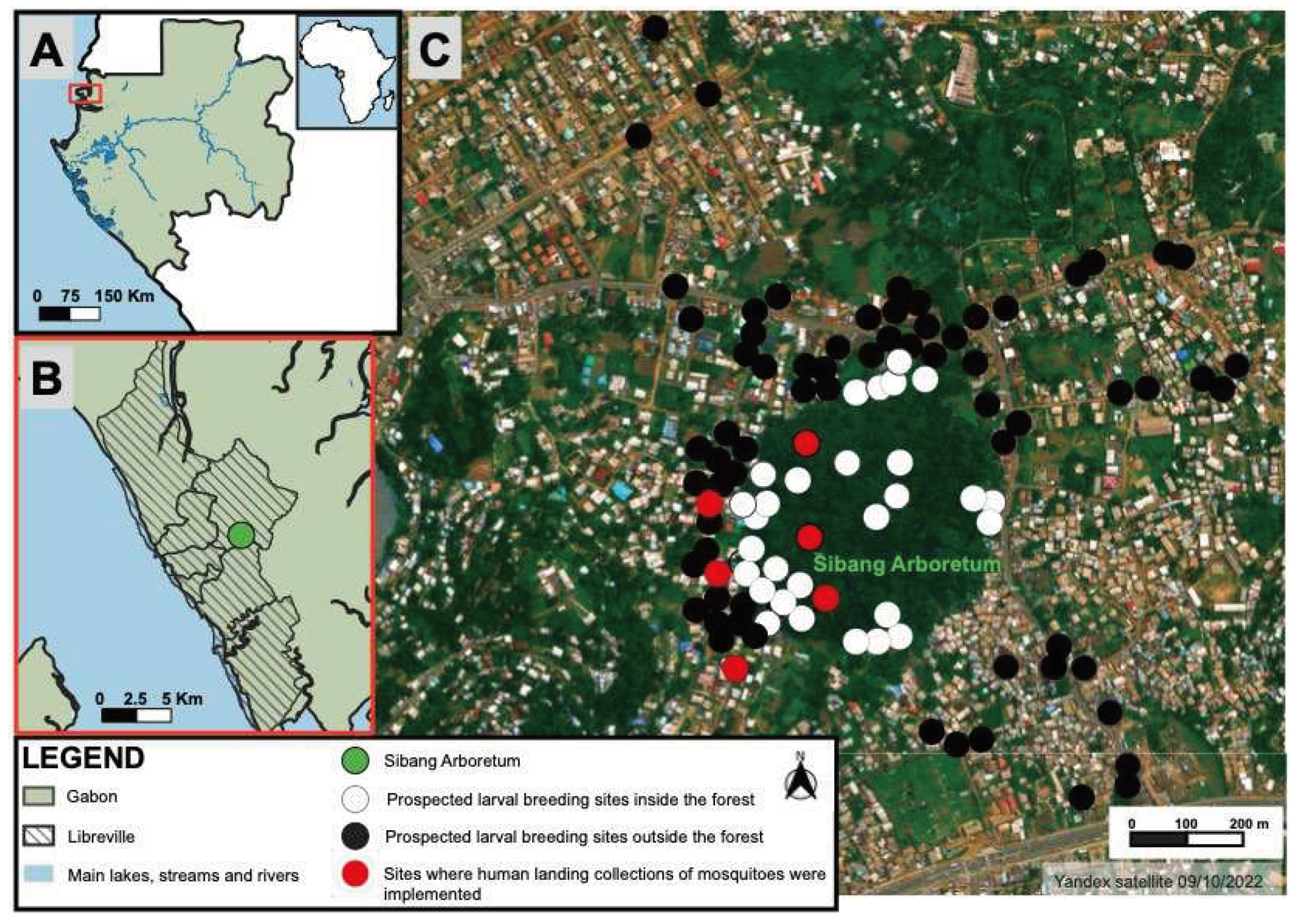
Figure 2.
Photography of a section of the Sibang arboretum border heavily marked by waste dumping from surrounding households.
Figure 2.
Photography of a section of the Sibang arboretum border heavily marked by waste dumping from surrounding households.
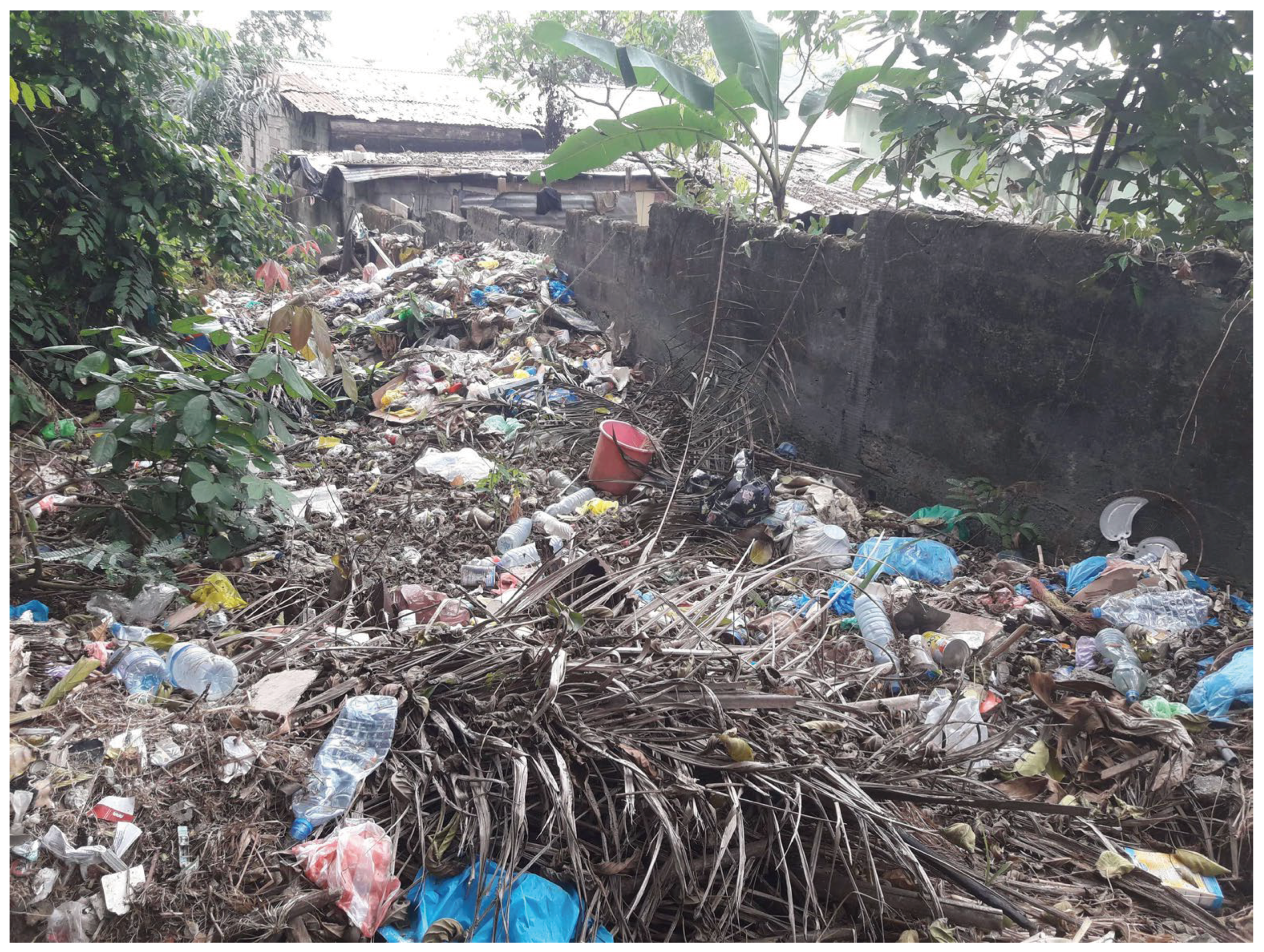
Figure 3.
Spatial distribution of larval habitats and relative abundance of mosquito species in each larval habitat. A: The yellow circles correspond to artificial larval habitats and the green ones to natural habitats. B: Red circles represent positive habitats (where there was at least one larva or pupa), and black circles represent negative habitats. C: Pie chart showing the graphical representation of species relative abundance.
Figure 3.
Spatial distribution of larval habitats and relative abundance of mosquito species in each larval habitat. A: The yellow circles correspond to artificial larval habitats and the green ones to natural habitats. B: Red circles represent positive habitats (where there was at least one larva or pupa), and black circles represent negative habitats. C: Pie chart showing the graphical representation of species relative abundance.
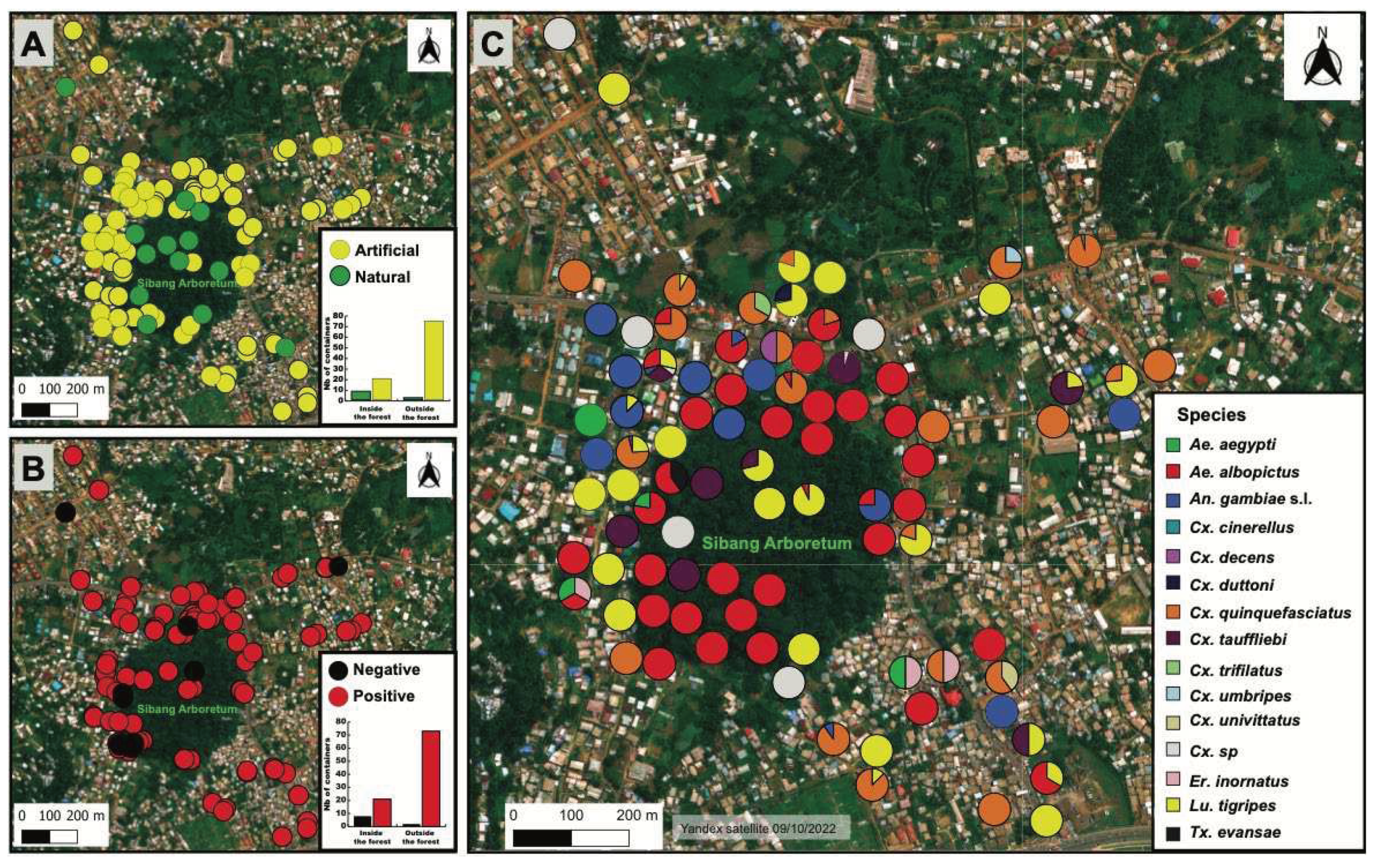
Figure 4.
Distribution of larval habitats according to the retained variables processed in the MCA. The MCA explained 38.4% of the total variability of larval habitats in terms of species composition. These variables include spatial location (A) and type (B) of larval habitats. They also comprise the main species recovered (C-J). Intersection areas refer to habitats that tend to be similar in type (natural/artificial), location (inside/outside forest) and specific composition.
Figure 4.
Distribution of larval habitats according to the retained variables processed in the MCA. The MCA explained 38.4% of the total variability of larval habitats in terms of species composition. These variables include spatial location (A) and type (B) of larval habitats. They also comprise the main species recovered (C-J). Intersection areas refer to habitats that tend to be similar in type (natural/artificial), location (inside/outside forest) and specific composition.
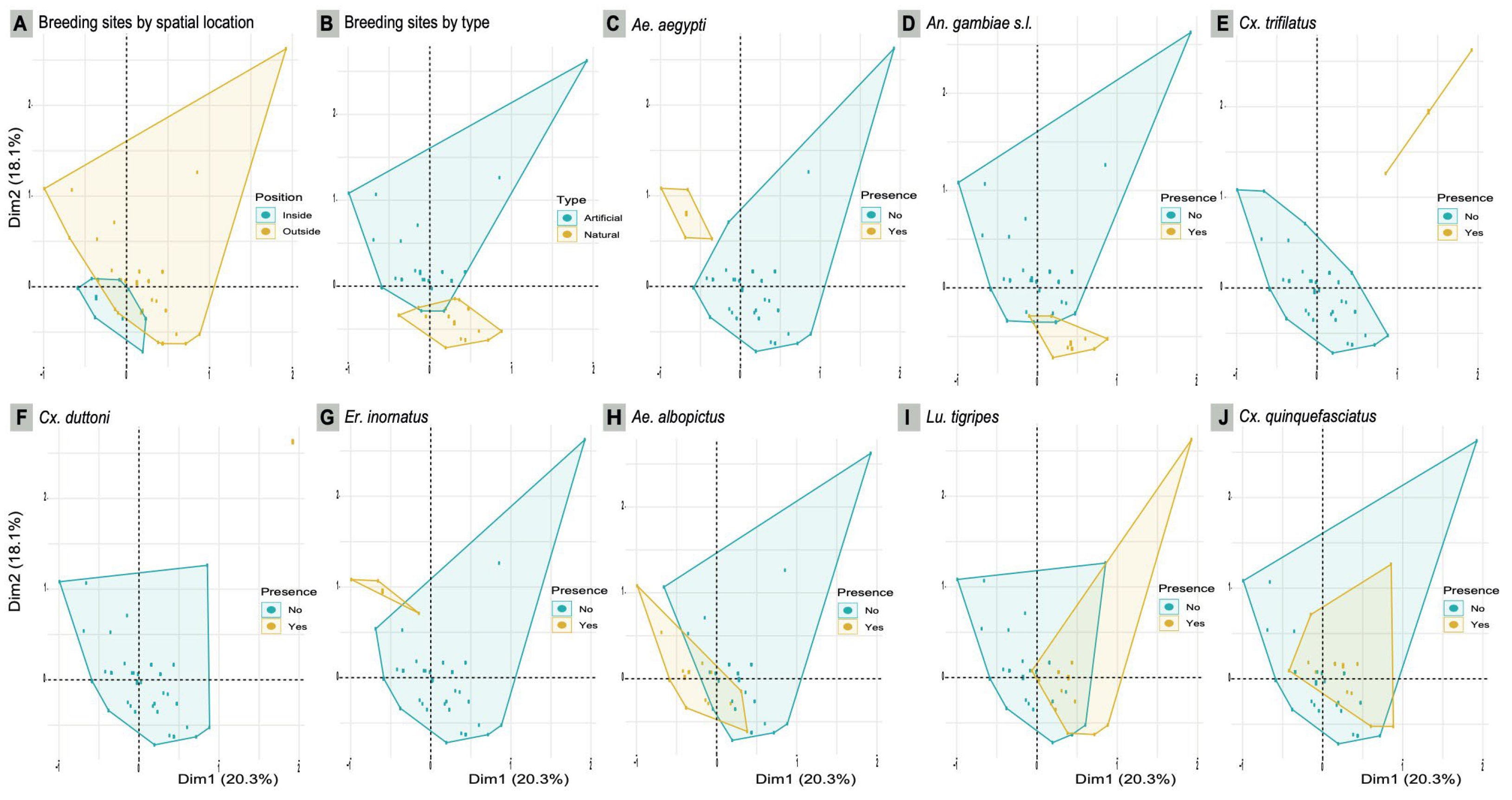
Figure 5.
Mosquito species’ distribution based on the nature of larval habitats.
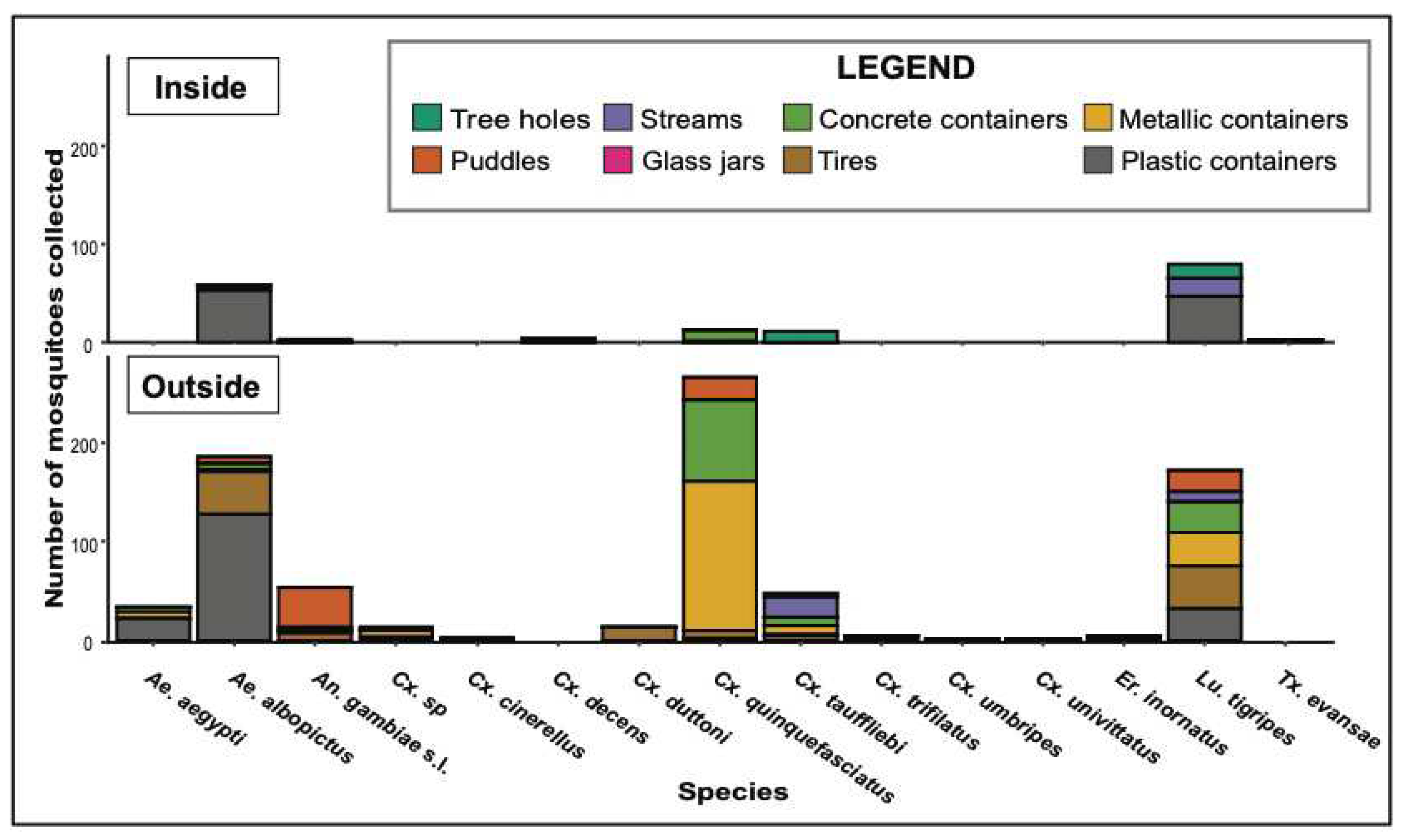
Figure 6.
Species clustering based on the CH index and AHC, and analytical synopsis of the niche similarity level across mosquito species based on larval microhabitats. A: Results of Ward k-means analysis combined with the CH Index revealing the parsimonious number of species clusters (n = 4). B: Representation of the species clusters based on the AHC.
Figure 6.
Species clustering based on the CH index and AHC, and analytical synopsis of the niche similarity level across mosquito species based on larval microhabitats. A: Results of Ward k-means analysis combined with the CH Index revealing the parsimonious number of species clusters (n = 4). B: Representation of the species clusters based on the AHC.
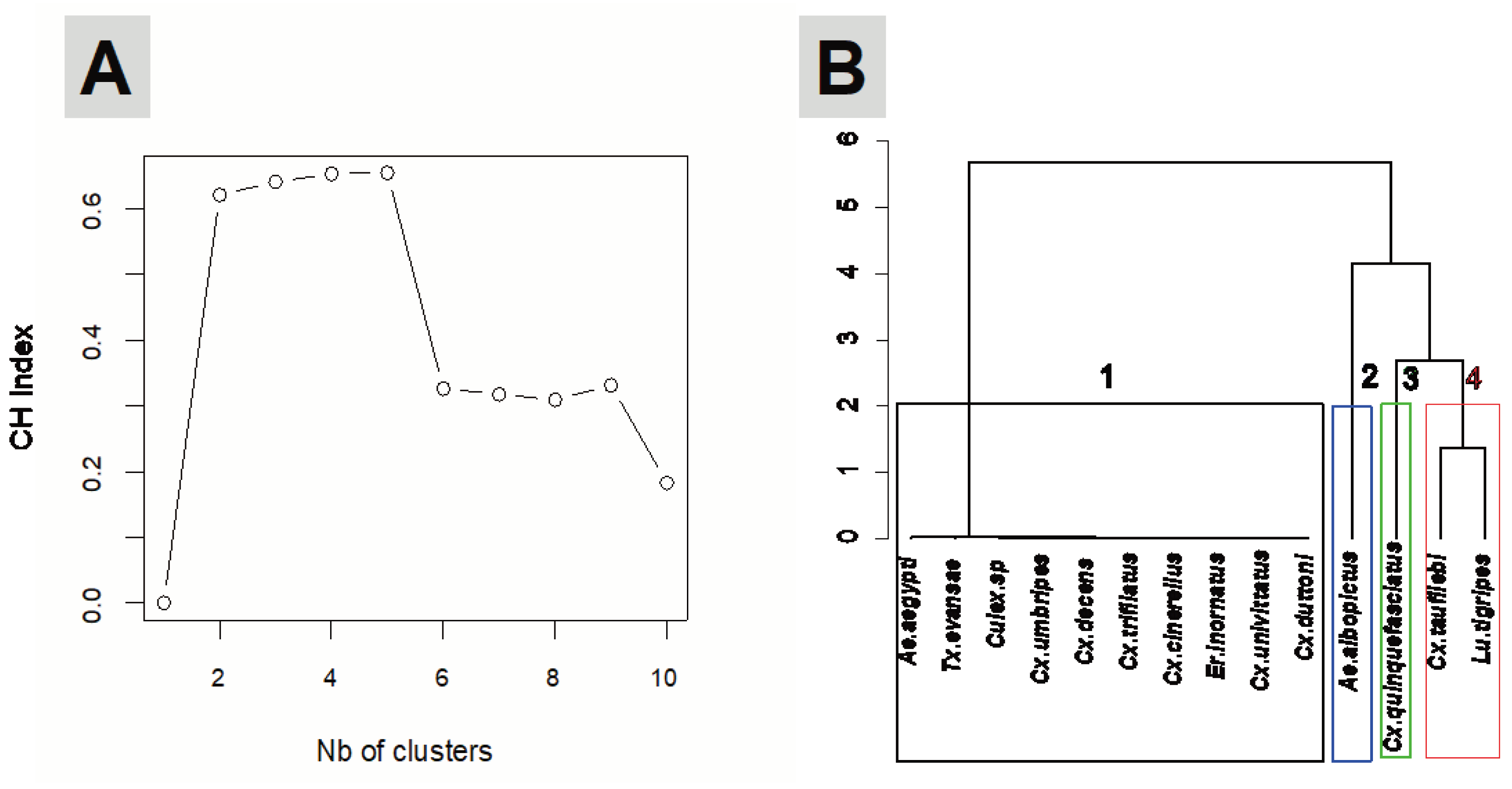
Figure 7.
Number and biting rate of human-baited mosquitoes in the Sibang arboretum and its surroundings. A: Mean number of captured mosquito females per person according to the spatial location. B: Number of captured mosquito females per person over time inside and outside of the forest. C and D: A view of wastes accumulating in the forest and its surroundings illustrating the human footprints.
Figure 7.
Number and biting rate of human-baited mosquitoes in the Sibang arboretum and its surroundings. A: Mean number of captured mosquito females per person according to the spatial location. B: Number of captured mosquito females per person over time inside and outside of the forest. C and D: A view of wastes accumulating in the forest and its surroundings illustrating the human footprints.
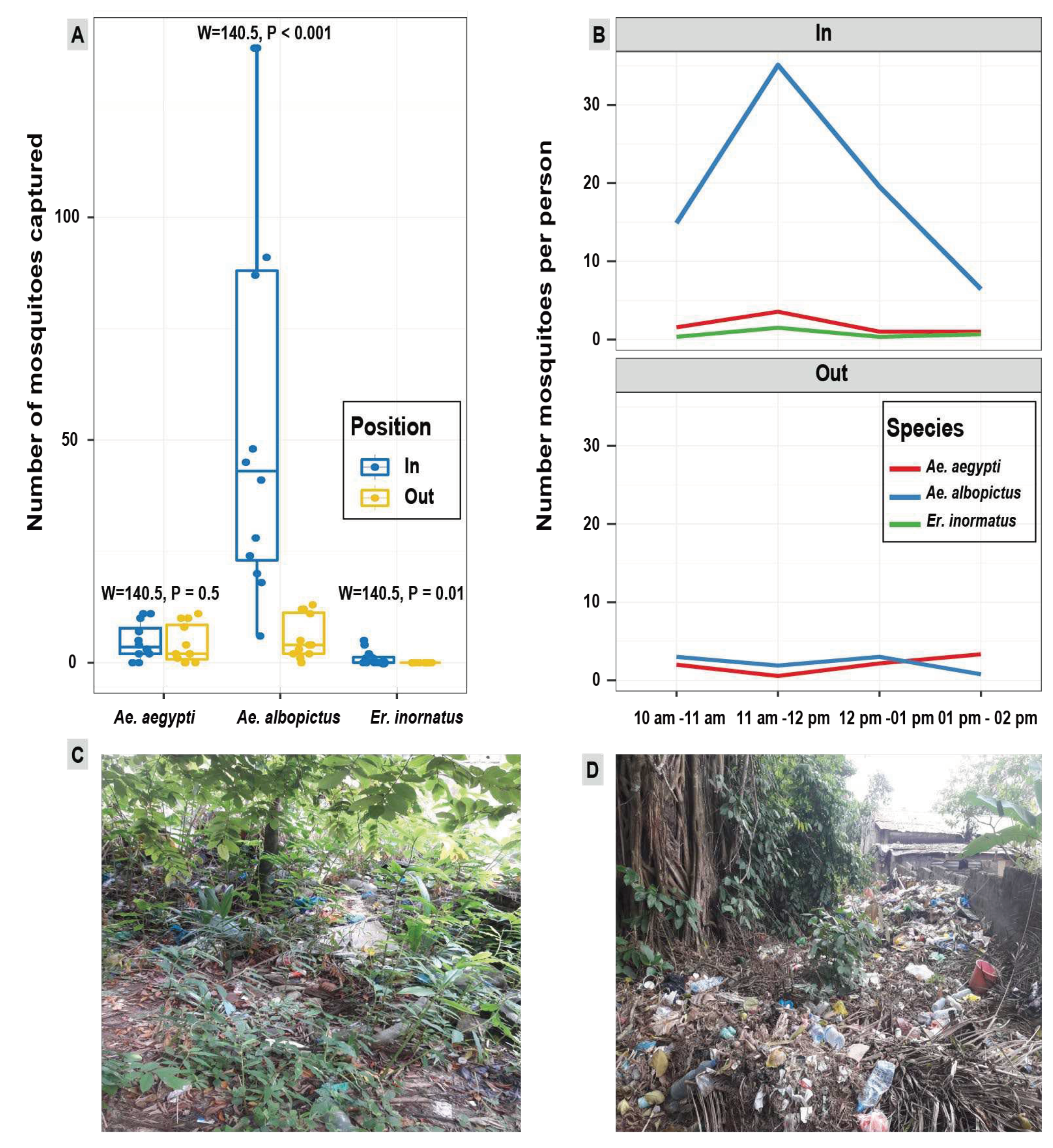

Table 1.
Water containers explored in the study area This is example 1 of an equation:
| Habitat nature | Inside the forest | Outside the forest | Overall |
|---|---|---|---|
| (n=28) | (N=76) | (N=104) | |
| Artificial | |||
| Glass jars | 1 (5.0%) | 1 (1.4%) | 2 (2.1%) |
| Gutters | 1 (5.0%) | 16 (21.6%) | 17 (18.1%) |
| Metallic container | 0 (0.0%) | 6 (8.1%) | 6 (6.4%) |
| Plastic container | 15 (75.0%) | 17 (23.0%) | 32 (34.0%) |
| Puddles | 0 (0.0%) | 18 (24.3%) | 18 (19.1%) |
| Tires | 0 (0.0%) | 14 (18.9%) | 14 (14.9%) |
| Wash basin | 1 (5.0%) | 1 (1.4%) | 2 (2.1%) |
| Discarded freezer | 0 (0.0%) | 1 (1.4%) | 1 (1.1%) |
| Discarded toilet bowl | 2 (10.0%) | 0 (0.0%) | 2 (2.1%) |
| Subtotal | 20 (100%) | 74 (100%) | 94 (100%) |
| Natural | |||
| Puddles | 1 (12.5%) | 0 (0.0%) | 1 (10.0%) |
| Tree holes | 5 (62.5%) | 0 (0.0%) | 5 (50.0%) |
| Streams | 2 (25.0%) | 2 (100%) | 4 (40.0%) |
| Subtotal | 8 (100%) | 2 (100%) | 10 (100%) |
n: number of water collections
Table 2.
Assemblage of mosquitoes according to the type and the spatial location of breeding sites
| Species | Inside forest | Outside forest | Overall | ||||||||
|---|---|---|---|---|---|---|---|---|---|---|---|
| Artificial | Natural | Sub-total | Artificial | Natural | Sub-total | ||||||
| Ae. aegypti | 0 (0.0%) | 0 (0.0%) | 0 (0.0%) | 27 (4.3%) | 0 (0.0%) | 27 (4.1%) | 27 (3.5%) | ||||
| Ae. albopictus | 67 (77.0%) | 3 (13.6%) | 70 (64.3%) | 188 (29.7%) | 0 (0.0%) | 188 (28.5%) | 258 (33.5%) | ||||
| An. gambiae s. l. | 0 (0.0%) | 1 (4.6%) | 1 (0.9%) | 41 (6.5%) | 0 (0.0%) | 41 (6.2%) | 42 (5.4%) | ||||
| Cx. cinerellus | 0 (0.0%) | 0 (0.0%) | 0 (0.0%) | 1 (0.1%) | 0 (0.0%) | 1 (0.1%) | 1 (0.1%) | ||||
| Cx. decens | 2 (2.3%) | 0 (0.0%) | 2 (1.8%) | 0 (0.0%) | 0 (0.0%) | 0 (0.0%) | 2 (0.3%) | ||||
| Cx. duttoni | 0 (0.0%) | 0 (0.0%) | 0 (0.0%) | 6 (0.9%) | 0 (0.0%) | 6 (0.9%) | 6 (0.8%) | ||||
| Cx. quinquefasciatus | 12 (13.8%) | 0 (0.0%) | 12 (11.0%) | 222 (35.1%) | 0 (0.0%) | 222 (33.6%) | 234 (30.4%) | ||||
| Cx. taufliebi | 0 (0.0%) | 11 (50.0%) | 11 (10.1%) | 17 (2.7%) | 19 (67.8%) | 36 (5.4%) | 47 (6.1%) | ||||
| Cx. trifilatus | 0 (0.0%) | 0 (0.0%) | 0 (0.0%) | 3 (0.5%) | 0 (0.0%) | 3 (0.5%) | 3 (0.4%) | ||||
| Cx. umbripes | 0 (0.0%) | 0 (0.0%) | 0 (0.0%) | 1 (0.1%) | 0 (0.0%) | 1 (0.1%) | 1 (0.1%) | ||||
| Cx. univittatus | 0 (0.0%) | 0 (0.0%) | 0 (0.0%) | 4 (0.6%) | 0 (0.0%) | 4 (0.6%) | 4 (0.5%) | ||||
| Culex sp. | 0 (0.0%) | 0 (0.0%) | 0 (0.0%) | 12 (1.9%) | 1 (3.6%) | 13 (2.0%) | 13 (1.7%) | ||||
| Er. inornatus | 0 (0.0%) | 0 (0.0%) | 0 (0.0%) | 3 (0.5%) | 0 (0.0 %) | 3 (0.5%) | 3 (0.4%) | ||||
| Lu. tigripes | 6 (6.9%) | 5 (22.7%) | 11 (10.1%) | 108 (17.1%) | 8 (28.6%) | 116 (17.5%) | 127 (16.5%) | ||||
| Tx. evansae | 0 (0.0%) | 2 (9.1%) | 2 (1.8%) | 0 (0.0%) | 0 (0.0%) | 0 (0.0%) | 2 (0.3%) | ||||
| Overall | 87 (100%) | 22 (100%) | 109 (100%) | 633 (100%) | 28 (100%) | 661 (100%) | 770 (100%) | ||||
Disclaimer/Publisher’s Note: The statements, opinions and data contained in all publications are solely those of the individual author(s) and contributor(s) and not of MDPI and/or the editor(s). MDPI and/or the editor(s) disclaim responsibility for any injury to people or property resulting from any ideas, methods, instructions or products referred to in the content. |
© 2023 by the authors. Licensee MDPI, Basel, Switzerland. This article is an open access article distributed under the terms and conditions of the Creative Commons Attribution (CC BY) license (http://creativecommons.org/licenses/by/4.0/).
Copyright: This open access article is published under a Creative Commons CC BY 4.0 license, which permit the free download, distribution, and reuse, provided that the author and preprint are cited in any reuse.


