

Submitted:
28 January 2023
Posted:
07 February 2023
You are already at the latest version
Abstract
Myrtus communis L., commonly known as true myrtle, is a medicinal plant native to the Mediterranean area. Since ancient times inhabitants of this area have been using it for its cultural and medicinal properties. Due to the high content of essential oil in its flowers, leaves and fruits, M. communis is an important medicinal and aromatic species from Myrtaceae family. Because of the presence of vast diversity of biomolecules in its aerial parts, it exhibits several biological properties of antioxidant, antimicrobial and anticancer. There has been increasing scientific interest in the field to understand the pleotropic effects of its extracts or essential oils on various ailments and diseases. This purpose of this review is to summarizes the chemical composition, traditional uses, and biological activities of M. communis L. leaves documented in numerous recent studies.
Keywords:
natural products
; plant extracts
; Myrtus communis
; medicinal plants
; antimicrobial
; antioxidants
; antiviral
; biofilm inhibition
Introduction
Antibiotics manufactured worldwide at an estimated quantity of about 100,000 tons annually remarkably affect the lives of bacteria living on earth. The number of bacterial strains that are resistant to antibiotics is increasing, with some strains becoming resistant to numerous antibiotics and chemotherapeutic agents, thus leading to the emergence of multidrug-resistant bacteria. Plants through coevolution with pathogenic microorganism developed defense mechanisms and produced secondary metabolites against parasites. Family Myrtaceae comprised of nearly 100 genera and 3000 species grow in tropical, subtropical, and temperate regions of the world. There are two species in the genus Myrtus L: the common myrtle Myrtus communis L, which is found in the wild throughout the Mediterranean basin, and the Saharan myrtle Myrtus nivellei Batt, which is mostly found in the central Sahara. Myrtus communis L is a perennial shrub or small tree of 1.8 - 2.4 m tall with small foliage and deep fissured bark (Figure 1). Mid-June to early July is when Myrtus blooms profusely, and dipterans and hymenopterans are primarily responsible for pollinating its white hermaphrodite flowers (1). Its fruit berries turn black blue after maturing from mid-October to late November. Passerine birds, primarily Sylviidae and Turdidae, disperse the seeds (2). The plant has upright stem, and its branches form a close full head, which is densely covered with evergreen leaves. The dark green 2.5-3.8 cm long leaves are glossy, coriaceous, opposite, paired or whorled, smooth, aromatic, entire margined, and acuminate ovate to lanceolate.
Habitat: Widespread throughout the central Saharan mountains, Myrtus nivellei Batt. & Trab. grows in sandy and rocky wades and valleys, at high altitudes of above 1400 meters. Myrtus communis L can be found in the Mediterranean Basin, Afghanistan, Iran, and, Macaronesia predominantly at altitudes not exceeding 500 meters above sea level (3) Myrtle is indigenous to west Asia, North Africa and Southern Europe and is scattered in Southern America, northwestern Himalayas and Australia. Myrtle is also cultivated in gardens, especially in Northwest regions of India and Fifa Mountains of Saudi Arabia (4).
Traditional applications of M. communis: Its fragrant leaves have been significantly used in remedy of diverse ailments in different countries/regions throughout the globe. In Iran, the aqueous maceration of leaves after filtration and concentration is taken for wound healing, depression, and polymenorrhea (5). In Algeria, the decoction of the leaf powder is used to treat hypertension, eczema, other skin diseases, respiratory disorders and hemorrhoids (6). Dried leaf powder mixed with butter is applied topically to treat scabies in Ethiopia (7). Rural women boil leaves in water or mix the leaf extract with raw butter and use it as cosmetics to control hair fall, dandruff, and treat headache in Ethiopia (8). Tea mixed with leaves has been drunk on daily basis to relieve stress and anxiety in Turkey (9). Mirto, a liqueur used as beverage in Italy has M. communis leaves as one of the ingredients (10). The dried aqueous leaf extract is used to treat sinus infections in China and France (11,12). In India, Pakistan, Turkey, Ethiopia and Iran, the leaves, berries and myrtle oil are used to treat diarrhea, dysentery, gastric ulcer, vomiting, rheumatism, hemorrhages, deep sinuses, leucorrhea, hemorrhoid, inflammation, pulmonary and skin diseases, besides being used as potential astringent, antiseptic, disinfectant and hypoglycemic agents (13,14). The aqueous juice has also been used for the preparation of food and wines in Italy (13,14). Myrtle oil is used as adjunct for the treatment of insomnia in Ethiopia (15). M. communis leaves are used in mouthwash and in the treatment of candidiasis (16). A decoction of leaves and fruits is generally used orally for the treatment of constipation, stomachaches, hypoglycaemia, cough, poor appetite, and externally for wound healing (17). The assorted specific applications of the leaves of the myrtle plant are given in Table 1 and Table 2. Other uses of its leaves include cattle feed, cut foliage and potted plants (18).
The diverse biological properties attributed to M. communis are due to the presence of diverse compounds in its aerial parts (Table 1), which include essential oil compounds (terpenoids, particularly α-pinene, 1,8-cineole, geranyl acetate, and linalool), flavonoids (quercetin, catechin and myricetin derivatives), anthocyanins (Cyanidin-3-glucoside, Petunidin-3-glucoside, Peonidin-3-glucoside, Malvidin-3-glucoside), coumarins, oligomeric nonprenylated acylphloroglucinol compounds (myrtucommulone A-F and semimyrtucommulone), galloyl-glucosides, ellagitannins, galloyl-quinic acids, gallic and ellagic acids, caffeic, and fatty acids (linoleic, palmitic, oleic, and stearic acids) (19).
Chemical composition of essential oil and extracts of M. communis leaves
The essential oils of M. communis are highly variable in their chemical composition due to various factors such as geographical position, growing conditions (climate, humidity, altitude, temperature, etc.), and vegetative period of the plant. Moreover, there is a close relationship among light shade conditions, essential oil yield, and morphological parameters. The major components of myrtle essential oil are myrtenyl-acetate, 1,8-cineole, α-pinene, limonene, whose concentration varies among the M. communis plants from different origins. The main components of Spanish myrtle essential oil are myrtenyl-acetate (>30.0%) and α-pinene (< 8.50%) (20), while Algerian wild myrtle EO is rich in myrtenyl-acetate (38.7%), α-pinene (13.7%), 1,8-cineole (12.7%), and linalool (7.00%) (21). The chemical composition of EOs of M. communis from different regions of the Mediterranean area is highly variable. Tunisia and Corsica EOs have variation in the main constituents of α-pinene (51.2-52.9% verses 53.5-56.7%), 1,8-cineole (24.1-24.7% verses 18.8-21.3%) and limonene (6.1-7.3% verses 5.0- 5.2%). The principal constituents in the Moroccan and coast of Montenegro EOs were 1,8-cineole (32.5-37.5%) and myrtenyl-acetate (14.8- 21.1%), though myrtenyl-acetate was present in minute amounts (0.1-0.3% verses 0.8%) (21,22). The 1,8 cineole (55.09%) and α-pinene (33.14%) were predominant components of another Tunisian myrtle EO, while lacking myrtenyl acetate (23–25). Interestingly, myrtle essential oils from two locations of Liguria, Italy were rich in α-pinene (41.6% and 28.9%, respectively), while lacking myrtenyl-acetate and myrtenol (26). Moreover, the EOs obtained from 52 genotypes of M. communis growing in the same field at Oristano (Sardinia, Italy) contained limonene, 1,8-cineole, α-pinene, linalool, and α-terpineol as principle components with few differences among the samples (27,28). The essential oil of M. comminis from Iran origin is rich in α-pinene (27.87%), 1,8-cineole (20.15%) and linalool (10.26%) (29). M. comunis L is a factory of molecules, regardless of the plant part or the phenological stage three ubiquitous compounds α -pinene, 1,8-cineole, and linalool are found in M. communis grown in Ghirardi Botanic Garden, of the University of Milan Italy (30).
Drying methodologies of M. communis aerial parts for essential oil extraction.
Different types of drying methodologies have been tried for extraction of compounds from M. communis. Convective air, oven and microwave were used to dry the aerial parts of M. commnis and subsequently used for extraction of polyphenols and anthocyanins. Among them microwave drying of the leaves led to an increase in the amounts of total extractible phenols, flavonoids and proanthocyanidins followed by oven drying at 70 °C. Not only the amount of compounds isolated was more, but also their antioxidant activity was enhanced (31). The concentration of bioactive compounds in myrtle berries is related to their geographical origin, as myrtle berries collected in two different areas of the province of Cadiz (Spain) showed different concentration of bioactives (32).
Bouaoudia-Madi et al. used ultrasound-assisted extraction method to isolate polyphenolic compounds from pericarp of myrtle berries. The authors demonstrated that the yield of total polyphenolic content is significantly affected by solvent concentration, solvent-to-solid ratio, irradiation time, and amplitude of the ultrasound waves. The optimal conditions of 70% (v/v) ethanol, 7.5 min irradiation time and 30% solvent to solid ratio were found to be optimal for the isolation of polyphenols from M. communis extract. Moreover, ultrasound-assisted extraction has been found more efficient than microwave-assisted extraction and conventional solvent extraction methods (33).
Antibacterial activity
Emergence of infectious diseases caused by diverse bacterial species and multidrug resistance has created havoc in health systems. Dormancy under stress conditions and in biofilms is one the ways by which a microbe could gain antimicrobial resistance. The use of natural products in association with antimicrobials could be effective in controlling the emergence of infectious diseases, combating the antimicrobial resistance, reducing the administration dose of a drug and thereby reducing the dose-dependent toxic effects. The phytoconstituents could combat the antimicrobial resistance by inhibiting the drug modifying/degrading enzymes, or drug efflux pumps or revert the dormant microbes to active metabolic phase to restore the effectiveness of commercial antimicrobials. In combination with natural compounds, the commercial antimicrobials would have even greater potency by targeting several different processes.
Researchers are focused on traditional herbs for their use in complementary therapies and preventive medicine. About 80% of human bacterial infections are believed to be associated with biofilm-forming microorganisms (34). Several chronic infectious diseases including periodontitis, gingivitis, and dental caries in both children and adults are caused by opportunistic species of Streptococcus mutans, candida albicans, E. coli, and S. aureus (35–37). The microorganisms form biofilms on mucosal epithelial cells, dental surfaces, and orthodontic prosthetics (38). Herbal aqueous extractions and their combination turned out to be effective in controlling such oral infections. Several studies documented the application of M. communis in oral hygiene and cure of infectious diseases. Polyherbal toothpaste formulated from the aqueous leaf extract of Myrtus communis in combination with Artemisia dracunculus, Satureja khuzestanica (Jamzad) in different combinations showed a significant in-vitro growth inhibition of five microorganisms viz Streptococcus mutans, Lactobaccilus caseie, S. sanguis, S. salivarius, and Candida albicans with potent activity observed against Gram-positive bacteria and C. albicans (39). Other than Gram-positive, Gram-negative oral pathogens Actinobacillus actinomycetemcomitans, Porphyromonas gingivalis and Prevotella intermedia were also susceptible to methanolic as well as aqueous leaf extracts of M. communis (40). In 2018 an ethnobotanical survey carried out in Casablanca, Morocco, found the wide use of 46 plant species in toothpastes for the treatment of gum disease, dental pain, and halitosis. Myrtaceae was one of the most represented botanical families within which M. commmunis leaf aqueous extract (obtained by decoction) was often used to treat above-mentioned oral infections (41). These studies suggest that Myrtus communis oil or extract could be used in strips, chips, and fibers to avoid the side effects of antibiotics in periodontal disease or periodontal regeneration, which needs further investigation.
Caputo L. et al, found EO of M. communis very effective against three Gram negative (E. coli DSM 8579, P. aeruginosa ATCC 50071, P. carotovorum DSM 102074) and two Gram positives (S. aureus DMS 25923, L. monocytogenes ATCC 7644) with MIC ranging from 3-6 mg/ml. However, for its individual constituents of myrtenyl acetate, 1,8-Cineole, α-pinene, and Linalool, the corresponding MICs were more than that of EO, therefore it is suggestive of synergistic action of the components of EO (42). Among the 80% methanol extracts of the leaves of Verbena officinalis, Myrtus communis, and Melilotus elegans tested for antibacterial activity, the Mc-80ME showed remarkable zone of inhibition and bactericidal activity against all tested bacterial isolates of Staphylococcus aureus, Escherichia coli, Salmonella typhi, Shigella flexneri, Pseudomonas aeruginosa, and Proteus mirabilis (43). The leaves of M. communis have been used for therapeutics of several ailments in different forms like ointment as in toothpastes, suppositories, etc.
Not only polyherbal toothpaste, herbal suppository of myrtle and oak gall extracts were prepared in polyethylene glycol base. These suppository treated the bacterial vaginosis, especially Trichomonas vaginalis in adult women without major complications and side effects (44). Furthermore, M. communis has a profound use in food processing technology. Without compromising the normal flora of the cheese, the essential oil of the aerial parts of M. communis L strongly inhibited the growth of Listeria monocytogenes (MIC; 31.25 μL/mL), a common foodborne pathogen and a predominant contaminant of cheese (45).
Myrtle extract finds it use in nanotechnology as nanofibers of being small diameter make surface pressure a highly dominant phenomenon by which the adhered molecules would be easily released once their concentration in the solution drops. It is hypothesized that hydrophobicity of the novel seed/leaf extract encapsulated/soaked nanofibers could be a repulsive to water molecules, which is a key factor for cell life and adhesion. Nanofibers made up of polycaprolactone and gelatin, encapsulated or soaked with myrtle leaf or seed extract showed complete inhibition of S. aureus and all strains of candida, though it exhibited a moderate effect on Gram-negative E. coli. Similarly, two discs of nanofibers soaked in seed and leaf extracts decreased 95%viability of Trichomonas vaginalis, the commonest non-viral sexually transmitted infection in women. Interestingly nanofiber either soaked or encapsulated with seed or leaf extract did not exert any effect on L. acidophilus (46). The use of these nanofibers as devices for the controlled release of molecules could be a promising choice to counteract Gram-positive microorganisms.
One of the mechanisms of colonization and expression of virulence or survival factors of a pathogen is quorum sensing. The quorum sensing is a cell-to-cell communication mechanism in bacteria. This cascade of specific signal and response is mediated by the synthesis, release, and uptake of specific molecules known as autoinducers (47). The autoinducers latter lead to the colonization and expression of various survival or virulence traits to combat stresses and develop drug resistance etc. Jean-Pierre Poli et al screened twelve essential oils for anti-QS activity by measuring the sub-lethal minimal QS inhibitory concentration (MQSIC) of violacein production of Chromobacterium violaceum and minimal inhibitory concentration against the growth of C. violaceum. The authors found that the EO obtained from Mentha suaveolens ssp. insularis showed 32-fold lower MQSIC than MIC, while M. communis EO obtained from its aerial parts was one among the four EO which showed 16-fold lower MQSIC than MIC. For the remaining EOs, the MQSIC was ≤8-fold lower than MIC (48).
Inhibitors of α-glucosidase activity have been useful for the control of hyperglycemia in patients with noninsulin-dependent type-2 diabetes. Among the several medicinal herbs of Ferulago nodosa subsp. Geniculate, Urtica dioica, Viscum album, Taraxacum officinale, and Myrtus communis investigated for α-glucosidase inhibitor activity, M. communis strongly inhibited the enzyme α-glucosidase (IC50; 38 µg/mL) (49,50). These results suggest that M. communis herbal extract could be developed as a physiologically functional drink for lowing the blood glucose content, which needs to be explored.
Antiviral activity: Vaccination, as a preventive method, cannot provide sufficient control against the spread of viral infections because of continuous antigenic drifts. Furthermore, because of limited drug targets few antiviral drugs are available for the treatment of viral diseases. Conventional antiviral drugs have shown side effects, like amantadine and oseltamivir effects the central nervous system and the gastrointestinal tract, which is further compounded with genetic instability, re-assortment of the virus and drug resistance. Therefore, researchers are focused to look for alternative therapeutic measures of screening medicinal plants and natural products for antiviral activity. Among the several plants tested against anti-influanza A virus, the most effective were crude extracts of G. glabra, M. officinalis and S. alba; methanol fractions of M. communis and M. officinalis; and chloroform fractions of M. communis and C. sinensis (fermented) in co- and pre-penetration combined treatments (Ref51). The potential antiviral activity of the extracts and fractions is believed to be due to the phytoconstituents of flavonoids, tannins, steroids and triterpenoids (51). It needs further investigation to identify the potent ingredient.
Antibiofilm activity:
Biofilm is a three dimensional structural community of aggregated bacterial cells adhered to each other as well as to substratum, encapsulated in a hydrated extracellular polymeric matrix composed of proteins, polysaccharides, and nucleic acids (52). Different mechanisms, such as quorum sensing, the efflux pump, alterations to the outer membrane, secretion systems, and the development of biofilms, are used by different bacterial strains to develop drug resistance. The biofilm protects the entrapped bacteria cells by restricting the entry of antimicrobial drugs. The biofilm's favorable milieu promotes microbial growth and genetic material exchange, including the spread of resistance genes. Instead of impacting a pathogen's growth, anti-biofilm treatments may reduce its adhesion and pathogenicity and there by enhance the sensitivity of microbes to antimicrobials and the host immune system (53). Therefore, there is urgent need of anti-biofilm therapy and discovery of novel anti-biofilm agents. Essential oils and extracts of various parts of M. communis are potential sources of anti-biofilm agents investigated in several studies. In one of the studies, ethanolic leaf extract of M. communis inhibited the growth of MRSA clinical isolates with the marked MIC. The extract destroyed the pre-formed biofilm at sub-MIC concentration and affected the bacterial cells within the biofilm. The MRSA genes icaA, icaD, sarA, and bap, which are involved in biofilm formation and development, were significantly expressed less, which inhibited biofilm development (54).
In another study by Caputo L. et al, the EO of M. communis leaves of Italy origin inhibited biofilm formation and disrupted the already formed biofilms at mature and ultra-mature stages of E. coli DSM 8579, P. aeruginosa ATCC 50071, P. carotovorum DSM 102074, S. aureus DMS 25923, and L. monocytogenes ATCC 7644, although, the disruption was effective at higher concentration of EO. Moreover, the EO showed cytotoxic activity towards neuroblastoma cell line SH-SY5Y probably due to acetylcholinesterase inhibitory activity (42). According to National Cancer Institute recommendations, only natural compounds with an IC50 value of less than 20 μg /ml are deemed to be cytotoxic to the treated cells (55). In a similar study polyphenolic extracts from myrtle leaf and pomegranate peel inhibited the biofilm formation process and disrupted the preformed biofilms of dental plaque pathogens Streptococcus mutans, Streptococcus oralis, Streptococcus mitis, and Rothia dentocariosa (56).
Several of the Myrtle compounds have been studied for their antioxidant, antimicrobial, and anti-cancer activities. Myrtenol, a bicyclic alcohol mono-terpene found in essential oil of M. communis (25) showed MIC and MBC of 128 μg/ml (bactericidal action) against all the clinical isolates of S. aureus. In combination with gentamycin and ciprofloxacin, myrtenol showed synergistic and additive effect, respectively, against all the strains of S. aureus. While in association with oxacillin indifferent effect was observed. The additive and synergistic effects are suggestive of the use of smaller concentration of these antibiotics and reduction of the side effects of the administration of these drugs. In same study the myrtenol at its sub-inhibitory concentrations strongly inhibited biofilm formation of S. aureus (57). These results suggest that M. communis is a potential source of compounds having antibiofilm activity. According to Kwasny and Opperman, antibiofilm treatments are considered effective if they can prevent 80% of biofilm growth and ≥40% of planktonic growth when compared to untreated controls (58).
Myrtenol inhibited the biofilm formation of methicillin-resistant Staphylococcus aureus - a detrimental human pathogen and cause of extreme morbidity and mortality globally. Selvaraj A. et al, demonstrated that the synthesis of several of the virulence factors of MRSA was inhibited by myrtenol. The vital extra-cellular lipase and hemolysin, which break down the phospholipid bilayer of host cells and the host's erythrocytes, respectively, are among the virulence components that have been inhibited. Myrtenol inhibited staphyloxanthin production in a dose dependent manner and myrtenol-treated MRSA cells were found to be sensitive to H2O2 treatment and healthy human blood (59).
In another study, Selvaraj A. et al. showed that myrtenol has a potent antibiofilm action while having no negative effects on Acinetobacter baumannii's growth or metabolic viability. The human pathogen Acinetobacter baumannii is a Gram-negative coccobacillus that frequently causes nosocomial infections like ventilator-associated pneumonia, wound infections, lung infections, and urinary tract infections. Myrtenol treatment of A. baumannii results in a decrease in the thickness and spread of biofilm on abiotic surfaces. In addition to dismantling the mature biofilms of A. baumannii strains, myrtenol also inhibited the virulence factors associated with biofilms. In the same study, Selvaraj A, et al observed the suppression of the biofilm-associated genes in A. baumannii strains upon myrtenol treatment and increased their susceptibility towards hydrogen peroxide and conventional antibiotics viz amikacin, gentamicin, trimethoprim, and ciprofloxacin (60).
Antifungal activity: The increasing prevalence of fungal infections worldwide and gain of resistance to antifungal agents has prompted researchers to explore novel antifungal drugs and alternative agents. Essential oil of M. communis leaves exhibited antifungal activity against the clinical isolates of candida with MIC90 of 2-4 μg/ml (61).
In another study essential oil obtained from M. communis was used for treatment of Pityriasis versicolor, a disease characterized by scaly and hypo or hyperpigmented spots on skin caused by Malassezia species. Seven species of Malassezia isolated and identified from skin of 41 patients were susceptible to M. communis essential oil (62), suggesting the potential use of EO as cheaper, safe and nonhepatotoxic or nonnephrotoxic alternative antifungal treatment to pityriasis versicolor. The antifungal activity of M. communis against several other species of Rhizoctonia solani, F. solani, A. flavus, Colletotrichum lindemuthianum, F. culmorum, and C. albicans has been documented in other studies as well (61,63). The essential oil of fruit berries from four genotypes (3 cultivated and one wild-type genotype) obtained from turkey showed a broad-spectrum antifungal activity against phytopathogenic fungi. The chemical composition and biological activity of four M. communis fruit essential oils differed according to the genotype, though 1,8-Cineole, linalool, a-terpineol, a-pinene, and geranyl acetate were found to be the major components of the fruit essential oils of all M. communis genotypes investigated (63). It has been documented in several studies that the EO of several plants including M. comminis is more effective than the commercial antifungal drugs (61). The EO of M. communis of different locations within Tunisia varying in chemical composition showed differential antifungal activity as reported by Yangui I, that the EO from Zaghouan was more active against Biscogniauxia mediterranea the causative agent of Charcoal canker disease which is common in Mediterranean forest, especially in Portugal, Italy, Spain, France, and North Africa (64).
Antioxidant activity
Phenolic compounds having antioxidant property and beneficial for human health, include polyphenols, phenolic acids, flavonoids, and tannins. These compounds are widely distributed in plants including M. communis. Due to the presence of double bonds and hydroxyl groups the phenolic compounds are potent antioxidants to inhibit the oxidation of free radicals, which otherwise can damage physiological molecules of lipids, proteins and DNA.
Iron chelating treatment is a standard cure for thalassemic and other kind of anemic patients. Thalassemia and other transfusion-associated anemias are managed and treated with the help of several iron chelators, such as deferoxamine (DFO), deferiprone (L1), and deferasirox (ICL-670). In one of the studies, Eslami S et al., used zero valent iron nanoparticles (ZVINs) synthesized from Myrtus communis leaf extract to treat iron overloaded mice. The reduced iron nanoparticles capped by plant constituents (biodegradable polyphenols, tannins and flavonoids) displayed potent antioxidant activity in vitro compared to standards vitamin C and quercetin. Compared to defroxamine (iron chelator) and MC extract, the MC-ZVINs showed adequate potency to chelate excessive iron from serum and liver tissue. Furthermore, the elevated liver enzymes aspartate transaminase, alanine aminotransaminase and alkaline phosphatase in iron-overloaded mice observed a remarkable reduction upon treatment with the MC-ZVINs. Therefore, MC-ZVINs were effective to prevent or at least reduce the adverse impacts of excessive iron in mice due to both antioxidant and Fe-chelating activities of MC-ZVINs (65).
Ben Hsouna A et al. also demonstrated the hepatoprotective effect of EO of M. communis of Tunisian origin. The essential oil extracted from its flowers by hydrodistilation is rich in α-pinene, 1,8-cineole, linalool and limonene. The oil reduced the plasma levels of hepatic markers and lipid in CCl4 injected adult Wistar rats. The oil reversed the altered biochemical and oxidative stress profiles in CCl4 injected Wistar rats. Lowering of thiobarbituric acid level in the liver tissue, and of liver enzymes in the serum indicated antioxidative mediated hepatoprotective effect of the essential oil (66). In one of the recent in-vivo studies, it was found that M. communis leaf EO, encapsulated in maltodextrin (MMEO) exhibited gastroprotective activity in ethanol/HCl-induced acute gastric ulcers in Wistar rats. Gastric lesions and acidity were remarkably inhibited. It reduced the inflammation of gastric mucosa, counteracted gastric lipoperoxidation and prevented the reduction of antioxidant enzyme activity of glutathione peroxidase, catalase, and superoxide dismutase (67).
M. communis has antioxidant potential to protect cells from oxidative stresses. Myrtus communis L. pulp and seed extracts obtained from liquor industrial production reduced the expression of proinflammatory cytokines (IL-1β TNF-γ, VEGF-A and IL-8) and modulated the cytochromes P450 expression in oxidative stress exposed human skin fibroblasts (HFF1). The myrtus extracts exerted a synergic effect in association with vitamin D in reducing the inflammation and reactive oxygen species production. The antioxidant potential observed was same as that of ascorbic acid treatment (68). In another study Cruciani S et al found that the myrtle byproducts obtained from residual of industrial liqueur processing of myrtyle berries possessed high antisenescence activity in H2O2 induced oxidative stressed adipose-derived stem cells, wherein a significant upregulation of pluripotency associated genes (Oct-4, Sox2, and NANOG) and inhibition of the senescence process was observed (69). These findings are suggestive of the protective role of myrtly extract from oxidative stress related damages and imparting a regenerative potential to stem cells after stressful conditions.
The composition and the amount of bioactives vary according to the origin and environmental conditions of place of origin. Myrtle berries size and bioactive composition from maritime zones is greater than that of inland zones (70). Nutraceutical properties of myrtle berries are incentives for their exploitation in the food, cosmetic, and pharmaceutical industries. Two ellagitannins, Oenothein B and eugeniflorin D2 were isolated in large amounts from berry seeds. Oenothein B used in preparation of popular liquor ‘Mirto di Sardegna’ in Italy showed anti-inflammatory and antifungal efficacy against candida strains that were both fluconazole-sensitive and -resistant. (Table 2). Oenothein B inhibited IL-8 release induced by TNF-α or IL- 1β in human adenocarcinoma epithelial gastric cells (71).
Plant extract have been investigated for their role in inhibiting the virulence factors including enzymes secreted by pathogens involved in colonization of the host. Nabati et al, screened about 137 plant extracts for their inhibitory activity against urease enzyme from jack beans. Among them Myrtus communis leaf extract showed a remarkable inhibitory activity. Urease of H. pylori catalyzes the hydrolysis of urea to produce ammonia and carbon dioxide, thus protecting the bacteria in the stomach’s acidic environment (5).
Essential oil of Tunisian M. communis flowers exhibited a strong growth inhibition of Gram-positive bacterial strains. The essential oil in combination with nisin decreased the aerobic, psychrotrophic and Enterobacteriaceae bacterial count in raw minced meet stored at 4oC, which was consistent with the in vitro treatment of nisin and McEO with Listeria monocytogenes (72).
Myrtucommuacetalone-1 (MCA-1) a novel and anti-inflammatory bioactive compound isolated from M. communis inhibited superoxide, hydrogen peroxide and nitric oxide production in activated macrophages. The compound was less toxic towards the various cell lines of MDBK kidney cells, liver cells, 3T3NIH mouse fibroblasts, and J774.2 macrophages compared to cyclohexamide. By abolishing the phosphorylation of the transcription factor (NFkB) and its nuclear translocation, MCA-1 inhibited the expression of inducible nitric oxide synthase (73)
The folkloric use of Myrtus communis L. for the treatment of diarrhea and dysentery has been supported by scientific data, according to Mekonnen Sisay et al. In his study the acclaimed traditional use of 80ME and solvent fractions of Myrtus communis L. leaves were assessed for their ability to treat diarrhea in a model using castor oil-induced diarrheal mice. The 80ME, chloroform and methanol fractions significantly delayed the onset of diarrhea. In addition, 80ME and the solvent fractions significantly decreased the weight and frequency of fecal outputs. 80ME and solvent fractions produced a significant anti-motility effect and decline in the weight and volume of intestinal contents (74).
Type 1 diabetes (T1DM) leads to hyperglycemia due to absolute deficiency of insulin secretion. Because of the diminished tissue response to insulin, T2DM impairs glucose tolerance in 90–95% of diabetic patients. Inhibiting the carbohydrate digesting enzymes (α-amylases and α-glucosidases) could be used as a treatment for TD2M to delay glucose absorption and reduce the post-prandial rise in blood sugar levels. Myrtus communis essential oil was one among the 62 essential oils tested for α-amylase inhibition activity, wherein it showed 20% inhibition of the enzyme (75). In one of the recent studies more than 1100 aqueous plant extracts were screened for modulation of insulin secretion in MIN6 β cells. M. communis was one of the ten best plant extracts that could inhibit the insulin secretion (76).
Essential oils of several plants, Origanum compactum, Mentha spicata, Thymus surplus, Origanum majorana, Myrtus communis, and Artemisia herba-alba from Morocco were screened for antioxidant activity. Among six essential oils screened, M. communisn EO showed antioxidant activity like that of positive control butylated hydroxytoluene (77).
Food products enriched with herbal ingredients are sources of pro-health components including polyphenolic compounds (Table 2) whose health benefits depend on diet, how it affects the gut flora, and how it affects their enzymatic activity. Intragastric treatment of rats with aqueous leaf extract of M. communis and Laurus nobilis L. from Zagreb, Croatia positively affected the rats’ health. The number of colonies of normal flora Lactobacilli and Bifidobacteria increased. It was clear that the kidneys and liver had significantly less glycolytic enzymatic activity and had more antioxidant capability (78).
In other study, laurel and myrtle EOs administered intragastrically to rats cause a decrease in the intestinal microbiota's ability to produce glycolysis. Additionally, lipid markers such as cholesterol, triglycerides, low-density lipoprotein cholesterol, and very low-density lipoprotein cholesterol are lowered, which may result in cardiovascular protection. With the exception of the kidneys, where it has a pro-oxidative effect, myrtle EO exhibited greater antioxidant capacity in most tissues (79).
Funding
Please add: “This research received no external funding” or “This research was funded by NAME OF FUNDER, grant number XXX” and “The APC was funded by XXX”. Check carefully that the details given are accurate and use the standard spelling of funding agency names at https://search.crossref.org/funding, any errors may affect your future funding.
Acknowledgments
In this section you can acknowledge any support given which is not covered by the author contribution or funding sections. This may include administrative and technical support, or donations in kind (e.g., materials used for experiments).
Conflicts of Interest
authors declare no conflict of interest.
Abbreviations
| MIC | minimum inhibitory concentration |
| MBC | minimum bactericidal concentration |
| MFC | minimum fungicidal concentration |
| EO | essential oil |
| MQSIC | minimal QS inhibitory concentration |
| MRSA | methicillin resistant Staphylococcus aureus |
| ZVINs | zero valent iron nanoparticles |
| MC-ZVINs | Myrtus communis zero valent iron nanoparticles |
| TNF | tumor necrosis factor |
| IL | interleukin |
| 80ME | 80% methanol |
| T2DM | type 2 diabetes mellitus. |
| T1DM | type 1 diabetes mellitus. |
| MCA-1 | Myrtucommuacetalone-1 |
| NFkB | nuclear factor kappa B |
| CCl4 | carbon tetrachloride |
| ND | not determined |
References
- González-Varo JP, Arroyo J, Aparicio A. Effects of fragmentation on pollinator assemblage, pollen limitation and seed production of Mediterranean myrtle (Myrtus communis). Biol Conserv. 2009 May;142(5):1058–65. [CrossRef]
- González-Varo JP, Albaladejo RG, Aparicio A, Arroyo J. Linking genetic diversity, mating patterns and progeny performance in fragmented populations of a Mediterranean shrub: Fragmentation effects on plant progeny performance. J Appl Ecol. 2010 Dec;47(6):1242–52. [CrossRef]
- Migliore J, Baumel A, Juin M, Médail F. From Mediterranean shores to central Saharan mountains: key phylogeographical insights from the genus Myrtus: Phylogeography of the genus Myrtus. J Biogeogr. 2012 May;39(5):942–56. [CrossRef]
- Mir MA, Bashir N, Alfaify A, Oteef MDY. GC-MS analysis of Myrtus communis extract and its antibacterial activity against Gram-positive bacteria. BMC Complement Med Ther. 2020 Dec;20(1):86. [CrossRef]
- Nabati F, Mojab F, Habibi-Rezaei M, Bagherzadeh K, Amanlou M, Yousefi B. Large scale screening of commonly used Iranian traditional medicinal plants against urease activity. DARU J Pharm Sci. 2012 Dec;20(1):72. [CrossRef]
- Bouzabata A, Cabral C, Gonçalves MJ, Cruz MT, Bighelli A, Cavaleiro C, et al. Myrtus communis L. as source of a bioactive and safe essential oil. Food Chem Toxicol. 2015 Jan;75:166–72. [CrossRef]
- Amsalu N, Bezie Y, Fentahun M, Alemayehu A, Amsalu G. Use and Conservation of Medicinal Plants by Indigenous People of Gozamin Wereda, East Gojjam Zone of Amhara Region, Ethiopia: An Ethnobotanical Approach. Evid Based Complement Alternat Med. 2018;2018:1–23. [CrossRef]
- Seyoum G, Zerihun G. An ethnobotanical study of medicinal plants in Debre Libanos Wereda, Central Ethiopia. Afr J Plant Sci. 2014 Jul 31;8(7):366–79. [CrossRef]
- Akaydin G, Şi̇Mşek I, Arituluk ZC, Yeşi̇Lada E. An ethnobotanical survey in selected towns of the Mediterranean subregion (Turkey). Turk J Biol [Internet]. 2013 Jan 1 [cited 2023 Jan 4]. Available online: https://journals.tubitak.gov.tr/biology/vol37/iss2/15.
- Tadesse M, Mesfin B. Ethiopian e-J ResInnov Foresight [Internet]. 2010th ed. (010;2:85-102.; vol. 2). Available online: https://journals.bdu.edu.et/index.php/eejrif4/issue/view/124.
- Jabri MA, Rtibi K, Ben-Said A, Aouadhi C, Hosni K, Sakly M, et al. Antidiarrhoeal, antimicrobial and antioxidant effects of myrtle berries (Myrtus communis L.) seeds extract. J Pharm Pharmacol. 2016 Feb;68(2):264–74. [CrossRef]
- Mahmoudvand H, Fallahi S, Mahmoudvand H, Shakibaie M, Harandi MF, Dezaki ES. Efficacy of Myrtus communis L. to Inactivate the Hydatid Cyst Protoscoleces. J Investig Surg Off J Acad Surg Res. 2016 Jun;29(3):137–43. [CrossRef]
- Alipour G, Dashti S, Hosseinzadeh H. Review of Pharmacological Effects of Myrtus communis L. and its Active Constituents: MYRTUS COMMUNIS L. AND ITS ACTIVE CONSTITUENTS. Phytother Res. 2014 Aug;28(8):1125–36. [CrossRef]
- Sen A, Yuksel M, Bulut G, Bitis L, Ercan F, Ozyilmaz-Yay N, et al. Therapeutic Potential of Myrtus communis Subsp. communis Extract Against Acetic ACID-Induced Colonic Inflammation in Rats: THERAPEUTIC POTENTIAL OF MYRTUS COMMUNIS SUBSP. COMMUNIS EXTRACT. J Food Biochem. 2017 Feb;41(1):e12297. [CrossRef]
- Birhanie MW, Walle B, Rebba K. Hypnotic effect of the essential oil from the leaves of Myrtus communis on mice. Nat Sci Sleep. 2016;8:267–75. [CrossRef]
- Gortzi O, Lalas S, Chinou I, Tsaknis J. Reevaluation of bioactivity and antioxidant activity of Myrtus communis extract before and after encapsulation in liposomes. Eur Food Res Technol. 2008 Jan;226(3):583–90. [CrossRef]
- Serce S, Ercisli S, Sengul M, Gunduz K, Orhan E. Antioxidant activities and fatty acid composition of wild grown myrtle ( Myrtus communis L.) fruits. Pharmacogn Mag. 2010;6(21):9. [CrossRef]
- Bruna S, Portis E, Cervelli C, De Benedetti L, Schiva T, Mercuri A. AFLP-based genetic relationships in the Mediterranean myrtle (Myrtus communis L.). Sci Hortic. 2007 Aug;113(4):370–5. [CrossRef]
- Nicoletti R, Salvatore M, Ferranti P, Andolfi A. Structures and Bioactive Properties of Myrtucommulones and Related Acylphloroglucinols from Myrtaceae. Molecules. 2018 Dec 19;23(12):3370. [CrossRef]
- Boelens MH, Jimenez R. The Chemical Composition of Spanish Myrtle Oils. Part II. J Essent Oil Res. 1992 Jul;4(4):349–53. [CrossRef]
- Touaibia, M. Touaibia M. Composition and anti-inflammatory effect of the common myrtle (Myrtus communis L.) essential oil growing wild in Algeria. Phytothérapie [Internet]. 2017 Feb 24 [cited 2023 Jan 4]. Available online: http://link.springer.com/10.1007/s10298-017-1100-9.
- Chalchat JC, Garry RP, Michet A. Essential Oils of Myrtle ( Myrtus communis L.) of the Mediterranean Littoral. J Essent Oil Res. 1998 Nov;10(6):613–7. [CrossRef]
- Mulas M, Melis RAM. Essential Oil Composition of Myrtle ( Myrtus communis ) Leaves. J Herbs Spices Med Plants. 2011 Mar 16;17(1):21–34. [CrossRef]
- Bekhechi C, Watheq Malti CE, Boussaïd M, Achouri I, Belilet K, Gibernau M, et al. Composition and Chemical Variability of Myrtus communis Leaf Oil From Northwestern Algeria. Nat Prod Commun. 2019 May;14(5):1934578X1985003. [CrossRef]
- Mimica-Dukić N, Bugarin D, Grbović S, Mitić-Ćulafić D, Vuković-Gačić B, Orčić D, et al. Essential Oil of Myrtus communis L. as a Potential Antioxidant and Antimutagenic Agents. Molecules. 2010 Apr 15;15(4):2759–70. [CrossRef]
- Flamini G, Cioni PL, Morelli I, Maccioni S, Baldini R. Phytochemical typologies in some populations of Myrtus communis L. on Caprione Promontory (East Liguria, Italy). Food Chem. 2004 May;85(4):599–604. [CrossRef]
- Usai M, Marchetti M, Culeddu N, Mulas M. Chemotaxonomic Evaluation by Volatolomics Analysis of Fifty-Two Genotypes of Myrtus communis L. Plants. 2020 Sep 29;9(10):1288. [CrossRef]
- Tuberoso CIG, Barra A, Angioni A, Sarritzu E, Pirisi FM. Chemical composition of volatiles in Sardinian myrtle (Myrtus communis L.) alcoholic extracts and essential oils. J Agric Food Chem. 2006 Feb 22;54(4):1420–6. [CrossRef]
- Sharifzadeh A, Shokri H. Antifungal activity of essential oils from Iranian plants against fluconazole-resistant and fluconazole-susceptible Candida albicans. Avicenna J Phytomedicine. 2016;6(2):215–22.
- Giuliani C, Bottoni M, Milani F, Todero S, Berera P, Maggi F, et al. Botanic Garden as a Factory of Molecules: Myrtus communis L. subsp. communis as a Case Study. Plants Basel Switz. 2022 Mar 11;11(6):754. [CrossRef]
- Snoussi A, Essaidi I, Ben Haj Koubaier H, Zrelli H, Alsafari I, Živoslav T, et al. Drying methodology effect on the phenolic content, antioxidant activity of Myrtus communis L. leaves ethanol extracts and soybean oil oxidative stability. BMC Chem. 2021 Dec;15(1):31. [CrossRef]
- V González de Peredo A, Vázquez-Espinosa M, Espada-Bellido E, Jiménez-Cantizano A, Ferreiro-González M, Amores-Arrocha A, et al. Development of New Analytical Microwave-Assisted Extraction Methods for Bioactive Compounds from Myrtle (Myrtus communis L.). Mol Basel Switz. 2018 Nov 16;23(11):2992. [CrossRef]
- Bouaoudia-Madi N, Boulekbache-Makhlouf L, Madani K, Silva AMS, Dairi S, Oukhmanou–Bensidhoum S, et al. Optimization of Ultrasound-Assisted Extraction of Polyphenols from Myrtus communis L. Pericarp. Antioxidants. 2019 Jul 2;8(7):205. [CrossRef]
- Wenzel, RP. Health Care–Associated Infections: Major Issues in the Early Years of the 21st Century. Clin Infect Dis. 2007 Jul 15;45(Supplement_1):S85–8. [CrossRef]
- Nishikawara F, Nomura Y, Imai S, Senda A, Hanada N. Evaluation of cariogenic bacteria. Eur J Dent. 2007 Jan;1(1):31–9. [CrossRef]
- Nomura R, Matayoshi S, Otsugu M, Kitamura T, Teramoto N, Nakano K. Contribution of Severe Dental Caries Induced by Streptococcus mutans to the Pathogenicity of Infective Endocarditis. Freitag NE, editor. Infect Immun. 2020 Jun 22;88(7):e00897-19. [CrossRef]
- Patel, M. Oral Cavity and Candida albicans: Colonisation to the Development of Infection. Pathogens. 2022 Mar 10;11(3):335. [CrossRef]
- Marsh, PD. Dental Plaque as a Microbial Biofilm. Caries Res. 2004;38(3):204–11. [CrossRef]
- Sadeghi-Nejad B, Moghimipour E, Yusef Naanaie S, Nezarat S. Antifungal and antibacterial activities of polyherbal toothpaste against oral pathogens, in vitro. Curr Med Mycol. 2018 Jun;4(2):21–6. [CrossRef]
- Rahimvand L, Niakan M, Naderi NJ. The antibacterial effect of aquatic and methanolic extract of Myrtus communis on Actinobacillus actinomycetemcomitans, Porphyromonas gingivalis and Prevotella intermedia. Iran J Microbiol. 2018 Aug;10(4):254–7.
- Zougagh S, Belghiti A, Rochd T, Zerdani I, Mouslim J. Medicinal and Aromatic Plants Used in Traditional Treatment of the Oral Pathology: The Ethnobotanical Survey in the Economic Capital Casablanca, Morocco (North Africa). Nat Prod Bioprospecting. 2019 Jan;9(1):35–48. [CrossRef]
- Caputo L, Capozzolo F, Amato G, De Feo V, Fratianni F, Vivenzio G, et al. Chemical composition, antibiofilm, cytotoxic, and anti-acetylcholinesterase activities of Myrtus communis L. leaves essential oil. BMC Complement Med Ther. 2022 May 20;22(1):142. [CrossRef]
- Sisay M, Bussa N, Gashaw T, Mengistu G. Investigating In Vitro Antibacterial Activities of Medicinal Plants Having Folkloric Repute in Ethiopian Traditional Medicine. J Evid-Based Integr Med. 2019 Jan 1;24:2515690X1988627. [CrossRef]
- Askari SF, Jahromi BN, Dehghanian A, Zarei A, Tansaz M, Badr P, et al. Effect of a novel herbal vaginal suppository containing myrtle and oak gall in the treatment of vaginitis: a randomized clinical trial. Daru J Fac Pharm Tehran Univ Med Sci. 2020 Dec;28(2):603–14. [CrossRef]
- Saraiva C, Silva AC, García-Díez J, Cenci-Goga B, Grispoldi L, Silva AF, et al. Antimicrobial Activity of Myrtus communis L. and Rosmarinus officinalis L. Essential Oils against Listeria monocytogenes in Cheese. Foods. 2021 May 17;10(5):1106. [CrossRef]
- Bellu E, Diaz N, Kralovič M, Divin R, Sarais G, Fadda A, et al. Myrtle-Functionalized Nanofibers Modulate Vaginal Cell Population Behavior While Counteracting Microbial Proliferation. Plants. 2022 Jun 15;11(12):1577. [CrossRef]
- Waters CM, Bassler BL. Quorum sensing: cell-to-cell communication in bacteria. Annu Rev Cell Dev Biol. 2005;21:319–46. [CrossRef]
- Poli JP, Guinoiseau E, de Rocca Serra D, Sutour S, Paoli M, Tomi F, et al. Anti-Quorum Sensing Activity of 12 Essential Oils on chromobacterium violaceum and Specific Action of cis-cis-p-Menthenolide from Corsican Mentha suaveolens ssp. Insularis. Mol Basel Switz. 2018 Aug 23;23(9):2125. [CrossRef]
- Badalamenti N, Ilardi V, Rosselli S, Bruno M, Maggi F, Leporini M, et al. Ferulago nodosa Subsp. geniculata (Guss.) Troia & Raimondo from Sicily (Italy): Isolation of Essential Oil and Evaluation of Its Bioactivity. Molecules. 2020 Jul 16;25(14):3249. [CrossRef]
- Onal S, Timur S, Okutucu B, Zihnioğlu F. Inhibition of alpha-glucosidase by aqueous extracts of some potent antidiabetic medicinal herbs. Prep Biochem Biotechnol. 2005;35(1):29–36. [CrossRef]
- Mehrbod P, Safari H, Mollai Z, Fotouhi F, Mirfakhraei Y, Entezari H, et al. Potential antiviral effects of some native Iranian medicinal plants extracts and fractions against influenza A virus. BMC Complement Med Ther. 2021 Oct 1;21(1):246. [CrossRef]
- Aparna MS, Yadav S. Biofilms: microbes and disease. Braz J Infect Dis. 2008 Dec;12(6):526–30. [CrossRef]
- Koo H, Allan RN, Howlin RP, Stoodley P, Hall-Stoodley L. Targeting microbial biofilms: current and prospective therapeutic strategies. Nat Rev Microbiol. 2017 Dec;15(12):740–55. [CrossRef]
- Khaleghi M, Khorrami S. Down-regulation of biofilm-associated genes in mecA-positive methicillin-resistant S. aureus treated with M. communis extract and its antibacterial activity. AMB Express. 2021 Jun 10;11(1):85. [CrossRef]
- Miladi H, Mili D, Ben Slama R, Zouari S, Ammar E, Bakhrouf A. Antibiofilm formation and anti-adhesive property of three mediterranean essential oils against a foodborne pathogen Salmonella strain. Microb Pathog. 2016 Apr;93:22–31. [CrossRef]
- Sateriale D, Imperatore R, Colicchio R, Pagliuca C, Varricchio E, Volpe MG, et al. Phytocompounds vs. Dental Plaque Bacteria: In vitro Effects of Myrtle and Pomegranate Polyphenolic Extracts Against Single-Species and Multispecies Oral Biofilms. Front Microbiol. 2020 Nov 5;11:592265. [CrossRef]
- Cordeiro L, Figueiredo P, Souza H, Sousa A, Andrade-Júnior F, Barbosa-Filho J, et al. Antibacterial and Antibiofilm Activity of Myrtenol against Staphylococcus aureus. Pharm Basel Switz. 2020 Jun 25;13(6):133. [CrossRef]
- Kwasny SM, Opperman TJ. Static biofilm cultures of Gram-positive pathogens grown in a microtiter format used for anti-biofilm drug discovery. Curr Protoc Pharmacol. 2010 Sep;Chapter 13:Unit 13A.8. [CrossRef]
- Selvaraj A, Jayasree T, Valliammai A, Pandian SK. Myrtenol Attenuates MRSA Biofilm and Virulence by Suppressing sarA Expression Dynamism. Front Microbiol. 2019 Sep 4;10:2027. [CrossRef]
- Selvaraj A, Valliammai A, Sivasankar C, Suba M, Sakthivel G, Pandian SK. Antibiofilm and antivirulence efficacy of myrtenol enhances the antibiotic susceptibility of Acinetobacter baumannii. Sci Rep. 2020 Dec 15;10(1):21975. [CrossRef]
- Cannas S, Molicotti P, Ruggeri M, Cubeddu M, Sanguinetti M, Marongiu B, et al. Antimycotic activity of Myrtus communis L. towards Candida spp. from isolates. J Infect Dev Ctries. 2013 Mar 14;7(3):295–8. [CrossRef]
- Barac A, Donadu M, Usai D, Spiric VT, Mazzarello V, Zanetti S, et al. Antifungal activity of Myrtus communis against Malassezia sp. isolated from the skin of patients with pityriasis versicolor. Infection. 2018 Apr;46(2):253–7. [CrossRef]
- Kordali S, Usanmaz A, Cakir A, Komaki A, Ercisli S. Antifungal and Herbicidal Effects of Fruit Essential Oils of Four Myrtus communis Genotypes. Chem Biodivers. 2016 Jan;13(1):77–84. [CrossRef]
- Yangui I, Zouaoui Boutiti M, Boussaid M, Messaoud C. Essential Oils of Myrtaceae Species Growing Wild in Tunisia: Chemical Variability and Antifungal Activity Against Biscogniauxia mediterranea, the Causative Agent of Charcoal Canker. Chem Biodivers. 2017 Jul;14(7):e1700058. [CrossRef]
- Eslami S, Ebrahimzadeh MA, Biparva P. Green synthesis of safe zero valent iron nanoparticles by Myrtus communis leaf extract as an effective agent for reducing excessive iron in iron-overloaded mice, a thalassemia model. RSC Adv. 2018;8(46):26144–55. [CrossRef]
- Ben Hsouna A, Dhibi S, Dhifi W, Mnif W, Ben Nasr hmed, Hfaiedh N. Chemical composition and hepatoprotective effect of essential oil from Myrtus communis L. flowers against CCL 4 -induced acute hepatotoxicity in rats. RSC Adv. 2019;9(7):3777–87. [CrossRef]
- Mansour RB, Beji RS, Wasli H, Zekri S, Ksouri R, Megdiche-Ksouri W, et al. Gastroprotective Effect of Microencapsulated Myrtus communis Essential Oil against Ethanol/HCl-Induced Acute Gastric Lesions. Mol Basel Switz. 2022 Feb 26;27(5):1566. [CrossRef]
- Cruciani S, Santaniello S, Garroni G, Fadda A, Balzano F, Bellu E, et al. Myrtus Polyphenols, from Antioxidants to Anti-Inflammatory Molecules: Exploring a Network Involving Cytochromes P450 and Vitamin D. Mol Basel Switz. 2019 Apr 17;24(8):1515. [CrossRef]
- Cruciani S, Santaniello S, Fadda A, Sale L, Sarais G, Sanna D, et al. Extracts from Myrtle Liqueur Processing Waste Modulate Stem Cells Pluripotency under Stressing Conditions. BioMed Res Int. 2019 Jun 11;2019:1–12. [CrossRef]
- González-de-Peredo AV, Vázquez-Espinosa M, Espada-Bellido E, Ferreiro-González M, Amores-Arrocha A, Palma M, et al. Discrimination of Myrtle Ecotypes from Different Geographic Areas According to Their Morphological Characteristics and Anthocyanins Composition. Plants Basel Switz. 2019 Sep 5;8(9):328. [CrossRef]
- Franco AM, Tocci N, Guella G, Dell’Agli M, Sangiovanni E, Perenzoni D, et al. Myrtle Seeds (Myrtus communis L.) as a Rich Source of the Bioactive Ellagitannins Oenothein B and Eugeniflorin D2. ACS Omega. 2019 Oct 1;4(14):15966–74. [CrossRef]
- Dhifi W, Jazi S, El Beyrouthy M, Sadaka C, Mnif W. Assessing the potential and safety of Myrtus communis flower essential oils as efficient natural preservatives against Listeria monocytogenes growth in minced beef under refrigeration. Food Sci Nutr. 2020 Apr;8(4):2076–87. [CrossRef]
- Soomro S, Mesaik MA, Shaheen F, Khan N, Halim SA, Ul-Haq Z, et al. Inhibitory Effects of Myrtucommuacetalone 1 (MCA-1) from Myrtus Communis on Inflammatory Response in Mouse Macrophages. Molecules. 2019 Dec 18;25(1):13. [CrossRef]
- Sisay M, Engidawork E, Shibeshi W. Evaluation of the antidiarrheal activity of the leaf extracts of Myrtus communis Linn (Myrtaceae) in mice model. BMC Complement Altern Med. 2017 Dec;17(1):103. [CrossRef]
- Capetti F, Cagliero C, Marengo A, Bicchi C, Rubiolo P, Sgorbini B. Bio-Guided Fractionation Driven by In Vitro α-Amylase Inhibition Assays of Essential Oils Bearing Specialized Metabolites with Potential Hypoglycemic Activity. Plants. 2020 Sep 21;9(9):1242. [CrossRef]
- Hager R, Pitsch J, Kerbl-Knapp J, Neuhauser C, Ollinger N, Iken M, et al. A High-Content Screen for the Identification of Plant Extracts with Insulin Secretion-Modulating Activity. Pharmaceuticals. 2021 Aug 17;14(8):809. [CrossRef]
- Ouedrhiri W, Mechchate H, Moja S, Mothana RA, Noman OM, Grafov A, et al. Boosted Antioxidant Effect Using a Combinatory Approach with Essential Oils from Origanum compactum, Origanum majorana, Thymus serpyllum, Mentha spicata, Myrtus communis, and Artemisia herba-alba: Mixture Design Optimization. Plants. 2021 Dec 20;10(12):2817. [CrossRef]
- Berendika M, Domjanić Drozdek S, Odeh D, Oršolić N, Dragičević P, Sokolović M, et al. Beneficial Effects of Laurel (Laurus nobilis L.) and Myrtle (Myrtus communis L.) Extract on Rat Health. Molecules. 2022 Jan 17;27(2):581. [CrossRef]
- Odeh D, Oršolić N, Berendika M, Đikić D, Domjanić Drozdek S, Balbino S, et al. Antioxidant and Anti-Atherogenic Activities of Essential Oils from Myrtus communis L. and Laurus nobilis L. in Rat. Nutrients. 2022 Mar 31;14(7):1465. [CrossRef]
- Torabi I, Sharififar F, Izadi A, Ayatollahi Mousavi SA. Inhibitory effects of different fractions separated from standardized extract of Myrtus communis L. against nystatin-susceptible and nystatin-resistant Candida albicans isolated from HIV positive patients. Heliyon. 2022 Mar;8(3):e09073. [CrossRef]
Figure 1.
Branches, leaves and berries of M. communis from Herbari virtual, Area of Botany, Department of Biology, University of the Balearic Islands, http://herbarivirtual.uib.es/.
Figure 1.
Branches, leaves and berries of M. communis from Herbari virtual, Area of Botany, Department of Biology, University of the Balearic Islands, http://herbarivirtual.uib.es/.
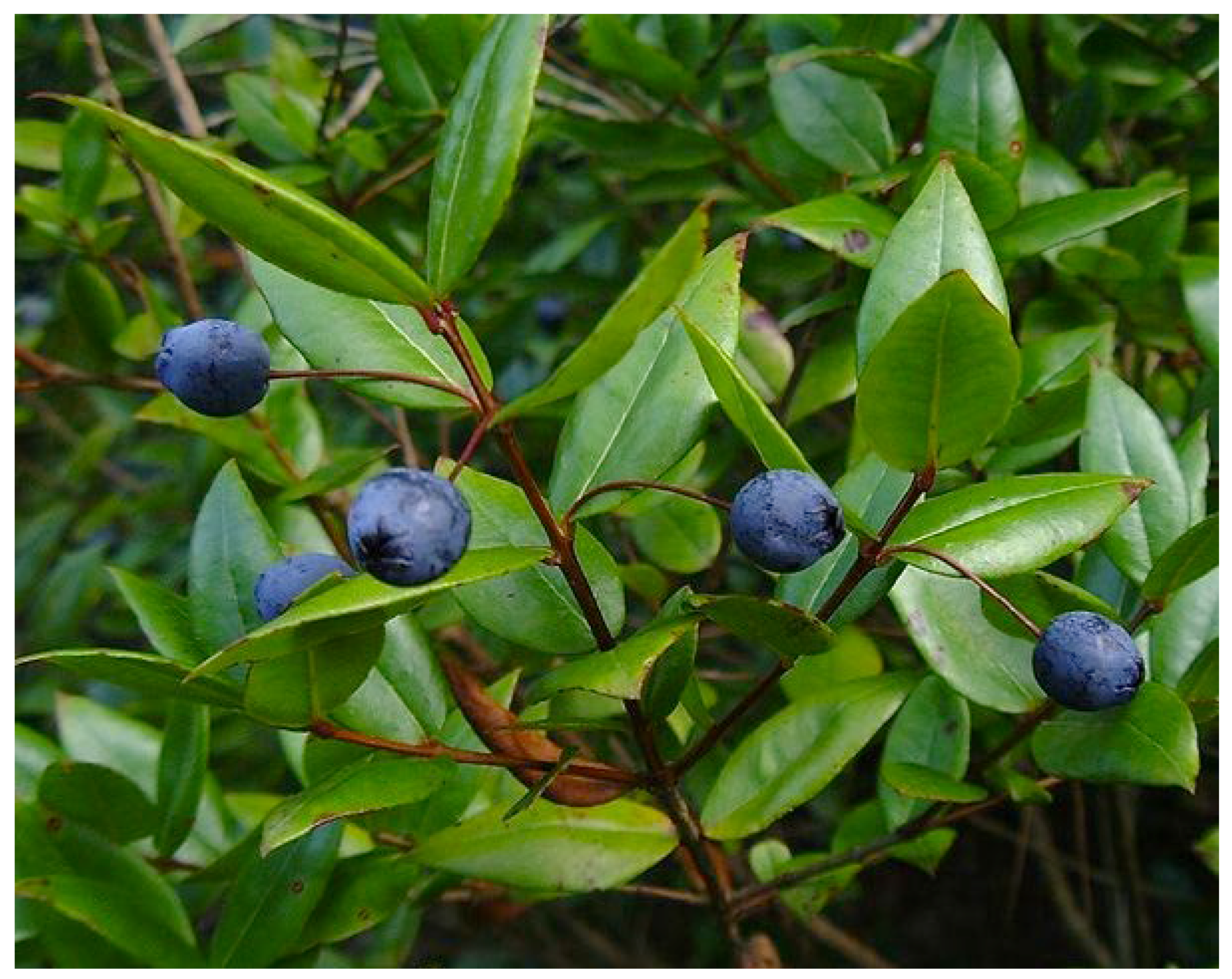

Table 1.
Chemical composition of essential oil and extracts of M. communis leaves.
| Source/Country origin | Compounds | Usage | Method of identification | Ref. |
|---|---|---|---|---|
| Ethanolic leaf extract/Saudi Arabia | Acetol (0.64%), Methyl acrylate (0.50%) , Methyl acetate (0.19%) , Ethyl glycolate (0.13%) , Methyl pyruvate (0.57%), Ethyl orthoformate (1.99%) , 3-Hydroxymethylfuran (0.17%), Isopropyl isopropoxyacetate (0.36%) , Dihydroxyacetone (1.01%), Ethyl diethoxyacetate (0.23%), 1,2-Cyclopentanedione (0.32%), 5-MethyIfurfural (0.10%), (−)-β-Pinene (0.07%), 2,4-Dihydroxy-2,5-dimethyl-3(2H)-furanone (0.25%), 5-Diethoxymethyl-3-ethoxy-4,5-dihydro-isoxazole (0.12%) , Phenol (0.04%), 5-Diethoxymethyl-3-ethoxy-4,5-dihydro-isoxazole (0.14%), Glutaconic anhydride (0.09%), 2,2-Diethyl-3-methyl-1,3-oxazolidine (0.06%), D-Limonene (0.65%), 1, 8-Cineole (3.96%), 5-Hydroxyazouracil (0.17%), (+)-4-Carene (0.18%), Linalool (2.80%), 4H-Pyran-4-one, 2,3-dihydro-3,5-dihydroxy-6-methyl- (0.49%), α-Terpineol (1.16%), L-α-Terpineol (1.12%), Catechol (0.49%), 5-Hydroxymethylfurfural (1.62%), Linalyl formate (1.93%), Linalyl acetate (0.97%), α-Terpinyl acetate (1.02%), Pyrogallol (9.11%), Methyleugenol (0.12%), β-Caryophyllene (0.56%), α -Isomethyl ionone (0.21%), Tyrosol (0.11%), 1,1,8a-Trimethyloctahydro-2,6-naphthalenedione (27.60 %), 3-Methyl-2-butenoic acid, undec-2-enyl ester (0.81%), Phytol acetate (0.42%), Cyclohexanecarboxaldehyde, 6-methyl-3-(1-methylethyl)-2-oxo-1-(3-oxobutyl)- (0.25%), Aspidinol (0.08%), L-Ascorbyl 2,6-Dipalmitate (0.66%), Phytol (0.19%) | Antibacterial activity against Gram positive bacteria |
GC-MS | (4) |
| Pulp of myrtle berries | Gallic acid; 52.2 ±0.9 mg/kg, Hydrolysable tannins; 498.0±20.5 mg/kg, Ellagic acid; 350.5 ±15.0 mg/kg Flavonols: Quercetin-3-O-galactoside 191.0 ±6.7 mg/kg, Quercetin-3-O-rhamnoside 66.6 ±3.0 mg/kg Anthocyanins: Cyanidin-3-glucoside 1.8±0.2 mg/kg, Petunidin-3-glucoside 3.6±0.3 mg/kg, Peonidin-3-glucoside 13.5 ±0.3 mg/kg, Malvidin-3-glucoside 42.0 ±2.4 mg/kg |
Antioxidant and anti-inflammatory activities | HPLC 1100 system coupled with with a DAD detector UV 6000 |
(68) |
| Seeds of Myrtle berries | Gallic acid; 137.0 ±6.8 mg/kg, Hydrolysable tannins; 11989.8 ±205.2 mg/kg, Ellagic acid; 726.9 ±28.3 mg/kg Flavonols: Quercetin-3-O-rhamnoside; 9.3 62.0 ±2.9 mg/kg, Quercetin-3-O-galactoside; 104.9 ±9.3 mg/kg Anthocyanins: Cyanidin-3-glucoside; ND, Petunidin-3-glucoside; ND, Peonidin-3-glucoside; ND, Malvidin-3-glucoside; ND |
Antioxidant and anti-inflammatory activities | HPLC 1100 system coupled with with a DAD detector UV 6000 |
|
| EO obtained from myrtle flowers gathered from the region of Elkef in Tunisia. | α-Pinene (35.20%), β-Pinene (0.24%), Myrcene (1.21%), Limonene (8.94%), 1,8-cineole (17.00%), Linalool (6.17%), α-Terpineol (3.86%), Myrtenol (0.42%), Linalyl acetate (0.85%), Myrtenyl acetate (1.26%), Terpenyl acetate (4.30%), Geranyl acetate (4.42%), Monoterpene hydrocarbons (46.07%), Oxygenated monoterpenes (40.77%), Methyl eugenol (6.98%), Transcaryophyllene (4.04%), α-Humulene (0.48%), Carophyllene oxide (2.49), and Sesquiterpenes (6.98%) | Antioxidant and antimicrobial activity | GC-MS | (72) |
| EO of M. communis leaves, Italy | Limonene (28.9%), α-Pinene (15.1%), Mirtenyl acetate (13.6%), Linalool (13.50%), Linalyl acetate (5.00%) | Anti α-amylase activity | GC-MS | (72) |
| EO from arial parts of M. communis, Northern Portugal | 1.8-cineole (14.80%), β-pinene (9.40%), verbenone (9.15%), borneol (8.72%), camphor (8.13%), terpinene-4-ol (7.66%), α-pinene (6.94%), linalool (3.78%), α-terpineol (3.52%), camphene (3.12%), D-limonene (3.16%), mirtenol (2.20%), α-terpinolene (1.74%), 2.4-tujadiene (0.78%), 3-carene (0.76%), cariophyllene oxide (0.73%), nerol (0.64%), α-terpinene (0.55%), o-cimene (0.41%), thujene (0.23%), and methyl-eugenol (0.20%) |
Anti L. monocytogenes activity | GC-MS | (45) |
| EO of M. communis leaves, Serbia | α-Pinene (0.38%), Limonene (0.60%), 1,8-Cineole (10.27%), Linalool (3.78%), Terpinolene (1.41%), cis Verbenol (0.91%), trans Verbenol (0.95%), Camphor (1.91%), α-Terpineol (7.12%), Nerol (5.97%), Geraniol (0.63%), Linalyl acetate (3.66%), Myrtenyl acetate (7.00%), Terpinyl acetate (1.01%), Neryl acetate (3.40%), and Geranyl acetate (16.36%) | Antifungal activity against Malassezia sp. clinical isolates |
GC-MS | (62) |
| EO of the aerial parts of M. communis, Iran | α-Pinene (27.87%), 1,8-Cineole (20.15%), Linalool (10.26%), α-Terpineol (7.64%), Linalyl acetate (6.17%), Germanyl acetate (4.87%), α-Terpinyl acetate (4.04%), Caryophyllene oxide (1.57%), trans-Caryophyllene (1.57%), Methyl eugenol (1.48%), α-Humulene (1.35%), β –Pinene (0.88%), 4-Terpineol (0.67%), δ-3-Carene (0.63%), γ-Terpinene (0.59%), α-Thujene (0.54%), and Others (1.93%) | Antifungal activity against fluconazole resistant and sensitive C. albicans | GC-MS | (29) |
| 70% ethanol extract M. communis leaves, Italy. | Phenolic acids (mg/KgDW) Gallic acid (1199.3), Hydrolysable tannins (21,858.3), myricetin-3-O-galactoside (1926.4), myricetin-3-O-rhamnoside (3902.9), quercetin-3-O-glucoside (104.1), quercetin-3-O-rhamnoside (192.0), quercetin 3-O-galactoside (85.9), and vitexin (280.0) |
Antibacterial and antifungal activity of nanofibers encapsulated with leaf extract and soaked in seed extract | HPLC coupled with DAD detector UV 6000 | (46) |
| M. communis leaves, Croatia | 5-O-galloylquinic acid (7.96%), Caffeic acid (1.81%), Catechin (0.05%), Digalloylquinic acid (0.79%), Ellagic acid (0.03%), Epicatechin (0.05%), Epicatechingallate (0.02%), Luteolin (1.11%), Luteolin glucoside (2.63%), Myricetin (14.48%), Myricetin-3-O-arabinoside (0.05%), Myricetin-3-O-galactoside (33.20%), Myricetin-3-O-rhamnoside (36.68%), Quercetin-3-glucoside (0.85%), Quercitrin (0.25%) | The effect of on colonic probiotic bacteria of rat and its health |
UPLC-MS | (78) |
| EO from M. communis leaves, Croatia | α-thujene (0.013 mg/ml), α-pinene (193.75 mg/ml), Camphene (1.08 mg/ml), β-pinene (2.35 mg/ml), Myrcene (2.68 mg/ml), α-phellandrene (1.66 mg/ml), 3-carene (0.48 mg/ml), p-cymene (3.45 mg/ml), d-limonene (69.25 mg/ml), Eucalyptol (244.6 mg/ml), Linalool (19.36 mg/ml), Terpinen-4-ol 31.62, α -terpineol (26.26 mg/ml), α -terpinyl acetate (4.53 mg/ml), Methyleugenol (9.88 mg/ml), Camphor (0.56 mg/ml), Carvone (2.14 mg/ml), Geraniol (6.21 mg/ml), Myrtenyl acetate (146.10 mg/ml), Estragole (0.013 mg/ml), Geranyl acetate (20.7 mg/ml), Myrtenol (3.92 mg/ml) | Antioxidative and antilipidemic effect in rats | GC-MS | (79) |
| Flower EO of M. communis from Tunisia | α -Pinene (35.20%), β -Pinene (0.24%), Myrcene (1.21%), Limonene (8.94%), 1,8-Cineol (17.0%), Linalool (6.17%), α -Terpineol (3.86%), Myrtenol (0.42%), Acetate linalyl (0.85%), Myrtenyl acetate (1.26%), Terpenyl acetate (4.30%), Acetate geranyl (4.42%), Methyl eugenol (6.98%), Trans caryophyllene (4.04%), α -Humulene (0.48%), Caryophyllene oxide (2.49%) | Hepato protective effects of EO in CCl4-induced hepatotoxicity in Wistar rats. | (66) | |
| EO prepared by hydro distillation from M. communis leaves of Italy origin | 3Z- Hexenal (0.1 ± 0.0%), 2E- Hexenal (0.1 ± 0.03%), Isobutyl isobutyrate (0.1 ± 0.02%), Heptyl isobutanoate (3.2 ± 0.3%), α-Thujene (0.4 ± 0.01%), α-Pinene (14.7 ± 1.2%), Sabinene (0.3 ± 0.03%), β-Pinene (0.3 ± 0.04%), δ-3-Carene (0.3 ± 0.02%), β- Myrcene (0.1 ± 0.01%), Butyl-2-methylbutanoate (0.2 ± 0.01%), α-Terpinene (0.1 ± 0.02%), 1,8-Cineole (21.9 ± 2.3%), E-β-Ocimene (1.1 ± 0.5%), γ-Terpinene (0.4 ± 0.03%), Terpinolene (0.1 ± 0.02%), Linalool (9.1 ± 1.6%), Myrcenol (0.2 ± 0.03%), cis-p-Menth-2-n-1-ol (0.1 ± 0.02%), allo Ocimene (0.8 ± 0.04%), trans-Pinocarveol (0.1 ± 0.01%), 3E-6Z-Nonadienol (0.1 ± 0.03%), Terpinen-4-ol (0.4 ± 0.05%), α-Terpineol (2.3 ± 0.4%), Myrtenal (0.1 ± 0.04%), Myrtenol (0.8 ± 0.03%), Methyl chavicol (0.2 ± 0.05%), Fraganol (0.1 ± 0.02%), Linalool acetate (0.8 ± 0.06%), trans-Pinocarvyl acetate (0.6 ± 0.03%), Carvacrol (0.1 ± 0.02%), Myrtenyl acetate (29.8 ± 2.4%), iso-dihydro-Carveol acetate (0.3 ± 0.02%), Carvyl acetate (0.1 ± 0.03%), α-Terpinyl acetate (0.5 ± 0.04%), Citronellyl acetate (0.1 ± 0.0%), Geranyl acetate (2.6 ± 0.5%), Methyl eugenol (0.9 ± 0.02%), Z-Caryophyllene (1.3 ± 0.06%), γ-Elemene (0.1 ± 0.01%), α-Humulene (1.1 ± 0.02%), p-Menth(1,8 dien)-9-ol (0.4 ± 0.02%), Bisabolol (0.2 ± 0.0%), Thymohydro quinone (0.7 ± 0.06%), Flavesone (0.2 ± 0%), Caryophyllene oxide (0.3 ± 0.02%), Humulene epoxide II (0.3 ± 0.01%), allo-Aromadendrene epoxide (0.1 ± 0.02%), n-Octadecanol (0.5 ± 0.06%) | Antibacterial, antibiofilm, and anti-acetylcholinesterase activities | GC-MS | (42) |
| EO of M. communis leaves encapsulated in maldodextrin, Portugal | α -pinene (11.10%), Limonene (1.63%), 1,8-Cineole (9.98%), Linalool oxide (0.38%), α -Terpinolene (0.46%), Linalool (14.92%), α -Terpineol (4.64%), Linalyl acetate (4.61%), Myrtenyl acetate (30.59%), Camphene (0.83%), Neryl acetate (0.38%), Geranyl acetate (1.62%), Methyleugenol (2.51%), α -Humulene (0.77%) | Gastroprotective activity in ethanol/HCl-induced acute gastric ulcers in Wistar rats | GC-MS | (67) |
Table 2.
Antibacterial activity of M. communis from different origins.
| Plant parts/Country origin | Methods of preparation | Microorganisms | Zone of inhibition (mm) | MIC | MBC/MFC | Ref. |
|---|---|---|---|---|---|---|
| Leaves of Myrtus communis (Linn), Artemisia dracunculus, and Satureja khuzestanica, Iran | Polyherbal toothpaste obtained from leaf extracts | S. mutans, L. caseie, S. sanguis, S. salivarius, and C. albicans | 17-30 (L. caseie), 10-25 (C. albicans) and 15-20 for S. salivarius. | ND | ND | (39) |
| Leaves of Myrtus communis, Iran | Aquatic and methanolic extracts | P. gingivalis, A. actinomycetemcomitans, and P. intermediate. | At 50 mg/ml of methanolic extract: 16 (A. actinomycetemcomitans), 17 (P. gingivali), and 20 (P. intermediate). At 50 mg/ml of aqueous extract: 10 (P. gingivalis), 15 (A. actinomycetemcomitans), and 16 (P. intermediate) | 10 mg/ml for both the extracts | ND | (40) |
| Leaves of Myrtus communis, Iran | Ethanolic extract | Twenty-six clinical isolates of MRSA | 9 – 17.6 | 1.56 – 25 mg/ml | 3.125 – 50 mg/ml | (54) |
| Leaves of M. communis, Italy | Essential oil | S. aureus DMS 25923, P. aeruginosa ATCC 50071, P. carotovorum DSM 102074, and L. monocytogenes ATCC 7644, E. coli DSM 8579 | ND | 6, 3, 4, 5, and 3 mg/ml, respectively. | ND | (42) |
| Leaves of M. communis, Ethiopia | 80% methanol. 10 mg/ml used of zone of inhibition determination | Staphylococcus aureus (ATCC 25923) | 21.83 + 0.44 | 0.80 (mg/ml) |
4.00 (mg/ml) |
(43) |
| Escherichia coli (ATCC 25922) | 13.33 + 0.33 | 0.16 mg/ml | 0.8 mg/ml | |||
| Salmonella typhi (ATCC 13062) | 13.33 + 0.33 | 0.032 mg/ml | 0.8 mg/ml | |||
| Shigella flexneri (ATCC 12022) | 20.83 + 0.93 | 0.16 mg/ml | 4.00 mg/ml | |||
| Pseudomonas aeruginosa (ATCC 27853) | 14.83 + 0.44 | 0.8 mg/ml | 4.00 mg/ml | |||
| Proteus mirabilis (ATCC 29906) | 12.17 + 0.73 | 0.8 mg/ml | 4.00 mg/ml | |||
| Myrtenol purchased from Merck/Sigma-Aldrich® (Darmstadt/Germany) | Purchased | Ten laboratory strains and two reference strains ATCC-25923 and ATCC-13150 of S. aureus | ND | 128 μg/ml | 128 μg/ml | (57) |
| Myrtenol purchased from Sigma-Aldrich, India. | Purchased | MRSA reference strain ATCC 33591 and Three MRSA clinical strains | ND | MIC of 600 μg/ml and MBIC of 300 μg/ml | ND | (59) |
| Myrtenol purchased from Sigma-Aldrich, India. | Purchased | Two reference strains of Acinetobacter baumannii, AB-ATCC19606, AB-MTCC 9829, and two clinical isolates AB-A103 and AB-A42-4 | ND | MIC 500 μg/ml for AB-ATCC19606, AB-MTCC 9829, AB-A103 and 600 μg/ml for AB-A42-4 and MBIC of 200 μg/ml for all strains. | ND | (60) |
| Oenothein B isolated from myrtle seeds | Successively extracted in hexane and 70% acetone in water. | Clinical isolates from human gut C. albicans C. parapsilosis C and C. tropicalis | ND | <8 - 64 μg/ml | ND | (71) |
| M. communis flowers, Tunisia |
EO obtained by hydro-distillation in a Clevenger |
Gram positive | (72) |
|||
| B. subtilis ATCC 6633 | 18 ± 0.7 | 0.10 ± 0.7 % | 0.78 ± 0.1% | |||
| B. cereus ATCC 14579 | 22 ± 0.5 | 0.39 ± 0.8% | 0.78 ± 0.3% | |||
| S. aureus ATCC 25923 | 20 ± 0.7 | 0.39 ± 0.4% | 1.56 ± 0.5% | |||
| S. epidermis ATCC 12228 | 15 ± 0.4 | 0.19 ± 0.4% | 1.56 ± 0.2% | |||
| E. faecalis ATCC29212 | 15 ± 0.5 | 0.10 ± 0.7% | 0.78 ± 0.04% | |||
| L. monocytogenes ATCC19117 | 22 ± 0.4 | 0.40 ± 0.2% | 0.8 ± 0.022% | |||
| Gram negative | ||||||
| S.enterica ATCC 43972 | 16 ± 0.6 | 1.26 ± 0.3% | 3.12 ± 0.8% | |||
| E. coli ATCC 25922 | 14 ± 0.3 | 0.78 ± 04% | 1.56 ± 0.4% | |||
| P. aeruginosa ATCC 9027 | 15 ± 0.5 | 1.56 ± 0.5% | 3.12 ± 0.7% | |||
| Arial parts of M. communis, Northern Tunisia | EO obtained by hydro distillation in Clevenger | Listeria monocytogenes | ND | 31.25 μL/mL | (45) | |
| Leaves of M. communis, Serbia | EO obtained by hydro distillation in Clevenger | M. furfur | ND | 31.25μL/mL | 62.5μL/mL | (62) |
| M. sympodialis | ND | 62.5 μL/mL | 125 μL/mL | |||
| M. slooffiae | ND | 31.25 μL/mL | 62.5 μL/mL | |||
| M. globose | ND | 31.25 μL/mL | 350 μL/mL | |||
| M. obtuse | ND | 62.5 μL/mL | 125 μL/mL | |||
| M. japonica | ND | 31.25 μL/mL | 62.5 μL/mL | |||
| M. restricta | ND | 125 μL/mL | 600 μL/mL | |||
| Leaves of M. communis, Italy | EO by Hydrodistillation in Clevenger | Clinical isolates of candida spp. C. albicans C. glabrata, C. krusei, C. tropicalis and C. parapsilosis | ND | 2 μg/ml | (61) | |
| Leaves of M. communis, Iran |
Total extract in 80% methanol by sonication | C. albicans (ATCC 76645) Nystatin sensitive | ND | 125 μg/ml | 500 μg/ml | (80) |
| C. albicans Nystatin-resistant | ND | 125 μg/ml | >1000μg/ml | |||
| Methanol fraction | C. albicans (ATCC 76645) Nystatin sensitive | ND | 125 μg/ml | >1000μg/ml | ||
| C. albicans Nystatin-resistant | ND | 62.5 μg/ml | >1000μg/ml | |||
| Ethyl acetate fraction | C. albicans (ATCC 76645) Nystatin sensitive | ND | 250 μg/ml | >1000 | ||
| C. albicans Nystatin-resistant | ND | 250 μg/ml | >1000μg/ml | |||
| Chloroform fraction | C. albicans (ATCC 76645) Nystatin sensitive | ND | 62.5 μg/ml | 1000 μg/ml | ||
| C. albicans Nystatin-resistant | ND | 62.5 μg/ml | 1000 μg/ml | |||
| Petroleum ether fraction | C. albicans (ATCC 76645) Nystatin sensitive | ND | 125 μg/ml | 250 μg/ml | ||
| C. albicans Nystatin-resistant | ND | 125 μg/ml | 250 μg/ml | |||
| Aerial parts of M. communis, Iran | EO by Hydrodistillation in Clevenger |
C. albicans fluconazole resistant | ND | 3200 μg/ml | 3800 μg/ml | (29) |
| C. albicans fluconazole sensitive | ND | 3000 μg/ml | 3600 μg/ml | |||
Disclaimer/Publisher’s Note: The statements, opinions and data contained in all publications are solely those of the individual author(s) and contributor(s) and not of MDPI and/or the editor(s). MDPI and/or the editor(s) disclaim responsibility for any injury to people or property resulting from any ideas, methods, instructions or products referred to in the content. |
© 2023 by the authors. Licensee MDPI, Basel, Switzerland. This article is an open access article distributed under the terms and conditions of the Creative Commons Attribution (CC BY) license (http://creativecommons.org/licenses/by/4.0/).
Copyright: This open access article is published under a Creative Commons CC BY 4.0 license, which permit the free download, distribution, and reuse, provided that the author and preprint are cited in any reuse.


