
Submitted:
07 January 2023
Posted:
10 January 2023
You are already at the latest version
Abstract
Antibiotic resistance (ABR) is concerning issue due to its direct and indirect repercusions on public health, since decreased therapeutic effect of certain antibiotic to treatment complications that can cause death. There are several mechanism as to how ABR can be transferred from one microoorganisms to another, and many of them are dependant many environmental factors. The food supply chain is a environment in which ABR gene transfer can occur is multiple pathways, which generate concerns regarding food safety. Here, we summarize relevant mechanisms which are implied in ABR in food supply chain but also we are addressing routes of transmission and prevalence of ABR, implications on public health, and the application of new alternatives to antibiotics such as antimicrobial peptides, mainly bacteriocins, in order to countermeasure ABR.
Keywords:
antibiotic resistance
; food chain
; antimicrobial peptides
; food safety
; food pathogens
1. Introduction
The introduction of antibiotics as means to treat and control infectious diseases was a pivotal stone in the evolution of modern medicine [1]. However, the misuse of these antimicrobial agents has caused the appearance of widespread antibiotic resistance (ABR) in different organisms ranging from spoilage organisms to more concerning pathogens [2,3].
ABR is a growing concern not only associated with the medical and veterinary field but also in the food industry as it compromises public health as well as the quality and food safety of the supply chain system. It is currently identified as one of the biggest threats to not only global health but also to food security and development [4]. The causes of ABR, are complex and may have their roots in the practices of healthcare professionals and the behavior of patients toward the use of antimicrobials. Some of these factors may include inappropriate prescribing practices, inadequate patient education, unauthorized sale of antimicrobials, lack of drug regulatory mechanisms, and excessive use of antimicrobials in animal production [5]. Accordingly, their consequences are often felt more severely in less developed countries.
A promising alternative to common antibiotics is the use of antimicrobial peptides (AMPs). AMPs are short peptides (15-20 amino acids), highly cationic and hydrophobics which have the advantage of presenting a broad-spectrum, fast action and difficult development of resistance [6].
The present review aims to elaborate on the ABR phenomenon in the food supply chain, its legal implications as well as the future alternatives based on AMPs that could mitigate this increased risk of the use of antibiotics in the production chain.
2. Antibiotic Resistance in the Food Chain
Antibiotics are natural, synthetic, or semi-synthetic substances that inhibit or negate the growth of microorganisms, especially bacteria, associated with human and animal diseases [1,7]. Resistance occurs when antibiotics that originally had a positive effect as a treatment for certain bacteria infections cease to inhibit the growth and development of said microorganism [3,8,9]. Resistance occurs globally for a broad range of microorganisms with an increasing prevalence that threatens human and animal health as a growing number of treatments have been reported to fail on patients with infections associated with multi-, extensive, and pan-drug resistant bacteria [4,10]. As antibiotics generally used as first-line treatment are no longer effective, it becomes necessary to use last-resort options that are often more expensive and/or toxic. As result, the treatment of the disease becomes complex. The burden caused by antibiotic resistance has an even greater impact in low- and middle-income countries whose healthcare systems are economically less resourceful and often lack the tool for proper disease diagnosis [11].
2.1. Antibiotic Resistance Acquisition and Transference Mechanisms
The concern about ABR is not restricted to the medical field as ABR can be an intrinsic or extrinsic feature of an organism. Resistance genes can be engraved in the bacteria genome as well as acquired from an external source through lateral gene transfer when bacteria interact with each other throughout the food supply chain.
There are many ways through which bacteria might gain resistance to certain antimicrobials. For example, a preexisting gene sequence can be modified to code for a resistance mechanism through mutation [12], at the same time, those genes can be acquired through gene exchange. Bacteria are known to be “genetically promiscuous” in a way that the gene flow is a recurrent process between organisms regardless of genre or species.
The gain of genes through lateral gene transfer must fulfill three requirements. First, it requires a vector for the donor DNA to be delivered to the recipient cell. Second, the foreign DNA, then, needs to be assimilated by the recipient in its genome or become associated with an autonomous replicating element like a plasmid, and finally, the foreign DNA must be expressed in a way that provides a benefit to the recipient cell [12]. These three requirement are easily fulfilled through either of the three mechanisms of lateral gene transfer: transformation, transduction, and conjugation.
Transformation involves the import of exogenous free DNA from the environment which can later be incorporated into the main genome through homologous recombination [12,13]. This mechanism can potentially transfer DNA between very distantly related organisms, and it is facilitated by competence machinery encoded by the bacteria itself, therefore the limitations of genes acquired through this method will depend on the bacteria. Some organisms are continually competent to accept foreign DNA, while others are only competent at one point throughout their life cycle. The limitation of this mechanism revolves around the low specificity of the DNA absorbed and the size of the chain.
The second mechanism is transduction. In this mechanism, the foreign DNA is introduced through a viral vector (bacteriophage) which infects the bacterial cell, replicates during the lysogenic phase, and introduces random DNA fragments around the chromosome (generalized transduction) or in an adjacent location to the phage attachment site (specialized transduction) [12,14]. This mechanism presents a high rate of specificity as the transduction depends on receptors recognized by the bacteriophage and the size of the DNA transferred throughout a single event is limited to the capsid size of the phage [14].
The last mechanism of gene transfer occurs through conjugation, which involves physical contact between the donor and the recipient cells through a self-transmissible o mobilizable plasmid [12,15]. Of all three mechanisms, conjugation is the only one that requires a direct interaction between the participant party. The advantage of this mechanism is that it allows the transmission of large-sized DNA material, and it is often associated as the main mechanism of transmission of ABR.
Despite the diversity of mechanisms for gene transfer, the process isn’t successful unless the transferred sequences are assimilated and maintained in the recipient micro-organism. The transmission of the ABR gene in plasmid is common since plasmids are rarely integrated into the chromosome, therefore traits carried by it must confer an advantage of sufficient significance to avoid its elimination from the cell [3,12,15]. ABR genes can also be transmitted by transposable elements or propagated by integrons [16]. Due to the nature of the food supply chain, microorganisms can easily interact with each other at different points of the process flow, favoring the exchange of genetic material and potentially the acquisition of resistance genes.
2.2. Mechanism Antibiotic Resistance
Before addressing some of the main issues of interest in the food industry regarding ABR, it is important to understand how resistance works. To do that, it is essential to define the concept of persistence and resistance. In both cases, there will a small population of individuals who will withstand treatment with antimicrobials. When a bacterium is resistant, all its daughter cells would inherit that resistance, on the other hand, persistence describes bacterial cells that are not susceptible to the antimicrobial, however, they do not possess resistance genes that are transferable to their daughter cells [14]. The survival of persistent cells occurs mainly because some cells in the population may be in the stationary growth phase, and most antimicrobials have little to no effect on cells that are not actively growing and dividing [15]. Despite surviving the treatment, once the persistent cells enter the growing stage to establish a new population, they will be susceptible to the antibiotic. This doesn’t happen when it is an ABR cell.
ABR mechanisms are usually grouped into four main categories : (1) Limiting the up-take of the drug; (2) modification of the drug target; (3) inactivation of the drug and (4) active drug efflux [14] as shown on Figure 1. These four mechanisms apply to either acquired or natural resistances, and they may vary depending on the cell structure, however, it has been noted that drug uptake limitation, drug inactivation, and drug efflux are common natural resistance mechanism, while drug target modification, drug inactivation, and drug efflux can be easily acquired, as well [16].
2.2.1. Drug Uptake Limitation
Some bacteria are naturally resistant to antimicrobial agents, the drug uptake rate is a mechanism often involved in natural resistance. It depends mainly on the structure and composition of bacterial cells. Depending on this composition, the cell may be less permeable to antimicrobial molecules due to chemical affinity or size, making the cells less susceptible to their effect [14,16].
2.2.2. Drug Target Modification
The modification of antibiotic targets is a resistance strategy prevalent in many organisms and it involves the use of enzymatic means to alter the structure that the antibiotic targets. Since the antimicrobial is designed to inhibit growth through the degradation or inactivation of specific cell structures, if those structures are modified, the agent will no longer recognize it and so it won’t have the original effect [16,17]. An example of this is the glycopeptide resistance. This antibiotic acts at the outer leaflet of the cell membrane, binding to Lipid II and blocking the synthesis of peptidoglycan. The resistance mechanism as-sociated results from the modification of a pentapeptide stem in the Lipid II, this modification leads to the loss of the hydrogen bond donor and the introduction of electrostatic repulsion between the glycopeptide and the peptide stem. This lowers the affinity of the drug to the cell [17]. Another example, is polymyxin resistance, which involves the modification of the composition of the lipopolysaccharide (LPS) in the membrane of gram-negative bacteria [17].
2.2.3. Drug Inactivation
There are two main paths in which bacteria might inactivate drugs. One involves the direct degradation of the drug and the second is by the transfer of a chemical group to the drug, altering its structure and hence, its functionality. The degradation of drugs is mainly mediated through enzymes like the β- lactamases, this group is responsible for the resistance to β-lactam drugs [18]. The enzyme prevents the interaction between the targets and the drug by modifying the drug’s binding points.
The inactivation of drugs through chemical group transfer commonly uses acetyl, phosphoryl, and adenyl groups through transferases. One of the most common modifications is acetylation which is known to be used against aminoglycosides, chloramphenicol, streptogramins, and fluoroquinolones, other mechanisms such as phosphorylation and adenylation are primarily used against aminoglycosides [15,17,18].
2.2.4. Drug Efflux
Bacteria possess chromosomally encoded genes for efflux pumps. Efflux pumps are cytoplasmic membrane proteins complexes that function as pumps that eliminate cell harmful substrates such as dyes, chemicals, and antibiotics from inside into the outside of the cells [17]. Efflux pumps are classified into five main families based on their structure and energy source: (1) ATP-binding cassette (ABC) family; (2) multidrug and toxic compound extrusion (MATE) family; (3) small multidrug resistance (SMR) family; (4) major facilitator superfamily (MFS), and (6) the resistance-nodulation-cell division (RND) family [17].
2.2.4.1. ABC Transporter Family
The ABC efflux family contemplates both uptake and efflux transport systems. As their name might suggest, this family uses ATP as their energy source and is openly used to transport amino acids, drugs, ions, polysaccharides, proteins, and sugars. These pumps have specific substrates and have been linked to resistance to fluoroquinolones and tetracyclines [17,18].
2.2.4.2. MATE Transporter Family
The MATE efflux family uses gradients of Na+ as an energy source and their primary function is to move cationic dyes and fluoroquinolone drugs, they can also efflux aminoglycosides and other unrelated chemical structures [19].
2.2.4.3. SMR Transporter Family
SMR efflux family uses proton-motive force (H+) as energy, they are hydrophobic and efflux primarily lipophilic cations. The gene codes for these pumps have been found in both chromosomal and movable DNA such as plasmids and transposable elements. This family has been linked to the resistance to β-lactams and some aminoglycosides [17].
2.2.4.4. MFS Transporter Family
The MFS efflux family catalyzes transport via solute/cation (H+ or Na+ = symport or solute/ H+ antiport and has been linked to the transport of anions, drugs such as macrolides, and tetracyclines, metabolites, and sugars. This family has the greatest diversity in the substrate as a family, however, they individually tend to be more specific. They had been linked to resistance to erythromycin, chloramphenicol, macrolides, fluoroquinolones, and trimethoprim [19,20].
2.2.4.5. RND Transport Family
The RND efflux family catalyzes the substrate efflux through a substrate/ H+ antiport mechanism that is widely distributed in gram-negative bacteria. They are involved in the efflux of antibiotics, detergents, dyes, heavy metals, solvents, and other substrates. Some can be drug or drug-class specific, but many of these pumps can transport a wide range of drugs and components of similar chemical structures [19,20,21].
3. Potential Routes of Transmission and Prevalence of ABR in the Food Chain
Consumers can potentially be exposed to ABR bacteria through multiple ways within the food chain, at the same time, as previously noted, the food supply chain offers several points where bacteria can interact and potentially exchange genetic material. According to EFSA (2008) the extent of exposure to antimicrobial-resistant bacteria through the food chain is difficult to determine and the role of food in the ABR gene transference has been insufficiently studied, however, it was clear that the occurrence of ABR organism in food would certainly have an impact on the humans. There are many pathways for transmission (Figure 2) since there are several links between animals, food handlers, and the environment through the food chain.
Antimicrobials have become indispensable tools for decreasing morbidity and mortality asociated with infectious diseases, as a result, animal health and productivity have been improved significantly over the past several decades thanks to introduction of antimicrobials into veterinary medicine [23]. Despite the emerging resistance to these molecules, antibiotics are still effective in the control of most infectious diseases, however, the loss of efficacy through the emergence and dissemination of bacterial antimicrobial resistance is becoming more common [23], threatening public health when transmitted to humans as foodborne contaminants. Many resistance mechanisms have been identified and reported for all known antimicrobials currently available for clinical use in both human and veterinary medicine (Table 1).
In food animals, antibiotics are predominantly used to treat respiratory and enteric infections in groups of intensively fed animals as disease treatment, and in sub-therapeutic levels in concentrated animal feed for growth promotion, improved feed conversion efficiency, and for the prevention of diseases [24].
In 1997, the World Health Organization (WHO) declared that the overuse of antimicrobial could lead to the selection of resistant forms of bacteria in the ecosystem o and recommended that if an antibiotic was essential to human treatments, it should not be used as a growth promoter in animals [25]. Furthermore, the increase of intensive fish farming has been associated to bacterial infections that required a constant treatment with antibiotics added into the feed or water [26]. Most antibiotics administered to livestock are not fully metabolized, and are released along their transformation products into the environment through feces and urine [27]. This organic waste can later reach soil through natural means or composting, becoming a pollutant that can subscuently contaminated soil, crops and water sources. The exposition antibiotics urges susceptible bacteria to these antibiotics to develop resistance in a bid to survive promoting, the occurrence [27]. Antibiotic residues present in food can also be associated to health issues. Various authors (Table 2) have reported that antibiotic residues in food are not only likely to induce and accelerate the development of antibiotic resistance in bacteria and promote the transfer of antibiotic-resistant bacteria to humans, but also cause allergies, and induce other more severe pathologies, such as cancers.
Despite being predominantly present in animal products, antibiotic residues can also be presente in agricultural products through irrigation and soil contamination. The most common vegetables that accumulate antibiotics are considered to be cereals, such as wheat, rice, and oat, and coarse grains, such as maize and barley [28]. Food products of animal or plant origin are often contaminated with bacteria, and thus likely to constitute the main route of transmitting resistant bacteria and resistance genes from food animals to people. Regarding foodborne pathogens, an inminent risk arises especially with zoonotic foodborne bacteria, for example Salmonella and Campylobacter, that may contaminate food at some stage of the food-chain.
According to the data on the prevalence of ABR in isolates from human and food samples, a study determined through meta-analysis that the mean prevalence of ABR foodborne pathogens isolated in food was > 11 %, and most of them showed high resistance to β-lactams [35]. On the other hand, Tao et al. (2022) also evaluated the prevalence of ABR pathogens in food groups and determined that the multi-drug resistant pathogens were prevalent in > 36% in all food types, however, the highest rates were seen in meat product. At the same time, a general prevalence of β- lactams was most common, while aquatic products showed the prevalence of resistance to Fluoroquinolones and sulfonamides as well. Other studies have managed to isolate and identify pathogens with ABR genes in different products of the food chain (Table 3), in most cases, the organisms have been isolated from animal byproducts including milk and meat. This analysis only considered pathogen organisms; however, it did not contemplate other organisms that might show resistance and might potentially transfer it to another organism. In many occasions, these resistances will also be associated to disinfectant resistance and/or tolerance due to chemical similarities between the molecules [36]. As mentioned before, the presence of antibiotic residues as well as the implicit risk of resistance genes and organisms, both pathogenic and spoleage bacteria, with potential transferable genes in the food chain is an common occurrence.
5. Antibiotic Resistance and Food Safety: Implications on Public Health
The adoption of the Hazard Analysis and Critical Control Points (HACCP) system brought about a monumental change to the food industry through the use of a new by-design approach to food safety in which all aspects of the food processing were integrated into a controlled safety assurance system and allowing a systematic and cotrolled mechanism of hazard prevention and control [41]. These systematic scheme is nowadays known as food safety management programs and their main objective to ensure the safety of consumers [42]. These programs take into account all the risks associated to an potential contamination of the product, throughout all the stages of the production chain; but, they usually do not contemplate the possibility of adulteration or voluntary contamination [43]. The latter can be more difficult determine, since only the person committing the fraud knows exactly which ingredient was adulterated and in what form.
Food fraud, also referred as economically motivated adulteration (EMA), is defined as “the adulteration, deliberate and intentional substitution, dilution, simulation, alteration, falsification or mischaracterization of food, its ingredients or packaging, or false or misleading information about a product for economic gain” [44]. Despite the fact that this is an ancient practice, factors such as globalization and market internationalization, as well as the complexity of the food industry, have made it difficult to verify the integrity of food during traceability, making it more likely to be adulterated. Food fraud can constitute a direct threat to food safety and economics as seen in high-profile cases like the addition of melamine to dairy products in China (2008) or the presence of fipronil in eggs (2017), but it can also become a indirect threat by the continuous exposure to unathorized ingredients like antibiotics. Therefore, antibiotic residues in food have become a significant potential hazard and an example of food fraud. The presence of antibiotic residues is persistent in several products of daily consumption, mostly from animal sources as noted in Table 2, but they can also be identified in processed products commercialized openly in the markets. For example, in 2009, there were reports of big shipments of honey that were imported into the United States with erroneous label information and despite being tested positive to antibiotics, it continued to be sold on the markets [45].
The use of antibiotics in agricultural practices in an uniform way is challenging since their use varies signigicante between regions, however, international an national regulatory agencies suchs the WHO and the European Food Safety Authority (EFSA), are continuously attempting to regulate antibiotic use with stablished standards based on the region or country reality [46]. The harmonization of those standards are mainly based in parameters such as (1) acceptable daily intake (ADI) which is a toxicological standard; (2) withdrawal period or waiting time (WT) which refers to the minimum time from the administration of the last dose to the production of the food, and (3) Maximum Residue Level (MRL) [47]. Although the ADI, WT and MRL have been clearly stablished for many antibiotics and there is a significant effort to control MRL worldwide through World Trade Organization and Codex Alimentarius, it remains difficult to control since MRL is mostly geographically dependant [46,47]. Though the antibiotic use seem to be under control in developed countries, the subject remains a potential danger in developing countries [47].The lack of policies to control the use of antibiotics, their misuse by humans and in livestock production have helped to achieve a threatening scenario. Since 2015, AMR has become a worldwide priority. The WHO created the “Global Action Plan on Antimi-crobial Resistance” to encourage a wise use of antibiotics and some strategies to reduce their consumption. This plan of action identified that some common medical conditions, such as tuberculosis, HIV, malaria, sexually transmitted diseases, urinary tract infections, pneumonia, blood-stream infections, and food poisoning have become resistant to a large number of conventional antibiotics [48]. The extensive and inapproapriate use of antibiotics are the leading cause of ABR, which as a result has led to the weaking of antibiotic effectiveness on disease treatment. Even the FDA closely regulates the use of drugs that can cause hypersensitivity, toxic and even carcinogenic reac-tions, such as the additional use of antibiotics such as chloramphenicol, sulfonamides, fluoroquinolones, in various cases of the animal industry, such as lactating animals. Consequently, this fact has forced medical practitioners to use so-called “last-resort” drugs, which are expensive and mostly unavailable in poor countries. In other minor aspects, the presence of antibiotics in food can be associated with an increase in hypersensitivity reactions such as allergies, skin reactions, which are associated with both aminoglycoside antibiotics, such as β-lactamases and tet-racyclines [49]. The ABR are a problem of high importance not only in the food industry sector but also in the health sector, since more and more the aforementioned resistance mechanisms evolve and provide these microorganisms with the ability to survive attack by microorganisms. current antibiotics, one of the consequences of this resistance is observed not only in the reduction of the therapeutic effect of antibiotics in the face of an infection, but also in the birth of multi-resistant bacteria (MRB), these present a high threat to the public health, among the most common microorganisms that create multidrug resistance (MDR) are bacteria that include A. baumannii, E. coli, P. aeruginosa, K. pneumonia, S. aueus, S. pneumonia, E. faecium and E. faecalis [50]. MDR organisms give way to the deterioration of the health system, since, as previously mentioned, they decrease the therapeutic adherence of patients to the antibiotics prescribed in this type of infections by multi-resistant microorganisms, they increase mortality rates and are prone to to the increase in the non-responsible use of antibiotics in empirical treatments provided to the population, as well as having more specific treatments to treat patients infected with MRB, which affects both the pharmacological and economic levels of the public health system [49].
At present, most countries have no system for surveillance of antibiotic use. In order to assess the appropriate risks and benefits balance of using antibiotic, it is necessary to develop a regularoty manframe at the national and international level and this framework will need to be comprehensive and supported by standards, guidelines and recommendations that may allow the effective control of antibiotic use in the food-chain [51]. Despite the advances in analytical methods focused on the detection, identification, and isolation of food-borne microbes, food safety is still traditionally based on an finished product-testing approach which primary focuses in the detection of possible hazards at the product by the end of processing line. Finished product sampling is valuable situations such as traditional lot testing with hold/release or verification, however there are limitation regarding the criteria depending on various factors like production lines and their levels of control [52]. Concerning microbiological and some chemical hazards, there are established criteria given in standards and legislation suhch the Codex Alimentarius and local laws, however most of them express the safety and of the product present on the market, often leaving aside other emerging concerns that are not inherently microbiological [52], for example environmental aspects and contamination with antibiotics. The most common methods of antibiotic detection in food include chemical analyzes of the final product for identification and quantification control of stablished criteria, some of these methods can be used as routine controls, and the most used techniques include High Performance Liquid Chromatography (HPLC) and Mass Spectrometry (MS) using triple quadrupole tandem detectors, which allow the quantication of trace levels (nanograms per gram) of antibiotic residues in samples. These are very selective methods, but as mentioned above, only the final product is analyzed, without considering the implications of the presence of these residues through out each of the processing steps. Considering the emerging issue of ABR as well as the potential changes that processing may cause to these molecules, it would be ideal to consider the analysis of these contaminants throught the whole process as a control in the food industry [53].
Antibiotic contamination can be associated to severe adverse consequences involving four main levels: (1) animal health, (2) environmental; (3) transformation process, and (3) consumer health [46]. Antibiotics can accumulate in edible crops, drinking water and animal products in both antibiotic compounds or degradation products. In a study performed in China, researchers identifified a total of 58 antibiotics in drinking water and 49 in food samples, estimating a probabe daily intake of about 310,200 and 130 ng/kg-bodyweight in children, teeneagers and adults, with a maximum of 1400. 970 and 530 ng/kg-bw/day [54]. Their presence in food can cause mild to adverse complications that can be divided into (1) direct toxicity and allergic reactions, and (2) resistance to antibiotics [55]. Antibiotic residues can act as allergesn that elicit allergic reactions with symptoms such as They include skin rashes, serum sickness, thrombocytopenia, erythema multiforme, hemolytic anemia, vasculitis, acute interstitial nephritis, Stevens–Johnson syndrome, and toxic epidermal necrolysis [56]. Allergic reactions associated to antibiotic residues have been reported in people who consumed contaminated milk [56] and meat [57,58]. The presence of antibiotic residues in food had also been potentially linked to hepatotoxicity [59,60], carcinogenesis, mutegenesis, reproductive disorders and teratogenicity [55]. Additionally, the presence of antibiotic residues in food and animal feed may affect the gut microbiome causing dysbiosis that can lead to problems suchs as obesity [61], intestinal barrier damage and increased food allergies [62].
All these implications puntuates the importance of developing new molecules to combat microbial infections as an alternative treatment to antibiotics, preventing the apparition of resistance to synthetic, semi-synthetic or natural antibiotics. Some example of these includes the development of nanodelivery systems like liposome nanoparticles of gold, silver, zinc, and cooper which when conjugated with drugs in different pharmaceutical forms can create a synergistic antibacterial effect against infections that can become compliated [63] or also the use of therapies with targeted drugs such as bacteriocins. The application of new techniques based on targeted therapies using peptides, has fewer side effects in terms of toxicity compared to metal compounds in liposome, which gives them a superior advantage as a new alternative to combat antibiotic resistance.
6. New Alternatives to Antibiotics: Bacteriocins and Their Physicochemical Properties
The ABR issue has made it urgent to search for alternatives to conventional antibiotics using novel modes of action that are less predisposed to bacterial resistance. This growing interest has led to an intensive study in the biopharmaceutical industry. In response to the reduced efficiency of traditional antibiotics, a novel class of compounds has drawn attention due to their potential therapeutic properties. This molecules are known as antimicrobial peptides (AMPs). Antimicrobial peptides are bioactive small proteins, naturally produced by all living organisms as important and indispensable components of their innate immune system, becoming the first-line defense against microbial attacks in Eukaryotes, or produced as a competition strategy in Prokaryotes, to limit the growth of other microorganisms [64]. They are also known as host defense peptides and can be classified depending on electronegativity, structure, or synthesis pathways (ribosomic or non-ribosomical). These peptides are naturally produced in lower and higher organisms and their synthesis is cell specific and may be contituve or inducible in responso to a challenge stimuli, and commercially, they can be also be synthesized through bioengineered, or chemical ways [65,66].Their primary role is killing invading pathogens; in higher organism they also act as modulators of innate immune response against pathogens due to their capability of attaching cellular outer membrane, meanwhile, in procariotes like bacteria, these peptides are secreted to eliminate microbial competition [67].
AMPs have antimicrobial properties which have allowed their use as natural alternatives to chemical additives for shelf life and food safety and are nowadays used extensively in several products. At the same time, these small proteic molecules have also shown promising properties in the treatment of infectious disease. Conventional antibiotics often target bacteria based on their antibacterial activity which can eventually lead to ABR in the long term, meanwhile AMPs interact with bacterial cell membranes through different means such as charge neutralization, penetrating throughthe bacteria membranes and leading to its dead [68]. There are several proposed mechanism which explain the permeabilization of bacterial membranes by AMPS, however, generally spealing the effect has been mainly attributed to their positive charge that allows these peptides to interact with components of the bacterial cell, resulting in the disruption of the lipidic bilayer, leading to cellular death [69]. There are other non-membranolytic mechanisms based mainly on intracelular activities such nucleic acids, proteins or cell wall synthesis inhibition [70].
Bacteriocins, a specific kind of AMPs produced by many species of bacteria and archaea [71] have shown promising potential in the food industry (see Table 4) where studies have noted that antimicrobial peptides can act as bioprotectors against spoilage and pathogen contamination since they have shown excellent antimicrobial activity against Gram-positive and Gram-negative bacteria, additionally, prevents the thermophilic spore-forming microorganisms [65,72]. Nowadays, one of the most relevant safety problems in food industry is the cross-contamination with bacteria such as Salmonella spp., Shigella spp., Micrococcus spp., Enterococcus faecalis, Bacillus licheniformis, Escherichia coli, Listeria monocytogenes, Staphylococcus aureus, Campylobacter jejuni, Yersinia enterocolitica, Vibrio parahemolyticus, Escherichia coli 0157:H7, and Clostridium botulinum [72], and due to concerns regarding synthetic additives usage and consumers growing interest on clean-label products, the use of alternative natural ingredients has gained a pivotal role. For instance,the use of lactic acid, a safe agent for food preservation approved by United States Food and Drug Administration (USFDA) as well as hydrogen peroxide, and some peptides produced in the fermentation process are commonly used bio-preservatives in different products. For example, Nisin, a bacteriocin produced by Lactococcus lactis, is a legally approved natural preservative for dairy products, canned vegetables, juice, alcoholic beverages, meat, and fish used to prevent food-spoilage caused by Lactobacillus spp, and prevent contamination with L. monocytogens, S. aureus and Clostridum spp [73], also increases shelf-life without changing the flavor, texture or aroma, particularly does not alter the physical, chemical and biological properties [72]. Nisin has also be approved for clinical use as an alternative to antibiotics due to its broad spectrum against both Gram-negative and Gram-positive pathogens [74] and several stufies have reported its effectiveness for treating infections such as mastitis [75], respiratory diseases [76] and skin infections [77], which makes it a potential substitute for veterinary use and as ingredient.
Figure 3 shows the tridimensional structures of cationic bacteriocins used in food industry where it can be noted that all of them have alpha helix domains, a key structural element in the activity of this class of biomolecules. In addition, Table 5 shows the physicochemical properties of these biomolecules where the average molecular weight is 4815.12 Da with a high positive charge, which is due to the presence of basic residues (arginine and lysine) which in turn result in its high isoelectric point. The AMPs used in food industry present a hydrophobicity that is around 0.10, indicating that these substances have a slightly higher affinity for fatty environments, which gives them good bioavailability properties, which contributes to their successful application for the treatment of pathogens. The high hydrophobic moment, which has been reported to be an important descriptor for bioactivity, is due to the fact that the peptides presented here possess well-defined alpha-helical regions (see Figure 3).
To summarize, the analysis shown of the physicochemical space of these molecules can serve as a guide to search for other bacteriosins with the properties presented here and that can be more effective modulating properties such as their hydrophobicity, that is, increasing it to improve their bioavailability, and their timing. hydrophobic, which can also be potentiated to enhance its activity against pathogens.
8. Conclusions
Antibiotic resistance is an increasing threat in the food industry. The increase in the appearance of antibiotic resistance is a crucial and vulnerable public health issue, since it has severe pharmacological consequences seen as an increase in the chronicity of antibiotics, and the decrease of their therapeutic effectivity, leading to the increasing incidence of more resistant bacteria infections, which causes a detriment to the public health system in terms of economic and social aspects.
The stablishmente of systematic testing for antibiotic residues in food products would provide essential information for both exporting countries and domestic markets, allowing the prevention of antibiotic resistance genes as well as preventing other negative consequences in consumers health associated to their presence. However, unless generalized regutaion is stablished, the risk of antibiotic residues and its consequences will be an inminent threat, therefore the search for alternatives to traditional antibiotics such antimicrobial peptides and targeted therapies using bactericins are an innovative alternative to reduce the advance of antibiotic resistance, and providing a more environmental and safe alternative for disease control.
Acknowledgments
We appreciate the Vice-President for Research, University of Costa Rica for its support of this work via research project 115-C1-450. This work was supported by the technical assistance of Adriana García Schmidt and Jose Rodriguez Zuñiga of the CBio3 Laboratory.
References
- Founou, L.L.; Founou, R.C.; Essack, S.Y. Antibiotic Resistance in the Food Chain: A Developing Country-Perspective. Front Microbiol 2016, 7. [Google Scholar] [CrossRef] [PubMed]
- Hughes, A.; Roe, E.; Hocknell, S. Food Supply Chains and the Antimicrobial Resistance Challenge: On the Framing, Accomplishments and Limitations of Corporate Responsibility. Environment and Planning A: Economy and Space 2021, 53, 1373–1390. [Google Scholar] [CrossRef]
- Nelson, D.W.; Moore, J.E.; Rao, J.R. Antimicrobial Resistance (AMR): Significance to Food Quality and Safety. Food Quality and Safety 2019, 3, 15–22. [Google Scholar] [CrossRef]
- Nji, E.; Kazibwe, J.; Hambridge, T.; Joko, C.A.; Larbi, A.A.; Damptey, L.A.O.; Nkansa-Gyamfi, N.A.; Stålsby Lundborg, C.; Lien, L.T.Q. High Prevalence of Antibiotic Resistance in Commensal Escherichia Coli from Healthy Human Sources in Community Settings. Sci Rep 2021, 11, 3372. [Google Scholar] [CrossRef] [PubMed]
- Ayukekbong, J.A.; Ntemgwa, M.; Atabe, A.N. The Threat of Antimicrobial Resistance in Developing Countries: Causes and Control Strategies. Antimicrob Resist Infect Control 2017, 6, 1–8. [Google Scholar] [CrossRef] [PubMed]
- Ahmed, T.A.E.; Hammami, R. Recent Insights into Structure–Function Relationships of Antimicrobial Peptides. J Food Biochem 2019, 43, 1–8. [Google Scholar] [CrossRef] [PubMed]
- World Health Organization Tackling Antibiotic Resistance from a Food Safety Perspetive in Europe; Denmark, 2011; ISBN 978 92 890 1422 9.
- World Health Organization Antimicrobial Resistance. Available online: https://www.who.int/news-room/fact-sheets/detail/antimicrobial-resistance (accessed on 7 September 2022).
- Cahill, S.M.; Desmarchelier, P.; Fattori, V.; Bruno, A.; Cannavan, A. Techniques in Food and Agriculture Global Perspectives on Antimicrobial Resistance in the Food Chain; 2017; Vol. 37.
- Murray, C.J.; Ikuta, K.S.; Sharara, F.; Swetschinski, L.; Robles Aguilar, G.; Gray, A.; Han, C.; Bisignano, C.; Rao, P.; Wool, E.; et al. Global Burden of Bacterial Antimicrobial Resistance in 2019: A Systematic Analysis. The Lancet 2022, 399, 629–655. [Google Scholar] [CrossRef] [PubMed]
- Harbarth, S.; Balkhy, H.H.; Goossens, H.; Jarlier, V.; Kluytmans, J.; Laxminarayan, R.; Saam, M.; van Belkum, A.; Pittet, D. Antimicrobial Resistance: One World, One Fight! Antimicrob Resist Infect Control 2015, 4, 49. [Google Scholar] [CrossRef]
- Ochman, H.; Lawrence2, J.G.; Groisman3, E.A. Lateral Gene Transfer and the Nature of Bacterial Innovation; 2000; Vol. 405.
- Croucher, N.J.; Mostowy, R.; Wymant, C.; Turner, P.; Bentley, S.D.; Fraser, C. Horizontal DNA Transfer Mechanisms of Bacteria as Weapons of Intragenomic Conflict. PLoS Biol 2016, 14, e1002394. [Google Scholar] [CrossRef]
- Chiang, Y.N.; Penadés, J.R.; Chen, J. Genetic Transduction by Phages and Chromosomal Islands: The New and Noncanonical. PLoS Pathog 2019, 15. [Google Scholar] [CrossRef]
- Raleigh, E.A.; Low, K.B. Conjugation. In Brenner’s Encyclopedia of Genetics; Elsevier, 2013; pp. 144–151.
- Hall, R.M. Mobile Gene Cassettes and Integrons: Moving Antibiotic Resistance Genes in Gram-Negative Bacteria. In; 2007; pp. 192–205.
- van Bambeke, F.; Balzi, E.; Tulkens, P.M. Antibiotic Efflux Pumps. Biochem Pharmacol 2000, 60, 457–470. [Google Scholar] [CrossRef] [PubMed]
- Blair, J.M.; Richmond, G.E.; Piddock, L.J. Multidrug Efflux Pumps in Gram-Negative Bacteria and Their Role in Antibiotic Resistance. Future Microbiol 2014, 9, 1165–1177. [Google Scholar] [CrossRef] [PubMed]
- Reygaert, W.C. An Overview of the Antimicrobial Resistance Mechanisms of Bacteria. AIMS Microbiol 1900, 4, 482–501. [Google Scholar] [CrossRef] [PubMed]
- Mahon, C.; Lehman, D.; Manuselis, G. Antimicrobial Agent Mechanism of Action and Resistance. In Textbook of diagnostic microbiology; Saunders: St. Louis, 2014; pp. 254–273. [Google Scholar]
- Schaenzer, A.J.; Wright, G.D. Antibiotic Resistance by Enzymatic Modification of Antibiotic Targets. Trends Mol Med 2020, 26, 768–782. [Google Scholar] [CrossRef] [PubMed]
- Andreoletti, O.; Budka, H.; Buncic, S.; Colin, P.; Collins, J.D.; de Koeijer, A.; Griffin, J.; Havelaar, A.; Hope, J.; Klein, G.; et al. Foodborne Antimicrobial Resistance as a Biological Hazard - Scientific Opinion of the Panel on Biological Hazards. EFSA Journal 2008, 6, 765. [Google Scholar] [CrossRef]
- McDermott, P.F.; Zhao, S.; Wagner, D.D.; Simjee, S.; Walker, R.D.; White, D.G. The Food Safety Perspective of Antibiotic Resistance. Anim Biotechnol 2002, 13, 71–84. [Google Scholar] [CrossRef]
- You, Y.; Silbergeld, E.K. Learning from Agriculture: Understanding Low-Dose Antimicrobials as Drivers of Resistome Expansion. Front Microbiol 2014. [Google Scholar] [CrossRef] [PubMed]
- World Health Organization (WHO) Tackling Antibiotic from a food Safety perspective in Europe. 2011, 8–12.
- FAO-WHO Foodborne Antimicrobial Resistance; FAO.; WHO;, 2022; ISBN 978-92-5-135734-7.
- Kumar, K.; C. Gupta, S.; Chander, Y.; Singh, A.K. Antibiotic Use in Agriculture and Its Impact on the Terrestrial Environment. In; 2005; pp. 1–54.
- Ghimpețeanu, O.M.; Pogurschi, E.N.; Popa, D.C.; Dragomir, N.; Drăgotoiu, T.; Mihai, O.D.; Petcu, C.D. Antibiotic Use in Livestock and Residues in Food—A Public Health Threat: A Review. Foods 2022, Vol. 11, Page 1430 2022, 11, 1430. [Google Scholar] [CrossRef] [PubMed]
- Kimera, Z.I.; Mdegela, R.H.; Mhaiki, C.J.N.; Karimuribo, E.D.; Mabiki, F.; Nonga, H.E.; Mwesongo, J. Determination of Oxytetracycline Residues in Cattle Meat Marketed in the Kilosa District, Tanzania. Onderstepoort J Vet Res 2015, 82. [Google Scholar] [CrossRef] [PubMed]
- Olatoye, I.O.; Ehinmowo, A.A. Oxytetracycline Residues in Edible Tissues of Cattle Slaughtered in Akure, Nigeria. Internet Journal of Food Safety 2009, 11, 62–66. [Google Scholar] [CrossRef]
- Tavakoli, H.R.; Safaeefirouzabadi, M.S.; Afsharfarnia, S.; Joneidijafari, N.; Saadat, S. Detecting Antibiotic Residues by HPLC Method in Chicken and Calves Meat in Diet of a Military Center in Tehran. Acta Medica Mediterranea 2015, 31, 1427–1433. [Google Scholar]
- Er, B.; Onurdağ, F.K.; Demirhan, B.; Özgacar, S.Ö.; Öktem, A.B.; Abbasoğlu, U. Screening of Quinolone Antibiotic Residues in Chicken Meat and Beef Sold in the Markets of Ankara, Turkey. Poult Sci 2013, 92, 2212–2215. [Google Scholar] [CrossRef]
- Chowdhury, S.; Hassan, M.M.; Alam, M.; Sattar, S.; Bari, Md.S.; Saifuddin, A.K.M.; Hoque, Md.A. Antibiotic Residues in Milk and Eggs of Commercial and Local Farms at Chittagong, Bangladesh. Vet World 2015, 8, 467–471. [Google Scholar] [CrossRef] [PubMed]
- Zheng, N.; Wang, J.; Han, R.; Xu, X.; Zhen, Y.; Qu, X.; Sun, P.; Li, S.; Yu, Z. Occurrence of Several Main Antibiotic Residues in Raw Milk in 10 Provinces of China. Food Additives and Contaminants: Part B 2013, 6, 84–89. [Google Scholar] [CrossRef]
- Tao, Q.; Wu, Q.; Zhang, Z.; Liu, J.; Tian, C.; Huang, Z.; Malakar, P.K.; Pan, Y.; Zhao, Y. Meta-Analysis for the Global Prevalence of Foodborne Pathogens Exhibiting Antibiotic Resistance and Biofilm Formation. Front Microbiol 2022, 13. [Google Scholar] [CrossRef]
- Mc Carlie, S.; Boucher, C.E.; Bragg, R.R. Molecular Basis of Bacterial Disinfectant Resistance. Drug Resistance Updates 2020, 48, 100672. [Google Scholar] [CrossRef]
- Hassani, S.; Moosavy, M.-H.; Gharajalar, S.N.; Khatibi, S.A.; Hajibemani, A.; Barabadi, Z. High Prevalence of Antibiotic Resistance in Pathogenic Foodborne Bacteria Isolated from Bovine Milk. Sci Rep 2022, 12, 3878. [Google Scholar] [CrossRef] [PubMed]
- Boonyasiri, A.; Tangkoskul, T.; Seenama, C.; Saiyarin, J.; Tiengrim, S.; Thamlikitkul, V. Prevalence of Antibiotic Resistant Bacteria in Healthy Adults, Foods, Food Animals, and the Environment in Selected Areas in Thailand. Pathog Glob Health 2014, 108, 235–245. [Google Scholar] [CrossRef]
- Frana, T.S.; Beahm, A.R.; Hanson, B.M.; Kinyon, J.M.; Layman, L.L.; Karriker, L.A.; Ramirez, A.; Smith, T.C. Isolation and Characterization of Methicillin-Resistant Staphylococcus Aureus from Pork Farms and Visiting Veterinary Students. PLoS One 2013, 8, e53738. [Google Scholar] [CrossRef] [PubMed]
- Hiroi, M.; Kawamori, F.; Harada, T.; Sano, Y.; Miwa, N.; Sugiyama, K.; Hara-Kudo, Y.; Masuda, T. Antibiotic Resistance in Bacterial Pathogens from Retail Raw Meats and Food-Producing Animals in Japan. J Food Prot 2012, 75, 1774–1782. [Google Scholar] [CrossRef] [PubMed]
- FDA No Title. Available online: https://www.fda.gov/food/hazard-analysis-critical-control-point-haccp/haccp-principles-application-guidelines.
- Brenes, A. Estado De La Nación En Desarrollo; 2013.
- Fernández, A. Guía Para La Prevención Del Fraude En La Indústria Agroalimentaria. Premiumlab 2017, 01–41. [Google Scholar]
- Fabiana Meijon Fadul FAO; 2019.
- Strayer- Easter, S.; Everstine, K.; Kennedy, S. Economically Motivated Adulteration of Honey: Quality Control Vulnerabilities in the International Honey Market. Food Prot Trends.
- Arsène, M.M.J.; Davares, A.K.L.; Viktorovna, P.I.; Andreevna, S.L.; Sarra, S.; Khelifi, I.; Sergueïevna, D.M. The Public Health Issue of Antibiotic Residues in Food and Feed: Causes, Consequences, and Potential Solutions. Vet World 2022, 662–671. [Google Scholar] [CrossRef]
- Okocha, R.C.; Olatoye, I.O.; Adedeji, O.B. Food Safety Impacts of Antimicrobial Use and Their Residues in Aquaculture. Public Health Rev 2018, 39, 21. [Google Scholar] [CrossRef] [PubMed]
- Silveira, R.F.; Roque-Borda, C.A.; Vicente, E.F. Antimicrobial Peptides as a Feed Additive Alternative to Animal Production, Food Safety and Public Health Implications: An Overview. Animal Nutrition 2021, 7, 896–904. [Google Scholar] [CrossRef]
- Bacanlı, M.; Başaran, N. Importance of Antibiotic Residues in Animal Food. Food and Chemical Toxicology 2019, 125, 462–466. [Google Scholar] [CrossRef] [PubMed]
- Bharadwaj, A.; Rastogi, A.; Pandey, S.; Gupta, S.; Sohal, J.S. Multidrug-Resistant Bacteria: Their Mechanism of Action and Prophylaxis. BioMed Research International 2022, 2022. [Google Scholar] [CrossRef]
- Hughes, A.; Roe, E.; Hocknell, S. Food Supply Chains and the Antimicrobial Resistance Challenge: On the Framing, Accomplishments and Limitations of Corporate Responsibility. Environment and Planning A: Economy and Space 2021, 53, 1373–1390. [Google Scholar] [CrossRef]
- Zwietering, M.H.; Jacxsens, L.; Membré, J.M.; Nauta, M.; Peterz, M. Relevance of Microbial Finished Product Testing in Food Safety Management. Food Control 2016, 60, 31–43. [Google Scholar] [CrossRef]
- Chen, J.; Ying, G.G.; Deng, W.J. Antibiotic Residues in Food: Extraction, Analysis, and Human Health Concerns. Journal of Agricultural and Food Chemistry 2019, 67, 7569–7586. [Google Scholar] [CrossRef]
- Ben, Y.; Hu, M.; Zhong, F.; Du, E.; Li, Y.; Zhang, H.; Andrews, C.B.; Zheng, C. Human Daily Dietary Intakes of Antibiotic Residues: Dominant Sources and Health Risks. Environ Res 2022, 212, 113387. [Google Scholar] [CrossRef]
- Beyene, T. Veterinary Drug Residues in Food-Animal Products: Its Risk Factors and Potential Effects on Public Health. J Vet Sci Technol 2015, 07. [Google Scholar] [CrossRef]
- Kyuchukova, R. Antibiotic Residues and Human Health Hazard -Review. Bulgarian Journal of Agricultural Science 2020, 26, 664–668. [Google Scholar]
- Baynes, R.E.; Dedonder, K.; Kissell, L.; Mzyk, D.; Marmulak, T.; Smith, G.; Tell, L.; Gehring, R.; Davis, J.; Riviere, J.E. Health Concerns and Management of Select Veterinary Drug Residues. Food and Chemical Toxicology 2016, 88, 112–122. [Google Scholar] [CrossRef]
- Raison-Peyron, N.; Messaad, D.; Bousquet, J.; Demoly, P. Anaphylaxis to Beef in Penicillin-Allergic Patient. Allergy 2001, 56, 796–797. [Google Scholar] [CrossRef]
- Donkor, E.S.; Newman, M.J.; Tay, S.C.K.; Dayie, N.T.K.D.; Bannerman, E.; Olu-Taiwo, M. Investigation into the Risk of Exposure to Antibiotic Residues Contaminating Meat and Egg in Ghana. Food Control 2011, 22, 869–873. [Google Scholar] [CrossRef]
- Thiim, M.; Friedman, L.S. Hepatotoxicity of Antibiotics and Antifungals. Clin Liver Dis 2003, 7, 381–399. [Google Scholar] [CrossRef]
- Chen, R.-A.; Wu, W.-K.; Panyod, S.; Liu, P.-Y.; Chuang, H.-L.; Chen, Y.-H.; Lyu, Q.; Hsu, H.-C.; Lin, T.-L.; Shen, T.-C.D.; et al. Dietary Exposure to Antibiotic Residues Facilitates Metabolic Disorder by Altering the Gut Microbiota and Bile Acid Composition. mSystems 2022, 7. [Google Scholar] [CrossRef]
- Zhang, Q.; Cheng, L.; Wang, J.; Hao, M.; Che, H. Antibiotic-Induced Gut Microbiota Dysbiosis Damages the Intestinal Barrier, Increasing Food Allergy in Adult Mice. Nutrients 2021, 13, 3315. [Google Scholar] [CrossRef]
- Van Bambeke, F.; Balzi, E.; Tulkens, P.M. Antibiotic Efflux Pumps. Biochemical Pharmacology 2000, 60, 457–470. [Google Scholar] [CrossRef]
- Lei, J.; Sun, L.; Huang, S.; Zhu, C.; Li, P.; He, J.; Mackey, V.; Coy, D.H.; He, Q. The Antimicrobial Peptides and Their Potential Clinical Applications. Am J Transl Res 2019, 11, 3919–3931. [Google Scholar] [PubMed]
- Rai, M.; Pandit, R.; Gaikwad, S.; Kövics, G. Antimicrobial Peptides as Natural Bio-Preservative to Enhance the Shelf-Life of Food. J Food Sci Technol 2016, 53, 3381–3394. [Google Scholar] [CrossRef] [PubMed]
- Borah, A.; Deb, B.; Chakraborty, S. A Crosstalk on Antimicrobial Peptides. Int J Pept Res Ther 2021, 27, 229–244. [Google Scholar] [CrossRef]
- Jenssen, H.; Hamill, P.; Hancock, R.E.W. Peptide Antimicrobial Agents. Clin Microbiol Rev 2006, 19, 491–511. [Google Scholar] [CrossRef] [PubMed]
- Lei, J.; Sun, L.; Huang, S.; Zhu, C.; Li, P.; He, J.; Mackey, V.; Coy, D.H.; He, Q. The Antimicrobial Peptides and Their Potential Clinical Applications. Am J Transl Res 2019, 11, 3919–3931. [Google Scholar]
- Moretta, A.; Scieuzo, C.; Petrone, A.M.; Salvia, R.; Manniello, M.D.; Franco, A.; Lucchetti, D.; Vassallo, A.; Vogel, H.; Sgambato, A.; et al. Antimicrobial Peptides: A New Hope in Biomedical and Pharmaceutical Fields. Front Cell Infect Microbiol 2021, 11. [Google Scholar] [CrossRef] [PubMed]
- Scocchi, M.; Mardirossian, M.; Runti, G.; Benincasa, M. Non-Membrane Permeabilizing Modes of Action of Antimicrobial Peptides on Bacteria. Curr Top Med Chem 2015, 16, 76–88. [Google Scholar] [CrossRef]
- Soltani, S.; Hammami, R.; Cotter, P.D.; Rebuffat, S.; Said, L. Ben; Gaudreau, H.; Bédard, F.; Biron, E.; Drider, D.; Fliss, I. Bacteriocins as a New Generation of Antimicrobials: Toxicity Aspects and Regulations. FEMS Microbiol Rev 2021, 45, 1–24. [Google Scholar] [CrossRef] [PubMed]
- Benítez-Chao, D.F.; León-Buitimea, A.; Lerma-Escalera, J.A.; Morones-Ramírez, J.R. Bacteriocins: An Overview of Antimicrobial, Toxicity, and Biosafety Assessment by in Vivo Models. Front Microbiol 2021, 12. [Google Scholar] [CrossRef]
- Soltani, S.; Hammami, R.; Cotter, P.D.; Rebuffat, S.; Said, L. ben; Gaudreau, H.; Bédard, F.; Biron, E.; Drider, D.; Fliss, I. Bacteriocins as a New Generation of Antimicrobials: Toxicity Aspects and Regulations. FEMS Microbiol Rev 2021, 45. [Google Scholar] [CrossRef]
- Dijksteel, G.S.; Ulrich, M.M.W.; Middelkoop, E.; Boekema, B.K.H.L. Review: Lessons Learned From Clinical Trials Using Antimicrobial Peptides (AMPs). Front Microbiol 2021, 12. [Google Scholar] [CrossRef]
- Cao, L.T.; Wu, J.Q.; Xie, F.; Hu, S.H.; Mo, Y. Efficacy of Nisin in Treatment of Clinical Mastitis in Lactating Dairy Cows. J Dairy Sci 2007, 90, 3980–3985. [Google Scholar] [CrossRef] [PubMed]
- de Kwaadsteniet, M.; Doeschate, K.T.; Dicks, L.M.T. Nisin F in the Treatment of Respiratory Tract Infections Caused by Staphylococcus Aureus. Lett Appl Microbiol 2009, 48, 65–70. [Google Scholar] [CrossRef]
- Heunis, T.D.J.; Smith, C.; Dicks, L.M.T. Evaluation of a Nisin-Eluting Nanofiber Scaffold To Treat Staphylococcus Aureus-Induced Skin Infections in Mice. Antimicrob Agents Chemother 2013, 57, 3928–3935. [Google Scholar] [CrossRef]
- Benítez-Chao, D.F.; León-Buitimea, A.; Lerma-Escalera, J.A.; Morones-Ramírez, J.R.; Ahmed, T.A.E.; Hammami, R.; Rai, M.; Pandit, R.; Gaikwad, S.; Kövics, G.; et al. Bacteriocins: An Overview of Antimicrobial, Toxicity, and Biosafety Assessment by in Vivo Models. Antimicrob Resist Infect Control 2019, 53, 1–8. [Google Scholar] [CrossRef] [PubMed]
- Sharma, A. Importance of Probiotics in Cancer Prevention and Treatment. In Recent Developments in Applied Microbiology and Biochemistry; 2018; pp. 33–45 ISBN 9780128163283.
- Sharma, A. Importance of Probiotics in Cancer Prevention and Treatment. In Recent Developments in Applied Microbiology and Biochemistry; Elsevier, 2019; pp. 33–45.
- Leisner, J.J.; Laursen, B.G.; Prévost, H.; Drider, D.; Dalgaard, P. Carnobacterium: Positive and Negative Effects in the Environment and in Foods. FEMS Microbiol Rev 2007, 31, 592–613. [Google Scholar] [CrossRef] [PubMed]
- O’Bryan, C.A.; Koo, O.K.; Sostrin, M.L.; Ricke, S.C.; Crandall, P.G.; Johnson, M.G. Characteristics of Bacteriocins and Use as Food Antimicrobials in the United States. In Food and Feed Safety Systems and Analysis; 2018; pp. 273–286 ISBN 9780128498880.
- Kasimin, M.E.; Shamsuddin, S.; Molujin, A.M.; Sabullah, M.K.; Gansau, J.A.; Jawan, R. Enterocin: Promising Biopreservative Produced by Enterococcus Sp. Microorganisms 2022, 10. [Google Scholar] [CrossRef]
Figure 1.
Mechanism of antibiotic resistance present in bacteria.
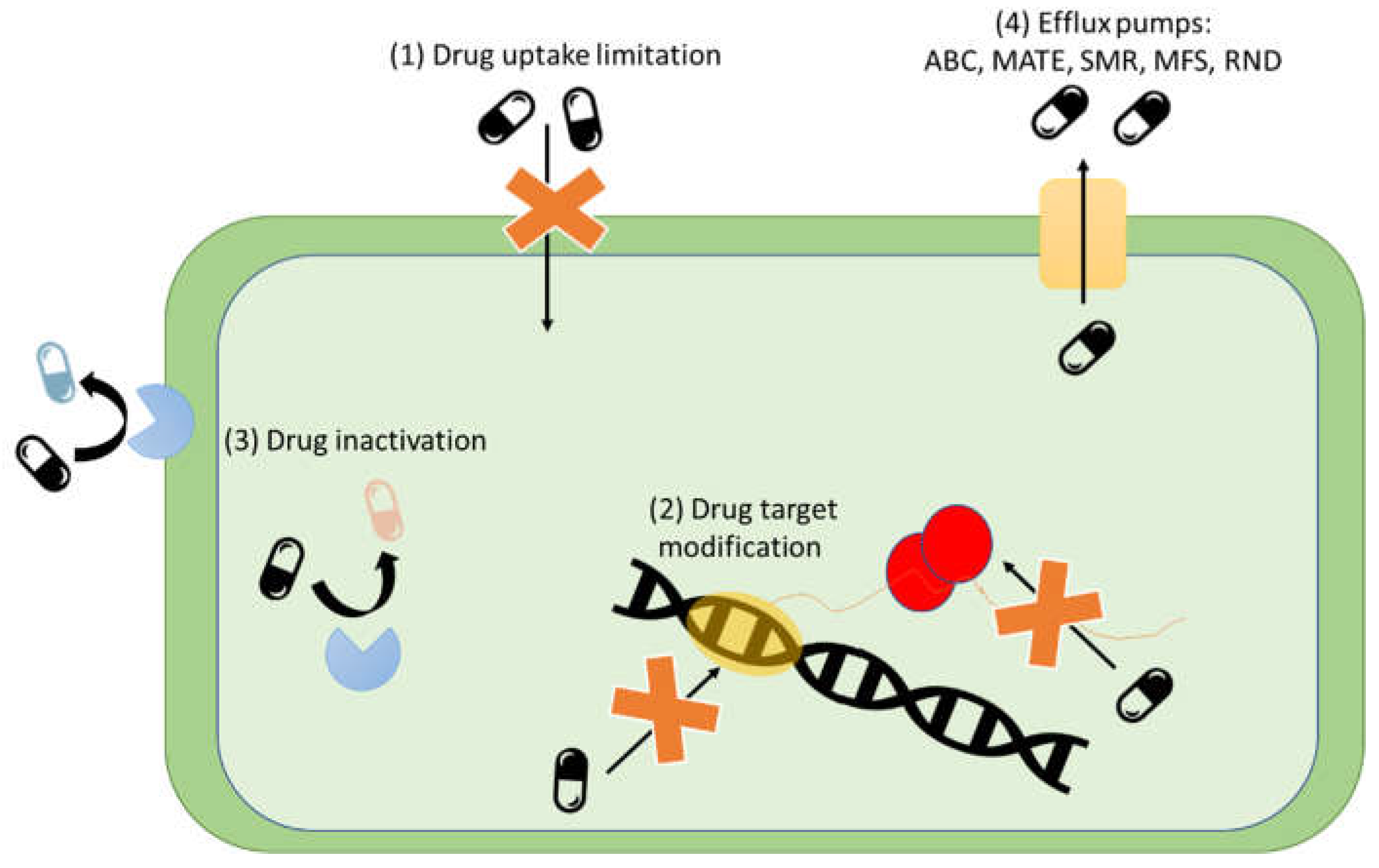
Figure 2.
Potential pathways of ABR transmission through the food chain (adapted from [22]).
Figure 2.
Potential pathways of ABR transmission through the food chain (adapted from [22]).
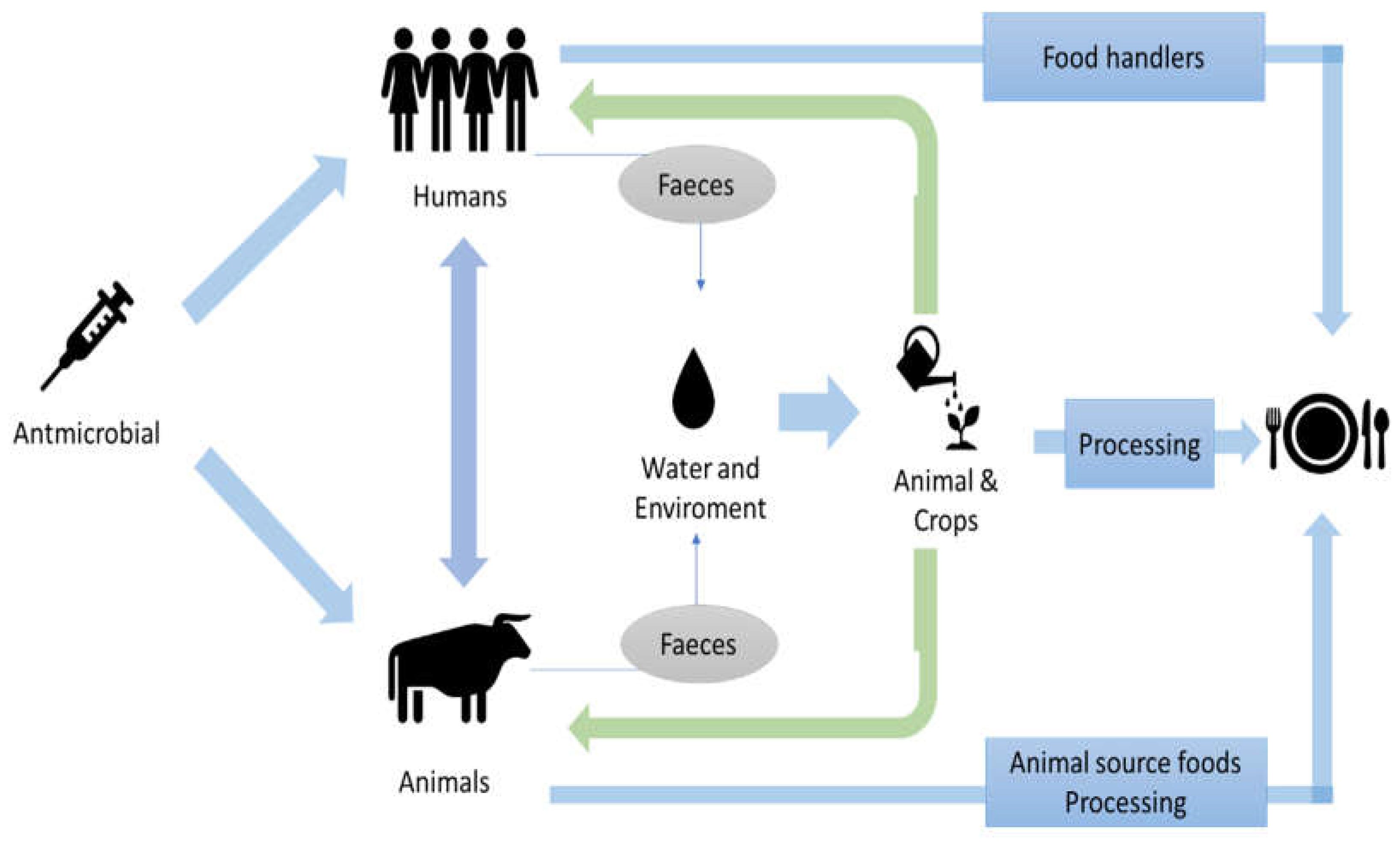
Figure 3.
Structure of Bacteriocins used in food industry. Nisin Z (Lactococcus lactis, a), lactococcin-G β (Lactococcus lactis, b), Carnobacteriocin (Carnobacterium maltaromaticum, c), Curvacin A (Latilactobacillus curvatus, d), Enterocin 7A (Enterococcus faecalis, e) and, Leucocin A (Leuconostoc gelidum, f).
Figure 3.
Structure of Bacteriocins used in food industry. Nisin Z (Lactococcus lactis, a), lactococcin-G β (Lactococcus lactis, b), Carnobacteriocin (Carnobacterium maltaromaticum, c), Curvacin A (Latilactobacillus curvatus, d), Enterocin 7A (Enterococcus faecalis, e) and, Leucocin A (Leuconostoc gelidum, f).
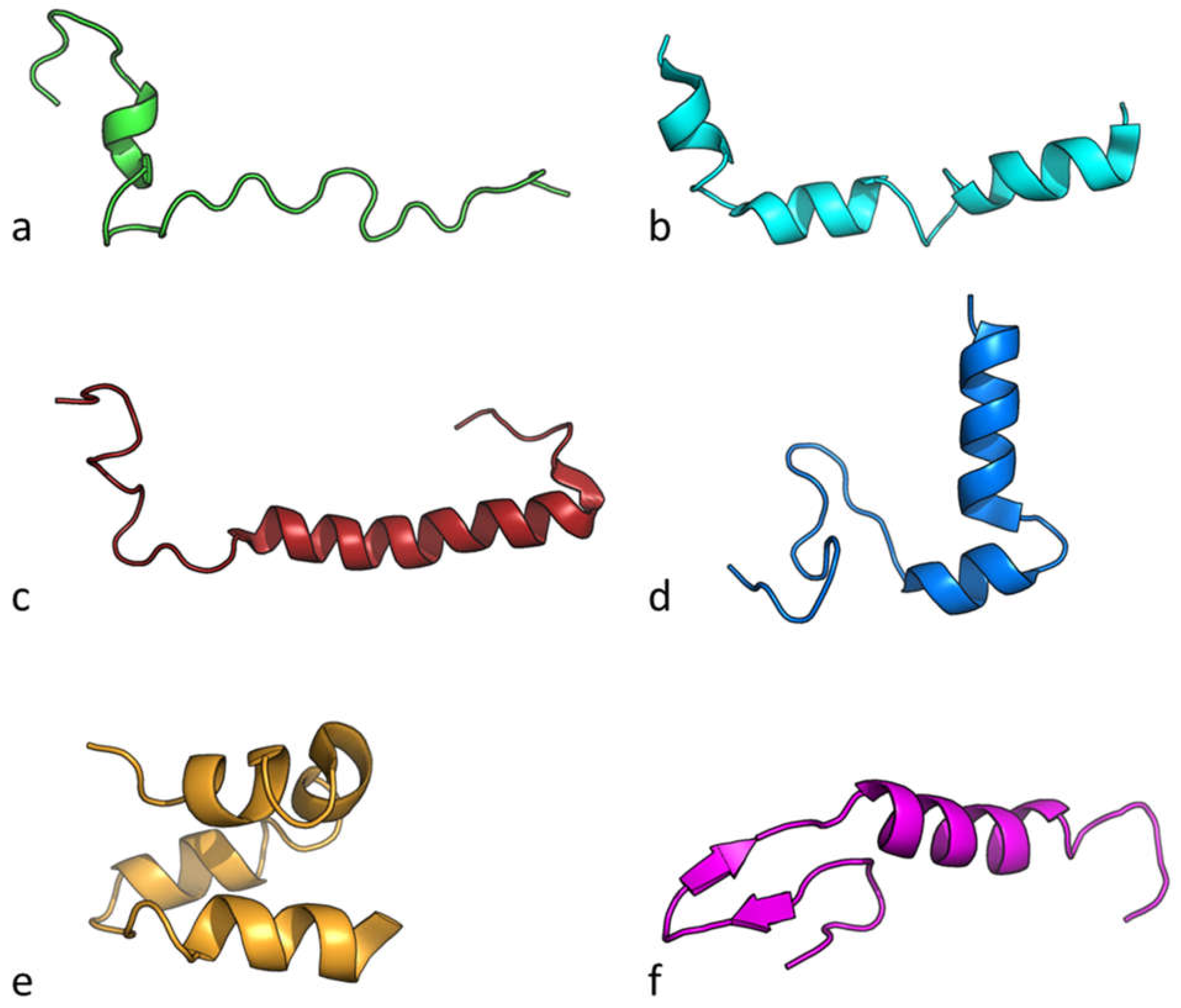

Table 1.
Commonly used antibiotic and its associated resistance mechanisms.
| Antimicrobial group | Resistance mechanism |
|---|---|
| Aminoglycocides Gentamicin Streptomycin Kanamycin |
Enzyme modification Decreased permeability Target resistance (ribosome) Efflux bombs |
| β- Lactams Cephalothin Cefoxitin Ceftiofur Cefquinome |
Reduced permeability Altered penicillin-binding proteins (PBPs) β- Lactamases, cephalosporinases Efflux bombs |
| Folate pathway inhibitors Sulfonamides |
Decreased permeability Production of drug-insensitive enzymes |
| Macrolide-lincosamide-streptgramin B Erythromycin Lincomycin Virginiamycin |
Enzyme modification Decreased permeability Decreased ribosomal binding |
| Phenicols Chloramphenicol Florfenicol |
Enzyme modification Decreased permeability Decreased ribosomal binding Efflux bombs |
| Quinolones and fluoroquinolones Nalidixic acid Ciprofloxacin Enrofloxacin |
Target resistance (DNA gyrase, topoisomerase IV) Efflux bombs Decreased permeability |
| Tetracyclines Chlortetaracycline Tetracycline Doxicycline |
Target resistance (ribosome) Drug detoxification Efflux bombs |
Table 2.
Presence of antibiotic residues in animal derived food products and associated health concern risk.
Table 2.
Presence of antibiotic residues in animal derived food products and associated health concern risk.
| Antibiotic residue | Concentration | Food product | Associated health concern risk | Source |
|---|---|---|---|---|
| Oxytetracycline | 2604.1 ± 703.7 μg/kg | Chicken muscle | Allergic hypersensitivity reactions or toxic effects (phototoxic skin reactions, chondrotoxic) | [29] |
| 3434.4 ± 604.4 μg/kg | Chicken liver | Carcinogenicity, cytotoxicity | ||
| 51.8 ± 90.53 μg/kg | Beef | Carcinogenicity, cytotoxicity | [30] | |
| Enrofloxacin | 0.73 - 2.57 μg/kg | Chicken meat | Allergic hypersensitivity reactions or toxic effects, phototoxic skin reactions, chondrotoxic. | [31] |
| Chloramphenicol | 1.34 - 13.9 μg/kg | Chicken | Bone marrow toxicity, optic neuropathy, brain abscess | |
| Penicillin | 0.87 - 1.3 μg/kg | Calves | Allergy, affect starter cultures to produce fermented milk product | |
| Oxytetracycline | 3.5 - 4.61 μg/kg | Chicken meat | Carcinogenicity, cytotoxicity in the bones of broiler chickens | |
| Quinolones | 30.81± 0.45 μg/kg μg/kg | Chicken meat | Allergic hypersensitivity reactions or toxic effects (phototoxic skin reactions, chondrotoxic) | [32] |
| 6.64 ±1.11 μg/kg | Beef | |||
| Amoxicilin | 9.8 -56.16 μg/mL | Milk | Carcinogenic, teratogenic, and mutagenic effects | [33] |
| 10.46 -48.8 μg/g | Eggs | |||
| Suldonamides | 16.28 μg/g | Raw milk | Carcinogenicity, allergic reaction | [34] |
| Quinolones | 23.25 μg/g | Allergic hypersensitivity reactions or toxic effects (phototoxic skin reactions, chondrotoxic). |
Table 3.
Prevalence of ABR strains in the food chain.
| Microorganism | Sample source | Antibiotic resistance | Prevalence (%) | Source |
|---|---|---|---|---|
| Escherichia coli | Bovine milk sample | Azithromycin | 53 | [37] |
| Chloramphenicol | 15 | |||
| Ceftriaxone | 17 | |||
| Penicillin | 69 | |||
| Gentamicin | 6 | |||
| Amoxicillin | 55 | |||
| Tetracycline | 20 | |||
| Cephalexin | 64 | |||
| Listeria monocytogenes | Bovine milk sample | Azithromycin | 12 | |
| Chloramphenicol | 22 | |||
| Ceftriaxone | 17 | |||
| Penicillin | 46 | |||
| Gentamicin | 24 | |||
| Amoxicillin | 46 | |||
| Tetracycline | 23 | |||
| Cephalexin | 46 | |||
| Salmonella spp. | Bovine milk sample | Azithromycin | 8 | |
| Chloramphenicol | 6 | |||
| Ceftriaxone | 5 | |||
| Penicillin | 21 | |||
| Amoxicillin | 15 | |||
| Tetracycline | 5 | |||
| Cephalexin | 21 | |||
| Staphyloccocus aureus | Bovine milk sample | Azithromycin | 8 | |
| Chloramphenicol | 6 | |||
| Ceftriaxone | 6 | |||
| Penicillin | 21 | |||
| Gentamicin | 3 | |||
| Amoxicillin | 25 | |||
| Tetracycline | 7 | |||
| Cephalexin | 25 | |||
| E.coli | Healthy farm workers | β-lactams | 77.3 | [38] |
| Pigs | 76.7 | |||
| Poultry broilers | 40 | |||
| S. aureus | Pigs | Methicillin | 30 | [39] |
| Campylobacter jejuni | Chicken | Ampicillin | 5 | [40] |
| Tetracycline | 31.7 | |||
| Ciprofloxacin | 23.3 | |||
| C. coli | Pork | Ampicillin | 33.3 | |
| Erythromycin | 73.3 | |||
| Tetracycline | 73.3 | |||
| Chloramphenicol | 6.7 | |||
| Ciprofloxacin | 46.7 |
Table 4.
List of some cationic bacteriocins and their uses in the food industry.
| Bacteriocin | Source | Food use | Reference |
|---|---|---|---|
| Nisin & Nisin Z | Lactococcus lactis | Prevents food-spoilage caused by Lactobacillus spp, L. monocytogens, S. aureus and Clostridum spp | [78] |
| lactococcin-G β | Lactococcus lactis | Activity against Listeria monocytogenes in yogurt, cheese, and sauerkraut | [79] |
| Leucocin A | Leuconostoc gelidum | Activity against E. coli and L. monocytogenes in meat and fish products. | [80] |
| Carnobacteriocin B2 | Carnobacterium maltaromaticum | Activity against Listeria monocytogenes in dairy, meat or fish food and feed products | [81] |
| Curvacin A | Latilactobacillus curvatus | Activity against Listeria monocytogenes | [82] |
| Enterocin 7A | Enterococcus faecalis | Activity against Listeria monocytogenes in meat and meat-based products | [83] |
Table 5.
Physicochemical properties of some cationic bacterions used in the food industry.
| Name | Source organism | Molecular weight (Da) |
Net Charge pH 7 | Isoelectric point | Hydrophobicity | Hydrophobic Moment |
|---|---|---|---|---|---|---|
| Nisin | L. lactis | 3456.62 | 3 | 8.52 | -0.29 | 0.48 |
| lactococcin-G β | L.lactis | 4107.19 | 4 | 10.42 | 0.25 | 0.71 |
| Leucocin A | L. gelidum | 3929.80 | 2 | 8.77 | 0.26 | 1.58 |
| Carnobacteriocin B2 | C. maltaromaticum | 4966.40 | 4 | 9.96 | 0.00 | 1.60 |
| Curvacin A | L. curvatus | 4306.03 | 3 | 9.37 | 0.11 | 1.69 |
| Enterocin 7A | E. faecalis | 5172.91 | 6 | 10.68 | 0.20 | 2.12 |
| Averague | 4815.12 | 4 | 10.00 | 0.10 | 1.81 | |
Disclaimer/Publisher’s Note: The statements, opinions and data contained in all publications are solely those of the individual author(s) and contributor(s) and not of MDPI and/or the editor(s). MDPI and/or the editor(s) disclaim responsibility for any injury to people or property resulting from any ideas, methods, instructions or products referred to in the content. |
© 2023 by the authors. Licensee MDPI, Basel, Switzerland. This article is an open access article distributed under the terms and conditions of the Creative Commons Attribution (CC BY) license (http://creativecommons.org/licenses/by/4.0/).
Copyright: This open access article is published under a Creative Commons CC BY 4.0 license, which permit the free download, distribution, and reuse, provided that the author and preprint are cited in any reuse.


