

Submitted:
29 December 2022
Posted:
04 January 2023
Read the latest preprint version here
Abstract
Reading proficiency is requisite in our read-to-learn educational system, yet two-thirds of American students are not proficient readers. Assuring educational equity means supporting all learners with multiple component reading interventions that individually scaffold students while remediating weak literacy skills and providing intensive and sustainable intervention early. This study (N = 855) measured the efficacy of two different multiple component reading programs for students in grades three, four, and five. Grade levels of students were assigned to either the treatment intervention or the typical practice condition; and all students were pre-and post-tested using EasyCBM Reading Benchmarks. Students scoring at/below the 30th percentile on either benchmark were also assessed with the WRMT-3 Passage Reading Comprehension and Oral Reading Fluency measures. Students in the treatment condition received Readable English and students in typical practice condition continued to receive Amplify CKLA during their regular ELA times for 45—60 hours. Students receiving Readable English significantly outperformed students in the typical practice condition on measures of oral reading fluency, reading rate, accuracy, and passage comprehension. Raw scores, growth scale values, and grade equivalents are reported, and implications for practice are discussed. In a school year fraught with pandemic instructional interruptions and learning loss, elementary students in the intervention condition averaged a year’s worth of growth in reading fluency and nine months of growth in reading comprehension compared to three- and five-months fluency and comprehension growth in the typical practice condition. Students in the Readable English condition experienced meaningful gains in reading rate and accuracy that will give exponential word reading volume dividends to students able to read text faster and more accurately going forward. This study adds to accumulating evidence that multiple component reading programs designed to reinforce fluency skills also support reading comprehension gains for all students.
Keywords:
at-risk readers
; elementary reading
; reading remediation
; orthographic mapping
; reading fluency
; reading comprehension
; accelerated learning
INTRODUCTION
According to threading e 2022 National Assessment of Educational Progress only 33% of fourth graders and 31% of eighth graders are proficient readers, with significant racial disparities apparent between white students and all other races. Clearly many students leave high school without the reading ability needed to fully access all the opportunities available to skilled readers. Educational tracks for the reading ‘Haves’ and ‘Have Nots’ may diverge in many places, but there are two main places students get derailed from the path to reading proficiency, fluency and understanding. The purpose of this article is to review basic reading development to understand where reading becomes difficult for children, identify specific reading processes integral to reading, clarify what is needed to support good reading development, and consider the results from implementing Readable English in grades three through five.
The trajectory for non-proficient adult readers begins in elementary school with low or even low-average reading fluency (Wanzek et. al, 2013). Every year that reading skills deficits of young readers are not remediated compounds reading comprehension problems adult readers will face (Lesgold & Welch-Ross, 2012; Scammacca et al., 2016). Teachers beyond third grade generally do not have the time to remediate students’ reading fluency skills, so students with reading skills deficits often are passed along the grades (Clemens et al., 2017; Cirino, 2013). A basic knowledge of reading skills development allows us to predict that the older students are, the greater the impact reading fluency deficits have on reading comprehension (Fletcher et al., 2019; Lovett et al., 2021). As reading for information increasingly becomes the focus of instruction, students with weak reading skills suffer in a myriad of ways.
The social effects of low reading ability influence virtually every aspect of a person’s life, impacting financial, social, and educational well-being, as well as physical and mental health (Moats, 2020; Zentall, 2012). No one likes to feel inadequate or to appear incompetent, and this is especially true of children. Students understand at an early age that reading is a key part of their learning responsibility (Boulton, n.d.). As nonproficient readers age, they develop coping mechanisms to cover their difficulty reading that vary in severity and range from guessing or skipping the words they cannot read to disruptive behaviors that divert from engagement in reading activities (Lovett et al., 2021). Other students who struggle with reading seem to disappear in the classroom to avoid drawing notice and are absent frequently. Stories abound of children, adolescents, and adults feigning hearing loss and poor vision rather than admit they cannot read (Boulton, n.d.).
Early literacy development begins before students enter school and is influenced by many factors, including the amount of verbal language they are exposed to, the reading habits of their parents, and whether they were read to as very young children (Foster et al., 2005; Hart & Risley, 1995). Before and during kindergarten, students develop awareness of the individual sounds that make up words. Automatic recognition of word sounds (phonological awareness) and the ability to manipulate basic letter sounds (phonemic awareness) are integral in learning to read (Moats, 2020). Students usually begin sounding out two and three letter real words and word parts during kindergarten (Moats, 2020).
Through third grade, reading fluency is the primary focus of reading instruction, with the focus shifting from reading individual words to reading increasingly complex sentences and connected text (Cain & Oakhill, 2011). The number of words students read correctly and accurately continues to increase dramatically through third grade. Around fourth grade the focus on reading instruction shifts from reading fluency (learning-to-read) to reading comprehension (reading-to-learn), though reading fluency also continues to increase (Cain & Barnes, 2017). Beginning in fourth grade students read increasingly complex text to learn new concepts and develop an expansive vocabulary of rare and academic words (Levesque et al., 2019). This read-to-learn shift is a sharp dividing line between students with adequate reading fluency skills and those who have fluency skills deficits (Gilbert et al., 2013; Wanzek et al., 2013). Educators refer to this as the “fourth-grade slump” as student scores on end-of-year state tests suddenly dip or plateau.
Students with unexpected poor comprehension begin to emerge in fourth grade, as students with average or below average reading fluency struggle to understand what they are reading (Catts et al., 2012; Silverman et al., 2013). Students who appeared to be on track academically with low-average or average fluency through grade three begin encountering longer sentences with academic and multisyllable words that require increasing cognitive resources for comprehension (Eason et al., 2013). Students spending finite cognitive resources on reading the words on the page may struggle to comprehend new content or struggle to assimilate rapidly expanding vocabulary and knowledge bases (Levesque et al., 2019). Unable to develop the requisite vocabulary or build foundational knowledge (schema), new learning is significantly reduced through a combination of non-comprehension, misunderstanding information, or insufficient schema (background knowledge) on which to attach new knowledge (Cain & Oakhill, 2011; Eason et al., 2013; Lovett et al., 2000).
As a result, students in fourth grade who lag slightly behind their peers and who may have seemingly small reading skills deficits are slowly left further behind during grades four and five (Silverman et al., 2013). Beyond grade six those seemingly small reading skills discrepancies are amplified in students who have not built the core knowledge and have not developed the academic vocabulary their peers with strong reading skills have acquired (Cain & Oakhill, 2011; Perfetti & Stafura, 2014). Disfluent readers, unable to read the increasingly complex text of core curriculum, do not develop the rich vocabulary and schema of proficient readers (Perfetti & Stafura, 2014). Every year struggling readers get left further behind their peers as the reading skills gap widens (Clemens et al., 2017; Stanovich, 2009).
The Mechanics of Reading: A Lot of Moving Parts
Successful literacy development can be visualized as a tunnel spiderweb: reading skills build and spiral, integrating multiple mutually supportive processes as new readers progress through the stages of reading. Relying on verbal vocabulary to recognize words, beginning readers decode letters from blended sounds into words to read them aloud (Moats, 2020). Individual words are decoded and quickly and accurately recognized. Rereading words several times adds them to the reader’s mental lexicon (word memory) where they can then be read as whole words, and word reading becomes increasingly automatic as known words are recognized on sight (Ehri, 2014). This process of orthographic mapping is how we create mental images of words.
As word reading becomes easier and faster, reading practice and the volume of words read increases; and beginning readers progress from reading individual words to reading connected text (Ehri, 2015). Exposed to increasingly complex text, developing readers continue to encounter new words which must be decoded and whose meanings must either be recognized or inferred (Schmitt et al., 2011; Perfetti, 2010). Word level reading skills become increasingly less effortful, and more cognitive resources are available for making meaning from text (Perfetti & Stafura, 2014).
Students vary in the ways they form connections between word identification and lexical memory, so a variety of scaffolds are needed to support reading development (Ehri, 2015). The lexical quality of words readers add to their mental lexicon varies in degree of accuracy and depth of knowledge of the words, and is measured in terms of spelling, pronunciation, meaning, and usage (Perfetti, 2007). Readers with higher lexical quality representations of words understand meanings of words used in differing contexts and can use those words. Higher lexical quality of words means faster and more accurate word recognition. When word recognition is automatic, readers can focus on creating meaning from the text rather than on reading the individual words, increasing comprehension (Fletcher et al., 2019). When these processes work smoothly novel words are quickly assimilated, vocabulary grows, and text meaning is synthesized and added to existing schema (Perfetti, 2010; Ehri, 2015). In addition to the complex processes involved in reading, the English language offers particular reading challenges.
English has adopted words from hundreds of languages spoken around the world, resulting in an extremely large and very rich vocabulary (Stockwell & Minkova, 2001). The spelling and pronunciations of adopted words largely has been maintained, meaning many words do not follow basic phonics rules. This creates a tension between understanding the morphology or the phonology of a word. The morphology of an unknown word is seen in its spelling and gives evidence for potential meaning (e.g. foursome), but just as frequently a word’s pronunciation is a clue to its meaning (e.g. wind) (Levesque et al., 2020). Adopting words from other languages with grapho-phonemic correspondences that differ significantly from English often means that words are not pronounced the way they are spelled (e.g. could). Weak grapho-phonemic correspondences mean that many words are not decodable and must be memorized as whole units. Often words change pronunciation with tense changes (e.g., read) or when affixes are added (e.g., live, alive, and livable) and they are pronounced differently among various English-speaking populations.
Given the orthographic and phonemic challenges learning to read and write in English poses, it is unsurprising that most early grades teachers have negative perceptions of scripted phonics programs (Campbell, 2020). Campbell found that early grades teachers are averse to using explicit and systematic phonics programs because they do not like the rigidity of scripted instruction or teaching skills in isolation. Despite current interest in the Science of Reading, teachers continue to perceive explicit reading skills instruction as “drill and kill,” and the widespread belief that rich exposure to reading causes children naturally to grow into skilled readers persists (Jansson, 2020). The dichotomy between a theoretical conception that explicit reading skills instruction is the best way to create skilled readers and actual classroom practices is largely due to time constraints and an inability to embed newly learned reading skills across the curriculum (Campbell, 2020; Jansson, 2020). In other words, reading instruction happens during the reading class time and other subject areas are equally compartmentalized. Teachers continue to report that it is difficult to conceptualize and integrate reading instruction with math, social studies, science, and other core content areas (Jansson, 2020; Campbell, 2020; O’Brien et al., 1995). An inherently complex task, students need thousands of hours of practice to become proficient readers (Lesgold & Welch-Ross, 2012), necessitating cross-curricular reading instruction to get both enough reading instruction and practice reading.
The continuum from decoding to reading fluency to reading comprehension is not always a smooth path (Silverman et al., 2013). Though fundamental to learning, reading is not easy for most students, and a breakdown anywhere in the cycle negatively impacts reading comprehension (Wanzek et. al., 2013). Many discrete skills work multi-directionally to support good reading, which means that having a skills deficit in one or more areas can cause reading to be difficult. The greater the degree of reading difficulty a student experiences, the greater the likelihood that multiple reading skills processes need to be supported (Lovett et al., 2021). The potential number of instructional targets and widespread lack of reading proficiency necessitate the use of robust reading programs that facilitate growth of interrelated skills in both foundational reading fluency and reading comprehension (Fogarty et al., 2014; Lovett et al., 2000). This study examines the effectiveness of a reading intervention program that incorporates multilevel fluency and comprehension activities for students in grades three, four, and five with a wide array or reading skills strengths and weaknesses.
The Present Study
The purpose of this study was to ascertain whether and to what degree Readable English effectively teaches students to read. We wanted to evaluate a sustainable, multiple component reading program that included these key criteria:
- Is easy for teachers to implement with fidelity.
- Includes multiple components for teaching foundational reading skills (i.e., phonemic awareness, phonological awareness, phonics, orthographic mapping, morphological awareness, syntax) that support reading fluency, vocabulary building, comprehension, and writing.
- Includes spiral instruction to identify and remediate skills deficits as they occur.
- Embeds literacy across the core curriculum to maximize both time spent reading and exploring new subject matter.
Readable English is a multiple component reading program that helps teachers embed literacy throughout the curriculum. Other teaching methods require memorization of dozens of rules that are not widely applicable to even the most common English words. Words that do not follow the rules have to be memorized and recognized on sight. Using Readable English all words follow phonetic rules using glyphs to stabilize pronunciation and decoding, and silent letters are greyed out. Longer words have pronunciation breaks. Rather than providing leveled readers, this program makes all text completely decodable – including grade level curriculum
Multiple component reading programs include many activities in each of three main domains: reading fluency, vocabulary building, and reading comprehension. Strong reading interventions focus on scaffolding reading at the students’ instructional level in the context of reading, math, and written language, and provide multiple types of activities that reinforce individual reading skills (Fletcher et al., 2019). An example of one type of multiple component reading activity could include the teacher identifying unknown vocabulary and prereading words to connect new vocabulary with prior learning, completing a graphic organizer to synthesize thoughts and organize writing, and working on several short reading fluency and spelling activities all organized around a common theme or central text.
Findings from prior studies indicate that multiple component interventions are particularly effective at remediating reading fluency or reading comprehension skills for students in elementary or middle school grades (Fogarty et al. 2014; Lovett et al. 2021). However, interventions that address fluency as a multilevel construct supporting multiple processes tied to reading comprehension rarely extend beyond repeated reading of text (Fletcher et al. 2019; Lovett et al. 2021). Even fewer studies have investigated the effect of multiple component reading programs on students’ reading fluency and text comprehension across elementary grades (Lovett, et al. 2021). No large-scale studies have previously examined the effectiveness of Readable English across a continuum of reading ability levels in grades three through five.
Because students begin moving away from learning to read in third grade toward reading to learn new information, students with average or lower reading skills need ongoing multiple component supports to catch up to and keep up with their peers (Wanzek et al., 2013). Third, fourth, and fifth grade students whose education was disrupted during the prior school year particularly needed robust instruction to improve their reading. This study investigated whether and to what degree Readable English helped elementary students with average to low reading fluency and reading comprehension improve those skills compared with typical instruction. Two main points of inquiry guided our research. When compared with other students in grades three, four, and five receiving typical practice instruction using Amplify Core Knowledge Language Arts (CKLA) multiple component reading program:
- Does Readable English instruction promote superior growth of reading fluency? Do oral reading fluency, reading rate measured by words read correctly per minute (WCPM), and/or reading accuracy significantly improve for students in the intervention condition?
- Does Readable English, a program supporting fluency at multiple levels, meaningfully improve reading comprehension of students in the intervention condition?
MATERIALS AND METHODS
Procedures
Study proposal and protocols were reviewed and approved by Integ Review IRB (protocol number 1228). Pre-test assessments were administered during the schools’ usual benchmark testing windows in mid-September to mid-October and post-testing occurred from mid-April to mid-May. Individually administered tests were conducted by trained administrators, teachers, or school psychologists under the direct supervision of the research team’s psychometrician. The intervention program occurred from mid-October to mid-April (i.e., between pre- and post-testing). Eighty intervention hours were planned, but due to rolling COVID school closures and weather events students received forty-five to sixty instructional hours (M = 56 hours).
Research Design
This research study (N = 855) was a multisite, experimental design blocked by grade that encompassed fifty-five teachers at ten rural schools located in three rural districts in both Indiana and Tennessee. Three schools were assigned to the typical practice condition, four schools were assigned to the intervention condition, and three schools had grade levels of students assigned to both condition groups. At schools participating in both typical practice and intervention conditions, three teachers who taught multiple grade levels taught students in both study conditions. Average annual enrollment for the ten participating schools was 1,400 students, with between 49.3% and 59.5% of students qualifying for free or reduced-price lunch (Kids Count Data Center, 2022). Students with limited English proficiency represented less than 2% of the total student populations of participating schools and were excluded from the study. Grade levels of Reading/English Language Arts classes within each school were assigned to either the intervention or typical practice condition. Special Education teachers followed grade level research design blocking to provide either Readable English instruction to their students in the intervention condition or they continued with the usual instruction for students assigned to the typical practice condition. A priori power analyses indicated that sample sizes per grade level treatment condition needed to include at least 105 participants to be sensitive enough to find moderate effect sizes with significance of α = 0.05. These sample size goals were met and student demographics are described in Table 1.
Chi-square tests of categorical variables (e.g., gender, ethnicity) showed no significant differences in student characteristics between the treatment and typical practice group. Independent sample t tests were conducted to evaluate group equivalence for pretest measures. Analyses indicated there were no significant differences between the treatment and typical practice groups on pre-test WRMT-3 measures. However, there were statistically significant differences between the groups on all three EasyCBM pre-test measures and these were controlled for during data analysis.
Attrition Analysis
Of the 1023 students who began the study, 855 (84.6%) completed both pre- and post-test assessments. Comparisons of demographic and pre-test scores of the 168 attritors in the control and treatment conditions showed no significant differences in any variable between the students who left the study and those who completed post-testing. There was no significant difference between the number of students who left the study in the control (n = 87) and treatment (n = 81) conditions. Students were excluded if they transitioned from in-person to online instruction or were not in attendance to complete either pre- or posttesting.
Intervention Training and Supervision
Teachers received initial and ongoing instruction in how to teach the Readable English program, and teachers were encouraged to use the conversion tool to convert a variety of core curriculum content from standard English into text with the Readable English mark-up. At schools using Readable English, both the general and special education teachers used Readable English as their regular Reading or English Language Arts (ELA) instruction. At the beginning of the school year all teachers received two full days of intervention implementation training, and teachers assigned to Readable English intervention condition groups were provided with an intervention coach to monitor instructional fidelity and to assure proper program pacing. Coaches provided teachers with weekly lesson plans and teaching guide manuals that included scope and sequence for each phase of the intervention. Both condition groups introduced main lesson ideas in whole group settings, before students received direct instruction in small groups with the teacher. During small group instruction, students worked in group workstations when not working with the teacher.
Intervention Fidelity
To monitor instructional fidelity coaches and teachers in the Readable English intervention condition group checked in either virtually or in-person every week school was in session (i.e., twelve to sixteen times). Coaches modeled lessons and observed teacher instruction with students, later providing feedback and encouragement. Teachers were encouraged to use the conversion tool for cross curricular reading assignments and were provided multiple demonstrations of both how to use the conversion tool and practical exemplars. Coaches monitored teacher progress through the Readable English intervention for appropriate pacing, and to be certain teachers were using all relevant intervention materials and practices. Teachers in the typical practice control group received support from districts’ academic coaches to assure district scope and sequence guidelines for Amplify CKLA were followed.
Description of Readable English Intervention Condition
Readable English uniquely targets reading fluency skills deficits and provides individualized reading scaffolding without significant teacher involvement. Rigorous word and nonword decoding skills practice tasks and games are integrated into the computer-based program that guides the students’ individual learning paths. Students practice reading increasingly complex levels of text (i.e., connected text, passages, narratives, and nonfiction works), with integrated checks for student reading comprehension. Various grade level text is available online in the student eReader, or teachers or students can choose any other text they want to read. The Readable English mark-up makes words completely phonetic in three ways. First, letters that do not follow their primary standard English pronunciation are marked with a glyph like a diacritical mark that cues the student to the letter’s accurate pronunciation. Second, letters that do not make a sound are visible but are grayed out to indicate their silence; and third, pronunciation breaks are indicated by a dot to support reading of multisyllable words (see Figure 1). [Figure 1 near here] [Readable English Overview video near here]
During the six weeks of Phase One of Readable English, students learned the twenty-one glyphs through songs, rhymes, movement, and games. Phase Two (which ranged from six to twelve weeks) focused on decoding, spelling, and fluency skills using interactive worksheets, games, and text through teacher led small group and student independent workstations. All activities were performed either on the computer or printed out by the teacher and used independently of the computer. During Phase Two students began using the Readable English conversion tool to read core curriculum. Teachers were encouraged to convert core content from across the curriculum, including books, worksheets, and project instructions, into the Readable English mark-up. Phase Three (ten plus weeks) built on the fluency skills learned in Phases One and Two and focused on reading comprehension, writing skills, and vocabulary building.
The Conversion Tool. The Readable English mark-up makes text transparently decodable. This eliminates the need for students to guess at word pronunciation, though it does not eliminate the guessing habit many students develop as a compensatory reading strategy. The conversion tool can convert text that has been cut and pasted from the computer screen, as well as a wide variety of file types (e.g., Word documents, PDF text, PDF image, JPG, PNG, TIFF, TXT, HTML), so most types of text can be converted to the Readable English mark-up. Teachers can convert materials and add them to the students’ individual eReader libraries, along with vocabulary word lists. Students can add and delete words to their personal vocabulary list. These functions make it possible to scaffold cross-curricular content to students’ independent reading levels and incorporate vocabulary from math, science, and social studies with ELA material.
The conversion tool gives students autonomy to individualize their own reading materials. They can choose what text to convert and either print it or read it online. E-reader setting options include font size, word spacing, letter spacing, line spacing, font color and background color of text. Students choose whether they want to view silent letters greyed out. The Readable English mark-up can be turned off for the entire text or for individual words the student has learned to read. Right clicking on a word turns the Readable English mark-up on or off. Left clicking on a word pulls up a definition, and options to hear the word read, add it to a vocabulary list, or translate the word into one of forty other languages. The student can bookmark the last page read. [eReader Functionality video near here]
Using the conversion tool, students choose what to read and how they want to read it, and teachers can source materials from their favorite projects, textbooks, websites, programs, etc. Teachers can integrate cross-curricular content and provide a high level of individualized student support many children need read grade level curriculum to build academic vocabulary and expand knowledge bases. The Readable English curriculum targets multiple reading skills components and multidirectionally support all currently defined reading processes, providing important skills practice for students with a range of reading skills deficits.
Description of Typical Practice Amplify CKLA Condition
Teachers used Amplify CKLA and followed district grade level scope and sequences. This program offers foundation reading skills assessments (DIBELS 8) in a student dashboard so teachers can monitor student reading progress. Reading passages, worksheets, and skills games are available for online learning. Amplify CKLA had been used by all the study schools for a minimum of three years and includes activities designed to teach, explicitly and systematically, multiple literacy skills involved in reading fluency and comprehension. Students in both condition groups received equal instructional time.
Teacher Test Administration Training
Teachers in both the treatment and control conditions received training in how to properly administer EasyCBM reading benchmarks. All teachers were reminded of benchmark testing windows and individually advised on missing student data during each testing window. To ameliorate potential Hawthorne effects, all teachers in both conditions were provided student benchmark score reports. All teachers and administrators also had equal access to the EasyCBM student scores portal.
Measures
EasyCBM. The EasyCBM Common Core State Standards (CCSS) Basic Reading benchmark assessment (University of Oregon, 2008) is a twenty-five-item group administered online test measuring comprehension skills of nonfiction and informational text. A sixty-second individually administered test, Passage Reading Fluency measures reading rate as words read correctly per minute (WCPM) and reading accuracy. Using these two metrics a reading fluency percentile is calculated. The benchmark tests are grade-based, normed, and delivered during the Fall, Winter, and Spring testing windows. Internal consistency for the CCSS Basic Reading test is high, with a median Cronbach’s alpha of 0.87 and median split-half reliability of 0.76 and 0.83 across all measures (Guerreiro, Alonzo, & Tindal 2014). Researchers chose the EasyCBM for its ease of use across multiple grades and the analytics available to teachers and parents. All students in all schools were assessed with the EasyCBM benchmarks. The Fall benchmark was used as a universal screener to determine which students might have significant reading skills deficits.
Because students reading well-below grade level may make reading skills gains that are not reflected in tests beyond their independent reading level, additional and more sensitive assessments were used. Students scoring at or below the 30th percentile on either the EasyCBM Passage Reading Fluency or CCSS Basic Reading test were further assessed using the Woodcock Reading Mastery Tests, 3rd Ed. ([WRMT-3] Woodcock, 2011) Passage Comprehension and Oral Reading Fluency subtests.
WRMT-3. The WRMT-3 is a battery of individually administered assessments measuring reading achievement skills of students in pre-kindergarten to grade twelve. Tests have grade-specific start points and items are increasingly difficult until the discontinue rule is met. Study participants were assessed with the WRMT-3 Oral Reading Fluency and Passage Comprehension subtests. Internal consistency age-based reliability for both subtests range from 0.83 to 0.95. Alternate form reliability is very good for students aged eight to thirteen years, with comprehension ranging from 0.85 to 0.87 and fluency ranging from 0.91 to 0.84 (Woodcock, 2011). The research team chose the WRMT-3 for its utility for multiple audiences. School administrators and teachers could evaluate individual student progress by percentile and grade level growth, while the test also generates the standard scores and growth scale values needed for rigorous analysis of group growth. Using only the fluency and comprehension subtests kept the testing time to minimum and allowed schools to evaluate reading growth of students with skills deficits for future Response-to-Intervention placement.
Data Analysis Procedures
A priori power analysis using G*Power 3.1.9.7 was conducted to determine sufficient sample sizes for study design (Faul et al, 2009), all other data analyses were conducted using IBM SPSS version 26. Chi-square tests for homogeneity of variance of categorical demographic variables and One-Way ANOVAs comparing pre-test scores between treatment conditions were conducted. Levene’s Tests for homogeneity of variance were evaluated. Where the homogeneity assumption was met, two by three between-subjects factorial ANOVAs, coupled with pairwise comparisons for significant interaction effects, were used to explore research questions. Because statistical significance alone does not explain how meaningful a finding may be, effect sizes of the simple main effects were examined and reported as partial eta squared (ηp2) to better understand the unique role individual variables had in the full model. Effect sizes are defined as follows: ηp2 ≥ 0.01 small or no effect, ηp2 ≥ 0.06 medium effect, ηp2 ≥ 0.08 large effect (Levine & Hullett, 2002). As an additional guard against potential threat to internal validity post hoc power analyses were conducted to rule out low statistical power using G*Power 3.1.9.7 (Onwuegbuzie and Leech, 2004). Where the pre-test assumption of normality was not met, Welch’s t -tests were used to examine mean change in reading skills pre- and post-tests, and Hedge’s g effect sizes were reported for statistically significant findings: g ≥ 0.2 indicates a small effect, g ≥ 0.5 a medium effect, g ≥ 0.8 a large effect (Cohen, 1992).
Pre- and post-test delta of EasyCBM CCSS Basic Reading raw scores, words correct per minute (WCPM), and reading accuracy percentages were used to examine reading comprehension and fluency skills changes within and across grade levels. Age-based growth scale values were used to examine pre- and post-test WRMT-3 fluency and comprehension changes by grade level. Whereas standard scores provide a student’s relative standing in a group and include a measure of alternate form variation, growth scale values are calculated on an equal interval scale with forms A and B jointly calibrated and equated. Using growth scale values allows for very accurate growth measurement and comparisons of change wherever they occur on the scale (i.e., across collective grade levels) (Woodcock, 2011). The WRMT-3 also calculates grade equivalent, which quantifies months of educational progress and is readily understood by teachers and parents. Ten months of instructional growth equals one grade year level (e.g., 1.0 grade year = 10 months).
One-Way ANOVAs of all pre-test measures were performed at each grade level to determine whether intervention and typical practice condition groups were significantly different prior to intervention. The homogeneity of variance assumption was satisfied for third, fourth, and fifth grade WRMT-3 comprehension and oral reading fluency pre-tests scores. Kolmogorov-Smirnova (K-S) normality tests with Lilliefors significance correction were conducted, and test statistics and visual inspection of histograms showed WRMT-3 pre-test scores were normally distributed. Therefore, Two-by-Three factorial ANOVAs were conducted to examine change of mean (delta) and grade effects between condition groups for each independent variable.
One-Way ANOVAs indicated statistically significant differences between mean pre-test scores of the condition groups for EasyCBM comprehension, reading rate, and reading accuracy. K-S normality tests also showed non-normal distributions for EasyCBM comprehension and accuracy pre-test scores. We expected a skewed distribution for reading accuracy, as students were likely to have accuracy scores at the upper end of the scale. Due to these factors, nonparametric Welch’s t-tests were the most appropriate choice for examination of pre- and post-test changes of EasyCBM measures (Hoekstra et al., 2012).
RESULTS
Mean changes in scores of the EasyCBM Benchmarks taken by all participants are shown in Figure 2, Figure 3 and Figure 4. Mean changes in growth scale values of the WRMT-3 subtests given to students who scored at/below the 30th percentile on the Fall benchmark tests are shown in Figure 5 and Figure 6. Grade Level growth on WRMT-3 reading subtests is shown in Figure 7 and Figure 8.
Reading Fluency Growth
All grade level intervention conditions outperformed typical practice conditions, demonstrating meaningful and statistically significant pre-and post-test differences on all measures of reading fluency and comprehension (see Table 2). The EasyCBM Passage Reading Fluency is comprised of measures of reading rate and reading accuracy. Students in the intervention practice significantly outperformed students in the typical practice condition at each individual grade level. There was a moderate effect size for WCPM reading rate for the combined grade levels with the biggest disparity between conditions seen in fourth grade where students in the Readable English intervention condition averaged 17 more words read correctly per minute out of mean 145 WCPM than did peers in the typical practice condition (see Figure 2).
Reading accuracy of all grades combined demonstrated a moderate effect size with students in the intervention condition reading 3.1% more accurately at the end of the school year than students in the typical practice condition who improved only 0.7% (See Figure 3). Third grade showed the most improvement in reading accuracy with the intervention group reading about 5.0% more accurately than students in the typical practice condition. Reading accuracy and reading rate are vital to good comprehension. Misreading several words out of every hundred words wrong can significantly change the meaning of the text. Two main factors of good reading include quick and accurate oral reading. Other important, but unmeasured factors in this study include prosody, word recognition, and comprehension (vocabulary). While all grades, both individually and when grouped, showed superior reading skills gains for the intervention condition, no single grade outperformed another.
Significant and large main effects for WRMT-3 Oral Reading Fluency were found F(5,187 = 7.49, p = <.001, partial η2 = .167. There were moderately strong main effects of grade F(2,187) = 7.44, p = <.001, partial η2 = .074 and of treatment condition F(1,187) = 21.67, p = <.001, partial η2 = .104. Post hoc pairwise comparisons showed a significant interaction of Oral Reading Fluency and grade level, but only between grades three and five. This follows expectations for typical fluency growth, as younger grades show steeper reading rate growth with growth of WCPM gradually leveling off around grade six. Typically developing readers express larger WCPM at grade three and smaller WCPM gains in grades five and up as text complexity increases and instructional focus shifts from learning-to-read-fluently to reading-fluently-for-comprehension. The gains in reading rate and accuracy experienced by students in the Readable English condition are considerable and will give exponential word reading volume dividends to students able to read text faster and more accurately going forward.
Reading Comprehension Growth
Combining the three grades for an overarching analysis showed that EasyCBM CCSS Basic Reading comprehension was meaningfully improved for the intervention group with a small effect size and large observed power (see Figure 5). Examination of CCSS Basic Reading comprehension growth by grade level shows the largest difference in mean change between groups lies with fifth grade (ΔM = 1.7) where there was a moderate effect size (Hedge’s g = 0.6) compared to students in the typical practice condition who showed net learning loss on this measure (ΔM = -0.4).
Significant and large main effects for WRMT-3 Passage Comprehension were found F(5,187 = 6.55, p = <.001, partial η2 = .149 showing the intervention condition had meaningful comprehension growth relative to the typical practice condition. There was a strong main effect of treatment condition F(1,187) = 20.69, p = <.001, partial η2 = .100 and a small effect of grade level F(1,187) = 3.53, p = .031, partial η2 = .36. The interaction of treatment condition and grade level was significant with a moderate effect size F(2, 187) = 4.09, p = .018, partial η2 = .042. Pairwise comparisons by grade show that the only significant interaction was the difference between grades four and five t = 2.58, p = .011, negating the probability of a true interaction between treatment condition and grade level. Intervention condition participants at all three grade levels realized substantial reading comprehension gains with growth increasing incrementally from third through fifth grades.
The prior results are analyses of raw scores, growth scale values, and percentages designed to root out the efficacy of the intervention. Examination of effect sizes, probability, F and t values, and statistical power show researchers that the findings were not only statistically significant, but they also represented meaningful educational gains for students. Practitioners, however, want to know if this intervention is powerful enough to help students who are reading below grade level close reading gaps. Teachers want to know “How many grade levels did my students grow?” To answer that question, we calculated the mean change in grade equivalents provided by WRMT-3 to get a rough idea of grade level growth for students in both conditions. Table 3 shows the mean changes in grade equivalents, while Figure 7 and Figure 8 graph those differences visually. Observed power was adequate for each test, ranging from 0.60 to 0.99.
The big picture view of grade level growth is that when mean change in grade equivalents for all grades are combined, students who received Readable English instruction outperformed students in the typical practice condition. Combining the grade levels increased the sample size for that analysis so that observed power was strong. Mean changes in grade equivalents for individual grade levels are reported, but the sample sizes are so small that observed power for those tests is weak, and grade three Passage Comprehension is not statistically significant. Prior data all indicate the intervention group realized significant and meaningful reading skills gains compared to the typical practice group. This summary analysis of mean changes in grade equivalents serves only to put those gains into a practical perspective for teachers. T test analysis of the WRMT-3 Oral Reading Fluency subtest showed that the combined grades grew approximately ten months in the intervention condition and five months in the typical practice condition. Expected annual growth is ten months, so students receiving Readable English averaged one year’s oral reading fluency growth, while students in the typical practice condition did not. Similarly, t tests also showed that the intervention condition provided approximately nine months of reading comprehension growth compared to three months gained by students in the typical practice condition. In a year typified by learning loss, improving reading skills by ten months is closing reading gaps.
DISCUSSION
Equity in education begins with making certain all students are proficient readers, and to do that we need sustainable, research proven reading programs designed to support the wide variety of processes involved in reading. Just as reading fluency spirals into increasing vocabulary knowledge and reading comprehension, reading instruction must be cyclical to address ongoing and evolving student reading needs. To address these needs teachers should be provided with a program equipped to meet very particular needs across multiple grade levels. Effective reading programs should offer a continuous path forward to support students at their current reading ability level as they read core curriculum and become increasingly skilled readers. Ongoing reading skills instruction that is embedded in the content area reading material helps all learners improve their reading and keeps many students from needing pull-out remedial reading instruction.
Overall reading accuracy improved more than 3% in the intervention condition, which is about nine more words read correctly per double spaced page. Post-intervention, students in the intervention condition also read 22 words read correctly per minute (out of mean 142 WCPM) more than students in the typical practice condition. More rapid and accurate reading was accompanied by grade equivalent gains in reading comprehension. As with prior studies showing that fluency instruction benefits students’ reading comprehension even when they have average reading fluency (Eason et al., 2013; Lovett et al., 2021), students in this study’s intervention condition also experienced comprehension gains. By supporting foundational reading skills development, the Readable English intervention enabled students to develop strong reading comprehension skills. The intervention’s individualized reading supports enabled students to access grade level content while simultaneously offering enrichment opportunities for skilled readers to successfully navigate more difficult text.
Despite pandemic instructional interruptions, students in grades three, four, and five in the Readable English intervention conditions experienced meaningful improvement on all measures of oral reading fluency, reading rate, reading accuracy, and passage reading comprehension compared to students in the typical practice condition who also received instruction using a research proven multiple component reading program. Readable English has high utility for elementary teachers who need to scaffold reading instruction for students with wide ranging learning needs. Estimates for remediating about 30% of learning loss due to the pandemic range from $800 to $3,800 per students (Pan & Sass, 2020). This study shows that Readable English can close reading gaps during the regular school day for a fraction of those eye-watering cost estimates.
Readable English is an excellent tool to accelerate reading growth. The program is equally effective across multiple grade levels because it remediates multiple linguistics skills deficits while providing individualized scaffolding for students in core curriculum. Because the program is easy to use, is scripted, and comes with complete lesson plans, training supports, and individual and small group instructional activities, teachers can implement the program with fidelity. All program content is available online, so teachers do not have to store books or take home heavy books or manuals for weekend lesson planning. The student Progress, Data, and Reports tab makes it easy to track individual and class progress. Students willingly engage with and enjoy using Readable English, elements that are critical for successful learning. Being highly effective, easy for teachers, liked by students, and affordable for districts and homeschool parents alike makes Readable English a viable solution to the national reading crisis.
Limitations and Future Research
Several factors should be considered before attempting to generalize these study findings. First, study participants were not demographically diverse: all students lived in rural areas and most students were white. Future research should include more diverse populations including multilingual learners to better ascertain the program’s generalizability.
Additional measures should be considered in future studies. Teacher and student perceptions of the intervention were not measured, and that qualitative data would help provide insight into teacher and student attitudes about aspects of Readable English. Motivation is often an undervalued factor in learning, and future studies might benefit from comparisons of opinion regarding the intervention and measured reading skills growth. One of the perceived strengths of Readable English is that students and teachers can use the conversion tool and choose the text they want to read. Providing students and teachers with choice and voice about what text to read should increase the fun factor for students and the utility of the program for teachers, but without that qualitative data this is pure speculation.
Technical improvements in the Readable English usage database could enable future researchers to compare aspects of intervention usage (i.e., number of words read, number of text conversions, time on site, number of passages read) to skills improvements. The company database was under revision during this research study, so we unable to determine which types of online activities might be positively correlated with measures of reading fluency or comprehension. There should be a strong correlation between word reading volume and increased oral reading fluency, passage comprehension, and vocabulary skills growth. Future studies should consider including a robust measure of vocabulary as a mediator of decoding and comprehension (Perfetti, 2010).
As with other current long-term studies, the biggest limitations stem from the educational disruptions. Participant attrition, though not significantly different between treatment conditions, diminished group sample sizes. Teacher fatigue probably impacted both treatment conditions, and it remains an unquantified factor; and lost instructional time significantly reduced the planned intervention time. Due to the loss of instructional time, students and teachers did not use the Readable English conversion tool as initially planned. While students in the intervention group showed excellent reading skills growth during the forty-five to sixty hours of received instruction, we cannot know how additional intervention instruction would change the slope of the reading trajectory. Would we see increasing benefits over time, or would learning plateau?
Acknowledgements
We thank the teachers, administrators, and students who participated in this study.
References
- Alonzo, J., and Anderson, D. (2018). Supplementary report on EasyCBM PRF measures: A follow-up to previous technical reports (Technical Report No. 1806). Eugene, OR: Behavioral Research and Teaching, University of Oregon. https://www.brtprojects.org/publications/technical-reports/.
- Benjamin, R.M.. Public Health Reports, November-December 2010, 125(6): 784-785. Association of Schools of Public Health. /: https, 20 December. [CrossRef]
- Berninger, V. W., Abbott, R. D., Nagy, W., and Carlisle, J. (2010). Growth in phonological, orthographic, and morphological awareness in grades 1 to 6. Journal of Psycholinguistic Research, 39, 141–163. [CrossRef]
- Boulton, D. (n.d.). An Interview: Rick Lavoie – Advocate for children with learning differences and special needs. https://childrenofthecode.org/interviews/lavoie.htm.
- Cain, K., and Barnes, M. A. (2017) Reading comprehension: What develops and when. In D. Compton, R. Parrila, & K. Cain (Eds.), Theories of reading development (pp. 257-282). John Benjamins. [CrossRef]
- Cain, K., and Oakhill, J. (2011). Matthew Effects in young readers: Reading comprehension and reading experience and vocabulary development. Journal of Learning Disabilities, 44, 431-443. [CrossRef]
- Campbell, S. (2020). Teaching phonics without teaching phonics: Early childhood teachers’ reported beliefs and practices. Journal of Early Childhood Literacy, 20(4): 783-814. [CrossRef]
- Catts, H. W., Compton, D., Tomblin, J. B., and Bridges, M. S. (2012). Prevalence and nature of late-emerging poor readers. Journal of Educational Psychology, 104, 166-181. 1177. [CrossRef]
- Cirinio, P. T., Romain, M. A., Barth, A. E., Tolar, T. D., Fletcher, J. M., Vaughn, S. (2013). Reading skill components and impairments in middle school struggling readers. Reading and Writing, 26(7), 1059-1086. [CrossRef]
- Clemens, N. H., Simmons, D., Simmons, L. E., Wang, H., and Kwok, O. (2017). The prevalence of reading fluency and vocabulary difficulties among adolescents struggling with reading comprehension. Journal of Psychoeducational Assessment, 35(8), 785-798. [CrossRef]
- Cohen, J. (1992). A power primer. Psychological Bulletin, 112(1), 155-159. [CrossRef]
- Eason, S. H., Sabatini, J., Goldberg, L., Bruce, K., and Cutting, L. E. (2013). Examining the relationship between word reading efficiency and oral reading rate in predicting comprehension among different types of readers. Scientific Studies of Reading, 17, 199-223. [CrossRef]
- Ehri, L. (2015) How children learn to read words. In A. Pollatsek & R. Treiman (Eds.), The Oxford handbook of reading (pp. 293-310). New York, NY: Oxford University Press.
- Ehri, L. C., (2014). Orthographic mapping in the acquisition of sight word reading, spelling memory, and vocabulary learning. Scientific Studies of Reading, 18, 5-21. [CrossRef]
- Faul, F., Erdfelder, E., Buchner, A., and Lang, A.-G. (2009). Statistical power analyzes using G*Power 3.1: Tests for correlation and regression analyses. Behavior Research Methods, 41, 1149-1160. [CrossRef]
- Fletcher, J. M., Lyon, G. R., Fuchs, L. S., and Barnes, M. A. (2019). Learning Disabilities: From identification to intervention (2nd ed.). Guilford Press.
- Fogarty, M., Oslund, E., Simmons, D., Davis, J., Simmons, L., Anderson, L., Clemens, N., and Roberts, G. (2014). Examining the effectiveness of a multicomponent reading comprehension intervention in middle schools: A focus on treatment fidelity. Research Into Practice 26(1), 425-449. [CrossRef]
- Foster, M., A., Lambert, R., Abbott-Shim, M., McCarty, F., and Franze, S. (2005). A model of home learning environment and social risk factors in relation to children’s emergent literacy and social outcomes. Early Childhood Research Quarterly, 20, 13-36. [CrossRef]
- Gabriel, R. (2018). Preparing literacy professionals: The case of dyslexia. Journal of Literacy Research. (50)2, 262-270. [CrossRef]
- Guerreiro, M., Alonzo, J., and Tindal, G. (2014). Internal consistency of the EasyCBM CCSS reading measures grades k-8 (Technical Report No. 1407). Eugene, OR: Behavioral Research and Teaching, University of Oregon. https://www.brtprojects.org/?s=internal+reliabilit&searchsubmit=U.
- Gilbert, J. K., Goodwin, A. P., Compton, D. L., and Kearns, D. M. (2013). Multisyllabic word reading as a moderator of morphological awareness and reading comprehension. Journal of Learning Disabilities, 47(1), 34–43. [CrossRef]
- Hart L., and Risley, T. R. (1995) Meaningful differences in the everyday experience of young American children. Baltimore, MD: Brookes Publishing Co., Inc.
- Hoekstra, R., Kiers, H., and Johnson, A. (2012). Are assumptions of well-known statistical techniques checked, and why (not?). Frontiers in Psychology, 3. https://www.frontiersin.org/article/10.3389/fpsyg.2012.00137. [CrossRef]
- Jansson, D. (2020). Do I teach what I preach? A study on teachers’ beliefs and classroom practice for reading and reading strategies. (Dissertation: Malmö University Publications http://urn.kb.se/resolve?urn=urn:nbn:se:mau:diva-33552.
- Kids Count Data Center. (2022, March 15). Education: Public School Enrollment by State. The Annie E. Casey Foundation. https://datacenter.kidscount.org/data/tables/1098-public-school-enrollment.
- Lesgold, A. M., and Welch-Ross, M., (2012) Improving adult literacy: Options for practice and research. Committee on Learning Sciences: Foundations and Applications to Adolescent and Adult Literacy. National Research Council, National Academy of Sciences. http://www.nap.edu/catalog.php?record_id=13242.
- Levine, T. Levine, T., & Hullett, C. (2002). Eta squared, partial eta squared, and misreporting of effect size in communication research. Human Communication Research, 28(4), 612-625. [CrossRef]
- Levesque, K.C., Breadmore, H.L. and Deacon, S.H. (2020). How morphology impacts reading andspelling: Advancing the role of morphology in models of literacy development. Journal of Research in Reading. [CrossRef]
- Levesque, K., Kieffer, M.J. and Deacon, S.H. (2019). Inferring meaning from meaningful parts: The contributions of morphological skills to the development of children's reading comprehension. Reading Research Quarterly, 54 (1), 63 – 80 . [CrossRef]
- <i>Levesque, K.C. Levesque, K.C., Kieffer, M.J. and Deacon, S.H. (2017). Morphological awareness and reading comprehension: Examining mediating factors. Journal of Experimental Child Psycholog, 160, 1 – 20 . [CrossRef]
- Lovett, M. W., Frijters, J. C., Steinbach, K. A., Sevcik, R. A., and Morris, R. D. (2021). Effective intervention for adolescents with reading disabilities: Combining reading and motivational remediation to improve outcomes. Journal of Educational Psychology, 113(4), 656-689. [CrossRef]
- Lovett, M. W., Lacerenza, L., Borden, S., Frijters, J. C., Steinbach, K. A., and De Palma, M. (2000). Components of effective remediation for developmental reading disabilities: Combining phonological and strategy-based instruction to improve outcomes. Journal of Educational Psychology, 92(2), 263–283. [CrossRef]
- Moats, L. C., (2020). Teaching reading is rocket science: What expert teachers of reading should know and be able to do. American Federation of Teachers. www.aft.org/sites/default/files/Moats.pdf.
- National Center for Education Statistics. National Assessment of Educational Progress (Project), Educational Testing Service, United States. (2022). NAEP reading report card for the nation and the states. Washington, D.C: National Center for Education Statistics, Office of Educational Research and Improvement, U.S. Dept. of Education.
- O’Brien, D. G., Stewart, R. A., and Moje, E. B. (1995). Why content literacy is difficult to infuse into the secondary school: Complexities of curriculum, pedagogy, and school culture. Reading Research Quarterly, 30, 442-463. [CrossRef]
- Onwuegbuzie, A., and Leech, N. (2004). Post hoc power: A concept whose time has come. Understanding Statistics, 3(4), 201-230. [CrossRef]
- Pan, W., & Sass, T. (2020). Potential remediation strategies in the wake of COVID-19 school closures: A review of literature. Georgia Policy Labs. Metro Atlanta Policy Lab for Education. Retrieved from https://gpl.gsu.edu/download/covid-19-remediation-strategies-literature-review/?wpdmdl=1951&refresh=60f97c40558611626963008.
- Perfetti, C. (2007). Reading ability: Lexical quality to comprehension. Scientific Studies of Reading, 11, 357-383. [CrossRef]
- Perfetti, C. (2010). Decoding, vocabulary, and comprehension: The golden triangle of reading skill. In M. G. McDeown & L. Kucan (Eds.), Bringing Reading Research to Life (pp. 291-303). New York, NY: Guilford Press.
- Perfetti, C., and Stafura, J. (2014). Word knowledge in a theory of reading comprehension. Scientific Studies of Reading, 18, 22-37. [CrossRef]
- Readable English. (2021). Technique [infographic]. US Teaching Guide. https://my.readablenglish.com/secure/quickGuides.aspx.
- Scammacca, N., K., Roberts, G. J., Chloe, E., Williams, K. J., Roberts, G., Vaught, S. R., and Carroll, M. (2016). A century of progress: Reading interventions for students in grades 4-12, 1914—2014. Review of Educational Research. [CrossRef]
- Schmitt, N., Jiang, X., and Grabe, W. (2011). The percentage of words known in a text and reading comprehension. The Modern Language Journal, 95, 26-43. [CrossRef]
- Silverman, R. D., Speece, D. L., Harring, J. R., and Ritchey, K. D. (2013). Fluency has a role in the simple view of reading. Scientific Studies of Reading, 17, 108-133. [CrossRef]
- olis, M., Miciak, J., Vaughn, S., and Fletcher, J. M. (2014). Why intensive interventions matter: longitudinal studies of adolescents with reading disabilities and poor reading comprehension. Learning Disability Quarterly, 37, 218-229. [CrossRef]
- Stanovich, K. (2009). Matthew effects in reading: Some consequences of individual differences in the acquisition of literacy. Journal of Education, 189(1-2), 23-55. https://www.jstor.org/stable/42748659. [CrossRef]
- Stockwell, R., and Minkova, D. (2001). English Words: History and Structure. Cambridge University Press.
- University of Oregon. (2008). Common core state standards proficient reading (Assessment measures). Available from www.easycbm.com.
- University of Oregon. (2008). Passage reading fluency (Assessment measures). Available from www.easycbm.com.
- Sullivan., L. M., Weinberg, J., and Keaney, J. F. (2016). Common statistical pitfalls in basic science research. Journal of the American Heart Association, 5(10). [CrossRef]
- Wanzek, J., Vaughn, S., Scammacca, N. K., Metz, K., Murray, C. S., Roberts, G., and Danielson, L. (2013). Extensive reading interventions for students with reading difficulties after grade 3. Review of Educational Research, 83, 163-195. [CrossRef]
- Woodcock, R. W. (2011). “Development,” in Woodcock Reading Mastery Tests Manual. 3rd Edn. USA: NCS Pearson, 71-103.
- Worthy, J., Svrcek, N., DalyLesch, A., and Tily, S. (2018). “We know for a fact”: Dyslexia interventionists and the power of authoritative discourse. Journal of Literacy Research, 50(3), 304-334. [CrossRef]
- Zentall, S. S. (2012). A reading motivation intervention with differential outcomes for students at-risk for reading disabilities, ADHD, and typical comparisons: “Clever is and clever does.” Learning Disability Quarterly, 35(4), 248-259. [CrossRef]
Figure 1.
Example of Readable English mark-up. Readable English© (2020). Reprinted with permission.
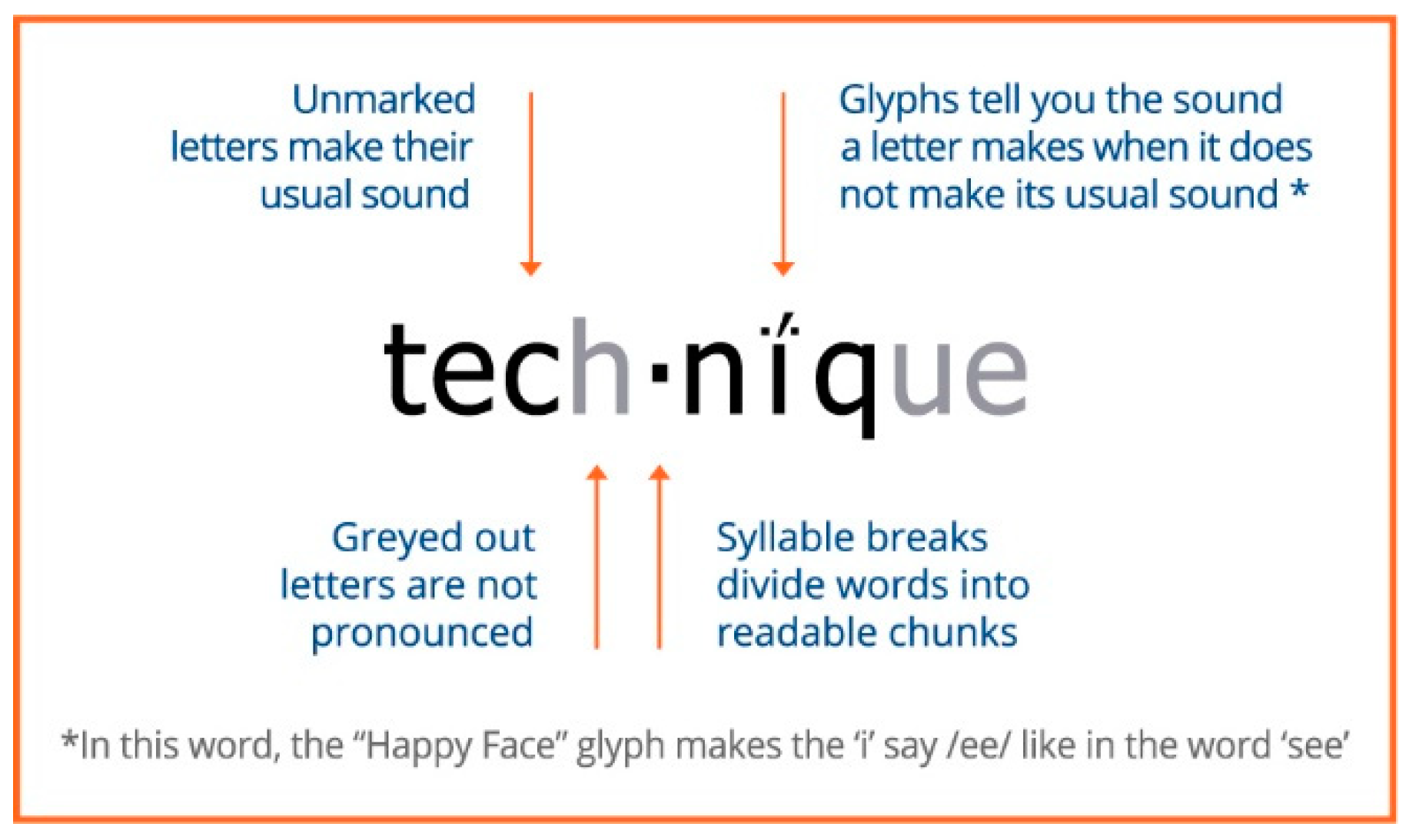
Figure 2.
Mean Change in EasyCBM Passage Reading Rate Measured by the Number of Words Read Correctly per Minute.
Figure 2.
Mean Change in EasyCBM Passage Reading Rate Measured by the Number of Words Read Correctly per Minute.
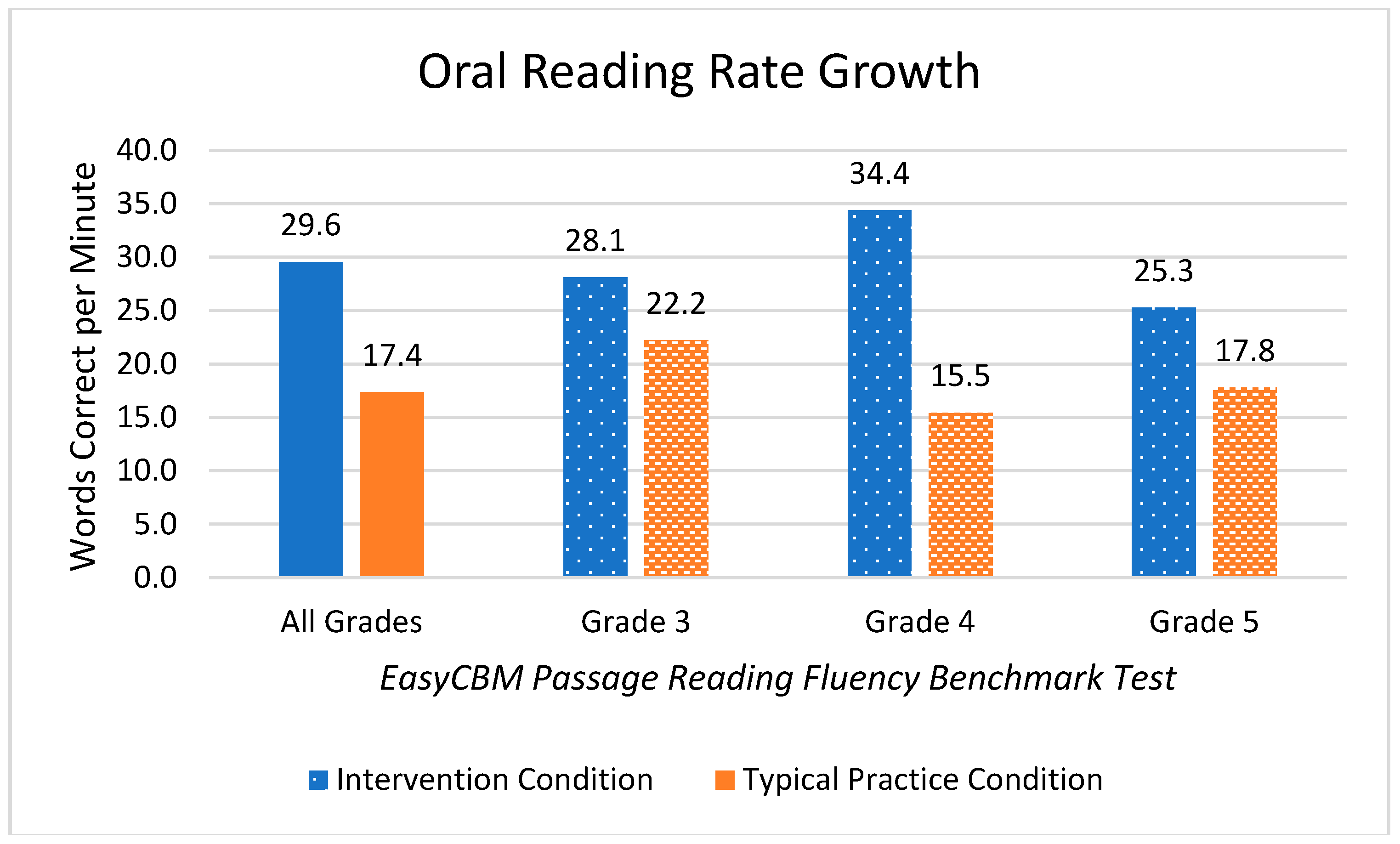
Figure 3.
Mean Change EasyCBM Passage Reading Fluency Accuracy Measured in Percentage of Words Read Correctly Per Minute.
Figure 3.
Mean Change EasyCBM Passage Reading Fluency Accuracy Measured in Percentage of Words Read Correctly Per Minute.
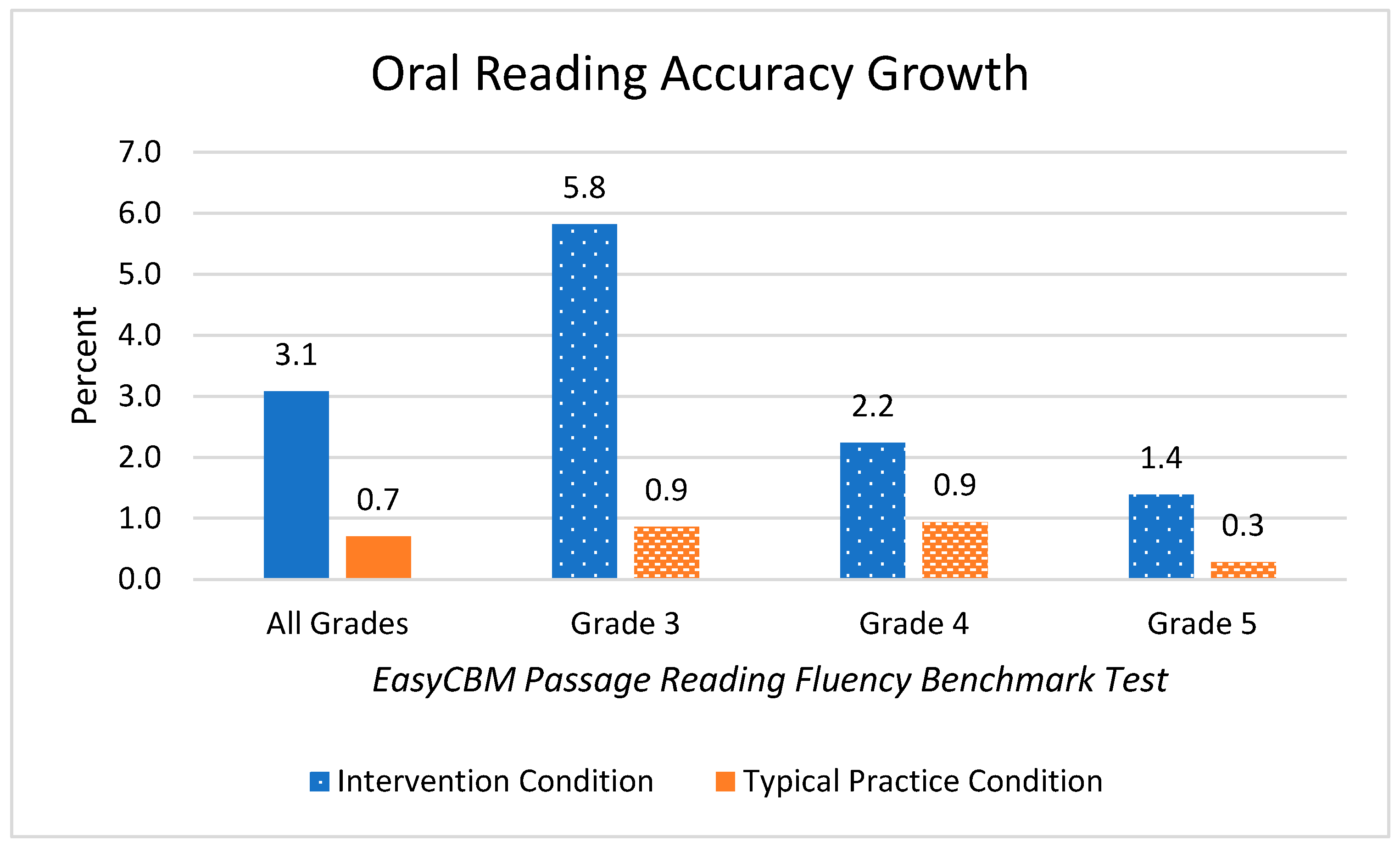
Figure 4.
Mean Raw Score Change in EasyCBM CCSS Basic Reading Comprehension.
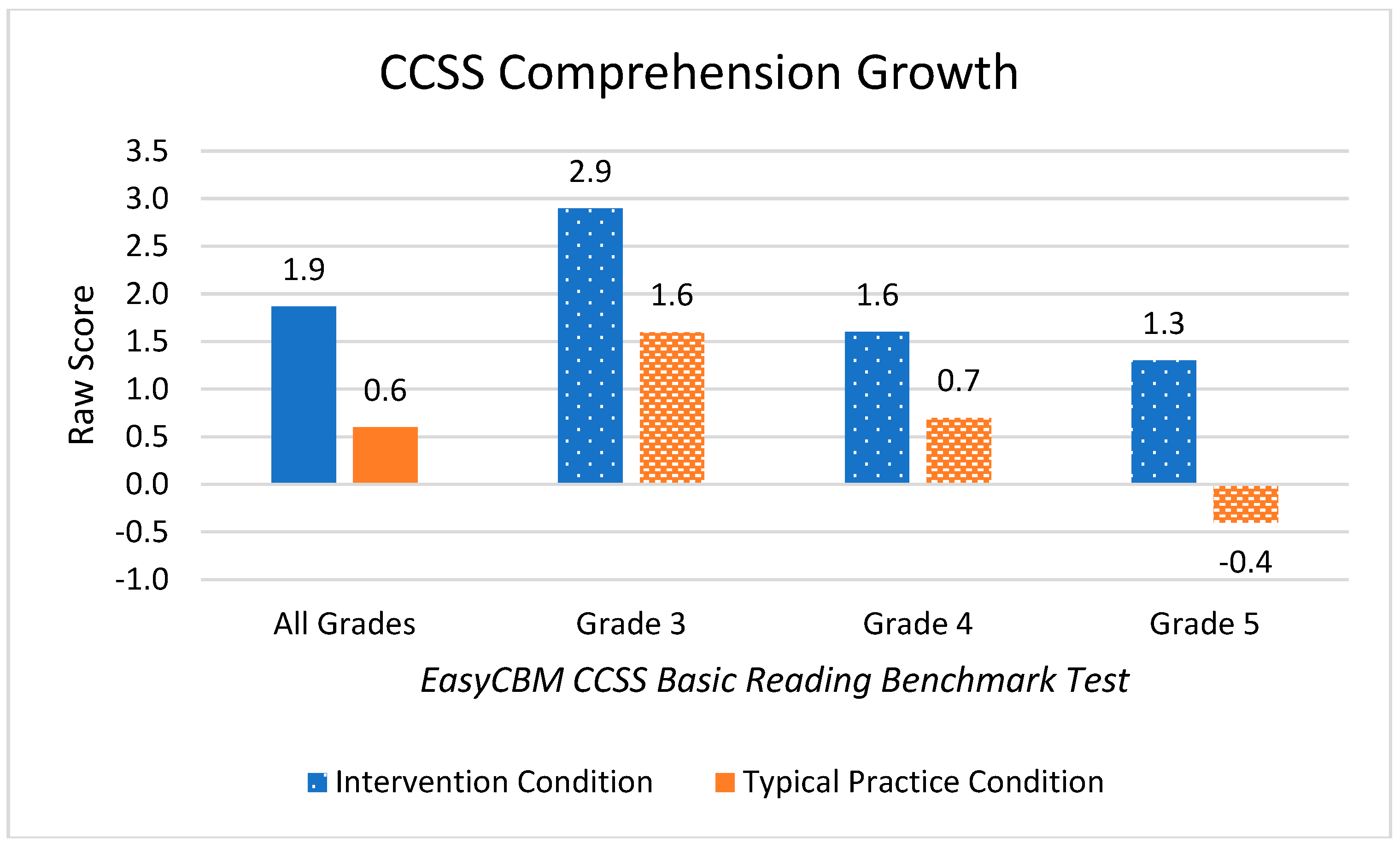
Figure 5.
Mean Change in WRMT-3 Oral Reading Fluency Measured by Growth Scale Values.
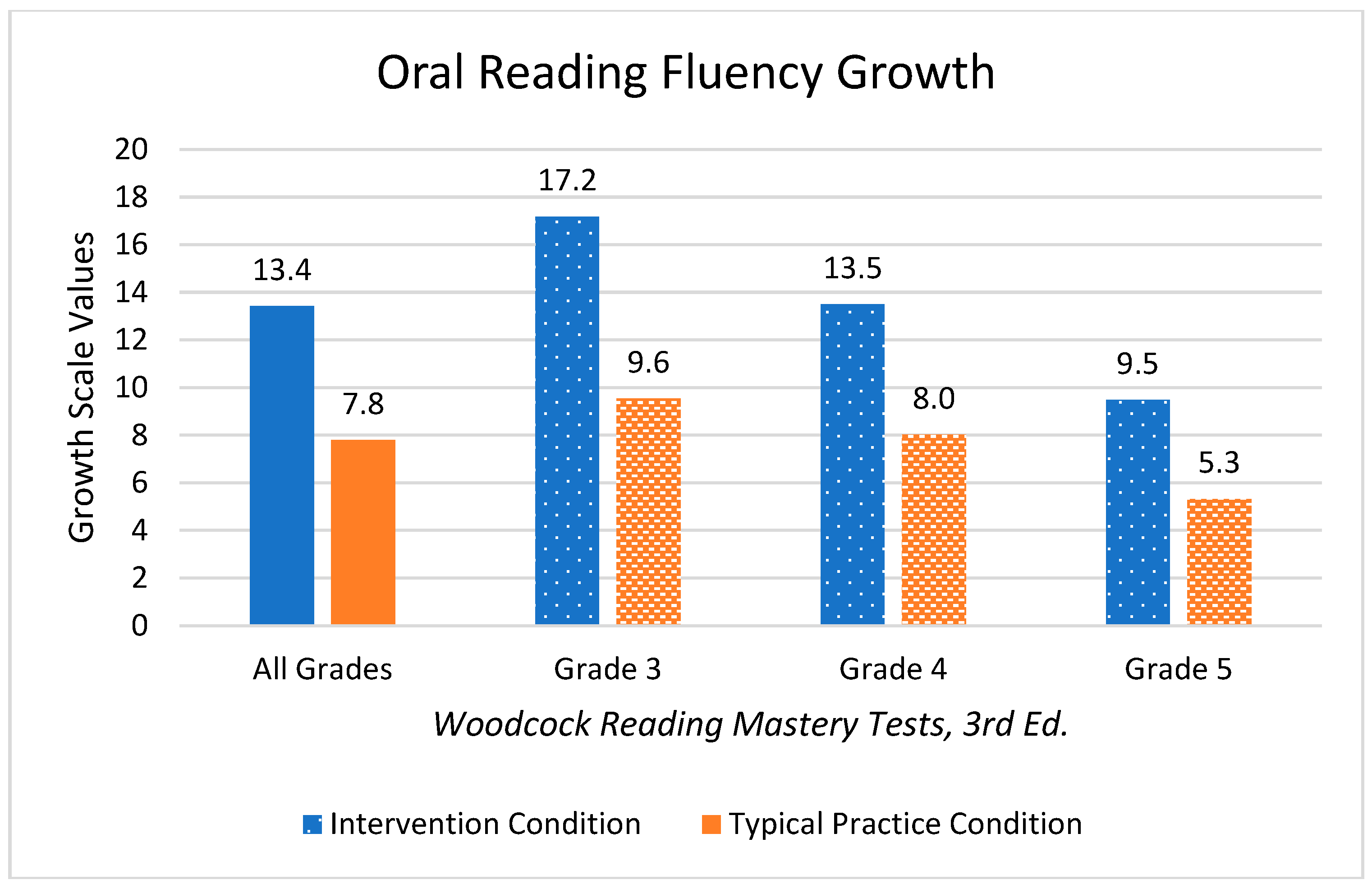
Figure 6.
Mean Change in WRMT-3 Passage Reading Comprehension Measured by Growth Scale Values.
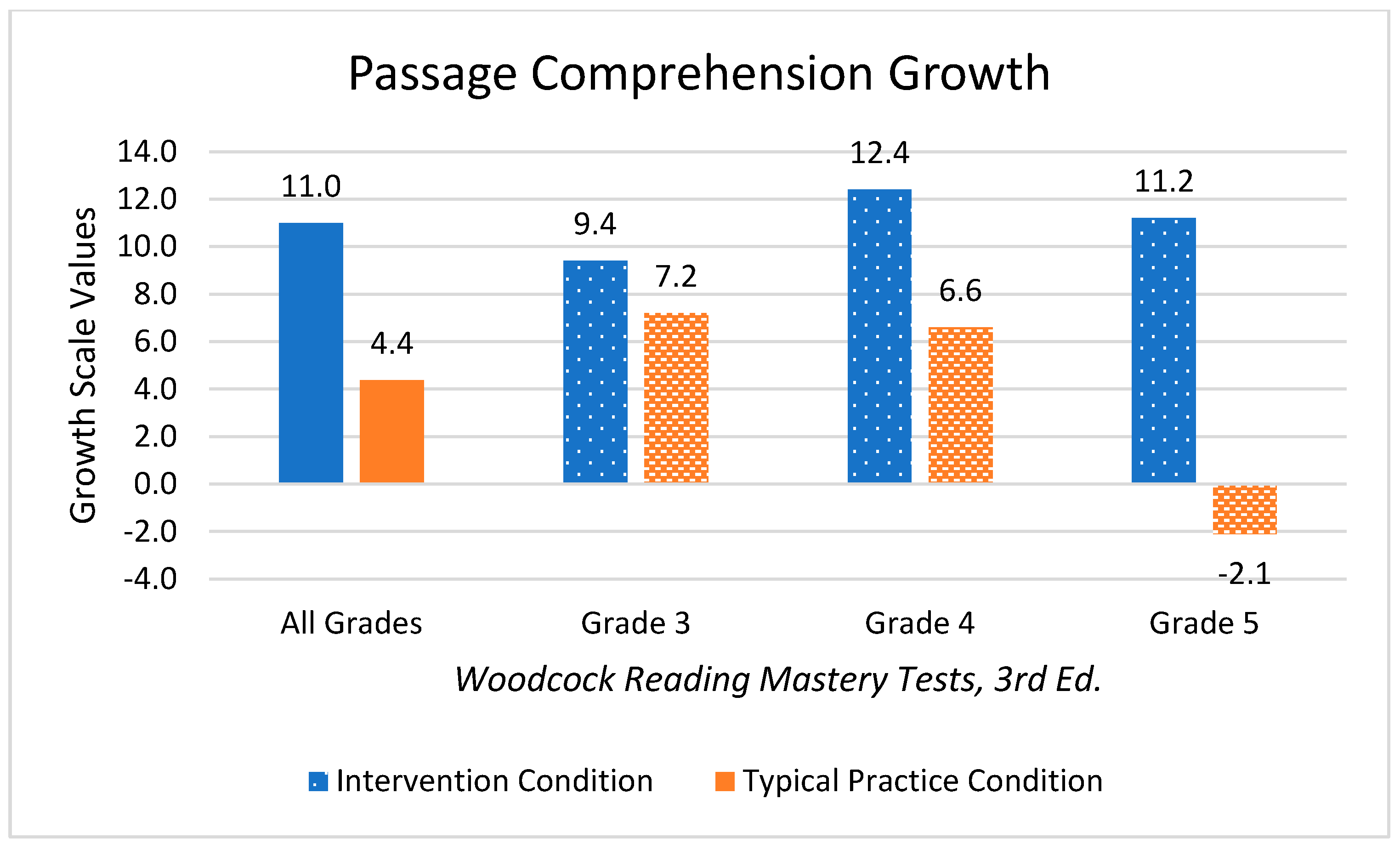
Figure 7.
Mean Change in WRMT-3 Oral Reading Fluency Measured in Grade Levels.
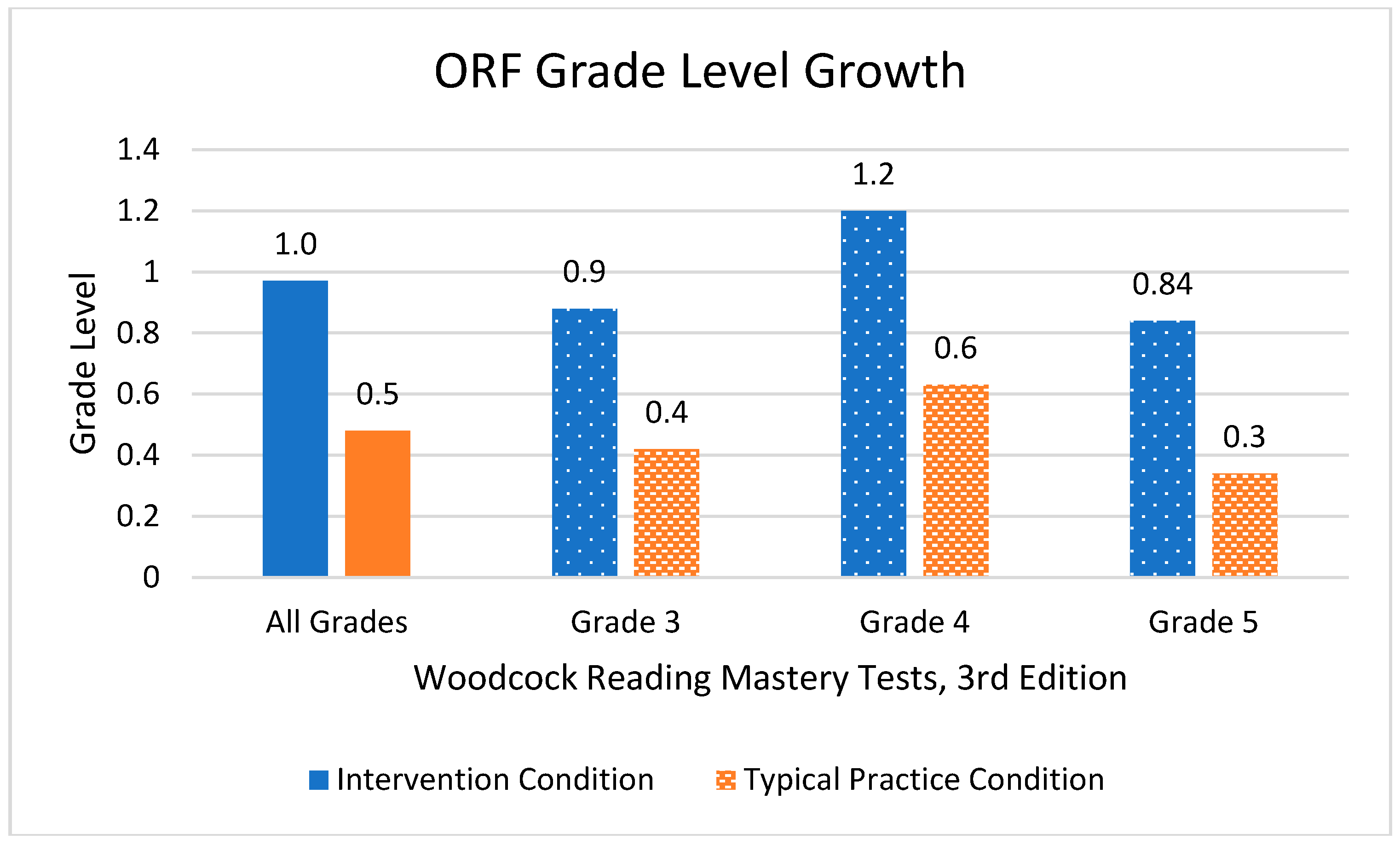
Figure 8.
Mean Change in WRMT-3 Passage Reading Comprehension Measured in Grade Levels. Note. PC = Passage Comprehension subtest. Each tenth of a grade level equals one month of growth.
Figure 8.
Mean Change in WRMT-3 Passage Reading Comprehension Measured in Grade Levels. Note. PC = Passage Comprehension subtest. Each tenth of a grade level equals one month of growth.
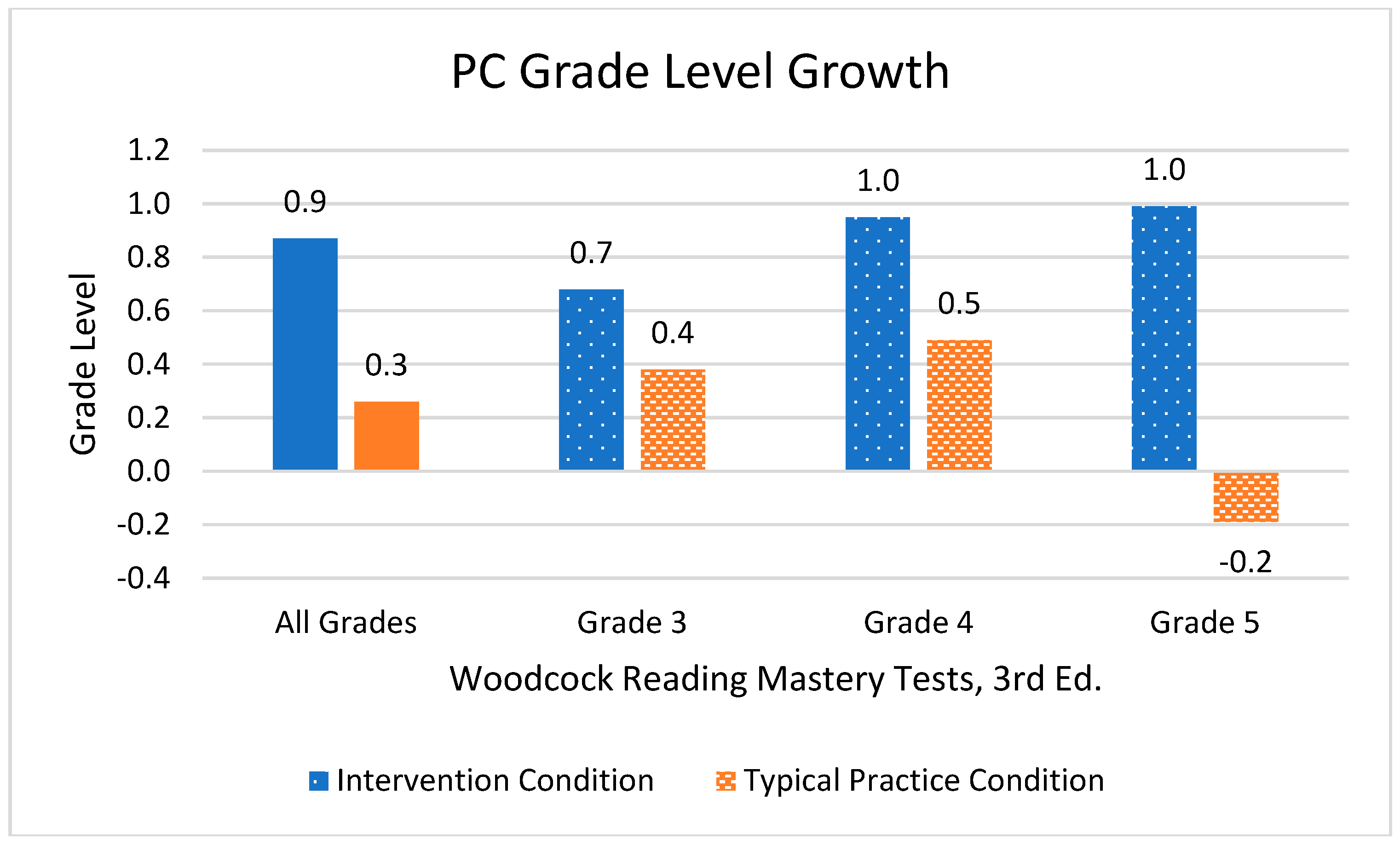

Table 1.
Descriptive Student Demographics by Condition.
| Variable | Intervention (N = 441) | Typical practice (N = 414) | ||
|---|---|---|---|---|
| n | % | N | % | |
| Gender | ||||
| Female | 222 | 50.3 | 196 | 47.3 |
| Male | 219 | 49.7 | 218 | 52.7 |
| Ethnicity | ||||
| Asian | 2 | 0.5 | 0 | 0 |
| Hispanic or Latino | 57 | 12.9 | 62 | 15.0 |
| Black or African American | 8 | 1.8 | 13 | 3.1 |
| White | 374 | 84.8 | 339 | 81.9 |
| Identified for Special Education | 98 | 22.2 | 83 | 20.0 |
| M | SD | M | SD | |
| EasyCBM Fall Benchmark pretest | ||||
| CCSS Reading Comprehension Raw Score | 19.6 | 4.7 | 13.7 | 6.1 |
| PRF Words Correct Per Minute | 113.4 | 45.6 | 98.1 | 44.9 |
| PRF Reading Accuracy Percentage | 95.5 | 7.1 | 93.9 | 94.7 |
| Intervention (N = 95) | Typical practice (N = 98) | |||
| M | SD | M | SD | |
| WRMT-3 pretest | ||||
| Passage Comprehension Standard Score | 83.9 | 11.9 | 85.08 | 11.8 |
| Oral Reading Fluency Standard Score | 83.5 | 11.2 | 84.1 | 11.7 |
Table 2.
EasyCBM Reading Benchmark Tests Mean Changes and Welch’s T-Test Results.
| Variable | Readable English | Typical Practice | Welch’s T Test | |||||||
|---|---|---|---|---|---|---|---|---|---|---|
| M | SD | n | M | SD | n | t | df | p | Hedge’s g | |
| Grade 3 | ||||||||||
| WCPM Rate | 28.09 | 21.17 | 136 | 22.22 | 19.40 | 130 | 2.36 | 265.5 | .019 | 0.3 |
| Accuracy Percent | 5.82 | 5.43 | 136 | 0.86 | 6.36 | 130 | 6.83 | 253.6 | <.001 | 0.8 |
| CCSS Comprehension | 2.85 | 3.47 | 136 | 1.57 | 3.80 | 130 | 2.86 | 259.3 | .005 | 0.4 |
| Grade 4 | ||||||||||
| WCPM Rate | 34.39 | 21.85 | 165 | 15.45 | 17.20 | 146 | 8.54 | 305.0 | <.001 | 1.0 |
| Accuracy Percent | 2.24 | 3.53 | 165 | 0.94 | 4.74 | 146 | 2.71 | 265.6 | .007 | 0.3 |
| CCSS Comprehension | 1.59 | 2.81 | 165 | 0.74 | 3.98 | 146 | 2.16 | 257.3 | .032 | 0.3 |
| Grade 5 | ||||||||||
| WCPM Rate | 25.26 | 19.70 | 140 | 17.78 | 22.95 | 138 | 4.08 | 268.6 | <.001 | 0.5 |
| Accuracy Percent | 1.39 | 4.44 | 140 | 0.28 | 1.87 | 138 | 2.72 | 187.4 | .004 | 0.3 |
| CCSS Comprehension | 1.25 | 2.41 | 140 | -0.44 | 3.33 | 138 | 4.85 | 249.5 | <.001 | 0.6 |
| Grades 3-5 Combined | ||||||||||
| WCPM Rate | 29.55 | 21.29 | 441 | 17.35 | 20.17 | 414 | 8.59 | 852.9 | <.001 | 0.6 |
| Accuracy Percent | 3.08 | 4.84 | 441 | 0.70 | 4.67 | 414 | 7.32 | 852.4 | <.001 | 0.5 |
| CCSS Comprehension | 1.87 | 3.00 | 441 | 0.60 | 3.80 | 414 | 5.39 | 784.3 | <.001 | 0.4 |
Note. Mean changes in reading measures from beginning to end of the school year are reported as raw scores for CCSS Basic Reading Comprehension, as words read correctly per minute (WCPM) for Passage Reading Fluency rate, and as percentage of words read correctly per minute for Passage Reading Fluency reading accuracy. Two-tailed p reported.
Table 3.
WRMT-3 Oral Reading Fluency and Passage Comprehension Mean Grade Level Changes and Welch’s T-Test Results.
Table 3.
WRMT-3 Oral Reading Fluency and Passage Comprehension Mean Grade Level Changes and Welch’s T-Test Results.
| Variable | Readable English | Typical Practice | Welch’s T Test | |||||||
|---|---|---|---|---|---|---|---|---|---|---|
| M | SD | n | M | SD | n | t | df | p | Hedge’s g | |
| Grade 3 | ||||||||||
| ORF | 0.88 | 0.67 | 32 | 0.42 | 0.49 | 33 | 3.04 | 56.7 | .004 | 0.76 |
| PC | .68 | 0.74 | 32 | 0.38 | 1.09 | 33 | 1.27 | 54.9 | .209 | 0.32 |
| Grade 4 | ||||||||||
| ORF | 1.20 | 1.13 | 32 | 0.63 | 0.67 | 38 | 2.53 | 48.3 | .015 | 0.63 |
| PC | 0.95 | 0.96 | 32 | 0.49 | 0.84 | 38 | 2.11 | 60.4 | .039 | 0.51 |
| Grade 5 | ||||||||||
| ORF | 0.84 | 1.00 | 31 | 0.34 | 0.63 | 27 | 2.31 | 51.2 | .025 | 0.58 |
| PC | 0.99 | 0.84 | 31 | -0.19 | 0.70 | 27 | 5.77 | 54.7 | <.001 | 1.49 |
| Grades 3-5 Combined | ||||||||||
| ORF | 0.97 | 0.96 | 95 | 0.48 | 0.61 | 98 | 4.22 | 160.3 | <.001 | 0.61 |
| PC | 0.87 | 0.85 | 95 | 0.26 | 0.93 | 98 | 4.69 | 184.8 | <.001 | 0.68 |
Note. ORF = Oral Reading Fluency subtest, PC = Passage Comprehension subtest. One year’s growth on the is one grade level (1.0), which is equal to ten months.
Disclaimer/Publisher’s Note: The statements, opinions and data contained in all publications are solely those of the individual author(s) and contributor(s) and not of MDPI and/or the editor(s). MDPI and/or the editor(s) disclaim responsibility for any injury to people or property resulting from any ideas, methods, instructions or products referred to in the content. |
© 2023 by the authors. Licensee MDPI, Basel, Switzerland. This article is an open access article distributed under the terms and conditions of the Creative Commons Attribution (CC BY) license (http://creativecommons.org/licenses/by/4.0/).
Copyright: This open access article is published under a Creative Commons CC BY 4.0 license, which permit the free download, distribution, and reuse, provided that the author and preprint are cited in any reuse.