

Submitted:
10 March 2020
Posted:
11 March 2020
You are already at the latest version
Abstract
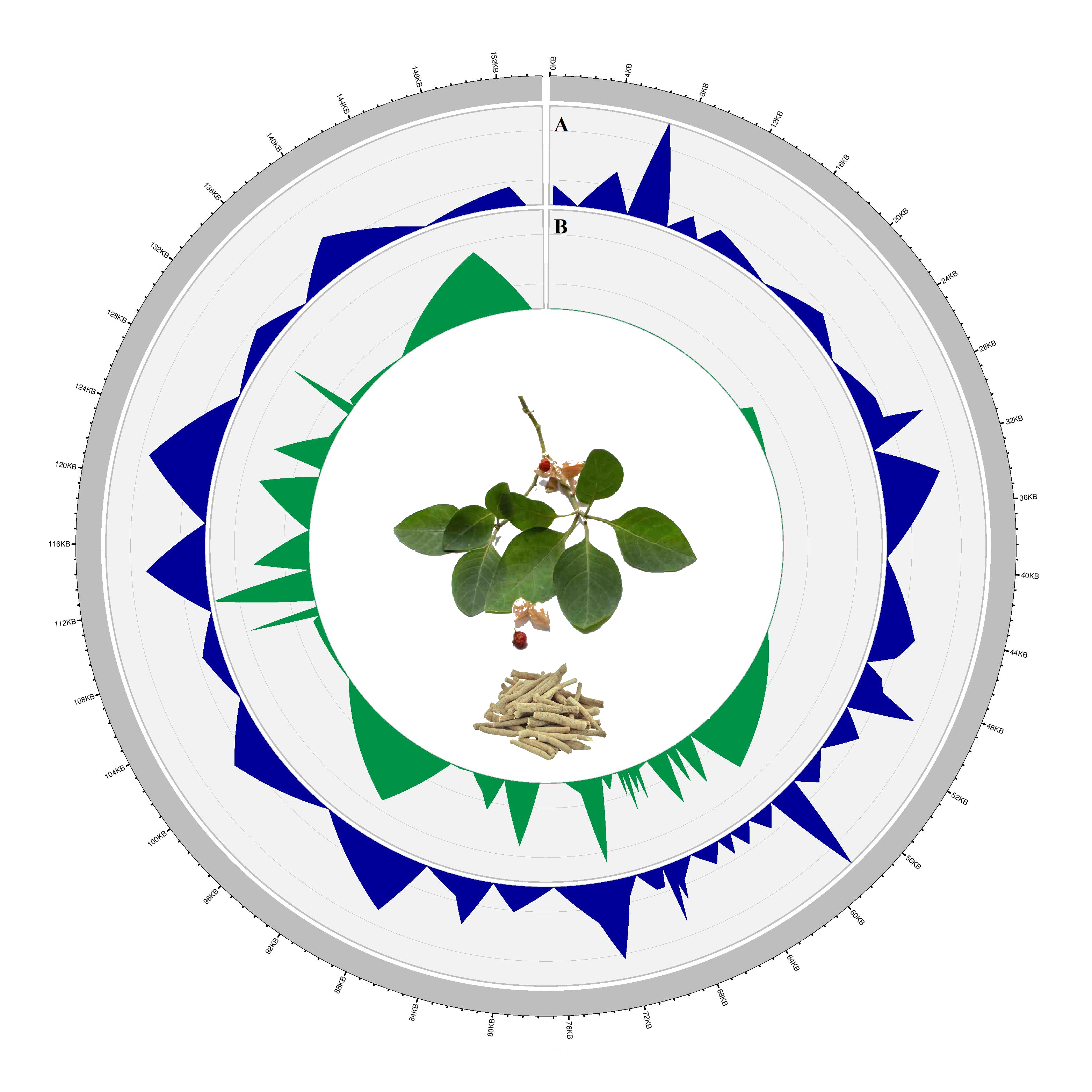
Within the family Solanaceae, Withania is a small genus belonging to the Solanoideae subfamily. Here, we report the de novo assembled, complete, plastomed genome sequences of W. coagulans, W. adpressa, and W. riebeckii. The length of these genomes ranged from 154,198 base pairs (bp) to 154,361 bp and contained a pair of inverted repeats (IRa and IRb) of 25,027--25,071 bp that were separated by a large single-copy (LSC) region of 85,675--85,760 bp and a small single-copy (SSC) region of 18,457--18,469 bp. We analyzed the structural organization, gene content and order, guanine-cytosine content, codon usage, RNA-editing sites, microsatellites, oligonucleotide and tandem repeats, and substitutions of Withania plastid genomes, which revealed close resemblance among the species. Both the substitution and insertion and deletion analyses confirmed that the IR region was significantly conserved compared with the LSC and SSC regions. Further comparative analysis among the Withania species highlighted 30 divergent hotspots that could potentially be used for molecular marker development, phylogenetic analysis, and species identification.
Keywords:
Ashwagandha
; Chloroplast Genome
; InDels
; Medicinal plants
; Mutational hotspots
; Phylogenomics
; Solanaceae
; Substitutions
; Withania
Copyright: This open access article is published under a Creative Commons CC BY 4.0 license, which permit the free download, distribution, and reuse, provided that the author and preprint are cited in any reuse.


