
Submitted:
22 November 2026
Posted:
24 November 2026
You are already at the latest version
Abstract
Background: Mosquito borne diseases including dengue, chikungunya, yellow fever, Zika, avian malaria, influenza, brucellosis and West Nile encephalitis are transmitted to humans and domestic animal through female mosquito bites. This study was described about the distribution and abundance of Ae. aegypti, Ae. vittatus and Cs longiareolata in low and highland, Northwest, Ethiopia. Methods: Entomological surveys were conducted in four towns including Kokit, Genda-Wuha, Azezo and Maraki from January to December, 2023. Larvae/pupae were collected from artificial and natural water-holding containers using a dipper from breeding containers. Larae/pupae samples were hatched to adult mosquitoes and further adult mosquitoes identified using morphological keys. In addition, confirm molecular identified of Cs longiareolata species using targeting gene amplified was internal transcribed spacer 2 (ITS2). Data analyzed by R studio version and All data values were analyzed to considered P < 0.05. Results: A total of 8232 arboviral mosquitoes were collected from four study towns of which 3339 mosquitoes were identified in the highland including Cs longiareolata (71%), followed by Ae. aegypti (17.1%) and Ae. vittatus (7.2%). In lowland towns, 4893 mosquitos were identified Ae. aegypti (59.6%), followed by Ae. vittatus (35.4%) and Cs. longiareolata (4.8%). Cs. longiareolata species was dominant in highland sites and suitable reproductive containers have discarded metals whereas Ae. aegypti was dominant species in lowland and reproductive containers have discarded tyres. Conclusions: Present study was conducted to distribution and abundance of Ae. aegypti, Ae. vittatus and Cs. longiareolata in low and highland study sites and influenced by seasonal variation, altitude effect and breeding container types. Therefore, these finding underscore the importance of implementation appropriate vector control strategies and also conducting further studies to determine the arboviruse infection statues of Aedes mosquitoes in highland areas, thereby improving our understanding of the potential risk of arboviral disease transmission
Keywords:
altitude effect
; arboviral vector
; breeding container
; identification characteristics
1. Introduction
Arboviral vector mosquitoes transmit a wide range of pathogens responsible for vector borne diseases, including dengue [1], chikungunya[2], yellow fever[3], Zika [4], and West Nile encephalitis [5], avian malaria[6], influenza, and brucellosis [7]. These diseases are spread to humans and domestic animals through the bites of infected female mosquitoes [8]. The distribution and abundance of mosquito vectors are influenced by various environmental and anthropogenic factors, including urbanization, global warming, human migration, the expansion of small-scale irrigation systems [9], and the movement of birds across continents. In addition, the improper and excessive use of insecticides can promote the development of insecticide resistance in mosquito populations, thereby reducing the effectiveness of vector control interventions. Civil conflicts and wars may further exacerbate the risk of mosquito-borne diseases by displacing local populations into temporary shelters and refugee camps, where inadequate sanitation, overcrowding, and limited access to healthcare can increase exposure to mosquito bites and infectious diseases. Despite these growing concerns, arboviral diseases and their vectors have received insufficient attention from government agencies, research institutions, and other relevant stakeholders. Therefore, implementing sustainable and integrated vector management strategies and systematically monitoring the distribution and abundance of mosquito vectors across diverse ecological zones, from lowland to highland habitats, are essential for improving disease prevention and control [10].
Globally, arboviruses are a persistent cause of diseases in both humans and animals, infecting millions and imposing significant social and economic burdens [11]. Over the past few decades, there have been dramatic epidemics of emerging and re-emerging arboviral diseases, presenting serious public health risks worldwide [12,13]. Recently, chikungunya cases have been reported in Ethiopia, Sudan [14], and Kenya [15], with an outbreak documented for the first time in Suuf village, located in the Dollo Ado district of the Somali region in Ethiopia [16]. Dengue has also been frequently reported in the eastern, southeastern, southern, and northwestern regions of Ethiopia [17,18]. Additionally, yellow fever epidemics have been observed in the South Omo villages and the Gurage Zone in southwestern Ethiopia[19,20].
Aedes aegypti and Ae. vittatus belongs to the family Culicidae and the genus Aedes [21], and their morphological and molecular characteristics previously described in a prior study[22] . These species are widely distributed across diverse ecological regions worldwide [23] and are susceptible to infection with various arboviruses [24]. Their larvae develop in both artificial and natural water-holding containers. Artificial breeding sites include discarded plastic and metal containers, tires, cement containers, and clay pots, whereas natural breeding sites include leaf axils, coconut shells, rain pools, hoofprints, riverbanks, and tree holes [25,26]. Cs. longiareolata, a species belonging to the genus Culiseta [27], has a broad geographical distribution across Asia [28] , Europe [8,29], Africa [30] and including the Mediterranean Sea [31]. Its medical and veterinary importance is associated with its potential role in the transmission of pathogens responsible for diseases such as avian malaria (3), tularemia (4) and arboviruses like West Nile fever [5,32,33]. This species is multivoltine, thermophilic, and ornithophilic, and occurs across several continents. It primarily inhabits small water bodies, and although adult mosquitoes may enter human dwellings and bite humans, birds are considered its principal hosts [34]. In Ethiopia, several mosquito species of medical and veterinary importance, including potential arboviral vectors, have been reported in different regions. Ae. aegypti has been documented in Dire Dawa and the southern Afar region of eastern Ethiopia [35,36], Furthermore, Ae. aegypti and Cs. longiareolata have been reported in the Somali Region of eastern Ethiopia [37]. Recently, Ae. aegypti, Ae. vittatus, Ae. communis, Ae. albopictus and Ae. opok were observed in the Metema district of Northwest Ethiopia [38,39]. The presence and distribution of these mosquito species highlight the potential risk of arboviral transmission and the possibility of future outbreaks in the country [40].
In the study sites, larvae of Ae. aegypti and Ae. vittatus were detected in both artificial and natural breeding containers [38], Furthermore, serological testing at health centers identified cases of dengue virus infection [1] and chikungunya virus infection [2] in the lowland study towns. Seasonal human movement from the highlands to the lowlands for agricultural activities, followed by a return to highland communities, may facilitate the movement of arboviruses and their vectors between distinct ecological zones. Migratory birds traveling from Europe to African countries, including Ethiopia, may also contribute to the introduction or spread of pathogens under changing environmental conditions. In addition, cross-border human movement may influence arbovirus transmission, as people from Kassala State in eastern Sudan, an area endemic for arboviral diseases, travel to the Metema district for various purposes. Despite these potential factors influencing arbovirus transmission, entomological surveillance data on the distribution, abundance, and bionomic characteristics of arbovirus vectors remain limited in the study area. Therefore, this study aimed to assess the abundance and distribution of Ae. aegypti, Ae. vittatus, and Cs. longiareolata across highland and lowland areas, with particular emphasis on seasonal variation, monthly occurrence, and breeding container types. The findings are expected to provide baseline information for further investigations into the bionomic characteristics and viral infection status of these vectors and to inform the development of sustained, evidence-based vector control strategies.
2. Methods and Materials
2.1. Description of Study Sites
This study was conducted in four towns in Northwest Ethiopia: Kokit and Gendawuha, located in the lowland area of Metema District, and Azezo and Maraki, situated in the highland area of Gondar Zuria District (Figure 1). The highland towns of Azezo and Maraki lie at elevations of approximately 1,976 m and 2,205 m above sea level, respectively. The wet season extends from June to September, with average temperatures ranging from 22 °C to 26 °C and relative humidity ranging from 65% to 75%. Annual rainfall in the highland area ranges from 500 to 800 mm. During the dry season, average temperatures range from 25 °C to 29 °C, while relative humidity decreases to 31% - 55%. In the lowland study sites, Kokit and Gendawuha are situated at elevations of approximately 727 m and 734 m above sea level, respectively. During the wet season, average temperatures range from 27 °C to 29 °C, with relative humidity levels of 58% - 61%. In the dry season, average temperatures range from 29 °C to 35 °C, while relative humidity ranges from 29% to 51%. Annual rainfall in the lowland area ranges from 400 to 650 mm.
2.2. Experimental Design
The distribution of Aedes aegypti, Aedes vittatus, and Culiseta longiareolata was assessed across four study towns, with particular emphasis on the effects of month, season, and altitude. Larvae and pupae were collected from natural and artificial breeding habitats in each town for three consecutive days per month over a one-year period. Sampling focused on potential mosquito breeding containers located within a 200-meter radius of each selected household. The number of residential houses selected for the study was 298 in Kokit, 452 in Gendawuha, 310 in Azezo, and 392 in Maraki. The selected houses were distributed across the respective towns to ensure comprehensive spatial coverage. Before the survey began, verbal informed consent was obtained from the head of each participating household
2.3. Immature Mosquito Collection and Rearing
Sampling was performed using a standard dipper (350 ml, Bio Quip Products, Inc., California, USA) [41,42] from artificial and natural habitats. In addition, pippets were used to collect larvae from small habitats where dipper could not be used. All available artificial and natural water containers were observed and sampled for larvae and pupae [43]. Habitat type, location (using GPS), date, larval/pupal positivity characteristics of habitats were recorded. Artificial habitats included discarded tyres, plastics, metals, drums, cans and clay pots, while the natural were surface pools, river edges, hoof prints, and tree holes (Figure 2). Surveys were conducted between 09:00am and 12:00am. The collected larvae and pupae were separated from predators and debris, placed in labeled plastic jar and transported to the insectary at the Department of Biology, Gondar University, Ethiopia. In the insectary, larvae were reared into adult at 27 ± 2 °C, 75% relative humidity, and a 12:12-hour light-dark cycle, with fish food provided. Aedes mosquito species were identified using a taxonomic key based on morphological feature [44,45].
2.4. Morphological identification of Culiseta longiareolata Species
The larvae and pupae of Cs. longiareolata were identified using morphological techniques and an advanced stereomicroscope, following the identification key provided by [46]. Key features for identification included the characteristics of the head (e.g., antennae, brush placement, and compound eyes), the thorax (which is round and composed of the prothorax, mesothorax, and metathorax), and the abdomen distinguished by the number of segments, tuft arrangements, comb spines, and respiratory tract features [47]. Similarly, adult Cs. longiareolata was identified based on its distinct morphological traits, including body color, leg patterning (spiral or striped), sexual dimorphism in body size, segment and band patterns on the antennae and palps, a white stripe on the scutum, white or black bands at the proboscis tip, and genital structure [48]. In contrast, the identification of Ae. aegypti and Ae. vittatus was carried out using both morphological and molecular characteristics, as outlined by [22].
2.5. Molecular Identification of Culiseta longiareolata Species
To confirm the molecular identity of Culex longiareolata, DNA was extracted from the legs of each preserved specimen using the Phenol-Chloroform-Isoamyl alcohol method[49] . Polymerase chain reaction (PCR) was then performed to amplify the internal transcribed spacer 2 (ITS2) region. PCR was carried out on each mosquito individually, targeting the ITS2 gene using the following primers: forward 5-CAGGTTATGCGAACATCGAC-3 and reverse 5-GTCTTACCTGATCTGAGGTC-3. The PCR amplification was performed with a thermocycler (Veriti, Applied Bioosystems, Taipei, Taiwan), and each 20 µl reaction mixture contained a 0.5 µl DNA forward and reverse primers, 2.5 µl 10× PCR buffer (Mg2+), 2 µl dNTP mixture (10 mM each), 1 unit of Taq DNA polymerase and was filled up with an adequate volume of molecular grade water. For comparison, adequate amounts of sterile distilled water were added in the reaction mixture for serving as a negative control. The PCR conditions started with denaturation at 94 ◦C for 2min and then amplified for 30 cycles with the conditions of denaturation at 94 ◦C for 1 min, annealing at 50◦C for 1 min, extension at 72 ◦C for 2min, and a final extension step at 72 ◦C for 7min. In the final step, the temperature was set at 4 °C for an indefinite amount of time
2.6. Data Analysis
Statistical analysis was performed in R studio version 4.1. Initially, data was tested for normality using the Shapiro-Wilk test, and for non-normally distributed data. Habitat infestation with immature stage of arboviral mosquitoes were described using Stegomyia indices as House Index (HI; number of infested houses divided by the total number of houses inspected), Container Index (CI; number of positive containers divided by number of containers inspected) and Breteau Index (BI; number of positive containers per 100 houses inspected)[50] Chi-square tests were employed to compare the distribution and abundance of arboviruse mosquitoes across to high and lowland areas, seasonality and monthly occurrence. Mosquito species diversity and abundance in the study sites were determined as H = -∑ [Pi * ln(Pi)] where, H = Shanon diversity index, Pi = fraction of individual species, ln = natural logarithm, Pielou’s evenness index (J) = H/Ln(S) when S = number of species [51]. All statistical tests were conducted at the p < 0.05 significant level. The Cs. longiareolata gene sequences were aligned with CLUSTAL W software and examined using the program Clustal Omega (Molecular Evolutionary Genetics Analysis) version 7.1.16 Neighbor joining (NJ) trees were constructed with the distance algorisms available in the Clustal Omega package [52]
3. Results
3.1. Arboviral Mosquito’s Species Composition Across for Towns
A total of 1452 inspected houses were surveyed of which 326 houses were infested with immature stage of arboviral mosquitoes. The highest number of arboviral larvae infested houses (highest house index; HI) was observed in Gendawuha town (29.5%), followed by Koki (21.4%), Azezo (15.7% and Maraki (7.2%). Similarly, the highest container index (CI) was observed in Gendawuha town (25.2%), followed by Kokit (22.5%), Azezo (12.6%) and Maraki (6.6%). The distribution of arbovirail mosquito species varied considerably among the four study towns. Of the 8,232 specimens collected, Ae. aegypti was the most abundant species, accounting for 3,490 specimens (42.4%), followed by Cs. longiareolata, with 2,766 specimens (33.6%), and Ae. vittatus, with 1,976 specimens (24.0%) (Table 1). Ae. aegypti was most abundant in Gendawuha (1,718 specimens), whereas Ae. vittatus was most abundant in Kokit (989 specimens). In contrast, Cs. longiareolata was most abundant in Maraki (1,589 specimens), followed by Azezo (939 specimens) (Table S1). Pearson’s chi-square test revealed a statistically significant association between mosquito species and study towns (χ2 = 4697.07, df = 6, p<0.001). The distribution of the three arboviral vector species was most even in Kokit (0.78), followed by Azezo (0.72), Genda-Wuha (0.71), and Maraki (0.54).
3.2. Productivity Potential of Larvae/Pupae Breeding Containers
A total of 8,232 arboviral mosquitoes were collected and belonging to three species, Ae. aegypti, Ae. vittatus, and Cs. longiareolata, were recorded from eight breeding-container types. Ae. aegypti was the most abundant species, accounting for 3,490 specimens (42.4%), followed by Cs. longiareolata with 2,766 specimens (33.6%) and Ae. vittatus with 1,976 specimens (24.0%). Discarded tyres represented the most productive breeding-container category, yielding 4,291 specimens (52.1% of the total collection). Species composition varied considerably among breeding-container types. Discarded tyres were dominated by Ae. aegypti (62.4%), whereas Cs. longiareolata was predominant in discarded metal containers (81.4%) and discarded plastic containers (59.3%). Clay pots supported all three species, while rain pools, hoof prints, and river-edge habitats yielded no recorded specimens of Cs. longiareolata (Table 2 & Table S1). Discarded tyres contributed 76.8% and 69.7% of the total recorded Ae. aegypti and Ae. vittatus populations, respectively, while discarded metal containers accounted for 56.0% of all Cs. longiareolata specimens. The Pearson chi-square analysis indicated a substantial association between mosquito species and breeding-container category (χ2 = 3964.42, df = 14, p < 0.001).
3.3. Effect of Altitude on the Distribution of Three Arboviral Mosquitoes.
Out of the 3,339 three arboviral mosquitoes were collected from the highland study towns and the greatest proportion of Cs. longiareolata (71%) were found, followed by Ae. aegypti (17.10%) and Ae. vittatus (7.18%) (Figure 3). There was a substantial difference (P < 0.001) observed in three arboviral mosquitoes. In lowland study towns, 4,893 mosquitoes were collected from Kokit and Gendawuha towns and the highest number of Ae. aegypti (59.65%) was collected and followed by Ae. vittatus (35.47%) and a small number of Cs. longiareolata (4.86%) (Figure 4). This result showed that significant differences (P < 0.001) observed among in three arboviral vectors.
3.4. Monthly Distribution of Arboviral Mosquitoes
High densities of Cs. longiareolata larvae were recorded from June to September during the wet season in Azezo and Maraki towns (Figure 3), when the average temperature ranged from 22 to 26 °C and relative humidity ranged from 65% to 75%. The highest larval density of Cs. longiareolata was recorded in September, reaching 25.5 larvae per dipper. In contrast, relatively few mosquito larvae were collected from October to May, when the average temperature ranged from 25 to 29 °C and relative humidity decreased to 31–55%. A small number of arbovirus vector mosquito larvae were also found in riverbeds and water-holding containers at construction sites. Rainfall influenced the availability of breeding habitats and, consequently, larval proliferation at the study sites (Table S2). Larval abundance varied significantly among the three mosquito species over the 12-month study period in the highland study towns (P < 0.001).
The highest abundance of Ae. aegypti larvae was recorded from June to September in Gendawuha and Kokit towns, followed by Ae. vittatus and Cs. longiareolata (Figure 4). During this period, the average temperature ranged from 27 to 29 °C, and relative humidity ranged from 58% to 61%. The maximum larval density of Ae. aegypti was recorded in September, at 38 larvae per dipper. In contrast, from October to May, the average temperature ranged from 29 to 35 °C, while relative humidity decreased to 29–51%. The absence of rainfall during the dry season resulted in a lack of water-holding breeding containers, and mosquito larvae were no longer detected in the towns. These findings indicate statistically significant differences in the abundance of the three arbovirus vector mosquito species over the 12-month study period (P < 0.001).
3.5. Morphological and Molecular Characteristics of Culiseta longiareolata
This study identified distinct morphological characteristics of Cs. longiareolata larvae, including the shape, structure, and texture of the appendages, head, thorax, and abdomen (Figure 5). The head bears a pair of straight antennae that are broad at the base and taper toward the tips. A pair of mouth brushes protrudes from the clypeal region near the anterolateral margins, while the compound eyes are clearly visible on the lateral sides of the head. The spherical thorax consists of three regions: the prothorax, mesothorax, and metathorax. The abdomen comprises eight elongated, translucent, cylindrical segments. The eighth abdominal segment bears a row of comb spines and a respiratory tube known as the siphon. The respiratory openings (spiracles) at the distal end of the siphon are surrounded by perispiracular lobes. The siphon is also characterized by a row of pecten teeth along each lateral side and the presence of basal denticles. The anal segment bears five pairs of setae of varying sizes within the ventral brush and four anal papillae of approximately equal size.
Adult Cs. longiareolata exhibited several distinctive morphological characteristics (Figure 6). Male head: The antennae consist of 13 plumose segments, each bearing a white ring at its base and hairs on the flagellomeres. The five-segmented maxillary palps are shorter than the proboscis, with a white band at the base of each segment and an additional pale marking at the tip. Male thorax: White stripes are visible on the lateral sides of the thorax, particularly in the fore-, mid-, and hind-mesepimeral regions. Male abdomen: The postgenital plate bears an aedeagus and a pair of cerci. Female head: The head bears 13 antennal segments with sparse pilose hairs. The maxillary palps consist of three segments and have a white marking at the tip, while a spiral white-scaled line, shorter than the proboscis, is also present. White-scaled lines forming U-shaped patterns are visible within inverted V-shaped orbital markings. Female thorax: The scutellum bears a transverse white stripe at its base, while the scutum has a single longitudinal white stripe along the midline and spoon-shaped white stripes on both lateral sides (Figure 6). Female abdomen: The abdominal surface is smooth and brown, with a pair of cerci at the posterior end. A longitudinal white stripe extends along the midline of the ventral surface. Both sexes possess three pairs of legs characterized by white stripes and speckling. In particular, the first tarsomere bears a broad basal white band that progressively narrows toward the fifth tarsomere. The legs are further distinguished by white speckles and stripes, while the wings exhibit black spots at the intersections of the wing veins (Figure 7).
3.6. Molecular Identification of Culiseta longiareolata
Twenty-five adult Cs. longiareolata specimens were selected from the four study towns for molecular identification. The internal transcribed spacer 2 (ITS2) gene was amplified by polymerase chain reaction (PCR) to confirm species identity. Of the 25 specimens, six (one from each town) with clear PCR band products were selected for sequencing. The resulting sequences were edited using BioEdit, and the representative sequence was deposited in Gene Bank and had got accession number PQ309040.1 (Figure 8).
4. Discussions
Arboviral vector mosquitoes are distributed in the globe including Ethiopia [53] and transmit a number of pathogens that cause arboviral diseases, avian malaria, brucellosis, and tularemia worldwide [54]. Ae. aegypti, Ae. vittatus, and Cs. longiareolata species were distributed at Kokit, Gendawuha, Azezo, and Maraki towns in Northwest Ethiopia. These findings are support with the previous report in the country, Aedes aegypti and Ae. vittatus larvae were found in Humera and Metema districts [55]. Aedes aegypti species were widely distributed in Dire Dawa town [56], and Cs. longiareolata and Ae. aegypti species were also found in Ethiopia’s Eastern Somalia region [37]. This finding indicates that it has a probability of arboviruse transmit in the highland regions in the nation. As a result, it is necessary to clear away discarded materials will be avoided and to develop consistence vector control strategies.
The distribution and abundance of Aedes aegypti, Aedes vittatus, and Cs. longiareolata are linked with the availability of water holding breeding containers. Moreover, time to time increasing urbanization, globalization, exchanging trade goods materials and increased human mobility and also mosquitoes’ distribution and reproductive potential were influenced by average temperature, relative humidity, and light intensity. Current research revealed that a large number of Ae. aegypti and Ae. vittatus preferred discarded tyres over other water-holding larva breeding containers parallel high number of Cs. longiareolata had favored artificial larvae breeding discarded metals which are connected to substrate types. The favored common larvae breeding containers of Ae. aegypti and Ae. vittatus species were previously discovered to be discarded tyres (30). According to earlier data, Cs. longiareolata was discovered in plastic water containers used for construction (29), which is consistent with earlier reports from the Middle East (31) and Europe (45). Arboviral vector mosquito control is primary important to block arbovirus disease transmission. Thus, it should be recycle or properly manage discarded materials and block arboviral mosquito’s proliferation potential in diversity breeding habitats. 1,976 m and 2,205 m
All three arboviral vectors are known transmitting arbovirus and other pathogens in worldwide. In the previous entomological data showed that arboviral vectors distributed in lowland district but not highland district of Northwest, Ethiopia. However, the present study results showed that high number of Cs. longiareolata species and followed by Ae. aegypti and Ae. vittatus species were distributed at Azezo (1,976m asl.) and Maraki (2,205m asl) study towns. Similar, the previous data reported Ae. aegypti and Ae. albopictus distribution in altitudinal range up to 1,820 m asl.in n eastern, Nepal (46). Therefore, this result was conducted to develop appropriate vector control strategies in the highland areas.
Monthly distribution of Ae. aegypti, Ae. vittatus and Cs. longiareolata species had great variation in wet and dry seasons due to temperature, relative humidity and rainfall variation (Table S3) in the study sites. High number of Cs longiareolata Larvae were collected from June to September at Azezo and Maraki towns in the wet season. Maximum number of density was reached 25.4 larvae/dipper when temperature become to 22oC and maximum humidity was recorded at 75% from June to September. In the dry season, maximum number of density 5.6 larvae/dipper was observed when mean temperature become to maximum at 29oC and relative humidity 31% from river banks and construction sites available of water holding containers from October to May at Azezo and Maraki towns. In lowland study sites, during the wet season available of larvae similar trends the above mentioned but absent larvae/pupae in the dry season due to water holding breeding containers completely disappeared. Therefore, it needs to develop appropriate vector control strategies at highland areas in the dry season. However, in the lowland study sites, need further entomological surveillance where available of resting place in the dry season and also need to arboviruse infectious status of mosqitoes.
Overall, this phylogenetic tree indicates the origin of the Cs. longiareolata population in Ethiopia is more likely to Cs. longiareolata in Iran and also closed relationship with Ae. vittatus isolated in Ethiopia. The differentiation trends among Ethiopian samples from four towns suggest the absence of subpopulations of Cs. longiareolata species among our collection in Ethiopia. However, we need to further explore the level of differentiation between subpopulations within Ethiopia, and to the differentiation between Ethiopia and neighboring countries.
5. Limitation of the Study
This study primarily focused on the distribution and abundance of Ae. aegypti, Ae. vittatus, and Cs. longiareolata in lowland and highland areas. However, further research is needed to investigate the distribution of these Arboviral mosquito species in rural areas, assess the genetic diversity in mosquitos’ population across lowland and highland settings, and determine the infection status of these mosquitoes with relevant pathogens. Although patients with suspected febrile illness were admitted to health centers in the highland areas, viral detection was not performed on serum samples due to financial constraints.
6. Conclusion
These results showed that Cs. longiareolata was the predominant species in the highland areas, particularly in discarded metal containers, whereas Ae. aegypti and Ae. vittatus were more frequently found in discarded tyres in the lowland areas during the wet season. The highest densities of Cs. longiareolata larvae and pupae were observed in June and September, when the average temperature ranged from 22 to 26 °C and relative humidity ranged from 65% to 75%. In contrast, the highest numbers of Ae. aegypti and Ae. vittatus larvae were collected during the same months at average temperatures of 27–29 °C and relative humidity levels of 58%–61%. These findings suggest that potential arbovirus vectors are established at higher altitudes in Gondar Zuria District, northwestern Ethiopia. Furthermore, the movement of unemployed youth from highland to lowland areas for agricultural activities and their subsequent return to their homes may facilitate the spread of arboviruses from endemic to non-endemic areas. These findings highlight the need to establish appropriate, altitude-specific arboviral vector control strategies to mitigate the potential risk of arbovirus transmission.
Supplementary Materials
The following supporting information can be downloaded at the website of this paper posted on Preprints.org. Additional file 1, Table S1: Distribution of Ae. aegypti, Ae. vittatus, and Cs longiareolata in productive potential breeding containers. Additional file 2, Table S2: Effect of rainfall on the distribution and abundance of arboviral mosquitoes in highland and lowland study sites.
Author Contributions
Conceptualization: WJ, AA, SD; Data acquiring: WJ, AA; Laboratory experiments: WJ, AA; Analysis of the data: WJ, AA; Interpretation of data: WJ, AA; Writing the initial manuscript: WJ, AA. SD; Resource coordination: WJ, AA, SD; Manuscript revision: WJ, AA, SD; All authors read and approved the final manuscript. ; Corresponding author ORCID: https://orcid.org/0000-0002-7545-9890.
Funding
This study was financially supported by Addis Ababa University and University of Gondar, Ethiopia provided to covered field sample collection expense and CDC-LT, silica gel, zip plastic and compound microscope but not decision to publish, or preparation of the manuscript.
Ethics Statement
The study was ethically approved by the institutional review board (IRB) of Aklilu Lemma Institute of Pathobiology, Addis Ababa University, Ethiopia with the reference number ALIPB IRB/79/2022. Written permission letters were obtained from the Metema district health bureaus and health centers. The selected households were explained about the objective of the study and their agreements were examined prior to the larvae/pupae surveys and collection.
Acknowledgments
The authors would like to acknowledge the Aklilu Lemma Institute of Pathobiology, Addis Ababa University, Ethiopia, for providing us with field equipment’s. We would also like to thank the entomological laboratory, Department of Biology, University of Gondar, Ethiopia for kindly providing insectory room to rearing Aedes mosquitoes, steriomicroscop to thier morphological feature identification.
Conflicts of Interest
The authors declare that they have no competing interests.
References
- Ferede, G.; et al. A serologic study of dengue in northwest Ethiopia: Suggesting preventive and control measures. PLoS Neglected Trop. Dis. 2018, 12(5), e0006430. [Google Scholar] [CrossRef] [PubMed]
- Ferede, G.; et al. Evidence of chikungunya virus infection among febrile patients in northwest Ethiopia. Int. J. Infect. Dis. 2021, 104, 183–188. [Google Scholar] [CrossRef] [PubMed]
- Mengesha Tsegaye, M.; et al. Sero-prevalence of yellow fever and related Flavi viruses in Ethiopia: a public health perspective. BMC Public Health 2018, 18, 1–10. [Google Scholar] [CrossRef] [PubMed]
- Ramírez, R.M.G.; et al. Increased threat of urban arboviral diseases from Aedes aegypti mosquitoes in Colombia. IJID Reg. 2024, 11, 100360. [Google Scholar] [CrossRef] [PubMed]
- Hubálek, Z.; Halouzka, J. West Nile fever--a reemerging mosquito-borne viral disease in Europe. Emerg. Infect. Dis. 1999, 5(5), 643. [Google Scholar] [CrossRef] [PubMed]
- Brahim, M.; et al. Responses of the four larval stages (L1 to L4) of the avian malaria vector culiseta longiareolata exposed to spinosad (naturally derived insecticide). Adv. Anim. Vet. Sci. 2019, 599–603. [Google Scholar] [CrossRef]
- Carvalho, C.; et al. Investigating the role of mosquitoes as vectors of Francisella Tularensis in Portugal. 2ªs Jornadas para Jovens Investigadores em Ciências Veterinárias, 14-15 Junho 2012, 2012. [Google Scholar]
- Becker, N. D. Hoffmann, First record of Culiseta longiareolata (Macquart) for Germany. Eur. Mosq. Bull. 2011, 29, 143–150. [Google Scholar]
- Tsegaye, A.; et al. Anopheles larval habitats seasonality and environmental factors affecting larval abundance and distribution in Arjo-Didessa sugar cane plantation, Ethiopia. Malar. J. 2023, 22(1), 350. [Google Scholar] [CrossRef] [PubMed]
- Wilder-Smith, A.; et al. Epidemic arboviral diseases: priorities for research and public health. Lancet Infect. Dis. 2017, 17(3), e101–e106. [Google Scholar] [CrossRef] [PubMed]
- Marchi, S.; Trombetta, C.M.; Montomoli, E. Emerging and re-emerging arboviral diseases as a global health problem. In Public Health: Emerging and Re-emerging Issues; United Kindgom: IntechOpen, 2018; pp. 25–46. [Google Scholar]
- Ushijima, Y.; et al. Surveillance of the major pathogenic arboviruses of public health concern in Gabon, Central Africa: increased risk of West Nile virus and dengue virus infections. BMC Infect. Dis. 2021, 21, 1–11. [Google Scholar] [CrossRef] [PubMed]
- Girard, M.; et al. Arboviruses: A global public health threat. Vaccine 2020, 38(24), 3989–3994. [Google Scholar] [CrossRef] [PubMed]
- Bower, H.; et al. “Kankasha” in Kassala: A prospective observational cohort study of the clinical characteristics, epidemiology, genetic origin, and chronic impact of the 2018 epidemic of Chikungunya virus infection in Kassala, Sudan. PLoS Neglected Trop. Dis. 2021, 15(4), e0009387. [Google Scholar] [CrossRef] [PubMed]
- Konongoi, S.L.; et al. Human and entomologic investigations of chikungunya outbreak in Mandera, Northeastern Kenya, 2016. PLoS ONE 2018, 13(10), e0205058. [Google Scholar] [CrossRef] [PubMed]
- Alayu, M.; et al. Risk Factors for Chikungunya Virus Outbreak in Somali Region of Ethiopia, 2019: Unmatched Case-Control Study. Adv. Virol. 2021, 2021(1), 8847906. [Google Scholar] [CrossRef]
- Ahmed, Y.M.; Salah, A.A. Epidemiology of dengue fever in Ethiopian Somali region: retrospective health facility based study. Cent. Afr. J. Public Health 2016, 2(2), 51–6. [Google Scholar]
- Zerfu, B.; Kassa, T.; Legesse, M. Epidemiology, biology, pathogenesis, clinical manifestations, and diagnosis of dengue virus infection, and its trend in Ethiopia: a comprehensive literature review. Trop. Med. Health 2023, 51(1), 11. [Google Scholar] [CrossRef] [PubMed]
- Geleta, E.N. Serological evidence of dengue fever and its associated factors in health facilities in the Borena Zone, South Ethiopia. In Research and reports in tropical medicine; 2019; pp. 129–136. [Google Scholar]
- Mulchandani, R.; et al. A community-level investigation following a yellow fever virus outbreak in South Omo Zone, South-West Ethiopia. PeerJ 2019, e6466. [Google Scholar] [CrossRef] [PubMed]
- Savage, H.M. Classification of mosquitoes in tribe Aedini (Diptera: Culicidae): Paraphylyphobia, and classification versus cladistic analysis. J. Med. Entomol. 2005, 42(6), 923–927. [Google Scholar] [CrossRef]
- Jemberie, W.; Dugassa, S.; Animut, A. Biting hour and host seeking behavior of Aedes species in urban settings, Metema District, Northwest Ethiopia. Trop. Med. Infect. Dis. 2025, 10(2), 38. [Google Scholar] [CrossRef] [PubMed]
- Laporta, G.Z.; et al. Global distribution of Aedes aegypti and Aedes albopictus in a climate change scenario of regional rivalry. Insects 2023, 14(1), 49. [Google Scholar] [CrossRef] [PubMed]
- Weetman, D.; et al. Aedes mosquitoes and Aedes-borne arboviruses in Africa: current and future threats. Int. J. Environ. Res. Public Health 2018, 15(2), 220. [Google Scholar] [CrossRef] [PubMed]
- Chandrasegaran, K.; et al. Linking mosquito ecology, traits, behavior, and disease transmission. Trends Parasitol. 2020, 36(4), 393–403. [Google Scholar] [CrossRef] [PubMed]
- Wilke, A.B.; et al. Urbanization creates diverse aquatic habitats for immature mosquitoes in urban areas. Sci. Rep. 2019, 9(1), 15335. [Google Scholar] [CrossRef] [PubMed]
- Marquardt, W.H. Biology of disease vectors; Elsevier, 2004. [Google Scholar]
- Soltanbeiglu, S.; et al. Susceptibility of Culiseta longiareolata to insecticides in West Azerbaijan province, northwestern Iran. in Veterinary Research Forum; Faculty of Veterinary Medicine, Urmia University: Urmia, Iran, 2022. [Google Scholar]
- Zittra, C.; et al. Reconfirmation of Culiseta (Allotheobaldia) longiareolata (Macquart 1838)(Diptera: Culicidae) in Austria. The first sequence-confirmed findings in northeastern Austria. Acta ZooBot Austria 2014, 150(151), 17–24. [Google Scholar]
- Boumaza, M.; et al. Geometric morphometric wing analysis of avian malaria vector, Culiseta longiareolata, from two locations in Algeria. Insects 2022, 13(11), 1031. [Google Scholar] [CrossRef] [PubMed]
- Cranston, P.; et al. Adults, larvae and pupae of British mosquitoes (Culicidae) continued. 1987. [Google Scholar] [CrossRef]
- Bisanzio, D.; et al. Spatio-temporal patterns of distribution of West Nile virus vectors in eastern Piedmont Region, Italy. Parasites Vectors 2011, 4, 1–11. [Google Scholar] [CrossRef] [PubMed]
- Romi, R.; et al. Potential vectors of West Nile virus following an equine disease outbreak in Italy. Med. Vet. Entomol. 2004, 18(1), 14–19. [Google Scholar] [CrossRef] [PubMed]
- Maslov, A.V.e.; Ward, R.A.; Rao, P. Blood-sucking mosquitoes of the subtribe Culisetina (Diptera, Culicidae) in world fauna; Citeseer, 1989. [Google Scholar]
- Waldetensai, A.; et al. Assessment of the resting behavior of Aedes aegypti during dengue fever outbreak of Dire Dawa, eastern Ethiopia. Int. J. Appl. Sci. Res. Rev. 2021, 8(7), 25. [Google Scholar]
- Seid, M.; Aklilu, E.; Animut, A. Spatio-temporal occurrence and habitat characteristics of Aedes aegypti (Diptera: Culicidae) larvae in Southern Afar region, Ethiopia. Trop. Med. Health 2024, 52(1), 51. [Google Scholar] [CrossRef] [PubMed]
- Yared, S.; et al. Breeding habitats, bionomics and phylogenetic analysis of Aedes aegypti and first detection of Culiseta longiareolata, and Ae. hirsutus in Somali Region, eastern Ethiopia. PLoS ONE 2024, 19(1), e0296406. [Google Scholar] [CrossRef] [PubMed]
- Ferede, G.; et al. Distribution and larval breeding habitats of Aedes mosquito species in residential areas of northwest Ethiopia. Epidemiol. Health 2018, 40. [Google Scholar] [CrossRef] [PubMed]
- Jemberie, W.; Dugassa, S.; Animut, A. Physical and chemical characteristics of Aedes larval habitats in Metema District, Northwest, Ethiopia. BMC Ecol. Evol. 2025, 25(1), 59. [Google Scholar] [CrossRef] [PubMed]
- Khaligh, F.G.; et al. Autogeny in Culiseta longiareolata (Culicidae: Diptera) mosquitoes in laboratory conditions in Iran. BMC Res. Notes 2020, 13, 1–5. [Google Scholar] [CrossRef] [PubMed]
- Mereta, S.T.; et al. Physico-chemical and biological characterization of anopheline mosquito larval habitats (Diptera: Culicidae): implications for malaria control. Parasites Vectors 2013, 6, 1–16. [Google Scholar] [CrossRef] [PubMed]
- Mattah, P.A.D.; et al. Diversity in breeding sites and distribution of Anopheles mosquitoes in selected urban areas of southern Ghana. Parasites Vectors 2017, 10(1), 1–15. [Google Scholar] [CrossRef] [PubMed]
- Minakawa, N.; et al. Spatial distribution and habitat characterization of anopheline mosquito larvae in Western Kenya. Am. J. Trop. Med. Hyg. 1999, 61(6), 1010–1016. [Google Scholar] [CrossRef] [PubMed]
- Rueda, L.M. Pictorial keys for the identification of mosquitoes (Diptera: Culicidae) associated with dengue virus transmission. Zootaxa 2004, 589(1), 1–60-1–60. [Google Scholar] [CrossRef]
- Coetzee, M. Key to the females of Afrotropical Anopheles mosquitoes (Diptera: Culicidae). Malar. J. 2020, 19(1), 70. [Google Scholar] [CrossRef] [PubMed]
- Supriyono, S.; et al. Morphological characteristic of malaria vector Anopheles aconitus (Family: Culicidae) revealed by advanced light and scanning electron microscope. Biodiversitas J. Biol. Divers. 2022, 23(7). [Google Scholar] [CrossRef]
- Kumar, N.P.; et al. Morphological and molecular characterization of Aedes aegypti variant collected from Tamil Nadu, India. J. Vector Borne Dis. 2022, 59(1), 22–28. [Google Scholar] [CrossRef] [PubMed]
- Mattingly, P. Genetical aspects of the Aedes aegypti problem: I.—taxonomy and bionomics. Ann. Trop. Med. Parasitol. 1957, 51(4), 392–408. [Google Scholar] [CrossRef]
- Hazra, R.K.; et al. A simple, rapid and very efficient protocol for DNA isolation from mosquito species. 2013. [Google Scholar] [CrossRef]
- Ngingo, B.L.; et al. Aedes aegypti abundance, larval indices and risk for dengue virus transmission in Kinondoni district, Tanzania. Trop. Med. Health 2022, 50(1), 1. [Google Scholar] [CrossRef] [PubMed]
- Lande, R. Statistics and partitioning of species diversity, and similarity among multiple communities; Oikos, 1996; pp. 5–13. [Google Scholar]
- Sievers, F.; et al. Fast, scalable generation of high-quality protein multiple sequence alignments using Clustal Omega. Mol. Syst. Biol. 2011, 7, 539. [Google Scholar] [CrossRef] [PubMed]
- Little, S.E.; Bowman, D. Vector-borne diseases; Georgis’ Parasitology for Veterinarians-E-Book: Georgis’ Parasitology for Veterinarians-E-Book, 2013; p. 241. [Google Scholar]
- Bello, S.O.T.; et al. Geographical distribution of arboviruses, Aedes aegypti and Aedes albopictus vectors and their resistance to insecticides in Africa: a systematic review. Adv. Entomol. 2024, 12(4), 249–274. [Google Scholar]
- Ferede, G.; et al. Distribution and larval breeding habitats of Aedes mosquito species in residential areas of northwest Ethiopia. Epidemiol. Health 2018, 40, e2018015. [Google Scholar] [CrossRef] [PubMed]
- Abera, A.; et al. Molecular detection of dengue virus serotype-3 from wild-caught Aedes aegypti across arboviral endemic regions of Ethiopia. BMC Infect. Dis. 2025, 25(1), 1631. [Google Scholar] [CrossRef] [PubMed]
Figure 1.
Map of study sites: Genda-wuha, Kokit, Azezo and Maraki towns, Northwest Ethiopia. Source: Ethio GIS, 2023.
Figure 1.
Map of study sites: Genda-wuha, Kokit, Azezo and Maraki towns, Northwest Ethiopia. Source: Ethio GIS, 2023.
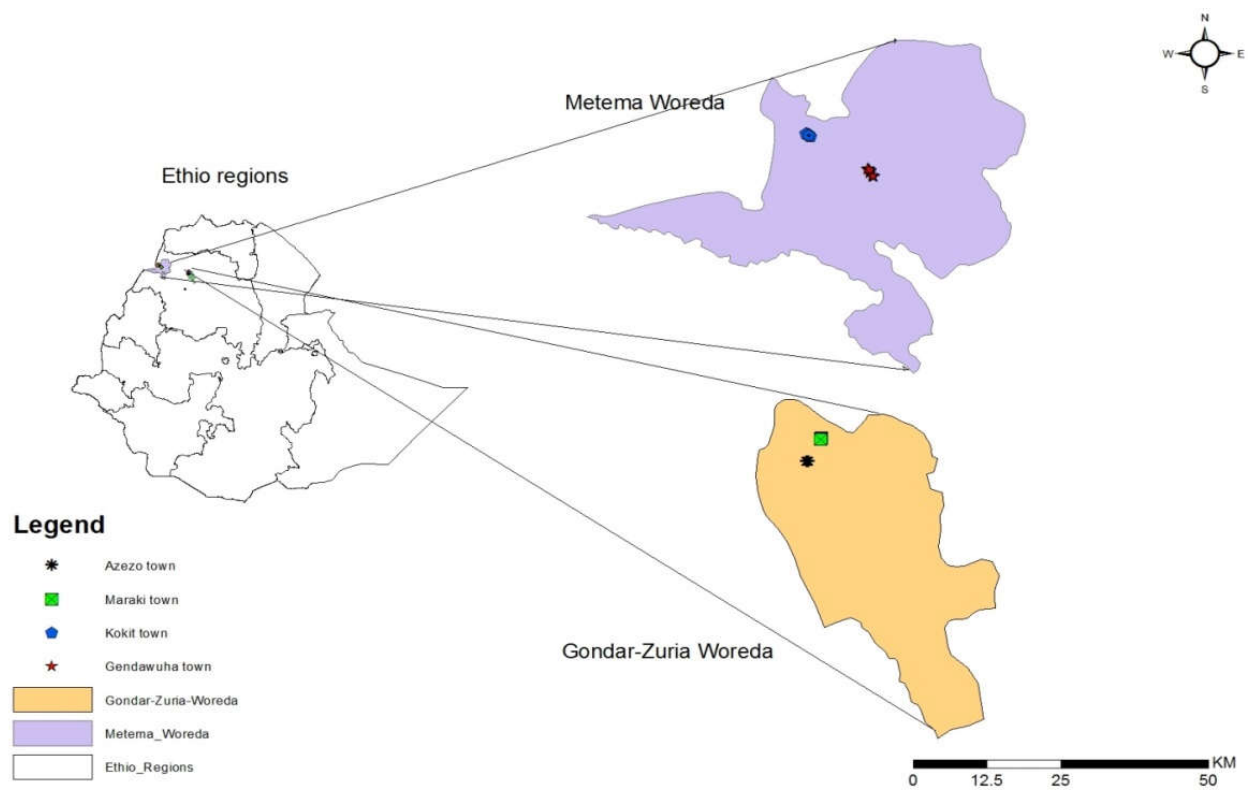
Figure 2.
Artificial and natural breeding habitat of Culisela longiareolata: a) discared tyre, b) discared plastic, c) discared metal and d) clay pot are artificial breeding habitats. e) rain pool, f) hoof print, g) river bank and h) tree hole are natural larvae breeding habitats.
Figure 2.
Artificial and natural breeding habitat of Culisela longiareolata: a) discared tyre, b) discared plastic, c) discared metal and d) clay pot are artificial breeding habitats. e) rain pool, f) hoof print, g) river bank and h) tree hole are natural larvae breeding habitats.
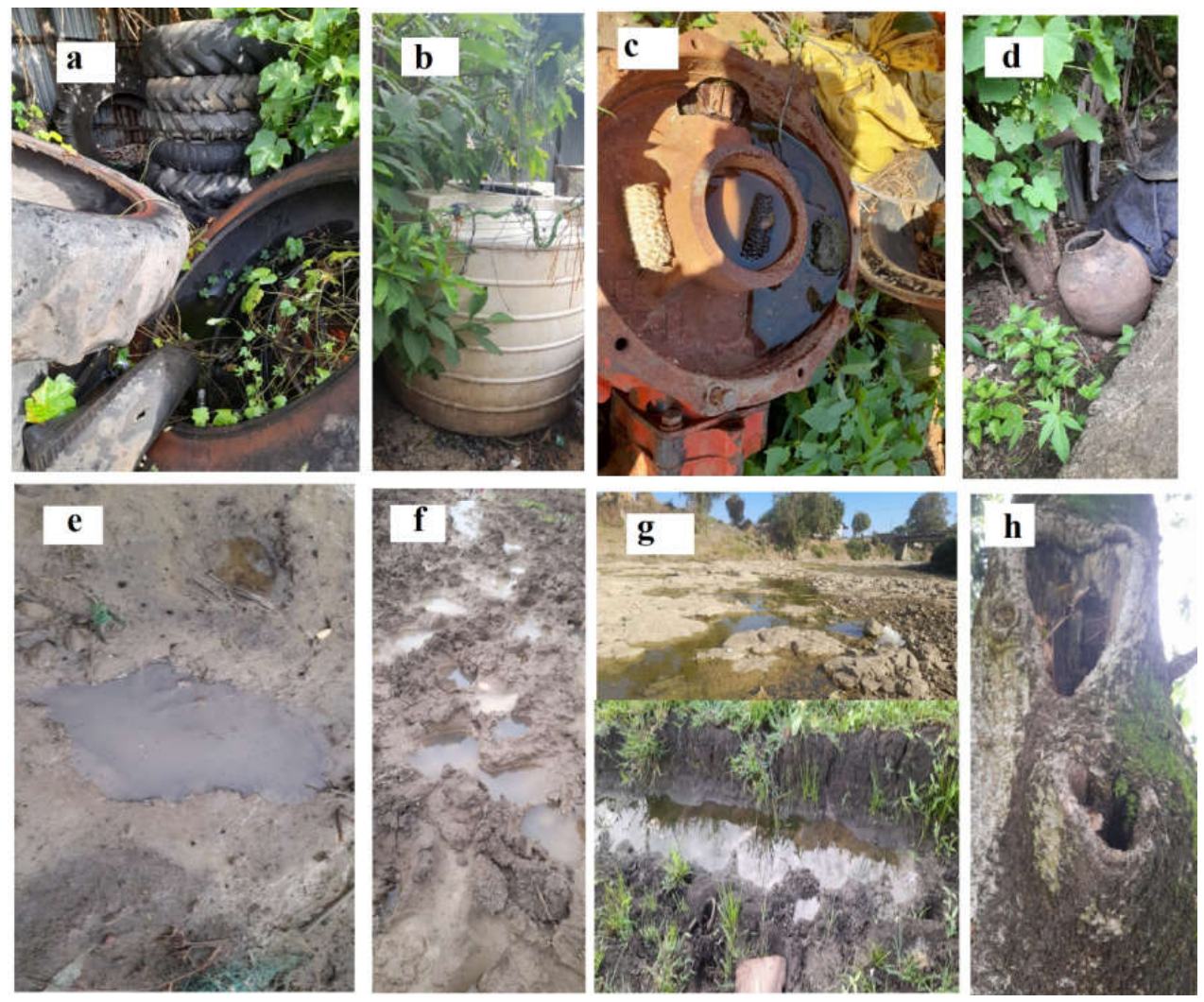
Figure 3.
Monthly distribution of Ae. aegypti, Ae. vittatus and Cs. Longiareolata in highland study sites (Azezo and Maraki towns).
Figure 3.
Monthly distribution of Ae. aegypti, Ae. vittatus and Cs. Longiareolata in highland study sites (Azezo and Maraki towns).
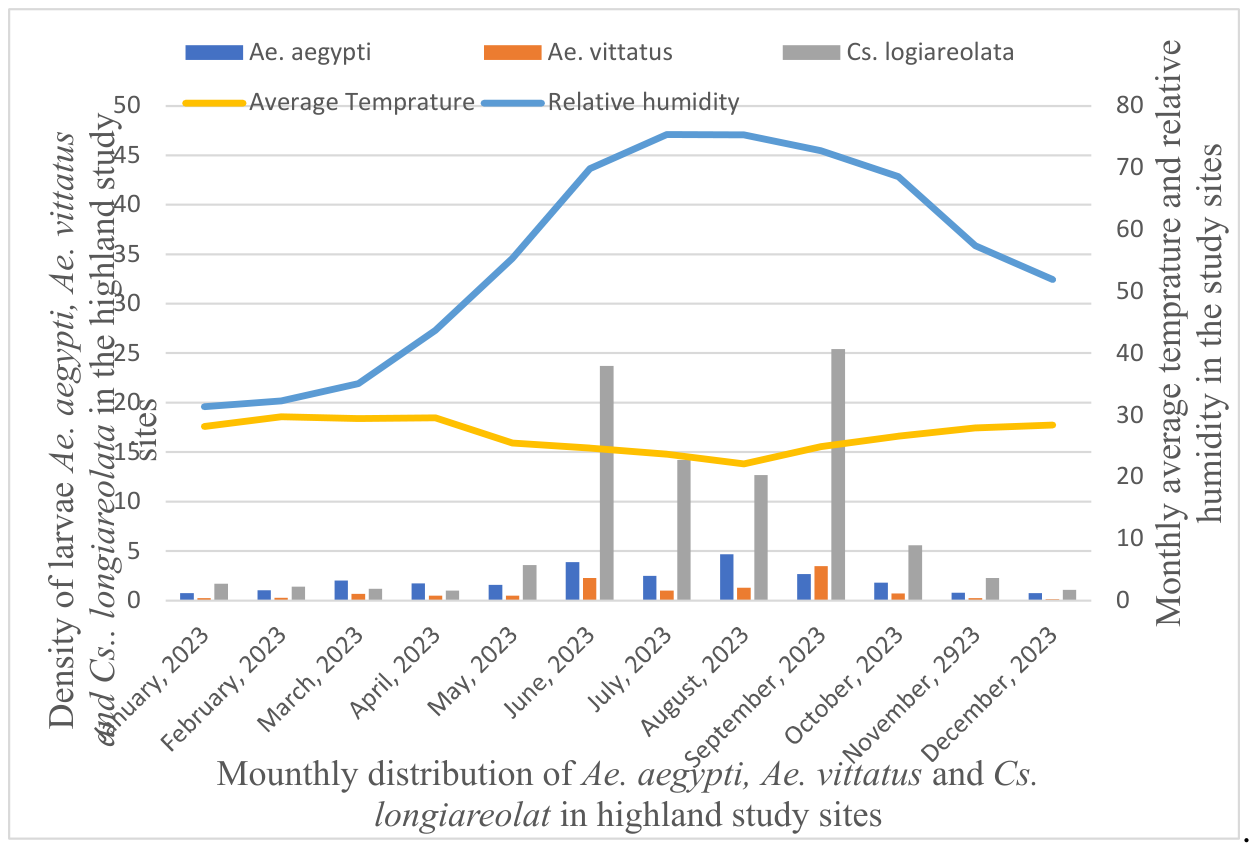
Figure 4.
Monthly distribution of Ae. aegypti, Ae. vittatus and Cs. Longiareolata in lowland study sites (Gendawuha and Kokit towns).
Figure 4.
Monthly distribution of Ae. aegypti, Ae. vittatus and Cs. Longiareolata in lowland study sites (Gendawuha and Kokit towns).
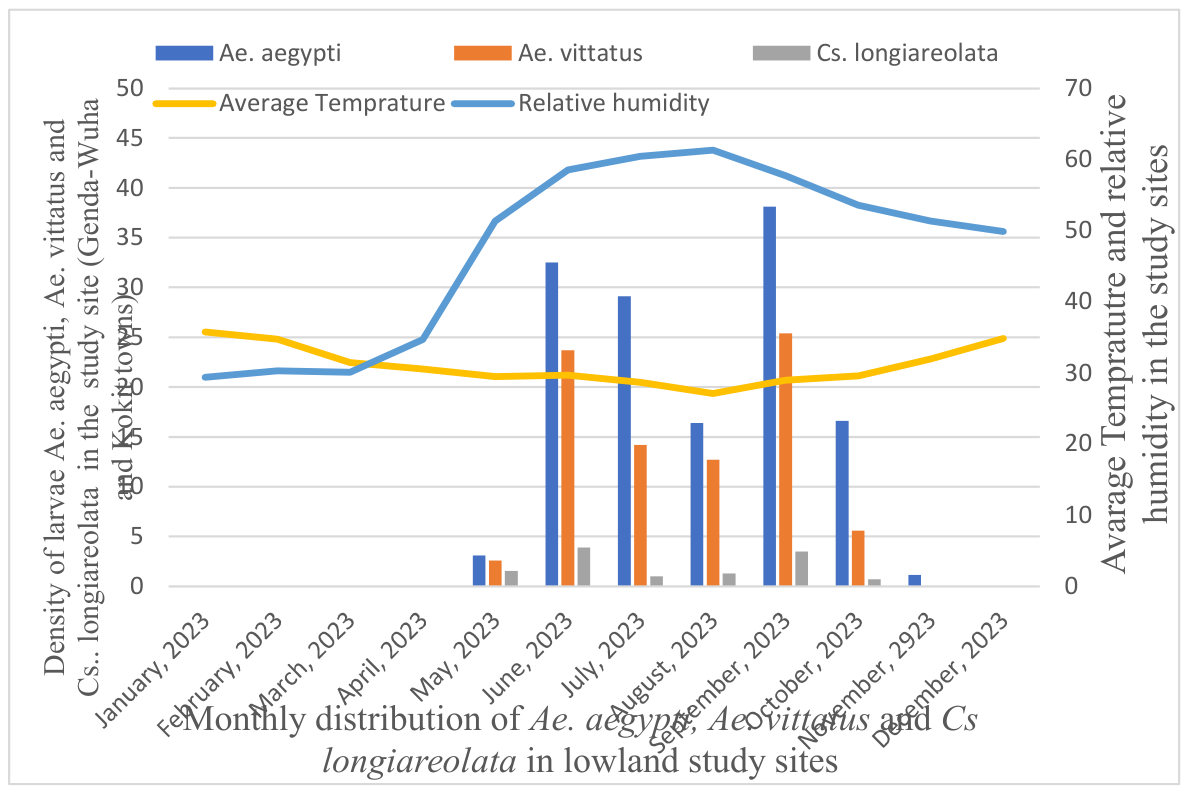
Figure 5.
larvae characteristics: Head: 1-mouth bursh, 2-antenna and 3-compound eye. Thorax: 1- prothorax, 2-mesothorax 3 -metathorax. Abdomen: 1-8 segments. Terminal appendage of abdomian: 1-siphon (opening respirator), 2-pectin, 3-anal bursh and 4-dorsal bursh.
Figure 5.
larvae characteristics: Head: 1-mouth bursh, 2-antenna and 3-compound eye. Thorax: 1- prothorax, 2-mesothorax 3 -metathorax. Abdomen: 1-8 segments. Terminal appendage of abdomian: 1-siphon (opening respirator), 2-pectin, 3-anal bursh and 4-dorsal bursh.
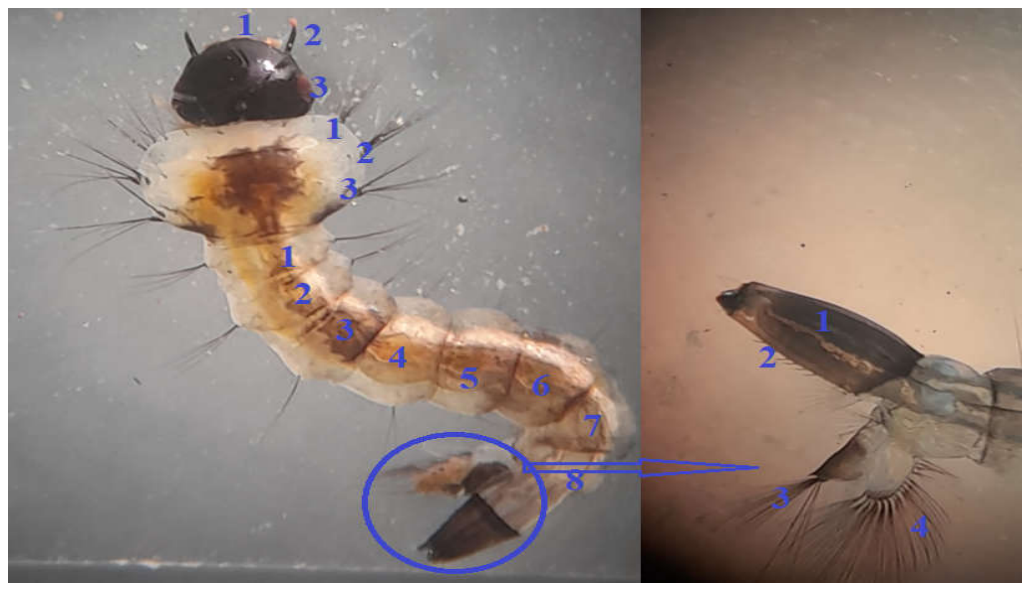
Figure 6.
(A), female: a) proboscis, b) leg, c) pilos antenna, d) maxillary palps (3-segment), e) compound eye, f) v-shape vertex, g) orbital line, h) longitidinal white stripe at scutum, i) lateral side coiled white strip, j) horizontal white strip scutellum. (B) Male: a) proboscis, b) maxillary palps, c) plumose antenna, d) leg, e) compound eye, f) orbital line, g) v-shape vertex, h) longitidinal white stripe at scutum, i) lateral side coiled white strip, j) horizontal white strip scutellum. (C) Lateral side of male: a) proboscis, b) d) maxillary palps, c) plumose antenna, d) compound eye, e) fore-mesepimeron white strip, f) mid-mesepimeron white strip, g) hind-mesepimeron white strip.
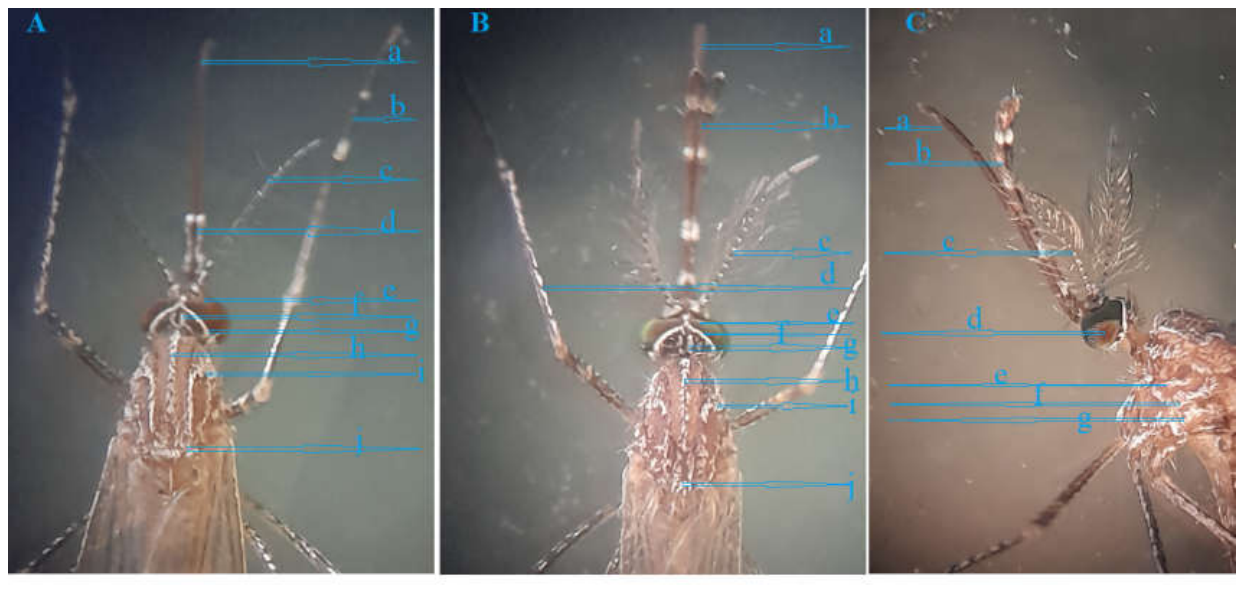
Figure 7.
(A), Female wings have black spot at joint veins at (1,2, & 3). (B), Venation of wings: 1 costal, 2 subcostal, 3 radial, 4 media, 5 cubitus and 6 anal venations of wing. (C), hind leg of tarsomeres have white band at base (1, 2, 3, 4 and 5).
Figure 7.
(A), Female wings have black spot at joint veins at (1,2, & 3). (B), Venation of wings: 1 costal, 2 subcostal, 3 radial, 4 media, 5 cubitus and 6 anal venations of wing. (C), hind leg of tarsomeres have white band at base (1, 2, 3, 4 and 5).
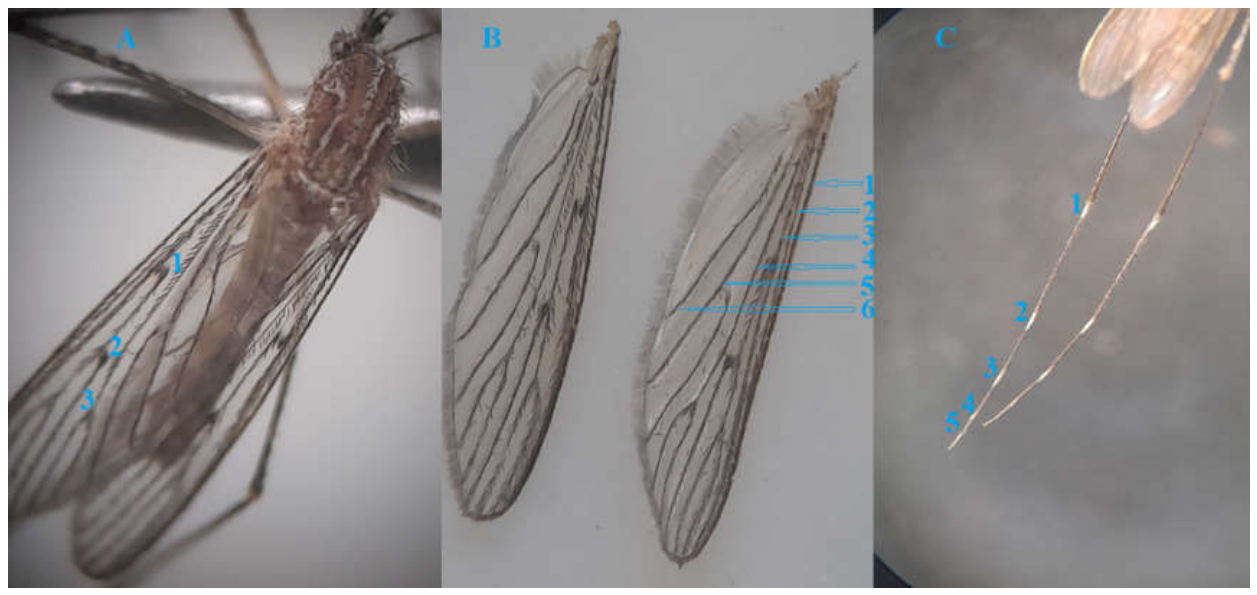
Figure 8.
Molecular phylogenetic analysis of ITS2 of Cs. longiareolata, by maximum likelihood method. The percentage of trees in which the associated taxa clustered together is shown next to the branches. Initial tree(s) for the heuristic search were obtained automatically by applying Neighbor-Join and BioNJ algorithms to a matrix of pairwise distances estimated using the Maximum Composite Likelihood (MCL) approach, and then selecting the topology with superior log likelihood value. The tree is drawn to scale, with branch lengths measured in the number of substitutions per site. The analysis involved 8 nucleotide sequences. All positions containing gaps and missing data were eliminated. Internal transcribed spacer 2.
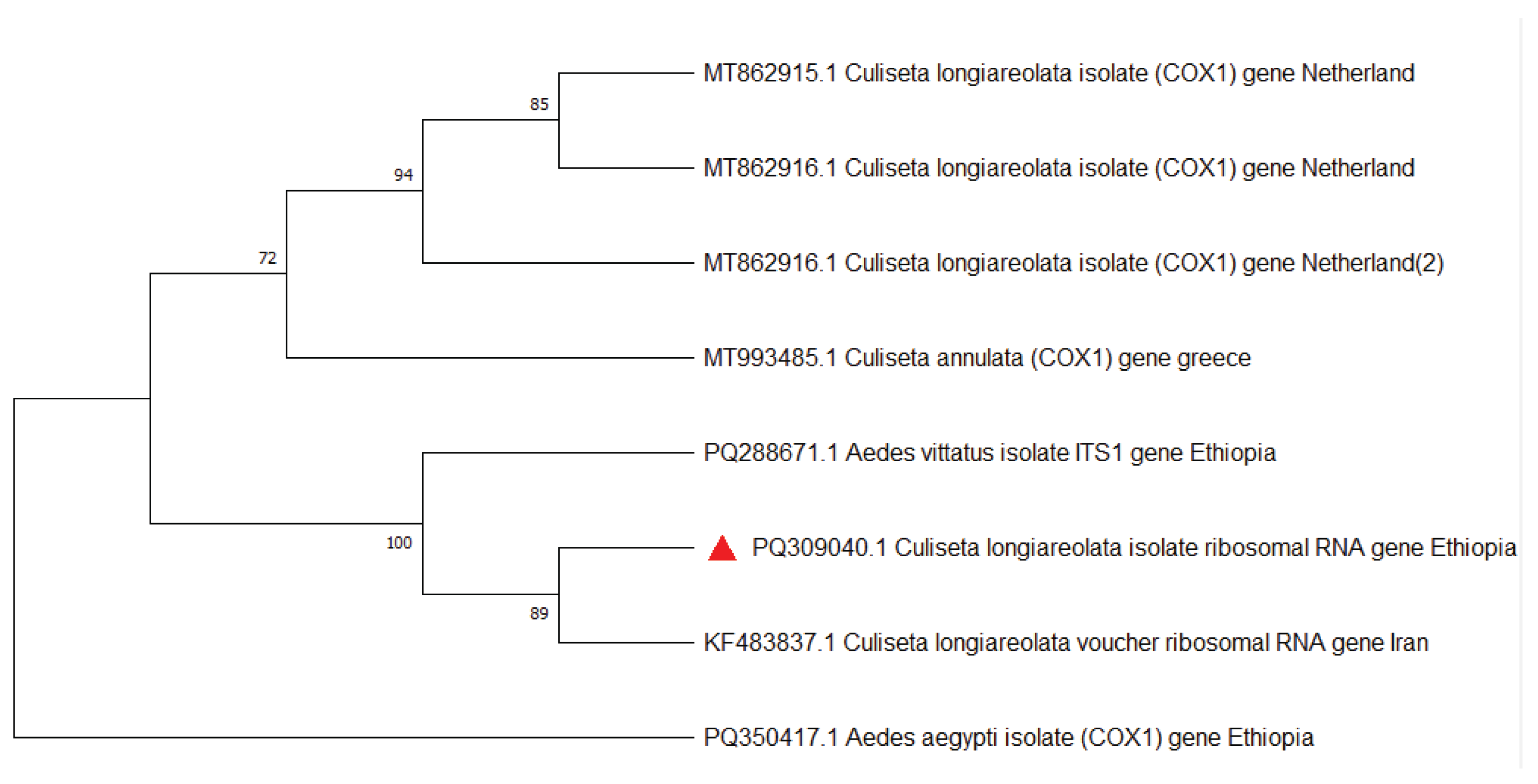

Table 1.
Arboviral mosquito distribution in Kokit, Gendawuha, Azezo, and Maraki towns. Proportions were calculated with the total number of arboviral vectors at the study sites.
Table 1.
Arboviral mosquito distribution in Kokit, Gendawuha, Azezo, and Maraki towns. Proportions were calculated with the total number of arboviral vectors at the study sites.
| Study Sites | |||||
| Species | Kokit (%) | Gendawuha (%) | Azezo (%) | Maraki (%) | Total (%) |
| Ae. aegypti | 1201 (52.2) | 1718 (66.2) | 315 (22.8) | 256 (13.0) | 3490 (42.3) |
| Ae. vittatus | 989 (43.0) | 747 (28.7) | 127 (9.1) | 113 (5.6) | 1976 (24.0) |
| Cs. longiareolata | 109 (4.7) | 129 (4.9) | 939 (67.9) | 1589 (81.1) | 2766 (33.6) |
| Total | 2299 | 2594 | 1381 | 1958 | 8232 |
Table 2.
Three arboviral mosquitoes distribute in different breeding container types.
| Species | ||||
| Breeding Container | Ae. aegypti | Ae. vittatus | Cs. longiareolata | Total |
| Discared tyres | 2679(76.7%) | 1378(69.7%) | 234(8.4%) | 4291(52.1%) |
| Discared plastic | 272(7.7%) | 197(9.9%) | 683(24.6%) | 1152(13.9%) |
| Discared metal | 204(5.8%) | 150(7.5%) | 1550(56.0%) | 1904(23.1%) |
| clay pots | 165(4.7%) | 130(6.5%) | 255(9.2%) | 550(6.6%) |
| Rain pool | 55(1.5%) | 43(2.1%) | 0(0.0%) | 98(1.1%) |
| Hoof print | 15(0.4%) | 10(0.5%) | 0(0.0%) | 25(0.3%) |
| River edge | 3(0.08%) | 1(0.05%) | 0(0.0%) | 4(0.04) |
| Tree hole | 97(2.7%) | 67(3.3%) | 44(1.5%) | 208(2.5%) |
| Total | 3490 | 1976 | 2766 | 8232 |
Disclaimer/Publisher’s Note: The statements, opinions and data contained in all publications are solely those of the individual author(s) and contributor(s) and not of MDPI and/or the editor(s). MDPI and/or the editor(s) disclaim responsibility for any injury to people or property resulting from any ideas, methods, instructions or products referred to in the content. |
© 2026 by the authors. Licensee MDPI, Basel, Switzerland. This article is an open access article distributed under the terms and conditions of the Creative Commons Attribution (CC BY) license (http://creativecommons.org/licenses/by/4.0/).
Copyright: This open access article is published under a Creative Commons CC BY 4.0 license, which permit the free download, distribution, and reuse, provided that the author and preprint are cited in any reuse.