

Submitted:
09 November 2026
Posted:
10 November 2026
You are already at the latest version
Abstract
Poa pratensis L. is a perennial rhizomatous cool season turfgrass with great application potential for turf establishment and degraded grassland restoration in arid regions. This study aimed to reveal the response patterns of above ground vegetative growth and rhizome expansion under drought stress, and to clarify the regulatory mechanisms mediated by endogenous hormones. A pot water controlled experiment was conducted using 11 wild Poa pratensis L. accessions collected from Gansu Province and the commercial cultivar Midnight (as control). Four soil water gradients were set, corresponding to 75%-85%, 55%-65%, 35%-45%, and 15%-25% of field capacity. Above ground morphological traits, rhizome expansion traits, and endogenous hormone contents (JA, IAA, GA, CTK and ABA) in leaves were measured. Spearman correlation analysis was used to decipher the synergistic and trade off relationships among phenotypic traits, as well as the associations between endogenous hormones and phenotypic indices. The results showed that: (1) Drought significantly inhibited above ground vegetative growth including plant height, leaf length, leaf width and tiller number. Most above ground traits were sensitive to water deficit. The Yuzhong (YZ) accession exhibited the weakest growth inhibition, while the Tianzhu (TZ) and Anding (AD) accessions suffered the most severe suppression. (2) Rhizome traits differed significantly among accessions. The Lingtai (LT), Yuzhong (YZ), Qinzhou (QZ) and Weiyuan (WY) accessions adapted to drought via rhizome proliferation, thickening and volume accumulation; by contrast, rhizome architecture of the Xihe (XH) accession was markedly restricted by drought. (3) Drought induced divergent responses of endogenous hormones. The contents of ABA and JA continuously increased with drought intensification, whereas CTK, GA and IAA gradually decreased. The overall hormone levels of YZ remained relatively stable, and XH showed an intense response to drought. (4) Correlation analysis indicated that Yuzhong, Lingtai and Qinzhou are elite drought resistant accessions with coordinated maintenance of vegetative growth, rhizome expansion and endogenous hormones. Collectively, these findings provide a theoretical basis for the breeding of new drought-tolerant turfgrass cultivars in Northwest China.
Keywords:
Poa pratensis L
; drought stress
; rhizome expansion
; endogenous hormones
1. Introduction
With Poa pratensis L. is a perennial rhizomatous cool-season gramineous turfgrass with strong cold tolerance, wear resistance and wide adaptability. It is a preferred grass species for urban greening, sports turf establishment, roadside ecological restoration and degraded natural grassland improvement in northern China[1,2]. Northwest China is characterized by scarce precipitation and strong evaporation, and water shortage has become a critical factor restricting landscape greening and ecological restoration. Selecting drought-resistant plants and constructing water-saving gardens are therefore of great significance[3]. Poa pratensis L. develops a sophisticated underground composite root system consisting of rhizomes and fibrous roots. Rhizomes function in vegetative propagation, nutrient storage, signal transduction and water translocation, while fibrous roots are responsible for the uptake of water and mineral nutrients[4]. The growth status, structural traits and physiological activity of the underground root system directly determine plant stress tolerance, survival stability and population regeneration capacity[1,4].
Poa pratensis L. possesses abundant germplasm diversity. A large number of wild ecotypes are distributed in Gansu, Qinghai, Xinjiang and other regions. Having grown naturally under arid, infertile habitats with large diurnal temperature variations for a long time, these wild ecotypes have gradually evolved unique characteristics of drought and low-fertility tolerance, making them valuable materials for turfgrass stress-resistance breeding and stress physiology research[5,8]. Previous evaluations of drought resistance in wild Poa pratensis L. from Gansu at germination, seedling and mature stages have laid a foundation for elite germplasm screening[9,10]. Differences in morphogenesis and hormone metabolism among accessions from different provenances also indicate obvious genetic divergence in drought adaptation strategies[8].
Roots are the plant organs most sensitive to soil water fluctuation; they perceive drought stress firstly and trigger adaptive physiological responses. Root plastic growth largely determines plant stress tolerance[14]. Under drought stress, Poa pratensis L. suppresses above-ground growth and prioritizes underground growth by reallocating photosynthates. It increases root-shoot ratio, total root length, root surface area and root branching density, and meanwhile stimulates rhizome sprouting and upright growth to expand the water absorption range and improve water use efficiency for coping with water deficit[14,19]. Drought stress restricts plant growth by inhibiting photosynthetic carbon assimilation and the synthesis and translocation of carbohydrates[23,24]. The coordination between carbon supply and growth shapes the pattern of resource redistribution among different organs under drought[25,34].
As vital organs for vegetative propagation, nutrient storage and drought survival in perennial grasses, rhizome initiation and expansion are regulated by endogenous hormone balance[8,35]. Roots are the primary sensors of drought signals. Hormones can be synthesized in both roots and leaves and transported over long distances via the vascular system. Signal feedback regulation exists between roots and leaves, coordinately modulating above-ground (leaf) and underground (root) growth as well as drought responses. Plastic changes in rhizome architectural traits including rhizome number, internode length, volume, diameter and surface area under drought directly affect plant survival, post-stress recovery and population regeneration[26,31,41]. Existing studies have demonstrated that rhizome development inhibited by drought can recover through distinct regulatory pathways, and rhizome plasticity serves as a core mechanism underlying drought adaptation and post-drought recovery in perennial rhizomatous grasses[15,16,22].
Drought survival and rehydration recovery strategies of perennial grasses are generally categorized into dehydration avoidance and dehydration tolerance. Together, these two strategies govern species persistence during extreme drought events and productivity recovery in the subsequent year[20,22,42,43]. Mechanisms such as summer dormancy, carbohydrate reserve accumulation and meristem protection play essential roles in drought survival[20,51]. Relevant investigations on temperate and Mediterranean grasses provide important references for deciphering drought adaptation strategies of rhizomatous turfgrasses[22,42,44,53].
Current studies on drought responses of Poa pratensis L. mainly focus on physiological and biochemical responses[7,12,13,18]and comparisons among a limited number of cultivars[15,18,28,37]. Systematic measurements of rhizome architecture (rhizome number, internode length, rhizome volume, diameter and surface area) and horizontal expansion capacity (maximum expansion distance, coverage area) across drought gradients, as well as analyses of synergistic and trade-off relationships among wild accessions from different provenances within this species, remain insufficient[26,27]. In this study, 11 wild Poa pratensis L. accessions collected from different locations in Gansu Province and the commercial cultivar Midnight were used to conduct a pot experiment with simulated drought via soil water regulation. Above-ground vegetative traits, underground rhizome expansion indices and endogenous hormone concentrations were determined. Spearman correlation analysis was applied to interpret synergistic promotion and growth trade-off relationships among traits. Drought-resistant accessions with superior rhizome expansion and architecture maintenance capacity were screened. The results provide theoretical basis and germplasm support for turf establishment, degraded grassland restoration and drought-resistance breeding in arid regions.
2. Materials and Methods
2.1. Plant Materials
Wild Poa pratensis L. accessions were collected from 11 distinct locations across Gansu Province and used as experimental materials, with the commercial cultivar Midnight serving as the control[28] (Table 1). The wild Poa pratensis L. germplasm used in this study was sampled from its natural distribution areas in Gansu Province. This species is not a protected or endangered species in China. Germplasm collection was performed in strict accordance with national and local laws and regulations governing the collection and utilization of plant germplasm resources.
2.2. Experimental Design
The experiment was carried out at the Turf Practical Training Base of the College of Grassland Science Gansu Agricultural University. Pots with a caliber of 26 cm and a height of 20 cm were used as cultivation containers. Each pot was filled with 8 kg of culture substrate, which was mixed with farmland soil, river sand and nutrient soil at a volume ratio of 8:1:1. Seeds of Poa pratensis L. were sown uniformly by spot-sowing. One week after seedling emergence, seedlings were first thinned, and eight seedlings with uniform growth were retained per pot. Three weeks after emergence, one seedling with tidy and healthy growth was selected as the experimental plant, and all the remaining seedlings were removed. Uniform water and fertilizer management was implemented throughout the experiment. During the experiment, weeds in pots were removed timely. Uniform water and fertilizer management was maintained. The pots were randomly rearranged every week to minimize environmental heterogeneity across the experimental site. Drought-stress treatments were initiated 90 days after seedling emergence. Before stress imposition, all pots were irrigated to bring soil water content up to field maximum water-holding capacity. (The field water-holding capacity of this soil was measured to be 20.68% by the cutting-ring method.)
Four water-treatment gradients were set in this experiment: well-watered control group (CK, soil water content 75%-85% of field water-holding capacity), mild-drought group (T1, 55%-65%), moderate-drought group (T2, 35%-45%), and severe-drought group (T3, 15%-25%). Each treatment included three biological replicates, and the total duration of drought-stress treatment was 60 days. Soil water content was regulated by the weighing method. Pot weighing and water replenishment were performed daily from 08:00 to 09:00 to maintain soil moisture at the upper limit of the target range, with a soil moisture meter used for auxiliary calibration. A polyethylene rain shelter was built in the experimental area for night thermal insulation and rain sheltering.
2.3. Measured Indices and Methods
(1) Plant height: The absolute height was measured with a straight ruler, unit: cm. (2) Leaf length and leaf width: Measured with a vernier caliper, unit: mm. (3) Tiller number: The number of branches per plant, expressed as tillers·plant⁻¹. (4) Maximum rhizome extension distance: The maximum stretching distance of tillers from the center of a single plant, expressed in cm. (5) Coverage area: calculated as an ellipse (the maximum aboveground extension distance as the major axis, and the perpendicular distance to this direction as the minor axis), expressed as cm²·plant⁻¹. (6) Rhizome number: The number of underground rhizomes per plant, expressed as rhizomes·plant⁻¹. (7) Internode length: Ten primary rhizomes were randomly selected from each plant to measure the average internode length of rhizomes, expressed as cm·node⁻¹.(8) Rhizome biomass: The whole plant was excavated; underground parts were cleaned, fibrous roots were cut off and rhizomes were retained. Samples were dried to constant weight at 70 ℃ and weighed, expressed as g·plant⁻¹. (9) Rhizome diameter, surface area and volume: Determined using the WinRHIZO Pro V2007d root analysis system, expressed in cm, cm²·plant⁻¹ and cm³·plant⁻¹, respectively. (10) Endogenous hormone contents (JA, IAA, GA, CTK (ZT), ABA): The extraction and high-performance liquid chromatography (HPLC) determination of endogenous hormones were performed according to the method described by Arteca R N, et al.[65], with minor modifications. Briefly, 1 g of fresh leaf sample was accurately weighed and fully ground in liquid nitrogen, followed by addition of 10 mL pre-cooled 80% methanol, and extracted in the dark at 4 ℃ for 24 h. The mixture was centrifuged for 15 min, and the supernatant was collected. The residue was re-extracted in the dark with 5 mL pre-cooled 80% methanol for 12 h and centrifuged under the same conditions for 10 min, then the two supernatants were combined. The combined supernatant was concentrated to half of its original volume by rotary evaporation at 40 ℃, and purified using a C18 solid-phase extraction (SPE) cartridge (conditioned with 5 mL methanol and equilibrated with 5 mL ultrapure water before sample loading; washed with 5 mL ultrapure water and eluted with 5 mL methanol). The eluate was dried under nitrogen gas, reconstituted with mobile phase and adjusted to a final volume of 1 mL, then filtered through a 0.22 μm organic filter membrane for subsequent detection. All operations were conducted away from light.
Chromatographic conditions: Agilent 1260 HPLC system equipped with an Eclipse XDB-C8 column (4.6 mm × 150 mm, 5 μm); mobile phase: methanol : 0.6% glacial acetic acid (45:55, v:v), isocratic elution; column temperature: 25 ℃; flow rate: 1 mL·min⁻¹; ultraviolet (UV) detector at detection wavelength of 254 nm; injection volume: 20 μL; autosampler compartment temperature: 4 ℃. The external standard method was adopted for the quantification of five endogenous hormones, including JA, IAA, GA₃, CTK and ABA.
2.4. Data Analysis
One-way analysis of variance (one-way ANOVA) was performed using SPSS 20.0, and Duncan’s multiple range test was adopted for multiple comparisons at (P<0.05). Spearman rank correlation analysis was used to evaluate the correlations among morphological and rhizome expansion indices. GraphPad Prism 8 was used for figure plotting.
3. Results and Analysis
3.1. Effects of Drought Stress on Above-Ground Vegetative Growth
3.1.1. Plant Height
With the increase in drought stress intensity, the plant height of 12 wild Poa pratensis showed an overall decreasing trend. Under mild drought stress, the plant heights of KL and WY showed no significant difference compared with the control (P>0.05), while the other accessions exhibited significant differences (P<0.05). Under moderate and severe drought stress, the YZ accession had the smallest reduction in plant height, decreasing by 2.26% and 9.14% relative to the control, respectively. The TZ accession presented the maximum reduction under moderate stress, whereas the AD accession had the largest decline under severe stress, with decreases of 22.35% and 32.78% compared with the control, respectively (Figure 1).
3.1.2. Leaf Length
With the increase in drought stress intensity, the leaf length of 12 wild Poa pratensis L. showed an overall decreasing trend. Under mild drought stress, the leaf length of all accessions reached a significant level of difference (P<0.05). Among them, XH and YZ exhibited the maximum and minimum reduction, respectively. Under moderate and severe drought stress, the YZ accession had the smallest reduction, decreasing by 11.32% and 18.64% relative to the control, respectively. The TZ accession presented the maximum reduction under moderate stress, whereas the AD accession had the largest decline under severe stress, with decreases of 31.28% and 48.19% compared with the control, respectively (Figure 2).
3.1.3. Leaf Width
The leaf width of the 12 tested accessions continuously decreased with the reduction of water gradient. Under mild drought conditions, the leaf width of all accessions was significantly lower than that under the well-watered control (P<0.05), indicating that the leaf width trait exhibited high sensitivity to mild water deficit. Under moderate drought stress, the TZ accession showed the sharpest decrease in leaf width, with a reduction of 38.27%, while the QS accession was relatively less affected, with a decrease of 15.31%. Under severe drought stress, the leaf width of all tested materials dropped to the minimum value during the entire treatment period. The TZ accession had the largest reduction in leaf width, with a decrease of 44.79%. In contrast, the XH accession could maintain a relatively larger leaf width under severe drought, with only a 23.37% reduction (Figure 3).
3.1.4. Tiller Number per Plant
The tiller counts of the 12 tested accessions continuously decreased with the decline of water gradient. Under mild drought stress, compared with the well-watered control, the tiller number per plant of all accessions decreased significantly (P<0.05), indicating that the tillering trait was highly sensitive to mild water deficit. Under moderate drought stress, the TZ accession showed the most drastic attenuation of tiller number, with a decrease of 41.09%. The YZ accession was relatively less affected, with a reduction of 22.37%. Under severe drought stress, the tiller number per plant of all tested materials dropped to the minimum value throughout the treatment period. The LQ accession had the largest reduction in tiller number among all materials, decreasing by 59.50%. The DZ accession showing strong tiller retention capacity, with only a 45.98% reduction (Figure 4).
3.2. Effects of Drought Stress on Rhizome Expansion Traits
3.2.1. Maximum Rhizome Expansion Distance
Marked divergence existed in response patterns among accessions under drought stress. Under mild drought stress, QS, AD, LQ and XH accessions showed a trend of rising first and then falling, while the rest exhibited a decreasing trend. The maximum expansion distance of all materials was significantly different from the control (P<0.05), indicating that the rhizome expansion trait was highly sensitive to mild water deficit. Under moderate drought stress, the XH accession showed the most drastic attenuation, with a decrease of 20.81%. The LT accession was relatively less affected, with a reduction of 2.11%. Under severe drought stress, the XH accession had the largest reduction among all materials, and rhizome expansion growth was severely inhibited. The LT accession could still maintain a relatively larger rhizome expansion distance under severe drought, with a reduction of 5.67% (Figure 5).
3.2.2. Individual Plant Coverage Area
The LT, YZ, QZ, G-WY and WY exhibited a trend of rising first and then falling, while the individual plant coverage area of the remaining accessions continuously decreased with the declining water gradient. Under mild drought stress, except for LT, QZ, WY and DZ, the individual plant coverage area of other accessions was significantly different from the control (P<0.05). The TZ accession showed the sharpest decline in coverage area under moderate and severe drought stress, decreasing by 24.59% and 28.80% compared with the control, respectively. The YZ accession was least affected under moderate stress, and the QZ accession could retain a relatively large coverage area under severe drought stress, with decreases of 4.88% and 10.88% relative to the control, respectively (Figure 6).
3.2.3. Rhizome Number
The rhizome number per plant of the 12 tested materials generally increased first and then decreased as drought stress intensified. Under mild drought stress, the rhizome number of all materials showed significant difference compared with the control (P<0.05). Under moderate and severe drought stress, the WY accession exhibited the most dramatic increase in rhizome number, rising by 62.83% and 69.54% relative to the control, respectively; the LQ accession had the mildest increment in rhizome number, with increases of 28.37% and 13.12% compared with the control, respectively (Figure 7).
3.2.4. Internode Length
The LT, YZ, QZ and WY showed a trend of rising first and then falling, while the internode length of the remaining tested accessions continuously decreased with the decline of water gradient. Under mild drought stress, except for WY, the internode length of other accessions was significantly different from the control (P<0.05). Under moderate drought stress, the TZ accession exhibited the sharpest decline in internode length; under severe drought stress, the LQ accession showed the most dramatic reduction, decreasing by 26.49% and 41.25% relative to the control, respectively. The YZ accession was least affected under both moderate and severe drought stress, displaying strong capacity to sustain internode growth, with decreases of 8.06% and 20.64% compared with the control, respectively (Figure 8).
3.2.5. Rhizome Volume
The LT, YZ, QZ, G-WY and WY showed a continuous increasing trend, while the rhizome volume of the remaining tested accessions exhibited an initial increase followed by a decrease. Under mild drought stress, compared with the well-watered control, the rhizome volume of all accessions was significantly different from the control (P<0.05).Under moderate and severe drought stress, the TZ accession exhibited the sharpest decline in rhizome volume, decreasing by 18.45% and 44.23% relative to the control, respectively; the SN accession was least affected under moderate drought stress, with an increase of 34.19% compared with the control. The YZ accession was least affected under severe drought stress and could maintain a relatively large rhizome volume, displaying strong capacity to sustain rhizome growth, with an increment of 38.00% relative to the control (Figure 9).
3.2.6. Rhizome Diameter
The LT and YZ showed a trend of rising first and then falling, while the rhizome diameter of the remaining tested accessions continuously decreased with the decline of water gradient. Under mild drought stress, except for YZ, QZ and WY, the rhizome diameter of other accessions was significantly different from the control (P<0.05). Under moderate and severe drought stress, the XH accession exhibited the sharpest decline in rhizome diameter, decreasing by 33.65% and 50.48% relative to the control, respectively; the YZ accession was least affected, with decreases of 4.68% and 12.34% compared with the control, respectively (Figure 10).
3.2.7. Rhizome Surface Area
The LT, YZ, QZ and WY showed a continuous increasing trend, while the rhizome surface area of the remaining tested accessions exhibited an initial increase followed by a decrease. Under mild drought stress, compared with the well-watered control, the rhizome surface area of all accessions was significantly different from the control (P<0.05). Under moderate and severe drought stress, the TZ accession showed the mildest change in rhizome surface area, increasing by 16.14% and 13.17% relative to the control, respectively; the YZ accession was most affected under moderate drought stress, with an increment of 40.78%. The LT accession was most affected under severe drought stress displaying strong capacity to sustain rhizome growth, with an increase of 47.53% relative to the control (Figure 11).
3.3. Endogenous Hormones
Drought stress significantly regulated endogenous hormone contents in the 11 Poa pratensis L. accessions, and distinct divergence was observed in the response patterns of different hormones along the soil water gradients. The contents of ABA and JA continuously increased with the aggravation of drought stress (Figure 12B,E) and peaked under severe drought treatment T₃. By contrast, the contents of IAA, CTK and GA gradually decreased as drought intensified (Figure 12A,C,D). The magnitude of hormone responses varied markedly among accessions.
For the YZ accession, the increases in ABA and JA were relatively moderate, and the reductions in CTK, GA and IAA were smaller under drought treatments, resulting in relatively stable overall hormone levels. The XH accession exhibited an intense response to drought: ABA and JA accumulated substantially under moderate and severe drought, accompanied by rapid declines in CTK, GA and IAA, showing obvious hormone imbalance. For the LT accession, ABA and JA slightly increased while CTK, GA and IAA only decreased mildly under mild drought T₁. As stress further intensified, defensive hormones rose rapidly and growth-promoting hormones declined significantly. The remaining accessions generally showed a synchronous trend of continuous upregulation of stress-related hormones and continuous downregulation of growth-promoting hormones.
3.4. Correlations Among Morphological and Rhizome Expansion Indices
The results of Spearman correlation analysis are shown in Figure 13. Significant positive correlations existed among most above-ground morphological indices and rhizome expansion traits. The maximum rhizome expansion distance had an extremely significant strong positive correlation with leaf length (r=0.92), (P<0.001), and coverage area also showed an extremely significant strong positive correlation with leaf length (r=0.92), (P<0.001). Extremely significant positive correlations were also found between rhizome diameter and coverage area (r=0.91), (P<0.001), as well as between rhizome volume and maximum rhizome expansion distance (r=0.88), (P<0.001). These findings indicate that rhizome thickening and swelling can promote horizontal expansion and improve canopy coverage, and greater leaf length facilitates lateral growth of plants. Tiller number was extremely positively correlated with rhizome number (r=0.76), (P<0.001), meaning that plants with vigorous tillering can produce more rhizomes. Plant height showed moderate negative correlations with tiller number and rhizome number, and leaf width was mostly negatively correlated with tillering and rhizome expansion indices, reflecting a growth trade-off between vertical elongation, leaf widening and underground rhizome outgrowth. The overall correlations of rhizome surface area with other traits were weak, implying that it was less co-regulated by other morphological indices. Both positive and negative correlations were detected between endogenous hormones (JA, CTK, GA, ABA, IAA) and above-ground and rhizome expansion traits. The Mantel test links indicated that the overall association between the endogenous hormone group and phenotypic trait group was mainly positive. Hormones are involved in regulating the coordinated variation of above-ground morphology and rhizome expansion.Cluster analysis showed that germplasms LT, YZ and QZ sustained high JA and ABA concentrations under drought. The decreases in clonal growth traits (rhizome number, rhizome volume, tiller number) of these three germplasms were significantly less pronounced than those of the other accessions, conferring stronger drought adaptability. By comparison, germplasms LQ and TZ displayed substantial reductions in endogenous growth-promoting hormones and rhizome morphological variables under drought stress, which corresponded to poor drought tolerance (Figure 14).
4. Discussion
Drought stress significantly inhibited above-ground vegetative traits including plant height, leaf length, leaf width and tiller number per plant. In this study, plant height, leaf length, leaf width, tiller number per plant, maximum expansion distance and individual plant coverage area all showed an overall significant downward trend with decreasing soil water content, which was consistent with the findings of Arias C and Ma X Q et al.[54] on drought responses of most gramineous forages. The underlying reason is that drought induces ABA accumulation, which triggers stomatal closure and reduces stomatal conductance. Less CO₂ enters leaves, the net photosynthetic rate declines, and the yield of photosynthates decreases. The contents of stress-defensive hormones ABA and JA continuously accumulate as drought intensifies, while the contents of growth-promoting hormones CTK, GA and IAA gradually decrease. After roots sense soil drought, the expression of key genes for ABA biosynthesis is upregulated[8]. Large amounts of ABA are synthesized jointly in roots and leaves, and ABA degradation is suppressed, leading to continuous ABA accumulation in planta. Drought triggers reactive oxygen species (ROS) burst and activates the JA biosynthesis pathway. JA cooperates with ABA as systemic stress signals, which are bidirectionally transported between roots and leaves via the vascular system to initiate stomatal regulation and antioxidant defense responses. CTK is mainly synthesized in roots. Drought inhibits root CTK biosynthesis[54], reduces the translocation efficiency from xylem to above-ground tissues, and accelerates CTK degradation in leaves, resulting in decreased CTK concentration. The synthesis of active GA is blocked and its inactivation and degradation are enhanced, which suppresses cell elongation. IAA biosynthesis is inhibited, polar auxin transport is disturbed, and oxidative degradation intensifies, weakening the activity of tiller and rhizome meristems. Meanwhile, accumulated ABA further suppresses the biosynthesis and signaling pathways of CTK, GA and IAA, further restricting above-ground vegetative growth, promoting the allocation of photosynthates to underground rhizomes, and mediating growth trade-offs and spatial pattern remodeling among leaves, rhizomes and plant clumps. Genotypic differences exist among accessions in hormone biosynthesis, degradation and translocation. Drought-resistant accessions show smaller hormone fluctuation and can maintain a relative balance between growth and defense, whereas sensitive accessions exhibit more severe hormone imbalance and stronger growth inhibition. Above-ground growth requires carbohydrates; insufficient carbon supply restricts morphogenesis, and leaf premature senescence, yellowing and abscission may even occur. In this study, aboveground traits of most accessions decreased significantly even under mild water deficit, proving that above-ground vegetative traits of Poa pratensis L. are highly sensitive to mild water deficit without an obvious buffering threshold for drought tolerance, which agrees with the results of Liu L et al.[55]. However, above-ground traits of a small subset of accessions increased significantly or remained stable under mild drought, reflecting inter-accession differences in osmotic adjustment capacity and water sensitivity. This conclusion is consistent with the reports of Noor M[6] and Davies W[56]. Davies W proposed that roots synthesize ABA upon sensing drought, which is transported upward through the xylem to leaves and induces stomatal closure and leaf elongation inhibition before leaf water potential changes obviously. Meanwhile, drought suppresses CTK synthesis in roots and its delivery to above-ground parts, coordinately regulating plant growth and root-shoot resource allocation to realize early adaptive responses to drought. Further improving this framework, Huntenburg et al.[64] confirmed bidirectional hormone transport between roots and leaves for ABA, JA and other hormones, rather than unidirectional signaling only from roots to shoots. Hormone signals synthesized in leaves can also flow back to roots via the phloem to regulate root architectural remodeling, jointly coordinating the drought responses of above- and below-ground organs. This study verified that drought stress exerted an extremely significant inhibitory effect on tiller number per plant of Poa pratensis L. Similar results were reported by Ochola C A et al.[57,58], who found that tiller number declines with the aggravation of drought stress. Differences in tillering capacity among accessions directly determine clump expansion and population persistence of Poa pratensis L. under drought. The Midnight and YZ accessions possess stable tillering performance and have stronger population maintenance capacity under drought. Under mild drought, the expansion distance of some accessions shows an adaptive trend of increasing first and then decreasing, while that of other accessions decreases directly. This indicates that some accessions can adapt to low-water environments through moderate growth adjustment under mild stress, implying a certain drought acclimation effect. As stress intensified, the YZ and QZ accessions effectively maintained coverage area and secured spatial growth advantages. Such divergent expansion strategies suggest that elite drought-resistant accessions can maintain spatial stability by adjusting the pace of rhizome expansion and mitigate drought-induced growth suppression, which was also observed in the experiment of Zhang L[59].
Rhizome number, internode length, rhizome volume, rhizome diameter and rhizome surface area collectively constitute the underground drought resistance system of plants[11,31,32]. This study showed that the responses of underground rhizome traits of Poa pratensis L. to drought stress were not uniformly inhibitory, but exhibited accession-specific patterns. For rhizome number, some accessions displayed a trend of initial increase followed by reduction. Mild drought can induce rhizome proliferation in certain accessions, a typical drought adaptation strategy in plants, which enlarges underground absorption range and enhances water capture capacity. This result is consistent with the experiment of Tian J T[60]. Tian J T argued that limited photosynthetic carbon supply under stress is the fundamental driver of resource trade-offs in grasses: stress reduces light availability and plant carbon assimilation capacity, and limited carbohydrates cannot simultaneously support vegetative growth, horizontal expansion and sexual reproduction. Plants reduce resource investment in sexual reproduction and lateral rhizome outgrowth and prioritize vertical growth of tiller buds to ensure ramets break through sand layers and capture light, thereby improving survival probability under stress. Rhizome proliferation becomes restricted and rhizome number declines with further drought aggravation. Among all materials, the WY accession showed a remarkable increase in rhizome number under moderate and severe drought with outstanding rhizome propagation capacity, while the LQ accession exhibited relatively gentle rhizome proliferation with low underground responsiveness. The LT and YZ accessions continuously increased rhizome volume and surface area with rising drought intensity, showing strong underground biomass accumulation. On the contrary, rhizome diameter and volume of the TZ and XH accessions decreased sharply under moderate and severe drought, with poor underground architectural stability. This indicates that Poa pratensis L. can resist drought damage through rhizome thickening, enlargement and accumulation of osmotic adjustment substances such as carbohydrates[38]. This phenomenon was also reported by Chai Q[61].
Spearman correlation analysis revealed synergistic and trade-off relationships among morphological traits[26,27,33]. Rhizome expansion distance, coverage area and leaf length were pairwise extremely and strongly positively correlated, suggesting that leaf elongation provides sufficient material and energy support for rhizome horizontal expansion and clump coverage expansion, forming a highly coordinated spatial growth system, which is consistent with the study of Shi A[62]. Leaf morphology has remarkable environmental plasticity, and leaf length is a key functional trait determining plant light interception capacity. Leaf elongation expands the photosynthetic receiving area to improve carbon assimilation, supplying carbohydrates and energy for rhizome horizontal expansion, tiller formation and clump expansion. Carbon supply from leaves, clonal rhizome outgrowth and spatial occupation of clumps are linked to build a coordinated spatial growth system. Rhizome diameter and rhizome volume were extremely positively correlated with coverage area and expansion distance, proving that rhizome thickening and enlargement enhance underground nutrient and water storage and translocation and further promote aboveground spatial expansion, in line with the findings of Zhao C[63]. Tiller number was significantly positively correlated with rhizome number, confirming that aboveground tiller proliferation is tightly coupled with underground rhizome propagation in Poa pratensis L. A more developed underground rhizome system corresponds to stronger tiller germination capacity and higher clump stability[1,31]. Significant growth trade-offs also existed: plant height was moderately negatively correlated with tiller number and rhizome number, and leaf width was mostly negatively correlated with tillering, rhizome and expansion indices. This indicates that vertical elongation and lateral leaf expansion consume abundant resources and inhibit underground rhizome development and above-ground tiller proliferation[27,34]. Resources are limited under drought, and plants preferentially allocate resources to dominant traits. Drought-resistant accessions mostly improve overall drought adaptability by suppressing inefficient vertical growth and optimizing resource allocation to rhizomes and tillers, which was similarly demonstrated by Arias C[17] and Ochola C A[57]. In addition, rhizome surface area, leaf width and several other indices showed weak correlations with other traits and relatively independent plasticity, and can serve as independent evaluation indicators for drought resistance[48]. Hormones act as long-distance messengers mediating root-shoot communication. Davies[56] established the classical root-sourced chemical signal model, which states that ABA synthesized in drought-perceiving roots is transported upward via xylem to leaves, inducing stomatal closure and leaf elongation inhibition before leaf water potential changes significantly. Meanwhile, drought inhibits root CTK synthesis and its delivery to shoots, coordinately regulating plant growth and root-shoot resource allocation to realize early drought adaptation. Subsequent work by Huntenburg et al.[64] further extended this theory and verified bidirectional ABA and JA translocation between roots and leaves, rather than only root-to-shoot signaling. Leaf-derived hormone signals can return to roots through the phloem to remodel root architecture, forming a bidirectional root-shoot hormone cycle that harmonizes drought responses of above- and below-ground organs.
Revegetation practices on the Loess Plateau demonstrate that the selection and allocation of native grass species are critical for reconstructing degraded grasslands[30]. Comparisons of turfgrass performance under rain-fed dry farming and supplementary irrigation further confirm the stability of inter-accession differences in drought resistance[49]. Distinct drought adaptation strategies have evolved among wild Poa pratensis L. accessions[43,52]. The YZ accession belongs to the comprehensive stable type, showing the lowest stress reduction in multiple core traits including plant height, leaf length, internode length, rhizome diameter and rhizome volume. It maintains stable above- and below-ground traits and steady growth across all drought gradients via stable vegetative growth and rhizome architecture, with the best comprehensive drought resistance. The LT and QZ accessions belong to the spatial expansion type, which maintain excellent horizontal expansion and coverage stability under drought and are suitable for vegetation restoration in arid regions[45]. The WY accession is categorized as the rhizome proliferation type; its rhizome number, volume and surface area continuously rise under drought, with outstanding underground propagation and resource capture capacity[60]. Accessions including TZ, LQ, XH and AD are drought-sensitive types, with multiple core traits declining sharply under moderate and severe drought and poor growth stability[43,44]. Wild Poa pratensis L. germplasm from Gansu harbors rich genetic variation in drought resistance of rhizome expansion traits[5,9]. YZ, LT and QZ are elite drought-resistant accessions with balanced spatial expansion and rhizome architectural maintenance, which can be used for turf establishment, degraded grassland restoration and drought-resistance breeding in arid regions[2,30,46]. This study only analyzed the responses of endogenous hormones and morphological indices of Poa pratensis L. under drought. However, rhizome growth is a complex process coordinately regulated by hormone signals. Future research can focus on different developmental zones of rhizomes (apical meristematic zone, elongation zone and mature internode zone), dissect the spatial distribution and long-distance translocation patterns of JA, ABA, CTK, IAA and GA at the rhizome organ level, and combine expression profiles of key hormone genes to clarify the molecular pathways by which endogenous hormones regulate rhizome growth, lateral expansion and above-belowground resource allocation, so as to further reveal the hormone-mediated mechanisms underlying drought adaptation in rhizomatous Poa pratensis L.
5. Conclusions
Under drought stress, Poa pratensis L. accessions exhibited obvious differences in above-ground growth, underground rhizome development and spatial expansion capacity. Above-ground vegetative traits were generally inhibited, while the sensitivity varied among accessions. The YZ accession showed relatively small reductions in all measured traits and possessed strong capacity to sustain growth, whereas the TZ and AD accessions suffered severe growth inhibition. Marked inter-accession differences were also observed in underground rhizome traits. The LT, YZ, QZ and WY accessions displayed considerable plasticity in rhizome proliferation, enlargement or thickening and maintained favourable rhizome architecture. In contrast, rhizome development and spatial expansion of the TZ and XH accessions were substantially restricted. Correlation analysis further revealed linkages among above- and below-ground traits, and negative correlations were detected for several trait pairs, implying divergent resource allocation strategies between above-ground growth and underground expansion across accessions. Changes in the contents of JA, IAA, GA, CTK and ABA under drought differed among accessions, suggesting that endogenous hormones are involved in drought adaptation. Comprehensive evaluation of above-ground growth and underground rhizome traits facilitates the screening of elite accessions suitable for arid and semi-arid regions. Based on the integrated comparison of growth indices and rhizome traits, the YZ, LT and QZ accessions show promising comprehensive drought resistance potential and can be prioritized as candidate materials for subsequent drought resistance evaluation and breeding programs.
Author Contributions
Conceptualization, B.S., X.B. and F.R.; methodology, B.S. and X.B.; soft ware, B.S. and F.Y.; validation, B.S., X.B., F.Y., F.R., S.W. and R.S.; formal analysis, B.S. and F.Y.; investigation, B.S. and X.B.; resources, X.B.; data curation, B.S.; writing—original draft preparation, B.S.; writing—review and editing, F.Y.; visualization, B.S.; supervision, X.B., F.Y. and F.R.; project administration, X.B. and F.R.; funding acquisition, X.B. and F.R. All authors have read and agreed to the published version of the manuscript.
Funding
This research was funded by National Natural Science Foundation of China, grant numbers 32560910 and the Gansu Province University Industry Support Program (Grant No. 2025CYZC-040).
Data Availability Statement
The data presented in this study are available on request from the corresponding author.
Acknowledgments
We extend our sincere gratitude to the College of Grassland Science at Gansu Agricultural University, for their invaluable support in facilitating our experimental platform.
Conflicts of Interest
The authors declare no conflicts of interest.
References
- Qiang S , Guo H J , Shuai L ,et al.Soil moisture dynamic and root growth of Kentucky bluegrass turf[J].Acta Ecologica Sinica, 2005, 25(6):1306-1311.
- Wen L, Dong S, Li Y, Li X, Shi J, Wang Y, Liu D, Ma Y. Effect of degradation intensity on grassland ecosystem services in the alpine region of Qinghai-Tibetan Plateau, China. PLoS One. 2013;8(3):e58432.
- Yun X M , Zhi H Z , Xue L Z ,et al.Effects of moisture on the growth and evapotranspiration of three cold-season turfgrass The aboveground biomass and turfgrass quality of three cold-season turfgrass responded to diverse soil water gradients[J].Pratacultural Science, 2005.
- Beard J B. Turfgrass: Science and culture[M]. Englewood Cliffs: Prentice-Hall, 1973.
- Qin D , Hai L C , Ming B X ,et al.Physiological Responses of Seven Wild Poa species to Simulative Drought Stress[J].Journal of Desert Research, 2013.
- Noor M , Fan J , Kaleem M ,et al.Assessment of the changes in growth, photosynthetic traits and gene expression in Cynodon dactylon against drought stress[J].BMC Plant Biology, 2024, 24(1).
- Brankovic G , Blaic M , Dodig D ,et al. Root system architecture and stem traits of bread wheat seedlings under contrasting water regimes.[J].JAPS: Journal of Animal & Plant Sciences, 2024, 34(2).
- Ling Y;Huiling M. The Endogenous Hormone Level and Drought Adaptability of Four Kentucky Bluegrass Species in Gansu,China[J]. Deserts of China, 2015, 35(1): 182-188.
- Bushman B S , Robbins M D , Thorsted K ,et al.Transcript responses to drought in Kentucky bluegrass (Poa pratensis L.) germplasm varying in their tolerance to drought stress[J].Environmental and Experimental Botany, 2021, 190:104571.
- Kui-Ju N , Xiao-Yu J , Hui-Ping L I ,et al.Identification and Evaluation of Wild Poa pratensis Varieties from Gansu for Drought Resistance During Germination Stage[J].Acta Agrestia Sinica, 2016.
- Qiong Z , Li M , Xiao-Rong X ,et al.Optimized regulated deficit irrigation of Kentucky bluegrass in Lanzhou[J].Pratacultural Science, 2017.
- Du J X , Shi S L , Liu J R ,et al.Effects of Drought Stress and Rewatering on Physiological Characteristics of Three Kentucky Bluegrass Cultivars[J].Acta Agrestia Sinica, 2010, 18(1):73-77.
- Yu J J , Li R , Liu M X ,et al.Ecophysiological mechanisms associated with drought tolerance and post-drought recovery in warm-and cool-season turfgrasses[J].Acta Prataculturae Sinica, 2016. [CrossRef]
- Jiang Y, Huang B. Osmotic adjustment and root growth associated with drought preconditioning-enhanced heat tolerance in Kentucky bluegrass[J]. Crop Science, 2001, 41(4): 1168-1173.
- Wang Z, Huang B. Physiological recovery of Kentucky bluegrass from simultaneous drought and heat stress[J]. Crop Science, 2004, 44(5): 1729-1736.
- Chai Q, Jin F, Merewitz E, et al. Growth and physiological traits associated with drought survival and post-drought recovery in perennial turfgrass species[J]. Journal of the American Society for Horticultural Science, 2010, 135(2): 125-133.
- Arias C, Lino G, Sánchez E, et al. Drought impact on the morpho-physiological parameters of perennial rhizomatous grasses in the Mediterranean environment[J]. Agriculture, 2023, 13(6): 1233.
- Liu J, Xie X, Du J, et al. Effects of simultaneous drought and heat stress on Kentucky bluegrass[J]. Scientia Horticulturae, 2008, 115(2): 190-195.
- Su K, Bremer D J, KeelWY S J, et al. Rooting characteristics and canopy responses to drought of turfgrasses including hybrid bluegrasses[J]. Agronomy Journal, 2008, 100(4): 949-956.
- Volaire F, Norton M. Summer dormancy in perennial temperate grasses[J]. Annals of Botany, 2006, 98(5): 927-933.
- Norton M R, Malinowski D P, Volaire F. Plant drought survival under climate change and strategies to improve perennial grasses: a review[J]. Agronomy for Sustainable Development, 2016, 36(2): 29.
- Volaire F, Lelièvre F. Drought survival in Dactylis glomerata and Festuca arundinacea under similar rooting conditions in tubes[J]. Plant and Soil, 2001, 229(2): 225-234.
- Chaves M M, Flexas J, Pinheiro C. Photosynthesis under drought and salt stress: regulation mechanisms from whole plant to cell[J]. Annals of Botany, 2009, 103(4): 551-560.
- Lawlor D W, Cornic G. Photosynthetic carbon assimilation and associated metabolism in relation to water deficits in higher plants[J]. Plant, Cell and Environment, 2002, 25(2): 275-294.
- Smith A M, Stitt M. Coordination of carbon supply and plant growth[J]. Plant, Cell and Environment, 2007, 30(10): 1126-1149.
- de Kroon H, Huber H, Stuefer J F, et al. A modular concept of phenotypic plasticity in plants[J]. New Phytologist, 2005, 166(1): 73-82.
- Weiner J. Allocation, plasticity and allometry in plants[J]. Perspectives in Plant Ecology, Evolution and Systematics, 2004, 6(4): 207-215.
- Burt M G, Christians N E. Morphological and growth characteristics of low- and high-maintenance Kentucky bluegrass cultivars[J]. Crop Science, 1990, 30(6): 1239-1243.
- Cheng Jimin.Recovery and reconstruction of degraded shrub-grass vegetation in semi-arid region of loess plateau. [J].Scientia Silvae Sinicae, 2001, 37(4):50-57.
- Ochola C A, Ngugi M P, Nyaboga E N, et al. Morpho-physiological and yield traits for selection of drought tolerant Urochloa grass ecotypes[J]. AoB Plants, 2024, 16(3): plae034.
- Klimešová J, Klimeš L. Bud banks and their role in vegetative regeneration: a literature review and proposal for simple classification and assessment[J]. Perspectives in Plant Ecology, Evolution and Systematics, 2007, 8(3): 115-129.
- Huang B, DaCosta M. Abiotic stress tolerance mechanisms of turfgrasses[J]. International Turfgrass Society Research Journal, 2014, 12: 719-733.
- Huot B, Yao J, Montgomery B L, et al. Growth-defense tradeoffs in plants: a balancing act to optimize fitness[J]. Molecular Plant, 2014, 7(8): 1267-1287.
- Poorter H, Niklas K J, Reich P B, et al. Biomass allocation to leaves, stems and roots: meta-analyses of interspecific variation and environmental control[J]. New Phytologist, 2012, 193(1): 30-50.
- Zhang X, Schmidt R E. Hormone-containing products’ impact on antioxidant status of tall fescue and creeping bentgrass subjected to drought[J]. Crop Science, 2000, 40(5): 1344-1349.
- Yu J, Liu M, Yang Z, et al. Growth and physiological factors involved in interspecific variations in drought tolerance and postdrought recovery in warm- and cool-season turfgrass species[J]. Journal of the American Society for Horticultural Science, 2015, 140(5): 459-469.
- Song Y, Huang B. Differential effectiveness of doubling ambient atmospheric CO2 concentration mitigating adverse effects of drought, heat, and combined stress in Kentucky bluegrass[J]. Journal of the American Society for Horticultural Science, 2014, 139(4): 364-373.
- Zhang L, Xu Y, Liu X, et al. The chrysanthemum DEAD-box RNA helicase CmRH56 regulates rhizome outgrowth in response to drought stress[J]. Journal of Experimental Botany, 2022, 73(16): 5671-5681.
- Doležal J, Chondol T, Chlumská Z, et al. Contrasting biomass allocations explain adaptations to cold and drought in the world’s highest-growing angiosperms[J]. Annals of Botany, 2024, 134(3): 401-414.
- Thakur D, Münzbergová Z. Rhizome trait scaling relationships are modulated by growth conditions and are linked to plant fitness[J]. Annals of Botany, 2022, 129(5): 529-540.
- Guo L, Plunkert M, Luo X, et al. Developmental regulation of stolon and rhizome[J]. Current Opinion in Plant Biology, 2021, 59: 101970.
- Volaire F, Thomas H, Lelièvre F. Survival and recovery of perennial forage grasses under prolonged Mediterranean drought. I. Growth, death, water relations and solute content in herbage and stubble[J]. New Phytologist, 1998, 140(3): 439-449.
- Volaire F, Norton M R, Lelièvre F. Summer drought survival strategies and sustainability of perennial temperate forage grasses in Mediterranean areas[J]. Crop Science, 2009, 49(6): 2386-2392.
- Zwicke M, Picon-Cochard C, Morvan-Bertrand A, et al. What functional strategies drive drought survival and recovery of perennial species from upland grassland?[J]. Annals of Botany, 2015, 116(6): 1001-1015.
- Ming-Zhu Z, Jin-Rong L, Wei-Zhi Q,et al.Effects of silicon on Kentucky bluegrass under drought stress[J].Pratacultural Science, 2011, 28(6):1009-1013.
- Jianguo H , Quanshan P , Pei W .A study on the evapotranspiration and drought resistance of turfgrass species[J].Acta Pratacultural Science, 2001.
- Wang X, Chen S, Yang X, et al. Adaptation mechanisms of leaf vein traits to drought in grassland plants[J]. Science of the Total Environment, 2024, 917: 170224.
- Liu N, Guo F, Li B, et al. Comprehensive evaluation of ecological functional traits and screening of kWY indicators of LWYmus chinensis germplasm resources from Northern China and Mongolia[J]. Agronomy, 2023, 13(7).
- Islam M A, Obour A K, Krall J M, et al. Performance of turfgrass under supplemental irrigation and rain-fed conditions in the Central Great Plains of USA[J]. Grassland Science, 2013, 59(1): 13-19.
- Lawlor D W. Musings about the effects of environment on photosynthesis[J]. Annals of Botany, 2009, 103(4): 543-549.
- Valluru R, Van den Ende W. Plant fructans in stress environments: emerging concepts and future prospects[J]. Journal of Experimental Botany, 2008, 59(11): 2905-2916.
- Volaire F. Plant traits and functional types to characterise drought survival of plurispecific perennial herbaceous swards in Mediterranean areas[J]. European Journal of Agronomy, 2008, 29(2-3): 116-124.
- Volaire F, Lelièvre F. Production, persistence, and water-soluble carbohydrate accumulation in 21 contrasting populations of Dactylis glomerata L. subjected to severe drought in the south of France[J]. Australian Journal of Agricultural Research, 1997, 48(6): 933-944.
- Xiqing M ,Jingjin Y ,Lili Z , et al.Differential regulatory pathways associated with drought-inhibition and post-drought recuperation of rhizome development in perennial grass.[J].Annals of botany,2020,126(3):481-497.
- Liu R, Huang S, Huang A, Chen M, Luo Y, Guo Z, Lu S. Overexpression of CdtCIPK21 from triploid bermudagrass reduces salt and drought tolerance but increases chilling tolerance in transgenic rice. J Plant Physiol. 2023 Jul;286:154006.
- Davies W J , Zhang J H .Root Signals and the Regulation of Growth and Development of Plants in Drying Soil[J].Annu. Rev. Plant Physiol. Plant Mol. Biol, 1991, 42(1):55-76.
- Ochola CA, Ngugi MP, Nyaboga EN, Njarui DMG. Morpho-physiological and yield traits for selection of drought tolerant Urochloa grass ecotypes. AoB Plants. 2024 Jun 6;16(3):plae034.
- Kang DJ, Tazoe H. Impacts of soil type and drought stress on growth and cesium accumulation in Napier grass. Environ Geochem Health. 2024 Jun 7;46(7):235.
- Zhang L, Xu Y, Liu X, Qin M, Li S, Jiang T, Yang Y, Jiang CZ, Gao J, Hong B, Ma C. The chrysanthemum DEAD-box RNA helicase CmRH56 regulates rhizome outgrowth in response to drought stress. J Exp Bot. 2022 Sep 12;73(16):5671-5681.
- Tian J ,Dong Y ,Qian J , et al.Trade-offs in the adaptation strategy of two dominant rhizomatous grasses to sand burial in arid sand dunes[J].Journal of Plant Ecology,2024,18(1).
- Chai Q , Jin F , Merewitz E ,et al.Growth and Physiological Traits Associated with Drought Survival and Post-drought Recovery in Perennial Turfgrass Species[J].Journal of the American Society for Horticultural Science American Society for Horticultural Science, 2010, 135(2):1-9.
- Shi, A., Tian, L., Zhao, W. & Zhao.Elevational variations of leaf morphological traits and its responses to simulated climate warming in tibetan alpine meadows. J. (2024) GLOBAL ECOLOGY AND CONSERVATION, 49.
- Zhao C , Nie Y , Xin J P ,et al.Soil erosion effectively alleviated by Miscanthus sacchariflorus, a potential candidate for land deterioration improvement[J].Rhizosphere, 2023.
- Huntenburg K ,Jaime.Puértolas, Ollas C D ,et al.Bi-directional, long-distance hormonal signalling between roots and shoots of soil water availability[J].Physiologia plantarum, 2022, 174(3):e13697.
- Arteca R N , Poovaiah B W , Smith O E .Use of High Performance Liquid Chromatography for the Determination of Endogenous Hormone Levels in Solanum tuberosum L. Subjected to Carbon Dioxide Enrichment of the Root Zone[J].Plant Physiology, 1980, 65(6):1216-1219.
Figure 1.
Effect of drought stress on the Plant Height of 11 wild Poa pratensis L. accession. LT, YZ, SN, TZ, QS, AD, KL, LQ, XH, QZ, WY and DZ are the codes of tested germplasm accessions. CK, T₁, T₂ and T₃ represent control, mild drought, moderate drought and severe drought treatments, respectively. Different uppercase letters indicate significant differences among different accessions under the same drought treatment (P<0.05), and different lowercase letters indicate significant differences among different drought treatments for the same accession (P<0.05). Values are means ± standard deviation (n=3).
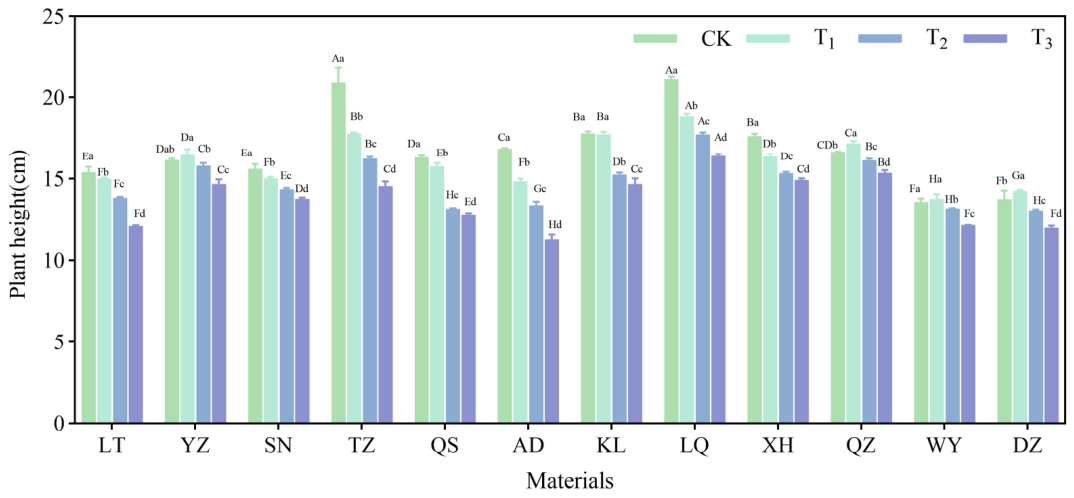
Figure 2.
Effect of drought stress on the Leaf length of 11 wild Poa pratensis L. germplasms(Notes: Same as Figure 1).
Figure 2.
Effect of drought stress on the Leaf length of 11 wild Poa pratensis L. germplasms(Notes: Same as Figure 1).
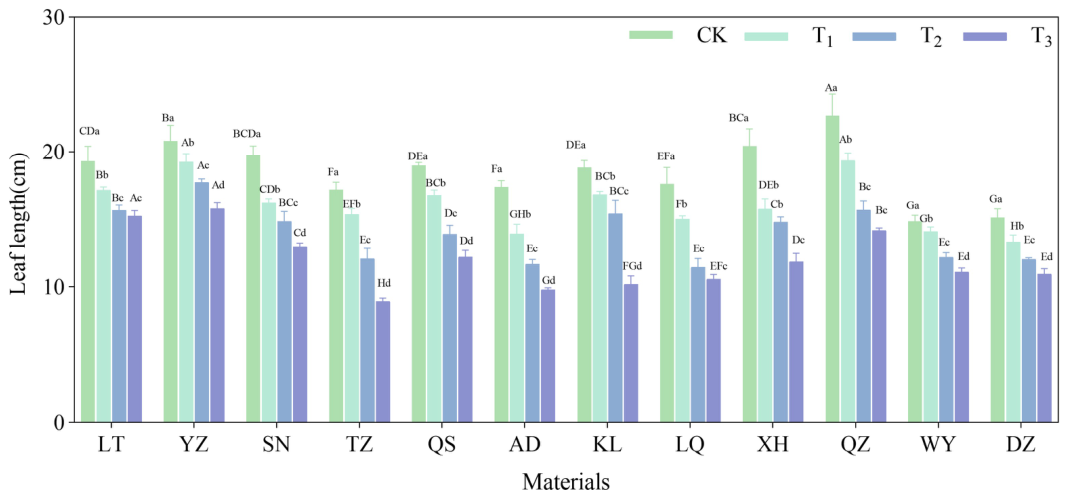
Figure 3.
Effect of drought stress on the Leaf width of 11 wild Poa pratensis L. germplasms (Notes: Same as Figure 1).
Figure 3.
Effect of drought stress on the Leaf width of 11 wild Poa pratensis L. germplasms (Notes: Same as Figure 1).
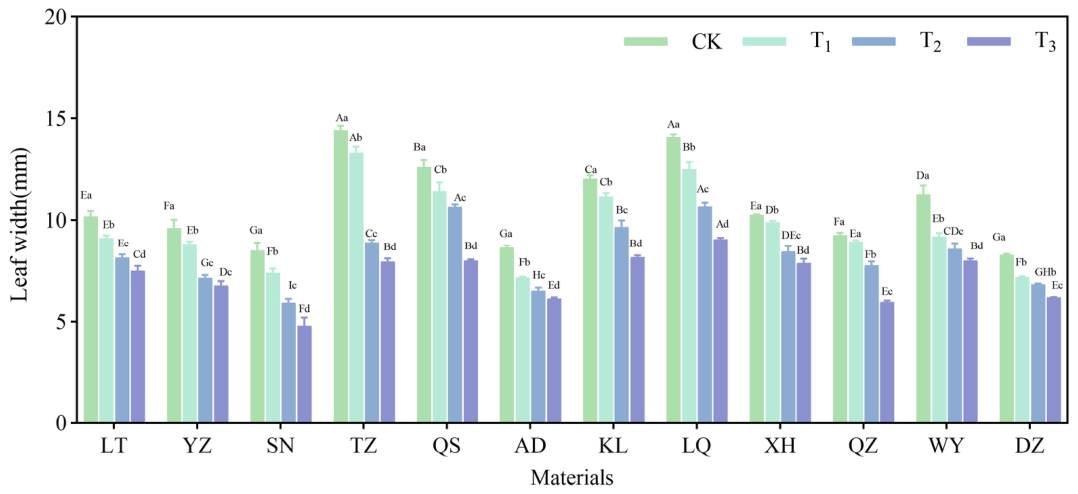
Figure 4.
Effect of drought stress on the Number of tiller per plant of 11 wild Poa pratensis L. Germplasms (Notes: Same as Figure 1).
Figure 4.
Effect of drought stress on the Number of tiller per plant of 11 wild Poa pratensis L. Germplasms (Notes: Same as Figure 1).
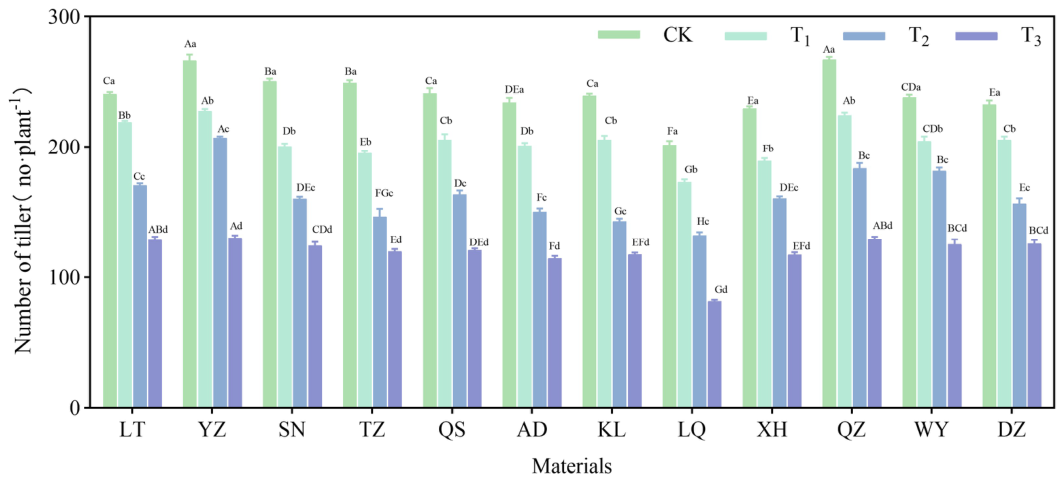
Figure 5.
Effect of drought stress on the rhizome maximum expansion distance of 11 wild Poa pratensis L. germplasms(Notes: Same as Figure 1).
Figure 5.
Effect of drought stress on the rhizome maximum expansion distance of 11 wild Poa pratensis L. germplasms(Notes: Same as Figure 1).
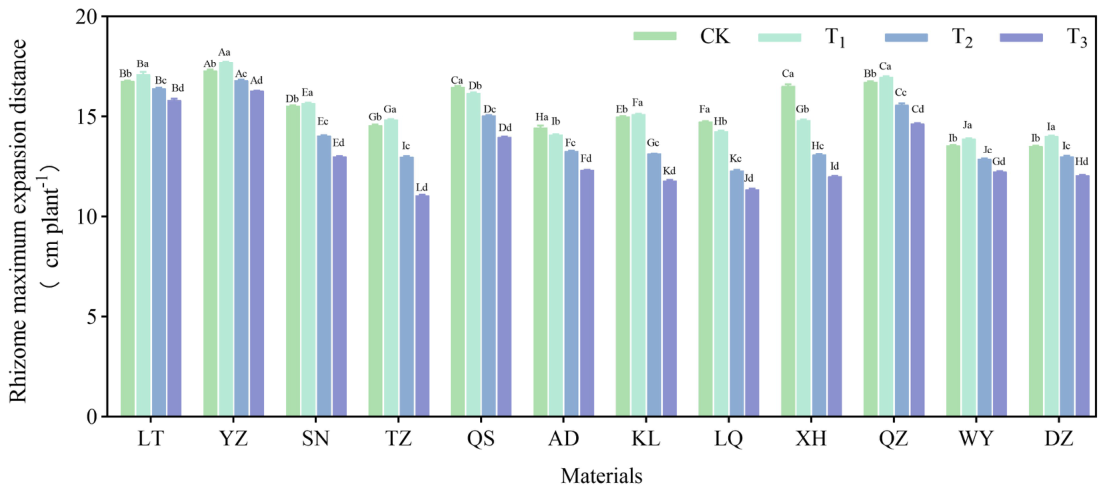
Figure 6.
Effect of drought stress on the coverage area of 11 wild Poa pratensis L. germplasms(Notes: Same as Figure 1).
Figure 6.
Effect of drought stress on the coverage area of 11 wild Poa pratensis L. germplasms(Notes: Same as Figure 1).
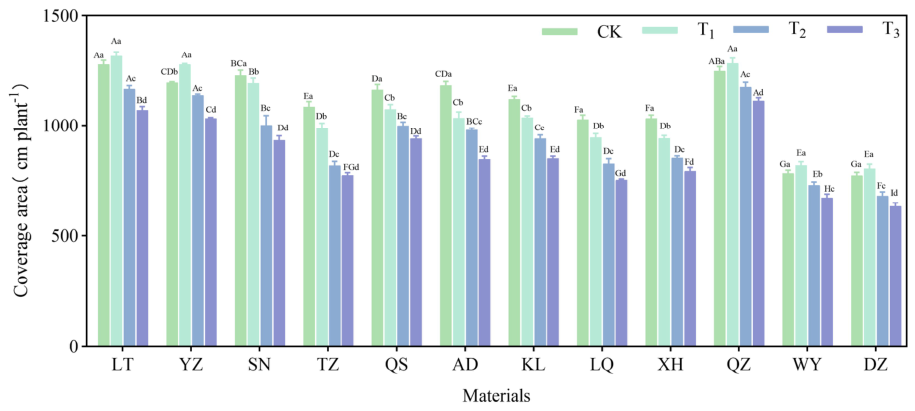
Figure 7.
Effect of drought stress on the number of rhizomes of 11 wild Poa pratensis L. germplasms (Notes: Same as Figure 1).
Figure 7.
Effect of drought stress on the number of rhizomes of 11 wild Poa pratensis L. germplasms (Notes: Same as Figure 1).
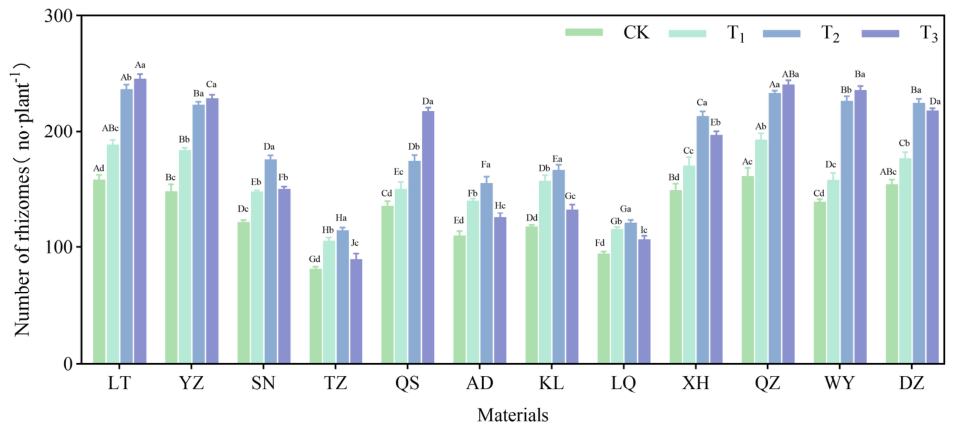
Figure 8.
Effect of drought stress on the stem internode length of 11 wild Poa pratensis L. germplasms(Notes: Same as Figure 1).
Figure 8.
Effect of drought stress on the stem internode length of 11 wild Poa pratensis L. germplasms(Notes: Same as Figure 1).
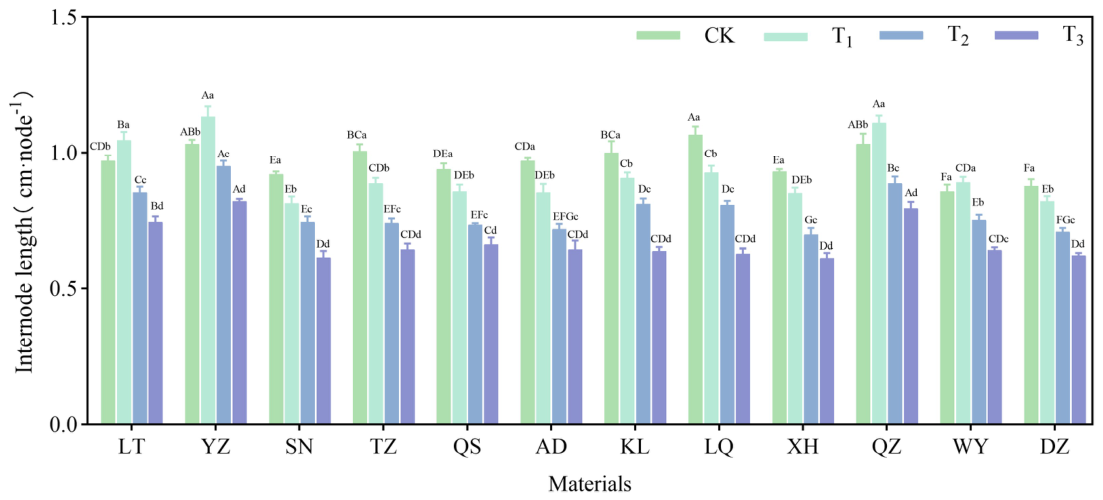
Figure 9.
Effect of drought stress on the rhizome volume of 11 wild Poa pratensis L. germplasms(Notes: Same as Figure 1).
Figure 9.
Effect of drought stress on the rhizome volume of 11 wild Poa pratensis L. germplasms(Notes: Same as Figure 1).
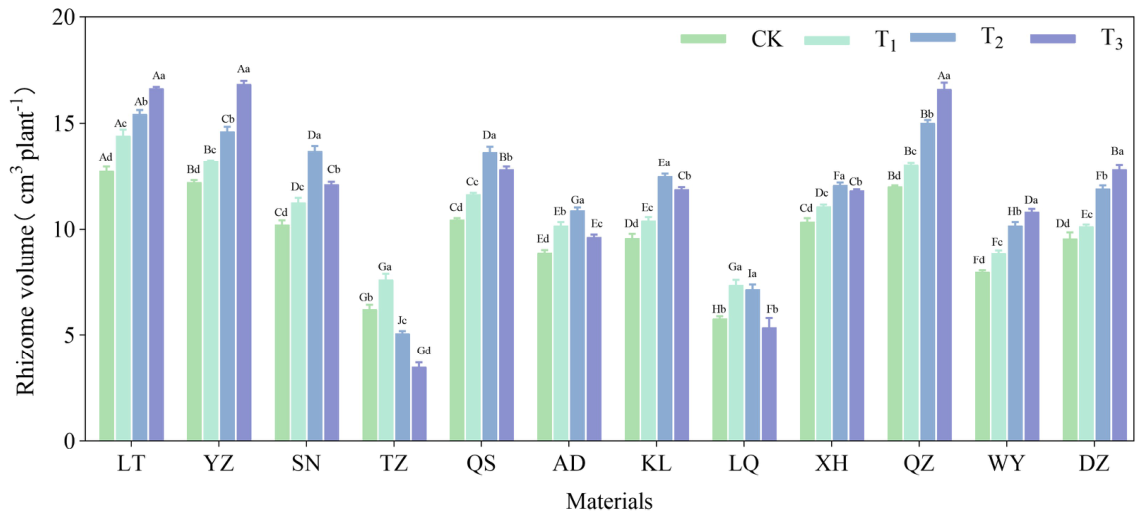
Figure 10.
Effect of drought stress on the rhizome diameter of 11 wild Poa pratensis L. germplasms(Notes: Same as Figure 1).
Figure 10.
Effect of drought stress on the rhizome diameter of 11 wild Poa pratensis L. germplasms(Notes: Same as Figure 1).
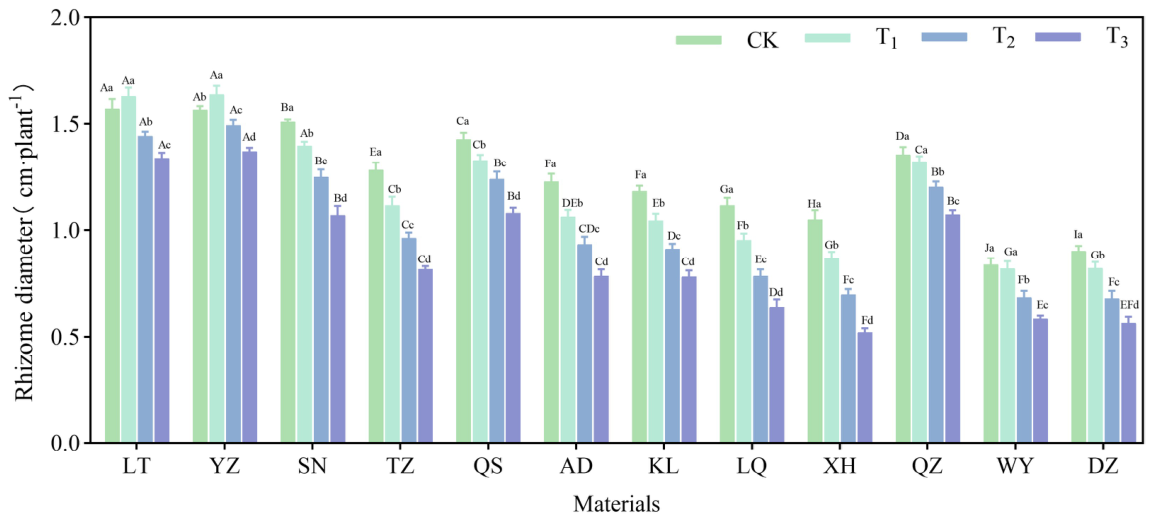
Figure 11.
Effect of drought stress on the rhizome diameter of 11 wild Poa pratensis L. germplasms (Notes: Same as Figure 1).
Figure 11.
Effect of drought stress on the rhizome diameter of 11 wild Poa pratensis L. germplasms (Notes: Same as Figure 1).
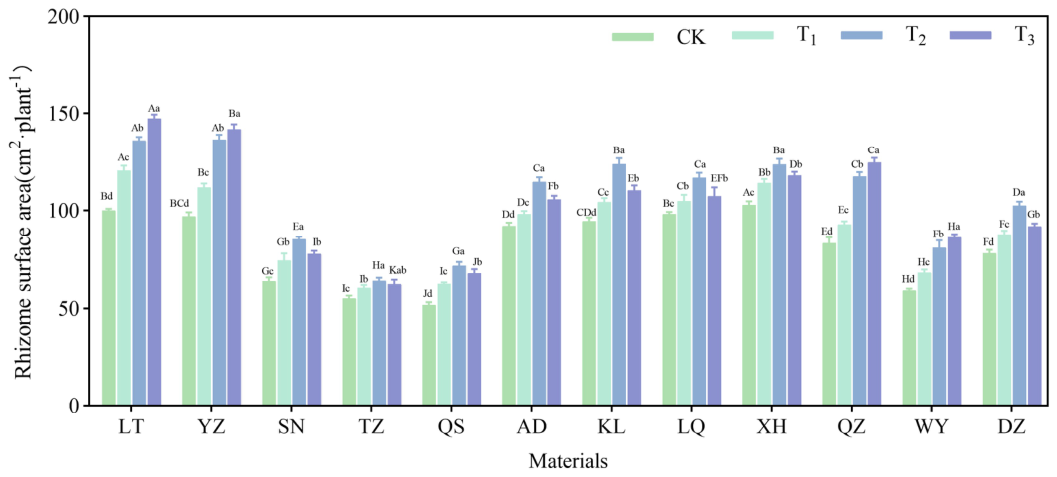
Figure 12.
Changes in leaf endogenous growth-related hormone contents of 11 tested Poa pratensis L. accessions under drought stress.Note: Figure 12A: IAA, indole-3-acetic acid; Figure 12B: ABA, abscisic acid; Figure 12C: CTK, cytokinin; Figure 12D: GA, gibberellin; Figure 12E: JA, jasmonic acid.
Figure 12.
Changes in leaf endogenous growth-related hormone contents of 11 tested Poa pratensis L. accessions under drought stress.Note: Figure 12A: IAA, indole-3-acetic acid; Figure 12B: ABA, abscisic acid; Figure 12C: CTK, cytokinin; Figure 12D: GA, gibberellin; Figure 12E: JA, jasmonic acid.
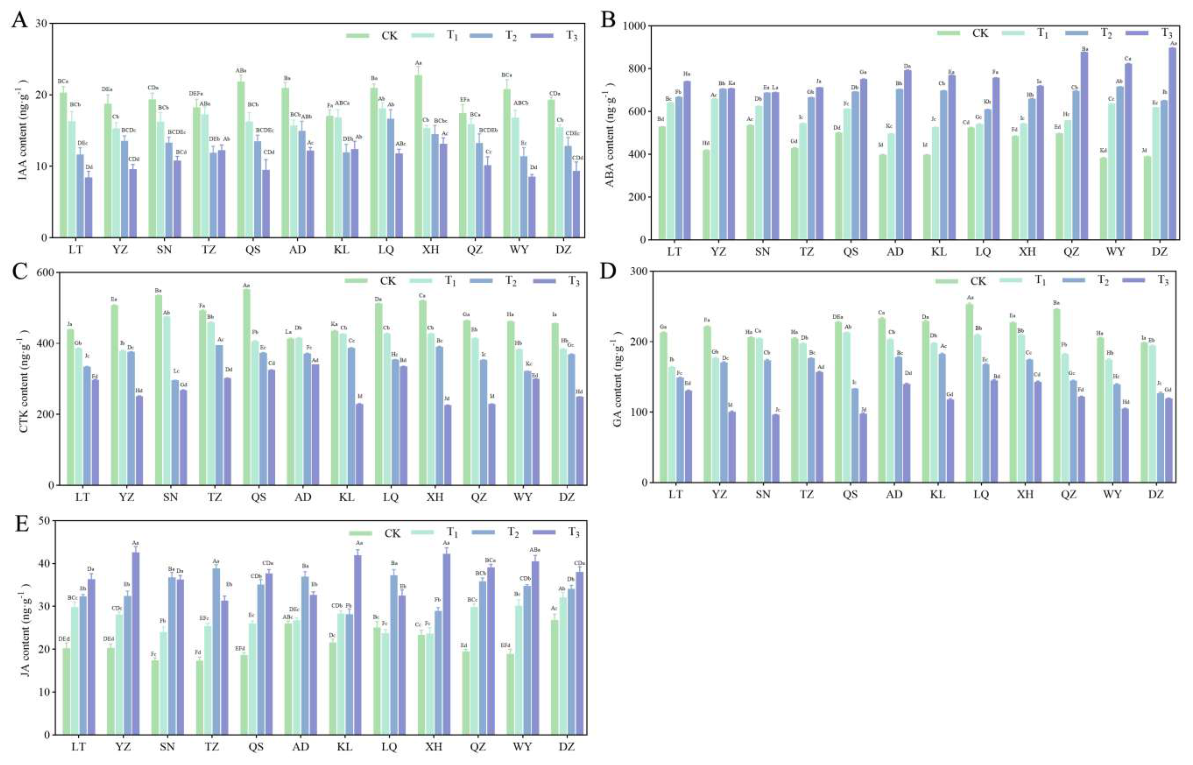
Figure 13.
Spearman correlation heatmap among morphological and rhizome expansion indices of the tested Poa pratensis L. accessions.Note: The color blocks represent Spearman’s correlation coefficient *r*. Red indicates positive correlations and blue indicates negative correlations. The connecting lines denote Mantel test results: red lines show significant positive correlations and blue lines show significant negative correlations. Solid lines correspond to (P<0.05), and dashed lines correspond to(P≥0.05). The line thickness represents the magnitude of the absolute value of the Mantel correlation coefficient.
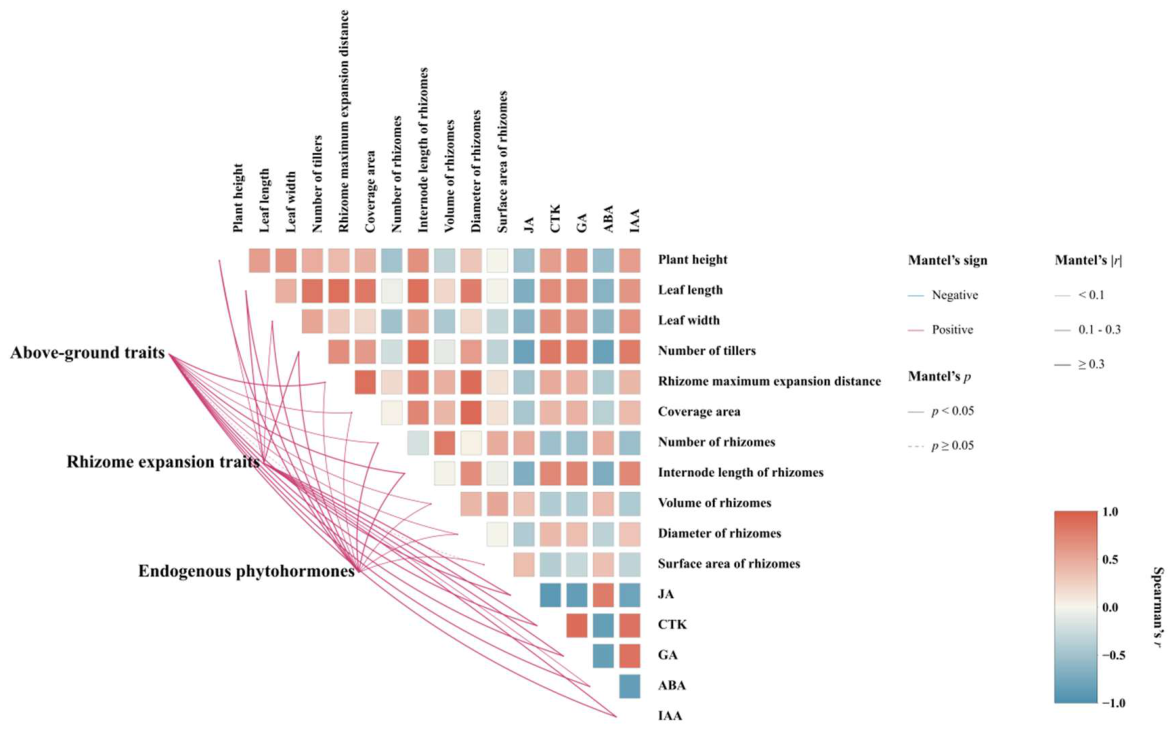
Figure 14.
Hierarchical clustering heatmap of morphological and rhizome expansion traits of the tested Poa pratensis L. accessions.Rows correspond to different germplasm accessions, and the right-side color bar indicates drought gradients. Columns cover endogenous phytohormones (JA, ABA, IAA, GA, CTK) and morphological traits associated with rhizomes, tillers and leaves. Red represents values above the overall mean, and blue represents values below the overall mean; darker color indicates a larger deviation from the mean. Hierarchical clustering dendrograms are shown at the top and left.
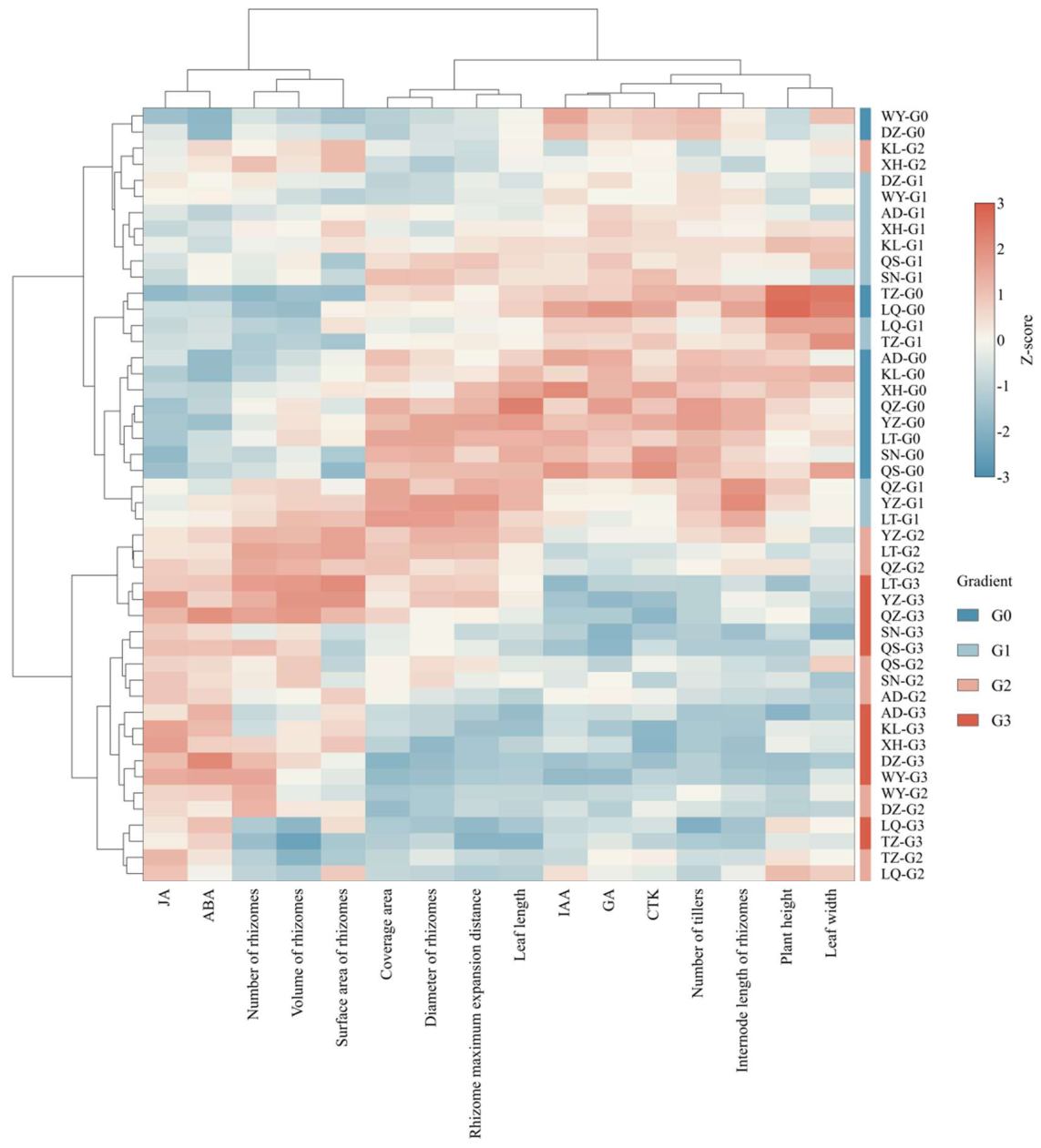

Table 1.
Information of tested Poa pratensis L. materials.
| Code | MaterialName | Colectionsite | Alttude(m) | Habitat |
| QS | Poapratensis(Qingshui) | (QingshuiGansu) | 1501 | Valley |
| LQ | Poapratensis(Luqu) | (LuquGansu) | 3140 | Alpinemeadow |
| WY | Poapratensis(Weiyuan) | (WeiyuanGansu) | 2080 | Roadsid |
| SN | Poapratensis(Sunan) | (SunanGansu) | 2950 | Alpinegrasslands |
| XH | Poapratensis(Xihe) | (XiheGansu) | 1250 | Slope |
| QZ | Poapratensis(Qinzhou) | (QinzhouGansu) | 1723 | Valley |
| TZ | Poapratensis(Tianzhu) | (TianzhuGansu) | 2950 | Alpinemeadow |
| LT | Poapratensis(Lingtai) | (LingtaiGansu) | 1227 | Canalside |
| AD | Poapratensis(Anding) | (AndingGansu) | 2035 | Slope |
| YZ | Poapratensis(Yuzhong) | (YuzhongGansu) | 1965 | Ditch |
| KL | Poapratensis(Kangle) | (KangleGansu) | 2000 | Roadside |
| WY | Poapratensis(Midnight) | (bailvcompanies) |
Note: QS, LQ, WY, SN, XH, QZ, TZ, LT, AD, YZ and KL represent wild Poa pratensis L. accessions collected from Qingshui, Luqu, Weiyuan, Sunan, Xihe, Qinzhou, Tianzhu, Lingtai, Anding, Xinglong Mountain of Yuzhong and Kangle in Gansu Province, respectively. DZ indicates the cultivated control cultivar Midnight.
Disclaimer/Publisher’s Note: The statements, opinions and data contained in all publications are solely those of the individual author(s) and contributor(s) and not of MDPI and/or the editor(s). MDPI and/or the editor(s) disclaim responsibility for any injury to people or property resulting from any ideas, methods, instructions or products referred to in the content. |
© 2026 by the authors. Licensee MDPI, Basel, Switzerland. This article is an open access article distributed under the terms and conditions of the Creative Commons Attribution (CC BY) license (http://creativecommons.org/licenses/by/4.0/).
Copyright: This open access article is published under a Creative Commons CC BY 4.0 license, which permit the free download, distribution, and reuse, provided that the author and preprint are cited in any reuse.