

Submitted:
06 November 2026
Posted:
09 November 2026
You are already at the latest version
Abstract
Postharvest fungal decay and physiological deterioration are major causes of citrus fruit losses during storage and distribution. This study evaluated selected postharvest management strategies for maintaining fruit quality and controlling fungal decay in ‘Maltaise’ and ‘Valencia Late’ oranges in two separate experiments conducted during winter and late spring to early summer, respectively, under contrasting storage conditions. Treatments included Scholar® (fludioxonil), clove and cinnamon essential oils (EOs), chitosan, ammonium bicarbonate, and Polyversum®, with distilled-water-treated and untreated fruit serving as controls. ‘Maltaise’ oranges were stored at 5 °C for 35 days followed by 7 days at approximately 18 °C, whereas ‘Valencia Late’ oranges were stored at 5 °C for 58 days followed by 24 days at 26–31 °C. Fruit deterioration was evaluated through weight loss, decay incidence, McKinney’s disease severity index, and a composite loss index (CLI), complemented by principal component analysis (PCA) and hierarchical cluster analysis (HCA). In ‘Maltaise’, Scholar® provided the strongest protection during cold storage, with decay incidence and disease severity index both at 0.7%, and maintained relatively low decay incidence (5.3%) during subsequent shelf life. In contrast, decay incidence reached 19.3% with clove EO, 20.7% with Polyversum®, and 22.0% in distilled-water-treated fruit. Polyversum® also produced an undesirable white, powdery residue on the peel. In ‘Valencia Late’, weight loss after cold storage ranged from 4.3% in distilled-water-treated fruit to 11.4% in combined-treatment groups, while decay incidence remained low (0–6.7%). Acidification of chitosan with acetic acid and its combination with clove EO provided no additional protection compared with the individual treatment. The relative performance of clove and cinnamon EOs differed between experimental conditions, indicating that their effectiveness was context-dependent. Notably, untreated fruit exhibited satisfactory overall quality and performed similarly to or better than Scholar® in the CLI assessments, highlighting the importance of initial fruit selection. PCA and HCA further revealed distinct deterioration profiles associated with treatment and storage combinations. Overall, the findings support an integrated, preventive approach to citrus postharvest management, prioritizing careful pre-storage sorting and appropriate storage conditions, with additional treatments applied selectively according to decay risk and storage requirements. This strategy could help maintain fruit quality while reducing unnecessary postharvest inputs.
Keywords:
citrus fruit
; postharvest decay
; disease management
; cold storage
; essential oils
; Penicillium digitatum
; Penicillium italicum
1. Introduction
Postharvest losses and food waste of horticultural produce remain major global challenges, compromising food security and undermining the sustainability of food supply chains. Reducing these losses is essential to improving the efficiency of agricultural resource use, ensuring the availability of nutritious food, and meeting the needs of a growing global population. These objectives are consistent with the United Nations Sustainable Development Goals and the European Union’s Farm to Fork Strategy, developed within the framework of the European Green Deal, which emphasize sustainable food systems, healthier diets, and the prevention of food loss and waste [1]
Effective postharvest management is essential for maintaining citrus fruit quality, controlling fungal decay, and extending marketability. Although synthetic fungicides have traditionally played a major role in postharvest disease control, concerns about chemical residues, pathogen resistance, and potential environmental and human health risks have stimulated interest in more sustainable alternatives. Accordingly, ecologically compatible treatments, including essential oils and salts generally recognized as safe (GRAS), have attracted increasing attention as components of integrated postharvest disease management strategies.
Previous studies have demonstrated the antifungal potential of selected essential oils and GRAS salts against postharvest pathogens, particularly under in vitro conditions or at specific storage temperatures [2,3]. The major causes of citrus postharvest decay include Penicillium digitatum and P. italicum, responsible for green and blue mould, respectively, as well as Botrytis cinerea (grey mould) and, to a lesser extent, Alternaria alternata. The epidemiology of P. digitatum and P. italicum is influenced by volatile compounds released from wounded peel tissues of different citrus cultivars [4]. Furthermore, volatile organic compounds released by green mould-infected citrus fruit have been associated with accelerated deterioration of neighbouring fruit [5,6]. These findings highlight the importance of limiting fungal decay and maintaining fruit integrity throughout storage and distribution. However, identifying promising treatments is not sufficient to establish their practical value, as treatment efficacy may vary with storage conditions, cultivar susceptibility, and harvest season.
Storage temperature and duration are major determinants of fruit physiology and postharvest quality, influencing respiration, firmness, water loss, fungal decay, and physiological disorders. Cold storage generally delays deterioration by slowing metabolic activity and pathogen development. Nevertheless, its effectiveness depends on the temperature regime, storage duration, and susceptibility of the fruit to chilling injury and other physiological disorders [7]. Consequently, storage conditions must be adapted to the requirements of individual cultivars to balance decay control with the preservation of fruit quality. Under commercial conditions in Tunisia, citrus fruit is commonly stored at relatively low temperatures, typically around 2-6 °C, depending on the cultivar, available infrastructure, and storage practices, before being transferred to ambient temperatures for retail marketing. This transition from cold storage to ambient shelf life may alter the rate of fruit deterioration and the effectiveness of postharvest treatments. In addition, cultivar characteristics, maturity at harvest, and environmental conditions during fruit development and harvest may influence fruit quality and susceptibility to fungal infection [8]. Evaluating treatment performance across storage and shelf life conditions is therefore essential for determining whether disease control is maintained after cold-stored fruit is transferred to ambient temperatures.
Oranges (Citrus sinensis (L.) Osbeck) are economically important throughout the Mediterranean region, providing valuable nutrients, including vitamin C, phenolic compounds, carotenoids, and dietary fibre, while supporting fresh fruit markets and processing industries. In Tunisia, citrus production has considerable socioeconomic importance, particularly in the Cap Bon region. Among the locally cultivated cultivars, ‘Maltaise’ and ‘Valencia Late’ are particularly relevant because of their contrasting harvest periods. ‘Maltaise’ is generally harvested between January and March, whereas ‘Valencia Late’ is harvested later, from April to June. These contrasting harvest periods expose the fruit to different environmental conditions during maturation and harvest, potentially influencing physiological status, fungal susceptibility, and responses to postharvest treatments. Comparing these cultivars under their respective harvest conditions can therefore help determine whether postharvest management strategies perform consistently across cultivars and seasons. However, differences between cultivars harvested at different times may reflect the combined effects of cultivar characteristics and seasonal conditions rather than either factor independently.
Despite growing interest in alternative postharvest treatments, their effectiveness under practical storage and marketing conditions remains dependent on the interaction between treatment, temperature, cultivar, and harvest season. An additional consideration is the timing of treatment application. Treatments applied before cold storage may provide protection during storage and subsequent shelf life, whereas applications at the beginning of shelf life may help manage decay as fruit returns to ambient temperatures. Sequential applications combining these two stages could therefore offer an alternative management strategy, but their added value over pre-storage treatments needs to be established experimentally. In particular, it remains important to determine whether additional treatments after cold storage provide measurable benefits in decay control and fruit quality during shelf life, and whether these effects differ between cultivars harvested in contrasting seasons.
The present study investigated the performance of selected postharvest management strategies for controlling fungal decay and maintaining the quality of ‘Maltaise’ and ‘Valencia Late’ oranges during cold storage at 5 °C and subsequent ambient shelf life. The specific objectives were (i) to assess changes in visual fruit quality and fungal decay during cold storage and subsequent shelf life in the two cultivars; (ii) to evaluate the effectiveness of different postharvest treatments applied before cold storage; (iii) to compare the efficacy of sequential treatment strategies involving applications before and after cold storage during shelf life; and (iv) to examine differences in treatment performance between cultivars harvested in contrasting seasons. Ultimately, this study aims to identify practical and sustainable approaches to reducing postharvest citrus losses and improving disease management throughout the cold chain and subsequent retail shelf life.
2. Materials and Methods
2.1. Fruit Samples
‘Maltaise’ oranges were provided by SODEA, a commercial packinghouse specializing in the cold storage and distribution of fresh and packaged fruit and vegetables, located in Khelidia, approximately 25 km from Tunis, Tunisia. The fruits were harvested on 22 February 2024 from the company’s own orchard, transported directly to the packinghouse, and used immediately upon arrival for the experiments. Their freshness was indicated by the presence of fully green leaves attached to the fruit stalks, and no visible signs of postharvest treatment or waxing were observed.
‘Valencia Late’ oranges were purchased on 7 May 2024 from the wholesale fruit and vegetable market in Bir Kassaa, Tunisia. The fruits originated from the Mabrouka farm and had been harvested one day before purchase. The presence of green leaves attached to many of the fruits also indicated their recent harvest.
Both cultivars were carefully sorted, and only fruits free from visible external defects or injuries were selected for the experiments. The two cultivars were obtained during their respective commercial harvest periods in Tunisia: ‘Maltaise’ in February, within the main winter harvest season, and ‘Valencia Late’ in May, during the late-season availability of this cultivar. Consequently, the experiments involved fruit harvested at different times of the year and under different seasonal conditions.
Fruit treatments
After sorting, ‘Maltaise’ oranges were randomly distributed among plastic crates, each containing 50 fruits and representing one replicate. Each treatment consisted of three replicate crates, giving a total of 150 fruits per treatment. Individual batches of oranges were treated separately with the solutions listed in Table 1, excluding the two mixture treatments, which were prepared according to the specific procedures described below. Each treatment solution was prepared in 1 L of distilled water and applied using a manual sprayer with a 2-L capacity. The solution was sprayed uniformly over the fruits in the three replicate crates, which were continuously turned during application to ensure adequate and homogeneous coverage. The entire 1-L volume prepared for each treatment was applied in a single application to the corresponding batch of 150 fruits. Following treatment, the fruits were allowed to dry overnight before being transferred to the cold-storage chamber.
For each treatment, the three replicate crates were randomly positioned within the commercial cold-storage chamber at the SODEA company and stored at 5 ± 1 °C for 35 days. At the end of cold storage, on 29 April 2024, the fruits were transferred to ambient conditions (around 18°C) for a further 7 days to evaluate post-storage decay development and shelf-life performance.
The treatment solutions were prepared as follows. For Chitoplant®, chitosan powder was mixed with distilled water at 1,000 rpm for 30 min using a Biobase OS20-S laboratory stirrer. The preparation was covered with aluminium foil and then left at ambient temperature for 2 days to obtain a homogeneous solution, which was gently shaken immediately before use. For the chitosan–clove EO mixture, clove EO and Tween 20 were added to the previously prepared chitosan solution shortly before application, followed by mixing at 1,000 rpm for 30 min. For the chitosan–acetic acid mixture, chitosan and acetic acid were mixed at 1,000 rpm overnight. Tween 20 was then added, and the resulting preparation was mixed at 1,000 rpm for a further 30 min immediately before application. For the cinnamon and clove EO treatments, the respective EO was combined with Tween 20 and mixed at 1,000 rpm for 30 min immediately before use. Scholar and ammonium bicarbonate solutions were prepared shortly before treatment and gently shaken by hand to ensure homogeneity.
In parallel, two experiments with ‘Valencia Late’ oranges were conducted in the laboratory in May 2024. One experiment was performed under cold-storage conditions (5 ± 1 °C), while the other was conducted under ambient laboratory conditions (20 ± 2 °C). Before treatment, the fruits were sorted, and only those without visible defects were selected. The selected fruits were then treated following the same procedure described for ‘Maltaise’ oranges.
Nine treatments were evaluated in each experiment, corresponding to the treatments listed in Table 1, excluding Polyversum®. Each treatment comprised 75 fruits distributed among three replicate plastic crates, with 25 fruits per crate. Following treatment, the fruits were maintained under their respective storage conditions for up to 58 days before evaluation.
Only the ‘Valencia Late’ experiment conducted at 5 ± 1 °C included a subsequent shelf-life assessment. After 58 days of cold storage, the fruits were transferred to ambient conditions representative of summer temperatures (26-31 °C) for 24 days. In addition, selected treatment groups were subjected to sequential applications, in which a second treatment was applied immediately after cold storage, before the shelf-life period. For this purpose, the fruits initially treated with chitosan, clove EO, cinnamon EO, or the chitosan–clove EO mixture were each divided into two sub lots. One sub lot received an additional treatment, whereas the other remained untreated after cold storage and served as the corresponding control. The sequential-treatment combinations and the number of fruits allocated to each sub lot are presented in Table 2 a, b. Following the additional applications, all fruits, including those that received no second treatment, were transferred to ambient laboratory conditions (26-31 °C) and maintained for a further 24 days to assess fruit decay during shelf life (Figure 1).

Table 2 a.
Protocol for sequential treatment of ‘Valencia Late’ oranges immediately after 58 days of cold storage.
Each group initially receiving a specified treatment was divided into two sub lots: one received an additional
treatment, while the other remained untreated. All sub lots were subsequently evaluated after 24 days of shelf
life under ambient conditions.
|
Initial treatment before cold storage |
Sub lots after cold storage |
| Chitosan | Clove EO (13 fruits per replicate, CH/CL EO) and untreated control (12 fruits per replicate, CH/-) |
| Clove EO | Chitosan (13 fruits per replicate, CL EO/CH) and untreated control (12 fruits per replicate, CL EO/-) |
| Cinnamon EO | Clove EO (12 fruits per replicate, CIN EO/CL EO ) and untreated control (11–12 fruits per replicate, CIN EO) |
| Chitosan + Clove EO | Cinnamon EO (12 fruits per replicate, CH+CL EO/CIN EO) and untreated control (11–12 fruits per replicate, CH+CL EO/-) |
| No treatment | The entire lot was conserved without additional treatment (NT/-), as general control |
Table 2 b.
Sequential postharvest treatment schedule.
| Treatment | Before cold storage | Beginning of shelf life |
| NT/− | Untreated | No application |
| CL EO/− | Clove essential oil | No application |
| CIN EO/− | Cinnamon essential oil | No application |
| CH/− | Chitosan | No application |
| CH+CL EO/− | Chitosan + clove EO | No application |
| CL EO/CH | Clove EO | Chitosan |
| CH/CL EO | Chitosan | Clove EO |
| CIN EO/CL EO | Cinnamon EO | Clove EO |
| CH+CL EO/CIN EO | Chitosan + clove EO | Cinnamon EO |
2.1. Measured Parameters
The procedures used to assess the measured parameters were based on those described in our previous study [9], with slight modifications to accommodate the experimental conditions and characteristics of citrus fruit, as detailed below.
Disease incidence (DI) was determined as the percentage of decayed fruits after storage and during the subsequent shelf-life period. For both cold and ambient storage, DI (%) was calculated as follows: DI(% )=(Ns/N)×100. For shelf life, DI (%) was calculated as: DI(%)=[Nsl/(N−Ns)]×100, where Ns is the number of infected fruits detected after storage, Nsl is the number of newly infected fruits detected during the respective shelf-life period, and N is the initial number of fruits. Fruits were considered infected even when rot symptoms were minimal (i.e., lesions smaller than 1 mm in diameter). The shelf-life equation therefore expresses the percentage of fruits that remained healthy after storage and subsequently developed visible decay symptoms, rather than cumulative disease incidence.
Disease severity was assessed using an empirical 0–5 rating scale based on the percentage of fruit surface covered by fungal mycelia. The scale was defined as follows: 0 = healthy fruit; 1 = 1–20 %; 2 = 21– 40 %; 3 = 41– 60 %; 4 = 61–80%; and 5 = ≥ 81% of the fruit rind covered by fungal mycelia. This scale was adapted from McKinney [10], with slight modifications according to Romanazzi et al. [11]. McKinney’s disease index (MI) was calculated using the following formula: MI (%) = [(sum of all numerical ratings) / (total number of tested fruits × 5)] × 100, higher MI values indicate greater overall disease severity within the assessed fruit population.
Weight loss (WL) was calculated as a percentage using the following formula: WL (%) = [(Pi − Ps)/Pi] × 100, for cold storage or storage in ambient conditions (35 or 58 days). For shelf life after the storage, WL (%) = [(Ps − Psl)/Ps] × 100, where Pi is the initial weight before storage, Ps is the weight determined immediately after a particular storage (35 or 58 days), and Psl is the weight determined after a particular shelf life (7 or 24 days).
The composite loss index (CLI) was calculated as described by Allagui and Ben Amara [9], integrating weight loss (WL), disease incidence (DI), and McKinney’s disease index (MI) using the following equation: CLI(%)=(0.4×WL)+(0.2×DI)+(0.4×MI). The weighting factors and calculation procedure were identical to those used in the previously published study. Higher CLI values indicate greater overall postharvest deterioration, whereas lower values indicate better fruit preservation.
2.2. Statistical Analysis
Data were subjected to analysis of variance (ANOVA) using IBM SPSS Statistics software, version 20 (IBM Corp., Armonk, NY, USA). When the ANOVA showed a significant effect, mean differences were separated using Tukey’s test at p ≤ 0.05. Results are presented as means ± standard error (SE).
To explore the multivariate structure of the data, principal component analysis (PCA) and hierarchical cluster analysis (HCA) with a heatmap representation were performed as exploratory techniques to detect groups among treatments. The analyses were run with ClustVis, a web tool for visualizing the clustering of multivariate data using PCA and customizable heatmaps [12]. Prior to PCA and HCA, variables were scaled (unit variance scaling) and centered. ClustVis applies unit variance scaling by SVD with imputation and the clustering linkage with average based on Euclidean distance [13]
3. Results
3.1. Effectiveness of Ecological Treatments in Preserving ‘Maltaise’ Fruit during Cold Storage and Shelf Life
- Effects after cold storage
After 35 days of cold storage at 5 °C, decay incidence was lowest in Scholar®-treated fruit (0.7%), followed by clove essential oil (EO)-treated fruit (2.7%) and the untreated control (3.3%) (Table 3). Scholar® also maintained the lowest McKinney’s disease index (0.7%), although differences in this parameter were not statistically significant among treatments. Chitosan and ammonium bicarbonate resulted in decay incidences of 7.3%, with corresponding disease severity of 4.9% and 4.0%, respectively. Polyversum® showed a decay incidence of 9.9% and a disease severity of 5.0%. The highest decay incidences were recorded with the distilled-water control and cinnamon EO, at 12.7% and 13.3%, respectively, with corresponding disease indices of 4.9% and 5.9%.
Weight loss also varied significantly among treatments. The lowest numerical values were recorded with clove EO (2.4%) and Scholar® (3.2%), followed by the untreated control (6.1%), ammonium bicarbonate (5.8%), and chitosan (7.2%). These five treatments belonged to the same statistical group, indicating no significant differences in weight loss among them. In contrast, Polyversum®, cinnamon EO, and distilled water resulted in significantly greater weight losses of 17.4%, 18.3%, and 18.5%, respectively.
Overall, Scholar® provided the most consistent control of decay incidence, whereas clove EO combined a low decay incidence with the lowest numerical weight loss. However, the untreated control performed comparably to clove EO in terms of decay incidence and weight loss. Chitosan and ammonium bicarbonate showed intermediate performance in controlling decay, while Polyversum®, cinnamon EO, and distilled water generally performed less favourably. The markedly greater weight loss associated with Polyversum® and cinnamon EO, comparable to that observed with distilled water, further limited their ability to preserve fruit quality during cold storage.
- Residual treatment efficacy during shelf life
Following transfer to ambient conditions at approximately 18 °C for 7 days, weight loss and decay incidence generally increased, although the extent of deterioration varied among treatments (Table 3). Scholar® maintained the lowest numerical values for all three parameters, with a weight loss of 3.7%, a decay incidence of 5.3%, and a McKinney’s disease index of 2.0%. Its low weight loss and disease index were significantly different from those recorded with the distilled-water control and Polyversum® in the corresponding statistical comparisons, although its decay incidence was significantly lower only than that of the distilled-water control. These findings indicate that Scholar® provided the most consistent protection across cold storage and subsequent shelf life.
In contrast, the favourable performance of clove EO during cold storage was not sustained after transfer to ambient conditions. Decay incidence increased from 2.7% to 19.3%, McKinney’s disease index rose from 0.7% to 11.7%, and weight loss reached 25.2%. Cinnamon EO and Polyversum® also performed poorly during shelf life, with decay incidences of 17.3% and 20.7%, disease indices of 11.5% and 14.5%, and weight losses of 25.9% for both treatments. The distilled-water control showed the highest decay incidence (22.0%) and weight loss (28.4%), together with a disease index of 13.6%. For weight loss, these four treatments belonged to overlapping statistical groups, indicating that their differences were not consistently significant. Notably, the high weight losses associated with cinnamon EO and Polyversum® were already evident after cold storage and persisted during shelf life.
Chitosan, ammonium bicarbonate, and the untreated control showed intermediate responses. Decay incidence was 13.3% with chitosan, 15.3% with ammonium bicarbonate, and 10.7% in the untreated control. Their corresponding McKinney’s disease index were 6.1%, 8.3%, and 7.1%, while weight losses reached 15.6%, 13.7%, and 19.1%, respectively. Chitosan and ammonium bicarbonate maintained lower numerical weight losses than the untreated control, although their statistical groupings indicate that these differences were not significant. Similarly, their decay incidences and disease index were not significantly different from those of most other treatments, except where the statistical groupings indicated otherwise.
Statistical analysis confirmed significant treatment effects on weight loss, decay incidence, and McKinney’s disease index during shelf life. However, the superscript groupings in Table 3 indicate that significant differences were concentrated in specific comparisons rather than occurring uniformly among treatments. Scholar® generally showed the most favourable overall response, particularly in terms of weight loss and disease severity, whereas the distilled-water control performed least favourably for weight loss and decay incidence. Polyversum® also showed a significantly higher disease index than Scholar®, while the remaining treatments frequently occupied overlapping statistical groups.
Taken together, these results highlight the importance of assessing postharvest treatment efficacy beyond the cold-storage period. Although clove EO performed favourably during refrigeration, its protective effect was not sustained during subsequent shelf life. Scholar® showed the most consistent performance across both storage phases, while chitosan and ammonium bicarbonate provided intermediate results. The high weight losses observed with Polyversum®, cinnamon EO, and distilled water further suggest that their effectiveness in preserving fruit quality under the conditions tested was limited.
Note: Shelf-life parameters, including decay incidence and McKinney’s disease index, were assessed only on fruits that remained sound after cold storage. Fruits that decayed during the cold storage period were excluded from the shelf-life evaluation. Abbreviations: NT: not treated, DW: distilled water, SCH: ‘Scholar®’, CL EO: clove bud Essential Oil, CIN EO cinnamon bark essential oil, CH: chitosan, AMB: the GRAS salt ammonium bicarbonate, PL: ‘Polyversum®’.
- Composite loss index
After 35 days of cold storage at 5 °C, Scholar® and clove essential oil (EO) exhibited the lowest composite loss index (CLI) values, at 1.7% and 1.8%, respectively (Figure 2). The untreated control, ammonium bicarbonate, and chitosan showed intermediate CLI values, ranging from 3.6% to 5.3%, with no significant differences from Scholar® or clove EO. In contrast, cinnamon EO, Polyversum®, and the distilled-water control exhibited the highest CLI values, ranging from 10.7% to 12.3%, indicating comparatively poorer overall performance.
Following a further 7 days of shelf life at approximately 18 °C, Scholar® maintained the lowest CLI (3.3%). Its value was significantly lower than those of clove EO, cinnamon EO, Polyversum®, and the distilled-water control, but did not differ significantly from the untreated control, ammonium bicarbonate, or chitosan. The latter three treatments showed intermediate CLI values, whereas clove EO, cinnamon EO, Polyversum®, and distilled water exhibited higher values, ranging from 18.6% to 21.2%. The pronounced increase in CLI associated with clove EO highlights the lack of sustained protection following transfer to ambient conditions. Overall, the CLI results support the favourable and consistent performance of Scholar® across the two evaluation periods, while demonstrating that the effectiveness of the other treatments varied with storage conditions.
Figure 3 illustrates the extent of fungal decay and the associated fruit losses observed across treatments. It also shows the whitish, powdery residue remaining on the peel of ‘Maltaise’ oranges treated with Polyversum®, which adversely affected their visual appearance and may compromise commercial acceptability.
3.3. Effectiveness of Ecological Treatments for Maintaining ‘Valencia Late’ Fruit Quality during Cold Storage and Shelf Life
- Effect after cold storage
After 58 days of cold storage at 5 °C, weight loss ranged from 4.3% to 11.4%, with significant differences among treatments (Table 4). The lowest weight loss was recorded in the distilled-water control (DW; 4.3%), followed by chitosan (CH; 5.1%), ammonium bicarbonate (AMB; 5.3%), clove EO (5.6%), and the untreated control (NT; 5.7%). These treatments belonged to the same statistical group. Scholar® (SCH) showed an intermediate response, with a weight loss of 7.5%, whereas the combined treatments CH+clove EO and CH+acetic acid (ACA), together with cinnamon EO (CIN EO), resulted in significantly greater weight losses of 11.4%, 11.4%, and 11.1%, respectively.
Fungal decay remained limited during cold storage. No decay was recorded in fruit treated with DW, CH, or clove EO, or in untreated fruit. The lowest nonzero decay incidence was observed with AMB (1.3%), followed by SCH (2.7%). Higher values were recorded with CH+clove EO and CIN EO (5.3% each), while CH+ACA showed the highest decay incidence (6.7%). According to the statistical groupings, CH+ACA differed significantly from treatments with no detected decay, whereas AMB, SCH, CH+clove EO, and CIN EO showed intermediate responses that were not significantly different from either extreme.
McKinney’s disease index followed a broadly similar pattern, ranging from 0% in DW-, CH-, clove EO-treated, and untreated fruit to 4.5% in CH+ACA-treated fruit. CIN EO also resulted in a relatively high index (3.7%), while SCH and CH+clove EO both showed an index of 1.9%. The highest disease index values, recorded with CH+ACA and CIN EO, belonged to the same statistical group. These treatments differed significantly from those with a disease index of zero, whereas the intermediate responses of SCH and CH+clove EO were not significantly different from either group.
Overall, cold storage at 5 °C limited fungal deterioration across treatments. DW, CH, and clove EO were particularly effective in maintaining fruit free of visible decay, although DW, CH, and clove EO differed in their effects on weight loss and disease severity. The combined treatments and CIN EO were associated with greater weight loss, while CH+ACA also showed the highest decay incidence and disease index. These findings indicate that treatment performance during cold storage depended on the quality parameter considered.
- Residual treatment efficacy during shelf life
Following transfer to shelf-life conditions of 26–31 °C for 24 days, weight loss increased in all treatments, reaching 13.4–26.4% (Table 4). AMB resulted in the lowest weight loss (13.4%), followed by SCH (14.5%), the untreated control (14.6%), DW (14.9%), and clove EO (15.0%). CH+ACA also maintained a relatively low weight loss of 17.1%. These six treatments belonged to the same statistical group. CH+clove EO and CIN EO showed intermediate values of 18.4% and 21.2%, respectively, and were not significantly different from either the lower-weight-loss group or the CH treatment. CH alone resulted in the highest weight loss (26.4%), significantly exceeding that of treatments in the lowest statistical group.
Decay incidence and McKinney’s disease index remained at zero in fruit treated with AMB, clove EO, DW, SCH, and CH+ACA, as well as in the untreated control. In contrast, decay was detected in fruit treated with CH+clove EO and CIN EO, with incidences of 8.3% and 8.7%, respectively. Their corresponding McKinney’s disease indices were 5.0% and 8.7%. However, the overall ANOVA detected no significant treatment effects on either decay incidence (p = 0.328) or McKinney’s disease index (p = 0.374).
These findings indicate that treatment performance during cold storage did not necessarily predict subsequent fruit quality during shelf life. CH alone was associated with substantial weight loss, whereas AMB maintained the lowest weight loss and no recorded decay. SCH and clove EO also maintained fruit free of visible decay throughout the assessment.
- Effect after storage in ambient conditions
Continuous storage at approximately 20 °C for 58 days resulted in substantial weight loss and fungal deterioration (Table 4). Weight loss ranged from 25.8% to 35.3%. The lowest numerical values were recorded with SCH (25.8%), CH+clove EO (26.8%), and CIN EO (27.3%), whereas CH+ACA showed the highest weight loss (35.3%). AMB and CH resulted in weight losses of 28.1% and 28.4%, respectively, while DW, clove EO, and the untreated control showed values of 31.5%, 32.1%, and 32.7%, respectively. However, the overall ANOVA indicated that treatment effects on weight loss were not statistically significant (p = 0.131).
Decay incidence ranged from 4.0% to 17.3%. The lowest values were recorded with SCH and CH+clove EO (4.0% each), followed by CIN EO (6.7%). AMB and CH each showed a decay incidence of 8.0%, while DW and clove EO both reached 10.7%. The untreated control showed 13.3% decay, and CH+ACA had the highest incidence (17.3%). The overall treatment effect on decay incidence was not statistically significant (p = 0.065).
McKinney’s disease index ranged from 1.9% with SCH to 13.6% with CH+ACA. CH+clove EO showed a relatively low index of 2.9%, followed by AMB (4.3%) and CIN EO (4.5%). CH, DW, and the untreated control each showed an index of 5.9%, whereas clove EO resulted in a higher value of 10.1%. The overall ANOVA revealed a significant treatment effect on disease index (p = 0.024). According to the reported statistical groupings, CH+ACA differed significantly from SCH and CH+clove EO, which had the lowest disease indices. The remaining treatments, whose groupings overlapped, could not be distinguished statistically from these treatments or from CH+ACA.
Overall, prolonged storage under ambient conditions resulted in substantial fruit deterioration, although the responses varied numerically among treatments. SCH and CH+clove EO showed the lowest numerical decay incidences and disease indices, whereas CH+ACA showed the highest values for both parameters. However, the statistically significant treatment effect was limited to McKinney’s disease index; differences in weight loss and decay incidence were not statistically significant. Clove EO alone also showed a relatively high disease index, suggesting that its favourable performance during cold storage did not necessarily persist during prolonged ambient storage. These findings highlight the importance of evaluating postharvest treatments under the intended storage conditions and considering multiple quality parameters when assessing their effectiveness.
- Composite loss index after cold storage and shelf life
After 58 days at 5 °C, significant differences were detected among treatments (ANOVA, F = 2.951, p = 0.027) (Figure 4). CH exhibited a relatively low CLI, sharing a statistical grouping with DW, whereas higher values were observed for CH+ACA, CH+CL EO, and CIN EO. This latter exhibited the highest CLI, indicating greater overall losses under cold-storage conditions. These results suggest that the performance of individual treatments varied, with CH alone maintaining a comparatively favourable outcome during refrigeration despite the less favourable results obtained with some treatment combinations.
After the subsequent 24-day shelf-life period at 26–31 °C, significant differences among treatments were also detected (ANOVA, F = 3.304, p = 0.017). The CLI was calculated independently for this period, using weight loss measured relative to the fruit weight at the beginning of shelf life and recording newly developed decay among fruit that had remained free of visible decay at the end of cold storage. Previously decayed fruit had been assessed and discarded before the shelf-life assessment. Relatively low CLI values were observed for DW, AMB, NT, and CL EO, whereas higher values were recorded for CIN EO and the chitosan-based combinations, particularly CH+CL EO and CH+ACA. These results indicate differences in the ability of the treatments to limit additional postharvest losses among surviving fruit under the warmer shelf-life conditions.
Figure 5 complements this quantitative assessment by illustrating representative symptoms of fruit decay observed at the end of the shelf-life period.
- Composite loss index under ambient and cold storage conditions
Under ambient storage conditions (approximately 20 °C) for 58 days, the CLI ranged from 12.5% to 23.0% (Figure 6). Although numerical differences were observed among treatments, the overall treatment effect was not statistically significant (F(8, 18) = 2.433, p = 0.056). SCH exhibited the lowest CLI (12.5%), followed by CH+CL EO (12.7%), CIN EO (14.1%), and AMB (14.7%). Higher CLI values were recorded for CH (15.3%), DW (17.2%), NT (18.2%), and CL EO (19.0%), while CH+ACA showed the highest value (23.0%). Thus, although some treatments showed numerically lower CLI values than others, these differences were not statistically significant under ambient storage conditions.
In contrast, cold storage at 5 °C for 58 days substantially reduced CLI values, which ranged from 1.7% to 7.7% (Figure 6). Unlike ambient storage, significant differences among treatments were detected under cold storage (F(8, 18) = 2.951, p = 0.027). DW, CH, CL EO, NT, and AMB constituted the group with the lowest CLI values, whereas CIN EO and CH+ACA exhibited the highest values. SCH and CH+CL EO showed intermediate responses. These findings highlight the beneficial effect of cold storage in reducing postharvest losses, although the magnitude of the response varied among treatments.
A comparison of treatment performance between the two storage conditions revealed changes in their relative ranking. SCH and CH+CL EO showed comparatively favourable results under ambient conditions, whereas DW and CL EO exhibited relatively lower CLI values under cold storage. Conversely, CH+ACA consistently displayed comparatively high CLI values under both conditions. These differences suggest that treatment effectiveness may depend on storage temperature, indicating a possible interaction between the postharvest treatments and storage conditions.
To statistically evaluate these observations, a two-way ANOVA was performed to determine the individual and combined effects of storage temperature (Factor A: ambient and 5 °C) and postharvest treatment (Factor B) on CLI in 'Valencia Late' oranges. The overall model was statistically significant (F(17, 36) = 14.23, p < 0.001). Storage temperature had a highly significant effect on CLI (F(1, 36) = 200.57, p < 0.001), while a significant effect of treatment was also detected (F(8, 36) = 2.71, p = 0.019). Importantly, the temperature × treatment interaction was significant as well (F(8, 36) = 2.46, p = 0.031), confirming that the effectiveness of the postharvest treatments differed depending on the storage temperature. This interaction supports the observed changes in treatment ranking between ambient and cold storage conditions.
The differences in CLI between storage conditions were also reflected in the visible appearance of the fruit. Figure 7 provides representative photographs of 'Valencia Late' oranges after 58 days of storage, showing substantially greater deterioration and more evident fungal decay under ambient conditions than in fruit maintained at 5 °C. These visual observations are consistent with the quantitative CLI results and further illustrate the importance of cold storage in maintaining fruit quality during postharvest handling.
3.3. Sequential Fruit Decay Control Treatments in ‘Valencia Late’ Oranges and Their Efficacy During Shelf Life
As shown in Table 5, weight loss ranged from 14.6% to 26.4%, but no statistically significant differences were detected among treatments (F(8, 18) = 2.20, p = 0.078). NT/− and CL EO/− showed the lowest numerical weight losses (14.6% and 15.0%, respectively), whereas CH/− exhibited the highest value (26.4%). Despite these numerical variations, all treatments belonged to the same statistical group, indicating that the treatment schedules did not significantly affect weight loss during shelf life.
In contrast, significant differences among treatments were observed for both decay incidence and McKinney's disease index (F(8, 18) = 11.26, p < 0.001, and F(8, 18) = 17.31, p < 0.001, respectively). No visible decay was recorded in NT/−, CL EO/−, CIN EO/CL EO, CH/CL EO, or CH/−, indicating effective suppression of disease development under these treatment schedules throughout the shelf-life period. In comparison, CH+CL EO/− and CIN EO/− exhibited the highest disease incidence (8.3% and 8.7%, respectively) and McKinney's disease index (5.0 and 8.7, respectively). Intermediate responses were observed when the initial CH+CL EO treatment was followed by CIN EO or when CL EO was followed by CH, with decay incidence values of 4.2% and 3.8% and corresponding McKinney's disease indices of 2.5 and 2.3, respectively.
The comparison of treatment sequences revealed differences in disease control depending on the timing and order of application. Notably, CH+CL EO applied only before cold storage did not completely prevent disease development during shelf life, whereas its subsequent combination with CIN EO was associated with lower decay incidence and McKinney's disease index. Similarly, the sequence CL EO followed by CH resulted in intermediate disease levels, whereas the reverse sequence (CH followed by CL EO) showed no detectable decay. These observations suggest that the sequence of application may influence the effectiveness of postharvest protection during shelf life, although the underlying mechanisms require further investigation.
- Composite loss index
The composite loss index (CLI) also revealed significant differences among sequential treatment schedules (F(8, 18) = 6.321, p < 0.001; Figure 8). In particular, the CLI results further highlight the importance of treatment scheduling in maintaining fruit quality after removal from cold storage. Overall, the findings indicate that sequential postharvest treatments influenced disease development during shelf life more clearly than weight loss. The absence of detectable decay under several treatment schedules, particularly CH/CL EO and CIN EO/CL EO, highlights the potential importance of treatment combinations and application order in postharvest disease management.
3.4. Multivariate analysis and hierarchical clustering of postharvest visual quality traits
Principal component analysis
The PCA revealed a strong dimensional structure in the dataset, with PC1 and PC2 accounting for 84.0% and 14.7% of the total variance, respectively. Together, these components explained 98.7% of the overall variability, indicating that the two-dimensional score plot provided a comprehensive representation of the differences among experimental combinations (Figure 9).
The distribution of observations along PC1 primarily differentiated the storage modalities. ‘Valencia Late’ fruit stored under ambient conditions generally occupied the positive region of PC1, whereas several cold-stored combinations of both cultivars were positioned predominantly in the negative region. This separation suggests that storage temperature and duration contributed substantially to the overall variation in postharvest responses.
PC2 further differentiated samples according to their storage history and treatment combinations. In particular, ‘Valencia Late’ fruit stored under ambient conditions were generally positioned in the upper-right region, while samples corresponding to the shelf-life period following storage at 5 °C, particularly those of ‘Maltaise’, tended towards negative PC2 scores. The distribution of the shelf-life and cold-storage observations also showed considerable dispersion, indicating that the responses were not exclusively determined by storage temperature but were influenced by the interaction between storage modality, cultivar, and treatment.
The relatively wide distribution of observations within some experimental groups highlights the variability of treatment responses. Conversely, the closer positioning of certain combinations indicates similarities in their overall multivariate quality profiles. Nevertheless, the PCA score plot identifies similarities and differences among experimental observations rather than establishing the individual contribution or correlation of each quality indicator. These relationships are further examined through the hierarchical clustering analysis.
Hierarchical clustering and heatmap analysis
The heatmap and hierarchical clustering identified three major groups (A, B, and C), illustrating distinct patterns of postharvest deterioration across the experimental combinations (Figure 10). The analysis integrated the four standardized quality indicators, allowing the relative contribution of pathological deterioration and physiological weight loss to be evaluated simultaneously.
Cluster A comprised predominantly ‘Valencia Late’ fruit stored under ambient conditions and fruit evaluated after shelf life following cold storage. This cluster exhibited heterogeneous responses across the four indicators. Several combinations displayed relatively low standardized values for McK DS and D Inc, accompanied by higher values for WL and CLI. Other combinations, particularly some shelf-life treatments, showed lower or intermediate values across the indicators. This variation indicates that pathological deterioration and physiological water loss did not necessarily develop in parallel under all storage conditions.
Cluster B was the most heterogeneous group, containing mainly ‘Maltaise’ combinations evaluated after cold storage or subsequent shelf life, together with several ‘Valencia Late’ cold-storage treatments. The contrasting colour intensities reflected substantial differences in the relative responses of the experimental combinations. Some treatments, particularly certain CL EO and DW combinations in ‘Maltaise’, displayed relatively high standardized values for one or more indicators, whereas other combinations exhibited intermediate or comparatively low values. The inclusion of different treatments, cultivars, and storage modalities within this cluster demonstrates that treatment performance was dependent on the experimental context rather than being consistent across all conditions.
Cluster C formed a distinct and compact subgroup comprising four ‘Valencia Late’ combinations stored at 5 °C: CH, CL EO, DW, and NT. These samples exhibited predominantly negative Z-scores across all four indicators, as illustrated by the uniform dark-blue colour pattern. This indicates consistently lower values of disease severity, decay incidence, weight loss, and CLI relative to the overall dataset. The grouping of the untreated control and distilled-water treatment alongside CH and CL EO suggests that cold storage was the predominant factor associated with the favourable quality profile of these particular combinations. Under these conditions, the additional contribution of the active treatments was not clearly differentiated by the multivariate clustering.
The clustering of the four indicators also revealed two complementary patterns of postharvest deterioration. McK DS and D Inc showed similar hierarchical profiles, indicating a close association between disease incidence and the progression of disease severity. Similarly, WL and CLI were grouped together, reflecting the close correspondence between physiological weight loss and the composite indicator. These patterns support the usefulness of combining pathological and physiological measurements when evaluating postharvest fruit quality.
Overall, the HCA complemented the PCA by resolving the similarities among individual treatment–storage combinations and identifying three distinct response groups. The results did not identify a universally superior treatment; instead, they demonstrated that the relative performance of postharvest treatments depended on cultivar and storage conditions. Importantly, the two cultivars were evaluated under different experimental storage schedules, with ‘Maltaise’ subjected to 35 days of cold storage followed by 7 days of shelf life, compared with 58 days of cold storage followed by 24 days of shelf life for ‘Valencia Late’. Furthermore, these exploratory analyses describe patterns of similarity and variation and do not independently establish statistical significance or causal relationships.
4. Discussion
The contrasting performance of clove and cinnamon EOs highlights the importance of considering both fungal decay control and the maintenance of overall fruit quality when selecting postharvest treatments. Clove EO provided comparatively favourable control under cold-storage conditions, whereas cinnamon EO showed a more favourable relative response under warmer conditions. However, the relatively high weight losses and composite loss indices (CLI) associated with CIN EO in some assessments indicate that its performance should not be evaluated solely on the basis of its antifungal activity. These findings suggest that treatment effectiveness may vary throughout the postharvest chain and that both pathological and physiological deterioration must be considered when assessing treatment performance.
The major constituents generally associated with the antifungal properties of clove and cinnamon EOs are eugenol and cinnamaldehyde, respectively. Their effectiveness may vary according to chemical composition, concentration, target fungal species, application method, and storage conditions [14]. Temperature-dependent changes in the volatility and persistence of essential-oil constituents, as well as their interactions with the fruit surface, could partly explain the contrasting responses observed in the present study. Nevertheless, these mechanisms remain hypothetical because neither the chemical composition nor the persistence of the EOs used in this work was determined. The observed differences should therefore be interpreted as evidence of potentially storage-dependent performance rather than proof of a direct interaction between treatment efficacy and temperature.
The concentration of CIN EO may also have influenced its performance. Khorram and Ramezanian [5] investigated cinnamon EO at concentrations of 0.3–0.6% against Penicillium digitatum in inoculated ‘Thomson Navel’ oranges stored at 5 °C for 28 days. They reported decay incidences of 11.1% at concentrations of 0.5–0.6%, compared with 33.3% at 0.3–0.4%, while the untreated control exhibited 100% decay incidence. In the present study, CIN EO was applied at a lower concentration (0.2%), which may partly explain its limited effectiveness under certain conditions. Although increasing the concentration could improve antifungal activity, it might also increase the risk of peel injury or phytotoxicity, particularly during prolonged storage. Further investigations are therefore required to establish an effective concentration range that balances decay suppression with the preservation of fruit quality.
Ammonium bicarbonate (AMB) also warrants consideration as a component of postharvest decay-management strategies. In our previous study, AMB maintained low decay levels in uninjured yellow apples [9], supporting further investigation of its potential across different fruit crops. Palou et al. [15] demonstrated that sodium bicarbonate and sodium carbonate reduced green and blue mold incidence in oranges, although their efficacy declined during prolonged storage at 3 °C. These findings suggest that the effectiveness of bicarbonate and carbonate salts may depend on storage duration and environmental conditions. Youssef et al. [16] further proposed that these salts may induce defense responses in citrus fruit, including increased activities of β-1,3-glucanase, peroxidase, and phenylalanine ammonia-lyase. Such responses provide a possible physiological explanation for their activity, although the relative contributions of direct antifungal effects and host-mediated defense responses cannot be established from the present results.
Chitosan-based treatments also deserve attention because of their potential dual function as antimicrobial agents and film-forming materials. Their coating properties may reduce moisture transfer and modify gas exchange at the fruit surface, while their antimicrobial activity may contribute to the suppression of postharvest pathogens. Cháfer et al. [17] reported that chitosan coatings containing bergamot essential oil slightly reduced weight loss in ‘Navel Powell’ oranges during cold storage, although the effects varied according to the essential oil incorporated. Similarly, Alshallash et al. [18] demonstrated the potential of chitosan-based treatments to reduce weight loss and deterioration in Valencia oranges under ambient storage. Differences between these studies and the present results may reflect variations in formulation, coating properties, application methods, and storage conditions. These comparisons emphasize that treatment effectiveness should be assessed in relation to the complete formulation and its application method rather than the active ingredient alone.
In the additional experiments conducted with ‘Valencia Late’ oranges, reducing the pH of the chitosan solution from 3.49 to 2.21 by adding acetic acid did not improve its effectiveness compared with chitosan alone at any stage of the storage period. This indicates that further acidification did not provide an additional benefit under the conditions tested. Similarly, combining chitosan with CL EO did not provide additional benefits compared with the individual treatments, despite the promising performance previously observed with these components, particularly during cold storage. This combination was intended to investigate a possible synergistic effect rather than to modify solution acidity, since the pH values of chitosan, CL EO, and their mixture were relatively close (3.49, 3.27, and 3.25, respectively).
The absence of an additional benefit is consistent with the findings of Shao et al. [19], who reported synergistic antifungal activity between chitosan and clove oil against P. digitatum in vitro, but no significant improvement in green mold control on artificially inoculated citrus fruit compared with chitosan alone. These authors highlighted the importance of distinguishing antifungal activity demonstrated under laboratory conditions from treatment performance on fruit. Conversely, Wang et al. [20] reported that incorporating clove EO into chitosan improved the physical, chemical, antioxidant, and antimicrobial properties of the resulting material, which showed potential for preserving fresh-cut apples during storage. However, their study focused on the properties and performance of the combined material rather than establishing synergistic effects through direct comparisons between the individual components and their combination. Overall, the present findings indicate that the effectiveness of individual antifungal components does not necessarily translate into improved fruit protection when they are combined.
The persistence of decay control by Scholar® during cold storage and subsequent shelf life is consistent with previous findings that this fungicide maintained its effectiveness in treated apples after more than six months of cold storage at 5 °C [9]. This comparison suggests that Scholar® may provide sustained protection during prolonged storage, although differences in fruit species, target pathogens, and experimental conditions should be considered when interpreting results across studies.
In contrast, Polyversum® did not provide satisfactory protection against postharvest deterioration under the conditions of the present study. Its relatively high weight loss and CLI indicated limited effectiveness in maintaining overall fruit quality when applied as a sprayed solution. Moreover, the treatment left a white, powdery residue on the peel (Figure 3), resulting in an unnatural appearance that could reduce commercial acceptability. These findings contrast with those of Rubak et al. [21], who reported effective decay control in stored apples when Polyversum® was applied using fogging equipment. Fogging may provide a different distribution of the treatment compared with conventional spraying. Accordingly, the present findings do not support the use of Polyversum® as a sprayed treatment for stored citrus fruit under comparable conditions, while further investigation of alternative application methods would be necessary.
The multivariate analyses highlighted the importance of considering pathological decay and physiological deterioration as complementary components of postharvest quality loss. The close association between McKinney's disease severity index and decay incidence suggests that the occurrence of decay was accompanied by an increase in the extent of affected fruit tissue. In contrast, the grouping of weight loss with the composite loss index indicates that dehydration-related changes contributed substantially to the overall deterioration profile. This distinction is particularly relevant in citrus fruit, in which postharvest losses arise from several interacting processes, including fungal decay, transpiration, rind deterioration, and physiological disorders [22].
The separation of these indicators also emphasizes that a reduction in fungal deterioration does not necessarily guarantee the maintenance of overall fruit quality. Treatments may provide effective disease control without sufficiently limiting water loss, whereas other interventions may preserve fruit mass without offering equivalent protection against fungal infection. Consequently, the CLI provides a useful complementary measure for evaluating overall postharvest performance.
The relationships identified by PCA and HCA further support this integrated interpretation. Rather than identifying a universally effective treatment, the multivariate analyses revealed different deterioration profiles associated with storage conditions, cultivar–season combinations, and treatment regimes. The grouping of pathological indicators separately from weight loss also illustrates why treatment performance should not be assessed using decay incidence alone.
The PCA distribution and the distinct position of Cluster C suggest that cold storage was an important factor in determining postharvest quality, particularly in ‘Valencia Late’ oranges. The consistently low standardized values observed for CH, CL EO, DW, and NT treatments within this cluster indicate that storage at 5 °C was associated with comparatively favourable pathological and physiological profiles within the overall experimental dataset. This observation is consistent with the established role of low-temperature storage in slowing metabolic activity, reducing water loss, and limiting the development of postharvest fungal diseases in citrus fruit [22].
However, the favourable clustering of both treated and untreated fruit suggests that the storage environment may have exerted a stronger influence on the overall deterioration profiles than the individual treatments under these particular conditions. This does not demonstrate that the treatments lacked biological activity; rather, their additional effects were not clearly separated by the multivariate classification. Differences in treatment efficacy may become more apparent under less favourable storage conditions or during prolonged exposure to shelf-life temperatures.
The heterogeneous composition of Cluster A further illustrates the importance of considering the transition from cold storage to ambient shelf life. Although refrigeration can delay deterioration, subsequent exposure to higher temperatures may accelerate transpiration and fungal development, depending on the physiological condition of the fruit and its storage history. The balance between disease development and water loss may therefore change during shelf life, explaining why certain treatment–storage combinations displayed different standardized profiles for pathological and physiological indicators.
These findings underline the importance of evaluating storage regimes as integrated sequences rather than considering cold storage independently of subsequent marketing conditions. Pérez-Gago et al. [22] emphasized that optimal citrus storage temperature and duration depend on species, cultivar, and susceptibility to physiological disorders.
The heterogeneous distribution of treatments across the PCA and HCA groups indicates that the contribution of postharvest interventions to fruit preservation depended on the storage environment and the experimental conditions. In particular, the presence of some CL EO and DW combinations among the relatively high standardized responses in Cluster B suggests that these treatments did not consistently produce favourable outcomes across all experimental combinations. This reinforces the need to avoid interpreting treatment efficacy independently of storage duration, temperature, and the initial condition of the fruit.
The distinct grouping of ‘Valencia Late’ fruit stored at 5 °C under CH, CL EO, DW, and NT is particularly noteworthy. The inclusion of untreated fruit in the same cluster as treated fruit suggests that, under these conditions, the overall response profiles were not exclusively determined by the application of postharvest treatments. In contrast, the more heterogeneous composition of Cluster A reflects the variability observed among ‘Maltaise’ samples and other treatment–storage combinations. Cluster B also illustrates that certain treatment combinations were associated with less favourable standardized responses for some deterioration indicators. Nevertheless, these groupings should be interpreted as patterns of similarity within the multivariate dataset, not as evidence of statistically significant differences or a direct ranking of treatment efficacy.
An important consideration when interpreting the results is that ‘Maltaise’ and ‘Valencia Late’ were evaluated in separate experiments conducted during distinct seasonal periods. ‘Maltaise’ oranges were studied during winter, whereas ‘Valencia Late’ oranges were evaluated during late spring and early summer. Consequently, these experiments represent distinct cultivar–season combinations rather than a direct comparison of cultivar performance under identical experimental conditions. The postharvest storage regimes also differed considerably: ‘Maltaise’ fruit underwent 35 days of cold storage followed by 7 days at approximately 18 °C, whereas ‘Valencia Late’ fruit underwent 58 days at 5 °C followed by 24 days at 26-31 °C.
Although both cultivars were stored at approximately 5 °C, the experiments were conducted at different times of the year. Differences in fruit maturity, preharvest environmental conditions, latent infection levels, and initial physiological status may therefore have influenced subsequent deterioration. Intrinsic characteristics such as peel thickness, firmness, and structural integrity may also contribute to differences in susceptibility to fungal infection and quality loss. However, these explanations remain hypotheses because the relevant fruit properties, latent infections, and preharvest environmental variables were not measured comparatively.
The differences in shelf-life conditions are particularly important. ‘Maltaise’ oranges were assessed for 7 days at approximately 18 °C, whereas ‘Valencia Late’ oranges were held for 24 days at 26-31 °C. Warmer conditions generally accelerate physiological changes and may favour fungal development when conditions are suitable for the pathogen. The maintenance of acceptable fruit quality in ‘Valencia Late’ under these longer and warmer shelf-life conditions is therefore a noteworthy observation within that particular experiment. The results should be interpreted as contrasting outcomes under their respective experimental conditions rather than definitive evidence of intrinsic cultivar superiority or a specific seasonal effect.
Similarly, the distribution of ‘Maltaise’ and ‘Valencia Late’ combinations across the PCA and HCA groups indicates differences in their overall postharvest response profiles, but these differences cannot be attributed exclusively to genetic or physiological characteristics. Grouping within the same cluster indicates similarities in standardized responses under the respective experimental conditions, not necessarily equivalent intrinsic resistance or susceptibility. Conversely, separation into different PCA regions does not establish a cultivar effect because cultivar identity is confounded with season, storage duration, and experimental conditions.
One of the most important practical findings of the present study is the favourable performance of untreated fruit (NT), particularly under the conditions evaluated for ‘Valencia Late’. These fruit showed no detectable decay or disease symptoms and exhibited the lowest numerical weight loss during the 24-day shelf-life period. Their overall performance, as reflected by the CLI, further suggests that additional postharvest treatments were not necessarily required to maintain fruit quality under the experimental conditions.
This observation raises an important question concerning the necessity of systematic postharvest treatment when fruit of good initial sanitary and physiological quality are selected before storage. Careful handling, removal of damaged or infected fruit, packinghouse sanitation, and appropriate storage conditions are recognized as essential components of citrus postharvest disease management [23,24]. This is particularly relevant because major citrus postharvest pathogens, including Penicillium digitatum and P. italicum, are predominantly wound-associated pathogens, and infected fruit can contribute to the spread of decay during handling, storage, and marketing[23,25]. Removing compromised fruit and reducing potential sources of infection may therefore decrease disease pressure within stored fruit lots. Appropriate temperature management is also a major component of postharvest quality preservation and decay control [24,26].
This interpretation is consistent with our previous findings in apples, which showed that careful sorting according to fruit condition could, under certain conditions, produce results comparable or superior to those obtained with pre-storage spray treatments [9]. Together, these observations support the consideration of sorting as a first-line preventive measure rather than treating all incoming fruit systematically. Removing fruit with visible injuries, defects, or decay before storage may reduce potential infection sites and sources of pathogen spread, thereby limiting the need for additional interventions when the initial quality of the fruit is high.
Nevertheless, sorting cannot eliminate latent infections or microscopic injuries, and its effectiveness will depend on the initial condition of the fruit, handling practices, storage duration, and intended marketing conditions. The favourable performance of untreated fruit in the present experiments should therefore be interpreted as support for a risk-based management strategy rather than evidence that postharvest treatments can always be dispensed with.
From an ecological and economic perspective, prioritizing careful sorting and appropriate storage management, while reserving additional treatments for situations in which they are justified by the risk of decay, could reduce unnecessary applications, treatment costs, and chemical inputs. Such an approach would also encourage a more rational selection of treatments according to fruit condition and the expected postharvest environment, rather than relying on routine application as the principal means of disease control.
Looking ahead, the integration of advanced, non-destructive inspection technologies into fruit-receiving and sorting operations could further improve the implementation of this strategy. Near-infrared spectroscopy, multispectral and hyperspectral imaging, and automated image analysis offer promising opportunities to identify and classify certain surface defects, mechanical injuries, and early signs of decay that may escape conventional visual inspection [27,28]. Incorporating validated systems at the entrance to cold-storage facilities could facilitate rapid and objective assessment of incoming fruit, enabling more effective separation of compromised fruit before storage. Such technologies could strengthen preventive postharvest management and support more selective use of additional treatments. However, their ability to detect defects depends on the imaging method, the nature and depth of the damage, and the fruit being examined; they cannot be assumed to detect every injury or latent infection. Further validation under commercial conditions is therefore necessary to establish their practical value.
5. Conclusions
The present study demonstrates that the preservation of citrus fruit quality during storage and subsequent shelf life depends on the combined management of fungal decay and physiological deterioration rather than on the application of a single universally effective postharvest treatment. The contrasting responses of clove and cinnamon essential oils, together with the variable performance of chitosan, ammonium bicarbonate, and other treatments, highlight the importance of considering formulation, concentration, application method, fruit condition, and storage environment when selecting postharvest interventions. Moreover, combining individual antifungal components did not necessarily improve fruit protection, emphasizing the need to demonstrate additional benefits before recommending combined formulations.
An important practical outcome was the satisfactory performance of untreated fruit, particularly in the ‘Valencia Late’ experiment, which highlights the potential importance of careful pre-storage selection and appropriate storage management. These findings support a preventive and risk-based approach in which sorting and the removal of compromised fruit constitute the first line of defence, while additional treatments are selected according to the sanitary condition of the fruit and the anticipated storage and marketing conditions. The PCA and HCA further confirmed the value of considering pathological and physiological indicators together when evaluating overall postharvest performance.
Although the contrasting results obtained for ‘Maltaise’ and ‘Valencia Late’ provide complementary information under different seasonal and postharvest scenarios, their comparison is limited by the confounding of cultivar and season, as well as differences in storage duration and shelf-life conditions. Future work should also investigate the concentration-dependent performance and persistence of essential oils, improve the formulation and application of ecological treatments, and validate advanced non-destructive sorting technologies under commercial conditions.
Ultimately, the results support an integrated, preventive, and selective approach to citrus postharvest management, combining careful fruit sorting, appropriate temperature and storage management, and targeted treatment applications when justified. Such a strategy offers a promising way to maintain fruit quality, reduce unnecessary postharvest inputs, and limit losses throughout the citrus supply chain.
Author Contributions
M.B.A. (Mohamed Bechir Allagui): Conceptualization, Data Curation, Formal Analysis, Investigation, Methodology, Project Administration, Resources, Supervision, Validation, Visualization, Writing—Original Draft, and Writing—Review and Editing; M.B.A. (Mouna Ben Amara): Formal Analysis, Data Curation, Software, Visualization, Writing Original Draft, and Writing—Review and Editing. All authors have read and agreed to the published version of the manuscript.
Funding
The Ministry of Higher Education and Scientific Research of Tunisia funded this research in the framework of PRIMA, project acronym StopMedWaste ‘Innovative Sustainable technologies TO extend the shelf-life of Perishable MEDiterranean fresh fruit, vegetables and aromatic plants and to reduce WASTE’, Project Number 1556.
Institutional Review Board Statement
Not applicable.
Informed Consent Statement
Not applicable.
Data Availability Statement
The original contributions presented in this study are included in the article. Further inquiries can be directed to the corresponding author.
Conflicts of Interest
The authors declare no conflicts of interest. The funders had no role in the design of the study; in the collection, analyses, or interpretation of data; in the writing of the manuscript; or in the decision to publish the results.
References
- European Commission. Communication from the Commission to the European Parliament, the Council, the European Economic and Social Committee and the Committee of the Regions: A Farm to Fork Strategy for a fair, healthy and environmentally-friendly food system. In COM(2020) 381 final; European Commission: Brussels, 2020. [Google Scholar]
- Allagui, M.B.; Moumni, M.; Romanazzi, G. Antifungal activity of thirty essential oils to control pathogenic fungi of postharvest decay. Antibiotics 2024, 13(1), 28. [Google Scholar] [CrossRef] [PubMed]
- Allagui, M.B.; Ben Amara, M. Effectiveness of several GRAS salts against fungal rot of fruit after harvest and assessment of the phytotoxicity of sodium metabisulfite in treated fruit. J. Fungi 2024, 10(5), 359. [Google Scholar] [CrossRef] [PubMed]
- Droby, S.; Eick, A.; Macarisin, D.; Cohen, L.; Rafael, G.; Stange, R.; et al. Role of citrus volatiles in host recognition, germination and growth of Penicillium digitatum and Penicillium italicum. Postharvest Biol. Technol. 2008, 49, 386–396. [Google Scholar] [CrossRef]
- Khorram, F.; Ramezanian, A. Cinnamon essential oil incorporated in shellac, a novel bio-product to maintain quality of 'Thomson navel' orange fruit. J. Food Sci. Technol. 2021. [Google Scholar] [CrossRef] [PubMed]
- Si, K.; Wang, Z.; Tang, J.; Yang, Y.; Yang, C.; Xu, R.; et al. VOCs emitted from Penicillium digitatum-infected citrus fruit are associated with accelerated neighboring fruit deterioration and serve as indicators for rapid disease detection. Postharvest Biol. Technol. 2027, 244, 114761. [Google Scholar] [CrossRef]
- Somaly, S.; Lika, R.; Socheata, C.; Sokra, I. Optimal storage temperature for fresh fruits: physiological responses, quality retention, and shelf-life extension. J. Agric. Technol. 2026, 2(1), 79–84. [Google Scholar]
- Si, K.; Wang, Z.; Tang, J.; Yang, Y.; Yang, C.; Xu, R.; et al. VOCs emitted from Penicillium digitatum-infected citrus fruit are associated with accelerated neighboring fruit deterioration and serve as indicators for rapid disease detection. Postharvest Biol. Technol. 2027, 244, 114761. [Google Scholar] [CrossRef]
- Ben Amara, M.; Abdelli, S.; De Chiara, M.L.V.; Pati, S.; Amodio, M.L.; Colelli, G.; et al. Changes in quality attributes and volatile profile of ready-to-eat "Gabsi" pomegranate arils as affected by storage duration and temperatures. J. Food Process Preserv. 2021, 45(9), e14415. [Google Scholar] [CrossRef]
- Metsalu, T.; Vilo, J. ClustVis: a web tool for visualizing clustering of multivariate data using Principal Component Analysis and heatmap. Nucleic Acids Res. 2015, 43(W1), W566–W570. [Google Scholar] [CrossRef] [PubMed]
- Allagui, M.B.; Ben Amara, M. Pre-storage fruit injury accelerates apple deterioration during cold storage and shelf life: importance of sorting and mitigation by sustainable postharvest treatments. Agriculture 2026, 16(14), 1523. [Google Scholar] [CrossRef]
- McKinney, H.H. Influence of soil temperature and moisture on infection of wheat seedlings by Helminthosporium sativum. J. Agric. Res. 1923, 26, 195–218. [Google Scholar]
- Romanazzi, G.; Feliziani, E.; Santini, M.; Landi, L. Effectiveness of postharvest treatment with chitosan and other resistance inducers in the control of storage decay of strawberry. Postharvest Biol. Technol. 2013, 75, 24–27. [Google Scholar] [CrossRef]
- Papoutsis, K.; Mathioudakis, M.M.; Hasperué, J.H.; Ziogas, V. Non-chemical treatments for preventing the post-harvest fungal rotting of citrus caused by Penicillium digitatum (green mold) and Penicillium italicum (blue mold). Trends Food Sci. Technol. 2019, 86, 479–491. [Google Scholar] [CrossRef]
- Palou, L.; Smilanick, J.L.; Usall, J.; Viñas, I. Control of postharvest blue and green molds of oranges by hot water, sodium carbonate, and sodium bicarbonate. Plant Dis. 2001, 85(4), 371–6. [Google Scholar] [CrossRef] [PubMed]
- Youssef, K.; Sanzani, S.M.; Ligorio, A.; Ippolito, A.; Terry, L.A. Sodium carbonate and bicarbonate treatments induce resistance to postharvest green mould on citrus fruit. Postharvest Biol. Technol. 2014, 87, 61–9. [Google Scholar] [CrossRef]
- Cháfer, M.; Sánchez-González, L.; González-Martínez, C.; Chiralt, A. Fungal decay and shelf life of oranges coated with chitosan and bergamot, thyme, and tea tree essential oils. J. Food Sci. 2012, 77(8), E182-7. [Google Scholar] [CrossRef] [PubMed]
- Alshallash, K.S.; Sharaf, M.; Abdel-Aziz, H.F.; Arif, M.; Hamdy, A.E.; Khalifa, S.M.; et al. Postharvest physiology and biochemistry of Valencia orange after coatings with chitosan nanoparticles as edible for green mold protection under room storage conditions. Front Plant Sci. 2022, 13, 1034535. [Google Scholar] [CrossRef] [PubMed]
- Shao, X.; Cao, B.; Xu, F.; Xie, S.; Yu, D.; Wang, H. Effect of postharvest application of chitosan combined with clove oil against citrus green mold. Postharvest Biol. Technol. 2015, 99, 37–43. [Google Scholar] [CrossRef]
- Wang, W.; Zhang, Y.; Yang, Z.; He, Q. Effects of incorporation with clove (Eugenia caryophyllata) essential oil (CEO) on overall performance of chitosan as active coating. Int. J. Biol. Macromol. 2021, 166, 578–86. [Google Scholar] [CrossRef] [PubMed]
- Rubák, P.; Landfeld, A.; Strohalm, J.; Vaněk, T.; Zajkowska, E. Demonstration of efficacy of a Pythium oligandrum product postharvest treatment against fruit rot in apples. VI International Symposium on Postharvest Pathology: Innovation and Advanced Technologies for Managing Postharvest Pathogens, 2022 May; pp. 81–8. 22. [Google Scholar]
- Pérez-Gago, M.B.; Palou, L. Subtropical fruits: citrus. In Controlled and modified atmospheres for fresh and fresh-cut produce; Gil, M.I., Beaudry, R.M., Eds.; Academic Press, 2020; pp. 411–9. [Google Scholar] [CrossRef]
- Palou, L. Penicillium digitatum, Penicillium italicum (green mold, blue mold). In Postharvest decay: control strategies; Bautista-Baños, S., Ed.; Academic Press: London, 2014; pp. 45–102. [Google Scholar] [CrossRef]
- Strano, M.C.; Altieri, G.; Allegra, M.; Di Renzo, G.C.; Paterna, G.; Matera, A.; et al. Postharvest technologies of fresh citrus fruit: advances and recent developments for the loss reduction during handling and storage. Horticulturae 2022, 8(7), 612. [Google Scholar] [CrossRef]
- Bhatta, U.K. Alternative management approaches of citrus diseases caused by Penicillium digitatum (green mold) and Penicillium italicum (blue mold). Front Plant Sci. 2022, 12, 833328. [Google Scholar] [CrossRef] [PubMed]
- Zacarias, L.; Cronje, P.J.R.; Palou, L. Postharvest technology of citrus fruits. In The genus Citrus; Talón, M., Caruso, M., Gmitter, FG Jr, Eds.; Elsevier, 2020; pp. 421–46. [Google Scholar] [CrossRef]
- Walsh, K.B.; McGlone, V.A.; Han, D.H. The uses of near infra-red spectroscopy in postharvest decision support: a review. Postharvest Biol. Technol. 2020, 163, 111139. [Google Scholar] [CrossRef]
- Yu, K.; Zhong, M.; Zhu, W.; Rashid, A.; Han, R.; Virk, M.S.; et al. Advances in computer vision and spectroscopy techniques for non-destructive quality assessment of citrus fruits: a comprehensive review. Foods 2025, 14(3), 386. [Google Scholar] [CrossRef] [PubMed]
Figure 1.
Experimental timeline for ‘Valencia Late’ oranges subjected to different initial treatments, followed by 58 days of cold storage at 5 ± 1 °C (8 May–5 July 2024) and 24 days of shelf life at 26–31 °C (5–29 July 2024). For selected treatment groups, an additional treatment was applied immediately after cold storage. Corresponding sub lots without an additional treatment served as controls during shelf life.
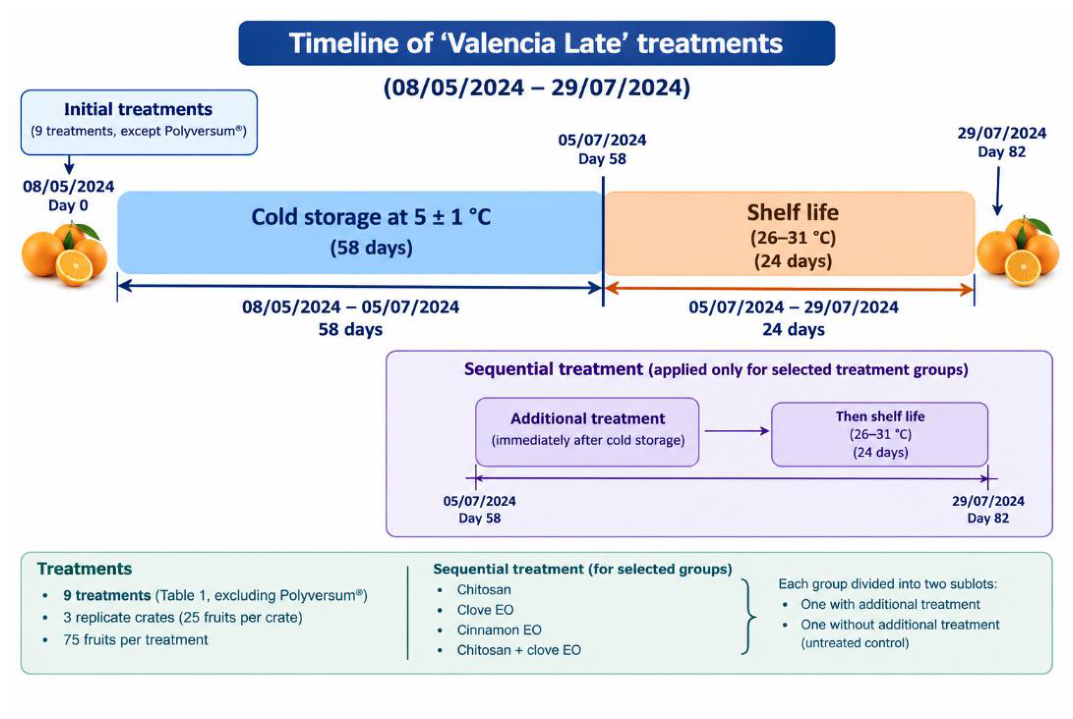
Figure 2.
Composite loss index (CLI), integrating decay incidence, disease severity, and weight loss, in ‘Maltaise’ oranges subjected to different postharvest treatments and evaluated after 35 days of cold storage at 5 °C and following a further 7 days of shelf life at approximately 18 °C. For the shelf-life assessment, only fruit that remained free of visible decay after cold storage were evaluated. Bars represent mean CLI values ± standard error (SE; n = 3). For each evaluation period, means sharing at least one letter are not significantly different according to Tukey’s test (p ≤ 0.05). Uppercase letters indicate comparisons among treatments after cold storage, whereas lowercase letters indicate comparisons after shelf life. ANOVA: Cold storage: F(7, 16) = 10.577, Sig: .001; shelf life: F(7, 16) = 8.004, Sig: .001. Abbreviations: DW, distilled water; NT, untreated control; SCH, Scholar®; CL EO, clove essential oil; CH, chitosan; AMB, ammonium bicarbonate; CIN EO, cinnamon essential oil; PL, Polyversum®.
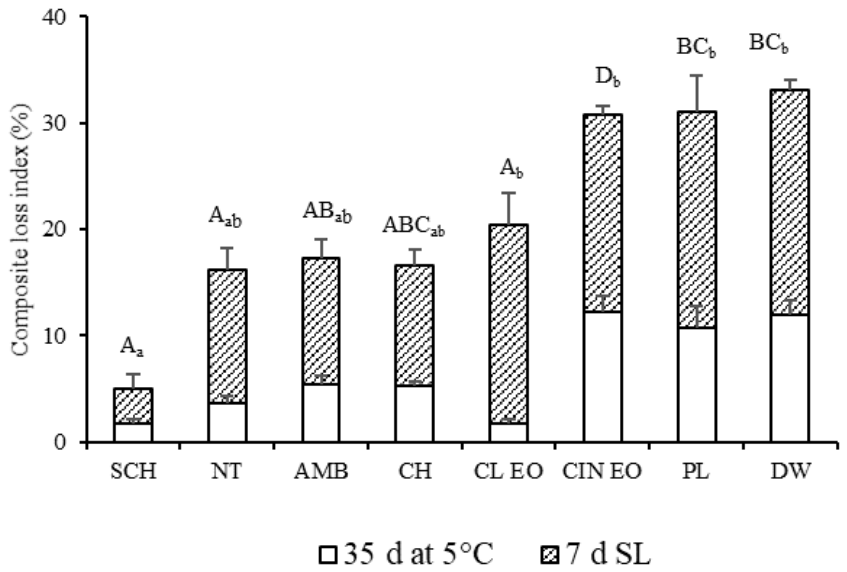
Figure 3.
Representative photographs showing the condition of ‘Maltaise’ oranges following 35 days of cold storage at 5 °C and a subsequent 7-day shelf-life period at approximately 18 °C under the different postharvest treatments. Only fruit that remained free of visible decay at the end of cold storage were included in the shelf-life assessment. The three replicate crates for each treatment are shown. The photographs also illustrate the whitish, powdery residue observed on the peel of Polyversum®-treated fruit.
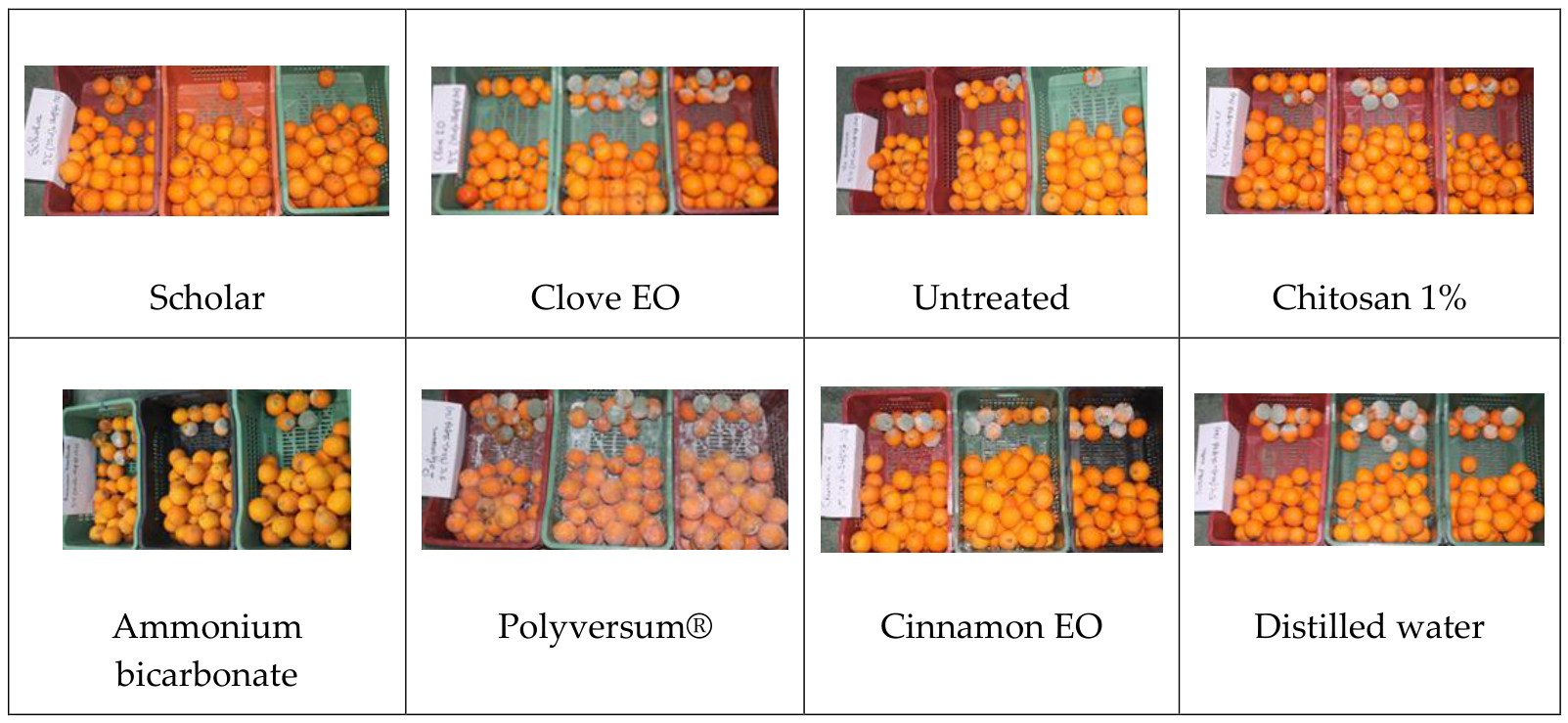
Figure 4.
Composite loss index (CLI) of ‘Valencia Late’ oranges after 58 days of cold storage at 5 °C and after a subsequent 24-day shelf-life period at 26–31 °C. Values are means ± SE (n = 3). Different uppercase superscript letters indicate significant differences among treatments after cold storage, whereas different lowercase superscript letters indicate significant differences among treatments after shelf life, according to Tukey’s test (p ≤ 0.05). ANOVA results: cold storage, F(8, 18) = 2.951, Sig: .027; shelf life, F(8, 18) = 3.304, Sig: .017. Abbreviations: DW, distilled water; NT, untreated control; SCH, Scholar®; CL EO, clove essential oil; CH, chitosan; AMB, ammonium bicarbonate; CIN EO, cinnamon essential oil.
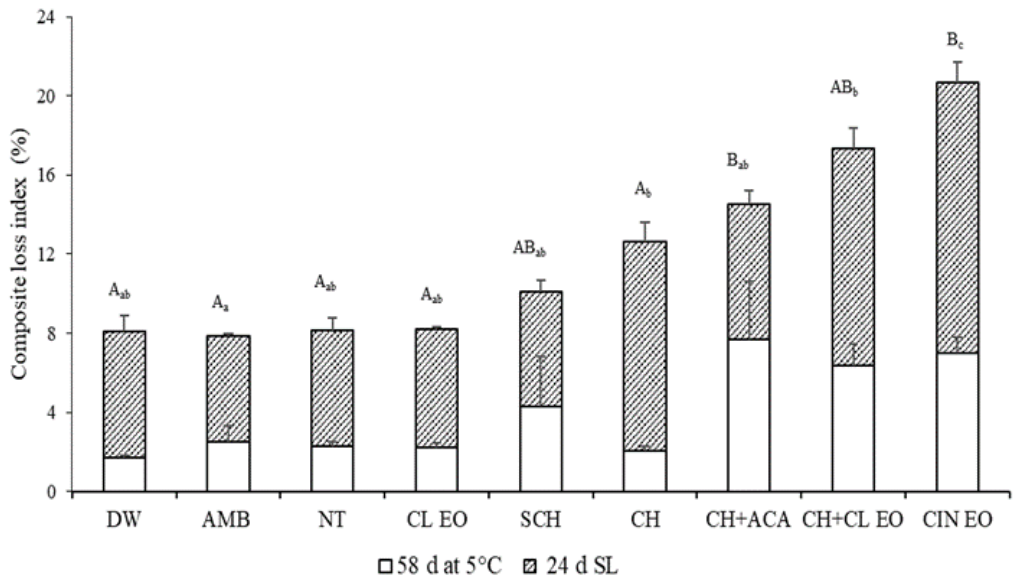
Figure 5.
. Representative photographs showing the condition of ‘Valencia Late’ oranges after 58 days of cold storage at 5 °C followed by a 24-day shelf-life period at 26–31 °C under the different postharvest treatments. The three replicate crates per treatment are shown. Only fruit that remained free of visible decay at the end of cold storage were retained for the shelf-life assessment. The photographs also illustrate representative symptoms of decay observed on fruit from several treatments at the end of the shelf-life period (29 July 2024).
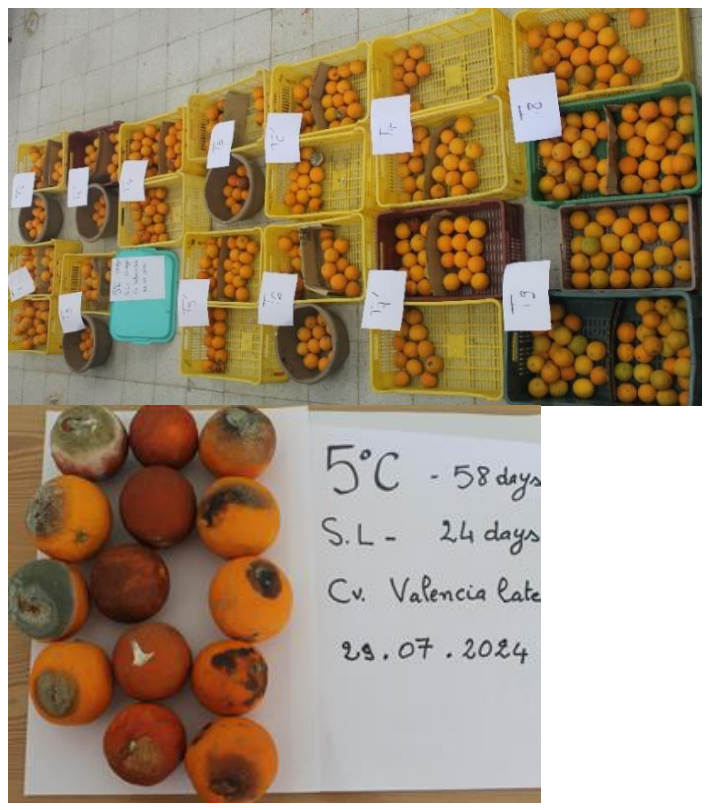
Figure 6.
Composite loss index (CLI, %) of 'Valencia Late' oranges after 58 days of storage under ambient conditions (approximately 20 °C) or cold storage (5 °C). Values are expressed as means ± SE (n = 3). Different lowercase letters indicate statistically significant differences among treatments within each storage condition, according to Tukey's test (p ≤ 0.05). ANOVA results: ambient storage, F(8, 18) = 2.433, Sig: .056; cold storage, F(8, 18) = 2.951, Sig: .027. Abbreviations: SCH, Scholar fungicide; CH+CL EO, mixture of chitosan and clove essential oil; CIN EO, cinnamon essential oil; AMB, ammonium bicarbonate; CH, chitosan; DW, distilled water; NT, untreated control; CL EO, clove essential oil; CH+ACA, mixture of chitosan and acetic acid.
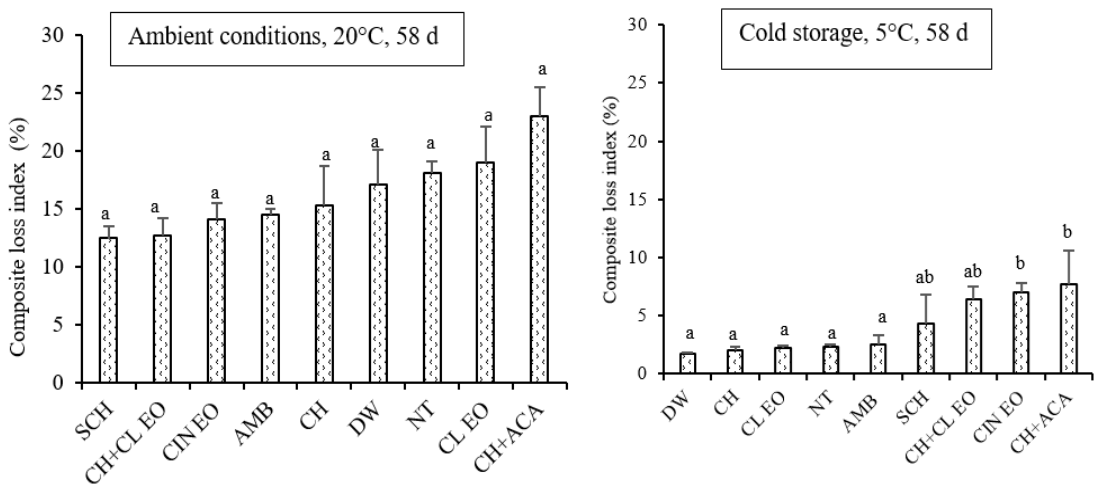
Figure 7.
Representative photographs illustrating the condition of 'Valencia Late' oranges after 58 days of storage at 5 °C (left) or under ambient conditions (approximately 20 °C, right). The photographs show the three replicate crates corresponding to the postharvest treatments under each storage condition. The close-up image on the right illustrates representative symptoms of fungal decay in fruit stored under ambient conditions (photographed on 5 July 2024).
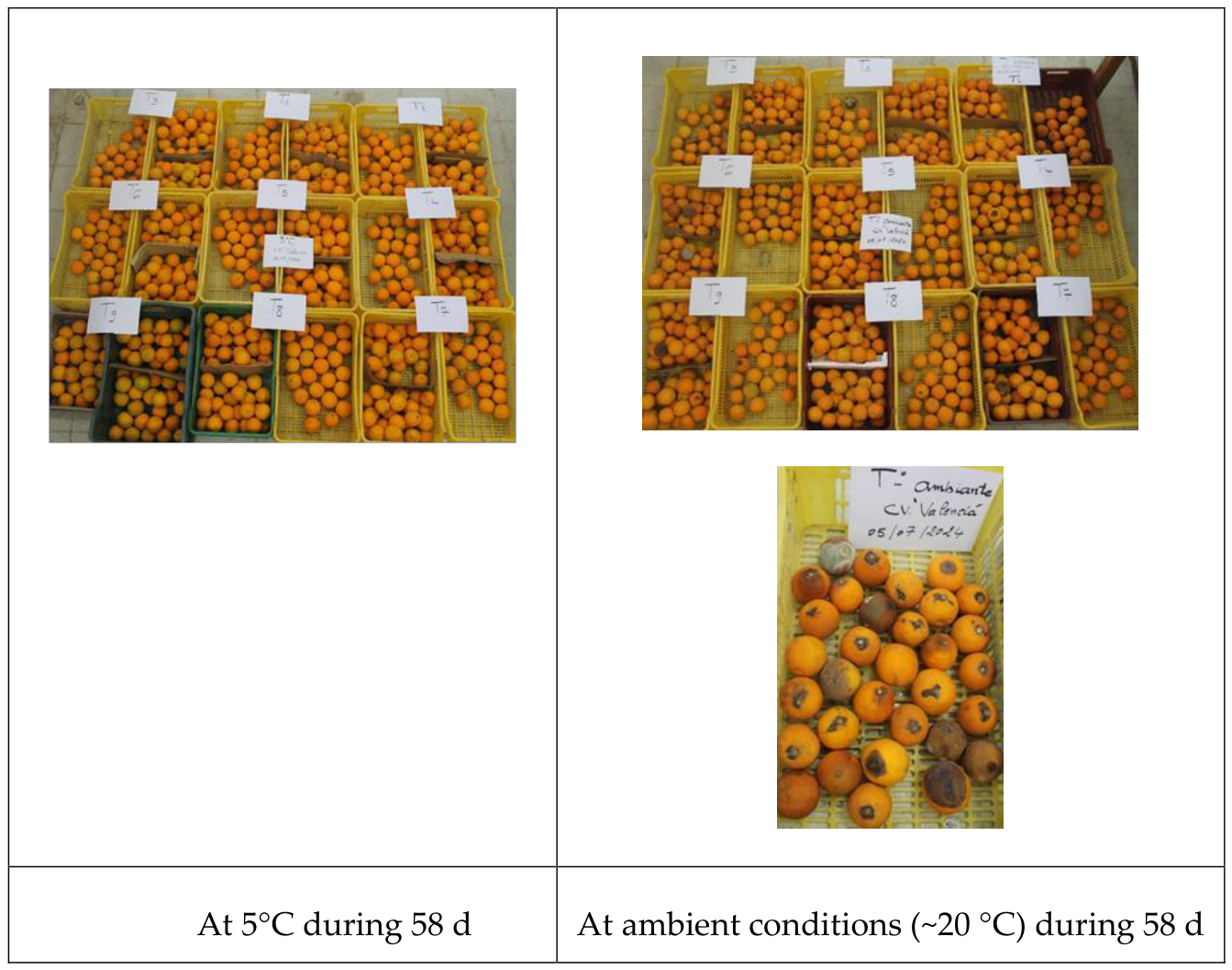
Figure 8.
Composite loss index (CLI, %) of 'Valencia Late' oranges subjected to sequential postharvest treatments before and after cold storage and evaluated after 24 days of shelf life under ambient conditions. Values are expressed as means ± SE (n = 3). Different lowercase letters indicate significant differences among treatments according to Tukey's test (p ≤ 0.05). ANOVA: F(8, 18) = 6.321, Sig: .001. Treatment abbreviations and application sequences are defined in Table 2 a, b (Material and methods).
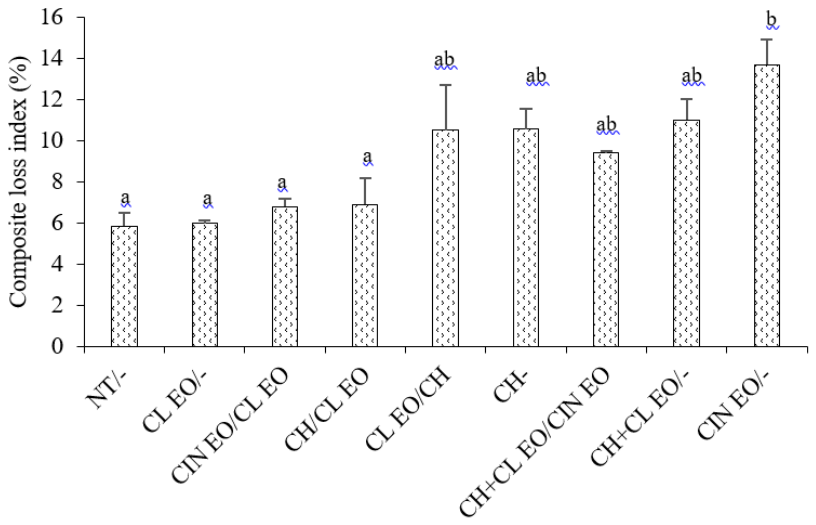
Figure 9.
Principal component analysis (PCA) score plot of postharvest treatment responses in ‘Maltaise’ and ‘Valencia Late’ oranges based on standardized Z-scores of four quality indicators (McKinney disease severity index, decay incidence, weight loss, and composite loss index). PC1 and PC2 explain 84.0% and 14.7% of the total variance, respectively. Colours represent postharvest treatments, while symbols distinguish cultivar–storage combinations. Ellipses indicate the major groupings of observations.
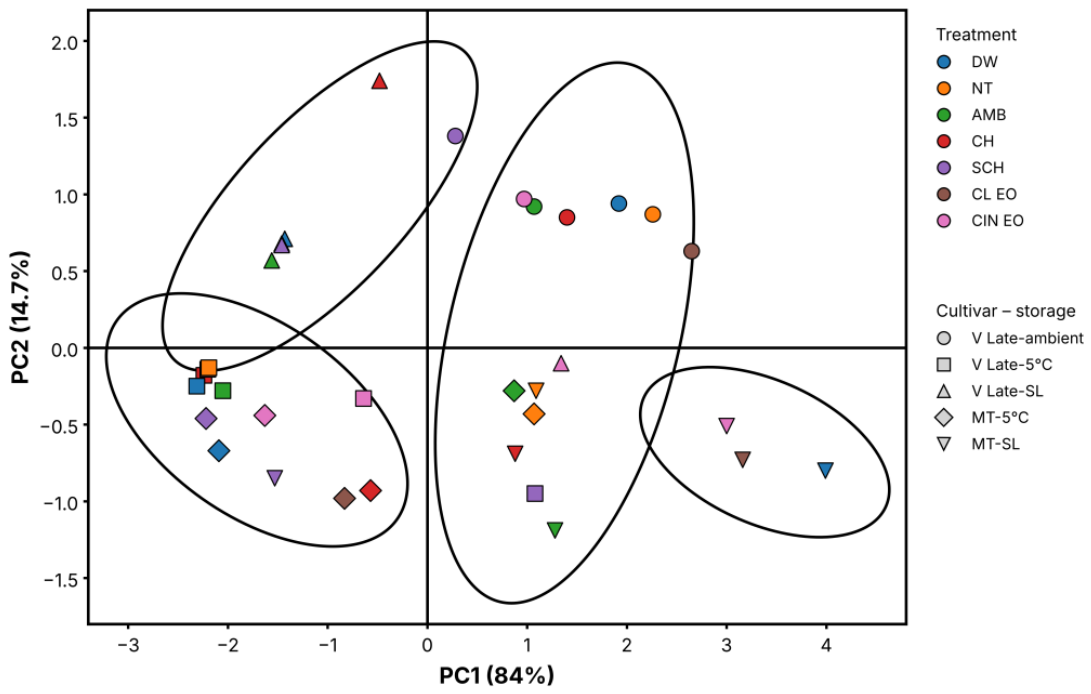
Figure 10.
Heatmap and hierarchical clustering of postharvest treatment responses in ‘Maltaise’ and ‘Valencia Late’ oranges under different storage conditions. The analysis includes four quality indicators: McKinney disease severity index (McK DS), decay incidence (D Inc), weight loss (WL), and composite loss index (CLI). Colour intensities represent standardized Z-scores, with red indicating relatively higher values and blue indicating relatively lower values compared with the overall dataset. Dendrograms illustrate the hierarchical relationships among treatment–storage combinations (rows) and quality indicators (columns). The three main row clusters are identified as A, B, and C. Abbreviations: MT, ‘Maltaise’; V Late, ‘Valencia Late’; 5 °C, cold storage; SL, shelf life following cold storage; ambient, ambient storage; SCH, Scholar fungicide; CH, chitosan; CL EO, clove essential oil; CIN EO, cinnamon essential oil; AMB, ammonium bicarbonate; DW, distilled water; NT, untreated control.
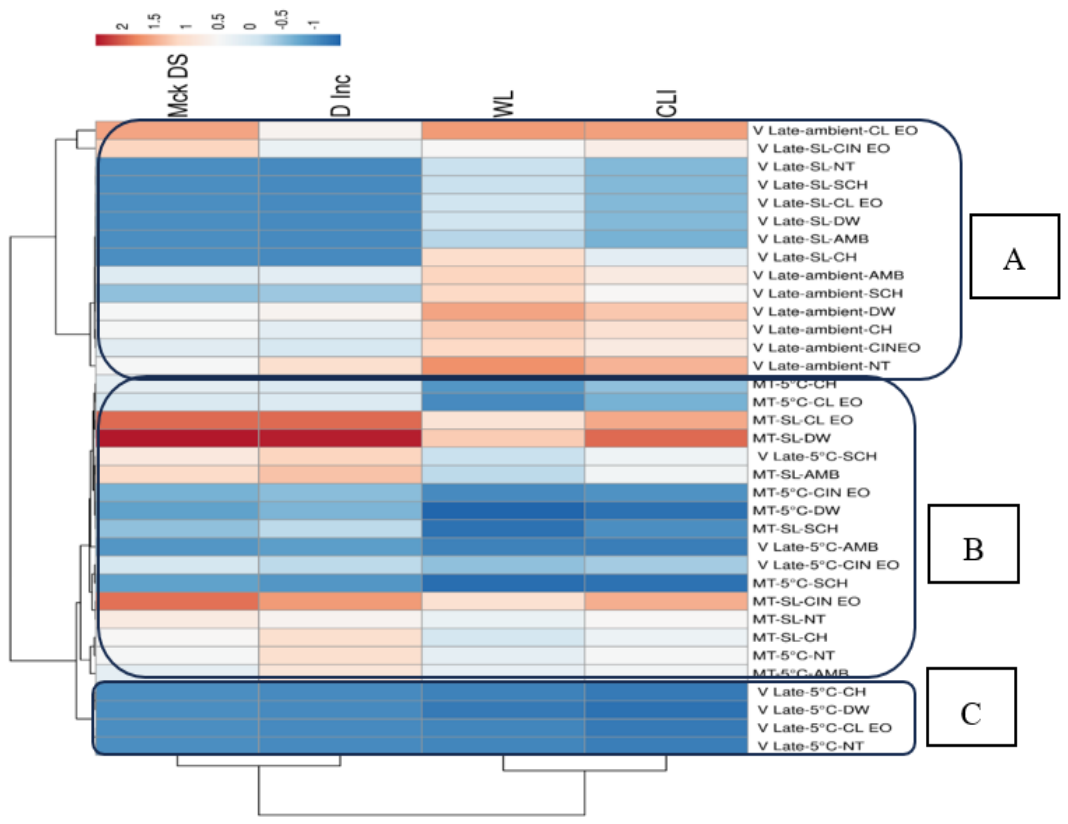
Table 1.
Composition and characteristics of the solutions used for fruit treatments of the cultivars Maltaise and Valencia late.
Table 1.
Composition and characteristics of the solutions used for fruit treatments of the cultivars Maltaise and Valencia late.
| Solutions | Product | Dose | pH of the solution | Ingredients/Commercial product | |
| Distilled water (negative control) |
- | 7.03 | - | ||
| Scholar (positive control) |
0.15% (v/v) | 7.57 | 230 gL-1 Fludioxonil | ||
| No treatment (neutral control, - - - standard company procedure) | |||||
| Ammonium bicarbonate |
1 % (w/v) | 7.55 | Purity 99% from Sisco Research Laboratory, Pvt. Ltd (India) | ||
| Chitoplant® |
1 % (w/v) | 3.49 | Powder 100% chitosan HCl (Agritalia, Italy) Serbios Srl, Greenexta Group, Italy |
||
| Cinnamon EO (Cinnamon verum) and Tween 20 | 0.2 % (v/v)+ 0.12% (v/v) | 4.07 | Pure EO purchased from local company STDCE [2] | ||
| Clove EO (Syzygium aromaticum) and Tween 20 | 0.2 % (v/v)+ 0.12% Tween 20 (v/v) | 3.27 | Pure EO, from local company STDCE [2] |
||
| Polyversum® | 3.75 % (w/v) + 5 % (v/v) of glycerol | - | A wettable powder containing the active microorganism Pythium oligandrum, glycerol (purity 99.5%, Scharlau chemie S.A., Spain) | ||
| Mixtures | Chitoplant® mixed with clove EO and Tween 20 | 0.1% (w/v)+0.2%(v/v)+ 0.12%(v/v) |
3.25 | See same above | |
| Chitoplant® mixed with acetic acid and Tween 20 | 0.1 (w/v)+0.5%(v/v)+ 0.12%(v/v) |
2.21 | Acetic acid (Sigma-Aldrich, 99% purity) | ||
Table 3.
Effects of ecological postharvest treatments on weight loss, decay incidence and McKinney disease index of 'Maltaise' oranges after 35 days of storage at 5 °C and after 7 days of shelf life (~18 °C).
Table 3.
Effects of ecological postharvest treatments on weight loss, decay incidence and McKinney disease index of 'Maltaise' oranges after 35 days of storage at 5 °C and after 7 days of shelf life (~18 °C).
| Treatments |
Weight Loss (%) |
Decay Incidence (%) |
Mckinney’s Disease Index (%) |
| 35 d at 5°C | |||
| SCH | 3.2 ± 0.7 a | 0.7 ± 0 a | 0.7 ± 0 a |
| CL EO | 2.4 ± 0.1 a | 2.7 ± 1.0 b | 0.7 ± 0.3 a |
| NT | 6.1 ± 1.1 a | 3.3 ± 0.8 b | 1.3 ± 0.4 a |
| CH | 7.2 ± 0.4 a | 7.3 ± 1.3 c | 4.9 ± 0.7 a |
| AMB | 5.8 ± 0 a | 7.3 ± 1.0 c | 4.0 ± 1.0 a |
| PL | 17.4 ± 0 b | 9.9 ± 2.2 c | 5.0 ± 1.4 a |
| DW | 18.5 ± 1.6 b | 12.7 ± 1.0 d | 4.9 ± 0.5 a |
| CIN EO | 18.3 ± 1.0 b | 13.3 ± 3.0 d | 5.9 ± 1.3 a |
| +7 d SL at ~18°C | |||
| SCH | 3.7± 0.3 a | 5.3 ± 3.4 a | 2.0 ± 1.6 a |
| CH | 15.6 ± 2.4 bc | 13.3 ± 1.3 ab | 6.1 ± 1.1 ab |
| AMB | 13.7 ± 0 ab | 15.3 ± 4.4 ab | 8.3 ± 2.3 ab |
| NT | 19.1 ± 0.5 bcd | 10.7 ± 2.5 ab | 7.1 ± 3.1 ab |
| CIN EO | 25.9 ± 0.4 cd | 17.3 ± 1.5 ab | 11.5 ± 0.6 ab |
| CL EO | 25.2 ± 1.7 cd | 19.3 ± 2.3 ab | 11.7 ± 2.2 ab |
| PL | 25.9 ± 2.7 cd | 20.7 ± 1.7 ab | 14.5 ± 1.5 b |
| DW | 28.4 ± 1.2 d | 22.0 ± 1.2 b | 13.6 ± 1.0 b |
Values are means of three replicates of 50 fruits each ±standard error. ANOVA for cold storage: Weight loss: F(7, 16) = 32.315; Sig: ,001. Decay incidence: F(7, 16) = 2.680; Sig: ,049. McKinney’s disease index: F(7, 16) = 2.032; Sig: ,113. ANOVA for shelf life: Weight loss: F(7, 16) = 13.337; Sig: .001. Decay incidence: F(7, 16) = 2.866; Sig: ,038. McKinney’s disease index: F(7, 16) = 3.457; Sig: ,019.
Table 4.
Effect of postharvest ecological treatments on weight loss, decay incidence and McKinney's disease index of the cv. 'Valencia Late' after 58 days at 5 °C followed by 24 days of shelf life (26-31°C), or under ambient storage after 58 days at 20 ± 2 °C.
Table 4.
Effect of postharvest ecological treatments on weight loss, decay incidence and McKinney's disease index of the cv. 'Valencia Late' after 58 days at 5 °C followed by 24 days of shelf life (26-31°C), or under ambient storage after 58 days at 20 ± 2 °C.
| Treatments |
Weight loss (%) |
Decay incidence (%) |
McKinney’s disease index (%) | ||
| 58 d at 5 °C | |||||
| DW | 4.3 ± 0.3 a | 0.0 ± 0.0 a | 0.0 ± 0.0 a | ||
| CH | 5.1 ± 0.6 a | 0.0 ± 0.0 a | 0.0 ± 0.0 a | ||
| CL EO | 5.6 ± 0.6 a | 0.0 ± 0.0 a | 0.0 ± 0.0 a | ||
| NT | 5.7 ± 0.5 a | 0.0 ± 0.0 a | 0.0 ± 0.0 a | ||
| AMB | 5.3 ± 0.7 a | 1.3 ±0.8 ab | 0.3 ± 0.2 a | ||
| SCH | 7.5 ± 1.8 ab | 2.7 ± 1.5 ab | 1.9 ± 1.1 ab | ||
| CH+CL EO | 11.4 ± 0.8 b | 5.3 ± 0.8 ab | 1.9 ± 0.4 ab | ||
| CIN EO | 11.1 ± 1.1 b | 5.3 ± 1.2 ab | 3.7 ± 0.2 b | ||
| CH+ACA | 11.4 ± 1.9 b | 6.7 ± 2.0 b | 4.5 ± 1.4 b | ||
| + 24 d SL (26-31°C) after cold storage at 5 °C | |||||
| AMB | 13.4 ± 0.4 a | 0.0 ± 0.0 a | 0.0 ± 0.0 a | ||
| NT | 14.6 ± 1.6 a | 0.0 ± 0.0 a | 0.0 ± 0.0 a | ||
| CL EO | 15.0 ± 0.2 a | 0.0 ± 0.0 a | 0.0 ± 0.0 a | ||
| DW | 14.9 ± 1.2 a | 0.0 ± 0.0 a | 0.0 ± 0.0 a | ||
| SCH | 14.5 ± 1.5 a | 0.0 ± 0.0 a | 0.0 ± 0.0 a | ||
| CH+ACA | 17.1 ± 1.7 a | 0.0 ± 0.0 a | 0.0 ± 0.0 a | ||
| CH+CL EO | 18.4 ± 1.8 ab | 8.3 ± 0.0 a | 5.0 ± 1.0 a | ||
| CH | 26.4 ± 2.5 b | 0.0 ± 0.0 a | 0.0 ± 0.0 a | ||
| CIN EO | 21.2 ± 2.8 ab | 8.7 ± 0.2 a | 8.7 ± 0.2 a | ||
| 58 d at ~20 °C | |||||
| SCH | 25.8 ± 1.7 a | 4.0 ± 2.3 a | 1.9 ± 1.5 a | ||
| CH+CL EO | 26.8 ± 1.6 a | 4.0 ± 2.3 a | 2.9 ± 1.5 a | ||
| CIN EO | 27.3 ± 1.2 a | 6.7 ± 1.3 a | 4.5 ± 2.1 ab | ||
| AMB | 28.1± 0.7a | 8.0 ± 0.0 a | 4.3 ± 0.5 ab | ||
| CH | 28.4 ± 3.3 a | 8.0 ± 4.6 a | 5.9 ± 3.0 ab | ||
| DW | 31.5 ± 2.8 a | 10.7 ± 3.5 a | 5.9 ± 3.0 ab | ||
| CL EO | 32.1± 2.9 a | 10.7 ± 3.5 a | 10.1 ± 3.1 ab | ||
| NT | 32.7 ± 1.7 a | 13.3±1.3 a | 5.9 ± 0.3 ab | ||
| CH+ACA | 35.3 ± 2.9 a | 17.3 ± 3.5 a | 13.6 ±1.6 b | ||
ANOVA for cold storage: Weight loss: F(8, 18) = 3.024; Sig: ,024. Decay incidence: F(8, 18)= 2.696; Sig: ,038. Mckinney disease index: F(8, 18) = 2.896; Sig: ,030. ANOVA for 24 d shelf life: Weight loss: F(8, 18) = 6.023; Sig: .001. Decay incidence: F(8, 18) = 1.250; Sig: .328. Mckinney disease index: F(8, 18) = 1.160; Sig: ,374. ANOVA for ambient storage: Weight loss: F(8, 18) = 1.86; Sig: ,131. Decay incidence: F(8, 18) = 2.329 Sig: .065. Mckinney disease index: F(8, 18) = 3.040; Sig: .024. Abbreviations: SCH, Scholar fungicide, CH+CL EO, a mixture of chitosan and clove essential oil; CIN EO, cinnamon essential oil; AMB, ammonium bicarbonate; CH, chitosan; DW, distilled water, NT, untreated throughout the trial; CL EO, clove essential oil; CH+ACA, a mixture between chitosan and acetic acid.
Table 5.
Weight loss, decay incidence, and McKinney's disease index of 'Valencia Late' oranges subjected to sequential postharvest treatments and evaluated after 24 days of shelf life under ambient conditions. Fruits received an initial treatment before cold storage and, depending on the experimental treatment, a second application at the beginning of shelf life.
| Sequential treatments | Weight loss (%) |
Decay incidence (%) |
Mckinney’s diease index (%) | |
| NT/- | 14.6 ± 1.6 a | 0 a | 0 a | |
| CL EO/- | 15.0 ± 0.2 a | 0 a | 0 a | |
| CIN EO/ CL EO | 17.0 ± 1.5 a | 0 a | 0 a | |
| CH/CL EO | 17.1 ± 3.2 a | 0 a | 0 a | |
| CH+CL EO/- | 18.4 ± 1.8 a | 8.3 ± 0 b | 5.0 ± 1.0 b | |
| CH+CL EO/CIN EO | 18.9 ± 2.8 a | 4.2 ±2.4 ab | 2.5 ± 0 ab | |
| CIN EO/- | 21.2 ± 2.8 a | 8.7 ± 0.2 b | 8.7 ± 0.2 c | |
| CL EO/CH | 22.1 ± 4.1 a | 3.8 ± 2.2 ab | 2.3 ± 1.3 ab | |
| CH/- | 26.4 ± 2.5 a | 0 a | 0 a | |
Values are expressed as means ± SE (n = 3). Different lowercase letters within a column indicate significant differences among treatments according to Tukey's test (p ≤ 0.05). ANOVA results: weight loss, F(8, 18) = 2.20, Sig: .078; decay incidence, F(8, 18) = 11.26, Sig: .001; McKinney's disease index, F(8, 18) = 17.31, Sig: .001.
Disclaimer/Publisher’s Note: The statements, opinions and data contained in all publications are solely those of the individual author(s) and contributor(s) and not of MDPI and/or the editor(s). MDPI and/or the editor(s) disclaim responsibility for any injury to people or property resulting from any ideas, methods, instructions or products referred to in the content. |
© 2026 by the authors. Licensee MDPI, Basel, Switzerland. This article is an open access article distributed under the terms and conditions of the Creative Commons Attribution (CC BY) license (http://creativecommons.org/licenses/by/4.0/).
Copyright: This open access article is published under a Creative Commons CC BY 4.0 license, which permit the free download, distribution, and reuse, provided that the author and preprint are cited in any reuse.