
Submitted:
03 November 2026
Posted:
05 November 2026
You are already at the latest version
Abstract
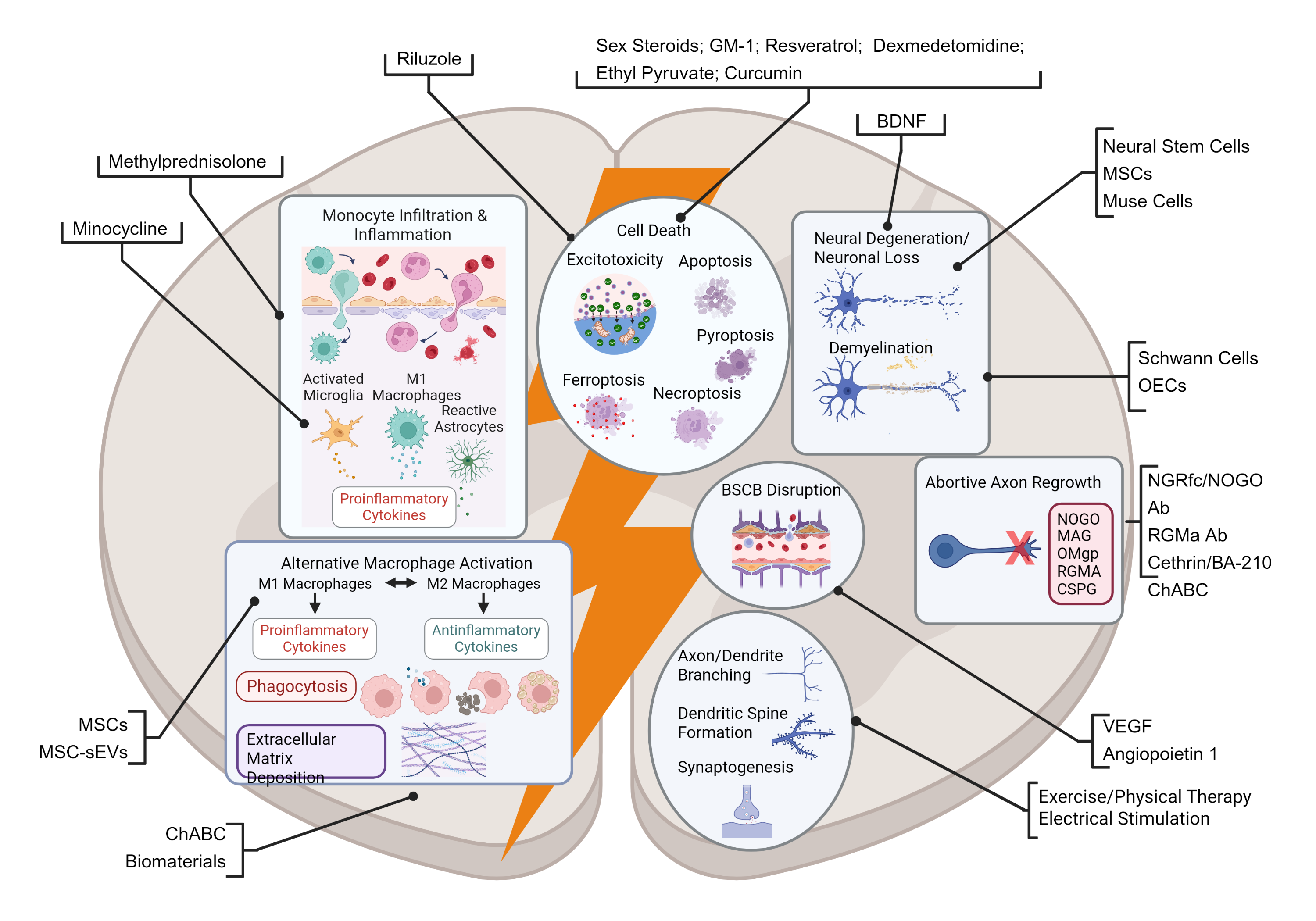
Approximately 900,000 individuals worldwide experience a traumatic spinal cord injury (SCI) each year, with roughly 15.4 million people estimated by the World Health Organization to be living with SCI. The effects of SCI on the lives of affected individuals and their families can be profound. In addition to partial or complete loss of sensory and/or motor function below the level of the lesion, a high proportion of patients with spinal cord injuries experience: neuropathic pain, spasticity, bladder and bowel dysfunction, autonomic dysreflexia, adrenal insufficiency, infertility, or sexual dysfunction due to their injury. The disabilities associated with SCI result from both direct physical injury to neurons and glia and from secondary damage caused by a complex cascade of biochemical processes involving multiple cell types. These processes present many potential targets for intervening in outcomes and reducing disability. This review will summarize the complex pathophysiology of traumatic spinal cord lesions and describe the main strategies and agents being investigated for reducing disability and enhancing recovery after spinal cord injury and the note status of related clinical trials. The goal is to provide a framework for moving forward to develop better treatments for this life-changing condition.
Keywords:
spinal cord injury
; inflammation
; apoptosis
; macrophages
; neurons
; glia
; blood spinal cord barrier
; axon regeneration
; remyelination
Copyright: This open access article is published under a Creative Commons CC BY 4.0 license, which permit the free download, distribution, and reuse, provided that the author and preprint are cited in any reuse.