

Submitted:
03 November 2026
Posted:
05 November 2026
You are already at the latest version
Abstract
School meal programmes support children’s food security, health and learning. Aquatic foods, including fish, shellfish and seaweed, provide protein, essential fatty acids and micronutrients, and some have lower environmental impacts than terrestrial animal-source foods. However, evidence on their integration into school meals has not been systematically synthesised. We systematically reviewed peer-reviewed and grey literature in English and Spanish on aquatic foods in school meals. Searches of Web of Science, PubMed, Cochrane Reviews and FAO AGRIS, supplemented by manual searches, identified 1,052 records. Two reviewers independently screened 975 abstracts and 156 full texts. Risk of bias was assessed using tools selected according to study design, and findings were synthesised narratively across nutritional, health, cognitive, acceptability, operational, producer and environmental outcomes. Seventy-three publications from 29 countries met the inclusion criteria. Evidence was concentrated in high-income settings and focused primarily on fish. A small number of independent trials reported improvements in selected nutrient biomarkers and cognitive outcomes, although broader dietary interventions sometimes prevented attribution to aquatic foods alone. Acceptability varied with product form, preparation and familiarity; feasibility depended on cost, procurement, storage and supply chain capacity. Environmental outcomes varied by product, comparator and impact measure. Evidence on producer outcomes, and aquatic foods other than finfish remained limited, details on aquatic food source were rarely included in studies. Aquatic foods can contribute to nutritious and diverse school meals, but effective integration requires attention to nutritional objectives, acceptability, procurement, food safety and environmental performance. Research across diverse settings is needed to identify which aquatic foods, forms and implementation approaches deliver intended benefits. Future studies should assess consumption and nutritional outcomes alongside costs, environmental trade-offs and producer benefits, while reporting species and sourcing to support context-specific policy and programme design.
Keywords:
blue foods
; animal-source foods
; school feeding
; malnutrition
; nutrition
; environmental sustainability
; small-scale fisheries
; food systems
1. Introduction
School meal programs are important social protection and nutrition-sensitive intervention, especially in low- and middle-income countries (LMICs) where child undernutrition and micronutrient deficiencies remain prevalent (Alderman, Bundy and Gelli, 2024). They aim to improve school attendance and educational outcomes but can include objectives to enhance dietary intake and nutritional status among school-age children, and livelihoods of local food producers. However, many school meal programs rely on staple grains and legumes for affordability and ease of procurement, while facing challenges in providing sufficiently diverse and balanced meals that include fruits, vegetables, animal-source foods and other nutrient-rich foods needed to support micronutrient adequacy (Martins et al., 2021; Liguori et al., 2024; Makori et al., 2025; Kante et al., 2026).
Aquatic animal-source foods like fish, molluscs and shellfish provide protein, essential fatty acids and micronutrients supporting child growth, immunity and cognition, depending on species and edible parts (Golden et al., 2021; UN Nutrition, 2021; FAO, 2024; WFP, 2024a). They can also enhance iron and zinc bioavailability from plant-based foods (Consalez et al., 2022), support producer livelihoods (Basurto et al., 2025) and, for some species such as small fish, bivalve molluscs and aquatic plants, have lower greenhouse gas emissions than terrestrial animal-source foods (Koehn et al., 2022; Hilborn et al., 2018; Koehn et al., 2023; Gephart et al., 2021). Local sourcing may create market opportunities for producers and processors (Subramaniam et al., 2023), although equitable benefits depend on procurement conditions and bargaining power. Nevertheless, integration into school meals varies widely, and evidence on implementation barriers and outcomes remains limited.
Aquatic foods are increasingly recognized for their contributions to food security and nutrition. Approximately 44% of school meal programs worldwide reported inclusion of fish or shellfish (GCNF, 2025). Initiatives promoting aquatic foods in school meals, including home-grown school feeding (HGSF), aim to improve nutrition and livelihoods (Ahern et al., 2021; Toppe et al., 2021; Chadag, 2022; Pastorino et al., 2023; Andrianarimanana et al., 2024). In many African countries, where iron, calcium and zinc deficiencies remain prevalent, aquatic foods could improve dietary quality among schoolchildren (Ahern et al., 2021; Engidaw et al., 2023; Osei Bonsu et al., 2024). However, their inclusion is constrained by cost, infrastructure, supply chains, food safety and cultural preferences (Ahern et al., 2021).
Despite considerable research on aquatic foods in early childhood nutrition (Hibbeln et al., 2007, 2019; Bogard et al., 2015; Skau et al., 2015; Marinda et al., 2018; Ahern et al., 2020; Byrd et al., 2021a, 2022; UN Nutrition, 2021; Rai et al., 2026), evidence specific to school-age children and school meals remains limited. Studies suggest potential benefits for dietary quality, cognition and health, but often examine broader dietary interventions rather than school meals specifically (Andersen et al., 2016; Abizari and Ali, 2019; Soe et al., 2020; Horikawa et al., 2021; Dogui et al., 2022). This warrants systematic assessment of feasibility, acceptability, cost-effectiveness, and nutritional and cognitive outcomes of school feeding interventions more broadly (Kristjansson et al., 2025; WFP, 2021).
Therefore, this study aimed to systematically review and synthesise evidence on the inclusion of aquatic foods in school meal programs. Specifically, we included research articles and reports examining school meals containing aquatic foods in fresh, dried, or simple processed form, such as fish powder or fish paste. We examined how aquatic foods have been incorporated into school meals – including their types, sources, processing and preparation - and assessed reported outcomes for school children, including dietary intake, nutritional status, health, and cognition. We also examined evidence on acceptability, affordability and operational feasibility; potential implications for producers, including livelihoods, market access and income opportunities; and environmental outcomes and trade-offs associated with incorporating aquatic foods into school meals. By bringing together evidence across these dimensions, the review seeks to clarify what is currently known about the potential contribution of aquatic foods to school meal programs, the conditions that enable or constrain successful implementation, and the principal gaps requiring further research.
2. Methods
We systematically reviewed peer-reviewed literature, program evaluations, and relevant gray literature on the inclusion of aquatic foods in school meal programs. This systematic review was conducted and reported in accordance with the Preferred Reporting Items for Systematic Reviews and Meta-Analyses (PRISMA) 2020 Statement (Page et al., 2021). The review protocol was developed a priori to define the review objectives, eligibility criteria, search strategy, and methods for study selection, data extraction, and synthesis; however, it was not prospectively registered. A risk of bias assessment was conducted for relevant study types that met our inclusion criteria, detailed below.
2.1. Systematic Review
2.1.1. Search Strategy and Data Sources
Search terms and search strings are detailed in Supplementary Materials (S1). The databases selected for our search were Web of Science, PubMed, Cochrane Reviews, and FAO AGRIS. Searches were conducted between 7-11 November 2025. These searches were complemented by manually searching reference lists of all retained studies and reports . Rayyan.ai was used for bulk import of all records returned from searches in the various databases, as well as for detecting and removing duplicates prior to screening. The blinding mode was used during screening, allowing titles and abstracts, followed by full texts, to be independently reviewed by two reviewers to determine eligibility. Disagreements were resolved through discussion.
2.1.2. Inclusion Criteria
Studies and reports written in English and Spanish were eligible if they documented the integration of aquatic foods into school meal programs, spanning pre-primary through secondary education (pre-K to 12th grade). Studies published during any time period were eligible for inclusion, with no publication date restrictions applied. Studies were categorized according to whether they specifically assessed the inclusion of aquatic foods in school meals (e.g., those that tested acceptability, feasibility, health, or environmental outcomes of a fish-based meal, sometimes in comparison with a meat, poultry or vegetarian meal), or examined school meals or dietary interventions more broadly but reported specific findings for aquatic foods. Studies were eligible if they reported on at least one of the following outcome domains:
- Consumers: dietary intake, nutritional status, health, and cognitive outcomes as well as consumer acceptability studies
- Producers: livelihoods, market access, and economic stability
- Climate and environment: contributions to sustainable and resilient food systems, including potential trade-offs
- Operational feasibility of aquatic foods in school meals
Studies assessing the nutritional potential of aquatic foods (e.g., nutrient composition or food safety considerations) were included if relevant to the feasibility or implications of incorporating aquatic foods into school meals. During the abstract screening, studies describing school meals that included general food categories (without explicitly mentioning aquatic foods) were retained for full-text review if there was potential relevance; these were included only if aquatic foods were explicitly identified in the full text.
2.1.3. Exclusion Criteria
Studies were excluded if they met any of the following criteria:
- Focused on supplements (e.g., fish oil) rather than whole or processed aquatic foods (e.g., dried fish, fish powder). We included aquatic foods subjected to physical processing, such as cleaning, gutting, filleting, drying, chilling, freezing or milling, as well as foods prepared in school kitchens, such as fish meatballs and fish fingers made using culinary ingredients. In applying the NOVA framework, we distinguished culinary preparation from industrial ultra-processing on the basis of ingredients and processing methods, rather than product names alone (Monteiro et al., 2019).
- Reported dietary surveys that did not isolate the contribution of school meals to observed outcomes
- Did not mention aquatic foods in school meals
- Only assessed aquatic foods as part of a broader group (animal-source foods, protein-rich foods)
- Included only menus or guidelines listing aquatic foods without further detail on implementation or outcomes
- Focused exclusively on fortified products (e.g., fortified fish sauce), unless a non-fortified comparator was included
2.1.4. Study Selection, Data Extraction and Synthesis
Records identified through database and manual searches were screened in two stages: title and abstract screening, followed by full-text review. Both stages were conducted independently by two researchers (MA and CS, or KB and CS), with disagreements resolved through discussion with a third researcher (MA or KB). Studies were included if they met the predefined eligibility criteria and reported evidence on aquatic foods in school meal programmes.
A study-specific form was used to extract publication details, country and setting, study design, intervention or exposure, outcomes, sample size and units, participant age, aquatic food species, source, procurement pathway, product form and main findings. Two researchers independently extracted information from each publication, with disagreements resolved through discussion with a third researcher. Publications could contribute to multiple outcome domains. Additional variables for the design-specific summary tables were agreed by MA and KB and are presented in Tables 2–9 (at the end of this document).
Meta-analysis was inappropriate because interventions, populations, outcome measures and reporting metrics differed substantially. Findings were therefore synthesised narratively by outcome domain, following the Synthesis Without Meta-analysis (SWiM) guideline (Campbell et al., 2020). Interpretation considered study design, risk of bias, the comparator and whether findings could be attributed specifically to aquatic foods.
For Figure 2, extracted findings were classified separately for each publication–outcome domain as favourable findings, mixed findings, no clear comparative difference, or less favourable findings relative to the comparator. Mixed findings indicated differing directions across measures or comparisons within a domain. The no-clear-comparative-difference category combined findings without a clear between-group difference with descriptive or comparator-limited findings. Outcomes without an extracted comparative result were excluded. Each publication contributed once to each relevant outcome domain and could therefore appear in several rows. Publications from the same parent study were counted separately but were not interpreted as independent interventions. Study design and risk of bias were displayed alongside findings to inform interpretation; they did not determine the findings category or constitute a formal assessment of certainty of evidence.
Reporting follows the PRISMA 2020 and SWiM checklists, provided in Supplementary Materials S3–S5 (Page et al., 2021; Campbell et al., 2020).
2.2. Risk of Bias Assessment
Risk of bias was assessed independently by two reviewers (MA + CS or KB + CS or MA + KB) according to study design. For randomized controlled trials (RCTs), the revised Cochrane Risk of Bias tool (RoB 2) (Sterne et al., 2019) was used to evaluate bias arising from the randomization process, deviations from intended interventions, missing outcome data, outcome measurement, and selection of the reported result, with studies categorized as “low risk,” “medium / some concerns,” or “high risk” of bias.
Quasi-experimental studies (Table 3) were assessed using the ROBINS-I framework (Higgins, 2025). This framework was selected to provide a consistent, domain-based assessment of biases relevant to non-randomised comparisons of aquatic food provision, particularly confounding, participant selection, missing data and outcome measurement. Observational studies in Table 4 were assessed using the design-specific NIH Quality Assessment Tools (NIH, 2021), covering study population selection, exposure and outcome measurement, confounding and statistical analysis.
Acceptability trials were additionally appraised using the questions and scoring proposed by Santana et al. (2023), addressing characterization of methods, menus/food preparations, evaluation location, study design, sampling, statistical analysis, and results. We assigned medium or high risk-of-bias ratings, depending on other identified biases, to studies that inferred consumption-based acceptability solely from indirect measures, such as hedonic perception or photo sorting (Alfaro et al., 2020), or from unvalidated self-report questionnaires. This judgement reflected concerns about measurement validity, because reported liking does not necessarily correspond to actual consumption (Keller et al., 2022).
Any disagreements in risk-of-bias judgments were resolved through discussion and, where necessary, consultation with a third reviewer. No appraisal of bias was conducted for studies that assessed environmental outcomes, menus, or Outcomes for Producers / Operational Feasibility Studies, as no appropriate appraisal method was found.
3. Results
3.1. Study Selection and Characteristics
Our search identified 1,052 records; 975 abstracts and 156 full texts were screened (Figure 1). Seventy-three studies from 29 countries (2 low-income, 5 lower-middle income, 5 upper-middle income, and 17 high-income countries) met our inclusion criteria (Table 1). The number of studies from high-income countries (n=53) was greater than the studies from LMICs (n=20, Table 1). Several studies were excluded as they were dietary surveys for school-aged children that did not isolate the contribution of school meals to observed outcomes. Other studies were excluded as fish was considered as part of a broader food group (i.e., fish and meat), with no isolated analysis of fish. Studies assessed in full-text screening with reasons for their exclusion are included in Supplementary Materials (S2).
Our main study classifications are studies that looked at outcomes for consumers (e.g., schoolchildren) such as health and cognitive outcomes; environmental outcomes; outcomes for producers; acceptability trials; descriptive studies of school menus; cross-sectional dietary intake studies; and studies that were simply classified as ‘other’ if they did not fit any of these categories (Table 1). For each of these study types, we provide a data extraction table and present a separate results section.
Within the classification above, study outcome categories included outcomes for consumers, which primarily assessed health impacts of school meals or dietary intake from school meals (n=32), environmental outcomes (n=8), producer outcomes or feasibility studies (n=8), acceptability of school meals (n=21), analysis of school menus (n=9) and one food safety study which did not fit any of the other categories. Six studies were categorized into two categories (i.e., health impacts and acceptability of aquatic foods in school meals). Of the studies that looked at consumer outcomes, 15 were RCTs, 7 were quasi-experimental, and 10 were observational.
Most included studies were published as peer-reviewed journal articles, while five were classified as grey literature, including conference proceedings, reports, and non-peer-reviewed articles (Bonis-Profumo et al., 2024; Bostock et al., 1985; Masette et al., 2017; Ratha et al., 2024; Ximenes et al., 2026). Twenty-eight studies specifically examined the inclusion of fish in school meals, assessing outcomes such as acceptability, feasibility, producer livelihoods, menu composition, and health, dietary, or environmental impacts. One study focused specifically on seaweed in school meals. The remaining 44 studies evaluated broader school meal interventions but included analyses of aquatic foods as a component of the intervention.
More than half of the studies (n = 39) referred only to "fish" without specifying the species. Eighteen studies reported the inclusion of species classified as large fish, while nine included species classified as small fish. Medium-sized fish, mollusks, shellfish, crustaceans, seaweed, and other aquatic foods were reported much less frequently (Table 1). The source of aquatic foods was not reported in most studies (n = 57). Among those that did provide this information, only four studies identified local small-scale fisheries as the source, and three reported sourcing from local small-scale aquaculture. Similarly, many studies (n = 40) did not describe the form in which aquatic foods were served. Among those that did, grilled or breaded fillets were the most commonly reported (n = 11), followed by moderately processed products such as fish meatballs and fish spread (n = 10), and fish powder or powders produced from fish by-products (n = 9).
3.2. Dietary and Health Outcomes
Studies of dietary and health outcomes are reported based on their category of study design (Table 1). Studies measuring health outcomes (including mental health and cognition) and dietary intake is 32. Evidence direction and risk of bias are summarized in Figure 2. Each publication contributed once to each relevant outcome domain and could therefore appear in several rows. Publications from the same parent study were counted separately but were not interpreted as independent interventions.
3.2.1. Randomised Controlled Trials
Fifteen papers reported results of randomized controlled trials (RCTs), all of which were peer-reviewed manuscripts. Most of these publications are from three major RCTs: the FINS-TEENS study in Norway (3 of 15), the OPUS trial in Denmark (6 of 15), and three from the same trial in Oman. The remaining three studies were conducted in Germany, South Africa, and Ghana (Table 2). All but one study (Egbi et al., 2015) provided fish that were rich in omega-3 fatty acids, particularly EPA and DHA.
The amount of omega-3 fatty acids provided ranged from approximately 100 to 400 mg/day. In the FINS-TEENS study, the fish meal provided more EPA/DHA (approximately 409 mg/day) than the supplement (approximately 263 mg/day), results showed that the group consuming meals with fish had greater attention and cognitive processing speed after 12 weeks (Handeland et al., 2017). Two of the studies from the FINS-TEENS trial were ranked as low risk of bias, while one that found no differences in mental health among the intervention groups was ranked as medium, due to missing outcome data for some outcomes, and subjective rather than objective measures (Table 2).
In Denmark, the six studies were conducted as part of the OPUS trial, which was designed to assess the impact of the New Nordic Diet, providing fish at least once per week in schools. Fish species varied, however the overall exposure was estimated to be around 100mg of omega-3 fatty acids (mostly EPA and DHA)(Damsgaard et al., 2014). The New Nordic Diet school meal intervention increased reported fish intake among children during school hours, with higher intakes of both lean fish (105% increase) and fatty fish (31% increase) compared with the control period (packed lunch)(Andersen et al., 2015a), and the children had a higher concentration of EPA/DHA in their blood (Sørensen et al., 2015). This increase in concentration was found to be associated with an improvement in school performance (ibid). The vitamin D provided by the fish also appeared to be effective at mitigating seasonal low vitamin D status (Petersen et al., 2015). All OPUS studies were ranked as having a medium risk of bias, mostly due to some missing details in the manuscripts (Table 2).
The Oman intervention provided a 100 g fish sandwich containing approximately 244 mg of long-chain omega-3 fatty acids (EPA, DPA and DHA; range 200–390 mg) per serving. After 12 weeks, red blood cell DHA concentrations and the omega-3 index (EPA+DHA) increased in the fish meal group (Al-Ghannami et al., 2018). Verbal fluency and immediate recall also improved, along with a reduction in ADHD symptoms (Al-Ghannami et al., 2019). However, all three studies were ranked as medium to high risk of bias, due to missing details on sample size, non-random allocation sequence, and lack of details on analysis (Table 2).
Two other studies, both rated as low risk of bias, reported increased blood omega-3 concentrations and improvements in selected cognitive outcomes (Dalton et al., 2009; Demmelmair et al., 2019). A further study reported reduced anaemia following provision of fish powder in cowpea-based porridge alongside a vitamin C-rich drink (Egbi et al., 2015).
3.2.2. Quasi-Experimental Studies
Seven publications reported seven quasi-experimental studies(Table 1, Table 3). Six were peer-reviewed articles and one was a project report (Ratha et al., 2024). Five studies were rated as high risk of bias, mainly owing to inadequate control for confounding; Angeles-Agdeppa et al., (2014) was rated medium risk and Bersamin et al. (2019) low risk.
In indigenous Alaskan communities, a multilevel intervention combining locally caught salmon served in the cafeteria, culturally responsive lessons on traditional diets taught in the classroom, and community events celebrating traditional foods was associated with fish consumption in middle and high school students at two time points, after 4 and 9 months (Bersamin et al., 2019). Two other studies reported increased fish consumption following school meal interventions, alongside improvements in dietary quality (Angeles-Agdeppa et al., 2014; Illøkken et al., 2017). These studies provide evidence that including fish on a school menu does indeed increase habitual fish consumption, although they were assessed as medium and high on the RoB assessment. Indeed, Angeles-Agdeppa (2014) found that while fish was less well-liked than pork or chicken, many students consumed it, and the consumption drove higher dietary quality (e.g., healthier fat intakes). In Ghana, Maage et al. (2008) reported improved iodine status following provision of codfish powder served in schools, although there was no control for confounding, thus we assessed the study as having high risk of bias.
An Indian program evaluation reported growth improvements after a 6-month period of fish powder provision in schools, although the statistical methods were inadequately described (Ratha et al., 2024). A nutrition education intervention delivered through a school increased self-reported fish consumption but showed no improvement in nutritional status of children (Gonzalez et al., 2014). An earlier fish-based biscuit study reported greater acceptability than skim milk but no clear growth benefit (Brinkman and Rose, 1970).
3.2.3. Observational Studies
Our review found 10 observational studies, nine of which were cross-sectional studies (Table 4). The single longitudinal study used secondary data from the OPUS trial described above, taking advantage of the dataset to investigate whether DHA status (i.e., the concentration of DHA in children’s blood) was associated with markers of metabolic syndrome among children in Denmark (Damsgaard et al., 2016). The study found that DHA concentrations were associated with better insulin sensitivity and lower circulating triacylglycerol, both markers of good metabolic regulation (ibid), and was assessed to have low risk of bias.
Of the nine cross-sectional studies, seven studies found children using school lunch systems in the Philippines, Spain, France, Portugal and Sweden ate more fish than those who did not use the system (Llargués et al., 2009; Capdevila Bert et al., 2010; Dubuisson et al., 2015; Moreira et al., 2015; Murayama et al., 2017; Eustachio Colombo et al., 2020). The remaining study, conducted in Denmark, found that there was no difference in children’s fish consumption between those who consumed school lunches and those who brought lunches from home (Andersen et al., 2015b). Two studies investigated the interaction between school meal provision and socioeconomic status; both found that school lunches providing fish closed the nutrient gap between households of low socioeconomic status (SES) and high-SES households (Murayama et al., 2017; Eustachio Colombo et al., 2020). Llargues et al. (Llargués et al., 2009) was the only study ranked as high RoB in this group of seven due to lack of information on sampling and no adjustment for confounding variables; the rest were low to medium (Table 4).
The remaining two studies were assessed as high RoB. These studies assessed acceptability of fish in school meals but are also included in quasi-experimental studies as they either looked at preferences by groupings (Ruiz-Muelle et al., 2018) or they also reported fish consumption (Aranceta Bartrina et al., 2004). Ruiz-Muelle (2018) reported that children in Spain who used the school canteen regularly demonstrated a lower preference for fish. In a study of school lunch programs in Spain, Aranceta (Aranceta Bartrina et al., 2004) reported that fish was offered less frequently than other animal-source foods and ranked among the least favored foods by students. Despite this, children consumed an average of 0.4 servings of fish per day during school meals.
Our search revealed one additional study which we considered under the health outcomes category. The study focused on food safety outcomes of the inclusion of aquatic foods (Kashima et al., 2021). The study differs from others included in this review, as it is an outbreak investigation. This study traced a foodborne illness outbreak in Japanese school canteens via microbiological testing of food and stool to contaminated red seaweed demonstrating the importance of monitoring food safety of aquatic foods in school meals (Table 5).
3.3. Environmental Outcomes
Eight peer-reviewed studies assessed environmental outcomes of aquatic foods in school meals (Table 6). Production-related greenhouse gas (GHG) emissions were most commonly measured, although three studies measured multiple environmental outcomes (Stern et al., 2023; Poinsot et al., 2022; Benito-Cobeña et al., 2025). Fish was often a substantial contributor to GHG emissions, although its contribution was generally lower than that of meat (beef, pork and poultry) (Dahmani et al., 2022; Kim and Kim, 2023; Prag et al., 2023; Wall and Pearce, 2024). One study assessed both production- and plate-waste-related emissions: fish-containing meals had the second-highest production footprint after meat-containing meals, while fish accounted for the largest share of emissions associated with plate waste, highlighting the importance of consumption and waste alongside menu composition (Martínez-Pérez et al., 2025).
Modelling studies generally found that reducing beef or increasing vegetarian meals lowered environmental impacts of school meals, while the effects of adherence to dietary guidelines varied by setting and menu composition (Poinsot et al., 2022; Prag et al., 2023; Benito-Cobeña et al., 2025). Optimization studies highlighted the need to balance environmental impacts with nutritional quality: fish and legumes could support nutritionally adequate menus with lower environmental footprints, whereas some vegetarian scenarios reduced emissions as well as nutritional quality (Poinsot et al., 2022; Stern et al., 2023).
3.4. Operational Feasibility and Outcomes for Producers
Eight publications explored the operational feasibility of aquatic foods in school meals, and/or outcomes for producers: four peer-reviewed articles, three WorldFish reports and one non-peer-reviewed article (Bostock, Montano and Mora, 1985; Amorim, Rosso and Bandoni, 2016; Bonis-Profumo et al., 2024; Lin et al., 2024; Ratha et al., 2024; Ahern et al., 2025; Ximenes et al., 2026) (Table 7). Collectively, they demonstrated pilot feasibility across several settings, while identifying constraints related to affordability, supply, logistics, and consumption. Other studies included in our review, such as Gilmour & Fairchild (Gilmour and Fairchild, 2025) included assessment of affordability of school meals, but data was not separated by food group.
Evidence of producer benefits largely comprised reported revenue and market opportunitis rather than measured changes in income or profitability. Pilots in Malawi and India demonstrated the feasibility of supplying fish powder through local producer organizations. In Malawi, dried usipa (E. sardella) fish powder produced by a women-led cooperative was highly acceptable to students, and modelling indicated that partial substitution of groundnut flour could improve nutrient content, particularly for B vitamins and minerals, at a modest additional cost (USD 0.0037 per child per 2.5g serving, with nationwide adoption accounting for 4.8% of the national school meal budget) (Ahern et al., 2025). The Indian programme (Ratha et al., 2024) documented sustained demand throughout a substantially larger-scale intervention supplying 2,301 kg of mola (A. mola) fish powder to 55 Anganwadi Centres and 43 primary schools over seven months. Both identified opportunities for local producers, although livelihood impacts were not directly measured.
In Timor-Leste, local fresh fish procurement from fish farmers generated approximately USD 11,540 of revenue for producers and service providers, which could be a significant contributor to livelihoods, as the monthly living wage is approximately USD 200 (Global Living Wage Coalition, 2025). However, costs exceeded the national school meal budget (Bonis-Profumo et al., 2024). School closures, transport difficulties and limited ice availability constrained expansion (Bonis-Profumo et al., 2024; Ximenes et al., 2026). Operational feasibility in other settings did not guarantee consumption, as demonstrated in Boston, where fish was incorporated into school lunches through standard procurement procedures but an average of only 59% of fish entrees were consumed (Stern et al., 2023). An earlier Ecuadorian study found strong acceptance of fish-enriched cookies, with higher protein content but higher costs than standard cookies (Bostock, Montano and Mora, 1985).
Procurement studies revealed limited institutional demand for aquatic foods. Procurement analysis captures what schools buy, not what is planned on menus or what children ultimately eat, offering a different but essential perspective on the school food environment. Fish represented only 0.25% of foods by volume requested by schools from Brazilian family farmers (Amorim, Rosso and Bandoni, 2016), while most schools examined in China purchased below recommended quantities of aquatic foods, with 70-80% failing to meet standards(Lin et al., 2024).These procurement-focused studies highlight the importance of purchasing practices alongside product development and supply capacity.
3.5. Acceptability and Perception
Twenty-one studies assessed the acceptability or perception of aquatic foods included in school meals (Table 8). All but one were peer-reviewed manuscripts, while Masette et al. (2017) was published as conference proceedings. About half of the studies (n=11) tested acceptability of fish fillets, fish products made from fillets, or unspecified fish. Others tested acceptability of products made from whole fish (such as anchovy meatballs in Brazil (Latorres, Mitterer-Daltoé and Queiroz, 2016) or fish powder made from whole fish in Ghana, Indonesia and Malawi (Abbey et al., 2017; Patimah et al., 2019; Ahern et al., 2025). Three studies assessed acceptability of fish powder made from by-products in Ghana and Uganda (Glover-Amengor et al., 2012; Abbey et al., 2019; Masette, Akullo and Tinyiro, 2017). Two studies assessed acceptability of seaweed products in Japan and Chile (Bilbao et al., 2024; Nakagiri, Sato and Kawakami, 2024), and one tested acceptability of crackers made with minced shark by-catch (Bostock, Montano and Mora, 1985). One study assessed acceptability beyond the children’s perspective, including assessment of perceptions of the school kitchen staff who prepare foods (Ahern et al., 2025).
Many product development studies, including those from Brazil, Ghana, Uganda, Malawi, Indonesia, and Ecuador, demonstrate that fish powders, surimi, minced fish, fish meatballs and fish-fortified snacks were acceptable to school-aged children, especially when incorporated into familiar recipes like porridges, crackers, biscuits, meatballs, or cookies. Most used one-time hedonic sensory tests (Latorres et al., 2016; Masette et al., 2017; Patimah et al., 2019) or repeated hedonic sensory tests over multiple days (Ahern et al., 2025; Bostock, Montano and Mora, 1985), while few coupled these tests with other methods such as cognitive word association (Latorres et al., 2016)
However, the risk of bias of two of these studies (Bostock, Montano and Mora, 1985; Patimah et al., 2019) was assessed to be high, due to limited information on methods of evaluation, sampling and statistical analysis of the results. Several studies coupled acceptability trials with nutrient analysis of the products (Abbey et al., 2019; Glover-Amengor et al., 2012; Masette et al., 2017; Patimah et al., 2019), noting their favorable nutrient profile and concluding that such products are suitable for school feeding programs. Notably, mildly flavored fish powders (e.g., usipa in Malawi) achieved very high acceptance rates, while formulations with stronger or unfamiliar flavors (e.g., some tuna trimmings, seaweed dishes in Chile, or certain fish sauces) were more likely to be rejected.
Observational acceptability of fish dishes (assumed to be the fillet of fish in most cases) in school canteens in France, Italy, Spain, Portugal, Chile, and Japan reveal a more mixed picture. In several of these studies, fish was perceived as healthy but was among the least liked meal components, frequently generating higher plate waste than meat dishes. Acceptance improved when fish was breaded, or visually appealing, and decreased when dishes were unfamiliar, strongly flavored, or some textures were rejected. Environmental and contextual factors, such as kitchen type, class size, presence of nutrition teachers, cultural familiarity, and sensory education, influence acceptance and waste. Four studies also included proximate and nutrient analysis of the aquatic food products tested, demonstrating that these products are micronutrient and protein rich (Glover-Amengor et al., 2012; Abbey et al., 2019; Masette, Akullo and Tinyiro, 2017; Patimah et al., 2019).
Most of the acceptability trials that we assessed were based on a convenience sample, thus limiting external validity. Studies which reported results from multiple methods to assess acceptability were assessed as having low risk of bias (Elolu and Ongeng, 2020; Martins et al., 2020; Araya and Castillo-Montes, 2021; Donadini et al., 2022; Egaña Txurruka et al., 2023; Ahern et al., 2025). Several acceptability trials included a control food or meal (Bostock, Montano and Mora, 1985; Glover-Amengor et al., 2012; Donadini, Fumi and Porretta, 2013; Angeles-Agdeppa et al., 2014; Abbey et al., 2019; Patimah et al., 2019; Pereira do Nascimento et al., 2019; Elolu and Ongeng, 2020; Ahern et al., 2025), which adds strength to the study design as it allowed children to taste food formulations with and without aquatic foods. Overall, aquatic foods can be well accepted in school meals, but success depends heavily on product form, processing method, cultural familiarity, and thoughtful menu design.
3.6. School Menu Review and Optimisation
Most (6 out of 9 studies included in this category) were menu reviews and assessments of compliance to guidelines, comparing weekly frequencies of fish inclusion in menus to national or regional standards (Table 9). All but one of these studies was peer-reviewed, while Ximenes et al. (2026) was a report. Studies of Spanish menus (Mateo Silleras et al., 2015; Sancho Uriarte, Borja Cirarda Larrea and Valcárcel Alonso, 2015; Ramos Vaquero et al., 2023) document shortfalls in total fish frequency or in the inclusion of oily fish specifically, despite strong school meal guidelines and national recommendations. Research done in New York, USA (Borkowski et al., 2020) reveals extremely low inclusion of fish in school menus, with public schools offering virtually none. Similarly, in Timor-Leste, only 8% of menus included fish and another 8% included seaweed, despite menus aligning overall with school meal guidelines which promote foods from three food groups to be served (protein, protective and carbohydrate foods) (Ximenes et al., 2026).
One menu optimization study done in Kenya (Talsma et al., 2018) stands out for modeling nutrient adequacy rather than compliance, demonstrating that adding small, dried fish would substantially improve nutrient content of meals. Gilmour & Fairchild (Gilmour and Fairchild, 2025) added a new dimension by using a validated healthiness assessment tool (SMHAT) rather than simple frequency counts. Their analysis of 82 Welsh school menus shows that oily fish inclusion is particularly weak, especially in secondary school, despite alignment with the Eatwell Guide and scientific recommendations.
4. Discussion
This review synthesizes evidence on the inclusion of aquatic foods in school meal programs across a broader range of outcomes than has typically been considered in research on fish and child nutrition. Alongside nutrition and health outcomes, the review considered acceptability, menu inclusion, implementation and operational feasibility, environmental impacts, and potential outcomes for producers and local economies. This matters because the contribution of aquatic foods to school meals depends not only on their nutritional composition or potential effects on health, but also on whether children will eat them, whether programs can procure and safely prepare them, and whether their inclusion is environmentally and economically feasible. Despire growing interest in aquatic foods in school meals, the evidence base remains uneven. Furthermore, evidence is concentrated in a relatively small number of health and nutrition interventions, with several publications arising from the same underlying trials and with substantial geographic concentration, particularly in high-income countries. Against this background, four cross-cutting messages emerge.
4.1. Aquatic Foods in School Meals: Cognitive and Nutritional Benefits, with Environmental Trade-Offs Shaped by Species and Sourcing
There is increasing interest in reducing the environmental impacts of school meals, particularly through reductions in meat and dairy consumption. Within this discussion, fish may represent an important intermediate option: in many contexts, fish-based meals can provide protein, micronutrients, and fatty acids while having lower greenhouse gas emissions than meals based on ruminant meat. Multi-objective modelling has also found that replacing some meat and dairy products with fish and legumes can improve the environmental performance of school meals while meeting nutritional objectives (Stern et al., 2023). Aquatic foods are recognized as potentially important components of sustainable healthy diets, although their environmental performance varies substantially across species and production systems (Troell, Jonell and Crona, 2019; UN Nutrition, 2021; Hallström et al., 2019; Koehn et al., 2022).
The nutritional evidence in this review is particularly relevant to this debate. Some randomized trials of school meals providing fish with high concentrations of EPA and DHA reported improvements in selected cognitive outcomes (Handeland et al., 2017; Sørensen et al., 2015; Dalton et al., 2009), while the evidence for other nutrient biomarkers and associated health outcomes is mixed. These findings are consistent with broader evidence concerning seafood consumption and neurocognitive development in children (O'Connor et al., 2025; FAO and WHO, 2024) and mixed findings on the impact of fish consumption on the micronutrient status of children (Ahern et al., 2026).
Environmental considerations must be balanced with the nutritional contributions of foods. In particular, oily fish provides polyunsaturated long-chain omega-3 fatty acids that are relatively difficult to obtain in meaningful quantities from many other foods. Several studies in this review found that the inclusion of oily fish did not meet nutrition guidelines for school meals (Mateo Silleras et al., 2015; Sancho Uriarte, Borja Cirarda Larrea and Valcárcel Alonso, 2015; Ramos Vaquero et al., 2023; Gilmour and Fairchild, 2025). Ensuring adequate access to oily fish may become increasingly challenging as demand for fishmeal and fish oil grows alongside aquaculture, placing pressure on the supply and price of the oily fish used to produce these products (FAO, 2026). Small quantities of fish powder, even when processed from freshwater species, has been evidenced to have a significant content of DHA and EPA, in addition to calcium and other micronutrients (Byrd et al., 2021a; Bogard et al., 2015).
Most studies focused on finfish without specifying species or source, limiting conclusions about environmental sustainability. Impacts vary with production systems, feed, energy use, processing and transport (Gephart et al., 2021; Koehn et al., 2022; Hallström et al., 2019). Small pelagic fish and bivalves may have relatively low environmental impacts, while the sustainability of locally sourced versus imported products depends on the specific supply chain and associated equity considerations (Basurto et al., 2025). However, a low-emission aquatic food does not represent a sustainable school meal intervention if children do not eat it. Environmental assessments should extend beyond production-related emissions to consider food waste, which accounts for an estimated 8–10% of global greenhouse gas emissions (UNEP, 2024). Fish byproducts can represent 30–70% of fish weight and contain nutrient-dense edible parts that are often underutilized (FAO, 2024). Studies in this review reported high acceptability of powders made from whole fish or byproducts incorporated into familiar recipes (Ahern et al., 2025; Maage et al., 2008; Glover-Amengor et al., 2012; Abbey et al., 2019), but also substantial plate waste from some aquatic food dishes (Araya and Castillo-Montes, 2021; Egaña Txurruka et al., 2023; Nakagiri, Sato and Kawakami, 2024). Fish had the second-highest emissions associated with plate waste (after meat) in one study (Martinez-Perez et al., 2025). Modelling by Love et al. (2026) found that replacing beef with seafood or other alternatives could reduce greenhouse gas emissions and water scarcity footprints, with greater reductions from food substitutions than from waste reduction. These findings suggest that menu composition may have a greater influence on environmental outcomes than reducing food waste alone in some contexts, although acceptability and actual consumption remain important considerations.
Environmental assessments of school meals should therefore move beyond a simple comparison of food categories. Future assessments should consider species, production and harvest systems, source and transport, processing, cooking energy, acceptability and food waste, alongside nutritional adequacy and cost. This multi-dimensional approach is consistent with the broader concept of aquatic foods as components of sustainable healthy diets rather than treating them as a homogeneous food category.
4.2. Acceptability Is Context-Dependent and Can Be Influenced by Preparation of and Familiarity with Aquatic Foods
Schools may provide a useful setting for introducing children to aquatic foods. Evidence from high-income countries showed that children consuming school meals consumed more fish than those that did not consume school meals (Capdevila Bert et al., 2010; Dubuisson et al., 2015; Moreira et al., 2015; Eustachio Colombo et al., 2020; Llargués et al., 2009). Acceptability of fish and fish-based products tended to decline with increasing age (Latorres, Mitterer-Daltoé and Queiroz, 2016; Laureati et al., 2016), consistent with evidence that food preferences and neophobic behaviours become more established during childhood (Dovey et al., 2008). Children may also become increasingly selective about food as they age and become more conscious of their food choices (Cooke and Wardle, 2005; Pagliarini, Gabbiadini and Ratti, 2005). Importantly, the acceptability of fish by school children is not inherent: it is influenced by preparation method, familiarity, sensory characteristics and the wider food environment. For example, Laureati et al. (2016) found that children's liking of fish formulations was strongly influenced by cooking method, suggesting that appropriate recipe development can help overcome food neophobia. Beyond cooking methods, product choice may affect acceptability for both children and other stakeholders. Perceptions of school kitchen staff were explored in one study (Ahern et al., 2025), to understand if the product choice (fish powder) was convenient to prepare, considering kitchen equipment and capacity.
Moderately processed fish products, including burgers, meatballs, fish fingers and powders incorporated into familiar dishes, were generally well accepted (Latorres et al., 2016; Abbey et al., 2019; Ahern et al., 2025; Patimah et al., 2019). A Brazilian review similarly reported high acceptability of fish-based preparations, while identifying cultural and operational barriers (de Souza et al., 2021). Adapting familiar recipes may therefore facilitate inclusion in LMIC school meals without major changes to preparation practices or dietary habits.
The evidence also suggests that school-based exposure should not be viewed in isolation from the wider food environment. Familiarity with fish- or seaweed-based dishes was associated with acceptability in several studies (Donadini et al., 2022; Bilbao et al., 2024), while parental food preferences and food neophobia can influence children's acceptance of fish (Laureati et al., 2016). Interventions to increase acceptance may need to extend beyond school meals to households, communities and food environments, as positively demonstrated through a multi-level intervention in Alaskan native communities by Bersamin et al. (2019). Repeated exposure through school meals may be particularly valuable where children have limited opportunities to encounter fish at home, as repeated exposure can increase familiarity and acceptance of unfamiliar foods, while school meal programs can improve access to nutritious foods and reduce dietary inequalities among children in low-resource settings (Jomaa et al., 2011; Lakkakula et al., 2010). However, school programs alone are unlikely to overcome strong preferences or unfamiliarity developed elsewhere.
There is also evidence that aquatic foods can compare favorably with some foods already served in school meals. Several studies reported relatively high acceptability compared with vegetable- or cereal-based alternatives (Bostock, Montano and Mora, 1985; Glover-Amengor et al., 2012; Patimah et al., 2019; Elolu and Ongeng, 2020; Ahern et al., 2025), whereas fish dishes were sometimes less preferred than meat, poultry, eggs or cheese (Marty et al., 2024; Martins et al., 2020). For programme design, the question is whether fish can be prepared in forms that are sufficiently acceptable to achieve meaningful consumption while delivering nutritional benefits. Because acceptability, consumption and food waste are closely linked, sensory testing and recipe development should therefore be considered implementation components rather than optional additions to nutrition interventions.
4.3. Implementation Gaps Limit the Translation of Aquatic Food Policies into School Meals
Policy inclusion does not guarantee procurement, provision or consumption of aquatic foods in school meals. Across the reviewed literature, provision of fish in school meals was often below frequency and quantity guidelines, and implementation depended on procurement systems, budgets, infrastructure and whether children consumed the foods provided.
Cost and supply chain conditions are central to this implementation gap. Aquatic food availability and prices are influenced by fishing seasons, production cycles, processing capacity and market demand (Bavinck et al., 2023), which may not align with school calendars or fixed procurement budgets (Bonis-Profumo et al., 2024; Ximenes et al., 2026). Studies from Timor-Leste identified seasonal price variation, transport constraints and limited access to ice, supporting literature from fish-to-school programmes in the United States highlighted the importance of negotiated prices, coordinated supply chains, processing and distribution capacity (Bonis-Profumo et al., 2024; Ximenes et al., 2026; Virta and Love, 2020; Koehn et al., 2020).
These findings also underscore aquatic foods within wider markets. Schools may compete with household consumers, traders, processors and export markets for available supply, with implications for prices and procurement reliability. Processing and preservation, including drying, freezing and production of fish powders, may help address seasonal fluctuations and extend availability beyond periods of peak production, although they introduce additional requirements for equipment, quality assurance and food safety. Their influence on school procurement remains insufficiently documented in the reviewed literature. Aquatic foods may also appear more expensive than other protein sources when compared solely on cost per gram of protein. Yet these comparisons overlook their contributions to essential fatty acids and micronutrients, particularly when small fish are consumed whole (Bavinck et al., 2023). Economic assessments should therefore consider nutrient density alongside procurement, processing and preparation costs, acceptability and food waste. Tools such as the WFP School Meal Planner can support comparisons based on broader nutritional requirements, although their usefulness depends on reliable food composition and price data for locally available aquatic foods (Mainje et al., 2024; WFP, 2024b; Byrd, Thilsted and Fiorella, 2021b).
4.4. Local Procurement Could Strengthen Aquatic Food Systems, But Producer Benefits Remain Insufficiently Demonstrated
Local procurement of aquatic foods could generate benefits beyond the school meal itself, but the available evidence is currently insufficient to demonstrate these benefits at scale. Pilot studies in Timor-Leste, Ghana and Malawi suggest that locally produced fish powder can be financially viable and can improve the affordability and logistical feasibility of incorporating fish into school meals, although profitability is sensitive to seasonal fish availability and market conditions (Ximenes et al., 2026; Ahern et al., 2025; Abbey et al., 2019).
HGSF programs are often promoted on the basis that predictable institutional demand could stimulate investment in local food production, processing, storage and post-harvest loss reduction, and create opportunities for women's cooperatives, youth enterprises, producer organizations and small and medium-sized processors to participate in school food supply chains (FAO and WFP, 2018). However, engagement in structured supply arrangements may also impose new requirements related to quality standards, packaging, delivery schedules, and contractual obligations, which could entail additional costs and risks (FAO et al., 2021; Gelli et al., 2020). Future research should explicitly measure who benefits from public procurement, who bears the costs and risks, and how value and income are distributed across the aquatic food value chain. The sustainability of locally sourced school meal programs depends partly on whether institutional demand is met through increased production and market development or whether it competes with existing domestic demand, potentially contributing to local price increases and reducing affordability for other consumers (Upton et al., 2012; Sumberg and Sabates-Wheeler, 2011).
4.5. Implications for Policy and Implementation
Taken together, the findings suggest that including aquatic foods in school meals requires attention to procurement and preparation, children’s acceptance and consumption, and compatibility with the wider school food environment. Contributions to broader food-system objectives, such as supporting small-scale producers, depend on how programmes are designed and implemented.
First, implementation research should assess whether aquatic foods can be supplied consistently at the quantities, prices and quality required by school meal programmes. This includes seasonal availability, competition from other markets, processing and preservation options, procurement arrangements, transport, storage and food safety requirements. Particular attention is needed to how these conditions change as programmes move from small-scale pilots to sustained institutional procurement.
Second, assessments should aim to capture the full nutritional value of aquatic foods. Comparing fish with alternative protein sources solely on cost per gram of protein may favor foods that are cheaper but less nutrient-dense. Small fish consumed whole can provide particularly important contributions of calcium and other micronutrients (Bavinck et al., 2023). Decision-support tools that optimize menus against multiple nutrient requirements could therefore provide a useful mechanism for identifying contexts in which aquatic foods are cost-effective additions to school meals. However, this requires reliable national food composition and price data and should incorporate locally available fish species and fish products rather than relying only on generic food categories.
Finally, aquatic foods in school meals should be considered within the broader school food environment and food system objectives, rather than a stand-alone nutrition intervention. Evidence captured in our review suggests that including aquatic foods in school meals can be feasible, while generating potential benefits for both consumers and producers, and that acceptability among children, caregivers, and communities can be achieved when products and preparation methods are appropriately adapted to local preferences. The enabling policy environment is also important, including school food and nutrition standards, procurement policies, food safety regulations, and policies supporting local and small-scale aquatic food production. This systems perspective is consistent with Kennedy et al. (2023), who highlight the importance of considering availability, affordability, convenience, acceptability and other characteristics of the food environment in efforts to increase consumption of aquatic foods. Thus, policies promoting aquatic foods in school meals should be designed to align nutritional objectives with broader goals related to sustainable food systems, local procurement, livelihoods and equitable market access, while ensuring that the wider school food environment supports healthy and sustainable choices.
4.6. Strengths and Limitations
This review synthesised nutritional, health, environmental and implementation outcomes, including potential producer benefits. Including grey literature captured evidence from pilots and programme experiences not yet reported in peer-reviewed journals. At the same time, this breadth resulted in substantial heterogeneity in study designs, interventions, populations, and outcomes. Multiple publications on health outcomes originated from the same underlying trials, meaning that the apparent volume of evidence should not be interpreted as representing an equivalent number of independent interventions.
The review was also subject to language limitations. Brazil is a major contributor to the literature on school meal programs, but much of this evidence is published in Portuguese and was therefore not captured by our search. This may be particularly relevant to the evidence on aquatic foods. Some Brazilian studies published in English were nevertheless captured in the present review. Consequently, our findings may underestimate the extent of research and implementation experience related to aquatic foods in Brazilian school meal programs.
The limited evidence on food safety likely reflects gaps in our search strategy. While we only identified one study in this review that examined food safety of aquatic foods in school meals, we retained it here as food safety is fundamental to any intervention involving schoolchildren. As our study search terms did not explicitly set out to capture food safety risks of including aquatic foods in school meals, this review should not be considered as comprehensive evidence of such. Food safety risks can arise at multiple points along aquatic food supply chains, including harvesting, handling, processing, drying, storage and transport.
5. Conclusions
The evidence reviewed suggests that aquatic foods can contribute to nutritional quality of school meals and may support selected cognitive and nutritional outcomes, although the evidence remains uneven, largely fish-focused and concentrated in high-income settings. Scaling their inclusion therefore requires a shift from a singular focus on fish as beneficial for nutrition and health to asking which aquatic foods, for whom, in what form, from which production systems, at what cost and under what implementation conditions.
Early and repeated exposure, appropriate product formulation and integration into familiar recipes may improve acceptability and consumption. More broadly, the central challenge is not simply to include aquatic foods on school menus, but to establish school food environments and supply chains in which nutritionally appropriate aquatic foods are affordable, safe, acceptable and consistently available. Future research should prioritize real-world implementation and scale-up, particularly in LMICs, while assessing nutritional outcomes alongside feasibility, cost, food safety, environmental performance, acceptability, consumption, equity and producer outcomes.
Funding
Supported by the authors’ institutions; protocol not prospectively registered.
Conflicts of Interest
The authors declare that they have no known competing financial interests or personal relationships that could have appeared to influence the work reported in this paper.
References
- Abbey, L. et al. (2017) “Nutrient content of fish powder from low value fish and fish byproducts,” Food Science & Nutrition, 5(3), pp. 374–379. [CrossRef]
- Abbey, L., Glover-Amengor, M., Hagan, L. and Mboom, F.P. (2019) “Physicochemical properties and sensory attributes of local snacks fortified with powdered fish processing by-products and an underutilised fish species,” Ghana Journal of Agricultural Science, 54(2), pp. 26–35. Available at: https://cspace.csirgh.com/items/show/583.
- Abizari, A.-R. and Ali, Z. (2019) “Dietary patterns and associated factors of schooling Ghanaian adolescents,” Journal of Health, Population, and Nutrition, 38(1), p. 5. [CrossRef]
- Agbozo, F. et al. (2018) “Nutrient composition and dietary diversity of on-site lunch meals, and anthropometry of beneficiary children in private and public primary schools in Ghana,” Nutrition and Health, 24(4), pp. 241–249. [CrossRef]
- Ahern, M. et al. (2025) “Exploring the integration of fish powder in school meal programs in Malawi through a food environment lens: Acceptability, Affordability, and Convenience,” Frontiers in Nutrition, 12. [CrossRef]
- Ahern, M. et al. (2026) “Systematic review and meta-analysis of randomized controlled trials assessing the impact of fish consumption on micronutrient status of children,” Frontiers in Nutrition, 13. [CrossRef]
- Ahern, M.B. et al. (2020) Nutrient-rich foods to improve diet quality in the first 1000 days of life in Malawi and Zambia: Formulation, processing and sensory evaluation. Program Report: 2020-14. Penang, Malaysia: WorldFish.
- Ahern, M.B. et al. (2021) “Locally-Procured Fish Is Essential in School Feeding Programmes in Sub-Saharan Africa,” Foods, 10(9), p. 2080. [CrossRef]
- Al-Ghannami, S.S. et al. (2016) “Lipid-soluble nutrient status of healthy Omani school children before and after intervention with oily fish meal or re-esterified triacylglycerol fish oil,” Nutrition, 32(1), pp. 73–78. [CrossRef]
- Al-Ghannami, S.S. et al. (2018) “DHA-enriched re-esterified triacylglycerol fish oil supplementation and oily fish consumption enhance red blood n-3 fatty acid index in Omani pre-adolescent schoolchildren,” Prostaglandins, Leukotrienes and Essential Fatty Acids, 135, pp. 74–82. [CrossRef]
- Al-Ghannami, S.S. et al. (2019) “Randomized open-label trial of docosahexaenoic acid-enriched fish oil and fish meal on cognitive and behavioral functioning in Omani children,” Nutrition, 57, pp. 167–172. [CrossRef]
- Alderman, H., Bundy, D. and Gelli, A. (2024) “School Meals Are Evolving: Has the Evidence Kept Up?,” The World Bank Research Observer, 39(2), pp. 159–176. [CrossRef]
- Alfaro, B. et al. (2020) “Understanding children's healthiness and hedonic perception of school meals via structured sorting,” Appetite, 144, p. 104466. [CrossRef]
- Amorim, A.L.B.D., Rosso, V.V.D. and Bandoni, D.H. (2016) “Acquisition of family farm foods for school meals: Analysis of public procurements within rural family farming published by the cities of São Paulo state,” Revista de Nutrição, 29(2), pp. 297–306. [CrossRef]
- Andersen, A.B. et al. (2016) “The effect of daily consumption of the small fish Amblypharyngodon mola or added vitamin A on iron status: a randomised controlled trial among Bangladeshi children with marginal vitamin A status,” Asia Pacific Journal of Clinical Nutrition, 25(3), pp. 464–471. [CrossRef]
- Andersen, R. et al. (2014) “Dietary effects of introducing school meals based on the New Nordic Diet – a randomised controlled trial in Danish children. The OPUS School Meal Study,” British Journal of Nutrition, 111(11), pp. 1967–1976. [CrossRef]
- Andersen, R. et al. (2015a) “Effects of school meals based on the New Nordic Diet on intake of signature foods: a randomised controlled trial. The OPUS School Meal Study,” The British Journal of Nutrition, 114(5), pp. 772–779. [CrossRef]
- Andersen, R. et al. (2015b) “What do Danish children eat, and does the diet meet the recommendations? Baseline data from the OPUS School Meal Study,” Journal of Nutritional Science, 4, p. e29. [CrossRef]
- Andrianarimanana, M. et al. (2024) A toolkit for incorporating fish into the home-grown school feeding programme. FAO ; Available at: https://openknowledge.fao.org/handle/20.500.14283/cd0278en (Accessed: January 31, 2025).
- Angeles-Agdeppa, I. et al. (2014) “Energy and nutrient intake and acceptability of nutritionally balanced school meals in Filipino students,” Food and Nutrition Bulletin, 35(3), pp. 361–371. [CrossRef]
- Aranceta Bartrina, J. et al. (2004) “Hábitos alimentarios de los alumnos usuarios de comedores escolares en España. Estudio «Dime Cómo Comes»,” Atención Primaria, 33(3), pp. 131–139. [CrossRef]
- Araya, M. and Castillo-Montes, M. (2021) “Aceptabilidad de los almuerzos del Programa de Alimentación Escolar y estimaciones de pérdidas económicas asociadas en la comuna de Coquimbo, Chile,” Rev. chil. nutr, pp. 908–916.
- Basurto, X. et al. (2025) “Illuminating the multidimensional contributions of small-scale fisheries,” Nature, 637(8047), pp. 875–884. [CrossRef]
- Bavinck, M., Ahern, M., Hapke, H.M., Johnson, D.S., Kjellevold, M., Kolding, J., Overå, R., Schut, T. and Franz, N. (eds.). (2023) Small fish for food security and nutrition. FAO Fisheries and Aquaculture Technical Paper No. 694. FAO, Rome. [CrossRef]
- Benito-Cobeña, J. et al. (2025) “Evolution, trade-offs and optimization of the environmental impact of school meal dietary recommendations,” Science of The Total Environment, 995, p. 180102. [CrossRef]
- Bersamin, A. et al. (2019) “Strengthening adolescents’ connection to their traditional food system improves diet quality in remote Alaska Native communities: results from the Neqa Elicarvigmun Pilot Study,” Translational Behavioral Medicine, 9(5), pp. 952–961. [CrossRef]
- Bilbao, V. et al. (2024) “Evaluation of the Implementation and Acceptability of the New Intercultural Guidelines in Chile’s National School Feeding Program at A Rural School: A Pilot Quali-Quantitative Research.,” Revista Española de Nutrición Humana y Dietética, 28(4), pp. 318–327. [CrossRef]
- Bogard, J.R. et al. (2015) “Inclusion of Small Indigenous Fish Improves Nutritional Quality During the First 1000 Days,” Food and Nutrition Bulletin, 36(3), pp. 276–289. [CrossRef]
- Bonis-Profumo, G. et al. (2024) The Fish in School Meals pilot report. Available at: https://worldfishcenter.org/publication/fish-school-meals-pilot-report (Accessed: June 11, 2026).
- Borkowski, S. et al. (2020) “Prevalence of Meats Offered during Meals at New York City Schools.,” Health Behavior & Policy Review, 7(2), p. 146. [CrossRef]
- Bostock, T., Montano, R. and Mora, Y. (1985) Galletas Enriquecidas con Proteinas de Pescado para la Alimentacion de Ninos en el Ecuador. Guayaquil, Ecuador: Instituto Nacional de Pesca. Available at: https://aquadocs.org/bitstreams/f5fe987e-ab97-4eed-a25e-9260c20423a1/viewer?itemid=45ab649e-9fd6-44f3-9a53-92fb21f7f933.
- Brinkman, G.L. and Rose, J. (1970) “Cookies containing fish protein concentrate as a substitute for skim milk in a school feeding program,” Nutrition Reports International, 1, pp. 291–295.
- Byrd, K.A. et al. (2021a) “Dried small fish provide nutrient densities important for the first 1000 days,” Maternal & Child Nutrition, 17(4), p. e13192. [CrossRef]
- Byrd, K.A. et al. (2021b) “Fish nutrient composition: a review of global data from poorly assessed inland and marine species,” Public Health Nutrition, 24(3), pp. 476–486. [CrossRef]
- Byrd, K.A. et al. (2022) “Fish and Fish-Based Products for Nutrition and Health in the First 1000 Days: A Systematic Review of the Evidence from Low and Middle-Income Countries,” Advances in Nutrition, 13(6), pp. 2458–2487. [CrossRef]
- Campbell, M. et al. (2020) “Synthesis without meta-analysis (SWiM) in systematic reviews: reporting guideline,” BMJ, 368, p. l6890. [CrossRef]
- Capdevila Bert, R. et al. (2010) “Estudio de prevalencia de la deficiencia de yodo en una población escolarizada de 6 años,” Anales de Pediatría, 72(5), pp. 331–338. [CrossRef]
- Chadag, V. (2022) Inclusion of dried small fish in the ICDS Supplementary Nutrition Programme Pilot Study in Odisha, India. Report. Available at: https://digitalarchive.worldfishcenter.org/handle/20.500.12348/5159 (Accessed: March 10, 2023).
- Consalez, F. et al. (2022) “The Effect of the Meat Factor in Animal-Source Foods on Micronutrient Absorption: A Scoping Review,” Advances in Nutrition (Bethesda, Md.), 13(6), pp. 2305–2315. [CrossRef]
- Cooke, L. and Wardle, J. (2005) “Age and gender differences in children’s food preferences,” British Journal of Nutrition, 93(5), pp. 741–746. [CrossRef]
- Dahmani, J. et al. (2022) “Nutritional quality and greenhouse gas emissions of vegetarian and non-vegetarian primary school meals: A case study in Dijon, France,” Frontiers in Nutrition, 9. [CrossRef]
- Dalton, A. et al. (2009) “A randomised control trial in schoolchildren showed improvement in cognitive function after consuming a bread spread, containing fish flour from a marine source,” Prostaglandins, Leukotrienes and Essential Fatty Acids, 80(2), pp. 143–149. [CrossRef]
- Damsgaard, C.T. et al. (2014) “Provision of healthy school meals does not affect the metabolic syndrome score in 8-11-year-old children, but reduces cardiometabolic risk markers despite increasing waist circumference,” The British Journal of Nutrition, 112(11), pp. 1826–1836. [CrossRef]
- Damsgaard, C.T. et al. (2016) “Associations between school meal-induced dietary changes and metabolic syndrome markers in 8-11-year-old Danish children,” European Journal of Nutrition, 55(5), pp. 1973–1984. [CrossRef]
- Demmelmair, H. et al. (2019) “The effect of Atlantic salmon consumption on the cognitive performance of preschool children – A randomized controlled trial,” Clinical Nutrition, 38(6), pp. 2558–2568. [CrossRef]
- de Souza, M. M. M., da Boa Morte, E. S., & Cardoso, R. C. V. (2021). O pescado na alimentação escolar, no Brasil: cenário, avanços e desafios [Fish in school meals in Brazil: scenario, advances and challenges]. Research, Society and Development, 10(3), e2210312919. [CrossRef]
- Dogui, D. et al. (2022) “Ultra-Processed Foods Are the Major Sources of Total Fat, Saturated and Trans-Fatty Acids among Tunisian Preschool and School Children: A Cross-Sectional Study,” Children, 9(2), p. 126. [CrossRef]
- Donadini, G. et al. (2022) “School lunch acceptance in pre-schoolers. Liking of meals, individual meal components and quantification of leftovers for vegeTable and fish dishes in a real eating situation in Italy,” International Journal of Gastronomy and Food Science, 28, p. 100520. [CrossRef]
- Donadini, G., Fumi, M. d. and Porretta, S. (2013) “Hedonic Response to Fish in Preschoolers,” Journal of Sensory Studies, 28(4), pp. 282–296. [CrossRef]
- Dovey, T.M., Staples, P.A., Gibson, E.L. and Halford, J.C.G. (2008) Food neophobia and ‘picky/fussy’ eating in children: A review. Appetite, 50(2–3), 181–193. [CrossRef]
- Dubuisson, C. et al. (2015) “The relationship between school lunch attendance and the food intakes of French schoolchildren aged 3–17 years,” Public Health Nutrition, 18(9), pp. 1647–1657. [CrossRef]
- Egaña Txurruka, I. et al. (2023) “Evaluation of food intake through residual analysis in 90 Basque school canteens,” Gaceta Sanitaria, 37, p. 102256. [CrossRef]
- Egbi, G. et al. (2015) “Impact of Cowpea-Based Food Containing Fish Meal Served With Vitamin C–Rich Drink on Iron Stores and Hemoglobin Concentrations in Ghanaian Schoolchildren in a Malaria Endemic Area,” Food and Nutrition Bulletin, 36(3), pp. 264–275. [CrossRef]
- Elolu, S. and Ongeng, D. (2020) “Community-based nutrition-sensitive approach to address short-term hunger and undernutrition among primary school children in rural areas in a developing country setting: lessons from North and North-Eastern Uganda,” BMC Nutrition, 6(1), p. 73. [CrossRef]
- Engidaw, M.T. et al. (2023) “Micronutrient intake status and associated factors in children aged 6–23 months in sub-Saharan Africa,” Scientific Reports, 13, p. 10179. [CrossRef]
- Eustachio Colombo, P. et al. (2020) “The importance of school lunches to the overall dietary intake of children in Sweden: a nationally representative study,” Public Health Nutrition, 23(10), pp. 1705–1715. [CrossRef]
- FAO, Alliance of Bioversity International and CIAT, and Editora da UFRGS, 2021. Public food procurement for sustainable food systems and healthy diets. Volume 1. Rome: FAO. https://www.fao.org/3/cb7960en/cb7960en.pdf.
- FAO (2024) The State of World Fisheries and Aquaculture 2024: Blue Transformation in Action. Rome, Italy: FAO. Available at: https://openknowledge.fao.org/items/06690fd0-d133-424c-9673-1849e414543d (Accessed: February 21, 2025).
- FAO (2026) The State of World Fisheries and Aquaculture 2026. Rome: FAO. [CrossRef]
- FAO and WFP (2018) Home-grown school feeding resource framework: technical document. Rome: FAO and WFP. Available at: https://www.fao.org/evidence-platform-agri-food-systems-nutrition/recommendations/detail/3.5.3.b/en.
- FAO and WFP (2026). Methodology: school meal nutrition guidelines and standards. School Food Global Hub. Available at: https://www.fao.org/platforms/school-food/technical-resources/methodology/en (Accessed: 6 October 2026).
- FAO and WHO (2024) FAO/WHO background document on the risks and benefits of fish consumption. Food Safety and Quality Series, 27. Geneva: WHO. Available at: https://www.who.int/publications/i/item/9789240096882.
- Gelli, A., Masset, E., Adamba, C., Alderman, H., Arhinful, D.K., Aurino, E., Folson, G., Osei-Akoto, I. and Asante, F.A., 2021. School meals as a market for smallholder agriculture: Experimental evidence from Ghana. IFPRI Discussion Paper No. 2045. Washington, DC: International Food Policy Research Institute. [CrossRef]
- Gephart, J.A. et al. (2021) “Environmental performance of blue foods,” Nature, 597(7876), pp. 360–365. [CrossRef]
- Gilmour, A. and Fairchild, R. (2025) “Developing and using a School Menu Healthiness Assessment Tool to analyse school food provision in Wales,” Public Health Nutrition, 28(1), p. e36. [CrossRef]
- GCNF. (2025) School Meal Programs Around the World: Results from the 2024 Global Survey of School Meal Programs. Seattle: Global Child Nutrition Foundation. Available at: https://gcnf.org/wp-content/uploads/2025/02/GCNF-Global-Survey-Report-2024-V1.8.pdf.
- Global Living Wage Coalition (2025) Living income and living wage reference value for rural Timor-Leste (East Timor): 2025 update. Available at: https://www.globallivingwage.org/reference-value/living-income-and-living-wage-reference-value-for-rural-east-timor/ (Accessed: 6 October 2026).
- Glover-Amengor, M. et al. (2012) “Proximate Composition and Consumer Acceptability of Three Underutilised Fish Species and Tuna Frames.” World Rural Observations 4(2), pp. 65–70. Available at: https://www.sciencepub.net/rural/rural0402/011_9765rural0402_65_70.pdf.
- Golden, C.D. et al. (2021) “Aquatic foods to nourish nations,” Nature, 598(7880), pp. 315–320. [CrossRef]
- Gonzalez, C.G. et al. (2014) “Evaluación de un programa de entrega de frutas con educación nutricional en escuelas públicas rurales de la Región Metropolitana, Chile,” Revista Chilena de Nutrición, 41(3), pp. 228–235. [CrossRef]
- Hallström, E. et al. (2019) “Combined climate and nutritional performance of seafoods,” Journal of Cleaner Production, 230, pp. 402–411. [CrossRef]
- Handeland, K. et al. (2017) “Fatty fish intake and attention performance in 14-15 year old adolescents: FINS-TEENS - a randomized controlled trial,” Nutrition Journal, 16(1), p. 64. [CrossRef]
- Handeland, K. et al. (2018) “The effects of fatty fish intake on adolescents’ nutritional status and associations with attention performance: results from the FINS-TEENS randomized controlled trial,” Nutrition Journal, 17(1), p. 30. [CrossRef]
- Hibbeln, J.R. et al. (2007) “Maternal seafood consumption in pregnancy and neurodevelopmental outcomes in childhood (ALSPAC study): an observational cohort study,” Lancet (London, England), 369(9561), pp. 578–585. [CrossRef]
- Hibbeln, J.R. et al. (2019) “Relationships between seafood consumption during pregnancy and childhood and neurocognitive development: Two systematic reviews,” Prostaglandins, Leukotrienes and Essential Fatty Acids, 151, pp. 14–36. [CrossRef]
- Higgins, J.P.T. (2025) Risk of bias tools - ROBINS-E tool. Available at: https://www.riskofbias.info/welcome/robins-e-tool (Accessed: June 10, 2026).
- Hilborn, R. et al. (2018) “The environmental cost of animal source foods,” Frontiers in Ecology and the Environment, 16(6), pp. 329–335. [CrossRef]
- Horikawa, C. et al. (2021) “Changes in Selected Food Groups Consumption and Quality of Meals in Japanese School Children during the COVID-19 Pandemic,” Nutrients, 13(8), p. 2743. [CrossRef]
- Hunt, L., Pettinger, C., Tsikritzi, R. and Wagstaff, C. (2026) “Collaborative co-design for local blue food system transformation: the practicalities and challenges of the UK’s (FoodSEqual) ‘Plymouth Fish Finger’ pilot study,” Environmental Research: Food Systems, 3(1), p. 015002. First published online as an accepted manuscript in November 2025. [CrossRef]
- Illøkken, K.E. et al. (2017) “Intervention study on school meal habits in Norwegian 10-12-year-old children,” Scandinavian Journal of Public Health, 45(5), pp. 485–491. [CrossRef]
- Jomaa, L.H. et al. (2011) “School feeding programs in developing countries: impacts on children's health and educational outcomes,” Nutrition Reviews, 69(2), pp. 83–98. [CrossRef]
- Juniusdottir, R. et al. (2018) “Composition of School Meals in Sweden, Finland, and Iceland: Official Guidelines and Comparison With Practice and Availability,” The Journal of School Health, 88(10), pp. 744–753. [CrossRef]
- Kanté, A., Gelli, A., Bell, W. & Wineman, A. (2026). What’s on the menu? A review of school meal quality across twenty-nine countries. Public Health Nutrition, 29(1), e108. [CrossRef]
- Kashima, K. et al. (2021) “An outbreak of food poisoning due to Escherichia coli serotype O7:H4 carrying astA for enteroaggregative E. coli heat-sTable enterotoxin1 (EAST1),” Epidemiology and Infection, 149, p. e244. [CrossRef]
- Keller, K.L., Shehan, C., Cravener, T., Schlechter, H. and Hayes, J.E. (2022) “Do children really eat what they like? Relationships between liking and intake across laboratory test-meals,” Appetite, 172, p. 105946. [CrossRef]
- Kennedy, G., Ahern, M.B., Iannotti, L.L., Vie, S., Sherburne, L. and Thilsted, S.H. (2023) “Considering the food environment can help to promote the consumption of aquatic foods for healthy diets,” Frontiers in Sustainable Food Systems, 7, p. 1241548. [CrossRef]
- Kim, S.-Y. and Kim, M. (2023) “What is on plates for school meals: focusing on animal- vs. plant-based protein foods,” Nutrition Research and Practice, 17(5), pp. 1028–1041. [CrossRef]
- Koehn, J.Z. et al. (2020) “Making seafood accessible to low-income and nutritionally vulnerable populations on the U.S. West Coast,” Journal of agriculture, food systems, and community development, 10(1), pp. 171–189. [CrossRef]
- Koehn, J.Z. et al. (2022) “The role of seafood in sustainable diets,” Environmental Research Letters, 17(3), p. 035003. [CrossRef]
- Koehn, J.Z. et al. (2023) “Aquatic foods at the nutrition–environment nexus,” Nature Sustainability, 6(12), pp. 1497–1498. [CrossRef]
- Kristjansson, E. et al. (2025) “School feeding programs for improving the physical and psychological health of school children experiencing socioeconomic disadvantage,” Cochrane Database of Systematic Reviews, 12, p. CD014794. [CrossRef]
- Lakkakula, A. et al. (2010) “Repeated taste exposure increases liking for vegeTables by low-income elementary school children,” Appetite, 55(2), pp. 226–231. [CrossRef]
- Latorres, J. m., Mitterer-Daltoé, M. l. and Queiroz, M. i. (2016) “Hedonic and Word Association Techniques Confirm a Successful Way of Introducing Fish into Public School Meals,” Journal of Sensory Studies, 31(3), pp. 206–212. [CrossRef]
- Laureati, M. et al. (2016) “School children preferences for fish formulations: The impact of child and parental food neophobia,” Journal of Sensory Studies, 31(5), pp. 408–415. [CrossRef]
- Liguori, J. et al. (2024) “Nutritional quality and diversity in Ghana’s school feeding programme: a mixed-methods exploration through caterer interviews in the Greater Accra Region,” BMC Nutrition, 10, p. 127. [CrossRef]
- Lin, X. et al. (2024) “Quality and Quantity of School Lunch in Nanjing: Based on Data from the Sunshine Restaurant Supervision Platform,” Nutrients, 16(14), p. 2184. [CrossRef]
- Llargués, E. et al. (2009) “Estado ponderal, hábitos alimentarios y de actividad física en escolares de primer curso de educación primaria: estudio AVall,” Endocrinología y Nutrición, 56(6), pp. 287–292. [CrossRef]
- Love, D.C. et al. (2026) “Food Substitution and Waste Reduction Can Reduce the Environmental Impacts and Food Costs of School Meal Programs in the United States: An 2011-2018 NHANES Analysis,” Journal of the Academy of Nutrition and Dietetics, 126(3), p. 156118. [CrossRef]
- Maage, A., Toppe, J., Steiner-Asiedu, M., Asibey-Berko, E. and Lied, E. (2008) “Inclusion of marine fish in traditional meals improved iodine status of children in an iodine deficient area,” African Journal of Food Science, 2(5), pp. 45–53. [CrossRef]
- Mainje, M. et al. (2024) “Long-term sustainability of African school feeding programs, a review,” Frontiers in Sustainable Food Systems, 8. [CrossRef]
- Makori, N. et al. (2025) “Assessing the school food environment and its role on healthy eating behaviours among school age children in Dar es Salaam, Tanzania,” PLOS One, 20(7), p. e0321702. [CrossRef]
- Marinda, P.A. et al. (2018) “Dietary diversity determinants and contribution of fish to maternal and under-five nutritional status in Zambia,” PLOS ONE, 13(9), p. e0204009. [CrossRef]
- Martinez-Perez, N., Barrena-Barbadillo, R. and Irastorza-Terradillos, I. (2025) “Nutritional and environmental assessment of school menus served, consumed and wasted in primary schools in Spain: a comparison of public and charter schools,” Public Health Nutrition, 28(1), p. e172. [CrossRef]
- Martins, M.L. et al. (2020) “Factors influencing food waste during lunch of fourth-grade school children,” Waste Management, 113, pp. 439–446. [CrossRef]
- Martins, M.L. et al. (2021) “School lunch nutritional adequacy: what is served, consumed and wasted,” Public Health Nutrition, 24(13), pp. 4277–4285. [CrossRef]
- Marty, L., Dahmani, J. and Nicklaus, S. (2024) “Children’s liking for vegetarian and non-vegetarian school meals at the scale of a French city,” Appetite, 200, p. 107547. [CrossRef]
- Masette, M., Akullo, D. and Tinyiro, S. (2017) “Optimal Utilization of Industrial Fish Waste for Possible Reduction of Iron Deficiency Anaemia Among Vulnerable Communities, Uganda.” In Proceedings of the Fourth Meeting of Professionals/Experts in Support of Fish Safety, Technology, and Marketing in Africa, Elmina, Ghana. Available at: https://openknowledge.fao.org/server/api/core/bitstreams/12e5dd21-2c84-437a-ae20-bdf553c30d35/content#page=98 (Accessed: June 11, 2026).
- Mateo Silleras, B. de et al. (2015) “Diseño y aplicación de un cuestionario de calidad dietética de los menús escolares,” Nutrición Hospitalaria, 31(1), pp. 225–235. [CrossRef]
- Monteiro, C.A. et al. (2019) “Ultra-processed foods: what they are and how to identify them,” Public Health Nutrition, 22(5), pp. 936–941. [CrossRef]
- Moreira, T. et al. (2015) “Eating out of home and dietary adequacy in preschool children,” The British Journal of Nutrition, 114(2), pp. 297–305. [CrossRef]
- Murayama, N. et al. (2017) “Household income is associated with food and nutrient intake in Japanese schoolchildren, especially on days without school lunch,” Public Health Nutrition, 20(16), pp. 2946–2958. [CrossRef]
- Nakagiri, K., Sato, Y. and Kawakami, T. (2024) “Factors associated with the leftover rate of side dishes in Japanese school lunches,” PLOS ONE, 19(2), p. e0298691. [CrossRef]
- NIH (2021) Study Quality Assessment Tools | NHLBI, NIH. Available at: https://www.nhlbi.nih.gov/health-topics/study-quality-assessment-tools (Accessed: June 10, 2026).
- Osei Bonsu, E. et al. (2024) “Determinants of iron-rich food deficiency among children under 5 years in sub-Saharan Africa: a comprehensive analysis of Demographic and Health Surveys,” BMJ Open, 14(3), p. e079856. [CrossRef]
- O’Connor, L.E. et al. (2025) “Seafood and Neurocognitive Development in Children: A Systematic Review,” Advances in Nutrition (Bethesda, Md.), 16(4), p. 100391. [CrossRef]
- Page, M.J. et al. (2021) “The PRISMA 2020 statement: an updated guideline for reporting systematic reviews,” BMJ, 372, p. n71. [CrossRef]
- Pagliarini, E., Gabbiadini, N. and Ratti, S. (2005) “Consumer testing with children on food combinations for school lunch,” Food Quality and Preference, 16(2), pp. 131–138. [CrossRef]
- Pastorino, S. et al. (2023) School meals and food systems: Rethinking the consequences for climate, environment, biodiversity, and food sovereignty. London: London School of Hygiene & Tropical Medicine. [CrossRef]
- Patimah, S., Arundhana, A.I., Mursaha, A. and Syam, A. (2019) “Development of foxtail millet and flying fish flour-based cookies as functional food,” Current Research in Nutrition and Food Science, 7(2), pp. 504–516. [CrossRef]
- Pereira do Nascimento, N. et al. (2019) “Salted crackers added with surimi fish and powdered tomato: acceptability in school feeding,” Revista Brasileira de Ciências Agrárias, 14(2), p. e5635. [CrossRef]
- Petersen, R.A. et al. (2015) “Effects of school meals with weekly fish servings on vitamin D status in Danish children: secondary outcomes from the OPUS (Optimal well-being, development and health for Danish children through a healthy New Nordic Diet) School Meal Study,” Journal of Nutritional Science, 4, p. e26. [CrossRef]
- Poinsot, R. et al. (2022) “Number of meal components, nutritional guidelines, vegetarian meals, avoiding ruminant meat: what is the best trade-off for improving school meal sustainability?,” European Journal of Nutrition, 61(6), pp. 3003–3018. [CrossRef]
- Prag, A.A. et al. (2023) “Scenarios for Reducing Greenhouse Gas Emissions from Food Procurement for Public School Kitchens in Copenhagen,” Sustainability, 15(17), p. 13002. [CrossRef]
- Rai, R.K. et al. (2026) “Relationship between Fish Consumption and Undernutrition among Young Indian Children,” Current Developments in Nutrition, 10(1), p. 107610. [CrossRef]
- Ramos Vaquero, P. et al. (2023) “¿Influyen los determinantes socioeconómicos en la oferta de los menús escolares? [Do socioeconomic determinants influence school menus?],” Nutrición Hospitalaria, 40(4), pp. 792–799. [CrossRef]
- Ratha, B. et al. (2024) “Pilot cum scaling: Inclusion of nutrient-dense small fish powder in diets among pre-school children of Anganwadi Centers and LP School children through a partnership approach at Bongaon Block in Kamrup District of Assam, India.” Available at: https://hdl.handle.net/10568/172473 (Accessed: June 11, 2026).
- Ruiz-Muelle, A. et al. (2018) “Diferencias culturales en las preferencias alimentarias de la población escolar,” Revista Española de Salud Pública, 92. Available at: https://scielo.isciii.es/scielo.php?script=sci_abstract&pid=S1135-57272018000100124&lng=es&nrm=iso&tlng=es (Accessed: June 11, 2026).
- Sancho Uriarte, P., Borja Cirarda Larrea, F. and Valcárcel Alonso, S. (2015) “Características nutricionales de los menús escolares en Bizkaia (País Vasco, España) durante el curso 2012/2013,” Nutrición Hospitalaria, 31(3), pp. 1309–1316. [CrossRef]
- Santana, S.A. et al. (2023) “Acceptability of School Menus: A Systematic Review of Assessment Methods,” International Journal of Environmental Research and Public Health, 20(3), p. 2242. [CrossRef]
- Skau, J.K. et al. (2015) “Effects of animal source food and micronutrient fortification in complementary food products on body composition, iron status, and linear growth: a randomized trial in Cambodia23,” The American Journal of Clinical Nutrition, 101(4), pp. 742–751. [CrossRef]
- Soe, L.T. et al. (2020) “Nutrients Essential for Cognitive Function Are Typical Problem Nutrients in the Diets of Myanmar Primary School Children: Findings of a Linear Programming Analysis,” Food and Nutrition Bulletin, 41(2), pp. 211–223. [CrossRef]
- Stern, A.L. et al. (2023) “Improving school lunch menus with multi-objective optimisation: nutrition, cost, consumption and environmental impacts,” Public Health Nutrition, 26(8), pp. 1715–1727. [CrossRef]
- Sterne, J.A.C. et al. (2019) “RoB 2: a revised tool for assessing risk of bias in randomised trials,” BMJ (Clinical research ed.), 366, p. l4898. [CrossRef]
- Subramaniam, R.C. et al. (2023) “The socio-ecological resilience and sustainability implications of seafood supply chain disruption,” Reviews in Fish Biology and Fisheries, 33(4), pp. 1129–1154. [CrossRef]
- Sumberg, J. and Sabates-Wheeler, R. (2011) “Linking agricultural development to school feeding in sub-Saharan Africa: theoretical perspectives,” Food Policy, 36(3), pp. 341–349. [CrossRef]
- Sørensen, L.B. et al. (2015) “Diet-induced changes in iron and n-3 fatty acid status and associations with cognitive performance in 8-11-year-old Danish children: secondary analyses of the Optimal Well-Being, Development and Health for Danish Children through a Healthy New Nordic Diet School Meal Study,” The British Journal of Nutrition, 114(10), pp. 1623–1637. [CrossRef]
- Talsma, E.F. et al. (2018) “The potential contribution of yellow cassava to dietary nutrient adequacy of primary-school children in Eastern Kenya; the use of linear programming,” Public Health Nutrition, 21(2), pp. 365–376. [CrossRef]
- Toppe, J. et al. (2021) “Development of Strategies for the Inclusion of Fish in School Feeding in Angola, Honduras and Peru,” Public Food Procurement for Sustainable Food Systems and Healthy Diets. Luana Swensson, Danny Hunter, Sergio Schneider and Florence Tartanac. Rome, Italy. Available at: https://openknowledge.fao.org/server/api/core/bitstreams/3cd3e90a-4a17-4617-aa66-e631a976988c/content.
- Troell, M., Jonell, M. and Crona, B. (2019) The role of seafood in sustainable and healthy diets. Available at: https://eatforum.org/content/uploads/2019/11/Seafood_Scoping_Report_EAT-Lancet.pdf.
- UN Nutrition (2021) The Role of Aquatic Foods in Sustainable Healthy Diets. Rome, Italy: UN Nutrition. Available at: https://www.unnutrition.org/wp-content/uploads/FINAL-UN-Nutrition-Aquatic-foods-Paper_EN_.pdf (Accessed: March 10, 2023).
- UNEP (United Nations Environment Program). (2024) Food Waste Index Report 2024. Think Eat Save: Tracking Progress to Halve Global Food Waste. Available at: https://wedocs.unep.org/handle/20.500.11822/45230 (Accessed: June 16, 2026).
- Upton, JB, Lentz, EC, Barrett, CB, Garg, T. (2012). “Local food for local schools: A comprehensive analysis of the impact of local procurement for a school feeding programme in Burkina Faso”. In International Scientific Symposium on Food and Nutrition Security: Information from Valid Measurement to Effective Decision Making, 17-19 January 2012. FAO. Rome, Italy. https://www.fao.org/4/i3244e/i3244e.pdf?
- Virta, A. and Love, D. (2020) “Assessing Fish to School Programs at 2 School Districts in Oregon,” Health Behavior and Policy Review, 7(6), pp. 557–569. [CrossRef]
- Wall, C.J. and Pearce, J. (2024) “Greenhouse gas emissions of school lunches provided for children attending school nurseries: A cross-sectional study,” Journal of Human Nutrition and Dietetics: The Official Journal of the British Dietetic Association, 37(5), pp. 1288–1295. [CrossRef]
- WFP (2021) School feeding programmes in low- and lower-middle-income countries. Rome: World Food Programme. Available at: https://www.wfp.org/publications/school-feeding-programmes-low-and-lower-middle-income-countries.
- World Food Programme (WFP) (2024a). State of School Feeding Worldwide 2024. World Food Programme, Rome. [CrossRef]
- WFP (2024b) School Meal Planner (SMP) PLUS | WFP Innovation. Available at: https://innovation.wfp.org/project/school-meal-planner-smp-plus (Accessed: June 16, 2026).
- Ximenes, I. et al. (2026) Menu composition and aquatic food inclusion in the school meal program: A situation analysis from three municipalities in Timor-Leste. Penang, Malaysia. Available at: https://www.worldfishcenter.org/publication/menu-composition-and-aquatic-food-inclusion-school-meal-program-situation-analysis (Accessed: June 11, 2026.
Figure 1.
PRISMA Flow Chart.
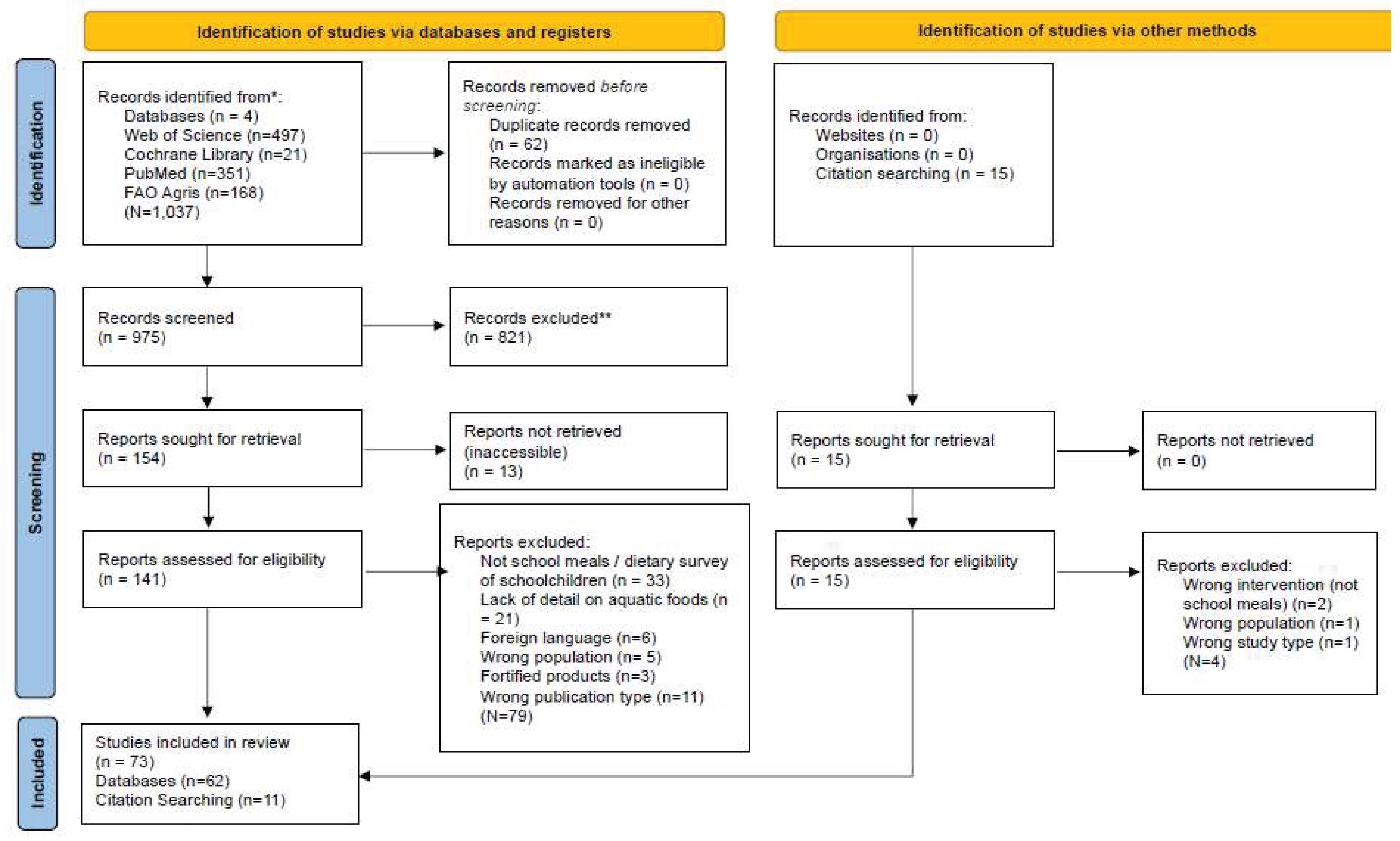
Figure 2.
Direction of evidence and sources of evidence on dietary and health outcomes. Notes: main bars count parent studies once per outcome; publication counts are shown separately. RCT= randomized controlled trial; QE = quasi-experimental / non-randomized intervention; Obs=observational study. Bar lengths show study counts. Panel B colors show low/medium/high risk of bias ratings. Risk of bias was assessed per study/publication, not per parent trial. One Oman behavioral result did not have a clear direction of effect and was only included in Panel A. No clear comparative difference includes descriptive/comparator-limited findings and does not establish absence of effect.
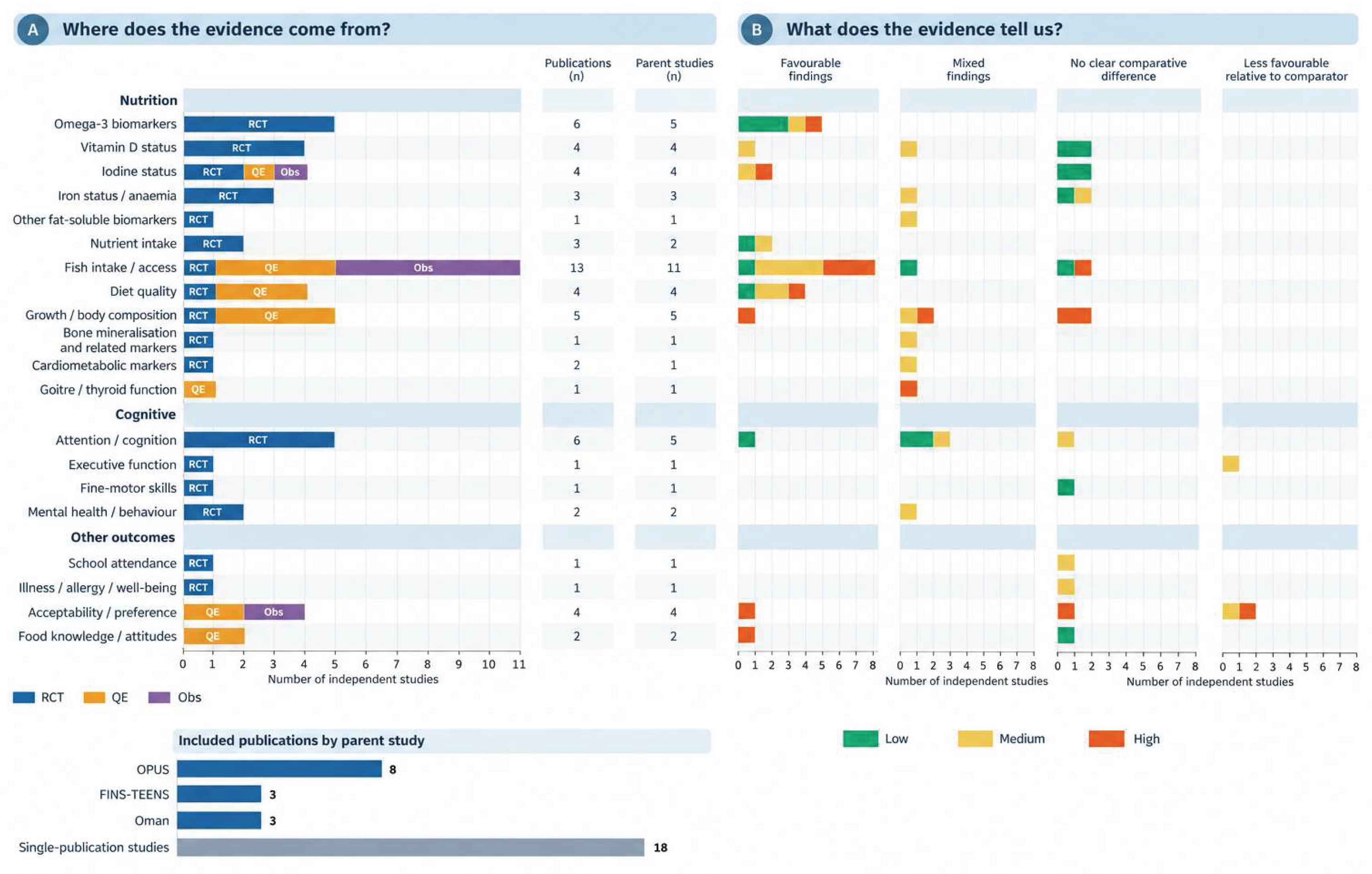

Table 1.
Number of studies by country classification and category.
| Category | Study Type | No. of Studies (n=73)** | Table |
| Health and Dietary Outcomes for Consumers | RCT | 15 | Table 2 |
| Quasi-Experimental | 7 | Table 3 | |
| Observational | 10 | Table 4 | |
| Food safety | 1 | Table 5 | |
| Outcomes for Environment | 8 | Table 6 | |
| Acceptability Trials | 21 | Table 8 | |
| Outcomes for Producers / Operational Feasibility Studies / Studies Assessing Cost | 8 | Table 7 | |
| Analysis of school menus | 9 | Table 9 | |
| ** six studies were classified under 2 categories (Ahern et al 2025 (Ahern et al., 2025) assessed feasibility and acceptability; Angeles-Agdeppa et al. 2016 (Angeles-Agdeppa et al., 2014) was a quasi-experimental study with acceptability trial; Ximenes et al 2026 (Ximenes et al., 2026) assessed menus and operational feasibility; Bostock et al. 1985 (Bostock, Montano and Mora, 1985) assessed acceptability and cost; and Ratha et al. 2024 (Ratha et al., 2024) was a quasi-experimental study with cost assessments; Stern et al., 2023 (Stern et al., 2023) assessed environmental outcomes and cost of school meals) | |||
| Country Classification (World Bank, 2025-26) | No. of Studies (n=73) | ||
|
High Income Spain - 11; Denmark-9, Norway, France - 4 each; United Kingdom, Chile, Italy, Japan, Oman, USA - 3 each; Portugal, Sweden* - 2 each; Germany, South Korea, Finland*, Iceland*, Trinidad - 1 each |
53 | ||
|
Upper Middle Income Brazil - 3; China, Ecuador, Indonesia, South Africa - 1 each |
7 | ||
|
Lower Middle Income Ghana - 5; Timor-Leste - 2; India, Kenya, Philippines - 1 each |
10 | ||
|
Low Income Uganda - 2; Malawi - 1 |
3 | ||
| *1 study included Sweden, Finland and Iceland | |||
| Whole Diet or Aquatic-Food Specific Study | No. of Studies (n=73) | ||
| Broader school meals / whole diet | 44 | ||
| Fish-specific | 28 | ||
| Seaweed-specific | 1 | ||
| Species Category | No. of Studies (n=73) | ||
| Fish (not specified) | 39 | ||
| Large fish: grouper, sea bream, tuna, snapper, salmon, cod, Nile Perch, sea trout, hake, pollock | 18 | ||
| Medium fish: tilapia, trout | 4 | ||
| Small fish: anchovies, sardines, mackerel | 9 | ||
| Mollusks: squid, calamari | 2 | ||
| Shellfish: shrimp | 3 | ||
| Crustaceans: crab | 1 | ||
| Seaweed | 7 | ||
| Shark | 1 | ||
| * The total number does not add to 73 studies as several studies were categorized in more than one category, as different types of aquatic foods were included in school meals (for example, large and small fish if tuna and anchovies were included) | |||
| Source Category | No. of Studies (n=73) | ||
| Imported | 1 | ||
| Large-scale producer | 2 | ||
| Local producer/cooperative (capture or farmed not specified) | 3 | ||
| Local small-scale fish farmer | 2 | ||
| Local small-scale fisheries | 4 | ||
| Not specified | 57 | ||
| University / Laboratory | 3 | ||
| By-products from industrial processing | 1 | ||
| Form Category | No. of Studies (n=73) | ||
| Dried | 3 | ||
| Fillet: grilled or breaded | 11 | ||
| Fried | 1 | ||
| Not specified | 40 | ||
|
Other: fish meatballs, fish pie, fish spread, enriched biscuits, fish burger, fish soup, surimi |
10 | ||
| Powder (integrated into local recipes) | 9 | ||
| * 1 study offered 2 different forms of fish (fillet and other) | |||
Disclaimer/Publisher’s Note: The statements, opinions and data contained in all publications are solely those of the individual author(s) and contributor(s) and not of MDPI and/or the editor(s). MDPI and/or the editor(s) disclaim responsibility for any injury to people or property resulting from any ideas, methods, instructions or products referred to in the content. |
© 2026 by the authors. Licensee MDPI, Basel, Switzerland. This article is an open access article distributed under the terms and conditions of the Creative Commons Attribution (CC BY) license.
Copyright: This open access article is published under a Creative Commons CC BY 4.0 license, which permit the free download, distribution, and reuse, provided that the author and preprint are cited in any reuse.