

Submitted:
02 November 2026
Posted:
03 November 2026
You are already at the latest version
Abstract
A mixture of barium carbonate and Pyrex-type powders was heat treated at 500°C-950°C temperature range, for 2 hours at each temperature. The course of the reaction was studied by XRD and weight loss analysis. Reaction of barium carbonate with the Pyrex-type glass was detected at 600°C by weight loss analysis. XRD shows formation of various barium silicates starting at 650°C. At high temperature ,850-950°C, only one crystalline phase, sanbornite, was detected. Silica phase related to quartz starts to separate from the Pyrex-type glass at 650-800°C. Another phase of silica, cristobalite, was detected at 750°C only. The separated silica phase is very reactive with barium carbonate, yielding various silicates well below the decomposition temperature of barium carbonate.
Keywords:
barium carbonate
; Pyrex-type glass powder
Introduction
The process for the preparation of porous sintered bodies with large open pore volume and defined pore diameter was patented by W. Kiefer and M. Sura (1). Precursors of the sintered porous body are two ingredients : a sinterable material in a form of finely ground powder and a leachable materials in the form of powder of a defined particle size .The leachable material should have a higher melting point than the sintering temperatures of the sinterable materials (typically glasses and glass ceramics ) and should be leachable (by water or acid or base). It is also written in the patent that volume fraction of the leachable material does not change during the sintering process. Many types of leachable materials such as: “ halogens, sulfates, sulfides, carbonates, phosphates, chromates, tung states, aluminates, silicates and zirconates. Especially desirable and inexpensive leachable substances for use with glasses includes the alkali chlorides and sulfates and the alkaline earth chlorides, and the sulfates such as for example NaCl, Na2SO4 and K2SO4 (1).) “, are claimed.
Hormadaly(2) and Dov et.al.(3) have shown that alkaline earth carbonates (SrCO3 and BaCO3) react with Pyrex -type glass powder at a temperature range that taught in referece1. CaCO3 decomposes to CaO and CO2,thus changing its volume fraction and probably its particle size. BaCO3 was very reactive with Pyrex-type glass forming high expansion barium silicates. Reference 2 shows that BaCO3 reacts with Pyrex-type glass , transition metal oxides (CuO ,TiO2 ) and post transition oxide (SnO2) to form the Han (Berke (4) and Nicola et.al. (5)) blue and purple pigments BaCuSi4O10 ,BaCuSi2O6 respectively, and the compounds Ba2TiSi2O8 ,Ba(Ti,Sn)Si3O9 ( artificial analogues ) of the minerals Fresnoite and Pabstite ,as a glass-crystalline composites. Hormadaly et. al. (6) compared the reactivities of three silica sources (quartz,vireous silica,pyrex-type glass) in forming crystalline barium silicates and shown that pyrex -type glass is the most reactive source of silica, the reactivities were found to follow the trend:
Pyrex-type glass >vitreous silica>quartz
The reactivity of Pyrex-type glass as very active silica source first reported in reference 2, is unique and requires further research to understand the reactivity. This communication is first effort to shed some light on this phenomenon by following the reaction of barium carbonate with Pyrex-type glass with XRD study and weight loss analysis.
Experimental
Pyrex-type glass (Borosilicates glasses under the trademark Pyrex ® were introduced in 1915 by the Corning Glass Works company. Similar compositions are made by other companies and for the purposes of this paper all referred to as Pyrex-type glass. The known borosilicate glass called “DURAN” of the company Schott Glaswerke of Mainz, Germany, known as type number 8330 has the following properties: glass transition temperature (Tg) of this glass is 530 °C, the softening temperature (Ts) (visocity η of the glass is 107.6 dPas) is 815 °C and the working temperature (η=104 dPas) is 1270 °C Kiefer et al.(1). Composition of Pyrex-type glass (Corning 7740 and Kimble (Owens-Illinois) KG-33 ) are given by Bansal and Doremus (7) in wt.% : SiO2 - 81; B2O3 - 13 : Na2O - 4 ; Al2O3 - 2 .The composition of both Corning 7740 and Schott 8330 is almost as given by reference7). Waste pieces of Pyrex-type glass were cleaned with water then rinsed with ethanol and manually broken to a powder using stainless steel pestle and mortar. Powder was sieved through 60 mesh screen (250 microns), ball milled with isopropanol for 24 hours and the glass slip was sieved through 325 mesh screen. After evaporation of isopropanol the powder was dried in oven at 100 °C.
Ten mixtures of barium carbonate and ball-milled Pyrex glass powder were prepared ( samples codes JH-057-44A-J) by grinding the ingredients in agate pestle and mortar, each sample was ground three times with isopropanol to ensure homogeneity. The compositions of the ten samples are identical, each sample contained 1,5g of Pyrex glass powder (Pyrex glass contains 81 wt.% silica i.e., each sample had 1.5x0.81/60.086=0.02022 moles of SiO2 ) and 2g of BaCO3 (0.01013 moles),the calculated molar ratio of BaCO3/SiO 2 is 1/2 in all ten samples. After grinding and drying on a hot plate, samples were placed in Pt crucible and heated in an electric box furnace. The heating profiles were : ramp (20 °C/min.) to peak temperature, dwell of 2 hours at peak temperature ( ten peak temperatures used:500;550;600;650;700;750;800;850;900;950 °C) and cool down ramp (20 °C/min.) to room temperature. Each sample was monitored by weighing in an analytical balance before heat treatment (wi ) and after heat treatment (wf ). The weight loss Δw ( wi - wf ), peak temperature, sample code of each sample and percent of reacted barium carbonate are collected in Table 1. Percent of reacted barium carbonate was estimated by two methods: weighing the sample before and after heat treatment to obtain Δw and subtracting the weight loss due to moisture 0.0277g (this value is the average weight loss of samples(A,B) heated at 500 and 550 °C respectively), and the second method to estimate the percent reacted barium carbonate was from XRD. Both methods are considered as qualitative measures. The error of weighing is ±0.0001g, the error for Δw is ±0.0002g.
Phase formations due to reaction between BaCO3 and Pyrex-type glass powder were measured by x-ray diffraction. A Powder Diffractometer Empyrean (Panalytical B.V., Almelo, the Netherlands) equipped with position sensitive detector X’Celerator was used. Data were collected in the θ/2θ geometry using Cu Ka radiation (λ=1.54178 Å) at 40 kV and 30 mA. Scans were run during ~15 min in a 2θ range of 10-60° with step equal to ~0.03°.
Surface area was measured By the BET method using Quantachrome Nova Touch LX3.Surface area of ball milled Pyrex –type glass powder was 2.12 m2/g .
BaCO3 used was from (BDH Chemicals LTD. AnalaR, minimum assay 99.5%).
Results and Discussion
BaCO3 by itself decomposes at temperatures higher than 1000 °C, Arvanitidis et.al.(8), Fahim et.al.(9), Lander (10) and Tushar et.al.(11) and was reported (8) as hygroscopic material. The weight losses measured (ΔW (g)) are composed of two parts: loss of moisture of the starting materials (Pyrex- type glass powder and BaCO3 ) and loss of CO2 due to reaction of barium carbonate with the Pyrex glass powder. Table 1 and Figure 1 and Figure 2 (samples A and B) show that the weight losses measured are almost the same and Figure 1 and Figure 2 show that BaCO3 did not react with the glass at 500 and 550 °C respectively. Probably all the weight losses at 500 and 550 °C are moisture loss for samples A and B. The average weight loss of samples A and B is 0.0277g. Column 5 of Table 1 presents the (ΔW-0.0277)(g) values for each sample assuming that all samples have the same moisture weight loss (because all the samples have the composition, the same weight and the same treatment) due to moisture in the reacting materials. This assumption is probably valid for samples A and B but may not hold for samples heated at T> 600 °C. At higher temperature the weight loss of moisture is expected to increase with temperature. Therefore, (ΔW-0.0277)(g) values, which are the weight losses due only to the reaction of barium carbonate with Pyrex are overestimated i.e., they are higher than the real weight for the reaction of barium carbonate with Pyrex and the calculated percent reaction of barium carbonate can exceed the 100% value.
For complete reaction of barium carbonate (0.01013 moles) we expect weight loss (CO2) of ΔW=0.01013x44=0.4457g. The estimated percent reaction by weight is (ΔW-0.0277}/0.4457 expressed as percent. Percent reacted barium carbonate from XRD is obtained from the software analysis of the XRD. Table 1 shows (sample C) that (ΔW-0.0277) is a significant number and it is an indication that barium carbonate reacted with Pyrex-type glass powder after 2 hours at 600 °C. Figure 3 (XRD of sample C) shows only lines of BaCO3 and therefore an estimated percent of reaction zero. Table 1 shows that the estimated percent reacted BaCO3 by weight loss increases monotonically with temperature (above 550 °C) and at higher temperatures (900&950 °C ) it is overestimated. Percent reacted BaCO3 by XRD follows similar trend but shows only one phase (sanbornite BaSi2O5 ) at 850 °C and higher temperatures (Figure 8, Figure 9 and Figure 10). Figure 8, Figure 9 and Figure 10 show the presence of one phase only-sanbornite, but they are not an indication of what percentage of BaCO3 was converted to sanbornite . BaCO3 can react completely with the Pyrex by forming sanbornite and part of BaCO3 decomposes to BaO and becomes part of the residual glass. From our data it is impossible to estimate what percentage of BaCO3 became sanbornite. If we assume that all BaCO3 reacted with all the SiO2 of the Pyrex glass, than we expect formation of 0.0101 moles of BaSi2O5 i.e., 90.81wt.% sanbornite and 9.19 wt.% residual glass.
Figure 3.
XRD of JH-057-44C 600 °C 2hr.
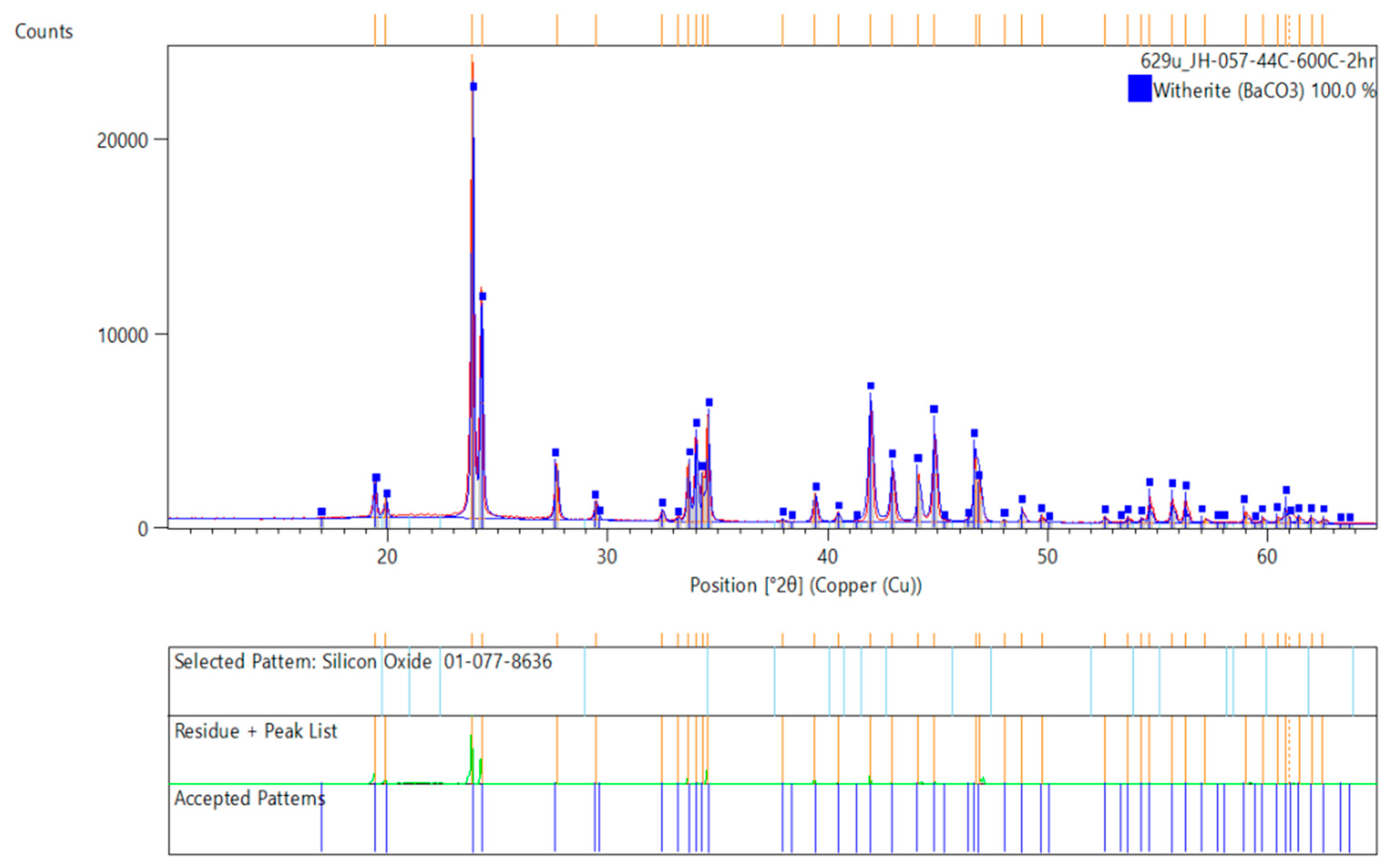
Figure 3 shows only one phase BaCO3 ,however weight loss analysis (Table 1) indicate that Pyrex-type glass reacted with BaCO3 at low temperature of 600C.
Figure 4 shows that barium carbonate partially reacted with the glass to form barium orthosilicate Ba2SiO4 . Silica phase related to quartz separated from the Pyrex-type glass and unreacted BaCO3.
Figure 4.
XRD of JH-057-44D 650 °C 2hr.
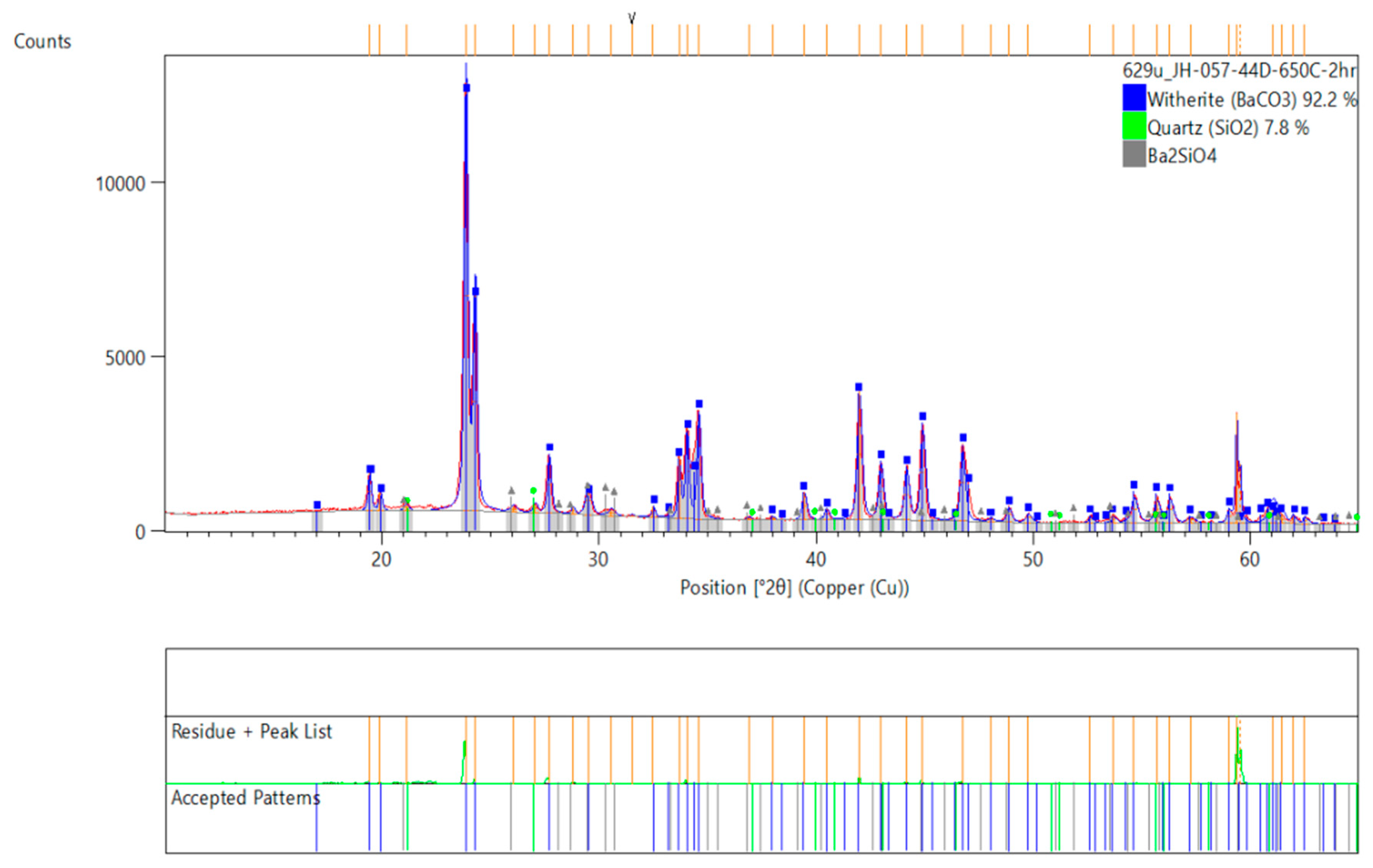
Jean and Fang(12) reported the crystallization of Pyrex-type glass powders at 700 °C to 1000 °C for heat treatment of 8 hours and the crystallization at 700 °C for heat treatments times ranging from from 0 to 8 hours and found that cristobalite is formed. Hormadaly et. al. (6) ,also reported formation of cristobalite when powder of Pyrex-type glass was heated one hour at 900 °C.Jean and Gupta(13) reported the devitrification of Pyrex-type glass powders with alumina powder as devitrification inhibitor. Jean and Gupta(14-16),also reported the crystallizations of binary borosilicate glasses and the interfacial reaction between sapphire and borosilicate glass. Here, the combination of barium carbonate and Pyrex-type glass powder results in a different phase of silica, quartz related phase, at lower temperature of 650 °C and much shorter heat treatment time of 2 hours. This quartz related phase is very reactive (2,6) and has different behavior than quartz. It reacted with barium carbonate at 600 °C (see Table 1),reaction detected by weight loss but not by XRD, Figure 3 shows only one phase BaCO3.Figure 4 also shows that the estimated concentration (by XRD) of silica phase is larger than Ba2SiO 4 .Quartz ,as a source of silica, is not reactive like vitreous silica or Pyrex-type glass(2,6). The quartz related phase which separate at low temperature (crystallizes) from the Pyrex-type glass is very reactive source of silica and behaves in a different way from quartz. The combination BaCO3 and Pyrex-type glass results in quartz related phase of silica at low temperature of 650 °C and a short heat treatment of only 2 hours.
Figure 5 shows similar trend to Figure 4, Ba2SiO4 formation, silica phase separation and some unreacted BaCO3.
Figure 6 presents more complex situation, two phases of silica related materials, Ba2SiO4, un-named barium silicate (PDF card # 04-009-1825; Monoclinic BaSi2O5—C2/c (space group number 15) Ba2Si4O10 and unreacted BaCO3. The figure also shows two phases of silica which separated from Pyrex-type glass ;one phase is α-quartz and the second phase(traces) is cristobalite.
Figure 7 shows two phases of barium silicates Ba2Si4O10 ,Ba2Si3O8,silica phase related to quartz and traces of unreacted BaCO3.
Figure 8, Figure 9 and Figure 10 show the presence of one phase BaSi2O5 .At 850 °C (Figure 8),all the barium carbonate and the separated silica phase reacted and all the other barium silicates phases converted to sanbornite.
Figure 8.
XRD of JH-057-44H 850 °C 2hr.
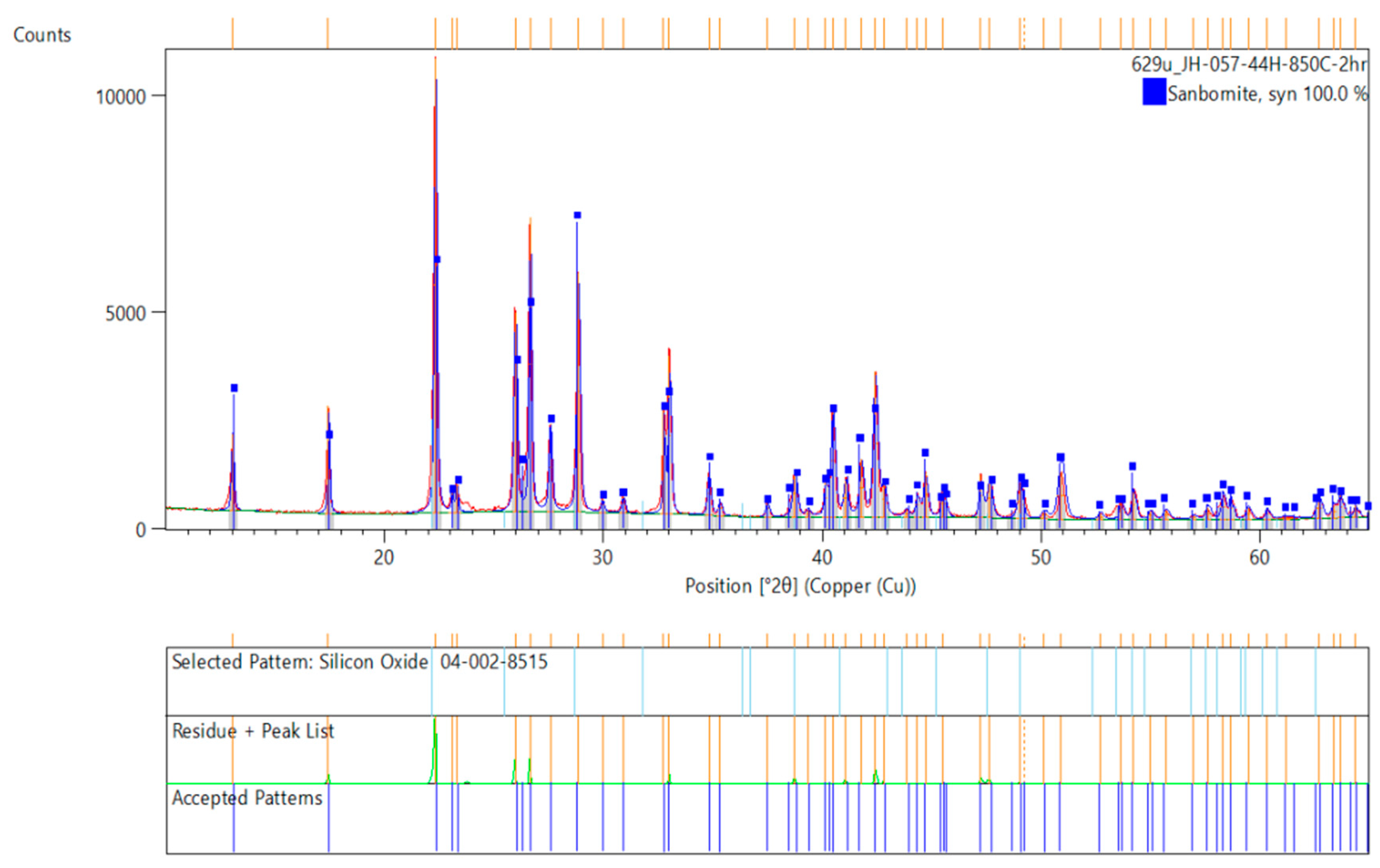
Figure 9.
XRD of JH-057-44I 900 °C 2hr.
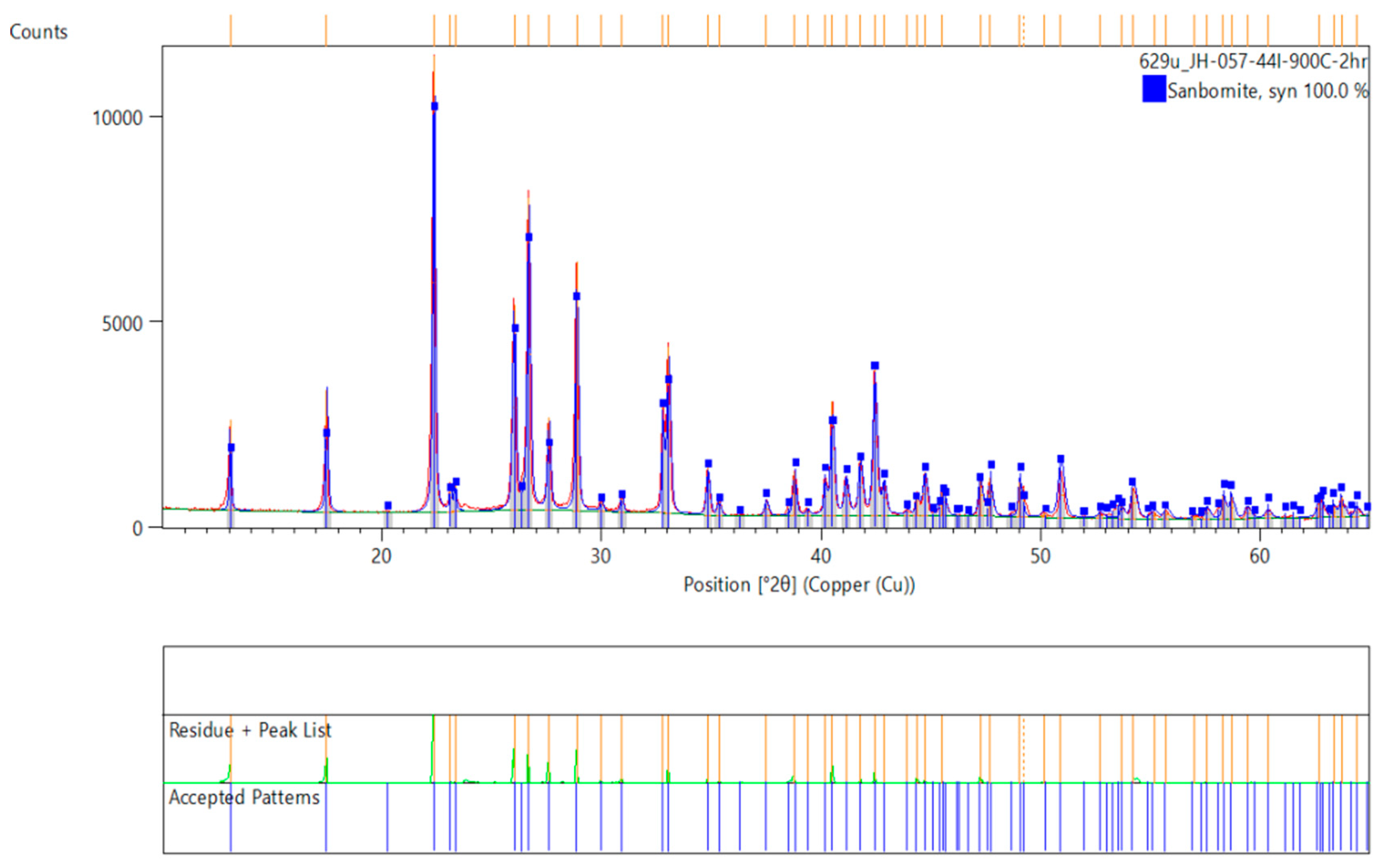
Figure 10.
XRD of JH-057-44J 950 °C 2hr.
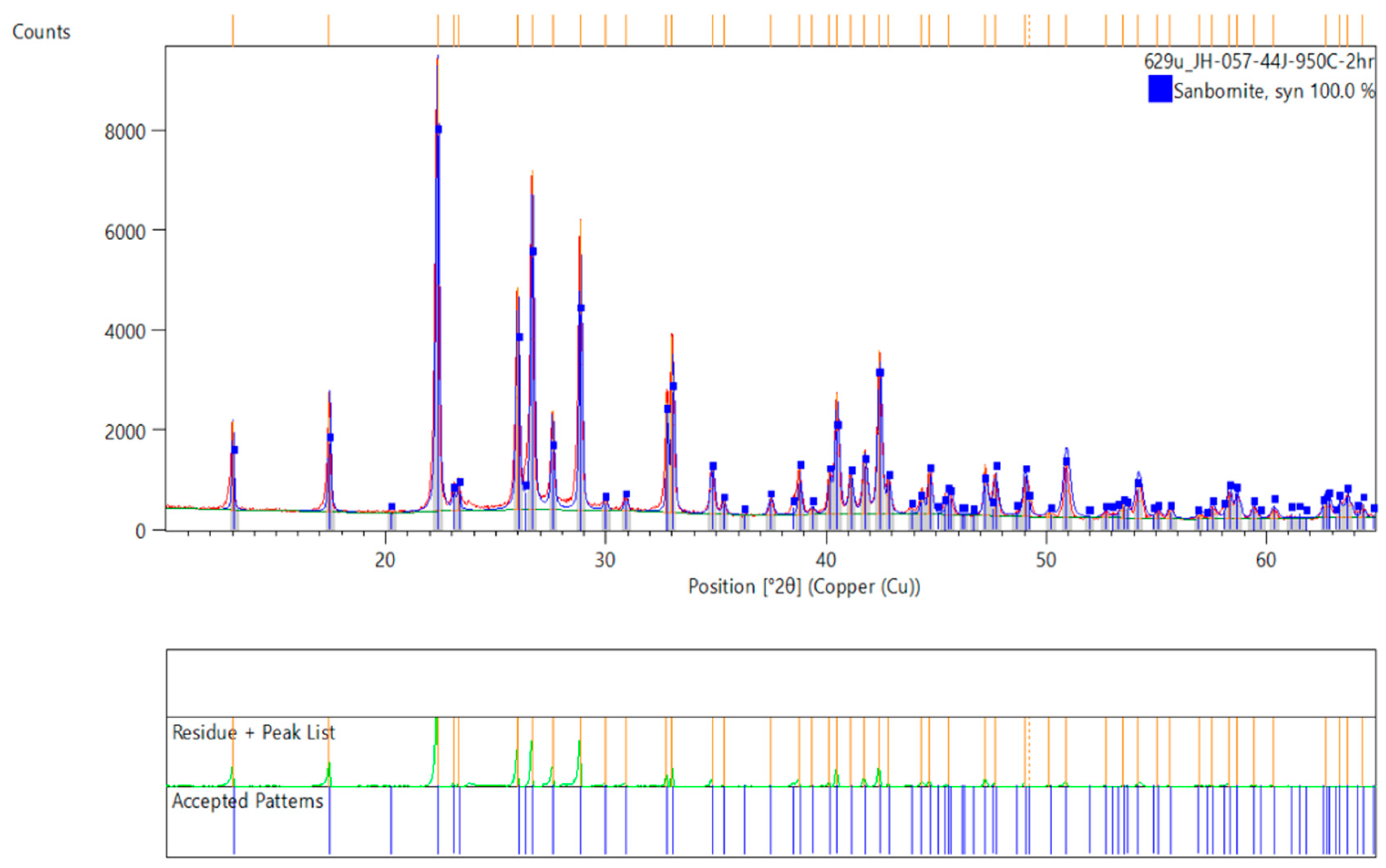
Figure 11 summarizes the XRD data of Figure 1, Figure 2, Figure 3, Figure 4, Figure 5, Figure 6, Figure 7, Figure 8, Figure 9 and Figure 10, showing no reaction between barium carbonate and Pyrex-type glass till 650 °C, separation of quartz related silica phase commencing at 650 °C and lasting till 800 °C, formation of traces of cristobalite at 750 °C and presence of one phase of barium silicate (sanbornite) at 850-950 °C. The figure also shows that all the barium carbonate reacted with the Pyrex-type glass.
Table 2 presents the silica phases formed at different temperatures. Quartz related silica phase is the dominant phase at all temperatures contrary to cristobalite formation in pure Pyrex-type glass (12,13). The combination of barium carbonate and Pyrex-type glass influences the silica phase formation. Formation of silica phase at low temperature of 650 °C where the diffusion of metallic ions is very sluggish, suggests that other mechanisms like phase separation control the crystallization.
Summary and Conclusions
Barium carbonate reacts with Pyrex-type glass at low temperatures well below its decomposition temperature.
Pyrex-type glass in combination with barium carbonate behaves like very active silica source.
The dominant silica phase which crystallizes during the heat treatment of barium carbonate Pyrex-type glass is quartz related phase.
In the temperature range studied, various barium silicates were formed at temperatures lower than 800 °C.At 850-950 °C only one phase, sanbornite, exists.
References
- Kiefer, W.; Sura, M. “Method of manufacturing porous sintered inorganic bodies with large open pore volume”. U.S.Patent, 4 588540, 13 May 1986. [Google Scholar]
- Hormadaly, J. WO 2022/101905, International publication date; Method of manufacturing porous sintered Pyrex-type glass and methods of synthesizing composites and powders of alkaline earth silicates. 19 May 2022(19.05.2022.
- Dov, M.; Pears, N.; Hormadaly, J. Synthesis of Pyrex –type porous glass made with calcium carbonate as pore forming material. J.Non-Crystl. Solids. 2021, 564, 120788. [Google Scholar] [CrossRef]
- Berke, H. The invention of blue and purple pigments in ancient Times “. Chem. Soc. Rev. 2007, 36, 15–30. [Google Scholar] [CrossRef] [PubMed]
- Nicola, M.; Gobetto, R.; Masic, A. Egyptian blue, Chinese blue, and related two-dimensional silicates from antiquity to future technologies. Part A: general properties and historical uses. Rend. Fis. Acc. Lincei 2023, 34, 369–413. [Google Scholar] [CrossRef]
- Hormadaly, Jacob; Dov, Mariana; Friedlander, Lonia; Pears, Natalia. Process for the Preparation of Artificial Analog of Sanbornite-Glass Composites. Ceramics 2024, 7, 1994–2005. [Google Scholar] [CrossRef]
- Bansal, Narottam P.; Doremus, R.H. “Handbook of glass properties”; Academic press,Inc., 1986. [Google Scholar]
- Arvanitidis; Sichen, Du.; Seetharaman, S. A study of the thermal decomposition of BaCO3 “. Metall. Mater. Trans. B 1996, 27B, 409–416. [Google Scholar] [CrossRef]
- Fahim, R.B.; Zaki, M.I.; Hussein, G.A.M. Effect of processing parameters on the kinetics of decomposition of certain simple anhydrous carbonates. Powder Technol. 1982, 161–165. [Google Scholar] [CrossRef]
- Lander, J.J. The Phase System BaO-BaC03. Am.Chem.Soc. 1951, 73, 5893. [Google Scholar]
- Tushar, B.K.; Searcy, A.W. Kinetics and Thermodynamics of Decomposition of Barium Carbonate “. J.Chem.Soc.Faraday Trans. 1976, 1(72), 1889. [Google Scholar] [CrossRef]
- Jean, J.H.; Fang, Y.C. Devitrification kinetics and mechanism of Pyrex. [CrossRef]
- borosilicate glass”. J. Mater. Res. 2001, Vol. 16(No. 6). [CrossRef]
- Jean, J.H.; Gupta, T.K. Alumina as a Devitrification Inhibitor during Sintering of Borosilicate glass Powders”. J.Am.Ceram.Soc. 1993, 76[8], 2010–16. [Google Scholar] [CrossRef]
- Jean, J.H.; Gupta, T.K. Crystallization Kinetics of Binary Borosilicate Glass Composite”. J.Mater.Res. 1992, 7[11], 3103–11. [Google Scholar] [CrossRef]
- Jean, J.H.; Gupta, T.K. Devitrification Inhibitor in Binary Borosilicate Glass Composite”. J.Mater.Res. 1993, 8[2], 356–63. [Google Scholar] [CrossRef]
- Jean, J.H.; Gupta, T.K. Interfacial Reaction Kinetics between Sapphire and Borosilicate glass. J.Mater.Res. 1992, 7[9], 2514–20. [Google Scholar] [CrossRef]
Figure 1.
XRD of JH-057-44A 500 °C 2hr.
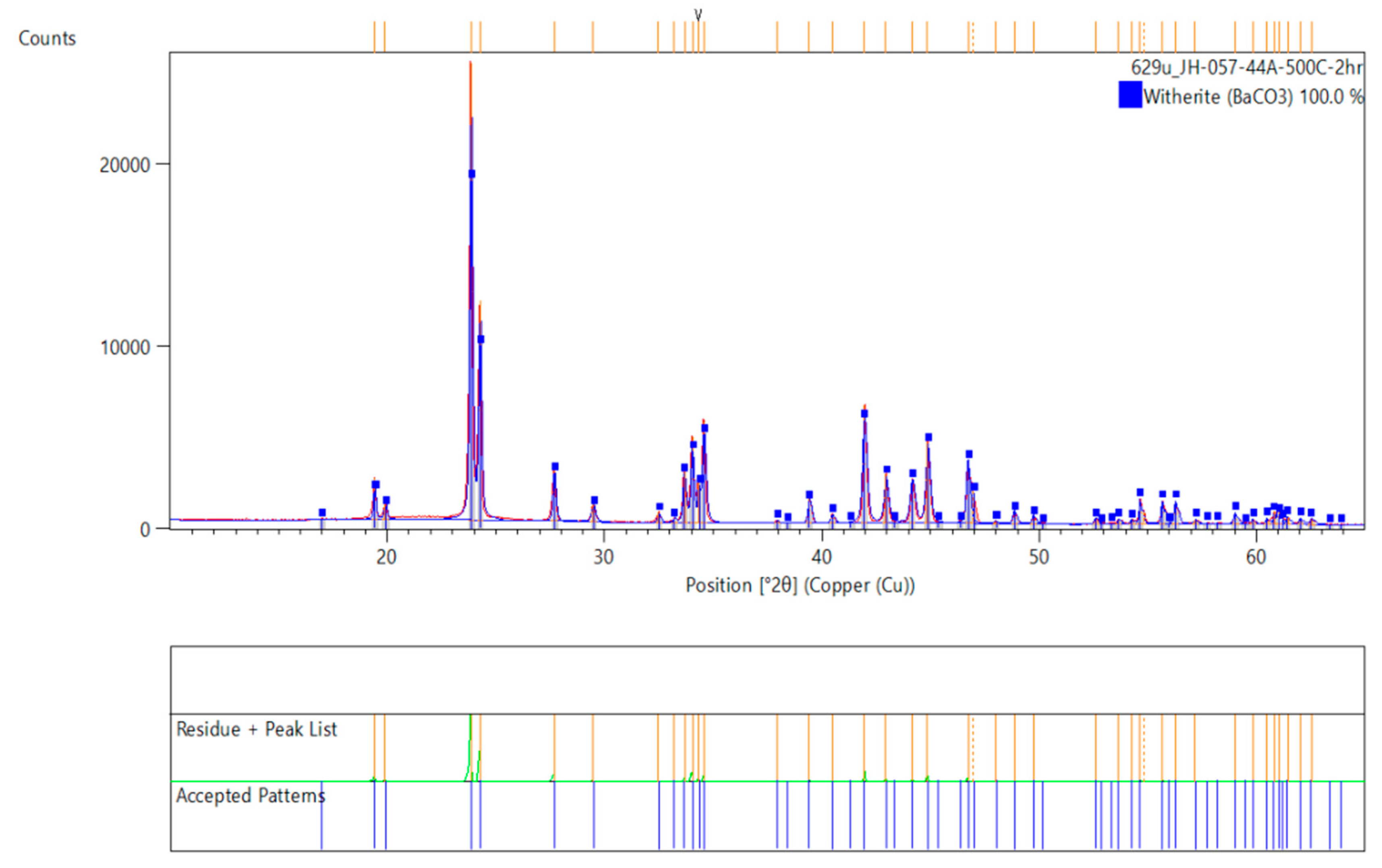
Figure 2.
XRD of JH-057-44B 550 °C 2hr.
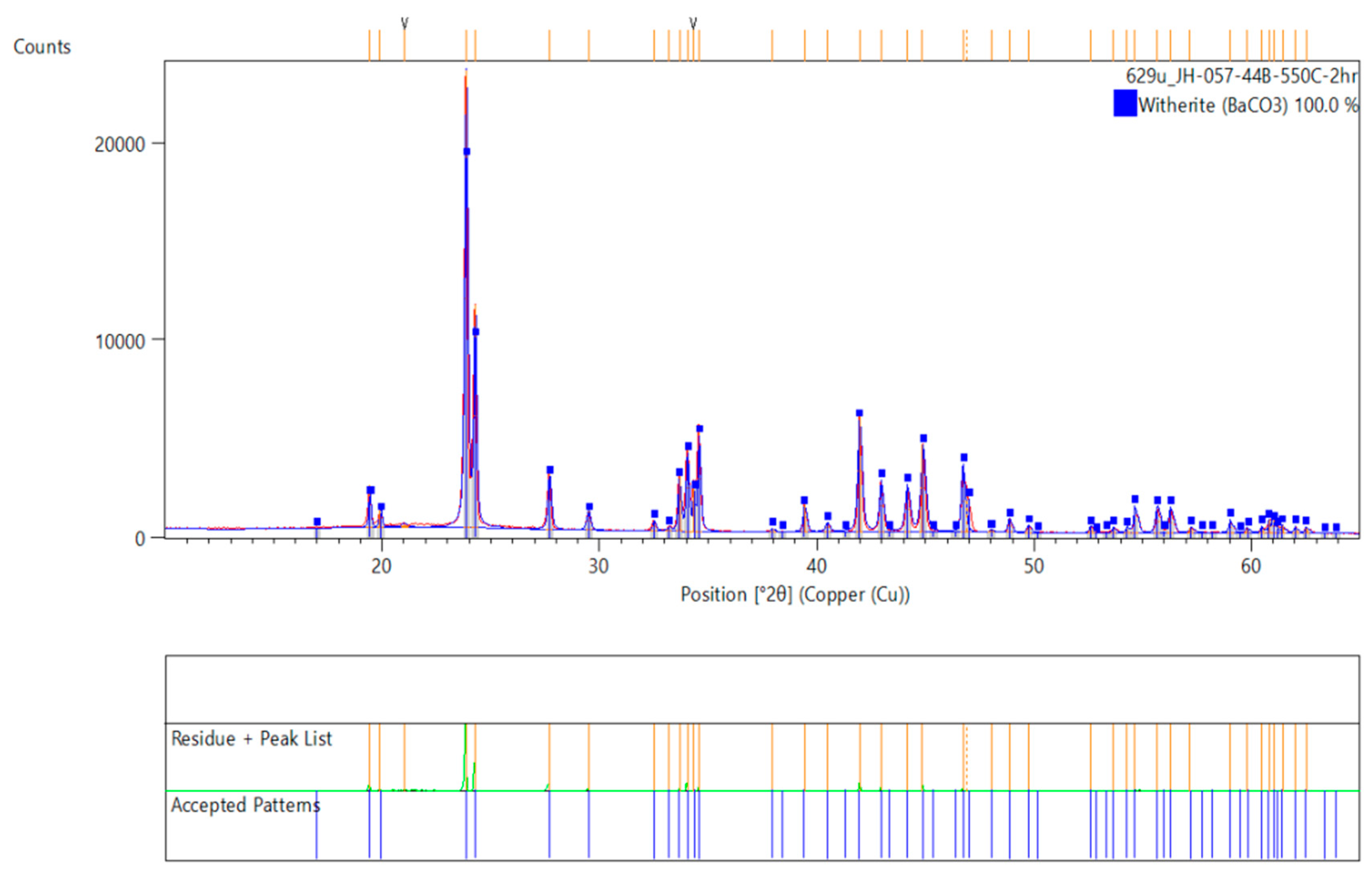
Figure 5.
XRD of JH-057-44E 700 °C 2hr.
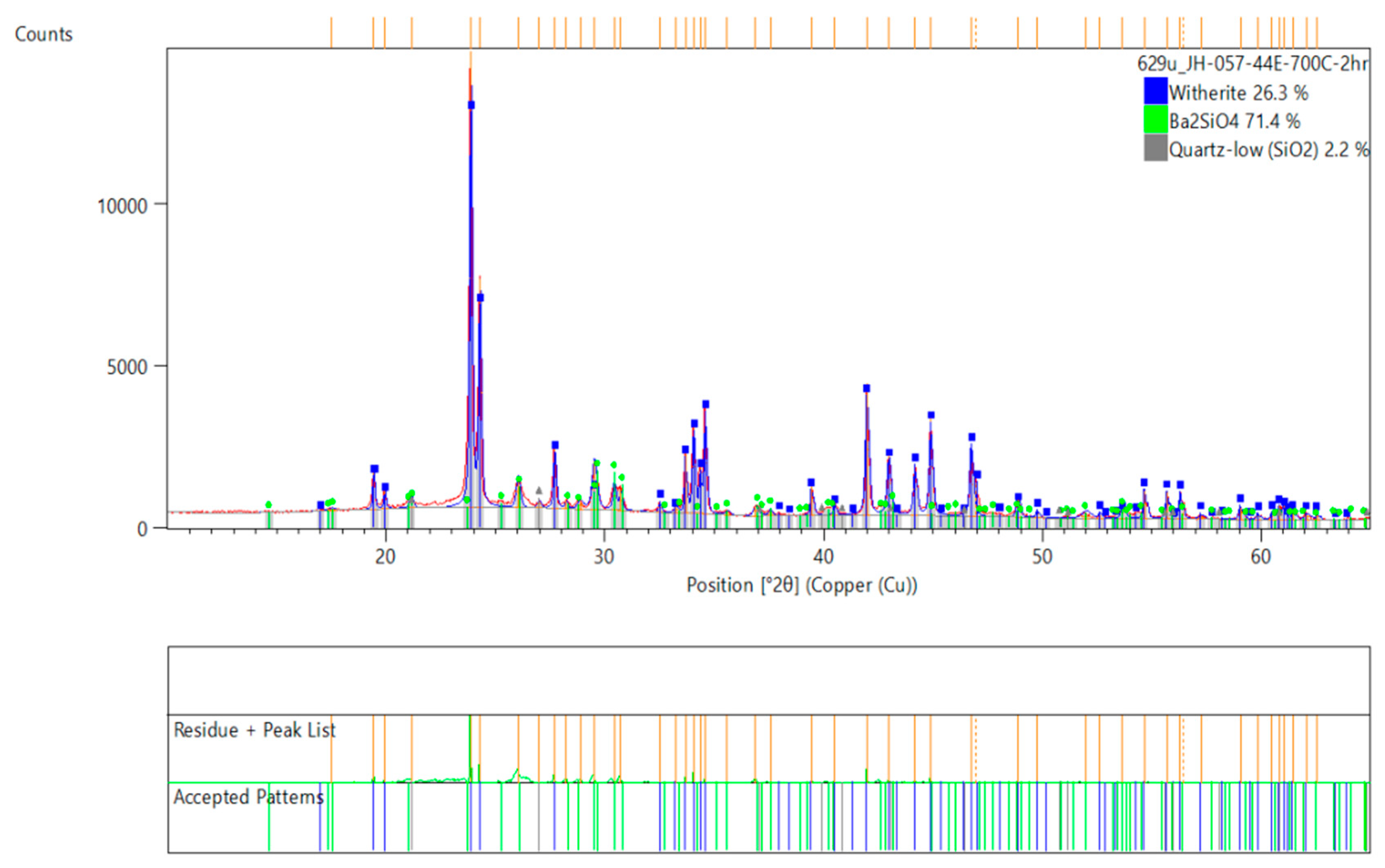
Figure 6.
XRD of JH-057-44F 750 °C 2hr.
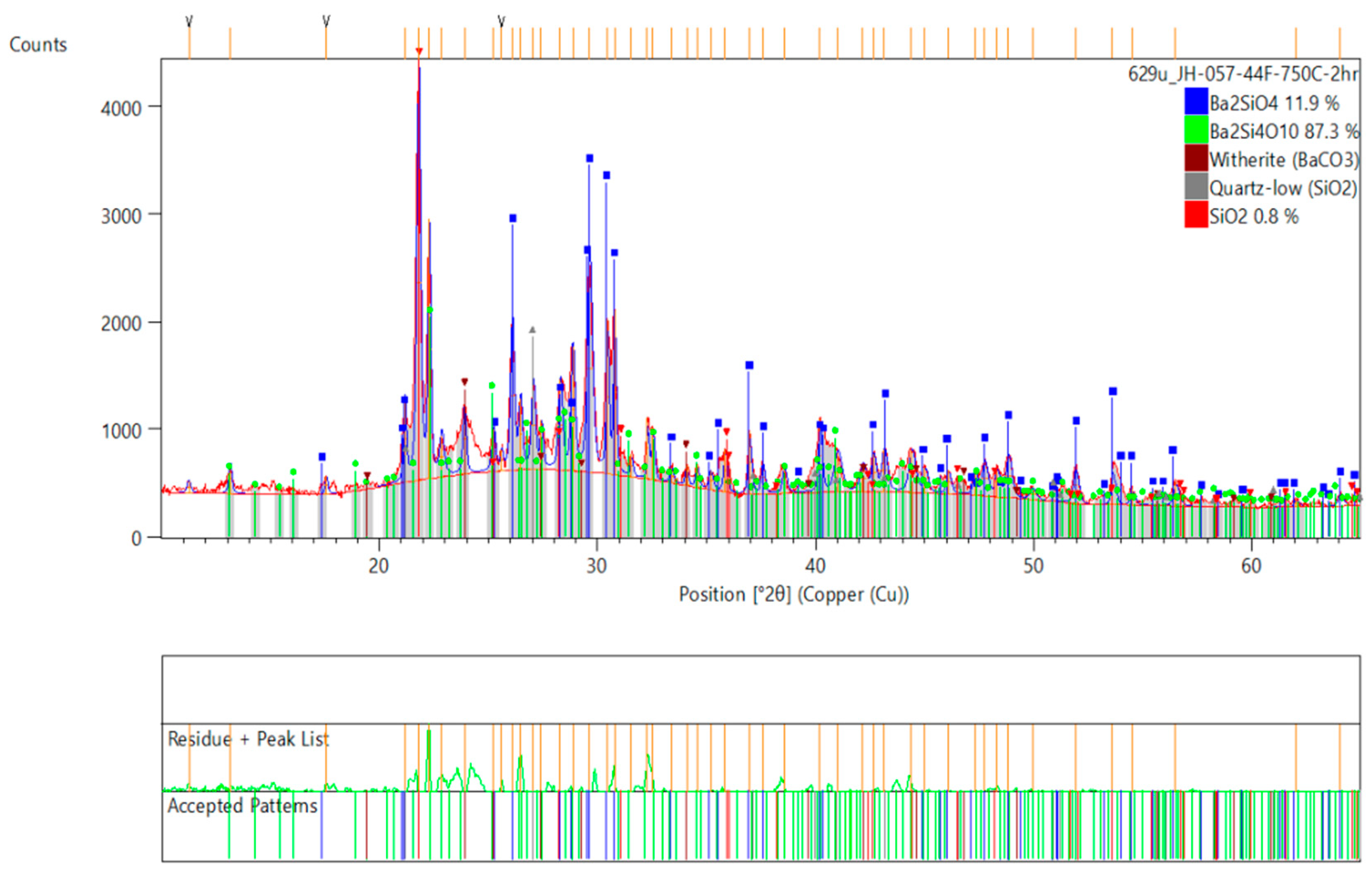
Figure 7.
XRD of JH-057-44G 800 °C 2hr.
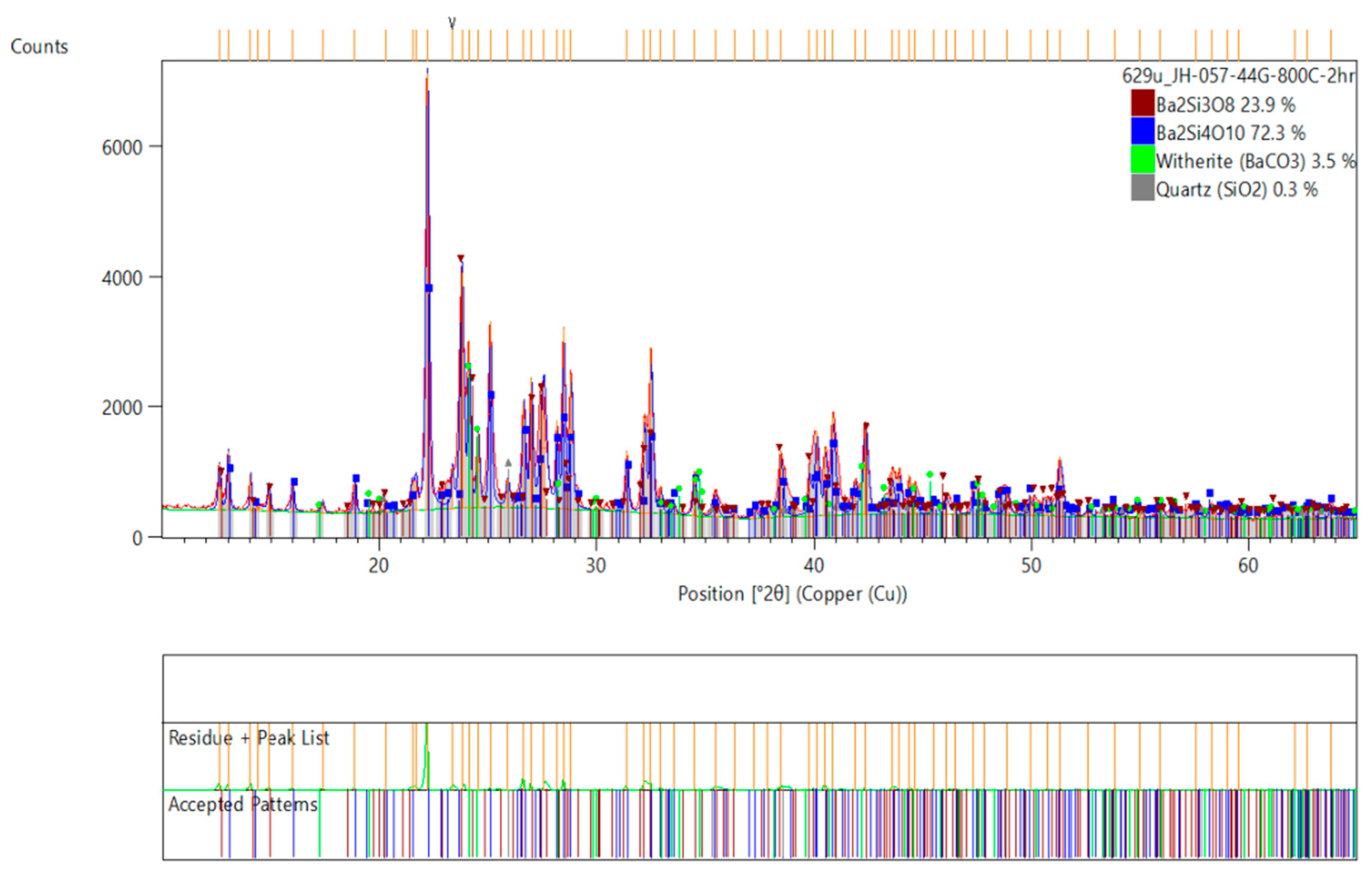
Figure 11.
Comparative XRD at various temperatures.
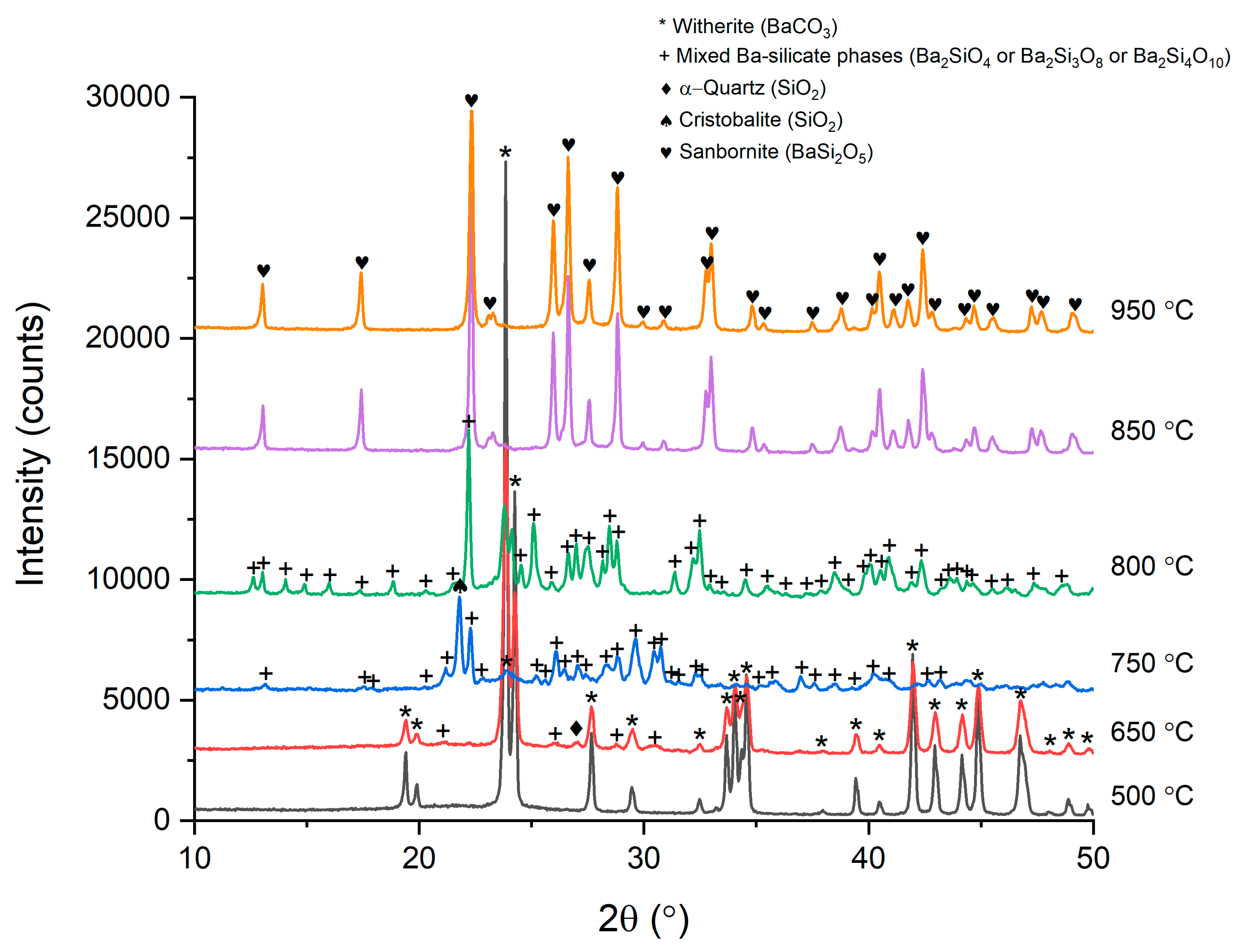

Table 1.
Samples numbers, codes, weight loses , weight loses without moisture (ΔW-0.0277) and percent reacted Barium carbonate.
Table 1.
Samples numbers, codes, weight loses , weight loses without moisture (ΔW-0.0277) and percent reacted Barium carbonate.
| Sample | Code | Temp(°C) | ΔW (g) | (ΔW-0.0277)(g) | %reacted BaCO3 | %reacted BaCO3 by XRD |
| A | JH-057-44A | 500 | 0.0274 | 0.000 | 0 | 0 |
| B | JH-057-44B | 550 | 0.0280 | 0.000 | 0 | 0 |
| C | JH-057-44C | 600 | 0.0431 | 0.015 | 3.35 | 0 |
| D | JH-057-44D | 650 | 0.0891 | 0.061 | 13.73 | 10.3 |
| E | JH-057-44E | 700 | 0.2098 | 0.1821 | 40.72 | 21.4 |
| F | JH-057-44F | 750 | 0.4354 | 0.4077 | 91.17 | 98.5 |
| G | JH-057-44G | 800 | 0.4658 | 0.4381 | 97.97 | 96.5 |
| H | JH-057-44H | 850 | 0.4698 | 0.4421 | 98.86 | 100 |
| I | JH-057-44I | 900 | 0.486 | 0.4583 | 102.48 | 100 |
| J | JH-057-44J | 950 | 0.4888 | 0.4611 | 103.11 | 100 |
Table 2.
SiO2 phase progression.
| Temperature | SiO2 Phase(s) |
| 650 C | Alpha quartz (low quartz) |
| 700 C | Alpha quartz (low quartz) |
| 750 C | Alpha quartz (low quartz), cristobalite |
| 800 C | Alpha quartz (low quartz) |
| 850 C | Sanbornite |
| 900 C | Sanbornite |
| 950 C | Sanbornite |
Disclaimer/Publisher’s Note: The statements, opinions and data contained in all publications are solely those of the individual author(s) and contributor(s) and not of MDPI and/or the editor(s). MDPI and/or the editor(s) disclaim responsibility for any injury to people or property resulting from any ideas, methods, instructions or products referred to in the content. |
© 2026 by the authors. Licensee MDPI, Basel, Switzerland. This article is an open access article distributed under the terms and conditions of the Creative Commons Attribution (CC BY) license (http://creativecommons.org/licenses/by/4.0/).
Copyright: This open access article is published under a Creative Commons CC BY 4.0 license, which permit the free download, distribution, and reuse, provided that the author and preprint are cited in any reuse.