

Submitted:
30 October 2026
Posted:
02 November 2026
You are already at the latest version
Abstract
Artemisinin-based combination therapies (ACTs) are the cornerstone of treatment for uncomplicated Plasmodium falciparum malaria in Angola. The Ministry of Health conducts therapeutic efficacy studies (TES) at sentinel sites to monitor treatment effectiveness and detect emerging antimalarial drug resistance. This study systematically reviewed the therapeutic efficacy and safety of ACTs used in Angola from 2006 to December 2025. A systematic literature search was conducted in PubMed to identify clinical studies evaluating the efficacy and safety of ACTs, including artemether-lumefantrine (AL), artesunate-amodiaquine (ASAQ), dihydroartemisininpiperaquine (DP) and artesunate-pyronaridine (ASPY), for the treatment of uncomplicated P. falciparum malaria in Angola. Of 913 records identified, seven studies from Bengo, Benguela, Luanda, Lunda Sul, Uíge, and Zaire met the inclusion criteria. ACTs showed high therapeutic efficacy, with PCR-corrected adequate clinical and parasitological response (ACPR) generally exceeding 90% through 42 days of followup. However, AL efficacy was below 90% in Zaire in 2013, 2015, Lunda Sul in 2019, and Bengo in 2021, whereas AS-AQ and DP consistently maintained high efficacy. Molecular surveillance showed no evidence of established artemisinin resistance, although markers potentially associated with reduced lumefantrine susceptibility warrant continued monitoring. Adverse events were predominantly mild and transient. ACTs remain effective and well tolerated for uncomplicated P. falciparum malaria in Angola. Nevertheless, recurrent reductions in AL efficacy at specific sentinel sites highlight the need for sustained therapeutic efficacy and molecular surveillance through regular TES to enable early detection of emerging antimalarial resistance and inform national treatment policies.
Keywords:
uncomplicated malaria
; therapeutic efficacy
; artemisinin-based combination therapies
; Plasmodium falciparum
; antimalarial drug resistance
; Angola
1. Introduction
Malaria is a vector-borne infectious disease caused by protozoan parasites of the genus Plasmodium and transmitted to humans through the bite of infected female Anopheles mosquitoes, which inoculate the parasites into the bloodstream [1,2,3]. The estimated global malaria burden increased to 282 million cases in 2024; a rise of 9 million cases (3%) compared with 2023 and was associated with approximately 610,000 deaths [1,4]. Africa accounted for approximately 94% of global malaria cases and 95% of malaria-related deaths, with nearly 75% of these deaths occurring among children under five years of age [1,4,5]. Poor sanitation systems, which promote vector proliferation, and limited access to essential healthcare services, which contribute to delays in diagnosis and timely treatment, are among the major determinants of the high malaria mortality burden in Africa [6,7].
In Angola, malaria remains one of the leading causes of morbidity and mortality, affecting approximately 10 million people and causing more than 11,000 deaths annually [8]. The disease disproportionately affects vulnerable populations, particularly children under five years of age and pregnant women [9]. Angola, like many Africans countries, is consolidate malaria control to accelerate the transition from control towards pre-elimination of malaria [10]. The introduction of artemisinin-based combination therapies (ACTs) represented a major milestone in global malaria control [11,12]. These therapeutic regimens replaced previously used monotherapies, whose effectiveness was progressively compromised by the widespread emergence and dissemination of Plasmodium falciparum resistance to conventional antimalarial drugs [12,13].
However, heterogeneity in malaria prevalence across Angolan provinces and antimalarial resistance poses a severe public health challenge, with Plasmodium falciparum showing signs of emerging resistance to standard therapies, like Artemisinin-Based Combination Therapy (ATC) [14,15]. Although therapeutic efficacy studies have demonstrated the high effectiveness of artemisinin-based combination therapies (ACTs) in Africa, the identification of areas with high treatment failure rates in countries such as Ethiopia, Uganda, Rwanda, Tanzania, and Mozambique raises concerns about the emergence and spread of antimalarial resistance [16,17,18,19,20,21]. The detection of mutations associated with partial artemisinin resistance further highlights the need for continuous and systematic epidemiological surveillance [15,21,22]. While artemisinin partial resistance remains rare, parasites frequently exhibit genetic markers linked to reduced susceptibility to lumefantrine and near-total resistance to sulfadoxine-pyrimethamine [12,22]. The decline in the efficacy of dihydroartemisinin-piperaquine (DHA-PPQ) in Guyana and Suriname, associated with the emergence of piperaquine resistance, has raised concerns among experts and highlights the need for continuous reassessment of locally adopted treatment regimens [11,23,24].
The widespread use of ACTs exerts selective pressure on parasite populations [15,25], while cross-border parasite transmission and increased human mobility may facilitate the spread of resistant phenotypes [12,15]. Therefore, the implementation of rigorous and systematic surveillance systems is essential for the early detection of declining therapeutic efficacy and the timely adoption of alternative treatment strategies. According to the 2025 WHO World Malaria Report, Angola has made progress in strengthening institutional capacity for the prevention and control of antimicrobial resistance, which is globally recognized as one of the major public health threats [1]. In this context, continuous monitoring of ACT efficacy, adopted as the first-line treatment for malaria in Angola since 2006 [12,26], is essential to preserve the effectiveness of available malaria control tools [1,15,27].
2. Materials and Methods
2.1. Research Strategy
This systematic review was conducted in accordance with the PRISMA 2020 guidelines [28,29] and was registered in the PROSPERO database (ID: CRD420261320301); available at: https://www.crd.york.ac.uk/PROSPERO/view/CRD420261320301. A comprehensive literature search was performed in PubMed/MEDLINE, Google Scholar, and Corpus databases to identify therapeutic efficacy clinical trials conducted in Angola between January 2006 and December 2025. The search strategy combined MeSH terms and Boolean operators using the following combination: (artemisinin-based combination therapy OR ACT OR artemether-lumefantrine OR artesunate-amodiaquine) AND (malaria OR Plasmodium falciparum) AND (efficacy OR safety OR adverse events) AND Angola. In addition, reference lists from the Worldwide Antimalarial Resistance Network (WWARN) were screened to identify additional potentially eligible studies not captured through electronic searches [30].
Randomized and non-randomized clinical trials conducted entirely in Angola were eligible for inclusion. Studies were required to evaluate the efficacy and safety of artemisinin-based combination therapies, including artemether-lumefantrine (AL), artesunate-amodiaquine (ASAQ), dihydroartemisinin-piperaquine (DP), and artesunate-pyronaridine (ASPY), for the treatment of uncomplicated P. falciparum malaria [25,26].
Eligibility criteria included pediatric patients with microscopically confirmed monoinfection, parasite densities ranging from 100 to 100,000 parasites/µL, absence of signs of severe malaria or contraindications to oral treatment, and written informed consent obtained from parents or legal guardians. Studies conducted outside Angola, narrative reviews, editorials, in vitro or animal studies, and studies evaluating non-artemisinin-based treatments were excluded. These criteria ensured that the evidence synthesized accurately reflected the epidemiological and therapeutic context of malaria in Angola. The primary outcome was the proportion of PCR-corrected Adequate Clinical and Parasitological Response (ACPR) on day 28 or day 42 after treatment [14,25,27]. Additional outcomes included parasite clearance rates on day 3 (an indicator of artemisinin sensitivity) [14], fever clearance time, and the occurrence of adverse events to assess treatment safety. These outcomes provided a comprehensive assessment of the clinical performance of ACT regimens under routine treatment conditions.
2.2. Meta-Analysis
Clinical efficacy estimates were extracted based on both intention-to-treat and per-protocol (PP) analyses. Binomial tests were used to calculate 95% confidence intervals (95% CIs) for the proportions of ACPR. For therapeutic efficacy monitoring studies conducted in Angola, posterior probabilities of recrudescence were estimated using a Bayesian algorithm to reduce uncertainty associated with molecular correction procedures [24]. These posterior probabilities were subsequently incorporated into Kaplan-Meier survival estimates for the 28-day or 42-day follow-up periods [24,25].
Between-study heterogeneity was assessed using the I² statistic [31]. The primary effect measure was the odds ratio (OR). For multi-arm trials, indirect estimates were derived under the assumption of consistency while accounting for correlations between treatment comparisons within the same study. A network meta-analysis (NMA) was performed to synthesize evidence from clinical trials and simultaneously compare different ACT regimens [20,31]. The NMA allowed the relative efficacy of treatments to be compared using a binary outcome defined as ACPR versus treatment failure.
Statistical analyses were performed using R version 4.6.1 with the netmeta package [31], applying a frequentist approach with a random-effects model. The analyses assumed the principles of transitivity, consistency between direct and indirect evidence, and common heterogeneity variance across treatment comparisons.
3. Results
3.1. Characteristics of Included Studies
The literature search initially identified 913 records from the selected databases, including 39 records retrieved from PubMed/MEDLINE, 11 from Scopus, and 863 from Google Scholar. After removing 165 duplicate records, 748 records remained for screening. During the title and abstract screening phase, 703 records were excluded because they were unrelated to antimalarial therapeutic efficacy studies. The remaining 45 records were assessed for eligibility based on titles, study location, and compliance with the predefined inclusion criteria. At this stage, 38 studies were excluded (twenty-eight articles excluded after reading the abstract, and 10 after full-text reading), leaving seven studies for full-text assessment [14,32,33,34,35,36,37]. Full-text evaluation of the seven articles resulted in the exclusion of studies assessing antimalarial monotherapies, studies evaluating ACTs combined with other medicines for non-malarial conditions, and therapeutic efficacy studies conducted outside the predefined review period [25,28]. After applying the eligibility criteria, the remaining studies were included in the final analysis (Figure 1).
Across all studies included in this review, a total of 3,031 patients with uncomplicated Plasmodium falciparum malaria were enrolled in therapeutic efficacy studies. Of these, 2,690 completed follow-up and were included in the final treatment outcome analysis. The main methodological characteristics of the included studies are summarized in Supplementary Table S1.
3.2. Therapeutic Efficacy of Artemisinin-Based Combination
Between 2011 and 2021, therapeutic efficacy sentinel studies in Angola were conducted primarily in the provinces of Luanda, Zaire, Uíge, Benguela, Lunda Sul, and Bengo (Mabubas), with follow-up periods ranging from 28 to 42 days [14,33,34,35,36,37]. Efficacy varied according to the treatment regimen, province, and, in some studies, the age group of the population evaluated (Supplementary Table S1).
For artemether-lumefantrine (AL), the PCR-corrected adequate clinical and parasitological response (PCR-corrected ACPR) ranged from 76.0% to 98.4% [14,33,34,35,36,37]. In Luanda, between 2011 and 2013, the ACPR was 91.2%, whereas among children under five years of age it was 76.0% [37]. In subsequent studies, ACPR ranged from 88.0% to 97.0% in 2013 (Zaire and Uíge) [35], from 88.1% to 96.3% in 2015 (Zaire and Benguela) [32], from 96.0% to 97.0% in 2017 (Zaire and Lunda Sul) [33], and from 87.6% to 98.4% in 2019 (Lunda Sul, Zaire, and Benguela) [14]. In 2021, ACPR was 94.7% in Lunda Sul and 88.0% in Zaire [34]. Despite variations in efficacy, Day 3 (D3) parasite clearance was generally high, ranging from 95% to 100% in studies where it was assessed (Supplementary Table S1) [14,33,34,35,36,37]. Total uncorrected treatment failure was more variable, ranging from 7.7% to 24.7% across provincial studies, while losses to follow-up ranged from less than 5% to 32.7% [14,33,34,35,36,37]. These findings align with broader sub-Saharan African trends, highlighting the need to recalibrate national monitoring guidance after two decades of ACT deployment and compare local efficacy patterns with neighboring regions [11,15,20,38].
For dihydroartemisinin-piperaquine (DP), PCR-corrected ACPR was consistently high, ranging from 98.3% to 100% across the provinces evaluated [14,33,34,35]. ACPR reached 100% in Zaire/Uíge (2013) [35] and Lunda Sul (2015 and 2017) [33,35], whereas the lowest values were observed in Zaire (98.8%, 2015) [32] and Benguela (98.3%, 2021) [34]. Uncorrected treatment failure was generally low, ranging from 0% to 6% in most studies, although it reached 18% in 2015 [35]. When assessed, D3 parasite clearance was typically ≥99%, reaching 100% in 2017 [33] (Supplementary Table S1).
Artesunate-amodiaquine (ASAQ) also demonstrated high efficacy, with PCR-corrected ACPR ranging from 92.0% to 100% [14,33,34,35]. Values close to or equal to 100% were observed in Benguela (99.9%, 2015) [33,35], Lunda Sul (100%, 2015 and 2021) [34,35], and Benguela and Lunda Sul (100%, 2019) [14]. Uncorrected treatment failure ranged from 0% to 20%, depending on the study location and year [14,33,34,35]. In 2017, a predominance of the pfcrt 76T allele was reported among cases of treatment failure following ASAQ treatment [33]. Adverse events were generally mild, and treatment was considered well tolerated, with vomiting, nausea, and sweating among the most frequently reported events [14,33,34,35]. Only one case of convulsion was recorded in 2015 [35], whereas in 2021, reported adverse events were below 1% [34] (Supplementary Table S1).
The analysis of molecular markers suggests that the wild type pfk13 allele predominated throughout the study period and across the different provinces, with no consistent evidence of an association between pfk13 mutations and treatment failure [12,14,21,33,34,35,36,37]. In contrast, pfmdr1 markers, particularly the N86 allele and the NYD and NFD haplotypes, showed signs of selection or association with treatment failures following AL treatment in several studies and provinces [11,12,14,21,22,33,34,35,36,37] (Supplementary Table S1). However, the interpretation of these markers as independent predictors of treatment failure remains limited, as the same alleles and haplotypes were also identified among patients who achieved an adequate therapeutic response. Therefore, the available evidence suggests that molecular markers should be interpreted alongside clinical, parasitological, and therapeutic efficacy data rather than being considered isolated predictors of treatment failure [11,12,14,21,22,33,34,35,36,37].
3.2. Therapeutic Efficacy of Individual Studies
The PCR-corrected adequate clinical and parasitological response for artemether-lumefantrine (AL) showed substantial geographical heterogeneity relative to the 90% operational threshold recommended by the WHO [14,25] (Table 2). Across five evaluations, point estimates were below 90%: Zaire in 2013 (88.4%, 95% CI: 78-95) [35], Zaire in 2015 (88.1%, 95% CI: 81-95) [32], Lunda Sul in 2019 (87.6%, 95% CI: 81-95) [14], Zaire in 2021 (88.0%, 95% CI: 82-95) [34], and Bengo in 2021 (89.1%, 95% CI: 83-96) [36]. Exact two-sided binomial tests yielded p-values ranging from 0.390 to 1.000, providing no statistical evidence that ACPR exceeded the 90% threshold in these settings [14,33,34,35,36]. Although some confidence intervals included or approached 90%, the recurrence of point estimates below 90% in Zaire, Lunda Sul, and Bengo suggests a pattern of suboptimal therapeutic performance that warrants continued surveillance [14,33,34,35,36].
In contrast, high efficacy was observed in Uíge in 2013, where AL achieved an ACPR of 97.3% (95% CI: 91-100; p = 0.022), and in the ASPY arm in Benguela in 2021, which recorded an ACPR of 99.6% (95% CI: 99-100; p < 0.001) (Figure 2). In both settings, the efficacy estimate was significantly above the 90% threshold [34,35]. Overall, these findings indicate marked geographical heterogeneity in antimalarial therapeutic efficacy in Angola, with recurrent suboptimal AL performance in specific provinces and periods, contrasting with sustained high efficacy in other settings [14,33,34,35,36,37]. This spatial and temporal pattern highlights the importance of continued therapeutic efficacy monitoring to detect emerging reductions in treatment effectiveness and guide national antimalarial treatment policies [10,14,15].
3.3. Molecular Marker and Therapeutic Efficacy
The molecular and therapeutic efficacy evidence indicates that Angola maintains high susceptibility to most artemisinin-based combination therapies (ACTs), including artesunate-amodiaquine (ASAQ), dihydroartemisinin-piperaquine (DP), and artesunate-pyronaridine (ASPY), all of which achieved PCR-corrected efficacy above 92% [33,34,35]. In contrast, artemether-lumefantrine (AL), the most widely used ACT in the country, showed recurrent reductions in therapeutic efficacy in specific geographical settings [14,33,34,35,36,37]. Between 2013 and 2021, five evaluations conducted in Zaire, Lunda Sul, and Bengo reported AL efficacy below the 90% WHO operational threshold, whereas studies in Benguela and Uíge reported consistently high efficacy [14,33,34,35,36] (Figure 2).
The molecular findings provide further insight into the potential mechanisms underlying these patterns. The pfk13 gene remained predominantly wild-type in the analyzed isolates, with no evidence of validated artemisinin-resistance mutations [12,14,21,33,34,35,36,37]. This finding is consistent with the generally rapid parasite clearance observed by Day 3 (>95%) and suggests that the reduced efficacy of AL is unlikely to be driven by artemisinin resistance [14,33,34,35,36,37]. Instead, the repeated detection of the pfmdr1 N86 allele, together with the occurrence of NYD and NFD haplotypes and increased pfmdr1 copy number, suggests selection associated with reduced susceptibility to lumefantrina [11,36,37]. In the most recent study, pfmdr1 amplification was identified as a potential determinant of AL treatment failure, with PCR-corrected efficacy at Day 42 reported at 78.7% in Bengo and a pfmdr1 copy-number score ≥1.4 [36].
Overall, the evidence suggests that Angola continues to have high therapeutic efficacy for several ACTs, particularly ASAQ, DP, and ASPY, while AL efficacy shows spatial and temporal heterogeneity [33,34,35]. The recurrent suboptimal AL efficacy observed in Zaire, Lunda Sul, and Bengo, despite the absence of pfk13 markers associated with artemisinin resistance, raises concern about reduced lumefantrine susceptibility and highlights the need for continued molecular and therapeutic efficacy surveillance [14,33,34,35,36]. The higher efficacy observed in Benguela and Uíge further emphasizes the geographical heterogeneity of antimalarial drug response in Angola and supports the importance of sustained surveillance to inform national treatment policies [10,14,34,35].
The pooled analysis indicates that the studies conducted in Zaire (2013, 2015, and 2021) and Lunda Sul (2019) contributed substantially to the overall estimate of AL efficacy in Angola, largely due to their larger sample sizes and higher numbers of recurrent infections [14,33,34,35]. These studies therefore received greater statistical weight, resulting in narrower confidence intervals and exerting a stronger influence on the pooled estimate [14,33,34,35].
In contrast, the Benguela study (2019), which reported only one recrudescence, represents a high-efficacy setting and contributes to the upper end of the pooled estimates, although its smaller number of treatment failures limits its influence on the assessment of reduced drug susceptibility [14].
Substantial geographical heterogeneity in AL therapeutic efficacy across Angola was observed, with lower efficacy estimates concentrated in northern and eastern provinces (Figure 2). The geographical patterns in therapeutic efficacy are were broadly consistent with molecular findings, including the detection of pfmdr1 amplification, which may contribute to reduced lumefantrine susceptibility. However, these molecular markers should be interpreted alongside clinical and therapeutic efficacy data, as they do not independently establish the cause of treatment failure, particularly because treatment response may also be influenced by parasite clearance dynamics, drug exposure, reinfection, adherence, host factors, and local transmission intensity [5,11,12,14,25,27,36,37].
Figure 2 illustrates the trajectory of artemether-lumefantrine (AL) therapeutic efficacy across sentinel sites in Angola. Studies reporting more recrudescence may contribute greater statistical weight to the meta-analysis because the observed treatment outcomes can produce more precise local estimates and narrower confidence intervals. However, the weighting is determined primarily by the variance and sample size of each study, rather than by the number of treatment failures alone [31].
The findings highlight geographical heterogeneity in AL efficacy. In Zaire (2013, 2015, and 2021), Lunda Sul (2019), and Bengo (2021), point estimates ranged from 87.6% to 89.1%, falling below the 90% WHO operational threshold [14,33,34,35,36]. However, the corresponding p-values >0.05 indicate that these estimates were not statistically different from the 90% threshold and therefore do not provide sufficient statistical evidence to conclude that efficacy is definitively below 90%. Nevertheless, the repeated occurrence of point estimates below 90% in Zaire over several years, as well as in Lunda Sul and Bengo, warrants continued monitoring for potential reductions in AL effectiveness [14,33,34,35,36].
In contrast, Benguela (2019) and Uíge (2013) showed high AL efficacy, with estimates of 98.4% and 97.3%, respectively, and statistically significant evidence that efficacy exceeded the 90% threshold (p<0.05) [14,33,35]. These findings indicate substantial geographical variation in AL therapeutic response across Angola, with evidence of sustained high efficacy in some areas and recurrent estimates below the WHO operational threshold in others [14,33,35].
3.4. Analysis of the Comparative Performance of Antimalarial Regimens in Angola
The Supplementary Table S2 summarizes the PCR-corrected therapeutic efficacy outcomes from per-protocol (PP) and intention-to-treat/Kaplan-Meier (ITT/KM) analyses, together with p-values comparing the estimates with the WHO 90% operational threshold across the seven studies included in Angola. Overall, therapeutic efficacy varied across treatment regimens, study sites, and periods, particularly for AL, the most widely used first-line ACT. PCR-corrected PP cure rates for AL ranged from 85.3% to 97.3%, while ITT/KM estimates ranged from 87.6% to 97.4%. Higher efficacy was generally observed in Uíge and Benguela, whereas estimates in Zaire, Lunda Sul, Luanda, and Bengo were close to or below the 90% threshold. Although some AL estimates were below 90%, p-values >0.05 indicate that these estimates were not statistically different from the 90% threshold; therefore, the available evidence is insufficient to conclude that efficacy was definitively below this level. Nevertheless, the recurrence of estimates near or below 90% in specific settings supports continued therapeutic efficacy surveillance of AL.
Alternative ACT regimens generally showed higher and more consistent efficacy. PCR-corrected cure rates for DP ranged from 98.5% to 100%, while ASAQ ranged from 91.0% to 100% [33,34,35]. Artesunate-pyronaridine (ASPY), evaluated in Benguela, also maintained high efficacy through Day 42 [34]. These findings indicate that ACTs remain effective in Angola overall, although the heterogeneous performance of AL highlights the need for continued monitoring, including molecular correction of recurrent infections [14,33,34,35,36].
Initial clinical and parasitological responses were generally strong across studies. Fever clearance occurred within approximately 24 hours on average, with more than 97% of patients becoming afebrile by Day 2 [14,33,34,35]. Day 3 parasite negativity remained above 95% across studies and was typically 98-100%, providing evidence of sustained parasite clearance following artemisinin-based treatment [14,33,34,35,36]. However, lower Day 2 parasite clearance was observed in the AL arm in Lunda Sul in 2019 (68%), coinciding with the lowest efficacy estimate recorded in that round [14]. Among patients achieving PCR-corrected adequate clinical and parasitological response (ACPR), haemoglobin levels generally recovered progressively from Day 0 to Day 28, whereas a small number of early treatment failures were associated with severe anaemia, including haemoglobin concentrations below 5 g/dL [14,33,34,35,36].
4. Discussion
Systematic monitoring of antimalarial efficacy is essential for the early detection of changes in drug response and for guiding treatment policies and public health decisions [11,14,15]. In Angola, ACTs were generally well tolerated, with predominantly mild and transient adverse events and no systematic treatment discontinuations due to intolerance [26,33,34,35,36]. This safety profile is consistent with evidence from other African settings and supports the continued use of ACTs for uncomplicated P. falciparum malaria. Directly observed therapy may further support adherence and appropriate drug administration [14,25,26,33,34,35,36].
Clinical and parasitological responses were generally rapid. Fever clearance occurred within approximately 24 h, and more than 95% of participants were parasite-negative by Day 3 in most studies, frequently reaching 98-100% [14,33,34,35,36]. Together with the absence of validated artemisinin-resistance mutations in pfk13 among analyzed isolates, these findings provide no evidence of established clinical artemisinin resistance in Angola [12,14,21,33,34,35,36,37]. They are also consistent with studies from other African settings reporting rapid fever and parasite clearance following ACT treatment [38,39]. Nevertheless, the absence of validated pfk13 resistance markers does not exclude future changes in parasite susceptibility and reinforces the need for continued surveillance [11,14,15,25].
The main concern was the spatial and temporal variability in AL efficacy, with estimates close to or below the WHO 90% threshold in Zaire, Lunda Sul, and Bengo, but generally higher efficacy in Uíge and Benguela [14,33,34,35,36,37]. These differences may reflect variation in transmission intensity and local patterns of antimalarial use. Importantly, estimates below 90% should be interpreted alongside their confidence intervals and statistical tests, as not all were statistically different from this threshold [14,33,34,35,36]. Nevertheless, the geographical heterogeneity indicates that aggregated national estimates may mask localized areas of reduced therapeutic response, emphasizing the importance of surveillance at sentinel sites [10,14,15,25].
Differences between uncorrected and PCR-corrected efficacy exceeded 10% in some high-transmission settings, including Zaire and Bengo, suggesting a substantial contribution of new infections during follow-up. This is particularly relevant for AL because lumefantrine has a shorter half-life than piperaquine and pyronaridine [40,41], potentially providing a shorter period of post-treatment protection [7,13,20,34]. DP and ASPY may provide longer post-treatment protection due to the longer half-lives of their partner drugs [13,20,34]. However, these comparisons should consider differences in study design and follow-up duration.
The network meta-analysis allowed indirect comparison of AL, ASAQ, DP, and ASPY, using AL as the main comparator [38]. ASAQ and DP showed higher efficacy than AL in some settings, while ASPY, evaluated in Benguela, demonstrated high efficacy comparable to DP [33,34]. These findings suggest that alternative ACTs may be relevant where reduced AL efficacy is repeatedly observed. However, indirect comparisons should be interpreted cautiously because of the limited number of studies and heterogeneity in populations, protocols, and follow-up periods [31,38].
Molecular findings provide additional context for the observed therapeutic heterogeneity. The predominance of wild-type pfk13 and high Day 3 parasite clearance indicate that reduced AL efficacy is unlikely to reflect established artemisinin resistance [12,14,21,33,34,35,36,37]. Conversely, recurrent detection of pfmdr1 N86-containing haplotypes, including NYD and NFD, together with changes in pfmdr1 copy number, may reflect selection associated with lumefantrine exposure and reduced susceptibility [11,12,21,29,36,37]. Although biologically plausible, these markers occurred in both treatment failures and adequate therapeutic responses and therefore cannot be considered independent predictors of treatment failure. Their interpretation requires integration with clinical, parasitological, pharmacological, and epidemiological evidence [11,14,25,33,34,35,36]. Similarly, the predominance of pfcrt 76T among some AS-AQ treatment failures may indicate selection of parasites with reduced amodiaquine susceptibility, although current evidence is insufficient to establish widespread clinical AS-AQ resistance [12,33,34].
Overall, regional heterogeneity likely reflects interactions among transmission intensity, drug selection pressure, reinfection, pharmacokinetics, and parasite population dynamics. The contrast between high efficacy in Benguela and Uíge and lower estimates in Zaire, Lunda Sul, and Bengo reinforces the limitations of surveillance based exclusively on national-level estimates [14,33,34,35,36,37].
According to WHO recommendations, treatment failure rates exceeding 10% represent a signal for reconsideration of treatment policy [11,15,25,27]. Although overall AL efficacy remains compatible with its continued use as first-line treatment, recurrent estimates close to or below the 90% operational threshold at specific sites warrant attention [14,26,33,34,35,36]. These findings do not independently justify an immediate national policy change but support strengthened therapeutic and molecular surveillance in areas where reduced efficacy recurs.
ACTs should remain central to the treatment of uncomplicated malaria in Angola, accompanied by systematic and regular therapeutic efficacy surveillance [10,15,25,26]. Monitoring should integrate clinical and parasitological outcomes, PCR correction, and molecular resistance markers to distinguish recrudescence from reinfection and detect changes in susceptibility to individual ACT components. Alternative regimens may be considered where persistent reductions in AL efficacy are supported by local evidence and national and international recommendations. Future integration of pharmacokinetic data, parasite genetics, and, where feasible, host pharmacogenetic factors could improve understanding of therapeutic response and support evidence-based optimization of antimalarial treatment strategies [11,15,25,27].
Finally, several limitations should be considered when interpreting these findings. Differences in inclusion criteria, age ranges, treatment regimens, sample sizes, and follow-up duration (28 versus 42 days), as well as losses to follow-up observed in some studies, introduce heterogeneity and limit direct comparisons across trials [14,28,29,33,34,35,36,37]. In addition, the limited number of studies available for some regimens and provinces may affect the precision of estimates and indirect comparisons in the network meta-analysis. Therefore, although the findings demonstrate a consistent trend toward high efficacy for DP, AS-AQ, and ASPY and greater variability for AL, conclusions regarding differences between regimens and the geographical distribution of efficacy should be interpreted considering these methodological limitations [14,33,34,35,36,37,38].
5. Conclusions
Artemisinin-based combination therapies (ACTs) remain effective and well tolerated for uncomplicated Plasmodium falciparum malaria in Angola, although AL showed recurrent efficacy estimates close to or below the WHO 90% threshold in Zaire, Lunda Sul, and Bengo, while AS-AQ, DP, and ASPY generally maintained PCR-corrected cure rates above 92%.Molecular evidence indicates preserved artemisinin susceptibility, with no validated pfk13 resistance mutations and generally adequate parasite clearance, whereas pfmdr1 N86, selected haplotypes, and increased copy number may contribute to reduced lumefantrine susceptibility but cannot independently predict treatment failure.The evaluated ACTs were generally well tolerated, and directly observed therapy (DOT) may improve adherence and ensure appropriate drug administration, although its specific contribution to treatment outcomes requires further evaluation.The findings support continued ACT use and regular, geographically targeted therapeutic efficacy monitoring integrating clinical and parasitological outcomes, PCR correction, and molecular surveillance; where reduced AL efficacy recurs, alternative ACTs should be considered based on local evidence within an integrated surveillance framework incorporating parasite genetics, pharmacokinetics, and host factors.
Supplementary Materials
The following supporting information can be downloaded at the website of this paper posted on Preprints.org, Supplementary Table S1. Characteristics of therapeutic efficacy studies in Angola, 2006-2025; Supplementary Table S2. PCR-Corrected treatment outcomes reported in antimalarial efficacy trials in Angola (2011-2025);
Funding
Mbueno Nzila received a doutoral scholarship from the Ministry of Health of Angola (MINSA), through the Unidade de Implementação do Projecto de Formação de Recursos Humanos para a Cobertura Universal de Saúde em Angola (UIP-PFRHS); Fundação para a Ciência e a Tecnologia, I.P., under the R&D unit Global Health and Tropical Medicine (UID/04413/2025), the Associated Laboratory in Translation and Innovation Towards Global Health REAL (LA/P/0117/2020). No addicional funding was received specifically for this systematic review.
Author contributions
Conceptualization: M.N.; Methodology: M.N. and F.N.; Investigation: M.N., I.L.F. and A.S.; Data curation: M.N.; Formal analysis: M.N. and I.L.F.; Validation: F.N., M.L.A., A.S, A.C. and M.N.; Visualization: F.N., A.C. and M.N., Writing original draft preparation: M.N.; Writing, review & editing: F.N., A.S., I.L.F., M.L.A., A.C. and M.N.; Supervision: F.N. and M.L.A. All autores have read and agreed to the published version of the manuscript.
Acknowledgments
We would like to thank the Institute for the Combat and Control of Trypanosomiasis (ICCT), Angola, where Mbueno Nzila works within the programme of human african trypanosomiasis (HAT), for its institutional support during his doctoral studies. We thank Dr. Raphael Dimbu of the Programa Nacional de Controlo da Malária -PNCM/Luanda pour me avoir facilité d´obtenir quelques donnees de TES en Angola et encourragement pour le theme choisi.
Conflicts of Interest
The authors have declared that no competing interests exist.
Abbreviations
The following abbreviations are used in this manuscript:
| ACPR | PCR-corrected adequate clinical and parasitological response |
| ACTs | Artemisinin-based combination therapies |
| AL | Artemether-lumefantrine |
| ASAQ | Artesunate-amodiaquine |
| ASPY | Artesunate-pyronaridine |
| D28 | Day 28 |
| D3 | Day 3 |
| D42 | Day 42 |
| DP | Dihydroartemisinin-piperaquine |
| CI 95% | 95% Confidence Interval |
| ITT | Intention-to-treat |
| ITT/KM | Intention-to-treat/Kaplan-Meier |
| n | Number of samples or participants |
| N86 | Asparagine at codon 86 of pfmdr1 |
| NFD | pfmdr1 N86–F184–D1246 haplotype |
| NMA | Network meta-analysis |
| NYD | pfmdr1 N86–Y184–D1246 haplotype |
| PCR | Polymerase chain reaction |
| PCR-corrected ACPR | PCR-corrected adequate clinical and parasitological response |
| pfk13 | Plasmodium falciparum kelch13 gene |
| pfmdr1 | Plasmodium falciparum multidrug resistance 1 gene |
| PP | per-protocol analyses |
| p | p-value |
| R | R statistical software |
| TES | Therapeutic efficacy studies |
| WHO | World Health Organization |
| WWARN | Worldwide Antimalarial Resistance Network |
References
- World Health Organization W. Licence CC -NC-SA 30 IGO [Internet]; World malaria report 2025: Addressing the threat of antimalarial drug resistance. 2025. Available online: https://www.who.int/teams/global-malaria-programme/reports/world-malaria-report-2025.
- Cowman, A.F.; Healer, J.; Marapana, D.; Marsh, K. Malaria: Biology and Disease. Cell 2016, 167(3), 610–24. [Google Scholar] [CrossRef]
- Centers for Disease Control and Prevention C, Laboratório de Identi cação de Parasitas de Interesse de Saúde Pública Domiciliar Dpd. Malária [Internet]. Atlanta, 2024. Available online: https://www.cdc.gov/dpdx/malaria/index.html#tabs-2-3.
- World Health Organization W. World malaria report 2024: addressing inequity in the global malaria response [Internet]. Genebra. 2024. Available online: https://iris.who.int/handle/10665/379751.
- Cohee, L.M.; Laufer, M.K. Malaria in Children. Pediatr. Clin. North Am. 2017, 64(4), 851–66. [Google Scholar] [CrossRef]
- Oxborough, R.M.; Chilito, K.L.F.; Tokponnon, F.; Messenger, L.A. Malaria vector control in sub-Saharan Africa: complex trade-offs to combat the growing threat of insecticide resistance. Lancet Planet Health 2024, 8(10), e804–12. [Google Scholar] [CrossRef]
- Makanga, M. A review of the effects of artemether-lumefantrine on gametocyte carriage and disease transmission. Malar. J. 2014, 13(1), 291. [Google Scholar] [CrossRef]
- Ministério da Saúde M, Mentor I; Medicine for Malaria Venture M. Angola Severe Malaria Assessment Report 2020 [Internet]; Severe Malaria Observatory: Angola, 2020; Available online: https://www.severemalaria.org/severe-malaria-resources/rapid-assessment-severe-malaria-case-management-practices-and-constraints.
- Instituto Nacional de Estatística; Ministério da Saúde M; Ministério do Planeamento M. The DHS Program I. Inquérito de Indicadores Múltiplos e de Saúde (IIMS) -Angola(2023-2024) [Internet]. Luanda, Angola, 2025. Available online: https://www.ine.gov.ao/Arquivos/arquivosCarregados/Carregados/Publicacao_638487571879652908.pdf.
- Ministério da Saúde. Plano_Nacional_de_Desenvolvimento_Sanitario_PNDS_2012-2025 [Plano Nacional de Desenvolvimento Sanitário “Angola 2012 – 2025”] [Internet]; Ministério da Saúde: Luanda, 2014 [citado 19 de outubro de 2026; Volume p. 54, pp. 72–75. Available online: https://extranet.who.int/countryplanningcycles/planning-cycle-files/angola-plano-nacional-de-desenvolvimento-sanitario-2012-2025.
- World Health Organization W. Report on Antimalarial Drug Efficacy, Resistance and Response: 10 Years of Surveillance (2010-2019) [Internet], 1st ed.; World Health Organization: Geneva, 2020; p. 1 p. Available online: https://www.who.int/publications-detail-redirect/9789240012813.
- Kiaco, K. Malária por Plasmodium falciparum em Angola: estudos genéticos associados a combinações terapêuticas à base de artemisinina. Tese Doutor [Internet]. 2015. Available online: https://run.unl.pt/entities/publication/743c8e3c-c361-43b9-aaef-ef27eaab2e89.
- Sinclair, D.; Zani, Bebalwa; Donegan, S.; Alano, P.; Gamer, P. Artemisinin-based combination therapy for treating uncomplicated malaria (Review) [Internet]. 2029. [Google Scholar] [CrossRef]
- Dimbu, P.R.; Horth, R.; Cândido, A.L.M.; Ferreira, C.M.; Caquece, F.; Garcia, L.E.A.; et al. Continued Low Efficacy of Artemether-Lumefantrine in Angola in 2019. Antimicrob. Agents Chemother. 2021, 65(2), e01949-20. [Google Scholar] [CrossRef]
- World Health Organization W. Strategy to Respond to Antimalarial Drug Resistance in Africa [Internet], 1st ed.; World Health Organization: Geneva, 2022; p. 1 p. Available online: https://www.who.int/publications-detail-redirect/9789240060265.
- Fola, A.A.; Feleke, S.M.; Mohammed, H.; Brhane, B.G.; Hennelly, C.M.; Assefa, A.; et al. Plasmodium falciparum resistant to artemisinin and diagnostics have emerged in Ethiopia. Nat. Microbiol. 2023, 8(10), 1911–9. [Google Scholar] [CrossRef]
- Conrad, M.D.; Asua, V.; Garg, S.; Giesbrecht, D.; Niaré, K.; Smith, S.; et al. Evolution of Partial Resistance to Artemisinins in Malaria Parasites in Uganda. N Engl. J. Med. 2023, 389(8), 722–32. [Google Scholar] [CrossRef]
- Ngasala, B.E.; Chiduo, M.G.; Mmbando, B.P.; Francis, F.T.; Bushukatale, S.; Makene, T.; et al. Efficacy and safety of artemether-lumefantrine for the treatment of uncomplicated falciparum malaria in mainland Tanzania, 2019. Malar. J. 2024, 23(1), 101. [Google Scholar] [CrossRef]
- Casanova, D.; Baptista, V.; Costa, M.; Freitas, B.; Pereira, M.D.N.I.; Calçada, C.; et al. Artemisinin resistance-associated gene mutations in Plasmodium falciparum: A case study of severe malaria from Mozambique. Travel Med. Infect. Dis. 2024, 57, 102684. [Google Scholar] [CrossRef]
- Assefa, D.G.; Yismaw, G.; Makonnen, E. Comparative effect of dihydroartemisinin-piperaquine and artemether-lumefantrine on gametocyte clearance and haemoglobin recovery in children with uncomplicated Plasmodium falciparum malaria in Africa: a systematic review and meta-analysis of randomized control trials. Int. J. Infect. Dis. 2021, 113, 136–47. [Google Scholar] [CrossRef]
- Pratt, S.; Van Schalkwyk, D.A.; Stewart, L.; Hocke, E.F.; Mannan, S.; Berry, C.; et al. Novel Pfk13 and Pfubp1 genotypes in African Plasmodium falciparum isolates exhibiting reduced susceptibility to the antimalarials artemisinin and lumefantrine; Kumar, N., Ed.; mBio, 2026; Volume 17, 4, p. e03676-25. [Google Scholar] [CrossRef]
- Lobo, E.; De Sousa, B.; Rosa, S.; Figueiredo, P.; Lobo, L.; Pateira, S.; et al. Prevalence of pfmdr1 alleles associated with artemether-lumefantrine tolerance/resistance in Maputo before and after the implementation of artemisinin-based combination therapy. Malar. J. 2014, 13(1), 300. [Google Scholar] [CrossRef]
- World Health Organization. Artemisinin resistance and artemisinin-based combination therapy efficacy. 2018 [Internet]. dezembro de 2018. Available online: https://www.who.int/docs/default-source/documents/publications/gmp/who-cds-gmp-2018-26-eng.pdf.
- World Health Organization W. Informal Consultation on Methodology to Distinguish Reinfection from Recrudescence in High Malaria Transmission Areas: Report of a Virtual Meeting, 17-18 May 2021 [Internet], 1st ed.; World Health Organization: Geneva, 2021; p. 1 p. Available online: https://iris.who.int/server/api/core/bitstreams/1b9cf5b6-cf7d-4ccf-a081-71ebebef77b6/content.
- World Health Organization. Methods for surveillance of antimalarial drug efficacy. 2009 [Internet]. 2009. Available online: https://www.who.int/publications/i/item/9789241597531.
- Ministério da Saúde; Programa Nacional de Controlo da Malária. Manual de Diagnostico e Tratamento da Malaria em Angola [Internet]. Luanda, Angola. Located at: Ministério da saúde Angola, 2025. Available online: https://pt.scribd.com/document/1024153238/1-Manuel-de-tratamento-da-mala-ria-Ultima-versao-09-11-25.
- Global Technical Strategy for Malaria 2016-2030, 2021 Update [Internet], 1st ed.; World Health Organization: Geneva, 2021; p. 1 p. Available online: https://www.who.int/publications/i/item/9789240031357.
- Page, M.J.; McKenzie, J.E.; Bossuyt, P.M.; Boutron, I.; Hoffmann, T.C.; Mulrow, C.D.; et al. The PRISMA 2020 statement: an updated guideline for reporting systematic reviews. BMJ 2021, n71. [Google Scholar] [CrossRef]
- Page, M.J.; Moher, D.; Bossuyt, P.M.; Boutron, I.; Hoffmann, T.C.; Mulrow, C.D.; et al. PRISMA 2020 explanation and elaboration: updated guidance and exemplars for reporting systematic reviews. BMJ 2021, n160. [Google Scholar] [CrossRef]
- WorldWide Antimalarial Resistance Network (WWARN) Lumefantrine PK/PD Study Group. Artemether-lumefantrine treatment of uncomplicated Plasmodium falciparum malaria: a systematic review and meta-analysis of day 7 lumefantrine concentrations and therapeutic response using individual patient data. BMC Med. 2015, 13(1), 227. [Google Scholar] [CrossRef]
- Higgins, J.P.T.; Thompson, S.G. Quantifying heterogeneity in a meta-analysis. Stat. Med. 2002, 21(11), 1539–58. [Google Scholar] [CrossRef]
- Plucinski, M.M.; Dimbu, P.R.; Macaia, A.P.; Ferreira, C.M.; Samutondo, C.; Quivinja, J.; et al. Efficacy of artemether–lumefantrine, artesunate–amodiaquine, and dihydroartemisinin–piperaquine for treatment of uncomplicated Plasmodium falciparum malaria in Angola, 2015. Malar. J. 2017, 16(1), 62. [Google Scholar] [CrossRef]
- Davlantes, E.; Dimbu, P.R.; Ferreira, C.M.; Florinda Joao, M.; Pode, D.; Félix, J.; et al. Efficacy and safety of artemether–lumefantrine, artesunate–amodiaquine, and dihydroartemisinin–piperaquine for the treatment of uncomplicated Plasmodium falciparum malaria in three provinces in Angola, 2017. Malar. J. 2018, 17(1), 144. [Google Scholar] [CrossRef]
- Dimbu, P.R.; Labuda, S.; Ferreira, C.M.; Caquece, F.; André, K.; Pembele, G.; et al. Therapeutic response to four artemisinin-based combination therapies in Angola, 2021. In Antimicrob Agents Chemother; Odom John, A., Ed.; 2024; Volume 68, 4, p. e01525-23. [Google Scholar] [CrossRef]
- Plucinski, M.M.; Talundzic, E.; Morton, L.; Dimbu, P.R.; Macaia, A.P.; Fortes, F.; et al. Efficacy of Artemether-Lumefantrine and Dihydroartemisinin-Piperaquine for Treatment of Uncomplicated Malaria in Children in Zaire and Uíge Provinces, Angola. Antimicrob. Agents Chemother. 2015, 59(1), 437–43. [Google Scholar] [CrossRef]
- Fançony, C.; Fortes-Gabriel; Zage; Alexiou, E.; Broumou, I.; Pernaut-Lau, L.; et al. Artemether-Lumefantrine Treatment Selects Plasmodium falciparum Multidrug Resistance 1 (pfmdr1) Increased Copy Number Among African Malaria Infections [Internet], Disponível em, 231(Edição 6) ed; 2025; Vol. 231. [Google Scholar] [CrossRef]
- Kiaco, K.; Teixeira, J.; Machado, M.; Do Rosário, V.; Lopes, D. Evaluation of artemether-lumefantrine efficacy in the treatment of uncomplicated malaria and its association with pfmdr1, pfatpase6 and K13-propeller polymorphisms in Luanda, Angola. Malar. J. 2015, 14(1), 504. [Google Scholar] [CrossRef]
- Whegang Youdom, S.; Chiabi, A.; Basco, L.K. Monitoring the Efficacy and Safety of Artemisinin-Based Combination Therapies: A Review and Network Meta-analysis of Antimalarial Therapeutic Efficacy Trials in Cameroon. Drugs RD 2019, 19(1), 1–14. [Google Scholar] [CrossRef]
- Moriarty, L.F.; Nkoli, P.M.; Likwela, J.L.; Mulopo, P.M.; Sompwe, E.M.; Rika, J.M.; et al. Therapeutic Efficacy of Artemisinin-Based Combination Therapies in Democratic Republic of the Congo and Investigation of Molecular Markers of Antimalarial Resistance. Am. J. Trop. Med. Hyg. 2021, 105(4), 1067–75. [Google Scholar] [CrossRef]
- White, N.J. Assessment of the pharmacodynamic properties of antimalarial drugs in vivo. Antimicrob. Agents Chemother. 1997, 41(7), 1413–22. [Google Scholar] [CrossRef]
- Chu, W.Y.; Dorlo, T.P.C. Pyronaridine: a review of its clinical pharmacology in the treatment of malaria. J. Antimicrob. Chemother. 2023, 78(10), 2406–18. [Google Scholar] [CrossRef]
Figure 1.
Flowchart of article selection according to PRISMA. In Angola, therapeutic efficacy studies have been conducted predominantly as randomized clinical trials and in vivo interventional studies. These studies primarily aim to evaluate the efficacy of antimalarial drugs through clinical and parasitological follow-up of patients throughout the study period. The study population consisted mainly of children aged 6-59 months; however, the age range varied according to the study location and period. In Benguela Province, children aged 6-143 months (up to 12 years) were enrolled [33]. In Uíge and Zaire provinces, studies conducted in 2013 included children aged 6-108 months (up to 9 years) [35]. Studies performed in Lunda Sul and Zaire in 2015, 2017, 2019, and 2021 enrolled children aged 6-59 months (up to 5 years) [14,33,34]. The study by Cláudia Fançony et al., conducted between 2020 and 2021 in Bengo Province, included children aged 24-120 months [36]. In contrast, the study by Kiaco, conducted in Luanda in 2015, enrolled both children older than 6 months (n = 21) and adults up to 56 years of age (n = 82) [37].
Figure 1.
Flowchart of article selection according to PRISMA. In Angola, therapeutic efficacy studies have been conducted predominantly as randomized clinical trials and in vivo interventional studies. These studies primarily aim to evaluate the efficacy of antimalarial drugs through clinical and parasitological follow-up of patients throughout the study period. The study population consisted mainly of children aged 6-59 months; however, the age range varied according to the study location and period. In Benguela Province, children aged 6-143 months (up to 12 years) were enrolled [33]. In Uíge and Zaire provinces, studies conducted in 2013 included children aged 6-108 months (up to 9 years) [35]. Studies performed in Lunda Sul and Zaire in 2015, 2017, 2019, and 2021 enrolled children aged 6-59 months (up to 5 years) [14,33,34]. The study by Cláudia Fançony et al., conducted between 2020 and 2021 in Bengo Province, included children aged 24-120 months [36]. In contrast, the study by Kiaco, conducted in Luanda in 2015, enrolled both children older than 6 months (n = 21) and adults up to 56 years of age (n = 82) [37].
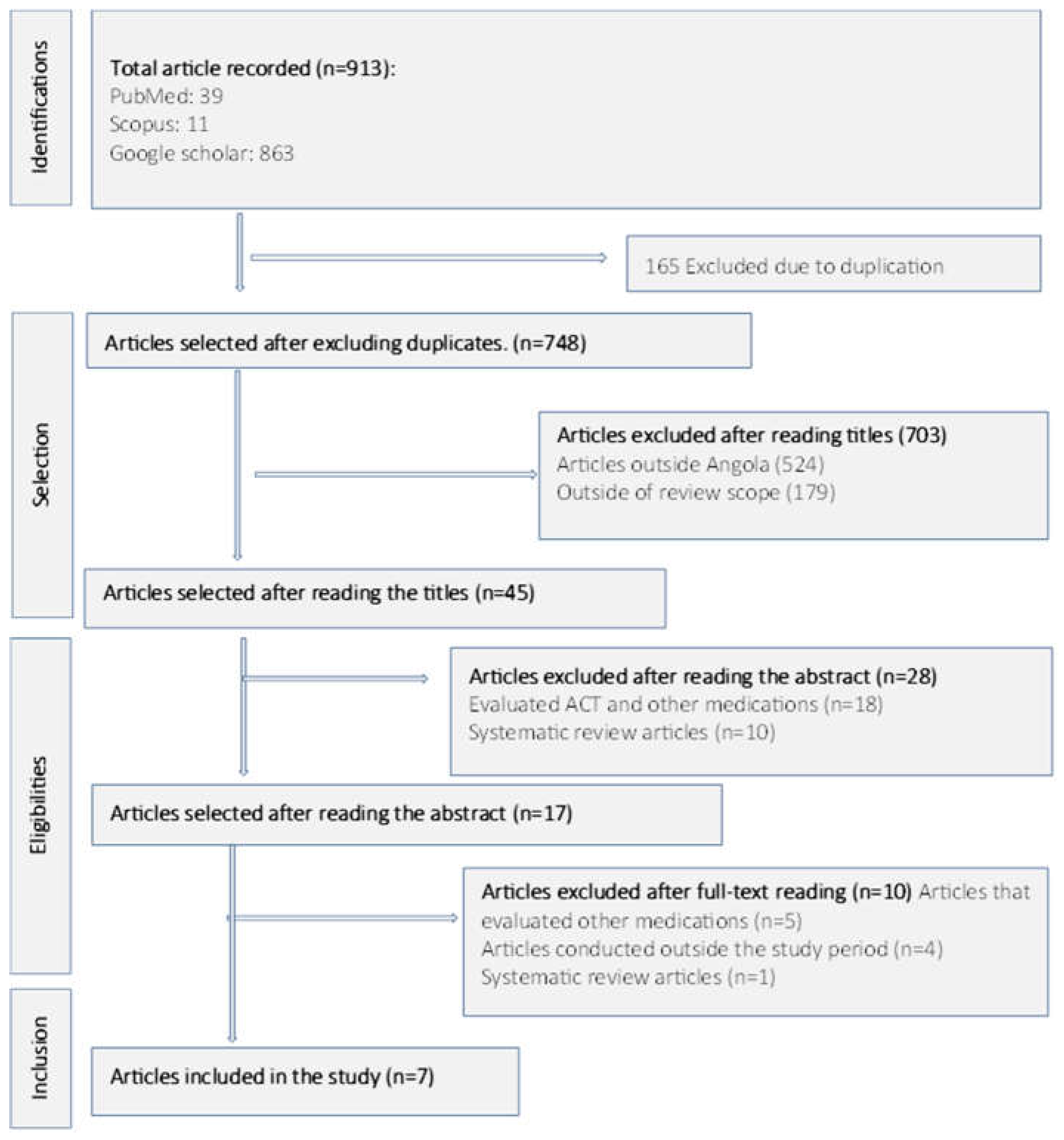
Figure 2.
Geographical and temporal distribution of therapeutic efficacy and recrudescences of ACTs in Angola. AL, artemether-lumefantrine; ASAQ, artesunate-amodiaquine; DP, dihydroartemisinin-piperaquine; ASPY, artesunate-pyronaridine. Year in red, PCR-corrected therapeutic efficacy <90%, year in green PCR-corrected therapeutic efficacy ≥90%; Circle size represents the number of recrudescences reported at each study site.
Figure 2.
Geographical and temporal distribution of therapeutic efficacy and recrudescences of ACTs in Angola. AL, artemether-lumefantrine; ASAQ, artesunate-amodiaquine; DP, dihydroartemisinin-piperaquine; ASPY, artesunate-pyronaridine. Year in red, PCR-corrected therapeutic efficacy <90%, year in green PCR-corrected therapeutic efficacy ≥90%; Circle size represents the number of recrudescences reported at each study site.
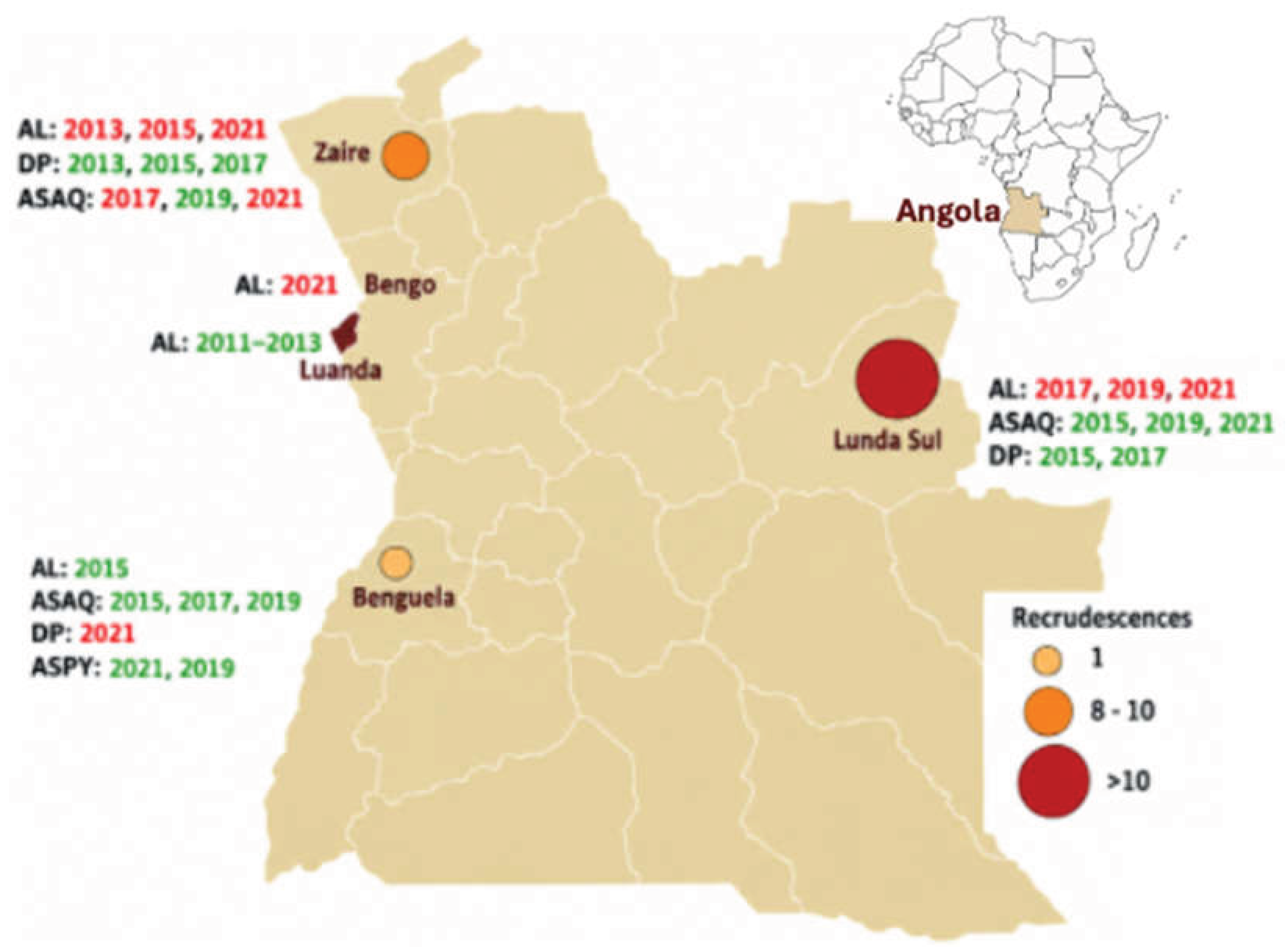

Table 2.
PCR-Corrected Adequate Clinical and Parasitological Response.
| ACT | Efficay (IC 95%) |
PCR-corrected efficacy** | Location (collection date) | Reference |
|---|---|---|---|---|
| AL | 88.4% (78-95; *p=1.000) |
Inadequate | Zaire (2013) |
Plucinski et al, 2013 [35] |
| AL | 88.1% (81-95; *p=0.492) |
Inadequate | Zaire (2015) |
Plucinski et al, 2015 [32] |
| AL | 87.6% (81-95) | Inadequate | Lunda Sul, (2019) | Dimbu et al, 2019 [14] |
| AL | 88.0% (82-95) | Inadequate | (Zaire, 2021) | Dimbu et al, 2021 [34] |
| AL | 89.1% (83-96) | Inadequate | (Bengo, 2021) | Fançony et al, 2021 [36] |
| ASPY | 99.6% (99-100) | High | Benguela (2021) | Dimbu et al, 2021 [34] |
| AL | 97.3% (91-100) | High | Uíge (2013) | Plucinski et al, 2013 [35] |
*p-value calculated using the two-tailed exact binomial test. ** According to WHO therapeutic efficacy monitoring guidance, PCR-corrected efficacy was considered high when ACPR was ≥95%; Acceptable when ACPR between 90% to<95%, but monitor closely; And inadequate when ACPR was <90%, and generally triggers consideration of a treatment policy change [11].
Disclaimer/Publisher’s Note: The statements, opinions and data contained in all publications are solely those of the individual author(s) and contributor(s) and not of MDPI and/or the editor(s). MDPI and/or the editor(s) disclaim responsibility for any injury to people or property resulting from any ideas, methods, instructions or products referred to in the content. |
© 2026 by the authors. Licensee MDPI, Basel, Switzerland. This article is an open access article distributed under the terms and conditions of the Creative Commons Attribution (CC BY) license (http://creativecommons.org/licenses/by/4.0/).
Copyright: This open access article is published under a Creative Commons CC BY 4.0 license, which permit the free download, distribution, and reuse, provided that the author and preprint are cited in any reuse.