

Submitted:
29 October 2026
Posted:
30 October 2026
You are already at the latest version
Abstract
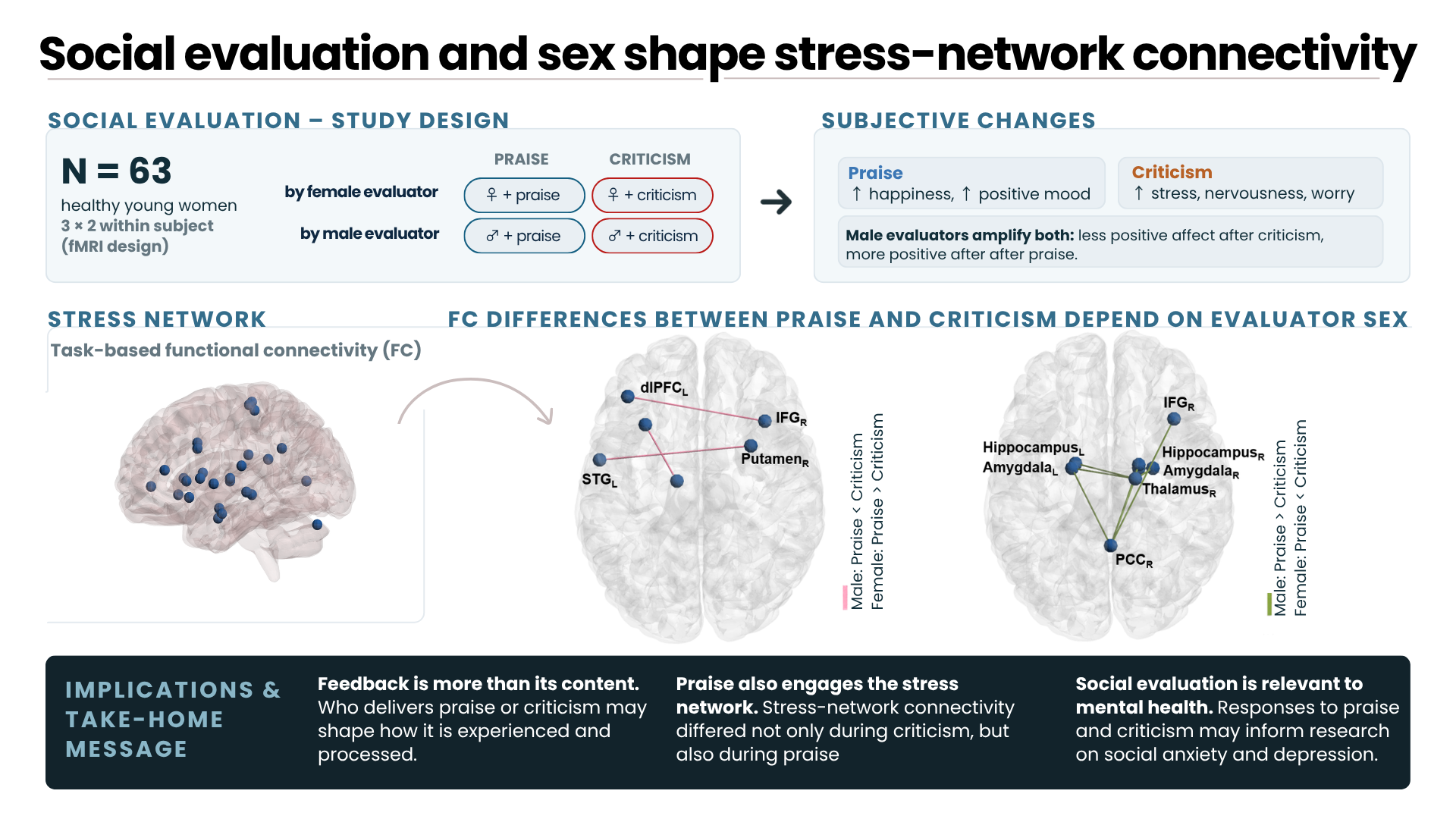
(1) Background: Social evaluation engages neural systems involved in stress and social information processing, with responses potentially depending on valence and evaluator characteristics. We investigated how valence and evaluator sex are reflected in functional connectivity (FC) within a meta-analytically derived stress network in women. (2) Methods: Sixty-three healthy women underwent functional magnetic resonance imaging while receiving praise, criticism, and neutral statements from unfamiliar male and female evaluators. Task-based FC was examined within the stress network. (3) Results: Participants reported less positive affect during criticism and more positive affect during praise, with both effects more pronounced for male than female evaluators. Stress-network FC differed by valence and evaluator sex. Both praise and criticism were associated with greater left insula-–right inferior frontal gyrus FC than neutral statements, while criticism was associated with greater left superior temporal gyrus–right amygdala FC than praise and neutral statements. Furthermore, evaluator sex modulated valence-dependent FC across several FCs involving prefrontal, striatal, medial temporal, thalamic, and posterior midline regions. Post-hoc comparisons revealed evaluator-sex differences in FC during criticism and praise, as well as opposing valence-dependent FC patterns between male and female evaluators. Exploratory analyses showed that associations between FC and self-related positive affect also depended on valence and evaluator sex. (4) Conclusions: Stress-network FC during the perception of praise and criticism delivered by strangers depended on evaluator sex. Importantly, stress-network involvement was not restricted to criticism, indicating that praise may also engage stress-related neural processes depending on social context, particularly when voiced by a male.
Keywords:
social evaluation
; psychosocial stress
; praise
; criticism
; functional connectivity
; fMRI
; stress network
1. Introduction
Social interactions are among the most common sources of stress encountered in everyday life [1,2]. Repeated exposure to interpersonal stress can profoundly affect both mental and physical health [1,3,4]. A central component of social interactions is evaluation, the continuous process through which individuals evaluate others while simultaneously being evaluated themselves [5,6]. Although social evaluation is frequently studied as a source of social-evaluative threat, it also encompasses positive experiences such as praise, approval, and social acceptance, all of which play essential roles in maintaining interpersonal relationships and guiding social behavior [7]. Social evaluation therefore represents a fundamental aspect of human social life, emerging early in development and shaping both emotional experiences and self-perception throughout the lifespan [8,9]. Depending on its valence and social context, evaluation by others can evoke distinct affective and physiological responses. Whereas praise and social acceptance are typically associated with positive affect, social reward, and affiliation [7]. Criticism and rejection can activate stress-related neuroendocrine systems and promote heightened vigilance when evaluation is perceived as threatening [5,10].
During social interactions, individuals rapidly extract observable characteristics of others, including age, facial appearance, and sex, allowing efficient categorization based on existing social knowledge [11]. Among these characteristics, sex represents one of the most salient social cues, playing a privileged role in person perception from the earliest stages of interpersonal interaction [12]. These cues enable individuals to generate expectations about others, with men and women being associated with different stereotypes regarding warmth and competence [13,14]. Moreover, responses to evaluative messages depend not only on the message itself but also on characteristics of the communicator, which serve as heuristics during social information processing [15]. Consistent with this theoretical framework, an increasing number of studies suggest that evaluator characteristics influence behavioral, physiological, and neural responses to social evaluation [16]. Wiggert et al. [17] demonstrated that identical praise, neutral statements, and criticism led to different facial electromyographic responses and subjective arousal depending on evaluator sex. Notably, female participants exhibited the strongest facial responses when receiving evaluations from male evaluators, indicating that evaluator sex influences the processing of social evaluation already at the behavioral and physiological level. Miedl et al. [18] reported that subjective arousal depended on the combination of evaluator and participant sex, with men reporting greater arousal to negative evaluations delivered by female evaluators. However, these behavioral differences were not accompanied by corresponding differences in regional brain activation. Similarly, Vanderhasselt et al. [19] demonstrated that autonomic responses to social evaluation also depended on the interaction between evaluator and participant characteristics. Specifically, male participants exhibited larger pupillary responses when receiving evaluative feedback from female compared with male evaluators, whereas female participants showed no corresponding evaluator sex differences in pupillary responses. Collectively, these findings indicate that evaluator characteristics influence subjective, physiological, and neural responses to social evaluation.
Beyond the influence of evaluator characteristics, converging neuroimaging evidence indicates that praise and criticism themselves engage partially distinct neural systems. Functional magnetic resonance imaging (fMRI) studies have demonstrated that positive and negative social evaluation lead to different patterns of regional brain activation, particularly within regions implicated in affective processing, self-referential cognition, and social cognition [20]. More recently, these valence-dependent differences have also been observed at the level of functional connectivity (FC). Gao et al. [20] reported that praise and criticism differentially modulated FC among regions involved in mentalizing, whereas Servaas et al. [21] demonstrated altered FC during the processing of criticism, with connectivity patterns varying as a function of neuroticism.
Despite their opposing valence, praise and criticism both represent socially evaluative experiences that require individuals to interpret socially relevant information and adapt their emotional and behavioral responses. Such evaluation engages processes related to affective, self-referential, and social information processing [22]. Converging evidence from multiple large-scale activation likelihood estimation (ALE) meta-analyses demonstrates consistent recruitment of a distributed set of regions across such paradigms, including the insula, thalamus, cingulate and inferior frontal cortices, amygdala, hippocampus, and related cortical and subcortical regions [23,24,25]. These regions support complementary functions relevant to adaptive responses to socially salient events: the insula and thalamus are involved in integrating external sensory information with internal emotional and physiological signals, while cingulate and inferior frontal regions contribute to attentional control and the modulation of emotional and physiological responses. The amygdala and hippocampus play a role in affective evaluation and memory-related processing [22,24]. Many of these regions are also consistently implicated in social evaluation paradigms, indicating substantial overlap between the neural systems engaged during psychosocial stress and social evaluation [22]. This convergence provides the basis for using a meta-analytically derived stress network as an independently defined, biologically grounded framework to examine how functional interactions among these regions vary during social evaluation.
Within this framework, the present study investigated whether praise and criticism are associated with distinct patterns of task-based FC and whether these network responses vary according to evaluator sex. Although previous studies have demonstrated that evaluator characteristics influence subjective, behavioral, physiological, and autonomic responses during social evaluation [17,19], it remains unknown whether these effects extend to FC between distributed brain regions. Accordingly, we expected praise and criticism to produce distinct subjective experiences and patterns of task-based FC relative to neutral statements. Furthermore, based on previous evidence that evaluator characteristics influence responses to social evaluation, we hypothesized that evaluator sex would modulate these FCs.
2. Materials and Methods
2.1. Participants
For the current pilot study, only women were included to examine the impact on processing praise and criticism given by male and female evaluators as women are more affected by socially stressful stimuli [26,27]. Additionally, only women using oral contraceptives during the active pill phase were recruited to minimize the bias of fluctuating sex hormones, that are known to influence cortisol secretion and stress responses [28]. Eligible participants were female, between 18 and 35 years of age, native German speakers, and right-handed. Participants were excluded if they reported a history of neurological or mental disorders, traumatic brain injury, substance use, pregnancy, or breastfeeding within the previous six months, or had any contraindications for magnetic resonance imaging (MRI), including metal implants, cardiac pacemakers, or tattoos larger than 10 cm. The present study is part of a broader research project on social evaluation and therewith, individuals with prior experience in stress coaching or comparable stress-management programs were excluded. Participation was voluntary. Written informed consent was obtained from all participants prior to study enrollment. The study was approved by the Ethics Committee of the Medical Faculty of the University of Tübingen (approval no. 739/2017BO2). All participants provided written informed consent prior to participation. All procedures were conducted in accordance with the Declaration of Helsinki (1964). Participants received financial compensation of 100 € for completing the whole study.
2.2. Design
The present study employed a 3 × 2 within-subject design with the factors’ social evaluation valence (neutral statements, criticism, praise) and evaluator sex (female, male). Each participant completed six experimental conditions (neutral statements, criticism, praise from female and male evaluators) during the fMRI paradigm.
2.3. Social Evaluation Paradigm
Social evaluation was assessed using a previously validated video-based paradigm [17,18,29]. The stimulus set comprises professionally recorded videos of male and female evaluators delivering neutral statements, criticism, or praise and have been shown to reliably lead to subjective and physiological responses. Male and female evaluators were matched with respect to perceived valence based on normative ratings reported during previous stimulus validation by Wiggert et al. [17], Miedl et al. [18], Blechert et al. [29]. The evaluators were young adults, reflecting the age range of the study sample. For the present study, the stimulus sets contained 90 video clips, comprising 30 neutral, 30 negative, and 30 positive evaluations, with an equal number of male and female evaluators (15 each per valence). Each evaluator delivered statements of only one valence to avoid potential carry-over effects for one individual. Videos were presented using Presentation® software (Neurobehavioral Systems, Albany, CA, USA). Following an initial fixation cross (10 s), participants viewed the videos in a block design consisting of three repetitions of five videos of each valence, presented separately for male and female evaluators, resulting in 18 blocks in total. Individual videos were presented for 3000 ms, resulting in block durations between approximately 21 and 28 s. Each block was separated by a jittered inter-trial interval ranging from 1500 to 3000 ms. Block order was randomized across participants. Within each block, after 5 videos, participants rated their level of arousal and perceived pleasantness ("I feel restless-calm"; "The situation is unpleasant-pleasant") using visual analogue scales [30] (Figure 1). Following each block, participants additionally completed the Positive and Negative Affect Schedule (PANAS) [31] and the Emotional Self-Rating Scale (ESR) [3], both using five-point Likert scales ranging from 1 ("not at all") to 5 ("extremely"). Seven additional ratings assessed self-related experiences and inner speech, including positive self-related affect ("I feel good"), which was rated on a visual analogue scale ranging from ("not at all") to 100 ("extremely").
2.4. Data Processing and Statistical Analysis
2.4.1. fMRI Data Acquisition
Functional and structural MRI data were acquired at the University Hospital Tübingen using a 3T Siemens Magnetom Prisma scanner (20-channel head coil). Foam padding was used to minimize head motion. Visual stimuli were presented via a screen at the back of the bore and a mirror system. Auditory stimuli were delivered through headphones. Participants responded using a button box attached to their right thigh.
Functional images were acquired using a T2*-weighted echo-planar imaging (EPI) sequence (repetition time (TR) = 1500 ms, echo time (TE) = 34 ms, 69 axial slices, multiband acceleration factor = 3, interleaved acquisition, no slice gap, field of view (FoV) = 192 mm, flip angle = 70°, voxel size = 2 mm isotropic). The EPI sequence duration varied between 14 and 24 minutes depending on the time participants responded to the affective ratings.
High-resolution anatomical images were collected using a 3D MPRAGE sequence (TR = 2300 ms, TE = 4.16 ms, inversion time (TI) = 900 ms, flip angle = 9°, matrix size = 256, FoV = 256 mm, 192 slices, voxel size = 1 mm isotropic), with a total scan duration of 5 minutes and 50 seconds [32].
2.4.2. Preprocessing
Functional and anatomical data were preprocessed through a modular preprocessing pipeline [33] in the CONN-toolbox [34] (RRID009550) release 22.a [35] implemented in SPM12 (RRID 007037) release 12.7487 [36], implemented in MATLAB version 9.13.0 (R2022b) [37], which included realignment with correction for susceptibility distortion interactions, slice timing correction, outlier detection, segmentation, Montreal Neurological Institute (MNI)-space normalization and smoothing. Functional data were realigned using the SPM realign and unwarp procedure [38], where all scans were coregistered to the reference image (the first scan of the first session) using the least squares method and a 6-parameter rigid body transformation [39], with resampling through b-spline interpolation to correct for motion and magnetic susceptibility interactions. Temporal misalignment across slices was corrected with the SPM slice-timing correction (STC) procedure [40,41], which applied sinc interpolation to resample each slice of the BOLD time series to a common mid-acquisition time. Potential outlier scans were identified using Artifact Detection Tools (ART) [42] based on framewise displacement greater than 0.9 mm or global blood-oxygen-level-dependent (BOLD) time series signal changes exceeding 5 standard deviations [43,44]. For each subject, a reference BOLD image was generated by averaging all scans excluding the outliers. Both functional and anatomical data were then normalized into standard MNI space, segmented into grey matter, white matter, and CSF tissue classes, and resampled to 2 mm isotropic voxels following a direct normalization procedure [44,45] using the SPM unified segmentation and normalization algorithm [46,47] with the default IXI-549 tissue probability map template. Finally, functional data were smoothed through spatial convolution using a Gaussian kernel with a 6 mm full width at half maximum (FWHM).
2.4.3. Denoising
Functional data was denoised using a standard denoising pipeline [33], which involved regressing out potential confounding effects, including white matter time series (5 CompCor components), cerebrospinal fluid (CSF) time series (5 CompCor components), motion parameters and their first order derivatives (12 factors) [48], outlier scans (below 104 factors) [43], and linear trends (2 factors) within each functional run. Then, high-pass frequency filtering was applied to the BOLD time series [49], with a cutoff at 0.008 Hz. The CompCor [50,51] noise components were estimated in white matter and CSF by calculating the average BOLD signal and the largest principal components orthogonal to the BOLD average, motion parameters, and outlier scans within each subject’s eroded segmentation masks. Based on the number of noise components removed, the effective degrees of freedom for the BOLD signal after denoising ranged from 11201.5 to 1699.2 (mean 1401.8) across subjects [52].
2.4.4. Stress Network ROI Definition
Region-of-interest (ROI) were identified based on a meta-analytically derived stress network derived from Qiu et al. [23], Berretz et al. [24], Kogler et al. [25] (see Table 1 for complete list of all ROIs, including MNI coordinates; Figure 2 depicts the stress network). All ROIs were defined as spherical 6mm ROIs centered on MNI coordinates.
Stress Network
2.4.5. First-Level Analyses
ROI-to-ROI connectivity (RRC) matrices were computed to quantify FC between all possible pairs of the 29 predefined ROIs comprising the stress network, resulting in 351 unique ROI-to-ROI. The strength of FC was quantified using Fisher-transformed bivariate correlation coefficients (FC z-values) derived from a general linear model (weighted-GLM) [53], which was computed separately for each ROI pair, reflecting the relationship between their BOLD signal time series. Individual scans were weighted using a boxcar signal that encoded each specific task or experimental condition, which was then convolved with the SPM canonical hemodynamic response function and rectified.
2.4.6. Group-Level Analyses
Group-level FC analyses were conducted using linear mixed-effects models (LMMs) in R Statistical Software (v4.3.3; R Core Team [54]), implemented using the lme4 package [55]. For each ROI-to-ROI connection, an independent LMM was fitted, with Fisher z-transformed FC values serving as the dependent variable. Models included social evaluation valence (neutral statements, criticism, praise), evaluator sex (male, female), and their interaction as fixed effects, with participant-specific random intercepts to account for repeated measurements.
2.4.7. Behavioral Analyses
Behavioral outcomes included nervousness and worry from the PANAS, stress and happiness from the ESR, and positive self-related affect assessed using the additional item "I feel good". Separate LMMs were fitted for each behavioral outcome using the same fixed-effects structure of social evaluation valence, evaluator sex, and their interaction, with participant-specific random intercepts. For behavioral outcomes, model-estimated regression coefficients () and their standard errors were reported to quantify effects in the original measurement units.
2.4.8. Contrast Specification and Multiple-Comparison Correction
For both FC and behavioral analyses, evaluator sex was contrast-coded to compare female with male evaluators. Valence was initially parameterized with the neutral statements as the reference condition, yielding coefficients for criticism versus neutral statements and praise versus neutral statements. To additionally obtain the direct comparison between praise and criticism, the models were refitted with criticism as the reference condition. This reparameterization did not constitute a separate analysis but provided the previously unestimated praise-versus-criticism contrast. Accordingly, from the refitted models, only coefficients corresponding to this additional contrast were reported.
For the FC analyses, false discovery rate (FDR) correction was applied jointly across all model coefficients and across all ROI-to-ROI connections within each model parameterization. FDR correction was performed separately for the models with neutral statements and criticism as the reference condition.
2.4.9. Exploratory Analyses
Exploratory analyses examined whether self-related positive affect ("I feel good") was associated with FC during social evaluation and whether this association varied according to social evaluation valence and evaluator sex. For each ROI-to-ROI connection, a separate LMM was fitted with FC as the dependent variable and self-related positive affect, social evaluation valence, evaluator sex, and their interactions as fixed effects, including the three-way self-related positive affect × evaluator sex × valence interaction. Participant-specific random intercepts were included to account for repeated measurements. FDR correction was applied to the fixed-effect coefficients of interest across ROI-to-ROI connections, with statistical significance defined as an FDR-corrected .
3. Results
3.1. Sample Description
Of the 65 participants initially recruited, two were excluded due to missing data or study dropout, resulting in a final sample of 63 female participants (Table 2). Of these, 62 participants were using combined oral contraceptives, and one participant was using a progestin-only oral contraceptive.
3.2. Behavioral Ratings
Stress. Stress ratings were higher following criticism than neutral statements, , , , and praise (, , ) and higher following neutral statements than praise (, , ). Neither the main effect of evaluator sex () nor the evaluator sex × valence interaction contrasts were significant (–).
Nervousness. Nervousness ratings were higher following criticism than neutral statements (, , ) and praise (, , ) whereas neutral statements and praise did not significantly differ (). Neither the main effect of evaluator sex () nor the evaluator sex × valence interaction contrasts were significant (–).
Worry. Worry ratings were higher following criticism than neutral statements (, , ) and praise (, , ), and higher following neutral statements than praise, , , . Neither the main effect of evaluator sex () nor the evaluator sex × valence interaction contrasts were significant (–).
Happiness. Happiness ratings were higher following praise than neutral statements (, , ), and criticism (, , ) and higher following neutral statements than criticism (, , ). Neither the main effect of evaluator sex () nor the evaluator sex × valence interaction contrasts were significant (–).
Positive self-related affect. Positive self-related affect was higher following praise than neutral statements (, , ) and criticism (, , ) and higher following neutral statements than criticism, , , . There was no significant main effect of evaluator sex (). However, significant evaluator sex × valence interaction contrasts emerged. The praise-versus-criticism difference was greater for male than female evaluators (, , ), as was the praise-versus-neutral difference (, , ). The criticism-versus-neutral difference did not significantly vary by evaluator sex (). Estimated ratings increased from during criticism to during praise for male evaluators, compared with to for female evaluators. Similarly, ratings increased from during neutral statements to during praise for male evaluators, compared with to for female evaluators. Figure 3 illustrates the evaluator sex × valence interaction in positive self-related affect.
3.3. Behavioral Ratings
Stress. Stress ratings were higher following criticism than neutral statements (, , , ) and praise (, , , ), and higher following neutral statements than praise (, , , ). Neither the main effect of evaluator sex () nor the evaluator sex × valence interaction contrasts were significant (–).
Nervousness. Nervousness ratings were higher following criticism than neutral statements (, , , ) and praise (, , , ), whereas neutral statements and praise did not significantly differ (). Neither the main effect of evaluator sex () nor the evaluator sex × valence interaction contrasts were significant (–).
Worry. Worry ratings were higher following criticism than neutral statements (, , , ) and praise (, , , ), and higher following neutral statements than praise (, , , ). Neither the main effect of evaluator sex () nor the evaluator sex × valence interaction contrasts were significant (–).
Happiness. Happiness ratings were higher following praise than neutral statements (, , , ) and criticism (, , , ), and higher following neutral statements than criticism (, , , ). Neither the main effect of evaluator sex () nor the evaluator sex × valence interaction contrasts were significant (–).
Positive self-related affect. Positive self-related affect was higher following praise than neutral statements (, , , ) and criticism (, , , ), and higher following neutral statements than criticism (, , , ). There was no significant main effect of evaluator sex (). However, significant evaluator sex × valence interaction contrasts emerged. The praise-versus-criticism difference was greater for male than female evaluators (, , , ), as was the praise-versus-neutral difference (, , , ). The criticism-versus-neutral difference did not significantly vary by evaluator sex (). Estimated ratings increased from during criticism to during praise for male evaluators, compared with to for female evaluators. Similarly, ratings increased from during neutral statements to during praise for male evaluators, compared with to for female evaluators. Figure 3 illustrates the evaluator sex × valence interaction in positive self-related affect.
3.4. Functional Connectivity Analysis of the Stress Network
Evaluator sex. Significant main effects of evaluator sex were observed for right fusiform gyrus (FFG)–right amygdala FC (, , , ), right FFG–right paracentral lobule FC (, , , ), and left paracentral lobule–left amygdala FC (, , , ). For all three connections, FC was higher during evaluations delivered by female than male evaluators, averaged across valence (Figure 4).
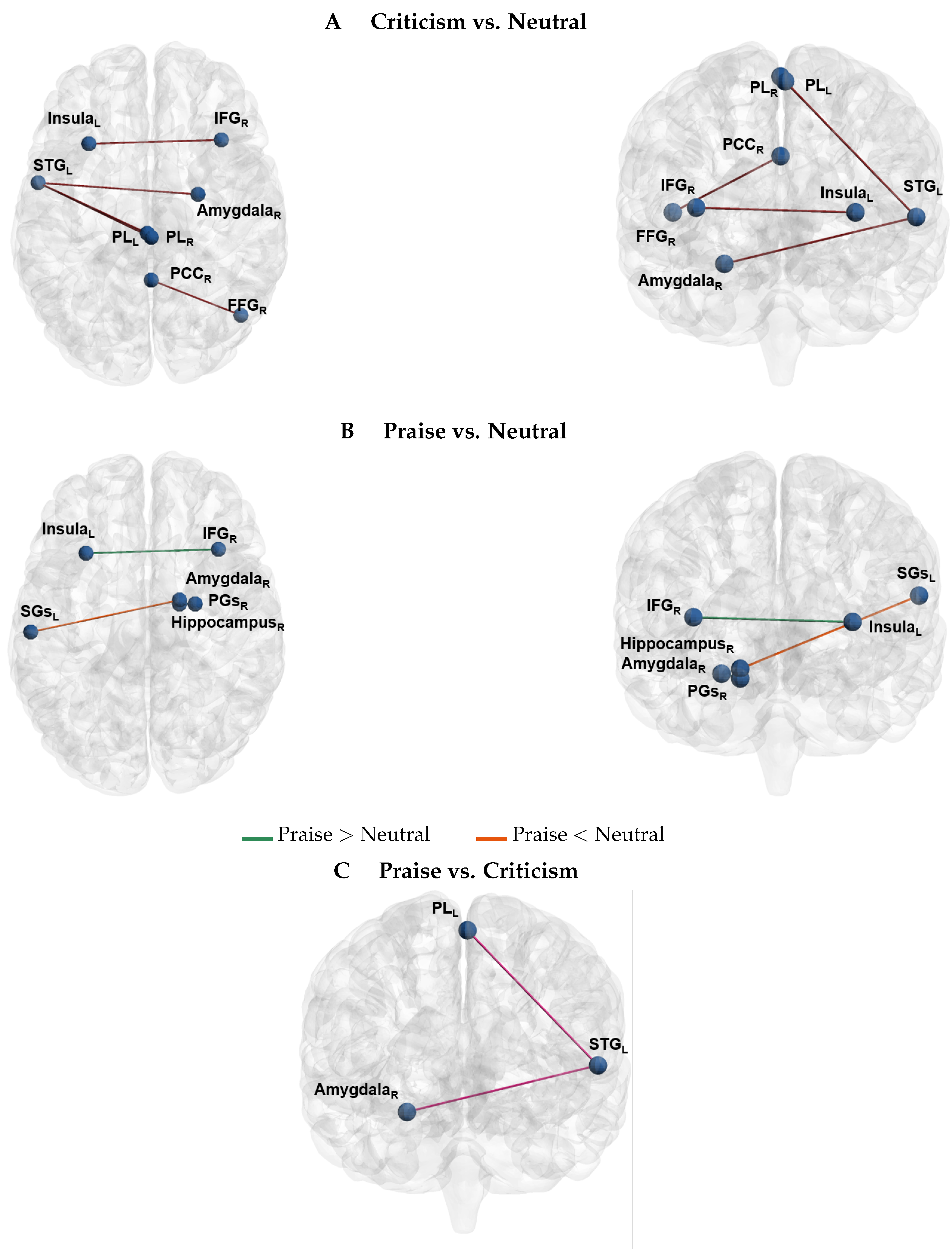
Valence. Criticism, compared with neutral statements, was associated with higher FC in four connections, involving the paracentral lobule, left superior temporal gyrus (STG), FFG, posterior cingulate cortex (PCC), and right amygdala. Praise, compared with neutral statements, was associated with higher FC between the left insula and right inferior frontal gyrus (IFG) and between the right parahippocampal gyrus (PG) and right amygdala, but lower FC between the left supramarginal gyrus and right hippocampus. Finally, praise was associated with lower FC than criticism in two connections: the left paracentral lobule–-left STG and left STG–-right amygdala. Detailed statistical results are presented in Table 3 and visualized in Figure 4.
Figure 5.
Valence-dependent FC within the meta-analytically derived stress network visualized using BrainNet Viewer [61]. Significant FC are shown for (A) criticism compared with the neutral statements, (B) praise compared with the neutral statements, and (C) praise compared with criticism. Transversal and coronal views are shown to visualize all significant FCs. FFG = fusiform gyrus; IFG = inferior frontal gyrus; PCC = posterior cingulate cortex; PL = paracentral lobule; STG = superior temporal gyrus; L = left; R = right.
Figure 5.
Valence-dependent FC within the meta-analytically derived stress network visualized using BrainNet Viewer [61]. Significant FC are shown for (A) criticism compared with the neutral statements, (B) praise compared with the neutral statements, and (C) praise compared with criticism. Transversal and coronal views are shown to visualize all significant FCs. FFG = fusiform gyrus; IFG = inferior frontal gyrus; PCC = posterior cingulate cortex; PL = paracentral lobule; STG = superior temporal gyrus; L = left; R = right.
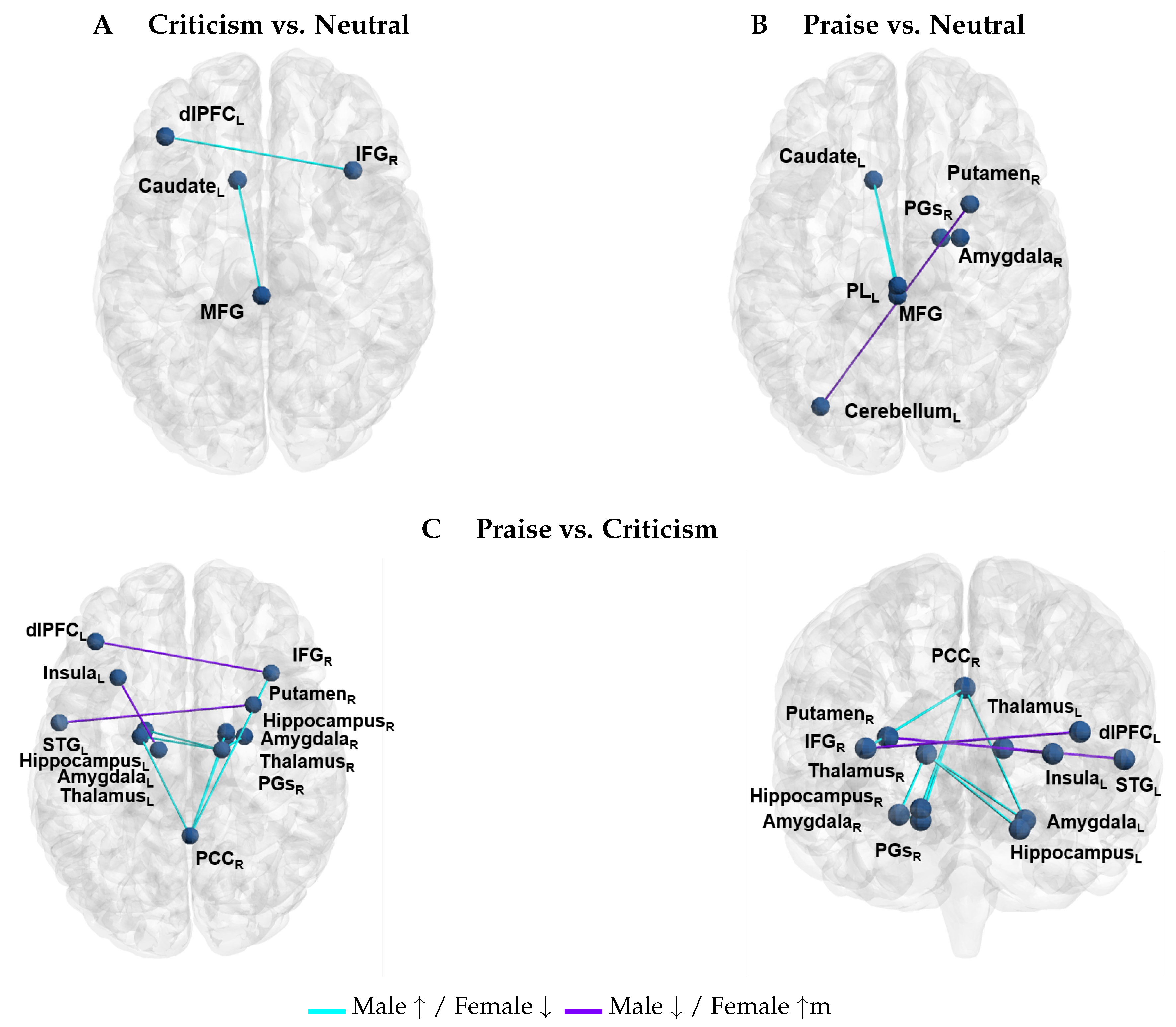
Evaluator sex × valence interaction. Significant evaluator sex × valence interactions (Figure 3) were followed up with post-hoc comparisons to characterize differences between evaluator sexes within each social evaluation valence and differences between valence conditions within each evaluator sex (Table 4).
Criticism vs. neutral. Significant evaluator sex × valence interactions were observed for medial frontal gyrus–left caudate and left dorsolateral prefrontal cortex (dlPFC)–right IFG FC. Post-hoc comparisons showed that for medial frontal gyrus–left caudate FC, criticism was associated with higher FC than neutral statements for male evaluators (), but not for female evaluators, with higher FC for male than female evaluators during criticism (). A similar evaluator-sex difference was observed for left dlPFC–right IFG FC during criticism ().
Praise vs. neutral. Three connections showed higher FC during praise than neutral statements for male evaluators but no significant valence difference for female evaluators: medial frontal gyrus–left caudate (), right PG–right amygdala (), and left paracentral lobule–left caudate FC (). For each connection, FC during praise was also higher for male than female evaluators (all ). In contrast, right putamen–left cerebellum FC was lower during praise than neutral statements for male evaluators (), but did not significantly differ by valence for female evaluators and during praise, FC was higher for female than male evaluators ().
Praise vs. criticism. Several interactions reflected crossover or opposing valence dependent patterns. Right hippocampus–right PCC and right PG–right amygdala FC were higher for female than male evaluators during criticism but higher for male than female evaluators during praise (all ). The reverse crossover was observed for left insula–left thalamus FC, which was higher for male than female evaluators during criticism but higher for female than male evaluators during praise (both ). Right PG–right PCC FC showed opposing within-evaluator valence effects, with higher FC during praise than criticism for male evaluators (), but higher FC during criticism than praise for female evaluators (). Additional significant praise-versus-criticism interactions reflected evaluator-sex differences concentrated in either criticism or praise and are reported in Table 4.
Figure 6.
Evaluator sex-by-valence interactions in FC within the meta-analytically derived stress network visualized using BrainNet Viewer [61]. Significant interactions are shown for (A) criticism compared with the neutral condition, (B) praise compared with the neutral condition, and (C) praise compared with criticism. Arrows indicate the direction of the FC difference for the contrast specified in each panel, with the first condition compared with the second. Blue connections indicate a higher FC in the first condition for male evaluators and a lower FC in the first condition for female evaluators; purple connections indicate the reverse pattern. Transversal and coronal views are shown where necessary to visualize all significant connections. dlPFC = dorsolateral prefrontal cortex; IFG = inferior frontal gyrus; MFG = medial frontal gyrus; PCC = posterior cingulate cortex; PGs = parahippocampal gyrus; PL = paracentral lobule; STG = superior temporal gyrus; L = left; R = right.
Figure 6.
Evaluator sex-by-valence interactions in FC within the meta-analytically derived stress network visualized using BrainNet Viewer [61]. Significant interactions are shown for (A) criticism compared with the neutral condition, (B) praise compared with the neutral condition, and (C) praise compared with criticism. Arrows indicate the direction of the FC difference for the contrast specified in each panel, with the first condition compared with the second. Blue connections indicate a higher FC in the first condition for male evaluators and a lower FC in the first condition for female evaluators; purple connections indicate the reverse pattern. Transversal and coronal views are shown where necessary to visualize all significant connections. dlPFC = dorsolateral prefrontal cortex; IFG = inferior frontal gyrus; MFG = medial frontal gyrus; PCC = posterior cingulate cortex; PGs = parahippocampal gyrus; PL = paracentral lobule; STG = superior temporal gyrus; L = left; R = right.
3.5. Association with Self-Related Positive Affect
Exploratory analyses examined whether self-related positive affect was associated with FC during social evaluation and whether this association differed depending on evaluation valence and evaluator sex. Positive associations hereby indicate that higher self-related positive affect ratings were related to greater FC, whereas negative associations indicate that higher ratings were related to lower FC.
Self-related positive affect. Higher self-related positive affect ratings were associated with greater FC for right IFG–right supramarginal gyrus (, , , ) and right paracentral lobule–right dlPFC (, , , ).
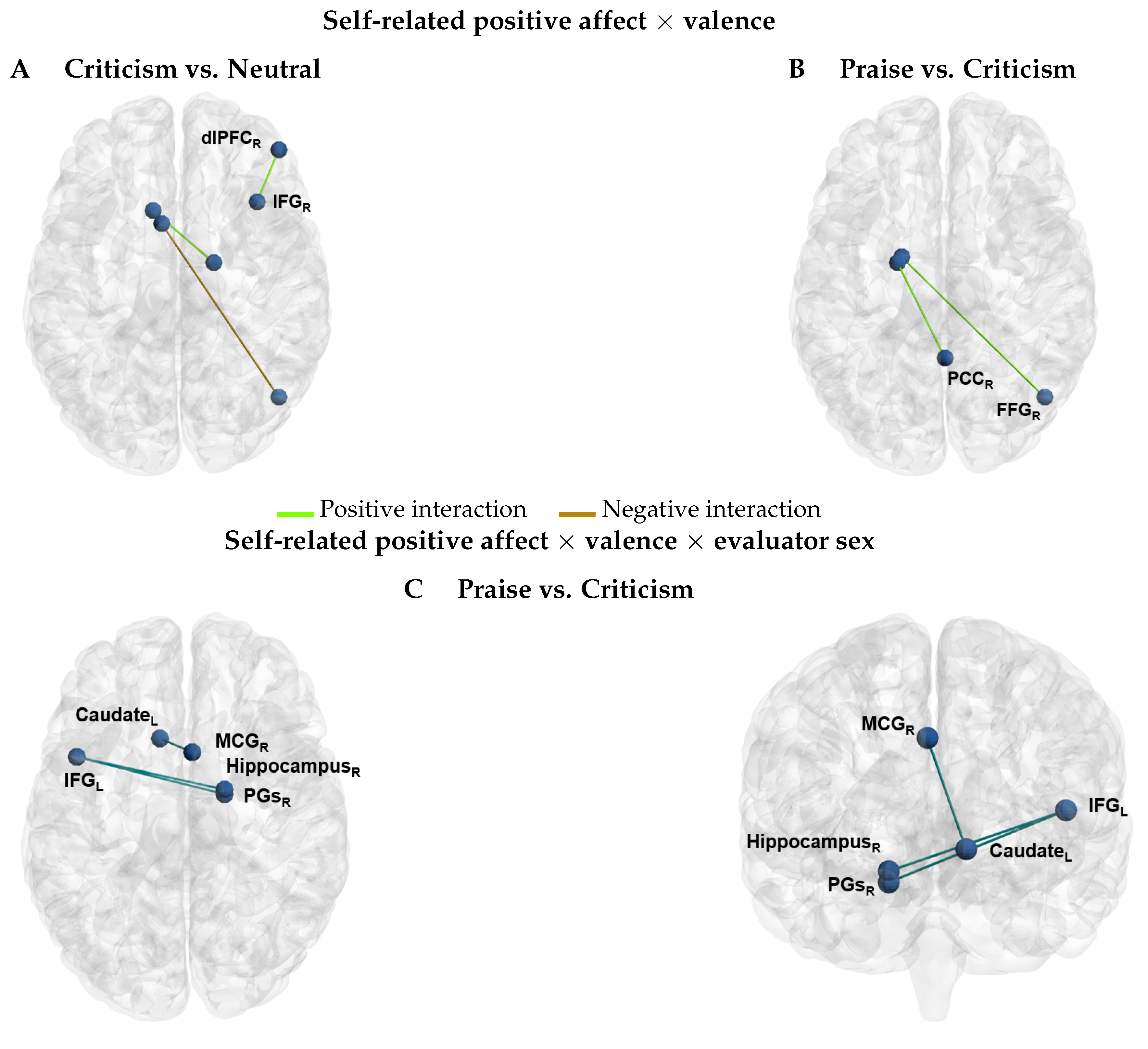
Interaction valence × self-related positive affect. Additionally, the association between self-related positive affect and FC differed according to social evaluation valence. During criticism compared with neutral statements, the relationship was more positive for left middle cingulate gyrus–right FFG FC (, , , ) and more negative for both right IFG–right dlPFC FC (, , , ) and right PG–left caudate FC (, , , ). During praise compared with criticism, the relationship was more positive for left hippocampus–right FFG FC (, , , ) and right PCC–left amygdala FC (, , , ).
Interaction valence × evaluator sex × self-related positive affect. For three additional connections, the difference between praise and criticism in the relationship between self-related positive affect and FC depended on evaluator sex. For left IFG–right hippocampus FC (, , , ) the relationship was more positive during criticism than praise for female evaluators (), whereas during praise, it was more positive for male than female evaluators (). For left IFG–right PG FC (, , , ) the relationship was more positive for female than male evaluators during criticism (), whereas during praise, it was more positive for male than female evaluators (). For right middle cingulate gyrus–left caudate FC (, , , ) the relationship was more positive during praise than criticism for female evaluators (), whereas during criticism, it was more positive for male than female evaluators ().
Figure 7.
Exploratory associations between self-related positive affect and FC within the stress network visualized using BrainNet Viewer [61]. Self-related positive affect-by-valence interactions are shown for (A) criticism compared with the neutral statements, (B) praise compared with the neutral statements, and (C) praise compared with criticism. (D) Significant self-related positive affect-by-valence-by-evaluator sex interactions for praise compared with criticism. Axial and coronal views are shown for the three-way interaction to visualize all significant connections. dlPFC = dorsolateral prefrontal cortex; IFG = inferior frontal gyrus; MCG = middle cingulate gyrus; PCC = posterior cingulate cortex; FFG = fusiform gyrus; PGs = parahippocampal gyrus; L = left; R = right.
Figure 7.
Exploratory associations between self-related positive affect and FC within the stress network visualized using BrainNet Viewer [61]. Self-related positive affect-by-valence interactions are shown for (A) criticism compared with the neutral statements, (B) praise compared with the neutral statements, and (C) praise compared with criticism. (D) Significant self-related positive affect-by-valence-by-evaluator sex interactions for praise compared with criticism. Axial and coronal views are shown for the three-way interaction to visualize all significant connections. dlPFC = dorsolateral prefrontal cortex; IFG = inferior frontal gyrus; MCG = middle cingulate gyrus; PCC = posterior cingulate cortex; FFG = fusiform gyrus; PGs = parahippocampal gyrus; L = left; R = right.
4. Discussion
The present study investigated the effects of praise, criticism and evaluator sex on FC within a meta-analytically derived stress network. Behaviorally, criticism and praise led to distinct subjective responses, while evaluator sex modulated positive self-related affect but not the other subjective measures. At the neural level, evaluator sex moderated valence-dependent FC across several connections, with some connections showing opposing evaluator-sex differences during praise and criticism, indicating that the relationship between social evaluation valence and FC differed depending on evaluator sex.
Behavioral responses to social evaluation. Consistent with previous studies using the same paradigm [17,18], criticism increased stress-related and negative affective responses, whereas praise increased positive affective responses. Moreover, the difference in positive self-related affect between praise and criticism was greater for male than female evaluators, in line with previous evidence that evaluator characteristics can influence responses to social evaluation [17,19].
Valence-dependent FC within the stress network. Social evaluation valence was associated with differences in FC across several connections within the stress network, extending previous research on connectivity during praise and criticism [20]. Notably, left insula–-right IFG FC was greater during both praise and criticism compared with neutral statements. Both regions have been implicated in processing emotions in interpersonal contexts [62], and increased IFG–-insula FC has been observed during the perception of emotional compared with neutral facial expressions [63]. The present finding may therefore relate to the processing of emotionally meaningful social information irrespective of its positive or negative valence. More broadly, it suggests that valence-dependent FC differences among regions previously implicated in stress processing are not restricted to criticism.
Other valence-dependent differences involved STG connectivity during criticism and parahippocampal–-amygdala FC during praise. Previous research has implicated the superior temporal cortex in stress processing [23,25] and amygdala–-parahippocampal interactions in the processing of emotionally significant information [64]. Together, these findings suggest that praise and criticism were associated with differences in connectivity among regions previously implicated in affective and social information processing.
Evaluator-sex effects on FC. Independent of social evaluation valence, evaluator sex was also associated with FC differences in several connections involving fusiform, amygdala, and paracentral regions, complementing previous evidence that neural responses can vary according to the sex of perceived individuals [65].
Evaluator sex and valence impact the stress network. A central finding of the present study was that evaluator sex moderated the association between social evaluation valence and FC, with some connections showing opposing evaluator-sex differences during praise and criticism. These included hippocampal–posterior cingulate, parahippocampal–amygdala, and insula–thalamic connections. The hippocampus and parahippocampal gyrus have been implicated in contextual and mnemonic processing, while the PCC has been associated with self-referential processing [66]. Furthermore, amygdala–parahippocampal interactions have been linked to the integration of affective significance with contextual information [64]. One possible interpretation is that the same evluation may carry different affective significance depending on the evaluator sex, potentially contributing to the observed differences in connectivity among regions implicated in contextual, self-referential, and affective processing.
Evaluator sex dependent differences also involved prefrontal connections, including greater left dlPFC–right IFG FC during criticism from male compared with female evaluators. Interactions between these regions have previously been implicated in cognitive control and emotion regulation [67]. In the present sample of women, male evaluators represented opposite-sex interaction partners, and previous research suggests that same- versus opposite-sex social contexts can influence motivational and social-cognitive processing [68,69]. However, the present findings cannot establish whether the observed connectivity differences reflect these processes or other characteristics of the evaluative context. Importantly, evaluator sex did not uniformly increase or decrease FC but moderated valence-dependent connectivity in a connection-specific manner.
Exploratory analyses further indicated that associations between FC and positive self-related affect varied according to social evaluation valence and evaluator sex. Some implicated regions have previously been associated with emotion regulation and affective processing [70,71,72]. Together with the behavioral findings, these exploratory results suggest that the social evaluative context was relevant both to participants’ subjective experience and to associations between subjective experience and FC. However, the exploratory associations do not establish the underlying psychological processes or explain the primary FC interactions.
Limitations. Several limitations should be considered when interpreting the present findings. First, the sample consisted exclusively of healthy women using oral contraceptives, limiting the generalizability of the findings to men, clinical populations, naturally cycling women, and women in other hormonal states. This is particularly relevant to the effects of evaluator sex, as male evaluators always represented opposite-sex and female evaluators same-sex interaction partners. Thus, the present design cannot determine whether the observed differences reflect evaluator sex specifically or, more broadly, same- versus opposite-sex social contexts. Future studies including both women and men, as well as women across different hormonal states, are needed to disentangle these effects and determine their generalizability. Second, the use of prerecorded video evaluations allowed for a highly standardized and experimentally controlled social-evaluation paradigm but cannot fully capture the complexity and reciprocity of real-world social interactions. Moreover, the present study focused on evaluator sex, while other characteristics of the evaluator and the interpersonal relationship, including age, attractiveness, social status or hierarchy, and social closeness, may similarly influence how praise and criticism are processed. Future studies should therefore examine a broader range of evaluator characteristics and interpersonal contexts. More interactive approaches, including live social evaluation and hyperscanning paradigms, may further help to investigate how characteristics of both interaction partners shape the neural processing of social evaluation.
Implications and future directions. The present findings highlight the importance of considering evaluator characteristics when investigating neural responses to social evaluation. Rather than exerting uniform effects across conditions, evaluator sex moderated the relationship between evaluation valence and FC. This underscores the value of systematically considering characteristics of the stimulus source during experimental design and statistical analysis, as these factors may contribute to variability in neural responses across social evaluative contexts.
As an outlook, these findings may also be relevant to future research on psychopathology. Both fear of negative and positive evaluation have been implicated in social anxiety [73,74], while altered responses to social rejection and positive social evaluation have been associated with depression [4,75]. Future studies could investigate whether evaluator characteristics similarly moderate valence-dependent FC in these clinical populations.
5. Conclusions
The present study demonstrated that FC within a meta-analytically derived stress network varied according to social evaluation valence and evaluator sex in women, with several connections showing evaluator-sex-dependent differences in FC during praise and criticism. Together, these findings suggest that FC during social evaluation is associated not only with what is said, but also with who says it. Moreover, valence-dependent differences within the stress network were not restricted to criticism, indicating that praise may also be relevant when investigating FC in regions previously implicated in stress processing. Future research should investigate whether these context dependent connectivity patterns generalize across participant populations and whether similar associations are observed in clinical populations characterized by altered responses to social evaluation.
Author Contributions
Conceptualization, L.K.; Methodology, L.K., A.E.; Validation, L.K., A.E., HF; Formal Analysis, A.E.; Investigation, H.F., L.K.; Resources, L.K., BD, L-M.K., J.B., J.R.; Data Curation, H.F, L.K.; Writing–Original Draft Preparation, A.E.; Writing–Review & Editing, L.K., H.F., B.D., L-M.K., J.B., J.R. ; Visualization, A.E.; Supervision, L.K.; Project Administration, L.K.; Funding Acquisition, L.K.; All authors have read and agreed to the published version of the manuscript.
Funding
This research was supported by the fortüne program of the Medical Faculty of the University of Tübingen (2393-0-0), a DZPG Independence Grant to L.K., and the Deutsche Forschungsgemeinschaft (DFG, German Research Foundation) through the International Research Training Group 2804 (IRTG 2804; project number 461715178, to A.E., B.D., L.K.)).
Institutional Review Board Statement
The study was conducted in accordance with the Declaration of Helsinki and approved by the Ethics Committee of the Medical Faculty of the University of Tübingen (approval no. 739/2017BO2).
Informed Consent Statement
Informed consent was obtained from all subjects involved in the study.
Data Availability Statement
The raw data supporting the conclusions of this article will be made available by the authors on request.
Conflicts of Interest
The authors declare no conflict of interest.
References
- Almeida, D.M.; Wethington, E.; Kessler, R.C. The Daily Inventory of Stressful Events: An Interview-Based Approach for Measuring Daily Stressors. Assessment 2002, 9, 41–55. [Google Scholar] [CrossRef]
- Stawski, R.S.; Cichy, K.E.; Piazza, J.R.; Almeida, D.M. Associations among Daily Stressors and Salivary Cortisol: Findings from the National Study of Daily Experiences. Psychoneuroendocrinology 2013, 38, 2654–2665. [Google Scholar] [CrossRef]
- Schneider, F.; Gur, R.C.; Gur, R.E.; Muenz, L.R. Standardized mood induction with happy and sad facial expressions. Psychiatry Res. 1994, 51, 19–31. [Google Scholar] [CrossRef]
- Slavich, G.M.; Thornton, T.; Torres, L.D.; Monroe, S.M.; Gotlib, I.H. Targeted rejection predicts hastened onset of major depression. J. Soc. Clin. Psychol. 2009, 28, 223–243. [Google Scholar] [CrossRef]
- Dedovic, K.; Rexroth, M.; Wolff, E.; Duchesne, A.; Scherling, C.; Beaudry, T.; Lue, S.D.; Lord, C.; Engert, V.; Pruessner, J.C. Neural correlates of processing stressful information: An event-related fMRI study. Brain Res. 2009, 1293, 49–60. [Google Scholar] [CrossRef]
- Dickerson, S.S.; Kemeny, M.E. Acute stressors and cortisol responses: a theoretical integration and synthesis of laboratory research. Psychol. Bull. 2004, 130, 355. [Google Scholar] [CrossRef]
- Delin, C.R.; Baumeister, R.F. Praise: More than just social reinforcement. J. Theory Soc. Behav. 1994, 24, 219–241. [Google Scholar] [CrossRef]
- Buon, M.; Jacob, P.; Mar gules, S.; Brunet, I.; Dutat, M.; Cabrol, D.; Dupoux, E. Friend or foe? Early social evaluation of human interactions. PLoS ONE 2014, 9, e88612. [Google Scholar] [CrossRef]
- Spencer, S.J.; Fein, S.; Lomore, C.D. Maintaining one’s self-image vis-à-vis others: The role of self-affirmation in the social evaluation of the self. Motiv. Emot. 2001, 25, 41–65. [Google Scholar] [CrossRef]
- Dickerson, S.S. Emotional and physiological responses to social-evaluative threat. Soc. Personal. Psychol. Compass 2008, 2, 1362–1378. [Google Scholar] [CrossRef]
- Macrae, C.N.; Bodenhausen, G.V. Social Cognition: Categorical Person Perception. Br. J. Psychol. 2001, 92, 239–255. [Google Scholar] [CrossRef]
- Hurtig, M.C.; Pichevin, M.F. Salience of the Sex Category System in Person Perception: Contextual Variations. Sex. Roles 1990, 22. [Google Scholar] [CrossRef]
- Fiske, S.T.; Cuddy, A.J.C.; Glick, P.; Xu, J. A Model of (Often Mixed) Stereotype Content: Competence and Warmth Respectively Follow from Perceived Status and Competition. J. Personal. Soc. Psychol. 2002, 82, 878–902. [Google Scholar] [CrossRef]
- Ebert, I.D.; Steffens, M.C.; Kroth, A. Warm, but Maybe Not So Competent?—Contemporary Implicit Stereotypes of Women and Men in Germany. Sex. Roles 2014, 70, 359–375. [Google Scholar] [CrossRef]
- Chaiken, S.; Ledgerwood, A. A theory of heuristic and systematic information processing. Handb. Theor. Soc. Psychol. 2012, 1, 246–266. [Google Scholar] [CrossRef]
- Neoh, M.J.Y.; Teng, J.H.; Lee, A.; Setoh, P.; Mulatti, C.; Esposito, G. Negative Emotional Reactions to Criticism: Perceived Criticism and Source Affects Extent of Hurt and Relational Distancing. PLoS ONE 2022, 17, e0271869. [Google Scholar] [CrossRef]
- Wiggert, N.; Wilhelm, F.H.; Reichenberger, J.; Blechert, J. Exposure to social-evaluative video clips: Neural, facial-muscular, and experiential responses and the role of social anxiety. Biol. Psychol. 2015, 110, 59–67. [Google Scholar] [CrossRef]
- Miedl, S.F.; Blechert, J.; Klackl, J.; Wiggert, N.; Reichenberger, J.; Derntl, B.; Wilhelm, F.H. Criticism hurts everybody, praise only some: Common and specific neural responses to approving and disapproving social-evaluative videos. NeuroImage 2016, 132, 138–147. [Google Scholar] [CrossRef]
- Vanderhasselt, M.A.; De Raedt, R.; Nasso, S.; Puttevils, L.; Mueller, S.C. Don’t Judge Me: Psychophysiological Evidence of Gender Differences to Social Evaluative Feedback. Biol. Psychol. 2018, 135, 29–35. [Google Scholar] [CrossRef]
- Gao, S.; Geng, Y.; Li, J.; Zhou, Y.; Yao, S. Encoding Praise and Criticism During Social Evaluation Alters Interactive Responses in the Mentalizing and Affective Learning Networks. Front. Neurosci. 2018, 12. [Google Scholar] [CrossRef]
- Servaas, M.N.; Riese, H.; Renken, R.J.; Marsman, J.B.C.; Lambregs, J.; Ormel, J.; Aleman, A. The Effect of Criticism on Functional Brain Connectivity and Associations with Neuroticism. PLoS ONE 2013, 8, e69606. [Google Scholar] [CrossRef]
- Muscatell, K.A.; Merritt, C.C.; Cohen, J.R.; Chang, L.; Lindquist, K.A. The Stressed Brain: Neural Underpinnings of Social Stress Processing in Humans. Curr. Top. Behav. Neurosci. 2022, 54, 373–392. [Google Scholar] [CrossRef]
- Qiu, Y.; Fan, Z.; Zhong, M.; Yang, J.; Wu, K.; Huiqing, H.; Zhang, R.; Guo, Y.; Lee, T.M.C.; Huang, R. Brain Activation Elicited by Acute Stress: An ALE Meta-Analysis. Neurosci. Biobehav. Rev. 2022, 132, 706–724. [Google Scholar] [CrossRef]
- Berretz, G.; Packheiser, J.; Kumsta, R.; Wolf, O.T.; Ocklenburg, S. The brain under stress—A systematic review and activation likelihood estimation meta-analysis of changes in BOLD signal associated with acute stress exposure. Neurosci. Biobehav. Rev. 2021, 124, 89–99. [Google Scholar] [CrossRef]
- Kogler, L.; Müller, V.I.; Chang, A.; Eickhoff, S.B.; Fox, P.T.; Gur, R.C.; Derntl, B. Psychosocial versus Physiological Stress — Meta-analyses on Deactivations and Activations of the Neural Correlates of Stress Reactions. NeuroImage 2015, 119, 235–251. [Google Scholar] [CrossRef]
- Kogler, L.; Gur, R.C.; Derntl, B. Sex Differences in Cognitive Regulation of Psychosocial Achievement Stress: Brain and Behavior. Hum. Brain Mapp. 2015, 36, 1028–1042. [Google Scholar] [CrossRef]
- Bürger, Z.; Müller, V.I.; Hoffstaedter, F.; Habel, U.; Gur, R.C.; Windischberger, C.; Moser, E.; Derntl, B.; Kogler, L. Stressor-Specific Sex Differences in Amygdala–Frontal Cortex Networks. J. Clin. Med. 2023, 12, 865. [Google Scholar] [CrossRef]
- Albert, K.M.; Newhouse, P.A. Estrogen, stress, and depression: cognitive and biological interactions. Annu. Rev. Clin. Psychol. 2019, 15, 399–423. [Google Scholar] [CrossRef]
- Blechert, J.; Schwitalla, M.; Wilhelm, F.H. Ein Video-Set zur experimentellen Untersuchung von Emotionen bei sozialen Interaktionen: Validierung und erste Daten zu neuronalen Effekten. Z. Für Psychiatr. Psychol. Und Psychother. 2015. [Google Scholar] [CrossRef]
- Sung, Y.T.; Wu, J.S. The visual analogue scale for rating, ranking and paired-comparison (VAS-RRP): a new technique for psychological measurement. Behav. Res. Methods 2018, 50, 1694–1715. [Google Scholar] [CrossRef]
- Watson, D.; Clark, L.A.; Tellegen, A. Development and validation of brief measures of positive and negative affect: the PANAS scales. J. Personal. Soc. Psychol. 1988, 54, 1063. [Google Scholar] [CrossRef]
- Fandel, H.S. Positive Selbstinstruktion im Umgang mit negativer sozialer Evaluation: Neuronale und subjektive Reaktionen. PhD thesis, Universität Tübingen, 2024. [Google Scholar]
- Nieto Castanon, A. Handbook of functional connectivity magnetic resonance imaging methods in CONN; Hilbert Press, 2020. [Google Scholar]
- Whitfield-Gabrieli, S.; Nieto-Castanon, A. Conn: a functional connectivity toolbox for correlated and anticorrelated brain networks. Brain Connect. 2012, 2, 125–141. [Google Scholar] [CrossRef]
- Nieto-Castanon, A.; Whitfield-Gabrieli, S. CONN Functional Connectivity Toolbox: RRID SCR_009550. Version version 2022. 22. [CrossRef]
- Penny, W.D.; Friston, K.J.; Ashburner, J.T.; Kiebel, S.J.; Nichols, T.E. Statistical parametric mapping: the analysis of functional brain images; Elsevier, 2011. [Google Scholar]
- Inc., T.M. MATLAB version: 9.13.0 (R2022b), 2022.
- Andersson, J.L.; Hutton, C.; Ashburner, J.; Turner, R.; Friston, K. Modeling geometric deformations in EPI time series. Neuroimage 2001, 13, 903–919. [Google Scholar] [CrossRef]
- Friston, K.J.; Ashburner, J.; Frith, C.D.; Poline, J.B.; Heather, J.D.; Frackowiak, R.S. Spatial registration and normalization of images. Hum. Brain Mapp. 1995, 3, 165–189. [Google Scholar] [CrossRef]
- Henson, R.N.A.; Buechel, C.; Josephs, O.; Friston, K.J. The slice-timing problem in event-related fMRI. NeuroImage 1999, 9, 125. [Google Scholar]
- Sladky, R.; Friston, K.J.; Tröstl, J.; Cunnington, R.; Moser, E.; Windischberger, C. Slice-timing effects and their correction in functional MRI. Neuroimage 2011, 58, 588–594. [Google Scholar] [CrossRef]
- Whitfield-Gabrieli, S.; Nieto-Castanon, A.; Ghosh, S. Artifact detection tools (ART). Technical Report 19. Cambridge, MA. Release Version, 2011. [Google Scholar]
- Power, J.D.; Mitra, A.; Laumann, T.O.; Snyder, A.Z.; Schlaggar, B.L.; Petersen, S.E. Methods to detect, characterize, and remove motion artifact in resting state fMRI. Neuroimage 2014, 84, 320–341. [Google Scholar] [CrossRef]
- Nieto Castanon, A. Preparing fMRI Data for Statistical Analysis. arXiv 2210.13564. 2022. [Google Scholar] [CrossRef]
- Calhoun, V.D.; Wager, T.D.; Krishnan, A.; Rosch, K.S.; Seymour, K.E.; Nebel, M.B.; Mostofsky, S.H.; Nyalakanai, P.; Kiehl, K. The impact of T1 versus EPI spatial normalization templates for fMRI data analyses. In Technical report; Wiley Online Library, 2017. [Google Scholar] [CrossRef]
- Ashburner, J.; Friston, K.J. Unified segmentation. Neuroimage 2005, 26, 839–851. [Google Scholar] [CrossRef]
- Ashburner, J. A fast diffeomorphic image registration algorithm. Neuroimage 2007, 38, 95–113. [Google Scholar] [CrossRef]
- Friston, K.J.; Williams, S.; Howard, R.; Frackowiak, R.S.; Turner, R. Movement-related effects in fMRI time-series. Magn. Reson. Med. 1996, 35, 346–355. [Google Scholar] [CrossRef]
- Hallquist, M.N.; Hwang, K.; Luna, B. The nuisance of nuisance regression: spectral misspecification in a common approach to resting-state fMRI preprocessing reintroduces noise and obscures functional connectivity. Neuroimage 2013, 82, 208–225. [Google Scholar] [CrossRef]
- Behzadi, Y.; Restom, K.; Liau, J.; Liu, T.T. A component based noise correction method (CompCor) for BOLD and perfusion based fMRI. Neuroimage 2007, 37, 90–101. [Google Scholar] [CrossRef]
- Chai, X.J.; Nieto-Castanon, A.; Ongur, D.; Whitfield-Gabrieli, S. Anticorrelations in resting state networks without global signal regression. Neuroimage 2012, 59, 1420–1428. [Google Scholar] [CrossRef]
- Nieto-Castanon, A. Preparing fMRI data for statistical analysis. arXiv 2022, arXiv:2210.13564. [Google Scholar] [CrossRef]
- Nieto-Castanon, A. FMRI denoising pipeline; Hilbert Press, 2020; pp. 17–25. [Google Scholar]
- R Core Team. R: A Language and Environment for Statistical Computing. In R Foundation for Statistical Computing; Vienna, Austria, 2024.
- Bates, D.; Mächler, M.; Bolker, B.; Walker, S. Fitting Linear Mixed-Effects Models Using lme4. J. Stat. Softw. 2015, 67, 1–48. [Google Scholar] [CrossRef]
- Reitan, R. Trail Making Test: Manual for administration, scoring and interpretation. Bloomingt. Ind. Univ. 1956, 134. [Google Scholar]
- Schmidt, K.H.; Metzler, P. WST – Wortschatztest; Weinheim, 1992. [Google Scholar]
- Downey, G.; Feldman, S.I. Implications of rejection sensitivity for intimate relationships. J. Personal. Soc. Psychol. 1996, 70, 1327. [Google Scholar] [CrossRef]
- Staebler, K.; Helbing, E.; Rosenbach, C.; Renneberg, B. Rejection Sensitivity and Borderline Personality Disorder. Clin. Psychol. Psychother. 2011, 18, 275–283. [Google Scholar] [CrossRef]
- Mattick, R.P.; Clarke, J.C. Development and Validation of Measures of Social Phobia Scrutiny Fear and Social Interaction Anxiety1. Behav. Res. Ther. 1998, 36, 455–470. [Google Scholar] [CrossRef]
- Xia, M.; Wang, J.; He, Y. BrainNet Viewer: a network visualization tool for human brain connectomics. PLoS ONE 2013, 8, e68910. [Google Scholar] [CrossRef]
- Grecucci, A.; Giorgetta, C.; Bonini, N.; Sanfey, A.G. Reappraising Social Emotions: The Role of Inferior Frontal Gyrus, Temporo-Parietal Junction and Insula in Interpersonal Emotion Regulation. Front. Hum. Neurosci. 2013, 7. [Google Scholar] [CrossRef]
- Jabbi, M.; Keysers, C. Inferior Frontal Gyrus Activity Triggers Anterior Insula Response to Emotional Facial Expressions. Emotion 2008, 8, 775–780. [Google Scholar] [CrossRef]
- Kilpatrick, L.; Cahill, L. Amygdala Modulation of Parahippocampal and Frontal Regions during Emotionally Influenced Memory Storage. NeuroImage 20, 2091–2099. [CrossRef]
- Ino, T.; Nakai, R.; Azuma, T.; Kimura, T.; Fukuyama, H. Gender Differences in Brain Activation During Encoding and Recognition of Male and Female Faces. Brain Imaging Behav. 2010, 4, 55–67. [Google Scholar] [CrossRef]
- Morel, N.; Villain, N.; Rauchs, G.; Gaubert, M.; Piolino, P.; Landeau, B.; Mézenge, F.; Desgranges, B.; Eustache, F.; Chételat, G. Brain Activity and Functional Coupling Changes Associated with Self-Reference Effect during Both Encoding and Retrieval. PLoS ONE 2014, 9, e90488. [Google Scholar] [CrossRef]
- Morawetz, C.; Bode, S.; Baudewig, J.; Kirilina, E.; Heekeren, H.R. Changes in Effective Connectivity Between Dorsal and Ventral Prefrontal Regions Moderate Emotion Regulation. Cereb. Cortex 26, 1923–1937. [CrossRef]
- Spreckelmeyer, K.N.; Rademacher, L.; Paulus, F.M.; Gründer, G. Neural Activation during Anticipation of Opposite-Sex and Same-Sex Faces in Heterosexual Men and Women. NeuroImage 2013, 66, 223–231. [Google Scholar] [CrossRef]
- Bolling, D.Z.; Pelphrey, K.A.; Vander Wyk, B.C. Differential Brain Responses to Social Exclusion by One’s Own versus Opposite-Gender Peers. Soc. Neurosci. 2012, 7, 331–346. [Google Scholar] [CrossRef]
- Stoica, T.; Knight, L.K.; Naaz, F.; Patton, S.C.; Depue, B.E. Gender Differences in Functional Connectivity during Emotion Regulation. Neuropsychologia 2021, 156, 107829. [Google Scholar] [CrossRef]
- Morawetz, C.; Bode, S.; Baudewig, J.; Heekeren, H.R. Effective Amygdala-Prefrontal Connectivity Predicts Individual Differences in Successful Emotion Regulation. Soc. Cogn. Affect. Neurosci. 2017, 12, 569–585. [Google Scholar] [CrossRef]
- Zhang, R.; Gan, X.; Xu, T.; Yu, F.; Wang, L.; Song, X.; Jiao, G.; Liu, X.; Zhou, F.; Becker, B. A Neurofunctional Signature of Affective Arousal Generalizes across Valence Domains and Distinguishes Subjective Experience from Autonomic Reactivity. Nat. Commun. 2025, 16, 6492. [Google Scholar] [CrossRef]
- Weeks, J.W.; Jakatdar, T.A.; Heimberg, R.G. Comparing and contrasting fears of positive and negative evaluation as facets of social anxiety. J. Soc. Clin. Psychol. 2010, 29, 68–94. [Google Scholar] [CrossRef]
- Reichenberger, J.; Smyth, J.M.; Blechert, J. Fear of evaluation unpacked: day-to-day correlates of fear of negative and positive evaluation. Anxiety Stress Coping 2018, 31, 159–174. [Google Scholar] [CrossRef]
- Reichenberger, J.; Wiggert, N.; Agroskin, D.; Wilhelm, F.H.; Blechert, J. No Praise, Please: Depressive Symptoms, Reactivity to Positive Social Interaction, and Fear of Positive Evaluation. J. Behav. Ther. Exp. Psychiatry 2017, 54, 186–194. [Google Scholar] [CrossRef]
Figure 1.
Schematic representation of one block of the social evaluation paradigm. The figure illustrates a praise block with male evaluators. Within each block, participants viewed three sets of five videos, with evaluator identity changing between sets. Following each set of five videos, participants rated their level of arousal ("I feel restless–calm") and perceived pleasantness ("The situation is unpleasant–pleasant") using visual analogue scales. Following completion of the block, participants completed additional questionnaires. Speech bubbles show examples of the social evaluation statements presented in the videos.
Figure 1.
Schematic representation of one block of the social evaluation paradigm. The figure illustrates a praise block with male evaluators. Within each block, participants viewed three sets of five videos, with evaluator identity changing between sets. Following each set of five videos, participants rated their level of arousal ("I feel restless–calm") and perceived pleasantness ("The situation is unpleasant–pleasant") using visual analogue scales. Following completion of the block, participants completed additional questionnaires. Speech bubbles show examples of the social evaluation statements presented in the videos.
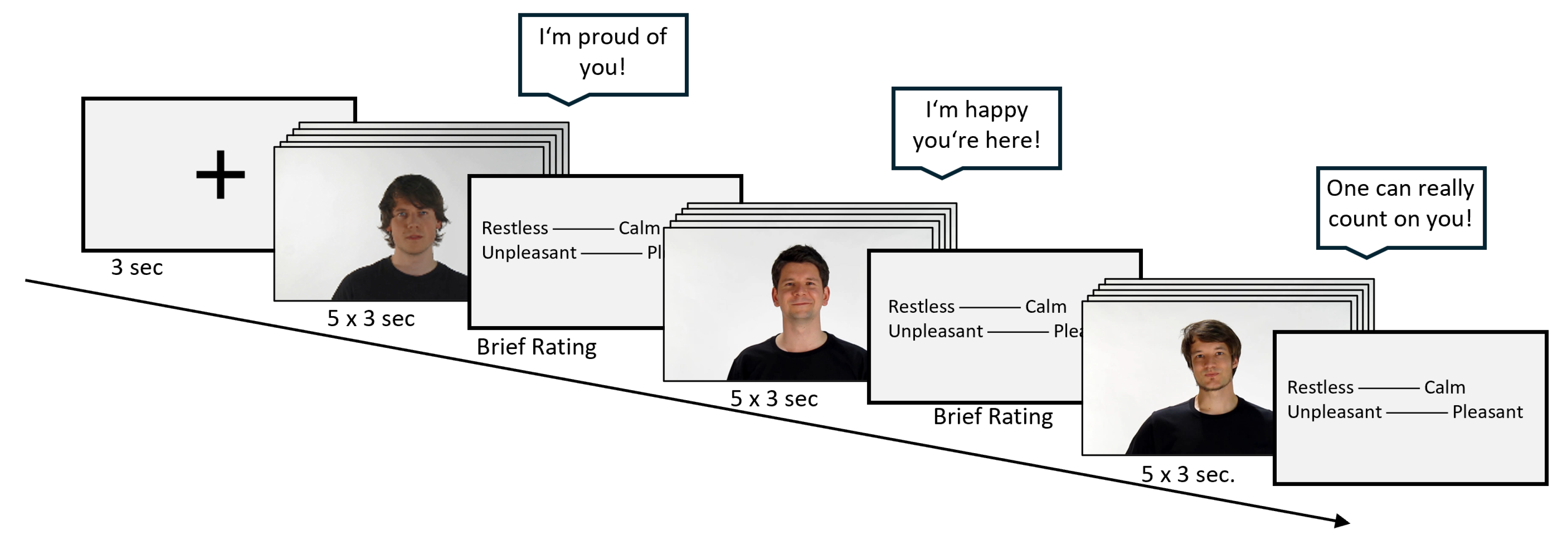
Figure 2.
Meta-analytically derived stress network used for the ROI-to-ROI FC analysis. A Representative transversal slices illustrate the anatomical distribution of ROIs comprising the stress network. Slice coordinates (z) are reported in MNI space. B Three-dimensional rendering of the complete ROI set. ROIs are displayed in red on the anatomical template.
Figure 2.
Meta-analytically derived stress network used for the ROI-to-ROI FC analysis. A Representative transversal slices illustrate the anatomical distribution of ROIs comprising the stress network. Slice coordinates (z) are reported in MNI space. B Three-dimensional rendering of the complete ROI set. ROIs are displayed in red on the anatomical template.
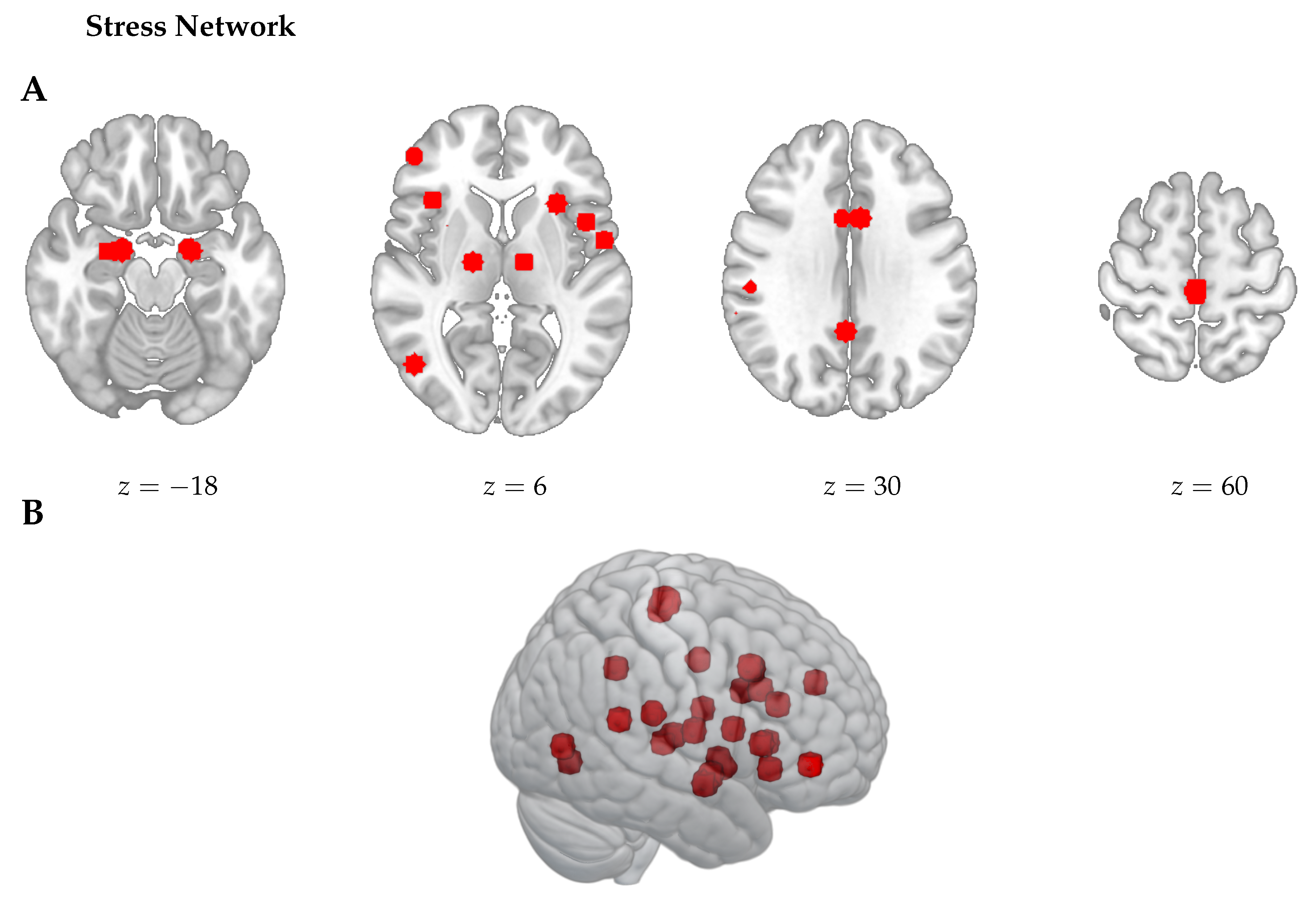
Figure 3.
Positive self-related affect as a function of social evaluation valence and evaluator sex. Points represent mean positive self-related affect ratings for male and female evaluators across criticism, neutral statements, and praise. Lines connect condition means, and error bars indicate 95% confidence intervals. Individual observations are shown as transparent points. Positive self-related affect was assessed with the item "I feel good" (not at all–extremely).
Figure 3.
Positive self-related affect as a function of social evaluation valence and evaluator sex. Points represent mean positive self-related affect ratings for male and female evaluators across criticism, neutral statements, and praise. Lines connect condition means, and error bars indicate 95% confidence intervals. Individual observations are shown as transparent points. Positive self-related affect was assessed with the item "I feel good" (not at all–extremely).
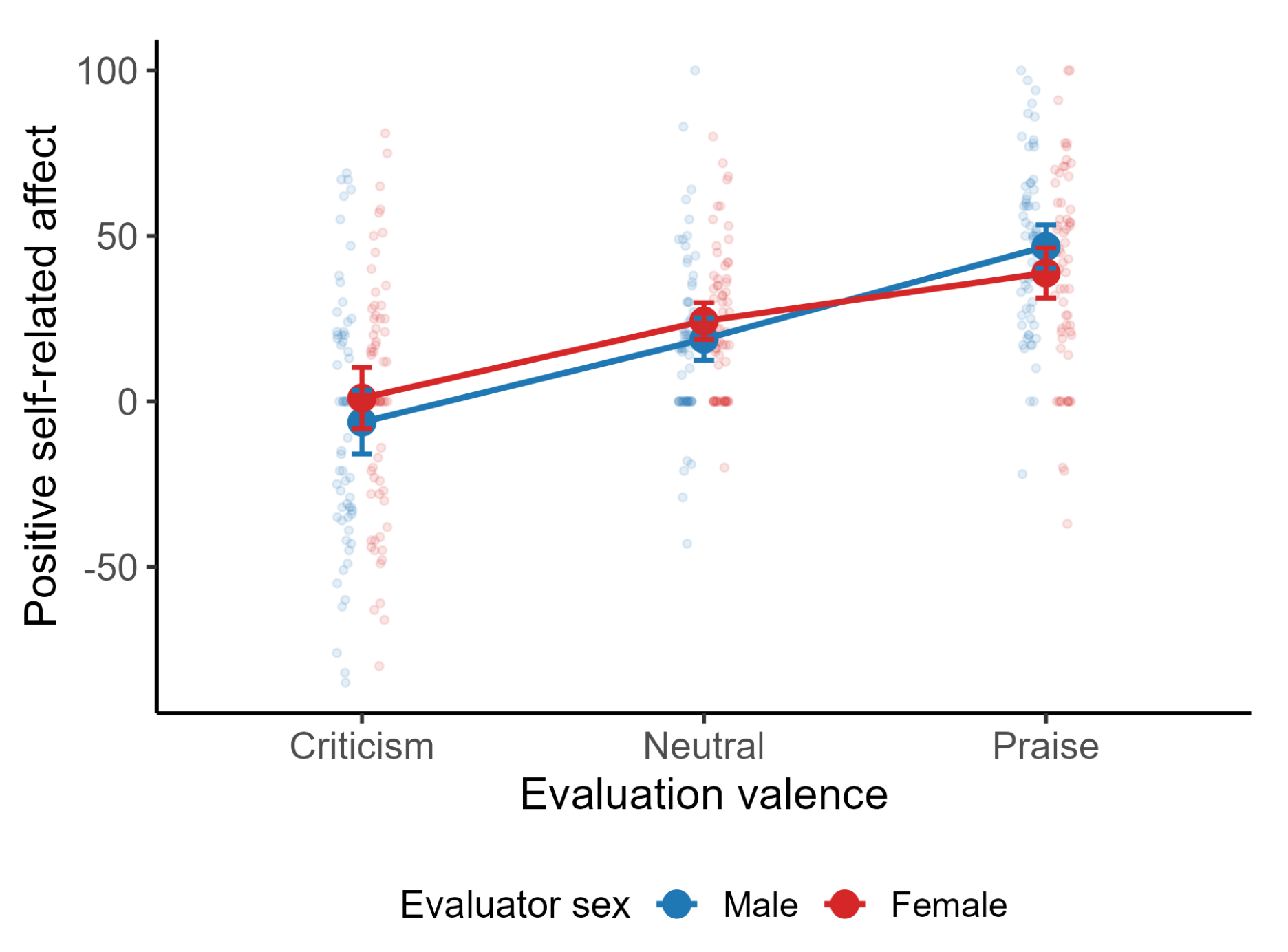
Figure 4.
Main effect of evaluator sex Significant FC are shown for the main effect of evaluator sex across social evaluation conditions. FFG = fusiform gyrus; PL = paracentral Lobule; R = right; L = left.
Figure 4.
Main effect of evaluator sex Significant FC are shown for the main effect of evaluator sex across social evaluation conditions. FFG = fusiform gyrus; PL = paracentral Lobule; R = right; L = left.
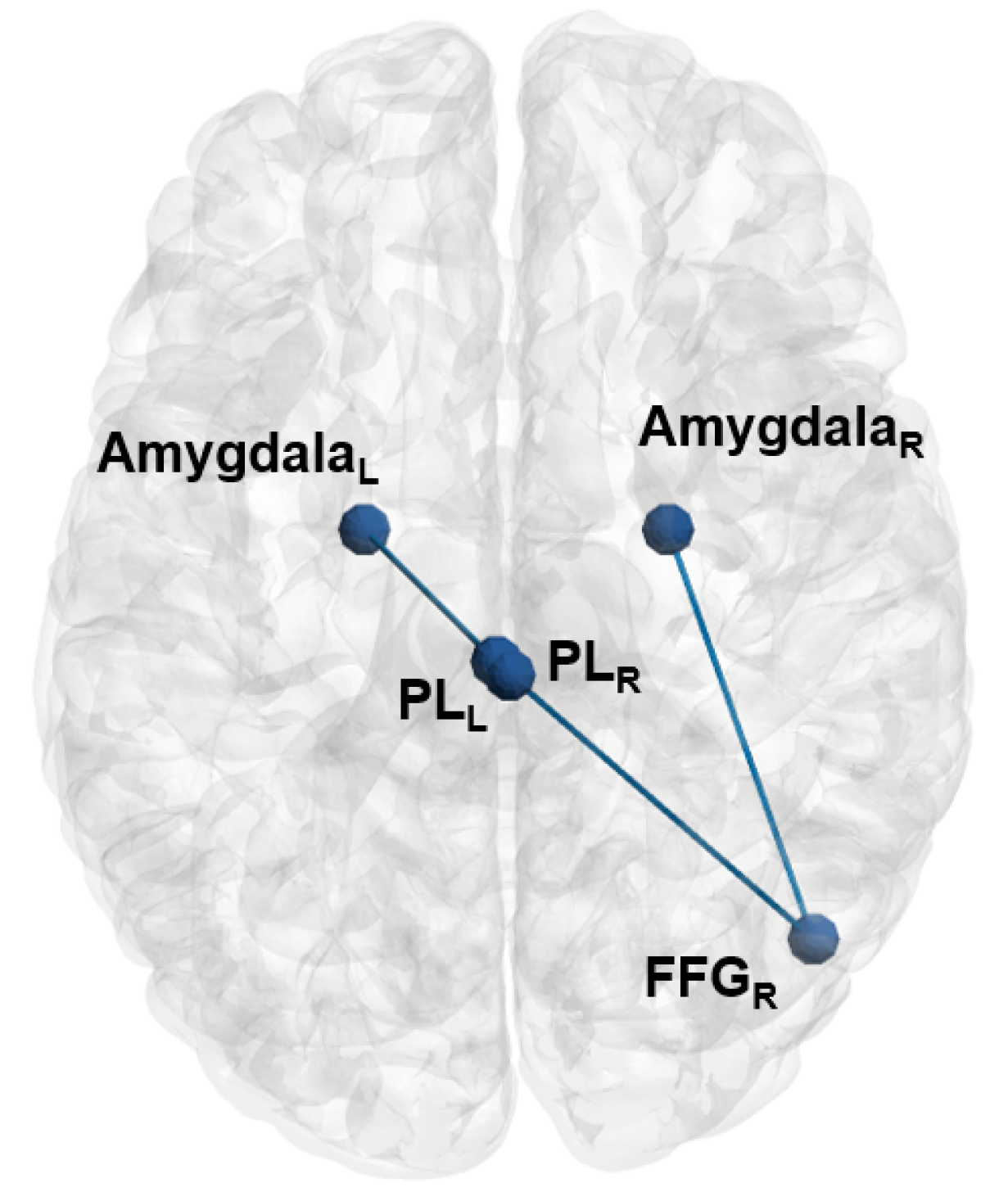

Table 1.
29 ROIs included in the meta-analytically derived stress network. All coordinates are reported in MNI space.
Table 1.
29 ROIs included in the meta-analytically derived stress network. All coordinates are reported in MNI space.
| ROI | Hemisphere | x | y | z | Source |
|---|---|---|---|---|---|
| Insula | Left | -30.0 | 20.0 | 6.0 | [23] |
| Insula | Right | 38.0 | 26.0 | -4.0 | [25] |
| Amygdala | Left | -20.0 | -6.0 | -18.0 | [23] |
| Amygdala | Right | 26.0 | -6.0 | -16.0 | [23] |
| Hippocampus | Right | 18.0 | -4.0 | -14.0 | [23] |
| Hippocampus | Left | -18.0 | -3.3 | -21.3 | [23] |
| Parahippocampal Gyrus | Right | 18.0 | -6.0 | -18.0 | [24] |
| Putamen | Right | 30.0 | 8.0 | 12.0 | [23] |
| Caudate | Left | -10.0 | 18.0 | -6.0 | [25] |
| Posterior Cingulate Cortex | Right | 2.0 | -50.0 | 30.0 | [24] |
| Middle Cingulate Gyrus | Left | -6.0 | 12.0 | 30.0 | [23] |
| Middle Cingulate Gyrus | Right | 4.0 | 12.0 | 34.0 | [25] |
| Cerebellum | Left | -32.0 | -76.0 | -26.0 | [23] |
| Supramarginal Gyrus | Left | -58.4 | -20.4 | 17.2 | [23] |
| Supramarginal Gyrus | Right | 54.5 | -25.5 | 25.3 | [23] |
| Superior Temporal Gyrus | Right | 62.0 | -40.0 | 24.0 | [23] |
| Superior Temporal Gyrus | Left | -56.0 | 0.0 | 4.0 | [23] |
| Fusiform Gyrus | Right | 48.0 | -68.0 | 6.0 | [23] |
| Thalamus | Left | -12.0 | -12.0 | 8.0 | [25] |
| Thalamus | Right | 16.0 | -12.0 | 6.0 | [25] |
| Paracentral Lobule | Right | 2.0 | -28.0 | 64.0 | [25] |
| Paracentral Lobule | Left | 0.0 | -26.0 | 62.0 | [25] |
| Medial Frontal Gyrus | Midline | 0.0 | -30.0 | 58.0 | [25] |
| Inferior Frontal Gyrus | Right | 38.0 | 22.0 | 8.0 | [25] |
| Inferior Frontal Gyrus | Left | -46.0 | 10.0 | 8.0 | [23] |
| Dorsolateral Prefrontal Cortex | Left | -40.0 | 36.0 | 14.0 | [23] |
| Dorsolateral Prefrontal Cortex | Right | 48.0 | 46.0 | 2.0 | [23] |
| Brainstem | Left | -2.0 | -24.0 | -2.0 | [23] |
| Brainstem | Right | 4.0 | -28.0 | -4.0 | [23] |
Table 2.
Characteristics of the study sample, presented as mean (M) standard deviation (SD).
| Measure | M | SD |
|---|---|---|
| Age (years) | ||
| Processing speed (TMT-A) | ||
| Cognitive flexibility (TMT-B) | ||
| Verbal intelligence (WST) | ||
| Rejection sensitivity (RSQ) | ||
| Social Phobia (SPS) |
Note. TMT-A = Trail Making Test Part A; TMT-B = Trail Making Test Part B; both measured in seconds [56]. Verbal intelligence was assessed using the Wortschatztest (WST; Schmidt and Metzler [57], 1992). Rejection sensitivity was assessed using the German version of the Rejection Sensitivity Questionnaire (RSQ; score range: 1–36) [58,59]. Social phobia was assessed using the Social Phobia Scale (SPS; score range: 1–4) [60].
Table 3.
Significant effects of statement valence on functional connectivity.
| Connection | p | |||
|---|---|---|---|---|
| Criticism vs. neutral statements | ||||
| L PL – L STG | 0.086 | 0.024 | 3.65 | .003 |
| L STG – R PL | 0.083 | 0.024 | 3.42 | .007 |
| L insula – R IFG | 0.066 | 0.021 | 3.20 | .014 |
| R FFG – R PCC | 0.071 | 0.023 | 3.08 | .020 |
| L STG – R amygdala | 0.058 | 0.019 | 3.00 | .025 |
| Praise vs. neutral statements | ||||
| L insula – R IFG | 0.069 | 0.021 | 3.34 | .009 |
| R PG – R amygdala | 0.061 | 0.020 | 3.08 | .020 |
| L supramarginal gyrus – R hippocampus | -0.056 | 0.020 | -2.86 | .038 |
| Praise vs. criticism | ||||
| L PL – L STG | -0.083 | 0.024 | -3.50 | .005 |
| L STG – R amygdala | -0.055 | 0.019 | -2.87 | .037 |
Note. Positive and negative values indicate higher and lower FC, respectively, for the first condition relative to the second. L = left; R = right; IFG = inferior frontal gyrus; PCC = posterior cingulate cortex; PG = parahippocampal gyrus; FFG = fusiform gyrus; PL = paracentral lobule; STG = superior temporal gyrus.
Table 4.
Significant evaluator sex × valence interactions in FC within the stress network
| Connection | SE | p | Valence effect by evaluator sex | Evaluator-sex effect by valence | ||
|---|---|---|---|---|---|---|
| Criticism vs. neutral statements | ||||||
| MFG–L CAU | -0.125 | 0.039 | -3.18 | .015 | M: criticism > neutral | Criticism: M > F |
| L dlPFC–R IFG | -0.123 | 0.042 | -2.90 | .034 | — | Criticism: M > F |
| Praise vs. neutral statements | ||||||
| MFG–L CAU | -0.133 | 0.039 | -3.37 | .008 | M: praise > neutral | Praise: M > F |
| R PG–R AMY | -0.132 | 0.040 | -3.30 | .011 | M: praise > neutral | Praise: M > F |
| L PL–L CAU | -0.124 | 0.039 | -3.20 | .014 | M: praise > neutral | Praise: M > F |
| R PUT–L CB | 0.110 | 0.037 | 2.96 | .028 | M: neutral > praise | Praise: F > M |
| Praise vs. criticism | ||||||
| R HIP–R PCC | -0.169 | 0.041 | -4.15 | M: praise > criticism | Criticism: F > M; Praise: M > F | |
| R PG–R AMY | -0.136 | 0.040 | -3.41 | .007 | M: praise > criticism | Criticism: F > M; Praise: M > F |
| L INS–L THA | 0.146 | 0.039 | 3.74 | .002 | M: criticism > praise | Criticism: M > F; Praise: F > M |
| R PG–R PCC | -0.151 | 0.044 | -3.45 | .006 | M: praise > criticism F: criticism > praise | Praise: M > F |
| L dlPFC–R IFG | 0.131 | 0.042 | 3.08 | .020 | M: criticism > praise | Criticism: M > F |
| L STG–R PUT | 0.108 | 0.037 | 2.93 | .031 | F: criticism > praise | Criticism: M > F |
| R PCC–L AMY | -0.127 | 0.044 | -2.89 | .035 | M: praise > criticism; | Praise: M > F |
| R THA–R AMY | -0.110 | 0.038 | -2.86 | .038 | F: criticism > praise | Criticism: F > M |
| R IFG–R PCC | -0.121 | 0.043 | -2.79 | .046 | — | Praise: M > F |
| R THA–L AMY | -0.109 | 0.039 | -2.78 | .047 | — | Criticism: F > M |
| L HIP–R THA | -0.106 | 0.038 | -2.77 | .048 | F: criticism > praise | Criticism: F > M |
Note. Post-hoc columns show significant comparisons only; — indicates no significant comparison of the respective type. M = male evaluator; F = female evaluator; AMY = amygdala; CAU = caudate; CB = cerebellum; dlPFC = dorsolateral prefrontal cortex; HIP = hippocampus; IFG = inferior frontal gyrus; INS = insula; L = left; MFG = medial frontal gyrus; PCC = posterior cingulate cortex; PL = paracentral lobule; PG = parahippocampal gyrus; PUT = putamen; R = right; STG = superior temporal gyrus; THA = thalamus.
Disclaimer/Publisher’s Note: The statements, opinions and data contained in all publications are solely those of the individual author(s) and contributor(s) and not of MDPI and/or the editor(s). MDPI and/or the editor(s) disclaim responsibility for any injury to people or property resulting from any ideas, methods, instructions or products referred to in the content. |
© 2026 by the authors. Licensee MDPI, Basel, Switzerland. This article is an open access article distributed under the terms and conditions of the Creative Commons Attribution (CC BY) license (http://creativecommons.org/licenses/by/4.0/).
Copyright: This open access article is published under a Creative Commons CC BY 4.0 license, which permit the free download, distribution, and reuse, provided that the author and preprint are cited in any reuse.