

Submitted:
28 October 2026
Posted:
29 October 2026
You are already at the latest version
Abstract
Acute kidney injury (AKI) is associated with mortality and chronic kidney disease, but conventional monitoring may detect it late. Drug-induced kidney injury (DIKI) is a potentially preventable cause of AKI and an important concern in people living with Human Immunodeficiency Virus (HIV) who receive potentially nephrotoxic medications. Serum creatinine and urine output describe functional changes, but do not directly measure tubular injury. Candidate biomarkers provide complementary information about injury, stress, inflammation, and filtration; their interpretation depends on the specimen, assay, timing, and clinical setting. This narrative review examines biomarker translation with a focus on point-of-care DIKI testing in resource-limited HIV/antiretroviral therapy (ART) services. It distinguishes analytical validity, clinical validity, clinical utility, and implementation, and proposes a staged evaluation roadmap. Priorities include reliable measurement under routine conditions, independent validation of decision thresholds, comparison with existing clinical assessments, and prospective evaluation of biomarker-guided care. Economic and equity assessments should accompany clinical studies. Earlier detection is valuable when a reliable result supports an effective clinical response; diagnostic accuracy alone does not establish patient benefit.
Keywords:
acute kidney injury
; drug-induced kidney injury
; biomarkers
; analytical validation
; diagnostic accuracy
; clinical utility
; point-of-care testing
; HIV
; antiretroviral therapy
; resource-limited settings
1. Introduction
Acute kidney injury (AKI) is a rapid decline in kidney function that can follow infection, haemodynamic instability, surgery or exposure to nephrotoxic drugs. It is associated with prolonged hospitalisation, chronic kidney disease and higher mortality [1,2,3,4]. Reported incidence and outcomes vary between populations, diagnostic definitions and care settings, and AKI is often recognised late [3,5]. Drug-induced kidney injury (DIKI) is a potentially preventable cause of AKI, although drug-related injury can also develop over longer periods [6,7,8]. The 2012 Kidney Disease: Improving Global Outcomes (KDIGO) criteria define AKI by changes in serum creatinine and urine output. They describe loss of function, but do not identify the mechanism of injury [1,9]. In suspected DIKI, this is important because management can mean reviewing, adjusting, or substituting a drug, as well as staging AKI.
Early recognition allows clinicians to look for reversible causes, optimise haemodynamic status, review nephrotoxic medicines and monitor kidney function more often [1,10]. The diagnosis still relies mainly on serum creatinine and urine output [1,10]. Creatinine is a delayed indirect marker, and its concentration is affected by muscle mass, fluid balance, and baseline kidney function [10,11]. Urine output is difficult to measure accurately outside closely monitored settings, particularly when collection is incomplete or diuretics are administered [10]. AKI is under-recognised even in hospital care [12]. Neither measure directly establishes structural damage or its cause [9,13,14]. This has consequences for biomarker research. A marker of early tubular injury may appear inaccurate when compared to a functional reference standard that has not yet changed, and creatinine-based definitions can distort estimates of the performance of emerging DIKI biomarkers [13,15,16].
Resource-limited services often have limited laboratory capacity, few specialist staff, and slow results delivery, which can delay risk assessment and clinical decisions [19]. Where HIV is common, antiretroviral therapy (ART), kidney comorbidity, and co-medication make monitoring more complex [17,18]. Central laboratories remain necessary, but tests that require specialised instruments, strict storage conditions, or complex workflows are difficult to run in decentralised care. Point-of-care (POC) tests could help, provided that they provide reliable results in time to guide care [19]. This review uses DIKI in HIV/ART services as its main application. Resource constraints vary between health systems, so conclusions from this use case should not be assumed to hold in every low-resource setting.
Candidate biomarkers provide information on tubular stress, epithelial injury, inflammation, and filtration [13,21]. Several have shown diagnostic or prognostic promise in selected populations, but an association with AKI does not make a marker ready for clinical use [21,22]. Translation needs evidence that the assay measures reliably, perform adequately in the intended population, and supports decisions that improve care [20,22]. Cost and operational feasibility must also be assessed [20]. The evidence required depends on whether the test is intended for risk assessment, diagnosis, prognosis, monitoring, or drug safety [23]. A validated marker for early risk stratification cannot be assumed to confirm established AKI or guide treatment without further validation [21,23].
In the literature reviewed here, the barrier to routine use lies mainly in limited evidence on analytical performance, clinical validity, and clinical utility [20,21]. In DIKI, novel markers can detect tubular damage before creatinine levels increase, but their ability to alter clinical decisions has not been demonstrated [21,22]. In people living with HIV who receive ART, suspected DIKI can coexist with HIV-associated kidney disease, opportunistic infection, volume depletion, and other comorbidities [17,24]. A biomarker result must be interpreted within the clinical picture, and findings from one population may not generalise to another [17,21]. Earlier detection helps only if the result is dependable, reaches the clinician in time to act and leads to an effective response [19,20,21]. False-positive results can prompt needless treatment changes, and false-negative results can delay the recognition of injury [20,21,23].
This review has five objectives: (1) to explain the diagnostic challenges of AKI and DIKI; (2) to assess biomarkers against their intended clinical use; (3) to separate analytical validity, clinical validity, clinical utility, and implementation as stages of evidence; (4) to set the requirements for POC DIKI testing in resource-limited HIV/ART services; and (5) to propose a staged research roadmap. Throughout, the question is whether testing improves decisions and patient outcomes beyond the information routine care already provides.
1.1. Review Approach and Scope
This narrative review examines how AKI biomarkers move from discovery to clinical practice, with DIKI in HIV/ART care as the main application. It was not designed as a systematic review, and no formal risk assessment or evidence classification was performed. Sources were identified through searches of [PubMed/MEDLINE, Scopus, and Google Scholar] from [January 2000] to [October 2026], using combinations of terms for acute kidney injury, drug-induced or nephrotoxic kidney injury, named biomarkers, point-of-care tests, HIV and antiretroviral therapy, supplemented by reference-list screening and relevant regulatory and guideline websites. Sources were purposively selected for relevance to biomarker biology, analytical and clinical validation, clinical utility, regulation, or POC implementation. Sources include original studies, clinical trials, systematic reviews, meta-analyses, consensus statements, guidelines, and regulatory publications. Findings are organised by themes: biomarker biology, analytical validation, clinical performance, clinical utility, and implementation, with attention to barriers to adoption. No pooled diagnostic or treatment-effect estimates were calculated. As a narrative synthesis, the review is open to selection and publication bias, and differences in assays, samples, populations, sampling windows, and reference standards limit direct comparison between studies. Tables and roadmaps describe evidence requirements and the authors’ interpretation; they are not a formal evidence grade or a comprehensive ranking of biomarker readiness.
2. Overview of Acute Kidney Injury and Diagnostic Challenges
AKI is a heterogeneous syndrome that includes septic, post-surgical, nephrotoxic, cardiorenal, and other phenotypes, each with its own mechanisms and time course [5,25]. Function can decline without extensive tubular damage, and cellular injury can precede any detectable change in function [5,9]. Biomarker concentrations also depend on the time from injury, baseline kidney function, inflammation, comorbidity, and treatment. A test that performs well after a predictable surgical insult may, therefore, be less informative in sepsis or when the onset of injury is uncertain, because the probability of the pre-test, the injury mechanism and all sampling window differ [26]. This variation is a major reason why accuracy estimates often fail to transfer between settings. In HIV/ART care, overlapping drug exposures and competing causes of kidney disease make attribution harder, and the ART regimen and co-medication shape pre-test probability. The test must support a defined decision, such as stopping or substituting a drug, closer monitoring, or investigation of another cause.
The 2012 KDIGO guideline defines AKI as a rise in serum creatinine of at least 0.3 mg/dL (26.5 µmol/L) within 48 h, an increase to at least 1.5 times baseline known or presumed to have occurred within the preceding 7 days, or urine output below 0.5 mL/kg/h for 6 h; staging reflects the size of these changes [1]. The criteria give a common basis for diagnosis and staging, but they are imperfect comparators in studies of structural injury. Creatinine changes late and is influenced by muscle mass, fluid balance, and other non-renal factors [11], and urine output is hard to measure reliably outside monitored settings. Therefore, a structural-injury marker may be positive before KDIGO criteria are met and can be classified as a false positive, even though it detects a real process. An elevated concentration can also reflect systemic inflammation, injury to other organs, or reduced clearance rather than clinically important kidney damage. The KDIGO reference standard measures function rather than tissue injury, and the discordance between the two requires clinical interpretation; it does not show which test is correct [9,15].
KDIGO reports that its 2026 guideline update on AKI and acute kidney disease (AKD) is being prepared for publication after a public review [71]. The draught gives structural biomarkers a larger role, but the draught proposals should be kept separate from the final recommendations. The functional thresholds described in this section are those of the 2012 published guideline.
These limitations make the intended use of a test central to its evaluation (Table 1). Identification of risk, early injury detection, phenotype evaluation, progression prediction, recovery monitoring, and treatment selection each require different sampling windows, comparators, thresholds, and results [23,27]. A marker that predicts an increase in creatinine may not predict dialysis, recovery, or death [28], and a threshold chosen to rule out injury may be unsuitable to rule it in. The combination of these questions into a single accuracy estimate obscures the clinical value of the test. Accuracy is the first requirement. A test also needs evidence that its result changes a clinical decision and, ideally, that the change improves important patient outcomes without undue harm or cost [29]. A marker that predicts an increase in creatinine may not predict dialysis, recovery, or death [29]. Similarly, a threshold chosen to exclude the injury may not be suitable to confirm it. Diagnostic performance must therefore be linked to the decision the test is intended to inform, followed by an evaluation of the benefits, harms, and costs of acting on that result [30].
3. Emerging Biomarkers for Acute Kidney Injury and Drug-Induced Kidney Injury
Candidate biomarkers reflect tubular injury, oxidative or metabolic stress, inflammation, cell-cycle arrest, and filtration [30,31]. The main damage and stress markers are neutrophil gelatinase-associated lipocalin (NGAL), kidney injury molecule-1 (KIM-1), liver-type fatty acid-binding protein (L-FABP), interleukin-18 (IL-18) and the product of the tissue inhibitor of metalloproteinases 2 (TIMP-2) and insulin-like growth factor-binding protein 7 (IGFBP7); cystatin C and proenkephalin report mainly filtration. These categories help explain what a result might mean, but biological plausibility alone does not establish clinical value. Measurements vary between samples, assays, and populations, and several markers have non-renal sources. Table 2 summarises these distinctions and their implications for POC testing in HIV/ART services.
NGAL is among the most studied markers of tubular injury [32,33]. Tubular expression increases after ischaemic or nephrotoxic injury, but NGAL is also a neutrophil protein and an acute-phase reactant. Sepsis and systemic inflammation increase their concentration and filtration affects plasma values [30]. An elevated result is therefore not specific to DIKI. In people living with HIV on ART, infection, immune activation, and reduced filtration can raise NGAL without new drug injury [72,73], so the specimen, sampling time, and clinical context must be known. The precision reported varies between cardiac surgery, critical care, contrast exposure, and paediatric cohorts [33] due to differences in insults, sampling intervals, reference standards, and competing diseases. No single estimate describes NGAL in general. Its performance in outpatient ART monitoring must be measured directly.
KIM-1 is a transmembrane glycoprotein whose ectodomain is removed from injured proximal tubular cells, making it a plausible marker of proximal tubular damage [7,34]. Its limits are practical. Induction lags the insult, baseline urinary levels are low and variable, and assay formats are not standardised [30]. In people living with HIV, urinary KIM-1 is higher than in uninfected individuals even after adjustment for kidney function and exposure to tenofovir [72], so a higher value cannot be attributed only to drug injury. Sampling times and thresholds, therefore, must be assay-specific and set in advance, and changes within a person may say more than a single value. Antiretroviral tubular injury can be subclinical and cumulative [8,24], so a single measurement may be too early or too late. KIM-1 may work best within a prespecified panel, and its role in DIKI screening or monitoring needs prospective validation.
Urinary L-FABP reflects the responses of the proximal tubular to oxidative and metabolic stress [35,41], and urinary IL-18 has been studied as a signal of inflammatory injury [36]. Both are affected by timing and non-renal sources. Many cell types produce IL-18, and IL-18 levels can increase in sepsis without kidney injury; L-FABP varies with the baseline tubular workload [30,35]. Where either marker has been tested in several settings, the optimal threshold has changed. A cut-off belongs to an assay in each population and should be re-derived in independent cohorts before use elsewhere. In people living with HIV, urinary IL-18 is higher than in uninfected individuals and increases with HIV RNA and lower CD4 counts [72], so immune activation and opportunistic infection are likely confounders; their effect on DIKI interpretation has not yet been measured.
The urinary product [TIMP-2]×[IGFBP7] reflects cellular stress and arrest of the G1 cell-cycle and has been evaluated for the evaluation of the risk of AKI [37]. It shows the value of a narrowly defined intended use. In 2014, the US Food and Drug Administration (FDA) granted NEPHROCHECK De Novo permission to use alongside clinical evaluation in intensive-care patients 21 years or older with current or recent cardiovascular or respiratory compromise, to assess the risk of moderate or severe AKI within 12 hours, on central-laboratory platforms [42]. That decision does not cover general DIKI screening or POC use in ART clinics, and clinical guidance likewise links interpretation to the setting and the assay [43,44]. The authorisation for one indication also says nothing about whether broad routine testing improves survival or kidney recovery; this requires prospective studies in which testing changes management [22,44]. Urine dilution, collection timing, and handling also affect results (Section 4). A new platform, population, or care pathway would need its own validation.
Cystatin C and proenkephalin report mainly filtration rather than tubular damage. Cystatin C is freely filtered, then largely reabsorbed and catabolised by tubular cells, and is less dependent on muscle mass than creatinine [38]. Proenkephalin, a stable precursor peptide cleared by the kidney, has been studied as a surrogate for the glomerular filtration rate (GFR) in selected populations [39]. Neither is interchangeable with a damage marker, and their value in DIKI monitoring depends on the population, specimen, and assay. Urinary microRNAs and proteomic signatures remain in the discovery stage and require analytical standardisation and clinical validation [40,45,46].
Filtration and damage markers measure different processes: one may show a decrease in GFR before creatinine increases, the other tubular stress before the change in function [9]. The discordance between them carries information. A panel that combines both should state in advance how concordant and discordant results will change care and should justify the combination by its added value for the intended decision.
Marker selection should start with the clinical question: risk assessment before exposure, detection after exposure, prediction of progression, or monitoring during treatment [21]. These uses carry different pre-test probabilities and error costs [47]. A rule-out test used before starting a nephrotoxic drug must be performed when prevalence is low and false reassurance is costly. A triage test in a symptomatic patient is more effective where the prevalence and cost of a missed case are higher. Evidence for one purpose does not transfer to another.
For HIV/ART services, the intended use should be declared in advance as pre-treatment assessment, on-treatment monitoring, or determination of suspected toxicity (Table 1), because the acceptable balance of false-positive and false-negative results differs for each.ch. That choice fixes the comparator, sampling schedule, and reference standard, and prevents the same analyte from being retested against whichever endpoint is to hand. Multimarker panels may capture complementary pathways, but they also increase cost, assay complexity, and the risk of overfitting. Each added marker should contribute information that improves the intended decision.
The incremental value should be tested against the routine clinical assessment, including age, sex, comorbidity, drug exposure, and baseline kidney function. Comparison with creatinine alone can make a new marker look more useful than it is. Gains in discrimination are a start, but changes in risk classification and decision-curve analysis show whether additional information could change decisions (Section 5) [48,49].
The practical aim is to identify which markers can answer a defined DIKI question with the specimen, platform, and workflow available in the intended clinic. Evidence from general cohorts of AKI provides a basis for further study but does not resolve that application.
4. Analytical Validation and Standardisation
Analytical validation establishes whether the assay reliably measures its target. Acceptance criteria should be set before the results are examined [20]. Core domains include repeatability, precision across days and operators, limits of blank, detection and quantification, linearity, recovery, interference, stability, and performance in the intended specimen matrix (Table 3). Relevant interferents may include haemoglobin, bilirubin, lipids, heterophile antibodies, biotin, and co-medications. For urinary tests, collection timing, hydration, storage, and sample processing also require control. Normalisation of creatinine needs to be justified because creatinine excretion varies with muscle mass and other characteristics of the patient [11]. Reporting a ratio introduces variability from both measurements. Studies should describe calibration, handling of low results, and differences between platforms so that published thresholds can be interpreted and reproduced [21,27].
These requirements are particularly relevant for HIV/ART care. Reduced muscle mass, baseline kidney disease, fluid disturbances, infection, and polypharmacy can affect the analyte, the specimen matrix, or interpretation [17]. For example, a diluted urine sample can lower the measured concentration without indicating recovery. Potential drug interference should be investigated rather than presumed. Before evaluating clinical benefit, a POC assay should demonstrate robustness under the specimen-handling and operating conditions expected in the clinic.
Standardisation requires documented collection, processing, calibration, and internal quality-control procedures. The commutability of reference materials with patient specimens should be assessed [50]. External quality assessment (EQA), where available, provides an independent check on agreement between sites [51]. Reports should identify the assay, manufacturer, specimen, storage duration, freeze-thaw history, and handling of results below measurement limits. The Standards for Reporting of Diagnostic Accuracy (STARD) statement provides reporting guidance for diagnostic-accuracy studies [52]. POC evaluation must also examine turnaround time, reagent stability, device variation, operator effects and the intended sample type [19]. Regulatory qualification is use-specific: acceptance of urinary biomarkers for defined preclinical drug-safety applications does not establish their suitability for routine patient management [53].
5. Clinical Validation and Diagnostic Performance
Clinical validation asks whether a test performs adequately in its intended population and setting [20,23]. For DIKI POC testing in HIV/ART services, the intended-use statement should specify the age group, the nephrotoxic exposure to antiretroviral or other drugs, baseline kidney function, the clinic or ART site, the sampling window after exposure, the purpose of the testing (surveillance, early detection or confirmation of suspected toxicity) and the action expected after each result, such as review of the regimen, closer monitoring or referral. The adult and paediatric pathways should be distinguished [54]. The claim that a test ‘detects AKI’ is too broad to validate or implement. These details should be fixed before validation begins.
Accuracy should be evaluated prospectively, where feasible, with prespecified outcomes and sampling intervals. Sensitivity, specificity, likelihood ratios, and predictive values should be reported with confidence intervals. Predictive values depend on prevalence, and the sensitivity, specificity, and likelihood ratios can also vary with the clinical spectrum [47]. The area under the receiver operating characteristic curve (AUC) quantifies discrimination but does not indicate whether treatment should change [29], and risk models also require calibration assessment. The prevalence and spectrum of diseases in low-resource HIV/ART services will differ from the tertiary centre cohorts in which most markers were first tested, so the performance must be confirmed in the intended population [26]. Decision-curve analysis can estimate net benefit across plausible thresholds [49], but it does not replace a study of patient outcomes [29].
The reference standard is itself imperfect. As described in Section 2, creatinine and urine output are insensitive to early tubular injury, and their precision depends on how often and how completely they are measured [11,15]. In HIV/ART care, tenofovir-associated proximal tubular injury can precede an increase in creatinine [24], while baseline kidney disease, low muscle mass, fluid status, and acute infection can mask or mimic creatinine change [17]. Misclassification is rarely random and can bias the apparent accuracy in either direction [16]. Studies should report how the reference standard was determined, whether recruitment was consecutive, the measurement schedule, and whether adjudicators were blinded to biomarker results. Retrospective case–control sampling tends to overstate performance [55]. DIKI adjudication should record drug exposure and competing causes of injury rather than rely on a generic AKI label. Table 4 summarises the minimum requirements.
A useful validation programme links analytical acceptance criteria, a defined DIKI intended use, prospective validation against an adjudicated reference standard, POC usability evidence and a clinical-impact endpoint. These stages and the go/no-go criteria between them are set out in the roadmap in Section 8 (Figure 4).
The threshold choice should reflect the clinical action and the consequences of error. In HIV/ART services, a POC result may be the only available timely signal. A lower threshold improves sensitivity but generates more false-positive results and unnecessary follow-up; a higher threshold identifies a smaller, higher-risk group, but may miss patients who could benefit from early care. The two errors carry different costs. A missed case may delay the review of a nephrotoxic regimen and allow avoidable injury, whereas a false alarm may lead to unnecessary drug switching, referral, or cost when there are few alternatives. Given this asymmetry, the threshold should be justified against the named action (repeat tests, medication review, avoidance of further nephrotoxins, closer monitoring or referral) and local capacity [49]. The thresholds derived in one cohort should be assessed in independent populations, as in the separate derivation and validation of a urinary NGAL cut-off in critically ill children [56], and post hoc optimisation should be reported as exploratory. Serial measurements may add information [57], but they need a feasible sampling schedule, validated interpretation rules, and analysis that accounts for repeated observations. Figure 1 outlines the design, analysis, and reporting priorities.
Comparisons should assess what tests add to clinical variables, drug exposure, comorbidity, creatinine trends, urine output, and established risk factors, so that a new POC test is not credited with information already available. The incremental value should be measured against a prespecified clinical comparator model rather than a univariate or historical benchmark. Changes in discrimination are informative, but reclassification and decision-curve measures show more directly whether net benefit increases across plausible thresholds [48,49]. External validation should cover different causes of AKI, baseline kidney function levels and care settings and, for this use case, people living with HIV in relevant ART regimens and comorbidities. For models that produce probabilities, calibration should be reported graphically and quantitatively. Subgroup analyses require adequate sample sizes and formal testing of interactions. Reporting should follow diagnostic-accuracy or prediction-model guidance [52,58] and include the assay and specimen-handling details described in Section 4.
Readiness is specific to a use case. For DIKI POC testing in HIV/ART care, clinical validation sits within the gated roadmap in Section 8 (Figure 4): diagnostic performance in ART-exposed patients must be established before a prespecified result is tested for safe changes in management, and both precede evaluation of net benefit and feasibility in the intended setting. Early single-centre reports often show stronger discrimination than later multicentre evaluations [55]. A biomarker should be classified as promising, adequately validated, or ready for a defined care pathway according to the design and breadth of the evidence, with confidence intervals reported, and not on the strength of a single significant result. Among the markers discussed in Section 3, we found that no threshold was sufficiently supported to serve as a stand-alone diagnostic rule. Thresholds are pathway-specific and need local verification, with reassessment whenever the assay, population, or care process changes [21].
6. Translational Pathway from Laboratory Discovery to Clinical Practice
Translation is best understood as a sequence of evidence-generating decisions rather than an automatic progression from publication to product (Figure 2) [59,60]. The pathway begins with the identification of a clinically important unmet need and a intended use. For DIKI POC testing in resource-limited HIV/ART care, the intended use must be concrete: which patients are tested, at what point in ART follow-up, in what specimen, by which operator, with what turnaround time and with what action after a positive or negative result. Discovery and independent verification establish biological plausibility; analytical validation confirms the reproducibility of the measurement; and clinical validation assesses the performance in the target population. The next step is to evaluate whether the result changes management beneficially and, ultimately, whether it improves patient-relevant outcomes without net harm. In practice, these stages are iterative: clinical validation may expose pre-analytical problems that require assay refinement, and implementation experience may redefine the intended population or decision threshold. Therefore, a biomarker programme should specify the clinical question, the target population, the comparator, the sampling time, the action to be taken based on the outcome and the result that would constitute success. Without this specification, a statistically significant association can easily be mistaken for clinical readiness.
Discovery should establish not only that a candidate molecule differs between groups but also that the difference is biologically coherent and sufficiently specific for the proposed use [45]. Independent verification in separate cohorts, with explicit attention to the reference standard for AKI, is essential because case–control discovery designs can exaggerate discrimination [55]; therefore, verification should use the same definitional standard and sampling window intended for the POC pathway. Biological plausibility should also be examined in the intended contexts: a tubular stress marker can behave differently in sepsis, cardiac surgery, critical illness, and community-acquired AKI, and may be influenced by inflammation, baseline kidney function, and type of sample [25]. In DIKI/HIV / ART, these sources of heterogeneity include ART exposure patterns, HIV-related inflammation and comorbidity, and the care setting in which the POC test would be used. A candidate that has not been tested across these sources of heterogeneity remains a research observation rather than a translational candidate.
Analytical validation is a gate rather than a formality. Its requirements, including pre-analytical control and comparability across sites and over time, are set out in Section 4 and Table 3. A threshold derived with one assay cannot be transferred uncritically to another platform, and POC formats can trade analytical robustness for speed. Clinical validation then follows the requirements in Section 5 and Table 4. The operational sequence for a DIKI POC test, anchored to the intended use defined at the beginning, is shown in Figure 3.
Clinical utility is different from diagnostic accuracy, and for DIKI, the distinction is not academic [29]. Utility is a claim about consequences rather than discrimination: a test has clinical utility only if the result changes what clinicians know, then what they do, and ultimately what happens to the patient, at a cost and level of operational complexity that the health system can absorb. A test may be analytically sound and clinically valid (measuring what it claims to measure and separating patients who will develop the outcome from those who will not) and still have no utility if the result arrives after the decision point, merely restates information already available, or prompts a decision for which no effective action exists. Conversely, a test with modest discrimination can be useful if placed where genuine uncertainty exists and an effective response is available. A tubular stress or injury biomarker may rise before serum creatinine changes. However, it alters care only if the result reaches the intended patient at the intended time and triggers an action that would not otherwise occur. Three conditions must therefore hold simultaneously: the result is delivered within the window in which the relevant decision is made; the clinician accepts and acts on it; and the action taken at that moment improves the outcome relative to the action that would otherwise have been taken. Each condition can be specified in advance and each can fail independently, which is why a successful accuracy study is necessary, but never sufficient, for adoption.
In HIV/ART programmes, this qualification is especially important. HIV infection, tenofovir-containing regimens, opportunistic infections, volume depletion, and pre-existing kidney disease can coexist [17,18], so it cannot be assumed that a test that performs well in a high-risk surgical cohort performs well or change care in an ART clinic. The prevalence of the target condition, the mix of competing causes of AKI, the availability of alternatives such as scheduled creatinine monitoring, and the therapeutic options that follow a positive result all differ between these settings, and each modifies both predictive performance and the consequences of a result. The transportability of a decision threshold can no longer be assumed across populations, as with the transportability of a point estimate [26], and a pathway validated in a tertiary referral centre must be re-examined before it is applied in a decentralised clinic or a stable outpatient ART cohort.
The objective is therefore not to demonstrate another association between a marker and AKI, but to determine whether a specified DIKI POC pathway improves patient-centred outcomes compared with usual care without causing net harm or widening inequity. The unit of evaluation is the pathway (specimen collection, assay platform, reporting, decision rule, and clinical action taken together) rather than the analyte alone, and the comparator is usually referred to as delivered in the intended setting, not an idealised version of it.
Four objectives follow from this position. First, define the intended use and decision threshold by specifying the patients, sample, collection time, assay platform, reporting units, and action before validation, so that the validation question is fixed in advance rather than chosen after the data are seen. Second, establish analytical and clinical validity in the intended population rather than only in a convenience sample, including calibration and discrimination at the prespecified threshold, and report whether performance is adequate at the operating point that the pathway will actually use. Third, test the pathway, not the marker alone, in a pragmatic comparative design against usual care, so that the estimate reflects the effect of acting on the result rather than the effect of the assay in isolation. Fourth, quantify implementation, economic, and equity consequences, including the downstream costs of false-positive and false-negative results, so that a promising result can be judged feasible, affordable, and safe in routine practice. Candidate markers with analytical and association evidence are far more common than candidates with a locked intended use, a validated POC format, a tested decision pathway and patient-level outcome evidence in the populations that carry the greatest DIKI burden. The minimum clinical-utility evidence package is summarised in Table 5.
A biomarker may predict AKI earlier, but it has little practical impact if clinicians already apply the same supportive measures or if the result arrives too late [22,61]. Trials of biomarker-guided pathways should therefore specify how a positive or negative result changes care, as in the PrevAKI trial, in which biomarker-positive patients after cardiac surgery received a KDIGO-based care package [62]. Possible actions include review of medications, avoidance of additional nephrotoxins, more frequent monitoring, and timely evaluation by specialists. In DIKI, a credible action might be prompt review of a nephrotoxic ART component, correction of volume depletion, dose adjustment, or intensified follow-up. However, the protocol must state which action follows which result and must document adherence. These actions must be evaluated as part of a protocol rather than assumed to follow automatically from a laboratory result; low adherence to the specified action would attenuate any observed benefit and should be reported as a process finding rather than interpreted as evidence that the marker lacks value. The central comparison is biomarker-guided care versus usual care, not merely biomarker-positive versus biomarker-negative patients, and co-interventions should be delivered consistently in both groups. Otherwise, a trial may measure the effect of increased clinical attention rather than the effect of the test, a bias that is difficult to remove retrospectively, particularly in unblinded pathways where monitoring itself may improve care.
Where individual randomisation is impractical, cluster or stepped-wedge designs may be appropriate, but they must account for clustering, contamination and secular trends [63]. Decision-impact studies can show whether a test changes clinician behaviour but cannot alone demonstrate patient benefit; they are best regarded as explanatory steps between accuracy and outcome trials [29]. In resource-limited HIV/ART services, cluster designs may be the only feasible way to evaluate the effects on workflow, supply chain, and equity. Still, their analysis should pre-specify how clustering and contamination are handled and should report whether usual-care sites gained access to the test during the study. Reporting should also make clear at which stage of a stepped-wedge sequence each site contributed outcome data, since otherwise the comparison may reflect calendar time, staff turnover or changes in the availability of tenofovir-sparing regimens rather than the intervention itself.
Relevant endpoints include AKI progression, persistent kidney dysfunction, need for kidney replacement therapy, length of stay, and mortality [28]. Process outcomes, such as faster recognition or fewer nephrotoxic exposures, can help explain mechanisms but should not replace patient-centred outcomes. The endpoint choice should reflect the expected mechanism and timing: a tubular stress marker may plausibly reduce nephrotoxic exposure or early progression, while an effect on mortality or dialysis dependence would require a larger sample size, longer follow-up, and a credible causal pathway. Composite endpoints should be prespecified and reported with their components, so that a favourable result is not driven by a surrogate of uncertain clinical importance [64]. For DIKI in HIV/ART populations, prespecified subgroups should include baseline kidney function, ART regimen, comorbidity, and setting, with a stated rationale for whether each is expected to modify the effect of the pathway or its implementation, because the same threshold may have different consequences in a tertiary hospital and a decentralised clinic, and a pathway that improves outcomes on average may still widen inequity if it reaches only the best-resourced sites.
Economic and implementation evaluations should be designed alongside clinical studies rather than added after them, so that promising accuracy results can be assessed for feasibility in routine practice [20]. Their scope is described in Section 8. Monitoring should also capture alert fatigue, inequitable access, and unwarranted reassurance or anxiety. A pathway that is accurate, but unaffordable, unusable at the point of care, or dependent on connectivity that is absent from the intended setting will not deliver benefit, regardless of its performance in a study. The translational argument is strongest when a biomarker is embedded in a defined decision pathway, tested against a clinically significant comparator, and evaluated for both benefit and downstream consequences.
7. Regulatory Approval and Clinical Implementation
Regulatory evaluation addresses the safety and performance of an in vitro diagnostic (IVD) for a defined indication and jurisdiction. Requirements depend on device classification, intended users, and local regulatory framework, so that the same assay can face different evidence requirements across markets. In the United States, for example, in vitro diagnostic (IVD) tests may reach the market through premarket notification (510(k)), De Novo classification or premarket approval (PMA), depending on risk and the availability of a predicate device [65], whereas laboratory-developed tests have been subject to separate oversight. The pathway determines what the manufacturer must show: substantial equivalence to a legally marketed predicate; reasonable assurance of safety and effectiveness for a novel device of low-to-moderate risk; or the more extensive analytical and clinical evidence expected for premarket approval [65]. These descriptions are general and should be checked against jurisdiction-specific guidance for a given device.
In the European Union, Regulation (EU) 2017/746 on in vitro diagnostic medical devices (IVDR) classifies devices by risk. It requires conformity assessment, performance evaluation and post-market surveillance, with the evidence burden and the involvement of a notified body increasing with the class assigned to the device [66]. These pathways differ in the questions they ask, the comparators they use, and the depth of clinical evidence they expect; therefore, a claim accepted in one jurisdiction cannot be assumed to hold in another. Approval or clearance is an important milestone, but it does not guarantee adoption, reimbursement, or improvement in patient outcomes.
Regulatory review generally establishes analytical and clinical performance for a specified intended use; it does not alone demonstrate clinical utility [23,29]. As discussed in Section 6, analytical performance, clinical performance, and clinical utility are sequential and separately evidenced questions, and satisfying the first two does not answer the third. Therefore, claims about particular products must remain tied to their authorised use, as illustrated by the narrow intensive-care indication of the authorised [TIMP-2]×[IGFBP7] test [42], rather than being extended to all patients with AKI. For DIKI POC tests intended for HIV/ART clinics, the regulatory gap is even larger: if the intended-use statement, specimen, operator, and setting do not align with decentralised care, deployment may be unsupported even when the assay is accurate.
Implementation requires a reliable clinical pathway. Laboratories must define who orders the test, when a specimen is collected, how quickly results are returned, which thresholds trigger action, and who is responsible for responding. The pathway should specify the population, sample type, collection timing relative to the insult, assay platform, and reporting units, because these pre-analytical and analytical choices determine whether a result is interpretable. Results should be returned with the context needed for action, such as the assay used, the threshold applied, and the time of collection; otherwise, clinicians may compare results across non-interchangeable platforms and act on a number whose meaning differs from that validated locally. Electronic decision support may improve consistency but can also create alert fatigue when risk thresholds are poorly calibrated or when alerts fire without a clear action attached to them [67]. Decision support should therefore be developed with clinicians, tested for usability, and monitored for override rates and unintended workflow effects, with the same governance applied to changes in the alert logic as to changes in the assay itself.
Training, quality assurance, maintenance, procurement, and post-implementation performance monitoring are essential. Where testing is introduced, implementation should be treated as a local quality-improvement programme with a named owner, standard operating procedures, competency assessment, EQA, and audit of turnaround time and result acknowledgement [51]. Procurement decisions should consider consumables, services, and connectivity, as well as instrument costs, because a device that cannot be maintained or resupplied within the clinic’s supply chain will not provide sustained clinical value [19]. The minimum specification of the POC platform for the DIKI testing in resource-limited HIV/ART clinics is set out in Table 6; it is a design and evaluation tool, not a claim that any current device meets every item.
The implementation question is therefore not whether a POC device can produce a number, but whether the number can be produced reliably, interpreted consistently, and acted on safely within the constraints of the clinic. Because AKI is a heterogeneous syndrome with different causes, trajectories, and comorbidities [5], the pathway should define the intended population and the comparator rather than relying on a generic AKI claim. For HIV/ART services, these elements should be specified before deployment as part of the gated roadmap in Section 8, so that the intended clinical decision, population, turnaround time, and triggered action are explicit rather than assumed. DIKI Implementation should be treated as an ongoing evaluation, with monitoring of test performance, clinician adherence, alert burden, patient outcomes, and equity of access; monitoring should assess whether testing changed recognition, treatment, and outcomes, not merely whether it was ordered.
8. Research Gaps and Future Directions
In the studies considered in this review, evidence linking measurements to a defined clinical decision and patient benefit was limited [22,68], and this gap is especially consequential for the POC DIKI testing in resource-limited HIV/ART settings. Across the literature on AKI and DIKI biomarkers reviewed here, many studies are single-centre, retrospective, or limited to diagnostic precision, and comparatively few are designed to test whether a biomarker adds information beyond routine clinical assessment or change management. This distinction matters because a marker can be strongly associated with AKI yet have little incremental value once serum creatinine, urine output, co-morbidities, and clinical context are known.
Future studies should therefore move from isolated biomarker comparisons toward clearly defined clinical use cases. Priorities include multicentre external validation, pre-specified thresholds, harmonised specimen protocols, and prospective trials of biomarker-guided care pathways. Studies should report the incremental value of testing against standard clinical assessment, with calibration, discrimination, reclassification, and decision-curve measures rather than discrimination alone. They should prespecify subgroups by AKI cause, sampling time, baseline kidney function, sepsis, surgery, nephrotoxic exposure, HIV/ART status and setting of care, stating whether the effects are consistent or limited to subgroups. Regulatory, procurement, and quality-assurance requirements should be mapped early, so that promising assays are not evaluated in ways that cannot support later adoption (Table 4 and Table 6).
POC technologies, including lateral flow, microfluidic systems, and portable biosensors, may reduce turnaround time and dependence on central laboratories [19]. However, their practical value for DIKI will depend on accuracy under routine operating conditions, reagent stability, ease of use, maintenance, and total cost in settings where HIV infection and ART are common. Potential alone is not evidence: portable devices require verification against laboratory reference methods and assessment of lot-to-lot reagent variability, calibration stability, operator dependence, and failure modes in real clinical workflows. Microfluidic systems may be attractive in principle but can be limited by sample preparation, matrix effects, and environmental conditions, so these constraints should be treated as testable platform requirements rather than assumed advantages. Multiplex assays, omics signatures and machine-learning models may improve risk estimation [46,69,70], but require transparent reporting, external validation, calibration, and assessment of workflow consequences. For predictive models, the reporting should include the population, predictor definitions, missing-data handling, calibration, and decision thresholds, and external validation should use independent sites and recalibrate as needed [58]. Greater computational complexity is not necessarily better clinical care.
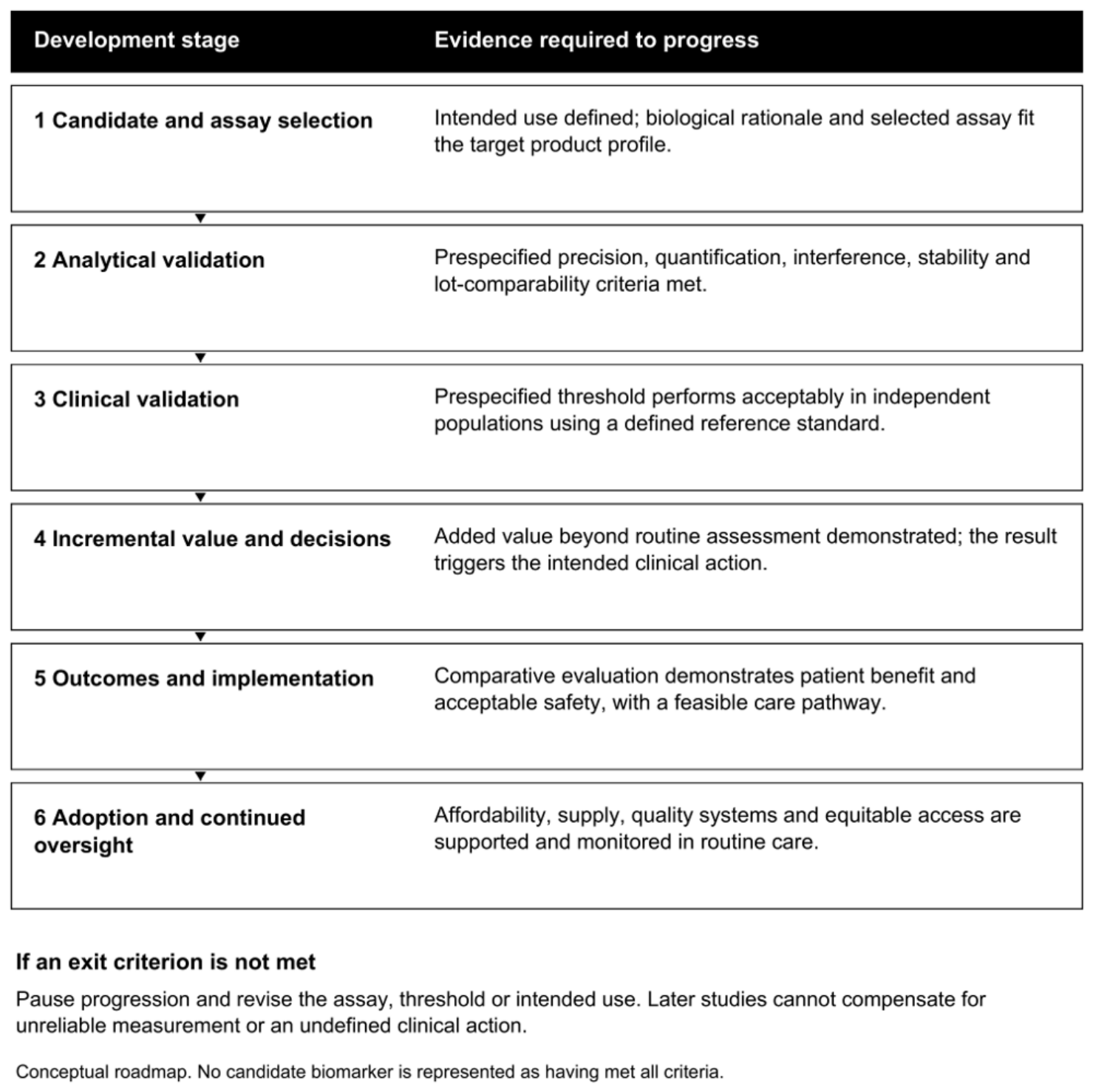
The objectives for accelerating DIKI diagnostics should be explicit and sequential: (1) define a target product profile for the intended POC use and establish analytically validated assays for candidate DIKI markers with predefined acceptance criteria; (2) define and prospectively test DIKI thresholds, with multicentre external validation, in well-characterised HIV/ART cohorts in resource-constrained settings; (3) demonstrate incremental value over serum creatinine, urine output and clinical assessment; (4) show that biomarker-guided care changes decisions and improves patient-important outcomes; (5) specify POC platform requirements for low-resource use; and (6) quantify affordability, equity, and health-system readiness, with evaluation embedded from the outset [20]. The central gap identified in this review is that these steps have rarely been completed in sequence for DIKI, and least often in the populations that carry the combined burden of HIV, ART-associated kidney risk, and limited laboratory infrastructure. A positive association, a favourable accuracy study or a portable prototype is not sufficient; each is an input to the next stage, not a substitute for it (Figure 4).
Figure 4.
Proposed exit criteria for advancing a DIKI point-of-care diagnostic towards adoption. Unmet criteria should prompt reassessment before progression. The roadmap is conceptual and does not imply completed validation, demonstrated patient benefit, or readiness for adoption. DIKI, drug-induced kidney injury.
Figure 4.
Proposed exit criteria for advancing a DIKI point-of-care diagnostic towards adoption. Unmet criteria should prompt reassessment before progression. The roadmap is conceptual and does not imply completed validation, demonstrated patient benefit, or readiness for adoption. DIKI, drug-induced kidney injury.
Health-economic studies should quantify the complete diagnostic pathway (test acquisition, consumables, training, laboratory information systems, false-positive investigations, and changes in hospital resource use) and state perspective, time horizon, discounting, and uncertainty analysis. They should include confirmatory testing, repeat sampling, clinician time, quality assurance and downstream care, and should distinguish cost-effectiveness from affordability. Where local cost or resource-use data are unavailable, assumptions and their sources should be reported transparently and tested in sensitivity analyses rather than transferred from another setting without justification. Evaluations in resource-constrained settings should also consider infrastructure needs, equitable access and whether the proposed clinical actions are available. Equity should be assessed empirically (who receives testing, who receives the downstream intervention and whether benefits are sustained) rather than assumed. Research partnerships involving clinicians, laboratory scientists, health economists, regulators, and patients can align development with these realities.
A useful research framework links each stage to an explicit question. Can the marker be reliably measured? Does it identify a clinically meaningful risk? Does it improve decisions beyond what the existing information provides? Does biomarker-guided care improve outcomes? Can the strategy be delivered equitably and sustainably? This sequence should function as a gated pathway: failure in analytical validation should not be rescued by larger clinical studies; a positive association should not be presented as clinical utility; and a favourable precision study should not substitute for an impact trial. Candidates who fail a gate should return to re-specification rather than to further diagnostic-accuracy studies (Figure 5). Reporting checklists and prospective registration can help reduce selective reporting [52,58], while independent replication and transparent data sharing can limit the overinterpretation of single studies. Progress should be judged by evidence at each step, not by the number of newly discovered candidate molecules.
9. Conclusions
AKI biomarkers can add information beyond creatinine and urine output; however, their clinical value depends on the assay, the population, and the decision the result is meant to inform [21,27]. Earlier detection matters only when a reliable result leads to better care [21,68]. Reaching that point requires well-characterised assays and thresholds confirmed externally in the intended setting. It also requires controlled studies showing that acting on the result improves patient outcomes without undue harm or cost [29,61,62]. Among the markers and uses considered in this review, we found little evidence of this kind for DIKI in people living with HIV, although a systematic evidence map would be needed to establish how widespread the gap is. Until such evidence exists, the clinical benefit should not be inferred from the accuracy of the diagnostic [22,68].
The need for better markers of DIKI is greatest in the areas where monitoring is weakest. Tenofovir disoproxil fumarate, boosted protease inhibitors, aminoglycosides and amphotericin B are used in HIV/ART and tuberculosis care [6,18,24], and in services with limited laboratory capacity creatinine results may be infrequent or delayed [19]. The practical question is whether a POC test can detect tubular injury before creatinine rises in a patient who must stay on nephrotoxic treatment. Answering it will take prospective cohorts that resemble routine HIV/ART care, with tuberculosis co-treatment, viral hepatitis, and low body weight represented, and comparison with the monitoring and treatment that clinics can offer. Findings from surgical and critical-care settings, such as the PrevAKI trial [62] and a meta-analysis of care bundles [64], do not carry over to ART clinics. That use needs its own validation, impact, and implementation studies.
Author Contributions
Conceptualisation and writing - original draft preparation, P.S.; writing - review and editing, P.S., T.R., K.P. and A.S. provided supervision and overall review and final approval of the review article. All authors have read and agreed to the published version of the manuscript.
Funding
This research received no external funding.
Institutional Review Board Statement
Not applicable.
Informed Consent Statement
Not applicable.
Data Availability Statement
No new data was created or analysed in this study. Data sharing does not apply to this article.
Acknowledgments
During the preparation of this manuscript, the authors used Claude Opus 5.5, Grammarly EDU and Anara for language editing, reference formatting checks and preparation of figures. The authors have reviewed and edited the output and take full responsibility for the content of this publication.
Conflicts of Interest
The authors declare no conflicts of interest.
Abbreviations
The following abbreviations are used in this manuscript:
| AKD | acute kidney disease |
| AKI | acute kidney injury |
| ART | antiretroviral therapy |
| AUC | area under the receiver operating characteristic curve |
| DIKI | drug-induced kidney injury |
| EQA | external quality assessment |
| EU | European Union |
| FDA | U.S. Food and Drug Administration |
| GFR | glomerular filtration rate |
| HIV | human immunodeficiency virus |
| IGFBP7 | insulin-like growth factor-binding protein 7 |
| IL-18 | interleukin-18 |
| IVD | in vitro diagnostic |
| IVDR | In Vitro Diagnostic Medical Devices Regulation (Regulation (EU) 2017/746) |
| KDIGO | Kidney Disease: Improving Global Outcomes |
| KIM-1 | kidney injury molecule-1 |
| L-FABP | liver-type fatty acid-binding protein |
| LoB | limit of blank |
| LoD | limit of detection |
| LoQ | limit of quantification |
| NGAL | neutrophil gelatinase-associated lipocalin |
| PMA | premarket approval |
| POC | point of care |
| QC | quality control |
| STARD | Standards for Reporting of Diagnostic Accuracy |
| TIMP-2 | tissue inhibitor of metalloproteinases 2 |
| TRIPOD | Transparent Reporting of a multivariable prediction model for Individual Prognosis or Diagnosis |
References
- Kidney Disease: Improving Global Outcomes (KDIGO) Acute Kidney Injury Work Group. KDIGO clinical practice guideline for acute kidney injury. Kidney Int. Suppl. 2012, 2, 1–138. [CrossRef]
- Coca, S.G.; Singanamala, S.; Parikh, C.R. Chronic kidney disease after acute kidney injury: A systematic review and meta-analysis. Kidney Int. 2012, 81, 442–448. [CrossRef]
- Hoste, E.A.J.; Kellum, J.A.; Selby, N.M.; Zarbock, A.; Palevsky, P.M.; Bagshaw, S.M.; Goldstein, S.L.; Cerdá, J.; Chawla, L.S. Global epidemiology and outcomes of acute kidney injury. Nat. Rev. Nephrol. 2018, 14, 607–625. [CrossRef]
- Bellomo, R.; Ronco, C.; Mehta, R.L.; Asfar, P.; Boisramé-Helms, J.; Darmon, M.; Diehl, J.-L.; Duranteau, J.; Hoste, E.A.J.; Joannes-Boyau, O.; et al. Acute kidney injury in the ICU: From injury to recovery: Reports from the 5th Paris International Conference. Ann. Intensive Care 2017, 7, 49. [CrossRef]
- Kellum, J.A.; Romagnani, P.; Ashuntantang, G.; Ronco, C.; Zarbock, A.; Anders, H.-J. Acute kidney injury. Nat. Rev. Dis. Primers 2021, 7, 52. [CrossRef]
- Perazella, M.A. Pharmacology behind common drug nephrotoxicities. Clin. J. Am. Soc. Nephrol. 2018, 13, 1897–1908. [CrossRef]
- Ferguson, M.A.; Vaidya, V.S.; Bonventre, J.V. Biomarkers of nephrotoxic acute kidney injury. Toxicology 2008, 245, 182–193. [CrossRef]
- Hall, A.M.; Trepiccione, F.; Unwin, R.J. Drug toxicity in the proximal tubule: New models, methods and mechanisms. Pediatr. Nephrol. 2022, 37, 973–982. [CrossRef]
- Moledina, D.G.; Parikh, C.R. Phenotyping of acute kidney injury: Beyond serum creatinine. Semin. Nephrol. 2018, 38, 3–11. [CrossRef]
- Ostermann, M.; Joannidis, M. Acute kidney injury 2016: Diagnosis and diagnostic workup. Crit. Care 2016, 20, 299. [CrossRef]
- Waikar, S.S.; Bonventre, J.V. Creatinine kinetics and the definition of acute kidney injury. J. Am. Soc. Nephrol. 2009, 20, 672–679. [CrossRef]
- Schanz, M.; Schöffski, O.; Kimmel, M.; Oberacker, T.; Göbel, N.; Franke, U.F.W.; Alscher, M.D.; Ketteler, M.; Schricker, S. Under-recognition of acute kidney injury after cardiac surgery in the ICU impedes early detection and prevention. Kidney Blood Press. Res. 2022, 47, 50–60. [CrossRef]
- Murray, P.T.; Mehta, R.L.; Shaw, A.; Ronco, C.; Endre, Z.; Kellum, J.A.; Chawla, L.S.; Cruz, D.; Ince, C.; Okusa, M.D.; et al. Potential use of biomarkers in acute kidney injury: Report and summary of recommendations from the 10th Acute Dialysis Quality Initiative consensus conference. Kidney Int. 2014, 85, 513–521. [CrossRef]
- Devarajan, P. The current state of the art in acute kidney injury. Front. Pediatr. 2020, 8, 70. [CrossRef]
- Waikar, S.S.; Betensky, R.A.; Bonventre, J.V. Creatinine as the gold standard for kidney injury biomarker studies?. Nephrol. Dial. Transplant. 2009, 24, 3263–3265. [CrossRef]
- Reitsma, J.B.; Rutjes, A.W.S.; Khan, K.S.; Coomarasamy, A.; Bossuyt, P.M. A review of solutions for diagnostic accuracy studies with an imperfect or missing reference standard. J. Clin. Epidemiol. 2009, 62, 797–806. [CrossRef]
- Wyatt, C.M. Kidney disease and HIV infection. Top. Antivir. Med. 2017, 25, 13–16. PMID: 28402929; PMCID: PMC5677039.
- Mocroft, A.; Lundgren, J.D.; Ross, M.; Fux, C.A.; Reiss, P.; Moranne, O.; Morlat, P.; d’Arminio Monforte, A.; Kirk, O.; Ryom, L. Cumulative and current exposure to potentially nephrotoxic antiretrovirals and development of chronic kidney disease in HIV-positive individuals with a normal baseline estimated glomerular filtration rate: A prospective international cohort study. Lancet HIV 2016, 3, e23–e32. [CrossRef]
- Drain, P.K.; Hyle, E.P.; Noubary, F.; Freedberg, K.A.; Wilson, D.; Bishai, W.R.; Rodriguez, W.; Bassett, I.V. Diagnostic point-of-care tests in resource-limited settings. Lancet Infect. Dis. 2014, 14, 239–249. [CrossRef]
- Lord, S.J.; St John, A.; Bossuyt, P.M.; Sandberg, S.; Monaghan, P.J.; O’Kane, M.; Cobbaert, C.M.; Röddiger, R.; Lennartz, L.; Gelfi, C.; et al. Setting clinical performance specifications to develop and evaluate biomarkers for clinical use. Ann. Clin. Biochem. 2019, 56, 527–535. [CrossRef]
- Ostermann, M.; Zarbock, A.; Goldstein, S.; Kashani, K.; Macedo, E.; Murugan, R.; Bell, M.; Forni, L.; Guzzi, L.; Joannidis, M.; et al. Recommendations on acute kidney injury biomarkers from the Acute Disease Quality Initiative consensus conference: A consensus statement. JAMA Netw. Open 2020, 3, e2019209. [CrossRef]
- Ostermann, M.; Karsten, E.; Lumlertgul, N. Biomarker-based management of AKI: Fact or fantasy?. Nephron 2022, 146, 295–301. [CrossRef]
- FDA-NIH Biomarker Working Group. BEST (Biomarkers, EndpointS, and other Tools) Resource; Food and Drug Administration (US): Silver Spring, MD, USA; National Institutes of Health (US): Bethesda, MD, USA, 2016. Available online: https://www.ncbi.nlm.nih.gov/books/NBK326791/ (accessed on 22 October 2026).
- Hall, A.M.; Hendry, B.M.; Nitsch, D.; Connolly, J.O. Tenofovir-associated kidney toxicity in HIV-infected patients: A review of the evidence. Am. J. Kidney Dis. 2011, 57, 773–780. [CrossRef]
- Zarbock, A.; Nadim, M.K.; Pickkers, P.; Gomez, H.; Bell, S.; Joannidis, M.; Kashani, K.; Koyner, J.L.; Pannu, N.; Meersch, M.; et al. Sepsis-associated acute kidney injury: Consensus report of the 28th Acute Disease Quality Initiative workgroup. Nat. Rev. Nephrol. 2023, 19, 401–417. [CrossRef]
- Usher-Smith, J.A.; Sharp, S.J.; Griffin, S.J. The spectrum effect in tests for risk prediction, screening, and diagnosis. BMJ 2016, 353, i3139. [CrossRef]
- Parikh, C.R.; Mansour, S.G. Perspective on clinical application of biomarkers in AKI. J. Am. Soc. Nephrol. 2017, 28, 1677–1685. [CrossRef]
- Chawla, L.S.; Bellomo, R.; Bihorac, A.; Goldstein, S.L.; Siew, E.D.; Bagshaw, S.M.; Bittleman, D.; Cruz, D.; Endre, Z.; Fitzgerald, R.L.; et al. Acute kidney disease and renal recovery: Consensus report of the Acute Disease Quality Initiative (ADQI) 16 Workgroup. Nat. Rev. Nephrol. 2017, 13, 241–257. [CrossRef]
- Bossuyt, P.M.M.; Reitsma, J.B.; Linnet, K.; Moons, K.G.M. Beyond diagnostic accuracy: The clinical utility of diagnostic tests. Clin. Chem. 2012, 58, 1636–1643. [CrossRef]
- Wen, Y.; Parikh, C.R. Current concepts and advances in biomarkers of acute kidney injury. Crit. Rev. Clin. Lab. Sci. 2021, 58, 354–368. [CrossRef]
- Bellomo, R.; See, E.J. Novel renal biomarkers of acute kidney injury and their implications. Intern. Med. J. 2021, 51, 316–318. [CrossRef]
- Mishra, J.; Dent, C.; Tarabishi, R.; Mitsnefes, M.M.; Ma, Q.; Kelly, C.; Ruff, S.M.; Zahedi, K.; Shao, M.; Bean, J.; et al. Neutrophil gelatinase-associated lipocalin (NGAL) as a biomarker for acute renal injury after cardiac surgery. Lancet 2005, 365, 1231–1238. [CrossRef]
- Haase, M.; Bellomo, R.; Devarajan, P.; Schlattmann, P.; Haase-Fielitz, A. Accuracy of neutrophil gelatinase-associated lipocalin (NGAL) in diagnosis and prognosis in acute kidney injury: A systematic review and meta-analysis. Am. J. Kidney Dis. 2009, 54, 1012–1024. [CrossRef]
- Han, W.K.; Bailly, V.; Abichandani, R.; Thadhani, R.; Bonventre, J.V. Kidney Injury Molecule-1 (KIM-1): A novel biomarker for human renal proximal tubule injury. Kidney Int. 2002, 62, 237–244. [CrossRef]
- Susantitaphong, P.; Siribamrungwong, M.; Doi, K.; Noiri, E.; Terrin, N.; Jaber, B.L. Performance of urinary liver-type fatty acid-binding protein in acute kidney injury: A meta-analysis. Am. J. Kidney Dis. 2013, 61, 430–439. [CrossRef]
- Parikh, C.R.; Abraham, E.; Ancukiewicz, M.; Edelstein, C.L. Urine IL-18 is an early diagnostic marker for acute kidney injury and predicts mortality in the intensive care unit. J. Am. Soc. Nephrol. 2005, 16, 3046–3052. [CrossRef]
- Kashani, K.; Al-Khafaji, A.; Ardiles, T.; Artigas, A.; Bagshaw, S.M.; Bell, M.; Bihorac, A.; Birkhahn, R.; Cely, C.M.; Chawla, L.S.; et al. Discovery and validation of cell cycle arrest biomarkers in human acute kidney injury. Crit. Care 2013, 17, R25. [CrossRef]
- Zhang, Z.; Lu, B.; Sheng, X.; Jin, N. Cystatin C in prediction of acute kidney injury: A systematic review and meta-analysis. Am. J. Kidney Dis. 2011, 58, 356–365. [CrossRef]
- Shah, K.S.; Taub, P.; Patel, M.; Rehfeldt, M.; Struck, J.; Clopton, P.; Mehta, R.L.; Maisel, A.S. Proenkephalin predicts acute kidney injury in cardiac surgery patients. Clin. Nephrol. 2015, 83, 29–35. [CrossRef]
- Pavkovic, M.; Vaidya, V.S. MicroRNAs and drug-induced kidney injury. Pharmacol. Ther. 2016, 163, 48–57. [CrossRef]
- Hall, A.M.; de Seigneux, S. Metabolic mechanisms of acute proximal tubular injury. Pflugers Arch. 2022, 474, 813–827. [CrossRef]
- U.S. Food and Drug Administration. Evaluation of Automatic Class III Designation for NEPHROCHECK® Test System: Decision Summary (DEN130031). 2014. Available online: https://www.accessdata.fda.gov/cdrh_docs/reviews/DEN130031.pdf (accessed on 22 October 2026).
- Vijayan, A.; Faubel, S.; Askenazi, D.J.; Cerda, J.; Fissell, W.H.; Heung, M.; Humphreys, B.D.; Koyner, J.L.; Liu, K.D.; Mour, G.; et al. Clinical use of the urine biomarker [TIMP-2] × [IGFBP7] for acute kidney injury risk assessment. Am. J. Kidney Dis. 2016, 68, 19–28. [CrossRef]
- Guzzi, L.M.; Bergler, T.; Binnall, B.; Engelman, D.T.; Forni, L.; Germain, M.J.; Gluck, E.; Göcze, I.; Joannidis, M.; Koyner, J.L.; et al. Clinical use of [TIMP-2]•[IGFBP7] biomarker testing to assess risk of acute kidney injury in critical care: Guidance from an expert panel. Crit. Care 2019, 23, 225. [CrossRef]
- Geyer, P.E.; Holdt, L.M.; Teupser, D.; Mann, M. Revisiting biomarker discovery by plasma proteomics. Mol. Syst. Biol. 2017, 13, 942. [CrossRef]
- Wen, Y.; Menez, S.; Thiessen Philbrook, H.; Moledina, D.; Coca, S.G.; Xue, J.; Kaufman, J.; Chinchilli, V.; Kimmel, P.L.; Ikizler, T.A.; et al. Urine proteomic signatures of kidney function decline after hospitalization. JCI Insight 2025, 10, e195577. [CrossRef]
- Leeflang, M.M.G.; Rutjes, A.W.S.; Reitsma, J.B.; Hooft, L.; Bossuyt, P.M.M. Variation of a test’s sensitivity and specificity with disease prevalence. CMAJ 2013, 185, E537–E544. [CrossRef]
- Pencina, M.J.; D’Agostino, R.B., Sr.; D’Agostino, R.B., Jr.; Vasan, R.S. Evaluating the added predictive ability of a new marker: From area under the ROC curve to reclassification and beyond. Stat. Med. 2008, 27, 157–172. [CrossRef]
- Vickers, A.J.; Elkin, E.B. Decision curve analysis: A novel method for evaluating prediction models. Med. Decis. Making 2006, 26, 565–574. [CrossRef]
- Miller, W.G.; Schimmel, H.; Rej, R.; Greenberg, N.; Ceriotti, F.; Burns, C.; Budd, J.R.; Weykamp, C.; Delatour, V.; Nilsson, G.; et al. IFCC Working Group recommendations for assessing commutability Part 1: General experimental design. Clin. Chem. 2018, 64, 447–454. [CrossRef]
- Miller, W.G.; Jones, G.R.D.; Horowitz, G.L.; Weykamp, C. Proficiency testing/external quality assessment: Current challenges and future directions. Clin. Chem. 2011, 57, 1670–1680. [CrossRef]
- Bossuyt, P.M.; Reitsma, J.B.; Bruns, D.E.; Gatsonis, C.A.; Glasziou, P.P.; Irwig, L.; Lijmer, J.G.; Moher, D.; Rennie, D.; de Vet, H.C.W.; et al. STARD 2015: An updated list of essential items for reporting diagnostic accuracy studies. BMJ 2015, 351, h5527. [CrossRef]
- Dieterle, F.; Sistare, F.; Goodsaid, F.; Papaluca, M.; Ozer, J.S.; Webb, C.P.; Baer, W.; Senagore, A.; Schipper, M.J.; Vonderscher, J.; et al. Renal biomarker qualification submission: A dialog between the FDA-EMEA and Predictive Safety Testing Consortium. Nat. Biotechnol. 2010, 28, 455–462. [CrossRef]
- Goldstein, S.L.; Akcan-Arikan, A.; Alobaidi, R.; Askenazi, D.J.; Bagshaw, S.M.; Barhight, M.; Barreto, E.; Bayrakci, B.; Bignall, O.N.R.; Bjornstad, E.; et al. Consensus-based recommendations on priority activities to address acute kidney injury in children. JAMA Netw. Open 2022, 5, e2229442. [CrossRef]
- Lijmer, J.G.; Mol, B.W.; Heisterkamp, S.; Bonsel, G.J.; Prins, M.H.; van der Meulen, J.H.P.; Bossuyt, P.M.M. Empirical evidence of design-related bias in studies of diagnostic tests. JAMA 1999, 282, 1061–1066. [CrossRef]
- Goldstein, S.L.; Akcan-Arikan, A.; Afonso, N.; Askenazi, D.J.; Basalely, A.M.; Basu, R.K.; Beng, H.; Fitzgerald, J.C.; Gist, K.; Kizilbash, S.; et al. Derivation and validation of an optimal neutrophil gelatinase-associated lipocalin cutoff to predict stage 2/3 acute kidney injury (AKI) in critically ill children. Kidney Int. Rep. 2024, 9, 2443–2452. [CrossRef]
- Basu, R.K. Dynamic biomarker assessment: A diagnostic paradigm to match the AKI syndrome. Front. Pediatr. 2020, 7, 535. [CrossRef]
- Collins, G.S.; Reitsma, J.B.; Altman, D.G.; Moons, K.G.M. Transparent reporting of a multivariable prediction model for individual prognosis or diagnosis (TRIPOD): The TRIPOD statement. BMJ 2015, 350, g7594. [CrossRef]
- Kashani, K.; Cheungpasitporn, W.; Ronco, C. Biomarkers of acute kidney injury: The pathway from discovery to clinical adoption. Clin. Chem. Lab. Med. 2017, 55, 1074–1089. [CrossRef]
- Pickering, J.W.; Endre, Z.H. Bench to bedside: The next steps for biomarkers in acute kidney injury. Am. J. Physiol. Renal Physiol. 2016, 311, F717–F721. [CrossRef]
- Koyner, J.L.; Zarbock, A.; Basu, R.K.; Ronco, C. The impact of biomarkers of acute kidney injury on individual patient care. Nephrol. Dial. Transplant. 2020, 35, 1295–1305. [CrossRef]
- Meersch, M.; Schmidt, C.; Hoffmeier, A.; Van Aken, H.; Wempe, C.; Gerss, J.; Zarbock, A. Prevention of cardiac surgery-associated AKI by implementing the KDIGO guidelines in high risk patients identified by biomarkers: The PrevAKI randomized controlled trial. Intensive Care Med. 2017, 43, 1551–1561. [CrossRef]
- Hemming, K.; Haines, T.P.; Chilton, P.J.; Girling, A.J.; Lilford, R.J. The stepped wedge cluster randomised trial: Rationale, design, analysis, and reporting. BMJ 2015, 350, h391. [CrossRef]
- See, C.Y.; Pan, H.-C.; Chen, J.-Y.; Wu, C.-Y.; Liao, H.-W.; Huang, Y.-T.; Liu, J.-H.; Wu, V.-C.; Ostermann, M. Improvement of composite kidney outcomes by AKI care bundles: A systematic review and meta-analysis. Crit. Care 2023, 27, 390. [CrossRef]
- U.S. Food and Drug Administration. Overview of IVD Regulation. Available online: https://www.fda.gov/medical-devices/ivd-regulatory-assistance/overview-ivd-regulation (accessed on 22 October 2026).
- European Parliament and Council of the European Union. Regulation (EU) 2017/746 of the European Parliament and of the Council of 5 April 2017 on in vitro diagnostic medical devices and repealing Directive 98/79/EC and Commission Decision 2010/227/EU. Off. J. Eur. Union 2017, L117, 176–332. Available online: https://eur-lex.europa.eu/eli/reg/2017/746/oj (accessed on 22 October 2026).
- Kashani, K.B.; Awdishu, L.; Bagshaw, S.M.; Barreto, E.F.; Claure-Del Granado, R.; Evans, B.J.; Forni, L.G.; Ghosh, E.; Goldstein, S.L.; Kane-Gill, S.L.; et al. Digital health and acute kidney injury: Consensus report of the 27th Acute Disease Quality Initiative workgroup. Nat. Rev. Nephrol. 2023, 19, 807–818. [CrossRef]
- Siew, E.D. Do novel biomarkers have utility in the diagnosis and prognosis of AKI?: Commentary. Kidney360 2023, 4, 1670–1671. [CrossRef]
- Gameiro, J.; Branco, T.; Lopes, J.A. Artificial intelligence in acute kidney injury risk prediction. J. Clin. Med. 2020, 9, 678. [CrossRef]
- See, K.C. Personalizing care for critically ill adults using omics: A concise review of potential clinical applications. Cells 2023, 12, 541. [CrossRef]
- Kidney Disease: Improving Global Outcomes (KDIGO). Acute Kidney Injury (AKI) and Acute Kidney Disease (AKD). Available online: https://kdigo.org/guidelines/acute-kidney-injury/ (accessed on 24 October 2026).
- Jotwani, V.; Scherzer, R.; Estrella, M.M.; Jacobson, L.P.; Witt, M.D.; Palella, F.; Ho, K.; Bennett, M.; Parikh, C.R.; Ix, J.H.; et al. Association of HIV infection with biomarkers of kidney injury and fibrosis in the Multicenter AIDS Cohort Study. Antivir. Ther. 2017, 22, 421–429. [CrossRef]
- Lai, M.; Scherzer, R.; Shlipak, M.G.; Madden, E.; Vittinghoff, E.; Tse, W.; Parikh, C.R.; Corona Villalobos, C.P.; Monroy-Trujillo, J.M.; Moore, R.D.; et al. Ambulatory urine biomarkers associations with AKI and hospitalization in people with HIV: Predictors of Acute Renal Injury Study (PARIS). AIDS 2023, 37, 2339–2348. [CrossRef]
Figure 1.
Design, analysis and reporting priorities for threshold evaluation in DIKI studies. Calibration applies to risk models; confidence intervals should accompany performance estimates where appropriate. DIKI, drug-induced kidney injury; POC, point of care.
Figure 1.
Design, analysis and reporting priorities for threshold evaluation in DIKI studies. Calibration applies to risk models; confidence intervals should accompany performance estimates where appropriate. DIKI, drug-induced kidney injury; POC, point of care.
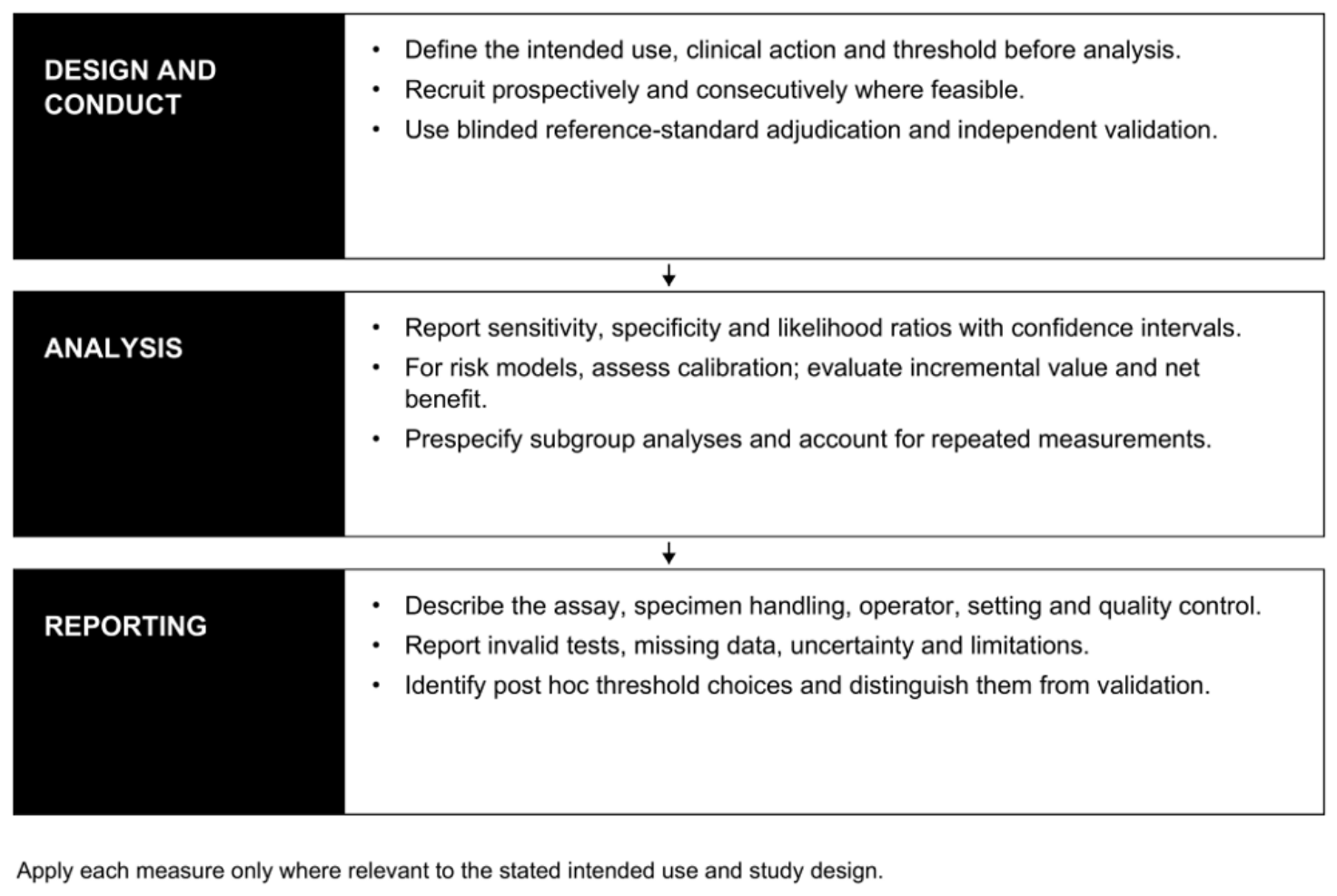
Figure 2.
Six stages of biomarker translation, showing the evidence to establish a common risk at each stage. Feedback from validation and routine use may require revisiting earlier stages. Economic, equity, regulatory, and quality requirements should be considered throughout. This conceptual framework does not indicate that any candidate has completed every stage.
Figure 2.
Six stages of biomarker translation, showing the evidence to establish a common risk at each stage. Feedback from validation and routine use may require revisiting earlier stages. Economic, equity, regulatory, and quality requirements should be considered throughout. This conceptual framework does not indicate that any candidate has completed every stage.
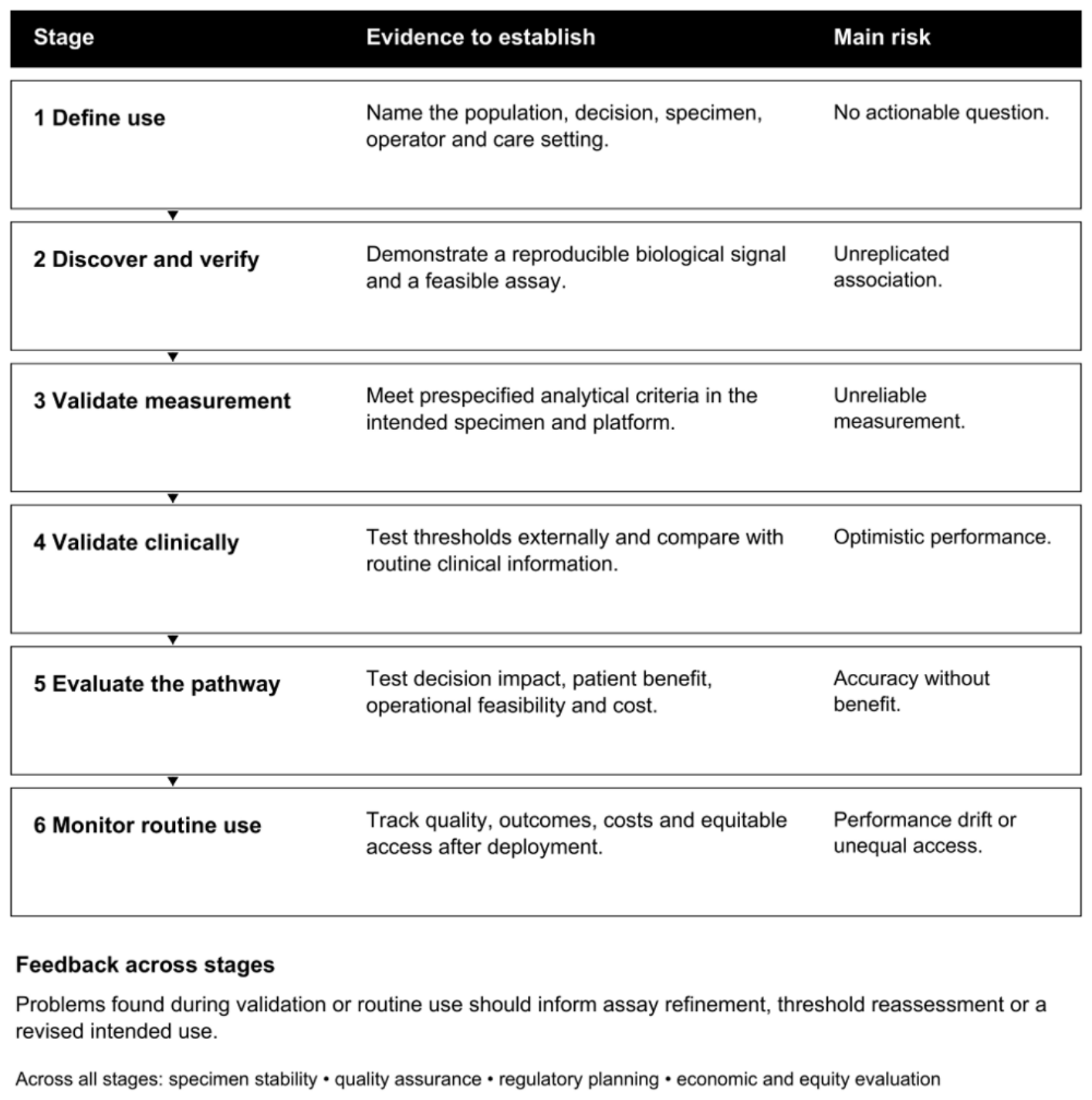
Figure 3.
Operational evaluation of a DIKI point-of-care test in HIV/ART care. The intended use remains fixed through validation and impact evaluation; material changes require reassessment. ART, antiretroviral therapy; DIKI, drug-induced kidney injury; EQA, external quality assessment.
Figure 3.
Operational evaluation of a DIKI point-of-care test in HIV/ART care. The intended use remains fixed through validation and impact evaluation; material changes require reassessment. ART, antiretroviral therapy; DIKI, drug-induced kidney injury; EQA, external quality assessment.
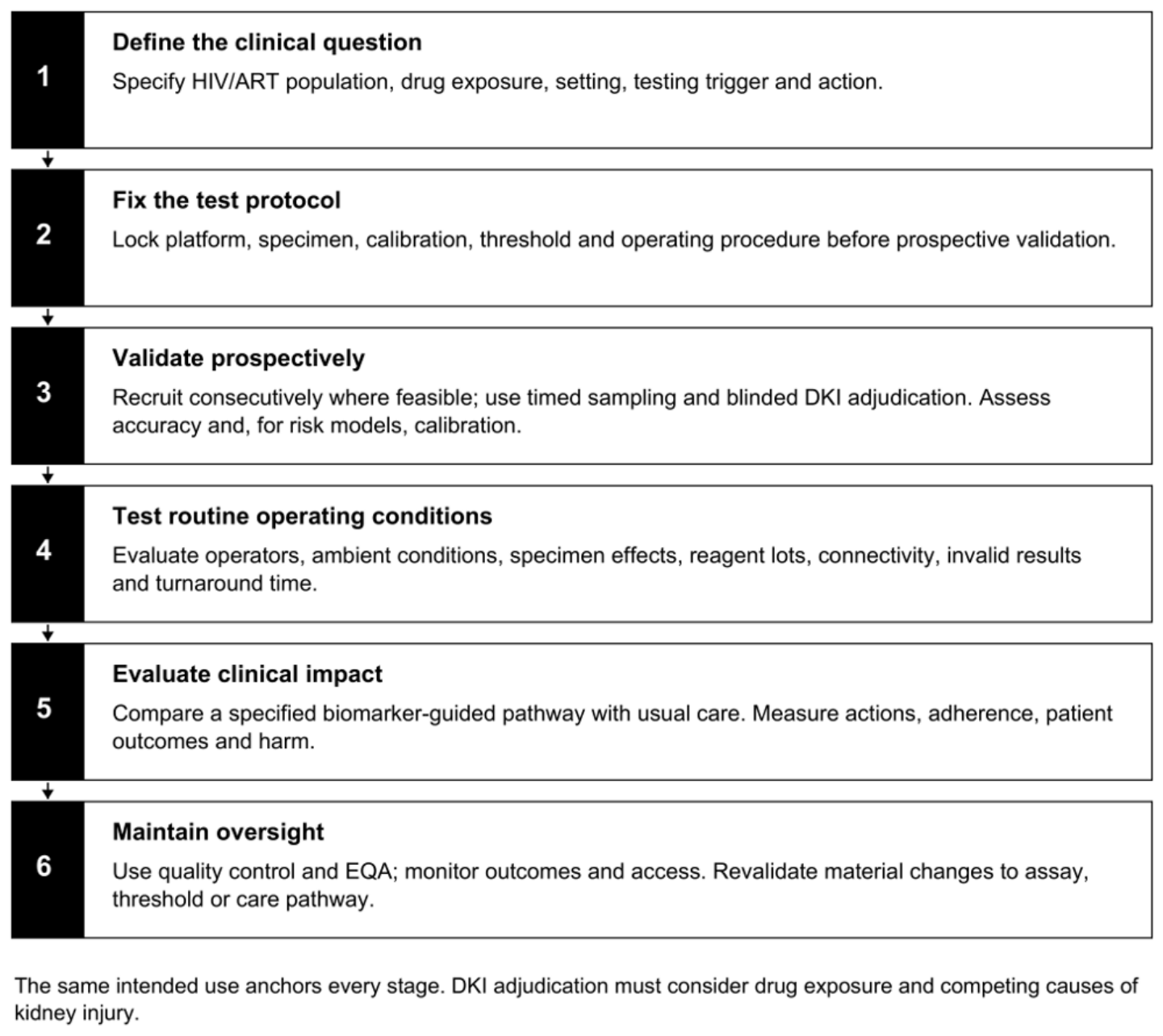

Table 1.
Intended-use and reference-standard decision matrix for AKI/DIKI biomarkers (framework only; no pooled estimates are implied).
Table 1.
Intended-use and reference-standard decision matrix for AKI/DIKI biomarkers (framework only; no pooled estimates are implied).
| Intended Use | Clinical Decision | Comparator/Reference Standard | Main Threat to Validity |
|---|---|---|---|
| Risk identification | Triage to monitoring or preventive review | Later AKI/DIKI according to KDIGO criteria or adjudicated injury | Case mix and competing risks |
| Early injury detection | Investigate the injury and review the suspected exposure | Adjudicated injury rather than creatinine alone | False positives for inflammation |
| Phenotype discrimination | Distinguish tubular, septic, cardiorenal and nephrotoxic patterns | Adjudicated clinical phenotype | Overlapping biology |
| Progression prediction | Escalate monitoring or nephrology input | Dialysis, persistent AKI or death | Treatment effects and competing mortality |
| Recovery and monitoring | Adjust care and follow-up | Serial function and clinical recovery | Timing and assay variability |
| Treatment or safety decision | Start, stop, or adjust the dose of a drug | Patient-important outcomes in an intervention trial | Absence of randomised evidence |
AKI, acute kidney injury; DIKI, drug-induced kidney injury; KDIGO, Kidney Disease: Improving Global Outcomes.
Table 2.
Candidate biomarkers of AKI and DIKI, their limitations, and priorities for the evaluation of POC in HIV/ART services. Source numbers identify the literature informing each row; implementation priorities are proposed considerations rather than validated clinical indications.
Table 2.
Candidate biomarkers of AKI and DIKI, their limitations, and priorities for the evaluation of POC in HIV/ART services. Source numbers identify the literature informing each row; implementation priorities are proposed considerations rather than validated clinical indications.
| Biomarker and specimen | Biological role and potential use | Analytical and clinical limitations | POC evaluation priorities |
|---|---|---|---|
| Creatinine and cystatin C Serum or plasma [11,38] |
Filtration markers for baseline assessment and serial trends; cystatin C is less dependent on muscle mass. | Neither directly measures tubular damage. Creatinine varies with muscle mass and fluid balance; cystatin C also has non-renal influences. | Assess as functional comparators or complementary markers rather than substitutes for damage markers. |
| NGAL Urine or plasma [30,32,33] |
Tubular stress and injury signal; extensively studied for early detection and risk assessment. | Specimen and platform differences; non-renal production during inflammation; plasma measurements influenced by filtration. | Define specimen and timing. Establish performance in conjunction with clinical assessment in the intended HIV/ART population. |
| KIM-1 Urine [7,30,34] |
Proximal tubular injury marker with an exaggerated extracellular domain. | Time-dependent induction, variable baseline and assay differences; clinical outcome evidence remains use-specific. | Evaluate an assay-specific threshold and sampling schedule; test added value before including it in a panel. |
| L-FABP Urine [30,35,41] |
Oxidative and metabolic stress are associated with proximal tubular injury. | Timing, pre-analytical handling, non-renal sources and physiological variation complicate interpretation. | Validate handling and any dilution correction; assess thresholds under routine clinic conditions. |
| IL-18 Urine [30,36] |
Inflammatory signal investigated for AKI detection. | Produced by multiple cell types; systemic infection and inflammation reduce specificity for DIKI. | Establish whether it adds information beyond clinical indicators of infection and kidney injury. |
| [TIMP-2] × [IGFBP7] Urine [37,42,43,44] |
Cellular-stress markers with a defined risk-assessment application in selected intensive-care patients. | Timing, dilution, and platform affect interpretation. The 2014 FDA decision specifies central-laboratory use, not general POC DIKI diagnosis. | Validate any proposed POC platform and ART clinic use separately. |
| MicroRNAs Urine or plasma [40] |
Regulatory and mechanistic candidates for discovery research. | Extraction, normalisation and matrix effects; limited analytical standardisation. | Establish reproducible measurement and practical sample preparation before clinical evaluation. |
| Proenkephalin Plasma [39] |
Filtration-related markers studied for GFR assessment and AKI prediction in selected settings. | Does not directly measure tubular damage or establish drug causation. | Evaluate as complementary functional information; establish added value for the proposed DIKI use. |
AKI, acute kidney injury; ART, antiretroviral therapy; DIKI, drug-induced kidney injury; GFR, glomerular filtration rate; IGFBP7, insulin-like growth factor-binding protein 7; IL-18, interleukin-18; KIM-1, kidney injury molecule-1; L-FABP, liver-type fatty acid-binding protein; NGAL, neutrophil gelatinase-associated lipocalin; POC, point of care; TIMP-2, tissue inhibitor of metalloproteinases 2.
Table 3.
Minimum analytical-validation evidence package for a DIKI biomarker intended for point-of-care use.
Table 3.
Minimum analytical-validation evidence package for a DIKI biomarker intended for point-of-care use.
| Domain | Acceptance Question | Minimum Evidence to Report | DIKI/POC Caveat |
|---|---|---|---|
| Precision | Can the assay reproduce results? | Repeatability and intermediate precision across days, operators and reagent lots; prespecified acceptance targets | Device-to-device and operator effects in POC formats |
| Limit of blank, limit of detection, limit of quantification | Can low concentrations be distinguished reliably? | LoB, LoD and LoQ in the clinical matrix; rules for values below the LoD | Dilute urine and low-level tubular injury may fall near the limit |
| Analytical specificity | Do interferents or cross-reacting substances change the result? | Haemoglobin, bilirubin, lipids, heterophile antibodies and biotin; cross-reactivity; relevant antiretrovirals and co-medications where feasible | HIV/ART polypharmacy, haematuria and acute illness |
| Linearity and recovery | Does the signal track concentration? | Linear interval, recovery and hook-effect testing | High-dose hook effects in immunoassays |
| Matrix and pre-analytical handling | Does specimen handling matter? | Urine versus plasma; collection timing, storage, freeze–thaw and processing; justification for creatinine normalisation | Hydration, low muscle mass and variable creatinine excretion |
| Calibration and commutability | Are results transferable? | Calibrators, traceable reference materials, commutability, lot-to-lot consistency and between-platform comparison | Published thresholds may not transfer across assays. |
| External quality assessment | Do laboratories and sites agree? | Participation in EQA or proficiency testing | Essential for multi-site POC networks |
| Operational performance | Can the test be used where it is needed? | Turnaround time, reagent stability, whole-blood or urine capability, device variability and operator dependence | Heat, humidity, power, training and waste handling |
For each domain, report the estimate with its confidence interval, where applicable and specify, before the study, the action to be taken if the criterion is not met. The criteria are generic and do not replace assay-specific regulatory standards. ART, antiretroviral therapy; DIKI, drug-induced kidney injury; EQA, external quality assessment; LoB, limit of blank; LoD, limit of detection; LoQ, limit of quantification; POC, point of care.
Table 4.
Clinical-validation and reporting requirements for DIKI point-of-care studies. Each item should be prespecified in the study protocol, and any unmet requirement should be reported as an explicit limitation.
Table 4.
Clinical-validation and reporting requirements for DIKI point-of-care studies. Each item should be prespecified in the study protocol, and any unmet requirement should be reported as an explicit limitation.
| Domain | Minimum Requirement | What Must Be Reported |
|---|---|---|
| Intended use and target product profile | Named population, ART or drug exposure, care setting, timing, trigger and clinical action | A written intended-use statement and target product profile before study start. |
| Population and spectrum | Consecutive or clearly defined sampling; HIV status, ART regimen, comorbidity, baseline kidney function and muscle-mass proxies | Recruitment flow, inclusion and exclusion criteria, and spectrum of DIKI severity |
| Reference standard | Prespecified AKI/DIKI definition; timing of creatinine and urine-output measurement; blinded adjudication; competing causes | Adjudication procedure, blinding, inter-rater agreement and handling of missing data |
| Sampling and timing | Prospective sampling intervals anchored to drug exposure; specimen handling and storage | Time windows, storage duration, freeze–thaw history and assay platform |
| Analysis | Accuracy measures, calibration for risk models, incremental value and decision-curve analysis where appropriate | Point estimates and confidence intervals; sensitivity analyses for the reference standard; measures matched to intended use |
| POC operational performance | Operator training, device failures, ambient conditions, lot variability and turnaround time | Failure modes, invalid results and usability findings in the field setting |
| Clinical impact | Whether the result changes management, reduces harm, or improves equity | Prespecified impact endpoints, safety outcomes and cost consequences |
| Reporting standard | STARD 2015 or equivalent minimum | Completed checklist and explicit limitations |
AKI, acute kidney injury; ART, antiretroviral therapy; DIKI, drug-induced kidney injury; POC, point of care; STARD, Standards for Reporting of Diagnostic Accuracy.
Table 5.
Minimum clinical-utility evidence package for a DIKI point-of-care test in HIV/ART settings. Rows are ordered from analytical validity to economic and equity evaluation; the table states evidence requirements only and does not report accuracy estimates, effect sizes, or study results.
Table 5.
Minimum clinical-utility evidence package for a DIKI point-of-care test in HIV/ART settings. Rows are ordered from analytical validity to economic and equity evaluation; the table states evidence requirements only and does not report accuracy estimates, effect sizes, or study results.
| Evidence Layer | Question to-Response | Minimum Expectation | Critical caveats |
|---|---|---|---|
| Analytical validity | Does the POC assay measure the intended analyte reliably at the intended site? | Prespecified precision, limit of detection, interference, sample stability and lot-to-lot criteria are met. | A threshold from a central laboratory assay may not transfer to a POC platform. |
| Clinical validity | Does the test identify the intended DIKI outcome in the intended population? | Defined cohort, reference standard and threshold; discrimination and, for risk models, calibration | Association in a high-risk cohort does not establish performance in ART clinics. |
| Decision impact | Does the result change clinician action? | Protocol-defined actions, observed adherence and reduced delayed or inappropriate exposure. | Change in behaviour is not beneficial for the patient. |
| Patient benefit | Does the pathway improve patient-centred outcomes versus usual care? | Comparative trial with clinically significant endpoint and safety monitoring | Unblinded monitoring can improve care itself |
| Economic and equity | Is the pathway affordable, implementable, and fair? | Assay and total pathway costs, turnaround, workload, consequences of false-positive/false-negative results, and access monitoring | A low test price does not guarantee a low total cost |
ART, antiretroviral therapy; DIKI, drug-induced kidney injury; POC, point of care.
Table 6.
Minimum checklist of specifications of the point-of-care platform for DIKI testing in resource-limited HIV/ART settings. Numeric thresholds, platform names, and acceptance limits are deliberately left to be specified for each setting and intended use.
Table 6.
Minimum checklist of specifications of the point-of-care platform for DIKI testing in resource-limited HIV/ART settings. Numeric thresholds, platform names, and acceptance limits are deliberately left to be specified for each setting and intended use.
| Domain | Specification to Define before Deployment | Question the Specification Must Answer |
|---|---|---|
| Use case | Named clinical decision and an available care pathway | Which clinical decision does the result inform, and what action follows each result? |
| Specimen | Urine or capillary blood; small volume; stability without a cold chain; simple collection | What specimen, volume and collection procedure are required, and is the analyte stable without a cold chain? |
| Analytical performance | Prespecified precision, limit of detection, linearity, interference, and lot-to-lot criteria (Table 3) | What analytical performance is needed for the intended decision? |
| Operational performance | Time to result within the decision window; minimal steps; training requirements | Can a result be returned within the decision window, with how many steps and what training? |
| Environment and infrastructure | Temperature, humidity, dust, and power constraints; maintenance and spare-part needs | Does the platform function reliably under local ambient, power, and maintenance conditions? |
| Quality system | Internal Quality Assurance, EQA/proficiency testing, calibration traceability; handling of errors and invalid results | What quality-control arrangements apply, and how are errors and invalid results handled? |
| Data, connectivity, and decision support | Clear result display; offline data capture; interoperability with patient records; decision support linked to the named action | How are results displayed, recorded, transmitted, and linked to the specified clinical action? |
| Biosafety and waste | Safe specimen handling and disposal of consumables at the point of care | Can specimens and consumables be handled and disposed of safely in the clinic? |
| Regulatory, procurement and supply | Defined regulatory route; labelling; affordability; supply chain, service support, and total cost | Which regulatory route applies and are labelling, affordability, supply and service support in place? |
| Equity and post-deployment surveillance | Usability across language and literacy levels; fit for rural clinics; linkage to care; post-market surveillance | Can all intended users operate the device, and how are performance, outcomes, and access monitored after deployment? |
ART, antiretroviral therapy; DIKI, drug-induced kidney injury; EQA, external quality assessment; POC, point of care; QC, quality control.
Disclaimer/Publisher’s Note: The statements, opinions and data contained in all publications are solely those of the individual author(s) and contributor(s) and not of MDPI and/or the editor(s). MDPI and/or the editor(s) disclaim responsibility for any injury to people or property resulting from any ideas, methods, instructions or products referred to in the content. |
© 2026 by the authors. Licensee MDPI, Basel, Switzerland. This article is an open access article distributed under the terms and conditions of the Creative Commons Attribution (CC BY) license (http://creativecommons.org/licenses/by/4.0/).
Copyright: This open access article is published under a Creative Commons CC BY 4.0 license, which permit the free download, distribution, and reuse, provided that the author and preprint are cited in any reuse.