

Submitted:
28 October 2026
Posted:
29 October 2026
You are already at the latest version
Abstract
The emergence of plant pathogens through geographic spread, host shifts, and climate change threatens disease management and global food security. Detection of emerging pathogens without prior genomic information is critical for preventing widespread outbreaks and enabling timely management to reduce economic impact. Accurate and reliable detection of infecting organisms using metagenome-based bioinformatic pipelines is therefore essential. To address this, we have developed and validated BacPath pipeline and a highly accurate complete genome database, BacPathDB. Raw read files obtained from Oxford Nanopore sequencers (MinIon and Flongle) were processed, quality-scored, and mapped against a curated database. The expandable BacPathDB contains high-quality genomes with accurate metadata and currently includes 317 genomes, representing species, within the genera Dickeya and Pectobacterium, including most type strains. The pipeline accurately detected all 32 species within these two genera in silico, with no false positives or false negatives. In vitro analyses with both Pectobacterium and Dickeya species further confirmed the accuracy of the developed pipeline for detecting pathogens from complex plant tissue samples infected with single or multiple pathogens. Detection can be achieved with as little as a single read, however, analyses based on five or more reads provide higher confidence in the results. The pipeline is rapid, enabling detection in approximately one minute, and can be performed on a 16 GB laptop without requiring high computational resources. This makes it well suited for field applications, while the curated reference database enhances its reliability for routine diagnostics, epidemiological investigations, disease surveillance, regulatory programs, biosecurity, and microbial forensics.
Keywords:
metagenome detection
; plant bacteria
; soft rot
; Pectobacterium
; Dickeya
; MinION
Importance
Early detection of bacterial plant pathogens is fundamental to protecting agricultural production, global food security, and international trade. As metagenomic sequencing becomes increasingly accessible, the accuracy of pathogen identification depends not only on sequencing technologies but also on the quality of the reference databases used. Poorly curated reference genomes can compromise diagnostic confidence and limit the adoption of metagenomics for routine plant health applications. The combination of a rigorously curated reference database with a validated analytical framework provides a foundation for reliable species-level pathogen detection and supports broader applications in disease surveillance, epidemiological investigations, outbreak response, regulatory decision-making, biosecurity preparedness, and microbial forensics. The expandable nature of this framework also creates opportunities for developing comprehensive metagenomic diagnostic systems covering diverse groups of pathogens.
Introduction
Bacterial plant pathogens cause diverse diseases, including leaf spots, wilts, blights, cankers, and soft rots, resulting in substantial agricultural and economic losses (Alvarez, AM., 2004; Arizala et al., 2022; Paudel et al., 2023; Dobhal et al., 2025; Dhakal et al., 2019). Bacterial plant pathogens spread through water, soil, and infected plant material and can persist in these environments for extended periods, posing a continuous threat to agricultural production (Leben, 1981; Vinatzer et al., 2014). Some of the most economically important bacterial plant pathogens belong to the genera Pseudomonas, Xanthomonas, Ralstonia, Xylella, Dickeya, Pectobacterium, Erwinia, Pantoea and Clavibacter (Arif et al., 2022; Chuang et al., 2024a; Mansfield et al., 2012; Maurya et al., 2026; Walterson and Stavrinides, 2015). These pathogens cause substantial losses in both staple and high-value crops, threatening agricultural productivity, food security, and global food supply chains (Fisher, 2012; Bebber et al. 2013; Sathyanarayana and Latha, 2016). The continued expansion of international trade in seeds, germplasm, and other plant materials has further increased the risk of introducing and disseminating plant pathogens across geographic regions, creating significant challenges for disease management and agricultural biosecurity (Hantula et al., 2014; Perrings, 2016; Hammond et al., 2023).
Among bacterial plant pathogens, species within the genera Dickeya and Pectobacterium are important soft rot pathogens (SRPs) with broad host ranges that cause significant economic losses worldwide (Charkowski et al., 2012; Hugouvieux-Cotte-Pattat et al., 2014, 2020; Arizala and Arif, 2019; Boluk et al., 2021; Arif et al., 2022). Their pathogenicity is primarily mediated by the secretion of plant cell wall-degrading enzymes (PCWDEs), which macerate host tissues and produce the characteristic soft rot symptoms (Charkowski et al., 2012; Van Gijsegem et al., 2021). The increasing diversity of recognized species and their continued emergence on new hosts and in new geographic regions highlight the need for rapid and accurate species-level detection.
Traditional culture- and molecular-based diagnostic methods remain the cornerstone of bacterial plant disease diagnosis because of their reliability and specificity. However, these approaches are often labor-intensive, time-consuming, and typically designed to detect a limited number of known pathogens (Arizala et al., 2022; Dobhal et al., 2020). Over the past decade, numerous PCR-, qPCR-, LAMP-, RPA-, and CRISPR-based assays have been developed for soft rot pathogens and other bacterial plant pathogens (Arizala et al., 2022; Venbrux et al., 2023; Wang et al., 2024; Dobhal et al., 2025). These protocols are both lab- and field-deployable and can detect the pathogen in less than 20 minutes (Dobhal et al., 2020; DeLude et al., 2022; Domingo et al., 2021). Despite these advances, targeted molecular assays require prior knowledge of the pathogen and are therefore unable to identify unexpected, emerging, or multiple pathogens present in a sample. As global pathogen diversity continues to expand through host shifts, geographic spread, and the discovery of new species, there is an increasing need for untargeted diagnostic approaches capable of rapidly identifying pathogens directly from complex biological samples without prior assumptions regarding their identity.
Advances in next-generation sequencing (NGS) and bioinformatics have transformed plant pathogen diagnostics by enabling culture-independent identification of pathogens directly from complex biological samples. Several bioinformatic workflows have been developed for metagenomic detection of plant pathogens (Barrero et al., 2017; Aragona et al., 2022; Hu et al., 2023). However, regardless of the computational algorithm employed, accurate taxonomic classification depends fundamentally on the quality of the underlying reference database. Public genomic repositories often contain incomplete assemblies, inconsistent taxonomy, erroneous annotations, and inaccurate or missing metadata, which can compromise species-level identification and reduce diagnostic confidence (Thorisson et al., 2009; Kodama et al., 2012; Xu et al., 2023; Chorlton, 2024; Maurya et al., 2026). Therefore, reliable metagenomic diagnostics depend as much on the quality of reference genome databases as on sequencing technologies and computational algorithms, highlighting the need for rigorously curated and validated genomic resources.
To overcome these limitations, we developed BacPath, a rapid metagenomic workflow integrated with BacPathDB, a curated and expandable reference genome database containing high-quality genomes with validated metadata for accurate species-level detection of bacterial plant pathogens. By combining a rigorously curated reference database with an optimized computational workflow, BacPath provides a reliable framework for metagenomic pathogen identification. Using Dickeya and Pectobacterium as a model system, we demonstrate its application for rapid species-level detection and establish a scalable framework that can be expanded to additional bacterial plant pathogens for diagnostics, surveillance, epidemiological investigations, biosecurity, and microbial forensics.
Materials and Methods
Strain Selection, Genome Sequencing, Assembly, and Quality Control
A high-quality, curated reference database for bacterial plant pathogens (BacPathDB) was constructed using strains selected based on classification in the NCBI taxonomy database (Federhen, 2012) and the availability of isolates in the established culture collections, including the National Collection of Plant Pathogenic Bacteria (NCPPB), the International Collection of Microorganisms from Plants (ICMP), the Pacific Bacterial Collection (A/PL), and the Belgian Coordinated Collections of Microorganisms/Laboratory of Microbiology (BCCM/LMG). Initially, genomes representing all recognized species within the two primary soft-rot genera, Dickeya and Pectobacterium, were included (Supplementary Table S1). The database was subsequently expanded to include genomes from other agriculturally important bacterial genera, including Erwinia, Pantoea, Clavibacter, Ralstonia, Xanthomonas, Pseudomonas, Brenneria, Klebsiella, Burkholderia, Escherichia, and Salmonella (Supplementary Table S1). Within each species, strain selection was based on host association, year of isolation, and geographic origin to ensure a diverse representative dataset.
A total 16 complete genomes of Pectobacterium and Dickeya species were sequenced using PacBio Rs II platform based on single-molecule real-time (SMRT) sequencing technology (Pacific Biosciences Inc., Menlo Park, CA) at the UC Davis Genome Center (Davis, CA), as described by Komal et al. (2025). Genomic DNA libraries were prepared with an average insert size of approximately 20 kb and sequenced using the P6 polymerase enzyme with C4 chemistry at the DNA Technologies and Expression Analysis Core Laboratory, UC Davis Genome Center. A single colony of each strain was streaked on nutrient agar supplemented with 0.4% glucose (NAG) grown overnight at 26 ± 2 °C (Dobhal et al., 2025). Genomic DNA was extracted from a half-loopful of pure culture using the Qiagen Genomic-tip 100/G kit (Qiagen, Valencia, CA) following the manufacturer’s instructions (Klair et al., 2023). DNA quantity and quality were assessed using a Qubit 4 fluorometer with the Qubit dsDNA High Sensitivity (HS) Kit (Invitrogen, Carlsbad, CA) and by electrophoresis on 1.5% agarose gel. Complete genomes were assembled using Flye 2.9.5 (Kolmogorov, et al. 2019), and genome annotation was performed using different pipelines: NCBI Prokaryotic Genome Annotation Pipeline (PGAP) version 4.8 and version 6.9 (Tatusova et al., 2016), and Rapid Annotation System Technology (RAST) server (Aziz et al., 2008). Genome quality was evaluated using CheckM v2, which employs taxonomic lineage-specific machine-learning models to estimate genome completeness and contamination (Chklovski et al., 2023).
BacPathDB Database Development
To construct BacPathDB, a curated reference database optimized for accurate detection of bacterial plant pathogens, only high-quality complete genomes were included. In addition to complete genomes generated in our laboratory, publicly available genomes of Pectobacterium, Dickeya, and related bacterial taxa were retrieved from the NCBI GenBank genome database (Supplementary Table S1). Only the genomes meeting high-quality standards were included, with CheckM contamination below 3% and completeness above 90% metadata, with few exceptions made, when a genome represented the sole available representative of a given species. Each selected genome was accompanied by comprehensive metadata, including accession number, assembly identifier, taxonomic designation, host of isolation, geographic origin, year of isolation, genome size, GC content, assembly level, and plasmid status.
A total of 184 complete genomes from soft rot enterobacteria were selected, comprising 112 Pectobacterium and 72 Dickeya genomes (Supplementary Table S1). Of these, seven Dickeya genomes and nine Pectobacterium genomes were sequenced in this study, while additional type and representative strain genomes were retrieved from public repositories when high-quality assemblies were available. To support specificity testing and reduce false-positive detections, additional genomes from non-target genera were incorporated in the exclusivity panel. These genomes comprised representatives from Clavibacter (27), Pantoea (11), Erwinia (6), Klebsiella (3), Ralstonia (13), Burkholderia (9), Xanthomonas (37), Pseudomonas (18), and Brenneria (4). Also, three Escherichia coli genomes and two Salmonella genomes were included to ensure broad representation within the family Enterobacteriaceae. All selected genomes were standardized and concatenated into a single FASTA file to generate the BacPathDB reference database (Supplementary Table S1).
BacPath Pipeline Development
BacPath was developed as an open-source metagenomic workflow that integrates publicly available bioinformatics tools for the processing and taxonomic classification of next-generation sequencing (NGS) data. The workflow consists of sequential stages: (i) raw data preprocessing, quality control and host read removal, (ii) reference-based read mapping, and (iii) taxonomic classification. Each component was selected for compatibility with bacterial metagenomic analyses and individually evaluated to ensure stable integration within the workflow. BacPath was implemented using Python for data processing and Bash for workflow automation, with outputs generated in tab-separated value (TSV) format to facilitate downstream analyses.
(i) Data Preprocessing. Raw sequencing reads were preprocessed to generate high-quality, host-filtered datasets for downstream analyses. Initial quality filtering, adapter trimming, and barcode removal were performed using Fastp (v 0.22.0) with default parameters, except that the quality threshold was set to Phred score 8, consistent with the Flongle validation experiments (Chen et al., 2018).Following preprocessing, host-derived reads were removed by aligning reads to the host reference genome using Minimap2 (v 2.28) with the map-ont preset, and mapped and unmapped reads were processed using SAMtools (v 1.18) (Li, 2018; Li et al., 2009; Danecek et al., 2021). Reads mapped to the host genome were discarded, whereas unmapped reads were retained and converted to FASTQ format for downstream pathogen detection. BacPath includes chromosome-level reference genomes for common plant hosts, including Solanum tuberosum cultivar Solyntus (NCBI GenBank accessions CP055234.1-CP055245.1), although the host-removal module is optional and can be adapted for other host species or omitted when an appropriate host reference genome is unavailable.
(ii) Reference-based Read Mapping. Host-filtered reads were aligned against BacPathDB using Minimap2 (Li, 2018). Long-read mapping was performed with the map-ont preset using a minimizer k-mer size of 19 (-k 19) and a minimizer window size of 10 (-w 10), parameters selected to improve alignment sensitivity among closely related bacterial genomes (Li, 2018; Shaw et al., 2022). Reads failing to satisfy the specified alignment criteria were excluded from downstream analyses. The resulting alignment files served as input for taxonomic classification.
(iii) Taxonomic Classification. Taxonomic classification was performed using the PathoID (v) module implemented in PathoScope v2.0.7 (Hong et al., 2014). PathoID reassigns ambiguously mapped reads using a Bayesian statistical framework and estimates the proportional contribution of each reference genome, thereby improving species-level classification while reducing false-positive assignments. BacPath retained the default PathoScope parameters, with a final best-hit confidence threshold of 0.05, which was established during pipeline validation. BacPath incorporated an additional output-handling step to explicitly report samples with no taxonomic matches as “No matches,” thereby providing a more interpretable output when no target genome was identified. Results were exported in tab-separated value (TSV) format, including genome identifiers, best-hit assignments, read counts, and confidence scores for downstream interpretation.
Runtime Performance Evaluation
The experiments were initially conducted on a high-performance computing cluster at the University of Hawai‘i at Mānoa (Koa) and on a local workstation at Oklahoma State University to compare runtime performance across platforms. The Koa system includes a private node within the Hawai‘i Data Science Institute (HDSI) cluster, with the Arif-lab node equipped with 48 CPU cores and 1 TB of RAM. Performance testing was conducted using multiple datasets, with two replicates per dataset, on both the HPC cluster and the local workstation. The HPC configuration utilized 24 CPU cores and 100 GB of RAM on a shared partition, and queue waiting times were excluded from runtime measurements. Pipeline performance on the cluster was compared with that on a local Apple MacBook Pro M3 equipped with 16 GB of RAM and 1 TB of storage.
Diagnostic Threshold Analysis
The high-confidence detection threshold was determined using in silico simulations and subsequently confirmed through pipeline validation experiments. Pathogen presence was assessed using the Final Best Hit probability values generated by the PathoID module of PathoScope, which represent genome-level confidence following Bayesian read reassignment. A reference genome was considered positively detected when its Final Best Hit value was ≥ 0.05. For closely related strains, detection was interpreted at the species level, as PathoID redistributes ambiguously mapped reads based on alignment quality, allowing reliable species-level identification even when probabilities are distributed across multiple strain genomes (Hong et al., 2014).
In Silico Validation
In silico validation of the BacPath pipeline was performed to assess its specificity and sensitivity for detecting bacterial plant pathogens through simulated metagenomic datasets. The specificity of the pipeline was evaluated by creating simulated plant-associated metagenomes containing the target bacterial pathogens mixed with the host-derived reads. The raw Oxford Nanopore sequencing reads from Dickeya strains (PL145-1B, PL145-4B, LMG 30899, and PL25) and two Pectobacterium strains (LMG 26003 and LMG 17936), obtained from the Phytobacteriology Lab (these genomes are the part of the other studies), were used for this analysis. Whole-genome sequencing of these strains was performed on the Oxford Nanopore MinION Mk1C device (Oxford Nanopore Technologies, Oxford, UK) using the Native Barcoding Kit 24 V14 (SQK-NBD112.24) in multiplex format. ONT long reads were basecalled and demultiplexed using Guppy (v6.3.2) on a high-performance computing cluster at the University of Hawai‘i at Mānoa, following routine lab protocol (Chuang et al. 2024b).
For each bacterial genome, 1,000 reads were randomly extracted using seqkit v2.12.0 and combined with 9,000 reads derived from the host genome (potato) to generate simulated metagenomes with a pathogen-to-host ratio of 1:9. To evaluate the performance of BacPath under co-inoculation conditions, additional simulated datasets were generated by mixing 1,000 reads from a Dickeya strain, 1,000 reads from a Pectobacterium strain, and 9,000 host reads. Two independent co-inoculation sets were tested; one consisting of Dickeya sp. LMG 30899 and Pectobacterium sp. LMG 26003, and another consisting of Dickeya sp. PL25 and Pectobacterium sp. LMG 17936. All simulated long-read metagenomes generated for specificity testing were processed through the BacPath pipeline, and classification results were examined to confirm the correct identification of target pathogens.
The sensitivity testing was conducted to determine the detection limits of BacPath for identifying pathogens present at low abundance within host-dominated metagenomes. One Dickeya sp. strain (PL25) and one Pectobacterium sp. strain (LMG 26003) were selected for this analysis. Pathogen read subsets of 1, 5, 10, 100, 1,000, and 10,000 reads were randomly extracted from each pathogen genome using seqkit v2.12.0 and mixed with 9,000 host reads to generate simulated metagenomes across a range of pathogen concentrations. For the low read-count scenarios (1, 5, and 10 reads), random subsampling was performed in three independent replicates to account for stochastic variation in read selection. In addition to this, for the single-read condition, simulated reads of varying lengths (300-, 500-, 1,000-, 2,000-, and 3,000-bp) were generated to check the minimum read length from a single read which the pipeline can detect. Each read-length condition was extracted in three independent replicates from the genome, and each simulated dataset was combined with 9,000 host reads to create metagenomes for analyses. All the simulated metagenomes generated for sensitivity testing were analyzed using the BacPath pipeline, and detection outcomes were recorded to assess pipeline performance across varying pathogen read counts and read lengths.
To ensure comprehensive validation of pipeline performance against soft rot bacteria (Pectobacterium and Dickeya), genomes representing the currently described species were retrieved from the NCBI GenBank genome database and analyzed. Simulated long-read sequencing data were generated from each genome using Badread (v 0.4.1) (Wick, 2019) and converted into FASTQ format. From these datasets, five reads were randomly subsampled to generate three independent sets per genome. Each set was then combined with 9,000 host-derived reads to simulate a high host-background environment. The resulting mixed datasets were processed through the pipeline to evaluate its performance across all species. A similar approach was used to generate a set of 100 reads for each species to further validate the pipeline under a relatively higher read abundance scenario.
These specificity and sensitivity analyses, along with validation across all described Pectobacterium and Dickeya species, enabled the evaluation of BacPath under in silico conditions, including single-pathogen infections, co-inoculation scenarios, low-abundance pathogen detection, and variable read-length distributions. This validation framework was designed to reflect realistic plant-associated metagenomic samples and to rigorously assess the reliability of the BacPath pipeline.
In Vitro Validation
In vitro validation was conducted using both potato tuber slices and greenhouse-grown potato plants. The bacterial pathogens D. dianthicola PL25, D. fangzhongdai PL145, and P. parmentieri PL70 were grown overnight in Dextrose Potato Agar medium, and the inoculum was standardized to an optical density (OD₆₀₀) of 1.0. A total of nineteen healthy potato tubers (Golden potato variety) were used for the tuber slice assay. Tubers were surface sterilized by immersion in 0.6% sodium hypochlorite (NaOCl) for 5 min, followed by three washes with sterile distilled water. Sterilized tubers were aseptically sliced, and each slice was placed in a sterile Petri dish. Bacterial cells were pelleted by centrifugation and spot-inoculated onto the potato slices using a 10 µL pipette tip. Each slice was inoculated with 10 µL of bacterial suspension corresponding to one of the following treatments: individual inoculations of D. dianthicola PL25, D. fangzhongdai PL145, or P. parmentieri PL70, or dual inoculations containing combinations of two pathogens (Boluk et al., 2019) in three replicates. A negative control was included where potato slices inoculated with 10 µL of sterile phosphate-buffered saline (PBS). The potato slices were incubated at 26 ± 2 °C for 18 h. After the development of visible tissue maceration symptoms, approximately 100 mg of infected potato tissue was excised from each slice and used for downstream DNA extraction. The genomic DNA was extracted using the Qiagen DNeasy Plant Pro Kit following the manufacturer’s instructions. DNA concentration was quantified using a Qubit 4 fluorometer with the Qubit double-stranded DNA High Sensitivity (HS) assay kit. The extracted DNA samples were subsequently prepared for sequencing. Sequencing libraries were generated using the Oxford Nanopore Rapid Barcoding Kit (SQK-RBK114.24) according to the manufacturer’s protocol. Flongle flow Cells were run in MK1B or MK1C ONT devices with a quality score of 8 (manufacturer’s default setting) for 24 h. Basecalled reads were used as input for downstream analysis using the local computational pipeline.
For the plant infection assay, 21-day-old greenhouse-grown potato plants were used. Plants were stab-inoculated with the same bacterial strains and treatment combinations as described for the tuber slice assay (Arizala et al., 2020). Three plants were inoculated per treatment. Control plants were stab-inoculated with 10 µL of sterile PBS. Following inoculation, plants were covered with transparent plastic bags to maintain humidity and incubated under greenhouse conditions at 26-28 °C for 24 h. Disease progression was monitored, and once blackleg symptoms were observed, plant tissues were collected approximately 2 cm above the point of inoculation. Genomic DNA was extracted and quantified as mentioned above. Sequencing libraries were prepared using the Oxford Nanopore Rapid Barcoding Kit and sequenced on Flongle R10.4.1 flow cells using MinION Mk1B or Mk1C devices. Sequencing runs were carried out for 24 h using the default quality score threshold of 8. Basecalled sequencing reads were subsequently used for downstream analysis using the local computational pipeline.
Sensitivity Assay
To determine the analytical sensitivity of BacPath, 10-fold serial dilutions of purified genomic DNA from D. dianthicola strain PL25, ranging from 1 fg to 1 ng, were prepared in the presence of a constant background of 12 ng of healthy potato (S. tuberosum) genomic DNA, simulating host-rich samples (Arizala et al., 2022; Dobhal et al., 2020). Bacterial genomic DNA was extracted using the DNeasy Blood & Tissue Kit (Qiagen) according to the manufacturer’s instructions, whereas host genomic DNA was isolated from stems of healthy 21-day-old potato plants using the Qiagen Plant Pro Kit. DNA mixtures were multiplexed (3 to 4 samples per run) and sequenced on Oxford Nanopore Flongle flow cells (R10.4.1) using the Rapid Barcoding Sequencing Kit (SQK-RBK114.24). Libraries were prepared according to the manufacturer’s protocol and sequenced on MinION MK1B and MK1C devices. Basecalling and barcode demultiplexing were performed in real time during sequencing using MinKNOW (v23.07.12) with Guppy (v7.1.4).
Specificity Assessment with Closely Related Species
To assess pipeline specificity, whole-genome sequencing was performed on selected bacterial species representing the exclusivity panel of soft rot bacteria. The sequencing was conducted using the Nanopore Flongle device in combination with the Rapid Barcoding Sequencing Kit (SQK-RBK114.24) and R10.4.1 flow cells. The bacteria strains were chosen to represent a small population of phylogenetically diverse taxa that might co-occur in the environment. The bacterial panel included Escherichia coli O157:H7 K4492, Burkholderia gladioli PL38, Pantoea sp. PL174, Ralstonia pseudosolanacearum PL175, Pseudomonas sp. PL181. Bacterial DNA was extracted from pure DPA-grown cultures using the Qiagen Blood and Tissue kit, following the manufacturer’s instructions. DNA concentration was measured with a Qubit 4 fluorometer using the Qubit dsDNA High Sensitivity (HS) kit.
Data Availability
A total of 16 Dickeya and Pectobacterium genomes were sequenced and submitted to NCBI. The corresponding accession numbers are: JCBOEW000000000 (other accession numbers are not received yet but in process), The Sequence Read Archive (SRA) accession numbers for the sequencing datasets used for in silico validation of the BacPath pipeline are: PRJNA1511415, PRJNA1511414, PRJNA1511416, PRJNA1511403, PRJNA1511468 and PRJNA1511469. The source code for the BacPath workflow is maintained in the GitHub repository BacPath-workflow (https://github.com/marif181/BacPath-workflow.git).
Results
BacPathDB Development and Composition
High-quality genomic reference database, BacPathDB, was developed to support reliable pathogen detection using the BacPath pipeline. BacPathDB is specifically for bacterial plant pathogens, with a primary focus on comprehensive coverage of the genera Pectobacterium and Dickeya, while remaining expandable to other bacterial taxa. The finalized database comprises 317 high-quality complete genomes representing all currently known species within Pectobacterium (112 genomes) and Dickeya (72 genomes). All genomes included in BacPathDB met stringent quality criteria, with CheckM-estimated contamination below 3% and completeness above 90%, ensuring robust and reliable reference sequences (Figure 1).
In addition to the target genera, BacPathDB incorporates genomes from multiple phylogenetically related and agriculturally relevant bacterial genera, including Clavibacter, Pantoea, Erwinia, Klebsiella, Ralstonia, Burkholderia, Xanthomonas, Pseudomonas, and Brenneria, Escherichia coli and Salmonella enterica, covering diverse host range, geographic origin, year of isolation, and genomic features. The accession numbers for all genomes included in BacPathDB are provided in the supplementary dataset (Supplementary Table S1). The complete database was formatted as a standardized FASTA file for integration into the BacPath workflow.
BacPath Pipeline Performance
The BacPath pipeline is a modular workflow comprising read preprocessing and host read removal, reference-based mapping, and taxonomic classification. Preprocessing and host removal efficiently reduces the dataset size while maintaining read quality, resulting in faster downstream analyses. However, this step could be omitted without affecting pipeline functionality when host reference genomes were unavailable. The cleaned reads were aligned to the curated BacPathDB using Minimap2, providing accurate mapping to closely related bacterial genomes and taxonomic classification using the PathoID module improved read assignment and reduced false-positive detections. Based on validation experiments, a confidence cutoff of 0.05 was sufficient to reliably classify samples as positive or negative. Pipeline runtime was evaluated on both a high-performance computing (HPC) system and a local computer. On the HPC system using 24 CPU cores and 100 GB of RAM, the complete workflow executed in approximately 42 seconds per sample. On a local computer equipped with 16 GB of RAM and 1 TB of storage, the average runtime was 67 seconds (Figure 2; Supplementary Table S2). The detection results were consistent across both platforms. Although per-sample runtime was about 25 seconds faster on the HPC system, job queue delays increased total turnaround time, making the local computer more efficient for routine analyses. Therefore, all subsequent experiments were conducted on the local system. Hence, BacPath on local computers is designed to quickly and accurately identify bacteria in plant samples, providing results that effectively support timely disease management and response to outbreak situations.
In Silico Validation
In silico validation of the BacPath pipeline was performed using simulated plant-associated metagenomes to assess specificity and sensitivity under single-pathogen and co-inoculation conditions. Simulated datasets containing individual bacterial pathogens mixed with host-derived reads were classified with high accuracy. Simulations corresponding to D. fangzhongdai strains PL145-1B and PL145-4B were correctly identified, with final best-hit values above 0.97 and pathogen-aligned read counts exceeding 950 reads. Similarly, D. lacustris strain LMG 30899 and D. dianthicola strain PL25 were accurately classified, demonstrating strong species-level differentiation among closely related Dickeya taxa. The simulated metagenomes containing Pectobacterium species also showed robust classification performance. P. actinidiae strain LMG 26003 and P. cacticida strain LMG 17936 were correctly identified, with high-confidence hits exceeding 0.82 and pathogen-aligned read counts ranging from 778 to 943 (Table 1). No low-confidence hits were observed for any single-pathogen simulation, indicating high analytical specificity. As the BacPath reference database is constructed at the strain level, variation in final best-hit scores among closely related strain representatives was occasionally observed. The observed variation arises from PathoID’s probabilistic reassignment of pathogen-aligned reads across highly similar reference genomes, in which reads mapping to multiple strains are redistributed based on their relative alignment likelihoods. Consequently, the final probability estimates may be distributed among closely related strain representatives without compromising accurate species-level identification, reflecting PathoID’s probabilistic reassignment of reads toward the most similar reference genomes rather than uniform assignment (Hong et al., 2014).
To evaluate pipeline performance under co-inoculation conditions, mixed simulated datasets were generated by combining reads from two bacterial pathogens with host reads. In the simulated mixture of P. actinidiae LMG 26003 and D. lacustris LMG 30899, both pathogens were detected above the confidence threshold, with final best-hit values of 0.42 and 0.47, respectively. Similarly, in the mixed dataset containing P. cacticida LMG 17936 and D. dianthicola PL25, both organisms were successfully identified, although read support was uneven between the two species, consistent with competitive mapping among closely related genomes. Across all simulated datasets, BacPath correctly identified the expected target pathogens without cross-mapping or false-positive assignments. These results demonstrate that the pipeline maintains high specificity and reliable detection performance for both single and mixed infections in plant-associated metagenomic datasets.
Sensitivity testing was performed to evaluate the ability of BacPath to detect pathogens present at low read abundance within host-dominated metagenomes. Simulated datasets containing decreasing numbers of pathogen reads (1, 5, 10, 100, 1,000, and 10,000 reads) mixed with a constant background of host-derived reads (9,000) were analyzed for P. actinidiae LMG 26003 and D. dianthicola PL25. For low read counts (1, 5, and 10 reads), three independent replicates were evaluated to account for variation in read selection. At the lowest abundance level (single-read simulations) for P. actinidiae LMG 26003, species-level detection was achieved in two of three replicates, while one replicate matched a closely related species within the same genus. In contrast, D. dianthicola PL25 was correctly identified at the species level across all single-read replicates. This variability is expected at ultra-low abundance and likely reflects the effects of random single-read selection; depending on which genomic region is sampled, a single read may be equally compatible with multiple closely related references in the BacPath database, leading PathoID to distribute the probability among near-neighbor species while remaining consistent at the genus level. No low-confidence hit assignments were observed in any simulation.
Figure 3.
In silico sensitivity analysis of BacPath across decreasing pathogen reads (10,000 to 1) for Pectobacterium actinidiae LMG 26003 and Dickeya dianthicola PL25 to evaluate detection limits and classification performance. The pipeline accurately detected as few as 5 reads in all replicates for both pathogens.
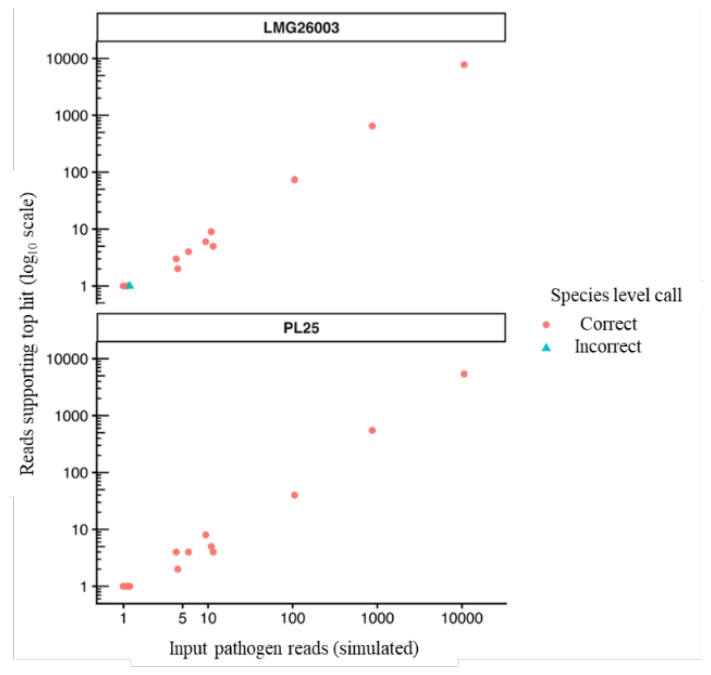
To further assess the effect of read length on detection sensitivity, single-read simulations of varying lengths (300-, 500-, 1,000-, 2,000-, and 3,000-bp) were evaluated for both pathogens. For P. actinidiae LMG 26003, one replicate at 300 bp yielded no detectable match, and one replicate at 3,000 bp produced a false-positive assignment, whereas all other read-length replicates were correctly classified with high confidence. For D. dianthicola PL25, one replicate each at 500 bp and 2,000 bp showed no detectable match, while all remaining replicates were correctly identified with high confidence. These observations highlight the inherent stochasticity associated with single-read simulations, where detection outcomes depend strongly on the specific genomic region sampled. Accordingly, while BacPath is capable of detecting pathogens from a single read as short as 300 bp under favorable conditions, a minimum of five pathogen reads provides more reliable and reproducible classification performance across species and read lengths. This threshold was consistently supported across all 32 described Dickeya and Pectobacterium species, where accurate species-level identification was maintained under five-read simulated conditions (Supplementary Table S3-S4).
In Vitro Validation
The BacPath pipeline successfully detected the inoculated bacterial pathogens in all potato tuber slice experiments using the predefined detection threshold. Samples inoculated individually with D. dianthicola PL25, D. fangzhongdai PL145, and P. parmentieri PL70 were correctly classified as positive for the corresponding pathogen, while negative control slices inoculated with sterile PBS showed no pathogen detection. In dual-inoculation treatments, detection outputs were often dominated by Dickeya spp., which may reflect either higher virulence and faster proliferation in potato tissue and its dominant representation during sequencing and assembly. In set 4 (Dd+Df) and 5 (Df+Pp), D. fangzhongdai showed high abundance ~75.9–97.8% and ~97.5–98.1%, respectively, while D. dianthicola in set 6 (Dd+Pp) showed moderate representation (~21.5–42.7% per genome) (Figure 4; Supplementary Table S5-S6). As a result, reads corresponding to Pectobacterium spp. were occasionally underrepresented relative to Dickeya spp., despite both pathogens being present. Nevertheless, the dominant pathogen in each co-infection sample was consistently detected above the confidence threshold, demonstrating the robustness of the pipeline for identifying the primary causal agent in mixed infections. Only one replicate of a sample (Df + Pp) exhibited an assembly-level limitation due to low quality sequencing that affected its downstream analysis.
For the plant inoculations, consistent detection performance was also observed. All the plants inoculated with individual pathogens were correctly identified as positive for the corresponding species using the same predefined detection threshold. In co-inoculated plants, the dominant pathogen was found to exceed the confidence threshold, contributing 94.3–97.4%, 47.9–72.5%, and 59.2–100% of reads in sets 4, 5, and 6, respectively, with lower read support in one replicate of set 6 (Figure 4; Supplementary Table S7-S8). The results were consistent across plant replicates, and no false-negative classifications were observed in any inoculated treatment, while negative control plants showed no pathogen matches. Together, these results demonstrate that the BacPath pipeline performs robustly in both slice and plant inoculation, supporting its applicability for pathogen detection under field conditions.
Sensitivity Assay
Sensitivity assays were performed to determine the limit of detection of the BacPath pipeline. Ten-fold serial dilutions of D. dianthicola PL25 genomic DNA were prepared, mixed with a 12 ng host genomic DNA. As shown in Figure 5, the pipeline reliably detected the target pathogen at a DNA input of 10 pg, corresponding to a pathogen-to-host DNA ratio of approximately 1:1200 (potato genome is ~160 -170x larger than D. dianthicola). Although the detection was observed at the 1 pg dilution level, results at this concentration were associated with an increased likelihood of low-confidence assignments. Therefore, 10 pg was considered the practical limit of reliable detection for downstream analyses.
Validation with Other Bacterial Genera
Although the exclusivity panel included all Dickeya and Pectobacterium species except the target species and demonstrated very high specificity, additional bacterial genera were included to assess potential false-positive detections by the BacPath pipeline. All organisms included in this exclusivity panel (E. coli O157:H7 K4492, B. gladioli PL38, Pantoea sp. PL174, R. pseudosolanacearum PL175, Pseudomonas sp. PL181) were correctly identified at the species level and were not misclassified as the target pathogen within Dickeya and Pectobacterium. No cross-mapping was observed within the exclusivity panel, indicating high specificity of the pipeline (Table 2).
Discussion
Metagenomic sequencing is transforming plant disease diagnostics by enabling the simultaneous detection of multiple pathogens directly from complex biological samples without prior assumptions regarding pathogen identity. As sequencing technologies become faster, more affordable, and increasingly portable, the accuracy of metagenomic diagnostics depends not only on sequencing performance but also on the quality of the reference genomes used for taxonomic classification. Public genomic repositories continue to expand rapidly; however, inconsistencies in genome quality, taxonomic assignments, annotations, and associated metadata remain important challenges that can compromise species-level identification and reduce confidence in diagnostic results (Chorlton, 2024; Xu et al., 2023; Smith et al., 2022). Consequently, the development of rigorously curated reference databases has become a critical component of reliable metagenomic diagnostics. BacPath addresses this challenge by integrating an expandable, curated reference genome database (BacPathDB) with a streamlined computational workflow, providing a robust framework for accurate species-level detection of bacterial plant pathogens.
A curated reference resource has value beyond improving taxonomic assignment alone. Consistent genome quality, validated taxonomy, and reliable metadata can improve reproducibility across metagenomic studies and provide a stronger basis for comparing pathogen populations across hosts, locations, and time. This is particularly relevant for epidemiological investigations and outbreak reconstruction, where accurate species- and strain-level assignments are necessary for tracing pathogen movement and distinguishing newly introduced populations from established ones. Metagenomic approaches are increasingly being applied to pathogen surveillance and biosecurity because they can detect multiple or unexpected organisms within a single sample and support investigation of emerging threats (Minogue et al., 2019; Piombo et al., 2021). In this context, BacPathDB provides not only the reference framework for BacPath-based detection but also a genomic resource that can support comparative genomics, phylogenetic analyses, population-level investigations, and studies of pathogen evolution. As additional bacterial plant pathogen taxa are incorporated, the database can further strengthen surveillance, epidemiological investigations, outbreak response, agricultural biosecurity, and microbial forensic applications.
For diagnostic workflows, analytical accuracy must be accompanied by rapid turnaround and practical computational requirements, particularly when results are needed to support timely disease-management decisions (Arif et al., 2021; DeLude et al., 2022). BacPath was able to complete pathogen identification in approximately one minute on a standard laptop with 16 GB of RAM, demonstrating that routine analyses do not require high-performance computing infrastructure. Although computation was faster on the HPC system, queue and scheduling delays can reduce the practical advantage of centralized computing for time-sensitive analyses. Local execution also allows sequencing data to be processed directly where they are generated, which is particularly relevant to portable Oxford Nanopore platforms and point-of-need pathogen detection (Knobloch et al., 2024). Together, the low computational requirements, rapid analysis, and ability to operate independently of remote computing resources support the potential use of BacPath in diagnostic laboratories and decentralized or field-based settings where timely pathogen identification is important.
The utility of a metagenomic diagnostic workflow ultimately depends on its ability to maintain accurate taxonomic identification when pathogen abundance is low and samples contain substantial host background or multiple microorganisms. BacPath consistently distinguished closely related Dickeya and Pectobacterium species across in silico simulations and experimentally infected plant tissues, supporting the specificity of the combined mapping, read-reassignment, and curated-reference approach (Dobhal et al., 2025; Sawada et al., 2024). Although pathogen detection was possible from a single read, classification at this extreme abundance was influenced by the genomic region represented by the read, occasionally resulting in no assignment or assignment to a closely related species. In contrast, five pathogen reads consistently provided accurate species-level identification across all Dickeya and Pectobacterium species evaluated, supporting this threshold as a reliable criterion for high-confidence interpretation. Previous studies have shown that MinION flow cells generally provide greater sequencing throughput and analytical sensitivity than Flongle flow cells (Butler et al., 2025). Nevertheless, BacPath maintained accurate pathogen detection using data generated from both MinION and Flongle platforms, including multiplexed infected plant samples and host-rich DNA backgrounds, demonstrating that reliable species-level identification can be achieved even under lower-throughput sequencing conditions. Furthermore, BacPath accurately identified pathogens in samples containing mixed infections, a common occurrence among soft rot pathogens (Charkowski, 2018), highlighting the robustness of the workflow for analysis of biologically complex samples.
Despite its strong analytical performance, the current BacPath framework has limitations that define important directions for further development. BacPathDB presently provides comprehensive representation of Dickeya and Pectobacterium, while its performance for other bacterial plant pathogen groups will depend on continued expansion and rigorous curation of their reference genomes. As with other reference-based metagenomic approaches, identification of novel or highly divergent organisms may also be limited when sufficiently related genomes are absent from the database. Continued incorporation of newly described taxa, updated genome assemblies, and validated metadata will therefore be important for maintaining diagnostic accuracy as bacterial taxonomy evolves. Future evaluation across additional host species, naturally infected field samples, and broader sequencing datasets will further establish the generalizability of the framework. Nevertheless, the integration of a curated, expandable reference database with rapid and computationally efficient metagenomic analysis provides a scalable foundation for next-generation plant pathogen detection. As BacPathDB expands, this framework has the potential to support increasingly comprehensive applications in diagnostics, surveillance, epidemiological investigations, outbreak response, agricultural biosecurity, and microbial forensics.
Supplementary Materials
The following supporting information can be downloaded at the website of this paper posted on Preprints.org.
Author Contributions
Conceptualization: M.A. Data curation: M.A. and N.M. Formal analysis: M.A. and N.M. Funding acquisition: M.A. Investigation: M.A., S.M., N.M., A.A. and S.D. Methodology: M.A., S.M., N.M. and S.D. Writing—original draft: M.A., S.M. and N.M. Writing—review and editing: all authors.
Acknowledgments
This research was supported by the United States Department of Agriculture, National Institute of Food and Agriculture (USDA-NIFA), Award No. 2023-67013-39301 (Detection and tracking system for bacterial threats to potato and vegetable industries). The mention of trade names or commercial products in this publication is solely for the purpose of providing specific information and does not imply recommendation or endorsement by Oklahoma State University or the University of Hawaii.
Conflicts of Interest
The authors declare that there are no conflicts of interest.
References
- Alvarez, A.M. Integrated approaches for detection of plant pathogenic bacteria and diagnosis of bacterial diseases. Annu Rev. Phytopathol. 2004, 42, 339–366. [Google Scholar] [CrossRef] [PubMed]
- Aragona, M.; Haegi, A.; Valente, M.T.; Riccioni, L.; Orzali, L.; Vitale, S.; Luongo, L.; Infantino, A. New-generation sequencing technology in diagnosis of fungal plant pathogens: a dream comes true? J. Fungi 2022, 8(7), 737. [Google Scholar] [CrossRef] [PubMed]
- Arif, M.; Busot, G.Y.; Mann, R.; Rodoni, B.; Stack, J.P. Field-deployable recombinase polymerase amplification assay for specific, sensitive and rapid detection of the US Select Agent and toxigenic bacterium, Rathayibacter toxicus. Biology 2021, 10(7), 620. [Google Scholar] [CrossRef] [PubMed]
- Arif, M.; Czajkowski, R.; Chapman, T.A. Editorial: Genome-wide analyses of Pectobacterium and Dickeya species. Front Plant Sci. 2022, 13, 855262. [Google Scholar] [CrossRef] [PubMed]
- Arizala, D.; Arif, M. Genome-wide analyses revealed remarkable heterogeneity in pathogenicity determinants, antimicrobial compounds, and CRISPR-cas systems of complex phytopathogenic genus Pectobacterium. Pathogens 2019, 8, 247. [Google Scholar] [CrossRef] [PubMed]
- Arizala, D.; Dobhal, S.; Alvarez, A.M.; Arif, M. Elevation of Clavibacter michiganensis subsp. californiensis to species level as Clavibacter californiensis sp. nov., merging and re-classification of Clavibacter michiganensis subsp. chilensisand Clavibacter michiganensis subsp. phaseoli as Clavibacter phaseoli sp. nov. based on complete genome in silicoanalyses. Int. J. Syst. Evol. Microbiol. 2022, 72, 005427. [Google Scholar] [CrossRef] [PubMed]
- Arizala, D.; Dobhal, S.; Babler, B.; Crockford, A.B.; Rioux, R.A.; Alvarez, A.M.; Arif, M. Development of a multiplex TaqMan qPCR targeting unique genomic regions for the specific and sensitive detection of Pectobacterium species and P. parmentieri. J. Appl. Microbiol. 2022, 132, 3089–3110. [Google Scholar] [CrossRef] [PubMed]
- Arizala, D.; Dobhal, S.; Paudel, S.; Gunarathne, S.; Boluk, G.; Arif, M. First report of bacterial soft rot and blackleg on potato caused by Pectobacterium parmentieri in Hawaii. Plant Dis. 2020, 104, 970. [Google Scholar] [CrossRef]
- Aziz, R.K.; Bartels, D.; Best, A.A.; DeJongh, M.; Disz, T.; Edwards, R.A.; Zagnitko, O. The RAST Server: rapid annotations using subsystems technology. BMC Genom. 2008, 9, 75. [Google Scholar] [CrossRef] [PubMed]
- Barrero, R.A.; Napier, K.R.; Cunnington, J.; Liefting, L.; Keenan, S.; Frampton, R.A.; Szabo, T.; Bulman, S.; Hunter, A.; Ward, L.; Whattam, M. An internet-based bioinformatics toolkit for plant biosecurity diagnosis and surveillance of viruses and viroids. BMC Bioinform. 2017, 18, 1–12. [Google Scholar] [CrossRef] [PubMed]
- Bebber, D.; Ramotowski, M.; Gurr, S. Crop pests and pathogens move polewards in a warming world. Nat. Clim. Change 2013, 3, 985–988. [Google Scholar] [CrossRef]
- Boluk, G.; Arizala, D.; Dobhal, S.; Zhang, J.; Hu, J.; Alvarez, A.M.; Arif, M. Genomic and phenotypic biology of novel strains of Dickeya zeae. Front Plant Sci. 2021, 12, 663851. [Google Scholar] [CrossRef] [PubMed]
- Boluk, G.; Arif, M. First report of Dickeya dianthicola as a causal agent of bacterial soft rot of potato in Hawaii. Plant Dis. 2019, 103, 2943. [Google Scholar] [CrossRef]
- Butler, I.; Turner, O.; Mohammed, K.; Akhtar, M.; Evans, D.; Lambourne, J.; Harris, K.; O’Sullivan, D.M.; Sergaki, C. Standardization of 16S rRNA gene sequencing using nanopore long read sequencing technology for clinical diagnosis of culture negative infections. Front Cell Infect. Microbiol. 2025, 15, 1517208. [Google Scholar] [CrossRef] [PubMed]
- Charkowski, A. The changing face of bacterial soft-rot diseases. Annu Rev. Phytopathol. 2018, 56, 269–288. [Google Scholar] [CrossRef] [PubMed]
- Charkowski, A.; Blanco, C.; Condemine, G.; et al. The role of secretion systems and small molecules in soft-rot enterobacteriaceae pathogenicity. Annu Rev. Phytopathol. 2012, 50, 425–449. [Google Scholar] [CrossRef] [PubMed]
- Chen, S.; Zhou, Y.; Chen, Y.; Gu, J. fastp: an ultra-fast all-in-one FASTQ preprocessor. Bioinformatics 2018, 34, i884–i890. [Google Scholar] [CrossRef] [PubMed]
- Chklovski, A.; Parks, D.H.; Woodcroft, B.J.; Tyson, G.W. CheckM2: a rapid, scalable and accurate tool for assessing microbial genome quality using machine learning. Nat. Methods 2023, 20, 1203–1212. [Google Scholar] [CrossRef] [PubMed]
- Chorlton, S.D. Ten common issues with reference sequence databases and how to mitigate them. Front Bioinform. 2024, 4, 1278228. [Google Scholar] [CrossRef] [PubMed]
- Chaung, S.C.; Dobhal, S.; Pal, K.; Amore, T.D.; Alvarez, A.M.; Arif, M. Xanthomonas strains isolated from hosts in the Araceae reveal diverse phylogenetic relationships and origins. Phytopathology 2024a. [Google Scholar] [CrossRef] [PubMed]
- Chuang, S.C.; Dobhal, S.; Alvarez, A.M.; Arif, M. Three new species, Xanthomonas hawaiiensis sp. nov., Stenotrophomonas aracearum sp. nov., and Stenotrophomonas oahuensis sp. nov., isolated from the Araceae family. Front Microbiol. 2024b, 15, 1356025. [Google Scholar] [CrossRef] [PubMed]
- Danecek, P.; Bonfield, J.K.; Liddle, J.; Marshall, J.; Ohan, V.; Pollard, M.O.; Li, H. Twelve years of SAMtools and BCFtools. Gigascience 2021, 10, giab008. [Google Scholar] [CrossRef] [PubMed]
- DeLude, A.; Wells, R.; Boomla, S.; Chuang, S.C.; Urena, F.; Shipman, A.; Rubas, N.; Kuehu, D.L.; Bickerton, B.; Peterson, T.; Dobhal, S.; Arizala, D.; Klair, D.; Ochoa-Corona, F.; Ali, M.E.; Odani, J.; Bingham, J.P.; Jenkins, D.M.; Fletcher, J.; Arif, M. Loop-mediated isothermal amplification (LAMP) assay for specific and rapid detection of Dickeya fangzhongdai targeting a unique genomic region. Sci. Rep. 2022, 12. [Google Scholar] [CrossRef] [PubMed]
- Dhakal, U.; Dobhal, S.; Alvarez, A.M.; Arif, M. Phylogenetic analyses of xanthomonads causing bacterial leaf spot of tomato and pepper: Xanthomonas euvesicatoria revealed homologous populations despite distant geographical distribution. Microorganisms 2019, 7, 462. [Google Scholar] [CrossRef] [PubMed]
- Dobhal, S.; Boluk, G.; Babler, B.; Stulberg, M.J.; Rascoe, J.; et al. Comparative genomics reveals signature regions used to develop a robust and sensitive multiplex TaqMan real-time qPCR assay to detect the genus Dickeya and Dickeya dianthicola. J. Appl. Microbiol. 2020, 128, 1703–1719. [Google Scholar] [CrossRef] [PubMed]
- Dobhal, S.; Hugouvieux-Cotte-Pattat, N.; Arizala, D.; Sari, G.B.; Chuang, S.C.; Alvarez, A.M.; Arif, M. Dickeya ananatis sp. nov., pectinolytic bacterium isolated from pineapple (Ananas comosus). Int. J. Syst. Evol. Microbiol. 2025, 75, 006822. [Google Scholar] [CrossRef] [PubMed]
- Domingo, R.; Perez, C.; Klair, D.; Vu, H.; Candelario-Tochiki, A.; Wang, X.; Camson, A.; Uy, J.N.; Salameh, M.; Arizala, D.; Dobhal, S.; Boluk, G.; Bingham, J.P.; Ochoa-Corona, F.; Ali, M.E.; Stack, J.P.; Fletcher, J.; Odani, J.; Jenkins, D.; Arif, M. Genome-informed loop-mediated isothermal amplification assay for specific detection of Pectobacterium parmentieri in infected potato tissues and soil. Sci. Rep. 2021, 11. [Google Scholar] [CrossRef] [PubMed]
- Federhen, S. The NCBI taxonomy database. Nucleic Acids Res. 2012, 40, D136–D143. [Google Scholar] [CrossRef] [PubMed]
- Fisher, M.C.; et al. Emerging fungal threats to animal, plant, and ecosystem health. Nature 2012, 484, 186–194. [Google Scholar] [CrossRef] [PubMed]
- Hugouvieux-Cotte-Pattat, N.; Condemine, G.; Gueguen, E.; Shevchik, V.E. Dickeya plant pathogens. p 1–10; Pettis, G., eLS, Ed.; John Wiley & Sons: Chichester, UK, 2020. [Google Scholar]
- Hugouvieux-Cotte-Pattat, N.; Condemine, G.; Shevchik, V.E. Bacterial pectate lyases, structural and functional diversity. Environ. Microbiol. Rep. 2014, 6, 427–440. [Google Scholar] [CrossRef] [PubMed]
- Hammond, J.; Huang, Q.; Jordan, R.; Meekes, E.; Fox, A.; Vazquez-Iglesias, I.; Vaira, A.; Delmiglio, C. International trade and local effects of viral and bacterial diseases in ornamental plants. Annu Rev. Phytopathol. 2023, 61, 73–95. [Google Scholar] [CrossRef] [PubMed]
- Hantula, J.; Müller, M.M.; Uusivuori, J. International plant trade associated risks: Laissez-faire or novel solutions. Environ. Sci. Policy 2014, 37, 158–160. [Google Scholar] [CrossRef]
- Hong, C.; Manimaran, S.; Shen, Y.; Perez-Rogers, J.F.; Byrd, A.L.; Castro-Nallar, E.; Crandall, K.A.; Johnson, W.E. PathoScope 2.0: a complete computational framework for strain identification in environmental or clinical sequencing samples. Microbiome 2014, 2, 33. [Google Scholar] [CrossRef] [PubMed]
- Hu, X.; Hurtado-Gonzales, O.P.; Adhikari, B.N.; French-Monar, R.D.; Malapi, M.; Foster, J.A.; McFarland, C.D. PhytoPipe: a phytosanitary pipeline for plant pathogen detection and diagnosis using RNA-seq data. BMC Bioinform. 2023, 24, 470. [Google Scholar] [CrossRef] [PubMed]
- Knobloch, S.; Salimi, F.; Buaya, A.; Ploch, S.; Thines, M. RAPiD: a rapid and accurate plant pathogen identification pipeline for on-site nanopore sequencing. PeerJ 2024, 12, e17893. [Google Scholar] [CrossRef] [PubMed]
- Klair, D.; Dobhal, S.; Ahmad, A.; Hassan, Z.U.; Uyeda, J.; Silva, J.; Wang, K.H.; Kim, S.; Alvarez, A.M.; Arif, M. Exploring taxonomic and functional microbiome of Hawaiian stream and spring irrigation water systems using Illumina and Oxford Nanopore sequencing platforms. Front Microbiol. 2023, 14, 1039292. [Google Scholar] [CrossRef] [PubMed]
- Kodama, Y.; Shumway, M.; Leinonen, R.; International Nucleotide Sequence Database Collaboration. The Sequence Read Archive: explosive growth of sequencing data. Nucleic Acids Res. 2012, 40, D54–D56. [Google Scholar] [CrossRef] [PubMed]
- Kolmogorov, M.; Yuan, J.; Lin, Y.; Pevzner, P.A. Assembly of long, error-prone reads using repeat graphs. Nat. Biotechnol. 2019, 37, 540–546. [Google Scholar] [CrossRef] [PubMed]
- Komal; Dobhal, S.; Arizala, D.; Boluk, G.; Alvarez, A.M.; Arif, M. Complete genome sequence of Dickeya oryzae strain A5272 isolated during pineapple heart rot outbreak in Hawaii. Phytofrontiers 2025, 5, 699–704. [Google Scholar] [CrossRef]
- Leben, C. How plant-pathogenic bacteria survive. Plant Dis. 1981, 65, 633–637. [Google Scholar] [CrossRef]
- Li, H. Minimap2: pairwise alignment for nucleotide sequences. Bioinformatics 2018, 34, 3094–3100. [Google Scholar] [CrossRef] [PubMed]
- Li, H.; Handsaker, B.; Wysoker, A.; Fennell, T.; Ruan, J.; Homer, N.; et al. The sequence alignment/map format and SAMtools. Bioinformatics 2009, 25, 2078–2079. [Google Scholar] [CrossRef] [PubMed]
- Mansfield, J.; Genin, S.; Magori, S.; Citovsky, V.; Sriariyanum, M.; Ronald, P.; et al. Top 10 plant pathogenic bacteria in molecular plant pathology. Mol. Plant Pathol. 2012, 13, 614–629. [Google Scholar] [CrossRef] [PubMed]
- Maurya, N.; Dobhal, S.; Sundin, G.W.; Rodoni, B.; Stack, J.P.; Arif, M. Phylogenomics and comparative genomics of the genus Erwinia reveal taxonomic inconsistencies and evolutionary diversification. bioRxiv 2026. [Google Scholar] [CrossRef]
- Minogue, T.D.; Koehler, J.W.; Stefan, C.P.; Conrad, T.A. Next-generation sequencing for biodefense: biothreat detection, forensics, and the clinic. Clin. Chem. 2019, 65, 383–392. [Google Scholar] [CrossRef] [PubMed]
- Paudel, S.; Dobhal, S.; Lowe-Power, T.; Schlub, R.L.; Hu, J.; Caitilyn, A.; Alvarez, A.M.; Arif, M. RSSC-Lineage multiplex PCR assay detects and differentiates Ralstonia solanacearum, R. pseudosolanacearum, R. syzygii and the R3bv2 subgroup. Phytofrontiers 2023, 4, 328–338. [Google Scholar] [CrossRef]
- Perrings, C. Options for managing the infectious animal and plant disease risks of international trade. Food Secur 2016, 8, 27–35. [Google Scholar] [CrossRef]
- Piombo, E.; Abdelfattah, A.; Droby, S.; Wisniewski, M.; Spadaro, D.; Schena, L. Metagenomics approaches for the detection and surveillance of emerging and recurrent plant pathogens. Microorganisms 2021, 9, 188. [Google Scholar] [CrossRef] [PubMed]
- Sathyanarayana, N.; Latha, S. Plant pathogens in international trade: challenges to plant biosecurity. Indian Phytopathol. 2016, 69, 683–689. [Google Scholar]
- Sawada, H.; Someya, N.; Morohoshi, T.; Ono, M.; Satou, M. Pectobacterium araliae sp. nov., a pathogen causing bacterial soft rot of Japanese angelica tree in Japan. Int. J. Syst. Evol. Microbiol. 2024. [Google Scholar] [CrossRef] [PubMed]
- Shaw, J.; Yu, Y.W. Theory of local k-mer selection with applications to long-read alignment. Bioinformatics 2022, 38, 4659–4669. [Google Scholar] [CrossRef] [PubMed]
- Smith, R.H.; Glendinning, L.; Walker, A.W.; Watson, M. Investigating the impact of database choice on the accuracy of metagenomic read classification for the rumen microbiome. Anim. Microbiome 2022, 4, 57. [Google Scholar] [CrossRef] [PubMed]
- Tatusova, T.; DiCuccio, M.; Badretdin, A.; Chetvernin, V.; Nawrocki, E.P.; Zaslavsky, L.; et al. NCBI prokaryotic genome annotation pipeline. Nucleic Acids Res. 2016, 44, 6614–6624. [Google Scholar] [CrossRef] [PubMed]
- Thorisson, G.A.; Muilu, J.; Brookes, A.J. Genotype–phenotype databases: challenges and solutions for the post-genomic era. Nat. Rev. Genet 2009, 10, 9–18. [Google Scholar] [CrossRef] [PubMed]
- Xu, R.; Rajeev, S.; Salvador, L.C.M. The selection of software and database for metagenomics sequence analysis impacts the outcome of microbial profiling and pathogen detection. PLoS ONE 2023, 18, e0284031. [Google Scholar] [CrossRef] [PubMed]
- Vinatzer, B.A.; Monteil, C.L.; Clarke, C.R. Harnessing population genomics to understand how bacterial pathogens emerge, adapt to crop hosts, and disseminate. Annu Rev. Phytopathol. 2014, 52, 19–43. [Google Scholar] [CrossRef] [PubMed]
- Van Gijsegem, F.; Toth, I.K.; van der Wolf, J.M. Soft rot Pectobacteriaceae: a brief overview. p 1–11. In Plant diseases caused by Dickeya and Pectobacterium species; Van Gijsegem, F., van der Wolf, J.M., Toth, I.K., Eds.; Springer: Cham, 2021. [Google Scholar]
- Venbrux, M.; Crauwels, S.; Rediers, H. Current and emerging trends in techniques for plant pathogen detection. Front Plant Sci. 2023, 14, 1120968. [Google Scholar] [CrossRef] [PubMed]
- Walterson, A.M.; Stavrinides, J. Pantoea: insights into a highly versatile and diverse genus within the Enterobacteriaceae. FEMS Microbiol. Rev. 2015, 39(6), 968–84. [Google Scholar] [CrossRef] [PubMed]
- Wang, Z.; Cheng, W.; Dong, Z.; Yao, X.; Deng, X.; Ou, C. A CRISPR/LbCas12a-based method for detection of bacterial fruit blotch pathogens in watermelon. Microbiol. Spectr. 2024, 12, e03846-23. [Google Scholar] [CrossRef] [PubMed]
- Wick, R.R. Badread: simulation of error-prone long reads. J. Open Source Softw. 2019, 4, 1316. [Google Scholar] [CrossRef]
Figure 1.
End-to-end workflow of the BacPath pipeline, illustrating sequential stages from sample processing and sequencing to read preprocessing, reference-based mapping, and taxonomic classification. Raw sequencing reads are quality filtered and processed prior to alignment against the curated BacPathDB reference database, followed by read reassignment and classification to enable rapid and accurate pathogen detection.
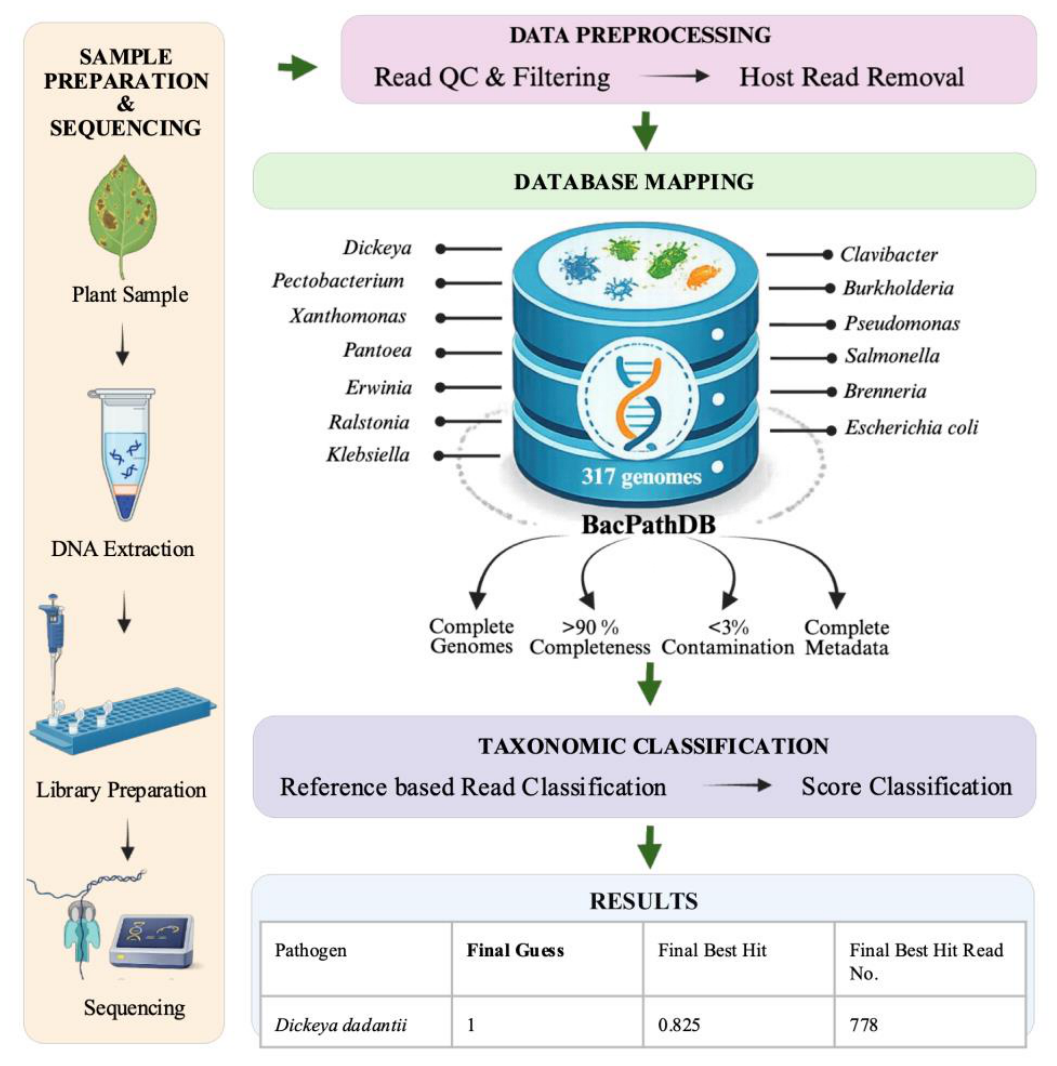
Figure 2.
Comparison of runtime performance between a local Mac and a high-performance computing (HPC) platform for the BacPath pipeline, including preprocessing, database mapping, and taxonomic classification. Execution time represents active computational runtime only. HPC queue and scheduling delays were excluded from the analysis. The average analyses run time for both local Mac and HPC were about 67 s and 42 s, respectively. S1, S2 and S3 are 3 different data sets; T1 and T2 are two different time periods.
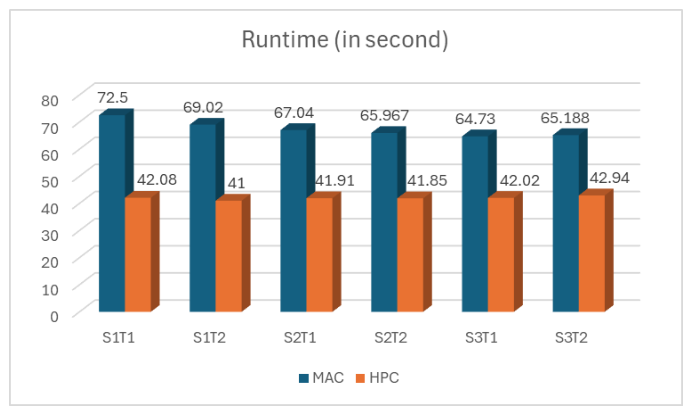
Figure 4.
In vitro validation of the BacPath pipeline for detection of bacterial pathogens (Dickeya dianthicola PL25, Dickeya fangzhongdai PL145, and Pectobacterium parmentieri PL70) under controlled conditions. (A) validation using potato tuber slice inoculation assays with single and mixed infections; (B) validation using greenhouse-grown potato plants inoculated with single and mixed bacterial pathogens; (C) detection from potato tuber slices; (D) detection from infected potato plant tissues.
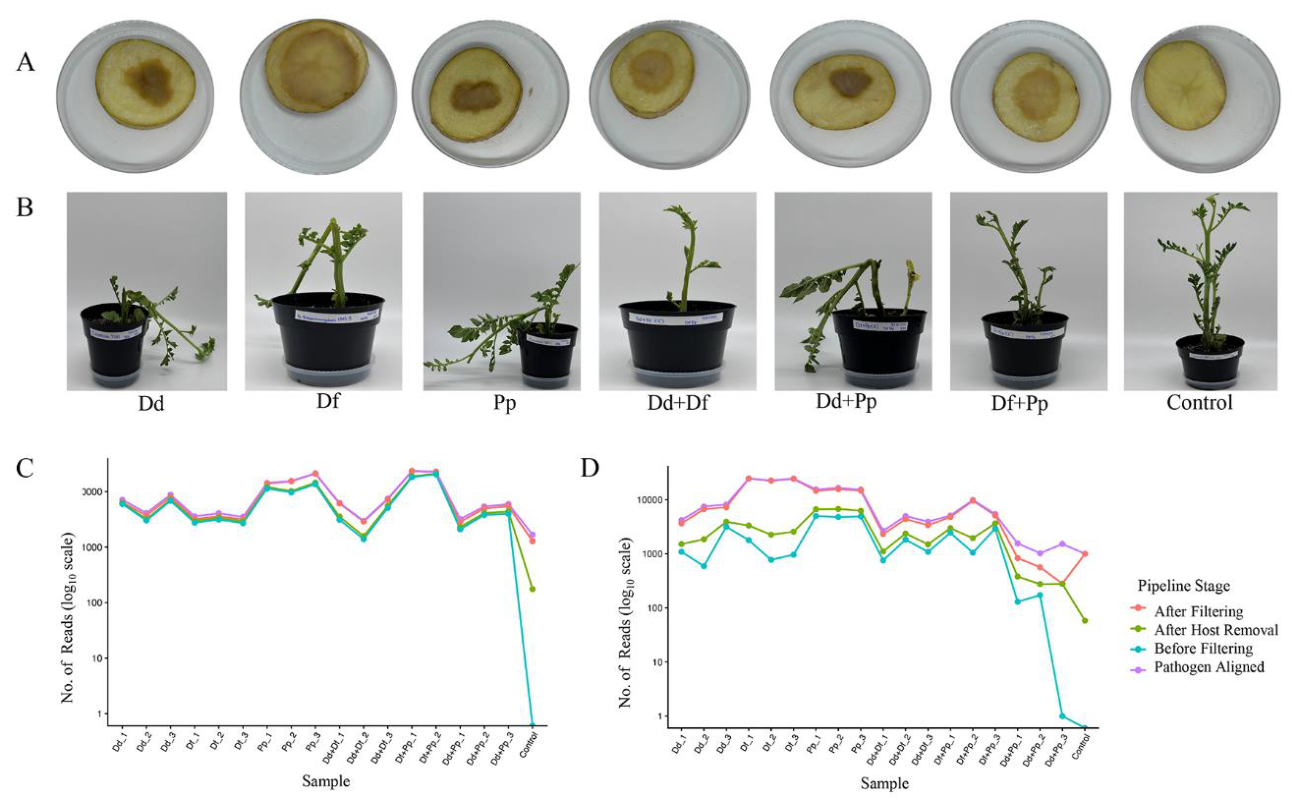
Figure 5.
In vitro sensitivity evaluation of the BacPath pipeline using Dickeya dianthicola PL25 DNA concentrations ranging from 1 fg to 1 ng. Different concentrations of pathogen DNA were spiked into a constant background of 12 ng potato host DNA. BacPath, in conjunction with BacPathDB, accurately detected the target pathogen down to 10 pg.
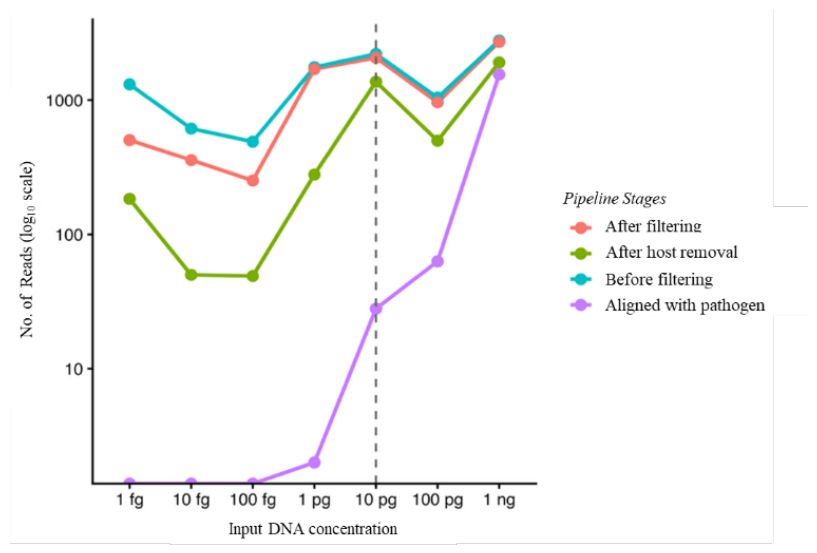

Table 1.
In silico specificity validation of BacPath with single and mixed-pathogen simulations.
| Query genome | Best-matching reference genome | Final guess | Final best hit | Final best hit read numbers |
|---|---|---|---|---|
| Dickeya fangzhongdai PL145-1B | CP094338 D. fangzhongdai PL145 | 1.52E-09 | 0.97551 | 956 |
| D. fangzhongdai PL145-4B | CP094338 D fangzhongdai PL145 | 0.999995 | 0.98276 | 969 |
| Pectobacterium actinidiae LMG 26003 | CP097896 P. actinidiae GX-Pa1 | 1 | 0.82590 | 778 |
| Dickeya lacustris LMG 30899 | CP114280 D. lacustris LMG30899 | 1 | 0.93676 | 874 |
| Pectobacterium cacticida LMG 17936 | CP109947 P. cacticida CFCC10813 | 1 | 0.97217 | 943 |
| Dickeya dianthicola PL25 | CP038499 D. dianthicola LAR.16.03.LID | 0.999997 | 0.37346 | 363 |
|
P. actinidiae LMG 26003 D. lacustris LMG 30899 |
CP097896 P. actinidiae GX-Pa1 | 0.999711 | 0.41653 | 781 |
| CP114280 D. lacustris LMG30899 | 0.000290 | 0.46987 | 881 | |
| P. cacticidastrain LMG 17936 D. dianthicola PL25 | CP109947 P. cacticida CFCC10813 | 0.999938 | 0.48558 | 943 |
| CP038499 D. dianthicola LAR.16.03.LID | 6.23E-05 | 0.18692 | 363 |
Table 2.
In vitro specificity validation of the BacPath pipeline with five phylogenetically distinct bacterial pathogens.
Table 2.
In vitro specificity validation of the BacPath pipeline with five phylogenetically distinct bacterial pathogens.
| Query genome | Best-matching reference genome | Final guess | Final best hit | Final best hit read numbers |
|---|---|---|---|---|
| Escherichia coli O157:H7 K4492 | BA000007.3 E. coli O157:H7 Sakai | 1 | 0.977955 | 4170 |
| Burkholderia gladioli PL38 | CP068049.1 B. gladioli BBB-01 | 1 | 0.537091 | 2411 |
| Pantoea agglomerans PL174 | CP143414.1 P. agglomerans CFBP13593 | 0.99582096 | 0.740514 | 605 |
| Ralstonia pseudosolanacearum PL175 | CP133723.1 R. pseudosolanacearum RS848 plasmid pRS848 | 0.99999765 | 0.370532 | 933 |
| CP133722.1 R. pseudosolanacearum RS848 | 2.34E-06 | 0.544480 | 1371 | |
| Pseudomonas sp. PL181 | CP063456.1 P. shirazica A28 | 0.99550831 | 0.672497 | 1115 |
Disclaimer/Publisher’s Note: The statements, opinions and data contained in all publications are solely those of the individual author(s) and contributor(s) and not of MDPI and/or the editor(s). MDPI and/or the editor(s) disclaim responsibility for any injury to people or property resulting from any ideas, methods, instructions or products referred to in the content. |
© 2026 by the authors. Licensee MDPI, Basel, Switzerland. This article is an open access article distributed under the terms and conditions of the Creative Commons Attribution (CC BY) license (http://creativecommons.org/licenses/by/4.0/).
Copyright: This open access article is published under a Creative Commons CC BY 4.0 license, which permit the free download, distribution, and reuse, provided that the author and preprint are cited in any reuse.