

Submitted:
23 October 2026
Posted:
26 October 2026
You are already at the latest version
Abstract
Women play a significant role in rice production in sub-Saharan Africa, yet their contributions to pest and disease management remain underexplored. This study examined gender differences in knowledge, perceptions, and management of rice pests and diseases in Uganda. A qualitative study was conducted in seven rice-growing districts, involving 249 farmers (122 women and 127 men) through 28 sex-disaggregated focus group discussions (FGDs) and 49 key informant interviews (KIIs). Image-based identification exercises assessed experiential knowledge. Data were transcribed, coded in Atlas.ti, and thematically analyzed using a gender-relations framework. Women performed most labor-intensive and preventive tasks, including seed selection, weeding, field monitoring, harvesting, and post-harvest handling, while men dominated pesticide-related decisions. Despite limited access to extension services and agro-input suppliers, women demonstrated broader experiential knowledge of pests, symptoms, and seasonal occurrence. However, disease diagnostic precision was limited across genders. Synthetic pesticides dominated management practices, with minimal awareness of integrated and biological alternatives. Women also faced indirect pesticide exposure through contaminated clothing and re-entry into treated fields. These findings reveal a gendered gap between experiential knowledge and decision-making power. Gender-responsive extension, improved diagnostic training, and integrated pest management are essential to strengthen plant health, leverage women’s knowledge networks, and address barriers to information, resources, and decision-making.
Keywords:
gender roles
; division of labor
; gendered opportunities
; knowledge
; perceptions
; disease management
1. Introduction
Rice is an increasingly important staple and cash crop globally and across sub-Saharan Africa, where it supports the livelihoods of millions of smallholder farmers and contributes to food security and rural incomes [1,2]. In Uganda, rice production has expanded rapidly in response to growing domestic demand and policy emphasis on agricultural commercialization. However, productivity remains constrained by insect pests and diseases including stem borers, rice blast, brown planthopper, and rice black bug which contribute to substantial yield losses and income instability [3,4]. Effective management of these constraints requires accurate pest identification, timely intervention, and access to reliable agronomic information.
Access to agricultural knowledge and decision-making authority, however, is not evenly distributed. Across sub-Saharan Africa, gender relations shape labor allocation, control over productive resources, and access to extension services [1,5]. Women contribute substantially to agricultural production but frequently face structural constraints that limit access to credit, inputs, training opportunities, and advisory services [6,7]. Time poverty, mobility restrictions, lower literacy levels, and entrenched norms that privilege men as household decision-makers often marginalize women from formal agricultural information systems [8,9]. Consequently, crop protection innovations are commonly disseminated through male-oriented channels.
In rice systems specifically, gendered divisions of labor influence who performs preventive tasks such as seed selection, transplanting, weeding, and post-harvest handling, and who makes decisions regarding pesticide purchase and application [1,10]. While previous studies in Uganda have examined pesticide use intensity and health risks, few have systematically analyzed gender differences in experiential pest knowledge, perception, and communication pathways within rice-growing communities [4,6]. Moreover, limited attention has been paid to how gender intersects with region and socioeconomic status to shape knowledge systems and management strategies [2].
Understanding these dynamics requires moving beyond binary comparisons between men and women toward a relational perspective on gender. Drawing on gender-relations theory, this study conceptualizes gender as a system of power that structures access to resources and shapes whose knowledge is legitimized within agricultural institutions [11,8]. Intra-household bargaining theory further suggests that decision-making authority depends not only on knowledge but also on resource control and social norms [5]. From this perspective, women’s experiential agricultural knowledge may be substantial yet institutionally undervalued or excluded from formal extension systems.
This study aims to generate evidence to inform gender-responsive extension design for rice pest and disease management in Uganda. Specifically, we address four research questions:
- How are labor and decision-making related to pest and disease management divided between men and women across regions?
- How do men and women differ in their knowledge and perceptions of rice pests and diseases?
- What communication channels do male and female farmers rely on, and what barriers shape their access to agricultural information?
- What institutional adjustments are required to design gender-responsive extension services?
By combining sex-disaggregated focus group discussions with image-based pest identification exercises across seven districts, this study provides comparative district-level evidence and advances understanding of gendered knowledge systems in crop protection.
2. Literature Review
2.1. Gendered Division of Labor and Decision-Making in Crop Production
Across sub-Saharan Africa, agricultural production is structured by gendered divisions of labor that allocate specific tasks, responsibilities, and decision-making authority to men and women. Women frequently perform labor-intensive activities such as planting, weeding, harvesting, and post-harvest processing, while men often control input purchase decisions and market transactions. These divisions are shaped by sociocultural norms, asset ownership patterns, and intra-household bargaining power [1,5].
In rice systems, gendered task differentiation influences exposure to pests and agrochemicals. Preventive activities such as seed selection, transplanting, and field monitoring are commonly performed by women, whereas pesticide purchase and spraying are often controlled by men. This asymmetry has implications for both knowledge generation and health risk exposure [9,10]. However, gendered labor divisions do not automatically imply gendered knowledge deficits. Women’s proximity to daily crop management may enhance experiential knowledge, even when formal training opportunities are limited.
2.2. Gendered Knowledge Systems and Pest Perception
Knowledge of pest identification and management is shaped by experience, social networks, and access to extension services. Recent research emphasizes that farmers’ pest knowledge is socially constructed and mediated by gender, age, education, and resource access [4,12].
Studies from West and East Africa indicate that women often rely more on peer networks and informal communication channels, while men are more likely to interact with extension agents and agro-input dealers [6]. This can produce differentiated knowledge pathways, particularly where extension systems prioritize male household heads.
Despite growing interest in gender-responsive agricultural advisory services [1,2], limited research has examined gender differences in rice pest recognition and management in Uganda. Existing Ugandan studies have primarily focused on pesticide use intensity, safety practices, and health risks rather than comparative knowledge systems or intra-household dynamics.
2.3. Communication Pathways, Extension Access, and Structural Barriers
Agricultural extension systems in sub-Saharan Africa have increasingly adopted pluralistic models involving public agents, private input suppliers, radio programming, and digital platforms. However, gender disparities persist in access to these services. Women face structural barriers including time poverty, limited mobility, lower literacy rates, and exclusion from farmer groups [1,7].
Recent evaluations of gender-responsive extension emphasize the importance of female extension agents, participatory learning approaches, and community-based dissemination strategies [2,6]. Radio remains a particularly important medium for reaching women farmers in rural areas due to flexibility and lower opportunity costs. Understanding gendered communication pathways is essential for improving integrated pest management (IPM) uptake, especially given increasing concerns over pesticide overuse and environmental sustainability [13].
2.4. Research Gaps in the Ugandan Rice Context
While Uganda’s rice sector has expanded rapidly, research examining gendered dimensions of pest and disease management remains limited. Existing studies document pesticide practices and health risks but rarely provide: Comparative district-level analysis, systematic gender-disaggregated knowledge assessment, intersectional analysis incorporating socioeconomic status, and examination of intra-household asymmetries in decision-making. This study addresses these gaps by combining qualitative inquiry with image-based pest recognition across seven rice-growing districts.
2.5. Theoretical Framework
This study is informed by a gender-relations framework that conceptualizes gender not as a fixed attribute but as a system of socially constructed power relations that shape access to resources, knowledge, and decision-making authority [8,11]. Within agricultural systems, these relations influence whose labor is visible, whose knowledge is legitimized, and who controls productive assets.
We also draw on intra-household bargaining theory, which suggests that decision-making power within households depends on resource control, income contribution, and social norms [5]. From this perspective, knowledge acquisition does not necessarily translate into decision-making authority, particularly in contexts where men control financial resources.
Additionally, the study engages with social learning theory in agricultural innovation, which emphasizes the role of peer networks, experiential learning, and communication channels in shaping knowledge diffusion [4]. Gendered access to such networks can reinforce or mitigate knowledge gaps.
By integrating these perspectives, the study examines how gender relations structure: Labor allocation in pest and disease management, access to agricultural information, decision-making authority over pesticide use, and institutional recognition of experiential knowledge. This framework enables analysis beyond descriptive gender comparisons toward understanding structural and relational dynamics.
3. Materials and Methods
3.1. Study Design
This study employed a qualitative research design to examine gendered knowledge, perceptions, and decision-making processes in rice pest and disease management. The study primarily relied on focus group discussions (FGDs) and key informant interviews (KIIs) to generate in-depth, contextual insights. While some numerical summaries (such as percentages and Likert-type aggregations) are presented in tables, these are used strictly for descriptive purposes to summarize patterns emerging from qualitative data. They are not intended for statistical inference or population-level generalization. The analytical emphasis remains on interpretive and thematic analysis, consistent with qualitative research approaches.
3.2. Study Area
The study was conducted in seven major rice-producing districts in Uganda: Kasese, Hoima, Nebbi, Lira, Butaleja, Bugiri, and Mukono, as shown in Figure 1. These districts were selected to capture variation in agroecological conditions, pest prevalence, and production intensity. These districts represent both irrigated and rain-fed rice systems and vary in access to extension services and input markets.
3.3. Sampling and Participant Selection
A multi-stage sampling strategy was employed. Within each district, rice-growing sub-counties and communities were purposively selected in consultation with district agricultural officers to ensure inclusion of active rice producers. Participants were stratified by gender to ensure balanced representation. A total of 28 focus group discussions (FGDs) and 49 key informant interviews (KIIs) were conducted, involving 249 farmers (122 women and 127 men). FGDs were conducted separately for men and women to minimize social desirability bias and encourage open discussion. Key informants included extension officers, agro-input dealers, rice millers, and farmer group leaders.
3.4. Data Collection Procedures
This study employed a qualitative research design using focus group discussions (FGDs) and key informant interviews (KIIs). The study does not aim for statistical generalization; rather, it seeks to generate contextually grounded and analytically transferable insights into gendered dynamics in smallholder rice systems. A total of 28 FGDs were conducted, 14 FGDs with men and 14 FGDs with women, with four FGDs in each of the seven communities selected for qualitative data collection. Prior to actual data collection, the FGD tools were pre-tested on two groups (one for men and one for women) in Luwero district. Each focus group comprised of eight participants. Two communities were selected per district for men (better off and poor) and women (rice farm managers and women farming with their husbands/males), and 16 participants were invited to participate in FGDs in one community (two FDGs per community; one with men and one with women) (Table 1). The groups were “homogeneous” in terms of knowledge and experience of the participants with rice history and their role in the community; that is, they did not include champion farmers or association leaders in the group. KIIs were conducted with relevant stakeholders at various levels. These include extension agents, input suppliers, village leaders, and NGOs. Data were collected using semi-structured interview guides covering: division of labor in rice production, pest and disease identification, management practices and pesticide use, decision-making processes, information sources and extension access. To assess experiential knowledge, participants were shown laminated images of common rice pests and diseases and asked to identify them, describe symptoms, and explain management practices. All interviews were conducted in local languages by trained enumerators and notes carefully recorded verbatim and translated into English.
3.5. Definition of Farm Management Categories
Women-managed farms were defined as farms where women were the primary decision-makers regarding production activities, including input use, crop management, and output utilization, regardless of land ownership status. Men-managed farms were those where men held primary decision-making authority. These classifications were based on self-reported decision-making roles during FGDs and KIIs rather than formal land ownership.
3.6. Data Analysis
Data were analyzed using thematic analysis supported by Atlas.ti software. An initial coding framework was developed deductively based on research questions and theoretical constructs, and refined inductively as new themes emerged. Coding focused on: gendered labor patterns, knowledge attribution, decision-making authority, communication pathways, and regional variation. Comparative analysis was conducted across gender, district, and socioeconomic categories. For the image-based pest identification exercise and training priorities, Likert-type scores were developed by aggregating discussion-level responses. These scores summarize the relative emphasis placed on different issues during discussions and were used solely for descriptive comparison. Where divergent opinions emerged within a focus group, all views were retained during coding. The dominant theme reflected the issue discussed by most participants, while minority opinions were preserved through illustrative quotations and narrative interpretation. Triangulation was achieved by comparing FGD findings with KIIs.
During the focus group discussions, 12 pests and nine diseases were selected, and photos of pests and disease symptoms were shown to the participants. The participants selected the pest and disease symptoms they observed in their fields. The local names were recorded. In addition, photos of 14 insects were shown, and farmers were asked to select natural enemies and insects harmful to rice (Photo S1). After the session, the data were transcribed, coded and analysed using Atlas.ti version 5.0. Content and comparative analyses were performed in this study. Excel was used to generate tables.
3.8. Ensuring Rigor and Trustworthiness
The study applied established qualitative criteria to ensure rigor. Credibility was enhanced through triangulation of FGDs and KIIs across multiple districts. Dependability was ensured through an iterative coding process and consistent use of a coding framework in Atlas.ti. Confirmability was supported by maintaining an audit trail of analytical decisions. Transferability was addressed through detailed contextual descriptions of study settings and participant characteristics. These measures strengthen confidence in the validity and applicability of the findings.
4. Results
The results are presented primarily as thematic findings supported by descriptive summaries of FGDs, KIIs, or district-level responses. Numerical values are intended to illustrate the frequency with which themes emerged and should not be interpreted as statistically representative of the wider farming population. Unless otherwise stated, descriptive summaries are based on focus group discussions as the unit of analysis. Participant counts are reported only for demographic characteristics (Table 2), while district-level summaries are used where comparisons relate to geographical distribution (e.g., Table 5, Table 6 and Table 7). This distinction is maintained throughout the Results.
4.1. Socio-Economic, Demographic, and Institutional Factors
A total of 249 rice farmers (122 (49%) women and 127 (51%) men) participated in the study across seven major rice-growing districts of Uganda. Participants were predominantly middle-aged, with men slightly older on average than women (Table 2). Most respondents were married; however, widowhood and separation were more frequently reported among women, reflecting gendered household vulnerabilities within the study communities.

Table 2.
Socio-economic, demographic and institutional characteristics of participants.
| Variable | Category | Women (n=122) | Men (n=127) | Total (n=249) |
|---|---|---|---|---|
| Age (years) | Mean (range) | 42 (21–73) | 45 (23–76) | 44 |
| Education level | No formal education | 40 | 28 | 68 |
| Primary | 62 | 69 | 131 | |
| Secondary and beyond | 20 | 30 | 50 | |
| Marital status | Married | 104 | 121 | 225 |
| Widowed/Separated | 18 | 6 | 24 | |
| Farm size (rice) | <1 acre | 87 | 32 | 119 |
| 1–3 acres | 26 | 81 | 107 | |
| >3 acres | 9 | 14 | 23 | |
| Years in rice farming | Mean | 8–10 | 10–12 | 9–11 |
| Access to extension services | Yes | 10 | 40 | 50 |
| Membership in farmer groups | Yes | 73 (59.8%) | 102 (80.3%) | 175 (70.3%) |
| Access to agro-input dealers | Direct interaction | 24 (19.7%) | 95 (74.8%) | 119 (47.8%) |
| Participation in training | Yes | 12 (9.8%) | 89 (70.1%) | 101 (40.6%) |
Note: This table presents the socio-demographic characteristics of the study respondents disaggregated by gender. Values are presented as counts (percentages) unless otherwise indicated. Mean values are shown only for continuous variables (age and years in rice farming).
Educational attainment was generally low across districts. Primary education was the most common level achieved by both men and women. Nevertheless, women were more likely to report having no formal education, while men were more likely to have completed secondary education. These educational disparities may influence access to written agronomic information, interpretation of pesticide labels, and participation in formal training programs. The gender gap in education was more pronounced in districts characterized by historically lower school completion rates, while it appeared narrower in districts with stronger access to educational infrastructure.
Clear gender differences were observed in landholding size and production scale. Women predominantly cultivated smaller rice plots, often oriented toward household consumption and local markets, whereas men were more likely to manage larger and more commercially oriented holdings. Larger farms were concentrated in districts with established irrigation schemes and stronger market linkages, while smaller holdings were more common in rain-fed systems. Men also reported longer engagement in rice farming, particularly in districts with long-standing rice commercialization.
Institutional access displayed marked gender asymmetries. Across districts, men reported more frequent interaction with government extension agents, NGO-led training programs, and agro-input suppliers. Women’s access to extension services was constrained by domestic responsibilities, mobility limitations, and the common practice of targeting household heads typically men in agricultural programming. In districts where NGO initiatives were active, gender gaps in access were somewhat reduced but not eliminated.
Participation in farmer groups was reported by both men and women; however, leadership roles were predominantly occupied by men. Women’s membership often did not translate into influence over collective decisions, particularly regarding pesticide procurement or training opportunities.
Access to agro-input dealers further reflected gendered control over crop protection decisions. Men typically purchased pesticides and determined product selection and application schedules. Women rarely interacted directly with suppliers, even in districts where some input shops were managed by women. In commercially oriented districts, male dominance in pesticide procurement was particularly visible, reinforcing men’s authority over chemical-based management strategies.
Regional comparisons revealed that gender disparities were not uniform across the seven districts. In highly commercialized rice systems, inequalities were most evident in land ownership and pesticide decision-making authority. In contrast, in more subsistence-oriented districts, disparities were more strongly associated with access to extension services and formal training. Socioeconomic status further appeared to influence these dynamics: wealthier households particularly in irrigated schemes demonstrated somewhat greater female participation in decision-making compared to poorer households in rain-fed systems.
Overall, these socio-economic, demographic, and institutional characteristics reveal structurally embedded gender differences in rice pest and disease management. Differences in education, land control, market orientation, and institutional access interact with regional production systems to shape knowledge acquisition and decision-making authority [1,9,14]. Across sub-Saharan Africa, women’s agricultural contributions are substantial, yet their access to productive resources, land rights, and advisory services remains disproportionately constrained [15,21]. In Uganda and comparable rice-growing contexts, gendered norms frequently position men as household heads and primary input decision-makers, thereby shaping who engages with extension agents and agro-input suppliers [16,17,18].
While women play central roles in rice production and preventive pest management tasks, their limited access to land, extension services, and input markets constrains their formal recognition and influence within crop protection systems. This pattern reflects broader evidence that agricultural innovation systems often privilege male-oriented communication channels and undervalue women’s experiential knowledge [1,19,20]. Consequently, gendered asymmetries in institutional engagement translate into unequal participation in pesticide decision-making and integrated pest management adoption across regions.
4.2. Gender Roles in Rice Production and Pest and Disease Management
Gender Roles in Rice Production
Results from the women’s FGDs revealed that field observation/monitoring and seed preparation were exclusively women’s activities, while land preparation, irrigation, and fertilizer application were mainly men’s activities (Figure 2 and Figure 3). Women planted, stored, and weeded more (Figure 3). According to the majority of the participants, women working on female-managed farms are exclusively involved in providing labor and making decisions related to land preparation, fertilizer application, seed preparation, irrigation, planting, weeding, field observation and monitoring, harvesting, grading, and storage. Women-managed farms were characterized by higher labor intensity, stronger experiential pest knowledge, smaller landholdings, and limited institutional engagement, whereas men-managed farms were characterized by larger scale production, stronger market integration, greater pesticide use, and greater access to extension and input systems. Planting, weeding, harvesting, and storage were the major activities in which women in female-managed farms were reported to be more involved than men were. However, men scored themselves as those doing more in all rice production activities (Figure 2). Men assume that women’s contribution to rice production is very limited, except when washing pesticide-contaminated clothes. The outstanding difference in roles that can be deduced from the findings is that while men on male-managed farms take on a larger load in most activities, women on female-managed farms exclusively engage in all activities. Men also accept that women play significant roles in seed preparation and grain grading. This implies that men are the major decision makers in rice production.
The fact that the most visible labor contribution to land preparation is predominantly performed by men might contribute to men’s under-recognition of women’s overall contribution to rice production. This was mentioned several times, as depicted in the farmers’ statements.
“Land preparation: men do the first land opening as women cannot do the heavy work involved in land preparation, and also the men come up with the decision on rice cultivation” (Men FGD (poor), Mukono district, Butumbiri village).
“Land preparation is hard in the lowland conditions hence being carried out more by the men” (Men FGD [better-off], Bugiri district, Magoola village).
Figure 2.
Gendered roles in rice production and pest management as reported by male participants. Scores are based on an involvement scale from 0 (no involvement) to 7 (highest level of involvement).
Figure 2.
Gendered roles in rice production and pest management as reported by male participants. Scores are based on an involvement scale from 0 (no involvement) to 7 (highest level of involvement).
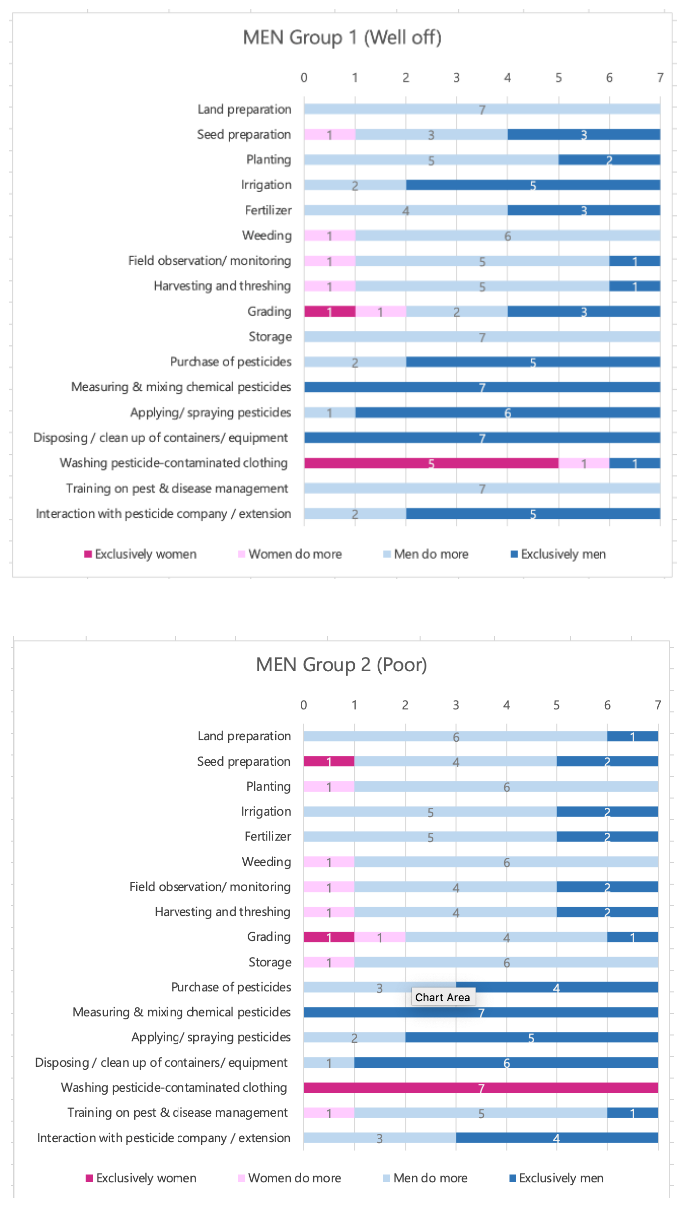
Figure 3.
Women’s roles in rice production and pest management across activities. Scores represent perceived involvement using a scale from 0 (none) to 7 (highest).
Figure 3.
Women’s roles in rice production and pest management across activities. Scores represent perceived involvement using a scale from 0 (none) to 7 (highest).
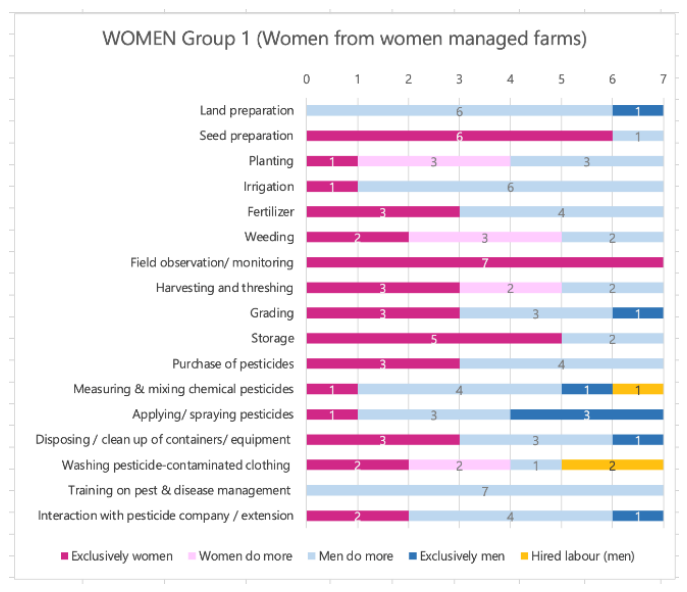
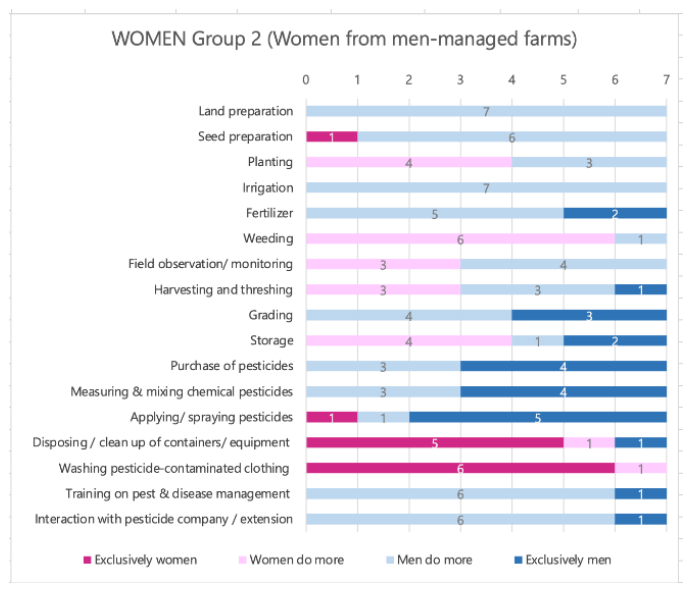
According to the male participants, field observations and monitoring are mainly performed by men compared to their female counterparts because sometimes the fields are far away from home. Additionally, men do more in irrigation, particularly as hired labor. A larger proportion of female participants were involved in weeding and making decisions concerning weeding. Women participants stated that women do more in providing labor and decision-making in harvesting and storage. However, men also state that they do more in storage compared to women. Planting, weeding, field observation and monitoring, harvesting, and storage were all crucial tasks for men and women, as indicated by the participants’ sentiments below.
“The most time and labor consuming activities for women are weeding, harvesting, and bird scaring” (Women FGD [women-managed farms], Kasese district, Nyamwamba Division).
“Women do more in harvesting and storage because we are more involved in ensuring food security” (Women FGD [women-managed farms], Hoima district, Kitonya village).
“Irrigation channels are made exclusively by men because making channel requires a lot of energy, also women fear insects in the lowland condition, men know the flow of water, hence able to plan accordingly” (Men FGD [better-off], Bugiri district, Magoola village).
“Field monitoring is mostly done by men because they are the head of the household, and sometimes the field is far from home which is hard for women” (Men FGD [better-off], Mukono district, Butumbiri village).
Seed purchases were reported to be made mostly by men because of their exposure to travel. Men move much more and can therefore easily access good seeds compared to women’s mobility, which is often constrained by domestic obligations. Some participants believed that seed purchase is commonly done by men because they are more informed about different rice varieties.
Participants’ responses showed that men are commonly involved in planting because many rice fields are male-owned or managed while women give support by preparing food for the men, as quoted, “Planting is done more by the men while the women are cooking food for the individuals doing the planting” (Men FGD [better-off], Bugiri district, Magoola village).
Participant discussions revealed that men’s involvement in weeding was primarily linked to chemical application, a task framed as requiring technical knowledge and physical strength. Fertilizer application was similarly male-dominated, reflecting gendered assumptions about men’s superior access to agronomic information and control over input-related decisions. Field monitoring for pests and diseases was also more frequently undertaken by men, particularly when rice plots were located far from homesteads. Women’s domestic and caregiving responsibilities constrained their mobility, limiting their ability to conduct regular surveillance. These patterns illustrate how gender norms and differential access to technical information and productive resources shape task allocation and reinforce male authority in input-intensive aspects of rice pest management.
Making irrigation channels was reported to be exclusively performed by men because of their high energy requirements. Some even said that women fear insects in the lowland areas, so men do irrigation. The fact that harvesting also requires a lot of energy was given as a reason for men’s involvement in harvesting. It becomes even more strenuous in cases in which harvesting is done when the fields are flooded, as suggested in the quotation, “More men are into harvesting due to their way of rice cultivation with no bunds and water management, making harvesting to be in flooded fields” (Men FGD, Luwero district, Ngalonkalu, village). This makes harvesting more suitable for men owing to their physical strength.
The FGDs also showed that men are involved in rice storage. Some participants mentioned that “Men do more because women give away rice to neighbours and relatives, so men take charge of the storage” (Men FGD [better-off], Bugiri district, Magoola village). This quotation shows that men resort to being involved in storage because they want to preserve harvested rice, most likely for sale, and maximize profits; however, women seem to be liabilities if left in charge.
Gender Roles in Pesticide Application
Results in Table 3 show the distribution of pesticide-related tasks along the rice production chain, indicating which activities are performed by different household members. It helps illustrate the gender division of labor in pesticide handling, including purchasing, mixing, application, and disposal. Almost all responses from both the women’s and men’s FGDs showed that men were exclusively involved in measuring, mixing, and spraying chemical pesticides (Table 3). There were only a few mentions of women involved in pesticide applications. Men take a front seat in pesticide spraying, as seen in the following quotations: “Men are more engaged in pesticide use”, “All households spray; however men are more engaged” and “Only men are engaged in pesticide, so us women don’t know the quantities used” (women’s FGD).
According to the participants, pesticide purchases are normally done by men because they know which chemicals to use appropriately and have the money to buy the pesticide. Men are reportedly more engaged in measuring pesticides because they are usually the ones who buy the chemicals and, hence, are more knowledgeable about the measuring procedures. The difference in physical abilities between men and women is a major factor explaining the dominance of pesticide application in men. “The knapsack sprayer is heavy for women and they are weak plus also the additional tasks they carry out at home.” (Men FGD [better-off], Bugiri District, Magoola Village). Embedded in the latter quotation is the notion that men predominantly perform pesticide spraying because most women are restricted by household duties. Therefore, although some women participate and even exclusively engage in pesticide application, this role is still largely reserved for men.
To increase robustness of the results, gender roles were aggregated across seven pesticide-related activities (purchase, mixing, application, disposal, washing, training, and institutional interaction), generating 49 observations per group (7 activities × 7 districts).
The chi-square test results are presented for descriptive purposes to illustrate patterns in aggregated FGD responses rather than to infer statistical significance from a representative sample. Given the qualitative design and non-random sampling, these results should be interpreted cautiously as indicative patterns rather than definitive statistical relationships. The chi-square test showed a suggestive pattern between farm management type and labor allocation, indicating a patterned though not statistically definitive difference in how pesticide-related tasks are organized (Table 4).
Men-managed farms were more likely to report tasks performed exclusively by men, reflecting stronger male control over input-intensive and commercially linked activities. In contrast, women-managed farms more frequently reported arrangements in which men performed most of the task or were hired to do so, suggesting negotiated or delegated authority rather than direct female control. Notably, tasks performed exclusively by women remained constant across farm types, indicating that certain post-application responsibilities such as washing contaminated clothing are structurally feminized irrespective of managerial status (Table 4).
From a gender-relations perspective, these findings highlight how managerial designation does not automatically translate into control over technical or hazardous agricultural practices. Instead, pesticide-related authority remains embedded in broader power relations that privilege male expertise, mobility, and institutional access. Even where women manage farms, control over high-risk and input-dependent activities continues to align with masculinized domains of knowledge and decision-making.
Overall, pesticide use remains male-dominated in both contexts, but men-managed farms exhibit more exclusive male control, whereas women-managed farms suggest constrained managerial autonomy shaped by relational gender hierarchies.
4.3. Farmers’ Knowledge and Perceptions of Rice Pests and Diseases
Insect Pests
Men’s knowledge on rice pests
When presented with photos of different rice pests, the majority of male participants were able to identify the pests that caused damage to their paddy fields. The most frequently encountered pests among the men were white-backed plant hoppers, yellow stemborers, black rice bugs, cutworms, brown planthoppers, armyworms, and leaf folders (Table 5). The slender rice bug and rice caseworm were among the least common pests, with the gall midge, hispa, and panicle mites being among the rarest. Some participants admitted that they had never seen the Hispa pest but acknowledged that they had observed the damage caused by it during panicle initiation. The yellow stemborer was reported to be the most devastating pest observed in the fields of men, mostly in the flowering stage, followed by the rice black bug, which is common in the booting stage.
However, almost all the men could not specify the names of the pests as frequently quoted: “There is no known name” and “We have no name for it” (Men's FGDs). In the few cases in which men were able to name the pests identified in the photos, local names were used. For instance, opwopwor was mentioned in reference to the rice black bug, whereas the brown planthopper was referred to as buwojolo. Most men reported that their observations of the pests were common in the flowering stage, whereas a few pests were observed during the booting, heading, and panicle initiation stages of rice growth. Most of the men’s estimations of crop damage from pests ranged between 20-30%, while a few approximated 50% of crop damage. There is only one report of 70% damage from pests. It has been widely reported that all rice varieties are highly susceptible to the identified pests, as several male participants mentioned, “No variety is resistant” (men’s FGDs). However, some men believed that some varieties such as MET 20 (NARORICE 3) and Namche 1, are more prone to damage from pests than others such as MET 12 (NARORICE 2).
Table 5.
Most devastating rice pests in the previous rice crop by gender.
| District | Women-managed farms | Women from men-managed farms | Well off men | Poor men |
| Mukono | 1, 2 | 3, 6, 9, 12 | 1 | 11 |
| Bugiri | 1, 3, 12 | 3, 7, 8 | 3 | 4 |
| Butaleja | 3, 5, 10 | 4, 7, 11, 12 | 4 | 3 |
| Lira | 4, 12 | 1, 3 | 4 | 3 |
| Nebbi | 3, 12 | 3, 5, 7, 9 | 3 | 3 |
| Hoima | 3, 12 | 5, 7, 8 | 3 | 3 |
| Kasese | 1, 3, 6, 9, 12 | 1, 2, 3, 5, 7 | 3 | 3 |
Note: Numbers indicate pest categories identified as among the most devastating by each FGD category within each district. The table summarizes discussion-level responses rather than participant frequencies. Pests: 1=Brown plant hopper; 2=White backed plant hopper; 3=Yellow stem borer; 4=Rice black bug; 5=Cut worm; 6=Rice case worm; 7=Army worm; 8=Slender rice bug; 9=Leaf folder; 10=Gall midge; 11=Hispa; 12=Panicle mite.
Women’s knowledge of rice pests
The female participants encountered all pests presented in the pest photos during the knowledge test. Similar to the responses of men, most women mentioned the yellow stemborer as the most serious pest in their rice fields, followed by army worms, brown planthoppers, and panicle mites (Table 5). Other pests that were reported as devastating to women’s paddy fields included the cutworm, leaf folder, rice case worm, slender rice bug, and rice black bug. The yellow stem borer, army worm, and brown plant hopper were reported to be most prevalent in the flowering stage, whereas panicle mites are common in the maturity stage, especially during drought seasons. Leaf folder, gall midge, and hispa were mostly observed in the vegetative and booting growth phases.
In contrast to the male participants’ inability to name the pests they had encountered, the women attempted to record the names by which the pests were referred. However, the names were more generalized, as all flying pests were referred to as insects, whereas all crawling pests were known as caterpillars. Caterpillars are referred to locally as obusaanyi/ obusiisa in Butaleja, omude in Lira, okoku in Nebbi, kadoima in Hoima, ikewuuka/kanyegomba in Kasese, and obusanyi/ebisanyi in Mukono. The women also reported the local names of butterflies and moths as apopowa in Lira, abirbir in Nebbi, ekihoijoro in Hoima, ebihoiholyo in Kasese, and ebiwojolo in Mukono. Flying pests, such as the brown planthopper, white-backed planthopper, rice black bug, and hispa, are generally known as ebiwuka in Butaleja and Mukono. Specifically, rice black bug, slender rice bug, hispa, and panicle mites are referred to as acopo, okityam, ogore, and dedeyi, respectively. Among the natural enemies of rice pests identified by the women were dragonflies, stem borer moths, lady beetles, rice plant hoppers, rice seed bugs, spiders, mirid bugs, field crickets, and silent leaf-runner crickets. The women from the Lira district indicated the local names by which some of the natural enemies are known, such as otubetube for the dragon fly, kamudena for the lady beetle, otwongo for the rice plant hopper, and nsenene to refer to a long-horned grasshopper.
Women observed a higher intensification of pests during cropping seasons with drought stress than during rainy seasons. It is generally perceived that the percentage of rice loss due to pests is greater in the drought or dry season (more than 50%) than in the rainy season (approximately 30%). The average loss reported was 30-50%. Most women on both female and male-managed farms believed that all rice varieties were equally susceptible to pests. However, the variation in loss due to pest damage between upland and lowland varieties has been emphasized. Women registered greater pest damage among upland rice varieties (50-65%) than among lowland varieties (30-35%). Some of the women reported that some varieties are more resistant to pests such as TXD 10, Kaiso (K98, K5), WITA 9, MET 20, MET 12, and Suparica, while others are more susceptible such as Supa, Namche 1, and Nerica. A few women added that Namche could be tolerant when planted earlier.
Generally, better knowledge of rice pests was portrayed among women than men. This was evidenced by the more detailed listing and naming of more pests, the rice growth stages at which the pests were most observed, the natural enemies of rice pests, and the differences in loss due to pest damage in different cropping seasons and rice varieties.
Farmers’ perceptions of the most devastating rice pests
Farmers’ perceptions of devastating rice pests were assessed using a Likert-type scale derived from the proportion of focus groups identifying each pest as devastating. Responses were disaggregated by gender categories across seven districts. The four gender disaggregated categories were: Women-Managed Farms, Women from Men-Managed Farms, Well-off Men, and Poor Men, across the seven study districts. Perceived severity was classified based on the proportion of focus groups identifying a pest as “devastating,” as follows: 5 – Extremely Devastating: Cited by >60% of focus groups, 4 – Highly Devastating: Cited by 20–59% of focus groups, 3 – Moderately Devastating: Cited by 10–19% of focus groups, 2 – Slightly Devastating: Cited by 5–9% of focus groups, 1 – Not Devastating / Rarely Identified: Cited by <5% of focus groups, reflecting perceived production threat rather than measured field incidence.
Broad consensus on Yellow Stem Borer, as the only pest classified as Extremely Devastating (score = 5), cited by nearly 70% of focus groups across all socio-economic categories and districts (Table 5). This high level of convergence suggests that repeated exposure to substantial yield losses has consolidated a shared understanding of this pest as a primary constraint to rice production. In line with risk perception theory, threats that are both visible and economically consequential tend to dominate farmer attention and management priorities. Such consensus presents opportunities for coordinated management interventions targeting widely recognized pests.
Gendered differentiation in the identification of devastating Pests. Although perception scores reflect aggregate frequency, qualitative findings indicate important gender-based differences in the range of pests identified as devastating. Women mentioned a broader spectrum of pests (up to 12), whereas men focused predominantly on three major pests: Yellow Stem Borer, Brown Plant Hopper, and Panicle Mite. This pattern is consistent with literature showing that differentiated labour roles influence agro-ecological knowledge. Women’s routine engagement in crop establishment, weeding, and field monitoring may enhance detection of diverse pest symptoms, while men’s emphasis on market-oriented production outcomes may prioritize pests associated with pronounced yield or income losses. These differences underscore the need for pest management strategies that recognise multiple knowledge systems rather than assuming homogenous farmer perceptions.
Spatial Heterogeneity in devastating pests. Perceptions of devastating pests were not uniform across districts. Brown Plant Hopper was classified as Extremely Devastating in Mukono (Central region), while Rice Black Bug and Army Worm were more frequently identified as devastating in Eastern and Northern districts (Bugiri, Butaleja, and Lira). This spatial patterning likely reflects localized pest pressure, agro-ecological variation, and cropping practices. The findings are consistent with the evidence that pest importance is context-specific, suggesting that blanket management recommendations may overlook locally salient threats.
Under-recognition of Less Salient Pests. Gall Midge and Slender Rice Bug received low scores (1–2), indicating limited identification as devastating pests. This may reflect genuinely lower prevalence; however, it may also indicate diagnostic uncertainty where pest damage symptoms overlap with other stressors. Under-recognition of certain pests can delay management responses and reduce the effectiveness of integrated pest management (IPM) strategies. Strengthening farmer diagnostic capacity may therefore be as critical as promoting specific control technologies.
Overall, the identification of devastating pests is associated with experiential learning, socio-economic differentiation, and local agro-ecological conditions. For pest management research, these findings highlight the importance of aligning technical recommendations with farmer-perceived priorities while simultaneously addressing knowledge gaps around less visible pests. Incorporating gender-differentiated knowledge and district-level variability into extension may enhance relevance, adoption, and long-term effectiveness of pest control interventions.
Diseases
The study identified seven major rice diseases affecting cultivation across the seven districts (Table 6): rice blast (14), fungal grain mould (21), sheath blight (13), tungro (18), grassy stunt (20), ragged stunt (19), and brown spots (15). Rice blast (14) was identified as the most universally devastating disease. It was particularly severe in the Western region (Hoima and Kasese), where it was identified as a primary threat by all respondent groups. A significant finding was the disparity in disease recognition between genders. Women identified a substantially higher number of diseases than their male counterparts across all farm management types. This suggests that women exercise higher levels of detailed field observation and monitoring of crop symptoms than men. However, women participants submitted that they had limited knowledge of disease control in rice production, as shown in the following statements:
“Women don’t know anything about the control of pests and diseases, they only use organic manures to boost their rice plots” (Women FGD [women-managed farms], Nebbi district, Boma village).
“Women, they don’t know any causes of the diseases” (Women FGD [women-managed farms], Hoima district, Kitonya village).
The local naming of disease is according to the symptoms and is the same for both men and women (Table S1).
Table 6.
Most devastating diseases in the previous rice crops by gender and district.
| Women-managed farms | Women from men-managed farms | Well off men | Poor men | District |
| 13, 14, 15, 20, 21 | 13, 14, 18, 19, 21 | 13 | 21 | Mukono |
| 13, 14, 19, 20 | 13, 14, 19, 21 | 21 | 14 | Bugiri |
| 14, 18, 21 | 13, 14, 18, 21 | 13 | 18 | Butaleja |
| 13, 14, 18, 21 | 14, 15, 21 | 18 | 14 | Lira |
| 18, 20 | 18, 20 | 21 | 21 | Nebbi |
| 14, 19, 21 | 14, 21 | 14 | 14 | Hoima |
| 13, 14, 18, 20, 21 | 14, 18, 20, 21 | 14 | 14 | Kasese |
Note: Numbers indicate disease categories identified as among the most devastating by each FGD category within each district. The table summarizes discussion-level responses rather than participant frequencies. 13=Sheath blight; 14=Rice blast; 15=Brown spots; 18=Tungro; 19=Ragged stunt; 20=Grassy stunt; 21=Fungal grain mould.
When asked about the cause of the disease, most of the participants, both men and women, did not know the cause. A few participants believed that the causes included low soil fertility, especially for grassy stunt, and so can be controlled by good soil fertility. For other diseases, some stated that a change in climatic conditions, such as drought or bad seeds, causes diseases. Others thought that they are caused by pests and viruses. For instance:
“Generally, we think that pests are the cause of disease, that’s why as we spray against pests, we know we are controlling diseases” (Women’s FGD [women-managed farms], Mukono district).
“Not sure, but we think that some practices such as not weeding and not having enough water in the fields contribute to worsening the disease situation” (Women FGD [male-managed farms], Lira district).
Control Measures Undertaken by Men and Women
When asked about the pest control measures being taken by farmers in the community, both male and female farmers mentioned that they spray with pesticides because it is the only option available at their disposal, and they also just follow what other farmers are doing (Table 7). However, in the Nebbi and Hoima districts, fewer farmers apply pesticides, and women who manage their own farms do not spray pesticides at all. When applying pesticides, farmers mix different types of chemicals in a single use. Those who did not spray practiced other control measures, such as early planting and timely weeding, as a way of managing pests captured in their sentiments.
“Here, the majority don’t apply any control measure. We have limited knowledge on pest control in rice production. It depends on one’s willingness to spray’ (Women FGD, Nebbi district).
“We just ensure timely planting for better yields” (Women FGD, Hoima district).
Table 7.
Pest control measures undertaken by men and women across districts (N=7).
| District | Women-managed Farms | Women from Men-Managed Farms | Well-Off Men | Poor Men |
|---|---|---|---|---|
| Control measure | ||||
| Mukono | Spraying | Spraying | Spraying | Spraying |
| Bugiri | Spraying | Spraying | Spraying | Spraying |
| Butaleja | Spraying | Spraying | Spraying | Spraying |
| Lira | Spraying | Spraying | Spraying | Spraying |
| Nebbi | None | Spraying | None | None |
| Hoima | None | Spraying | Spraying | None |
| Kasese | Spraying | Spraying | Spraying | Spraying |
| Spraying (%) | 71.4 | 100 | 85.7 | 71.4 |
Note: Unit of analysis = district. Percentages represent the proportion of districts (out of 7) in which each respondent group reported pesticide spraying as a pest control measure. Results reflect district-level reporting patterns rather than household-level prevalence.
Across the seven study districts, pesticide spraying emerged as the dominant pest control strategy; however, clear gendered disparities were evident. Among women farming on male-managed farms, pesticide use was reported in all seven districts (100%), indicating that integration into male-controlled production systems is strongly associated with chemical pest control adoption (Table 7). In contrast, women managing their own farms reported spraying in 71.4% of districts, with non-use concentrated in Nebbi and Hoima. A similar pattern was observed among poor men, who also reported spraying in 71.4% of districts, suggesting that financial constraints may limit access to pesticides. Well-off men demonstrated higher uptake (85.7%), reinforcing the role of economic capacity in enabling chemical control. These findings indicate that pesticide use is not merely a technical response to pest pressure but is mediated by gendered access to resources, decision-making authority, and wealth status. In districts where spraying was absent, farmers relied on non-chemical practices such as early planting and timely weeding, highlighting adaptive but potentially less input-intensive management pathways. Collectively, the results underscore the importance of embedding pest management interventions within gender- and resource-sensitive frameworks to avoid reinforcing existing inequities in technology access and use.
4.4. Challenges and Constraints in Current Extension Services
Women and Men Farmers’ Needs in Training
These findings are based on 28 focus group discussions comprising 200 participants (102 men and 98 women) across seven rice-growing districts. Likert scores summarize the emphasis placed on each training need across FGDs. Scores were assigned at the discussion level based on consensus reached within each FGD and averaged across gender groups. They are descriptive and do not represent participant-level ratings. Using a 5-point Likert interpretation of emphasis during FGDs (1 = not mentioned; 5 = very high priority), across 200 FGD participants, both men and women demonstrated unanimous endorsement (100%) of seven core agronomic training domains, yielding maximum Likert mean scores (5.00) for pest and disease management, post-harvest handling, planting techniques, weed management, seed quality, fertilizer use, and land preparation (Table 8). This indicates convergence in perceived technical knowledge gaps.
However, two domains exhibited complete gender divergence. While 100% of men rated access to agro-input suppliers and profit maximization as high-priority training needs (Likert = 5.00), these domains were not mentioned by women (Likert = 1.00). Consequently, the overall mean training priority score remained maximal among men (5.00) but declined to 4.11 among women.
This pattern suggests that while agronomic competence is a shared concern, commercialization-oriented knowledge remains gendered, with men positioning rice production within a market-accumulation framework, whereas women’s training needs remain concentrated at the production and household food-security level.
In their sentiments, men reported that: “When seed is good, we can be able to increase yield” (Men’s FGD). “The chemicals we use tend to be ineffective leading to significant crop losses” (Men FGD, Mukono, Namuganga).
Table 8.
Gender-Disaggregated Farmer Training Needs Expressed as Percentage Endorsement and Likert Mean Scores (n = 200).
Table 8.
Gender-Disaggregated Farmer Training Needs Expressed as Percentage Endorsement and Likert Mean Scores (n = 200).
| Training Need | Men (%) | Women (%) | Mean (Men) | Mean (Women) |
|---|---|---|---|---|
| Pest and disease management | 100 | 100 | 5.00 | 5.00 |
| Reducing post-harvest loss | 100 | 100 | 5.00 | 5.00 |
| Planting techniques & spacing | 100 | 100 | 5.00 | 5.00 |
| Weed management | 100 | 100 | 5.00 | 5.00 |
| Good quality seed & nursery management | 100 | 100 | 5.00 | 5.00 |
| Fertilizer/chemical application | 100 | 100 | 5.00 | 5.00 |
| Land preparation | 100 | 100 | 5.00 | 5.00 |
| Access to agro-input suppliers | 100 | 0 | 5.00 | 1.00 |
| Monetization & profit maximization | 100 | 0 | 5.00 | 1.00 |
| Overall score | 5.00 | 4.11 |
Note: 5 = Very high training need, 1= Not a priority, Percentage = Proportion of gender group identifying the need, Likert mean calculated per gender across items.
Reliable communication channels for women and men
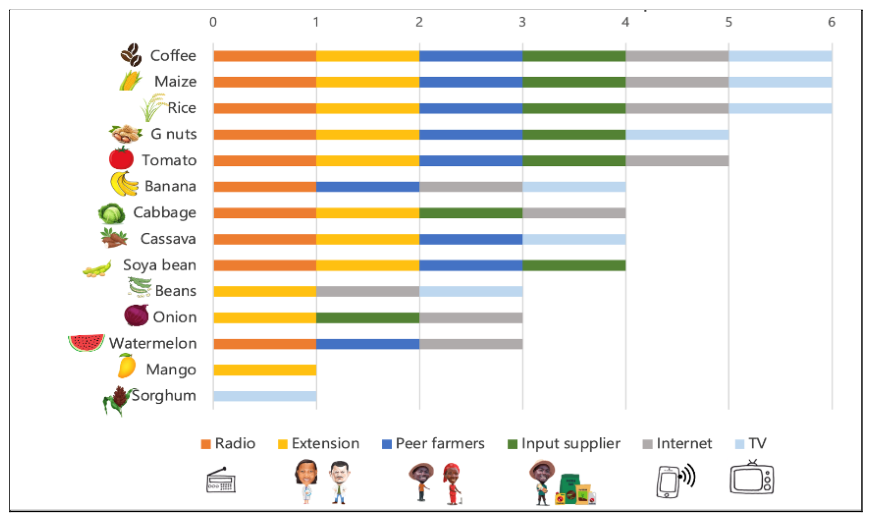
Radio and peer farmers emerged as the most reliable and commonly used sources of agricultural information for both men and women across the seven study districts (Figure 4 and Figure 5). Respondents consistently reported listening to agricultural radio programs on a weekly basis, citing affordability, wide coverage, and credibility (“Experts are on radio”) as key reasons for trust. Peer farmers were equally valued due to their proximity, accessibility, and ability to contextualize information obtained from radio, NGOs, and SMS platforms.
Despite these similarities, clear gender differences were observed in access to institutional and commercial information channels. Men reported frequent interaction with extension workers and agro-input dealers, in addition to radio and peer networks. Their greater mobility, control over land and finances, and responsibility for pesticide purchasing facilitated stronger engagement with these formal channels. In contrast, women’s access to extension services was limited, with several reporting long periods without training and some indicating they had “never interacted with an extension agent.” Time poverty due to domestic responsibilities, cultural norms restricting mobility, and the need for male permission constrained women’s participation.
Interaction with agro-input dealers was also male-dominated. Women rarely purchased chemicals directly, often delegating this role to men, and reported limited knowledge of pesticide use. Illiteracy, low self-confidence, restricted access to cash, and fear of being cheated further limited engagement.
Overall, while radio functions as a gender-neutral communication platform, extension and input supply systems remain structurally skewed toward men, reinforcing gendered disparities in access to agricultural knowledge.
Figure 4.
Gender differences in reliable information sources, 1 (low priority) to 6 (most reliable).
Figure 4.
Gender differences in reliable information sources, 1 (low priority) to 6 (most reliable).
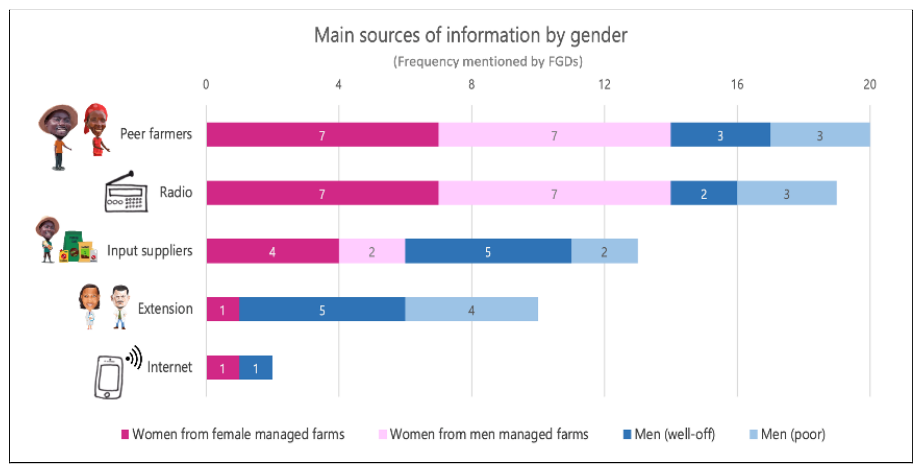
This study revealed the need to empower male and female peer farmers with the appropriate information to pass the right knowledge to their fellow farmers.
Figure 5.
Sources of agricultural information available to farmers for different crops, with access levels rated from 0 (none) to 6 (highest).
Figure 5.
Sources of agricultural information available to farmers for different crops, with access levels rated from 0 (none) to 6 (highest).
In their sentiments FGD participants reported that: Women are ever busy with domestic work”, “Women are more engaged in ensuring food security”, and “The women are so much held up with house chores” “We are left out.” “Women are to stay at home’. “Men head families, so the women only attend after being given permission.” “Women don’t engage or interact with agro-input dealers”. “…they don’t know anything about the control of pests and diseases and only use organic manures to boost their rice plots”. “Instructions can easily be understood by men because most women are illiterate.” “They can easily be lied to and given counterfeits.” “Men are insecure that their wives can be taken by other men”.
Challenges in Current Extension Systems
Key informant interviews (n = 49) revealed substantial institutional constraints within the extension system. Although 58% of extension workers reported familiarity with rice blast disease, 42% lacked knowledge, indicating major technical gaps (Figure 6). Those who knew of the symptoms mentioned drying of the leaf at the end, drying of the rice heads, and empty pods. Regarding the spread of rice blast, the majority mentioned planting infected materials, white beetles, insects, rain splash, infected soils, and contaminated garden tools. Regarding rice blast management, some extension workers mentioned pest control measures, such as the use of tolerant varieties like WITA 9, early planting, early weeding, fertilizer application, proper spacing, destroying the infected plants, spraying the beetles, cleaning planting material, and spraying with fungicides in the nursery as well as in the fields and practicing crop rotation. Structural constraints included inadequate funding for transport and outreach, exclusion from varietal release processes, absence of local field trials, and widespread counterfeit agricultural inputs. These factors collectively weaken advisory effectiveness, reduce farmer trust, and limit the reach and impact of extension services.
In their sentiments Key informants reported that: “We don't have facilitation to reach the farmers in terms of fuel and transport” (KII, Mukono district, Seeta Namuganga). “Additionally, counterfeit seed is a challenge, sometimes it challenges the profession as extension workers for the farmers not believing in our competences” (KII, Butaleja district, Muyago).
5. Discussion
This study suggests that women play central roles in rice production activities closely linked to pest and disease prevention, yet remain marginal in pesticide-related decision-making and formal extension access. While both men and women identified major rice pests, women tended to exhibit more experiential knowledge of pest symptoms, seasonal variation, and varietal susceptibility. Across districts, synthetic pesticides were the dominant control strategy, with limited integration of biological or cultural control methods. Gendered access to information appeared to be influenced by socioeconomic status and regional context.
5.1. Gender Roles in Rice Production
Our findings confirm that gendered divisions of labour in rice production are not merely social arrangements but structurally shape pest and disease management pathways. Women’s responsibilities particularly seed preparation, weed management, field monitoring, harvesting, and storage directly intersect with integrated pest and disease management (IPDM). Weed management, predominantly undertaken by women in our study sites, has implications for pest ecology, as weeds can serve both as reservoirs of pathogens and as habitats for natural enemies [22,23]. Women’s involvement in seed selection and storage further positions them as key actors in preventing seed-borne diseases, a critical entry point for plant health management [24,25].
Importantly, our study moves beyond portraying women as passive labourers within stereotypical roles. We document that women’s technical engagement in field monitoring and varietal differentiation suggests experiential knowledge that is highly relevant for early pest and disease detection. However, women’s limited confidence and restricted control over fertilizer and pesticide purchases constrain their participation in input-related decision-making. This reflects broader patterns in sub-Saharan Africa, where women’s access to agricultural inputs is mediated by intra-household bargaining power and asset ownership [26,27].
Given the strong relationship between balanced fertilization and plant resistance to pathogens [28,29], excluding women from fertilizer decision-making weakens household-level resilience. Our findings therefore underscore that strengthening women’s knowledge of input management is not simply an equity issue but a plant health imperative.
5.2. Gendered Knowledge and Perceptions of Rice Pests and Diseases
Consistent with [17], farmers identified stem borers, rice bugs, leaf folders, gall midge, and armyworm as major pests. However, a novel contribution of this study is the finding that women demonstrated more detailed experiential knowledge of pest symptoms, seasonal dynamics, and varietal susceptibility compared to men. This challenges dominant narratives that frame men as primary knowledge holders in crop protection [43]. At the same time, disease diagnosis remains problematic across gender. As reported elsewhere in Uganda [16], farmers struggle to distinguish diseases with similar visual symptoms, and causal understanding is limited. The use of broad local naming systems (Table S1) may obscure pathogen-specific identification, potentially leading to inappropriate control measures.
This study distinguishes between experiential knowledge (based on observation, practice, and seasonal familiarity) and technical knowledge (scientific understanding of pest causation and control). While women demonstrated strong experiential knowledge, particularly in symptom recognition and seasonal patterns, this did not always translate into accurate diagnostic capacity, especially for diseases with similar visual symptoms. This gap may reflect the need for extension approaches that bridge experiential and technical knowledge systems.
Similar gendered patterns have been observed in rice systems across East Africa, including Tanzania and Kenya, where women contribute substantially to crop management but remain excluded from input-related decision-making and extension access [6,30]. These parallels suggest that the observed gendered knowledge and power asymmetries are not unique to Uganda but reflect broader structural dynamics in smallholder systems.
Synthetic pesticides remain the dominant control strategy, echoing findings from other Ugandan rice studies [17,31]. Notably, unlike [32], we found limited evidence of biopesticide knowledge or use. This suggests erosion or under-diffusion of alternative pest management practices. Expanding integrated approaches including cultural control, resistant varieties, and ecological methods could diversify options according to gendered constraints in labour, capital, and mobility [33,34].
5.3. Towards Gender-Responsive Pluralistic Extension Services
Our results demonstrate that extension systems remain structurally gendered. While radio functions as a gender-neutral communication platform, institutional extension and agro-input dealers are male-skewed information channels. Women especially those in male-headed households are largely excluded from direct extension engagement, consistent with earlier evidence that extension services target male household heads [35,36].
Access to extension is strongly associated with adoption, productivity, and income gains [26,37,38]. However, our findings suggest that mere inclusion of women into male-oriented systems is insufficient. Women face time poverty, mobility restrictions, limited financial control, and lower confidence structural constraints that require tailored extension design [27,39].
A further novel finding is the uneven technical capacity among extension workers themselves: 42% lacked knowledge of rice blast disease. This internal capacity gap, combined with counterfeit input markets [40], undermines extension credibility and plant health governance.
The reliance of men on input suppliers also risks reinforcing pesticide dependency [31]. Certification and training of agro-input dealers could reduce misinformation and promote integrated solutions [34].
Women’s reliance on peer farmers, while reflective of persistent gendered information networks [41], offers opportunity. Evidence shows that training female lead farmers can enhance women’s technology uptake [42]. Leveraging radio and female peer networks therefore represents a scalable pathway for gender-responsive extension.
6. Conclusions and Study Limitations
This study makes three novel contributions to the literature on gender and plant health in rice systems in Uganda. First, we demonstrate that women’s routine production roles particularly in seed management, weed control, and field monitoring are structurally central to integrated pest and disease management, yet remain under-recognized in extension programming.
Second, we reveal a paradox: women possess rich experiential knowledge of pest symptoms and varietal differences, yet lack access to formal training and input decision-making authority. This disconnect highlights missed opportunities for strengthening household-level plant health resilience.
Third, we document institutional weaknesses within the extension system itself, including technical knowledge gaps among extension workers and systemic reliance on agro-input dealers, which together reinforce pesticide-centric management pathways.
Overall, gender disparities in rice pest and disease management are not solely due to knowledge deficits among women, but emerge from intersecting constraints in access, authority, institutional design, and market structures. Addressing these requires pluralistic, gender-responsive extension models that: strengthen women’s technical knowledge in seed health, fertilizer management, and integrated pest management; leverage radio and trained female lead farmers as scalable communication pathways; build capacity among extension workers and certified input suppliers; foster stronger research–extension linkages to support accurate disease diagnosis and sustainable control.
This study has some limitations. First, as a qualitative study, findings are context-specific and not statistically generalizable. Second, although FGDs were sex-disaggregated, responses may still be influenced by social desirability bias. Third, the study assessed knowledge and perceptions but did not measure the direct impact of knowledge on yields, pest incidence, or economic outcomes. Fourth, while image-based tools were used, local pest and disease identifications were not independently validated by entomologists or plant pathologists, which may affect diagnostic accuracy. Finally, the use of descriptive quantitative summaries from qualitative data limits inferential interpretation.
Future research should co-design integrated pest and disease management strategies with men and women farmers to ensure that plant protection innovations align with gendered labour patterns, resource control, and livelihood priorities. While the findings provide important insights into gendered plant health management and extension system constraints, they should be interpreted within the limits of qualitative design and contextual scope. Nevertheless, the study offers robust evidence of gender-differentiated knowledge pathways, institutional blind spots in extension systems, and overlooked contributions of women to integrated pest and disease management. By combining gender analysis with plant health governance perspectives, this research contributes novel insights to the rice sector in Uganda and provides a foundation for co-designed, gender-responsive pest and disease management strategies.
Supplementary Materials
The following supporting information can be downloaded at the website of this paper posted on Preprints.org, Photo S1: Photos of selected rice pests and diseases, Table S1: Local naming of rice diseases.
Author Contributions
All authors have made substantial contributions to the drafting of the manuscript; have approved the final version to be published; and have agreed to be accountable for all aspects of the work in ensuring that questions related to the accuracy or integrity of any part of the work are appropriately investigated and resolved. Specifically, the author contributions are as stated below:; Conceptualization, N.K., G.O., and G.M.; Data curation, I.B., N.K., G.O., G.M., and M.E.; Formal analysis, I.B., N.K., and G.M.; Funding acquisition, N.K., G.O., and G.M.; Investigation, I.B, and M.E.; Methodology, I.B., N.K., G.O., G.M., and M.E.; Project administration, N.K., G.O., and G.M.; Resources, I.B., N.K., G.O., G.M., and M.E.; Software, I.B., N.K., and G.M.; Supervision, N.K., G.O., and G.M.; Validation, N.K., G.O., and G.M.; Visualization, I.B., N.K., and G.M.; Writing original draft, I.B., N.K., G.O., G.M., and M.E.; Writing review & editing, I.B., N.K., G.O., G.M., and M.E.
Informed Consent Statement
Not Applicable.
Data Availability Statement
The datasets that support findings of this study may be obtained from the corresponding author with explanation of any data that cannot be shared for ethical, privacy, or security concerns.
Funding
The study received financial support from the CGIAR Plant Health Initiative and the GENDER Impact Platform through contributions to the CGIAR Trust Fund (https://www.cgiar.org/funders).
Acknowledgments
The authors are grateful to the research assistants Nakayima Annet, Murungi Joab, and Ssemwogerere Jonah, who successfully conducted the study; the people who agreed to participate in the focus group discussions, key informant interviews, and semi-structured interviews; Augustine Oloo for assisting in drawing the standard map; and Daisy Kemigisha and Nakiyaga Solome for reading through the draft to correct any possible errors.
Conflicts of Interest
The author (s) declare no conflicts of interest with respect to the research, authorship, and/or publication of this article.; Ethics Statement; The study was conducted in accordance with the Declaration of Helsinki, and National Agricultural Research Organisation requirements. We conducted the research in accordance with recognized ethical principles for social science research including obtaining informed consent from all participants and participation was entirely voluntary. The study was conducted in accordance with national research ethics guidelines.
References
- Food and Agriculture Organization of the United Nations (FAO). (2023). FAOSTAT statistical database. FAO. https://www.fao.org/faostat/.
- World Bank. (2024). World development indicators. World Bank. https://databank.worldbank.org/source/world-development-indicators.
- Savary, S., Willocquet, L., Pethybridge, S. J., Esker, P., McRoberts, N., & Nelson, A. (2019).The global burden of pathogens and pests on major food crops. Nature Ecology & Evolution, 3, 430–439. [CrossRef]
- Tambo, J. A., Mbugua, F., & Okonya, J. (2023). Gender and plant health advisory services in sub-Saharan Africa: Evidence from Uganda. Food Security, 15, 1123–1139.
- Doss, C., Meinzen-Dick, R., Quisumbing, A., & Theis, S. (2022). Women in agriculture: Four myths. Global Food Security, 32, 100611. [CrossRef]
- Ragasa, C., & Lambrecht, I. (2023). Gender and agricultural extension: Evidence and policy insights. Annual Review of Resource Economics, 15, 1–24.
- Swinnen, J. (2022). 2022 Global food policy report: Climate change and food systems. International Food Policy Research Institute (IFPRI).
- Cornwall, A. (2022). Gender equality and women’s empowerment: Pathways and politics. Development Policy Review, 40(S1)*, e12566. [CrossRef]
- CGIAR GENDER Platform. (2023). Gender equality in agriculture: Evidence and pathways for impact. CGIAR.
- Addati, L., & Cattaneo, U. (2022). Care at work: Investing in care leave and services for a more gender equal world of work. International Labour Organization (ILO).
- Kabeer, N. (1999). Resources, agency, achievements: Reflections on the measurement of women’s empowerment. Development and Change, 30(3), 435–464. [CrossRef]
- Bentley, J. W., Boa, E., Danielsen, S., Franco, P., Antezana, O., & Devaux, A. (2022). Farmer field schools and plant health: Lessons from participatory pest management. Outlook on Agriculture, 51(2), 150–158.
- Pretty, J., & Bharucha, Z. P. (2023). Sustainable intensification and ecological pest management in agricultural systems. Agricultural Systems, 210, 103716. [CrossRef]
- Njuki, J., Eissler, S., Malapit, H., Meinzen-Dick, R., Bryan, E., & Quisumbing, A. (2022). A review of evidence on gender equality, women’s empowerment, and food systems. Global Food Security, 33, 100622.
- Slavchevska, V., Kaaria, S., & Taivalmaa, S. L. (2016). Feminization of agriculture in the context of rural transformations: What is the evidence?. Washington, DC: World Bank.
- Adur-Okello, E. E., Lamo, J., Ekobu, M., & Otim, M. H. (2020). Farmers’ knowledge and management of rice diseases in Uganda. Journal of Agricultural Science, 12(1), 12.
- Alibu, S., Otim, M. H., Okello, S. E., Lamo, J., Ekobu, M., & Asea, G. (2016). Farmers’ knowledge and perceptions on rice insect pests and their management in Uganda. Agriculture, 6(3), 38. [CrossRef]
- Achandi, Esther Leah, Asmerom Kidane, Aloyce Hepelwa, and Gaudiose Mujawamariya. "Women’s empowerment: The case of smallholder rice farmers in Kilombero District, Tanzania." Agrekon 58, no. 3 (2019): 324-339. https://journals.co.za/doi/epdf/10.1080/03031853.2019.1587484.
- Nchanji, E. B., Ageyo, O. C., Puskur, R., Templer, N., & Maereka, E. K. (2024). Towards gender-transformative metrics in seed system performance measurement: insights for policy and practice in Sub-Sahara Africa. CABI Agriculture and Bioscience, 5(1), 83.
- Christie, M. E., Van Houweling, E., & Zseleczky, L. (2015). Mapping gendered pest management knowledge, practices, and pesticide exposure pathways in Ghana and Mali. Agriculture and Human Values, 32(4), 761-775. [CrossRef]
- Doss, C. R. (2018). Women and agricultural productivity: Reframing the Issues. Development policy review, 36(1), 35-50.
- Xuan, T. D., Shinkichi, T., Khanh, T. D., & Chung, I. M. (2005). Biological control of weeds and plant pathogens in paddy rice by exploiting plant allelopathy. Crop Protection, 24(3)*, 197–206. [CrossRef]
- Stout, M. J., Hummel, N. A., & Frey, M. J. (2018). Integrated pest management in rice. Annual Review of Entomology, 63, 487–507. [CrossRef]
- Haque, A. H. M. M., Akon, M. A. H., Islam, M. A., Khalequzzaman, K. M., & Ali, M. A. (2007). Study of seed health, germination and seedling vigor of farmers’ produced rice seeds. International Journal of Sustainable Crop Production, 2(5), 34–39.
- Food and Agriculture Organization of the United Nations (FAO). (2022). The status of women in agrifood systems. FAO. [CrossRef]
- Ragasa, C., Berhane, G., Tadesse, F., & Taffesse, A. S. (2013). Gender differences in access to extension services and agricultural productivity. Journal of Agricultural Education and Extension, 19(5), 437–468. [CrossRef]
- Peterman, A., Behrman, J. A., & Quisumbing, A. R. (2020). A review of empirical evidence on gender differences in nonland agricultural inputs, technology, and services in developing countries. Agricultural Economics, 51(3), 351–369. [CrossRef]
- Teng, Q., Hu, X. F., Chang, Y. Y., Luo, F., Liu, L., & Cheng, C. (2016). Effects of different fertilisers on rice resistance to pests and diseases. Soil Research, 54(2)*, 242–253. [CrossRef]
- Singh, A., & Sarkar, S. (2021). Effect of excess use of fertilizers on insect/pest infestation in Oryza sativa: A review. Journal of Entomology and Zoology Studies, 9(5)*, 246–252.
- Kawarazuka, N., Damtew, E., Mayanja, S., Okonya, J. S., Rietveld, A., Slavchevska, V., & Teeken, B. (2020). A gender perspective on pest and disease management in smallholder agriculture. Frontiers in Agronomy, 2, 7. [CrossRef]
- Wuepper, D., Roleff, N., & Finger, R. (2021). Does it matter who advises farmers? Pest management choices with public and private extension. Food Policy, 99, 101995. [CrossRef]
- Mugisha-Kamatenesi, M., Deng, A. L., Ogendo, J. O., Omolo, E. O., Mihale, M. J., Otim, M., et al. (2008). Indigenous knowledge of field insect pests and management practices in Uganda. African Journal of Ecology, 46(Suppl. 1)*, 217–225. [CrossRef]
- Pretty, J., & Bharucha, Z. P. (2015). Integrated pest management for sustainable intensification of agriculture in Asia and Africa. Insects, 6(1), 152–182. [CrossRef]
- Tambo, J. A., Holmes, K. A., Aliamo, C., Mbugua, F., Alokit, C., Muzira, F., et al. (2024). The role of agro-input dealer certification in promoting sustainable pest control. International Journal of Agricultural Sustainability, 22(1)*, 2299181. [CrossRef]
- Agholor, I. A., Monde, N., Obi, A., & Sunday, O. A. (2013). Quality of extension services: A case study of farmers in Amathole. Journal of Agricultural Science, 5(2), 204–212. [CrossRef]
- Lamontagne-Godwin, J., Williams, F., Bandara, W. M. P. T., & Appiah-Kubi, Z. (2017). Quality of extension advice: A gendered case study from Ghana. Journal of Agricultural Education and Extension, 23(1), 7–22. [CrossRef]
- Tambo, J. A., Matimelo, M., Ndhlovu, M., Mbugua, F., & Phiri, N. (2021). Gender-differentiated impacts of plant clinics on smallholder farmers. World Development, 145, 105519. [CrossRef]
- Addai, K. N., Lu, W., & Temoso, O. (2021). Are female rice farmers less productive than male farmers? Micro-evidence from Ghana. The European Journal of Development Research, 33, 1–43. [CrossRef]
- Goodluck, A., Otieno, D. J., & Oluoch-Kosura, W. (2024). Understanding farmers’ perceptions on advisory services in Tanzania. Heliyon, 10(14)*, e33675. [CrossRef]
- Wiedemann, R., Stamm, C., & Staudacher, P. (2022). Participatory knowledge integration to promote safe pesticide use in Uganda. Environmental Science & Policy, 128, 154–164. [CrossRef]
- Rodriguez, L., Kulpavaropas, S., Annamalai, D., Wright, J., & Evans, J. F. (2015). Trends in information needs and communication channel use among rural women. Journal of Agricultural & Food Information, 16(3), 221–241. [CrossRef]
- Kondylis, F., Mueller, V., Sheriff, G., & Zhu, S. (2016). Do female instructors reduce gender bias in diffusion of sustainable land management techniques? World Development, 78, 436–449. [CrossRef]
- Fisher, M., Holden, S. T., Thierfelder, C., & Katengeza, S. P. (2019). Awareness and adoption of conservation agriculture in Malawi. World Development, 118, 127–137.
Figure 1.
Maps showing study area (Drawn with QGIs).
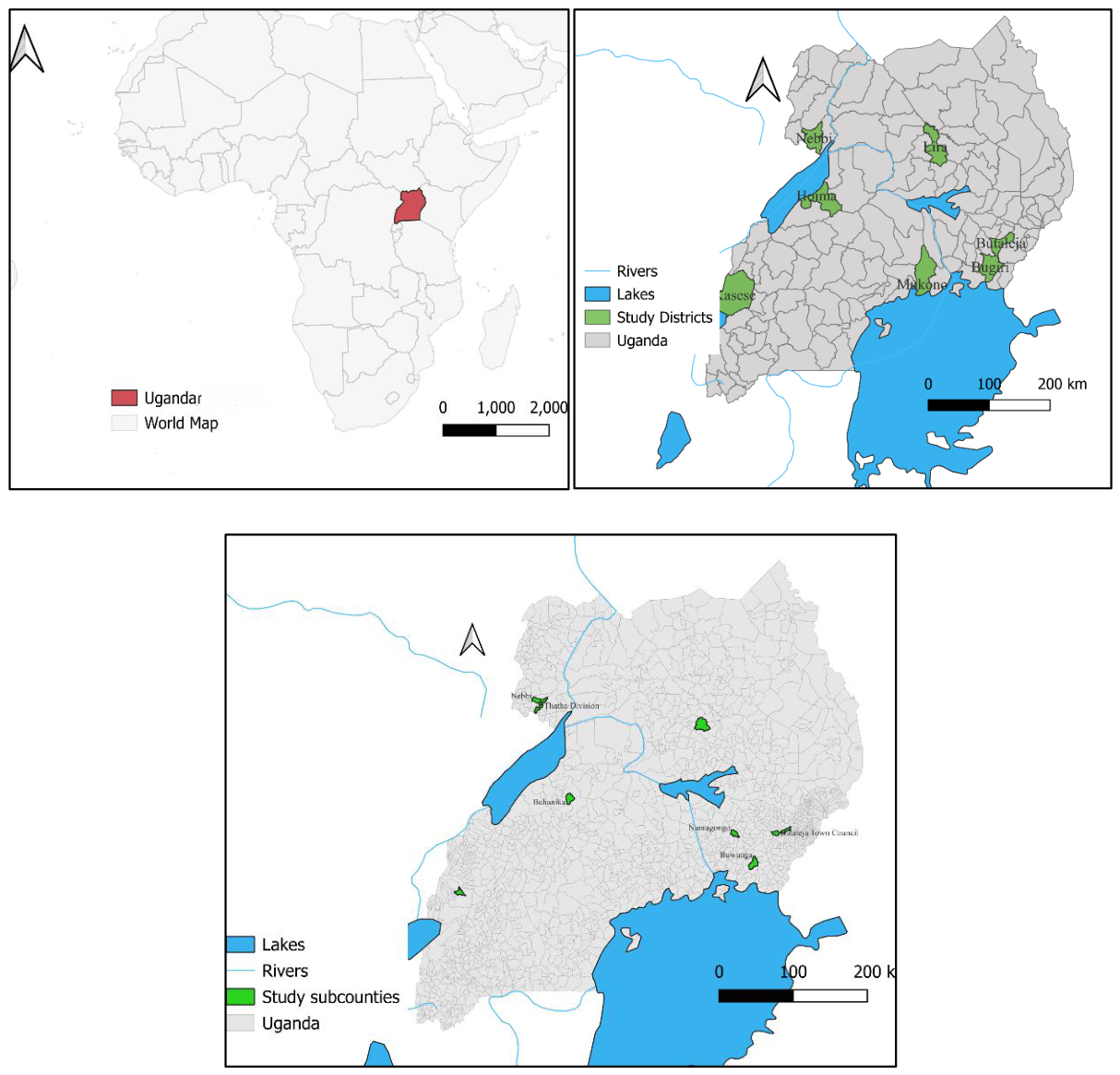
Figure 6.
Knowledge capacity gap among extension workers on rice blast disease.
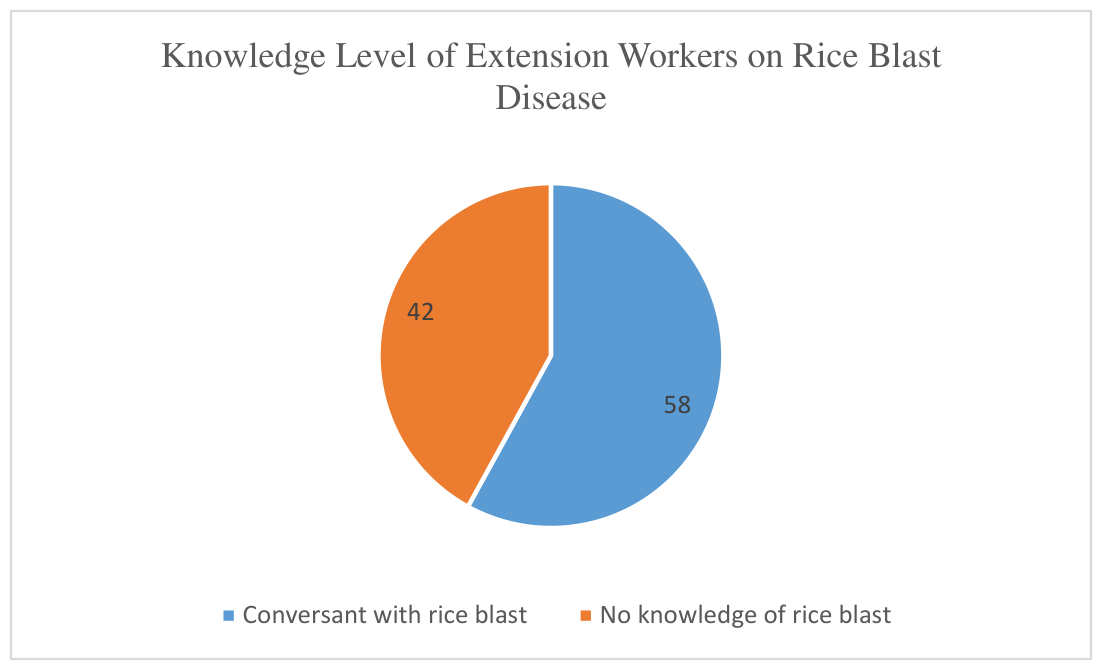
Table 1.
Sample size and participants.
| Interview mode | Sample size |
|---|---|
| FGD participants | 200 with at least 28 from each district |
| KII participants | 49 with 7 from each district |
| Total (n) | 249 |
| Selection of FGD participants | |
| Male poor farmers/ rice plots ≤ 1 ha Male better-off farmers/rice plots ≥ 1 ha Women rice farm owners/managers Women who do not own rice farms assisting their husbands |
|
| Selection of KII participants: at least 1 from each category per district | |
| Village leader/elder involved in rice production Female community leaders Extension workers Input suppliers NGO workers and rice cooperatives |
|
Note: Summary of sample composition and participant categories used in FGDs and KIIs.
Table 3.
Decision on doing / providing labour on how much and what types of pesticides (n=200).
| Doing /providing labour | Purchase of pesticides. | Measuring and mixing chemical pesticides. | Applying /spraying pesticides. | Disposing of chemical pesticide containers/. | Washing/cleaning chemical pesticide contaminated clothing | Training on pest and disease management | Interaction with pesticide company extension staff |
| Exclusively women | 0 | 0 | 0 | 1 | 11 | 0 | 1 |
| Exclusively men | 89 | 114 | 95 | 115 | 20 | 17 | 78 |
| Men do more | 33 | 9 | 28 | 16 | 1 | 89 | 34 |
| Women do more | 0 | 0 | 0 | 2 | 101 | 7 | 0 |
Note: Values represent the number of participants reporting each labor division model. These are descriptive summaries derived from qualitative discussions. Multiple responses could be recorded within a single FGD.
Table 4.
Chi-square Test Statistics.
| Labor Category | Women-Managed Farms | Men-Managed Farms |
|---|---|---|
| Exclusively Men | 6 | 16 |
| Exclusively Women | 12 | 12 |
| Men do more | 26 | 19 |
| Women do more | 2 | 2 |
| Hired labor (Men) | 3 | 0 |
| Total Observations | 49 | 49 |
Note: This table compares labor contributions in rice production activities between women-managed and men-managed farms. Values are presented for descriptive purposes to illustrate patterns across groups. No inferential statistical conclusions are drawn due to the qualitative and non-probability nature of the data.
Disclaimer/Publisher’s Note: The statements, opinions and data contained in all publications are solely those of the individual author(s) and contributor(s) and not of MDPI and/or the editor(s). MDPI and/or the editor(s) disclaim responsibility for any injury to people or property resulting from any ideas, methods, instructions or products referred to in the content. |
© 2026 by the authors. Licensee MDPI, Basel, Switzerland. This article is an open access article distributed under the terms and conditions of the Creative Commons Attribution (CC BY) license (http://creativecommons.org/licenses/by/4.0/).
Copyright: This open access article is published under a Creative Commons CC BY 4.0 license, which permit the free download, distribution, and reuse, provided that the author and preprint are cited in any reuse.