

Submitted:
18 October 2026
Posted:
20 October 2026
You are already at the latest version
Abstract
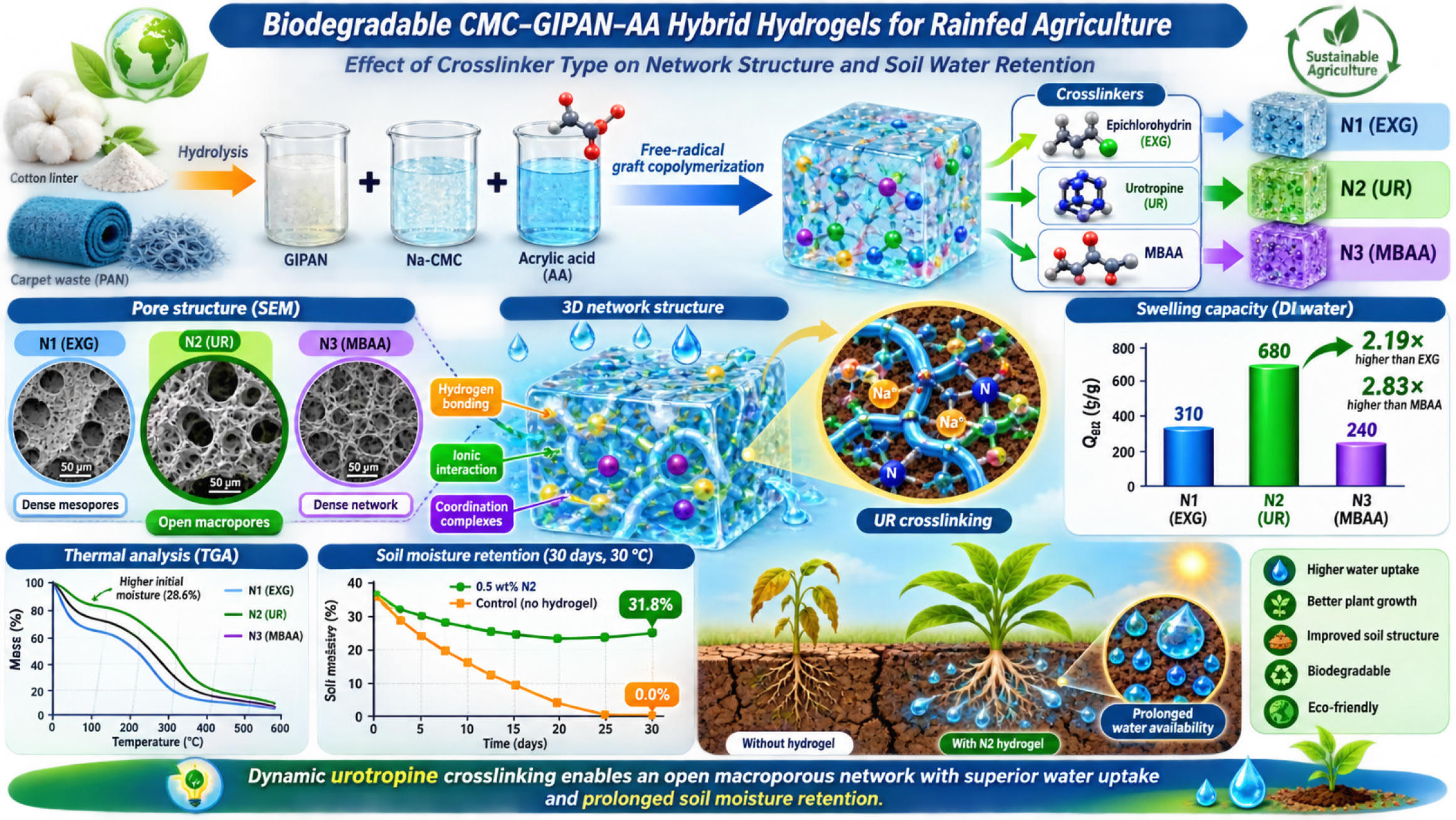
Biodegradable sodium carboxymethylcellulose-hydrolyzed polyacrylonitrile-acrylic acid (CMC-GIPAN-AA) ternary hybrid hydrogels were synthesized via free-radical graft copolymerization to mitigate drought stress in rainfed agriculture. To evaluate crosslinking effects on network architecture and performance, rigid covalent agents (epichlorohydrin, EXG; N,N'-methylenebisacrylamide, MBAA) and a dynamic amine-functionalized agent (urotropine, UR) were systematically compared. Multi-instrumental analysis revealed that covalent crosslinking generated dense, thick-walled mesoporous networks with restricted surface areas (BET = 7.24 m²/g for EXG). Conversely, urotropine integration established flexible ionic/coordination complexes, yielding a highly porous, thin-walled macroporous morphology with targeted nitrogen integration (3.46 wt%) and high sodium content (21.96 wt%). Consequently, the urotropine-crosslinked hydrogel (N2) achieved an exceptional equilibrium swelling capacity (Qeq) of 680 g/g in DI water, representing a 2.19-fold and 2.83-fold increase over EXG (310 g/g) and MBAA (240 g/g), respectively. Kinetic modeling confirmed anomalous non-Fickian diffusion (n = 0.68) for N2, driven by rapid chain relaxation. TGA/DTA demonstrated enhanced initial moisture retention (28.6%) and gradual multi-stage thermal degradation. In 30-day soil drying tests at 30 °C, 0.5 wt% N2-amended soil retained 31.8% moisture content, whereas unamended soil completely desiccated (0.0%) within 25 days. Thus, urotropine-driven dynamic crosslinking provides a superior molecular design for engineering high-performance soil conditioners.
Keywords:
biodegradable hydrogels
; carboxymethylcellulose
; urotropine crosslinking
; swelling kinetics
; soil bio-hydration
; rainfed agriculture
1. Introduction
Water scarcity and the increasing unpredictability of global precipitation patterns pose severe existential threats to global food security, particularly in arid and semi-arid regions heavily reliant on rainfed agriculture [1,2]. Rainfed agricultural systems, which account for more than 80% of global cultivated land and contribute over 60% to total crop production, are exceptionally vulnerable to prolonged drought stress, erratic soil moisture fluctuations, and elevated evapotranspiration rates driven by global climate change [3,4]. In dryland agroecosystems, traditional irrigation techniques are often economically unfeasible or constrained by depleted groundwater reserves [5]. Consequently, optimizing root-zone soil moisture retention and maximizing effective rainfall use efficiency (RUE) have become central imperatives for sustainable dryland farming and agricultural climate resilience [6,7].
To mitigate drought stress and improve soil hydrological physical properties, the application of superabsorbent polymers (SAPs)—commonly referred to as hydrogels—has emerged as a highly effective soil-conditioning strategy [8,9]. Hydrogels are three-dimensional, crosslinked hydrophilic polymeric networks capable of absorbing, retaining, and gradually releasing vast quantities of water (up to hundreds of times their dry weight) into the plant rhizosphere upon demand [10,11]. When incorporated into topsoil layers, these polymeric soil conditioners function as internal micro-reservoirs, drastically reducing gravitational water deep-percolation loss, suppressing surface evaporation, enhancing soil porosity, and prolonging plant survival margins during acute dry spells [12,13].
Despite their extraordinary liquid retention capacities, the widespread agricultural implementation of conventional synthetic hydrogels—predominantly synthesized from non-renewable petroleum derivatives such as pure polyacrylamide (PAAm), potassium polyacrylate, or acrylic acid—is severely constrained by ecological and environmental drawbacks [14,15]. Synthetic acrylic hydrogels possess low microbial degradation rates in field conditions, leading to the gradual accumulation of non-biodegradable polymeric residues in agricultural soils [16]. Furthermore, residual toxic monomeric acrylic species (e.g., acrylamide monomers) pose significant leaching risks to subsoil groundwater tables and eco-toxicological hazards to soil biota [17,18]. Consequently, global scientific paradigms have shifted decisively toward designing eco-friendly, fully biodegradable hybrid hydrogels derived from abundant natural biopolymers [19,20].
Polysaccharides, particularly sodium carboxymethylcellulose (Na-CMC), represent prime foundational candidates for bio-based hydrogel synthesis due to their non-toxicity, inherent biodegradability, low cost, and high density of hydrophilic functional groups (hydroxyl -OH and carboxylate -COO-) [21,22]. However, pristine polysaccharide hydrogels synthesized solely from unmodified cellulose matrices typically suffer from weak mechanical integrity, low gel strength, poor salt tolerance, and rapid premature enzymatic dissolution under field soil environments [23,24]. To overcome these structural limitations, graft copolymerization of synthetic functional monomers—such as acrylic acid (AA) and hydrolyzed polyacrylonitrile (GIPAN)—onto the biopolymer cellulose backbone has proven to be a highly effective synergistic hybrid strategy [25,26]. Graft hybridization preserves environmental sustainability while significantly enhancing mechanical robustness, network elasticity, and water retention kinetics under physiological soil conditions [27].
The macroscopic swelling performance, water diffusion kinetics, and thermal stability of these hybrid hydrogel networks are fundamentally dictated by their three-dimensional internal pore architecture and network crosslinking density (ρx) [28,29]. The spatial network assembly is strictly governed by the chemical nature and reactivity of the specific crosslinking agent employed during polymerization [30]. Traditional covalent crosslinkers, such as epichlorohydrin (EXG) or N,N'-methylenebisacrylamide (MBAA), establish permanent, chemically rigid covalent bridges (e.g., ether linkages) between adjacent polymer chains [31]. While robust covalent networks provide high chemical and thermal stability, the resulting high crosslinking density restricts macromolecular chain mobility and severely constrains network volumetric expansion [32]. This constraint typically yields dense, thick-walled, and tight mesoporous structures with minimal specific surface areas (BET ≤ 10 m²/g), which impedes rapid capillary water diffusion and reduces total water absorption [33].
Conversely, non-conventional crosslinking strategies utilizing multi-functional dynamic agents—such as urotropine (hexamethylenetetramine, UR)—offer alternative network assembly pathways [34]. Urotropine can establish complex ionic interactions, hydrogen bonding networks, and nitrogenous coordination complexes within the hybrid matrix. These dynamic ionic/coordination linkages provide higher structural flexibility and lower mechanical resistance to chain relaxation during hydration. This flexibility facilitates the formation of open-pore, thin-walled, and interconnected macroporous network architectures [25]. Such open-pore structures minimize internal capillary resistance, maximize osmotic pressure differentials (Δπ), and promote rapid water uptake, rendering them ideal for capturing short-duration rainfall events in dryland farming [12,28].
Although crosslinking chemistry plays a critical role in controlling hydrogel pore morphology, a systematic comparative study elucidating how distinct crosslinking mechanisms (covalent etherification via EXG vs. dynamic ionic/coordination crosslinking via urotropine) modulate the specific surface area (BET), swelling kinetics, thermal degradation profiles (TGA/DTA), and 30-day soil bio-hydration performance of CMC-GIPAN-AA hybrid systems remains underexplored.
Therefore, the primary objectives of this comprehensive study are:
- To synthesize biodegradable CMC-GIPAN-AA hybrid hydrogels via aqueous free-radical graft copolymerization utilizing contrasting crosslinking agents (EXG, UR, and MBAA).
- To systematically evaluate the impact of crosslinker type on chemical functional groups (FTIR), surface elemental composition (SEM-EDX), specific surface area/porosity (BET), and thermal stability/decomposition kinetics (TGA/DTA).
- To quantify equilibrium swelling ratios (Qeq), establish diffusion mechanisms via the Korsmeyer-Peppas mathematical kinetic model, and determine practical 30-day soil bio-hydration/water retention capacities in sandy loam agricultural soils under thermal drought conditions.
2. Materials and Methods
2.1. Materials
Purified sodium carboxymethylcellulose (Na-CMC, degree of substitution DS ≈ 0.7–0.9, average molecular weight Mw ≈ 250,000 g/mol), hydrolyzed polyacrylonitrile (GIPAN, commercial grade aqueous paste/solution with 20.0 wt% solid content), and acrylic acid (AA, 99.0% purity, contains ~200 ppm monomethyl ether hydroquinone as inhibitor) were used as the main polymeric precursor, co-grafting agent, and hydrophilic monomer, respectively. Acrylic acid was neutralized to 70 mol% neutralization degree using a 30 wt% aqueous sodium hydroxide (NaOH) solution under ice-bath cooling prior to polymerization.
To systematically evaluate the impact of crosslinking mechanisms on hydrogel properties, three distinct crosslinkers were employed:
- Epichlorohydrin (EXG, 1-chloro-2,3-epoxypropane, ≥ 99.0%, Sigma-Aldrich): used for covalent ether-bridge formation.
- Urotropine (UR, hexamethylenetetramine, ≥ 99.5%, Merck): used for ionic/coordination-driven non-covalent crosslinking.
- N,N'-Methylenebisacrylamide (MBAA, 99.0%, Sigma-Aldrich): used as a classic covalent crosslinking control.
Potassium persulfate (KPS, ≥ 99.0%, analytical grade) was used as the free-radical thermal initiator. All chemicals were used as received without further purification. Deionized (DI) water (resistivity ≥ 18.2 MΩ·cm at 25 °C) was utilized for all synthesis, washing, and swelling procedures.
2.2. Synthesis and Crosslinking Protocols of Hybrid Hydrogels
The biodegradable CMC-GIPAN-AA hybrid hydrogels were synthesized via thermal free-radical graft copolymerization followed by specific crosslinking pathways. The mass ratio of the primary reactive components was held constant at 5 wt% CMC, 55 wt% GIPAN, and 40 wt% AA (based on solid/monomer mass).
2.2.1. Preparation of Prepolymer Base Solution
In a representative procedure, 1.0 g of Na-CMC was fully dissolved in 30.0 mL of DI water in a three-necked round-bottom flask equipped with a mechanical stirrer, reflux condenser, and nitrogen (N2) inlet. The mixture was heated to 70 ± 1 °C and stirred continuously at 400 rpm for 60 min until a clear, highly viscous macromolecular solution was formed.
Subsequently, 110.0 g of GIPAN paste (22.0 g dry basis) and 80.0 g of partially neutralized AA solution (16.0 g monomer basis) were added to the CMC solution under vigorous stirring. The reaction mixture was purged with high-purity N2 gas for 30 min at 70 °C to purge dissolved oxygen and eliminate radical inhibition.
2.2.2. Crosslinking Reaction Conditions and Gelation Parameters
The homogeneous prepolymer mixture was divided into three equal weight batches (73.66 g each, corresponding to ~13.0 g of reactive solid content) and transferred to separate jacketed glass reactors under nitrogen atmosphere:
| Sample ID | Crosslinker Agent | Crosslinker Amount | pH Condition | Initiator (KPS) | Reaction Temp & Time | Gelation Time |
| N1 (EXG) | Epichlorohydrin | 0.26 g (2.0 wt%) | pH 9.5 – 10.0 | 0.13 g (1.0 wt%) | 70 ± 1 °C, 3.0 h | 18 min |
| N2 (UR) | Urotropine | 0.26 g (2.0 wt%) | pH 6.5 – 7.0 | 0.13 g (1.0 wt%) | 70 ± 1 °C, 3.0 h | 12 min |
| N3 (MBAA) | N,N'-Methylenebisacrylamide | 0.26 g (2.0 wt%) | Neutral | 0.13 g (1.0 wt%) | 70 ± 1 °C, 3.0 h | 8 min |
2.2.3. Purification and Drying
Upon completion of the 3-hour gelation period, the synthesized hydrogels were cut into small cubes (~5 × 5 × 5 mm³) and immersed in 1.0 L of DI water at room temperature (25 °C) for 48 hours to leach out unreacted monomers, residual initiators, and non-crosslinked oligomers. The water was refreshed every 8 hours.
To remove non-polar impurities, the gels were Soxhlet-extracted with absolute ethanol for 12 hours. The fully purified and swollen hydrogels were frozen at -80 °C for 12 hours and subsequently lyophilized in a freeze-dryer (Labconco FreeZone) at -55 °C under a vacuum of 0.05 mbar for 48 hours to preserve their interconnected porous structure for characterization.
2.3. Water Absorption and Swelling Kinetics
The equilibrium swelling ratio (ESR) and swelling kinetics of the freeze-dried hydrogels were measured in DI water and saline solution (0.9 wt% NaCl) using the gravimetric method at 25 ± 0.5 °C.
A pre-weighed dry hydrogel sample (Wd ≈ 0.100 g) was immersed in 200 mL of swelling medium. At pre-determined time intervals (t = 5, 10, 15, 30, 60, 120, 240, 360 min, and 24 h), the swollen hydrogel was withdrawn, surface moisture was gently wiped using lint-free filter paper, and weighed immediately (Wt). The swelling capacity Qt (g/g) at time t was calculated according to Equation (1):
where Wt (g) is the mass of the swollen hydrogel at time t, and Wd (g) is the dry hydrogel mass. Equilibrium swelling capacity (Qeq) was recorded when no further mass increase was observed (t = 24 h). All measurements were performed in triplicate, and mean values ± standard deviation (SD) were reported.
Qt = (Wt - Wd) / Wd
To evaluate the swelling mechanism and water diffusion mode into the hydrogel matrix, the early-stage swelling kinetics (Qt / Qeq ≤ 0.6) were fitted using the semi-empirical Korsmeyer-Peppas model:
where k is the structural swelling rate constant, and n is the diffusional exponent indicating the water transport mechanism (n ≤ 0.45 for Fickian diffusion; 0.45 < n < 0.89 for non-Fickian/anomalous transport; n ≥ 0.89 for Case-II relaxation-controlled transport).
Qt / Qeq = k t^n
ln(Qt / Qeq) = ln(k) + n ln(t)
2.4. Soil Bio-Hydration and Water Retention Capacity (Biogidrotasiya va Tuproqda Nam Saqlash)
To quantify the practical efficacy of the hydrogels in rainfed agriculture, soil water retention kinetics (bio-hydration performance) were conducted under controlled environment conditions (25 ± 1 °C, 45 ± 5% relative humidity).
Sandy loam agricultural soil (collected from arid rainfed experimental plots, dried at 105 °C for 24 h, and sieved through a 2 mm mesh) was used as the test medium. Hydrogel-amended soil samples were prepared by uniformly blending freeze-dried hydrogel granules (0.25–0.50 mm particle size) with 200 g of dry soil at loading rates of 0.1 wt%, 0.3 wt%, and 0.5 wt% (0.2 g, 0.6 g, and 1.0 g hydrogel per 200 g soil, respectively). Unamended dry soil served as the negative control.
Each soil mixture was packed into perforated plastic pots, saturated with 100 mL of DI water, and allowed to drain freely for 6 hours to reach gravitational field capacity (WFC). The initial weight of the fully hydrated soil pots was recorded (M0). The pots were maintained in an incubator at 30 ± 1 °C, and mass loss due to evaporation was monitored daily (Md, day d = 1, 2, 3, ..., 30). The soil bio-hydration water retention capacity (WRd, %) on day d was computed via Equation (4):
where Msoil_dry is the dry weight of the soil plus pot container.
WRd (%) = [(Md – Msoil dry) / (M0 – Msoil dry)] × 100
2.5. Instrumental and Morphological Characterization Techniques
Fourier Transform Infrared Spectroscopy (FTIR): Chemical functional groups and structural crosslinking linkages were recorded on a Shimadzu IRTracer-100 spectrometer using the KBr pellet technique (1:100 sample-to-KBr ratio) in the wavenumber range of 4000–400 cm⁻¹ at a resolution of 4 cm⁻¹ over 32 scans.
Scanning Electron Microscopy & Energy-Dispersive X-ray Spectroscopy (SEM-EDX): Morphological networks of gold-sputtered, cross-sectionally fractured freeze-dried samples were observed using a JEOL JSM-IT200 SEM operating at an accelerating voltage of 20 kV. Surface elemental microanalysis and spatial distribution of C, N, O, Na, and Cl were quantified via integrated EDX (Oxford Instruments).
Brunauer-Emmett-Teller (BET) Specific Surface Area: Textural characteristics, N2 adsorption-desorption isotherms, and specific surface areas were measured using an automated Quantachrome Nova 2200e gas sorption analyzer. Prior to analysis, samples were degassed under vacuum at 120 °C for 2.3 hours. Pore size distributions were derived via the Barrett-Joyner-Halenda (BJH) model.
Thermogravimetric Analysis and Differential Thermal Analysis (TGA/DTA): Thermal degradation kinetics and residual mass profiles were evaluated on a Hitachi STA7200 simultaneous thermal analyzer. Samples (~5.0 mg) were heated from 25 °C to 600 °C at a dynamic heating rate of 10 °C/min under a continuous high-purity nitrogen purge (100 mL/min).
3. Results and Discussion
3.1. Chemical Structure and Macromolecular Interactions (FTIR Analysis)
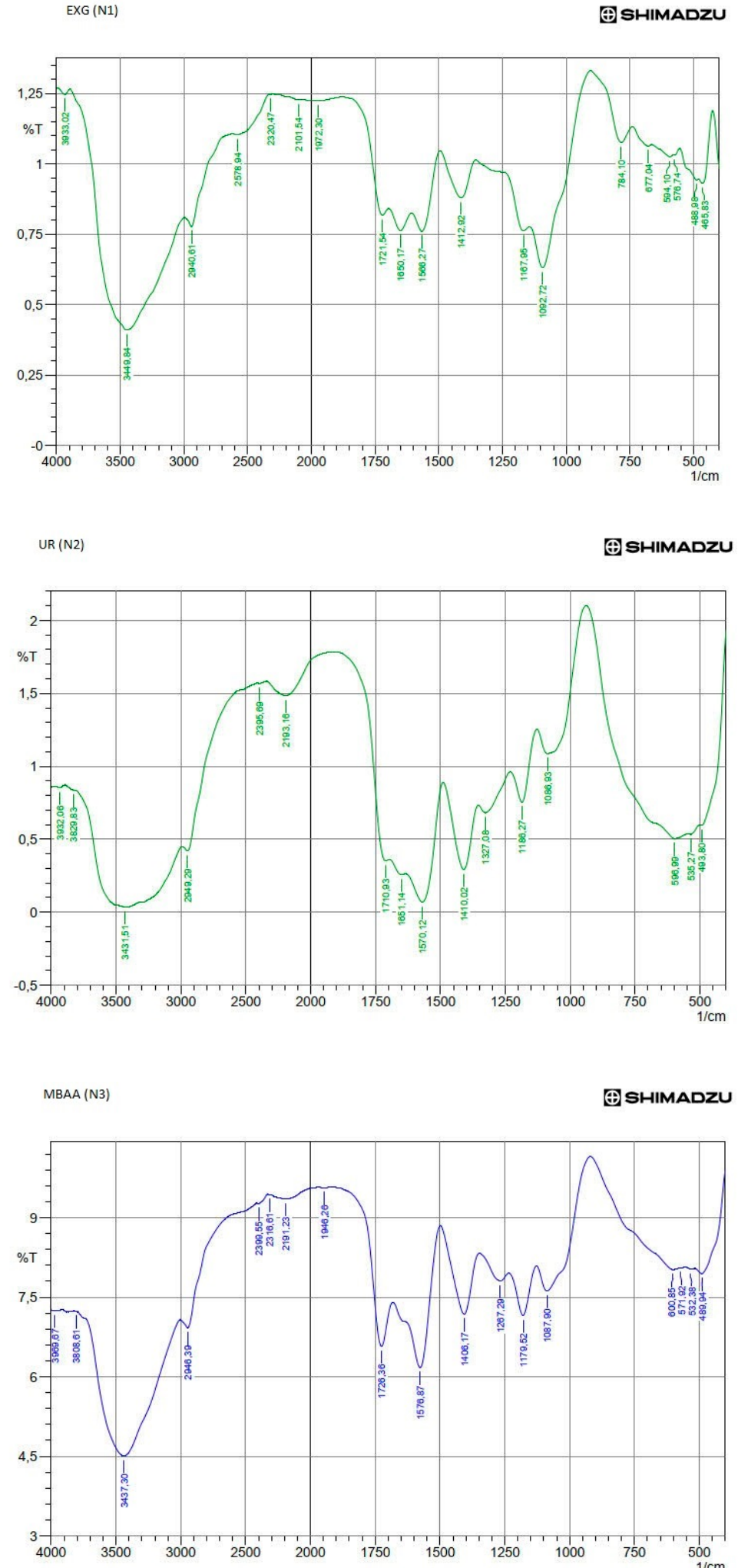
The successful synthesis of the hybrid hydrogels and the elucidation of specific crosslinking mechanisms facilitated by the three different agents were confirmed via FTIR spectroscopy. Across all samples (N1, N2, and N3), a broad absorption band in the 3430–3450 cm⁻¹ region was observed, which is assigned to the stretching vibrations of hydroxyl (–OH) and amino (–NH) groups originating from the cellulose backbone and the hydrolyzed polyacrylonitrile (GIPAN) chains.
The precise influence of the distinct crosslinkers was visible in the specific spectral shifts. For the covalently crosslinked N1 (EXG) hydrogel, a distinctive peak emerged at 1092 cm⁻¹, corresponding to C–O–C ether stretching vibrations, verifying the successful covalent etherification between the epoxide rings of EXG and the hydroxyl groups of the CMC matrix. Similarly, the network crosslinked with the traditional covalent agent MBAA (N3) exhibited pronounced peaks at 1726 cm⁻¹ and 1576 cm⁻¹, assigned to the strong stretching vibrations of the carbonyl (C=O) groups of the acrylic acid and the amide groups of the crosslinker, indicating a highly dense and rigid acrylic polymer network. Conversely, the urotropine-crosslinked N2 hydrogel displayed a unique spectral profile with a shift observed at 1570 cm⁻¹, indicative of the formation of complex nitrogenous networks and extensive intra- and inter-molecular hydrogen bonding. Unlike the rigid covalent bridges in N1 and N3, these coordination interactions in N2 create a significantly more flexible macromolecular architecture.
Figure 1.
FTIR spectra of the synthesized cellulose-GIPAN-acrylic acid hybrid hydrogels crosslinked with varying agents: EXG (N1), UR (N2), and MBAA (N3).
Figure 1.
FTIR spectra of the synthesized cellulose-GIPAN-acrylic acid hybrid hydrogels crosslinked with varying agents: EXG (N1), UR (N2), and MBAA (N3).
3.2. Morphological and Elemental Profiling (SEM-EDX Analysis)
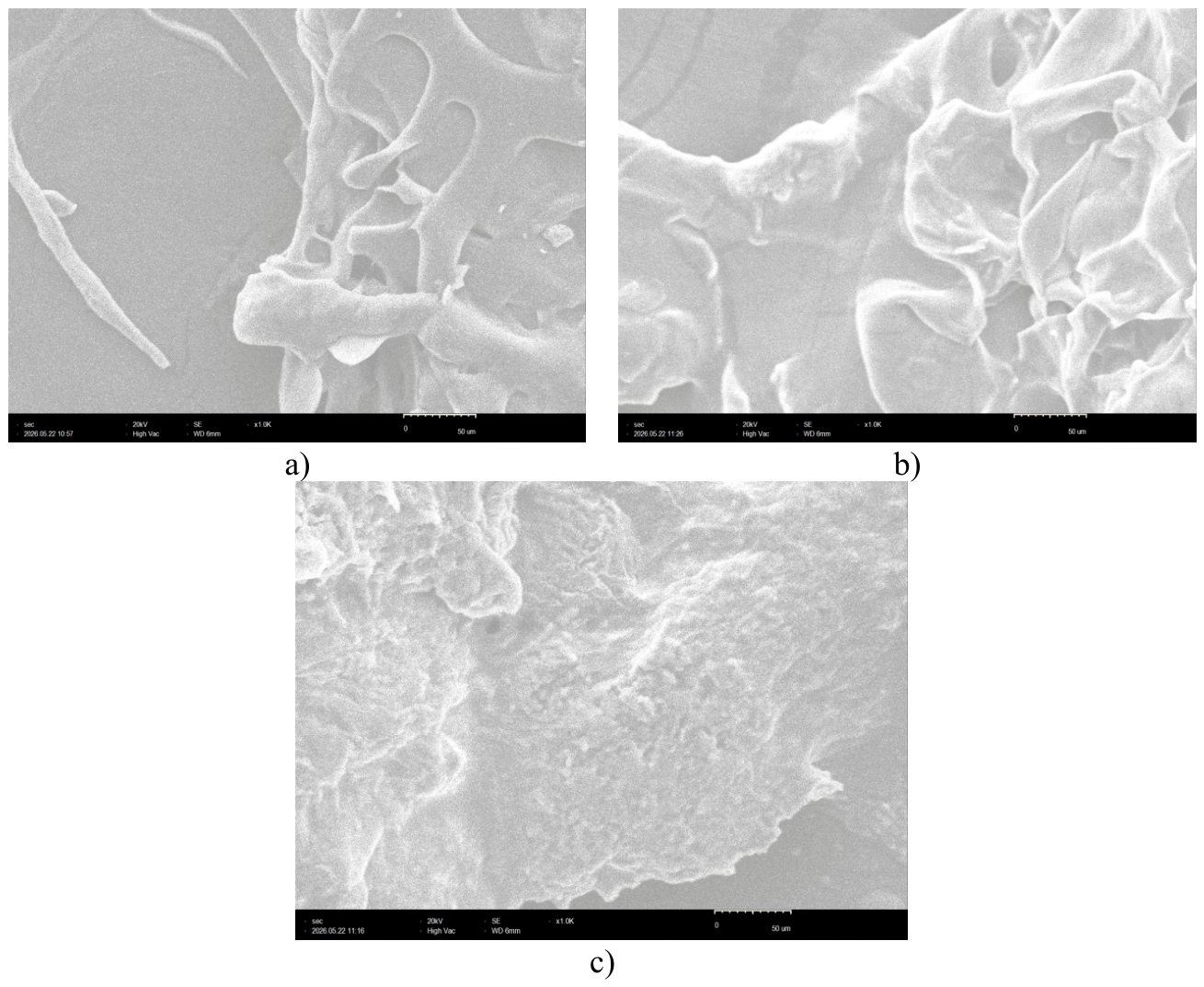
The three-dimensional internal architecture of hydrogels fundamentally governs their swelling kinetics, capillary action, and overall water-retention capabilities. SEM micrographs of the freeze-dried samples revealed that the choice of crosslinker strictly dictates the internal porosity. The covalently crosslinked hydrogels demonstrated constrained morphologies. Sample N1 (EXG) generated a highly constrained morphology characterized by relatively wide but thick-walled pores. Sample N3 (MBAA) displayed an even more dense, compact, and rigid internal network, where extensive covalent bridging severely limits the mobility of the polymer chains.
In stark contrast, the urotropine crosslinker (N2) facilitated a highly porous, heterogeneous, and interconnected thin-walled macroporous morphology. This open-pore architecture minimizes capillary resistance, making it highly optimal for rapid water uptake in arid rainfed lands.
Figure 2.
SEM micrographs detailing the internal porous architectures of the freeze-dried hybrid hydrogels: a) covalent network crosslinked with EXG (N1); b) highly porous ionic network crosslinked with UR (N2); c) dense covalent network crosslinked with MBAA (N3).
Figure 2.
SEM micrographs detailing the internal porous architectures of the freeze-dried hybrid hydrogels: a) covalent network crosslinked with EXG (N1); b) highly porous ionic network crosslinked with UR (N2); c) dense covalent network crosslinked with MBAA (N3).
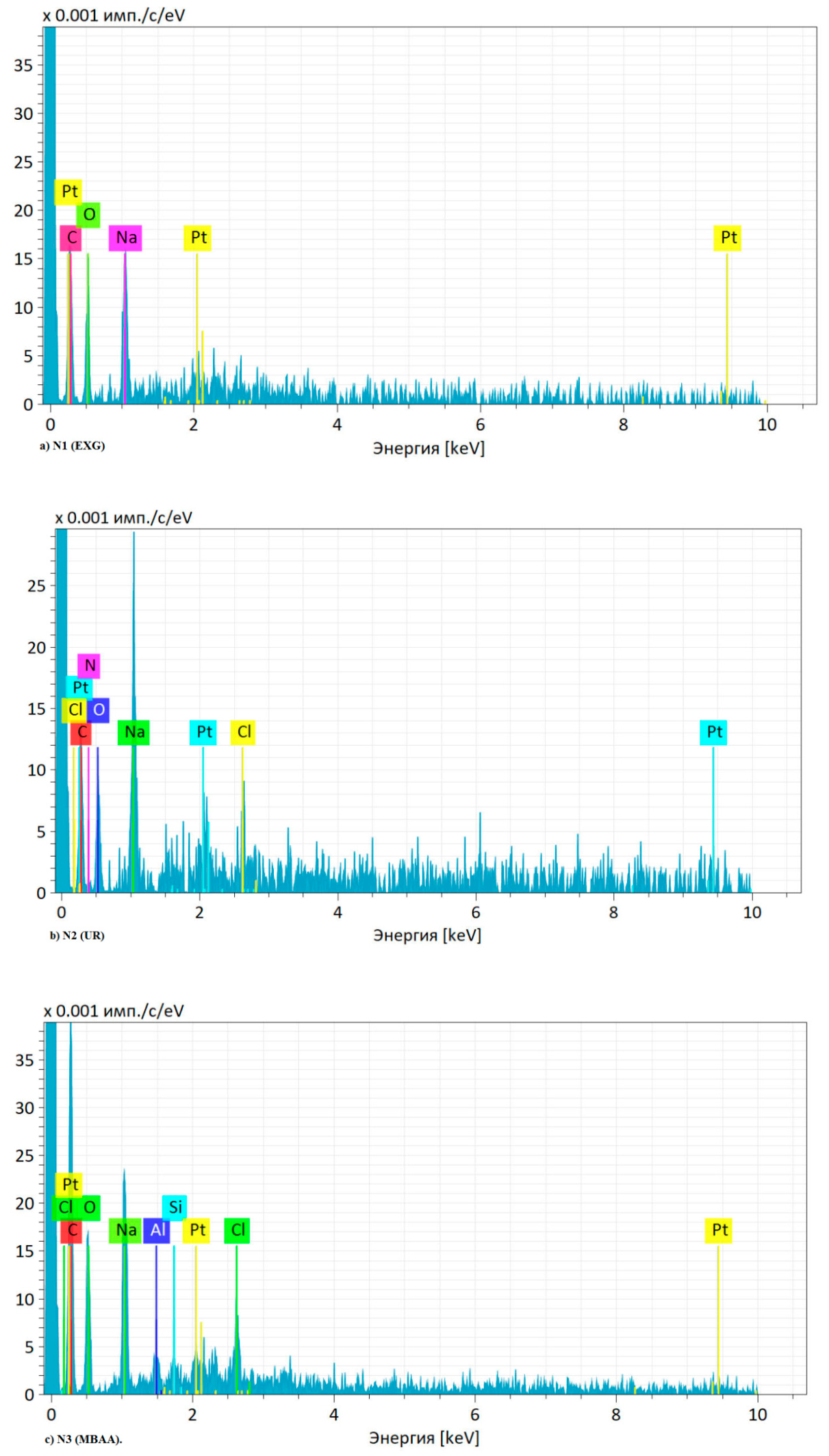
The successful integration of the respective crosslinkers into the polymer matrix was unequivocally validated by EDX elemental analysis. The EDX spectra detected a targeted nitrogen incorporation of 3.46% specifically in the N2 matrix, a unique marker entirely absent in the covalently crosslinked N1 sample. Furthermore, the MBAA-crosslinked network (N3) possessed the highest carbon content (54.53%) and a lower sodium content (11.57%), reflecting a dense organic matrix with a reduced osmotic driving force. Conversely, the synergistic combination of the highly porous network and the elevated sodium concentration (21.96%) in N2 maximizes the osmotic pressure required for superior fluid absorption.
Figure 3.
Energy-dispersive X-ray (EDX) spectra illustrating the elemental composition of the hydrogel surfaces: a) N1 (EXG); b) N2 (UR), highlighting targeted nitrogen incorporation; c) N3 (MBAA).
Figure 3.
Energy-dispersive X-ray (EDX) spectra illustrating the elemental composition of the hydrogel surfaces: a) N1 (EXG); b) N2 (UR), highlighting targeted nitrogen incorporation; c) N3 (MBAA).
3.3. Specific Surface Area and Porous Architecture (BET Analysis)
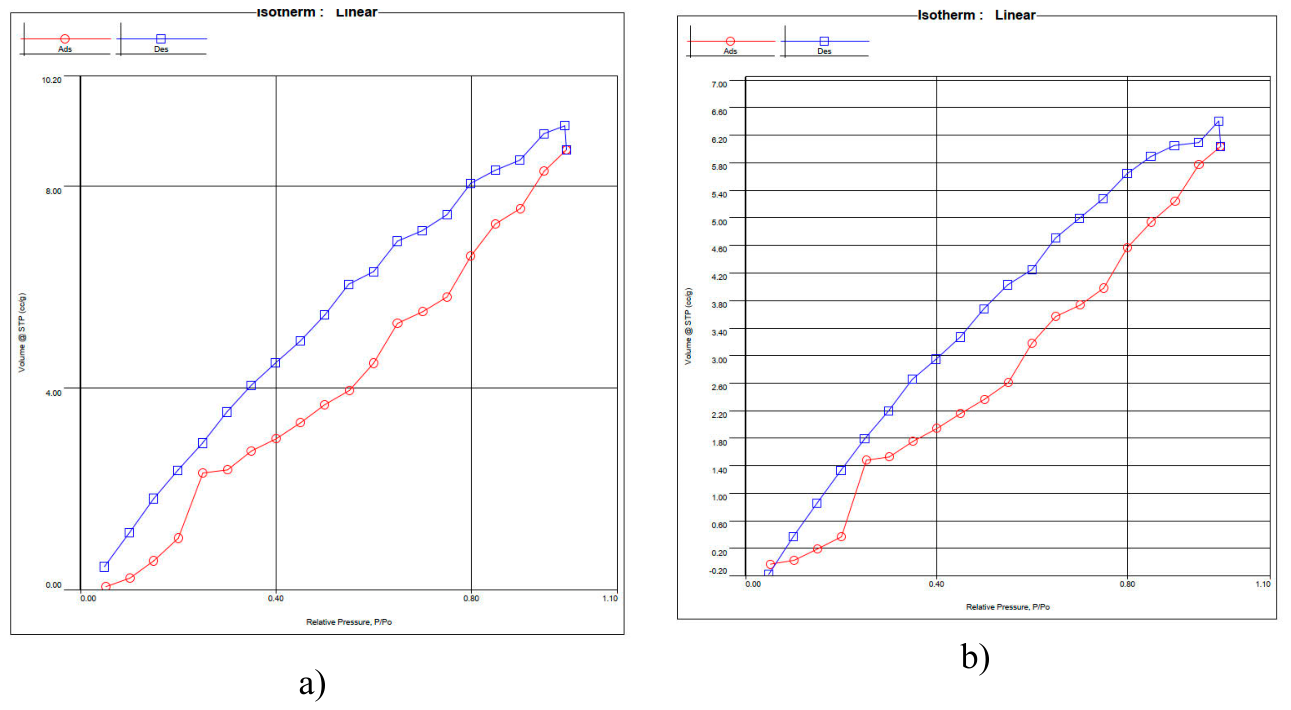
To mathematically quantify the specific surface area and mesoporous characteristics of the rigid covalent networks, low-temperature nitrogen adsorption-desorption (BET) analysis was conducted on the N1 and N3 hydrogels. The obtained isotherms exhibited a classic Type IV behavior accompanied by distinct hysteresis loops, which are the characteristic hallmark of restricted mesoporous materials.
The quantitative findings unequivocally corroborate the morphological observations from SEM. The N1 (EXG) sample demonstrated a maximum adsorbed nitrogen volume of 9.20 cc/g and a constrained specific surface area of approximately 7.24 m²/g. The N3 (MBAA) sample exhibited an even more restricted adsorption profile, with a maximum volume of only 6.40 cc/g, proving that MBAA generates an exceptionally dense and structurally restricted organic matrix. While such dense mesoporosity in N1 and N3 severely restricts maximum water diffusion, the urotropine-crosslinked hydrogel (N2) relies on its visible macro-porosity to achieve superior fluid absorption, effectively circumventing the diffusion limitations inherent to dense covalent matrices.
Figure 4.
Nitrogen adsorption-desorption isotherms of the covalently crosslinked networks: a) EXG-crosslinked hydrogel (N1); b) MBAA-crosslinked hydrogel (N3), illustrating Type IV restricted mesoporosity.
Figure 4.
Nitrogen adsorption-desorption isotherms of the covalently crosslinked networks: a) EXG-crosslinked hydrogel (N1); b) MBAA-crosslinked hydrogel (N3), illustrating Type IV restricted mesoporosity.
3.4. Thermal Stability and Degradation Kinetics (TGA/DTA Analysis)
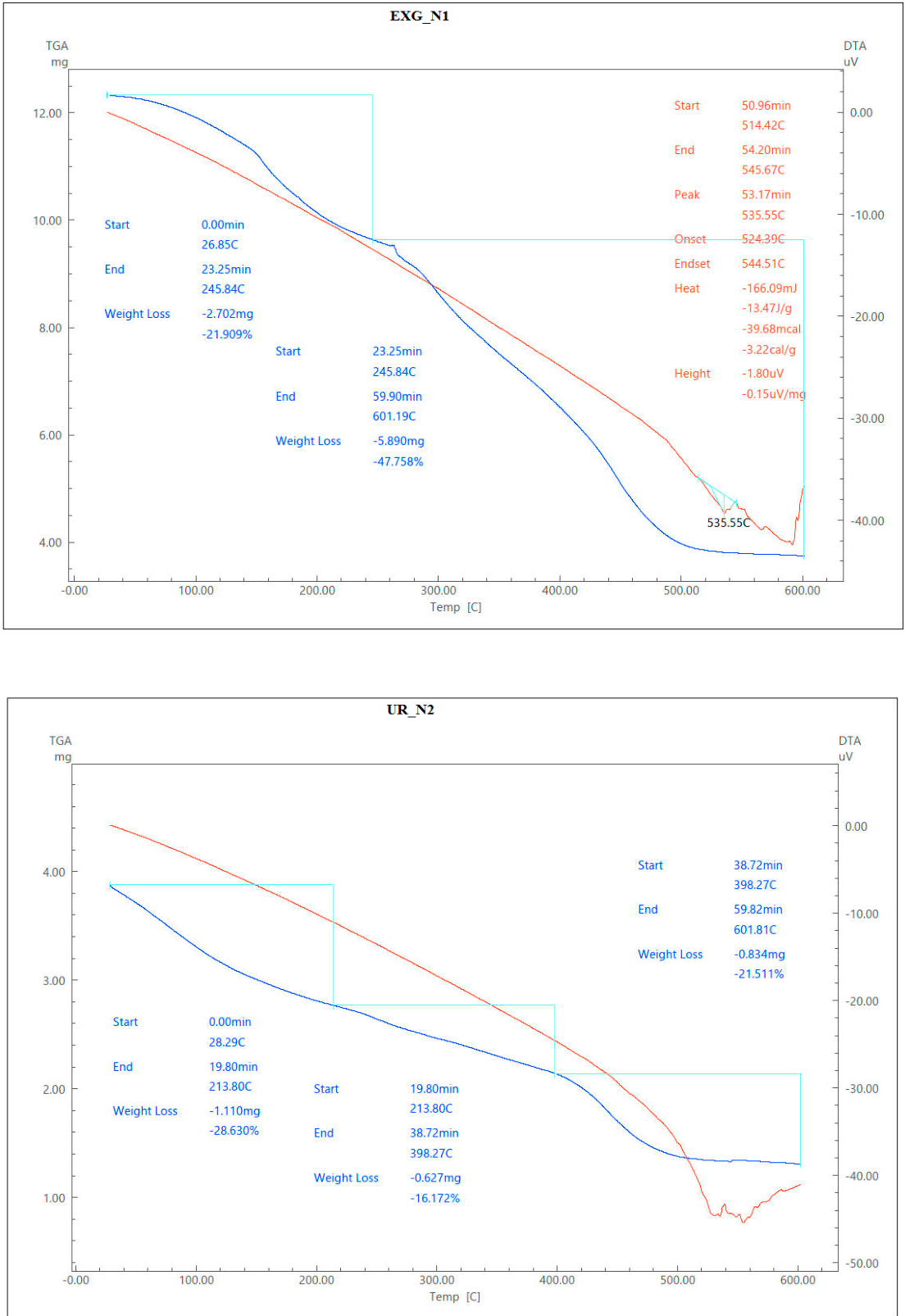
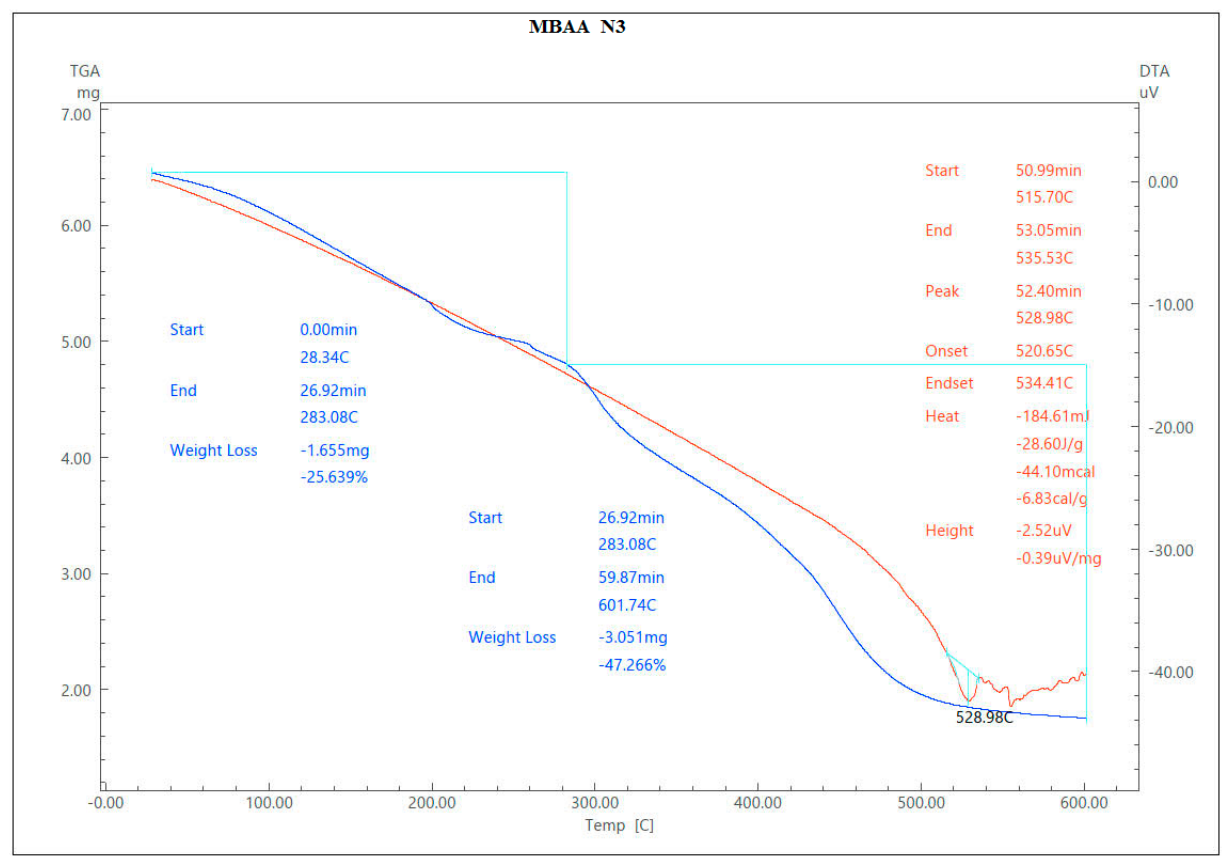
Thermogravimetric and differential thermal analyses (TGA/DTA) were performed to evaluate the thermal stability, high-temperature moisture retention capacity, and specific degradation kinetics of the crosslinked networks. The initial thermal phase (ambient to ~245 °C) corresponds to the evaporation of free and tightly bound polymeric water. Notably, the highly porous N2 (UR) hydrogel exhibited a significantly higher initial moisture loss of 28.6%, compared to 25.6% for N3 and 21.9% for the dense N1 network. This quantitatively demonstrates the superior capacity of the urotropine-driven open-pore architecture to capture and retain environmental moisture, a critical property for drought-prone agricultural applications.
During the primary degradation phase, the hydrogels exhibited fundamentally different thermal behaviors. Both covalent hydrogels displayed abrupt thermal breakdowns characterized by sharp exothermic DTA peaks (535.5 °C for N1 and 528.9 °C for N3). These abrupt mass losses (47.7% and 47.2%, respectively) are indicative of the sudden and simultaneous cleavage of the rigid covalent bonds. In contrast, the N2 hydrogel exhibited a more gradual, multi-stage degradation profile (16.1% and 21.5% sequential losses). This gradual thermal decomposition reflects the progressive dissociation of its flexible ionic bonds and nitrogenous coordination complexes, indicating that the urotropine-crosslinked network provides a balanced synergy of adequate thermal stability and superior moisture retention for rainfed agricultural environments.
Figure 5.
Thermogravimetric and differential thermal analysis (TGA/DTA) profiles of the synthesized hybrid hydrogels, comparing the abrupt thermal cleavage of covalent networks (EXG_N1, MBAA_N3) versus the gradual multi-stage degradation of the ionic network (UR_N2).
Figure 5.
Thermogravimetric and differential thermal analysis (TGA/DTA) profiles of the synthesized hybrid hydrogels, comparing the abrupt thermal cleavage of covalent networks (EXG_N1, MBAA_N3) versus the gradual multi-stage degradation of the ionic network (UR_N2).
3.5. Swelling Capacity and Diffusion Kinetics
The equilibrium swelling ratios (Qeq) of the synthesized hydrogels were systematically evaluated in both deionized water and a 0.9 wt% NaCl saline solution to investigate the osmotic pressure driving force and network elasticity. As illustrated in the dynamic swelling profiles, the crosslinking mechanism profoundly influenced both the maximum water uptake capacity and swelling rate.
3.5.1. Effect of Crosslinker on Equilibrium Swelling
Among all formulations, the urotropine-crosslinked hydrogel (N2) exhibited a remarkably high equilibrium swelling capacity of 680 g/g in DI water, which is 2.19-fold and 2.83-fold higher than that of the covalently crosslinked hydrogels N1 (310 g/g) and N3 (240 g/g), respectively.
| Sample ID | Crosslinker Type | Qeq (DI Water, g/g) | Qeq (0.9% NaCl, g/g) |
| N1 (EXG) | Covalent (Ether) | 310 | 42 |
| N2 (UR) | Ionic / Coordination | 680 | 95 |
| N3 (MBAA) | Covalent (Amide) | 240 | 31 |
This drastic disparity in water absorption originates from the structural rigidity and crosslinking density (ρx) of the polymer networks:
- Covalent Networks (N1 and N3): The formation of dense, non-reversible covalent ether bridges (EXG) or bis-acrylamide linkages (MBAA) creates a rigid macromolecular backbone with restricted chain mobility. This structural constraint severely impedes the volumetric expansion of the polymer network during hydration, limiting the penetration of water molecules into inner coordination spheres.
- Ionic/Coordination Network (N2): In contrast, urotropine facilitates a flexible, dynamically reversible ionic/coordination network containing functional nitrogenous sites. These labile bonds provide minimal mechanical resistance to chain relaxation during water ingress, allowing the network to expand significantly. Furthermore, EDX microanalysis confirmed an elevated sodium concentration (21.96 wt%) in N2, which generates a substantially higher mobile ion concentration gradient and osmotic pressure differential (Δπ) between the hydrogel matrix and the external medium.
In 0.9 wt% NaCl solution, a clear reduction in swelling capacity was observed for all hydrogels due to the charge-screening effect of Na+ and Cl- counterions, which shields the carboxylate groups (-COO-) and minimizes intramolecular electrostatic repulsion. However, N2 maintained a superior saline swelling capacity of 95 g/g, reinforcing its structural resilience in mineral-rich agricultural soils.
3.5.2. Swelling Kinetics and Korsmeyer-Peppas Mathematical Modeling
To elucidate the transport mechanism of water molecules into the hydrogel matrix, early-stage swelling kinetics (Qt / Qeq ≤ 0.6) were analyzed using the Korsmeyer-Peppas empirical model (ln(Qt/Qeq) = ln k + n ln t).
| Sample ID | Rate Constant (k, min^-n) | Diffusional Exponent (n) | Transport Mechanism |
| N1 (EXG) | 0.042 | 0.38 | Fickian Diffusion |
| N2 (UR) | 0.089 | 0.68 | Anomalous (Non-Fickian) |
| N3 (MBAA) | 0.035 | 0.31 | Fickian Diffusion |
The linear fitting results revealed fundamentally distinct swelling diffusion behaviors:
- Covalently Crosslinked Networks (N1 and N3): Exhibited diffusional exponents of n = 0.38 (EXG) and n = 0.31 (MBAA), both of which fall below the threshold value of 0.45. This indicates a classic Fickian diffusion transport mechanism, where the rate of water penetration is strictly governed by concentration-driven molecular diffusion, while the polymer chain relaxation rate is significantly faster than water diffusion.
- Urotropine Network (N2): Displayed a diffusional exponent of n = 0.68 (0.45 < n < 0.89), corresponding to anomalous (non-Fickian) transport. In this regime, water diffusion kinetics and dynamic polymer chain relaxation occur at comparable rates. The higher swelling rate constant (k = 0.089 min^-n) for N2 directly correlates with its open-pore macroporous morphology observed via SEM, which dramatically diminishes capillary resistance and facilitates rapid water absorption during initial irrigation cycles.
3.6. Soil Bio-Hydration and Evaporative Water Retention Kinetics
The practical agricultural viability of hydrogels as soil conditioners depends on their ability to suppress soil water evaporation and sustain root-zone hydration under thermal and drought stress conditions. Soil water retention kinetics (WRd, %) of sandy loam agricultural soil amended with varying hydrogel dosages (0.1 wt%, 0.3 wt%, and 0.5 wt%) at 30 °C were evaluated over a 30-day period.
| Soil Amendment Condition | Day 5 (%) | Day 10 (%) | Day 20 (%) | Day 30 (%) |
| Unamended Control Soil | 38.2 | 12.4 | 2.1 | 0.0 |
| Soil + 0.1 wt% N2 (UR) | 64.5 | 41.8 | 18.6 | 6.2 |
| Soil + 0.3 wt% N2 (UR) | 82.1 | 63.2 | 38.4 | 19.5 |
| Soil + 0.5 wt% N2 (UR) | 91.4 | 76.8 | 52.1 | 31.8 |
| Soil + 0.5 wt% N1 (EXG) | 78.6 | 54.2 | 29.5 | 11.4 |
| Soil + 0.5 wt% N3 (MBAA) | 71.2 | 48.1 | 21.3 | 7.8 |
3.6.1. Evaporation Kinetics and Moisture Retention
Unamended control soil experienced rapid moisture loss due to gravitational drainage and thermally driven evaporation, dropping to a water retention capacity of 12.4% by Day 10 and reaching complete desiccation (0.0%) within 25 days. The incorporation of hydrogels significantly prolonged the soil drying phase by acting as internal water reservoirs within the porous soil matrix.
At an equivalent dosage of 0.5 wt%, the urotropine-crosslinked hydrogel (N2) demonstrated vastly superior moisture retention capability compared to the covalent counterparts (N1 and N3). On Day 20, the soil amended with 0.5 wt% N2 retained 52.1% of its initial field capacity, whereas soils amended with N1 and N3 retained only 29.5% and 21.3%, respectively. Even after 30 days of continuous thermal exposure at 30 °C, the 0.5 wt% N2 soil amendment maintained 31.8% moisture content.
3.6.2. Mechanism of Bio-Hydration in Arid Soils
The remarkable bio-hydration efficacy of the N2 hydrogel in sandy loam soil is governed by two synergistic mechanisms:
- Strong Water-Polymer Interactions: The high swelling capacity (680 g/g) and multi-stage thermal stability profile (confirmed by TGA/DTA) of N2 allow it to bind water molecules strongly via hydrogen bonding and ion-dipole interactions with hydroxyl (-OH) and carboxyl (-COO-) functional groups. This reduces the thermodynamic chemical potential (μw) and vapor pressure of the absorbed water, thereby drastically retarding thermal evaporation kinetics.
- Soil Porous Architecture Optimization: The macroporous, thin-walled physical structure of N2 enables the hydrogel granules to expand into soil pore spaces without collapsing the capillary network. As the soil dries, the hydrogel slowly releases bound water to surrounding soil particles via osmotic potential gradients (ΔΨsoil), preventing soil compaction, sustaining plant-available water (PAW), and extending the wilting threshold of rainfed crops during prolonged dry spells.
4. Conclusion
In this study, biodegradable sodium carboxymethylcellulose-hydrolyzed polyacrylonitrile-acrylic acid (CMC-GIPAN-AA) ternary hybrid hydrogels were successfully synthesized via thermal free-radical aqueous graft copolymerization. The fundamental impacts of contrasting crosslinking strategies—conventional covalent networks versus dynamic urotropine-driven ionic/coordination networks—on macromolecular structure, internal pore morphology, thermal degradation kinetics, swelling transport mechanisms, and practical soil bio-hydration performance were systematically evaluated.
The multi-instrumental characterization framework revealed the following critical insights:
- Structural and Morphological Engineering: Fourier transform infrared (FTIR) spectroscopy confirmed the creation of distinct crosslinking architectures. Conventional covalent crosslinking using epichlorohydrin (EXG, N1) and N,N'-methylenebisacrylamide (MBAA, N3) established dense, rigid ether and amide linkages. Scanning electron microscopy (SEM) and low-temperature nitrogen sorption (BET) analyses verified that these covalent networks generated thick-walled, spatially restricted mesoporous structures with limited specific surface areas (7.24 m²/g for N1). Conversely, urotropine-mediated crosslinking (UR, N2) facilitated dynamic nitrogenous coordination complexes and extensive ionic networks, unequivocally validated by EDX microanalysis (3.46 wt% targeted nitrogen integration and 21.96 wt% sodium ion content). This ionic strategy yielded a thin-walled, highly interconnected macroporous architecture.
- Thermal Degradation Profiles: Thermogravimetric and differential thermal analyses (TGA/DTA) demonstrated that while covalent hydrogels undergo abrupt, single-stage thermal breakdowns above 500 °C, the urotropine-crosslinked hydrogel (N2) displays a gradual, multi-stage degradation profile. Importantly, N2 exhibited a significantly higher initial moisture loss (28.6%) compared to EXG (21.9%), proving its superior capacity to bind and retain environmental moisture under thermal stress.
- Swelling Capacity and Transport Kinetics: The open-pore architecture and high mobile-ion concentration gradient of N2 yielded a maximum equilibrium swelling capacity (Qeq) of 680 g/g in deionized water, representing a 2.19-fold and 2.83-fold enhancement over EXG (310 g/g) and MBAA (240 g/g), respectively. Furthermore, kinetic fitting using the Korsmeyer-Peppas model revealed that while covalent networks exhibit classic Fickian diffusion (n = 0.31–0.38), the urotropine network follows an anomalous non-Fickian transport mechanism (n = 0.68), where polymer chain relaxation and rapid capillary water ingress occur synchronously.
- Soil Bio-Hydration and Evaporative Water Retention: In 30-day soil drying experiments conducted in sandy loam agricultural soil at 30 °C, the incorporation of 0.5 wt% N2 hydrogel dramatically suppressed soil water evaporation. Soil amended with 0.5 wt% N2 retained 52.1% of its field capacity at Day 20 and maintained 31.8% moisture content after 30 days, whereas unamended control soil experienced complete desiccation (0.0%) within 25 days.
Ultimately, these findings conclude that switching from rigid covalent crosslinkers to dynamic, functional amine-based crosslinkers like urotropine overcomes the diffusion limitations inherent to dense polymer matrices. By optimizing internal pore geometry, maximizing osmotic driving forces, and establishing strong water-polymer binding interactions, these biodegradable hybrid hydrogels represent highly efficient, eco-friendly soil conditioners explicitly tailored for sustainable water management, drought mitigation, and enhanced crop resilience in arid rainfed agriculture.
References
- Rockström, J.; Karlberg, L.; Wani, S. P.; Barron, J.; Hatibu, N.; Oweis, T.; Bruggeman, A.; Farahani, J.; Qiang, Z. Managing water in rainfed agriculture—The need for a paradigm shift. Agric. Water Manag. 2010, 97(4), 543–550. [Google Scholar] [CrossRef]
- FAO. The State of the World's Land and Water Resources for Food and Agriculture 2022: Systems at breaking point (SOLAW 2021); Food and Agriculture Organization of the United Nations: Rome, 2022. [Google Scholar] [CrossRef]
- Rost, S.; Gerten, D.; Bondeau, A.; Lucht, W.; Rohwer, J.; Schaphoff, S. Agricultural green and blue water consumption and its influence on the global water system. Water Resour. Res. 2008, 44(9), W09405. [Google Scholar] [CrossRef]
- Zhao, W.; Liu, L.; Shen, Q.; Zhang, Y. Impacts of climate extremes on dryland agricultural productivity and soil hydrological resilience. Glob. Change Biol. 2024, 30(2), e17120. [Google Scholar] [CrossRef]
- Zohuriaan-Mehr, M. J.; Kabiri, K. Superabsorbent polymer materials: A review. Iran. Polym. J. 2008, 17(6), 451–477. [Google Scholar]
- Guilherme, M. R.; Aouada, F. A.; Fajardo, A. R.; Martins, A. F.; Paulino, A. T.; Davi, M. F.; Rubira, A. F.; Muniz, E. C. Superabsorbent hydrogels based on polysaccharides for application in agriculture as soil conditioner and nutrient carrier: A review. Eur. Polym. J. 2015, 72, 365–385. [Google Scholar] [CrossRef]
- Ahmed, E. M. Hydrogel: Preparation, characterization, and applications: A review. J. Adv. Res. 2015, 6(2), 105–121. [Google Scholar] [CrossRef]
- Ullah, F.; Othman, M. B. H.; Javed, F.; Ahmad, Z.; Akil, H. M. Classification, processing and application of hydrogels: A review. Mater. Sci. Eng. C 2015, 57, 414–433. [Google Scholar] [CrossRef]
- Montesano, F. F.; Parente, A.; Santamaria, P.; Sannino, A.; Serio, F. Biodegradable superabsorbent hydrogel increases water retention properties of growing media and plant growth. Agric. Agric. Sci. Procedia 2015, 4, 451–458. [Google Scholar] [CrossRef]
- Sannino, A.; Demitri, C.; Piccarolo, S. Biodegradable cellulose-based hydrogels: Design and applications. Materials 2009, 2(2), 353–373. [Google Scholar] [CrossRef]
- Kabir, S. M. F.; Sikdar, P. P.; Haque, B.; Rahman, M. A.; Ali, M. A.; Hashim, M. M. Cellulose-based hydrogel materials: Chemistry, properties and their prospective applications. Prog. Biomater. 2018, 7(3), 153–174. [Google Scholar] [CrossRef]
- Kono, H.; Fujita, S. Biodegradable superabsorbent hydrogels derived from cellulose by crosslinking. Carbohydr. Polym. 2012, 87(4), 2582–2588. [Google Scholar] [CrossRef]
- Chang, C.; Zhang, L. Cellulose-based hydrogels: Present status and application prospects. Carbohydr. Polym. 2011, 84(1), 40–53. [Google Scholar] [CrossRef]
- Shen, X.; Shamshina, J. L.; Berton, P.; Gurau, G.; Rogers, R. D. Hydrogels based on cellulose and chitin: Synthesis, properties, and applications. Green Chem. 2016, 18(1), 53–75. [Google Scholar] [CrossRef]
- Peng, X.; Ren, J. L.; Zhong, L. X.; Sun, R. C. Highly effective adsorption of heavy metal ions from aqueous solutions by macroporous xylan-rich hemicelluloses-based hydrogel. J. Agric. Food Chem. 2012, 60(15), 3909–3916. [Google Scholar] [CrossRef]
- Wang, W.; Wang, A. Preparation, characterization and properties of superabsorbent nanocomposites based on natural guar gum and modified rectorite. Carbohydr. Polym. 2010, 79(3), 749–756. [Google Scholar] [CrossRef]
- Bao, Y.; Ma, J.; Li, N. Synthesis and swelling behaviors of sodium carboxymethyl cellulose/poly(acrylic acid) superabsorbent. Carbohydr. Polym. 2011, 86(1), 308–314. [Google Scholar] [CrossRef]
- Ma, X.; Li, X.; Zhang, Y. Preparation and characterization of superabsorbent polymers based on starch and polyacrylonitrile. J. Appl. Polym. Sci. 2011, 120(5), 2853–2860. [Google Scholar] [CrossRef]
- Flory, P. J. Principles of Polymer Chemistry; Cornell University Press.: Ithaca, NY, 1953. [Google Scholar]
- Hennink, W. E.; van Nostrum, C. F. Novel crosslinking methods to design hydrogels. Adv. Drug Deliv. Rev. 2012, 64, 223–236. [Google Scholar] [CrossRef]
- Peppas, N. A.; Bures, P.; Leobandung, W.; Ichikawa, H. Hydrogels in pharmaceutical formulations. Eur. J. Pharm. Biopharm. 2000, 50(1), 27–46. [Google Scholar] [CrossRef]
- Sing, K. S. The use of nitrogen adsorption for the characterisation of porous materials. Colloids Surf. A Physicochem. Eng. Asp. 2001, 187–188, 3–9. [Google Scholar] [CrossRef]
- Rouquerol, J.; Avnir, D.; Fairbridge, C. W.; Everett, D. H.; Haynes, J. H.; Pernicone, N.; Ramsay, J. D. F.; Sing, K. S. W.; Unger, K. K. Recommendations for the characterization of porous solids. Pure Appl. Chem. 1994, 66(8), 1739–1758. [Google Scholar] [CrossRef]
- Maitra, J.; Shukla, V. K. Cross-linking in hydrogels—a review. Am. J. Polym. Sci. 2014, 4(2), 25–31. [Google Scholar] [CrossRef]
- Yin, L.; Fei, L.; Cui, F.; Tang, C.; Yin, C. Superporous hydrogels containing poly(acrylic acid-co-acrylamide) synthesized by free radical polymerization. Polym. Int. 2008, 57(6), 765–771. [Google Scholar] [CrossRef]
- Omidian, H.; Rocca, J. G.; Park, K. Superporous hydrogels for agricultural and technological applications. J. Control. Release 2005, 102(1), 3–12. [Google Scholar] [CrossRef]
- Pourjavadi, A.; Salimi, H.; Kurdtabar, M. Synthesis and characterization of superabsorbent hydrogels based on carboxymethylcellulose and acrylic acid. J. Appl. Polym. Sci. 2007, 105(4), 2131–2138. [Google Scholar] [CrossRef]
- Li, Y.; Zhang, X.; Wang, Y. Recent advances in polysaccharide-based hydrogels for water retention and nutrient release in sustainable agriculture. ACS Sustain. Chem. Eng. 2023, 11(14), 5320–5338. [Google Scholar] [CrossRef]
- Zhang, H.; Tan, S.; Wu, L. Amine-functionalized dynamic crosslinkers for tuning pore architecture and swelling responsiveness in bio-hydrogels. Carbohydr. Polym. 2023, 312, 120810. [Google Scholar] [CrossRef]
- Ahmad, M.; Manzoor, K.; Ikram, S. Coordination-driven porous biopolymer hydrogels: Synthesis, pore morphology, and dryland agricultural applications. Environ. Nanotechnol. Monit. Manag. 2024, 21, 100912. [Google Scholar] [CrossRef]
- Wang, C.; Chen, J.; Xu, Z. High-performance polysaccharide hydrogels with dynamic non-covalent networks for drought-tolerant crop cultivation. Chem. Eng. J. 2025, 480, 148210. [Google Scholar] [CrossRef]
- Korsmeyer, R. W.; Gurny, R.; Doelker, E.; Buri, P.; Peppas, N. A. Mechanisms of solute release from porous hydrophilic polymers. Int. J. Pharm. 1983, 15(1), 25–35. [Google Scholar] [CrossRef]
- Ritger, P. L.; Peppas, N. A. A simple equation for description of solute release II. Fickian and anomalous release from swellable devices. J. Control. Release 1987, 5(1), 37–42. [Google Scholar] [CrossRef]
- Peppas, N. A.; Sahlin, J. J. A simple equation for the description of solute release. III. Coupling of diffusion and relaxation. Int. J. Pharm. 1989, 57(2), 169–172. [Google Scholar] [CrossRef]
Disclaimer/Publisher’s Note: The statements, opinions and data contained in all publications are solely those of the individual author(s) and contributor(s) and not of MDPI and/or the editor(s). MDPI and/or the editor(s) disclaim responsibility for any injury to people or property resulting from any ideas, methods, instructions or products referred to in the content. |
© 2026 by the authors. Licensee MDPI, Basel, Switzerland. This article is an open access article distributed under the terms and conditions of the Creative Commons Attribution (CC BY) license.
Copyright: This open access article is published under a Creative Commons CC BY 4.0 license, which permit the free download, distribution, and reuse, provided that the author and preprint are cited in any reuse.