
Submitted:
15 October 2026
Posted:
20 October 2026
You are already at the latest version
Abstract
Caffeine is a common freshwater contaminant that can affect the physiology and behavior of freshwater invertebrates. This study evaluated the effects of magnesium and ubiquinol on physiological and behavioral responses in caffeine-exposed Daphnia magna. Methods: Seventy-five juvenile D. magna were assigned to five experimental groups (n = 15 per group): spring-water control, caffeine, caffeine plus magnesium, caffeine plus ubiquinol, and caffeine plus both magnesium and ubiquinol. Body-length change, heart rate, phototaxis speed, dissolved oxygen concentration, and lifespan were measured. A one-way analysis of variance was performed to evaluate overall treatment effects on each outcome. Results: Compared with the control, the caffeine-only group showed reductions of approximately 10-14% in body-length change, phototaxis speed, dissolved oxygen concentration, and lifespan, along with an 11% increase in heart rate. Across the measured outcomes, the groups receiving magnesium, ubiquinol, or both had mean values numerically closer to the control means than the caffeine-only group. The combined treatment produced the greatest overall numerical improvement, with the measured outcomes improving by approximately 10-18% relative to the caffeine-only group. One-way ANOVA showed significant overall treatment effects on body-length change (p = .021), heart rate (p < .0001), phototaxis speed (p < .0001), dissolved oxygen concentration (p = .002), and lifespan (p = .0006). Conclusion: These findings indicate that magnesium and ubiquinol may influence caffeine-associated physiological and behavioral responses in D. magna.
Keywords:
freshwater ecotoxicology
; phototaxis
; lifespan
1. Introduction
Chemicals from everyday consumer products can pass through conventional wastewater-treatment systems and enter freshwater environments [1]. These contaminants may alter physiology and behavior and impair growth and survival in aquatic organisms [2,3]. Caffeine is a contaminant of emerging concern because it is biologically active and frequently detected in freshwater ecosystems following its release through human-derived wastewater [1,4,5]. Caffeine exposure has been associated with physiological and behavioral changes in aquatic organisms, highlighting the need to evaluate its lethal and sublethal effects [2,5,6].
Daphnia magna is widely used in aquatic toxicology because of its ecological importance and demonstrated sensitivity to chemical exposure [7,8]. Its transparent body allows physiological responses, including cardiac activity, to be observed directly under a microscope [6,9]. Physiological, behavioral, and life-history responses in D. magna can collectively provide evidence of sublethal contaminant effects [10,11]. Magnesium and ubiquinol were selected because of their roles in cellular homeostasis and responses to physiological stress.
Magnesium (Mg²⁺) is an essential ion involved in calcium regulation, muscle contraction, ATPase activity, and cellular energy metabolism [12,13]. These functions suggest that magnesium may help maintain ionic and physiological stability during chemical exposure. Ubiquinol, the reduced form of coenzyme Q10, supports mitochondrial electron transport and ATP production and acts as a lipid-soluble antioxidant [14,15,16]. Through these functions, magnesium and ubiquinol may influence organism-level responses to contaminant-induced stress. However, their effects on caffeine-exposed freshwater invertebrates remain insufficiently understood.
This study evaluated the effects of magnesium and ubiquinol, individually and in combination, on measured outcomes in caffeine-exposed juvenile Daphnia magna. Change in the body length from Day 0 to Day 8 was assessed as a developmental endpoint, heart rate as a physiological endpoint, and phototaxis speed as a behavioral and sensory endpoint. Lifespan was evaluated as a life-history endpoint. Dissolved oxygen was measured separately as a property of the exposure medium because oxygen availability may influence D. magna physiology and behavior. It was hypothesized that magnesium and ubiquinol would reduce caffeine-associated effects and that the combined treatment would produce the greatest overall improvement.
2. Materials and Methods
2.1. Materials
Live Daphnia magna were obtained from Carolina Biological Supply Company (Burlington, NC, USA). Equipment included an AmScope M158C-E compound microscope with a 0.3-megapixel camera (AmScope, Irvine, CA, USA), a 0.01-mm stage micrometer (MUHWA Scientific, Shanghai, China), and a Vorole digital dissolved oxygen meter (0–40.0 mg/L). Treatments were prepared using Jingyat magnesium glycinate liquid (400 mg/2 mL), Vivarin caffeine tablets (200 mg/tablet; Vespyr Brands, East Windsor, NJ, USA), and Qunol ubiquinol softgels (100 mg/softgel; Quten Research Institute, Pine Brook, NJ, USA). Spring water and Whatman filter paper were also used.
2.2. Maintenance and Care of Daphnia magna
D. magna were cultured in plastic containers containing spring water maintained at 21 °C and pH 7.0–8.5. The cultures were maintained under a 12-h light/12-h dark cycle and fed active yeast. To maintain water quality, juvenile D. magna were transferred periodically to fresh spring water using a transfer pipette. Before the toxicity tests and main experiment, the organisms were acclimated in fresh spring water in 150 mL plastic cups.
2.3. Toxicity Experiments
Stock solutions of caffeine, magnesium glycinate, and ubiquinol were prepared separately using spring water. Each stock solution was filtered through laboratory filter paper to remove undissolved tablet or softgel components. The resulting filtrates were diluted with spring water and thoroughly mixed to produce the required nominal concentrations.
The concentrations of each of the chemicals to be used in the experiment were determined by exposing ten independently prepared exposure cups containing one D. magna each, resulting in 10 organisms per concentration. This evaluated three nominal concentrations (5 mg/L, 10 mg/L, 1,000 mg/L) of caffeine, magnesium, and ubiquinol for 48 hours in plastic cups. Based on the survival observed in the toxicity experiments, the concentrations selected for the experiment were 10 mg/L for caffeine, 1,000 mg/L for magnesium glycinate, and 5 mg/L for ubiquinol.
2.4. Procedure
Seventy-five juvenile D. magna were equally separated into five experimental groups, with each group comprising fifteen D. magna. The five experimental groups included a control group (spring water only), caffeine, magnesium with caffeine, ubiquinol with caffeine, and a combined treatment of magnesium, ubiquinol, and caffeine. One juvenile D. magna was placed in each plastic cup with 150 mL of their respective treatment solutions, with fifteen cups for each of the five groups. Cup positions were randomized at the beginning of the experiment and rotated daily to minimize potential positional effects. The D. magna were cultured under these conditions until they reached the adult stage on Day 8. At this developmental stage, physiological and behavioral assays were conducted. The order in which cups and organisms underwent behavioral and physiological assays was randomized. Exposure cups and recordings were identified using coded labels, and treatment identities were concealed during the assays.
2.4.1. Microscopic Analysis
Body length was measured on Days 0 and 8. On each day, individual D. magna were transferred using a wide-bore pipette to a microscope slide with a calibration ruler and observed under a compound light microscope at 40× magnification. Body-length change was calculated by subtracting the Day 0 measurement from the Day 8 measurement. Following the Day 8 body-length measurement, heart activity was recorded using AmScope software. Heartbeats were counted from the recording over a 60-s interval and expressed as beats per minute (bpm).
2.4.2. Phototaxis Speed Assay
A controlled dark chamber was created by wrapping a large Petri dish with black tape and filling it with 35 mL of spring water. A small opening was made at one end of the Petri dish to allow penetration of a focused light source. Individual D. magna were placed at the opposite end of the dark chamber using a transfer pipette. The time required for each D. magna to swim 7 mm toward the light-exposed area was recorded and the phototaxis speed (mm/s) was calculated.
2.4.3. Environmental and Lifespan Monitoring
Dissolved oxygen (DO) levels were measured on Day 8 to assess oxygen availability in each microenvironment. The dissolved oxygen analyzer was calibrated according to the manufacturer’s specifications using a standard baseline solution to validate measurements. The probe was then carefully placed into the center of each culture cup with the sensing tip completely submerged. The DO level (mg/L) was recorded after 60 seconds.
Lifespan was assessed at the same time each day. Mortality was defined as the absence of body and antennal movement following gentle physical stimulation.
2.5. Statistical Analysis
Results are presented as mean ± standard deviation. A separate one-way analysis of variance was used to evaluate the overall treatment effect on each measured outcome. Statistical significance was defined as p < .05.
3. Results
3.1. Microscopic Analyses
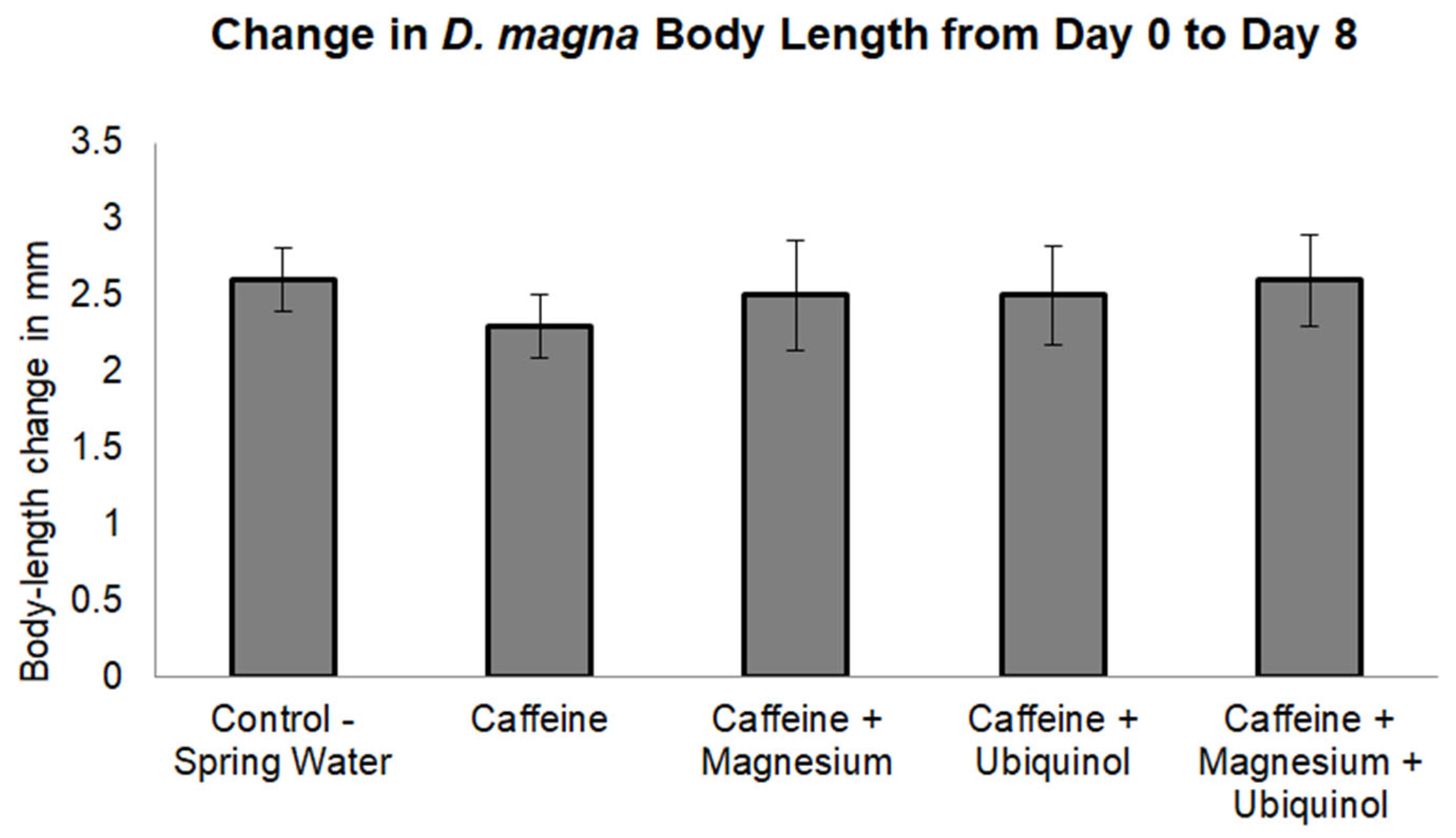
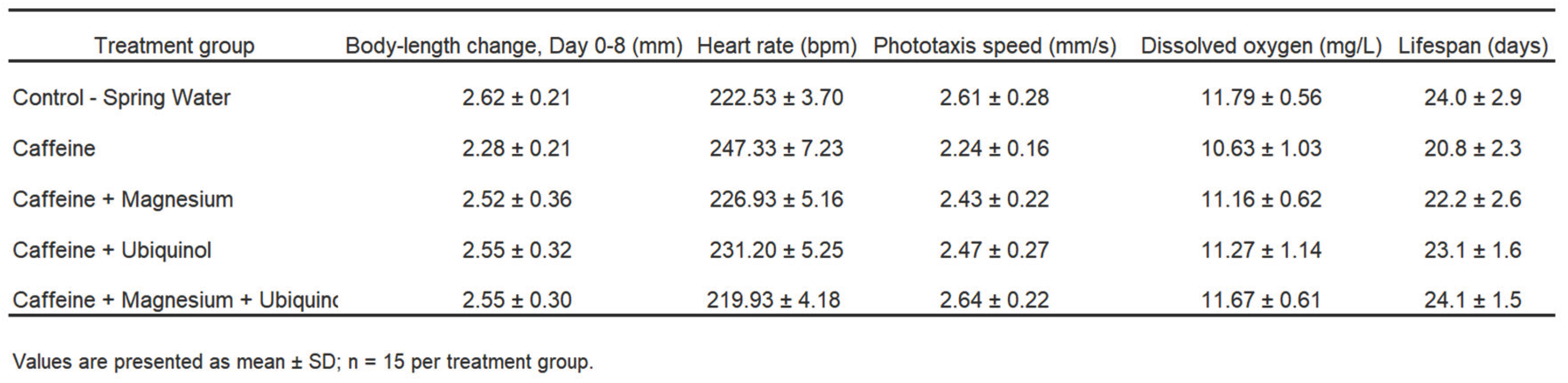
From Day 0 to Day 8, the body length change of the control group maintained in spring water was 2.6 mm, whereas the caffeine-treated group exhibited a reduced body length change of 2.3 mm, indicating a 12% decrease compared to the control group. Among the groups treated with caffeine stress, the combined treatment reached a mean body-length change of 2.6 mm, while the individual magnesium and ubiquinol treatment groups had a body length change of 2.5 mm (Table 1; Figure 2). One-way ANOVA identified a significant treatment effect on body length change, F(4, 70) = 3.09, p = .021.
Figure 1.
Adult Daphnia magna: Measurement of body length and heart rate under microscope.
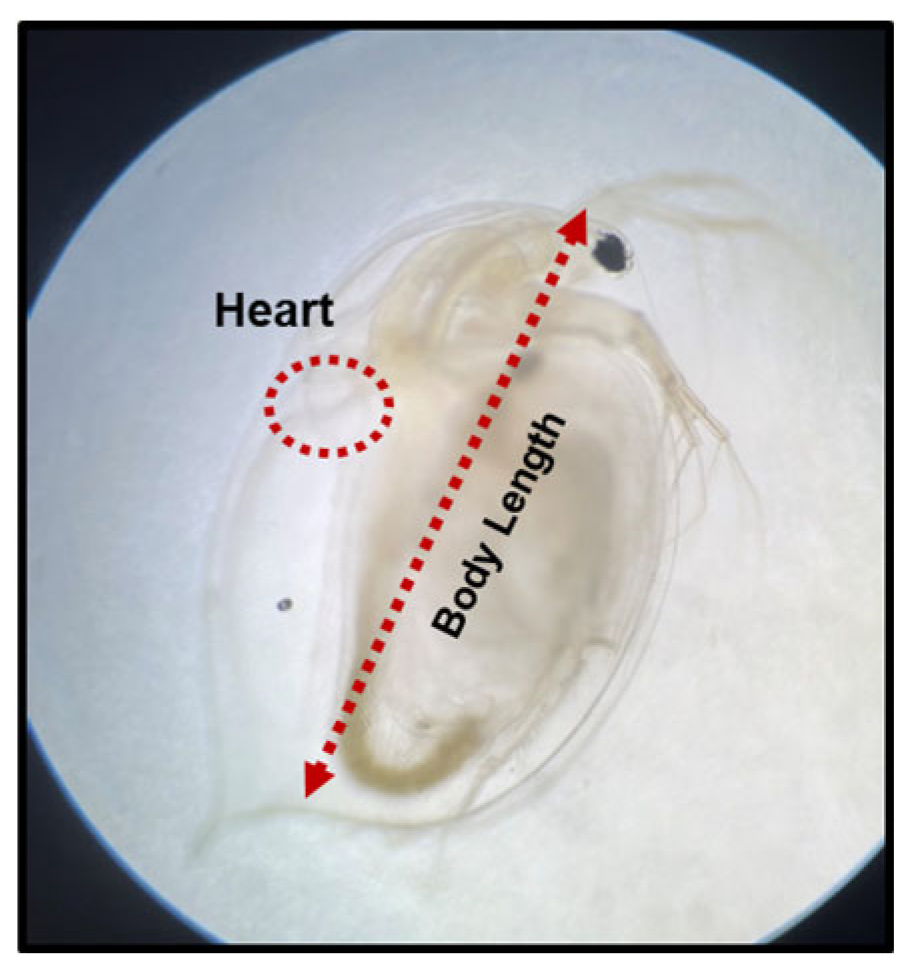
Figure 2.
Change in Daphnia magna body length from the juvenile to adult stage over 8 days under different treatments. Bars represent mean ± SD (n = 15 per treatment group).
Figure 2.
Change in Daphnia magna body length from the juvenile to adult stage over 8 days under different treatments. Bars represent mean ± SD (n = 15 per treatment group).
The mean heart rate for the control group was 222 beats per minute (bpm), while the group exposed exclusively to caffeine had an elevated mean heart rate of 247 bpm, showing an 11% increase compared to the control group. Compared to the caffeine-only group, treatment with magnesium, ubiquinol, and the combined treatment decreased heart rate by approximately 9%, 5%, and 11%, respectively. The magnesium and combined-treatment groups exhibited heart rates close to the control level, suggesting that these treatments may reduce caffeine-associated physiological stress (Table 1; Figure 3). One-way ANOVA identified a significant overall treatment effect on heart rate, F(4, 70) = 63.67, p < .0001.
3.2. Phototaxis Speed Assay
In the phototaxis speed assay, the control group recorded an average speed of 2.61 mm/s. Exposure to caffeine reduced phototaxis speed by 14% to 2.24 mm/s in the caffeine-only group. Compared to the caffeine-only group, treatment with magnesium and ubiquinol increased phototaxis speed by approximately 8% and 10%, respectively, reaching 2.43 mm/s and 2.47 mm/s. The combined treatment exhibited the greatest improvement, increasing phototaxis speed by approximately 18% compared to the caffeine-only group and reaching 2.64 mm/s, which was close to the control level (Table 1; Figure 4). One-way ANOVA identified a significant overall treatment effect on phototaxis speed, F(4, 70) = 7.03, p < .0001.
3.3. Environmental and Lifespan Monitoring
Dissolved oxygen (DO) concentration in the control group was 11.8 mg/L, which decreased by approximately 10% to 10.6 mg/L in the caffeine-only group. Compared to the caffeine-only group, treatment with magnesium and ubiquinol increased DO concentration by approximately 6% and 7%, respectively, reaching 11.2 mg/L and 11.3 mg/L. The combined treatment had the greatest improvement, increasing DO concentration by 10% compared to the caffeine-only group and reaching 11.7 mg/L, comparable to the control group (Table 1; Figure 5). One-way ANOVA identified a significant overall treatment effect on dissolved oxygen concentration, F(4, 70) = 4.57, p = .002.
Lifespan in the control group was 24 days, while exposure to caffeine reduced lifespan to 21 days, representing a 13% decrease compared to the control group. Compared to the caffeine-only group, treatment with magnesium and ubiquinol increased lifespan by approximately 5% and 10%, respectively, reaching 22 and 23 days. The combined treatment produced the greatest improvement, increasing lifespan by approximately 14% compared to the caffeine-only group and producing a mean lifespan equal to the control mean (Table 1; Figure 6). One-way ANOVA identified a significant overall treatment effect on lifespan, F(4, 70) = 5.61, p = .0006.
4. Discussion
Caffeine exposure was associated with changes across all measured outcomes in Daphnia magna. Compared with the control, the caffeine-only group showed reduced body-length change, phototaxis speed, dissolved oxygen concentration, and lifespan, along with an elevated heart rate. The groups receiving magnesium, ubiquinol, or both compounds generally exhibited values closer to the control means, with the combined-treatment group showing the greatest overall numerical improvement.
The responses observed in the caffeine-only group are consistent with previous evidence that caffeine can affect aquatic organisms. Diogo et al. reported that chronic caffeine exposure in Danio rerio altered oxidative-stress biomarkers, including superoxide dismutase, glutathione reductase, and reduced glutathione [4]. Caffeine exposure has also been associated with physiological and behavioral changes in D. magna [2,5]. Together, these findings support the observed association between caffeine exposure and organism-level stress in aquatic species.
The magnesium-plus-caffeine group showed numerical improvements in body-length change, heart rate, phototaxis speed, dissolved oxygen concentration, and lifespan relative to the caffeine-only group. Magnesium contributes to ionic regulation, ATPase activity, muscle function, and cellular energy metabolism [12,13]. Zhang et al. similarly reported improved growth and metabolic function following magnesium supplementation in Megalobrama amblycephala [17]. These established physiological functions may help explain the response patterns observed in magnesium-treated D. magna.
The ubiquinol-plus-caffeine group also demonstrated numerical improvements across the measured outcomes. Ubiquinol supports mitochondrial electron transport, ATP production, and antioxidant defense [15,16]. Previous research in Caenorhabditis elegans found that CoQ10 reduced bisphenol A-associated oxidative DNA damage and reproductive effects [18]. These findings provide a possible biological explanation for the improved physiological and behavioral outcomes observed in the ubiquinol-treated group.
The combined-treatment group produced mean values closest to the control across all measured outcomes and showed improvements of approximately 10–18% relative to the caffeine-only group. This consistent pattern suggests that magnesium and ubiquinol may influence different components of the physiological stress response. Overall, the findings indicate that magnesium and ubiquinol, particularly when administered together, may influence caffeine-induced physiological and behavioral effects in D. magna.
This study includes limitations. This study can be used alongside studies that directly measure oxidative stress to provide a more complete understanding of the mechanisms underlying the observed responses. The behavioral endpoint used reflects general locomotion and sensory responses to caffeine exposure. Vehicle-control groups for the commercial caffeine, magnesium glycinate, and ubiquinol preparations were not included, so the contribution of other ingredients cannot be separated from that of the intended treatment compounds. Although each Daphnia magna was individually exposed to a defined volume of treatment, actual uptake could not be verified. Treatment concentrations were nominal because the dissolved concentrations remaining after filtration were not chemically verified, particularly for ubiquinol, which has low water solubility. Finally, sample size was not based on a power analysis, and larger samples would help confirm these findings.
5. Conclusion
Caffeine exposure was associated with changes in body-length change, heart rate, phototaxis speed, and lifespan in D. magna, as well as dissolved oxygen concentration in the exposure medium. The magnesium-and ubiquinol-treated groups generally produced mean values closer to the control than the caffeine-only group, while the combined treatment produced the greatest overall numerical improvement. These findings suggest that magnesium and ubiquinol may reduce caffeine-induced physiological and behavioral stress in D. magna.
Data availability
Raw data are available from the corresponding author upon reasonable request.
Competing interests
The author declares no competing interests.
Ethics approval
Not applicable.
Funding
The author received no funding for this study.
References
- Buerge, I.J.; Poiger, T.; Müller, M.D.; Buser, H.R. Caffeine, an anthropogenic marker for wastewater contamination of surface waters. Environ. Sci. Technol. 2003, 37, 691–700. [Google Scholar] [CrossRef] [PubMed]
- Rodrigues, S.; Gonçalves, C.; Golovko, O.; Antunes, S.C. Ecotoxicological impacts of caffeine on Daphnia magna: insights from acute to chronic exposures. Ecotoxicology 2025, 34, 1798–1814. [Google Scholar] [CrossRef] [PubMed]
- Bownik, A.; Ślaska, B.; Bochra, J.; Gumieniak, K.; Gałek, K. Procaine penicillin alters swimming behaviour and physiological parameters of. Daphnia Magna Environ. Sci. Pollut. Res. 2019, 26, 18662–18673. [Google Scholar] [CrossRef] [PubMed]
- Diogo, B.S.; Antunes, S.C.; Pinto, I.; Amorim, J.; Teixeira, C.; Teles, L.O.; Golovko, O.; Žlábek, V.; Carvalho, A.P.; Rodrigues, S. Insights into environmental caffeine contamination in ecotoxicological biomarkers and potential health effects of Danio rerio. Heliyon 2023, 9, e19875. [Google Scholar] [CrossRef] [PubMed]
- Nunes, B.; Santos, J.; Dionísio, R.; Dias de Alkimin, G. Investigation of potential behavioral and physiological effects of caffeine on Daphnia magna. Environ. Sci. Pollut. Res. 2022, 29, 43237. [Google Scholar] [CrossRef] [PubMed]
- Corotto, F.S.; Ceballos, D.; Lee, A.; Vinson, L. Making the most of the Daphnia heart rate lab: optimizing the use of ethanol, nicotine, and caffeine. Am. Biol. Teach. 2010, 72, 176–179. [Google Scholar] [CrossRef]
- Ebert, D. Daphnia as a versatile model system in ecology and evolution. EvoDevo 2022, 13, 16. [Google Scholar] [CrossRef] [PubMed]
- Reilly, K.; Ellis, L.A.; Davoudi, H.H.; Supian, S.; Maia, M.T.; Silva, G.H.; Guo, Z.; Martinez, D.S.T.; Lynch, I. Daphnia as a model organism to probe biological responses to nanomaterials—from individual to population effects via adverse outcome pathways. Front Toxicol. 2023, 5, 1178482. [Google Scholar] [CrossRef] [PubMed]
- Bownik, A.; Szabelak, A. Short-term effects of pesticide fipronil on behavioral and physiological endpoints of Daphnia magna. Environ. Sci. Pollut. Res. 2021, 28, 33254–33264. [Google Scholar] [CrossRef] [PubMed]
- Ebert, D. Ecology, Epidemiology, and Evolution of Parasitism in Daphnia. National Center for Biotechnology Information, Bethesda, MD. Bethesda, MD, 2005. Available online: https://www.ncbi.nlm.nih.gov/books/NBK2036/.
- Martins, J.; Soares, M.L.; Saker, M.L.; Teles, L.O.; Vasconcelos, V.M. Phototactic behavior in Daphnia magna Straus as an indicator of toxicants in the aquatic environment. Ecotoxicol. Environ. Saf. 2007, 67, 417–422. [Google Scholar] [CrossRef] [PubMed]
- de Baaij, J.H.F.; Hoenderop, J.G.J.; Bindels, R.J.M. Magnesium in man: implications for health and disease. Physiol. Rev. 2015, 95, 1–46. [Google Scholar] [CrossRef] [PubMed]
- Iaparov, B.; Baglaeva, I.; Zahradník, I.; Zahradníková, A. Magnesium ions moderate calcium-induced calcium release in cardiac calcium release sites by binding to ryanodine receptor activation and inhibition sites. Front Physiol. 2022, 12, 805956. [Google Scholar] [CrossRef] [PubMed]
- Langsjoen, P.H.; Langsjoen, A.M. Comparison study of plasma coenzyme Q10 levels in healthy subjects supplemented with ubiquinol versus ubiquinone. Clin. Pharmacol. Drug Dev. 2014, 3, 13–17. [Google Scholar] [CrossRef] [PubMed]
- Bagheri, S.; Haddadi, R.; Saki, S.; Kourosh-Arami, M.; Rashno, M.; Mojaver, A.; Komaki, A. Neuroprotective effects of coenzyme Q10 on neurological diseases: a review article. Front Neurosci. 2023, 17, 1188839. [Google Scholar] [CrossRef] [PubMed]
- Ishii, N.; Senoo-Matsuda, N.; Miyake, K.; Yasuda, K.; Ishii, T.; Hartman, P.S.; Furukawa, S. Coenzyme Q10 can prolong Caenorhabditis elegans lifespan by lowering oxidative stress. Mech. Ageing Dev. 2004, 125, 41–46. [Google Scholar] [CrossRef] [PubMed]
- Zhang, L.; Liu, Z.; Deng, Y.; He, C.; Liu, W.; Li, X. The benefits of nanosized magnesium oxide in fish Megalobrama amblycephala: evidence in growth performance, redox defense, glucose metabolism, and magnesium homeostasis. Antioxidants 2023, 12, 1350. [Google Scholar] [CrossRef] [PubMed]
- Hornos Carneiro, M.F.; Shin, N.; Karthikraj, R.; Barbosa, F., Jr.; Kannan, K.; Colaiácovo, M.P. Antioxidant CoQ10 restores fertility by rescuing bisphenol A-induced oxidative DNA damage in the Caenorhabditis elegans germline. Genetics 2020, 214, 381–395. [Google Scholar] [CrossRef] [PubMed]
Figure 3.
Heart rate of Daphnia magna was measured under a microscope by recording heartbeats over a 60-second interval and calculating beats per minute (bpm). Bars represent mean ± SD (n = 15 per treatment group).
Figure 3.
Heart rate of Daphnia magna was measured under a microscope by recording heartbeats over a 60-second interval and calculating beats per minute (bpm). Bars represent mean ± SD (n = 15 per treatment group).
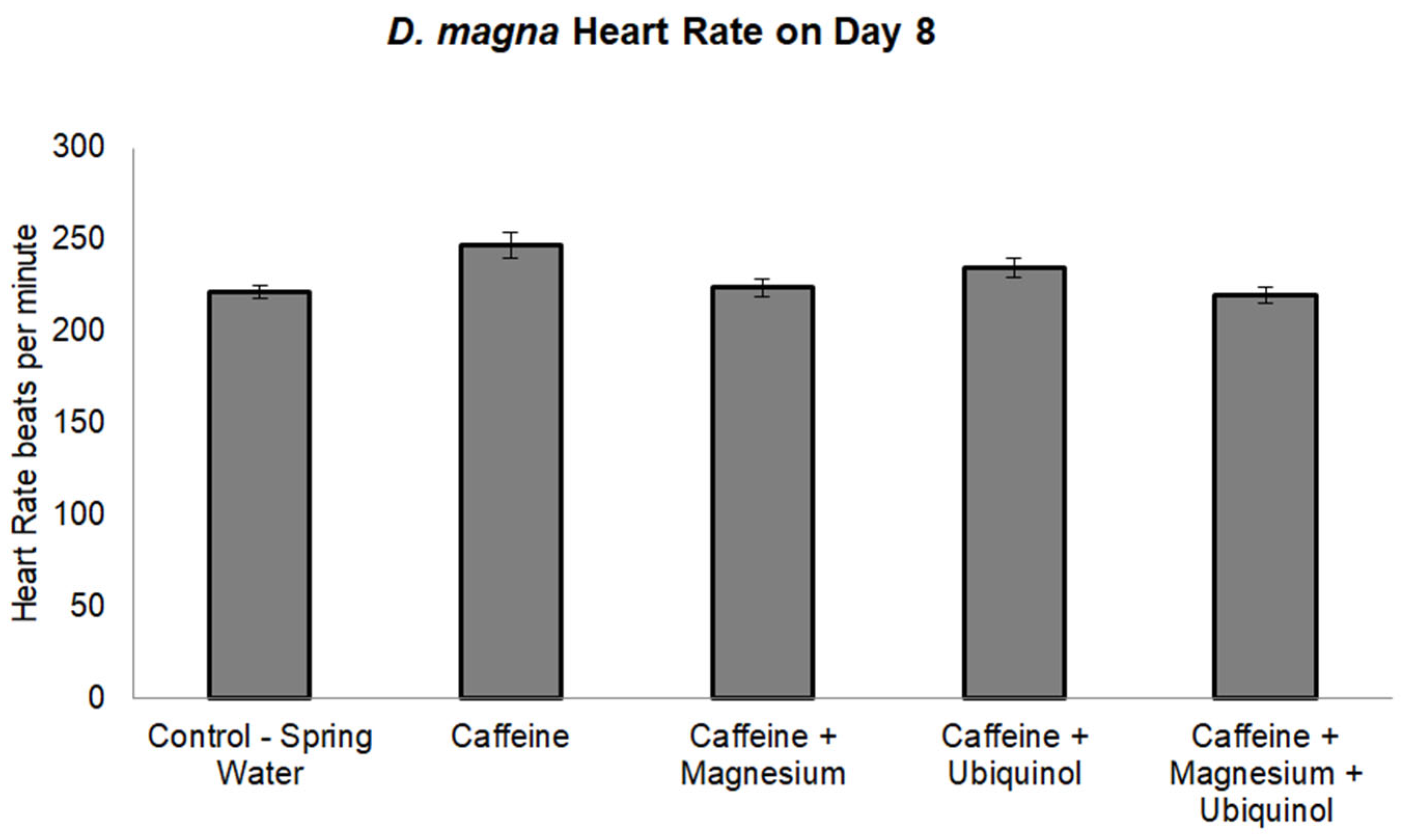
Figure 4.
Phototaxis speed was calculated by recording the time taken by Daphnia magna to swim 7 mm from the dark region toward the light-exposed region. Bars represent mean ± SD (n = 15 per treatment group).
Figure 4.
Phototaxis speed was calculated by recording the time taken by Daphnia magna to swim 7 mm from the dark region toward the light-exposed region. Bars represent mean ± SD (n = 15 per treatment group).
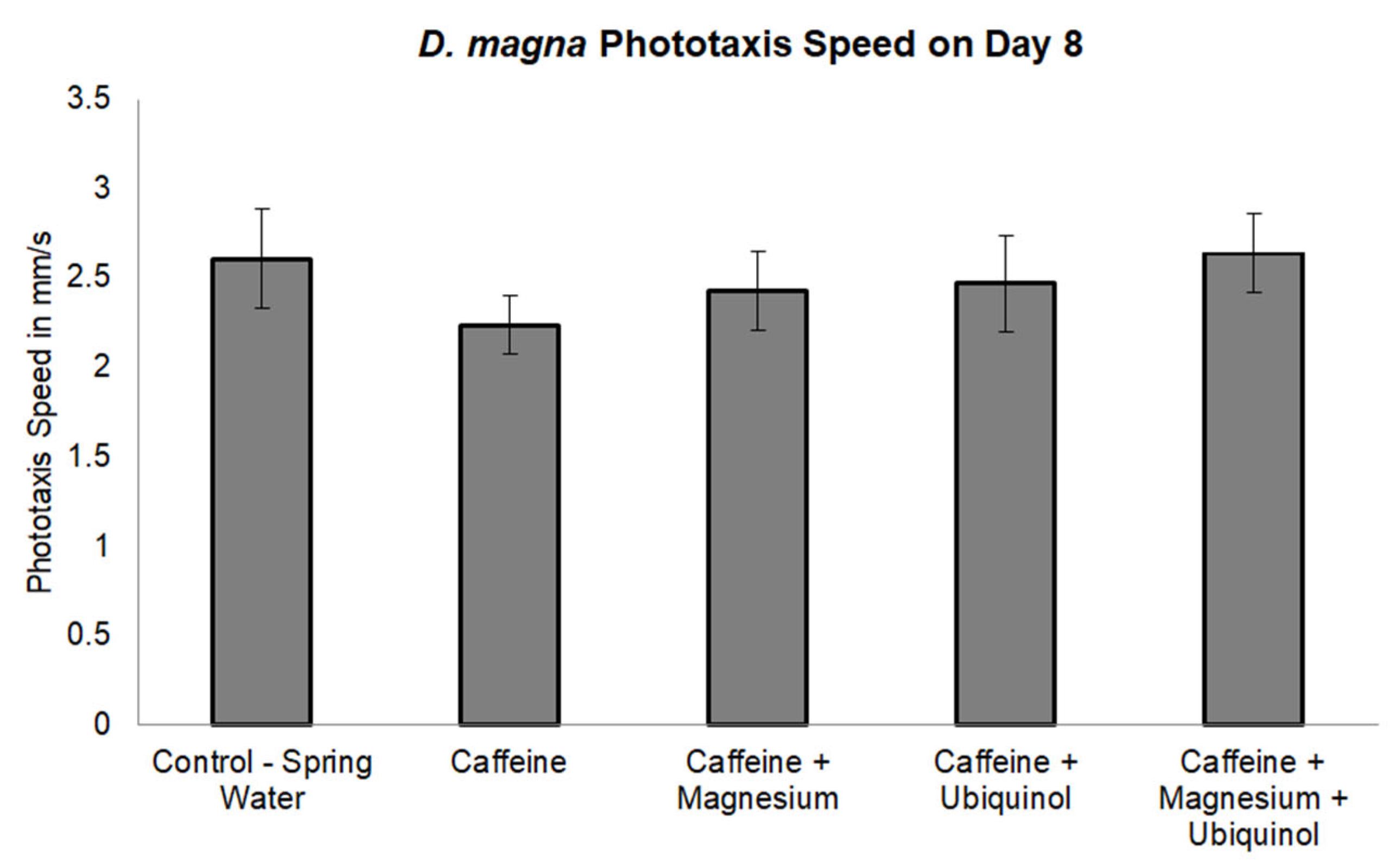
Figure 5.
Dissolved oxygen concentration was measured by gently submerging the dissolved oxygen analyzer probe into each culture cup and recording the concentration in mg/L. Bars represent mean ± SD (n = 15 per treatment group).
Figure 5.
Dissolved oxygen concentration was measured by gently submerging the dissolved oxygen analyzer probe into each culture cup and recording the concentration in mg/L. Bars represent mean ± SD (n = 15 per treatment group).
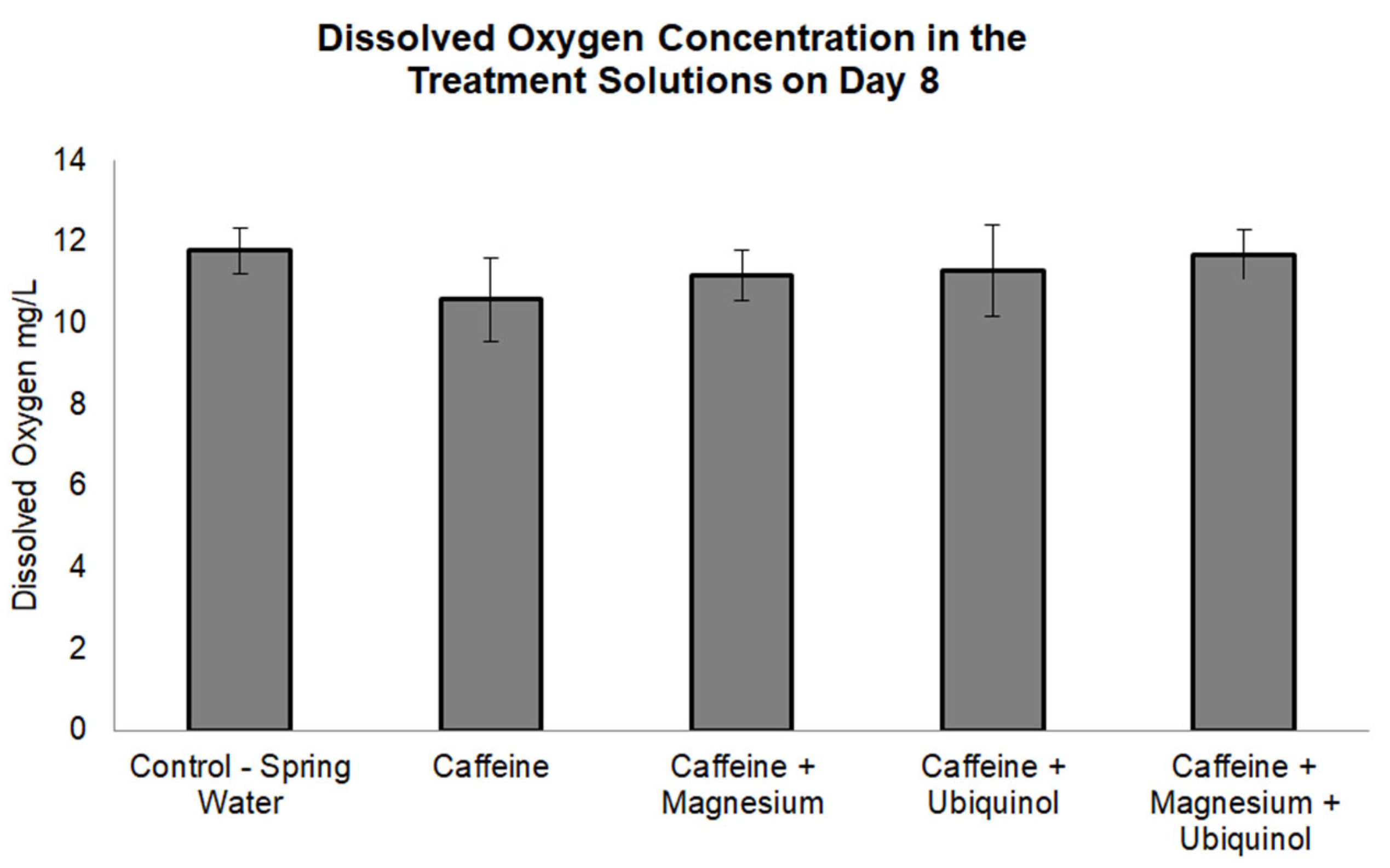
Figure 6.
Lifespan was monitored by recording the number of live Daphnia magna remaining in each cup each day. Bars represent mean ± SD (n = 15 per treatment group).
Figure 6.
Lifespan was monitored by recording the number of live Daphnia magna remaining in each cup each day. Bars represent mean ± SD (n = 15 per treatment group).
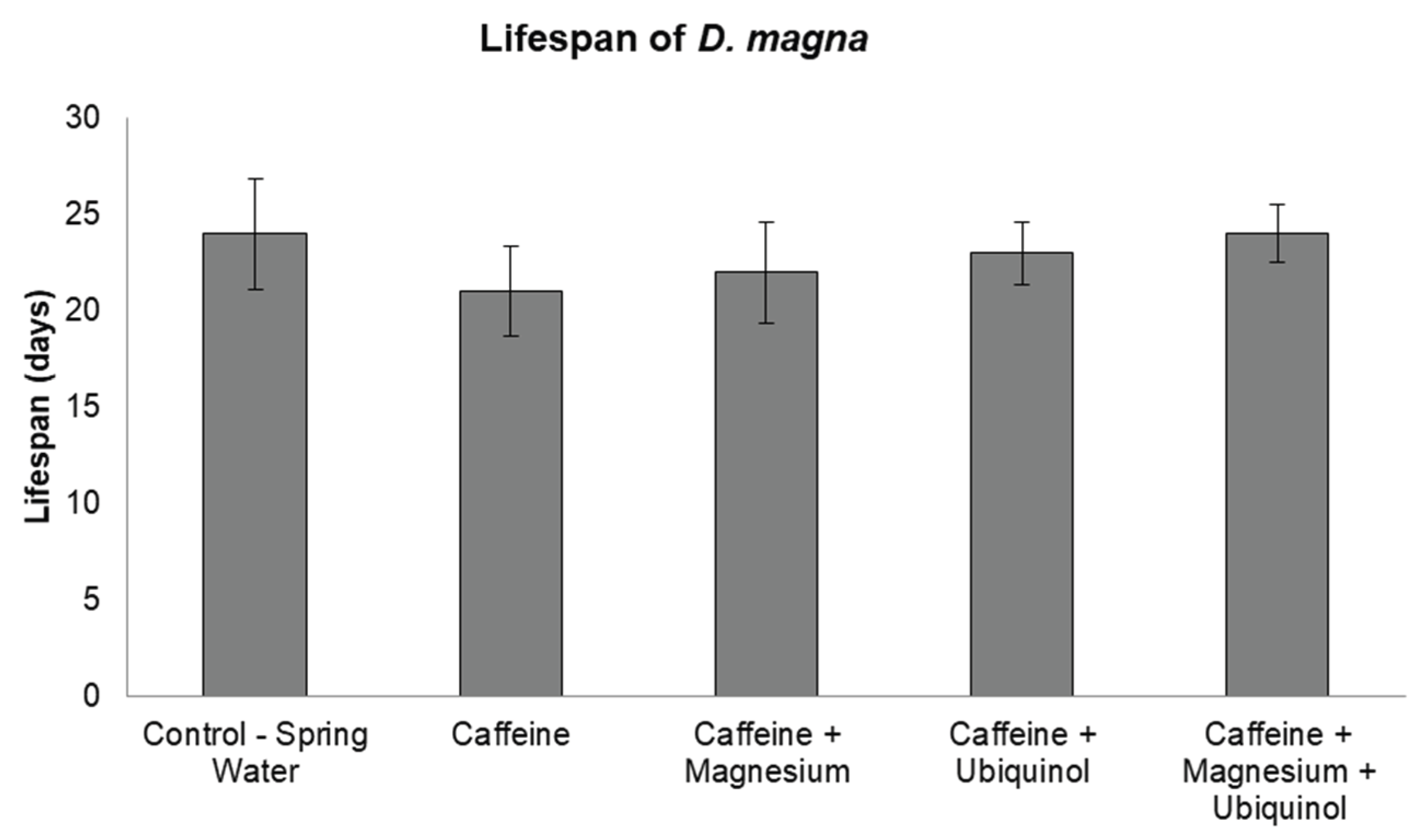

Table 1.
Effects of caffeine, magnesium, and ubiquinol treatments on physiological and behavioral outcomes in Daphnia magna.
Table 1.
Effects of caffeine, magnesium, and ubiquinol treatments on physiological and behavioral outcomes in Daphnia magna.
 |
Disclaimer/Publisher’s Note: The statements, opinions and data contained in all publications are solely those of the individual author(s) and contributor(s) and not of MDPI and/or the editor(s). MDPI and/or the editor(s) disclaim responsibility for any injury to people or property resulting from any ideas, methods, instructions or products referred to in the content. |
© 2026 by the authors. Licensee MDPI, Basel, Switzerland. This article is an open access article distributed under the terms and conditions of the Creative Commons Attribution (CC BY) license (http://creativecommons.org/licenses/by/4.0/).
Copyright: This open access article is published under a Creative Commons CC BY 4.0 license, which permit the free download, distribution, and reuse, provided that the author and preprint are cited in any reuse.